WHO
Environmental Health in the Pacific
W.H.O. O.M.S.
PDO.PPT
What is Environmental Health?
Environmental health comprises those aspects of
human health, including quality of life, that are
determined by physical, chemical, biological, social and
psychosocial factors in the environment. It also refers to
the theory and practice of assessing, correcting,
controlling and preventing those factors in the
environment that can adversely affect the health of
present and future generations.
Environmental Health is a public
health science devoted to protecting
and improving the health of human
populations by limiting their
exposure to biological, chemical and
physical hazards in their
environments.
Environmental health in the
pacific involves:
w Water supplies
w Sanitation (excreta disposal)
w Waste management
w Pollution control
w Vector control
w Food safety
w Development control
w Hygiene education
WHO Programme Areas, or
Themes
w Combating communicable diseases
w Building healthy communities and
populations
w Health sector development
w Reaching out
Building Healthy Communities
(focus areas)
w Healthy settings and environments
w Child and adolescent health and development
w Reproductive health
w Non-communicable diseases, including
mental health
w Tobacco-free initiative
WHO support mechanisms
w Local costs (primarily for local training and
workshops)
w Fellowships (for overseas training)
w Local fellowships (for in-country training)
w Short-term consultants (external technical support)
w Special services agreements (local contracts for
technical support)
w Supplies and equipment
Pacific Workshop on Water Quality
Surveillance
29 Oct. - 1 Nov.
The focus of the meeting will be on assessing efforts by
member states to monitor and control the safety of
drinking water and to provide input to ongoing global
efforts in revising/ updating the current WHO
guidelines.
The Meeting will Include:
w Country reports
w Review of DWQ guidelines and practicality to Pacific Island States
w Planning and implementation of surveillance programmes
w Hygiene education
w Water sampling and the importance of standardizing equipment
w Data needs and management information systems
w Linking surveillance data to health
w Regional needs (role of the regional programme)
w A draft declaration of commitment
Concept of Healthy Islands
Healthy Islands should be places where:
w Children are nutured in
People have the
body and mind;
potential to make
w The environment
long-term differences
invites learning and
in their health as well
leisure;
as the health of others.
w People work and age
with dignity;
w Ecological balance is a
source of pride
Healthy Islands Survey
Control of Soil-Transmitted Helminths
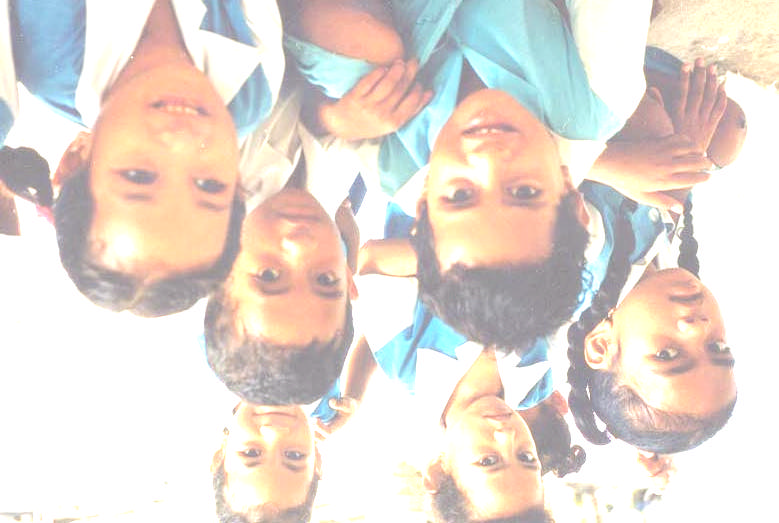
Control of Soil-Transmitted
Helminths
Linking
Environmental Health,
Health Promoting Schools
and
Healthy Communities
Survey Components
w Intestinal parasite survey
w Environmental health survey
w Nutrition survey
w Health promoting schools
Survey Objectives
w To obtain data on Helminth prevalence,
nutritional status and environmental
sanitation in primary schools
w To test the survey protocols
w To assess capacities in EH
Transmission Routes
In the school and community
w Water Supply (sources,
condition, availability)
w Excreta Disposal (type,
A HEALTHY
sanitary condition)
ENVIRONMENT IS
w Environmental Sanitation
THE KEY TO
n
Waste disposal
HELMINTHIASIS
n
Water pollution
CONTROL
n
Drainage
w Food Safety
w Personal Hygiene
w Personal Protection
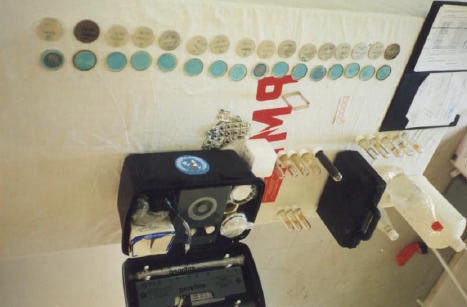
Water Quality Analyses
Colour
Odour
Temperature
Conductivity
Turbidity
Chlorine
pH
Faecal coliforms
Total coliforms
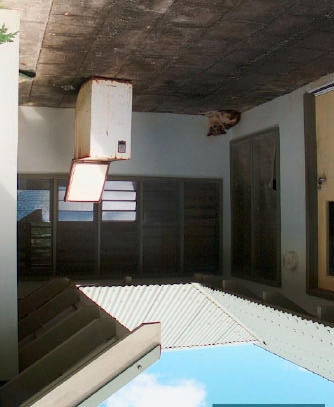
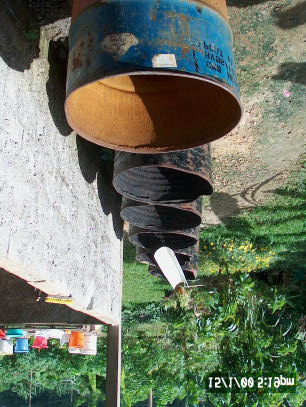
Drinking Water
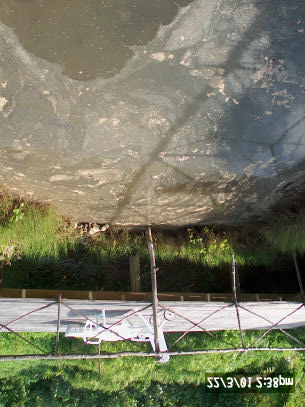
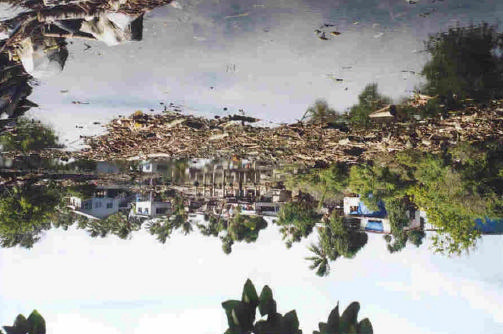
Environmental Sanitation
Water Pollution
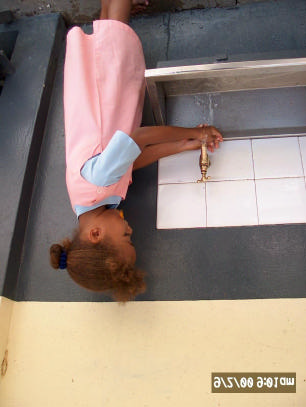
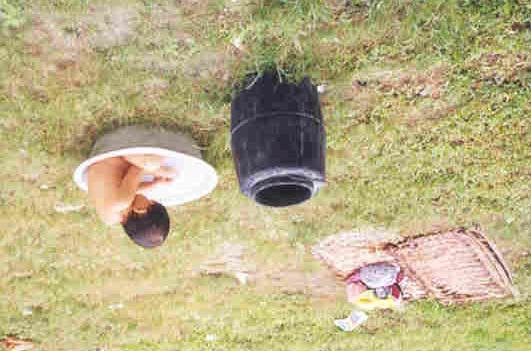
Personal Hygiene
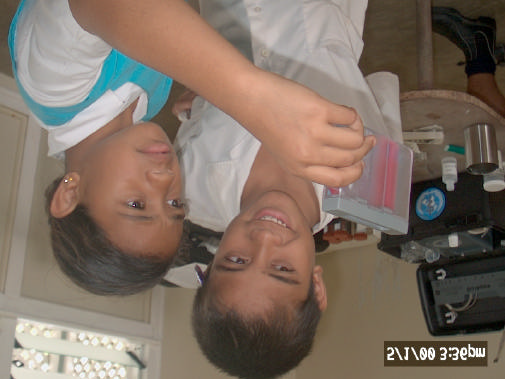
Health Promoting Schools
Involving Students
Conclusions
w Helminthiasis exists in the Pacific
w Helminthiasis is the result of poor sanitation
w Helminthiasis transmission is not restricted
to schools
w Helminthiasis control starts in the schools
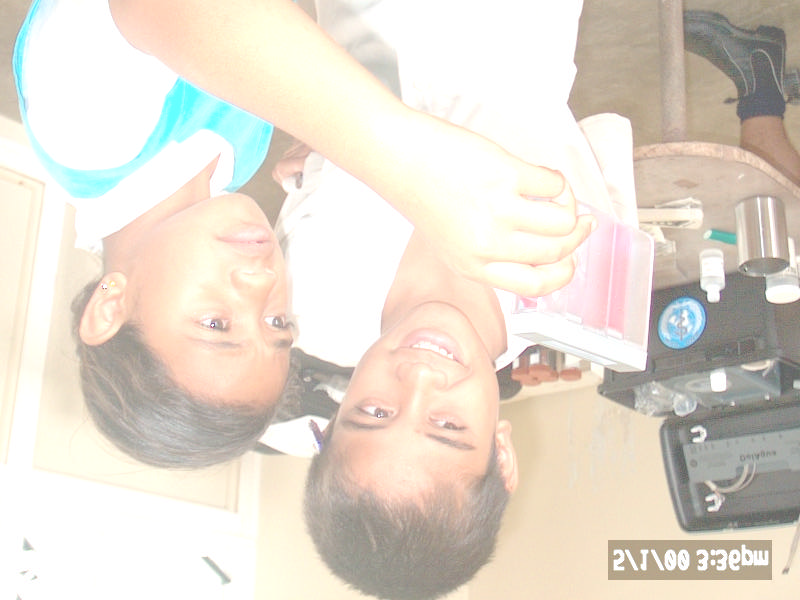
The Healthy Island's Survey as the
starting point
w Training survey teams
n The handwashing demo
n Nurses and nutrition
n Food safety and nutrition
n Parasitology and soil sampling
w Providing equipment
w Obtaining base-line data
w Next year and beyond
n Standards setting
n Action planning
n Demonstration projects