Water Pollution Control - A Guide to the Use of Water Quality Management
Principles
Edited by Richard Helmer and Ivanildo Hespanhol
Published on behalf of the United Nations Environment Programme, the Water Supply &
Sanitation Collaborative Council and the World Health Organization by E. & F. Spon
© 1997 WHO/UNEP
ISBN 0 419 22910 8
Chapter 3* - Technology Selection
* This chapter was prepared by S. Veenstra, G.J. Alaerts and M. Bijlsma
3.1 Integrating waste and water management
Economic growth in most of the world has been vigorous, especially in the so-called
newly industrialising countries. Nearly all new development activity creates stress on the
"pollution carrying capacity" of the environment. Many hydrological systems in
developing regions are, or are getting close to, being stressed beyond repair. Industrial
pollution, uncontrolled domestic discharges from urban areas, diffuse pollution from
agriculture and livestock rearing, and various alterations in land use or hydro-
infrastructure may all contribute to non-sustainable use of water resources, eventually
leading to negative impacts on the economic development of many countries or even
continents. Lowering of groundwater tables (e.g. Middle East, Mexico), irreversible
pollution of surface water and associated changes in public and environmental health
are typical manifestations of this kind of development.
Technology, particularly in terms of performance and available waste-water treatment
options, has developed in parallel with economic growth. However, technology cannot
be expected to solve each pollution problem. Typically, a wastewater treatment plant
transfers 1 m3 of wastewater into 1-2 litres of concentrated sludge. Wastewater treatment
systems are generally capital-intensive and require expensive, specialised operators.
Therefore, before selecting and investing in wastewater treatment technology it is always
preferable to investigate whether pollution can be minimised or prevented. For any
pollution control initiative an analysis of cost-effectiveness needs to be made and
compared with all conceivable alternatives. This chapter aims to provide guidance in the
technology selection process for urban planners and decision makers. From a planning
perspective, a number of questions need to be addressed before any choice is made:
· Is wastewater treatment a priority in protecting public or environmental health? Near
Wuhan, China, an activated sludge plant for municipal sewage was not financed by the
World Bank because the huge Yangtse River was able to absorb the present waste load.
The loan was used for energy conservation, air pollution mitigation measures (boilers,
furnaces) and for industrial waste(water) management. In Wakayama, Japan, drainage
was given a higher priority than sewerage because many urban areas were prone to
periodic flooding. The human waste is collected by vacuum trucks and processed into
dry fertiliser pellets. Public health is safeguarded just as effectively but the huge
investment that would have been required for sewerage (two to three times the cost of
the present approach) has been saved.
· Can pollution be minimised by recovery technologies or public awareness? South
Korea planned expansion of sewage treatment in Seoul and Pusan based on a linear
growth of present tap water consumption (from 120 l cap-1 d-1 to beyond 250 l cap-1 d-1).
Eventually, this extrapolation was found to be too costly. Funds were allocated for
promoting water saving within households; this allowed the eventual design of sewers
and treatment plants to be scaled down by half.
· Is treatment most feasible at centralised or decentralised facilities? Centralised
treatment is often devoted to the removal of common pollutants only and does not aim to
remove specific individual waste components. However, economies of scale render
centralised treatment cheap whereas decentralised treatment of separate waste streams
can be more specialised but economies of scale are lost. By enforcing land-use and
zoning regulations, or by separating or pre-treating industrial discharges before they
enter the municipal sewer, the overall treatment becomes substantially more effective.
· Can the intrinsic value of resources in domestic sewage be recovered by reuse?
Wastewater is a poorly valued resource. In many arid regions of the world, domestic and
industrial sewage only has to be "conditioned" and then it can be used in irrigation, in
industries as cooling and process water, or in aqua- or pisciculture (see Chapter 4).
Treatment costs are considerably reduced, pollution is minimised, and economic activity
and labour are generated. Unfortunately, many of these potential alternatives are still
poorly researched and insufficiently demonstrated as the most feasible.
Ultimately, for each pollution problem one strategy and technology are more appropriate
in terms of technical acceptability, economic affordability and social attractiveness. This
applies to developing, as well as to industrialising, countries. In developing countries,
where capital is scarce and poorly-skilled workers are abundant, solutions to wastewater
treatment should preferably be low-technology orientated. This commonly means that
the technology chosen is less mechanised and has a lower degree of automatic process
control, and that construction, operation and maintenance aim to involve locally available
personnel rather than imported mechanised components. Such technologies are rather
land and labour intensive, but capital and hardware extensive. However, the final
selection of treatment technology may be governed by the origin of the wastewater and
the treatment objectives (see Figure 3.2).
Figure 3.1 Origin and flows of wastewater in an urban environment
3.2 Wastewater origin, composition and significance
3.2.1 Wastewater flows
Municipal wastewater is typically generated from domestic and industrial sources and
may include urban run-off (Figure 3.1). Domestic wastewater is generated from
residential and commercial areas, including institutional and recreational facilities. In the
rural setting, industrial effluents and stormwater collection systems are less common
(although polluting industries sometimes find the rural environment attractive for
uncontrolled discharge of their wastes). In rural areas the wastewater problems are
usually associated with pathogen-carrying faecal matter. Industrial wastewater
commonly originates in designated development zones or, as in many developing
countries, from numerous small-scale industries within residential areas.
In combined sewerage, diffuse urban pollution arises primarily from street run-off and
from the overflow of "combined" sewers during heavy rainfall; in the rural context it
arises mainly from run-off from agricultural fields and carries pesticides, fertiliser and
suspended matter, as well as manure from livestock.
Table 3.1 Typical domestic water supply and wastewater production in industrial,
developing and (semi-) arid regions (l cap-1 d-1)
Water supply service
Industrial regions Developing regions (Semi-) arid regions
Handpump or well
na
<50
<25
Public standpost
na
50-80
20-40
House connection
100-150
50-125
40-80
Multiple connection
150-250
100-250
80-120
Average wastewater flow 85-200
65-125
35-75
na Not applicable
Within the household, tap water is used for a variety of purposes, such as washing,
bathing, cooking and the transport/flushing of wastes. Wastewater from the toilet is
termed "black" and the wastewater from the kitchen and bathroom is termed "grey".
They can be disposed of separately or they can be combined. Generally, the wealthier a
community, the more waste is disposed by water-flushing off-site. Such wastewater
disposal may become a public problem for downstream areas.
Domestic wastewater generation is commonly expressed in litres per capita per day (l
cap-1 d-1) or as a percentage of the specific water consumption rate. Domestic water
consumption, and hence wastewater production, typically depends on water supply
service level, climate and water availability (Table 3.1). In moderate climates and in
industrialising countries, 75 per cent of consumed tap water typically ends up as sewage.
In more arid regions this proportion may be less than 50 per cent due to high
evaporation and seepage losses and typical domestic water-use practices.
Industrial water demand and wastewater production are sector-specific. Industries may
require large volumes of water for cooling (power plants, steel mills, distillation
industries), processing (breweries, pulp and paper mills), cleaning (textile mills,
abattoirs), transporting products (beet and sugar mills) and flushing wastes. Depending
on the industrial process, the concentration and composition of the waste flows can vary
significantly. In particular, industrial wastewater may have a wide variety of micro-
contaminants which add to the complexity of wastewater treatment. The combined
treatment of many contaminants may result in reduced efficiency and high treatment unit
costs (US$ m-3).
Hourly, daily, weekly and seasonal flow and load fluctuations in industries (expressed as
m3 s-1 or m3 d-1 and as kg s-1 or kg d-1 of contaminant, respectively) can be quite
considerable, depending on in-plant procedures such as production shifts and workplace
cleaning. As a consequence, treatment plants are confronted with varying loading rates
which may reduce the removal efficiency of the processes. Removal of hazardous or
slowly-biodegradable contaminants requires a constant loading and operation of the
treatment plant in order to ensure process and performance stability. To accommodate
possible fluctuations, equalisation or buffer tanks are provided to even out peak flows.
Fluctuations in domestic sewage flow are usually repetitive, typically with two peak flows
(morning and evening), with the minimum flow at night.
Table 3.2 Major classes of municipal wastewater contaminants and their significance
and origin
Contaminant Significance
Origin
Settleable solids
Settleable solids may create sludge deposits and
Domestic, run-
(sand, grit)
anaerobic conditions in sewers, treatment facilities or
off
open water
Organic matter
Biological degradation consumes oxygen and may
Domestic,
(BOD); Kjeldahl-
disturb the oxygen balance of surface water; if the
industrial
nitrogen
oxygen in the water is exhausted anaerobic conditions,
odour formation, fish kills and ecological imbalance will
occur
Pathogenic
Severe public health risks through transmission of
Domestic
microorganisms
communicable water borne diseases such as cholera
Nutrients (N and P)
High levels of nitrogen and phosphorus in surface water Domestic, rural
will create excessive algal growth (eutrophication). Dying run-off,
algae contribute to organic matter (see above)
industrial
Micro-pollutants
Non-biodegradable compounds may be toxic,
Industrial, rural
(heavy metals,
carcinogenic or mutagenic at very low concentrations (to run-off
organic compounds) plants, animals, humans). Some may bioaccumulate in
(pesticides)
food chains, e.g. chromium (VI), cadmium, lead, most
pesticides and herbicides, and PCBs
Total dissolved solids High levels may restrict wastewater use for agricultural
Industrial, (salt
(salts)
irrigation or aquaculture
water intrusion)
Source: Metcalf and Eddy Inc., 1991
3.2.2 Wastewater composition
Wastewater can be characterised by its main contaminants (Table 3.2) which may have
negative impacts on the aqueous environment in which they are discharged. At the
same time, treatment systems are often specific, i.e. they are meant to remove one class
of contaminants and so their overall performance deteriorates in the presence of other
contaminants, such as from industrial effluents. In particular, oil, heavy metals, ammonia,
sulphide and toxic constituents may damage sewers (e.g. by corrosion) and reduce
treatment plant performance. Therefore, municipalities may set additional criteria for
accepting industrial waste flows into their sewers.
Table 3.3 Variation in the composition of domestic wastewater
Contaminant Specific
production Concentration1
(g cap-1 d-1)2
(mg l-1)2
Total dissolved solids
100-150
400-2,500
Total suspended solids
40-80
160-1,350
BOD 30-60
120-1,000
COD 70-150
280-2,500
Kjeldahl-nitrogen (as N)
8-12
30-200
Total phosphorus (as P)
1-3
4-50
Faecal coliform (No. per 100 ml) 106-109 4×10⁶-1.7×10⁷
BOD Biochemical oxygen demand
COD Chemical oxygen demand
1 Assuming water consumption rate of 60-250 l cap-1 d-1
2 Except for faecal coliforms
Contaminated sewage may be rendered unfit for any productive use. Several in-factory
treatment technologies allow selective removal of contaminants and their recovery to a
high degree and purity. Such recovery may cover part of the investment if it is applied to
concentrated waste streams. For example, in textile mills pigments and caustic solution
can be recovered by ultra-filtration and evaporation, while chromium (VI) can be
recovered by chemical precipitation in leather tanneries. In other situations, sewage can
be made suitable for irrigation or for reuse in industry.
Domestic waste production per capita is fairly constant but the concentration of the
contaminants varies with the amount of tap water consumed (Table 3.3). For example,
municipal sewage in Sana'a, Yemen (water consumption of 80 l cap-1 d-1), is four times
more concentrated in terms of chemical oxygen demand (COD) and total suspended
solids (TSS) than in Latin American cities (water consumption is around 300 l cap-1 d-1).
In addition, seepage or infiltration of groundwater may occur because the sewerage
system may not be watertight. Similarly, many sewers in urban areas collect overflows
from septic tanks which affects the sewage quality. Depending on local conditions and
habits (such as level of nutrition, staple food composition and kitchen habits) typical
waste parameters may need adjustment to these local conditions. Sewage composition
may also be fundamentally altered if industrial discharges are allowed into the municipal
sewerage system.
Figure 3.2 Treatment technology selection in relation to the origin of the
wastewater, its constituents and formulated treatment objectives as derived from
set discharge criteria
3.3 Wastewater management
3.3.1 Treatment objectives
Technology selection eventually depends upon wastewater characteristics and on the
treatment objectives as translated into desired effluent quality. The latter depends on the
expected use of the receiving waters. Effluent quality control is typically aimed at public
health protection (for recreation, irrigation, water supply), preservation of the oxygen
content in the water, prevention of eutrophication, prevention of sedimentation,
preventing toxic compounds from entering the water and food chains, and promotion of
water reuse (Figure 3.2). These water uses are translated into emission standards or, in
many countries, water quality "classes" which describe the desired quality of the
receiving water body (see also Chapter 2). Emission or effluent standards can be set
which may take into account the technical and financial feasibility of wastewater
treatment. In this way a treatment technology, or any other action, can be taken to
remove or prevent the discharge of the contaminants of concern. Standards or
guidelines may differ between countries. Table 3.4 gives some typical discharge
standards applied in many industrialised and developing countries, in relation to the
expected quality or use of the receiving waters.
3.3.2 Sanitation solutions for domestic sewage
The increasing world population tends to concentrate in urban communities. In densely
populated areas the sanitary collection, treatment and disposal of wastewater flows are
essential to control the transmission of waterborne diseases. They are also essential for
the prevention of non-reversible degradation of the urban environment itself and of the
aquatic systems that support the hydrological cycle, as well as for the protection of food
production and biodiversity in the region surrounding the urban area. For rural
populations, which still account for 75 per cent of the total population in developing
countries (WHO, 1992), concern for public health is the main justification for investing in
water and sanitation improvement. In both settings, the selected technologies should be
environmentally sustainable, appropriate to the local conditions, acceptable to the users,
and affordable to those who have to pay for them. Simple solutions that are easily
replicable, that allow further upgrading with subsequent development, and that can be
operated and maintained by the local community, are often considered the most
appropriate and cost-effective.
Table 3.4 Typical treated effluent standards as a function of the intended use of the
receiving waters
Variable
Discharge in
Discharge in water sensitive Effluent use in irrigation
surface water
to eutrophication
and aquaculture
High
Low
quality
quality
BOD (mg l-1) 20
50
10
1001
TSS (mg l-1) 20
50
10
<501
Kjeldahl-N (mg l-
10 -
5
-
1)
Total N (mg l-1) - -
10
-
Total P (mg l-1) 1 -
0.1
-
Faecal coliform
- -
-
<1,000
(No. per 100 ml)
Nematode eggs
- -
-
<1
per litre
SAR -
- -
<5
TDS (salts) (mg l-
- -
-
<5002
1)
- No standards set
BOD Biochemical oxygen demand
TSS Total suspended solids
SAR Sodium adsorption ratio
TDS Total dissolved solids
1 Agronomic norm
2 No restriction on crop selection
Sources: Ayers and Westcot, 1985; WHO, 1989
The first issue to be addressed is whether sanitary treatment and disposal should be
provided on-site (at the level of a household or apartment block) or whether collection
and centralised, off-site treatment is more appropriate. Irrespective of whether the
setting is urban or rural, the main deciding criteria are population density (people per
hectare) and generated wastewater flow (m3 ha-1 d-1) (Figure 3.3). Population density
determines the availability of land for on-site sanitation and strongly affects the unit cost
per household. Dry and wet sanitation systems can be distinguished by whether water is
required for flushing the solids and conveying them through a sewerage system. The
present trend for increasing tap water consumption (l cap-1 d-1) together with increasing
urban population densities, is creating a continuing interest in off-site sanitation as the
main future strategy for wastewater collection, treatment and disposal.
Figure 3.3 Classification of basic sanitation strategies. The trend of development
is from dry on-site to wet off-site sanitation (After Veenstra, 1996)
In wealthier urban situations, off-site solutions are often more appropriate because the
population density does not allow for percolation of large quantities of wastewater into
the soil. In addition, the associated risk of ground water pollution reported in many cities
in Africa and the Middle East is prohibitive for on-site sanitation. Frequently, towns and
city districts cannot afford such capital-intensive solutions due to the lower population
density per hectare and the resultant high unit costs involved. Depending on the local
physical and socio-economic circumstances, on-site sanitation may be feasible, although
if this is not satisfactory, intermediate technologies are available such as small bore
sewerage. The latter approach combines on-site collection of sewage in a septic tank
followed by off-site disposal of the settled effluent by small-bore sewers. The settled
solids accumulate in the septic tank and are periodically removed (desludged). The
advantage of this system is that the unit cost of small bore sewerage is much lower
(Sinnatamby et al., 1986).
3.3.3 Level of wastewater treatment
To achieve water quality targets an extensive infrastructure needs to be developed and
maintained. In order to get industries and domestic polluters to pay for the huge cost of
such infrastructure, legislation has to be set up based on the principle of "The Polluter
Pays". Treatment objectives and priorities in industrialised countries have been gradually
tightened over the past decades. This resulted in the so-called first, second and third
generation of treatment plants (Table 3.5). This step-by-step approach allowed for
determination of the "optimum" (desired) effluent quality and how it can be reached by
waste-water treatment, on the basis of full scale experience. As a consequence, existing
wastewater treatment plants have been continually expanding and upgrading; primary
treatment plants were extended with a secondary step, while secondary treatment plants
are now being completed with tertiary treatment phases.
Table 3.5 The phased expansion and upgrading of wastewater treatment plants in
industrialised countries to meet ever stricter effluent standards
Decade Treatment objective
Treatment Operations included
1950-
Suspended/coarse solids
Primary
Screening, removal of grit, sedimentation
60
removal
1970
Organic matter degradation
Secondary Biological oxidation of organic matter
1980 Nutrient
reduction
Tertiary
Reduction of total N and total P
(eutrophication)
1990
Micro-pollutant removal
Advanced Physicochemical removal of micro-
pollutants
In general, the number of available treatment technologies, and their combinations, is
nearly unlimited. Each pollution problem calls for its specific, optimal solution involving a
series of unit operations and processes (Table 3.6) put together in a flow diagram.
Primary treatment generally consists of physical processes involving mechanical
screening, grit removal and sedimentation which aim at removal of oil and fats,
settleable suspended and floating solids; simultaneously at least 30 per cent of
biochemical oxygen demand (BOD) and 25 per cent of Kjeldahl-N and total P are
removed. Faecal coliform numbers are reduced by one or two orders of magnitude only,
whereas five to six orders of magnitude are required to make it fit for agricultural reuse.
Secondary treatment mainly converts biodegradable organic matter (thereby reducing
BOD) and Kjeldahl-N to carbon dioxide, water and nitrates by means of microbiological
processes. These aerobic processes require oxygen which is usually supplied by
intensive mechanical aeration. For sewage with relatively elevated temperatures
anaerobic processes can also be applied. Here the organic matter is converted into a
mixture of methane and carbon dioxide (biogas).
Table 3.6 Classification of common wastewater treatment processes according to their
level of advancement
Primary Secondary Tertiary Advanced
Bar or bow screen
Activated sludge
Nitrification
Chemical treatment
Grit removal
Extended aeration
Denitrification
Reverse osmosis
Primary
Aerated lagoon
Chemical
Electrodialysis
sedimentation
precipitation
Comminution
Trickling filter
Disinfection
Carbon adsorption
Oil/fat removal
Rotating bio-discs
(Direct) filtration
Selective ion
exchange
Flow equalisation
Anaerobic
Chemical oxidation
Hyperfiltration
treatment/UASB
pH neutralisation
Anaerobic filter
Biological P removal Oxidation
Imhoff tank
Stabilisation ponds
Constructed wetlands Detoxification
Constructed
wetlands
Aquaculture
Aquaculture
UASB Upflow Anaerobic Sludge Blanket
In primary and secondary treatment, sludges are produced with a volume of less than
0.5 per cent of the wastewater flow. Heavy metals and other micro-pollutants tend to
accumulate in the sludge because they often adsorb onto suspended particles.
Nowadays, the problems associated with wastewater treatment in industrialised
countries have shifted gradually from the wastewater treatment itself towards treatment
and disposal of the generated sludges.
Non-mechanised wastewater treatment by stabilisation ponds, constructed wetlands or
aquaculture using macrophytes can, to a large extent, provide adequate secondary and
tertiary treatment. As the biological processes are not intensified by mechanical
equipment, large land areas are required to provide sufficient retention time to allow for a
high degree of contaminant removal.
Tertiary treatment is designed to remove the nutrients, total N (comprising Kjeldahl-N,
nitrate and nitrite) and total P (comprising particulate and soluble phosphorus) from the
secondary effluents. Additional suspended solids removal and BOD reduction is
achieved by these processes. The objective of tertiary treatment is mainly to reduce the
potential occurrence of eutrophication in sensitive, surface water bodies.
Advanced treatment processes are normally applied to industrial wastewater only, for
removal of specific contaminants. Advanced treatment is commonly preceded by
physicochemical coagulation and flocculation. Where a high quality effluent may be
required for reclamation of groundwater by recharge or for discharge to recreational
waters, advanced treatment steps may also be added to the conventional treatment
plant.
Table 3.7 reviews the degree to which contaminants are removed by treatment
processes or operations. Most treatment processes are only truly efficient in the removal
of a small number of pollutants.
3.3.4 Best available technology
In taking precautionary or preventive end-of-pipe treatment measures, authorities may
by statute require the polluter, notably industry, to rely on the best available technology
(BAT), the best available technology not entailing excessive costs (BATNEEC), the best
environmental practices (BEP) and the best practical environmental option (BPEO) (see
also Chapter 5).
The best available technology is generally accessible technology, which is the most
effective in preventing or minimising pollution emissions. It can also refer to the most
recent treatment technology available. Assessing whether a certain technology is the
best available requires comparative technical assessment of the different treatment
processes, their facilities and their methods of operation which have been recently and
successfully applied for a prolonged period of time, at full scale.
The BATNEEC adds an explicit cost/benefit analysis to the notion of best available
technology. "Not entailing excessive cost" implies that the financial cost should not be
excessive in relation to the financial capability of the industrial sector concerned, and to
the discharge reductions or environmental protection envisaged.
The best environmental practices and the best practicable environmental options have a
wider scope. The BPEO requires identification of the least environmentally damaging
method for the discharge of pollutants, whereas a requirement for the use of treatment
processes must be based upon BATNEEC. Best practical environmental option policies
also require that the treatment measures avoid transferring pollution or pollutants, from
one medium to another (from water into sludge for example). Thus BPEO takes into
account the cross-media impacts of the technology selected to control pollution.
3.3.5 Selection criteria
The general criteria for technology selection comprise:
· Average, or typical, efficiency and performance of the technology. This is usually the
criterion considered to be best in comparative studies. The possibility that the technology
might remove other contaminants than those which were the prime target should also be
considered an advantage. Similarly, the pathways and fate of the removed pollutants
after treatment should be analysed, especially with regard to the disposal options for the
sludges in which the micro-pollutants tend to concentrate.
· Reliability of the technology. The process should, preferably, be stable and resilient
against shock loading, i.e. it should be able to continue operation and to produce an
acceptable effluent under unusual conditions. Therefore, the system must accommodate
the normal inflow variations, as well as infrequent, yet expected, more extreme
conditions. This pertains to the wastewater characteristics (e.g. occasional illegal
discharges, variations in flow and concentrations, high or low temperatures) as well as to
the operational conditions (e.g. power failure, pump failure, poor maintenance). During
the design phase, "what if scenarios should be considered. Once disturbed, the process
should be fairly easy to repair and to restart.
· Institutional manageability. In developing countries few governmental agencies are
adequately equipped for wastewater management. In order to plan, design, construct,
operate and maintain treatment plants, appropriate technical and managerial expertise
must be present. This could require the availability of a substantial number of engineers
with postgraduate education in wastewater engineering, access to a local network of
research for scientific support and problem solving, access to good quality laboratories,
and experience in management and cost recovery. In addition, all technologies
(including those thought "simple") require devoted and experienced operators and
technicians who must be generated through extensive education and training.
· Financial sustainability. The lower the financial costs, the more attractive the
technology. However, even a low cost option may not be financially sustainable,
because this is determined by the true availability of funds provided by the polluter. In
the case of domestic sanitation, the people must be willing and able to cover at least the
operation and maintenance cost of the total expenses. The ultimate goal should be full
cost recovery although, initially, this may need special financing schemes, such as
cross-subsidisation, revolving funds, and phased investment programmes.
· Application in reuse schemes. Resource recovery contributes to environmental as well
as to financial sustainability. It can include agricultural irrigation, aqua- and pisciculture,
industrial cooling and process water re-use, or low-quality applications such as toilet
flushing. The use of generated sludges can only be considered as crop fertilisers or for
reclamation if the micro-pollutant concentration is not prohibitive, or the health risks are
not acceptable.
· Regulatory determinants. Increasingly, regulations with respect to the desired water
quality of the receiving water are determined by what is considered to be technically and
financially feasible. The regulatory agency then imposes the use of specified, up-to-date
technology (BAT or BATNEEC) upon domestic or industrial dischargers, rather than
prescribing the required discharge standards.
Table 3.7 Percentage efficiency for potential contaminant removal of different processes
and operations used in wastewater treatment and reclamation
Varia Pri Acti Nitrif Denit Tri R Co Filt Car Am Sel Brea Re Ov Irri Infilt Chlo Oz
ble
mar vat icati rificati cki B ag. rati bon mo ecti k
ver erla gati ratio rinati on
or
y
ed on
on
ng C -
on ads nia ve point se nd on n-
on
e
cont trea slu
filt
Flo aft orpti stri ion chlor os flo
perc
amin tme dge
er
c.- er on ppi exc inati mo w
olati
ant
nt
(AS
Se AS
ng han on
sis
on
)
di
ge
m.1
BOD 25- >50 >50 25
>5 > >5 25- >50 25- >5 >50 >5 >50
25
50
0
5 0 50
50
0
0
0
COD 25- >50 >50 25
>5 >5 25- 25- 25 25- >5 >50 >5 >50
>5
50
0
0 50 50
50
0
0
0
TSS >50 >50 >50 25 >5 > >5 >5 >50
>50
>5 >50 >5 >50
0 5 0 0
0
0
0
NH3- 25 >50
>50 25-50
> 25 25- 25- >50 >50 >50 >5 >50 >5 >50
N
5
50 50
0
0
0
NO3- >50
25- 25
25-
N
50
50
Phos 25 25- >50 >50 >5 >5 >50 >5 >50 >5 >50
phor
50
0 0
0
0
us
Alkal 25-
25- >5 25-
inity
50
50 0
50
Oil
>50 >50 >50
25- 25- >50
>5 >50
arid
50
50
0
grea
se
Total >50
>50
25
>5 >50 >50
>50
>5 >50 >50 >5
colifo
0
0
0
rm
TDS
>5
0
Arse 25- 25- 25-
25- >5 25
nic
50 50 50
50 0
Bariu 25- 25
25- 25
m
50
50
Cad 25- >50 >50
25 2 >5 25- 25
25
miu
50
5- 0 50
m
5
0
Chro 25- >50 >50
25 > >5 25- 25-
miu
50
5 0 50 50
m
0
Cop 25- >50 >50
>5 > >5 25 25- >50
per 50
0
5 0
50
0
Fluor
25- 25
25-
ide
50
50
Iron 25- >50 >50
25- > >5 >5 >50
50
50 5 0 0
0
Lead >50 >50 >50
25- > >5 25 25- 25-
50 5 0
50
50
0
Man 25 25- 25-
25
25- >5 25- >5
gane
50 50
50 0
50
0
se
Merc 25 25 25
25 > 25 25- 25
ury
5
50
0
Sele 25 25 25
25 >5 25
nium
0
Silve >50 >50 >50
25- >5 25-
r
50
0
50
Zinc 25- 25- >50
>5 > >5 >50 >50
50 50
0
5 0
0
Colo 25 25- 25-
25
>5 25- >50 >5 >50 >5 >50
>5
ur
50 50
0 50
0
0
0
Foa 25- >50 >50
>5 25- >50 >5 >50 >5 >50
25
ming 50
0
50
0
0
agen
ts
Turbi 25- >50 >50 25
25- >5 >5 >50 >5 >50 >5 >50
dity 50
50
0 0
0
0
TOC 25- >50 >50 25
25- >5 25- >50 25 25
>5 >50 >5 >50
>5
50
50
0 50
0
0
0
The percentage relates to the influent concentration. Where no percentage efficiency is
indicated no data are available, the results are inconclusive or there is an increase.
1 Coagulation-Floculation-Sedimentation
RBC Rotating Biological Contactor (bio-disc)
BOD Biochemical oxygen demand
COD Chemical oxygen demand
TSS Total suspended solids
TDS Total dissolved solids
TOC Total organic carbon
Source: Metcalf and Eddy, 1991
3.4 Pollution prevention and minimisation
Although end-of-pipe approaches have reduced the direct release of some pollutants
into surface water, limitations have been encountered. For example, end-of-pipe
treatment transfers contaminants from the water phase into a sludge or gaseous phase.
After disposal of the sludge, migration from the disposed sludge into the soil and
groundwater may occur. Over the past years, there has been growing awareness that
many end-of-pipe solutions have not been as effective in improving the aquatic
environment as was expected. As a result, the approach is now shifting from "waste
management" to "pollution prevention and waste minimisation", which is also referred to
as "cleaner production".
Pollution prevention and waste minimisation covers an array of technical and non-
technical measures aiming at the prevention of the generation of waste and pollutants. It
is the conceptual approach to industrial production that demands that all phases of the
product life cycle should be addressed with the objective of preventing or minimising
short- and long-term risks to humans and the environment. This includes the product
design phase, the selection, production and preparation of raw materials, the production
and assembly of final products, and the management of all used products at the end of
their useful life. This approach will result in the generation of smaller quantities of waste
reducing end-of-pipe treatment and emission control technologies. Losses of material
and resources with the sewage are minimised and, therefore, the raw material is used
efficiently in the production process, generally resulting in substantial financial savings to
the factory.
In the past, pollution prevention and minimisation were an indirect, although beneficial,
result of the implementation of water conservation measures. Water demand
management aimed to conserve scarce water by reducing its consumption rates. This
was an important and relevant issue in the industrial, domestic and agricultural sector
because of the rapid growth in water demand in densely populated regions of the world.
With regard to the generation of wastewater, pollution prevention and minimisation
technologies are mainly implemented in the industrial sector (Box 3.1). Minimisation of
wastewater from domestic sources is possible to a limited extent only and is mainly
achieved by the introduction of water-saving equipment for showers, toilet flushing and
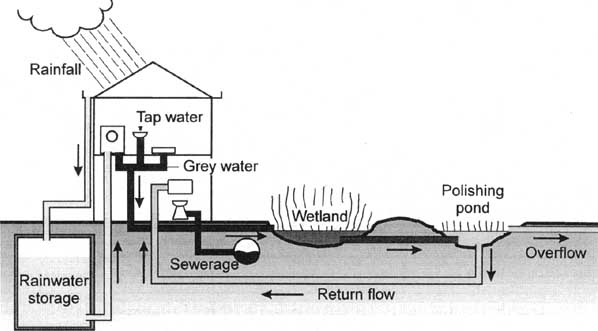
gardening. In the Netherlands a new concept has been developed for residential areas
where the grey water fraction is used for toilet flushing after treatment by a constructed
wetland (Figure 3.4). In the agricultural sector, measures are directed primarily at water
conservation through the application of, for example, water-saving irrigation techniques.
Box 3.1 Examples of successful waste minimisation in industry
Example 1
Tanning is a chemical process which converts putrescible hides and skins into stable leather.
Vegetable, mineral and other tanning agents may be used (either separately or in combination) to
produce leather with different qualities and quantities. Trivalent chromium is the major tanning
agent, producing a modern, thin, light leather. Limits have been set for the discharge of the
chromium. Cleaner production technology was used to recover the trivalent chromium ion from
the spent liquors and to reuse it in the tanning process, thereby reducing the necessary end-of-
pipe treatment cost to remove chromium from the wastewater.
Tanning of hides is carried out with basic chromium sulphate, Cr(OH)SO4. The chromium
recovery process consists of collecting and treating the spent tanning solution after its use,
instead of simply wasting it. The spent liquor is sieved to remove particles and fibres. Through the
addition of magnesium oxide, the valuable chromium precipitates as a hydroxide sludge. By the
addition of concentrated sulphuric acid, this sludge dissolves and yields the chromium salt
(Cr(OH)SO4) solution that can be reused. Whereas in a conventional tanning process 20-40 per
cent of the used chrome is lost in the wastewater, in this waste minimisation process 95-98 per
cent of the waste chromium can be recycled.
This recovery technique was first developed and applied in a Greek tannery. The increased
yearly operating costs of about US$ 30,000 were more then compensated for by the yearly
chromium savings of about US$ 74,000. The capital investment of US$ 40,000 was returned in
only 11 months.
Example 2
Sulphur dyes are a preferred range of dyes in the textile industry, but cause a significant
wastewater problem. Sulphur dyes are water-insoluble compounds that first have to be converted
into a water-soluble form and then into a reduced form having an affinity for the fibre to be dyed.
The traditional method of converting the original dye to the affinity form is treatment with an
aqueous solution of sodium sulphide. The use of sodium sulphide results in high sulphide levels
in the textile plant wastewater which exceed the discharge criteria. Therefore, end-of-pipe
treatment technology is necessary.
To avoid capital expenditure for wastewater treatment, a study was undertaken in India of
available methods of sulphur black colour dyeing and into alternatives for sodium sulphide. An
alternative chemical for sodium sulphide was found in the form of hydrol, a by-product of the
maize starch industry. Only minor adaptations in the textile dyeing process were necessary. The
introduction of hydrol did not involve any capital expenditure and sulphide levels in the mill's
wastewater were reduced from 30 ppm to less than 2 ppm. The savings resulting from not having
to install additional end-of-pipe treatment to reduce sulphide level in the wastewater were about
US$ 20,000 in investment and US$ 3,000 a year in running costs.
Waste minimisation involves not only technology but also planning, good housekeeping,
and implementation of environmentally sound management practices. Many obstacles
prevent the introduction of these new concepts in existing or even in new facilities, such
as insufficient awareness of the environmental effects of the production process, lack of
understanding of the true costs of waste management, no access to technical advice,
insufficient knowledge of the implementation of new technologies, lack of financial
resources and, last but not least, social resistance to change.
Figure 3.4 Potential reuse of grey water for toilet flushing after treatment by a
constructed wetland (Based on van Dinther, 1995)
In the past, the requirements of most regulatory agencies have centred on treatment and
control of industrial liquid wastes prior to discharge into municipal sewers or surface
waters. As a result, over the last 20 years the number of industries emitting pollutants
directly into aquatic environments reduced substantially. However, most of the
implemented environmental protection measures consisted of end-of-pipe treatment
technologies, with the "end" located either inside the factory or industrial zone, or at the
entry of the municipal sewage treatment plant. As a consequence the industry pays for
its share in the cost of sewer maintenance and treatment operation. In both cases, the
industry should be charged for the treatment and management effort that has to take
place outside the factory, in particular in the municipal treatment works. This charge
should be made up of the true, overall treatment cost. By this principle, industries are
specifically encouraged:
· To prevent waste production by Interfering in the production process.
· To reduce the occurrence of hydraulic or organic peak loads that may render a
municipal treatment system more expensive or vulnerable.
· To treat their waste flows to meet discharge requirements, to prevent damage to the
municipal sewer or to realise cost savings for municipal treatment.
Table 3.8 Typical regulations for industrial wastewater discharge into a public sewer
system in the United Kingdom, Hungary and The Netherlands
Variable UK
Hungary Netherlands
pH 6-10
6.5-10
6.5-10
Temperature (°C)
<40
nrs
<30
Suspended solids (mg l-1) <400 nrs
_1
Heavy metals (mg l-1) <10 specific
_1
Cadmium (mg l-1) <100
<10,000 _1
Total cyanide (mg l-1) <2 <1 _1
Sulphate (mg l-1) <1,000
<400
<300
Oil and grease (mg l-1) <100 <60 _1
nrs No regulations set
1 No coarse, explosive or inflammable solids are allowed. Contaminants that might
interfere with biological treatment should be in concentrations that do not differ from
domestic sewage
Sources: UN ECE, 1984; Appleyard, 1992
Table 3.8 provides examples of discharge criteria into municipal sewers. A method to
calculate pollution charges into sewers or the environment is provided in Box 3.2.
3.5 Sewage conveyance
3.5.1 Storm water drainage
In many developing countries, stormwater drainage should be part of wastewater
management because large sewage flows are carried into open storm water drains or
because stormwater may enter treatment works with combined sewerage. In
industrialised countries, stormwater drainage receives great attention because it may be
polluted by sediments, oils and heavy metals which may upset the subsequent
secondary and tertiary treatment steps.
In urbanised areas, the local infiltration capacity of the soil is not sufficient usually to
absorb peak discharges of storm water. Large flows often have to be transported in short
periods (20-100 minutes) over long distances (500-5,000 m). Drainage cost is
determined, to a large extent, by the actual flow rate of the moment and, therefore,
retention in reservoirs to dampen peak flows allows the use of smaller conduits, thereby
reducing drainage cost per surface area. In tropical countries, peak flow reduction by
infiltration may not be feasible because the peak flows can by far exceed the local
infiltration capacities.
Box 3.2 Calculation of pollution charges based on "population equivalents"
Calculation of the financial charges for industrial pollution in the Netherlands is based on standard
population equivalents (pe):
where Q
= wastewater flow rate (m3 d-1)
COD = 24 h-flow proportional COD concentration (mg COD l-1)
TKN = 24 h-flow proportional Kjeldahl-N concentration (mg N l-1)
136 = waste load of one domestic polluter (136 g O2-consuming substances per day)
and by definition set at one population equivalent.
Heavy metal discharges are charged separately:
· Each 100 g Hg or Cd per day are equivalent to l pe.
· Each 1 kg of total other metal per day (As, Cr, Cu, Pb, Ni, Ag, Zn) is equivalent to 1 pe.
An annual charge of US$ 25-50 (1994) is levied per population equivalent by the local Water
Pollution Control Board; the charge is region specific and relates to the Board's overall annual
expenses.
3.5.2 Separate and combined sewerage
In separate conveyance systems, storm water and sewage are conveyed in separate
drains and sanitary sewers, respectively. Combined sewerage systems carry sewage
and storm water in the same conduit. Sanitary and combined sewers are closed in order
to reduce public health risks. Separate systems require investment in, and operation and
maintenance of, two networks. However, they allow the design of the sanitary sewer and
the treatment plant to account for low peak flows. In addition, a more constant and
concentrated sewage is fed to the treatment plant which favours reliable and consistent
process performance. Therefore, even in countries with moderate climate where the
rainfall pattern would favour combined sewerage (rainfall well distributed over the year
and with limited peak flows) newly developed residential areas are provided, increasingly,
with separate sewerage. Combined sewerage is generally less suitable for developing
countries because:
· Sewerage and treatment are comparatively expensive, especially in regions with high
rain intensity during short periods of the year.
· It requires simultaneous investment for drainage, sewerage and treatment.
· There is commonly a lack of erosion control in unpaved areas.
Combined sewerage is most appropriate for more industrialised regions with a phased
urban development, with an even rainfall distribution pattern over the year and with soil
erosion control by road surface paving. The advantage of combined sewerage is that the
first part of the run-off surge, which tends to be heavily polluted, is treated along with the
sewage. The sewage treatment plants have to be designed to accommodate, typically,
two to five times the average dry weather flow rate, which raises the cost and adds to
the complexity of process control. The disadvantage of the combined sewer is that
extreme peak flows cannot be handled and overflows are discharged to surface water,
which gets contaminated with diluted sewage. These overflows can create serious local
water quality problems.
Sanitary sewers are feasible only in densely populated areas because the unit cost per
household decreases. Although most street sewers carry only small amounts of sewage,
the construction cost is high because they require a minimum depth in order to protect
them against traffic loads (minimum soil cover of 1 m), a minimum slope to ensure
resuspension and hydraulic flushing of sediment to the end of the sewer, and a minimum
diameter to prevent blockage by faecal matter and other solids (preferably 25 cm
diameter). The required flushing velocity (a minimum of 0.6 m s-1 at least once a day)
occurs when tap water consumption rates in the drainage area are in excess of 60 l cap-1
d-1.
To reduce costs, sewers may use smaller diameters, may be installed at less depth and
may apply a milder gradient. However, these measures require entrapment of settleable
solids in a septic tank prior to discharge into the sewer. Such small-bore sewers are only
cost-effective if they are maintained by the local community. This demands a high level
of sustained community participation. Small-bore sewers may, ultimately, discharge into
a municipal sanitary sewer or a treatment plant. Alternatively, in flat areas with unstable
soils and low population density, small-bore pressure or vacuum sewers can be applied,
but these are not considered a "low-cost" option.
Successful examples of low-cost small-bore sewerage are reported from Brazil,
Colombia, Egypt, Pakistan and Australia. At population densities in excess of 200
persons per hectare, these small-bore sewer systems tend to become more cost
effective than on-site sanitation. Companhia de Saneamento Basico do Estado de São
Paulo (SABESP, São Paulo, Brazil) estimates the average construction cost (1988) for
small towns to be US$ 150-300 per capita for conventional sewerage and US$ 80-150
per capita for simplified, small-bore sewerage (Bakalian, 1994). It is common in
developing countries for most plot owners not to desludge their septic tank or cess pit
regularly or adequately. Examples from Indonesia and India show that overflowing septic
tanks are sometimes illegally connected to public open drains or sewers, and that during
desludging operations often only the liquid is removed leaving the solids in the septic
tank. Therefore, the implementation of small-bore sewerage requires substantial
investment in community involvement to avoid the major failure of this technology.
3.6 Costs, operation and maintenance
Investment costs notably cover the cost of the land, groundwork, electromechanical
equipment and construction. Recurring costs relate mainly to the paying back of loans
(interest and principal), and to the costs for personnel, energy and other utilities, stores,
laboratories, repair and sludge disposal. Both types of cost may vary considerably from
country to country, as well as in time. Any financial feasibility analysis requires the use of
a discount factor. This factor depends on inflation and interest rates and is also subject
to substantial fluctuations. Therefore, comparing different technologies is always difficult
and requires extensive expert analysis. Nevertheless, Figure 3.5 offers typical
comparative cost levels (for industrialised countries) for primary, secondary and tertiary
treatment of domestic wastewater. Table 3.9 provides a comparison of the unit
construction costs for on-site and off-site sanitation for different world regions.
Operation and maintenance (O&M) is an essential part of wastewater management and
affects technology selection. Many wastewater treatment projects fail or perform poorly
after construction because of inadequate O&M. On an annual basis, the O&M
expenditures of treatment and sewage collection are typically in the same order of
magnitude as the depreciation on the capital investment. Operation and maintenance
requires:
· Careful exhaustive planning.
· Qualified and trained staff devoted to its assignment.
· An extensive and operational system providing spare parts and O&M utilities.
· A maintenance and repair schedule, crew and facility.
· A management atmosphere that aims at ensuring a reliable service with a minimum of
interruptions.
· A substantial annual budget that is uniquely devoted to O&M and service improvement.
Maintenance policy can be corrective, i.e. repair or action is undertaken when
breakdown is noticed, but this leads to service interruption and hence dissatisfied
customers. Ideally, maintenance is preventive, i.e. replacement of mechanical parts is
carried out at the end of their expected life time. This allows optimal budgeting and
maintenance schedules that have minimal impact on service quality. Clearly, O&M
requirements are important factors when selecting a technology; process design should
provide for optimal, but low cost, O&M.
Figure 3.5 Typical total unit costs for wastewater treatment based on experience
gained in Western Europe and the USA (After Somlyody, 1993)
Table 3.9 Typical unit construction cost (US$ cap-1) for domestic wastewater disposal in
different world regions (median values of national averages)
Region
Urban sewer connection Rural on-site sanitation
Africa 120
22
Americas 120
25
South-East Asia
152
11
Eastern Mediterranean
360
73
Western Pacific
600
39
Source: WHO, 1992
The most common reasons for O&M failure are inadequate budgets due to poor cost
recovery, poor planning of servicing and repair activities and weak spare parts
management, and inadequately trained operational staff.
3.7 Selection of technology
The technology selection process results from a multi-criteria optimisation considering
technological, logistic, environmental, financial and institutional factors within a planning
horizon of 10-20 years. Key factors are:
· The size of the community to be served (including the industrial equivalents).
· The characteristics of the sewer system (combined, separate, small-bore).
· The sources of wastewater (domestic, industrial, stormwater, infiltration).
· The future opportunities to minimise pollution loads.
· The discharge standards for treated effluents.
· The availability of local skills for design, construction and O&M.
· Environmental conditions such as land availability, geography and climate.
Considerations for industrial technology selection tend to be relatively straightforward
because the factors interfering in selection are primarily related to anticipated
performance and extension potential. Both of these are associated directly with cost.
3.7.1 On-site sanitation technologies
For domestic wastewater the suitability of various sanitation technologies must be
related appropriately to the type of community, i.e. rural, small town or urban (Table
3.10). Typically, in low-income rural and (peri-)urban areas, on-site sanitation systems
are most appropriate because:
· They are low-cost (due to the absence of sewerage requirements).
· They allow construction, repair and operation by the local community or plot owner.
· They reduce, effectively, the most pressing public health problems.
Moreover, water consumption levels often are too low to justify conventional sewerage.
With on-site sanitation, black toilet water is disposed in pit latrines, soak-aways or septic
tanks (Figure 3.6) and the effluent infiltrates into the soil or overflows into a drainage
system. Grey water can infiltrate directly, or can flow into drainage channels or gullies,
because its suspended solids and pathogen contents are low. The solids that
accumulate in the pit or tank (approximately 40 l cap-1 a-1) have to be removed
periodically or a new pit has to be dug (dual-pit latrine). Depending on the system, the
sludge may or may not be well stabilised. At the minimum solids retention time of six
months the sludge may be considered to be pathogen-free and it can be used in
agriculture as fertiliser or as a soil conditioner. Digestion of the full sludge content for
several months can be carried out if a second, parallel pit is used while the first is
digesting.
Table 3.10 Typical sanitation options for rural areas, small townships and urban
residential areas
Rural area
Township
Urban area
Community
<10,000 pe
10,000-50,000 pe
>50,000 pe
size
Density
<100 >100-<200
>200
(persons per
hectare)
Water supply
Well, handpump
Public standpost
House connection
service
Water
<50 l cap-1 d-1
50-100 l cap-1 d-1
>100 l cap-1 d-1
consumption
Sewage
<5 m3 ha-1 d-1 5-20
m3 ha-1 d-1 >20
m3 ha-1 d-1
production
Treatment
Dry on-site
Dry and wet on-site
Centre: Sewerage plus off-site
options
sanitation by VIP sanitation; small-bore
treatment. Peri-urban: wet on-
or composting
sewerage may be feasible
site sanitation with small-bore
latrines
depending on population
sewerage and septage
density and soil conditions
handling
VIP Ventilated Improved Pit latrine
The accumulating waste (septage) in septic tanks must be regularly collected and
disposed of. After drying and dewatering in lagoons or on drying beds it can be disposed
at a landfill site, or it can be co-composted with domestic refuse. Reuse in agriculture is
only feasible following adequate pathogen removal and provided the septage is not
contaminated with heavy metals. Alternatively, the septage can be disposed of in a
sewage treatment plant, or it can be stabilised and rendered pathogen-free by adding
lime (until the pH>10) or by extended aeration. The latter two methods, however, are
expensive.
3.7.2 On-site versus off-site options
In densely populated urban areas the generation of wastewater may exceed the local
infiltration capacity. In addition, the risk of groundwater pollution and soil destabilisation
often necessitates off-site sewerage. At hydraulic loading rates greater than 50 mm d-1
and less than 2 m unsaturated ground-water flow, nitrate and, in a later stage, faecal
coliform contamination may occur (Lewis et al., 1980).
The unit cost for off-site sanitation decreases significantly with increasing population
density, but sewering an entire city often proves to be very expensive. In cities where
urban planning is uncoordinated, implementation of a balanced mix of on-site and off-
site sanitation is most cost-effective. For example, in Latin America the population
density at which small-bore sewerage becomes competitive with on-site sanitation is
approximately 200 persons per hectare (Sinnatamby et al., 1986). The deciding factor in
these cost calculations is the cost of the collection and conveyance system.
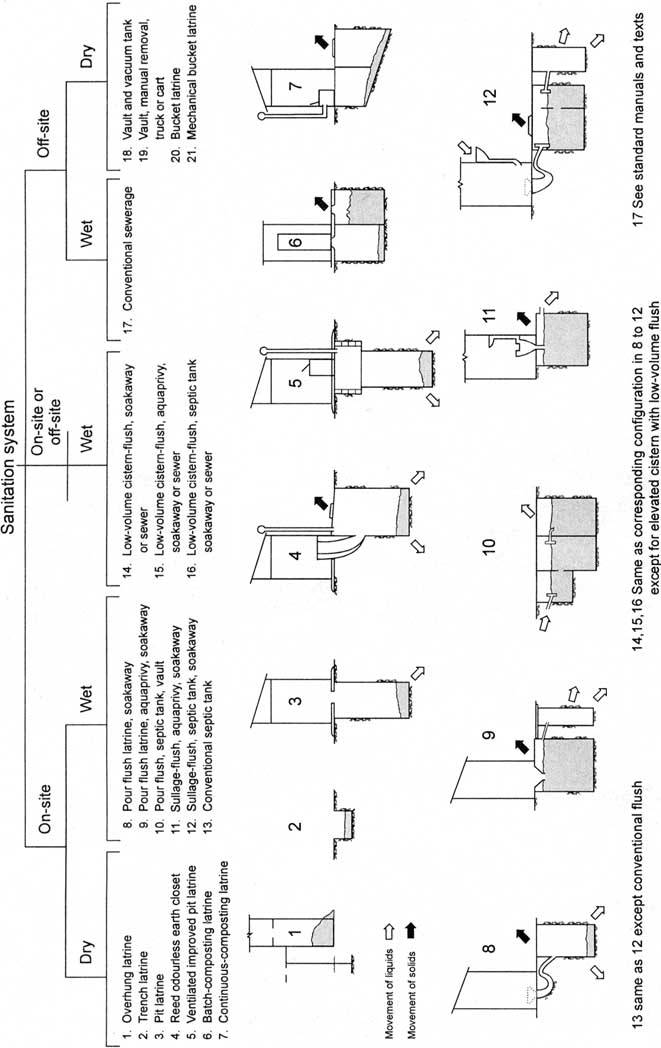
Figure 3.6 Classification of sanitation systems as on-site and off-site (based on
population density) and as dry and wet sanitation (based on water supply) (After
Kalbermatten et al., 1980)
Box 3.3 provides guidance for preliminary decision-making with respect to on- or off-site
sanitation. In situations where there is a high wastewater production per hectare per day,
sewerage is needed to transport either the liquids alone (in the case of small-bore
sewerage) or the liquid plus suspended solids (in the case of conventional sewerage).
Additional decisive parameters are whether shallow wells used for water supplies need
to be protected, the population density, the soil permeability and the unit cost. To
minimise groundwater contamination, a typical surface loading rate of 10 m3 ha-1 d-1 is
recommended (Lewis et al., 1980), provided that prevailing groundwater tables ensure at
least 2 m unsaturated flow in a vertical direction.
When the wastewater production rate is in excess of 10 m3 ha-1 d-1, conventional sanitary
sewerage may be feasible for managing municipal sewage, with or without the inclusion
of storm water. Studies indicate that at 200-300 persons per hectare, gravity sewerage
becomes economically feasible in developing countries; in industrialised countries the
equivalent population density is about 50 persons per hectare.
If groundwater protection is not required, the infiltration rate may exceed 10 m3 ha-1 d-1,
provided the soil permeability and stability allow it. If soil permeability is low, off-site
sanitation needs consideration. Depending on the socio-economic environment and the
degree of community involvement that can be generated, small-bore sewerage may be
feasible. In such cases additional stormwater drainage facilities must be provided.
In addition to technical, logistic and financial criteria, reliable management by a local
village-based entity or local government is essential for sustainable functioning of the
system. Most off-site treatment technologies benefit from economies of scale although
anaerobic technologies tend to scale down easily to township or local level without the
unit cost rising seriously. This makes anaerobic technologies suitable for inclusion in
urban sanitation at community level (Alaerts et al., 1990). This "community on-site"
option can stimulate more disciplined operation and desludging when compared with the
often poor performance of individual units. At the same time, it retains the advantage
that it can be managed by a local committee and semi-skilled caretakers.
3.7.3 Off-site centralised treatment technologies
There is a large variety of off-site treatment technologies. The selection of the most
appropriate technology is determined, first of all, by the composition of the wastewater
flow arriving at the treatment plant and also by the discharge requirements. Questions
for assessing the expected composition and behaviour of the sewage to be treated
include:
· To what extent is industrial wastewater included?
· Will sewerage be separate, combined or small-bore?
· Is groundwater expected to infiltrate into the sewer?
· Are septic tanks removing settleable solids prior to discharge into the conveyance
system?
· What is the specific water and food consumption pattern?
· What is the quality of the drinking water?
Box 3.3 Preliminary assessment for on-site sanitation, intermediate small-bore sewerage or
conventional off-site sewerage for domestic or municipal wastewater disposal
- Not valid
+ Valid
DWF Dry weather flow (m3 d-1)
Wastewater production
population density (pe ha-1) × specific wastewater
production (WPR) (l pe-1 d-1)
Local infiltration
infiltration area available (m2 ha-1) × long-term applicable
potential (LIP): infiltration rate (m3 m-2 d-1); LIP at least equal
to WPR
Groundwater at risk
This may occur if: depth of unsaturated zone is less than 2
m, the hydraulic load exceeds 50 mm d-1, or shallow wells
for potable supplies exist within a distance (in metres) of 10
times the horizontal groundwater flow velocity (m d-1)
Each off-site treatment plant is composed of unit processes and operations that enable
the effluent quality to meet the criteria set by the regulatory agency. Therefore, when
selecting a technology the first step is to develop a complete flow diagram where all unit
processes and operations are put together in a logical fashion. Off-site treatment
systems are generally composed of primary treatment, usually followed by a secondary
stage and, in some instances, a tertiary or advanced treatment stage. Table 3.7
summarises the potential performance of common technologies that can be applied in
wastewater treatment.
Primary treatment
In most treatment plants mechanical primary treatment precedes biological and/or
physicochemical treatment and is used to remove sand, grit, fibres, floating objects and
other coarse objects before they can obstruct subsequent treatment stages. In particular,
the grit and sand conveyed through combined sewers may settle out, block channels
and occupy reactor space. Additional facilities may be designed to equalise peak flows.
Approximately 50-75 per cent of suspended matter, 30-50 per cent of BOD and 15-25
per cent of Kjeldahl-N and total P are removed at moderate cost by means of settling.
Settling tanks that include facilities for extended sludge or solids retention may facilitate
the stabilisation of sludge and are, therefore, convenient for small communities.
Physicochemical processes may be incorporated in the primary treatment stage in order
to further enhance removal efficiencies, to adjust (neutralise) the pH, or to remove any
toxic or inhibitory compounds that may affect the functioning of the subsequent
treatment steps. Flocculation with aluminium or iron salts is often used. Such enhanced
primary treatment is comparatively cheap in terms of capital investment but the running
costs are high due to the chemicals that are required and the additional sludge produced.
This approach is attractive when it is necessary to expand the plant capacity due to a
temporary (e.g. seasonal) overload.
Secondary treatment
The most common technology used for secondary treatment of wastewater relies on
(micro)biological conversion of oxygen consuming substances such as organic matter,
represented as BOD or COD, and Kjeldahl-N. The technologies can be classified mainly
as aerobic or anaerobic depending on whether oxygen is required for their performance,
or as mechanised or non-mechanised depending on the intensity of the mechanised
input required. Table 3.11 provides a matrix classification of available (micro)biological
treatment technologies. Further detailed information is available in Metcalf and Eddy
(1991) and Arceivala (1986).
The choice between aerobic and anaerobic technologies has to consider mainly the
added complexity of the oxygen supply that is need for aerobic technologies. The supply
of large amounts of oxygen by a surface aeration or bubble dispersion system adds to
the capital cost of the aeration equipment substantially, as well as to the running cost
because the annual energy consumption is rather high (it can reach 30 kWh per
population equivalent (pe)).
The choice between mechanised or non-mechanised technologies centres on the locally
or nationally available technology infrastructure which may ensure a regular supply of
skilled labour, local manufacturing, operational and repair potential for used equipment,
and the reliability of supplies (e.g. power, chemicals, spare parts). Additional key
considerations are land requirements and the potential for biomass resource recovery. In
general, non-mechanised technologies rely on substantially longer retention time to
achieve a high degree of contaminant removal whereas mechanised systems use
equipment to accelerate the conversion process. If land costs are in excess of US$ 20
per square metre, non-mechanised systems lose their competitive cost advantage over
mechanised systems. Resource recovery may be possible if, for example, the algal or
macrophyte biomass generated is marketable, generating revenue and employment
opportunities. For example, constructed wetlands using Cyperus papyrus may generate
about 40-50 tonnes of standing biomass per hectare a year which can be used in
handicraft or other artisanal activities.
For non-biodegradable (mainly industrial) wastewaters physicochemical alternatives
have been developed that rely on the physicochemical removal of contaminants by
chemical coagulation and flocculation. The generated sludges are typically heavily
contaminated and have no potential for reuse other than for landfill.
Overall, the selection process for the most appropriate secondary technology may have
to be decided using multi-criteria analysis. In addition to the overall unit costs, the
environmental, aesthetic and health risks involved, the quality standards to be met, the
skilled staff and land requirements, and the reliability of the potential for recovery by the
technology, all have to be evaluated to give a total score that indicates the feasibility of
each technology for a particular country or location (Handa et al., 1990).
Table 3.11 Classification of secondary treatment technology
Conversion
Mechanised technology
Non-mechanised technology
method
Aerobic
Activated sludge
Facultative stabilisation ponds
Trickling filter
Maturation ponds
Rotating bio-contactor
Aquaculture (e.g. algal, duck weed or fish
ponds)
Constructed
wetlands
Anaerobic
Upflow anaerobic sludge bed
Anaerobic ponds
(UASB)
Anaerobic (upflow) filter
Physicochemical treatment. Physicochemical technologies can achieve significant BOD,
P and suspended solids reduction, although it is generally not the preferred option for
domestic sewage because removal rates for organic matter are rather poor (Table 3.12).
It is often used for industrial wastewater treatment to remove specific contaminants or to
reduce the bulk pollutant load to the municipal sewer. Physicochemical treatment can
also be combined with primary treatment to enhance removal processes and to reduce
the load on the subsequent secondary treatment stage. For wastewater with a high
organic matter content, like domestic sewage, (micro)biological methods are commonly
preferred because they have lower operational costs and achieve a higher reduction of
BOD.
The skills required to operate chemical dosing equipment, and the difficulty in ensuring a
reliable supply of chemicals are often prohibitive for the selection of physicochemical
technologies in developing countries where systems are more prone to malfunctioning.
In particular, the fluctuating flow and composition of the incoming sewage makes
frequent adjustments of the chemical dosing necessary. Biological treatment systems
are more sturdy and ensure a constant effluent quality because they have a high internal
buffering capacity for peak flows and loads.
Examples of physicochemical processes used in industrial applications include:
· Chemical oxidation with, for example, O2, O3 or Cl2 (cyanide removal and oxidation of
refractory organic compounds).
· Chemical reduction (for example, H2S assisted conversion of Cr (VI) into Cr (III)).
· Desorption (stripping) (NH3 and odorous gas removal).
· Adsorption on activated carbon (removal of refractory organics and heavy metals).
· Ultra- and micro-filtration (separation of colloidal and dissolved compounds).
Table 3.12 Advantages and disadvantages of physicochemical treatment of domestic or
municipal wastewater
Advantages Disadvantages
Compact technology with low
Chemical dosing is labour intensive due to fluctuating sewage
area needs
load and composition
Good removal of micro-
Generation of chemical sludges
pollutants and P
Fast start-up
High unit cost per m3 of water treated
Insensitivity to toxic compounds
Anaerobic treatment. Aerobic treatment methods have traditionally dominated treatment
of domestic and industrial wastewater. Since the 1970s, however, anaerobic treatment
has become the preferred technology for concentrated organic wastewater from, for
example, breweries, alcohol distilleries, fermentation industries, canning factories, pulp
and paper mills (Hulshoff Pol and Lettinga, 1986). The principal characteristic of
anaerobic processes is that degradation of the organic pollutants takes place in the
absence of oxygen. The bacteria produce considerable quantities of methane gas. In
addition, the process can proceed at exceptionally high hydraulic loading rates. Of the
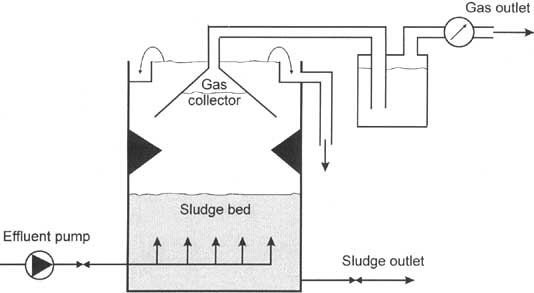
many process design alternatives, the Upflow Anaerobic Sludge Blanket (UASB)
process is the most cost-effective in most types of industrial wastewater treatment
(Figure 3.7). The reactor consists of an empty volume covered with a plate settler zone
to catch and to recycle suspended matter escaping from the sludge blanket below. The
water flows upwards through a blanket of suspended granules or floes containing the
active biomass. The methane and CO2 bubbles are caught below the plate settlers and
taken out of the reactor separately.
World-wide, over 400 anaerobic plants treat industrial wastewater, whereas operational
experience on domestic sewage derives from approximately 10 full-scale UASB plants
(size 20,000-200,000 pe) in Colombia, Brazil and India (Alaerts et al., 1990; Draaijer et
al., 1992; Schellinkhout and Collazos, 1992; van Haandel and Lettinga, 1994). Whereas
the aerobic process achieves 90-95 per cent removal of BOD, the anaerobic process
achieves only 75-85 per cent necessitating, in most cases, post-treatment to meet
effluent standards. Anaerobic treatment also provides minimal N and P removal but
generates much less, and a better stabilised, sludge. Biogas recovery is only feasible on
a large scale or in an industrial context. Many tropical developing countries would
probably prefer anaerobic processes because of the numerous agro-industries and the
(often) high domestic sewage temperatures.
Figure 3.7 Schematic representation of the Upflow Anaerobic Sludge Blanket
(UASB) reactor
The choice between aerobic and anaerobic treatment depends primarily on the
wastewater characteristics (Box 3.4). If the average sewage temperature is above 20 °C
(with a minimum of 18 °C over a maximum period of 2 months) and is highly
biodegradable (COD:BOD ratio below 2.5) and concentrated (typically BOD > 1,000 mg
l-1), anaerobic treatment has clear economic advantages. If neither condition can be met,
aerobic treatment is the only feasible option. If only one condition is met the choice is
determined by additional considerations such as:
· Desired effluent quality: anaerobic technologies yield lower removal efficiencies. The
presence of residual BOD, ammonium and, occasionally, sulphide in the effluent may
require post-treatment.
· Sludge handling and disposal: anaerobic sludge production is less than half of that in
aerobic treatment plants, and the sludge is already stabilised which facilitates further
processing.
· Effluent use: anaerobic treatment retains more nutrients (N, P, K) and thus effluent
have higher potentials for use in irrigation.
· Reliability of power supply: aerobic treatment performance is highly dependent on
power input for aeration and mixing. Power failure may create rapid malfunctioning of
aerobic plants while anaerobic systems are fairly resistant to periods of no power supply.
· Local potential for selling biogas.
Box 3.4 Steps in deciding between the secondary treatment alternatives of physicochemical,
aerobic and anaerobic treatment technologies
T
Annual sum of monthly average sewage temperatures (in °C)
Tot N
Total nitrogen content of treated effluent (mg N l-1)
Tot P
Total phosphorus content of treated effluent (mg P l-1)
When high effluent standards are to be met, and the cost of land is moderate to high, the
combination of a UASB plant plus aerobic post-treatment is often decisively more cost-
effective than conventional aerobic treatment.
Non-mechanised treatment. The availability of flat land is a decisive criterion in selecting
between non-mechanised and mechanised technologies (Box 3.5). Land-intensive
systems such as stabilisation ponds, aquaculture, pisciculture and constructed wetlands
may be feasible only when flat land costs are below US$ 5 per square metre. Such
systems typically require 5-10 m2 per population equivalent and are not usually
demanding with respect to O&M, provided the wastewater is of domestic origin. Land-
intensive treatment may, particularly in developing countries, better fit a resource
recovery scenario because the produced biomass can sometimes be harvested and
used to generate income. Algae-based stabilisation ponds are in operation on all
continents for sewage treatment or for additional treatment of partially treated effluent;
although they sometimes suffer from sulphide or ammonium and from comparatively
high suspended solids content in the effluent. Such ponds are characterised according
to their purpose and dimensions (Table 3.13). Stabilisation ponds operate without forced
retainment of the active biomass while the oxygen is provided from the photosynthesis of
the algae present in the ponds and by re-aeration by the wind.
Box 3.5 Steps in the selection of natural or mechanised wastewater treatment
RBC Rotating biological contactor (biodisc system)
According to studies by consultants, at a land cost of US$ 20 per square metre the total annual
cost for natural wastewater treatment systems will reduce their feasibility over mechanised
treatment technologies. The cost savings obtained by omitting mechanical equipment will be
completely offset against the high cost for land acquisition (World Bank Workshop held in
December 1993).
Mechanised aerobic treatment technologies include activated sludge, RBC and trickling filters.
Natural treatment technologies include stabilisation ponds, constructed wetlands and aquaculture
systems.
Table 3.13 Typical features of stabilisation ponds
Typical
Anaerobic pond
Facultative pond
Maturation pond
feature
Objective
TSS removal
BOD removal
Nutrient and pathogen removal
Loading rate 0.1-0.3 kg BOD m-3 d-1 100-350 kg BOD ha-1 d-1 At least two ponds in series, each
5 days retention
Typical depth 2-5 m
1-2 m
1-1.5 m
Performance TSS: 50-70%
TSS: increase
TSS: 20-30%
BOD: 30-60%
BOD: 50-70%
BOD: 20-50%
Coliforms: 1 order of Coliforms: 1-2 orders of Coliforms: 3-4 orders of
magnitude
magnitude
magnitude
Problems
Odour release
Algal TSS increase
Area requirement
TSS Total suspended solids
BOD Biochemical oxygen demand
In aquaculture and constructed wetlands, macrophytes (plants) are grown to suppress
algal growth by shielding the water column from light, by absorbing the nutrients and by
assisting the oxygen transfer into the water. The floating plant duckweed (Lemnaceae),
is particularly promising for aquaculture because it grows abundantly and can easily be
harvested. In constructed wetlands, wastewater is made to flow either horizontally or
vertically through the root zone of a permeable soil planted with vegetation. The plants, if
regularly harvested, create a sink for the nutrients by their uptake and assimilation of N
and P. Importantly, they also provide niches for bacteria that reduce BOD, and that
enhance nitrification, denitrification and P-fixation. They also provide niches for predator
organisms that contribute to pathogen removal. Such wetlands offer good prospects for
small-scale operation in remote tropical areas, although this approach has not yet been
demonstrated at full scale. Fish can also be grown in stabilisation ponds to control algal
growth, although their consumption can present public health risks. Sewage-based
pisciculture is applied on a small scale in China, Indonesia and other East Asian
countries; large-scale applications can be found in Calcutta and Munich, amongst other
places.
Aerobic mechanised treatment. If flat land is scarce or expensive, and if anaerobic
technologies are not feasible, the remaining option is to use conventional, aerobic,
mechanised technologies. Most wastewater treatment plants all over the world are
presently of this type, although they tend to be less appropriate in low-cost environments.
They can be divided according to their method of sludge retention, i.e. in fixed-biofilm or
in suspended growth reactors with sludge recycling. In biofilm reactors, micro-organisms
are immobilised because they are attached to an inert support (e.g. lava stones, plastic
rings or bio-disc) and are in constant contact with the wastewater and with the air that
flows through the open pores. In suspended growth systems, the micro-organisms and
the wastewater are in constant contact through mechanical mixing, which also ensures
aeration.
Biofilm reactors retain their biomass better than suspended growth reactors and can
therefore handle hydraulic fluctuations and low BOD concentrations more efficiently.
However, the operational control of biofilm reactors is fairly limited. By contrast,
suspended growth reactors allow better control and generally produce a higher quality
effluent.
Typical suspended growth systems are the activated sludge system and extended
aeration; trickling filter and rotating bio-discs are both biofilm-based systems. These
systems require less than 1 m2 pe-1 but, depending on the situation, they consume
somewhat more space than anaerobic technologies. The activated sludge system, in its
various designs, is the most widely applied - offering operational flexibility, high reliability
and resilience. An added advantage is that process control also offers the opportunity to
have several processes integrated in the system such as carbon oxidation, nitrification,
denitrification and biological P-removal. This is of great benefit in achieving high quality
effluents that meet the European Union (EU) guidelines (Table 3.14). Although trickling
filters are technically feasible and attractive because they are easy to operate and they
consume less energy, they generally have a lower removal efficiency for BOD and TSS,
they are sensitive to low temperatures and may be infested with flies and mosquitoes.
Their N and P removal is too low to justify wide application in countries with stringent
effluent quality standards (Table 3.15). Rotating bio-discs are not widely used because
they have low operational flexibility, potential mechanical problems and, often, a
complicated biofilm development.
A typical activated sludge process design that is becoming more popular in many
industrialised countries is the oxidation ditch. The low sludge loading (kg BOD per kg of
biomass per day) ensures, all in one reactor, BOD removal, advanced nitrification,
substantial denitrification, biological P removal and modest generation of well-stabilised
sludge. This even allows the primary treatment to be skipped. The carousel is a modified
version of the oxidation ditch with this enhanced capacity (Figure 3.8).
Table 3.14 European Community guidelines for wastewater discharged to sensitive
surface water bodies based on typical raw wastewater composition
Variable
Raw sewage composition EU guideline Percentage removal (%)
BOD5 (mg l-1)
250 25 90
Total N (mg l-1) 48
10
80
Total P (mg l-1) 12
1
90
Source: CEC, 1991
Table 3.15 Comparative analysis of the performance of the trickling filter and the
activated sludge process for secondary wastewater treatment
Parameter
Trickling filter
Activated sludge
BOD removal (%)1 80-90
90-98
Kjeldahl-N removal (%)
60-85
80-95
Total N removal (%)
20-45
65-90
Energy required (kWh cap-1 a-1) 10-15
20-30
O&M requirement
Medium
High
Pathogen removal
1-2 orders of magnitude 1-2 orders of magnitude
1 Not including BOD removal in primary treatment steps
If pathogen removal is essential, only non-mechanised systems featuring hydraulic
retention times of 20-30 days can provide satisfactory removal of faecal coliforms and
nematode eggs to the standard required by the WHO guidelines (WHO, 1989). All
mechanised treatment systems need additional chemical disinfection with chlorine or
other oxidative chemicals, or with UV irradiation. This adds to the treatment cost and the
operational complexity of the treatment technology and eventually may reduce the
reliability of the treatment plant to provide "safe effluents".
3.8 Conclusions and recommendations
World-wide attitudes to sustainable water resources management for the future are
being reconsidered. Conservation of water resources (with respect to quantity and
quality) is being increasingly emphasised as the means to address the anticipated and
increasing shortages of water resources of good quality in many parts of the world. This
water is needed to meet ever increasing domestic, industrial and agricultural demands.
Extrapolation of the increasing water consumption rates over the last ten years suggests
that huge shortages will occur in many populated areas of the world, particularly in the
arid and semi-arid world regions.
Figure 3.8 Novel carousel configuration of the oxidation ditch, activated sludge
system for achieving a final effluent with low total N and P levels
Solving sanitary problems of human and industrial waste flows in the future, especially
those generated in urban environments, may not necessarily be feasible using water
consuming technologies that rely on conventional sewerage, carrying and transporting
the suspended waste material away from the place where it was generated. Water
saving technologies, water recycling and reuse, will play an increasingly dominant role in
the future and will draw attention away from pollution control policies to waste prevention
and waste minimisation policies. Scenarios including the potential for recovery of
valuable resources will be increasingly promoted as they become more feasible aspects
of sustainable water resources management.
With urbanisation taking place world-wide, attention to water and sanitation will shift to
the densely populated urban and peri-urban areas where new incentives are created for
technology development. These incentives will be aimed at people with only marginal
financial resources available and with water supply levels that are too low to justify
conventional sewerage.
Separating wastewater flows (black and grey water, domestic and industrial, sewage
and rainwater) and the development of technologies that aim to make these individual
wastewater flows fit for reuse or recycling will, in the long run, contribute to sound water
resources management. In addition, such approaches will reduce public health risks and
environmental pollution, as well as the burden on the pollution carrying capacity of the
environment.
Technology selection for waste flows may therefore have to take a broader perspective
than purely meeting the present discharge standards formulated for the local situation.
Anticipating the above trends might stimulate the use of an additional criterion in
technology selection, i.e. sustainable use of scarce resources whether it be water,
nutrients, energy or space.
3.9 References
Alaerts, G.J., Veenstra, S., Bentvelsen, M. and van Duijl, L.A. 1990 Feasibility of
Anaerobic Sewage Treatment in Sanitation Strategies in Developing Countries. IHE
Report No 20, International Institute for Infrastructural, Hydraulic and Environmental
Engineering (IHE), Delft.
Appleyard, C. 1992 Industrial Wastewater Treatment. Lecture Notes for the International
Post-Graduate Course in Sanitary Engineering, International Institute for Infrastructural,
Hydraulic and Environmental Engineering (IHE), Delft.
Arceivala, S.J. 1986 Waste-water Treatment for Pollution Control. Tata Mc-Graw Hill
Publ. Ltd, New Delhi.
Ayers, R.S. and Westcot, D.W. 1985 Water Quality for Agriculture. FAO Irrigation and
Drainage Paper No. 29. United Nations Food and Agriculture Organization, Rome.
Bakalian, A. 1994 Simplified Sewerage: Design Guidelines. UNDP/World Bank Water
and Sanitation Programme Report 7, World Bank, Washington D.C.
CEC 1991 Directive concerning urban wastewater treatment (91/271/EEC). Commission
of the European Communities, Off. J. L135/40.
van Dinther, M. 1995 Greywater is good enough. De Volkskrant, April 22.
Draaijer, H., Maas, J.A.W., Schaapman, J.E. and Khan, A. 1992 Performance of the 5
MLD UASB reactor for sewage treatment at Kanpur, India. Wat. Sci. Tech.., 25(7), 123-
132.
Eckenfelder, W.W., Patoczka, J.B. and Pulliam, G.W. 1988 Anaerobic versus aerobic
treatment in the USA. In: E.R. Hall and P.N. Hobson [Eds] Advances in Water Pollution
Control. 5th International IAWPRC Conference on Anaerobic Digestion, Bologna,
International Association of Water Pollution Research and Control, London.
van Haandel, A.C. and Lettinga, G. 1994 Anaerobic Sewage Treatment. A Practical
Guide for Regions with a Hot Climate. John Wiley & Sons, Chichester.
Handa, B.K. 1990 Ranking of technology options for municipal wastewater treatment.
Asian Env., 12(3), 28-40.
Hulshoff Pol, L. and Lettinga, G. 1986 New technologies for anaerobic wastewater
treatment. Wat. Sci. Tech., 18(12), 41-53.
Kalbermatten, J.M., Julius DeAnne, S., Mara, D.D. and Gunnerson, G.G. 1980
Appropriate Technology for Water Supply and Sanitation. Volume 2, World Bank,
Washington, D.C.
Otis, R.J. and Mara, D.D. 1985 The Design of Small Bore Sewers. TAG Technical Note
No. 14, Technology Advisory Group, World Bank, Washington D.C.
Lewis, W.J., Foster, S.S.D. and Drasar, B.S. 1980 The Risk of Groundwater Pollution by
On-site Sanitation in Developing Countries. IRCWD Report No 01/82., International
Reference Center for Waste Disposal, Duebendorf, Switzerland.
Metcalf and Eddy Inc. 1991 Wastewater Engineering. Treatment Disposal and Reuse.
3rd edition, Mc-Graw Hill Book Co, Singapore.
Schellinkhout, A. and Collazos, C.J. 1992 Full-scale application of the UASB technology
for sewage treatment. Wat. Sci. Tech., 25(7), 159-166.
Sinnatamby, G., Mara, D. and McGarry, M. 1986 Shallow sewers offer hope to slums.
World Wat., 9(1), 39-41.
Somlyody, L. 1993 Looking over the environmental legacy. Wat. Qual. Int., 4, 17-20.
UN ECE 1984 Strategies, Technologies and Economics of Wastewater Management in
ECE Countries. Report E.84.II.E.18, UN European Commission for Europe, Geneva.
Veenstra, S. 1996 Environmental Sanitation. Lecture notes for the MSc course in
Sanitary Engineering, International Institute for Infrastructural, Hydraulic and
Environmental Engineering (IHE), Delft.
WHO 1989 Health Guidelines for the Use of Wastewater in Agriculture and Aquaculture.
WHO Technical Report Series No 517, World Health Organization, Geneva.
WHO 1992 The International Drinking Water and Sanitation Decade End of Decade
Review (as at December 1990). WHO/CW5/92.12, World Health Organization, Geneva.
World Bank 1994 World Development Report 1994 - Infrastructure for Development.
Oxford University Press, Oxford, New York.
Document Outline
- 3.1 Integrating waste and water management
- 3.2 Wastewater origin, composition and significance
- 3.3 Wastewater management
- 3.4 Pollution prevention and minimisation
- 3.5 Sewage conveyance
- 3.6 Costs, operation and maintenance
- 3.7 Selection of technology
- 3.8 Conclusions and recommendations
- 3.9 References