United Nations Environment Programme
IIIIi
A Directory of Environmentally
Sound Technologies for the
Integrated Management of Solid,
Liquid and Hazardous Waste for
Small Island Developing States
(SIDS) in the Pacific Region
Cataloguing-in-Publication Data
United Nations Environment Programme (UNEP) 2002. A directory of environmentally sound technologies
for the integrated management of solid, liquid and hazardous waste for Small Island Developing States
(SIDS) in the Pacific.
Note: Compiled by OPUS International in conjunction with SPREP & SOPAC
vi, 124 p.
ISBN: 92-807-2226-3.
1. Directories
2. Hazardous materials
3. Waste disposal
4. Wastewater treatment
I.
United Nations Environment Programme (UNEP)
II.
South Pacific Regional Environment Programme (SPREP)
III.
South Pacific Applied Geoscience Commission (SOPAC)
IV.
Title
V.
Series
United Nations Environment Programme
IIIIi
A Directory of Environmentally
Sound Technologies for the
Integrated Management of Solid,
Liquid and Hazardous Waste for
Small Island Developing States
(SIDS) in the Pacific Region
Compiled by OPUS International
in conjunction with the
South Pacific Regional Environment Programme (SPREP)
and the
South Pacific Applied Geoscience Commission (SOPAC)
July 2002
Prepared for printing by the
South Pacific Applied Geoscience Commission (SOPAC)
Suva, Fiji Islands
UNEP : Directory of Environmentally Sound Technologies for Waste Management in Pacific SIDS
CONTENTS
PREFACE............................................................................................................................................................................................. iii
ACKNOWLEDGEMENTS.................................................................................................................................................................v
1
Introduction...............................................................................................................................................................................1
1.1
Background...................................................................................................................................................................1
1.2
Purpose of the Directory...........................................................................................................................................2
1.3
Structure of the Directory.........................................................................................................................................3
2
Solid Waste Technologies.......................................................................................................................................................5
2.1
Introduction..................................................................................................................................................................5
2.1.1
What is a Sound Practice?........................................................................................................................6
2.1.2
Criteria for Evaluating Alternatives......................................................................................................7
2.1.3
Background Conditions that affect the selection of an EST in the Pacific Region..................7
2.2
Waste Reduction .........................................................................................................................................................9
2.2.1
The key concepts of waste reduction are:............................................................................................9
2.2.2
Tools for Environmentally Sound Technologies for Waste Reduction....................................10
2.3
Collection and Transfer...........................................................................................................................................13
2.3.1
Environmentally Sound Technology for Collection and Transfer of Waste...........................13
2.3.2
Principles for Selection of Collection Vehicles.................................................................................13
2.3.3
Sound Principles for Selection of Set-out Containers ....................................................................16
2.3.4
Sound Practice for Route Design and Operation ............................................................................16
2.3.5
Sound Practice for Transfer of Waste.................................................................................................18
2.3.6
Sound Practice in Keeping Streets Clean...........................................................................................19
2.4
Composting ................................................................................................................................................................21
2.4.1
Critical Lessons in Sound Composting Practice..............................................................................21
2.4.2
Sound Technologies for Composting..................................................................................................23
2.4.3
Sound Marketing Approaches for Composting ..............................................................................33
2.4.4
Environmental Impacts of Composting Technology.....................................................................33
2.4.5
Conclusions.................................................................................................................................................34
2.5
Incineration of Municipal Solid Waste...............................................................................................................34
2.5.1
Practice for Choosing Incineration Technology..............................................................................34
2.5.2
Environmental Impacts from Incineration Technology................................................................40
2.5.3
Conclusion...................................................................................................................................................40
2.6
Landfills and Other Methods of Disposal on Land........................................................................................41
2.6.1
Open Dumps..............................................................................................................................................41
2.6.2
Land Reclamation Using Solid Waste................................................................................................43
2.6.3
Landfill Technology Summaries..........................................................................................................44
2.6.4
Sound Practices for Landfill Technology...........................................................................................47
2.7
Special Wastes............................................................................................................................................................52
2.7.1
Tires...............................................................................................................................................................52
2.7.2
Construction and demolition debris ...................................................................................................52
2.8
Information Sources for the Pacific Region ......................................................................................................53
3
Hazardous Waste Technologies..........................................................................................................................................54
UNEP July 2002
UNEP : Directory of Environmentally Sound Technologies for Waste Management in Pacific SIDS
3.1
Introduction................................................................................................................................................................54
3.1.1
Export of hazardous Waste....................................................................................................................55
3.2
Medical Waste............................................................................................................................................................55
3.3
Household and Agricultural Hazardous Waste .............................................................................................58
3.4
Used Oils.....................................................................................................................................................................59
3.5
Batteries........................................................................................................................................................................59
3.6
Asbestos.......................................................................................................................................................................60
3.7
Human excreta, sewage sludge, septage, and slaughterhouse waste......................................................60
3.8
Industrial waste.........................................................................................................................................................61
3.9
Information Sources for the Pacific Region ......................................................................................................61
4
Wastewater Technologies.....................................................................................................................................................64
4.1
Introduction................................................................................................................................................................64
4.2
Wastewater Collection and Transfer ..................................................................................................................64
4.2.1
Sewerage Systems.....................................................................................................................................66
4.3
Wastewater Treatment (Onsite) ...........................................................................................................................72
4.4
Septic Tank Systems.................................................................................................................................................78
4.5
Wastewater Treatment (Centralised and Decentralised) .............................................................................84
4.5.1
Preliminary Treatment ............................................................................................................................84
4.5.2
Primary Treatment....................................................................................................................................84
4.5.3
Secondary Treatment...............................................................................................................................84
4.5.4
Tertiary Treatment....................................................................................................................................85
4.6
Waterless toilets......................................................................................................................................................101
4.6.1
Continuous Composting Toilets.........................................................................................................101
4.6.2
Batch Compostimg Toilets ...................................................................................................................103
4.6.3
Maintenance of CTs................................................................................................................................103
4.6.4
Choosing a CT..........................................................................................................................................104
4.6.5
Acceptance ................................................................................................................................................104
4.7
Wastewater Reuse..................................................................................................................................................105
4.8
Wastewater Disposal Systems ............................................................................................................................108
4.8.1
Outfalls.......................................................................................................................................................108
4.9
"Zero" Discharge....................................................................................................................................................114
5
Bibliography..........................................................................................................................................................................120
6
Contact Persons ....................................................................................................................................................................122
7
Glossary..................................................................................................................................................................................124
UNEP July 2002
UNEP : Directory of Environmentally Sound Technologies for Waste Management in Pacific SIDS
PREFACE
As highlighted in the 1994 Barbados Programme of Action, waste management is a major
area of concern for Small Island Developing States (SIDS). SIDS, like other developing
countries, have problems with the management of waste. However, SIDS experience
additional constraints arising from small land areas, high dependence on imports and high
population densities exacerbated by high tourist inflows. Because of limited access to
appropriate technologies, on many occasions waste management technologies are
transferred from larger and more developed countries, and as such are not always suitable
for SIDS. Some SIDS have developed appropriate technologies which, with or without
adaptation, could be applied in similar situations. Unfortunately, the information has not
been shared with other SIDS in the same regions or in other regions. Hence the need for the
directory which compiles a list of practical technologies applicable to SIDS.
UNEP, in partnership with SIDS regional institutions, embarked on a programme to
improve the access of SIDS to appropriate technology. A draft directory containing
technologies found to be appropriate for SIDS from practical experience as well as literature
review was compiled. It was subjected to peer review at a global level by experts from
regional SIDS institutions (Caribbean, Indian, Mediterranean and Atlantic Ocean SIDS
(IMA/SIDS) and Pacific), UN agencies, the Commonwealth Secretariat as well as
universities. The review was made at the UNEP Meeting of Experts on Waste Management
in Small Island Developing States Waste Management in SIDS, held in London from 2 and
5 November 1999. The experts found the technologies to be appropriate to SIDS and
recommended that each SIDS region further reviews and adapts the technologies according
to their conditions.
The IMA/SIDS region adapted the technologies to suit their conditions and published the
A Directory of Environmentally Sound Technologies for the Integrated Management of Solid,
Liquid, and Hazardous Waste for Small Island Developing States (SIDS) in the Indian,
Mediterranean and Atlantic Region. This document `A Directory of Environmentally Sound
Technologies for the Integrated Management of Solid, Liquid, and Hazardous Waste for Small Island
Developing States (SIDS) in the Pacific Region' is the result of a review of the original
directory by national experts from the Pacific Island Countries in Majuro, in October 2001.
This publication is part of UNEP collaboration with SIDS on the implementation of the
Waste Management chapter of the Barbados Programme of Action. Through this initiative a
series of publications have been made. The first publication in 1998 was the Guidelines for
Solid Waste Management in the Pacific developed in collaboration with the South Pacific
Regional Environment Programme (SPREP). The second was in 1999, The Strategic
Guidelines for Integrated Waste Management in SIDS. These are planning guidelines
developed with input from all SIDS regions and subjected to intensive peer review. The
guidelines are based on the premise that, if systematic improvements are introduced at the
various stages of the waste cycle, the quantity of waste to be managed at each of the
subsequent stages would be reduced considerably.
UNEP July 2002
UNEP : Directory of Environmentally Sound Technologies for Waste Management in Pacific SIDS
The third document included in the UNEP waste management series is the IMA-SIDS Waste
Management Strategy with special emphasis on Minimisation and Resource Recovery. These were
developed with input from national experts in the region and adopted by the governments
in the region.
It is hoped that these publications will make a useful contribution to the promotion of
integrated waste management in SIDS, in particular those in the Pacific region, and will
foster an increased awareness about the special circumstances of SIDS, especially the fact
that these states face special constraints in their options for sustainable development.
Donald Kaniaru
Director
Division of Environmental Policy Implementation
United Nations Environment Programme (UNEP)
Nairobi, Kenya
UNEP July 2002
UNEP : Directory of Environmentally Sound Technologies for Waste Management in Pacific SIDS
ACKNOWLEDGEMENTS
This document represents the combined efforts and achievement of numerous people over the last
3 years in the Pacific, Caribbean and the Indian, Atlantic and Mediterranean SIDS regions. In
particular, UNEP and SOPAC, recognise the contributions made by Ed Burke and Jonathan
Thorpe, Opus International Consultants Ltd, New Zealand for compiling the document. We are
grateful to the following individuals who have contributed to this project: Vincente Santiago
(UNEP), Elizabeth Khaka (UNEP), Rhonda Bower (SOPAC), Leonie Crennan (Resource Strategist),
Mike Dworsky (ASPA) and Bruce Graham (SPREP).
We also acknowledge the contribution made by the Commonwealth Secretariat and
representatives from the Indian, Mediterranean, Atlantic Ocean and Caribbean regions during the
review of the technologies in London, from 2 to 5 November 1999. Our appreciation is also
extended to the national representatives from American Samoa, Cook Islands, Federated States of
Micronesia, Fiji Islands, Kiribati, Marshall Islands, Nauru, Niue, Palau, Papua New Guinea,
Samoa, Solomon Islands, Tonga, Tuvalu and Vanuatu for reviewing the Directory in Majuro,
Marshall Islands, October 2001.
UNEP July 2002
UNEP : Directory of Environmentally Sound Technologies for Waste Management in Pacific SIDS
ACRONYMS
ACP countries
: African, Caribbean and Pacific countries
ADB
: Asian Development Bank
ASPA
: American Samoa Power Authority
BOD
: Biological Oxygen Demand
COD
: Chemical Oxygen Demand
CT
: Composting Toilet
DVC
: Double Vault Composting.
EST's
: Environmentally Sound Technologies
FSM
: Federated States of Micronesia
GCL
: Geosynthetic Clay Liner
GW
: Groundwater
HRT
: Hydraulic Retention Time
MSWM
: Municipal Solid Waste Management
MSW
: Municipal Solid Waste
NZODA
: New Zealand Official Development Assistance
PCB's
: Polychlorobiphenyls
PIC's
: Pacific Island Countries
POPs
: Persistent Organic Pollutants
PVC
: Polyvinyl Chloride
RDF
: Refuse Derived Fuel
ROEC
: Reed Odourless Earth Closet
SANEX
: Sanitation Expert Systems.
SIDS
: Small Island Developing States
SOPAC
: South Pacific Applied Geoscience Commission
SPREP
: South Pacific Regional Environmental Programme.
SS
: Suspended Solids
UNEP-IETC
: United Nations Environment ProgramInternational Environmental Technology
Centre
UNESCO
: United Nations Education, Scientific and Cultural Organisation.
UNHCS Habitat
: United Nations Centre for Human Settlements
VIP
: Ventilated Improved Pit
WHO
: World Health Organisation
WM
: Waste Management
UNEP July 2002
UNEP : Directory of Environmentally Sound Technologies for Waste Management in Pacific SIDS
1
Introduction
1.1
Background
Small Islands have special physical, demographic and economic features. Their much
reduced areas, shortage of natural resources (arable land, freshwater, minerals and
conventional energy sources), geological complexity, isolation and widespread nature of
their territories, exposure to natural disasters (typhoons, hurricanes, cyclones, earthquakes,
volcanic eruptions and tsunamis) sometimes make the water resources, solid waste and
wastewater problems of these islands very serious (UNESCO, 1991).
The need for waste management in the Pacific Island Countries (PICs) was small for most
part of the last centuries as most waste products were biodegradable and populations were
dispersed. Commonly, wastes were disposed of through individual dumping in lagoon and
rivers or on unused land close to villages. Over the last decade, the region urbanized at a
very fast rate that the governments could not keep pace with facilities and services making
the disposal of wastes, both solid and liquid difficult. Urban population rose from 20.4 %
to 24.9 % in 1995 (United Nations Populations Division, 1996) and the trend is continuing.
The result of this rapid expansion is the pollution of water resources, difficulty in disposing
of solid and human wastes, increasing diseases related to poor and unsanitary living
conditions such as respiratory and gastro-intestinal complaints. Diseases related to water
supply and sanitation are prevalent especially in the informal settlements where dwellers
are living in marginal areas with inadequate waste disposal, potable water and sanitation
systems (Pacific Environment Outlook 1999).
The rapid urban population and increasing imports of non-biodegradable material and
chemicals related to agriculture and manufacturing have rapidly brought about a
confrontation with the realities of management of toxic and hazardous substances. All
PICs now share the problem of disposal of waste and the prevention of pollution. In major
towns, the search for environmentally safe and socially acceptable sites for waste disposal
has become a perennial concern that needs a sustainable solution. Inadequate sanitation for
the disposal or treatment of liquid wastes have resulted in high coliform contamination in
surface waters and in groundwater in urban areas. Pollution by toxins from industrial
wastes, effluent from abattoirs or food processing plants, biocides and effluent from
sawmills has also been reported.
According to the Pacific Environment Outlook (1999), the areas of concern in the Pacific
region until 2010 include the environmentally sound management of solid and liquid
wastes, toxic chemicals and hazardous wastes. Particular effort is required at the national
level to strengthen the capacity of island countries to minimize and prevent pollution. In
the long term because of the land constraints of islands, cost- effective disposal options are
limited. Pacific island countries will need to focus on reusing, recycling and minimizing
wastes and the use of technology appropriate to islands in order to manage the waste
generated.
UNEP July 2002
UNEP : Directory of Environmentally Sound Technologies for Waste Management in Pacific SIDS
Most SIDS do not have access to appropriate waste management technologies. Because of
this constraint, on many occasions, waste management technologies are transferred from
larger and more developed countries, and as such are not always suitable for SIDS. Some
SIDS have developed appropriate technologies which, with or without adaptation, could be
applied in similar situations. There are numerous waste management technologies used
throughout the world. Many of these technologies have been used in the Pacific, but have
failed for a range of different reasons. Some of the reasons for failure include being an
inappropriate technology, having insufficient operation and maintenance input, and a lack
of funding and/or skilled personnel. Unfortunately, the information has not been shared
with other SIDS in the same region or in other regions. Hence the need for this directory
which compiles a list of practical technologies applicable to the Pacific SIDS.
Waste management has been identified as a high priority area by PICs (Pacific
Environment Outlook 1999). It is also one of the 14 priority areas of the Barbados
Programme of Action. The Waste Management chapter of the Programme of Action urges
SIDS to `introduce clean technologies and treatment of wastes at the source and appropriate
technology for solid waste treatment' and the international community to `support the
strengthening of national and regional capabilities to carry out pollution monitoring and
research and to formulate and apply pollution control and abatement measures'. The need
to transfer environmentally sound technologies (EST) and improve co-operation and
building capacity within developing countries was underscored in Chapter 34 of Agenda
21. Improved access to information on environmentally sound technologies has been
identified as a key factor in transferring technologies to developing countries.
In response to the Barbados Programme of Action, the Twentieth Session of the United
Nations Environment Programme (UNEP) Governing Council adopted decision GC20/19
which invited the UNEP Executive Director to `prepare guidelines and programmes for
waste minimization, reduction treatment and disposal applicable under the constraints of
small island developing States'. This directory is part of UNEP's efforts to assist SIDS in the
management of wastes.
1.2
Purpose of the Directory
This Directory on Environmentally Sound Technologies for Waste Management in the
Pacific Small Island Developing States (SIDS) focuses primarily on proven sound
environmental technologies for waste management plus those currently successfully being
used in SIDS within the Pacific Region.
In addressing each broad waste management topic, sound practices are also provided,
based on lessons learnt from the past. These sound practices give guidelines for selection of
the most appropriate of the technologies listed for a given application. These sound
practices can also be used to evaluate any existing or new technologies that arise in the
future that are not listed in this directory.
UNEP July 2002
UNEP : Directory of Environmentally Sound Technologies for Waste Management in Pacific SIDS
Note that the technologies presented in this Directory are also applicable to Small Island
Developing States in other Regions.
1.3
Structure of the Directory
The Directory is divided into 3 major parts, which include
§
Solid Waste Technologies
Discusses information on different Municipal Solid Waste Management (MSWM)
technologies that are currently used in different regions of the world, and gives a
guide as to which of these are economically feasible, and Environmentally Sound
Technologies (ESTs).
§
Hazardous Waste Technologies
Addresses the proper management of various types of hazardous wastes, as they
require special handling, treatment and disposal due to their hazardous potential.
§
Liquid Waste or Wastewater Technologies
In SIDS wastewater disposal systems are just as important for public health as a
water supply distribution system. This section discusses various wastewater
treatment and disposal technologies from on-site systems to centralised and
decentralised systems.
The Directory is a simple guide, which tries to convey technical issues in an easy and
understandable manner and is a UNEP initiative to assist SIDS in addressing waste
management issues
UNEP July 2002
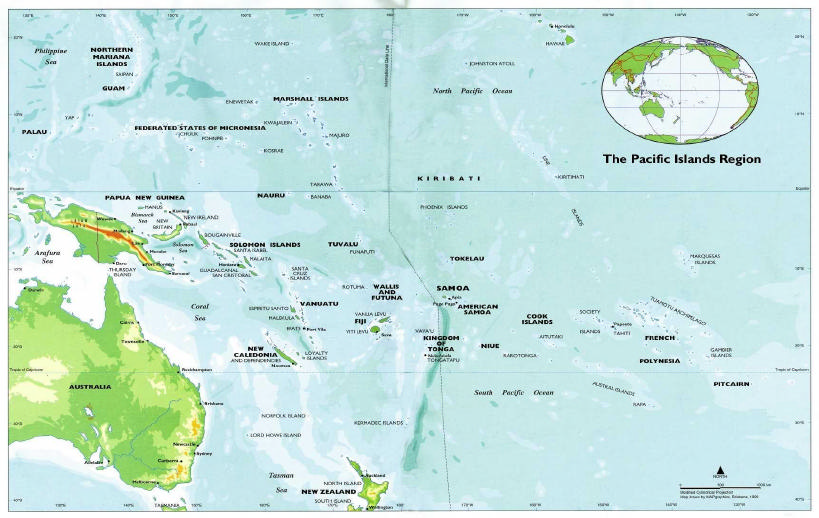
UNEP : Directory of Environmentally Sound Technologies for Waste Management in Pacific SIDS
Source: Map Graphics, Brisbane, 1996.
UNEP July 2002
4
UNEP : Directory of Environmentally Sound Technologies for Waste Management in Pacific SIDS
2
Solid Waste Technologies
2.1
Introduction
Prior to the introduction of imported goods, and packaging, the waste produced from a
typical Pacific Island was entirely organic in origin, and could be broken down or
composted without thought or problem. To varying degrees, the majority of Pacific Islands
have now moved from this lifestyle toward a cash based, consumer goods society. This
shift can be attributed to western influences, tourism, imported goods, and effects of
expatriate communities.
As a result, waste products which do not break down easily, and which are harmful to the
environment have increased to the point where significant problems are being experienced.
In the majority of cases, SIDS have not been aware of the need, or have not been able, to
developed suitable waste management systems to cope with these changes in waste
character.
ESTs are therefore needed for the Pacific Islands to help solve the problems that now exist,
and to ensure that further environmental, and health related problems do not occur as a
result of solid wastes.
In 1996, the United Nations Environment Programme's (UNEP) International
Environmental Technology Centre (IETC) published the "International Source Book on
Environmentally Sound Technologies for Municipal Solid Waste Management" (Technical
Publication Series No. 6). This book presented information about different MSWM
technologies that are currently used in different regions of the World, and gave a guide as
to which of these are economically feasible, and ESTs.
The task of identifying ESTs is complicated by the fact that what constitutes an EST is
highly dependent on the environmental, economic, climatic, cultural, and social context in
which the technology is set.
It is for this reason that this current directory has been prepared, to identify and describe
ESTs which are suited to the environmental, economic, climatic, cultural, and social context
of the Pacific Region. As was done in the International Source Book, this directory, focused
on the Pacific Region, is structured around 6 separate topics of waste management. These 6
topics relate directly to the physical materials, and processes of waste management. These
topics are:
1. Waste Reduction
2. Collection
3. Composting
4. Incineration
5. Landfills
6. Special wastes (These are covered in Section 3 Hazardous Wastes)
UNEP July 2002
UNEP : Directory of Environmentally Sound Technologies for Waste Management in Pacific SIDS
Other issues relating to overall waste management are waste characterisation, management
and planning, training, public education and financing. These issues are dealt with in the
guidelines section of this document.
It needs to be stressed at this point that the use of particular technologies such as are
discussed in the following pages must be integrated into an overall waste management
strategy to be effective.
2.1.1 What is a Sound Practice?
Before identifying (ESTs) for the Pacific Region, the question needs to be asked,
"What is a "sound" practice for Waste management?" The UNEP (1999)
International Source Book on Environmentally Sound Technologies for Wastewater and
Stormwater: Pacific Regional Overview of Small Island Developing States, defines a
"Sound Practice" as "a technically and politically feasible, cost effective, sustainable,
environmentally beneficial, and socially sensitive solution to an MSWM problem".
Extending this definition to the Pacific Region, a sound practice not only achieves
the management of municipal solid waste, but in the process, takes into account the
specific physical, environmental, social, and political background conditions of the
area. For the SIDS of the Pacific, these background conditions (which tend to make
solid waste management difficult) include:
·
high population density on some small islands accelerated by high growth
rates;
·
small population numbers spread over many small islands;
·
high tourist numbers;
·
lack of funding from within SIDS governments;
·
poor planning;
·
limited area to deal with waste absorption capacity;
·
low levels of training; and
·
fragile environments.
Alternative technologies and waste management strategies need to be evaluated to
identify whether they fit in with the background conditions of the Pacific Region,
and hence whether they are "sound". The following are criteria used by the UNEP
in their International Source Book for evaluating technologies and policy.
UNEP July 2002
UNEP : Directory of Environmentally Sound Technologies for Waste Management in Pacific SIDS
2.1.2 Criteria for Evaluating Alternatives
(a)
Is the option likely to accomplish its purpose in the circumstances where it
would be used?
(b)
Is the option technically feasible and appropriate given the financial and
human resources available?
(c)
Focusing on the financial aspects of the option, is it the most cost-effective
option available?
(d)
What are the environmental benefits, and costs of the option?
· Could the environmental soundness of the option be significantly
enhanced, given a small increase in cost?
· Conversely, would it be possible to significantly reduce the cost, with
only a small detriment to the environment?
(e)
Is the practice administratively feasible and sensible?
(f)
Is it practical in the given social and cultural environment?
(g)
How would specific sectors of society be affected by the adoption of this
option?
(h)
Do these effects promote or conflict with the overall social goals of the
society?
2.1.3 Background Conditions that affect the selection of an EST in the Pacific Region
As already discussed, there are many factors which help determine what should be
considered a sound practice within a particular situation. The following is a
summary of the background conditions typical in SIDS of the Pacific Region. For
this summary, information is based on background conditions of the following
Islands:
·
Rarotonga in the Cook Islands;
·
Funafuti in Tuvalu;
·
Tarawa in Kiribati;
·
Niue;
·
Pohnpei in Micronesia;
·
Port Vila in Vanuatu; and
UNEP July 2002
UNEP : Directory of Environmentally Sound Technologies for Waste Management in Pacific SIDS
·
Majuro in the Marshall Islands.
Information has also been drawn from reports on waste issues in the African,
Caribbean and Pacific (ACP) countries. These include:
·
Fiji;
·
Papua New Guinea;
·
Samoa;
·
Solomon Islands; and
·
Tonga.
However, generally, most of the technologies presented would be suitable for all
SIDS.
The following factors may be used in assessing the background conditions present
for individual situations:
Level of Development:
·
The economic development, including relative cost of capital, labour and
other resources.
·
The technological development.
·
The human resource development, in the municipal solid waste field and in
the society as a whole.
Natural Conditions:
·
The physical conditions, such as topography, soil characteristics, and type
and proximity of bodies of water.
·
The climate including temperature, rainfall, tendency for thermal inversions,
and winds.
·
The specific environmental sensitivities of a region.
Conditions due to human activities:
·
The waste characteristics including density, moisture content, combustibility,
recyclability, and presence of hazardous waste in Municipal Solid Waste
(MSW).
·
The population characteristics such as population size, density, and
infrastructure development.
UNEP July 2002
UNEP : Directory of Environmentally Sound Technologies for Waste Management in Pacific SIDS
Social and Political Considerations:
·
The degree to which decisions are constrained by political considerations,
and the nature of these constraints.
·
Degree of importance assigned to community involvement (including that of
women and the poor) in carrying out MSWM activities.
·
Social and cultural practices.
2.2
Waste Reduction
Currently, there is very limited waste reduction activity on Pacific SIDS. This is due to a
combination of factors including:
·
increased demand for imported packaged goods due to rapid urbanisation, with
related rise in standard of living expectations;
·
isolation of islands from potential markets for recycled materials;
·
lack of waste reduction legislation and policies;
·
lack of knowledge and therefore enforcement of waste related legislation; and
·
lack of education of the general public.
As a consequence, the quantity of waste generated through imported goods, and other
activities, is very similar to the quantity of waste disposed of by burning, dumping in the
sea, or landfilling.
2.2.1 The key concepts of waste reduction are:
·
Reducing waste at the source.
·
Source separation of waste.
·
Waste and materials recovery for re-use.
·
Re-cycling waste materials.
·
Reducing use of toxic or harmful materials.
Waste reduction is the first line of attack for solid waste management. Waste
reduction minimises the quantity of waste produced, thus reducing all other costs
down the line, such as collection, transporting, and disposal. Disposal sites last
longer, and costs are reduced by using resources more efficiently.
UNEP July 2002
UNEP : Directory of Environmentally Sound Technologies for Waste Management in Pacific SIDS
In the Pacific Region, almost all islands are small and remote, with limited or no
suitable area for disposal by landfilling. This makes waste reduction even more
crucial to ensure sound MSWM.
2.2.2 Tools for Environmentally Sound Technologies for Waste Reduction
The following "sound practice" tools for promoting waste reduction and materials
recovery were identified by the UNEP International Source Book. Each of these
tools are evaluated below in terms of sound practice against existing background
conditions in SIDS:
1.
Promote educational campaigns
Education of both government authorities responsible for waste
management, and the general public is identified as one of the most critical
actions necessary in SIDS to help find solutions to the solid waste problem.
Government authorities should be seen to lead good waste management by
example. This education should inform people of the environmental, health,
and economic impacts of the current solid waste generation and disposal
habits. Such education will help give public ownership of the problem, and
should help promote involvement by the public by providing information on
methods of waste reduction, recycling, and materials reuse that they can
adopt at a household and village level.
With increased public awareness, pressure can be applied to importers by
the public, by using their purchasing power to avoid the purchase of high
waste, or non-biodegradable products.
There are many sources of information which can be used for educational
material namely posters, comic books, videos and internet sites. These can be
obtained from SPREP.
2.
Study waste streams (quantity and composition),
Very little information has been gathered regarding the quantity and
composition of the waste streams from SIDS. This information is crucial to
enable the set-up of recovery and recycling systems, markets for recyclables,
and to identify problems within existing Waste Management (WM)
practices. Where appropriate, the local municipal authority can then take a
facilitative/regulatory role.
3.
Support source separation, recovery, and trading networks
Apart from informal source separation, recovery and local recycling/reuse,
this is often not appropriate for the majority of SIDS, as the quantities of
waste is not large enough to support viable trading networks. In addition,
the isolation of the islands makes delivery of most recovered materials to
UNEP July 2002
UNEP : Directory of Environmentally Sound Technologies for Waste Management in Pacific SIDS
outside markets uneconomic. However, there is a strong case for separation
of items such as paper, cardboard, glass bottles, aluminium cans and steel for
reuse or recycling. Separation of the items are either carried out at `curb'
collection where items such as paper/cardboard, glass and metals are put in
small separate containers for collection. Where there is no "curb" side
collection, recoverable items may be put in to large collection containers
located at convenient areas for individuals to place items. This may be at a
school or shopping centre.
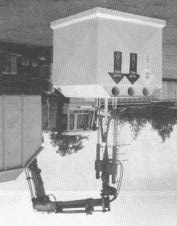
Materials Recycling Collection
Container (Credit Warmer Bulletin)
4.
Facilitate small enterprises and public-private partnerships by new or
amended regulations
This is already in place to a small extent. An example of this is the collection,
crushing and sale of aluminium cans, which is done in many of the different
SIDS including Tuvalu and the Cook Islands. This type of venture has often
met problems with can crushers becoming broken, and not being able to be
fixed, or other impurities, such as steel being mixed with the aluminium,
resulting in the reduction of value. Another small enterprise example is the
operation of a privately operated waste collection contractor in Rarotonga.
Given the small populations however, and isolation of most Islands,
opportunities for such enterprises would be limited.
5.
Assist waste pickers
As there is little if any waste picking done on SIDS, assistance in this is not
needed, however, where there is informal interest in waste picking, or small
enterprise this should be encouraged along with some general guidelines to
minimise health and safety problems relating to waste picking.
UNEP July 2002
UNEP : Directory of Environmentally Sound Technologies for Waste Management in Pacific SIDS
6.
Reduce waste via legislation and economic instruments
After consulting with major stakeholders, advocate, where advisable,
selective waste reduction legislation on packaging reduction, product
redesign, and coding of plastics.
The majority of non-biodegradable waste in SIDS waste streams is derived
from the importing of packaged goods. Packaging could be reduced
through selective waste reduction legislation, however, it is argued that the
Pacific Island markets are too small to impose special packaging
requirements on distant exporters. The region is at the end of the line for
many waste streams generated by manufacturing countries. Special
measures, for example surcharges, taxes, or deposits, may be justified for
plastics, cans or bottles. Funding thus obtained could be used to ensure
these materials can be sorted and backloaded to destinations where recycling
can be carried out.
7.
Export re-cyclables
For SIDS, export of re-cyclables is really only possible for materials that have
sufficient value, such as crushed aluminium cans. A number of SIDS export
used tires to Fiji for re-treading.
8.
Promote innovation
To create new uses for goods and materials that would otherwise be
discarded after initial use.
Given the relatively low labour cost in the SIDS, value could be added to
recovered waste materials by making the materials into new products. This
type of enterprise would require investigation of potential markets. These
could be to the local public, to tourists, or for export.
Reuse of items such as glass bottles, and containers for storing kaleke, other
foods, and bottling coconut oil (sinu) is already common in Tuvalu for
example. (AusAID 1998).
9.
Reducing use of substances which produce toxic, or hazard waste
This can be done through education of the public, providing information on
hazardous or toxic goods, alternative products that are not toxic or
hazardous, and implementing legislation which prevents the importation of
such products.
UNEP July 2002
UNEP : Directory of Environmentally Sound Technologies for Waste Management in Pacific SIDS
2.3
Collection and Transfer
Collection and transfer of waste on the smallest islands and some of the larger islands is
generally up to the public. In these cases, it is the public's responsibility to deliver waste to
the designated landfill. Often, waste is haphazardly landfilled, dumped in the mangroves,
or placed on the reef to be taken out to sea on the high tide.
In the more populated islands, collection is usually the responsibility of the municipality
within the urban areas. Waste is either left at the front gate, or deposited at central transfer
points, where it is then collected by the municipality. In Kiribati, waste is swept into piles
on the street, and collected by a small team of council workers using a shovel, broom, and
sheet, to throw the waste onto a trailer. There are also some instances where waste
collection has been contracted to private enterprises. In some larger islands such as
Pohnpei in the Federated States of Micronesia, rural inhabitants are expected to deliver
their own waste to the landfill, or burn as much of it as possible.
Typically, in SIDS, a large percentage of waste collection equipment does not operate
properly, or is out of service completely due to lack of maintenance, spare parts, or
necessary expertise. Any of the different collection technologies suggested will only be
sound practice, if the necessary preventative maintenance, is carried out. Such
maintenance includes replacement of worn parts, lubrication, top up of oil and brake fluid,
cleaning, and washing.
2.3.1 Environmentally Sound Technology for Collection and Transfer of Waste
The collection vehicle used must be appropriate to the terrain, the type and density
of waste generation points, the roads and ways it must travel, the kinds of materials
it will be used to collect, the strength, stature, and capability of the working crew,
and the point and manner of discharge of its load. The type of vehicle selected
should also be evaluated in terms of relative capital cost and labour inputs,
maintenance requirements, and local availability of technical repair expertise and
parts.
Given the isolation of most of the islands, it is recommended that a vehicle type be
chosen which is already in use on the island, or within the Country.
2.3.2 Principles for Selection of Collection Vehicles
The following principles outlined below represent sound practice, with reference to
Pacific SIDS:
·
Select vehicles that use the minimum amount of energy and technical complexity
necessary to collect the targeted materials efficiently. Given the high energy costs
and relative lack of technical backup on most SIDS, a trade off between
relative cost of capital and labour is needed.
UNEP July 2002
UNEP : Directory of Environmentally Sound Technologies for Waste Management in Pacific SIDS
·
Choose locally made equipment, traditional vehicle design, and local expertise
whenever possible. There is a long history of vehicles being provided by
international aid agencies which are not appropriate for their application,
rust in the harsh environment, and cannot be fixed when they break down
due to lack of parts or local expertise.
·
Select equipment that can be locally serviced and repaired, and for which parts are
available. This is critical in SIDS of the Pacific to ensure ongoing utilisation
from capital investment in the vehicles.
·
Choose muscle- and animal-powered or light mechanical vehicles in crowded or hilly
areas or informal settlements, where access by larger vehicles is not possible. These
types of vehicle are significantly less capital intensive, easy to maintain, and
have less impact on the environment, however use more labour, and may be
perceived as old fashioned.
·
Choose non-compactor trucks, wagons, tractors, dump trucks, or vans, where
population is dispersed, or waste is already dense. These vehicles are lighter,
easier to maintain, and offer lower capital costs but higher labour
requirements. Waste collected in the majority of Pacific SIDS is already at a
high density, with high proportions of organic waste, therefore compaction
in most cases is not necessary.
·
Consider the advantages of hybrid systems. Where there is a significant
difference between the urban and rural areas, or within a compact urban
area, a hybrid system with two or more types of collection vehicle could be
used. E.g. combining small muscle powered carts for collecting down
narrow side streets and alleyways which then deliver back to a larger truck
or wagon which moves slowly along the main street.
·
Consider compactor trucks in industrialised urban areas where roads are paved, and
waste is not too dense or wet. Compaction is often seen as more efficient,
however, due to the typically high organic content and therefore high
density of waste collected in SIDS, compaction does not significantly reduce
the volume of waste collected. These trucks require more maintenance, and
are not fuel efficient.
·
Select dual collection vehicles to enable simultaneous collection of both organics and
recyclables within separate compartments. Where waste separation is a priority,
this collection method avoids the need for duplicating the collection runs for
different separated materials.
·
If collection of waste will only take up one or two days per week, select a machine
that can be utilised for other activities during the remainder of the week such as a
tractor or tip truck.
UNEP July 2002
UNEP : Directory of Environmentally Sound Technologies for Waste Management in Pacific SIDS
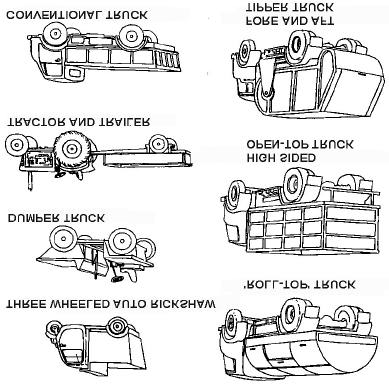
Table 1: Different collection vehicles available.
Type of
Extent/potential
Collection
Comment
Vehicle
use in SIDS
Small dumper
May be used
based on modified jeep or 4WD,
trucks
smaller capacity
Fore-and-aft
Known to be used
enables mechanical loading from transfer bins, and compaction
tipper/compaction
in Fiji
of waste. Not suitable in most SIDS
truck
Tractor and
Commonly used on
easily used for other work apart from waste collection
Trailer
SIDS
Conventional
Commonly used on
can be used for other work apart from waste collection
Truck
SIDS
Roll Top truck
Not likely to be used more difficult to utilise for other uses
can have compartments for keeping different wastes separate
for recycling or composting
Highside open-top
Is used in some
suitable for large loads. Could be used in combination with small
truck,
SIDs
collectors
Human drawn
Not likely to be used These types of micro-collection vehicles are inexpensive to build
handcart, Animal
and maintain, and therefore are often far more sound compared to
drawn cart, and
motorised vehicles.
human pedal cart.
likely to be hard to persuade locals to use these.
A large variety of vehicles can be chosen from for collection. (Credit: UNCHS (Habitat)).
UNEP July 2002
UNEP : Directory of Environmentally Sound Technologies for Waste Management in Pacific SIDS
2.3.3 Sound Principles for Selection of Set-out Containers
The following principles are recommended when choosing or designing a new
system of set-out containers:
·
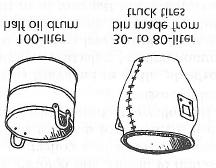
Choose containers made of
local, recycled, or readily
available materials. Examples
used within SIDS include 200
litre drums cut in half, or
recycled tyre rubber formed
into containers.
·
Choose containers which are
easy to identify, either due to Set out Containers can be made from a wide variety of
shape, colour or special materials (Credit: United Nations Centre for Human
markings.
Settlements (UNCHS Habitat)).
§
Choose containers which are sturdy and/or easy to repair or replace.
§
Consider identification of containers with the waste generators name or
address. This helps give more of a sense of ownership and participation in
the waste collection process.
§
Choose containers that suit the collection objectives. Easy to open and
empty, dog proof, and of sufficient size to hold the expected waste quantities
produced, but not larger than needed as this will promote increased waste
disposal rather than minimisation.
§
Where separation of organic waste and or recyclable waste is proposed,
more than one collection container will be necessary. These containers
should be clearly distinguishable, for example, different size or colour.
§
Choose containers that are appropriate for the terrain. On wheels where
there are regular paved streets, water proof in areas where rainfall is
significant, and heavy and squat where there are often strong winds.
2.3.4 Sound Practice for Route Design and Operation
Collection of waste or recyclables tends to be organised into areas or routes. A
service area is the region or area which falls under the responsibility of a local
government, public authority, or private company. The method, frequency, and
timing of waste collection can vary significantly, depending on each situation. The
most efficient system should be sought to meet the specific needs and conditions
that exist in each island, and within different areas of each island. An efficient
UNEP July 2002
UNEP : Directory of Environmentally Sound Technologies for Waste Management in Pacific SIDS
system should aim to cover the necessary service area while using the least amount
of capital, labour and time.
Sound principles in collection route design and operation include:
·
Timing of collection should coincide with times when other traffic on the
road is least, to avoid unnecessary delays in collection and for other road
users.
·
Sizing of collectors appropriately so that the time spent travelling between
the source and the disposal site is minimised.
·
Speed of vehicle: Where households are far apart (in rural areas), a faster
vehicle will be more efficient. Where households are close and compact (in
urban areas), a slower larger capacity vehicle may be better
·
Collection frequency should be set to match the expected volume of waste
produced, size of containers, and local preferences, and should keep in mind
the health risks that would arise from infrequent collection.
·
Kerbside collection of waste from containers set on the kerb or roadside is
common.
·
Central location: In some situations requiring households to take rubbish to
a central collection point (such as the end of a street) will increase the
efficiency of collection. It may also result in the reduction of waste quantities,
as households become more aware of the amount they need to cart to the
central collection point.
·
Competitions to encourage tidiness: In many areas of Indonesia, the
responsibility of waste collection and street sweeping is given to each village
or kampung. All waste from the village is taken by hand or cart to a central
point where it can be collected by the municipal authorities. Competitions
are then held between different kampung to encourage tidiness. A system
like this could easily operate within SIDS with divisions between villages, or
between streets, whichever is appropriate.
·
Communal collection points, where individuals bring their waste directly to
a central point (usually a container) is often used in developing countries.
This method of collection requires regular servicing by municipal authorities
to ensure the central collection site is emptied, cleaned to minimise odours,
vectors, animals, and flies. There is also more potential for hazardous wastes
to be left at the central site without knowing who left them. A series of
recycling containers could be used at these sites to encourage separation of
particular wastes such as glass, paper, aluminium, or organics for reuse. (See
also Transfer Below)
UNEP July 2002
UNEP : Directory of Environmentally Sound Technologies for Waste Management in Pacific SIDS
·
Special Collection runs for bulky, items such as old appliances, and
electronics, furniture, or construction materials.
·
Rules for collection of rubbish should be made clear to all residents and
businesses before the new collection system is introduced. These rules
should include the times of collection, frequency, and list of what wastes can
be disposed of, and what materials should be kept aside for recycling or
reuse.
2.3.5 Sound Practice for Transfer of Waste
Transfer stations are centralised facilities where waste is unloaded from smaller
collection vehicles near to waste sources, and reloaded into larger vehicles
(including sea barges), for transport to the final disposal or processing site.
Transfer stations represent sound technology when:
·
there is considerable distance between the main waste source, and the final
waste disposal site;
·
they can double as a sorting, and separation point for recyclable, reusable,
hazardous, and compostable materials;
·
they can accommodate the full range of collection vehicles already in use or
planned, including private trailers;
·
sized to allow waste to be accumulated if necessary prior to long haul
transport;
·
operators respect and abide by agreements made with neighbours; and
·
locally made equipment, local designs, and local expertise are used where
possible.
Transfer stations require additional capital costs to set up, additional handling of
waste, and need to have sufficient supervision and management to ensure the sites
operate efficiently, and do not degenerate into unregulated dumps.
Transfer station should be sited appropriately taking into account the location of the
final waste destination, source of the waste, and potential impacts on neighbouring
properties, remembering that transfer stations can produce significant noise, odour,
air emissions, and traffic. Where the waste disposal site is far from a village, city or
town a transfer station is often the best way to ensure users have easy access to
dispose of waste, and that the waste can be efficiently transported.
UNEP July 2002
UNEP : Directory of Environmentally Sound Technologies for Waste Management in Pacific SIDS
Table 2: Different transfer technologies.
Type of
Potential use in
Transfer
Comments
Technologies
SIDS
Large truck and
Not likely
Likely to be oversized for most SIDS applications.
trailer units
Single high sided trucks may be most appropriate.
Sea Barge
Good potential
Where waste is to be disposed of on another island.
Presents possible problems with loosing waste to sea during the
voyage, and when transferring on and off the barge.
Open tipping floor
Most suited to SIDS
More efficient for small volumes of waste.
Allows waste sorting, materials recovery, and transfer of
materials onto different vehicles for different destinations.
Open Pit
May be suited in
Similar to tipping floor but is not ideal for sorting and recovery of
some cases
materials.
Has higher capital and operating costs, and
Is more vulnerable to breakdown.
Direct dumping
Not recommended
Collection trucks unload through hoppers directly into larger
in SIDS
transfer trucks.
Does not permit sorting and recovery of materials.
Requires high equipment maintenance, repair, and replacement.
2.3.6 Sound Practice in Keeping Streets Clean
The majority of urban and semi-urban areas in the world have some form of system
in place for keeping streets clean. These include litter bins, mechanical sweepers,
and manual sweepers. The intensity of such cleaning activities, varies depending on
the level of use, and quantity of dust and other litter that is generated in a particular
area.
·
Provide litter bins in public areas such as central shopping areas, beaches,
and outside small food shops, and encourage their use through education,
and enforcement if necessary.
·
Clearly define responsibility for emptying litter bins so that they do not spill
onto the street.
·
Planning of sweeping routes needs to be done while taking account of the
length of route that can be completed in one day, the frequency of sweeping,
and where sweepings will be deposited.
·
Manual sweeping systems are the standard in sound practice for most
countries.
For a manual system, sweepers collect their own sweepings in a small cart
and meet a collection vehicle at a centralised point.
Alternatively the wastes could be placed in paper bag or litter basket or lined
up in piles on the kerb side to be collected by a separate truck.
UNEP July 2002
UNEP : Directory of Environmentally Sound Technologies for Waste Management in Pacific SIDS
· Mechanical sweeping systems
include four and three-wheeled
sweepers, and vacuum trucks.
· Mechanical sweepers should only
be used where these can be matched
appropriately with the service
areas.
· In the majority of SIDS, it is likely
that manual sweeping will be
preferred over mechanical
sweeping as the mechanical
sweepers require high capital,
operation, and maintenance
expenditure.
· Optimise manual pickup efficiency
and health and safety, by providing
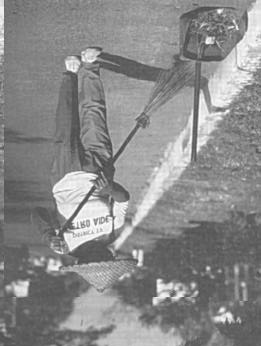
The status of waste workers can be
sweepers with better uniforms,
improved with uniforms and good
brooms, collector bins, and gloves.
equipment. (Credit: Chris Furedy).
·
Keeping streets clean should be the responsibility of the Municipality.
However, there may be a case in SIDS for a more decentralised system,
where the responsibility is placed on individual streets, or villages leaders to
delegate this work appropriately.
There are many possible variations in background conditions even within SIDS,
which affect the selection and design of a sound solid waste collection and transfer
system. These include terrain, settlement patterns, cultural preference and waste
composition. Designers of waste collection systems need to take these into account
and will often need to combine different technologies as they seek to account for the
background conditions of the particular location.
UNEP July 2002
UNEP : Directory of Environmentally Sound Technologies for Waste Management in Pacific SIDS
2.4
Composting
In many SIDS, where there is limited or no space for landfilling, and where the soils are
sandy, and poor in structure, the production of compost from organic waste would have a
two-fold benefit. Firstly, it reduces the volume of waste to be land filled, and secondly, it
provides a nutrient, and structural boost to the soils where it is applied.
Composting can be defined as the biological decomposition of complex animal, and
vegetable materials into their constituent components. Composting occurs best when the
ideal conditions are provided to enable bacteria and other organisms to break down the
waste materials. This process can either be aerobic (with oxygen) or anaerobic (without
oxygen), however, aerobic composting is most common.
For aerobic composting, the ideal conditions are for the waste to be broken into small
particles. This is often done using a shredder. Aerobic bacteria require a mix of
approximately one part nitrogen, to 30-70 parts carbon food supply, and need 40-60% water
in their environment and plenty of oxygen.
Anaerobic processes, on the other hand, occur in the absence of oxygen. The by-products
include non-oxygenated compounds except for phosphates and water such as methane,
ammonia and hydrogen sulphide. These by-products are not plant food and instead serve
as a system contaminant.
Separation and composting of organic materials for use as a soil conditioner, fertiliser or
growth medium is common practice in many countries to a varying scale, and with varying
success. Apart from the success stories, there are an alarming number of cases where
composting systems have failed completely or operate at only 30% of their capacity. It is
often the case in these situations that the composting technologies and/or associated
management systems installed are inappropriate for the area of application. It is therefore
vital that the reasons for these failures are understood, and that sound practices are
followed for identifying suitable technologies and management systems for composting in
the Pacific region SIDS.
2.4.1 Critical Lessons in Sound Composting Practice
The following sound composting practice guidelines have been developed, based on
critical lessons learned from historical waste composting systems, which have
failed, either completely or in part.
(a)
The materials to be composted must be compostable in order to produce a marketable
product.
§
In most SIDS, the waste stream is already up to 50% organic, and
therefore is ideal for composting.
UNEP July 2002
UNEP : Directory of Environmentally Sound Technologies for Waste Management in Pacific SIDS
§
The compostable fraction of the waste stream can be enhanced by
setting in place the appropriate collection and transfer systems, to
ensure the compostable waste stream is kept separate.
(b)
Mechanical pre-processing of mixed solid waste does not work well enough in most
cases, therefore source separation or manual separation of inorganic materials should
be used.
§
In a technical sense, manual pre-processing of mixed waste, works
best on small to medium scale systems for highly compostable waste
streams.
§
A disadvantage of manual processing is that it may not be either
pleasant or safe for workers.
(c)
Economic viability depends on three factors. Failure of any of these three can cause
the system to fail.
1.
Unless composting has traditionally been performed, landfilling or
dumping must be controlled and sufficiently expensive to make the
moderate cost of composting (US $20-40/tonne) competitive with the
cost of dumping. For many SIDS, the cost of land area, shipping of
waste to centralised landfills, and environmental degradation due to
landfilling should also be included in this assessment. Until these
costs are fully recognised, it is unlikely that composting will be more
cost effective than landfilling.
2.
There must be a market or use for the compost, at the quality that it is
produced. If this market or use does not produce a net income, the
Government or Municipality should be prepared to cover the
difference.
3.
The waste stream composition has a large effect on the quality and
marketability of the end product. Enhancement of the compostable
waste stream by support of source separation, and materials recovery
of non-compostables, is therefore needed.
(d)
Technical viability depends on three factors:
1.
There should not be dependence on mechanical pre-processing. This
often breaks down.
2.
The scale of the composting operation should not be too large.
3.
The entire system from source separation to final screening must be
designed as an integrated system, to deliver the appropriate inputs,
and a high quality product output.
UNEP July 2002
UNEP : Directory of Environmentally Sound Technologies for Waste Management in Pacific SIDS
2.4.2 Sound Technologies for Composting
The following tables provide a range of technologies available for composting, from
small backyard to large scale regional systems. In evaluating composting as a
technology, the character and type of waste stream to be composted needs to be
determined. In this respect, the following points should be noted and investigated
further if relevant:
§
Waste may need shredding or chipping to reduce size and speed up
composting
§
Kitchen waste can be high in protein from meats, dairy products and some
vegetables, leading to unpleasant odours. In this case, combination with
high carbon wastes such as yard leaves, and lawn clippings, improves
compostability
§
The extent of animal feeding using kitchen waste should be accounted for.
In many SIDS, pigs are kept to consume kitchen wastes, and provide meat,
resulting in reduced quantities of waste being available for composting.
Feeding waste to animals achieves a higher level of nutrient utilisation than
composting, however, has associated health risks with animals transferring
pathogens or diseases directly or via the water supply.
§
Wastewater sludge, and human faecal matter can be composted, however,
they are high in nitrogen and moisture. They must therefore be composted in
combination with carbon sources such as wood chip, paper, and bulking
agents to allow oxygen into the compost piles. Such practice requires health
and safety precautions to avoid pathogen hazards.
§
Manure and animal waste is generally composted in farm applications, and
is an important aspect of sustainable farming. Such wastes can easily be
incorporated into community or larger scale composting systems.
UNEP July 2002
UNEP : Directory of Environmentally Sound Technologies for Waste Management in Pacific SIDS
Composting system:
Technology Description:
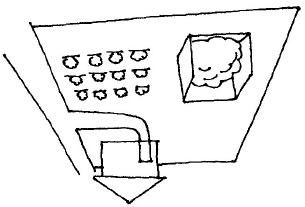
This is the smallest scale of composting. Composting in the
Backyard Composting on Household
back yard can be done informally, simply by creating a heap
Scale
of compostable waste, or can be held using bricks, timber or
an old drum.
Compostable waste such as kitchen scraps, paper, lawn
clippings, and garden waste are all placed within the
composting container. Once the container is full, a second
is used or the first is shifted leaving the waste to break down
over time to form compost. While the first pile breaks down,
fresh waste is placed in the second container. The compost
needs to be aerated by turning with a fork, and water added
if necessary to maintain the correct moisture content.
If encouraged on a regional scale, a municipality may issue
standard compost bins and educational information which
encourage backyard composting, make it tidier, and
minimise the potential for problems to occur
Extent of Use:
· only on an informal basis in a few areas
· encouraged in some SIDS but not common in others
Operation and Maintenance:
· relies only on some input by householders to monitor, water, and turn the compost to ensure good compost is made
Advantages:
Disadvantages/constraints:
· no collection, transfer and final marketing costs
· can cause significant problems with high vermin
· low cost
populations
· encourages public involvement
· relies on public participation
· less controlled
Relative Cost:
Cultural Acceptability:
· very low
· no known cultural unacceptability
· costs for bins, and for training
Suitability:
· Yes, where houses have sufficient yard space
· Yes, where organic wastes are not otherwise fed to animals
· Yes, where the waste stream contains primarily vegetable matter rather than animal matter
· Yes, because they are appropriate technology, and can be developed locally
UNEP July 2002
UNEP : Directory of Environmentally Sound Technologies for Waste Management in Pacific SIDS
Composting system:
Technology Description:
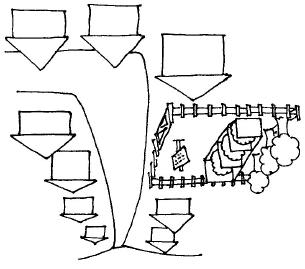
Neighbourhood, Block, or Business Scale Decentralised composting where quantities of less than 5
Composting
tons per day of waste are collected to a central composting
point within a neighbourhood, block, or number of
businesses.
The site would include a series of concrete or timber bins
which could be alternately filled, composted, and emptied.
Support from the Municipality with technical advice, turning
of compost, and emptying would likely be necessary.
The site would need good signs and fencing instructing of
acceptable wastes, current dumping area, and to keep
unwanted animals out.
This Technology is a Sound approach when:
· within close proximity of the waste source,
· sited beside community gardens, or park reserve,
· has approval from all neighbours,
· the waste stream contains primarily vegetable matter
rather than animal matter,
· clearly designated with signs,
· have adequate fencing, and
· good soil for leachate adsorption.
Extent of Use: Encouraged on some SIDS but not generally
common
Operation and Maintenance:
· on this scale of operation, collection would typically be up to individual households, with responsibility for co-
ordinating, cleaning and maintaining order given to a neighbourhood supervisor, with backup from the municipality
to provide technical advice, support for removal of undesired items, or turning of the piles.
Advantages:
Disadvantages/constraints:
· minimal collection, transfer and final marketing costs
· can cause significant problems with high vermin
· low cost
populations, animals, insects, and odours from site
· encourages public involvement
· relies on public participation
· enables more control from municipality
· potential for other non-compostable waste to be
dumped at site
Relative Cost: low
Cultural Acceptability:
· initial site set up, and for training
· may be land use issues for site chosen
· ongoing site supervisor, municipality support
Suitability
· Yes, where houses don't have sufficient yard space for backyard systems, and where there is a suitable local
community park or garden.
· Yes, where organic wastes are not otherwise fed to animals.
· Yes, because they are appropriate technology, and can be developed locally.
UNEP July 2002
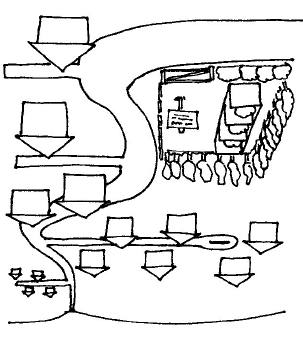
UNEP : Directory of Environmentally Sound Technologies for Waste Management in Pacific SIDS
Composting system:
Technology Description:
Quantities of 2-50 tons per day of waste are collected
Village and Community Scale Composting
from the kerbside to a central composting point within a
village, community or town.
The site would include a series of concrete or timber bins
which could be alternately filled, composted, and
emptied. Alternatively, windrows may be used. This
scale of composting must come under the jurisdiction of
the Community Authority but could be privately operated.
The site would be similar to the neighbourhood system,
but on a larger scale, with more area to accommodate
more vehicles, compost turning, processing, screening,
and storage. The site would need good signs and
fencing instructing of acceptable wastes, current
dumping area, and to keep unwanted animals out.
This Technology is a Sound approach when setup within
close proximity of the waste source, and when it has
approval from all neighbours
Extent of Use: encouraged, and promoted in Tarawa,
Kiribati.
Operation and Maintenance:
· on this scale of operation, collection could be by individual households, or kerbside collection, or a combination of
these two, with responsibility for co-ordinating, compost processing, marketing, cleaning and maintaining order with
the Community Authority.
· operation and maintenance increased with increased collection and processing equipment needed.
Advantages:
Disadvantages/constraints:
· reasonably compact with low haulage costs
· can cause problems with vectors, and odours from
· medium cost
site
· good control from Community Authority
· requires reasonably large area
· low input required from individual households apart from
separation of compostable wastes
Relative Cost: medium
Cultural Acceptability:
· initial site set up, and for Training
· may be land use issues for site chosen
· ongoing collection and site operators, and machinery
Suitability
· Yes, where there is insufficient space for a smaller scale system.
· Yes, where large portions of organic wastes are not otherwise fed to animals.
· Yes, where appropriate collection, and processing technology, can be developed locally.
· Yes, where a market is available for the compost.
UNEP July 2002
UNEP : Directory of Environmentally Sound Technologies for Waste Management in Pacific SIDS
Composting system:
Technology Description:
Quantities of 10-200 tons per day.
Centralised Composting on municipal
Scale
The scale is such that waste requires transportation from the
different source points within an urban city and/or
neighbouring towns, to a larger centralised site.
Must come under the jurisdiction of the municipality, but
could be privately operated. The site would be similar to the
community system, but on a larger scale, with more area to
accommodate more vehicles, compost turning, processing,
screening, and storage.
This Technology is a Sound approach when:
· technical and environmental assessments, engineering
design, and formal evaluation of all issues involving all
stakeholders is completed
· remediation and compensation to minimise nuisance
effects of large scale composting
· separate collection and pre-process system to ensure
quality
· a formal system of using and marketing the Compost
product is adopted
Extent of Use: no formal sites exist
Operation and Maintenance:
· operation and maintenance is high, with increased collection, transportation, and processing equipment needed.
· level of maintenance depends on collection and processing technology adopted
Advantages:
Disadvantages/constraints:
· good control from municipal Authority
· higher haulage costs,
· more suitable locations outside of town or city
· requires large area of land
· economies of scale
· can cause problems with noise, vectors, and odours
· low input required from individual households apart
from large site
from separation of compostable wastes
Relative Cost: medium - high
Cultural Acceptability:
· initial site set up, vehicles, and for training
· may be land use issues for site chosen
· ongoing high operating and machinery maintenance
costs
Suitability:
· Yes, where town or city is of sufficient size. Therefore only potential in a few SIDS cities.
· Yes, where there is insufficient space for smaller scale systems within the area.
· Yes, where appropriate collection, and processing technology, can be developed and or maintained locally.
· Yes, where a market is available for the compost.
UNEP July 2002
UNEP : Directory of Environmentally Sound Technologies for Waste Management in Pacific SIDS
Composting system:
Technology Description:
Quantities of 50-1000 tons per day.
Centralised Composting on National
Where waste is collected from a number of source cities,
Scale
towns, or islands, within a region and composted at one
large site. This requires significant transportation costs.
Technology as for the centralised composting systems, but
on a larger scale, with more area to accommodate vehicles,
compost turning, processing, screening, and storage.
This Technology is a Sound approach when:
· other smaller scale forms of composting, or landfilling is
not possible due to cost, land, or environmental factors.
· siting needs to take into account equity effects of siting
a compost plant for many municipalities, or islands
within just one municipality, or island, with remediation
and compensation where necessary.
· agreements regarding siting, financing, operations,
maintenance, environmental compliance, billing for
services, delivery and quality of waste, compost quality
use, and marketing need to be made between different
parties.
· technical and environmental assessments, engineering
design, and formal evaluation of all issues involving all
stakeholders is completed.
Extent of Use: not known to be used
Operation and Maintenance:
· operation and maintenance is high, with increased collection, transportation, and processing equipment needed.
· level of maintenance depends on collection and processing technology adopted.
Advantages:
Disadvantages/constraints:
· good control on a regional basis
· higher haulage costs in collection and re-distribution
· allows most suitable site to be chosen
· requires large area of land
· provides solution for islands where land area is
· potential for conflicts between islands or municipalities
available
within region
Relative Cost: High
Cultural Acceptability
· initial site set up, vehicles, and for training
· may be land use issues for site chosen
· ongoing high operating, marketing and machinery
maintenance costs
Suitability
· Only where there is insufficient space or limitations for smaller scale systems within the area.
· Yes, where appropriate collection, and processing technology, can be developed and or maintained locally.
· Yes, where a market is available for the compost.
UNEP July 2002
UNEP : Directory of Environmentally Sound Technologies for Waste Management in Pacific SIDS
Composting system:
Technology Description:
Quantities vary depending on source size.
Composting at an Integrated Waste
Management Facility
Semi-informal composting, where compostable materials are
piled up to one side at the landfill for "natural composting"
without turning or sorting.
Siting is rolled into the landfill or incinerator siting process.
Produces low quality compost suitable for landfill cover, or in
agricultural and reserve land rather than as a sellable
product.
This Technology is a Sound approach when:
· alternative sites are limited,
· financial or organisational structures are lacking,
· other composting technologies are not sound.
Extent of Use: used on an informal basis in a number of
SIDS
Operation and Maintenance:
· operation and maintenance is low
· there may be some operation and maintenance for collection processes
Advantages:
Disadvantages/constraints:
· low organisational and financial inputs required
· poorer quality compost produced
· site is combined with landfill
· less control on environmental effects of process
· same equipment can be used
Relative Cost: medium
Cultural Acceptability
· initial medium site set up, and for training
· may be land use issues for site chosen
· ongoing medium operating and machinery
maintenance costs
Suitability
· Yes, where financial, and organisational structures are lacking for more organised composting technologies.
· Yes, where there is insufficient space for systems independent of landfill sites.
UNEP July 2002
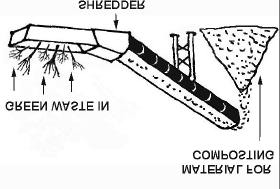
UNEP : Directory of Environmentally Sound Technologies for Waste Management in Pacific SIDS
Composting Technology:
Technology Description:
Done to separate non-compostable waste, reduce size of
Pre-processing Equipment
large organic wastes, and to blend wastes, to achieve the
optimum composting environment.
Pre-processing equipment includes mechanical shredders,
and chippers. This equipment is often costly, technically
intensive, and vulnerable to break downs.
This technology is a Sound approach when there is a
significant portion of hard to compost coconut husks, palm
fronds, however, is not generally considered sound practice
if relied heavily on in a composting system.
Extent of Use: none known to be used in SIDS
Operation and Maintenance:
· operation and maintenance cost is high
· maintenance needed
Advantages:
Disadvantages/constraints:
· allows for optimum composting to be achieved
· costly
· produces well blended, small size compost product
· high maintenance, and vulnerable to breakdown
(especially if banana leaves are used)
Relative Cost: High
Cultural Acceptability
· high initial capital costs for machinery
· no known cultural unacceptability.
· ongoing high operating and machinery maintenance
costs
· cost depending on size AU$50,000
Suitability
· On a community scale, a shredder, or chipper available for hire from the council by individual households to reduce
the size of coconut husks, and palm branches may encourage composting.
UNEP July 2002
UNEP : Directory of Environmentally Sound Technologies for Waste Management in Pacific SIDS
Composting Technology:
Technology Description:
Windrowing, is a common method of composting, based on
Windrow Composting
storing the organic waste in long rows. The windrows of
waste form the basic environment for the waste to compost.
Windrow size is determined primarily from the climate, and
waste composition. Other factors include the type of aeration
used, and machinery used for aeration.
Windrows can be open, or covered depending on the
climate and moisture content of the waste
Over time, the windrows of composting waste are aerated,
turned and mixed as necessary to maintain the ideal
composting conditions.
Aeration can either be done using manual or mechanical
turning, or by static aeration introducing air via a network of
perforated pipes within the compost pile.
This Technology is a Sound approach when the mechanical
Windrow Compost Facility Layout
equipment used for handling and aerating the compost can
Note This site allows for access and movement of machinery
be maintained using local expertise.
throughout site. Where large machinery is not used this
access is not required. (Credit: UNEP; IETC Report 2)
Extent of Use: windrowing is the most commonly used in
developed countries with mechanical aeration by turning
rather than static aeration, but not within SIDS
Operation and Maintenance:
· operation and maintenance needed for aeration machinery.
· fencing needed to keep animals away.
Advantages:
Disadvantages/constraints:
· mechanical turning has lower capital costs, and
· mechanical turning requires higher land use
machinery is not too specialised
· static aeration has high capital cost
· static aeration requires less land area
· both have high maintenance, and vulnerable to
breakdown
Relative Cost: medium
Cultural Acceptability
· initial capital costs for machinery
· no known cultural unacceptability.
· ongoing operating and machinery maintenance
costs
Suitability
· Windrowing using mechanical turning likely to be more suitable
UNEP July 2002
UNEP : Directory of Environmentally Sound Technologies for Waste Management in Pacific SIDS
Table 3: The following table summarises the various technologies used within the composting
process.
Technologies used in the
Potential
Description
Composting Process
use in SIDS
Backyard Composters
High
To encourage backyard composting, municipalities may purchase or subsidise the
potential
purchase of compost makers for back yard use.
Needs to be integrated with an intensive public education program.
Traditional Root Crop
High
Traditional use of dried or green leaves as compost.
(Babai) composting from
potential
Composted leaves are then used to grow root crops and are also a method to
Tuvalu
remove green waste.
Leaves are buried in the mud surrounding the root crop as additional food for the
plant.
This process happens several times until plants are ready for harvest.
Pre-processing of waste
Minimal
Often costly and technically intensive, vulnerable to breakdown.
materials
Sound practice should minimise the need for pre-processing.
Done to separate non-compostable waste, reduce size of large organic wastes, and
to blend wastes, to achieve optimum composting environment.
Windrow Systems
Most
The windrows of waste form the basic environment for the waste to compost.
suitable
Windrow size is determined primarily from the climate, and waste composition.
Other factors include the type of aeration used, and machinery used for aeration.
Windrows can be open, or covered depending on the climate and moisture content
of the waste.
Active pile system
May be
Requires manual or mechanical turning of the windrows to aerate piles, provide
suitable
blending of wastes, and prevent excess heat build up.
Require relatively high land use.
Low capital cost and does not need specialised equipment or expertise.
Specifically developed windrow turning machines require high capital and
maintenance cost.
Static Pile Systems
May be
Have higher capital costs than active pile systems.
suitable
Windrows are not turned, but instead rely on air introduced via a network of
perforated pipes within the compost pile.
Require less area, but relies on mechanically pumped aeration.
In-Vessel systems
Not likely
Expensive to build and operate.
Higher technology, and therefore more likely to break down.
Tower systems.
Not likely
These systems are more expensive than windrowing, but composting is more rapid,
resulting in an overall reduced land area requirement.
Field Composting and
Good
Largely informal practice where farmers mine organic waste and compost from
using compost from dumps
potential
dumps to provide enrichment to farm land.
Significant potential for health and safety problems, due to glass, or contaminants
within the waste.
UNEP July 2002
UNEP : Directory of Environmentally Sound Technologies for Waste Management in Pacific SIDS
Vermiculture or
May be
Relatively cool but aerobic process by which worms mechanically and biochemically
vermicomposting or worm
suitable
break down organic matter by eating and digesting it.
farming
Requires considerable labour, and careful control of composting conditions.
Not tested significantly on large scale.
Anaerobic Digestion
Not suited
High capital and technical inputs required. Therefore suited only to industrialised
countries.
2.4.3 Sound Marketing Approaches for Composting
The role of compost is often (mistakenly) compared directly to that of fertiliser.
While compost does have some nutrient value, the most significant value is in
conditioning of soils. Compost added to clay or sandy soil significantly increases
moisture retention, synthetic and natural nutrient retention, is useful for
temperature regulation, preventing erosion, and even reducing the incidence of
some destructive agricultural diseases.
Sound practice for compost marketing should therefore provide education on the
benefits of compost. Methods for such education and marketing include:
§
specifying use of compost in public works and government funded
programs;
§
subsidising the price of compost for sale;
§
removing or modifying subsidies on chemical fertilisers;
§
giving high profile coverage to business or public applications where the
benefits of composting has been proven; and
§
encouraging high-quality compost production.
In cases where there is very little suitable material for covering landfill wastes such
as on many SIDS atolls, excess, or poor quality compost provides an excellent cover
material, which can then support vegetation growth. For the atolls where soil
materials are very scarce, this would be a very sound practice.
2.4.4 Environmental Impacts of Composting Technology
Apart from the positive impacts from composting, there are also negative impacts.
These can include production of odours, carbon dioxide and other green house
gases, air emissions from mechanical equipment, and leachate production.
Leachate contains high Biological Oxygen Demand (BOD), and some phenols, and
surface runoff should be allowed to soak into the underlying soil, or captured and
treated through a sand filter before being discharged to ground, or water.
UNEP July 2002
UNEP : Directory of Environmentally Sound Technologies for Waste Management in Pacific SIDS
2.4.5 Conclusions
There are a wide variety of scales, and methods available for composting. Despite a
significant number of failed composting facilities, there is now sufficient
information to enable proper evaluation of what is appropriate (if at all) in any
specific situation.
The major factors to be considered for composting are; siting, input waste stream
composition, selection of appropriate composting technology, the scale of
composting, market development, and lastly what existing composting practices
exist.
In SIDS, composting has not been a way of life for residents, however, with
increasing pressures on landfill space, available cover materials, and waste
problems in general, combined with appropriate marketing and education by
municipalities, composting could become a significant and environmentally sound
waste management technology in the Pacific Region.
2.5
Incineration of Municipal Solid Waste
Incineration, (or burning) of Municipal Solid Waste (MSW) may offer an alternative to
other forms of disposal when land suitable for landfilling is scarce. Incineration of
Municipal Solid Waste substantially reduces the weight (up to 75%) and volume (up to
90%) of waste needing disposal into landfills. In addition, incineration can provide energy
for heating or electricity, and destroys bacteria and viruses.
So why isn't incineration used more widely? Unfortunately, the benefits of incineration are
most often out weighed by the significant capital and operating costs, potential
environmental impacts, and technical difficulties of operating an incinerator.
In particular, the production and venting of such hazardous substances as dioxins from
incinerators is a significant concern. Dioxins are very deleterious to health and the
environment, and can be produced if incineration is not performed at temperatures above
850 degrees Celsius (World Health Organisation (WHO) Fact sheet 1999).
2.5.1 Practice for Choosing Incineration Technology
In assessing the suitability of incineration as a technology for solid waste
management, a majority of the following factors should be true:
§
Suitable land for landfilling should be scarce, making incineration cost
effective.
§
Installation and maintenance of all necessary environmental controls
should be included with the incineration technology.
UNEP July 2002
UNEP : Directory of Environmentally Sound Technologies for Waste Management in Pacific SIDS
§
Size and position of the facility should be done to fit in with the other
components of the MSWM system.
§
Full and clean combustion of wastes is required through having sufficient
energy content in the waste material to achieve the required burn
temperature (this may require the addition of an alternative fuel such as oil
wood, or coal).
§
A suitable nearby energy market is needed to utilise the energy produced.
Four different incineration technologies are described in the following tables. These
systems are:
1.
Mass Burn incinerators
2.
Modular Incinerators
3.
Fluidised Bed Incinerators
4.
Refuse Derived Fuel (RDF) Technology
Apart form these dedicated solid waste incinerators, a certain quantity of municipal
solid waste could be burned in existing oil, or new combined fuel electricity
generators. Many SIDS already have oil powered generators, which may be able to
be adapted in some cases to take some waste, such as hazardous hospital wastes.
This is looked at in more detail in the section on hazardous wastes.
UNEP July 2002
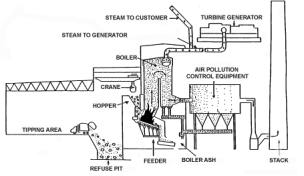
UNEP : Directory of Environmentally Sound Technologies for Waste Management in Pacific SIDS
Incineration Technology:
Technology Description:
This is the predominant form of MSW incineration used.
Mass burn systems, generally consist of either two or three
Mass Burn Incinerators
incineration units ranging in capacity from 50 to 1000 tons
per day. (i.e. 100-3000 t/day total capacity).
They can accept refuse that has undergone little pre-
processing other than removal of over sized items.
Waste is deposited on a floor or pit before being
continuously fed to a moving grate system which moves the
waste through a combustion chamber.
Although versatile, the mass burn system still requires that
household hazardous wastes (certain cleaners, and
pesticides) are removed to ensure environmental pollution
does not occur, and that scrap metals are removed for
recycling and reuse.
This Technology is a Sound approach when necessary
Cross Section of Typical Mass Burn Facility (Credit: UNEP;
operational and environmental controls can be set and
IETC Report 2).
maintained.
Extent of Use: none used in Pacific SIDS
Operation and Maintenance:
· High levels of operation and maintenance are needed for incinerators. If maintenance of environmental controls is
not kept up to date, significant human and environmental impacts occur due to air pollution.
Advantages: (over other incineration technology)
Disadvantages/constraints:
· refuse requires little pre-processing
· high cost
· reasonably convenient and flexible in what they will
· high level of operation and maintenance required
burn
· possible adverse environmental impacts
· commonly used in developed countries
Relative Cost:
Cultural Acceptability
· very high
· air discharges likely to be unacceptable
Suitability:
· Only where landfilling area is scarce, and
· Where a high level of expertise, for operation and maintenance is available.
UNEP July 2002
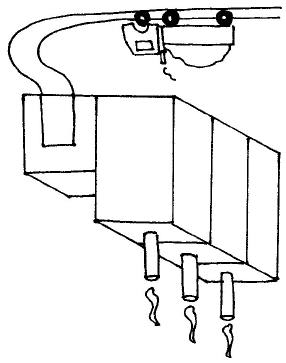
UNEP : Directory of Environmentally Sound Technologies for Waste Management in Pacific SIDS
Incineration Technology:
Technology Description:
Modular incinerator units are usually prefabricated units,
with a smaller capacity of between 5 and 120 tons/day.
Modular Incinerators
Between 1 and 4 modules are typically operated together to
provide up to 400 tons capacity in total, generally supplying
steam for heating or electricity.
Modules can be operated continuously, or in a batch cycle
depending on the quantities of waste to be burned.
Operation uses two combustion chambers. Gases
generated in the primary chamber flow to an afterburner
chamber, ensuring more complete combustion. Waste is
deposited on a floor or pit before being continuously fed to a
moving grate system which moves the waste through the
primary combustion chamber.
Although versatile, the modular system still requires that
household hazardous wastes (certain cleaners, and
pesticides) are removed to ensure environmental pollution
does not occur, and that scrap metals are removed for
recycling and reuse.
This Technology is a Sound approach when necessary
operational and environmental controls can be set and
maintained.
Extent of Use: none used in Pacific SIDS but may suit
smaller communities, or for commercial and industrial
applications.
Operation and Maintenance:
· High levels of operation and maintenance are needed for incinerators. If maintenance of environmental controls is
not kept up to date, significant human and environmental impacts occur due to air pollution.
Advantages: (over other incineration technology)
Disadvantages/constraints:
· ideal for smaller communities
· air pollution controls have been found to be
· modular units enable matching of demand
inadequate, and inconsistent in some cases
· can be operated on continuous or batch basis
· high level of operation and maintenance
Relative Cost:
Cultural Acceptability
· very high but less than other MSW incinerator options · air discharges likely to be unacceptable
Suitability:
· Only where landfilling area is scarce.
· Where a high level of expertise, for operation and maintenance is available.
· In smaller sized communities or Islands.
UNEP July 2002
UNEP : Directory of Environmentally Sound Technologies for Waste Management in Pacific SIDS
Incineration Technology:
Technology Description:
Fluidised-bed incineration has been used most extensively
in Japan, where plants are typically between 50 to 150 tons
Fluidised-Bed Incinerators
per day.
In the fluidised-bed system, the stoker grate is replaced by a
bed of limestone, or sand, which behaves like a fluid as air is
pumped through it at high temperatures.
Unlike the other MSW incinerators, the fluidised-bed system
required front end pre-processing of waste where glass and
metals are removed, and the waste size is reduced.
Fluidised-bed systems operate successfully burning wastes
of wide ranging moisture and heat content. Therefore high
energy wastes such as paper and wood can be taken out of
the waste stream for re-cycling and reuse. The Fluidised-
bed system is therefore more compatible with high recovery
recycling systems, where glass, metal, paper, and wood are
all removed prior to incineration of the residual waste.
This Technology is a Sound approach when necessary
operational and environmental controls can be set and
maintained.
An Incinerator in Gibraltar (Credit: Warmer Bulletin)
Extent of Use: used in Japan and some European
countries but none in Pacific SIDS.
Operation and Maintenance:
· High levels of operation and maintenance are needed for incinerators. If maintenance of environmental controls is
not kept up to date, significant human and environmental impacts occur due to air pollution.
Advantages: (over other incineration technology)
Disadvantages/constraints:
· more efficient on smaller scale than mass burners
· relatively new technology, not yet fully proven
· better control giving less residual ash & less pollution
· requires more pre-processing of waste
· more compatible with high recovery/re-cycling
· more difficult to operate
approach to MSWM
Relative Cost:
Cultural Acceptability
· very high, savings over other systems inconclusive
· air discharges likely to be unacceptable
· likely to have lower maintenance costs than other
incineration options, but still very high
Suitability:
· Only where landfilling area is scarce, and
· Where a high level of expertise, for operation and maintenance is available.
UNEP July 2002
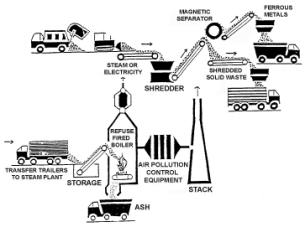
UNEP : Directory of Environmentally Sound Technologies for Waste Management in Pacific SIDS
Incineration Technology:
Technology Description:
Refuse Derived Fuel (RDF) can be described in a broad
sense as any form of solid waste that is used as a fuel.
Refuse-Derived Fuel (RDF)
RDF is more often used to describe solid waste that has
been mechanically pre-processed to produce storable,
transportable, and more homogeneous fuel for combustion.
RDF can be divided into production and incineration
components.
The level of complexity of pre-processing has increased the
cost of RDF incineration systems to beyond that of mass
burner systems.
RDF pre-processing involves a tipping floor and conveyors,
where waste is sorted, screened, trommelled, shredded,
hammer-milled, and palletised as necessary to suit the
waste type, and final use specifications.
This Technology is a Sound approach when necessary
Cross-section of a typical RDF Facility showing pre- operational and environmental controls can be set and
processing, incineration, and air pollution control. (Credit: maintained.
UNEP IETC Report 2)
Extent of Use: not used in SIDS
Operation and Maintenance:
· High levels of operation and maintenance are needed for pre-treatment and incinerators. High dependence on
mechanical equipment can cause problems with breakdowns. If maintenance of environmental controls is not kept
up to date, significant human and environmental impacts occur due to air pollution.
Advantages: (over other incineration technology)
Disadvantages/constraints:
· more compatible with high recovery/re-cycling
· dependent on high mechanical inputs
approach to MSWM
· ensures good removal of recyclables, and
contaminants
· RDF can be used in a variety of burning applications
Relative Cost:
Cultural Acceptability
· very high, due to higher level of pre-processing
· air discharges likely to be unacceptable
· likely to have higher pre-processing maintenance
costs
Suitability:
· Only where landfilling area is scarce, and
· Where a high level of expertise, for operation and maintenance is available.
UNEP July 2002
UNEP : Directory of Environmentally Sound Technologies for Waste Management in Pacific SIDS
2.5.2 Environmental Impacts from Incineration Technology
Air emissions and residual ash provide the major sources of pollution from
incineration technologies. Air emissions and ash are the two main by-products from
any incineration technology. If these by-products are not controlled appropriately,
significant environmental impacts are possible.
Residual ash is derived from under the incinerator (bottom ash), and from
particulate materials captured from exhaust gases (fly ash). These ashes contain
high concentrations of contaminants, and therefore require careful landfilling to
ensure these contaminants do not leach out, polluting ground and surface waters.
Ash is landfilled in separate ash cells within general purpose landfills, or is placed
in purpose built ashfills adjacent to the incinerator site.
Air emissions if uncontrolled, contain high levels of contaminants such as dioxins
which is a compound considered within the endocrine disrupters as they mimic the
function of endocrine hormones. These affect people through direct inhalation,
ingestion through eating exposed foods, or via contact with skin. The level of
contaminants in air emissions can be significantly reduced using appropriate
"scrubbers," however these require a high level of monitoring and maintenance to
ensure continuous effective operation.
Such maintenance requires highly trained technicians, and a policy framework,
which will reliably support the need for necessary maintenance expenditure.
The significance of environmental effects also depends on the location of the
incinerator relative to population centres, and on prevailing weather, and
geographic conditions.
These issues should be high on the list of factors taken into consideration when
evaluating incineration as a waste disposal technology.
2.5.3 Conclusion
Overall, incineration technology requires a high level of technical input to install,
operate and maintain, when operated in an environmentally sound manner. To
date, the majority of sound incineration technology has only been possible in
developed countries, where sufficient technical and financial support has been
available. Although, there is a need for an alternative to landfilling on a number of
SIDS islands, the suitability of incineration technology is doubted at this time due to
the lack of technical and financial backup for such installations.
UNEP July 2002
UNEP : Directory of Environmentally Sound Technologies for Waste Management in Pacific SIDS
2.6
Landfills and Other Methods of Disposal on Land
In a well designed MSWM programme, all other waste management options should be
considered before the landfill option is selected. Unfortunately in many cases, the landfill
is the only MSWM option used, especially when existing landfills already exist.
Landfills can be broadly divided into three general classifications:
(a)
Open Dumps
(b)
Controlled Dumps
(c)
Sanitary Landfills
Although these three types of landfill could be identified as different points along a
continuum, they help to demonstrate the differences that exist along this continuum.
An alternative to the traditional "anaerobic" landfilling is the Fukuoka method which is an
"Aerobic" landfill technology promoted by UNCHS (Habitat). This technology is described
further in the technology summaries that follow.
2.6.1 Open Dumps
Open dumps are very common in Pacific SIDS, where dumping of waste has
developed in a hap-hazard fashion as the need to dispose of non-biodegradable
waste has increased.
The following are typical characteristics of the Open Dump:
§
poorly sited;
§
unknown capacity;
§
no cell planning;
§
little or no site preparation;
§
no leachate management;
§
no gas management;
§
only occasional cover;
§
no compaction of waste;
§
no fence;
§
no record keeping; and
§
allows waste picking and trading.
UNEP July 2002
UNEP : Directory of Environmentally Sound Technologies for Waste Management in Pacific SIDS
Unfortunately, in many cases, the development of anything more than an open
dump has not been possible, due to land area, cover material, and financial
constraints. This is further compounded by a lack of public education regarding
waste disposal, and a lack of planning, legislation and management frameworks to
ensure better MSWM technologies are used.
Although common in SIDS, the majority of open dumps should not be considered
sound technology.
A study by Asian Development Bank (ADB) regarding "Sanitation and Public
Health" (1996), in Kiribati, described current waste disposal practice. It was
reported in the study that only one of the sites used by the council for MSW
disposal was satisfactory. This site used sand as cover material. Apart from this
site, MSW was often dumped at designated sites along the beaches at high tide
mark. As a result, significant portions of this waste gets washed out to sea.
It was noted in this study however, that these dump sites had different
characteristics to dumps found in other industrialised countries. The green wastes
dominate up to 60% of the total volume, and typical landfill nuisances, such as wind
blown litter, smell, flies, rats, and birds were not present. It was even suggested that
the leachate strength is likely to be significantly less from these sites.
During an inspection of open dump sites in Funafuti, Tuvalu (SPREP 1998), an
unusually low level of odour was also observed, despite the lack of cover material,
and hot climate. A possible reason for this is that most putrescible material is fed to
pigs or other animals.
It can be concluded from the above observations that landfill cover may not be
necessary where the quantity of putrescible waste is low It may also be true that the
impacts on groundwater, and surrounding neighbours due to landfilling are less
than in developed countries.
However, it is clear from the experience in Kiribati, and most other SIDS, that waste
disposal could be more organised, with significant improvements made by
minimising waste disposal where the sea can wash waste along beaches. As a result
of the ADB study, objectives were set for reducing the final waste quantity by up to
50% using composting and recycling, and ensuring all disposal sites are approved
as "secure", by the Government.
Open dump technology is not considered any further in this directory, however
aspects of the landfill technologies that are considered can be applied to existing
open dumps to make them more sound.
UNEP July 2002
UNEP : Directory of Environmentally Sound Technologies for Waste Management in Pacific SIDS
2.6.2 Land Reclamation Using Solid Waste
A number of Pacific Region atolls are using solid waste as material for land
reclamation projects. This has been observed in Kiribati, (ADB 1996), the Marshall
Islands (UNCHS Habitat 1994), among others. Generally, the use of waste for land
reclamation has been done in a poorly managed way, resulting (in some case) in
significant portions of the waste being washed away by the sea. According to
Habitat (1994), "In an urban atoll situation, where land is an extremely scarce
resource, the reclamation of land using solid waste is generally an accepted strategy
if managed properly".
Principles for sound land reclamation using solid waste include:
§
Shelter: Constructing the reclamation where it is sheltered from the force of
ocean storms.
§
Provide adequate protection embankments between the sea or tidal area and
the area to be filled to retain the waste.
§
Restrict entry onto site.
§
Remove all hazardous waste prior to disposal.
§
Provide final cover to waste using sand, or dredging material from the
shipping channel.
§
Provide a vegetation cover as soon as possible after the fill is completed.
UNEP July 2002
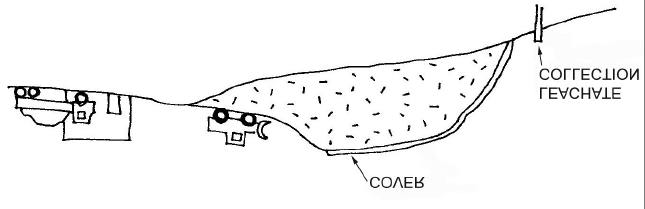
UNEP : Directory of Environmentally Sound Technologies for Waste Management in Pacific SIDS
2.6.3 Landfill Technology Summaries
Landfill Technology: Controlled Dump
Technology Description:
A controlled dump generally has the following
· partial or no gas management
characteristics:
· regular cover
· sited with respect to hydro-geology
· compaction in some cases
· planned capacity
· fence
· no cell planning
· basic record keeping
· grading and drainage in site preparation
· controlled waste picking and trading
· partial leachate management
Extent of Use:
· limited use and becoming more common
Operation and Maintenance:
· requires a dedicated operator to ensure the management procedures above are carried out
Advantages: (over other landfill options)
Disadvantages/constraints:
· less risk of environmental contamination
· may be less accessible
· permits long term planning
· slower decomposition due to less moisture
· better rainfall runoff
· increased costs, and maintenance
· extended lifetime
· possible loss of materials recovery due to more
· controlled access and use
controls over waste pickers
· good information
· materials recovery by waste pickers allowable
Relative Cost:
· more expensive than open dumping, due to higher level of environmental protection
· higher operating costs due to compaction, covering, and other landfill management procedures listed above
Suitability:
· Yes, for new sites, and existing open dumps where improvements can be made.
· Where suitable sites are available.
UNEP July 2002
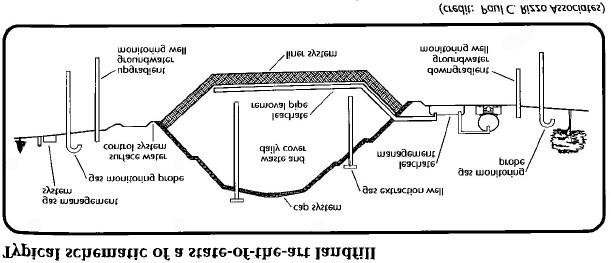
UNEP : Directory of Environmentally Sound Technologies for Waste Management in Pacific SIDS
Landfill Technology: Sanitary Landfill
Technology Description:
· full leachate management
A sanitary landfill generally has the following
· full gas management
characteristics:
· daily and final cover
· site chosen based on environmental risk assessment
· compaction
· planned capacity
· fence and gate
· designed cell development
· record kept of waste volume, type, and source
· extensive site preparation
· no waste picking and trading
Extent of Use:
·
none believed to be operating in Pacific SIDS, but likely to become more common
Operation and Maintenance:
· requires a dedicated operator to ensure the management procedures above are carried out.
Advantages: (over other landfill options)
Disadvantages/constraints:
· minimum risk of environmental contamination
· may be less accessible, and longer siting process
· permits long term planning
· slower decomposition due to less moisture
· better rainfall runoff
· increased costs, operational and maintenance
· extended lifetime
· possible loss of materials recovery due to removal of
· secure access and use
waste pickers
· reduced risk from site, gas, and leachate
· waste pickers displaced
· good information
· risks to waste pickers eliminated
Relative Cost:
· most expensive technology, due to higher level of environmental protection
· higher operating costs due to compaction, covering, and other landfill management procedures listed above
Suitability:
· Yes, for new sites where the financial, management and technical resources are available for design and operation.
· Where suitable sites are available.
UNEP July 2002
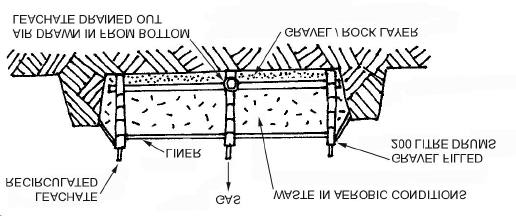
UNEP : Directory of Environmentally Sound Technologies for Waste Management in Pacific SIDS
Landfill Technology: (Semi-Aerobic Technology; e.g. Fukuoka Method)
Technology Description:
The Fukuoka Method exploits air convection due to
At the end of every pipe branch is erected a perforated
temperature differences to draw air through the waste. It is
standpipe to allow air intake to the landfill, and leachate re-
constructed simply by building up an earth embankment
circulation. The vertical standpipes are protected by
around a site to create a shallow, enclosed disposal area.
standing 200 litre oil drums over the standpipes and
A perforated pipe network is then laid centrally along the
backfilling with rock.
site and embedded in coarse gravel or rock for protection
during filling, and to aid air circulation and leachate
Waste is then spread over the pipe work using a bulldozer
drainage.
for spreading and compaction. Leachate is collected from
the drains, retained in a pond and re-circulated.
Extent of Use:
· not used in the Pacific SIDS but widely used and accepted in Japan
Operation and Maintenance:
· requires reasonably high operation and maintenance input
Advantages: (over other landfill options)
Disadvantages/constraints:
· less risk of environmental contamination
· requires a medium level of o & m
· more rapid waste decomposition
· aerobic conditions minimises the production of
odours, and nitric acids, improving leachate quality
· site regeneration is more rapid, with final use as
recreation and parks
· it is cost effective compared to anaerobic landfills
· reduces production of greenhouse gases
· requires less area
· ensures controlled filling
Relative Cost:
· more expensive than open dumping, due to higher level of initial capital setup costs
· higher operating costs due to compaction, covering, and other landfill management procedures listed above
Suitability:
· Yes, for new sites, this method will take up less space than current hap-hazard disposal sites.
UNEP July 2002
UNEP : Directory of Environmentally Sound Technologies for Waste Management in Pacific SIDS
2.6.4 Sound Practices for Landfill Technology
In planning a new landfill, the following sound practices should be adopted. These
sound practices should also be used as guidelines when evaluating existing
landfills:
(a)
Appropriate siting.
(b)
Leachate management and environmental impact minimisation.
(c)
Gas management and risk reduction.
(d)
Secure access and recording of waste inflow volumes and character.
(e)
Compaction and daily cover.
(f)
Documented operating procedures, and worker training and safety
programmes.
(g)
Establishment and maintenance of good community relations.
(h)
Closure and post closure planning.
Technologies for each of these sound practices are described in more detail in the
following sections.
a)
Siting
Siting of a landfill is the first and most difficult stage. When siting a landfill,
the following considerations should be made:
§
Capacity (determined from predicted waste quantities, and desired
design life, ideally 10-20 years).
§
Public involvement (to ensure all issues and concerns are raised, and
accounted for).
§
Hydro-geology (ideal clay and or impermeable rock will minimise
the chance of leachate coming into contact with groundwater).
§
Suitable cover material (needs to be available nearby in sufficient
quality and quantity).
§
Access (should be reasonably close to waste source if possible to
minimise haulage costs, however environmental impact factors
should be of higher priority in siting. Transfer stations are sound
practice where landfills are too far away from the waste source).
UNEP July 2002
UNEP : Directory of Environmentally Sound Technologies for Waste Management in Pacific SIDS
§
Proximity to Airports (as far away as possible to minimise bird
strike).
In addition to the above, landfills should not be sited in very windy areas,
near existing services such as drinking water ground or surface sources,
reticulation, sewer, gas or electrical lines, or near residential areas, social
venues, schools etc.
b)
Leachate Management Technology
This is the key factor in safe landfill design and operation. Leachate is
formed as rainfall soaks through the waste, and as the waste decomposes.
The leachate drains to the bottom of the landfill, taking with it potentially
toxic contaminants in soluble form. To minimise the potential for leachate to
escape into the surrounding surface or ground waters, the following
technologies are used:
· An impermeable liner below the waste. This can be either formed from
in situ natural materials of clay or bedrock where these are of
sufficiently low permeability (usually < 1 x 10⁻⁹ m/s), or be a
constructed liner made from clay and/or synthetic materials. Modern
liner designs combine natural soil layers and synthetic liners into a
composite liner to utilise the best properties of both. Clay liners are
thicker (typically 600-900 mm) and so more resistant to damage by sharp
objects in the refuse. The clay can also act to absorb contaminants in the
leachate. The synthetic plastic liners (e.g. 1-2 mm HDPE) are very
impermeable but being thin are more susceptible to damage.
Where natural clay soils are unavailable (e.g. on atolls or in volcanic
country) the clay layer can be replaced with a synthetic layer of a GCL
(Geosynthetic Clay Liner). A GCL is a manufactured liner combining
bentonite powder and geofabrics into a thin but highly impermeable
layer a 10-12 mm GCL layer has the same seepage rate as a 600 mm
clay layer. A GCL however does not have the same absorption capacity
as a clay liner.
Liner systems need effective protection by sand or geofabric layers to
prevent damage from the overlying drainage layers and compacted
refuse. Proper design of leachate drainage and collection systems is
required to minimise the depth of leachate stored above the liners and so
reduce any leakage to a minimum.
§
Minimise entry of rainfall by capping off waste in controlled cells and
placing a final capping liner when the landfill is completed. Rainfall
infiltration can also be reduced by grading the landfill so that water
UNEP July 2002
UNEP : Directory of Environmentally Sound Technologies for Waste Management in Pacific SIDS
drains off the surface. Where this is done, stormwater runoff should be
captured in a pond and allowed to settle prior to discharge.
§
Leachate collection. Leachate collected by a liner will accumulate and
possible leak if it is not collected and removed using a collection system.
Leachate can be collected by either placing a pump sump at the lowest
point on the liner, or by grading the base of the landfill so that leachate
flows by gravity out of the landfill. To increase drainage efficiency,
perforated pipes, and or a coarse gravel layer is placed above the
impermeable liner. Collected leachate is then discharged into a
wastewater treatment system or ponds for treatment. Gravity drainage
is the most sound if this is at all possible, as it avoids the need for
pumping systems which have high maintenance costs, due to the
corrosive nature of the leachate.
§
Leachate Re-circulation is not really an option for the "disposal" of
leachate, however it is effective at reducing the strength of leachate and
so can make subsequent treatment steps easier. In a hot dry climate it
may also be effective at reducing the overall volume of leachate
requiring treatment and disposal through increased evaporation.
Re-circulating of leachate over the waste in landfills has been shown to
increase the production of methane gas, which is beneficial if the gas is
being harnessed for energy. It also has the effect of accelerating
decomposition of the landfill waste. Although leachate recirculation is
relatively new technology, it is a promising technology for managing
leachate where landfills have suitable liners, and where gas collection
for energy production is proposed. Re-circulation does increase the
chance of leakage through the liner, clogging of the drainage system,
and can cause increase odours.
§
Drying of waste to reduce leachate is a cheap alternative to help reduce
the quantity of leachate where dumps or landfills do not have liners.
This is done by partially drying waste at the transfer station prior to
placing in the landfill.
§
Grading of landfill base. Where pre-drying is impractical, and there are
no appropriate soils or rock for under liners, an increased grading of the
landfill base, combined with a well distributed leachate collection
system will reduce the quantity of leachate leaking into the underlying
groundwater. This will add to the cost of the landfill, but may be
cheaper than importing a suitable clay liner material at high cost.
UNEP July 2002
UNEP : Directory of Environmentally Sound Technologies for Waste Management in Pacific SIDS
§
Gravity collection and
evaporation.
Leachate
drains by gravity to a
lined waterproof pond
down stream, where it is
allowed to evaporate. A
series of ponds could be
used as detailed right to
allow evaporation and
natural biological treat-
ment. These ponds need
to be sized based on a
hydraulic balance of
leachate, evaporation, and Note: Leachate ponds need to be lined to prevent soakage
into the ground. Credit: UNEP; IETC TPS 6)
rainfall.
c)
Gas management and risk reduction
Landfill gas is a mixture of methane and carbon dioxide produced by the
decomposition of organic matter in the MSW. Landfill gas is highly
flammable, and is heavier than air. It therefore tends to collect in hollows,
and basements, causing a significant hazard through explosions, and
displacement of air causing suffocation.
Where SIDS have open dumps, the generation of methane gas is likely to be
minimal. In addition, any gases generated are likely to freely escape from
the dump and be dispersed by sea breezes.
Where landfill gas is a problem, a low cost passive system to handle landfill
gas consists of a number of buried vertical perforated pipes, which uses the
natural pressure of the landfill gas to collect and vent or flare gas at the
surface.
Alternatively, for a fully lined landfill, a more active system is to collect the
gas using a network of pipes and pumps, and process it to use for heating or
electricity generation. This is more risky, and requires high technical input,
therefore comes at a higher cost than the passive system.
d)
Secure access and recording of waste inflow volumes and character
Fencing of landfills should be designed to restrict unauthorised access and
to keep vermin and animals out. A vegetative hedge should be planted.
This helps screen the landfill visually, and reduces wind nuisance.
A staffed gate should be at the point of entry.
UNEP July 2002
UNEP : Directory of Environmentally Sound Technologies for Waste Management in Pacific SIDS
e)
Compaction and daily cover
Compaction of waste ensures that the maximum
quantity of waste can be deposited in the designed
landfill area, thus optimising the life of the landfill.
However, full waste compaction requires the use
of heavy mechanical compactors, which increases
initial capital, and ongoing operation and
maintenance costs. Therefore, where finance and
technical inputs are not available, the use of
specialised compaction machinery is not sound.
However, a lesser extent of compaction may be
possible using collection vehicles (e.g. Tractor and
trailer, or a bulldozer).
(Credit: SPREP 1998)
Daily cover is used to prevent rubbish from being exposed where it can be
blown by the wind, accessed by birds, flies, and rodents, and where it causes
odours. Daily cover also helps aid the runoff of surface water during
rainfall. Daily cover of waste is generally considered sound practice,
however, where cover is not available and in cases where the waste does not
attract flies and birds as has been reported in one open dump in Kiribati
(Habitat 1994), it may be considered sound not to use daily cover material.
Material has in some cases such as Funafuti in Tuvalu, been dredged from
lagoons (AusAID 1998) for use as fill material. The use of dredged harbour
and lagoon material, as landfill cover may be sound practice where this does
not adversely impact on the lagoon or harbour marine environment.
f)
Documented Operating Procedures, and worker training and safety
programmes
To ensure consistent and proper operation and management of the landfill
over the life of the landfill (anywhere from 5 to 25 years or more), clear
documentation of operating procedures is necessary. In addition worker
training and safety programmes will ensure that the landfill is operated in
an environmentally, and humanly safe and friendly manner.
g)
Establishment and maintenance of good community relations
One of the primary impacts from a landfill operation is the impact on direct
neighbours, and on the local community. It is essential that good relations is
established with these groups to ensure these impacts are understood, and
dealt with before or as they arise. The level of community involvement can
have a significant impact on the overall success of the landfill operation and
the overall solid waste management strategy.
UNEP July 2002
UNEP : Directory of Environmentally Sound Technologies for Waste Management in Pacific SIDS
h)
Closure and post closure planning
Once a landfill has been filled to capacity, a final layer of cover is necessary
to seal the fill, and provide a final finish. The final levels, grade and finish
need to be set according to the proposed after-closure land use. Although a
steep final surface grade will minimise the amount of rainfall infiltration and
thus quantity of leachate produced, the proposed future landuse may
require a flat surface, for example, a sealed carpark, recreation or sports
field.
2.7
Special Wastes
2.7.1 Tires
Tires require high-energy input to be able to recover any of the materials for reuse,
and this process is hazardous. In addition, tires do not sit well in landfills, where
they tend to "float" to the surface, making it difficult to maintain the soil cover
above the waste.
The following are sound practices for management of tires:
§
Reuse including: re-treading, shredding and grinding for use in road paving
materials, cutting them up for use as padding in playgrounds, buffers,
rubbish containers, door mats, growing potatoes in tire stacks, or swans.... It
should be noted that tire materials may be carcinogenic, and therefore
workers should avoid dust and buffings when working with tires.
§
Thermal destruction in Cement Kilns with energy recovery. Such kilns
require adapting to take the tires, however, once this is done, this has been
found to be a good method of destroying tires. Fiji has a cement kiln which
could be utilised in this way.
§
Processing in pyrolytic ovens. This is only sound practice when gas
emission controls are used to trap harmful organic vapours. This is
generally expensive and needs technical input, and therefore is not likely to
be sound in SIDS.
2.7.2 Construction and demolition debris
Demolition wastes largely consist of cement, bricks, asphalt, wood, and other
construction materials that are largely inert, apart from some hazardous asbestos,
and PCB materials. These wastes can take up a large volume if disposed of with
other wastes. However, they are not usually suitable as ordinary fill material.
The following are sound practices for the disposal of construction and demolition
wastes:
UNEP July 2002
UNEP : Directory of Environmentally Sound Technologies for Waste Management in Pacific SIDS
§
Waste reduction through promotion of inventory control, and return
allowances for construction materials.
§
Selective demolition where specific recoverable, and reusable materials such
as timber, windows, and bricks, are removed prior to demolition of the
building structure.
§
On-site separation using multiple containers for different waste materials
§
Crushing, milling, and reuse of secondary stone, and concrete materials for
fill, or roading materials.
§
Reuse of rock, brick and concrete materials for land reclamation, shore
erosion protection, and sea walls.
2.8
Information Sources for the Pacific Region
In the Pacific Region, the main information sources on solid waste are SPREP, SOPAC,
UNCHS-Habitat, and in a more general way, UNEP, and WHO.
Contact details for these organisations can be found in section 3.9 under Information
sources for the Pacific Region on Hazardous Waste.
UNEP July 2002
UNEP : Directory of Environmentally Sound Technologies for Waste Management in Pacific SIDS
3
Hazardous Waste Technologies
3.1
Introduction
Hazardous wastes are defined as waste materials that cause an immediate or cumulative
hazardous potential to humans, and/or the wider environment. These wastes could be
toxic, poisonous, corrosive, flammable, infectious, or explosive. Hazardous Wastes
therefore need special handling, treatment, and disposal because of this hazardous
potential.
As for other wastes, hazardous wastes should be managed using the same integrated waste
management hierarchy. That being; waste minimisation, resource recovery, recycling,
treatment, and final disposal.
The following is a list of different types of hazardous wastes found in Pacific SIDS:
(a)
medical waste, (from hospitals, clinics, and laboratories);
(b)
household and agricultural hazardous wastes, (e.g. oil-based paints, paint thinner,
wood preservatives, herbicides, pesticides, cleaners, used motor oil, antifreeze, and
batteries);
(c)
used oils;
(d)
batteries;
(e)
asbestos;
(f)
human excreta, sewage sludge, septage, and slaughterhouse waste; and
(g)
industrial waste.
Effective management of the above hazardous wastes depends on a clear understanding of
their potential for and mode of impact on human health and the environment. Once this
impact is understood, appropriate management practice can be put in place for handling
and disposing of the wastes.
Hazardous wastes are currently often handled poorly. Where incinerators have been
installed for medical waste, these often have broken down. In some SIDS, for example
South Tarawa, used oil is collected in unlined pits (ADB TA No. 2497).
"Tuvalu, Waste Management Project" (Nov. 1998) by AusAID, reported on options for
management of hazardous waste. Some of these options included:
§
removal of existing stockpiles of persistent organic pollutants (POPs), such as PCB's,
pesticides, solvents, and waste oil to Fiji or Australia;
§
collection and storage in concrete containers;
UNEP July 2002
UNEP : Directory of Environmentally Sound Technologies for Waste Management in Pacific SIDS
§
government to set up agreements with oil companies to take back used oils; and
§
increase education to help locals distinguish between general and hazardous
wastes.
3.1.1 Export of hazardous Waste
Where hazardous wastes cannot be disposed of appropriately on an island, they
should be stored appropriately until such time they can be backloaded to be
disposed in another suitable country. Suitable storage facilities should be:
§
secure from unauthorised access;
§
weather proof to keep waste dry and prevent leaching to surface or
groundwater; and
§
bunded to provide secondary containment where spillage or leakage does
occur.
In considering options for export of hazardous wastes, this should be done in
accordance with the Basel Convention, and the Waigani Convention (Convention to
Ban the Importation into Forum Island Countries of Hazardous and Radioactive
Waste and to Control the Trans-boundary Movement and Management of
Hazardous Wastes within the South Pacific Region).
The "Basel Convention on the Control of Trans-boundary Movements of Hazardous Wastes
and their Disposal" (March 1989), provides a detailed list of wastes which are
hazardous, and lists technologies which may be used to manage these wastes. It
also sets out a convention for sound management of hazardous wastes, and in
particular the control and minimisation of movement of these wastes between
different States, or boundaries.
3.2
Medical Waste
Medical waste requires careful handling and disposal because it contains high levels of
pathogenic or infectious waste, sharps, and hazardous or toxic substances such as cleaning
agents, or discarded medications. In Pacific SIDS, these wastes are often disposed of in a
haphazard manner in open dumps, where they are not fully secured from access by the
general public, or children playing in these areas.
WHO have significant resources available on handling and disposal of medical wastes.
Their web site http://www.who.org is worth a visit, or information can be obtained from
WHO, in Geneva, Switzerland (e-mail: publications@who.ch).
UNEP July 2002
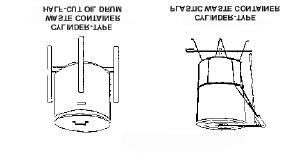
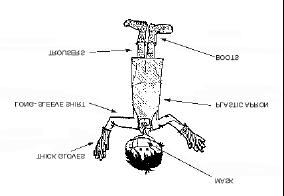
UNEP : Directory of Environmentally Sound Technologies for Waste Management in Pacific SIDS
Sound practice for disposal of medical waste should include the following:
§
Source separation within the
hospital to a) separate harmless
waste such as paper, cardboard, and
food scraps, for reuse and recycling,
b) isolate infectious and hazardous
wastes using special collection
containers, which are colour coded,
or clearly different for appropriate
disposal.
Source: WHO Webpage
WHO have reported that model medical-waste-management programs in India and
elsewhere have shown that segregation and reduction practices can minimise much
of the waste that needs to be safely disposed. These programs are successful in
reducing the amount of potentially infectious waste, reducing other medical wastes,
educating staff, and developing local policies to deal with these issues. The
potentially infectious part of the waste is much less than 10 percent (some estimates
are 1-3 percent). Therefore, if waste management programs are based on good
segregation, they will greatly reduce the waste problem.
§
Set procedures and equipment for
handling and transportation to
ensure wastes are handled in a
sound manner to minimise risk
of exposure. e.g. placement of all
sharps in secure containers as
most appropriate for their final
disposal. Provision of
appropriate clothing, collection
containers, and vehicles for
handling the wastes collected.
Source: WHO Website www.int/water_sanitation_health/medwaste
§
Take back systems, where vendors or manufacturers take back unused or out of
date medication for controlled disposal.
§
Tight keeping of inventories, to avoid wastage.
§
Piggy back systems, where nursing homes, doctors offices and clinics can funnel
their waste through the main hospital waste system.
§
Treatment of infectious waste by disinfection. Disinfection can be done using
autoclaving (Steam sterilisation), shredding followed by chemical disinfection or
UNEP July 2002
UNEP : Directory of Environmentally Sound Technologies for Waste Management in Pacific SIDS
microwaving, and irradiation. Disinfected wastes still require disposal as special
wastes and may have their own disadvantages that may preclude their use in many
settings
§
Incineration to dispose of medical waste should only be used as an appropriate
option for disposal, for a very small part of the medical waste stream. This may
include pathogenic wastes (e.g., body parts); certain expired pharmaceutical waste;
and some special wastes (such as chemotherapy waste--not usually a problem in
developing countries). Anything that is not potentially infectious (over 90 percent of
the medical waste) should never be incinerated, especially plastics and metals
(mercury). This is because incinerated medical waste can cause significant negative
environmental impacts--mainly from extremely toxic dioxins (and furans)
produced during combustion of chlorinated plastics (e.g. polyvinyl chloride or
PVC). Dioxins are found in the fly ash, bottom ash, and air emissions from the
burned plastics (WHO by De Monfort University, UK). Incineration is expensive to
set up and requires technical input to operate and maintain. An incinerator needs to
be set up and operated by suitable skilled staff. In the case of SIDS the Electricity
Corporation or Public Works Department may be the best people to handle this.
Ash residues from the incinerator will still contain sharps (needles, and scalpels),
and dioxins, and therefore should still be disposed of as special wastes within the
landfill.
§
Proper final disposal. Where none of the above practices are possible, due to lack of
funding or organisational structure, suitable final disposal is the only way to deal
with hospital wastes. For disposal within landfills or dumps, the special waste
should be placed in a designated cell or area under close supervision, and covered
with a layer of lime, and at least 50 cm of soil. If this is not possible, the special
waste should have at least 1 m of normal waste immediately placed over and 2 m to
each side of it.
UNEP July 2002
UNEP : Directory of Environmentally Sound Technologies for Waste Management in Pacific SIDS
3.3
Household and Agricultural Hazardous Waste
Hazardous wastes make up only a small percentage of the total household waste stream,
however the effect of these hazardous wastes in terms of human health and environmental
degradation can be far more significant. Hazardous wastes from agricultural practices are
similar to household wastes in that they are usually diverse in nature, and most often exist
in small quantities. Examples of these wastes include left over oil-based paints, paint
thinner, wood preservatives, herbicides, pesticides, cleaners, used motor oil, antifreeze, and
batteries.
There are two opposing views as to what is best practice for dealing with such wastes. The
first view is to encourage separation of these wastes from other non-hazardous wastes prior
to disposal so they can be dealt with as necessary. This is common in industrialised
countries where technologies and finance for safe re-cyling, or disposal are available. The
second view of what is best practice, is to dispose of household hazardous wastes with
other wastes, into normal landfills, where the effect of these wastes is dispersed and diluted
throughout the whole landfill. This is seen as preferable to collecting the hazardous wastes
together into a single, highly concentrated storage area. In many cases, where there are no
alternative methods of dealing with separated hazardous wastes, this may be the most
`sound' approach.
The following are sound practices for management of hazardous household wastes:
§
Separation of hazardous wastes should be prioritised according to the level of
damage each type of waste does, when released into the environment through the
disposal method that is used, e.g. batteries cause significant problems when
incinerated, therefore they should be separated if the waste stream is incinerated.
§
There should be ample clear public training as to the need for separation, and how
and where this can be done.
§
Separation, recycling and collection opportunities should be convenient, and
frequent.
§
Hazardous goods should be clearly identified as such at the point of purchase, and
on labelling, with instructions for special disposal.
§
An emphasis should be placed on point-of-purchase take-back systems for
substances which can be collected in this manner such as medicines, used oil, and
batteries.
§
Legislation and policy should be put in place to eliminate the import of hazardous
goods where non-hazardous alternatives are available.
§
Personnel handling household hazardous goods, must receive training to reduce
health and safety risks, and ensure appropriate disposal.
UNEP July 2002
UNEP : Directory of Environmentally Sound Technologies for Waste Management in Pacific SIDS
Where resources or options are available for appropriate disposal of specific hazardous
wastes, separation of these wastes is appropriate, however, if separation will result in large
quantities of poorly controlled, concentrated wastes, it may be better to leave these wastes
to be disposed of with normal waste.
3.4
Used Oils
Used oils often end up in the sewer system, or are disposed of with other solid wastes,
where they ultimately end up causing environmental damage.
Apart from used oil from automobiles, considerable waste oil is produced by electricity
generators. For example, in Niue, the powerhouse produces 200 litres of waste oil every
month (Habitat July 1998). This is just one of many fuel powered electricity generators
used throughout the SIDS.
Another significant source of used oil is from electricity transformers. This oil has been
reported to contain Polychlorobiphenyls (PCB's) (SPREP Solid Waste Management).
In Tuvalu, one method of oil disposal reported is to drip it slowly down a u-shaped steel
tube. The u shaped base of the tube is heated so that the oil forms a vapour and burns as it
enters the u-section. This method of disposal prevents oil contaminating the soil, and
ground water, but still results in contamination of the air.
The following sound practices are recommended for handling used oil:
§
Oil providers, such as garages and shops, should be required to have storage drums
where used oil can be returned free of charge for collection and appropriate reuse or
disposal.
§
Re-refining into lubricating oil. The Cook Islands and some other SIDS currently
export used oil to Fiji, where it is re-refined. The residue resulting from re-refining
should be disposed of appropriately by burning within, cement kiln, or within a
permanently sealed container in a landfill.
§
Use as a fuel in an incinerator or electricity generator or heater. In this case, there is
a risk that heavy metals contained in the oil may be emitted into the environment.
The most sound option for burning of used oil is in a cement kiln where metals are
absorbed into the cement matrix.
3.5
Batteries
Old flat lead batteries from cars, trucks, and other uses contain acid and lead, both of which
are hazardous. The following are sound practices for batteries:
§
Drainage of acid with subsequent neutralisation.
§
Export of batteries for re-cycling (storage area required).
UNEP July 2002
UNEP : Directory of Environmentally Sound Technologies for Waste Management in Pacific SIDS
§
Recycling in controlled environments. Small scale uncontrolled recycling can often
be highly polluting and hazardous.
§
Melting of the lead at a non-ferrous foundry for reuse as sinkers. This can be
considered as "unsound" and dangerous due to the production of hazardous fumes.
Small batteries contain nickel and Lithium. These batteries should also be collected
separately from other waste and exported to suitable offshore countries for disposal.
Provision of storage necessary to contain these batteries prior to exporting.
3.6
Asbestos
Asbestos (which is a carcinogenic material) should be sealed in a plastic bag, and buried
sufficiently deep in the landfill such that it won't be uncovered. Wetting of the asbestos
prior to handling will help suppress the harmful fibres and dust. Breathing apparatus and
protective clothing should be used when handling asbestos.
3.7
Human excreta, sewage sludge, septage, and slaughterhouse waste
These wastes can contain large levels of pathogens and chemical contaminants that at these
concentrations are hazardous to human health and the environment. However, these
wastes do contain significant nutrients, food value and biomass which if handled correctly
may be beneficial and profitable as fertilisers, compost, animal feed and glue.
The following are sound practices for reducing and handling sewage sludge, septage:
§
Preventing large volumes of sludge through separation of sewage and stormwater
drainage systems.
§
Minimise reliance on centralised sewage system by installation of onsite treatment,
and separation of household washwater for reuse.
§
Land application requires regular monitoring of the sludge to show that the metal
content is very low.
§
Treatment such as drying, liming, and composting, or co-composting with yard
waste followed by land application. Again, levels of metal contaminants need to be
monitored.
§
Drying and disposal on landfills. It is important that it is dried to avoid generation
of large quantities of leachate.
UNEP July 2002
UNEP : Directory of Environmentally Sound Technologies for Waste Management in Pacific SIDS
3.8
Industrial waste
Industrial wastes are often disposed of within municipal landfills. Industrial wastes can be
extremely varied in content depending on the particular industry the waste is derived
from. Sound practice must lead to separation of hazardous industrial waste from MSW,
and appropriate disposal. A document by Batstone, et al, as referenced in the bibliography
is useful as a general reference for dealing with these wastes.
3.9
Information Sources for the Pacific Region
(a) The World Health Organisation (WHO) have significant information on waste
management issues and in particular how these impact on human health. They can be
contacted by writing to:
Avenue Appia 20
1211 Geneva 27
Switzerland
Telephone: (+00 41 22) 791 21 11
Facsimile (fax): (+00 41 22) 791 3111
Their Internet address is http://www.who.int.
(b) In the Pacific Region, the main information sources on solid liquid and hazardous
waste are SPREP, SOPAC, UNCHS-Habitat, and in a more general way, UNEP-IETC.
SPREP is currently completing two projects, which will assist with the management of
hazardous wastes. The first of these is the AusAID funded `Management of Persistent
Organic Pollutants in Pacific Island Countries' (POPs in PICs) project. SPREP should be
contacted for further information relating to these projects.
SPREP (South Pacific Regional Environment Programme)
POBox 240, Vaitele, Apia, Samoa
Tel: (685) 21929 Fax: (685) 20231
E-mail: sprep@sprep.org.ws
Web site: http://www.sprep.org.fj
(c) The NZODA funded `Development of Hazardous Waste Management Strategy in
Pacific Island Countries' project will develop and implement long-term hazardous waste
management plans to allow countries to effectively deal with potentially toxic materials
entering the region. This will be a good source of information on hazardous waste
management. NZODA can be found on the web at
http://www.mft.govt.nz/nzoda/nzoda.html or contacted by post at:
UNEP July 2002
UNEP : Directory of Environmentally Sound Technologies for Waste Management in Pacific SIDS
Development Cooperation Division
Ministry of Foreign Affairs and Trade
Private Bag 18 901
Wellington
NEW ZEALAND
Telephone 64 4 494 8500
Facsimile 64 4 494 8514
(d) UNCHS or (Habitat) have significant resources available on waste handling and
disposal technologies. They can be contacted by post at:
UNCHS (Habitat)
P.O.Box 30030
Nairobi, Kenya
Tel: (254-2) 621234
Fax: (254-2) 624266
E-mail: habitat@unchs.org
URL: http://www.unchs.org
UNEP web site: http://www.unep.org/
(e) South Pacific Applied Geoscience Commission
SOPAC
Private Mail Bag,
General Post Office
Suva, FIJI
Web site: http://www.sopac.org.fj/
(f) Bastone, Roger, "The Safe Disposal of Hazardous Wastes: The Special Needs and
Problems of Developing Countries. World Bank Technical paper Number 93. Washington:
World Bank, 1989.
(g) US Contacts:
National Small Flows Clearinghouse
West Virginia University Clearinghouse
West Virginia University
P.O. Box 6064
Morgantown, WV 26506-6064
Web site: www.nesc.wvu.edu
UNEP July 2002
UNEP : Directory of Environmentally Sound Technologies for Waste Management in Pacific SIDS
Centre for Environmental Research information
26 W. St. Clair
Cincinnati, OH 45268
(h) US Pacific Islanders are covered by the following Regional USEPA Office
US Environmental Protection Agency Region IX
215 Fremont St.
San Francisco, CA 94105
UNEP July 2002
UNEP : Directory of Environmentally Sound Technologies for Waste Management in Pacific SIDS
4
Wastewater Technologies
4.1
Introduction
There are numerous technologies to deal with the disposal of wastewater throughout the
world. Many of these technologies have been used in the Pacific however, for many reasons
have failed. These reasons include inappropriate technology, insufficient operation and
maintenance practices, lack of funding and lack of skilled personnel to name a few. This
section will focus on proven sound environmental technologies plus those currently used
in the Pacific, grouped under the following headings:
·
Wastewater Collection and Transfer;
·
Wastewater Treatment (Onsite);
·
Wastewater Treatment (Centralised and Decentralised);
·
Wastewater Reuse;
·
Wastewater Disposal Systems; and
·
"Zero" Discharge.
Suitable wastewater treatment and disposal technologies are already well documented and
much of the following information has been taken from existing reputable sources, again
focusing on Pacific SIDS.
See http://www.cep.unep.org/pubs/techreports/tr40en/index.html for technologies for
sewage disposal in the Caribbean SIDS area.
4.2
Wastewater Collection and Transfer
Waste collection and transfer for many on-site disposal methods is just a "direct drop" into
a latrine pit or vault without using water for flushing. Some latrines have water seal
devices to control insects and odours. Septic tanks and other types of latrines require some
pipe work to receive waste as well as a water supply, when cistern or pour flush toilets are
used. Good plumbing standards are important to ensure proper operation and no leaking
pipes. Governments should ensure that plumbing standards are in place and enforced,
normally through local building codes and permits that are required prior to the
construction of a dwelling.
All but a few types of on-site disposal systems requires water to transfer waste throughout
the treatment system, thus, the availability of a reliable water supply is a major criteria in
selecting the type of wastewater disposal to be used.
UNEP July 2002
UNEP : Directory of Environmentally Sound Technologies for Waste Management in Pacific SIDS
Centralised and decentralised systems require reliable water supplies as well as reticulation
networks to collect and convey to treatment plants and final disposal locations. These
systems often require extensive pumping to transfer wastewater through the reticulation
network. Again good plumbing standards are required within dwellings as well as good
design criteria and construction practices for reticulation networks and pump stations to
minimise potential operation and maintenance problems.
UNEP July 2002
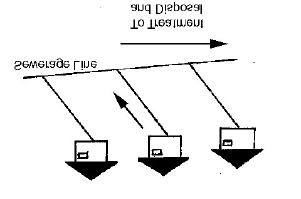
UNEP : Directory of Environmentally Sound Technologies for Waste Management in Pacific SIDS
4.2.1 Sewerage Systems
Collection and Transfer Systems:
Technology Description:
Household sewage is collected by an underground pipe
Conventional Sewerage
system to treatment facilities or directly into receiving waters
on land application.
Conventional sewerage consists of individual house
connections to piped reticulation system. The reticulation
systems normally include series pump stations to convey the
sewage through system, especially on atoll and coastal
communities due to flat topography and high groundwater
levels. Manholes and other access chambers are required
to maintain and clean reticulation systems.
Systems are normally based on conservative design criteria
resulting in high capital construction and operational costs.
Source: T. Loetscher (1998)
Extent of Use:
· most major urban areas in the Pacific Region.
Operation and Maintenance:
· high degree of operation and maintenance required especially if pumping is required
· skilled personnel required
Advantages:
Disadvantages/constraints:
· no worries to household users
· high costs
· provides good service to households
· high technology requiring skilled engineers,
· promotes good hygiene practices
contractors and operators
· ample and reliable piped water supply required
· adequate treatment and/or disposal required for a
large point source discharge
Relative Cost:
Cultural Acceptability:
· high capital and operation & maintenance costs
· is generally accepted within the Pacific Region
Suitability
· In urban areas that have the resources to implement, operate and maintain systems plus provide adequate
treatment to avoid pollution at the discharge end.
UNEP July 2002
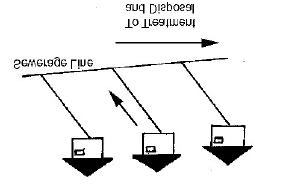
UNEP : Directory of Environmentally Sound Technologies for Waste Management in Pacific SIDS
Collection and Transfer Systems:
Technology Description:
Similar to conventional sewerage systems, household
Simplified Sewerage
sewage is collected by an underground pipe system to
treatment facilities or directly into receiving waters or land
application. However design criteria for construction are
much less conservative allowing for minimum hydraulic
requirements. This results in cost saving from:
·
Smaller pipe diameters
·
Flatter pipe gradients
·
Shallow pipe depths
·
Fewer access chambers
·
Smaller pumps
Note that this type of collection system better suits the
"settled sewerage" system where most solids are removed
using an onsite septic tank before entering the small
diameter reticulation system.
Note: Smaller diameter pipes than conventional
sewerage
Source: T. Loetscher (1998)
Extent of Use:
· not used often within the Pacific Region
Operation and Maintenance:
· high degree of operation and maintenance required especially if pumping is required
· skilled personnel required
· higher blockage risk than conventional sewerage
Advantages:
Disadvantages/constraints:
· lower capital cost than conventional sewerage
· smaller diameter pipes may result in a higher risk of
· no worries to household users
blockages and thus increased maintenance
· provides good service to households
· high technology requiring skilled engineers,
· promotes good hygiene practices.
contractors and operators
· ample and reliable piped water supply required
· adequate treatment and/or disposal required for a
large point source discharge
Relative Cost:
Cultural Acceptability:
· moderate to high capital costs
· is generally accepted within the Pacific Region
· moderate operation & maintenance costs
Suitability:
· In urban areas that have the resources to implement, operate and maintain systems plus provide adequate
treatment to avoid pollution at the discharge end.
UNEP July 2002
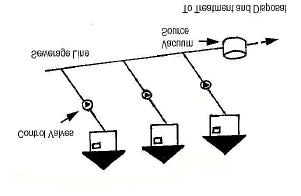
UNEP : Directory of Environmentally Sound Technologies for Waste Management in Pacific SIDS
Collection and Transfer Systems:
Technology Description:
Vacuum sewerage systems use a central vacuum source to
Vacuum Sewerage
convey sewage from individual households to a central
collection station. A valve separates the atmospheric
pressure in the home service line from the vacuum in the
collection mains. The valve periodically opens based on
volume stored to allow wastewater and air to flow into the
vacuum collection mains. The wastewater is propelled in the
collection main from the differential pressure of a vacuum in
front and atmospheric pressure in the back. Eventually the
air pressure in the collection main equalises, and all flow
ceases until the next valve from a service line is opened.
Through this process, wastewater is conveyed to a central
collection tank. From there, it can be conveyed by gravity or
by a pump station through a force main to its final
destination. Vacuum sewers are typically used in low
population density areas where the terrain will not permit
gravity flow to a central location or treatment facility.
Extent of Use:
· proposed for use in Rarotonga, Cook Islands
· not recommended
Operation and Maintenance:
· high degree of operation and maintenance is required
· skilled personnel required
Advantages:
Disadvantages/constraints:
· lower capital cost than conventional sewerage
· smaller diameter pipes may result in a higher risk of
· no worries to household users
blockages and thus increased maintenance
· provides good service to households
· high technology requiring skilled engineers,
· promotes good hygiene practices
contractors and operators
· ample and reliable piped water supply required
· possible odour problem from venting
Relative Cost:
Cultural Acceptability:
· high capital costs but less than conventional
· is generally accepted within the Pacific Region
sewerage
Suitability:
· In urban areas that have the resources to implement, operate and maintain systems plus provide adequate
treatment to avoid pollution at the discharge end.
UNEP July 2002
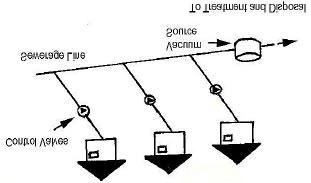
UNEP : Directory of Environmentally Sound Technologies for Waste Management in Pacific SIDS
Collection and Transfer Systems:
Technology Description:
Similar to "conventional sewerage" systems where
Settled Sewerage
household sewage is collected by an underground pipe
system to treatment facilities or directly into receiving waters
on land application. However before the sewage enters the
reticulation system, it enters a septic tank, where most
settleable solids are removed, thus only the liquid effluent is
reticulated.
Thus the resulting effluent is of "better" quality than if the
septic tanks were not in place. However the septic tanks will
require maintenance and cleaning.
In principle the design of the "settled" system is the same as
"conventional" systems, however with solids removed from
Source: T. Loetscher (1998)
the system, pipelines may be smaller, similar to the design
for the "simplified" system.
Extent of Use:
· not often used in the Pacific Region
Operation and Maintenance:
· high degree of operation and maintenance required especially if pumping is required
· skilled personnel required
· maintenance and cleaning of septic tanks required
Advantages:
Disadvantages/constraints:
· no worries to household users except maintenance
· moderate to high capital costs
and cleaning of septic tanks
· high technology requiring skilled engineers,
· provides good service to households
contractors and operators
· promotes good hygiene practices.
· ample and reliable piped water supply required
· low operation & maintenance costs
· adequate treatment and/or disposal required for a
large point source discharge
Relative Cost:
Cultural Acceptability:
· moderate to high capital costs
· is generally accepted within the Pacific Region
· low operation & maintenance costs
Suitability:
· In urban areas that have the resources to implement, operate and maintain systems plus provide adequate
treatment to avoid pollution at the discharge end.
UNEP July 2002
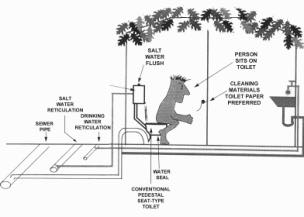
UNEP : Directory of Environmentally Sound Technologies for Waste Management in Pacific SIDS
Collection and Transfer Systems:
Technology Description:
Dual distribution systems involve the use of water from two
Saltwater Flushing
different sources and reticulated in two separated
(Dual Distribution Systems)
distribution networks. Potable water is distributed in one
system for most domestic household uses while a second
system reticulates non-potable water (i.e. salt or brackish
water) for flushing toilets and conveying wastewater from
households for treatment and/or disposal. Using this
technology conserves limited freshwater resources. This
type of technology would generally be used near the coast
where seawater or brackish water is abundant. Saltwater
systems require special consideration for the selection of
materials due to corrosive nature of seawater. Pipes need to
be colour-coded or have other identification to distinguish
from freshwater reticulation pipes and to avoid possible
cross connections.
Source: ADB
Extent of Use:
· in the Pacific, saltwater systems are used in Kiribati,
Marshall Islands and Nauru. In the Caribbean, US
Virgin Islands, St Lucia and the Bahamas also use
saltwater systems
Operation and Maintenance:
· operation and maintenance similar to normal freshwater systems
· high degree of operation and maintenance required due to pumping requirements
· potential corrosion problems exist that may compound maintenance requirements
Advantages:
Disadvantages/constraints:
· use of lesser quality waters for non-potable purposes
· high capital and operation & maintenance costs
reduces the use of limited freshwater resources
· high technology requiring skilled engineers,
contractors and operators
· risk of polluting groundwater through leaks
· risk of cross connections
Relative Cost:
Cultural Acceptability:
· high capital and operation & maintenance costs (due
· is generally accepted within the Pacific Region
to the duplication of distribution networks and the
need to use corrosion-resistant materials)
Suitability:
· In urban coastal areas that have limited freshwater resources.
UNEP July 2002
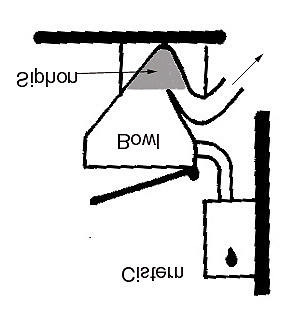
UNEP : Directory of Environmentally Sound Technologies for Waste Management in Pacific SIDS
Collection and Transfer Systems:
Technology Description:
The toilet bowl consists of a siphon, which provides a water
Cistern-Flush Toilet
seal against bad odours from the effluent pipe. Excreta are
flushed away with water stored in the cistern (depending on
the type between five to twenty litres per flush).
Dual flush toilets are available to reduce water used to flush
urine.
Cistern-flush toilets provide the highest level of convenience
and have a very clean and hygienic appearance.
The cistern-flush toilet itself has no treatment effects.
Cistern-flush toilets use large amounts of water. Installing
them results in a water use of around one hundred litres per
person per day.
Because of the complexity of the flush mechanism, cistern-
flush toilets are more prone to malfunctioning than pour-
flush toilets.
Source: T. Loetscher (1998)
Extent of Use:
· extensively throughout SIDS
Operation and Maintenance:
· subject to malfunction of flushing system
Advantages:
Disadvantages/constraints:
· easy to use and clean
· high maintenance
· hygienic
· high water use
· low to moderate capital and operation & maintenance
costs
Relative Cost:
Cultural Acceptability:
· low to moderate capital and operation & maintenance · no cultural problems
costs
Suitability:
· Very suitable if reliable water supply exists and if it can be afforded by user.
UNEP July 2002
UNEP : Directory of Environmentally Sound Technologies for Waste Management in Pacific SIDS
4.3
Wastewater Treatment (Onsite)
Onsite wastewater disposal systems provide for the treatment and disposal of domestic
waste either by waterborne or non-waterborne means, normally within the boundaries of
individual household properties. Disposal is normally by subsurface soakage and
assimilation to soil. Onsite systems may be environmentally sound when there is adequate
area to dispose of waste so that fresh and coastal waters are not polluted. Typical examples
of onsite treatment within the Region, are the various types of latrines and septic tanks.
Note that much of the following technology information and diagrams were from T.
Loetscher's Sanitation Expert Systems (SANEX) (1998).
UNEP July 2002
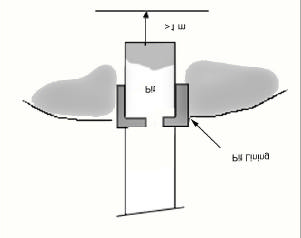
UNEP : Directory of Environmentally Sound Technologies for Waste Management in Pacific SIDS
Onsite Wastewater Treatment
Technology Description:
The pit latrine is designed for the onsite disposal of human
excreta. It consists of a concrete squatting plate or riser,
Pit Latrine
which is placed over an earthen pit. Its design life is
between 15 and 30 years. If less than 10 years, a double
vault composting (DVC) latrine should be considered
instead.
The pit diameter is between 1 and 1.5 m. The depth of the
pit is at least 2 m, but usually more than 3 m. The top 0.5 m
of the pit always requires lining. In loose soil, the entire pit
should be lined in order to prevent collapse.
One unit can serve one or several households.
If constructed properly, they provide good health benefits.
All types of anal cleansing materials may be used.
Since ventilation of pit latrines is simple, odours and insect
Note: Recommended that minimum distance from the
nuisance may occur. Excreta can be seen through the hole
bottom of the pit to the groundwater is at least > 1 m.
in the squatting plate.
Source: T. Loetscher (1998)
A pit latrine can be upgraded to a latrine with vault or a
pour-flush latrine.
Extent of Use:
· extensively used throughout the Pacific Region
Operation and Maintenance:
· easy to operate and maintain
Advantages:
Disadvantages/constraints:
· low cost
· this facility cannot receive graywater
· encourages public involvement
· since pit latrines involve soil absorption, there is a
· pit latrines do not need water for flushing and are
danger of groundwater contamination
simple to construct
· odours and insect nuisance may occur
· the potential for self help is high
Relative Cost:
Cultural Acceptability:
· low capital and operation & maintenance costs
· culturally accepted
Suitability :
· Suitable low cost waste disposal method however contamination of groundwater may be an issue.
UNEP July 2002
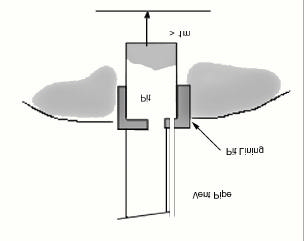
UNEP : Directory of Environmentally Sound Technologies for Waste Management in Pacific SIDS
Onsite Wastewater Treatment
Technology Description:
The ventilated improved pit (VIP) latrine is designed for the
VIP Latrine
onsite disposal of human excreta. With the exception of
some enhancements in design (e.g. a vent pipe) to improve
ventilation, its construction is similar to that of the pit latrine.
VIP latrines do not need water for flushing. They rely on soil
absorption and are simple to construct. If constructed
properly, they provide good health benefits.
All types of anal cleansing materials may be used.
A VIP latrine can be upgraded to a latrine with vault or a
pour-flush latrine.
Note: Recommended that minimum distance from the
bottom of the pit to the groundwater is at least > 1 m.
Source: T. Loetscher (1998)
Extent of Use:
· moderate use in Pacific Region
Operation and Maintenance:
· easy to operate and maintain
Advantages:
Disadvantages/constraints:
· one unit can serve one or several households
· this facility cannot receive graywater
· no water required
· there is a danger of groundwater contamination
· the potential for self help is high
· excreta can be seen through the hole in the squatting
· the ventilation of VIP latrines is good, odours and
plate or riser
insect nuisance normally do not occur
· no odors
· low cost
Relative Cost:
Cultural Acceptability:
· low capital and operation & maintenance costs
· culturally accepted
Suitability:
· Suitable low cost waste disposal method however contamination of groundwater may be an issue.
UNEP July 2002
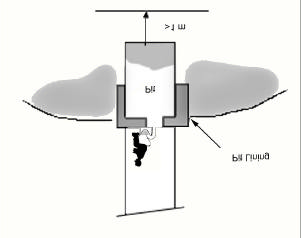
UNEP : Directory of Environmentally Sound Technologies for Waste Management in Pacific SIDS
Onsite Wastewater Treatment
Technology Description:
The pour-flush latrine is designed for the on-site disposal of
Pour-Flush Latrine
human excreta. Its construction is similar to that of the pit
latrine, except that it uses a pour-flush pan instead of a
squatting plate with a hole in it. The toilet pan consists of a
siphon, which creates a water seal forming an effective
barrier against odours and insect nuisance, and prevents
excreta from being seen once flushed. Excreta are flushed
away with water, which is poured manually into the pan by
using a scoop. The amount of water required to flush this
type of toilet is between two and three litres
One unit can serve one or several households and if
constructed properly, they provide good health benefits.
A pour-flush latrine can be upgraded to a pour-flush toilet
with vault.
The pour-flush toilet itself has no treatment effects.
Note: Recommended that minimum distance from the
bottom of the pit to the groundwater is at least > 1 m.
Note: The pour flush toilet can also be constructed with a
riser to sit on as shown above.
Extent of Use:
Source: T. Loetscher (1998)
· used extensively throughout the Pacific
Operation and Maintenance:
· easy to operate and maintain
Advantages:
Disadvantages/constraints:
· pour-flush latrines need small amounts of water for
· this facility cannot receive graywater
flushing
· since pit latrines involve soil absorption, there is a
· they are simple to construct, thus the potential for self
danger of groundwater contamination
help is high
· no odours
· low cost
Relative Cost:
Cultural Acceptability:
· low capital and operation & maintenance costs
· culturally accepted
Suitability:
· Suitable for household and community use, however contamination of groundwater may be an issue.
UNEP July 2002
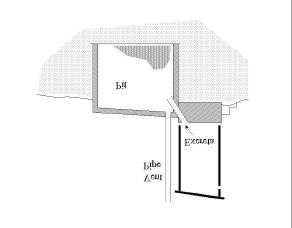
UNEP : Directory of Environmentally Sound Technologies for Waste Management in Pacific SIDS
Onsite Wastewater Treatment
Technology Description:
The Reed Odourless Earth Closet (ROEC) is designed for the
Reed Odourless Earth Closet
onsite disposal of human excreta. From the concrete squatting
plate or riser, an inclined chute leads to the completely off-set
pit. Ventilation is similar to the VIP latrine. Its design life is
between 15 and 30 years. If less than 10 years, a double vault
composting (DVC) latrine should be considered instead.
Because it is offset, the pit can be built larger than that of the
conventional pit latrine. In loose soil, the entire pit should be
lined in order to prevent collapse.
ROEC's do not need water for flushing and are simple to
construct. If constructed properly, they provide good health
benefits.
All types of anal cleansing materials may be used.
Since the chute is inclined, excreta cannot be seen through the
hole in the squatting plate.
Since ROEC's involve soil absorption, there is a danger of
Source: T. Loetscher (1998)
groundwater contamination.
A ROEC can be upgraded to a latrine with vault or a pour-flush
latrine.
Extent of Use:
· not used much
Operation and Maintenance:
· easy to operate and maintain
· chute must be kept clear of blockages
Advantages:
Disadvantages/constraints:
· one unit can serve one or several households
· this facility cannot receive graywater
· does not require water
· fouling of the chute is often a problem
· the potential for self help is high
· danger of groundwater contamination
· good ventilation largely prevents odours and
insect nuisance
Relative Cost:
Cultural Acceptability:
· moderate capital costs
· culturally accepted
Suitability:
· Suitable in water-short areas however contaminated groundwater may be an issue.
UNEP July 2002
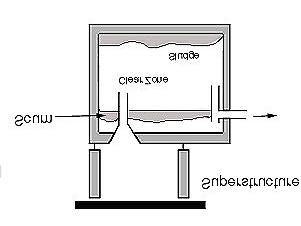
UNEP : Directory of Environmentally Sound Technologies for Waste Management in Pacific SIDS
Onsite Wastewater Treatment
Technology Description:
The aquaprivy is designed for the onsite collection and
Aquaprivy
treatment of domestic sewage. Excreta fall through a
submerged chute into a watertight tank, which is located
underground. The liquid in the tank provides a water seal to
reduce odours and insect nuisance.
There are two main treatment effects:
1) Contaminants are removed from the sewage by either
the settling of heavy particles or by flotation of materials
less dense than water (e.g. oils and fats). The sludge
layer at the bottom of the tank is a result of the settling
process. The scum layer is formed through the flotation
process.
2) Subsequently, organic matter in the sludge as well as
Note: Effluent should be disposed of through
the scum layer is digested by bacteria. As a result, gas
drainage field or seepage pit
is produced which emerges through a ventilation
Source: T. Loetscher (1998)
opening in the tank. The digestion process is important
because it prevents the excessive accumulation of
sludge.
Graywater has to be collected and discharged separately.
Extent of Use:
· not used much
Operation and Maintenance:
· accumulated sludge needs to be pumped out every one to three years, which requires special equipment such as
vacuum trucks
· for flushing and in order to maintain the water seal, approximately five litres of water is required per person per day
· besides cleaning the chute, there is no other maintenance required
Advantages:
Disadvantages/constraints:
· there is some potential for self help
· if not well constructed, tanks are not watertight. As a
· aquaprivies can be upgraded to septic tanks and
consequence, it is difficult to maintain the liquid level
settled sewerage
and thus the water seal, with resulting bad odours, and
the risk of groundwater contamination
· high costs
Relative Cost:
Cultural Acceptability:
· high capital costs
· culturally accepted
Suitability:
· May be suitable if space is a problem, otherwise septic tanks are a better option.
UNEP July 2002
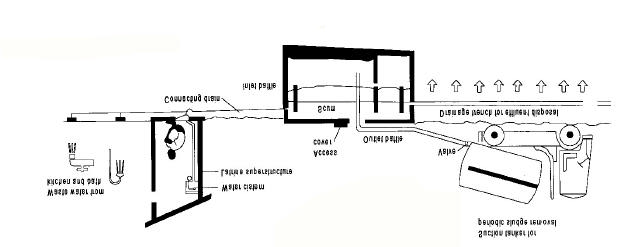
UNEP : Directory of Environmentally Sound Technologies for Waste Management in Pacific SIDS
4.4
Septic Tank Systems
Intermediate Technologies, 1991
Details of Septic Tank System
Septic tanks are only one component of the septic system. The tank itself only provides
minimal treatment with the separation of sinkers and floaters. It must be stressed that
there needs to be proper soil treatment as the septic tank doesn't provide full treatment.
· Components
o Graywater/Blackwater
o Septic Tanks
o Drainage fields
o Seepage systems
UNEP July 2002
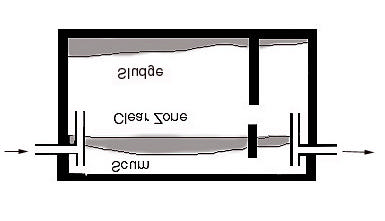
UNEP : Directory of Environmentally Sound Technologies for Waste Management in Pacific SIDS
Onsite Wastewater Treatment
Technology Description:
The septic tank is designed for the onsite treatment of domestic
Septic Tank
sewage. The tank is located underground and usually consists of
two compartments. The first compartment is approximately twice as
large as the second one. Septic tanks can be constructed with only
one compartment. However, this will result in significantly reduced
treatment effects and cost savings are minimal.
There are two main treatment effects:
1)
Contaminants are removed from the sewage by either
settling of heavy particles or by flotation of materials less dense
than water (e.g. oils and fats). The sludge layer at the bottom of the
tank is a result of the settling process. The scum layer is formed
through the flotation process.
2)
Subsequently, organic matter in the sludge as well as the
Note:
Effluent from the septic tank must be scum layer is digested by bacteria. As a result, gas is produced
disposed of through drainage fields, which emerges through a ventilation opening in the tank. The
seepage pits or sewerage system
digestion process is important because it prevents the excessive
Source: T. Loetscher (1998)
accumulation of sludge.
The effluent of septic tanks is still heavily
Septic tanks can reduce the BOD of raw sewage by up to 40% and
contaminated with pathogens. Therefore, its
the suspended solids content by 65%. Their effluent is thus much
disposal requires either soil absorption facilities
more readily absorbed into the ground than raw sewage.
or sewerage.
Therefore, smaller soil absorption facilities (e.g. seepage pit or
Septic tanks that discharge into a soil absorption drain field) are required.
system can be upgraded to settled sewerage.
Effluent quality can be further improved by installing a solids filter
on the septic tank outlet. This prevents the carry over of solids into
the absorption field.
Since they can only accept liquid waste, they must be connected to
a flush toilet. Thus they are not suitable where water supply is
scarce or unreliable.
Extent of Use:
· extensively used in all SIDS
Operation and Maintenance:
· depending on their design, septic tanks require routine checks for sludge and scum levels and desludging every one
to three years
Advantages:
Disadvantages/constraints:
· graywater can be treated together with toilet waste.
· the construction of septic tanks requires skilled labour
· there is some potential for self help
· if this maintenance is neglected, septic tanks produce
· low land requirements
very poor effluent and can become a serious
· no electrical requirements
environmental and health hazard
· low operational and maintenance requirements
Relative Cost:
Cultural Acceptability:
· low to high capital costs
· culturally accepted
Suitability:
· Very suitable if designed, constructed and maintained properly and used with trench drainage system.
UNEP July 2002
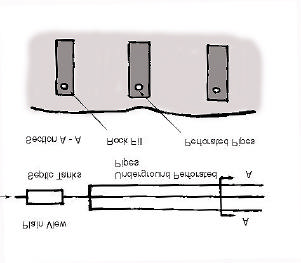
UNEP : Directory of Environmentally Sound Technologies for Waste Management in Pacific SIDS
Onsite Wastewater Treatment
Technology Description:
The drain field is designed for the onsite disposal of sewage.
Drain Field
It is an area of land consisting of one or several long
trenches, into which sewage is discharged through
underground perforated pipes. The sewage percolates into
the ground while it is decomposed by bacteria in the soil.
Usually, one drain field receives the effluent from one septic
tank or aquaprivy.
If sized large enough, a drain field can also accept
graywater.
The size and the cost of drain fields depend on the
absorption capacity of the soil.
The life of a drainage field can be extended by placing a
solids filter on the outlet of the septic tank to prevent solids
entering and blinding the drainage field.
Source: T. Loetscher (1998)
Extent of Use:
· low usage because seepage pits are easier and
cheaper to construct
Operation and Maintenance:
· if constructed properly, no maintenance is required
· but if clogged, replacement trenches are required sooner
· operation & maintenance reduced if septic tank or other system using trenches are maintained properly
Advantages:
Disadvantages/constraints:
· the construction of drain fields is simple with good
· large space requirements
potential for self help
· since drain fields are based on soil absorption, there
· better disposal method than seepage pits
is a danger of groundwater contamination
· low costs
Relative Cost:
Cultural Acceptability:
· low capital costs
· culturally accepted
Suitability:
· Very suitable to dispose of septic tank effluent where enough space is available, and where the soil has medium
absorption capacity (not too slow, and not too fast resulting in ground water contamination).
UNEP July 2002
UNEP : Directory of Environmentally Sound Technologies for Waste Management in Pacific SIDS
Onsite Wastewater Treatment
Technology Description:
The seepage pit is designed for the on-site disposal of
Seepage Pit
sewage effluent. It consists of an underground pit, the wall
of which is lined with bricks. Through the open joints in the
brick lining, effluent percolates into the soil, where it is
decomposed by microorganisms.
Usually, one seepage pit receives the effluent from one
septic tank or aquaprivy.
If sized large enough, a seepage pit can also accept
graywater.
Note: In the Pacific seepage pits often consist of a dug
pit back filled with rocks or coral blocks
The size and thus the cost of a seepage pit depends on the
absorption capacity of the soil.
Source: T. Loetscher (1998)
Extent of Use:
· seepage (or soakage) pits are extensively used in the
Pacific, however are not built to the standard shown
here
Operation and Maintenance:
· if constructed properly, minimal maintenance is required
· operation & maintenance reduced if septic tank or other system using trenches are maintained properly
Advantages:
Disadvantages/constraints:
· the construction of a seepage pit is simple with good
· seepage pits are based on soil absorption, there is a
potential for self help
danger of groundwater contamination more so than
with drainage trenches, as effluent is concentrated at
one point rather than spread over a large area
Relative Cost:
Cultural Acceptability:
· moderate capital costs
· culturally accepted
Suitability:
· Suitable to dispose of septic tank effluent where potential groundwater contamination is not an issue.
UNEP July 2002
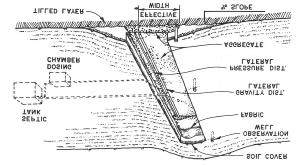
UNEP : Directory of Environmentally Sound Technologies for Waste Management in Pacific SIDS
Onsite Wastewater Treatment
Technology Description:
Wisconsin mounds are used for those soil and site
Wisconsin Mound (raised bed)
conditions where conventional disposal trenches are
unsuited due to shallow soils overlaying rock, or where
water tables are high in permeable soils. The mound
provides for distribution of effluent onto a layer of sand of
sufficient depth (around 600 mm) to ensure satisfactory
renovation before entering the natural soil to then diffuse
into the water table. The mound is constructed directly onto
the natural ground surface, which is ploughed or cultivated
beforehand. Wastewater renovation takes place within the
sand fill of the mound, enabling the unit to be placed on
freely permeable or slowly permeable subsoils. It can even
be utilised on filled areas. Wastewater renovation takes
place within the sand fill of the mound, enabling the unit to
be placed on freely permeable or slowly permeable subsoils.
Note: The life of a Wisconsin mound can be extended by
placing a solids filter on the outlet of the septic tank to If sized large enough, a Wisconsin mound can also accept
prevent solids entering and blinding the mound.
graywater.
The size and the cost of Wisconsin mounds depend on the
Source: Tyler & Peterson
absorption capacity of the soil.
Extent of Use:
· low usage because seepage pits are easier and
cheaper to construct
Operation and Maintenance:
· if constructed properly, minimum maintenance is required
· operation & maintenance reduced if septic tank or other system using trenches are maintained properly
Advantages:
Disadvantages/constraints:
· the construction of Wisconsin mounds is simple with
· large space requirements
good potential for self help
· since Wisconsin mounds are based on soil
· better disposal method than seepage pits
absorption, there is a danger of groundwater
· increases the evapo-transpiration rate
contamination
· higher cost than a drain field
Relative Cost:
Cultural Acceptability:
· high capital costs
· culturally accepted
Suitability:
· Very suitable for disposing septic tank effluent where enough space is available, and where the soil has medium
absorption capacity (not too slow, and not too fast resulting in ground water contamination).
UNEP July 2002
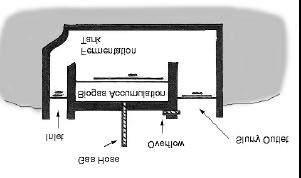
UNEP : Directory of Environmentally Sound Technologies for Waste Management in Pacific SIDS
Onsite Wastewater Treatment
Technology Description:
The biogas digester is an onsite facility, which produces
Biogas Digester
biogas (mainly methane) that can be used for cooking and
lighting. Since the technology does not work well with
human excreta alone, it is only suitable for rural areas
where large animals (e.g. pigs or cattle) are held.
The rather large fermentation tank (approximately 10 cubic
metre for a single household) is fed with human excreta
(e.g. from a pour-flush toilet), diluted animal faeces, and
crop stalks.
A well designed and operated digester produces enough
gas to cover the needs of an entire household. Because of
the long liquid retention time, the effluent slurry may be
Source: T. Loetscher (1998)
safely used as fertilizer in agriculture and aquaculture.
Graywater can be used to dilute animal faeces.
However, larger units serving several households or a
whole commune are also feasible.
Significant amounts of water are required to dilute animal
faeces.
Biogas production falls off at low ambient temperatures. It is
thus advantageous to bury the tank. Biogas digesters are
not suitable for cold climates (i.e. winter temperatures
significantly below zero for a prolonged period of time).
This technology is not suitable for areas with no demand for
biogas or where no farm animals are kept (i.e. no animal
faeces are available).
Extent of Use:
· minimal use in Pacific Region
Operation and Maintenance:
· similar to a septic tank; must be de-sludged every 3 to 5 years for optimal performance
Advantages:
Disadvantages/constraints:
· provide source of biogas
· skilled labour is required for the construction of a
· animal waste may be use as well
watertight tank, with little scope for self help
· requires large source of faeces for biogas production
· better disposal method than seepage pits
· high costs
Relative Cost:
Cultural Acceptability:
· high capital costs
· culturally accepted
Suitability:
· Yes, where animal manure is available and where biogas is in demand.
UNEP July 2002
UNEP : Directory of Environmentally Sound Technologies for Waste Management in Pacific SIDS
4.5
Wastewater Treatment (Centralised and Decentralised)
Generally the major difference between centralised and decentralised treatment system
technologies is the population that they are designed to service, with centralised systems
servicing larger urban areas. All of these treatment systems require the use of water
throughout the process to flush, convey, treat and dispose of waste and wastewater.
Wastewater treatment processes are classified into the following categories, related
generally to the quality of effluent produced by the process.
4.5.1 Preliminary Treatment
The aim of preliminary treatment is to protect the principal treatment processes that
follow by the removal of solids and grit which can block and wear pipe work,
valves, pumps and treatment equipment. Modern preliminary treatment consists of
screening, grit and grease removal and to a lesser extent, shredding devices.
However in some Pacific SIDS preliminary treatment is the only form of treatment
before being discharged into the sea.
4.5.2 Primary Treatment
Sedimentation is generally the main operation in the primary treatment process.
Sedimentation can remove all the readily settleable matter from the wastewater,
giving a corresponding reduction in Suspended Solids (SS) and Biochemical Oxygen
Demand (BOD) concentrations. Grease and fatty materials float to the surface to
form a scum which can be removed. This standard of treatment may be considered
satisfactory for ocean disposal of effluent, assuming that the outfall is properly
designed and constructed.
A number of different types of sedimentation tanks or clarifiers are used for
primary sedimentation including septic tanks, Imhoff tanks, clarigestors,
rectangular, and circular tanks.
4.5.3 Secondary Treatment
Secondary treatment basically consists of some form of biological process. The main
objective of secondary treatment is to remove most of the fine suspended and
dissolved degradable organic matter which remains after primary treatment, so that
the effluent may be rendered suitable for discharge. This is normally achieved by
aerobic biological processes. The processes most widely used in municipal
treatment systems are trickling filters, rotating biological filters, activated sludge
and oxidation ponds. Aerated lagoons are also used for municipal treatment and for
pretreating industrial effluents.
UNEP July 2002
UNEP : Directory of Environmentally Sound Technologies for Waste Management in Pacific SIDS
4.5.4 Tertiary Treatment
Tertiary treatment is carried out where the effluent must be of a higher quality than
that obtainable by secondary treatment. The main objective is usually effluent
polishing (the removal of fine suspended solids). Because these are mostly organic,
their removal will result in a reduction in the effluent BOD. Effluent polishing can
be carried out using physical separation of suspended solids from the effluent or by
more complex processes which involve biological as well as physical action.
Physical separation processes include microstrainers and various types of filter
ranging from slow sand filters to rapid sand, dual media and mixed media filters.
Processes involving biological action include tertiary ponds, grass filtration, land
filtration and wetlands.
Other processes, which are gaining greater use in tertiary treatment, include
ozonation and UV radiation, which act to reduce levels of pathogens in the effluent.
Most "package" plants available provide secondary treatment. However when used
in conjunctions with another secondary treatment process may provide tertiary
treatment.
Most of the following technology information is from SOPAC's Report on Project
Criteria, Guidelines and Technologies (1999) by H Scholzel and R Bower.
UNEP July 2002
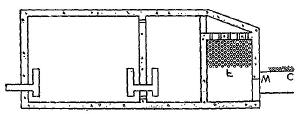
UNEP : Directory of Environmentally Sound Technologies for Waste Management in Pacific SIDS
Primary Process
Technology Description:
This is essentially a septic tank with an Upflow Filter that is
Septic Tank
incorporated directly after the second chamber of the septic
tank. Effluent after leaving the second chamber of the septic
Septic Tank with Upflow Filter
tank is directed upwards through the bottom of the filter
Longitudinal Section
before exiting to be disposed of either in leach fields etc. It is
also mainly designed for on-site treatment of domestic
sewage. In the upflow filter the effluent enters at the base
and flows up through the layer of coarse aggregate which is
then discharged over a weir at the top. Anaerobic bacteria
grow on the surface of the filter material and oxidise the
effluent as it flows past. Disposal of the effluent may be into
a stream or into soakage pits etc.
F Filter
The effluent can have up to 70 % reduction in BOD and it
W Effluent Weir
changes a malodorous highly turbid, grey to yellow influent
C Effluent Channel
to an odourless clear light yellow effluent.
Source: Septic tank with upflow filter after Mara, D
Both graywater and blackwater can be flushed through the
system.
Since septic tanks only accept liquid waste they must be
connected to a flush toilet.
Extent of Use:
· limited use in the Pacific Region
Operation and Maintenance:
· filter may be expected to operate without maintenance for 18 to 24 months; then need to drain filter and wash with
freshwater
· septic tank needs regular desludging. Filter and the septic tank can be cleaned together
Advantages:
Disadvantages/constraints:
· low land space required
· construction of septic tank and upflow filter requires
· no electrical requirements
skilled labour
· low operational and maintenance requirements
· construction material locally available
Relative Cost:
Cultural Acceptability:
· moderate capital costs
· is generally accepted within the Pacific Region
Suitability:
· Not suitable where water supply scarce or unreliable.
UNEP July 2002
UNEP : Directory of Environmentally Sound Technologies for Waste Management in Pacific SIDS
Primary Process
Technology Description:
Imhoff tanks are used for domestic or mixed wastewater
Imhoff Tanks
flows where effluent will undergo further treatment on
ground surface.
The Imhoff tank is divided into an upper settling
compartment in which sedimentation of solids occurs.
Sludge then falls through opening at the bottom into the
lower tank where it is digested anaerobically. Methane gas
is produced in the process and is prevented from disturbing
the settling process by being deflected by baffles into the
gas vent channels. Effluent is odourless because the
suspended and dissolved solids in the effluent do not come
into contact with the active sludge causing it to become foul.
When sludge is removed, it needs to be further treated in
drying beds or such for pathogen control.
The treatment efficiency is equivalent to primary treatment.
It can achieve 40 % BOD reduction, 65 % Suspended solids
Source: Flow Principle of the Imhoff Tank after Ludwig, S. 1998
reduction. But it has a poor pathogen removal.
Since they only accept liquid waste the tanks must be
connected to a flush toilet. Both graywater and blackwater
can be flushed through the system.
Extent of Use:
· limited use in the Pacific Region
Operation and Maintenance:
· require removal of scum and sludge at regular intervals
· apart from desludging and removal of scum no significant maintenance required
Advantages:
Disadvantages/constraints:
· low land space required
· effluent still contaminated with pathogens
· no electrical requirements
· needs skilled contractors for construction of Imhoff
· low operational and maintenance requirements
tanks
· construction material locally available
· poor effluent quality
· low costs
Relative Cost:
Cultural Acceptability:
· low capital costs
· is generally accepted within the Pacific Region
Suitability:
· Not suitable where water supply is scarce or unreliable.
UNEP July 2002
UNEP : Directory of Environmentally Sound Technologies for Waste Management in Pacific SIDS
Primary Process
Technology Description:
Anaerobic ponds use the same biological process and same basis for
Ponds/Tanks
loading as septic tanks but on a much larger scale. Anaerobic Ponds
as the name implies operates in the absence of air. Therefore deep
High Loaded Anaerobic Pond
tanks with small surface areas operate more efficiently then shallower
ponds. Before use, ponds should be filled with water to prevent foul
conditions from occurring. After the addition of raw sewage sludge
will accumulate on the bottom of the pond and in a week or so a crust
will form on the surface which eliminates all odours. The wastewater
type and the method of post treatment outlines the role of the
anaerobic ponds. Anaerobic ponds are designed for hydraulic
retention times of between 1 and 30 days depending on strength and
type of wastewater and also the desired treatment effect. Stormwater
could cause shock volumetric loads which may affect the
performance of ponds and should be taken into account in earlier
stages of pond development.
Low Loaded Anaerobic Pond
The effluent quality that can be achieved are as follows:
· small ponds treating domestic wastewater 50-70 % BOD
removal,
· high loaded ponds with long Hydraulic Retention Times, 70-95 %
BOD removal, 65-90 % COD removal,
· treatment Efficiency of low loaded ponds with short Hydraulic
Retention Time of 72 hours, 57 % BOD removal, 53 % COD
removal,
· treatment efficiency of low loaded ponds with long Hydraulic
Retention Time of 480 hours, 98 % BOD removal, 96 % COD
Source: Principle of anaerobic ponds after Ludwig, S. 1998
removal.
Both graywater and blackwater can be flushed through the system.
Extent of Use:
· limited use in the Pacific Region
Operation and Maintenance:
· apart from being filled with water before use the start up of these ponds require no significant arrangements
· sludge gradually accumulates in ponds and requires removal at regular intervals
Advantages:
Disadvantages/constraints:
· no electrical requirements
· poor effluent quality for low loaded ponds with short
· low operational and maintenance requirements
Hydraulic Retention Times (HRT) or domestic water
· construction material locally available
· low effluent quality for small ponds treating domestic
· high effluent quality for low loaded ponds with long
wastewater
HRT
· low to moderate capital costs with low operation &
maintenance costs
Relative Cost:
Cultural Acceptability:
· low to moderate capital costs
· is generally accepted within the Pacific Region
· low operation & maintenance costs
Suitability:
· Moderate land requirements for both ponds with short HRT and long HRT as in comparison with other technologies
presented in this report however, ponds with long HRT require significantly more land than short HRT ponds.
UNEP July 2002
UNEP : Directory of Environmentally Sound Technologies for Waste Management in Pacific SIDS
Primary Ponds
Technology Description:
Raw sewage contains a lot of insoluble suspended matter
Ponds/Tanks
which can be settled in properly designed sedimentation
tanks of which there are two types upward flow and
Sediment Tanks
horizontal flow. The tank has a sloping floor to assist sludge
removal that is done by gravity through a valve at the lowest
point of the tank. The main action that occurs here is the
settling of the insoluble suspended particles and a properly
designed sedimentation tank can remove about half of this
polluting matter. Effluent leaving here can be further treated
in stabilization ponds, percolating filters etc.
The effluent quality that can be achieved is as follows:
· low loaded tanks with short Hydraulic Retention Times
57 % BOD removal, 53 % COD removal; and
· low loaded tanks with long Hydraulic Retention Times
98 % BOD removal, 96 % COD removal.
Both graywater and blackwater can be flushed through the
system. Since they only accept liquid waste they must be
connected to a flush toilet.
Source: Horizontal Flow Type after Mann, H.T., Williamson, D., 1982
Extent of Use:
· limited use in the Pacific Region
Operation and Maintenance:
· sludge removal is important and must be done regularly
· other then desludging no significant maintenance required
Advantages:
Disadvantages/constraints:
· no electrical requirements
· low effluent quality for low loaded
· low operational and maintenance requirements
tanks with short HRT
· construction material locally available
· high effluent quality for low loaded tanks with long HRT
· low to moderate capital costs with low operation & maintenance costs
Relative Cost:
Cultural Acceptability:
· low to moderate capital costs
· is generally accepted within the
· low operation & maintenance costs
Pacific Region
Suitability:
· Not suitable where water supply scarce or unreliable as requires high volumes of water for transportation to
treatment site.
· Moderate land requirements for both ponds with short HRT and long HRT as in comparison with some technologies
presented in this report however ponds with long HRT require significantly more land than short HRT ponds.
UNEP July 2002
UNEP : Directory of Environmentally Sound Technologies for Waste Management in Pacific SIDS
Secondary Process
Technology Description:
This process is suitable for all kinds of wastewater
Reactors
including domestic. The baffled septic tank consists of an
initial settler compartment and a second section of a series
Baffled Septic Tanks
baffled reactors. Sludge settles at the bottom and the
active sludge that is washed out of one chamber becomes
trapped in the next. The reason for the tanks in series is to
assist in the digestion of difficult degradable substances
especially towards the end part of the process. For the
purpose of quicker digestion, effluent upon entering the
process is mixed with active sludge present in the reactor.
Wastewater flows from bottom to top causing sludge
particles to settle on the upflow of the liquid wastewater
allowing contact between sludge already present with
incoming flow. A settler can be used for treatment after
effluent has left the tank. Hydraulic and organic shock
Note: Both graywater and blackwater can be flushed through
loads have little effect on treatment efficiency.
the system. Since they only accept liquid waste they must be
connected to a flush toilet
The treatment efficiency achievable is 70-95 % BOD
Source: Flow Principle of baffled septic tank after Ludwig, S. 1998
removal, 65-95 % COD removal and the resulting effluent
quality is moderate.
.
Extent of Use:
· limited use in the Pacific Region
Operation and Maintenance:
· sludge removal is important and must be done regularly
· flow regulation is also important as up-flow velocity should not exceed 2 m/h
· moderate operation and maintenance requirements
Advantages:
Disadvantages/constraints:
· no electrical requirements
· needs skilled contractors for construction
· construction material locally available
· low land space required
· low capital costs
Relative Cost:
Cultural Acceptability:
· low capital costs
· is generally accepted within the Pacific Region
Suitability:
· Not suitable where water supply is scarce or unreliable.
UNEP July 2002
UNEP : Directory of Environmentally Sound Technologies for Waste Management in Pacific SIDS
Secondary Process
Technology Description:
Activated sludge treatment is a train of processes designed
Activated Sludge Treatment
to treat wastewater collected from a sewer network. The
preliminary treatment removes coarse solids and grease and
Activated Sludge Treatment
primary settling allows further removal of solids. It is in the
Aeration tank that micro-organisms use oxygen to
breakdown organic pollutants. Flocs are formed which settle
in clarifier forming a sludge layer that is then disposed in
drying beds etc. at a sludge disposal site. The clear liquid
left in the clarifier can either be further treated or discharged.
Suitable for blackwater as well as graywater.
The treatment efficiency achievable is 95% BOD removal
and 90% Suspended Solids removal
Since they only accept liquid waste they must be connected
Source: After Loetscher T., 1998
to a flush toilet.
Extent of Use:
· limited use in the Pacific Region
Operation and Maintenance:
· implementation requires skilled labour and contractors
· require expert staff for operation and maintenance
· process needs constant monitoring and control
Advantages:
Disadvantages/constraints:
· low land requirement
· needs skilled contractors for construction
· high effluent quality
· importation of some construction material
· needs trained operator
· requires electricity
· high operation and maintenance
· high capital and operation & maintenance costs
Relative Cost:
Cultural Acceptability:
· high capital and operation & maintenance costs.
· is generally accepted within the Pacific Region
Suitability:
· Not suitable where water supply is scarce or unreliable as requires high volumes of water for transportation to
treatment site.
· Yes, where technical backup is available.
UNEP July 2002
UNEP : Directory of Environmentally Sound Technologies for Waste Management in Pacific SIDS
Secondary Process
Technology Description:
Wetlands systems are suitable for domestic and industrial
Wetlands/Ponds
wastewater that has undergone preliminary treatment and
that has a COD content not higher than 500 mg/l. The reed
Reed Bed System/(SSF) Subsurface
bed system is 1-m deep basin sealed with clay or some
Flow/Wetlands/Root Zone Treatment Plants/Horizontal
other form of lining to prevent percolation into groundwater
Gravel Filter
with the basin itself being filled with soil in which reeds are
then planted. Oxygen is transported through the pores of the
plant down to the roots whereby the oxygen content
increases the biological activity of the soil. When wastewater
runs through the root-zone soil, organic compounds and
other impurities are eliminated by micro-organisms in the
soil.
The effluent quality achieved is up to 84 % COD removal
rate and up to 86 % BOD removal rate.
Source: Principle of the Horizontal Filter after Ludwig, S. 1998
Extent of Use:
· limited use in the Pacific Region
Operation and Maintenance:
· generally low operation and maintenance required, however does need maintaining of reeds or wetland plants to
keep weeds out and keep good growth
· regular maintenance of erosion trenches
Advantages:
Disadvantages/constraints:
· low operation and maintenance
· large area
· no electrical requirement
· creates environment for insect breeding
· construction material locally available
· moderate to high costs
· high effluent quality
Relative Cost:
Cultural Acceptability:
· moderate to-high capital costs
· is generally accepted within the Pacific Region
Suitability:
· Since only receive liquid waste, not suitable where water is scarce or unreliable.
· Requires high volumes of water for transportation to treatment site.
UNEP July 2002
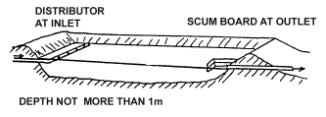
UNEP : Directory of Environmentally Sound Technologies for Waste Management in Pacific SIDS
Secondary Process
Technology Description:
In aerobic stabilization ponds the organic matter causing
Ponds
pollution is consumed by biological organisms that need
oxygen in proportion to the amount of organic matter
Aerobic Stabilisation Ponds/Algal Ponds/Oxidation Ponds
removed. Oxygen is supplied in these ponds by a growth
of algae, which is dependent on photosynthesis. If there is
not enough oxygen supplied to organisms that consume
organic matter then they will not function and anaerobic
organisms will become active causing offensive odours
and polluted effluent to be produced. Aerobic ponds
should be half-filled with water before use to prevent
offensive conditions from occurring. The treatment
efficiency increases with longer retention times.
Typical effluent quality is 82 % BOD removal rates, up to
97 % BOD removal in multiple pond systems, 78 % COD
Source: After Mann, H.T., Williamson, D., 1982
removal and 95 % pathogen removal.
Extent of Use:
· limited use in the Pacific Region
Operation and Maintenance:
· regular desludging in defined intervals and start up needs special arrangement
Advantages:
Disadvantages/constraints:
· low operation and maintenance required
· large area
· no electrical requirement
· insect breeding
· construction material locally available
· high effluent quality
Relative Cost:
Cultural Acceptability:
· moderate capital costs
· is generally accepted within the Pacific Region
Suitability:
· Since only receive liquid waste, is not suitable where water is scarce or unreliable.
· Requires high volumes of water for transportation to treatment site.
· Moderate land requirement, although if aeration provided land required even less.
UNEP July 2002
UNEP : Directory of Environmentally Sound Technologies for Waste Management in Pacific SIDS
Secondary Process
Technology Description:
Waste stabilization ponds are 3 or more, large, shallow,
Ponds
man-made lakes or ponds in a sequence designed to
treat wastewater collected from either a sewer network
Waste Stabilisation Ponds
or from small bore sewers etc. Simply, sewage which
has been screened to remove large solids, enters a
system of ponds the first being the anaerobic pond,
which receives the raw sewage. Some wastes float to
the surface as scum which then prevents the pond from
being aerated by wind and turning aerobic. Other wastes
sink to the bottom as sludge where they are digested by
anaerobic bacteria. Effluent then enters the facultative
pond that has an aerobic zone close to the pond surface
and a deeper anaerobic zone. Pathogen removal occurs
in the last maturation pond, which is an aerobic pond
whereby oxygen is transferred to water by wind and
algae. Warm temperatures accelerate the treatment of
wastes.
Typical effluent quality is 95 % BOD removal and 90 %
Suspended Solids removal. They produce very clear
effluent equivalent to activated sludge treatment.
Extent of Use:
Note: Need to keep top layer aerobic, oxygen sufficient all the time
· limited use in the Pacific Region
Source: After Pickford, J., 1991n
Operation and Maintenance:
· grass around ponds need to be cut regularly
· regular desludging is required
Advantages:
Disadvantages/constraints:
· low operation and maintenance
· high land space required
· no electrical requirement
· construction material locally available
· high effluent quality
Relative Cost:
Cultural Acceptability:
· moderate capital costs
· is generally accepted within the Pacific Region
Suitability:
· Since only receive liquid waste, is not suitable where water is scarce or unreliable.
UNEP July 2002
UNEP : Directory of Environmentally Sound Technologies for Waste Management in Pacific SIDS
Secondary Process
Technology Description:
The anaerobic filter is suitable for domestic wastewater
Filters
and all industrial wastewater that have a lower content of
suspended solids. Anaerobic filters allow the treatment of
Anaerobic Filters/Fixed Bed Reactor/Fixed Film Reactor
non-settleable and dissolved solids by bringing them into
close contact with surplus active bacterial mass. The
dispersed or dissolved organic matter is digested by
bacteria within short retention times. Bacteria fix
themselves to filter material like gravel, rocks, cinder etc.
allowing incoming wastewater to come into contact with
active bacteria. Preliminary treatment may be required to
remove solids of larger size.
Typical effluent quality is moderate with a 70-90% BOD
removal in a well operated anaerobic filter.
Both graywater and blackwater can be flushed through
the system.
Source: Flow principle of anaerobic upflow filter after Ludwig, S. 1998
Extent of Use:
· limited use in the Pacific Region
Operation and Maintenance:
· high operation and maintenance
· desludging required at regular intervals
· cleaning of filter material required
Advantages:
Disadvantages/constraints:
· low land requirement
· high operation and maintenance requirements
· requires electricity
· high costs
Relative Cost:
Cultural Acceptability:
· high capital costs
· is generally accepted within the Pacific Region
Suitability:
· Since only receive liquid waste, is not suitable where water is scarce or unreliable.
· Yes, where technical backup is available.
UNEP July 2002
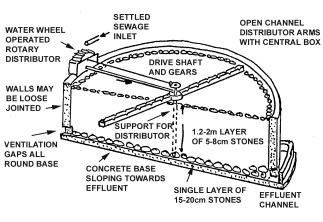
UNEP : Directory of Environmentally Sound Technologies for Waste Management in Pacific SIDS
Secondary Process
Technology Description:
Trickling filters follow the same principle as the anaerobic
Filters
filter as it provides a large surface for bacteria to settle,
however it is an aerobic process. The Trickling filter
Trickling Filters/Percolating Filters
consists of either a rock or gravel medium filling the
filters. The organic pollution in wastes is consumed by
organisms that grow in a thin biological film over the rock
or gravel medium. Oxygen is obtained by direct diffusion
from air into the thin biological film. Preliminary
settlement of sewage is required after which it is dosed
by mechanical means over the surface of the filters. To
ensure that bacteria are allowed equal access to air and
wastewater, wastewater is dosed in intervals to allow
time for both wastewater and air to enter the reactor.
Wastewater also needs to be equally distributed over
entire surface to fully utilise the media in filter.
Effluent quality is 80 % BOD removal with organic
loading rates of 1 kg BOD/m 3 x d.
Source: After Mann, H. T., Williamson, D., 1982
Extent of Use:
· limited use in the Pacific Region
Operation and Maintenance:
· bacterial film has to be flushed away regularly to prevent clogging and to remove dead sludge
Advantages:
Disadvantages/constraints:
· high effluent quality
· high operation and maintenance requirements
· needs electrical power
· moderate to high costs
Relative Cost:
Cultural Acceptability:
· moderate to high capital costs
· is generally accepted within the Pacific Region
· moderate operation & maintenance costs
Suitability:
· Since only receive liquid waste, is not suitable where water is scarce or unreliable.
· Requires a high volume of water.
UNEP July 2002
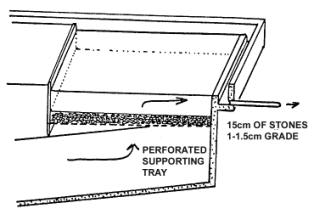
UNEP : Directory of Environmentally Sound Technologies for Waste Management in Pacific SIDS
Tertiary Process
Technology Description:
Banks' Clarifiers are a compact tertiary treatment process.
Banks' Clarifiers
It is essentially an upward flow filter containing a bed of
gravel that is supported on a perforated base. The
accumulation of solids occur within and on the upper
surface of the gravel layer. The bed should be cleaned
when the upper surface is covered or when suspended
solids concentration in the final effluent rises.
Typical effluent treatment quality performed on secondary
treated effluent is 30 % BOD removal, 50 % Suspended
solids removal and 25 % E. Coli removal.
Source: After Mann, H. T., Williamson, D., 1982
Extent of Use:
· limited use in the Pacific Region
Operation and Maintenance:
· requires removal of solids, which accumulate on the upper surface of the gravel bed layer
Advantages:
Disadvantages/constraints:
· low operation and maintenance
· high land space required
· construction material available locally
· high volume of water required
· no electrical requirement
· high effluent quality
Relative Cost:
Cultural Acceptability:
· moderate capital and operation & maintenance costs
· is generally accepted within the Pacific Region
Suitability:
· Since only receive liquid waste, is not suitable where water is scarce or unreliable.
UNEP July 2002
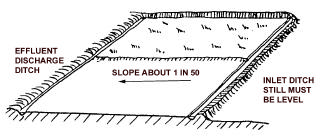
UNEP : Directory of Environmentally Sound Technologies for Waste Management in Pacific SIDS
Tertiary Process
Technology Description:
Grass plots are simple to construct with high rates of
Plots
removal. Plots should be even and sloped towards
collection areas. Basically effluent passes through the
Grass Plots
mesh of the grass blades which then filter out solids in a
well-aerated environment. The possibility of
contamination of groundwater should be considered, as
some effluent will percolate into porous ground. Coarse
natural grass is satisfactory. Surplus grass needs to be
removed and cuttings should be disposed of properly as
there could be danger of further pollution as they
decompose.
Typical treatment quality performed on secondary
treated effluent is 50 % BOD removal, 70 % Suspended
solids removal, 90 % E. Coli removal.
Source: After Mann, H. T., Williamson, D., 1982
Extent of Use:
· limited use in the Pacific Region
Operation and Maintenance:
· requires removal of solids but only when they are seen to physically prevent the flow
· surplus grass needs to be removed
Advantages:
Disadvantages/constraints:
· simple to construct.
· high land space required
· low operation and maintenance
· possible water contamination from runoff
· construction material available locally
· high volumes of water required
· no electrical requirement
· high effluent quality
Relative Cost:
Cultural Acceptability:
· moderate capital and operation & maintenance costs
· is generally accepted within the Pacific Region
Suitability:
· Since only receive liquid waste, is not suitable where water is scarce or unreliable.
UNEP July 2002
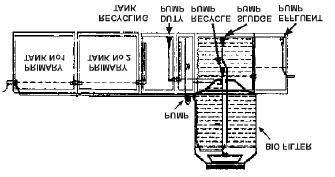
UNEP : Directory of Environmentally Sound Technologies for Waste Management in Pacific SIDS
Package Plant Types
Technology Description:
Enviroflow Plants treat both black and graywater through
Plant Type
a two-stage bacterial digestion process followed by
clarification and disinfection. Essentially wastewater is
Enviroflow Biofilter Treatment Plant System
run from kitchens, toilets etc. through two treatment
stages before clarification and disinfection. The first
stage is carried out using anaerobic and aerobic bacteria
inside a primary tank. Solids undergo digestion by
bacteria and liquids containing soluble organic matter
then passes to the second stage. The second stage has
a biological trickling filter in which selected bacteria grow
on a medium where wastes flow in contact with the air.
Any bacterial cell matter that is separated in this step is
kept in the effluent stream and allowed to settle out in the
clarifying chamber. Following this, the then clear effluent
is passed to a disinfecting step where Chlorine is used to
disinfect the effluent. The plants are capable of servicing
from just 10 people to communities of 20 000 people as
plants can be modified to suit such varying populations.
Source: After Enviroflow Wastewater Treatment Brochure, 1989
Typical effluent quality contains BOD5 < 20 mg/l and
Suspended Solids < 30 mg/l
Extent of Use:
· limited use in the Pacific Region
Operation and Maintenance:
· manual provided for operation and maintenance
· small pill kit tester for effluent monitoring
Advantages:
Disadvantages/constraints:
· low land space required
· high volumes of water requirement
· high effluent quality
· high operation and maintenance
· requires electricity
· high costs
Relative Cost:
Cultural Acceptability:
· high capital and operation & maintenance costs
· is generally accepted within the Pacific Region
Suitability:
· Since only receive liquid waste, is not suitable where water is scarce or unreliable.
· Yes, where technical backup is available.
UNEP July 2002
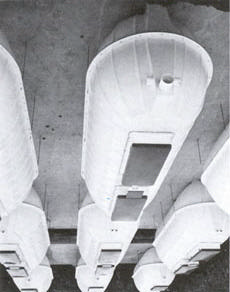
UNEP : Directory of Environmentally Sound Technologies for Waste Management in Pacific SIDS
Package Plant Types
Technology Description:
The Cromaglass Systems are essentially Sequencing
Plant Type
Batch Reactors where treatment is by timed sequences
within a single vessel. The unit consists of 3 sections each
Sequential Batch Reactors Cromaglass Unit
performing a different task. In the first section (A) an
aeration occurs (Solids Retention). This section is
separated from the rest of the unit by a non-corrosive
screen, which retains inorganic solids. Organic solids are
broken up by turbulence created with mixed liquor being
forced through the screen by a submersible aeration pump.
Section (B) is the continuing Aeration section where air and
mixing are provided by pumps. An optional denitrification
is performed by creating anoxic conditions by closing off air
to air intake pumps thus stopping aeration but allowing
continual mixing. The liquid is then transferred to section
(C) the Clarification Section. When the clarification section
is overfilled excess is spilled back into the aeration section.
When this stops the clarifier is then isolated, solids settle
and separate after which effluent is pumped out of the
Clarifier for discharge. Sludge is removed to a sludge
processing unit.
Treatment achieves over 90-95 % reduction of BOD and
Suspended Solids. The resulting effluent quality has BOD5
Source: After Cromaglass Wastewater Treatment System, 1998.
30 mg/L, Total Suspendable Solids 30 mg/L.
Extent of Use:
· limited use in the Pacific Region
Operation and Maintenance:
· high operation and maintenance
· high technology requiring
Advantages:
Disadvantages/constraints:
· low land space required
· high operation and maintenance
· high effluent quality
· requires electricity
· high technology requiring skilled operation and
maintenance inputs
· high costs
Relative Cost:
Cultural Acceptability:
· high capital and operation & maintenance costs
· is generally accepted within the Pacific Region
Suitability:
· Since only receive liquid waste, is not suitable where water is scarce or unreliable.
· Yes, where skilled technical backup is available.
UNEP July 2002
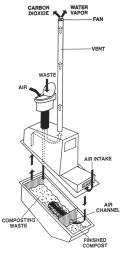
UNEP : Directory of Environmentally Sound Technologies for Waste Management in Pacific SIDS
4.6
Waterless toilets
Waterless toilets or `dry sanitation' systems do not use water to treat or transport human
excreta. These systems, if appropriately designed, conserve precious water resources and
avoid disposal of effluent and pollutants into waterways and the general environment.
They are an important onsite alternative to centralised reticulated systems, which remove
the problem `downstream'. They can also reduce the site restrictions and pollution
problems that can be encountered in the use of waterborne onsite systems such as septic
tanks. Waterless toilets can produce a useful soil improver that is hygienic to use if the
required time and conditions have allowed treatment to occur.
The most common type of waterless toilet is often referred to as a `composting toilet' (CT)
although the treatment often involves more than the process that occurs in the garden
compost heap. Decomposition in the holding tank or container of a CT occurs through a
complex bio-chemical interaction of factors such as temperature, pH, dessication, and
digestion by invertebrates, all taking place over an extended time period.
There are many designs of CT but they can be divided into two main types and they have
characteristic advantages and disadvantages which are summarised below. The range of
designs include commercial off-the-shelf units and owner-built systems that can be
constructed using locally available materials.
4.6.1 Continuous Composting Toilets
Consist of a single container in which excrement is deposited by the user, and as it
moves slowly through the container it decomposes, and then is removed as compost
from the end-product chamber. Examples of the off-the-shelf system are the Clivus
Multrum (see below), which is one of the earliest CT designs and has had different
many models over the years, some more successful than others, and an owner-built
example is the Clivus Minimus.
Continuous system
UNEP July 2002
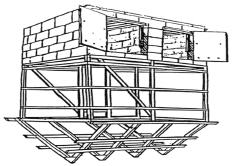
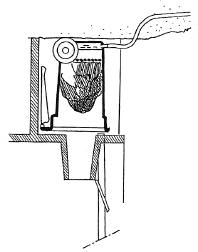
UNEP : Directory of Environmentally Sound Technologies for Waste Management in Pacific SIDS
Advantages: single containers are fitted under a bathroom and can easily
replicate a flush toilet without too much physical or social adjustment. The
container is permanently fitted under the toilet seat, and also never has to be
fully emptied as the compost can be gradually removed when it reaches the end-
product chamber.
Disadvantages: the continuous system may allow fresh material and pathogens
(disease causing organisms) that are deposited on the top of the pile to
contaminate the bottom of the pile, which may have already successfully
decomposed. If a problem occurs with the toilet, the system can be out of order
until the problem is fixed because there is only one container. Sometimes the pile
does not actually move down the slope of the container and the excreta can
become compacted, and very difficult to remove
Fixed chamber batch used in Tonga, Kiribati and Australia
Example of movable bins in a wheelibatch system
UNEP July 2002
UNEP : Directory of Environmentally Sound Technologies for Waste Management in Pacific SIDS
4.6.2 Batch Composting Toilets
Consists of two or more containers that are alternated so that the `active' container is
being used while the pile in the `fallow' container has time to compost without the
addition of fresh excrement and the potential for re-contamination. Examples of
owner-built Batch CTs are the Wheelibatch where the containers are alternated
underneath the toilet seat, and the Fixed Chamber Batch where the two containers
are permanently in place and the seat is moved when it is time to change containers.
Advantages: Multiple containers increase maintenance flexibility as the containers
can be alternated if they fill up faster than expected. It is possible to keep using the
toilet and still be sure that the pile is fully decomposed before removing the end-
product.
Disadvantages: the full containers in the batch system need to be replaced by an
empty container. This involves disconnecting the container that is fitted under a
toilet seat or moving the seat over a new container. Batch systems can therefore take
up more space in the bathroom or under the house.
4.6.3 Maintenance of CTs
The CT is relatively simple, technically, but it requires more attention than a flush
toilet where you push the button and your excreta is transported elsewhere.
· Some carbon based material or `bulking agent' such as dry leaves or
softwood shavings needs to be regularly (preferably daily or with each use)
added to the container to provide the proper carbon-nitrogen mix and to
aerate the pile and prevent compacting. Some commercial suppliers say this
is not necessary for their design but experience indicates the addition of
bulking agent is desirable to produce a good end-product.
· If a CT is working well it should not smell. Offensive odours usually indicate
that something is wrong and trouble-shooting directions need to be
followed. Often adding bulking agent in greater quantities or more regularly
will cure the smell.
· The pile in a CT needs to be well drained and the liquid run-off is often
treated in a sealed evapotranspiration trench or a solar evaporating tray.
· The end-product, or compost, needs to be removed from the CT container
when it is sufficiently decomposed. The frequency of removal depends on
the size of container, how often the system is used and local climatic
conditions. The minimum `fallow' period should be six months. Depending
on the design and usage the container usually needs to be emptied every six
months to three years.
UNEP July 2002
UNEP : Directory of Environmentally Sound Technologies for Waste Management in Pacific SIDS
· The end-product or compost can be used as soil improver buried around
trees in the garden
· CTs do not deal with graywater (effluent from showers, kitchen, laundry) so
a separate collection system should be provided to re-use the water in the
garden
4.6.4 Choosing a CT
· If it is to be built locally which is preferable, choose a design that uses local
materials and has been used in similar conditions e.g. The Town Officer and
a village committee in Tonga have built a simple batch system for each
house (41 houses) based on a 3-year trial in another part of Tonga, all
materials used are available locally. This also stimulates the local economy.
· If you want an off-the-shelf unit contact a number of suppliers and tell them
about the building where the toilet will be located, how many people will be
using the toilet, and whether it will be on a continuous basis or occasionally
such as in a bush house, and ask them to recommend a suitable system and
give you a quote.
· Check whether the supplier will give after-sales support. Ask them if they
have any customers with whom you could discuss their experience with the
CT.
· Refer to the website www.compostingtoilet.org which has extensive
information on CTs including worldwide contacts for commercial units and
owner-built designs. Check out the references listed below.
· Choose a design that has been in operation for at least 5 years. The cycle of
usage and production of compost or end-product can take a couple of years
so it is important to know that all stages of the process have been
satisfactory.
· Avoid complicated designs, simple passive systems with minimum moving
parts are often easier to build, monitor and maintain.
4.6.5 Acceptance
A new type of toilet takes lots of time to be accepted (in any society) and will only
happen with repeated experience of the benefits of the system, e.g. saving money on
water bills, getting a free soil improver, being able to safely use the well because the
groundwater is not polluted by the pit latrine or the septic flush. A comprehensive
participatory education program is necessary for introduction of the new system
and should include hygiene issues as well as practical maintenance assistance.
UNEP July 2002
UNEP : Directory of Environmentally Sound Technologies for Waste Management in Pacific SIDS
The main obstacle with introduction and maintenance of composting toilets is that
they are relatively unknown, and require some change in toilet usage and habits.
These very personal attitudes, which are ingrained at an early age, are difficult to
modify and require time and patience and persuasive incentives. As one PIC
Community Health officer remarked "it took us 20 years to get used to the flush
toilet, at first we didn't like it for a lot of reasons."
In PIC communities where the CT has been trialed, people have been very critical at
first but then changed their minds over time when they experienced the benefits.
The cost has been reduced as the design has been adapted to local conditions.
4.7
Wastewater Reuse
The reuse of wastewater in agriculture and aquaculture has much potential and is used
throughout the world. It can replace the use of limited freshwater for the irrigation of crops
or be used as an additional source of nutrients to increase production of horticulture and
forestry crops. Aquaculture is becoming popular and may provide additional economic
opportunities in developing countries. Nutrients found in wastewater discharges, that
normally pollute the environment, are beneficial when used with irrigation and
aquaculture applications. However the reuse of wastewater is currently not widely
practised in the Pacific Region. With many SIDS experiencing limited water resources the
reuse of wastewater would provide benefits through both conserving water and reducing
pollution potential to marine and surface water resources.
There is potential in Fiji to use wastewater to irrigate sugarcane and/or for fish farming
that has been recently established there. However these rural activities are generally
remote from urban centres where treated wastewater is available. SIDS priorities to provide
appropriate and affordable sanitation facilities should explore all possibilities to reuse
wastewater wherever possible.
In many SIDS and especially in Papua New Guinea, there are strong traditional feelings
against the re-use of wastewater. Much talking and convincing may be required to
introduce this concept. The issue of `most appropriate' technology needs to be explored
and thoroughly discussed with potential users before proceeding with any new
development. Also, irrigation is not practised extensively in the Pacific and therefore
water for irrigation use is not a high priority in most SIDS.
Wastewater is a valuable resource and its re-use in the horticulture, forestry and
aquaculture industries should be encouraged. Reduction in environmental pollution as
well as increased production would result. However, adequate health safeguards are
required regarding wastewater treatment, crop restriction, appropriate application
methods and human exposure control. The WHO (1989) Health Guidelines for the Use of
Wastewater in Agriculture and Aquaculture, should be consulted to ensure that any re-use of
wastewater is safe for those who use re-used wastewater and those who consume food
UNEP July 2002
UNEP : Directory of Environmentally Sound Technologies for Waste Management in Pacific SIDS
products grown with re-used wastewater. (i.e. eating contaminated crops or eating animals
that have fed on contaminated crops or developed in wastewater ponds).
For additional information on the re-use of wastewater visit the Integrated Bio-System
Network at http://www.ias.unu.edu/proceedings/icibs/ibs/ibsnet/. This is a network of
people, connected via the Internet, for forum and cooperation in the application of
integrated bio-systems in agriculture, industry, forestry and habitat.
UNEP July 2002
UNEP : Directory of Environmentally Sound Technologies for Waste Management in Pacific SIDS
Effectiveness of the Technology:
Wastewater Re-use
This technology can produce large quantities of low quality
water, which can be used to service high water consumptive
Technology Description:
uses such as irrigation. This use conserves the available
The technology for water reuse is a combination of freshwater resources for more essential purposes such as
existing wastewater treatment technologies and water domestic use. On a small scale, graywater and septic tank
supply treatment technologies. Processes under the effluent can be used to irrigate lawns and gardens without
general heading of wastewater re-use range from the much cost.
most sophisticated and complex engineering processes
to some of the simplest, natural systems. Detailed
descriptions of these technologies can be found in
general literature on wastewater treatment, but, for
purposes of wastewater re-use, the type of wastewater;
the potential use of the re-used water (for potable uses
or non-potable uses); capital and operating costs; and,
existing local facilities and skills for the maintenance and
operation of the selected facility.
Extent of Use:
Not used much in the Pacific
Level of Involvement
This technology requires engineers and highly skilled plant operators for both construction and operation of re-use
facilities.
Operation and Maintenance
Wastewater treatment facilities require a high level of operation and maintenance, and close monitoring of discharge
effluent quality to minimise health and environmental risks associated with wastewater re-use.
Advantages
Disadvantages
Wastewater re-use conserves freshwater Wastewater re-use carries a potential public health risk when
resources, by making use of the potentially large directly re-used for potable use or indirectly re-used to irrigate
volumes of low quality water for irrigation and crops that are commonly eaten without cooking (e.g. vegetable
similar uses.
crops such as tomatoes and most fruit crops). Consumers may
also be unwilling to use treated wastewater for agricultural and
domestic uses. Variations in wastewater flows and composition
may lead to variable quality of the treated water for irrigation use.
Close monitoring of the treatment processes by skilled staff is
required.
Costs:
Cultural Acceptability:
High
Some cultures may have a problem with using wastewater to
irrigate food crops
Suitability:
The potential for wastewater re-use on small islands may be limited for a number of reasons. On very small islands,
there may be insufficient land for agriculture or industry. This limits the amount of potential wastewater as well as the
potential for its re-use; some small islands may not have a suitable source of wastewater. If seawater flushing is already
used in sewage systems as a means of conserving freshwater, the resultant wastewater cannot be used.
Notwithstanding, opportunities do exist for the use of wastewater on a small scale. For instance, tourist resorts can
make use of treated wastewater from package treatment plants to irrigate gardens and lawns (UNESCO, 1991).
UNEP July 2002
UNEP : Directory of Environmentally Sound Technologies for Waste Management in Pacific SIDS
4.8
Wastewater Disposal Systems
The two main options for wastewater disposal are either into a body of water, through
outfalls or on/into the land. In most Pacific SIDS the sea is the main end point for
wastewater disposal, either directly through piped outfalls or indirectly through
groundwater discharges. For each of these options it is preferred that the wastewater has
been treated to remove at least solids and grit that may cause blockages compounding the
operation and maintenance of the system, and causing visible pollution in receiving water
bodies.
4.8.1 Outfalls
Detrimental effects to the environment from areas that are sewered, with various
degrees of treatment, may be minimised by using good effluent disposal practices.
The location of ocean outfalls ideally should be beyond the reef, in high circulation
areas, and below the thermocline. While a few systems do meet some of the criteria,
no outfall disposal system in the Region meets all these criteria. All too often outfall
locations are chosen based on other criteria (i.e. treatment plant or pump station
locations) instead of using criteria that safely dispose of wastewater to minimise
environmental effects. These basic design criteria should be investigated before the
construction of any new system or the upgrading of an existing system to avoid
problems that are currently being experienced by many SIDS. The regional
organisation, SOPAC, has both the expertise and equipment to implement outfall
location investigations.
While outfall disposal is still economically attractive, if not located and constructed
properly, they may cause much environmental pollution of coastal areas that may
have significant health, culture and economic consequences.
Discharges to rivers should not be allowed unless a high degree of initial
wastewater treatment, river mixing and dilution is achieved.
UNEP July 2002
UNEP : Directory of Environmentally Sound Technologies for Waste Management in Pacific SIDS
Tarawa, Betio Outfall showing Ventilation Pipe.
Land Disposal
Land disposal methods include rapid infiltration, slow rate infiltration and overland
flow. All involve the application of wastewater to land, and rely on various degrees
of percolation through the soil, evaporation, and transpiration to renovate the
wastewater. The following tables compare the requirements of each land disposal
method:
Table 4: Land Disposal Methods
Feature
Slow Rate
Rapid Infiltration
Overland Flow
Application Technique
Sprinkler or Surfacea
Usually Surface
Sprinkler or Surface
Annual Loading Rate, m
0.5 6
6 125
3 20
Field Area Required, hab
23 280
3 23
6.5 44
Typical Weekly Loading
Rate, cm
1.3 10
10 240
6 40
Minimum Preapplication
Grit Removal and
Treatment Recommended
Primary Sedimentationd
Primary Sedimentatione
in the US
comminutione
How the Wastewater is
Evapotranspiration and
Surface Runoff and
Removed from the Soil
Percolation
Mainly Percolation
Evapotranspiration with
some Percolation
Treatment Effectiveness
Excellent
Very Good
Fair
Need for Vegetation
Required
Optional
Required
Suitable Soil Types
Loamy, Medium Textured.
Sandy with certain crops
Sandy/Loamy Soils
Fine Textured Soil
a Includes ridge and furrow and border strips
b Field area in hectares not including buffer area, roads of ditches for 3785 m3/day flow
c Range includes raw wastewater for secondary effluent, higher rates for higher level of pre-application treatment.
d With restricted public access; crops not for direct human consumption
e With restricted public access
Source: Opus Environmental Training Centre, Principle and Trends in Wastewater Treatment Manual (1998)
UNEP July 2002
UNEP : Directory of Environmentally Sound Technologies for Waste Management in Pacific SIDS
Table 5: Comparison of Typical Effluent Qualities from Land Disposal Methods
Treatment System Biological Oxygen Suspended Solids
Total Nitrogen
Phosphorus
Demand (mg/L)
(mg/L)
(mg/L)
(mg/L)
Rapid Infiltration
<5
<5
10
2
Overland Flow
5
10 20
30
4
Slow Rate
1
1
5
<1
Source: Opus Environmental Training Centre, Principle and Trends in Wastewater Treatment Manual (1998)
The application of wastewater to land may be by:
Surface flow: Wastewater is applied at one end of an area and allowing it to spread to
the other end by gravity. Runoff control maybe a problem.
Sprinkler distribution: Wastewater is applied by over ground sprinklers (either
stationary or moving) Normally pumping is required and as a result aerosols may
be produced.
Subsurface and localised irrigation: This includes the use of drip and trickle irrigation
methods which require a good quality effluent to avoid clogging. Using these
methods could reduce microbial contamination of crops.
The following table provides information on selecting a suitable application method
for land disposal of wastewater.
Table 6: Factors affecting choice of irrigation method, and special measures
required when wastewater is used.
Irrigation Method
Factors Affecting Choice
Special Measures for Wastewater
Border (flooding) irrigation
Lowest cost, exact levelling
Thorough protection for field workers, crop-
not required
handlers and consumers
Furrow irrigation
Low cost, levelling may be
Protection for field workers, possibly for crop-
needed
handlers and consumers
Sprinkler irrigation
Medium water use efficiency,
Some crops, especially tree fruit, should not be
levelling not required
grown. Minimum distance 50-100 m from houses
and roads. Anaerobic wastes should not be used
because of odour nuisance
Subsurface and localised
High cost, high water use
Filtration to prevent clogging of emitters
irrigation
efficiency, higher yields
Source: Mara and Cairncross, (1989)
UNEP July 2002
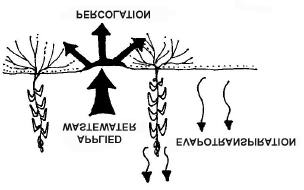
UNEP : Directory of Environmentally Sound Technologies for Waste Management in Pacific SIDS
Land Treatment
Technology Description:
The processes of land treatment are selected mainly on the
Slow Rate Process
basis of soil permeability of the treatment site. Prior to land
treatment there needs to be preliminary treatment through
either screening, grit removal or primary sedimentation to
reduce soil clogging and to prevent nuisance conditions from
occurring. Slow rate process requires a soil permeability of 5
to 50 mm/hr and a depth of a minimum of 1 m to
groundwater. It should be in a site with a clay loam to sandy
loam soil type with a slope of less than 15 % for cultivated
land and less than 40 % for forested land. Disposal of
effluent can be through evapo-transpiration and percolation.
There is a need for vegetation with Slow Rate Process.
Slow Rate Process requires suitable vegetation on the
ground to uptake the applied wastewater.
There is a high potential for horticulture.
Note: Recommended that groundwater is at least 1 m (or
4ft) below the point of application.
Note: There are strong odors if not set up correctly.
Extent of Use:
· limited use in the Pacific Region
Operation and Maintenance:
· requires regular operation and maintenance input
· a fence needs to be erected to close off area
Advantages:
Disadvantages/constraints:
· low operation and maintenance
· high land space required
· no electrical requirement
· construction material locally available
Relative Cost:
Cultural Acceptability:
· low to moderate capital and operation & maintenance · is generally accepted within the Pacific Region
costs (land, and irrigation costs)
Suitability:
· Since they only receive liquid waste they are not suitable where water supply is scarce, unreliable or located nearby.
· Requires high volumes of water for transportation to treatment site.
UNEP July 2002
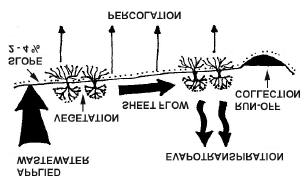
UNEP : Directory of Environmentally Sound Technologies for Waste Management in Pacific SIDS
Land Treatment
Technology Description:
This is also a land treatment process and requires
Overland Flow Process
preliminary treatment of grit screening etc. In overland flow
process the soil permeability should be less than 5 mm/hr.
The depth to groundwater is not critical and the soil type
should be either clay, silts and soils with impermeable
barriers, the slope of the area being between 1-8 %. Surface
runoff and evaporation with some percolation can dispose of
the effluent. There is a need for vegetation in Overland Flow
Process.
Note: Recommended that groundwater is at least 1 m (or
4ft) below the point of application.
Extent of Use:
· limited use in the Pacific Region
Operation and Maintenance:
· requires occasional operation and maintenance input
Advantages:
Disadvantages/constraints:
· low operation and maintenance
· high land space required
· no electrical requirement
· construction material locally available
Relative Cost:
Cultural Acceptability:
· low to moderate capital and operation & maintenance · is generally accepted within the Pacific Region
costs
Suitability:
· Since they only receive liquid waste they are not suitable where water supply is scarce, unreliable or located nearby.
· Requires high volumes of water for transportation to treatment site.
UNEP July 2002
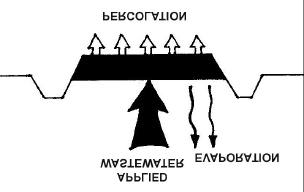
UNEP : Directory of Environmentally Sound Technologies for Waste Management in Pacific SIDS
Land Treatment
Technology Description:
Rapid Infiltration Land Treatment process also needs to be
Rapid Infiltration Treatment Process
preceded by preliminary treatment in order to reduce soil
clogging and prevent nuisance conditions from occurring.
This treatment process can only be used in soils having a
permeability of greater than 50 mm/hr. The depth to
groundwater should be a minimum of 3 m in sandy or sandy
loam soil types. The disposal of effluent is done mainly
through percolation.
Typical treatment quality achieved is 86-100 % BOD
removal, 100 % suspended solids removal dependent on
several factors e.g. rest cycles, and/or cleaning, 10-93 %
nitrogen removal, 29-99 % phosphorus removal.
Note: Recommended that groundwater is at least 3 m
below the point of application.
Extent of Use:
· limited use in the Pacific Region
Operation and Maintenance:
· requires regular operation and maintenance input.
Advantages:
Disadvantages/constraints:
· low operation and maintenance
· high land requirement
· no electrical requirement
· potential of pollution of groundwater lenses
· construction material locally available
· high effluent quality
· system can be used to recharge groundwater
Relative Cost:
Cultural Acceptability:
· low to moderate capital and o & m costs
· is generally accepted within the Pacific Region
Suitability:
· Since only receive liquid waste, it is not suitable where water is scarce, unreliable or located nearby.
· Requires high volumes of water for transportation to treatment site.
UNEP July 2002
UNEP : Directory of Environmentally Sound Technologies for Waste Management in Pacific SIDS
4.9
"Zero" Discharge
Regarding human waste the closest technology to achieve a "zero" discharge into the
environment is the composting toilet. This technology has already been described in
Section 4.3 above.
Composting toilets are an on-site sewage management technology that can offer significant
protection for water quality and quantity since the toilets provide dry, biological treatment
of human excrement and do not generate quantities of contaminated water that must be
discharged into the environment. The excrement in a composting toilet is contained in bins
so the waste is not in contact with the groundwater. Composting toilet design can be
adapted to local social and physical circumstances as long as the basic conditions for
composting are maintained and the protection of public health and the environment is
assured. About four months is required for effective composting and treatment of disease-
causing organisms, at the end of which time, the excrement has changed its appearance and
odour to that of compost, which can be used as a fertiliser or soil conditioner.
This technology ideally suits low-lying atolls with shallow groundwater lenses that are
subject to pollution. Because the composting toilets do not require water, limited
freshwater resources are not wasted to flush toilets, and consequently there is no
wastewater to pollute groundwater resources. In addition the composted waste material is
a valuable resource to improve the growing potential of the existing weak sandy soils.
A good reference on composting toilets by David Del Porto and Carol Steinfeld (1999). The
composting toilet system book: a practical guide to choosing, planning and maintaining compost
toilet systems, a water-saving pollution-preventing alternative.
For more information on "zero" discharge and systems that approach "zero" discharge,
visit the Integrated Bio-System Network at
http://www.ias.unu.edu/proceedings/icibs/ibs/ibsnet/. Also the Greenpeace Pacific
1996 publication, Sewage Pollution in the Pacific, provides additional information on "zero"
discharge systems.
UNEP July 2002
UNEP : Directory of Environmentally Sound Technologies for Waste Management in Pacific SIDS
Table 7: Technologies Cost Table.
Technology
Capital Cost
Operation and Maintenance
Cost
COLLECTION AND TRANSFER SYSTEMS
Conventional Sewerage
High
High
Simplified Sewerage
Moderate to High
Moderate
Vacuum Sewerage
High but less than Conventional Sewerage
N/I*
Settled Sewerage
Moderate High
Low
Saltwater Flushing/Dual
High
High
Distribution Systems
Cistern Flush Toilets
Low to Moderate
Low to Moderate
ONSITE WASTEWATER TREATMENT
Pit Latrine
Low
Low
VIP Latrine
Low
Low
Pour Flush Latrine
Low
Low
Reed Odourless Earth Closet
Moderate
N/I
Aqua-privy
High
N/I
Composting Toilets
Enviroloo/ Natureloo/Rotaloo
Low
Low
Septic Tank Usage
Septic-Disposal Field
Low
N/I
Septic-Seepage Pit
Moderate
N/I
Septic-Wisconsin Mound
High
N/I
Biogas Digester
High
N/I
CENTRALISED AND DECENTRALISED WASTEWATER TREATMENT SYSTEMS
Primary Process
Septic Tank with Upflow Filter
Moderate
N/I
Imhoff Tank
Low
N/I
Ponds/Tanks/Lagoons
Small Anaerobic Ponds treating
Low to Moderate (dependent on cost of land)
Low
domestic wastewater
High loaded Anaerobic Ponds
Low to Moderate (dependent on cost of land)
Low
with long HRT
Low loaded Anaerobic Ponds
Low to Moderate (dependent on cost of land)
Low
with short HRT.
Low loaded Anaerobic Ponds
Low to Moderate (dependent on cost of land)
Low
with long HRT
Low loaded Sedimentation
Low to Moderate (dependent on cost of land)
Low
Tanks with short HRT
Low loaded Sedimentation
Low to Moderate (dependent on cost of land)
Low
Tanks with long HRT
SECONDARY PROCESS
Baffled Septic Tank
Low
N/I
Activated Sludge Treatment
High
High
Ponds/Beds
Reed Bed System/(SSF)
Moderate to High
N/I
Subsurface Flow Wetlands/Root
Zone TP/Horizontal Gravel Filter
Aerobic Stabilisation
Moderate
N/I
Ponds/Oxidation Ponds/Algal
Ponds
Waste Stabilisation Ponds
Moderate
N/I
UNEP July 2002
UNEP : Directory of Environmentally Sound Technologies for Waste Management in Pacific SIDS
Filters
Anaerobic Filters
High
N/I
Trickling Filters/Percolating Filter
Moderate to High
Moderate
TERTIARY TREATMENT
Clarifiers/Plots
Banks Clarifiers
Moderate
Moderate
Grass Plots/Wetlands
Moderate
Moderate
Package Plant Types
Enviroflow Biofilter Treatment
High
High
Plant Systems
Cromaglass Units
High
High
Land Treatment
Slow Rate Process
Low to Moderate (dependent on cost of land)
Low to Moderate
Overland Flow Process
Low to Moderate (dependent on cost of land)
Low to Moderate
Rapid Infiltration Treatment
Low to Moderate (dependent on cost of land)
Low to Moderate
Process
*N/I Information not available.
Please note that the costs for treatment are being compared with respect to other systems within
these same sections. Meaning costs are low, moderate or high when comparing treatment options
with each other in Transfer and Collection Systems and so forth.
UNEP July 2002
UNEP : Directory of Environmentally Sound Technologies for Waste Management in Pacific SIDS
Table 8: Wastewater Technologies Matrix
Technology
Process Types
Effluent Quality
Water
Land
O & M*
Cost
Electricity
COLLECTION AND TRANSFER SYSTEMS
Conventional
N/I**
Yes
High
High
High capital
Yes
Sewerage
High o & m
Simplified Sewerage
N/I
Yes
High
High
Moderate to high Capital
Yes
Moderate o & m
Vacuum Sewerage
N/I
Yes
High
High
High capital
Yes
Settled Sewerage
N/I
Yes
High
High
Moderate to high Capital
Yes
Low o & m
Saltwater
N/I
Yes
High
High
High capital
Yes
Flushing/Dual
High o & m
Distribution Systems
Cistern Flush Toilets
N/I
Yes
Low
High
Low to moderate capital
No
Low to moderate o & m
ONSITE WASTEWATER TREATMENT
Pit Latrine
Low
No
Low
Low
Low capital
No
Low o & m
VIP Latrine
Low
No
Low
Low
Low capital
No
Low o & m
Pour Flush Latrine
Low
Yes
Low
Low
Low capital
No
Low o & m
Reed Odourless Earth
Low
No
Low
Low
Moderate capital
No
Closet
Aqua-privy
Low
Yes
Low
Low
High capital
No
Composting Toilets
Composting Toilets,
High
No
Low
Low
Low capital
No
Enviroloo
Low o & m
Septic Tank Usage
Septic Tank to
Low
Yes
Low
Low
Low capital
No
Disposal Field
Septic Tanks leading
Moderate
Yes
Low
Low
Moderate capital
No
to Seepage Pits
Septic Tanks leading
Moderate
Yes
Moderate
Low
High capital
No
to Wisconsin Mounds.
Biogas Digester
Low
Yes
Moderate
Low
High capital
No
UNEP July 2002
117
UNEP : Directory of Environmentally Sound Technologies for Waste Management in Pacific SIDS
Technology
Process Types
Effluent Quality
Water
Land
O & M
Cost
Electricity
CENTRALISED AND DECENTRALISED WASTEWATER TREATMENT SYSTEMS
Primary Treatment
Septic Tanks with
Moderate
Yes
Low
Low
Moderate capital
No
upflow filter
Imhoff Tanks
Low
Yes
Low
Low
Low capital
No
Ponds/Tanks/Lagoons
Small Anaerobic
Low
Yes
Moderate
Low
Low to moderate Capital
No
Ponds treating
Low o & m
domestic wastewater
High loaded Anaerobic
Moderate
Yes
Moderate
Low
Low to moderate Capital
No
ponds with long HRT
Low o & m
Low loaded Anaerobic
Low
Yes
Moderate
Low
Low to moderate Capital
No
Ponds with short HRT
Low o & m
Low loaded Anaerobic
High
Yes
Moderate
Low
Low to moderate Capital
No
Ponds with long HRT
Low o & m
Low loaded
Low
Yes
Moderate
Low
Low to moderate Capital
No
Sedimentation Tanks
Low o & m
with short HRT
Low loaded
High
Yes
Moderate
Low
Low to moderate Capital
No
Sedimentation Tanks
Low o & m
with long HRT
Secondary Treatment
Reactors
Baffled Septic Tanks
Moderate
Yes
Low
Moderate
Low capital
No
Activated Sludge Treatment
Activated Sludge
High
Yes
Low
High
High capital
Yes
Treatment
High o & m
Ponds/Beds
Reed Bed System
High
Yes
Moderate
Moderate
Moderate to high capital
No
(SSF), Subsurface
Flow Wetlands/Root
Zone TP/Horizontal
Gravel Filter
UNEP July 2002
118
UNEP : Directory of Environmentally Sound Technologies for Waste Management in Pacific SIDS
Technology
Process Types
Effluent Quality
Water
Land
O & M
Cost
Electricity
Aerobic Stabilisation
High
Yes
High
Low
Moderate capital
No
Ponds/Oxidation
Ponds/Algal Ponds
Waste Stabilisation
High
Yes
High
Low
Moderate capital
No
Ponds
Filters
Anaerobic Filters
Moderate
Yes
Low
High
High capital
Yes
Trickling
High
Yes
Moderate
High
Moderate to high capital
Yes
Filters/Percolating
Moderate o & m
Filters
Tertiary Treatment
Clarifiers/Plots
Banks' Clarifiers
High
Yes
High
Low
Moderate capital
No
Moderate o & m
Grass Plots/Wetlands
High
Yes
High
Low
Moderate capital
No
Moderate o & m
Package Plant Types
Enviroflow Biofilter
High
Yes
Low
High
High capital
Yes
Treatment Plant
High o & m
Systems
Cromaglass Units
High
Yes
Low
High
High capital
Yes
High o & m
Land Treatment
Slow Rate Process
Moderate
Yes
High
Low
Low to moderate capital
No
Low to moderate o & m
Overland Flow
Moderate
Yes
High
Low
Low to moderate capital
No
Process
Low to moderate o & m
Rapid Infiltration
High
Yes
High
Low
Low to moderate capital
No
Treatment Process
Low to moderate o & m
*O & M Operation & Maintenance
**N/I Information not available.
UNEP July 2002
119
UNEP : Directory of Environmentally Sound Technologies for Waste Management in Pacific SIDS
5
Bibliography
AusAID (1998): Tuvalu Waste Management Project
Auckland Regional Council (1994): Onsite Wastewater Disposal From Households and
Institutions. TP No. 58 Ian Gunn.
Auckland Regional Water Board (1989): Onsite Wastewater Disposal From Households and
Institutions. TP No. 58 Ian Gunn.
Berry, G. (1998): The use of Composting Human Excreta as a Fertiliser. Doctorate Scholar Centre
for Environmental Studies. University of Tasmania.
Centre for Ecological Pollution Prevention (CEPP) (1999): The Composting Toilet System Book
A Practical Guide to Choosing, Planning and Maintaining Composting Toilet Systems, a
Water Saving, Pollution-Preventing Alternative (1999) by David Del Porto and Carol
Steinfield. Published by The P.O Box 1330, Concord, Massachusetts 01742-1330.
Esrey, Steve, et al, (1998): Ecological Sanitation (1998). Edited by Uno Windblad. Published by the
Department of Natural Resources and the Environment, Sida, S-105 25 Stockholm, Sweden.
Greenpeace Pacific (1996): Sewage Pollution in the Pacific. Dave Rapaport.
Loetecher, T. (1998): SANEX Sanitation Expert Systems.
Mann, H. T., Williamson, D. (1982): Water Treatment and Sanitation. International
Technology Publications.
Opus International Consultants (1998): Principles and Trends Wastewater Treatment.
Environmental Training Centre.
Sasse, Ludwig (1999): DEWATS-Decentralised Wastewater Treatment in Developing Countries.
BORDA.
SPREP (1993): Land-based Pollutants Inventory of the South Pacific. Nancy Convard.
SPREP (1998): Solid Waste Management Plan Funafuti, Tuvalu. SOPAC Joint Contribution
Report 113, Opus International Consultants Peter Askey.
SPREP (1999): Guidelines for Municipal Solid Waste Management Planning in Small Island
Developing States in the Pacific Region. Peter Askey.
SOPAC (1997): Sanitation for small islands; Guidelines for Selection and Development. Derrick
Depledge (compiler), SOPAC Miscellaneous Report 250.
SOPAC (1999): Small Scale Wastewater Treatment Plant Project; Report on Project criteria,
Guidelines and Technologies. R Bower and H Scholzel, SOPAC Technical Report 288.
UNEP July 2002
UNEP : Directory of Environmentally Sound Technologies for Waste Management in Pacific SIDS
SOPAC (1999): Small Scale Wastewater Treatment Plant Project; Report on Project Inception. R
Bower and H Scholzel, SOPAC Preliminary Report.
Sustainable Strategies (1996): The Soltran II Non-polluting Biological Toilet and Washwater
Garden. David Del Porto.
UNCHS (Habitat)(1992): Human Settlements Sector Review Fiji.
UNCHS (Habitat)(1993): Human Settlements Sector Review Papua New Guinea.
UNCHS (Habitat)(1994): Review of Human Settlements in Pacific Atoll Nations Republic of the
Marshall Islands, Republic of Kiribati, and Tuvalu.
UNCHS (Habitat)(1998): Review of Human Settlements in Eastern Pacific Countries Western
Samoa, Cook Islands, Niue.
UNCHS (Habitat) (1999): Transfer of Appropriate Technology, Semi-Aerobic Landfill Method:
Fukuoka Method.
UNEP-IETC (1996): International Source Book on Environmentally Sound Technologies for
Municipal Solid Waste Management TPS No. 6.
UNEP-IETC (1997): Workbook for Training in Environmental Technology Assessment for
Decision-Makers, A Pilot Programme TPS 5.
UNEP-IETC (1998): Sourcebook of Alternative Technologies for Freshwater Augmentation in Small
Island Developing States. SOPAC.
UNEP-IETC (1998): Principles of Municipal Solid Waste Management IETC Report 2.
UNEP-IETC (1998): Proceedings of the Workshop on Adopting, Applying and Operating
Environmentally Sound Technologies for Domestic and Industrial Wastewater Treatment for
the Wider Caribbean Region, IETC Report 5, Murdoch University of Western Australia.
UNEP-IETC (1999): International Source Book on Environmental Sound Technologies for
Wastewater and Stormwater: Pacific Regional Overview of Small Island Developing States. Ed
Burke.
UNESCO (1991): Hydrology and water resources of small islands, a practical guide. Studies and
reports on hydrology No. 49. A. Falkland (ed.) and E. Custodio with contributions from
A. Diaz Arena & L. Simler and case studies submitted by others. Paris, France, 435 pp.
UNESCO-IETC (1997): Groundwater pollution by sanitation on tropical islands. Peter
Dillan.
WHO (1989): Health guidelines for the use of wastewater in agriculture and aqua-culture.
Technical Report 778.
UNEP July 2002
UNEP : Directory of Environmentally Sound Technologies for Waste Management in Pacific SIDS
6
Contact Persons
All contact persons in the region, involved in Solid, Hazardous and Wastewater issues.
Rhonda Bower
Sanitation Officer
Community Lifelines Program
SOPAC Secretariat
Mead Road
Private Mail Bag
GPO
Suva, Fiji
Ph: (679) 33811 377
Fax: (679) 3370 040
E-mail: rhonda@sopac.org.fj
Bruce Graham
South Pacific Regional Environment
Programme (SPREP)
Coordinator - Waste Management & Pollution Prevention
P O Box 240
Apia, SAMOA
Ph: [685] 21929
Fax:[685] 20231
E-mail: BruceG@sprep.org.ws
Cees van de Guchte
Senior Programme Officer
Coordination Office UNEP/GPA
P.O. Box 16227
2500 BE The Hague
THE NETHERLANDS
Ph: [31] 70 311 4465
Fax:[31] 70 345 6648
E-mail: c.vandergutche@unep.nl
Ed Burke
Principal Environmental Engineer
OPUS International Consultants Ltd.
Minolta House
Princess Street
Private Mail Bag 3057
Hamilton
New Zealand
Ph: (+64) 7 838 9344
UNEP July 2002
UNEP : Directory of Environmentally Sound Technologies for Waste Management in Pacific SIDS
Fax: (+64) 7 838 9324
E-Mail: Ed.Burke@opus.co.nz
Dr Leonie Crennan
Water and Sanitation Strategist
85 Dunbar Street
Stockton, 2295
AUSTRALIA
Ph: [612] 4928 4074
Fax:[612] 4928 4082
E-mail: l.s.crennan@bigpond.com
Floyd Robinson
Project Manager Wai Bulabula
Foundation for the Peoples of the South Pacific (FSP)
P O Box 451
Lautoka, FIJI
Ph: [679] 662535
Fax:[679] 663414
Email: kanaproject@is.com.fj
Dr Donald Sharp
World Health Organisation (WHO)
Level 4, Provident Fund Plaza One
Downtown Boulevard
Ellery Street
Suva, FIJI
Ph: [679] 304600
Fax:[679] 300462/311530
Email: sharp@who.org.fj
Michele Vanderlanh-Smith
Health Management Adviser
Secretariat of the Pacific Community (SPC)
B.P. D5 98848
Noumea, Cedex
NEW CALEDONIA
Ph: [687] 260122
Fax:[687] 263818
Email: michelev@spc.int
UNEP July 2002
UNEP : Directory of Environmentally Sound Technologies for Waste Management in Pacific SIDS
7
Glossary
Aerobic
living or taking place in the presence of air.
Anaerobic
living or taking place in the absence of air or free oxygen.
Biochemical Oxygen Demand (BOD) the mass of oxygen consumed by organic matter during aerobic
decomposition. It is always a fraction of COD. It describes what
can be oxidised biologically, with the help of bacteria.
Blackwater
wastewater containing excreta.
Chemical Oxygen Demand (COD)
the most general parameter to measure organic pollution. It
describes how much oxygen is required to oxidise all organic and
inorganic matter found in water.
Composting
the controlled decomposition of organic solid waste in moist
conditions to produce a humus.
Desludging
removal of settled solids from pits, vaults and tanks.
Excreta
human feaces and urine.
Graywater
wastewater from bathing, laundry, preparation of food, cooking
and other personal and domestic activities that does not contain
excreta.
Humus
decomposed organic matter.
Hydraulic Retention Time (HRT)
indicates a volume by volume relation. It does not for example
distinguish between sludge and liquid. The time required to fill a
tank at a given flow or the theoretical time required for a given
flow of wastewater to pass through a tank.
Pathogen
disease-causing organism.
Sewage
the wastewater usually including excreta carried off by sewers or
drains.
Sewer
a pipe or drain, usually underground, used to carry off
wastewater.
Sewerage
removal of surface water and waste matter by sewers. A system of
sewers.
Superstructure
screen or building of a latrine, above floor level, that provides
privacy and protection for users.
Vector
insect or other animal that can transmit infection directly or
indirectly from one person to another, or from an infected animal
to a person.
Water Seal
water held in U-shaped pipe or hemispherical bowl connecting a
pan to a pipe channel or pit to prevent the escape of gases and
insects from the sewer or pit.
UNEP July 2002