E1689
page
1/31
Public Disclosure Authorized
ENVIRONMENTAL MANAGEMENT PLAN
AGRICULTURAL POLLUTION CONTROL PROJECT
Public Disclosure Authorized
Public Disclosure Authorized
JULY, 2007
Public Disclosure Authorized
page
2/31
1 INTRODUCTION.............................................................. 6
2 PROJECT DESCRIPTION AND IDENTIFICATION
OF ACTIVITIES IMPACTINGENVIRONMENT............ 6
2.1
OBJECTIVE OF THE PROJECT ..................................................................................................................... 6
2.2
PROJECT COMPONENTS............................................................................................................................. 6
2.3
IDENTIFICATION OF WORKS ...................................................................................................................... 7
2.4
CHOICE OF SITES ...................................................................................................................................... 7
2.5
SCOPE OF THE EMP................................................................................................................................ 10
3 POLICY, LEGAL, AND ADMINISTRATIVE
FRAMEWORK..................................................................... 11
3.1
WB POLICIES RELATED TO PROJECT INVESTMENTS ................................................................................ 11
3.2
CROATIAN POLICIES RELATED TO PROJECT INVESTMENTS ...................................................................... 12
3.2.1
Location permit ............................................................................................................................. 12
3.2.2
Construction permit ....................................................................................................................... 12
3.2.3
Operational permit ........................................................................................................................ 13
3.2.4
Water-administrative permit for monitoring wells ........................................................................ 13
3.2.5
EMP and administrative procedures preceding construction ....................................................... 13
4 ENVIRONMENTAL ASPECTS .................................... 13
4.1
IDENTIFICATION OF POSSIBLE ENVIRONMENTAL ISSUES ......................................................................... 13
4.2
ENVIRONMENTAL GUIDELINES............................................................................................................... 14
4.2.1
Design phase ................................................................................................................................. 14
4.2.2
Construction / reconstruction phase.............................................................................................. 15
4.2.3
Operation....................................................................................................................................... 16
4.2.4
Monitoring..................................................................................................................................... 17
4.3
MITIGATION ........................................................................................................................................... 18
4.4
MONITORING PLAN AND SUPERVISION................................................................................................... 21
4.5
EMP IMPLEMENTATION RESPONSIBILITIES ............................................................................................ 22
4.6
CAPACITY DEVELOPMENT, TRAINING AND PROPOSED PROJECT ORGANIZATION ..................................... 22
5 PUBLIC DISCLOSURE.................................................. 23
page
3/31
6 APPENDICES .................................................................. 24
6.1
THE LIST OF THE NATIONAL LEGISLATIVE AND SUB -LEGISLATIVE ACTS REGULATING
ENVIRONMENTAL PROTECTION............................................................................................................... 24
6.2
ROLES AND RESPONSIBILITIES OF THE AUTHORITIES ........................................................... 26
6.3
TECHNICAL REQUIREMENTS FOR MATERIALS ......................................................................................... 28
6.4
CONSTRUCTION GUIDELINES FOR MONITORING WELLS........................................................................... 29
page
4/31
page
5/31
ACRONYMS
PIU Project
Implementation
Unit
PPU Project
Preparation
Unit
LU Livestock
Unit
PCN Project
Concept
Note
EIA
Environmental Impact Assessment
OP Operation
Policy
BP Bank
Policy
EMP Environmental
Management
Plan
WB World
Bank
NVZ
Nitrate Vulnerable Zones
CGAP
Code of Good Agricultural Practices
MAC Maximum
Allowed
Concentrations
AACP Agricultural
Acquis
Cohesion
Project
page
6/31
Introduction
Different countries show different attitudes toward the cultural and natural environment.
Since the World Bank (herein and after WB or the Bank) is financing projects in more than
100 countries it established a safeguard system, stipulating minimum requirements, for
assessing impacts of the project on the environment, for implementing mitigation measures
and monitoring plan and for disclosing the document. Environmental management plan
(herein and after EMP) is one of the safeguard instruments, applicable to this project, defined
by the Operational Policy (here and after OP) 4.01. The project has been classified as a
category B project since the project might have potential adverse environmental impacts on
human populations and/or environmentally important areas.
The project is being prepared under the Danube-Black Sea Strategic Partnership Program-
Nutrient Reduction Investment Fund under which riparian countries are eligible for Global
Environment Facility (GEF) Grants for projects that help control or mitigate nutrient
discharges into the Danube River and Black Sea. Activities under the GEF project will
complement those under the IBRD-financed Agricultural Acquis Cohesion Project (AACP)
that aims to strengthen Croatia's capacity and readiness to absorb EU pre- and post-accession
funds. The project will build on the policy and legislative work of the EU 2003 CARDS
financed: "Approximation of Croatian Water Management Legislation with the EU Water
Acquis".
The purpose of this EMP is to review environmental issues specific to investments that will
be carried out under the Agricultural Pollution Protection Project, and to present project
specific mitigation measures and monitoring plans that describe actions to mitigate potential
environmental impacts. This document will also review impacts to cultural heritage.
Expected environmental impacts, specific to this project, are related to spatial interventions,
i.e. construction works and they present following pressures to the environment: waste
generation, noise pollution, air pollution, habitat disturbance, water pollution, hazardous
material generation. All these pressures imply relatively common mitigation measures and
monitoring plan.
Project description and identification of activities
impacting environment
Objective of the project
The overall development objective of the project is to increase significantly the use of
environmentally friendly agricultural practices by farmers in Croatia's Pannonian plain in
order to reduce nutrient discharge from agricultural sources to surface and ground water
bodies. The global environmental objective of the project is to reduce the discharge of
nutrients into surface and groundwater in watersheds draining into the Danube River and
Black Sea.
Project components
Project comprises three components.
page
7/31
Component 1. Promotion of Mitigating Measures for Reducing Nutrient Loads to Water
Bodies. This component will assist the government of Croatia to promote improved
watershed management practices with the objective of reducing nutrient loads to the surface
and ground water bodies of Croatia from agricultural sources. Activities under this
component will assist Croatia to implement the EU Nitrates Directive 91/676/EEC concerning
the protection of waters against pollution caused by nitrates from agricultural sources. The
project will provide grants for 75 percent of the cost of remedial interventions, such as
management of livestock waste, including manure storage, composting, and its application on
crop land, as well as support for the application of the Code of Good Agricultural Practices
(CGAP) such as integrated cropping management, nutrient management, conservation tillage,
buffer strips, etc. in potential Nitrate Vulnerable Zones (NVZ). Beneficiaries of these
investments will include commercial, private farmers with dairy herds of 10--100 cows as
well as commercial small- to medium- sized pig and poultry farms that are sources of nutrient
pollution.
Component 2. Public Awareness and Replication Strategy. A local and nationwide public
information campaign will be undertaken to disseminate the benefits of proposed project
activities and achieve replicability of the same. The project will finance the organization of
regional and national workshops, field trips, visits, training, publication in international
agriculture and environmental journals and other activities to promote the replication of
project activities in other similar areas of Croatia as well as Black Sea riparian countries. The
project will benefit from ongoing similar efforts in Georgia, Bulgaria, Poland, Moldova,
Romania, and Turkey, and the exchange of experiences will help in contributing significant
reductions in the nutrient loads entering the Danube River and Black Sea.
Component 3. Project Management. The AACP Project Implementation Unit (PIU)
established within the MAFWM Department for Policy, EU and International Relations will
implement the proposed GEF-supported APCP, with the support of one additional technical
specialist. The project will also provide two incremental staff to Department of Agriculture,
Department for Market and Structural Support in Agriculture (future Payment Agency) to
support the processing of grant applications.
Identification of works
Physical investments that might have impact on the environment are identified in the
Component 1. These investments are:
· Construction of manure management platform/ waste collection sites
· Implementation of the Code of Good Agricultural Practices such as tree planting as
protection buffers, riparian buffers, erosion control, grazing management and nutrient
management plans
· Expansion of groundwater monitoring wells
Beneficiaries of these investments will include commercial, private farmers with dairy herds
of 10--100 cows as well as commercial small- to medium- sized pig and poultry farms that
are sources of nutrient pollution.
Choice of sites
During the preparation of the APCP, the consultant work has been done to:
· assess the current institutional settings and policy efforts made by the Croatian
authorities for reducing nutrient load deriving from agricultural practices into water
page
8/31
· make an assessment of the current situation in regard to water pollution from nutrients
deriving from agriculture
· propose pilot regions and a set of activities demonstrating good agricultural practices
in regard to nutrient management and water protection.
The nitrogen content of the major rivers of the Danube basin, which is also Croatia's most
intensive agricultural area, fails to meet the prescribed MAC for rivers. The eutrophication
process has been enhanced in most Croatian lakes and their phosphorus content is far above
the prescribed parameters. In 2000 only 30 percent of Croatian spring water (largely reflecting
the quality of the ground water) met prescribed nutrient content standards. In the period 2000-
2003, drinkable water at 87 percent of monitored locations exceeded the MAC for nutrients.
In the period 2000-2006, one out of every three analyzed samples from private wells exceeded
the MAC for nitrates.
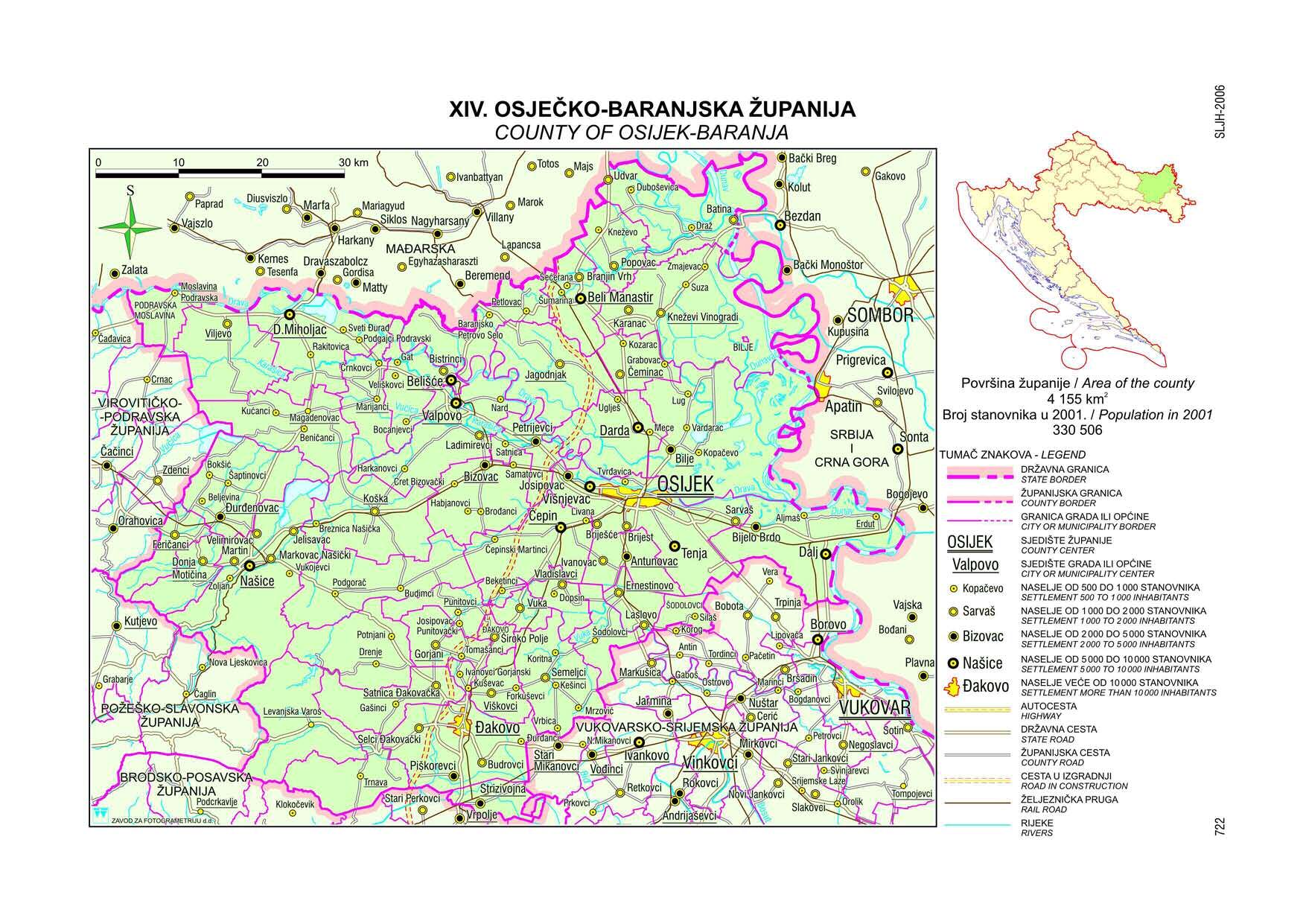
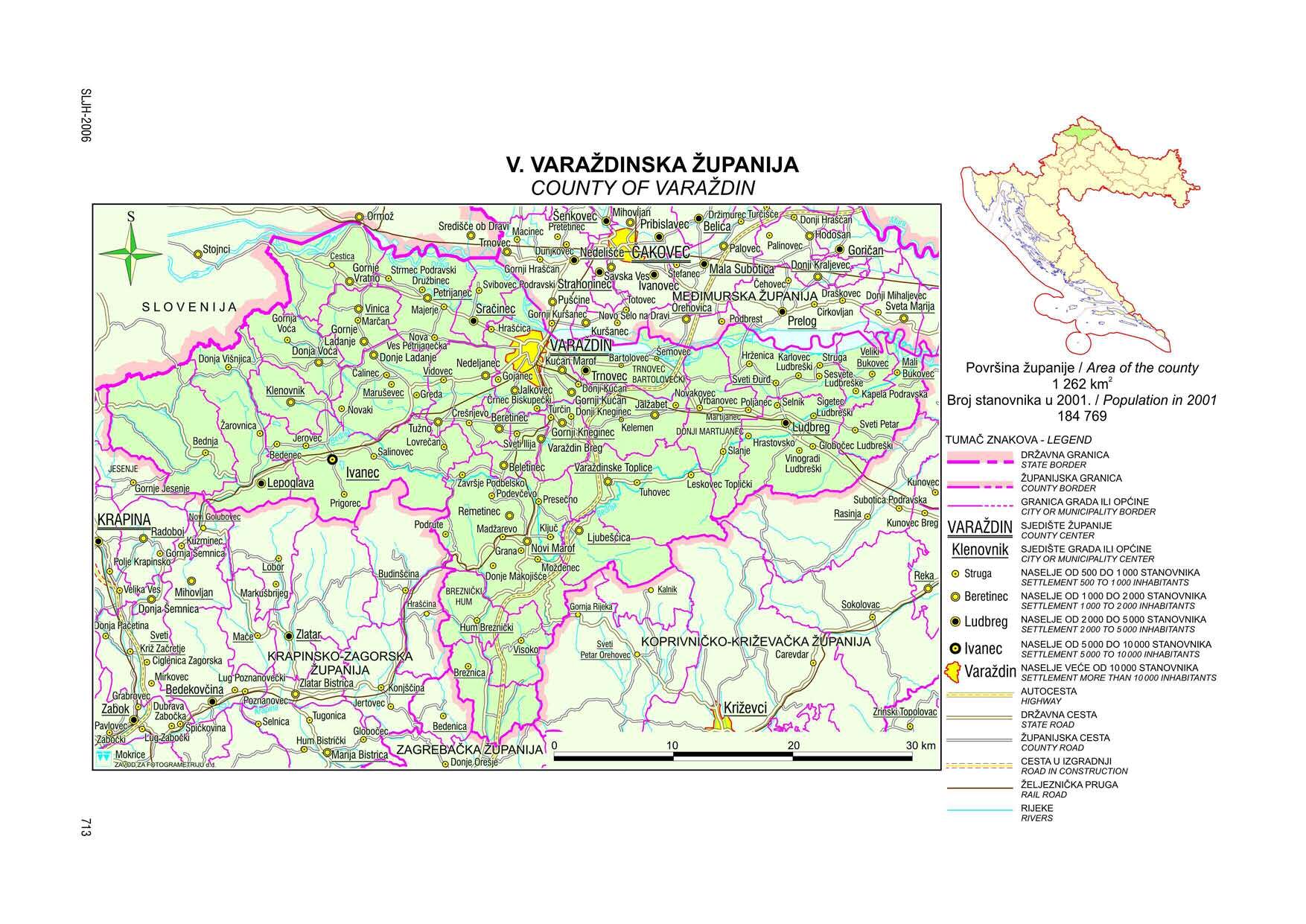
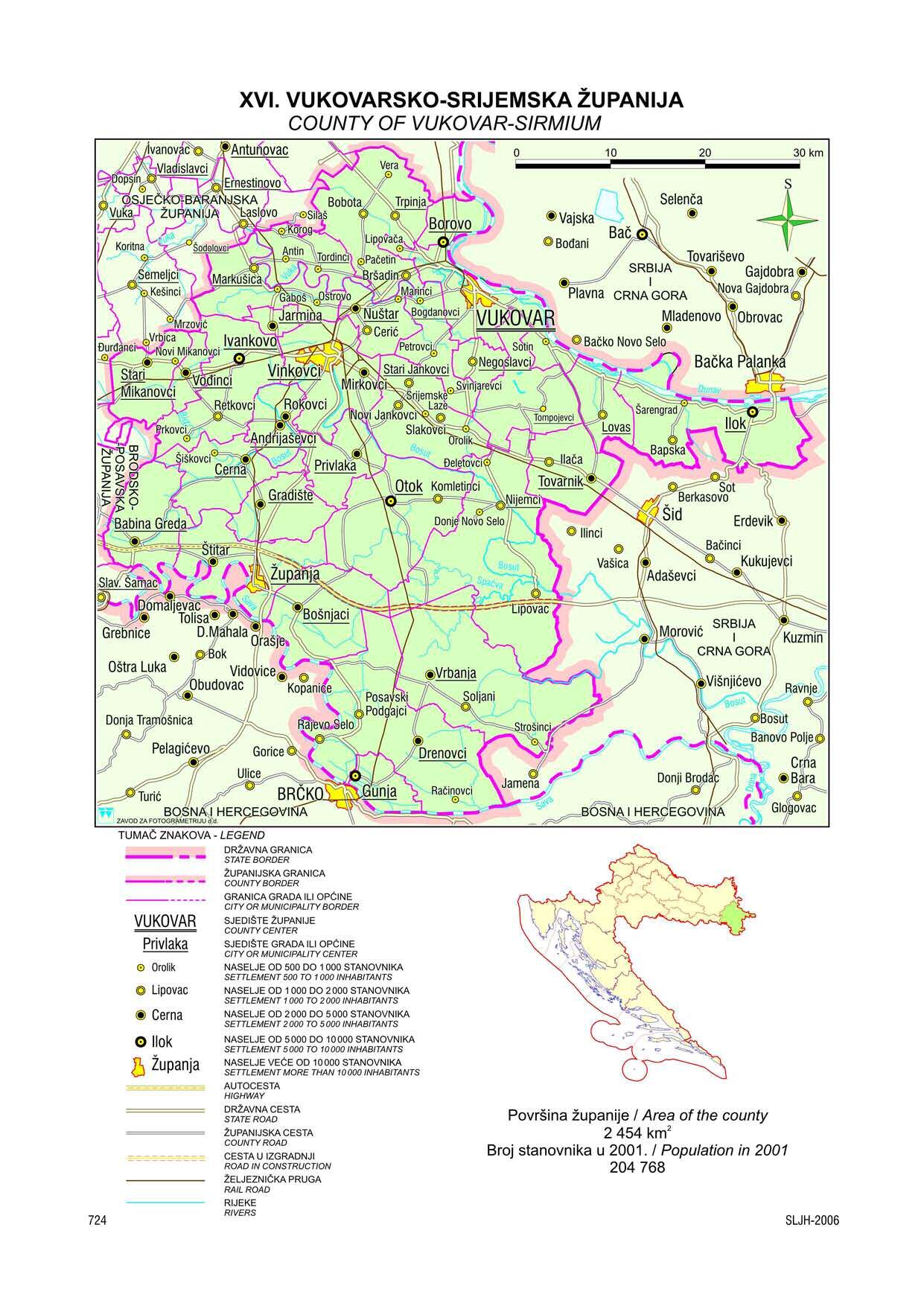
Osijek-Baranja, Vara din and Vukovar-Srijem County have been selected as the three pilot
regions suitable to take part in the project for its high agricultural production and high nitrate
load in waters. All three regions are mostly flat and have fertile alluvial soils. The total UAA
is 343,684 ha, accounting for nearly one third of the entire UAA and 26 percent of all LU in
Croatia. Intensive arable farming run by small to medium scale family farms prevails and
family farms occupy 63 percent of the total UAA. Cereals are by far the most important crops,
using about two-thirds of the entire arable land. In Osijek-Baranja and Vukovar-Sirmium
Counties, cattle and pigs account for more than 85 percent of all LU. In Vara din County
poultry is the most predominant, accounting for 39 percent of all LU. In all three regions
nutrient supply is out of balance with crop requirements. The biggest problem is nitrogen
whose drastic reduction (40-90 percent) should be made in order to meet actual crop
requirements. In Osijek- Baranja and Vukovar-Sirmium Counties, fertilizers account for 80-
85 percent of all N supplied by fertilizers and manure, while in Vara din County due to
intensive livestock farming, notably poultry production, fertilizers and manure make up an
approximately equal share in terms of N load.
A significant part of the land in all three regions is situated above underground water reserves
and three major Croatian rivers pass here (Danube, Sava, Drava). The available evidence
suggests that the situation regarding nitrate content in both surface water and water supplying
private wells is worrying. In the last years 71 percent of all examined surface water and 49
percent of all water samples taken from private wells have exceeded the prescribed MAC for
nitrates.
page
9/31
page
10/31
Scope of the EMP
The report for the preparation of EMP covers:
(i)
An overview of project components and identification physical investments / actions
envisaged under the project which might have significant impact to environment;
(ii)
the policy, legal and administrative framework, including the role and responsibilities
of the MAFWM and other agencies in this project related to environmental issues; the
environmental and construction permitting process of Croatia applicable to the
proposed works; and
page
11/31
(iii)
in line with identified potential impacts and effects, suggested mitigation measures,
including possible changes to environmental impact assessment and mitigation
procedures, preparation of guidelines and practical suggestions, and related training.
Three types of investments/activities have been identified as ones which might have potential
impact on the environment:
· Construction of manure management platform/ waste collection sites
· Implementation of the Code of Good Agricultural Practices such as tree planting as
protection buffers, riparian buffers, erosion control, grazing management and nutrient
management plans
· Expansion of groundwater monitoring wells
The mitigation measures and monitoring will be identified for construction of manure
platforms/ waste collection sites. The CGAP based on EU good practices, by it self presents
environmentally friendly measures and will require additional measures. The farmers will be
educated on CGAP, to avoid any misinterpretation and malpractice of the same. The network
of monitoring wells, financed from the grant component 1 will be established on each farm
where manure management platform will be constructed, therefore will serve by itself as
monitoring tool. A special consultant who will work together with Croatian Waters, PIU and
Paying agency will agree on siting of the wells depending on hydro geological profile.
Monitoring of groundwater will be the responsibility of Croatian Waters. Results should show
the impacts on the nitrate level in the vicinity of farms.
The project investments will trigger the following WB policies: OP/BP 4.01 Environmental
Assessment and OP 17.50 Disclosure Policy.
Policy, legal, and administrative framework
WB policies related to project investments
APCP requires preparation of environmental assessment (EA) to help ensure that reconstruction /
construction of facilities are environmentally sound and sustainable based on OP/BP 4.01
Environmental Assessment . The Bank undertakes environmental screening of each proposed project
to determine the appropriate extent and type of EA. The Bank classifies the proposed project into one
of four categories, depending on the type, location, sensitivity, and scale of the project and the nature
and magnitude of its potential environmental impacts. In this way risks associated with project actions
can be effectively anticipated in advance before project implementation, and addressed by direct
mitigation activities in the design, planning and construction supervision process as well as during the
operation of the facilities.
The project has been classified as a category B project since the project might have potential adverse
environmental impacts on human populations and/or environmentally important areas. For al
Category B projects an Environmental Management Plan needs to be prepared.
page
12/31
Croatian policies related to project investments
By analyzing the investments envisaged under the APCP, that might have significant impacts
on the environment, procedures for legal actions have been determined, according to Croatian
legislation.
For the construction of manure management platform/ waste collection sites, procurement of
location permit, construction permit and operation permit is required.
For the Expansion of groundwater monitoring wells, neither location, nor construction permit
is necessary.
Procedures preceding construction in Croatian legislative are: land acquisition,
environmental impact assessment (EIA), location permit procurement, construction
permit procurement and operation permit. For the type of activities envisaged under APCP
Project EIA is neither required nor suggested.
Location permit
The Location permit is an administrative document defined by the Law on Physical Planning
(Off. Gazette no. 30/94, 68/98, 35/99, 61/00 and 32/02). It is issued based on Physical
Planning document and on special related laws and regulations.
The Location permit defines important characteristics of planned intervention like: form and
size of construction lot, purpose, size (height, number of floors) and area of the constructed
object, auxiliary objects on construction site (storages, septic tanks, etc.), architectural form of
the object (roof, materials and other factors depending on surroundings), site organization,
methods and conditions of connection of the object to public traffic surface (including parking
lots) and communal infrastructure, mitigation measures related to environment (if intervention
notably effect environment by its operation) and other elements important for spatial
intervention. Location permit needs to be issued for every spatial intervention, except for
cases specially defined under regulations (The Ordinance on Spatial Intervention that do not
Require Procurement of Location Permit - Off. Gazette no. 86/04 and 138/04).
If construction works are performed on an object protected as cultural monument, prior to any
kind of works (for spatial intervention that do not require location permit) it is necessary to
obtain an official approval from the regional authorized body (Regional Office for Monument
Protection).
Construction permit
The Construction permit is an administrative document defined by the Law on Construction
(Off. Gazette no. 175/03 and 100/04). After verification and issuance of this permit
construction may start. Construction permit confirms that the Main project is in compliance
with Location permit and all special conditions issued by authorized bodies and obtained in
the Location permit procurement procedure. In addition, Main project conformity to
important construction regulations defined in the Law on Construction are evaluated. For
instance: mechanical resistance, stability of building, fire protection, sanitary health and
environmental conditions, operational safety, energy efficiency, thermal insulation, access
and mobility in the object. The ownership and the construction rights on the parcel are as well
defined.
For attaining Construction permit it is necessary to submit an evidence that legal or physical
entity submitting the request for permit has a right to build on the parcel in question.
page
13/31
Croatian parliament is currently assessing the newly proposed Construction law. This implies
that the procedure in recent time might change and EMP on this section will need to be
revised.
Operational permit
Operation permit is issued after the technical assessment of the constructed object, if proven that the
object has been constructed in compliance with Construction permit requirements and the Main
project.
Water-administrative permit for monitoring wells
Unless the well is intended solely for the use of the household, issuance of the water
administrative conditions is needed. The conditions are issued by Croatian waters. They
ensure protection from water, pollution protection of water, legal usage and water
management. They are issued based on technical specifications proposed by geologist who
based it on the geological analysis, location, borehole geological analysis, etc. Monitoring
well construction can only be done by registered geologist.
EMP and administrative procedures preceding construction
The Environmental Management Plan (EMP) comprises procedures to recognize and control the quality
of environment and to identify and implement measures in the process of realization of investment,
aiming at mitigation of negative environmental impacts and environmental protection.
EMP is not a requirement in Croatian laws and acts, i.e. EMP as an obligatory or binding
document does not exist in the preparation of any investment projects, however some
elements usually found in EMP are prescribed in permits and documents preceding
construction, whose supervision is under the jurisdiction of different Ministries and agencies
(annex 2).
Environmental aspects
Identification of possible environmental issues
The activities supported by the project comprise as described in the scope of the project, the
construction of manure management platform/ waste collection sites, implementation of the Code of
Good Agricultural Practices and expansion of groundwater monitoring wells.
According to Croatian Laws, for the construction of proposed type of facilities and envisaged actions,
the Environmental Impact Assessment (EIA) is not necessary, which indicates that the impacts on the
environment by this type of projects are limited.
Possible environmental issues for building manure management platforms and monitoring
wells can be clearly separated in two categories, one related to construction and other related
to operation.
The main type of environmental issues that derive from the actions during construction /
reconstruction are following:
page
14/31
· Dust and noise due to the demolition and construction
· Disposal of construction waste
· Sediment loads in waterways in case of necessary stream crossing or during
construction of wells
· Possible negative impacts on cultural finds
while the one related to operation are:
· Risk associated with handling wastes during operation (municipal, hazardous, etc.),
which includes mixing of other waste with organic
· Leakages from the manure storage facilities (if construction is not made according to
specifications);
· Improper cleaning of the individual manure storage tanks and large manure
platforms;
· Inappropriate manure spreading in the fields if code of good agricultural practices are
not followed properly
· Poor siting and use of existing storage facilities; and
· Methane venting and odor related issues
· Improper closing of the wells
Extension of monitoring network will have positive impacts on the environment and will
enable tracking of the nutrient pollution in pilot farms.
All these risks can be effectively dealt with, if they are recognized through this EMP in pre-
design phase. In this project, implementation of mitigation measures can be advised at the
stages of: design, construction/reconstruction and operation. These measures should be
feasible, and cost effective aiming at eliminating, offsetting and reducing adverse
environmental impacts. The measure should not only deal with recognized risks, but should as
well be used as guidance to make facilities more environmentally friendly and sustainable.
Environmental Guidelines
The Environmental Guidelines address environmental and ecological/biologic concept, design
and planning of new waste platforms and guideline for construction. The guidelines cover the
handling of construction debris generated, selection of construction materials and construction
methods with limited impact on the environment, energy saving methods as well as the
handling of hazardous and non-hazardous wastes, and storage of hazardous materials under
project supported activities. The guidelines are a base for design, training, research,
discussions and workshops.
Design phase
In the design phase many important issues could be approached, investigated and best choices
incorporated into design. The location of waste platforms will be on farm. Special attention should be
given to sitting of the waste platform. It should not be close to open waterways, to minimize potential
pollution of surface waters and should be on a certain distance from households to minimize odors.
Sizing of the waste platforms have to be done in a way to store manure in quantity for min of 6
months. At this time, a feasibility study has been done for waste platforms in al three counties. Within
this study, two types of manure storing structures have been preliminary designed, calculated and
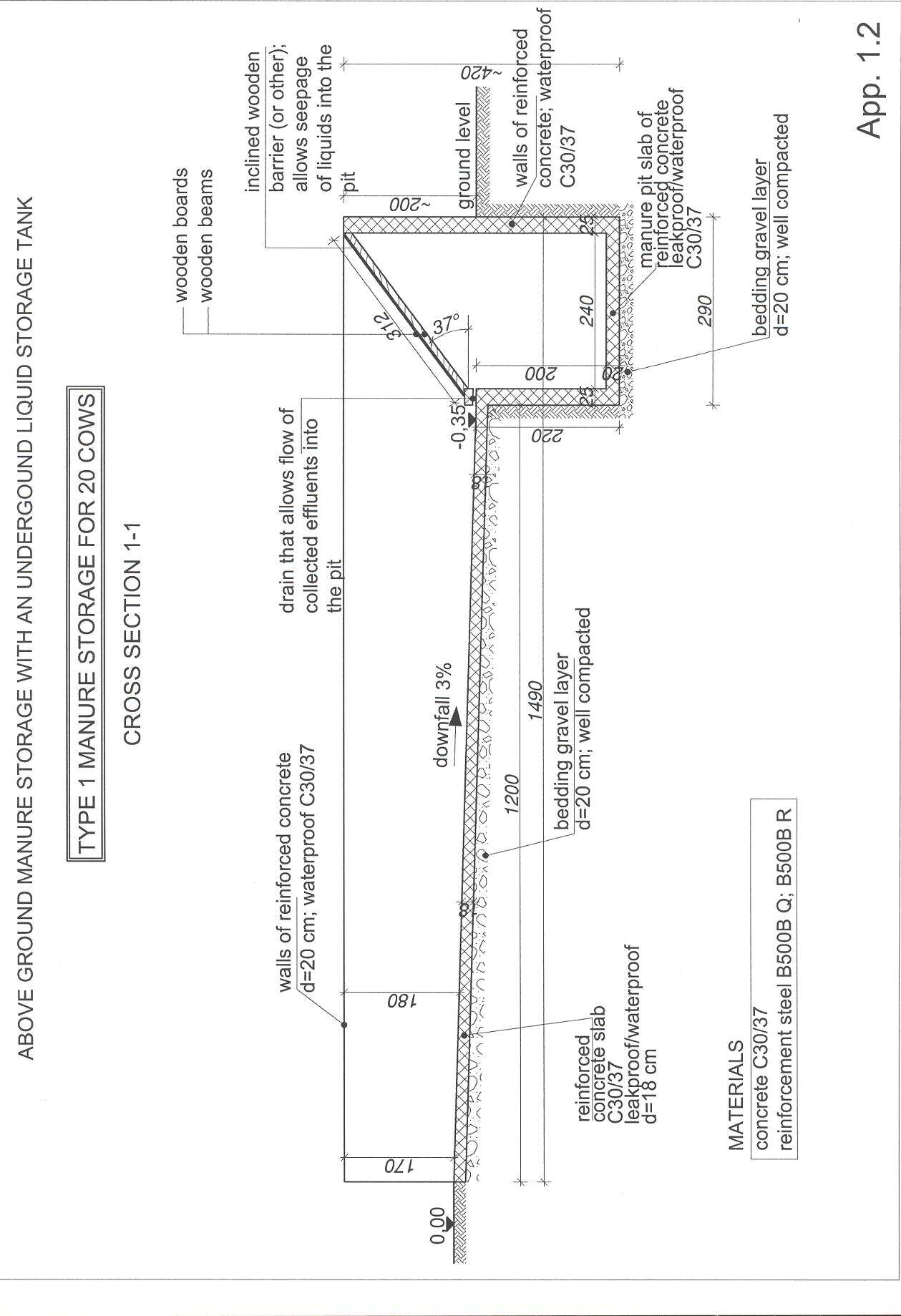
price estimated. Structure 1 is an above ground manure storage facility with an underground storage
tank/pit for seepage of liquid manure/effluents and rainfall. Structure type 2 is an underground
basement/pit for storing slurry. The recommendation for technical requirements for materials are
page
15/31
given in annex 3. The expert staff from the MAFWM should participate in a design phase of the
project to ensure that the design and construction will be done in accordance to Croatian standards
and norms. All the documentation for the platforms will be done by the farmer's contractor and to
ensure quality the whole process will be supervised by the Paying Agency. During the process of
applications farmers will have to prepare all the documentation mentioned in chapter 3.2. if
applicable.
Monitoring wells should be designed based on geological profiles. In annex 4, some usual practices
are shown for monitoring wells construction. To avoid hazards during operation, casing cap with lock
should be mandatory.
Construction / reconstruction phase
In the construction phase the emphasis is on possible environmental impacts that follow
construction works. Issues that could be addressed are: construction and other waste
management, minimization of dust and noise, top soil management, procurement of
construction material, site restoration, temporary storage of the material, storage of hazardous
materials, archeological and cultural finds, traffic management plan, working hours,
encroachment into the neighbor territory.
Noise reduction
Before any beginning of the work it is recommended to inform neighbors either directly or through
local bulletins or newspapers on the construction of new objects and reconstruction. The noise should
be limited by using good management practice and limiting works on regular daily shift. The
equipment and machinery used should be calibrated according to the Ordinance on Highest Permitted
Levels of Noise in Working and Living Environment (Off. gazette 145/04) and the Law on Noise
Protection (Off. gazette 20/03).
Dust minimization
Temporary technical solutions and measures for dust minimization during construction should be
used. For the transportation of earthlike or any other dusty material to the construction site or of the
construction site watering or covering of the cargo should be implemented. Reduction of dust on
construction / reconstruction site during dry season of the year can be accomplish by watering the
ground surface. Water should not be wasted. Reducing speed can be another applicable measure.
Preventing sediment loads in waterways
Preventing sediment lads in waterways can be prevented by proper siting of waste platforms
and construction site. All earthy material should be managed in a way to prevent washing out
into existing surface waters.
Construction waste
When waste is separated as advised in the Law on Waste (Off. Gazette no. 178/04, 115/06) it
is more manageable. For non recyclable wastes, in arrangement with municipality waste will
de deposited on legal landfills. Open burning and illegal dumping of any waste is strictly
prohibited.
page
16/31
In addition to solid waste, some amounts of hazardous wastes will be produced on the site:
like the remaining from paints, oiled packaging, oils, material contaminated with oil etc. The
procedure on handling this type of waste is defined in the By-law on Hazardous Waste
Management (Off. Gazette no. 123/97) and the Ordinance on Categories, Types and
Classification of Waste (Off. Gazette no. 50/05). All waste has to be collected and handed
over to the company authorized for collection and transportation of hazardous waste.
Top soil management
Stripped top soil should not be thrown, but kept on the site for restoration after completion of
works. Any prevailing trees and valuable vegetation should as well be stored and used later
for restoration.
Site organization and restoration
Construction sites should be fenced off in order to prevent entry of public, and general safety
measures would be imposed. Temporary inconveniences (traffic or other) due to construction
works should be minimized through planning and coordination with contractors, neighbors
and authorities. After completion of works the site should be restored as planned in the
design. All wastes and machinery should be removed from the location.
Temporary storage of material (including hazardous materials)
Stockpiling of construction material should be avoided if possible. If not, construction material should
be stored on the construction site, and protected from weathering. Hazardous materials like paints,
oils, additives and others should be kept on impermeable surface, and adsorbents like sand or
sawdust should be kept for handling small spillage. Handling with the material should be consistent
with the instructions on Material Safety Data Sheets.
Encroachment into neighboring territory
Encroachment into neighboring territory should be avoided if possible. In case where
maneuvering surface is too small, approval for the encroachment should be asked. Any
accidental damages of the neighboring properties should be recovered and brought in the
condition as it was prior to the construction.
Archeological and cultural finds
If encountering archaeological finds during preparation of the site for the construction, the
contractor should stop the works, respond immediately and notify the municipal authorities,
the Regional Institute for Protection of Cultural and Historical Heritage and the project team
in the MAFWA.
Working hours
To avoid noise and disturbance of neighbors the works should be conducted in a daily shift,
meaning from 7 am to 5 pm. For other working hours special permits are required.
Operation
During the operation the main emphasis should be on proper maintenance.
Maintenance
All farmers should be educated in good practices related to maintenance of waste platforms.
This training should include actions related to accumulation of liquid fractions due to the
page
17/31
heavy rains, proper waste management, proper handling of manure to minimize odor and
methane venting, proper cleaning of platforms, and proper application / spreading of manure.
Monitoring
The consultants have prepared the Water quality monitoring program for 3 selected counties.
This report serves as preliminary study for the extension of monitoring wells network. It
provides the review of performance of current monitoring of both surface and groundwater
and gives recommendations for improving the existing program by installing additional
monitoring wells. The report envisages a set of three monitoring wells installed (depth 5, 10
and 15 m) on each farm where program will be implemented for tracking point source
pollutions. Frequency of sampling should be 1 in 2 months. For tracking diffuse source
pollution several lysiometers are envisaged to measure water percolation from the soil
surface through the root zone to deep horizons, i.e. leaching of the nutrient and toxic
substances.
page 18/31
Mitigation
INSTITUTIONAL
PHASE
ISSUE
MITIGATION MEASURES
COSTS
COMMENTS
RESPONSIBILITY
Not significant cost,
This is not a legal
Reviewing design
this should be regular
Contractor's design team,
requirement, but it is
plans for construction
Implementation of measures proposed by EMP
work of consultants
PIU
recommended to become a
of waste platforms
hired by PIU
binding requirement
N
I
G
S
Platforms shall be designed according to local
Reviewed by institution
DE
constructing practice (respect of surrounding
Included in cost of
issuing construction permit
Impact on landscape
landscape) and on certain distance of open
procurement of
and siting
waterways to minimize potential pollution of
Regional Office for
construction permit
water surfaces and on certain distance from
Construction (under
households to minimize odor impacts
MEPPPC1)
Not significant. This
cost is included in
Construction is restricted to 5 days a week and
regular annual
only dayshift (7 am to 5 pm).
process of technical
Should be specified in
N
Noise
examination of
Contractor
bidding documents
I
O
Machinery has to posses attest (needs to be
machinery and
(compliance with EMP)
T
calibrated for certain noise level)
C
equipment, and it is
needed to issue a
RU
T
work attest.
S
N
Could be significant
CO
Dust from demolition and transportation of
if construction is done
Will be specified in bidding
construction material and waste will be
in the dry period of
Dust
Contractor
documents (compliance with
minimized by use of water, by minimizing speed
the year. Cost should
EMP)
of vehicles and enclosement of cargo
be beard by the
contractor.
page 19/31
INSTITUTIONAL
PHASE
ISSUE
MITIGATION MEASURES
COSTS
COMMENTS
RESPONSIBILITY
Hazardous waste is expected in small quantities
and it has to be separated from solid waste
For hazardous waste (paints, oils, etc.) contractor
has to follow procedure for hazardous waste
management, this implies collection, handing
over the waste to authorized company for
hazardous waste management and fulfilling
accompanying documentation
Will be specified in bidding
N
Not significant
documents (compliance with
I
O
All recyclable fractions have to be separated
(depending on
Contractor (or other entity,
EMP)
T
from non recyclable waste and taken to
C
quantities of
Construction waste
depending on the Contract)
appropriate collection points with accompanying
hazardous waste) All
The By-Law on Hazardous
RU
documentation
T
costs should be beard
Waste is going to be updated
S
in 2007, therefore revision
N
Non recyclable waste has to be take to approved
by contractor.
will be necessary
CO
landfill
The building site will be cleaned and all debris
and waste materials will be disposed of in
accordance with clauses specified in the bills of
quantities
Burning or illegal duping of waste is strictly
forbidden
N
Supervising construction,
Notify:
I
O
T
Degradation of
If encountering archaeological finds during
Municipal Authorities,
Not significant cost
historical or culturally
preparation of the site, the contractor should stop
RUC
All costs should be
Contractor
Regional Institute for
T
important sites -
the works and follow the procedure to notify
beard by contractor.
Protection of Cultural and
NS
"chance finds"
authorized bodies
Historical Heritage
CO
Project Team in MAFWM.
INSTITUTIONAL
PHASE
ISSUE
MITIGATION MEASURES
COSTS
COMMENTS
RESPONSIBILITY
page 20/31
INSTITUTIONAL
PHASE
ISSUE
MITIGATION MEASURES
COSTS
COMMENTS
RESPONSIBILITY
Only organic waste from the farms should be put
into the waste platforms. In case of over
Not significant
Waste
accumulation of liquid fraction, pumps should be
through period of
N
used and waste spread on the fields. Same should
years, should be paid
Operator
O
management
be done for composted manure.
by Operator and not
TI
from the loan
A
R
PE
Not significant
O
Maintenance
All maintenance of the facilities should be done
through period of
(avoiding water and
in accordance to Good Agricultural Practices.
years, should be paid
Operator
soil pollution and
Advices on possible issues should be sought
by Operator and not
odors)
from the SAPARD agency and MAFWM PIU.
from the loan
page 21/31
Monitoring Plan and Supervision
Monitoring of construction is a part of procedure for obtaining Operation permit.
WHEN
WHAT
WHERE
HOW
WHY
PHASE
Is the parameter
COST
RESPONSIBILITY
Is the parameter to be
Is the parameter to
Is the parameter to be
Parameter is to be monitored?
to be monitored
monitored?
be monitored?
monitored?
(frequency)?
Prior approval
It is recommended for
n
Design project for
for
Implementation of EMP
Review of elaborates
the reason that
Should be part of
s
i
g
construction,
construction as
MAFWM, contractor's
guidelines
and adaptation
adaptation by Croatian
the project
De
reconstruction and
part of project
designer
(RECOMMENDATION)
designs
law do not need
adaptation
monitoring
construction permit.
program
Regular review
Parameters given in construction
Part of regular
During the
stipulated in the Law,
Included in the
Supervising engineer and
permit - all special conditions of
Main project
inspection of
construction, and
and if any public
process of
Regional Construction
construction issued by different
documentation
MEPPPC (regional
before Operation
c
t
i
on
complaint is sent to the construction, cost
Inspectorate (under MEPPPC)
bodies
offices)
permit is issued
Ministry (MEPPPC)
of the contractor
t
r
u
ons
After reporting
C
Waste accompanying
Cost of MEPPPC
Construction waste management
on waste
Required by series of
documentation that is
and small cost for
Supervising engineer MEPPPC
(including hazardous)
management in
regulation on waste
submitted to MEPPPC
contractor
MEPPPC
Thru waste
After reporting
accompanying
on waste
Required by series of
Cost of MEPPPC
Waste management
documentation that is
Reports to MEPPPC
MEPPPC
management in
regulations on waste
and operator
n
submitted to
MEPPPC,
i
o
MEPPPC,
erat
p
O
Through newly
One of the project
Cost will be bared
HV will report to
One piezometer
installed piezometers
performance indicators to
by HV and will
Ground water monitoring
MAFWM and PIU at
every two
HV and MAFWM
(monitoring wells) on
track the changes in
not be covered
MAFWM
months
pilot farms
nitrogen level
from the grant
page
22/31
EMP Implementation Responsibilities
The MoF as a recipient of the grant will make sure that PIU at MAFWM is qualitatively
staffed to carry on jobs of supervision of mitigation measures and monitoring as described in
EMP. Members of the SAPARD Paying Agency (under MAFWM) formed under AACP will
work closely with the PIU. The PIU will make sure that all the necessary licenses and/or
permits are obtained from related environmental agencies prior to and during construction
phase. The AACP Project Implementation Unit (PIU) will serve as the Project Preparation
Unit (PPU) and then as the PIU for the proposed GEF project, with the PIU Project Manager
expected to oversee implementation of the GEF-supported activities. A Project Steering
Committee has already been established comprising representatives from the MAFWM,
Ministry of Environmental Protection, Physical Planning and Construction (MEPPPC), and
Public Water Management Enterprises to provide guidance and advice on effective and
efficient implementation of the proposed activities.
The MAFWM is responsible for proper implementation of the EMP that covers both the
construction and operational phase. During the construction phase, with assistance from
consultants, PIU and members of the MAFWM SAPARD Paying Agency will carry out the
supervision of the works carried out by the contractor and ensure that the EMP is followed
properly. During the operational phase, the MAFWM will be responsible to follow the EMP
in a satisfactory manner. The PIU will report to the Bank and MAFWM about the condition
of compliance with the environment within the scope of project at regular intervals on
biannual basis. The compliance with EMP will be described in regular Progress reports as it
will be requested by Project/Loan Agreement. The monitoring prescribed in EMP comes from
the Croatian environmental legislation and therefore will also be supervised by the inspection
of Ministry of Environmental Protection, Physical Planning and Construction and Croatian
Waters.
MAFWM will implement the overall project, and oversee environmental compliance of the
project during design phase, construction and operation phase and ensure that monitoring and
mitigation plan of EMPs is being implemented. Environmental Inspectors within the Ministry
of Environmental Protection, Physical Planning and Construction, together with
environmental specialists from the PIU and the Bank (during the missions) will provide
supervision based on unannounced site visits during construction and operation of related to
construction conditions and environmental protection.
The disbursement of the matching grant funds for investments under Component 1 will be
established through a Competitive Grants Scheme (CGS) implemented by the MAFWM
SAPARD Paying Agency. The Agency is already receiving capacity building support from
the AACP Loan for such efforts. Subject to a satisfactory fiduciary review by the World
Bank, the Paying Agency would apply EC accredited IPARD payment systems and
procedures for the disbursement of GEF payments for manure storage.
Capacity development, training and proposed project organization
Related to conclusions originating from comparing permits procurement procedures and EMP
and bearing in mind administrative organizations and jurisdiction of administrative bodies
participating in the process of issuance of permits, integrating existing institutional
organization of environmental protection, it is necessary to arrange activities in accordance to
jurisdiction of state and regional bodies, but as well arrange some new activities for which
organization has to be made up.
·
Potentially the weakest link and most influential part related to proper construction of
the facility is in a design phase and for that reason a special attention and supervision
page
23/31
during that stage is recommended. A team of representatives of MAFWM and designer
should be formed and measures recommended in EMP incorporated.
·
Most of the potential environmental impacts will come from poor management, i.e. not
following in a proper way good agricultural practices, therefore a special attention
should be given to training of the farmers.
·
Making EMP part of the contract to Constructor and making it binding condition
is strongly recommended. If not, all recommendation on construction, mitigation
and monitoring conditions related to design and construction should be specified in
the contract and assigned to contractor and/or farmer.
The project will finance two additional staff members to support the application, processing,
payment and control of GEF to Payment Agency management.
PUBLIC DISCLOSURE
The draft EMP will be available to public for comments, questions and suggestions through
the website of the Ministry of Agriculture, Forestry and Water Management in Zagreb for 3
weeks starting with July 30, 2007. All received comments will be attached to the final
document. Varazdinska, Osijek -Baranja and Vukovarsirmium county will display the note
at their information board on the publication of the EMP on the MAFWM's website and the
requested comments on the future constructions.
page
24/31
APPENDIces
THE LIST OF THE NATIONAL LEGISLATIVE AND SUB -LEGISLATIVE ACTS
REGULATING ENVIRONMENTAL PROTECTION
Environmental and Nature Protection
·
The Law on Environmental Protection - Off. Gazette No. 82/94, 128/99, 107/03
·
The Law on Physical Planning (Zoning) Off. Gazette No. 32/02, 35/99, 68/98, 30/94
·
Regulation on Environmental Impact Assessment Off. Gazette No. 59/00, 136/04, 85/06
·
ByLaw on Environmental Information System - Off. Gazette No. 74/99 and 79/99
·
Environmental Protection Emergency Plan - Off. Gazette No. 82/99, 86/99, 12/01, 14/01
·
Ordinance on Environmental Emission Inventory - Off. Gazette No. 36/96
·
The Law on Nature Protection - Off. Gazette No. 70/05
·
The law on Cultural Monuments Protection - Off. Gazette No. 52/94
·
The Law on Environmental Protection and Energy Efficiency Funds - Off. Gazette No.
107/03
·
The Law on Protection and Preservation of Cultural Values - Off. Gazette No. 69/99
·
Ordinance on Mammal Protection (Mammalia) - Off. Gazette No. 31/95
·
Ordinance on Birds Protection (Aves) - Off. Gazette No. 43/95
·
The Law on Acceptance of Convention on the Conservation of European Wildlife and
Natural Habitats (Bern convention) - Off. Gazette No. 6/00
Air protection
·
The Law on Air Quality Protection- Off. Gazette No. 178/04
·
By-law on Recommended and Limit Values of Air Quality - Off. Gazette No. 101/96,
2/97
Water Protection
·
The Law on Water - Off. Gazette No. 107/95, 150/05
·
The Ordinance on Issuance of Water Management Documents - Off. Gazette No.
28/96
·
By-law on Hazardous Substances in Water - Off. Gazette No. 78/98
·
Regulation on Limit Values of Indices, Hazardous and Other Substances in Waste
Water - Off. Gazette No. 40/99, 6/01, 14/01
·
Instructions for Keeping Records on The Frequency of Discharging of Hazardous and
Harmful Substances into Water, of Quantities and Composition of Such Substances,
and on the Procedures of Submitting Such Data to Public Water Management
Enterprises - Off. Gazette No. 9/90
·
Decision on Water Use Charge - Off. Gazette No. 15/91, 19/92, 79/92, 84/92,1/94
·
Decision on Water Protection Fee - Off. Gazette No. 15/91, 19/92, 79/92, 84/92, 1/94
·
Decision on Determining Catchments Areas Off. Gazette No. 20/96, 98/98, 5/99
·
Regulations On The Establishment Of Sanitary Water Source Protection Zones Off.
Gazette No. 55/02.
·
The List of Authorized Laboratories Off. Gazette No. 107/00
·
National Water Protection Plan Off. Gazette No. 8/99
Noise Protection
·
The Law on Noise Protection - Off. Gazette No. 20/03
page
25/31
·
The Ordinance on the Highest Permitted Levels of Noise In Working and Living
Environment- Off. Gazette No. 145/04
·
The Ordinance on Conditions to be Fulfilled by Companies which Measure and
Forecast Noise In Working and Living Environment - Off. Gazette No. 37/90
Waste Management
·
The Law on Waste - Off. Gazette No. 178/04, 153/05
·
Ordinance on Waste Types - Off. Gazette No. 27/96
·
Ordinance on Waste Management Requirements - Off. Gazette No. 23/07
·
By-law on Hazardous Waste Management - Off. Gazette No. 32/98
·
Ordinance on Packaging Waste - Off. Gazette No. 32/98
·
By-law on unit fees, corrective coefficients, approximate criteria and measures for
setting charges on burdening the environment with waste - Off. Gazette No. 71/04
page
26/31
ROLES AND RESPONSIBILITIES OF THE AUTHORITIES
MINISTRY OF AGRICULTURE, FORESTRY AND WATER MANAGEMENT
The Ministry of Agriculture, Forestry and Water Management (MAFWG) is responsible for a
wide range of issues related to agriculture, rural development, fisheries, forestry, hunting and
water management. The MAFWM is the main government body responsible for the
protection of agricultural land from pollution by harmful substances and integrated water
management. Besides making strategic planning and legislation, the Ministry is also in charge
of inspection, preparation and issuing permits for (among others): Mineral fertilizers and
veterinary medicines, Import and trade of plant protection agents, Water management permits
and permit ordinance, Water utilization and waste water discharge.
The MAFWG has a major role in assuring integrated water management at the national level,
water quality management legislation and related policy development. These tasks are carried
out by the Directorate for Water Management which has a major role in protecting water from
pollution caused by adverse agricultural practices. The Directorate has about fifty staff
working in five departments: Department on Water Management Inspection,
Department
on Water Protection, Department on Water Use, Department on Protection from Adverse
Effects on Water and Department on Water Policy and International Projects.
The Directorate for Agriculture is responsible for coordinating various ministry efforts on
good agricultural practices. Since recently it has also been in charge of agri-environment
related legislation. Protection of agricultural land from pollution by harmful substances makes
also an important task of this unit. The Directorate also plays a key role in developing policies
on direct payments for crop and livestock production and various aspects having a far
reaching consequence for sustainable soil (nutrient) management.
Policy development regarding rural areas and co-ordination of the EU SAPARD/IPARD
program are the main tasks of the Directorate for Rural Development and SAPARD. This
Directorate is also in charge of organic farming and agri-environment measures.
MINISTRY OF ENVIRONMENTAL PROTECTION, PHYSICAL PLANNING AND
CONSTRUCTION
The Ministry of Environmental Protection, Physical Planning and Construction (MEPPPC) is
responsible for legislative development, strategic planning, permitting, monitoring and
inspection in the field of environmental protection. It is in charge of protection of air, soil,
climate change and ozone layer protection, coastal zone, sea, waste management and
environmental impact assessments. The ministry is responsible for the overall policy and the
administrative tasks regarding environmental protection, but its involvement in water
protection policy is limited. However, as the main government organization responsible for
environmental protection it is involved in various national steering committees, task forces
and expert panels on water. It closely cooperates with MAFWG, Croatian Waters and other
water-related organizations.
CROATIAN WATERS
Croatian Waters is a public company in charge of water management. It collects water-related
taxes which make the main organization revenue. Croatian Waters are responsible for the
preparation of water management plans, maintenance of water-related infrastructure and
protection from the detrimental effects of water. Besides, the organization deals with various
water use and water pollution control issues and carries on permitting and inspection.
Croatian Waters are also responsible for monitoring (data collection, processing and
page
27/31
evaluation) of the quality of (primarily surface). It does not deal with marine water. Formally,
Croatian Waters submit the yearly plans for approval to the MAFWG but in practice the
Managing Board make autonomous decisions and creates policies. The organization has
county offices which carry water management in the field.
CROATIAN ENVIRONMENT AGENCY
The Croatian Environment Agency (CEA) is in charge of collecting and processing various
gathered data on environment. It is also responsible for monitoring of environmental
pollution, maintaining databases with environmental information and for providing the
statistics needed for the reports on the national state of the environment. Since 2003, the CEA
has been cooperating with the European Environment Agency (EEA) and submitting data to
the European Environment Information and Observation Network (EIONET). The
organization is soon expected to become a full member of the EEA.
CROATIAN AGRICULTURAL EXTENSION SERVICE INSTITUTE
The Croatian Agricultural Extension Service Institute (CAESI) is the main agricultural farm
advisory service in Croatia. The organization is independent legal entity, but has to implement
policy of the MAFWG. Currently the organization employs some 180 people and has regional
offices in each county. The CAESI provides technical recommendations, instructions and
practical examples of new technologies and management practices. It has also been active in
publishing and production of various other extension materials. The rendered services are free
of charge to all family farms.
CROATIAN SOIL INSTITUTE
The Croatian Soil Institute (CSL) performs a wide range of activities. It monitors the state of
agricultural soils and assesses the degree of their pollution with undesirable, notably
hazardous substances. The CSL also provides various expert advice services on soil, manure
and fertilizer analysis, nutrient pollution control and integrated nutrient management. The
organization has some fifteen staff and runs the laboratory for soil testing.
UNIVERSITIES
Both Faculties of Agriculture- in Osijek and Zagreb have departments dealing with various
aspects of soil and water protection. This topic is also an integral part of their undergraduate
and postgraduate curricula. There are several on-going research projects studying the
relationship between agricultural production and soil and water pollution. Both faculties run
own laboratories capable of performing various soil and water tests.
page
28/31
Technical requirements for materials
For both manure basement and above ground manure storage with a tank for liquid manure
and rainfall preliminary calculations and design have been conducted according to the
following legal existing and in force laws, regulations and standards as follows:
Technical regulations for concrete constructions (TPBK; NN 101/05)
Standard HRN ENV 1991 for the calculations and loads basis
Standard HRN ENV 1992 for designing concrete constructions
Standard HRN EN 206-1 for specifications, production and compatibility of concrete
Standard HRN ENV 13670-1 for construction process of concrete structures.
Standard nHRN EN 10080-1 for steel for reinforcing concrete.
According to listed regulations and standards, concrete to be used in described constructions
has to be of minimum strength class C30/37 with minimum cement content of 300-320
kg/m3, maximum water cement ratio of 0,6; exposure classes: XC4, XF3, XA1 (50 year life
expectancy of the structure). Concrete has to be waterproof and if needed (according to
estimated sulfate concentration) sulfate resistant cement has to be used. Maximum aggregate
size shall be 20 mm (otherwise known as 3 fractional concrete in Croatia).
Testing, compaction and curing of concrete should be done following listed regulations and
standards.
Joints between upright walls and concrete slab must be constructed to ensure no leakage of
manure and rainfall and to ensure requested durability. Sealing masses and sealing tapes are
to be used.
Polypropylene fibers may be added into concrete mix to improve the properties of concrete.
Only fibers that comply with the existing standards and regulations in Croatia may be used.
Use of such fibers helps prevents and reduces plastic cracking and improves surface durability
but they are not a substitute for structural reinforcement only possible regular concrete
properties enhancement. This is an option that should be looked into with much care and in
details and in strict compliance with standards and manufacturers if considered for using.
Regarding Croatia, this still is not such a common technology and is not being used as much
as regular concrete in the most of the constructing performed.
Reinforcement steel has to fulfill requirements listed earlier in this point. Reinforcement steel
to be used is B500B Q (mesh reinforcement) and B500B R (bar reinforcement).
Concrete slab must be designed in such manner to bear loads from machinery loading and
unloading manure.
Inclined wooden barrier described by the structure type 1 has to be properly impregnated with
protection layer coating before installed in the construction.
Sample of the type1 manure storage for 20 cows is given on the following figure.
page
29/31
Construction guidelines for monitoring wells
Monitoring wells are usually constructed to observe conditions at defined or required
locations. Locations are usually selected on the basis of known or expected hydrologic,
geologic, and water quality conditions and the location of pollutant or contaminant sources.
page
30/31
Monitoring wells frequently need to be located close to or within areas of pollution or
contamination.
Monitoring wells should be located in areas protected from flooding, if possible and should be
located an adequate distance from buildings and other structures to allow access for well
maintenance, modification, repair, and destruction. The annular space should be sealed from
the top of the filter pack or monitoring zone to ground surface. If a permanent conductor
casing is to be installed, the monitoring well borehole diameter should be at least 4 inches
greater than the outside diameter of the conductor casing. The inner diameter of the
permanent conductor casing should in turn be at least 4 inches greater than the outside
diameter of the well casing. Sealing material should consist of neat cement, sand- cement, or
bentonite clay. Sealing material should be selected based on required structural, handling, and
sealing properties, and the chemical environment into which it is placed.
The top of a monitoring well should be protected by a locking cover or equivalent level of
protection to prevent unauthorized access and a casing should be fitted with a cap or "sanitary
seal" to prevent surface water, pollutants, or contaminants from entering the well bore. A
concrete base or pad should be constructed around the top of a monitoring well casing at
ground surface and contact the annular seal. Protective casing serves to prevent accidental or
intentional damage to a well. Protective casing normally consists of heavy gauge metallic pipe
placed over the portion of the well casing that extends above ground surface. Special
considerations that apply to monitoring well casing are: Casing Material, Multiple Screens,
Bottom Plugs, Casing Installation.
Monitoring well development, redevelopment, and reconditioning should be performed with
care so as to prevent damage to the well and any strata surrounding the well that serve to
restrict the movement of poor-quality water, pollutants, and contaminants.
A monitoring well or exploration hole subject to these requirements that is no longer useful,
permanently inactive or "abandoned" must be properly destroyed to: (1) Ensure the quality of
groundwater is protected, and, (2) Eliminate a possible physical hazard to humans and
animals.
page
31/31