
August/2004

Source: National Water Agency ANA
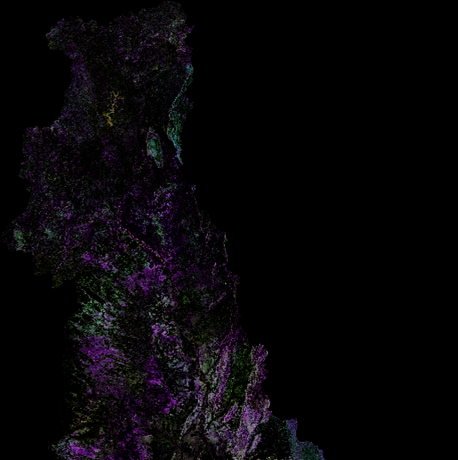
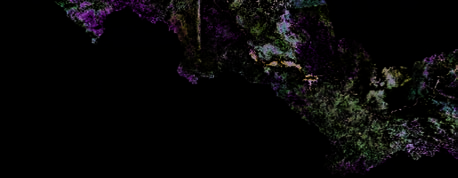
São Francisco River Basin
Mosaic of Landsat satellite images (1991-92)
table of contents
Introduction
4
1. Background, content, process, scope and lessons learned from the SAP
6
2. Characteristics of the São Francisco River Basin and its coastal zone
8
3. Institutional context
11
4. Strategic guidelines for the management of the São Francisco River Basin and its coastal zone
14
5. Strategic actions and selected activities
17
6. Implementation of the SAP
27
7. Selected bibliography
37
8. Principal participants in the drafting of the SAP
39
9. Annex
46
list of tables
1. Physical and socioeconomic characteristics of the São Francisco River Basin, by physiographic region
9
2. Availability and demand for water resources in the São Francisco River Basin (SAP review)
10
3. Implementation schedule, monitoring and evaluation of the SAP
28
4. Annual disbursement schedule for financial resources
29
5. Selected PPA programs with links to the SAP
30
6. Investments foreseen in the São Francisco River Basin, by state PPA 2004-2007
30
7. PPA 2004-2007 for Minas Gerais
31
8. PPA 2004-2007 for Alagoas
32
9. PPA 2004-2007 for Pernambuco
32
10. PPA 2004-2007 for Bahia
33
11. PPA 2004-2007 for Sergipe
34
12. PPA 2004-2007 for the Federal District
35
13. Components of the activities
47
list of figures
1. State and municipal boundaries in the São Francisco River Basin
5
2. National Water-Resources Management System
12
3. Organization of river basin management
13
4. Probable structure of the São Francisco River Basin Plan and its interface with the SAP
16
5. Interactions between the São Francisco River Basin Plan and the SAP
18
6. Structure of the SAP
19
7. SAP Actions for Component I
21
8. SAP Actions for Component II
22
9. Location of GEF-São Francisco activities
48
4
Introduction
The objective of the Strategic Action Program In March 2004, a 336 page SAP Final Report was pub-
for the Integrated Management of the São
lished, and this present 48 page Summary was issued
Francisco River Basin and its Coastal Zone
in May 2004 for the convenience of authorities and
(SAP) is to propose an action program,
decision makers.
covering a period of approximately four years, targeted at
resolving conflicts and revitalizing the São Francisco River
The report is divided into eight chapters. Chapter 1
Basin and its coastal zone (Figure 1).
presents the background, preparation process and basic
content of the SAP, including its national and international
The SAP is the outcome of the first stage of the Project
ramifications, and lessons learned during the course of
for the Integrated Management of Land-based Activities
project implementation.
in the São Francisco River Basin, approved by the Global
Environment Facility (GEF) in 1998. Known locally as
The major geographic, environmental and socio-eco-
the GEF São Francisco Project, the project was prepared
nomic characteristics are presented in Chapter 2.
between July and November 2003. It is based upon the
Diagnostic Analysis of the Basin (DAB) and its prepara-
Chapter 3 deals with the institutional framework
tion involved intense public participation and discus-
within which development of the Basin and its coastal
sions within the scope of the São Francisco River Basin
zone is conducted.
Committee (CBHSF), involving more than 12,000
people and 404 institutions.
Chapter 4 provides strategic guidelines for the manage-
ment of the Basin and its coastal zone.
Once the Plans and Programs Work Group (GT-CBHSF)
had examined all the strategic actions proposed, the
The Strategic Action Program, designed to be implement-
CBHSF voted unanimously at their plenary meeting, held
ed over a four-year period, together with its principal
on October 1st to 3rd, 2003, to support continuation
components and activities, is described in Chapter 5.
of the SAP preparation and negotiation process, and to
provide the technical and political support required for its
Chapter 6 deals with issues of program implementation.
consolidation.
Chapters 7 and 8 comprise a selected bibliography and
Consequently, the SAP reflects the results of this consul-
a listing of the major participants and collaborators in-
tative participation and stands as a major contribution to
volved in the Project.
improving the process of environmental management in
the São Francisco River Basin and its coastal zone, thus
The Annex presents a list of the locations of the activities
making it possible to conceive and implement an inte-
carried out within the scope of the Program for the Integ-
grated management model, adjusted specifically to the
rated Management of the São Francisco River Basin and
context of the Basin.
its Coastal Zone (ANA/GEF/PNUMA/OEA).


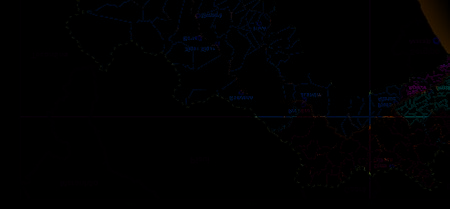
4
Source: ANA/Codevasf.
Figure 1. State and municipal boundaries in the São Francisco River Basin

Photo: Alain Dhomé
Background, content,
process, scope
1and lessons learned
from the SAP
Aerial View Irrigation in the São Francisco Valley
The São Francisco River Basin and its Coastal Zone are areas
alizing the River so that future population-growth and
of strategic importance to the development of a vast region of
socio-economic development demands will not result in
Brazil. Thus, these areas have been targeted for constant gov-
the adoption of approaches that ultimately jeopardize the
ernment attention and its natural resources are increasingly
sustainability of the Basin and its coastal zone.
subject to demands on the part of local and regional society.
In 1996, the Brazilian Government requested that the
The various interventions to which the river and its most
Organization of American States (OAS), in collabora-
important tributaries have been subjected have generated
tion with the United Nations Environment Programme
complex alterations in its flow system, with repercussions
(UNEP), prepare a request for funding from the GEF Proj-
on its coastal zone.
ect Development Facility. These funds were to be used for
the preparation of a two-stage program for water-resour-
Studies and projects previously carried out in the Basin
ces management and planning in the São Francisco River
have never assumed an approach that encompasses the
Basin. With the assistance of UNEP and OAS, a PDF/B1
entire area, including the coastal zone, and neither has an
proposal was prepared and submitted in the amount of
integrated-management approach ever been applied.
US$ 341,000, and approved by the GEF Council.
A portion of the Basin is in the semi-arid region, extending
It was proposed that UNEP perform the role of implement-
into the northern part of Brazil's Northeast Region. The São
ing agency, in view of the nature of the task that comprises
Francisco River, with an annual average flow of 2,850m3/
initial strategic programming, whereas UNEP's partnership
second, accounts for roughly two-thirds of the freshwater
with the OAS flows from the latter's experience in carry-
available in the entire Northeast Region. It is for this reason
ing out similar work throughout Latin America. Initial y,
that the possibility of sharing this water, through an inter-
the Secretariat of Water Resources of Brazil's Ministry of
basin transfer scheme, with other Northeastern states outside
Environment (SRH/MMA) was designated as the local ex-
of the Basin has been a recurring theme since Imperial times.
ecuting agency. Subsequently, in 2001, in line with legislative
changes in the framework of the National Water Resources
The highly complex ramifications of the proposal for
Policy (PNRH), the newly-created National Water Agency
transfer of the São Francisco River's waters, the current
(ANA) assumed the role of local executing agency.
situation in the Basin and its coastal zone, and the poten-
tial for conflict among states that share the Basin, have
In March 1997, the GEF Council approved the request
led to efforts that seek to prioritize measures for revit-
submitted by the Brazilian Government. A grant under the
1 PDF/B (Project Development Facility, Block B) is a preliminary request for a GEF grant and funding for preparation of a Cooperation Project.
PDF/B enabled preparation of a project known as Project
GF/1.100/99-14 Integrated Management of Land-based
Activities in the São Francisco Basin that was approved in
July 1998, in the amount of US$ 22.214 million. Of this
amount, the GEF provided US$ 4.771 million.
Execution of the project made it possible to develop a
Diagnostic Analysis of the Basin (DAB), the first version
of which was published in July 2003. Subsequently, a
preliminary draft of the Strategic Action Program for the
Integrated Management of the São Francisco Basin and its
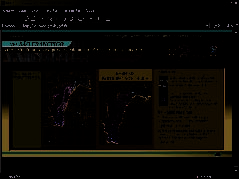
The GEF São Francisco Website
Coastal Zone (SAP) was completed in December 2003.
http://www.ana.gov.br/gefsf/
During the preparation of the SAP, an effort was made to
Information on over three years of research and demonstration projects car-
encompass all aspects of actions for the integrated manage-
ried out under the 29 Activities that comprise the project on the Integrated
ment of the Basin and its coastal zone and, to this end, a pro-
Management of Land Based Activities in the São Francisco River Basin (ANA/
GEF/UNEP/OAS)--GEF São Francisco--is available over the Internet.
cess of debate was launched, similar to that conducted during
preparation of the DAB, involving ample public participation.
Executive Summaries of the Final Reports on the Activities, the Diagnos-
tic Analysis of the São Francisco River Basin and its Costal Zone (DAB),
During execution of the Project, 217 public events were
and the Strategic Action Program for the Integrated Management of the
held, in the form of seminars, workshops, work meetings
São Francisco River Basin and its Coastal Zone (SAP) are available in PDF
format for download.
and plenary sessions.
With a view to forming a borderless virtual community for the exchange
Over 12,000 stakeholders, representing more that 400
of information on the São Francisco River Basin, the Website was develo-
organizations with interests in the Basin and its coastal
ped with the following aspects in mind:
zone, including federal, state and municipal governmental
organizations, universities, non-governmental bodies,
· Design: the layout of the site was designed for ease of navigability and
adequate representation of GEF Projects;
unions and associations, participated in these events.
· Content: within an information-technology architecture, the Website
The preparation the activities indicated in the Annex, the
seeks to provide a comprehensive vision of the Project, including all
DAB and the SAP was carried out with the assistance of
of the Project's principal outputs, executive summaries of the major
some two hundred consultants, who supplied documenta-
documents, and an overview of its stakeholders in order simultaneously
to fulfill an array of institutional, technical, journalistic, educational,
tion and debated proposals at the events, and consolidated
and communications needs, in both English and Portuguese;
information into final reports.
· Technology: within a keyword-searchable database, the Website pro-
This entire process culminated in the Plenary Meeting of the
vides a management system for circulating the content in such a way as
São Francisco River Basin Committee (CBHSF) in Penedo,
to allow an infinite number of people to publish reports directly onto
the website from any part of the world;
and the drafting of two documents: the Recommendations
of the Plans and Programs Work Group in support of the
The GEF São Francisco Website seeks to provide a simple system for the
SAP, and CBHSF Deliberation 03 that provides for the integ-
management and dissemination of knowledge on the São Francisco River
ration of the SAP into the São Francisco River Basin Plan.
Basin and its Coastal Zone.
9
Photo: Alain Dhomé
Characteristics of
the Basin and its
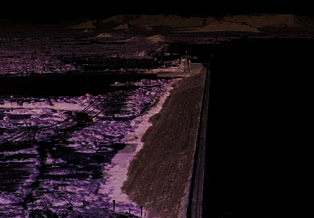
2 coastal zone Aerial view of Sobradinho Dam
The São Francisco River Basin is a vast and complex system
Practically every imaginable type of water resources use
encompassing various Brazilian states. From the jurisdictional
can be found in the Basin. For this reason, the region pro-
standpoint, the political-administrative organization of the
vides an important focus for studies on how to optimize
São Francisco River Basin involves the federal government,
and harmonize various forms of water use, namely: gener-
state and Federal District authorities, and also municipal
ation of electricity, shipping, irrigation, fishing, tourism
authorities, which, according to Brazil's Constitution, are
and leisure, dilution of wastes, household and industrial
autonomous within the Brazilian Federation. In order to
water supply, mining, and others. Moreover, aside from
harness synergies capable of contributing to Brazil's develop-
these disparate forms of use, it is necessary to ensure
ment on a sustainable basis, the management model for the
adequate flows for preservation of the environment.
São Francisco River Basin must entail intense interaction,
integration and negotiation among all of these parties.
The São Francisco River Basin is marked by socio-economic
disparities and environmental vulnerabilities, in which wealthy
In addition to this decentralized and federative frame-
areas with high population densities coexist alongside areas
work, under the terms of Law 9.433/97, the basic unit
with severe poverty and low population densities.
for water-resources management is the hydrographic
basin, thus making negotiation and political integration
The Metropolitan Region of Belo Horizonte (RMBH),
across political boundaries imperative.
located in the Upper São Francisco River Basin, is cluster-
ed around the capital of the State of Minas Gerais. With
A setback challenging the implementation of this Law has
26 municipalities and an area of 6,255 km2, the portion
been institutional weaknesses and fragmentation, with
of the basin located in Minas Gerais represents less than
countless organizations dealing with development and
1% of the entire São Francisco River Basin. However, its
water-resources issues, at the federal, state and municipal
3,900,000 inhabitants (according to the 2000 census) corre-
levels, with little coordination among them.
spond to roughly 29.3% of the population in the entire Basin.
The creation and installation, at the end of 2002, of the
Among the studies carried out to provide the technical-
São Francisco River Basin Committee (CBHSF) is a clear
scientific bases for preparation of the SAP was the deline-
indication of the progress achieved in implementing a
ation of a new physiographic division of the São Francisco
National Water Resources Management System. The est-
River Basin. This coincided with the findings of the Final
ablishment of the Basin Committee is evidence of a new
Report of the Federal Senate Monitoring Commission on
form of State organization, in which elected government
the São Francisco River Revitalization Project, that conclud-
officials are not the only participants, since seats are also
ed: "there is a need for broad discussion in academic and
reserved for representatives of organized civil society.
administrative circles with the aim of updating these limits."
9
The proposed new framework preserves the current
Drought Polygon. A total of 251 municipalities lie within
four physiographic divisions (Upper, Middle, Lower-
this area, which has a population of more than 5,680,000.
middle and Lower), but redefines the borders between
the Lower-middle and Lower São Francisco River Basins
Table 1 summarizes the main physical, natural and socio-eco-
following a line that passes close to the town of Belo
nomic characteristics of the Basin, by physiographic region.
Monte (AL). This boundary is based on geological,
geomorphological, hydrographic, and climatic criteria
Much research remains to be done to determine present and
that provide physiographic homogeneity that should be
future demands for water, by region, by economic sector,
respected within the scope of the proposed Basin Plan.
and by water source. Assessments are needed of the poten-
tial of hydro-geological water sources and smal tributaries,
Approximately 343,784 km2 of the São Francisco River Basin,
especial y in areas where the greatest agricultural demands are
corresponding to 53.8% of its total area, are in the so-cal ed
concentrated, and particularly along very fragile watercourses.
Table 1: Physical and socio-economic characteristics of the São Francisco River Basin, by physiographic region.
Lower and Adjacent
Characteristic
Total or Average
Upper
Middle
Lower-middle
Coastal Zone
Area, km2
636,920
99,387
401,559
115,987
19,987
Area, %
100%
15.6%
63.1%
18.2%
3.1%
Length of main stem, km
2,863 km
1,003
1,152
568
140
Minas Gerais (MG),
Federal District (DF),
MG,
BA,
PE,
Goiás (GO),
DF,
PE,
States encompassed
MG
AL, and
Bahia (BA), Pernambu-
GO, and
AL, and
SE
co (PE), Alagoas (AL),
BA
SE
and Sergipe (SE)
Number of municipalities1
503
194
173
93
78
2,021,289
1,422,881
Population and (%)
13,297,955 (100)
6,489,402 (48,8)
3,364,383 (25,3)
(15,2)
(10,7)
Urbanization, %
100
93
57
54
51
Population density, popu-
20.1
62.9
8.0
16.8
68.7
lation per km2
Elevation, m
- -
1,600 to 600
1,400 to 500
800 to 200
480 (sea level)
Slope of main stem, m/km
- -
0.70 to 0.20
0.10
0.10 to 3.10
0.10
Tropical humid and Tropical semi-arid and
Prevailing climate
- -
Semi-arid and arid
Sub-humid
temperate
subhumid dry
Availability of water,
7,024
6,003
15,167
899
1,172
m3/per person /year
Median annual rainfall, mm
1,036
2,000 to 1,100 (1,372) 1,400 to 600 (1,052)
800 to 350 (693)
350 to 1,500 (957)
Median temperature, ºC
18 to 27
23
24
27
25
Median annual sunlight, hours
- -
2,400
2,600 to 3,300
2,800
2,800
Median annual evapora-
896
1,000
1,300
1,550
1,500
tion/ transpiration, mm
Contribution to the flow, %
100
41.7
54.6
1.9
1.8
Maximum median mon-
Pirapora, 1,303 in
Juazeiro, 4,393 in
Pão de Açucar, 4,660
- -
Foz, 4.680 in March
thly flow, m3/s
February
February
in February
Minimum median monthly
Pirapora, 637 in
Juazeiro, 1,419 in
Pão de Açucar, 1,507
Foz, 1,536 in Sep-
- -
flow, m3/s
August
September
in September
tember
Pirapora
Sediments, 106/t/yr, and
Morpará 21,5
Juazeiro 12.9
Propriá 0,41
9.8 (636,920)
8,3
(area, km2)
(344,800)
(510,800)
(620,170)
(61,880)
Semi-deciduous sea-
Cerrado, "caatinga"
Predominant vegetation
Cerrado and forest
sonal forest, mangrove
- -
and small, high altitu-
"Caatinga"
cover
remnant
swamps and coastal
de forest
vegetation
1
Continued...
The sum of 538 municipalities (rather than 503) results from some being counted twice, as they are located in 2 physiographic regions.
10
Continued...
Basic sanitation, % of homes
- Water supply
90
43
37
33
- -
- Sewers
71
13
22
9
- -
- Sewage treatment
80%
1%
17%
1%
- -
1,243 between Pira-
pora and Petrolina/
60 between Piranhas 148 from Belo Monte
Navigable waterways, km
2,061
- -
Juazeiro, 104 in Para-
and Belo Monte
to the mouth
catu, 155 in Corrente,
and 351 in Grande
Três Marias (396),
Sobradinho (1,050), Paulo Afonso I, II, III
Principal hydroelectric
Rio das Pedras (9.3), Panderos (4.2), Corren- and IV (3,986), Mo-
dams (power output
- -
- -
Cajuru (7.2), Queimados
tina (9.0),
xotó (440), Itaparica
potential, MW)
(10.5), Parauna (4.1) Rio das Fêmeas (10.0) (1,500), Xingo (3,000)
Irrigated area, ha and (%)
342,712 (100)
44,091 (12.9)
170,760 (49.8)
93,180 (27.2)
34,681 (10.1)
Table 2 summarizes information on the availability and
Lower-middle: widespread pollution caused by agricul-
demand for water in the São Francisco River Basin, and
ture and sewerage, including discharges into intermittent
indicates that the total demand for water in the Basin cor-
water courses; uncontrolled discharges and inadequate
responds to approximately 24% of the minimum (Q ) flow.
disposal of solid wastes; water shortages owing to the
95
intermittent nature of tributaries.
Broken down by physiographic region, the major impacts
related to interactions between water resources and the
Lower and coastal zone: physical impacts caused by
environment are as follows:
upstream dams on the ichthyofauna, including loss of bio-
diversity owing to reduced nutrient concentrations and
Upper: erosion, including that originating from rural
flood control structures that inhibit fish from going up
roads, producing sediment loads that affect water cours-
river to spawn (piracema); erosion on the banks and bed
es creating water quality problems and silting of river
of the São Francisco River; modification of the sediment
beds; urban, industrial and mining activities, generating
balance and flooding patterns at the estuary.
wastes, sewage and a variety of pollutants, jeopardiz-
ing water quality in streams and lakes that receive these
Suspended sediment concentrations in the Basin are shown in
discharges.
Figure 1. Based on measurements made during the GEF São
Francisco Project in 2001, the discharge of sediments at the
Middle: widespread pollution caused by agriculture and
mouth amounted to only 0.41 mil ion tons/year, suggesting
sewerage discharges, jeopardizing the quality of surface
that there has been a reduction of 97% in these loads as com-
and ground waters; intensive use of surface and ground
pared to measurements ef ected by CODEVASF, between 1966
waters for irrigated farming.
and 1968, that recorded loads of 12.5 million tons/ year.
Table 2. Availability and demand for water in the São Francisco River Basin (SAP Reviewed).
Physiographic
Area
Flow*
Demand (m3/s)
Demand Q (%)
Region
(km2)
95
Q (m3/s)
Q (m3/s)
Urban
Rural
Livestock Industry Irrigation
Total
95
Upper
99,387
1,189 (1,189)*
289 (289)*
26.8
2.2
2.5
11.4
14.4
57.3
19.8
Middle
401,559
1,522 (2.711)*
531 (820)*
4.6
2.8
3.2
0.8
58.8
70.2
13.2 (8.5)*
Lower-middle
115,987
111
25
2.8
2.3
1.4
0.4
50.5
57.4
229.6 (6.8)*
Lower
19,987
28 (2.850)*
8 (853)*
1.1
1.4
0.7
0.3
14.4
17.9
223.7 (2.1)*
Total
636,920
2,850
853
35.3
8.7
7.8
12.9
138.1
202.8
23.8*
Q: natural contribution of each stretch; Q : flow with 95% confidence of recurrence; *Availability is considered by physiographic region. Source: SRH/MMA and ANA, 2003
95

eres
Photo: Eraldo P
3Institutional context Landscape Semi-Arid Region
The fact that the Basin and its coastal zone encompass six
· Secretariat of Water Resources of the Ministry of Environ-
states, 503 municipalities and part of the Federal District
ment SRH/MMA
(Figure 1), and that its waters are subject to the jurisdiction
of numerous federal and state institutions, justifies the com-
State level
plex and multidisciplinary nature of the institutional model
· State Water Resources Management Systems
adopted, which must seek to create synergies, rather than
· State Water Resources Councils CERH
provoking divisions or antagonisms.
· State-level Public Water Resources Management Bodies
The principal regional institutions involved in the management
Basin level
of the Basin and its coastal zone, and their respective respon-
· Basin Committees
sibilities for projects connected to the SAP, were ranked. Nine-
· Basin Water Agencies
teen national and five regional bodies and companies were
identified, of which 12 were from Minas Gerais, two from the
Public participation in the management of water resources in
Federal District, two from Goiás, four from Pernambuco, 11 from
Brazil has grown in recent years. Such participation is always
Bahia, seven from Sergipe, and five from Alagoas.
more intense when there are conflicts of interest, either over
quantities of available water or the conservation of water resources.
During the SAP formulation period, the institutional frame-
work for managing land and water resources in the Basin
Decentralized decision making has proven an approach
was analyzed from the standpoint of the principal potential
capable of legitimizing and strengthening the role of water-
approaches to the management of water resources, with a
user organizations in river basins. The aim of decentralized
view to integrating governmental and private initiatives and
decision making is to promote col ective action and, thereby, gener-
maximizing synergies.
ate joint responsibility on the part of the various agents involved.
The National Water Resources Management System was
To achieve effective public participation, it is essential to
established by Law 9.433/97, and its administrative struc-
respect the specific characteristics of each region, in terms
ture is shown in Figure 2, which also shows the scope of the
of both public participation in institutional management, and
activities and inter-relationships between the various bodies
their approaches to water resources projects. Such character-
engaged in water-resources management activities, including
istics are reflected in the institutional organization of each of
the Basin Committee.
Brazil's states, and in the levels of public and private particip-
ation achieved.
Federal level
· National Water Resources Council CNRH
Such social participation, however, is still just beginning and is
· National Water Agency ANA
very fragile. More widespread participation of water users in



12
13
Figure 2. National Water-Resources Management System
public decision-making requires integrated, decentralized
sources management; securing the technical, economic
and participatory action. This implies involving the entire
and fi nancial investment programs and projects to sup-
institutional system for water-resources management in
port integrated public and sectoral policies with the aim
actions directed toward integrated river basin manage-
of fostering sustainable development in the São Fran-
ment, through the strengthening of participation in public
cisco River Basin as a whole; and, promoting interfaces
initiatives, in line with concerns expressed by society.
between national and state water resources-management
systems, including the integration of municipal policies
The São Francisco Basin Committee, an innovative ap-
and regional proposals for plans, programs and projects
proach to effective water-resources management, has
into the directives and goals established for the São
now been instituted. The Basin Committee acts as a verit-
Francisco River Basin, with a view to ensuring the
able parliament for the deliberation of water-resources
conservation and protection of water resources in the
management issues, and has played a major role in assess-
entire Basin.
ing actions proposed in the SAP.
The Basin Committee depends upon a Water Agency
Its scope encompasses the entire length of the São Fran-
empowered to perform the functions of its Executive
cisco River Basin, and its membership comprises repre-
Secretariat.
sentatives of organized civil society and water users, as
well as representatives of Executive-Branch institutions
The role of Regional Consultative Chambers in the
from the three spheres of government which account for
Basin Committee also merits mention. These are boards,
half of its total membership.
formed to refl ect the physiographic divisions of the Basin,
whose duties include: promotion of links between sub-
The principal objectives of the Basin Committee
basins committees; recommendation of requests from
include: fostering integrated development of water-re-
sub-basins committees; support for shared-management
12
13
initiatives within the scope of the Basin; discussion and
The National Water Agency (ANA), in the exercise of its
presentation of suggestions relating to issues within their
technical and institutional role aimed at implementing
sphere of authority to the Basin Committee; promotion
integrated shared water-resources management strate-
of actions carried out in the area of the Basin; coordina-
gies, has proposed that a Management Pact be formalized
tion, within the scope of their activities, and mobilization
through an Integration Agreement between ANA, the
for the renewal of the terms of office of Basin Committee
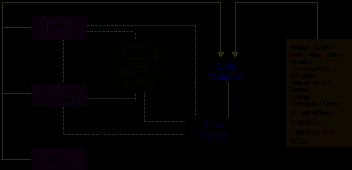
States, and the Basin Committees. Figure 3 illustrates
members; and, preparation of public meetings approved
the potential interaction of the various participating
by plenary sessions of the Basin Committee.
institutions in river basin management under an Integra-
tion Agreement.
In parallel with the work of governmental institutions and
the Basin Committee, there are a considerable number
It should be noted that the São Francisco River Basin is
of Non-Governmental Organizations (NGOs) working
located in sub-region 39C of the Global International
in the Basin and its coastal zone. These are non-profit en-
Waters Assessment (GIWA) project that encompasses the
tities whose efforts are directed toward various aspects of
coastal ocean waters of the eastern and southern coast of
environmental protection and community development,
Brazil. This area comprises the South West Atlantic Large
some of which are dedicated to aspects of water-resourc-
Marine Ecosystem, as defined by UNESCO, and includes
es management. Some of these NGOs are concerned with
all the inland waters that flow out to this coast. Within
regional development, while others have a more strictly
this coastal area, the National Coastal Management Pro-
local role. These NGOs could be important partners in
gram (GERCO) was instituted by Law 7.661/88 with a
the implementation of the SAP, as they could potentially
view to enabling implementation of the National Coastal
institute a model for private-state integration.
Management Plan (PNGC).
Figure 3. Organization of river basin management

14
15
Photo: Alain Dhomé
Strategic guidelines
for the management
of the São Francisco
4River Basin and its
coastal zone
Canyon Alagoas/ Sergipe
The Federal Government's Multi-Year Action Plan (PPA)
catu River) and Bahia (in the Sub-basins of the Corrente and
for 2004-2007 is targeted at implementing the following
Grande Rivers), the expansion of intensive farming, principally
long-term strategies: social inclusion and distribution of
for grain production, will continue. In the Lower São
income through vigorous GDP and employment growth;
Francisco River Basin, sustainable development wil continue
environmentally-sustainable growth to reduce regional
to rely on tourism and aquaculture, the latter including restor-
disparities, stimulated by expansion of the mass consumer
ation of local fisheries where possible, since prospects for
market through investments and productivity gains;
other economic alternatives in this region are very limited.
reduced vulnerability to external factors by expanding
competitive activities which make such sustained growth
Even in a less adverse scenario, serious doubts persist as
achievable; and strengthening citizenship and democracy.
to how sustained growth in the Basin can be financed, and
there is a preeminent need to attract private investment
Investments in water-resources, sanitation and housing,
capital. Regardless of the scenario, it is clear that agribusi-
provided for in the PPA, comprise a large portfolio of
ness will remain a major economic activity and a driving
projects for the future.
force behind development in the area.
In the light of a forecast Gross Domestic Product (GDP)
It is important to bear in mind that immense areas of
growth of between 1% and 1.5% during 2003 and 3.5%
land in the São Francisco River Basin have not as yet been
during 2004, the Government is predicting longer-term
utilized, and that, as in many areas currently being used,
growth in GDP of about 4% in 2005, 4.5% in 2006, and
methods applied in their exploitation may not always be
5% in 2007. From a regional standpoint, the growth fore-
the most sustainable or orthodox. This underscores the
casts for the Northeast (a region in which the São Francisco
importance of understanding that sustainable develop-
River Basin makes a significant contribution) would thus be
ment in the São Francisco River Basin needs to be based
significantly affected, as would its share in national GDP.
on the three-pronged model: "water land energy."
It is, however, unlikely that these forecasts will materialize
Water is the most critical limiting factor to long-term sus-
in a uniform manner throughout the Basin. Attainment of
tainability and, for this reason, it will be necessary to con-
such goals is more achievable in the Middle São Francisco
duct a careful assessment of the role of water-resources
River Basin, where projects currently underway point
management in the sustainable development of the Basin,
toward their fulfillment.
as conceptualized in the São Francisco GEF Project.
In the western part of the Middle São Francisco River
The major challenge facing the São Francisco River Basin
Basin, in both Minas Gerais (in the Sub-basin of the Para-
Committee will be that of consolidating its position as the
14
15
forum for determining a strategic program for the Basin
Creation of the Basin Water Agency
with the aim of guaranteeing revitalization of the river
Provision for the budget of the Basin Water Agency
and optimization of its multiple uses, in an efficient and
Implementation of the Basin Water Agency
democratic manner.
Preparation of a Strategic Plan for the Basin Water Agency
Consequently, the most urgent challenges facing the São
According to Law 9.433/97, the management instru-
Francisco River Basin Committee are issues of an operational
ments established under the National Water Resources
nature, including determination of operational mechanisms
Policy are classified as technical, economic and strategic.
to ensure its sustainability; to provide for its technical, finan-
cial and administrative support; to confirm its assignment
· The principal technical instruments are:
of responsibilities; to provide a framework for its decision-
Basin Water Resources Plans or Basin Plans
making procedures; and to accommodate the structuring of
Classification of bodies of water
its technical councils and regional advisory bodies.
Licenses
Information Systems
To this end, strategies for the decentralized implement-
ation of these management tools are urgently needed to
· Economic instruments consisting of water use charges
enable the Committee, on the basis of technical inform-
ation and with legal support, to address these issues and
· Strategic instruments consisting of inspection and en-
make decisions that will determine the destiny of the Basin.
forcement measures
However, in view of the size and complexity of the São
Although they contain some similar elements, the SAP
Francisco River Basin and its coastal zone, there is a need
and the Basin Plan have quite distinct objectives, content
to stimulate and strengthen intermediary channels of
and execution schedules. The SAP is a document contain-
exchange between society and the Basin Committee, in
ing a set of strategic actions designed to address priority
line with the realities of each region, and to ensure that the
concerns, prepared with support from the Global Envi-
views of bodies such as the tributary committees and the
ronment Facility to the National Water Agency (ANA).
regional advisory councils are heard by the Basin Commit-
The activities and analyses of causal chains, and the iden-
tee. The strengthening of such channels would assist in en-
tification of proposed courses of action to be pursued are
abling the Committee's decision-making agenda, incorpor-
targeted at correcting or mitigating these critical problems.
ating relevant issues of concern in the Basin, and ensuring
Its scope, however, encompasses integrated management
that decisions made when the Committee is in session are
actions applied throughout the entire São Francisco River
preceded by ample discussion within the affected regions
Basin. Moreover, in order to be eligible for GEF funding,
and sub-basins, thereby guaranteeing that the views of all
such actions must be in compliance with the GEF's criteria.
of the various stakeholders are effectively represented.
The São Francisco River Basin Plan, in its full final version,
The principal actions foreseen are:
will be a much more comprehensive document. Indeed,
· Review and adjustment of the legal framework to ensure
basin water resources plans need to be conceived as con-
sustainability of the São Francisco River Basin Committee
tinuous and dynamic processes, subject to periodic review,
· Establishment and functions of the Technical Office
and focused on long-term horizons, expressed through
· Creation of Regional Advisory Councils
scenario analyses that examine future conditions for the de-
· Creation of Technical Councils
velopment within their respective river basins. The drafting
· Creation of a Basin Water Agency, including:
of such plans will involve a complex participative process
Definition of the legal responsibilities of the Basin Water Agency
under the coordination of the River Basin Committee.



16
Components of an investment program, to be pursued
of the eligibility criteria emanating from the GEF itself,
under the Basin Plan, could be grouped into two major
which is its fi nancial agent. In view of this, and with a
categories: management, relating mainly to actions of a
view to providing greater clarity for the purposes of the
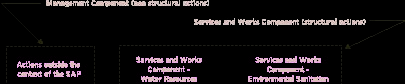
`non-structural' nature, and services and works, relating to
preliminary draft of the Basin Plan, it is suggested that the
actions of a `structural' nature, comprising the more direct
management component be covered by actions encom-
corrective interventions to be effected in the River Basin.
passed by the SAP whereas actions under the services and
works component be left for subsequent defi nition. Un-
The contribution of the SAP, within the scope of the
der such an arrangement, aspects relating to services and
Basin Plan, is more closely related to the lines of action
works in an investment program to be executed under
envisioned under the management component, in view
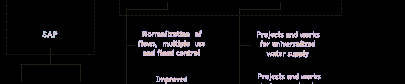
the Basin Plan could be structured as shown in Figure 4.
Components and actions for a
preliminary view of the Basin Plan
Examples of typical actions
Figure 4. Probable structure of the São Francisco River Basin Plan and its interface with the SAP

Dhomé
Alain
Photo:
5Strategic actions and
selected activities
View of the city of Penedo-AL
In the development of the GEF São Francisco Project,
tem, to which the SAP contributes. This system is the In-
two types of actions were prioritized: actions that seek to
tegrated Water Resources Management System for the São
minimize the principal negative aspects diagnosed; and
Francisco Basin and its coastal zone, hereinafter referred to
actions that aim to establish a sound technical and man-
as Integrated Basin Management System (SIGRHI).
agement base for carrying out the work and for decision-
making, with intense public involvement, on the part of
The SAP's contribution consists of the development
Basin institutions.
and adaptation of the regulatory framework and
technical and institutional instruments. This frame-
With respect to actions of the first type, the size, hetero-
work and these instruments have aided in developing
geneity and complexity of the São Francisco River Basin
a management database, in implementing the institu-
means that it is impossible to treat the full scope of all
tional instruments required under the Integrated Basin
of the problems facing the Basin at the same time. For
Management System, and in reinforcing institutional
this reason, the strategy adopted was to select areas for
links, while also fulfilling the socio-institutional role of
intervention and priority action under the SAP through
providing environmental training and education for its
the development of integrated activities that could not
members and other parties involved.
only lead to rapid and favorable outcomes in resolving the
problems identified at specific locations where the direct
At the same time, steps should be taken to ensure prog-
interventions were carried out, but could also constitute
ress toward universal access to water supplies, sewage
easily replicated or adapted models for adoption in other areas.
collection and treatment, and final disposal of solid waste
with a view to fulfilling social-inclusion goals enunciated
The strategic actions foreseen in the SAP aim to make a
under the Multi-year Plan of Action (PPA) for 2004-
lasting contribution to the integrated management of the
2007. In addition, the critical decision making instru-
São Francisco River Basin and its coastal zone, in accor-
ments to be deployed in the event of emergencies, with a
dance with the general guidelines of the National Water
view to protecting and defending local communities and
Resources Policy (PNRH) as expressed in Law 9.433/97.
users in emergencies, should be adopted in consonance
with the aims of the National Water Resources Policy and
The structure of the SAP and its basic components, in
the provisions of Law 9.433/97.
order to fulfill the goals set under the National Water
Resources Policy and the GEF São Francisco Project,
Another pressing issue is the potential for sustainable use
focused on the promotion of technical-institutional
of groundwater resources, found particularly in the Middle
strengthening and participation of society as a whole. This
and Lower-middle São Francisco River Basin, through an
could be consolidated through the implementation of a
assessment of their volume and quality, and of the know-
participative and stable water-resources management sys-
ledge available with respect to their potential for exploitation.




18
19
Figure 5 shows the links between the SAP and the
I.1.1 Links between programs run by federal-
Basin Plan.
bodies and the water-resource and environ-
mental management systems of federal, state
The SAP was structured with two major components,
and municipal governments, and other stake-
namely: contributions to the introduction of an Integrated
holders in the Basin
Basin Management System and its array of management
instruments; and contributions to the sustainable use of
This activity seeks to promote coordination between SAP
water resources and the restoration of environmental
activities and the actions of government and stakeholders
quality, as shown in Figure 6.
involved in the São Francisco River Basin and its coastal
zone, with a view to promoting the convergence of ef-
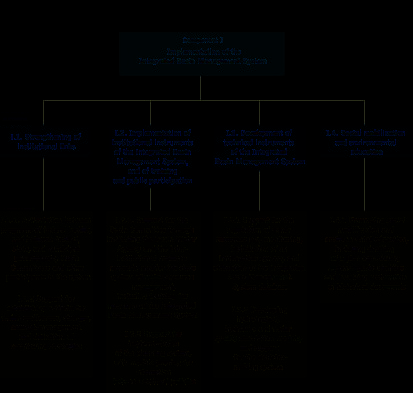
Strategic Actions under Component I Imp-
forts and multiplication of results.
lementation of the Integrated Water Resour-
ce Management System for the Basin and its
As an activity targeted at promoting integration and joint
Coastal Zone.
actions among federal, state and municipal programs, the
expected actions and outcomes include:
Strengthening of institutional relationships (I.1)
· integration agreements between the states and the federal
This Strategic Action is divided in two main activities:
government to standardize management instruments;
Figure 5. Interactions between the São Francisco River Basin Plan and the SAP







18
19
Figure 6. Structure of the SAP
20
21
· events to promote integration and coordination, invol-
This activity will follow up on the establishment of the
ving those responsible for planned and ongoing initia-
Basin Committee by supporting the implementation of
tives, through discussions entailing participation from
the Basin Water Agency as the executive body that will
local and regional planners and parties responsible for
guarantee successful and effective functioning of the Com-
preparing estimates, with scrutiny of the various com-
mittee, and by providing support for state water-resources
ponents and outcomes carried out by each institution,
management systems.
and with emphasis on promoting convergence among
the various proposals;
Expected outputs of this activity are:
· preparation of an `annual agenda of intentions,' en-
· The Basin Agency
compassing the plans and targets of each institution for
· Operational state water-resources management systems
subsequent periods, and the drafting of a framework for
· Operational reservoir (açudes) users associations
identifying potential conflicts and points of convergence;
· An inter-institutional research network
· setting of criteria and procedures to harmonize and
· Trained members of the Integrated Basin
match budgets and timelines for action among the vari-
Management System
ous federal and state government institutions.
I.2.2. Support for the implementation of a
I.1.2. Support for the setting of licensing
planning system based on models providing
criteria, water-use charges, guidelines for
for interaction between sectoral policies
management of conflicts, and definition of
monitoring strategies.
One of the first activities will be the formulation of a
Basin Plan, with a view to establishing procedures for the
This activity will support research designed to improve
implementation of a planning system in the Basin, targeted
the regulatory framework in the São Francisco River
at promoting interaction between sectoral investment poli-
Basin and its coastal zone.
cies for quantitative and qualitative water management in
the São Francisco River Basin and its coastal zone. Periodic
The expected outcomes of this activity are:
evaluations of development scenarios and proposals for
· Establishment of licensing criteria;
measures for fostering development should be undertaken
· Establishment of conflict management strategies;
as an additional element of this process, with the aim of
· Criteria for charges on the use of water resources.
stimulating the conservation, preservation and sustainable
utilization of water resources.
Implementation of the Integrated Water Resources Man-
agement System's institutional instruments, training
The expected outputs are:
programs and public participation mechanisms (I.2)
· Integration agreements between the different governmen-
This Strategic Action comprises two principal activities:
tal bodies, taking into account their roles and expected
contributions to the functioning of the planning system;
I.2.1. Support for the São Francisco River
· Strategies for a transition from the current situation in
Basin Committee through implementation of
which Basin Plans are prepared under the direction of
the Basin Water Agency, and the establishment
the National Water Agency (ANA) and the Basin Com-
of an inter-institutional research network,
mittee, to the establishment of the Basin Water Agency,
state water-resource management systems,
and a review of the long-term investment goals present-
and provision of training for members of the
ed in the SAP, since this is the best path to strengthening
Integrated Basin Management System
the Agency and enabling it to participate in the drafting
20
21
Figure 7. SAP Actions for Component I
of state and federal Multi-year Action Plans (PPAs) and
Development of technical instruments for the
annual budgets;
Integrated Basin Management System (I.3)
· Amendments to the Bylaws of the Basin Water Agency, re-
lating to aspects pertaining to its role in the planning area;
Two principal activities are recommended:
· A flow chart, illustrating linkages between sectoral plans
and the Basin Plan, with a view to consolidating institu-
I.3.1. Support for the regularization of water-
tional coordination;
resource use, for monitoring and registering
· An established planning horizon, stipulating execution
users, for implementation of an information
schedules, periodic reviews and work methodologies,
system for the São Francisco River Basin and
including the use of Strategic Environmental Evaluations
its coastal zone, and for the establishment of
applicable to policies, plans, programs and works in the
a database for the Integrated Basin Manage-
São Francisco River Basin.
ment System
22
23
Among the objectives of this Activity are the registration
sizing/planning of campaigns to ensure complete user
of water-users in the Basin, with a view to regulating
registers, including: satellite imaging of irrigated areas;
water-resource supply and demand, and preparing users
drafting of a manual defining a registration campaign
for the eventual implementation of charging mechanisms,
methodology (based upon user declarations and/or
thereby aiding in the elaboration of water-resources man-
census-based); standardizing registration procedures
agement guidelines and licensing procedures, particularly
and data requirements for licensing and billing purposes
in areas of real or potential conflict.
in conjunction with other management bodies in the
Basin; identifying partners, from both governmental
Expected outcomes include:
and private entities, for mounting registration cam-
· Regularization of water-resource use
paigns; creating a user registration system (customiz-
Evaluation of the current status of knowledge regarding
ation of software, database and hardware); and drafting
water demand in the Basin (available registers) and the
a personnel training program for user support.
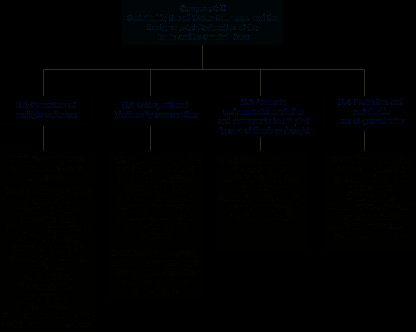
Figure 8. SAP Actions for Component II

22
23
· Monitoring of water uses and users
manned and automated measuring stations within
Identification of water users in the Basin, quantifying
an optimized operational capabilities of the net-
water demand and availability to assist with decision
work, and recording changes to be effected in the
making and the implementation of new undertak-
source program, written in Delphi, to adapt it for
ings; compiling a register of laboratories equipped to
electronic-data reception and enable it to perform
perform tests; analyzing the quality of river water; and
data-consistency analyses using an Oracle database.
disseminating the resulting information.
The resulting computer program will comprise
· The information system on water resources in
the National Water Resource Information System,
the São Francisco River Basin and its coastal zone
run by the National Water Agency (ANA), and
Consolidation and operationalization of a geo-referenc-
interface with the ANA Geographical Information
ed database, making information on water resources
System (GIS). Finally, a third element will sup-
available using, inter alia, the Internet.
port implementation of a piezometric monitor-
· The Integrated Basin Management System
ing network, designed to provide more detailed
database
knowledge on groundwater resources in the
· Land Use Mapping of the Upper and Middle São
Verde Grande River Sub-basin (in Minas Gerais
Francisco River Basins: completing the map of land
and Bahia) and expand the existing network in
use and settlement patterns in the entire São Fran-
the Verde/Jacaré River Sub-basin.
cisco River Basin, in ArcView® format; and,
· Rehabilitating and upgrading of the hydrometric
I.3.2. Development of hydrologic, hydraulic
and water-quality monitoring networks, resizing a
and water-quality simulation models and of
joint network for the collection of hydrometeoro-
a decision-making support system
logic and water-quality data: rescaling of a mixed
system for the collection of hydrometerologic and
This activity entails the development of a support
water-quality data in line with specifications for
system for decision-making, including development
eres
Photo: Eraldo P
Grapes São Francisco Valley
24
25
of simulation models for quantitative and qualitative
Three main activities are foreseen under this strategic action:
analysis of the Basin's hydrologic condition and hydraulic
structures (dams, canals, catchments, pumping facilities,
II.1.1. Support for rational water use in
diversions, etc.).
irrigation
The following instruments should be drafted:
This activity aims to promote the economic, social and
· Technical specifications, comprising the following simul-
environmental sustainability of irrigation systems by
ation-model modules: (i) Database Module, (ii) Model
reducing water and energy losses, seeking to achieve
Module, and (iii) Dialog Module;
maximum crop yields per unit of area based upon optim-
· Manuals, including (i) User Manual, and (ii) Model
izing water use, and allowing the integration of irrigation
Reference Manual, with numeric solutions and
technology and water-management instruments. To this
frameworks;
end, it will be necessary to study replacement of exist-
· A computer program for the Decision-making Support
ing irrigation methods, adoption of more water-efficient
System (DSS).
crops, and use of improved piping and distribution ef-
ficiency in irrigation districts.
Public Involvement and Environmental Education (I.4)
The products envisaged are:
This Strategic Action is comprised of one principal activity:
· A model and software for calculating water and irrig-
ation needs, making use of regional and local data;
I.4.1. Promotion of social mobilization
· A database on soils, climate, crops and irrigation-man-
and environmental education, including
agement, and detailing parameters for orienting licens-
the drafting of a plan that respects regional
ing procedures;
differences, and the restoration of
· Courses disseminating information by means of work-
historical documents
shops, seminars and technical publications.
Social mobilization occurs only when a group of individu-
II.1.2. Follow-up of hydro-environmental
als seeks to achieve common objectives. This, in turn,
and operational studies on multipurpose
depends upon an awareness of the importance and public-
utilization of dams, including the generation
spiritedness of the objectives. In order to mobilize public
of artificial floods, with the aim of providing
support for integrated and sustainable water-resource
support for shipping and resolving problems
management, therefore, planned and coordinated public
in the Coastal Zone
involvement must be promoted.
This activity will keep members of the Integrated Basin
The envisaged outputs of this activity are:
Management System informed on the progress and
· An Environmental Educational Plan for the São Fran-
partial results of inventory studies, economic-feasibility
cisco River Basin and its coastal zone;
analyses and environmental studies on all dams under
· Courses, field days, and seminars, and the drafting of
consideration, and assessments of their impacts on the
primers;
Basin and its coastal zone, always from the standpoint of
· Educational events, including convening a public water
multiple water uses. The dams in question are those being
and environment week.
considered by CHESF, CEMIG, CODEVASF and others,
for specific or multiple uses, on the das Velhas, Paracatu,
Promoting multiple forms of water use (II.1)
Urucuia, Jequitaí and São Francisco rivers.
24
25
The products to be prepared to support the multi-pur-
The aim of this activity is to promote measures to assist
pose operation of dams and the occasional generation of
organizations that seek to restore and/or preserve the
artificial floods are:
Basin's representative ecosystems, including the Atlantic
Forest. The activity will provide support to federal, state
· Compendia of dam studies for decision-making purposes;
and municipal government actions targeted at the restor-
· Reports on the technical, economic and environmental
ation of native vegetation around headwaters, in aquifer
feasibility of instigating artificial floods downstream
recharge areas and around springs, and along river banks.
from the Xingó Dam, considering aspects relating to
their impact on the riparian population and the inter-
The envisaged outputs are:
connected power system;
· Maps of critical areas of deforestation and soil-loss in
· Compendia of strategies for restoring shipping on the river.
the São Francisco River Basin, at an appropriate scale;
· Land use, land management and remedial practices
II.1.3. Support for the rehabilitation of the
capable of stemming erosion, along with their proven
ichthyofauna and fostering the development
socio-economic and environmental effectiveness;
of fisheries and aquaculture
· A workshop on legislation and erosion controls, includ-
ing replanting and sustainable management of ripar-
The outputs envisaged are:
ian vegetation and protection of areas identified for
· A database, continually updated, containing details
permanent preservation, involving organizations and
on, inter alia, aquaculturists/fish-farmers, reservoirs
stakeholders from the most critically affected regions;
[açudes], dams, water sources [aguadas] and suppliers of
· Primers on replanting and sustainable management
basic aquaculture inputs;
of riparian vegetation and management of permanent
· Short courses on fish-breeding for fish-farmers and
preservation areas;
extension workers;
· A pilot project on sustainable agricultural and urban
· Manuals for extension workers, covering such issues as
stormwater management practices, undertaking socio-
fish breeding systems and processing techniques;
economic and environmental monitoring of the feasibil-
· Facilities for the production and distribution of fry, and
ity and replicability of the projects;
the setting up of experimental facilities to investigate
· An evaluation of critical areas of the Basin subject to
the reproduction of native fish species, larval fish rear-
nitrate- and phosphate-induced eutrophication;
ing and fry rearing;
· Training schemes for fish-breeding in net tanks and in
II.2.2. Support to the creation of a conserv-
irrigation channels, using improved technologies.
ation unit at the mouth of the São Francisco
River and in its Coastal Zone
Water, soil and biodiversity conservation (II.2)
This activity will support the creation of a conservation
Two main activities are recommended:
unit characteristic of the region's bio-ecological system,
while, at the same time, permitting identification and
II.2.1. Support for the restoration and preservation
delineation of areas requiring permanent environmental
of the remaining vegetation, control of erosion, rest-
protection and determination of the levels of protection
oration of degraded areas and measures to control
needed. It will also permit assessment of water-exchange
specific sources of point and non-point pollution
mechanisms, tidal-prisms and seawater intrusion volume
26
ratios, estuarine sedimentation and sediment transport
· A diagnostic analysis, including economic evaluations
mechanisms, and nutrient concentrations and cycling
and conceptual studies, on water-supply, sewage and
in estuarine mangrove swamps, and identification of the
solid-waste collection and disposal systems in the São
distribution and yield of phytoplankton, zooplankton and
Francisco River Basin;
mangrove species.
· Improvements in environmental sanitation systems in
priority municipalities;
The envisaged outputs are:
· Action Plans for Drought and Flood Relief, entailing a
· Demarcation of the Conservation Unit;
series of workshops and seminars, with participation of
· Workshops for presentation of interim results and a
the various stakeholders.
seminar for dissemination of the final results, and a pro-
posal for the implementation of a Conservation Unit at
Sustainable use and protection of groundwater (II.4)
the mouth of the São Francisco River;
· A Management Plan for the Conservation Unit at the
This strategic action envisages one principal activity:
mouth the São Francisco River and in the coastal zone,
including empirical estimates of sediment and nutrient
II.4.1. Dissemination of knowledge on the
loads and cycles;
management, utilization and protection of
· A proposal for the creation of an ecological corridor from
aquifers in the Basin, and establishment of
the mouth of the São Francisco River to the Xingó Dam.
guidelines for sustainable exploitation of the
Bambuí and Urucuia aquifers
Access to environmental sanitation and measures to
be taken in the event of floods or droughts (II.3)
This activity aims to improve the knowledge base on the
aquifers in the Basin, including the isolated sedimentary
This Strategic Activity is comprised of one main activity:
aquifers in the Lower-middle São Francisco River Basin.
It also will result in preparation of guidelines for the integ-
II.3.1. Cooperation for improving access to
rated management, utilization and protection of ground-
environmental sanitation for poor communit-
water resources of the Bambuí and Urucuia aquifers.
ies and the adoption of measures to manage
floods and droughts
The envisaged outputs are:
· A diagnostic analysis of the current state of knowledge
This activity will stimulate provision of environmental
on the lithological and structural framework of the
sanitation in municipalities in the São Francisco River
Basin's existing aquifers and the storage, circulation,
Basin with less than 5,000 population, providing substan-
extraction, quality and utilization of their waters;
tial economic, environmental and social benefits for the
· Delineated pilot areas, including the physical and geo-
greater part of the population of the Basin.
metric characterization of the aquifers, their hydraulic
and hydrodynamic features, water uses and exploitation
The envisaged outputs are:
characteristics, and water-quality;
· A seminar, attended by representatives of government
· A comprehensive evaluation and consolidation of
and of organized civil society, to establish criteria for
knowledge and the establishment of guidelines for the
the proposed actions and identify priority areas for
sustainable use and protection of groundwater, espe-
their implementation;
cially from the Bambuí and Urucuia aquifers.

Photo: Alain Dhomé
6Implementation
of the SAP
Grapes Petrolina-PE
The purpose of the strategic actions planned under the
to US$ 9 million, proposed to be funded through future
Strategic Action Program (SAP) is to foster environmen-
GEF investment, split into US$ 4.3 million under Com-
tally sustainable development within the São Francisco
ponent I, and US$ 4.7 million under Component II, in
River Basin and its coastal zone. In order to implement
accordance with the allocation for each strategic action,
such actions, investment programs of the Brazilian Fed-
as presented in Table 3. This amount is associated with the
eral Government and of the States that share the Basin
above-mentioned Brazilian investment of some US$ 29.5
should be taken into consideration.
million over the four-year period. This raises the invest-
ment allocated to related activities in the Basin to
Significant investments have been made and/or are
US$ 38.5 million over four years, as shown in Table 3.
scheduled to be made in this part of Brazil. Some of these
projects are financed by such national agencies as CHESF
The implementation period for all actions planned un-
and CODEVASF, whereas others may be co-financed by
der the SAP is approximately four years, although not
multinational agencies.
all individual activities begin or end at the same time.
Each is to have its own schedule, depending upon their
The alternative scenario consists of implementation of
component actions, as shown in Tables 3 (Dates) and 4
other actions needed to concomitantly usher in sustain-
(Disbursements).
able development in the São Francisco River Basin.
These are the SAP activities that are crucial for achieving
Table 3 shows the investments in each of the seven prin-
the global environmental benefits stemming from the
cipal activities that comprise the Strategic Actions under
mitigation of transboundary environmental problems that
Component I, and in each of the seven principal activities
affect the coastal waters of the South West Atlantic Large
of Component II.
Marine Ecosystem.
The numbers of stakeholders and the intense public
The costs of these actions include those related to sustain-
participation involved in the preparation of the GEF São
able development projects within the Basin and its coastal
Francisco Project were undoubtedly of great importance
zone, over and above those identified in the routine envi-
and, to a great extent, explain why the project was suc-
ronmental impact assessments and mitigation measures
cessful in reflecting a consensus as to the various concerns
required to comply with federal and state environmental
and needs of stakeholders throughout the Basin.
laws and regulations in Brazil.
The partnerships for implementing SAP actions will be
These incremental implementation costs of the eight
essentially the same as those involved in its formulation,
strategic actions encompassed within the SAP amount
with only a few slight variations in emphasis.
28
29
Table 3. Implementation schedule, monitoring and evaluation of the SAP
Year
Indicative
Total
Cost in
Strategic Actions Main Activities
Year Year Year Year
Cost
Cost
US$
1
2
3
4
GEF US$
US$
I. Implementation of the Integrated Basin Management System (SIGRHI)
4,300,000 4,570,000
I.1.1. Networking among programs managed by federal agen-
cies and among entities responsible for water-resources and
I.1. Strengthe-
100,000
environment systems: the federal, state, and municipal govern-
ning institutional
200,000
250,000
ments and other stakeholders in the Basin.
networking
I.1.2. Establishing licensing criteria, water use charges, protocols
100,000
for managing disputes and definition of monitoring strategies.
I.2. Introduction
I.2.1. Supporting the Basin Committee through the institution
of Integrated
of the Basin Water Agency, establishing an inter-institutional re-
Basin Management search network and state water resource management systems,
1,100,000
System institutional training and capacity-building for the members of the Integrated
1,500,000
1,570,000
instruments, public Basin Management System.
participation and
I.2.2. Implementing a planning system with modeling that allo-
capacity-building
400,000
ws for interaction among sectoral policies.
mechanisms
I.3.1. Regularizing and monitoring water-resources uses
I.3. Development
and users, implementing an information system for the São
of Integrated
2,000,000
Francisco River Basin and its coastal zone, and developing the
Basin Management
2,200,000
2,275,000
Integrated Basin Management System database.
System technical
I.3.2. Developing hydrologic, hydraulic and water quality simu-
instruments
200,000
lation models, and a decision-making support system.
I.4.1. Fostering social mobilization, public involvement and
I.4. Social mobiliza- environmental education, including the preparation of a Plan
tion and environ-
400,000
400,000
475,000
that takes regional characteristics into account and includes the
mental education
restoration of historical documents.
II. Sustainable Use of Water Resources and Environment Rehabilitation in the Basin
4,700,000 33,930,000
II.1.1. Fostering policies for rational use of irrigation water.
900,000
II.1.2. Overseeing hydro-environmental studies for multiple use
II.1. Promotion
dams and their operations in order to provide support for shipping
900,000
of multiple water
and mitigation of problems in the coastal zone, including the
2,200,000
7,430,000
usage
generation of artificial floods.
II.1.3. Supporting the recovery of the ichthyofauna and the deve-
400,000
lopment of fisheries and aquaculture.
II.2.1. Supporting reforestation and preservation of remaining
II.2. Conservation
vegetation, erosion control, recovery of degraded areas and mea-
500,000
of water, soil and
sures for point and non-point pollution control.
700,000 13,700,000
biodiversity
II.2.2. Establishing a conservation unit at the mouth of the São
200,000
Francisco River, in its coastal zone.
II.3. Access to envi-
ronmental sanitation II.3.1. Providing access to environmental sanitation in poor com-
and measures for
1,150,000 1,150,000 11,150,000
munities, and preventive flooding and drought control measures
dealing with floods
and droughts
II.4. Sustainable
II.4.1. Fostering adequate knowledge for the management, use and
use and protection protection of aquifers in the Basin, and establishing guidelines for the
650,000
650,000
1,650,000
of groundwater
sustainable utilization of the Bambuí and Urucuia aquifers.
Total (I + II), US$
9,000,000
38,500,00
28
29
Table 4. Annual disbursement schedule for financial resources
Annual Expenditures Distribution (US$ x 1,000)
Components
Year 1
Year 2
Year 3
Year 4
Total
Component I
670
2,325
1,155
150
4,300
Component II
430
2,160
1,650
460
4,700
Overall Total
1,100
4,485
2,805
610
9,000
%
12.2%
49.8%
31.2%
6.8%
100%
When identifying partners, the need to harmonize
or US$ 642.7 million). There are 23 actions that are more
very diverse interests and public policies must be taken
directly related to the revitalization of the Basin and water
into consideration. There is also a need to incorporate
supply, totaling R$ 605.2 million (US$ 201.7 million)
the technical and managerial skills of entities that have
over a four-year period.
data and information available, or the technical capac-
ity to obtain them.
The Brazilian projects identified by the National Water
Agency (ANA) as being most directly in line with GEF
The scope of activities covered by the SAP is huge, and the
goals (Table 5) are selected from this set of 23 programs,
number of Government actions and programs that may
and account for R$ 88.5 million (US$ 29.5 million),
potentially relate to actions under the SAP is also exten-
representing an average of R$ 22.1 million (US$ 7.37
sive, involving various ministries and state-level entities
million) per year, to be disbursed under the 2004-2007
that offer prospects for significant synergies with the SAP.
Multi-year Action Plan.
A more detailed examination of the PPA indicates that
In parallel, CHESF expects to make major investments in
some 154 federal programs or actions have some form of
the São Francisco River Basin over the four-year period.
interface with proposed SAP actions. These amount to a
Indeed, its plans to make use of hydroelectric poten-
total of R$ 9,166,824,860 (US$ 3.06 billion) over four
tial at Sobradinho-Itaparica, alone, amount to some R$
years. Some of this funding is earmarked for more general
3,000,000,000 (US$ 1 billion).
and comprehensive programs and actions to be undertak-
en throughout Brazil. Though at least a part of this fund-
Other proposals, put forth by CHESF, amounting to R$
ing will be targeted toward the São Francisco River Basin,
12,000,000 (US$ 4 million), merit mention:
on the basis of currently available data, the amounts of
allocations associated with these programs to be targeted
· Implementation of a real-time geo-referenced water re-
specifically toward the Basin can not be determined.
sources-system between Morpará and the São Francisco
River mouth;
Of these 154 PPA programs and actions, 67 can be
· Restoration of riparian areas degraded by urban settlement
categorized as clearly applicable to the São Francisco
or alterations in the flow of the São Francisco River;
River Basin. These 67 programs and actions total R$
· Survey of water uses and registration of water users
2,866,218,563 (US$ 955.4 million) over four years.
between Morpará and the river mouth;
However, of this funding, a major portion is earmarked
· Expansion and adaptation of sewage treatment systems
for implementation or management transfers of irriga-
in towns relocated after displacement by the creation of
tion projects (R$ 333,040,734 or US$ 111 million),
reservoirs;
and for studies, projects and engineering works associ-
· Feasibility studies on the generation of artificial floods
ated with integrating the São Francisco River with oth-
designed to restore morphological and environmental
er river basins in Northeast Brazil (R$ 1,928,000,000
conditions within the main river channel;
30
31
Table 5. Selected PPA Programs with links to the SAP
PPA Program
Action
In Charge
Value 2004-2007
2004-2007
3429. Revitalization and rehabilitation of the
R$ 289.5 million
1305. Revitalization of
MI
São Francisco River
US$ 96.5 million
river basins in vulnerable 101P. Rehabilitation and preservation of the
R$ 10.3 million
situations and subject to
MMA
São Francisco River Basin
US$ 3.4 million
environmental degra-
5472. Rehabilitation of soils and control of
R$ 70.0 million
dation
CODEVASF
erosion in the São Francisco River Basin
US$ 23.3 million
0229. São Francisco
5859. Restoration of the shipping channel on
R$ 25.0 million
MT
Corridor
the São Francisco River Waterway
US$ 8.3 million
1304. Water conserva-
3042. Integrated Management of onshore
R$ 0.8 million*
tion, rational use and
activities in the São Francisco River Basin
MMA/ANA
US$ 0.27 million
quality
(in partnership with GEF)
* Includes only GEF São Francisco Project coordination spending.
· Reforestation of degraded areas and restoration of
accounted for under the federal government programs.
riparian forests;
However, because the data supplied by most of the states
· Restoration of ichthyofauna in the Lower-middle and
do not stipulate the sources of this funding, it is diffi-
Lower São Francisco River, including expansion of the
cult to correctly estimate the allocation of state-funded
capacity of the Fisheries Station at Paulo Afonso for
investments planned for the Basin. Moreover, substantial
producing fry of native-species for repopulating the
proportions of the investments are earmarked for water-
river and reservoirs.
resources infrastructure that may not necessarily directly
relate to the revitalization of the Basin or, consequently,
In the area of research and development, during 2004,
be convergent with the actions set forth in the SAP. Not-
CHESF is obliged by law to disburse some R$ 40,000,000
withstanding, Table 6 indicates that sizable investments
(US$ 13.3 million), of which half is to be invested di-
are planned for the Basin by the riparian States.
rectly by the company, and the other half credited to the
Ministry of Science and Technology's National Science
· PPA 2004-2007 State of Minas Gerais
and Technology Development Fund (FDNCT/MCT). A
Information provided by the Minas Gerais State Plan-
significant proportion of these funds may be allocated to
ning and Management Information System presents a
projects in the São Francisco River Basin.
range of actions which interface with the implementa-
The states that share the São Francisco River Basin also
Table 6. Investments foreseen in the São Francisco River Basin,
organize a series of programs. Although no definitive ver-
by state, 2004-2007 State PPAs *
sion of the state-level PPAs for the 2004-2007 period had
US$
STATE
R$
been published or approved by their respective Legisla-
(approximate)
Alagoas
477,758,000
159,252,667
tive Assemblies at the time of publication, a summary of
Bahia
213,538,000
71,179,333
available information from states whose jurisdictions
Federal District
264,074,000
88,024,667
include lands within the São Francisco River Basin is
Minas Gerais
563,231,000
187,743,667
presented in Table 6.
Pernambuco
9,070,000
3,023,333
Sergipe
219,668,000
73,222,667
Goiás
(**)
(**)
In terms of the amounts proposed in the state PPAs, it
Total
1,747,339,000
582,446,333
should be noted that a significant portion of these funds
(*) = In most cases, these sums include Federal transfers of funds.
(**) = No sizable investments planned for the Basin.
stems from federal transfers and, consequently, is already
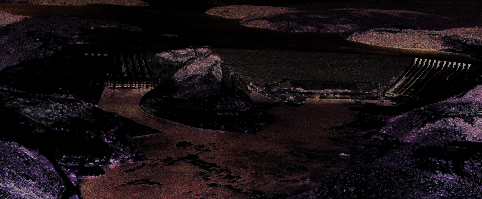
30
31
tion of the SAP in the São Francisco River Basin. Its
ity and quantity of water supplies, and upgrade quality
principal component, Code 0172, is: Revitalization
of life in the region.
and sustainable development program for the São
Francisco River Basin, targeted at ensuring the sustain-
Actions under this program, that have an interface with
ability of anthropogenic activities in the Basin, listing
the SAP, are listed in Table 7, and total R$ 58,386,661
high-priority actions designed to restore, conserve and
(US$ 19.5 million) for 2004, and R$ 563,231,000 (US$
preserve the environment, as well as enhance the qual-
187.7 million) for the 2004-2007 period.
Table 7. PPA 2004-2007 for Minas Gerais
Actions planned under the Revitalization and Sustainable Development
R$
US$ (approximate)
Program of the São Francisco River Basin (0172)
(P261) Technical and economic feasibility studies for implementation of
a waterway in the São Francisco River Basin and its tributaries, in Minas
30,000,000
10,000,000
Gerais.
(P338) Environmental education.
4,000,000
1,333,333
(P345) Generation, dissemination and transfer of knowledge and technology.
21,247,000
7,082,333
(P449) Implementation of engineering works.
210,000,000
70,000,000
(P577) Management of biodiversity and expansion of forestry in the São
7,000,000
2,333,333
Francisco River Basin.
(P632) Land management.
10,250,000
3,416,667
(P659) Water quality management and monitoring of water pollution.
63,360,000
21,120,000
(P661) Water resource management.
30,030,000
10,010,000
(P718) Integrated sub-basin management.
40,000,000
13,333,333
(P904) Control of sales and use of pesticides.
3,900,000
1,300,000
(P910) Building of biodigesters.
3,000,000
1,000,000
(P932) Treatment of urban effluents.
48,000,000
16,000,000
(P941) Handling solid and liquid wastes produced by farming and livestock.
8,100,000
2,700,000
(P445) Restoration of vegetation cover.
50,000,000
16,666,667
(P664) Support for the establishment of Basin Committees and Basin
28,444,000
9,481,333
Agencies.
(P672) Expansion of the forestry base in the São Francisco River Basin.
4,500,000
1,500,000
(P733) Consulting services for the River Basin Technical Councils.
1,400,000
466,667
Total
563,231,000
187,743,667
Aerial view of the Xingó Dam
32
33
Table 8. PPA 2004-2007 for Alagoas
Planned Actions (Implementing Agency)
R$
US$ (approximate)
Strengthening of the São Francisco River Basin Committee (SEMA-
120,000
40,000
RHN).
Environmental prevention, protection and restoration (SEMARHN/IMA).
90,000
30,000
Environmental education and capacity-building (SEMARHN).
161,000
53.667
Sertão canal (SEINFRA).
312,037,000
104,012,333
Small water-conservation projects in the semi-arid area and Sertão
1,750,000
583,333
drylands (SEMARHN).
Drawing up of soil, water and vegetation management and conservation
1,000
333
plans (SEMARHN).
Training of technical staff for combating desertification (SEMARHN).
26,000
8,667
Installation of sewage collection systems - São Francisco River Basin
163,573,000
54,524,333
(SEINFRA).
Total
477,758,000
159,252,667
· PPA 2004-2007 for Alagoas
(US$ 0.94 million) for 2004 and R$ 9,070,000 (US$ 3.0
The principal programs of the State of Alagoas are listed
million) for the 2004-2007 period.
in Table 8, and amount to R$ 477,758,000 (US$ 159.2
million) for the 2004-2007 period.
· PPA 2004-2007 for Bahia
The principal water resources development programs for
· PPA 2004-2007 for Pernambuco
the State of Bahia are related to expanding the water supply
The principal programs of the State of Pernambuco are
systems and building of water mains to service the semi-
listed in Table 9, and amount to R$ 2,830,000 million
arid region. These projects and actions comprise invest-
Table 9. PPA 2004-2007 for Pernambuco
Planned Actions (Implementing Agency)
R$
US$
Review/update Water-Resource Master Plans for tributary river basins of the São
2,400,000
800,000
Francisco River.
Prepare an integrated water resource usage plan for tributary river basins of the
1,300,000
433,333
São Francisco River (PARH, São Francisco).
Integrated hydro-meteorological network project for tributary river basins of the
900,000
300,000
São Francisco River.
Support for the establishment of the Pontal, Garças, Brígida and Terra Nova
River Basin Committees, restructuring of the Moxotó and Pajeú River Basin
1,970,000
656,667
Committees, and establishing Water Users Associations.
Hydro-geological studies of the Araripe, Jatobá, Cedro, Mirandiba and Tupanaci
2,500,000
833,333
sedimentary basins.
Total
9,070,000
3,023,333
32
33
ments of some $ 73,198,000 (US$ 24.4 million) for 2004
· PPA 2004-2007 for Sergipe
and R$ 213,538,000 (US$ 71.2 million) for the 2004-
Similar to Bahia, the principal water resource programs
2007 period, as shown in Table 10 below.
of the State of Sergipe relate to water supply, and the
Table 10. PPA 2004-2007 for Bahia
Planned Actions (Implementing Agency)
R$
US$ (approximate)
Program 204: `Sanitation is Life': expansion and upgrading of the quality of service;
Project 3919: Expansion of water supplies to the semi-arid region;
114,700,000
38,233,333
Proágua/Activity 1529: Expanding water supply systems in the Northeast.
Idem, Activity 1758: Building water mains.
50,000,000
16,666,667
Idem, Activity 1844: Development of institutional programs.
800,000
266,667
Program 223: `Look to nature';
19,600,000
6,533,333
Project 3505: Water resources management (PGRH).
Program 218: `Fruits of the Earth';
Project 3917: Water Resources Management Infrastructure (PGRH)
1,400,000
466,667
PGRH/Activity 2109: Dam operations in the Northeast.
Program 222: `Reviving our Waters' and `Renaissance of Earth';
Project 3363: Replanting riparian forests;
235,000
78,333
Activity 1655: Technical Assistance for farmers on planting riparian forests.
Idem, Activity 2178: Replanting riparian forests (SFC).
1,321,000
440,333
Idem, Project 3629: Environmental sanitation of river basins;
3,679,000
1,226,333
Activity 2552: Recovery of degraded areas in river basin in the Northeast.
Idem, Activity 2552: Restoring degraded areas in river basins.
3,681,000
1,227,000
Idem, Project 3646: Sustainable, integrated development of lands around the
Sobradinho Lake;
2,860,000
953,333
Activity 1871: Preparation of a study and project for the lands surrounding Sobradinho Lake.
Idem, Activity 2093: Environmental monitoring around the Sobradinho Lake.
4,840,000
1,613,333
Idem, Activity 2472: Community development for environmental and health education.
4,230,000
1,410,000
Idem, Project 3743: Revitalization of the São Francisco River Basin;
286,000
95,333
Activity 1829: Development of educational activities through community mobilization.
Idem, Activity 2171: Drawing up an agreement on the restoration of riparian forests (SFC).
286,000
95,333
Idem, Activity 2178: Restoration of riparian forests (SFC).
2,010,000
670,000
Idem, Project 3896: Combating desertification;
Activity 1873: Drawing up a plan for preventing and combating desertification in the
660,000
220,000
Northeast region (SPA).
Idem, Activity 3896: Preparation of a plan for preventing and combating desertifica-
440,000
146,667
tion in the Lower-middle São Francisco River region (SPA).
Program 226: Environmental awareness;
Project 3654: Environmental Education;
1,830,000
610,000
Activity 2171: Agreement on capacity-building for extension agents in the São Francis-
co River Basin.
Program 234: Public administration models; Project 3656: Institutional strengthening
for entities within the State Environment and Water Resources System;
680,000
226,667
Activity 1565: Support for the Water Resources and Environment Councils with a view
to strengthening these bodies.
Total
213,538,000
71,179,333
34
35
building of water mains and irrigation projects in the
219,668,000 million (US$ 73.2 million) for the 2004-
semi-arid region. Together, these programs amount to R$
2007 period, as shown in Table 11.
Table 11. PPA 2004-2007 for Sergipe
Planned Actions
R$
US$ (approximate)
Integrated Solid Waste Systems for the Districts in the Costa dos Coqueirais Complex
11,928,000
3,976,000
Urbanization of the Salomé Lagoon, Cedro de São João
1,325,000
441,667
Jacaré-Curituba Project
22,000,000
7,333,333
Xingó Canal
90,000,000
30,000,000
Supplementary studies of water availability in river basins in Sergipe
6,000*
2,000
Support for organization of bulk water users in the river basins of the State
6,000*
2,000
Revitalization of river basins
100,000*
33,333
Support for River Basin Committees
6,000*
2,000
`Our Rivers Program': São Francisco
200,000
66,667
Preparation of a Master Plan for the São Francisco River Basin, Sergipe Section
40,000
13,333
Supplementary social and economic feasibility studies for upgrading, automating and exten-
50,000
16,667
ding the integrated water mains systems at Alto Sertão and Sertaneja
Preparation of the State water infrastructure rehabilitation plan
6,000*
2,000
State water resource management capacity-building plan
50,000*
16,667
Implementation of the State water resources information system
50,000*
16,667
Decentralized action in support of water resources management by citizens
50,000*
16,667
Implementation of the water-quality and hydro-meteorological network in Sergipe
84,000*
28,000
Updating and supplementing the Sergipe State Cartographic Base at a scale of 1:100,000
84,000*
28,000
Preparation of the Digital Atlas on Water Resources
9,000*
3,000
Upgrading, automating and expanding integrated water mains systems at Alto Sertão and Sertaneja
75,000,000
25,000,000
Preparation of Ecological and Economic Zoning for Sergipe
30,000*
10,000
Recovery of degraded areas and riparian forests in the Jacaré and Cadoz River sub-basins
632,000
210,667
Expanding integrated water mains systems at Alto Sertão and Sertaneja
8,637,000
2,879,000
Replacing the water mains system of the São Francisco River
7,621,000
2,540,333
Purchase of equipment for operating system automation
656,000*
218,667
Boring and establishing wells
123,000*
41,000
Establishing irrigation perimeters
500,000*
166,667
Maintaining irrigation perimeters
475,000*
158,333
Total
219,668,000
73,222,667
(*) sums estimated for investment in the São Francisco River Basin.
34
35
· PPA 2004-2007 for the Federal District
· Dependence upon sector-specific economic
The principal PPA programs for the Federal District are
performance;
listed in Table 12. These programs amount to some R$ 264,
· Poorly defined institutional and legal frame-
074,000 mil ion (US$ 88 mil ion) for the 2004-2007 period.
works in the sanitation sector;
· Awakening environmental awareness;
· PPA 2004-2007 for Goiás
· Insufficient resources;
There are no significant investments planned in Goiás for
· Dispersion of actions;
the areas within the São Francisco River Basin.
· Cultural resistance to water-resource policy
instruments.
All planning must be accompanied by caveats since fore-
casting the future is fraught with hazards. In the face of
The Sustainability of the Project, how-
such uncertainties, planners must be bold in their reliance
ever, is to be ensured by means of:
upon projections, while having the prudence to monitor
· Public Involvement;
the results over time so as to enable adjustments to be
· A sound legal and institutional framework;
made as the course of events may justify over time.
· The Basin Committee.
There follows a list of the major threats to the
To this end, specific actions are envisioned to achieve this
sustainability of the SAP:
sustainability:
· Technical aspects, such as the information systems,
· Inter-institutional competition;
licensing criteria, billing systems and the classifica-
Table 12. PPA 2004-2007 for the Federal District
Planned Actions
R$ US$ (approximate)
Water Resource Management
265,000
88,333
City 21 Program
50,000
16,667
Establishment of the District Water Agency
375,000
125,000
Restoration of degraded areas
246,750,000
82,250,000
District Environmental Protection Plan
8,625,000
2,875,000
Federal District Ecotourism Project
30,000
10,000
Procurement of equipment for strengthening water resource and environmental licensing,
100,000
33,333
oversight and inspections
Strengthening of the Water Resource Management Policy
6,625,000
2,208,333
Strengthening and restructuring of the water resource and environmental licensing, oversight
100,000
33,333
and inspection systems
Implementation of the water source protection program
150,000
50,000
Implementation of the River Basin Restoration and Stewardship Program
50,000
16,667
Reforestation with native plants
7,000
2,333
Modernization of the hydro-meteorological network in the Federal District
255,000
85,000
Mapping of ecosystems
7,000
2,333
Environmental Information System
525,000
175,000
Maintenance of the Water Resources and Environmental Information System, and the geo-
60,000
20,000
referenced database
Ecological and economic zoning
100,000
33,333
Total
264,074,000
88,024,667

36
tion, planning and priority ratings for actions and
opportunities through the development of ecotourism.
investments.
· Social aspects, such as upgrading the living standards
· Environmental aspects, such as the adoption of
of urban and rural communities, and ensuring improve-
rational water use; the recovery of degraded areas; the
ments in health and income; enhancing the ability of
development of sustainable models for utilizing the
remote communities to survive droughts; assuring the
natural resources of the Basin; establishment of legally
population's safety in relation to floods; and promoting
protected areas; pollution controls; consolidation of
grassroots participation in the decisions on investment
public awareness of environmental issues relating to
priorities in the Basin.
water resources; and the rational use of estuarine water
· Financial aspects, such as the multiplying effect
resources with a view to improving living conditions of
expected to be achieved through the development of
the population.
production models tailored to the Basin, increasing pro-
· Economic aspects, such as proposed actions to
duction of goods, services and income.
ensure more efficient water use; implementation of
instruments designed to heighten awareness of the
For monitoring and evaluation, it should be born in mind
economic value of water; adoption of licensing criteria
that, in Brazil, the National Water Agency (ANA) is to be the
that prioritize the most efficient allocations; improved
national executing agency for the SAP and is responsible for
conditions for the subsistence farmers and inclusion of
its technical quality and, alongside other national institutions,
remote populations in the economy by providing them
is responsible for ensuring that its objectives are attained.
with opportunities to market their produce; reduced
At the multilateral level, UNEP, as the GEF implementing
shipping costs through development of waterways,
agency, in cooperation with the OAS, as UNEP's execut-
thereby making products originating in the Basin more
ing agency, is responsible for ensuring the development of
competitive; and creation of new income generation
the Project in line with GEF requirements.
Photo: Codevasf
Aerial View of Irrigation in the São Francisco Valley

Photo: Codevasf
7Selected bibliography Jaíba Project
ANA/GEF/PNUMA/OEA. Projeto de Gerenciamento
ANA/GEF/PNUMA/OEA. Determinação do uso da
Integrado das Atividades Desenvolvidas em Terra na
terra na bacia do São Francisco Baixo; Submédio
Bacia do São Francisco Programa de Ações Estra-
e Alto, Codevasf. Brasília-DF. January 2002.
tégicas para o Gerenciamento Integrado da Bacia do
ANA/GEF/PNUMA/OEA. Parceria para a melhoria da
Rio São Francisco e da sua Zona Costeira: Relatório
qualidade das águas do ribeirão São Pedro do Oeste-MG,
Final. Brasília-DF, March 2004.
CBRP. São Sebastião do Oeste-MG, November 2002.
ANA/GEF/PNUMA/OEA. Estudo hidrodinâmico-
ANA/GEF/PNUMA/OEA. Parceria comunidadego-
sedimentológico do Baixo São Francisco, estuário e
verno e participação popular como instrumento de
zona costeira adjacente-AL/SE, UFAL. Maceió-AL,
recuperação de matas ciliares e conservação ambien-
March 2003.
tal, ASF. Luz-MG, November 2002.
ANA/GEF/PNUMA/OEA. Determinação da carga
ANA/GEF/PNUMA/OEA. Análise multitemporal da
de nutrientes do São Francisco na região da foz e o
dinâmica de alteração da conformação do leito do rio
impacto das cheias artificiais no seu controle, UFAL.
São Francisco-Trecho Médio-BA, Codevasf. Brasília-
Maceió-AL, April 2003.
DF, November 2002.
ANA/GEF/PNUMA/OEA. Avaliação da contribuição
ANA/GEF/PNUMA/OEA. Estudo do processo erosivo
da navegação no rio São Francisco ao incremento da
das margens do Baixo São Francisco e seus efeitos na
competitividade da agricultura na Bacia, DNIT. Brasí-
dinâmica de sedimentação do Rio, UFS. Aracaju-SE,
lia-DF, fevereiro 2003.
April 2003.
ANA/GEF/PNUMA/OEA. Avaliação das interferências
ANA/GEF/PNUMA/OEA. Estudo de viabilidade de
ambientais da mineração nos recursos hídricos da ba-
implementação de agência de bacia na sub-bacia do
cia do Alto Rio das Velhas-MG, IGAM. Belo Horizon-
rio Maranhão-MG, IGAM. Belo Horizonte-MG,
te-MG, November 2001.
fevereiro 2003.
ANA/GEF/PNUMA/OEA. Recomposição da ictiofau-
ANA/GEF/PNUMA/OEA. Uso conjunto das águas
na reofílica do Baixo São Francisco, Canindé do São
superficiais e subterrâneas da sub-bacia do rio das
Francisco-AL. Instituto Xingó, April 2003.
Fêmeas-BA SRH/BA. Salvador-BA, January 2003.
ANA/GEF/PNUMA/OEA. Desenvolvimento de um
ANA/GEF/PNUMA/OEA. Gestão participativa de re-
sistema de monitoramento de qualidade de água no
cursos hídricos em Pernambuco: experiência do açude
Submédio do rio São Francisco: Índice de Sustentabili-
Jazigo e do sistema de perenização do riacho Pontal,
dade Ambiental do uso da Água-ISA Água, Embrapa.
SRH/PE. Recife-PE, December 2002.
Jaguariúna-SP, December 2002.
ANA/GEF/PNUMA/OEA. Plano de gerenciamento
ANA/GEF/PNUMA/OEA. Impacto da agricultura nos
integrado da bacia do rio Salitre, UFBA. Salvador-BA,
recursos hídricos subterrâneos no rio Verde/Jacaré-
January 2003.
BA, UFBA. Salvador-BA. March 2003.
ANA/GEF/PNUMA/OEA. O processo de criação do
38
Comitê da Bacia Hidrográfica do São Francisco: relato
bacia do rio São Francisco RISF, ANA. Brasília-DF,
e avaliação de aspectos metodológicos, normativos e
March 2003
contextuais, ANA. Brasília-DF, March 2003.
ANA/GEF/PNUMA/OEA. Proposta para implementa-
ANA/GEF/PNUMA/OEA. Elaboração da página eletrô-
ção da cobrança pelo uso da água na bacia do rio São
nica para o Comitê da Bacia Hidrográfica do Rio São
Francisco, ANA. Brasília-DF, 2003.
Francisco, ANA. Brasília-DF, March 2003.
ANA/GEF/PNUMA/OEA. Desenvolvimento e implan-
ANA/GEF/PNUMA/OEA. VI Simpósio Regional do
tação do sistema de informações gerenciais do Projeto
Nordeste de Recursos Hídricos, ABRH. Maceió-AL,
GEF, ANA. Brasília- DF, May 2003.
April 2003.
ANA/GEF/PNUMA/OEA. Proposta para implemen-
ANA/GEF/PNUMA/OEA. Cartilha O rio São Fran-
tação da cobrança pelo uso da água na bacia do São
cisco, Codevasf. Brasília-DF, 2002.
Francisco. Brasília-DF, August 2003.
ANA/GEF/PNUMA/OEA. Proposta para implementa-
UNEP/OAS. Project Document, Integrated Manage-
ção de cobrança pelo uso da água na bacia do rio São
ment of Land-based Activities in the São Francisco
Francisco. Brasília-DF, December de 2003.
Basin, GF/1100-99-14. Washington, DC, Septem-
ANA/GEF/PNUMA/OEA. Avaliação de instrumentos
ber 21, 1999.
econômicos para o gerenciamento sustentável dos
ANA. Evolução da organização e implementação da ges-
recursos hídricos na sub-bacia do Verde Grande-MG/
tão de bacias no Brasil. Brasília-DF, October de 2002.
BA, ANA/FAHMA. Brasília-DF, December 2002.
DUDA, A.M. Adressing Global Enviroment Issues
ANA/GEF/PNUMA/OEA. Proposta para suplementa-
Through a Comprehensive Approach to Water Re-
ção da cobrança pelo uso da água na bacia do rio São
sources Management Perspectives from the São
Francisco ANA. Brasília-DF, May 2003.
Francisco and Plata Basin. GEF, Washington, DC, 1997.
ANA/GEF/PNUMA/OEA. Quantificação e análise da
KELMAN, J. Gerenciamento de recursos hídricos: outor-
eficiência do uso da água pelo setor agrícola na bacia
ga e cobrança. Rio de January: UFRJ/COPPE, 1997.
do rio São Francisco, UFV. Viçosa-MG, January 2003.
CODEVASF/OEA. Plano Diretor para o desenvolvimen-
ANA/GEF/PNUMA/OEA. Diagnóstico analítico da ba-
to do vale do São Francisco PLANVASF. Relatório
cia do rio São Francisco e da sua zona costeira DAB.
Final. Brasília-DF, 1989.
Versão preliminar do Relatório Final. Brasília-DF,
SENADO FEDERAL. Comissão de acompanhamento do
June de 2003.
Projeto de Revitalização do Rio São Francisco, Relató-
ANA/GEF/PNUMA/OEA. Determinação de políticas
rio Final. Brasília-DF, 2002.
operacionais para os principais reservatórios da bacia
US BUREAU OF RECLAMATION. Reconhecimento dos
do rio São Francisco e de sua zona costeira, ANA. São
recursos hídricos e de solos da bacia do rio São Fran-
Paulo-SP, November 2002.
cisco, SUVALE. Rio de January-RJ, 1970, 5v.
ANA/GEF/PNUMA/OEA. Eventos de participação
UNESCO. Regulated River Basins: A Review of
pública de subsídio à preparação do Programa de
Hydrological Aspects for Operational Management
Ações Estratégicas para o Gerenciamento Integrado
by the Working Group on IHP II Project A.22
da Bacia do Rio São Francisco e da sua Zona Costei-
Edited by T. Kitson. Case Study, São Francisco
ra PAE. Brasília-DF, October de 2003.
River Basin by Nelson da Franca Ribeiro dos Anjos,
ANA/GEF/PNUMA/OEA. Proposta de uma rede de
Paris, 1984.
monitoramento piezométrico na sub-bacia do rio Verde
UNESCO/CPRM/DNPM. Mapa hidrogeológico de
Grande, ANA. Belo Horizonte-MG, September 2002.
América del Sur. Texto explicativo. Coordenador-geral
ANA/GEF/PNUMA/OEA. Rede de Informações da
Nelson da Franca Ribeiro dos Anjos. Brasília-DF, 1989.

Photo: Alain Dhomé
Principal players
in preparation
8 of the SAP São Francisco River Pirapora-MG
Below is a listing of institutions that participated in public events during the SAP preparation process.
8.1. Organismos governamentais e não governamentais envolvidos no Projeto
8.1.1. Federal Government Bodies
ANA
National Water Agency
ME
Ministry of Education
ANEEL
National Electric Energy Agency
MI
Ministry of National Integration
CEEIVASF
Executive Committee for Integrated Studies of the São MMA
Ministry of Environment
Francisco Valley
CEFET
Federal Center for Technological Education
MME
Ministry of Mines and Energy
CHESF
Hydroelectric Company of the São Francisco
MP
Office of the Public Prosecutor
CNRH
National Water Resources Council
MPOG
Ministry of Planning, Budget and Management
CODEVASF
São Francisco and Parnaíba Valley Development
MT
Ministry of Transport
Company
CPATSA
Tropical Semi-arid Farming and Livestock Research Center
ONS
National Operator of the Electric System
CPRM
Mineral Resources Research Company
PROÁGUA
Program for Sustainable Development of Brazil's
Semi-arid areas
DNIT
National Department of Transport Infrastructure
SRH-MMA
Secretariat of Water Resources of the Ministry of
Environment
DNOCS
National Department of Works for Combating Drought SUDENE
Superintendency for Development of the Northeast
EB
Brazilian Army
UFAL
Federal University of Alagoas
EMBRAPA
Brazilian Agricultural Research Corporation
UFBA
Federal University of Bahia
FNMA
National Environment Fund
UFF
Fluminense Federal University
FNS
National Health Foundation
UFG
Federal University of Goiás
FUNAI
National Indian Foundation
UFMG
Federal University of Minas Gerais
FURNAS
Furnas Centrais Elétricas S.A.
UFOP
Federal University of Ouro Preto
GERCO
Coastal Management
UFPB
Federal University of Paraíba
IBAMA
Brazilian Institute of Environment and Renewable
UFPE
Federal University of Pernambuco
Natural Resources
INCRA
National Institute of Colonization and Land Reform
UFRN
Federal University of Rio Grande do Norte
INMET
National Meteorology Institute
UFS
Federal University of Sergipe
JF
Federal Courts
UFV
Federal University of Viçosa
MA
Ministry of the Air Force
UnB
University of Brasília
MAPA
Ministry of Agriculture, Livestock and Supply
UNICAMP
University of Campinas
8.1.2. State Bodies
Alagoas
Ass. Leg. Alagoas
Legislature of Alagoas
NMRH
Center for Meteorology and Water Resources
CASAL
Water Supply and Sanitation Company of Alagoas
PM
Military Police of Alagoas
CEAL
Energy Company of Alagoas
SAAE
Autonomous Water and Sewage Services of Alagoas
DHM
Hydrometeorology Board of Alagoas
SAI
Secretariat of Agriculture and Irrigation of Alagoas
EPEAL
Farming and Livestock Research Enterprise of Alagoas
SEMARHN
Executive Secretariat of Environment, Water and
Natural Resources
IMA
Environment Institute of Alagoas
SPDA
Secretariat of Planning and Development of Alagoas
Continue...
40
41
Continued...
Bahia
ADAB
State Agricultural Defense Agency
SAAE
Autonomous Water and Sewage Services of Bahia
Bahia Legislature
SEAGRI
Secretariat of Agriculture, Irrigation and Land
Reform of Bahia
CERB
Rural Engineering Company of Bahia
SEFAZ
State Secretariat of Finance of Bahia
CODEBA
Bahia State Docks Company
SEIBA
Superintendency of Economic and Social Studies of Bahia
COELBA
Electricity Company of Bahia
SEINFRA
State Secretariat of Infrastructure of Bahia
CRA
Environmental Resources Center of Bahia
SEMARH
Secretariat of Environment and Water Resources of Bahia
CRB
Regional Council of Biology
SEPLANTEC
Secretariat of Planning Science and Technology of Bahia
DERBA
Highway Department of Bahia
SESAB
Secretariat of Health of Bahia
DIB
Irrigation District of Bahia
SFEBA
State Secretariat of Finance of Bahia
EBDA
Bahia Agricultural Development Company
SIRBA
Superintendency of Irrigation of Bahia
EMBASA
Bahia Water and Sanitation Company
SRH
Secretariat of Water Resources of Bahia
FAMESF
Faculty of Agronomy of the Middle São Francisco
UEB
State University of Bahia
ICA
Cocoa Institute of Bahia
UEFS
State University of Feira de Santana
PA
Environmental Police of Bahia
UNEB
University of the State of Bahia
PM
Military Police of Bahia
Distrito Federal
CAESB
Brasília Sanitation Company
SEMARH
Secretariat of Environment and Water Resources of
the Federal District
DLFMA
Environmental Licensing Control and Monitoring Board
of the Federal District
Goiás
SEMARH
Secretariat of Environment and Water Resources of Goiás SRH
Secretariat of Water Resources of Goiás
Minas Gerais
CEMIG
Minas Gerais Energy Company
IGAM
Minas Gerais Water Management Institute
CEPEMG
Center for Education Studies and Research of Minas Gerais INDI
Minas Gerais Industrial Development Institute
CERH
State Water Resources Committee of Minas Gerais
INESP
Minas Gerais Higher Learning and Research Institute
CETEC
Technological Center Foundation of Minas Gerais
PMMA
Military Environmental Police
COPAM
State Council of Environmental Policy of Minas Gerais
PM
Military Police of Minas Gerais
COPASA
Minas Gerais Sanitation Company
PPNL
Office of the Public Prosecutor of Nova Lima
CREDINOR
Rural Credit Cooperative of the North of Minas Gerais
PPOP
Office of the Public Prosecutor of Ouro Preto
CRH
Minas Gerais State Water Resources Council
PRODEMGE
State Data Processing of Minis Gerais
EMATER
Rural Technical Assistance Company of Minas Gerais
RURALMINAS
Minas Gerais Rural Foundation for Colonization
Agrarian Development
EPAMIG
Minas Gerais Agricultural Research Company
SAAE
Autonomous Water and Sewage Services
of Minas Gerais
FASF
Faculty of Philosophy, Sciences and Letters of the Up-
SEEF
State Superintendency of Finance of Minas Gerais
per São Francisco
FEAM
State Environment Foundation of Minas Gerais
SEMAD
Secretariat of Environment and Sustainable Devel-
opment of Minas Gerais
FEP
Polytechnic School Foundation
SETASCAD
Secretariat of Labor, Association for Children and
Adolescents
FRANAVE
São Francisco Navigation Company
SUDECOOP
Superintendence of Development and Cooperation
IEF-MG
State Forests Institute of Minas Gerais
UEMG
State University of Minas Gerais
Pernambuco
COMPESA
Pernambuco Sanitation Company
ITEP
Technological Institute of Pernambuco
COMTRAP
Airport Operations Company
SECTMA
Secretariat of Sciences, Technology and Environ-
ment of Pernambuco
CPRH
Pernambuco Water Resources Company
SRH-PE
Secretariat of Water Resources of Pernambuco
EBAPE
Supply and Development Company of Pernambuco
São Paulo
USP
University of São Paulo
Continued...
40
41
Continued...
Sergipe
ADEMA
State Environment Administration of Sergipe
MEB
Grassroots Education Movement of Sergipe
CEDA
Environmental Law Committee of Aracaju
SEDU
Secretariat of Education of Sergipe
CEFET
Federal Center for Technological Education of Sergipe
SEES
State Secretariat of Education of Sergipe
CREA
Regional Council of Engineering, Architecture and
SEMA
Special Secretariat of Environment of Sergipe
Agronomy of Sergipe
DESO
Sanitation Company of Sergipe
SEPLANTEC
Secretariat of Planning, Science and
Technology of Sergipe
ENERGIPE
Energy Company of Sergipe
SRH-SE
Superintendence of Water Resources of Sergipe
FAPESE
Support for Research and Extension Foundation of Sergipe TAMAR
Tamar Project
FS
Faculty of Sergipe
UNIT
Tiradentes University
8.1.3 Municipal Bodies
Alagoas
PM-AL
Military Police of Alagoas
Municipal Administration of Penedo
Municipal Administration of Belo Monte
Municipal Administration of Piaçabuçu
Municipal Administration of Feliz Deserto
Municipal Administration of Piranhas
Municipal Administration of Pão de Açúcar
SAAEPA
Autonomuos Water and Sewage Services of
Pão de Açúcar
Bahia
Municipal Chamber of Codijipe
Municipal Administration of Luiz Eduardo Magalhães
DIBS
Distribuition of Irrigation Barreiras do Sul
Municipal Administration of Miguel Calmon
EAC
Agricultural School of Correntina
Municipal Administration of Mirangaba
EAM
Agricultural School of Macaúbas
Municipal Administration of Morro do Chapéu
EFAJ
Family Farming School of Jaboticaba
Municipal Administration of Niansivão
Municipal Administration of Ariranha Azul
Municipal Administration of Ourolândia
Municipal Administration of Campo Formoso
Municipal Administration of Paulo Afonso
Municipal Administration of Carmo do Cajurú
Municipal Administration of Piratinga
Municipal Administration of Correntina
Municipal Administration of Rio Pires
Municipal Administration of Cristópolis
Municipal Administration of Santa Brígida
Municipal Administration of Curaçá
Municipal Administration of São Desidério
Municipal Administration of Ibotirama
Municipal Administration of Sento Sé
Municipal Administration of Itacarambi
Municipal Administration of Umburanas
Municipal Administration of Jacobina
Municipal Administration of Várzea Nova
Municipal Administration of Jaguarari
SAAEJ
Autonomous Water and Sewage Services of Juazeiro
Municipal Administration of Juazeiro
Minas Gerais
ADLUZ
Development Agency of Luz
Municipal Administration of Luz
CCRGT
Rural Community Councils of Guarita and Teixeira
Municipal Administration of Montes Claros
CDAR
Regional Action and Development Company
Municipal Administration of Ouro Branco
CEPALUZ
Agricultural Production Cooperative of Luz
Municipal Administration of Pará de Minas
CIBAPAR
Inter-municipal Consortium of the Paraopeba River Basin
Municipal Administration of Pirapora
CMDR
Municipal Rural Development Council of
Municipal Administration of Pitangui
São Sebastião do Oeste
CMI
Municipal Chamber of Itabirito
Municipal Administration of São Gonçalo do Abaeté
CMNL
Municipal Chamber of Nova Lima
Municipal Administration of São João Lagoa
CMR
Municipal Chamber of Raposos
Municipal Administration of São Roque of Minas
CMRA
Municipal Chamber of Rio Acima
Municipal Administration of São S. do Oeste
CODEMA
Municipal Council for Environmental
Municipal Administration of Serra Talhada
Defense and Development
COPASA
Luz Office
Municipal Administration of Tiradentes
DIJ
Jaiba Irrigation District
Municipal Administration of Três Marias
DIPCP
Contiguiba/Pindoba Irrigation District
RET
Tripuí Ecological Reserve
FMMA
Municipal Environment Foundation
SAAEB
Autonomous Water and Sewage Services of Bocaiúva
Continued...
42
43
Continued...
FUNEDI
Education Foundation of Divinópolis
SAAEIT
Autonomous Water and Sewage Services of Itabirito
FUTAG
Municipal Foundation for Cultural Action and Training
SAAEP
Autonomous Water and Sewage Services of Pirapora
PFNL
Forestry Police of Nova Lima
SMDEI
Municipal Secretariat of Economic Development
of Itabirito
Municipal Administration of Bom Despacho
SMMA
Municipal Secretariat of Environment of Ouro Preto
Municipal Administration of Capitão Enéas
SMMAI
Municipal Secretariat of Environment of Itabirito
Municipal Administration of Congonhas
SMMALUZ
Municipal Secretariat of Environment of Luz
Municipal Administration of Conselheiro Lafaiete
SMMANL
Municipal Secretariat of Environment of Nova Lima
Municipal Administration of Divinópolis
SMMAR
Municipal Secretariat of Environment of Raposos
Municipal Administration of Itaúna
SMMARA
Municipal Secretariat of Environment of Rio Acima
Municipal Administration of Janaúba
SODAEOP
Secretariat of Works/Department of Water and
Sewage of Ouro Preto
Municipal Administration of Lagoa da Prata
SODAERA
Secretariat of Works/Department of Water and
Sewage of Rio Acima
Municipal Administration of Lagoa Grande
Pernambuco
AEDA
Education Bureau do Araripe
Municipal Administration of Poço Redondo
CPP
Peoples Council of Petrolina
Municipal Administration of Porto da Folha
Municipal Administration of Orocó
Municipal Administration of Salgueiro
Municipal Administration of Petrolina
Municipal Administration of Santa Maria da Boa Vista
Sergipe
EMURB
Municipal Urbanization Company
Municipal Administration of Neópolis
Municipal Administration of Aracaju
Municipal Administration of Poço Redondo
Municipal Administration of Brejo Grande
Municipal Administration of Porto da Folha
Municipal Administration of Capela
Municipal Administration of São Francisco
Municipal Administration of Ilha das Flores
SAAECAP
Autonomous Water and Sewage Services of Capela
8.1.4. Non-governmental bodies and professional associations
International
TNC
The Nature Conservancy
WFT
World Fisheries Trust
National
ABAS
Brazilian Groundwater Association
FUNCATE
Science Foundation, Applications and
Special Technologies
ABID
Brazilian Irrigation and Drainage Association
FUNDIFRAN
Foundation for the Integrated Development
of the São Francisco
ABRH
Brazilian Water Resources Association
Alagoas
AC
Community Association of Capela
CPAL
Fishing Colonies of Alagoas
ACPM
Association of Concessionaires of the Marituba Project CPRP
Farmers Cooperative of Penedo
ACSSL
Community Association of Sítio Salgado do Lino
FPAL
Federation of Fishermen of the State of Alagoas
ÁGUA E VIDA Association
FTV
Fundação Teotônio Vilela
AMBSB
Neighborhood Association of Senhor do Bonfim
FUNDEPES
Extension Research and Development Foundation
AMPM
Neighborhood Association of Ponta Morfina
Instituto Acauã
AMVB
Neighborhood Association of Vale do Boaca
Marina Velho Chico
APAL
Fisherman's Associations of Alagoas
OLHA O CHICO Association
ASCAP
Resources Training Association
STRPA
Union of Rural Workers of Pão de Açúcar
ASCOC
Farmers Association
Z19 Fishing Colony
ATRM
Association of Rural Workers of Marieziro
Z2 Fishing Colony
CEAPA
State Center of Associations of Settlers and Small
Z27 Fishing Colony
Farmers of Alagoas
COPPABACS
Small Farmers Cooperative Community Seed Banks
Z41 Fishing Colony
CP
Casa de Penedo
Bahia
ABCR
Street Sprinters Association of Barreiras
Association of Canaã
ABIR
Boatmen's Association Ilha do Rodeador
Association of Iguarape
ACA
Agricultural Commercial Association of Xique-Xique
Association of Mexedeira
Continued...
42
43
Continued...
ACAFLC
Community Association of Farmers and Families of
Association of Nonacolonha
Lagoa Clara
ACRF
Community Association for Land Reform of Serra Azul
Association of Serra Dourada
AIA
Industry and Agronomy Association of Xique-Xique
Association of Utinga
AIBA
Irrigated Farming Association of Western Bahia
AUSO
United Association of Santo Onofre
AJEB
Young Entrepreneurs Association of Barreiras
CAB
Center for Associations of Barreiras
AMINA
Friends of Nature Association of Barreiras and the sur-
CDL
Shop Managers Chamber
rounding Region
AMPPRVI
Association of Mini and Small Farmers of Vale do Itaguari CPBA
Fishing Colonies of Bahia
AMVBE
Neighborhood Association of Vila Boa Esperança
FUNDIFRAN
Integrated Development Foundation of the São
Francisco
APLB
Retired Teachers Association of Bahia
FONASC
National Forum of Civil Society Committees of Bahia
APMSF
Fishermen's Association of Muquem do São Francisco
PT Worker's Party Bahia
APRSS
Farmer's Association of Sento Sé
SEMMARH
Municipal Secretariat of Environment and
Water Resources
APSB
Fishermen's Association of Saco de Boi
SPR
Union of Farmers
AQMBV
Quilomba Association of Mangal Barro Vermelho
STC
Union of Workers of Coríbe
ASPAVARG
Professional Fishermen's Association of Friends of the
STR
Union of Rural Workers
Rio Grande Valley
Minas Gerais
AAASF
Environmental Association of the Upper São Francisco FAEMG
State Federation of Agriculture of Minas Gerais
ABANORTE
Central Fruit Farmers Association of the North of
FETAEMG
Federation of Agricultural Workers of Minas Gerais
Minas Gerais
ABESA-MG
Brazilian Association of Sanitation and Environmental
FIEMG
Federation of Industries of the State of Minas Gerais
Engineering of Minas Gerais
ABID
Brazilian Irrigation and Drainage Association
FJP
Fundação João Pinheiro
ABMG
Biologists Association of Minas Gerais
FOBES
Ouro Preto Social Welfare Foundation
ACAL
Community Association of Water Limpa
FPA
Federation of Traditional Fishermen
ACBOV
Community Association of Bairro Ouro Velho
FPEMG
State Federation of Fishermen of Minas Gerais
ACJC
Community Association of Jardim Canadá
FPP
Federation of Professional Fishermen of Minas Gerais
ACSB
Community Association of São Bartolomeu
Foundação Biodiversitas
ACT
Tangará Condominium Association
Foundação Gorceix
ADESA
Environmental Development Association
GARRA
Environmental Movement
AEAP
Agronomists Association of Paracatu
IMAN
Instituto Manoel Novaes
AMAMC
Association of Friends of the Environment of
Instituto Guaicuy SOS Rio das Velhas
Morro do Chapéu
AMDA
Minas Gerais Association for Defense of the Environment IRPAA
Regional Institute for Appropriate Small Farming
Techniques
AMMVI
Municipal Association of the Vale do Itaparica
MANUELZÃO Projeto
Micro Region
AMOVILE
Neighborhood Association of Ville de Montagne
MCA
Movement for Citizenship and Waters
AMPA
Environmental Preservation Association of Mingú
MEL
Free Ecological Movement
ASF
São Francisco Association
MEST
Seiva da Terra Ecological Movement
ASSEMAE
National Association of Municipal Sanitation Services
MSA
Alternative Society Movement
ATPPRBG
Small Farmers and Rural Workers Association
MVP
Paracatu Green Movement
of Buriti Grande
BE
Ecological Brigade
OAB-MG
Brazilian Bar Association Ouro Branco-MG
CBHPA
Pará River Basin Committee
PROMUTUCA
Association for Environmental Preservation of
Vale do Mutuca
CBHRS
Salitre River Basin Committee
SIGMNM
Union of Gypsum and Non-Metallic Materials
Industries
CBHVG
Verde Grande River Basin Committee
SINDIEXTRA
Union Extractive Industries
CCA
Canto das Waters Condominium
SINDRP
Rural Union of Pirapora
CODEMA
Municipal Council for Environmental
SPRLUZ
Sindicato Patronal Rural de Luz
Conservation and Defense
Continued...
44
45
Continued...
COMPCANA
Cana Protection Committee
UAI
Environmental Union of Itabirito
CPMG
Fishing Colonies of Minas Gerais
UAVS
United Associations of Irrigation Users of
Vale do Salitre
CPTM
Fishing Colony of Três Marias
Pernambuco
ABRH-PE
Brazilian Water Resources Association of Pernambuco
DSCAS
Diaconia Civil Society and Social Action
ACPRJ
Commercial Farmers Association of Jiló
FPP
Federation of Fishermen of Pernambuco
ADMA
Association for Defense of the Environment
PCH
Association of Representatives of Small
Hydroelectric Plants
ADSQ
Development Association of Santa Quitéria
PV
Green Party Petrolina
WATERVALE
Environmental Guardians Association of the
STRJ
Union of Rural Workers of Juazeiro
São Francisco Valley
ARFB
Barra Rural Finance Association
UAMP
United Municipal Associations of Pernambuco
CBG
Garça River Basin Committee
Sergipe
AGROECO
Agro-ecological
Xingó
Institute Scientific and Technological Development
Institute of Xingo
APS
Fishermen's Association of Saúde
LCI
Lions Club International
Comunidade Saramem
MOPEC
Popular Ecological Movement
CPMAB
Fishing Colony of the Municipality of Areia Branca
MPV
Movimento Pensar Verde
FDRSF
Forum for Defense of the São Francisco
OAB-SE
Bar Association Brazil Sergipe
FJN
Foundação Joaquim Nabuco
SSABSFCT
Socio-Environmental Society of the Lower São
Francisco Canoa da Tolda
8.1.5. Private and State Companies
State Companies
PETROBRAS
Petróleo Brasileiro S.A.
VALE
Companhia Vale do Rio Doce
Bahia
AGENCY 5
Agency 5 Arte and Multimídia
HIDROBASA
Hydrometric Institute of Bahia
AGOL
Agropecuaria Grande Oeste Ltda.
HIDROCON
Hidrogeólogos Consultores
Ibotirama Fishermen's Cooperative
HIDROLOG
Serviços de Perfilagem Ltda.
CURTUME Curtume Moderno S.A.
MAUERBERG
Poços Artesianos Ltda. Tube Wells
DR
Diário da Região
TCF
Turismo Campo Formoso
Federal District
DM
Diário dos Municipios
JFMA
Jornal Folha do Meio Ambiente
GNL
Administração de Negócios Ltda.
TDA
TDA Desenho e Arte
IKHON
Administração e Tecnologia
Minas Gerais
ACA
Água Consultores Associados
FRUTIVALE
Frutivale
AÇOMINAS
Aços Minas Gerais
FTN
Fazenda Terra Nova
AFA
América Frutas e Alimentos S.A.
GA
Golder Associates
AHRSF
Administration da Hidrovia do Rio São Francisco
GAIA
Consultoria Ambiental
ANGLOGOLD
Mineration Morro Velho Ltda.
IMNE
Italmagnésio Nordeste
BB
Balsa Britânica
LEME
Engineering Ltda.
BEMIL Ltda.
Bemil Ltda.
LIASA
Ligas de Alumínio S.A.
CAD
Cooperativa Agropecuária de Divinópolis
MAGNESITA
Magnesita S.A.
CC
Curtume Campelo
MBR
Minerações Brasileiras Reunidas
CI
Chuvatel Irrigação
MORGAN
Cerâmica Morgan
CM
Curtume Moderno
MPMM
Minas Pérola Mármore de Minas Ltda.
CMM
Companhia Mineira of Metais
MRV
Mineração Rio Verde
CNC
Casa Nobre Consultoria
PCEAI
Pedras Congonhas Exportação Arte e Indústria Ltda.
CONEMAL
Conemal Ltda.
PEDOGEO
Empresa Pedogeo de Consultores Associados Ltda.
CONSUB
Consub SG
PROPEL
Propel Ltda.
COOPADAP
Cooperativa Agropecuária do Alto Parnaíba
TIMCI
Topázio Imperial Mineração Comércio
e Indústria Ltda.
COOPERC
Cooperativa Agrícola de Irrigação e do Projeto de Ceraíma TRANZDUARTE
Empresa Tranzduarte Ltda.
ECONSULT
Empresa Consult de Engenharia Ambiental Ltda.
TV CEMIG
TV Cemig
Continued...
44
45
Continued...
ECOPLAN/
Consórcio ECOPLAN/MAGMA/CAB
UL
Usina Luciana
MAGMA/CAB
EHIL
Estância Hidromineral Itabirito Ltda.
VALEÉ S.A.
Valeé S.A.
FAHMA
Planejamento e Engenharia Agrícola Ltda.
VM
Visão Mundial
FORTECO
Forteco S.A.
VOTORANTIM
Grupo Votorantim Metais
Pernambuco
VE
Vale Export
Sergipe
ODEBRECHT
Construtora Odebrecht
8.2. São Francisco River Basin Participative Water Resources Management Board
CBHSF
São Francisco River Basin Committee
8.3. Overseas Institutions
LAVAL
University Canada
Universidad Jaume I Spain
UCAL
University of California -USA
Universidad del País Basco Spain
8.4. International Institutions and Agencies
GEF
Global Environmental Facility
PNUMA UNEP
United Nations Environment Programme
OAS
Organization of American States
IWRN/RIRH
Inter-American Water Resources Network
Project coordination and management
Agência Nacional de Águas ANA National Water Agency. http://www.ana.gov.br
Jerson Kelman. Managing Director of ANA Phone: (55-61) 445.5441, Fax:
Benedito Braga. Director of ANA. Phone: (55-61) 445.5431, Fax: (55-
(55-61) 445.5404. E-mail: kelman@ana.gov.br
61) 445.5415. E-mail: benbraga@ana.gov.br
Paulo Lopes Varella Neto. Superintendent of Programs and Projects. National
Coordinator of the GEF São Francisco and GEF Pantanal/Alto Paraguai
Projects. Phone: (55-61) 445.5221. Fax (55-61) 445-5296. E-mail:
paulovarella@ana.gov.br
GEF Global Environmental Facility. http://www.gefweb.org
Alfred Duda. Senior Advisor. GEF International Waters, 1818 H Street NW,
Andrea Merla. Program Manager. GEF International Waters. 1818 H
Washington D.C., 20433, USA. (1-202) 458-8198/473-1077; (1-202) 522-
Street NW, Washington DC, 20433, USA. (1-202) 458-8198; (1-202)
3240. E-mail: aduda@thegef.org
522-3240. E-mail: amerla@thegef.org
UNEP United Nations Environment Programme. http://www.unep.org/
Isabelle Van Der Beck. Task Manager GEF/UNEP Projects. P.O. Box 30552,
Nairobi, Kenya. Phone: (254-2) 62-4339.4028; Fax.: (254-2) 62-2798.3943.
E-mail: isabelle.vanderbeck@unep.org
OAS Organization of American States. http://www.oas.org
Nelson da Franca Ribeiro dos Anjos. Coordinator for International
Thomas Scott Vaughn Director Unit for Sustainable Development and
Projects in Brazil. Principal Water Resources Specialist UDSMA/OAS.
Environment UDSMA/OAS1889 S street, NW, Washington, D.C. 20006-
Phone: (55-61) 322.7895; (55-61) 224.2861; Fax.: (55-61) 224.6902.
4499, USA
E-mail: nelsonf@codevasf.gov.br
Jorge Rucks.Head of Geographic Area II, Latin America. Phone: (54-11)
Maria Apostolova. Specialist of the Unit for Sustainable Development and
4803.7606; Fax: (54-11) 4801.6092. E-mail: oea@oea.com.ar
Environment.Phone: (5255) 5280-1208. E-mail: mstesanova@prodigy.net.mx
Members of Executive Board of the São Francisco River Basin Committee CBHSF
Cláudio Roberto Oliveira de Vasconcellos Bahia. Phone: (77) 613.2022;
José Carlos Carvalho. President. Phone: (31) 3298.6581; (31) 3298.6351.
(77) 9971.0394. Coordinator of the Consultative Chamber of the Middle
E-mail: presidente@cbhsaofrancisco.org.br
São Francisco Region. E-mail: camaradomedio@cbhsaofrancisco.org.br
José Almir Cirilo Recife, Pernanbuco. Coordinator of the Consulta-
Jorge Khoury Hedaye. Vice-President. Phone: (71) 370.3804; (71) 370.3805. tive Chamber of the Lower-middle São Francisco Region. Phone: (81)
E-mail: vicepresidente@cbhsaofrancisco.org.br
3271.8223 . E-mail: camaradosubmedio@cbhsaofrancisco.org.br
Anivaldo de Miranda Pinto Maceió, Alagoas. Coordinator of the
Luiz Carlos da Silveira Fontes. Executive Secretary. Phone: (79) 212.6406.
Consultative Chamber of the Lower São Francisco Region. Phone: (82)
E-mail: secretario@cbhsaofrancisco.org.br
315.2680. E-mail: camaradobaixo@cbhsaofrancisco.org.br
Aelton Marques de Faria Belo Horizonte, Minas Gerais. Coordinator of
the Consultative Chamber of the Upper São Francisco Region. Phone: (31)
3299.4877 (31) 3275.3061 (31) 9619.8150.
E-mail: camaradoalto@cbhsaofrancisco.org.br


47
Photo: Alain Dhomé
9Annex Petroglyphs Vale do Peruaçu-MG
ACTIVITIES
In preparing the proposal for the Project for Integrated
Various proposals were presented, debated and classified
Management of Land-based Activities in the São Francisco
into four components. The various activities listed in the
River Basin, the Secretariat Water Resources of the Min-
table below were carried out in the 2000-2003 period.
istry of Environment (SRH/MMA), the Organization of
American States (OAS) and the United Nations Environment
Executive Summaries of the Final Reports of the GEF São
Programme (UNEP) conducted broad-based public consul-
Francisco Project Activities are available in Portuguese
tations to identify the principal problems of the Basin and its
and English on the site of the National Water Agency ANA:
coastal zone, and to solicit proposals for project activities.
http://www.ana.gov.br/gefsf/.
P
Hoto: Alain Dhomé
Headwaters of the São Francisco River
47
Table 13. Activities of the Project Components
Component I. Environmental Assessment of the São Francisco River Basin and its Coastal Zone
Upper São Francisco
· Environmental Effects of Mining Activities on the Water Resources of the Upper das Velhas River Basin-MG (Activity 1.2)
· Determination of Land Use in the Upper São Francisco River Basin (Activity 2.1)
Middle São Francisco
· Multi-temporal Analysis of Riverbed Shape Alteration Dynamics in the Middle São Francisco -BA (Activity 2.2C)
· Conjunctive Use of Surface and Ground Waters in the Fêmeas River Basin-BA (Activity 3.2)
Lower-middle São Francisco
· Determination of Land Use in the Lower-middle São Francisco River Basin (Activity 2.1)
· Development of a Water Quality Monitoring System in the Lower-middle São Francisco -BA/PE (Activity 1.4)
· Impact of Agriculture on Groundwater Resources in the Verde/Jacaré River Basins-BA (Activity 1.5)
Lower São Francisco and its Coastal Zone
· Hydrodynamic and Sediment Studies of the Lower São Francisco, its Estuary and Adjacent Coastal Zone-AL/SE (Activity 1.1A)
· Riverbank Erosion Evaluation Studies and the Effects of Riverbank Erosion on Sedimentation Dynamics-AL/SE (Activity 2.4)
· Determination of Estuarine Nutrient and Sediment Loads in the Region of the Mouth of the São Francisco River (Activity 1.1B)
· Restoration of Rheophilic Ichthyofauna of the Lower São Francisco-AL/SE (Activity 1.3)
· Determination of Land Use in the Lower São Francisco (Activity 2.1)
Component II Public and Stakeholder Participation
· Fostering Public Participation in the São Francisco River Basin (Activity 4.1)
· Partnership for Improvement of Water Quality in São Pedro Stream-MG (Activity 2.2A)
· Recovering Our Forests A Pilot Project in the Municipality of Luz-MG (Activity 2.2B)
· Training for the Participatory Management of Water Resources and Environmental Education PE (Activity 3.3A)
Component III Development of the Organizational Framework
· Support for the Creation of the São Francisco River Basin Committee (Activity 3.4) and Support to the Strengthening of the São Francisco
River Basin Integration Committee (Activity 3.5)
· Pilot Study for the Implementation of a Basin Water Agency in the Sub-basin of the Maranhão River -MG (Activity 3.1)
· Integrated Management Plan for the Salitre River Basin -BA (Activity 3.3B)
Component IV Formulation of the Strategic Action Program for the Integrated Management of the São Francisco River Basin (SAP)
· Evaluation of the Contribution of Shipping to the Competitiveness of Agriculture in the São Francisco River Basin (Activity 1.1C)
· Evaluation of Economic Instruments for the Sustainable Management of Water Resources in the Verde Grande Sub-basin -MG/BA (Activity 4.2A)
· Quantification and Assessment of the Efficiency of Agricultural Water Use in the São Francisco River Basin (Activity 4.3)
· Formulation of Operational Policies for the Principal Reservoirs of the São Francisco River Basin (Activity 4.4)
· Diagnostic Analysis and Proposal for Expanding the Hydro-Meteorological Network of São Francisco River Basin (Activity 4.7A)
· Proposal for a Piezometric Monitoring Network in the Verde Grande River Sub-basin -MG (Activity 4.7B)
· Development of a Metadata-based Reference Information System (Activity 4.7C)

Figure 9. Location of GEF-São Francisco activities
Document Outline