

INTEGRATED MANAGEMENT OF LAND BASED ACTIVITIES
IN THE SÃO FRANCISCO RIVER BASIN PROJECT
ANA/GEF/PNUMA/OEA
Activity 3.4 Support to the Creation of the Committee of São Francisco
River Hydrographic Basin
Activity 3.5 Support to Strengthening the Committee of São Francisco
River Hydrographic Basin
Executive Summary of the Final Report
THE FORMATION PROCESS OF THE COMMITTEE OF
THE SÃO FRANCISCO RIVER HYDROGRAPHIC BASIN:
REPORT AND EVALUATION OF ASPECTS
CONCERNING METHODOLOGY, NORMS AND
CONTEXT
Brasília DF
INTEGRATED MANAGEMENT OF LAND BASED ACTIVITIES
IN THE SÃO FRANCISCO RIVER BASIN PROJECT
ANA/GEF/PNUMA/OEA
Activity 3.4 Support to the Creation of the Committee of São Francisco
River Hydrographic Basin
Activity 3.5 Support to Strengthening the Committee of São Francisco
River Hydrographic Basin
Executive Summary of the Final Report
THE FORMATION PROCESS OF THE COMMITTEE OF
THE SÃO FRANCISCO RIVER HYDROGRAPHIC BASIN:
REPORT AND EVALUATION OF ASPECTS
CONCERNING METHODOLOGY, NORMS AND
CONTEXT
Coordinator
Rodrigo Flecha
Superintendence of Institutional Articulation
Brazilian National Water Agency
Consultants
Ana Lúcia Ferraz de Menezes
(Contract CPR Nº 32591L4)
Maria Gravina Ogata
(Contract CPR Nº 32591L2)
Patrícia Souza Lima
(Contract CPR Nº 32591L1)
Rui Anastácio Silva
(Contract CPR Nº 32591L3)
March 2003
THE FORMATION PROCESS OF THE COMMITTEE OF SÃO FRANCISCO
RIVER HYDROGRAPHIC BASIN: REPORT AND EVALUATION OF
ASPECTS CONCERNING METHODOLOGY, NORMS AND CONTEXT
EXECUTIVE SUMMARY
INTRODUCTION
The decade elapsed between the presentation of a law project and the approval of the Law
9.433 in January 8th, 1997 at the National Congress, was not enough to make the Water
Resources National Policy established by this Law reach a maturity condition to become
implanted.
On the contrary, the administration directives, guidance and instances there extolled were
object of intense work, a natural development that involves a growing number of federal and
state institutions linked to water resource administration and many other social actors.
A mark in the implantation history of the Water Resources National Policy was the creation,
in 2000, of Brazilian National Water Agency - ANA, that brought a new dynamics for the
implantation of the instruments foreseen for the water administration in the country and for
the institutional invigoration of the instances that compose the National System of Water
Resources Administration, where the committees of hydrographic basins are.
In the extent of the hydrographic basin of São Francisco river, those progresses were decisive
so that the idea of creation of this Committee won visibility and space in the federal and state
government's calendars. Besides, a great number of institutions already understood the
Basin's Committee as the appropriate solution to gather, around the same table, the public
power, the representatives of the civil society and of all the multiples water uses of that Basin,
searching for solutions for problems so strongly presents today and with wide aggravation
possibilities in the future.
Considering the unbeatable importance of the São Francisco river in the restricted mosaic of
the available natural resources for the economical and social development of the people who
live in the hydrographic basin, the uses that happen at the same time such as generation of
energy, irrigation, fishing, dilution of industrial effluents and human water supply or tourism,
among other activities, depend on a new model of administration of these waters so that they
can move the development of the Basin, in every width and complexity of the sustainability
concepts.
As a result of that contradictory scenery of no recognition or of incomprehension of the
importance of the waters, the rivers of the Basin receive all the sewage of urban and industrial
effluents without appropriate treatment, that are added to the disastrous impacts caused by the
inadequate use of the soil, committing severely the flows and the quality of underground and
surface waters.
The need of the creation of CBH-SF was imposed to the public section, to the users and the
civil society, as an urgent challenge, demanding of a wide process of construction of new
models, values and meanings in the administration of the multiple use of water resources,
facing compromises for the quality and the quantity of water, searching for answers in favor
of all of uses, as well as the recovery and preservation of the springs.
i
Figure 1. Sceneries of São Francisco River Hydrographic Basin
The process of creation of CBH-SF can be understood as a result of the efforts of the Special
Committee of Integrated Studies of the São Francisco - CEEIVASF together with the National
Council of Water Resource - CNRH's and the Brazilian National Water Agency - ANA, that,
since then, made every effort as agencies of regulation, implantation and execution of the
Water Resources National Policy and they also undertook in that episode of history's
construction.
· CBH-SF in GEF São Francisco context
One of the initiatives of larger impact on the knowledge of the environmental situation of the
Basin and its demands for sustainable models of development is the Integrated Management
of Land-based Activities in São Francisco River Basin Project, known as GEF São
Francisco, a result of the partnership among the Global Environment Facility (GEF), the
United Nations Environment Program (PNUMA), the Organization of American States
(OEA) and the Brazilian National Water Agency (ANA) as executive all over the country.
GEF São Francisco's objective is the promotion of a sustainable development at the
hydrographic basin of São Francisco River, including its coastal area, and it has been building
along the past years a proposal for an integrated administration, that maintains a close
ii
relationship with the purposes of the creation of CBH-SF, in other words, the institution of an
administration model that can, indeed, produce the answers that the Basin needs.
The project is structured in 4 axes, such as:
· Environmental analysis of the Basin and its coastal area;
· Public and concerned people participation;
· Institutional structure development; and
· Create the Basin's Administration Program.
The Activity 3.4 - Creation of the Committee of São Francisco River Hydrographic Basin and
the Activity 3.5 - Support to Strengthen the Committee of São Francisco River Hydrographic
Basin are part of the axis of Institutional Structure Development, where CBH-SF plays the
main role.
The work made because of the Project GEF São Francisco starting from June/2002 was
decisive for CBH-SF's creation and demanded dedication of several professionals from
various government and non-government institutions, while the answering capacity of ANA's
reduced staff was enlarged, specially considering the concurrent demands them.
· The work's length
The development of the Activities of Creation and Support to the Operation of the Committee
of São Francisco River Hydrographic Basin began after the approval of the Operative Guide
of the Project GEF São Francisco, in June/2001, keeping a close relationship with the events
that determined CBH-SF's formation process, in other words, after the institution by a
Presidential Decree.
This means that the activities of these Activities were more concentrated during the period of
June to October of 2002, due to the mobilization stage for Committee's formation and to the
realization of the process to choose representatives that had been elected from the segments of
users, municipal public agency and organized civil society.
· This reports' structure
This report corresponds to the presentation and critical evaluation of the whole formation
process of CBH-SF, gathering the four consultants' appreciations that acted in the Activities.
To take into consideration all aspects involved in this process, the report is divided into 6
sections, that deal with the preceding political and legal scenery for the Committee's
formation, until the presentation of conclusions and recommendations for the future of CBH-
SF, going by the evaluation of the strategies and of the process developed for its formation.
The first chapter treats of the political and legal aspects that were present in the scenery that
preceded the decision of creation of the Committee, including a comment about the current
situation, since the formation process was concluded. The second chapter is about the
defined strategies by the Temporary Management for CBH-SF's formation, with the purpose
of documenting the difficulties that occurred, the mistakes and successes during such an
unusual experience in the context of national hydrographic basins.
Chapter 3 is about a critical evaluation of the multiple aspects of the whole CBH-SF's
formation process, with considerations on the methodology, norms and nuances of the
iii
process. The decision on the postponement of its first management formation is presented in
the chapter 4, including the understanding that the group presents on the complexity and the
importance of the composition of that management for CBH-SF's future.
The conclusions formulated by the consultants of the Activities of Creation and Support to
CBH-SF's strengthening are in chapter 5. These conclusions exclusively show the possible
progresses starting from what can already be tried working on the Committee's formation,
based on a responsible and committed evaluation of all of the aspects of that process.
Chapter 6 is about recommendations: actions that the consultants' group of these Activities
consider necessary for CBH-SF's consolidation as a strong and representative council capable
of identifying viable solutions for the complex subjects that characterize this Basin.
The main documents produced direct or indirectly by the consultants are attached to this
report together with the documentation that regulated CBH-SF's formation process and its
initial operation. It also presents the list of people that participated in this report, as well as the
elected and designated members for each segment that forms the Committee. All the partial
reports produced by the consultants of the Activities are enclosed, made after each stage of
CBH-SF's formation process.
iv
1. THE BASIN'S COMMITTEE: POLITICAL AND LEGAL ASPECTS
1.1. Political antecedents
All different situations of the population's relationship with the rivers that form this Basin
and, therefore, with all the possibilities of social and economical development that are offered
create, in most cases, conflicting interests.
Likewise, the inequality panorama installed in the Basin, either in the economical (about 80%
of concentrated GDP in the High), social (areas with up to 40% of families in poverty
condition) or in the environmental aspect (great degradation in the area of the high, strong
interferences in water behavior and in the environmental dynamics in other areas), defines
different degrees of links between of the population to the subjects related to the uses and
administration of the water resources of that Basin.
Obligatorily, CBH-SF's formation presupposed facing this panorama of conflicts and
differentiated motivations of society for the involvement in the subjects related to the
hydrographic basin of São Francisco River, as well as the cultural and environmental diversity
contained in the territory of the Basin.
The definition of CBH-SF's formation process begun because it was necessary to find
methodological solutions for the mobilization work addressed to the several regional realities
of the Basin and to make a good use of the work that had already been initiated by the water
resource state agency managers and by the basin committees already formed.
The performance of state agencies, non-government organizations and CEEIVASF in the
institutional articulation for a largest knowledge of the subjects that concern the Basin and
searching for answers to problems, created scenery where the subjects about the river won
larger visibility, raising the state and federal governments' commitment.
A reflex of that larger institutional involvement in the subjects of São Francisco River Basin
can be clearly noticed in the episode of the project's discussion that proposed the transposition
of the river for other basins of the Septentrional Northeast. The exposure of the subjects
concerning São Francisco River was enough to make the organized society join the discussion
and confirm the need to work with the complexity that distinguishes the group of
environmental, economical and social problems of the Basin.
What became evident was the impossibility of evaluating the transposition proposal taking
into consideration only mathematical criteria (such as the percentile of subtraction of the river
flow, percentile of loss in energy generation, etc.), make public the obligation of deepening
the discussions about the poverty situation and widespread degradation in the whole Basin.
The great discussion axis stopped being the "salvation" of the entire Northeastern people
starting from an engineering solution to distribute water to other areas, and became the
involvement of the society of São Francisco Basin in the decisions on the river destinies.
It is necessary to point out that this episode played, in fact, a defining role on the quality of
perception of São Francisco Basin society about the actual need of participation in the
discussions about the transposition and, as a consequence and a coincidence, the creation of
the Committee.
v
Without a doubt, the volume, the quality and the opportunity of the discussions about the
transposition were factors that had a deep reflex in the quality of perception of the society
about the need of participation in the formation process of the Committee of São Francisco
River Hydrographic Basin.
1.2. Institutional and Legal Antecedents
The promulgation of the Law 9.433, on January 8th, 1997 provided the initial conditions for
the movement of creation of basin committees in Brazil. With the establishment of Water
Resources National Policy, there were also established rules for a new administration model
of those resources, trying to include all of the progresses reached by countries that are looking
for innovative and sustainable solutions for the multiple uses of that important natural
resource.
Historically, the creation of rivers' committees in the Union's domain precedes the
promulgation of the Law no. 9.433/97, but it must be highlighted the advisory nature of the
committees and the effort that each created committee had to make to achieve the engagement
of institutions and society sections. The difficulties in reaching a qualified composition and
the impossibilities of producing answers to the demands and misuses of the rivers of those
committees were, in most cases, the reasons why the committees didn't prosper or even
disappeared.
CEEIVASF (Special Committee of Integrated Studies of the São Francisco), that had been
acting in the Basin since the beginning of the 1980's, presented a structure and a group of
attributions that were very important for technical studies and for advice in the demands of
projects and policies directed to Basin, but did not fill out the requirements to create and
operate hydrographic basin committees by the current Water Resources Policy established by
the Law 9.433/97.
To fulfill the demands of CNRH, CEEIVASF counted on the cooperation of many technicians
and institutions committed with the subjects of São Francisco Basin, in the elaboration of the
document that formalized the request of CBH-SF's creation. The result was a document
presenting the justification within the context of the request of CBH-SF's creation, where
were highlighted not only the preoccupying situation of the Basin, but the application
opportunity of the beginnings and guidelines of Water Resources National Policy.
This action was a stimulating demonstration of union of different forces for an important
conquest such as the Basin Committee but, on the other hand, it evidenced that the
relationships among the politic forces in the Basin are quite unequal when considered the
relationships among the Basin states (Alagoas, Minas Gerais, Bahia, Pernambuco, Sergipe,
Goiás and Distrito Federal), or the present economical forces.
Still today regulation and implementation of the administration instruments, however, are in
quite differentiated stages in each state, what makes it even more difficult to establish more
uniform rules for the procedures to be adopted in a river basin of Union's domain like São
Francisco, with several tributaries of state domain.
While the diversity of institutional arrangements persists, with different degrees of
institutional autonomy and operational capacity in the states that form the Basin, there will
vi
also persist the difficulties and challenges for the administration of a basin with the
complexity of São Francisco, with important reflexes in the guidance of CBH-SF work.
It is not possible to also ignore, that the growth movement and economical development (and
all the aspects related to it) have been causing a disordered growth in the water resource
demand and, consequently, in the dispute among the states for the hegemony about the use of
these resources.
1.3. The Decision to Create the CBH-SF
In accordance with the efforts in favor of that Committee, CNRH decided for its creation in
the first semester of 2001 (ordinary meeting of May 29th, 2001), already reinforced by
countless manifestations of support of civil society entities, city halls and official agencies of
water resources of the Basin, including the qualified support of the Brazilian National Water
Agency.
Concluding the decision process for the Committee's creation and obeying the legal precepts,
it was published on June 5th, 2001 the Presidential Decree that instituted the Committee of
São Francisco River Hydrographic Basin - CBH-SF, when the creation of a Temporary
Management was defined in charge of promoting the necessary actions to begin CBH-SF.
vii
2. CBH-SF FORMATION STRATEGY
2.1. The Temporary Board
Due to the great incumbency of CBH-SF formation, CNRH approved a motion where 19
members, modifying what foresees the Resolution no. 5/00 of the same CNRH, would
compose the Temporary Board of that Committee and adjusting the Temporary Board to the
reality of the Basin, it ended up with the following formation:
· 2 members of Federal Government
· 7 members of State Governments and Distrito Federal
· 3 representatives of water resources users
· 3 representatives of organized civil society
· 3 representatives of Municipal Public Power:
· President of CEEIVASF
The constitution of CBH-SF Temporary Board happened for the CNRH Directive no. 367, of
October 4th, 2001 (date that celebrates the 500th year of the discovery of the river by
Portuguese), having the exclusive incumbency of coordinating the Committee organization
and installation, approve its Internal Regulations as well as coordinate the election and
investiture of the Committee Management when elected.
The definition of names and institutions for that composition of the Board was an attribution
of its President (occupied by the Minister of the Environment) and of the Executive General
Office (occupied by a Director of ANA), negotiating with government-designated
representatives from the 7 states that form the Basin and with the presidency of CEEIVASF.
From the orientations of that CBH-SF Temporary Board, the actions and strategies for the
process of mobilization of the segments that compose the Committee were defined, in other
words, public section, users and civil society organizations.
CBH-SF Temporary Board acted as a responsible council for deliberations concerning the
formation process of that Committee. During the period of October/2001 and the investiture
of the Committee, this Management was gathered 10 times.
The election and investiture of the first CBH-SF's Board will determine the definitive
conclusion of the Temporary Management work that accomplished an extensive and complex
calendar of negotiations and definitions for the formation process of the Committee.
With a larger understanding of the implantation task of the Committee, that is complex and
wide-ranging, the Temporary Management had to find a way to allow the full development of
the formation process of CBH-SF, creating specific commissions to attend the demands
related to the electoral process or to the formulation of the Committee Internal Regulations.
That decision caused the creation of two commissions inside the Temporary Board, being, the
first, the Electoral Special Commission and, the second, the Internal Regulations Special
Commission, through the Resolutions no. 1 and no. 2, both of 12/6/2002. This way the Board
could attend the Commissions demands in a first moment, to treat them later in plenary
meeting of the Temporary Board, when necessary.
viii
The Electoral Special Commission was responsible for the guidance of the registration and
qualification process of users and civil organizations and the electoral process to choose the
representatives of the segments of users, civil organizations and Municipal Public Power. It
was under the responsibility of that Commission the proposition of the electoral calendar and
of the texts of the summons announcements for the several stages of the elective process and,
still, the decision, in first instance, on resources petitioned during the elective process for the
installation of the Committee.
The Internal Regulaitons Special Commission acted in the elaboration of the Internal
Regulations proposal. The Commission took charge of organizing all of the received
suggestions, as well as of the consolidation and direction for final approval in the Plenary
Meeting of the Temporary Board.
The two Commissions worked according to the calendar of the own Temporary Board,
counting on the collaboration of technicians of ANA, the technical team of the Manoel
Novaes Institute-IMAN and with the consultancy of professionals of the Activity of Creation
and Support to Strengthen the Committee of São Francisco River Hydrographic Basin
(ANA/GEF/PNUMA/OEA).
· The State Commissions of Electoral Process Coordination
Although not being constituted exclusively by members of the Temporary Board, the creation
of the State Commissions of Electoral Process Coordination was the way found by the
Temporary Board for the institution of a mechanism of state coordination of the electoral
process.
The work of those State Commissions were extremely important for qualification and
accreditation effects of users and civil society that enrolled to run for the electoral process to
form CBH-SF and the coordination of state plenary meeting.
2.2. The CBH-SF Composition Definition
After a long discussion process, at the 6th Meeting (July 4th, 2002) CBH-SF Temporary
Management, established CBH-SF composition with 60 (sixty) members, distributed
according to the board below.
That decision imposed and demanded from the Temporary Management, a lot of ability to
negotiate interests and plenty of determination to win the strong resistance that appeared in
the moments of decision of those vacancies for each segment and for each state that forms the
Basin, since all looked for a composition of vacancies that attended the desires of states and
segments that were represented.
ix
Board 1. CBH-SF State Composition
P u b l i c P o w e r
C i v i l S o c i e t y
State
Users
NGOs and Indigenous
Federal State
Municipal
Total
Entities
Peoples
Alagoas - 1 1 2 2 -
6
Bahia - 1 2 6 3 -
12
Distrito Federal
-
1
-
-
-
-
1
Goiás - 1 - - - -
1
Minas Gerais
-
1
3
9
6
-
19
Pernambuco -
1 1 4 2
- 8
Sergipe - 1 1 2 2 -
6
(Entire
Basin)
5 - - 1 - 1
7
Total 5 7 8
24
15
1
60
There was also another decision of the Temporary Board, more precisely of the Federal
Government's representations that integrate this Board, government's Federal sphere is
represented formally in the Committee of São Francisco River Hydrographic Basin by
members designated by the titled people of the following portfolios:
· Ministry of the Environment - MMA
· Ministry of Mines and Energy - MME
· Ministry of National Integration - MIN
· Ministry of Planning, Budgeting and Management - MPOG
· Brazil's Indian Affairs Agency - FUNAI
At the end of the process of CBH-SF formation, the following proportion was established in
the composition:
Users
Public Power
(40%)
(33%)
Civil Society
(27%
)
x
In relation to the states that form São Francisco River Hydrographic Basin, as well as to the
members of the whole Basin, in other words, not directly linked to the states (5 of the federal
public power, 1 of the indigenous community and 1 of the Hydroelectric Company of the São
Francisco-CHESF), the composition is the following:
Basin
BA
(12%)
(20%)
GO e DF
(3%)
AL
(10%)
MG
(32%)
PE
(13%)
SE
(10%)
Picture 2. Percentile Participation of Segments in CBH-SF Composition
2.3. Regulation of CBH-SF formation process
The Temporary Board worked intensely in the production of normative instruments that not
only disciplined the whole CBH-SF formation process, but also defined its composition and
guided the choice procedures of its members. As result of that normative work, the following
documents were elaborated and approved:
· Internal Regulations of the Temporary Board;
· Deliberation of the Temporary Board (eight);
· Norms, Procedures and Criteria for the Process of Choice and Indication of CBH-SF
Members; and
· CBH-SF Internal Regulations.
The Internal Regulations of the Temporary Board was the first approved text by the
Temporary Board and specifically destined to the regulation of its operation. In agreement
with the effective legislation, these Regulations enumerate the following attributions for that
Board:
· To coordinate CBH-SF organization and installation;
· To define the process of the representatives' of the civil organizations choice with
proven performance in the Basin, among their pairs;
· To define the process of the users' of the Basin representatives' choice, among their
pairs;
· To define the process of the representatives' of the municipal public power choice in
the area of the Basin, among their pairs;
· To come to terms to indicate the representatives of the public power, in the Federal,
State and Distrito Federal sphere;
· To assure the democratization/publication of Committee formation work;
· To approve CBH-SF Internal Regulations, making possible wide divulgation and
discussion during the mobilization process to install CBH-SF;
xi
· To elaborate and to approve the norms, procedures and criteria for whole the process
of CBH-SF installation;
· To constitute special commissions to allow the best execution of the attributions;
· To install in office CBH-SF members and proceed with the election of its Board.
Eight Deliberations of the Temporary Board were created in elapsing of the CBH-SF
formation process, according to the identification of gaps and needs of regulation of several
aspects and situations of that process, forced by peculiarities of São Francisco Basin and by
the originality of the experience.
To attend the identified needs of regulation, the Temporary Board counted on the support of
ANA, IMAN, GEF San Francisco Activity 3.5 and deliberated on what was in the ambit of its
competences, having been generated eight specific Deliberations for CBH-SF formation
process.
The document Norms, Procedures and Criteria for the Process of Choice and Indication
of the Members of the Committee of São Francisco River Hydrographic Basin, discussed
and approved by the Temporary Board, was valuable for the work of all of the institutions
involved in CBH-SF formation process.
It should be emphasized that this instrument served as orientation for the guidance of the
whole process, considering that there are chapters regarding:
· Guidance of choice and indication process of CBH-SF members;
· Electoral special commission;
· Mobilization strategy for Committee composition;
· Mobilization agents: duties and attributions;
· Fixation of the number of representatives in the Committee;
· Choice process of CBH-SF members.
Actually, that methodology went by alterations caused by the own dynamics of the process,
seeking to save time without affecting representation quality, having been suppressed the
realization of the final plenary meeting, keeping regional gatherings, state sectorial plenary
meeting and an unique plenary meeting for the entire Basin, destined to choose the 24
indigenous nations representatives.
Among all the discussed and approved instruments by CBH-SF Temporary Board, none
deserves so much prominence as CBH-SF Internal Regulations. That was the instrument
that absorbed more time of all the members of the Temporary Board, due to the great effort
concentration necessary for its elaboration and approval.
The Regulations constituted of 8 chapters that treat, respectively, of:
· Denomination, area of performance, headquarters and purpose of the Committee;
· CBH-SF composition;
· CBH-SF organizational structure;
· Agencies and leaders attributions;
· Committee members' attributions;
· Relationship with the Water Resources National Council;
· Members' disjoin process;
· General and transitory dispositions.
xii
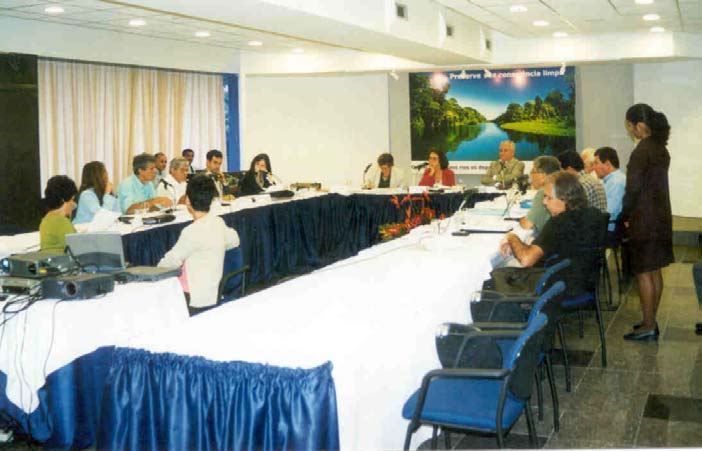
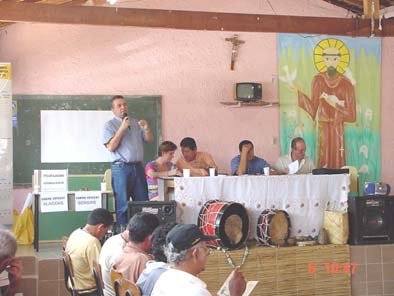
Picture 1. Discussion on the Regulations in the Temporary Board, Salvador-BA
After the elaboration of the preliminary text, happened a great pressure coming from the civil
society in order to have this text known and available of all, so that suggestions of the people
interested in the formation and operation of the Committee could be presented.
What happened was that to "make available", the part related to CBH-SF composition was
treated as due matter by the Temporary Board and, therefore, did not welcome any of
presented suggestions to modify such composition. The fact generated great dissatisfaction to
those that were participating on its elaboration, including because of the lack of divulgation of
that Temporary Board decision of not accepting suggestions.
It is important to highlight the solution found in CBH-SF Internal Regulations to maintain
mobilized and participant a great number of entities (of the users' segment and civil society)
that participated of CBH-SF formation process, and that could not simply be ignored from the
Committee installation.
The decision is foreseen in CBH-SF organizational structure, with the creation of Regional
Advisory Cameras that should contain and legitimate participation forms of an expressive
number of entities that were present in the Committee formation process.
2.4. The Methodology of the Mobilization Program
The Mobilization Program to install the Committee of São Francisco River Hydrographic
Basin was idealized and implemented through covenant no. CV028/2001 signed in
November/2001 between ANA and IMAN.
IMAN is a civil society institution founded in 1995, with headquarters in Bahia. It was
originated from the old CEEIVASF, in an articulation with the Agriculture Federation,
Commercial Association and Federal and State Universities of Bahia. Its objective is "São
Francisco River defense and the sustainable development of the Basin."
xiii
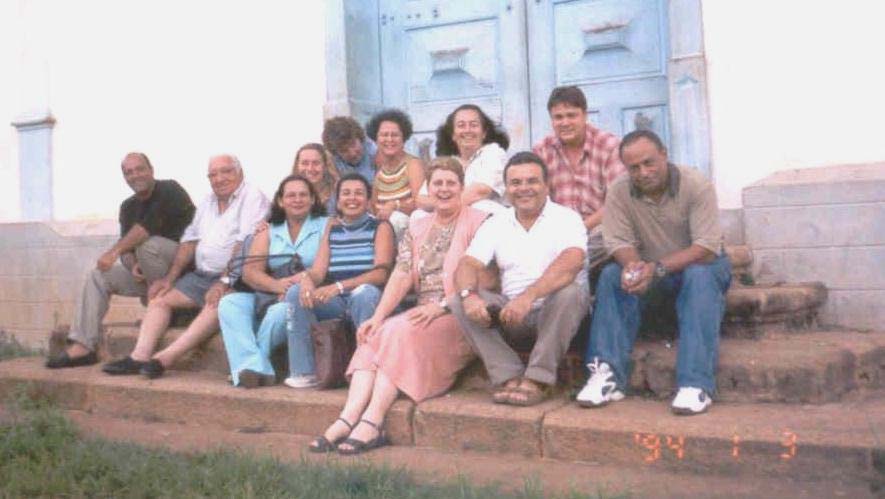
Picture 2. Mobilization Planning Team, January/2002, Casa Branca-MG
The methodology of the project foresaw two great activity groups: first a moment of
preparation and sensitization of the segments that form the Committee (the public power,
users and civil society) and a second moment corresponding to the electoral process,
foreseeing the realization of a plenary meeting for each segment in the states.
2.4.1. Preparation and mobilization
In the preparatory stage, the Mobilization Program foresaw:
· Definition of mobilization areas, joining the municipal districts by contributory sub-
basins of the river;
· Selection and training of a net of regional and local leaders to mobilize;
· Structuring of the communication program and the preparation of the informative
material;
· Mapping of the Basin based on the identification of users and civil entities in
municipal districts;
· Beginning of mass communication actions that would converge to Regional
Gatherings realization.
Between the months of January and April/2002, these preparatory and sensitization activities
took place with the segments to be mobilized. The work started only after a series of
adjustments on the original proposal, fruit of discussions and methodological deepening
involving the Temporary Management, ANA, IMAN and the consultants of GEF São
Francisco Activity 3.5, where the following actions were foreseen:
· Selection and training of a coordination technical staff to work with the mobilization
program;
· Structuring the Communication Program and informative material preparation;
· Mapping of users' representative entities and civil society of the Basin;
· Beginning of mass communication actions;
· Regional Gatherings should take place in the Basin.
xiv
2.4.2. Electoral procedures
· Regional Gatherings
Regional Gatherings were constituted in the main organization, sensitization and information
mechanism of the public to be reached, gathering representatives' entities of the segments of
users and organized civil society of the Basin. Communication activities and preliminary
meetings converged to those gatherings, they took place with the participation of public
power, users' organizations and representatives of municipal districts civil society.
The methodology proposed for the gatherings foresaw a presentation and discussion group
about the following themes:
· São Francisco River Basin, the subject of the water in the world and in the area;
· Water Resources National Policy;
· Importance, role and composition of basin committees, especially the Committee of
São Francisco River Hydrographic Basin; and
· Norms, procedures and criteria for the choice process of the Committee members.
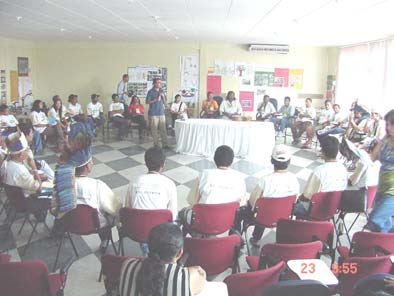
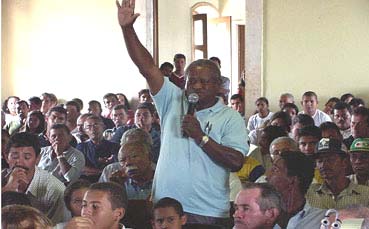
Picture 3. Regional Gatherings at Penedo-AL
Thirty-nine Regional Gatherings took place, gathering approximately 6.000 participants, as
shown below:
Chart 2. Panorama and reach of Regional Gatherings
Municipal
State
Accomplished
Total of
districts in the
Gatherings
Participants
Basin
Alagoas 49 4 560
Bahia
115
6
891
Minas Gerais
240
18
2.894
Pernambuco
69
7
992
Sergipe
27
4
389
Goiás
3
--
--
Distrito Federal
1
--
--
Total 504 39 5.726
xv
It is worth highlighting that regional gatherings did not take place at the State of Goiás and
Distrito Federal. Explained due to the small territorial portion of those states in the Basin, the
mobilization was incorporated by the staff of Minas Gerais and, because of a decision of the
Temporary Management, their representation in the Committee was restricted to a
representative of the State Public Power for each one of those States.
The Regional Gatherings took place with the participation of state water resources
management agencies, from the mobilization process to the accomplishment of the gatherings,
except for the State of Minas Gerais, where the absence of state water resources management
agency generated difficulties during the work.
Regional gatherings participants' great majority belonged to civil society institutions (non-
government organizations, associations and users' entities) represented about 53% of the
participants. The users represented approximately 19% of the presents and the public power
members, in municipal, state and federal spheres, represented 28% of the participants' total in
the gatherings, as it appears below:
Users
Public Power
(19%)
(28%)
Civil Society
(53%)
Picture 4. Percentile participations in Regional Gatherings
The Regional Gatherings stimulated, in all states, the interest of society to participate in the
Basins Committees, reinforcing and motivating the development of the formation process of
Sub-basins of São Francisco River Committees.
· Registrations and qualifications for the State Plenary Meeting
During the 39 regional gatherings to discuss the Committee formation with the entire Basin,
the Temporary Management worked in the definition of the criteria and procedures for
registration, validation of the registrations and a calendar organization to receive the
registration requests of representatives and entities of the users' segments and organized civil
society interested in participating in the electoral process.
xvi
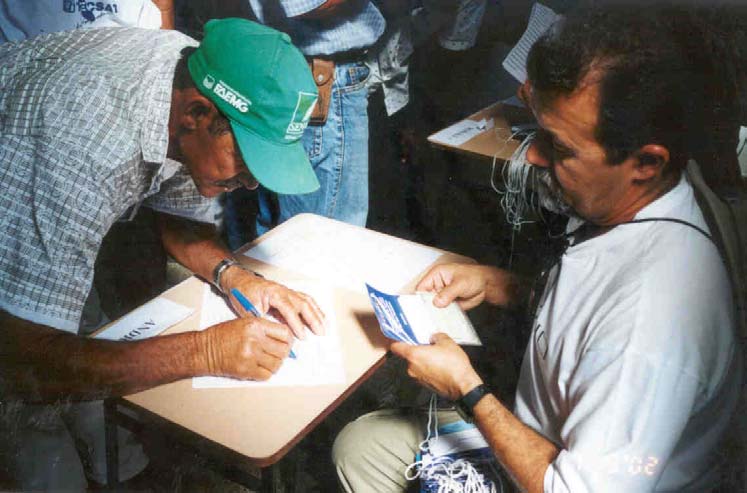
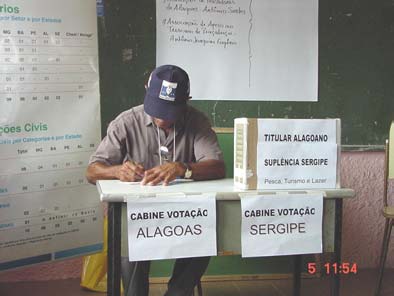
Picture 4. Accreditation for Plenary State Meeting, Janaúba-MG
1.306 registrations of users and civil society organizations were accepted and validated in the
whole Basin, distributed according to board 3, what can be taken as an indicative of positive
result of the mobilization process.
Chart 3. Qualified Registrations for the Electoral Process
Civil
State Users
Total
Society
Alagoas
32 48 80
Bahia
205 116 321
Minas
Gerais
585 137 722
Pernambuco
48 16 64
Sergipe 30
89
119
Total 900
406
1306
· State Plenary Meetings
As part of the applied methodology in CBH-SF formation, the Temporary Management
defined that the choice process of representatives of the municipal public power, users and
civil society organizations (except for indigenous people representative) should happen in
specific plenary meetings for each segment of each state.
These plenary meetings took place with the purpose of making possible the representatives' of
each segment choice by their own pairs, as the laws and norms for that subject determine.
Considering that as much the composition as the number of vacancies for state and segment
had already been thoroughly discussed, negotiated and defined by the Committee Temporary
Management, the programming occurred so that each state organized its plenary meetings.
xvii
Chart 4. Plenary Meeting State Calendar
CBH Segment
AL
BA
MG
PE
SE
Municipal Public Power
9/9/02 10/9/02 2/9/02 19/9/02**
30/8/02
Civil Society
18/9/02 16/9/02 20/9/02 13/9/02 10/9/02
Human water supply and
12/9/02 12/9/02 10/9/02
-
4/9/02
urban sanitation
Industry and Mining
- 17/9/02
19/9/02
10/9/02 -
Fishing, Tourism and
5/9/02* 5/9/02 18/9/02
-
-
Leisure
Irrigation and Agricultural
- 3/9/02
17/9/02
10/9/02
4/9/02*
use
Water Transportation
- 17/9/02 - 11/9/02 -
*
Plenary meeting organized by Sergipe and Alagoas together.
** Plenary meeting originally foreseen to 12/9/02.
In relation to the state plenary meetings, it is worth highlighting the plenary meetings that
took place together between the states of Sergipe and Alagoas. Maybe it is this, the first and
praiseworthy demonstration of the cohesion model necessary to the operation and
performance of the future CBH-SF, in other words, a council where the decisions are made
according to each reality of the Basin, uniting efforts and composing interests and regional
demands.
The accomplishment of the state plenary meetings represented the success of whole a process
that happened in São Francisco Basin. There were countless meetings in the mapping phase of
the Basin, an army of professionals of several institutions involved in the process, dozens of
regional gatherings, a movement of 1.306 registrations and 940 presences accredited in the
whole Basin and, finally, 27 state plenary meetings and a plenary meeting for the indigenous
people of the entire Basin, where that whole work was ended courageously, giving sense to
the efforts accomplished in that project, since the conception phase.
The results attest that the São Francisco Basin society is definitively involved and present in
the construction of this new model of water resources administration of the Hydrographic
Basin, even though there are different motivations and conflicting interests represented.
The quality of the presences during the state plenary meetings displays to have had an
inversion concerning the participation quality observed during regional gatherings stage.
What was observed in the participations of the state plenary meetings was a presence of 30%
of civil society organizations (against 53% observed in regional gatherings), 57% of users
(against 28% in regional gatherings) and 13% of municipal public power (against 19% in
regional gatherings), as shown in the Picture below:
Public Power
Civil Society
(13%)
(30%)
Users
xviii
(57%)
Picture 5. Participations in State Plenary Meetings
The result of the electoral process reflects all the concerns, expectations, hopes and
dissatisfactions of a Basin formed of more than 500 municipal districts of 7 states, that
reaches the mark of 16 million inhabitants unevenly distributed in an area of 640 thousand
km2 where there are economical contrasts, social inequalities, cultural diversities and
environmental variations that, for sure, are not overcome by any other national basin.
All Electoral Process State Coordinator Commissions, coordinated by water resources
management state agencies, answered appropriately to the importance and need of a local
performance within the context of attending the demand generated by the stages of reception
and validation of those registrations:
- Withdrawal of the registrations;
- Documentation analysis, according to the defined criteria by the Temporary Management;
- Validation of the registrations;
- Divulgation of a list of accredited and rejected registrations;
- Analysis and definition on eventual appeals of registration impugnation;
- Remittance of the list of accredited to ANA for publication in the Union Official Diary;
- Coordination of state plenary meetings.
2.4.3. The complex matter of the indigenous people
Target of a long silent and denial process of its own existence, the indigenous peoples still
today are resented of the lack of recognition of their identity and rights, whose materialization
depends fundamentally of the right to the territory conquest, understood as main support of
their social life, physical and cultural reproduction.
Disinherited of their traditional lands initially by the progress of the culture of the cattle, that
marked the white occupation in the area of the Basin, the indigenous populations went
through four centuries being taken away from their tribes, they lost the group ethos and the
economical autonomy that they enjoyed, since these populations had an intimate relationship
with São Francisco River.
Many people that inhabited the edge of São Francisco River had to flee to survive: it is the
case of Pankararé, Pankararu, Jiripankó, Kantaruré that took refuge in the savanna, and
Atikum, Pipipã and Kambiwá that today inhabit the highland area of Pernambuco.
Loss of territory, transfers of populations caused by great public projects, confinement
because of conflicts, collapse of the adaptation conditions to the semi-arid, progressive
exhaustion of the soils, devastation of the natural resources that implicates in losses of the
cultural patrimony and group interest, configure the hunger and food lack problem that
dominates the quotidian of those populations.
Now in the Basin, of the 28 existent indigenous territories, only 7 are totally regularized. The
other 21 territories are in demarcation or retreat of invaders process, but these are territories
that are not still fully insured.
The proposal for accomplishment of the Indigenous Peoples of São Francisco River Basin
Plenary Meeting tried to contemplate the different situations of those peoples as for their own
forms of organization and distribution in territories, and counted on the participation of the
representatives' of 24 of the 26 peoples of different states of the Basin.
xix
3. EVALUATION OF THE FORMATION PROCESS OF THE HYDROGRAPHIC
BASIN COMITEE OF THE SÃO FRANCISCO RIVER
3.1. Evaluation and Methodology
The social movement for the establishment of the Hydrographic Basin Committee of the São
Francisco River CBH-SF was a big challenge due to the extents, complexity, variety of uses
and the different interests that the process involved.
Even with all this diversity, the Basin Committee should constitute a living organ and work as
a space for articulation and negotiation of all the interests related to the uses and the
management of the basin waters, systematically investing in the creative expressions of the
social parts in the subjects that the population have an interest.
The mobilization for the establishment of a committee is a privilege moment of this process
because it stimulates and directs the public participation, as it announces and invites the
society for making a pact over the river management. The strength of the symbolism of this
act is always updated, at each decision taken, at each measure taken by the Committee's
effect.
· The held process: what was conquered
The social mobilization for the establishment of the CBH-SF reached significant results,
involving numerous representatives of the social classes of the Basin, accomplishing great
part of the anticipated goals, and reaching the results anticipated in each stage. Among the
most important results, these stand out:
- Organization of 39 Regional Gatherings, reaching a total public of 6.000 people
approximately, representatives of all the social classes of the Basin;
- Acceptance of 1,306 registration requests, 900 of users and 406 entities of the
organized civil society, in conditions of participating in the election process of the
representatives of these classes in the Committee;
- Organization of 27 State Plenaries that had the participation of 940 out of the 1,306
registered for the election process;
- Organization of the Indigenous Peoples' Plenary, the only plenary held in the whole
basin, it had the participation of 24 out of the 26 different Indigenous nations of the
basin;
- Problem discussion, demands and propositions of the society of the São Francisco
River that represented a great step in the construction of a new way of participation in
the water resources management;
The involvement of most of the state management organs and institutions of the civil society
as partners of that process, also determined the establishment of a new way for management
of the water resources.
· The held process: what is still to be conquered
In spite of all the achievements of the mobilization process in the short period of time and the
great dimension of the task, many impasses were presented.
xx
· The inexistence of an institution, organizational and users survey that really helped
the mobilization process and the decisions of the Temporary Board about who should
be participate in the committee;
· A fundamental instrument of the mobilization process, the communication plan was
not made in the establishment process of the Hydrographical Basin Committee of the
São Francisco River;
· The execution model via non government organizations, if on one side it granted
speed and lesser rigidity in the action taken, it caused on the other side some impasses
due to the non definition of the task of the execution and its interaction with the
National Water Agency ANA as the coordinator of the process, with state
management agencies and the other parts of the society in the mobilization process;
· Still with the difficulties due to the excessive pressure of the deadlines established for
the committee formation, the process that a key element for the motivation not
completely explored: the concrete possibility of participation and not only agree with
a pre-defined process, but to discuss, approve and really have influence in the
decision making process.
3.2 Analyses and Evaluation of the Standard Instruments of the Process
Some problems regarding the normative part deserve to be reflection objects so that they can
serve as accumulated experience for the formation of futures federal or state committees:
· The refection of the normalization over the actions of the Temporary Board;
· The approval of the registers to run for the positions of the CBH-SF;
· Relevant aspects in the elaboration of the internal regulation; and
· The normalization and its effects during the realization of the Plenaries.
About the performance of the members of the Temporary Board, it can be verified that for
some of them, the fact of them participating in the creation of the normative instruments that
oriented the formation of the CBH-SF, naturally it brought advantages for the institutions or
category that they represented.
Even with all the concern and attention of the Temporary Board not to allow the coordination
of the state Plenaries for the members connected to the segment object of the plenary, it would
be inevitable that the members of the Temporary Board were more articulated, as a way of
defining the best acting strategy of their entities, no matter where they were from, users or the
civil society.
This detail brings to evidence the need for the adjustment of the legal deadlines for the
constitution of the hydrographic basin committees since it was not possible to inform equally
all the registered entities that were participating during the mobilization and election process.
In the qualification for the participants to run for places on the CBH-SF, even though
there were registered advances in the process, problems to allow the participation (vote) of
natural people have the same ponderation importance of the legal entities.
This equal treatment between the natural people and the legal entities was given once
constitutional matters were pleaded based on the Paragraph XX of the 5th article of the
xxi
Federal Constitution that expresses that "nobody can be obliged to associate or remain
associated".
This way, some of the "big" users were left out of the CBH-SF or were given substitute places
because they were numerically inferior among the ones that were registered in the election
process. In addition to this disproportion, during the state Plenaries it was not always evident
in the discussions about the criteria for candidature for Committee, the importance of the
participation of the big users in being part of a strong and representative Committee
It can be considered that this constitutional order is not applied exactly as it is written in this
case and it is necessary to take special care so that it doesn't occur a false homogenization
between the natural people and the legal entities when dealing with hydrographic basins as
big as the São Francisco.
About the elaboration of the internal regulation, the problems that happened were because
of the disponibilization for suggestions coming the participants in the Committee's process of
formation, since part of this document could not be changed, by decision of the Temporary
Board: the composition was treated as an overdue matter by the Board.
This position should have been informed in advance because many people presented
alteration suggestions in the composition that were not even judged. This was a motive for
critics during the Plenaries once the proposals were useless because they demanded for their
elaboration the time of the people that had the intention to contribute or tried to defend the
interests of their sector.
Regarding the impacts of the normalization in the development of the state Plenaries
some aspects deserve a better consideration because of the need to assure a minimal
homogeneity in the actions developed in the 7 states of the Basin.
The problems started to exist in the moment that it was decided that for a total uniformity in
the election process in all the states of the Basin. For this the procedures were all described in
full detail making it difficult the various forms of choice between the ones that participated in
the election process.
3.3. Evaluation of the Election Process
Even though it may sound as a paradox, one of the riches in the formation of the CBH-SF is
exactly in the association of all de diversities present in the Basin. In all the mobilization and
election process of the Committee members, each state presented different situations and
demands of the players in the process. All this reflected in the final formation of the
Committee.
· In the State of Alagoas
In Alagoas in the steps for mobilization, registration and qualification for the ones interested
in participating in the election process for the CBH-SF the contacts were intensified with the
local organizations to mobilize the biggest number of interested people to participate in the
election process. This effort resulted with the receiving of 145 registration requests in all
xxii
state, ranging civil society organizations and users, biggest focus of the mobilization process
in the districts.
Chart 5. Qualifications and Plenary Participations Alagoas
Presents in
Sector
Qualified
the Plenary
USERS
Irrigation/livestock 24
13
Fishing, tourism and leisure
6
6
Urban water supply
2
2
Mining and Industry
--
--
Water Transportation
--
--
Total of Users
32
21
CIVIL SOCIETY
Non Governmental Organizations
45
35
Education and Research Institutions
3
3
Total of the Civil Society
48
38
Total 80
59
By the end of the process, five State Plenaries were organized for the election of the members
of the Committee. Alagoas shared with the State of Sergipe one place destined to the
representative of the users in the sector of irrigation and livestock (the member seat for
Sergipe and the substitute seat for Alagoas) and the place for the sector fishing, tourism and
leisure (the member seat for Alagoas and the substitute seat for Sergipe).
The state of Alagoas holds 6 member seats and 6 substitute seats in the committee, these are:
- Users sector: 2 members seats and 2 substitute;
- Organized civil society: 2 members seats and 2 substitute;
- Public district government: 1 member seat and 1 substitute;
- Public state government: 1 member seat e 1 substitute.
· In the State of Bahia
Good results from the work of the Commission for Coordination of the State of Bahia were
obtained in the results of the qualified and non-qualified registers for the sectors of users and
civil organized society.
397 requests were analyzed by the commission to qualify for the election process, shown on
the board 6, these represent about 30% of all the registrations of the whole basin.
Chart 6. Qualifications and Plenary Participations - Bahia
Presents in
Sector
Qualified
the Plenary
USERS
Irrigation/livestock 158
88
Fishing, tourism and leisure
20
16
Urban water supply
11
7
Mining and Industry
12
2
Water Transportation
4
1
Total of Users
205
114
xxiii
CIVIL SOCIETY
Non Governmental Organizations
98
62
Education and Research Institutions
7
4
Total of the Civil Society
116
72
Total 321
186
By the end of the process, seven State Plenaries were organized for the election of the
members of the CBH-SF. The state of Bahia holds 12 member seats and 12 substitute seats in
the committee, these are:
- Users sector: 6 members seats and 6 substitute;
- Organized civil society: 3 members seats and 3 substitute;
- District public government: 2 member seat and 2 substitute;
- State public government: 1 member seat e 1 substitute.
· In the State of Minas Gerais
The formation process of the CBH-SF had the participation of the basin comities and city
district consortia that were already existent, that caused a difference in the actions developed
in the Basin.
In the specific case of the High São Francisco, even though it had the participation of regional
mobilizers that received the same preparation and training by the IMAN, the basin
committees already existent conducted the works basically. The process however, was not
changed in its conception and structure, that means that the procedures determined why the
Temporary Board were observed in the tasks accomplished in this region.
It has to be registered that the difficulties faced by the insufficient participation of the IGAM,
the management agency of Minas Gerais State, in the formation process, when it is considered
the magnitude of the representation of the establishment of the CBH-SF for the State of Minas
Gerais.
Chart 7. Qualifications and Plenary Participations Minas Gerais
Presents in
Sector
Qualified
the Plenary
USERS
Irrigation/livestock 429
252
Fishing, tourism and leisure
128
101
Urban water supply
10
8
Mining and Industry
18
15
Water Transportation
Total of Users
585
376
xxiv
CIVIL SOCIETY
Non Governmental Organizations
112
55
Education and Research Institutions
9
7
City District Consortia and
14
16
Association of Users
Total of the Civil Society
137
76
Total 722
452
By the end of the process, seven State Plenaries were organized for the election of the
members of the CBH-SF. The State of Minas Gerais holds 19 member seats and 19 substitute
seats in the committee, these are:
- Users sector: 9 members seats and 9 substitute;
- Organized civil society: 6 members seats and 6 substitute;
- District public government: 3 member seat and 3 substitute;
- State public government: 1 member seat e 1 substitute.
· In the State of Pernambuco
The State of Pernambuco had a process oriented for the best quality of the representatives in
the formation of the CBH-SF, to optimize and mature the process in the state. This means that
the works of mobilization, from the survey part up to the regional gatherings, resulted in a
very well selected range of qualified registrations.
It can't be affirmed that the way the gatherings were carried resulted in a higher quality when
compared to the other states, but it sure represented a much more objective way in the
formation of the CBH-SF. As a result the state of Pernambuco had the following
conformation:
Chart 8. Qualifications and Plenary Participations Pernambuco
Presents in
Sector
Qualified
the Plenary
USERS
Irrigation/livestock 45
33
Fishing, tourism and leisure
--
--
Urban water supply
--
--
Mining and Industry
2
2
Water Transportation
Total of Users
48
36
CIVIL SOCIETY
Non Governmental Organizations
12
9
Education and Research Institutions
4
4
Total of the Civil Society
16
13
Total 64
49
xxv
By the end of the process, five State Plenaries were organized for the election of the members
of the CBH-SF. The state of Bahia holds 8 member seats and 8 substitute seats in the
committee, these are:
- Users sector: 4 members seats and 4 substitute;
- Organized civil society: 2 members seats and 2 substitute;
- District public government: 1 member seat and 1 substitute;
- State public government: 1 member seat e 1 substitute.
· In the State of Sergipe
The formation process of the CBH-SF in Sergipe was characterized for the strong rely during
mobilization step on the association of users and communities organizations of the rural zone,
having as a result the biggest presence of this sector in the regional gatherings and also in the
state Plenaries.
The biggest influence of the agricultural and livestock farming happened because of the
profile of the mobilization team, it had a bigger experience in working with rural communities
and it demanded articulation with other sectors of the civil society, for instance, the
Movement in Defense of the São Francisco River, broadening the scope of participations in
this process.
A great part of the success of the work done in Sergipe for the formation of the CBH-SF
should be related to the strong involvement and participation of the State Secretary of Water
Resources in all the steps of the establishment of the Committee.
Chart 9. Qualifications and Plenary Participations Sergipe
Presents in
Sector
Qualified
the Plenary
USERS
Irrigation/livestock 21
9
Fishing, tourism and leisure
7
4
Urban water supply
2
2
Mining and Industry
1
--
Water Transportation
Total of Users
30
15
CIVIL SOCIETY
Non Governmental Organizations
85
47
Education and Research Institutions
4
4
Total of the Civil Society
89
51
Total 119
66
By the end of the process, five State Plenaries were organized for the election of the members
of the CBH-SF. The state of Sergipe holds 6 member seats and 6 substitute seats in the
committee, these are:
- Users sector: 2 members seats and 2 substitute;
- Organized civil society: 2 members seats and 2 substitute;
- District public government: 1 member seat and 1 substitute;
xxvi
- State public government: 1 member seat e 1 substitute.
· In the State of Goiás and in Distrito Federal
The State of Goiás and the Federal District did not demand the realization of the election step
in the formation of the CBH-SF, since the Temporary Board defined that the in the
composition of the Committee, the participation of these federation units would be with only
the representatives of the federal and district government.
· The State Plenaries of the District Public Government
Even though a lot of difficulties occurred because the most important events in the process of
the formation of the CBH-SF coincided with the State and Federal elections in Brazil, it still
can be considered that the process had a satisfactory participation of the mayors of the Basin.
Board 10. Participation in the Plenaries of the District Government
State
Districts (cities) in Presents in the
Participation
the Basin
Plenaries
Percentage
Alagoas 49
18 37%
Bahia 115
20 18%
Distrito Federal
1
-- --
Goiás 3
-- --
Minas Gerais
240
69 29%
Pernambuco 69
13 19%
Sergipe 27
6 23%
Total 504
126
25%
As a participation indicator of the mayor of the cities in the process of formation of the
Committee, there was a contingent of 25% of the 504 districts that suggests enough
participation to qualify these sectors, especially if the taken in consideration the difficulties
caused by the elections.
· The Indigenous Peoples Plenary
The treatment given to the Indigenous issue in the mobilization phase was harmed by the
ignorance of the importance and the real dimension of the Indigenous presence in the Basin.
That happened in part because of the adopted strategy in the mapping and mobilization of the
different sectors and institutions.
Initially the participation of the Indigenous peoples was treated as an integrant part of the
most general mobilization process for the regional gatherings and the contacts with the people
and the villages worked randomly. This initial orientation needed to be reviewed, giving
origin to the planning of a plenary for all the Indigenous peoples of the Basin that was carried
in Paulo Afonso-BA in the end of September.
In this new mobilization task the participation and the collaboration of indigenous institutions
played a big role, institutions such as the Articulation of the Indigenous Peoples of the
Northeast, Minas Gerais and Espírito Santo APOINME and the National Association of the
xxvii
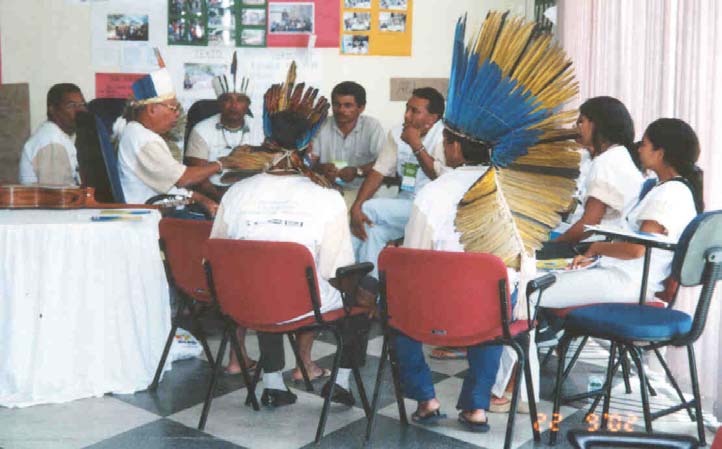
Indigenous Action ANAÍ, identifying the existence of 26 Indigenous peoples distributed in
28 territories with a total population of 50 thousand people.
Picture 5. At the Plenary Meeting with the Indians, Paulo Afonso-MG
By the end of the process, the Indigenous Peoples Plenary had the participation of 42 out of
the 52 representatives expected, an indicator that the mobilization had a good representation
of the Indigenous leaders. There were elected one main representative member (Truká
People, Assuption Island in the city of Cabrobó, State of Pernambuco, in the Sub-Low São
Francisco region) and also a substitute representative (Kariri-Xocó, Porto Real do Colégio,
State of Alagoas, in the Low São Francisco region).
4. THE VEST OF THE MEMBERS AND THE FIRST BOARD OF THE CBH-SF
According to the calendar defined by the Temporary Directory in its meeting in November
2002, the members elected and pointed for the CBH-SF had their vest programmed for the
days of December, 12 and 13 of 2002, in this occasion the members of the first Board should
be elected.
xxviii
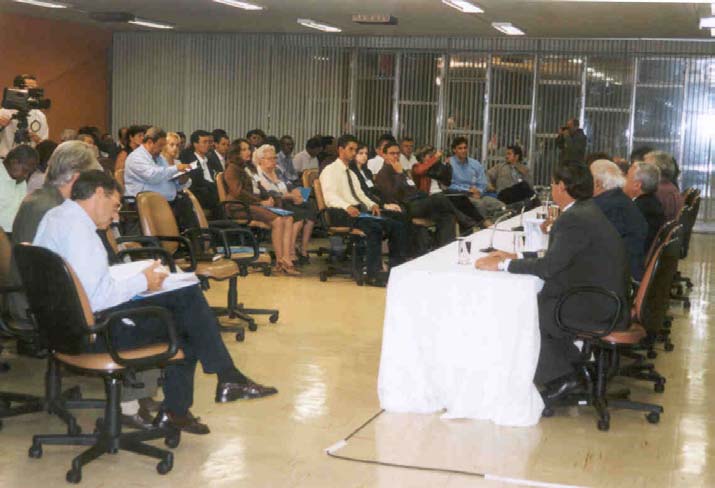
Picture 6. Vest Meeting of the members of the CBH-SF, Brasília-DF
The vest of the elected members and the members pointed by the federal and state
governments, all of them present in the solemnity, really occurred in the marked date, in
Brasília.
Going against the expectations that the first election should happen in the same occasion, the
little knowledge between the members of the committee and the transition moment in the
federal and state government offices that are part of the Basin, the first election was
postponed for the month of February 2003.
As a decision linked to the postponement, the plenary of the vest with of the CBH-SF
understood that the process of election and vest with of the first Committee Board was a
responsibility of the Temporary Board.
· The first agenda of the CBH-SF
The plenary of the vest meet of the CBH-SF decided for a first agenda that contemplates the
justified preoccupation of the majority of the members of the Temporary Board, to start a
formation and leveling process of the members of the CBH-SF about matters such as the
National Water Resources Policy, participative management, priority actions in the Basin,
projects already in course and specially the duties and obligations of the Committee members.
The tasks defined in this first agenda should start already in February 2003 with the
preparation and execution of a seminar for the members of the CBH-SF with an approximate
duration of 3 days, in this occasion the election of the first Board should take place.
xxix
Chart 11. Chair Members and Substitutes vested with in the CBH-SF
SECTOR: WATER RESOURCES USERS
WATER RESOURCES USERS SANITATION AND SUPPLY
CHAIR
National Association of the Municipal Sanitation Services
Doris Aparecida Garisto Lins
MG
MEMBER
ASSEMAE
Substitute
Janeir Soares Barbosa
Independent Service of Water and Sewer - SAAE
MG
CHAIR
Valter Vilela Cunha
Sanitation Company of - COPASA
MG
MEMBER
Substitute
José Márcio Vieira Dias
Independent Service of Water and Sewer - SAAE
MG
CHAIR
Antonio Fonseca Fraga
Independent Service of Water and Sewer - SAAE
BA
MEMBER
Substitute
Jessé Motta Carvalho Filho
Water and Sanitation Company of Bahia - EMBASA
BA
CHAIR
Guilherme Tavares
Pernambuco Sanitation Company - COMPESA
PE
MEMBER
Substitute
Fábio Henrique S de Oliveira
Pernambuco Sanitation Company - COMPESA
PE
CHAIR
Maria de Fátima A de Castro Alagoas State Water and Sanitation Company - CASAL
AL
MEMBER
Substitute
Sérgio Barbosa Anjos Correia
Independent Service of Water and Sewer - SAAE
AL
CHAIR
Roberto Leite
Sergipe Sanitation Company - DESO
SE
MEMBER
Substitute
Antônio Inácio Sobral Neto
Independent Service of Water and Sewer - SAAECAP
SE
WATER RESOURCES USERS INDUSTRY AND MINING
CHAIR
Federation of the Industries of the State of Minas Gerais
Wagner Soares Costa
MG
MEMBER
FIEMG
Substitute Nestor
Coelho
de Santanna
VALLÉE S/A
MG
CHAIR
Edimárcio Araújo Prudente
Minas Gerais Metals Company - CMM
MG
MEMBER
Substitute
Ricardo Castilho
Gold Extraction Industry Union - SINDIEXTRA
MG
CHAIR
Dalton Soares de Figueiredo
Aluminum Alloys S/A - LIASA
MEMBER
Substitute
Geraldo Mariano da Silva
Italmagnésio Nordeste S/A
CHAIR
Milton Eduino Saueressig
América S. A Fruits and Foods
MEMBER
Substitute
Antônio Raymundo D Ramiro
Curtume Campelo S/A
CHAIR
Rafael Araújo Souza Coelho Curtume Moderno S/A
MEMBER
Substitute
Rossana Wesbter C Trajano
Gypsum and Non-Metal Industries Union
WATER RESOURCES USERS IRRIGARION AND LIVESTOCK FARMING
CHAIR
Carlos Antônio Landi Pereira Jaíba Irrigation District
MG
MEMBER
Substitute
Vicente de Paula Pereira Silva
Frutivale Irrigation District Gorutuba
MG
CHAIR
Carlos Alberto S Oliveira
Agriculture Federation of the Minas Gerais State FAEMG
MG
MEMBER
Substitute
Paulo Ossamu Kudo
Rural Union of the City of Pirapora
MG
CHAIR
Cláudio Roberto O
Agriculture and Livestock Grande Oeste Ltda - AGOL
MEMBER Vasconcellos
Agriculture Cooperative of Irrigation and Ceraíma Project
Substitute
Antônio Batista de França
COOPERC
xxx
CHAIR
Geraldo Cabral da Silva
Rural Productors Association of Sento Sé
BA
MEMBER
Mini and Small Rural Producers Association of the Itaguari
Substitute
Antônio Lourenço da Silva
BA
Valley
CHAIR
Rômulo Leão da Silva
Rural Association of the Barra Farm
PE
MEMBER
Substitute
João Leonel da Silva
Development Association of Santa Quitéria - Sítio Estreito
PE
CHAIR
João Hildebrando Britto Neto Irrigation District Perimeter Cotinguiba/Pindoba
SE
MEMBER
Maria Ângela Nascimento
Substitute
Community Association of the Ranch Salgado do Lino
AL
Santos
WATER RESOURCES USERS WATER TRANSPORT
CHAIR
Antonio Laurindo dos Santos Association of the Boatmen of the Rodeador Island
BA
MEMBER
Substitute
Gersino Ferreira Batista
Britania Ferryboat
BA
CHAIR
Francisco Carlos Trevisan
COMTRAP LTDA
PE
MEMBER Alberti
Substitute
Gilvan Pereira de Melo
Federation of the Fish men of the State of Pernambuco
PE
WATER RESOURCES USERES FISHING, TOURISM AND LEISURE
CHAIR
|Federation of the Professional Fishermen of the State of Minas
Raimundo Ferreira Marques
MG
MEMBER
Gerais
Substitute
Milton Ribeiro Neves
Fishermen Colony Z 2
MG
CHAIR
Pedro Alves da Costa
Craft Fishermen Colony - Z-41 - Remanso
BA
MEMBER
Association of Professional Fishermen Friends of the Valley of
Substitute
José Noá dos Santos Pereira
BA
the River Grande ASPAVARG
CHAIR
Antônio Gomes dos Santos
Federation of the Fish men of the State of Alagoas
AL
MEMBER
Substitute
Evaldo Soares Silveira
Association of Fish men of Saúde
SE
WATER RESOURCES USERS HYDROELECTRICITY
CHAIR
Paulo de Tarso da Costa
Hydroelectric Company of the São Francisco - CHESF
MEMBER
Sandra Neusa Marchesini
Substitute
Power Company of Bahia - COELBA
BA
Ferreira
CHAIR
Aelton Marques de Faria
Power Company of Minas Gerais - CEMIG
MG
MEMBER
Association of Representatives of Small Power Hydroelectric
Substitute
(to be pointed)
MG
Centrals - PCHs
SECTOR: ORGANIZED CIVIL SOCIETY
CONSORTIA, INTER-MUNICIPAL ASSOCIATIONS OR ASSOCIATIONS OF USERS
CHAIR
Association of Workers and Small Rural Producers of Buriti
Nilson Pereira de Lima
MG
MEMBER
Grande
Cooperative of Agriculture and Livestock Farminf of the High
Substitute Clóvis
Tamekuni
MG
Paranaíba River COOPADAP
CHAIR
Adinael Freire da Silva
Salitre River Hydrographical Committee
BA
MEMBER
Union of the Associations of the Perimeters of the Successive
Substitute
Valdemar Borges Vieira Júnior
BA
Dams of the Salitre River Valley UAVS
xxxi
TECHNICAL ORGANIZATIONS OF RESEARCH AND EDUCATION
CHAIR
Brazilian Association of Sanitary and Environmental
Márcio Tadeu Pedrosa
MG
MEMBER
Engineering ABES
Substitute
Francisco de Assis Braga
Divinópolis Education Foundation - FUNEDI
MG
CHAIR
Clarismar de Oliveira
Bahia State University - UNEB
BA
MEMBER Campos
Yvonilde Dantas Pinto
Substitute
Bahia Federal University UFBA
BA
Medeiros
CHAIR
José Almir Cirilo
ABRH Brazilian Association of Water Resources - PE
PE
MEMBER
Substitute
Serliete de Carvalho Mendes
Araripe Education Autarchy AEDA
PE
CHAIR
Valmir Albuquerque Pedrosa Alagoas Federal University
AL
MEMBER
Municipal Foundation of Action and Cultural Formation -
Substitute
Vicentina Dalva Lyra de Castro
AL
FUTAG
CHAIR
Luiz Carlos da Silveira Fontes Sergipe Federal University
SE
MEMBER
Substitute
Paulo Mário Machado Araújo
Tiradentes University UNIT
SE
NON GOVERNMENTAL ORGANIZATIONS
CHAIR
Letícia Fernandes Malloy
Guaicuy Institute SOS Rio das Velhas (Project Manuelzão)
MG
MEMBER Diniz
Substitute
Silvio França Linhares
Environmental Development Association - ADESA
MG
CHAIR
Association of the Agricultural Engineers of the city of
Rodrigo Vargas
MG
MEMBER
Paracatu
Federation of the Workeres of the Agriculture of the State of
Substitute
Vilson Luiz da Silva
MG
Minas Gerais - FETAEMG
CHAIR
Ilmar Bastos Santos
Bio-diversitas Foundation
MG
MEMBER
Substitute
Lúcia Pulchério Lopes
Ecolocy Movement Earth's Sap /Life Renewal
MG
CHAIR
AMDA Association in Defense of the Environment of the
Francisco Mourão
MG
MEMBER
State of Minas Gerais
Substitute
Queucer Nezio Ferreira
Brazilian Lawyers Organization - OAB of Ouro Branco
MG
CHAIR
Integrated Development Foundation of the São Francisco
Edison Ribeiro dos Santos
MEMBER
FUNDIFRAN
Substitute
Anelito Pereira da Silva
Union of Workers of Coribe
CHAIR
Afonso Cavalcanti Fernandes Diaconia - Civil Society of Social Action
PE
MEMBER
Substitute
Maria Brígida Ferreira
Petrolina People's Council
PE
CHAIR
Pedro Lúcio Rocha
Union of the Rural Workers of Pão de Açúcar
MEMBER
Cooperative of Small Agriculture Producers of Seed
Substitute Cícero
Gerônimo
Neres
Communitarian Bank COPPABACS
CHAIR
Mario Rino Sivieri
Base Education Movement MEB
MEMBER
Society Environmental Partner of the Low São Francisco
Substitute
Osíris Ashton Vital Brasil
Canoa de Tolda
INDIGENOUS COMMUNITIES
CHAIR
Ailson do Santos
Truká People
PE
MEMBER
Substitute
José Nunes de Oliveira
Kariri - Xocó People
AL
xxxii
SECTOR: PUBLIC GOVERNMENT
MUNICIPAL GOVERNMENT
CHAIR
Cairo Manoel de Oliveira
São Roque de Minas City Hall
MG
MEMBER
Substitute
Edson de Souza Vilela
Carmo do Cajuru City Hall
MG
CHAIR
Ronaldo Mota Dias
São João da Lagoa City Hall
MG
MEMBER
Substitute
José Ferreira de Paula
Itacarambi City Hall
MG
CHAIR
Geraldo da Silva
Três Marias City Hall
MG
MEMBER
Substitute
Leônidas Gregório de Almeida Pirapora City Hall
MG
CHAIR
Roberval Alves de Souza
Ibotirama City Hall
BA
MEMBER
Substitute
Oziel Alves Oliveira
Luiz Eduardo Magalhães City Hall
BA
CHAIR
Joseph Wallace Bandeira
Juazeiro City Hall
BA
MEMBER
Substitute
Juvenilson Passos dos Santos
Sento Sé City Hall
BA
CHAIR
Cleuza Pereira do Nascimento Salgueiro City Hall
PE
MEMBER
Substitute
Rogério Júnio M Gomes
Santa Maria da Boa Vista City Hall
PE
CHAIR
Inácio Loiola Damasceno
Piranhas City Hall
AL
MEMBER Freitas
Substitute
Jorge da Silva Dantas
Pão de Açúcar City Hall
AL
CHAIR
Frei Enoque Salvador de Melo Poço Redondo City Hall
SE
MEMBER
José Júlio Nunes de Santana
Substitute
Porto da Folha City Hall
SE
Gomes
STATE GOVERNMENT
CHAIR
Aloísio de Sá Ferraz
Secretary of Water Resources of the State of Pernambuco
PE
MEMBER
Substitute
Edgar Granja Bezerra
Secretary of Water Resources of the State of Pernambuco
PE
CHAIR
Marcos Fernando Carneiro
Secretary of Water Resources and Irrigation of the State of
AL
MEMBER Carnaúba
Alagoas
Substitute
Maurício José Pedrosa Malta
Associated Secretaey of Water Resources
AL
CHAIR
Ailton Francisco da Rocha
Superintendence of Water Resources -SEPLANTEC
SE
MEMBER
Substitute
José Holanda Neto
Superintendence of Water Resources
SE
CHAIR
Maria de Fátima Chagas Dias Secretary of Sustainable Development and Environment
MG
MEMBER Coelho
Substitute
Célia Maria Brandão Fróes
Minas Gerais Water Management Institute - IGAM
MG
CHAIR
Carlos Antônio Silva
Secretary of the Environment, Water Resources and Housing
GO
MEMBER
Substitute
Harlen Inácio dos Santos
Superintendence of Water Resources
GO
CHAIR
Roberto Moussallem Andrade Infra-Structure Secretary
BA
MEMBER
Substitute
José Francisco Carvalho Neto Secretary of Planning, Science and technology
BA
CHAIR
José Aparecido Torsani
Water Resources Secretary
DF
MEMBER
Substitute
Adriana Niemeyer Pires Ferreira Technic of the Secretary of Water Resources
DF
xxxiii
FEDERAL GOVERNMENT
CHAIR
Carlos Hermínio Aguiar
Company for the Development of the São Francisco River
MEMBER Oliveira
Valley CODEVASF
Substitute
Edson Zorzim
National Integration Ministry
CHAIR
Domingos do Carmo Carvalho Electrical Power National Agency - ANEEL
MEMBER
Substitute
Gualter de Carvalho Mendes
Mines and Energy Ministry
CHAIR
Luis Gustavo Vieira Martins Planning, Budget and Management Ministry
MEMBER
Substitute
(to be pointed)
Transportation Ministry
CHAIR
Wagner Pereira Sena
Indian National Foundation - Funai
MEMBER
Substitute
Moacir Santos
Indian National Foundation - Funai
CHAIR
Dilma Seli Pena Pereira
Brazilian National Water Agency - ANA
MEMBER
Substitute
(to be pointed)
Environment Ministry
5. CONCLUSIONS
The experienced lived by the active participation in the formation process of the CBH-SF
allow the consultants of the Activities 3.4 Support to the Creation and 3.5 Support to the
Strengthen of the Committee of the Hydrographical Basin of the São Francisco River, the
formulation of the following conclusions:
· The results of the formation process of the CBH-SF
The formation process of the CBH-SF reached significant results, involving many
representatives of the social sectors of the Basin, it reached a great part of the objectives
set and reaching the predicted results in each step. There were 39 regional gatherings
involving almost 6,000 participants in the entire Basin, 27 State Plenaries with the
presence of 940 of the 1,306 qualified registers and one Plenary for the 26 Indigenous
Peoples of the Basin.
· The composition of the CBH-SF reflects the present situation of the Basin
The result of the election process reflects all the anxieties, hopes and dissatisfactions of a
Basin formed by more than 500 cities of 7 different states, that reaches the 16 millions
inhabitants unevenly distributed in an area of 640 thousand square kilometers and that
contains economical contrasts, social inequalities, cultural diversities and environmental
variations that, for sure, no other national basin can overcome.
· The preoccupations of the participants on the phase of the regional gatherings
It is clear the big preoccupation of the social segments with the state of degradation of the
São Francisco River and its tributaries. Were pointed the main subjects in the socio-
environmental, infrastructure and management scope.
· The process of construction of the participative and integrated management
The social mobilization for the establishment of the Committee constituted a big challenge
due to its dimension, complexity, diversity of uses and involved interests. This challenge has a
special relevance because of the strategic importance that the Committee will have in the
xxxiv
transformation of the present reality and the meaning that the São Francisco River has as a
factor of integration, production, redistribution of riches and development of the whole
region.
The Regional Consultant Chambers previewed in the Internal Regulation of the CBH-SF
will have a great importance for this management model, representing the possibility of
keeping the historical space of participation conquered by the society that was made
present in this process of formation of the Committee.
· The impacts of the insufficiency in the institutional mapping in the Basin of the
CBH-SF
The mapping of the institutions present and participating in the Basin would have
determined a bigger quality to the mobilization for the participation in the process of
formation of the CBH-SF and would be one of the main guides to the Temporary Board to
define the number and the distribution of the seats in the Comitee, that did not occur.
· The improvisations and overloads generated by the lack of a communication plan
In the absence of an articulated plan, the State coordinations developed additional efforts
during all the formation process of the Committee, in the sense of guarantee the
publication of all the events in the local radios, TV station and press bodies. More notably,
the lack of a Communication Plan was felt during the mobilization phase for the Regional
Gatherings and in the moment of the realization of these gatherings.
· Methodology and executive model: cooperation and partnerships
The execution model via non government organizations, if on one side it granted speed,
creativity and lesser rigidity in the action taken, it caused on the other side some impasses
due to the non definition of the task of the execution and its interaction with the National
Water Agency ANA as the coordinator of the process, with state management agencies
and the other sectors of the society in the mobilization process;
· The quality of the presences in the regional gatherings and in the state Plenaries
The works made through the city halls, users and organizations of the civil society, even
with their deficiencies in the institutional mapping, in the communication and in the
articulations promoted by the mobilization teams, show that the society of the São
Francisco Basin is definitely involved in the construction of this new management model
of the water resources of their hydrographical basin, although there are different
motivations and conflicts of the interests that can be represented.
In the step of the regional gatherings, the vast majority of the participants belonged to the
institutions of the civil society, representing about 53% of the participants, the users
represented approximately 19% of the participants and the members of the municipal,
state and federal governments represented 28% of the total participants in the gatherings.
The state Plenary shows changes when the quality of the participants is observed and
compared to the regional gatherings. What was observed in the state Plenaries was a
participation of 30% of civil society organizations, 57% of users and 13% of the
municipal government.
· The challenges of the construction and improvement of a methodological proposal
xxxv
Even though all the lessons proportioned by the experience, the process experienced raises
and challenges the need to re-think visions and continually improve the practiced
methodology. It is necessary to advance in the planning, making a pact with the stated and
the society for the involvement of a representative group of the players that take action in
the region, forming and gathering the social capital in the construction of a new culture
about the waters.
· The naturally favorable conditions for the Temporary Board
For some board members, the fact of their participation in the creation of the normative
instruments that guided the formation process of the CBH-SF brought naturally
advantages for the institutions or sectors that they represented, being them sectors of users
or sectors of the organized civil society.
Still with the caution of the Temporary Board in this matter, this detail brings to evidence
the need for the adaptation of the legal deadlines for the formation of the hydrographical
basin committees, since because of the short time period that the mobilization and election
process was carried, it wasn't possible to level the information among all the ones that
were qualified for the process.
· The need for strengthening the CBH-SF for the adaptation of the legal outline
The organization of a legal applied base in the ruling of the management of water
resources is only in its initial phase. The development of the National Water Resources
Policy will keep on demanding normative instruments for the participative and non-
centralized water resources management, for that the functioning of the CBH-SF will be
strongly decisive and strongly improved.
One aspect that should deserve special attention is the fear that the constitutional
competences of the States will not be respected on the mechanisms that are about the
management of their water resources, that is, the fear that the Federal Government,
specially the National Water Agency, with the intention of keeping uniform the actions in
the Basin will invade the competence of the States and the Basin committees of their
tributaries.
· The need to clarify the representations in the CBH-SF
In the case of the definitions about the categories of the users, the results obtained in the
Plenaries of these sectors indicate that it makes no sense to include in the same category
the users of fishing, tourism and leisure. These categories have big differences in the
number conditions of representation and do no show possibilities of a delegation of
representatives from the fishing sector for the tourism sector, for instance.
This means that the presupposition of cohesion and combination of interests with a
negotiated reduction in the water use can be seriously damaged. The resolution number
5/2000 of the CNRH deserves a revision, remembering that this decision should result of a
bigger approximation between the CNRH and the Basin Committees, since it is
responsibility of the Council the normalization of this matter and the committees the
execution of this norm.
· Necessary adjustments in the qualifications for running to the chairs of the CBH-SF
xxxvi
Still about the representativity matter, it seems to be a mistake to admit the participation
of natural people with the same ponderation of the vote of the legal entities. This equal
treatment between the natural people and the legal entities was given from the
understanding of the Temporary Board about a matter of constitutional order (Paragraph
XX from the 5th article of the Federal Constitution of 1988), where it expresses that
"nobody can be obliged to associate or remain associated". Even though it can't be
registered unanimity about this interpretation the Temporary Board interpreted that the
natural person could participate in the election process in the same conditions with entities
that gather hundreds of associated members.
This can provoke the pulverization of the representatives of themselves, weakening the
legitimacy and the representativity in the process of formation of the Committee, with a
fake homogenization between natural people and legal entities.
· The legal breaches for double representation
Another important representativity problem is in the acceptance of the registration and
qualification of representations of users (associations or users union) in the organized civil
society sector that represents a breach for double representation. This problem seems to be
backed up by the civil legislation dispositions, since this kind of entity (association of
irrigate users, association of fishermen, federations of industry) is constituted by civil
organisms being non-profit organizations.
· Overcoming the lack of synchrony between the legal outline and the establishment of
the Committee
Some of the demands of the Resolution number 5/200 of the CNRH constitute real
obstacles to the establishment of the CBH-SF. In its content, this norm demanded that the
representatives of the users had the Water Use License totally valid, in order for them to
participate as members of the committee.
The reality of the Basin is still distant of this reality of total use of the license and it forced
a formal request to the CNRH to solve the conflict between the reality and the norm, not
demanding that this exigency would be required in this first moment. It constitute an
evidence of the need of strengthening the CBH-SF by the improvement and adaptation of
the group of norms and laws that rule the various conditions for its operation and that
guide its relation with the institutions involved in the water resources management of the
Basin.
· Relevant Impacts in the Internal Regulation about the process
As of the impacts of the Internal Regulation about the election process, the problems are
related to the form and to the time given for suggestions coming from the participants of
the process of formation of the Committee. The delay in the definition for the composition
of the CBH-SF and the short period of time for receiving the amendments made that
important parts of this Regulation didn't observe all the proposed alterations, reducing the
possibilities of participation.
· The definition of the composition of the Committee end the decision of making the
seats of the States
Making the member seats of the States for some sectors/categories only could be defined
after the realization of the institutional diagnosis of the Basin and after knowing the
xxxvii
volume of the qualified registrations. This conclusion is justified since distortions of this
kind occurred: a large quantity of registrations in the "non governmental organizations"
was fighting for few places, in other sectors had more places for fewer candidates.
It can be said that the number of seats were not according to the degree of participation of
the different sectors/categories and that the future experience should observe ways of
making compatible the possibilities and the interests in the participation.
· Some methodological details deserve better attention and improving
In the process of improving the applied methodology in the formation of the CBH-SF, the
word "Plenary" has shown itself not fitted for the events of the election process. This
word suggests the idea of a sovereign meeting that can review the rules already defined by
the Deliberations of the Temporary Board, this does not correspond to the nature of this
event.
What is questioned is if the rules were not adapted or if the plenary had no knowledge of
its part in the process?. Truly the process should secure the formation of a strong
committee, with legitimacy in the choice of its representatives, among their pairs. Nothing
else.
· The inheritance of the important and not solved matters of the Indigenous peoples
The treatment of the Indigenous matter in the mobilization phase was very harmed
because of the ignorance of the importance and dimension of the Indigenous presence in
the Basin, that mainly happened because of the deficiencies of the strategy adopted in the
mapping and mobilization of the sectors and institutions.
It was made necessary a special attention for this matter, only at the end of the election
process, it was made possible to identify the existence of 26 Indigenous peoples in the
Basin, distributed in 28 territories, with a population of about 50 thousand people.
With no doubt the HBC-DF will inherit the Indigenous causes, where it can and should
influence, without ignoring the fact that these questions are strongly linked to the
decisions that deal about the use and conservation of the water resources in the Basin. The
loss of territory and the transfer of populations due to government project, the
confinement because of conflicts, the collapse of the conditions of adaptation to the semi-
arid, the progressive exhaustion of the soils and the devastation of the natural resources all
implicate losses of the cultural wealth and the group interest, this causes the hunger
problem and food shortages that dominate the everyday of these populations.
This scenery of the Indigenous causes will deserve a very clear approach of the
Committee about its conditions of responsibility and influence for the execution of the
demanded solutions. For better characterization this participation of the CBH-SF in the
Indigenous matters it is good to observe the reasons pointed by the indigenous
movements as causes of the emergence or aggravation of the problems:
- the projects in the Basin do not consider the Indigenous culture and the
Indigenous population because they do no cause any benefit for the communities
and they even ignore their presence in the region;
- generally, the water access by the Indigenous peoples is very difficult, specially
for those placed in critical regions such as the Basin of the Moxotó River;
xxxviii
- the model of development of the Basin provokes the destruction of the economy
and traditional forms of survival, this generates the impoverishment of the
Indigenous population;
- the Indigenous peoples still resent the absence of a resolutive policy for
compensating the losses of the territory due to the construction of the dams.
xxxix
6. RECOMMENDATIONS
The present moment of the Project GEF São Francisco is extremely representative in the
context of the interventions necessary in the Basin. All the Activities present their final
report in a clear demonstration of synchronism with the formation process of the CBH-
SF and had success with so many activities of research, evaluation, proposition of future
strategies and for the importance that they will have to technically help the performance of the
Committee.
The documents elaborated by the consultants and coordinators of the activities intend not only
the fulfillment of their contract commitments but mainly to offer the maximum of information
for the elaboration of the Analytical Basin Diagnosis (DAB) and for the elaboration of the
Integrated Management Program (PGI) of the São Francisco Basin.
These instruments will be decisive so that the CBH-SF can get a hold of the reality
environmental, social, politics and economical of the Basin and, this way, to start the
activities in the building of solutions that are expected from it.
The consultants of the activities 3.4 Support to the Creation and 3.5 Support for the
Strengthening of the Committee of the Hydrographical Basin of the São Francisco River,
formulate as final recommendations of this report, two projects organized over the focus of
the institutional strengthening for the auto sustainability of the CBH-SF and the
responsibility in organize this experience for the application in similar situations.
6.1. Institutional Strengthening and Technical and Operative Capacity for Self -
Sustentation of CBH-SF
Once accomplished that immense task of CBH-SF formation, it is necessary that the
institutions involved in its formation, the ones that have the responsibility to implantation of
Water Resources National Policy and, mainly, the institutions that are part of the Committee
pay attention to its operation.
They should pay attention exclusively to the necessary conditions of CBH-SF operation, in
order to provide more and more its auto-sustentation, in technical, administrative and
financial aspects.
That implicates, necessarily, in the implantation and operation of a technical office for
CBH-SF executive functions, which will have an important performance in the implantation
of water resources management instruments at São Francisco Basin. The installation of that
technical office will make possible to objectify the Committee operation, until the
possibility of charge mechanisms implantation by the use of water is reached and, like
this, its Basin Agency, that will be the result of a complex process to be discussed and built
in Committee operation.
The actions that compose this recommendation are being treated as constituent parts of a new
and more pertinent support the strengthening of project CBH-SF, developed in the group of
inter-sectorial relationships with all the other intervening institutions in the Basin and
guided to interoperability problems already announced in the Committee formation
process.
xl
Therefore, together with an Integrated Administration Program (PGI), elaborated with the
excellence of Project GEF São Francisco and ANA, it is very important to support the
creation and operation of the technical office for CBH-SF institutional strengthening,
gathering the necessary conditions for its technical, operative and financial sustentation,
at the measure of the actions that follow.
6.1.1. Creation of conditions for CBH-SF Basin Agency future implantation
The creation and operation of a CBH-SF Basin Agency will request a great effort in planning
and implantation aspects. The range of responsibilities and attributions that RECAE on
CBH-SF Basin Agency - and will be sustentation elements to the Committee operation -
presuppose a group of implementations previous to the Agency implantation, reason why it
will be necessary to guarantee the formation of a technical office capable to sustain CBH-SF
operationally.
The large number of difficulties that appear for this unprecedented and complex mission of
implanting the water resources administration mechanisms, until it reaches a charge
mechanism and a Basin Agency, it will impose to the Committee a responsibility that,
certainly, will make it look for support of institutions that were protagonists of its
formation history, as ANA, state management agencies and Project GEF São Francisco itself.
Many of the goals of Integrated Administration Program (PGI) in elaboration in the ambit of
Project GEF São Francisco are also subordinate to the technical and operational capacity
of CBH-SF, especially those that depend on CBH-SF technical and management
performance.
The proposed investments, in this case, are in the field of financial aid to the goals that CBH-
SF will determine for the implantation and operation of its technical office, observing the
destination of a budget to be used to finance Basin users' initial register, equipment and
appropriate programs needs to that office, as well as for Basin missions and specific
formation courses for the technical office staff and CBH-SF members.
Therefore, the technical office creation and operation will be guided by the objective of
building a CBH-SF sustentation condition, what requests the financial aid the following
demands:
Item Total
Value
Technical trainings
U$ 50.000
Technical publications
U$ 15.000
Trips and missions
U$ 30.000
Equipments and Programs
U$ 120.000
Organization of the Users' Registration
U$ 100.000
Total U$
315.000
xli
6.1.2. Revision and Adaptation of the Legal Outline Towards the Sustainability of the
CBH-SF
The implantation experience put the spotlight on the incipient condition that are found the
group of laws and norms that regulate the creation and operation of committees of
hydrographic basins in Brazil, especially in the case of implantation of collection
mechanisms, in the destinations of the resources collected in that modality and in the
operation of their basin agencies.
In spite of al the progresses reached in this segment, since the institution of the National
Politic of Water Resources, the National System of Management of Water Resources still
lacks of consistent performance of the regulatory instances in the federal, state and municipal
spheres, regarding the legal sustentation for so many demands present in the participative
model extolled for the management of water resources in Brazil.
As it could already be highlighted in this document, the process of formation of CBH-SF
evidenced some gaps and improprieties of the normative group over the committees'
formation and operation. The beginning of CBH-SF's operations will enable, without
any doubts, other prominences that must demand answers adequate in time and in the
merit of the needs of regulations.
The additional juridical and legal instruments necessary, for instance, to regulate the
relationships between the basin committees and the committees of their sub-basins in the
implantation of the management instruments - especially collection for the use of the
water - will produce strong implications in the state legislations and unexpected reflexes
in the relationships with the countless active institutions in the Basin.
This action will have as objective the evaluation of the gaps and needs of normatização
proposition by the competent legislative instances, in an active posture towards the demands
of the process of implantation of instruments of management of water, until the
consolidation of the condition of self-sustentation of CBH-SF.
Item Quantity
Individual
Cost
Length
Total Cost
Juridical consultant
1
U$ 1.500
12 meses
U$ 18.000
Trips and missions
2 per month
U$ 720
12 meses
U$ 8.640
Total
U$
26.640
6.1.3. Support to the Creation and Operation of the Regional Advisory Cameras
The built inheritance and given to CBH-SF of a responsible attitude to the almost 6.000
presences and the 940 qualified participations in the electoral process, resulted in the
positive use of those participations in the regional advisory cameras, foreseen in the Internal
Regulations of CBH-SF.
xlii
Besides the function of connecting the Committee with the different regional realities,
these cameras will have a decisive role in the implantation of instruments of
administration of waters, since they can assist CBH-SF in the local evaluations of the
pertinence of each proposed measure.
It was also a claim of the Plenary of the Indigenous Peoples the creation of an Advisory
Camera for the Indigenous People, what will deserve the appropriate appreciation of
CBH-SF and that it should be worked in the context of the actions for the other advisory
cameras.
The action foresees a consultant's performance in each area of the Basin (High, Medium, Sub-
medium and Low São Francisco), with qualifications and competences in the management of
water resources and in Water Resources National Politics.
Item Quantity
Individual
Cost
Length
Total Cost
Consultants
4
U$ 1.500
6 meses
U$ 36.000
Trips and Missions
4 ao mês
U$ 720
6 meses
U$ 17.280
Total
U$
53.280
Chart 12. Costs of the instututional strengthening and self-sustentation of CBH-SF
Item Valor
total
Conditions for future implantation of a Basin Agency of CBH-SF
U$ 315.000
Revision and Adaptation of the Legal Outline
U$ 26.640
Support to the Creation and Operation of Regional Advisory Cameras
U$ 53.280
Total U$
394.920
6.2. Systemization and Publication of a Methodological Proposal of Mobilization
Program for Formation of Hydrographic Basins Committees
This experience of formation of CBH-SF involved a multitask team, representing multiple
institutions, interests and areas of the Basin, being worthy of a critical and systematized
registration of the learnings, successes and failures of the process, mainly in the
methodological aspect of the experience.
The hereby mentionned registration will be carried out in the form of a publication,
elaborated by the professionals that had outstanding performance in the formation of CBH-
SF and for collaborators that have participated in experiences that make possible some
comparison. The distribution of this publication will have the following schedule:
· managers in the federal, state and municipal instances, directly or indirectly
linked to water resources;
· institutions related to water resources;
xliii
· technicians of the civil society's organizations linked to water resources, social
mobilization; e
· students of degree courses and of masters degree of public and private teaching
institutions, of areas linked to water resources, especially in the states of the Basin..
Therefore, it is proposed that the publication systematizes a methodological proposal of
mobilization for the installation of basin committees and, still, that contributes to the drawing
of mobilization programs and communication plans, starting from contents such as:
· an interdisciplinary conceptual approach on the process of formation of committees of
hydrographic basins
· information on the Water Resources National Politics and on the Water Resources
National Management, with the characterization of each instrument and management
and of each instance within this hierarchy;
· presentation of a flexible methodological drawing, detailing of a basic itinerary of
"step by step" and of "who is who" in the process, commenting on the nuances and
traps that can interfere negatively or positively in the activities;
· detailing for the stage of institutional mapping of the Basin and their consequences for
the quality of the process of formation of basin committee; and
· he roads of a communication plan, starting from concrete experiences, making
possible a reflection starting from critical registrations, learnings, successes and flaws
happened in mobilization processes mainly in the methodological aspect.
Item Total
Value
Editorial Coordination
U$ 4.000
Elaborators Consultants (10)
U$ 10.000
Translation and Revision
U$ 4.000
Graphic Project and Editing
U$ 5.000
Printing of 25.000 exemplars
U$ 42.500
Register elaboration of merges
U$ 3.000
Distribution of 15.000 exemplars via Post Office
U$ 6.300
Total U$
74.800
xliv
THE FORMATION PROCESS OF THE COMMITTEE OF SÃO
FRANCISCO RIVER HYDROGRAPHIC BASIN: REPORT
AND EVALUATION OF ASPECTS CONCERNING
METHODOLOGY, NORMS AND CONTEXT
SUMMARY
INTRODUCTION
1
1. THE BASSIN'S COMITTEE: POLITICAL AND LEGAL ASPECTS
6
1.1. Political Antecedents
6
1.2. Institutional and Legal Antecedents
8
1.3. The Decision to Create CBH-SF
10
1.4. Who is Who in the Process of formation of CBH-SF?
11
1.4.1. Water Resources National Council CNRH
11
1.4.2. Brazilian National Water Agency ANA
11
1.4.3. Provisory Board CBH-SF
11
1.4.4. Manoel Novaes Institute - IMAN
12
1.4.5. Water Resources State Councils CERH
12
1.4.6. Water Resources State Organs
12
1.4.7. Committees and Pro-Committees of the Existing Hydrographic Basins
13
2. CBH-SF FORMATION STRATEGY
14
2.1. Temporary Board Formation Strategy
14
2.1.1. Composition and Operation of the Temporary Board of Directors
14
2.2. The CBH-SF Composition Definition
19
2.3. CBH-SF formation process
22
2.4. The Methodology of the Mobilization Program
26
2.4.1. Preparation and Mobilization
28
2.4.2. Electoral Procedures
33
2.4.3. The Complex Matter of Indigenous Peoples
37
3. EVALUATION OF THE PROCESS OF FORMATION OF CBH-SF
43
3.1. Evaluation and Methodology
43
3.1.1. Prominences of necessary conquests in future processes
44
3.2. Analysis and Evaluation of the of the Regulatory Instruments of the Process
47
3.2.1.Reflects of the Regulations over the Provisory Board of Directors
47
Performance
3.2.2. Participants' Qualification to Compete to CBH-SF Vacancies
50
3.2.3. Relevant Aspects of the Internal Regime Elaboration
53
xlv
3.2.4. The Regulation and Its Impacts in the Plenary's Executions
54
3.3. Evaluation of the Electoral Process
55
3.3.1. In the State of Alagoas
55
3.3.2. In the State of Bahia
56
3.3.3. In the State of Minas Gerais
58
3.3.4. In the State of Pernambuco
60
3.3.5. In the State of Sergipe
62
3.3.6. In the State of Goiás and in Distrito Federal
63
3.3.7. State Plenaries and Municipal Public Power
63
3.3.8. The Indigenous Peoples Plenary
64
4. VESTING AND THE FIRST CBH-SF BOARD OF DIRECTORS
66
4.1. CBH-SF Members Vesting With
66
4.2. The Election of the Board of Directors
67
4.3. The First CBH-SF `s Agenda
67
5. CONCLUSIONS
72
6. RECOMMENDATIONS
83
6.1. Strengthening of Technical-Operative Training for CBH-SF Self-
83
Sustainability
6.1.1. Creation of conditions for CBH-SF Basin Agency future implantation 84
6.1.2. Revision and Adaptation of the Legal Outline Towards the Sustentation of 85
CBH-SF
6.1.3. Support to the Creation and Operation of the Regional Advisory Cameras
85
6.2. Systemization and Publication of a Methodological Proposal of Mobilization
86
Program for Formation of Hydrographic Basins Committees
7. BIBLIOGRAPHICAL REFERENCES
89
8. ACTORS
90
ANNEXES
1. NORMS, PROCEDURES AND CRITEIRA FOR THE SELECTION AND
INDICATION PROCESS OF THE MEMBER OF THE COMMITTEE OF
THE SÃO FRACISCO HYDROGRAPHIC BASIN
2.INTERNAL REGULATIONS OF THE PROVISORY BOARD
3. CBH-SF INTERNAL REGULATIONS
4. DELIBERATION Nº 1 OF THE PROVISORY BOARD OF 06/12/2002
5. DELIBERATION Nº 2 OF THE PROVISORY BOARD OF 06/12/2002
xlvi
6. DELIBERATION Nº 3 OF THE PROVISORY BOARD OF 07/04/2002
7. DELIBERATION Nº 4 OF THE PROVISORY BOARD OF 07/04/2002
8. DELIBERATION Nº 5 OF THE PROVISORY BOARD OF 07/11/2002
9. DELIBERATION Nº 6 OF THE PROVISORY BOARD OF 07/17/2002
10. DELIBERATION Nº 7 OF THE PROVISORY BOARD OF 08/01/2002
11. DELIBERATION Nº 8 OF THE PROVISORY BOARD OF 08/20/2002
12. PROPOSAL FOR THE PLENARY OF THE INDIGENOUS PEOPLES
LIST OF FIGURES
1. Sceneries of the São Francisco River Hydrographic Basin
1
2. Booklet on the transposition, Ministry of the National Integration, 2000
7
3. Percentile participation of CBH-SF composition segments
21
4. Percentile participation of the States in CBH-SF `s composition
21
5. IMAN's team structure for the CBH-SF project
27
6. Participation in regional gatherings
31
7. Participation in states plenaries
36
LIST OF CHARTS
1. Summary of the board of directors provisory activities
16
2. CBH-SF Composition by State
20
3. Users distribution by category and State
20
4. Civil Society - distribution by category and State
20
5. Summary of the provisory board of directors deliberations
23
6. States teams coordinators and mobilizers by project
28
7. Panorama and reach of the regional gatherings
30
8. Qualified registrations for the electoral process
33
9. Calendar of states plenary
34
10. Summary of the registrations and participations in plenary - Alagoas
56
11. Summary of the registrations and participations in plenary - Bahia
57
12. Summary of the registrations and participations in plenary - Minas Gerais
59
13. Summary of the registrations and participations in plenary - Pernambuco
61
14. Summary of the registrations and participations in plenary - Sergipe
62
15. Participations in plenary of the municipal public power
64
16. Titular and substitute members vested in the CBH-SF
68
17. Costs of the institutional strengthening and self-sustentation of CBH-SF
86
xlvii
LIST OF PICTURES
1. 8th Meeting of the Provisory Board, August /2002, Salvador BA
25
2. Mobilization and planning team, January/2002 Casa Branca MG
26
3. Regional Meeting of Penedo AL.
30
4. Enrollment for users state plenary , August/2002, Janaúba MG.
33
5. Alagoas State's Delegations in the irrigation user plenary in Neópolis SE.
35
6. Meeting during the indigenous peoples plenary, August/2002, Paulo Afonso BA 41
7. Elect representatives of the indigenous peoples, Augus/2002, Paulo Afonso BA 42
8. Elected member and coordinator board, fishing plenary,August/2002, Barra-BA
44
9. Detail of the coordinator board, irrigation users' plenary, August/2002, Janaúba 50
10. Detail of civil society's plenary voting, agosto/2002, Ibimirim PE
53
11. Vesting Meeting of the members of CBH-SF, december/2002, Brasília DF.
66
ACRONYMS AND ABBREVIATIONS
AIBA
Association of the Farmers and Irrigation Users of the West of Bahia
ANA
Brazilian National Water Agency
ANAÍ
National Association of Indigenist Action
APOINME Articulation of the Indigenous People of the Northeast, MG and ES
ASSEMAE National Association of the Municipal Services of Sanitation
CBH-SF
Committee of the Basin of São Francisco
CEEIVASF São Francisco Valley Executive Committee of Integrated Studies
CERH
State Council of Water Resources
CHESF
São Francisco Hydroelectric Power Plant
CIMI
Missionary Indigenist Council of Minas Gerais
CNRH
National Council Water Resources
CPT
"Pastoral da Terra" Commission
DAB
Analytical Diagnosis of the Basin
Special Indigenous Sanitary District of the Department of Health of
DESAI
Indigenous Peoples
FUNAI
National Indian Foundation
FUNASA
National Health Foundation
GEF
Global Environment Fund
IGAM
Minero Institute of Water Management
IMAN
Manoel Novaes Institute
MIN
Ministry of Social Integration
MMA
Ministry of the Environment
MME
Ministry of Mines and Energy
MPOG
Ministry of Planning, Budget and Management
OEA
Organization of American States
ONG
Non Governmental Organization
xlviii
PGI
Program of Integrated Administration
PNUMA
United Nations Environment Program
RI
Internal Regulations
SEINFRA Secretary of Infra-structure of the State of Bahia
SERHI
State Secretariat of Water Resources and Irrigation
UPB
Union of the City Halls of Bahia
xlix