Newsletter from
NOWPAP DINRAC
Northwest Pacific Action Plan
Data and Information Network Regional Activity Center
UNEP
About NOWPAP DINRAC: Reliable and Up-to-date Information
Services for Coastal and Marine Environment in NOWPAP Region
is Crucial for DINRAC
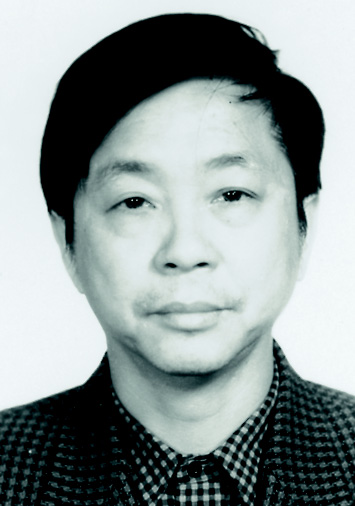
Greetings from the Director of DINRAC,Jianguo Wang
I am very glad to see that
NOWPAP region.
the first issue of NOWPAP
The major threats to the health, productivity
DINRAC's Newsletter is
and biodiversity of the coastal and marine
released today as we all
environment result from human activities
expected.
on land in coastal areas and further
inland. Some 80% of the pollution load in
N O W PA P D I N R A C
the oceans originates from land-based
Newsletter is going to
activities. This includes municipal, industrial
and agricultural wastes and run-off, as well
give introductions on background, working
as atmospheric deposition. Coastal
plan and activities, working progress as
and marine environmental information
well as related professional knowledge on
gathered from Land-based should be our
DINRAC. I hope that the Newsletter would
concentrating aspects.
become a window to exchange information
and experience among NOWPAP
I am especially pleased to say that the year
members, and further build a bridge to
of 2003 is vital for DINRAC. Two
harmonize on action and enhance the
documents will be drafted by consultant(s)
friendship between the members.
and submitted to Experts Meeting and
Although there are many advance
Focal Point Meeting of DINRAC to review
communication means or media, such as
and approve. These are: a) Establishment
email, BBS or Websites, the newsletter as
of the NOWPAP Policy and Data
a special tool makes an effective and
Information Sharing and b) Establishment
important role.
of principles and guidelines for NOWPAP
Inside this issue:
DINRAC Meta-database Management
I sincerely hope the DINRAC Focal Points,
System. It will be the keystone in building
as the activities implementation partner
data and information network in the region
· Greetings
1
would contribute generous support to the
· Making history
2
and the guideline for our all developing
· Building a Strong
2
Newsletter. Let's join hands and do our
activities among the members.
Partnership
best to make it useful and helpful.
· Establishment of the
3
NOWPAP DINRAC
I would like to thank our NOWPAP RACs
· Responsibilities of DINRAC
3
Good decisions are based on good
partners. I would also like to express my
· Activities and Workplan for
3
information. Marine environmental issues
special gratitude to Dr. Ellik Adler, the
DINRAC 2002/3
are typically of a complex nature, and
· Major Activities of DINRAC
4
Regional Seas Programme Coordinator
in 2002
frequently have causes and impacts that
and the staff within UNEP/Division of
· 1st NOWPAP DINRAC Focal
4
reach across large areas, often crossing
Environmental Conventions and also the
Points Meeting
state borders. It is therefore crucial to have
· List of the Focal Points for
5
focal points of members for their guidance
NOWPAP DINRAC
reliable, easily accessible sources of
on how to ensure a continuingly stronger
· NOWPAP DINRAC Website
5
coastal and marine environmental
institutional performance. If I may say that
· Marine Institutions &
6
information, which can present up-to-date
Experts Database
DINRAC has made some progress during
· Remarks from Focal Points
6
and comparable data. DINRAC should
2002, it would be closely dedication and
· Editor
8
play a key role in living up to this challenge
commitment by their efforts.
by constantly improving and increasing
the dissemination of coastal and marine
No.1
Thank you.
environmental information to the
May 2003
policy-makers and the general public in
NOWPAP DINRAC Newsletter
1
North-West Pacific:making history
By Dr. Ellik Adler, Regional Seas Programme Coordinator, UNEP
Our vast region includes the People's Republic of China, Japan,
populations of the region while protecting human health and
the Russian Federation, the Republic of Korea and the
ecological integrity for future generations.
Democratic Republic of Korea. It also features extensive coral
reefs, mangrove forests and island ecosystems with their
The plan incorporates six priority projects to be implemented
spectacular marine life and commercially important fishing
through a network of Regional Activity Centres (RACs). Four
grounds.
of these are in operation and deal with information management,
pollution monitoring, environmental assessment, and marine
The North-West Pacific is among the most highly populated
emergency preparedness and response.
parts of the world, resulting in enormous pressures and
demands on the environment. Its people are particularly
NOWPAP's Regional Coordinating Unit (RCU), co-hosted by
dependant on the sea for their food and livelihoods. Yet their
Japan and the Republic of Korea, will serve as nerve centre
health and the health of their environment are under growing
and command post of the Action Plan's activities.
threat, mainly from land-based activities and sources of
pollution. Coastal development, industry, transport, and
Ours is a young programme, so our priorities over the coming
activities such as land reclamation and intensive mariculture
years are fairly basic: to set up a regional monitoring and
take an ever-greater toll on coastal ecosystems.
assessment system; to develop a network of public outreach
and environmental education; to put in place a contingency
Chemical and industrial wastes, untreated municipal sewage,
plan for oil and chemical spills; and to prepare a regional
agricultural pesticides and nutrients in run-off cause widespread
strategic plan to abate pollution from land-based activities (in
damage and stimulate eutrophication and harmful algal blooms
accordance with UNEP-GPA); to set up regional programmes
(red tides). Added to these are oil pollution from wastewaters
to protect marine and coastal biodiversity; and to initiate
and accidental spills, atmospheric pollution and marine and
programmes for sustainable management of living marine
coastal litter.
resources based on the ecosystem approach. And we intend
that our ground-breaking programme will serve as a regional
The countries of the region realized that by joining forces they
platform for the implementation of Multilateral Environmental
could strike a wise balance between provision for human needs,
Agreements and other global programmes and initiatives
use of resources, and economic development on one hand,
concerning the marine and coastal environment.
and the protection, enhancement and sustainability of the
The adoption of our Action Plan was an extraordinary and
environment on the other. They launched (1991) and formally
historical moment. As work begins through the regional centres
adopted (1994) the Northwest Pacific Action Plan (NOWPAP).
to implement the Action Plan, NOWPAP is well on its way to
becoming one of the world's most remarkable examples of
The Plan focuses on the wise use, development and
regional cooperation for the environment.
management of the coastal and marine environment in order
to achieve the greatest long-term benefit for the human
Building a Strong Partnership
Greetings from the Director of MERRAC, Dr. Chang-Gu Kang
As the Director of MERRAC, with responsibility for developing
response to such marine pollution accidents on regional level.
effective measures for regional co-operation in marine pollution
Especially, the Centre is currently functioning as secretariat for
preparedness and response under the Northwest Pacific Action
the NOWPAP MERRAC Focal Points Meetings, Experts
Plan (NOWPAP) framework, I am very pleased to address you
Meetings, and the NOWPAP Regional Oil Spill Contingency
through this first Issue of the NOWPAP DINRAC Newsletter.
Plan. For more detailed information about us, please visit out
website at: merrac.nowpap.org.
MERRAC, or in full, the Marine Environmental Emergency
Preparedness and Response Regional Activity Centre, is one
Of course, MERRAC, as a new regional activity center
of four Regional Activity Centres of the Northwest Pacific Action
established in March 2000, is still at the evolutionary stage.
Plan (NOWPAP), located within the Korea Research Institute
Even though implementation of our activities may be relatively
of Ships and Ocean Engineering (KRISO) / Korea Ocean
slow when compared to other region of the world, however, I
Research and Development Institute (KORDI) in Daejeon,
believe that, in the near future, our efforts can get valuable
Republic of Korea. As you know, the semi-closed Northwest
fruits, if we would persist step by step in overcoming the any
Pacific region is frequently subjected to major marine pollution
difficulties and problems that confront us.
accidents, as was the case with the Sea Prince and the
Nakhodka oil spills that resulted in serious environmental and
On behalf of MERRAC staffs and relevant persons, we sincerely
economic damages. MERRAC is coordinating various regional
express again congratulations to the First Issue of DINRAC
activities relevant to marine pollution preparedness and
Newsletter, and I am looking forward to the continued horizontal
response, including the development of the NOWPAP Regional
cooperation between NOWPAP RACs.
Oil Spill Contingency Plan and the associated Memorandum
Thank you!
of Understanding, in order to assist in ensuring fast and effective
2
NOWPAP DINRAC Newsletter
Establishment of the NOWPAP DINRAC
At the First Intergovernmental Meeting in Seoul, Republic of
Budget for the Establishment of a comprehensive database and
Korea on 14 September of 1994, the Action Plan for the
information management system (phase II) was included.
Protection, Management and Development of the Marine and
Coastal Environment of the Northwest Pacific Region
In the Proposal for NOWPAP/1 Phase II approved by the Expert
(NOWPAP) and three supporting Resolutions were adopted by
Workshop on Establishment of a Comprehensive Database and
representatives of four States: Japan, the People's Republic
Information Management System (NOWPAP/1), Activity 1.
of China, the Republic of Korea and the Russian Federation.
Establishment of an Institutional Coordinating Mechanism for
Five priority projects have been identified at the First
implementation of NOWPAP/1 Phase II of the 6 PROGRAMME
Intergovernmental Meeting.
IMPLEMENTATION identified the Responsibilities of the
NOWPAP DINRAC. The 10 Activities for the Programme
Base on the Project Proposal for Phase II of the Establishment
Implementation as well as their expected outcomes and
of a Comprehensive Database and Information Management
necessary actions were indicated.
System (NOWPAP/1) and the Resolution 2 of the Fourth
Intergovernmental Meeting on the NOWPAP (Beijing, 6-7 April
Furthermore, the Fourth Intergovernmental Meeting adopted the
1999) -- Institutional Arrangements for Implementation of
Proposed Establishment of the Network of Regional Activity
NOWPAP, "Decided to designate the Regional Activity Centres,
Centres and decided to establish the Network in line with the
as described in ANNEX VII of the UNEP(WATER)/NOWPAP
modified document.
IG.4/7", the NOWPAP Data and Information Network Regional
Activity Centre (NOWPAP DINRAC) was designated to
In November 2000, Mr. Jorge e. Illueca, Assistant Executive
established.
Director of United Nations Environment Programme (UNEP) and
Dr. Wang Qiao, Director of Environmental Information Center
The Proposed Terms of Reference for the Data and Information
(EIC) of the State Environmental Protection Administration
Network Regional Activity Centre (NOWPAP DINRAC) was
(SEPA) signed the Memorandum of the Understanding Between
attached in the APPENDIX I of the Report of the Forth
UNEP and EIC of SEPA.
Intergovernmental Meeting. At the same meeting, the Terms of
Reference for the Data and Information Network Regional Activity
In December 2000, NOWPAP DINRAC was formally established
Centre (TOR for DINRAC) was formally formed. TOR for
in EIC. The Division of NOWPAP was established in EIC in
DINRAC prescribes 22 items which DINRAC should carry out.
January 2001. Mr. Cheng Zifeng and Dr. Wang Qiao, the former
and present director of EIC and Mr. Wang Jianguo, director of
According to the ANNEX VII of the Report of the Fourth
the Division of NOWPAP, were designed as the Director of
Intergovernmental Meeting, " the Proposed Roles and Functions
DINRAC successively. Related Departments of SEPA conducts
of RACs", the Roles and functions of the NOWPAP DINRAC
governmental support and administration for NOWPAP DINRAC.
were identified.
Currently, DINRAC is functioning as a secretariat for NOWPAP
DINRAC Focal Points Meetings and Experts Meetings.
In the Resolution 1 of the same meeting the Workplan and
Budget for Implementation of the NOWPAP In the Biennium
1999-2000 was approved, in which the Sub-Workplan and
Responsibilities of the NOWPAP DINRAC
Activities and Workplan for DINRAC 2002/3
The main responsibilities of the DINRAC include:
(i)
to maintain contact with the Focal Points in the
Activity A:
NOWPAP members for implementation of
Harmonization and Completion of National Reports on
DINRAC's activities;
data and information networks
(ii)
to organize meetings of the Focal Points and
Experts;
Activity B:
(iii)
to keep close contacts with other regional
Update, Maintenance and Enrichment of DINRAC
programmes, such as IODE and NEAR-GOOS,
website
etc., so that coordination and cooperation with
these programmes would be enhanced;
Activity C:
(iv)
to maintain a regional prototype homepage for
Finalization of Institutions and Experts Database
connection with national participating institutions
(including to function as a switchboard to direct
Activity D:
users to appropriate databases);
Draft of the general NOWPAP Policy on Data and
(v)
to act as the meta-database operator;
Information Sharing
(vi)
to coordinate the network of homepages in
institutions where such needs arise;
Activity E:
(vii)
to collect relevant information and data;
Establishment of Principles for NOWPAP DINRAC
(viii)
to provide technical advice to the participating
meta-database
institutions on the environmental data and
information exchange and management, whenever
Activity F:
required;
Organization of DINRAC Experts Meeting
(ix)
to plan and organize training courses and relevant
technical workshops;
Activity G:
(x)
to publish technical publications, manuals and
Organization of DINRAC Focal Points meetings
newsletters, etc. as results of NOWPAP activities;
and
Activity H:
(xi) to summarize DINRAC activities and to report the
Cooperation, Communication of DINRAC activities
Intergovernmental Meeting on NOWPAP.
NOWPAP DINRAC Newsletter
3
Major Activities of DINRAC in 2002
Four staffs and one more part time consultant are currently
for Institutions. It is the base for the Institution and Expert
employed at DINRAC with financial support from the Government
databases creation.
of China. Following major activities have been carried out by
DINRAC in 2002.
4) Created the Databases of Institutions and Experts on
Coastal and Marine Environment: These databases applied
1) 1st NOWPAP DINRAC Focal Points Meeting: The 1st
the new technology for database on Internet. The records existed
NOWPAP DINRAC Focal Points Meeting took place in Shanghai,
in the databases can not only be browsed or searched on
China, from 25 to 28 November 2002, with kind support from
homepages but also be modified, appended, deleted on line
UNEP. The meeting decided that DINRAC will develop
through Internet by the authorized users.
comprehensive documents on "The Policy of Data and
Information Sharing and Management for all NOWPAP activities"
5) Drafted Coding and Format System for Coastal and Marine
and on "the Policy of Metadata Management in NOWPAP". It
Environment Data Exchange: The coding system of physical/
was also agreed that an Experts Meeting on these issues should
chemical data and biological data has been completed. The
be organized by DINRAC in July 2003. The draft Terms of
format system is drafted.
Reference of DINRAC Focal Points Meetings were discussed
and it was decided to postpone the adoption of the ToR until the
6) Participated in the 7th NOWPAP Intergovernmental
next DINRAC Focal Points Meeting (Oct. - Nov. 2003). The
Meeting: The director of DINRAC, attended at the Meeting held
re-organized budgeted workplan for DINRAC for 2002/3 was
in Vladivostok, Russia from 20 to 22 March 2002. At the meeting,
discussed and approved by the Meeting.
he presented a report on the general overview and current
activities of the DINRAC.
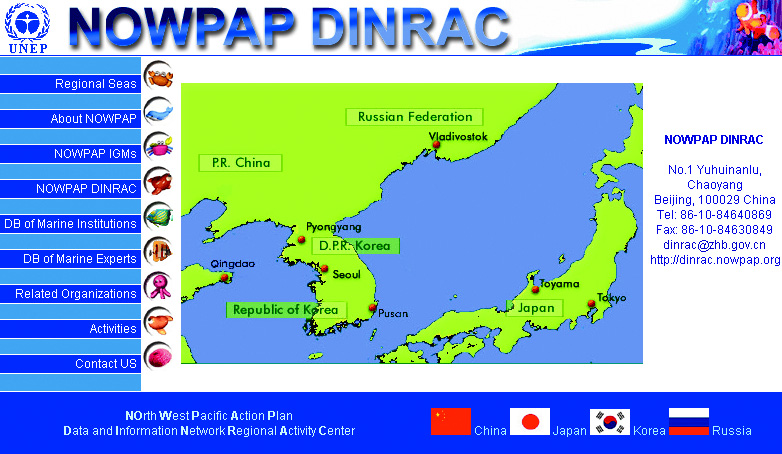
2) Developed the homepages of NOWPAP DINRAC: The URL
of NOWPAP DINRAC's homepages is http://dinrac.nowpap.org.
7) Signed the Project Document (PD) for NOWPAP DINRAC:
The Webmaster is dinrac@zhb.gov.cn. There are 9 categories
The Project Document for DINRAC has been signed by E.
as: Regional Seas, About NOWPAP, NOWPAP IGMs, NOWPAP
Ortega, the chief of Budget and Financial Management Service
DINRAC, DB of Marine Institutions, DB of Marine Experts,
of UNEP and Mr. Jianguo Wang, the director of DINRAC in
Related Orgs, Activities and Contact us. It consists of 22 pages,
September, 2002. The Project Documents has enabled DINRAC
11 PDF files, 2 databases with 632 records, 1 zip file, 36
to implement its activities and manage its own financial resources
organizations and some maps and pictures.
as approved during the last NOWPAP IGM. It is now operational.
The first budget at total of USD $30,000 has been transferred
3) Revised the Questionnaire for Institutions and Experts
into SEPA's account.
on Coastal and Marine Environment: There are 11 items in
the Questionnaire for Experts and 22 items in the Questionnaire
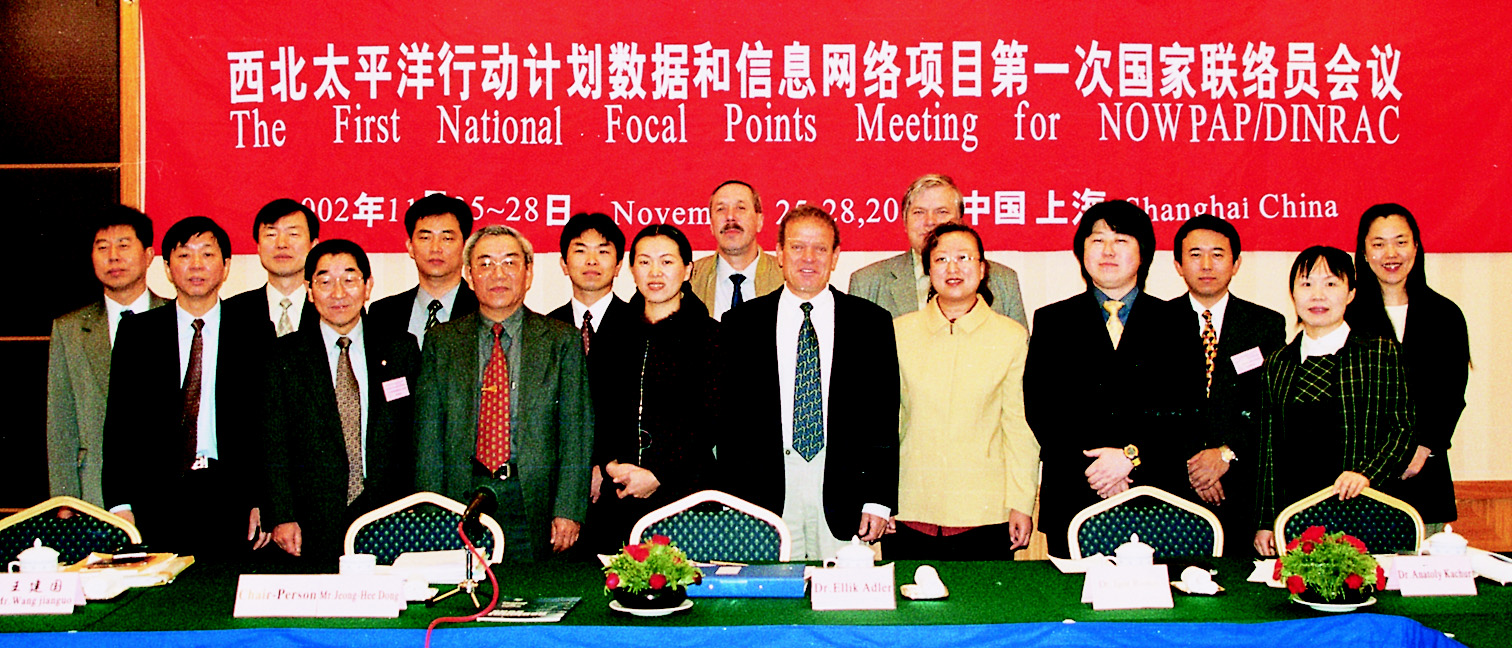
The First DINRAC Focal Points Meeting
Shanghai, China 25-28 November 2002
The First DINRAC Focal Points Meeting was
held on 25-28 November 2002 in Shanghai,
China. DINRAC was responsible for the
organization and service of the meeting.
Representatives of NOWPAP members,
Japan, China, Korea and Russia attended
the meeting in their capacity of DINRAC
Focal Points. Representatives of the UNEP,
directors of the POMRAC, CEARAC and
MERRAC, observers, as well as staff and
experts from DINRAC also attended the
meeting.
Dr. Ellik Adler, Regional Seas Coordinator,
from Division of Environmental Conventions,
UNEP, acting as the interim coordinator for
NOWPAP, suggested that the DINRAC program administered by
and Experts Meetings was noted. The Focal Points Meetings will be
DINRAC should be coordinated and implemented together with other
more strategic and of high level, making decisions on the topic and
UN agencies and programs, specifically with UNESCO-IOC. He
venue of the Experts Meeting, while the latter meetings will be more
stressed that it was up to NOWPAP Members to decide on the next
technically and scientifically oriented, performing the specific tasks
steps and activities to be implemented. Activities should be practical
under the instruction of the Focal Points Meetings.
and pragmatic, while UNEP will help to facilitate, coordinate and
guide the process. The role and structure of MERRAC could be
Mr. Wang Jianguo, director of DINRAC presented a report on the
referred to by other RACs. He presented an overview on the interim
implementation of the activities of DINRAC from June 2001 to
coordination of NOWPAP, including its evolution, objectives, basic
November 2002.
principles, and organizational structure.
Focal Points from four members reported on the status of data and
Director of MERRAC presented to the meeting MERRAC activities
information management systems in their country respectively.
in 2001/2002, activities and budget for 2002/2003, major activities
in 2002 and MERRAC vision for the future.
To Review of the progress by DINRAC for each of the initial tasks
agreed at the 1st CWG meeting, staff from DINRAC gave presentations
UNEP representative commented that other RACs could follow the
on the progress of DINRAC (NOWPAP1) website, the work on coastal
example from MERRAC in adopting a work programme and in
and marine environmental institutions and experts databases in the
organizing one focal point meeting and one Experts Meeting per
NOWPAP region, the current work on marine environmental data
year on appropriate topics. The different role of Focal Points Meetings
products and data format and coding system, the NOWPAP1 policy
4
NOWPAP DINRAC Newsletter
document draft on data sharing & guideline respectively.
programme for 2002/3, and approved the DINRAC work programme
and budget for 2002-2003.
Besides, DINRAC staff introduced a general overview of meta-
database technology, policy, format of coding, and standardized data.
The meeting decided that two consultants should be hired to prepare
It was suggested that DINRAC should establish meta-databases and
two draft documents on: a) a general policy document on data and
make it available for the region.
information sharing guidelines; b) principles and guideline for the
establishment of a meta-database in DINRAC for NOWPAP. It was
The chairman presented the draft TOR for DINRAC Meetings and
decided that the output of both activities should be submitted for
several comments were raised to improve the TOR document.
consideration to the Meeting of Experts in mid of 2003 followed by
further approval by the Second Focal Points Meeting and the
The meeting discussed all relevant issues related to DINRAC work
Intergovernmental Meeting.
List of the Focal Points for NOWPAP DINRAC
People's Republic of China
Marine Information Research Center (MIRC)
Ms. CHEN Mo
Japan Hydrographic Association (JHA)
Programme Officer
Mishima Bldg. 5F, 7-15-4, Ginza, Chuo-ku,
Division of Planning
Tokyo 104-0061 Japan
Department of Planning and Finance
Tel: 81-3-32486668 Fax: 81-3-32486661
State Environmental Protection Administration (SEPA)
E-mail: Suzuki@mirc.jha.or.jp
No. 115 Xizhimennei Nanxiaojie
Beijing 100035 China
Korea
Tel: 86-10-66111428 Fax: 86-10-66159813
Dr. Jeong Hee-Dong
E-mail: chen.mo@zhb.gov.cn
Senior Researcher
KODC/Oceanography Division
Mr. PEI Xiangbin
National Fisheries Research & Development Institute
Programme Officer
408-1 Shinrang-ri, Gijang-up, Gijang-gun
Division of Marine Environment Management
Busan, 619-902 Republic of Korea
Department of Pollution Control
Tel: 82-51-7202230 Fax 82-51-7202225
State Environmental Protection Administration (SEPA)
E-mail: hdjeong@nfrdi.re.kr
No. 115 Xizhimennei Nanxiaojie
Beijing 100035 China
Russian Federation
Tel: 86-10-66111421 Fax: 86-10-66111421
Dr. Igor Rostov,
E-mail: peixiangbin@yahoo.com
Head of Laboratory of Ocean Information and Ocean Monitoring
Pacific Oceanological institute, Far Eastern Branch,
Japan
Russian Academy of Sciences
Mr. Taisei MORISHITA
43 Baltyskaya Street, Vladivostok, 690041 Russia
Special Assistant to the Director, Ocean Division, Policy Bureau
Tel: 7-4232-311420 Fax: 7-4232-312573
Ministry of Land Infrastructure and Transport
E-mail: rostov@pacificinfo.ru
2-1-3 Kasumigaseki, Chiyoda-ku, Tokyo 100-8918 Japan
Tel: 81-3-52538267 Fax: 81-3-52531549
Dr. Nikolay A. Rykov
E-mail: morishita-t2sy@mlit.go.jp
Head, Regional Oceanographic Data Center
Far Eastern Regional Hidrometeorological Research Institute 24,
Dr. Toru Suzuki
Fontannaya Street,
General Manager
Vladivostok, 690600 Russia
Research & Development
Tel: 7-4232-228844 Fax: 7-4232-227754
E-mail: rodc@online.ru
NOWPAP DINRAC Website
To implement the activity 4 of the workplan for
DINRAC from July 2001 to December 2003 agreed
by the first Meeting of the Coordinating Working
Group for NOWPAP1 May, 2001, in Beijing,
NOWPAP DINRAC website is developed and
maintained by DINRAC. Website URL is http://
dinrac.nowpap.org. Website Language is English
and Webmaster is: dinrac@zhb.gov.cn. To
implement this Activity, 3 actions have been
required: 1) preparing basic homepage, 2) design
of regional database access and 3) implementation
and maintenance of regional network. Two activities
have been completed.
Presently, there are 9 categories covering
background, history documents, activity, related
organizations of NOWPAP DINRAC and two
databases on marine institutions and experts which could be searched by country, name, etc. The Layout of the WebPages is
colorful and decorated with maps and pictures. WebPages include static HTML pages, database driven pages, word files, PDF
files opened with Acrobat Reader and Zip documents. For the static page, there are three levels: homepage, sub page and
content page that are linked each other by a navigation line.
NOWPAP DINRAC Newsletter
5
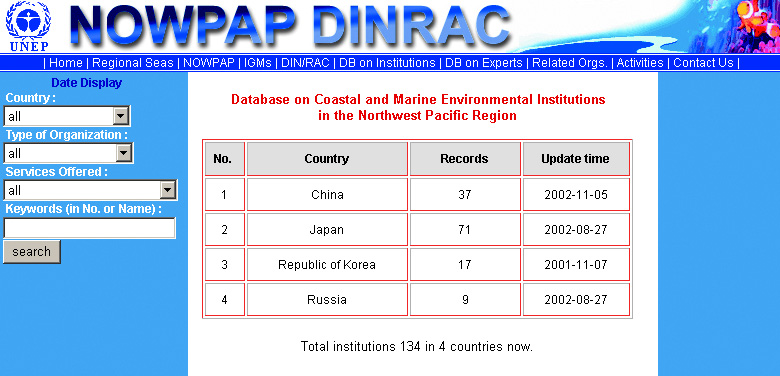
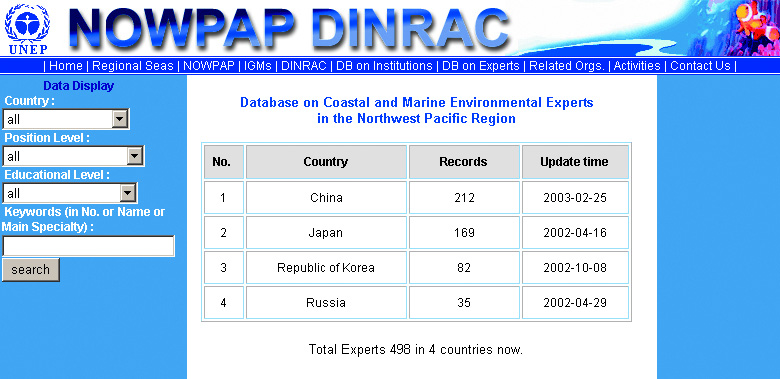
Databases on Coastal and Marine Environmental Institutions & Experts
In the Northwest Pacific Region
The NOWPAP Institutions Database and
Experts Database are developed by using
M i c r o s o f t M y s q l s o f t w a r e a n d p h p 3
programming language, which can be
accessed through the Internet. The main
functions, such as searching, modifying,
deleting and adding, can be operated on-line.
So any user, from any location, can access
the information in the NOWPAP Institutions
Database and Experts Database.
The current information in the databases is
based on the contents of the book "Directory
of coastal and Marine Environmental
Institutions in the Northwest Pacific Region",
which was published by UNEP in February
1998. The original data source for the book
came from the questionnaire circulated by
UNEP EAP AP in 1998 in the region.
A new questionnaire for updating information
in the databases will be developed by DINRAC
and circulated to the four National Focal Points
in the members of NOWPAP in the near future.
The new databases and on-line search will
be developed according to the new
questionnaires. It is expected the up-to-date
information in the two databases could be
assessable on-line at the end of 2003.
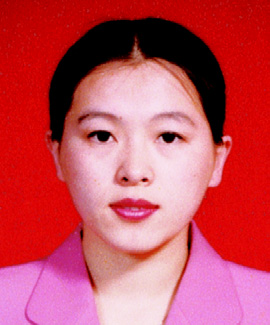
Addressed by NOWPAP DINRAC Focal Point of China
Ms. Chen Mo, Programme Officer, State Environmental Protection Administration
It's my great pressure to attend the 1st
available. The assembly of such data sets is only possible
National Focal Point meeting for NOWPAP
through closer co-operation between the members collecting
DINRAC in Shanghai, China. It is an
the data. Today, more and more data centers are also providing
important event since the 1st Coordination
data and information on Internet, because the Internet is an
Working Group meeting for DINRAC held in
inexpensive, convenient and practical means of distribution. A
2001.
data set can be posted on Internet to all users. It meets the
requirements to deal with many individual requests for the same
A new operational mechanism has been established at
data and solves the problems of incompatible digital media and
the meeting according to the decision made at the 7th
format.
inter-governmental meeting in Vladivostok (March,2002).
The concept of metadata is becoming increasingly familiar to
Environmental data and information are fundamental for scientific
people who deal with information and spatial information in
and management activities, and the NOWPAP Memebers have
particular. Since no central agency collects and manages all
collected and collated data/information on the state of the national
such data now in the region, we must set up metadata base in
marine environment. The members of the NOWPAP have a large
the region. Metadata is data about data. In other words, it is a
number of marine data on this region. Relevant regional data
structural summary of information that describes the data.
collection and exchange systems have been developed by
Metadata includes such characteristics as the content, quality,
international organizations such as IOC, FAO and PICES for
currency, access and availability of the data. For spatial
certain purposes in defined geographic areas. However, only if
information or information with a geographic component,
they are collated and analyzed in a proper manner can the data
metadata deals with the "what, when, who, where and how" of
and information be useful for actural management of coastal
the data.
and ocean areas and associated freshwater systems.
As a China Focal Point, I understand the position brings it with
The active coverage of the NOWPAP is wide. Therefore, the
great responsibility. There are now still many difficulties for us to
regional exchange and sharing of the data and information is
overcome. I will continuously try my best to promote regional
strongly supported and concerned by NOWPAP members.
cooperation with counterparts among the members in order to
Marine research programme considering and looking at regional
protect our common ocean.
and marine processes needs the comprehensive data sets
6
NOWPAP DINRAC Newsletter
Oceangraphic Data Management In the NOWPAP Region
Under On-going National Program "ESIMO" of Russia
by Dr. Igor Rostov, Head of Laboratory of Ocean Information and Ocean Monitoring,
Pacific Oceanological Institute (POI), Far Eastern Branch, Russian Academy of Sciences (FEB RAS)
The North East Asian Marginal Seas and the
which is based on existing agency systems and intends to provide
adjacent areas of the Pacific Ocean have a
information support for various marine activities by:
determinant effect on formation of
hydrological regime, weather conditions and
·
creating a unified regulatory - methodical, organizational,
climate in the Asian-Pacific Region.
metrological and technological basis for maintaining
Here, as well, the richest biological and
information resources;
mineral resources are concentrated, sea
·
creating and maintaining Governmental, Departmental and
routes, fishery and economic activity have
Regional information funds on marine and coastal areas;
·
developing and standardizing monitoring technologies for
been developing. All these factors make important the research
control of state and pollution of marine environment;
of the state of marine environment, accumulation and effective
·
integrating agency information systems and providing
use of the information resources. In modern conditions regional
access to the whole set of information resources for the
databases on the state of the marine environment become
World Ocean;
necessary within decisions making on marine and coastal
·
establishing exchange with similar systems within
environment management, planning and realization of the nature
international cooperation and participating in International
protection activity. That is why Russian Federation pays
Programs.
significant attention to the creation and systematization of such
regional databases for the Northwest Pacific Region.
In the bounds of the conception on the ESIMO constructing at
the POI it is being carried out the work on the creation of the
Historical, oceanography delayed mode and real-time observation
ESIMO sub-regional (departmental) segment for placing the
data of different oceanographic, hydrometeorological,
information resources of the general and special use to the FEB
hydrochemical and hydrobiological varieties make the basis of
RAS network and to the Internet. The goal of the studies being
informational resources on the state of the ocean, marine and
performed is the formation of the regional information fund of
coastal environment here.
ESIMO and the provision of the telecommunication access of a
wide circle of users to the initial information and production on
Russia and neighbour countries have good traditions on science
the problems of studies and exploration of marine water areas
and technical collaborations. Lately, the scientists of these
and coastal territories of the region on the basis of the web and
countries conducted the cooperative researches among
GIS technologies. Main objectives of the studies are:
our countries for the NOWPAP/NEAR-GOOS area, which
included the investigations of climate variations, living marine
1.
Formation of the information fund of the sub-system,
resources, coastal management, health of the sea and
development and realization of the integrated
oceanography. Participation of these countries in the
oceanographic data bases on the Northern Pacific.
International Projects being carried out under the aegis of
2.
Development of a specialized web-site of the POI as an
IOC/UNESCO and UNEP, presents a new stage of such
integrated base of the information resources on marine
cooperation - the cooperation in the sphere of operative
water areas of the Far Eastern Region of Russia <http://
collection, accumulation and exchange of data and information
www.pacificinfo.ru>.
on the marine environment state in the region. As a result of
3.
Preparation of information products (electronic information-
these studies, the institutions of the Russian Far East
reference textbooks and atlases) for their distribution through
accumulated vast factual material comprising many tens of
the telecommunication network and on CDs.
thousands of stations and points of oceanographic and other
4.
Realization of the calculated-model block, construction of
types of observations. The most part of the data was obtained in
the complex information-analytical system on the state of
cruises of the research vessels by the Far Eastern Regional
marine media and resources of the Far Eastern Seas.
Hydrometeorological Research Institute (FERHRI), Russian
5.
Development of GIS on regional oceanography, marine
Academy of Sciences (POI FEB RAS, IO RAN), Pacific Research
geology and geophysics.
Institute of Fisheries and Oceanography (TINRO-Centre) and
6.
Creation of bibliographical electronic data base.
its Divisions, Territorial Departments of the Russian
Hydrometeorological Service, Russian Federal Institute of
Such functions should be realized as well by the Regional
Fisheries and Oceanography (RFRIFO).
Centers of the ESIMO (FERHRI in Vladivostok) and the other
organizations - participants of the Subprogram. Steps of ESIMO
Considerable progress in sphere of oceanographic data
development include:
management in Russia has been achieved at the expense of
1.
1999-2002 development of ESIMO basics.
means concentration and efficient coordination of studies
2.
2003-2007 development and operation of ESIMO
developed for the last 3 years in the frame of the Subprogram
components.
"Creating a Unified System of Information on the World Ocean
3.
2008-... operation of ESIMO full version and its upgrading.
Condition" (ESIMO). It represents an important part of the
Federal target program "The World Ocean" and is realized by
On accomplishment of the first step of ESIMO in 2002-2003 it is
organizations of different Federal Departments under 51 projects.
planned to put into operation the first line of ESIMO, whish
Actually it is most significant National Program in field of data
includes 9 ESIMO Centres in Russia. Information on ESIMO is
management. The Principal Coordinator of ESIMO development
disseminated by a regular issue of ESIMO electronic bulletin
is All Russian Research Institute of Hydrometeorological
and other materials available at ESIMO web-portal <http://www.
Information World Data Centre "B" (RIHMI-WDC) of
oceaninfo.ru> now existing in Russian version.
Roshydromet <http://www.meteo.ru>.
The objective of the Subprogram is to develop a Unified System,
NOWPAP DINRAC Newsletter
7
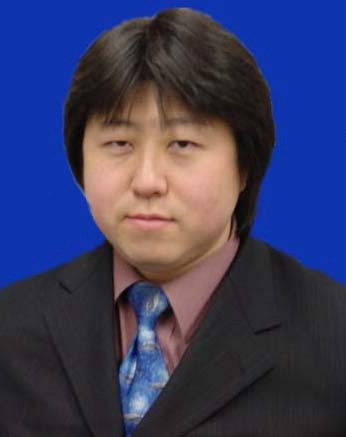
Addressed by NOWPAP DINRAC Focal Point of Japan
Dr Toru Suzuki, General Manager of Research and Development Division
Marine Information Research Center, Japan Hydrographic Association
Congratulations on NOWPAP DINRAC News
the Experts should assist and advice to that work. Besides nurture
Letter publication.
and training experts for oceanographic and marine coastal data
handling will become one of important task of DINRAC in the
DINRAC plays an important role in working
future, and it is needed to cooperate with activity of WESTPAC
out of policy and guideline for sharing of marine
training course on oceanographic data management.
and coastal data and information in NOWPAP members and
other Regional Activity Centers.
DINRAC will also facilitate of sharing the other RACs data and
information such as the satellite images, plankton data related
The Japan Oceanographic Data Center was established in the
Harmful Algal Bloom and red tide, and marine coastal
Hydrographic and Oceanographic Department, Japan Coast
environmental information, and so on. It means that data and
Guard in 1965 in accordance with the resolution adopted by the
information in other RACs and NOWPAP members are
Intergovernmental Oceanographic Commission (IOC) of
connected with DINRAC works. I will do my best for DINRAC
UNESCO in 1961 as well as the reports of the Council for Marine
activity and development as one of Focal Point in Japan.
Scientific Technology in 1963 and 1964. The JODC has been
carrying out international services as the National Oceanographic
Data Center of Japan under the framework of International
Oceanographic Data and Information Exchange (IODE)
prompted by IOC, and is also in charge of the Responsible
National Oceanographic Data Center (RNODC), which manages
the data from international projects such as the IOC Regional
Committee for the Western Pacific (WESTPAC) programme and
Editor
so on. In addition the JODC has been operating the Regional
Delayed Mode Data Base which the oceanographic/marine
The First Issue of the NOWPAP DINRAC
meteorological data and maintained, for the GOOS regional
Newsletter is published by the NOWPAP
Project NEAR-GOOS, and the Director of JODC accepted
DINRAC and is distributed free of Charge.We
the request from IOC for assumption of IODE Regional
hope this newsletter will not only be informative,
Coordinator for WESTPAC in 1997. Furthermore, the Marine
but also beneficial to communication needs.
Information Research Center was established as a part of Japan
Hydrographic Association under the financial support of the
Correspondence should be address to:
Nippon Foundation in 1997 in order to research and develop a
NOWPAP DINRAC
quality control procedure and method for oceanographic data
and to produce some products using high quality dataset. The
Northwest Pacific Action Plan
JODC and MIRC are complementary to each other activities
Data and Information Network Regional
and frequently cooperative with oceanographic and coastal data
Activity Center
management. I believe that wide experiences and knowledge of
JODC and MIRC surely contribute to activity and development
Established at:
of DINRAC.
Enviromental Information Center,
State Environmental Protection Administration,
Similarly the other NOWPAP members have also the National
Oceanographic Data Center and are the member of WESTPAC
China.
region, and have been operating the Regional Real Time and
Delayed Mode Data Base. In other words, it has already been
No.1 YuhuiNanlu, Chaoyang District,
exchanging and sharing oceanographic and marine data in
Beijing 100029,P.R.China
NOWPAP members. It should be noted that the DINRAC have
Tel:86-10-84640869
to avoid to repeating IOC/WESTPAC activities for gathering and
Fax:86-10-84630849
distributing oceanographic data in NOWPAP members. I think
one of solutions is to establish a metadata-base system including
Homepage:<http://dinrac.nowpap.org>
information of data location, list of scientists/experts and
Email: dinrac@zhb.gov.cn
organizations/institutes related marine and coastal environment
research and survey, observing ships/vessels and equipment,
and so on. DINRAC has already started to develop a framework
of metadata-base system, hence the National Focal Points and
8
NOWPAP DINRAC Newsletter