Newsletter from
Northwest Pacifi c Action Plan
Special Monitoring & Coastal Environmental Assessment
Regional Activity Centre
New Direction of CEARAC Activities
Greetings from the Director of CEARAC, Takeshi Ogawa
It is my great pleasure
reviewed, the following activities were approved
to join this "NOWPAP
to implement for the 2006-2007 biennium : WG3
Family" by appointed as
will publish a booklet, "Countermeasures against
Contents
a new CEARAC director
HABs"; WG4 will refine "NPEC Guideline
this July. I hope that
for Eutrophication Monitoring by RS" by the
this newsletter will keep
NOWPAP Members 2006 and will conduct a RS
New Direction of CEARAC
connecting CEARAC to
training course on data analysis 2007.
Activities ··························1
people who are interested
in marine environment and our activities.
Northwest Pacific Region Environmental
NOWPAP Marine Litter
Cooperation CenterNPEC, the host organization
Activity ·····························2
CEARAC activities for the 2006-2007 biennium
of CEARAC, has been carrying out "Research
will be implemented based on the workplans
on Buried Objects and Washed up Driftage on
approved at the 10th Inter Governmental Meeting
the Coasts along the Northwest Pacific Region"
Workplan and Budget of
IGM. Working Group 3WG3 and Working
since 1996. Co-hosting with the Ministry of
CEARAC ···························3
Group 4WG4 will conduct activities of
the Environment, "the 1st Workshop on Marine
CEARAC for the new biennium same as for the
Litter in the Northwest Pacific Region" was
NOWPAP Working Group 3
2004-2005 biennium; however, in accordance
organized in Toyama in November 2005 with
HAB ······························3
with "the New Direction of NOWPAP RACs",
inviting participants from the four countries in
which was approved in the 10th IGM, CEARAC
the NOWPAP Region. The participants agreed
will take additional responsibilities such as "Land
that marine litter was a significant international
NOWPAP Working Group 4
based Sources of Pollution" and "Marine Litter
concern and that the NOWPAP Members would
RS ································4
mainly land-based one."
"Land based Sources
cooperatively address this issue in the area.
of Pollution" has not been launched yet. Final
CEARAC will work on the issues of marine litter
CEARAC Activities on
workplans and schedules of WG3, WG4 and
with taking part in MALITA under the initiative
Marine Litter ·····················5
Marine Litter ActivityMALITA were decided
of NOWPAP RCU and will develop regional and
based on suggestions from experts at the 4th
national strategies for integrated management.
Voice from the Region
CEARAC Focal Points Meeting, the 3rd WG3 and
······6
WG4 Meetings last July.
As mentioned above, CEARAC workplans of
the 2006-2007 biennium are based on the past
Visit CEARAC Website ·······8
During the 2004-2005 biennium, both WG3 and
activities, and new activities are added in response
WG4 made the National Reports and the Integrated
to the New Direction of NOWPAP RACs.
Reports. Also, these Working Groups spent time
However, ultimate goals of CEARAC, within the
and made efforts on collecting and providing
framework of NOWPAP, have never been changed
information on Harmful Algal Blooms HABs
since establishment of CEARAC, and will never
and Remote Sensing RS in the NOWPAP region.
change under this new direction. CEARAC, as well
As a result, WG3 set up HAB Reference Database,
as NPEC, makes our utmost efforts to enable next
and WG4 set up Ocean Remote Sensing Portal Site.
generations to keep receiving abundance of natural
These activities were quite useful to comprehend
resources in the Northwest Pacifi c Region. Thank
current situations of HABs and RS in the area and
you very much for your continuous cooperation
No. 3
to clarify issues which CEARAC will address
with CEARAC and its activities, and I look forward
in the new bienniums. As the outcomes of the
to witnessing that our efforts and your support will
November 2006
last biennium and issues to be addressed were
yield satisfactory outcomes.
NOWPAP Marine Litter Activity
Dr. Jeung Sook Park, Scientifi c Affairs Offi cer, North Pacifi c Action Plan (NOWPAP) of UNEP
Acknowledging
on the amounts and distribution of marine
NOWPAP also organized an International
the severity and
litter on the beaches. The People's Republic
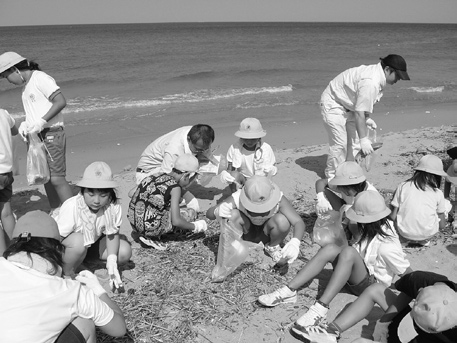
Coastal Cleanup ICC campaign in
urgent need to cope
of China and the Russian Federation have
Yamagata, Japan in September 2006 that
with the marine
provided short summaries. In addition, all
brought representatives of government
litter problem in
four member states have prepared a national
agencies, general public, academic
t h e N o r t h w e s t
summary on legal instruments related to
institutions and NGOs from all NOWPAP
P a c i f i c r e g i o n ,
marine litter which will be integrated into a
member states to jointly participate in the
the Marine Litter
regional overview later this year.
event. With the support of the member
Activity MALITA has been developed
states, the ICC event will be continued in
by the NOWPAP Regional Coordinating
The First MALITA Working Meeting was
2007 in the NOWPAP region.
Unit in close cooperation with the UNEP
held in June 2006 to review the current
Regional Seas Programme and the
progress of the MALITA implementation
T h e M A L I T A a c t i v i t i e s a r e b e i n g
NOWPAP member states. MALITA is
and discuss the next steps to be taken. The
implemented in close collaboration with
being implemented, right after its approval
First NOWPAP Workshop on Marine Litter
the four NOWPAP member states and
at the NOWPAP Tenth Intergovernmental
was convened back to back the working
the Regional Activity Centres under the
Meeting Toyama, Japan, November
meeting to present a variety of information
overall responsibility of the NOWPAP
2005, by the Regional Coordinating Unit,
from the member states with respect to
Regional Coordinating Unit. The further
the four NOWPAP Regional Activity
marine litter national monitoring, policies,
information on the progress of the
Centres and the Marin Litter National Focal
management approaches and treatment
MALITA implementation will be placed
Points. The main objective of MALITA is
technologies.
on the NOWPAP website and updated
to assist in the environmental protection and
periodically.
sustainable development of the NOWPAP
The Second MALITA Working Meeting,
region through the development of a
and the NOWPAP Workshop, will be held
Please join and help us keep our seas and
NOWPAP Regional Action Plan for the
in Japan in early 2007 where the further
coastal areas clean without marine litter!
Marine Litter Management.
progress on regional and national strategies
on the integrated management of marine
The NOWPAP MALITA consists of several
litter will be further discussed, including
components as follows:
marine litter monitoring, public awareness
formulation of the long-term strategy to
and civil society involvement.
deal with marine litter problem;
approach to the civil society including
private sector, NGOs and the scientific
community to develop partnerships;
development and implementation of the
long-term monitoring programme;
formulation and implementation of
awareness and education campaigns;
development of sectoral guidelines for the
management of marine litter; and
development and improvement of waste
management policies and systems.
The first step to implement MALITA is
to collect exiting data and information
on marine litter in the member states
and on national legal instruments to deal
with marine litter, including compliance
with international agreements such as
the MARPOL, the Basel and the London
Conventions. So far, Japan and the Republic
of Korea have provided the quantitative data
Workplan and Budget for CEARAC for the 2006-2007 biennium
The 10th IGM Toyama, Japan, November 2005 approved the allocation of US $169,500 on the budget for CEARAC for the 2006 -2007
biennium. Following the approval at the IGM, the 4th CEARAC FPM Toyama, Japan, March 2006 approved the Workplan and Budget for
CEARAC for the 2006-2007 biennium.
Activity
Planned date
Budget
US$
Activity
Planned date
Budget
US$
Organization of CEARAC 4th
Organization of CEARAC 5th
September
March 2006
23,000
23,000
Focal Points Meeting
Focal Points Meeting
2007
WG3HAB
Organization of 3rd Meeting of
July 2006
15,000
- Booklet of Countermeasures
2007
14,000
WG3 HAB
against HABs
Organization of 3rd Meeting of
WG4RS
July 2006
15,000
2007
15,000
WG4 RS
- training
WG3HAB
Throughout
Throughout
- Booklet of Countermeasures
12,000
MALITA
11,000
2006
2007
against HABs
WG4RS
Throughout
Publication of CEARAC
Summer
15,000
2,000
- guideline
2006
Newsletter
2007
Throughout
Throughout
MALITA
8,500
Intersessional work
3,000
2006
2007
Publication of CEARAC
November
Cooperation and coordination of
Throughout
2,000
8,000
Newsletter
2006
CEARAC activities
2006 / 2007
Throughout
Intersessional work
3,000
TOTAL
169,500
2006
NOWPAP Working Group 3 WG3
NOWPAP Working Group3WG3
conducted the following things: 1
treat HABs-related problems as a part
was established to mainly implement
publication of the National Reports and
of activities of coastal environmental
monitoring and assessment of harmful algal
the Integrated Report on Harmful Algal
assessments.
bloomsHABs including red tide, which
Blooms HABs for the NOWPAP Region,
are chosen as the initial subject of coastal
2 establishment of HAB Reference
Thanks to continuous cooperation of
environment assessment.
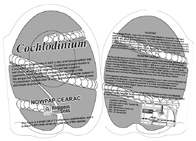
Database and 3 publication of a
WG3 colleagues, NOWPAP CEARAC
Cochlodinium pamphlet and establishment
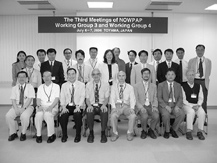
successfully held the 3rd NOWPAP
For the 2004-2005 biennium, WG3 mainly
of Cochlodinium Homepage in order to
Working Group 3 Meeting on 6-7 July 2006
in Toyama, Japan.
List of WG3 members
Country
Name
Organization
Mr. Xiaofeng KANG
China National Environmental Monitoring Center
China Prof. Mingjiang ZHOU
Chinese Academy of Sciences
Dr. Yasuwo FUKUYO
The University of Tokyo
Japan Dr. Osamu MATSUDA Professor Emeritus, Hiroshima University
Dr. Sam-Geum LEE
National Fisheries Research and Development Institute
Korea Dr. Hak-Gyoon KIM
Pukyong National University
Dr. Vladimir SHULKIN Russian Academy of Sciences
Russia Dr. Tatiana ORLOVA
Russian Academy of Sciences
The 3rd Meetings of NOWPAP WG3 and WG4
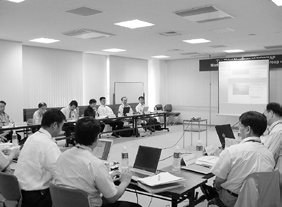
The meeting reviewed activities and budget
biennium is publication of a booklet,
of mitigation activities and to invent better
for WG3 for the 2004-2005 biennium, and
"Countermeasures against HABs". In
methods and applications to terminate and
discussed the details of WG3 new activities
accordance with the agreement at the 3rd
mitigate HABs in the NOWPAP Region.
for the 2006-2007 biennium and the mid
NOWPAP WG3 Meeting and based on the
and long term strategies of CEARAC and
approved workplan at the 4th CEARAC
mid and long term objectives of WG3 and
FPM, countermeasures against HABs
WG4. In this Meeting, it was confirmed
will be collected by the expert of each
that the Cochlodinium pamphlet would
NOWPAP Member along with the proposed
be published in each language of the
format. Information will be collected in
NOWPAP Members for its use of fishermen
2006. The collected information will be
and students in association with other topics
compiled into a booklet and it will be
in this meeting.
published in 2007.
CEARAC is expecting that this booklet will
New activity of WG3 during the 2006-2007
be used to learn advantage and disadvantage
Cochlodinium pamphlet
NOWPAP Working Group 4 WG4
WG4 has been working on the development
and the mid and long term strategies of
program will be decided by the 1st quarter
of monitoring tools for marine and coastal
CEARAC and mid and long term objectives
of 2007 and will be conducted in 2007.
environment with using RS Remote
of WG3 and WG4.
CEARAC is expecting that this training
Sensing techniques since its establishment
program will establish a framework that
in 2001.
New activities of WG4 during the
enables mutual technical assistance for
2006-2007 biennium are refinement
the marine environmental monitoring by
As major outcomes of WG4 for the
of "NPEC Eutrophication Monitoring
RS and will provide capacity building
2004-2005 biennium, the National Reports
Guideline by RS" by the NOWPAP
assistance to improve technical capability
and the Integrated Report on Ocean Remote
Members and preparation of a RS training
in ocean RS in the NOWPAP Region.
Sensing for the NOWPAP Region that
program on data analysis. In accordance
A new function to search for literatures
summarize the situation of ocean RS in the
with the agreement at the 3rd NOWPAP
referring to Ocean RS in the NOWPAP was
NOWPAP Region were published in 2005.
WG4 Meeting and based on the approved
added to the Ocean Remote Sensing Portal
These reports are open to the public via
workplan at the 4th CEARAC FPM, NPEC
site in June 2006.
CEARAC homepage. WG4 also constructed
Eutrophication Monitoring Guideline was
homepages relevant to ocean remote
reviewed and refined by the experts of
The 4th International Workshop on Remote
sensing RS such as Ocean RS Portal
China, Korea and Russia. These refinement
Sensing of the Marine Environment in
site and website on Oil spill monitoring by
works were compiled into one consolidated
the Northwest Pacific Region was co-
remote sensing.
guideline in 2006, aiming at forming a
organized by NPEC and Pukyong National
basis for establishing common methods
University on 1-2 August 2006 in Busan,
Thanks to continuous cooperation of WG4
for evaluation and using satellite data for
Korea, aiming at providing an opportunity
experts, NOWPAP CEARAC successfully
cooperative environmental monitoring in
for experts to present their latest research
organized the 3rd NOWPAP Working Group
the NOWPAP Region.
results and to exchange information on
4 Meeting on 6-7 July 2006 in Toyama,
A provisional implementation plan of a RS
ocean remote sensing application.
Japan.
training program is now being reviewed
The meeting reviewed past activities and
by the WG4 experts and it will be finalized
discussed the workplan and budget on WG4
by the end of 2006 by correspondence
future activities for the 2006-2007 biennium
among WG4. Date and place of the training
List of WG4 members
Country
Name
Organization
Mr. Chuanqing WU
China National Environmental Monitoring Center
China Dr. Chenghu ZHOU
Chinese Academy of Sciences
Dr. Ichio ASANUMA
Tokyo University of Information Sciences
Japan Dr. Joji ISHIZAKA
Nagasaki University
Dr. Young-Sang SUH
National Fisheries Research and Development Institute
Korea Dr. Sang-Woo KIM
National Fisheries Research and Development Institute
Dr. Leonid MITNIK
Russian Academy of Sciences
Russia Dr. Anatoly ALEXANIN Russian Academy of Sciences
Mid and long term strategies of CEARAC and objectives of
WG3 and WG4
At the 4th CEARAC FPM Toyama, Japan,
National and the Integrated Reports on
tools with existing physical and ecosystem
8-9 March 2006, there was a suggestion
HABs to understand interaction between
model.
that mid and long term objectives of
HABs occurrence and the environmental
Comments from experts on the drafts
CEARAC would be documented in a
parameters such as temperature, salinity
were: 1 the long term objective
workplan, and the issues to be discussed in
and nutrient in mid term, 2 Collection
s h o u l d b e t o e s t a b l i s h a s s e s s m e n t
WG meetings and next FPM were decided.
of data in "red tide hot spot" as a pilot
tools not prediction tools. 2 What
study to understand the environmental
parameter should be indicators for coastal
In response to the suggestion made at the
parameters which lead to HABs occurrence,
environmental assessment? It was agreed
4th CEARAC FPM, the 3rd WG3 and WG4
3 incorporation of the collected and
that the Secretariat would improve mid
Meetings were jointly held on 6-7 July
standardized data into ecosystem model
and long term strategies of CEARAC and
2006 in Toyama, Japan to discuss the mid
for construction of prediction tools for the
objectives of WG3 and WG4 along with
and long term strategies of CEARAC and
NOWPAP Region.
correspondences among the experts of both
mid and long term objectives of WG3 and
The Secretariat also presented a draft of
WGs.
WG4.
mid and long term objectives of WG4.
In the discussion about mid and long
The draft was composed of the following:
CEARAC has just started development of
term objectives of WG3, the Secretariat
1 coordination of development of
mid and long term strategies of CEARAC
presented a draft of mid and long term
environment assessment tools utilizing
and objectives of WG3 and WG4, and
objectives of WG3. It was composed
remote sensing data in the mid term, 2
CEARAC has been preparing a revised
of three elements :1 review of the
coordination of development of prediction
draft for the 12th IGM in 2007.
CEARAC Activities on Marine Litter
As a new project, MALITA was approved
tourism, coastal construction and
in the NOWPAP Region and prepared a
at the 10th NOWPAP IGM in November
recycling
draft of monitoring guideline. Furthermore,
2005. The main objective of MALITA
8. Developing responsible citizenship
CEARAC participated in International
is development of a NOWPAP Regional
guidelines for children and the youth
Coastal Cleanup on 28-30 September 2006
Action Plan on marine litter.
in Yamagata, Japan as a part of Activity
CEARAC started several segments of
CEARAC collected information and data
10 of MALITA. CEARAC will make a
MALITA with its own responsibility with
on marine litter in Japan and submitted it to
brochure on reduction of marine litter in
approval by IGM. Activities of CEARAC
NOWPAP RCU. CEARAC also analyzed
English for the purpose of promoting public
are as follows:
long-term regional and national monitoring
awareness and will publish it in 2006.
programmes on land-based marine litter
1. Collecting and reviewing existing
information and data relevant to land-
based marine litter
2. Developing regional and national
strategies on integrated management of
marine litter
3. Approaching tourism industry and
manufacturers of plastics to develop
partnerships
4. Developing and implementing long-
term regional and national monitoring
programmes on land-based marine litter
5. Formulating and implementing awareness
and education campaigns for the general
public, various groups within the tourism
sector, industry and municipal authorities.
6. Preparing brochures for the purpose
of promoting public awareness on the
reduction of marine litter
7.Developing sectoral guidelines for
Research on Washed-up Driftage on the Coasts in Toyama, Japan
Application of oligo nucleic acid probe to monitor
Alexandrium catenella blooms in China
Mingjiang Zhou, Professor, Institute of Oceanology, Chinese Academy of Sciences (NOWPAP
WG3 Expert of China)
B l o o m s c a u s e d
River, blooms of Alexandrium spp. were
background of dinoflagellate taxonomy
b y t h e s p e c i e s
observed co-occurring with the dominant
could also do the cell identification and
i n G e n u s
species Prorocentrum donghaiense. Cells
enumeration of the target cells. However,
Alexandrium have
of Alexandrium catenel a were the most
more field works are still needed due to
been extensively
abundant among all the Alexandrium cells.
the complexity of Alexandrium species
s t u d i e d a l l
The area of the bloom could reach hundreds
occurred in the fi eld. The cooperation under
round the world,
of square kilometers, and it is clear that
the framework of CEARAC should also be
s i n c e p o t e n t
the species was capable of producing PSP
encouraged to improve the communication
neurotoxins, paralytic shellfish poisons,
toxins, mostly C1 and C2.
and inter-calibration of the emerging new
could be produced by some species in
techniques in monitoring algal blooms in
this Genus. However, monitoring of toxic
To further investigate the dynamics of A.
the NOWPAP area.
Alexandrum species is often difficult.
catenel a bloom, oligo nucleic acid probes
Expertise and well-trained staff are needed
were established for this species based on
to identify the targeted species, and the
the partial LSU rDNA and ITS sequences
process for algal cell identification and
analyzed. The fluorescence labeled
enumeration is time-consuming and
probes targeted on LSU rRNA were used
labor intensive. Besides, the techniques
to identify A. catenel a cells based on a
for monitoring large scale blooms, such
fluorescence in situ hybridization FISH
as remote-sensing, are also hampered in
method. The specificity of the probes was
monitoring Alexandrium blooms because
testified using the natural phytoplankton
the Alexandrium cells would not dominate
samples spiked with target species A.
the phytoplankton community under most
catenel a, as well as the mixed samples
of the circumstances. This has led to the
of A. catenel a and A. minutum, another
application of new techniques, especially
Alexandrium species found in this area.
those of molecular biology, in helping
Our first trial of the method in the field
improving the monitoring of such blooms
proved that it was a promising method
in the last decade.
for monitoring A. catenel a, using the net
samples collected in this area Fig 1.
Blooms caused by the Alexandrium
species were not very well documented
The application of this FISH method in
in China due to the reason mentioned
monitoring Alexandrium blooms has many
above. However, during the study of the
advantages over the traditional method. It
Fig. 1y Detection of A. catenel a cel s
large-scale dinoflagellate blooms in sea
would take less time and labor in sample
using a probe labeled with green
areas adjacent to the estuary of Yangtze
processing, and people without any
fl uorescence.
The 4th International Workshop on Remote Sensing of
Marine Environment in the Northwest Pacifi c Region
Hak-Gyoon Kim, Invitation Professor, Pukyong National University, Korea (NOWPAP WG3
Expert of Korea)
As one of joint activities of Working
harmful algal blooms HABs and Working
tools using remote sensing in Special
Group 3 the monitoring and assessment of
Group 4 developing new monitoring
Monitoring and Coastal Environmental
A s s e s s m e n t
technologies as a tool especially to detect
Pukyong National University, so that the
R e g i o n a l
the deleterious environmental impacts such
participants could harvest two birds with
Activity Centre
as Eutrophication, Red-tide HABs and oil
one stone. It was a good opportunity to
N O W P A P /
spill in the NOWPAP Region. It was found
touch and discuss that kind of marine issues
C E A R A C , t h e
that the change of remotely sensed ocean
among the participants through the back-to-
4th International
color using satellite can be a promising
back meeting.
W o r k s h o p o n
agent for the detection of abnormal ocean
Remote Sensing
changes. Acknowledging the present
As a result of this workshop, the meeting
of Marine Environment in the Northwest
socio-scientific demand, all participants
reaffirmed the importance of cooperation
Pacific Region was held in August 1-2,
were agreed that we should develop more
in the NOWPAP member countries and
2006, at the Korea Inter-University Institute
comprehensive remote sensing algorithm
agreed to share their new scientifi c fi ndings
of Ocean Science KIOS, Pukyong
with enhancing the quality assurance of its
on the monitoring and assessment of HABs,
National University PKNU, Busan,
application in the working fi eld.
eutrophication and oil spill by remote
Korea. More than 70 participants from over
sensing technology.
6 countries such as China, Japan, Russia,
Prior to this workshop, the International
For more information, please visit the
the Philippines, Germany and Korea, and
Symposium on the Bio-invasion of Non-
CEARAC website at the following address;
international organizations attended the
indigenous Species organized by Korea
http://www.cearac.nowpap.org/
workshop. The workshop was organized
Inter-University Institute of Ocean Science
by Pukyong National University and
KIOS was been held on July 31, 2006 at
Northwest Pacific Region Environmental
Cooperation Center with the support of
Korea Ministry of Maritime Affairs and
Fisheries, National Fisheries Research &
Development Institute, and the Ministry of
the Environment, Japan, Toyama Prefecture,
IOC/WESTPAC and North Pacifi c Marine
Science Organization PICES.
This two-day joint workshop was processed
on seven sessions with 27 presentations
covering biogeography of HABs, ocean
environment, and the evaluation of marine
remote sensing technology. The most
important topic was how we develop
commercially practicable remote sensing
The workshop group photo taken on August 1, 2006, Busan, Korea.
Recent Activities related to Marine Environment Conservation
by the Ministry of the Environment, Japan
Keiko Segawa, Deputy Director, Global Environmental Issues Division, Global Environment Bureau,
Ministry of the Environment, Japan (CEARAC Focal Point of Japan)
Concerning marine
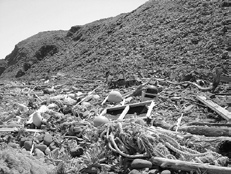
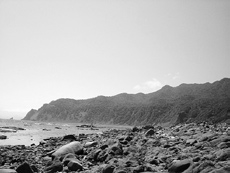
Drifted and washed-up marine litter has
measures to be regarded as quick-acting
i s s u e s , J a p a n
resulted in degradation of coastal functions,
medicine because it is difficult to address
has taken major
deterioration of the environment, especially
sources of discharge as some are located
steps to improve
ecosystem, and sea landscapes and has given
in foreign lands, and it is also difficult to
i t s c a p a c i t y t o
adverse impacts to maintenance of safe
coordinate many different governmental
cope with various
navigation of ships and to fi sheries. These
agencies which work on different tasks
issues in national,
tendencies have been significant in recent
Hence, the Government decided to establish
r e g i o n a l a n d
years. Therefore, the Japanese Government
the framework in order to discuss more
global level. Here, I would like to describe
organized an inter-governmental meeting on
effective measures against marine litter last
recent notable activities of the Japanese
drifted marine litter in 2000; the Ministry
April.
Government related to marine conservation
of the Environment has led activities for
The outline of the framework is:
issues; Marine Litter Issues.
information exchange.
1. Director-General level Meeting of
However, there have not been any effective
relevant ministries was established in
April, 2006.
The Special Committee Meeting has been
2. The Ministry of the Environment is in
held three times, and the participants has
charge of management of the meeting in
discussed mainly possible countermeasures
cooperation with the Ministry of Land,
in the national policy context. Several
Infrastructure and Transport and Fisheries
ministries submitted FY 2007 budget
Agency. The Cabinet Secretariat also
request related to marine litter issues, e.g.
attends the meeting and provides
special researches for gaining knowledge
necessary advice.
of the marine litter origin, R&D for a new
3. Main tasks of the Meeting are as follows.
type incinerator which resists salinity of
The meeting will review and discuss 1
marine litter, subsidiaries for prefectures
current status, 2measures being taken,
which struggle with drifted wood and waste
3measures including international
in the Typhoon season. These requests have
measures, which address pollutant
been examined by Ministry of Finance
sources, and 4measures in areas where
since September and the final governmental
damages are significant. The meeting is
budget will be set by the end of this year.
scheduled to compile the measures to be
taken in March, 2007.
both are from Shiretoko, Japan
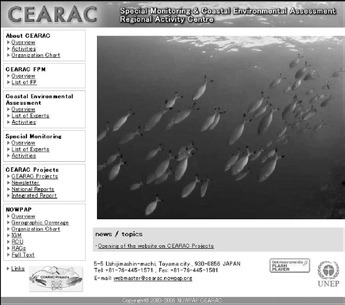
Visit CEARAC Website
Announcement
Visit our Website:http://cearac.nowpap.org/
The CEARAC Newsletter is published
The CEARAC Website greatly contributes to wider publicity for CEARAC and NOWPAP
every year and is distributed free of
activities together with CEARAC Newsletter.
chachge. For additional copies, or if
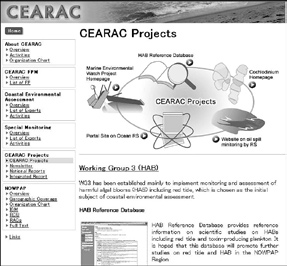
The Website was renewed in 2006, and links to CEARAC projects were added : HAB
you would like to be placed on our
mailing list, please contact CEARAC
Reference Database, Cochlodiniun Homepage, Ocean RS Portal Site, Oil spilling monitoring
at the following address:webmaster@
by RS and Marine Environmental Watch Project.
cearac.nowpap.org
They introduce currently implimenting activities and their progress of WG3 and WG4 as well
All the information about this newsletter
as that of CEARAC.
and more can be downloaded from
NOWPAP CEARAC Website.
Northwest Pacific Action Plan
Special Monitoring & Coastal Environ-
mental Assessment Regional Activity
Centre
http://cearac.nowpap.org/
Established at NPEC
Northwest Pacific Region Environ-
mental Cooperation Center
5-5 Ushijimashin-machi, Toyama City,
930-0856 JAPAN
Tel: +81-76-445-1571
Fax: +81-76-445-1581
CEARAC Staff
CEARAC Website
http://www.cearac.nowpap.org/
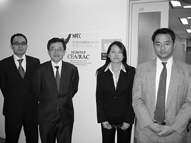
from the left,
T. YOSHIDA, T. OGAWA
CEARAC Projects
T. YAMAMOTO, Genki.T