E1288
v 1
Public Disclosure Authorized
Environmental Impact Statement
(EIS)
for
Public Disclosure Authorized
Manila Third Sewerage Project
Volume 1: Main Text and Figures
Public Disclosure Authorized
February 11, 2005
(Revised Draft)
Public Disclosure Authorized
Manila Water Company, Inc.
Manila, Philippines
SECTION ONE
Introduction
1.
INTRODUCTION ............................................................................................................................................... 1
1.1 GENERAL PROJECT INFORMATION........................................................................................................................ 1
1.2 PROJECT BACKGROUND ........................................................................................................................................ 2
1.3 MANILA THIRD SEWERAGE PROJECT (MTSP) .................................................................................................... 2
1.3.1 MTSP Components................................................................................................................................... 3
1.4 EIA APPROACH AND METHODOLOGY ................................................................................................................... 5
1.5 SCOPE OF THE STUDY............................................................................................................................................. 6
Manila Third Sewerage Project (MTSP)
SECTION ONE
Introduction
1. INTRODUCTION
1.1 GENERAL PROJECT INFORMATION
Project Name
:
MANILA THIRD SEWERAGE PROJECT
Project Proponent
:
Manila Water Company, Inc. (MWCI)
Project Officer
Responsible for the EIS
:
Ma. Fiorella de los Reyes-Fabella
Manager, Wastewater Department
Proponent's Address
:
489 Katipunan Road, Balara, Quezon City 1105
Contact Telephone
:
(63) (2) 981-8147
Project Location
:
National Capital Region, Taytay, Cainta, and San Mateo
municipalities in Rizal
Nature of Activity
:
Rehabilitation and Upgrading of Existing Sewerage System,
Construction of Sewage and Septage Treatment Plants in
East Zone concession area
EIS
Preparer
: Manila Water Company, Inc. (MWCI)
489 Katipunan Road, Balara, Quezon City 1105
in cooperation with the consortium of EDCOP, Lichel Technologies,
Inc. and Inter-Structure Systems, Inc.
Telephone Number
:
(02) 981-8147
Facsimile Number
:
(02) 928-5762
Contact
Person
: Evangeline R. Matibag
Manager,
Project
Development
Wastewater Department
Manila Third Sewerage Project (MTSP)
1
SECTION ONE
Introduction
1.2 PROJECT BACKGROUND
Metro Manila is the primary administrative center of the Philippines where concentration of commerce,
industry and services are operating. The region consists of fourteen (14) cities and three (3) municipalities,
with a population of eleven (11) million as of year 2000. The population influx in Metro Manila, industrial
development, and unstructured land use zoning have overloaded the infrastructure and promoted the rapid
deterioration of the environment.
The major waterways in the metropolis consisting of the Pasig River, Marikina River and the Laguna Lake are
now polluted because of continuous dumping of wastes to these water bodies. Pasig River, the main
watercourse which traverses the cities and municipalities of Makati, Mandaluyong, Manila, Pasig, Marikina
and Taguig receives about 70% of pollution from untreated or inadequately treated domestic wastewater. A
study conducted by the Department of Environment and Natural Resources and DANIDA in 2000 estimated
that 168 MT of BOD per day coming from domestic sources enters the Pasig River. It is projected that
contribution of domestic wastewater will increase to 308 MT BOD per day as the population increases.
The drainage basin of Metro Manila is not completely serviced by an appropriate sewerage system such that
wastewater discharges from residential communities end up in the river systems without adequate treatment.
At present, less than 8% of Metro Manila is sewered. The Central Sewerage System constitutes over 80%
wherein sewage is pumped from a catchment of 2,620 hectares to an outfall in Manila Bay. The remaining
20% is accounted by the Magallanes sewage treatment plant (STP) in Makati which treats 40 MLD for an area
covering 600 hectares and by the Dagat-Dagatan Treatment Plant that covers 333 hectares in Manila.
The rest of Metro Manila's wastewater is collected by public drainage network, either directly or through over
one million septic tanks which discharge into the river systems, terminating into the Manila Bay. The 2000
Census on Housing reported that septic tanks provide the most common form of sewage treatment throughout
Metro Manila constituting about 83% of the households in the metropolis. However, these septic tanks are
rarely desludged, hence, the contents overflow to the drainage system with minimal or no form of treatment.
According to the Philippines Environment Monitor 2003, a World Bank publication, 31% of illnesses, for a
five-year period from 1996 to 2000, were from water related diseases representing nearly 5.2 million cases.
Avoidable health costs due to losses in direct income and medical expenses are estimated at 3.3 billion pesos a
year. Similarly, the Philippine economy loses 17 billion pesos annually due to the degradation of the marine
fishery environment. Given that the most polluted region of the country is the National Capital Region
(NCR), it may be expected that a significant portion of the economic losses would impact upon the NCR.
1.3 MANILA THIRD SEWERAGE PROJECT (MTSP)
As an agent/contractor of the Metropolitan Waterworks and Sewerage System (MWSS), the Manila Water
Company, Inc. (MWCI) is given the responsibility of providing water and sewerage services to the East
concession area, which is composed of parts of Quezon City and Manila, Marikina, Makati, Mandaluyong,
Pasig, Pateros, Taguig and the Rizal Provinces. In recognition of the growing need for sewerage and
sanitation services and the water pollution attributed to untreated domestic wastewater, MWCI will implement
the proposed Manila Third Sewerage Project (MTSP).
A follow-up project to the Manila Second Sewerage Project (MSSP), MTSP has the objectives of (1) reducing
water-borne pollution in Metro Manila, Laguna de Bay and Manila Bay, (2) improving the living conditions
of urban residents, including the poor, by reducing human exposure to sewage, through strategic investments
in sewerage and sanitation, and (3) establishing the viability of new approaches for sewage management in
Manila Third Sewerage Project (MTSP)
2
SECTION ONE
Introduction
Metro Manila. The MTSP is estimated to cost US$86.5 M, with US$64 M intended for World Bank
financing. The MTSP will benefit approximately 367,000 families or a total population of 3.3 million in the
East Concession Area. With an implementation period of five (5) years from 2005 to 2010, MTSP will
improve sewer coverage of less than 8% in 2004 to an estimated 30% sewer coverage in the East Zone, and
will allow provision of sanitation services to the whole MWCI service area.
The components of MTSP are briefly described below.
1.3.1 MTSP Components
The components of the MTSP were identified by MWCI in consideration of likely environmental impacts,
socio-economic impacts, technical/technological constraints, constraints on implementation as well as limits
set by the Concession Agreement between MWSS and MWCI. Upon identification of the individual sub-
project location by MWCI in coordination with the MWSS, a Feasibility Study (FS) was conducted to
determine viability and optimize efficiency of the MTSP in terms of costs, coverage and beneficial impacts.
The following are based on the MTSP FS. Detailed descriptions of each component can be found in Section 3
of this EIS.
Component 1: Septage Management
Septic tanks provide the most common form of sanitation throughout Metro Manila. Around 85% of the
households in the metropolis were reported to have septic tanks in the year 2000 Census. The objective of this
component is to collect and treat septage in the more westerly parts of the East Concession Zone, specifically
those areas within the National Capital Region (NCR). It is currently estimated that there are 544,000
household users of individual septic tanks (ISPs), which is equivalent to 2.3 million residents.
To treat septage collected from ISPs, two (2) Septage Treatment Plants (SpTP) are proposed for construction.
The North SpTP was initially planned to be located in the vicinity of the Payatas Solid Waste Dump Site in
Quezon City, however, due to difficulties in acquiring land in the area, an alternative site was identified in
Barangay Gitnang Bayan II in San Mateo, Rizal. The new site will still primarily serve Quezon City,
Marikina and San Juan and will have a capacity of 586 m3/day. The South SpTP will have a capacity of 814
m3/day and is proposed to be located within the FTI mixed-use industrial complex in Taguig. The South SpTP
will primarily serve the cities of Mandaluyong, Pasig and Makati.
This component will also include the procurement of equipment for septic tank desludging, and septage
transport, treatment, and safe disposal.
Component 2: Sewage Management
This component will build on the achievements of MSSP by expanding MWCI's program of communal septic
tank upgrading and provision of sewerage and sanitation, and by piloting Metro Manila's first combined
sewerage systems, including in low-income areas. The proposed sub-components include:
a. Taguig Sewerage Systems
The DPWH, with the assistance of JBIC, is undertaking the construction of the Major Flood Control Project-
West of Manggahan Project which involves the construction of a lakeshore dike and four (4) drainage/flood
retention ponds. The drainage/flood retention ponds will catch the flows from the rivers of Hagonoy, Taguig,
Manila Third Sewerage Project (MTSP)
3
SECTION ONE
Introduction
Labasan and Tapayan to mitigate the inundation caused by heavy rains and the overflowing of Laguna Lake to
the municipalities of Taytay, Pateros, Taguig and the city of Pasig. These ponds will be used during the rainy
season as balancing ponds for periods of high storm runoff, pumping out excess water out into the lake. Upon
completion in 2006, this system will be turned-over by the DPWH to the Metropolitan Manila Development
Authority (MMDA) for operation and maintenance.
MWCI proposes to construct off-line primary wastewater treatment facilities in the vicinity of each of the
ponds. The ponds are planned to be used for secondary treatment or polishing. Complete wastewater treatment
sufficient to allow compliance to regulatory standards on effluent quality will be rendered by this component.
The proposed scheme will be implemented during the dry season when the ponds can be used to retain
primary treated wastewater and effect secondary treatment. The operational arrangements for the use of the
ponds for flood control and for sewerage will be discussed with and agreed upon by the MWSS/MWCI and
MMDA.
This component will benefit a total area of 2,466 ha. and an approximate population of 197,000 (2000
National Census).
b. Riverbanks Sewage Treatment Plants
Once renowned for its pristine waters and aquatic resources, the Pasig River is now one of the world's most
polluted river system and is considered to be biologically dead. A move to restore Pasig River to Class C
water quality is currently being undertaken by the Philippine government. This component was
conceptualized to contribute to the reduction in pollution from untreated domestic wastewater discharge to the
Pasig River.
Three (3) sewage treatment plants (STPs), to be located in and to cover portions of the cities of Pasig
(Barangay Capitolyo), Mandaluyong (Barangay Ilaya) and Makati (Barangay Poblacion), will be constructed
to serve 41,058 people residing in the area of the catchments. Due to limitations on land availability, two of
the STPs will be co-located underneath existing local recreation areas and one will be constructed on a
platform above an existing flood regulation pond.
c. Quezon City - Marikina Sewerage System
This sub-component will include the construction of an underground STP in a municipal easement on the
banks of the Marikina River. Construction of an interceptor sewer and pumping stations and upgrading of the
existing drainage network will also be included. The service area will include some residential barangays and
subdivisions in Quezon City and Marikina City. The STPs will discharge to the Marikina River. Population to
be served is estimated at 36,000, of which roughly 65% belongs to the low-income group.
d. Quezon City Sanitation Upgrading
Initially, five (5) communal septic tanks (CSTs) where identified by MWCI to be upgraded into STPs. Upon
further evaluation, the improvement of (2) CSTs and the extension/expansion of sewer lines in unsewered
areas in West and East Kamias were added. All located in Quezon City, the CSTs that form part of this
component are Rimas, Anonas, Road 5, Scout Santiago, Matiwasay (CST 31), Mapagmahal and East Avenue.
The total population which will benefit from this component is 73,851.
The proposed strategy is to upgrade the Road 5 CST into a stand-alone STP and to provide a regional facility
at East Avenue to treat the flows currently discharging to the Rimas, Anonas, Mapagmahal and East Avenue
CSTs, as well as the sewage from East and West Kamias. Flows to the Scout Santiago CST will be intercepted
Manila Third Sewerage Project (MTSP)
4
SECTION ONE
Introduction
and diverted to a new STP scheduled for commissioning at end of 2004 in Heroes' Hill, Bgy. Santa Cruz,
Quezon City. Similarly, flows to the Matiwasay CST will be diverted to the new STP at the UP Campus.
e. Sanitation for Low-income Communities
Two (2) communities have been targeted for upgrading: the Manggahan Floodway East Bank area and a
cluster of communities in Taguig bordering the heavily polluted Pinagsama Creek. The coverage for the
Manggahan Floodway East Bank project has a current population of 55,000. The STP to be constructed will
have a capacity of 7,798 m3/day. The Taguig low-income scheme is planned to serve a current population of
41,554 residing in five contiguous housing resettlement areas alongside the Pinagsama Creek, which is
heavily polluted with sewage. The design year flow will be 6115 m3/day and it is estimated that the scheme
will reduce the pollution load to the creek by some 648 tons BOD/y in 2025.
Component 3: Technical Assistance
This component will enhance the MTSP project components through support for consulting services during
implementation, a public information campaign on the benefits of sewerage and sanitation, and preparation of
follow-on programs for sewage and sanitation improvements in the East Concession Area.
1.4 EIA APPROACH AND METHODOLOGY
The Environmental Impact Assessment (EIA) for the Project was conducted to comply with the requirements
of the Department of Environment and Natural Resources (DENR) in accordance with DENR Administrative
Order (DAO) No. 2003-30. The EIA process started with scoping meetings with the EMB-NCR, EMB, EIA
Review Committee (EIARC) representatives and various stakeholders from both the local and national levels.
Meetings were held and scoping workshops were conducted to elicit issues and concerns from the
stakeholders including Non-Government Organizations (NGOs) and Local Government Units (LGUs). These
issues and concerns were later incorporated in the scope of the EIS. Proceedings were documented and
included in the Scoping Report submitted to the EMB on 13 January 2004 (see separate volume referenced as
Public Consultations Annex of this EIS)
Project information was provided by MWCI and Nippon Jogesuido Sekkei Co. Ltd. (NJS) in association with
CEST, Inc. and Mott MacDonald, which conducted the feasibility study.
Secondary data on the Project areas were gathered from various national and local agencies including:
· Bureau of Soil and Water Management (BSWM);
· Mines and Geosciences Bureau (MGB);
· Philippine Atmospheric, Geophysical and Astronomical Services, Administration (PAGASA);
· Philippine Institute for Volcanology and Seismology (PHIVOLCS);
· National Water Resources Board (NWRB);
· Barangay Health Centers; and
· Municipal Planning and Health Offices.
The period of the study was from October 2003 to June 2004.
The sampling methodologies for each study modules are provided in the Public Consultations Annex.
Consultations and interviews were held with community residents and other stakeholders on historical and
current environmental information on the Project area. To ensure public participation in the conduct of the
Manila Third Sewerage Project (MTSP)
5
SECTION ONE
Introduction
study and to determine the sentiments of the host and neighboring communities on the Project, the following
were conducted:
· Perception Survey conducted to the affected residents on November 1728, 2003;
· Focused-Group Discussions (FGDs) during the month of April 2004; and
· Public Consultations in June 2004 and in February 2005.
All information gathered was compiled and analyzed based on the EIA guidelines (DAO 96-37) along with
the World Bank guidelines. Samplings were conducted and the results, together with secondary data gathered,
were used to establish baseline environmental conditions. Potential impacts were identified and mitigating and
enhancement measures were recommended. Environmental management and monitoring plans were
subsequently prepared.
1.5 SCOPE OF THE STUDY
The scope of the EIS includes:
· A Baseline Environmental Survey to establish the existing environmental conditions in the project
sites, which include information such as the status of sanitation/sewerage in the area, sewage
composition, and receiving water quality;
· An assessment of environmental impacts likely to arise from the implementation of the project such
as noise, potential flooding, dust, traffic-related problems, odor from the STP and other related
impacts;
· Conduct of public consultation meetings and surveys with project stakeholders and affected persons
to ensure public participation in all aspects of the studies and to assess willingness and capacity-to-
pay for sewerage services, especially for the low-income communities; and
· The preparation of an Environmental Impact Assessment (EIA) Study as pre-requisite for an
Environmental Compliance Certificate (ECC) for the project.
This document has been structured to address the key environmental issues associated with the MTSP
components previously described. The study conducted was limited to the primary impact areas of the Project.
Manila Third Sewerage Project (MTSP)
6
SECTION TWO
Policy, Legal and Administrative Framework
2. POLICY, LEGAL AND ADMINISTRATIVE FRAMEWORK .......................................1
2.1 INTRODUCTION............................................................................................................................................. 1
2.2 LAND USE PLANNING AND ZONING ............................................................................................................... 1
2.3 SEWERAGE AND SANITATION ......................................................................................................................... 2
2.3.1 SANITATION CODE ........................................................................................................................................ 2
2.3.2 CLEAN WATER ACT ....................................................................................................................................... 2
2.3.3 OTHER LEGISLATION .................................................................................................................................... 3
2.4 MANDATES IN SEWERAGE MANAGEMENT.................................................................................................. 4
2.5 INSTITUTIONAL RECOMMENDATIONS ......................................................................................................... 4
2.5.1 RELATIVE PRIORITY OF WASTEWATER SERVICES ........................................................................................... 4
2.5.2 CONNECTION TO PUBLIC SEWERAGE SYSTEMS .............................................................................................. 5
2.5.3 PROJECT FINANCING .................................................................................................................................... 6
2.5.4 MONITORING OF COMPLIANCE TO EXISTING LAWS ....................................................................................... 6
2.5.5 MTSP IMPACTS ON EXISTING PRIVATE SEPTAGE HAULERS ........................................................................... 7
2.5.6 IEC ON HEALTH IMPACTS OF WASTEWATER.................................................................................................. 7
2.6 SUMMARY.................................................................................................................................................... 8
2-i
Manila Third Sewerage Project (MTSP)
SECTION TWO
Policy, Legal and Administrative Framework
2.
POLICY, LEGAL AND ADMINISTRATIVE FRAMEWORK
2.1
INTRODUCTION
The framework of direct interest relates to water pollution management and the attendant sewerage and
sanitation elements. In addition, the higher order issue is managing land use planning and development,
together with the associated zoning ordinances. The planning issue is longer-term and more complex than
the basic infrastructure institutional management.
With the passage of the "Philippine Clean Water Act of 2004", there are now three (3) national agencies
that have direct involvement in sewerage management: the Department of Health (DOH), the Department
of Environment and Natural Resources (DENR) and the Department of Public Works and Highways
(DPWH).
The Clean Water Act will have an effect on the management of water quality in the sewerage service area,
if the NCR is designated a water quality management area. A governing board composed of
representatives of local government units (LGUs), national government agencies, non-government
organizations (NGOs), water utility sector and the business sector will formulate strategies to coordinate
policies to implement the Clean Water Act. Even if the sewerage service areas in Metro Manila are
designated as a distinct management area, the governing board is not expected to make drastic changes in
the existing plans because these are based on firm legal and technical grounds. The Clean Water Act
maintains the status quo for areas under the LLDA.
2.2
LAND USE PLANNING AND ZONING
With respect to planning, the implementation of the revised Local Government Code (LGC) in 1991
triggered a process of political and administrative decentralization that has brought major changes to the
governance structure of the Philippines. The LGC devolved powers and responsibilities from the central
government to LGUs, allowing them to operate with far greater autonomy. Moreover, the municipalities
are given the mandate to discharge the functions and responsibilities of national agencies and offices
devolved to them. In the NCR, the MMDA has a coordinating role for inter-LGU planning but the final
power still effectively resides with the individual LGU. Therefore the preparation and implementation of
Consolidated Land Use Plans (CLUP) and Zoning Ordinances (ZO) is essentially an LGU responsibility.
The effectiveness of the CLUP and ZO controls are somewhat limited in reality, as demonstrated by
illegal settlers occupying the available STP sites since 1997. Therefore the actual ability of LGUs to
direct longer term planning to better manage the local environment has not been clearly demonstrated to
date. This is in terms of trying to limit developments on sites that do not have adequate sanitation or
sewerage services. Similarly the sensible development of industrial precincts and hazardous waste
generating activities away from major watercourses cannot be relied upon.
A revision has now been completed of the CLUP and ZOs, and was approved by the Housing and Land
Use Regulatory Board (HLURB) in September 2004. The revision includes powers to address the present
land use guidelines to better manage development in the catchment. The Pasig River Rehabilitation
Commission (PRRC) has coordinated meetings with the various City Planning and Development
Coordinators and elected officials. There are no apparent contradictions with the proposed MTSP
components, but will have to await the publication of the revised CLUP/ZOs.
The PPRC has been attempting to influence CLUP and ZO activities in an environmentally sensitive
manner, but the PRRC is a Commission and does not have executive powers. The MMDA coordinating
2-1
Manila Third Sewerage Project (MTSP)
SECTION TWO
Policy, Legal and Administrative Framework
role has not been overt to date in environmental issues, and has focused more on flooding and traffic in
terms of planning and management issues.
A Memo of Agreement on Regulations and Programs for water quality improvement of the Pasig River
was signed between DOH, DENR, PCG, MWSS, HLURB, LLDA and MMDA in August 2003. A series
of implementation activities is now programmed, for example, a workshop was held in October 2004 on
Action Plan preparation for MWSS/SI/CI for sewerage rollout.
In summary, the planning and ordinance aspects have been sensibly devolved to the implementation level
within the various LGUs. However the planning successes to date have been limited, and are somewhat
thwarted by the legislated rights of informal settlers and the fact that the LGUs in the Region are already
substantially developed. The only positive planning or ordinance changes likely to limit water pollution
will be as part of urban renewal programs.
Therefore planning activities are unlikely to yield substantial improvements in water quality issues in the
short to medium term.
2.3
SEWERAGE AND SANITATION
The lack of land use planning means that environmental management will have to be more direct in terms
of direct control over sewerage and sanitation issues in this case.
Water pollution control has become one of the constituent duties of the Philippine State in its promotion of
general welfare, a rising standard of living, and an improved quality of life for all. This is enunciated in
several acts and administrative and executive issuances which implement the water pollution policy of
government. Among these are the Clean Water Act, the Sanitation Code, the Water Code, the
Environment Code, and several Executive orders.
The LGC mandates local governments, either singly or together with other political units and private
entities, to deliver services to their constituents. It also emphasizes the importance of establishing a
mechanism for dialogue and consensus building between national and local governments, private
business, and civil society. Except where special agencies have been established by law to take over this
role, the Local Government Units are thus primarily responsible for the provision of water supply,
sewerage and sanitation services within their jurisdictions.
2.3.1 SANITATION CODE
Of primary importance is the Sanitation Code of the Philippines (Presidential Decree-PD 856) which
decrees the use and design of septic tanks for households. The Code also mandates that households must
connect to an existing sewer system if located within 60 meters of the sewer. PD 856 gave the DOH the
powers to enforce the law on mandatory sewer connections, however, this has been partly devolved to the
LGUs. At present, the alternative to non-compliance with the mandatory connection policy is a lengthy
legal process that must be brought against the offenders.
2.3.2 CLEAN WATER ACT
Equally important is the new Clean Water Act. The CWA supports the efficient use of water, long-term
resource protection, river-basin management, safe drinking water development and proper handling and
rehabilitation of toxic and contaminated groundwater. The new law provides for a comprehensive water
management program to protect the country's water bodies from land-based sources of pollution such as
industries, mining, agricultural operations, and community or household activities. It aims for the
2-2
Manila Third Sewerage Project (MTSP)
SECTION TWO
Policy, Legal and Administrative Framework
provision of the necessary infrastructure input for economic development as well as the protection and
preservation of the Philippine water environment.
The Act also aims to strengthen government efforts and coordination with non-governmental
organizations toward the formulation of a water resource data and information network that would play a
vital role in addressing the current water issues.
Provisions of the CWA that have direct impacts on sewerage infrastructures and operation include:
creation of a National Sewerage and Septage Management Program (NSSMP) (Sec. 7)
domestic sewage collection, treatment and disposal (Sec. 8)
wastewater permitting and charge system (Sec. 13, 14)
rewards and incentives (Sec. 25, 26)
penalties and sanctions (Sec. 28,29)
A review of the CWA at a multi-partite workshop in November 2004 indicated the following specific
gaps:
The Act is unclear on the responsibilities of agencies with regards to the creation of an NSSMP. In
addition, the timeframe of 12 months given to the preparation of the NSSMP is very short.
Major responsibilities were assigned to the DPWH and the LGUs. While the DPWH has extensive
experience in infrastructure, its current technical and manpower capacity is deemed insufficient for the
tasks given the agency. This is also true for the LGUs who, at the same time, have varying degrees of
limitations in terms of land and financing.
The Act is weak on mandates which should have defined the agencies directly responsible for
providing wastewater infrastructures.
The Act does not clearly define the mechanisms on how funding may be made available for the
required infrastructure.
There appears to be a bias for the case of Metro Manila and a lack of particular attention to other areas
in the country.
The Act states that prohibited acts will be sanctioned, however, the nature/details of the sanctions
remain unclear. The mechanism for some sanctions is beyond the scope of the CWA and will have to
be addressed by other promulgation.
Overall, the CWA contains gaps that will continue to make implementation of sewerage and sanitation
projects difficult. To achieve its objectives, the Act has to look beyond the specifics towards holistic,
long-term development and impacts.
2.3.3 OTHER LEGISLATION
By virtue of the Local Government Code, each city or municipality is responsible for providing water,
sewerage and sanitation services. The Local Water Utilities Administration (LWUA) can administer the
provision of water supply to the provinces; sanitation services are secondary. Although the LWUA may
carry out the duties of the LGU in terms of providing water services, the engineering department of each
LGU could prescribe the appropriate sanitation facility of any residential, commercial or industrial
development as it approves electrical and plumbing layouts.
Similarly, the DENR may impose the installation of appropriate sanitation facilities as a condition in any
Environmental Compliance Certificate (ECC) it releases. The DENR also monitors the discharges to water
bodies. It has the authority to penalize non-compliance to effluent quality standards. This authority has
been given to a subsidiary agency, the LLDA, in the case of the LLDA catchment. The LLDA and
2-3
Manila Third Sewerage Project (MTSP)
SECTION TWO
Policy, Legal and Administrative Framework
equivalent head agency section, the EMB, have historically promulgated different mechanisms for dealing
with non-compliance of dischargers.
The case of Metro Manila is unique. For the metropolis, the Metropolitan Waterworks and Sewerage
System (MWSS) is responsible for providing water supply, sewerage and sanitation services. These
obligations were transferred to two private concessionaires when the MWSS was privatized in 1997.
In summary, there is still confusion at the implementation phase as to the agency responsible for providing
sewerage and sanitation services in the Region. The DPWH, LGUs, LWUA, DOH, DENR, LLDA,
Metropolitan Manila Development Authority (MMDA) and the MWSS and its concessionaires all have
authority or obligation to perform components of these services.
2.4
MANDATES IN SEWERAGE MANAGEMENT
In order to more clearly depict the Philippine and Metro Manila situation, it is best to divide the water
pollution control sub-sector into four functions that are relatively distinct and that require specific
expertise:
Water quality management of water resources such as rivers, lakes and wetlands. This involves
setting of operational quality standards for the receiving water as well as for the waste discharges, and
integrated planning in order to achieve water quality levels that allow appropriate water use.
Regulation of general quality standards for health, water and the environment. Regulation and
setting of standards for industrial sewage treatment and stimulation of waste minimization and
pollution prevention instead of conventional "end-of-pipe" approaches.
Organization, construction, and management of on-site sanitation in urban, rural and peri-urban
areas.
Collection and off-site treatment of domestic sewage, including its planning, construction and
management.
The first two functions listed above are of a regulatory nature and performed by a number of agencies in
the Philippine Government. Such institutions include the DENR and DOH.
The last two functions are more executory, which proves more difficult to achieve. Not only are such
programs capital intensive, the wastewater infrastructure is difficult and expensive to operate and
maintain. On-site sanitation, on the other hand, comprises a set of distinct activities. Some of the work is
carried out by house-owners that have to invest in the construction of septic tanks. The maintenance,
mainly desludging and disposal and treatment of the sludge, is usually carried out by private contractors.
Thus, the executory role of the last two functions is fulfilled mainly by private corporations and entities,
which service mostly customers which can afford the high fees. It becomes the duty of government,
therefore, to insure that such services are available for the benefit of the majority of the population. In this
case, the local governments in collaboration with the MWSS and utility corporations have to take the lead.
2.5 INSTITUTIONAL RECOMMENDATIONS
2.5.1 RELATIVE PRIORITY OF WASTEWATER SERVICES
The basic principle governing the regulatory environment in the Philippines on water services is that water
is owned by the state and the government has the sole power to determine its development and
2-4
Manila Third Sewerage Project (MTSP)
SECTION TWO
Policy, Legal and Administrative Framework
distribution. Hence, several agencies and utility organizations and corporations have been tasked with
specific roles in providing water in the country such as water districts, the local government units in
special cases, and private corporations. However, this principle does not apply to sewerage and
wastewater.
Sewerage development is much less organized than water supply and sanitation because of limited
investments to date in sewerage. This imbalance exists for good reasons, and this includes the high cost of
constructing sewer networks, poor technical capacity, and low demand or willingness-to-pay for sanitation
services, compared to water supply. Among the government water utility firms, only MWSS has clear
mandate for the construction, operation, and maintenance of sanitary sewers and sewage treatment
facilities for its service area, as water districts deal only with water supply. The DPWH constructs and
maintains storm sewers and drains in Metro Manila.
The Local Water Utilities Administration through its Water Districts is given the authority to develop
water supply and wastewater disposal systems outside Metro Manila, but the past experience have shown
these districts are more interested in developing water supply. To date, almost 200 districts exist without
any provision for sanitation services. By default, the LGUs have taken the responsibility for the
construction and maintenance of such facilities, however, their internal revenue allotments are not
sufficient to provide these facilities.
Private concessionaires in the former MWSS service areas have taken over MWSS mandates in the
provision of wastewater services. Most government departments and agencies are concerned with
planning, regulations, and other macro-level activities in the wastewater sector.
Response
The wastewater management systems will only be developed once there is community and political
support for proper funding of these systems. An Information Education Campaign (IEC) is essential to
refocus the community and political opinions that water supply is by far the most important issue in the
water management cycle.
A campaign is required to alert the community to the health and economic benefits of improved
wastewater management. A champion must be identified in a senior government position to bring the
IEC aims forward. The aim will be to make wastewater management a key political issue and then
become an election issue. This will be very difficult unfortunately with the numerous demands on capital
in the Philippines.
However this is the only sustainable path, otherwise the best efforts of those charged with implementing
the wastewater management systems will fail in the long term.
2.5.2 CONNECTION TO PUBLIC SEWERAGE SYSTEMS
The Plumbing Law and the National Plumbing Code are very clear. Except in cases when it may prove
oppressive or excessively burdensome to those without sufficient means, all buildings should be
connected to available sewers. This has not been done nor its execution been regulated by the proper
agencies concerned with sewage infrastructure. The power to disconnect water services to buildings that
refuse to connect to existing sewer lines should be given to entities which build and operate such water
sewer systems, such as the MWSS in Metro Manila. This will give the provisions in the Plumbing Law
and the Plumbing Code more power, facilitating universal connection to available sewage lines.
2-5
Manila Third Sewerage Project (MTSP)
SECTION TWO
Policy, Legal and Administrative Framework
Response. The MWSS Concessionaires must be given power to disconnect water supply to those users
who refuse to connect to sewers, and also for those who then fail to pay for this sewerage service. This
mechanism is not available at present.
2.5.3 PROJECT FINANCING
On the national level, the annual investment on sewerage is 3% of the total investments in the water
supply and sanitation sector. Although there are several sources of financing available to fund sewerage
and sanitation projects, most of these are relatively new to the local government units as well as
government agencies and corporations and will need focused technical assistance to maximize their
application. These sources include:
Privatization.
Internal revenue allotment.
Special levies
Development fees
Surplus funds
Sewerage surcharges
Property tax
Credit
Private sector finance (e.g. contributions)
Water quality management fund
Response. A technical assistance grant is required to advise LGUs and government agencies on how to
better use the various funding options listed above.
2.5.4 MONITORING OF COMPLIANCE TO EXISTING LAWS
As the population of Metro Manila rises and congestion increases, environmental problems related to sewerage and
sanitation are likely to become worse. The Sanitation Code provides broad regulation against improper sanitation
practices, including the discharge of untreated septic tank effluent and untreated sewage to water bodies.
Unfortunately, there is little monitoring or enforcement of these regulations and the agencies responsible have few
powers or incentives to follow-up wrongdoers.
The reality is that most households, businesses and local authorities in the Philippines are in breach of the Sanitation
Code. Industrial consumers can be monitored by the DENR but the sheer number of these industries from small
partnerships to larger conglomerates necessitate that only the larger companies are monitored.
For the individual households, the mandate in the Sanitation Code and in the Clean Water Act clearly states that
DOH approval is needed prior to the discharge of untreated effluent of septic tanks and/or sewage treatment plants to
bodies of water. Again the staffing requirements to implement monitoring procedures would preclude any effective
enforcement of this provision in the millions of households in Metro Manila. By virtue of the Local Government
Code, it should be the local governments themselves that should pass ordinances regarding their sanitary facilities
and should provide manpower to enforce such ordinances. Examples of these ordinances are the following:
Baguio City ordinance No. 098-95 compels buildings within the service area to be connected to the sewer
network
Baguio City ordinance that payment of sewerage fees is a condition for issuance of annual business
permits to commercial properties with sewer connections
Vigan City ordinance that all new buildings must construct their own on-site sanitation facilities as a
condition for issuance of the building permit (to prevent further overloading of the sewerage system)
2-6
Manila Third Sewerage Project (MTSP)
SECTION TWO
Policy, Legal and Administrative Framework
Zamboanga City water district will disconnect the water supply of any consumer that does not pay their
sewerage fees (which are included in the water bill)
Within the cities and municipalities, a more comprehensive study of the various ordinances and issuances in relation to
their policies which affect the sector should be initiated. Again, however, the prohibitive costs of employing a
centralized sanitation service for Metro Manila become the issue. Until treatment plants and combined systems become
economical to build and to operate, the user fees shall be above what ordinary consumers will be willing to pay. The
indiscriminate discharge of sewage, septic tank and toilet effluent is likely to continue until either public
sentiments change, or stronger regulation and enforcement is introduced.
Response. A study that will demonstrate and delineate the responsibilities and the obligations of the
various agencies and determine a funding and resourcing plan to ensure enforcement activities is
necessary.
2.5.5 MTSP IMPACTS ON EXISTING PRIVATE SEPTAGE HAULERS
The septage component of MTSP intends to desludge an estimated 115,000 individual septic tanks
annually by year 2025. Supported by cheaper loans and government approval, MWCI has an advantage
over private haulers in terms of source of financing. These private haulers have provided limited but
necessary services for decades due to the limitation in MWSS capability, and have made investments
particularly in haulage trucks. Although not a single operator has been granted a permit by the DENR to
operate a septage treatment plant, the MWCI should foster a cooperative partnership with these
contractors rather than compete with them.
The MWCI and the DENR should craft guidelines and accreditation schemes that will allow these
contractors to operate within the MWCI concession area particularly on densely populated, space-
congested areas in the concession which will be difficult to access by the larger MWCI tankers. Collected
septage can later on be required by the DENR to be treated in the MWCI septage treatment plants.
Response. The proposed Global Environment Fund (GEF) study to be financed by the World Bank will
address the institutional issues of the private operators. It is acknowledged that only approximately 80%
of the ISTs can be desludged by the MWCI fleet for various reasons. Therefore the remaining 20% will
be available to the private contractors for desludging services.
2.5.6 IEC ON HEALTH IMPACTS OF WASTEWATER
The limited understanding of households on the health impacts of the existing septic tanks that are
inadequately managed has generated multiple problems like low willingness-to-pay for improvement in
facilities and services, and willingness-to-connect even if sewer systems are already available. The strong
bias of politicians to support expansion in water supply without corresponding sewerage and sanitation
facilities has resulted to dismal public investments on the latter, a problem that can be addressed by
properly informing and educating policy makers.
In year 2000 alone, according to the DOH, 871,446 cases of diarrhea were recorded with an estimated
economic losses of PhP1 billion. The World Health Organization contends that the single most effective
intervention to address diarrhea is the provision of a sewerage system.
Response. The DOH should transform and expand its activities from simply monitoring water-borne
related diseases to conducting active promotion on the need to have adequate sewerage and sanitation
facilities.
2-7
Manila Third Sewerage Project (MTSP)
SECTION TWO
Policy, Legal and Administrative Framework
2.6 SUMMARY
The assessment of the policy, legal, and administrative framework of the sewerage management system in
Metro Manila yields several issues which need to be addressed. This portion of the review carries it with
it the key management and policy concerns which have been identified and lists some recommended
actions.
The basic land use planning (CLUPs) and zoning controls (ZOs) are not effective. Therefore, an approach
of planning controls cannot be used to guide development nor even control the location of ongoing
development.
The existing wastewater, environment and health management legislation is too complex, overlapping and
unclear not just in terms of basic laws, but also in terms of the devolution status. A number of obligations
have been devolved from one agency to another and eventually to the LGU in some cases, but without a
clear mandate or operational guidelines.
A series of recommendations has been made on how to improve some of these issues. However it is
critical that an action plan be developed to effect these recommendations, and this will require political
commitment, community pressure following on from extensive environmental and health education, and
funding and adoption of a time-bound program for implementation.
It is recommended that the present strategy on wastewater development must take the pragmatic approach
where clusters of cities/municipalities will coalesce to plan, agree on and implement wastewater projects
for the protection of the health and environment of the areas under their jurisdiction ("river basin
approach"). Projects may not be designed on a per location basis but would cover expansive catchment
areas. Innovative solutions, such as combined systems for highly urbanized cities should be seriously
considered. Only with this approach can the objectives of protecting the water environment be achieved at
the right economies of scale.
2-8
Manila Third Sewerage Project (MTSP)
SECTION THREE Project Description
3 PROJECT DESCRIPTION....................................................................................................................................... 1
3.1 INTRODUCTION ................................................................................................................................................... 1
3.2 THE MANILA THIRD SEWERAGE PROJECT .............................................................................................. 3
3.3 THE DEVELOPMENT OF MTSP ....................................................................................................................... 4
LAND AVAILABILITY ................................................................................................................................................ 4
APPLICABLE CONCEPTS............................................................................................................................................ 4
SOCIAL ACCEPTABILITY ........................................................................................................................................... 5
HEALTH/ENVIRONMENTAL IMPACTS ....................................................................................................................... 5
FINANCIAL AND ECONOMIC CONSIDERATIONS ........................................................................................................ 5
3.4 DEVELOPMENT OF INDIVIDUAL COMPONENTS................................................................................... 5
OPTIONS BACKGROUND ........................................................................................................................................... 5
COMPONENT SUMMARY ........................................................................................................................................... 6
3.4.2.1 TAGUIG SEWERAGE SYSTEM.................................................................................................................... 7
OPTIONS BACKGROUND ........................................................................................................................................... 7
COMPONENT SUMMARY ........................................................................................................................................... 8
3.4.2.2 RIVERBANKS SEWAGE TREATMENT PLANTS .................................................................................. 11
OPTIONS BACKGROUND ......................................................................................................................................... 11
COMPONENT SUMMARY ......................................................................................................................................... 11
1. Barangay Capitolyo, Pasig City........................................................................................................................ 12
2. Barangay Ilaya, Mandaluyong City.................................................................................................................. 13
3. Barangay Poblacion, Makati City..................................................................................................................... 14
3.4.2.3 LOW INCOME SEWERAGE SYSTEM ...................................................................................................... 14
OPTIONS BACKGROUND ......................................................................................................................................... 14
COMPONENT SUMMARY ......................................................................................................................................... 14
1. Taguig Community............................................................................................................................................. 14
2. Manggahan Floodway East Bank Communities............................................................................................... 15
3.4.2.4 QUEZON CITY MARIKINA SEWERAGE SYSTEM............................................................................ 17
OPTIONS BACKGROUND ......................................................................................................................................... 17
3.9.2 COMPONENT SUMMARY...............................................................................................................................17
3.4.2.5 QUEZON CITY SANITATION UPGRADING ........................................................................................... 18
OPTIONS BACKGROUND ......................................................................................................................................... 18
COMPONENT SUMMARY ......................................................................................................................................... 19
3.4.3
TECHNICAL ASSISTANCE COMPONENT ....................................................................................... 20
3.5 SLUDGE/SEPTAGE MANAGEMENT .............................................................................................................. 21
3.5.1 OPTIONS BACKGROUND................................................................................................................................. 21
3.5.2 LAHAR STUDY.............................................................................................................................................. 22
3.6 DESCRIPTION OF PROJECT PHASES .......................................................................................................... 26
3.6.1 PRE-CONSTRUCTION PHASE......................................................................................................................... 26
3.6.2 CONSTRUCTION PHASE ................................................................................................................................ 26
3.6.3 OPERATIONAL PHASE................................................................................................................................... 26
3.6.4 ABANDONMENT PHASE................................................................................................................................ 26
3.7 PROJECT BENEFITS.......................................................................................................................................... 26
3.7.1 ENVIRONMENTAL BENEFITS ........................................................................................................................ 27
Manila Third Sewerage Project (MTSP)
i
SECTION THREE Project Description
3.7.2 HEALTH BENEFITS ....................................................................................................................................... 27
3.8
PROJECT TIMETABLE.......................................................................................................................... 28
3.9
PROJECT COST ....................................................................................................................................... 28
Manila Third Sewerage Project (MTSP)
ii
SECTION THREE Project Description
LIST OF TABLES
TABLE 3- 1 SEWERAGE AND SANITATION FACILITIES IN THE MWSS SERVICE AREA, 1997 ..................... 1
TABLE 3- 2 1997 SEWERAGE TARGETS EAST CONCESSION AREA........................................................... 2
TABLE 3- 3 SEWERAGE AND SANITATION TARGETS FOR THE EAST ZONE ................................................. 3
TABLE 3- 4 ORIGINALLY PLANNED STPS .................................................................................................... 5
TABLE 3- 5 SERVICE AREA AND THE 2000-2025 POPULATION OF HAGONOY, TAGUIG, LABASAN AND
TAPAYAN CATCHMENTS .......................................................................................................... 8
TABLE 3- 6 BASIC DIMENSIONS OF RETENTION PONDS.............................................................................. 9
TABLE 3- 7 DRAINAGE CHANNEL SAMPLING RESULTS .............................................................................. 9
TABLE 3- 8 INFILTRATION / INFLOW ESTIMATES ...................................................................................... 10
TABLE 3- 9 PROJECTED DRY WEATHER FLOWS WITH COMBINED SEWERAGE ........................................ 10
TABLE 3- 10 RIVERBANKS STP CHARACTERISTICS FOR COMBINED SEWERAGE..................................... 12
TABLE 3- 11 TAGUIG LOW-INCOME STP CHARACTERISTICS (SBR PROCESS YEAR 2025) ....................... 15
TABLE 3- 12 MANGGAHAN FLOODWAY EAST BANK LOW-INCOME STP CHARACTERISTICS................... 16
TABLE 3- 13 CAMP ATIENZA STP CHARACTERISTICS (SBR PROCESS YEAR 2025) .................................. 18
TABLE 3- 14 EAST AVENUE REGIONAL STP CHARACTERISTICS (SBR PROCESS YEAR 2025) .................. 20
TABLE 3- 15 STAND-ALONE CST UPGRADING STP CHARACTERISTICS (ROAD 5) ................................... 20
TABLE 3- 16 BIOSOLIDS GENERATION OF WASTEWATER PROJECTS UNDER THE MTSP .......................... 21
TABLE 3- 17 PROJECT COST (PS MILLION) ................................................................................................ 29
Manila Third Sewerage Project (MTSP)
iii
SECTION THREE Project Description
LIST OF FIGURES
FIGURE 3 - 1. MTSP PROJECT AREA
FIGURE 3 - 2. CONCEPTUAL LAYOUT OF THE NORTH SEPTAGE TREATMENT FACILITIES
FIGURE 3 - 3. CONCEPTUAL LAYOUT OF THE SOUTH SEPTAGE TREATMENT FACILITIES
FIGURE 3 - 4. RECOMMENDED SEPTAGE TREATMENT PROCESS FLOWSHEET
FIGURE 3 - 5. TAGUIG SEWERAGE DRAINAGE BASIN
FIGURE 3 - 6. HAGONOY STP / RETENTION POND CONFIGURATION (COMBINED SYSTEM)
FIGURE 3 - 7. TAGUIG STP / RETENTION POND CONFIGURATION (COMBINED SYSTEM)
FIGURE 3 - 8. LABASAN STP / RETENTION POND CONFIGURATION (COMBINED SYSTEM)
FIGURE 3 - 9. TAPAYAN STP / RETENTION POND CONFIGURATION (COMBINED SYSTEM)
FIGURE 3 - 10. CAPITOLYO DRAINAGE CONFIGURATION, PASIG CITY
FIGURE 3 - 11. CAPITOLYO (PINEDA) STP SCHEME
FIGURE 3 - 12. ILAYA DRAINAGE CONFIGURATION, MANDALUYONG CITY
FIGURE 3 - 13. ILAYA STP CONFIGURATION
FIGURE 3 - 14. POBLACION DRAINAGE CONFIGURATION, MAKATI CITY
FIGURE 3 - 15. POBLACION STP CONFIGURATION
FIGURE 3 - 16. LOCATION MAP SHOWING THE TAGUIG LOW INCOME COMMUNITIES
FIGURE 3 - 17. LOCATION OF MANGGAHAN FLOODWAY EAST BANK LOW INCOME COMMUNITY
FIGURE 3 - 18. TAGUIG LOW INCOME DRAINAGE CONFIGURATION
FIGURE 3 - 19. PROPOSED LAYOUT OF TAGUIG STP COMBINES SYSTEM
FIGURE 3 - 20. PROPOSED LAYOUT OF MANGGAHAN FLOODWAY EAST BANK STP
FIGURE 3 - 21. QUEZON CITY MARIKINA DEVELOPMENT DRAINAGE CONFIGURATION
FIGURE 3 - 22. PROPOSED INTERCEPTOR SEWER IN CAMP ATIENZA
FIGURE 3 - 23. PROPOSED INTERCEPTOR SEWER AT SITIO OLANDES AND INDUSTRIAL VALLEY
FIGURE 3 - 24. CAMP ATIENZA/SITIO OLANDES/INDUSTRIAL VALLEY COMBINED STP CONFIGURATION
FIGURE 3 - 25. COMMUNAL SEPTIC TANK CATCHMENTS
FIGURE 3 - 26. ROAD 5 STP CONFIGURATION
FIGURE 3 - 27. EAST AVENUE STP CONFIGURATION
FIGURE 3 - 28. REGIONAL INTERCEPTOR LAYOUT FOR SCOUT SANTIAGO, MAPAGMAHAL AND EAST
AVENUE CSTS
FIGURE 3 - 29. REGIONAL INTERCEPTOR LAYOUT FOR MATIWASAY, ANONAS, RIMAS CSTS, AND THE
KAMIAS SEPARATE SEWERAGE SYSTEM
Figure 3 - 30. Proposed Kamias Sewerage System Layout
Manila Third Sewerage Project (MTSP)
iv
SECTION THREE Project Description
3 PROJECT DESCRIPTION
This section describes the project development plans of the MTSP. Project details including maps and
figures were taken from the Feasibility Study (FS) Report of the Manila Third Sewerage Project (March,
2004) prepared by Nipon Jogesuido Sekkei Co. Lts (NJS) in association with CEST Inc. of the Philippines
and Mott Macdonald Ltd of the United Kingdom as updated by the FS Addendum prepared and submitted
by MWCI in December 2004.
3.1 Introduction
When MWCI took over the MWSS operations for the East Zone in August 1997, the sewerage and
sanitation programs were very limited. Areas with sewerage service constitute less than 5% of the total
MWSS service area.: these are covered by the Central Collection System, the Dagat-Dagatan system, the
Magallanes System, and isolated systems in Quezon City (see Table 3-1). Majority of the households
employs the use of individual septic tanks (IST), which was served by MWSS through desludging, albeit
on a very limited basis. The main constraints in the MWSS desludging program were the availability of
septic tank emptying/desludging trucks and sludge disposal sites acceptable to the DENR.
Table 3- 1 Sewerage and Sanitation Facilities in the MWSS Service Area, 1997
System Name
Area Served
Sewer
Characteristics
MWSS
Operator
Length (km)
Service
Central
Manila City
304.9
Outfall to Manila O&M for
MWSI
Sewerage
Bay
network,
System
pumping
stations
and outfall
Magallanes
Makati 72.8
Treatment
Plant
O&M
for
MWCI
Sewerage
treatment
System
plant and
network
Dagat Dagatan
Caloocan,
18 Treatment
O&M for
MWSI
Sewerage
Malabon,
lagoons
treatment
System
Manila,
plant;
Navotas
O&M for
part of
network
Quezon City
Quezon City
123.7
Communal septic O&M,
MWCI
separate systems
tanks (CST)
desludging
Individual septic
MWSS
- Private
septic
Desludgin
MWSI and
tanks
Service Area
tanks
g (for MWCI
water
customers)
NHA Systems
MWSS
Not specified Communal septic None MWSI
and
(for Zonal
Service Area
tanks (CST)
MWCI
improvement
projects)
Upon the privatization of MWSS, the concessionaires were given performance targets through the
Concession Agreements (CA) for the delivery of water supply, sewerage and sanitation services (Table 3-
Manila Third Sewerage Project (MTSP)
1
SECTION THREE Project Description
2 shows the 1997 CA sewerage targets for MWCI). The MWCI sewerage targets were largely based on
the Sewerage Master Plan prepared by the Japan International Cooperation Agency (JICA) in 1996.
Table 3- 2 1997 Sewerage Targets East Concession Area
Sewerage
2001
2006
2011
2016
2021
(%Coverage)
Mandaluyong
0%
0%
100%
100%
100%
Makati (Part)
22%
52%
100%
100%
100%
Quezon (Part)
0%
0%
83%
87%
98%
Pasig 0%
41%
68%
68%
68%
San Juan
0%
0%
100%
100%
100%
Pateros 0%
60%
100%
100%
99%
Taguig 0%
52%
75%
84%
100%
The original CA targets on sewerage service for the East Zone envision the construction of huge,
centralized STPs serving large populations in Makati, Quezon City, Taguig, and Pasig.
In June 1999, a project development team headed by a technical consultant was formed to prepare a
sewerage master plan based on the CA targets. The team identified the scale of sewage collection
network and location and sizing of STPs needed to meet these targets. The team also prepared the
corresponding financial models of capital expenditure up to year 2021.
The long-term sewerage strategy identified in the 1999 master plan will require numerous small to
medium treatment works in Quezon City, Pasig, Makati, and Taguig. A trunk sewer system will be laid
in San Juan, Mandaluyong and Pasig, with a large plant either in Pasig or further down south. Sewage
treatment capacity build-up should reach 666 mld by 2021, or about 17 times the 1997 treatment capacity
of MWCI. Sewer trunk mains should reach a total length of 1,400 kilometers or about 7.5 times the
present sewer network layout.
The overall sewerage master plan will amount to a staggering P41 billion, excluding land costs for STP
sites. Considering land acquisition for 47 hectares, this cost can go to as high as P50 billion. This total
cost is based on 100% sewer connections, with a 10% allowance for contingency, inflation and estimated
allowance for error. This amount is the lowest base case figure for the overall sewerage strategy.
The extremely high capital cost of meeting the original sewerage targets in the CA will amount to a very
huge Rate Rebasing Adjustment which, in 2003, will have roughly been equivalent to a P10/cubic meter
increase on top of the existing tariff in 2002. This increase was deemed socially and politically
unacceptable. In addition, technical issues such as unavailability of land for treatment plant sites and
traffic congestion are apparent in the service coverage area. Massive sewerage projects will not be
feasible for most areas in the East Zone.
Given these many concerns, MWCI adopted an approach to maximize the sewerage service coverage at
an efficient cost and with the least disruption to customers through a decentralized approach. As a result
of this approach, new sewerage targets were approved by the MWSS Regulatory Office. Table 3-3 lists
the sewerage and sanitation targets for the East Zone as agreed with the MWSS-RO in 2003 and as
compared with the 1997 targets.
Manila Third Sewerage Project (MTSP)
2
SECTION THREE Project Description
Table 3- 3 Sewerage and Sanitation Targets for the East Zone
CITY/
1997 CONCESSION TARGETS
REVISED CONCESSION TARGETS
MUNICIPALITY 2006
2011 2016 2021 2006 2011 2016 2021
Sewerage
Mandaluyong
0% 100% 100% 100% 0.50% 4% 10% 15%
Makati
52% 100% 100% 100% 40% 38% 28% 23%
Quezon City
0% 83% 87% 98% 13% 20% 16% 17%
Pasig
41%
68% 68% 68% 9% 10% 12% 14%
San Juan
0% 100% 100% 100% 0% 0% 18% 41%
Taguig
52%
75% 84% 100% 5% 25% 26% 20%
Pateros
60%
100%
100%
99% 0% 0% 0% 0%
Sanitation
Quezon
City 21%
16% 12% 2% 87% 80% 84% 83%
Marikina
79%
73% 64% 60% 100% 100% 100% 100%
Pasig
58%
32% 27% 25% 91% 90% 88% 86%
Angono
30%
49% 44% 41% 100% 100% 100% 100%
Antipolo
53%
63% 50% 44% 100% 100% 100% 100%
Binangonan
21%
26% 23% 22% 0% 0% 100%
100%
Cainta
40%
34% 28% 27% 100% 100% 100% 100%
Cardona
13%
12% 10% 10% 0% 0% 100%
100%
San Mateo
65%
58% 49% 44% 100% 100% 100% 100%
Taytay
78%
70% 60% 54% 100% 100% 100% 100%
Teresa
25%
23% 21% 20% 0% 0% 100%
100%
On closer inspection, the new targets are geared toward increasing water supply and sanitation coverage
while sewer coverage will be minimal. The revised sewerage and sanitation targets along with previously
identified constraints to the implementation of sewerage and sanitation projects, such as (1) lack of
available land, (2) disruption during construction, (3) tariff affordability and willingness-to-pay, and (4)
problems in encouraging sewer connections, influenced the planning and development of sewerage and
sanitation projects, particularly the Manila Third Sewerage Project (MTSP).
3.2 The Manila Third Sewerage Project
The MTSP is proposed for World Bank financing, through the Land Bank of the Philippines as financial
intermediary. It focuses on the provision of a septage management program, the piloting of combined
sewer systems and the rehabilitation and upgrading of existing sewerage system in the East Concession.
The project will cover the period from 2005 to 2010 and will benefit an estimated 367,000 families or 3.3
million people in the East Concession Area (Figure 1 shows the project area). The project will cost
approximately US$86.5 million, with US$64 million in World Bank financing. Similar to MSSP, the
objectives of the MTSP are to:
reduce water-borne pollution in Metro Manila, Laguna de Bay, and Manila Bay
improve the living conditions of urban residents, including the poor, by reducing human exposure to
sewage, through strategic investments in sewerage and sanitation, and
establish the viability of new approaches for sewage management in Metro Manila.
Manila Third Sewerage Project (MTSP)
3
SECTION THREE Project Description
The MTSP addresses the sewerage and sanitation sector holistically, specifically the infrastructure
requirements, information and education campaign, and the enhancement of the MWCI's organizational
capability to perform their water supply, sewerage and sanitation functions.
The MTSP has three (3) major components:
Septage Management large scale septic tank de-sludging program for the East Zone through the
provision of desludging tankers and construction of septage treatment plants
Sewage Management construction/expansion/upgrading of sewer network and treatment plants at
strategic locations within the East-concession area. Sub-components are:
· Taguig Sewerage System;
· Riverbanks Sewage Treatment Plants;
· Quezon City - Marikina Sewerage System;
· Quezon City Sanitation Upgrading, and
· Sanitation for Low Income Communities;
Technical Assistance will cater to the need for an information and education campaign on the good
practices, infrastructure, and benefits of sewerage and sanitation
Figure 3-1 is a vicinity map showing the proposed MTSP project components
3.3 The Development of MTSP
The project adopts an incremental decentralized approach to improving sewerage and sanitation services.
This approach recognizes that a traditional conventional sewerage network leading to a small number of
centralized STPs cannot be completed immediately, mainly due to land limitations and the associated high
cost, and the social impacts. The incremental decentralized approach adopts sewerage and sanitation
projects based on the communities' population distribution, existing infrastructure and the willingness to
have and importantly fund the system.
Conceptualization of the MTSP components took into account the limitations and lessons learned from
implementing past projects on sewerage and sanitation. The lessons learned and the following limitations
ruled the selection of the project area and the nature of the project to be executed.
LAND AVAILABILITY
Recognizing land as a major limitation in project implementation, MWCI closely investigated land
availability in the areas where the MWSS set new sewerage targets. The elected representatives of the
LGUs, as administrators of cities and municipalities, played a large role in identifying possible sites for
sewerage facilities. Possible linkages with existing and future projects of different agencies such as the
National Housing Authority, the Department of Public Works and Highways, the LLDA and the PRRC
were also explored.
APPLICABLE CONCEPTS
The previous master plans pointed to the use of combined sewerage systems as the means to expand sewer
coverage at the least cost and minimum disruption. This was heavily considered in conceptualizing the
MTSP.
Programs to address the sanitation requirements of low-income groups and the portion of the population
that has no access to basic sanitation facilities were also explored.
Manila Third Sewerage Project (MTSP)
4
SECTION THREE Project Description
SOCIAL ACCEPTABILITY
Technically and financially feasible projects do not get implemented if they are socially unacceptable.
Hence, social indicators will be obtained prior to implementation of projects conceived for MTSP.
HEALTH/ENVIRONMENTAL IMPACTS
The MTSP was initially formulated to arrest direct discharges of untreated wastewater to water bodies.
Hence, an immediate response was the survey of drainage outfalls to the Pasig and Marikina Rivers.
However, the results of a survey conducted late 2003 on some MTSP project areas show that designing
the components should consider prioritizing human benefits over environmental benefits, in some cases.
FINANCIAL AND ECONOMIC CONSIDERATIONS
MTSP-affected communities are in the low- to middle-income brackets. The impact of the sewer charges
which the sewered communities will pay once the STPs operate was considered in finalizing the list of
project components especially for the Sanitation for Low-Income Communities component. The list has
been narrowed down to two from more than twenty communities originally considered in lieu of issues on
willingness and capacity to pay for water and sewer charges.
3.4 Development of Individual Components
3.4.1 Septage Management Component
This component includes facilities serving the east concession area for septic tank de-sludging, septage
transport, treatment and safe disposal.
3.4.1.1 SEPTAGE TREATMENT PLANTS
OPTIONS BACKGROUND
This project is essential in providing sanitation services and proper septage disposal. In 2002, MWCI
proposed the construction of the following septage treatment plant (SpTPs) to serve areas in Rizal on the
assumption that the SpTP under the ADB-assisted Pasig River Rehabilitation Project (PRRP) will be
located in Taguig to serve majority of Metro Manila.
Table 3- 4 Originally Planned SpTPs
Location Service
Area
San Mateo, Rizal
Quezon City, San Mateo, Marikina and Rodriguez
Taytay, Rizal
Taytay, Cainta, Antipolo and Teresa
Binangonan, Rizal
Angono, Binangonan, Cardona, Morong, and Baras
This proposal was dropped when it was agreed that the PRRP SpTP will to be located in Antipolo to serve
portions of Metro Manila.
Metro Manila's demand for sanitation services was projected to grow from 1019 m3/day in 2006 to 1400
m3/day in 2021. This dictated the need for SpTP(s) to augment the PRRP SpTP treatment capacity.
Location, in terms of cost and strategic operation, directed the eventual plan to construct two SpTPs with
capacities of 586 m3/day and 814 m3/day in Barangay Gitnang Bayan II in San Mateo, Rizal (North SpTP)
Manila Third Sewerage Project (MTSP)
5
SECTION THREE Project Description
and FTI Complex in Taguig (South SpTP), respectively. The North SpTP will be located in an agro-
industrial area in San Mateo while the South SpTP will be located in a mixed-use industrial complex.
COMPONENT SUMMARY
The objective of this component is to collect and treat septage from household septic tanks in the more
westerly parts of the East Concession Zone, specifically those areas within the National Capital Region.
The following cities and municipalities to be included in this component are Mandaluyong, part of Makati,
part of Quezon City, Pasig, San Juan, Taguig, Marikina, and Pateros. Septage will be collected and
transported using vacuum or desludging tankers. In order to optimize haulage distances, more than one
SpTP will be considered
In order to optimize haulage distances, the two septage treatment plants (SpTPs) to be constructed will be
located in the north to primarily serve Quezon City, Marikina and San Juan, and in the south to primarily
serve the cities of Mandaluyong, Pasig, Makati and the towns of Pateros and Taguig. The northern SpTP
was originally proposed to be located near the Payatas landfill site in Quezon City. This was later revised
to the San Mateo site due to limitations on land acquisition in Payatas. The new site is an aggregate of
two (2) lots with a total lot area of 15,243 square meters. The site is adjoined on the northeast by a steel
manufacturing plant, on the south by the La Mar Village, on the west by a poultry farm, and on the north
by the Callejon Road. Across the Callejon Road are rice fields and some residential houses. The northern
SpTP will have a capacity of 586 m3/d (see Figure 3 2 for the Conceptual layout of the North Septage
Treatment Facilities). The South SpTP will be located in the Mixed Use Industrial Complex in Taguig,
with a treatment capacity of 814 m3/d (see Figure 3 - 3 for the Conceptual layout of the South Septage
Treatment Facilities).
The capacity of each SpTP is based on year 2025 projections when it is estimated that about 80% of the
630,200 ISTs in the service area will be accessible for desludging on a six-year cycle.
The disposal options for stabilized and dewatered septage will dictate the level of treatment required at the
septage treatment plant. The disposal options are:
reclamation of non-productive lahar-affected areas that are presently fallow,
disposal to solid waste (garbage) controlled dumps and landfills, and
agricultural use as a soil conditioner/fertilizer for active agricultural land
The third option is different from the first two options in that the discharge standards are more severe (the
septage will be applied to land currently used for farming) and some degree of septage stabilization will be
necessary before disposal. Therefore the SpTPs will be designed on the basis of the first two disposal
options, since both disposal pathways are readily available. There is a demonstrated demand for
reclamation of the lahar areas and since additional septage stabilization is not required, there will be
savings in septage treatment costs. If at some future time the demand for dewatered septage as an
agricultural land conditioner increase, lime stabilization facilities could easily be provided within the
septage treatment plants.
The SpTPs will have the following components (see Figure 3 4 for the Recommended Septage
Treatment Process Flowchart):
Screening and degritting
Septage storage
Dewatering system
· Screw press equipment
· Coagulant conditioning tank
· Coagulant dosing/mixing equipment
Manila Third Sewerage Project (MTSP)
6
SECTION THREE Project Description
· Filtrate return pumps
Filtrate Treatment Plant
Substantial environmental and health benefits will accrue as a result of the following:
a reduction in the frequency of septic tank overflows
reduced health risk to the community from contact with sullage in open drains, as the sullage will
present a lower health risk when discharged from regularly desludged ISTs, and
the elimination of the indiscriminate dumping of raw septage by private contractors
3.4.2 Sewage Management Component
This component has five (5) sub-components, which include the construction of about ten (10) sewage
treatment plants (STPs), upgrading of about two (2) existing communal septic tanks to provide secondary
treatment, construction and rehabilitation of collection networks and provision of associated equipment, in
strategic locations in the east concession area.
3.4.2.1 TAGUIG SEWERAGE SYSTEM
OPTIONS BACKGROUND
Taguig is a low- to middle-income city with an area of 47.88 km2 and a population of about 467,000 as of
2000. It is traversed by numerous creeks and rivers, four of which have significant flows that lead to the
Laguna de Bay on the city's southeastern boundary. The general topography of the city slopes towards
the lake. Available parcels of land are also concentrated near the lakeshore. Designs for sewerage projects
draw on these characteristics.
Taguig experiences floods lasting for at least three months when the Laguna de Bay swells during the
rainy season. In 1988, the Department of Public Works and Highways with the assistance of JICA
conducted a study for the control of flooding in the municipality and nearby affected areas. The study led
to the proposed Laguna Lakeshore Dike Project which consists of the construction of four (4)
drainage/flood retention ponds adjacent to the Laguna de Bay and a 10.9-kilometer earth dike. (Table 3 -5
shows the retention ponds and its basic dimensions) Floodwater will be retained and then continuously
pumped out of the ponds during heavy storm events. To reduce the pollution load currently discharged to
Laguna Lake from the polluted Hagonoy, Taguig, Labasan and Tapayan Rivers that drain the existing
urban developments in Taguig and Taytay, the feasibility study for the Laguna Lakeshore Dike Project
involved a scheme where the ponds may be used for wastewater treatment during dry season. The
location of the drainage basins in relation to Laguna Lake and the lakeshore dike that is currently under
construction is shown in Figure 3-5. The pond layouts are shown in Figures 3-6 to 3-9.
Originally, this component considered using the ponds as oxidation ponds during the dry season, though it
may be necessary at times to provide flood retention capacity for unexpected storm events, with the
operational decision vested upon Metro Manila Development Authority (MMDA) as the designated flood
retention pond-operating agency. This option involves risks on sludge accumulation, compliance to
effluent quality standards and major dependencies on the operation of the pumping stations and
floodgates. The feasibility study for this component also evaluated combined and separate sewer systems
for the service area. A combined system with drainage upgrading evolved as the more feasible option.
To reduce the risks associated with the use of the ponds as on line treatment, off line primary treatment
and the use of the ponds for polishing was explored. Although this option would entail acquisition of
significant tracts of land, an in-depth analysis of technical and financial factors shows this to be the more
practicable alternative to realize the benefits intended by this component.
Manila Third Sewerage Project (MTSP)
7
SECTION THREE Project Description
COMPONENT SUMMARY
This component is designed to reduce the organic load currently discharged to Laguna Lake from the
Hagonoy, Taguig, Labasan, and Tapayan Rivers that drain Taguig and Taytay. The reduction of pollution
will be achieved through the provision of secondary wastewater treatment for the areas serving each of the
four drainage basins. The table below shows the service area and population (2000-2025) for each
catchment.
Table 3- 5 Service area and the 2000-2025 population of Hagonoy, Taguig, Labasan and Tapayan
Catchments
Area
Catchment Barangay
2000 2005 2015 2025
(ha)
Hagonoy (50%)
81
Lower Bicutan 50
Hagonoy
(50%)
57,232 70,397 107,593 166,802
Signal Village 47
(47%)
Hagonoy (50%)
81
Ususan 145
Signal Village 15
(15%)
Tuktukan
31
Taguig
65,398 80,496 126,068 219,971
Bambang
92
Sta. Ana
227
Wawa
191
Calzada (50%)
71
Ligid Tipas
68
Palingon 117
Labasan
Ibayo Tipas
154
38,977 51,777 93,322 172,983
Calzada (50%)
71
Napindan 220
Sta. Ana (part)
429
Tapayan
35,791 49,014 91,919 172,385
San Juan (part)
376
Total
197,398
251,684
420,902
732,141
DPWH supports the use of the ponds for sewage treatment, provided that the pond operation remains the
responsibility of the DPWH tasked with flood control (to be transferred to the Metro Manila Development
Authority in the future). The maintenance of the pond water level and the timing of the opening of the
floodgates will be DPWH authority and not by MWCI. Operation and maintenance of the sewage
treatment equipment would be the responsibility of the MWCI, subject to the over-riding instructions of
the DPWH on the need to revert the use of the ponds for flood control.
This arrangement implies that during the wet season the ponds cannot be efficiently used for sewage
treatment because they will need to be emptied to contain future runoff during storm events. The decision
will be made by the DPWH when sewage treatment will cease and when it can recommence.
It is proposed to include a primary treatment stage for the combined flows prior to entering the pond
system. The primary treatment plants will consist of grit removal prior to a conventional primary
treatment or settling tank. Following the primary treatment tank, settled effluent will flow into the flood
Manila Third Sewerage Project (MTSP)
8
SECTION THREE Project Description
lagoons for passive treatment. The lagoon effluent will then be disinfected with liquid chlorine prior to
release into the inflow channel leading to Laguna Lake. The chlorine may not be required to meet the
specified coliform levels at all times, and the dosage rate will be minimized to limit the formation of
trihalomethanes from the reaction of chlorine on the algae that will form in the treatment lagoons.
Because of the forced intermittent operation and the low solids content of the incoming combined flow, no
permanent measures are considered necessary to deal with the possibility of sludge build-up in the
lagoons. Monitoring of the treatment efficiency in the initial years will validate these conditions.
Community surveys conducted under previous projects indicated that the major complaint of the residents
was related to blocked drains. This issue resurfaced during the public consultations. Converting the street
drains to a combined sewerage system by covering open drains and replacing those that need repairs
would reduce the risk of contact with sewage and would improve the local environment.
Table 3- 6 Basic Dimensions of Retention Ponds
Retention Pond
Water Depth (m)
Volume (m3)
Area (m2)
Hagonoy 1.5
52,500
35,500
Taguig 1.5
101,000
68,000
Labasan 1.5
80,000
54,000
Tapayan 1.5
141,000
94,000
Source: Draft Feasibility Study Report, NJS, 2004
The tables below show the sampling done for each catchment.
Table 3- 7 Drainage Channel Sampling Results
Parameter Hagonoy
Taguig
Labasan
Tapayan
PH (units)
7.5
7.2
7.0
7.1
BOD (mg/l)
68
36
33
22
82
227
72
63
COD (mg/l)
139
72
49
43
TSS (mg/l)
8
nd
nd
nd
14
13
18
66
Oil & Grease (mg/l)
1
4
nd
4
3.9
1.9
10.3
69.0
Total Coliform (/100 ml)
5000
16,000
8000
160,000
>160,000
>160,000
160,000
>160,000
Note:
nd = not detected; samples analyzed by Intertek; results in italics from EDCOP (2004).
* DENR average effluent standard for Inland Water Class C, BOD = 50mg/l
DENR average effluent standard for Inland Water Class C, TC = 10,000/100ml
DENR average effluent standard for Inland Water Class C, TSS 70 mg/l
DENR average effluent standard for Inland Water Class C, COD 100 mg/l
Manila Third Sewerage Project (MTSP)
9
SECTION THREE Project Description
Table 3- 8 Infiltration / Inflow Estimates
Parameter Hagonoy
Taguig
Labasan
Tapayan
Population
11,300
58,900
36,200
43,200
Water Use (l/c/d)
157
157
157
121
Sewage Flow (m3/d)
1419
7398
4547
4182
BOD (kg/d)
249
1296
796
950
Calculated BOD (mg/l)
175
175
175
227
Actual BOD (mg/l)
BOD dilution
82
227
72
63
I/i (m3/d)
2.1
-
2.4
3.6
Area (ha)
1561
-
6366
10873
I/I (m3/ha/d)
90
754
410
805
17.3
-
15.5
13.5
Note:
Population estimated for 2003; water use from review of MWCI records; sewage
flow assumed to be 80% water use; BOD load based on 22 g/c/d; based on dry season sampling in December
2003; areas are the catchment areas of the existing drainage systems excluding the additional areas to be
serviced (Napindan and Bay Breeze).
It is apparent from Table 3 - 6 that even after the assumption of a 50% reduction in BOD through natural
processes, there is a considerable dilution taking place in the drainage system. The dilution effect is more
marked in Tapayan River, which is not unexpected since this is the largest drainage basin with a relatively
low population density at 44 persons/ha. The average infiltration rate from Table 3 - 7 is 15.4 m3/ha/d,
similar to that developed in earlier studies in Metro Manila.
The data in Table 3 - 8 set out the projected daily average sewage flows in each catchment, based on
population projections derived by the National Census Office (NSO, 2001) and using the MWCI
projections for water use. A return factor (the proportion of water use returned to the drainage system as
septic tank effluent and sullage) of 80% has been adopted and the average dry weather infiltration rate
developed in Table 3 - 7 of 15.4 m3/ha/d has been adopted across all catchments, which are assumed to be
drained on a combined sewerage system.
Table 3- 9 Projected Dry Weather Flows with Combined Sewerage
Year Hagonoy
Taguig
Labasan
Tapayan
Total
2000
Population
57,232
65,399
38,977
35,791
197,399
Water Use (l/c/d)
157
157
157
121
150
Sewage Flow (m3/d)
7188
8214
4896
3465
23,763
Infiltration (m3/d)
2741
13,136
9702
12,397
37,976
DWF (m3/d)
9929
21,350
14,598
15,862
61,739
2005
Population
70,397
80,496
51,777
49,014
251,684
Water Use (l/c/d)
174
174
174
139
167
Sewage Flow (m3/d)
9799
11,205
7207
5450
33,661
Infiltration (m3/d)
2741
13,136
9702
12,397
37,976
DWF (m3/d)
12,540
24,341
16,909
17,847
71,637
2015
Population
107,593
128,068
93,322
91,919
420,902
Water Use (l/c/d)
184
184
184
162
179
Sewage Flow (m3/d)
15,838
18,852
13,737
11,913
60,340
Infiltration (m3/d)
2741
13,136
9702
12,397
37,976
DWF (m3/d)
18,579
31,988
23,439
24,310
98,316
Manila Third Sewerage Project (MTSP)
10
SECTION THREE Project Description
2025
Population
166,802
219,971
172,983
172,385
732,141
Water Use (l/c/d)
235
235
235
204
228
Sewage Flow (m3/d)
31,359
41,355
32,521
28,133
133,368
Infiltration (m3/d)
2741
13,136
9702
12,397
37,976
DWF (m3/d)
34,100
54,491
42,223
40,530
171,344
3.4.2.2 Riverbanks Sewage Treatment Plants
OPTIONS BACKGROUND
The base case scenario for massive sewer coverage in the East Zone looks at separate sewer systems as the
mode for expansion. Huge costs and the constraints previously discussed discourage implementation of
networks of separate sewers and direct attention to the development of combined systems, taking
advantage of existing drainage networks.
In Metro Manila, jurisdiction over drainage systems varies depending on size, location and ownership.
There is no master drainage layout plan that catalogues the existing drainage systems. Physical inspection
is the only way to determine catchment boundaries and volumes. Hence, the project proponents undertook
intensive surveys on land and via river systems to identify drainage outfalls of significant flows, determine
catchment boundaries and relate available land to the location of major outfalls.
This component was packaged to involve the construction of three (3) underground STPs along the
riverbanks of Pasig River, located in Makati, Mandaluyong, and Pasig. Sewage will be intercepted and
collected from existing drainage lines in these areas for treatment before discharge to Pasig River.
Rehabilitation and upgrade of the drainage outfalls and lines will be included in the project.
The original coverage area of this component spans an area of 179.1 ha. Through time and with the goals
of cost efficiency and maximizing coverage, the proponents have expanded the coverage area to include
330.5 ha.
Recent developments and major changes involve the Makati (Poblacion) system for which the STP will no
longer be co-located beneath an existing park. The Poblacion system will involve the construction of an
STP on a platform to be constructed above the flood retention pond of the Metropolitan Manila
Development Authority (MMDA) adjacent to the Pasig River. The pond receives 5.23 MLD of combined
flows. This, along with flows from the original catchment of the Poblacion system which will be pumped
to pond, will be treated at the elevated STP before discharge to the Pasig River.
COMPONENT SUMMARY
The Riverbanks Sewage Treatment Plants (STPs) component will establish three STPs in Pasig City,
Makati City and Mandaluyong City to intercept combined wastewater and storm water in existing
drainage outlets and treat the collected combined flow in sewage treatment plants prior to discharge to the
Pasig River. The total population served will be some 22,300 persons in 2025.
Virtually all the collection drains in the three catchments are covered. There will be limited direct health
benefits from this component except for that associated with disinfecting the treated effluent which
presently enters the Pasig River with elevated coliform counts.
A series of interceptor sewers will be constructed to collect the flow in the various existing drains prior to
entering the Pasig River. The interception sewer will then convey the combined flow from the drains into
the three STPs.
Manila Third Sewerage Project (MTSP)
11
SECTION THREE Project Description
The characteristics of the riverbanks STPs for combined sewerage are shown in Table 3-10.
Table 3- 10 Riverbanks STP Characteristics for Combined Sewerage
Component
Capitolyo (Pasig)
Ilaya (Mandaluyong)
Poblacion (Makati)
Population
17,342 7,372 13,000
Average DWF (m3/d) 3,946 2,330 5,350
Screen and grit chamber
2 0.4 x 4.3 x 0.3
2 0.3 x 3.6 x 0.3
2 0.7 x 7.0 x 0.6
Balancing tank
2 4.0 x 7.1 x 8.0
2 5.0 x 7.0 x 4.0
Lift station (duty + stby
3 + 1 21
2 + 1 20
l/s)
Reactor tank
4 7.5 x 8.2 x 8.0
4 6.0 x 8.2 x 6.0
4 4 x 10 x 12 x 8
Disinfection tank
3 2.0 x 5.2 x 4.0
2 2.0 x 4.5 x 4.0
2 2 x 2 x 14 x 4
Sludge thickener
2 1.2 x 3.5 x 4.0
2 1.2 x 1.5 x 4.0
2 2 x 2 x 14 x 4
STP Power demand (kWh/d)
1,738
830
Chemicals (t/y)
4.3
2.5
Sludge (kg/d)
470
195
Thickened DS (%)
2.5
2.5
Thickened volume (m3/day) 18.8
7.8
Source: Draft Feasibility Study Report, NJS, 2004
Note:
Component dimensions are number of units followed by width, length and depth in meters.
Process design based on raw BOD/TSS 200 mg/l at Capitolyo and 150 mg/l at Ilaya and Poblacion to achieve effluent 30/30 (85%
removal at Capitolyo and 80% at Ilaya and Poblacion)
The proposed treatment process at all three (3) sites is based on the Sequencing Batch Reactor (SBR)
process (however, the contract will be bid out based on "design and construct" performance targets so that
the process is open for design by the bidders). The process includes the following stages, excluding the
usual pump and lift stations:
screening and grit removal,
flow balancing,
SBR reactor tanks,
disinfection contact tanks and
sludge thickening.
These STPs are projected to reduce the BOD load discharged to the Pasig River by a combined total of
about 325 t/y.
Since space is restricted at all riverbank STP sites, biological sludge will not be dewatered on site unless
adjacent private properties can be acquired. Therefore it will be necessary to remove the biological sludge
by vacuum tanker. Final sludge dewatering can be done at the proposed southern Septage Treatment Plant
in Taguig before transport to lahar-covered areas in Pampanga.
1. Barangay Capitolyo, Pasig City
The influence area for the Barangay Capitolyo STP is about 100 hectares and covers parts of Barangays
Capitolyo (60.8 ha) and Pineda (39.7 ha). It is predominantly residential with a scattering of some
commercial establishments.
Manila Third Sewerage Project (MTSP)
12
SECTION THREE Project Description
The area is drained by means of a combination of covered channel and 600 mm reinforced concrete pipe
culvert (RCPC) on both sides of the streets. The runoff from northwest of the influence area drains
towards the creek between Sta. Monica and Sta. Lucia Streets while the flows from the northeast drains
towards the creek between San Juan and San Agustin Streets. There are also numerous 600 mm RCPC
laterals draining into Pasig River. The Capitolyo drainage configuration is shown in Figure 3-10.
The sewage coming from the residential houses through individual septic tank is discharged to existing
street drainage line that finally drains to different outfalls. The sewage coming from different outfalls and
laterals will be intercepted through flow regulator into intake box and will be pumped to the proposed
sewage treatment plant (STP).
The proposed underground STP is to be located at Barangay Pineda along the Pasig River near an
unnamed creek. It will be constructed under a basketball court with a total usable area of 400 square
meters (m2) and with the addition of 200 m2 under the access road between the basketball court and the
river. An interceptor sewer, about 900 meters (m) long will be constructed adjacent to the Pasig River to
intercept the dry weather flows in the outfall drains by means of overflow structures. Lift stations will be
required in three locations, each occupying about 30 m2.
The proposed technology for this STP location is the Sequencing Batch Reactor (SBR) which will be
constructed below ground. The STP will be designed for an average dry weather flow (ADWF) of 3,946
m3/day, influent BOD of 200 mg/L and suspended solids (SS) of 200 mg/L. The design effluent BOD is
30 mg/L and SS of 30 mg/L. The Capitolyo STP scheme is shown in Figure 3-11.
2. Barangay Ilaya, Mandaluyong City
The influence area of the proposed STP in this location covers part of Barangay Barangka Ilaya, Barangka
Itaas and Malamig, Mandaluyong City. It is located southeast of Mandaluyong City, bounded by
Makiling-Cordillera-Pinatubo Streets in the north side; EDSA in the east side, Pasig River in the south
side and Kapok-Natib-Dansalan Streets in the west side. The total influence area is approximately 49
hectares. Residential houses with some commercial establishments along EDSA are located in the area.
Most of the street drainage is composed of 600 mm RCPC on both sides of the streets. There are three
(3) main outfalls of the catchment area. The sewage that flows from the western side (Bataan-Wayan
Streets) of the influence area drains towards the 450 mm RCPC outfall. The flows from the middle part
(Mayon-Lion Road) of the influence area drain toward the unnamed creek. The east side of the area drains
towards the 900 mm RCPC. The influence area and direction of surface runoff are shown in Figure 3-
12.
The sewage coming from the residential houses through individual septic tank is discharged to existing
street drainage line that finally drains to different outfalls. The sewage coming from different outfalls and
laterals will be intercepted through flow regulator into intake box and will be pumped to the proposed
sewage treatment plant.
The flows from the western side (450 mm RCPC) and the middle portion will be intercepted and
pumped to the STP. A number of small capacity lift stations will be required with the main station on the
river bank occupying about 150 square meters constructed under the open space adjacent to a basketball
court. The same will hold true for the flow coming from the eastern side, which will be intercepted by an
intake box directly to the STP by gravity. The proposed below ground STP will be located at the riverside
park which has an area of 600 m2. The total length of interceptors will be about 775 m. of gravity sewer
and 230 m of force main.
The proposed technology for this STP location is the Sequencing Batch Reactor (SBR) type which will be
constructed below ground. The STP will be designed for an average dry weather flow (ADWF) of 2,330
Manila Third Sewerage Project (MTSP)
13
SECTION THREE Project Description
m3/day and influent BOD of 150 mg/L and suspended solids (SS) of 150 mg/L. The design effluent BOD
is 30 mg/L and SS of 30 mg/L. Figure 3-13 shows the Ilaya STP configuration.
3. Barangay Poblacion, Makati City
The STP site previously identified in the April 2004 Feasibility Study, and provided by the Makati City
Government had to be disregarded due to high unit cost and relatively small catchment area to be served.
As a result, a new site was considered, located around 810 m northeast of the previous location. The new
proposed site is a flood retention pond/pumping station built by the DPWH and now operated by MMDA,
and is located near the Makati City Hall.
With the new site, it is now proposed that the drainage catchment area of the flood retention
pond/pumping station, covering around 151 ha, be included in the catchment area of the Poblacion STP, in
addition to the original 30 ha catchment area indicated in the April 2004 F/S.
Based on MWCI 2004 actual water sales data, average water consumption from the additional 151 ha area
is around 2,000 m3/day. Using the same infiltration rates estimated for the original catchment area, the
estimated dry weather flow to the new STP will be around 5,350 m3/day. The location of the influence
area and direction of surface runoff are shown in Figure 3-14 and Figure 3-15 shows the Poblacion STP
configuration.
3.4.2.3 LOW INCOME SEWERAGE SYSTEM
OPTIONS BACKGROUND
This component originally involved the construction of Communal Septic Tanks (CSTs) and pipelaying of
shallow, small-diameter sewer lines to serve 2 low-income communities (Pinagsama, Taguig and
Manggahan Floodway East Bank, Cainta and Taytay) in the East Zone which have inadequate sanitation
facilities. Since most of the residents of these areas have ISPs, the original concept of CST was changed
to STPs, which will use the combined systems with drainage upgrading. The feasibility of separate
systems was also considered and found impractical and expensive.
Figures 3-16 and 3-17 show the location of the Low-Income communities.
COMPONENT SUMMARY
1. Taguig Community
The Taguig low-income scheme is planned for five contiguous communities alongside the Pinagsama
Creek, which is heavily polluted with sewage. These communities are the Pinagsama Village Phases 1,
2A, 2B, and the AFP/PNP Village Phase 2, all located in Barangay Western Bicutan, and parts of Signal
Village, Barangay Signal. With a population of 41,554 (NSO, 2000) and an area of 67.8 hectares, the
average population density can be classed as medium to high at 613 persons/ha (NJS, 2004). The drainage
configuration is shown in Figure 3-18.
Treatment will be provided in an STP to be constructed on NHA land, the sewage being intercepted from
the existing outfalls to the creek and pumped to the plant site. The STP will include sludge dewatering.
The treatment plant with a combined sewerage system would require 2,000 m2 compared to 2,900 m2 for
the separate sewerage option (NJS, 2004). Figure 3-19 shows the proposed layout of the Taguig STP
Combined System.
Manila Third Sewerage Project (MTSP)
14
SECTION THREE Project Description
The operation of the facility will remove from 464 t/y BOD on commissioning in year 2008, to 565 t/y
BOD in 2015, and to 648 t/y BOD in 2025 (NJS, 2004).
The STP characteristics for the Taguig low-income communities based on a projected 2025 population of
about 46,000 are in Table 3-11.
Table 3- 11 Taguig Low-Income STP Characteristics (SBR process year 2025)
STP Characteristics
Component
Combined Sewerage
Population 45,915
Average DWF (m3/d) 6115
Screen & grit chamber
2 0.6 x 4.1 x 0.3
Balancing tank
2 10.0 x 9.5 x 4.0
Lift station (duty+stby 1/s)
4 + 1 27
Reactor tank (m)
4 10.0 x 13.0 x 6.0
Disinfection tank (m)
2 3.0 x 11.0 x 3.0
Sludge thickener (m)
2-1.5 x 6.5 x 4.0
Screw/Cent (duty m3/h)
6 - 2.0
STP Power demand (kWh/d)
3873
Chemicals (t/y)
9.6
Sludge (kg/d)
1156
Thickened DS (%)
2.5
Thickened volume (m3/d) 46
Dewatered DS (%)
25.0
Dewatered volume (m3/d) 4.6
Source : Draft Feasibility Study Report, NJS, 2004
Note: Component dimensions are number of units followed by width, length and depth in meters.
Process design based on feed BOD/TSS 300 mg/l and final effluent 30/30 (90% removal).
The older Pinagsama Village Phase 1 catchment is drained by open line channels constructed along the
sides of the streets, whereas the other more recent developments are served predominantly by buried
concrete pipes. As such, the street drains of the Pinagsama Village Phase 1 need upgrading and it is
estimated that about 7.5 km open drain needs new concrete covers.
2. Manggahan Floodway East Bank Communities
The Manggahan Floodway East low-income area lies along a narrow strip of land, 120 to 150 meters
wide, bordering the East Bank Road. It consists of seven National Housing Authority (NHA)
communities, namely: PFCI, Kabisig, San Francisco, Anak-Pawis, Exodus, Samagta/Dimagta and
Genesis. With a population of almost 55,000 (NSO, 2000), the communities cover an area that stretches
some 4.5 kilometers from the boundary of Pasig City and Cainta in the north to Bangiad Road in the
south. The land slopes down towards an unnamed creek at the back that runs parallel to the communities
before discharging into Laguna Lake. Wastewater from the area flows through street drains that discharge
to this creek.
The recommended scheme is to intercept the flows by means of a sewer and lift stations alongside the
creek and treat the wastewater in an oxidation ditch facility on a vacant land on the east bank of the creek
at the downstream end close to Laguna Lake. The STP will include sludge dewatering. The land
Manila Third Sewerage Project (MTSP)
15
SECTION THREE Project Description
requirement for the STP is 2,500 m2 for the combined sewerage option compared to 3,250 m2 for the
separate sewerage option.
The operation of the facility will remove 1073 t/y BOD on commissioning in year 2008, 1307 t/y BOD in
2015, and 1499 t/y BOD in 2025 (NJS, 2004). The STP characteristics for the Manggahan Floodway East
Bank Low-Income communities are shown in Table 3-12. The proposed layout of the STP is shown in
Figure 3-20.
Table 3- 12 Manggahan Floodway East Bank Low-Income STP Characteristics
(OD process year 2025)
STP Characteristics
Component
Combined Sewerage
Population 60,270
Average DWF (m3/d) 7,798
Screen & grit chamber
2 1.0 x 3.5 x 0.3
Lift station (duty + stby l/s)
4 + 2 67
Oxidation ditch (m)
4 9.0 x 24.0 x 6.0
Secondary clarifier (m)
4 11.5 dia x 3.5
Disinfection tank (m)
4 2.0 x 5.2 x 2.0
Sludge thickener (m)
2 4.0 x 4.0 dia x 4.0
Screw / Cent (duty m3/h) 6
2.0
STP Power demand (kWh/d)
3,907
Chemicals (t/y)
11.9
Sludge (kg/d)
1,467
Thickened DS (%)
2.5
Thickened volume (m3/d) 59
Dewatered DS (%)
25.0
Dewatered volume (m3/d) 5.9
Source : Draft Feasibility Study Report, NJS, 2004
Note: Component dimensions are number of units followed by width, length and depth in meters.
Process design based on BOD /TSS 300 mg/l and final effluent 30/30 (90% removal)
In addition to the STP, the East Manggahan community needs the following drainage rehabilitation works:
Provision of new covers
41,320 m
Relining and covering existing drains
11,640 m
Construction of new street drains
7,760 m
Manila Third Sewerage Project (MTSP)
16
SECTION THREE Project Description
3.4.2.4 Quezon City Marikina Sewerage System
OPTIONS BACKGROUND
The development of this component used the same principles as the Riverbanks STPs component.
This component will utilize portions of the legal easement for Marikina River. Main drainage collector
pipes which collect combined sewage and drainage from communities in Quezon City and Marikina will
be connected to an STP to be constructed to treat the dry weather drainage/sewage flow.
Initially this component considered serving only the Sitio Olandes and Blue Ridge communities. The
coverage area of this component has also been increased.
3.9.2 COMPONENT SUMMARY
This component is located on the west bank of the Marikina River and covers sections of Quezon City and
Marikina City. The total catchment area under this component comprises five distinct drainage basins with
an aggregate area of 132.3 hectares. Figure 3-21 shows the Quezon City Marikina Development
Drainage Configuration. The catchment slopes towards the Marikina River in the east from Katipunan
Avenue, the elevation falling from about 49 m to 10 m above mean sea level.
The south Camp Atienza catchment covers an area of 28.5 ha and comprises parts of St. Ignatius, Blue
Ridge A and Blue Ridge B subdivisions, part of Barangay Libis and Camp Atienza. The central catchment
area covers 23.9 ha that includes the major part of Barangays Blueridge A and B while the north influence
area comprises part of Barangays Blueridge A and B and part of Cinco Hermanos Subdivision within
Barangay Industrial Valley, Marikina City.
The Industrial Valley catchment comprises the Industrial Valley, Don Juan and Monte Vista subdivisions
in Marikina City and the Alta Vista subdivision in Quezon City and covers a total area of 60.2 ha. The
area is located east of the Camp Atienza and Sitio Olandes catchments, bounded on the north by the C-5
Highway and on the east by the Marcos Highway.
The Sitio Olandes low-income community within Barangay Industrial Valley in Marikina City is bounded
by the Marikina River to the east, the Quezon City boundary to the south and west, and the intersection of
Marikina Diversion Road and A. Bonifacio Avenue to the north.
Dry weather sewage flows will be intercepted from the existing combined sullage and stormwater drains by
means of interceptor sewers adjacent to the river bank. Figures 3-22 and 23 show the proposed interceptor
sewer for Camp Atienza and the proposed interceptor sewer to Sitio Olandes and Industrial Valley. The
existing outfalls from the Camp Atienza catchment discharging to the Marikina River will be intercepted and
conveyed to the STP through force mains parallel to the river. Sewage from the Industrial Valley will be
pumped by means of a low lift station into the head of a 710-m long interceptor sewer which will also collect
the dry weather flows from the four existing outfalls currently discharging sewage from Sitio Olandes direct
to the Marikina River.
The proposed STP will be located in an area between Sitio Olandes and the Marikina River. The total
STP site area is about 3,280 m2
The recommended treatment process is the Sequencing Batch Reactor (SBR), which can be configured to
fit the available area at the site. The process includes the following process stages, excluding the usual
pumping and lift stations:
screening and grit removal,
Manila Third Sewerage Project (MTSP)
17
SECTION THREE Project Description
flow balancing,
SBR reactor tanks,
disinfection contact tanks,
sludge thickening and
sludge dewatering
The STP will be designed for an average dry weather flow of 10,358 m3/day. The STP is estimated to remove
407 t/y of BOD on commissioning in 2007, increasing to 498 t/y BOD in 2015, and to 630 t/y in 2025 (see
Figure 3 - 24 for Camp Atienza/Sitio Olandes/Industrial Valley Combined STP Configuration and Table 3-
13).
Table 3- 13 Camp Atienza STP Characteristics (SBR process year 2025)
STP Characteristics
COMPONENT
Combined Sewerage
Population 43,285
Average DWF (m3/d) 10,358
Screen & grit chamber
2 1.0 x 4.2 x 0.3
Balancing tank
2 11.0 x 14.0 x 4.0
Lift station (duty+stby l/s)
4 + 1 45
Reactor tank (m)
4 14.0 x 16.0 x 6.0
Disinfection tank (m)
2 3.0 x 19.0 x 3.0
Sludge thickener (m)
2 3.0 x 5.6 x 4.0
Screw/Cent (duty m3/h) 6
2.0
STP Power demand (kWh/d)
6486
Chemicals (t/y)
16.8
Sludge (kg/d)
2011
Thickened DS (%)
2.5
Thickened volume (m3/d) 84
Dewatered DS (%)
25.0
Dewatered volume (m3/d) 8.0
Source : Draft Feasibility Study Report, NJS, 2004
Note:
Component dimensions are number of units followed by width, length and depth in
meters. Process design based on feed BOD/TSS 300 mg/l and final effluent
30/30 (90% removal).
3.4.2.5 Quezon City Sanitation Upgrading
OPTIONS BACKGROUND
Quezon City has the biggest land area among the cities and municipalities in Metro Manila. Aside from
the cities of Manila and Makati, parts of Quezon City have existing sewerage systems consisting of sewer
lines connected to communal septic tanks (CST). These 30 CSTs in the East Concession Area were
constructed in the 1950's and turned over to MWSS for operation and maintenance. These facilities do not
meet regulatory standards on effluent quality.
The original intent of this component was to upgrade the CSTs to STPs to ensure compliance with
environmental standards for wastewater effluent. Ten of the 30 CSTs are already being upgraded under
the MSSP.
Manila Third Sewerage Project (MTSP)
18
SECTION THREE Project Description
Only five CSTs were originally identified for upgrading under MTSP in view of accessibility and
ownership issues. Some of the lots on which the CSTs are located are occupied by informal settlers or are
now privately owned owing to circumstances beyond MWSS control.
As a result of the discussions with the World Bank representatives and technical experts, this component
has been improved and will now adopt a regional scheme where a number of CSTs will be linked and
directed to one STP. Additional sewer lines are planned for installation in areas that could be connected to
the existing sewer networks. From 5 CSTs, this component will now include treatment for the wastewater
from 7 CSTs and adjacent areas corresponding to an increase in service area from 3.12 km2 to 3.89 km2.
COMPONENT SUMMARY
The aim of this component is to upgrade existing Communal Septic Tanks (CST) in Quezon City to sewage
treatment plants (STP) designed to meet the national effluent standards. Seven sewerage schemes served by
CSTs have been identified for upgrading, namely Rimas (CST-14), Anonas (CST-15), Road 5 (CST-20),
Scout Santiago (CST-24), Matiwasay (CST-31), Mapagmahal (CST-32) and East Avenue (CST-33) (Figure
3-25 shows the Communal Septic Tank Catchments). In addition to these CSTs, an unsewered area in East
and West Kamias with a resident population of about 73,851 is also included in the component coverage.
The evaluation of individual CST sites indicates that there are serious limitations on land availability in
some locations. This constraint negates the possibility of constructing an STP facility without securing
additional land, such as by relocating squatters and by demolishing informal dwellings. In order to avoid
this difficulty, the approach is as follows;
construct one treatment facility at Road 5; figure 3-26 shows Road 5 Configuration
group the flows from Rimas, Anonas, Mapagmahal, and East Avenue in a mini-regional facility at
East Avenue; figure 3-27 shows the East Avenue STP Configuration.
transfer the sewage from Scout Santiago and Matiwasay CST to treatment schemes to be constructed
under MSSP at Heroes' Hill in Barangay Santa Cruz and University of the Philippines (UP) Campus,
respectively.
It is proposed to use the SBR process with on-site sludge dewatering at East Avenue where land is not a
constraint. Approximately 3,000 m2 land area is needed for this scheme. The STP at Road 5 will require
about 412 m2, and will be underground. Because of space limitations, thickened sludge will be
transported from the Road 5 STP to the nearest SpTP for dewatering.
The East Avenue (with Anonas) will remove 731 t/y BOD for a population of 50,105 in 2025. The stand-
alone STP at Road 5 will remove 156 t/y BOD for a population of 10,714 in 2025. The STPs in Heroes' Hill
and UP may be expanded to accommodate the additional flows. Figures 3-28 to 3-30 show the regional
interceptor layout for Scout Santiago, Mapagmahal and East Avenue CSTs, the regional interceptor layout for
Matiwasay, Anonas, Rimas CSTs, and the Proposed Kamias Separate Sewerage System Layout.
Manila Third Sewerage Project (MTSP)
19
SECTION THREE Project Description
Table 3- 14 East Avenue Regional STP Characteristics (SBR process year 2025)
Description
Characteristics
Population 50,105
Average DWF (m3/d) 15,407
Screen & grit chamber
2 2.6 x 4.3 x 0.3
Balancing tank
2 18.0 x 23.0 x 4.0
Lift station (duty+stby-l/s)
4 + 1 120
Reactor tank (m)
4 16.0 x 20.0 x 6.0
Disinfection tank (m)
4 3.0 x 13.5 x 3.0
Sludge thickener (m)
2 2.5 x 6.2 x 4.0
Screw/Cent (duty m3/h) 6
2.0
STP Power demand (kWh/d)
6939
Chemicals (t/y)
21.5
Sludge (kg/d)
1832
Thickened DS (%)
2.5
Thickened volume (m3/d) 73
Dewatered DS (%)
25.0
Dewatered volume (m3/d) 7.3
Source : Draft Feasibility Study Report, NJS, 2004
Note: Component dimensions are number of units followed by width, length and depth in
meters. Process design based on feed BOD/TSS 200 mg/l and final effluent 30/30
(85% removal).
Table 3- 15 Stand-Alone CST Upgrading STP Characteristics (Road 5)
Description
Characteristics
Population 10,714
Average DWF (m3/d) 3,537
Screen & grit chamber
2 0.6 x 2.8 x 0.3
Balancing tank
2 3.0 x 6.3 x 8.0
Lift station (duty + stby l/s)
2 + 1 10
Reactor tank
2 6.4 x 8.0 x 8.0
Disinfection tank
2 1.5 x 2.3 x 6.0
Sludge thickener
2 1.7 x 1.7 x 4.0
STP Power demand (kWh/d)
1,561
Chemicals (t/y)
4.9
Sludge (kg/d)
420
Thickened DS (%)
2.5
Thickened volume (m3/d) 16.8
Source : Draft Feasibility Study Report, NJS, 2004
Note: Component dimensions are number of units followed by width, length and depth in
meters. Process design based on BOD /TSS 200 mg/l and final effluent 30/30 (85%
removal)
3.4.3 Technical Assistance Component
Manila Third Sewerage Project (MTSP)
20
SECTION THREE Project Description
This component includes consulting services during implementation, public information campaign on the
benefits of sewerage and sanitation and preparation of follow-on programs for sewage and sanitation
improvements in the east concession area.
3.5 SLUDGE/SEPTAGE MANAGEMENT
Sewage sludge, in 40 CFR Part 503 of the United States Environmental Protection Agency (US EPA), is
defined as solid, semi-solid, or liquid residue generated during the treatment of domestic sewage in
treatment works. Sewage sludge includes, but is not limited to, domestic septage, scum, and solids
removed during primary, secondary, or advanced wastewater treatment processes. The definition of
sewage sludge also includes a material derived from sewage sludge (i.e., sewage sludge whose quality is
changed either through further treatment or through mixing with other materials).
The operation of the facilities under MTSP will result to the generation of sewage sludge as shown in the
Table below.
Table 3- 16 Biosolids Generation of Wastewater Projects under the MTSP
Location %
Solids
Dry
Solids Transport Volume
(kg/d)
(m3/d)
Road 5, QC
2.5
297
15.0
East Avenue
25.0
1,294
5.4
QC Marikina
25.0
1,233
5.2
Taguig
25.0
963
4.0
Manggahan 25.0 1,230
5.2
Capitolyo, Pasig
2.5
470
20.0
Poblacion, Makati
2.5
450
20.0
Ilaya, Mandaluyong
2.5
192
8.3
Primary Solids Generation of Wastewater Projects under the MTSP
Location %
Solids
Dry
Solids Transport Volume
(kg/d)
(m3/d)
Labasan
25.0
2,322
9.0
Taguig
25.0 5,995
23.0
Tapayan
25.0
2,230
8.9
Hagonoy
25.0
1,876
7.3
From results of the laboratory analysis it was found that in general, the pH of sewage sludge is about
neutral. The COD to BOD ratio in domestic wastewater typically ranges from 1.8 to 2.2. The sludge
samples were stable based from the fairly low ratio of total volatile solids to total solids (48-76%).
Septage analyzed at the Bureau of Soil and Water Management (BSWM) in January 2003 recorded metal
concentrations of 25.08 mg/L Fe, 1.22 mg/L Cu, 4.89 mg/L Zn, 0.0043 mg/L Hg and trace for Mn.
The results of the Metro Manila septage analysis in the UP-NEC study (1998) showed that septage does
not contain significant quantities of heavy metals. The study report indicated that the probability of
phytotoxicity and potential hazards posed on humans and animals is low.
3.5.1 OPTIONS BACKGROUND
Manila Third Sewerage Project (MTSP)
21
SECTION THREE Project Description
There are a number of possible alternatives for sludge/septage management which have been investigated
as follows:
Sea Disposal Option. Sea dumping of septage has been cancelled based on objections by NGOs and
LGUs principally citing environmental grounds. It is considered that this disposal option will most
likely not be adopted again in the future.
Septage/Sludge Transport Option. An alternative to the transport of untreated and non-dewatered
septage by tankers would be to pump the septage to the lahar areas through a high-pressure pipeline.
The length of the pipeline would be about 80 km with a diameter of 200 mm. A receiving/pump
station would have to be constructed at the start of the pipeline, including provision for septage
storage, screening and degritting equipment. Along the pipeline route, several booster pump stations
would be required at approximately 10-km intervals. At the end of the pipeline, a loading facility
would transfer the septage to tankers, which in turn would transport the septage to the lahar areas.
The revised MTSP now incorporates dewatering of all sludges and septage solids, so pumping is no
longer an option.
Septage/Sludge Treatment Option. As an alternative to the disposal of untreated septage, it could be
stabilized and transported to the lahar areas by truck. The stabilizing of septage prior to final disposal
would also open up other alternatives, such as more opportunities for application on agricultural areas
as a soil conditioner as the liming process will stabilize septage. The PRRC SpTP incorporates
stabilization so this plant can be monitored to determine if stabilization will be adopted for all sludges
and septage solids in the future. However there is a demonstrated sustainable reuse opportunity for
the unstabilized sludge/septage on extensive agricultural areas and the lahar areas.
3.5.2 LAHAR STUDY
The Lahar Study attached as an annex to this document discusses in detail the experience, baseline data
and the environmental management and monitoring plans for the disposal of septage and sludge through
application to the lahar areas in parts of the provinces of Pampanga and Tarlac in Central Luzon. The
Study also draws on the findings of the Biosolids Management Strategy Study prepared by GHD
consultants hired by MWCI in 2004 (see annex).
The lahar-affected areas are very extensive and the current investigations have focused on areas which are
closest to Manila to minimize transport costs. There is a demonstrated demand as local farmers are very
receptive to the soil conditioning and fertilizer benefits of the sludge/septage. There is ample land
available for the application of the septage/sludge to be sustainable.
Experiments at the Sugar Regulatory Administration (SRA) Farm in Floridablanca, Pampanga, as well as
on-farm trials on the use of septage/sludge as soil conditioner started in 2000. The experiments, financed
by MWCI, involved either the use of septage/sludge as soil conditioner alone or as a major component in
the production of compost. The compost also included sugar mill wastes, namely bagasse and filter cake.
Results of the studies showed that:
Raw septage has practically lower nutrient content and zero organic matter compared to sewage
sludge which has higher nutrient content.
The yield of plant cane (TC/ha) was significantly higher in the plots that were applied with sewage
sludge in the absence of inorganic nitrogen over the unfertilized untreated control.
After two crop cycles in the same field, the soil pH was only slightly improved, available P & K was
increased but organic matter remained low.
Mean plant height, number of tillers, millable stalk production and sugar yield, regardless of inorganic
nitrogen application, were significantly improved with application of sewage sludge in some studies.
Manila Third Sewerage Project (MTSP)
22
SECTION THREE Project Description
The National Engineering Center at the University of the Philippines has also conducted a study on the
suitability and effectiveness of septage application as a way of rehabilitating soils in lahar areas. Based on
this study, there were significant improvements in the physical and chemical properties of the lahar after
septage was applied to it. There was an increase in organic matter, organic carbon, phosphorous, nitrogen,
potassium content and water holding capacity. There was also an improved textural class from sand to
sandy loam or loamy sand. The Cation Exchange Capacity (CEC) also increased from 1.8 to 3-16
meq/100 mg soil in the Pampanga lahar and from 2.0 to 3.2 13.8 meq/100 mg soil for the Tarlac lahar.
The increase in CEC means that the allowable limit of heavy metals in the faecal sludge is also increased
since CEC is used as an index of the metal retention capacity of soils. The higher the CEC, the higher is
the amount of heavy metals that can be accommodated by the soil.
The application of raw septage to poor quality agricultural land, such as sugar cane farms, or to fallow
lahar areas to allow future farming is a sound approach environmentally and from a sustainability
viewpoint. Otherwise the nutrient and soil conditioning benefits of these materials will be lost in a
sanitary landfill or a controlled dump. Ongoing studies are required to quantify the sustainable application
rates such as protection of the local groundwater table from nutrients and heavy metals. The application
rate for nutrients has been determined based on the nutrient uptake requirements of the crop.
One of the present benefits with liquid septage is the water application in these dry areas. This will be
reduced when dewatered septage/sludge is applied. However the application of the septage/sludge will
increase the moisture retention capabilities of the soil which will allow more rainwater to be retained in
the crop root zone in the future.
Application of stabilized sludges may not be as immediately beneficial if lime has been used as this often
forms attachment sites for the nutrients, thereby limiting the short-term bioavailability of the nutrients.
This is beneficial in some aspects as the nutrients then are released slowly in better coordination with the
crop requirements. The other benefit is that heavy metals are also very strongly bound to the lime and
therefore will be much less likely to percolate into the groundwater. The PRRC Antipolo SpTP is the only
facility that will be using lime to provide an "A Class" sludge that can be reused with very few
restrictions.
With both septage and sludge, the ease of movement of the heavy metals decreases over time as more
attachment sites are formed in the lahar soil. These attachment or bonding sites will be in the form of
increased Cation Exchange Capacity, organics and carbonates, and eventually more stable iron conditions.
Provided that the application rates are managed initially then the retention capacity of the augmented soil
will increase without excessive metals migration.
In addition, the soil permeability will decrease as the pores in the sandy lahar are filled with organics.
This further reduces metal and organics mobility.
The exact environmental impact cannot be quantified as per the STP or SpTP components. The benefits
are more generic in terms of increased crop yields, facilitating productive reuse of MTSP by-products and
improved agricultural potential on presently fallow lahar areas.
The stabilized sludges can be used closer to developed areas after assessment of the health risk
perspective, and can also be applied to food crops with few restrictions. The other unstabilized sludges
will still be reused productively on less sensitive crops such as sugar cane which is processed before
consumption. Also the unstabilized sludges will require additional management such as covering within 6
hours in accordance with the USEPA requirements.
The primary areas will be the lahar area application in the extensive agricultural areas, especially those
supporting sugar cane crops. The two areas will be managed to allow for ongoing sludge disposal in all
Manila Third Sewerage Project (MTSP)
23
SECTION THREE Project Description
stages of cropping cycles and weather conditions. For example, during the crop-growing phase of sugar
cane, sludge cannot be applied. Therefore the sludge will be applied to the lahar areas during this period
for example.
There will be a program of investigating technologies to provide stabilized sludge and also application to
intensive agricultural areas which require a higher quality sludge ion terms of stabilization.
A range of management procedures are being developed in relation to siting septage/sludge application
areas, separations from water well (potable) and agriculture wells (commercial water use), application
rates, and will be incorporated into a detailed EMP.
Other treatment and disposal/reuse options will be developed over the medium term, such as composting
with other agricultural and domestic wastes to allow reuse within the Region and avoid the need for long
transport hauls to the lahar and extensive agricultural lands in the north.
General conclusions of the Lahar Study and the Biosolids Management Strategy are as follows:
1. Sludge and septage can be used as soil conditioner, to reclaim lahar-laden areas and enhance sugar
productivity. MWCI has already obtained registration from the Fertilizer and Pesticides Authority
(FPA) for use of sludge/septage as soil conditioner.
2. The use of sludge and septage as soil conditioner for sugarcane growth is beneficial to the farmers
in terms of savings on fertilizer cost. The farmers are very insistent on their request for sludge and
septage.
3. This project is sustainable since the sugarcane farms in the lahar-laden areas of Pampanga and
Tarlac spans vast areas.
4. While the results of ongoing experiments on use of septage/sludge as soil conditioner in lahar
areas are positive, there is still a need for additional studies, which will focus on the long-term
impacts of these operations.
5. There is a need for appropriate government agencies to formulate criteria and standards for
biosolids management, which are presently lacking.
6. The recommended EMP and EMoP have to be strictly implemented for ongoing and future related
activities.
7. Dewatering will reduce hauling costs. However the degree of dewatering has to be established
taking into consideration that septage, in raw form, is beneficial in that it increases the moisture
content of lahar-laden soil.
8. Pipeline transport of biosolids, as previously suggested is not economically feasible.
The following are the major findings and recommendations suggested for sludge/septage application to
lahar areas:
1)
Lahar is sandy and water drains quickly, i.e. it does not retain water very well. Hence, there is
a risk that a portion of the applied liquid septage may drain past the root zone and carry the
nutrients such as nitrate and pollutants to the groundwater. During wet season, the poor soil
structure of lahar may permit leaching of contaminants which were originally retained in the
Manila Third Sewerage Project (MTSP)
24
SECTION THREE Project Description
root zone, down to the groundwater. Thus, nitrate level monitoring in groundwater is
recommended.
2)
Lahar is perceived to be poorly structured soil and prone to erosion. This could lead to
potential release of the applied biosolids. The stability and erosion potential of lahar needs to
be reviewed, and necessary measures to improve soil structure and stability must be identified
and implemented.
3)
The operation of MWCI's wastewater treatment and septage collection facilities will generate
up to about 450 m3 of biosolids that can be reused as soil conditioner, as well as reclaim the
lahar-laden areas and enhance sugar productivity in application areas.
4)
There is a potential of pollutants to be introduced into the surface and groundwater resulting
to increase in concentration of heavy metals in from the application of septage/sludge in the
lahar-affected areas. However, results of studies for the Metro Manila septage based from
samples analyzed showed that the probability of phytotoxicity and potential hazards posed on
humans and animals is low as septage does not contain significant quantities of heavy metals.
Results for chromium, lead, zinc and cadmium in sewage are all within the pollutant limits set
by USEPA for land application of sewage sludge. Baseline data for surface and groundwater
quality in the project area has to be supplemented and well-documented.
5)
The transport, handling and application of septage may result in the generation of dust, odor
and noise levels that are significant, but temporary except for dust. Water sprinkling should be
done to control dust. There may be a slow down of traffic movement resulting from an
increase in the number of transport trucks. Although these effects are considered temporary,
these shall be regularly monitored as shown in the EMoP.
6)
Septage and sludge contain nutrients and organic matter beneficial to growing crops that
include nitrogen, phosphorus, potassium, and other essential plant nutrients.
7)
The current transport and hauling of septage to Pampanga entails significant operating costs
primarily due to the excessive amount of liquid in the septage being transported. MWCI's
present average cost of hauling septage from Philam and Diego Silang holding tanks and
disposal to Pampanga per m3 is PhP 360.00, while the labor cost for septage collection per
shift (2 shifts) is PhP 1,363.00. Private hauling contractors collect and transport the septage
from Philam and Diego Silang holding tanks to Pampanga and Tarlac using trucks with
capacities ranging from 16 to 25 m3. Each truck makes 2 round trips per day. The total
hauling cost per shift range from PhP 6,643.00 to PhP 9,613.00. With 2 shifts per day that s
equivalent to a minimum cost of PhP 13,286.00 to a maximum of PhP 19,226.00 per truck per
day. The hauling costs can be reduced if excess liquid is removed prior to disposal thereby
reducing the volume of septage required for transport.
8)
Dried and liquid sludge have been proven to be effective in improving the productivity of soil
for agricultural purposes. MWCI obtained temporary registration for both types of sludge to
be used as soil conditioner from FPA. Permanent registration has also been obtained for the
use of sludge as soil conditioner. This required the conduct of follow-up experiments which
gave positive results.
9)
MWCI shall conduct additional studies to determine the efficiency of septage as soil
conditioner or fertilizer. This can be developed as an alternative means for septage and sludge
disposal. Even as septage treatment plants are to be constructed, the biosolids generated as a
result of the septage treatment process needs to be disposed.
10)
Pipeline transport of biosolids to reuse/disposal sites can reduce the transport costs and the
risks arising from trucking operations. However, analyses show that the costs for the pipeline
transport infrastructure are expected to be significant. Therefore, pipeline transport is not
recommended for implementation as part of the biosolids management option.
Manila Third Sewerage Project (MTSP)
25
SECTION THREE Project Description
11)
Lahar flows covered about 120,000 hectares with sediment to an average depth of about one
meter, and floods spread rock debris over an area at least several times larger. The total
demand for septage and sludge may be estimated by relating the total land area deposited with
lahar and the optimum application rate (80-120 m3/hectare/year). This roughly estimates the
demand for septage to range from 9.6 million m3/year to 14.4 million m3/year.
12)
Application of septage and sludge to lahar areas is unique in the world and new to the
Philippines. While results of experiments show that this activity enhances sugarcane growth
and yields indicating the potential as an indigenous fertilizer material and soil conditioner,
there is a need to formulate standards for biosolids management. The Philippines has to
develop criteria and standards in biosolids management so that stricter and applicable
performance requirements for biosolids treatment can be enforced. Such guidelines shall
include the determination of the limits on application rates (agronomic rate) and restrictions
on crop harvesting, among others.
3.6 Description of Project Phases
3.6.1 PRE-CONSTRUCTION PHASE
During this phase, the proponent will secure all the necessary clearances and permits from the concerned
government agencies prior to project implementation. This stage highlights the completion of engineering
design, pre-qualification of contractors, completion of bidding and awarding of contracts.
3.6.2 CONSTRUCTION PHASE
Construction activities will start after major pre-construction activities such as detailed engineering and
permitting are completed. The following activities are to be undertaken during the construction period:
· Mobilization/demobilization
· Land development (clearing, if any, and excavation)
· Civil works
· Electromechanical works
· Pre-commissioning
3.6.3 OPERATIONAL PHASE
This phase involves all daily activities necessary for the smooth operation of the treatment facilities such
as equipment checks/maintenance, wastewater or septage treatment sludge disposal and transport,
environmental management, monitoring and implementation of policies and regulations.
3.6.4 ABANDONMENT PHASE
Once in operation, the facilities are unlikely to be abandoned. Concrete structures are usually designed to
last for at least 50 years. Electro-mechanical parts will be replaced or upgraded after their effective life of
10 to 15 years.
3.7 Project Benefits
The MTSP is expected to effect a BOD reduction of 3,771 tons per year (t/y) during the 2005-2010
commissioning period and 14,470 t/y in 2025. This total represents a small fraction of the BOD load
Manila Third Sewerage Project (MTSP)
26
SECTION THREE Project Description
(~2.5% of BOD load from domestic sewage or 1.5% of total BOD load from both domestic and industrial
sources in the National Capital Region during the commissioning period).
Despite the small initial contribution towards pollution load reduction, successful project implementation
represents a significant benefit by providing a viable and achievable mechanism for reducing pollution
from domestic sewage using a strategy of phased implementation of sewage treatment projects. The
phased strategy allows implementation of components within the constraints of the financial and other
resources available to the implementing agency or organization and the beneficiaries who will necessarily
shoulder the related costs and expenses. The implementation of more sanitation projects using this phased
strategy will ultimately lead to the attainment of the government's objective of providing an improved
quality of life and a better living environment for the (Metro Manila) population.
3.7.1 ENVIRONMENTAL BENEFITS
Environmental benefits include improved quality of life (inasmuch as the measurement of "quality of life"
includes provision of safe water and sanitation facilities), improved water environment (reduction of up to
2.5% of BOD load, higher dissolved oxygen levels in the rivers and lakes for fish and other aquatic biota,
lower turbidity, and improved recreational value and aesthetic appeal), reduced incidence of flooding with
untreated sewage, and enhanced property and commercial values.
In the absence of more site- or community- specific data, the economic value of the environmental
benefits is estimated using the applicable "environmental charge" included in the MWSS tariff. This
economic value of the environmental benefits contributes to the positive economic internal rate of return
(EIRR) of all components and attainment of the 12% target (economic opportunity cost of capital or
EOCC per NEDA-guidelines).
An alternative economic measure for the environmental benefits would be the variable discharge fee
imposed by the Laguna Lake Development Authority (LLDA) for BOD load under its Environmental
User Fee System (EUFS). For non complying effluent, the rate is P30.00/kg BOD. A typical household
of 4.6 persons with 22 g/d BOD contribution per person would "discharge" about 0.10 kg BOD per day
and be subject to a P3.00/day fee. Since a typical household consumes about 1 m3/d, the equivalent
environmental fee would be about P3.00/m3. This rate is higher than the present 10% environmental
charge for unsewered customers but less than the 50% sewerage fee for sewered customers.
Overall, the economic measure of environmental benefits used in the FS is prudent and conservative and
supports the economic viability of the project.
3.7.2 HEALTH BENEFITS
Health benefits are derived mainly from reduction of risks of public exposure and/or contact with
pathogens and other disease-causing agents in the raw or untreated sewage or effluents of individual septic
tanks (IST). The health benefits include reduced morbidity (20% reduction in diarrhea diseases or 5
DALY or disability adjusted life year in high risk communities) and reduced mortality (1 life saved per
100,000 population).
While costs of the (sewage treatment) facilities can be readily determined, the economic value of the
health benefits is not readily quantified, especially in financial or economic terms. The FS focuses on the
residents or members of the communities served by the component projects but also recognizes that health
benefits will accrue on people living downstream of the sanitation project sites. Economic analysis of the
health benefits in the FS considers only the members of the communities being served by the proposed
STPs. This makes for a very conservative cost-benefit situation. However, including the health benefits
on people living downstream of the STPs (essentially, the whole of Metro Manila, including the West
Concession Zone, and portions of Laguna de Bay region) where the treated effluent is disinfected prior to
Manila Third Sewerage Project (MTSP)
27
SECTION THREE Project Description
discharge will increase the economic benefits by one or more orders of magnitude resulting in an
attractive financial viability. Recognizing the other beneficiaries of the project allows their inclusion in
assuming part of the project costs and will further improve the cost benefit ratio and financial or economic
viability of the project.
Since health benefits would mostly accrue to the people living downstream of the STPs who are presently
at risk of exposure or contact with pathogens in untreated sewage, the FS recommends that the MTSP cost
(cost of capital, debt servicing, and O&M costs) be applied to the whole customer base off the East Zone
Concession Area. This results in a low percentage increase in tariffs and avoids objections and resistance
likely to be raised by the customers served by the MTSP if the cost recovery were limited to them.
As more sanitation (sewage treatment) projects are implemented, the water tariff will increase in
proportion to the customers served. The rate of increase of water tariff will likely be gradual and more
acceptable to customers. It should be noted, however, that the total incremental cost of sewage treatment
may equal the basic water supply cost based on the water rates imposed by industrial estates which
provide both water supply and sewage treatment services to their locators. Straight line depreciation of
capital costs over ten (10) years would already amount to almost P10.00/m3.
Enhancement of property values can be translated into higher government revenues in the form of realty
taxes and increase in business activity. This does not directly benefit MWSS but the local government
unit. A mechanism may be put in place to allow MWSS and/or the national government, which will be
assuming the financial burden of the project, to share in this additional income (i.e., higher real estate
taxes from river or lake front properties). This sharing mechanism will further improve the financial
viability of the project.
The application of sludge (from septic tanks and from sewage treatment plants) on lahar areas has positive
impacts directly on agricultural productivity and indirectly on land value. The value of these positive
impacts was not included in the financial viability analysis even as they enhance the financial viability of
the project. On the other hand, long term impacts, particularly of pathogens and heavy metals, on
environment, health, and safety need to be confirmed to ensure that negative impacts are avoided or
mitigated.
3.8 Project Timetable
The World Bank financing for the MTSP will be available by mid-2005. The project implementation will
be from 2005 to June 2010.
3.9 Project Cost
Table 3-17 summarizes the capital and operating and maintenance costs (on commissioning) for each of
the components. The costs are at year 2004 prices and include the purchase of additional vehicles before
year 2025 and additional mechanical and electrical plant by the year 2010 in the case of septage treatment
component.
Manila Third Sewerage Project (MTSP)
28
SECTION THREE Project Description
Table 3- 17 Project Cost (Php Million)
Annual
Total
Project Component
Capital Cost
Operating and
Cost
Maintenance Cost
Taguig Sewerage
172.69
7.40
180.09
Riverbanks STP
203.40
15.44
218.84
Low Income
352.42
27.04
379.46
Communities
Quezon City - Marikina
233.85
18.19
252.04
Upgrade of Existing CST
647.92
33.3
681.22
STP Total
1,610.28
101.37
1711.65
Septage Treatment Plants
1,134.73
96.81
1231.54
GRAND TOTAL
2,745.01
198.18
2,943.19
Source: Draft Feasibility Study Report, NJS, 2004
Manila Third Sewerage Project (MTSP)
29
SECTION FOUR Baseline
Environmental
Conditions
4.
BASELINE ENVIRONMENTAL CONDITIONS ............................................................................................. 1
4.1 TERRESTRIAL ENVIRONMENT........................................................................................................................... 1
4.1.1 Topography.................................................................................................................................................. 1
4.1.2 Geomorphology and Geology ..................................................................................................................... 1
4.1.3 Soils.............................................................................................................................................................. 2
4.1.4 Land Use...................................................................................................................................................... 2
4.2 WATER QUALITY.............................................................................................................................................. 2
4.2.1 Hydrology .................................................................................................................................................... 3
4.2.2 Water Quality .............................................................................................................................................. 3
4.3 AIR.................................................................................................................................................................... 5
4.3.1 Meteorology................................................................................................................................................. 5
4.3.2 Ambient Air Quality .................................................................................................................................... 5
4.3.3 Noise Level .................................................................................................................................................. 5
4.4 NATURAL HAZARDS ......................................................................................................................................... 6
4.5 BIOLOGICAL ENVIRONMENT ............................................................................................................................ 7
4.5.1 Terrestrial Flora.......................................................................................................................................... 7
4.5.2 Terrestrial Fauna ........................................................................................................................................ 8
4.5.3 Aquatic Ecology .......................................................................................................................................... 8
Plankton ...................................................................................................................................................................................8
Soft-Bottom Benthos ...............................................................................................................................................................8
Fisheries, Types of Aquatic Life and Other Uses ...................................................................................................................9
4.6 EXISTING MONITORING PROGRAMS............................................................................................................... 10
EMB Central ........................................................................................................................................................... 11
EMB NCR................................................................................................................................................................ 11
LLDA....................................................................................................................................................................... 11
Monitoring by Other Agencies ............................................................................................................................... 12
Bureau of Fisheries and Aquatic Resources (BFAR) ...........................................................................................................12
DPWH....................................................................................................................................................................................12
Coast Guard ...........................................................................................................................................................................12
4.7 WATER QUALITY DATA FROM SELECTED REPORTS ...................................................................................... 12
4.8 REVIEW OF MONITORING DATASETS ............................................................................................................. 13
Possible Testing Anomalies.................................................................................................................................... 13
Possible Data Anomalies........................................................................................................................................ 13
4.9 DATASET SELECTION AND MANIPULATION ................................................................................................... 14
4.10
SEASONALITY AND CORRELATION ............................................................................................................ 14
4.11
SAMPLING FREQUENCY.............................................................................................................................. 14
4.12
SAMPLING TIME AND TIDAL STATE........................................................................................................... 14
4.12.1
River Flow Data.................................................................................................................................... 14
4.12.2
Replication ............................................................................................................................................ 15
4.13
SOCIO-ECONOMICS .................................................................................................................................... 15
4.13.1
Population, Density, and Land Area .................................................................................................... 15
4.13.2
Income ................................................................................................................................................... 15
4.13.3
Health.................................................................................................................................................... 16
4.13.4
Economy................................................................................................................................................ 18
Manila Third Sewerage Project (MTSP)
i
SECTION FOUR Baseline
Environmental
Conditions
LIST OF TABLES
TABLE 4 - 1 AVERAGE ANNUAL INCOME AND EXPENDITURE, PHILIPPINES AND NCR. 1991, 1994,
1997, 2000 ........................................................................................................................................... 16
TABLE 4 - 2 INCIDENCE OF POVERTY, PHILIPPINES, MMR, AND OTHER REGIONS. 1997-2000 ............. 16
TABLE 4 - 3 VITAL HEALTH AND NUTRITION PHILIPPINES IN THE NCR - 1995 AND 2000 ..................... 17
TABLE 4 - 4 LEADING WATER AND SANITATION RELATED DISEASES (1995) ........................................ 17
Manila Third Sewerage Project (MTSP)
ii
SECTION FOUR Baseline
Environmental
Conditions
4. BASELINE ENVIRONMENTAL CONDITIONS
This section presents the results of the baseline studies conducted from October to December 2003 on the
physical, biological and socio-economic environmental conditions at the project area. Additional baseline
information on the expansion coverage areas was also collected in April 2004 and is incorporated in this
section. Furthermore, baseline data on the San Mateo north septage treatment plant were obtained in
February 2005.
The baseline details are presented in full in Appendix A Baseline Data. These details include some
items such as detailed topography that do not have a direct impact on the proposed development but are
included for the purposes of completeness.
4.1 TERRESTRIAL ENVIRONMENT
Civil works under the MTSP will specifically be undertaken in the cities of Quezon, Mandaluyong,
Makati, Pasig, M
The vegetation cover is restricted to man-made settings (memorial and home gardens, city parks, trees and
ornamental lining an arikina and Taguig, as well as the municipality of San Mateo in Rizal. As a highly
urbanized region, the landscape or terrestrial environment consists mainly of dense human settlement
areas, industrial sites, financial and commercial establishments and a network of roads and bridges.
d hedging streets) and a few remaining open areas (both private and government properties). These
include natural successional and disturbed habitats, and patches of cultivated lands, which are rapidly
being reduced in area due to population and urbanization pressures. In a decade or so, most of the
privately owned natural areas will be transformed into housing, commercial and industrial sites.
4.1.1 Topography
The topography at the project region is generally flat with slopes between < 1% to 3%. Elevation ranges
from 5 to 10 meters above mean sea level (masl) along the Marikina Valley towards the Taguig area and
from 10 to 50 masl on the western Guadalupe Plateau (Quezon City, Pasig City, Mandaluyong City).
The new project site for the Northern SpTP in San Mateo is characterized by relatively flat terrain. In
general, the topography of the municipality is characterized by a rolling to mountainous terrain on the
eastern section comprising approximately 76% or 3,651 hectares and a flat terrain on the western side
bordering Marikina River. The plains cover an approximate area of 1,175 hectares or 24%.
4.1.2 Geomorphology and Geology
The Project Region lies on the southern portion of the Luzon Central Plain. The regional landscape
exhibits contrasting relief from the gently sloping to rugged terrain of the uplands to a central valley plain.
The valley is drained by the Marikina River which flows southwards to join the Pasig River. The Laguna
Lake is drained by the Pasig River that empties into Manila Bay.
The Project Region is underlain by two major lithologies: the Guadalupe Formation and the Quaternary
Alluvium. The name Guadalupe Formation has two members: the lower Alat Conglomerate and the upper
Diliman Tuff. The Diliman Tuff is composed of an almost flat-lying sequence of vitric tuffs and welded
volcanic breccias with subordinate amounts of tuffaceous, fine- to medium-grained sandstone. The
Guadalupe Formation is exposed in Quezon City, Mandaluyong City, Pasig City and Makati City (partly).
MGB (1977) classified this unit as having local and less productive aquifers with well yields mostly about
2 liters per second (lps) but as high as 20 lps in some sites. This unit has very low to moderate
permeability.
Manila Third Sewerage Project (MTSP) 1
SECTION FOUR Baseline
Environmental
Conditions
The Quaternary Alluvium covers the broad flood plain of the Marikina and Pasig rivers. It consists of
silts, sands and unconsolidated or poorly consolidated or unsorted pebbles, cobbles, and small boulders.
Quaternary Alluvium is deposited along the Marikina valley at Marikina City, Pasig City, the
municipalities of Taguig and Pateros, and the municipalities of Taytay and Cainta, Rizal. MGB (1997)
classified these unit as having fairly extensive and productive Aquifer with average annual potential
recharge of 0.3 to 0.8 meters; greater near influent rivers; with known production well yields mostly about
20 lps but as high as 60 lps in some sites. This unit has moderate to high permeability.
The prominent geologic structure in the project area is the Valley Fault System (VFS) which consist of the
West Valley Fault (WVF) and the East Valley Fault (EVF). The VFS is a northeast trending graben
structure that bounds the Marikina Valley. The whole valley is a downthrown block displaced by
movements along the West and East Valley Faults.
4.1.3 Soils
The major groups of soils in the Project area are given below:
· Class A Soils under this class were developed from recent alluvial deposits. They have medium
to coarse texture from A down to C horizon. The relief is generally level or nearly so. Drainage
condition is good to partly excessive. Permeability is very rapid to moderately rapid.
· Class B Soils under this class were developed from older alluvial fans or terraces having fine to
very fine texture. It is generally flat with whole plains in a zero (0) to three (3) per cent slope
which favors very easily external drainage. Internal drainage is poor and permeability is very
slow.
· Class C Soils under this class belong to older terraces or upland areas developed from products
of volcanic ejecta. The soils developed are loose, very friable, sandy loam to sandy. Permeability
is very rapid. They occur in flat to rolling relief.
The elevated areas (Quezon City, MandaluyongCity, Makati City) have experienced sheet erosion while
the Marikina floodplain areas (Marikina valley, Taguig, Cainta, Taytay) are not susceptible to erosion.
For the San Mateo site, the basic soil type consists of the Antipolo Series, Binangonan Series and the
Marikina Series. The Antipolo Series is comprised of red-reddish brown soils derived from igneous rocks,
basalts and/or andesites. The Binangonan Series are the residual soils from the sedimentary materials of
shale and limestone. The Marikina Series is typical recent alluvial soil. The surface soil is medium or
light brown to brown in color.
4.1.4 Land Use
Generally, the existing land uses in most of the Project components are residential (Low-Income
Communities, Quezon City-Marikina, and Capitolyo-Pineda, Pasig). Land uses at the Taguig Sewerage
System component are predominantly agricultural and shoreland and a mixed land use for Riverbanks
Sewage Treatment Plants component. The San Mateo site is predominantly urban, though a wide area is
still used for agriculture, forestry and quarrying.
4.2 WATER QUALITY
The dry/wet season change substantially impacts on water quality in the Pasig River and Marikina Rivers,
and to a lesser extent Laguna Lake. Usually, non-point source impacts or NPS (due to stormwater runoff)
deteriorate the water quality. This is because NPS are mobilized by the stormwater runoff, resulting in
Manila Third Sewerage Project (MTSP) 2
SECTION FOUR Baseline
Environmental
Conditions
additional pollutant loads on the receiving water. This results in poorer water quality until the runoff
flows or is tidally flushed out of the receiving water system.
In this Region, the opposite applies. The runoff waters are still contaminated by catchment pollutants, but
the runoff quality is greatly improved from the dry weather flow quality of the Region's Rivers and main
lower tributaries. As a result there are two very different water quality states in the Region: the dry
weather (poor) water quality scenario and the wet weather (improved water quality) scenario. As a result,
any water quality monitoring data must be calibrated against the river flow at the time of sampling.
The first few millimetres of rain are usually the most polluted as they flush out the pollutants in
depressions and ponds, or as a dry residue within the catchment. Therefore in protracted wet weather, the
runoff quality improves over time.
4.2.1 Hydrology
The Project area is within the Pasig-Laguna Bay River Basin. The basin has an area of 4,678 square
kilometres (km2) and drains three distinct sub-basins, namely the Marikina River basin, the Laguna Lake
basin, and the urban watershed basin which includes the cities of Manila, Pasay, Caloocan, Quezon,
Makati, Mandaluyong, Pasig and Parañaque and the municipalities of San Juan, Taguig and Pateros.
The Pasig River discharge depends upon the elevation of the water surface at the Pasig-Napindan junction,
the lake stage of Laguna Lake, the tide elevation in Manila Bay, and the discharge from San Juan River.
The Pasig River reverses its flow at certain periods of high tide in the Manila Bay and low water stage of
Laguna Lake during the dry season. During high tide conditions and high flows from the San Juan River, a
backwater effect slows down the flow of the Pasig River and causes overbanking. For the period 1988 to
2003, the highest gage height of Pasig River recorded at the Barangka Ilaya Station was 13.06 m recorded
on 08 November 1988, while the lowest gage height was at 10.17 m recorded on 23 February 1990.
The Marikina River, a main tributary of the Pasig River emerges from the foothills of the Sierra mountain
range at the town of Rodriguez (formerly Montalban) and flows southward through the Marikina Valley
until it joins the Pasig River. The highest peak discharge recorded at Barangay Tanong Station, Marikina
City for the period 01 September 1988 to 31 December 1992 occurred on 09 September 1989 at 1,358.06
cubic meters per second (m3/sec) or a gage height of 17.40 m. The lowest discharge during the period
occurred on 28 April 1992 at 9.36 m3/sec or a gage height of 10.16 m. Average discharge for the period
was 79.025 m3/sec.
The main (lowest) hydrology measuring station on the Marikina River indicates flows approaching zero in
the driest years (0.8 m3/s in January 1990), but with a typical dry-weather low flow of approximately 10
m3/s.
The Laguna lake has a surface area of some 90,000 hectares (ha). It serves as a natural detention reservoir
for discharges from the surrounding tributary streams (Pila-Santa Cruz, San Juan, San Cristobal,
Pagsanjan amd Romero-Sta. Maria Rivers). The lake's only outlet is the Napindan Channel and Pasig
River. During the wet season, precipitation results in an annual mean high water elevation of 12.5m. and
a peak elevation which may reach as high as 14.6m for a 100 year recurrence interval. During extremely
wet years, widespread flood damage occurs along the lakeshores.
4.2.2 Water Quality
Water samples were collected from 33 sampling stations in five Project components. The temperature
range measured from the sampling sites in this Project area from upstream and downstream was 23.13° C
measured at the Riverbanks STP at J. P. Rizal, Makati City to 30.6° C at the Signal Village in Quezon
City and Hagonoy Creek of 270C. The average temperature of the 33 sampling stations is 24.80C. The pH
Manila Third Sewerage Project (MTSP) 3
SECTION FOUR Baseline
Environmental
Conditions
values ranged from 6.28 at the downstream of the Hagonoy Creek at Laguna Lake (1a1) to 8.56 measured
from the Rimas CST outfall in Barangay Quirino 2A, Quezon City (6e). The 6.28 pH value is below the
pH range for DENR Class C inland fresh water. All other pH values are within the DENR Class C water
and effluent standards.
Surprisingly, BOD levels at Pasig River except for the upstream station (2c3) and outfall (2c4) at
Barangay Pineda (2c3) were within the BOD DENR Class C water (10 mg/I) and effluent (50 mg/l)
standards. The rest of the sampling stations have BOD values exceeding the required DENR Class C water
and effluent standards. The outfall at the Rimas CST (6e) with the highest BOD value of 512 mg/l was
ten times the allowable Class C effluent standard.
TSS in the downstream of Taguig River at Laguna Lake (1b2) had the lowest concentration measured at 2
mg/l while the highest TSS concentration at 2,250 mg/l was taken from the outfall of the Road 5 CST
(6a1) at Project 6, Quezon City. This TSS concentration very much exceeded the DENR Class C effluent
standard of 70 mg/l. The TSS levels at the FTI outfall (3a) at 98 mg/l and at Sitio Olandes outfall (5b) at
106 mg/l also exceeded the effluent standard. TDS ranged from 110 to 1,140 mg/l. The highest value
was noted in the low-income communities. The lowest TDS value was observed in the upstream of
Labasan River (1c1).
Arsenic, Chromium, Cadmium, Mercury and Lead were analyzed in all the sampling points. Arsenic
levels were within the DENR for Class C water (0.05 mg/l) and effluent (0.2 mg/l) standards except in
East Avenue, Quezon City (0.055 mg/l). Chromium levels at Hagonoy downstream (0.06 mg/l) and
Pinagsama Village (0.08 mg/l) exceeded DENR Class C water standard of 0.05 mg/l. Mercury levels in
almost all sampling stations were below the permissible DENR water standard of 0.002 mg/l except at
Hagonoy downstream (0.07 mg/l). Lead concentrations along Pasig River at Barangka Ilaya,
Mandaluyong City (0.47 mg/l), Barangay Pineda, Pasig City (0.3 to 0.45 mg/l), and Signal Village (0.24
mg/l) exceeded DENR Class C water (0.05 mg/l) and effluent (0.3 mg/l) standards. Lead concentration at
Rimas CST outfall was measured at 0.51 mg/l. Cadmium levels in all stations conformed to both DENR
water and effluent standards.
Oil and grease in almost all stations exceeded the DENR standards of 2.0 mg/l for water and 5.0 mg/l for
effluent except at Taguig (1b) and Labasan (1c) areas. The highest oil and grease level at 69 mg/l was
measured at Tapayan River upstream (1d1).
Total Phosphorus on sampled sites ranged from < 1 mg/l to as high as 2,900 mg/l in the outfall of Road 5
CST at Project 6, Quezon City. Lower values (< 30 mg/l) were noted at the Taguig Laguna Lake areas
(stations 1a to 1d). Phosphate ranged from 6 mg/l to 118 mg/l where higher values were also noted in the
outfall compared to the upstream and downstream stations.
Organochloride pesticides and Organophosphorous pesticides were also analyzed but were below
detection levels in samples from Pasig River upstream (Pineda), Mandaluyong outfall and Ilaya
downstream. PCB levels were also analyzed in selected areas but were not detected.
As expected, total coliform counts in all sampling stations exceeded DENR Class C water (5,000
MPN/100ml) and effluent (10,000 MPN/100ml) standards. Total coliform counts were as high as
16,000,000 MPN/100ml.
In addition, the monitoring programs for the local agencies were reviewed, and the details are presented in
the body of the EIS.
Manila Third Sewerage Project (MTSP) 4
SECTION FOUR Baseline
Environmental
Conditions
4.3 AIR
Air quality is generally poor throughout the Region, depending upon wind, rain and atmospheric stability
class. This applies to suspended particles, odour and haze/clarity.
For example, based on the EMB/DENR air monitoring results from 2003, the mean monthly TSP levels
are approximately twice the local standard of 90 ug/Nm3.
The development will have no measurable impact, either positive or negative, upon regional air quality.
All treatment plants will either be enclosed or located underground.
4.3.1 Meteorology
Metro Manila belongs to Type I of the Modified Coronas classification of Philippine climate. It is
characterized by the existence of two pronounced seasons, dry from November to April and wet during the
rest of the year. The months of May and November are considered the transition months.
The annual average rainfall is 2,128.8 mm with an annual average of 133 rainy days. The dry months are
from December to May while the rainy months are from June to November. The wet months are July to
September. August is the peak of the rainy season with an average of 22 rainy days per month. The
highest daily rainfall as of 1995 is 472.4 mm which was recorded at the NAIA station on July 20, 1972.
The average mean annual temperature in Metro Manila is 27.5 °C while the average annual maximum and
minimum temperatures recorded for the day are 31.6 °C and 23.5 °C, respectively. The warmest month is
May with an average mean monthly temperature of 29.6 °C while the coolest is January at 25.7 °C.
The Philippines, in general, is located in one of the most tropical cyclone-prone regions of the world.
About 20 tropical cyclones of varying intensities affect the country every year. Metro Manila is located in
a zone where the probability of typhoon frequency passage of 2 to 3 cyclones every five years.
4.3.2 Ambient Air Quality
Seventeen sampling stations were considered in this study. These stations were mostly situated in the east
zone of Metro Manila. Except for the Taytay and Taguig stations, these are the regular monitoring stations
of the Environmental Management Bureau (EMB). Monthly monitoring is being conducted by the EMB
personnel at these stations to monitor levels of dust particulates in the area.
The highest average TSP level recorded was in Congressional Avenue in Quezon City (380 ug/Nm3)
during the September 2003 sampling. Based on the mean TSP concentration of the 17 stations, Valenzuela
has the highest average TSP concentration (255.54 ug/Nm3). The detected level of TSP could probably be
partly attributed to the growing number of diesel-fueled vehicles and industries.
Metro Manila has an annual average TSP level of 167.04 ug/Nm3. This is outside the National Ambient
Air Quality Guideline (NAAQG) of 90 ug/Nm3. The month of February appeared to have the highest TSP
level of 204.70 ug/Nm3. If compared with NAAQG for 24-hour monitoring (230 ug/Nm3), all months of
2003 appeared to have a normal level of TSP concentration.
4.3.3 Noise Level
Fifteen stations located in different areas in Metro Manila are considered in this study. These stations are
situated in areas where the major components of the MTSP will be implemented.
Manila Third Sewerage Project (MTSP) 5
SECTION FOUR Baseline
Environmental
Conditions
Monitoring was conducted on December 03 and 22, 2003 at daytime period, 10:35am to 4:10pm. Results
of monitoring revealed that all stations failed to meet the DENR standard of 55 decibel (dBA) for
residential areas and 65 dBA for commercial areas. These exceedances could be attributed to the volume
of vehicles passing along the monitoring stations. Other sources of noise in the area were the Metro Rail
Transit Line 3 (for stations near EDSA), tricycles, street vendors, and other human activities (for stations
in residential areas) which significantly contributed to the detected noise levels. The station in Tindalo
corner Anonas St. (N9) recorded the highest noise level reading with 86.5 dBA while residential
community in San Juan, Taytay (N2) appeared to be the most tranquil station during the monitoring
period.
The proposed developments are within a megalopolis and the noise readings simply reflect the noisy
background.
In summary, the results were a minimum of 3 dB(A) above the DENR standards, and as much as 30
dB(A) at some sites.
4.4 NATURAL HAZARDS
The project area is susceptible to seismic and hydrologic hazards. There are four active faults and one
subduction zone identified as the potential seismic source zones in Metro Manila. This is based from the
historical and instrumental data gathered in the region. These are namely the: Marikina Valley Fault
System, the Philippine Fault Zone, the Lubang Fault, Casiguran Fault and the Manila Trench.
The Marikina Valley Fault System is a newly classified, active fault based on a study conducted by
Punongbayan in 1990. This is the nearest active faultine to the project site. The major fault line is the
downthrown fault line called the Marikina graven occurring between two upthrown rocks. The Diliman
tuff identification was made possible by a left lateral movement of the formation causing the displacement
of the said tuff. The fault system is located nearly five kilometers from the core of Metro Manila. The
mapped extent of the surface rupture expected for this type of system can reach a length up to 40
kilometers. This would be possible for a potential magnitude of seismic activity of magnitude 7.
The Philippine Fault has a rupture length of 1200 kilometers extending from eastern Mindanao through
the Visayan Islands and through the eastern and northern Luzon. Historical data show that three major
earthquakes are due to the Philippine fault. The most recent is the July 16, 1990 event which caused the
destruction of a lot of establishments in the north of Luzon. The epicenter of the quake was located in the
Nueva Ecija province.
The Lubang Fault occurs between the Mindoro Islands and the Batangas Province. It is a northwest -
southeast trending active fault correlated to the late Pleistocene volcanism. The rupture length is
approximately 190 kilometers and is about 80 kilometers from the project area.
The Casiguran fault is located approximately 200 kilometers northeast of Metro Manila. Thirty percent of
the destructive earthquakes in the country are attributed to this fault.
One of the most serious problems in the project area is frequent flooding which is usually brought about
by overbanking of rivers and drainage channels, and low elevation of coastal areas compared to high water
level of Manila Bay and the Laguna Lake specifically during rainfall events. The existing flood control
systems in the lower Marikina Valley consist of the Manggahan Floodway and the Napindan River
Spillway and Floodway Systems. The Manggahan Floodway is designed to divert floodwaters from the
Marikina River to Laguna de Bay. The Napindan River on the other hand controls flow of water from
Laguna de Bay, which serves as a large detention basin, to Manila Bay. To further control the perennial
flooding, the Department of Public Works and Highways is currently constructing the Metro Manila Flood
Control Project. This project involves the construction of a dike along the Laguna lakeshore area to
Manila Third Sewerage Project (MTSP) 6
SECTION FOUR Baseline
Environmental
Conditions
prevent flooding of the low-lying lakeshore communities (Taguig, Pateros) caused by the rising waters of
Laguna Lake.
4.5 BIOLOGICAL ENVIRONMENT
4.5.1 Terrestrial Flora
The key conclusion from the terrestrial surveys is that none of the proposed STP sites contain any rare or
endangered plant species.
At the Taguig Sewerage System, the vegetation cover of the floodplains adjacent to the pumping stations
and retention ponds are dominated by grasses, herbs and sedges in association with a few shrubs that
characterize open, waste and generally damp habitats. Their ecological importance rests mainly in their
role as primary producers in the ecosystem and as soil cover to prevent erosion. The herbaceous cover
may also provide habitats for insects and other small field fauna. At the Tapayan pump station, the flood
plains are currently cultivated for rice.
All three catchments located alongside the Pasig River, are situated in the cities of Pasig (Barangay
Pineda), Mandaluyong (Barangka Ilaya) and Makati (Barangay Poblacion), which are densely populated
with very little and limited open space. The proposed site for the construction of an STP for Barangay
Pineda is devoid of any vegetation cover except for a few weeds at the edge of the riverbank. Within the
proposed STP site in Barangka Ilaya is a mini-riverside sitting park bounded by a few (4) young trees and
ornamental plants The site of the proposed STP for Barangay Poblacion in Makati City is a platform to be
constructed above an existing flood retention pond.
The site selected for the establishment of the Septage Treatment Plant (SPTP) facility to service the
northern sub-area is located in Barangay Gitnang Bayan II in San Mateo, Rizal. Existing vegetation at the
project site consists of grasses and shade and fruit trees. Tree species consist of mango, kaimito, banana,
and coconut, among others. For the southern sub-area, the selected site for the SPTP is a vacant lot of
about a thousand square meters within the Food Terminal, Inc. (FTI) Complex in Taguig, Metro Manila.
The area is essentially an open wasteland, with a few large trees along the edges and a stand of ipil-ipil
shrubs at its entrance.
The proposed STP site in the Manggahan Floodway East Bank area is an open wasteland. Tree species
sighted at the backyards of the densely populated communities along the opposite bank of the man-made
creek were mostly fruit-bearing trees. The herbaceous species recorded in the actual site for the STP and
adjacent areas are the very common grasses, herbs and vines that usually colonize open areas. The STP
site at Signal Village (Ipil-Ipil street) covers an open area within a densely populated community beside
the creek. Beside the creek and fronting a residential house is a hedge of a few Moringa (malunggay),
young ipil-ipil and mango trees, a stunted santol sapling and a patch of camote plants. Adjacent to the
basketball court are two patches of stunted bamboo thicket, bananas, ornamental Ipomoea and sugar cane
plants. The vacant lot vegetation cover includes six young katuray trees, ipil-ipil, cassava, banana, and
ornamental Ipomoea plants hedging an open wasteland covered with composite, grass and leguminous
weeds.
Scattered along the Marikina riverbanks are cultivated plots planted with vegetable crops such as the
common beans Phaseolus vulgaris, Phaseolus radiatus and Vigna sesquipedalis, tomato (Lycopersicum
esculentum), peanut (Arachis hypogea), and pechay (Brassica juncea). Aside from the cultivated plants,
herbaceous species under Families Compositae, Cyperaceae, Graminae and Leguminosae are found in
open waste places. The few trees lining the road are relatively young and small.
The CST 33 at East Avenue, to be upgraded into a mini regional STP, sits underneath a small woodland
area within the (National Ecology Center) compound of the Forest Management Bureau along East Ave.
Manila Third Sewerage Project (MTSP) 7
SECTION FOUR Baseline
Environmental
Conditions
Most of the trees are mature and are tall with high canopies. A majority of these are Swietenia (mahogany)
and Bauhinia species. Adjacent to this wooded area is a narrow strip of an open wasteland beside the
concrete fence of the Minting Plant of the Bangko Sentral ng Pilipinas. Around CST 20 at Road 5, Project
6 are ornamental shrubs and small trees which include golden shower, buenavista, bougainvillea, papaya
and neem tree.
4.5.2 Terrestrial Fauna
There is no wildlife fauna in the project area. The animals present in the area are mostly domesticated
species of dogs, cats, fowls, birds, etc. Water buffaloes were observed in the Laguna lake area (Taguig
Sewerage System). The bird population in the area is not significant except for those that inhabit the lake
and rice field areas at Taguig and Taytay.
It is expected that there are no rare, threatened or endangered species of animals in the project area due to
its largely urban setting.
4.5.3 Aquatic Ecology
An Aquatic Ecology Survey was undertaken to determine the present ecological state of the river systems
and other water bodies which may be affected by the proposed sewage treatment plants (STPs). Samples
were collected near the locations of the proposed developments.
Plankton
The phytoplankton communities of all areas studied were characterized by a scarcity of diatoms and were
generally dominated by the abundance of blue-green algae, primarily Polycystis (the most numerous) that
is considered to be characteristic of eutrophic ("nutrient-rich") water bodies. This is a condition that
represents one of the more serious and extensive forms of water pollution. The present findings are
identical with the general conclusions that in eutrophic water or those with high pH, blue-green algae are
more abundant and in clear waters of neutral pH, diatoms are the more abundant.
The animal plankton communities studied were dominated by ciliate Paramecium and phytoflagellate
Euglena (most common micro-zooplankton organisms although not present in all sampling stations) that
form a part of the food supply for minute aquatic animals. The presence of these protozoans in the
plankton samples indicates that the freshwater bodies surveyed are very rich in decaying vegetation and/or
organic matter.
The plankton levels indicate polluted, eutrophic, waters in the Region.
Soft-Bottom Benthos
The nature of the waterway bed (the substratum) is the most important factor influencing the distribution
of benthic organisms. Many other factors such as DO levels above the bed, light intensity, nutrients, water
movements, stability of the substrata and water depth also affect the distribution and biological diversity
of the benthos.
In Quezon City, no study on benthos was done due to the hard bottom conditions of the sampling sites.
Similarly, hard bottom was observed in all the outfall stations along Pasig River. Thus, sampling for
benthos in these stations was also not possible.
However, only 2 major taxonomic groups, namely, oligochaeta and insecta (diptera), represented the soft-
bottom benthic communities along the upstream and downstream areas of the Pasig River. The observed
Manila Third Sewerage Project (MTSP) 8
SECTION FOUR Baseline
Environmental
Conditions
presence of this benthic organism at these two stations would be partly due to the kind of sediment,
namely sandy with gravel.
The colour of these bottom sediments in Pasig River was black with a smell of hydrogen sulphide,
consistent with the highly polluted nature of the water column above. The benthos of the areas surveyed in
Pasig River was relatively poor. The highly polluted bottom substratum, due to the accumulation of large
amount of waste materials, does not afford an environment suitable for soft-bottom benthic organisms.
The bottom in Marikina River was characterized by mud with sand and debris type of sediment while at
the outfall, the bottom was muddy with debris. The colors of these bottom sediment types were black. The
only soft-bottom benthic fauna that were observed in these stations were polychaeta (solely represented by
nereid Namalycastis sp.), oligochaeta and insecta (solely represented by dipteran larva Chironomus sp.).
All the samples taken from the upstream areas in Taguig were characterized by the total absence of
benthic organisms, except in the Taguig River upstream where only a nematode was present. The type of
substrates at these stations consisted of mud with debris. These sediments probably enabled the benthos
dwellers to thrive. Tapayan River upstream was not sampled because of the nature of its bottom which is
full of solid waste.
The soft-bottom benthic communities in the downstream area can be characterized as an oligochaete
population. The type of substrates at these stations consisted of mud with debris. Available information
based on monthly monitoring surveys conducted in Laguna Lake showed that oligochaetes in Laguna
Lake were represented by Limnodrilus, Branchriura and Naididae. Among the midges or chironomid
larvae population, only Chironomus sp., was present in the samples but only in one location at Labasan
River downstream.
In Pinagsama Village Creek, collection of sediment samples was not attempted because the water body
was full of floating solid waste dumped in the area. On the other hand, several attempts to collect bottom
sediment samples during the survey in East Manggahan Floodway (Taytay) failed. It was observed that
the bottom of the floodway was full of solid waste such as plastic, rubber, clothes, rice sacks, cans, bottles,
etc. Thus, no benthos samples were taken at this station for soft-bottom benthos analysis.
In summary, the benthos is poor in the Region, with only moderate species diversity and counts in the
better ecosystems of Laguna Lake.
Fisheries, Types of Aquatic Life and Other Uses
No fishing activity of any type occurs in the water bodies surveyed in Quezon City. However, in the
process of conducting plankton study at Station 3 (East Avenue), researchers observed numerous small
fish, probably gambuasia or mosquito fish (locally known as kataba).
Of the kinds of fish present in Pasig River, janitor fish (scientifically known as Hypostomus plecostomus)
is apparently the most abundant. The other fish stocks reportedly present in Pasig River include Tilapia
(Oreochromis sp.), Manila catfish or kanduli (Arius manilensis), Common carp or karpa (Cyprinus
carpio), Goby or biya (Glossogobius guirus), Snakehead or dalag (Ophicephalus striatus), Gourami or
gurami (Trichogaster sp.). Common crustaceans include shrimps or hipon and crabs or talangka (Orapsus
sp.).
These aquatic resources are pollution-tolerant species flushed down from Laguna Lake or Marikina River.
Therefore it is critical to note that these are motile species, and are only transient in the more polluted
reaches of the main waterways in the Region.
Manila Third Sewerage Project (MTSP) 9
SECTION FOUR Baseline
Environmental
Conditions
Fishing with the use of pole and line or kawil was observed in the Pasig River almost everyday. Along the
riverbanks of Barangay Pineda alone, there are about 30 fishermen operating. The fish caught are not just
for recreation but also for local consumption. Another form of fishing is the use of fish net or lambat. The
gear is used in November and December mainly to catch shrimps or hipon. Fishing with the use of cast net
or dala on board a small non-motorized banca was also observed below the Guadalupe Bridge.
Janitor fish is also the most common and abundant aquatic life found in all parts of the Marikina River.
Their presence in the area is much more abundant and widespread than those observed in Pasig River. The
Marikina River system supports sustenance fishing. However, the river ecosystem and the harvestable
fish community it supports, are highly dependent upon seasonal rainfall. Such fish are mainly for family
consumption. Fish species in the river include Tilapia (Oreochromis sp.), Bighead carp (Aristichthys
nobilis), Goby or biya (Glossogobius guirus), Snakehead or dalag (Ophicephalus striatus), Native catfish
or hito (Arias macrocephalus) and Gourami or gurami (Trichogaster sp.). Kangkong is grown on both
sides of the Marikina River. The kangkong harvest is sold in public markets all over Metro Manila.
Fishing and gathering of other aquatic products are extremely heavy along the shore areas of the Taguig
River systems in Laguna Lake. The commercially important fish species in the lake include Tilapia
(Oreochromis sp.), Silvery therapon or ayungin (Therapon plumbeus), Manila catfish or kanduli (Arius
manilensis), Goby or biya (Glossogobious guirus), Bighead carp or bighead (Aristichthys nobilis),
Milkfish or bangus (Chanos chanos), Snakehead or dalag (Ophiocephalus striatus), Common carp or
karpa (Cyprinus carpio), Gouramy or gurami (Trichogaster sp.) Catfish or hito (Clarias sp.) and
Lacustrine goby or dulong (Mirogobius lacustris).
Generally, the quality of fish obtained in the lake is poor as observed with their small sizes. The lake's
estimated annual fishery production varies. Fish production declined from 82,881 in 1963 to 20,398 mt in
1980. Snail production decreased from 153,880 to 66,132 mt in the same period.
Fish pens and fish cages are also placed along the shores of the project site. The Laguna Lake
Development Authority (LLDA) regulates the construction of the fish pens and fish cages in the lake. The
revised Fishery Zoning and Management Plan (ZOMAP) allotted 10,000 hectares of fish pens and 5,000
hectares for fish cages.
There used to be 13 kinds of aquatic plant life in the Laguna Lake. At present, only two--the kangkong
and the water lily--are left. Growing of kangkong was observed in Labasan River downstream. A total of
about 5 kangkong gatherers were noted in the area during the survey.
Fish habitation is non-existent in the Pinagsama Village Creek. Likewise, no aquatic plant life was
observed in the area during the survey.
Janitor fish was also present at the East Manggahan Floodway. Fishing for recreation and/or for local
consumption by some local residents was reported to exist in the area. Hook-and-line or kawil is the most
common fishing gear used to catch Tilapia (Oreochromis sp.), Bighead carp (Aristichthys nobilis),
Snakehead or dalag (Ophicephalus striatus), Native catfish or hito (Arias macrocephalus) and Gourami or
gurami (Trichogaster sp.) and Climbing perch or martiniko (Anabas testudineus). Shrimp or hipon also
enter the catches of the sustenance fishers in the area. Kangkong was also observed along the floodway
and is used as food by some local residents.
The fish data confirm what the water quality and benthos data indicate, that is, that the ecosystem
improves from the lower Pasig River, to Upper Pasig River, to Marikina River and to Laguna Lake.
However, none of the areas can be considered to be in good ecological condition.
4.6 EXISTING MONITORING PROGRAMS
Manila Third Sewerage Project (MTSP) 10
SECTION FOUR Baseline
Environmental
Conditions
A review has been completed of the other monitoring programs of government agencies such as the
EMB Central, EMB NCR and LLDA, which are all under the DENR.
EMB Central
This group has undertaken most of the monitoring over the last decade. A summary of their recent
monitoring is presented in Appendix B Water Quality Monitoring Sites and Programs.
The monitoring locations are shown in the following figure, along with the monitoring sites of EMB, NCR
and LLDA.
The current program is as follows, on an every second month basis:
On-site measurement - DO, Temp, salinity, conductivity, pH, secchi depth, water depth
Laboratory Analysis - BOD, NH4-N, NO2-N, NO3-N, PO4-P
Earlier monitoring was more frequent, and included Heavy Metals in sediments plus in water. A number
of diurnal sampling programs were also undertaken at selected stations for in-situ parameters to assist with
model calibration.
The monitoring was initiated by DANIDA in 1990, to assist calibrating their model, but these funds were
phased out in 1999. EMB Central is continuing with the monitoring at a reduced frequency using internal
funds.
The aim of the ongoing monitoring is to provide data to support policy decisions on the Pasig River and
inputs to the Philippines Environmental Quality Report.
The data are reviewed by basic ANOVA techniques and trends estimates.
EMB NCR
EMB NCR monitors 12 sites on a monthly basis as shown in the figure. Many of the sites are identical or
close to the Central sites.
The data are given to Central for review as part of the policy formulation and also used by NCR in the role
of assessing the trends in water quality as a result of the NCR anti-pollution effectiveness. This trend
analysis is done superficially based on a rudimentary review. It is doubtful whether this type of
monitoring program could reliably detect a change in water quality due solely to the anti-pollution efforts
of NCR as most of the pollutant load is due to domestic wastewater, not industrial effluents.
The only time that this general monitoring could detect such a change would be if the industry or
industrial group had a specific contaminant unique to the industry that could be isolated during the data
interpretation. This does not seem to be the case.
The policies developed by Central using this data are discussed with NCR and agreed at Director level.
However Central has the lead in developing the policies based on the data.
LLDA
LLDA monitors four stations in the Pasig River during the wet season on a monthly basis. An additional
five stations are monitored during the dry season. In all, 17 parameters are analyzed, and are enumerated
by wet chemistry in the laboratory. Little use is made of in-situ probes and meters.
Manila Third Sewerage Project (MTSP) 11
SECTION FOUR Baseline
Environmental
Conditions
LLDA also monitors a number of stations within the Lake proper.
The main purpose of the monitoring is to understand the quality of water likely to be introduced into the
lake during tidal flows during the dry summer periods. The summer monitoring aims to follow the
salinity recovery back up the estuary.
Monitoring by Other Agencies
Bureau of Fisheries and Aquatic Resources (BFAR)
The Fisheries Department produced a working document for the Pasig River rehabilitation project in April
1991. It was only a literature review of studies done in the 1980s and some in the early part of 1990s.
There were no data on catch tonnage or ease of catching, since fish presence was primarily due to
migration from Laguna Lake to Manila Bay via Pasig River, rather than local breeding within the River
itself. This migration is anecdotally reported to have started to decline as early as the 1930s. The
Department is now concentrating its monitoring efforts on seven lakes throughout the Philippines and has
no programs planned for the Pasig River.
The BFAR does not conduct any water quality monitoring activity in the Region. Monitoring of fish
quality, particularly following "red tide" occurrence, is concentrated in Manila Bay.
DPWH
DPWH's monitoring activities on the Pasig River is brought about by the dredging activities of the Project
Management Office - Flood Control of the DPWH.
Parameters monitored on the water quality surveys are turbidity and suspended solids, using a portable test
meter. Volume of silt is also measured but there are no heavy metal analyses. Samples are taken on a
weekly basis. Analysis is done using a field testing kit.
Monitoring stations are as follows:
Dredging area (between Jones Bridge to the mouth of the river)
Upstream 100 meters away from the dredging area towards Jones Bridge
Upstream 300 meters away from the dredging area towards Jones Bridge
Downstream 300 meters away from the dredging area going to the mouth of the river
Downstream 600 meters away from the dredging area going to the mouth of the river
The water quality monitoring activity is a condition of the Environmental Compliance Certificate (ECC)
which was issued for the dredging works by the DENR-NCR last August 2001. The monitoring activities
will terminate after the dredging activity, hence, is not part of a regular program.
The DPWH said that the contractor submits the results of the tests to the DENR, but the NCR-EIA
Division has not received DPWH's monitoring report as at November 2001.
Coast Guard
The monitoring of the Coast Guard is events-based relating to oil spills.
4.7 WATER QUALITY DATA FROM SELECTED REPORTS
Manila Third Sewerage Project (MTSP) 12
SECTION FOUR Baseline
Environmental
Conditions
A number of reports have been reviewed, such as the Pasig River Rehabilitation Project Feasibility
Study 1991. The data indicated that the heavy metals levels in sediments were all below Dutch B
(Investigation Threshold) levels for potentially contaminated sites. The metals levels in water were also
below the AO34 criteria. There is an ongoing debate about the relevance of these criteria but they still
provide a basis for the first cut consideration of exotics in sediments. The actual bioavailability and
mobility of these metals requires detailed site specific studies to investigate the drivers such as pH,
carbonate content, organic content and complexing agencies within the sediments. This would involve
significant efforts to refine the data specifically for the Pasig River and cannot really be justified at this
stage given the gross contamination already present in the water column.
4.8 REVIEW OF MONITORING DATASETS
This section addresses the review undertaken on some of the DENR data sets.
It was noted that the data had a very large number of extreme outliers. These outliers markedly reduce the
utility of the data set, and some of the possible causes are listed below. Preventing the inclusion of
obviously incorrect data is a fundamental issue that will have to be addressed in future monitoring
programs.
Possible Testing Anomalies
The COD test uses dichromate in boiling sulphuric acid making a very strong oxidant. So strong in fact
that it oxidizes chloride to chlorine. The COD test adds mercury salts to precipitate the chloride as
mercury chloride and remove the chloride from the solution.
The standard method for COD adds sufficient mercury to complex up chloride concentrations in water
samples containing up to a few hundred milligrams per litre of chloride. To do CODs on marine or other
saline waters, more mercury salt must be added. It is usually necessary to experiment by adding mercury
salt and repeating the COD till the results become independent of the increasing mercury additions. The
problem is referenced in the Standard Methods. If only the standard amount of mercury is added then
erroneous readings will result in saline samples.
Discussion with various analysts suggested that the COD procedure may not have always been followed
precisely for any high saline samples.
Similarly, BOD is determined by diluting a sample over a suitable range, and then adding a biological
seed to start consuming the oxygen in the diluted water sample.
A problem can occur if the dilutions are low and the water sample is saline. This salinity may not allow
the seed to acclimate sufficiently quickly, thereby reducing the seed's biological activity and an artificially
low BOD result is obtained.
The analysts were aware of the problem but could not be definitive as to whether there was always
sufficient dilution to ensure good seed acclimation.
Based on these, there may be some doubt over the validity of some COD and BOD results during the
critical summer period when water salinities are higher within the estuary.
Possible Data Anomalies
An inspection of the existing datasets and review of field techniques suggest that there may be other
sources of data errors, such as:
Manila Third Sewerage Project (MTSP) 13
SECTION FOUR Baseline
Environmental
Conditions
The DO data for the Bottom and Surface locations at some sites appears to have been reversed
occasionally. For example, the May 24,2000 survey results for Jones Bridge has the DO at the
Bottom site recorded as 6.3mg/L and the Surface DO at the same site recorded as 1.8mg/L. This
would be most unusual as the surface DO levels are usually much higher than the bottom results,
unless there is a very significant salt wedge effect.
The June 24, 2000 results for Lambigan Bridge indicate high D.O. levels associated with high
ammonia and low Nitrate and Phosphate levels. This is unusual as the high DO levels would usually
allow the ammonia to rapidly oxidise to nitrate.
These apparent anomalies demonstrate that both field and laboratory results must be reviewed before the
data are entered into the main data set. The data may in fact be correct, but the anomalies should be
investigated as part of a regular QA procedure.
Such data irregularities restricted the statistical interpretation of the existing data set as there are simply
too many extreme outliers.
4.9 DATASET SELECTION AND MANIPULATION
Of the three datasets available, the Central data are the most comprehensive and were the only set
reviewed in detail. Based on inspection of the other data sets, the comments relating to the Central
monitoring data would equally apply to the NCR and LLDA data.
The plots and tables of selected Central data are presented in Appendix C Monitoring Data Graphs
and Tables. Only DO and BOD were reviewed as these were the largest data sets available.
4.10 SEASONALITY AND CORRELATION
There is obvious seasonality in the data, and therefore the data will have to be broken into seasonal subsets
prior to any detailed trend analysis in future.
There is a valid negative correlation between BOD and DO as would be expected.
4.11 SAMPLING FREQUENCY
The datasets are based on monthly sampling. The data indicate that this frequency should be adequate to
allow inter-year trend analysis, once replication is introduced.
4.12 SAMPLING TIME AND TIDAL STATE
Data are presently collected at the same time of the day without correlation to the tidal state. This is
acceptable if the data are used primarily as model input, as the model takes account of tidal state when
interpreting the data. However general ecological and water quality data should not have to be interpreted
in such a way as this adds another variability factor to the data set. In future all data should be collected at
the same tidal state, usually high water. This is done by starting the survey at the estuary mouth at high
water slack and then following high tide up the estuary. This will limit the tidal state as another factor in
data variability. If additional diurnal data are required for the model, then a special survey should be
undertaken.
4.12.1 River Flow Data
Manila Third Sewerage Project (MTSP) 14
SECTION FOUR Baseline
Environmental
Conditions
The data are clearly seasonal, primarily due to wet weather flows of some 200 cubic meters per second
reducing to only a few percent of this in the dry season.
Therefore the river flow must be obtained from DPWH and input as one parameter in the consolidated
dataset. The flow data may not be obtained at the same time but can be added to the consolidated data set
later. Incorporating the flow data into the trend analysis will be essential for the future quantitative
statistical reviews.
4.12.2 Replication
The present datasets do not contain replicate samples. Replicate samples are where a number of samples
for the same parameter are taken a few minutes apart at the same site or quickly after one another at a
number of locations within a short distance of the nominal monitoring location. This applies to both
collecting samples and in-situ recording of results in real time.
When the data are reviewed statistically, the amount of within site variability is enumerated in terms of a
reduced ability to detect the adopted level of acceptable change at the specified level of confidence.
4.13 SOCIO-ECONOMICS
4.13.1 Population, Density, and Land Area
The NCR is the hub of political, economic, and institutional activities of the country. The Region accounts
for 13% of the country's total population. From 1990 to 2000, the region's population increased from 5.9
million to 9.9 million. The cities of Manila and Quezon, with populations of 1.5 million and 2.1 million,
account for 16% and 22% of the Region's year 2000 population. In contrast, the Municipality of Pateros is
the least populated local government unit (LGU) with 57,407 or about 0.6% of the region's population.
The City of Manila is the most densely populated LGU with 63,290 persons for each square kilometre,
and this is followed by Mandaluyong and Navotas with 29,976 and 25,772 persons per square kilometre.
In San Mateo, Rizal, population is around 135,600 (based on 2000 NSO Survey). As compared with the
annual growth rate of population of the NCR which continues to increase at 1.06%,
San Mateo's population continues to represent a positive growth rate owing to the increasing number of
residential subdivisions that developed in the municipality. The 2000 popoulation of San Mateo increased
by 6.45% over the 1995 census figure.
4.13.2 Income
Data from the 1991, 1994, 1997, and 2000 census reveal that the region supports about 14% of the total
number of households in the country and continues to enjoy higher than average income and savings,
albeit in a decreasing trend.
The NCR Household average income increased from PhP65,186 to PhP303,304 a year. However,
compared to the country's average income, it decreased from 112% to 108% higher than the national
average. The faster increase in the cost of living in the region was more evident in the annual average
family savings, which was 146% higher in 1991, and in 2000 this was down to 115% higher than the
nation's average.
Manila Third Sewerage Project (MTSP) 15
SECTION FOUR Baseline
Environmental
Conditions
Table 4 - 1 Average Annual Income and Expenditure, Philippines and NCR. 1991, 1994, 1997, 2000
Region
Total Number
Average
Average
Savings
of
Income
Expenditure
(Pesos)
Families
(Pesos)
(Pesos)
1991
Philippines 11,975,441
65,186
51,991
13,195
NCR National Capital Region
1,644,390
138,256
105,731
32,525
% of or higher than Philippines
13.7%
112%
103%
146%
1994
Philippines 12,754,944
83,161
67,661
15,500
NCR National Capital Region
1,765,644
173,599
138,427
35,172
% higher than Philippines
13.8%
109%
105%
127%
1997
Philippines 14,192,462
123,168
99,537
23,631
NCR National Capital Region
1,991,987
270,993
217,840
53,153
% higher than Philippines
120%
119%
125%
2000
Philippines 15,269,655
144,039
118,002
26,037
NCR National Capital Region
2,188,675
300,304
244,240
56,064
% higher than Philippines
14.33%
108%
107%
115%
The poverty incidence or the proportion of families (or population) with per capita income less than the
per capita poverty threshold to the total number of families (population) in the Region is still much lower
than the nation average, but is deteriorating. From 1997 to 2000, the poverty incidence in the country
decreased by 0.3%. By contrast, the poverty incidence in the region increased by 0.9% while in other
regions of the country, it decreased by 5.1%. In terms of incidence of poor population, the region and the
country increased at almost the same rate of 1% during the same period.
Table 4 - 2
Incidence of Poverty, Philippines, MMR, and Other Regions. 1997-2000
Area/Region
Year
1997
2000
Philippines 28.1
28.4
NCR 4.8
5.7
Other Regions
35.0
29.9
This indicates that households in the NCR should have the funds to pay for additional tariffs associated
with improved services sanitation or sewerage charges.
4.13.3 Health
As the nation's capital, the Region has the best health care services in the country with 12% of the
nation's private and 8% of government hospitals. This is reflected in the citizen's vital statistics. The live
birth rate was 31% higher than the nation's average in 2000. Infant, child, and maternal mortalities are
also lower by 35%, 63%, and 42%, respectively.
Manila Third Sewerage Project (MTSP) 16
SECTION FOUR Baseline
Environmental
Conditions
Table 4 - 3
Vital Health and Nutrition Data in the NCR - 1995 and 2000
Item
Philippines
NCR
1995
2000
1995
2000
Live Birth Rate
24.1
23.4
33.1
30.6
Death Rate
4.8
4.9
5.8
5.7
Infant Mortality (Infant under one year of age
49
32
per 1,000 live births)
Child Mortality (Children 1-4 of age per
19
7
1,000 live births)
Under 5 Mortality (Children under age 5
67
39
Per 1,000 live births)
Maternal Mortality (Death of women from
180
119
Pregnancy-related causes per 1,000 live births)
No. of Hospitals
1,700
1,712
168
179
Government 589
623
42
49
Private 1,111
1,089
126
130
The Table below presents the leading water and sanitation related diseases in the region in 1995. Of the
total 270,000 cases, pneumonia and diarrhea accounts for 79% of the total. These two diseases inflict
1,184 and 1,094 cases per 100,000 population.
Table 4 - 4
Leading Water and Sanitation Related Diseases (1995)
Causes
Reported Cases
Rate per 100,000
population
Pneumonia 110,348
1,184
Diarrhoea 101,947
1,094
Tuberculosis 32,546
349
Influenza 18,378
197
Dengue Fever
5,884
63
TOTAL 269,103
The World Bank publication "Philippines Environment Monitor 2003" provides more data on sources of
illness for the 5 years up to year 2000. The data indicate that 31% of all illness is water related, or nearly
5 million of the reported illnesses were water borne in the 5-year period throughout the country.
When combining the 1995 and 2000 datasets, it is obvious that water pollution is resulting in major
morbidity within the community. Given that the most polluted waterways and densest population areas
are within the NCR, then any improvements to water quality or isolation of the community from polluted
water by drain covering will have great economic and social benefits.
Further, it is likely that the water borne disease impacts have been under-estimated. The virus Norwalk
Type A that results in a 24 hour GI infection (Diarrhoea) causes the most common waterborne disease.
This morbidity is often confused with minor food poisoning so the water borne health data is often
Manila Third Sewerage Project (MTSP) 17
SECTION FOUR Baseline
Environmental
Conditions
understated, or is interpreted as being derived from non-water related sources. This would then
underestimate the potential benefits of improving sewage management by either installing sewerage
systems or drain improvements, and improving water quality and treated effluent disinfection.
4.13.4 Economy
The Region continues to dominate the gross regional domestic product and gross value-added numbers,
accounting for 35.2% and 43% of the nation's total respectively.
This is reflected in the higher household incomes in the NCR compared with the Philippines overall.
Manila Third Sewerage Project (MTSP) 18
SECTION FIVE
Impact Assessment and Mitigation
5. IMPACT ASSESSMENT AND MITIGATION ......................................... 5-1
5.1
IMPACT IDENTIFICATION...............................................................................................................................5-1
5.2
IMPACT ASSESSMENT AND MITIGATION.......................................................................................................5-4
5.2.1
Septage Treatment Plants ............................................................................................................5-4
5.2.1.1
Pre-Construction Phase.................................................................................................................................... 5-4
5.2.1.2
Construction Phase........................................................................................................................................... 5-4
5.2.1.3
Operation Phase ............................................................................................................................................... 5-7
5.2.1.4
Abandonment Phase......................................................................................................................................... 5-9
5.2.2
Taguig Sewerage System .............................................................................................................5-9
5.2.2.1
Pre-Construction Phase.................................................................................................................................... 5-9
5.2.2.2
Construction Phase........................................................................................................................................... 5-9
5.2.2.3
Operation Phase ............................................................................................................................................... 5-9
5.2.2.4
Abandonment Phase....................................................................................................................................... 5-14
5.2.3
Riverbanks Sewage Treatment Plants .......................................................................................5-14
5.2.3.1
Pre-Construction Phase.................................................................................................................................. 5-14
5.2.3.2
Construction Phase......................................................................................................................................... 5-14
5.2.3.3
Operation Phase ............................................................................................................................................. 5-17
5.2.3.4
Abandonment Phase....................................................................................................................................... 5-22
5.2.4
Sanitation for Low-income Communities ..................................................................................5-22
5.2.4.1
Pre-Construction Phase.................................................................................................................................. 5-22
5.2.4.2
Construction Phase......................................................................................................................................... 5-22
5.2.4.3
Operation ...................................................................................................................................................... 5-25
5.2.4.4
Abandonment Phase....................................................................................................................................... 5-30
5.2.5
Quezon City Marikina Sewerage System................................................................................5-30
5.2.5.1
Pre-Construction Phase.................................................................................................................................. 5-30
5.2.5.2
Construction Phase......................................................................................................................................... 5-30
5.2.5.3
Operation Phase ............................................................................................................................................. 5-32
5.2.5.4
Abandonment Phase....................................................................................................................................... 5-36
5.2.6 Quezon City Sanitation Upgrading..............................................................................................5-36
5.2.6.2
Construction Phase......................................................................................................................................... 5-37
5.2.6.3 Operation Phase............................................................................................................................................... 5-39
5.3
UNAVOIDABLE IMPACTS .............................................................................................................................5-44
5.4
SUMMARY OF IMPACTS................................................................................................................................5-45
5.4.1
Noise...........................................................................................................................................5-45
5.4.2
Air Pollution...............................................................................................................................5-45
5.4.3
Water Pollution ..........................................................................................................................5-45
5.4.4
Aesthetics....................................................................................................................................5-46
5.4.5
Flora and Fauna ........................................................................................................................5-46
5.5
ECONOMIC ANALYSIS .................................................................................................................................5-46
5.5.1
Introduction................................................................................................................................5-46
5.5.2
Project Economic Cost ..............................................................................................................5-46
5.5.3
Health Benefits...........................................................................................................................5-46
5.5.4
Determination of Environmental Benefit ..................................................................................5-47
5.5.5
Water Quality Improvement ......................................................................................................5-47
5.5.6
Consumer Surplus......................................................................................................................5-47
5.5.7
Septage/Sludge Application to Land .........................................................................................5-47
5.5.8
Environmental fee and sewerage charges.................................................................................5-48
5.5.9
Summary of Economic Benefits .................................................................................................5-48
5.6
FUTURE ENVIRONMENTAL CONDITIONS WITHOUT THE PROJECT .............................................................5-48
Manila Third Sewerage Project (MTSP)
i
SECTION FIVE
Impact Assessment and Mitigation
LIST OF TABLES
TABLE 5 - 1
IMPACT CLASSIFICATION .......................................................................................................................5-1
TABLE 5 - 2
SUMMARY MATRIX OF IDENTIFIED IMPACTS ........................................................................................5-2
TABLE 5 - 3
WTP OF RESPONDENTS, TAGUIG SEWERAGE SYSTEM, 2003. .............................................................5-13
TABLE 5 - 4
TYPICAL NOISE LEVELS FROM CONSTRUCTION EQUIPMENT (NO ATTENUATION). ...............................5-17
TABLE 5 - 5
WTP OF RESPONDENTS, RIVERBANKS STP, 2003...............................................................................5-20
TABLE 5 - 6
GENERAL FEELING ABOUT PRICE INCREASE IN WATER CHARGES FOR SEWAGE SERVICE, RIVERBANKS
STP, 2003. ...........................................................................................................................................5-20
TABLE 5 - 7
WILLINGNESS-TO-PAY SURVEY RESULTS (PHP PER MONTH PER HOUSEHOLD), RIVERBANKS SEWAGE
TREATMENT PLANTS, 2003. ................................................................................................................5-21
TABLE 5 - 8
BOD REMOVALS IN THE MANGGAHAN AND TAGUIG LOW-INCOME COMMUNITIES..........................5-26
TABLE 5 - 9
NO. OF RESPONDENTS WHO FAVOR OR DON'T FAVOR PRICE INCREASE, SANITATION FOR LOW-INCOME
COMMUNITIES, 2003............................................................................................................................5-27
TABLE 5 - 10 GENERAL FEELING ABOUT PRICE INCREASE IN WATER CHARGES FOR SANITATION SERVICE, LOW-
INCOME COMMUNITIES, 2003..............................................................................................................5-28
TABLE 5 - 11 WILLINGNESS-TO-PAY SURVEY RESULTS (PHP PER MONTH PER HOUSEHOLD), LOW-INCOME
COMMUNITIES' SANITATION SERVICES, 2003.....................................................................................5-29
TABLE 5 - 12 WILLINGNESS-TO-PAY SURVEY RESULTS (PHP PER MONTH PER HOUSEHOLD), COMMUNITIES IN THE
CAMP ATIENZA STPS, 2003. ...............................................................................................................5-35
TABLE 5 - 13 NUMBER OF RESPONDENTS WHO FAVOR AND DON'T FAVOR PRICE INCREASE, UPGRADE OF COMMUNAL
SEPTIC TANKS, 2003............................................................................................................................5-41
TABLE 5 - 14 WTP OF RESPONDENTS, UPGRADE OF COMMUNAL SEPTIC TANKS, 2003. .........................................5-42
LIST OF FIGURES
FIGURE 5 - 1.
POTENTIAL IMPACT ZONES
FIGURE 5 - 2.
SETTLEMENT MAP OF CST 20 AT ROAD 5, PROJECT 6, Q.C.
Manila Third Sewerage Project (MTSP)
ii
SECTION FIVE Impact Assessment and Mitigation
5. IMPACT ASSESSMENT AND MITIGATION
This section, divided into three parts, assesses potential environmental impacts of the Manila Third
Sewerage Project. The first part presents how these impacts are classified and how the project and the
surrounding areas were delineated into potential impact zones. The second part attempts to predict and
evaluate the impacts of each project component on the environment at different phases of the project, i.e.,
the pre-construction, construction, operation and abandonment phase. It also discusses how these
potential impacts will be mitigated in order to reduce, if not eliminate, the adverse effects. Lastly, this
section will present the residual and unavoidable impacts of the project to the environment.
5.1 IMPACT IDENTIFICATION
Specific environmental impacts are assessed and evaluated using the impact matrix shown below:
Table 5 - 1
Impact Classification
Time Element
Short-term transitory effect; will last for a
Long-term effect will last within a
certain period only
considerable period of time
Nature
Primary direct effect of the project
Secondary indirect effect of the project
Type
Beneficial positive effect
Adverse negative effect
Degree
Significant the effect is important
Insignificant the effect is negligible
The Potential Impact Zones (PIZ) are shown in Figure 5-1. The PIZ is delineated based on the type of
project and knowledge of the biophysical and social environment of the project. Applying the impact zone
identification criteria under the DAO 96-37, the impact areas are as follows:
1. The Primary Impact Areas (PIAs) are where the proposed treatment facilities will be constructed
and the communities that will be serviced during the operation of the facilities. The area will be
the direct beneficiaries of the sanitation improvement as well as the recipients of effluents,
disturbance of habitat, generation of dusts, etc.
2. The Secondary Impact Area (SIA) refers to the MWCI concession area of the National Capital
Region consisting of parts of Quezon City and Makati City, Pasig City, Marikina City, Taguig,
Mandaluyong, San Juan and Pateros plus the municipalities of Taytay, Cainta, and San Mateo in
the Province of Rizal.
Table 5-2 is a summary matrix of identified potential environmental impacts.
Manila Third Sewerage Project (MTSP)
5-1
SECTION FIVE Impact Assessment and Mitigation MPA
Impact Assessment and Mitigation
Table 5 - 2
Summary Matrix of Identified Impacts
PHASE
ENVIRONMENT
PREDICTED IMPACTS
TYPE
NATURE
TIME ELEMENT
DEGREE
Construction
Mobilization of personnel and
Bio-physical
Soil erosion
Adverse
Primary
Short Term
Insignificant
equipment;
Possible sedimentation of water bodies
Adverse
Primary
Short Term
Insignificant
Clearing and grubbing;
Generation of dust and particulates
Adverse
Primary
Short Term
Insignificant
Earthworks (site clearing and
excavation);
Noise generation
Adverse
Primary
Short Term
Insignificant
Electromechanical works; and
Generation of solid waste and construction spoils
Adverse
Primary
Short Term
Insignificant
Pre-commissioning
Loss of vegetation
Adverse
Primary
Short Term
Insignificant
Air pollution due to construction equipment
Adverse
Primary
Short Term
Insignificant
Possible sedimentation of water bodies
Adverse
Primary
Short Term
Insignificant
Conversion of open space or recreational space
Adverse Primary Long
Term Significant
into treatment plants
Socio-cultural and
Doubts on the proponents proposed project due to
Adverse Primary Short
Term Insignificant
Economic
bad experience
Temporary closure to traffic if the project
Adverse Primary Short
Term Insignificant
facilities will be constructed along streets
Nonchalant attitude towards the project
Adverse
Primary
Short Term
Insignificant
Dislocation of residents of three homes in the
Adverse Primary Long
Term Significant
upgrading of CST at Road 5 (Quezon City)
Operation
Treatment Plant Operation
Bio-physical
Improve the water quality of the receiving water
Primary /
Beneficial
Long Term
Significant
bodies
Secondary
Obnoxious odor emissions
Adverse
Primary
Long Term
Insignificant
Noise generation
Adverse
Primary
Long Term
Insignificant
Generation of sludge for soil conditioner in lahar-
Beneficial Primary Long
Term Significant
affected agricultural areas
5-2
Manila Third Sewerage Project (MTSP)
SECTION FIVE Impact Assessment and Mitigation MPA
Impact Assessment and Mitigation
PHASE
ENVIRONMENT
PREDICTED IMPACTS
TYPE
NATURE
TIME ELEMENT
DEGREE
Potential exposure of wastewater in the retention
Adverse Primary Long
Term Insignificant
ponds to humans and animals
Enhance growth of aquatic organisms
Primary /
Long Term
Significant
Beneficial
secondary
Socio-Cultural and
Improve sanitation and health conditions of
Primary /
Beneficial
Long term
Significant
Economic
residents in the service areas
Secondary
Potential contamination of water due to
Adverse Secondary Long
Term Insignificant
accidental leaks in the system
Exposure of septage collection workers to
Adverse Primary Long
Term Significant
pathogens
Slight increase in traffic volume at the Septage
Treatment Plants due to the convergence of
Adverse Primary Long
Term Insignificant
septage collectors
Community disruption caused by daily
Adverse Primary Long
Term Significant
desludging operations of STPs
Closure of access to lake to fisherfolks especially
Primary/
at the Taguig floodgate during the use of the
Adverse
Long Term
Significant
Secondary
retention ponds as sewage treatment plant
Increased charges in sanitation/sewerage services
Adverse
Primary
Long Term
Significant
5-3
Manila Third Sewerage Project (MTSP)
SECTION FIVE
Impact Assessment and Mitigation
5.2 IMPACT ASSESSMENT AND MITIGATION
5.2.1 Septage Treatment Plants
5.2.1.1
Pre-Construction Phase
The project will have no impact on the environment since this phase will only involve the acquisition of
all necessary permits, the completion of engineering designs and the bidding and awarding of contracts.
5.2.1.2
Construction Phase
Land Environment
Topography and Geology
Impacts produced by the project on topography and geology during the construction phase are considered
negligible or non-existent and thus, no mitigating measures are deemed necessary.
Soils and Land Use
Earthworks (clearing and excavation) in the construction of facilities will expose bare soil susceptible to
erosion during rainstorms. This impact would still be minimal and short-term because of the relatively
existing flat terrain.
Erosion control measures like sediment traps and re-routing of surface run-off will alleviate this adverse
impact. Earth materials excavated will be temporarily placed and covered in a designated area. Transfer or
disposal of earth materials will be delegated to designated contractor and will be covered under the
construction spoils management.
The vacant lot within the FTI Complex will give rise to the septage treatment facility. However, the
construction at the FTI Complex is compatible with the existing land use which is an industrial site. The
proposed septage treatment plant will be adjacent to the existing wastewater treatment facility of the FTI
Complex.
The San Mateo site is classified as agro-industrial. Topography is generally flat. No significant soil and
land effects are expected.
Solid Wastes
Solid wastes generated during this phase will consist of construction spoils such as cement bags, discarded
wood frames, workers' wastes, etc. and vegetation spoils from clearing, and excavation.
The proponent or the contractor will implement proper disposal of construction spoils to designated waste
disposal site (municipal landfill). Wastes not disposed immediately will be temporarily located in a safe
and secluded area while awaiting transport disposal.
Terrestrial Ecology
The construction of the Septage Treatment Facility will remove or clear the vegetation cover in both
proposed sites. Since the FTI Complex is basically open wasteland and uncultivated, the cleaning of the
plant communities therein will have no significant effect on the economic productivity of the areas. In the
San Mateo site where fruit trees and other plant species can be found, the design of the facility will take
into account the preservation of most, if not all, the trees. The existing hedge of trees will serve as a
5-4
Manila Third Sewerage Project (MTSP)
SECTION FIVE
Impact Assessment and Mitigation
buffer for the emission of volatile substances during the treatment of septage. The cleaning of the plant
communities therein will have moderate effect on the environmental benefits of vegetation.
During the construction phase of the project, the civil works and operations will entail digging and
excavation of the soil that may cause some level of dust pollution in the air. Winds may carry soil
particles to nearby areas, including the dense human settlements at the FTI site. However, the magnitude
of this potential impact may be insignificant since the area to be disturbed is quite small.
The sites where the facilities will be constructed do not have any wildlife, hence, no impacts are expected.
Water Environment
Hydrology and Flooding
The project sites are not within a flood-prone area. Due to the sloping topography of the San Mateo site,
floodwaters drain readily into the creek, eventually to the Marikina River. Flooding is mostly confined
along the river course and adjacent low-lying areas. However, with the small drainage area of the creek, the
effluent discharge from the treatment plant could lead to the overflowing of the receiving creek and flooding
of the area during the rainy season.
There are no drainage canals in the San Mateo site that would receive the effluent from the project and
channel the same to the creek. Flooding would potentially occur in the area without an adequately sized
drainage system leading to the creek. While there is an open channel within the property to channel the
area runoff to the drainage system of the adjacent La Mar Subdivision, the 400mm diameter drainage
pipes cannot adequately service the effluent from the project. An option that may be considered by the
project is the construction of drainage lines along the Callejon Road up to Kambal Road and ending to the
creek. This would entail the laying of 1.1 kilometer length drainage lines and improvement of the road.
Consideration will also be made on the increased flowrate of the creek which could result to flooding and
erosion of the banks of the creek particularly during periods of heavy rainfall. Riprapping of the creek
may be necessary to prevent any damage caused by the additional flow from the project.
The impact on hydrology during the construction of the septage treatment plants is insignificant, thus, no
mitigations are necessary.
Water Quality
Short-term adverse impact on water quality that is likely to happen during the construction of the
treatment facilities is a slight increase in suspended sediments resulting from the erosion of excavated
soils in the project site during storm events.
The same mitigating measures for soil erosion such as silt traps, would also reduce the amount of
suspended solids in water to permissible levels before discharging into the receiving water bodies.
Aquatic Ecology
The construction of treatment plants will have no perceivable impact on the aquatic life.
Air Environment
Air Quality and Noise
· Dust Generation
5-5
Manila Third Sewerage Project (MTSP)
SECTION FIVE
Impact Assessment and Mitigation
Construction activities are sources of dust emissions that may have significant but temporary impact on air
quality. It is expected that the ambient level of TSP will increase around the construction site during site
preparation that involves the use of earthmoving equipment. The amount of dust produced by
construction equipment is generally and positively correlated with the silt content of the soil and the wind
speed and negatively correlated with the soil moisture content. A large portion of the increase will result
from equipment traffic over temporary roads at the construction site. This problem will be apparent
during the dry season which lasts from November to April. Frequent rains during the rest of the year will
greatly minimize the generation of dust.
Dust-control measures such as water spraying will be employed at the construction site during the dry
season.
· Air Emissions from Construction Equipment
Air emissions from various construction equipment, which are normally diesel-powered, will slightly
increase the local ground level concentrations of nitrogen dioxide (NO2) and carbon monoxide (CO)
around the areas where the equipment are operating. However, the resulting air quality is not expected to
significantly deteriorate since construction equipment are not regarded as major air pollution sources and
they are not of sufficient number to cause considerable impact on ambient air quality.
· Noise Generation
The operation of heavy construction equipment will add to the ambient noise level at the project site. The
increased noise levels will impact the surrounding area. The exposure of the residents to elevated noise
levels near the project site is considered adverse but this will be temporary and intermittent.
A conventional impact pile driver emits the loudest noise among the construction equipment. Pile driving,
if done, will be intermittent and will not be conducted during nighttime. Distance and sound absorbers
such as vegetation along the noise path easily attenuate noise so that its nuisance effect is considered
minimal. The use of board fences around the construction site as noise buffers will further mitigate
adverse noise impacts. Noisy construction activities will be confined, as far as practicable, to daytime
hours.
Socio-Cultural Environment
Psycho-social impacts include doubts on the proponents' proposed project due to bad experience. Health
issues include the effects of air pollutants (dust) on residents in the periphery of the construction area.
Recommended mitigation measures include conducting intensive Information, Education and
Communication (IEC) strategies on the nature, construction and operation of the project and organizing a
community monitoring team that would be composed of affected barangay representatives.
Mobilization of workers, equipment and construction materials could increase traffic flow around the
construction site. Traffic congestion during this phase can be minimized through proper scheduling of
trips. Transport of construction materials to the site would be done during non-peak hours.
5-6
Manila Third Sewerage Project (MTSP)
SECTION FIVE
Impact Assessment and Mitigation
5.2.1.3
Operation Phase
Land Environment
Topography and Geology
No impacts on topography and geology are likely to occur during the treatment facility operation. On the
other hand, the structures that will be built will be susceptible to ground shaking caused by earthquakes.
This geohazard should be considered in the design of the structures.
Soils and Land Use
No significant impacts on soils and land use are expected during the operation of the facilities.
Solid Waste
The operation of the Septage Treatment Plants will produce dewatered cake and sludges, which if not
properly disposed would accumulate and cause nuisance to personnel and nearby residents.
The disposal options for septage determine the level of treatment required at the septage treatment plant.
The disposal options are: (1) reclamation of lahar-affected areas, (2) disposal to garbage landfills, and (3)
agricultural use as a land conditioner/fertilizer.
MWCI has conducted initial tests for dried sludge to be used for agricultural purposes. Septage disposal
experiments on lahar areas are being conducted with promising results. A separate study on the
environmental assessment for the sludge/septage disposal in lahar-covered agricultural areas is submitted
as an annex to this EIS.
In the event of cake haulage downtime resulting from extreme events such as typhoons, dewatered cake
will be stored in either hoppers or large bags secured in a roofed structure.
Terrestrial Ecology
The operation of the treatment plants will not affect any terrestrial life.
Water Environment
Water Quality
The regular desludging of individual septic tanks (ISTs) would result to a gradual improvement in the
BOD removal efficiency in the ISTs. NJS (2004) estimated BOD reduction to increase linearly from 840
t/y on commissioning (2008) through 1600 t/y in 2015 to 1,728 t/y by the end of 2025.
Regular desludging of ISTs will also reduce indiscriminate dumping of septage collected by private
contractors estimated at 135 t BOD/y (NJS, 2004). There will also be a reduction in the incidence of IST
blockage and resultant overflowing of septic tank contents into the house and/ or the drainage system.
The operation of the treatment plants will produce effluents. Effluents will be treated to conform with
DENR effluent standards prior to discharge to the stormwater drainage system/local water courses.
5-7
Manila Third Sewerage Project (MTSP)
SECTION FIVE
Impact Assessment and Mitigation
Aquatic Ecology
The operation of the septage treatment facilities will reduce pollutant loading of the receiving water
bodies caused by overflowing of blocked ISTs. This would somehow improve the water quality that
would consequently enhance the benthic environment at the bottom, the plankton community, and the
fisheries and other aquatic life of the receiving water bodies.
Air Environment
Air Quality and Noise
· Odor Emission
Odors generated during the operation of the treatment plant will be controlled through a biofilter system
that will treat ventilated air from the screening/degritting, and dewatering areas. Air emission quality
within the vicinity will be monitored.
· Noise Level
During plant operation, the noise generated from the equipment will be minimal since the equipment will
be housed in concrete buildings. Concrete walls will serve as sound barriers. Noise produced by hauling
trucks and the back-up power generator, will be lessened by installing exhaust silencers and mufflers.
Socio-Cultural Environment
Socio-cultural impacts are mostly health related issues such as obnoxious odors from the treatment plants
and potential contamination of water that can cause disease.
Public health of residents in the vicinity might be affected by the change in the air quality. The chances of
adverse air quality would be very slim since mitigating measures have been provided such as odor control
and regular monitoring. In addition, MWCI shall maintain cleanliness and order in the plant sites at all
times to prevent malodor and accumulation of flies. A regular health monitoring in coordination with the
Municipal Health Unit (MHU) will be conducted with nearby residents.
Threats to human health through the contamination of water during operation are unlikely to occur except
for major leaks in the system which can easily be detected. Intensive Information, Education and
Communication (IEC) strategies on the nature, construction, operation and the benefits of the project are
recommended to increase the project awareness and promote environmental consciousness of the
communities. A team of community representatives should be organized to conduct environmental
monitoring of the project sites and its vicinities.
Workers run the risk of exposure to pathogens during the collection of septage from individual septic
tanks and transport of septage to the treatment plant. Stringent observance of high standards of
cleanliness and the use of Personal Protective Equipment (PPE) will minimize the risk of disease
transmission. A medical station within the complex will be provided to safeguard the health of the
workers.
Road traffic due to incoming and outgoing trucks will be mitigated with close observance of traffic rules
and regulations in the area. Traffic rules such as prohibiting septage trucks from parking on major roads
leading to the treatment plant, delivery of septage during off-peak hours, provision of traffic officer(s) to
handle traffic on all access roads in the vicinity treatment plant, and the establishment of an emergency
plan will be implemented. The proponent or contractor will coordinate with FTI and Barangay officials in
implementing a proper scheduling and re-routing of traffic if the need arises.
5-8
Manila Third Sewerage Project (MTSP)
SECTION FIVE
Impact Assessment and Mitigation
The San Mateo site may potentially present an adverse impact on access particularly at the section of the
Callejon Road which is effectively a single-lane unpaved road. Given the frequency of hauling and
number of haulers that are expected to pass through the road coupled by the movement of vehicles by the
population and the industrial facility in the area, potential traffic-related instances could occur at this
section of the road and at the gate leading to the project. Road improvement program should be
coordinated with the local authorities to address this problem.
Economic Environment
The desludging of ISTs has been a continuing program of MWCI to its customers in the east concession
zone. Desludging of ISTs is incorporated in the monthly sewerage/environmental fees which MWCI
subscribers pay.
5.2.1.4
Abandonment Phase
In the likelihood of abandonment, removable equipment will have to be dismantled for other use or for
sale to prospective bidders. Concrete structures will have to be demolished to give way for other purpose.
5.2.2 Taguig Sewerage System
5.2.2.1
Pre-Construction Phase
The project will have no impact on the environment since this phase will only involve the acquisition of
all necessary permits, the completion of engineering designs and the bidding and awarding of contracts.
5.2.2.2
Construction Phase
Activities would not produce any significant impact on the environment. Solid wastes generated during
this phase will consist of construction spoils such as cement bags, discarded wood frames and cartons, and
workers' wastes. The proponent or the contractor will implement proper disposal of construction spoils to
designated waste disposal site (municipal landfill). Undisposed wastes will be temporarily located in a
safe and secluded area while awaiting transport disposal.
5.2.2.3
Operation Phase
Land Environment
Topography and Geology
Impacts produced by the project on topography and geology during the construction phase are considered
negligible or non-existent, thus, no mitigating measures are deemed necessary.
Soils and Land Use
No significant impact on soils and land use is expected during the operation of the facilities. DPWH
would have converted the open wasteland into flood control facilities that include the retention ponds.
What will take place during this phase will be the conjunctive use of the ponds for sewage treatment.
5-9
Manila Third Sewerage Project (MTSP)
SECTION FIVE
Impact Assessment and Mitigation
Solid Waste
The retention ponds expect to generate 20 to 30 mm/yr of sludge. These estimates of potential sludge
accumulation assume that all the TSS is derived from sewage and that the highest recorded TSS
concentration will actually represent the mean TSS concentration in all rivers during the dry season (NJS,
2004). After 10 years of operation, the theoretical thickness of accumulated sludge would be 200 to 300
mm, equivalent to merely 16% of the total water depth in the pond. If the ponds were to be used for
sewage treatment for a long period of time, it would be expedient to deepen the ponds to provide sludge
sumps from which the sludge could be removed at a later date, although it is more likely that the more
settleable material would in any case scour out the sludge in the inlet channels, and flood flows during wet
weather would in any case scour out the sludge in the channels into Laguna Lake.
It is probably inevitable that water hyacinths and floating refuse will accumulate in the ponds, but this will
occur regardless of the pond's use for flood control or for sewage treatment.
Sludge cake produced may be disposed through the following options: (1) reclamation of lahar-affected
areas, (2) disposal to garbage landfills, and (3) agricultural use as a land conditioner/fertilizer. Sludge
cake contains anaerobic microbes necessary in the biodegradation of solid waste materials in the landfill
site. If combined with solid wastes, it would hasten the biodegradation of solid wastes. MWCI has been
conducting studies of reclaiming lahar-affected areas with septage/sewage, which have yielded promising
results.
Terrestrial Ecology
From an ecological perspective, the use of the flood retention ponds of the four pumping stations as
sewage treatment facilities during the dry season will have no impact on the surrounding vegetation cover
within the project site. Presumably, processes and operations inherent or involved in the treatment of
sewage will be confined within the retention pond and will not impinge on the surrounding terrestrial
environs, both cultivated and open wastelands.
What may affect the present vegetation cover will be the construction of a lakeshore dike to hold back
lakewaters and the floodgates cum low-head pumps at the ends of the four rivers where they join the lake.
The alteration of the natural influx of floodwaters into the floodplains by infrastructure developments may
lead to changes in the present habitat conditions. Such changes may, after some time result in the change
in vegetation profile of the area. But urbanization, developments and population pressures that demand
more space may in due time convert the floodplains into human settlements.
Water Environment
Hydrology
The use of the retention ponds as treatment facilities during dry season would close the floodgates that
would impede the natural inflow of surface water into Laguna Lake. However, this impact will be
temporary while the surface flows are diverted to retention ponds for treatment. Treated waters will be
pumped to Laguna Lake through discharge pipes.
Water Quality
The sewage treatment system that will be set up near the floodgates will improve the water quality of the
lake. In order to ensure the quality of the wastewater treated, each treatment plant should be designed to
accommodate future improvements and needs of its community. Preferably BOD, TSS and COD will
have a maximum value of 20 mg/l, 28 mg/l and 40 mg/l, respectively, upon the commissioning of the
STPs.
5-10
Manila Third Sewerage Project (MTSP)
SECTION FIVE
Impact Assessment and Mitigation
The variation of coliform bacteria is typically so large that statistical relationships between the maximum
and mean are difficult to derive, hence to achieve the TC discharge level it will be necessary to select the
appropriate treatment processes that from experience do reliably reduce the bacterial numbers to an
acceptable level. The operation of the four treatment facilities (Hagonoy, Taguig, Labasan, and Tapayan)
is calculated to remove BOD of 980 t/yr in 2006 to 1,346 t/yr in 2015.
Aquatic Ecology
Lower TSS will enhance light penetration into the water column for greater alga productivity. Lower
BOD can result in a corresponding increase in the dissolved oxygen of the water. This will help increase
the fish production of the lake.
The occurrence of the muddy flavor/odor in tilapia and milkfish will be minimized because of improved
water quality. The muddy flavor of fish has been attributed to actinomycetes in the water together with
the regular bloom of Microcystis. Enhanced growth of benthic organisms will also commence due to the
improved dissolved oxygen content of the sediments and water. An increase in the population of
Curbicula whose common name is "tulya", a benthic bivalve, would be observed. Curbicula is a source
of cheap protein.
Air Environment
Air Quality and Noise
The operation of the retention pond as a sewage treatment facility will emit odors which can disperse
easily in wide open area. The Dagat-Dagatan Sewage treatment plant which can be compared with this
project operates without significant odor nuisance (Lichel Technologies, 2003).
The operation of treatment plants will not increase in noise level in the surrounding areas, as the pumps
that will be used are submersible. Back-up power generators, if any, will be equipped with exhaust
silencers and mufflers and will be enclosed.
Socio-Cultural Environment
Health and Safety
Socio-cultural impacts are mostly health related issues such as potential contamination of water that can
cause disease. Threats to human health through the contamination of water during operation are unlikely
to occur as the treatment facilities will improve the sewerage and sanitation in the area. An intensive
Information, Education and Communication (IEC) strategy on the nature, construction, operation and the
benefits of the project is recommended to increase the project awareness and promote environmental
consciousness of the communities. A team of community representatives should be organized to conduct
environmental monitoring of the project sites and its vicinities.
Wastewater in the retention ponds of the Taguig Sewerage System, if not properly treated and disposed of,
can be hazardous to humans. This impact will be minimal or even insignificant as the retention ponds will
be within the secured premises of the DPWH flood control facility.
Workers run the risk of exposure to pathogens during the removal and transport of sludge from the
retention ponds. Stringent observance of high standards of cleanliness and the use of Personal Protective
Equipment (PPE) will minimize the risk of disease transmission.
5-11
Manila Third Sewerage Project (MTSP)
SECTION FIVE
Impact Assessment and Mitigation
Access to Lake
The DPWH's Metro Manila Flood Control Project, which involves the construction of embankment along
the lakeshore would close the channel access of the inland fisherfolks who depend on the lake for their
livelihood. This applies particularly to Taguig River which is used as the main access of fishermen. As
such, an alternative access to Laguna Lake will be through the floodgate, but this can only be used during
the dry season when the floodgate will be open. During the wet season when the retention ponds will be
used as a balancing pond to receive excessive runoffs, the floodgates will be closed to fishermen. To
address this issue, the DPWH will construct two structures: first, wharves will be constructed to allow
docking and mooring of the boats; and second, access roads will be constructed from the existing road
network to the wharves. These access roads will allow fisherfolk to transport their supplies, equipment
and harvests.
However, the conjunctive use of the retention pond as a sewerage treatment facility during the dry season
would likely keep the floodgates close throughout the year. If this occurs, fishermen would have no
option but to leave their boats at the wharves the whole year. With the wharves and access road in place,
access to the lake would still be available to fishermen.
This closure of the floodgates during the operation of the treatment plants is unavoidable. The only
recourse of the proponent is to conduct an intensive information, education and communication strategy to
emphasize that the operation of the retention pond as treatment plants would less pollution loading to the
lake and thus will be more beneficial to fisherfolk on the long term.
Economic Environment
One of the economic impacts associated with the project operation is the increase in charges to residents
for sanitation/sewerage services. The following is the result of the Willingness-To-Pay surveys conducted
on the residents that will be serviced by the proposed Taguig Sewerage System.
Future Ability to Pay for Water and Sewerage Services
Families living in Taguig and Taytay, Rizal have traditionally reported paying between 0.84 to 1.27 % of
their annual income for water and sewerage services. Average family income in these communities has
increased from 1997 to 2000 by: 14.4 % in Taguig, and 30.6 % in Taytay, Rizal. This represents an
annual growth rate of 4.8 % in Taguig, and 10.2 % in Taytay, Rizal, which shows an increase in average
family income of PhP 230,719 (in Taguig) in 2000, to approximately PhP 278,310 by the year 2004 and
PhP 246,286 to PhP 363,217 in 2004 for Taytay. By the year 2004, "real" ability-to-pay, will be about
36.12 % higher in Taguig and 47.67 % in Taytay than in 2000.
Willingness to Pay for Sewerage Services
In 2003 and 2004, surveys were conducted in Barangays Wawa, Western Bicutan, Calzada, Napindan River
and Bay Breeze Subdivision of Taguig, and Barangay San Juan in Taytay, Rizal.
The results of the survey show that sanitation is given a low priority and attracts only a small proportion
of the total funding to the sector. The low level of demand for and willingness to pay for sanitation among
respondents in the project areas stem from a lack of understanding of the effects of good sanitation on
health. The proponent should further promote health education and ensure that it is an essential component
of its WSS program both to stimulate demand for sanitation and to maximize the health benefits of the
project.
5-12
Manila Third Sewerage Project (MTSP)
SECTION FIVE
Impact Assessment and Mitigation
The respondents were further asked about their general feeling about the proposed price increase in their
water charges. The general feeling about the price increase is as follows: 19 % were happy; 60 % were not
happy; 26 % were neither happy nor unhappy; while the rest had no response.
Among the respondents who admitted they were happy with the price increase in their water bill to
accommodate sewerage services: 57 % reasoned out that the price increase would mean better quality
service; 12 % said it was low with respect to their incomes; 12 % declared that the current charge is low;
while 10 % had no response.
Of the respondents who were unhappy with the price increase, 44 % disagreed with any price increase,
28% said there was no increase in family income and the price increase would lessen their household
budget, 13 % thought that the MWSS would just pass on its expenses to its customers. Other reasons
indicated were: no budget allocation, while some said that it is the obligation of the government to
shoulder the price increase.
Sewerage fee charged by the MWSS at present is 50% of the water charge for all customers connected to
the MWCI sewerlines. The survey results showed that none of the respondents were aware of this. The
figure they gave ranged from PhP 180 to 500 a month. Although the response given is true, they however,
were not aware how this amount was arrived at. The MWSS has been releasing information about its
water tariff, one of which was posted in the Manila Standard dated August 10, 2003. This reflects that
more information dissemination is needed.
Part of the Socio-economic Study of the Environmental Impact Assessment study was to estimate the
willingness to pay for an increase in the water bill for sewerage services. The analysis of willingness-to-
pay was based on the contingent valuation method wherein the information gathered is evaluated to
determine the relative value the respondents place on various services (Table 5-3). The table below
expresses the amount the people are willing to pay.
Table 5 - 3
WTP of respondents, Taguig Sewerage System, 2003.
Average
Barangay
WTP
(PhP/mo)
Wawa,
Western
Calzada,
San Juan,
Napindan
Bay Breeze,
Taguig
Bicutan,
Taguig
Taytay
River,
Taguig
Taguig
Taguig
10 10 10 50 10 10
16.66
Source: Socioeconomic Survey, EIA for MTSP, 2003 and 2004.
The estimated average WTP in 2003 is: PhP 17 per month, or approximately 8.15 % and 9.88 % of their
average water bills of Taguig (PhP 208.67) and Taytay (PhP 172), respectively.
Future Willingness-To-Pay
By the time the first households begin connecting to the new sewerage system, real incomes will have
changed and ability-to-pay as well as willingness-to-pay will have increased accordingly. A projection of
future willingness-to-pay has been made taking these expected changes into account, and using the
following assumptions:
· Low priority is given by the affected families to the sewage in their household expenditures.
· Households, who are willing to pay for sewerage service, are only willing to pay the amount of
PhP 18.07 per month.
5-13
Manila Third Sewerage Project (MTSP)
SECTION FIVE
Impact Assessment and Mitigation
· Ability to pay was estimated to be as much as PhP 17 a month or approximately 8.15 % and
9.88 % of their average water bills of Taguig and Taytay, respectively.
· Historically, water bill payments accounted for 1.09 % of average family income in the Taguig,
and 0.84 % in Taytay. Future water bills are expected to do the same.
· If the combined payment for water and sewerage services does not exceed 0.84 % and 1.09 % of
average family income of households in Taytay and Taguig, respectively, most families will be
able and willing to pay for sewerage.
· Communities located adjacent to the project location that are indirectly affected by the proposed
project will have to be included in the price increase.
· Incomes in the proposed Taguig Sewerage System communities will continue to grow at 6.3 %
annually from 2000 to the future. If water payments at that time do not exceed PhP 329.92 per
month or PhP 3,959 per year for Taguig; and PhP 254.25 per month or PhP 3,051 per year for
Taytay in constant 1997 prices, they will be within the limits of most families' expressed
willingness-to-pay as a proportion of total income.
5.2.2.4
Abandonment Phase
In the unlikelihood of abandonment, removable equipment will have to be dismantled for other use or for
sale to prospective bidders. After the abandonment, the retention ponds will become idle during the dry
season except during extreme storm events where the ponds will be used as flood control structure.
5.2.3 Riverbanks Sewage Treatment Plants
5.2.3.1
Pre-Construction Phase
The project will have no impacts on the environment since this phase will only involve the acquisition of
all necessary permits, the completion of engineering designs and the bidding and awarding of contracts.
5.2.3.2
Construction Phase
Land Environment
Topography and Geology
Impacts produced by the project on topography and geology during the construction phase are considered
negligible or non-existent and thus, no mitigating measures are deemed necessary.
Soils and Land Use
Earthworks (clearing and excavation) in the construction of facilities will expose bare soil susceptible to
erosion during storms. This impact would still be minimal and short-term because of the relatively small
construction site and an existing flat terrain.
Erosion control measures like sediment traps and re-routing of surface run-off will alleviate this adverse
impact. Earth materials excavated will be temporarily placed and covered in a designated area. Transfer or
disposal of earth materials will be delegated to a designated contractor and will be covered under the
construction spoils management.
All three catchments are densely populated with very little open space. In Capitolyo the only option is to
construct the STP under the basketball court in Barangay Pineda alongside the Pasig River. The only
available open space in Ilaya is the riverside park. To preserve the park, the treatment facility will have to
5-14
Manila Third Sewerage Project (MTSP)
SECTION FIVE
Impact Assessment and Mitigation
be constructed below ground. Upon completion of the STPs, some of the surface area can be restored to
their former use. The proposed STP for Poblacion will be constructed on a platform to be constructed
above the existing flood retention pond along J.P. Rizal St.
Solid Wastes
Solid wastes generated during this phase will consist of construction spoils such as cement bags, discarded
wood frames, workers' wastes, etc. and vegetation spoils (if any) from clearing, and excavation.
The proponent or the contractor will implement proper disposal of construction spoils to designated waste
disposal site (municipal landfill). Wastes not disposed immediately will be temporarily located in a safe
and secluded area while awaiting transport disposal.
Terrestrial Ecology
Since the sites for the construction of the underground STPs for Barangay Capitolyo and Barangay Ilaya
are concrete pavements, there are practically no biological settings, so to speak. The few herbaceous
weeds noted at the edges of the riverbank will most likely not be affected. If eliminated, this will have no
effect on their distribution since they are mostly pioneer or colonizing species that occur along the Pasig
riverbanks.
The areas to be excavated should be kept to a minimum and the completion of the construction phase
should be within a short period as possible. The extant trees at the STP site at the sitting park in Barangay
Ilaya (Mandaluyong City) may be boled out and replanted elsewhere.
The sites where the facilities will be constructed do not have any wildlife; hence, no impacts are expected.
Water Environment
Hydrology
The impact on hydrology during the construction of the treatment plants is considered non-existent.
However, the structures to be built beside riverbanks can be susceptible to bank erosion. Proper bank
protection structures should be constructed to preserve the integrity of the structures.
Water Quality
Short-term adverse impact on water quality that is likely to happen during the construction of the
treatment facilities is a slight increase in suspended sediments resulting from the erosion of excavated
soils in the project site during storm events.
The same mitigating measures for soil erosion such as silt traps would also reduce the amount of
suspended solids in water to permissible levels before discharging into the receiving water bodies.
Potential contamination of surface and groundwater from wastewater and sewage produced by
construction workers can be mitigated through construction of temporary toilets.
Aquatic Ecology
The construction of treatment plants will have no perceivable impact on the aquatic life.
5-15
Manila Third Sewerage Project (MTSP)
SECTION FIVE
Impact Assessment and Mitigation
Air Environment
Air Quality and Noise
· Dust Generation
Construction activities are sources of dust emissions that may have significant but temporary impact on air
quality. It is expected that the ambient level of TSP will increase around the construction site during site
preparation that involves the use of earthmoving equipment. The amount of dust produced by
construction equipment is generally and positively correlated with the silt content of the soil and the wind
speed and negatively correlated with the soil moisture content. A large portion of the increase will result
from equipment traffic over temporary roads at the construction site. This problem will be apparent
during the dry season which lasts from November to April. Frequent rains during the rest of the year will
greatly minimize the generation of dust.
During dry season, dust suppression activity such as water sprinkling will be employed as a dust-control
measure at the construction site.
· Air Emissions from Construction Equipment
Air emissions from various construction equipment which are normally diesel-powered will slightly
increase the local ground level concentrations of nitrogen dioxide (NO2) and carbon monoxide (CO)
around the areas where the equipment are operating. However, the resulting air quality is not expected to
significantly deteriorate since construction equipment are not regarded as major air pollution sources and
they are not of sufficient number to cause considerable impact on ambient air quality.
· Noise Generation
The operation of heavy construction equipment will add to the ambient noise level at the project site. The
increased noise levels will impact the surrounding area. The exposure of the residents to elevated noise
levels near the project site is considered adverse but this will be temporary and intermittent.
A conventional impact pile driver emits the loudest noise among the construction equipment. Pile driving,
if done, will be intermittent and will not be conducted during nighttime. Distance and sound absorbers
such as vegetation along the noise path easily attenuate noise so that its nuisance effect is considered
minimal. The use of board fences around the construction site as noise buffers will further mitigate
adverse noise impacts. Noisy construction activities will be confined, as far as practicable, to daytime
hours.
Work schedules will be coordinated with the communities at all times during construction.
5-16
Manila Third Sewerage Project (MTSP)
SECTION FIVE
Impact Assessment and Mitigation
Table 5 - 4
Typical noise levels from construction equipment (no attenuation).
Typical sound pressure
Predicted noise levels at various distances,
Equipment
levels, dB(A)
dB(A)
at 15 m
30 m
60 m
120 m
240 m
Compressor 75
-
86
69-80
63-74
57-68
51-62
Backhoe
71 - 92
65-86 59-80 53-74 47-68
Compactor 72
-
74
66-68
60-62
54-56
48-50
Concrete mixer
75 - 85
69-79
63-73
57-67
51-61
Concrete pump
80 - 82
74-76
68-70
62-64
56-58
Crane 76
-
85
70-79
64-73
58-67
52-61
Front loader
72 - 81
66-75
60-69
54-63
48-57
Generator 72
-
82
66-76
60-70
54-64
48-58
Grader 80
-
92
74-86
68-80
62-74
56-68
Jackhammer 81
-
96
75-90
69-84
63-78
57-72
Pile driver (impact)
96 - 102
90-96
84-90
78-84
72-78
Pump 69
-
71
63-65
57-59
51-53
45-47
Tractor 78
-
94
72-88
66-82
60-76
54-70
Truck 83
-
93
77-87
71-81
65-75
59-69
Vibrator 68
-
81
62-75
56-69
50-63
45-57
Source: Canter (1996)
Socio-Cultural Environment
Psycho-social impacts include the concerns and reservations of the residents on the proposed project.
Health issues include the effects of air pollutants (dust) on residents in the periphery of the construction
area.
Recommended mitigation measures include conducting intensive Information, Education and
Communication (IEC) strategies on the nature, construction and operation of the project and organizing a
community monitoring team that would be composed of affected barangay representatives.
Mobilization of workers, equipment and construction materials could increase traffic flow around the
construction site. This is especially true in crowded areas and narrow streets like in Barangay Pineda.
Traffic congestion during this phase can be minimized through proper scheduling of trips. Transport of
construction materials to the site would be done during non-peak hours.
5.2.3.3
Operation Phase
Land Environment
Topography and Geology
No impacts on topography and geology are likely to occur during the treatment facility operation. On the
other hand, the structures that will be built beside riverbanks can be susceptible to earthquake-induced
hazards such as liquefaction and lateral spreading. These geohazards should be considered in the design
of the structures.
5-17
Manila Third Sewerage Project (MTSP)
SECTION FIVE
Impact Assessment and Mitigation
Soils and Land Use
No significant impacts on soils and land use are expected during the operation of the facilities. Since the
treatment plants will be constructed underground except for the control station, the existing use of the land
can be restored.
Solid Waste
NJS (2004) calculated that the operation of the Riverbank Sewage Treatment Plants would produce 18. 8
m3/d of thickened sludge at the Capitolyo Plant (Pasig), 7.8 m3/d at the Ilaya Plant (Mandaluyong), and
15.0 m3/d at the Poblacion Plant (Makati). The sludge will be collected and transported to designated
disposal sites. MWCI is currently conducting test on the use of septage and sludge as soil conditioner in
Lahar areas.
Terrestrial Ecology
The operation of the treatment plants will not affect any terrestrial life.
Water Environment
Water Quality
The impact of the Riverbank Sewerage Treatment Plants can help improve the water quality of Pasig
River. There would be a corresponding positive effect on the quality of life of residents in the designated
areas.
The water quality data gathered from the river during the baseline studies showed that most portion of the
river conformed to the DENR standards for a Class C body of water except for oil and grease and total
coliform. Based on the data gathered from the outfalls that drain into the Pasig River BOD, TSS, TDS
and oil & grease are significantly high which are beyond the standards set by the DENR. The operation of
the three STPs will reduce 410 tons BOD/year discharged by 2025 (NJS, 2004). BOD reduction from the
total loading of domestic sewage to bodies of water in the region is estimated at 4%. However small, it
represents an initiative to improve the deteriorating water quality of the water bodies in the region.
Aquatic Ecology
The setting up of the STP in three areas along the riverbanks of Pasig River would improve its water
quality including that of the Manila Bay in general. The treated sewage will reduce pollutant loading of
the receiving water bodies thereby improving the water quality that would consequently enhance the
benthic environment at the bottom, the plankton community, and the fisheries and other aquatic life of
these receiving water bodies.
Air Environment
Air Quality and Noise
· Odor Emission
The operation of the sewage treatment plant will emit odors. This amount is insignificant, controlled and
can easily mitigated using the most appropriate engineering techniques such as biofilter system that will
treat ventilated air. The treatment plant shall be designed to minimize or totally eliminate odor within and
outside the plant vicinity. Regular maintenance and check-up of odor-removal facility shall be regularly
conducted in order to ensure efficient odor-free operation.
5-18
Manila Third Sewerage Project (MTSP)
SECTION FIVE
Impact Assessment and Mitigation
· Noise Level
The operation of underground treatment plants will not cause an increase in noise level in the surrounding
areas. Noise produced by the back-up power generators, if any, will be lessened by installing exhaust
silencers and mufflers.
Socio-Cultural Environment
Socio-cultural impacts are mostly health related issues such as obnoxious odors from the sewage treatment
plants and potential contamination of water that can cause disease.
Obnoxious odor can be mitigated through appropriate equipment such as biofilters that eliminate bad odor
from ventilated air. Threats to human health through the contamination of water during operation are
unlikely to occur except for major leaks in the system which can easily be detected. Intensive
Information, Education and Communication (IEC) strategies on the nature, construction, operation and the
benefits of the project are recommended to increase the project awareness and promote environmental
consciousness of the communities. A team of community representatives should be organized to conduct
environmental monitoring of the project sites and its vicinities.
Workers run the risk of exposure to pathogens during the collection and transport of septage from
individual septic tanks and the disposal of sludge produced by the septage treatment plant. Stringent
observance of high standards of cleanliness and the use of Personal Protective Equipment (PPE) will
minimize the risk of disease transmission.
Sludge that will be produced by the STPs will have to be removed daily. This will be cumbersome
because the narrow lanes will make it difficult for access by larger vacuum trucks which would help
reduce the frequency of trips, and hence the level of community disruption.
Economic Environment
One of the economic impacts associated with the project operation is the increase in charges to residents
for sanitation/sewerage services. The following is the result of the Willingness-To-Pay surveys conducted
on the residents that will be serviced by the proposed Riverbanks STP.
Future Ability to Pay for Water and Sewerage Services
Families living in Riverbank Communities have an annual income above the NCR average and national
average. Families are reported paying about 0.67 % of annual income for water and sewerage services.
Average family income in the communities has increased in from 1997 to 2000 by: 15 % in Makati City,
15.6 % in Mandaluyong City, and 26.4 % in Pasig City. This represents an annual growth rate of 5 %,
5.2% and 8.8 %, respectively. Higher family income in the future will result in higher per capita
consumption, and an increased ability and willingness to pay for water and to connect to the sewerage
system. The greater ability and willingness to pay will be partially offset, however, by higher prices.
Willingness-To-Pay for Sewage Services
The socio-economic survey of the EIA for Barangays Poblacion, Makati City; Ilaya, and Itaas,
Mandaluyong City; and Capitolyo and Pineda, Pasig City reported that 34 % of households interviewed
were willing to pay for a sewage system. About 53 % were not in favor while 13 % did not give any
response. Results of this survey are shown in Table 5-5.
5-19
Manila Third Sewerage Project (MTSP)
SECTION FIVE
Impact Assessment and Mitigation
Table 5 - 5
WTP of respondents, Riverbanks STP, 2003.
WILLINGNESS TO PAY
Barangay
No Response
In Favor
Not in favor
No.
%
No.
%
No.
%
Brgy. Poblacion, Makati
2 1.4 13 9.3 25 17.9
City
Ilaya, Mandaluyong City
0
0
8
5.7
22
15.7
Brgy Capitolyo, Pasig City
17
12.1
8
5.7
5
3.6
Pineda,
Pasig
0 0 11 7.9 19
13.6
Brgy Itaas, Mandaluyong
0 0 7 5 3
2.1
City
TOTAL
19 13.5 47 33.6 74 52.9
Source: SES of EIA, MTSP, 2003 and 2004.
The respondents were informed that the payment would be incorporated in their water bill. The results of
the survey show that sanitation is given a low priority and is only allotted a small proportion of the total
budget. The low level of demand and willingness to pay for sanitation among respondents in the project
areas stem from a lack of understanding of the effects of good sanitation on health. The proponents should
further promote health education and ensure that it is an essential component of its WSS program both to
stimulate demand and WTP for sanitation and to maximize the health benefits of the project.
The respondents were further asked about their general feeling about the proposed price increase in their
water charges. The general feeling about the price increase is as follows: 18 % were happy; 71 % were not
happy; while the rest were indifferent (Table 5-6).
Table 5 - 6
General feeling about price increase in water charges for sewage service, Riverbanks
STP, 2003.
GENERAL FEELING ABOUT PRICE INCREASE IN WATER CHARGES
FOR PAYMENT OF SEWAGE SERVICE
Barangay
Neither happy
No Response
Happy
Not Happy
TOTAL
nor otherwise
No.
%
No.
%
No.
%
No.
%
No.
%
Poblacion,
0 0 5 3.6 32
22.9 3 2.1 40
28.6
Makati City
Ilaya,
0 0 6 4.3 21 15 3 2.1 30
21.4
Mandaluyong
City
Capitolyo, Pasig
0 0 2 1.4 23
16.4 5 3.6 30
21.4
City
Pineda,
Pasig
0 0 10 7.1 18 12.9 2 1.4 30
21.4
Brgy. Itaas,
0 0 2
1.4 5 3.6 3
2.2 10
7.2
Mandaluyong
City
TOTAL
0 0 25
17.8 99 70.8 16
11.4 140 100
Source: SES of EIA, MTSP, 2003 and 2004.
The survey further asked why the respondents were happy with the proposed price increase. About 28.4%
were happy because the price increase would mean better quality service; 16.7% said the price increase
was low with respect to their incomes; 19.2% indicated that the increase in price is low; while 36.7% had
no response. Respondents who were happy with the price increase revealed that they expect quality
service in exchange, others mentioned that the current charge is low, while some mentioned that the
increase they foresee is within their means.
5-20
Manila Third Sewerage Project (MTSP)
SECTION FIVE
Impact Assessment and Mitigation
Majority of the respondents (54 %) disagreed with the price increase and were unhappy about it. Most of
them reasoned out that they do not expect any increase in their family income and that this project would
lessen their household budget. This is revealed by their low income. Others were unhappy about the price
increase because they think the MWSS would just pass its expenses to consumers, meaning non-STP
related expenditures would be shouldered by them. Some thought that any price increase is not
commensurate to the service that will be provided by the STP.
Sewerage fee charged by the MWCI is 50% of the water charge for all customers. The survey results
showed that only one consumer among the 120 respondents was aware of the charges Alhough MWCI
regularly releases to the press information about its water tariff, one of which was posted in the Manila
Standard dated August 10, 2003, this reflects that more information dissemination is needed.
Another purpose of this survey is to estimate the willingness to pay of the sample population for an
increase in water charges to accommodate sewage services. Using the contingent valuation method,
survey information are evaluated, in monetary terms, to determine the relative value the respondents place
on various services. Results of the surveys are summarized in Table 5-7.
Table 5 - 7
Willingness-to-Pay Survey Results (PhP per month per household), Riverbanks Sewage
Treatment Plants, 2003.
Average WTP
BARANGAY
(PhP/mo)
Poblacion,
Ilaya,
Itaas,
Capitolyo,
Pineda,
Makati City
Mandaluyong
Mandaluyong
Pasig City
Pasig
City
City
20
10
10
20 10 14
Source: SES of EIA, MTSP, 2003 and 2004.
The estimated average willingness to pay in 2003 is: PhP 14 per month or approximately 6.71 % of their
average water bill (PhP 208.67) in 2003.
Future Willingness-To-Pay
By the time the first households begin connecting to the new sewage system, real incomes will have
changed, and ability-to-pay as well as willingness-to-pay will have increased accordingly. A projection of
future willingness-to-pay has been made taking these expected changes into account, and using the
following assumptions:
· Low priority is given by the affected families to the sewage in their household expenditures.
Information education campaign and awareness on the benefits that they will gain from safe
piped-water and sanitation services should be conducted to change their perception and
willingness to pay for such service.
· Households which have signified that they would be willing to pay for sewerage service estimated
it to be equivalent to as much 7.13 % of their water bill. This amounts to PhP 14.88 on the
average for each water connection.
· Ability to pay was estimated to be as much as PhP 14 a month or 6.71 % of their water bill.
· Historically water bill payments accounted for 0.67 % of average family income in the
Riverbanks communities. Future water bills are expected to do the same.
· If the combined payment for water and sewerage services does not exceed 0.67 % of average
family income, most families will be able and willing to pay for sewerage.
· The low willingness to pay of Riverbanks families at 7.13 % of their water bill as compared to the
50 % that MWSS is presently collecting is an indication that communities located adjacent to
5-21
Manila Third Sewerage Project (MTSP)
SECTION FIVE
Impact Assessment and Mitigation
these but may be indirectly affected by the proposed project will have to be included in the price
increase.
· To remain within stated limits of willingness to pay expressed as percent of the average family,
the average payment for sewerage services should be approximately 0.67 % of their average
family income.
· Real incomes in the Riverbanks communities will continue to grow at 19 % annually from 2000 to
the future. If sewerage connections will start by year 2004, projected average family income in
that year will be about PhP 753,021 in constant 1997 prices. If payments at that time do not
exceed PhP 5,040 per year or PhP 420 per month in 1997 prices, they will be within the limits of
most families' expressed willingness-to-pay as a proportion of total income.
Therefore, by the year 2004, average household consumption in the Riverbanks communities may
be assumed to be willing-to-pay for sewerage service, expressed in constant 1997 prices as: PhP
420 a month.
5.2.3.4
Abandonment Phase
In the likelihood of abandonment, removable equipment will have to be dismantled for other use or for
sale to prospective bidders. Concrete structures will have to be demolished to give way for other purpose.
5.2.4 Sanitation for Low-income Communities
5.2.4.1
Pre-Construction Phase
This project phase will only involve the finalization of plant layout, identification and survey of specific
lots to be purchased, and contract negotiation leading to contract signing thereby no impacts on the
environment will arise.
5.2.4.2
Construction Phase
Land Environment
Topography and Geology
Activities during the construction phase are considered negligible or non-existent and thus, no mitigating
measures are deemed necessary.
Soils and Land Use
Earthworks (clearing and excavation) in the construction of treatment facilities and drainage upgrading
will expose bare soil susceptible to erosion during the rainy days. This impact would still be minimal and
short-term because of a relatively small construction site and an existing flat terrain.
Erosion control measures like sediment traps and re-routing of surface run-off will alleviate this adverse
impact. Earth materials excavated will be temporarily placed and covered in a designated area. Transfer or
disposal of earth materials will be delegated to a designated contractor and will be covered under the
construction spoils management.
5-22
Manila Third Sewerage Project (MTSP)
SECTION FIVE
Impact Assessment and Mitigation
Solid Wastes
Solid wastes generated during this phase will consist of construction spoils such as cement bags, discarded
wood frames, workers' wastes, etc. and vegetation spoils from clearing, and excavation.
The proponent or the contractor will implement proper disposal of construction spoils to designated waste
disposal site (municipal landfill). Undisposed wastes will be temporarily located in a safe and secluded
area while awaiting transport disposal.
Terrestrial Ecology
The construction of the STPs will necessarily lead to the in-situ loss of vegetation cover. The proposed
STP site in the Manggahan Floodway East bank is basically an open wasteland. The removal of the extant
plants, however will not affect the diversity of the flora in the area since the species to be affected also
occur in adjacent plant communities. The vegetation cover in the area does not include any rare or
endangered plant species.
The proposed STP site in the Taguig low-income communities is on the east bank of the Pinagsama Creek
at Ipil-Ipil Street, Signal Village, Taguig. Since the proposed site is basically an open wasteland with a
few or scattered trees and shrubs of economic value (as sources of fruits and vegetables), the removal of
the extant plants will not affect the diversity of the flora in the area since practically all of these are most
likely found in similar adjacent habitats.
The land area to be excavated should be just right in scale or kept to the minimum. If unavoidable, trees
that need to be cleared must be boled out and replanted elsewhere.
The sites where the facilities will be constructed do not have any wildlife, hence, no impacts are expected.
Water Environment
Hydrology
During storms, siltation of drainage in the construction site is likely to happen although it is only short-
term. Installation of adequate silt traps where run-off can be directed and retained at varying periods until
silt and sediments have settled is recommended. This would also reduce the amount of suspended solids in
water to permissible levels before discharging into the receiving water bodies.
The impact on hydrology during the construction of the treatment plants is considered non-existent.
Water Quality
Short term adverse impact on water quality that is likely to happen during the construction of sanitation
facilities is a slight increase in suspended sediments resulting from the erosion of excavated soils in the
project site during storm events.
The same mitigating measures for soil erosion such as silt traps, would also reduce the amount of
suspended solids in water to permissible levels before discharging into the receiving water bodies.
Potential contamination of surface and groundwater from wastewater and sewage produced by
construction workers can be mitigated through construction of temporary toilets.
Aquatic Ecology
The construction of treatment plants will have no perceivable impact on the aquatic life.
5-23
Manila Third Sewerage Project (MTSP)
SECTION FIVE
Impact Assessment and Mitigation
Air Environment
Air Quality and Noise
· Dust Generation
Construction activities are sources of dust emissions that may have significant but temporary impact. It is
expected that the ambient level of TSP will increase around the construction site during site preparation
that involves the use of earthmoving equipment. A large portion of the increase will result from equipment
traffic over temporary roads at the construction site. This problem will be noticeable during the dry season
which lasts from November to April. Frequent rains during the rest of the year will greatly minimize the
generation of dust.
· Air Emissions from Construction Equipment
Air emissions from various construction equipment, which are normally diesel-powered, will slightly
increase the local ground level concentrations of nitrogen dioxide (NO2) and carbon monoxide (CO)
around the areas where the equipment are operating. However, the resulting air quality will not
significantly deteriorate since construction equipment are not regarded as major air pollution sources and
they are not of sufficient number to cause considerable impact on ambient air quality.
· Noise Generation
The operation of heavy construction equipment will add to the ambient noise level at the project site as
well as the surrounding area. The exposure of the residents to elevated noise levels near the project site is
considered adverse but this will be temporary and intermittent.
Distance and sound absorbers such as vegetation along the noise path easily attenuate noise. The use of
board fences around the construction site as noise buffers will further mitigate adverse noise impacts.
Noisy construction activities will be confined, as far as practicable, to daytime hours.
Socio-Cultural and Economic Environment
Recommended mitigation measures include conducting an intensive Information, Education and
Communication (IEC) strategies on the nature, construction and operation of the project and organizing a
community monitoring team that would be composed of affected barangay representatives.
Mobilization of workers, equipment and construction materials could increase traffic flow around the
construction site. This is especially true in crowded areas and narrow streets. Traffic congestion during
this phase can be minimized through proper scheduling of trips. Transport of construction materials to the
site would be done during lull hours. Re-routing of traffic, if necessary, will be coordinated by the
contractor or the proponent with local officials.
5-24
Manila Third Sewerage Project (MTSP)
SECTION FIVE
Impact Assessment and Mitigation
5.2.4.3
Operation
Land Environment
Topography and Geology
No impacts on topography and geology are likely to occur during the operation of the treatment facility.
On the other hand, the structures that will be built will be susceptible to ground shaking caused by
earthquakes. This geohazard should be considered in the design of the structures.
Soils and Land Use
No significant impacts on soils and land use are expected during the operation of the facilities. The
conversion of open spaces into treatment facilities had been done during the construction phase.
Solid Waste
The operation of the Manggahan and Taguig low-income STPs will produce 1.16 t/d (4.6 m3/d) and 1.47
t/d (5.9 m3/d) of dewatered sludge, respectively (NJS, 2004).
The disposal options for dewatered sludge are: (1) reclamation of lahar-affected areas, (2) disposal to
garbage landfills, and (3) agricultural use as a land conditioner/fertilizer.
As stated previously, MWCI has conducted initial tests for dried sludge to be used for agricultural
purposes. Septage disposal experiments on lahar areas are being conducted with promising results. A
separate study on the environmental assessment for the sludge disposal in lahar-covered agricultural areas
is submitted as an annex to this EIS.
Terrestrial Ecology
With the upgrading of drainage system that will eliminate the contact with contaminated runoff, the risk of
animal-spread (e.g. rodents) disease in the adjacent communities will be reduced.
Water Environment
Hydrology
The impact on hydrology during the operation phase is considered insignificant, thus, no mitigations are
required.
Water Quality
The diversion of dry weather flows from the polluted outfalls will reduce the discharge of pollution to the
creeks alongside the Manggahan Floodway and at Taguig.
An estimate by NJS (2004) of BOD removals from the implementation of this project component in the two
communities is shown in Table 5-8. The BOD load discharged for the receiving creeks will be reduced by
1073 t/y on commissioning (2008) increasing to 1499 t/y in 2025. The projected initial BOD reduction
represents about 0.5% of the domestic BOD currently discharged to the water environment in the NCR, based
on the most recent environmental database (World Bank, 2004)
5-25
Manila Third Sewerage Project (MTSP)
SECTION FIVE
Impact Assessment and Mitigation
Table 5 - 8
BOD Removals in the Manggahan and Taguig Low-Income Communities
Low Income Area
2008
2015
2025
Manggahan Floodway East Bank
BOD removed (t/y)
609
742
851
Taguig
BOD removed (t/y)
464
565
648
Total
BOD removed (t/y)
1073 1307 1499
Source: Feasibility Study of MTSP, NJS, 2004.
Note: BOD reduction assumed to average 90%; constant household occupancy of 5 in Manggahan Floodway East
and 7 in Taguig; environmental benefit based on MWCI adjusted tariff approved for implementation in 2005
of PhP 1.37 m3 environmental charge and PhP 6.86/ m3 sewerage charge
The operation of the treatment plants will produce treated effluents which will conform to DENR effluent
standards before discharge to nearby creeks.
Aquatic Ecology
The treated sewage will reduce pollutant loading of the receiving water bodies thereby improving the
water quality that would consequently enhance the benthic environment at the bottom, the plankton
community, and the fisheries and other aquatic life of these receiving water bodies. Processed sewage
water is already being utilized for a variety of functions (irrigation, soil conditioner) throughout the world.
Air Environment
Air Quality and Noise
The operation of the sewage treatment plant will emit odors which can be easily mitigated using the most
appropriate engineering techniques such as biofilter system that will treat ventilated air. The treatment
plant shall be designed to minimize odor within and outside the plant vicinity. Regular maintenance and
check-up of odor-removal facility shall be regularly conducted in order to ensure efficient odor-free
operation.
· Noise Level
The operation of underground treatment plants will not cause an increase in noise level in the surrounding
areas. Noise produced by the back-up power generators, if any, will be lessened by installing exhaust
silencers and mufflers.
Socio-Cultural Environment
The upgrading of drainage will improve the health conditions for both low-income areas. Improvements
to the drainage systems will eliminate the public's direct contact with sewage-contaminated runoff. A
significant reduction in the pollution load discharged to the creek could also contribute to the health
benefit.
Foul odor arising from the sewage treatment can be mitigated through appropriate equipment such as
biofilters that eliminate bad odor from ventilated air. Threats to human health through the contamination
of water during operation are unlikely to occur except for major leaks in the system which can easily be
detected. Intensive Information, Education and Communication (IEC) strategies on the nature,
construction, operation and the benefits of the project are recommended to increase the project awareness
5-26
Manila Third Sewerage Project (MTSP)
SECTION FIVE
Impact Assessment and Mitigation
and promote environmental consciousness of the communities. A team of community representatives
should be organized to conduct environmental monitoring of the project sites and its vicinities.
Workers in the plant run the risk of exposure to pathogens during the collection and transport of sludge
produced by the STPs. Stringent observance of high standards of cleanliness and the use of Personal
Protective Equipment (PPE) will minimize the risk of disease transmission.
Economic Environment
One of the economic impacts associated with the project operation is the increase in charges to residents
for sanitation/sewerage services. The following is the result of the Willingness-To-Pay surveys conducted
on the residents that will be serviced by the proposed project.
Future Ability to Pay for Water and Sewerage Services
Families living in the Low-income Communities have annual incomes less than the average of the NCR
but higher than the national average. Families have traditionally reported paying about 0.91 % of annual
income for water and sewerage services.
Average family income in the communities has increased from 1997 to 2000 by: 3 % in Marikina, 26.4 %
in Taytay., and 14.4 % in Taguig. This represents an annual growth rate of 1 % in Marikina, 8.8 % in
Taytay and 4.8% in Taguig. The average growth rate for the three communities is 4.9 % annually. Higher
family income in the future will result in higher per capita consumption, and an increased ability and
willingness to pay for water and to connect to the sewerage system. The greater ability and willingness to
pay will be partially offset, however, by higher prices. If incomes in these communities grow at an
average annual rate of 4.9 %, then the estimated average family income of PhP 260,881 in 2000 will grow
to approximately PhP 315,896 by the year 2004. The average family that could afford to pay PhP 209 per
month for water in 2000 in the low-income communities will be able to pay PhP 240 per month by the
year 2004.
Willingness to Pay for Sanitation Services
The Socio-economic Survey of the EIA for Barangays IVC Marikina City; Manggahan. Pasig City; and
Signal Village, Taguig reported that majority (47 %) were not willing to pay for the sanitation service.
This is typical of low-income communities. About 42 % of households interviewed were willing to pay,
while the rest did not give their response (Table 5-9).
Table 5 - 9
No. of respondents who favor or don't favor price increase, Sanitation for Low-Income
Communities, 2003.
In favor or not in favor with price increase
Barangay
No response
In Favor
Not in Favor
No.
%
No.
%
No.
%
IVC Marikina City
0
0
9
12.8
21
30.0
Manggahan,
4 5.7 16
22.9 10
14.3
Taytay
Signal Village,
0
0
8 11.4
2 2.9
Taguig
TOTAL
4 5.7 33
47.1 33
47.2
Source: SES of EIA, MTSP, 2003 and 2004.
The respondents were informed that the payment would be incorporated in their water bill. The results of
the survey show that sanitation is given a low priority and is only a small proportion of the total budget.
5-27
Manila Third Sewerage Project (MTSP)
SECTION FIVE
Impact Assessment and Mitigation
The low level of demand for and willingness to pay for sanitation among respondents in the project areas
stem from a lack of understanding of the effects of good sanitation on health. There should be further
promotion of health education and ensure that it is an essential component of its WSS program both to
stimulate demand for sanitation and to maximize the health benefits of the project.
The respondents were further asked about their general feeling about the proposed price increase in their
water charges. The general feeling about the price increase is as follows: 73 % were not happy; 10 % were
happy; 7 % were neither happy nor unhappy; while the rest gave no response (Table 5-10).
Table 5 - 10
General feeling about price increase in water charges for sanitation service, Low-
Income Communities, 2003.
GENERAL FEELING ABOUT PRICE INCREASE IN WATER CHARGES FOR
PAYMENT OF SANITATION SERVICE
Barangay
No response
Happy
Not Happy
Neither
TOTAL
No.
%
No.
%
No.
%
No.
%
No.
%
IVC Marikina
0 0 0 0 27
38.5 3
4.4 30
42.9
City
Manggahan,
7 10 7 10 16
22.9 0 0 30
42.9
Taytay
Signal Village
0
0
0
0
8
11.4
2
2.8
10
14.2
TOTAL 7
10
7
10
51
72.8
5
7.2
70
100
Source: SES of EIA, MTSP, 2003.
Majority of the respondents who were happy with the price increase in their water charges to
accommodate sanitation services felt that this would mean better quality service; others felt that the
proposed amount to be collected was low with respect to their incomes; while some said they expect the
increase in their water bill to be low and affordable.
Those who were not happy with the price increase declared that they could not afford it since they do not
expect any increase in their family income and that this would lessen their household budget. Still others
thought that the MWSS is passing on its expenditures to its customers in the guise of making the increase
appear to be solely for the sanitation project. Other reasons mentioned were additional expenditure for the
household and that it was the obligation of the government to pay for the increase.
Sewerage fee charged by the MWSS is at present 50% of the water charge for all customers connected to
the MWCI sewerlines. The survey results showed that only one consumer among the 120 respondents
was aware of this. The figure they gave ranged from PhP 15 to 2,000 a month. Although the response
given is true, they however, were not aware how this amount was arrived at. The MWSS has been
releasing to the press information about its water tariff, one of which was posted in the Manila Standard
dated August 10, 2003. This reflects that more information dissemination is needed.
As part of the SESEIA study, willingness-to-pay (WTP) surveys were undertaken in Barangays IVC
Marikina City and Manggahan, Taytay. The purpose of this study was to estimate the willingness to pay
for an increase in water chargers to accommodate sanitation services. The analysis of willingness-to-pay
was based on the contingent valuation method. Using this method, survey information is evaluated to
determine the relative value the respondents place on various services. Results of the surveys are
summarized in Table 5-11.
A simple average of the two communities provides a rough indication of what the expressed WTP amount
might have been for the Low-Income Communities in 2003.
5-28
Manila Third Sewerage Project (MTSP)
SECTION FIVE
Impact Assessment and Mitigation
Table 5 - 11
Willingness-to-Pay Survey Results (PhP per month per household), Low-Income
Communities' Sanitation Services, 2003.
BARANGAY
Average
IVC, Marikina City
Signal Village
Manggahan, Taytay
10 20
20
17
Source: SES of EIA, MTSP, 2003 and 2004.
The estimated average WTP in 2003, in pesos per month and as percent of average water bill is: PhP 17
per month per household; or approximately 8.15 % of the average water bill (PhP 208.67) in 2003.
This amount can be adjusted to estimate 2004 price levels using the 6.3 % inflation rate for fuel, light and
water in Metro Manila, so that the 2003 prices should be raised to make them current with 2004 prices.
Estimated average WTP in 2004 pesos is: PhP 18.07 per month per household or approximately 8.66 % of
the average water bills in 2003.
Future Willingness-To-Pay
By the time the first households begin connecting to the new sanitation system, real incomes will have
changed, and ability-to-pay as well as willingness-to-pay will have increased accordingly. A projection of
future willingness-to-pay has made taking these expected changes into account, and using the following
assumptions:
· Although low priority is given by the affected families to the sanitation in their household
expenditures, it is expected that information education campaign and awareness on the benefits
that they will gain from safe piped-water and sanitation services will change their perception and
willingness to pay for such service.
· Households which have signified that they would be willing to pay for sewerage service estimated
it to be equivalent to as much as 8.66 % of their water bill. This amounts to PhP 18.07 on the
average for each water connection.
· Ability to pay was estimated to be as much as PhP 17 a month or 8.15 % of their water bill.
· Historically, water bill payments accounted for 0.91 % of average family income in the Low-
income communities. Future water bills are expected to be the same.
· If the combined payment for water and sewerage services does not exceed 0.91 % of average
family income in Marikina and Taytay, respectively, most families will be able and willing to pay
for sewerage.
· The relatively low willingness to pay of the Low-income families at 8.66 % of their water bill as
compared to the 50 % that MWSS is presently collecting is an indication that communities located
adjacent to these but may be indirectly affected by the proposed project will have to be included in
the price increase.
· To remain within stated limits of willingness to pay expressed as percent of the average family,
the average payment for sewerage services should be approximately 0.91 % of their average
family income.
· Real incomes in the Low-income communities will continue to grow at 4.9 % annually from 2000
to the future. If sewerage connections will start by year 2004, projected average family income in
that year will be about PhP 315,896 in constant 1997 prices. If payments at that time do not
exceed PhP 2,875 per year or PhP 240 per month, they will be within the limits of most families'
expressed willingness-to-pay as a proportion of total income.
5-29
Manila Third Sewerage Project (MTSP)
SECTION FIVE
Impact Assessment and Mitigation
Therefore, by the year 2004, average household consumption in the Low-income Communities may
be assumed to be willing-to-pay for sewerage service, expressed in constant 1997 prices as: PhP
240 a month.
5.2.4.4
Abandonment Phase
In the likelihood of abandonment, removable equipment will have to be dismantled for other use or for
sale to prospective bidders. Concrete structures will have to be demolished to give way for other purpose
5.2.5 Quezon City Marikina Sewerage System
5.2.5.1
Pre-Construction Phase
The project will have no impacts on the environment since this phase will only involve the acquisition of
all necessary permits, the completion of engineering designs and the bidding and awarding of contracts.
5.2.5.2
Construction Phase
Land Environment
Topography and Geology
Impacts produced by the project on topography and geology during the construction phase are considered
negligible or non-existent, thus, no mitigating measures are deemed necessary.
Soils and Land Use
Earthworks (clearing and excavation) in the construction of facilities will expose bare soil susceptible to
erosion during the storms. This impact would still be minimal and short-term because of the relatively
existing flat terrain.
Erosion control measures like sediment traps and re-routing of surface run-off will alleviate this adverse
impact. Earth materials excavated will be temporarily placed and covered in a designated area. Transfer or
disposal of earth materials will be delegated to a designated contractor and will be covered under the
construction spoils management.
The STP that will be constructed beside the Marikina River is an open space covered with grasses, herbs
and sedges and few vegetable crops. Since the STP facility, except for the control station, will be
constructed below ground, the change in the land use within the project site will be temporary. Upon
completion, the surface area will be restored.
Solid Wastes
Solid wastes generated during this phase will consist of construction spoils such as cement bags, discarded
wood frames, worker's wastes, etc. and vegetation spoils (if any) from clearing, and excavation. The
proponent or the contractor will implement proper disposal of construction spoils to designated waste
disposal site (municipal landfill). Wastes not disposed immediately will be temporarily located in a safe
and secluded area while awaiting transport disposal.
5-30
Manila Third Sewerage Project (MTSP)
SECTION FIVE
Impact Assessment and Mitigation
Terrestrial Ecology
The construction of the above-ground STP will remove or clear the vegetation cover of grasses, herbs and
sedges within the project site and perhaps, reduce the area available for growing vegetable crops along the
riverbanks. Since the herbaceous plants to be eliminated also occur in the plant communities near the STP
site, their removal or elimination will not affect the vegetation profile or diversity of plants along the
banks of the Marikina River.
The clearing of the vegetation cover will be kept to a minimum. After the facility has been constructed,
flood-resistant shrubs or small trees may be planted around the project site to help stabilize the soil and
shield the STP from river overflows or floods.
Water Environment
Hydrology
The impact on hydrology during the construction of the treatment plants is considered non-existent.
However, the structures to be built beside riverbanks can be susceptible to bank erosion. Proper bank
protection structures should be constructed to preserve the integrity of the structures.
Water Quality
Short-term adverse impact on water quality that is likely to happen during the construction of the
treatment facilities is a slight increase in suspended sediments resulting from the erosion of excavated
soils in the project site during storm events.
The same mitigating measures for soil erosion such as silt traps, would also reduce the amount of
suspended solids in water to permissible levels before discharge into the receiving water bodies.
Potential contamination of surface and groundwater from wastewater and sewage produced by
construction workers can be mitigated through construction of temporary toilets.
Aquatic Ecology
The construction of treatment plants will have no perceivable impact on the aquatic life
Air Environment
Air and Noise Quality
· Dust Generation
Construction activities are sources of dust emissions that may have significant but temporary impact on
Metro Manila air quality. It is expected that the ambient level of TSP will increase around the construction
site during site preparation that involves the use of earthmoving equipment. The amount of dust emitted
by construction equipment is generally and positively correlated with the silt content of the soil and the
wind speed and negatively correlated with the soil moisture content. A large portion of the increase will
result from equipment traffic over temporary roads at the construction site. This problem will be
particularly true during the dry season, which lasts from November to April. Frequent rains during the rest
of the year will greatly minimize the generation of dust. Because of the short-term nature of construction
activities, wet suppression will be employed as a dust control measure at the construction site.
5-31
Manila Third Sewerage Project (MTSP)
SECTION FIVE
Impact Assessment and Mitigation
· Air Emissions from Construction Equipment
Air emissions from various construction equipment, which are normally diesel-powered, will slightly
increase the local ground level concentrations of nitrogen dioxide (NO2) and carbon monoxide (CO)
around the areas where the equipment are operating. However, the resulting air quality is not expected to
significantly deteriorate since construction equipment are not regarded as major air pollution sources and
they are not of sufficient number to cause considerable impact on ambient air quality.
· Noise Generation
The operation of heavy construction equipment will add to the ambient noise level at the project site. The
increased noise levels will impact the surrounding area. The exposure of the residents to elevated noise
levels near the project site is considered adverse but this will be temporary and intermittent.
A conventional impact pile driver emits the loudest noise among the construction equipment listed in the
table. This equipment may be used in foundation works for the boiler house. Pile driving will be
intermittent and will not be conducted during nighttime.
Distance and sound absorbers such as vegetation along the noise path easily attenuate noise so that its
nuisance effect is considered minimal. The use of board fences around the construction site as noise
buffers will further mitigate adverse noise impacts. Noisy construction activities will be confined, as far as
practicable, to daytime hours.
Socio-cultural Environment
The socio-cultural impacts, which were based on the perception surveys conducted of the affected
barangays/communities, were either psycho-social or health-related.
Psycho-social impacts include the doubts on the proponents' proposed project due to bad experience.
Some communities are even nonchalant towards the project. Health issues include the effects of air
pollutants (dust) on residents in the periphery of the construction area.
Recommended mitigation measures include conducting intensive Information, Education and
Communication (IEC) strategies on the nature, construction and operation of the project and organizing a
community monitoring team that would be composed of affected barangay representatives.
5.2.5.3
Operation Phase
Land Environment
Topography and Geology
No impacts on topography and geology are likely to occur during the treatment facility operation. On the
other hand, the STP structure that will be built beside riverbanks can be susceptible to earthquake-induced
hazards such intense ground shaking, liquefaction and lateral spreading. These geohazards should be
considered in the design of the structures.
Soils and Land Use
No significant impacts on soils and land use are expected during the operation of the facilities. Since the
treatment plants will be constructed underground except for the control station, the existing use of the land
can be restored.
5-32
Manila Third Sewerage Project (MTSP)
SECTION FIVE
Impact Assessment and Mitigation
Solid Waste
NJS (2004) calculated that the operation of the STP would produce 2.01 t/d sludge (8.0 m3/d dewatered
volume). The sludge will be collected and transported to designated disposal sites. MWCI is currently
conducting test on the use septage and sludge as soil conditioner in lahar areas.
Terrestrial Ecology
The operation of the treatment plants will not affect any terrestrial life.
Water Environment
Water Quality
Based on previous studies of academic communities such the University of the Philippines (1996, 1997)
and the Ateneo de Manila University (2001), Marikina River's organic load is significantly high. Bottom
sediments collected through grab sampling are characterized by very fine silt sediments interspersed with
both bio- and non-biodegradable garbage. Dissolved oxygen readings of the sediments ranged from 0.5
mg/l to zero with a strong smell of hydrogen sulfide. The water column is brownish due to suspended
sediments coming from the upstream. Janitor fish which are benthic in habitat are observed leaping on
the surface due to low levels of oxygen in the bottom. Coliform level is also significantly high together
with TSS and TDS. The construction of an STP in the Marikina riverbanks area which will treat the sewer
water from Industrial Valley, the low-income community near the River banks and vicinity will help
improve the water quality of Marikina River. The STP can minimize the present high values of parameters
such as the BOD, TSS, TDS, coliform levels and phosphates.
The treatment of intercepted sewage from the existing drainage outfalls serving the catchments will reduce
the discharge of pollution to the Marikina River. The reduction in BOD load to the Marikina River will
increase from 407 t/y on commissioning (2007) to 630 t/y by 2025 (NJS, 2004). According to the
Philippines Environment Monitor published by World Bank (2004) the total BOD load generated from
domestic and industrial sources in Metro Manila NCR in year 2000 was of the order of 192,000 and
138,000 t/y respectively. Taking into account the population increase since then of about 14% it is likely
the BOD load discharged to the environment is currently of the order of 357,000 t/y, excluding any
contribution from garbage dumped in the rivers and creeks. It is apparent that the Marikina treatment
facility will reduce the BOD load currently discharged to the NCR water environment by approximately
4%.
Marikina River is a multi-use body of water considered as an ecotourist spot of the city of Marikina. The
river is at the same time a source of irrigation water for vegetable farmers. Factories are also found along
the riverbanks such as Purefoods and some textile industry where wastes are discharged into the river. The
piggery industry from the upstream of the river tributaries ultimately join the Marikina River. All these
activities can affect the carrying capacity of the river and added to this would be the sewage water from
the communities where the outfall naturally drain into the river.
The project can lead to an improvement of the quality of life of the people living in the vicinity. Hydrogen
sulfide emissions would be minimized during summer. Contamination by the river water which is
common for children who play in the water and for those who use the river for transport or even for sport
would be minimized. The STP would lessen the incidence of overflow of sewage water into drainage
canals, the consequence of which is exposure of residents to low fecal coliform levels.
5-33
Manila Third Sewerage Project (MTSP)
SECTION FIVE
Impact Assessment and Mitigation
Aquatic Ecology
Attendant to the improvement of water quality of Marikina River, the operation of the STP will enhance
the benthic environment at the bottom, the plankton community, and the fisheries and other aquatic life of
these receiving water bodies.
Socio-cultural impacts are mostly health related issues such as obnoxious odors from the sewage treatment
plants and potential contamination of water that can cause disease.
Socio-cultural Environment
Socio-cultural impacts are mostly health related issues such as obnoxious odors from the sewage treatment
plants and potential contamination of water that can cause disease.
Obnoxious odor can be mitigated through appropriate equipment such as biofilters that eliminate bad odor
from ventilated air. Threats to human health through the contamination of water during operation are
unlikely to occur except for major leaks in the system which can easily be detected. The very essence of
the operation of the treatment facilities is to improve the sewerage and sanitation of the concession area.
Intensive Information, Education and Communication (IEC) strategies on the nature, construction,
operation and the benefits of the project are recommended to increase the project awareness and promote
environmental consciousness of the communities. A team of community representatives should be
organized to conduct environmental monitoring of the project sites and its vicinities.
Workers run the risk of exposure to pathogens during the collection ant transport of sludge produced by
the treatment plant. Stringent observance of high standards of cleanliness and the use of Personal
Protective Equipment (PPE) will minimize the risk of disease transmission.
Economic Environment
One of the economic impacts associated with the project operation is the increase in charges to residents
for sanitation/sewerage services. The following is the result of the Willingness-To-Pay surveys conducted
on the residents that will be serviced by the proposed project.
Future Ability to Pay for Water and Sewerage Services
Families living in the Quezon City - Marikina project area have annual incomes above the NCR average
and national average. Families have traditionally reported paying about 0.64 % of annual income for water
and sewerage services.
Average family income in the communities has increased from 1997 to 2000 by 15 % in Quezon City.
This represents an annual growth rate of 5 % in Quezon City. Higher family income in the future will
result in higher per capita consumption, and an increased ability and willingness to pay for water and to
connect to the sewerage system. The greater ability and willingness to pay will be partially offset,
however, by higher prices. If real incomes of communities in the Quezon City-Marikina project grow at an
average annual rate of 5 %, then the estimated average family income of PhP 393,082 in 2000 will grow
in real terms to approximate PhP 477,794 by the year 2004. By the year 2004, ability-to-pay, will be
about 22 % higher than in 2000. The average family that could afford to pay PhP 209 per month for water
in 2000 will be able to pay PhP 255 per month by the year 2004.
Willingness to Pay for Sewerage Services
The survey of Barangays Blue Ridge A & B, St. Ignatius, Industrial Valley and Loyola Heights reported
that 26 % of households interviewed were willing to pay for the price increase of a sanitary sewerage
5-34
Manila Third Sewerage Project (MTSP)
SECTION FIVE
Impact Assessment and Mitigation
system. Fifty-two percent of the respondents had no response while 22 % were not in favor of the price
increase.
The general feeling about the price increase is as follows: 11.4% were happy; 28.6% were not happy;
11.4% were neither happy nor unhappy; and 40% had no response.
Most respondents who were happy with the increase in their water bill in order to accommodate a
sewerage system reasoned out that they expect better quality service. Others declared that the former
price was low and some said that an increase would be very low compared to their income. However, 60%
of the respondents did not give their response.
Those who were not happy with the price increase thought that MWCI is just passing the project cost,
others said that this would lessen their household budget. About half of the respondents did not respond.
Still others (26 %) said that they will disagree to any price increase proposed.
Sewerage fees charged by the MWCI are at present 50% of the water charge for all customers connected
to the MWCI sewerlines. The survey results showed that none of respondents was aware of this. The
MWSS has been releasing to the press information about its water tariff, one of which was posted in the
Manila Standard dated August 10, 2003. This reflects that more information dissemination is needed.
As part of the SESEIA study, willingness-to-pay (WTP) surveys were undertaken in Barangays Blue
Ridge A & B, and St. Ignatius. The purpose of this study was to estimate the willingness to pay for an
increase in water charges to accommodate sewage services. The analysis of willingness-to-pay was based
on the contingent valuation method. Using this method, survey information is evaluated to determine the
relative value the respondents place on various services.
A simple average of the three communities provides a rough indication of what the expressed WTP
amount might have been for the communities in the Quezon City-Marikina project in 2003.
Table 5 - 12
Willingness-to-Pay Survey Results (PhP per month per household), Communities in the
Camp Atienza STPs, 2003.
Barangay
Average
Blue Ridge A
Blue Ridge B
St. Ignatius
Industrial
Loyola
Valley (IVC)
Heights
150 175 190
190
200
181
Source: SES of EIA, MTSP, 2003 and 2004.
The estimated average WTP in 2003 is: PhP 181 per month, or approximately 86.74 % of their average
water bill (PhP 208.67) in 2003.
This amount can be adjusted to estimate 2004 price levels using the 6.3 % inflation rate for fuel, light and
water in Metro Manila, so that the 2003 prices should be raised to make them current with 2004 prices.
Estimated average WTP in 2004 pesos is: PhP 192.40 per month per household or approximately 92.20 %
of their average water bill in 2003.
Future Willingness-To-Pay
By the time the first households begin connecting to the new sewage system, real incomes will have
changed, and ability-to-pay as well as willingness-to-pay will have increased accordingly. A projection of
future willingness-to-pay has been made taking these expected changes into account, and using the
following assumptions:
5-35
Manila Third Sewerage Project (MTSP)
SECTION FIVE
Impact Assessment and Mitigation
· Low priority is given by the affected families to the sewer charge in their household expenditures.
Information education campaign and awareness on the benefits that they will gain from safe
piped-water and sanitation services should be conducted to change their perception and
willingness to pay for such service.
· Households which have signified that they would be willing to pay for sewerage service estimated
it to be equivalent to as much 92.20 % of their water bill. This amounts to PhP 192.40 on the
average for each water connection.
· Ability to pay was estimated to be as much as PhP 181 a month or 86.74 % of their water bill.
· Historically, water bill payments accounted for 0.64 % of average family income in the
communities. Future water bills are expected to be the same.
· If the combined payment for water and sewerage services does not exceed 0.64 % of average
family income, most families will be able and willing to pay for sewerage service.
· The high willingness to pay of families in the proposed Quezon City Marikina Sewerage System
at 92.20% of their water bill as compared to the 50 % that MWCI is presently collecting is an
indication that these communities can well afford the proposed price increase. To remain within
stated limits of willingness to pay expressed as a percent of the average family, the average
payment for sewerage services should be approximately 0.64 % of their average family income.
· Real incomes in these communities will continue to grow at 5 % annually from 2000 to the future.
If sewerage connections will start by year 2004, projected average family income in that year will
be about PhP 477,794 in constant 1997 prices. If payments at that time do not exceed PhP 5,040
per year or PhP 420 per month in 1997 prices, they will be within the limits of most families'
expressed willingness-to-pay as a proportion of total income.
Therefore, by the year 2004, average household consumption in the Quezon City Marikina
project communities may be assumed to be willing-to-pay for sewerage service, expressed in
constant 1997 prices as: PhP 420 a month.
Higher income families will have a greater willingness to pay to be connected to the sewerage system. To
the extent that the sewerage system serves property owners in areas with higher than average incomes, the
willingness-to-pay will be higher than the figures above representing the average household.
An information awareness campaign will definitely shift the willingness-to-pay decisions of households.
5.2.5.4
Abandonment Phase
In the unlikelihood of abandonment, removable equipment will have to be dismantled for other use or for
sale to prospective bidders. Concrete structures will have to be demolished to give way for other purpose.
5.2.6 Quezon City Sanitation Upgrading
5.2.6.1 Pre-Construction Phase
The project will have no impacts on the environment since this phase will only involve the acquisition of
all necessary permits, the completion of engineering designs and the bidding and awarding of contracts.
5-36
Manila Third Sewerage Project (MTSP)
SECTION FIVE
Impact Assessment and Mitigation
5.2.6.2 Construction Phase
Land Environment
Topography and Geology
Impacts produced by the project on topography and geology during the construction phase are considered
negligible or non-existent, thus, no mitigating measures are deemed necessary.
Soils and Land Use
Earthworks (clearing and excavation) in the construction of facilities will expose bare soil susceptible to
erosion during the storms. This impact would still be minimal and short-term because of the relatively
existing flat terrain.
Erosion control measures like sediment traps and re-routing of surface run-off will alleviate this adverse
impact. Earth materials excavated will be temporarily placed and covered in a designated area. Transfer or
disposal of earth materials will be delegated to a designated contractor and will be covered under the
construction spoils management.
The upgrading of the CSTs into STPs will not produce any impacts on the existing land use at each project
site.
Solid Wastes
Solid wastes generated during this phase will consist of construction spoils such as cement bags, concrete,
discarded wood frames, workers' wastes, etc. and vegetation spoils (if any) from clearing, excavation and
upgrading.
The proponent or the contractor will implement proper disposal of construction spoils to designated waste
disposal site (municipal landfill). Wastes not disposed immediately will be temporarily located in a safe
and secluded area while awaiting transport disposal.
Terrestrial Ecology
The upgrading works and operations will require some clearing and excavation work. This may remove
the vegetation cover above or at the boundaries of the tanks in the different Communal Septic Tank (CST)
sites. At the CST 33 (East Avenue), the tank lies underneath mature trees. The upgrading works may
require some clearance that may lead to the removal of some trees above the tank site. The open waste
area may not be affected by the upgrading works. The removal of trees, however will not affect the plant
diversity of the area since all of the trees in the wooded site of the tank can be found elsewhere within the
compound. At CST 20 (Road 5), the plants lining the edges of the tank site will have to be cleared. Most
of these are common ornamental species and can easily be replaced after the upgrading works.
The clearing or removal of vegetation cover should be kept to a minimum. If there is some other way of
upgrading CST 33 (East Avenue) without clearing the trees above the tank site, this should be considered.
If ever trees have to be cleared, these should be boled out and replanted elsewhere in the compound.
5-37
Manila Third Sewerage Project (MTSP)
SECTION FIVE
Impact Assessment and Mitigation
Water Environment
Hydrology
The impact on hydrology during the construction of the treatment plants is considered non-existent.
Water Quality
Short-term adverse impact on water quality that is likely to happen during the construction of the
treatment facilities is a slight increase in suspended sediments resulting from the erosion of excavated
soils in the project site during storm events.
The same mitigating measures for soil erosion such as silt traps, would also reduce the amount of
suspended solids in water to permissible levels before discharging into the receiving water bodies.
Potential contamination of surface and groundwater from wastewater and sewage produced by
construction workers can be mitigated through construction of temporary toilets.
Aquatic Ecology
The construction of treatment plants will have no perceivable impact on the aquatic life.
Air Environment
Air and Noise Quality
· Dust Generation
Construction activities are sources of dust emissions that may have significant but temporary impact on
Metro Manila air quality. It is expected that the ambient level of TSP will increase around the
construction site during site preparation that involves the use of earthmoving equipment. The amount of
dust emitted by construction equipment is generally and positively correlated with the silt content of the
soil and the wind speed and negatively correlated with the soil moisture content. A large portion of the
increase will result from equipment traffic over temporary roads at the construction site. This problem will
be evident during the dry season which lasts from November to April. Frequent rains during the rest of the
year will greatly minimize the generation of dust.
Water suppression will be employed, as needed, to control dust at the construction site.
· Air Emissions from Construction Equipment
Air emissions from various construction equipment, which are normally diesel-powered, will slightly
increase the local ground level concentrations of nitrogen dioxide (NO2) and carbon monoxide (CO)
around the areas where the equipment are operating. However, the resulting air quality is not expected to
significantly deteriorate since construction equipment are not regarded as major air pollution sources and
they are not of sufficient number to cause considerable impact on ambient air quality.
· Noise Generation
The operation of heavy construction equipment will add to the ambient noise level at the project site. The
increased noise levels will impact the surrounding area. The exposure of the residents to elevated noise
levels near the project site is considered adverse but this will be temporary and intermittent.
5-38
Manila Third Sewerage Project (MTSP)
SECTION FIVE
Impact Assessment and Mitigation
A conventional impact pile driver emits the loudest noise among the construction equipment listed in the
table. This equipment may be used in foundation works for the treatment plants. Pile driving will be
intermittent and will not be conducted during nighttime.
Distance and sound absorbers such as vegetation along the noise path easily attenuate noise so that its
nuisance effect is considered minimal. The use of board fences around the construction site as noise
buffers will further mitigate adverse noise impacts. Noisy construction activities will be confined, as far as
practicable, to daytime hours.
Socio-cultural Environment
The socio-cultural impacts, which were based on the perception surveys conducted of the affected
barangays/communities, were either psycho-social, health-related, and traffic issues.
Psycho-social impacts include the doubts on the proponents' proposed project due to bad experience.
Some communities are indifferent towards the project. Health issues include the effects of air pollutants
(dust) on residents in the periphery of the construction area.
Recommended mitigation measures include conducting intensive Information, Education and
Communication (IEC) strategies on the nature, construction and operation of the project and organizing a
community monitoring team that would be composed of affected barangay representatives.
The upgrading of CST 20 in Road 5, Project 6 will cover a bigger area and might dislocate people residing
in three houses. This causes fear and anticipation of dislocation of residents. A relocation plan based on
the Resettlement & Institutional Framework for Local Government Units (LGUs) will be implemented by
the proponent to cover the affected residents. Figure 5-2 shows the location of the 3 houses in relation to
the proposed development.
The construction of pump stations (lift stations) at Scout Santiago, Maginhawa Street, Rimas Street, and K-9
Street would temporarily close these roads to traffic. Re-routing of traffic on these streets should be
coordinated by the contractor or the proponent with the concerned barangay officials before the start of the
construction.
5.2.6.3 Operation Phase
Land Environment
Topography and Geology
No impacts on topography and geology are likely to occur during the treatment facility operation. On the
other hand, the STP structure can be susceptible to intense ground shaking caused by strong earthquakes.
This geohazard should be considered in the design of the structures.
Soils and Land Use
The operation of the STPs will have no significant impact on soils and land use. Since the treatment
plants will be constructed underground except for the control station, the surface land can be restored.
Solid Waste
5-39
Manila Third Sewerage Project (MTSP)
SECTION FIVE
Impact Assessment and Mitigation
NJS (2004) calculated that the operation of the STP will produce 2.25 t/d sludge (24.1 m3/d dewatered
volume). The sludge will be collected and transported to designated disposal sites. MWCI is currently
conducting test on the use septage and sludge as soil conditioner in lahar areas.
Terrestrial Ecology
The operation of the treatment plants will not affect any terrestrial life.
Water Environment
Water Quality
The impact of upgrading the STPs in Quezon City will have a positive effect on the water quality of
creeks/rivers of the area. Culiat creek, Bahay Buwaya creek together with the tributaries all drain into the
San Juan River and eventually in the Pasig River. These creeks contribute a significant amount of organic
load into San Juan and Pasig Rivers.
The environmental benefits resulting from this project component will accrue from the gradual
improvement in the receiving environment, particularly the reduction of visual pollution in the early years.
The overall project will remove 887 t/yr BOD load equivalent to 85% BOD reduction (NJS, 2004).
Aquatic Ecology
Attendant to the improvement of water quality of the receiving creeks, the operation of the STP will
enhance the benthic environment at the bottom, the plankton community, and other aquatic life of these
receiving water bodies.
Socio-cultural Environment
There are unlikely to be any quantifiable public health benefits resulting from the provision of sewage
treatment facilities in any of the Quezon City CST catchments. The existing separate sewerage systems
are all covered and opportunities for human contact with sewage is negligible, except where certain
sanctions are clogged and in those locations where storm runoff causes surcharging of sewer manholes.
The ongoing sewer rehabilitation works will rectify these problems.
While the anticipated continued discharge of laundry wastes to the storm drainage system will continue to
exert a pollution load on the receiving water, the load is relatively small and since the storm drains in the
catchments are also covered there is little opportunity for human contact. The discharge of secondary
treated effluent to the receiving creeks rather than overloaded septic tank effluent will reduce the pollution
loading on the receiving water. The minimal risk of human contact with sewage that presently exists in
the Anonas and Road 5 facilities as a result of blocked and overflowing manholes downstream of the
CSTs will be removed when the STPs are constructed and the outlets reformed as necessary.
The new separate sewerage system at Kamias will generate public health benefits since the risk of contact
with untreated sewage overflowing from the street drains will be eliminated.
Obnoxious odor can be mitigated through appropriate equipment such as biofilters that eliminate bad odor
from ventilated air. Threats to human health through the contamination of water during operation are
unlikely to occur except for major leaks in the system which can easily be detected. The very essence of
the operation of the treatment facilities is to improve the sewerage and sanitation of the concession area.
Intensive Information, Education and Communication (IEC) strategies on the nature, construction,
operation and the benefits of the project are recommended to increase the project awareness and promote
5-40
Manila Third Sewerage Project (MTSP)
SECTION FIVE
Impact Assessment and Mitigation
environmental consciousness of the communities. A team of community representatives should be
organized to conduct environmental monitoring of the project sites and its vicinities.
Workers run the risk of exposure to pathogens during the collection and transport of sludge from STPs.
Stringent observance of high standards of cleanliness and the use of Personal Protective Equipment (PPE)
will minimize the risk of disease transmission.
Economic Environment
One of the economic impacts associated with the project operation is the increase in charges to residents
for sanitation/sewerage services. The following is the result of the Willingness-To-Pay surveys conducted
on the residents that will be serviced by the proposed project.
Future Ability to Pay for Water and Sewerage Services
Families living in the existing sanitation system in Quezon City have annual incomes above the NCR
average and national average. Families have traditionally reported paying about 0.64 % of annual income
for water and sewerage services.
Average family income in the communities has increased from 1997 to 2000 by 15 % in Quezon City.
This represents an annual growth rate of 5 % in Quezon City. Higher family income in the future will
result in higher per capita consumption, and an increased ability and willingness to pay for water and to
connect to the sewerage system. The greater ability and willingness to pay will be partially offset,
however, by higher prices. If incomes of the communities within the project area grow at an average
annual rate of 5 %, then the estimated average family income of PhP 393,082 in 2000 will grow to
approximately PhP 477,794 by the year 2004. By the year 2004, ability-to-pay, will be about 22 % higher
than in 2000. The average family that could afford to pay PhP 209 per month for water in 2000 will be
able to pay PhP 255 per month by the year 2004.
Willingness to Pay for Sewerage Services
The survey of Barangays Project 6, Claro, Duyan-duyan, Central, Quirino 2A, 2B, 2C, 3A, Old Capitol,
East Kamias and West Kamias reported that 42 % of households interviewed were willing to pay for the
price increase of an STP. Thirteen percent of the respondents had no response while 45 % were not in
favor of the price increase. Results of the survey are shown in Table 5-13.
Table 5 - 13
Number of respondents who favor and don't favor price increase, Upgrade of
Communal Septic Tanks, 2003.
Barangay
In favor or not in favor with price increase
5-41
Manila Third Sewerage Project (MTSP)
SECTION FIVE
Impact Assessment and Mitigation
No Response
In favor
Not in Favor
No.
%
No.
%
No.
%
Project 6
0
0
20
10.5
10
5.3
Claro 2
1.1
9
4.7
19
10
Duyan-duyan 21
11.1
4
2.1
5
2.6
Central 1
.5
5
2.6
24
12.6
Quirino 2A
0
0
5
2.6
5
2.6
Quirino 2B
0
0
6
3.2
4
2.1
Quirino 2C
0
0
6
3.2
4
2.1
Quirino 3A
0
0
8
4.2
2
1.1
Old Capitol
0
0
2
1.1
8
4.2
East Kamias
0
0
10
5.3
0
0
West Kamias
0
0
5
2.6
5
2.6
TOTAL
24 12.7 80 42.1 86 45.2
Source: SES of EIA, MTSP, 2003 and 2004.
The general feeling about the price increase is as follows: 19.2 % were happy; 52.5 % were not happy;
18.3% were neither happy nor unhappy; and 10% had no response.
Most respondents who were happy with the increase in their water bill in order to accommodate an STP
reasoned out that they expect better quality service (11 %), others declared that the former price was low
(10 %) and some said that an increase would be very low compared to their income (5 %). The rest did not
give any response.
Those who were not happy with the price increase thought that MWSS would just pass on the burden of
their expenses to them (19 %), others said that this would lessen their household budget (22 %). About
35% of the respondents did not give their response. Still others (24 %) said that they would disagree to
any price increase proposed.
Sewerage fees charged by the MWCI are at present 50% of the water charge for all customers connected
to the MWCI sewerlines. The survey results showed that none of respondents was aware of this. The
MWSS has been releasing to the press information about its water tariff, one of which was posted in the
Manila Standard dated August 10, 2003. This reflects that more information dissemination is needed.
As part of the SESEIA study, willingness-to-pay (WTP) surveys were undertaken in Barangays Project
6, Claro, Duyan-duyan, Central, Quirino 2A, 2B, 2C, 3A, Old Capitol, East Kamias and West Kamias.
The purpose of this study was to estimate the willingness to pay for an increase in water charges to
accommodate sewage services. The analysis of willingness-to-pay was based on the contingent valuation
method. Using this method, survey information is evaluated to determine the relative value the
respondents place on various services.
A simple average of the four communities provides a rough indication of what the expressed WTP amount
might have been for the communities in the Upgrade to STPs project in 2003.
Table 5 - 14
WTP of respondents, Upgrade of Communal Septic Tanks, 2003.
Barangay
Average WTP (PhP/mo)
Project 6
20
Claro
15
5-42
Manila Third Sewerage Project (MTSP)
SECTION FIVE
Impact Assessment and Mitigation
Duyan-duyan
18
Central
17
Quirino 2A
20
Quirino 2B
18
Quirino 2C
18
Quirino 3A
22
Old Capitol
25
East Kamias
15
West Kamias
17
Average
18.60
Source: Socioeconomic Survey, EIA for MTSP, 2003 and 2004.
The estimated average WTP in 2003 is: PhP 18.60 per month, or approximately 8.91 % of the average
water bills in Quezon City (PhP 208.67).
This amount can be adjusted to estimate 2004 price levels using the 6.3 % inflation rate for fuel, light and
water in Metro Manila, so that the 2003 prices should be raised to make them current with 2004 prices.
Estimated average WTP in 2004 pesos is: PhP 19.77 per month per household or approximately 9.47 % of
the average water bills in 2003 of Quezon City.
Future Willingness-To-Pay
By the time the first households begin connecting to the new sewage system, real incomes will have
changed, and ability-to-pay as well as willingness-to-pay will have increased accordingly. A projection of
future willingness-to-pay has made taking these expected changes into account, and using the following
assumptions:
· Low priority is given by the affected families to the sewage in their household expenditures.
Information education campaign and awareness on the benefits that they will gain from safe
piped-water and sanitation services should be conducted to change their perception and
willingness to pay for such service.
· Households which have signified that they would be willing to pay for sewerage service estimated
it to be equivalent to 9.47 % of their water bill. This amounts to PhP 19.77 on the average for each
water connection.
· Ability to pay was estimated to be PhP 18.60 a month or 8.91 % of their water bill.
· Historically, water bill payments accounted for 0.64 % of average family income in the
communities with existing sanitation system. Future water bills are expected to be the same.
· If the combined payment for water and sewerage services does not exceed 0.64 % of average
family income, most families will be able and willing to pay for sewerage.
· The low willingness to pay of these families at 9.47 % of their water bill as compared to the 50 %
that MWSS is presently collecting is an indication that communities located adjacent to these but
may be indirectly affected by the proposed project will have to be included in the price increase.
· To remain within stated limits of willingness to pay expressed as percent of the average family,
the average payment for sewerage services should be approximately 0.64 % of their average
family income.
· Real incomes in these communities will continue to grow at 5 % annually from 2000 to the future.
If sewerage connections will start by year 2004, projected average family income in that year will
be about PhP 477,794 in constant 1997 prices. If payments at that time do not exceed PhP 5,040
5-43
Manila Third Sewerage Project (MTSP)
SECTION FIVE
Impact Assessment and Mitigation
per year or PhP 420 per month in 1997 prices, they will be within the limits of most families
expressed willingness-to-pay as a proportion of total income.
Therefore, by the year 2004, average household consumption in the communities with
existing sanitation system in Quezon City may be assumed to be willing-to-pay for sewerage
service, expressed in constant 1997 prices as: PhP 420 a month.
An information awareness campaign will definitely shift the willingness-to-pay decisions of households.
5.2.6.4 Abandonment Phase
In the likelihood of abandonment, removable equipment will have to be dismantled for other use or for
sale to prospective bidders. Concrete structures will have to be demolished to give way for other purpose.
5.3 UNAVOIDABLE IMPACTS
In the implementation of the project, there will be impacts on the environment that are unavoidable. This
is the reason why mitigating measures are performed at different project stages to alleviate, if not, totally
control these impacts.
Unavoidable Impacts
Action
Unavoidable Impacts on Land
· Patches of natural vegetation will be removed Vegetations to be removed will be limited to what
during earthmoving activities.
is necessary
· Minor disturbance of existing fauna will occur. Determine location of water lines and appropriate
precautions will be done to avoid contamination of
ground water.
· Solid waste and wastewater will be generated Recycling of solid waste and proper disposal of
during the construction and operation phases.
non-reusable solids and wastewater will be done.
Unavoidable Impacts on Water
· Slight increase in suspended sediments in the De-gritting of wastewater prior to disposal.
receiving water bodies will occur to some
extent during the construction phase.
Unavoidable Impacts on Air and Noise
· There will be dust generation from earthmoving Minimize emission through proper maintenance of
activities and exhaust emissions from equipment
construction equipment.
· Localized increase in noise level will occur Scheduling of activity to minimize disturbance to
from construction activities.
the residents within the vicinity.
Unavoidable Impacts on People
· The proposed project will create health and Training and use of personal protective equipment
safety hazards to collection workers who will (PPE) will be given to the workers.
handle septage from ISTs and dewatered sludge
from STPs.
· The upgrading of CST 20 in Road 5, Project 6 A Resettlement Action Plan (RAP) will be
will re-locate people residing in three houses followed.
within the project area.
5-44
Manila Third Sewerage Project (MTSP)
SECTION FIVE
Impact Assessment and Mitigation
· With the operation of the Taguig retention A wharf will be constructed outside the dike to be
ponds, the access of fisherfolks to the lake will used by the fishermen as docking area.
be closed due to the closing of floodgates.
·
There will be an increase in charges to residents A public consultation was made to inform the
for sanitation/sewerage services.
recipient of each project of the increase. A
continuous IEC will be done throughout the project
implementation.
5.4 SUMMARY OF IMPACTS
The typical impacts associated with the component infrastructure will include the following issues. These
are discussed for individual components in the EIA in detail, and summarized below. In general, the
proposed components will have minimal environmental impact.
5.4.1 Noise
The construction noise will not be regionally cumulative as the sites are well apart and will not be
constructed at the same time in any case. Impacts will be minimal and will be mitigated by adopting
appropriate working hours and having functioning silencers on equipment.
Operational noise will also be minimal. The SPTPs and STPs will have aeration systems but these noise
sources will not produce significant noise. All compressors will be enclosed in sound-proofed rooms.
Most treatment plants will either be covered or fully underground, which further reduces the potential
noise impacts.
5.4.2 Air Pollution
Construction dust would be managed by the usual wetting down of dry construction materials.
Air pollution during the operational phase would include odour or aerosols transmission. Odour will be
minimal as the treatment plants will either be covered or located underground, and will have odor control
facilities. The Regional septage quality has been monitored, and determined to have minimal volatile
organics.
5.4.3 Water Pollution
The STPs and SPTPs will reduce water pollution by reducing the organic load in the receiving waters as
well as pathogen levels.
The collection and treatment of septage for productive reuse reduces the amount presently being pumped
and then illegally dumped to the environment by private desludging contractors. Institutional
arrangements can also be made so that private operators will be mandated to utilize the proposed SPTPs
for septage treatment.
The land application of septage/sludge has the potential to cause contaminated runoff and groundwater
pollution. Surface water contamination will be minimal as most septage/sludge has to be buried within 6
hours of application.
Groundwater contamination is also possible. However a monitoring program (EMP) has been prepared as
part of the EIA which addresses this aspect. Essentially the groundwater will be monitored in local water
wells and in purpose-built sampling bores to assess any impact. If the groundwater is contaminated, then
sludge/septage applications will be curtailed or application rates reduced to ensure that groundwater
integrity is not violated for the local users.
5-45
Manila Third Sewerage Project (MTSP)
SECTION FIVE
Impact Assessment and Mitigation
5.4.4 Aesthetics
Most treatment plants will be covered or underground, causing only little aesthetic impact.
5.4.5 Flora and Fauna
There is no rare or threatened fauna or flora at the sites to be developed for MTSP. The large fig trees will
be retained at the East Avenue Site, if possible. SPTP layout will also consider the preservation of the
existing trees in the San Mateo site.
5.5 ECONOMIC ANALYSIS
5.5.1 Introduction
The economic analysis for the Manila Third Sewerage Project has been undertaken in accordance with
National Economic Development Authority (NEDA) guidelines, which stipulate that an overall cost-
benefit analysis of the total project be carried out, comprising individual economic analyses of each of the
project components as presented in the previous sections. The analysis compares the calculated economic
internal rate of return (EIRR) for the project to the economic opportunity cost of capital (EOCC), which is
assumed to be 12% in accordance with the guidelines, and also calculates the net present value (NPV) of
the project.
A risk analysis comprising additional sensitivity scenarios over and above the standard sensitivity tests has
also been undertaken. This analysis considers changes to the assumptions on unit health benefits,
environmental benefits and the potential economic benefit from the reuse of sludge in lieu of urea and
inorganic fertilizer, resulting to cost savings to farmers in the lahar area (Estanislau et al). This agricultural
benefit has been applied to a percentage of the incremental volume of dewatered sludge resulting from the
septage treatment component.
5.5.2 Project Economic Cost
The financial costs for the overall project have been converted to economic costs to reflect the true cost
and value to the economy of goods and services after adjustment for the effects of government
intervention and distortions in the market structure through shadow pricing of the project inputs. In
estimating the economic costs, some items in the financial costs have been excluded while others that are
not part of the financial costs have been included. Items such as taxes and duties, VAT of 10%, price
contingencies and depreciation, for example, have been excluded.
Costs have been broken down into tradable and non-tradable elements that reflect the foreign exchange
and local currency components, respectively. The tradable components have been valued at their border
price equivalent and then re-valued to the domestic price level by multiplying by the shadow exchange
rate factor of 1.2. Non-tradable components have been valued at their supply price using the conversion
factors set out below. All costs are based on constant 2004 prices.
5.5.3 Health Benefits
Health benefit is taken as the value of improvement of public health due to improved drainage systems.
The opportunity for the public to come into direct contact with sewage contaminated runoff is lessened, if
not totally eliminated, in the MTSP components. As discussed in Section 4 of the Feasibility Study (April
2004), this can amount to about Ph300,000 per 1,000 population per year. This is applicable to those
components with drainage upgrading namely: (1) Taguig Sewerage System and Sanitation for Low-
Income Communities, (2) Quezon City - Marikina Sewerage System and (3) Manggahan East Bank
Sanitation for Low-Income Communities.
5-46
Manila Third Sewerage Project (MTSP)
SECTION FIVE
Impact Assessment and Mitigation
An increase in unit health benefit of Ps 300,000/1000 population to Ps 400,000/1000 population as a result
of improving wastewater collection systems is also appropriate. The increase is based on the benefit range
of Ps 300,000 to Ps 1 million/1000 population of combined approaches discussed in detail in Section 4.
The figure of Ps 400,000/1000 population is still within the lower limit considering that the sanitation
facilities in the sub-project areas are not grossly inadequate.
Another health benefit that can be considered is the reduced risk of people coming into contact with
untreated sewage from overflowing tanks. It is estimated to correspond to an annual health benefit of
Ph150,000 per 1,000 population per year. In the case of the septage treatment component and in the
provision of separate sewerage over and above the upgrading of existing drainage (combined sewerage)
system, the health benefit of Ps 150,000/1000 population is increased to Ps 200,000/1,000 population.
5.5.4 Determination of Environmental Benefit
Environmental benefit is taken as the gradual improvement in the receiving environment that will occur as
a result of the provision of sewage treatment and sewerage upgrading, particularly the reduction of visual
pollution in the early years. It shall be equated to the 50% sewerage charge as a surrogate for the actual
monetary value that might be placed on the environmental improvement in the community.
5.5.5 Water Quality Improvement
The MTSP will reduce the total BOD load discharged to the water environment in the NCR by some
17,300 tpy in year 2015. The reduction will be of the order of 5% of the total BOD being discharged.
No economic benefit has been allocated to this BOD reduction on the grounds that the resulting
improvement in receiving water quality, although being a step in the right direction, is too small to
produce a benefit that is measurable in monetary terms.
The option of equating the benefit of BOD reduction to the cost of removing the BOD (in terms of
electricity use for example) has not been adopted since this is not considered to be a relevant measure of
environmental quality improvement.
5.5.6 Consumer Surplus
Consumer surplus is determined on the basis of the willingness of households to pay for improved
sanitation and wastewater management services which will result in a reduction in the BOD load
discharged to the environment. The willingness to pay for the services has been assumed to be equivalent
to the 10% sanitation charge levied by MWCI plus the 50% sewerage fee as a surrogate for the actual
monetary value that might be placed by the community on the environmental improvement. The
environmental charge is estimated to be Ps 10.5 million in 2006, increasing to Ps 310.0 million in 2015
and then increasing further to Ps 360.6 million in 2025. The sewerage fee is calculated to be Ps 52.7
million in 2006, increasing to Ps 302.5 million in 2015, reaching Ps 555.6 million in 2025. Although the
10% sanitation charge has been taken for all project components, it has been reduced to 5% for Taguig
Sewerage on the grounds that the treatment facilities will only operate during the dry season. In a similar
manner only half the sewerage fee has been allocated to the Taguig Sewerage component, and no
sewerage fee has been applied to the Septage Treatment Plant component since this is essentially
represents an improved septic tank desludging operation and not sewage treatment.
5.5.7 Septage/Sludge Application to Land
Dewatered septage (and dewatered sewage sludge) will be applied on lahar-affected soils in Pampanga in
order to take advantage of the organic and nutrient content of the septage/sludge in reclaiming agricultural
land. The studies referred to earlier have shown that because of its high concentrations of essential
5-47
Manila Third Sewerage Project (MTSP)
SECTION FIVE
Impact Assessment and Mitigation
elements and organic matter, as well the presence of micronutrients and the low levels of heavy metals,
the use of domestic sewage derived sludge is an excellent material for increasing the cultivation potential
of agricultural land in the Philippines. The regeneration of the land will result in an increase in land value.
An area of about 65 ha will be treated each year with an estimated annual benefit of Ps 5.5 million as a
result of the increase in land value.
Cost savings to farmers in terms of a reduction in the use of urea and inorganic fertilizer as a result of the
use of dewatered septage and sludge to fertilize existing land under production. At present, sludge is
applied in the lahar area at an average rate of up to 160 m3 per day, which it is assumed has already
positively benefited the lahar area.
Under the MTSP, the total volume of dewatered septage/sludge hauled to the lahar areas would amount to
about 450 m3 a day in 2015. The benefit of using this septage/sludge in lieu of urea and inorganic
fertilizer can be computed on the basis of the incremental volume of sludge resulting from the project.
The cost savings is taken as the difference in the cost of inorganic fertilizer use at 2004 prices at Ps 10/kg
less the estimated application cost of sludge.
The actual nutrient content of this septage/sludge combination cannot be determined as yet as the STP and
SPTP facilities have not been constructed. However the field trials with some of the separate components
confirm significant agronomic and yield benefits. The economic quantification will have to await the
actual application of the combined product and associated monitoring.
5.5.8 Environmental fee and sewerage charges
There is also an increase in unit environmental benefits measured in terms of the environmental fee and
sewerage charges. Values used in the evaluation model of Ps 1.37/ m3 water use and Ps 6.86/ m3
respectively, to increased amounts of Ps 1.39/ m3 and Ps 6.96/ m3 to include the FCDA (foreign currency
differential adjustment) of Ps 0.19/ m3.
5.5.9 Summary of Economic Benefits
Essentially the Present Value of economic benefits over the life of MTSP until 2025 is estimated to be
P2.7 billion, with Health Benefits and Environment Benefits each providing some P1.2 billion of this
total.
5.6 FUTURE ENVIRONMENTAL CONDITIONS WITHOUT THE PROJECT
Without the MTSP, the project health and environmental benefits will not be realized. This would mean
that the sanitation condition of Metro Manila would remain the same or would continue to deteriorate as
the increasing population in the region produces more domestic waste, which at present accounts for
almost 70% of the total BOD load into the Laguna Lake.
5-48
Manila Third Sewerage Project (MTSP)
SECTION SIX-B Environmental
Management
Plan
6.
ENVIRONMENTAL MANAGEMENT PLAN ..............................................................................................6-1
6.1
MITIGATION/ENHANCEMENT PLANS ...........................................................................................................6-1
6.1.1
Construction Contractor's Program......................................................................................................6-1
6.1.2
Septage Management Plan.....................................................................................................................6-2
6.1.3
Contingency Response Plan...................................................................................................................6-2
6.1.4
Abandonment Plan .................................................................................................................................6-3
6.1.5
Institutional Plan....................................................................................................................................6-3
6.1.6
Information Education Communication Plan........................................................................................6-4
6.1.6.1
Rationale ...................................................................................................................................................... 6-4
6.1.6.2
Goals and Objectives .................................................................................................................................. 6-4
6.1.6.3
Organizational Structure ........................................................................................................................... 6-4
6.1.6.4
Strategies and Tactics................................................................................................................................. 6-5
TABLE 6 - 1.
MTSP ENVIRONMENTAL MITIGATION/ENHANCEMENT PLAN (EMIP) .............................................6-7
Table 6 - 2. IEC Operational Plan for MTSP................................................... 6-5
FIGURE 6 - 1.
ORGANIZATIONAL STRUCTURE FOR THE FORMULATION OF AN EMP FOR MWCI ...........................6-6
Manila Third Sewerage Project (MTSP)
1
SECTION SIX-B Environmental
Management
Plan
6. ENVIRONMENTAL MANAGEMENT PLAN
The Environmental Management and Monitoring Plans are required under the DENR Administrative
Order (DAO) 96-37 to ensure that the proposed project will not cause undue adverse impacts on the
environment and also contribute to social and economic development of the affected area and the country
as a whole.
The objective of the EMP is to enhance positive impacts and alleviate the negative ones. Feasible and
cost-effective measures to prevent or reduce significant negative impacts to acceptable levels are
recommended. Finally, the management plan will include the proposed work programs, budget estimates,
schedules, staffing and training requirements and other necessary support services to implement the
mitigating measures.
6.1 Mitigation/Enhancement Plans
The mitigation/enhancement plans provide detailed activities aimed at eliminating, reducing or controlling
the adverse environmental impacts of the proposed project and detail the proposed measures to enhance
the positive impacts. These plans consist of ecological, scientific or engineering options that the
proponent may consider. Table 6-1 shows the environmental management plan (EMP) for the MTSP
projects and the sludge/septage management.
6.1.1 Construction Contractor's Program
The management of the MTSP commits to environmental enhancement and incorporates environmental
policies particularly on health and safety aspects into the management practices of the project. A
memorandum of agreement between the proponent and its contractor will be executed indicating the
contractor's commitment in mitigating the negative impacts during the construction. The agreement will
clearly define the different responsibilities but are not limited to the following:
Provision of construction markers. During the construction phase when earth-moving activities are
undertaken, markers aimed at warning people against going into or near the construction site should
be installed. The markers should prevent accidents caused by moving machines and altered terrain.
Disposal of construction spoils. Unused materials should be disposed off in a designated area where
there is no chance of being carried away by surface runoff either into the low-lying areas of the project
site or into the drainage system.
Daily watering of all exposed areas. The contractor should sprinkle all exposed areas as deemed
necessary to minimize dust generation
Covering of hauling trucks. All trucks hauling gravel, sand and other loose materials must be covered
with tarpaulin or canvas to prevent accidental spills or dust dispersion during transport.
Proper waste disposal in workers' campsite. The contractor will be responsible for the safe and
regular disposal of all solid and liquid wastes at the temporary workers' campsite.
Implementation of erosion control measures. The contractor should initiate erosion control measures
before major earthmoving works begin.
Adherence to company guidelines. The contractor should strictly follow the company guidelines
during the construction period.
Manila Third Sewerage Project (MTSP)
6-1
SECTION SIX-B Environmental
Management
Plan
Demobilization. Upon the completion of the project, the contractor will take care of the disposal of all
debris and waste materials into a designated area. The contractor should ensure that the temporary
campsite be restored to its original environmental condition.
Archeological Artifacts. In case of archeological findings resulting from earth-moving activities, the
project management must make an effort to preserve a potential archeological site by reporting it
immediately to the National Museum. The National Museum will appraise the site if there's a need to
protect a potential national patrimony. The project management will receive guidance from the
National Museum on how to manage such site during the construction phase.
Ensure all machineries are in good running condition. Well-maintained engines produce lesser fumes
and emissions. Machines that generate excessive noise should be fitted with silencers.
Construction workers should be equipped with proper clothing and protective devices (hard hats,
steel-toe shoes, hand gloves, etc.)
6.1.2 Septage Management Plan
MWCI in the implementation of each project component shall adopt a septage management program to
prevent, if not, minimize the environment impacts associated with the collection and disposal of septage.
The septage management program includes the following health and safety practices and measures:
· The design of the collection vehicles should conform to approved specifications (including that
required by the RA 6969 for the transport permit) that would eliminate spills and odor emissions
during the collection and transport of septage.
· Any spills resulting from the removal of septage from septic tanks must be cleaned immediately
with clean water and disinfectant.
· Collection vehicles should be checked periodically for any leaks. The engine should be
maintained regularly to ensure perfect running conditions. Well-kept engines will have efficient
fuel consumption, lesser fume emissions and will last its life span. Major breakdowns while on
the road can also be prevented through proper maintenance.
· Garbage collection workers should be provided with Personal Protective Equipment (PPEs).
· Proper scheduling of trips to and from the treatment plant should be implemented to avoid traffic
congestion. Access roads to the treatment plant should accommodate the collection vehicles.
· Water from the septage dewatering equipment will be treated. The effluent wastewater from the
treatment facilities will meet the standards set by the DENR. The sludge produced from the
dewatering process will be disposed to the lahar-covered areas as soil conditioner or to an
identified landfill.
6.1.3 Contingency Response Plan
A Contingency Plan shall be established by the proponent in order to define what actions are to be made in
preventing the occurrence of accidents or what emergency procedure are to be followed in case accidents,
fire and natural hazards occur. The most common risks associated with the operation of the treatment plant
are as follows:
·
Injury during machine operation
Manila Third Sewerage Project (MTSP)
6-2
SECTION SIX-B Environmental
Management
Plan
·
Fire
·
Falling
·
Exposure to pathogens
A contingency plan such as, but not limited to the following shall be considered:
·
Provision of emergency shower/wash station
·
Availability of certified emergency personnel
·
Working emergency policies/procedures
The proponent through its vision shall subscribe to an active program of pursuing a healthy, safe and
environment-friendly operation.
Company guidelines on health and safety will be made clear to contractors and all employees during
construction and operations. An orientation briefing for contractors may be implemented.
6.1.4 Abandonment Plan
As discussed in Section 3.5.1.3 the likelihood of abandoning the treatment plant once operational is
improbable. However, if abandonment becomes necessary, the proponent would most likely dismantle the
removable equipments and demolish concrete and rigid structures to give way for other uses.
6.1.5 Institutional Plan
An Environmental Management Plan (EMP) is a framework for the institution of environmental
management programs and activities at the corporate level. It guides the proponent to plan for the
protection of the environment.
An organizational structure for the formulation of an EMP for MWCI is presented in Figure 6-1. The
EMP should be a concerted effort among different entities: LGUs, National Government Agencies
(NGAs) and MWCI. It should focus on the recommended mitigation measures as well as the prescribed
development regulation and guidelines formulated by the NGAs.
The basic principle governing the regulatory environment in the Philippines on water services is that water
is owned by the state and the government has the sole power to determine its development and
distribution. However, this principle does not apply to wastewater. While the responsibility to provide
water and sewerage services are assigned to the LGU, it is given to the DPWH through its attached
agencies the MWWSS in the case of Metro Manila and neighboring areas under special legislation.
However, constraints internal and external to MWSS prevent it from providing the sewerage services
required for healthful metropolitan living. These constraints are not just in the policy environment but in
other aspects as well. The performance of MWSS in water services provision serves as the main impetus
to privatize its operation. Private concessionaires have taken over including the provision of sewerage
services.
The main task at hand is apparently to strengthen the regulatory capability of the government and upgrade
the performance of the Regulatory Office (RO). A strong and capable RO seems to be the big gap that
prevents the improvement of the sewerage services. Ways to overcome its legal constraints have to be
studied. The study will characterize these constraints and their impact on the performance of the
concessionaires. Apart from the legal constraints, the RO has organizational constraints (i.e., structural,
human resources, logistical, systemic and financial) as well as constraints in the political and social
environment that hinder the optimization of its efficiency. These constraints have to be studied as well.
The result of the studies will be used to formulate measures to reorganize the RO and transform it not just
a regulatory but also a problem-solving mechanism.
Manila Third Sewerage Project (MTSP)
6-3
SECTION SIX-B Environmental
Management
Plan
The need to increase cost recovery from sewerage provision seems to emerge. One area that must be
studied in detail is the capability of the households within the metropolis to pay for sewerage services and
their potential income sources to get such payment. The mechanisms (e.g., IRA intercept) for them to
responsibly remit such payment must be also covered. The requirements to have a functional system and a
management capability to keep the system technically and economically sound must be also identified.
The experiences of other countries in privatization of sewerage services such as in Malaysia and privately
managed facilities can provide useful tips.
6.1.6 Information Education Communication Plan
6.1.6.1 Rationale
The Philippine Environmental Impact System (EIS) mandates that communities to be affected by a project
be consulted and given greater participation in the development and implementation of these projects.
Greater participation and consultation is done at different stages of the whole EIS system. In the EIS
system, community participation starts with the scoping process. It is the first and most critical step in the
EIS process since this is where the major stakeholders are identified and partnership between the project
proponent and the community as one of the stakeholders is forged. This is achieved through the following
ways: community meetings and public meetings. The most important part of these processes is the arrival
at a consensus and agreement of all affected parties.
The next stage is the conduct of the survey as part of the baseline data gathering. In this process,
community members are tasked to act as enumerators. A questionnaire is administered to the
representative sample of the direct impact areas identified.
The next stage is the public hearing. In the public hearing, the result of the EIS study is presented.
Representatives of the various stakeholders are given the opportunity to give their feedback and their
comments on the impacts of the project and the mitigating measures recommended by the proponent.
At every stage, the project proponent provides and disseminates information. The information contributes
towards an increased awareness and a better understanding of the project by the residents. These two,
increased awareness and better understanding will generate support for the project and will create an
interest on the part of the stakeholders (residents) to be actively involved in the implementation of the
Environmental Management Plan (EMP) and the Social Development Programs (SDP) of MWCI. These
two documents, EMP and SDP, are included in the EIS document submitted to the Environmental
Management Bureau (EMB).
6.1.6.2 Goals and Objectives
The Information, Education and Communication Plan of the proponent aims to foster active participation
by the communities and generate support for the project. It also aims to inform the people about the
details of the project. Information should be provided as needed so that the people will decide, not only
on the basis of the economic benefits that they may derive from the project, but also after taking into
consideration the environmental risks that the project may entail. Full disclosure of information enables a
community to consider the options open to them and to make informed decisions.
6.1.6.3 Organizational Structure
The Environmental Management Unit (EMU) of MWCI will directly supervise the implementation of the
IEC plan. The unit will employ personnel that will directly implement this.
Manila Third Sewerage Project (MTSP)
6-4
SECTION SIX-B Environmental
Management
Plan
6.1.6.4 Strategies and Tactics
To achieve its goal and objectives, MWCI will employ the following strategies and tactics:
Information and Communication Development: Information and communication materials will be
developed such as comics, newsletters, pamphlets, video presentation, and bulletin boards. Bulletin
boards will be used for presentation of the results of the following: water quality, air quality, health
and safety, and others. Natural hazards and those generated by the proposed project will be
disseminated to the communities so that disaster prevention activities will be done. The materials that
will be developed will be in the vernacular (Tagalog) so that the community members will be able to
understand the contents easily.
Barangay Consultations: Conduct of community meetings regularly in order that the communities
will be able to give their feedback and comments to the proponent regarding their concerns related to
the project. This is also where films and videos related to the project will be shown.
Tripartite Committee: A tripartite body composing of representatives of the following sectors: MWCI
management, LGU officials (barangays) and the communities that will function as the forum to
discuss and come up resolution on community concerns.
Table 6 - 2.
IEC Operational Plan for MTSP
Major Activities
Expected Outcome
Timeframe
Requirements
Development of materials to be
Materials for dissemination
Before the start
To be determined annually
disseminated and presented to
and presentation to the
of the project.
and taken from the project
the communities such as comics, community have been
fund.
pamphlets, video and bulletin
prepared and printed.
board.
Conduct of Barangay
Community meetings in
Before the start
To be taken from the project
Consultations
each barangay have been
of the project
fund.
held before the start of the
project.
Conduct of Tripartite
Tripartite meetings have
Regularly or as
To be taken from the project
Committee sessions and
been held regularly.
the need arises
fund
meetings
Manila Third Sewerage Project (MTSP)
6-5
SECTION SIX-B Environmental
Management
Plan
Figure 6 - 1.
Organizational Structure for the Formulation of an EMP for MWCI .
LLDA
LGUs
DENR
EMB
DPWH
ENVIRONMENTAL
DEVELOPMENT
REGULATIONS
REGULATIONS
MWCI
AND
AND
GUIDELINES
GUIDELINES
DENR
DOH
Reg - 4
MMDA
6-6
Manila Third Sewerage Project (MTSP)
SECTION SIX B Environmental
Management
Plan
Table 6 - 1.
MTSP Environmental Mitigation/Enhancement Plan (EMiP)
EMiP - Pre-construction Phase
Components Potential
Socio-Environmental
Proposed Mitigation Measures
Institutional
Cost
Timing
Impacts
Responsibilities
Estimates
(PhP)
All
Construction activities delayed
Obtain all the required permits, approvals and licenses Wastewater Project P5000/site
Before any
components
because required permits are not
prior to mobilizing any construction activities
Delivery Team of
construction
obtained
MWCI (site
activity
managers)
All
Use of land for sewage facilities may
MWCI to negotiate and legally secure all property
Project Development P18,000 per
Before
components
result to loss of shelter and/or
required (via instruments such as long term lease,
Section of the MWCI family
World Bank
livelihood.
sale agreement, usufruct agreement etc.), and
Wastewater
relocated
Safeguard
prepare and implement a site-specific Resettlement
Department
meeting
Action Plan (RAP), in accordance with the company's
San Mateo: 11 families occupying 1.5
MTPS Resettlement Policy Framework (RPF)
hectare land
Road 5, Quezon City: 1 family
Taguig
Improper application and/or
Due diligence assessment on land acquisition
MWCI, with support 0 Before
implementation of international
procedures and practices.
from the World
World Bank
accepted safeguard standards.
Bank.
safeguard
meeting.
6-7
Manila Third Sewerage Project (MTSP)
SECTION SIX B Environmental
Management
Plan
EMiP - Construction Phase
Components Potential Environmental Impacts
Proposed Mitigation Measures
Institutional
Cost
Timing
Responsibilities Estimates
All
Contamination of local soils and surface,
Contaminated materials
Wastewater
0 During
components
ground or marine waters through spillage 1) Define
what
constitutes
contaminated
Project Delivery
construction
of contaminated materials, wastewater
material and inform work force.
Team of MWCI
leakage, stockpile soils runoff or erosion
2) Immediately notify Site Management of
(site managers)
and solid and water waste incurred in the
spills that may contaminate soils.
construction.
3) Contain contaminated material until
removal in a way that prevents
contamination of surrounding soils and
waters.
4) Remove contaminated material from the
Site and dispose of in an appropriate
manner.
Wastewater leakage and solid and water
waste
1) Immediate repair of the source of the
leakage
2) Proper disposal or re-use of the solid and
water waste incurred.
Stockpile soils runoff
1) Ensure stockpiles of soil/sand are covered
or appropriate erosion control measures in
place.
2) Utilization of stormwater drainage to settle
out silts before stormwater exits the site
6-8
Manila Third Sewerage Project (MTSP)
SECTION SIX B Environmental
Management
Plan
Components Potential Environmental Impacts
Proposed Mitigation Measures
Institutional
Cost
Timing
Responsibilities Estimates
All
Noise pollution
1) Ensure appropriate silencers are used on
Wastewater
As appropriate
At
components
all mechanical equipment.
Project Delivery
for the specific
commencement
2) Restrict the use of noisy equipment such
Team of MWCI
project site
of construction
as jack hammers or pile drivers to the local (site managers)
activities
hours of commercial activity, and not on
weekends where possible
3) Ensure that all equipment is well
maintained to minimize noise generation
4) Install noise barriers as a final resort
All
Traffic
1) Maximize construction activity during low
Wastewater
0 At
components
traffic and low commerce periods.
Project Delivery
commencement
2) Provide temporary restoration of the
Team of MWCI
of construction
pavement or utilize plate covers as soon
(site managers),
activities
as possible after major activities, to allow
LGUs or MMDA,
quick use of the carriageway
as deemed
3) Post signs in alternative routes where
appropriate
available
4) Advertise dates of disturbance of streets or
throughfares in advance
5) Inform and coordinate with local officials
and LGUs as appropriate
All
Air pollution (Dust)
1) Minimize size of material stockpiles by
Wastewater
As appropriate
At
components
proper site and material needs planning
Project Delivery
for the specific
commencement
2) Wet dusty stockpiles that are essential on- Team of MWCI
project site
of construction
site
(site managers)
activities
3) Wet all site access roads to minimize dust
formation
4) Ensure that all loads are covered in trucks
hauling materials, etc. to and from the site
6-9
Manila Third Sewerage Project (MTSP)
SECTION SIX B Environmental
Management
Plan
Components Potential Environmental Impacts
Proposed Mitigation Measures
Institutional
Cost
Timing
Responsibilities Estimates
All
Unnecessary damage to vegetation
1) Ensure that critical vegetation is identified Wastewater
As appropriate
At
components
and marked out and protected to prevent
Project Delivery
for the specific
commencement
accidental damage
Team of MWCI
project site
of construction
2) Any special trees that have to be removed (site managers)
activities
should be boled out and replanted
elsewhere in advance of infrastructure
construction
6-10
Manila Third Sewerage Project (MTSP)
SECTION SIX B Environmental
Management
Plan
EMiP - Operation and Maintenance Phase
Component Potential Environmental Impacts
Proposed Mitigation Measures
Institutional
Cost
Timing
Responsibilities
Estimates
All
Pollution of receiving waters due to
All plant operators will be trained on the plant
PCO, Plant
See Training Prior to
components
incidents/emergencies resulting from
operations, environmental management program and
Manager (MWCI)
Budget
commencement
lack of awareness of plant operators
site-based management plans prior to assignment and
of site
on appropriate procedures and
on a regular basis thereafter.
operations and
environmental responsibilities.
throughout
To ensure that any incidents or emergencies are
operations
reported and acted upon within an acceptable
timeframe, an emergency and incident logbook will be
maintained. This log book will include:
·
details of any equipment malfunctions or shut-downs
that may affect the effluent quality or impact on the
environment,
·
details of occasions when an incident or emergency
result in the release of contaminants not in
accordance with the license, and
details of reporting including who the incident or
emergency was reported to and the actions taken
Maintain records of environmental monitoring and any
environmental reports for a period of at least 5 years.
Prepare and maintain a database containing all
monitoring data and site issues, such as a complaints
database.
All
Excessive noise generation during
1) Ensure appropriate silencers are used on all
Wastewater Project As
Throughout
components
operation
mechanical equipment such as blowers.
Delivery Team,
appropriate operations
2) Conduct regular maintenance on equipment to
PCO, Plant
for the
minimize noise generation
Manager (MWCI)
specific
3) Install sound proof rooms around noise-generating
project site
equipment such as aeration blowers especially
when complaints continue
6-11
Manila Third Sewerage Project (MTSP)
SECTION SIX B Environmental
Management
Plan
Component Potential Environmental Impacts
Proposed Mitigation Measures
Institutional
Cost
Timing
Responsibilities
Estimates
All
Excessive odor emissions within the 1) Ensure that the treatment plant is being operated
PCO, Plant
As
Throughout
components
vicinity of the STP
correctly, such as adequate aeration being
Manager (MWCI)
appropriate operations
provided.
for the
2) Ensure that the site is clean of any sludge/septage
specific
spillage
project site
3) Ensure that the treatment plant is not overloaded
4) If odor complaints continue, enclose the most
odorous parts of the plant such as the inlet works
and sludge handling facilities.
5) If complaints are still being received, install a gas
scrubbing system on the gases from the enclosed
areas, such as activated carbon or compost beds.
All
Pollution of receiving waters due to
1) Set high plant performance targets
PCO, Plant
As
Throughout
components
compliance failure of effluent quality
2) Maintain
all
equipment
at the sewage treatment
Manager (MWCI)
appropriate operations
plant in accordance with manufacturer's
for the
specifications.
specific
project site
All
Emission of odors, presence of flies,
1) Sludge to be removed from the site as soon as
PCO, Plant
As
Throughout
components
water pollution etc. at the plant due to
practicable to the disposal areas
Manager (MWCI)
appropriate operations
improper management of
2) Access to any temporary septage/sludge stockpile
for the
septage/sludge
area will be restricted, and appropriate fences and
specific
signs will be maintained to prevent public access.
project site
3) Maintain stormwater diversion drains around the
septage/sludge disposal area (and any sludge
drying beds) to prevent runoff and contact with
surface waters.
All
Health impacts on site workers
1) Regular training of staff on the health risks of
PCO, Plant
P50,000 /
Throughout
components
septage, sewage and any chemicals used on site, Manager (MWCI)
site
operations
and the need for appropriate health protection
2) Provide better safety equipment as required, such
as disinfectant dispensers in all washrooms,
masks for chemical handling, etc.
6-12
Manila Third Sewerage Project (MTSP)
SECTION SIX B Environmental
Management
Plan
Component Potential Environmental Impacts
Proposed Mitigation Measures
Institutional
Cost
Timing
Responsibilities
Estimates
All
Safety hazard to public
Ensure that site is fully fenced and all access points
PCO, Plant
As
Throughout
components
are locked when site is not attended.
Manager (MWCI)
appropriate operations
for the
specific
project site
EMP: Septage/Sludge Management
Potential Socio-
Proposed Mitigation Measures
Institutional
Cost
Timing
Environmental Impacts
Responsibilities
Estimates
Possible contamination of
Select and manage the sites for septage/sludge disposal in
Wastewater Department of
0
Prior to application of
surface or ground waters, and
accordance with the following specific criteria:
MWCI
any septage/ sludge
direct and indirect health risks.
and throughout
1) Unstabilized sludge/septage may not be applied in areas
operations
frequented by the public, unless the sludge/septage was
properly treated by lime stabilization.
2) Stabilized septage/sludge can be left on the surface of
the soil, unless applied to soil without any vegetative
cover in which case it must be incorporated into the soil
within 8 hours of application.
3) Septage/sludge shall not be applied to land covered with
rainwater runoff flows or inundated with floodwater at any
time. At such times, the septage/sludge must either be
stored at the STP/SPTP, applied to higher land
elsewhere in the disposal area or stored at an identified
area for later application.
4) Areas used for pasture may not be grazed for 30 days
following application of any septage/sludge.
5) Vegetation or crops for animal feeding may not be
harvested for 30 days following application of septage.
6) Vegetables and fruits which are consumed raw, or
tobacco, shall not be grown on land to which unstabilized
septage/sludge have been applied.
7) The application rate of septage/sludge shall be limited to
6-13
Manila Third Sewerage Project (MTSP)
SECTION SIX B Environmental
Management
Plan
Potential Socio-
Proposed Mitigation Measures
Institutional
Cost
Timing
Environmental Impacts
Responsibilities
Estimates
the lesser of (a) 400 kilos of nitrogen to each hectare in
any 12 month period, or (b) the nitrogen agronomic
uptake requirements of the crop.
8) Sludge/septage may not be land applied within (a) 50
meters of any Class A water body, (b) 10 meters for
other classes of water, (c) 10 meters of any shallow non-
potable water supply wells, and (d) 30 meters for any
potable water supply well. No buffer is required around
irrigation waters that are located entirely on the land
application site.
9) At the time of septage/sludge application, a minimum of
600 millimeters of unsaturated soil above the ground
water table must be present.
10) Unstabilized septage/sludge applied during rain events
must be immediately incorporated into the soil, rather
than waiting up to 8 hours.
11) The slope of the land application area may not be more
than eight percent.
12) Land used for septage/sludge application may not
contain any hole or channel (such as subsurface
fractures, solution cavities, sink holes, or excavated core
holes) which would al ow the septage/sludge to
contaminate the groundwater, unless the septage/sludge
is not applied within a 30 meter distance from such
geologic formations or features.
13) Septage/sludge may not be applied within 30 meters of
any dwelling located outside the property boundary. A 10
meter buffer applies to any dwellings located within the
individual landholding or within the property boundary or
any drainage ditches.
14) Site selection must account for any archeological
artifacts
Monitoring of Water Quality:
P100,000/yr
6-14
Manila Third Sewerage Project (MTSP)
SECTION SIX B Environmental
Management
Plan
Potential Socio-
Proposed Mitigation Measures
Institutional
Cost
Timing
Environmental Impacts
Responsibilities
Estimates
15) Select suitable existing water wells in the location of the
proposed disposal area that can be used for groundwater
quality monitoring. Wells should be suitably sealed form
surface water inflow or other sources of contamination.
This applies to both the extensive agricultural lands and
the lahar areas.
16) The wells must source their groundwater from the same
hydrogeological formation as the groundwater under the
proposed disposal area. Select one well located
hydrogeologically upstream of the disposal area and two
wel s downstream of the main disposal areas.
17) If wells cannot be located that satisfy the
hydrogeological, location and operational requirements,
then purpose-built sampling wells must be installed.
These should be equipped with a sealed collar and
lockable caps to prevent tampering. They must be slotted
to the same depth as the groundwater resource most
likely to be used locally as a water supply resource either
now or in the future.
No disposal area for
Septage/sludge shall only be applied during the fallow or
Hauling contractors,
P50,000/yr
Prior to application of
inappropriate periods of the
planting seasons when the septage/sludge can be
Wastewater Department of
any septage/sludge
cropping cycle
incorporated into the soil within 8 hours, if unstabilized.
MWCI
and throughout
Septage/sludge will have to applied to lahar soils without
operations
crops or stored in an appropriate stockpile area.
-
The stockpile area/s must be protected against the
entry of stormwater runoff by constructing bunds
around upslope perimeter of the stockpile area.
-
The area must not be flood-prone
-
The area must have all weather access roads
-
The site should have a separate stockpiling for small
quantity of stabilized sludge. This stabilized
sludge/septage shall be applied as a temporary cover
material to the main stockpile which wil contain a
mixture of stabilized and unstabilized septage/sludge.
6-15
Manila Third Sewerage Project (MTSP)
SECTION SIX B Environmental
Management
Plan
Potential Socio-
Proposed Mitigation Measures
Institutional
Cost
Timing
Environmental Impacts
Responsibilities
Estimates
This stabilized layer will limit odor emissions and also
pathogen washoff and erosion.
-
If the stockpile is going to be remain in place for more
than 30 days, it should be covered with a 300
millimeter thick layer of soil to limit water infiltration,
odor migration and also rodent access.
-
Areas with existing vegetative cover are preferred as
this reduces the likelihood of runoff and provides an
uptake pathway for the nitrogen and other nutrients
Health risks for workers involved 1) Undertake proper training and education of truck drivers,
Hauling contractors,
P50,000/yr
Prior to application of
in septage/sludge handling,
operators of applicator equipment and other personnel
Wastewater Department of
any septage/sludge
transport, and disposal
involved in septage/sludge handling, transport and
MWCI
and throughout
disposal on the potential health issues
operations
2) Use of suitable PPE, such as gloves, coveral s and masks
Health risks for farm workers
Undertake proper training and education on the potential
Local farmers/landholders,
P50,000/yr
Prior to application of
health issues
Hauling contractors,
any septage/sludge
Wastewater Department of
and throughout
MWCI
operations
Complaints from surrounding
1)
Preference to be given to remote locations
Local farmers/landholders,
P50,000/yr
Prior to application of
residents due to lack of
2)
Preference to be given to disposal sites closest to
Hauling contractors,
any septage/sludge
awareness on the proposed
major and/or sealed roads to minimize haulage
Wastewater Department of
and throughout
activities, possible health
disturbances, such as dust and noise, to rural communities MWCI
operations
impacts, dust and other
located along haulage routes
inconveniences.
3)
Provide public notices to inform/update residents of
the period of septage/sludge disposal, and the
management procedures and interventions proposed.
Spillage of septage/sludge in the 1) As much as possible, haul only dewatered or dried
Hauling contractors,
0
Prior to application of
event of vehicle accidents
septage/sludge
Wastewater Department of
any septage/sludge
2) Implement a scheme of contacting and then diverting
MWCI
and throughout
empty return vehicles to collect and re-haul any spillages
operations
resulting from a vehicle accident. For wet spillage on
roads, implement methods to absorb spilled material like
use of saw dust. Make this a part of the private hauling
company's contract.
Excess septage/sludge
1) Review and update the site allocation program for the
Wastewater Department of
0
Prior to application of
6-16
Manila Third Sewerage Project (MTSP)
SECTION SIX B Environmental
Management
Plan
Potential Socio-
Proposed Mitigation Measures
Institutional
Cost
Timing
Environmental Impacts
Responsibilities
Estimates
stockpiles awaiting disposal
septage/sludge applications
MWCI, Landholders/farmers,
any septage/sludge
2) Focus on maximizing applications to the extensive
Hauling contractors
and throughout
agricultural areas such as the sugar cane farms in fallow
operations
periods and/or during the planting season
3) Prepare the receiving area in the lahar areas (for use
during the sugar cane growing season or protracted wet
weather )well ahead of the cessation of the planting
season
Septage/sludge application
1) Keep comprehensive records of septage/sludge
Wastewater Department of
Contingency Prior to application of
resulting in surface or ground
application details and data such as:
MWCI, Hauling contractors only
any septage/sludge
water pollution or soil
-
Location of application, including the area involved
and throughout
contamination as determined
-
Date of application
operations
by the monitoring program
- Amount
applied
-
Source of septage/sludge
-
Crop status/part of planting cycle at time of application
-
Time of incorporation into the soil
-
Weather at time of application
2) Maintain records of environmental monitoring and any
As necessary
environmental reports for a period of at least 5 years.
3) Prepare and maintain a database of monitoring data
results.
4) Increase the intensity and extent of monitoring to confirm
the apparent elevation of results
5) Delineate the size of the area with contaminated
surface/ground water or soil
6) Review septage/sludge application rates
7) Accelerate the covering of septage/sludge with soil
8) Use flatter areas for septage/sludge application
9) Increase the testing required on the septage/sludge for
the pollutants exceeding the adopted water quality
criteria. For example, if the pollutant of concern is lead,
then increase the lead testing frequency to better
determine the lead source and manage the pollutant at
source.
10) Incorporate runoff collection impoundments below the
6-17
Manila Third Sewerage Project (MTSP)
SECTION SIX B Environmental
Management
Plan
Potential Socio-
Proposed Mitigation Measures
Institutional
Cost
Timing
Environmental Impacts
Responsibilities
Estimates
application areas to trap any septage/sludge in the runoff
11) Increase the separation distance requirements between
application areas and surface water systems
Septage/sludge applications
1) Increase the intensity and extent of monitoring to confirm Wastewater Department of
Contingency As necessary
resulting in crop contamination
the apparent increase in results
MWCI, Hauling contractors, only
as determined by the monitoring 2) Delineate the size of the area with contaminated crops
Landholders/farmers
program
3) Review the sludge application rates for the crop, and
decrease as appropriate based on the monitoring
program results and parameters of concern.
4) Determine if the pollutant can be isolated, removed or
reduced in the septage/sludge
5) Determine the source of the contaminated
septage/sludge and only apply to the fallow lahar areas
until the contaminants can be reduced to suitable levels
Excessive odor migrating offsite 1) Increase the depth of incorporation of the septage/sludge Wastewater Department of
0 As
necessary
into the soil profile
MWCI, Hauling contractors,
2) Incorporate the septage/sludge into the soil more quickly landholders/farmers
Negative impact on community
1) Determine the nature of the health impact
Wastewater Department of
Contingency As necessary
health
2) Conduct a qualitative epidemiological study to determine MWCI
only
if the septage/sludge application is the actual source of
the morbidity
3) Determine the exposure pathway involved and apply
appropriate interventions to intercept this pathway
4) Ensure that public access is being limited as required
5) Consider only using stabilized septage/sludge in this
area
Negative health impacts on site 1) Determine the nature of the health impact
Wastewater Department of
Contingency As necessary
workers
2) Conduct a qualitative epidemiological study to determine MWCI, Hauling contractors, only
if the septage/sludge application is the actual source of
landholders/farmers
the morbidity
3) Determine the exposure pathway involved and apply
appropriate interventions to intercept this pathway
4) Improve training for staff to better understand the health
risks of septage/sludge, and the need for appropriate
health protection
6-18
Manila Third Sewerage Project (MTSP)
SECTION SIX B Environmental
Management
Plan
Potential Socio-
Proposed Mitigation Measures
Institutional
Cost
Timing
Environmental Impacts
Responsibilities
Estimates
5) Provide better safety equipment as required, such as
PPE upgrades
6) Consider only using stabilized septage/sludge in this
area
Excessive vermin reported
1) Increase the depth of incorporation into the soil profile
Wastewater Department of
Contingency As necessary
2) Incorporate the septage/sludge into the soil more quickly MWCI, Hauling contractors, only
3) Only apply the stabilized sludge in the area if vermin
landholders/farmers
complaints continue
Damage to truck access/exit
1) Cooperate with local government on road maintenance
MWCI Contingency
As necessary
roads
program
only
2) Seek alternative access roads designed to handle loaded
trucks
3) Seek alternate disposal areas if alternate access roads
cannot be located
4) Reduce vehicle weight as a last resort
6-19
Manila Third Sewerage Project (MTSP)
SECTION SEVEN Environmental
Monitoring
Plan
7.
ENVIRONMENTAL MONITORING PLAN..................................................................................................7-1
7.1
CONSTRUCTION PHASE..................................................................................................................................7-1
7.1.3 Air Quality ................................................................................................................................................7-1
7.1.2
Noise Level ........................................................................................................................................................... 7-1
7.1.3 Water Quality ...........................................................................................................................................7-1
7.2
OPERATION PHASE ........................................................................................................................................7-1
7.2.1 Sludge and Septage Monitoring...............................................................................................................7-1
7.2.2 Effluent and Water Quality ......................................................................................................................7-2
7.2.3 Water Quality Monitoring at Designated Sites .......................................................................................7-2
7.2.3.1
Groundwater..................................................................................................................................................... 7-2
7.2.3.2
Surface Water................................................................................................................................................... 7-2
7.3
MONITORING .................................................................................................................................................7-3
7.4 ENVIRONMENTAL MONITORING PLAN FOR MTSP............................................................................7-3
LIST OF TABLES
TABLE 7 - 1
ENVIRONMENTAL MONITORING PLAN FOR MTSP.................................................................................7-3
TABLE 7 - 2
ENVIRONMENTAL MONITORING PLAN FOR SEPTAGE/SLUDGE MANAGEMENT.......................................7-6
Manila Third Sewerage Project (MTSP)
i
SECTION SEVEN
Environmental Monitoring Plan
7. ENVIRONMENTAL MONITORING PLAN
An integral part of environmental protection is the continuous monitoring of the conditions of the
receiving environment to determine if any undesirable changes are occurring as a result of the project.
Since the effects on living receptors are received mainly through the surface water, air, and surrounding
soil, environmental monitoring principally requires quantitative measurements of the amount of pollutants
present in these environmental media.
The environmental monitoring plan for the MTSP is presented in Table 7-1. The proposed monitoring of
all relevant environmental parameters, with a description of the sampling stations, frequency of
monitoring, analysis procedures, and applicable standards, are presented. The relevant environmental
parameters of concern are those related to air and noise quality (which are temporary as these occur only
during the construction stage), surface and groundwater quality.
7.1 Construction Phase
7.1.3 Air Quality
Among the several pollutants used as indicators of air quality, only Total Suspended Particulates (TSP)
need to be monitored during construction. It is recommended that a combination of a quantitative method
(using a High-Volume Sampler) and visual inspection be applied. Dust levels at the site may be above the
allowable limits while construction proceeds, raising the need to ensure that dust concentrations in homes
outside the construction area remain within the levels considered safe. The need for stricter controls on
dust levels from construction is readily indicated by the presence of heavy dust deposits on exposed
surfaces and vegetation.
7.1.2
Noise Level
During construction, the aim of monitoring will be to ensure that sleeping and resting periods are
respected. People's complaints regarding noise levels will therefore be registered in a complaint file.
7.1.3 Water Quality
During construction, impact on the water occurs mainly through runoff, leaks and accidental spillage.
Hence, monitoring will focus on the general condition of the ambient waters in the drainages that will be
affected by the construction.
7.2 Operation Phase
The monitoring for the first year of operation is shown in Table 5-1 with the sampling stations,
parameters, and frequency given. During the second year, the monthly monitoring will be changed to
quarterly, depending upon the results of the first year monitoring activity. For the third year of operation,
the frequency will be yearly for identified stations per results of monitoring activity.
7.2.1 Sludge and Septage Monitoring
Upon the operation of each components sludge and septage will be generated which will require disposal
or reuse.
One of MWCIs program is the application of sludge and septage to the lahar covered areas in Pampanga.
Table 7-2 shows the summary of the EMoP of lahar project, which also serve as the guideline for the
monitoring of sludge and septage.
Manila Third Sewerage Project (MTSP)
7-1
SECTION SEVEN
Environmental Monitoring Plan
7.2.2 Effluent and Water Quality
During operations, all wastewater from the Sewage and Septage Treatment Plants will be monitored
before discharge. Discharge points such as a settling pond are also known at this stage. The operating
condition of the outfall discharge system is designed to be inspected and maintained regularly.
Ambient water quality conditions such as Total Suspended Solids (TSS), Dissolved Oxygen (DO),
Biochemical Oxygen Demand (BOD), oil & grease, and heavy metals at the receiving waterbody need to
be monitored on a monthly or quarterly basis. This will be done to ensure that water quality limits for
Class C waters are not exceeded.
7.2.3 Water Quality Monitoring at Designated Sites
7.2.3.1 Groundwater
This aims to observe the short- and long-term impacts on the groundwater. Wells for sampling will be
identified and monitored. The main purpose is to prevent adverse impacts to the water supply of the
community. This program shall be carried out at least once every month by MWCI.
The parameters to be monitored are: (1) physico-chemical characteristics of water such as color,
transparency; pH, total disolved solids, nitrates, heavy metals (arsenic, chromium, copper, lead, mercury)
and organophosphorus and organochlorine pesticides; (2) bacteriological characteristics such as total
coliform and fecal coliform.
7.2.3.2 Surface Water
This program aims to monitor the surface waters that might be affected. Sampling will be conducted once
a month and will be analyzed for the physical, chemical, heavy metals, bacteriological and biological
characteristics of water. Parameters to be monitored include, turbidity, suspended solids, DO, BOD, oil
and grease, nitrates, total and fecal coliform.
Manila Third Sewerage Project (MTSP)
7-2
Environmental Monitoring Plan
7.3 Monitoring
To ensure that the implementation of the EMoP is being observed, an independent auditor will be hired. The auditor will be responsible in monitoring compliance to the
conditions stipulated in the Environmental Compliance Certificate (ECC), and commitments presented in the Environmental Management and Monitoring Plans. They will
also gather relevant information to facilitate determination of the veracity of public complaints and the possible occurrence/causes of damage brought about by project
construction or operation activities and prepare, integrate and disseminate monitoring reports and submit recommendations to the DENR.
7.4 Environmental Monitoring Plan for MTSP
7.4.1 MTSP Environmental Monitoring Plan
Table 7-1 EMoP - Construction Phase
Component Parameters
to
be Location Measurements
(1) Frequency
Responsibility Cost
Monitored
Estimates
All project
Turbidity of
Downstream of all Visual only
Every major rain event
Wastewater Project 0
sites
stormwater runoff
construction sites
Delivery Team of
MWCI (site
managers)
All project
Suspended Solids Downstream of all Filtration in DAO 34/35 Every major rain event, but only if the Wastewater Project P1,500 /
sites
in stormwater
construction sites
visual monitoring for turbidity
Delivery Team of site per
runoff
consistently indicates that excessive MWCI (site
event
suspended solids are washed off from managers)
the site, or if complaints continue after
implementing all the actions listed in
the EMP
All project
Noise Site
boundaries
dB(A), C scale, Slow At times of main noise emission, but Wastewater Project P5,000 /
sites
adjacent to
response
only if complaints continue after Delivery Team of site per
complainant's
implementing all the actions listed in MWCI (site
event
house, etc.
the EMP
managers)
All project
Dust (TSP)
Site boundaries
DENR Specification
At times of main noise emission, but Wastewater Project P2,000 /
sites
adjacent to
only if complaints continue after Delivery Team of site per
complainant's
implementing all the actions listed in MWCI (site
event
house, etc.
the EMP
managers)
Taguig
Proper
Records
of
payment
Regular weekly checks
Wastewater Project 0
ponds
compensation and
(Accounting and
Delivery Team of
7-3
Manila Third Sewerage Project (MTSP)
Environmental Monitoring Plan
Component Parameters
to
be Location Measurements
(1) Frequency
Responsibility Cost
Monitored
Estimates
system
resettlement
administration)
MWCI (site
San Mateo
procedures applied
managers)
SpTP and
Consultations with land
Rd. 5 STP
owns and affected
people.
All project
Local employment Administration. Records
of
contracts
Regular weekly checks.
Wastewater Project 0
sites
(DENR Guidelines)
with local contract staff
Delivery Team of
(both MWCI and sub-
MWCI (site
contractors)
managers)
7-4
Manila Third Sewerage Project (MTSP)
Environmental Monitoring Plan
EMoP - Operation Phase
Component Parameters to be Location Measurements
/ Frequency Responsibility
Cost
Monitored
Methodology (1)
Estimates
All project
DO, pH,
Effluent stream
DAO 34/35
Monthly
Pollution Control Officer P1,000 / site
sites
temperature, Free
(PCO) of MWCI
per event
Chlorine
All project
BOD, SS, Total
Effluent stream
DAO 34/35
Monthly
Pollution Control Officer P11,500 /
sites
and Faecal
(PCO) of MWCI
site per
coliforms, O&G
event
All project
Heavy Metals
Effluent stream
DAO 34/35
Quarterly, but if elevated Pollution Control Officer P5,000 / site
sites
Scan
levels are detected then (PCO) of MWCI
per event
more frequent tests will be
required.
All project
Heavy Metals
Septage/Sludge
DAO 34/35
Semi-annual
Pollution Control Officer P7,500 / site
sites
Scan
stream
(PCO) of MWCI
per event
All project
Total N, Total P
Septage/Sludge
DAO 34/35
Quarterly
Pollution Control Officer P5,000 / site
sites
and K
stream
(PCO) of MWCI
per event
Antipolo
Faecal Coliforms
Septage, post lime Standard Methods
Quarterly
Pollution Control Officer P4,000 / site
SPTP
stabilisation
(PCO) of MWCI
per event
All project
Local employment Administration
Records of contracts with Regular site visits.
Wastewater
Project 0
sites
(DENR Guidelines)
local contract staff (both
Delivery Team of MWCI
MWCI and sub-contractors)
(site managers)
7-5
Manila Third Sewerage Project (MTSP)
Environmental Monitoring Plan
Table 7-2 EMoP - Septage/Sludge Management
Location
Parameters to be Monitored
Measurements (1) Frequency
Responsibility
Cost
(2)
Estimates
Downstream of
Turbidity of stormwater runoff
Visual only
Every major rain event
Wastewater
0
selected disposal
Department of
and stockpile sites
MWCI
Downstream of
Suspended Solids in stormwater
Filtration
Every major rain event, but only if Wastewater
P1,500 / site
selected disposal
runoff
the visual monitoring for turbidity Department of
per event
and stockpile sites
consistently indicates that
MWCI
excessive suspended solids are
washed off from the site, or if
complaints continue after
implementing al the actions listed
in the EMP
7-6
Manila Third Sewerage Project (MTSP)
Environmental Monitoring Plan
Location
Parameters to be Monitored
Measurements (1) Frequency
Responsibility
Cost
(2)
Estimates
Soil at selected
Analyze two samples from each soil Standard soil scientific Annual, but starting at least one Wastewater
P50,000/site/yr
disposal and control profile type: one within the
methods acceptable
year after the first septage/sludge Department of
sites
septage/sludge disposal areas and to the Department of application
MWCI
a control site remote from the Agriculture
disposal area for the following
parameters:
·
Textural analysis
·
PH
·
Sodium Adsorption Ratio (1:5
soil/water mix)
·
Calcium/Magnesium Ratio (1:5
soil/water mix)
·
Exchangeable Cations
·
Total Cations
·
Specific Conductance or electrical
conductivity
·
Total Manganese
·
Total Nitrogen
·
Phosphorus (extractable)
·
Potassium (available)
·
Potassium (extractable)
·
Total Calcium (exchangeable)
·
Total Chloride
·
Total Magnesium (exchangeable)
·
Total Sodium (exchangeable)
·
Heavy Metals scan
Crops at selected
Analyse two plant tissues: one Standard agronomic Annual, but starting at least one Wastewater
P7,500 / site/yr
disposal and control within the septage/sludge disposal methods acceptable
year after the first septage/sludge Department of
sites
areas and a control site remote from to the Department of application
MWCI
the disposal area for presence of Agriculture and DENR
pathogens
7-7
Manila Third Sewerage Project (MTSP)
Environmental Monitoring Plan
Location
Parameters to be Monitored
Measurements (1) Frequency
Responsibility
Cost
(2)
Estimates
Groundwater from
1) Select
two
sampling
wells
DAO 34/35
Quarterly, but if elevated levels are Wastewater
P25,000 / site
upstream and
downstream of the disposal
detected then more frequent tests Department of
per event
downstream of
and/or stockpile areas in each
will be required. Sampling
MWCI
selected disposal
soil profile
frequency will be adjusted based
and stockpile sites
2) Select one sampling wells
on monitoring results.
upstream of the disposal and/or
stockpile areas to act as a
control
Test samples for the ffg. water
quality characteristics:
·
Total nitrogen (as N)
·
Nitrate nitrogen (as N)
·
Nitrite nitrogen (as N)
·
Total Kjeldahl nitrogen (as N)
·
Ammonia nitrogen (as N)
·
Total phosphorus (as P)
·
Chloride
·
Electrical conductivity or total
dissolved solids
·
PH
·
Total coliforms (cfu)
·
Faecal coliforms
·
Heavy Metals
7-8
Manila Third Sewerage Project (MTSP)
Environmental Monitoring Plan
Location
Parameters to be Monitored
Measurements (1) Frequency
Responsibility
Cost
(2)
Estimates
Surface water from Select one sampling location
DAO 34/35
Quarterly, but if elevated levels are Wastewater
P25,000 / site
upstream and
downstream of the disposal and/or
detected then more frequent tests Department of
per event
downstream of
stockpile areas in each soil profile
will be required. Sampling
MWCI
selected disposal
Select one sampling location
frequency will be adjusted based
and stockpile sites
upstream of the disposal and/or
on monitoring results
stockpile areas to act as a control
Test samples for the ff. water quality
characteristics:
-
Total nitrogen (as N)
-
Nitrate nitrogen (as N)
-
Nitrite nitrogen (as N)
-
Total Kjeldahl nitrogen (as
N)
-
Ammonia nitrogen (as N)
-
Total phosphorus (as P)
- Chloride
-
Electrical conductivity or
total dissolved solids
- PH
- BOD
- SS
- DO
-
Total coliforms (cfu)
- Faecal
coliforms
- Heavy
Metals
(1) The methodology for testing is per the relevant specifications listed/described in the DENR Administrative Orders 34/35. If the relevant methodology is not specified therein,
then the relevant methodology from the latest revision of "Standard methods for the Examination of Water and Wastewater" by the USA Water Environment Federation will be
adopted.
Figure 7-1 shows the identified sampling points for the MTSP Components.
7-9
Manila Third Sewerage Project (MTSP)
SECTION EIGHT Recommendations/Conclusions
Metropolitan Waterworks and Sewerage System
Recommendation/Conclusion
I.
Sanitation Conditions in Metro Manila
Based on 2000 NSO figures, Metro Manila had a population of 10 million. The problem of
insufficiency in terms of basic services and the lack of planning for the increasing number of
people in the metropolis pose serious threats to urban development and the environment.
Among the serious issues Metro Manila is facing is the lack of proper and sufficient sewerage and
sanitation services and facilities. Presently, less than 5% of the metropolis is connected to
sewerage systems, while majority uses septic tanks, most of which are ill-designed and poorly
maintained; others still use latrines, overhangs or none at all.
As a result, the Pasig and Marikina Rivers, two of the main rivers that drain most of Metro
Manila, become the receptacle of untreated wastewater. These rivers have been pronounced
biologically dead with an average BOD level of 10.7 mg/l and 18.2 mg/l and average dissolved
oxygen levels of 3.1 mg/l and 3.1 mg/l, respectively.
According to the Department of Environment and Natural Resources (DENR), approximately
70% of the water pollution to Manila's water bodies comes from domestic sources. The
government had exerted efforts to improve the sanitation conditions of the city by implementing
projects related to sewerage and sanitation. Notable are the ADB-assisted Pasig River
Rehabilitation Project (PRRP), which is a 15-year program that aims to restore the Pasig River
quality to Class C water, and the World Bank-assisted Manila Second Sewerage Project (MSSP)
which aims to reduce pollution from untreated wastewater by rehabilitating/upgrading existing
sewerage facilities. In line with the objectives of these projects, Manila Water is proposing the
Manila Third Sewerage Project (MTSP).
II.
Manila Third Sewerage Project
The Manila Third Sewerage Project (MTSP) is an $84 million project which is proposed for
funding by the World Bank through the Land Bank of the Philippines as intermediary. Targeted
for implementation from 2005 to 2010, its main thrust is to provide facilities for the proper
treatment and disposal of sewage and septage generated by the domestic sector. Composed of
three (3) components, MTSP will serve 3.3 million from the cities of Quezon, Marikina, Pasig,
Mandaluyong, Makati and the municipalities of Taguig and Taytay. The MTSP will include the
following project components:
1. Septage Management
This component will provide sanitation services through the construction of two (2) Septage
Treatment Plants (SpTP) and the procurement of vacuum tankers. Approximately 40% of Metro
Manila will benefit from this component.
2. Sewage Management
The sub-components under this are:
SECTION EIGHT Recommendations/Conclusions
Metropolitan Waterworks and Sewerage System
a. Taguig Sewerage System
This project sub-component involves the development and integration of four (4) drainage/flood
retention ponds being constructed by the Department of Public Works and Highways (DPWH)
into Sewage Treatment Plants (STP) to treat sewage before discharge to Laguna de Bay. The
DPWH flood control facilities are located at the mouths of four rivers adjacent to Laguna de Bay
in Taguig; the Hagonoy, Taguig, Labasan and Tapayan Rivers.
b. Riverbanks Sewage Treatment Plants
Three Riverbanks STPs will be established to serve some barangays in the cities of Pasig, Makati
and Mandaluyong. These STPs will collect individual discharges from household septic tanks
through various existing drainage outlets and treat the collected discharges prior to discharge to
the Pasig River.
c. Sanitation for Low-income Communities
This project will involve the construction of STPs which will treat the combined stormwater and
wastewater from two low-income communities: the Manggahan Floodway East Bank area and a
cluster of communities in Taguig bordering the heavily polluted Pinagsama Creek.
d. Quezon City - Marikina Sewerage System
A single STP to be located across Sitio Olandes beside the Marikina River will treat the combined
sewage-drainage from St. Ignatius, Blueridge A and B, and the Alta Vista/Don Juan for Quezon
City and Monte Vista Subdivision, Industrial Valley Subdivision, part of Cinco Hermanos
Subdivision, and the low income community of Sitio Olandes for Marikina City.
e. Quezon City Sanitation Upgrading
This project sub-component involves the upgrading of existing Communal Septic Tanks (CSTs)
to STPs and the connection of some areas in Quezon City that do not currently have access to
sewerage systems. Of the seven (7) identified CSTs, a regional STP, is proposed to be located in
the East Avenue CST. One CST will be independently upgraded to an STP.
3. Technical Assistance
This component will involve the preparation and implementation of an Information Education
Campaign (IEC) to promote awareness of the benefits of sewerage and sanitation as well as
studies for follow-up projects, if any.
With the completion of MTSP, approximately 367,000 families or a population of 3.3 million will
have access to either sewerage and/or sanitation or septic tank emptying services.
III.
Responsibilities for Sewerage and Sanitation
Various agencies are responsible for the sewerage and sanitation in Metro Manila. The basic
principle governing the regulatory environment in the Philippines on water services is that water
is owned by the state and the government has the sole power to determine its development and
distribution, however, this principle does not apply to sewerage and wastewater.
SECTION EIGHT Recommendations/Conclusions
Metropolitan Waterworks and Sewerage System
Sewerage development is much less organized than water supply and sanitation because of
limited investments to date in sewerage. This imbalance exists for good reasons, and this includes
the high cost of constructing sewer networks, poor technical capacity, and low demand or
willingness-to-pay for sanitation services and compared to water supply. Among the government
water utility firms, only MWSS has a clear mandate for the construction, operation, and
maintenance of sanitary sewers and sewage treatment facilities for its service area, as water
districts currently deal only with water supply. The DPWH constructs and maintains storm sewers
and drains in Metro Manila.
The Local Water Utilities Administration through its Water Districts is given the authority to
develop water supply and wastewater disposal systems outside Metro Manila, but the past
experience have shown these districts are more interested in developing water supply. To date,
almost 200 districts exists without any provision for sanitation services. By default, the LGUs
have taken the responsibility for the construction and maintenance of such facilities, however
with their internal revenue allotments are not sufficient to provide these facilities.
Private concessionaires in the former MWSS service areas have taken over MWSS mandates in
the provision of wastewater services. Most government departments and agencies are concerned
with planning, regulations, and other macro-level activities in the wastewater sector.
The sewerage and wastewater management systems will only be developed once there is
community and political support for proper funding of these systems. An IEC is essential to
refocus the community and political opinions that water supply is by far the most important issue
in the water management cycle.
A campaign is required to alert the community to the health and economic benefits of improved
wastewater management. A champion must be identified in a senior government position to
bring the IEC aims forward. The aim will be to make wastewater management a key political
issue and thence become an election issue. This will be very difficult unfortunately with the
numerous demands on capital in the Philippines.
IV.
Alternatives
Various alternatives were considered to ensure that the most feasible courses of action will be
undertaken for the implementation of MTSP. The table below presents the list of alternatives
considered.
SECTION EIGHT Recommendations/Conclusions
Metropolitan Waterworks and Sewerage System
Component Alternatives
Components Population
(2007)
Alternatives
STP with drainage upgrading
STP with separate sewerage
Conjunctive use with drainage upgrading
Taguig Sewerage System
251,684
Conjunctive to 2014 then STP with drainage
upgrading
Conjunctive to 2014 then STP with separate
sewerage
Riverbanks Sewage
Combined
32,618
Treatment Plants
Separate
Quezon City - Marikina
Combined
3,168,245
Sewerage System
Separate
Upgrade of Existing
Stand Alone STP
54,554
Sanitation System
One Regional STP and one Stand Alone STP
Sanitation for Low-income
Combined
33,323
Communities
Separate
SECTION EIGHT Recommendations/Conclusions
Metropolitan Waterworks and Sewerage System
V.
Conclusions
With the implementation of MTSP, approximately 367,000 families (3.3 million people) will
enjoy the benefits of proper sewerage or sanitation services. The MTSP will bring about the
following benefits:
1. Improvement in quality of life through the provision of appropriate sewerage and sanitation
facilities;
2. Improvement in the water environment through the reduction of BOD in the receiving body
of water. The treatment plants to be constructed under MTSP will effect a pollution load
reduction equivalent to 3,771 tons BOD per year during the 2005-2010 commissioning
period. This amounts to a 1.5 % per year reduction in total loading into receiving rivers.
3. Health benefits from reduction of risks of public exposure and/or contact with pathogens and
other disease-causing agents in the raw or untreated sewage or effluents of individual septic
tanks (IST).
4. Reduction in morbidity (20% reduction in diarrhea diseases or 5 DALY or disability adjusted
life year in high-risk communities per year) and mortality (1 life saved per 100,000
population).
5. Enhanced property value, which will mean increased government revenues through realty
taxes and increase in business activity.
6. Increased agricultural productivity and rehabilitation of idle land affected by the eruption of
Mount Pinatubo (lahar).
With the implementation of MTSP, a high generation of sludge/septage will be experienced. To
ensure that proper management of sludge/septage is made, a management program was devised,
wherein areas from Pampanga and Tarlac were selected. Farmers and landowners will experience
benefits from this program through the rehabilitation of land previously unproductive with the
application of sludge/septage as soil conditioner. This will further help the farmers through
higher crop yields.
MTSP has an expected effect of 3,771 tons per year (t/y) BOD reduction during the 2005 to 2010
commissioning period, which represents a small fraction of the total BOD load to rivers. Despite
this small contribution (1.5% of total BOD load from both domestic and industrial sources in the
National Capital Region), the successful project implementation will provide a significant benefit
through the provision of a strategy of phased implementation of sewage projects. The
implementation of more sanitation projects using this phased strategy will ultimately lead to the
attainment of the objective of providing an improved quality of life and a better living
environment for the Metro Manila.
SECTION NINE References
Metropolitan Waterworks and Sewerage System
8.
REFERENCES.....................................................................................................................................................8-1
SECTION NINE References
Metropolitan Waterworks and Sewerage System
8. REFERENCES
Alvir, A.D., 1929. A Geological Study of the Angat-Novaliches Region. Philippine Journal of Science, v.
40, no. 3.
Bartlett, S.F., and Youd, T.L., 1992. "Case histories of lateral spreads caused by the 1994 Alaska
Earthquake." Case Studies of Liquefaction and Lifeline Performance During Past Earthquakes,
Vol.2: U.S. Case Studies, Technical Report, NCEER-92-002, T.D. O'Rourke and M. Hamada
(eds.) Feb.17, 127pp.
Bureau of Mines and Geo-Sciences, 1981. Geology and Mineral Resources of the Philippines: Volume I
Geology. BMG Press, Manila, 406pp.
Bureau of Research and Standards, June 1991. Philippine Water Resources Summary Data, Volume 2.
Co, M., 2003. Physico-chemical Water Quality Assessment of Selected Sites along Marikina River.
Undergraduate thesis. Ateneo de Manila University.
Cola, Raoul, February 1991. Government Reorganization: Processes and Effects. Final Report, College of
Public Administration University of the Philippines.
Cola, Raoul. Capability for Post-Earthquake Water System Restoration in Metropolitan Manila. Paper
read at Fourth US Conference on Lifeline Earthquake Engineering. August 10-12 1995. San
Francisco
Delmendo, M.N. 1977. An Evaluation of the Fishery Resources of Laguna de Bay. Phil. J. Fish. 14
(2):213-225.
Entec Europe Ltd., September 1995. Toxic and Hazardous Waste Management Project Metro Manila
Philippines. Phase 1 Report. PHL/75040/93/863-01..
Environmental Management Bureau. Monthly Air Monitoring in Metro Manila, 2003.
Estrella, C. and R. Ligon, 1998. Microbiological and Physico-chemical Analyses of the
Water Quality of Marikina River. Undergraduate thesis. University of the Philippines.
Freedman, B., undated. The Impacts of Pollutioin and Other Stresses on Ecosystem Structure and
Fuction, Environmental Ecology, Academic Press, Inc. Harcourt Barce Jovanovich, Publishers.
450 pp.
Fukushima, Y. and T. Tanaka, 1990. A new attenuation relation for peak horizontal acceleration of strong
earthquake ground motion in Japan, Seimo. Soc. Am. Bulletin, pp.757-783.
Laquian, Aprodicio. The Governance of Mega-urban Regions. In: P.D. Tapales and N. Pilar. Public
Administration by the Year 2000: Quezon City: University of the Philippines College of Public
Administration
Limjoco, K. and A. Lopez, 1999. Water Quality Assessment of the Marikina River Using Microbiological
and Physico-chemical Analyses. Undergraduate thesis. University of the Philippines.
LLDA-DENR. 1989. Annual Water Quality Report on the Laguna de Bay and its Tributaries. Laguna
Lake Development Authority- Department of Environment and Natural Resources.
SECTION NINE References
Metropolitan Waterworks and Sewerage System
Jackson, A.R.W. and J.M. Jackson, 1996. The Natural Environment and Human Impact, Environmental
Science, Longman, Essex, England.
James M. Montgomery Consulting Engineers, June 1990. Inc. Manila Metropolitan Region Environmental
Improvement Study. Final Report. TA No 1057 PHI.
Mercene, E.C. 1986. Assessment of the capture fisheries and biology of some commercially important fish
species. State of Development of the Laguna de Bay. Proceedings of the Seminar-Workshop on the
State Development of the Laguna de Bay. Book Series 4:10-16.
_______, 1987. Snail Population in Laguna de Bay and its Relationship to Duck industry. Philippine
Agriculturist 70 (3 and 4): 243-250.
_______, 1990. Studies Conducted on Selected Endemic Fishes in Laguna de Bay. Proceedings of the
Seminar-Workshops: The Development of Low-cost Prawn Feed. August 1988 Update on the
Endemic Fishes of the Philippines. TLRC, Makati, Metro Manila. Book Series 6:35-41.
_______ and M.P. Nasino, 1991. An Assessment of the Goby (Glossogobius guirus) and Dulong
(Mirogobius lacustris) fishes in Laguna de Bay. Bureau of Agricultural Research- 1991 DA
Research Highlights and Tuklas Nov- Dec 1991. pp. 8-13.
Men-ill, E.D., 1926. An Enumeration of Philippine Flowering Plants. Bureau of Printing, Manila.
National Hydraulic Research Center, U.P. Engineering Reasearch and Development Foundation, may
1993. Water Resources Management Model for Metro Manila.
National Water Resources Council, 1976. Principal River Basins of the Philippines.
_______, June, 1983. Laguna Lake Basins (Framework Plan).
National Statistics Office. NSO Family Income and Expenditure Survey, 2000.
Nelson, A. R., S.F. Personius, R.E. Rimando, R.S. Punongbayan, N.T. Tungol, H.M. Mirabueno and A.
Rasdas, 2000. Multiple large earthquake in the past 1,500 years on a fault in Metropolitan
Manila, The Philippines, Bull. Seis. Soc. Am., pp.73-85.
Nasino, M.P., 1994. A Survey of Some Commercially Important Fishes in Laguna de Bay. Asia Life
Sciences 3 (1):25-34.
Owen, O. S., 1975. Natural Resource Conservation: An Ecological Approach. 2nd Edition. Macmilla
Publishing Co., Inc. New York. Collier Macmillan Publishers, Lodon. 700pp.
Philippine Atmospheric Geophysical and Astronomical Services Administration (PAGASA).
Climatological Normals Compiled from 1961-1995.
Philippine Bureau of Mines and Geosciences Geological Survey Division, 1983. Geological Map of
Manila and Quezon City Quadrangle, Sheet 3263-IV.
Philippine Bureau of Mines and Geosciences Geological Survey Division, 1983. Geological Map of
Montalban Quadrangle, Sheet 3264-III.
Philippine Institute of Volcanology and Seismology (PHIVOCS), 1999d. Unpublished Catalogue of
Seismic Data from 1907 to August 1999, 2pp.
_______, 1993. Disaster Prevention and Mitigation in Metro Manila.
SECTION NINE References
Metropolitan Waterworks and Sewerage System
Price Waterhouse. Philippine Study of Regulatory Issues for Water Supply and Sewerage sector
Privatization. PAP Project No. 492-0452. Report Submitted to United States Agency for
International Development.
PRRP-RRS. Undated. Bringing New Life to the Pasig River. A Primer on the Pasig River Rehabilitation
Program and the River Rehabilitation Secretariat. 16 pp.
Rauch, A.F., 1997. EPOLLS: An Empirical Method for Predicting Surface Displacement Due to
Liquefaction-Induced Lateral Spreading in Earthquakes (A Dissertation), Digital Library
Archives, Virginia Polytechnic and State University (http://scholar.lib.vt.edu).
Thenhaus, P.C., et al., 1994. Estimate of regional ground motion hazards in the Philippines, In
Proceedings of the National Conference on Natural Disaster Mitigation in the Philippines,
Quezon City, Philippines, Oct. 19-21, pp. 45-60.
_______, Ronnie C. Torres, K.S. Rodulfo, R.A. Alonzo, L.O. Paladio, and J.V. Umbal, 1990. Fluvial
meander sedimentation as locus determinant for liquefaction damage in Dagupan City,
Pangasinan: In Proceedings of the Third Annual Geological Convention, 5-7 Dec. 1990, UP
NIGS, Diliman, Quezon City, Philippines, pp. 75-84.
The World Bank Philippines: Environment and Natural Resources Study. A World Bank Country Study.
1989.
United Nations Development Program and The World Bank, May 31 1990. Staff Appraisal Report.
Philippine First Water Supply, Sewerage and Sanitation Sector Project. Report No 8143-PH.
University of the Philippines National Center for Transport Studies. Landuse Map of Metro Manila,
1986 and 1996. Metro Manila Urban Transport Integration Study. (http://www.up-ncts.org.ph)
URS, 2001. Baseline Survey of the River Ecology of Pinamalayan, Socorro and Victoria, Oriental
Mindoro, February/June 2001. Prepared for Crew Minerals (Philippines), Inc. by URS
Philippines, Inc.
WCPI, 1997. Environmental Impact Statement for the Malampaya Gas Development Project. Vol. II-
Appendices A, B, C, D, E. Prepared for Shell Philippines Exploration (SPEX) by Woodward-
Clyde, Philippines, Inc. (WCPI).
Welcomme, R.L 1983. River Basins. FAO Fisheries Technical Paper (202), 60 pp.
_________, R.L. 1985. River Fisheries. FAO Fisheries Technical Paper (262), 330 pp.
Wheller, M.F. and W.A. Volk, 1970. Basic Microbiology. Second Edition. J.B. Lippincott Company. 410
pp.
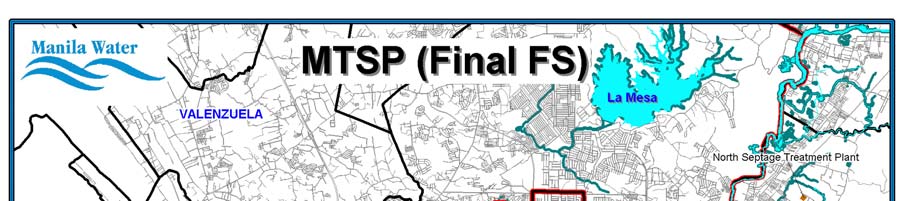
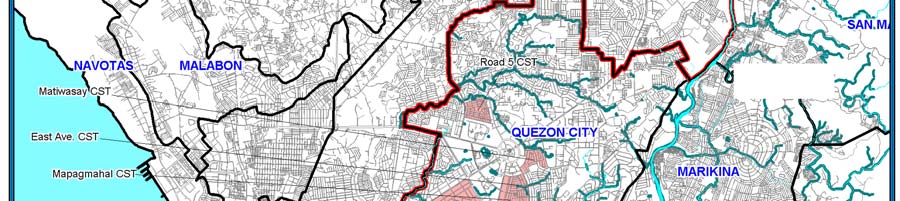
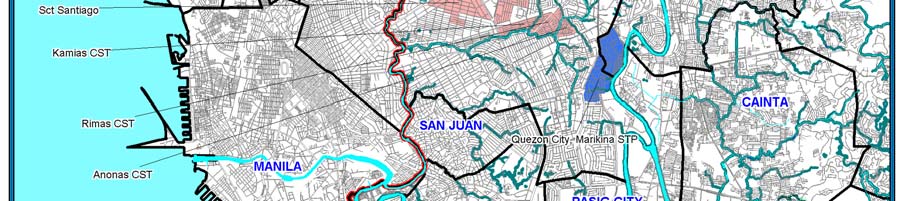
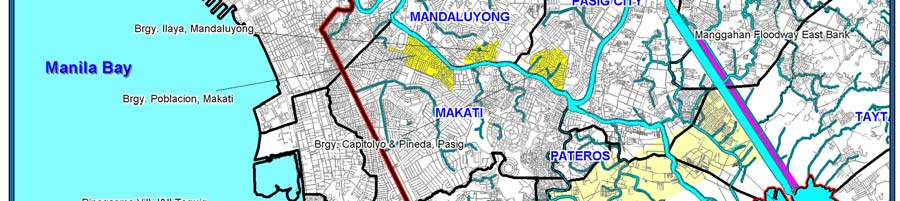
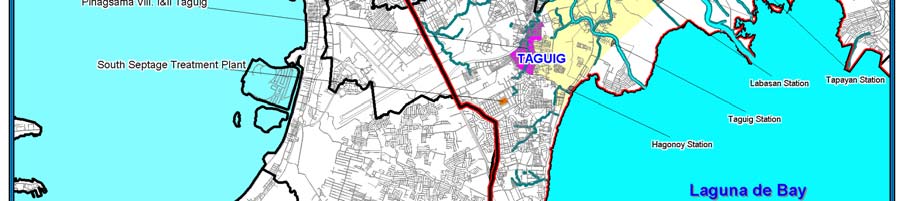
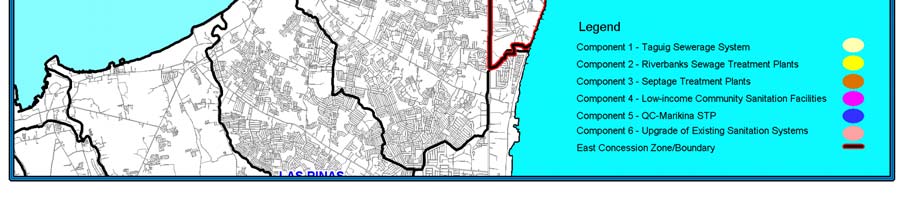
Figure 3 - 1
Location and Vicinity
Map
Figure 3 - 2
Conceptual Layout Of the North Septage
Treatment Facilities
Figure 3 - 3
Conceptual Layout Of the South Septage
Treatment Facilities
Figure 3 - 4
Recommended Septage Treatment Process
Flowsheet
FIGURE 3-2
Taguig Sewerage Drainage Basin
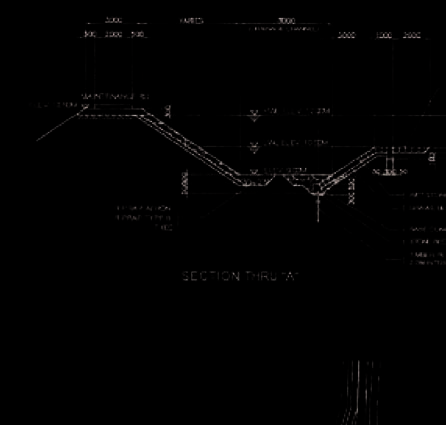

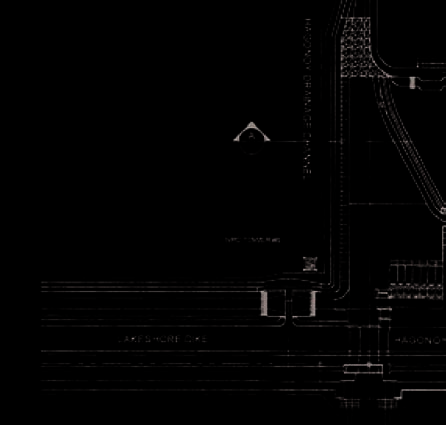
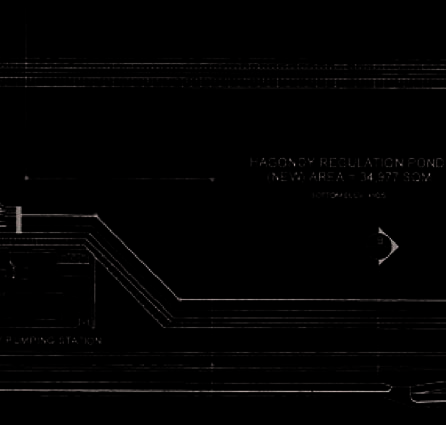

FIGURE NO.:
FIGURE TITLE :
The Associated Firm: EDCOP
Hagonoy STP/Retention Pond Configuration
Lichel Technologies, Inc.
(for Combine System)
ISSI
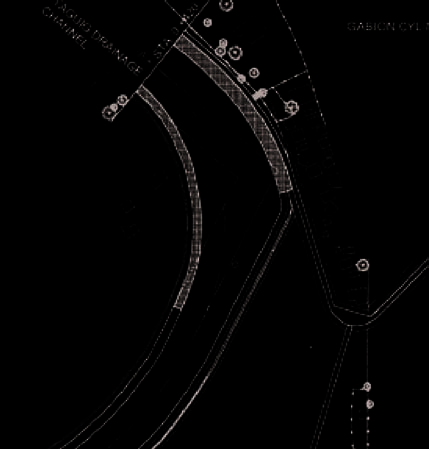


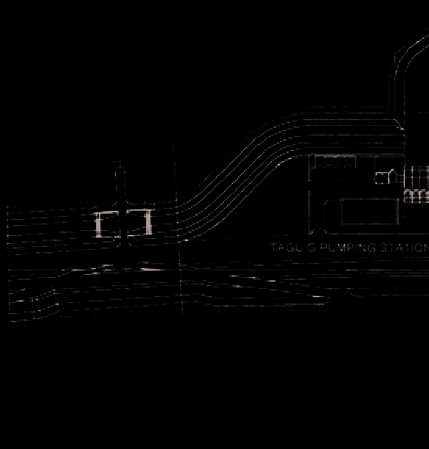
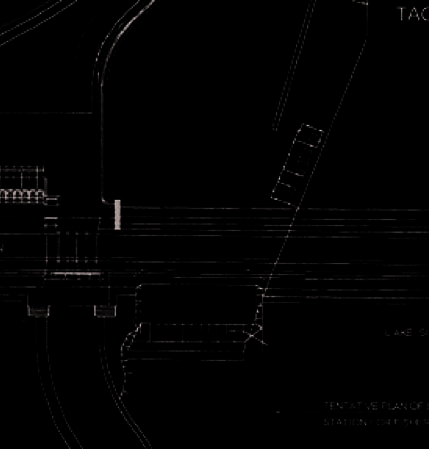
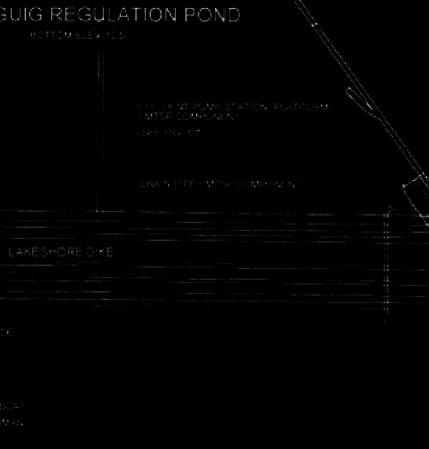
FIGURE NO.:
FIGURE TITLE :
The Associated Firm: EDCOP
Taguig STP/Retention Pond Configuration
Lichel Technologies, Inc.
(for Combine System)
ISSI
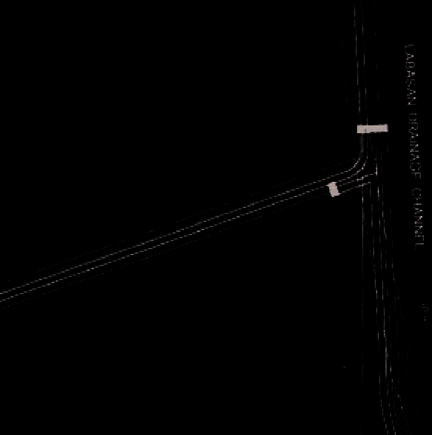


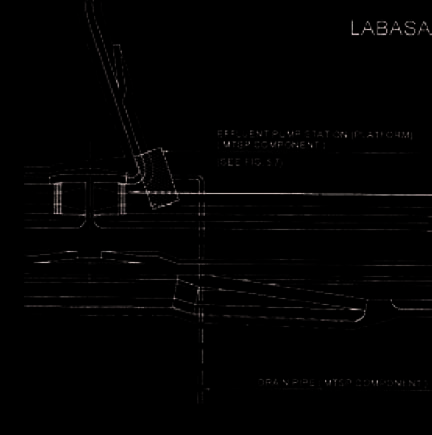
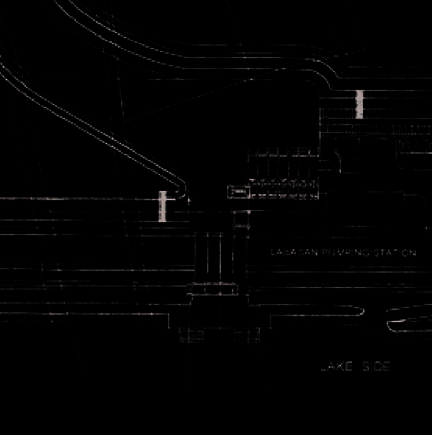
FIGURE NO.:
FIGURE TITLE :
The Associated Firm: EDCOP
Labasan STP/Retention Pond Configuration
Lichel Technologies, Inc.
(for Combine System)
ISSI
FIGURE NO.:
FIGURE TITLE :
The Associated Firm: EDCOP
Tapayan STP/Retention Pond Configuration
Lichel Technologies, Inc.
(for Combine System)
ISSI
Figure 3 - 10
Capitolyo Drainage
Configuration, Pasig City






FIGURE NO.:
FIGURE TITLE :
The Associated Firm: EDCOP
Lichel Technologies, Inc.
Capitolyo STP Configuration
ISSI
Figure 3 - 12
Ilaya Drainage Configuration,
Mandaluyong City




FIGURE NO.:
FIGURE TITLE :
The Associated Firm: EDCOP
Lichel Technologies, Inc.
Ilaya STP Configuration
ISSI
Figure 3 - 14
Poblacion Drainage
Configuration, Makati City



FIGURE NO.:
FIGURE TITLE :
The Associated Firm: EDCOP
Poblacion STP Configuration
Lichel Technologies, Inc.
ISSI
Figure 3 - 16
Location Map Showing the Taguig Low
Income Communities
Figure 3 - 17
Location of Manggahan Floodway East Bank Low
Income Community


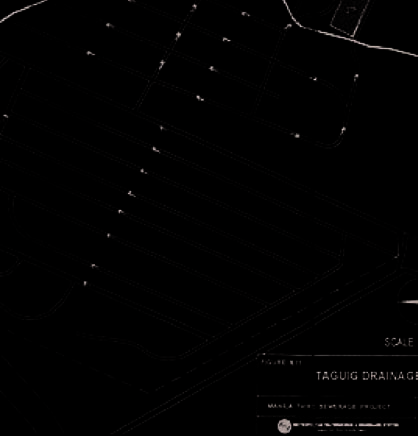
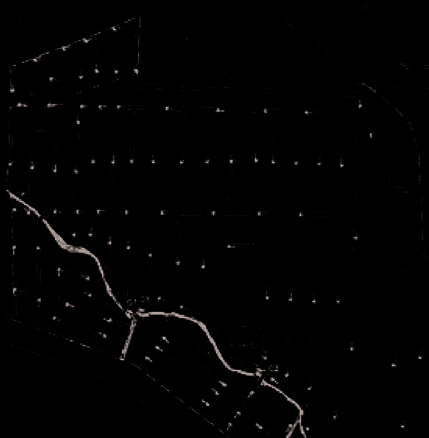


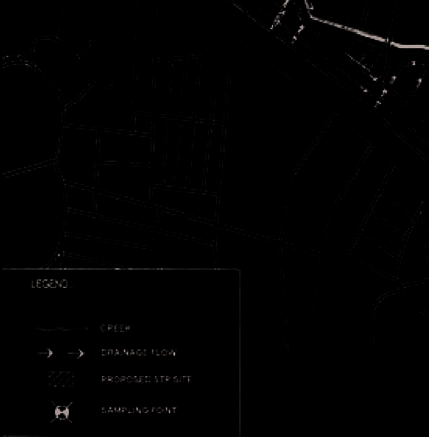

FIGURE NO.:
FIGURE TITLE :
The Associated Firm: EDCOP
Lichel Technologies, Inc.
Taguig Low Income Drainage Configuration
ISSI
FIGURE NO.:
FIGURE TITLE :
The Associated Firm: EDCOP
Lichel Technologies, Inc.
Proposed Layout of Taguig STP Combined System
ISSI
Source: MTSP-Feasibility Study (NJS, 2004)
FIGURE NO.:
FIGURE TITLE :
The Associated Firm:
Figure 3 - 20
EDCOP
3-20
Lichel Technologies, Inc.
Proposed Layout of Manggahan Floodway East Bank STP
ISSI



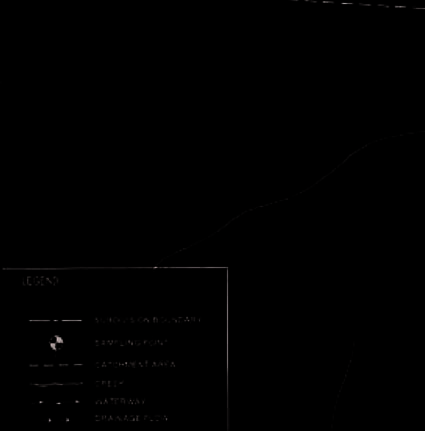


FIGURE NO.:
FIGURE TITLE :
The Associated Firm: EDCOP
Lichel Technologies, Inc.
t Drainage Configuration
ISSI
Figure 3 - 22
Proposed Interceptor Sewer in
Camp Atienza



FIGURE NO.:
FIGURE TITLE :
The Associated Firm: EDCOP
Lichel Technologies, Inc.
Proposed Interceptor Sewer at Sitio Olandes & Industrial Val ey
ISSI
Source: MTSP-Feasibility Study (NJS, 2004)
FIGURE NO.:
FIGURE TITLE :
Figure 3 - 24
The Associated Firm: EDCOP
Camp Atienza/Sitio Olandes/Industrial Valley
3-24
Lichel Technologies, Inc.
(for Combined STP Configuration)
ISSI
Figure 3 - 25
Communal Septic Tank Catchments
Figure 3 - 28
Regional Interceptor Layout for Scout Santiago,
Mapagmahal amd East Avenue CSTs
Figure 3 - 29
Regional Interceptor Layout for Matiwasay, Anonas,
Rimas CST and the Kamias Separate Sewerage System

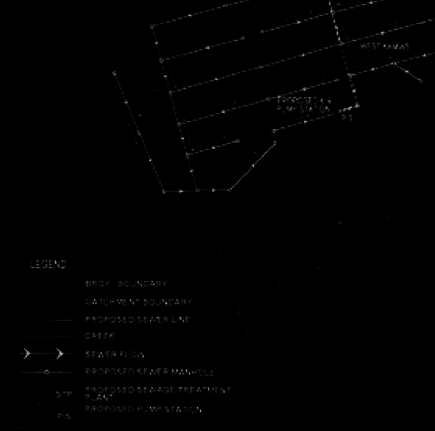




FIGURE NO.:
FIGURE TITLE :
The Associated Firm: EDCOP
Proposed Kamias Sewerage System Layout
Lichel Technologies, Inc.
ISSI
East Concession Zone Boundary
Secondary Impact Areas
Figure 5 - 1
Primary Impact Areas
Potential Impact Zone
Figure 5 - 2
Settlement Map of CST-20 at Road 5,
Project 6, Q.C.