







Global Conference on
Oceans, Coasts, and Islands
Mobilizing for Implementation of the
Commitments Made at the
2002 World Summit on Sustainable Development
PRE-CONFERENCE PROCEEDINGS VOLUME
Global Conference, UNESCO, Paris, November 12-14, 2003
WORLD
BANK
INSTITUTE
NATIONAL
Fisheries and
International
O C E A N S
Oceans, Canada
U N E S C O
Ocean Institute
OFFICE
Australia
Table of Contents
Foreword.......................................................................................................................................................5
CHINA'S ACTION FOR MARINE SUSTAINABLE DEVELOPMENT
Sun Zhihui, State Oceanic Administration, China..............................................................................................7
PROBLEMS AND OPPORTUNITIES IN THE IMPLEMENTATION
OF WSSD COMMITMENTS: THE INDIAN PERSPECTIVE
Harsh K. Gupta, Secretary to the Government of India....................................................................................11
WSSD IMPLEMENTATION IN EAST ASIA
Chua Thia-Eng, PEMSEA..............................................................................................................................15
CHALLENGES AND POTENTIAL SOLUTIONS FOR ACHIEVING SYNERGIES
AT THE REGIONAL LEVEL ON OCEAN AND COASTAL GOVERNANCE
Gunnar Kullenberg, International Ocean Institute............................................................................................25
TOWARDS A REGIONAL LEGAL FRAMEWORK FOR INTEGRATED
COASTAL AREA MANAGEMENT IN THE MEDITERRANEAN
Harry Coccosis, University of Thessaly...........................................................................................................31
VOLGA/CASPIAN BASIN. REGIONAL CO-OPERATION BENEFITS
AND PROBLEMS
I. Oliounine, International Ocean Institute .......................................................................................................35
MANAGING THE MANAGERS: IMPROVING THE STRUCTURE AND
OPERATION OF FISHERIES DEPARTMENTS IN SIDS
Robin Mahon and Patrick McConney, University of the West Indies.................................................................39
ENVIRONMENT OUTLOOK OF SMALL ISLAND DEVELOPING STATES
Sherry Heileman and Marion Cheatle, United Nations Environment Programme................................................43
BEYOND THE LAW OF THE SEA CONVENTION? STATUS AND PROSPECTS
OF THE LAW OF THE SEA CONVENTION AT THE 20TH ANNIVERSARY
Tullio Treves, International Tribunal for the Law of the Sea, and University of Milano........................................45
A SUGGESTED CALL TO ACTION BY THE OCEANS FORUM ON
CARRYING OUT THE WSSD PLAN OF IMPLEMENTATION
Xavier Pastor, I. L. Pep. Fuller, Jorge Varela, Oceana......................................................................................49
SHIP & OCEAN FOUNDATION'S PERSPECTIVES ON WSSD IMPLEMENTATION
Hiroshi Terashima, Ship & Ocean Foundation..................................................................................................53
CAPACITY BUILDING IN SUPPORT OF WSSD IMPLEMENTATION
Francois Bailet, International Ocean Institute...................................................................................................57
3
GLOBAL CONFERENCE ON OCEANS, COASTS, AND ISLANDS
SUSTAINABILITY AND VIABILITY: REINFORCING THE
CONCEPTS OF THE JOHANNESBURG DECLARATION ON
SUSTAINABLE DEVELOPMENT
Eduardo Marone, International Ocean Institute, and
Paulo da Cunha Lana, Federal University of Parana.......................................................................................63
OBSTACLES TO ECOSYSTEM-BASED MANAGEMENT
Lawrence Juda, University of Rhode Island...................................................................................................67
WHEN CAN MARINE PROTECTED AREAS IMPROVE
FISHERIES MANAGEMENT?
Serge Garcia et al., United Nations Food and Agricultural Organization............................................................73
THE REGIONAL MANAGEMENT OF FISHERIES
Hance D Smith, Cardiff University................................................................................................................77
DEVELOPING A CAPABLE, RELEVANT NETWORK TO ADDRESS
MARINE AND COASTAL ENVIRONMENTAL CONCERNS AND
FOOD SECURITY IN AFRICA AND NEIGHBOURING
SMALL ISLAND DEVELOPING STATES (SIDS)
Grant Trebble, AMCROPS...........................................................................................................................81
TARGETING DEVELOPMENT ASSISTANCE TO MEET WSSD GOALS
RELATED TO MARINE ECOSYSTEMS
Alfred Duda, Global Environment Facility.......................................................................................................85
A FISHERMAN'S PERSPECTIVE ON SUSTAINABLE DEVELOPMENT
AND THE GLOBAL OCEANS AGENDA
Pietro Parravano, World Forum of Fish Harvesters & Fishworkers..................................................................89
PERSPECTIVES ON GLOBAL FUNDING MECHANISMS FOR
OCEANS, COASTS AND ISLANDS
Scott Smith, The Nature Conservancy............................................................................................................93
THE WORLD OCEAN OBSERVATORY A FORUM FOR OCEAN AFFAIRS
Peter Neill, South Street Seaport Museum..................................................................................................... 97
BUILDING A CONSERVATION VISION FOR THE
GRAND BANKS OF NEWFOUNDLAND, CANADA
Charlotte Breide and Robert Rangely, World Wildlife Fund International...........................................................99
PROGRESS TOWARDS A TEN-YEAR HIGH SEAS MARINE
PROTECTED AREA STRATEGY
Kristina M. Gjerde, International Union for Conservation of Nature.................................................................103
4
November 12-14, 2003 UNESCO, Paris
Foreword
This Pre-Conference Volume contains the papers prepared for the Global Conference on Oceans, Coasts, and
Islands: Mobilizing for Implementation of the Commitments Made at the 2002 World Summit on Sustainable
Development, held on 12-14 November 2003 at UNESCO Headquarters in Paris.
The major purposes of the Conference are to review what has been done to date in implementing the WSSD
commitments, and to catalyze action on WSSD implementation through collaboration among governments, interna-
tional organizations, nongovernmental organizations, and the private sector. The conference focuses, as well, on
approaches to mobilizing public and private sector support for the global oceans agenda, and on the identification of
emerging ocean issues. More specifically, the Conference aims to:
1) Focus on useful strategies for and experiences in implementing the commitments made at the World Summit on
Sustainable Development at global, regional, and national levels, through discussions among experts from govern-
ments, international organizations, nongovernmental organizations, and the private sector.
2) Discuss emerging issues on oceans, coasts, and islands for which international consensus is still to be reached.
3) Develop strategies for mobilizing private sector involvement and increased public awareness on oceans, coasts,
and islands, to insure continued support for the
global oceans agenda.
The Global Conference is organized by the Global Forum on Oceans, Coasts, and Islands, comprised of individuals
from governments, intergovernmental and international organizations (IOs), and nongovernmental organizations
(NGOs), with the common goals of advancing the interest of oceans-- incorporating 72% of the Earth; coasts--
the home of 50% of the world's population, and islands--43 of the world's nations are small island developing
states, which are especially dependent on the oceans. The Forum was created at the World Summit on Sustainable
Development in Johannesburg in September 2002 by the WSSD Informal Coordinating Group on Oceans, Coasts
and Islands.
Many thanks are due to the Secretariat staff of the Global Forum for their tireless work in the Conference preparations,
especially to Jorge Gutierrez and Kevin Goldstein for their work on this volume. We would also like to thank all of the
Conference participants for their contributions in this important step toward implementation of the WSSD
Commitments.
Co-Chairs of the Global Forum on Oceans, Coasts and Islands
Dr. Biliana Cicin-Sain
Dr. Patricio Bernal
Dr. Veerle Vandeweerd
Director
Executive Secretary
Coordinator
Gerard J. Mangone Center
Intergovernmental Oceanographic
Global Programme of Action
for Marine Policy
Commission
for the Protection of the Marine Environment
University of Delaware
United Nations Educational,
from Land-based Activities
Scientific and Cultural Organization
United Nations Environment Programme
5
GLOBAL CONFERENCE ON OCEANS, COASTS, AND ISLANDS
6
November 12-14, 2003 UNESCO, Paris
CHINA'S ACTION FOR
MARINE SUSTAINABLE DEVELOPMENT
Sun Zhihui
Deputy Administrator, State Oceanic Administration
1 Fuxingmenwai Ave, Beijing,
phone: 86-10-68019791
Email: zzh@soa.gov.cn
Ocean Agenda 21, providing the guidelines for marine sus-
rine industries referred to include marine fisheries, marine trans-
tainable development and utilization. In recent years, particularly
portation, oil and gas, tourism, ship, sea salt and chemical engi-
since WSSD in 2002, to implement the Johannesburg Declaration
neering, seawater desalination and comprehensive utilization,
on Sustainable Development and the Plan of Implementation, China
marine biological medicines. The programming period lasts 10
promulgated the National Marine Functional Zonation Scheme in
years from 2001 to 2010.
2002, and issued/approved the National Programming Compen-
dium on Marine Economic Development in May of this year. Be-
The principles of the Compendium is adhering to the principle
sides, China recently revised the Fishery Law and Law on Marine
of placing equal stress on economical development and protec-
Environment Protection, and put into force the law on Manage-
tion of resources and environment; intensifying the protection
ment of Sea Area Use and other marine-related laws and regula-
and construction of marine ecological environment; accommo-
tions. In this regard, I would like elaborate on some of the specific
dating the development scale and growth to the carrying capacity
and important actions China has taken to realize the marine sus-
of environment, etc.
tainable development.
The overall objective of marine economy, put forward in the
Compendium, is to increase the contribution of marine economy
PLANNING AND PROGRAMMING
in the National Economy, optimize the marine economy structure
and industry layout, rapidly develop backbone industries and
China Ocean Agenda 21
new-booming industries, apparently improved the quality of ma-
rine ecological environment. The GDP derived from the marine
China formulated the China Ocean agenda 21, which set forth
economy will amount to 4% of national total by 2005, and over 5%
the strategy, objectives, countermeasures and major action areas.
by 2010.
The overall objective is to restore healthy marine ecosystem,
The Compendium also puts forward the following objectives
develop rational marine development system, and promote the
of the protection of biological environment and resources: the
marine sustainable development.
amount of main pollutants into the sea in 2005 will be reduced by
The countermeasures include: guiding the establishment and
10% compared to 2000. Further improve the capability to monitor
expansion of marine industry on the principle of sustainable de-
red tide, make efforts to mitigate the loss by red tide, gradually
velopment; placing equal stress on development and social and
realize the conservation and sustainable utilization at key river
economic sustainable development; gradually solving the con-
mouth, wetlands and tidal flats.
straint problems such as freshwater and energy shortage in coastal
areas by means of well-planned marine development activities;
The National Marine Functional Zonation Scheme
sustainably utilizing the resources of islands and protecting its
To plan all relevant ocean-related use as a whole, protect and
ecologic balance and its biodiversity; setting up marine protected
ameliorate the ecological environment, promote the sustainable
areas such as coral reef, mangrove and sea grass bed, spawning
use of sea area; secure the safety at sea, the State Council ap-
grounds, protecting special species and ecosystem; promoting
proved the National Marine Functional Zonation Scheme in 2002,
the sustainable development by reliance of science and technol-
which provides a scientific basis for sea area use management
ogy; establishing ICM system; intensifying ocean observations,
and environmental protection, to ensure a sound development of
forecasting, disaster warning and mitigation; strengthening inter-
national economy.
national cooperation; enhancing public awareness.
In this scheme, in light of the requirement of location, natural
National Programming Compendium on Marine Economy
resources and utilization, all jurisdictional sea areas are divided
into ten types of functional areas for port and transportation,
To provide macro guidance, coordination and programming,
utilization and conservation of fisheries, tourism, and marine re-
the State Council approved and publicized the National Program-
serve, and so on.
ming Compendium on Marine Economy this year. The main ma-
7 |
GLOBAL CONFERENCE ON OCEANS, COASTS, AND ISLANDS
LEGISLATION
ronment by coastal construction projects, prevention the pollu-
tion damage to the marine environment by marine construction
Based on the United Nations Convention on the Law of the
projects, prevention of the pollution damage to the marine envi-
Sea, the Law on Territorial Sea and Contiguous Zone of the People's
ronment by dumping at sea, and prevention of the pollution dam-
Republic of China and the Law on Exclusive Economic Zone and
age to the marine environment by ships and other related opera-
Continental Shelf of the People's Republic of China , in recent
tion activities.
years China has stipulated or amended following laws:
The Fishery Law of the People's Republic of China
The Law on Management of Sea Area Use
In order to strengthen protection, propagation, development
In order to protect the ownership of the national sea area and
and utilization of the fishery resources, the National People's
the legitimate rights and interest of the users of the sea area,
Congress amended the Fishery Law of the People's Republic of
prevent exhaustive development and utilization of the marine re-
China recently.
sources, protect the marine ecological environment, ensure sci-
The amended Fishery Law provides that "the State shall de-
entific and rational use of the marine resources, and promote sus-
termine the total catch ability based on the principle that the catch
tainable development of the marine economy, the National
is lower than the increase of the fishery resources and practice
People's Congress promulgated the Law on Management of Sea
fishing quota system. The state shall practice fishing license sys-
Area Use and put it into effect as of 1 January 2002.
tem for the fish catching industry". Besides, the law also pro-
This law has established the following three basic systems:
vided the propagation and protection of the fishery.
the sea area entitlement system, the marine functional zoning sys-
tem and the sea area paid-use system. The sea area entitlement
Regulations on Management of Protection and Utilization of
system clearly defined that the sea area is owned by the State,
the Uninhabited Islands
and any organization or individual who intends to use the sea
Recently China has just promulgated the Regulations on
area, must apply in advance according to relevant regulations.
Management of Protection and Utilization of the Uninhabited Is-
They are entitled to use the sea area only after approval from the
lands for the purpose of strengthening the management of the
government. The marine functional zoning system is the founda-
uninhabited islands and protecting the island ecological environ-
tion for marine development and management, under which the
ment of the uninhabited islands. Although it is only a regulatory
sea area is divided into different types of functional zones ac-
document at present, it will play a positive role to a large extent in
cording to the standard of the functions of the sea area and the
the protection of the islands and their resources since there is no
optimum order of functions of the sea area use so as to control
formal legislation for the islands in China now.
and guide the direction of the sea area use and provide scientific
basis for rational use of the sea area. The sea area paid-use sys-
The regulations have clearly defined that "the State shall imple-
tem embodied that the sea area is the state-owned asset, and any
ment the system of functional zoning and protection and utiliza-
organization or individual who intends to use the sea area to carry
tion planning for the uninhabited islands, encourage rational de-
out production and business activities must pay for sea area use.
velopment and utilization of the uninhabited islands, strictly re-
According to the provisions, the fee of sea area use may be re-
strict such activities that cause damage to the uninhabited is-
duced or exempted based on the purpose of use.
lands and the marine environment and natural landscape around
them as explosion, excavation of the sand and gravels, construc-
The Marine Environment Protection Law of the People's
tion of dams to link the islands. The uninhabited islands that are
Republic of China
of special value for protection and the sea area around them will
be built into marine nature reserves or special marine protected
In order to protect and improve the marine environment more
areas, etc., according to law through application by the compe-
effectively, protect marine resources, prevent pollution damage,
tent oceanic administrative agencies above the county level.
ensure human health, and promote sustainable development of
the economy and society, the National People's Congress amended
In addition, according to the Law on Territorial Sea and Con-
the original Marine Environment Protection
tiguous Zone of the People's Republic of China and the Law on
Law of the People's Republic of China, and put it into effect as of
Exclusive Economic Zone and Continental Shelf of the People's
April 2000.
Republic of China, etc., other laws and regulations concerning
ocean administrative management have been stipulated and pro-
The amended Marine Environment Protection Law provides
mulgated by the State Council such as the Regulations on Dump-
that "the State shall establish and implement the control system
ing of Wastes at Sea, Regulations of the People's Republic of
for gross pollutants discharged into the sea in the key areas,
China Concerning Environmental Protection in Offshore Oil Ex-
define the index of gross control of the major pollutants discharged
ploration and Exploitation, Regulations on Management of the
into the sea, and distribute the controlled discharge volume for
Fishing Permit, etc.
the major pollution sources".
Some new contents have been added in this amended Law,
mainly including: protection of marine ecology, prevention of the
pollution damage to the marine environment by land-sources pol-
lutants, prevention of the pollution damage to the marine envi-
| 8
November 12-14, 2003 UNESCO, Paris
MANAGEMENT
out fishery administration and effectively practicing the system
of fishing closed season in summer, for 2^3 months a year, involv-
Management of the sea area use
ing over a million of the fishermen. Positive progress has been
achieved in the protection and management of the ecological en-
The public awareness is increasing continuously, and the
vironment in fishing areas. Pilot projects on artificial fish reefs
supporting bylaw system has been gradually completed. The four-
have been carried out in provinces of Guangdong, Zhejiang and
level marine functional zoning system involving the central gov-
Fujian, etc. and they are actively exploring the measures to re-
ernment, provincial government, municipal government and the
cover the ecological environment in the near-shore areas.
county government has primarily taken shape. Above two thirds
of the cities and counties of the 11 coastal provinces and munici-
Marine public service
palities have completed the drafting of their functional zonation
Through decades of development, comparatively complete
scheme and most of them have been approved and implemented.
system for marine environmental monitoring and forecast service
The sea-area-use rights confirmation and certificates issuance
has been established to carry out real-time operational forecast
have been carried out steadily. The phenomena of irrational use
for storm surges, sea waves, sea ice and seawater temperature. At
of the sea area have been comprehensively straightened out. The
the same time, research on the phased forecast and pre-warning
management of collection of the fee for sea area use has been
of various kinds of marine hazards such as the phenomena of El
strengthened which has ensured maintenance and increase of the
Nino and La Nina, coastal erosion, the seawater flowing intru-
value of the national resources assets of the sea area. Boundary
sion, as well as sea level rise has been conducted. This work has
delimitation of the administrative divisions has been carried out
played an important role in prevention and mitigation of the ma-
in an all-round way. The construction of demonstration sites for
rine disaster as well as in the service to the sea-related trades.
management of sea area use at national level has gained promi-
Since last year, in particular, we have initiated the environmental
nent results and 30 national-level demonstration sites for man-
forecasting for the major bathing beach in the country. The fore-
agement of sea area use have been established.
casts are made public timely through China Central Television
Management of the marine environment
(CCTV) and other major news media. We have started the report
on environmental quality for aquaculture in the monitoring and
The supporting regulations and bylaw system have been per-
control areas of the red-tides, which provides good guidance in
fected. The Environmental Protection Program has been formulat-
the local fishery and aquaculture production.
ing. The national marine environmental monitoring and assess-
ment have been enhanced. The three-level marine monitoring
FUTURE EFFORTS TO TAKE
operational systems involving the central government, provincial
government and municipal government have preliminarily come
In response to the calls of the Summit Conference on Sustain-
into being. The red-tide monitoring has been intensified, and the
able Development and carry out well the plans of implementation
oceanic administrative agencies of the coastal local governments
of Agenda 21, China will put greater emphasis to push forward the
have put in place a monitoring system and an emergency response
work in the following fields:
system in the red-tide monitoring and control area. Protection of
marine ecology has also been consolidated, and 76 marine nature
a. Perfect the planning and programming system and work out
reserves, among which 21 are at the national level and 55 at the
the National Environmental Protection Program and integrated
local level, have been set up. Some representative marine ecosys-
management programs for key sea areas like the Bohai Sea.
tems of rare and endangered marine animals, mangroves and coral
b. Perfect the marine legal system and realize more effective
reefs have been brought under protection. In 2002, the national
marine/coastal integrated management;
marine ecological investigation was carried out, which lasted for 8
months. And strict supervision and management of dumping at
c. Perfect the marine environmental monitoring system and
sea and prevention of the pollution caused by marine construc-
assessment system, set up ecological monitoring and control ar-
tion projects has been strengthened.
eas, and continue to strengthen the construction and manage-
ment of marine protected areas;
Management of the marine fishery resources
d. Improve the capability to prevent and mitigate marine di-
In response to the significant impact of the new international
sasters, and complete marine service system;
marine legal regime brought forth by the UNCLOS, China is work-
ing out and implementing relevant policies and measures to guide
e. Consolidate development, utilization and protection of the
the fishermen to reduce the number of fishing boats and turn to
uninhabited islands;
other jobs. Some provincial governments allot financial subsidies
f. Promote international cooperation in the region, and further
for the fishermen and direct them to shift to non-catching indus-
push primarily such international programs as the Marine Sus-
tries.
tainable Development Strategy for the Seas of East Asia, as well
China is carrying out the general investigation of fishing
as such projects on the Protection of the Marine Biodiversity in
boatsexploring actively the system of quota management of the
the south China seas and Protection and on the Management of
fishery resources and the compulsory end-of-life system for fish-
the Large Marine Ecosystem in the Yellow Sea(YSLME) in coop-
ing boats, reducing gradually the number of fishing boats, and
eration with GEF and other related countries.
controlling fishing intensity. China is also continuously carrying
9 |
GLOBAL CONFERENCE ON OCEANS, COASTS, AND ISLANDS
| 10
November 12-14, 2003 UNESCO, Paris
PROBLEMS AND OPPORTUNITIES IN THE
IMPLEMENTATION OF WSSD COMMITMENTS:
THE INDIAN PERSPECTIVE
Dr. Harsh .K. Gupta
Secretary to Government of India, Department of Ocean Development,
CGO Complex, Lodhi Road, New Delhi 110 003
Tel: +91-11 24360874, Fax: +91-11-24362644
e-mail: dodsec@dod.delhi.nic.in
INTRODUCTION
cesses and their impact on the sustainable development globally
and within the region in particular.
The vital role of oceans in sustaining life on planet Earth has
been recognised in India from its ancient past. An integral part of
India has a coastline of about 7500 kilometres, and the seas
the global sustainable development process, oceans, coasts and
around India influence the life of about 370 million coastal popu-
islands support a diverse array of activities yielding enormous
lations and the living of 7 million fishing community. We have
economic and social benefits. The Earth Summit of 1992 and the
the two island systems viz, Andaman & Nicobar and Lakshadweep
World Summit on Sustainable Development (WSSD) of 2002
with their special geographical connection with the seas around
brought the global community to address holistically and collec-
them. Further, we have a fragile but precious coastal ecosystem
tively, among other issues, the ecological, economic, and social
that needs to be preserved for the posterity.
importance of oceans, coasts, and islands for the global well-be-
ing and to prepare a time-bound action plan that need to be imple-
THE VISION AND PERSPECTIVE PLAN 2015 FOR
mented with synergy of several actors. It is heartening to note that
OCEAN DEVELOPMENT IN INDIA
ocean, coasts and islands received the due importance in the
WSSD, as indicated in its major outcomes viz. (a) Plan of Imple-
Our recognition of the intricate and long-term role that the
mentation of the World Summit on Sustainable Development, (b)
ocean plays in determining our environment and the equally criti-
the Johannesburg Declaration on Sustainable Development and
cal role that we play in modifying its characteristics coupled with
(c) Partnership initiatives to strengthen the implementation of
our realisation of the incompleteness of the understanding that
Agenda 21.
we have on this complex process, have been the driving force for
setting out, in the year 2002, a Vision and Perspective Plan 2015
The WSSD has given us a time-bound action plan over a wide
for Ocean Development in India. The mission is to improve our
spectrum of areas covering fisheries, biodiversity and ecosystem
understanding of the ocean, especially the Indian Ocean, for sus-
functions, marine pollution, maritime transportation, marine sci-
tainable development of ocean resources, improving livelihood,
ence, small islands, developing States and several related cross-
and for timely warnings of coastal hazards. The Vision 2015 hinges
sectoral aspects. The Global Forum on Oceans, Coasts and Is-
around improving our understanding of ocean processes through
lands is indeed an important platform for ensuring this imple-
conceiving and implementing long-term observational
mentation process. India would be pleased to join this global ef-
programmes and incubating cutting edge marine technology so
fort, particularly by contributing to Indian Ocean region, and fo-
that we are able to (i) improve understanding of the Indian Ocean
cussing her national efforts in ocean development.
and its various inter-related processes, (ii) assess the living and
non-living resources of our seas and their sustainable level of
THE INDIAN OCEAN.-.A COMPLEX OCEANIC
utilization, (iii) contribute to the forecast of the course of the
REALM
monsoon and extreme events, (iv) model sustainable uses of the
coastal zone for decision-making, (v) forge partnerships with In-
The Indian Ocean, the third largest ocean in the world has a
dian Ocean neighbours through the awareness and concept of one
unique geographic setting with more than 1.5 billion population
ocean, (vi) secure recognition for the interests of India and the
around, who are predominantly agrarian and monsoon-dependant.
Indian Ocean in regional and international bodies. This vision is
The frequent cyclones of the Bay of Bengal, the unique bio-
congruent with the WSSD outcome on oceans, coasts and islands.
geochemical processes of Arabian Sea as well as the bi-annual
The national agenda for ocean development in India during the
reversal of monsoon winds and currents make the Indian Ocean a
coming decades, as set out in the perspective plan are:
complex oceanic realm. The Indian Ocean has been a subject of
serious concern for the countries around this region as well as the
· Promoting ocean science, supporting technology
international community. It is also recognised that, as compared
development and strengthening observations, so as to
to the Atlantic and Pacific, the Indian Ocean still lacks systematic
continuously improve our understanding of local and
observations that are essential for understanding the oceanic pro-
remote processes,
11 |
GLOBAL CONFERENCE ON OCEANS, COASTS, AND ISLANDS
· Modelling sustainable uses of the coastal zone and
time-bound actions in the area of ocean & climate, coastal ocean,
reliably predicting extreme events,
data management and satellite applications, such as:
·
· IOGOOS Workshop on "Capacity Building and
Understanding the influence of the ocean on monsoons
Strategy for Data and Information Management" to be
and contributing to the capability to forecast it,
held in December 2003 at Colombo, as a prelude to the
·
establishment of ocean data and information network
Strengthening programmes in the southern ocean and
for the Indian Ocean,
Antarctica that offer unlimited opportunities to study
planet Earth in its pristine state,
· IOGOOS Workshop on "Marine Biodiversity" to be
·
held in December 2003 at Goa to evolve a strategy and
Mapping ocean resources and evolving guidelines for
action plan for long-term sustained monitoring of
proper stewardship so that they are sustainably utilized
coastal and ocean biodiversity in the region,
with minimal environmental impact,
·
·
Formulation of a "Strategy for Capacity Building in
Developing reliable and safe deep sea technology that
the Indian Ocean region on remote sensing applications
permits man to understand, quantify and harness ocean
for oceanographic and coastal studies",
resources,
·
·
Setting up of a "Joint CLIVAR/IOC-GOOS Indian
Partnering Indian Ocean neighbours in mutually
Ocean Panel on Climate" that would coordinate and
beneficial programmes,
plan a unified approach to all the basin-scale observa-
tions in the Indian Ocean for both research and
· Creating awareness in stakeholders about the complex
operational oceanography,
functioning of the ocean and the inherent limits to
predictability of ocean processes, and
· Pursuing a Project proposal on Marine Impacts on
Low lands Agriculture and Coastal (MILAC) resources
· Creating an Ocean Commission as a national frame-
jointly with JCOMM to contribute to natural disaster
work so that national efforts on ocean issues are
reduction in coastal lowland impacted by tropical
effectively coordinated.
cyclones,
GOOS REGIONAL ALLIANCE IN INDIAN OCEAN
· Formulation of a Pilot project on the Monitoring and
Management Systems for the Shallow Water Penaeid
The Global Ocean Observing System (GOOS) of the Inter-
Prawns for the Indian Ocean region, and
governmental Oceanographic Commission, evolved in 1992 and
co-sponsored by WMO, UNEP and ICSU, is an internationally
· Participation in the GOOS Regional Alliances
organized system for effective management of the marine envi-
Networking Development (GRAND) Project that
ronment and sustainable utilisation of its natural resources. Along
would facilitate knowledge networking among all
with the Global Climate Observing System and the Global terres-
regional GOOS alliances and also benefit from the
trial Observing System, GOOS would be playing a key role in the
advances made by EuroGOOS and MedGOOS over
observation of ocean, atmosphere and land. GOOS envisages (i)
the last decade.
an internationally accepted global design to address the broad
realms of ocean & climate and coastal ocean, (ii) a set of regional
INDIAN CONTRIBUTION TO OCEAN OBSERVING IN
alliances of countries that will focus on issues of common con-
THE INDIAN OCEAN
cerns and interests of the region and (iii) national contributions
for implementation of the observational systems.
India's plan for the near future is to establish a well-planned
India is playing an important role for ocean observations in
network of in-situ ocean observing system in the north Indian
the Indian Ocean by (i) leading the process of establishing of the
Ocean with 150 Argo profiling floats, 40 moored data buoys, 150
GOOS Regional Alliance - IOGOOS - for the Indian Ocean re-
drifting Buoys, 4 equatorial current meter moorings, expendable
gion in November 2002 (ii) being called upon to host IOGOOS
bathythermograph surveys along three major shipping routes and
Secretariat for the next 6 years as well as to lead IOGOOS in the
tide gauges, complemented by satellite observations through the
coming years to formulate and guide projects on Ocean observa-
Oceansat series of India. The progress of implementation has been
tions and applications of common concern in the region and (iii)
quite good.
taking decisive roles in IOC and other important international
India had the opportunity to host the Argo Implementation
forum pertaining to GOOS. Already 19 Institutions from Austra-
Planning Meeting in July 2001 and this marked the beginning of
lia, India, Iran, Kenya, Mauritius, Madagascar, Mozambique,
Argo float deployment in the Indian Ocean by several countries.
Reunion, South Africa and Sri Lanka have become Members of
India was then called upon to be the Regional Coordinator for the
IOGOOS and a few more are expected to join soon.
international Argo project in the Indian Ocean and also to be the
IOGOOS, along with a group of experts has initiated several
Regional Data Centre. It is satisfying to note that within a span of
| 12
November 12-14, 2003 UNESCO, Paris
two years, the Argo array in the Indian Ocean has reached 50 % of
timely potential fishing zone advisories using satellite data to the
its target (of 450 floats by 2006).
fishing community of the entire coastline of the country in a mis-
sion mode. Frequent and intense interactions between the scien-
India has already deployed 31 Argo floats and 20 more are
tists and fishing community at the fishing harbours, and use of a
scheduled to be deployed soon. The first results with Argo data
wide range of media such as fax, telephone, electronic display
are very encouraging. We have also mounted a national effort
boards, radio and internet have ensured that these advisories pro-
with the oceanographic and atmospheric community for assimi-
vided in the local languages becomes part of the value chain of
lation of Argo data with the end goal of improving the predict-
the fishing community. It has been validated that the search time
ability of the upper ocean and our climate. Capacity building in
has been reduced by 30 to 70 % due to the usage of these adviso-
this area is crucial if we need to harness the full benefit from this
ries. This is an excellent example of reaching the benefits of sci-
valuable stream of data.
ence to society. Experimental Ocean State forecast that is being
India has already established network of 20 Moored Data
provided on a daily basis is a typical example of multi-institu-
Buoys in both deep and shallow waters to measure a host of met-
tional endeavour to translate scientific knowledge into a service
ocean parameters. Surface Drifting Buoys (for measuring sea sur-
useful for safe operations in the sea. Setting up of an Ocean Infor-
face temperature and atmospheric pressure), Current Meter Ar-
mation Bank supported by a national chain of Marine Data cen-
rays (for time series profiles of current speed and direction at
tres and Observation systems as well as Web-based on-line ser-
fixed locations), Expendable Bathythermographs (for tempera-
vices with web computing capability are significant milestones
ture profiles) and Tide Gauges (for sea level) in the Arabian Sea,
towards the mission to provide the ocean information and advi-
Bay of Bengal and tropical Indian Ocean that have been provid-
sory services on a timely manner.
ing very valuable data for operational oceanography, weather fore-
casting and research. There is an active programme for ship ob-
INTEGRATED COASTAL AND MARINE AREA
servations using the four Research Vessels of the Department of
MANAGEMENT (ICMAM)
Ocean Development, in addition to ships of opportunity.
The Agenda 21 adopted in UNCED (1992) emphasises the
STORM SURGE FORECAST FOR NORTH INDIAN
need to adopt the concept of Integrated Coastal and Marine Area
OCEAN
Management (ICMAM) for sustainable utilisation of coastal and
marine resources and prevention of degradation of marine envi-
The coastal regions bordering the Bay of Bengal are severely
ronment. ICMAM project is being implemented in India from
affected by the storm surges associated with tropical cyclones,
1997-98, with two major components viz. capacity building and
particularly for the East Coast of India and Bangladesh. Since
development of infrastructure for R&D and training. The capac-
the coastal regions are densely populated, it is important to make
ity building activities cover development of GIS-based informa-
realistic forecast of inundations caused by the storm for prepara-
tion system for 11 critical habitats, determination of waste as-
tion of contingency plan to prevent loss of life and property. A
similation capacity in estuaries and coastal waters, EIA studies
project entitled "Storm Surges Disaster Reduction in the North-
and, development of ICMAM plans for major cities. A world class
ern part of the Indian Ocean", aimed at development of capabil-
facility has been created for the development of human resources
ity and infrastructure to provide storm surge and disaster warning
in this important area.
to save lives, reduce damage and encourage sustainable develop-
ment in coastal regions had received much consideration by IOC,
COASTAL MONITORING AND PREDICTION SYSTEM
WMO and the International Hydrological Programme of
UNESCO in the recent past. However, this Project is yet to take
A national programme on Coastal Ocean Monitoring and Pre-
off. JCOMM and IOGOOS are pursuing this.
diction system (COMAPS) was launched in 1991 by in India to
constantly assess the health of our marine environment and to
Also, India has developed software for prediction of storm
indicate areas that need immediate and long-term remedial ac-
surges and estimation of coastal inundation due to surges, along
tion. Considering the levels and sources of pollutants, the data on
the East coast of India. Using this software and the available data
nearly 25 environmental parameters are being collected at 82 lo-
sets, the path and height of storm surges have been successfully
cations in the 0-25 km sector of the entire coastline of the country
hindcasted. It is pertinent to note that a bilateral proposal has
using two dedicated vessels. Mathematical models are also being
been prepared for implementation between India and Bangladesh
developed to predict diffusion and dispersion characteristics of
for operational oceanographic and hydrological storm surge pre-
pollutants in specific areas. The data and information are regu-
diction facility along with improvement of meteorological, ma-
larly disseminated to the State Pollution Control Boards for le-
rine and hydrological observing systems and data processing sys-
gal/remedial action.
tems. A key component of the proposal is capacity building and
human resources development in the region.
NATIONAL INSTITUTIONAL FRAMEWORK
OCEAN INFORMATION AND ADVISORY SERVICES
Modern oceanographic research in the country has a heritage
IN INDIA
four decades. Over the years, India has set up the Department of
Ocean Development and a chain of leading national institutions
The concerted efforts of Indian scientific community Scien-
with primary focus on Ocean Sciences and Research, Ocean Tech-
tists have culminated in a unique service to provide reliable and
nology, Antarctic and Polar Sciences, Ocean Observation, Infor-
13 |
GLOBAL CONFERENCE ON OCEANS, COASTS, AND ISLANDS
mation and Services, Costal Area Management, Marine Liv-
ing Resources. These institutions are supported by a large net-
work of academia and industry. Close interaction at both research
and operational level between the scientific community from
Ocean, Atmosphere and Space has ensured that there is a seam-
less flow of data, information and knowledge that percolates down
to the end users, thereby getting integrated with the development
process in the country.
CONCLUSION
India has been pursuing its efforts in ocean development with
a missionary zeal, addressing not only the imperatives for sus-
tainable development of its coasts, islands and seas around it but
also contributing to the well-being of the entire Indian Ocean re-
gion. India would thus be an active contributor as well as a ben-
eficiary of the implementation of the action plan on Ocean, Coast
and Islands that were set out at the WSSD.
| 14
November 12-14, 2003 UNESCO, Paris
WSSD IMPLEMENTATION IN EAST ASIA
Chua Thia-Eng
Partnerships in Environmental Management for the Seas of East Asia
Tel: (632) 926-9712
Email: chuate@pemsea.org
ABSTRACT
·
Addressing poverty issues which might exacerbate
non-sustainable use of living resources.
For the last 10 years, countries around the Seas of East Asia
(SEA) collaborated through a regional partnership programme
The countries also collaborated in the development of a "Sus-
(PEMSEA) to address their environmental concerns which pose
tainable Development Strategy for the Seas of East Asia (SDS-
ecosystem and public health risks that undermine their food se-
SEA)". With 228 action programs, the SDS-SEA covers a wide
curity, safety at sea, and sustainable use of their coastal and ocean
area of concern including maritime transportation, marine pollu-
resources. Most of their activities are also in response to the
tion, biodiversity, ecosystem functions, fisheries, science, small
concerns and recommendations of UNCED and WSSD related
islands and cross-sectoral issues which are also major concerns
to the coasts and oceans.
of the WSSD. The implementation of the SDS-SEA represents
regional implementation of the Plan of Implementation of the
Major efforts focused on developing and demonstrating work-
WSSD for the SEA. It also provides a working platform for con-
ing models on integrated coastal management, developed and
cerned partners to work together in the implementation of the
tested management techniques, increased local and national ca-
WSSD. Fourteen UN, international and regional organizations,
pacity to plan and manage their coastal and ocean resources as
multi-lending institutions, international and regional NGOs and
well as developing management framework and platform for
national agencies have been enlisted as collaborators. They form
stakeholders collaboration. Specific focus included:
the key partners in the implementation of the Strategy particu-
·
Integrating environmental concerns into economic
larly when it will complete its final passage for government en-
development plans through the implementation of sea
dorsement at the forthcoming Ministerial Forum on December
use zoning schemes and integration of sector policies
2003 in Malaysia.
and functions of line agencies;
INTRODUCTION
·
Developing programmatic, ecosystem-based manage-
ment strategies and action plans for managing coastal
The main feature of the countries bordering the seas of East
resource systems, river basin-coastal seas and large
Asia (Fig. 1) is their close linkages in terms of political, cultural,
marine ecosystems and subsystems;
social, economic, and ecological relationships [1-2]. These link-
ages are transformed into regional and sub-regional political and
·
Building intergovernmental, interagency, multi-sector
economic structures such as the Association of the Southeast Asian
and inter-sector partnerships at the local, national,
Nations (ASEAN) or the wider grouping consisting of the ASEAN
and regional levels;
countries and their 3 northern neighbors, PR China, Japan and
RO Korea (ASEAN + 3). For the last several decades, these group-
·
Strengthening local governance by increasing local
ings promoted regional cooperation in various areas of common
capacity, involving stakeholders in planning and
concerns including security, economic, trade, tourism, culture, edu-
implementation, making information more readily
cation, environment, etc. The political and economic groupings
available to the public, bringing science closer to
also lay a strong foundation for regional cooperation in address-
policymakers and economic and environmental
ing many sustainable development issues of the SEA.
managers, and forming interagency, multi-sector
coordinating mechanism;
The SEA plays a pivotal role in the economic well being of
1.9 billion people, a majority of which resides close to the coast.
·
Building a regional network of local government
The SEA produces close to 40 per cent of the world's fish pro-
practicing integrated coastal management;
duction; sustains a third of the world's coral reefs, and mangrove
wetlands, and is considered as the world center of marine
·
Catalyzing public sector-private sector partnerships
biodiversity. The SEA is also the global center of maritime trade,
for environmental investments;
providing services in nine of the world's 20 mega-ports and a
network of terminals and sea-ports for passengers, cargoes, and
·
Increasing the effectiveness of international conven-
fish landings. Heavy shipping traffic of oil tankers and container
tions through regional and local implementation; and
vessels, to and from the region ply through the Straits of Malacca
and Singapore.
15 |
GLOBAL CONFERENCE ON OCEANS, COASTS, AND ISLANDS
The SEA has indeed contributed significantly to the food se-
disciplinary and management expertise, substantial financial re-
curity and livelihoods of millions of fishermen and coastal inhab-
sources, concerted stakeholders' support, and strong national and
itants.
regional political will [1].
With one-third of the world's population, coupled with diver-
INTEGRATING ENVIRONMENT CONCERNS
sified economic activities along the coasts and the adjacent seas,
INTO ECONOMIC DEVELOPMENT PLANS
the sustainable use of coastal and marine resources present major
challenges to the economic and environmental managers of the
A major effort of PEMSEA is to promote the integration of
region. It certainly poses significant challenges to achieving the
environmental concerns into economic development plans at na-
goals of the recent World Summit for Sustainable Development
tional and local levels. This proactive approach is intended to
(WSSD) and that of Agenda 21 of the United Nations Confer-
prevent or reduce environmental degradation due to economic
ence on Environment and Development (UNCED) of 1992.
development caused by development projects. In many countries
From 1993 to 1999, 11 countries of the region participated in
of the region, government infrastructure projects are often the
a regional project designed to address marine pollution of the
major contributors to environmental degradation despite the ap-
SEA [3]. The project was financed by the Global Environment
plication of Environmental Impact Assessments.
Facility (GEF), implemented by the United Nations Development
Programme (UNDP), and executed by the International Maritime
Sea use zoning schemes
Organization (IMO). In late 1999 the same countries further col-
PEMSEA promotes the application of sea use zoning and in-
laborated in the implementation of a follow-on project, "Build-
tegrates it with the conventional land use plans at local or na-
ing Partnerships on Environmental Management for the Seas of
tional levels. The Xiamen Municipality of PR China developed
East Asia (PEMSEA)". With Japan joining PEMSEA two years
and implemented a sea use zoning scheme in mid 1990s (Fig. 2)
later, the regional project is now participated fully by all the coun-
by classifying the utilization of the municipal sea area according
tries around the SEA [1].
to its ecological and economic functions and traditional practices
A large part of PEMSEA's activities are in fact implementing
[4]. The zoning scheme delineates specific zones for navigation,
the recommendations of Chapter 17 of Agenda 21. Current and
port, tourism, fishing, mariculture, and conservation. A permit
other planned activities also complement the Plan of Implemen-
system was developed and is being implemented to regulate us-
tation of WSSD related to the coasts and oceans. PEMSEA's scope
ers according to the zoning criteria. The zoning scheme is well
of operation and the issues addressed present a working model
integrated into the land use plan of the municipality, thus effec-
for regional implementation of WSSD's Plan of Implementation.
tively regulating land development on the coast. Although this
process takes time and resources, it has proven to be effective not
PEMSEA'S APPROACH, STRATEGIES,
only in preventing pollution but has also effectively reduced the
AND ACTIVITIES
conflicts between shipping and the fishing sectors, and other
multiple use conflicts.
PEMSEA takes into consideration the following challenges
The success in Xiamen Municipality on sea use zoning has
to sustainable coastal development in designing its strategies and
significantly influenced the enactment of a sea space utilization
activities:
law by the People Assembly of PR China, requiring coastal prov-
·
Current management efforts are not adequate or
inces and municipalities to undertake sea use planning for the
inefficient in slowing down or reversing the rate of
entire coast of the country. To date, all Chinese coasts are being
environmental degradation;
zoned.
Based on the experience of Xiamen, several other PEMSEA
·
Poverty continues to exacerbate unsustainable
participating provinces and municipalities practicing integrated
development;
coastal management (ICM) have started developing similar sea
·
Adverse environmental impacts of globalization and
use zoning schemes at Batangas Bay [5-6], Bataan, Danang, Bali,
regionalization of the economy remain unabated;
and Port Klang.
Policy and functional integration
·
Difficulties in managing complexity;
The lack of integration and coordination of sector policies
·
Inadequacies in policy and institutional arrangements;
and functions of line agencies often result in policy, legislative,
and operational conflicts with potential serious environmental and
·
Inadequate local capacity in integrated planning and
economic consequences. PEMSEA promotes policy and functional
management;
integration of line agencies by forging a common vision and mis-
·
Resistance to change; and
sion of stakeholders at the national and local levels. In all of
PEMSEA's participating provinces and municipalities implement-
·
Inadequate public knowledge on the functions of the
ing ICM programs, coastal strategies are developed through the
ecosystems.
process of risk assessments, environmental profiling, and stake-
holders' consultations. The process enables the stakeholders to
Solutions to the above challenges require longer time, inter-
determine and prioritize management issues and collectively de-
| 16
November 12-14, 2003 UNESCO, Paris
termine solutions. The stakeholders will eventually agree to a
grams have already achieved significant results.
common vision pertaining to the use of their coastal and marine
resources. The involvement of various concerned line agencies is
In Xiamen, the endangered white dolphins are now frequently
very essential as the process forges better understanding amongst
sighted in the municipal coastal waters; the egrets have now re-
government agencies and other stakeholders for addressing is-
turned in large numbers while the prehistoric fish, the lancelets,
sues of common concerns, thereby enhancing synergies and co-
(Brachiostoma belcheri) are being effectively conserved. The once
ordination amongst various sector policies and the functions of
heavily polluted Yuandang Lagoon has been completely cleaned
line agencies.
and rehabilitated with significant socioeconomic impacts. Water
quality of Xiamen coastal waters did not deteriorate while the
A similar approach is being applied at the national level through
city still maintains an economic growth rate of 16-19 per cent
the formulation process of a national coastal policy, strategies
[10]. There was only one red tide outbreak since the implementa-
and other national maritime agenda.
tion of ICM program.
DEVELOPING PROGRAMMATIC, ECOSYSTEM-
In Bataan, a mangrove-replanting program is in place to re-
BASED MANAGEMENT STRATEGIES, AND ACTION
claim some of the lost mangrove wetlands. Shoreline improve-
PLANS
ments and landscaping along the coasts of Danang and Chonburi
have enormous socioeconomic impacts while in Sihanoukville,
the only natural marine reserve has been incorporated into the
PEMSEA adopts ecosystem-based management and program-
ICM management program so as to sustain and strengthen man-
matic approaches in addressing sustainable coastal and marine
agement measures. The ICM efforts in Batangas have regulated
area development of the SEA. PEMSEA's efforts are directed at
and prevented the establishment of pollutive industries and mo-
managing human activities on coastal resource systems, river ba-
bilized stakeholders in the protection of the remaining coral reefs
sin-coastal seas, and large marine ecosystems (LME) and sub-
in the bay.
systems.
Managing river-basin - coastal seas
Managing coastal resource systems
The Manila Bay Coastal Strategy, which was developed in
The coastal resource systems are natural systems influenced
close consultation with the coastal and inland provinces, central
by land-sea interactions and human activities. These include bays,
line agencies, and other stakeholders, takes into consideration the
coastal zones, estuaries, lagoons, and gulfs, where one or more
socioeconomic and ecosystem connectivity [11]. The Strategy
ecosystems or habitats such as coral reefs, mangroves, sea grass
covers the watershed areas and the rivers draining into the Ma-
beds, mudflats, and sandy and rocky shores are present. The coastal
nila Bay where the city of Manila is located. The Manila Bay
resource systems sustain a variety of economic activities and live-
Coastal Strategy is an example of river-basin-coastal sea ecosys-
lihoods of many coastal inhabitants. Human settlement centers
tem-based management approach with a management regime be-
such as urban cities are often located along the coast and they
ing developed for addressing management issues arising from the
strongly influence the functional integrity of these natural sys-
multiple use of the 90,000 hectare- Laguna De Bay, and the Ma-
tems.
nila Bay, which are physically connected by the Pasig River.
For the last 10 years, PEMSEA developed and tested working
Various subprojects are being undertaken to strengthen insti-
models on ICM as a viable mechanism for managing the use of
tutional coordination and capacity of concerned agencies to meet
the coastal resource systems in a sustainable manner [7]. The ICM
management challenges for the Manila Bay and the associated
program includes activities that analyze ecosystem and public
river basins. Special efforts are also directed at determining the
health risks caused by economic development and develop long-
severity of ecosystem degradation and impacts to public health,
term measures to prevent or reduce such risks through appropri-
and at developing appropriate management interventions. A vari-
ate management interventions. The ICM approach provides an
ety of management measures are being developed. They include
integrated management framework, planning, and implementing
amongst others the following:
processes, the application of which can address a variety of sus-
tainable development issues in accordance with local capacity
·
Develop action plans to address short and long term
[8-9].
environmental concerns;
Eleven coastal provinces and municipalities from nine
·
Strengthen the national capability of oil spill contin-
PEMSEA participating countries participated in the development
gency response and preparedness as well as on claims
and implementation of ICM programs. The ecosystem-based man-
on cost recovery of oil spill clean-up;
agement approach guided the preparation and implementation of
the various ICM program activities at Bali and Sukabumi (Indo-
·
Improve port safety and environmental management;
nesia), Bataan and Batangas (Philippines), Chonburi (Thailand),
Danang (Vietnam), Nampo (DPR Korea), Port Klang (Malay-
·
Strengthen integrated information management
sia), Shiwa (RO Korea), Sihanoukville (Cambodia), and Xiamen
system; and
Municipality (PR China).
·
Launch integrated education and public awareness
Although some ICM programs are more mature than others in
campaigns.
terms of the timeframe and investment of resources, several pro-
17 |
GLOBAL CONFERENCE ON OCEANS, COASTS, AND ISLANDS
The Bohai Sea, which is the only inland sea of PR China is
Managing multiple LMEs: the Seas of East Asia
drained by three major river systems, (Yellow, Hai and the Liao
River systems) with a watershed area of 1.4 million km2. A Bohai
The countries around the SEA semi-enclose the five LMEs
Sea Coastal Strategy is being developed with the cooperation and
making the region unique in terms of its socio-cultural, political,
collaboration of three coastal provinces (Liaoning, Shantung,
economic and ecological connectivity, which goes beyond na-
Hebei) and the two coastal cities of Tienjin and Dalian. Other
tional, political and ecological boundaries. The SEA in fact cre-
activities of the Bohai project include institutional coordinating
ates political, economic and ecological niches arising from the
arrangements, enactment of a regional law for the management
same geographical boundary. From the ecosystem standpoint, the
of the Bohai Sea, development of zoning scheme, risk assess-
region is one of the richest in terms of biodiversity, supporting a
ment and management, pollution load assessments, oil spill con-
number of habitats, fisheries and other marine resources. In terms
tingency plan and response, wetlands management, public edu-
of economic characteristics, countries in the region are interde-
cation and awareness, and environmental investments.
pendent and yet competitive with a vast disparity between the
haves and the have-nots. In terms of ecological features, the eco-
The regional management framework is useful to allow inter-
systems cuts across temperate and tropical zones with lush eco-
agency cooperation while fulfilling their sectoral responsibilities.
systems on land (tropical rainforests) and sea (coral reefs).
In the case of the Bohai Sea, a new but complementary GEF/WB
project is being developed for reducing nutrient pollution in the
Managing the SEA in a sustainable manner is a daunting task
Hai River Basin by improving sanitation facilities to reduce sew-
requiring strong management interventions, technical skills, in-
age discharge directly into the Bohai Sea.
terpersonal skills, foresight, and courage of the managers and
political leaders. It also requires time and resources for address-
Managing LMEs and subsystems
ing the enormous environmental and economic pressures arising
from the large and dense population along the coasts, the com-
The SEA covers five LMEs, viz: the Yellow Sea, East China
plex, diverse, and dynamic economic activities, as well as the
Sea, South China Sea, Sulu-Celebes Seas and the Indonesian Seas.
need to balance political and cultural differences. On the other
Currently there are two GEF funded projects focusing on South
hand, the need to manage this important water body is real and
China Sea and Yellow Sea [12]. The South China Sea project
urgent.
focuses on reversing the trends of environmental degradation and
is being implemented by UNEP. The Yellow Sea Project on the
Since 1999, PEMSEA embarked on an initiative to explore
other hand has yet to be operational. There is another regional
what can be done for the SEA. Through extensive discussion and
effort addressing marine biodiversity of the Sulu-Celebes Seas,
debates with experts and stakeholders from both the public and
which is a collaborative project between Malaysia, Philippines
the private sectors, it was apparent that some long-term strategy
and Indonesia [13].
is needed to guide the region towards sustainable use of its ocean
heritage. This effort culminated in the development of the "Sus-
The strategy of PEMSEA is to encourage a programmatic
tainable Development Strategy for the Seas of East Asia", which
approach in the management of each of the five LMEs based on
is discussed in the last section of this article.
its ecological boundary. Many transboundary environmental and
natural resource issues of the concerned LMEs should be ad-
BUILDING INTERGOVERNMENTAL, INTERAGENCY,
dressed by the concerned stakeholders taking note of the political
MULTI-SECTOR, AND INTER-SECTOR
and socioeconomic situations of the concerned countries and ur-
PARTNERSHIPS
gency of the environmental issues. Some of the transboundary
issues are politically sensitive such as the sea piracy issue in the
This approach is integrated into various levels of PEMSEA
Straits of Malacca and the South China Sea; the boundary dispute
activities especially in the development and implementation of
over the Spratly Islands and other areas of the region; the shared
coastal policies, strategies and action plans.
fish stocks; and the exportation of wastes and marine litters. Sci-
entific information on the LMEs is scant and needs to be grossly
Intergovernmental and interagency partnerships
strengthened to provide the scientific basis for management in-
terventions.
Efforts are made to forge stronger partnerships between local
and central governments towards harmonizing sector specific
On the other hand, regional or sub-regional management ef-
policies, legislation and management interventions. These efforts
forts could be focused on less contentious issues and in smaller
need to be further strengthened in light of the decentralization of
areas such as the Gulf of Thailand and the Tongkin Gulf. An ex-
authority to the local governments. A large number of local gov-
ample would be the collaborative project between Cambodia,
ernment units are not ready especially in harmonizing the above
Thailand and Vietnam in addressing oil and chemical spills in the
conflicts caused by the change of authority. These areas of con-
Gulf. It focuses on developing an oil spill response contingency
cern require partnerships between the central and local govern-
plan, strengthening capacity to combat oil spills on the ground,
ment to straighten out legislative and administrative disparities.
developing the necessary database to monitor changes in the event
of oil spills and making the necessary preparation for cost recov-
The risk assessment and risk management activities being
ery claims.
implemented in the ICM sites and large coastal seas (Bohai Sea,
Manila Bay, and the Gulf of Thailand) provide a working forum
for concerned line agencies (e.g., marine, fisheries, environment,
coast guard/navy, tourism, public health, etc.) to work together
| 18
November 12-14, 2003 UNESCO, Paris
(e.g., in combating oil spills) for achieving common objectives
plan and manage their coastal resources on a sustain-
(e.g., in seeking compensation for lost revenue and habitat resto-
able manner. This is done through involving local
ration) [14].
government units in the design and implementation of
the ICM program. They also undergo specialized
The coordinating mechanism, either in the form of a project
project development and management training and
coordinating committee, management council, or authority estab-
other technical training to increase their management
lished for an ICM program or for Manila Bay, Bohai Sea, and
skills and confidence in program implementation.
Gulf of Thailand, is a good vehicle for interagency partnerships.
It provides a regular forum where concerned agencies are involved
·
Involving multiple stakeholders in the planning and
in discussing site or issue specific management matters and often
implementation of projects thereby increasing program
promote collaborative activities jointly undertaken by the agen-
transparency and promoting participation. Concerned
cies concerned [15].
sectors and government line agencies are involved in
At the regional level, PEMSEA forges intergovernmental part-
the processes of coastal profiling, identification of
nerships through a variety of activities that are of transboundary
issues, setting of visions, missions and objectives of
in nature. Project activities include the oil spill contingency and
the management program, and designing of activities,
response project for the Gulf of Thailand which involves Cambo-
etc. This process strengthens ownership and buy-ins
dia, Thailand, and Vietnam and the implementation of the Marine
from all sectors.
Electronic Highway initiative for the Straits of Malacca and
Singapore, which involves Indonesia, Malaysia, and Singapore
·
Making information more readily available. This is
[16]. The most obvious one is the development of the regional
being undertaken through the development of
Sustainable Development Strategy for the Seas of East Asia, which
websites, the implementation of communication plans
involves the 12 concerned countries to collectively develop a stra-
to identify targets and the development of strategies
tegic framework acceptable for implementation by all concerned.
and action plans to promote dissemination of informa-
tion to the public and the policymakers.
Multi-sector and inter-sector partnerships
·
Bringing science closer to the policymakers and the
Multi-sector and inter-sector partnerships have been forged
economic and environmental managers. This is
in the development and implementation of ICM programs at
undertaken by involving experts from the universities
Bataan and Batangas Bay, Philippines, as well as the municipal-
or scientific institutions in the programs of the local
ity of Bali, and Sukabumi Regency in Indonesia [17]. In Bataan
governments so as to improve decision making with
Province, the private sector formed a Coastal Care Foundation to
sound scientific basis. This approach is especially
support the efforts of the provincial government in the manage-
successful in the Xiamen ICM program where a
ment of the coastal areas. Members of the Foundation are from
permanent interdisciplinary expert team forms part of
various sectors of the economy but work in close partnerships
the management decision-making process [15].
towards implementing activities identified through the ICM frame-
work. They were important partners in formulating the Bataan
·
Forming an interagency, multi-sector coordinating
Coastal Strategy, in implementing mangrove planting projects and
mechanism. This is to provide a regular forum for
educational and public awareness activities, and undertaking an-
mutual consultation and decision-making amongst
nual coastal clean-ups [18].
concerned line agencies and concerned stakeholders
Common solid waste disposal facilities in Bataan Province
so as to reduce interagency and multi-sectoral conflicts
and San Fernando City are being developed through the public-
while increasing partnerships at the operational level.
private sector partnerships (PPP) arrangement. Over the long pro-
cess of consultations, the public and the private sectors are able
·
Encouraging the involvement of women in the
to go through a negotiating process of identifying partners for
decision-making process. Of the 11 ICM programs,
joint development and operation of the above facilities.
five programs (Bataan, Batangas, Bali, Chonburi and
Danang) are headed by women. Most programs
In Sukabumi, various sectors of the tourism industry, the food
involved women in the decision making process.
industry and non-government organizations forged partnerships
in assisting the Sukabumi Regency in the implementation of ICM
The above efforts are part of the ICM approach designed to
activities, especially in the improvement of the shorefront and its
increase the capacity of the concerned local authority in
management.
environmental governance.
STRENGTHENING LOCAL GOVERNANCE
BUILDING A REGIONAL ICM NETWORK
OF LOCAL GOVERNMENTS
At each of the 11 PEMSEA participating provinces and mu-
nicipalities practicing ICM, efforts are made to strengthen local
When a local government embraces the concept and practice
governance by:
of ICM as a mechanism to achieve sustainable development, it
·
Increasing the capacity of local government units to
will integrate ICM practices into its regular program. Amongst
the 11 provinces and municipalities practicing ICM, some of them
19 |
GLOBAL CONFERENCE ON OCEANS, COASTS, AND ISLANDS
(i.e., Xiamen and Batangas) have already gone through 10
a joint venture between the public and private sector.
years of ICM practice; many with 3-4 years experience and a few
are just in the beginning stage.
The PPP approach provides another option to the conven-
tional Build, Operate and Transfer (BOT) or Build, Operate and
The 11 provinces and municipalities from nine countries of
Own (BOO) approaches. The advantage of the PPP process is the
the region comprising 64 local government units formed them-
reduction of political, social and investment risks that might not
selves into a regional ICM network. They take turns in organiz-
be available in other conventional approaches. PEMSEA's role
ing annual meetings to share experiences and lessons learned in
as honest broker helps to build confidence and trust amongst the
the implementation of ICM programs and in the process, improve
private and the public sectors.
their operational skills and concepts in the implementation of ICM.
Two annual meetings were organized in Seoul, RO Korea and
So far, three PPP Roundtables were organized, two in the
Xiamen, PR China sponsored by the Kyonggi Province and
Philippines for three solid wastes project at Bataan, Batangas and
Xiamen Municipality, respectively. The third meeting will be held
San Fernando and one in Vietnam for an integrated industrial
in Selangor, Malaysia, to be sponsored by the State Government
wastewater and hazardous waste management facility for Danang.
of Selangor.
While the Batangas PPP was unable to materialize due to inad-
equate political commitments [21-22], the two projects in San
The regional ICM network will increase in membership with
Fernando [23] and Bataan [24] are able to sail through the final
more local governments adopting and implementing ICM pro-
selection process. Building on the Philippine experience, the
grams. Another 16 coastal provinces and municipalities were nomi-
Danang PPP is moving progressively well in the desired direc-
nated by the participating countries of the region to receive
tion.
PEMSEA's technical assistance for implementing ICM programs.
These sites will be evaluated and once approved, will be desig-
INCREASING THE EFFECTIVENESS OF
nated as PEMSEA's ICM sites.
INTERNATIONAL CONVENTIONS: REGIONAL AND
LOCAL IMPLEMENTATION
The network serves as a twinning vehicle to enable members
to mutually reinforce each other in building confidence and skills
The last few decades boast the enactment of a large number
for managing the complexities of their coastal areas. The network
and variety of international conventions, protocols, treaties, and
fosters collaboration of coastal authorities in environmental gov-
agreements, many of which are relevant to the maintenance of
ernance and brings about appropriate policy reforms.
peace, security, safety, and environment of the coasts and the
oceans. While some of them have been ratified by the countries
CATALYZING PRIVATE SECTOR RESOURCES FOR
of the region, the records of ratification and effective implemen-
ENVIRONMENTAL INVESTMENTS
tation of these international instruments is far from desirable [2].
To a large extent, this is due to the disparity in capacities, re-
Over the last 10 years, PEMSEA has been promoting envi-
sources, and political commitments.
ronmental investments through PPP arrangement [17]. The PPP
concept endeavors to mobilize the expertise and financial re-
PEMSEA places considerable attention in promoting the rati-
sources of the private sector for environmental improvement
fication of relevant international instruments through specialized
projects so as to reinforce and accelerate government efforts in
training courses and workshops and, to certain cases, assisting
addressing environmental problems, the solution of which often
governments in developing the national legislation [25-26]. A case
require large amounts of financial resources and technical exper-
in point is the drafting of national legislation for the ratification
tise [17, 19-20].
of the MARPOL Convention for the Philippines [27]. Another
example is the support PEMSEA provided to participating coun-
Through the ICM approach, environmental improvement
tries in understanding the claim procedures under the Fund and
projects could be readily identified, and prioritized, and pre-fea-
CLC conventions in the event of claims on cost recovery of oil
sibility study initiated. The pre-feasibility studies will determine
spill clean-ups [28].
the number and nature of environmental investment opportuni-
ties that require the involvement of the private sector. The policy
ICM also facilitates local implementation of relevant interna-
environment for investments is reviewed and improved through
tional instrument such as MARPOL, Basel Convention, Port State
legislation and administrative decisions, where necessary so as to
Control, London Convention, Ramsar Convention, Convention
render it conducive for private sector investments. Once the con-
on Biodiversity, and Code of Conduct for Responsible Fisheries,
cerned governments have laid out their terms and offer of incen-
when issues fall within the administrative boundary of the local
tives, PEMSEA brings together the potential investors and the
government [29].
concerned public sector at a Roundtable to discuss the possible
partnerships. The interested investors are then requested to sub-
ADDRESSING POVERTY ISSUES
mit their proposals. The best proposal will finally be selected
wherein the private sector will enter into partnership arrangement
Despite impressive records of poverty eradication in several
with the concerned government sector [17].
countries in the region, poverty still remains a major concern in a
number of countries around the SEA. PEMSEA's approach to the
The selected private sector will need to undertake a feasibil-
poverty issue is dictated by the prevalence and severity of the
ity study and when the project is found feasible, the two parties
issue in its project sites especially in Cambodia, DPR Korea, In-
will further negotiate and mutually agree to operate the project as
donesia, Philippines, and Vietnam. Countries such as Brunei
| 20
November 12-14, 2003 UNESCO, Paris
Darussalam, Japan, RO Korea, and Singapore are relatively well
the major areas of concern of the WSSD. The implementation of
developed economically and poverty is not an issue of concern in
the Strategy represents regional implementation of the Plan of
these countries. Whilst PR China still has a substantial number of
Implementation of the WSSD for the SEA.
people living below $2 a day, the majority is located in the hinter-
land. Most inhabitants of coastal areas in Malaysia, PR China
The SDS-SEA has been endorsed after 3 years of stakeholder
and Thailand are better off than those living in the inland areas.
consultation involving more than 1000 individuals and institu-
tions in the region. It has been finally adopted at the Senior Gov-
Poverty exacerbates unsustainable development as the poor
ernment Official Meeting (SGOM) in Pattaya, Thailand on 2-10
continually turns to nature for their daily requirements: food, water
August 2003 and is scheduled for approval at the ministerial fo-
supply and other basic living essentials [1]. Only when the poor
rum in Putrajaya, Malaysia on 12 December 2003. Once approved,
are able to meet their basic needs, would they then be willing to
this "soft protocol" shall provide the needed basis for intensive
consider other priority issues such as sanitation and hazard pre-
regional collaboration.
vention, etc. (Fig. 3) [30]. Policymakers and economic managers
too, would not put environmental concerns as their top priority
Fourteen UN, international organizations, multilateral lend-
agenda. Recognizing this situation, coastal managers need to re-
ing institutions and non-governmental organizations collaborated
orient their activities by focusing on solutions that could contrib-
with PEMSEA in the process of developing the Strategy. These
ute to the basic needs of the people. Such activities could also be
organizations together with the 12 PEMSEA participating coun-
undertaken within the ICM framework.
tries can and will be the driving force behind the implementation
of the Strategy.
In areas where poverty is prevalent, alternative livelihoods
are being developed within the ICM framework. In Bali for ex-
CONCLUSION
ample, seaweed culture, and coral farming and transplantation
are being developed. In Bataan and Chonburi, mussel farming is
Most PEMSEA activities match well with the concerns and
being practiced to augment the income of fishers.
recommendations of WSSD, therefore giving the countries of the
SEA a head start in furthering their commitments and achieving
SUSTAINABLE DEVELOPMENT STRATEGIES FOR
targets. The various working models, tested methodologies, and
THE SEAS OF EAST ASIA: A REGIONAL
lessons derived from the one decade of PEMSEA's collaborative
FRAMEWORK AND PLATFORM FOR WSSD
efforts help the countries in the region to determine focus, set
IMPLEMENTATION
priorities, and decide on their specific roles in the implementa-
tion of the WSSD requirements pertaining to the coasts and oceans.
Managing the SEA is a difficult task due to a host of complex
extrinsic and intrinsic political, socioeconomic, and ecological
A few PEMSEA activities are collaborative projects devel-
management issues. Since 2000, PEMSEA has been developing
oped within the PEMSEA framework with other resources. The
a draft regional sustainable development strategy for the SEA that
twinning of local governments practicing ICM is one example of
builds upon the common vision of stakeholders of the region.
initiative undertaken by the local governments and together with
Known as the "Sustainable Development Strategy for the Seas of
the 16 potential sites will form a remarkable network of local
East Asia (SDS-SEA)", the regional strategy attempts to provide
governments practicing ICM. The PPP initiative also sets a new
policy and management frameworks for addressing various sus-
model of operation between the public and private sectors. With
tainable development challenges. It also attempts to create a col-
the identification of new investment opportunities, the PPP ini-
laborative platform for regional cooperation and collaboration
tiative will grow into a regional network that certainly plays a key
amongst countries and with concerned UN, international agen-
role in reinforcing the efforts of GEF and multilateral lending
cies, non-government organizations, the private sectors, and all
institutions. Similarly the twining of coastal seas and riverine sys-
other stakeholders at the national and local levels [31].
tems that are being forged with Chesapeake Bay, Seto Inland Seas,
Bohai Sea and Manila Bay form another set of initiatives that
The regional strategy is basically ecosystem-based upon which
promotes regional and global collaboration. These types of ac-
environmental concerns are built into the strategic action plans.
tivities fall well within the Type II initiatives under the WSSD
Six strategies have been chosen to ensure a holistic approach.
classification.
These specific strategies include (a) sustain, (b) protect, (c) con-
serve, (d) develop, (e) implement and (f) communicate. These
The SDS-SEA in fact enhances the WSSD with 228 action
strategies responds to 20 specific objectives upon which 228 ac-
programs upon which specific activities can be developed for
tions programs are developed covering issues related to sea-level
implementation. The SDS-SEA clearly provides a guiding frame-
rise, sustainable fisheries and aquaculture, land-based pollution,
work for countries to formulate their own national policy and strat-
biodiversity, and sustainable use of resources, and the implemen-
egies pertaining to the use of their coastal and ocean resources.
tation of international instruments.
More importantly, the SDS-SEA provides a management frame-
work within which activities of national and regional concerns
The Strategy has addressed many of the concerns of the WSSD
could be addressed and mutually reinforcing. It also creates a
and in many ways implement the requirements stipulated in the
working platform for interagency, multi-sectoral and intergovern-
Plan of Implementation related to the coasts and oceans. Most of
mental cooperation and partnerships at the local, national, and
the action programs of the SDS-SEA covers maritime transporta-
regional levels. The framework and the platform enable all stake-
tion, marine pollution, biodiversity, ecosystem functions, fisher-
holders of the coasts and oceans to find their niches and play their
ies, science, small islands and cross-sectoral issues which are also
roles towards a shared vision of the SEA. The shared vision con-
21 |
GLOBAL CONFERENCE ON OCEANS, COASTS, AND ISLANDS
siders the resource systems of the SEA as a natural heritage
[10] Hong H, Peng B. Harmonizing economic development and
for the people of the region, a medium of access to regional and
environmental management: The Xiamen experience. Tropical
global markets, safeguarding sustainable and healthy food sup-
Coasts. 2002; 9(1): 44-47.
plies, livelihood, and economic prosperity through safe and har-
[11] MBEMP (Manila Bay Environmental Management Project).
monious co-existence for present and future generations.
Manila Bay coastal strategy. Manila Bay Environmental Manage-
ment Project, Manila, Philippines. 2001; 108.
Whilst the SDS-SEA is still on its final passage for approval
by the ministers of the 12 countries of the region on December
[12] GEF Projects. Avail from http://gefweb.org/Projects/projects-
2003, activities relevant to the regional strategy are already tak-
projects/projects-projects.html.
ing place. The governments of the Malaysia, Philippines and Thai-
[13] Trono R, Cantos JAB. Conserving migratory species through
land have already initiated the preparation of the Coastal Policy
ecoregion conservation approach: the case of sea turtles in Sulu-
of Malaysia, Philippine Archipelagic Agenda, and the Thai Sea
Sulawesi marine ecoregion. Tropical Coasts. 2002; 9(2): 44-49.
Policy, respectively. This is in addition to the enactment of the
marine economic development policy of PR China, the structural
[14] PEMSEA (Partnerships in Environmental Management for the
Seas of East Asia). Manila Bay initial risk assessment. PEMSEA
reorganization in Indonesia and RO Korea through the establish-
Technical Information Report No. 2001/01. 2001, 112.
ment of new ministries on fisheries and marine affairs. This is an
encouraging development and indeed forms a good basis for the
SDS-SEA to have a head start.
[15] Chua T.E. Measuring and understanding coastal ecosystems:
the challenges. Paper presented at the Managing Shared Waters In-
REFERENCES
ternational Conference, 23-28 June 2002, Hamilton, Canada.
[1] Chua T.E. Building intergovernmental, interagency and multi-
[16] Chua TE, Ross SA. The marine electronic highway: concepts
sectoral partnerships towards achieving environmental security for
and challenges. Paper presented at the International Conference on
the Seas of East Asia. Paper submitted for presentation at the Inter-
Navigational Safety and the Control of Pollution in the Straits of
national Conference on Geo-Agenda for the Future: Securing the
Malacca and Singapore: Funding and Managing International Part-
Oceans Legal and Policy Frameworks and Action Plan for the
nerships, 14-15 October 1999, Singapore.
Maintenance of Peace and Environment Protection of Ocean, 17-18
[17] Chua TE, Ross SA. Building partnerships with the industry in
October 2003, Tokyo, Japan.
environmental management: PEMSEA's experience. Paper presented
[2] Chua TE, Bernad SR, San MC. Coastal and ocean governance of
at the IMO Workshop on Partnership Building, 9-10 June 2003,
the seas of East Asia: towards an era of new regional cooperation
International Maritime Organization, London.
and partnerships. Tropical Coasts. 2003; 10(1): 46-55
[18] Erni M, Victorino RAG. Kontra kalat sa dagat: A catalyst for
[3] Chua TE, Ross SA, Yu H, Jacinto G, Bernad SR. Sharing lessons
forging partnerships in integrated coastal management in Bataan.
and experience in marine pollution management. MPP-EAS Tech-
Tropical Coasts. 2001; 8(2): 10-15
nical Report No. 20. 1999; 49.
[19] Ross SA. Implementation of public-private partnerships:
[4] Ruan W, Yu H. Design and implementation of marine functional
Batangas Bay case study. In: Chua TE, Bermas N, editors. Chal-
zoning scheme in Xiamen, China. In Chua, T.E. and N. Bermas (eds.)
lenges and opportunities in managing marine pollution in the East
Challenges and opportunities in managing pollution in the East Asian
Asian Seas. MPP-EAS Conf. Proc. 12/PEMSEA Conf. Proc. 1. 1999;
Seas. MPP-EAS Conference Proceedings 12/PEMSEA Conference
164-172.
Proceedings 1. 1999; 341-354.
[20] Faulkner H. Opportunities for investment: creating public-pri-
[5] MPP-EAS (Regional Programme for the Prevention and Man-
vate partnerships, p 151-163. In: Chua TE, Bermas N, editors. Chal-
agement of Marine Pollution in the East Asian Seas). Water use zon-
lenges and opportunities in managing marine pollution in the East
ing for the sustainable development of Batangas Bay, Philippines.
Asian Seas. MPP-EAS Conf. Proc. 12/PEMSEA Conf. Proc. 1. 1999;
Technical Report No. 25/PEMSEA Technical Report No. 3. 1999;
151-163.
50.
[21] Estigoy E, Perez AK. Integrated waste management in the
[6] MPP-EAS (Regional Programme for the Prevention and Man-
Batangas Bay Region: lessons in building public-private partner-
agement of Marine Pollution in the East Asian Seas). Environmen-
ships. 1. View from the public sector. Tropical Coasts. 2001; 8(2):
tal management atlas for Batangas Bay. Technical Report No. 14.
16-22.
1997; 132.
[22] Shaw M. Integrated waste management in the Batangas Bay
[7] Chua TE. Integrated coastal management as a framework for
Region: lessons in building public-private partnerships. 2. View from
management of coral reefs and other coastal ecosystems. Paper pre-
the private sector. Tropical Coasts. 2001; 8(2): 23-28.
sented at the 2nd International Tropical Marine Ecosystem Manage-
[23] PEMSEA (Partnerships in Environmental Management for the
ment Symposium (ITMEMS 2), 24-27 March 2003, Manila, Philip-
Seas of East Asia). PEMSEA investment opportunity brief on inte-
pines.
grated solid waste management project, City of San Fernando,
[8] Chua TE. Essential elements of integrated coastal zone manage-
Pampanga, Philippines.
ment. Ocean and Coastal Management. 1993; 21:81-108.
[24] PEMSEA (Partnerships in Environmental Management for the
[9] Chua TE. Lessons learned from practicing integrated coastal
Seas of East Asia). PEMSEA investment opportunity brief on inte-
management in Southeast Asia. Ambio. 1998; 27: 599-610.
grated solid waste management system, Province of Bataan, Philip-
pines.
| 22
November 12-14, 2003 UNESCO, Paris
[25] MPP-EAS (Regional Programme for the Prevention and Man-
[29] Chua TE. Integrated coastal management: an effective mecha-
agement of Marine Pollution in the East Asian Seas). Assessment of
nism for local implementation of coastal and marine environment
national marine pollution legislation in East Asia. MPP-EAS/Info/
related international conventions. In T.E. Chua and N. Bermas (eds.)
99/201. 1997; 356.
Challenges and Opportunities in Managing Marine Pollution in the
East Asian Seas. MPP-EAS Conference Proceedings 12/PEMSEA
[26] MPP-EAS (Regional Programme for the Prevention and Man-
Conference Proceedings 1. 1999; 3-23.
agement of Marine Pollution in the East Asian Seas). Manual on
strategies, tools and techniques for implementing international con-
[30] Chua TE. An analysis of the application of integrated coastal
ventions on marine pollution in the East Asian Seas region. MPP-
management linking local and global environmental concerns.
EAS Technical Report No. 26/PEMSEA Technical Report No. 4.
Paper presented in Oceans and Coasts at Rio + 10, UNESCO, Paris,
1999; 184.
France, 3-7 December 2001.
[27] MPP-EAS (Regional Programme for the Prevention and Man-
[31] PEMSEA (Partnerships in Environmental Management for the
agement of Marine Pollution in the East Asian Seas). Proceedings
Seas of East Asia). Sustainable Development Strategy for the Seas
of the National Workshop on the Ratification and Implementation
of East Asia. Avail from http://www.pemsea.org. 2003.
of MARPOL 73/78 in the Philippines. 9-10 June 1997, Tagaytay
City, Philippines. MPP-EAS Workshop Proceedings No. 8. 1997,
61.
[28] PEMSEA (Partnerships in Environmental Management for the
Seas of East Asia). Regional Consultative Workshop on Strengthen-
ing Recovery of Ship Pollution Clean-up Costs and Damage Claims.
PEMSEA Workshop Proceedings No. 5. 2002; 117.
23 |
GLOBAL CONFERENCE ON OCEANS, COASTS, AND ISLANDS
| 24
November 12-14, 2003 UNESCO, Paris
CHALLENGES AND POTENTIAL SOLUTIONS
FOR ACHIEVING SYNERGIES AT THE REGIONAL
LEVEL ON OCEAN AND COASTAL GOVERNANCE
Gunnar Kullenberg
Professor, International Ocean Institute, P.O.Box 3, Gzira GZR 01, Malta,
Fax 356-21346502, phone 356-21346529
e-mail gkullenberg@hotmail.com
MOTIVATION
the economic and the ecosystem match in the management struc-
ture.
Globalization has implied that our society has become more
vulnerable than before: local-regional disturbances can have glo-
Scientific understanding makes it possible to generate rea-
bal impacts; decisions must be made in conditions of consider-
sonable scenarios for the future development and implications of
able uncertainties; the knowledge base has been transformed into
various management options. These scenarios can be used to help
a more stochastic and much less deterministic paradigm. We now
establish visions and considered public judgements. The scien-
face convergences of impacts from global changes and economic
tific analysis will help narrow down the uncertainties, identify
and ecological crises. We are in the same ship and cooperation
risks and thus make adaptive management possible. Through pub-
and solidarity are required to turn coincidences of idealism and
lic discussion the scenarios and analysis can be used for obtain-
realism into opportunities. The regional scale of cooperation,
ing value formation and awareness enhancement.
which can link local-national and global interests is emerging as
When the vision and goals have been established, further sci-
the most promising to achieve these synergies. At the local level
entific assessment and modeling can be used to specify the man-
the community-based co-management and co-development model
agement actions and help resolve conflicts, for instance through a
is gaining ground as a vehicle towards achieving sustainable de-
process of integrated ecological-economic modeling and assess-
velopment and security. At the regional level individual nation
ment as presented by Costanza (1998).
states are grouping together in order to be able to play a role in
global affairs, for example EU, ASEAN, NAFTA. Other types of
INSTITUTIONAL REQUIREMENTS
alliances are also formed related to specific needs as examplified
at the WTO negotiations in September 2003. Such alliances should
Having the results of the assessment process there is a need
also be formed to implement UNCED 92 agreements and WSSD
for an appropriate institutional mechanism for the implementa-
2002 commitments.
tion. Some long-lived institutions have been able to manage natu-
ral ecological resources in a sustainable fashion(e.g. Costanza
A SYSTEMS-ORIENTED APPROACH
1998). Many traditional communities have realized the necessity
of co-existence with gradual and even rather rapid changes in the
Management is being approached from a systems-oriented
environment, and have in their institutions accumulated a knowl-
base. Natural and social sciences must work together in support-
edge base on how to respond to feedbacks from the ecosystem.
ing such a governance system. This must also include adequate
They have developed a social mechanism that can interpret the
observations of the systems, both the natural and the social one.
feedback signals. Thus these communities can cope with the
One scientific approach being used is the ecological economics,
changes before these accumulate and challenge the existence of
addressing "the sustainability of interactions between ecological
the whole community (Holling et al 1995). Adaptive management
and economic systems", Costanza (1998).The focus of the analy-
can be our present time response to the identified need for social
ses is on the biophysical basis of interdependent ecological and
mechanisms able to deal with changing environmental conditions.
economic systems. This is in line with the ecosystem manage-
Such management approach also lends itself very well to partner-
ment approach as well as the comprehensive one adopted in
ships, including the WSSD type, for instance as regards fisheries
UNCLOS. The scheme pays attention to social conditions, pro-
and food production, tourism development, waste management,
cesses and cycles. Social sciences and economics, regarded as a
perhaps even security management. Such partnerships can be in
life science, contribute towards elucidating how we design, de-
form of community-based co-management and can be linked into
velop and maintain the communities we live in, clarifying how
an alliance at sub-regional to regional level, through net-work-
these at various scales utilize the natural capital and react to
ing. By grouping together in an alliance the communities and part-
change. The natural sciences contribute an understanding of the
nerships can try to obtain regional significance and influence.
Earth life-support system, including the geophysical, geochemi-
Modern communication technology can ensure flow of informa-
cal, and bio-geochemical processes and cycles. Dialogue between
tion rapidly and help consensus building in responding to com-
the sciences is required also in order to ensure that the scales of
mon threats. This would be a civil society type response towards
25 |
GLOBAL CONFERENCE ON OCEANS, COASTS, AND ISLANDS
regional management implementation and sustainable devel-
cultural and ethical factors which are detached from ecological
opment.
and economic factors.
COMPREHENSIVENESS AND INTEGRATION
At smaller community level scales it appears that these fac-
tors as well as the need for involvement of the scientific commu-
nities can be more effectively taken into account. This may be
The Integrated Coastal Area Management and the Integrated
related to the proximity of scale. Again in this case, in order to
Environmental Management approaches can serve as alternatives
obtain the synergism, an alliance of communities from the region
to the sectoral management. The integrated approach will be com-
forming a network at regional level can be the way forward. This
prehensive in comparison, and can include the interactions be-
includes partnerships. Such an approach should be attractive to
tween various environmental compartments as well, such as the
national and regional policy makers since the network can pro-
mountains, the land, the atmosphere, the coast and the sea. It can
vide solutions to the problems caused by impacts of various policy
help conciliate the socio-economic developments with the pres-
decisions, such as limiting quotas or closing fisheries, restricting
ervation of environmental quality and thus ecological and sus-
coastal tourism developments , waste disposal, by having the lo-
tainable development. IEM is a complex procedure. It can be
cal communities and the science and technology involved in the
visualized in the framework of DPSIR (Driving Forces-Pressure-
whole process, and covering the range of scales from local to
State-Impact-Response).The approach is linear, not dealing with
regional. At the same time the participating scientific communi-
interactions and feedbacks between several processes. Partner-
ties are made to understand that the best possible science for policy
ships could be utilized in developing and applying IEM at re-
shaping is elusive; and that cultural specifics, trust, consensus of
gional level, involving all relevant sectors (users), and not only
the public must be taken into account if the goal of sustainable
the sea and coastal ones.
development is to be achieved.
INVOLVEMENT OF THE SCIENTIFIC COMMUNITY
ROLE OF CIVIL SOCIETY AND PARTNERSHIPS
The WSSD 2002 commitment on oceans, coasts and SIDS
A true partnership must be developed with transparency, trust
calls for the establishment of a process for global reporting and
, consistency and delivery of deliverables. The vision of the fu-
assessment of the state of the marine environment including socio-
ture needs to be accepted by all interests, sectors and the public.
economics, but does not reiterate the role of science and technol-
In this context the role of civil society should be stressed. Like-
ogy or the related capacity building. However, these elements are
minded groups can coordinate and stimulate policies across na-
inherent in the partnership approach.
tional and other boundaries by networking. This is of course also
The involvement of the scientific community in specification
the idea of the networking of local communities. The situation is
and development of regional cooperation can be very important.
exemplified by the role of the scientific community in the Medi-
In the Mediterranean case the scientific communities in the coun-
terranean case, referred to above. With present day communica-
tries joined in an effort to formulate a vision, and achieved a con-
tion technology various groups can exchange information very
sensus among themselves which carried weight in the policy for-
quickly using the internet. This is the technical tool which can be
mulation due to its claim of having authoritative policy-relevant
used to generate inputs to the policy-shaping process as well as
knowledge (Haas 1990). This isan example of how science can
pressure on the policy-makers. It requires that the participating
stimulate governance specifications at regional level. Continued
groups can understand their languages, within and between them-
involvement of the scientific community at decision-making level
selves. This is not always the case. The participants in such civil
may also stimulate the implementation. The community must then
society networking can generate solutions even if there is no cen-
continue to carry a weight matching the national and institutional
tral body formally deciding on a concerted action. The solutions
bargaining interests. These very often are driven by domestic
can be provided to the local community- based units involved in
policy interests and not the common good for the region. Inter-
the regional alliance and partnerships.
sectorial regional alliances responding to a common threat may
Local community driven management based on traditional
aim for the common good. However, so far the regional coopera-
knowledge has proven itself to be successful in many regions.
tion as regards the marine affairs has not reached this level except
When the management and decision-making is removed from the
in a few cases in the Caribbean and South East Asia addressing
community to a centralized national or other system the result is
specific threats such as smuggling of drugs and people.
often disastrous. The local community cannot adjust to new tech-
The developments in the North Sea and the Baltic Sea dem-
nologies and changes of management structures when imposed
onstrate the point very well. There the national interests and do-
by external forces. The system then collapses. The use of natural
mestic policy have been allowed to lead the way, so far at least.
resources are often expressions of traditional political, economic,
The scientific community is involved in preparing advice, but is
and cultural structures. This should be taken into account in the
not participating as a partner equal to other participants in the full
development of regional cooperation .Civil society can provide
process of regional management cooperation. The scientific com-
for institutional arrangements relevant for changing behaviour and
munities did not play an important role in the specification of the
attitudes. An appropriate balance between market-driven mecha-
regional cooperation and conventions. The scientific communi-
nisms, those driven by direct local control, by the governments
ties of natural and social sciences need be sufficiently involved in
and by the civil society needs to be found. The balance will de-
the policy decisions to help ensure that these are based on sound
pend upon the development level and other conditions, the social
scientific advice, and take into account various socio-economic,
system (market driven, hierarchial, or egalitarian), and will not
| 26
November 12-14, 2003 UNESCO, Paris
be the same everywhere. The partnership approach can help
ing. All these depend upon the actual state of development, as is
achieve the required balance. An active civil society appears to
well demonstrated in regional and global negotiations. Thus the
be a prerequisite for successful governance , government and ef-
management must be adjustable and pragmatic in structure, as
ficient markets. This is demonstrated by several regional studies,
well as having a reasonably firm long-term scope and vision.
and is consistent with the notion that civil plurality is essential for
a well-functioning democracy. It is consistent with the compre-
The scientific approach can help reduce uncertainties, but
hensive approach of Arvid Pardo in specifying the Principles of
cannot resolve disputes over fishing rights or other rights of using
Common Heritage of Mankind to include peace and security. These
resources or doing developments. For resolving disputes the val-
aspects must be taken into account in regional cooperation. Main-
ues, the needs of people, traditions, the efficiency and fairness of
tenance of peace and security is a basic aim of any alliance once
distributions must also be addressed. Human preferences and
the threats have been identified. In the case of regional coopera-
values need to be mapped in order to achieve sustainable gover-
tion for sustainable development, the common threats can be hu-
nance and developments of oceans and coasts. The UNCLOS pro-
man health degradation; food security; freshwater availability;
visions to a large extent are rules about fair allocation of ocean
un-employment and poverty, leading to loss of security, migra-
resources.
tion, and terrorism; piracy; illegal transport of goods, people,
Procedural fairness is important in negotiations about claims
drugs. Threats may also be related to policies of groups of states
of the same resources. In context of the environment one approach
in the region, or changes of their domestic policy, such as from
towards procedural fairness is focusing on preferred procedures
democracy to totalitarian or vice versa. A dramatic change of policy
for obtaining consent to risk: reveal the risk (market driven soci-
can disrupt on-going cooperation. Watches and actions against
ety); include it in the contract (hierarchial system); explicit con-
such threats could be part of the regional cooperation, even if this
sent (egalitarian system). Inter-generational equity is a function
is based on the principle of non-intervention. The cooperation
of the time scales the social systems are prepared to consider:
cannot be only for the sake of the environment or a part thereof if
short time scales, with weak inter-generational responsibility (mar-
it is to be successful.
ket driven system); longer or intermediate time scales with a bal-
Civil society includes networking. The existence of these ele-
anced responsibility for coming generations (hierarchial system);
ments in a society may furthermore imply that the society has an
strong inter-generational responsibility, favouring quick imple-
enhanced capacity for strategy switching, and making it able to
mentation of policies to protect ocean and coasts, with the burden
evaluate implications of changing strategy and adjust according
of payment on the living generations (egalitarian system).
the changing conditions. Sustainable development of ocean and
coastal resources requires this ability to switch strategy as re-
THE ROLE OF GOVERNANCE
gards the management. This is amply demonstrated with respect
to management of fisheries, marine pollution, tourism, habitat and
Fishery governance may be decomposed into two basic com-
biodiversity protection, trade and shipping.
ponents: organizational scope (aim, goal), and organizational struc-
ture. The scope is related to the long-term planning, the vision for
ROLE OF EQUITY, SOLIDARITY AND FAIRNESS
the fishery, expressed in a set of operational objectives for the
different fishery components. The structure is related to the abil-
A very important issue of ocean and coastal governance is
ity of the governance to accommodate the behavioural incentives
the challenge to create solidarity at all levels and scales: indi-
of the users (Hanna 1998). In principle the management of other
vidual, community, nation, region and global. The equity prob-
resources can also be considered according to such a decomposi-
lem is very complicated and there is no consensus on a "best"
tion. Today the fisheries management is considered to be in a
equity principle (e.g. Rayner 1998). He argues that instead of try-
crisis. This is reaching beyond fisheries since fishery governance
ing to find a "best" equity principle in relation to ocean and
is concerned with the management of a complex, dynamic and
coastal governance we should focus on achieving practical ar-
publicly owned resource, which are issues of most other uses of
rangements about joint actions among parties holding different
the ocean and coasts. Fishery management has to work with and
or even in-commensurable principles of equity. This is akin to the
take into account the large variability of the ocean. At the same
joint implementation approach toward shared resources, as sug-
time the management system must be able to accommodate the
gested by IOI and the United Nations Informal Consultative Pro-
behavioural incentives of the users. These are all human. To
cess on Ocean Affairs and Law of the Sea (ICP), as well as the
achieve success in the governance it appears mandatory that re-
partnership principle of WSSD 2002. The regional alliance ap-
source users and managers share the same long-term vision for
proach linking community-based management units together
the resources. Consensus must be built with a dialogue between
would also fit such an approach to achieve equity.
all stakeholders and participation of users in the management struc-
ture. Hanna (1998) argues on basis of a review that, following the
Fairness is an important issue to take into account in a re-
introduction of the EEZ, the fishery management scope and struc-
gional ocean and coastal governance system in harmony with
ture have been opposite to their desirable characteristics: the struc-
UNCLOS. Fairness is related to human beings, nations, institu-
ture has been sluggish (inert) instead of adaptable; the scope has
tions, and our dealing with natural capital, the ecosystem services
been variable instead of stable. The result is biological overuse,
and resources. The ecosystem management approach must take
economic loss, costly management, inequitable processes and
this into account in order to be successful. The environmental
outcomes. The scope must be stabilized and a flexible structure
conditions and our relation to nature are often used to justify value
constructed, based on well-defined rules of participation, deci-
systems, ethical and political preferences, visions for proper liv-
sion making, property rights, responsibilities, incentives encour-
27 |
GLOBAL CONFERENCE ON OCEANS, COASTS, AND ISLANDS
aging full dissemination of information, containing transac-
enhancing ocean governance, it is imperative that the user sec-
tion costs, anticipating competition and ensuring monitoring. A
tors, essentially all economic sectors, are involved: food produc-
formidable task. Can this be achieved when fisheries is only a
tion, energy, tourism and recreation, waste management, fresh-
small part of the national economic base, with decreasing political
water, transportation, human health, coastal resources develop-
influences?
ment and protection. Of special concern is the security of human
population and property, against various types of events origi-
Expanding international markets for sea food imply greater
nating at sea, as well as terrorism at sea. National capabilities are
distances between points of production and consumption, mak-
also a requirement for an effective implementation of interna-
ing control even more difficult than before. One conclusion may
tional agreements. The potential of UNCLOS and UNCED 92
be that greater efforts should be put into managing better than
can only be achieved when the coastal states have the capacity to
now other uses of the ocean where the economic importance as
manage and exploit the resources for the benefit of their own
well as public concern and interest are larger than in the case of
people. The situation today with respect to living resources, tour-
the fisheries sector, and use some of the resources consumed for
ism, trade, coastal developments in general, shows that this ca-
fisheries management for these other efforts. In any case it has to
pacity does not exist in many parts of the world. This situation
be accepted that alternative fisheries management systems are
benefits those who have the capacity, for instance as regards fish-
needed if the management is to be successful. These alternatives
eries, related negotiations, technology and control. Those who do
should meet the requirements identified above. One such alter-
not have the capacity are loosing. The situation reflects the eq-
native system, meeting some of the requirements, is the system
uity and fairness problem discussed above.
introduced in New South Wales, Australia (Young 1998). This is
based on a corporate management approach with a share system
The capacity building may most reasonably be achieved
of the fishery, not species specific.
through regional cooperation, built on common interests, like
addressing common threats, as well as trust and desire to achieve
EDUCATION AND CAPACITY BUILDING
a common vision and goals, including as regards security. Part of
the capacity building should therefore address the need for a com-
There is a strong need for education, which is a must for the
mon enforcement and control mechanism. This involves ques-
development of any nation. In to-days highly scientific and tech-
tions related to national jurisdiction and territory. However, the
nological world human intelligence is a resource for any nation,
related problems must be tackled, and they can be considered
which must be developed and utilized. It must be used to achieve
within a regional alliance. The regional cooperation in capacity
the benefits from the scientific and technological breakthroughs.
building would help generate co-management and further part-
Territory and possibly natural resources are not as important any
nership opportunities with respect to shared resources, with joint
more. Intelligence, education and use thereof are.
applications of technology. This would also stimulate accurate
reporting on activities, including fisheries, waste management and
In relation to ocean and coastal governance, including as re-
pollution, tourism, implementation of international agreements,
gards SIDS, there is likewise a basic need for education and aware-
and exchange of data for common uses. The regional alliance
ness enhancement about the ocean and coastal conditions. Ex-
with a capacity building element could also play a role in inter-
cept possibly in SIDS and some other limited regions, the people
regional and global affairs.
are very ignorant of the ocean, and the management of the vari-
ous economic user sectors generally likewise. During the last
National ocean and coastal area policy plans should include
couple of decades the ocean research has made great advances. It
as essential elements education, capacity building and public
is now possible to achieve reasonable and useful forecasting of
awareness enhancement, as well as aim at stimulating public par-
ocean conditions , using ocean observations with delivery of data
ticipation. In this context regional cooperation could be utilized
in near-real time, modeling and data assimilation. These forecasts
to pool resources and avoid too much duplication. This approach
can be used in management of many sectors of great importance
is used in regional oil pollution combating planning. Such part-
for conditions also on land, for example freshwater availability,
nerships are also mechanisms to be used. The regional coopera-
flooding, climate variability, agriculture, tourism, as well as coastal
tion could establish the minimum national needs and capabilities
protection and shipping. There is a strong need to build capacity
required to meet the responsibilities associated with various in-
in the uses of these tools. This capacity must be built in the user
ternational agreements and conventions. The capacity building
sectors, not the ocean community. Hence the regional coopera-
through partnerships could then address these needs. This would
tion and capacity building must endeavour to reach and link with
stimulate the implementation and the ocean and coastal gover-
all these economic sectors. There is also a need to enhance ca-
nance.
pacity in marine research, ocean observations and management,
not necessarily only for the sake of the ocean but rather for the
CONCLUDING REMARK
good of the human society on land. The ocean must be seen as
part of our life supporting system, just as the atmosphere and the
Sustainable governance of ocean and coastal resources re-
land. One way to achieve this capacity building is through col-
quires abilities to adjust to changing conditions. A major issue
laborative, international partnerships. These can cover ocean re-
concerns the creation of solidarity and achievement of fairness of
search, observations and technology, management and provision
distribution of the resources and uses at all levels. The present
of related services. The WSSD partnership idea is an appropriate
economic, ecological, political, technological and social forces
vehicle to use, involving the public and the private sectors, and
have some common trends and coincidences. This provides for a
relevant organizations. In order to achieve the goal , inter alia of
window of opportunity to seek sustainable development with re-
| 28
November 12-14, 2003 UNESCO, Paris
alism and idealism possibly coinciding. The realism of the forces
REFERENCES
point at the need for comprehensiveness in management, solidar-
ity, trust, sustainable development, security enforcement, through
Costanza, R. 1998 The ecological, economic and social importance
adequate governance and government. The lack of trust in gov-
of the oceans, pp 69-98 in Ecological Economics and Sustainable
ernments and politicians is demonstrated for instance by the trans-
Governance of the Oceans, editors R. Costanza and F. Andrade, SIL-
fer of human rights affairs to an international judiciary. The ideal-
VAS, Lisbon
ism of UNCLOS, UNCED 92, and WSSD 2002, and of other
Haas, P.M. 1990 Saving the Mediterranean: The Politics of Interna-
related international agreements, provide for required legal and
tional Environmental Cooperation, Columbia University Press
other regimes, and point at the need for comprehensiveness, bal-
Hanna, S.S. 1998 Strengthening governance of ocean fishery re-
ance of forces and institutional integration. Regional cooperation
sources, pp 257-276 in Ecological Economics and Sustainable Gov-
can provide the vehicle to achieve the vision by building on com-
ernance of the Oceans, editors R. Costanza and F. Andrade, SIL-
munity-based co-management and partnership units working to-
VAS, Lisbon
wards sustainable development. By linking these units together
at regional level the development of further units will be stimu-
Holling, C.S., Berkes, F., and Folke, C. 1995 Science, Sustainability
lated. At the same time a grouping or alliance can be created which
and Resource Management. Beijer Discussion paper 68, Beijer In-
ternational Institute of Ecological Economics, Stockholm, Sweden
involves all economic sectors, the scientific communities, civil
society, authorities and governments in a balanced fashion.
Rayner, S. 1998 Civil society and fairness in sustainable gover-
Through such a balance solidarity, trust and synergism may be
nance strategies, pp 169-209 in Ecological Economics and Sustain-
achieved. The governance system will not function without trust
able Governance of the Oceans, editors R. Costanza and F. Andrade,
between all those involved.
SILVAS, Lisbon
Young, M.D. 1998 The design of fishing right systems-The NSW
The governance should have a long-term goal based on the
experience, pp 277-294 in Ecological Economics and Sustainable
agreed vision, and an adaptable management structure able to
Governance of the Oceans, editors R. Costanza and F. Andrade, SIL-
cope with changes. Security aspects and enforcement mechanisms
VAS, Lisbon
should be included, but built primarily on incentives rather than
control measures. Education and capacity building, for instance
in form of partnerships, should be part of the cooperation, aiming
at creating the required institutions and human resources.
29 |
GLOBAL CONFERENCE ON OCEANS, COASTS, AND ISLANDS
| 30
November 12-14, 2003 UNESCO, Paris
TOWARDS A REGIONAL LEGAL FRAMEWORK
FOR INTEGRATED COASTAL AREA MANAGEMENT
IN THE MEDITERRANEAN
Harry Coccossis
Professor of Environmental, Urban and Regional Planning,
Department of Planning and Regional Development, University of Thessaly, Greece
Pedion Areos 1, GR 38 334 Volos, Tel +3024210 74475
hkok@prd.uth.gr
INTRODUCTION
opment issues. .It is evident that there are more than one ways to
ICAM. There are few examples of comprehensive coastal man-
Centuries of civilization have developed an intensive and com-
agement policies at the national level in the Mediterranean and
plex pattern of exchange and development concentrating popula-
even fewer applications. Yet, problems in coastal areas still per-
tion and economic activities in coastal towns along the Mediter-
sist. National coastal policies in Mediterranean countries are typi-
ranean coastlines. Coastal areas, throughout the Mediterranean,
cally more prescriptive than facilitative. They rely on traditional
face severe pressures and problems which threaten coastal re-
roles of government vs. governance. Process rather than outcome-
sources and undermine the viability of economic activities (UNEP/
oriented approaches and participatory management could offer a
MAP/PAP, 2001).
way forward (UNEP/MAP/PAP, 2001).
Coastal urbanization is evident in most of the countries of
In contemporary times of globalisation, national administra-
south Mediterranean but also of the north. It has contributed to
tive systems, in spite of their fundamental regulatory role, are
losses of agricultural land and traditional activities, as well as to
increasingly in search of partners at sub-national or local levels
habitat loss due to increased pressures on natural ecosystems. Ur-
(or even Regional) that offer specific competitive advantages. At
banization is also leading to a reduction of scarce coastal resources
local level a variety of initiatives exist ( CAMPs, etc) with vary-
(like water), overexploitation and salinization of underground
ing performances, successes and failures. It is necessary that Medi-
water aquifers, coastal soil erosion and destruction of natural
terranean communities develop and function as strong, co-op-
shoreline defenses, desertification inland and reduction of river
erative and inventive partners in the decision-making processes
sediment supply.
of coastal management. Although many problems of coastal ar-
eas are highly localized there is strong ground to support shared
Pollution is still critical particular in some locations as a re-
action (UNEP/MAP/PAP, 2001). Shared action requires a com-
sult of a lack of appropriate infrastructure. Industry and urban
mon framework so it is necessary to develop a vision of the future
centers are the main sources of pollution. Around 100 priority hot
for the Region.
spots have been identified in 19 Mediterranean countries.
While national experiences in ICAM are sparse there is a pro-
The above issues need to be considered in the broader socio-
liferation of initiatives and activities at an international level.
economic and institutional context of the area.
Among the world Regions, the Mediterranean is probably the most
advanced in terms of developing cooperation in ICAM. Collabo-
RESPONSES
ration is established on the strong basis of the Mediterranean
Action Plan and recently in the context of other fora but espe-
The significance of the coastal areas is widely recognized as
cially the Euro-Mediterranean Partnership. So the Regional level
well as the need to act in the immediate future since pressures on
is very important in the Mediterranean and is likely to remain so
this fragile environment are continuously intensifying in the Medi-
in the future.
terranean. It became apparent early that problems of environmental
quality in the marine environment are linked to the human activi-
During the past years, ICAM has been promoted in a system-
ties many of which are concentrated along the surrounding coastal
atic way through various national and international initiatives in
areas. So, environmental protection was linked to the control of
the context of the Mediterranean Action Plan and the Mediterra-
human activities in coastal areas. Integrated Coastal Area Man-
nean Commission on Sustainable Development, the Mediterra-
agement (ICAM) has been widely recognized as a coherent frame-
nean Environmental Technical Assistance Program, the European
work to organize actions for managing coastal areas.
Union and the Euro-Mediterranean Partnership. CAMP projects
and EU Demonstration projects on ICZM are some of the attempts
The burden for integrated coastal zone management, from an
to implement such initiatives.
institutional perspective, worldwide, falls at the national level in
spite of the fact that many problems might be regional or local in
These concerns have led to the preparation of "Guidelines for
character. Responses vary on the basis of the particularities of the
Integrated Coastal Area Management in the Mediterranean"
development stage, institutional context and environment/devel-
(UNEP/MAP/PAP, 1997), "Formulation and implementation of
31 |
GLOBAL CONFERENCE ON OCEANS, COASTS, AND ISLANDS
CAMP projects-Operational manual" (UNEP/MAP/PAP, 1999),
in coastal areas. The overall objective of integrated coastal man-
and "Assessment of Integrated Coastal Area Management Initia-
agement is to provide for the best long term and sustainable use
tives in the Mediterranean: Experiences from METAP and PAP"
of coastal resources and for perpetual maintenance of the most
(METAP, 1998) have been prepared. Similar initiatives have been
beneficial coastal environment. Resource management and envi-
also undertaken in the European context as presented in "Towards
ronmental conservation, which provide the motivation for ICAM
an European Strategy for ICZM" and "Lessons from the Euro-
are not incompatible with economic growth. In fact, enhanced
pean Community Demonstration Program in ICZM".
long term economic development can and must be the overall
driving force of ICAM. Specifically, ICAM aims to:
In spite of a long Mediterranean cooperation in ICAM:.
· Strengthen sectoral co-operation, i.e. through training,
legislation.
·
A strategic view of the Mediterranean is still missing.
ICAM still lags behind in terms of effective interven-
· Preserve and protect the productivity and biodiversity
tions given the importance of coastal areas in the
of coastal ecosystems, through preventing habitat
Mediterranean and the complexity of their problems.
destruction, pollution and overexploitation.
·
In spite of advanced state in defining goals and
· Promote rational development and sustainable
principles there are no mechanisms of pursuing
utilisation of coastal resources.
national administrations to adopt them except in the
form of very formal and administratively cumbersome
Fundamental to ICAM is a clear understanding of the rela-
procedures (as is the case with Protocols).
tionships between coastal resources, their uses and the impacts of
development on economy, society and the environment. Since
·
At the regional level, there are no mechanisms to
coastal resources can be used at the same time by various eco-
ensure follow-up as is the case with the recommenda-
nomic sectors and social actors, the clarification and comprehen-
tions of the MCSD working committee on integrated
sion of all their uses and relationships is essential. Also for ICAM
coastal area management.
to succeed, a broad context of involvement of major actors and
interest groups is essential. The participatory process must focus
·
In spite of an early concern with coastal areas in the
on facilitating horizontal and vertical dialogue, agreements and
Mediterranean and a qualitative approach in outlining
compromises between all parties and actors involved in the har-
such dynamics, there is no accurate basis of estimating
nessing and exploitation of coastal resources, in a comprehensive
the extent of the problems as a basis for regional level
and integrated manner.
policy making.
The degradation of coastal areas and the deterioration of the
quality of life due to the current trends of increasing poverty in
·
Furthermore, although indicators have been developed
coastal communities as well as increased pressures from devel-
there is no mechanism or established process to utilize
opment and population growth (i.e. decline of habitat and natural
them in a policy-making process taking a long-term
resources, climate change) exaggerate the need for integrated
perspective.
coastal area management.
NEED FOR INTEGRATED COASTAL AREA
NEED FOR A REGIONAL FRAMEWORK
MANAGEMENT
The MAP/Mediterranean Commission for Sustainable Devel-
Prospects of growth in the Region suggest that development
opment has outlined the major steps that can be taken:
problems are likely to intensify in some areas, particularly for the
· Strengthen or establish legislative tools, regulations
countries to the south and east of the Mediterranean Basin, in an
internationally increasingly more competitive climate. Such con-
and property management leading to controlling
ditions are likely to lead to increasingly deteriorating socio-eco-
urbanisation and protecting the most precious natural
nomic conditions in a certain number of countries, thus encour-
sites. Among other things this means :
aging geopolitical instability in the Mediterranean Basin, or deg-
- providing coastal zones subjected to strong develop-
radation of the environment and natural resources.
mental pressure with plans for development and land
To break up these tendencies, it is obvious that international
management that take environmental questions into
cooperation is necessary in promoting a completely different ap-
account,
proach to environmental problems such as internalisation of pro-
tection costs and decision-making, less centralisation but better
- avoiding generalised urbanisation too close to coasts
coordination of activities, greater involvement of local commu-
and the building of roads parallel and close to coast-
nities in decision-making and management, etc.
lines that promote this kind of urbanisation
ICAM is a continuous, proactive and adaptive process of re-
- identifying the most remarkable coastal sites (such as
source management for environmentally sustainable development
wetlands, sand dunes, and so forth) and implementing
measures that ensure their protection
| 32
November 12-14, 2003 UNESCO, Paris
It is necessary to adopt Integrated Coastal Area Management
· Intermediate : to rely further on existing legal
widely across the Mediterranean and to that respect special ef-
structures and systems on the basis of the traditional
forts at the Regional, national and local levels are needed. Al-
role of the state in regulating development and
though in principle there is mobilization towards this direction
providing for environmental protection. This would
the efforts are not commensurate with the speed of change and
mean efforts to improve cooperation across sectors
the severity of the problems. The rapid transformation and in-
and levels of administration within each state, in
creasing complexity of the Mediterranean coastal areas impose
addition to a continuation of cooperation at the
the need for further effort.
Regional level.
Integrated Coastal Area Management (ICAM) thus involves
a range of coastal planning, day-to-day coastal resources man-
-The benefits of this scenario is the existence of a long
agement and support activities (applied research, monitoring,
tradition in regulating matters at the national level re-
education, law, institutional capacity building and finances) that
flecting the complexities of cultural, social and economic
must be coordinated in order to address issues of real concern.
contingencies. Implementation could be facilitated since
The process of coastal management involves policy (programme
tested and established institutional procedures and le-
or plan) formulation, implementation, monitoring and evaluating
gal grounds form the basis of this approach.
the results, and, where appropriate, revising both the policy and
-The shortcomings of this scenario stem from the rigidi-
implementation measures to ensure that the issues of concern are
ties and administrative inertia in central administrative
effectively addressed.
systems to adopt innovation and adapt to change. Ac-
Developing an integrated coastal area management approach
tion depends on contingencies and resource mobiliza-
is not an easy task, and needs to be worked towards, progres-
tion at the national level.
sively, over time, through successive project generations. First,
· Wide-range pro-active: to expand and solidify regional
attention needs to be drawn to the subject of coastal manage-
cooperation in the direction of adopting a strong
ment. Then, awareness needs to be built around the subject. Dia-
regional instrument such as a Protocol. This would
logue needs to be fostered amongst the various role-players. Co-
imply strengthening national and regional capacities
operation can then be promoted, followed by co-ordination of
for ICAM and developing mechanisms of `coercion'.
activities. Finally, integration can be realised
Three different scenarios were considered in respect to devel-
Several criteria were employed to assess the options which
oping further Regional level action towards ICAM.
were developed. Criteria include: political acceptability, adapt-
ability, implementability, financial burden and added value to MAP.
· Trend (do nothing): to continue existing arrangements
based on international cooperation, voluntary mobili-
zation at the national level and the propagation of
demonstration projects. Such an option would imply
.
efforts of streamlining further assumed and planned
activities mostly relying on the activities and support
of MAP, EuroMed and EU (and other actors).
-The benefits of this scenario is the tested grounds and
a common basis of cooperation by adopting Regional
goals and principles and probably multiplying demon-
stration projects
-The major shortcomings stem from the reliance essen-
tially on supra-national level guidance reducing the ef-
fectiveness of interventions and the limitations deriving
from the availability of funds and external priority set-
ting.
33 |
GLOBAL CONFERENCE ON OCEANS, COASTS, AND ISLANDS
| 34
November 12-14, 2003 UNESCO, Paris
VOLGA/CASPIAN BASIN. REGIONAL CO-OPERATION
BENEFITS AND PROBLEMS
by Dr. I. Oliounine
Executive Director
International Ocean Institute Headquarters
University of Malta
Tal Qroqq, Msida MSD 06. Malta
Tel: +356 (-) 21 346 528/9, Fax: +356 (-) 346 502,
E-mail: ioihq@ioihq.org.mt
REGIONAL CONCERNS AND NEED
organization of scientific meetings, training courses and formu-
FOR CO-OPERATION
lating project proposals.
Long experience in regional cooperation in the use and man-
There are a number of existing regional programmes or asso-
agement of shared seas gives us an opportunity to come to some
ciated activities which are responding to the regional problems
general conclusions on the benefits of this type of cooperation:
identified above. These include those implemented by UNDP,
UNEP, WMO, IOC, EU, NATO, UNESCO and some others.
Regional perspective helps define priorities and priority needs;
·
It helps pooling resources; It fosters regional and national devel-
The most significant international effort is being
opment and supports a multi-lateral economy; It helps to address
implemented by UNDP/GEF Caspian Environmental
adequately environmental threats (sea level risk, pollution, fish-
Programme. The Programme has a wide ranging
eries depletion, etc.); It helps to establish better surveillance and
scope covering many environmental, social and
enforcements; It creates conditions for comprehensive regional
associated disciplines, including monitoring and
security to prevent armed conflicts and fulfill basic human needs
control of pollution; fisheries and bio-resources;
and amenities.
studies of the sea level change; combating desertifica-
tion; integrated coastal management, as well as legal
For closed and semi-closed seas co-operation among the ri-
and regulatory issues. The first phase of the
parian countries is the necessity as it is dictated by the dynamics
Programme had finished last year after four successful
of the sea and marine environment, lack of geographical bound-
years and the Programme is entering the second phase.
aries, common resources problems, etc. The present most serious
environmental and socio/economic problems associated with the
· Since 1999 UNESCO environmental and social
climate change and experienced at regional scale in the Caspian
programmes are involved in the development of the
region can be resolved only through the cooperative integrated
Interdisciplinary Demonstration Project in the Volga
approach. They include inundation and flooding; dissertification;
Caspian Basin. It is a pioneer project in the imple-
fresh water availability; food security, including fisheries; impacts
mentation of the integrated approach in the coastal
on coastal zones all and many others.
zone management advocated by WSSD in 2002 and is
known as from the Tophills to the Ocean approach.
All these problems are inter-related. Consideration of envi-
Physical, chemical, biological processes and human
ronmental problems in isolation or separately from the socio/eco-
activities in the Volga/Caspian Basin are addressed
nomic ones will be counterproductive. The way to meet the prob-
with the overall goal to prove that through interdisci-
lems should be through shared responsibility of all riparian coun-
plinary research, analysis and subsequently proposed
tries in such matters as safety, water quality, forecasting systems,
solutions the most urgent problems of the sustainable
data and information collection and exchange, etc. This approach
development of the Volga-Caspian Region can be
creates the basis for regional cooperation and helps to reduce
solved. The proposed project will provide the
management costs.
opportunity for the participating institutions and
scientists to develop new scientific concepts and
EXPERIENCE ON REGIONAL ACTIVITIES IN THE
approaches. The Project Document entitled "Vision"
CASPIAN SEA
will be finalized by the end of this year which will
constitute a roadmap for the programme development
The need for the protection and management of the Caspian
and implementation.
Sea region has always preoccupied not only the Caspian Sea bor-
dering states but also international organizations: governmental
· WMO has developed a draft of the integrated project
and non-governmental.
for a monitoring and information system for the
A number of UN agencies have been active in the Caspian
assessment and forecasting of the state of the environ-
Sea region and its Deltas mainly through fact-finding missions,
ment and pollution in the Caspian Sea region
35 |
GLOBAL CONFERENCE ON OCEANS, COASTS, AND ISLANDS
(CASPAS). The objective of the project will be to provide
portance of partnership in the programmes formulation and imple-
a practical contribution to the modernization, enhance-
mentation there are scarce examples of bringing partnership con-
ment and further development of the network of
cept to real life. Each national institution or international organi-
marine, coastal and delta monitoring stations and ports
zation tries to preserve and guard carefully its own domain. As a
as well as enhancement of human resources and
result very often we face duplication of efforts, ambiguous and
establishment of a special Info-System. WMO is co-
sometimes contradictory results. In spite of seeing clearly the
operating with EU in this effort.
advantages of an integrated approach many projects have narrow
one discipline coverage. Many programmes lack results evalua-
The International Ocean Institute (IOI) is collaborating closely
tion and no maintenance funds are foreseen in the budgets. Lack
with these and other organizations, in assisting Caspian Sea ri-
of the plan of the follow up actions and financing creates the prob-
parian countries in capacity building, creation awareness and gov-
lem of sustaining capability and maintaining the progress achieved.
ernance. The Institute is contributing to the above-mentioned
initiatives by applying its long experience in organizing confer-
Regional and national priorities for action on Caspian Sea
ences, seminars and workshops, addressing maritime issues and
problems should be determined through consultations among and
international cooperation, regional security and ocean governance
within coastal countries. These consultations should be open to
and policy.
civil society and non-governmental organizations, experts from
academia and research institutes, coastal communities and ad-
IOI organized the Leadership Seminar on Sustainable Devel-
ministrations, the private sector, and other stakeholders in accor-
opment and Regional Security of the Caspian Sea and its deltas
dance with national regulations.
Region with the support of its Caspian Operational Centre, the
Administration of the Astrakhan Region, the Astrakhan Techni-
So there is plenty of opportunity for increasing the feedback
cal University and the European Union. The seminar took place
of the regional programmes for the benefits of the peoples of the
in Astrakhan from 27 30 May 2003. Twenty-seven experts from
Caspian riparian countries. It is indisputable that governments
and outside the region took part at the seminar.
are becoming more and more sensitive to opportunities and con-
flicts in their respective coastal waters and in sea areas under
The objective of the Seminar was to present an independent
their national jurisdiction. There is an increasing willingness to
expert opinion on possible ways to address the current situation
work together for the benefit of all concerned. If sustainable de-
in the Caspian Sea and deltas, using experience and lessons drawn
velopment is to be achieved national decisions must accommo-
from other maritime regions facing similar problems, within the
date regional needs.
framework provided by relevant international legal instruments.
It was a real think-tank expert meeting for which experts were
CREATION OF MECHANISMS TO DEAL WITH
selected to provide a first-hand knowledge of the Caspian Sea
CONCERNS
problems and experience from other regions where similar issues
have been and are being successfully addressed. The in-depth
Regional cooperation on behalf of the marine and coastal en-
discussions provided an extensive overview of the coastal and
vironment fostered during the last decade in the Caspian region
marine management of the Caspian Sea. The Seminar discus-
has been accomplished by the creation of some regional mecha-
sions were organized around three main themes: socio-economic
nisms and the formulation of the national and regional legal in-
renewal; social and environmental challenges; and status, delimi-
struments. Perhaps, as Mrs. L. Kimball noted the most long-last-
tation and distributive justice. The expert analysis and assess-
ing accomplishment till today was achieved by UNDP/GEF CEP.
ment of existing problems were based on a comprehensive ap-
There were 10 Thematic Centres established, located in different
proach reflecting the fact that conditions in the entire Caspian
countries with a focus on integrated coastal area management plan-
maritime and deltas regions are inter-related and that most prob-
ning, sustainable use of aquatic bioresources, emergency response
lems have a basin-wide nature. Various mechanisms of manage-
actions, and institutional, legal, regulatory and economic frame-
ment and reconciliation, operational within the international le-
works. Few protocols have been drafted, e.g. Concerning Re-
gal framework were considered.
gional Cooperation in Combating Oil Pollution in Cases of Emer-
gency; Framework Convention on the Protection of the Marine
The output of the Seminar was recommendations for improv-
Environment of the Caspian Sea. The CEP Data and Information
ing the existing management practices at national, sub-regional
management Initiative has laid the groundwork for an informa-
and regional levels, and for improving the state of the coastal and
tion management system that will serve decision-makers, educa-
marine environment and natural resources.
tors, researchers and the public.
The full text of Conclusions and Recommendations can be
However, the processes are only so far beginning. Further
found on the IOI website URL://http//www.ioinst.net
steps are needed to develop and strengthen legal instruments, to
The experience of the last decade in regional co-operation
establish co-ordination mechanisms for sea research and moni-
and implementation of programmes showed that in spite of nu-
toring, to identify financial mechanisms for fund raising and pool-
merous achievements and success stories there are still consider-
ing resources, etc.
able drawbacks which hamper the effectiveness of implementa-
The IOI Leadership Seminar considered mechanisms that are
tion and the benefits of final results. The main drawback is the
operational in other regions and are recommended for consider-
lack or very low level of cooperation especially at the national
ation and application in The Caspian Sea region. To apply them
and international levels. In spite of a wide acceptance of the im-
to the Caspian sea environment there will be a need for a critical
| 36
November 12-14, 2003 UNESCO, Paris
review, for adjusting the mechanisms to new conditions, chal-
Most of the Caspian Sea riparian states are ill-prepared for
lenges and priorities:
additional demands for jurisdiction and management. UNCLOS
·
and Conventions and Agreements reached through UNCED 92
Each coastal state should establish a high level unit
have given together an internationally agreed and comprehensive
or designate an official responsible for inter-agency
framework for the ocean governance. However, it must all be
coordination of Caspian Sea issues at the national
implemented and enforced.
level;
There is a need to develop or reinforce legal instruments. It
· Creation of Regional Bodies within relevant UN
will involve national legislation, regional agreements, and global
organizations dealing with Caspian marine science and
conventions. All Caspian coastal states should become parties to
services, and management;
and strive to fully implement conventions which are relevant to
solving the sea problems. Establishment of a Caspian Sea Con-
· Creation of a marine regional center for the improve-
flict-Prevention Centre may facilitate a legal review, identifica-
ment of partnership in the region between various
tion of gaps and ways to fill them in.
institutions to work closely with the existing Associa-
Caspian States should strive to establish coherent protected
tion of the Caspian Bordering States universities;
areas networks in the Caspian Sea, as called for in the WSSD
·
decisions, to reduce over-fishing and for other purposes, They
Establishment of a regional Forum which will involve
may consider establishment of a coastguard for marine safety,
all principal stake-holders to further advance public
marine pollution and fishing as it is proposed by EU and all Medi-
awareness and transparency regarding activities in the
terranean States, or a Sea Peace Keeping mechanism for joint
region. It should facilitate and ensure that these
regional surveillance and enforcement programmes which is be-
projects collaborate and consult widely;
ing successfully implemented in some regions. National navies
·
can be used to jointly combat illegal activities, such as poaching,
Creation of a regional centre for the emergency
drug and human trafficking, illegal migration, etc.
response;
Regional cooperation on the Caspian Sea should build on
· Creation of a regional Trust Fund or another financing existing national and regional institutions and programs and inte-
mechanism for sustainable (private) investment in
grate them in an efficient and well-coordinated manner. New con-
support of environmental and sustainable development
cepts and new mechanisms of cooperation are emerging and are
projects.
operational or being tested in different parts of the world. It is for
the Caspian States scientists and governmental authorities to study
· (vii)
Establishment of an integrated monitoring
carefully the experience gained in other regions and see how it
system to respond to various users' needs and requests
can be applied to the region. The regional community is now
which will compose date collection and data and
ready to reach an agreement on the framework and mechanisms
information processing, archiving and exchange
for cooperation and integration of sustainable development and
component.
human security.
The responsibilities of the proposed mechanisms are partly
overlapping and partly complementary. They all targeted on the
establishment of a framework to encourage the open exchange of
ideas; identification of needs; debating the problems; develop-
ment of multifaceted regional programs and action plans; devel-
opment of capacity building activities including training; setting
of rules for marine data and information sharing, etc.
37 |
GLOBAL CONFERENCE ON OCEANS, COASTS, AND ISLANDS
| 38
November 12-14, 2003 UNESCO, Paris
MANAGING THE MANAGERS: IMPROVING
THE STRUCTURE AND OPERATION OF FISHERIES
DEPARTMENTS IN SIDS
Robin Mahon and Patrick McConney
Centre for Resource Management and Environmental Studies (CERMES),
University of the West Indies, Cave Hill Campus, Barbados,
Phone 246-417-4570, Fax 246-424-4204,
rmahon@uwichill.edu.bb, pmconney@caribsurf.com
INTRODUCTION
It is very likely that the answer to the first question is yes in
many cases. However, the data to determine if fisheries adminis-
As fisheries management evolved, it became clear that it was
trations are under-funded relative to other productive sectors is
about managing people not fish. The people in question were the
not readily available, or at least has not been assembled for this
fishers. This perspective then broadened to include other fishery
purpose. This question raises a whole host of other questions. For
stakeholders. Now it seems we must question whether these are
example, what is an appropriate level of expenditure on the man-
the only groups of people in need of management. Could the
agement of a productive sector, and more specifically, on fisher-
managers themselves need managing?
ies to ensure sustainability and optimal benefits? Unless these
issues are addressed, Fisheries Administrators will always claim
This paper focuses on issues affecting the management of
they are badly under-funded and cannot get the job done with the
fisheries when fisheries departments are small1 , as is typical in
resources they have. Thus failure is preprogrammed. It is appro-
most Small Island Developing States (SIDS), but also in many
priate for Fisheries Administrators to seek increased resources to
developing countries regardless of size. SIDS are stewards of a
carry out the work of their departments, but within some time-
large amount of ocean space relative to land space, population
frame, there needs to be acceptance of the resources available
and economic output. Consequently, even if proportional in size
and planning for the most efficient use of those resources.
to their populations, fisheries departments of SIDS are small rela-
tive to the ocean space they must manage and to the importance
It is in addressing the second question, regarding the appro-
of fisheries in the national economy, especially national food se-
priateness of structure and operation of fisheries departments in
curity.
SIDS, that most attention will be devoted in this paper. It is our
view that there are often serious deficiencies in the structure and
The fisheries management issues for SIDS have become in-
function of small fisheries departments that must be addressed if
creasingly urgent as they struggle to cope with their commitments,
SIDS are to make timely progress towards WSSD targets. As func-
binding or otherwise, to international fisheries agreements and
tion generally follows from structure we will take these in turn.
programmes of action such as the FAO Code of Conduct for Re-
sponsible Fisheries, the FAO Compliance Agreement, the UN Fish
Much of the problem in the structure of small fisheries de-
Stocks Agreement, IPOA on IUU Fishing (FAO 1995a, FAO
partments is that they are modeled on large fisheries departments
1995b, United Nations 1995, FAO 2001). Following the World
in large and/or developed countries often with large fisheries. The
Summit on Sustainable Development (WSSD) which highlighted
model is one of having a range of professional capability in the
the need for action in fisheries and set time targets for stock re-
form of different persons to cover the full range of technical
building, ecosystem based management and implementation of
areas including: biology and stock assessment, economics, soci-
IPOAs, the urgency is even greater.
ology, fishing technology, post harvest technology, marketing and
distribution, international relations and community development.
PROBLEMS WITH FISHERIES DEPARTMENT
This model is based on the conventional approach to fisheries
STRUCTURE AND FUNCTION IN SIDS
management with heavy dependence on stock assessment and
economic modeling, requiring intensive data collection, techni-
In order to assess the likelihood that SIDS will meet WSSD
cal analysis and top down enforcement (Mahon 1997). The ten-
Fisheries Targets, there is the need to evaluate whether their Fish-
dency for small fisheries departments to be modeled on large ones
eries Departments are up to the task and, if it they are not, why? Is
is also reinforced by many development agencies and donors who
it simply that they are under-funded and need to be made larger?
seek to have their own organizational structures mirrored in re-
Or is it that their size is appropriate to the resource base and that
cipient organizations.
their structure and function is inappropriate to their size.
1 Small means departments with up to 10 professionals with some specialised training in one of the areas listed.
39 |
GLOBAL CONFERENCE ON OCEANS, COASTS, AND ISLANDS
Even within the above model, assuming that the department
would be planning, project development and management, me-
has progressed past the economic fisheries development admin-
diation and facilitation. Technical inputs would be hired in on a
istration mode, there is a tendency to perceive fisheries manage-
project basis, as needed or more likely as opportunities arose.
ment as a biological problem. Consequently, staff with training in
This approach has implications outside of the fisheries depart-
the biological and environmental sciences often predominate in
ment itself, it has links to the need for linkages with sources of the
small fisheries departments.
technical skills required. These are available on the international
market, but there are advantages in developing local and regional
Small fisheries departments are highly susceptible to unpre-
capacity. Thus consultants, local NGOs and academic institutions
dictable perturbations. Crises, that subsume the time of a few staff
become a part of the capacity building strategy. This approach
can bring the normal operations of a small department to a halt.
also leads to increased emphasis on regional coordinating orga-
Each staff member comprises a significant proportion of the
nizations that can provide expertise to several SIDS or assist with
department's institutional memory. The departure of a few indi-
the linkages to expertise2 .
viduals in a short time can result in loss of continuity in activities
or even strategic directions. This may occur due to factors such
WHAT IS AN APPROPRIATE OPERATIONAL MODE
as staff taking up training opportunities (often not returning) and
FOR SMALL FISHERIES DEPARTMENTS?
low opportunity for advancement in small organizations, or even
retirement. This is exacerbated by the difficulty in establishing
The structure proposed above for small fisheries departments
systems for institutional memory in small departments due to in-
indicates that their operational emphasis will be more on coordi-
adequate resources. There is the tendency for small fisheries de-
nation than on actual technical activities. This will include man-
partments to be highly influenced by one or a few individuals,
aging projects, facilitating multi-stakeholder process and itera-
either positively or negatively.
tive planning and review. Being much more people-based than
the conventional approach, this operational mode will require a
WHAT IS APPROPRIATE STRUCTURE FOR SMALL
much greater emphasis on planning and process, although these
FISHERIES DEPARTMENTS?
are valuable regardless to approach. Planning has numerous ben-
efits, particularly in small departments. Most of these come un-
The answer to the question of how a small fisheries depart-
der the heading of accountability.
ment should be structured is a complex one. It depends on a num-
ber of contextual factors. These are primarily the scale, value and
Planning facilitates transparency which in turn strengthens ac-
diversity of the fisheries to be managed. If there is a large, high-
countability as fisheries department staff cannot easily deviate
monetary value resource then a small island may be able to afford
from what is planned without explaining why. In a similar vein
a large, conventional fisheries department. Most often this is not
planning includes prioritization which reduces the opportunities
the case. SIDS are often dealing with a large number of small-
for ad hoc activities. Small fisheries departments are particularly
scale fisheries each with relatively low value (Mahon 1997). The
susceptible to diversion of staff time into such activities. Often
aggregate value may be high, but each fishery requires manage-
these activities may be seen as high priority by individuals while
ment and few warrant a full conventional management approach.
being of relatively low priority in the overall scheme. Some ex-
In the latter situation, a small fisheries department using the con-
amples are foreign travel3 and pursuit of special interest activi-
ventional approach may have sufficient resources to address one
ties4 .
or two fisheries properly. The others may be left unmanaged.
However, it is not uncommon for the resources to be spread across
Planning that includes stakeholders increases the chances that
all fisheries so that no fishery is well managed.
they will buy into the plan (ownership). It also requires that there
be information exchange and capacity building in order to par-
An alternative is to adopt much less technically-based ap-
ticipate effectively in planning. This can shift the distribution of
proach (lower demand for data and analysis). It is becoming clear
knowledge power among stakeholders and in turn stimulate po-
that much can be achieved in managing fisheries through effec-
litical will.
tive planning, coordination and consensus building using basic
information on catches and fleets and stakeholder knowledge of
Planning and process can stabilize small departments by re-
the situation (Mahon 1997, Johannes 1998). This approach would
ducing influence of strong personalities. Without planning, strong
require a differently structured and staffed fisheries department
negative personalities lead departments astray; strong positive ones
(Berkes et al, 2001, Allison and McBride 2003). The key skills
focus all the decision-making and leadership in one person. When
2 In addition to exploring the most appropriate model for small fisheries departments there is the need to consider the relative capacity that
should be established in national and regional institutions. Models of national/regional arrangements that take advantage of limited resources are
only now beginning to emerge (Sydnes 2001). This further complicates the matter of national investment in management, because regional
institutions must be supported from national funds, usually at the expense of the national institutions. Thus it can be expected that in addition to
collaboration between the two levels, there will be tensions.
3 Without clear prioritised plans, there is scope for a great deal of ad hoc activity on the part of fisheries department staff. This activity may be
opportunity driven by offers of travel to workshops and training. Travel with associated per diems may increase annual salaries of fisheries
officers substantially. For example a two week trip to a workshop with US$100 per day surplus per diem (after hotel and food costs) would
leave participants with $US1400 in pocket. For a fisheries officers with an annual salary of US$14,000, the trip can provide a 10% supplement
to annual salary. Consequently, in the absence of transparent planning, activities that include well-paid travel may get priority.
| 40
November 12-14, 2003 UNESCO, Paris
this person leaves, the department may be left in a dysfunctional
If these issues are to be addressed, there will be the need to
state.
bring them into active discussion and to develop programmes that
focus on solving them. There is the need to conduct research on
Planning and consensus lead to upward and downward link-
the appropriate structure and function for small fisheries depart-
ages from decision-makers through fisheries officials to industry
ments. Alternative structures and mechanisms to ensure stability
and community stakeholders. They also facilitate lateral commu-
and resilience of small departments must be explored. There is
nication with non-fishery stakeholders such as the public and re-
also the need to develop literature that can provide guidance on
lated sectors such as tourism and shipping.
the planning and operation of these departments.
Not surprisingly, there is resistance to planning as it may be
perceived as a loss of freedom. In a small fisheries department,
REFERENCES
with everyone in daily communication, planning may also be per-
ceived as redundant. Planning may also be perceived as difficult
Allison, E. H., R. J. McBride. 2003. Educational reform for im-
proved natural resource management: fisheries and aquaculture in
particularly for those without a management background. This
Bangladeshi universities. Society and Natural Resources, 16: 249-
problem is exacerbated by the fact that there is very little guid-
264.
ance in the fisheries development literature on planning process
for fisheries management and even less for planning of fisheries
Berkes, F., R. Mahon, P. McConney, R. Pollnac and R. Pomeroy.
departments.
2001. Managing small-scale fisheries: Alternative directions and
methods. IDRC, Ottawa, Canada, 308 p.
A systemic/structural impediment to planning is that post-co-
FAO 1995a. Code of conduct for responsible fisheries. FAO.
lonial administrations remain formally rigid, slow to adapt and
unwieldy. Informally there is a large amount of arbitrariness and
FAO. 1995b. Agreement to promote compliance with international
political fluidity that circumvents formal lines. Both of these un-
conservation and management measures by fishing vessels on the
dermine effective planning.
High Seas. FAO, Rome, Italy
FAO. 2000. The international plan of action for the management of
SUMMARY AND RECOMMENDATIONS
fishing capacity. FAO, Rome, Italy
FAO. 2001. International plan of action to prevent, deter and elimi-
It is clear that the issues relating to appropriate structure and
nate illegal, unreported and unregulated fishing. FAO, Rome, Italy
function for small fisheries departments in SIDS are complex.
Some are also relevant to larger fisheries departments. Still oth-
Johannes, R. E. 1998. The case for data-less marine resource man-
ers are more broadly contextual issues affecting public sector
agement: examples from tropical nearshore fisheries. Trends in Ecol-
administration in general. While this paper cannot address this
ogy and Evolution 13: 243-245.
topic comprehensively in the space available, it raises the key
Mahon, R. 1997. Does fisheries science serve the needs of manag-
issues which can serve to stimulate discussion on the topic.
ers of small stocks in developing countries? Can. J. Fish. Aquat. Sci.
54: 2207-2213.
A small fisheries department cannot simply be a small ver-
sion of a large one. When this attempted, the functions become
United Nations 1995. Agreement for the implementation of the pro-
compressed into a few individuals who cannot possibly have the
visions of the United Nations Convention of the Law of the Sea of
expertise required to carry them out effectively. Since fisheries in
10 December 1982 relating to the conservation and management of
SIDS are no less complex than those in larger and/or developed
straddling fish stocks and highly migratory fish stocks. UN Confer-
ence on Straddling Fish stocks and Highly Migratory Species, Sixth
countries it is unreasonable to expect that they can be managed
session, New York, A/Conf.164/37.
with less expertise if the same approaches are used.
United Nations 1983. The Law of the Sea. Official text of the United
The issues identified relating to small size of fisheries depart-
Nations Convention on the Law of the Sea with annexes and tables.
ments make SIDS particularly likely to fail to achieve WSSD
United Nations, New York.
targets. The appropriate structure and function of developing coun-
try fishery departments based on levels of financial support that
are appropriate to the value of resources to be managed have not
been systematically addressed. Similarly, although the need for
improved planning and review processes is frequently identified,
there is little to guide managers in these areas. Consequently, sys-
tematic action to address these issues has been minimal. Some of
the issues may be active topics in the area of public administra-
tion. If so, these deliberations do not appear to be reaching the
fisheries management community.
4 Without clear prioritised plans individual agendas may exert a strong influence over the department's priorities. For example, in a small fisheries
department a fisheries officer with strong inclinations to reef conservation may shift the departmental focus in this direction while providing
limited attention to offshore fisheries. Formal planning can provide balance and prioritisation that can help to overcome these effects.
41 |
GLOBAL CONFERENCE ON OCEANS, COASTS, AND ISLANDS
| 42
November 12-14, 2003 UNESCO, Paris
ENVIRONMENT OUTLOOK OF SMALL
ISLAND DEVELOPING STATES
Sherry Heileman1 and Marion Cheatle2
1Consultant; 2Head, Global Environment Outlook Project
United Nations Environment Programme
Division of Early Warning and Assessment
P.O. Box 30552, Gigiri, Nairobi 00100, Kenya
1Tel: 33 1 40590834, fax: 33 1 44371474,
email: sh_heileman@yahoo.com
INTRODUCTION
the pace of environmental degradation or improved the environ-
ment their impacts were isolated and achievements slow in com-
ing. Analysis of the implications of future scenarios revealed that
In 1999, the United Nations Environment Programme (UNEP)
`business as usual' will exert immense pressures on the environ-
published environment outlook (EO) reports for Small Island
ment and natural resource base of SIDS.
Developing States (SIDS) in the Caribbean, Pacific Ocean and
Western Indian Ocean (UNEP 1999a, 1999b,1999c), within the
The 1999 SIDS reports and GEO 3 discussed future perspec-
framework of its Global Environment Outlook project. These
tives and emerging environmental issues that may become priori-
reports came at a critical time for SIDS when the international
ties for SIDS in the future. These included unexpected transfor-
community was reviewing agreements reached at the Global Con-
mations of existing issues and well-known issues that were not
ference on Sustainable Development of SIDS held in Barbados
being adequately addressed. Alternative policy responses required
in 1994, i.e., Barbados +5. More recently, in 2002, UNEP pub-
to more effectively address these environmental problems were
lished the third Global Environment Outlook report GEO 3
proposed. These reports recognized the need for new and alter-
(UNEP 2002) as a contribution to the World Summit on Sustain-
native policy responses that are integrated across sectors, for
able Development. GEO 3 also includes an analysis of environ-
greater political determination, financial resources, and institu-
mental trends in these three SIDS regions.
tional capacity, and involvement of all stakeholders in environ-
mental management. ((For further information and reports see
ENVIRONMENTAL TRENDS IN SIDS
http://www.unep.org/geo/index.htm)
The 1999 SIDS EO reports and GEO 3 showed indisputable
SIDS EO BOOKLETS 2004
evidence of continuing and widespread environmental degrada-
tion in SIDS, relating to all the priority environmental issues (cli-
In preparation for the 10-year review of the BPoA to be held
mate change and sea level rise, natural and environmental disas-
in 2004 (Barbados+10), UNEP will publish EO reports in the
ters, waste management, coastal and marine, freshwater, land,
form of booklets (~60 pages each) for SIDS in these three re-
energy, tourism, and biodiversity resources) identified in the Bar-
gions, and including Eastern Atlantic SIDS. This is in accor-
bados Programme of Action (BPoA). These changes have been
dance with a UNEP Governing Council Decision in 2003 to
brought about by several drivers, including high population den-
strengthen the institutional capacity of SIDS to effectively achieve
sities and socio-economic factors. All three SIDS regions faced
sustainable development goals through provision of dedicated
similar environmental challenges, though the magnitude and ex-
technical and financial support.
tent of the problems varied among them. As the last century drew
The SIDS EO booklets will provide an overview of the envi-
to an end, SIDS continued to face challenges of environmental
ronmental state and trends relating to environmental issues of
degradation, increasing frequency and intensity of natural disas-
priority importance in SIDS, followed by an analysis of interna-
ters, habitat destruction, and natural resource depletion. This was
tional, regional and national policy responses undertaken in each
accompanied by associated negative health and social impacts,
of the three SIDS regions. The booklets will also identify emerg-
loss of life, and substantial economic losses.
ing environmental issues that require further research, and will
Nevertheless, significant achievements have been made in
propose some alternative policy responses for consideration.
environment management, for example, governments have
The SIDS EO booklets will provide information that can be
strengthened environmental policies through institutional changes
used to assess the level of success of the BPoA, where it has been
and legislation, the number of global and regional environmental
implemented, i.e. whether implementation of the BPoA has had
agreements have increased, and there was more public participa-
any impact on slowing down or reversing negative environmental
tion than ever before in environmental management and decision
trends, and in achieving environmental sustainability, in SIDS.
making. These initiatives, however, have not significantly slowed
Analysis of policy responses would indicate achievements and
43 |
GLOBAL CONFERENCE ON OCEANS, COASTS, AND ISLANDS
failures, and constraints to successful implementation of in-
Drafts of the 2004 booklets are expected to be ready in time
ternational, regional, and national policies. Such an analysis would
to feed into regional preparatory processes for Barbados+10, and
point the way forward to improved environmental governance.
will be circulated for review by decision makers and other stake-
holders in their respective regions. UNEP is aiming to have the
Thus, the booklets will provide a forum for highlighting pri-
second drafts ready for distribution at the interregional prepara-
ority and emerging environmental issues in these countries. The
tory meeting to be held in the Bahamas in January 2004. The
analyses included in the booklets will also provide another op-
booklets are scheduled to be launched immediately before, or at
portunity for SIDS to revisit and refocus their national and re-
the Barbados +10 meeting in 2004.
gional priorities with regard to achieving sustainable develop-
ment, which is closely intertwined with the environment in SIDS.
REFERENCES
· The major objectives of the 2004 SIDS EO booklets
are to:
UNEP, 1999a. Caribbean Environment Outlook. Chapman Bounford
and Associates, London.
· Highlight the state of the environment in SIDS
UNEP, 1999b. Pacific Islands Environment Outlook. Chapman
regions, showing the trends of national, regional and
Bounford and Associates, London.
global significance;
UNEP, 1999c. Western Indian Ocean Environment Outlook.
Chapman Bounford and Associates, London.
· Provide policy guidance and early warning informa-
tion on environmental threats;
UNEP, 2002. Global Environment Outlook 3. Past, present and fu-
ture perspectives. Earthscan Publications Ltd., London.
· Produce material to feed into national and regional
processes leading up to the 2004 review of the imple-
mentation of the BPoA for Sustainable Development of
SIDS;
· Help to catalyze and promote international co-
operation and action based on the best scientific and
technical capabilities available.
These booklets, which are being prepared in collaboration with
the University of the West Indies Centre for Environment and
Development, the South Pacific Regional Environmental
Programme, and the Indian Ocean Commission, are currently in
various stages of preparation. They will be based on material
presented in GEO 3, National Assessment Reports, and other re-
cent sources of information. The outline and structure of the book-
lets will be similar to that of the previous reports, with the follow-
ing issues highlighted for each region:
· The pressures, impacts and policy responses critical to
SIDS for sustainable management of fisheries, coastal
areas, exclusive economic zones and continental shelf;
· The development of community-based initiatives for
sustainable tourism;
· Measures to help SIDS effectively control waste and
pollution, and their health-related impacts;
· Efforts to build capacity for maintaining and managing
systems to deliver water and sanitation services, in
both rural and urban areas;
· Issues related to the adverse effects of climate change,
sea level rise and climate variability;
· Environmental policy measures aimed at poverty
alleviation.
| 44
November 12-14, 2003 UNESCO, Paris
BEYOND THE LAW OF THE SEA CONVENTION ?
STATUS AND PROSPECTS OF THE LAW OF THE SEA
CONVENTION AT THE 20TH ANNIVERSARY
Tullio Treves
Judge of the International Tribunal for the Law of the Sea
Professor at the University of Milano
Email: tullio.treves@unimi.it
The United Nations Convention on the Law of the Sea was
tion because of concerns relating to boundary disputes with
opened for signature on 10 December 1982 and entered into force
neighbours have not yet come to recognize that, under the Con-
on 16 November 1994. Last year the United Nations celebrated
vention, their situation is no worse that under customary law.
with a special meeting the twentieth anniversary of the signature
of the Convention. Next year, four days from now, it will be the
There is no doubt that the Convention enjoys great authority
tenth anniversary of the Convention's entry into force. Novem-
as a guide for the behaviour of States in maritime matters. Its
ber 2003, nestled between the round figures of these anniversa-
authority as an instrument setting out in written form customary
ries, seems an appropriate time for taking stock and looking for-
rules, either existing before the Convention, or cristallized or de-
ward.
veloped because of the impact of the Convention in the interna-
tional community, has been confirmed, sometimes even before
There is no doubt that today the international law of the sea is
the entry into force of the Convention, by decisions of interna-
dominated by the 1982 Convention. The Convention plays a sig-
tional courts and tribunals.
nificant stabilizing role. At the same time, it is a forward-looking
text flexible enough to absorb many new trends and developments.
The Convention has shown from the outset that it is, at the
Nevertheless, it has never been, and even more so, it is not now,
same time, strong and resilient.
and most likely it will not be in the future, all the international
The Convention is strong because no doubt has been cast on
law of the sea.
its authority as the basic set of rules concerning the rights and
If compared with other major treaties for the codification and
obligations of States in matters concerning the sea. Recent evi-
progressive development of international law, the Convention has
dence of such authority are the provisions, contained, although in
been a major success as regards the number and quality of the
different form, in multilateral international agreements concluded
parties it has attracted. The Convention has now 144 ratifications
after the 1982 Convention, according to which the new agree-
or accessions corresponding to more than two thirds of the exist-
ments are without prejudice to the rights, jurisdiction and duties
ing States and including the European Community. States parties
of States under the Convention, and must be interpreted and ap-
belong to all areas of the world. They are developed as well as
plied in the context of and in a manner consistent with the Con-
developing, coastal, maritime and land-locked States.
vention.
We must acknowledge that progress towards universal par-
The Convention is resilient because, while States realized from
ticipation in the Convention is still incomplete. Obviously, the
the outset that it could not be considered perfect and complete,
most important missing State party is the United States. All friends
they have preferred to build upon it rather than to question its
of the Convention feel that participation by the United States, in
authority. So it was that Part XI was amended, before entry into
light of the importance of this main actor in world politics, and
force of the Convention by the well-known Implementing Agree-
also of the great contribution made by it to the shaping of the
ment of 1994. So it was that the brief and somehow puzzling
Convention, is long overdue and would be a decisive step to-
provisions on straddling stocks and highly migratory fish stocks
wards the consolidation of the Convention as the basic set of rules
were completed and expanded, in light inter alia of recent devel-
on the law of the sea. The positive attitude of the Clinton Admin-
opments of international environmental law, by the so-called Strad-
istration and now of the Bush Administration must be welcomed.
dling Stocks Agreement of 1995, which has entered into force
Recent hearings held at the United States Senate seem to open
very recently and has found a regional development in the Con-
prospects for overcoming the obstacles met by the U.S. ratifica-
vention on highly migratory fish stocks in Central and West Pa-
tion. A few other important accessions are still missing, nonethe-
cific, signed at Honolulu in 2000. In order to develop the brief
less. The most visible is perhaps that of Canada, another protago-
provisions on historical and archaeological objects, as well as to
nist of the Third UN Law of the Sea Conference. It may also be
fill the gap in the Convention as regards such objects found on
regretted that the few States which keep away from the Conven-
the continental shelf, in 2001 an admittedly controversial Con-
45 |
GLOBAL CONFERENCE ON OCEANS, COASTS, AND ISLANDS
vention on underwater cultural heritage was adopted within
disputes listed in article 298. Abstention from making the declara-
the framework of UNESCO.
tions under article 298 confirm that disputes concerning impor-
tant topics are subject to compulsory adjudication. They include
Contrary to the Implementing Agreement of 1994 which amends
maritime boundary delimitation, enforcement activities in fish-
the Convention and becomes a necessary part of it (as, since its
ery matters, military activities.
adoption, States must at the same time become parties to the
Convention and to the Agreement), the Straddling Stocks Agree-
Multilateral maritime negotiations held since the end of the
ment, the Honolulu Convention, the UNESCO Convention, as
Third UN Conference on the Law of the Sea confirm that the
well as two recent multilateral conventions on fisheries, the FAO
advantages of the mechanism for the settlement of disputes of the
Compliance Agreement of 1993 and the Windhoek Convention of
Convention are broadly recognized. The Straddling Stocks Agree-
2001, may be ratified or acceded to also by States that are not
ment in 1995, the Honolulu Convention in 2000, the Windhoek
parties to the 1982 Convention. This makes particularly relevant,
Convention in 2001 and the UNESCO Convention in 2001 have
as regards the authority of the 1982 Convention, the clauses men-
adopted the rules of the Law of the Sea Convention concerning
tioned above safeguarding the rights and obligations under the
the settlement of disputes in order to settle with binding decisions
Convention which one finds in all these texts.
disputes concerning the interpretation or application of their pro-
visions. The Straddling Stocks Agreement extends this possibil-
Another aspect of the Convention, which confirms its strength
ity to the settlement of disputes arising from regional or sub-re-
and resilience, is that this instrument is at the centre of a network
gional agreements concerning straddling or highly migratory fish
of institutions. The Convention presupposes a highly
stocks. In this way, all these recent multilateral instruments, to-
institutionalised world, and contributes to the development of in-
gether with the Law of the Sea Convention, become intertwined
ternational institutions.
even though not all States parties to one instrument is are parties
On one side, the Convention gives new functions to existing
to each of the others. A complex system, broader than the 1982
institutions, such as, for example, the International Maritime Or-
Convention, is in the making. It seems significant that the unify-
ganization as regards passage through straits, archipelagic
ing element of such system is the mechanism for the settlement of
sealanes, or removal (or non-removal) of abandoned and disused
disputes.
installations on the continental shelf. On the other side, in com-
The strength of the Convention appears in clear light when
plying with their obligations under the Convention, States parties
we consider its effects on unilateralism, the very phenomenon
have set up a number of new institutions: the very Meeting of
against whose destabilizing effects the Convention has been set
States Parties, the International Seabed Authority, the International
up . If we look at domestic legislation adopted by States since
Tribunal for the Law of the Sea, and the Commission on the Lim-
1982, we must recognize that the influence of the Convention in
its of the Continental Shelf. Through their participation in these
setting spatial as well as jurisdictional limits to coastal States'
institutions States parties have many opportunities to implement
claims is evident. Unilateralism has been contained. Most new
the provisions of the Convention in a cooperative way, to fill some
legislation follows the pattern set by the Convention. Economic
of its gaps and to clarify the constructive ambiguities the necessi-
zones, archipelagic baselines, contiguous zones etc. have been
ties of negotiation have compelled the contracting parties to leave
adopted, in most cases at least, in compliance with the provisions
in the text.
of the Convention. Sometimes previous excessive claims have
Perhaps the most important of positive developments, con-
been "rolled back"; in some other cases States utilize only in part
firming the strength and resilience of the Convention, is the mecha-
the rights recognized by the Convention. Claims, sometimes from
nism for the settlement of disputes. Although with important limi-
a time preceding the adoption of the Convention, of zones or pow-
tations and exceptions, this mechanism is compulsory. In other
ers exceeding what the Convention permits have become rare.
words, disputes concerning the interpretation or application of
Their incompatibility with the Convention may be declared by
the Convention may be submitted by one party, without the need
the International Law of the Sea Tribunal, or by other judicial or
to obtain the consent of the other, to a judge or arbitrator whose
arbitral bodies. This happened in the Saiga No. 2 judgment of the
decision is binding. Since the entry into force of the Convention,
International Tribunal for the Law of the Sea as regards the
a number of cases have been brought unilaterally, on the basis of
Guinean law extending customs enforcement powers of the coastal
the compulsory settlement clauses of the Convention, to the In-
State to a "customs radius" of 250 kilometres from the coast.
ternational Tribunal for the Law of the Sea or to Arbitral Tribu-
Unilateralism is not dead, however. Undeniably the limit of
nals set up under Annex VII of the Convention.
200 miles set by the Convention as the external border of State
The importance of the limitations to the scope of compulsory
jurisdiction in the economic zone, and consequently the freedoms
settlement cannot be denied and has been underlined in particular
of the high seas, are under attack. It is well known that a number
in the controversial Arbitration award of 4 August 2000 on the
of States have adopted unilateral legislation extending in various
Southern Bluefin Tuna case. It must be observed, nonetheless,
forms their jurisdiction over fishing activities conducted by for-
that, even though entitled to add to the automatic limitations of
eign ships on high seas waters adjacent to their economic zone.
article 297 "optional exceptions" through the written declarations
These unilateral extensions (especially by Canada and some Latin-
envisaged in article 298, States parties have used such right very
American States) have met strong reactions, bringing about, as a
sparingly. About fifteen States only have made such declarations,
compromise, the Straddling Stocks Agreement that strengthens
and in some cases they have not excluded all the categories of
the flag States' responsibilities and prescribes a cooperative ap-
| 46
November 12-14, 2003 UNESCO, Paris
proach for enforcement activities, which coastal States claimed to
erative approach, perhaps in the framework of the International
conduct unilaterally. It is, however, far from clear whether all
Seabed Authority, may be productive is that of the legal regime of
unilateralist States (as well as all long distance fishing States)
bio-diversity on the bottom of the high seas, especially in con-
have been convinced that the compromise set out in the Strad-
nection with hydrothermal vents.
dling Stocks Agreement is acceptable.
A further aspect that is taking shape and will characterize the
Trends towards the development of the protection of the en-
Law of the Sea for the future is the combination and cross-fertili-
vironment have some times encouraged proposals for unilateral
zation of approaches which tends to overcome the separation be-
action. Sometimes provisions whose compatibility with the Con-
tween different branches of international law, one of which is the
vention is highly debatable are set out in multilateral agreements
law of the sea with its dominant component, the 1982 Conven-
concluded between countries with similar interests. A recent ex-
tion. The 1995 Straddling Stocks Agreement is at the same time
ample, which is frequently quoted, is the so-called "Galapagos
an important law of the sea agreement and an important environ-
Agreement" of 2000, not yet in force. It concerns certain high
mental agreement, which would have been impossible without
seas fisheries and was negotiated, in isolation from other States
the developments at the Rio Conference. The UNESCO Conven-
interested in the fisheries, by a State that is party to the Conven-
tion comes at the crossroads between the law of the sea and the
tion and other three which are not. This form of multilateral
law of the protection of cultural goods. The Law of the Sea Tri-
unilateralism, which could also be called militant regionalism,
bunal, in stressing the limitations to the use of force at sea and
has met strong resistance. Even the European Community, a group
that "considerations of humanity must apply in the law of the
of States that is bound by the Convention as a group as and in its
seas, as they do in other areas of international law" underlined
State components, and whose general policy has always been
the linkages between the law of the sea and human rights law. In
favourable to the Convention, in reacting to recent environmental
the Shrimp-Turtles case the Panel and Appellate Body of the
disasters, from the Erika to the Prestige, gives the impression that
WTO explored the intertwining of law of the sea , environmental
it considers the obligations set out by the Convention as too con-
law and international trade law. A wholistic approach has been
straining for an adequate reaction.
adopted by the United Nations in launching the Open-ended in-
formal consultation process established in order to facilitate the
One cannot forget, nevertheless, that historically unilateralism
annual review of developments in oceans affairs.
has been one of the main engines, perhaps the main engine, of the
development of the law of the sea. In a world where new needs
While all forms of cooperation are important, a strong mecha-
emerge and where the law cannot remain static forever, unilateral
nism for the settlement of disputes and a strong reliance on courts
initiatives cannot be branded as always bad, as always to be fought
and tribunals seems to be essential in order to envisage new prob-
against. They must, nevertheless, be reconciled with the general
lems in a way as effective and smooth as possible. As mentioned
obligation of cooperation which is part and parcel of modern in-
above, the Law of the Sea Convention, as well as the other multi-
ternational law and with the rights and obligations of States par-
lateral instruments, which complement it, do contain such strong
ties to the Convention as well as the rights and obligations under
mechanism for the settlement of disputes. Reliance on it, espe-
a customary law which the Convention strongly influences, of
cially on its compulsory facets, is just beginning. States are just
those States that are not parties to it.
beginning to realize that they are parties to instruments, which
can be used in such a way that may make going to court on most
The general obligation of cooperation whose importance
law of the sea matters a routine and undramatic event. It may be
the International Tribunal for the Law of the Sea has stressed
regretted that most States parties to the Convention have not yet
more than once, lastly in its Order of 8 October 2003, as regards
fully reviewed the pros and cons of expressing a preference for
the protection of the marine environment - is also the basic tool
permanent courts, as the International Court of Justice and the
for dealing, within the framework of the Law of the Sea Conven-
International Tribunal for the Law of the Sea, in lieu of arbitra-
tion, with new problems that arise and which the Convention does
tion tribunals. Such preference, which could be expressed with a
not envisage directly. Such problems may sometimes emerge in
declaration to be made under the Convention, and which a vast
disputes and be accommodated through the mechanism for the
majority of States parties have so far abstained form making, would
settlement of disputes which may explore the possibilities of the
probably ensure a more consistent development of the law.
Convention to cope with them. Relevant examples have been, in
the case-law of the Law of the Sea Tribunal, the question of the
legal regime of bunkering at sea and of the consequences on the
environment and on navigation of land reclamation. Another well
known issue, not yet submitted to adjudication, on which a coop-
47 |
GLOBAL CONFERENCE ON OCEANS, COASTS, AND ISLANDS
| 48
November 12-14, 2003 UNESCO, Paris
A SUGGESTED CALL TO ACTION BY THE OCEANS
FORUM ON CARRYING OUT THE WSSD PLAN
OF IMPLEMENTATION
Xavier Pastor, I. L. Pep. Fuller, Jorge Varela
Oceana
Tel: 34 629 132 186
Email: xpastor@oceana.org
BACKGROUND
The FAO estimated in 1999 that 70 to 78 percent of world wide
marine fish stocks require urgent intervention to halt population
The Global Conference on Oceans and Coasts at Rio+10, held
declines and to rebuild species depleted by over-fishing. Damag-
at UNESCO headquarters, Paris December 3-7, 2001 agreed that
ing fishing practices such as bottom trawling and dredging de-
the world oceans and coasts were in a critical situation of declin-
stroy ancient seafloor habitat which in many instances is unable
ing trends. The Conference Co-Chairs called on the WSSD to
to fully recover. Millions of pounds of commercially,
develop an action plan for the sustainable development of the
recreationally and ecologically important marine species are
world's oceans and coasts to ensure the sustainability and life
wasted each year as bycatch.
support functions of the world's oceans and coasts, and islands.
Some of the reasons given for this crisis included: increased popu-
Of utmost importance, is the incorporation of ecological prin-
lation and coastal development; depleted fish stocks and poor
ciples into fisheries management decisions so that fisheries are
fisheries management; polluted runoff; fish contamination; deg-
not only sustainable in a single species context, but also in an
radation of important ocean and coastal habitat; and inadequate
ecosystem context.
international, national and sub-national laws, regulations and
· To accomplish sustainability in a single-species
polices governing the management and protection of the world's
context, depleted fish populations must be rebuilt to
oceans, coasts and island resources.
healthy levels on an urgent basis. For each fish
Representatives of the various stakeholders who had attended
population of concern, a safe target (well below MSY
the 2001 Oceans and Coasts Conference played a critical role in
and determined, in part, based upon the level of
ensuring that the ocean, coasts and small island states concerns
scientific uncertainty and the degree of natural
were properly addressed in the multi-year negotiations of the
variability associated with the population) and a target
WSSD which ended on September 4, 2002 with the adoption of
for rebuilding should be established with in 2 years.
the WSSD Plan of Implementation and the Johannesburg Decla-
The rebuilding timeframe should not extend beyond
ration on Sustainable Development.
2015 unless this goal is biologically impossible, in
which event, a level of no less than BMSY should be
The Global Forum on Oceans, Coasts and Islands formed fol-
reached by 2015. The mechanisms for achieving the
lowing the completion of the WSSD, is now holding this impor-
rebuilding target (catch restrictions, closed areas, gear
tant meeting to assess progress made in carrying out the Oceans,
restrictions, seasons, etc.) within the established time
Coasts and Islands related commitments made in the historic
frame should be set within 4 years, with monitoring
agreement in Johannesburg. Having played a critical role in ob-
and adjustment made no less than every 2 years.
taining the above commitments, the Forum is in a position to pro-
Fishery rebuilding plans must incorporate ecosystem
vide a catalyst for carrying out the commitments.
considerations.
SUGGESTED CALL TO ACTION
· To accomplish sustainability in an ecosystem context,
precautionary management principles should be
The Forum should consider calling on the Commission on
applied to all fishery management decisions. For
Sustainable Development (CSD) to set forth a specific blueprint
example:
to enable and encourage countries to carry forward the WSSD
agreed Plan of Implementation to successful fruition. This would
- Fishing levels must be set in a highly precautionary
include but not be limited to:
manner to preserve ecological relationships between
harvested, dependent and related species, rather than
SUSTAINABLE FISHERIES MANAGEMENT
on an MSY basis (e.g. F75%)
Depletion of fish stocks and ocean habitat destruction contin-
- Bottom trawling must not be expanded beyond
ues because of poor fisheries management. Reform is needed.
current levels until benthic mapping and research can
49 |
GLOBAL CONFERENCE ON OCEANS, COASTS, AND ISLANDS
show that bottom trawling in new areas will not damage
Development (CSD) to set forth a specific blueprint to
essential fish habitat.
enable and encourage countries to carry forward the
WSSD agreed Plan of Implementation to successful
· Bycatch should be counted, capped, and phased in and
fruition.
controlled to ecologically insignificant levels in all
fisheries. Regulations establish minimum observer
2 The Global Forum might suggest using a lead country
coverage levels to provide adequate information on
approach and call on concerned governments to
bycatch and quotas.
volunteer to in order to set this in motion
· Fishing should occur at levels that ensure the sustained
3 Implement commitments at other relevant international
abundance of all species impacted by the fishery.
fora. The Global Forum should identify key fora,
activities, and players for each major commitment. For
· Comprehensive research, including benthic mapping
example, for the destructive fishing, IUU fishing, and
MSY goals commitments, the Forum could target the
of the seafloor must occur to provide science for
FAO, analyze current agreement and work with lead
management decisions.
countries to develop more stringent targets & time-
·
tables. For the subsidies commitment, the Forum could
Fishing effort, including economic value, must be
target the WTO DOHA round and do the same.
recorded and mapped.
4 Develop strategic regional or country-specific
· Tracking and monitoring systems, including onboard
networks to further the commitments in particular
observers where appropriate, must be required on all
regions or countries. In the United States, a loose
commercial fishing vessels.
coalition of NGOs that work on marine conservation
issues routinely meet and strategize on national
· Sensitive areas of the ocean such as essential fish
fisheries activism. Global Forum members could help
habitat, deep sea corals, sponges and rocky reefs and
develop such coalitions in other targeted countries or
spawning areas must be mapped and closed to bottom
regions of the world.
trawling.
· Legally binding International and national standards
VESSEL ACCIDENTS
should be developed for bottom trawler gear to
mandate removal of so called roller gear and "rock
The Forum should recommend that, particularly in view of
hoppers" used to invade fish refugia and crush living
the oil disaster caused by the break-up and sinking of the Pres-
coral to access fish.
tige, a 26 year old single hulled tanker carrying 70,000 tons of
industrial oil and similar incidents over the years, the IMO be
· Countries should separate conservation and allocation
asked to identify flag and other states that have not implemented
agreements relating to the protection of the marine environment
decisions, and remove the conflict of interests between
from damage caused by ships and identify areas which lack any
the resource users and managers.
adequate international coverage including adequate inspection of
·
aging vessels and adequate liability coverage for such massive
Government subsidies to the commercial fishing
spills. The IMO should on an urgent basis report on stronger
industry should be eliminated except to provide for the
mechanisms to secure implementation of IMO agreement includ-
reduction of capacity.
ing especially possible changes in current ratification procedures
which allow a minority of countries to veto or bloc implementa-
· To properly carry out the Summit commitment to
tion of broadly supported international agreements.
"support the sustainable development(emphasis added)
of aquaculture...." the Commission should call for the
AQUACULTURE
establishment of international standards to prevent the
use of non-native species; minimize the use of chemi-
Marine finfish aquaculture is a growing industry fraught with
cal pesticides, antibiotics, fish meal ; prevent escapes
risks to wild fish populations, fisheries and marine ecosystems
and adverse effects on wild populations; and effluent
from diseases, non-native introductions, genetic alternations, in-
guidelines for nutrient, chemical, pathogen and
creased competition, reduced water quality, chemical use, and
parasitic discharges.
alteration of physical habitat. Gaps and deficiencies in laws have
created uncertainty and confusion with respect to the standards
GENERAL CONCEPTUAL STEPS TO IMPLEMENT
and control of marine aquaculture activities. We therefore urge
WSSD FISHERIES COMMITMENTS
that:
1 Develop and ensure international oversight for overall
·
International standards should be established for the
implementation. As noted above, the Global Forum
location, design and operation of marine aquaculture
should call upon the Commission on Sustainable
facilities to protect the marine ecosystem; prevent the
| 50
November 12-14, 2003 UNESCO, Paris
use of non-native species; minimize the use of
OVERSIGHT
chemical pesticides, antibiotics, fish meal and
transgenic species; prevent escapes and adverse effects
The Forum should encourage the early establishment of the
on wild populations; and reduce conflicts with user
"effective, transparent and regular inter-agency coordination
groups;
mechanism on ocean and coastal issues within the UN system"
agreed to at the Summit and suggests that such a mechanism be
·
Discharges from marine finfish aquaculture operations
designed not only to include all existing UN fora but that it invite
should be subject to effluent guidelines to address
the participation of other relevant international organizations in-
nutrient, chemical, pathogen, and parasitic discharges;
cluding lending institutions as well as all concerned stakeholders.
This overarching mechanism should have the responsibility to
·
A moratorium should be placed on locating new or
identify gaps and unnecessary overlaps in present coverage of
expanding existing finfish aquaculture operations in
existing bodies with ocean related responsibilities.
the marine environment until such standards are
established.
The Forum should offer to meet periodically with representa-
tives of the new mechanism to give advice on alternatives for
reaching the goals agreed to at the WSSD.
REPORTING MECHANISM
The Forum should recommend that the Commission establish
and encourage a reporting mechanism by which all countries would
submit annual specific accomplishments in reaching the agreed
deadlines with examples of methods which have proved effective
and can be shared. Any obstacle which might interfere with a
country meeting the agreed deadlines should be identified and
the Commission should ensure that relevant international organi-
zations and concerned countries are given the opportunity to as-
sist in overcoming such obstacles.
51 |
GLOBAL CONFERENCE ON OCEANS, COASTS, AND ISLANDS
| 52
November 12-14, 2003 UNESCO, Paris
SHIP & OCEAN FOUNDATION'S PERSPECTIVES
ON WSSD IMPLEMENTATION
Hiroshi Terashima
Executive Director
Institute for Ocean Policy, SOF
Kaiyo Senpaku, Bldg., 1-15-16 Toranomon
Minato-ku, Tokyo 105-0001 JAPAN
Tel. 81-3-3502-1837
e-mail
INTRODUCTION
CARRYING OUT THE PLAN OF IMPLEMENTATION
The inclusion of oceans, coasts, and islands issues into the
WSSD was a new starting point for sustainable development
WSSD Plan of Implementation was the happy outcome of hard
of the oceans in the 21st century. The Plan of Implementation
work by representatives from special agencies of the UN, national
drew on the advances of the initiatives of the last ten years to
governments, NGOs and individual scholars and researchers. Al-
produce a more concrete document than that of Chapter 17. Con-
though not originally scheduled as an agenda topic in
creteness does not however necessarily guarantee ease of imple-
Johannesburg, the untiring efforts of these ocean spokesmen at
mentation. For practical purposes, looking at the Plan of Imple-
the various preparatory meetings resulted in a clear formulation
mentation is like looking at a distant mountain: the closer you
of targets and timeframes for some of our main concerns.
approach it the higher and steeper it seems, until the difficulties
to be overcome can induce a sense of despair. Now more than
These efforts began here at UNESCO headquarters in De-
ever, then, we need the common good will and wisdom of people
cember of 2001with the Global Conference on Oceans and Coasts
from all sectors to develop strategies for the future. With this in
at Rio + 10 Conference. I would like to express again my thanks
mind, I would like to offer the following suggestions concerning
to all who made that conference possible, giving us the opportu-
the creation of a framework for initiatives that promote the Plan
nity to discuss our future ocean and coastal initiatives. These dis-
of Implementation and that might also help us address more ef-
cussions among representatives from both the public and private
fectively the ocean-related problems we will face in the future.
sectors, were to form the backbone of the ocean related issues
included in the Plan of Implementation. Furthermore, the confer-
INITIATIVES AT THE GLOBAL LEVEL
ence itself served as a bridge linking those initiatives developed
in the ten years after Rio and those to be undertaken over the next
ten to fifteen years around the world.
Regular Global Conferences
WSSD reaffirmed the international consensus on the impor-
Based on their knowledge that the vast ocean covers 71% of
tance of sustainable development and provided a plan for its imple-
the earth's surface at an average depth of 3,800 meters, and that
mentation. As the legal and policy frameworks for sustainable
its properties and complicated current movements affect the globe,
development regarding the oceans are to be found in UNCLOS
the drafters of the Law of the Sea pointed out our course in their
and Chapter 17 of Agenda 21, the WSSD Plan of Implementation
phrase: `Conscious that the problems of ocean space are closely
section on the oceans not surprisingly begins by urging the ratifi-
interrelated and need to be considered as a whole...'
cation of the one and further implementation of the other.
The Commission on Sustainable Development and UNICPO
The WSSD Plan of Implementation goes on to give a com-
provide fora for comprehensive discussion of ocean issues. The
prehensive review of the problems and policy responses regard-
CSD is not devoted to ocean issues alone however, being estab-
ing oceans, coasts, and islands, noting especially cross-sectoral
lished within the Economic and Social Council shortly after the
aspects, fisheries, biodiversity and ecosystem functions, marine
Rio Summit to address a broad range of sustainable development
pollution, maritime transportation, marine science, and Small Is-
issues. In fact, its schedule allows it to concentrate on sustainable
land Developing States. The Plan should be congratulated for re-
development in the oceans only once every·@ten years. Also,
affirming the fundamental polices of Chapter 17, and for its con-
while the United Nations Informal Consultative Process on the
crete recommendations and timeframes for the actions we should
Oceans was established in 2000 to facilitate the annual review by
take at the global, regional, and national levels, and in the coop-
the General Assembly of developments in ocean affairs, the time
eration and coordination between relevant bodies over the next
allocated and the number of participants admitted is limited. Given
ten to fifteen years. The WSSD Plan of Implementation was also
the large number of issues needing discussion and the difficulty
important for its role in bringing to the attention of the world's
of mobilizing the broad range of public and private sectors needed
political leaders the urgency of the issues facing the oceans.
to meet the targets set out in the Plan of Implementation, these
53 |
GLOBAL CONFERENCE ON OCEANS, COASTS, AND ISLANDS
initiatives are insufficient. I therefore believe it essential that
diate attention, and it is my own opinion that the quickest way to
global conferences of the scope of Ocean and Coasts at Rio+10
achieving such a framework is the expansion of activities by the
and this week's Global Forum, are held regularly to allow repre-
Global Forum on Oceans, Coasts, and Islands, which was founded
sentatives from governments, international organizations, NGOs,
during the WSSD in Johannesburg and is the moving force be-
and scholars and researchers of ocean affairs to come together
hind today's meeting.
and discuss implementation of WSSD targets. And I would em-
phasize that such meetings be held at regular intervals, rather
INITIATIVES AT THE REGIONAL LEVEL
than on an ad hoc basis, so that discussion of the issues can
proceed in the systematic fashion that their importance deserves.
PEMSEA
For these reasons, I would recommend that such global confer-
ences as this be held in future at distinct, regular intervals, prefer-
Cooperation at the regional level has great potential for ad-
ably once every year.
vancing the WSSD Plan of Implementation. As I mentioned ear-
lier, sustainable development initiatives undertaken by individual
Increasing the Scope of Global Forum Activities
countries have often encountered difficulties or been late in start-
ing. In such situations the sharing of initiatives and success sto-
With coastal states' Exclusive Economic Zones now totaling
ries of neighboring countries provides encouragement as well as
more that 40% of the planet's total ocean surface, national and
useful reference data. If, in addition to this, there is regional co-
local initiatives are playing an increasingly important role in imple-
operation in capacity building, exchange of technology and know-
menting ocean governance for sustainable development. How-
how, and, importantly, acquirement of funds, the road to WSSD
ever, Agenda 21, Chapter 17 considered that response by central
implementation is made a much smoother one for all concerned.
governments alone in its implementation would be insufficient,
and called for participation from a wide spectrum of stakehold-
In the East Asia region, the UNDP is implementing and the
ers, including `academic and private sectors, non-governmental
IMO is executing, with GEF funding, the twelve-member state
organizations, local communities, resource user groups, and in-
Partnerships in Environmental Management of the Seas of East
digenous people'.
Asia. Begun in 1994, PEMSEA has implemented integrated coastal
zone management and semi-enclosed seas environmental moni-
Now, the WSSD Plan of Implementation calls for national
toring projects, and more recently has formulated a Sustainable
governments to begin formulating national sustainable develop-
Development Strategy for the Seas of East Asia. At the East Asian
ment strategies and begin implementing these by the year 2005.
Seas Congress to be held December 12th in Putrajaya, Malaysia,
Although these strategies are not limited to oceans alone, out of
a Putrajaya Sustainable Development Declaration is expected to
191 countries only a handful have at present set out ocean poli-
be released from the Ministerial Forum meeting and the Sustain-
cies or national sustainable development strategies for the oceans.
able Development Strategy for the Seas of East Asia will also be
Difficulties include a lack of concrete guidelines on what to in-
formally adopted. I look forward to this strategy playing a large
clude in these sustainable development strategies, the implica-
role in WSSD implementation in the East Asian region. Another
tions such strategies might have on different states' political and
main event at the December East Asian Seas Congress will be the
administrative frameworks concerning ocean issues, and the re-
`International Conference on the Sustainable Development of the
lations between oceans and their economies and daily lives. For-
East Asian Seas: Towards a New Era of Regional Collaboration
mulating and implementing a national ocean policy based on a
and Partnerships", which will comprise eight workshops, such
common philosophy of ocean governance while at the same time
as, Local Governance and Alliances, Skills and Expertise, etc.
directing strategies to meet common targets as well as national
The Institute for Ocean Policy, SOF is happy to announce that it
needs is therefore no easy task. Against this background, then,
will be hosting the `National Coastal Policies and Regional Col-
the progress on these problems that we can expect from individual
laborative Arrangements' workshop. We hope that our efforts, with
national initiatives is somewhat limited. There is a need to con-
the cooperation of so many esteemed experts, will contribute in a
sider what might be done on the part of the international commu-
small way towards promotion of the WSSD Plan of Implementa-
nity to break through this impasse. In my opinion, there is a need
tion.
for cooperation on concrete projects by the world's researchers,
practitioners, and NGOs into what should be included in national
Cooperation among Ocean Policy Research Centers
ocean policies and strategies for sustainable development. This
would include research into what forms they should take and what
In the implementation of WSSD, it is important that there be
issues they should deal with, construction of policy models and
cooperation and collaboration between ocean policy research
the making of policy recommendations and guidelines. Policy
centers in various countries. In areas such as ocean monitoring
formulation assistance to specific countries might also be pro-
and in the various ocean sciences there already exists a healthy
vided upon request. There are many other ways to promote WSSD
cooperation and collaboration between research centers, but in-
implementation, including regional cooperation, education and
ternational communications and exchanges between ocean policy
capacity building, technology transfers, financial assistance, and
research centers is still rather rare. However, in regard to promo-
new research areas. Academics, practitioners, and NGOs involved
tion of the WSSD Plan of Implementation, there has been a steady
with the sustainable development of the oceans should organize
increase in needs calling for action, with high expectations espe-
this necessary research and then coordinate their efforts by a di-
cially for the role of ocean policy research centers in providing
vision of labor according to the issues addressed. The creation of
advice, research, and proposals for ocean policy. As ocean prob-
such a collaborative framework is a matter deserving our imme-
lems are international by nature, including the necessity for man-
| 54
November 12-14, 2003 UNESCO, Paris
agement within international frameworks, there is an especial need
those initiatives to be successful. We must ask whether ocean
to respond by the strengthening of coordination and cooperation
problems are being seriously addressed within the larger sustain-
between ocean policy research centers in future. This need is es-
able development initiatives all of our countries. Given the WSSD
pecially great at the regional level, calling for active mutual ex-
declaration to formulate and begin implementation of sustainable
changes and collaboration between regional ocean policy research
development national strategies by 2005, it would be an embar-
centers. Beginning with but not limited to North-East Asian ocean
rassing step backwards to discover too late that ocean issues had
policy research centers, the Institute for Ocean Policy, SOF is
not been included those strategies.
therefore actively seeking to deepen and expand its network of
cooperation in areas of ocean policy, integrated management of
I conclude by repeating that there is an urgent need for us to
coastal and marine areas, education and capacity building, and
increase our efforts to ensure that ocean problems occupy a defi-
regional cooperation.
nite place in larger sustainable development agendas in all the
coastal states. Also, that we must work to make sure academics,
INITIATIVES AT THE NATIONAL LEVEL
researchers, and administrators in the public and private sectors
have appropriate cooperative networks. Should we not pool the
relevant information and data from each of our countries into the
Establishing an Appropriate Coordinating Mechanism for
Global Forum in order to address these tasks?·@I believe that if
Addressing Ocean Problems
we do these things, not only will our individual national initia-
`Conscious that the problems of ocean space are closely in-
tives gain momentum, by expanding these efforts to the regional
terrelated and need to be considered as a whole..., ' Chapter 17
and global levels we can expect new and effective synergies to
of Agenda 21 calls for cooperation and coordination in initiatives
emerge.
addressing these problems, such as that, "Each coastal State should
The Institute for Ocean Policy, SOF, in order to promote the
consider establishing, or where necessary strengthening, appro-
aims of WSSD, is actively participating in the JCSD interim meet-
priate coordinating mechanisms (such as a high-level policy plan-
ings to make sure that ocean issues are not left out of Japan's
ning body) for integrated management and sustainable develop-
larger sustainable development initiatives. An immediate step we
ment of coastal and marine areas and their resources, at both the
hope to take in this direction, is the creation of a national WSSD
local and national levels(17.6)." However, the reality is that in all
Implementation Plan communications network for oceans and
highly organized countries, responsibility for administration of
coasts, which we hope will lead to fruitful cooperatives ties in the
ocean issues is divided among a number of separate offices mak-
future. These are just a few examples of the challenges we face
ing it extremely difficult to create such a cross-cutting coordinat-
and the responses we hope will lead to a more sustainable future.
ing mechanism. Japan is no exception to this and has not yet suc-
ceeded in establishing such an appropriate mechanism. This prob-
Thank you.
lem is an especially important one for implementing sustainable
development, calling for us to double our efforts to see these
mechanisms established in each coastal country. If present condi-
tions continue, there is a real danger of leaving undone the work
of creating sufficient frameworks for implementing those initia-
tives which call for the comprehensive approach urged in Agenda
21 and WSSD. On this point, while continuing to press at the
governmental level for an appropriate response, I would suggest
that fora such as the Global Forum should be used to address this
problem by offering venues where experts could objectively re-
search, analyze, and evaluate national initiatives
Oceans and National Initiatives
The Japan Council for Sustainable Development was formed
and has a long track record as a clearinghouse for implementa-
tion of Agenda 21 among academics, the public, and the private
sector. However, until just before the opening of the WSSD there
were no ocean issues members of JCSD, nor was there evidence
that ocean issues had previously come up for discussion. In other
words, until just before WSSD, when SOF first approached and
began to participate in JCSD activities, all ocean researchers from
academia, the public, and the private sectors had been left out of
the central forum for sustainable development debate in Japan.
My question today is whether similar conditions do not also
prevail in other countries. Should the oceans sector remain iso-
lated from the larger sustainable development initiatives being
undertaken in countries around the world, we cannot consider
55 |
GLOBAL CONFERENCE ON OCEANS, COASTS, AND ISLANDS
| 56
November 12-14, 2003 UNESCO, Paris
CAPACITY BUILDING IN SUPPORT
OF WSSD IMPLEMENTATION
Dr. François Bailet
Deputy Director
International Ocean Institute
1226 Le Merchant St.
Halifax, Canada B3H3P7
Tel: 902 494 1979 / Fax: 902 494 1334
Email: f.bailet@dal.ca
"Integral actors in WSSD implementation are the Nongovern-
3.
Contribution to development of policy and programs; a
mental Organizations (NGOs) related to oceans, coasts, and SIDS,
and the foundations which often fund this work. In this panel,
4.
Mobilizing new and additional sources of funding.
major NGOs and foundations report on their initiatives related to
NGOs and Foundations pursue these activities at various lev-
WSSD implementation." (Conference Program)
els of implementation (local, national, regional and global), and
It is widely observed that the implementation of all instru-
focus their work on either specific issues (or combinations of
ments and programs related to Sustainable Development is a
issues under a theme) and/or geographical areas.
highly complex matter which challenges even the most developed
However, it must be noted that it is critical to also provide in
political structures and organised communities. However, compe-
parallel to these activities relevant capacity building programs in
tent NGOs and Foundations may be in a unique position to serve
support of the Sustainable Development implementation agenda.
as catalysts, or even as principal actors, in the development and
This is an imperative, as it is only through providing capacity
pursuit of Sustainable Development objectives.
building to enable indigenous policy makers, managers and stake-
This engagement may occur at all levels: from the interna-
holders that initiatives will be effectively implemented. In many
tional fora of policy and treaty making, to the regional levels of
respects, the international community has elaborated more then
cooperation and coordination, to the national levels of participa-
enough policies, programs and legal instruments, and it is now
tion and integration. For it is often through these organisations,
time to concentrate on this implementation gap.
which may be well connected to the constituents and relatively
Responding to these capacity building needs has been one of
free of political encumbrances, that the most effective action may
the primary mandates of the International Ocean Institute (IOI)1
be taken.
for some 30 years. In fact, the initial raison d'être of the IOI Net-
When considering the necessary actions in support of imple-
work was the pursuit of this very mandate in support of the Law
menting the Oceans, Coasts and Islands related targets of the
of the Sea, and later the UNCED Process.
WSSD, it becomes clear that achieving such ambitious goals will
Still today, the IOI remains very engaged in capacity building
require full participation of all relevant civil society actors, and
at all levels, including:
this at all levels. The potential contributions of NGOs and Foun-
dations in this regard are numerous and diverse in nature, and for
1. The Community level: where IOI's capacity building efforts
discussion purposes, Table 1 provides some examples of pos-
have been inclusive and focused on projects yielding immediate
sible NGO and Foundation activities which could be undertaken
benefits for the communities taking great care not to act in a
in support of achieving WSSD targets.
counterproductive manner by introducing specialized innovations
which are likely to disrupt their original social organization which
Note that although the title of this intervention may indicate
may have been in place for generations. It is through inclusive
otherwise, the sample examples provided in this table are not
approaches to capacity building activities that the identification
limited to capacity building activities as it is hoped that these will
of those who could be the carriers of beneficial social change is
also contribute to the wider discussion on NGO and Foundation
made possible and the projects are realized with maximum ben-
contributions.
efits.
This short (and by no means exhaustive) listing illustrates the
Coastal villagers and the slum dwellers of coastal mega-cities
broad range and diversity of possible NGO and Foundation con-
constitute the majority of the coastal population, which now rep-
tributions, which could be further grouped into the following four
resent some 60 percent of the world population. These individu-
following categories:
als must be included in the so-called community-based integrated
1.
Information gathering and dissemination;
coastal management, for, if they are not, what do we mean by
integrated management? However, their integration requires ho-
2.
Promotion and facilitation of civil society participation;
listic capacity building. Thus, IOI will continue and expand this
57 |
GLOBAL CONFERENCE ON OCEANS, COASTS, AND ISLANDS
activity, in India as well as in other parts of the world, through
limited by the offerings of one university department. But most
its Eco-Village Program.
importantly, academic programs are prohibitively expensive for
the large majority of perspective students from developing na-
In sum, capacity building at the community level must consist
tions, and scholarships remain few compared to the need. Fur-
in learning to harness the people's productivity while controlling
thermore, small nations with limited human resources cannot af-
threats to their environment and thus their well-being.
ford to send their staff overseas for the extended period of time
2. The National level: At which, still today, many decision-
required to complete many of these degrees.
makers do not feel the need to reform government structures and
The IOI has attempted to fill this gap by offering its for some
functions, and to engage civil society in order to meet the new
24 years its Training Program on Ocean Governance, which has
approaches proposed by Agenda 21 (Chapter 17). This situation
become the most widely recognised and longest standing capac-
can be due to the lack of awareness of the importance of such
ity building program in Ocean Governance. The Program contin-
approaches to the oceans and the direct impacts these holistic
ues to evolve and provide an up-to-date and holistic curriculum
approaches have on the nation's economy and public health.
for the mid-level civil servants and professionals from developing
Furthermore, there is a marked lack of constituency in the nation
nations who are desirous to equip themselves with the necessary
who hold the government accountable, to whose demands it must
knowledge to tackle the problems of ocean space in an integrated
respond, and which can effectively participate in formulation and
and sustainable manner. Over the years, the IOI has raised liter-
implementation of approaches. Both conditions can be consider-
ally millions of dollars to pay not only for the cost of the course,
ably rectified to the benefit of all through targeted capacity build-
but also for the expenses of a large majority of the participants.
ing programs.
However, the course does not lead to a university degree, al-
Responding to this need, the IOI has undertaken a number of
though quite a number of the participants go on to obtain a Master's
Leadership Seminars, especially on the economic value of sus-
Degree at Dalhousie University through its Marine Affairs
tainable ocean and coastal development, and the risks and costs
Programme or its Marine and Environmental Law Programme.
of failing to take appropriate action. However, without pressure
Nonetheless it provided opportunity for an entire generation of
from constituencies, such action may still not be taken. Cam-
"ocean people" to build their skills in Ocean Governance and
paigns of consciousness raising are therefore another essential
contribute positively to the further elaboration and implementa-
part of the ongoing capacity building process, and eventually
tion of the regimes.
governments will come to realize the need to adjust their function,
Unfortunately, the capacity building lacuna the lack of hu-
structures and approaches.
man capacity for implementation remains the single largest lim-
3. The Regional level: offers a rich opportunity for capacity
iting factor facing almost all nations of the world in their efforts
building projects relating to common regional issues and ap-
towards effective implementation of Agenda 21.
proaches. For it is at this level that many of the Ocean, Islands
However with the gradual realisation of the importance of
and Coastal issues should be tackled in order to rationalize the
meeting this need, a comprehensive agenda for capacity building
use of limited resources, adopt common programs to deal with
at all levels is emerging as thousands of coastal managers, harbour
common issues, mobilize large scale funding, and even work in
masters, coastal engineers, fisheries experts, civil servants, etc
partnership with regional programs of international and/or regional
will need to be trained in sustainable approaches to dealing with
organisations such as UNEP/Regional Seas and UNEP/GPA.
Ocean, Coasts and Island issues. In anticipation of this develop-
In response to these needs, the IOI has conducted Leader-
ment, NGOs and Foundations must immediately begin focussing
ship Seminars with the aim of providing opportunities for the
on the Capacity Building imperative. Initial steps could be under-
exchange of information, the fostering of cooperation and even-
taken immediately, such as the identification of funding sources,
tual joint action at a regional level. However, much more remains
networking amongst centres of excellence to develop common
to be done in this realm, particularly in the areas of Maritime
understandings, conferencing and joint research in support of
Security and regional programs in support of the GPA.
the capacity building agenda, etc.
4. The Global level: there have been limited opportunities for
Of course, helping to fill this lacuna, at all levels, will continue
capacity building programs within the United Nations system,
to be the International Ocean Institute's primary objective, as it
and those that exist often do not go beyond workshops and short
has been for the last three decades.
courses offered by, inter alia, the United Nations Institute for
1 The International Ocean Institute is an international non-govern-
Training and Research (UNITAR) on very specific topics. This
mental organisation incorporated in the Netherlands and headquartered in
capacity building gap has been noted by UNITAR and DOALOS,
Malta. Founded in 1972 by Elisabeth Mann Borgese, it is a knowledge-based
and they are attempting to address it through the provision of an
institution comprised of some 25 operational centers world-wide which are
devoted the promotion of the concept of
annual briefing on the Developments in Ocean Affairs and Law of
the Sea for UN delegations in NY. Although this is a very positive
pacem in maribus peace in the Ocean
initiative, much more remains to be done in this area so as to
facilitate the development of the necessary skills within the inter-
and the management and conservation of the Ocean so that future
generations can share in the benefits. Thus, its mission is to ensure the
national civil service.
sustainability of the Ocean as "the source of life", and to uphold and expand
the principle enshrined in the Law of the Sea that the seabed and the Ocean
Some universities in Europe and North America offer degree
are the common heritage of humankind, for the benefit of humankind as a
courses in ocean affairs, but usually these are not holistic and are
whole, with particular consideration for the poor.
| 58
November 12-14, 2003 UNESCO, Paris
Table 1: Major WSSD Oceans, Coasts, and Islands Related Targets and Potential NGO/Foundation Implementation
Activities
Targets and time-frames1
Potential NGO/Foundation Activities
Integrated ocean and coastal management
Ratify or accede to and implement the Law of the Sea
Lobby national authorities;
and promote the implementation of Chapter 17 of Engage in training and education activities targeted at
Agenda 21.
decision makers, and capacity building activities for
implementers;
Develop and promote approaches to implementation based
on lessons learned and best practices.
Take note of the open-ended informal consultative Participate and contribute in the ICP;
process (ICP).
Promote the importance of the ICP to National authorities;
Disseminate the results of the ICP.
Encourage the application of the ecosystem approach by
Provide forums for the informal exchange of scientific
2010 for the sustainable development of the oceans, information, scientific methods, best practices, etc;
particularly in the management of fisheries and the
Encourage the standardization of methodologies; and
conservation of biodiversity.
Serve as monitoring networks.
Establish an effective, transparent and regular inter-
Contribute ideas with regards to the creation of the
agency coordination mechanism on ocean and coastal
mechanism;
issues within the United Nations system.
Disseminate information regarding the mechanism and the
potential contributions Major Groups could make;
Facilitate the participation of the Major Groups as
appropriate.
Promote integrated coastal and ocean management at the
Lobby for the formulation of such policies;
national level and encourage and assist countries in
Provide objective information on ICM approaches;
developing ocean policies and mechanisms on integrated
Assist in relevant civil-society consultations, including
coastal management.
opportunities for conflict resolution;
Engage in capacity building activities in support of
development and implementation of national policies.
Assist developing countries in coordinating policies and
Provide national and regional level information on relevant
programs at the regional and sub-regional levels aimed
approaches;
at conservation and sustainable management of fishery
Provide fora for exchange of information and to foster
resources and implement integrated coastal area
common understandings and approaches;
management plans, including through the development
Serve as focal points for civil society participation at
of infrastructure.
relevant levels;
Engage in capacity building activities;
Mobilise new and additional sources of funding.
Fisheries2
To achieve [equitable] and sustainable fisheries.
Provide neutral and objective information to government
officials on fisheries issues;
Provide opportunities for consultations between fisheries
policy makers, regulators and fishers;
Contribute to the constructive mobilization of fishers;
Disseminate policy related information to the fishers.
Implement the FAO International Plan of Action to
Disseminate information related to impacts of IUU fishing;
Prevent, Deter and Eliminate Illegal, Unreported and
Foster community involvement in fisheries management
Unregulated Fishing by 2004.
and promote community-based management approaches;
Engage in capacity building with the aim to provide
1 Adapted from the Global Oceans Forum website: www.globaloceans.org
2 Note that the FAO instruments referred to infra make detailed provisions on implementation activities, including many
which NGOs and Foundations could undertake in support of national, regional or international efforts.
59 |
GLOBAL CONFERENCE ON OCEANS, COASTS, AND ISLANDS
alternate sources of livelihoods.
Aid in the surveillance, monitoring and possibly the control
of fisheries.
Implement the FAO International Plan of Action for the
Contribute to the conduct of national, regional and global
Management of Fishing Capacity by 2005.
assessments of capacity and improvement of the capability for
monitoring fishing capacity;
Participate in the preparation and implementation of
national plans;
Help identify immediate actions for coastal fisheries requiring
urgent measures;
Contribute to the elaboration and maintenance of national
records of fishing vessels.
Maintain or restore depleted fish stocks to levels that
Provide forums for the exchange of scientific information,
can produce their maximum sustainable yield on an scientific methods, best practices, etc;
urgent basis and where possible no later than 2015.
Encourage the standardization of methodologies; and
Serve as monitoring networks.
Eliminate subsidies that contribute to illegal, unreported
Lobby national governments;
and unregulated fishing and to overcapacity.
Engage in capacity building with the aim to provide
alternate sources of livelihoods.
Support sustainable aquaculture
Disseminate information on best practices and lessons
learned;
Engage in capacity building activities;
Provide forums for discussions on related issues, including
possible CZ conflicts.
Conservation of Biodiversity
Promote conservation and management of the oceans.
Disseminate information on conservation benefits;
Promote and facilitate local-level engagement in
management approaches;
Provide discussions forums for stakeholders and national
authorities;
Engage in capacity building activities.
Develop and facilitate the use of diverse approaches and
Contribute to the development of conservation approaches,
tools, including the ecosystem approach, the elimination including the dissemination of best practices and lessons
of destructive fishing practices, and the establishment of learned;
marine protected areas consistent with international law
Promote and facilitate civil society engagement in the
and based on scientific information, including development and implementation of approaches and tools;
representative networks by 2012.
Mobilize new and additional funding in support of
biodiversity protection;
Disseminate targeted information and provide capacity
building.
Develop programs for halting the loss of biodiversity
Provide education and capacity building related to
(coral reefs and wetlands)
ecosystems, best practices and lessons learned;
Engage in targeted information campaigns;
Contribute to the monitoring of the health of ecosystems.
Protection from Marine Pollution
Advance implementation of the Global Programme of
Contribute in the development and implementation of
Action for the Protection of the Marine Environment national and regional plans of action;
from Land-based Activities in the period 2002-2006
Provide capacity building in support the implementation of
with a view to achieve [sic] substantial progress by plans of action;
2006.
Disseminate information on best practices and lessons
learned, including experiences from other nations;
Participate in the community level implementation of action
plans.
| 60
November 12-14, 2003 UNESCO, Paris
Science and Observation
Establish a regular process under the United Nations for
Facilitate the exchange of information and approaches in
global reporting and assessment of the state of the support of the establishment and implementation of the
marine environment, including socioeconomic aspects, reporting efforts;
by 2004.
Serve as local, national and regional coordination bodies for
the gathering and processing of standardised information;
Broadly disseminate summarised information on the state of
the marine environment.
Increase scientific and technical collaboration in marine
Provide fora for the exchange of information and technical
science.
capacities;
Promote scientific cooperation through informal networks;
Promote and support the participation of indigenous
knowledge holders.
Build capacity in marine science, information and
Engage in capacity building activities.
management, including environmental impact
assessments (EIAs) and environmental
reporting.
Small Island Developing States
Develop community-based initiatives on sustainable Provide micro-financing for appropriate small tourism
tourism in small island developing States by 2004.
enterprises;
Engage in relevant local level capacity building activities;
Disseminate information on sustainable tourism approaches
to operators and tourists;
Serve as catalyst for the establishment of community-level
operations;
Promote successful approaches through awards and other
relevant means.
Reduce, prevent, and control waste and pollution and
Fully participate in the development and implementation of
their health-related impacts in small island developing the GPA as per supra under "Protection from Marine
States by 2004 through the implementation of the Global Pollution".
Programme of Action for the Protection of the Marine
Environment from Land-based Activities
Undertake a comprehensive review of the Contribute lessons learned from the implementation of the
implementation of the Barbados Programme of Action Barbados Programme through the gathering of information at
for the Sustainable Development of Small Island all levels;
Developing States in 2004
Provide new and innovative ways to meet the Plans
challenges in consultation with civil society;
Engage in capacity building activities in support of the
Plan's implementation.
Assist SIDS in managing their coastal areas and EEZs as
Engage in capacity building activities which provide insight
well as regional management initiatives.
into SIDS-specific approaches;
Convene regular conferences and workshops where SIDS-
specific issues and approaches can be discussed;
Mobilize new and additional funding for SIDS' ICZM
initiatives.
Support and build capacity in SIDS to implement Engage in targeted capacity building activities.
programs of work on marine and coastal biodiversity
and fresh water programs.
Assist SIDS in adapting to the effects of climate change.
Provide area specific information related to climate change
vulnerability;
Work with coastal communities and national authorities in
the development of appropriate coastal zoning;
Disseminate information on climate change issues and
prevention measures.
61 |
GLOBAL CONFERENCE ON OCEANS, COASTS, AND ISLANDS
Extend assistance to SIDS for hazard and risk Gather and compile coastal zone risk assessments;
management, disaster prevention, mitigation and Propose risk management strategies;
preparedness.
Disseminate relevant information to costal communities;
Promote and facilitate the involvement of coastal
community representatives in the elaboration and
implementation of risk-reduction and disaster response
measures;
Engage the insurance industry as a stakeholder in ICZM.
Maritime Transport
Enhance maritime safety and protection of the marine
Lobby national authorities to Ratify, accede to and
environment
implement IMO instruments;
Engage in training and capacity building activities
accordingly;
Monitor marine environmental quality with particular
attention to coastal areas adjacent to shipping routes and in
ports;
Serve as advocates for seafarers' issues.
Accelerate the development of measures to address
Provide National authorities with scientific information, and
invasive species in ballast waters.
regulatory and monitoring approaches;
Monitor the marine environment for invasive species;
Disseminate information to coastal communities related to
the identification of invasive species and possible mitigation
activities.
| 62
November 12-14, 2003 UNESCO, Paris
SUSTAINABILITY AND VIABILITY: REINFORCING
THE CONCEPTS OF THE JOHANNESBURG DECLARATION
ON SUSTAINABLE DEVELOPMENT
Eduardo Marone (1) & Paulo da Cunha Lana (2)
(1) Executive Director South Western Atlantic Operational Center of the International Ocean Institute.
(1) Director (2) Course Coordinator Center for Marine Studies of the Federal University of Paraná.
P. O. Box 50.002 83255-000 Pontal do Sul PR Brazil.
e-mail: (1) edmarone@ufpr.br (2) lana@ufpr.br
ABSTRACT
nity and ecosystem ecology were at the base of the dynamical
equilibrium concept that leads to the sustainability one.
Social and natural systems are more complex than originally
accepted when the sustainable development concept was estab-
Particularly in natural sciences, no concepts are "permanent"
lished. It appeared based in some equilibrium ideas and, equilib-
and they are under permanent improvement, whenever possible.
rium, even in a dynamical sense, is more an exception in natural
Otherwise, it could become a dogma, which is all but science.
and social systems than a rule. Variability, irreversibility, feed-
From the time the concept of sustainability was developed to the
back and chaotic behavior need to be considered in order to trans-
present days, it evolved following many new scientific discover-
form sustainability in a feasible reality.
ies, evolution that was not followed at the same level outside the
academia.
Also, as non linear and chaotic, dynamical systems are strongly
dependent of initial conditions. Differences in the initial condi-
When a scientific concept as sustainability reach the society,
tions that could be observed between, at least, developed and
in a wider sense, it usually acquires many interpretations, which
developing countries, imply in the need of different approaches
the scientists need to accept as a common feature, without re-
in order to succeed in promoting changes in the well being of
nouncing to continue with the improvement of the concept, alert-
society and in the protection of the environment, particularly for
ing the academy and the society about any evolution. In any case,
the achievement of the common goals of sustainable viable de-
science cannot be in confrontation with society, but helping with
velopment.
its evolution. What is clearly highlighted is that the multiplicity
of the actors' points of views, which are confronted around the
On that sense, it must be considered that both, socio-diversity
notions of development and of sustainability, and other concepts,
and bio-diversity have the same importance and that they deter-
needs to be properly considered, which not just a scientific mat-
mine each other. Instead of threatening the ecosystems, the estab-
ter is. Most of the actors have their own intuitive and many times
lishment of a friendly relationship needs to be prioritized, play-
subjective definition of a given problem. These less or not scien-
ing with the variability instead of ignoring it.
tific point of views, where the matter is not conceptual or specu-
lative, are positions which will guide strategies of concrete action
Not considering any ideological approaches, it seems to be
and need to be properly acquainted, never ignored.
necessary to continuously update, based in scientifically sound
information, the sustainable development concept, as will be dis-
The concept of sustainability was defined as a way to pro-
cussed here.
mote development without compromising the future of both the
population and the environment (Jacobs & Munro, 1987). The
INTRODUCTION
feasibility of any sustainability was credited to the fact that any
natural system, which include humans, is at or reach some kind of
The Johannesburg Declaration on Sustainable Development
equilibrium, if not disturbed. In such a concept, human society
JDSD (2002) began with the statement:
and the environment could co-exist in some balanced way be-
cause the equilibrium would be an inherent state of nature. It is
1. We, the representatives of the peoples of the world, as-
important to note that sustainability is actually a concept put un-
sembled at the World Summit on Sustainable Development
der new lights, and the use of viable development to extend the
in Johannesburg, South Africa from 2-4 September 2002,
one of sustainable development is not only a question of words,
reaffirm our commitment to sustainable development.
but have strong implications, particularly in the developing world.
The concept of sustainability was based in some academi-
We need to do so in order to follow the second statement of the
cally built ideas, particularly in the understanding, at those times,
JDSD, which says:
that natural systems would be in some equilibrium state, at least
2. We commit ourselves to build a humane, equitable and car-
dynamical, or that they can be sustained in such level for a while,
ing global society cognizant of the need for human dignity
provided the perturbations are small enough not to change the
for all.
mean equilibrium. Basically, developments at population, commu-
63 |
GLOBAL CONFERENCE ON OCEANS, COASTS, AND ISLANDS
This work intends to show, in a simple way, how the changesin
could not be perceived, and the final result could be very different
the scientific sense of sustainable development and the evolu-
from the expected one. As dynamical systems with such charac-
tion to viable and sustainable one could improve the success of
teristics of non linear behaviour, variability, irreversibility and so
the human society as a whole, as expressed in the above commit-
are rarely in some equilibrium state, we have suggested that the
ment. Also, but not less important, we would like to explain, by
use of the viable development concept, as an evolution of the
using scientific elements, that there is a need to assess in a differ-
sustainable one, even if just a little bit different, could be more
ent way and by scientific means the sustained development paths
appropriate when planning humane, equitable and a caring global
fpr developed and developing countries.
society, particularly at developing areas, where social variability
and unbalances are marked.
THE CONCEPTS AND CONSTRAINS
One of the potential threats to the whole idea is based in the
Other important point of the JDSD indicates:
fact that most developed countries have almost established such
dynamical equilibrium in many ways and at least inside their bor-
5. Accordingly, we assume a collective responsibility to ad-
ders, in both the environmental and the human dimensions. We
vance and strengthen the interdependent and mutually rein-
could mention many developed countries where the well being of
forcing pillars of sustainable development economic devel-
the population and the environment seem to be in such equilib-
opment, social development and environmental protection
rium or near it in the present days. On the other hand, even if in
at local, national, regional and global levels.
some cases the environment seems to be in apparent "equilib-
The sustainability concept was based in the hypothesis that
rium" with itself (except, probably, when natural disasters oc-
equilibrium is a common feature of natural systems. Thus, having
cur), human society is not always equilibrated with itself, mostly
a sustainable development case means that we are or we will ar-
in developing countries, where social inequities are pretty much
rive in a world where both environment and society are in some
marked and unbalanced, violating the principle of equilibrium, at
dynamical equilibrium, both evolving without compromising the fu-
least dynamic, on which the sustainability concept is based. Be-
ture of both, environment and society. While economic and social devel-
fore the sustainability, we need to ensure the viability of both, the
opment are accomplished, environmental protection is in place, main-
environment and the society. Developed countries seem that have
taining some equilibrium. In other words, sustainable development means
proved their viability, which is not the case of many developing
that while the natural systems is maintained in some equilibrium or suf-
ones. The concept of viable development, as presented by Freire
fering slight changes, the social system could evolve, resulting in the
Vieira & Weber (1997), seems to be more adequate to describe
improvement of the quality of life of its members.
the case of developing countries. In other words, due to the vari-
ability, the irreversibility and the uncertainty of dynamical sys-
Equilibrium in natural systems (as in population dynamics) is
tems, it is a wisest idea to think on viable development as a need
a concept that has evolved from a purely static one (case A of
to obtain a sustainable one. The viable development consists in
Figure 1) to a more dynamic one (B in Figure 1) and, actually, to
managing the variability, instead of trying to preserve the system
a non linear chaotic one (case C, same figure). While in A the
in some "equilibrium", in order to ensure to the society and the
oldest equilibrium idea the system was "fixed" in time and space,
environment, in the long run, their viability.
in the case B, which was behind the sustainability idea, any natu-
ral system could evolve till some equilibrium level, which could
MOVING AHEAD
be a constant or oscillate around a "mean" condition. On the last
case, C, the population could evolve as in case B, but they are
Here it is important to take a time to discuss the implications
bifurcation points that may move the system to another equilib-
held by the concepts of sustainability or viability, to better under-
rium level (1), to extinction (2) or to pure chaos (3). First two
stand why initial conditions are so important for making the dif-
cases could be represented by physical systems like a fixed mass
ference between developed and developing worlds.
(a constrained pendulum, as in A) or a free oscillating pendulum
(in B). On the non linear case (C) the cord of the pendulum of B
Each local social situation could be characterized by configu-
has an extra forcing, by the introduction of an extra spring, which
rations, which are distinct and variable through time and interac-
in turn is responsible for the chaotic behavior of its evolution. In
tions. It forms part of the normal course of every human group
all the figures, the one at the left side represents a physical case,
history and it is reflected by the relationship kept with portions of
while the right figures are the way the population dynamic would
nature on which they are working. For every social group,
be represented following the equilibrium mode represented by
sustainability, for instance, is shown as a constantly renewed game
the physical one: a trapped pendulum with no way to move (A), a
of temporary balances, tensions and conflicts leading to these
free pendulum (B) and a chaotic pendulum (C).
changes. It is never reduced to immobility or stability (Raynaut et
al, 2003).
It was proved, during the last decades of the 20th century, that
the dynamic of natural systems is mainly non linear, as any sys-
Then, if we want to better manage the social and environmen-
tem dominated by strong feedback mechanisms, and it they can
tal issues, it is a wise idea to play with variance instead of equilib-
lead to chaotic behavior. The key issue here is the strong depen-
rium, particularly at the developing world, where variances, as
dence of the path of any evolution of natural communities, in-
one can see, are much marked. In particular, social inequalities
cluding human ones, with the initial conditions, because chaotic
and population dynamics show higher variability in developing
systems are, by definition, strongly dependent on those initial
countries, and need to be assessed carefully.
conditions. Any slight difference in one apparent similar case
On the Figure 2 we represented an idealized plot of the
| 64
November 12-14, 2003 UNESCO, Paris
population in a country versus the individual values of the Hu-
And, also, with:
man Development Index (nHDI normalized to 1) of each citizen.
11. We recognize that poverty eradication, changing con-
At the left, the case of a developed country, while at the right, the
sumption and production patterns, and protecting and man-
case of a developing one is represented in a schematic way. We
aging the natural resource base for economic and social
can pinpoint n "initial conditions" for describing the social sys-
development are overarching objectives of, and essential re-
tem, as the here used HDI, but most of them will present similar
quirements for sustainable development.
behavior: while the mean and the mode are at almost the same
point in the developed case, both are very different in the devel-
The recognition of the variability of natural systems (Henry,
oping country example.
1987) is a key issue for the successful implementation of sustain-
able viable development.
If we assume or accept that the HDI could indicate the well
being of the individuals of any society, at least in a first approxi-
CONCLUDING
mation, the normal distribution of the developed case is truly a
different initial condition for the first case when compared with
Social and natural systems are more complex than originally
the developing case. But differences do not stop there, variances
accepted when the sustainable development concept was estab-
are also very different and it is recognized that extreme differ-
lished. Equilibrium, even in a dynamical sense, is more an excep-
ences in the social network imply in social instabilities thus. it is
tion in natural and social systems than a rule. Variability, irrevers-
a non equilibrium situation.
ibility, feedback and chaotic behavior need to be considered in
Finally, it is necessary to note, again, that the natural and so-
order to transform sustainability in a feasible reality, not an uto-
cial systems are essentially chaotic and the science has proved
pia.
that even the most simple system, like a given biological popula-
Also, as non linear, chaotic, dynamical systems are strongly
tion, could evolve to very different stages just by its chaotic be-
dependent of initial conditions. Differences in the initial condi-
havior, because the appearance of bifurcations on its evolution
tions that could be observed between, at least, developed and
(May, 1976), Figure 1C. If at any moment we can have a hug
developing countries, imply in the need of different approaches
change in some considered equilibrium state, because the dynami-
in order to succeed in promoting changes in the well being of
cal system is a non linear chaotic one, how to deal just with the
society and in the protection of the environment, particularly for
sustainability concept without considering, as a need, to work more
the achievement of the common goals of sustainable viable de-
with the intrinsic variability of the system than with any theoreti-
velopment.
cal equilibrium?
On that sense, it must be considered that both, socio-diversity
Most developed societies reached its actual well being state
and bio-diversity have the same importance and that they deter-
after exploiting its own, at least, environmental resources, many
mine each other. Instead of threatening the ecosystems, the estab-
times near starvation. Such societies advanced in such a way that
lishment of a friendly relationship needs to be prioritized, play-
today, for instance, the area covered by natural forests are higher
ing with the variability instead of ignoring it.
than during pre-industrial age periods, and the well being of its
citizens are top ranked. On the other extreme, we have examples
of poor countries that, trying just to survive, depleted in such a
REFERENCES
way their natural resources that it is hard to believe they will re-
UNITED NATIONS 2002. World Summit on Sustainable Develop-
cover in some future without hug external support .
ment. The Johannesburg Declaration on Sustainable Development.
Often, models, policies and laws intended to protect the envi-
Johannesburg, South Africa 26 August4 September 2002. A/
CONF.199/L.6/Rev.2.
ronment do not work. In particular, efforts to protect natural re-
sources in the developing world generally fail, and there is a need
FREIRE VIEIRA, P. & Weber J. (orgs.) 1997. Gestão de recursos
to develop new mechanisms to help on that issue. In most cases,
naturais renováveis e desenvolvimento. Novos desafios para a
the main reason for the failure of methodologies stems from the
pesquisa ambiental. S. Paulo, BRA. Ed. Cortez, 500 pp.
markedly different initial conditions of well-being and cultural
HENRY C. 1987. Affrontement ou connivence. La nature, l'ingénieur
traditions of the populations involved (Raynaut et al, 2003). Also,
et le contribuable. Laboratoire de Econometrie, Ecole Polytechnique.
the search for "sustainable" development models applied to less
CNRS, Paris.
developed regions seems to fail more frequently than expected,
probably because sustainability alone seems to be, from a theo-
JACOBS, P. & MUNRO D. (Eds) 1987. Sustainable and equitable
development: an emerging paradigm, UICN, Genève.
retical point of view, the "best" way to induce changes for better
quality of life without compromising the environment, but not
MAY R. M. 1976. Simple Mathematical Models with Very compli-
necessary the "wisest" or more viable one. In any case, assisting
cated Dynamics, Nature, 261, 459-467.
populations `to manage change' lies at the centre of human devel-
RAYNAUT, C., ZANONI, M., FERREIRA, A. & LANA, P. 2003.
opment. This is in accordance with other statements of the JDSD:
Sustainability: Where, When, for Whom? Past, present and future
7. Recognizing that humankind is at a crossroad, we have
of a local rural population in a protected natural area (Guaraqueçaba,
united in a common resolve to make a determined effort to
Brazil). XV ICAES Humankind/Nature Interaction: Past, Present,
respond positively to the need to produce a practical and
Future. Sustainability and Communities of place. Florence, July 5th
visible plan that should bring about poverty eradication
12th 2003.
and human development.
65 |
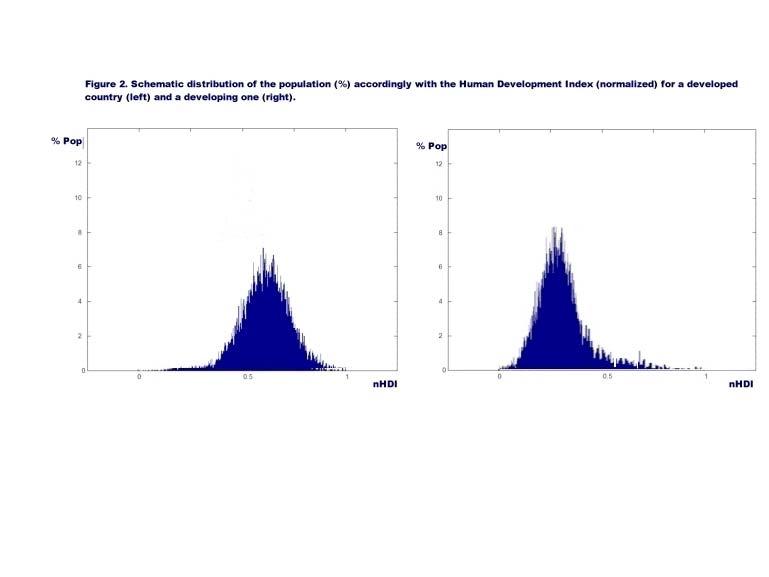
GLOBAL CONFERENCE ON OCEANS, COASTS, AND ISLANDS
| 66
November 12-14, 2003 UNESCO, Paris
OBSTACLES TO ECOSYSTEM-BASED MANAGEMENT
Lawrence Juda
Professor Department of Marine Affairs
University of Rhode Island
Kingston, Rhode Island
ljuda@uri.edu
Life and human well-being depend on the functioning of natu-
In this view key mechanisms of governance include govern-
ral systems that provide goods, such as clean air, clean water, and
ment, but also the marketplace, and non-governmental organiza-
food, and services, such as the filtering of pollutants and provi-
tions and social institutions (Juda 1999; Juda and Hennessey 2002;
sion of living resource habitat. Yet over time these systems have
World Resources Institute 2003). Their mutual interplay and their
come under growing pressure as a consequence of:
relationship with the use of natural systems are diagrammed in
·
simple fashion in Figure 1. Examples of some of the ways those
increasing world population and the present global
elements may influence the use of the environment are also noted
scale of markets that generate growing demands for
in Table 1 and may be suggestive of how necessary changes may
nature's resources
be addressed. Clearly, the mix, character, and relative influence
·
of these mechanisms will vary by country and region and their
modern technology that increases human capabilities
operation in particular locations must be understood empirically
to exploit natural resources, often with attendant short
rather than assumed (Juda and Hennessey 2002).
or long-term damage to the environment, and
The ecosystem-based approach to governance begins with an
· human impacts on the ocean/coastal environment
understanding of the functioning of natural systems and a careful
including living resource habitat destruction and
consideration of human impacts on those systems. It then makes
the introduction into the environment of vast quantities
protection of ecosystems a first order priority and seeks to have
of waste, including effluents which may or may not be
human behavior accommodate, rather than undermine, those sys-
biodegradable, may be highly toxic, or may signifi-
tems. In general terms and in various forms, ecosystem-based
cantly affect oxygen availability
management has been supported not only in academic studies
(Alexander 1993; Sherman 1995; Christensen, et al. 1996), but
The cumulative effect of these developments is that ecosys-
also in international declarations (UNEP Rio Declaration 1992;
tems may demonstrate declines in productivity of desired goods
UNEP Agenda 21 1992; WSSD Plan of Implementation 2002),
and services and, in the worst case, be totally overwhelmed and
international agreements (UN Fish Stocks Agreement 1995), in-
cease to function. An example may be seen in regard to marine
ternational programs (Global Programme of Action 1995; Inter-
fisheries where both overexploitation and threats to essential fish-
national Coral Reef Initiative 1994), international organizations
ery habitat, a deadly combination, are in evidence.
(FAO 1995; FAO 2003), national legislation (Canada, Oceans
Act 1996) and in the work of ocean commissions (Pew Commis-
Given the inadequacy of existing efforts to respond to such
sion 2003; U.S. Commission on Ocean Policy 2002; Independent
problems and the expanding knowledge of the operation of natu-
World Commission on the Oceans 1998). This approach, how-
ral systems, attention has been turning increasingly to the con-
ever, presents many difficulties as attempts are made to proceed
cept of ecosystem-based governance to provide a basis for more
from broad conceptualization and vague endorsement to real world
effective ocean/coastal management. The concept of governance
application and implementation (FAO 2003). Indeed, continuing
merits careful consideration as governance is recognized as be-
national efforts in the U.S., Canada, and Australia illustrate the
ing crucial to advancing ecosystem-based management (World
nature of problems encountered in this regard (Juda 2003).
Resources Institute 2003). Governance should be understood to
extend beyond government, to include other mechanisms that serve
This brief paper points to some of the basic dilemmas faced
to alter and influence human behavior. The author's working
by those seeking to operationalize ecosystem-based management.
definition is that governance refers to the web of formal and in-
Among them, whether at the global, regional, or national level,
formal arrangements, institutions, and mores that structure how
are the following interrelated elements:
resources and the environment are used, how problems and op-
· giving definition to ecosystem-based management and
portunities are evaluated and analyzed, what behavior is deemed
designating appropriate spatial frameworks
acceptable, and what rules and sanctions are applied to affect
patterns of use.
· addressing the disconnect between politically defined
and ecologically defined space
67 |
GLOBAL CONFERENCE ON OCEANS, COASTS, AND ISLANDS
with the past or if it is a next step in the continuing evolution of
ocean/coastal governance. Is it an all or nothing approach or is it
Table 1. Governance Mechanisms Examples of
possible to take meaningful individual measures that collectively
Factors Influencing Behavior
can have significant impact on and foster the emergence of a new
governance ethic? Will we become bogged down in discussions
1. Government
of the design of perfect systems or will we be able to make a
· regulatory policies
series of changes that will allow progress toward a more ecosys-
· governmental programs
tem-based governance system?
· tax policies
· education and outreach
Spatially, what is the operational ecosystem for management
purposes? Ecosystems range from puddles of water to the earth
2. Marketplace
as a whole, with one system nested in another. Currently, opera-
· profit motive
tional frameworks are being developed at the levels of large ma-
· ecosystem goods and service valuation
rine ecosystems, watersheds, and semi-enclosed seas as well as at
· eco-labeling
the level of bays and selected marine protected areas. In all these
efforts, the significance of addressing the interplay of land-based
3. Social Institutions and Non-Governmental
activities with the oceans is emphasized (GESAMP 2001).
Organizations
· socialization processes
POLITICALLY DEFINED AND ECOLOGICALLY
· framing of issues
DEFINED SPACE
· constituency roles
· co-management efforts
The territorial extent of nation-states and sub-national politi-
Source: based on Juda, L. and Hennessey, T. 2001.
cal units has been determined by politics and history and, often or
Governance Profiles and the Management of the Uses of
even typically, is not congruent with the spatial areas over which
Large Marine Ecosystems. Ocean Development and
natural systems, such as large marine ecosystems and watersheds,
International Law. 32:43-69.
extend. Successful governance of such areas requires coopera-
tion among political units and some degree of surrender of sover-
eign or jurisdictional prerogatives for the common good of the
· encouraging integrated, cross-sectoral approaches to
shared ecosystem. Problems among the different authorities ex-
ocean/coastal management
ercising responsibilities in geographical areas encompassed by
ecosystems can easily arise as attempts are made to reach con-
· minimizing government "turf" problems in both
sensus on required measures and in regard to distribution of costs
horizontal and vertical dimensions
and benefits (equity issues) associated with those measures.
· integrating science into public policy
At both the international and national levels, a wide variety of
efforts to overcome such difficulties are in evidence. At the inter-
·
national level, for example, the UNEP-sponsored Regional Seas
coming to terms with the allocative implications of
Program has encouraged cooperation in semi-enclosed seas. In
ecosystem-based management efforts and different
the United States the Chesapeake Bay Program is but one of nu-
priorities among those sharing ecosystems
merous initiatives at regional approaches to management of ocean/
·
coastal environments (Juda, Burroughs, Hennessey 2003). It
overcoming the mismatch between political and
would be well worthwhile to examine carefully the development
ecological time frames
of these and other programs and to profit from the lessons that
might be learned.
· involving the wider public and generating necessary
public support for ecosystem-based governance
THE NEED FOR INTEGRATED, CROSS-SECTORAL
measures
APPROACHES TO OCEAN/COASTAL MANAGEMENT
ECOSYSTEM-BASED MANAGEMENT DEFINITION
The failure of sectoral approaches to ocean/coastal manage-
AND SPATIAL FRAMEWORKS
ment has been noted continuously since the issuance of the Stratton
Commission report (Commission on Marine Science, Engineer-
It has been dryly quipped that the lack of opposition to eco-
ing and Resources 1969). Underdal (1980) has provided a clas-
system-based management stems from the fact that "there is not
sic statement of the need for integrated ocean policy. Others have
enough agreement on the meaning of the concept to hinder its
developed this theme in detail and have noted that attempts are
popularity" (GAO 1994). But the reality is that, however de-
being made to implement more systemic management systems in
fined, attention is generally turning toward systemic rather than
a variety of countries (Cicin-Sain and Knecht 1998).
sectoral approaches to ocean/coastal management and, to a grow-
The new element that has been added to consideration of the
ing degree, focusing on the operation of selected ecosystems. An
multiplicity of uses of ocean/coastal space and their interplay is
important question asks whether this effort requires a total break
the spatial context of ecosystems. Comprehension of the require-
| 68
November 12-14, 2003 UNESCO, Paris
ment to consider the spatial dimension is evidenced, for example,
understanding of the effects of human uses on the environment.
in the reports of American ocean commissions (Pew Commission
It may be clear what people want from the environment, but it is
2003; U.S. Oceans Commission 2002) and others issued by the
essential that there be an appreciation of the capability and limits
Australian and Canadian governments (Commonwealth of Aus-
of natural systems to deliver desired goods and services. Science
tralia 1998; Canada Department of Fisheries and Oceans 1998).
must try to indicate the system productivity parameters for policy
makers and those limits must be taken seriously, even outweigh-
Internationally, recognition of the necessity to provide for ef-
ing the force of political pressures. This is no easy matter as
fective management on an ecosystem scale is seen, for instance,
observed in fisheries management. Educating the public is a key
in the financial support provided to states in southwestern Africa
element in making it possible for science to play an appropriate
by the Global Environment Facility for joint efforts to manage
role in ocean/coastal management. In this context, scientists must
the Banguela Current Large Marine Ecosystem (UNDP, Strategic
be willing to go beyond the task of discovering knowledge and
Action Programme 1999, 2002). And the FAO and UNEP are
seek to make that knowledge and its societal implications com-
exploring how the Regional Seas Program and the many conven-
prehensible to decision makers and to the wider public.
tions and programs it has spawned might be coordinated with the
growing number of marine regional fisheries bodies in attempts
It should be added that while the natural sciences may pro-
to advance ecosystem-based ocean management (UNEP/FAO
vide an understanding of natural system dynamics and the im-
2001).
pacts of human use on those systems, social science can contrib-
ute to the understanding of human perception of nature, how people
GOVERNMENT "TURF" PROBLEMS
use the ocean/coastal environment and its resources, and why they
use it as they do. The answers to the "why" questions are crucial
A major premise of ecosystem-based management is the need
to altering human behavior patterns that damage natural systems.
to consider the totality of activities affecting the defined ecosys-
Varied answers to the "why" question may suggest the need for
tem and the cumulative impact of those activities. Ecosystem-
alternative governance efforts at management (e.g.: education or
based management provides significant challenges to governments
enforcement). Pernetta and Mee (2001) have correctly noted the
that have traditionally been organized sectorally, that is, by func-
importance of recognizing the "root causes" and "causal chains"
tion such as agriculture or defense (Stratton Commission 1969;
associated with use of the natural environment.
Pew Commission 2003). Moreover, there appears to be a global
phenomenon that government bureaucracies (and international
ALLOCATIVE IMPLICATIONS OF ECOSYSTEM-
agencies, as well) tend to mark off and defend as their own par-
BASED MANAGEMENT AND DIFFERING PRIORITIES
ticular areas of policy space or "turf." (Downs 1967; Lévy 1988,
1993).
Politics, it has been said, is the study of who gets what, when,
and how (Lasswell 1958). In this sense, environmental and re-
Ecosystem-based management necessitates some meaningful
source management have important political dimensions. Differ-
degree of interdepartmental, interagency cooperation and behav-
ent environmental policies have varied distributive consequences
ioral modification to assure considerations of policy externali-
both internationally and domestically, consequences that raise
ties; that is, thought must be given to the effects of department or
questions regarding equity of both costs and benefits. The case
agency actions on the broader environment and not just on the
may be made that ecosystem-based management makes sense in
sector for which the department or agency has responsibility. For
some manner of speaking, but changes in distributive effects may
example, decisions by an agricultural ministry to encourage in-
provide an underlying basis for opposition to change. And it
creased use of fertilizers can have significant implications for
should be noted that at local, national, and international levels,
entire watersheds and that consideration must be internalized in
groups that share a common ecosystem may not necessarily agree
the decision making process.
on relative priorities; their alternate preferences will require me-
Further, many governments are federal in character with im-
diation. Accordingly, if required changes are to be made, wide-
portant responsibilities posited in sub-national governmental units.
spread support, based in broad public participation, understand-
Turf considerations are also relevant in this context. Yet efforts
ing, and process transparency must be developed.
made at the national or sub-national levels will fail without ap-
propriate cooperation. The fact is that among the diverse depart-
DIFFERENT TIME HORIZONS
ments and agencies at any particular level of government (the
horizontal dimension) and among levels of government (the ver-
In democratic states, the time frameworks of political leaders
tical dimension), harmonization of policies and efforts is required
are governed by election cycles, while ocean management requires
to avoid conflicting actions and to maximize management effec-
efforts on a longer time scale. Policy makers feel the imperative
tiveness. Ongoing efforts are being made in a number of states to
to demonstrate results in the short run, but safeguarding or restor-
attain necessary levels of cooperation (Juda 2003).
ing natural systems may require extended time commitments be-
fore it is clear that notable improvements have taken place. Costs
INTEGRATING SCIENCE INTO PUBLIC POLICY
may be incurred early on, but benefits may not be apparent for
some time. In this context, the role of education in promoting
Ecosystem-based management requires the collection and
attitudinal change and that of non-governmental organizations in
consideration of a substantial amount of data together with com-
building constituency support may be especially important in
prehension of relationships within the natural environment and
obtaining needed backing for long term efforts.
69 |
GLOBAL CONFERENCE ON OCEANS, COASTS, AND ISLANDS
Public involvement and support. A number of the points noted
Commission on Marine Science, Engineering and Resources. 1969.
above give credence to the urgency for early and continued pub-
Our Nation and the Sea. Washington, D.C.: Government Printing
lic understanding and participation in developing and implement-
Office. Online at <www.lib.noaa.gov/edocs/stratton/title.html>.
ing efforts in support of ecosystem-based management. Wide-
Commonwealth of Australia. 1998. Australia's Ocean Policy. Envi-
spread understanding, endorsement, and participation increase the
ronment Australia. Online through <www.oceans.gov.au/
likelihood of success through having the public share a sense of
the_oceans_policy_overview.jsp>.
ownership of emerging governance systems (World Resources
Institute 2003). Strong public backing can translate into better
Downs, A. 1967. Inside Bureaucracy. Boston: Little, Brown and
Company.
surveillance and oversight, reduce the costs of regulation by en-
couraging voluntary compliance, and provide the political con-
Food and Agriculture Organization. 1995. Code of Conduct for Re-
stituency needed to further ecosystem-based governance measures.
sponsible Fisheries. Online at <www.fao.org/fi/agreem/codecond/
ficonde.asp>.
CONCLUSIONS
Food and Agriculture Organization. 2003. Fisheries Management:
The Ecosystem Approach to Fisheries. Online at <www.fao.org/
Do the difficulties outlined above preclude substantial move-
DOCREP/005/Y44470E/Y44470E.HTM>.
ment toward ecosystem-based management or, rather, do they
General Accounting Office (GAO). 1994. Ecosystem Management:
serve to suggest that the road ahead will be difficult but eventu-
Additional Actions Needed to Adequately Test a Promising Approach,
ally navigable? This author optimistically believes the latter.
GAO/RCED-94-111.
Important changes are already occurring. Most notably, signifi-
cant change has occurred in human perception of the natural en-
GESAMP. Joint Group of Experts on the Scientific Aspects of Ma-
vironment and how it works. This change carries with it implica-
rine Environmental Protection. 2001. Online at <www.gpa.unep.org/
documents/other/gesamp/GESAMP-LBA%20Report.pdf>.
tions favoring systems-based approaches to ocean/coastal gover-
nance and represents a major starting point for governance re-
Global Programme of Action for the Protection of the Marine Envi-
forms. Change can and will come through alterations not just in
ronment from Land-based Activities. 1995. UNEP, (OCA)/LBA/IG.2/
government policy and institutional structure, but through modi-
7. Online through <www.gpa.unep.org/documents/about-GPA-
fications in other key governance mechanisms including the mar-
docs.htm>.
ketplace, non-governmental organizations and social institutions.
Independent World Commission on the Oceans. 1998. The Ocean
In this governance mosaic, education and public involvement are
Our Future. Cambridge: Cambridge University Press.
requisite elements for required behavioral change and can assist
in altering the context of what is politically acceptable and pos-
International Coral Reef Initiative. 1994-. Online at
<www.environnement.gouv.fr/icri/index.html>.
sible.
Juda, L. 1999. Considerations in Developing a Functional Approach
Some may view ecosystem-based management, with its focus on the
to the Governance of Large Marine Ecosystems. Ocean Develop-
protection of natural systems, as stemming from abstract, and per-
ment and International Law. 30:89-125.
haps romantic views of nature. This approach, however, can be
defended as being in accord with reality. Human survival and well-
Juda, L. 2003. Changing National Approaches to Ocean Gover-
being depend upon coming to terms with nature and ensuring the
nance: The United States, Canada, and Australia. Ocean Develop-
sustainability of the ecosystems producing the conditions that make
ment and International Law. 34:161-187.
life as we know it possible and worthwhile. There are many prob-
lems and difficulties inherent in defining and operationalizing eco-
Juda, L., Burroughs, R, and Hennessey, T. 2003. Regional Planning
system-based management but, in appropriate form, such manage-
and Management in the Coastal Zone. Paper prepared for the Na-
ment may offer the best and most realistic manner for providing for
tional Governors Association.
sustainable human use of the environment and its resources. The
Juda, L. and Hennessey, T. 2000. Governance Profiles and the Man-
challenge is to develop widely accepted governance measures that
agement of the Uses of Large Marine Ecosystems. Ocean Develop-
offer both rationale and guidance for human behavior in the context
ment and International Law. 32:43-69.
of the need to sustain the operation of the natural world.
Lasswell, H. 1958. Politics: Who Gets What, When, How. Cleve-
REFERENCES
land: World Publishing.
Lévy, J.P. 1988. Towards an Integrated Marine Policy in Develop-
Alexander, L.M. 1993. Large Marine Ecosystems: A New Focus for
ing Countries. Marine Policy. 12:326-342
Marine Resources Management. Marine Policy 17:186-198.
Lévy, J.P. 1993. A National Ocean Policy: An Elusive Quest. Ma-
Canada. 1996. Oceans Act. 45 Elizabeth II.
rine Policy. 17:75-80.
Canada. Department of Fisheries and Oceans. 1997. Role of the
Pernetta, J. and Mee, L. 2001. The Global Water Assessment.
Federal Government in the Oceans Sector. Ottawa: Fisheries and
<www.giwa.net/giwa_doc/documents_article.phtml>.
Oceans.
Pew Oceans Commission. 2003. America's Living Oceans: Chart-
Christensen, Norman, et al. 1996. The Report of the Ecological So-
ing a Course for Sea Change. Online at <www.pewoceans.org>.
ciety of America, Committee on the Scientific Basis for Ecosystem
Management." Ecological Applications 6:665-691.
Sherman, K. 1995. Achieving Regional Cooperation in the Man-
agement of Marine Ecosystems: The Use of the Large Marine Eco-
Cicin-Sain, B. and Knecht, R.W. 1998. Integrated Coastal and Ocean
system Approach. Ocean & Coastal Management. 29:165-185.
Management. Washington, D.C.: Island Press.
| 70
November 12-14, 2003 UNESCO, Paris
Underdal, A. Integrated Marine Policy: What? Why? How? Marine
United Nations Environment Program (UNEP)/Food and Agricul-
Policy. 4:159-169.
ture Organization (FAO). 2001. Ecosystem-based Management of
Fisheries: Opportunities and Challenges for Coordination between
United Nations. 1995. United Nations Fish Stocks Agreement. In-
Marine Regional Fisheries Bodies and Regional Seas Conventions.
ternational Legal Materials. 34:1547-1580. Online at <www.un.org/
FAO, RFB/II/2001/7. Online at <www.fao.org/DOCREP/005/
Depts/los/convention_agreements/texts/fish_stocks_agreement/
Y4470E/Y4470E00.HTM>.
CONF164_37.htm>.
U.S. Commission on Ocean Policy. 2002. Developing a National
United Nations Development Program (UNDP). Strategic Action
Ocean Policy. Online at <www.oceancommission.gov/documents/
Programme. 1999, 2002. Integrated Management, Sustainable De-
midterm_report/midterm_report.html>.
velopment and Protection of the Benguela Current Large Marine
Ecosystem (BCLME). Online at <www.bclme.org/resources/
World Resources Institute. 2003. World Resources 2002-2004. Wash-
sap.asp>.
ington, D.C.: World Resources Institute. Online at <www.wri.org/
wr2002>.
United Nations Environment Program (UNEP). 1992. Agenda 21.
Online at <www.un.org/esa/sustdev/documents/agenda21/english>.
World Summit on Sustainable Development (WSSD). 2002. WSSD
Plan of Implementation. Online at <www.un.org/esa/sustdev/docu-
United Nations Environment Program (UNEP). 1992. Rio Declara-
ments/WSSD_POI_PD/English/POIToc.htm>.
tion. Online at <www.un.org/documents/ga/conf151/aconf15126-
1annex>.
Figure 1
Key Governance Mechanisms
NGOs/Social
Marketplace
Institutions
G
overnment
Economic
Lega
l/Political
Social
Pressures
Pressures
Pressures
Human Uses of Marin e/Coastal Environment
Source: L. Juda and T. Hennessey. 2001. Governance Profiles and the Management of the Uses of Large Marine Ecosystems. Ocean
Development and International Law. 32:43-69.
71 |
GLOBAL CONFERENCE ON OCEANS, COASTS, AND ISLANDS
| 72
November 12-14, 2003 UNESCO, Paris
WHEN CAN MARINE PROTECTED AREAS IMPROVE
FISHERIES MANAGEMENT?
Ray Hilborn1 , Kevin Stokes, Jean-Jacques Maguire, Tony Smith, Louis W. Botsford, Marc Mangel, Lobo
Orensanz, Ana Parma, Jake Rice, Johann Bell, Kevern L. Cochrane, Serge Garcia, Stephen J. Hall, G. P.
Kirkwood, Keith Sainsbury, Gunnar Stefansson, and Carl Walters
United Nations Food and Agricultural Organization
Tel: 39 06 5705-6467
Fax: 39 06 5705-3020
Email: serge.garcia@fao.org
ABSTRACT
biodiversity is clear, their potential for improving fisheries man-
agement and particularly fisheries yields will be limited unless
MPAs are a promising tool for fisheries management and con-
the roots of fisheries management failures are addressed; the same
servation of biodiversity, but they are not a panacea for fisheries
holds for other management tools. The major problems in fisher-
management problems. For fisheries that target highly mobile
ies management and conservation stem from improper incentives
single species with little or no by-catch or habitat impact, MPAs
and institutional structures (Botsford, Castilla & Peterson, 1997;
provide few benefits compared to conventional fishery manage-
Ludwig, Hilborn & Walters, 1993.; Heinz Center , 2000) that fail
ment tools. For fisheries that are multi-species or on more seden-
to control the race for fish leading to over-capacity, over-fishing
tary stocks, or for which broader ecological impacts of fishing
and economic loss. MPAs are a tool for specifying the location
are an issue, MPAs have some potential advantages. Successful
of fishing; they do not affect the incentives, nor the institutional
use of MPAs requires a case by case understanding of the spatial
structures responsible for over-fishing (Hanneson, Fraser, Garcia
structure of impacted fisheries, ecosystems and human commu-
& al., 2000). Furthermore, imposition of ill-considered MPAs
nities. MPAs, together with other fishery management tools, can
may in fact be detrimental, and the promotion of MPAs as always
help achieve broad fishery and biodiversity objectives, but their
likely to result in improved yields is misleading.
use will require careful planning and evaluation. Mistakes will
be made, and without planning, monitoring and evaluation, we
Area closures are just one tool of fisheries management
will not learn what worked, what did not, and why.
and MPA implementation needs to be guided by the scientific
principles of adaptive management: experimental treatments, con-
If MPAs are implemented without case by case evaluation
trols and evaluation (Walters, 1986). For MPAs to be an effec-
and appropriate monitoring programs, the risk is run of unful-
tive fishery management tool, they need to be considered case by
filled expectations, the creation of disincentives, and a loss of
case in light of the objectives and the current state of the fishery.
credibility of what potentially is a valuable management tool.
They need to be evaluated and compared to viable alternative
fisheries management tools, and used, where appropriate, as one
element in a broader package of measures. Planned programs are
needed for testing the effectiveness of MPAs for fisheries man-
INTRODUCTION
agement. The utility of MPAs in relation to alternative tools will
likely be very different for different types of fisheries, as dis-
Globally, there is a wave of environmental groups, poli-
cussed below.
ticians and ecologists pushing for the large-scale implementation
of Marine Protected Areas (MPAs2 ), with many calls for protect-
POTENTIAL OF MPAS
ing 20-30% of the oceans (Roberts & Hawkins. 2003). Propo-
nents argue that by eliminating all fishing from an area MPAs
There are several well-defined ways in which MPAs may be
protect biodiversity, serve as an insurance policy, and benefit eco-
expected to have merit as a fisheries management tool. These are
system and fisheries management. Initially, there was a clear dis-
examined briefly below.
tinction between MPAs for protection of biodiversity and MPAs
as a fisheries management tool. Most current calls, however, are
Increases in yield
for large scale implementation of MPAs and argue they will pro-
vide both biodiversity and fishery benefits, whilst potential costs
The empirical evidence that MPAs enhance fish yields is sparse
are seldom mentioned (Roberts & Hawkins. 2003; NCEAS, 2003).
(National Research Council, 2001). - Setting aside an MPA ini-
tially reduces the area that can be fished, thus reducing yield.
While the value of MPAs for the protection of habitat and
The question then is whether the yield in the area remaining open
1 To whom correspondence should be addressed. e-mail: rayh@u.washington.edu
2 The term MPA is used here to mean areas that are closed to fishing, the meaning that is more widely used by the public.
In the scientific literature, these areas are more commonly referred to as marine reserves (i.e., 9).
73 |
GLOBAL CONFERENCE ON OCEANS, COASTS, AND ISLANDS
will increase enough to make up for losses from the closed
displacements) and/or pelagic larval dispersal. MPAs are one form
area. We know that in many marine reserves, the abundance and
of spatial management. For sedentary species, it has long been
size of fish increases (Halpern, in press). This is expected. Yield
recognized that spatial management can be more easily under-
from the fished open area can increase in two ways: (1) bigger
stood, accepted and implemented than catch limits (Caddy, 1989;
fish can swim out of the closed area and be caught, and (2) the
Oransanz & Jamieson, 1998). In the case of many fisheries tar-
larger fish in the closed area can contribute more eggs and ulti-
geting relatively small stocks of sedentary organisms, conven-
mately more larvae to the fished open area. However, neither
tional stock assessment and catch regulation are unlikely to be
result is guaranteed. If the fish or invertebrates species of con-
affordable or effective. Instead, locally supported regulations,
cern are sessile they will not move into the fished open area.
including spatial management such as MPAs, have been shown to
Conversely, if they are too mobile, virtually all will move into the
provide significant benefits in some cases (Castilla et al., 1998;
fished open area, thus removing the anticipated benefit (Polacheck,
Castilla, 1999). In addition, global catch controls may be inap-
1990; De Martini, 1993). Also, larval dispersal patterns must be
propriate for many sedentary invertebrates in terms of their popu-
such that enough larvae are transported to the open areas
lation biology. For example, broadcast spawners require high
(Hastings, in press), and (compensatory) density-dependent
density concentrations in order to reproduce successfully, and these
growth does should not negate benefits within the closed areas
high density concentrations are the first ones targeted by a fishery
(Parrish, 1999). Benefits will accrue only if recruitment to the pre-
regulated by catch limits. Spatial management may achieve larger
MPA fished area was less than the maximum possible. Thus,
reproductive outputs than global controls for comparable harvest
MPAs will increase yields only in fisheries in which heavy fishing
rates.
mortality has substantially reduced recruitment (Quinn, Wing &
Botsford, 1993; Holland, 1996; Sladek-Nowlis & Roberts, 1999;
Multispecies fisheries
Botsford, Morgan, Lockwood et al., 1999). This is a corollary of a
formal result: MPA-based and conventional management are ana-
When a fishery targets a multispecies complex, existing catch
lytically equivalent (Mangel, 1998; Hastings, 1999) with respect
and net size limits may be poor management tools for some spe-
to yield of the target species.
cies. For example, in many fisheries the chief management tool
currently used is ITQs/TACs3 . These apply to a few species,
Buffer against uncertainty
whilst the fisheries land dozens or even hundreds of species and
discard many more4 . Extending quota management to all species
Conventional management through catch or effort controls can
is not practicable - even if sufficient data were available, such
fail due to stock assessment errors and inadequate institutional
fisheries are rarely profitable enough to afford the assessment
frameworks. To the extent that MPAs may be effective at pro-
costs. Prohibiting landings simply forces dumping, and setting
tecting breeding stock, they may help to buffer the impact of such
catch limits on every species would likely close the fishery be-
failures (Botsford, Castilla & Peterson, op. cit.; Lauck, Clark,
cause at any time at least one species would likely need protec-
Mangel et al., 1998; Mangel, 2000). However, persistence of
tion. Properly designed MPAs may be a cost-effective manage-
populations in MPAs, and their ability to replenish surrounding
ment tool for such fisheries.
areas, depends on the MPA configuration and larval dispersal
patterns, which are poorly known (Botsford Hastings & Gaines,
Improved knowledge
2001). Thus, while MPAs reduce uncertainty in the effects that
fishing regulations will have, lack of relevant biological knowl-
MPAs may provide valuable scientific reference areas to serve
edge adds uncertainty.
as controls on trends in fish production in the absence of take, on
the age, size and sex structure of the stock, and on impacts of
Reduced collateral ecological impacts
fishing on habitats (Smith, Botsford & Wing, 1998; Castilla &
De Feo, 2001). Closed areas may provide the best basis for un-
Fishing has wider impacts on marine ecological systems, not
derstanding the broader impacts of fishing on ecological systems.
just on target species (Hall, 1999). MPAs can reduce impacts of
The spatial scale of the MPA would need to be appropriate to the
fishing on benthic habitats, by-catch and protected species, and
life history of the species, but stock assessments that include data
ecosystem structure and function. To the extent that the objec-
from an unfished control site would be highly informative. Such
tives of fisheries management have been broadened to include
reference areas are particularly appropriate during the develop-
concern for such impacts (Sainsbury, Punt & Smith, 2000), MPAs
ment of new fisheries, when sustainable exploitation rates of newly
are potentially an important tool in meeting such specified objec-
exploited species are highly uncertain, so that there is risk of over-
tives.
fishing (Perry, Walters & Boutillier, 1999).
Stocks of sedentary organisms
The term "sedentary" , as used here, does not mean immobile.
Sedentary organisms are those whose movements are short-range
when compared to the spatial scale of the fishing process (fleet
3 The Total Allowable Catch (TAC) is the catch limit for a whole stock. The way in which that limit is allocated and managed will vary between
management regimes. Individual Transferable Quotas (ITQs) are one was of allocating and managing TACs.
4 Australia's south east trawl fishery, for example, catches well over 100 species, of which up to 80 are sometimes landed, but only 18 are
currently managed by quotas (Smith and Smith, 2001).
| 74
November 12-14, 2003 UNESCO, Paris
POTENTIAL AND ACTUAL PROBLEMS
HOW SHOULD WE PROCEED?
WITH MPAS
MPAs can be appropriate as a tool for the conservation of
Conversely, MPAs present problems under a number of cir-
identified habitat, species and community biodiversity. However,
cumstances which are reviewed briefly below.
to minimize the yield losses to fisheries, and to achieve the de-
sired conservation benefits, MPAs need to be evaluated in the
Effects of spatial shifts in fishing effort
context of: (1) clear biodiversity and fisheries objectives; (2) the
social and institutional ability to maintain and enforce the clo-
A consequence of closing an area to fishing is for the
sures; (3) existing fisheries management actions; and (4) the abil-
fishing effort to move elsewhere, which may have a number of
ity to monitor and evaluate success. Unqualified advocacy for
undesirable consequences5 (Rijnsdorp et al., 2001). If an MPA
MPAs ignores the need for scientific evaluation and the potential
were large relative to the dispersal of adults and juveniles, pro-
negative impacts to stocks, yields, and communities.
tecting 30% of the area would lead to a 30% reduction in poten-
tial yield. Unless the quota or effort were reduced 30% outside
We need to learn how MPAs might be used to improve
of the MPA, the sedentary stock outside would be severely over-
fisheries yields, and this will need careful experimental design
fished. If catch limits were reduced proportionally, the conserva-
and evaluation using the principles of adaptive management.
tion benefits would come from reduced catch, not from the MPA.
Different size MPAs need to be set up in different environments
The spatial re-allocation of effort that occurs when areas are closed
with replicates and controls. Long-term evaluation needs to be in
can have detrimental impacts on target species, non-target spe-
place and criteria for success need to be determined a priori. Lack
cies and habitat in the areas that remain open. The impact of
of scientific studies and inadequate sampling will be a major im-
effort re-allocation must always be considered when planning
pediment to the successful implementation and evaluation of
MPAs.
MPAs. The appropriate scientific frameworks for the placement
and evaluation of MPAs are critical.
Stocks of highly mobile organisms
References
Many of the species caught in industrialized and some artisanal
fisheries are mobile enough that MPAs would have to be very
Roberts, C.M. & Hawkins, J.P. 2003. Fully Protected Marine Re-
large to effectively protect breeding stock. With mobile stocks,
serves: A Guide (World Wildlife Fund United States, Washington,
closing some areas imposes economic inefficiencies, forcing the
DC, available at http://www.panda.org/resources/publications/wa-
catch to be taken at other times and places. The stock would not
ter/mpreserves/mar_dwnld.htm
be protected without additional measures, but economic costs
NCEAS. 2003. Scientific consensus statement on marine reserves
would be imposed.
and marine protected areas. University of California. Statement sub-
mitted at the Annual Meeting of the American Association for the
Better options may be available
Advancement of the Sciences (AAAS), 17 February 2001. National
Center for Ecological Analysis and Synthesis (NCEAS). Http://
When existing fisheries systems protect the breeding stock
www.nceas.uscb.edu/Consensus
through catch, size or area limits, it is unclear that MPAs will
Botsford, L.W. ; J.C. Castilla, C.H. Peterson. 1997. Title missing.
provide additional yield benefits. Where conventional fisheries
Science 277, 509: pages ?
management systems have not protected breeding stocks, such as
New England groundfish and in many European fisheries, scien-
Ludwig, D., Hilborn, R., & Walters, C. J. 1993. Title missing. Sci-
tific recommendations have not been implemented. Similar prob-
ence 260, 17, 36: pages ?
lems may befall MPAs. Many countries have attempted to im-
Heinz Center . 2000. Fishing Grounds: Defining A New Era for
pose top-down catch or size regulations on local fishermen with
American Fisheries Management. John Heinz III Center for Sci-
little success. Top-down imposition of MPAs is equally unlikely
ence, Economics, and the Environment. Island Press, Washington,
to work; what is needed, as for any management measure, is bot-
DC.: pages ?
tom-up support of fishery stakeholders and communities.
Hanneson, R., Fraser, D., Garcia, S., Kurien, J., Makuch, Z.,
Hardship to fishing communities
Sissenwine, M., Valdimarsson, G. & Williams, M. 2000. Governance
for a Sustainable Future: II Fishing for the Future. A Report by the
Just as many fish stocks have complex spatial structure, and
World Humanity Action Trust, 67pp.
species may have limited mobility, the same is true of many fish-
Walters, C. J. 1896. Adaptive Management of Renewable Resources.
ing communities. MPAs may cause extreme hardship to fishing
McGraw Hill, New York: pages ?
communities, forcing them to travel much farther to unfamiliar
grounds, and MPAs that are large enough to protect some species
National Research Council. 2001. Marine Protected Areas: Tools
for Sustaining Ocean Ecosystems. National Academy Press, Wash-
may exclude local people from any form of fishing. The spatial
ington, DC: pages ?
structure of the fish and the human community must be consid-
ered in the analysis of MPAs.
Halpern, B. (In Press). Title missing. Ecol. Appl.
5 Rijnsdorp et al. (2001) for example, showed that a closed area for protection of cod in the North Sea led to unintended transfer
of effort to areas where skates and long lived benthic species were more vulnerable.
75 |
GLOBAL CONFERENCE ON OCEANS, COASTS, AND ISLANDS
Polacheck, T. 1990. Title missing. Natur. Resource Modeling 4(3),
Sainsbury, K.J., Punt, A.E. & Smith, A.D.M. 2000. Title missing.
327: pages ?
ICES J. Mar. Sci., 57, 731
DeMartini, E.E. 1993. Title missing. Fish. Bull. 91(3), 414: pages ?
Caddy, J.F. 1989. Title missing. In: Caddy J.F. (Ed.) Marine Inverte-
brate Fisheries: Their Assessment and Management. J. Wiley, New
Hastings, A. & Botsford, L.W. In Press. Title missing. Ecol. Appl.
York: 665-700.
Parrish, R. 1999. Title missing. Calif. Coop. Oceanic. Fish. Invest.
Orensanz, J.M. & Jamieson, G.S. 1998. Title missing. In Jamieson,
Rep. 40, 77 pages ?
G. S. & Campbell, A. (Eds.). Proceedings of the North Pacific Sym-
Quinn, J.F., Wing, S. R. &L.W. Botsford. 1993. Title missing. Am.
posium on Invertebrate Stock Assessment and Management, Can.
Zool. 33, 537 pages ?
Spec. Publ. Fish. Aquat. Sci. 125, 441 pages ?
Holland, D.S. & Brazee R.J. 1996. Title missing. Mar. Resour. Econ.
Orensanz, J.M., Armstrong, J., Armstrong, D. & Hilborn, R. 1998.
11, 157 pages ?
Title missing. Rev. Fish. Biol. Fisher. 8, 117 pages ?
Sladek-Nowlis, J. & Roberts, C. M.. 1999. Title missing. Fish. Bull,
Castilla J.C. et al. Names missing. 1998. Artisanal "caletas" as units
97, 604 pages ?
of production and co-managers of benthic invertebrates in Chile. In
Jamieson G.S. & Campbell, A. (Eds.) Proceedings of the North Pa-
Botsford, L. W.; Morgan, L.E.; Lockwood, D.R. & Wilen, J.E. 1999.
cific Symposium on Invertebrate Stock Assessment and Manage-
Marine reserves and management of the northern California Red
ment. Can. Spec. Pub. Fish. Aquat. Sci. 125, 407: 407-413
Sea urchin fishery (CalCOFI Rep. 40: 87-93
Castilla, J.C. 1999. Title missing. Trends Ecol. Evol. 14, 280
Mangel, M. 1998. Title missing. Ecol. Lett. 1, 87 pages ?
Smith, B., Botsford, L.W. & Wing, S.R. 1998. Title missing. Can. J.
Hastings, A. & Botsford, L.W. 1999. Title missing. Science 284,
Fish. Aquat. Sci. 55, 1236 pages ?
1537 pages ?
Castilla, J.C. & Defeo. O. 2001. Title missing. Rev. Fish. Biol. Fisher.
Lauck, T., Clark, C.W., Mangel, M. & Munro, G. R. 1998. Title
11, 1: pages ?
missing. Ecol. Appl. 8, S72
Perry, R.I., Walters, C.J. & Boutillier, J.A. 1999. Title missing. Rev.
Mangel, M. 2000. Title missing. Evol. Ecol. Res. 2, 547 pages ?
Fish. Biol. Fish. 9. 125 pages ?
Botsford, L.W., Hastings, A. & Gaines S.D. 2001. Title missing.
Rijnsdorp et al. Names missing. 2001. Reference incomplete. See
Ecol. Lett. 4, 144 pages ?
endnote vi
Hall, S.J. 1999. The Effects of Fishing on Marine Ecosystems and
Communities. Blackwell, Oxford, UK pages ?
| 76
November 12-14, 2003 UNESCO, Paris
THE REGIONAL MANAGEMENT OF FISHERIES
Hance D Smith
Reader, Cardiff University, School of Earth, Ocean and Planetary Sciences,
PO Box 914, CARDIFF. CF10 3YE. United Kingdom.
Tel: +44 2920 875569. Fax: +44 2920 874326
e-mail: smithhd@cf.ac.uk
INTRODUCTION
ies in a regional context which takes account of all the various
influencing factors in whatever combinations these exist in par-
Viewed in the long perspectives of history, there is little doubt
ticular cases. While apparently less clear cut, such an approach
that fisheries management world wide is at a turning point, the
may be more effective. The first section of the paper thus deals
scale and significance of which lies beyond human experience to
with the establishment of management priorities. This is followed
date. The accelerating collapse of the whale fisheries between the
by discussion of the technical aspects the toolbox of measures
1930s and 1960s may be regarded as a portent, amplified by the
which are available for directly influencing the relationships be-
failure to agree a moratorium on whaling until the 1980s half a
tween human activities and fish stocks. The third section of the
century after the slide started. The forces at work in the world's
paper then focuses on the people involved a general manage-
great pelagic fisheries have been more difficult to disentangle. In
ment dimension encapsulating the nature of the human inputs into
the cases of, for example, the great upwelling fisheries the Cali-
fisheries management. Finally, the combination of the previous
fornian sardine, Peruvian anchovy, and South African pilchards;
three themes within specific regional frameworks is considered.
as well as shelf pelagics such as North Sea herring, there have
always been profound natural variations in the level of stocks
MANAGEMENT PRIORITIES
which have been difficult to separate from pressures due to over-
fishing. Nonetheless, in successive cases the Californian sar-
The starting point for the discussion of management priorities
dine in the 1950s, the Peruvian anchovy and North Sea herring in
is the objectives of fisheries management. A cursory glance would
the 1970s, overfishing to varying degrees triumphed. At first sight
suggest that there are many, rather than few, objectives. And yet
the relatively dispersed bottom-dwelling demersal stocks might
is it likely that there are only three fundamental sets of objectives.
seem to make these more secure from overfishing, and arguably
The pre-eminent set in historical terms is undoubtedly the eco-
it has indeed been so. However, there is now every appearance
nomic, which has to do with the allocation of resources. Sec-
that the spectacular collapse of the Grand Banks cod stock in the
ondly have been the biological objectives which deal with con-
early 1990s is a harbinger of events to come, no less menacing in
servation: here, interestingly enough, the language of fisheries
its implications than the decline of whaling and pelagic fisheries.
management has often seemed to give priority to conservation,
while in reality allocation has been more important. It was ever
The history of fisheries management which has had to cope
thus, beginning with the seventeenth-century conflict between the
with these and innumerable other unfolding events has been mixed
English and Dutch over the North Sea herring fisheries. Finally
at best. On relatively small scales, particularly with individual
the social objectives have been very poorly articulated for the
stocks, there have been successes, such as the fur seal population
most part. These are concerned with employment, maintenance
in the Bering Sea, managed since the 1890s; and the halibut popu-
of fishing industries and communities and related ways of life.
lation of the North East Pacific in the 1920s. Overall, however,
Effective management overall is dependent on achieving a vari-
the story is one of ultimate ineffectiveness, as the prevalence of
ety of balances among these three objective groups in specific
severe overfishing demonstrates so starkly. Fisheries manage-
situations, particularly regionally, elaborated further below.
ment in particular situations seems often to have concentrated
overmuch on only one or two approaches, be it the underlying
The immediate task in fisheries management is to influence
natural science, the basic economics, or technological approaches
the physical interactions between human activities -principally
reliant on gear regulations; rather than on any broad, overarching
the gear on the one hand, and the environment principally the
approach taking into account the innumerable combinations and
commercial fish stocks, on the other. This is the realm of techni-
permutations of influencing factors which exist in reality.
cal management, which is aimed at the major influencing factors
involved, being in turn technological, environmental, economic
The purpose of this paper in the context of the WSSD pro-
social and temporal. The starting point has often been and oft
cess, therefore, is to suggest that over-reliance on a single ap-
remains gear regulations. Economic measures are primarily con-
proach is unwise. Rather, at the present juncture in both the de-
cerned with the industry itself and allocation of resources. Social
velopment of world fisheries and associated fisheries manage-
and political aspects are concerned with the roles of `stakehold-
ment systems, a more useful way forward may be to view fisher-
ers' individuals, fishing communities, companies, the state and
77 |
GLOBAL CONFERENCE ON OCEANS, COASTS, AND ISLANDS
others organised in a number of different ways. The idea of
ing `privatisation' of quota systems, achieved through making these
temporal risk is more marginal, unlike the shipping industry, where
transferable mainly, of course, within individual state jurisdic-
marine insurance remains a key element in its operation.
tions where national quota shares have already been agreed at
international level. The process is notable in having been most
The general management level is about the specifically hu-
prominent initially in geographically relatively isolated regions,
man inputs into the management system. Of particular interest is
such as Iceland, New Zealand and Australia. It still has some way
the way in which decisions are taken, leading in turn to the con-
to run, and may be especially useful in rural areas with some form
sideration of the organisations which take these decisions. This in
of co-management system, in which the community via local gov-
turn depends on the ideas in short, the policies which drive
ernment owns and leases the quota. By contrast, in the capital
the overall system. Finally, implementation of policies depends
intensive distant water fisheries run by companies it may be more
on strategic planning by individuals and especially organisations,
appropriate to allocate the quota to companies within national
including companies and the state.
and/or international frameworks. A particular characteristic of the
Technical and general management functions operate within
implementation of these systems over time is to focus on both
a set of factors external to the fisheries management `system',
historic rights and the principle of relative stability, notably in
which have a profound influence on its operation. Apart from
European fisheries, which have a long and complex history. This
overfishing and localised, mainly coastal pollution, the first set of
is all very well if the fisheries hold up, but result in major crises if
such factors are environmental. Direct human influence on envi-
the fisheries collapse.
ronmental factors per se is minimal. Indirect influences, such as
The second main element in the toolbox is conservation. It
global warming, are another matter. However, in both cases the
can be confused with the first, which is often couched in conser-
ability of fisheries management systems as presently constituted
vation terms, including conservation of the overall human impact
to mitigate or eliminate these factors is negligible, at least on short
on the ecosystem rather than the commercial fish stocks which
time scales of a decade or two. The role of technological factors,
are the primary focus of attention here. Conservation measures
on the other hand, is driven by innovation. It is here that human
may also include closed areas and seasons the idea of `no take'
influence is paramount. The efficiency of fishing gears and tech-
zones is a comparatively recent variation on this theme; also im-
nological sophistication of fish finding and fishing vessels are
portant are the settling of minimum sizes of fish, as well as over-
such as to be a decisive influence in the promotion of overfish-
all quota limits, particularly at `global' level for specific fisher-
ing. However, here again, the role of the management system has
ies. Conservation measures of course rely on the application of
been generally ineffective at best. The position occupied by eco-
science and technology. An important issue at present is the long-
nomic factors is similar. Demand for the product drives the in-
standing application of science virtually independently of the fish-
dustry. Fisheries management has little to say on demand, which
ermen and the knowledge they possess. This is a major weakness
originates in a market established almost everywhere by expand-
as science relies on sampling and long-term monitoring and re-
ing human populations and, at least in the developed world, also
search programmes. In this way `non-scientific' information of
by rising incomes. Social and political factors are arguably at
value is liable to be lost. This is particularly important in trying to
there most influential in the devising of fisheries management
arrive at what may be termed sustainable or safe biological lim-
systems themselves. However, population changes and barriers
its, a near impossible task if levels of information, including dis-
to trade, for example, operate very largely beyond the direct in-
cards, cannot be reliably estimated. Here much remains to be done,
fluence of fisheries management systems. Finally to be taken into
especially in integration of scientific effort more effectively into
account is time itself, when the interaction of the above factors
the fishery management process, a theme returned to below.
produces concomitant elements of risk which it may be possible
to quantify in some cases.
The third set of tools are social in nature. These include legis-
lation governing all technical and general management aspects;
In devising the fisheries management systems of the future it
and licensing schemes which can be designed to incorporate all
is crucially important to realise that objectives, technical and gen-
the other technical management measures, such as days at sea,
eral management functions, and external factors all operate within
and gear regulations. Such licences inevitably acquire an eco-
real geographical frameworks. In order to be managed, the global
nomic value, and can be used to concentrate or prevent concen-
fisheries have to be organised on a regional basis, which is the
tration of ownership, and for decommissioning of individual ves-
way to properly take account of the contributing elements to the
sels or even whole fleets deemed surplus to requirements. Here
system comprising both the fisheries and fisheries management.
again there may be some way to go, as such tools are central to
coping with the fundamental transition in the fisheries alluded to
THE TOOLBOX
in the Introduction. It should also be noted that the legal system
evolves in parallel with the development of the industry itself,
In the long perspective of history there is no doubt that it is
with periods of incremental legislation punctuated by major con-
the economic measures which have and, by and large, continue to
solidation, on a scale of decades. As such legislation is liable to
take precedence. Fundamentally these are all concerned with the
lag behind development and therefore practice.
allocation of resources. Closed areas and seasons, and quota sys-
tems have been the main tools in the box. Indeed the notion of
Understanding such lags is crucial to application of techno-
fishing limits was perhaps the earliest concrete measure to be
logical measures, including gear and vessel regulations upon which
applied, and this remains fundamental to the concept of geographi-
much management relies. Paradoxically the process of innova-
cally expanding state jurisdiction over fisheries resources. The
tion upon which application of technology relies is largely be-
most remarkable development, however, is the recent and ongo-
yond management influence, which is a major reason for legisla-
| 78
November 12-14, 2003 UNESCO, Paris
tion lagging behind application, and thus necessitating legisla-
of organisations or stakeholders, including as well as the fisher-
tive consolidation at periodic intervals. Nonetheless regulation
men and fishing communities, the shore-side industries, scientific
of gears in particular is often viewed as the first line of defence in
research organisations, government agencies (national/interna-
fisheries management, especially when allied to scientific inputs
tional) central government, industry, politicians, non-governmental
such as measurement and monitoring of fish stocks and indi-
organisations and the public especially the consumers of fish
vidual fish sizes. Indeed this is one of the most sophisticated
products.
elements within the toolbox, once the innovations have been fully
developed.
The functioning of organisations in turn depends on both policy
sets of ideas relating to the management tasks in hand; and imple-
Finally, there is the temporal element, which involves under-
mentation of these ideas through planning of one kind or another.
standing the complex interplay of external factors discussed in
Fisheries policies are as many and varied as the fisheries them-
the previous section, and their interactions with the combina-
selves. These are often seen as mainly a function of government,
tions of tools used to manage specific fisheries. This is the world
although the policies of other stakeholders notably the non-
of interruptions due to bad weather; longer term variations in fish
governmental organisations are becoming increasingly influen-
stocks and therefore supplies to markets; gluts and shortages; good
tial. At state level, the specific plans may not exist, except in some
times and distress at the individual, community and industry lev-
developing countries, where these are liable to be development-
els. Long ago Adam Smith observed that, despite the vagaries of
focused.
fishing in the short term, in the long term the returns were certain
enough. It is a measure of the seriousness of the present situation
Crucially, a regional approach would mean a move away from
that for the first time since he wrote in the 1770s, this may no
overarching state influence or even control, to more evenly bal-
longer be the case in many of the world's fisheries. However, the
anced sets of partnerships among public, private and voluntary
systematic application of risk analysis as applied in shipping op-
sector organisations which nonetheless takes proper account of
erations or marine insurance, is largely absent in fisheries man-
the regional patterns of fisheries resource exploitation and the
agement, perhaps at least partly because, unlike shipping, fisher-
natural environments upon which these depend. In such a world
ies are substantially small scale in business terms.
over-reliance on either ecosystems, or spatial planning approaches
based on industrial development would often be inappropriate,
At this all important technical management level, a regional
or even impossible; rather, again, combinations of factors dif-
approach can avoid over-reliance on only one or a few tools in
ferent for each region would be the rule. Perhaps most impor-
the box, such as gear regulations, or quotas; but rather can take
tant of all initially, is that the fishermen themselves should be at
account of more sophisticated combinations of measures pecu-
the centre of responsibility for decision-making.
liar to particular regions, together with temporal variations, which
are also often regionally specific. Of particular importance is the
REGIONAL FRAMEWORKS
need to acquire and organise data on a practical regional basis,
and an overall awareness of the true complexities inherent in the
The starting point for discussion of regional frameworks is
use of this data.
the existing regional pattern of fisheries development. Within this
pattern, the most important fisheries are the major regional con-
THE PEOPLE
centrations of the developed world, especially in Western Europe,
Eastern Europe, North America and Japan/Korea. Both individual
The starting point for the assessment of the human element in
national policies, and regional policies (in the case of the Euro-
fisheries management is the understanding of the processes of
pean Union) affect most of the world's fisheries coastal, shelf
decision-making by individuals and organisations in relation to
and deep ocean, although the most important category is the con-
their respective spheres of responsibility. Arguably over time the
tinental shelf.
most important aspects of decision-making in the first instance
relate to the overall co-ordination of technical management, es-
The developing world presents a different set of circumstances.
pecially with regard to the mix of technical measures used. As
Geographically more extensive, predominantly tropical and sub-
already noted, the history of fisheries management in many cases
tropical, most of the current fishing effort is external to the re-
is characterised by relatively straightforward approaches relying
gion. There is a large measure of subsistence fishing. It may also
upon one or only a few tools. However, the range of possible
be useful to consider the emerging rights of `first nations' (geo-
measures is considerable, and there may well be considerable
graphically extensive in the developed world) within this con-
scope for increasing sophistication in application of multiple
text.
measures in some cases.
The open oceans beyond state jurisdiction should probably
Discussion of decision-making naturally leads to consider-
also be regarded as a series of distinct regions. Major consider-
ation of the roles of organisations within which much decision-
ations here are the issues surrounding the Straddling Stocks Agree-
making occurs, although the individual decisions taken by fisher-
ment; whaling; the fisheries of the Southern Ocean; the fisheries
men constitute a further key element in this context. The initial
of the South Pacific islands region; and the tuna fisheries gener-
dynamics and operation of external influences of the major
ally. These partly overlapping issue areas may require a strength-
organisations involved would repay research through improving
ening of international institutions to oversee management.
management decision-making.
How long will it take to develop truly effective fisheries man-
In practice of course, fisheries management involves a range
agement systems? And how long have we got? To answer the
79 |
GLOBAL CONFERENCE ON OCEANS, COASTS, AND ISLANDS
second question first, the time scales available vary region-
Nonetheless fisheries management requires fundamental re-
ally it is vitally necessary to aim for the next twenty to thirty
appraisal. Unlike, for example, safety of navigation which ben-
years at most , before some ecosystems are damaged any further,
efits from a global approach, fisheries management depends on
and perhaps permanently changed where this has not already
global ideas applied locally, in a regionally specific way. It re-
taken place. Sustaining truly effective systems are likely to take
quires original approaches to the integration of tools and people,
longer, but surely not beyond the middle of the present century?
and it requires a keen awareness of the history and cultural sig-
nificance of the world's fisheries.
The regional fisheries management systems of the future,
therefore, will have to provide for integration of technical and
Effective fisheries management emerging over the next two
general management elements with influencing factors, which will
or three decades will depend on the flexible setting of manage-
be regionally specific and capable of constant re-adjustment in
ment priorities on a regional basis, which incorporates a thor-
time, as required by particular regional circumstances. A particu-
ough understanding of both technical and general management
larly important aspect concerns the mode in which regional man-
measures and their inter-relationships, as far as possible balanc-
agement organisations evolve, especially at smaller geographical
ing the special interests involved. Particularly important will be
scales. It would be an intellectual exercise (most probably car-
the integration of continual change in all the elements involved,
ried out in government and academia) to devise a set of manage-
permitting flexible responses, especially to factors beyond the
ment regimes at various scales. However, lasting success will rather
direct control of fisheries management systems. The outcome will
be based on the emergence of groups of stakeholders who emerge
be a set of management regions, both national and international,
to define their own regions, and establish links with neighbouring
at a variety of geographical scales, which are above all manage-
groups. There are some signs of this in Europe. The result will be
able.
a major contribution to the emerging ocean governance of the
21st century, with influence extending politically far beyond fish-
eries to other aspects of marine affairs.
CONCLUSION
It tends to be forgotten that fisheries management has achieved
a great deal. In some cases fisheries have been managed
sustainably; the role of international agreements such as the Code
of Conduct for Responsible Fisheries, and the Straddling Stocks
Agreement are not to be underestimated; while the sustained in-
vestment in fisheries science remains worthwhile, even if it could
be used more effectively.
| 80
November 12-14, 2003 UNESCO, Paris
DEVELOPING A CAPABLE, RELEVANT NETWORK
TO ADDRESS MARINE AND COASTAL
ENVIRONMENTAL CONCERNS AND FOOD
SECURITY IN AFRICA AND NEIGHBOURING SMALL
ISLAND DEVELOPING STATES (SIDS)
Grant Trebble
Coordinator AMCROPS
P O Box 300, Kloof
South Africa, 3640
Mobile No. +27 (083) 446 1447
E-mail: gtrebble@iafrica.com
CAN THE WSSD SUBSTANTIVE OBJECTIVES ON
far as the current process is concerned. The goal of delivering
OCEANS, COASTS AND SIDS BE ACHIEVED IN
substantial progress by the next Global Programme of Action
AFRICA?
conference in 2006 and other key dates will not be realized.
A study of the Negotiated Text from the WSSD in
FACTORS CONTRIBUTING TO A FRAGMENTED AND
Johannesburg reveals a thorough and balanced plan of action for
UNSTABLE IMPLEMENTING ENVIRONMENT
meeting the WSSD's Substantive Objectives. In so far as Africa
is concerned, the following clauses hold special significance.
A significant number of organizations such as DFID, IUCN,
The United Nations and The World Bank, amongst others, are
Clause 29 (c) Establish an effective, transparent and regular
committed to delivering the substantive objectives of the WSSD
inter-agency coordination mechanism on ocean and coastal is-
and have met with varied, but questionable in terms of
sues within the United Nations system;
sustainability, success in Africa. Africa's recently formed African
Clause 29 (f) Strengthen regional cooperation and coordina-
Union and NEPAD initiative have begun the process of develop-
tion between the relevant regional organizations and programmes,
ing linkages between African governments and international in-
the UNEP regional seas programmes, regional fisheries manage-
stitutions and governments. These are positive steps and must be
ment organizations and other regional science, health and devel-
fully supported but concerns remain that:
opment organizations;
· International institutions and Developed Country
Clause 29 (g) Assist developing countries in coordinating
governments interact almost exclusively with African
policies and programmes at the regional and sub regional levels
government structures due to internal policy restric-
aimed at the conservation and sustainable management of fishery
tions and a perceived lack of viable alternatives.
resources, and implement integrated coastal area management
plans, including through the promotion of sustainable coastal and
· The African Union and NEPAD have both been
small-scale fishing activities and, where appropriate, the devel-
accused of ignoring civil society and communities and
opment of related infrastructure.
imposing a rigid `top-down' approach with a limited
focus on environmental issues. The section on
Clauses 32 (a), (b) and (c) also bear comment, notably for
sustainable development contained in the NEPAD
their reference to facilitation, strengthening capacity and elabo-
document of October 2001 (paragraph 71) does not
ration of regional programmes. The intentions of Clause 34 are
mention the word environment and, furthermore, the
relevant to Africa due to the notable lack of scientific education
document refers alarmingly to "utilizing coastal
on the continent.
resources to optimal effect". (Wildlife and Environ-
One year after the WSSD there have been few attempts made
ment Society of South Africa, Commentary)
to begin the process of delivering on these objectives and no no-
ticeable benefits have accrued to communities reliant on marine
· The African Union argues that poverty, disease and
and coastal resources. This is not due to a lack of effort but mainly
armed conflict are of much greater importance than
as a result of a fragmented and unstable implementing environ-
the environment in the allocation of limited resources.
ment that cannot be efficiently utilized to address the ideals of
sustainability as they pertain to environment and poverty, in so
· Environmental awareness campaigns are largely non-
existent in Africa.
81 |
GLOBAL CONFERENCE ON OCEANS, COASTS, AND ISLANDS
·
Little effort is being employed to involve civil society
marine and coastal concerns. NEPAD's best intentions will opti-
in environmental programmes or develop their capacity
mistically only yield real community benefits within ten years.
to fill the void evident in sustainable environmental
More realistically, a turnaround in the situation may only eventu-
effort, even less so in marine and coastal matters.
ate after twenty years, a time too far off for the marine and coastal
environment. The optimum solution would be to develop civil
·
Beneficiary African government agencies and, in rare
society networks in Africa that would provide much needed con-
instances, NGOs are unprepared when international
tinuity and act as environmental support and implementing agen-
organizations introduce environmental programmes
cies on behalf of international institutions while African govern-
and lack the capacity to adapt, develop and integrate
ments remain focused on their current priorities. This network
the programmes to suit local and regional conditions.
must work compatibly with local governments to build the
Furthermore, the interaction between local and
country's environmental capacity and benefit communities di-
international agencies takes place at a level that does
rectly. Civil society would be most suitably equipped to provide
not filter through to communities and build a broad-
the continuity that that is required to address complex concerns
based acceptance for sustainable resource utilization.
such as environment and food security, due to the fact that they
generally transcend and withstand political instability.
To emphasize these points consider the following:
THREATS TO MARINE AND COASTAL RESOURCES.
·
Conflict: Some 20% of Africa's people are directly
affected by conflict and many more suffer from the
The threats faced by African marine and coastal environments
impact of that conflict. The World Bank conserva-
and to communities dependent on these environments are numer-
tively estimates that conflict is knocking 2% a year off
ous and increasing alarmingly due generally to the lack of suit-
Africa's economic growth. Conflict, often combined
able legislation and the complete inability of protection services
with drought, triggered six of the seven major African
to ensure compliance of local environmental management poli-
famines since 1980.
cies, let alone regional or international treaties.
·
Poverty: The 27 least developed countries in the
·
Fisheries agreements do not take account of the
world are all African according to the United Nations
economic and environmental impact they have on the
Development Programme. 35% of the population is
countries concerned. The livelihoods of many fishing
considered chronically undernourished (FAO 19TH
communities along the coast of African countries are
Regional Conference).
seriously threatened by the overexploitation that is the
result of the exported EU fishing capacity. Both men
·
Disease: Several Sub-Saharan countries have HIV/
(who do the fishing) and women (who do the process-
AIDS rates in excess of 25%. Regional instability also
ing and marketing) see their incomes endangered. The
cripples efforts to control the spread of HIV. The
environmental consequences of over-fishing are severe
impact of HIV/AIDS, malaria and other diseases is
as complete eco-systems are being disrupted (Harry
leaving many African households struggling to survive
De Vries, Eurostep). "The European Union, Russia
on the labour of orphaned children (FAO Food
and Asian countries are mainly responsible for
Insecurity).
overexploiting the fish resources, which ought to be
providing food for Africa now and in the future,"
·
Compliance: In Africa's economic powerhouse, South
(Claude Martin, WWF International).
Africa, the police services concerned with environ-
·
Up to 38 per cent of the African coastline of 40 000
mental protection have turned to the private sector to
assist with co-financing their compliance activities. In
km is considered to be under a high degree of threat
Mozambique military personnel have recently
from developments which include cities, ports, road
requested the use of private, dive-charter boats to fend
networks and pipelines, including 68 per cent of
off illegal foreign trawlers. Machinegun exchanges
marine protected areas. It is projected that Western
between the military and the trawlers and the use of
and Central African coastal populations will double to
rocket-propelled grenades (RPG-7) by the military
50 million in the next 25 years (UNEP, GEO 2000).
have resulted in trawlers by-passing certain areas for
now.
·
Marine pollution from major coastal cities is common
and has even reached toxic levels in some cases. In
·
Chronic Poverty and Environmental Degradation:
1990 coastal cities and towns in Southern Africa
Notably in Sub-Saharan Africa the link between
discharged more than 850 million litres of industrial
environmental degradation and poverty is heightened
and human wastes into the sea daily through more than
due to the above-mentioned points.
80 pipelines, largely without any treatment (Cock and
Koch 1991). There are no immediate prospects of
reducing the coastal pollution problems faced by many
The enormity of these problems, some best described as ca-
African countries (UNEP, GEO 2000).
tastrophes, leaves those in authority with very little latitude to
focus on the environment and, as is the case globally, even less on
| 82
November 12-14, 2003 UNESCO, Paris
·
Coral reefs are increasingly under threat from human
to lobby global fora concerning regional threats, utilizing both
activities, particularly from coastal development and
local and international law and the media. The underlying phi-
overexploitation as well as blast fishing and land-
losophy in all these activities will be to bridge the divide between
based pollution. The Indian Ocean contains about 15
environmental conservation and food security in the coastal re-
per cent of the world's mapped coral reefs, of which
gion.
more than one-half is estimated to be at risk from
The strategy is to develop the capacity of each NGO with
human activities (UNEP, GEO 2000).
regard to:
·
SOLUTIONS FOR EFFECTIVE IMPLEMENTATION OF
Some of the world's finest environmental legislation,
WSSD SUBSTANTIVE OBJECTIVES IN AFRICA
policies and integrated management plans, developed
by South Africa for poverty alleviation and sustainable
While marine fisheries are important to Africa's food secu-
community development.
rity, its marine environment has been severely degraded by fac-
tors such as land erosion, pollution, over-exploitation and destruc-
· Effective NGO management and operational struc-
tive fishing methods. Africa's ability to protect its food security
tures, using the model of South Africa's Coastwatch
diminishes daily and very little is being done to reverse these
project.
alarming trends due to economic constraints. Even South Africa,
with one of the strongest economies on the continent and its world-
· Their experience in negotiating with governments to
class environmental legislation, cannot adequately address the
implement, monitor and comply with legislation.
protection of its marine and coastal biological resources. The
NGOs must be able to competently interact with their
lack of compliance, in South Africa's case, is extremely serious
governments in the implementation of marine legisla-
in that the argument of resource deficiency is not entirely justifi-
tion, policies and management structures.
able.
· Type II initiatives adapted to African needs, empower-
In dealing with Africa's coastal resources, as with most global
ing the NGOs to participate in global structures.
resources, it is important to establish regional perspectives as fish
stocks migrate across jurisdictions and do not recognize interna-
· The scientific background needed for implementation
tional borders. However, African nations have no common ap-
of best practices in the management of the marine
proach to their fisheries conservation and management. Recent
environment.
efforts to develop regional ties have again ignored civil society
and local communities and are still restricted by insufficient re-
The provision of this expertise will empower the NGOs to the
sources. The imperatives for the development and conservation
highest global standards so that they can:
of common fish stocks often clash, and heavily capitalized for-
eign fleets are over-harvesting the resources in many areas with
· Ensure that resource and environmental over-exploita-
the consent of African governments and elsewhere operate openly
tion is reported and brought to an end.
but illegally. Appropriate policies are needed to balance marine
fisheries conservation and harvest allocation, and to stabilize de-
· Develop sustainable fisheries in conjunction with
clining stocks. This will not be achieved without the participation
recognized research institutions through a process of
of those most affected by the collapse of marine resources as was
community co-ownership.
evident in Europe.
·
In Africa, perhaps more than in any other region, the World's
Network with other NGOs in the region on environ-
mission to fight poverty is inescapably linked with the need for
mental conservation policies, trans-national marine
environmental protection and improved management of renew-
protected areas and sustainable fishing practices.
able natural resources. In both rural and urban settings, the poor
are the most affected by the loss of natural resources and the de-
· Present a consolidated lobby at global forums to
terioration of environmental services. They are also at the great-
highlight the status of continental resources and the
est risk from natural disasters, particularly droughts and floods,
impact that over-exploitation is having on already
whose impacts are aggravated by environmental degradation (Agi
impoverished communities.
Kiss).
A newly formed group of African specialists, AMCROPS, has
IN SUMMARY, THE QUESTIONS ARE:
developed a comprehensive strategy to address these issues. Its
personnel have a confirmed network along the African coastline
Will all the global efforts to alleviate Africa's poverty, dis-
and plan to commence operations in Critical Focus Areas (CFAs).
ease and lack of sustainable development come to nothing be-
A highly mobile, specialized unit will identify a complete net-
cause of the failure to protect and maintain some semblance of
work of competent NGOs in coastal African countries and SIDS,
environmental integrity?
partner and train them in methods to protect the marine and coastal
Will African governments be able to afford the necessary ef-
environment and provide ongoing support until they are fully func-
fort needed for that environmental integrity to be sustainable or
tional. AMCROPS will also develop a coordinated African front
will other priorities continue to take precedence?
83 |
GLOBAL CONFERENCE ON OCEANS, COASTS, AND ISLANDS
Should the global effort to provide Africa with answers to
REFERENCES:
environmental degradation, food security and poverty alleviation
not be developed through networks that offer continuity and broad-
Wildlife and Environment Society of South Africa. 1 July 2002. The
based community acceptance?
Environment and NEPAD Commentary.
Can the WSSD Substantive Objectives on Oceans, Coasts and
Nineteenth FAO Regional Conference for Africa. 1996.
Ouagadougou, Burkina Faso.
SIDS be achieved in Africa? The answer to this question is defi-
nitely no. However, the solution lies in civil society taking the
UNEP Global Environment Outlook 2000
lead in environmental matters. With regard to marine and coastal
Harry De Vries. Undated. The Fight for Fish Towards Fair Fisher-
matters the solution is, to a large extent, in place and international
ies Agreements, Eurostep.
agencies need to accept and support a capable and relevant form
of implementation strategy. Likewise, African governments need
Agi Kiss. 2001. Environment Matters. World Bank Publication
to support these networks unreservedly, in particular, because they
are focused on matters outside of their current priorities.
| 84
November 12-14, 2003 UNESCO, Paris
TARGETING DEVELOPMENT ASSISTANCE
TO MEET WSSD GOALS RELATED
TO MARINE ECOSYSTEMS
Alfred M. Duda
Senior Advisor, Global Environment Facility
1818 H St., N.W.
Washington, D. C. 20433;
e-mail: aduda@TheGEF.org
ABSTRACT
Global commitments agreed in the last two years at Doha,
The Millennium Development Goals and the Johannesburg
Monterrey, and Johannesburg represent the potential for a politi-
Summit (WSSD) targets can not be achieved without restoring
cal turning point in reversing the degradation of coastal and ma-
biomass to depleted marine ecosystems, protecting wetland habi-
rine ecosystems. International finance institutions, bilateral do-
tat with its biological diversity, and reducing pollution loading
nor agencies, international organizations, and governments of the
from basins draining to the coast.. Traditional sector-by-sector
North and South all must realign their policies and programs if
approaches to economic development have created this global
progress is to be made. Since 1992, the Global Environment Fa-
crisis. New calls for establishment of environment programs fo-
cility (GEF) has supported countries to address Chapter 17 of
cused solely on marine systems are doomed to failure without
Agenda 21. Many thematic actions GEF has supported on a pilot
incorporation into those economic sectoral policies. Rather, an
basis have been incorporated into the WSSD Plan of Implemen-
ecosystem-based approach to marine systems that can operate at
tation (POI), and in early 2003 GEF adjusted its strategic priori-
multiple scales and harness stakeholder support for integrated
ties to align with WSSD goals. The paper outlines GEF support
management is needed in both the North and the South. The pa-
for countries in the biodiversity and international waters focal
per discusses this concept and the need to realign the develop-
areas related to oceans, coasts and SIDS since 1992 . Examples
ment assistance community and policies in the North to practice
of GEF projects are provided that illustrate interventions at dif-
this approach. It argues that the GEF has undertaken this type of
ferent scales as part of its ecosystem-based approach involving
work for a dozen years and that the experiences and lessons from
Large Marine Ecosystems (LMEs) that address WSSD mandates.
117 nations is ready to be scaled up in support of partnerships
The LME approach and its intent of facilitating integration across
with development assistance agencies to meet WSSD goals.
sectors and developing adaptive management frameworks with
site-specific targets is described. Since 1991, GEF has approved
IMPERATIVE FOR URGENT REFORMS AND
46 projects in its international waters focal area for $440 million
INVESTMENTS
GEF and $1.38 billion in total cost as well as 58 projects in the
biodiversity area for $330 million from GEF and $1.22 billion in
Continued over-fishing in the face of scientific warnings, fish-
total cost for some 118 countries supporting marine ecosystem
ing down food webs, destruction of habitat, and accelerated pol-
interventions described in paragraphs 30-34 and paragraph 58 of
lution loading have resulted in the dramatic collapse of coastal
WSSD's POI. Additional support in the GEF pipeline is described
and marine ecosystems of both rich and poor nations as recent
along with reforms needed in both northern as well as developing
analyses show the oceans to be depleted of large fish with 90% of
countries in order to reverse marine ecosystem decline.
the larger fish being extirpated in some regions (Myers and Worm,
2003). This over-fishing of marine ecosystems with modern tech-
INTRODUCTION
nology and subsidized distant factory fishing fleets has resulted
in ecosystem disruption globally with 75% of ocean fisheries de-
The emptying of coastal oceans is but one symptom of our
pleted, over-fished or fished at limits according to FAO (2002).
mismanagement of the Earth along with abuse of land, depletion
When coupled with habitat loss and land-based pollution, the
and pollution of freshwater systems, and wasteful energy prac-
degraded coastal environment leaves poor communities at risk in
tices that load our atmosphere with climate changing carbon. Lack
terms of livelihoods and food security and endangers the economy
of attention to policy, legal, and institutional reforms as well as
of coastal nations.
low priorities for public investments and for enforcing regula-
Global commitments made in Monterey to increase develop-
tions in private sector compliance now place at risk not only coastal
ment assistance, in Doha to reform damaging trade policies, and
and marine ecosystems but also communities that depend on them
in Johannesburg to follow a specific path to sustainable develop-
for economic security and social stability.
ment provide an opportunity for realigning policies of the North
and development assistance to the South to place our planet on a
85 |
GLOBAL CONFERENCE ON OCEANS, COASTS, AND ISLANDS
sustainable pathway. Continued single sector development
biodiversity focal area at the specific reef or coastal ecosystem
projects and fragmented programs driven from capitals will im-
scale for protected areas or community-based sustainable use.
pede these reforms as noted by Duda and Sherman(2002). A more
Scaling up or scaling down from the LME to individual
ecosystem-based approach, aimed at establishing adaptive man-
biodiversity sites determines which focal area is appropriate so
agement institutions and partnerships to sustain them will be nec-
that both transboundary resources as well as biodiverse sites are
essary, and both the North and South will need to implement them.
addressed
WSSD POI elements provide a roadmap, and GEF's one dozen
years of pragmatic experience in assisting 117 developing coun-
GEF STRATEGIC PRIORITIES ALIGN WITH WSSD
tries toward these ends with demonstration-level projects may be
GOALS
of interest to policymakers.
As a result of its participation with the UN Commission on
GLOBAL ENVIRONMENT FACILITY
Sustainable Development at WSSD, strategic priorities have been
set by GEF that continue to respond to Chapter 17 while embrac-
The Global Environment Facility (GEF) is best known
ing priorities in WSSD targets. As a development finance institu-
as the financial mechanism for a number of global environment
tion, GEF presented its alignment right after the Johannesburg
conventions like climate change and biodiversity signed at the
Summit in GEF (2002) and further elaborated targets consistent
Earth Summit in 1992. Only 12 years old, GEF's mandate is to
with WSSD for each focal area in GEF (2003). Emphasis is given
provide incremental cost finance to address global environment
in biodiversity to protected areas consistent with paragraph 32 of
issues like climate change, biodiversity and international waters--
WSSD and the Jakarta Mandate of the CBD and to sustainable
which covers both transboundary freshwater and marine systems.
use of biodiversity, including coastal waters and fisheries. In the
GEF projects are implemented through a partnership among the
international waters focal area, specific targets for coverage were
UNDP, UNEP, and the World Bank. Policies are set by a Coun-
presented to the GEF Council in GEF (2003) that relate to revers-
cil representing 176 developing and developed nations that bal-
ing the decline of marine ecosystems and addressing the 2010
ances the interests of all.
and 2015 targets in paragraphs 30 and 31. Developing partner-
ships among bilateral assistance programs, international finance
The only new funding source to emerge from the 1992 Earth
institutions, and countries sharing LMEs constitutes a specific
Summit, the GEF has allocated in its first dozen years $US 4.35
strategic priority.
billion in grants supplemented by more than $US 14 billion in
additional financing, for 1350 projects in 150 developing coun-
Table 1 presents a summary of funding provided by GEF
tries and those in economic transition. For the international wa-
since 1992 in its international waters and biodiversity focal areas
ters focal area, 84 transboundary water projects have been funded
related to oceans, coasts, and SIDS as expressed in paragraphs
with 141 different cooperating countries totaling $2.0 billion in
30-34 and 58 of the POI. A total of $440 million in GEF grants
total cost and $675 million in GEF grants. The GEF is clearly a
and $1.38 billion in total cost is being devoted to marine systems
significant funding source for transboundary systems--especially
in the international waters area while an additional $330 million
marine ecosystems-- and is rapidly growing as shown in Figure
and $1.22 billion in total cost for biodiversity projects addressing
1.
coastal and marine ecosystems. The total of about 2 and 2/3 bil-
lion dollars in projects places GEF as the largest contributor in
In 1995, the GEF Council included the concept of Large
sustaining marine ecosystems for developing countries and those
Marine Ecosystems (LMEs) in its operational strategy as a ve-
in economic transition.
hicle to foster ecosystem-based management of coastal and ma-
rine resources in the international wa-
ters focal area. Ninety five percent of
the global fisheries catch comes from
Table 1. GEF Alocations for Coastal, Marine, and SIDS Projects from 1991-2003 in
65 "Large Marine Ecosystems (LMEs)
the International Waters (IW) and Biodiversity (BIODI) Focal Areas (US$)
" that parallel the continental shelves
and potentially represent multi-coun-
Total Project
WSSD
Type of Projects
GEF $
try, ecosystem-based management
Cost
Paragraph
units for reversing fisheries depletion
(Duda and Sherman, 2002). This rep-
Total IW Marine-related Projects
$ 440 mil
$ 1380 mil
resents a pragmatic way to
Large Marine Ecosystems
$ 140 mil
$ 213 mil
30 & 31
operationalize the "ecosystem ap-
proach" with an area sufficiently large
GPA-related Demo Proj
$ 184 mil
$ 878 mil
33
to include transboundary consider-
ations, especially mobile living re-
SIDS-related *
$ 56 mil
$ 136 mil
58
sources. GEF also utilizes support at
Ship waste/oil
$ 92 mil
$ 214 mil
34
other appropriate geographic scales
ranging from integrated coastal man-
Total BIODI Coastal/Marine Proj
$330 mil
$ 1220 mil
32
agement for individual municipalities
or provinces like its PEMSEA pro-
Totals # projects 103
$ 770 mil
$ 2600 mil
gram (Chua, 1998) to support in its
*all SIDS projects accounted for in other categories for totals
| 86
November 12-14, 2003 UNESCO, Paris
GEF AND THE SCALE OF OCEANS
basis of the 1995 UN Fish Stocks Agreement under UNCLOS.
This follows the GEF strategy for SIDS that embraces the Barba-
The GEF LME projects are piloting and testing how integrated
dos Program of Action. The Pacific countries have now agreed
management of oceans, coasts, estuaries, and freshwater basins
to undertake needed reforms, and with these commitments, GEF
can be implemented though an ecosystem-based approach. In-
has approved development of an implementation project. In to-
cluding a project for the South Pacific SIDS "Warm-water Pool
tal, GEF has fostered about $136 million in SIDS projects(Table
LME Equivalent", 10 LMEs and their adjacent freshwater ba-
1) with another 7 under preparation for at least $75 million more
sins, where appropriate, have been approved for project funding
in GEF grants in the near future..
by GEF with 78 GEF recipient countries participating in these
projects. Good examples are the Benguela Current LME project
GEF AND BIODIVERSITY CONSERVATION
in southern Africa or the South China Sea LME in Asia. Table 1
shows that about $140 million in GEF grants have been devoted
Consistent with its mandate as the financial mechanism for
with a total cost of $213 mil. GEF has also contributed to im-
the Convention on Biological Diversity and in response to guid-
proving contingency plans for ship-related spills, constructed pi-
ance from its Conference of the Parties, GEF has adopted a new
lot port reception facilities, improved safety of navigation, and
set of strategic priorities for biodiversity that build on past suc-
facilitated development of the new convention on alien species in
cesses, encompasses new guidance, and are consistent with WSSD
ship ballast water along with port-specific demonstrations of
goals(GEF, 2003). GEF assistance on the scale of a specific coral
measures that benefit oceans consistent with paragraph 34 of the
reef or protected area is often requested by countries in this focal
POI. Conventions under UNCLOS and the 1995 U.N. Fish Stocks
area. Since 1991, 58 projects in 44 different countries have been
Agreement are being negotiated, the FAO Code of conduct is being
funded by GEF for coastal and marine biodiversity protection
adopted, and alternatives to destructive shrimp trawling gear are
and sustainable use for a total of $330 mil in GEF grants and
being piloted.
$1.22 billion in total cost (Table 1).
GEF AND THE GPA
REFORMS AND PARTNERSHIPS TAKE TIME AND
COMMITMENT
GEF also works at the scale of municipalities and coastal prov-
inces as evidenced by the acclaimed PEMSEA program (Chua,
GEF is closely aligned with the reforms and activities included
1998). Similar tools as the LME projects are utilized to foster
in the WSSD POI. It has helped that the POI incorporates many
integration, participation, and reform processes. GEF also works
of the things that GEF has supported in developing countries in
at the scale of river basins draining to coasts in order to improve
its different focal areas for one dozen years on a demonstration
water flow regimes and reduce pollution loading consistent with
scale and that GEF participated in the WSSD process. With lim-
the GPA. Consistent with paragraph 33 of the WSSD POI, Table
ited GEF funding and with no mandate for developed countries
1 shows almost $1 billion in total cost of projects related to the
of the world, the North and the South still have much to do to in
GPA and land-based activities supported by GEF. This included
undertaking the reforms and making the investments associated
enormous investments such as GEF's Hai Basin initiative driven
with WSSD. In its international waters focal area, GEF has found
by China or the very large Danube/Black Sea Basin Strategic
that operationalizing country commitments to reforms takes time,
Partnership with the World Bank that realigns the Bank policy
patience, capacity building, and specific change agent processes
dialogue with 15 countries of the basin to include needs pollution
that involve forming partnerships to sustain fragile political will.
reduction reforms and investments. These projects and others are
These partnerships facilitate other organizations to align with
available for viewing on the web-based GEF International Wa-
WSSD mandates as well. GEF-funded processes of supporting
ters Resource Centre associated with GEF's international waters
(a) country inter-ministerial committees, (b) incorporating joint
portfolio learning program known as IW:LEARN(GEF/UNDP,
science-based analyses as part of priority setting in a
2003).
Transboundary Diagnostic Analysis (TDA), and (c) identifying
jointly agreed reforms and investments to address the priorities
GEF AND SMALL ISLAND DEVELOPING STATES
in a country-driven Strategic Action Program (SAP), and (d) as-
sisting with reform implementation are well known and described
A rich tuna fishery is the life blood of Pacific island econo-
elsewhere (Duda and Sherman, 2002).
mies. Heads of States of the 13 PACSIDS developed their GEF
action program in September 1997 and began implementation of
Whether undertaken at the transboundary level in LMEs or
their GEF/ UNDP international waters project. One component
the equivalent as shown by the GEF/UNDP/IMO PEMSEA project
included GEF support to the countries through the Forum Fisher-
at the local level as part of ICM, such place-based participative
ies Agency for negotiation of a regional convention on conserva-
processes facilitate development of politically agreed ways ahead
tion, management, and sustainable use of their highly migratory
for commitments to reverse marine degradation and depletion.
fish stocks. GEF assistance helped level the playing field among
This allows sound science to inform policy-making and fosters a
the Pacific SIDS and developed nations as they negotiated the
geographic location upon which an ecosystem-based approach to
convention. Following 7 sessions, the "Convention on the Con-
management can be developed and stakeholders can be engaged.
servation and Management of Highly Migratory Fish Stocks of
Without the place-based participative processes engaging gov-
the Western and Central Pacific Ocean" was signed in September
ernments and stakeholders in understanding what is needed for
2000--the first agreement to be successfully negotiated on the
integrated management and building capacity to actually imple-
ment them, marine science has often remained confined to the
87 |
GLOBAL CONFERENCE ON OCEANS, COASTS, AND ISLANDS
science community or has not been embraced in policy-mak-
REFERENCES
ing.
Chua, T-E. 1998. Lessons learned from practicing integrated coastal
The shared commitment and vision for action embodies in the
management in Southeast Asia. Ambio 27: 599-610.
SAPs has proven essential in GEF projects for developing part-
nerships that can sustain commitment to action. Countries coop-
Duda, A. M. and K. Sherman. 2002. A new imperative for improv-
ing management of large marine ecosystems. Ocean and Coastal
erate in establishing adaptive management structures as part of
Management 45: 797-833.
GEF monitoring and evaluation requirements for establishing in-
dicators. This has led countries to adopting their own LME-spe-
Food and Agriculture Organization. 2002. The State of the World
cific ecosystem targets so that they may track on-the-ground
Fisheries and Aquaculture, 2002. Fisheries Dept. FAO, Rome. 150
progress and to enact conventions or protocols to existing trea-
pp.
ties to express their joint commitments to action. Establishing
Global Environment Facility. 2002. The Challenge of Sustainability-
these partnerships with different bilateral, multilateral, and UN
An Action Agenda for the Global Environment. Washington. 103pp.
agencies is resulting in the realignment of their priorities toward
www.gefweb.org
WSSD targets within the development assistance community as
Global Environment Facility. 2003. GEF Strategic Planning: Direc-
the organizations help countries with commitments for policy,
tions and Targets. GEF/C.21/Inf.11. Washington. 44 pp.
legal, and institutional reforms in different economic sectors.
www.gefweb.org
Partnerships for 10 LMEs are underway with preparation start-
GEF/UNDP. 2003. GEF IW:LEARN International Waters Resource
ing in an additional 7 LMEs involving 126 different countries in
Centre. www.iwlearn.net.
total, including 16 from the North. Designed for consistency with
Chapter 17 of Agenda 21, the FAO Code of Conduct, UNCLOS,
Myers, R. A. and B. Worm. 2003. Rapid worldwide depletion of
predatory fish communities. Nature 423: 280-283.
and the 2010 and 2015 WSSD targets, GEF is bringing the North
and South together around the particular LMEs they share to jointly
adopt reforms and undertake pilot investments. Still to be under-
taken by the North are global trade reforms to eliminate distor-
tions and subsidies as well as rich countries adopting WSSD re-
forms and investments for their own marine ecosystems. Time is
running out.
Figure 1
00
1600
14
1200
GEF Allocation
$m 1000
800
Co-Financing
6000
400
200
6
97
98
99
00
01
02
03
FY FY FY FY FY FY FY
FY91-94 FY9
| 88
November 12-14, 2003 UNESCO, Paris
A FISHERMAN'S PERSPECTIVE ON SUSTAINABLE
DEVELOPMENT AND THE GLOBAL OCEANS AGENDA
Pietro Parravano
U.S. Delegate, World Forum of Fish Harvesters & Fishworkers
Member, Pew Oceans Commission
President, Institute for Fisheries Resources
P.O. Box 29196 (Bldg. 991, The Presidio)
San Francisco, California, USA
Tel: (415) 561-3474; Fax: (415) 561-5464
E-Mail: fish3ifr@mindspring.com
Website: www.ifrfish.org
I wish to thank the co-chairs for this conference, Drs. Biliana
of fishery management, arguing the "cure du jour" whether it be
Cicin-Sain, Patricio Bernal and Veerle Vandeweerd, and for their
implementation of "soft" or "hard" TACs [total allowable catch],
kind invitation to me to participate, examining strategies for imple-
or creating MPAs [marine protected areas], or establishing IFQs
menting commitments made at the 2002 World Summit on Sus-
[individual fishing quotas], whatever. They lose sight of the three
tainable Development (WSSD). It is a pleasure to be here to
essential elements of a fishery and the ability to think and act
discuss strategies and share with you my perspective as one whose
clearly. My remarks here today will be centered on these ele-
livelihood depends on a healthy ocean and the sustainable har-
ments, and the WSSD Plan of Implementation timelines, as we
vest of fish and shellfish.
discuss sustainable development and its implementation.
I am the owner and operator of a small fishing boat out of the
ILLEGAL FISHING
port of Half Moon Bay, California, just south of San Francisco. I
have been active in fishing organizations in California, the United
The WSSD Plan of Implementation calls for the control of
States and the world, that have played a critical role in leading
illegal fishing by 2004. There is no doubt that for a number of
efforts to protect fish habitats and ensure sound fishery regula-
major fish stocks unlawful fishing activity poses a major threat.
tions. I currently serve as president of the Institute for Fisheries
The threat of poaching to Patagonian toothfish or Caspian stur-
Resources (IFR), a non-profit, non-governmental organization
geon stocks, for example, is well documented and there are even
established by the Pacific Coast Federation of Fishermen's Asso-
consumer boycotts being organized to eliminate the markets for
ciations (PCFFA) to conduct fisheries research, restoration, out-
these fish taken illegally or lawfully. Poaching not only threatens
reach and education. Since 1997, I have been a U.S. delegate to
fish stocks, it hurts law abiding fishing men and women, either by
the World Forum of Fish Harvesters & Fish Workers (WFF) that
denying them fish to harvest legally or their ability to sell law-
has given me the opportunity to visit and work with other fishing
fully harvested fish - as we have seen with the consumer boy-
men and women throughout the world and learn of their prob-
cotts.
lems. And, for the past three years I have been a member on the
private Pew Oceans Commission, a blue-ribbon panel appointed
The cooperative efforts of the Russian Federation, Canada
to conduct the first comprehensive review of United States oceans
and the U.S. are having results in curbing poaching in the North
policy in 30 years. So, I obviously have some experiences and
Pacific. In the southern oceans, the efforts of Australian authori-
opinions to share with you at this conference.
ties in seizing international toothfish pirates are to be lauded.
As you know, for there to be commercial fishing three things
For there to be effective enforcement of fishing laws, how-
must exist: First, there must be fish stocks of a sufficient size to
ever, three things must happen. First, developed nations, where
allow for a harvest. Second, there must be access to those fish
much of the illegally caught fish is sold have to enact strict mea-
stocks. Third, there must be markets (or a demand or need) for
sures to prevent the entry and sale of illegally harvested fish, even
the fish. And the most important of these is abundant fish stocks,
if it incurs the wrath of powerful fish importing lobbies.
because if there are no fish, there is nothing to access, and there is
nothing to sell. It is important to remember, too, that having good
Second, there must be cooperation among ocean nations in
markets for fish, as long as good fishing regulations are in place,
enforcing international treaties as well as bi-lateral and multi-lat-
provides an economic impetus for governments to protect habi-
eral agreements for the conservation of fish stocks. Most of the
tats and manage for sustainability.
poaching does not occur off the coasts of developed nations, but
rather on the high seas or offshore developing nations too often
These fundamentals of commercial fishing are important to
nations without the financial wherewithal to support an effective
reiterate, because, in my experience, fishermen, scientists, con-
enforcement presence. Developed nations, and especially my own,
servationists, and policy makers too often get lost in the minutiae
have an obligation to go beyond mere conservation rhetoric, and
89 |
GLOBAL CONFERENCE ON OCEANS, COASTS, AND ISLANDS
lend support to the world's developing ocean nations. This
critical for the economic viability of fisheries, but it is not as simple
means assistance in training enforcement personnel; this means
as perhaps the 2005 goal in the Plan of Implementation makes it
material support, and this means financial support, if necessary.
seem. To be implemented plans for managing fishing capacity
must have the buy-in from the participants in the fishery. There
Third, to effectively combat illegal fishing, fishery laws must
has to be buy-in before there can be buy-outs. Like fishery laws,
be just and have the support of the fishing community who can
the process for development of plans for managing fishing capac-
accept these fishery regulations as scientifically based and in their
ity must be transparent and fair.
long-term economic interest. No matter how great the enforce-
ment presence, "illegal" fishing will not be stopped if the fishing
The last thing that should be noted, is that managing fishing
community does not believe in or support the laws. How can you
capacity alone will not bring about sustainability in fisheries with-
expect fishing communities, often times thousands of years old,
out also addressing habitat damage, from all different sources, as
to sit by and let their governments take away the fish to sell the
well as unacceptable levels of bycatch.
quotas to fleets from other nations? How can you expect genera-
tions of fishermen to abide by laws made in some far-off capitol,
ECOSYSTEM MANAGEMENT
without their input, to reallocate their fish to a multi-national con-
glomerate?
Most of my fishing and that of the members of my federation
is centered on salmon. With Pacific salmon, fishermen came to
What I am saying here, is that to meet this ambitious goal next
understand the concept of ecosystem management early on. In
year of the WSSD Plan of Implementation's control of illegal
the 19th Century California fishermen learned their fishing was
fishing, we have to know that the fishery laws are not only scien-
only one of many factors affecting the health of fish stocks as
tifically based and designed to promote sustainability, but are
hydraulic mining inundated salmon streams, followed later by
developed in a transparent process and are fair.
logging, dams and massive water diversions. In the 1960's, ac-
tivism by commercial fisher-men began working to change a Cali-
MANAGING FISHING CAPACITY
fornia policy that "it is not in the public interest of the state to
maintain the salmon resource" to getting the state's legislature to
The WSSD Plan of Implementation also has an ambitious goal
establish late in that decade a Citizen's Advisory Committee on
of managing fishing capacity by 2005. Managing fishing capac-
Salmon & Steelhead Trout, made up of commercial and recre-
ity, that is, matching fishing capacity to the stocks available for
ational fishermen and scientists. The Committee submitted its first
harvest, is important not just for preventing over fishing which
report to the Legislature and Governor Ronald Reagan in 1971,
can be accomplished most of the time by establishing an enforce-
"An Environmental Tragedy" and in its report the following year
able total allowable catch (TAC) but to assure the economic
said, "Good salmon and steelhead management is a marriage of
viability of the participants in the fishery. By that, I mean assur-
environmental protection and restoration, artificial propagation
ing there is enough fish for every fisherman, or every vessel, to
and sound fishing regulations." Fishermen understood the con-
be economically sustainable.
cept early on. Indeed, fishermen are now among those working
A number of nations have confronted the issue of limiting
to establish coast-wide ocean-monitoring instrumentation sys-
fishing capacity and others are now in the process, including the
tems to help us better understand oceanic factors affecting Pa-
U.S. The elements of managing fishing capacity are fairly straight
cific salmon and other fish, such as the Ocean Observations &
forward, although in practice it can be more difficult. First, is
Coastal Systems Act (S.1400) now before the U.S. Congress.
placing a limit on the number of individuals or vessels that can
During the three years I spent with the Pew Oceans Commis-
participate in a fishery, usually starting with a moratorium. An
sion, the interconnectedness of systems also became apparent.
immediate step here, of course, is halting all subsidies for new
As commissioners, we not only toured the coast, but we spent
vessel construction until a plan for managing fleet size is in place.
time in the American heartland, in farm country. There the con-
Second, is to determine what level of fishing effort the stock
nection between land use and, in this instance, a dead zone in the
can sustain and then determining the number of participants, in-
Gulf of Mexico became apparent, along with the more apparent
dividuals or vessels, the fishery can economically sustain. This is
relationship between coastal land uses, such as development in
seldom an easy calculation, since there are natural fluctuations in
coastal wetlands, and the health of our oceans. What I am saying
stock sizes, and often times wide disagreement about what con-
is that when we manage ocean ecosystems, we have to be cogni-
stitutes "economic sustainability."
zant of the need for good management of terrestrial ecosystems.
Implementing ocean ecosystem management will likely not suc-
Third, is working toward the ideal or "optimum" participant
ceed, or very well anyway, unless we also do a good job manag-
level, whether it is individuals or vessels. In most fisheries this
ing our coasts, estuaries, rivers and riparian ecosystems.
means a reduction in the number of participants, which can be
through attrition, or vessel buybacks or buy out of rights to a
ESTABLISHMENT OF A NETWORK OF MARINE
fishery. It is well to remember too, that the issue is not always the
RESERVES
glib "too many fishermen for too few fish." Factors such as types
of fishing gear, vessel sizes, and even markets have to be consid-
The WSSD Plan of Implementation calls for the establish-
ered when calculating optimum participant level in a fishery.
ment of a network of marine reserves by 2012. Marine Protected
Areas (MPAs), including marine reserves, have been discussed
It is certainly recognized by most that management of fishing
by my organization for at least the past five years and are a major
capacity is useful for the biological sustainability of fisheries and
| 90
November 12-14, 2003 UNESCO, Paris
topic of discussion and concern among most every fishing orga-
We can work to keep the cost of research down by tapping
nization, commercial or recreational. MPAs, including no-take
the knowledge of fishermen working collaboratively with scien-
marine reserves, are a tool that can be used in some instances to
tists and their utilizing vessels wherever possible. Moreover,
foster ecosystem protection or even the rebuilding of certain resi-
we need to develop resource information systems, that act as re-
dent fish stocks. They may be useful in protecting discrete habi-
positories for the research data, to determine trends, to find the
tats of importance, or helping to protect or rebuild resident fish
information gaps and simply to make information available to all
populations, but their value is limited.
to democratize our decision-making. Even in the world's rich-
est nation, finding funds for fishery research will not be easy, I
Pollution or overfishing of migratory stocks knows no bound-
know. My organization is currently floating a legislative proposal
aries. MPAs, including no-take reserves, aren't going to stop ocean
for a special research fund in light of current record U.S. budget
pollution or halt over fishing of migratory fish stocks. Nor are
deficits. It will be even more difficult for developing nations, but
they of much value when there are oceanic regime changes. Sim-
we must conduct the research to have the information upon which
ply declaring areas off limits to fishing without controlling other
to make sound decisions for sustainable development.
human impacts or being mindful of what is happening in our
oceans, may do little to protect biodiversity or ecosystems. For
TRADE POLICY
many, however, marine reserves are an easy answer. It may make
folks feel good, it may give scientists their own private areas of
Last, I wish to caution at this conference and in our discus-
study; it may be good for some eco-tourism operator. Marine re-
sions on sustainability in the future to be mindful there are other
serves are of dubious value, I fear, and give the public a false
talks going on in the world with very different agendas. It is
sense of security regarding ocean health, unless they are coupled
critical as we go forward, that participants at these forums on
with strong measures to prevent pollution and ensure responsible
sustainability be included in trade discussions taking place, in-
fishing practices. The emphasis on reserves, of late, has taken
cluding those at the WTO Ministerial level, to assure trade poli-
away from the more difficult and necessary task of tackling ocean
cies foster sustainability and not undermine conservation. Con-
pollution, and of studying and understanding oceanic systems.
servation cannot be subservient to global trade; trade policies must
While some marine reserves may be justified, and that was noted
support sustainability.
in the Pew Oceans Commission report, let us not lose sight of the
much more important task of protecting all ocean waters, not just
some percentage where fishing is banned.
CONCLUSION
The other note I wish to make about MPAs, is that they must
The theme of this conference is implementation of the WSSD.
be based on good science, not advocacy by scientists. Their es-
Gathered here are leaders from governmental and non-govern-
tablishment must include public participation, particularly from
mental organizations alike. What strikes me, however, as impor-
fishermen who are the most familiar with ocean waters. And, there
tant as this conference is and the value I am certain that will come
must be monitoring of MPAs or reserves to assess their impacts.
from its proceedings, is that we need to get the Plan of Implemen-
tation before the people. For my part, that will be walking the
OCEANS AND FISHERIES RESEARCH
docks talking to fishermen, much the same as I will be explaining
to U.S. fishermen the value of the Pew Commission recommen-
At the outset I mentioned the importance of maintaining
dations to them. If people don't know about the WSSD Plan of
healthy fish stocks as critical for the survival of our fisheries and
Development, don't understand it or don't see its value, then it
fishing communities. While many of the elements of the WSSD
will be difficult to get government support or private sector sup-
Plan of Implementation are important underpinnings for sustain-
port for implementation. If after this conference, we take the
able fisheries, I cannot emphasize enough the need for good fish-
time to discuss the plans for world sustainability with those we
eries research and stock assessments. We cannot operate our fish-
represent, with our colleagues, our friends and neighbors, our
eries on ignorance, yet that has been what we've been doing in
communities, than I believe implementation will happen. If we
too many fisheries for too many years. We cannot know of the
do not, and nothing happens but more papers, I fear we will be
impacts of illegal fishing or overfishing without good research.
back here in five, ten years talking to ourselves, wondering why
In fact, we may not even know if overfishing is occurring without
the Plan of Implementation is not moving, wondering why human
such research. We cannot manage fishing capacity without re-
despair has worsened, wondering why we failed. Let us not fail.
search, since it is the data that will tell us what the capacity is. We
Let us assert our leadership in carrying forward a global ocean
cannot implement ecosystem management without research, nor
policy that reflects economic, environmental and cultural
can we site and monitor MPAs without research. Perhaps the
sustainability. Thank you.
best thing all of us here can do is work to assure funds are avail-
able from all of our governments for the necessary research to
base sustainable development decisions on. Here, too, wealthier
nations should lend assistance to developing nations to assure we
have good research, good data on our oceans and fisheries through-
out the world.
91 |
GLOBAL CONFERENCE ON OCEANS, COASTS, AND ISLANDS
| 92
November 12-14, 2003 UNESCO, Paris
PERSPECTIVES ON GLOBAL FUNDING MECHANISMS
FOR OCEANS, COASTS AND ISLANDS
Scott E. Smith*
Senior Policy Advisor
The Marine Initiative/External Affairs Division
The Nature Conservancy
4245 North Fairfax Drive
Arlington, Virginia 22203 USA
(703) 841-8175 ssmith@tnc.org
Substantial increases in funding at local, national, regional,
·
concentrate attention and funding calculations on
and international levels will be needed to implement the commit-
results,
ments made at the World Summit on Sustainable Development
(WSSD) related to oceans, coasts and islands. And regardless of
·
positively influence the incentives provided by
how much additional financing is mobilized in support of these
national and international policies related to sustain-
commitments, resources are likely to remain extremely limited rela-
able development and conservation of ocean and
tive to the challenge, requiring constant attention to assuring
coastal natural resources,
that the funds available are used in the most cost-effective man-
ner.
·
leverage the active participation and financial
The creation of a Global Oceans Fund has been identified as a
contributions of a wide range of public and private
way to help raise and channel some of these resources. Similarly,
groups,
a conference of scientists and conservation non-governmental
organizations (NGOs) to identify an action agenda for Defying
·
attract new resources and focus on specific gaps in
Ocean's End, convened by Conservation International in May
the existing institutional and financial "architecture"
2003, recommended that a global fund be considered. Various
that would be feasible and appropriate for it to fill, and
options for establishing and managing a Global Oceans Fund,
drawing on experience of other global funds in areas such as HIV/
·
achieve the high standards of accountability and
AIDS and water, will be discussed at the Global Conference on
confidence needed to satisfy its contributors,
Oceans, Coasts and Islands at UNESCO headquarters in Paris in
including conservation "investors" and taxpayers in
November 2003. The aim of this paper is to contribute to the
developed and developing countries.
discussion, at the Paris conference and beyond, of how to mobi-
lize substantial additional resources and partnerships in support
A DIVERSIFIED PORTFOLIO
of the WSSD oceans, coasts and islands agenda. It is intended to
help identify and frame the possible role(s) of a Global Oceans
Fund in supporting sustainable ocean and coastal development
No single source of financing will be adequate to cover, on a
and biodiversity conservation.
long term and predictable basis, the recurrent and investment
costs needed to implement the WSSD commitments. Govern-
This paper starts from the proposition that obtaining and ef-
ments must balance many demands and are unable to budget
fectively managing the recurrent and investment costs needed to
sufficient funding for these activities. Funding from bilateral and
meet the WSSD commitments related to oceans, coasts and is-
multilateral aid agencies is unpredictable, vulnerable to economic
lands will require a diversity of funding mechanisms and ap-
and policy shifts, and typically comes in the form of short term
proaches to reduce and share costs. The role of a possible Glo-
projects with high transactions costs. Donors are often uninter-
bal Oceans Fund should be considered as a component of such
ested in supporting recurring costs, focusing instead on infra-
a diversified funding strategy. In that context, architects of the
structure and other visible investments. Tourism, a potential
Fund should carefully assess how it can be designed to:
source of income for many ocean and coastal conservation and
sustainable development activities, is subject to political events
* This paper draws on the results of a workshop held as part of the marine and sustainable finance streams at the September 2003 World Parks Congress,
entitled Building Complex Portfolios to Sustainably Finance Marine Protected Area Networks. This paper also draws on the author's work on sustainable
finance at The Nature Conservancy during the past three and a half years, and on an evaluation of the experience with conservation trust funds he led in
1999 while a member of the monitoring and evaluation team of the Global Environment Facility (GEF) Secretariat.
93 |
GLOBAL CONFERENCE ON OCEANS, COASTS, AND ISLANDS
and economic conditions. Fluctuations in financial markets
careful that the magnitude of such estimates does not frighten
affect endowment returns and philanthropic giving.
away prospective donors or influential constituencies. Frankly,
funding to meet gaps of this size is not going to be forthcoming in
Diversified portfolios of financial support are critical, but no
the near future. And since there is little experience in carrying out
one size fits all. Some approaches may be appropriate in some
programs on the scale envisioned, no one can accurately estimate
places but not others. Some finance mechanisms operate at a
or aggregate their costs anyway especially if we focus on achiev-
local level and may generate resources for a single MPA or one
ing outcomes rather than financing inputs. It will be best to start
type of activity. Others will function at a national level, necessi-
small, learn from individual efforts, and build support for larger
tating transparent arrangements to allocate resources among sites
funding based on methods that get results.
and programs. Creating and financing MPA networks one of the
WSSD goals introduces a new level of complexity and need for
2. Proactively and creatively examine ways to share costs and
diversifying and sharing resources among protected areas within
spread them among a range of groups.
a network.
Many of the investments and recurrent expenditures needed
Governments have substantial roles to play in the resource
to achieve the WSSD goals can be shared or assumed by commu-
mobilization and financial sustainability beyond funding salaries
nities, NGOs, private businesses or others with a clear interest in
and operating costs. Government policies and programs (e.g., tax
conservation and sustainable development. Management ap-
treatment, land and ocean zoning, subsidies for economic activi-
proaches that lower costs and engender a greater sense of owner-
ties, fee retention by protected areas, flexibility and transparency
ship for conservation activities by key stakeholders are important
of transfers among MPAs) and the incentives they provide
ingredients of sustainable financing strategies. Integrated coastal
often have more significant impacts than mechanisms that gener-
and ocean governance mechanisms and collaborative manage-
ate or allocate funding.
ment of protected areas can generate support for conservation
and sustainable development. They can also leverage funding
Meeting direct operational and investment costs is neces-
from local governments for activities that benefit target communi-
sary, but not sufficient, to achieve long term sustainability of
ties.
ocean and coastal conservation and sustainable development
activities. Even well-financed protected areas cannot survive as
Donor-funded projects, which have to be disbursed within a
islands within a sea of poverty and destructive livelihood activi-
limited period of time and sometimes base salaries on capital-city
ties. Planners need to identify the indirect and opportunity costs
or international rates, may provide disincentives for cost control,
incurred, and benefits provided, by a wide range of groups. This
local ownership, and creative partnerships. On the other hand,
requires a portfolio that is diverse in terms of its financial recipi-
NGO and private sector involvement can provide discipline to
ents and mechanisms for benefit generation, as well as its sources.
keep costs low and attract additional resources and donors. Vol-
Calculating these costs, and identifying opportunities for meet-
unteer programs, in-kind support from the tourism industry, and
ing them, requires a sound appreciation of the economic value of
sharing resources among communities or government agencies
ocean and coastal resources, including MPAs.
can also reduce costs.
KEY CONSIDERATIONS FOR NATIONAL AND GLOBAL
Opportunities to share costs, expand contributions from a
FUNDING MECHANISMS
potentially large number of interested groups, and build greater
ownership of and commitment to an oceans and coastal sustain-
able development agenda should be actively pursued. Assess-
What are some key steps to create a diverse set of financial
ments of the values people receive from coastal and marine areas
mechanisms and management approaches to implement the WSSD
and resources, as well as the costs that would be incurred and
agenda? Five are suggested to guide our efforts.
benefits that would be provided from achieving the oceans, coasts
1. Develop realistic resource needs based on the results to be
and islands goals, may be helpful in identifying these opportuni-
achieved.
ties. Valuation assessments of watersheds and other important
"upstream" areas would also be useful.
Funding estimates are typically calculated by adding up what
planners project it will cost to expand certain activities. Instead,
3. Identify the characteristics of financial needs and appropri-
resource needs to achieve the WSSD goals in specific countries
ate mechanisms to meet them.
or regions should be based on well articulated objectives related
Not all funding mechanisms are appropriate for all kinds of
to conservation and sustainable use of ocean and coastal re-
activities or needs. For example, governments often have diffi-
sources that reflect the input from all interested stakeholders. We
culty transferring resources to private businesses or efficiently
should be clear about the results we want, creatively examine
covering a large number of small expenditures related to field
alternative ways to achieve them, and choose the most cost-
work. Private foundations and NGOs may not be interested in
effective. Financial needs can then be quantified, and their nature
covering government salaries. Donor-funded projects often have
described.
high transactions costs for design or reporting; they are usually
We need to be bold, but realistic, in developing global, or
short term in focus and concentrate on equipment or "bricks-and-
even national, cost estimates. While large numbers such as the
mortar" rather than on-going operational costs. Endowment funds
estimated $25 billion funding gap for protected areas reported at
may be best able to provide a relatively modest but secure source
the recent World Parks Congress have their place, we need to be
of funding to underpin operating costs and allow managers to
concentrate on fund raising for specific investments. Business
| 94
November 12-14, 2003 UNESCO, Paris
promotion activities, including credit programs to support the
benefits from the conservation and sustainable development of
development of more sustainable livelihoods, may be most effec-
ocean and coastal resources. Even when they are mature, finance
tively administered by business and financial institutions. Park
strategies need to be continuously updated based on changing
entry fees and other tourism-related funding sources may be best
conditions. Therefore, it is important to develop a small set of
retained by the areas that generate these payments. Financing
results-oriented and easily understood benchmarks for measur-
strategies must take all of these characteristics into account when
ing progress toward financial sustainability. These measures can
developing diverse portfolios of funding sources and manage-
be used to monitor the performance of funding mechanisms and
ment approaches that are appropriate to each situation.
management approaches and their impact financially and in
terms of compatibility with other conservation and sustainable
A clear idea of the kinds of funding that are needed to achieve
development objectives. Implementation approaches can then
specific objectives can help identify gaps that need to be filled.
be adapted based on experience, and new opportunities identi-
Just because not enough funding is presently being provided or
fied based on changed circumstances.
generated does not necessarily mean that existing mechanisms
are inadequate. A thorough understanding of how existing fi-
A POSSIBLE ROLE FOR A GLOBAL OCEANS FUND?
nance mechanisms for ocean, coastal and island conservation
and sustainable development have performed, and why, is needed.
Based on this discussion, how might a Global Oceans Fund
This would provide a solid foundation for assessing whether new
contribute to mobilizing the additional resources and diverse fund-
approaches are needed to achieve desired results and attract new
ing approaches needed to accomplish the WSSD commitments?
resources, and whether they are likely to succeed where others
The following are questions that architects of a possible Fund
have not. Possibly, effort is more effectively aimed at increasing
may wish to consider:
the amount and flexibility of resources available through existing
mechanisms, such as the Global Environment Facility (GEF), or
·
Is there a need for a new mechanism to catalyze
providing assistance to break bottlenecks currently limiting ac-
partnerships or innovative financing and management
cess to available funding, e.g., developing procedures to meet the
approaches? If so, what is the most effective role a
accountability requirements of private contributions.
Global Oceans Fund might play in this regard?
4. Identify effective and efficient management and account-
·
ability approaches.
Is there a need for additional funding mechanisms that
have important characteristics different from existing
It is essential that funding be channeled effectively and effi-
ones? Would a Global Oceans Fund effectively fill an
ciently to activities on the ground. Mechanisms that are likely to
unoccupied niche? Could it serve as a catalyst for
make allocations based on political or bureaucratic criteria, rather
positively influencing national or international
than to activities that will have the greatest and most effective
policies, or mobilizing new and additional funding, in
impact on achieving explicit conservation and sustainable devel-
support of the WSSD oceans, coasts and islands
opment objectives, should be minimized.
agenda? How could competition with existing
mechanisms for funding and human resources be
Administrative and governance approaches must generate a
avoided?
high degree of confidence. In particular, local confidence in and
support for funding systems is critical. The willingness of users
·
How might a Fund be structured to catalyze or
to pay entrance and other fees to protected areas is significantly
reinforce high standards of efficiency, transparency,
affected by their confidence that the proceeds will be used effi-
and accountability for resources devoted to meeting
ciently and at that site. New "conservation philanthropists" typi-
the WSSD oceans, coasts and islands commitments?
cally come from successful business careers where high stan-
This applies equally to the procedures that would
dards of transparency, accountability, and flexible management
govern the allocation and approval of a Fund's own
are prized and they expect the same for their conservation in-
resources and to the kinds of programs including
vestments.
capacity building that it might undertake to help put
The pace at which priority activities can be carried out de-
in place effective administrative and governance
pends on the absorptive capacity to effectively and efficiently
mechanisms on the ground.
use increased funding in transparent and accountable ways.
Appropriate management and accountability procedures need to
·
Would the creation of a "virtual" Global Fund a
be identified and put in place. As part of this process, the per-
coordinated network to help existing financing
sonal and institutional skills, abilities, and reputations needed to
mechanisms at the local, national, regional, and
implement these arrangements should be determined. Where
international levels realize their strengths and enhance
needed, programs should be developed to strengthen this capac-
their effectiveness provide an efficient,
ity.
non-competitive, and high value-added alternative to
developing a new, independent mechanism?
5. Adapt based on experience and results-based measures.
It will take years perhaps decades to achieve a diverse
portfolio of complementary financial mechanisms and manage-
ment approaches that provides reliable funding for and tangible
95 |
GLOBAL CONFERENCE ON OCEANS, COASTS, AND ISLANDS
| 96
November 12-14, 2003 UNESCO, Paris
THE WORLD OCEAN OBSERVATORY:
A FORUM FOR OCEAN AFFAIRS
Peter Neill
President, South Street Seaport Museum
207 Front Street, New York, NY. USA
(212) 748-8678 Fax: (212) 748-8610
e-mail: pneill@compuserve.com
THE PROJECT
ocean or environmental issues but where an ocean-interest exists
to be highlighted. The virtual Observatory will constantly seek,
The South Street Seaport Museum proposes to create The
receive, synthesize and redistribute information in various for-
World Ocean Observatory, a new institution dedicated to the fu-
mats and clusters. The Observatory web platform will also serve
ture of the world ocean and its importance to human well-being
as a linkage of links, constantly referring site users to participat-
and the exhilaration and meaning of the human experience. The
ing and partnering organizations. Thus, the virtual component of
Observatory will serve as a central place of exchange for ocean
the Observatory will both complement the physical exhibits, and
information, education, and public discourse, and will be unique
serve as a constant source of new exhibit and installation con-
in the world.
cepts.
The Observatory will be both physical and virtual and will
Both the virtual and physical Observatory aim to explore the
interpret knowledge about the ocean to new constituents and con-
future of the world ocean and the implications for the quality,
stituencies, bridging science, culture and public policy. It will be
stability and enhancement of human life.
both an inter-disciplinary forum for ocean affairs and a dynamic
museum of contemporary ocean science.
RATIONALE: A SHIFT IN THE BASIC CONDITION
The Observatory will transcend the facts of the physical ocean,
All life, especially human well-being, depends on the ocean
and the ocean as biological habitat, to express and interpret the
for water, food, energy, climate, transport, and vitality. This is
ocean as a unified and unifying global social system.
the basic condition.
Based in New York City, the Observatory will also be linked
The impetus for the Observatory, then, flows from the critical
world-wide through web-based technology with the express pur-
shift that has occurred in the status of the ocean: from abundance
pose of bringing distant and disparate communities and perspec-
to scarcity and from accommodation to conflict.
tives together in topical and timely connection. The fundamental
objective is to vibrantly, visibly and visually extend the reach of
Factors causing this shift are as follows:
ocean science and information and to amplify current understand-
ing.
· Growth in intensity of use and abuse of the ocean
Just as the ocean connects all shores, nations and people, so
· Erosion of ocean capacity to accommodate these new
we cast the ambition of the Observatory.
intensities
In its physical form, the Observatory will be a beautiful new
·
state-of-the art presentation and exhibition space located in Lower
Loss of isolation for the ocean from activities on land
Manhattan in New York City, footsteps from the sea, adjacent to
the current South Street Seaport Museum. The Observatory will
· Threat of significant release of toxic and other
design, curate and mount innovative permanent and traveling ex-
detrimental material
hibits, symposia, educational curricula, and policy-linked presen-
tations. The Observatory will have galleries and meeting facili-
· Rapid growth in population and coastal industrializa-
ties. It will derive curatorial content from the frontiers of ocean
tion
science, including current and actual data-gathering by specialist
individuals and institutions, including real-time remote sensing
· Increase in science-based technology to exploit new
from the ocean surface, ocean depths and outer space.
potentials
The virtual Observatory will consist of a specially designed
· Decrease in effective governance of the seas
and constantly updated network of networks. It will include indi-
viduals and organizations not necessarily primarily identified with
97 |
GLOBAL CONFERENCE ON OCEANS, COASTS, AND ISLANDS
This fundamental change has profound implications for the
A UNIQUE WORLD ROLE
future of human endeavor.
There are many organizations around the world devoted to
Thus, the long-term goals of the Observatory are:
understanding ocean life and the physical ocean -- aquariums,
· To promote peace and security on the ocean
natural history museums, universities, oceanographic research
institutions, and not-for-profit and non-governmental organiza-
· To enhance equity and new methods for valuing the
tions engaged in public education, advocacy and litigation. These
ocean for all people
organizations are essential and have demonstrated success and
worth.
· To understand the impact of ocean science and
The World Ocean Observatory expressly seeks to extend the
technology on human life
reach of existing institutions. However, the Observatory also adds
vital new value and dimension, in that there is no organization
· To rationalize use of ocean resources to preserve
whose express dedication is to science-based, inter-disciplinary
future options
exchange of information across national boundaries, audiences,
and generations. The Observatory is devoted to holistic under-
· To advance effective ocean governance
standing of the ocean as a social eco-system, an inter-connected
locus for a collision of interests that must be reconciled if the
· To increase global awareness of the ocean through
shift in the basic condition is to be redressed and the basic condi-
information exchange
tion restored.
The World Ocean Observatory will stand apart by virtue of its
A CALL BEYOND HISTORY
role as a physical and virtual focal point for ideas and expression
on myriad ocean-related issues.
Maritime museums, by conventional definition, look back-
ward, surveying the history of the ocean with all its global impli-
The Observatory will be a window on the future of the oceans
cation. Indeed, the world today has been defined by maritime
for the general public and decision-makers worldwide - a place
endeavor - immigration, trade, warfare. The sea has served to
for understanding, discourse, mediation, reconciliation, invention,
connect the peoples of the earth, to stimulate human endeavor,
action, and progress in the affirmation of ocean equity.
and to inspire worldwide culture. And it has been the mission of
the South Street Seaport Museum to document this important
record and interpret the maritime contribution to the commerce
and culture of the City of New York, the State, and the Nation.
With its important fleet of historic ships, the dramatic new "World
Port New York" exhibit in a newly renovated Schermerhorn Row,
and its growing programs in educational and social service, South
Street enjoys pre-eminence as one of the world's most energetic
and imaginative maritime museums.
But why look only backward? Surely there is as much at stake
to warrant a comparable presentation on the ocean's potential for
future connection, future endeavor and future culture.
| 98
November 12-14, 2003 UNESCO, Paris
BUILDING A CONSERVATION VISION
FOR THE GRAND BANKS OF NEWFOUNDLAND,
CANADA
Charlotte Breide
Solicitor, Senior Legal Advisor - High Seas
WWF International, Avenue du Mont Blanc, 1196 Gland, Switzerland
Phone: +41 22 364 9025, Fax: +41 22 364 0526
Email: cbreide@wwfint.org
Dr Robert Rangeley
Director Atlantic, WWF Canada
5251 Duke Street, Suite 1202 Halifax NS B3J 1PJ, Canada
Phone: +1 902 482 1105, Fax: +1 902 482 1107
Email: rrangeley@wwfcanada.org
The Grand Banks ecosystem is a globally outstanding eco-
unique habitats that support high levels of biological diversity.
system, one that has been explored for more than 500 years by
more than a dozen States. The resources of the Grand Banks,
Threats to the Grand Banks ecosystem include commercial
most notably cod, have supported whole economies, and influ-
fishing, oil and gas exploration, seabed mining, shipping,
enced migration and trade from the time of Vikings to the present
bioprospecting and marine pollution. Technological advances in
day. One of the most recognized and storied marine features in
fishing and oil production allow the industry to operate at depths
all the world's oceans, The Grand Banks also offers perhaps the
greater than 2,000 m, which have and will lead to substantial pres-
best-known example of an ecological collapse.
sure on deep seas habitats and species.
Over a decade after a fishing moratorium was imposed, cod
The Grand Banks ecosystem is amongst the most disrupted
stocks have not recovered - indeed, some populations have con-
marine systems in the world. Pauly and Watson (2003) show that
tinued to decline. However, cod stocks do not tell the full story.
the average trophic level of reported landings over the last 50
There are important ecosystems values on the Grand Banks in
years has declined significantly. When species are depleted, fish-
addition to, and often contributing to the value of, commercial
ing effort increases or move from large predators to other smaller
fisheries such as seabirds, whales corals and other marine life.
species lower in the foodweb, causing further disruption to
Many of these ecosystems are also showing signs of stress and
biodiversity and resources. In the western Atlantic fishing has
large ocean predators such as swordfish and sharks, are estimated
shifted from predatory finfish such as haddock, invertebrates and
to be at about 10 per cent of their historic numbers.
smaller fishes. Non commercial are also impacted. Deep sea cor-
als provide structure and habitat on the sea floor, for many spe-
WWF are pursuing practical and feasible steps to advance the
cies including juvenile fishes. Corals have been severely damage
implementation of an ocean zoning approach to the conservation
by bottom trawling for more than 50 years. Seabirds thrive on
an management of the Grand Banks and the development of a
the rich productivity of the banks, which provide breeding and
global legal and institutional mechanisms to support the exten-
year round feeding habitats for millions of seabirds of several
sion of this work to the high seas. This will require mobilization
species. It is estimated that on average 300,000 seabirds are killed
of investment and new cooperative initiatives involving the com-
annually owing to illegal discharges of bilge oil from ships in the
bined efforts of, for example, government, non-government and
Grand Banks region.
private sector agencies at international, regional and international
levels.
New industries have emerged in the Grand Banks area in re-
cent years that brings benefits to the region, but also new chal-
THE GRAND BANKS
lenges and stresses to the ocean environment. The oil and gas
industry raises concerns about the effects on seabirds, juvenile
fish and deep seas habitats. Pipelines and communication cables
The Grand Banks area includes Canada's EEZ, the extended
are laid on the ocean floor, potentially damaging sea floor habi-
continental shelf and seawards beyond national jurisdiction on to
tats. Scientific research, bioprospecting and deep sea mining, all
the high seas. Resources (fish stocks in particular) and habitats
constitute potential threats.
straddle the boundary between the EEZ and the high seas. Spe-
cific legal regimes apply to the EEZ and the continental shelf,
A lasting and effective solution to management of the resources
whereas no over-all embracing legal regime applies to the high
of the Grand banks will need to consider and address these cur-
seas. The high seas are increasingly appreciated for their vast
rent and future uses.
resources, for their role in influencing global climate, and for the
99 |
GLOBAL CONFERENCE ON OCEANS, COASTS, AND ISLANDS
THE EXPERIMENTAL APPROACH - A LARGE SCALE
gaps that have to be identified and addressed. The following
ZONING COMPLEX
sections briefly consider the current situation in each of the juris-
dictional zones that could be engaged in zoning the Grand Banks
Many of the important components of the Grand Banks eco-
area: national jurisdiction within 200nm, national jurisdiction over
system occur in relatively stable patterns and are amenable to
the extended continental shelf beyond 200nm and the high seas.
spatial planning and management. This applies to both the un-
WWF is currently exploring a number of options for a legal and
derlying physical geography of the Grand Banks, and to marine
technical proposal for the Grand Banks area within and beyond
living and non-living resources and diverse habitats. Drawing
national jurisdiction.
boundary lines on the open ocean may seem abstract, especially
where management, capacity. enforcement and compliance mea-
WITHIN 200 NM
sures are limited. However, it would appear that the Grand banks
ecosystem is ideally suited for a large multizoned conservation
Within Canadian jurisdiction seawards to 200nm, it would
regime accompanied by various degrees of protection.
appear that sufficient jurisdictional entitlements exist under the
law of the sea to permit most of the required zoning and manage-
In addition to zoning, incentives and requirements for "best
ment activities. These entitlements are, however, variable across
practices" and guidelines for the industry can provide an effec-
the separate zones of internal waters, territorial sea and the EEZ.
tive way forward, will assist in setting precedents, and have a
There are some restrictions on the use of fully restrictive pro-
significant impact at the operational level for specific activities
tected areas insofar as they interfere with shipping and some other
such as fishing, shipping and oil and gas developments.
activities, such as pipelines and cables, that are lawful activities
It is suggested that three distinct conservation strategies need
carried out by other states within the EEZ.
to be employed to ensure a successful comprehensive manage-
Canada has not yet ratified the 1982 UN Law of the Sea Con-
ment regime based on zoning; protection, management and resto-
vention (the Convention). Whilst this is not necessary to the defi-
ration. New and coordinated institutional arrangements will have
nition of Canada's jurisdictional entitlements, ratification would
to be put in place. Political will and support from the industry
still be an important step in the implementation of the broader
and other stakeholders, including the international community, is
conservation objectives of the Convention, in part by giving
imperative for a successful outcome of this project.
Canada access to the full range of dispute resolution options un-
der the Convention.
LEGAL CONSIDERATIONS
A wide range of Canadian legislative and regulatory instru-
The conservation and management approach envisaged for
ments can be applied in carrying out the functions anticipated in
the Grand Banks is focussed explicitly on a large marine ecosys-
zoning the Grand Banks area. These include inter alia the Fisher-
tem, acknowledging that the natural systems at stake do not stop
ies Act, the Shipping Act, and the Oceans Act. The application of
at national boundaries. It must also be recognized that there are
these instruments will, of course, be subject to any constitutional
legal zones that cut across this ecosystem - zones that carry limi-
requirements to consult and/or negotiate with First Nations.
tations as to what coastal States or other actors may do in the
implementation of any management scheme. In addition, there
Many of the specific actions foreseen in the Grand Banks
are other agreements and institutional arrangements that may
project have already been taken in various forms, albeit not in the
modify the jurisdictional entitlements within these legal zones.
context of an overall zoning exercise. These include, for example:
the development of marine parks and MPAs; fisheries closure areas
The development of a broad zoning approach to the Grand
and gear restrictions (both for fisheries management and envi-
Banks area (including both conservation and sustainable use) must
ronmental protection); moratoria on oil and gas development in
be supported by at least three fundamental requirements satisfied
specific areas; vessel traffic schemes tailored to marine mammal
for each of the legal zones at both national and international lev-
locations; requirements for environmental impact assessment for
els. First, there must be a jurisdictional entitlement, whether in
offshore developments; site planning and assessment for ocean
the coastal State or some other entity, that permits the necessary
dumping. This clearly indicates that within Canadian jurisdiction
legal actions to be taken. Second, the jurisdiction must be exer-
the actions anticipated are by no means unusual.
cised through specific legislative and regulatory instruments. Fi-
nally, there must be the institutional capacity to implement and
It may be necessary to consider the development of legisla-
manage the regulatory tools, which would otherwise be left as
tion specifically tailored to the processes and criteria by which
sterile, formal regimes.
overall zoning would be conducted, but it would appear that the
more specific operational requirements could be encompassed
Ocean zoning presumes that conservation and management
within existing legislation.
measures must be tailor-made to suit the particular requirements
and circumstances of the identified resources, geographical ar-
The planning and management institutions necessary to zon-
eas and user groups involved. This necessary flexibility presents
ing within 200nm are primarily those federal ministries and agen-
particular challenges for legal systems which have traditionally
cies tasked with implementation and enforcement of the legisla-
been based around more uniform approaches.
tion referred to above. One exception is the Offshore Petroleum
Board, a joint federal-provincial agency which manages hydro-
Some of the requirements discussed already exist or may be
carbon development offshore Newfoundland.
adapted from existing structures, but there are also a number of
| 100
November 12-14, 2003 UNESCO, Paris
While there are some jurisdictional issues under the Conven-
Maritime Organisation (IMO) for the creation of PSSAs could be
tion which may limit the ability of the Canadian government to
utilized to deal with shipping issues.
act without reference to the rights of other States, for the most
part the jurisdiction exists and the core regulatory tools are in
Despite the availability of partial solutions such as regional
place to permit the initiation of the suggested zoning approach,
fisheries management organizations (RFMOs), however, there is
including both fisheries management actions and the continued
still no legal regime or international institution that brings the
development of marine protected areas.
comprehensive planning and conservation mandate that would
be required to implement an ocean zoning exercise in these areas
THE EXTENDED CONTINENTAL SHELF
of the high seas.
With respect to Canada's potential role on the high seas, un-
Canada claims extended continental shelf jurisdiction beyond
der international law the coastal State has no broad-based juris-
200nm over significant portions of the relevant area. This juris-
diction on the high seas to create or to manage the zoning exer-
diction is, however, limited under the law of the sea to "sovereign
cise envisaged here. There are, however, some avenues for coastal
rights for the purpose of exploring it and exploiting its natural
State action that are anticipated in the Convention and other in-
resources" (including non-living resources and sedentary species).
ternational and regional legal regimes. First, all States have a gen-
Jurisdiction does not extend to the water column, except for mat-
eral obligation to protect and preserve the marine environment of
ters incidental to shelf activities.
the high seas (A. 192 of the Convention) and States are also bound
by the obligation to cooperate for the protection of the marine
While it seems clear that the coastal state does not have a
environment (A.197) and for the conservation and management
general power to zone (or create MPAs) in this area, some op-
of high seas living resources (A.117-118). Second, in furtherance
tions do exist. For those activities which fall within the jurisdic-
of this obligation, the coastal State can regulate the environmen-
tion of the coastal State (exploration and exploitation of shelf
tal impacts resulting from the activities of its own nationals and
resources) it is within the power of the State to carry out zoning
flag vessels (including fishing vessels) on the high seas (A.94).
exercises with a view to conservation of all resources of the shelf
Thus, for example, the Canadian government could unilaterally
and the water column. The protection of these resources from
regulate to prohibit or limit certain activities by its own nationals
damage by shelf activities is considered an obligation under the
in a defined zone beyond national jurisdiction, even though it
Convention. Thus, Canada can implement the suggested manage-
would not be able to exert similar power over nationals of other
ment approach over its extended continental shelf, but this power
states.
is limited to those activities over which it has jurisdiction, and
cannot be extended to a comprehensive spatial approach dealing
While there are some possibilities for action at the national,
with other activities.
regional and international levels, there is nonetheless a funda-
mental gap in both the jurisdictional and institutional structures
As with the EEZ, the essential regulatory mechanisms are in
that might support a conservation-based zoning exercise in the
place ( e.g. Fisheries Act, Accord Act, Coastal Fisheries Protec-
high seas portions of the target area. Apart from the direct impli-
tion Act (sedentary species) and the Oceans Act) to carry out the
cations for the high seas areas, this problem creates real difficul-
essential functions foreseen by this document. There may, how-
ties at the intersection between national jurisdiction and the high
ever, be a requirement to "expand" the planning requirements of
seas. The effectiveness of habitat and species protection within
existing legislation (particularly that dealing with offshore oil and
national jurisdiction can be compromised by the lack of a comple-
gas) to accommodate zoning and ensure that it takes place ac-
mentary legal regime and institutional capacity in adjacent high
cording to well-defined and predictable criteria. The planning and
seas areas.
management institutions are in place as within the 200nm area.
CONCLUSIONS
THE HIGH SEAS
he very general survey set out above makes it clear that there
There is no an over-arching international legal regime for the
are both opportunities and challenges in moving ahead with the
conservation and management of the high seas, nor an interna-
proposed approach to zoning and protection of this critical ocean
tional institution with the jurisdictional competence to meet all of
habitat. What is paramount now is to identify practical and politi-
the functions anticipated for the Grand Banks area. There are,
cally feasible steps that can be taken to advance two general ob-
however, specific legal instruments and institutions which could
jectives: the implementation of the ocean zoning approach to the
be employed to carry out some of the required activities. For ex-
conservation and management of the Grand Banks area; and the
ample, NAFO as a regional institution has a mandate that includes
parallel development of global legal and institutional mechanisms
some, though not all, of the fisheries management functions that
to support the extension of this work to the high seas.
would be part of this exercise. Legally, this is supported both by
the NAFO Convention and the obligations to cooperate enshrined
Based on the assessment above, it would appear that these
in the the global, level, there may be some role for UN Food and
objectives could be furthered by at least three general categories
Agriculture Organisation (FAO). For seabed activities beyond
of actions: First, Canada could act unilaterally, so far as its juris-
national jurisdiction, the International Seabed Authority could be
diction allows, to implement the overall zoning exercise and the
involved in assessment and environmental management functions
specific protection measures and zones set forth in this proposal.
(although this may not be of immediate practical concern in the
As noted earlier, within the EEZ the specific measures would rep-
areas at issue here). Similarly, the provisions of the International
resent a continuation and expansion of past work, although the
101 |
GLOBAL CONFERENCE ON OCEANS, COASTS, AND ISLANDS
introduction of the comprehensive zoning component would
Third, Canada should continue to be involved in the global
be an essential new element. Outside the EEZ, on the extended
discussions directed at the enhancement and further definition of
continental shelf, Canada's unilateral options are more limited.
obligations to protect and preserve the marine environment of the
However, it would still be possible to act in an exemplary manner
high seas. The development of concrete measures that would
by prescribing various conservation and management measures
support and permit the creation of high seas management regimes,
applicable to Canadians engaged in various activities in the iden-
including the development of high seas MPAs, would provide
tified zones (including, of course, the seabed operations over
global legal structures that could encompass specific regional ar-
which it has jurisdiction). A similar approach could be taken on
rangements, in much the same way that UNFA is built around the
the high seas.
development of RFMOs. It should be noted that Canada, in pur-
suing a combined suite of national, regional and global actions,
Second, Canada, acting with like-minded partners, could pur-
would be adopting a strategy similar to that which it adopted with
sue and promote the development of either building on existing
respect to the issue of straddling stocks in the early 1990s.
legal mechanisms or the drafting of new regional legal instru-
ments and institutions to assume responsibility for the identified
The suggestions set out here will not result in the resolution
conservation activities beyond national jurisdiction. Such a de-
of all issues related to the implementation of the proposed ap-
velopment would be analogous to the existing regional approaches
proach to zoning of this area. They are, however, intended to rec-
to fisheries management, but with a purpose and mandate which
ognize both the obstacles that exist and the opportunities to move
would be both broader than a single sector, and more explicitly
forward, with immediate action being taken where possible un-
directed to the conservation and sustainable use of habitat and
der the existing law, coupled with a longer-term strategy to deal
biodiversity. Useful precedents for this type of action can be found,
with the important legal and institutional gaps that remain.
for example, in the UNEP Regional Seas Programme, which pro-
moted the development of broad-based regional level conserva-
tion efforts. At the same time, efforts could be made to use exist-
ing arrangements (especially NAFO) more effectively, within the
limits imposed by their mandates.
| 102
November 12-14, 2003 UNESCO, Paris
PROGRESS TOWARDS A TEN-YEAR HIGH SEAS
MARINE PROTECTED AREA STRATEGY
Kristina M. Gjerde
High Seas Policy Advisor, IUCN Global Marine Program
Ul. Piaskowa 12C, 05-510, Konstancin-Chylice, Poland,
Phone: 48-22-754-1803; Fax: 48-22-756-2919;
email: kgjerde@it.com.pl; website: iucn.org/themes/marine
The increasing impact of human activities on high seas eco-
As a result of deliberations at the World Parks Congress,
systems, habitats and species has prompted expressions of con-
Marine Theme participants strongly recommended the establish-
cern in a variety of global arena. Alarm at the destructive effects
ment of a global system of high seas MPA networks by 2012,
of deep sea bottom trawling on the rich biodiversity of seamounts
calling for the establishment of at least five ecologically signifi-
and cold water coral communities is now resulting in calls for
cant high seas MPAs by 2008. They further urged immediate ac-
urgent and immediate action. At the World Summit on Sustain-
tion to protect deep sea features such as seamounts, cold water
able Development in 2002, governments committed to maintain-
corals and hydrothermal vents, and open-ocean features such as
ing high seas biodiversity and productivity, applying the ecosys-
eddies, fronts and upwelling zones. In addition to protection
tem approach by 2010, and establishing representative networks
through MPAs, the United Nations General Assembly was invited
of marine protected areas by 2012. To assist in efforts to imple-
to consider a moratorium on high seas bottom trawling in areas
ment these commitments, IUCN, together with WWF International
with seamounts and cold water coral reefs pending development
and WCPA have developed a joint high seas initiative. As part of
of an effective conservation regime. Marine Theme participants
this initiative, we have i) convened an Experts Workshop on High
additionally elaborated a ten-year strategy to promote the devel-
Seas Marine Protected Areas (Malaga, Spain, 15-17 2003); ii)
opment of a global representative system of high seas marine pro-
participated in a variety of global meetings including the United
tected area networks. The resulting Ten-Year High Seas MPA
Nations Informal Consultative Process on Oceans and the Law of
Strategy is offered here for discussion.
the Sea (New York, New York, 2-6 June 2003) and the High Seas
Biodiversity Conservation Governance Workshop (Cairns, Aus-
tralia, 16-20 June 2003); iii) initiated the development of a high
seas coalition to reach out to additional partners and stakehold-
ers; and iv) organized a session on high seas biodiversity conser-
vation at the 5h World Parks Congress (Durban, South Africa, 8-
17 September 2003).
103 |
GLOBAL CONFERENCE ON OCEANS, COASTS, AND ISLANDS
TEN-YEAR HIGH SEAS MARINE PROTECTED AREA STRATEGY:
A TEN-YEAR STRATEGY TO PROMOTE THE DEVELOPMENT OF A GLOBAL REPRESENTATIVE SYSTEM
OF HIGH SEAS MARINE PROTECTED AREA NETWORKS
SUMMARY VERSION
As Agreed by Marine Theme Participants at the
5th World Parks Congress,
Durban, South Africa (8-17 September 2003)1
BACKGROUND
While more is required to create a sustainable framework cov-
ering the world's oceans, a system of HSMPA networks is thus a
The past thirty years of ocean exploration have revealed an
key mechanism for 1) securing protection from immediate threats;
incredible diversity of life inhabiting our oceans, including deep
2) enabling coordinated decision-making involving a range of
ocean ecosystems and communities with a wealth of unique spe-
stakeholders (e.g., fishing, maritime navigation and commercial
cies; however, much of the oceans remain poorly explored or un-
shipping, marine conservation, seabed mining, etc.); and 3) de-
derstood.
veloping comprehensive, integrated and ecosystem-based oceans
management.
Despite our lack of knowledge, we do know that the
biodiversity and productivity of the high seas--the deep seabed
The Ten-Year HSMPA Strategy identifies seven core compo-
and water column beyond national jurisdiction--are under immi-
nents to focus action over the next ten years and elaborates stra-
nent threat primarily from fishing activities (deep sea trawling,
tegic steps necessary to implement these components. A series of
long-lining, etc.). The common assumption that living marine re-
"Tool Boxes" indicate key international and regional fora for pro-
sources are inexhaustible has often been proven incorrect.
moting HSMPAs, mechanisms for HSMPA establishment, and
priorities for research. It was introduced for discussion at the 5th
Sector-based, single stock and short-term management efforts
World Parks Congress, Durban, South Africa (8-17 September
have failed to protect target species, bycatch species and fragile
2003). This Summary Version contains the seven core compo-
seabed habitats. Achieving precautionary, integrated and eco-
nents endorsed in World Parks Congress Recommendation 5.23,
system-based management is an essential goal.
and key strategy steps as elaborated by marine experts at the
This Ten-Year High Seas Marine Protected Area Strategy (Ten-
World Parks Congress.
Year HSMPA Strategy) provides a framework for achieving a vital
step towards that goal. It provides a strategy for coordinated
CORE COMPONENTS AND KEY STRATEGIC STEPS
action over a ten-year period to develop, establish and effectively
manage a representative system of marine protected area net-
I. ENDORSE AND PROMOTE the World Summit on Sustain-
works for the high seas (HSMPAs).
able Development (WSSD) Joint Plan of Implementation to-
gether with the goal of establishing a global system of effec-
Marine protected areas covering the full range of IUCN pro-
tively managed, representative networks of marine protected
tected area management categories can help to ensure biodiversity
areas by 2012 that includes within its scope the world's
conservation, species protection, equitable resource use and sus-
oceans and seas beyond national jurisdiction, consistent
tainable exploitation through integrated area-based management.
with international law; including through:
A representative system of MPAs is essential to protect habi-
· Identifying and dedicating financial and human
tats or ecosystems that are unique, special, fragile or representa-
resources to raise awareness, educate, conduct
tive on a regional biogeographic basis, including benthic habitats
research and build capacity;
such as shelf edges, cold-water coral reefs, canyons, seamounts,
hydrothermal vents, cold seeps and abyssal plains and open ocean
· Establishing cost-effective mechanisms and providing
features such as eddies, fronts and zones of upwelling.
venues to educate and raise awareness among
Similarly, networks of MPAs are essential to link marine eco-
stakeholders;
systems and better protect species and habitats that depend on
processes outside a protected area. An ecologically coherent net-
· Establishing a coalition among like-minded govern-
work of MPAs is crucial for sustaining populations of many ani-
ments, international and regional organizations, non-
mals and plants and particularly for highly mobile seabirds, mam-
governmental organizations, scientists, business and
mals, turtles, and fish, safeguarding the habitats necessary to
industry leaders, fishers and other ocean users, and
critical stages of their life cycle and migratory routes. Most impor-
the media to promote coordinated action and monitor
tantly, perhaps, networks can ensure that management failures
and report on progress; and
and natural catastrophes inside and outside these areas do not
result in irreversible biodiversity loss.
1 Preparation of the Ten Year HSMPA Strategy was made possible through the generous support of the J.M. Kaplan Fund. Kristina M. Gjerde, High Seas
Policy Advisor, IUCN Global Marine Programme, prepared the initial draft in cooperation with the WCPA High Seas Working Group and other marine
experts. We wish to thank all those who so enthusiastically shared their knowledge and insight both before and during the World Parks Congress.
| 104
November 12-14, 2003 UNESCO, Paris
· Promoting the conservation of biological diversity,
associated fisheries as well as options for international
productivity and species on the high seas and the
action;
value of a global representative system of HSMPA
networks as tools for this purpose at relevant interna-
· Identifying within two years priority candidate sites
tional organizations and meetings.
for protection through MPAs;
II. CALL on the United Nations General Assembly (UNGA) to
· Encouraging full and effective application of the
consider an immediate moratorium on deep sea trawling in
principles and provisions of the UN Agreement on
high seas areas with seamounts and cold-water coral reef
Straddling Fish Stocks and Highly Migratory Fish
communities until legally binding international conserva-
Stocks (UN Fish Stocks Agreement) to all high seas
tion measures are in place2 ; including through:
(including deep ocean) fishing activities, together with
development of tools such as networks of strictly
·
Developing global campaigns to inform decision
protected/managed areas to ensure long-term protec-
makers and the general public about the value and
tion, conservation and sustainable use of marine
importance of seamounts and cold water coral reefs;
biodiversity; and
·
Encouraging scientists and fisheries managers to
· Promoting, developing and implementing mechanisms
synthesize current information on seamounts and cold
to protect vulnerable high seas (including deep ocean)
water corals and the impacts of associated fisheries in a
features, ecosystems, habitats and species from
way meaningful to decision makers and the general
human activities at sea, such as fisheries, shipping,
public; and
dumping of hazardous substances, harmful prospect-
ing, military operations and deep-seabed mining.
·
Promoting immediate dialogue with the fishing and
seafood industries on mechanisms for, and benefits of,
2) Taking immediate and urgent action to protect the
protection of these systems, communities and habitats.
biodiversity and productivity dependent on large-scale, per-
sistent oceanographic features, such as currents and frontal
III. UTILIZE available mechanisms and authorities to estab-
systems, known to support marine life and contain critical
lish and effectively manage by 2008 at least five scientifi-
habitat for species such as those listed in the IUCN Red List
cally significant and globally representative HSMPAs con-
and the appendices of the Convention on International Trade
sistent with international law and based on sound science
in Endangered Species (CITES), the Convention on Migra-
to enhance the conservation of marine biodiversity, spe-
tory Species (CMS) and related Agreements; including
cies, productivity and ecosystems, including through:
through:
·
Developing explicit proposals for pilot HSMPAs while
· Producing a review of such oceanographic features
plans for a representative system of HSMPA networks
and related biodiversity hotspots to identify priority
are under development.
candidate sites for protection through MPAs; and
·
Using known opportunities under regional and global
· Promoting, developing and implementing mechanisms
agreements to establish HSMPAs through binding and
to enable urgent action to protect threatened marine
non-binding agreements; and
species, especially highly migratory species, and their
habitats from human activities at sea, such as fisheries,
·
Encouraging broad-based support and endorsement of
shipping, transportation, dumping of hazardous
HSMPAs by any states not party to such agreement
substances, harmful prospecting, and military opera-
and regional and global bodies.
tions.
IV. ESTABLISH a global system of effectively managed, repre-
3) Developing mechanisms to enable urgent and long-lasting
sentative networks of marine protected areas; including
protection of non-target species and habitats threatened by
through:
high seas fishing activities, particularly by ensuring that mea-
sures to mitigate bycatch, incidental catch and habitat/eco-
1) Taking immediate and urgent action to protect the
system damage are developed for and implemented in all rel-
biodiversity and productivity of seamounts, cold-water coral
evant fisheries; including through:
communities and other vulnerable high seas features and eco-
systems and especially to safeguard species and habitats at
Supporting and promoting all national and international
immediate risk of irrevocable damage or loss; including
activities to eliminate Illegal, Unregulated and Unre-
through:
ported (IUU) fishing, inter alia, by outlawing flags of
convenience;
· Producing an expedited report on seamount and cold
water coral habitats, their biological diversity and
2 Endorsed by Marine Theme Participants at the World Parks Congress as being of significant importance meriting recognition as an emerging
issue.
105 |
GLOBAL CONFERENCE ON OCEANS, COASTS, AND ISLANDS
Assisting in identifying those fisheries whose interactions
VI. COOPERATE to develop and promote a global framework
with non-target species of invertebrates, fish, sharks,
or approach, building on the United Nations Convention on
turtles, marine mammals and seabirds are causing, or
the Law of the Sea (UNCLOS), the Convention on Biological
have potential to cause, unnecessary and/or unsus-
Diversity (CBD), the UN Fish Stocks Agreement, CMS and
tainable levels of mortality, especially of threatened
other relevant agreements, to facilitate the creation of a glo-
species;
bal representative system of high seas MPA networks con-
sistent with international law, to ensure its effective man-
Promoting the development and use of new measures,
agement and enforcement, and coordinate and harmonize
equipment and techniques to mitigate and/or eliminate
applicable international agreements, mechanisms and au-
the bycatch of invertebrates, fish, sharks, turtles,
thorities in accordance with modern principles of precau-
marine mammals and seabirds, especially through
tionary, ecosystem-based and integrated management and
dialogue and cooperation with fisher- and industry-
sound governance as defined in the UN principles; includ-
based approaches and solutions; and
ing through:
Promoting the mandatory and regulated use of best
·
Requesting those countries which have yet to sign or
practice measures, equipment and techniques applied
ratify UNCLOS, and other relevant international
on a fishery-specific basis, to mitigate and/or eliminate
agreements (e.g. Kyoto Protocol, Convention on
the bycatch of invertebrates, fish, sharks, turtles,
Biological Diversity, UN Fish Stocks Agreement) to
marine mammals and seabirds, especially through
immediately ratify and implement these agreements;
dialogue and cooperation with fisher- and industry-
based approaches and solutions.
·
Promoting work pursuant to the CBD, CMS, and
UNCLOS, in cooperation with relevant international
V. INITIATE action to identify marine ecosystems, habitats,
and regional bodies, to identify appropriate mecha-
areas, processes and biodiversity hotspots for priority at-
nisms for the establishment and effective management
tention, develop agreed criteria and guidelines for the iden-
of a representative system of HSMPA networks,
tification, establishment, management and enforcement of
consistent with international law and based on
HSMPAs, develop guidance for a representative system of
scientific information;
HSMPA networks, establish sustainable financing strate-
gies and determine future research needs and priorities; in-
·
Promoting work relating to regional fisheries manage-
cluding through:
ment and the UN Fish Stocks Agreement to ensure
ecosystem based management that recognizes the
· Convening international, regional and national
value of and incorporates the use of HSMPA networks;
meetings of key stakeholders, researchers and data
holders to identify marine ecosystems, habitats, areas,
·
Promoting legally binding commitments for all Re-
processes and biodiversity hotspots for priority
gional Fisheries Management Organisations (RFMOs)
attention and develop criteria and guidelines for the
in respect of implementing sound governance, compre-
identification, establishment, management and enforce-
hensive data acquisition and dissemination and best
ment of HSMPAs;
practice management operations including all appropri-
ate elements of current and relevant United Nations
· Convening multidisciplinary expert workshops and/or
Food and Agriculture Organisation (FAO) Plans of
groups to analyse available information to assess
Action, as key contributions towards the implementa-
potential HSMPAs, to develop a provisional represen-
tion of appropriate conservation and management
tative system of MPA networks, including appropriate
measures within potential MPAs;
criteria and guidelines, and determine future research
needs and priorities within a three-year time frame;
·
Promoting cooperation within and between regional
seas conventions and other regional bodies (including
· Promoting adoption of the criteria and guidelines at
RFMOs) to address threats at the level appropriate to
relevant meetings;
conserve regional ecosystems and biodiversity
(watersheds to open ocean);
· Developing and making available scientific, legal,
socio-economic and policy research relevant to the
·
Promoting further work within the United Nations
development of a global representative system of MPA
system to improve intergovernmental coordination and
networks and the protection and sustainable use of
cooperation; and
biodiversity, species and ecosystem processes within
the high seas; and
·
Supporting high-level consideration of the need for
additional mechanisms, including UNCLOS implement-
· Convening meetings of groups of key stakeholders
ing agreements, to facilitate the effective management
including donors, finance institutions and the private
of a global representative system of HSMPA networks
sector to discuss options and develop mechanisms for
and an effective governance system.
facilitating sustainable financing.
| 106
November 12-14, 2003 UNESCO, Paris
VII. JOIN TOGETHER through formal or informal networks to
promote the development of a global representative system
of high seas MPA networks within their own governments
and organizations and in broader international forums to
achieve protection of the biological diversity, productivity
and sustainable use of the high seas, with the global repre-
sentative system of MPA networks being a principal tool,
reporting back on progress at the International Marine Pro-
tected Area Congress (IMPAC1) in Geelong, Australia in
2005 as well as at other relevant forums.
These core components and key strategy steps are comple-
mented by a general call for action throughout the life of the
Strategy for capacity building, education and awareness raising,
stakeholder engagement, and scientific, socio-economic and le-
gal research to further understanding, awareness and the ability
to protect high seas biodiversity, species, productivity and eco-
logical processes.
INVITATION
Those interested in learning more about high seas biodiversity
and coordinating efforts to achieve its protection and sustainable
use are invited to contact Kristina Gjerde, IUCN High Seas Policy
Advisor at kgjerde@it.com.pl. Additional information is available
at iucn.org/themes/marine.
WCPA HIGH SEAS WORKING GROUP EXECUTIVE
COMMITTEE
Charlotte Breide, WWF International, Solicitor, Senior Legal
Advisor, Endangered Seas Programme
Simon Cripps, WWF International, Director, Endangered Seas
Programme
Kristina Gjerde, IUCN, High Seas Policy Advisor, Global Marine
Programme
Graeme Kelleher, WCPA Marine, Senior Advisor, and Chair
WCPA High Seas Working Group
Carl Gustaf Lundin, IUCN, Head Global Marine Programme
Alex Rogers, WCPA High Seas Working Group Scientific Advi-
sor
Tomme Rosanne Young, IUCN Environmental Law Center, Se-
nior Legal Officer
107 |
GLOBAL CONFERENCE ON OCEANS, COASTS, AND ISLANDS
| 108