
















GLOBAL FORUM
ON OCEANS, COASTS, AND ISLANDS
June 2006
J
Repor
R
ts from the Thir
ts fr
d G
om the Thir
lobal Confer
d G
ence on
lobal Confer
Oceans, Coasts, and I
O
slands:
ceans, Coasts, and I
Mo
M ving the G
o
lobal O
ving the G
ceans A
lobal O
genda For
genda F ward
war
Biliana C
B
icin-S
iliana C
ain, V
icin-S
eerle V
ain, V
andew
eerle V
eer
andew
d, P
eer
atricio A. Ber
d, P
nal,
atricio A. Ber
Lindsey C. W
Lindse
illiams, M
y C. W
iriam C. B
illiams, M
algos, and J
iriam C. B
ulian B
algos, and J
arbièr
ulian B
e
arbièr
Co-Chairs' R
Co-Chairs
epor
' R
t--Volume 2
t--V
Third G
Thir
lobal Confer
d G
ence on O
lobal Confer
ceans, Coasts, and I
ence on O
slands
ceans, Coasts, and I
UNESCO, P
UNESC
aris, J
O, P
anuar
aris, J
y 23-28, 2006
Fisheries and Oceans
Canada
!
Consejo Consultivo
del Agua A.C.
A
RTNERSHIP FOR AFRICA¥S DEV
P
E
L
UNIVERSIDAD AUTONOMA DE CAMPECHE
W
O
E
P
N
M
E
E
H
N
T
T
DIREZIONE GENERALE PER LA PROTEZIONE DELLA NATURA
NEPAD
Ministero dell¥Ambiente
e della Tutela del Territorio
Notes to Readers
This report should be quoted as: Biliana Cicin-Sain, Veerle Vandeweerd, Patricio A. Bernal, Lindsey C. Williams, Miriam
C. Balgos, and Julian Barbiere, Eds., Reports from the Third Global Conference on Oceans, Coasts, and Islands: Moving
the Global Oceans Agenda Forward, Co-Chairs' Report Volume 2, Third Global Conference on Oceans, Coasts, and
Islands, June 2006.
A companion publication, Meeting the Commitments on Oceans, Coasts, and Small Island Developing States Made at the
2002 World Summit on Sustainable Development: How Well Are We Doing? by Biliana Cicin-Sain, Veerle Vandeweerd,
Patricio A. Bernal, Lindsey C. Williams, and Miriam C. Balgos, Co-Chairs' Report--Volume 1, Third Global Conference
on Oceans, Coasts and Islands, June 2006, is also available from the Global Forum on Oceans, Coasts, and Islands.
To obtain these publications, please contact Ms. Shelby Hockenberry, Gerard J. Mangone Center for Marine Policy,
University of Delaware, Newark, Delaware 19716 USA, telephone: 1-302-831-8086, or via email at smhocken@udel.edu.
Third Global Conference on Oceans, Coasts, and Islands: Moving the Global Oceans Agenda Forward
January 23-28, 2006, UNESCO, Paris
Conference Co-Chairs: Dr. Biliana Cicin-Sain, Co-Chair and Head of Secretariat, Global Forum on Oceans, Coasts,
and Islands, and Director, Gerard J. Mangone Center for Marine Policy, University of Delaware; Dr. Veerle
Vandeweerd, Director, UNEP Regional Seas Programme, and Coordinator, UNEP Global Programme of Action for the
Protection of the Marine Environment from Land-based Activities; and Dr. Patricio A. Bernal, Executive Secretary,
Intergovernmental Oceanographic Commission, UNESCO.
Conference Program Coordinators: Dr. Miriam C. Balgos, Program Coordinator, Global Forum on Oceans, Coasts,
and Islands; and Mr. Julian Barbiere, Program Specialist, Intergovernmental Oceanographic Commission, UNESCO.
Conference Coordinator: Ms. Shelby M. Hockenberry, Coordinator, Gerard J. Mangone Center for Marine Policy,
University of Delaware.
Conference Secretariats: International Coastal and Ocean Organization (The Secretariat of the Global Forum on
Oceans, Coasts, and Islands) hosted at the Gerard J. Mangone Center for Marine Policy, University of Delaware, USA, and
Intergovernmental Oceanographic Commission, United Nations Educational, Scientific and Cultural Organization
(UNESCO).
Acknowledgements
We acknowledge, with sincere thanks, the financial and other support received from the following organizations and
individuals. Without their support and dedication to advancing the global oceans agenda, this effort would not have
been possible.
Major Organizers and Sponsors:
Portuguese Committee for Intergovernmental Oceanographic
Global Environment Facility
Commission
GEF Project: Fostering a Global Dialogue on Oceans,
Flemish Government and Flemish Minister for Economy,
Coasts, and SIDS, and on Freshwater-Coastal-Marine
Enterprise, Science, Innovation and Foreign Trade,
Interlinkages
Belgium
GEF International Waters Learning Exchange and Resource
Secretaría de Medio Ambiente y Recursos Naturales,
Network (IWLEARN)
Mexico
Intergovernmental Oceanographic Commission, UNESCO
Consejo Consultivo del Agua, Mexico
UNEP Global Programme of Action for the Protection of
Centro de Ecología, Pesquerías y Oceanografía del Golfo
the Marine Environment from Land-based Activities
de Mexico, Mexico
Canadian Department of Fisheries and Oceans
The Nature Conservancy
U.S. National Oceanic and Atmospheric Administration
The Nippon Foundation, Japan
Gerard J. Mangone Center for Marine Policy, University
South Pacific Applied Geoscience Commission
of Delaware
Partnerships in Environmental Management for the Seas
World Ocean Network
of East Asia
International Coastal and Ocean Organization
New Partnership for Africa's Development/Coastal and
Marine Coordination Unit
Other Conference Supporters:
IOC Sub-Commission for the Caribbean and Adjacent
General Directorate for Nature Protection, Ministry for
Regions
the Environment and Territory, Italy
United Nations Educational, Scientific and Cultural
Organization (UNESCO)
We acknowledge, with sincere thanks, individuals who played, with great dedication, a key role in the organization of
the Global Conference:
Roni Amelan
Marie-Laure de Langhe
Fabio Ledda
Noura Sadi
Miriam Balgos
Fanny Douvere
Christy Loper
Stephanie Scholl
Julian Barbiere
Charles Ehler
Bernice McLean
LaVerne Walker
Stefano Belfiore
Anamarija Frankic
Marina N'Deye
Amanda Wenczel
Patrice Boned
Sonia Guiraud
Isabel Torres de Noronha
Lindsey Williams
Virginie Bonnet
Jorge Gutierrez Lara
Brandon Riff
Kateryna Wowk
Virginie Bujoli
Shelby Hockenberry
GLOBAL FORUM
ON OCEANS, COASTS, AND ISLANDS
Co-Chairs' Report - Volume 2
Third Global Conference on
Oceans, Coasts, and Islands:
Moving the Global
Oceans Agenda Forward
January 23-28, 2006
UNESCO Paris, France
Biliana Cicin-Sain, Veerle Vandeweerd, Patricio A. Bernal,
Lindsey C. Williams, Miriam C. Balgos, and Julian Barbière
TABLE OF CONTENTS
Foreword
1
Results of the Dialogue on Island
Biliana Cicin-Sain
Biodiversity
38
Gerald Miles
Highlights from the
Third Global Conference
2
Capacity Development for Ocean and
Biliana Cicin-Sain
Coastal Management: Mobilizing
to Address Needs
40
The Ecosystem Approach to Integrated
Indumathie Hewawasam, Mary Power, and
Margarita Astralaga
Ocean and Coastal Management
5
Charles Ehler and Chua Thia-Eng
The Tsunami Disaster and Disaster Prepared-
ness: One Year Later
44
Global Environment Facility and Ecosystem-
Stefano Belfiore
based Management
9
Alfred M. Duda
Issues Related to Marine Areas Beyond
National Jurisdiction: Co-Chairs'
Special Presentation: Poverty Reduction
Report
49
and Environmental Sustainability
Salvatore Arico and Alfonso Ascencio Herrera
Millennium Development Goals: Why is so
Little Progress Being Made?
11
Climate and Oceans
53
Jeffrey Sachs
Magdalena A.K. Muir
African Perspectives on Linking National
Ocean Industries: Best Practices in Sustain-
and Regional Efforts in Ocean and Coastal
able Development Across the Sectors
57
Management
14
Paul Holthus
Bernice McLean
Ocean Donors Roundtable
59
Progress on Fisheries-Related
Christy Loper
Goals
19
Lori Ridgeway and Serge Garcia
Enganging Decision Makers
and the Public
61
Freshwater to Oceans Linkages Emphasized
Miriam Balgos
During Paris Conference
23
Kateryna Wowk
Toward the UNEP/GPA IGR-2
About the Global Forum
62
in Beijing
29
Tom Laughlin (NOAA) and Porfirio Alvarez-Torres
List of Participants
63
Small Island Developing States
and the Mauritius Strategy
31
LaVerne Walker
REPORTS FROM THE THIRD GLOBAL CONFERENCE ON OCEANS, COASTS AND ISLANDS
JANUARY 23-28, 2006, UNESCO, PARIS
FOREWORD
At the 2002 World Summit on Sustain-
Tsunami tragedy--one year later, and of
Conference participants recommitted
able Development (WSSD) and in the
emerging ocean issues, including marine
themselves to accelerate progress in the
Millennium Development Goals (MDG)
areas beyond national jurisdiction, and
attainment of the international ocean tar-
(most recently reaffirmed in 2005), the
issues related to oceans and climate.
gets, laying out a specific strategy for
world's political leaders adopted a far-
next steps and for promoting synergy and
reaching set of goals, targets, and time-
It is clear from the discussions at the
mobilizing active partnerships and coa-
tables to improve the quality of the ocean
Global Conference that progress in ful-
litions to advance the global oceans
environment and the lives of people liv-
filling the international mandates on
agenda. A companion publication, Meet-
ing in coastal areas and small islands.
oceans has generally been slow, although
ing the Commitments on Oceans, Coasts,
in a number of areas there are encourag-
and Small Island Developing States
At the Third Global Conference on
ing signs of forward movement, both on
Made at the 2002 World Summit on Sus-
Oceans, Coasts, and Islands: Moving the the part of international initiatives and
tainable Development: How Well Are We
Global Oceans Agenda Forward (held at
leadership from the national level. Some
Doing? will also be available in June 2006
UNESCO, Paris, January 23-28, 2006),
lessons clearly emerge from the Paris dis-
and will be presented at the UN Informal
all parts of the global oceans community
cussions, for example:
Consultative Process on Oceans and the
(403 participants from 78 countries, in-
Law of the Sea. We hope the summaries
cluding 38 ministers) came together to
· Systematic monitoring and data
in this volume capture the general nature
determine: How are we doing in the ful-
collection on national and interna-
of the discussions and provide a useful
fillment of these commitments? How can
tional efforts to implement the
overview. Full coverage of the confer-
we do better?
WSSD oceans mandates are
ence was provided by the Earth Negotia-
This volume presents highlights of the
needed, including to draw lessons
tions Bulletin and is available at http://
Global Conference and summaries of dis-
learned and to develop best
www.iisd.ca/ymb/globaloceans3/
cussions related to the attainment of ma-
practices. This is especially the
ymbvol68num3e.html. The conference
jor WSSD and MDG ocean goals, e.g.:
case with regard to progress on the
presentations and other information may
achieving ecosystem-based and inte-
cross-cutting goals (e.g. achieving
be found at http://www.globaloceans.org/
grated coastal and ocean management;
ecosystem management and
globalconferences/2006/index.html.
arresting declines in fisheries; advanc-
integrated ocean and coastal
ing the Global Programme of Action for
management), since these are not,
All of us at the Global Forum on
the Protection of the Marine Environment
at present, being tracked systemati-
Oceans, Coasts, and Islands sincerely
from Land-Based Activities; reducing
cally.
thank the Conference participants and
poverty in Africa and in other develop-
· There is no regular collection and
sponsors for their dedication and leader-
ing areas; implementing the Mauritius
assessment of information on the
ship in promoting the sustainable devel-
Strategy for the sustainable development
social and economic well-being of
opment of oceans, coastal areas, and
of Small Island Developing States (SIDS);
coastal communities--the home of
SIDS.
establishing networks of marine protected
50% of the world's population,
areas; and developing a global marine as-
making it very difficult to ascertain
Dr. Biliana Cicin-Sain,
sessment.
progress on Millennium Develop-
Co-Chair and Head of Secretariat,
Also presented in this volume are high-
ment Goals in the context of
Global Forum on Oceans, Coasts,
lights of conference discussions of the
oceans, coasts, and SIDS.
and Islands
1

HIGHLIGHTS FROM THE THIRD GLOBAL CONFERENCE
Dr. Biliana Cicin-Sain, Co-Chair and Head of Secretariat,
Global Forum on Oceans, Coasts, and Islands
Background
· SIDS, which have stewardship
The Third Global Conference on
over vast ocean areas, are
Oceans, Coasts, and Islands: Mov-
having difficulty enforcing
ing the Global Oceans Agenda For-
conservation policies and
ward, organized by the Global Fo-
controlling development in
rum on Oceans, Coasts, and Islands,
their marine environment due
was held January 23-28, 2006 at the
to logistical and financial
UNESCO headquarters in Paris,
constraints which have wors-
France. The Conference included
ened due to declines in over-
over 400 participants from 78 coun-
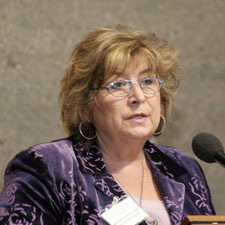
Biliana Cicin-Sain, Co-Chair and
Head of the Secretariat, Global Forum
seas development assistance.
tries, with 38 ministers and high
on Oceans, Coasts and Islands said the
level government representatives in
· The goal of establishing
Conference provided a forum for a
attendance. The Conference brought
dialogue across regions. She said the
representative networks of
discussions gave a mixed picture on
together key national level officials,
marine protected areas by 2012
WSSD targets and MDGs
regional organizations, UN agencies,
implementation and stressed the lack
will not be met until 2085 at the
of data on this implementation.
donors, industry, non-governmental
present rate of designation,
organizations, and scientists to as-
· The targets of eliminating illegal,
according to a study discussed
sess progress achieved and obstacles
unreported and unregulated
at the conference. Fortunately,
faced in the implementation of in-
fishing, and fishing overcapacity
some countries, such as
ternational targets on oceans, coasts,
by 2004 and 2005 have not yet
Australia, Palau, the Cook
and small island developing states
been met, and 75% of fish stocks
Islands, and Costa Rica, have
(SIDS), especially those related to
are classified by FAO as fully
made significant progress in
the 2002 World Summit on Sustain-
exploited, over exploited, or
establishing marine protected
able Development (WSSD), the Mil-
depleted. Participants said that
areas with a view toward
lennium Development Goals
while the WSSD targets had
protecting marine and coastal
(MDGs), and other related agree-
been set unrealistically early,
biodiversity.
ments.
there was particular concern over
· Although half of the world's 43
insufficient national actions
SIDS, as well as a number of
implementing the fisheries
other countries, have adopted
Assessment of Progress
targets. Participants did note that
ecosystem-based management
Achieved on World Summit
there has been recent promising
and coastal and ocean manage-
on Sustainable Develop-
action by several nations and
ment programs, no interna-
ment Targets and Millen-
also at the international level as
tional organization is respon-
some efforts have been launched
nium Development Goals
sible for tracking progress in
to improve progress towards
the establishment of these
Participants at the Third Global Con-
these targets.
programs. In addition, there is
ference agreed that progress toward
· In many of the poorest countries,
no regular collection of
implementation of global targets re-
a cycle of extreme poverty
information on the social and
lated to oceans, coasts, and islands
coupled with excessive exploita-
economic well-being of coastal
has been slow, but there are some
tion of the environment needed
communities.
promising developments. Confer-
for survival still prevails,
· While there are now more than
ence panelists and participants noted
contributing to marine pollution,
700 Integrated Coastal Zone
that:
as the United Nations Special
Management initiatives in more
Advisor Jeffrey Sachs told the
than 90 nations around the
conference.
· 2 ·
JANUARY 23-28, 2006, UNESCO, PARIS
world, there are no standardized
Special Topics Discussion
evaluation criteria for measuring
Global Conference Statistics
their performance in achieving
Linking Freshwater to Oceans.
Total participants: 403
the MDG and WSSD goals,
During the Third Global Confer-
ence, there was much emphasis on
From:
although there are efforts
towards this direction.
the need to link freshwater and
78 countries (33% developing countries;
coastal issues. There was particu-
29% developed countries; 27% SIDS;
· Sixty states have initiated
lar focus on progress toward the
10% countries in transition)
national plans of action to
address land-based sources of
implementation of the UNEP Glo-
38 Ministers/High Level participants
marine pollution under the
bal Programme of Action for the
Protection of the Marine Environ-
Background of participants:
Global Programme of Action
ment from Land-Based Activities
33% from government organizations
for the Protection of the Marine
Environment from Land-Based
(GPA) and preparations for the
30% from NGO and academic sector
Activities, which accounts for
GPA Intergovernmental Review
24% from international organizations
80% of marine pollution.
(IGR-2). Discussions largely con-
centrated on the need to address
7% from private sector
· Regarding the implementation
these interlinkages at two upcom-
6% from journalism sector
of Integrated Water Resource
ing events, the 4th World Water Fo-
Management, encompassing
rum (WWF4) and the IGR-2. The
both marine and land-based
meeting participants further agreed
management: 14 countries
ordinated emergency plans that are
to suggest paragraphs on freshwater
demonstrated "good progress,"
rehearsed by local authorities and
to oceans themes for inclusion in the
51 have "taken some steps,"
communities is paramount, though
Ministerial Declaration for the
while 43 are in the initial stages
the difficulty of maintaining the nec-
WWF4. It was ultimately recom-
of implementation.
essary level of awareness over the
mended that the freshwater and
long-term is acknowledged. Partici-
· South-South cooperation on
oceans communities should create
pants emphasized the need for na-
marine issues among SIDS has
stronger partnerships, for example
tions and local authorities to estab-
been increasing, notably with
through collaboration between the
lish strategic land-use planning and
the establishment of a Consor-
Global Forum and the Global Water
implementation in the context of in-
tium of Universities linking the
Partnership.
tegrated coastal management.
Pacific, Caribbean, and Indian
The Tsunami Disaster and Disas-
Ocean regions.
Sustainable Development in Small
ter Preparedness. Conference pan-
Island Developing States. A key as-
· The establishment of a process
elists and participants discussed the
pect of the SIDS discussions at the
for regular, global reporting on,
lessons learned from the December
Conference focused on efforts to
and assessment of, the marine
2004 Indian Ocean Tsunami, includ-
implement the 2005 Mauritius Strat-
environment, including socio-
ing discussion of why some areas
egy for the Further Implementation
economic aspects - the Global
were impacted less severely than
of the Barbados Programme of Ac-
Marine Assessment (GMA) -
others. It was noted that the sever-
tion for the Sustainable Develop-
initially set for 2004, has finally
ity of impact varied considerably
ment of Small Island Developing
taken off after initial delays
according to the specific physical
States. Discussions also recom-
related to differences in opinion
parameters of the shores, and, as part
mended the formal institutionaliza-
among the countries concerned.
of the process of risk assessment,
tion of the Alliance of Small Island
· According to the U.N. Millen-
there is a need for detailed mapping.
Developing States (AOSIS) and the
nium Project, urgent action is
In addition, efforts should be made
need to promote coordination, inte-
needed to achieve the MDGs,
to conserve and wherever possible
gration, and communication at the
but it remains to be seen if
rehabilitate mangroves, sand dunes
global, interregional, regional, na-
sufficient action has occurred to
and coral reefs as they provide a
tional, and local levels for the imple-
move closer towards their
natural barrier against tsunamis and
mentation of the Mauritius Strategy.
achievement. Much effort has
storm surges. In general, no effec-
It was also noted that there is a need
been put into the development
tive warning systems were in place
to deploy additional resources to as-
of indicators to measure
at the time of the December 2004
sist in these efforts.
achievement toward the targets
event. There are many basic educa-
Linking National and Regional
and goals, but little emphasis
tion measures that can be undertaken
Efforts in Ocean and Coastal Man-
has been placed on oceans,
without great cost, such as inclusion
agement. African Perspectives. Pan-
coasts, and coastal populations.
of hazard awareness and emergency
procedures in high risk coastal com-
els and discussions related to ocean
munities. Putting in place well-co-
and coastal management in African
· 3 ·

nations covered identification of next
further work, including improvement
ing discussions at the Third Global
steps needed to further develop ca-
of regional governance arrange-
Conference, several new efforts are
pacity and programs in coastal and
ments (i.e. Regional Fisheries Man-
underway. These include:
ocean management, as well as ways
agement Organizations) and exami-
· Anticipation of important ocean
to achieve synergy among existing
nation of public-private partnerships
issues that will be the subject of
regional and national efforts. Sug-
for marine biotechnology research.
UN negotiations in the next
gestions included the need to: build
During the Conference, it was agreed
decade, and preparation of
partnerships within the region and
that the Working Group would con-
policy analyses and
to use local expertise; strengthen
tinue on as a "knowledge network"
multistakeholder policy
African Universities and technical
and would also consider the need for
dialogues before the negotia-
institutions to create a critical mass
further research and analytical work.
tions to clarify the issues,
of ocean and coastal professionals;
The session outcomes were pre-
develop options, lay out various
assist with boundary delineation of
sented at the UN Ad hoc open-
perspectives, and identify
EEZs and continental shelves; pro-
ended informal working group to
possible avenues for consensus
mote a culture of transparency and
study issues relating to the conser-
building among disparate
disclosure among ocean users (in-
vation and sustainable use of marine
interests.
dustry, governments, development
biodiversity beyond national juris-
partners and civil society); and pro-
diction in February 2006.
· Focus on ocean use agreements
mote corporate responsibility
(for oil and gas, fisheries) in
through partnerships to address eq-
Climate and Oceans. The Confer-
developing country contexts,
uitable benefit sharing from ocean
ence addressed the interlinkages be-
such as in African EEZs, with a
use agreements.
tween climate and oceans, and Con-
view to enhancing local
ference participants discussed the
benefits, transparency, and
Capacity Development. A variety of
fact that climate change mitigation
environmental sustainability.
recommendations to improve capac-
is a major challenge, which includes
ity for ocean and coastal manage-
· Collaboration with SIDS
energy, economic, technological,
ment were discussed at the Confer-
nations in the implementation of
and development policy. The emerg-
ence, including the development of
the Mauritius Strategy, espe-
ing threat of ocean acidification was
ocean strategy workshops for deci-
cially: collaboration with the
also discussed due to concerns that
sion makers, initially focusing on
SIDS University Consortium to
it could undermine the marine food
SIDS senior government executives;
enhance capacity development
web and preclude coral develop-
the promotion of South-South coop-
in ocean and coastal manage-
ment, among other things. Panelists
eration and exchange through: 1) the
ment and development of ocean
noted that it is now apparent that, on
exchange of existing educational
strategy workshops for high-
top of pollution and overfishing, cli-
materials and curricula through an
level SIDS decisionmakers.
mate variability and change, includ-
e-library or clearing house, and 2)
ing acidification, may pose signifi-
· Development of a cooperative
the strengthening of the ocean and
cant threats to the productivity of
work program between ocean
coastal components of the SIDS Uni-
oceans. The challenge is to under-
institutions and freshwater
versity Consortium and other re-
stand the complex processes related
institutions to enhance oceans/
gional scientific networks. A pro-
to oceans and climate change and to
freshwater linkages at global,
posal to create a UN Goodwill Am-
develop adequate policies. It was
regional, national, and local
bassador for the Oceans was also
also noted that on a global and re-
levels.
made.
gional level, climate change science
· Policy analyses and
Improving High Seas and Deep
and policy need to be inserted into
multistakeholder dialogues on
Seabed Governance. The panel and
the oceans agenda, and oceans sci-
issues related to marine areas
multi-stakeholder dialogue sessions
ence and policy need to be inserted
beyond national jurisdiction.
on governance of areas beyond na-
in the climate agenda.
· Development of a Media
tional jurisdiction were led by a
Roundtable, akin to the Busi-
Working Group which approached
Follow-up Activities
ness and Industry Leaders
the issue from an ecosystem perspec-
Roundtable and the Ocean
tive and addressed issues relating
of the Global Forum
Donors Roundtable.
both to the high seas and to the deep
The Conference Co-Chairs Report,
seabed, in particular, governance of
incorporating an assessment of
high seas fisheries and genetic re-
progress on the oceans targets of the
sources of the deep seabed. There
WSSD and MDG, will be released
were a number of suggestions for
in June 2006. In addition, follow-
· 4 ·
JANUARY 23-28, 2006, UNESCO, PARIS
THE ECOSYSTEM APPROACH TO INTEGRATED
OCEAN AND COASTAL MANAGEMENT
Summary prepared by Charles Ehler, The World Conservation Union World Commission
on Protected Areas (IUCN-WCPA) and Chua Thia-Eng, Partnerships in Environmental
Management for the Seas of East Asia (PEMSEA)
Integrated Ocean and Coastal Management and the Ecosystem Approach were considered throughout the
Third Global Conference, and in particular through several dialogue sessions including the bottom line
assessment dialogue chaired by Charles Ehler, IUCN-WCPA and Chua Thia-Eng, PEMSEA.
Background
biodiversity and ecosystem services
and often conflicting, objectives and
and evaluating and implementing
aims to minimize user conflicts
The Johannesburg Plan of Imple-
potential responses. The Convention
among uses and users while ensur-
mentation (JPOI) includes several
on Biological Diversity (CBD) re-
ing long-term sustainability. It rec-
goals relating particularly to the eco-
fers to the ecosystem approach as "a
ognizes the need to protect the eco-
system approach and integrated
strategy for the integrated manage-
system taking into account the ef-
management. These goals include:
ment of land, water, and living re-
fects of multiple uses, and acknowl-
· Encouragement of the applica-
sources that promotes conservation
edges the limitations of the sectoral
tion of the ecosystem approach
and sustainable use in an equitable
approaches and the linkages be-
by 2010 for the sustainable
way." Application of the ecosystem
tween inland, coastal and ocean uses.
development of the oceans,
approach involves a focus on the
The ecosystem approach is an evo-
particularly for the management
functional relationships and pro-
lution of integrated coastal and
of fisheries and the conservation
cesses within ecosystems, attention
ocean management, with a greater
of biodiversity.
to the distribution of benefits that
emphasis on ecosystem goals and
· Promotion of integrated coastal
flow from ecosystem services, the
objectives and their outcomes. Mov-
and ocean management at the
use of adaptive management prac-
ing to an ecosystem approach should
national level and encourage-
tices, the need to carry out manage-
be considered an evolutionary step
ment and assistance to countries
ment actions at multiple scales, and
in integrated management and ac-
in developing ocean policies
inter-sectoral cooperation. A num-
tion, not a break with the past.
and mechanisms on integrated
ber of other established approaches,
The most important direct driver
coastal management.
such as integrated water resources
of change in marine ecosystems over
· Assistance to developing
management and integrated ocean
the last 50 years has been fishing,
countries in coordinating
and coastal area management, are
which affects the structure, function,
policies and programmes at the
consistent with the ecosystem ap-
and biodiversity of the oceans. Fish-
regional and sub-regional levels
proach and support its application in
ing pressure is so strong in some
aimed at conservation and
various sectors or biomes, including
marine systems that over much of the
sustainable management of
coastal and marine environments.
world, the biomass of fish targeted
fishery resources and imple-
In fact, the application of ecosys-
in fisheries (including that of both
mentation of integrated coastal
tem approaches in the marine and
the target species and those caught
area management plans,
coastal areas builds on the concept
incidentally) has been reduced by
including through the develop-
of integrated management, already
90% relative to levels prior to the
ment of infrastructure.
widely used for the management of
onset of industrial fishing. In these
Ecosystem approaches, as
these areas. Integrated management
areas, a number of targeted stocks
adopted by many multi-lateral envi-
involves comprehensive planning
in all oceans have collapsed hav-
ronmental agreements, provide an
and regulation of human activities
ing been over-fished or fished above
important framework for assessing
towards a complex set of multipe,
their maximum sustainable levels.
· 5 ·

Recent studies have demonstrated
operationalizing the ecosystem ap-
Integrated coastal and ocean man-
that global fisheries landing peaked
proach within an area sufficiently
agement (ICM) has been the recom-
in the late 1980s and are now declin-
large to include trans-boundary con-
mended framework for dealing with
ing despite increasing effort and fish-
siderations. The projects cover the
coastal issues under the UN Confer-
ing power, with little evidence of this
Red Sea and Gulf of Aden, the Medi-
ence on Environment and Develop-
trend reversing under current prac-
terranean, the Black Sea, the Baltic
ment (1992), including Agenda 21,
tices.
Sea, the Patagonian Shelf, the
the Rio Declaration of Principles, the
On 21 March 2005, over 200 aca-
Benguela Current, the Guinea Cur-
Climate Change Convention, the
demic scientists and policy experts
rent, Pacific small island developing
Biodiversity Convention, the Global
signed a consensus statement on the
states, the Yellow Sea, and the South
Programme of Action on the Protec-
definition of marine ecosystem-
China Sea/Gulf of Thailand.
tion of the Marine Environment from
based management (EBM): (1) em-
Projects are under preparation for
Land-Based Activities, and the
phasizing the protection of ecosys-
the Canary Current, the Caribbean,
Programme of Action for the Sus-
tem structure, functioning, and key
Aghulas and Somali Currents, Bay
tainable Development of Small Is-
processes; (2) defining EBM as
of Bengal, the Humboldt Current,
land States. Because of this inter-
place-based or area-based in focus-
and the Gulf of Mexico.
national guidance and subsequent
ing on a specific ecosystem and the
Despite contemporary definitions
investments of substantial resources
range of activities affecting it; (3)
of ecosystem management that in-
by international donors, ICM has
explicitly accounting for the
clude humans (and which recognize
now been implemented in about 100
interconnectedness within systems,
that ecosystem management is actu-
countries around the world. How-
recognizing the importance of inter-
ally the management of human ac-
ever, many of these initiatives have
actions between target species or key
tivities that affect ecosystems and not
been focused on estuaries and small
services and other non-target spe-
the management of ecosystems or
areas of coasts instead of national
cies; (4) acknowledging interco-
their natural components), many
programs. Successful pilot projects
nnectedness among systems, such as
projects that take an ecosystem ap-
should now be scaled up to national
between air, land, and sea; and (5)
proach do not take humans into ac-
efforts on ICM.
integrating ecological, social, eco-
count. One example of an excep-
Integrated oceans management,
nomic, and institutional perspec-
tion is a World Bank project in Tan-
incorporating the 200-mile Exclu-
tives, recognizing their strong inter-
zania and Zanzibar (Marine and
sive Economic Zone (EEZ), entails
dependence.
Coastal Environmental Management
the development of new concepts,
Several countries (e.g. Canada,
Project (MACEMP) or "Blueprint
procedures, and structures, and as
Australia, and the United Kingdom)
2050") that tackled the problem of
such, nations could benefit from
have begun to apply an ecosystem
ecological protection, marine pro-
working with one another, sharing
approach to large areas of their ma-
tected area network design (protec-
and drawing on lessons and best
rine waters, including using marine
tion of 10% of its seas by 2012 and
practices. As they embark on na-
spatial planning as a tool for imple-
20% by 2025), while at the same
tional ocean policy formulation,
menting an ecosystem approach and
time alleviating poverty and ensur-
many nations, in particular small is-
the development of sea use plans. In
ing financial sustainability for the
land developing states (SIDS), will
2004 UNEP's Regional Seas
project.
need assistance in mapping and de-
Programme agreed to promote a
Another gap in implementing
limiting their EEZs and developing
common vision and integrated man-
ecosystem-based management is the
new institutions and procedures. A
agement, based on ecosystem ap-
lack of monitoring data for key eco-
recent analysis of national actions
proaches, of priorities and concerns
logical and socio-economic indica-
taken towards the Barbados
related to the coastal and marine en-
tors at ecosystem scales, including
Programme of Action (Loper et al.
vironment and its resources.
lack of baseline data. Only a few
2005) indicates that integrated
large marine ecosystems have sys-
coastal management programs have
By far, the most extensive appli-
tematic, long-term data about status
been established only in a few SIDS
cations of the ecosystem approach
and trends of natural and social sys-
countries in the last decade, thus
are the Large Marine Ecosystem
tems. With regard to coastal com-
making this area a top need for the
(LME) projects funded by the Glo-
munities, there are no periodic as-
next phase. At The Ocean Policy
bal Environmental Facility (GEF)
sessments of socio-economic condi-
Summit held in Lisbon, Portugal,
that aim to develop sub-regional co-
tions, making it impossible to mea-
October 10-14, 2005, about 40 coun-
operation toward ecosystem-based
sure progress on the MDG goal of
tries reported on their efforts to de-
management of marine resources.
alleviating poverty in the context of
velop integrated ocean policies to
LMEs represent a pragmatic way to
coastal areas.
deal with multiple use conflicts
assist over 120 countries in
among uses, users, and management
· 6 ·
JANUARY 23-28, 2006, UNESCO, PARIS
agencies, degradation of marine re-
sources, and missed opportunities
for economic development. These
different national policies are re-
markably congruent in terms of
overall principles and most recog-
nize the need for transparency,
public and stakeholder involve-
ment, incentives for cooperative
action, and a national ocean office
Conclusions
management and integrated coastal
with clearly articulated responsibili-
and ocean management is even more
Both ecosystem management and
ties. The GEF is also supporting ini-
challenging, because no one institu-
integrated coastal and ocean man-
tial development of regional ocean
tion is responsible for tracking de-
agement adopt a holistic, integrated
policies focusing on shared
velopments in these areas. While
approach covering both environ-
transboundary resources in 15 Large
there are now more than 700 ICM
mental and socio-economic dimen-
Marine Ecosystems (LMEs).
initiatives in more than 90 nations
sions, and are basically similar; how-
around the world (Sorenson 2002),
Regional organizations, such as
ever, the scale of operation and level
there are no standardized evaluation
UNEP's Regional Seas Programme,
of management intervention might
criteria for measuring their perfor-
have a very useful role to play in
vary with respect to geographical
mance in achieving the MDG and
assisting states in developing na-
scale. There has been a marked in-
WSSD goals, although there are lim-
tional policies for their oceans. Sig-
crease in the application of the con-
ited efforts toward this direc-
nificant work along these lines is al-
cept of ecosystem-based manage-
tion.
ready taking place in the Pacific Is-
ment and integrated coastal and
lands region, the East Asia region
ocean management in addressing
In addition, no interna-
(through Partnership in Environ-
cross-cutting environmental and sus-
tional organization is respon-
mental Management for the Seas of
tainable development issues world-
sible for tracking the progress
East Asia (PEMSEA) and with GEF
wide. Financial support from GEF
of ICM planning and imple-
funding), the Asia Pacific Region
and multilateral and bilateral insti-
mentation activities, and,
(through APEC), and through the
tutions has contributed to the in-
therefore, monitoring and
European Union. With over 30 years
creased efforts in applying this con-
evaluation progress is carried
of experience, UNEP's Regional
cept and approach at subnational,
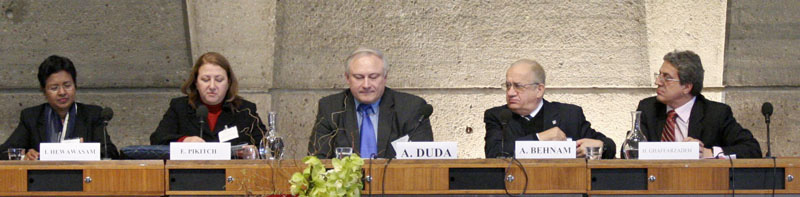
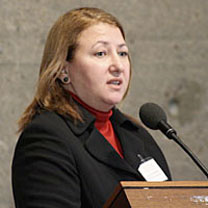
out on an ad hoc basis. Inter- Ellen Pikitch, Pew Institute for
Seas Programme and its partners
national, and regional levels. To
national coordination is one of Ocean Science, introduced the
Report on the UN Millennium
encompass 18 marine regions and
date, though, most efforts tend to be
the major difficulties con- Project and listed the obstacles
include participation by over 140
at the level of studies and projects,
fronted in the implementation to and recommendations for
achievement of environmental
coastal states and territories. Four-
focusing on planning and explor-
of action plans for integrated sustainability.
teen regional conventions have been
atory stages in particular those re-
management of large marine
signed and over 20 protocols ad-
lated to LME and integrated coastal
ecosystem or coastal and ma-
dressing oil spill response, pollution
management at the local level with
rine areas due to the typical lack of
from ocean dumping, and pollution
few of the projects moving to actual
existing agencies with the mandate
from land-based sources have been
implementation.
or function to coordinate coastal and
ratified. While initially focused on
ocean management issues. Although
A promising development is the
offshore issues, over the past 20
some countries have made progress
application of terrestrial land use
years, the Regional Seas Programme
in achieving inter-ministerial
planning techniques to marine areas,
has increasingly worked on coastal
or interagency arrangements
e.g. sea use planning and zoning;
management and coastal gover-
at the national level, the effi-
new efforts to develop marine spa-
nance. Most recently, the Mediter-
ciency, effectiveness, and ben-
tial plans (sea use plans) and marine
ranean Regional Seas Programme
efits of such institutional ar-
zoning in the North Sea (Belgium,
has drafted a protocol on integrated
rangements have yet to be
The Netherlands, and Germany), the
coastal management. An interesting
fully demonstrated.
Irish Sea (UK), and Xiamen (China)
and productive development has
are all prototypes that integrate
While there are relatively
been a recent partnership between
coastal and ocean management.
few successful case studies in
the Regional Seas Programme and
integrated coastal manage- On benefiting people and
Large Marine Ecosystem projects
The difficult job of measuring
coastal communities through
ment that stand the test of time ecosystem management,
funded by the GEF to bring a more
progress on implementing the
(e.g. more that a decade of Indumathie Hewawasam,
focused ecosystem-based approach
WSSD and Millennium Develop-
operation), sufficient experi- World Bank, stressed that if
ecosystems are managed
to the Regional Seas Programmes.
ment Goals related to ecosystem
ence and lessons have been ac- wisely, pro-poor growth and
poverty reduction are possible.
· 7 ·

quired to allow the application of the
Finally, individual nations are in-
· Increase capacity development
driving forces of integrated manage-
creasingly asked by international
in the areas of coastal and
ment for addressing use conflicts,
organizations to develop and imple-
ocean governance to develop a
environmental quality degradation,
ment programs that deal with coastal
critical mass of coastal and
habitat damage, coastal erosion, ad-
and ocean management, land-based
ocean managers at local and
aptation to climate change, and many
pollution, integrated water resources
national levels to plan and
other environmental threats, thus en-
management, fisheries, networks of
manage their coastal resources.
abling local and regional authorities
marine protected areas, adaptation to
to achieve environmental
climate change, and so on usually
Recommendations to the
sustainability and the goal of sustain-
with little or no additional financial
able development.
support. Guidance on figuring out
International and Donor
Communities:
With the increase of use conflicts
how to coordinate, integrate, or
in coastal and marine areas, severity
"nest" these various international
· Develop more case studies to
of pollution, and heightened threats
commitments and demands should
demonstrate the effectiveness
of dwindling marine resources, more
be developed. A more active role
of an integrated management
countries will be looking to the ap-
by the Regional Seas Programme in
approach, in particular,
plication of integrated management
coordinating these requirements
demonstrating the socio-
models for solutions. It is an oppor-
could be a way forward.
economic benefits of such
tune time to intensify international
approaches in achieving
efforts in the development of work-
Recommendations to
environmental sustainability;
ing models and good practices in
National Governments:
· Develop an appropriate and
integrated coastal and ocean man-
· Adopt integrated coastal and
tested monitoring program to
agement. In addition, interagency/
ocean management/ ecosystem-
track the performance of
inter-ministerial coordination is a
based management approach
integrated coastal and ocean
major obstacle that requires strong
and frameworks to address use
management/LME programs/
political will and appropriate incen-
conflicts, transboundary issues,
projects at the international
tives to develop the willingness
resource depletion and environ-
level; and
among agencies or ministries to
mental degradation with
· Pool resources in developing
work together.
adequate consideration of the
strategic partnerships using
The Strategic Action Programmes
socio-economic dimensions of
ICM/ecosystem management as
of Large Marine Ecosystems, as well
the coastal communities and
the integrated framework and
as those at the local level, provide
their active participation
processes to provide a policy
useful management frameworks and
throughout the management
environment at local and
processes for intergovernmental, in-
process;
national levels to enable the
teragency, and cross-sector partner-
· Address interagency conflicts at
effective mobilization and
ships and cooperation at the regional,
national and sub-national levels
utilization of the financial
national, and sub-national levels.
through the development of
resources in achieving the goals
They also provide a useful platform
inter-ministerial or interagency
of sustainable development.
for developing strategic partnerships
coordination mechanisms to
among various multilateral and bi-
Hamid Ghaffarzadeh,
enable the integrated planning
Project Manager,
lateral financial institutions, as well
and implementation of policy
Caspian Environment
as donor communities, in mobiliz-
Programme, said the
and management interventions
ecosystem approach
ing the needed financial resources
for addressing the increasing
should include
for environmental improvement
socioeconomic
depletion of their coastal and
considerations,
projects, capacity development, and
ocean resources; and
including emphasis on
implementation of international in-
the cost of
struments.
environmental
degradation.
Awni Behnam,
While a timetable exists for ap-
International Ocean
plying the ecosystem approach
Institute (IOI), argued
that a partnership
Salif Diop, UNEP,
(2010), no similar target exists for
approach, including
elaborated on the
promoting integrated coastal and
all stakeholders and
work of, and
ocean management at the national
emphasizing
challenges faced by,
information sharing, is
the steering
level. A timetable for ICM should
essential to the proper
committee of the
be established.
enforcement and
Global Marine
implementation of
Assessment.
oceans, coasts and
islands conventions.
· 8 ·
JANUARY 23-28, 2006, UNESCO, PARIS
GLOBAL ENVIRONMENT FACILITY
AND ECOSYSTEM-BASED MANAGEMENT
Alfred M. Duda, Senior Advisor, International Waters
Global Environment Facility
Introduction
and environmental themes such as
cerns while supporting national sus-
pollution constitute ways in which
tainable development initiatives.
Interlinked crises of freshwater
our societies work. However, the
While best known for serving as the
depletion, food insecurity, pollution
crisis of oceans, coasts, and small
financial mechanism for global con-
loading, and ecosystem decline
island developing states (SIDS) will
ventions such as the conventions on
stand in the way of poverty reduc-
just get worse unless place-based,
biological diversity and climate
tion and sustainable development.
ecosystem approaches to environ-
change, it also addresses concerns of
These crises are made worse by
mental management are part of the
oceans, coasts, and SIDS in its in-
changes in climatic regimes and as-
desired transition to sustainability.
ternational waters focal area. GEF
sociated disasters from floods,
realigned its priorities with the out-
droughts, and storms that further
Global Environment
comes of WSSD in 2002 and in the
marginalize the world's 2.7 billion
international waters areas has been
people living in poverty. The planet's
Facility
aligned with Chapter 17 of Agenda
oceans and their coastal interfaces
Global commitments that have been
21 since Rio. Since 1992, GEF has
are especially at risk with liveli-
agreed to since 2000 at Doha,
approved 58 projects addressing
hoods, food security, international
Monterrey, and Johannesburg repre-
oceans, coasts, and SIDS in interna-
trade, and relations among sovereign
sent the potential for a political turn-
tional waters for $553 million GEF
nations are all at stake. Increased
ing point in reversing the degrada-
and $2.34 billion in total cost as well
vulnerability of burgeoning coastal
tion of coastal and marine ecosys-
as 67 projects in its biodiversity fo-
urban areas and the expanding foot-
tems. International finance institu-
cal area for $384 million from GEF
print of coastal resource depletion
tions, bilateral donor agencies, inter-
and $1.43 billion in total cost for
are becoming increasingly signifi-
national organizations, and govern-
some 134 countries supporting ma-
cant economic liabilities. It is pre-
ments of the North and South all
rine ecosystem interventions de-
cisely at the coast that unsustainable
must realign their policies and pro-
scribed in paragraphs 30-34 and 58
development is creating the most risk
grams if progress is to be made.
of WSSD's POI.
for stability, security, and economic
Since 1992, the Global Environment
progress.
Facility (GEF) has supported coun-
Large Marine Ecosystems
Traditional sector-by-sector de-
tries in addressing Chapter 17 of
(LMEs)
velopment strategies at the coasts of
Agenda 21. Many thematic actions
both developed and developing na-
GEF has supported on a pilot basis
In 1995, the GEF Council included
tions have exacerbated the situation.
have been incorporated into the
the concept of LMEs in its Opera-
Traditional development strategies
WSSD Plan of Implementation
tional Strategy as a vehicle to foster
fail to recognize the importance of
(POI), and, in early 2003, GEF ad-
ecosystem-based approaches to the
maintaining natural ecosystems for
justed its strategic priorities to align
management of coastal and marine
their value as life and economic sup-
with WSSD goals.
resources and address the land-sea
port systems for our societies, and
The GEF is an international finan-
interface. LMEs are regions of ocean
the need to adapt to change is often
cial entity that unites its 176 mem-
space encompassing coastal areas
ignored until disaster strikes. When
ber governments in partnership with
from river basins and estuaries to the
problems arise, specialists often
its three implementing agencies
seaward boundaries of continental
handle them thematically rather than
(UNDP, UNEP, and the World
shelves, enclosed and semi-enclosed
in an integrated, place-based fash-
Bank), a number of executing agen-
seas, and the outer margins of cur-
ion that some might term "ecosys-
cies, NGOs, and the private sector
rent systems. They are large regions
tem-based approaches." Actions in
to address global environmental con-
on the order of 200,000 km2 or
economic sectors such as fisheries
greater, characterized by distinct
· 9 ·

bathymetry, hydrography, productiv-
ship contaminants complement this
ity, and trophically dependent popu-
place-based approach. Scaling be-
lations. LMEs are where land-based
tween the LMEs and ICM or indi-
pollution occurs, habitat losses are
vidual biodiversity sites determines
evident, ports are located, and 93%
which GEF focal area is appropriate
of all marine fisheries are harvested.
so that both transboundary resources
The GEF uses LMEs as units for
and globally significant biological
facilitating integration across sec-
diversity are addressed.
tors, developing adaptive manage-
We need to develop long-term,
Al Duda, Senior Advisor,
ment frameworks with site-specific
place-based partnerships for enact-
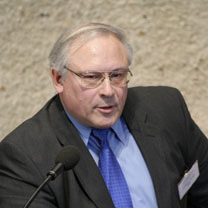
International Waters, GEF, outlined
targets, and providing tools for en-
ing reforms among countries of the
GEF support at different scales for
gaging stakeholders. This allows
South and the North that use particu-
large marine ecosystems (LMEs).
sound science to inform policy-mak-
lar areas of sea space and adjacent
ing and provides a practical ap-
basins. Without this integrated ap-
proach to build trust and confidence
proach working at several scales of
position since the Johannesburg
among governments as well as inte-
action, there is little chance to meet
Summit that long-term, ecosystem-
grated approaches across sectors.
Millennium Development Goals
based partnerships among rich and
Without place-based participative
(MDGs) and WSSD targets. Adopt-
poor nations sharing benefits from
processes engaging governments
ing such science-driven, ecosystem-
particular land/sea spaces are nec-
and stakeholders in understanding
based approaches to managing hu-
essary to meet sustainable develop-
what is needed for integrated man-
man activities involving coastal/ma-
ment goals.
agement and building capacity to
rine systems takes time, capacity,
implement these activities, marine
and money. It must also be inte-
Our planet's fragile oceans and
science has often remained confined
grated with poverty reduction and
coasts are too economically and so-
to the science community or has not
climate change adaptation efforts.
cially valuable to allow resource
been embraced in policy-making.
depletion to continue and threats to
Through the GEF, countries are
With GEF assistance, 121 different
sustainability to rise. Many coastal
cooperating in establishing adaptive,
nations are cooperating to improve
communities and nations are simply
joint management institutional struc-
place-based management for 12
living on borrowed time before the
tures with their own LME and ICM-
LMEs, with projects for another 4
$60 billion dollar annual interna-
specific ecosystem targets to track
LMEs under preparation. GEF
tional trade in fisheries collapses,
on-the-ground progress related to the
projects illustrate interventions at
depleted groundwater supplies for
WSSD goals. The broad WSSD tar-
different scales as part of its ecosys-
coastal cities run dry, changing cli-
gets are important to achieve, but
tem-based approach to address
mate swamps coastal communities,
more customized, focused targets
World Summit on Sustainable De-
and burgeoning coastal urban popu-
adopted by GEF projects may be
velopment (WSSD) targets.
lations overwhelm their degraded
useful to stimulate action. The GEF
and polluted natural resource base.
is bringing the North and South to-
Developing Partnerships
Action is needed yesterday, not to-
gether around their shared LMEs to
morrow.
for Actions at Different
jointly adopt reforms and undertake
Scales
pilot investments through a new mo-
dality known as a GEF Strategic
For the GEF, LMEs represent a prag-
Partnership. This is a tool for achiev-
matic way to assist countries in get-
ing coherence in development assis-
ting started in operationalizing the
tance funding. Currently, the GEF
"ecosystem approach" with an area
has approved 3 of these partnerships:
sufficiently large to include
(a) 16 basin countries of the Danube/
transboundary considerations. GEF
Black Sea LME, (b) land-based pol-
also utilizes support at other appro-
lution reduction for the 5 LMEs of
priate geographic scales ranging
East Asia, and (c) sustainable fish-
from integrated coastal management
eries for the 5 LMEs of Sub-Saharan
(ICM) for individual municipalities
Africa. A fourth partnership for the
to support in its biodiversity focal
Mediterranean Sea LME is under
area at the specific reef or coastal
final preparation. These Strategic
ecosystem scale for protected areas
Partnerships are based on country-
or community-based sustainable use.
driven action programs aimed at par-
Sector-specific demonstrations with
ticular targets. It has been the GEF
fisheries, pollution reduction, and
· 10 ·
JANUARY 23-28, 2006, UNESCO, PARIS
SPECIAL PRESENTATION:
POVERTY REDUCTION AND ENVIRONMENTAL
SUSTAINABILITY MILLENNIUM DEVELOPMENT GOALS:
WHY IS SO LITTLE PROGRESS BEING MADE?
Dr. Jeffrey Sachs, Director, Earth Institute at Columbia University
and Director, UN Millennium Project and Special Advisor to
the UN Secretary-General on the Millennium Development Goals
Dr. Jeffrey Sachs is the Director of the Earth Institute at Columbia University and serves as the Director of
the UN Millennium Project and Special Advisor to UN Secretary-General Kofi Annan on the Millennium
Development Goals. In 2004 and 2005 he was named among the 100 most influential leaders in the world
by Time Magazine, and is the 2005 recipient of the Sargent Shriver Award for Equal Justice. His recent
book, The End of Poverty: Economic Possibilities for Our Time, addresses issues of divergent global
economic conditions which have resulted in debilitating poverty in many parts of the world and seeks to
encourage sustainability despite these conditions.
Dr. Sachs gave the special presentation on reducing poverty and environmental sustainability to the Third
Global Conference on Oceans, Coasts, and Islands live by video link.
sustainability. It was recognized by
ronment is almost inevitably a deeply
International goals should be stated
the adopters of the Millennium De-
neglected factor that sometimes
and have actual follow through,
velopment Goals, in September
does not appear at all. This is in the
implementation, and achievement,
2000, that there could not be a fight
context of massive coastal erosion,
which certainly applies to the Mil-
against poverty without a fight for
destruction of mangrove areas, de-
lennium Development Goals, as it
environmental sustainability. As a
struction of corals, over fishing,
does to almost every environmental
practical matter, and as someone
toxics, you name it these issues
objective that we have for the planet.
very much engaged day-to-day in
often do not even appear in national
We are having a very hard time fol-
watching national policy making, the
policies to a very large extent. In
lowing through on our very nice
environmental component of the
our reviews and our continuing work
words. This is certainly the case
fight against poverty is probably the
- I just got back from a six country
across the board in environmental
most neglected of all of the aspects
tour in Africa- this remains the case.
matters, but it is also certainly the
of the Millennium Development
We are not succeeding in integrat-
case across the board in poverty re-
Goals. This has many reasons, but
ing environmental thinking into na-
duction issues. If you put those two
even the basic structure of gover-
tional development strategies.
pieces together, the environment and
nance in poor countries leaves the
poverty, which are so inextricably
There are at least four factors that
environment minister far out of the
linked with causation running in
we should keep in mind. First is the
inner circle of these concerns. The
both directions from poverty to en-
syndrome of the poorest of the poor,
inner circle of concerns center on the
vironmental degradation and envi-
of which I want everyone to be very
budget and go out to some core min-
ronmental difficulties to an increase
conscious. The poorest of the poor
istries, with the environment minis-
in poverty, there's a tremendous
comprise at least one billion people
ter typically on the outskirts of
amount of neglect and an inability
on the planet. Those that are way
power. This means that, in the core
to move forward on promises that
off track in achieving the Millen-
documentation of poverty reduction
have been made.
nium Development Goals are liter-
strategies, including those that the
ally struggling for survival every
Among the Millennium Develop-
IMF and the World Bank are so en-
day. While they depend on the en-
ment Goals themselves, goal num-
gaged in - the poverty reduction
vironment, they are pretty much sys-
ber seven is environmental
strategy papers (PRSPs), the envi-
tematically mining the environment.
· 11 ·

They are not building environ-
that are achieving so much growth,
mental capital, but depleting it as a
are adding increasing environmen-
desperate part of staying alive. I've
tal stress, in addition to the existing
just been in rural areas, as I men-
enormous environmental stresses
tioned, in six countries- Kenya,
coming from the consumption in
Malawi, Ghana, Mali, Nigeria, and
very wealthy countries. Global
Senegal- and everywhere, the envi-
forces are only conducive to even
ronmental degradation is preceding
more environmental degradation,
deforestation in coastal areas. In
because we have not been able to
Senegal, where I was a couple of
delimit conservation areas and pro-
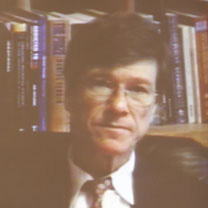
Addressing the conference via a
days ago, a tremendous population
tected areas, among others, that we
live video connection from Africa,
Jeffrey Sachs, Director, Earth
increase is putting great pressure on
have been discussing for so long, but
Institute at Columbia University,
coastal resources, and the commu-
have yet to be implemented.
Director of the UN Millennium
Project and Special Advisor to the
nities do not have the wherewithal
The fourth point, in addition to
UN Secretary-General on the
to save for environmental conserva-
MDGs, argued that despite the
extreme poverty, to the vested inter-
tion. Soils are being depleted of
plethora of statements, goals and
ests, and the powerful global driv-
laws aimed at poverty reduction
nutrients, landscapes are being de-
ers, is the lack of scientific knowl-
and environmental protection, there
graded, forests are being cut down,
is little follow through on work
edge in the poorest countries - the
programmes.
fisheries are being depleted, and,
lack of mobilization of the best sci-
even when it's understood that vital
ence to even understand the ecosys-
resources such as Lake Victoria, on
tem dynamics. Most of these coun-
which hundreds of millions of
eries disasters, but right down to the
tries are presently overwhelmed with
people depend for their nutrition, for
conditions in coastal Senegal or
the daily tasks of governance, much
their livelihoods, for their long-term
coastal Ghana or coastal Kenya so
less the tasks of achieving basic eco-
well-being, there's very little ability
that these are regularly being moni-
nomic development goals, much less
to make investments in these poor-
tored and reviewed is crucial. We
the task of understanding complex
est countries. That is item number
need a regular cycle of global scale
interactions of climate change, en-
one that I would stress; the iron law
ecosystem assessments, but ones that
vironmental pollution, economic
of extreme poverty is environmen-
scale down to national level quite
drivers, changing nutrient load
tal mining simply to survive. With-
systematically. It's an expensive
cycles, demographic dynamics, ex-
out more help for the poorest of the
proposition, but I can't think of a
otic species introduction, pathogens,
poor, we will not turn the corner on
better investment in applied science
and the whole host of interconnected
environmental degradation. This is
than this one, and, as far as I can see
ecological phenomena that are im-
not only a matter of their awareness;
it, also is not presently applied.
pinging on these countries. In short,
it is a matter of the brutal realities of
one of the reasons why these factors
I've just written a book about the
extreme resource deprivation.
are not included in poverty reduc-
end of poverty, not about the expan-
Second, of course, are vested in-
tion strategies is that the scientific
sion of poverty, because, I believe,
terests. Wherever one finds poor
base to say `here's what's happen-
we have very powerful tools to make
country settings, areas of natural re-
ing in this area of your country,' to
a change. I'm not meaning to give a
source wealth, including coastal or
understand how climate change, de-
short intervention of doom and
fisheries wealth, powerful interests
mographic pressures, and economic
gloom, but it is to alert the ecologi-
definitely out compete long-term
pressures are interacting to produce
cal community that is represented in
sustainability interests. This is true
these outcomes, simply does not ex-
the room of the realities that exist.
of fisheries and the arrangements
ist right now in a concerted and con-
We are not at all on track to get these
made between African countries and
sistent way at the national level.
considerations into national policy-
powerful fisheries countries. There
Most of these governments do not
making. It's just not happening, and
is a very big problem of the ability
have science advisory councils,
it's a very serious problem. Gov-
to put the long-term sustainable
much less ecological advisory units
ernments do not know how to do it,
agenda in front of very powerful
that can actually help them in these
they can't face the vested interests,
short-term financial claims; and
areas. Creating on-going scientific
and they can't keep these problems
we're not succeeding in that area
networks on these issues that scale
in the forefront when the pressure
either.
down to country level in low-income
of daily life and demographic pres-
sures are so extreme. I've been, of
Third, global economic pressures
settings would be extremely useful
course, trying to think of any ways
are phenomenal and they are not
as well. In other words, getting eco-
that I can to put this into decision-
going away. The successful devel-
system assessments not only at the
making right now. One thing that
oping countries, the Asian countries
global scale that tell us all of the fish-
· 12 ·
JANUARY 23-28, 2006, UNESCO, PARIS
Walt Reed and I have recently taken
mental challenge that there are a lot
up is the idea of trying to build on
of nice words and pretty much all
the Millennium Ecosystem Assess-
promises that need to be made have
ment and the Millennium Project
been made. However, we are way
Report as two absolutely convergent
off track on actually doing what
visions to these challenges. We have
needs to be accomplished. It's just
taken the idea of trying to build up a
not happening, and we're not able
Millennium Ecosystem Fund to help
to turn these words into substantive
very poor countries mobilize the
action, get the feedback, and get the
expertise they need to address these
follow through. The reason I'm an
issues within their national develop-
optimist is that we have such pow-
ment strategies. They literally can't
erful tools, such powerful interven-
do this right now; and they don't do
tions, whether it's in food produc-
it. Even if a few donors would come
tion or disease control or environ-
forward and just build an adequate
mental management and environ-
fund of some tens of millions of dol-
mental engineering, that problems
lars merely to provide the where-
that might appear insurmountable, in
withal to get this kind of analysis
my view, are actually quite address-
systematically into the forefront - in
able. We could get disease burdens
front of the finance minister who
down sharply, we could preserve
needs to understand it, in front of the
habitats that are under tremendous
IMF which needs to understand it
stress, but it will not happen on its
and absolutely has no idea about it,
own, market forces are certainly not
unfortunately, and into the World
going to do it, and the poorest of the
Bank's thinking. All of this could
poor cannot do it by themselves.
make a difference in getting a seat
There is just not a prayer in the world
at the table for these issues when
that they can do this on their own.
budgets are allocated and when do-
No matter how many lectures or
nor assistance is discussed. So that
speeches are given, they need re-
is issue number one in my view-
sources both to do analyses and rise
we've got to get all of these envi-
above the mere survival level to a
ronmental considerations into na-
margin in which they can invest in
tional development strategies, year-
the long-term future.
by-year, systematically, and help
these countries.
Transcribed by: Amanda Wenczel,
On all of the Millennium Devel-
Global Forum on Oceans, Coasts,
opment Goals, we face the funda-
and Islands.
· 13 ·

AFRICAN PERSPECTIVES ON LINKING NATIONAL
AND REGIONAL EFFORTS IN OCEAN AND COASTAL
MANAGEMENT
Summary prepared by Bernice McLean, Independent Consultant, South Africa
This summary outlines the main
Guinea-Bissau; Honorable Joseph
in 1997 yielded US$445 million. These
points emerging from the informal
Konzolo Munyao, M.P., Ministry of
resources also provide the basis of
discussions and dialogue sessions on
Livestock and Fisheries Develop-
livelihoods for poor coastal commu-
Africa and Poverty Reduction as
ment, Kenya; Honorable Mrs. Re-
nities, and, while Africa is rich in natu-
well as from presentations given in
joice Mabudafhasi, Deputy Minister
ral resources, coastal African nations
Panel 7 of the Third Global Confer-
of Environmental Affairs and Tour-
remain amongst the poorest in the
ence: Linking National and Regional
ism, South Africa; H.E. Victor
world. In these countries where pov-
Efforts in Ocean and Coastal Man-
Manuel Borges, Deputy Minister of
erty is crippling, many coastal popu-
agement: African Perspectives. In
Fisheries, Mozambique; Honorable
lations are vulnerable to natural di-
Panel 7 African ministers were in-
Mr. Thierno Lo, Minister of Envi-
sasters such as floods and droughts
vited to address two key goals:
ronment and Natural Protection,
and experience extended hunger and
· Identify options and models for
Senegal; Ms. Rahma Mshangama,
rampant disease. Poverty has nega-
further development of EEZ
Principal Secretary, Ministry of Ag-
tive impacts on coastal and marine
management in Sub-Saharan
riculture, Natural Resources Envi-
areas that contribute to coastal ero-
Africa through ecosystem-based
ronment and Cooperatives, Zanzi-
sion, pollution, and degradation of
management approaches aimed
bar, Tanzania; and Mr. Rolph Payet,
resources through destructive prac-
at poverty reduction and
Principal Secretary, Ministry of En-
tices, a lack of appropriate infrastruc-
enhanced social development;
vironment and Natural Resources,
ture, weak institutional and gover-
Seychelles and Interim Coordinator,
nance capacity, and vested interests
· Identify how synergy among
Regional Coordinating Unit for
in coastal and marine industries.
LME projects, Regional Seas
Eastern African Action Plan. The
These are some of the major chal-
programmes and the activities
related dialogue sessions were
lenges hindering the poorest of the
of national and multinational/
chaired by: Ali Mohammed, Re-
poor from breaking out of the cycle
NGOs can be achieved to
gional Coordinator, Coastal and
of poverty. Many ocean-related
reduce poverty, achieve
Marine Secretariat, New Partnership
problems experienced by African
environmental targets in Sub-
for Africa's Development (NEPAD);
nations translate into regional prob-
Saharan Africa.
Tim Bostock, Senior Fisheries Ad-
lems but still require action at the
The specific outcomes expected
viser, Policy Division, Department
national level.
of the session were to identify steps
for International Development
to be taken to further develop capac-
(DFID), UK; Carl Lundin, Head,
Attention to marine and coastal
ity for and actual programs in coastal
Marine Programme, IUCN; and
issues has increased considerably
and ocean management, and to
Magnus Ngoile, National Environ-
since the early 1990s. A variety of
achieve synergy among existing re-
ment Management Council, Tanza-
different regional platforms are be-
gional and national efforts in this
nia.
ing used to address ocean and
area.
coastal-related issues in the African
Panel 7 was chaired by Dr.
Background
subregion. The two Regional Seas
Magnus Ngoile, National Environ-
Conventions serve to maintain ef-
The African continent has an exten-
ment Management Council, Tanza-
forts of ocean and coastal gover-
sive coastline of some 40,000 km.
nia and included presentations from:
nance, namely the Nairobi Conven-
Coastal and marine resources con-
Prof. Albert Owusu-Sarpong, Am-
tion for the Protection, Management,
tribute significantly to the economies
bassador of Ghana to France; Hon-
and Development of the Marine and
of many countries, mainly through
orable Dr. Aristides Ocante da Silva,
Coastal Environment of the Eastern
fishing and tourism. For instance, the
Minister of Natural Resources,
African Region and the Abidjan
total marine fish exports from Africa
· 14 ·

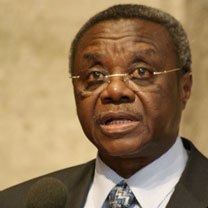
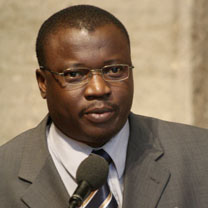
JANUARY 23-28, 2006, UNESCO, PARIS
Convention for Co-operation in
the Protection and Develop-
ment of the Marine and Coastal
Environment of the West and
Central African Region and
Related Protocols. These con-
ventions received a major boost prior
Management project aimed at pov-
Tanzania - under preparation)
to and immediately following the
erty reduction and sustained growth.
Large Marine Ecosystems.
WSSD through the efforts of the
Increased regional efforts have also
· West African countries looking
African Process for the Protection
proven useful in increasing country
at the effects of climate variabil-
and Development of the Marine and
ownership, promoting compliance,
ity on shoreline - Mauritania,
Coastal Environment. They remain,
strengthening alliances, and address-
Gambia, Guinea Bissau, Cape
however, primarily environmental
ing emerging issues such as the co-
Verde, Senegal (UNDEP/GEF/
agreements and are administered
operative fisheries observation,
UNESCO-IOC).
separately from other sectors such
monitoring, control and surveillance
as fisheries, mineral exploitation,
efforts among South Africa,
· Impacts of Land-based
and transport. Discussions continue
Mozambique, Namibia, Angola, and
pollution in the Western
to be fragmented, and no mechanism
Tanzania. Projects of various scales
Indian Ocean
exists to bring all sectors together.
are under preparation or recent
(WIOLAB) Somalia,
implementation. Selected initiatives
Kenya, Tanzania,
Relation to the WSSD/
include:
Mozambique, South
Africa, Comoros,
MDG Goals
Regional Programs
Madagascar, Mauritius,
The MDG goals relating to poverty
France (La Reunion),
Albert Owusu-Sarpong,
reduction and environmental
· Large Marine Ecosystem
Seychelles (Supported
Ambassador of Ghana to France,
sustainability underpin all issues
projects (funded by the Global
by Norway, GPA, GEF
highlighted the rapid degradation
of vulnerable coastal and offshore
experienced by African coastal
Environment Facility):
and Nairobi Conven-
habitats due to local sources of
countries. The Johannesburg Plan of
- Guinea Current Large Marine
tion parties).
pollution, which is exacerbated by
regional oil spills.
Implementation (JPOI) of the WSSD
Ecosystem (Guinea-Bissau,
· Western Indian Ocean
proposes a number of actions for
Guinea, Sierra Leone,
Marine Highway Development
Africa in section VIII: Sustainable
Liberia, Côte d'Ivoire,
and Coastal Contamination
development for Africa. Specific ref-
Ghana, Togo, Benin, Nigeria,
Prevention Project - Comoros,
erence is made to marine and coastal
Cameroon, Equatorial
Kenya, Madagascar, Mauritius,
issues, the JPOI suggests the devel-
Guinea, Sao Tome and
Mozambique, Seychelles, South
opment of "...projects, programmes
Principe, Gabon, Republic of
Africa, Tanzania (GEF, IDA,
and partnerships with relevant stake-
the Congo, Democratic
EC, DANIDA).
holders and mobilize resources for
Republic of the Congo, and
the effective implementation of the
Angola).
· Sustainable coastal tourism
outcome of the African Process for
project - Senegal, Gambia,
- Benguela Current Large
the Protection and Development of
Nigeria, Ghana; Kenya,
Marine Ecosystem (Namibia,
the Marine and Coastal Environ-
Tanzania Mozambique,
Angola and South Africa).
ment" (JPOI Paragraph 56(i)).
Seychelles.
- Canary Current Large Marine
Progress on the Issues
· Sub-regional
Ecosystem (Morocco,
programme to combat
There is a growing realization of the
Mauritania, Senegal, Guinea-
coastal erosion of the
opportunities presented by good
Bissau, the Canary Islands
West African Economic
governance of oceans and coastal
(Spain), Gambia, Cape Verde
and Monetary Union -
areas. Some countries are moving
and Western Sahara - under
Senegal, Benin, Togo,
forward by strengthening institu-
preparation).
Cote d'Ivoire, Guinea
tions that govern these areas and re-
- Agulhas Current (South
Bissau, Ghana,
sources. For example, Kenya estab-
Africa, Mozambique,
Gambia.
lished the Ministry of Fisheries,
Madagascar, the Comoros
Aristides Ocante da Silva,
Mozambique is currently develop-
- Western Indian Ocean
Islands, the Seychelles and
Minister of Natural Resources,
ing a legal and institutional frame-
Marine Science
Guinea Bissau, highlighted
Mauritius - under prepara-
domestic activities to improve
work, and Tanzania has developed
Association
tion) and Somali Current
oceans management, including:
a comprehensive and integrated
(WIOMSA) - Somalia,
creating and managing new MPAs;
(Yemen, Somalia, Kenya and
Marine and Coastal Environmental
Kenya, Tanzania,
improving maritime surveillance
Mozambique, South
systems; and carrying out research
on erosion.
· 15 ·

Africa, Comoros, Madagascar,
(MACEMP), are attempting to adopt
other extractive industries to encour-
Seychelles, Mauritius, France
a more integrated approaches that
age equitable, transparent, and sus-
(La Reunion).
address a multitude of issues to
tainable industries.
· Coral Reef Degradation in the
strengthen governance of a multitude
More consideration is needed for
Indian Ocean (CORDIO)
of marine-related sectors such as fish-
existing marine and coastal gover-
Kenya, Tanzania, Mozambique,
eries, coastal management, livelihood
nance efforts, such as science and
Madagascar, Seychelles,
generation and poverty reduction,
conservation, and investigation of
Reunion, Comoros, Mauritius,
and private sector involvement.
how these can contribute more
Maldives, India, and Sri Lanka
meaningfully to poverty reduction at
(Sida, FRN (The Swedish
Outstanding Questions/
the local level. For instance, much
Council for Planning and Co-
Challenges
emphasis has been placed on the es-
ordination of Research),
The major challenges in ocean and
tablishment of marine protected ar-
MISTRA (Foundation for
coastal management in Africa relate
eas, but a balanced approach is
Strategic Environmental
to governance, capacity building,
needed that takes into consideration
Research), WWF-
and communication. While many
equity, cultural, and socio-economic
Sweden, World Bank through
countries are attempting ocean and
issues. Similarly, more attention
Dutch Trust Funds, and the
coastal governance initiatives, ef-
should be given to how to translate
Government of Finland).
forts are still insufficient or uncoor-
the riches from extractive industries
· East African Marine Ecoregion
dinated. Existing scientific efforts
to poverty reduction and livelihood
(EAME) Somalia, Kenya,
and assessment processes have
security at the local level. Another
Tanzania, Mozambique, South
tended to be very sectoral in nature
challenge is the linking of national
Africa (Supported by WWF).
and have failed to bring about effec-
and regional efforts to reveal gover-
nance gaps at the national level. In
· SADC MCS - South Africa,
tive change. A concerted effort at the
this respect, linking science to policy
Mozambique, Namibia, Angola,
local level for poverty reduction is
is critical and a large challenge re-
and Tanzania.
essential. In addition, more attention
needs to be paid to the targeted
mains in incorporating the findings
· Community of the Portuguese
strengthening of existing capacities
from science into effective gover-
Speaking Countries (CPLP)
for all aspects of ocean and coastal
nance at all levels. It would help to
Strategy for the Seas of CPLP
governance. There is a need to real-
identify key areas in need of atten-
(under development).
ize that for Africa the issue is not
tion in the continent and how these
· Mozambique Transboundary
only capacity development, but also
can be addressed within existing
networks of marine protected
capacity realization, nurturing of
long-term frameworks such as
areas in East Africa
champions, capacity retention, and
NEPAD. There is also a need to
(TRANSMAP) Tanzania,
leadership development among the
frame simple messages as to what
Mozambique, South Africa
younger generations.
activities are priorities to be funded,
(EU).
along with realistic focal-point
The production, dissemination,
implementers for practicality and
and use of information for the em-
National Efforts
accountability.
powerment of people to engage the
Within countries efforts, while nu-
authorities and decision-makers
A lack of coordination among and
merous, are largely project-based
plays a big role in creating the de-
between donors and governments
and of limited timeframes and bud-
mand for good governance and re-
continues to hamper efforts. Inter-
gets. Donor involvement in coastal
ducing the impact of vested interests.
ventions implemented in isolation
and marine research and manage-
Disclosure of information to civil
result not only in duplication of ef-
ment in Africa has a relatively long
society on issues related to resource
forts but also reduce opportunities
history yet few of these efforts have
exploitation (such as fisheries access
for success and replication and scal-
resulted in sustained institutional
agreements, mineral extraction per-
ing up of efforts. Alternative ap-
strengthening. Some countries have
mits, property leases for tourism
proaches to assistance could be in-
developed (Tanzania and South Af-
purposes, etc.) and the benefits
vestigated, such as basket funding or
rica) or are developing (Mozam-
thereof is thus very important. An-
budget support. There is also a need
bique and Namibia) national policies
other aspect of information that is
to investigate innovative means of
and regulatory frameworks for
needed is related to defining and ar-
acquiring large-scale investments to
coastal and ocean governance. Re-
ticulating priorities appropriately for
deal with coastal initiatives in the
cent donor-supported efforts at the
all levels of decision-making. Re-
long-term rather than relying on
national level, in particular the Tan-
gional cooperation is needed on a
small-scale, time-bound project sup-
zania Marine and Coastal Environ-
much larger scale with respect to
port from development partners.
mental Management Project
fisheries access agreements and
· 16 ·
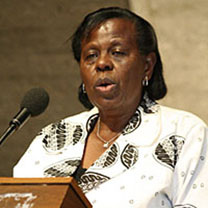
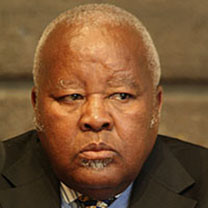
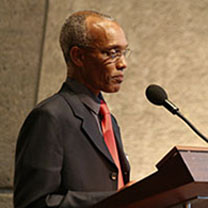
JANUARY 23-28, 2006, UNESCO, PARIS
One major challenge to the attain-
to adequately address ocean-
ment of the Millennium Development
related issues and develop
Goals is the enormous debt burden
Joseph Konzolo Munyao, Minister of
effective and sustainable
Livestock and Fisheries Development,
faced by individual countries in Af-
solutions;
Kenya, explained that African countries'
rica. For example, over 30% of an-
international debts fetter their ability to
· Promote a culture of transpar-
achieve the MDGs and WSSD targets.
nual GDP in Kenya is allocated to
ency and disclosure among
debt repayment.
ocean users: industry, govern-
Strengthening African institu-
ments, development partners,
tions for ocean governance is essen-
and civil society;
tial. Meaningful participation at large
· Request assistance in strength-
international fora (such as the Glo-
ening governance such as
bal Conferences on Oceans, Coasts,
strengthening fisheries
and Islands) helps to create and
monitoring, control, and
Outlining actions taken in the
maintain dynamism for oceans at the
context of the Eastern Africa
surveillance (MCS) and for
national and regional level. To maxi-
Regional Seas Programme, Rejoice
conflict management;
Mabudafhasi, South African
mize this opportunity, there is a need
Deputy Minister of Environmental
to develop mechanisms at the na-
· Apply integrated and compre-
Affairs and Tourism, said the main
hensive models such as
challenge lies in developing
tional level to prepare for meaning-
adequate legal frameworks and
ful participation at the fora and fol-
Tanzania's MACEMP in other
policies.
low-up at the national level subse-
countries and regions;
quent to the meetings.
· Develop a framework for
results of the many projects
Next Steps
and initiatives to see how they
· Targeted and sustained efforts
are addressing the priorities
to address the issues and take
and to incorporate the out-
Victor Manuel Borges, Deputy
advantage of opportunities;
comes of the projects into
Minister of Fisheries, Mozambique,
governance;
outlined national marine and coastal
· Promote the NEPAD
management initiatives, including the
development of a legal and
programme and the efforts of
· Build partnerships within the
institutional framework, and the
the African Union which
region and use local expertise;
establishment of MPAs. Addressing
regional projects, he highlighted
provide regional coordination
· Facilitate assistance with EEZ
monitoring, control and surveillance
and ensure that environmental
and continental shelf boundary
initiatives as well as fisheries
cooperation protocols.
ministers come together;
delineation as well as for
· Take notice of the recommen-
effective MCS;
dations of the Mauritius
· Develop strategies to prepare
Strategy;
for and address natural
· Promote corporate social
disasters such as drought,
2. Support monitoring and
responsibility through partner-
coastal storms, and flooding;
information sharing for
ships that:
and
existing projects;
- Support equitable benefit
· Support effective EEZ man-
3. Support participation in ocean-
sharing,
agement and more equitable
related gatherings by African
and locally beneficial access
journalists and communicators
- Move towards environmen-
agreements for fisheries and
in order to develop expertise to
tal governance (minimizing
oil and gas.
support ocean governance
impacts, innovations for
such as through participation
efficiency), and
Specific suggestions to the Glo-
bal Forum for assistance in strength-
at the Second Intergovernmen-
- Promote emphasis on the
ening ocean governance in Africa
tal Review of the Global
social agenda in all ocean
and contributing to poverty reduc-
Program of Action for the
programs;
tion include:
Protection of the Marine
· Promote and facilitate harmo-
Environment from Land-based
1. Support the development of a
nization of programs and
Activities (IGR-2) in Beijing in
strategy for highlighting the
processes;
2006, and the Cape Town
values and opportunities
meeting in 2007;
· Look beyond national political
offered by oceans and coasts
boundaries to include regional
to promote growth and
4. Help to mobilize commitment
and international perspectives
alleviate poverty in Africa;
of donors, private sector, and
· 17 ·

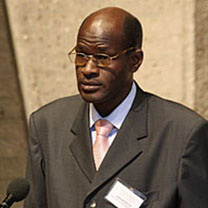
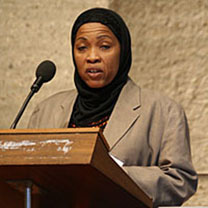
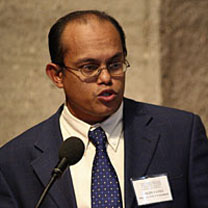
Thierno Lô, Minister of Environment and Natural Protection,
national governments to
Senegal, underscored his country's support for the African
disclose access agreements
Process for the NEPAD/Environment Action Plan and
and concessions for oil and
detailed Senagal's involvement in coastal programmes.
gas development, fisheries,
and to develop more equitable
and locally beneficial access
agreements. Disclosure should
not end with the national
government but should
involve engagement of civil
society;
5. Provide support to revisit
Rahma Mshangama, Ministry of Agriculture, Natural Resources,
components in existing
Environment and Cooperatives, Tanzania, explained that a lack
of funding and expertise hampers poverty reduction through the
programs for communication.
sustainable use of natural resources.
Support project managers to
come together to discuss the
capacity building and commu-
nication components of
projects;
6. Strengthen African Universi-
ties and technical institutions
to create a critical mass of
ocean and coastal manage-
ment professionals; and
Rolph Payet, Interim Coordinator, Regional Coordinating Unit
7. Promote advocacy for debt
for Eastern African Action Plan (EAF/RCU), indicated how the
Nairobi Convention for the Protection, Management and
relief linking ocean gover-
Development of the Marine and Coastal Environment of the
nance, debt burden, poverty,
Eastern African Region impacts oceans management in the
region.
and innovative mechanisms
for debt relief.
· 18 ·
JANUARY 23-28, 2006, UNESCO, PARIS
PROGRESS ON FISHERIES-RELATED GOALS
Summary prepared by Lori Ridgeway, Director-General, International Coordination and Policy
Analysis, Department of Fisheries and Oceans, Canada and Serge Garcia, Director, Fishery
Resources Division, Fisheries Department, Food and Agriculture Organization
This summary provides an overview
The discussion began by noting
the country capacities, and the costs
of the discussions during the infor-
that while these WSSD goals relate
of transition to adopt realistic fish-
mal dialogue session on progress
specifically to fisheries issues, there
eries goals. There is a need for indi-
towards implementation of fisheries
are others goals in the Plan of Imple-
cators to be able to measure progress
related goals from the 2002 World
mentation with indirect, but signifi-
toward the goals, but there are al-
Summit on Sustainable Develop-
cant, implications for fisheries.
ready a large number of efforts to
ment. The discussion followed the
These include goals related to
define indicators underway in orga-
outline of the draft document pro-
biodiversity and protected areas as
nizations such as the CBD and
vided to conference participants --
well as the ecosystem approach. The
UNESCO, as well as under the Mil-
Information on Progress Achieved
session also recognized that the fish-
lennium Development Goals. It was
in the Implementation of World Sum-
eries goals incorporate a somewhat
noted that an effort to bring together
mit on Sustainable Development
odd collection of goals ranging from
some of this work would be particu-
Targets and Millennium Develop-
implementing specific instruments,
larly helpful.
ment Goals on Oceans, Coasts, and
achieving an optimal state of re-
Small Island Developing States1 --
sources, and eliminating a wrong
Implementation
quite closely in framing the dia-
incentive.
Responsibility
logue. The draft document was fo-
The session recognized that, only
cused particularly on the following
While it is important to address fish-
three years after the goals have been
goals laid out in the JPOI:
ing issues on the high seas, it must
adopted, the feeling in the interna-
also be noted that 90% of the pro-
tional community is that there are big
· Implement the FAO Interna-
duction originates from within Ex-
gaps in implementation. The ques-
tional Plan of Action to
clusive Economic Zones (EEZs)
tions, however, are: (i) are we look-
Prevent, Deter and Eliminate
and, therefore, an important part of
ing at a real lack of progress? (ii) did
Illegal, Unreported, and
the overfishing problem happens
the POI reflect unrealistic expecta-
Unregulated Fishing (IUU) by
under the direct control and respon-
tions in relation to goals that are very
2004.
sibility of national governments.
difficult to achieve? The goals are
Outside of EEZs, management has
· Implement the FAO Interna-
not very specific, and, for example,
to occur through cooperation and
tional Plan of Action for the
they do not indicate which degree
Regional Fisheries Management
Management of Fishing
of implementation of the instruments
Organizations (RFMOs). Well man-
Capacity by 2005.
is required or what proportion of
aged domestic fisheries are ex-
· Maintain or restore depleted
world stocks should be rebuilt by
tremely important, because poor na-
fish stocks to levels that can
2015. The goal related to the resto-
tional fisheries management leads to
produce their maximum
ration of stocks to their maximum
spillovers and pressures on the high
sustainable yield on an urgent
sustainable yield is viewed as some-
seas, which can undermine interna-
basis and where possible no
thing to strive towards, but not nec-
tional cooperation.
later than 2015.
essarily something that is going to
National governments are respon-
· Eliminate subsidies that
be achievable everywhere, given the
sible for good national fisheries and
contribute to illegal, unreported
reality of what needs to be put in
are also responsible for fisheries
and unregulated fishing and to
place to get there. It is important to
management through the RFMOs.
overcapacity.
think about what the historical
baselines are, the present situation,
National governments are also ac-
countable for some of the interna-
· 19 ·

tional targets, such as implementing
While there is no question that there
57 signatories to the "Agreement for
the hard law and soft law frame-
are large gaps, there is also the risk
the implementation of the provisions
works. The national level is also
of being too pessimistic if looking
of the Convention relating to the
where the responsibility to cooper-
at too narrow a picture.
conservation and management of
ate lies. It is important to be aware
straddling fish stocks and highly
that, while RFMOs are often talked
As of March 2006, Australia,
migratory fish stocks" (UN Fish
about as independent entities, they
Canada, Chile, and the United States
Stocks Agreement), 26 nations
are really just the sum of the will of
have submitted their National Plans
signed on following the World Sum-
member states, which again comes
of Action to Prevent, Deter, and
mit on Sustainable Development.6
down to national action. Interna-
Eliminate Illegal, Unreported, and
While many nations have signed and
tional Plans of Action (IPOAs) are
Unregulated Fishing to FAO.2 In
ratified these and other related inter-
tools to help organize governments
addition, the U.S. has submitted its
national agreements, there is still a
around the issues, and, through these
National Plan of Action for the Man-
large gap and a need for more coun-
efforts, FAO is responsible for rais-
agement of Fishing Capacity.3 Al-
tries to sign, ratify, and implement
ing awareness and creating a good
though only four states have logged
these agreements.
environment for implementation.
the IUU plans with FAO, and only
The FAO Commission on Genetic
Currently, flag states are really the
one state has logged a capacity plan,
Resources for Food and Agriculture
only point of management, and they
there is much action going on to
has only started to address aquatic
must be doing much more as the
build toward these national plans of
genetic resources. By examining the
nations responsible for the behavior
action which must also be recog-
status and trends of biodiversity and
of their vessels. There is also a role
nized. At the moment, according to
genetic resources in fisheries, aquac-
for port states and market states in
FAO, national plans of action
ulture, and the deep sea, and how
addressing the fisheries targets, but
(NPOA-IUU) have been formally
modern biotechnology and socio-
it must also be noted that fisheries
developed in Namibia, Seychelles,
economic factors influence their use,
involve the most globally diverse
Tanzania, Federated States of
the Commission will help identify
markets and are, therefore, not eas-
Micronesia, Tonga, Tuvalu, Ghana,
key issues and policy considerations
ily controllable.
The Gambia and Oman has recently
in order to develop a program of
requested FAO assistance to develop
work to assist countries and the in-
Progress Toward
their own.
ternational community deal with
Implementation
The issue of subsidies is con-
aquatic genetic resources.
In regard to whether progress is be-
nected to that of overcapacity and
There is also some progress in
ing made, it is important to note that,
IUU and remains hotly debated. A
national reform of fisheries manage-
while specific goals may not yet
number of organizations are collabo-
ment, especially with new market
have been met, there is a consider-
rating on it (e.g. WTO, OECD,
measures, such as ecolabelling, that
able amount of work and progress
UNEP and FAO) and a number of
are being adopted both in developed
going on below the surface. It is
regional meetings have been held on
and developing countries. In addi-
essential that the international com-
the subject by ASEAN, CARICOM,
tion, there is progress on reform of
munity recognizes, for example, that
and CPPS to exchange information
national legislation. For example,
the actions taken to move toward
on the respective programmes. At
FAO has been working with 85 de-
implementing a national plan of ac-
present, subsidies have been identi-
veloping countries on legislative re-
tion are ultimately more important
fied and classified in categories, in
form. There has also been a lot of
than the adoption of the document
terms of their original intent but no
momentum on the illegal, unregu-
alone. Many of the goals and tar-
general agreement has emerged re-
lated, unreported (IUU) fishing is-
gets in these plans are written in
garding their classification in rela-
sue, including research as well as
terms of delivery of a paper prod-
tion to their impact on fisheries.4 The
independent efforts such as the High
uct, so it can be difficult to gauge
main agreement perhaps is that fish-
Seas Task Force, a ministerially-led
the real picture of all that is occur-
ery management expenses are gen-
task force on IUU fishing on the high
ring.
erally considered as "good subsi-
seas. There has been a significant
dies."
There is no question that we still
change in momentum with respect
think there is a great deal to do in
As of March 2006, 149 nations
to political will to address IUU fish-
terms of improving management,
have ratified the Convention on the
ing, for example, through the 2005
cooperation, and oversight, but it is
Law of the Sea and related Agree-
FAO Ministerial Meeting where the
important to recognize that many of
ments. Eleven of these ratifications
"2005 Rome Declaration on Illegal,
these high-level goals require sig-
have occurred since the closing of
Unreported and Unregulated Fish-
nificant behind-the-scenes action
the World Summit on Sustainable
ing"7 was adopted and the St. John's
and the alignment of many factors.
Development.5 In addition, of the
"Conference on the Governance of
· 20 ·
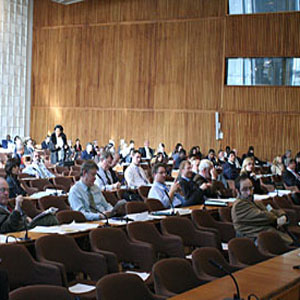
JANUARY 23-28, 2006, UNESCO, PARIS
High Seas Fisheries and the UN Fish
of scientific information, and, espe-
· Inadequate
Agreement Moving from Words to
cially, a lack of aggregated informa-
legislation
Action" which was attended by Min-
tion. In particular, there is a lack of
(such as
isters from 18 countries and the EU,
knowledge of some of the interrela-
loopholes,
and resulted in a ministerial decla-
tionships between fishery species
weak laws,
ration including commitments to 16
and the underlying natural system as
and
specific actions to improve the gov-
well as between these and the hu-
corruption);
ernance of high seas fisheries by the
man system, including its private
· Insufficient
ministers in attendance.8
sector and governance components.
political
RFMO reform continues to be an
will;
issue, but there has been some
There is also still weak national
· Lack of
progress. In the recent months there
management, notwithstanding the
transpar-
have been two major reform efforts
improvements noted. As long as
ency;
launched--one in the North Atlan-
weak national management contin-
tic Fisheries Organization (NAFO)
ues, overdependence on the re-
· Vested interests of different
and another one in the International
sources, and overcapacity will con-
players;
Commission for the Conservation of
tinue to occur. Relating to efforts to
· Lack of international coopera-
Atlantic Tuna (ICCAT).
reduce overcapacity, the issue of the
tion;
cost of transition away from fishing
There is also work going on re-
must also be addressed. The cost of
· Lack of effective flag state
lated to fishing subsidies. For ex-
transition from irresponsibly man-
control, particularly in the high
ample, during the recent WTO ne-
aged fisheries to responsibly man-
seas but not only there; and
gotiations there was an agreement to
aged fisheries no doubt means dis-
· Continued use of flags of
continue working to make progress
placing fishermen. There is a real
convenience (consideration of
in the area of fisheries subsidies.
need to discuss alternative liveli-
ports of convenience as well).
There has also been recognition that
hoods and management of the tran-
fisheries subsidies is a very difficult
sition. There is also a real need for
Next Steps
topic to address. For example, you
industry buy-in and participation of
cannot look at subsidies just in terms
There is much to be done to continue
fishermen in these processes. There
of total payments, because, in a com-
the momentum towards improving
is a need to further advance the par-
mon property resource, such as fish-
fisheries management and reaching
ticipatory framework and consider
eries, a lot of the payments are go-
the international goals and targets
ideas like co-management (for ex-
ing to management. Recent OECD
that have been set. These steps in-
ample in Japan where quotas go to a
work shows that two thirds of what
clude:
whole community in some cases).
is spent in transfers is actually go-
Capacity building is also key, both
· Emphasis on international
ing to management.
technical and management capacity
cooperation for transboundary
When looking at the range of ac-
and also capacity building in order
and high seas stocks;
tivities underway, such as regional
to enable cooperation.
· More regular and rigorous
efforts, GEF projects, market-based
It must also be noted that corrup-
discussion of progress on
measures, Marine Stewardship
tion is a significant problem that
implementation (e.g. with
Council (MSC) certification, and
needs to be addressed in order to
indicators);
High Seas Task Force efforts, it be-
have effective fisheries manage-
· Better use of the meetings of
comes clear that there is a whole set
ment. This is particularly relevant to
the parties (to monitor progress
of activities that are focused on ac-
problems of organized corruption to
and take action);
celerating progress on the WSSD
launder illegal catch, but also relates
· Encouragement of donors to
goals.
to the issue of flags of convenience
help developing countries
and flags of non-compliance.
Obstacles Faced
(example of ProFish and of the
Several obstacles that the interna-
FAO FishCode umbrella
While there has been progress, there
tional community can help remove
programme);
are also a variety of obstacles faced
or deal with include:
· Consideration of ex-ante impact
in implementing fisheries-related
· Unreliable, incomplete or poor
assessment before development
goals and targets. Obstacles faced
quality data;
of new fisheries (concern was
and policy areas of debate include
noted that there was more
cooperation and political will, espe-
· Insufficient capacity develop-
capacity for assessment in the
cially for national efforts. There are
ment (for management,
1980s than there is today,
also technical obstacles, such as lack
cooperation, etc);
· 21 ·

particularly in the developing
Patricia Gallaugher, Center for
2 International Institutions and Liaison
world);
Coastal Studies, Simon Fraser Uni-
Service (FAO-FIPL). 2006. Interna-
tional Plan of Action to Prevent, Deter,
· Encouragement for the adop-
versity, Canada
and Eliminate Illegal, Unreported and
tion, ratification and implemen-
Serge Garcia, Food and Agriculture
Unregulated Fishing. FI Programme
tation of international agree-
Organization
Websites. FAO - Rome. 2006.
ments; and
Matthew Gianni, Deep Sea Conser-
Available via FIGIS from http://
· More systematic assistance and
vation Coalition Consultant
www.fao.org/.
capacity building.
3
Ernesto Godelman, CeDePesca Ar-
Development Planning Service
(FAO-FIPP) 2006. International Plan
There continues to be some dis-
gentina (Center for Development of
of Action for the Management of
agreement regarding several issues.
Sustainable Fisheries)
Fishing Capacity. FI Programme
For example, while many people
Barbara Hanchard, Forum Fisheries
Websites. FAO - Rome. Updated Tue
agree that some form of RFMO re-
Agency
Mar 07 12:22:16 CET 2006. Available
form is necessary, there is no agree-
via FIGIS from http://www.fao.org/.
Marea Hatziolos, World Bank
ment over what precise role they
4 Identifying the impact is the
might play or how they might relate
Paul Holthus, Marine Aquarium
approach followed by FAO following
to something broader as part of in-
Council
the request of COFI (in March 2005)
tegrated solutions such as the idea
David Johnson, Southampton Solent
that FAO give consideration to
of "regional ocean management or-
University
undertaking studies and assessments
ganizations." There is agreement
to determine the impact of subsidies
Konstantinos Kalamantis, European
on fishing capacity, illegal, unreported
that there is a need for oversight and
Bureau for Conservation and Devel-
and unregulated (IUU) fishing and on
accountability, but there was no
opment (EBCD)
fisheries management generally.
agreement on the mechanisms. An-
5 United Nations. 2005. Chronologi-
other issue where there is still de-
David Leary, Centre for Environ-
cal lists of ratifications of, accessions
bate is the issue of protection of vul-
mental Law, Macquarie University
and successions to the Convention and
nerable areas against destructive
Bernice McLean, Environmental
the related Agreements as at 20
practices. Most agree that protec-
Consultant, South Africa
September 2005. UN Division on
tion of vulnerable areas from de-
Carol Phua, WWF, European Policy
Oceans and Law of the Sea web site.
structive practices is important, but
Office
Accessed: January 2006.
the mechanisms to do this remain
6 United Nations. 2005. Chronologi-
unresolved.
Alfredo Picasso, Permanent Delega-
cal lists of ratifications of, accessions
tion of Peru to UNESCO
There is no doubt that progress
and successions to the Convention and
the related Agreements as at 20
has been mixed, there have been
Lori Ridgeway, Fisheries and
September 2005. UN Division on
some improvements and some set-
Oceans, Canada
Oceans and Law of the Sea web site.
backs, but it is important to get the
Renée Sauvé, Fisheries and Oceans,
Accessed: January 2006.
enabling framework in place before
Canada
7 FAO. 2005. 2005 Rome Declaration
progress can be made. It is impor-
Hance Smith, Cardiff University
on Illegal, Unreported and Unregu-
tant to be realistic, but it is also es-
Geoff Tingley, Centre for Environ-
lated Fishing. Available: ftp://
sential to acknowledge that things
ment, Fisheries & Aquaculture Sci-
ftp.fao.org/fi/DOCUMENT/
are happening and progress is being
ministerial/2005/iuu/declaration.pdf
ence (CEFAS)
made in some areas.
8 Department of Fisheries and Oceans,
Lindsey Williams, Global Forum on
Canada. 2005. Conference on the
Fisheries Dialogue Session
Oceans, Coasts, and Islands
Governance of High Seas Fisheries
Participants
and the United Nations Fish Agree-
Footnotes:
ment Moving from Words to Action
Tim Adams, Secretariat of the Pa-
Web site. Accessed January 2006.
1
cific Community
Global Forum on Oceans, Coasts,
and Islands. 2006. Information on
Alfonso Ascencio, Permanent Mis-
Progress Achieved in the Implementa-
sion of Mexico to the United Nations
tion of World Summit on Sustainable
Richard Ballhourn, Foreign Affairs,
Development Targets and Millennium
Canada
Development Goals on Oceans,
Coasts, and Small Island Developing
Elizabethann English, NOAA Fish-
States. Available: http://
eries, United States
www.globaloceans.org.
· 22 ·
JANUARY 23-28, 2006, UNESCO, PARIS
FRESHWATER TO OCEANS LINKAGES EMPHASIZED
DURING PARIS CONFERENCE
Summary Prepared by Kateryna Wowk,
Global Forum on Oceans, Coasts, and Islands
The Global Forum's Freshwater to
ment from Land-Based Activities,
3. Secure political commitment;
Oceans Task Force, composed of
The Hague; Ivan Zavadsky, GEF
4. Establish a common knowl-
experts in both watershed manage-
Danube- Black Sea Basin Strategic
edge/information platform for
ment and integrated coastal and
Partnership, and Shammy Puri, In-
all stakeholders;
ocean management from various or-
ternational Hydrological
ganizations and regions, and co-
Programme, UNESCO. Discussions
5. Facilitate knowledge/aware-
chaired by Patricia Muñoz, National
continued in multistakeholder dia-
ness raising to build support;
Polytechnique Institute, Mexico,
logues on the intergovernmental re-
6. Encourage some institutional
former chair of the Consejo
view of the GPA (see the GPA/IGR-2
development, including
Consultivo del Agua of Mexico, and
section of the newsletter).
financial resources.
Tom Laughlin, U.S. National Oce-
Note that in these principles for
anic and Atmospheric Administra-
Integrated Water Resources an effective strategy, water is not
tion, organized a number of events
Management
mentioned once. The greatest im-
both to foster multistakeholder dia-
perative in this process is to mobi-
logues on improving interlinkages
The panel convened to: review the
lize political support. Only then can
between freshwater and oceans is-
linkage between freshwater, oceans,
freshwater and coastal agencies join
sues, and to assess progress on the
and coasts; identify opportunities to
together in an integrated strategy for
Global Programme of Action for the
advance the linkage between Inte-
the management of land, freshwater
Protection of the Marine Environ-
grated Water Resources Manage-
resources, coasts, and oceans.
ment from Land-based Activities
ment (IWRM) and coasts; and iden-
(GPA)/World Summit on Sustainable
tify new opportunities for partner-
Linking Freshwater,
Development goals.
ships between freshwater and oceans
organizations.
Coasts, and Oceans:
At the Paris conference, a panel of
The Global Water Partnership
Addressing Wetlands
experts presented specific case stud-
(GWP) aids nations in improving
Ramsar is the oldest of the global
ies which led to thoughtful dialogue
their water resources management to
environmental conventions, cover-
from conference participants, in-
provide for improved integrated
ing a wide range of wetlands from
cluding Al Duda, International Wa-
management. It is well known that
coral reefs to mountains to vast in-
ters, Global Environment Facility
integrated management involves
land swamps. With 150 contracting
(GEF); Margaret Catley- Carlson,
ecologic and scientific components,
parties, 1,558 wetlands have been
Global Water Partnership; Peter
but it has only recently become ap-
identified as sites of International
Bridgewater, Ramsar Convention;
parent that integrated management
Importance, of which more than a
Hon. Mr. Erik Llandikov, Vice- Min-
equally involves human, social, and
third are coastal wetlands. Conven-
ister, Ministry of Environmental Pro-
political components.
tion actions are implemented accord-
tection, Republic of Kazakhstan;
An effective IWRM strategy will
ing to three pillars: the wise use of
Porfirio Alvarez-Torres, Ministry of
include the following principles in a
wetlands; wetlands of international
Environment and Natural Re-
scientific and political analysis:
importance; and international coop-
sources, SEMARNAT, Mexico;
eration. All emphasize catchment
Veerle Vandeweerd, Regional Seas
1. Involve all relevant stakehold-
management and integrated manage-
Programme, United Nations Envi-
ers;
ment across systems by using the
ronment Programme (UNEP), and
2. Identify the most urgent issues
ecosystem approach.
Global Programme of Action for the
(and their costs), and prioritize
No one agency, by itself, can
Protection of the Marine Environ-
those issues;
implement the strategies of inte-
· 23 ·

grated management. Synergy is
oceans management. There is a need
led to the degradation of the ecosys-
needed across and between existing
to continue to foster the development
tem and reduced biodiversity, result-
structures. The ecosystem approach
of these linkages and relationships,
ing in a large economic loss. The
of the Convention on Biological Di-
nationally and internationally.
GEF contributed in the early stages
versity is a framework for integrated
of the management process, begin-
management of land, water and bio-
Case Study: The Caspian
ning with institution building in the
logical resources. It has the follow-
Sea
region. This helped lead to the
ing key principles:
Danube Convention (1998), the
The Caspian Sea has been deterio-
Black Sea Convention (1994), and
- Management objectives are a
rated by increasing anthropogenic
the GEF Danube Black Sea Stra-
matter of societal choice.
pressure, coupled with natural disas-
tegic Partnership (2001).
ters. As a result, there is an increase
- Management should be
of eutrophication, water pollution by
The management scheme was
decentralized to the lowest
heavy metals, chemical pollution,
aimed at new policies, institutional
level.
and overexploitation of the many
and regulatory measures, investment
- Management must recognize
types of Caspian flora and fauna. In
projects, capacity building including
that change is inevitable.
the beginning, activities for the pro-
monitoring systems, legal mecha-
nisms at national and regional lev-
The ecosystem approach can help
tection of the Caspian Sea included
els, implementation of pilot projects,
improve existing management struc-
some regional strategies for capac-
and stakeholder involvement. Stra-
tures by integrating all relevant sec-
ity building. However, most of the
tegic partnerships were developed to
tors and disciplines, national and
problems of the area are
support country-related investment
international. It can aid in identify-
transboundary in nature, and require
projects, most notably the World
ing those cultural, technological, and
the inclusion and support of all sur-
Bank-GEF Investment Fund for
environmental aspects that are inher-
rounding nations.
Nutrient Reduction, the UNDP/
ent to specific ecosystems and allow
One promising result of regional
UNEP Black Sea Ecosystem Recov-
for society to change the way it man-
efforts occurred when the UNEP as-
ery Project, and the UNDP Danube
ages water and land resources.
sisted the region in developing the
Regional Project. In a Memorandum
basic elements for a Framework
Linking Freshwater,
of Understanding, long-term and in-
Convention for the Protection and
termediate goals were identified
Coasts, and Oceans:
Sustainable Management of the
among partners, assuring compa-
Addressing Aquifers
Caspian Environment and its Re-
rable assessment and reporting on
sources. The Framework Conven-
Aquifers constitute 99% of all acces-
ecological status and input loads and
tion includes pollution prevention,
sible freshwater globally. The sea-
the adoption of strategies for pollu-
reduction and control; protection,
ward discharge from aquifers to
tion reduction. There will not be an
preservation and restoration of the
coastal ecosystems and their role in
analysis of results achieved until
marine environment; procedures to
delivering nutrients and other dis-
2007, but the Black Sea does appear
fulfill the obligations contained in
solved constituents is becoming in-
to be recovering.
the Framework Convention; and for-
creasingly recognized. Large
mation of the Organization for the
amounts of groundwater continually
Recommendations
Protection of the Sustainable Man-
discharge into the sea, amounting to
agement of the Caspian Environ-
Integrated management of water re-
5-10% of all freshwater input into
ment and its Resources. In 2005,
sources cannot occur without real-
the oceans. For truly integrated man-
Kazakhstan became the fourth na-
izing the natural linkages between
agement of water resources, the in-
tion to sign the Convention, and, af-
freshwater, coasts, and oceans. An
terconnections between aquifers and
ter Azerbaijan signs, the Convention
effective management scheme must
the oceans must be realized. Addi-
will come into force.
take these linkages into consider-
tionally, aquifers flowing into man-
ation, and secure political and soci-
groves, coastal lagoons, and salt
Case Study: The Danube/
etal commitment among stakehold-
marshes may be very significant for
Black Sea Region
ers.
the preservation of marine
It was ultimately recommended
biodiversity.
The Danube-Black Sea Region is the
that the freshwater and oceans com-
Several GEF-supported studies
most international river basin in the
munities should create stronger part-
have been initiated to address the
world. The management of this re-
nerships. There is a need to work
issue of aquifer discharge to the
gion serves to exemplify successful
across and between freshwater,
coasts, and many other GEF partners
policy-building, showing how to
coastal, and oceans organizations, at
are supporting efforts in an attempt
advance an issue. Pollution of the
the national and international levels.
to integrate IWRM with coastal and
Black Sea by nutrient overloading
Among these opportunities are col-
· 24 ·

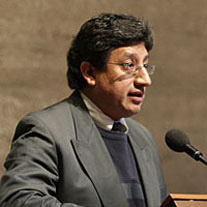
JANUARY 23-28, 2006, UNESCO, PARIS
laborations
between the
Global Wa-
ter Partner-
ship (GWP)
and the Glo-
bal Forum
on Oceans, Coasts, and Islands.
energy, recreation and transporta-
mize the economic and social ben-
tion. Watersheds provide habitat and
efits derived from water resources in
Improving Interlinkages
a host of other ecological services
an equitable manner while preserv-
between Freshwater,
from water purification to flood con-
ing and, where necessary, restoring
freshwater ecosystems." Integrated
Coasts, and Oceans
trol and nutrient recycling--all im-
portant to people. Watersheds also
coastal management uses almost the
A preparatory meeting on freshwa-
provide a critical link between the
same definition, but with an empha-
ter to oceans linkages was held at
land and sea.
sis on estuarine and marine (saltwa-
the International Workshop on
ter) ecosystems. While institutional
Freshwater-Coastal-Marine Man-
Increasingly, watersheds are un-
arrangements have been designed
agement Interlinkages, January 10-
der stress from structural modifica-
and implemented to address either
11, 2006 in Mexico City, organized
tions (dams, flood control, canaliza-
freshwater or saltwater issues, rarely
by the Consejo Consultivo del Agua,
tion), habitat degradation (defores-
have institutions worked on the link-
Mexico, SEMARNAT, Mexico,
tation, urbanization, agriculture),
ages between freshwater and saltwa-
Centro EPOMEX, the Global Forum
freshwater withdrawals, pollution,
ter.
on Oceans, Coasts, and Islands,
and loss of freshwater biodiversity.
Occasionally, a river ba-
UNEP Global Programme of Action
For example, large rivers such as the
sin management plan will
for the Protection of the Marine En-
Colorado, Ganges, and Yellow Riv-
address the "downstream"
vironment from Land-based Activi-
ers often no longer flow to the sea
effects of "upstream" activi-
ties (GPA) and other collaborating
during the dry season. In the Nile
ties. Occasionally, a coastal
organizations. Thirty-nine experts
Delta, 30 of 47 commercial fish spe-
management project will
from 29 countries participated in the
cies have become extinct due to the
address the effects of up-
workshop. The salient points dis-
Aswan High Dam. Reducing the flow
stream activities and river
cussed and recommendations put
of freshwater to the sea can also lead
inflows. Increasingly, inter-
forward at the workshop are pre-
to the intrusion of salt water into pre-
national programs such as Porfirio Alvarez-Torres, on behalf
sented below.
viously fresh surface water and
groundwater--rendering them un-
the GPA, the Global Envi- of Antonio Diaz de Leon,
Director-General for
drinkable. On the other hand, accord-
ronmental Facility, and Environmental Policy Regional
Mexico City International
ing to UNEP, large amounts of river-
Large Marine Ecosystems and Sectoral Integration, Mexican
Ministry of Environment and
Workshop on Freshwater-
borne nutrients flowing from the land
are beginning to address Natural Resources, reported on a
linkages. But what have freshwater-coastal-marine
Coastal-Marine Manage-
to the sea have created over 150 oxy-
management interlinkages
gen-deprived "dead zones" in the
been the collective experi-
ment Interlinkages, January
workshop held in Mexico City in
Gulf of Mexico, the Black Sea, the
ences of these efforts? January 2006.
10-11, 2006
Baltic Sea, the Chesapeake Bay, and
What institutional arrange-
the northern Adriatic Sea.
ments across freshwater and coastal
Background
management institutions have
Around 2000 BC, two city-states
worked and why? What incentives
Continental waters stored in surface
concluded a treaty to settle conflicts
have provided appropriate changes
waters (rivers, lakes, wetlands) rep-
over water uses of the Tigris River.
in institutional and personal behav-
resent less than one percent of the
Four thousand years later, we are still
ior? What kinds of "nested" institu-
Earth's water resources. Ninety-
learning how to manage human uses
tional arrangements (global, regional,
seven percent is stored in the oceans
of rivers, river basins, watersheds,
and national) have been most effec-
and the remaining 2 percent is sea
and coastal areas. Today, much of
tive? How have non- governmental
ice, snow, glaciers, and permafrost.
the focus is on integration. We have
organizations contributed? What
However, this small percentage of the
integrated river basin management
has been the role of the private sec-
Earth's total water resources that is
defined by the Global Water Partner-
tor? What are the lessons about ef-
freshwater is disproportionately im-
ship as "the process of coordinating
fective stakeholder involvement?
portant to people. The watersheds
conservation, management, and de-
What are the long-term economic and
that integrate the surface water run-
velopment of water, land, and related
social benefits, as well as the eco-
off of entire drainage basins play a
resources across sectors within a
logical benefits, of linking river ba-
critical role as sources of water, food,
given river basin, in order to maxi-
sin and coastal management? Is there
· 25 ·

an adequate natural and social sci-
A Shared Agenda of Fresh-
and are placing the viability of
ence base for assessing these link-
water and Coast/Ocean
coastal economic activities at
ages? Can "best practices" be iden-
Management
risk.
tified and documented?
Important shared issues on the policy
In 1999 the United Nations de-
Meeting Challenges
and management agenda of freshwa-
clared the World Day for Water
and Constraints
ter resources and coastal/ocean man-
theme, "Everybody Lives Down-
agement need to be identified and
We do not lack experience in trying
stream," which drew attention to the
recognized. Some significant ex-
to link freshwater and ocean man-
conflicts of equally legitimate wa-
amples should be mentioned:
agement activities. About 100 na-
ter-related interests and relationships
tions are currently experimenting
between those living "upstream" and
Freshwater flows are critical to
with some form of integrated coastal
those living "downstream."
the health and productivity of estu-
management; 18 Regional Seas
aries and coastal waters. Increasing
The World Summit on Sustain-
Programmes exist within 140 coun-
freshwater demands, mainly for ir-
able Development (WSSD) in 2002
tries; well over 60 countries are com-
rigated agriculture (80%) and urban
called for all countries to develop
pleting National Plans of Action for
development, are depleting freshwa-
Integrated Water Management Strat-
land-based sources of marine pollu-
ter flows and damaging coastal eco-
egies by the end of 2005. These strat-
tion; and almost 20 Large Marine
systems and their vital functions as
egies are intended to build national
Ecosystem projects are funded by
spawning and nursery area for
and regional efforts to tackle specific
the Global Environmental Facility.
coastal fisheries. Nutrient over-en-
water challenges, such as pollution
Tens of millions of dollars have been
richment, eutrophication of estuar-
prevention, controlling flooding,
invested by the Global Environmen-
ies and coastal/ marine waters and
mitigating the effects of drought,
tal Facility and others in linked man-
coastal "dead zones" are emerging
expanding access to water and sani-
agement approaches. Then why is it
issues, primarily related to increased
tation, and addressing increasing
so difficult to achieve commitment,
agricultural activities in river
competition for water and water
coordination and even communica-
catchments.
scarcity. Similarly, the WSSD, as
tion on linked management of
well as the Millennium Develop-
Other examples include:
catchments and coasts/oceans? Sev-
ment Goals, called for all countries
· Pollution of river basins and its
eral challenges and constraints have
to create systems for integrated
consequences for human and
to be faced, such as:
coastal and ocean management to
ecosystems health in coastal
· Different cultures: River basin
address downstream issues in coastal
waters and oceans, due to
management/ integrated water
areas (the home of 50% of the
municipal and industrial waste
resources management and
world's population), in oceans (in-
water;
coastal/ ocean management
corporating 70% of the earth's sur-
· Degradation of freshwater and
policies represent two different
face area and 97% of the world's
coastal habitats caused prima-
traditions, with different
water), and in Small Island Devel-
rily by changes in flow charac-
disciplines, different networks,
oping States or SIDS (43 of the
teristics by damming and river
and little communication;
world's nations are SIDS that are
flow regulation;
especially dependent on ocean,
· Institutional inadequacies:
coastal, and freshwater resources).
· Increased coastal erosion by
Integrated management is not
reduction of sediment flows
common practice. In most
Today, it is important to address
from rivers as a result of dams
cases, river basin management
the challenge of linking freshwater
and water diversion schemes;
and the authority of basin
to coasts and oceans from a new col-
organizations stop at the
laborative perspective that examines
· Lack of knowledge about
estuary or are not practiced
how decision-making and institu-
complex interactions in the
beyond the border of the
tional arrangements can be aligned
coastal/ocean ecosystem and
estuary. In many countries
to achieve a true "hydro-solidarity"
watershed, and lack of under-
coastal zone management has
between "upstream" and "down-
standing of the benefits of an
not yet reached a mature stage.
stream" stakeholders. Finding mod-
integrated management ap-
Responsibilities are divided
els for how these interests can be
proach; and
among various sectoral
reconciled is an urgent and challeng-
· Increased water demands, land
ministries and a high priority is
ing task that can be made more con-
use practices, river regulation
the implementation of effective
crete by analyzing a set of case stud-
works and water resources
institutional arrangements;
ies of river basins and their associ-
development projects have
ated coastal zones from a manage-
crucial impacts on principal
ment perspective.
coastal and oceans resources
· 26 ·
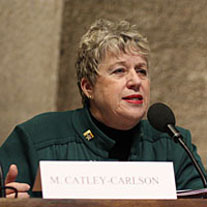
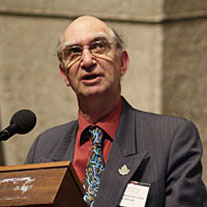
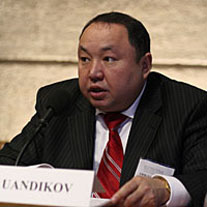
JANUARY 23-28, 2006, UNESCO, PARIS
· Water policy and legislation:
makes it to the sea is lost.'
updating the definition
The major problem is the
Stakeholders competing for the
of ICZM, broadening
absence of a comprehensive
same resources will have
the scope from the
water policy accommodating
different visions.
terrestrial zone to
integrated water resources
watersheds and oceans;
management (IWRM) in the
The Obvious Benefits of
and
context of harmonizing national
Linked Management
· Enforce the develop-
economic development plans
ment of capabilities and
and water sector plans. Such a
The major benefit of linked manage-
ment is the scope it provides to en-
common standards,
Margaret Catley-Carlson, Chair,
policy should be effective,
methodologies, and
Global Water Partnership,
efficient, and equitable across
sure that development activities up-
emphasized that human, social and
stream are planned and implemented
indicators in linking
political aspects are as important
geopolitical borders. A formal
freshwater to coasts
as science in achieving sustainable
protocol between river basin
with full knowledge of the potential
management.
and oceans.
authorities and coastal authori-
impacts on the ecosystems and eco-
ties would go a long way to
nomic activities and livelihoods in
At the regional/national
promote integrated manage-
the coastal and marine areas. This is
scale:
ment. Deficiencies in the
essential to assure the integrity and
· Focus not only on assessment
regulatory system have to be
health of the ecosystems and the
of the interlinkages but take
mentioned, including lack of
water cycle, and to promote the sus-
concrete next steps to establish
enforcement capacity.
tainable development of both the
multi- sectoral policies, institu-
higher and lower watershed areas.
· Inadequate attention to the full
tional frameworks, stakeholder
range of socio- economic
The costs of inaction are high. It
participation in policy
factors: It is impossible to
is known from river rehabilitation
making, and planning
define ecological functions in
practices that the costs of ignoring
across the freshwater-
only monetary terms. The
upstream-downstream management
coastal interface, e.g.,
profits of freshwater for
linkages have been enormous--the
through establishing
irrigation are much easier to
costs of rehabilitation are much
freshwater coastal
quantify than freshwater flows
higher than the costs of prevention!
networks in connection
required for productive and
with the regional
healthy coastal ecosystems. The
Management Options -
IWRM networks and
valuation of goods and services
What Could Be Done?
through a focus on the Peter Bridgewater, Secretary
the coastal and marine environ-
freshwater/coast
At the global scale:
General, Ramsar Convention on
ment provides is of crucial
interlinkages in IWRM
wetlands, indicated that over a
· Link the coastal/ocean and
third of all Ramsar sites are coastal
importance. Often there is an
2005 target support
freshwater communities at
or marine.
imbalance in socio- economic
programs, e.g. UNEP,
important events by creating
development and political
UNDP, and other organizations;
shared agendas, e.g., at the
attention between upstream and
· Promote GPA National
World Water Forum series, at
downstream regions;
Programmes of Action in the
CSD when follow-up on the
· Lack of thorough analysis of
context of IWRM and Water
water agenda and the oceans
linked issues: A lack of
Efficiency plans and Large
agenda takes place, at the World
ecological information (pres-
Marine Ecosystem initiatives;
Water Weeks in Stockholm, etc.;
sures, driving forces) has to be
and
· Develop a program of collabo-
mentioned for example, what
· Consider and respond
ration between global oceans
is the impact of dams on the
to the difficulties that
organizations and global water
degradation of mangroves vis-
national authorities
organizations (e.g. partnerships
à-vis the impacts of activities in
face in implementing
such as the Global Water
the estuary itself? Also the
multiple mandates:
Partnership, the Global Forum
perspectives of mid term-
e.g., creating IWRM
on Oceans, Coasts and Islands;
economic development are not
plans, ICZM plans,
and UN entities such as UNEP,
being analyzed; and
National Plans of
UNESCO, UNDP, etc.)
· Lack of awareness: The vision
Action for the Control
· Operationalize the intended
of freshwater, coast and oceans
of Land-Based
Erik Llandikov, Vice Minister,
management link in the concrete
communities must be broad-
Activities, as well as
Ministry of Environmental
support of such initiatives/
Protection, Republic of
ened and should overcome
national actions related
targets like IWRM 2005 through,
Kazakhstan, listed the
traditional principles such as
to regional programs
environmental threats faced by the
e.g., the IWRM InfoForum; in
Caspian region and the remedial
`Each drop of freshwater that
such as the Regional
actions taken by his country.
· 27 ·

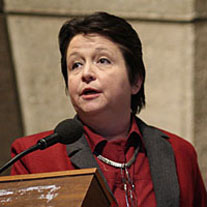
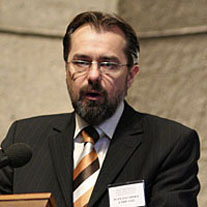
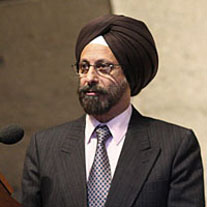
Seas Programmes and the Large
Guchte, Nancy Bennet, United
Steven Olsen, University of
Marine Ecosystem Programs.
Nations Environment Programme
Rhode Island
What support do national
Global Programme of Action
Biliana Cicin-Sain, Miriam
authorities need to successfully
Margarita Astralaga, Ramsar
Balgos, Kateryna Wowk, Global
integrate such a wide- ranging
Convention Secretariat
Forum on Oceans, Coasts, and
set of actions? What specific
Islands
support/guidance/ facilitation
might be needed?
Global Forum on Oceans,
Coasts, and Islands Fresh-
water to Oceans Task Force
Veerle Vandeweerd, Head, UNEP Regional Seas Programme,
and Coordinator, UNEP-GPA, elaborated on GPA objectives
Initial Members:
and actions in preparation for GPA's second intergovernmental
meeting, to be held in Beijing, China, in October 2006.
Co-Chair: Patricia Munoz,
National Polytechnique Institute,
Mexico
Co-Chair: Thomas Laughlin,
United States National Oceanic
and Atmospheric Administration
(NOAA)
Antonio Diaz de Leon, Ministry
of Environment and Natural
Resources, SEMARNAT, Mexico
Ivan Zavadsky, Regional Programme Director, GEF-Danube
Porfirio Alvarez, Ministry of
Black Sea Basin Strategic Partnership, noted that the region's
environmental degradation has led to reduced biodiversity
Environment and Natural Re-
and economic loss.
sources, SEMARNAT, Mexico
Evelia Rivera-Arriaga, Centro
Epomex- Universidad Autónoma
de Campeche, Mexico
Isaac Azuz-Adeath, Cetys
University, Mexico
Gonzalo Cid, Jennifer Winston,
Elizabeth Mclanahan, Ed Kruse,
NOAA
Julian Barbiere, Stefano Belfiore,
Shammy Puri, UNEP-DGEF Task Manager 'Groundwaters' and
Liaison Officer to UNESCO-IHP, elaborated on the long-term and
Intergovernmental Oceanographic
irreversible dangers that polluted terrestrial aquifers pose to
Commission of UNESCO
coastal regions.
Alice Aureli, Annuka Lipponen,
Division of Water Sciences,
UNESCO
Charles N. Ehler, UNESCO
Niels Ipsen, UNEP Collaborating
Centre on Water and the Environ-
ment
Martin Adriaanse, Cees van de
· 28 ·
JANUARY 23-28, 2006, UNESCO, PARIS
TOWARD THE UNEP/GPA IGR-2 IN BEIJING
Summary prepared by Tom Laughlin (NOAA),
and Dr. Porfirio Alvarez-Torres (SEMARNAT)
Adopted in 1995 in Washington,
water, coasts, and oceans, advanc-
Background
D.C. by 108 Governments and the
ing the implementation of targets the
The Johannesburg Plan of Imple-
European Community, the Global
international community has
mentation calls for "advance imple-
Programme of Action for the Pro-
adopted, and forging partnerships
mentation of the Global Programme
tection of the Marine Environment
for presentation at IGR-2, including
of Action for the Protection of the
from Land-based Activities (GPA) is
the Global Forum on Oceans,
Marine Environment from Land-
the only global program that ad-
Coasts, and Islands.
based Activities and the Montreal
dresses the interactions between the
At the Paris conference, partici-
Declaration on the Protection of the
freshwater and coastal environ-
pants discussed preparations for up-
Marine Environment from Land-
ments; it is a comprehensive action
coming events highlighting freshwa-
based Activities, with particular
program in response to the fact that
ter to oceans issues: the Fourth
emphasis in the period 2002-2006 on
some 80% of all marine pollution
World Water Forum, March 16-21,
municipal wastewater, the physical
comes from land-based activities.
2006, Mexico City, and IGR-2. Sug-
alternation and destruction of habi-
Implementation of the GPA is, in the
gestions put forward at the Paris con-
tats, and nutrients, by actions at all
first place, the task of national gov-
ference are presented below.
levels to:
ernments, though the importance of
stakeholder participation should not
Workshops on Review of
· Facilitate partnerships,
be overlooked.
scientific research and diffu-
the GPA and the Montreal
sion of technical knowledge;
As noted by Dr. Veerle
Declaration on the
mobilize domestic, regional,
Vandeweerd (Coordinator, UNEP/
and international resources;
GPA) at the Paris Conference, the
Protection of the Marine
and promote human and
First Intergovernmental Meeting,
Environment from
institutional capacity building,
hosted by Canada in 2001, moved
Land-Based Activities
paying particular attention to
the GPA from planning to action with
the needs of developing
the adoption of the Montreal Decla-
Summary prepared by Tom Laughlin
countries;
ration and Programme of Work for
(U.S. NOAA) and Dr. Porfirio
the GPA office, 2001-2006. Signifi-
Alvarez-Torres (SEMARNAT,
· Strengthen the capacity of
cant progress has been made since
Mexico)
developing countries in the
the Declaration, largely with support
development of their national
Two workshops were convened to
from the Global Environment Facil-
and regional programmes and
evaluate how well the WSSD goal
ity (GEF). The Second Intergovern-
mechanisms to mainstream the
concerning the implementation of
mental Review of the UNEP-GPA
objectives of the Global
the GPA is being met, and to pro-
(IGR-2) will be held October 16-20,
Programme of Action and to
vide input into the 4th World Water
2006, in Beijing, People's Republic
manage the risks and impacts
Forum and the 2nd Intergovernmen-
of China. IGR-2 will focus on the
of ocean pollution;
tal Review of the GPA. The sessions
need to incorporate an ecosystem
were chaired by Tom Laughlin
· Elaborate regional programmes
approach into Integrated Water Re-
(NOAA), Dr. Porfirio Alvarez-Torres
of action and improve the links
sources Management, as well as the
(SEMARNAT), and Dr. Patricia
with strategic plans for the
need to develop domestic financing,
Munoz (Instituto Politecnico Na-
sustainable development of
legislation, and institution building.
tional, Mexico), with assistance from
coastal and marine resources,
IGR-2 will contribute to shaping the
Dr. Veerle Vandeweerd (UNEP
noting in particular areas
international policy agenda on fresh-
GPA).
which are subject to acceler-
· 29 ·

ated environmental changes
tries are working together to develop
international events discussing
and development pressures;
mechanisms for regional coordina-
freshwater oceans linkages, the 2nd
tion (see table below).
Intergovernmental Review of the
· Make every effort to achieve
substantial progress by the next
GPA will include a Partnership Day
Global Programme of Action
Next Steps
that will be modelled after
conference in 2006 to protect
Specific suggestions to further the
WW2BW. Meeting participants
the marine environment from
WSSD goal included fostering
made the following suggestions for
land-based activities."
freshwater coast linkages at the 4th
inclusion in the Partnership Day:
World Water Forum held in Mexico
To help foster these goals, a multi-
1. Reports and recommendations
City in March, 2006. To do this, the
stakeholder group convened an In-
from the Freshwater to Oceans
Global Forum, UNEP/GPA, and
ternational Workshop on Freshwa-
sessions at the World Water
NOAA will jointly host a session to
ter-Coastal-Marine Management
Forum in order to establish a
address these linkages. In addition,
Interlinkages, held in Mexico City
common vision of actions to
the meeting participants suggested
in January 2006 (see discussion in
manage watersheds and coastal
paragraphs including the following
Freshwater to Oceans section of the
areas.
themes in the Ministerial Declaration
newsletter). The group found that
from the WWF4:
2. Discussion of future directions/
"The major benefit of linked man-
modalities of the Global Forum.
agement is the scope it provides to
1. The goals of sustainable
ensure that development activities
development cannot be met
3. Use of the IOI network to
upstream are planned and imple-
without linking freshwater to
advocate GPA-related ap-
mented with full knowledge of the
coasts and oceans. This is
proaches and to distribute
potential impacts on the ecosystems
particularly true in small island
lessons learned from the GPA.
and economic activities and liveli-
developing states.
4. Showcasing Strategic Partner-
hoods in the coastal and marine ar-
2. Because impacts collect and
ships as an opportunity for other
eas. The costs of inaction are high.
are concentrated in coastal
regions.
It is known from river rehabilitation
zones, a key goal of integrated
5. Highlighting the link between
practices that the costs of ignoring
water resource management is
land-based activities and the
upstream-downstream management
to address coastal and oceans
ecological health of marine
linkages have been enormous the
impacts.
ecosystems, possibly by
costs of rehabilitation are much
3. Actions are needed at the local
partnering with the ICES
higher than the costs of prevention!"
level throughout the water-
Conference on Coastal Zone
shed.
Management which will be held
Progress Towards
in Norway in 2007.
Achievement of
To build upon the momentum of
6. Conclusion of a GPA/Ramsar
the WSSD Goals
the 4th World Water Forum and other
cooperative agreement.
Progress has been made toward the
WSSD goal on a variety of levels.
Internationally, the GPA notes that
"the GPA and the international com-
munity have been working to pro-
vide guidance, support, and funding
to nations in their attempts to devise
Regional Plan
Implementation Status
and implement NPAs." Other
Wider Caribbean Prog.
Protocol exists
progress at the international level has
included: conclusion of the
SPREP
Protocol being developed
Stockholm Convention on Persistent
Black Sea
Protocol being developed
Organic Pollutants; regional GPA
Southeast Pacific
Protocol exists
meetings; capacity building and out-
Cartegena Protocol
Protocol exists
reach programs; and partnership de-
velopment through venues such as
Barcelona Convention
Convention exists
White Water to Blue Water.
At the national level, over 60 na-
tions have initiated National Pro-
grams of Action. In addition, coun-
· 30 ·
JANUARY 23-28, 2006, UNESCO, PARIS
SMALL ISLAND DEVELOPING STATES
AND THE MAURITIUS STRATEGY
Summary prepared by LaVerne Walker, St. Lucia
During the Third Global Confer-
agement Adviser, Secretariat of the
fact that SIDS have large ocean ar-
ence, a panel reviewed progress
Pacific Regional Environment
eas rich in resources (fisheries, oil
achieved and the obstacles faced by
Programme; Ambassador Enele
and gas, minerals, renewable en-
States in their efforts to implement
Sopoaga, Permanent Representative
ergy), many island States are unable
the ocean and coastal components
of the Mission of Tuvalu to the UN;
to benefit from the existence of these
of the BPoA and also to review spe-
and Ms. Marina Silva, Independent
resources within their EEZs a result
cific strategies for implementing the
Consultant, Cape Verde. Dialogue
of inadequate technical and manage-
actions identified in the 2005
sessions related to SIDS were
ment capacity. For example, SIDS
Mauritius Strategy. Several discus-
chaired by: Mr. Tim Adams, Secre-
often lack the technologies neces-
sion sessions also addressed
tariat of the Pacific Community; Mr.
sary for development of ocean re-
progress and next steps for SIDS. Ac-
Nelson Andrade, UNEP Caribbean;
sources. Another issue of major con-
knowledging that the Mauritius
Mr. James Hardcastle, Nature
cern to SIDS is the threat of climate
Strategy builds on the WSSD, the
Seychelles; Mr. Franklin McDonald,
change and the associated sea level
MDGs as well as the Barbados
UNEP Caribbean; Marina N'Deye,
rise predictions. The significant vul-
Programme of Action, and that it
Cape Verde; Mary Power, South
nerability of the natural environ-
further provides more targeted ac-
Pacific Applied Geoscience Com-
ment, economy, and social structure
tions for SIDS, the discussion fo-
mission (SOPAC); and Mr. Dirk
of SIDS has been well established.
cused on the implementation of the
Troost, Chief, Coasts and Small Is-
Even though similar problems are
Mauritius Strategy and identified
lands Platform, UNESCO.
present in most or all developing
next steps.
countries, because of the inherent
Panel 5: Implementation of the
characteristics of SIDS, they are felt
The unique and special chal-
Mauritius Strategy for Small Island
more acutely by these countries.
lenges facing SIDS were also under-
States was chaired by Ambassador
scored by Professor Jeffrey Sachs,
Being cognizant that the develop-
Jagdish Koonjul, Foreign Affairs,
Director of United Nations Millen-
ment needs of SIDS differ from other
Mauritius, Outgoing Chair, Alliance
nium Project, in his address to the
developing countries, the Barbados
of Small Island States (AOSIS), and
conference. He acknowledged the
Programme of Action (BPoA), a
included presentations from: Mr.
necessity of better reflections on
fourteen point program identifying
Willie John, Chief Executive Officer,
these challenges facing SIDS in
priority areas for action, was adopted
Cook Islands; Mr. Fernando
meeting the MDG and WSSD goals,
at the United Nations Global Con-
Trindade, on behalf of Celestino
particularly addressing the impacts
ference on the Sustainable Develop-
Andrade, Ministry of Environment,
of climate change and other global
ment of Small Island Developing
São Tomé and Príncipe; Mr. Rolph
issues, in particular trade liberaliza-
States, held in Barbados in 1994. In
Payet, Principal Secretary, Ministry
tion.
2005, at the International Meeting to
of the Environment, Seychelles; Mr.
Review the Implementation of the
Vincent Sweeney, Executive Direc-
Background
Programme of Action for the Sus-
tor, Caribbean Environmental
tainable Development of Small Is-
Health Institute, St. Lucia; Mr.
Small island developing states
land Developing States in Mauritius,
Nelson Andrade, Director, UNEP
(SIDS) are characterized as large
many of the actions listed under the
Caribbean Programme, UNEP/
ocean States due to establishment of
BPoA were reprioritized by SIDS for
UNDP/GEF IWCAM Programme
200 mile Exclusive Economic Zones
further action.
on Integrated Water and Coastal
(EEZs), resulting in these small is-
Ten years after the adoption of the
Area Management for SIDS; Ms.
lands being custodians of much of
BPOA, national and regional assess-
Dominique Benzaken, Coastal Man-
the world's ocean space. Despite the
· 31 ·

ments indicate that some SIDS have
institutions, most notably,
recommended the establish-
managed to effectively address and
National Environmental Acts
ment of MPAs, and informa-
manage certain aspects of their vul-
(63% of SIDS or 26 countries)
tion is needed for six SIDS.
nerability and have clearly pro-
and laws that provide for
Interestingly, the Cook Islands
gressed in specific areas related to
Environmental Impact Assess-
and Samoa have declared their
their development. Unfortunately
ment (32% of SIDS, or 13
entire EEZs as MPAs, present-
there are other states that have re-
countries). The Environmental
ing a unique solution for
gressed. One major reason for the
Acts often encompass waste
management.
lack of implementation of the BPOA
and watershed or pollution-
Progress Following the 2005
has been the decline in international
related issues, and to a lesser
Mauritius International Meeting
support and resources. Reviews in-
extent legislation on marine
· Three regional meetings were
dicate a 50% reduction in Official
protected areas (MPAs) and
organized by UNDESA-SIDS
Development Aid (ODA) to SIDS in
fisheries management.
Unit to examine the progress
the period 1994-2004 (Chowdhury,
· 44% of SIDS (18 countries)
of implementation of the
2004).
have developed National
Mauritius Strategy.
Sustainable Development
Progress Toward
· An inter-regional meeting
Plans and Biological Diversity
Implementation of Ocean
took place in Rome in 2005 to
National Strategies. The Cook
determine next steps on the
and Coastal Management
Islands, Marshal Islands, and
implementation of the
in SIDS
Samoa have developed Marine
Mauritius Strategy.
Resources Plans.
General Trends Prior to the
· The Cook Islands have made
Mauritius International Meeting1
· 7% of all SIDS (or 3 countries
positive strides in meeting the
from the Caribbean) have
· 20% of SIDS nations (8
Millennium Development
enacted National Coastal Zone
nations) have developed
Goals, particularly those
Acts (Barbados, Belize, and
specific institutions or inter-
related to management of
Cuba).
agency mechanisms for the
waste and monitoring
coordination of integrated
· 46% of SIDS (19 countries)
biodiversity.
coastal and ocean manage-
have developed national
· The Cook Islands have
ment;
initiatives for integrated
developed a National Develop-
coastal management, which are
· 44% of SIDS nations (18
ment Plan and a draft Tourism
in the form of national plans
nations) have entrusted the
Master Plan to assist the
(17% or 7 countries); national
coordination of marine and
country with the implementa-
strategies (17% or 7 countries);
coastal issues to national
tion of the Mauritius Strategy.
and national programs (12% or
environmental institutions.
5 countries).
· Sao Tome and Principe is
Some of these mechanisms and
currently in the implementa-
environmental institutions are
· 27% of SIDS (11 of 41) have
tion phase of a Large Marine
part of the National Sustain-
enacted legislation on water-
Ecosystem Project and in the
able Development Plan
shed planning, which includes
process of preparing a National
coordination (6 countries of
coastal watershed manage-
Programme of Action for
18, or 15% of the total).
ment. These are the Cook
addressing land-based sources
Islands, Marshall Islands,
· No SIDS has delimited its
of marine pollution.
Samoa, Barbados, Belize,
EEZ and deposited EEZ
Dominican Republic, Jamaica,
· Many islands in the Carib-
coordinates with the UN
St. Lucia, Antigua & Barbuda,
bean have put mechanisms in
Division of Ocean Affairs and
and Suriname.
place to address management
Law of the Sea (DOALOS),
of waste and water pollution,
nor has any SIDS filed an
· Other initiatives closely
such as:
extended continental shelf
related with integrated coastal
o Establishing Solid Waste
claim.
management are the establish-
ment of MPAs. 61% of SIDS,
Management Authorities;
· Several countries have
or 25 countries, have estab-
o Developing Marine Pollu-
enacted relevant legislation
lished MPAs while at least
tion Acts;
regarding marine management.
seven more have recom-
Most of the enactments are
o Acceding to relevant IMO
mended or proposed MPA
under jurisdiction or coordina-
instruments;
development. Only five SIDS
tion of national environmental
have not established or
· 32 ·

JANUARY 23-28, 2006, UNESCO, PARIS
o Establishing sanitary land
still inadequate follow-up in
assist in the implementation of
filled sites;
practical terms.
the Mauritius Strategy.
o Conducting public aware-
· Lack of human resource on
ness and sensitization
the ground to facilitate the
Next Steps Proposed
campaigns on waste manage-
implementation of Mauritius
During Panel Session
ment issues.
Strategy.
Implementation
· Many Caribbean governments
· Development aid to SIDS has
· Need to focus on the imple-
are committed to the Integrated
declined making access to
mentation of the Mauritius
Watershed and Coastal Area
financial resources more
Strategy.
Project, funded by GEF, being
difficult.
executed by the Caribbean
· Support the implementation
· Many of the pledges made to
Environment Programme and
of the SIDS Consortium of
assist SIDS in implementing
the Caribbean Environment
Universities.
the Mauritius Strategy have not
Health Institute.
been met to date.
· Formalize the Alliance of the
· Pacific SIDS are in the
Small Island States (AOSIS).
· Lack of a formalized integra-
process of developing National
tion, coordination and monitor-
· Build more partnerships with
Sustainable Development
ing mechanism to assess
organizations to assist in the
Strategies, and some have
implementation of the
implementation of the
already completed theirs.
Mauritius Strategy at the
Mauritius Strategy.
There is a need for additional
national and regional level.
· Define and implement of
financial support to implement
contingency plans for marine
and complete the strategies.
· AOSIS has not been formal-
ized.
pollution.
· Development of a Pacific
· Address the CBD Program of
Islands Regional Ocean Policy
· SIDS Consortium of Univer-
Work on Island Biodiversity
was endorsed by the Ministers
sities (established during the
and implementation con-
in 2002 and is currently being
Mauritius International
straints or issues faced by
implementend at the national
Meeting) lacks financial
SIDS and elaborated in the
level.
resources.
Mauritius Strategy, as key
· During the thirteenth session
· Natural disasters in 2005 have
drivers for partnership and
of the Commission on Sustain-
impacted the progress of some
implementation at the local
able Development (CSD) it
SIDS on the implementation of
level.
was decided that, during future
the Mauritius Strategy.
Coordination
meetings of the Commission,
· No SIDS has submitted any
· Establish partnerships with
one full day will be committed
co-ordinates to United Nations
companies involved in the
to addressing SIDS issues.
Division on Ocean Affairs and
Law of the Sea regarding EEZ
production of Ocean Thermal
Obstacles
delimitation and claims for an
Energy Conversion (OTEC)
extended continental shelf.
type energy technologies.
· Lack of accountability outside
· Integrate the Mauritius
island/mission/mandate.
· Appreciation of the unique-
ness of SIDS issues is not well
Strategy into the work
· Maintenance of capacity
received by the international
programmes of relevant
within SIDS on pertinent
community. `One size fits all
United Nations organizations.
issues needed to assist in the
concept' does not fit SIDS.
· Develop and establish
development of the Mauritius
integrated approaches towards
Strategy.
· Difficult for many SIDS to
meet the eligibility criteria of
waste management.
· Given the recognition of
international donor agencies,
· Raise awareness of the issue
special status of SIDS, there is
such as GEF, to access funds to
of climate change and its
· 33 ·

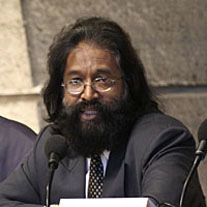
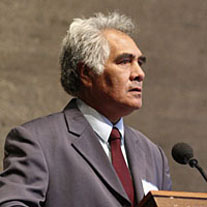
impact in SIDS and the urgent
· Recognition by the interna-
· Encourage the empowerment
necessity to implement
tional community that SIDS do
of local people and communi-
adaptation activities in SIDS.
not have the same needs and
ties with regards to the
· Raise awareness of the issue of
requirements of other develop-
Mauritius Strategy;
energy requirements and uses
ing countries resulting in
· Promote increased coordina-
and the impact of SIDS
differentiated treatment.
tion and communication at the
development.
· The need to establish a
local level;
· Increase coordination and
physical presence of interna-
· Increase access to financial
integration of policies and
tional representation, in
resources;
projects.
particular the United Nations
in SIDS, such as the Pacific
· Integrate the need for environ-
Monitoring
SIDS currently without UN
mental management with
· SIDS need to establish their
presence.
poverty alleviation and socio-
own monitoring and evaluation
economic advancement;
methodology at the national
Recommendations and
· Facilitate understanding and
level to assess their implemen-
Next Steps Proposed in
action to address local needs,
tation of the Mauritius Strat-
Dialogue Sessions
concerns and interests in the
egy.
conservation and sustainable
· Creation of a focal point for
Local
use of island biodiversity;
the Atlantic SIDS: Cape Verde
· Launch of the civil society
· Assist in achieving the
has been recommended.
platform;
biodiversity targets of WSSD
· Establish indicators for
· Establish adult and school
and CBD, related MEAs and
progress on the implementa-
learning programs;
their regional agreements and
tion of the Mauritius Strategy.
the Regional Seas
· Awareness raising at the
Programmes;
· Recognize the important role
national level about the
of oceans as an economic
Mauritius Strategy and its
· Identify and support island
driver towards the economic
importance to SIDS;
leaders championing major
advancement of SIDS.
conservation and sustainable
· Ensure that Mauritius Strategy
livelihood initiatives;
Other
is accessible and used by all
· Stimulate common pathways
· Support of the Global Forum
stakeholders by popularizing
for action between Govern-
on Oceans, Coasts and Islands
Mauritius Strategy through a
ments and civil society;
in assisting SIDS with the
multi-media toolkit:
advancement of ocean related
o An annotated version of the
· Develop connections between
issues such as the delimitations
Mauritius strategy for civil
community based initiatives
of their EEZ.
society and policy makers
(e.g., Small Islands Voice
(SIV), Youth Visioning for
o A pedagogic curriculum aid for
Island Living and networks
schools and a poster leaflet in
with a social, cultural and
different languages
economic focus relevant to
islands).
Regional
· Improve coordination for SIDS
issues at the regional and sub-
regional level;
· Develop and strengthen
networks and initiatives, such
as the Task Force on Island
Willie John, Chief Executive Officer,
Conservation and Protected
Panel Chair Ambassador Jagdish
Cook Islands, pledged his country's
Koonjul, Mauritius Ministry of
commitment to the Barbados Plan of
Areas (TAFICOPA), IUCN
Foreign Affairs, and outgoing
Action and the Mauritius Strategy.
Species Survival Networks, the
Chair, Alliance of Small Island
Regarding progress achieved on the
International Coral Reef
States (AOSIS), highlighted
MDGs, he highlighted the successful
progress in implementing the
conservation of natural resources and
Initiative, Micronesians in
Mauritius Strategy and identified
associated traditional knowledge
Island Conservation network,
challenges, including funding,
and the development of a national
monitoring, capacity building and
environmental strategic action
to enhance coordination,
cooperation among SIDS.
framework.
· 34 ·
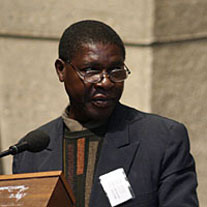
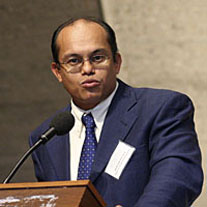
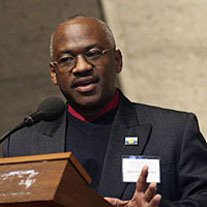
JANUARY 23-28, 2006, UNESCO, PARIS
information sharing and to
Ocean Region (e.g. Maldives
· Support the revision of
catalyze action in islands and
and Bahrain).
the GEF criteria for
within and among SIDS;
Pacific
funding eligibility;
· Develop of a database on SIDS
· Integrate the Mauritius
· Further the develop-
civil society organizations and
Strategy into regional
ment of the SIDS
stakeholders;
programmes and National
Consortium of
· Facilitate better integration and
Sustainable Development
Universities;
appropriate use of multi-lateral
Strategies including in the
· Encourage UN system
environmental agreements
elaboration of the Pacific Plan
and other international Fernando Trindade, on behalf of
(MEAs) as instruments for
recently endorsed by Pacific
organizations and
Celestino Andrade, Ministry of
local and regional implementa-
Island Leaders in their 2005
programmes for the
Environment, São Tomé and
Principe, emphasized his country's
tion, through species, place or
Summit.
implementation of the
vulnerability to pollution from
issue focused agreements and
land-based activities, noted
Inter-Regional
Mauritius Strategy;
regional cooperation, and said a
projects, and in particular
· Utilize international
national LME project had been
recognizing the potential and
· Increased South-South co-
prepared as part of a national
events to promote and
action plan under the GPA.
benefits of both the Conven-
operation amongst SIDS (e.g.,
recognize island
tion on Migratory Species
SPREP model can be emulated
conservation leader-
(CMS) and World Heritage;
to fit Caribbean needs);
ship in the conserva-
· Enhance policy integration at
· Promote increased coordina-
tion and sustainable
the national and regional level
tion and communication at the
use of island
through mainstreaming
inter-regional level;
biodiversity;
biodiversity conservation into
· Improve coordination and
· Recognize the
existing national policies like
dialogue between the global,
existence of many
National Sustainable Develop-
regional and national level.
international instru-
ment Strategies or the Re-
International
ments relevant to
gional/National Oceans
· Support the formal institution-
SIDS but that island
Policies;
alization of the Alliance of
representation and
· Creation of regional events to
Small Island States for the
participation within
showcase developments and
implementation of the
international processes
examples of sustainable living.
Rolph Payet, Director, Ministry of
Mauritius Strategy;
and UN presence in
the Environment, Seychelles,
Caribbean
country is not suffi-
underscored the fact that SIDS
· Follow-up on United Nations
cient to link the
require assistance to submit their
· Support the formalization of
Resolution which allows for
maritime delimitations as provided
international level to
under UNCLOS.
the Caribbean Development
UN departments to appoint a
on-the-ground
Cooperation Committee
focal point within their
communities;
(CDCC) as the intergovern-
agencies which are responsible
mental forum to coordinate the
for SIDS issues;
· Recognize the need
implementation of the
for a global body or
· Urge UNDESA to establish
Mauritius Strategy.
effective enforceable
and inter-agency coordinating
regime for seamount
AIMS
mechanisms to follow-up after
protection;
· Work towards getting the
Mauritius;
· Support the strength-
Atlantic SIDS working more
· Identify funding to ensure the
ening of national
closely with the Indian Oceans
continuation of SIDSNET;
capacity for follow-up
SIDS (increased integration
· Collaboration between
and implementation
between the two regions).
SIDSNET and the Global
and in particular the
· Support Cape Verde becoming
Forum in the advancement of
lack of access to
the focal point for the Atlantic
the SIDS agenda globally;
financial resources;
Vincent Sweeney, Executive
Director, Caribbean Environmental
SIDS.
· Establish a SIDS NGO
· Recommend that
Health Institute, St. Lucia,
outlined the domestic waste
· Establish an AIMS civil
Directory;
UNEP consider
management situation and listed
society regional coordination
· Develop a global ocean forum
elaborating its `Global recent improvements, including:
mechanism.
stronger legal and institutional
trustee council given charge of
Programme of Action
backing; the construction of
· Strengthen Indian Ocean
the world's "isolated/fragile"
for the Protection of
sanitary landfill sites; and
increased recycling and public
Commission and incorporate
areas including SIDS, Antarc-
the Marine Environ-
awareness.
other members of the Indian
tica, and Oceans;
· 35 ·

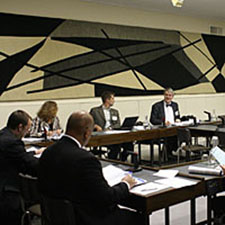
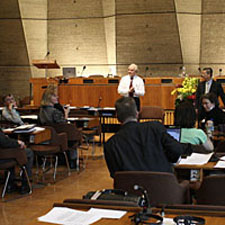
ment from Land-based
Small Island Developing
Marina N'Deye, Independent
Activities' to give special
States Dialogue Session
Consultant
attention to the needs of SIDS;
Participants
Rolph Payet, Ministry of Environ-
· Urge SIDS to join the Conven-
ment and Natural Resources,
tion on Migratory Species;
Small Island Developing States Side
Seychelles
Meeting Monday, 23 January, 2006
· Develop a `global vision for
Mary Power, South Pacific Geo-
local action' for the implemen-
Celestino Andrade, Minister
Science Commission
tation of the conservation and
Advisor, Ministry of Environ-
Ann Powers, Pace Law School-
sustainable use of island
ment, Natural Resources and
NY/USA
biodiversity at the local/
Infrastructure, Sao Tome and
national level through a
Principe
Margi Prideaux, Whale and
Global Island Partnership
Dominique Benzaken, Secretariat
Dolphin Conservation Society
a linked collection of partner-
of the Pacific Regional Environ-
Peter Prows, Permanent Mission
ship activities at local, national
ment Programme
of Palau to the UN
and international levels and
Joannes Berque, UNESCO-IOC
Enele S. Sopoaga, Tuvalu Mission
built upon existing networks,
Paola Deda, Convention on
to the UN
institutions and initiatives.
Migratory Species
Norma Taylor Roberts, Permanent
Conclusion
E. Desa, UNESCO- IOC
Mission of Jamaica to the UN
Vaia Tuuhia, Delegation
Small Island Developing States have
James Hardcastle, Nature
Polynesie Fiang
made strides in the implementation
Seychelles
of the Mauritius Strategy; however
Willie John, CEO, Minister of
Fernando Trindade, Geographical
they face many challenges that
Marine Resources Office
and Surveying Directorate,
hinder the rate of implementation.
Ministry of Environment, Natural
John Low, Director, APA
SIDS continue to be vulnerable to
Resources and Infrastructure, Sao
Consultancy
natural disasters and environmental
Tome and Principe
degradation due to their small scale
Franklin McDonald, UNEP-CAR/
LaVerne Walker, Coastal Zone
and geographical location, which
RCU
Unit, Ministry of Physical
also makes it difficult to compete
Robin Mahon, University of the
Development, Environment and
aggressively on the global market
West Indies, Barbados
Housing, St. Lucia
due to their isolation from major in-
Magdalena Ak Muir, EUCC
ternational shipping routes.
Coastal Union and Artic Institute
Successful implementation of the
of North America
Mauritius Strategy cannot occur in
Gerald Miles, The Nature
the absence of effective integration,
Conservancy
coordination and monitoring mecha-
nisms established at the global, re-
gional, and national levels and this
can be enhanced through the formal-
ization of the AOSIS to monitor
implementation of the Mauritius
Strategy.
· 36 ·
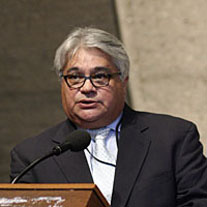
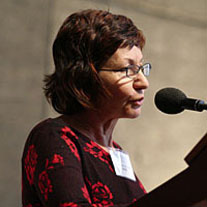
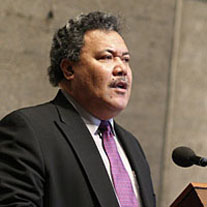
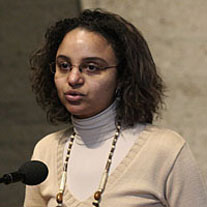
JANUARY 23-28, 2006, UNESCO, PARIS
Bottom-line Assessment Dialogue
Next Steps in Small Island Devel-
Session: Small Island Developing
oping States Dialogue Session: 26
Nelson Andrade, Director, UNEP
States: 25 January, 2006
January, 2006
Caribbean Programme, UNEP/
UNDP/GEF Programme on
Nelson Andrade, UNEP-CAR/RCU
Nelson Andrade, UNEP/CAR
Integrated Water and Coastal Area
Management (IWCAM) for SIDS,
Dominique Benzaken, Secretariat
Dominique Benzaken, Secretariat
presented the objective and
to the Pacific Regional Environ-
to the Pacific Regional Environ-
components of the IWCAM.
ment Programme
ment Programme
Fathimath Ghina, UNESCO-CSI
Paola Deda, UNEP/CMS
Arthur A. Gray, Organisation of
Fathimath Ghina, UNESCO/CSI
Eastern Caribbean States
Arthur Gray, Organisation of
Jens Ambsdorf, Lighthouse
Eastern Caribbean States
Foundation
J D Hache, Conference on the
Dominique Benzaken, Coastal
Josephine Langley, Fisheries/
peripheral maritime regions of EU
Management Adviser, Secretariat
Socio-Economic Consultant,
(CPMR)
of the Pacific Regional
Environment Programme, argued
Mauritius and UK
James Hardcastle, Nature
that in order to achieve healthy
oceans and sustainable livelihoods
David Leary, Center for Environ-
Seychelles
in the Pacific, the Pacific Islands
mental Law, Macquarie Univer-
Regional Oceans Policy (PIROP)
Christy Loper, NOAA-US
requires prompt implementation.
sity
John Low, APA consultancy,
Robin Mahon, University of the
Cook Islands
West Indies, Barbados
Gerald Miles, The Nature
Gerald Miles, Nature Conser-
Conservancy
vancy
Marina N'Deye, Independent
Peter Neill, World Ocean Obser-
Consultant, Cape Verde
vatory
Enele Sopoaga, Permanent
Rolph Payet, Minister of Environ-
Representative of the Mission of
Mary Power, South Pacific Geo-
ment, Seychelles
Tuvalu to the UN, called on States
Science Commission
and international organizations to
Lelei Peau, Department of
recognize the special vulnerabilities
Margi Prideaux, Whale and
Commerce, American Samoa
of SIDS.
Dolphin Conservation Society
Judith Priam, PhD student,
Peter Prows, Palau Mission to the
Guadeloupe
UN
Margi Prideaux, Whale & dolphin
Sunil M. Shastri, University of
Conservation Society
Hull, UK
Anne Rogers, UN/DESA
Vincent Sweeney, Caribbean
Marina N'Deye, independent
Environmental Health Institute
Enele Sopoaga, Permanent
Mission of Tuvalu to the UN
consultant, urged Atlantic SIDS to
Norma Taylor Roberts, Jamaica
identify priority actions to
implement the Barbados Plan of
Mission to the UN
Vincent Sweeney, Caribbean
Action (BPOA). She
Environmental Health Institute
acknowledged Cape Verde's offer to
LaVerne Walker, Coastal Zone
become a focal point for the BPOA
Unit, Ministry of Physical
Dirk Troost, UNESCO/CSI
and stressed the importance of
linguistic diversity to increase
Development, Environment and
local involvement.
Housing, St. Lucia
Footnote:
1 From: Loper, Christen E., Miriam C. Balgos, Janice Brown, Biliana Cicin-Sain, Peter Edwards, Christina Jarvis, Jonathan Lilley, Isabel Torres
de Noronha, Adam Skarke, Joana Flor Tavares, and LaVerne Walker. Small Islands, Large Ocean States: A Review of Ocean and Coastal
Management in Small Island Developing States since the 1994 Barbados Programme of Action for the Sustainable Development of Small
Island Developing States (SIDS). Toward Mauritius 2005 Paper Series No. 2005-1. Global Forum on Oceans Coasts and Islands: University of
Delaware, Newark, USA (2005).
· 37 ·

RESULTS OF THE DIALOGUE ON ISLAND BIODIVERSITY
Prepared by Gerald Miles, The Nature Conservancy
This session was co-sponsored by
greatest number of extinctions in the
and CBD, related MEAs and
the Secretariat of the Convention on
world and today island species are
their regional agreements, and
Biological Diversity, the UNEP/
often highly threatened. Small Island
the Regional Seas
Convention on the Conservation of
Developing States are home also to
Programmes;
Migratory Species of Wild Animals
great diversity of cultures that de-
d) Develop and strengthen net-
(CMS), the Secretariat for the Pacific
pend on island biodiversity for their
works and initiatives, such as
Regional Environment Program
livelihoods and development. They
TAFICOPA, IUCN Species
(SPREP), The Nature Conservancy,
face particular challenges in the con-
Survival Networks, the
and the IUCN/WCPA Taskforce on
servation and sustainable use of is-
International Coral Reef
Islands Conservation and Protected
land biodiversity.
Initiative, and Micronesians in
Areas (TAFICOPA).
Island Conservation network,
We have a vision. We have agreed
Recommendations
to enhance coordination,
goals. We have great knowledge
To advance the conservation and
information sharing, and
and ever-greener technologies.
sustainable use of island biodi-
catalyze action in islands and
What we need is high-level
versity, the Dialogue identified the
within and among SIDS;
political commitment for marine
need to:
e) Develop connections between
conservation and protection
· Develop a `global vision for
conservation networks (e.g.
areas....
local action' for the implemen-
Small Islands Voice (SIV),
Let us work together: to protect
tation of the global policy
Youth Visioning for Island
the oceans and coastal zones; to
processes at the local/national
Living, and networks with a
help small islands survive and
level through a Global Island
social, cultural, and economic
prosper; and to ensure that all
Partnership a linked collec-
focus relevant to islands;
people enjoy a sustainable future.
tion of partnership activities at
Kofi Annan, Port Louis, 13
f) Identify and support island
local, national, and international
January 2005
leaders championing major
levels and built upon existing
conservation and sustainable
networks, institutions, and
Significance of Island
livelihood initiatives;
initiatives that will:
Biodiversity
g) Stimulate common pathways
a) Address the CBD Program of
for action between govern-
The Earth is home to more than
Work on Island Biodiversity
ments and civil society;
130,000 islands, which host more
and implementation constraints
than 500 million people. They are
h) Improve access to adequate
or issues faced by SIDS and
stewards for more than one-sixth of
financial resources and
elaborated in the Mauritius
the Earth's total area. Half of the
capacity building mechanisms;
Strategy, as key drivers for
tropical marine biodiversity is found
partnership and implementa-
i) Facilitate better integration and
in islands, with 12 of the 18 centers
tion at the local level;
appropriate use of MEAs as
of marine endemism and seven of
instruments for local and
b) Facilitate understanding and
the ten coral reef hotspots surround-
regional implementation,
action to address local needs,
ing islands. Terrestrially, islands are
through species, place, or issue
concerns, and interests in the
home to half of the recognized En-
focused agreements and
conservation and sustainable
demic Bird Areas, a quarter of the
projects, and, in particular,
use of island biodiversity;
terrestrial Global 200 Ecoregions,
recognize the potential benefits
and a third of the biodiversity
c) Assist in achieving the
of both CMS and World
hotspots. Islands also claim the
biodiversity targets of WSSD
Heritage;
· 38 ·
JANUARY 23-28, 2006, UNESCO, PARIS
j) Enhance policy integration at
based sources of pollution.
PoW on Island Biodiversity;
the national and regional level
With specific reference to the up-
i) Request that UNEP WCMC, in
through mainstreaming
coming Eighth Conference of
collaboration with TAFICOPA
biodiversity conservation into
the Parties (COP8) to the Con-
and other relevant organiza-
existing national policies like
vention on Biological Diversity,
tions, develop a global
National Sustainable Develop-
it was agreed to recommend that
database for island biodiversity
ment Strategies or the Re-
Parties to COP8:
on the level of ecosystems and
gional/National Oceans
species in order to facilitate
Policies;
a) Adopt a strong Programme of
Work on Island Biodiversity;
decision-making, comparative
k) Encourage UN system and
studies, and sharing of
other international rganisations
b) Ensure that the strong links
homogeneous information.
and programmes (for example
between sustainable liveli-
The Dialogue was guided by brief
WCMC) to give priority to
hoods and poverty reduction
statements from representatives of
actions that support the
that are fundamental to island
the UNEP/CBD, Tuvalu on behalf
collection and management of
conservation are an integral
of AOSIS, Seychelles, Palau,
information in support of the
part of the implementation of
TAFICOPA, UNEP/CMS,
effective conservation and
the Programme of Work;
UNESCO/WHC, SPREP, and The
sustainable use of island
c) Call upon the GEF during its
Nature Conservancy.
biodiversity;
`Resource Allocation Frame-
l) Utilize international events to
work' readjustment, should
Participants
promote and recognize island
give consideration to providing
Jens Ambsdorf, Lighthouse Foundation
conservation leadership in the
a special window and develop
Dominique Benzaken, Coastal and Marine
conservation and sustainable
appropriate access and
Adviser, Secretariat for the Pacific
use of island biodiversity.
implementation procedures for
Regional Environment Programme
SIDS in relation to island
More broadly, it was agreed:
Paola Deda, Interagency Liaison Officer,
biodiversity conservation;
UNEP/Convention on the Conservation of
1) To recognize many interna-
d) Take advantage of the oppor-
Migratory Species of Wild Animals (CMS)
tional instruments to SIDS but
tunity presented within the
Christian Depraetere, Member, IUCN/
that island representation and
Island Dialogue for community
WCPA Taskforce on Island Conservation
participation within interna-
and Protected Areas
leaders and delegates to
tional processes and UN
identify approaches for
Fathimath Ghina, Assistant Programme
presence in countries is not
Specialist, UNESCO/Coastal and Small
partnerships that will advance
Islands
sufficient to link the interna-
the conservation and sustain-
tional level to on-ground
James Hardcastle, Technical Adviser,
able use of island biodiversity;
Nature Seychelles
communities;
e) Support opportunities offered
Marjaana Kokkonen, Marine Heritage
2) A global body or effective
at the regional level, such as
Specialist, UNESCO World Heritage
enforceable regime for
Centre
the Island Life Campaign in
Seamount protection, including
the Pacific Islands Region, to
Gerald Miles, Senior Adviser/Conservation
the support for a total ban of
Finance and Policy, The Nature Conser-
enhance implementation of the
vancy
unregulated high sea bottom
conventions programs of work
trawling;
Rolph Payet, Principal Secretary/
at the national level;
Environment, Seychelles
3) The need for the strengthening
f) Welcome the `Micronesian
Margi Prideaux, Global CMS Programme
of national capacity for follow-
Challenge' as an important
Leader, Whale and Dolphin Conservation
up and implementation ,and, in
Society (WDCS)
contribution to implementing
particular, the lack of access to
global policy at the local and
Peter Prows, Adviser, Permanent Mission
financial resources;
of Palau to the United Nations
regional level and to the CBD
Lauren Salm, Marine Programme,
4) To recommend that UNEP
2010 targets;
UNESCO World Heritage Centre
consider elaborating its
g) Identify the ways and means
HE Enele Sopoaga, Ambassador
`Global Program of Action for
for the effective integration of
Permanent Mission of Tuvalu to the United
the Protection of the Marine
the Mauritius Strategy into
Nations and Vice Chair of the Alliance of
Environment from Land Based
Small Island States (AOSIS)
CBD Programs of Work, in
Activities' to give special
particular the PoW on Island
Marjo Vierros, Programme Officer/Marine
attention to the needs of SIDS,
and Coastal Biodiversity, Secretariat of the
Biodiversity;
UNEP/Convention on Biological Diversity
and, in particular, the protec-
tion of coral reefs from land
h) Comprehensively integrate the
ecosystem approach into the
· 39 ·

CAPACITY DEVELOPMENT FOR OCEAN AND COASTAL
MANAGEMENT: MOBILIZING TO ADDRESS NEEDS
Summary prepared by Indumathie Hewawasam, The World Bank; Mary Power, South Pacific
Applied Geoscience Commission; and Margarita Astralaga, Ramsar Convention Secretariat
Capacity development for ocean and
Africa's Development(NEPAD);
mental partners, and especially the
coastal management was one of the
Marina N'Deye, Cape Verde; and
Global Environment Facility). The
twelve major topics addressed at the
Mary Power, South Pacific Applied
assessments are available in the re-
Third Global Conference. Enhanc-
Geoscience Commission (SOPAC).
port distributed at the Third Global
ing capacity development in ocean
Conference Capacity Building As-
and coastal management is a major
Background
sessments in Small Island Develop-
concern and priority of developing
ing States in the Pacific, Caribbean,
countries, small island developing
In 2005, the Global Forum carried
Indian Ocean, the Atlantic, and the
states (SIDS), and countries with
out a number of analyses related to
Community of Portuguese-Speaking
economies in transition. This issue
ocean and coastal management in
Countries (available at http://
has been a priority theme for discus-
SIDS countries, including four
www.globaloceans.org/).
sion at the two previous Global Con-
analyses focused on assessing
Four analyses were also conducted
ferences, and has been a major con-
progress achieved in ocean and
focusing on assessment of progress
cern of the Global Forum on
coastal management in the major
achieved in ocean and coastal man-
Oceans, Coasts, and Islands. The
small island developing States
agement in the major SIDS regions
following is intended to provide a
(SIDS) regions since 1994 (see re-
since 1994:
summary of the formal and informal
ports at http://www.globaloceans
Island Bellwether: Climate
discussions that took place at the
.org/sids/index.html) and rapid as-
Change and Energy Policy
Third Global Conference on Oceans,
sessments on the specific steps that
Strategy for Small Island Devel-
Coasts, and Islands dealing with is-
can be taken to rapidly implement
oping States Toward Mauritius
sues in moving forward with capac-
the Mauritius Strategy in four SIDS
2005 Paper Series No. 2005-2
ity development.
regions, including specific steps that
need to be taken to enhance capac-
Small Islands, Large Ocean
The panel was chaired by
ity development in each region (see
States: A Review of Ocean and
Indumathie Hewawasam, World
reports at http://www.globaloceans.
Coastal Management in Small
Bank and Ralph Cantral, National
org/capacity/index.html). The SIDS
Island Developing States since the
Ocean Service, U.S. National Oce-
experts who prepared the rapid as-
1994 Barbados Programme of
anic and Atmospheric Administra-
sessments with the support of vari-
Action for the Sustainable
tion and included the following pan-
ous governmental and nongovern-
Development of Small Island
elists: Margarita Astralaga, Ramsar
mental partners, were part of the
Developing States (SIDS) Toward
Convention Secretariat; Awni
conference panel on capacity build-
Mauritius 2005 Paper Series No.
Behnam, International Ocean Insti-
ing.
2005-1
tute; Chua Thia-Eng, Partnerships
for Environmental Management in
Four rapid assessments (Pacific
Global Multilateral Environmen-
the Seas of East Asia (PEMSEA);
region, Caribbean region, Indian
tal Agreements and Small Island
Ehrlich Desa, UNESCO; Anamarija
Ocean region and Atlantic SIDS re-
Developing States Toward
Frankic, University of Massachu-
gion) were conducted on the specific
Mauritius 2005 Paper Series No.
setts Boston, and Ministry of Cul-
steps that can be taken to rapidly
2004-2
ture, Croatia; James Hardcastle,
implement the Mauritius Strategy in
Voluntary Partnership Initiatives
Nature Seychelles; Robin Mahon,
four SIDS regions, including spe-
from the 2002 World Summit on
Caribbean Large Marine Ecosystem
cific steps that need to be taken to
Sustainable Development and
Programme; Franklin McDonald,
enhance capacity development in
Small Island Developing States
UNEP Caribbean Programme; Ali
each region (prepared by local SIDS
Toward Mauritius 2005 Paper
Mohamed, New Partnership for
consultants with the support of vari-
Series No. 2003-1
ous governmental and nongovern-
· 40 ·

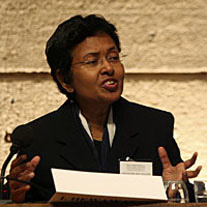
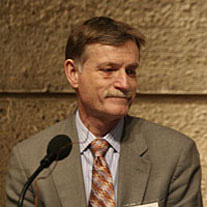
JANUARY 23-28, 2006, UNESCO, PARIS
Capacity Building
participation in decision-
and create a critical mass
Discussions at the
making; and political will for
supportive of sustainability.
Global Conference
marine governance. However,
· Based on the above principles,
progress in these areas could
some possible first steps of
The session on capacity building was
not catch up with the increas-
implementation may include:
structured in the form of a panel with
ing capacity required to meet
one overview presentation and all
the goals of sustainability,
- Supporting leadership
panelists serving as resource persons
which remains a moving
training at four levels:
during the ensuing discussion. The
target, as evidenced by:
program directors, practitio-
discussion points generated during
ners, decision-makers, and
- Accelerating degradation
this panel session were captured and
civil society;
from population pressures;
further addressed in the subsequent
- Supporting national science
dialogue session.
- Increase in the complexity of
and policy leaders to focus
issues;
The session aimed to identify spe-
on local priorities;
cific capacity development needs for
- Decreasing levels of funds
- Promoting technical skills to
further advancing capacity in ocean
relative to the number/
prepare and package the
and coastal management in develop-
complexity of issues;
demand for sponsors;
ing countries, SIDS, and countries
- Lack of appreciation of the
- Supporting advocacy to
with economies in transition. The
long-haul, multi-layered,
raise the profile of
session was expected to produce spe-
multi-institutional aspects of
oceans locally,
cific steps to advance capacity build-
capacity development;
nationally and
ing in these regions in the next year,
- Difficulty in accepting the
regionally;
and a specific plan for mobilization
reality of "one shoe does not
of resources to get these accom-
- Mobilizing funds
fit all" particularly among
plished.
for institutions and
regions, such as the SIDS
processes.
Panel Session
regions.
The overview, presented by
· The moving target of
Discussion
Indumathie Hewawasam of The
sustainability can be achieved
The following salient points
World Bank, chair of the Global
Introducing the session, Co-Chair
by stimulating ocean-related
were raised in response to Indumathie Hewawasam, World
Forum's Working Group on Capac-
capacity-development through
Bank, reported from the Capacity
the overview presented:
ity Building, which met in a pre-con-
promotion of partnerships and
Development Task Force, and
urged implementation of the Task
ference meeting on January 23,
mobilization of resources,
· There is a need to
Force's recommendations
2006, reported on the outcome of
through the Global Confer-
develop strategies to
that meeting and addressed imple-
ence and similar `Davos of the
retain trained man-
mentation issues in capacity build-
Oceans' meetings.
power that imparts a
ing, emphasizing the need to define
sense of ownership by
· The following set of principles
specific first steps to improve imple-
supporting students to
could guide the implementa-
mentation of capacity building ini-
study in local aca-
tion of capacity building:
tiatives. The overview emphasized
demic institutions.
the following points for discussion:
- Improve ability to identify
· Individual skills
issues (self-driven capacity-
should be built in the
· There is progress in various
development) ;
context of organiza-
aspects of capacity building in
- Focus on a structured,
tional and societal
terms of human and institu-
nation-specific, approach to
requirements.
tional capacity at the global
capacity development;
· There should be a
level; number of active
Co-Chair Ralph Cantral, Chief,
- Improve management skills
balance of focus to
National Policy and Evaluation
partnerships; public awareness
among people, processes,
make sure that the
Division, Office of Ocean and
on the role of the ocean;
Coastal Resource Management,
and institutes;
elements of capacity
National Ocean Service, US
scientific knowledge and
development as well
NOAA, explained that the panel
application; stakeholder
- Nurture ocean champions
would respond to questions and
comments from the floor.
· 41 ·

as its broad goals are met
the major skills required.
government and the private sector)
through multi-level, needs-
· There is a need to harmonize
and to establish mechanisms for their
based strategy.
the capacity development
participation. Existing programmes
· Current capacity seems to be
initiatives of all major players
need to be reviewed to ensure that
operating at optimum level
working in major agencies.
communities are empowered to find
although there is a lag between
their own solutions to problems.
· There is a need for synergy
skills required and training
among various efforts that
Transparency and accountability
programs.
address cross-cutting issues in
are significant issues in terms of
· There is a need to focus on
post-conflict situations, e.g.,
community empowerment and par-
developing leadership at the
the tsunami disaster in Asia.
ticipation as well as equity in re-
decision-maker level since
source allocation and benefit shar-
Dialogue Session on Next Steps
they make the major differ-
ing. There is a need to make gov-
ence, through training pro-
The dialogue session, which fol-
ernment processes more transparent
grams that are adapted to site-
lowed the panel session in the after-
in relation to resource access ar-
specific language and issues.
noon of January 26, focused more
rangements and contracts with third
broadly on how to go about imple-
parties, particularly in the oil and gas
· A critical mass in support of
menting existing activities and
industry and in fisheries.
various issues is essential to
projects in capacity development in
help local civil society engage
There is a need to improve the
more efficient and effective ways.
in the management process.
way by which the message about the
At issue was not just the start up
oceans is communicated across to
· The strategy proposed, being
of capacity development initiatives
various audiences, particularly in
an issue-based process, needs
but also capacity mobilization,
translating science and policy into a
specific details in order to
which is the optimization of the use
language that communities can un-
make it happen: what, when,
of existing capacity and creating the
derstand and in reaching the younger
who, and where. For example,
environment and incentives to en-
generations in order to create an in-
leadership training for SIDS
sure capacity retention, through vari-
formed public. Developing environ-
decision makers; university-
ous means, such as promotion of in-
mental curricula in national lan-
based academic programs in
digenous regional capacity, develop-
guages and school kits on ocean/
marine policy; training on
ment of community associations,
coastal governance issues are some
oceans issues for the media;
and enlisting the involvement of
examples.
replication of successful
governments as well as the private
capacity development pro-
In many cases there may be merit
sector.
grams such as the U.S.
in taking the regional approach to
National Sea Grant College
It is critical that needs assess-
addressing skills shortages as it may
Program; and working with
ments and capacity stocktaking be
not be feasible for each SIDS coun-
partners who have funding.
carried out in order to have targeted
try to support the required skills base
efforts that use appropriate ap-
in government and ocean gover-
· Always assess local needs
proaches. A capacity development
nance.
before starting a capacity
framework answers the practical
development program aimed at
questions:
Specific Steps for the
developing local entrepre-
neurs.
- What is the training about?
Global Forum for the Next
Year
· A regional approach to
- Who are to be trained and for
capacity development should
what?
Discussions have been initiated re-
be encouraged in small
- Where and how often should
garding the development of a capac-
developing countries that do
the training be conducted?
ity development program for senior
not have a critical mass of
- How much funding is needed
executives of SIDS countries with a
trained human resources.
to support the training pro-
focus on ocean governance and strat-
· South-South cooperation in
gram?
egy/policy development. Another
capacity development should
approach that is also being pursued
- What are the funding sources?
be encouraged.
is the improvement of South-South
- How to make it happen?
partnerships in developing capacity
· Lessons learned from success-
There is a need to bring capacity
in ocean and coastal management
ful partnerships should be
development down to the grass
education especially through
documented, including ways
roots, to the community level and
strengthening of the ocean and
by which local needs in
find ways to empower local commu-
coastal management curriculum of
capacity building are met and
nities to engage in the dialogue (with
the SIDS University Consortium.
· 42 ·
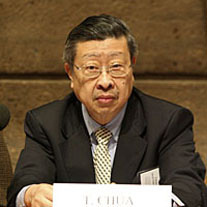
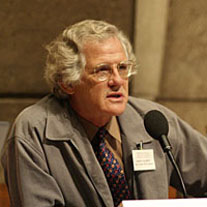
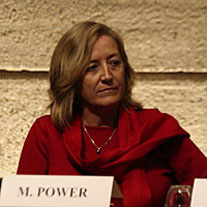
JANUARY 23-28, 2006, UNESCO, PARIS
For the next Global Conference,
Nguyen Chu Hoi, Vietnam
Franklin McDonald,
it would be opportune to organize a
Institute of Fisheries Economic
UNEP Caribbean
"Young Professionals" forum in or-
and Planning, Ministry of
Programme
der to bring in a group of early ca-
Fisheries, Vietnam
Cesar Toro, IOC Sub-
reer professionals from the various
Bruno Correard, Carrefour Group,
Commission for the
regions to take part in the Summit
France
Caribbean and Adjacent
and also to establish their own peer
Regions
network. This is considered impor-
Carlos Costa, Embassy of
tant since the next generation of
Mozambique in France
Timothy Stojanovic,
oceans entrepreneurs need to be en-
Jordi Galofre, Coastal Directorate,
Cardiff University
Co-Chair Chua Thia-Eng,
Regional Programme Director,
gaged to actively participate in deal-
Ministry of Environment, Spain
Marina N'Deye, Cape
PEMSEA, called on donors and
ing with the oceans agenda.
Domingos Z. Goue, Fisheries
Verde
multilateral lending agencies to
engage with countries whose
Both initiatives can help in setting
Research Institute, Mozambique
"democratic space" has newly
up a professional cadre of "movers
opened up.
James Hardcastle, Nature
and shakers" in ocean issues,
Seychelles
through the development of new aca-
Robin Mahon, Caribbean Large
demic and other capacity develop-
Marine Ecosystem Programme
ment programmes in participating
universities and organizations such
Bernice McLean, South Africa
as the Pew Fellows on Ocean and
Shavhani Mukwevho, Ministry of
Marine Affairs, the UN Goodwill
Environmental Affairs and
Ambassadors, "OPEC" (the Ocean
Tourism, South Africa
Policy Entrepreneurs Club), and the
Mary Power, South Pacific
capacity development programme of
Applied Geoscience Commission
UNCTAD.
Robin Mahon, Caribbean LME
(SOPAC)
Programme, argued that
Developing a media training pro-
indigenous academic institutions
Judith Priam, Universite de
in SIDS should encourage their
gram for journalists in SIDS regions
Versailles St. Quentin, France
students to remain in-country to
to sensitize them to ocean issues;
contribute to domestic
development.
developing educational materials on
LaVerne Walker, Coastal Zone
tsunamis and other natural hazards;
Management Unit, St. Lucia
supporting IOI courses on oceans
Nguyen Viet Thang
issues; and promoting the use of the
Ocean Portal (www.oceanportal.org)
are also among the specific recom-
Dialogue Session: Next Steps in
mendations put forward for the Glo-
Capacity Development: 26 January,
bal Forum.
2006
Pre-conference Meeting of the Task
Co-Chairs: Margarita Astralaga,
Force on Capacity Development:
Ramsar Convention and Mary
Mary Power, South Pacific
23 January 2006
Power, SOPAC
Applied Geoscience Commission,
suggested that professionals who
Chair: Indumathie Hewawasam,
Participants:
have emigrated make a positive
World Bank
Miriam Balgos, Global Forum on
contribution by exerting influence
in international fora.
Participants:
Oceans, Coasts, and Islands
Akinlabi Awobamise, Federal
Rhoda Ballinger, Cardiff Univer-
Ministry of Environment, Nigeria
sity
Miriam Balgos, Global Forum on
Chua Thia-Eng, PEMSEA
Oceans, Coasts and Islands
Ehrlich Desa, UNESCO
Awni Behnam, International
Salif Diop, UNEP
Ocean Institute
Anamarija Frankic, University of
Victor Manuel Borges, Ministry
Massachusetts Boston, and
of Fisheries, Mozambique
Ministry of Culture, Croatia
Chua Thia-Eng, Chua Thia-Eng,
Robin Mahon, Caribbean Large
James Hardcastle, Technical
Advisor for Island Conservation,
Partnerships for Environmental
Marine Ecosystem Programme
Nature Seychelles, underlined the
Management in the Seas of East
need to engage with community
members that have the power to
Asia (PEMSEA)
persuade others.
· 43 ·

THE TSUNAMI DISASTER AND DISASTER PREPAREDNESS:
ONE YEAR LATER
Summary prepared by Stefano Belfiore,
Intergovernmental Oceanographic Commission, UNESCO
The Global Conference considered
IOTWS). Panel participants in-
Ecology; Stefano Tinti, Chair, Inter-
the issue of tsunami and disaster pre-
cluded: Maitree Duangsawasdi, Di-
governmental Coordination Group
paredness, using the goals of: re-
rector General, Department of Ma-
for the Tsunami Early Warning and
viewing progress achieved and ob-
rine and Coastal Resources, Minis-
Monitoring System in the North
stacles faced in the process of recon-
try of Natural Resources and Envi-
Eastern Atlantic, the Mediterranean,
struction and the development of
ronment, Thailand; Franklin
and Connected Seas (ICG/
capacities for disaster preparedness
McDonald, UNEP Adviser, former
NEAMTWS); and Uli Wolf, Intergov-
in the countries of the Indian Ocean
Director, Jamaican National Envi-
ernmental Oceanographic Commis-
affected by the tsunami of 26 Decem-
ronment and Planning Agency, and
sion, UNESCO.
ber 2005; learning lessons on rea-
former Project Manager, Pan-Car-
sons why some coastal communities
ibbean Disaster Preparedness and
Challenges
may have fared better than others in
Prevention Project; Russell
in Reconstruction
the tsunami disaster (e.g., use of
Arthurton, Consultant, Coastal Geo-
building codes, coastal protection
science, and formerly British Geo-
The panel addressed progress with
measures, public education, etc.);
logical Survey; Lahsen Ababouch;
respect to (a) the process of recon-
and examining progress with the es-
Chief, Fish Utilization and Market-
struction and the development of
tablishment of tsunami warning and
ing Services, FAO; and Stefano Tinti,
capacities for disaster preparedness
mitigation systems in four main re-
Chair, Intergovernmental Coordina-
in the countries of the Indian Ocean;
gions of the world (Indian Ocean,
tion Group for the Tsunami Early
and (b) the establishment of regional
Pacific, North Eastern Atlantic,
Warning and Monitoring System in
early warning systems for tsunamis
Mediterranean and connected seas,
the North Eastern Atlantic, the Medi-
and other marine hazards in four re-
Caribbean). The expected outcome
terranean and Connected Seas
gions of the world and their contri-
from the panel was further opportu-
(ICG/NEAMTWS).
bution to a global system. The panel
nities and next steps for
also considered challenges and op-
The dialogue session was led by:
mainstreaming an integrated, multi-
portunities for enhancing mitigation
Arvind Anil Boaz, South Asia Co-
hazard approach to address vulner-
of marine hazards and lessons
Operative Environmental
ability, risk assessment and disaster
learned from coastal disasters in the
Programme; Ezio Bussoletti, Italian
management, including public
last year. The role of the IOC and
Delegation to UNESCO; and
awareness, prevention, mitigation,
the International Strategy for Disas-
Stefano Belfiore, Intergovernmental
alerts, preparedness and response
ter Reduction (ISDR) and other or-
Oceanographic Commission,
into the global ocean and coastal
ganizations was commended in de-
UNESCO. Participants included:
agenda, in particular into strategic,
veloping and coordinating early
Lahsen Ababouch, Chief, Fish Uti-
long-term coastal planning.
warning systems for tsunamis and
lization and Marketing Services,
other marine hazards.
The panel was co-chaired by:
FAO; Bernardo Aliaga, Intergovern-
William Brennan, Deputy Assistant
mental Oceanographic Commission,
A review was given of the
Secretary for International Affairs,
UNESCO; Russell Arthurton, Con-
progress of reconstruction and reha-
United States National Oceanic and
sultant, Coastal Geoscience and for-
bilitation in the areas affected by the
Atmospheric Administration
merly British Geological Survey;
December 2004 tsunami in Thailand.
(NOAA); and François Schindelé,
Alessandra Cavaletti, Italian Minis-
This process has involved the cre-
former Chair, Intergovernmental
try of Environment and Territory;
ation of emergency relief centers and
Coordination Group for the Tsunami
Bernhard Glaeser, Social Science
important operations of beach clean
Early Warning and Mitigation Sys-
Research Center, Berlin; Marion
up and forest and coral reef restora-
tem in the Indian Ocean (ICG/
Glaser, Center for Tropical Marine
tion. Resorts have been restored as
· 44 ·

JANUARY 23-28, 2006, UNESCO, PARIS
best as possible and water resources
still widespread. Desalination plants
coasts to inundation by extreme
have been rehabilitated. Measure-
have been installed on some of the
waves.
ment of water quality is also show-
islands.
Generally no effective warning
ing improvements. Thailand is ac-
Although there has been a rapid
systems were in place at the time of
tively engaged in the establishment
and generous response to the re-
the 26 December 2004 event, even
of an early warning system for mul-
placement of destroyed fishing boats
though for several countries the lead-
tiple marine hazards and new ap-
and gear, there are concerns that the
times were sufficiently long enough
proaches to coastal planning and
number of vessels are now in excess
for emergency evacuations to have
management. This includes the in-
of those pre-tsunami and that this is
been successful. The case of Kenya
stallation of buoys and warning-
leading to overcapacity, putting even
was an exception where the local
news broadcast towers, medium-
more pressure on already dwindling
police were mobilized and provided
and long-term environmental impact
fish stocks in coastal waters. Oppor-
warnings to coastal communities.
assessments for coastal infrastruc-
tunities for co-management do not
Indigenous knowledge amongst the
ture, recovery of livelihoods in the
appear to have been taken. There is
population of the Nicobar Islands is
coastal zone, rehabilitation of the
also concern over the safety of many
reported to have been instrumental
lifeline of mangroves and coastal
of the rapidly built boats because of
in the small number of casualties
forests, and the adoption of ecosys-
poor construction methods. There
sustained there. This type of knowl-
tem-based management.
have been serious problems of co-
edge needs to be mainstreamed in the
ordination of the relief effort with so
education and training of coastal
Progress Achieved and
many different organizations with no
communities in susceptible areas.
Obstacles Faced After the
fisheries technical background in-
The need for well-coordinated
Tsunami of 26 December
volved. There have been significant
emergency plans to be in place and
2004 in the Indian Ocean
differences in the guidelines used by
rehearsed by local authorities and
A Regional Overview
the various actors resulting in con-
communities are paramount, though
fusion and wasted or duplicated ef-
the difficulty of maintaining the nec-
Clean-up and reconstruction opera-
fort.
essary level of awareness over the
tions are now well advanced in many
long-term (perhaps several genera-
of the worst affected impact sites.
Lessons Learned - Why
tions) is acknowledged. The need for
However, the clean-up operations
Some Communities Fared
nations and local authorities to es-
have themselves created many ad-
tablish strategic land-use planning
ditional problems. The haphazard
Better
and implementation in the context of
disposal of waste and debris has led
The severity of the impact on af-
integrated coastal management is
to the degradation or destruction of
fected coasts has varied considerably
strongly accepted.
sensitive ecosystems. Relief camps
according to the specific physical
have also been sited in sensitive eco-
parameters of the shores, such as
Fisheries
logical areas. The high demand for
facing direction, headland protec-
timber for reconstruction of settle-
tion, the nearshore shoaling, funnel-
Progress and challenges were ad-
ments and boatbuilding has caused
ing, etc.; also the existence of barri-
dressed in rebuilding fisheries in In-
local destruction of coastal forests
ers such as strongly founded build-
dian Ocean countries affected by the
and woodlands.
ings, mature trees, etc. at the
tsunami. From Indonesia to Soma-
Some progress has been made
backshore or on beach plains. As part
lia and Yemen, an estimated 35,000
with the rehabilitation of coral reefs
of the process of risk assessment
fishermen died. The direct loss to
where these have not become ex-
there is a need for detailed mapping
the fishery sector amounted to US
posed, but soil degradation and the
of the nearshore, foreshore, and
$520 million, with 111,000 boats
pollution and disruption of water
backshore zones in order to deter-
and 1.7 million of fishing gear units
supplies from coastal aquifers are
mine the susceptibility of specific
destroyed. FAO made a flash appeal
· 45 ·

for reconstruction and rehabilitation
NEAMTWS) was established at the
tsunami warning systems in the Pa-
of the sector and currently 45
end of 2005 to integrate the existing
cific. Through the activities of the
projects on fisheries, agriculture, and
seismographic detection networks
International Tsunami Information
forestry have been launched totaling
with real-time sea-level networks to
Centre (ITIC), the ICG/PTWS is
$55 million with 20 more projects
be upgraded from existing ones.
also assisting in the implementation
in the pipeline. 60-70% of these
Several national and local warning
of comprehensive mitigation
projects concern fisheries and aquac-
systems under development will be
programmes. Tsunami risks are be-
ulture, and generous contributions
fully integrated into this initiative.
ing reduced by facilitating technol-
have been provided by FAO, Japan,
Nations committed themselves to
ogy transfer through expert missions
Norway, Germany, UK, Italy,
working toward upgrading legisla-
and conducting training programmes
Canada, Belgium, Spain, Sweden
tion and existing detection systems
and guidance on tsunamis and tsu-
and EU. Developing countries such
and develop integrated national
nami warning. The ICG is also en-
as China, Palau, Algeria, and Zam-
emergency preparedness and aware-
gaged in the development and cre-
bia have also contributed. FAO has
ness plans. The Intergovernmental
ation of educational and awareness
developed a strategic framework and
Coordination Group will work to-
materials in local contexts and act-
a 5-year plan of action for the recon-
ward the formulation of a complete
ing as a clearinghouse for the distri-
struction and rehabilitation of the
plan of action by December 2006,
bution of these materials globally in
fisheries sector. Lessons learned
including the implementation of tri-
multiple languages, as well as gath-
from the past year include: the need
als for key components of the early
ering and documenting information
to adopt a community-based ap-
warning system, with the aim of hav-
on tsunami events. Through these
proach and involve beneficiaries and
ing an initial operational system in
programmes, ITIC cooperates with
stakeholders from the earliest stages
place by December 2007. Such a
other ICGs and interested stakehold-
of the process; the need to improve
system is needed in regions--the
ers to increase awareness and facili-
coordination of stakeholders (UN
Mediterranean and the Northeast
tate coordination to implement re-
agencies, NGOs, governments, di-
Atlantic--where there are numerous
gional tsunami warning centers and
rect beneficiaries); and the need for
tsunami sources and historical
raise the level of community engage-
proper technical advice. Good gov-
records. Such sources, including
ment and empowerment that is es-
ernance and accountability should
earthquakes, landslides, and volca-
sential for an effective response to
go hand in hand with procurement
nic eruptions may cause catastrophic
tsunami warnings and immediate
and operations. For example, well
events in major coastal cities such
response to local tsunamis. The key
over 125 NGOs are now operating
as Lisbon, Naples, Messina,
point in the establishment and imple-
in Banda Aceh, and it has been esti-
Istanbul, Heraklion, and Cairo. Most
mentation of tsunami warning sys-
mated that funds for fisheries have
of the sources are very close to the
tems is putting together tsunami sci-
created a 25% overcapacity with re-
coast and tsunamis may hit in a few
entists, governments, NGOs, and
spect to the pre-tsunami conditions,
minutes, exceeding the current abil-
emergency managers to work toward
which were already beyond
ity for warning based on the national
a common planning and strategy that
sustainability. This creates the risk
and regional real-time seismic,
would benefit from a variety of fields
that traditional critical factors in fish-
monitoring networks installed in the
and expertise.
eries will be exacerbated and devel-
area.
The degree of susceptibility and
oped to overcapacity. Challenges are
Activities on the conduct and
vulnerability to coastal hazards in the
also posed by the introduction of
implementation of the renamed ICG/
Caribbean region where there are
inappropriate types of gear and boats
PTWS, which was set up in 2005,
records of numerous tsunamis and
that do not meet fisheries safety stan-
were presented. A task team has been
related fatalities were presented.
dards.
established to convene a tsunami
Through the work of IOCARIBE
exercise in May 2006, and working
and UNEP, a more integrated ap-
Establishment of Warning
groups have been set up on seismic
proach to coastal zone management
Systems
measurements, including: data col-
is being adopted in the region, in-
Progress and challenges posed by
lection and exchange; sea-level mea-
corporating coastal inundation con-
the establishment of early warning
surements, including data collection
siderations. At the beginning of
systems for tsunamis in the Medi-
and exchange; tsunami hazard iden-
2006, the Intergovernmental Co-or-
terranean region were reviewed. The
tification and characterization, in-
dination Group for the Tsunami and
Intergovernmental Coordination
cluding modeling, prediction and
other Coastal Hazards Warning Sys-
Group for the Tsunami Early Warn-
scenario development; resilience
tem for the Caribbean Sea and Ad-
ing and Monitoring System in the
building and emergency manage-
jacent Regions (ICG/CARTWS)
North Eastern Atlantic, the Mediter-
ment; and interoperability of re-
was established. The Caribbean
ranean, and Connected Seas (ICG/
gional, sub-regional and national
early warning system aims to pro-
· 46 ·
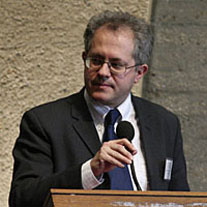
JANUARY 23-28, 2006, UNESCO, PARIS
vide timely and accurate forecasts
tion strategies concern the credibil-
complete by the end of
and warnings of coastal flooding and
ity and effectiveness of risk assess-
2006. Because of the near-
associated hazards due to tsunamis,
ment and the appropriateness, feasi-
field nature of tsunami im-
storm surges, and hurricanes, and it
bility, affordability, and sustai-
pacts in the Mediterranean,
is expected to be operational by the
nability of the response. A number
there may be a need for
end of 2006 as a system of coastal
of global lessons can be learned from
more than one Warning
sensors, many of which are already
the coastal catastrophic events of the
Centre.
in place. In the region, the most reli-
last years: coastal populations are
During the discussion,
able warning system has a delay of
vulnerable to storm surges and ex-
the issue of the participation Panel Co-Chair William Brennan,
20 minutes, but marine and coastal
treme waves; surge and extreme
and role of NGOs in the Deputy Assistant Secretary for
hazards may have a shorter travel
wave events have recurrent costs on
development and operation International Affairs, US National
time. Safety of coastal communities
country economies; developed coun-
Oceanic and Atmospheric
of early warning systems Administration, commended the
cannot depend only on sensors but
tries do not necessarily have effec-
for marine multihazards IOC, the International Strategy for
also requires improvement of pub-
tive emergency responses; strategic
Disaster Reduction (ISDR) and
was raised jointly with the regional organizations for
lic awareness, enhanced governance
planning and development are key
issue of communication and coordinating and developing
and coordination among institutions,
responses in reducing vulnerability,
regional tsunami early warning
distribution of powers systems and called for increased
and innovative partnerships among
especially in coastal cities and mega
among concerned institu- focus on multi-hazard warning
governments, the scientific commu-
cities; standards of protection need
tions.
systems.
nity, and civil society.
continual monitoring and mainte-
Hazard mitigation strategies, in-
nance; warning systems must be in
Recommendations
cluding long-term coastal planning,
place at global to local scales; and
The discussion group acknowledged
were presented. The review centered
emergency plans must be tested,
a lack of clarity in the expected goals
on the concerns posed by hazards,
resourced, and implemented.
of the EWSs whether the systems
including both extreme catastrophic
should in all cases be expected even-
events and long-term, incremental
Establishment and
tually to cope with storm surges as
hazards. The focus of hazard assess-
Maintenance of Early
well as tsunami hazards. In many
ment should be on the incidence of
Warning Systems:
parts of the world, storm surges by
hazard events at local to regional
Regional Perspectives
far constituted the greater risk. Was
scales, the susceptibility of coasts to
a multihazard system one that coped
inundation, and the vulnerability of
Pacific: The System has been reor-
with tsunamis and storm surges, or
the coastal population. Options to
ganized with more island states
simply one that coped with tsunamis
respond to hazards include partially
added. There are still some gaps as
from different types of tsunamigenic
reducing susceptibility to inundation
well as a need to have instrumenta-
sources seismic, volcanic, land-
and primarily reducing vulnerabil-
tion optimized with the addition of
slide? This is an area to be resolved.
ity of coastal communities. The first
more sea-level stations. The System
While a truly multihazard system is
can be achieved by hard and soft
is providing assistance to the Carib-
ideal, it is acknowledged that setting
engineering solutions and regulating
bean and Indian Ocean TWS.
these up may take some time. There
human activities that exacerbate sus-
Caribbean: This is a Multi-Hazard
was an immediate need to put in
ceptibility. The second can be
system coping with storm surges as
place systems that coped with the
achieved by preparedness, better
well as tsunamis. Puerto Rico is set
tsunami hazard.
communication links at the global
to take over from Hawaii as the Re-
and local levels, and mobilizing con-
gional Warning Centre.
The assessment of risk is
tingency resources. More impor-
an area where the science
Indian Ocean: The IOTWS is sched-
tantly, vulnerability can be reduced
community can make (and
uled to be in place by September
through strategic measures: intro-
is making) a major contri-
2007, handling tsunamis only. An
ducing strategic planning, adapting
bution. Deepwater and fine-
initial system should be in place by
to a changing physical environment,
scale coastal modeling can
the end of 2006. Hopefully, the sys-
recognizing vulnerability of expand-
make a major contribution
tem will also eventually be used for
ing urban areas, and weighing live-
and it is felt that there is
storm surges. There are several Re-
lihood opportunities against vulner-
scope for much improved
gional Warning Centres but no single
Panel Co-Chair François
ability. People can contribute to vul-
integration and coordina-
Centre has been agreed.
Schindelé, on behalf of Patricio
nerability through employment op-
tion of modeling efforts and Bernal, Executive Secretary, IOC,
portunities, poverty, indifference
NE Atlantic, Mediterranean, and
initiatives. Susceptibility elaborated on the five regional
early warning systems, either
(lack of awareness to risk), fading
Connected Seas: An initial system
mapping including inte- currently in place or under
memories of catastrophes, and resis-
is projected to be in place by the end
grated high resolution development.
tance to evacuation. Hazard mitiga-
of 2007, with the planning stage
bathymetric and topo-
· 47 ·

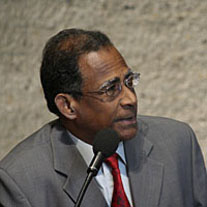
graphic survey is certainly achiev-
Efforts should also be made to
implementation in the context of in-
able and needs to be addressed as a
conserve, and wherever possible,
tegrated coastal management. The
matter of urgency with respect to
rehabilitate mangroves, sand dunes,
realities of essential livelihoods and
storm surge as well as tsunami haz-
and coral reefs that afford a natural
poverty should be considered in this
ards. This will require financial re-
barrier to tsunamis and storm surges.
respect and all reasonable steps
sources. The need to focus efforts on
Regarding long-term education
taken by local authorities to make
coasts with a high socio-economic
and planning, there are many basic
people aware of the risks involved
importance was accepted. There is
measures that can be undertaken
in living in areas susceptible to in-
also a need to be aware of the rapid
without great cost. The inclusion of
undation. The assessment of risk by
changes in population, and thus po-
hazard awareness and emergency
the scientific community should,
tential vulnerability, in the coastal
procedures should become standard
above all, be realistic national gov-
areas, particularly with respect to the
in the education of coastal commu-
ernments and local authorities will
growth of coastal mega cities.
nities where a high risk is acknowl-
need to be convinced of risk and this
A priority regarding communica-
edged. Community involvement is
may be difficult to achieve where
tion is to get high resolution, real
essential. A priority should be placed
events are few and far between.
time data to warning centers. There
on strategic land-use planning and
is also a need for a dedicated chan-
nel for disaster management.
Maitree Duangsawasdi, Director-
Stefano Tinti, Chair,
Franklin McDonald, Adviser,
General, Department of Marine
Intergovernmental Coordination
UNEP, former Director, Jamaican
and Coastal Resources, Thailand,
Group for the Tsunami Early
National Environment and
outlined reconstruction efforts
Warning and Monitoring System
Planning Agency, and former
following the December 2004
in the North Eastern Atlantic, the
Project Manager, Pan-Caribbean
tsunami, including the creation of
Mediterranean and Connected
Disaster Preparedness and
a national disaster relief center to
Seas (ICG/NEAMTWS),
Prevention Project, stressed that
coordinate monitoring and
explained that his Group was
the region faces other forms of
awareness programmes.
established in June 2005 by the
coastal inundation, and outlined
IOC to create a plan of action by
the region's long history of
December 2006.
tsunamis.
Russell Arthurton, Consultant,
Lahsen Ababouch, Chairman, FAO
Coastal Geoscience, and formerly
Fisheries Tsunami Task Force,
British Geological Survey, said
outlined FAO's activities in
risk assessment should take into
restoring fisheries and livelihoods
account: the incidence of hazard
in the countries affected by the
events at local to regional levels;
Indian Ocean tsunami, and
the susceptibility of specific coasts
challenges faced.
to inundation; and the
vulnerability of coastal
populations.
· 48 ·
JANUARY 23-28, 2006, UNESCO, PARIS
ISSUES RELATED TO MARINE AREAS BEYOND NATIONAL
JURISDICTION: CO-CHAIRS' REPORT
Summary prepared by Salvatore Arico, UNESCO,
and Alfonso Ascencio Herrera, Permanent Mission of Mexico to the UN
During the Third Global Confer-
High Seas Task Force, and included
gime for the high seas in Part VII of
ence, several new and emerging is-
presentations from contributors Ms.
the Convention, while the interna-
sues were addressed, including is-
Fernanda Millicay, Hamilton
tional seabed area, or the "Area"
sues related to governance of ma-
Shirley Amerasinghe Fellowship on
term used in the Convention is
rine areas beyond national jurisdic-
the Law of the Sea, Dr. David Leary,
governed by Part XI of the Conven-
tion. The following is intended to
Centre for Environmental Law,
tion, as elaborated by the 1994
provide a reflection of the discus-
Macquarie University, and Ms.
Agreement relating to the Implemen-
sions that took place at the session
Kristina Gjerde, IUCN.
tation of Part XI of UNCLOS.
dealing with issues in marine areas
Principles guiding the work re-
The Panel featured presentations
beyond national jurisdiction at the
lated to session were:
on:
Conference.
· it was not intended and should
· general trends in marine
The Session was structured in the
not be a negotiating session;
scientific research and in
form of one panel and two dialogue
bioprospecting in the deep
sessions. It was the outcome of the
· it was intended to be an
seabed, noting a shift from
collective efforts by members of the
educational process for all
geophysical expeditions to
Working Group that was set up prior
participants;
ecological, biological and
to the Conference to help structure
· it was intended to contribute
bioprospecting ones;
the Session and the Conference par-
towards a better understanding
ticipants that attended it. Their con-
of the various issues involved;
· trends in scientific discoveries
tribution is recognized and much
in the deep oceans, noting the
· it would not lead to a policy
appreciated.
high degree of diversity found
statement;
on seamounts and other deep
The panel was co-chaired by Mr.
· participants would operate on
ocean ecosystems;
Alfonso Ascencio Herrera of the
the basis that they did not need
Permanent Mission of Mexico to the
· current scientific knowledge
to reach consensus, which
United Nations and by Dr. Salvatore
on the vulnerability of certain
meant that all ideas expressed
Arico of UNESCO. Presenters in-
marine ecosystems;
during the panel and dialogue
cluded the co-chairs as well as Pro-
sessions would stand on equal
· gaps in knowledge and the
fessor Tullio Scovazzi, Università
footing;
need for further studies on
degli Studi di Milano, Bicocca, Italy;
scientific, legal and socioeco-
· the Session aimed at stating
Mr. Alex Rogers, British Antarctic
nomic aspects among others;
what we know and where we
Survey; Ms. Lee Kimball, IUCN-The
are with regard to the issues
· uncertainties regarding the
World Conservation Union; Dr.
involved; and
definition of and regime for
Vladimir Golitsyn, UN Division for
bioprospecting and its
Ocean Affairs and the Law of the
· it was also intended to be an
relationship to marine scien-
Sea; Ms. Marjo Vierros, Convention
exercise to collect views.
tific research in the interna-
on Biological Diversity; Mrs. Norma
Although the Panel was termed
tional seabed area, and the
Taylor Roberts, Permanent Mission
"Improving High Seas Gover-
legal status of the biodiversity
of Jamaica to the United Nations
nance," in reality it covered broader
of the deep seabed in areas
and Dr. Frida Armas-Pfirter, Austral
issues relating to marine areas be-
beyond national jurisdiction
University, Argentina. The related
yond national jurisdiction. This was
and ways to address these
dialogue sessions were chaired by
based on the fact that the 1982 Con-
uncertainties;
Dr. David VanderZwaag, Dalhousie
vention on the Law of the Sea
· the potential of UNCLOS in
University and Mr. Michael Lodge,
(UNCLOS) provides a specific re-
dealing with issues related to
· 49 ·

marine areas beyond national
and mechanisms for
covers, recognizing that
jurisdiction, including the
discussion at, that process;
there is no internationally
possibility to strengthen
· That strong sectoral gover-
agreed definition of it (in
UNCLOS;
nance nested within a broader
this regard, it was also
· the role of existing
framework is key to address-
mentioned that in practice
organizations and bodies,
ing the WSSD fisheries
distinctions between marine
including the role of the
targets;
scientific research and
United Nations General
bioprospecting were blurred
· That governance objectives
Assembly;
since it was difficult to
for high seas fisheries should
· the need to rely on recognized
ascertain the "intent" from
include:
common principles to move
the beginning);
the discussions forward; and
- eliminating Illegal Unre-
- whether a new international
· the need to further discuss
ported and Unregulated
regulatory framework is
ways and means for the
fishing (as called for in the
required;
possible establishment of
WSSD goals);
- it remains uncertain at this
marine protected areas in
- improving regional gover-
point what are the institu-
areas beyond national
nance arrangements i.e.
tional and legal ways for
jurisdiction.
Regional Fisheries Manage-
dealing with bioprospecting
Although both dialogue sessions,
ment Organizations;
beyond national jurisdic-
1) Deep Seabed Genetic Resources,
- bringing unregulated high
tion; (Some mentioned that
and 2) High Seas Fisheries Gover-
seas fisheries under interna-
UNCLOS is the starting
nance, dealt with issues related to
tional governance;
point for discussions on
marine areas beyond national juris-
these issues)
diction, those issues were dealt with
- applying the precautionary
in their own merit, so as not to pre-
approach;
· Next steps could include:
judge possible connections between
- applying ecosystem-based
- facilitating further construc-
those issues.
management principles in
tive dialogue sessions to
In relation to high seas fisheries,
order to combine high seas
promote understanding of
the following points were discussed:
fisheries with broader
differing perspectives and
biodiversity considerations;
exploring options for
· Opportunities for improving
moving forward;
high seas fisheries gover-
- the need for cooperation and
nance:
coordination approaches
- launching key studies in
between Regional Fisheries
support of cooperation e.g.:
- the role of the High Seas
Management Organizations
Task Force in dealing with
· examination of ways to
and international processes;
Illegal, Unreported and
address environmental
Unregulated fisheries,
- the need for coastal States,
consequences of
whose report will be
market States, port States
bioprospecting;
launched in early March,
and beneficial owners to
· Studies on the nature and
and future steps;
work together.
operation of public/
- the UN Fish Stock Agree-
In order to deal with issues relat-
academic- private marine
ment Review Conference
ing to the conservation and sustain-
biotechnology partner-
and related outcomes;
able use of deep seabed genetic re-
ships,
sources in areas beyond national ju-
- emphasis was put on the
· study of patents already
risdiction, the following points were
situation of discrete high
granted to genetic re-
discussed:
seas fish stocks, including
sources in areas beyond
ways to manage them;
· Differences of opinions about
national jurisdiction and
what principles should be
other intellectual property
- the review of measures
guiding bioprospecting in
rights;
taken by Regional Fisheries
areas beyond national jurisdic-
Management Organizations
· the role of international
tion e.g. freedom of use as
and States regarding
legal principles in address-
opposed to common heritage
destructive fishing practices
ing bioprospecting in areas
of humankind;
in vulnerable marine
beyond national jurisdic-
ecosystems, with particular
· There also are differences of
tion (some participants
emphasis on the inputs to,
opinions on:
referred to equitable use,
- what bioprospecting really
sustainable use, environ-
· 50 ·
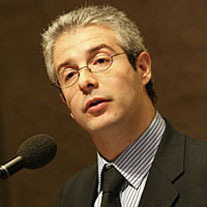
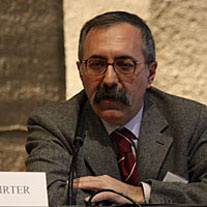
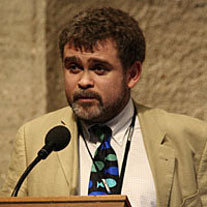
JANUARY 23-28, 2006, UNESCO, PARIS
mental impact assessments,
A concrete outcome of the Ses-
Oceans, Coasts, and Islands
cooperation at all levels);
sion as a whole was that this pro-
Richard Ballhorn, Legal
· a review of international
cess was very useful in terms of cre-
Bureau, Foreign Affairs
legal and institutional
ating a cooperative environment for
Canada, Ottawa
options for managing
dialogue and joint work. In that re-
Dominique Benzaken,
activities connected to
gard, there was a strong sentiment
Secretariat of the Pacific
marine biodiversity of the
to continue sharing information in-
Regional Environmental
Programme
international seabed area,
formally; continue floating ideas re-
including binding and non-
garding all the aspects of the topics,
Sergio R. Carranza Forster,
Stressing the importance of
binding approaches (Some
including areas on which further
Ministry of Foreign Affairs
UNCLOS, Co-Chair Ascencio
and Cooperation, Spain
referred specifically, as
studies are needed; and continue the
Herrera stated that the Convention
does not define marine scientific
non- binding approaches,
analytical work and research in or-
Lucien Chabason, Institute
research, and there is also no
the conclusion of codes of
der to fill gaps in knowledge. It
de Development Durable,
internationally agreed definition of
Paris
bioprospecting of the international
conduct, while others
should be stressed that this will be
seabed area. He called for further
favoured mandatory
an open-ended and flexible ap-
*Leif Christoffersen,
studies and underlined the need to
address, coherently and
approaches based on
proach, and that everyone is wel-
Diversa Corporation
harmoniously, all issues relating to
existing legal principles/
come to join in.
*Biliana Cicin-Sain, Global
marine biodiversity beyond
frameworks);
The Co-Chairs thank all partici-
Forum on Oceans, Coasts,
national jurisdiction within the
and Islands
UNCLOS framework. He argued
· survey of adequacy of
pants and contributors for their help,
that the UN General Assembly is
Alexandre De Lichtervelde,
the appropriate forum for debating
existing national legal and
which was essential in making the
Federal Ministry of
these issues as it plays a key role
institutional frameworks
Session a success and the Organiz-
in promoting cooperation and
Environment, Belgium
coordination and in ensuring
for controlling national and
ers of the Conference indeed a very
Michel Dion,
integrated approaches.
state flag vessels engaged
important and successful one for
ORTHONGEL
in marine scientific
their guidance, assistance and en-
research/bioprospecting in
couragement.
*Fanny Douvere, UNESCO
areas beyond national
*Sylvia Earle, Conservation
jurisdiction;
Working Group Members
International
· the scale of
and Participants
Elizabethann English,
National Oceanic and
bioprospecting;
in Discussions Related
Atmospheric Administration
- strengthening capacity-
to Issues of Marine
(NOAA), US
building , e.g. targeted
Areas Beyond National
*Martin Exel, Austral
training/ learning sessions
Jurisdiction at the Third
Fisheries
Tullio Scovazzi, University of
Milan, Bicocca, Italy, pointed out
on key topics such as
Global Conference on
*Anne Frenette, Department that marine scientific research is
understanding of intellectual
not defined but regulated by
Oceans, Coasts and Islands
of Fisheries and Oceans,
property rights and patent
UNCLOS, whilst bioprospecting is
Canada
not specifically mentioned in the
issues, understanding the
Co-Chairs: *Salvatore Arico,
Patricia Gallaugher, Simon
Convention. He said this lacuna
socioeconomics of the
UNESCO
must be tackled by a new
Fraser University
agreement on MPAs.
industry and environmental
*Alfonso Ascencio Herrera, Perma-
*Serge Garcia, Food and
effects, understanding legal
nent Mission of Mexico to the UN
Agriculture Organization
dimensions and scientific
Working Group Members and
(FAO)
aspects;
Conference Session Participants
*Matthew Gianni, Deep Sea
- promoting scientific
Tim Adams, Secretariat of the Pacific
Conservation Coalition
cooperation;
Community
*Kristina Gjerde, The World
- considering different ways
Ellik Adler, UNEP-Regional Seas
Conservation Union (IUCN)
of moving forward ensuring
Programme
*Vladimir Golitsyn, UN
that bioprospecting is linked
Porfirio Alvarez, SEMARNAT -
Division for Ocean Affairs
to broader discussions e.g.
Mexico
and the Law of the Sea
the possible establishment
Joe Arbour, Department of Fisheries
Sarah Gotheil, The World
Alex Rogers, Biological Sciences
of marine protected areas in
and Oceans, Canada
Conservation Union (IUCN)
Division, British Antarctic Survey,
areas beyond national
*Frida Armas-Pfirter, Austral
elaborated on deep sea
Michel Goujon, CNPMEM
biodiversity and fishing activities.
jurisdiction;
University, Argentina
Alistair Graham, WWF-
Stressing that the deep seabed
houses a startling biodiversity,
- exploring opportunities for
*Robert Baldi, Department for
International
much of which is still unknown,
existing organizations to
Environment, Food, and Rural
he described its unique
ecosystems, including seamounts,
assist in these steps.
Affairs, UK
coral reefs and hydrothermal
*Miriam Balgos, Global Forum on
vents.
· 51 ·

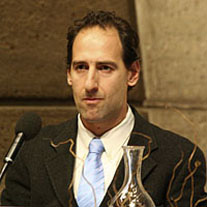
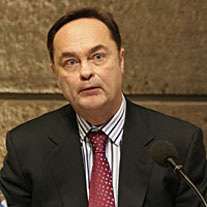
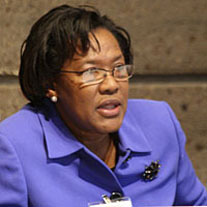
Arthur Gray, Organization of Eastern
Roland Pittar, Australia Embassy,
Francesca Santoro, University of Italy
Caribbean States
Paris
*Renée Sauvé, Department of
*Fred Grassle, Institute of Marine and
Ann Powers, Pace University Law
Fisheries and Oceans, Canada
Coastal Sciences, Rutgers University
School
Carl-Christian Schmidt, OECD
Barbara Hanchard, Forum Fisheries
Margi Prideaux, Whale and Dolphin
Tullio Scovazzi, University of
Agency
Conservation Society
Milano-Bicocca
Margaret Hayes, Department of State,
Peter Prows, Permanent Mission of
Despina Symons, European Bureau
US
Palau to the UN
for Conservation and Development
Olive Heffernan, ImarEST
*Jean-Francois Pulvenis, Food and
*Norma Taylor Roberts, Permanent
*Arlo Hemphill, Conservation
Agriculture Organization (FAO)
Mission of Jamaica to the UN
International
*Gaile Ramoutar, Trinidad and
*Chris Tompkins, Department for
Andrew Hurd, The World Conserva-
Tobago
Environment, Food, and Rural
tion Union (IUCN)
*Rosemary Rayfuse, University of
Affairs, UK
Andrew Hurst, Environment Canada
New South Wales
*David VanderZwaag, Dalhousie
*Elie Jarmache, Prime Minister's
Saskia Richartz, Greenpeace
University
Office, France
European Unit
*Monica Verbeek, Seas at Risk
*Sam Johnston, Institute of Advanced
Peter Ricketts, UBC Okanagan
*Marjo Vierros, Convention on
Studies, United Nations University
*Lori Ridgeway, Department of
Biological Diversity (CBD)
(UNU-IAS)
Fisheries and Oceans, Canada
*LaVerne Walker, St. Lucia
*Kim Juniper, University of Montreal
Silva Ritossa, IUCN French Commit-
*Lindsey Williams, Global Forum on
at Quebec
tee
Oceans, Coasts, and Islands
Konstantinos Kalamantis, European
*Alex Rogers, British Antarctic
Jennifer Winston, National Oceanic
Bureau for Conservation and
Survey
and Atmospheric Administration
Development
Mario Ruivo, National Council on
(NOAA), US
*Lee Kimball, The World Conserva-
Environment and Sustainable
* Working Group Member
tion Union (IUCN)
Development (Portugal)
Armand Kokolo, Ministere des
*Karen Sack, Greenpeace Interna-
Transports Maritimes et de la Marine
tional
Marchande (Congo)
Peter Koltermann, BSH Hamburg,
Germany
Co-Chair Salvatore Arico, Programme Specialist, Biodiversity,
Tom Laughlin, National Oceanic and
Division of Ecological Sciences, UNESCO, presented a paper by
Atmospheric Administration
Abdul Zakri, UN University-Institute for Advanced Studies, on
(NOAA), US
trends in deep seabed research, which he said is going on at an
increasing pace. He noted a shift in the focus of deep seabed
*David Leary, Centre for Environ-
expeditions from geophysical and geological purposes to
mental Law, Macquarie University
ecological, biological and bioprospecting ones.
*Michael Lodge, High Seas Task
Force
Christy Loper, National Oceanic and
Atmospheric Administration
(NOAA), US
Vladimir Golitsyn, Director, UNDOALOS, called for further
targeted marine biodiversity research, which he identified as highly
*Eric Mathur, Diversa Corporation
sophisticated, costly and labor intensive. He recognized the need
Fernanda Millicay, Amerasinghe
for better cooperation between governments, institutions, scientists
and industry engaged in marine biodiversity research in order to
Fellowship
share costs and information, increase geographical cover and
Sebastian Moncorps, IUCN French
ensure the participation of developing countries.
Committee
*Jennifer Mooney, Department of
Fisheries and Oceans, Canada
Patricia Muñoz, Instituto Politecnico
Nacional Mexico
Norma Taylor-Roberts, Deputy Permanent Representative to the
United Nations, Jamaica, expressed concern over the lack of a
*Daniel Owen, Fenners Chambers,
legal regime to regulate bioprospecting. Calling for a wider
United Kingdom
acceptance and implementation of UNCLOS, she advocated
concluding a new agreement under UNCLOS to address
Carol Phua, WWF European Policy
bioprospecting, rather than developing a new convention.
Office
· 52 ·
JANUARY 23-28, 2006, UNESCO, PARIS
CLIMATE AND OCEANS
Summary prepared by Magdalena A.K. Muir, Research Associate,
Arctic Institute of North America
The Global Conference considered
sociate, Arctic Institute of North
In 2005, the Intergovernmental
the issue of climate and oceans, ex-
America.
Panel on Climate Change presented
ploring the effects climate change
a special report on carbon dioxide
may have on the world's oceans,
Climate Change Science
sequestration. It found that storing
coasts, and islands, with an empha-
captured carbon dioxide in geologi-
The Intergovernmental Panel on Cli-
sis on ocean acidification, carbon
cal formations is a mature technol-
mate Change will present the Fourth
sequestration, Arctic change, and
ogy. Ocean storage, or the direct re-
Assessment Report to the 13th Con-
sea level change. The expected out-
lease into the ocean water column
ference of the Parties to the United
comes for the panel included con-
or onto the deep seafloor, has been
Nations Framework Convention on
sideration of policy implications of
researched less. This storage option
Climate Change in December 2007.
wide-ranging effects of climate
is less permanent than geological
Supporting prior reports, this report
change on marine and coastal envi-
storage and significant uncertainty
documents the impact of man-made
ronments and on coastal popula-
remains on ecosystem impacts.
climate change. The most vulnerable
tions and economies; and whether
Oceans have slowed the build up of
populations and economic sectors
an "observatory" function, linking
carbon dioxide in the atmosphere by
are faced with immediate and long-
emerging scientific findings to
acting as a sink for carbon dioxide.
term adaptations for climate change,
analyses of attendant policy issues
Recent evidence suggests that this
and some of the key vulnerabilities
related to climate and oceans/
carbon absorption has its limits and
center on oceans, coasts, and islands.
coasts/islands might be needed.
is resulting in acidification of the
Sea level rise is a significant threat
The panel was chaired by Robert
oceans.
for small islands, coasts, and low-
Corell, Chair, Arctic Climate Impact
lying lands. Ocean acidification is a
The Arctic Climate Impact As-
Assessment. Panel participants in-
new and looming threat that could
sessment Scientific Report docu-
cluded: Ambassador Gunnar
undermine the marine food web and
ments climatic changes in the cir-
Pálsson, Director, Department of
preclude coral development. Sea
cumpolar Arctic. One of the key
Natural Resources and Environmen-
level rise and acidification will re-
findings suggests that the Arctic has
tal Affairs, Ministry of Foreign Af-
main for the next few thousand
been warming rapidly with much
fairs, Iceland; Halldór
years. Another emerging threat is the
larger changes projected for the fu-
Thorgeirsson, Deputy Executive
impact of high sea surface tempera-
ture. Increasing temperatures, melt-
Secretary, UN Framework Conven-
tures on the intensity of tropical cy-
ing glaciers, reductions in the extent
tion on Climate Change
clones and hurricanes. Understand-
and thickness of sea ice, thawing
(UNFCCC); Ambassador Enele
ing the role of the oceans as a regu-
permafrost, and rising sea level il-
Sopoaga, Tuvalu, Vice-Chair,
lator of the earth's climate system is
lustrate this warming trend. In the
AOSIS, and Permanent Representa-
also increasing. The oceans control
Arctic, changes in sea ice are a key
tive of the Mission of Tuvalu to the
the timing and magnitude of changes
indicator and agent of climate
UN; John Shepherd, Tyndall Centre
in the global climate system, prima-
change, affecting surface reflectivity,
Regional Associate Director,
rily through the absorption of car-
cloudiness, humidity, exchanges of
Southampton Oceanography Cen-
bon dioxide and heat. Other climate
heat and moisture at the ocean sur-
tre; Ellina Levina, Climate Change
impacts include arctic sea ice reduc-
face, and ocean currents. Changes in
Analyst, Environment Directorate,
tion, cyclonic storms, changes in
sea ice have enormous economic,
Organization for Economic Coop-
ocean circulation, and changes in
environmental, and social implica-
eration and Development (OECD);
biodiversity and fisheries.
tions. There are negative impacts on
and Magdalena Muir, Research As-
· 53 ·

ice-dependent wildlife and northern
Africa is also very vulnerable to
impacts, vulnerability, and possible
peoples, like the Inuit, with a tradi-
climate change, with negative im-
adaptation measures on the one hand
tional subsistence lifestyle based on
pacts expected for watersheds,
and financial and technical assis-
hunting mammals on or adjacent to
coasts, and seas of Africa, worsen-
tance to the most vulnerable Parties
sea ice. Changes may also have posi-
ing desertification in northern and
on the other. Proceeds from the
tive economic effects, as they may
southern Africa, and reductions in
Clean Development Mechanism
facilitate increased marine transpor-
the development of the continent
project activities will fund a new
tation, economic development, and
overall. The Third Assessment Re-
Adaptation Fund under the Kyoto
immigration into the region.
port predicted that the effects of cli-
Protocol. The bulk of two other
Small islands are vulnerable to the
mate change would be greatest in
dedicated funds under the Conven-
impacts of climate change, sea level
developing countries in terms of loss
tion are targeted for adaptation to the
rise, and extreme events because of
of life and relative effects on the in-
impacts of climate change by devel-
size and exposure to natural hazards,
vestment and economy. Africa was
oping countries.
and more limited adaptive capacity.
described as the world's poorest re-
Maintaining the ecosystem ser-
According to the Third Assessment
gion and the continent most vulner-
vices of the oceans is instrumental
Report of the Intergovernmental
able to the impacts of projected
in achieving the United Nations
Panel on Climate Change, islands
change, because widespread poverty
Millennium Development Goals, as
represent early indicators of climate
limits adaptation capabilities. There
at least four of the eight goals are
change for the rest of the world. Is-
has been limited scientific research
closely linked to the conservation
lands often depend on rainwater and
on climate change in Africa, but lo-
and use of natural resources, includ-
are vulnerable to changes and dis-
cal scientific networks for climate
ing living marine resources. The
tribution in rainfall. Like many parts
change are developing.
Millennium Ecosystem Assessment,
of the equatorial and tropical world,
relying on the Food and Agriculture
human health is impacted by climate
Science-Policy Interface
Organization of the United Nations,
change. For example, diarrhea will
for Oceans and Climate
identifies fishing as the most impor-
increase with rising temperatures
Change
tant driver of change in the marine
and deterioration of water in the Pa-
The 11th Conference of the Parties
ecosystem for the past fifty years. It
cific. Vector-bourne diseases like
of the United Nations Framework
is now apparent that, aside from
dengue fever and malaria will in-
Convention on Climate Change
pollution and over fishing, climate
crease, with the Caribbean islands
(UNFCCC) in Montreal in Decem-
variability and change, including
being at greater risk. Shortages of
ber 2005 initiated a two-track pro-
acidification, may threaten the pro-
water and drought, as well as con-
cess to develop the future climate
ductivity of oceans. The challenge
tamination of water quality during
strategy, where the Kyoto Protocol
for governments is to understand the
floods and storms, will increase dis-
is the first track. The second track is
complex processes for oceans and
ease risk, including cholera, diar-
an informal Convention Dialogue
climate change, and to have ad-
rhea, and dengue fever. Subsistence
aimed at exchanging experiences
equate policies.
and commercial agriculture on small
and analyzing strategic approaches
On a global and regional level,
islands will be impacted by sea level
for long-term cooperative action.
climate change science and policy
rise due to flooding, salt water in-
This dialogue is based on the
need to be added to the oceans
trusion in fresh water, salination of
UNFCCC Convention and is not
agenda, and oceans science and
the soils, and decline in water qual-
confined to the present Parties to the
policy need to be inserted in the cli-
ity and quantity. Infrastructure and
Kyoto Protocol. It will address tech-
mate agenda. The Third Global Con-
development are affected by sea
nology, adaptation, market-based
ference disseminated information on
level rise and extreme events, which
opportunities, the development con-
ocean and climate science and
affect tourism, agriculture, and the
text, and voluntary action by devel-
policy measures to oceans decision-
delivery of health, fresh water, food,
oping countries. First meetings of the
makers. Information on climate
and other essential services. Coral
Convention Dialogue will be held in
change and related policy issues for
reefs, marine fisheries, and marine
parallel with the Subsidiary Body
oceans needs to be included in the
resources will also be affected by
meetings of the Kyoto Protocol in
annual United Nations Open-ended
climate change and climate variabil-
Bonn in May 2006.
Informal Consultative Process on
ity. Small islands with a large Ex-
Oceans and Law of the Sea, as well
clusive Economic Zone already have
Climate change mitigation is a
as to the global marine assessment
limited capacity to manage those
major challenge, which goes to en-
agreed to at the World Summit on
zones, and these management issues
ergy, economic, technological, and
Sustainable Development in 2002,
will only be compounded by climate
development policy. The UNFCCC
which is now in the start-up phase
change.
process addresses adaptation
through understanding of climate
of an assessment of assessments.
· 54 ·
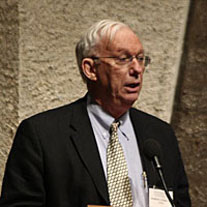
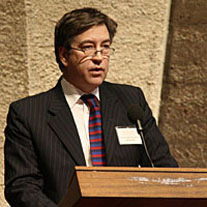
JANUARY 23-28, 2006, UNESCO, PARIS
Additionally, information on oceans
entific information becomes crucial
newable energy and energy
and climate sciences and related
for formulating policy on a wide
efficiency technologies as a
policy measures should be included
variety of issues, including fisheries,
way of reducing carbon di-
in meetings of the Kyoto Protocol
marine infrastructure, and transpor-
oxide emissions. The inte-
Parties and the Convention Dia-
tation. Therefore, more resources
gration of the Mauritius
logue, beginning in May 2006.
need to be devoted to ocean climate
Strategy for the sustainable
Adaptation is not enough; mitiga-
research, paying attention to the
development of SIDS in the
tion is also required through the re-
short and medium term, to the re-
work programme of the
duction of greenhouse gases and the
gional impacts as well as the global
UNFCCC is crucial to ad- Panel Chair Robert Corell, Chair,
shift to renewable energy and energy
impacts, to monitoring and manage-
dress SIDS concerns on cli- Artic Climate Impact Assessment,
efficiencies. It is necessary to think
ment approaches across vulnerable
mate change. The appeal of gave an overview of the recent
scientific findings on climate
globally, plan regionally, and act lo-
coastal and marine ecosystems, and
the SIDS through the Alli- effects on oceans, stressing that
cally. Due to their complexity, cli-
to the benefits as well as the risks of
ance of Small Island States since the oceans contain 97% of
the Earth's water, they are the
mate issues require input from many
climate change.
(AOSIS) for discussion of thermodynamic engine of the
disciplines and the integration of
The integration and communica-
implementation of the planet. He listed current and
ecosystem-based and other inte-
tion of climate science and policy to
Mauritius Strategy should projected effects of climate change
on oceans, including sea level rise,
grated approaches. There is a need
governments, decision makers, civil
be considered. The SIDS biodiversity loss, the
for a constant dialogue between sci-
society, and the public is viewed as
strongly oppose carbon di- disappearance of Greenland's
icecap, and thinning of the Arctic
entists and decision-makers. Scien-
crucial for both the developed world
oxide sequestration and sea ice.
tific data and analysis, from accu-
and the developing world in order
nuclear power as options to
rate and timely predictions of hurri-
to build support for the necessary
address climate change. Funding and
canes, to improved global and re-
mitigation and adaptation measures.
technical assistance to support the
gional forecasts of future sea level
There will be common problems in
continuation of the Small Islands
rise, and the impacts of ocean acidi-
adapting to climate change by Small
Developing States Network
fication, lay the foundation for ad-
Island Developing States (SIDS) and
(SIDSnet) website in New York is
aptation policy discussions and the
less developed regions and countries
also requested.
development of climate strategies. In
within Africa, Asia, the Caribbean,
As a region and a political entity,
order to be effective, this data and
Central and South America, and the
Europe is responding to climate
analysis need to be communicated
Pacific. Similar to Arctic coasts,
change in its coasts and oceans. It is
to decision-makers on a timely ba-
SIDS are early indicators of climate
addressing mitigation and adaptation
sis and in an appropriate language.
impacts for the rest of the world, this
through global initiatives and re-
The timing of policy development
linkage being recognized under the
gional and local actions, and is thus
and science must be synchronized,
UNEP Grid-Arendal project, Many
developing useful experiences and
so that the long and short-term win-
Small Voices Building Strategies
strategic approaches for the Conven-
dows for science and decision-mak-
for Climate Change Awareness and
tion Dialogue under the UNFCCC.
ing can be synchronized accordingly.
Adaptation among Vulnerable Re-
The European Climate Change Pro-
Short-term windows for decision-
gions: The Arctic and Small Island
gram II has working groups for
making may be advantageous as
Developing States.
coasts and oceans issues: the Impacts
they allow the inclusion of new and
For SIDS, there is a need to en-
and Adaptation Working Group; the
more detailed information and pre-
hance economic, ecological, and
Renewable Energy Work-
dictions. In the future, data may
social resilience in an integrated
ing Group; and the Carbon
make it possible for scientists to ac-
manner. Effective implementation of
Sequestration and Storage
curately predict climate variability
adaptation measures is critical to
Working Group. The Euro-
and change. The challenge will then
ensure sustainable development, and
pean Union is sponsoring
be how to convert these predictions
SIDS governments are already in-
research for climate
into adaptation policies for fisheries
corporating adaptation measures into
changes for oceans and
management, harbour development,
national sustainable development
coasts, including: monitor-
or civil emergency planning. Glo-
strategies for infrastructure, eco-
ing, governance, and secu-
bal climate change scenarios need to
nomic development, disaster man-
rity initiatives under the
Noting accelerating climate
be checked against more specific
agement, environment, conservation
European Space Agency; variability, Ambassador Gunnar
studies at regional and sub-regional
and biodiversity. SIDS urgently need
the European Network for Palsson, Ministry of Foreign
levels. As policies adapt to climate
financial resources and technical
Coastal Coordination Ac- Affairs, Iceland, said the
availability of reliable scientific
change and variability, it is impor-
support, as recognized and commit-
tion; the European Spatial data is crucial, and called for
tant to consider opportunities as well
ted under the UNFCCC process, in-
Planning: Adapting to Cli- increased resources for research on
the risks and benefits of the impact
as risks. With accelerating climate
cluding funding arrangements for
mate Change; the Coupled of climate change on oceans, and
change and variability, reliable sci-
the development and transfer of re-
European Ocean Atmo- improved integration of scientific
data into the public domain.
· 55 ·


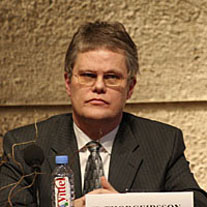
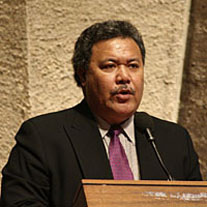
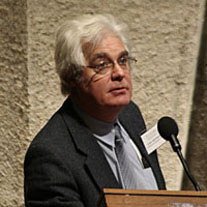
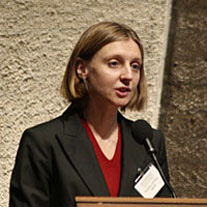
spheric Processes & Climate undertaking consultation on a Ma-
shares the Mediterranean Sea with
Change; and the EUROSION and rine Strategy and a Maritime Strat-
northern Africa and Asia. Europe
Floodscape projects. The European egy. The Maritime Strategy includes
and member states like Italy imple-
Union is currently implementing the the Marine Strategy and addresses
ment regional initiatives for that sea,
Water Framework Directive for riv- sustainable economic uses in
which consider economic and envi-
ers and watersheds, including a Europe's coastal and marine waters,
ronmental factors, including climate
coastal component that links fresh considering climate change as a
change.
waters and oceans. The EU is also crosscutting theme. Europe also
Halldor Thorgeirsson, Deputy Executive Secretary, UN Framework Convention on
Climate Change (UNFCCC), explained that the Kyoto Protocol allows for use of market
tools to mitigate climate change and that the last UNFCCC COP has set the base for the
development of a future strategy.
Ambassador Enele Sopoaga, Tuvalu, Vice Chair, Alliance of Small Island States, underscored the
impact of climate change on SIDS, as illustrated by the recent increases in the frequency and
intensity of hurricanes in the South Pacific. He argued that SIDS cannot begin to develop
sustainably until climate change is comprehensively addressed, and urged developed nations to
intensify their mitigation strategies and support SIDS's efforts to implement adaptation strategies.
Highlighting climate change-related sea level rise and acidification, John Shepherd, Tyndall
Centre Regional Associate Director, Southampton Oceanography Centre, stated that any
adaptation strategy must be: concentrated on reducing physical and social infrastructure in
coastal areas; planned regionally whilst being focused locally; supported by government
institutions; and long-term.
Ellina Levina, Climate Change Analyst, Environment Directorate, Organization for Economic
Cooperation and Development, presented on integrating scientific knowledge into policymaking.
She called for: appropriate strategies and institutional and legal frameworks to allow for the
development of a science-based policy framework; mechanisms that identify key players and
information; clear communication of scientific data to policy makers and local stakeholders; and
additional research.
· 56 ·
JANUARY 23-28, 2006, UNESCO, PARIS
OCEAN INDUSTRIES: BEST PRACTICES IN SUSTAINABLE
DEVELOPMENT ACROSS THE SECTORS
Summary prepared by Paul Holthus, Private Sector Coordinator, Global Forum on Ocean,
Coasts and Islands; and Executive Director, Marine Aquarium Council
The Global Conference considered
nity for building cross-sectoral part-
brought together an increased num-
the issue of ocean industries, using
nerships among business and indus-
ber and a greater cross-section of the
the goal of identifying best practices try and with other ocean stakehold-
industries and user groups that de-
now used by global leaders in ma- ers to ensure the sustainable use of
pend on or use ocean and coastal
rine industrial sectors to reduce risks ocean space and resources. The
space and resources. The second
to marine environment effectively
panel presentations highlighted the
meeting of the Business and Indus-
while achieving business objectives leadership that several industries are
try Leaders Roundtable was also
efficiently. The expected outcomes
providing in defining and imple-
chaired by Paul Holthus, Private
for consideration by the panel on
menting sustainable practices which
Sector Coordinator, Global Forum
ocean industries included: Identify
address the sustainable use of ma-
on Ocean, Coasts and Islands; Ex-
opportunities and next steps to de- rine resources, responsible opera-
ecutive Director, Marine Aquarium
velop best practices within the glo- tions in the marine environment and
Council, and included the following
bal marine business and industry
conservation of ocean biodiversity.
participants: Lahsen Ababouch,
community and how to share these
The panel highlighted the efforts of
Chief, Fish Utilization and Market-
within the private sector and with
leaders from industries as diverse as
ing Service, FAO Fisheries Tsunami
other stakeholders.
shipping, fisheries, oil and gas, and
Task Force; Daniel Bailey, Chair-
The panel was chaired by Paul
recreational diving who are working
man, Batostar Fishting Ltd., South
Holthus, Private Sector Coordinator, for the protection and management
Africa; Arthur Bogason, Co-Presi-
Global Forum on Ocean, Coasts and of the oceans and the improvement
dent, World Forum of Fish Harvest-
Islands; Executive Director, Marine of industry standards for activities
ers and Fish Workers; Mark Caney,
Aquarium Council. Panel partici- in the marine realm. Partnerships
President, Professional Association
pants included: Tim Wilkins, Envi- with NGOs are often an important
of Diving Instructors (PADI) Eu-
ronmental Manager, International
part of understanding and imple-
rope; John Connelly, President, Na-
Association of Independent Tank
menting best practices and achiev-
tional Fisheries Institute, Interna-
Owners (INTERTANKO); Dierk Pe- ing sustainability. Many ocean in-
tional Coalition of Fishing Associa-
ters, International Marketing Man- dustry sectors are moving to estab-
tions; Bruno Corréard, Manager for
ager for Sustainability, UNILEVER; lish higher quality standards for a
Sustainable Marine Resources,
Arthur Bogason, Co-Chair, World
variety of products and practices in
Carrefour Group; Jean Courjault,
Forum of Fish Harvesters and Fish relation to marine resources or op-
MIF Liaison, French Suppliers
Workers; John Connelly, President, erations in the ocean environment.
Council (GEP), Policy Advisor, Eu-
National Fisheries Institute and In- This is being led by leadership com-
ropean Oil and Gas Innovation Fo-
ternational Coalition of Fishing Or- panies and by industry associations.
rum (EUROGIF); Rob Cox, Techni-
ganizations; Mark Caney, President, The panel supported the need for
cal Manager, International Petro-
Professional Association of Diving
increased industry attention to sus-
leum Industry Environment and
Instructors (PADI) Europe; Jose
tainable development of ocean areas
Conservation Association (IPIECA);
Matheickal, International Maritime and resources that is consistent with
Richard Delaney, Executive Vice
Organization (IMO); and Bruno
conservation goals and includes in-
President, Horsely Witten Group;
Corréard, Manager for Sustainable teraction with multiple stakeholders.
Philippe Ferlin, Ingénieur Général,
Marine Resources, Carrefour.
Building on the first Business and
French Conseil General du Genie
Rural des Eaux et Forets (GREF);
The panel on Ocean Industries Industry Leaders Roundtable held at
Michel Goujon, French National
focused on the importance of indus- TOPS 2005: The Ocean Policy Sum-
Fisheries Commission (CNPMEM);
try responsibility for sustainable mit on October 12, 2005 in Lisbon,
Shelby Hockenberry, Gerard J.
practices and the need and opportu- Portugal, the second roundtable
· 57 ·


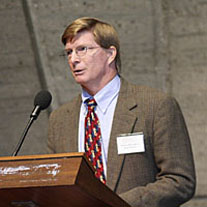
Mangone Center for Marine Policy,
1. There is an important need
University of Delaware and Secre-
and opportunity for building
tariat, Global Forum on Oceans,
cross-sectoral partnerships
Coasts, and Islands; Hector-Lysis
among business and industry
Kyriakidis, Managing Director,
and with other ocean stake-
Teledyne R.D. Instruments-Europe;
holders in support of the
Jose Matheickal, Technical Adviser,
sustainable use of ocean space
GloBallast Water Management
and resources, and this should
Programme, Marine Environment
be pursued by continuing to
Division, International Maritime
develop a network on ocean
Organization (IMO); Jane Mauro,
business and industry and
Biologist, PETROBAS; Cor Nobel,
sustainable development.
Secretary-General, Shipping Emis-
2. The identification and sharing
sions Abatement and Trading Asso-
of best practices within
ciation (SEAaT); Paul Nemitz, Head
industry sectors and among
of Unit, Legal Affairs, Deputy Head
different components of
of Maritime Policy Task Force, Eu-
business and industry is a
ropean Commission; Dierk Peters,
practical and useful way for
International Marketing Manager,
the private sector to interact
Sustainability Projects, UNILEVER;
on ocean sustainability.
Kathrin Runge, Marketing,
Friedrichs FeinFisch; Scott Truver,
3. In particular it would be
Group Vice President, CSSO Anteon
valuable to exchange experi-
Corporation; Takehiro Nakamura
ences, lessons learned and
(for Dr. Veerle Vandeweerd, Direc-
case studies in developing and
tor, UN Environment Programme
implementing partnerships for
(UNEP), Regional Seas Programme,
addressing conservation and
and Global Programme of Action for
sustainable use issues in the
the Protection of the Marine Envi-
marine environment.
ronment from Land-Based Activi-
4. Science and data provide a
ties); Tim Wilkins, Environment
common language and basis
Manager, International Association
for industries to interact with
of Independent Tanker Owners
each other and with other
(INTERTANKO); and John Young,
stakeholders, and there are
Marine Sound Management Team
important opportunities for
Coordinator, ExxonMobil Explora-
collaboration on undertaking
tion Company.
research to support sustainable
The Business and Industry Lead-
industry operations that would
ers Roundtable provided an oppor-
benefit a wide range of
tunity for the representatives of this
concerned parties.
Panel Chair Paul Holthus,
range of private sector entities to
5. Ocean business and industry
Executive Director, Marine
explore both the differences and the
are important globally,
Aquarium Council and
Coordinator of the Global Forum's
commonalities in the sustainable
regionally, and nationally, and
Business and Ocean Industries
development and use of the oceans.
it would be valuable to pull
Roundtable, said sustainability
requires the proactive involvement
Key issues that emerged from the
together a report highlighting
of business and industry leaders,
discussions were:
the contribution of ocean
and stressed the importance of
industries to the global
partnerships and economic
considerations.
economy.
· 58 ·
JANUARY 23-28, 2006, UNESCO, PARIS
OCEAN DONORS ROUNDTABLE
Summary prepared by Christy Loper,
U.S. National Oceanic and Atmospheric Administration
On January 23, 2006, the second
servancy; Ellen Pikitch, Pew Insti-
already set by legal and
meeting of the Ocean Donors
tute for Ocean Science; Yumiko
political instruments to which
Roundtable, hosted by the Global
Tanaka, Ocean Policy Research
states were parties (Law of the
Forum on Oceans, Coasts, and Is-
Foundation; Chua Thia-Eng,
Sea Convention; U.N. Fish
lands, and chaired by David Free-
PEMSEA; Cees van de Guchte,
Stocks Agreement, MDGs,
stone of the World Bank, was held
UNEP/GPA; and Christy Loper,
WSSD JPOI, etc). For many
in conjunction with the Third Glo-
NOAA (session rapporteur).
present, particularly those
bal Conference on Oceans, Coasts
from the public sector, there
and Islands at UNESCO headquar-
Meeting Outcomes
would be value in the monitor-
ters in Paris, France. This second
1. All recognized the impor-
ing and more systematic
meeting of the Ocean Donors
tance of awareness raising of
collection of information
Roundtable built on the discussions
ocean issues and felt there was
regarding national efforts to
held during the first Roundtable
room for collaboration and
meet of these targets. Given
meeting which was held on October
sharing of experience in this
that the next assessment of
10, 2005 in Lisbon, Portugal, as a
area and its contribution to
ocean WSSD targets would
parallel event of The Ocean Policy
resource mobilization.
not be until the CSD in 2014
Summit (TOPS) 2005: The Interna-
this was regarded by many as
tional Conference on Integrated
2. The Group encouraged the
a useful activity, which might
Ocean Policy: National and Re-
Forum to complete a compre-
be modeled on the work of the
gional Experiences, Prospects, and
hensive directory of the
World Water Forum, to be
Emerging Practices.
organizations which finance
undertaken under the auspices
ocean, coastal and small island
Participants in the second meet-
of the Global Forum on
developing states (SIDS)
ing included:Jens Ambsdorf, Light-
Oceans, Coasts, and Islands.
issues.
house Foundation; Yves Auffret,
Maritime Policy Task Force, Euro-
3. The Group recognized an
Substance
pean Commission; Ezio Bussoletti,
important need for the sharing
of the Discussion
Permanent Representative of Italy to
of information about funding
The group noted that the purpose of
UNESCO; Biliana Cicin-Sain, Uni-
activities in the Oceans,
Roundtable should be to expand the
versity of Delaware and Global Fo-
including priorities and
scale of funding for ocean issues.
rum on Oceans, Coasts, and Islands;
programmes as well as lessons
The group reviewed the report of the
Federico Cinquepalmi, Ministry for
learned, both successes and
previous Ocean Donors Roundtable
Environment and Territory, Italy;
failures. This could be through
in Lisbon and discussed some of its
Christophe Du Castel, Secretariat
a list serve (which would need
main findings.
du FFEM-AFD (French GEF); Al
to include more bodies than
Duda, GEF; Marea Hatziolos,
those attending the current
The group discussed a possible
World Bank; Arlo Hemphill, Conser-
meeting) or even a facilitated
on-going role for such a group and
vation International; Indumathie
website, perhaps constructed
its possible comparative advantage
Hewawasam, World Bank; Paul
around or in conjunction with
as the only meeting of donors, from
Holthus, Marine Aquarium Council;
the Global Forum website.
both the public and private sector,
Andrew Hudson, UNDP; Tom
4. There was recognition that the
directed at oceans, coasts and SIDS.
Laughlin, U.S. NOAA; Carl Lundin,
major priorities of the interna-
It was recognized that although do-
IUCN; Gerald Miles, Nature Con-
tional Ocean Agenda had been
nor agencies may have innovative
approaches to financing, they are not
· 59 ·

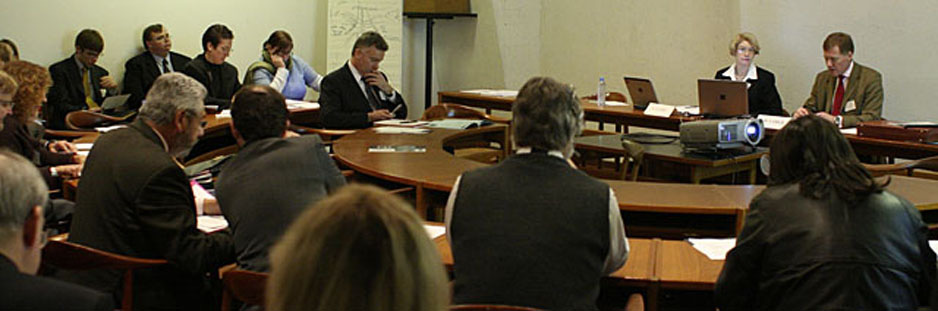
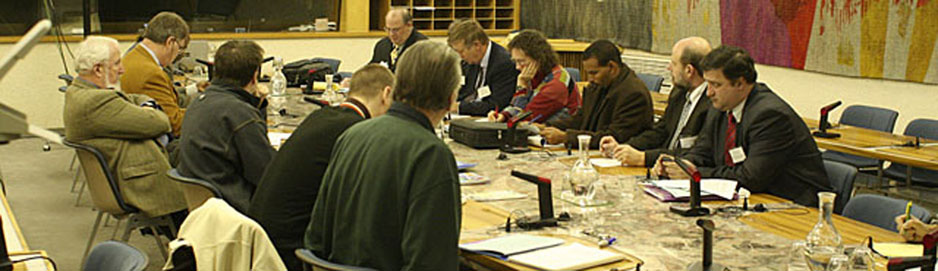
agenda setters, but responsive to the
HIV/AIDS, etc. above ocean and
also about country programmes. The
global agenda which has been set
coastal issues. Awareness raising is view was expressed that the status
and to which governments are com-
needed to illustrate the importance
of established goals and targets, and
mitted (e.g., MDGs, WSSD JPOI),
of ocean issues in this competitive
their implementation across the
and donors should bear this agenda
environment.
world was important for financiers
in mind.
to know where the bottlenecks are
Some argued that funders might
and how they might be addressed.
Some thought that a meeting of
consider financing a more settled
donors might be a useful forum for
"secretariat"-type function to sup-
The group felt that future donors
discussing innovative financing
port the Global Forum to ensure con-
meetings might be more appropri-
ideas although such a meeting
tinuity and to help sustainability. One ately timed at the end of the Confer-
might need to be organized slightly
of the activities of such a function ences after priorities had been dis-
differently. A number of ideas, issues
might include monitoring the imple-
cussed and set on major issues, so as
and approaches were raised.
mentation of goals that are already to be able to reflect on the findings
of the meeting.
It was noted that in the capacity
on the table. Ideas were expressed
building session, there are many
on the way this might be done or
needs that are not being met. For
whether it would be appropriate.
example, a serious hurdle in many
Sharing of information between
countries comes about when there
funders was seen as an important and
are multiple problems that need to
highly useful activity, whether
be addressed. Governments will in-
through a list server or website. Not
evitably prioritize healthcare, roads,
only information about financing but
· 60 ·
JANUARY 23-28, 2006, UNESCO, PARIS
ENGANGING DECISION MAKERS AND THE PUBLIC
Summary prepared by Miriam Balgos,
Global Forum on Oceans, Coasts, and Islands
public, and convey these
During the Third Global Confer-
27 following the panel presentations.
recommendations to the World
ence, several dialogue sessions and
Immediately following the Third
Ocean Network workshop
a panel addressed the issue of en-
Global Conference, the World Ocean
following the Global Confer-
gaging the public and decision mak-
Network (WON) hosted the Third
ence.
ers in oceans issues. The goals of
International Meeting: Acting to-
the session on Engaging Decision
The panel was chaired by Mr.
gether for the Future of the Blue
Makers and the Public were to:
Philippe Valette, Managing Director,
Planet, from January 29 - February
NAUSICAA-National Sea Centre,
· Demonstrate the value of
1, 2006 at NAUSICAA, Centre Na-
France, and Chair, the World Ocean
mobilizing decision makers
tional de la Mer, Boulogne sur Mer,
Network. Overview presentations
and the public in the ocean
France. The event was organized
were given by Mr. Philippe Valette,
governance planning and
under the aegis of the IOC/UNESCO
and Ms. Marie-Laure de Lange,
decision making process;
and included the participation of
Communications Consultant,
Jean-Michel Cousteau, chair of the
· Identify effective means to
SeaWeb. Panelists included Dr.
World Ocean Network Committee of
communicate the value of
Dann Sklarew, Director, GEF IW:
Honour.
marine resources and the
LEARN; Dr. Ram Boojh, Centre of
benefits of their use and
The World Ocean Network and its
Environment Education, India; Dr.
conservation to
partners invited Global Conference
Guillermo Garcia Montero, Presi-
decisionmakers and the
participants to participate in the
dent, National Aquarium, Cuba, and
public; and
Third International Meeting. All or-
National Intergovernmental Oceano-
ganizations reaching out to the gen-
· Discuss tangible options for
graphic Commission Committee;
eral public were encouraged to par-
cooperation in ocean informa-
and Dr. Peter Neill, Director, The
ticipate in the meeting to help fur-
tion and education.
World Ocean Observatory, United
ther develop a global campaign to
The expected outcomes of the
States.
raise public awareness and an action
session were as follows:
A special presentation titled The plan for the sustainable use of the
· Draw the attention of confer-
Public and the Oceans: A Long-
ocean.
ence participants on the need
Term Strategy for Mobilizing Pub-
Participants at the meeting and
for enhanced ocean informa-
lic Support for the Global Oceans
experts from the Global Forum on
tion and education and
Agenda was also given on January
Oceans, Coasts and Islands had the
engage them to support/take
24 by Mr. Philippe Valette. In addi-
opportunity to state their priorities
part in such activities and
tion, a related dialogue session on
regarding sustainable use of the
programs; and
Mobilizing Stakeholders and the
ocean. The participants also shared
Public Towards Fisheries
· Develop a specific program of
results of the joint activities con-
Sustainability, organized Dr.
work on education and
ducted since the 2nd International
Leonard Sonnenschein, World
information related to
Meeting in 2002, and planned fur-
Aquarium, USA was held on Janu-
advancement of the global
ther cooperation for the next three
ary 23 and a second dialogue ses-
oceans agenda for
years.
sion on Engaging decisionmakers
decisionmakers and the
and the public was held on January
A full report of the World Ocean Network Third International meeting can be found on the World Ocean
Network website at: http://www.worldoceannetwork.org.
· 61 ·

ABOUT THE GLOBAL FORUM
The Global Forum on Oceans,
scientific/technical, industry,
Coasts, and Islands, UNESCO,
Coasts, and Islands, created at the
foundations), and others to
Paris, November 12-14, 2003
World Summit on Sustainable
effectively implement, at
and Subsequent
Development in Johannesburg in
national and regional levels,
Developments (May 2004)
September 2002, aims to advance
major international agreements
4. Global Multilateral
the interests of oceans
on oceans, especially the
Environmental Agreements
incorporating 72% of the Earth;
commitments made in the Plan
and Small Island Developing
coasts the home of 50% of the
of Implementation of the
States (2004)
world's population; and islands
World Summit on Sustainable
5. Voluntary Partnership
44 of the world's nations are small
Development, commitments
Initiatives from the 2002
island developing states which are
from Agenda 21, and other
World Summit on Sustainable
especially dependent on the
related agreements;
Development and Small
oceans. The Global Forum is
2.
Work as a catalyst to mobilize
Island Developing States
composed of experts from
knowledge, resources, and
(2003) (also in Spanish)
governments, intergovernmental
organizational action to
6. A Guide to Oceans, Coasts
and international organizations,
advance the global oceans
and Islands at the World
and nongovernmental
agenda;
Summit on Sustainable
organizations (environmental,
3.
Raise the international profile
Development: Integrated
scientific/technical, industry, and
of oceans, coasts, and islands
Management from Hilltops to
foundations) with the common goal
in all relevant global, regional,
Oceans (2002)
of encouraging the sustainable
and sub-regional fora and
7. Ensuring the Sustainable
development of oceans, coasts,
mobilize resources to address
Development of Oceans and
and islands.
these issues;
Coasts: A Call to Action. Co-
4.
Mobilize public awareness on
Chairs' Report, the Global
The Global Forum responds to
oceans, coasts, and islands,
Conference on Oceans and
major needs at the international
and promote information
Coasts at Rio+10, Paris,
scale:
sharing and dissemination.
UNESCO, December 3-7, 2001
· Promotion of cross-sectoral
(2001)
dialogue on ocean and coastal
Publications and Internet Services
8. Ministerial Perspectives on
issues;
by the Global Forum on Oceans,
Oceans and Coasts at Rio+10
· Promotion of dialogue among
Coasts, and Islands
(2001)
governments,
1. Small Islands, Large Ocean
9. Reports of the Conference
nongovernmental
States: A Review of Ocean and
Working Groups, The Global
organizations,
Coastal Management in Small
Conference on Oceans and
intergovernmental
Island Developing States
Coasts at Rio+10, Paris,
organizations, the private
since the 1994 Barbados
UNESCO, December 3-7, 2001
sector, and scientific
Programme of Action for the
(2001)
institutions;
Sustainable Development of
10. Internet
services:
· A mechanism for oceans
Small Island Developing
www.globaloceans.org
advocacy at the highest
States (SIDS) (2005)
provides a variety of
political levels; and
2. Climate Change and Energy
information services on global,
· A venue for linking oceans
Issues in Small Island
regional, and national
and freshwater concerns
Developing States (2005)
developments related to
3. Mobilizing for
oceans, coasts, and islands
The major goals of the Global
Implementation of the
11. Global Forum Newsletter, an
Form are to:
Commitments Made at the
electronic newsletter, is
1. Work
together
with
2002 World Summit on
published every four months
governments, international
Sustainable Development on
(available on
and intergovernmental
Oceans, Coasts, and Small
www.globaloceans.org)
organizations,
Island Developing States
nongovernmental
Co-Chairs' Report of the 2003
organizations (environmental,
Global Conference on Oceans,
· 62 ·
JANUARY 23-28, 2006, UNESCO, PARIS
LIST OF PARTICIPANTS
THIRD GLOBAL CONFERENCE ON OCEANS, COASTS, AND ISLANDS
MOVING THE GLOBAL OCEANS AGENDA FORWARD
JANUARY 23-28, 2006, UNESCO, PARIS
Prof. Lahsen ABABOUCH
Dr. Aydin Sefa AKAY
Mr. Nelson ANDRADE-
Prof. Frida ARMAS-
Service Chief, Fish
Legal Counsellor
COLMENARES
PFIRTER
Utilization and Marketing
Turkish Representation to
Coordinator
Professor Public
Service
UNESCO
United Nations Environment
International Law
Food and Agriculture
Paris, FRANCE
Programme CAR/RCU
Austral University
Organization
Kingston, JAMAICA
Buenos Aires,
Rome, ITALY
Mr. Fernando ALMUNA
ARGENTINA
Undersecretary of Navy
Dr. Stefano ANGELINI
Prof. Katarina
National Commission on the
Educational Officer
Mr. Russell ARTHURTON
ABRAHAMSSON
Use of Chilean Coastline
Acquario di Genova
Independent Consultant
Chair Swedish IOC / IHP
Office
Acquario di Genova Area
Coastal Geoscience
Committee
Santiago, CHILE
Porto Antico Ponte
Leics, UNITED
Chalmers University of
Spinola
KINGDOM
Technology
Dr. Porfirio ALVAREZ-
Genova, ITALY
Goteborg, SWEDEN
TORRES
Mr. Alfonso ASCENCIO
Director for Regional
Dr. Manuel Lobo
HERRERA
Ms. Imad-Eldin
Integration
ANTUNES
Second Secretary, Legal
ABUGESSAISA
Ministry of Environment
State Secretary for National
Subjects
Ph.D Student
and Natural Resources
Defense and Maritime
Permanent Mission of
Linkoping Universitet, IDA
SEMARNAT
Affairs
Mexico to the United
Linkoping, SWEDEN
Mexico City, MEXICO
Lisbon, PORTUGAL
Nations
New York, USA
Dr. Tim ADAMS
Mr. Jens AMBSDORF
Dr. Bo APPELGREN
Director, Marine Resources
CEO
Senior UNESCO Consultant
Ms. Margarita
Division
Lighthouse Foundation
UNESCO / IMP
ASTRALAGA
Secreatariat of the Pacific
Hamburg, GERMANY
Bolsena, ITALY
Senior Advisor
Community
Ramsar Convention
Nournea, NEW
Dr. Franco ANDALORO
Dr. Joseph ARBOUR
Secretariat
CALEDONIA
Senior Scientist, Head of
Regional Manager, Oceans
Nyon, SWITZERLAND
Sustainable use of Resources
and Coastal Manager
Dr. Ellik ADLER
Department
Department of Fisheries and
Mr. Yves AUFFRET
Senior Programme Officer
Istituto Centrale per la
Oceans
Maritime Policy Task Force
Regional Seas Programme
Ricerca Scientifica e
Nova Scotia, CANADA
European Commission
Coordinator
tecnologica Applicata al
Brussels, BELGIUM
UNEP - United Nations
Mare (ICRAM)
Dr. Salvatore ARICO
Environment Programme
Rome, ITALY
Programme Specialist
Dr. Alice AURELI
Nairobi, KENYA
Biodiversity
Programme Specialist
Mr. Celestino ANDRADE
UNESCO
Division of Water Sciences
Dr. Vera AGOSTINI
Director of Ports
United Nations University-
UNESCO
Research Scientist
Enaport
Institute for Advanced
Paris, FRANCE
Pew Institute for Ocean
Sao Tome,
Studies
Science University of
SAO TOME AND
Paris, FRANCE
Mr. Alessandro AUTIERO
Miami
PRINCIPE
Intern
Miami, Florida,
Delegation of Italy to
USA
UNESCO
Paris, FRANCE
· 63 ·

Mr. Akinlabi
Dr. Awni BEHNAM
Ms. Alice BISIAUX
Dr. Bill BRENNAN
AWOBAMISE
President
Team Leader
Deputy Assistant Secretary
Zonal Controller / Deputy
International Ocean Institute
IISD Reporting Services
for International Affairs
Director Soil Erosion, Flood
Geneva, SWITZERLAND
New York, USA
Department of Commerce,
/ Coastal Zone Management
National Oceanic and
Federal Ministry of
Ms. Nienke BEINTEMA
Mr. Robert BISSET
Atmospheric Administration
Environment
Writer-Editor
Spokesperson in Europe
Washington, DC USA
Federal Secretariat Ikolaba
IISD Reporting Services
UNEP
Oyo State, NIGERIA
New York, USA
Paris, FRANCE
Mr. Kevin BRENNAN
Deputy Permanent Delegate
Mr. Gussein BAGIROV
Mr. Fausto BELIA
Dr. Arvind Anil BOAZ
of South Africa to UNESCO
Minister
Journalist
Director General
Paris, FRANCE
Ministry of Ecology and
ANSA
South Asia Co-Operative
Natural Resources
FRANCE
Environment Programme
Dr. Peter BRIDGEWATER
Baku, AZERBAIDJAN
Colombo, SRI LANKA
Secretary General
Dr. Leah BENDELL-
Ramsar Convention on
Ms. Ritia BAKINETI
YOUNG
Mr. Arthur BOGASON
Wetlands
National Coordinator
Professor
Chairman
Gland, SWITZERLAND
Kiribati International Waters
Biological Sciences, Simon
World Forum of Fish
Project
Fraser University
Harvesters and Fish Workers
Dr. Noel BROWN
Tarawa, KIRIBATI
British Columbia,
Reykjavik, ICELAND
Member of IOI Board of
CANADA
Governors, Director of IOI
Dr. Miriam C. BALGOS
Dr. Ram BOOJH
Training Program
Program Coordinator
Ms. Nancy BENNET
Scientist in Charge
IOI Canada
Global Forum on Oceans,
Coordinator IGR-2
Centre for Environment
Connecticut, USA
Coasts and Islands
United Nations Environment
Education
Gerard J. Mangone Center
Programme / Global
Lucknow, INDIA
Prof. Ezio BUSSOLETTI
for Marine Policy
Programme of Acion
Italian Delegation to
University of Delaware
Coordination Office
Mr. Victor Manuel
UNESCO
Delaware, USA
The Hague, THE
BORGES
Paris, FRANCE
NETHERLANDS
Deputy Minister of
Mr. Richard BALLHORN
Fisheries
Prof. Lucila CANDELA
Director General Legal
Ms. Dominique
Ministry of Fisheries
Professor
Affairs Bureau
BENZAKEN
Maputo, MOZAMBIQUE
Technical University of
Department of Foreign
Secretariat of the Pacific
Catalonia UPC
Affairs
Regional Environmental
Mr. Junio Fabrizio
Gran Capitan s.n.
Ontario, CANADA
Programme
BORSANI
Barcelona, SPAIN
Apia, SAMOA
Senior Research Specialist
Dr. Rhoda BALLINGER
ICRAM
Mr. Mark CANEY
Lecturer
Mr. Marco Polo BERNAL
Rome, ITALY
Vice President, Training,
Cardiff University
Coordinator
Education and Memberships
Wales, UNITED
Subcomite Ciencias Del Mar
Mr. Tim BOSTOCK
PADI International Ltd.
KINGDOM
SEP-IPN
Fisheries Advisor
Bristol, UNITED
Department for International
KINGDOM
Mr. Eric BANEL
Ms. Aurdra BERGAITINI
Development
Commissariat General au
Journalist
London, UNITED
Mr. Ralph CANTRAL
plan
ANSA
KINGDOM
Chief, National Policy and
Paris, FRANCE
Paris, FRANCE
Exploration
Mr. Ben BRADSHAW, MP
NOAA, Office of Ocean and
Mr. Julian BARBIERE
Mr. Johannes BERQUE
Minister for Local
Coastal Resource
Intergovernmental
Consultant
Environment, Marine, and
Management
Oceanographic Commission
Intergovernmental
Animal Welfare
Maryland, USA
(IOC)
Oceanographic Commission
Department for
United Nations Educational,
Paris, FRANCE
Environment, Food and
Mr. Giovanni
Scientific & Cultural
Rural Affairs, United
CAPRARICA
Organization (UNESCO)
Mr. Daniel BIRCHALL
Kingdom Nobel House
Journalist
Paris, FRANCE
Digital Editor
London, UNITED
RAI
IISD Reporting Services
KINGDOM
Mr. Martin BAUMER
New York, USA
Journalist
Dr. Charlotte BREIDE
RFO Paris
Solicitor, Legal Advisor
Paris, FRANCE
London, UNITED
KINGDOM
· 64 ·
JANUARY 23-28, 2006, UNESCO, PARIS
Mr. Sergio Roman
Dr. Nguyen CHU HOI
Mr. Gheorghe
Mr. Carlos CUETO
CARRANZA FORSTER
Director
CONSTANTIN
Conseiller
Technical Counsellor Legal
Vietnam Institute of
Director
Peruvian Delegation to
Advisor
Fisheries Economic and
Ministry of Environment
UNESCO
Office of the Legal Adviser
Planning, Ministry of
and Water Management
Paris, FRANCE
Ministry of Foreign Affairs
Fisheries
Bucharest, ROMANIA
and Cooperation
Hanoi, VIETNAM
Dr. Luc CUYVERS
Madrid, SPAIN
Ms. Emily CORCORAN
Executive Producer
Dr. CHUA Thia-Eng
Programme Officer
MN Films
Ms. Margaret CATLEY-
Regional Programme
UNEP WCMC
Deurne, BELGIUM
CARLSON
Director
Cambridge, UNITED
Chair
Global Environment Facility
KINGDOM
Mr. Aristides Ocante DA
Global Water Partnership
United Nations
SILVA
Stockholm, SWEDEN
Development Programme
Dr. Robert CORELL
Ministre des Ressources
Partnerships in
Chair of the Arctic Climate
Naturelles
Ms. Christine CAUSSE
Environmental Management
Impact Assessment (ACIA)
Ministere des Ressources
Scientific Advisor
for the Seas of East Asia
Grasonville, MD, USA
Naturelles Boite Bissau,
NAUSICAA, Centre
(PEMSEA)
GUINEA-BISSAU
National de la Mer
Quezon City, PHILIPPINES
Mr. Bruno CORREARD
Boulogne Sur Mer,
Manager for Sustainable
Mr. John DANVERS
FRANCE
Dr. Biliana CICIN-SAIN
Marine Resources
Academic Director
Director
Carrefour Group
Diplomatic Acadamy
Dr. Alessandra
Gerard J. Mangone Center
Levallois-Perret, FRANCE
FL, USA
CAVALETTI
for Marine Policy
Italian Ministry of
University of Delaware; and
Mr. Aldo COSENTINO
Ms. Paola DEDA
Environment and Territory
Co-Chair and Head of
Director General
Inter-Agency Liaison Officer
Rome, ITALY
Secretariat, Global Forum on
Ministry for Environment
Convention on Migratory
Oceans, Coasts, and Islands
and Territory
Species (UNEP)
Mr. Lucien CHABASON
University of Delaware
Rome, ITALY
Bonn, GERMANY
Senior Advisor
Delaware, USA
Institut du developpement
Prof. Rui COUTINHO
Mr. Xavier DE LA GORCE
durable et des relations
Mr. Federico
Assistant Professor
Secretaire general de la mer
internationals (IDDRI)
CINQUEPALMI
Universidade dos Acores
Paris, FRANCE
Paris, FRANCE
Expert
Centro de Vulcanologia e
Ministry for Environment
Avaliacao de Riscos
Mr. Richard DELANEY
Dr. Russell CHAPMAN
and Territory
Geologicos
Executive Vice President
Center for Marine
Rome, ITALY
Ponta Delgada,
Horsley Witten Group
Biodiversity and
PORTUGAL
Massachusetts, USA
Conservation
Mr. Manuel CIRA
Scripps Institution of
World Ocean Network,
Mr. Robert COX
Ms. Marie-Laure DE
Oceanography 0202
Coordinator
Technical Manager
LANGHE
University of California, San
Head of Cultural Services
IPIECA
Communications Consultant
Diego, California, USA
NAUSICAA, Centre
London, UNITED
SeaWEB
National de la Mer
KINGDOM
Paris, FRANCE
Mr. Tarik CHEKCHAK
Boulogne Sur Mer,
Project Leader
FRANCE
Ms. Valerie CUMMINS
Mr. Alexandre DE
The Cousteau Society
Manager
LICHTERVELDE
Paris, FRANCE
Ms. Clelia CIRVILLERI
Coastal and Marine
Expert, International Affairs
Journalist
Resources Centre
Federal Environment
Ms. Pornsook
Liberazione
Naval Base, Haulbowline
Ministry
CHONGPRASITH
Rungashiddy, IRELAND
Brussels, BELGIUM
Director of Marine
Dr. Harlan COHEN
Environment Division
IUCN The World
Mr. Joel DE LA CRUZ
Dr. Annick DE MARFFY
Pollution Control
Conservation Union
Director de Operaciones
Former Director of Division
Department
Washington, DC USA
Instituto de Relaciones
of Ocean Affairs and Law of
Bangkok, THAILAND
Internacionales Derechos y
the Sea
Mr. John CONNELLY
Medio Ambiente
United Nations International
President
Santo Domingo,
Consultant
National Fisheries Institute
DOMINICAN REPUBLIC
United Nations
McLean, VA, USA
Mandelieu La Napoule,
FRANCE
· 65 ·

Dr. Christian
Mr. Christophe DU
Ms. Maria FERRARO
Dr. Jordi GALOFRE
DEPRAETERE
CASTEL
Environmental Specialist
Head of Tarragona Coastal
Researcher
French Development
Enispa Exploration
Service
Institut de Rechercher pour
Agency Group
Production Div.
Coastal Directorate
le developpement (IRD)
FRANCE
Via Emilia 1
Ministry of Environment
LTHE P53
San Donato Milanese- MI
Pl. Imperial Tarraco, 4-4
Grenoble, FRANCE
Dr. Sylvia EARLE
Milano, ITALY
Tarragona, SPAIN
Executive Director of the
Dr. Ehrlich DESA
Global Marine Division
Mr. Nuno FERREIRA
Dr. Patricia
Head of IOC Capacity
Conservation International
Commander
GALLAUGHER
Building
Washington, DC USA
Ministry of Defense
Director
Intergovernmental
Lisbon, PORTUGAL
Centre for Coastal Studies,
Oceanographic Commission
Mr. Charles EHLER
Simon Fraser University
of UNESCO
President
Ms. Laure FOURNIER
British Columbia,
Paris, FRANCE
Ocean Visions
World Ocean Network,
CANADA
Annapolis, Maryland, USA
Consultant
Ms. Dielika DIALLO
NAUSICAA, Centre
Ms. Nathalie GAMAIN
Administrative Officer
Ms. Kari EIK
National de la Mer
Communications Director
UNESCO/WHBT
Implementation and
Boulogne Sur Mer,
Marine Aquarium Council
Paris, FRANCE
Communication Specialist
FRANCE
FRANCE
United Nations
Dr. Antonio DI NATALE
Development Programme /
Dr. Anamarija FRANKIC
Dr. Serge Michel GARCIA
Scientific Responsible and
Global Environment Facility,
Advisor to Government of
Director, Fishery Resources
Secretary General
Danube Regional Project
Croatia
Division, Fisheries
Fondazione Acquario di
Vienna, AUSTRIA
Assistant Professor
Department
Genova ONLUS
University of
Food and Agriculture
Acquario di Genova Area
Dr. Werner EKAU
Massachusetts, Boston,
Organization of the United
Porto Antico Ponte
Director, International
Massachusetts, USA
Nations
Spinola
Ocean Institute Germany
Viale delle Terme di Caracalla
Genova, ITALY
Zentrum fur Marine
Dr. Masa FRANKOVIC
Rome, ITALY
Tropenokologie
PermanentDelegation to
Prof. Salif DIOP
Fahrenheitstr. 6
UNESCO for Croatia
Mr. Guillermo GARCIA
Senior Environmental Affairs
Bremen, GERMANY
Ministry of Foreign Affairs
MONTERO
Officer
A1 Rue Lridllies
Presidente
United Nations Environment
Mr. Fourbi EMMANUEL
Paris, FRANCE
Comite Oceanografico
Programme
IRAIN
Nacional
Nairobi, KENYA
Paris, FRANCE
Mr. Louis FREBAULT
Vice Chair of IOCARIBE
Ministre du developpement
Habana, CUBA
Mr. Henri DJOMBO
Mr. Jens ENEMARK
des Archipels
Minister
Secretary General
FRENCH POLYNESIA
Ms. Carine GENDROT
Ministry of Economics,
Common Wadden Sea
Ministry of Ecology and
Fisheries, and Environment
Secretariat
Prof. David FREESTONE
Durable Development
CONGO
Wilhelmshaven,
Deputy General Counsel,
(MEDD)
GERMANY
Advisory Services
Paris, FRANCE
Ms. Fanny DOUVERE
The World Bank
Consultant
Ms. Elizabethann
Washington, DC USA
Mr. Hamidreza
UNESCO, Man and the
ENGLISH
GHAFFARZADEH
Biosphere
Foreign Affairs Specialist/
Ms. Anne FRENETTE
Project Manager, Global
Paris, FRANCE
Knauss Sea Grant Fellow
Senior Officer
Environment Facility
NOAA Fisheries
International Instruments
Funded Project, CEPSAP
Dr. Maitree
Silver Spring, MD, USA
Fisheries and Oceans Canada
under the Caspian
DUANGSAWASDI
Ontario, CANADA
Environment Programme
Director-General
Ms. Laura FAXAS
United Nations
Department of Marine and
Ambassador of the
Dr. Massmio GABELLINI
Development Programme /
Coastal Resources
Dominican Republic to
Department Head
United Nations Office for
Bangkok 10400
UNESCO
Istituto Centrale per la
Project Services
THAILAND
Paris, FRANCE
Ricerca Scientifica e
Tehran, IRAN
tecnologica Applicata al
Dr. Alfred DUDA
Mare (ICRAM)
Ms. Fathimath GHINA
Senior Advisor
Rome, ITALY
Assistant Program Specialist
Global Environment Facility
UNESCO
Secretariat
Paris, FRANCE
Washington, DC USA
· 66 ·
JANUARY 23-28, 2006, UNESCO, PARIS
Ms. Mariella
Ms. Sarah GOTHEIL
Ms. N. Barbara
Dr. Yves HENOCQUE
GIANNETTA
Intern Global Marine
HANCHARD
European Union Co-
Journalist
Programme
Project Coordinator UNDP-
Director and Team Leader
Agra Press
The World Conservation
GEF Oceanic Fisheries
Coastal Habitats and
Union
Management Project
Resources Management
Mr. Matthew GIANNI
Gland, SWITZERLAND
Pacific Islands Forum
Department of Fisheries
Political Advisor
Fisheries Agency
Kaset Klang, Chatuchak
Deep Sea Conservation
Mr. Domingos GOVE
Honiara, SOLOMON
Bangkok, THAILAND
Coalition
National Director
ISLANDS
Cliostrant 29V
Fisheries Research Institute
Dr. Indumathie
Amsterdam,
Av. Mao Tse Tung
Mr. Pham HAO
HEWAWASAM
NETHERLANDS
Maputo, MOZAMBIQUE
Deputy Director General
Senior Environmental
Department of International
Specialist
Mr. Tullio GIANNOTTI
Dr. Michel GOUJON
Law and Treaties, Ministry
The World Bank
Journalist, ANSA
Counselor
of Foreign Affairs of
Washington, DC USA
CNPMEM
Vietnam
Mr. Xavier GIZARD
Paris, FRANCE
Hanoi, VIETNAM
Mr. Michel HIGNETTE
Secretary General
President
Conference of Peripheral
Mr. Jose GOUVEIA
Mr. James HARDCASTLE
Aquarium de la Porte Doree,
Maritime Regions
Head of Division
Chief Technical Advisor
French Union of Aquarium
Rennes, FRANCE
Portuguese Maritime
The Nature Seychelles
Curators
Authority General
Mahe Island, SEYCHELLES
Paris, FRANCE
Ms. Kristina GJERDE
Directorate
High Seas Policy Advisor
Lisbon, PORTUGAL
Dr. Marea E. HATZIOLOS
Ms. Shelby
IUCN The World
Senior Coastal and Marine
HOCKENBERRY
Conservation Union
Mr. Alistair GRAHAM
Specialist
Coordinator
Konstancin-Chylice,
Consultant
Environment Department
Gerard J. Mangone Center
POLAND
World Wide Fund for Nature
MC5-512
for Marine Policy
Cygnet, AUSTRALIA
The World Bank
301 Robinson Hall
Prof. Bernhard GLAESER
Washington, DC USA
University of Delaware
Professor
Mr. Arthur GRAY
Delaware, USA
Social Science Research
Organization of Eastern
Ms. Margaret HAYES
Center Berlin (W28)
Caribbean States (OECS)
Director, Office of Oceans
Mr. Jens HOFFMANN
Berlin, GERMANY
Castries, ST. LUCIA
Affairs
Scientific Assistant
U.S. Department of State
University of Applied
Dr. Marion GLASER
Dr. Silvestro GRECO
Washington, DC USA
Sciences Neubrandenburg
Senior Social Scientist
Senior Scientist
Neubrandenburg,
Center for Tropical Marine
Istituto Centrale per la
Dr. Olive HEFFERNAN
GERMANY
Ecology
Ricerca Scientifica e
Associate Editor
Bremen, GERMANY
tecnologica Applicata al
Institute of Marine
Mr. Paul HOLTHUS
Mare (ICRAM)
Engineering, Science and
Executive Director
Eng. Ernesto Julio
Rome, ITALY
Technology
Marine Aquarium Council
GODELMAN
London, UNITED
Hawaii, USA
Chairman
Mr. Rusudan GRIGOLIA
KINGDOM
Center for Development and
Filmmaker / Documentalist
Dr. Andrew HUDSON
Sustainable Fisheries
IOI Canada Training
Dr. Sherry HEILEMAN
Principal Technical Advisor,
Buenos Aires,
Program
Private Consultant
International Waters
ARGENTINA
New York, USA
Paris, FRANCE
United Nations
Development Programme
Dr. Vladimir GOLITSYN
Mr. Jean-Didier HACHE
Mr. Arlo HEMPHILL
Global Environment Facility
Director, Division for Ocean
Executive Secretary
Manager Global Marine
New York, USA
Affairs and the Law of the
Conference of Peripheral
Division
Sea
Maritime Regions (CPMR)
Conservation International
Mr. Andrew HURD
United Nations
Rennes, FRANCE
Washington, DC USA
Senior Programme
New York, USA
Coordinator
Dr. Stefan HAIN
Mr. Stephane HENARD
IUCN The World
Mr. Langston James
Head, UNEP Coral Reef
Head of Aquariology
Conservation Union
GOREE
Unit
NAUSICAA, Centre
Gland, SWITZERLAND
Director
United Nations Environment
National de la Mer
IISD Reporting Services
Programme
Boulogne Sur Mer
Dr. Andrew HURST
New York, USA
Cambridge, UNITED
FRANCE
Policy Advisor
KINGDOM
Environment Canada
Quebec, CANADA
· 67 ·

Mr. Pavlo IGNATENKO
Mr. Arnaud JOUVE
Mr. Armand Joseph
Prof. Pierre LASSERRE
Minister
Journalist
KOKOLO
UNESCO/MAB Consultant
Ministry of Environmental
RFI
Consultant
Pierre and Marie Curie
Protection
Paris, FRANCE
Ministerie du Transport
University Paris VI
Kyiv, UKRAINE
Maritime, et de la Marine
Paris, FRANCE
Mr. Konstantinos
Marchande
Mr. Sertoli JACOPO
KALAMANTIS
Brazzaville, CONGO
Mr. Tom LAUGHLIN
Intern
Fisheries Policy Officer
Deputy Director
Italian Delegation to
European Bureau for
Prof. Klaus Peter
National Oceanic and
UNESCO
Conservation and
KOLTERMANN
Atmospheric Administration
Paris, FRANCE
Development
Head of Division, Marine
Office of International
Brussels, BELGIUM
Sciences Coordination
Affairs
Mr. Elie JARMACHE
Bundesamt f. Seeschifffahrt
Washington, DC USA
Charge de Mission
Dr. Askarbai KAMELOV
und Hydrographie
Secretariat General de la Mer
Deputy Director
Hamburg, GERMANY
Dr. David LEARY
Paris, FRANCE
Atyrau Brance of Research
Associate Lecturer
and Production Centre of
Mr. Jagdish KOONJUL
Centre for Environmental
Mr. Doan JEONG
Fisheries of the Ministry of
Ambassador
Law, Macquarie University
Project Manager
Agriculture of the Republic
Ministry of Foreign Affairs
Sydney, AUSTRALIA
Organization for Economic
of Kazakhstan
Government House
Cooperation and
Atyrau, KAZAKHSTAN
Port Louis, MAURITIUS
Mr. Fabio LEDDA
Development
Stagiaire
Paris, FRANCE
Ms. Gugu KANYILE
Ms. Tatjana KRILIC
Intergovernmental
Assistant to Deputy
Principal Inspector
Oceanographic Commission
Ms. Yu JIA
Minister
Republic of Croatia
UNESCO
Head of the Law of the Sea
Ministry of Environmental
Ministry of the Sea,
Paris, FRANCE
Division
Affairs and Tourism
Tourism, Transport, and
China Institute for Marine
Pretoria, SOUTH AFRICA
Development
Mr. Giacomo LESO
Affairs
Safety of Navigation and
Journalist
Beijing, P.R. CHINA
Ms. Shinuna KARUME
Maritime Environment
LAZ
Assistant Deputy
Proection Authority,
Mr. Magnus
Permanent Delegate
Inspection Division
Ms. Ellina LEVINA
JOHANNESSON
Tanzanian Embassy
Prisavlje, CROATIA
Climate Change Analyst
Secretary General
Paris, FRANCE
Environment Directorate,
Ministry for the
Mr. Edward KRUSE
Organization for Economic
Environment
Ms. Ingrid KELLING
International Affairs
Cooperation and
ICELAND
Fisheries Economist
Specialist, Staff Office for
Development (OECD)
Organization for Economic
International Programs
Mr. Willie JOHN
Cooperation and
National Oceanic and
Mr. Dinh Ngoc LINH
Chief Executive Officer,
Development
Atmospheric Administration
Officer
Office of the Minister of
Paris, FRANCE
Maryland, USA
Marine Affairs Department,
Marine Resources
Ministry of Foreign Affairs
Rarotonga, COOK
Ms. Lee KIMBALL
Mr. Hector-Lysis
of Vietnam
ISLANDS
Advisor
KYRIAKIDLS
Hanoi, VIETNAM
IUCN The World
Manager
Dr. David JOHNSON
Conservation Union
Teledyne R.D. Industries
Mr. Thierno LO
Head of Maritime and
Washington, DC USA
Les Nertieres
Minister
Coastal Studies
La Gaude, FRANCE
Ministry of Environment
Southampton Solent
Mr. Aleksey
Dakar,
University
KNIZHNIKOV
Ms. Jessica LANDMAN
SENEGAL
East Park Terrace
Envrionmental Programm
Senior Counsel, Science and
Southampton, Hampshire,
Coordinator
Policy
Mr. Farad LOCATE
UNITED KINGDOM
Eco Center Zapovedniki
SeaWeb / Compass
Journalist
Moscow, RUSSIA
Washington, DC USA
RFO
Mr. Harry JONAS
Paris, FRANCE
Writer/Editor
Ms. Marjaana
Ms. Josephine LANGLEY
IISD Reporting Services
KOKKONEN
Marine Scientist and socio-
Mr. Michael LODGE
New York, USA
Marine Heritage Specialist
economic researcher Blue
High Sea Task Force
UNESCO World Heritage
Ventures Conservation
Secretariat Counselor
Mr. Martin JONES
Centre
Mauritius/UK/Madagascar
Organization for Economic
World Ocean Network
Paris, FRANCE
Beaconsfield, Bucks,
Cooperation and
representative for Australia
UNITED KINGDOM
Development
Queensland, AUSTRALIA
Paris, FRANCE
· 68 ·
JANUARY 23-28, 2006, UNESCO, PARIS
Dr. Ronan LONG
Dr. Erika MAGALETTI
Mr. Gianpiero
Ms. Fiona METTAM
Director
Senior Research Scientist
MARTINOTTI
Head, Strategic Policy Team
Marine Law & Ocean Policy
Istituto Centrale per la
Journalist
Department for
Cnetre
Ricerca Scientifica e
La Republica
Environment, Food, and
Galway, IRELAND
tecnologica Applicata al
Rural Affairs
Mare (ICRAM)
Mr. Aurora MATEOS
London, UNITED
Dr. Gennaro LONGO
Rome, ITALY
IOC Programme Expert
KINGDOM
Area Chief (Environment)
UNESCO/ IOC
ICS-UNIDO
Dr. Robin MAHON
Paris, FRANCE
Mr. Carlos MICHELEN
Padriciano 99 (c/o Area
Director
Ambassador Director of
Science Park)
Centre for Resource
Mr. Jose MATHEICKAL
Oceanography National
Trieste, ITALY
Management and
Project Manager Globallist
Commission
Environment Studies
International Maritime
Av. Independencia #752
Ms. Christy LOPER
University of the West
Organization
Santo Domingo,
Knauss Marine Policy
Indies
London, UNITED
DOMINICAN REPUBLIC
Fellow
Cave Hill, St. Michael,
KINGDOM
National Oceanic and
BARBADOS
Mr. Paul MIFSUD
Atmospheric Administration
Ms. Jane MAURO
United Nations Environment
Maryland, USA
Mr. Fred MAKINDI
Biologist
Programme / Mediterranean
Deputy Permanent Delegate
Petroleo Brasileiro S.A.
Action Plan
Mr. Stephane LOUHAUR
to UNESCO
PETROBRAS
Athens, GREECE
Diplomat
Kenya Embassy Paris
Rio de Janeiro, BRAZIL
Ministry for Foreign Affairs
Paris, FRANCE
Dr. Yuriy
Paris, FRANCE
Mr. Franklin McDONALD
MIKHAYLICHENKO
Dr. Vladimir MAMAEV
Advisor / Coordinator
Consultant
Mr. John LOW
Regional Technical Advisor
United Nations Environment
Ministry of Economic
Director
UNDP / GEF
Programme
Development and Trade of
APA Consultancy
Bratislava, SLOVAK
Kingston, JAMAICA
the Russian Federation
Suva, FIJI
REPUBLIC
Moscow, RUSSIA
Ms. Bernice McLEAN
Mr. Damiano LUCHETTI
Ms. Marijana MANCE
Environmental Consultant
Dr. Andre-Serge
Expert
Head of International
Johannesburg, SOUTH
MIKOUIZA
Ministry for Environment
Relations Department
AFRICA
Deputy Director, Executive
and Territory
Ministry of Environmental
Secretary
Rome, ITALY
Protection, Physical
Prof. Jan MEES
International Ocean Institute
Planning and Conservation
Director
Operational Center of
Mr. Carl Gustaf LUNDIN
Zagreb, CROATIA
Flanders Marine Insitute
Caspian Sea
Head, IUCN Marine
Wandelaarkaai 7
Astrakhan State Technical
Programme
Mr. Sami MARROUKI
Oostende, BELGIUM
University
IUCN The World
Immeuble Abou Soufiane,
Astrakhan, RUSSIA
Conservation Union
Tunis, TUNISIA
Ms. Janot-Reine
Gland, SWITZERLAND
MENDLER de SUAREZ
Mr. Gerald MILES
Ms. Deyna MARSH
Deputy Director
Senior Advisor
Ms. Rejoice
Assistant National
GEF IWLEARN
The Nature Conservancy
MABUDAFHASI
Coordinator
Massachusetts, USA
Brisbane, Queensland,
Deputy Minister
Cook Islands International
AUSTRALIA
Ministry of Environmental
Waters Project
Mr. Steve MENZIES
Affairs and Tourism
Avarua, Rarotonga,
Communications Specialist
Ms. Fernanda MILLICAY
Pretoria, SOUTH AFRICA
COOK ISLANDS
International Waters Project
18th Hamilton Shirley
Secretariat of the Pacific
Amerasinghe Fellowship on
Dr. Ismael MADRIGAL-
Mr. Atherton MARTIN
Regional Environment
the Law of the Sea
MONARREZ
President
Programme
Buenos Aires,
Person Responsible for the
Caribbean Conservation
Apia, SAMOA
ARGENTINA
Sector of Sciences
Association
Permanent Delegation of
Roseau, DOMINICA
Ms. Anna Maria MERLO-
Mr. Jean-Francois
Mexico to UNESCO
POLI
MINSTER
Paris, FRANCE
Mr. Marc-Antoine
Journalist
Directeur Scientifique
MARTIN
Manifesto
General
General Secretary French
Centre National de la
Global Environment Facility
Recherche Scientifique
Agence Frangaise de
Paris, FRANCE
Deseloppement
Paris, FRANCE
· 69 ·

Mr. Alfredo MIRANDA
Mr. Shavhani
Dr. Peter NEILL
Madame Nelly OLIN
Deputy Permanent Delegate
MUKWEVHO
Director
French Minister of the
Delegation of Mexico to
Deputy Director
World Ocean Observatory
Environment and Sustainable
UNESCO
Marine and Coastal
New York, USA
Development Programme
Paris, FRANCE
Management
Paris, FRANCE
Department of
Mr. Paul NEMITZ
Mr. Ali MOHAMED
Environmental Affairs and
Deputy Head of the
Dr. Iouri OLIOUNINE
Coordinator
Tourism
Maritime Policy Task Force
Executive Director
NEPAD Coastal & Marine
Cape Town, SOUTH
European Commission
International Ocean Institute
Secretariat
AFRICA
Brussels, BELGIUM
University of Malta
Nairobi, KENYA
Msida, MALTA
Ms. Patricia MUÑOZ
Dr. Magnus NGOILE
Mr. Sebastien
Researcher
Director General
Amb. Rachel OMAMO
MONCORPS
National Polytechnic
National Environment
Ambassador
Director
Institute
Management Council
Kenya Embassy Paris
Comite francais pour IUCN
Av. Luis Enrique Erro s/n,
Dar Es Salaam, TANZANIA
Paris, FRANCE
Paris, FRANCE
Secretaria Academica
Mexico City, MEXICO
Ms. Leah NIMOHO
Mr. Brian O'RIORDAN
Ms. Jennifer MOONEY
International Waters Project
Brussels Office Secretary
International Policy Analyst
Mr. Joseph Konzolo
Country Coordinator
ICSF-CIAPA
Fisheries and Oceans Canada
MUNYAO, M.P.
Vanuatu Environment Unit
Rixensart, BELGIUM
Ontario, CANADA
Minister
VANUATU
Ministry of Livestock and
Dr. Michael John
Ms. Janick MORICEAU
Fisheries
Mr. C. NOBEL
O'TOOLE
Vice President: council
Nairobi, KENYA
Secretariat General SEAat
Chief Technical Advisor
regional de bretagne France
SEAat
BCLME Programme
FRANCE
Ms. Larysa
Hellevoesluis, THE
(UNOPS)
MYRONENKO
NETHERLANDS
Windhoek, NAMIBIA
Mr. Robert MOSS
Permanent Delegate Deputy
Head of Admiralty
Permanent Delegation of
Mr. Rudolf NORONHA
Mr. Mohamed Mahmoud
Consultancy Division of
Ukraine to UNESCO
Director
OULD DAHI
United Kingdom
Paris, FRANCE
Ministry of the
President
Hydrographic Office
Environment of Brazil
Clean Beach
Admiralty Way
Mr. Takehiro
Esplanada Dos Ministerios
Nouakchott,
Somerset, UNITED
NAKAMURA
Brasilia, BRAZIL
MAURITANIA
KINGDOM
Project Management Officer
International Waters
Mr. Timothy NOVIELLO
Mr. Daniel OWEN
Ms. Rahma
United Nations Environment
Communications Associate
Barrister
MSHANGAMA
Programme
for Defying Ocean's End
Fenners Chambers
Principal Secretary
Nairobi, KENYA
Conservation International
Cambridge, Cambridgeshire
Ministry of Agriculture,
Washington, DC USA
England, UNITED
Livestock, and Environment
Mr. Jungho NAM
KINGDOM
Zanzibar,
Senior Researcher
Ms. Margarida NUNES
TANZANIA
Korea Maritime Institute
Coastal Management
Amb. Albert OWUSU-
Seoul, REPUBLIC OF
Commissao de Coordenacao
SARPONG
Ms. Magdalena AK MUIR
KOREA
e Denvolvimento Regional
Ghana Ambassador to
Advisory Board Member,
do Centro
France Ambassade Du
Climate Change
Mr. Massimo NAVA
PORTUGAL
Ghana
EUCC-Coastal Union
Journalist
Paris, FRANCE
Research Associate
Corriere Della Sera
Mr. Andreas NYMAN
Arctic Institute of North
Research Scientist
Ms. Viviana PALANCA
America
Dr. Abdoulaye NDIAYE
Galonvaben 48
Officer
London, UNITED
Head of the Wetlands and
Bromma, SWEDEN
Ministry for Environment
KINGDOM
marine Protected Areas
and Territory
Division
Dr. Lennart NYMAN
Rome, ITALY
National Director of Parks /
Former Conservation
Ministry of Environment
Director, WWF-Sweden
Ms. Francesca
and Nature Protection
Bromma, SWEDEN
PALMISANI
Dakar, SENEGAL
Researcher
Fondazione Eni Enrico
Mattei
Milan, ITALY
· 70 ·
JANUARY 23-28, 2006, UNESCO, PARIS
Amb. Gunnar PALSSON
Dr. Ellen PIKITCH
Mr. Peter PROWS
Ms. Elisa RAVAIOLI
Director of Natural
Executive Director
Adviser, Law of the Sea
Staitaire
Resources and
Pew Institute for Ocean
Permanent Mission of Palau
Delegation of the sumes of
Environmental Affairs
Science
to the United Nations; J.M.
UNESCO
Ministry for Foreign
New York, USA
Kaplan Fund; NYU Institute
Paris, FRANCE
Reykjavik, ICELAND
for International Law and
Ms. Daniela PINTO
Justice
Ms. Silvano REINA
Mr. Francisco PATTO
Researcher
New York, USA
Journalist
Diplomatic Attache of the
GAE
Agenzia Giornalistica
Secretary of State for
Rio de Janeiro, BRAZIL
Mr. Gregory
Italiana
Defense
PSYCHOYOS
Ministry of Defense
Prof. Alain PIQUEMAL
Consulting
Ms. Saskia RICHARTZ
Lisbon, PORTUGAL
International Ocean Institute
GEA-Cyclades
European Union Oceans
Govering Board Member
Chora Mykonos, GREECE
Policy Advisor
Mr. Rolph PAYET
Faculty of Law
Greenpeace European Unit
Principal Secretary
University of Nice
Mr. Jean-Luc PUJOL
Brussels, BELGIUM
Ministry of Environment
Nice, FRANCE
Center of Strategy for Prime
and Natural Resources
Minister
Dr. Peter RICKETTS
Victoria, Mahe,
Mr. Roland PITTAR
Paris, FRANCE
Professor of Geography
SEYCHELLES
Minister Counsellor
University of British
(Agriculture)
Dr. Shaminder PURI
Columbia
Mr. Lelei PEAU
Australian Delegation to the
UNEP DGEF Task
British Columbia,
Deputy Director,
OECD
Manager "Groundwater"
CANADA
Department of Commerce
Paris, FRANCE
and Liaison to UNESCO
American Samoa Coastal
United Nations Environment
Ms. Lori RIDGEWAY
Management
Ms. Mary POWER
Programme DGEF
Director General,
Program
Manager, Ocean and Islands
Paris, FRANCE
International Coordination
American Samoa
Program
and Policy Analysis
Government
South Pacific Geoscience
Dr. Folco QUILICI
Fisheries and Oceans Canada
Pago Pago, AMERICAN
Commission
President
Ontario, CANADA
SAMOA
Suva, FIJI
Istituto Centrale per la
Ricerca Scientifica e
Mr. Brandon RIFF
Ms. Marina N'Deye
Prof. Ann POWERS
tecnologica Applicata al
University of Delaware
PEREIRA SILVA
Associate Professor
Mare (ICRAM)
Delaware, USA
Independent Consultant
Pace Law School
Rome, ITALY
Cape Verde,
New York, USA
Mr. Silvia RITOSSA
PORTUGAL
Mr. Domenico QUIRICO
Biodiversity Policies
Mr. Dumitru PREDA
Journalist
Comite francais pour IUCN
Dr. Dierk PETERS
Permanent Del. Of Romania
La Stampa
Paris, FRANCE
International Marketing
to UNESCO
Manager,
Deputy Perm. Delegate
Ms. Genevieve Cecilia
Ms. Julia ROBERSON
Sustainability Initiatives,
Paris, FRANCE
QUIRK
Program Associate
Frozen Foods
Consultant to UNESCO
SeaWeb
Unilever Deutschland
Ms. Judith PRIAM
Le Vesinet, FRANCE
Paris, FRANCE
GmbH
PhD, Universite de
Hamburg, GERMANY
Versailles St. Quentin en
Prof. Habib RABBANI
Mr. John ROBERTS
Yvelines
Consultant and Researcher
Head, Marine and
Ms. Carol PHUA
Versailles, FRANCE
UNESCO and St. Anne
Environment Division
Fisheries Policy Officer
Hospital University
Department for
World Wide Fund for Nature
Dr. Margi PRIDEAUX
Paris, FRANCE
Environment, Food and
(WWF) European Policy
CMS Programme Leader
Rural Affairs (Defra)
Office
Whale and Dolphin
Mr. Sachooda
London, UNITED
Brussels, BELGIUM
Conservation Society
RAGOONADEN
KINGDOM
CMS Programme Office,
Consultant
Dr. Alfredo PICASSO DE
South Australia,
Mauritius Oceanography
Dr. Alex David ROGERS
OYAGUE
AUSTRALIA
Institution Board Member
Principal Investigator
Counsellor for Scientific and
St. Jean
British Antarctic Survey
Technological Cooperation
Quative-Bornes
High Cross, Madingley
Matters
MAURITIUS
Road
Permanent Delegation of
Cambridge, UNITED
Peru to UNESCO
KINGDOM
Paris, FRANCE
· 71 ·

Ms. Anne ROGERS
Dr. Gerald
Mr. Naining SHANG
Dr. Dann SKLAREW
Senior Economist
SCHERNEWSKI
Head of the General Office
Chief Technical Advisor
United Nations, Department
Chariman of EUCC The
China Institute for Marine
GEF IWLEARN
of Economic and Social
Coastal Union Germany
Affairs
Washington, DC USA
Affairs (DESA), Division
(NGO)
Beijing, CHINA
for Sustainable Development
Baltic Sea Research Institute
Dr. Hance SMITH
New York, USA
/ EUCC The Coastal
Mr. Sunil Murlidhar
Reader
Union Germany
SHASTRI
Cardifff University
Prof. Mario RUIVO
Rostock, GERMANY
Lecturer in Marine Policy
Cardiff, UNITED
President of the Portuguese
Senior Tutor
KINGDOM
Committee for the
Dr. Francois SCHINDELE
University of Hull,
Intergovernmental
Chairman, ITSU
Scarborough Campus
Mr. Keon-Soo SOHN
Oceanographic Commission
IOC/International Co-
Filey Road
Director
PORTUGAL
ordination Group for the
Scarborough, UNITED
Ministry of Maritime
Tsunami Warning System in
KINGDOM
Affairs and Fisheries
Ms. Kathrin RUNGE
the Pacific
Seoul, REPUBLIC OF
Head of Marketing
CEA/DG
Prof. John SHEPHERD
KOREA
Gottfried Friedrichs KG
FRANCE
FRS
Hamburg, GERMANY
Tyndall Centre Regional
Mr. Leonard
Mr. Carl-Christian
Assistant Director (South)
SONNENSCHEIN
Dr. Jeffrey D. SACHS
SCHMIDT
Southampton Oceanography
Chair, Concrete
Director
Head of Fisheries Division
Centre
Conservation Field Actions
The Earth Institute at
Organization for Economic
Tyndall Centre (South)
Committee
Columbia University
Cooperation and
Southampton Oceanography
World Ocean Network
New York, USA
Devleopment
Centre
Missouri, USA
Paris, FRANCE
University of Southampton
Ms. Teresa SALADO
Waterfront Campus,
Mr. Enele SOPOAGA
Maiso de UNESCO
Mr. Jason SCHOLEY
Southampton,
Ambassador / Permanent
Bureaux M2.25
Commercial Business
UNITED KINGDOM
Representative of Tuvalu to
Paris, FRANCE
Development Manager
the United Nations
United Kingdom
Dr. Won-Tae SHIN
Permanent Mission of
Prof. Joan-Albert
Hydrographic Office
Deputy Director
Tuvalu to the United
SANCHEZ-CABEZA
Admiralty Way
Ministry of Maritime
Nations
Laboratory Head
Taunton, Somerset,
Affairs and Fisheries
New York, USA
IAEA-MEL
UNITED KINGDOM
Seoul, REPUBLIC OF
Monaco, MONACO
KOREA
Dr. Timothy
Dr. Giusto SCIARABBA
STOJANOVIC
Ms. Francesca SANTORO
Managing Director
Mr. Brian SHIPMAN
Research Associate
PhD Student
ICS-UNIDO
Consultant
Cardiff Univerity
University Ca' Foscari
Trieste, ITALY
AVAL Global
Cardiff, UNITED
Isola di San Servolo
Avallennek, Gulval Cross
KINGDOM
Venice, ITALY
Mr. Tullio SCOVAZZI
Penzance, Cornwall,
Professor
UNITED KINGDOM
Prof. Juan SUAREZ-DE
Mr. Surachai
University of Milano
VIVERO
SASISUWAN
Bicocca
Amb. N. Maria SIBANDA-
Head Department, Human
Chief of Inspector General
Milano, ITALY
THUSI
Geography
Ministry of Natural
Ambassador of South Africa
University of Seville
Resources and Environment
Mr. Miguel SEQUEIRA
RSA Embassy Paris
Seville, SPAIN
Bangkok, THAILAND
Responsible for the
Paris, FRANCE
Structure of Mission for the
Mr. Vincent SWEENEY
Mr. Diouf SATTA
Sea Affairs
Mr. Zoran SIKIC
Executive Director
IRIAN
Permanent Delegation of
Assistant Minister
Caribbean Environmental
Paris, FRANCE
Portugal to UNESCO
Ministry of Culture, Nature
Health Institute
Lisbon, PORTUGAL
Protection Directorate
Castries, ST. LUCIA
Ms. Renee SAUVE
Zagreb, CROATIA
Director International
Mr. Giovanni SERFINI
Ms. Despina SYMONS
Biodiversity Policy
Journalist
Mr. Francois SIMARD
Director
Fisheries and Oceans Canada
Il Resto Del Carlino,
Marine Programme
EBCD
Ontario, CANADA
Nazione
Coordinator
Buxelles, BELGIUM
IUCN The World
Conservation Union
Campanillas, SPAIN
· 72 ·
JANUARY 23-28, 2006, UNESCO, PARIS
Ms. Stephanie
Prof. Stefano TINTI
Mr. Dirk TROOST
Mr. Philippe VALLETTE
TACHOIRES
Chair ICG/NEAMTWS
Chief, Environment &
World Ocean Network, Co-
Counselor
University of Bologna,
Development in Coastal
chair
CNPMEM
Department of Physics
Regions & in Small
General Manager
Paris, FRANCE
Bologna, ITALY
Islands Platform (CSI)
NAUSICAA, Centre
United Nations
National de la Mer
Ms. Yumiko TANAKA
Dr. James TOBEY
Educational, Scientific &
Boulogne Sur Mer,
Research Fellow
Coastal Resources Center
Cultural Organization
FRANCE
Ocean Policy Research
University of Rhode Island
(UNESCO) 1, rue Miollis
Foundation
Rhode Island, USA
Paris, FRANCE
Mr. Cees VAN de
Tokyo, JAPAN
GUCHTE
Mr. Chris TOMPKINS
Dr. Ivica TRUMBIC
Program Officer
Ms. Norma TAYLOR-
Marine and Waterways
Director
United Nations Environment
ROBERTS
Division
UNEP/MAP Priority
Programme / Global
Deputy Permanent
Department for
Actions Programme
Programme of Acion
Representative to the United
Environment, Food and
Regional Activity Centre
Coordination Office
Nations, Jamaica Permanent
Rural Affairs
(PAP/RAC)
THE NETHERLANDS
Mission of Jamaica to the
UNITED KINGDOM
Split, CROATIA
United Nations
Ms. Fabienne
New York, USA
Dr. Cesar TORO
Dr. Scott TRUVER
VANDERSTRAETEN
Secretary for IOCARIBE
Group Vice President, CSSO
Legal Adviser
Mr. Kristian TELEKI
Intergovernmental
Anteon Corporation
Flemish Environment
Director
Oceanographic Commission
Washington, DC USA
Ministry
International Coral Reef
(UNESCO)
Brussels, BELGIUM
Action Network
Cartegena, COLOMBIA
Ms. Khulood TUBAISHAT
Cambridge, UNITED
Advisor
Dr. David
KINGDOM
Ms. Isabel TORRES de
The Regional Organization
VANDERZWAAG
NORONHA
for the Conservation of the
Research Chair, Ocean,
Mr. Nojine THOMAS
Advisor
Environment of the Red Sea
Land and Governance
IRIAN
Community of Portuguese
and Gulf of Aden
Professor, Dalhousie
Paris, FRANCE
Speaking Nations (CPLP)
Jeddah, SAUDI ARABIA
Marine and
Oceans Policy
Environmental Institute
Dr. Halldor
University of Delaware
Dr. Leonardo TUNESI
Nova Scotia, CANADA
THORGEIRSSON
College of Marine Studies
Head of the Deparment,
Deputy Executive Secretary
Delaware, USA
Marine Habitates and
Dr. Veerle VANDEWEERD
United Nations Framework
Biodiversity Protection
Coordinator
Convention on Climate
Mr. Sebastien TREYER
ICRAM
United Nations Environment
Change
Futures Studies Analyst
Roma, ITALY
Programme / Global
Bonn, GERMANY
French Ministry for Ecology
Programme of Action
and Sustainable
Ms. Vaia TUUHIA
Coordination Office
Captain James
Development
Member of Delegation
THE NETHERLANDS
THORNBERRY
Paris, FRANCE
Delegation de la Polynesie
Attache Naval pres
Francaise
Dr. Marie-Christine
l'Ambassade du Perou en
Mr. Fernando
Brussels, BELGIUM
VAN KLAVEREN
France
TRINDADE
Executive Secretary
Paris, FRANCE
Expert and Assistant
Mr. Erik UANDIKOV
Accorama, MONACO
Technical
Vice Minister
Ms. Virginie TILOT
Project GCLME (Golf
The Ministry of
Mr. Silvio VETRANO
Consultant to IOC
Courant)
Environmental Protection
Officer
UNESCO
Praca de Amizade Entre
Astana City,
Ministry for Environment
Paris, FRANCE
os Povos
REPUBLIC OF
and Territory
Sao Tome
KAZAKHSTAN
Rome, ITALY
Dr. Geoffrey TINGLEY
SAO TOME AND
Business Development
PRINCIPE
Mr. Umit UNLUATA
Dr. Marjo VIERROS
Manager
Head, Ocean Science Section
Programme Officer, Marine
Centre for Environment,
Ocean Sciences Section
and Coastal Biodiversity
Fisheries and Aquaculture
Intergovernmental
Secretariat of the
Science
Oceanographic Commission,
Convention on Biological
Lowestoft, UNITED
UNESCO
Diversity
KINGDOM
FRANCE
Montreal, CANADA
· 73 ·

Dr. Nguyen VIET THANG
Ms. Dolores WESSON
Mr. Ivan ZAVADSKY
Vice-Minister
Director, Coastal Storms,
Regional Programme
Vietnam Ministry of
South California
Director
Fisheries
Scripps Institution of
United Nations
Hanoi, VIETNAM
Oceanography
Development Programme,
California, USA
Global Environment Facility
Dr. Ivica VILIBIC
Danube, Black Sea Regional
Scientist
Mr. Tim WILKINS
Programme
Institute of Oceanography
Environmental Manager
Vienna, AUSTRIA
and Fisheries
Regional Manager: Cyprus,
Split, CROATIA
Greece, and Turkey
Mr. Qiulin ZHOU
INTERTANKO
Research Fellow
Dr. Patrick VINCENT
London, UNITED
Third Institute of
Institut Francais de
KINGDOM
Oceanography, SOA
Recherche pour
Fujian, CHINA
l'exploitation de la Mer
Ms. Lindsey WILLIAMS
FRANCE
Graduate Student
Graduate College of Marine
Dr. Georgy VOLOVIK
Studies
Manager of Project
University of Delaware
Implementation Unit
Delaware, USA
United Nations Office for
Project Services, United
Ms. Fiona WILMOT
Nations Development
Sanctuary Advisory Council
Programme Global
Coordinator
Environment Facility, Black
Florida Keys National
Sea Ecosystem Recovery
Marine Sanctuary
Project
Florida, USA
Dolmabahce Sarayi,
II.Hareket Kosku
Ms. Jennifer WINSTON
Istanbul, TURKEY
International Affairs
Specialist
Ms. LaVerne WALKER
National Oceanic and
Global Forum on Oceans,
Atmospheric Administration
Coasts, and Islands
Washington, DC USA
UNDOALOS Nippon
Foundation Fellow
Ms. Kateryna WOWK
Rodney Bay, ST. LUCIA
Graduate Student
Graduate College of Marine
Dr. Mara WARWICK
Studies
Sr. Urban Environment
University of Delaware
Specialist
Delaware, USA
East Asia Urban
Development Sector Unit
Mr. John YOUNG
World Bank
Marine Sound Management
Washington, DC USA
Team Coordinator
ExxonMobil Exploration
Dr. Jason WEEKS
Company
International Project
Texas, USA
Manager
Centre for Environment,
Dr. Ademilson ZAMBONI
Fisheries and Aquaculture
Integrated Coastal Zone
Science
Management Program
Pakefield Road
Coordinator
Lowestoft, UNITED
Ministry of Environment
KINGDOM
Esplanada Dos Ministerios
Bloco B
Ms. Amanda WENCZEL
Brasilia, BRAZIL
Graduate Student
Graduate College of Marine
Studies
University of Delaware
Delaware USA
· 74 ·
JANUARY 23-28, 2006, UNESCO, PARIS
Cover design and layout by
Jorge Gutierrez Lara
Photos courtesy of IISD/Earth
Negotiations Bulletin
http://www.iisd.cs/ymb/globaloceans3/
· 75 ·
http://www.globaloceans.org/