
GLOBAL PROGRAMME OF ACTION FOR THE PROTECTION OF THE MARINE
World Water Week
24th August 2006
ENVIRONMENT FROM LAND-BASED ACTIVITIES
Series Issue 4
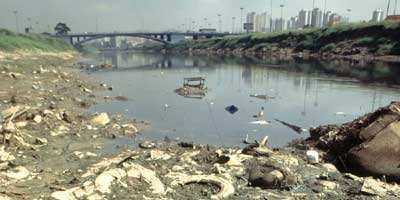
PHYSICAL ALTERATION AND DESTRUCTION OF HABITATS
The Physical Alteration and Destruction of Habitats (IAPH), the International Association of Dredging
(PADH) was identified as a priority issue in the 1995 Companies (IADC) and the Central Dredging Association
Global Program of Action for the Protection of the Marine (CEDA); and in the case of principles for Tourism
Environment from Land-based Activities (GPA). The development, the UN Industrial Development Organisation
objectives of the PADH programme are:
(UNIDO) and the UN World Tourism Organisation
·
to safeguard ecosystem function and maintain (UNWTO). Key principles for aquaculture are being put
coastal habitats which are of major socio-economic together in a joint effort with the UN Food and Agriculture
and ecological interest, and
Organisation (FAO), the Network of Aquaculture Centres
·
to where practicable restore marine and coastal in Asia and the Pacific (NACA), the World Bank and the
habitats.
World Wild Life Fund (WWF). A set of Guiding Principles
for shrimp aquaculture have also been developed and
These objectives are to be achieved in large part through were endorsed in February 2006 by the Governing Council
the
formulation,
adoption
and
implementation
of of NACA, and is scheduled for endorsement by FAO in
programmes for integrated coastal management (ICM) in September. The implementation of these principles take
accordance with Agenda 21, Chapter 17 of the Rio place at the national level through their incorporation in
Declaration of 1992.
various sectoral policies and through the initiation of pilot
projects within the framework of National Programmes of
Recognition of the link between PADH and ICM Action (NPA) for the protection of the coastal and marine
programmes has proved to be important since large environment.
investments in ICM programs have been made by national
governments, bilateral and multilateral donors, national
and international NGOs and, in some cases, the private
sector. Today ICM programmes at a range of spatial
scales are underway in nearly 100 nations representing all
world regions. In many of the most well established
national ICM programmes the physical alteration of
coastlines and their associated habitats has been either
the top priority issue or one of the priority issues
addressed.
The UNEP/GPA Coordination Office PADH programme
focuses on the impact of major infrastructure work on the As the GPA looks to the future there are major
coastal and marine environment from the legal, economic opportunities for a careful review of the progress that has
and scientific perspectives, particularly as they relate to been made in habitat protection and restoration in a wide
tourism, aquaculture, mining and the development of ports range of settings. At the global scale the destruction of
and harbours. Land use planning and construction in critically important habitats is continuing and in some
coastal zones has been a priority focus area as little has cases even accelerating. There is an urgent need to
been done in this area though considerable environmental identify what factors enable, and what factors resist, the
damage
occurs
during
construction
(see
http:// changes in human behaviour at the societal and
padh.gpa.unep.org/).
Key
Principles
for minimizing institutional scales that lead to positive outcomes. The
physical alteration of coastal areas, destruction of habitats Second Intergovernmental Review (IGR-2) meeting of the
and sediment mobilisation have been formulated to GPA offers the opportunities for discussing them further to
increase awareness and build consensus amongst chart the way forward for the implementation of a plan of
national governments, industry and business associations, action and the achievement of goals that integrate across
the UN and intergovernmental bodies. Various agencies the human and environmental dimensions of ecosystem
have endorsed these key principles: in the case of those health. Such methods can play a central role in increasing
for ports and harbours, the International Navigation the impact of investments in the many plans and
Organisation (PIANC) and private sector institutions, such programmes that are contributing to protection and
as the International Association of Ports and Harbour restoration of habitats.
GPA Outreach supports the preparatory work for the Second Intergovernmental Review Meeting (IGR-2) of the Global
Programme of Action for the Protection of the Marine Environment from Land-Based Activities (GPA)
This World Water Week Series of GPA Outreach is produced by
Stakeholder Forum and the Global Forum on Oceans, Coasts, and
Islands, in collaboratiG
on P
wiA
th tO
he utr
UNE e
P/ a
G c
PAh
·
Coo rW
din o
ati r
o ln d
Of fiW
ce a
antde
r Week Series
the Stockholm International Water Institute.
1


GLOBAL PROGRAMME OF ACTION FOR THE PROTECTION OF THE MARINE
World Water Week
24th August 2006
ENVIRONMENT FROM LAND-BASED ACTIVITIES
Series Issue 4
IGR-2 UPDATE
IGR-2 Update aims to provide key information about the address the protection of the marine environment from
Second Intergovernmental Review Meeting of the Global land-based activities to show the opportunities and
Programme of Action for the Protection of the Marine challenges of both legally binding instruments and non-
Environment from Land-based Activities. Articles in this binding mechanisms. The aim of the review is to provide a
World Water Week Series of GPA Outreach will include guide to more effective implementation of the GPA,
details on the IGR-2 preparatory process, agenda, and primarily at the regional level, through existing, new or
supporting documents.
amended binding and non-binding legal mechanisms.
On 16-20 October 2006, the Second Intergovernmental Protecting Coastal and Marine Environments from
Review Meeting (IGR-2) of the UNEP Global Programme Land-based Activities: A Guide for National Action
of Action for the Protection of the Marine Environment This Guide revises and updates the 2002 Handbook on
from Land-based Activities (GPA) will be held in Beijing, the Development and Implementation of National
China. The Intergovernmental Review Meetings are a Programmes of Action for the Protection of the Marine
forum where Governments and other stakeholders meet to Environment from Land-based Activities (NPAs). It
review the status of the implementation of the Global introduces various guiding principles for national action,
Programme of Action and decide on action to be taken to and stipulates the process should be adapted to the
strengthen the implementation of the GPA. A number of specific situation in a country, addressing key activities
supporting information documents are being prepared as that proved to be critical for success. In this regard, the
an input to IGR-2:
NPA process should ideally build on existing strategic
mechanisms and programmes, guarantee political support
The State of the Marine Environment: Trends and and commitment, mobilize stakeholders and resources at
Processes
the right levels, link up to existing institutional, budgetary,
This report aims is to give a broad global perspective on policy and legal frameworks, work with achievable targets,
the state of the marine environment, providing regional budgets and long term financing, and incorporate lessons
and sometimes national examples. The report provides an learnt in the process. In summary, implementation is at the
overview of the current state of the coastal and marine core of the new NPA Guide, and it is emphasised that
environment in relation to the nine categories of threats activities in the NPA process should be based on realistic
outlined by the GPA. The report indicates that legal and assumptions of available and potential financing,
institutional arrangements have been strengthened and institutional arrangements and capacity needed to
now cover most regions of the world. In addition, ongoing implement activities in the short, medium and long term.
programmes, including GEF supported large marine
ecosystems (LME) programmes, contribute to the Other IGR-2 supporting documents include:
implementation of the GPA. Despite these heightened
efforts globally, coastal and marine ecosystems continue ·
The State of the Marine Environment: Regional
to deteriorate mainly because of pressures by human
Assessments
development. Progress in dealing with the nine GPA ·
Financing for the implementation of Regional Seas
source categories has been uneven: progress has been
Conventions and Action Plans
made in Persistent Organic Pollutants, Radioactive ·
Ecosystem-based
management:
Markers
for
Substances and Oils (Hydrocarbons), results are mixed in
assessing progress
Heavy Metals and Sediment mobilization and conditions
have worsened in Sewage, Nutrients, Marine Litter, and The IGR-2 supporting documents are available as they are
Physical Alteration and Destruction of Habitats.
ready at www.gpa.unep.org
Implementation of the GPA at the regional level: The
role
of
Regional
Seas
Conventions
and
their
Protocols
The UNEP/GPA Coordination
Office has commissioned this
review of existing binding and
non-binding instruments that
GPA Outreach · World Water Week Series
2

GLOBAL PROGRAMME OF ACTION FOR THE PROTECTION OF THE MARINE
World Water Week
24th August 2006
ENVIRONMENT FROM LAND-BASED ACTIVITIES
Series Issue 4
PARTNERSHIP SPOTLIGHT
Increasing Public Awareness of the Global use of the ocean? These are the questions that the
Oceans Agenda, Implementation of the Partnership would like to address in the development of
the Ocean Information Package and its worldwide
Ocean Awareness and Stewardship Activities dissemination with specific focus on further
and Promotion of the Citizenship of the implementation of measures and best practices to mobilize
Ocean
the general public into action.
Day 2 of the Second Intergovernmental Review Meeting
(IGR-2) of the Global Programme of Action is Partnerships The Ocean Information Package will be composed of
Day. The Partnerships Day is a forum where existing and public information materials on ocean issues and
new partnerships that implement the GPA will meet and sustainable use of marine resources that aim to provide
interact with government representatives and other practical guidance to the general public regarding taking
stakeholders participating in IGR-2. Partnership Spotlight individual or joint concrete actions. The Ocean Information
aims to profile a selection of the more than twenty Package is intended to supply museums and aquaria staff
Partnerships that will be featured at the IGR-2.
as well as teachers and educators with information, tools
and other materials to communicate towards the general
The World Ocean
public. It will include ocean facts, World Summit on
N e t w o r k
Sustainable Development decisions, the World Ocean
Partnership
was
Network communication tools, in ready to print templates
formed
to
put
for people and organizations willing to communicate
together an Ocean
towards the public at large and activity sheets and cues for
I n f o r m a t i o n
the average individual on what he or she can do to move
Package, a collection of public information materials on forward on the oceans agenda. It will also include a
ocean issues, which aims to enhance general public background summary text "One World, One Ocean," on
awareness of the Global Oceans Agenda and engage the the implementation of ocean awareness raising activities
public into concrete actions for the sustainable use of the and promotion of the Citizenship of the Ocean.
world oceans. This Information Package will be developed
and produced by the World Ocean Network in The crucial components of the World Ocean Network
collaboration with the Global Forum on Oceans, Coasts communication strategy and the action plan to be included
and Islands, the UNEP/GPA, and the Intergovernmental in the Ocean Information Package and consequently in the
Oceanographic Commission of UNESCO in the framework Partnership objectives are the official designation by the
of the GEF-UNEP-UNESCO/IOC Project on Fostering a United Nations of June 8th as the international World
Global Dialogue on Oceans, Coasts, and SIDS, and on Ocean Day celebrated worldwide, and the promotion of
Freshwater-Coastal-Marine Interlinkages.
the Citizenship of the Ocean. The World Ocean Day is a
perfect occasion to raise the international profile of the
The main objective of the World Ocean Network ocean through jointly organized cultural, educational,
Partnership is to motivate the widest possible audience on scientific, recreational activities based on the themes of
a worldwide scale to inspire new behaviour that respects water, the ocean and sustainable development. Easy to
the environment and thus promotes an intelligent and implement and adapt and highly attractive to the general
sustainable use of the ocean. Embedded in the Global public, it is an opportunity to promote better ways of life
Forum on Oceans, Coasts and Islands objectives that preserve the planet's equilibrium and to encourage
concerning oceans and World Summit on Sustainable everyone to act for the well-being of humanity and the
Development targets, the World Ocean Network mission is
Blue
Planet.
The
to rally organizations (aquaria, zoos, science centres,
Citizenship
of
the
institutions, associations, NGOs, etc.) to reach out to the
Ocean is the first step
public at large and engage citizens into sustainable
towards an active and
actions. WON estimates its potential audience to be 200
r e s p o n s i b l e
million people per year, i.e., 1 million people contacted,
stewardship
of
the
350 million people affected, and 100 million people who
planet's environment.
are active Citizens of the Ocean in 10 years time.
At the IGR-2, the Partnership will hold a discussion about
Why is it important to communicate toward the public at the implementation of a joint information campaign in
large? How can public mobilization change ocean coordination with UNEP GPA. The discussion aims to
governance? How can a citizen contribute to sustainable produce lists of 10 things that can done by the general
GPA Outreach · World Water Week Series
3


GLOBAL PROGRAMME OF ACTION FOR THE PROTECTION OF THE MARINE
World Water Week
24th August 2006
ENVIRONMENT FROM LAND-BASED ACTIVITIES
Series Issue 4
PARTNERSHIP SPOTLIGHT continued
public to protect the marine environment to be developed development of the World Ocean Network activities is
by major civil society representative groups specific to expected to be given by Mr. Weiyong Hu, General
their sectors and areas of expertise and geographical Manager, Beijing Aquarium, China, at the IGR-2
location.
Partnerships Day, in addition to presentations from other
international speakers, including Dr. Ram Boojh,
The power of public opinion to change behaviour and Coordinator/Scientist in Charge, Centre for Environment
perceptions of policy decision makers and stakeholders Education, India; Manuel Cira, Head of Cultural Services,
and push them to take action must not be neglected. The NAUSICAA Centre National de la Mer, France; Leonard
general public needs to play a more integrated and Sonnenschein, President, World Aquarium City Museum,
mobilizing role in the protection of the marine USA; Philippe Vallette, General Manager, NAUSICAA,
environment. To this end, the World Ocean Network Centre National de la Mer, France.
strategy seeks to further develop targeted general public
communication materials and instruments to increase For more information about the Partnership, please
public awareness of the ocean related issues and to contact:
forward the oceans agenda in synergy with the GPA. In Mr. Philippe Vallette
other terms, as a highly action-oriented institution, the World Ocean Network Co-chair
World Ocean Network translates the GPA into a general Secretariat c/o NAUSICAA, Centre National de la Mer
public awareness raising action plan to be conducted by BP 189 - Bd Sainte-Beuve - 62203 Boulogne sur Mer
its partners and members in a coherent and mutually Cedex - France
supportive manner at a global, national, regional and local Tel : +33 (0)3 21 30 99 99 / Fax : +33 (0)3 21 30 93 94
scale.
Email: info@worldoceannetwork.org
Website: www.worldoceannetwork.org
The Partnership hopes that by promoting sustainable
behaviour towards the oceans, the World Ocean Network
could provide the general public via its members and
ABOUT UNEP/GPA
partners with ideas of concrete actions and measures that
The GPA was adopted in 1995 by 108
the average individual can do to protect the oceans, and
Governments
and
the
European
inspire them to adopt new habits that respect the
Commission in response to the increasing
environment and use the ocean resources in a
threat to the marine environment from
sustainable way, such as the public information campaign
on sustainable seafood consumption or the information on
human activities on land. The GPA is
how the average individual can reduce pollution affecting designed to be a source of conceptual and practical
the oceans. One of the objectives of this Partnership will guidance for national and/or regional authorities for
be to further develop this information effort in pursuit of devising and implementing sustained action to prevent,
UNEP GPA objectives.
reduce, control and/or eliminate marine degradation from
land-based activities.
The Partnership hopes to further implement the GPA in its The United Nations Environment Programme acts as the
programme of work during the period 2007-2011 by Secretariat for the GPA. The UNEP/GPA Coordination
publishing and disseminating the Ocean Information Office, located in The Hague, The Netherlands supports
Package in English, French and Spanish through the implementation of the GPA by: promoting and
networks
of
educational
and
public
awareness facilitating the implementation of the GPA at the national
organizations and therefore facilitate the free flow of level and the regional and sub-regional level and playing
information and communication tools about the GPA, the a catalytic role with other organisations and institutions in
state of the ocean, and the sustainable use of marine the implementation of the GPA at the international level.
resources. The Partnership will also further develop and
consolidate
the
World
Ocean
Network
regional For more information please visit www.gpa.unep.org
coordination nodes as a means to implement this
Partnership. The World Ocean Network already conducts
CONTACTS
its activities through regional coordination nodes in
conjunction with local partners. Global actions are locally · For general GPA enquiries, including information about IGR-2
adapted to meet local needs. This is what allows us to
please email igr2@unep.nl or telephone +31 70 311 4460.
reach a very large audience. As an example, a · For information on this newsletter, contact Jennifer Peer at
presentation of the Chinese perspective for the
jpeer@stakeholderforum.org
or
Miriam
Balgos
at
mbalgos@UDel.Edu
GPA Outreach · World Water Week Series
4