
GLOBAL PROGRAMME OF ACTION FOR THE PROTECTION OF THE MARINE
World Water Week
23rd August 2006
ENVIRONMENT FROM LAND-BASED ACTIVITIES
Series Issue 3
ECOSYSTEM-BASED MANAGEMENT
Indicators for Assessing Progress
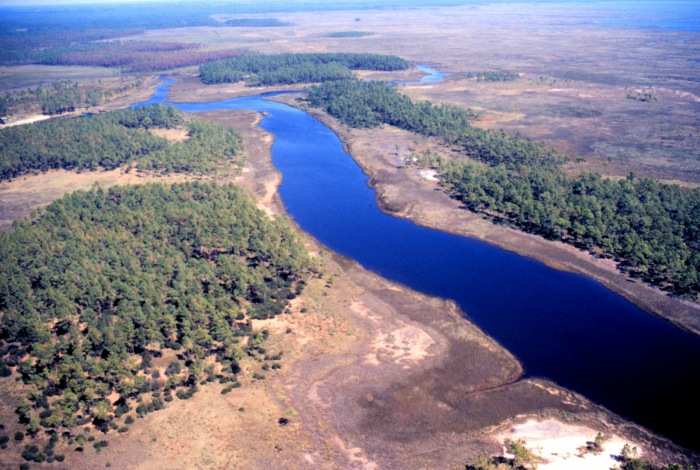
River basin management, coastal management and
management of large marine ecosystems (LMEs) cannot
independently solve many of the challenges posed by
intensifying human activity and ecosystem change.
Increasingly, human activities are causing changes in
ecosystems that have transboundary consequences. For
example, the pollutants that degrade human health and
reduce the goods and services in estuaries and LMEs may
originate from human activities far inland that are
transported by rivers to the coast. On a planet dominated
by the impacts of human activities, it is increasingly
necessary to design and implement management
programmes that address the complex linkages between
marine systems, coastal regions and river basins. levels of achievement. The focus is on outcomes rather
Transboundary management is complex and must span than management processes. Sets of indicators are
long time periods. It is therefore important to clearly define offered that can be used to assess progress in integrated
how success will be achieved and how progress will be management of river basins, coasts or large marine
assessed. Simplified methods are needed that offer an
Continued on Page 5
overview of the status of a given programme at a given
time and can trace progress by a consistent set of Consultation on the Global Programme of
indicators.
Action Held at World Water Week
The challenges of addressing human activities within river
basins and in coastal areas that affect the state of coastal On Tuesday 22 August, 2006 Stakeholder Forum for a
and marine ecosystems is the subject of the Global Sustainable Future, in collaboration with the UNEP/GPA
Programme of Action (GPA) for the Protection of the Coordination Office, held a stakeholder consultation on
Marine
Environment
from
Land-based
Activities, the Global Programme of Action for the Protection of the
coordinated by UNEP. Initiated in 1995, this global Marine Environment from Land-based Activities (GPA) at
programme assists nations in the development of National the World Water Week in Stockholm. The consultation
Programmes of Action (NPAs) that address these linked aimed to engage stakeholders from the freshwater
issues and work to mitigate the impacts of human activities community in the preparatory process of the Second
that reduce or threaten the goods and services that flow Intergovernmental Review Meeting (IGR-2) of the GPA,
from coastal and marine ecosystems.
being held in Beijing, China on 16-20 October 2006.
Participants highlighted the importance of cross-cutting
Ecosystem based management: Indicators for assessing issues such as health, gender, and multi-stakeholder
progress is a document being prepared for IGR-2 that participation.
presents a framework for a sequence of indicators that can
be used to mark the advance to more sustainable forms of Mr Chris Tompkins, of the UK Department for
development at the ecosystem level. This framework Environment, Food and Rural Affairs (DEFRA), opened
identifies the critical outcomes associated with a sequence the meeting by welcoming participants to the consultation
of
accomplishments
associated
with
planning, and
highlighting
the
importance
of
stakeholder
implementation of a plan of action and the achievement of engagement to the GPA process. He explained that the
goals that can be used to gauge progress on that path. It GPA was adopted in 1995 by 108 Governments and the
offers a framework for disaggregating the goal of
Continued on Page 6
sustainable development into a sequence of tangible
GPA Outreach supports the preparatory work for the Second Intergovernmental Review Meeting (IGR-2) of the Global
Programme of Action for the Protection of the Marine Environment from Land-Based Activities (GPA)
This World Water Week Series of GPA Outreach is produced by
Stakeholder Forum and the Global Forum on Oceans, Coasts, and
Islands, in collaboratiG
on P
wiA
th tO
he utr
UNE e
P/ a
G c
PAh
ˇ
Coo rW
din o
ati r
o ln d
Of fiW
ce a
antde
r Week Series
the Stockholm International Water Institute.
1

GLOBAL PROGRAMME OF ACTION FOR THE PROTECTION OF THE MARINE
World Water Week
23rd August 2006
ENVIRONMENT FROM LAND-BASED ACTIVITIES
Series Issue 3
IGR-2 UPDATE
THE IGR-2 AGENDA
IGR-2 Day 3: Building a Common Agenda
IGR-2 Update aims to provide key information about the Day 3 will focus on a set of official working documents that
Second Intergovernmental Review Meeting of the Global will be finalized and transmitted to the Ministerial/High-
Programme of Action for the Protection of the Marine level Segment IGR-2. These include:
Environment from Land-based Activities. Articles in this ˇ Guidance to the Implementation of the GPA 2007-
World Water Week Series of GPA Outreach will include
2011: GPA contribution to the internationally agreed
details on the IGR-2 preparatory process, agenda, and
goals and targets for the sustainable development of
supporting documents.
oceans, coasts and islands. The purpose of this
document is to promote the GPA as a valuable tool
On 16-20 October 2006, the Second Intergovernmental
to contribute to achieving the goals and targets set
Review Meeting (IGR-2) of the UNEP Global Programme
by the international community in recent years
of Action for the Protection of the Marine Environment
thereby demonstrating that due to its cross-sectoral
from Land-based Activities (GPA) will be held in Beijing,
character, the GPA is relevant and well suited to
China.
respond to the new challenges associated with the
impact of land-based activities on coastal and
IGR-2 Day 1: National Implementation in Action
marine environments.
The purpose of this Day is to chart the way forward in the ˇ UNEP/GPA Coordination Office Programme of Work
national implementation of the GPA. Three breakout
for 2007-2011 outlines a new phase in the
sessions will provide an opportunity for participants to
implementation of the GPA, and activities the UNEP/
share experience and best practice approaches. The
GPA Coordination Office could undertake to catalyse
sessions will focus on identifying, scaling up and
and facilitate the mainstreaming and integration of
expanding the implementation of best practices. Key
the GPA at the international, regional and national
lessons learned will be transmitted to the Ministerial/High-
levels.
level Segment of IGR-2. Full details are available at
www.gpa.unep.org
IGR-2 Day 4 & 5: Ministerial/High-level Segment and
Parallel Regional Sessions - Building Momentum and
The Breakout sessions are:
Partnerships
ˇ Mainstreaming the GPA into national development Ministerial/High-level Segment: The Ministerial
plans
Segment will provide a forum for debate on a number of
ˇ Financing the implementation of the GPA
key issues related to the GPA as outlined in a draft
ˇ Strengthening national legislative and institutional Ministerial Segment background paper available at
frameworks to further implement the GPA
www.gpa.unep.org The Ministerial/High-level Segment
is expected to endorse the Beijing Declaration on
IGR-2 Day 2: Partnerships Mainstreaming the GPA
furthering the implementation of the GPA. The
The Partnerships Day at IGR-2 is a forum where existing Declaration is expected to focus on improving the
and new partnerships that implement the GPA will meet implementation of the GPA through mainstreaming and
and interact with government representatives and other integrating the GPA into international and national
stakeholders
participating
in
IGR-2.
Over
twenty development planning, improving coastal and ocean
Partnership workshops will be held in parallel with each governance,
building
partnerships
and
ensuring
workshop running for 1.5--2 hours. Details of each adequate financing.
workshop are available at www.gpa.unep.org A summary
report of the Partnerships Day will be forwarded to the Parallel Regional Sessions - Building Momentum
Ministerial/High-level Segment of IGR-2.
and Partnerships: To forward and integrate the
outcomes of Days 1, 2, and 3 of the IGR-2, regions are
The purpose of the Partnership Day at IGR-2 is to:
invited to convene multi-stakeholder regional/sub-
ˇ Support and encourage the further implementation
regional meetings to be held concurrently with the
of the GPA in the work-programmes of existing
Ministerial segment. These regional meetings will
partnerships, regional/global organisations and
provide a forum for participants to discuss and agree on
NGOs.
ways and means to take the emerging outcomes of
ˇ Highlight the important role of these multi-
IGR-2 forward at the regional and sub-regional level
stakeholder partnerships in implementing the GPA,
and to build synergies and partnerships to advance
benchmark their success to date, discuss lessons
further initiatives as they relate to the sustainable
learned and chart a course of action for the coming
development of oceans, coasts and small island
five years.
developing States, and their associated watersheds.
GPA Outreach ˇ World Water Week Series
2

GLOBAL PROGRAMME OF ACTION FOR THE PROTECTION OF THE MARINE
World Water Week
23rd August 2006
ENVIRONMENT FROM LAND-BASED ACTIVITIES
Series Issue 3
PARTNERSHIP SPOTLIGHT
Day 2 of the Second Intergovernmental Review Meeting for the purpose of maximizing new opportunities. The
(IGR-2) of the Global Programme of Action is Partnerships website continues to perform a matchmaking function for
Day. The Partnerships Day is a forum where existing and the region for the foreseeable future.
new partnerships that implement the GPA will meet and
interact with government representatives and other The Miami Conference was designed to create as many
stakeholders participating in IGR-2. Partnership Spotlight partnership opportunities as possible. Plenary sessions
aims to profile a selection of the more than twenty were short and inspirational in nature, while most of the
Partnerships that will be featured at the IGR-2.
Conference was organized into breakout sessions.
Evening opportunities were set aside for country teams to
White Water to Blue Water
meet and compare notes. The first plenary session of
each day was set aside for announcements of new
White Water to Blue Water partnerships. Two evenings were set aside for informal
(W W 2BW )
partnership matchmaking socials, with tables available for those who
established at the World wished to gather to discuss specific topics. The Tuesday
Summit
on
Sustainable social focused on UNEP's GPA. Several partnerships
Development and led by the discussed at this event were spawned at the Regional
Caribbean
Community, Consultative Meeting on the GPA Programme of Work in
Comisión Centroamericana the Wider Caribbean sponsored by UNEP and the Water
de Ambiente y Desarrollo, Center for the Humid Tropics of Latin America and the
t h e
U n i t e d
N a t i o n s Caribbean (CATHALAC) (February 10-12, 2004, Colon,
Economic Commission for Republic of Panama). It is hoped that the concept of using
Latin
America
and
the multiple meetings, under varying auspices to focus on
Caribbean (UN-ECLAC), the United Nations Environment specific themes and programs might be, in itself, a new
Programme (UNEP) and the United States of America. method for promoting partnerships in the region.
The partnership is under the direction of an international
Executive Committee representing governments, U.N. In the spring and early summer of 2006, the Executive
organizations,
non-governmental
organizations, Committee held periodic meetings to discuss the next
universities and the private sector.
steps forward under the newly established WW2BW
structure. The new structure is composed of a small
White Water to Blue Water is based on the premise that Executive Committee, the wider Governing Council and a
sustainable development in the Wider Caribbean region is Secretariat which provides support for WW2BW activities.
not possible without integrated watershed and marine A WW2BW Governing Council Meeting will be held
ecosystem-based management. The process is designed preceding the November 29 Caribbean Environment
to create and expand as many partnerships aimed at Program Intergovernmental Meeting (IGM) in Montego
these twin goals as possible.
Bay. This will provide an opportunity to update the Council
and regional participants on the new structure and ideas
The White Water to Blue Water Partnership Conference for further partnering in the key theme areas of integrated
held in Miami on March 22-26, 2004 was an important watershed management, environmentally sound marine
event in the implementation of the partnership. The transportation, sustainable tourism, and marine
meeting was designed to focus on four overlapping ecosystem-based management. The upcoming meeting
themes: integrated watershed management; marine will be the first of the larger WW2BW Council and will
ecosystem-based management; sustainable tourism and provide new opportunities for involvement in the
environmentally sound marine transportation. In addition, partnership.
the issues were addressed through several cross-cutting
themes, including education, marine science and The Executive Committee is also working on development
adaptation to climate change.
of a "Mobilizing Resources Primer" as well as other
resources and materials that will be useful to Council
In preparation for the meeting, International Visiting members and distributed at the Intergovernmental Review
Teams, went to Wider Caribbean countries to encourage of the Global Programme of Action in Beijing in October
the formation of interagency "Country Teams" for the and the IGM in Montego Bay in November. The resources
purpose of identifying WW2BW opportunities and, more will also be available on the www.ww2bw.org website as
specifically, to participate in the Miami Conference. Also, soon as possible.
during the months preceding the Conference, a "Rollup" of
partnerships, organized by theme, was created and
Continued on Page 4
transferred to a matchmaking website (www.ww2bw.org)
GPA Outreach ˇ World Water Week Series
3

GLOBAL PROGRAMME OF ACTION FOR THE PROTECTION OF THE MARINE
World Water Week
23rd August 2006
ENVIRONMENT FROM LAND-BASED ACTIVITIES
Series Issue 3
PARTNERSHIP SPOTLIGHT continued
Continued from Page 3
At the Second Intergovernmental Review Meeting of the
White Water to Blue Water currently serves as a model UNEP-GPA (IGR-2), several GEF-supported strategic
for orchestrating successful partnerships. The White partnerships that explicitly address land-based sources of
Water to Blue Water tools can be used to establish similar marine pollution will be presented: These focus on the
partnership models in other regions. During Partnerships Danube-Black Sea Basin, the Large Marine Ecosystems
Day at IGR-2, lessons learned, pitfalls that may occur, (LMEs) of East Asia and (as discussed elsewhere) the
and what needs to be done by the WW2BW Partnership Mediterranean Sea.
in order to move forward would be discussed. As a
flagship of the partnerships, WW2BW will hold a The GEF Strategic Partnership on the Black Sea and
discussion on how other partnerships can replicate the Danube Basin is an initiative aimed at reducing
WW2BW model and how they can adapt the model for agricultural, industrial, and municipal sources of nitrogen
their own involvement in the GPA. WW2BW can also and phosphorous pollution resulting in the "dead zone" in
provide insights on their experience in dealing with the the Black Sea. The elements of the Partnership are two
difficulties of getting off the ground and in sustaining UNDP-GEF Regional Projects and the World Bank/GEF
momentum. Finally the WW2BW workshop at IGR-2 will Investment Fund:
explore the potential synergies between international ˇ
The
Danube
Regional
Project
(DRB):
plans of action to protect watersheds and coastal areas.
Strengthening the Implementation Capacities for
Nutrient
Reduction
and
Transboundary
For more information about this partnership, please
Cooperation in the Danube River Basin
contact:
ˇ
The Black Sea Ecosystems Recovery Project
Mr. Tom Lauglin
(BSERP): Control of eutrophication, hazardous
Deputy Director
substances and related measures for rehabilitating
National Oceanic and Atmospheric Administration Office
the Black Sea ecosystem
of International Affairs
ˇ
World Bank Investment Fund for Nutrient Reduction
14th and Constitution NW, Room 6224
in the Danube-Black Sea Basin Pertinent to GPA,
Washington, DC 20230 USA
specific focus is on reduction of land-based sources
Tel: 1-202-482-6196; Fax: 1-202-482-4307
of nutrient pollution in the entire Black Sea basin.
Email: tom.laughlin@noaa.gov
The long-term goal of the developing Strategic
Partnership on East Asia's LMEs is to reduce pollution in
Strategic Partnerships for
the LMEs of East Asia and to promote sustainable coastal
development through ICM. This partnership consists of
International Waters in the Global
two components:
Environmental Facility: Mainstreaming 1.
The Regional Component entitled the UNDP-GEF
Implementation of the Sustainable Development
GPA in Transboundary Basins and in
Strategy for the Seas of East Asia Project
Large Marine Ecosystems
implemented in parallel with the Fund, and
responsible
for
stakeholder
involvement,
The Global Environment Facility (GEF) international
dissemination of lessons learned, replication of
waters
(IW)
focal
area
targets
assistance
to
good practice, and capacity building.
transboundary water systems, such as river basins with 2.
The investment component, entitled the World
water flowing from one country to another, groundwater
Bank/GEF
Partnership
Investment
Fund
for
resources shared by several countries, or marine
Pollution
Reduction
in
the
Large
Marine
ecosystems bounded by more than one nation, such as
Ecosystems of East Asia (the Fund) develops
Large Marine Ecosystems (LMEs). Among the primary
partnerships
for
investments
on
land-based
concerns
addressed
are
water
pollution,
habitat
pollution reduction.
conservation, and ecosystem-based approaches to
fisheries. In certain cases, once cooperating nations have Both partnerships are explicitly action oriented, building
agreed upon a joint strategic action program (SAP) to upon long-term strategies endorsed by their respective
address such issues, the GEF leverages additional national governments. Hence, both their historical
support to implement the action program through long- experience and expected actions transcend geographic
term Strategic Partnerships.
Continued on Page 5
GPA Outreach ˇ World Water Week Series
4


GLOBAL PROGRAMME OF ACTION FOR THE PROTECTION OF THE MARINE
World Water Week
23rd August 2006
ENVIRONMENT FROM LAND-BASED ACTIVITIES
Series Issue 3
Continued from Page 4
For more information on the above partnerships,
scales and are potentially transferable to other regions please contact:
working to address land-base sources of marine pollution.
They also bring together agencies with different For Danube-Black Sea Basin:
comparative advantages to work on behalf of the GEF and Ivan Zavadsky, Director, UNDP-GEF Danube/Black Sea
the GPA.
Regional Programme
Tel: + 431 26060 5796
The GEF also plays a catalytic role in helping countries E-mail: ivan.zavadsky@unvienna.org
make full use of policy, legal, and institutional reforms and URL: http://www.undp-drp.org, http://www.bserp.org
investments necessary to address these complex Emilia Battaglini, GEF Regional Coordinator, World Bank
transboundary water concerns. To stimulate and facilitate Tel:+1 202 473-3232 E-mail:ebattaglini@worldbank.org
exchange of experiences and lessons learned among
different international waters projects, GEF initiated a For East Asia LME Partnership:
specific project known as IW:LEARN. The project Chua Thia-Eng, Director, UNDP-GEF PEMSEA Project
organizes staff exchanges between projects that face Tel: +632 920-2211 Email: info@pemsea.org
similar challenges (e.g., large marine ecosystem projects), URL: http://www.pemsea.org/
forums to stimulate collaboration between international Mara Warwick, Task Team Leader, World Bank Group
waters projects in a particular region (e.g., the Caribbean), Tel: +1 202 473-2986 E-mail: mwarwick@worldbank.org
and structured learning for South-to-South exchanges of
experience. To further increase this exchange of Coordination:
experiences, a GEF international waters conference is Dann Sklarew, Chief Technical Advisor, GEF IW:LEARN
Tel: +1 202 518-2054 E-mail: dann@iwlearn.org
organized every two years to bring together country URL: http://www.iwlearn.net
representatives from all GEF international waters projects.
The role IW:LEARN plays in helping to transfer practical Alfred M. Duda, Senior Advisor, Global Environment
GPA-related experience
Facility Secretariat
within
and
among
Tel: +1 202 473-1077 E-mail: aduda@thegef.org
r e g i o n s
i s
a l s o
URL: http://www.thegef.org
highlighted.
Continued from Page 1
groups, and the programme succeeds in generating the
funds required to sustain a programme over the long
The Ecosystem Approach
term. The Third Order marks the achievement of the
specific societal and environmental quality goals that
The ecosystem approach is a strategy for the integrated
prompted the entire effort.
management of land, water and living resources that
promotes conservation and sustainable use in an
In ecosystems that are much altered by human activities
equitable way. It is based on the application of
the achievement of a sequence of Third Order goals over
appropriate scientific methodologies focused on levels
long time periods typically marks the path to sustainable
of biological organization which encompass the
forms of development. This Orders of Outcomes
essential processes, functions and interactions among
framework is applied to assess progress on issues that
organisms and their environment. It recognizes that
integrate across management of coasts and river basins.
humans, with their cultural diversity, are an integral
Ecosystem based management: Indicators for assessing
component of ecosystems.
progress also identifies major lessons that have emerged
from coastal and water resources management. It offers
ecosystems and in programmes that link across these guidance on the design and conduct of ecosystem-based
systems. The indicators are organized into a framework management initiatives that address both the impacts of
composed of four Orders of Outcomes. The First Order is human activities and the need to sustain or restore the
achieved by assembling the enabling conditions for the goods and services that are generated by healthy
sustained practice of ecosystem-based management. ecosystems. Please see http:///www.gpa.unep.org for
The First Order culminates in negotiating commitments to further information.
implement a plan of action directed at a set of priority
Anjan Datta
management issues. The implementation of a plan of
UNEP/GPA Coordination Office
action is addressed in the Second Order, as changes
a.datta@unep.nl
occur in the behaviour of institutions and relevant user
GPA Outreach ˇ World Water Week Series
5


GLOBAL PROGRAMME OF ACTION FOR THE PROTECTION OF THE MARINE
World Water Week
23rd August 2006
ENVIRONMENT FROM LAND-BASED ACTIVITIES
Series Issue 3
Continued from Page 1
better valued and understood. The need to establish
European Commission in response to the increasing threat quantifiable benchmarks for marine pollution was called
to the marine environment from human activities on land. for, as was the need for a universal set of indicators to
Mr Tompkins noted that as an instrument to tackle marine asses marine pollution. Gender and the diversity of people
pollution, the GPA has raised awareness of marine and was highlighted as a critical element missing from the
coastal issues and the need to mainstream them into Beijing Declaration. The role of various Major Groups
development planning.
including local authorities and environmental NGOs in
furthering the implementation of the GPA was discussed,
Dr. Biliana Cicin-Sain, Global Forum on Oceans, Coasts, and the need to reinforce multi-stakeholder participation at
and Islands, further emphasised the need to link the national level was noted.
freshwater and coastal environments. She highlighted the
important role of the GPA in this process, as the only A full report of the meeting will be available at
intergovernmental programme that addresses the linkages www.stakeholderforum.org/gpa.html
between freshwater and the coastal environment. Dr.
Cicin-Sain explained that partnerships are an important As a follow up to the side-event on Tuesday, a second
part of furthering the implementation of the GPA. She meeting will take place today at World Water Week:
explained that the Global Forum on Oceans, Coasts and
Islands is proposing a partnership with many partners from African
Stakeholder
Consultation:
Developing
around the world to prepare a global report on the status Solutions to Protect the Marine Environment from
and trends in the implementation of policy initiatives in Land-based Activities in the African Context
ecosystem management, and integrated coastal and
ocean management. Ms. Miriam Balgos, Global Forum of
Wednesday 23 August, 2006
Oceans Coasts and Islands, explained that the upcoming
Lunch Session (12:15-13:15)
IGR-2 of the GPA will include a day dedicated to
Norra Latin, Room 255
partnerships, where 23 partnerships will be presented.
ABOUT UNEP/GPA
Mr. Felix Dodds, Stakeholder Forum, briefly outlined the
role of Stakeholder Forum in engaging stakeholders in the
The GPA was adopted in 1995 by 108
preparatory process of the IGR-2. He noted that
Governments
and
the
European
Stakeholder Forum had facilitated the preparation a
Commission in response to the increasing
stakeholder position for the Preparatory Meeting of the
threat to the marine environment from
IGR-2 in June, and that many of the recommendations
human activities on land. The GPA is
had been incorporated. He explained that the Ministerial/
designed to be a source of conceptual and practical
high level segment of the IGR-2 is expected to endorse
guidance for national and/or regional authorities for
the Beijing Declaration on furthering the implementation of
devising and implementing sustained action to prevent,
the GPA. He called on participants to offer their
reduce, control and/or eliminate marine degradation from
suggestions on how the Beijing Declaration could be
land-based activities.
strengthened, particularly from the perspective of the
freshwater community. He noted that it is important for
The United Nations Environment Programme acts as the
stakeholders to have the opportunity to input to
Secretariat for the GPA. The UNEP/GPA Coordination
intergovernmental processes, as it yields stronger
Office, located in The Hague, The Netherlands supports
outcomes and improved implementation.
the implementation of the GPA by: promoting and
facilitating the implementation of the GPA at the national
Participants in the meeting highlighted the need to
level and the regional and sub-regional level and playing
strengthen the inclusion and integration of cross cutting
a catalytic role with other organisations and institutions in
issues within the document. Emphasis was placed on the
the implementation of the GPA at the international level.
importance of marine resources for food security and
For more information please visit www.gpa.unep.org
human health, and that marine resources need to be
CONTACTS
ˇ For general GPA enquiries, including information about IGR-2 please email igr2@unep.nl or telephone +31 70 311
4460.
ˇ For information on this newsletter, contact Jennifer Peer at jpeer@stakeholderforum.org or Miriam Balgos at
mbalgos@UDel.Edu
GPA Outreach ˇ World Water Week Series
6