








GLOBAL PROGRAMME OF ACTION FOR THE PROTECTION OF THE MARINE
World Water Week
22nd August 2006
ENVIRONMENT FROM LAND-BASED ACTIVITIES
Series Issue 2
WASTEWATER
Municipal Wastewater Management Population growth, rapid urbanization, and increasing
water supply and sanitation provision to meet the 2015
targets will all generate increased problems from
wastewater pollution. At present, only about a tenth of the
domestic wastewater in developing countries is collected,
and only about a tenth of existing wastewater treatment
plants operate reliably and efficiently. Ignoring wastewater
pollution issues proves costly, in human, ecological and
financial terms. Discharging untreated wastewater to the
natural environment directly affects the primary resource
for drinking water supply, essential ecosystem functions
and the sustainable use of water. Increasing sanitation
coverage, therefore, requires public sewage collection and
treatment systems, so as to prevent raw sewage from
entering groundwater, surface waters and coastal areas. A
sustainable approach to sanitation includes wastewater
collection, treatment and reuse. Reusing wastewater
Some four children die every minute in developing should be considered more often as an important option,
countries from diseases caused by unsafe water and especially in water-scarce regions. Also ecological
inadequate sanitation. On average, 250 million cases of sanitation has proven to be a viable alternative to
gastroenteritis occur worldwide every year from bathing in implement in different local settings. Overall, the same
contaminated water, and 50,000-100,000 people die from number of people in both urban and rural areas (1.1
infectious hepatitis. The global burden of human disease billion) will require improved sanitation by the target year
caused by sewage pollution of coastal waters has been of 2015. This means that 400,000 additional people will
estimated at 4 million lost person-years annually.
have to be supplied with services each day.
The discharge of untreated domestic wastewater has been A global consensus is emerging on how to address
identified as a major source of pollution in most of the municipal wastewater collection and treatment in a
UNEP Regional Seas. About 90% of sewage and 70% of sustainable manner. Guidelines on Municipal Wastewater
industrial wastes in developing countries are discharged Management and its Ten Key Principles for local and
into water courses without treatment, often polluting the national action were considered by over 100 countries at
usable water supply. Coral reefs and precious habitats are the UNEP/GPA Intergovernmental Review meeting in
disappearing and biodiversity is decreasing, fishing and 2001. Aimed at setting a new global standard in the field of
agricultural potential are being lost, while poor water sustainable municipal wastewater management, the Ten
quality is reducing income from tourism and the value of Key Principles cover policy issues, management
real estate.
approaches,
technology
selection
and
financing
mechanisms. They have been developed jointly by UNEP,
Such concerns have helped push the international the World Health Organization, UN-HABITAT and the
community to ensure that the targets of the 2000 Water Supply and Sanitation Collaborative Council, and
Millennium Development Goals and the 2002 World supported by UNICEF as a result of the jointly established
Summit on Sustainable Development (WSSD) address Strategic Action Plan on Municipal Wastewater.
improved access to safe drinking water and adequate
sanitation. The target agreed by the WSSD on water and Best practices and successful innovative approaches
sanitation is `to halve, by the year 2015, the proportion of urgently need intensifying and scaling up. Sharing
people who are unable to reach or to afford safe drinking knowledge on appropriate and environmentally sound
water and the proportion of people who do not have technologies is a current practice among others through
access to basic sanitation.'
sourcebooks and web-based knowledge bases like
GPA Outreach supports the preparatory work for the Second Intergovernmental Review Meeting (IGR-2) of the
Global Programme of Action for the Protection of the Marine Environment from Land-Based Activities (GPA)
This World Water Week Series of GPA Outreach is produced by
Stakeholder Forum and the Global Forum on Oceans Coasts and
Islands, in collaboration with the UNEP/GPA Coordination Office and
the Stockholm Intern G
ati P
on A
al O
Wat u
er Itnr
s e
tit a
ut c
e. h · World Water Week Series
1



GLOBAL PROGRAMME OF ACTION FOR THE PROTECTION OF THE MARINE
World Water Week
22nd August 2006
ENVIRONMENT FROM LAND-BASED ACTIVITIES
Series Issue 2
WASTEWATER continued
Continued from Page 1
Sanitation Connection (SANICON). Capacity building
through pilot projects and training `on the spot' will
enhance further implementation. Partnerships that actively
Guidelines on Municipal Wastewater Management:
and effectively implement innovative approaches are key
10 Key Principles
to success. These partnerships rely heavily upon strong
1. Secure political commitment and domestic financial commitment, shared responsibilities and just as
resources as absolute prerequisites for appropriate important shared risks among all stakeholders.
wastewater management.
2. Create an enabling environment for sustainable During the UNEP/GPA Second Intergovernmental Review
solutions at both national and local levels.
(IGR-2) a Partnership Day will be held on GPA related
3. Develop integrated and demand-driven management issues, including on Municipal Wastewater and Sanitation,
systems combining the collection and treatment of in which relevant partners will participate. These
wastewater with drinking water supply and the provision organisations play a crucial role in implementing the GPA
of sanitation services.
Municipal Wastewater and Sanitation programme, either
4. Prevent pollution at the source, use water efficiently, through their own activities or in partnership with
and apply appropriate low cost technologies for governments and other stakeholders. During the IGR-2 a
wastewater treatment.
forum will be provided where existing partnerships
5. Make water users and polluters pay for services based implementing this GPA programme can meet, chart a
on social equity and solidarity to reach cost-recovery.
course of action for the coming five years, and interact
6. Use
time-bound
targets
and
indicators
for with the government representatives and other
environmental integrity as well as on public health or stakeholders participating in IGR-2. In addition the creation
economic welfare to make actions successful.
of new partnerships will be encouraged, which could
7. Implement measures step-by-step while exploring contribute to the implementation of the Wastewater and
alternatives to reach long-term management goals.
Sanitation programme. See page 5 for more information.
8. Involve all stakeholders through partnership from the
very beginning to secure their commitment.
9. Link the municipal wastewater sector to other economic For further details on the Municipal Wastewater and
sectors to ensure financial stability and sustainability.
Sanitation Programme, see http://www.gpa.unep.org/bin/
10. Introduce innovative financial mechanisms, including php/programs/sap/index.php
private sector involvement.
Cees van de Guchte
UNEP/GPA Coordination Office
c.vandeguchte@unep.nl
The Train-Sea-Coast GPA Receives New
The programme strengthens capacity at the local level
Funding
towards:
· Achieving the Johannesburg Plan of Implementation
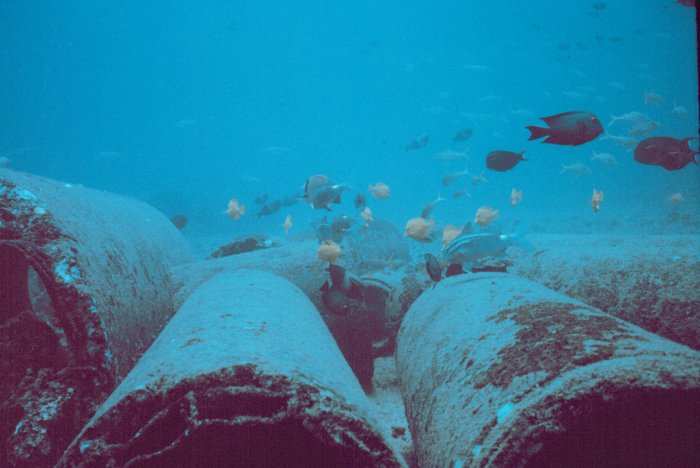
The Wastewater Problem
target on sanitation
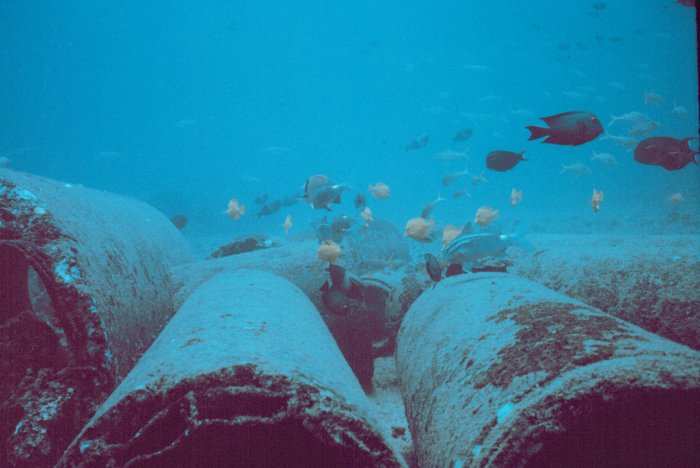
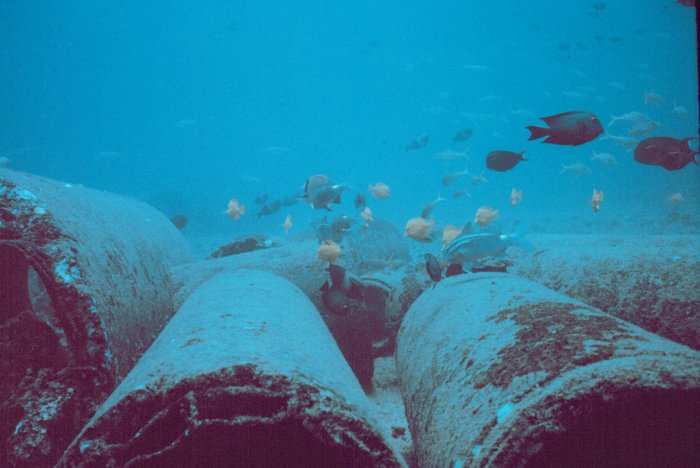
In many parts of the world, sewage is discharged directly
· Improving environmental conditions in coastal
into open water without treatment. Such uncontrolled
regions
discharge is on of the most serious threats to the
· Improving human health.
productivity and biodiversity of the world's oceans.
The training courses offered contribute to building
Training as part of the solution
decentralized capacity by strengthening municipal efforts
The GPA joined forces with the UNESCO-IHE Institute for to identify, design and finance projects to collect and treat
Water Education, the United Nations Development domestic wastewater. The programme trains managerial
Programme UNDP and in the framework of the UN staff and facilitates stakeholder involvement and thereby
Division for Ocean Affairs and the Law of the Sea strengthens a weak link in the chain between political
DOALOS Train-Sea-Coast Programme in response to the decisions at the national level and implementation at the
challenges faced by countries in addressing municipal local level.
wastewater problems.
Continued on Page 5
GPA Outreach · World Water Week Series
2




GLOBAL PROGRAMME OF ACTION FOR THE PROTECTION OF THE MARINE
World Water Week
22nd August 2006
ENVIRONMENT FROM LAND-BASED ACTIVITIES
Series Issue 2
IGR-2 UPDATE
ENGAGING STAKEHOLDERS IN
THE IGR-2 AND PREPARATORY
PROCESS
IGR-2 Update aims to provide key information about the Declaration. Felix Dodds, Executive Director of the
Second Intergovernmental Review Meeting (IGR-2) of the Stakeholder Forum, attended the Preparatory Meeting to
Global Programme of Action for the Protection of the represent these stakeholder inputs. A summary of this
Marine Environment from Land-based Activities. Articles in position
is
available
at
www.stakeholderforum.org/
this World Water Week Series of GPA Outreach will gpa.html
include details on the IGR-2 preparatory process, agenda,
and supporting documents.
Stakeholder Forum is also hosting regional stakeholder
consultations on the GPA in collaboration with the UNEP/
On 16-20 October 2006, the Second Intergovernmental GPA Coordination Office. In March at the World Water
Review Meeting (IGR-2) of the UNEP Global Programme Forum, it organised an event for stakeholder from the Latin
of Action for the Protection of the Marine Environment American and Caribbean Region. Workshop participants
from Land-based Activities (GPA) will be held in Beijing, identified problems, challenges, and constraints to
China. The Intergovernmental Review Meetings are a protecting the marine environment from land-based
forum where Governments and other stakeholders meet to activities and developed recommendations for furthering
review the status of the implementation of the Global the implementation of the GPA.
Programme of Action and decide on action to be taken to
strengthen the implementation of the GPA.
To support the preparatory work for the IGR-2,
Stakeholder Forum has developed a dedicated website to
Throughout the preparatory process of the IGR-2, a series provide stakeholders with easy access to background
of consultations have been organised by the UNEP/GPA information
and
official
documents
Coordination Office to gather feedback on various agenda (www.stakeholderforum.org/gpa.html). Stakeholder Forum
items of IGR-2. A number of partners and organisations also publishes a monthly online newsletter in collaboration
have offered their support to this process. To this end, with the UNEP/GPA Coordination Office, GPA Outreach,
Stakeholder Forum for a Sustainable Future is partnering to inform stakeholders of the latest developments in the
with the UNEP/GPA Coordination Office to conduct preparatory process for the IGR-2 and provide background
stakeholder consultations in preparation for the IGR-2. The information on GPA related issues.
purpose of these dialogues is to enable a broad range of
local, national, and regional stakeholders (including those From 19-30 June, Stakeholder Forum, in collaboration with
who are unable to attend the IGR-2 in China) to share their the UNEP/GPA Coordination Office, also hosted on online
positions and experiences on protection of the marine dialogue on the theme of Our Expanding Urban Coast: A
environment in advance of the IGR-2.
Threat to the Marine Environment and Human Health. The
purpose of the online dialogue was to raise awareness of
In preparation for the IGR-2, an Informal Preparatory the GPA and to collect stakeholder experiences, lessons
Meeting was held on 27-28 June 2006 in Paris, France. learned and best practices. Over 120 people from more
Some 50 representatives from 23 countries attended the than 40 countries signed up to the online dialogue to
meeting to advance the preparation of the draft official explore the links between the marine environment, coastal
documents for IGR-2 and to seek guidance on some of the urbanization and Integrated Management Approaches,
issues to be addressed during the Ministerial Segment of Physical Alteration and Destruction of Habitat, and
IGR-2. During the middle of June, Stakeholder Forum Nutrients.
convened consultations in London and New York with
representatives
from
Major
Groups
and
other In the upcoming two months, Stakeholder Forum will
stakeholders. Non-governmental organizations, trade continue its work of engaging stakeholders in the
unions, women, and youth were among the Major Groups preparatory process of the IGR-2. Two events on the GPA
represented. The purpose of the meetings was to develop will take place at World Water Week in Stockholm. Please
stakeholder inputs to the IGR-2 Preparatory Meeting, see page 6 for more information. We look forward to your
including specific amendments to the draft Beijing
active participation!
GPA Outreach · World Water Week Series
3




GLOBAL PROGRAMME OF ACTION FOR THE PROTECTION OF THE MARINE
World Water Week
22nd August 2006
ENVIRONMENT FROM LAND-BASED ACTIVITIES
Series Issue 2
PARTNERSHIP SPOTLIGHT
Towards a Successful Sustainable Sanitation Wastewater with a view of including the present work of
Implementation 2006-2015: A Partnership on the GPA on urban sanitation, as well as rural sanitation, in
order to address the environmental dimension of
Municipal Wastewater and Sanitation
sanitation, following the UNEP Governing Council
Decision 23/2, Paragraph 9.
Day 2 of the Second Intergovernmental Review Meeting
(IGR-2) of the Global Programme of Action is Partnerships The UN Task Force on Water and Sanitation and the
Day. The Partnerships Day is a forum where existing and United Nations Secretary General's Advisory Board on
new partnerships that implement the GPA will meet and Water and Sanitation (March 2006) will raise awareness
interact with government representatives and other and gear up political will on three main aspects: hygiene
stakeholders participating in IGR-2. Partnership Spotlight promotion, household sanitary arrangements and sewage
aims to profile a selection of the more than twenty treatment, and also promote the sustainable approach to
Partnerships that will be featured at the IGR-2.
sanitation in order to broadcast the messages of CSD12
and CSD 13. Greater attention will be paid to the
The Global Programme of Action's Strategic Action Plan development and application of capacity of implementing
(SAP) on Municipal Wastewater, jointly developed with organisations in line with the UNEP Bali Strategic Plan for
UNEP, World Health Organization (WHO), UN-HABITAT Technology Transfer and Capacity Building.
and Water Supply and Sanitation Collaborative Council
(WSSCC),
was
adopted
at
the
GPA's
first In order to continue addressing the wastewater and
Intergovernmental Review Meeting in 2001 in Montreal, sanitation issues at the global, regional and national level,
Canada. The Strategic Action Plan on Municipal the partnership will collaborate on a number of issues:
Wastewater has been prepared to further develop the
guidance given on sewage in the Global Programme of ·
Assessment: Contribute to the special report series
Action and to promote concrete action at the local and
of the Joint Monitoring Programme on Water and
national levels aimed at addressing sewage as one of the
Sanitation (JMP, WHO/UNICEF)) addressing the
major source categories impacting the coastal and marine
discharge of municipal wastewater.
environment, particularly by promoting the use of ·
Policy
and
normative
action:
Continue
to
alternative solutions, including low cost technologies,
disseminate and promote the effective use of the
appropriate financial mechanisms and partnerships and
existing 10 Keys and Guidelines on Municipal
creating an enabling environment for action.
Wastewater Management, as well as the extension
of SAP on rural sanitation; and continue to promote
Within this framework, a set of Guidelines
the
sustainable
sanitation
cycle,
comprising
on Municipal Wastewater Management and
wastewater collection, treatment, re-use and safe
the associated 10 Keys for local and
reallocation to the natural environment thus
national action were developed. UNICEF
contributing to the achievement of the JPOI 2015
also supports the 10 Keys. Aimed at setting
target on Sanitation.
a new global standard in the field of
sustainable
m unicipal
wastewater
The Partnership aims to produce a Revised Strategic
management, the 10 Keys cover policy
Action Plan on Municipal Wastewater on urban and rural
issues,
m anagem ent
approaches,
sanitation; jointly develop a JMP special report addressing
technology selection and financing mechanisms. (See the discharge of municipal wastewater with UNEP
pages 1-2 for more information).
partnering with UN-HABITAT in the WHO/UNICEF lead
JMP report, which is the institutionalised forum to report on
A sustainable approach to sanitation includes wastewater progress made with respect to the MDG/WSSD targets on
collection, treatment and reuse. Overall, the same number Water and Sanitation. The Partnership will also jointly
of people in both urban and rural areas (1.1 billion) will develop a best practices report on the promotion of the
require improved sanitation by the MDG-target year of sustainable sanitation cycle; promote and better integrate
2015.
the environment dimension in the project formulation
cycle; and ensure more sustainability through the
T h e
U N EP/W HO/W SSC C / U N - H ABIT AT / U N IC EF implementation of activities in the partners' work
partnership will use the opportunity given during IGR-2 to programme.
discuss revision of the Strategic Action Plan on Municipal
Continued on Page 5
GPA Outreach · World Water Week Series
4



GLOBAL PROGRAMME OF ACTION FOR THE PROTECTION OF THE MARINE
World Water Week
22nd August 2006
ENVIRONMENT FROM LAND-BASED ACTIVITIES
Series Issue 2
a n d
T u r k i s h
Continued from Page 4
"I learned quite a bit during the five
translations. North-
For IGR-2, the Partnership will prepare the following South knowledge day training and can honestly say I
materials, which will be distributed at a workshop on t r a n s f e r
i s will apply the process in my course
Partnerships Day at IGR-2, to be held on October 17, com bined
w i t h of work here at Guam EPA."
2006:
S o u t h - S o u t h
knowledge sharing. Si Yuus Maase, course participant in
·
UN-Water
Thematic
Initiative:
"Issue
paper An increasing pool Guam, Northern Pacific, June 2006
Sanitation Access" on collaborative activities of of local instructors
UN-agencies on how to contribute to the "Water for are involved in anchoring the training courses in the local
Life" Decade, 2005-2015.
context.
·
Updated sourcebook on environmentally sound
technologies (if possible a workshop will be Technology Support to Island States
organised during which the existing UNEP IETC's As part of the programme activities in the Pacific region, a
"Environmentally
Sound
Technologies
in CD-ROM was compiled by UNEP/GPA and UNESCO-IHE
Wastewater Treatment for the Implementation of jointly with the Secretariat of the Pacific Regional
the
UNEP/GPA
Guidance
on
Municipal Environment Programme SPREP, the University of the
Wastewater"
and
the
IETC/IWA
published South Pacific and the South Pacific Applied Geoscience
"International Source Book on Environmentally Commission SOPAC. The CD-ROM contains:
Sound
Technologies
for
Wastewater
and
Stormwater Management" will be discussed).
· A compendium of technologies appropriate for Pacific
islands,
Experts in the field will be invited to speak at the
workshop, which will be followed by a discussion on · A tutorial in Project Cycle management to identify
feasible solutions,
future challenges for joint implementation of the
Partnership.
· Three software tools to support decision-making, and
· A document library with 100 publications on
For more information about this Partnership, please
management and technologies.
contact:
Mr. Cees van de Guchte
Achievements until the IGR-2
Senior Programme Officer
Between December 2003 and July 2006, a total of 380
UNEP/GPA
professional from 28 countries in Africa, Europe, Latin
The Hague, The Netherlands
America, Asia and the Pacific have been trained. Most of
Email: c.vandeguchte@unep.nl
the beneficiary countries are party to the various Regional
http://www.gpa.unep.org/bin/php/programs/
Seas Conventions and Action Plans and represent an
sap/index.php
integral part of the implementation of the UNEP/GPA at
the regional level. Ten of these countries belong to the
Small Island Developing States (SIDS). The next course is
scheduled August 2006 for the Regional Organization for
Continued from Page 2
the Environment of the Red Sea and the Gulf of Aden
New funding
(PERSGA).
With major new funding from the European Union
African, Caribbean, and Pacific Group of States (ACP) More
information "Although the course was about
Water Facility and the Global Environment Facility GEF, about this training is wastewater management, my major
this programme will expand in the coming three years and available at: http:// benefit from the course was that I
is expected to train an additional 1,200 experts in 60 www.gpa.unep.org/ have gained a new perspective for
course deliveries.
training
problem solving. Problem analysis
and objective analysis parts
Languages and local instructors
extended my vision. Thanks."
The training material is fully documented and already
exists in English, Chinese, Spanish, Portuguese, Russian,
Fatih Anket, course participant in
Trabzon, Turkey, September 2005
GPA Outreach · World Water Week Series
5




GLOBAL PROGRAMME OF ACTION FOR THE PROTECTION OF THE MARINE
World Water Week
22nd August 2006
ENVIRONMENT FROM LAND-BASED ACTIVITIES
Series Issue 2
GPA EVENTS AT WORLD WATER WEEK
Developing
Solutions
to
Protect
the
Marine As a follow up to the side-event on Tuesday, a second
Environment from Land-based Activities: Stakeholder meeting will take place on Wednesday at World Water
Consultation
Week:
Tuesday 22 August, 2006
African
Stakeholder
Consultation:
Developing
Evening Session (17:15-18:45), Folkets Hus, Room 300, Solutions to Protect the Marine Environment from
World Water Week in Stockholm
Land-based Activities in the African Context
In preparation for the GPA's Second Intergovernmental
Review Meeting (IGR-2), which will be held in Beijing,
Wednesday 23 August, 2006
China from 16-20 October, this side event will bring
Lunch Session (12:15-13:15)
together stakeholders from around the world to discuss
Norra Latin, Room 255
issues threatening the marine environment. Stakeholders
will have the opportunity to comment and prepare a This meeting will bring together stakeholders from Africa
position on the draft Beijing Declaration on furthering the and those working on water issues in Africa to consider
implementation of the Global Programme of Action for the the GPA in the context of the African context.
Protection of the Marine Environment from Land-based
Activities, while discussing the roles of stakeholders and For information on the outcomes of these events, please
national governments in developing solutions to these visit www.stakeholderforum.org/gpa.html
problems. The outcomes of this side-event will input into
the upcoming GPA's IGR-2.
ABOUT UNEP/GPA
Agenda
· Presentation on the Global Programme of Action and
The GPA was adopted in 1995 by 108
IGR-2
Governments
and
the
European
·
Commission in response to the increasing
Presentation by representative of the Government of
threat to the marine environment from
China on the IGR-2 in China (to be confirmed)
·
human activities on land. The GPA is
Presentation by Dr. Biliana Cicin-Sain, Co-Chair and
designed to be a source of conceptual and practical
Head of Secretariat, Global Forum on Oceans, Coasts,
guidance for national and/or regional authorities for
and Islands on the role of partnerships and Partnerships
devising and implementing sustained action to prevent,
Day at IGR-2
·
reduce, control and/or eliminate marine degradation from
Presentation by Felix Dodds, Executive Director of
land-based activities.
Stakeholder Forum on stakeholder engagement in the
preparations for the IGR-2
The United Nations Environment Programme acts as the
· Question and Answer/discussion in response to the secretariat for the GPA. The UNEP/GPA Coordination
presentations
Office, located in The Hague, The Netherlands supports
· Review of the advance copy of the Beijing Declaration the implementation of the GPA by: promoting and
on furthering the implementation of the Global
facilitating the implementation of the GPA at the national
Programme of Action for the Protection of the Marine
level and the regional and sub-regional level and playing
Environment from Land-based Activities and preparation
a catalytic role with other organisations and institutions in
of stakeholder position and input to the Declaration
the implementation of the GPA at the international level.
For more information please visit www.gpa.unep.org
CONTACTS
· For general GPA enquiries, including information about IGR-2 please email igr2@unep.nl or telephone +31 70 311
4460.
· For information on this newsletter, contact Jennifer Peer at jpeer@stakeholderforum.org or Miriam Balgos at
mbalgos@UDel.Edu
GPA Outreach · World Water Week Series
6