






Strategic Planning Workshop on Global Oceans Issues in
Marine Areas Beyond National Jurisdiction in
the Context of Climate Change
Briefing Volume on Key Sources
of Information
January 23-25, 2008
Nice, France
CANADA
SINGAPORE
Note from the Workshop Secretariat: Key sources of information may be accessed through links to their
original publication source as well as through links to copies on the Global Forum website as indicated on
pages 23-24 in this volume.
Briefing Volume on Key Sources of Information
Table of Contents
1. The status of scientific knowledge regarding marine areas beyond
national jurisdiction
Overview...1
Key source(s) attached to this document...6
Other important documents...6
2. Human uses of marine areas beyond national jurisdiction
Overview...8
Key source(s) attached to this document...9
Other important documents...9
3. Climate change and marine areas beyond national jurisdiction
Overview...15
Key source(s) attached to this document...16
Other important documents...17
4. Policy and legal issues related to marine areas beyond national
jurisdiction
Overview...19
Key source(s) attached to this document...20
Other important documents...21
5. Information on progress achieved in meeting the international goals on
oceans, coasts, and small island developing states from the 2002 World
Summit on Sustainable Development
Report on Meeting the Commitments on Oceans, Coasts, and Small Island
Developing States Made at the 2002 World Summit on Sustainable Development:
How Well Are We Doing? Global Forum on Oceans, Coasts, and Islands
(2006)...23
6. Sources attached to this volume...23
1. The status of scientific knowledge regarding marine areas beyond
national jurisdiction
Overview Scientific understanding of ecosystems in marine areas beyond the
limits of national jurisdiction
The current debate on the high seas within the United Nations has focused on the
following specific ecosystems: seamounts, cold water coral reefs, hydrothermal vents and
other ecosystems. This background document provides information about knowledge of
these ecosystems, including their distribution, ecology, and the threats they are facing.
Seamounts
Seamounts are isolated mountains or mountain chains beneath the surface of the sea.
They are generally formed over upwelling plumes (hotspots) and in island arc convergent
settings. Hotspots are points of frequent volcanic activity in the earth's crust persisting
over millions of years.
Because seamounts do not break the sea surface, knowledge of their distribution comes
primarily from remote sensing, which is unlikely to be able to comprehensively map all
seamounts in the world. According to the Census of Marine Life project on seamounts
(CenSeam), there are potentially up to 100,000 seamounts over 1 km high and many
more of smaller elevation. They are found in every ocean basin and most latitudes,
although nearly half of the world's known or inferred seamounts are found in the Pacific
Ocean.
Relatively few seamounts have been studied, with only about 350 having been sampled.
Of these, fewer than 200 have been studied in any detail, many in waters within national
jurisdiction. Although seamount biodiversity is still poorly understood on a global scale
due to lack of sampling and exploration, available research results suggest that seamounts
are often highly productive ecosystems that can support high biodiversity and special
biological communities, including cold water coral reefs, as well as abundant fisheries
resources. Some evidence suggests high levels of endemic species on seamounts,
although these levels may vary between individual seamounts, regions and taxa.
According to the Census of Marine Life, "seamounts represent important ecosystems for
study that have not, to date, received scientific attention consistent with their biological
and ecological value."
Seamount ecosystems may be vulnerable because of their geographical isolation, which
for some species may indicate genetic isolation. They are also vulnerable because of the
characteristics of their associated species, which include cold water coral reefs that are
fragile to physical disturbances from destructive practices such as bottom trawling, and
long-lived, slow-growing fish species that are intrinsically vulnerable to fishing.
Consequently, the biggest current threat to seamounts comes from fishing activities.
Other threats include the mining of deep water corals associated with seamounts for the
jewellery trade, bioprospecting, potential future seabed mining related to mineral
resources of ferromanganese crusts and polymetallic sulphides (from vents, which may
1
occur at some younger seamounts). Climate change may also present a future threat as
seamount community structure may change because of differences in species' thermal
preference and changes in ocean current patterns.
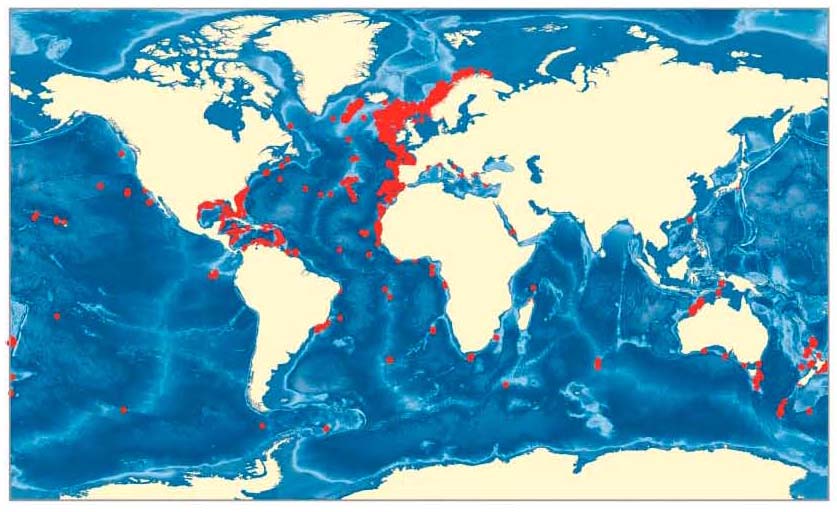
Figure 1. Current global distribution of reef frameworkforming cold-water corals [modified from
Freiwald et al. 2004]. Source: Roberts et al. (2006).1
Cold water coral reefs
Cold-water corals include stony corals (Scleractinia), soft corals (Octocorallia), black
corals (Antipatharia), and hydrocorals (Stylasteridae). They are widely distributed and
have thus far been found in the Atlantic, Mediterranean, Indian, Pacific and Southern
oceans see Figure 1). Most of the cold water corals discovered to date appear to be on the
edges of the continental shelf or on seamounts. The total area covered by cold water coral
reefs globally is still unknown, although studies indicate that coverage could equal, or
exceed, that of warm-water reefs. A conservative estimate of cold water coral reef
coverage is 284,300 km2.
There are still large gaps in our understanding of the distribution of cold water coral reefs,
their biology and ecology. These gaps are mainly due to the difficulty of researching
these environments, where observation and sampling often require expensive ship time
and sophisticated equipment. Our current knowledge consists of a series of snapshots of
well-studied reefs, most of which are located in the higher latitudes, including the
intensively mapped and studied Lophelia reefs in Norway. We do know that cold water
corals grow slowly, at only a tenth of the growth rate of warm-water tropical corals.
1 Roberts, J.M., A.J. Wheeler and A. Freiwald. 2006. Reefs of the Deep: The Biology and Geology of Cold-
Water Coral Ecosystems. Science 312:543-547.
2
Many of them produce fragile calcium carbonate skeletons that resemble bushes or trees
and provide habitat for associated animal communities.
There is no doubt that cold-water coral reefs support diverse communities of unique
species. These species include invertebrates and economically important fisheries species.
Thus, cold-water coral reefs may be considered biodiversity hotspots in the open ocean.
Major threats to cold-water corals include destructive fishing practices, such as bottom
trawling, other bottom-contact fishing (e.g. mid-water trawls may drag the bottom, long
lines may snag on corals), hydrocarbon drilling, seabed mining, ocean acidification and
direct exploitation. Of these, ocean acidification presents a potentially serious future
threat.
The overall ecological health status of cold water coral reefs is unknown. Most of the
reefs studied thus far show physical damage from trawling activities. Only in a few cases
has this damage been quantified. The rate of regeneration and recovery of once-damaged
cold water coral reefs is unknown, but is estimated to be on the scale of decades to
centuries for a reef to regain ecological function owing to the very slow growth rate of
cold water coral reefs.
Hydrothermal vents
The discovery of hydrothermal vents along the Galapagos Rift in the eastern Pacific in
1977 arguably represented one of the most important findings in biological science in the
latter quarter of the twentieth century. Hydrothermal vents were the first ecosystem on
Earth found to be independent from the sun as an original source of energy, relying
instead on chemosynthesis. Hydrothermal vents are now known to occur along all active
mid ocean ridges and back-arc spreading centres. The InterRidge Hydrothermal Vent
Database currently lists 212 separate vent sites, though more are likely to exist.
Our knowledge about where hydrothermal vents occur, and how extensive they are, is far
from complete. Hydrothermal activity does not take place everywhere along mid-ocean
ridge systems. Since the 1990s, there have been large-scale, systematic searches for
undiscovered vent sites. Many of these searches rely on inferring the presence of vents
from water column observations by measuring optical properties, temperature and
particle anomalies, as well as chemical tracers that distinguish hydrothermal plumes from
the surrounding seawater.
There are also knowledge gaps in regards to the biodiversity and ecology of hydrothermal
vent ecosystems, and their interactions with surrounding communities. Generally,
biomass of hydrothermal vent communities is high but biodiversity is low. Endemism is
high, with 91% of species that have been discovered from hydrothermal vents to date
being endemic. Vent sites support exceptionally productive biological communities in the
deep sea, and vent fauna range from tiny chemosynthetic bacteria to tube worms, giant
clams, and ghostly white crabs. Many species are exclusive to these ecosystems and
would be unable to exist outside them.
3
The only currently documented anthropogenic impacts to hydrothermal vent ecosystems
in areas beyond the limits of national jurisdiction result from marine scientific research.
However, the mining of polymetallic sulphide deposits associated with hydrothermal
vents presents a potentially much more serious and urgent threat to vent ecosystems, and
is moving closer to becoming a reality, at least within national EEZs. Bioprospecting of
hydrothermal vent organisms is already taking place, and some have been used for the
purposes of biotechnology. High-end tourism presents another potential future threat to
vent ecosystems.
Other ecosystems
Other ecosystems include pelagic habitats, as well as benthic sponge reefs and fields,
cold seeps and abyssal plains.
Pelagic habitats
Species diversity in the pelagic environment is generally lower than in the benthic
environment despite the far greater volume of the pelagic environment. The lower
diversity in pelagic systems may be a result of their openness, which allows for rapid and
widespread gene flow through pelagic communities. However, the pelagic ecosystem is
far from uniform in terms of productivity, and distinct hot spots exist in the world's
oceans. The pelagic ecosystem is fuelled by phytoplankton primary production.
Herbivorous zooplankton graze on phytoplankton, and in turn support predators including
fish. Many pelagic species, ranging from krill to tunas and marine mammals, migrate
during different stages of their different life history.
Many pelagic species are threatened directly or indirectly by commercial fishing. Pelagic
fishes are caught as target species and as by-catch. Following a long history of intensive
exploitation of large pelagic fish, and the global expansion of longline fisheries since the
1950s, predators such as sharks and tunas have declined drastically (one study indicates a
90% decline over 50 years), although the magnitude of the decline is still being debated.
Bycatch by pelagic gillnet and longline fishing continues to kill marine mammals,
seabirds and sea turtles. Bioaccumulation of chemical contaminants poses threats to the
health of pelagic animals, particularly top predators.
Climate change may have a potentially large impact on pelagic systems in the high seas.
Dynamics of pelagic systems depend largely on sea water temperature and current flow
patterns, which affect the magnitude and temporal and spatial distribution of primary
productivity. These factors, in turn, affect the distribution of zooplankton, pelagic fishes
and other pelagic megafauna. Carbon sequestration, a proposed strategy to combat
climate change, may also present a threat.
Sponge reefs
Sponge reefs, which are formed by glass sponges with three-dimensional silica skeletons,
are built in a manner similar to coral reefs, by new generations growing on previous ones.
Sponge stalk communities can be found on the soft mud bottom of the deep sea
throughout the world's oceans between the depths of 500 and 3,000m. Despite their
worldwide distribution, the main occurrences of sponge reefs are in cold waters
4
associated with bathymetric and topographic structures, such as seamounts, continental
slopes and underwater canyons, where fast-flowing, nutrient-rich deepwater currents can
be found. However, our current knowledge of the global distribution of sponge reefs is
incomplete and biased by insufficient sampling.
Similar to cold water coral reefs, sponge reefs are slow-growing and long-lived. Their
growth rate is generally two to seven cm per year and they can live to be up to 6,000
years old. Sponges provide habitat for many species, including invertebrates and
commercially important fish. The invertebrate diversity associated with sponges is high.
The threats facing sponge reefs are similar to those facing cold-water coral reefs, and
include destructive fishing practices such as bottom trawling, other bottom-contact
fishing (e.g., mid-water trawls, long lines), hydrocarbon drilling, seabed mining and
direct exploitation. Many sponge reefs show impact of bottom fishing activities, and
sponges are common as bycatch from fishing operations. Sponge reefs may also be of
future interest for bioprospectors.
Cold seeps
Cold seeps are deep soft-bottom areas where oil or gases seep out of the sediments.
"Seepage" encompasses everything from vigorous bubbling of gas from the seabed to the
small-scale emanation of microscopic bubbles or hydrocarbon compounds in solution.
Seep fluids contain a high concentration of methane. Cold seeps are found along the
world's passive and active continental margins at depths extending from 400 m to over
7000 m.
There are still knowledge gaps relating to the distribution, biodiversity and ecology of
cold seeps. Cold seeps are known to support relatively high diversity. Over 210 species
have been reported from cold seeps. This is very likely an under-estimate because of
insufficient samples and poor taxonomic identification of cold-seep assemblages. The
rate of endemism is high.
Threats to cold seeps include bottom fishing activities. Recent research reports from New
Zealand record evidence of trawl damage, including extensive areas of coral rubble, as
well as lost fishing gear on cold seeps. Oil, gas and mineral exploration are potential
threats to cold seep biodiversity. At the present time, such exploration occurs mainly on
the continental shelf. However, the rich oil, gas and mineral reserves at or near cold seeps
beyond national jurisdiction may attract exploration in the future, thus threatening their
associated communities.
Abyssal plains
Abyssal plains cover almost 50% of the deep seabed, and are comprised mainly of mud
flats. There is a relatively high diversity of animals living in and on deep-sea sediments,
including bottom-dwelling fishes, sea cucumbers, star fishes, brittle stars, anemones,
glass sponges, sea pens, stalked barnacles, mollusks, worms and small crustaceans.
However, despite the large number of rare animals, a few species make up the individuals
5
in deep-sea samples. The most diverse species are macrofauna, small animals of up to
1mm in size.
Key source attached to this document2
Convention on Biological Diversity (CBD). 2006. Scientific Information on
Status and Trends of, and Threats to, Deep Seabed Genetic Resources beyond
National Jurisdiction. Note by the Executive Secretary pursuant to SBSTTA
recommendation XI/8. 10 February 2006. Available:
http://www.biodiv.org/doc/programmes/areas/marine/marine-status-en.doc
Other important documents
Clark M.R., Tittensor D., Rogers A.D., Brewin P., Schlacher T., Rowden A., Stocks K.,
Consalvey M. (2006). Seamounts, deep-sea corals and fisheries: vulnerability of
deep-sea corals to fishing on seamounts beyond areas of national jurisdiction.
UNEP-WCMC, Cambridge, UK. Available:
http://www.cbd.int/doc/meetings/mar/ewsebm-01/other/ewsebm-01-clark-en.pdf
Convention on Biological Diversity (CBD) (2005) Status and trends of, and threats to,
deep seabed genetic resources beyond national jurisdiction, and identification of
technical options for their conservation and sustainable use
(UNEP/CBD/SBSTTA/11/11). See:
http://www.biodiv.org/doc/meetings/sbstta/sbstta-11/official/sbstta-11-11-en.doc
CBD. 2006. Global Coastal and Marine Biogeographic Regionalization as a Support tool
for Implementation of CBD Programmes of Work. Note from the Executive
Secretary. 21 February 2006. UNEP/CBD/COP/8/INF/34. 21 February 2006.
Available: http://www.biodiv.org/doc/meetings/cop/cop-08/information/cop-08-inf-
34-en.pdf
CBD.2007. synthesis and review of the best available scientific studies on priority areas
for biodiversity conservation in marine areas beyond the limits of national
jurisdiction. An information document for SBSTTA 13.
Freiwald, A., J.H Fosså, A. Grehan, T. Koslow and J. M. Roberts. 2004. Cold-water
Coral Reefs. UNEP-WCMC, Cambridge, UK.
Freiwald, A. and Roberts, J.M. (eds.) 2005. Cold-water Corals and Ecosystems. Springer-
Verlag Berlin Heidelberg
2 The sources noted as "attached to this volume" are on the Global Forum website and maybe downloaded
by participants through links on pages 23-24.
6
Pitcher, T.J., Morato, T., Hart, P.J.B., Clark, M.R., Haggan, N. and Santos, R.S. (eds)
2007. Seamounts: Ecology, Conservation and Management. Fish and Aquatic
Resources Series, Blackwell, Oxford, UK. (in press).
Roberts JM, Wheeler AJ, Freiwald A. 2006. Reefs of the deep: the biology and geology
of cold-water coral ecosystems. Science 312:543-547
Rogers, A.D. 2004. The Biology, Ecology and Vulnerability of Deep-Water Coral Reefs.
Report for the World Conservation Union for the 7th Convention of Parties,
Convention for Biodiversity, Kuala Lumpur, February 8th 19th. 8pp. Available
at Available at http://www.iucn.org/themes/marine/pubs/pubs.htm
Van Dover, C. 2000. The Ecology of Deep-Sea Hydrothermal Vents (Princeton
University Press).
United Nations Environment Programme (UNEP). 2006. Ecosystems and biodiversity in
deep waters and high seas. UNEP Regional Seas Reports and Studies No. 178.
UNEP/IUCN Switzerland 2006.
United Nations General Assembly (UNGA). 2005. Oceans and the law of the sea Report
of the Secretary-General. Addendum. Document A/60/63/Add.1 presented to the
Ad Hoc Open-ended Informal Working Group to study issues relating to the
conservation and sustainable use of marine biological diversity beyond areas of
national jurisdiction. See: http://daccess-
ods.un.org/access.nsf/Get?Open&DS=A/60/63/Add.1 &Lang=E
7
2. Human uses of marine areas beyond national jurisdiction
Overview Human uses of marine areas beyond the limits of national jurisdiction
Current human uses of marine areas beyond the limits of national jurisdiction include
capture fisheries and aquaculture, shipping, marine scientific research, bioprospecting,
tourism, oil and gas extraction, mining, deep sea cable and pipeline industry, disposal of
nuclear waste or other substances, and military uses. New and emerging uses of marine
areas beyond national jurisdiction may present new opportunities in which to utilize
ocean resources, but also may have unknown impacts on these areas. Such uses include
carbon sequestration, ocean fertilization, and floating energy and mariculture facilities,
among others. Continued research on these new and emerging uses will provide essential
information on how to best reap the benefits, as well as mitigate any negative impacts.
Human uses of marine areas beyond national jurisdiction produce important benefits to
human economies and livelihoods.
The Workshop will consider the benefits and problems/opportunities related to three
industries operating in areas beyond national jurisdiction: fishing, submarine cables, and
maritime transportation.
In general, the economic and social values and perspectives on future problems/
opportunities of various ocean industries have not been well documented and aggregated.
To remedy this gap, the Global Forum on Oceans, Coasts, and Islands, together with
industry and UNIDO, will be developing a study on the economic and social values
associated with these industries and the outlooks of industry leaders on constraints,
challenges, and opportunities they will be facing in the next decade.
Human uses may also have impacts on the marine environment and biodiversity. The
following lists some of the key issues associated with various human uses. Table 1
provides some options and relevant actors for preventing and mitigating identified
threats:
the capture fisheries sector continues being affected by shortage of resources,
mainly due to unsustainable exploitation practices and underlying causes related
to fisheries governance;
illegal, unreported and unregulated (IUU) fishing has adverse ecological impacts,
but also the economic and social costs of it are significant and result in increased
costs, lower employment, lower incomes and lower export revenues for legal
fishers and adverse effects on the livelihoods of developing country fishing
communities due to the reduction of the resources on which those livelihood
systems are based;
there are difficulties in keeping track of scientific research and monitoring
activities in the open ocean and deep sea environments;
8
there are issues related to cruise ship wastes, whose disposal is generally
unregulated, as well as to the adverse economic and social effects that cruise
tourism can entail;
in the marine environment, extractive activities for the purpose of energy
development remain a major economic industry. In marine areas afar from the
coastline, the main extractive activity related to energy production is offshore oil
and natural gas. The occupation of certain areas for the purpose of energy
production may conflict with other uses and also entail environmental effects in
those areas;
mining in the seabed, the ocean floor and subsoil beyond national jurisdiction
(`the Area') is organized and controlled by the International Seabed Authority
(ISA) according to relevant provisions under the United Nations Convention on
the Law of the Sea. The Authority coordinates expert work on environmental
effects of mining and on exploring linkages between non-living and living
resources in the Area, but its mandate relates to non-living resources solely;
despite their relatively limited direct uses of ocean's spaces and resources in areas
beyond national jurisdiction, indigenous and local communities seem to have
well-defined expectations as stakeholders (in the general sense of the term as
including rightholder) with regard to marine biodiversity in areas beyond national
jurisdiction.
An integrated approach to the study and management of the ocean's spaces and resources
would imply that all actual stakeholders, directly as well as indirectly involved, be
identified and consulted in an appropriate manner. Future work is needed in this regard.
Key source attached to this document3
UNU-IAS. 2006. Implementing the Ecosystem Approach in Open Ocean and
Deep Sea Environments - An Analysis of Stakeholders, their Interests and
Existing Approaches. UNU-IAS Report.
http://www.ias.unu.edu/binaries2/DeepSea_Stakeholders.pdf
Other important documents
CBD. 2005. The International Legal Regime of the High Seas and the Seabed Beyond
National Jurisdiction. CBD Technical Report No. 19.
http://www.cbd.int/doc/publications/cbd-ts-19.pdf
International Cable Protection Committee. About Submarine Telecommunications Cables.
3 The sources noted as "attached to this volume" are on the Global Forum website and maybe downloaded
by participants through links on pages 23-24.
9
An informative presentation on submarine cables, and their role in today's world.
Available:
http://www.iscpc.org/About_Cables_LowRes/About_SubTel_Cables_LowRes_R
ev7.pps.
10
Table 1. Summary of threats to selected seabed habitats, and options and relevant actors for
preventing and mitigating identified threats4
Existing and
Existing options
Options under
Relevant actors
potential threats
development
Hydrothermal vents
Existing
· 2006 InterRidge statement of
· Code of conduct for · Organizations
· Marine scientific
commitment to responsible research
marine protected
undertaking marine
research with
practices at deep sea hydrothermal
areas in the Azores
scientific research,
destructive
vents
Triple Junction
· Bioprospecting
impacts
· The Commitment to Responsible
· International Seabed
companies
· Bioprospecting
Marine Research of the Senate
Authority (ISA)
· High-end tourism
Commission on Oceanography of
draft regulations on
operators and tourists
Potential
the German Research Foundation
prospecting and
· Deep sea mining
· Mining of
(DFG) and the German Marine
exploration for
companies
polymetallic
Research Consortium (KDM)
polymetallic
· Energy development
sulphide deposits · CBD Voluntary guidelines on
sulphides and cobalt-
companies
associated with
biodiversity-inclusive
rich ferromanganese · Relevant UN
vent systems
environmental impact assessment
crusts in the Area 5/
organizations
· Submarine-based
· ISA exploration and · Regional
marine tourism
mine site model to
organizations
block selection for
including the regional
cobalt-rich
seas organizations
ferromanganese
and regional fishery
crusts and
management
polymetallic
organizations
sulphides 6/
(RFMOs)
· OSPAR 7/ code of
· Developed and
conduct for scientific
developing States
research
· Environmental non-
· FAO guidelines for
governmental
deep-sea fisheries in
organizations
the high seas
4 Source: CBD. 2007. Options for preventing and mitigating the impacts of some activities to selected
seabed habitats, and ecological criteria and biogeographic classification systems for marine areas in need of
protection. UNEP/CBD/SBSTTA/13/4. 13 November 2007. Available:
http://www.cbd.int/doc/meetings/sbstta/sbstta-13/official/sbstta-13-04-en.doc
5 ISBA/10/C/WP.1Rev.1; ISBA/13/LTC/WP.1
6 ISBA/12/C/3
7 The Convention for the Protection of the Marine Environment of the North-East Atlantic (the OSPAR
Convention)
11
Existing and
Existing options
Options under
Relevant actors
potential threats
development
Cold Seeps
Existing
· Code of Conduct for Responsible
· ISA draft regulations · Oil and gas
· Prospecting by
Fisheries (FAO 1995) and its
on prospecting and
companies
the petroleum
relevant international plans of
exploration for
· Organizations
industry
action
polymetallic
undertaking marine
· Destructive
· General Assembly resolution
sulphides and cobalt-
scientific research
fishing practices
61/105, on sustainable fisheries,
rich ferromanganese · Biotechnology
· Scientific
paras. 83-91
crusts in the Area
companies
investigation with · Voluntary guidelines on
· Management
· Deep sea mining
destructive
biodiversity-inclusive
measures in line with
companies
impacts
environmental impact assessment
General Assembly
· Fishers
· Micro-organisms sustainable use
resolution 61/105, on · Relevant UN
Potential
and access regulation international
sustainable fisheries,
organization/s
· Direct harvest of
code of conduct (MOSAICC)
bottom fisheries
including the
seepage minerals · Code of practice for ocean mining
measures, paras.83-
International Seabed
(IMMS 2002)
86, to be developed
Authority,
· Management measures developed
by regional fisheries · Regional
by regional fisheries management
management
organizations
organizations or arrangements, e.g.
organizations or
including the regional
the South Pacific RFMO and the
arrangements and
seas organizations
Northwest Atlantic Fisheries
flag States
and RFMOs
Organizations
· OSPAR code of
· Flag States
· The Commitment to Responsible
conduct for scientific · Non-governmental
Marine Research of the Senate
research
environmental
Commission on Oceanography of
· FAO guidelines for
organizations
the German Research Foundation
deep-sea fisheries in · Developed and
(DFG) and the German Marine
the high seas
developing states
Research Consortium (KDM)
·
Seamounts
Existing
· Code of Conduct for Responsible
· ISA International
· Fishers
· Overexploitation
Fisheries (UN FAO 1995) and its
Seabed Authority
· Deep sea mining
of high seas
relevant international plans of
draft regulations on
companies
fishing on
action
prospecting and
· Relevant UN
seamounts
· General Assembly resolution
exploration for
organization/s
· Destructive
61/105, on sustainable fisheries,
polymetallic
· Regional
fishing practices
paras. 83-91
sulphides and cobalt-
organizations,
· Mining of deep-
· Management measures developed
rich ferromanganese
including the regional
water corals
by regional fisheries management
crusts in the Area
seas organizations
associated with
organizations and arrangements,
· Management
and RFMOs
seamounts for the
including pursuant to General
measures in line
· Flag States
jewellery trade
Assembly resolution 61/105, on
with General
· Non-governmental
sustainable fisheries, e.g. the South
Assembly
environmental
Potential
Pacific RFMO and the Northwest
resolution 61/105,
12
Existing and
Existing options
Options under
Relevant actors
potential threats
development
· Mining of
Atlantic Fisheries Organizations
on sustainable
organizations
ferromanganese
· Cooperative agreements or
fisheries, bottom
· Developed and
oxide and
arrangements of mutual assistance
fisheries measures,
developing countries
polymetallic
on a global, regional, sub-regional
paras.83-86, to be
sulphides
or bilateral basis
developed by
· Bioprospecting
· Code of practice for ocean mining
regional fisheries
· Possible
(International Marine Minerals
management
exploitation of
Society 2002) Voluntary guidelines
organizations or
methane gas
on biodiversity-inclusive
arrangements and
hydrates
environmental impact assessment
flag States
· Climate change
· The Commitment to Responsible
· OSPAR code of
Marine Research of the Senate
conduct for scientific
Commission on Oceanography of
research
the German Research Foundation
· FAO guidelines for
(DFG) and the German Marine
deep-sea fisheries in
Research Consortium (KDM)
the high seas
Cold- water coral and sponge reefs
Existing
· Code of conduct for responsible
· Management
· Fishers
· Destructive
fisheries (FAO 1995) and its
measures in line with · Scientific researchers
fishing practices
relevant international plans of
UNGA 61
and bioprospectors
action
sustainable fisheries
· Biotechnology
Potential
· General Assembly resolution
resolution and
companies
· Hydrocarbon
61/105, on sustainable fisheries,
bottom fisheries
· Oil and gas
drilling and
paragraphs 83-91
measures (OP83-86)
companies, and end
seabed mining
· Management measures developed
to be developed by
users of oil and gas
· Ocean
by regional fisheries management
regional fisheries
· Relevant UN
acidification
organizations and arrangements,
management
organization/s,
· Placement of
including pursuant to the
organizations or
· Regional
pipelines and
sustainable fisheries resolution
arrangements and
organizations,
cables
UNGA 61
Flag States
including the regional
· Pollution
· Cooperative agreements or
· Technical annex to
seas organizations
· Research
arrangements of mutual assistance
the draft OSPAR
and RFMOs
activities
on a global, regional, subregional or
code of conduct for
· Flag States
· Dumping
bilateral basis
scientific research
· Companies that use
· IMO Code for the Construction and · FAO guidelines for
cables and pipelines
Equipment of Mobile Offshore
deep-sea fisheries in · Environmental non-
Drilling Units, 1989 (MODU Code)
the high seas
governmental
· Environmental impact assessment
organizations
and mitigation measures adopted by
· Developed and
oil and gas companies as stated in
developing countries
8 Irish Department of the Environment, Heritage and Local Government 2006
9 Energy and Biodiversity Initiative 2003
13
Existing and
Existing options
Options under
Relevant actors
potential threats
development
environmental impact statements
· Code of practice for marine
scientific research in cold water
corals 8/
· Voluntary guidelines on
biodiversity-inclusive
environmental impact assessment
· Good and best practices for
offshore oil and gas operations 9/
· The Commitment to Responsible
Marine Research of the Senate
Commission on Oceanography of
the German Research Foundation
(DFG) and the German Marine
Research Consortium (KDM)
14
3. Climate change and marine areas beyond national jurisdiction
Overview Climate change
While climate change science has made considerable progress, large uncertainties still
continue to exist in regards to our understanding of the impacts of climate on change on
oceans, their biota and ecology. Much of the current scientific research has focused on
climate change impacts in coastal regions, particularly in regards to coral bleaching and
sea level rise. Less is known about potential impacts to open oceans and deep seas.
Background
Climate change may bring about large changes in ocean temperature and circulation. In
2006, the German Advisory Council on Global Change (WBGU) released a Special
Report, "The Future Oceans Warming up, Rising High, Turning Sour" which shows
that climate change is having severe impacts on the state of the oceans. Three critical
processes, ocean warming, ocean acidification and sea-level rise, are a direct outcome of
the atmospheric enrichment of pollution with greenhouse gases, especially carbon
dioxide. The report emphasizes the need for a rapid response - because of the major time
lags, human action now will determine the state of the oceans for many centuries to come.
According to the fourth IPCC report, observations since 1961 show that the average
temperature of the global ocean has increased to depths of at least 3000 m and that the
ocean has been taking up over 80% of the heat being added to the climate system. Most
coupled ocean-atmosphere models suggest a weakening of the convective overturning of
the ocean in the North Atlantic and around Antarctica, which would affect ocean
circulation and could have significant regional impacts on climate. Conditions setting up
such changes may be initiated in the 21st century, but the effects may not become evident
until centuries later.
Oceanographic changes caused by climate change may affect marine organisms in a
variety of ways including their abundance, distribution and breeding and migration
cycles. These changes may cause community-level shifts that will affect the functioning
of the oceanic ecosystem. In addition, international studies indicate that the productivity
of marine systems will be affected by climate change. These changes may also influence
the ability of the ocean ecosystems to produce food for human consumption.
This background note summarises some of the key concerns of climate change impacts
on ecosystems and species in marine areas beyond the limits of national jurisdiction.
Climate change and the pelagic environment
Climate change may have a potentially large impact on pelagic systems in the high seas.
Dynamics of pelagic systems depend largely on sea water temperature and current flow
patterns, which affect the magnitude and temporal and spatial distribution of primary
productivity. These factors, in turn, affect the distribution of zooplankton, pelagic fishes
and other pelagic megafauna. However, the extent to which climate change may threaten
species in the pelagic systems requires further research. For example, there is as yet
insufficient knowledge about impacts of climate change on regional ocean currents and
15
about physical-biological linkages to enable confident predictions of changes in fisheries
productivity.
Ocean acidification
According to the fourth IPCC report, the uptake of anthropogenic carbon since 1750 has
led to the ocean becoming more acidic with an average decrease in pH of 0.1 units.
Increasing atmospheric CO2 concentrations lead to further acidification. Projections
based on SRES scenarios give a reduction in average global surface ocean pH of between
0.14 and 0.35 units over the 21st century. While the effects of observed ocean
acidification on the marine biosphere are as yet undocumented, the progressive
acidification of oceans is expected to have negative impacts on marine shell-forming
organisms and their dependent species.
Consequently, ocean acidification presents a potentially serious future threat to cold
water coral reefs and plankton with calcareous shells (such as foraminifera). Increasing
acidification de-saturates aragonite in water, making conditions unfavourable for corals
to build their carbonate skeletons. Current research predicts that tropical coral
calcification would be reduced by up to 54% if atmospheric carbon dioxide doubled.
Because of the lowered carbonate saturation state at higher latitudes and in deeper waters,
cold water corals may be even more vulnerable to acidification than their tropical
counterparts. Also, the depth at which aragonite dissolves could become shallower by
several hundred meters, thereby raising the prospect that areas once suitable for cold-
water coral growth will become inhospitable in the future. It is predicted that 70% of the
410 known locations with deep-sea corals may be in aragonite-undersaturated waters by
2099.
Carbon sequestration
Carbon sequestration is a proposed method for mitigating the impacts of climate change,
which may present a threat to ocean habitats and species. It has been suggested that one
strategy for combating climate change is to enhance the ocean's natural capacity to absorb
and store atmospheric carbon dioxide, either by inducing and enhancing the growth of
carbon-fixing plants in the surface ocean, or by speeding up the natural, surface-to-deep
water transfer of dissolved carbon dioxide by directly injecting it into the deep ocean.
The environmental consequences of this activity are unknown, and the carbon dioxide
dumped in the oceans will eventually percolate to the surface and back into the
atmosphere.
Key sources attached to this document10
Observations, some current conditions and evaluations on climate change and marine
areas beyond national jurisdiction, Dr. Gunnar Kullenberg, former Executive
Secretary, Intergovernmental Oceanographic Commission
10 The sources noted as "attached to this volume" are on the Global Forum website and maybe downloaded
by participants through links on pages 23-24.
16
German Advisory Council on Global Change. 2006. The Future Oceans Warming
Up, Rising High, Turning Sour. Special Report. Berlin.
http://www.wbgu.de/wbgu_sn2006_en.pdf
World Climate Research Programme Briefing to IOC 2007. Available:
http://wcrp.ipsl.jussieu.fr/SF_OceanClimate.html
Other important documents and sources of information
CBD. 2001. Interlinkages between climate change and biodiversity. CBD Technical
Report No. 10. http://www.cbd.int/doc/publications/cbd-ts-10.pdf
Gateway to the UN System's Work on Climate Change. Available:
http://www.un.org/climatechange/index.shtml
Guinotte, J.M., Orr, J., Cairns, S., Freiwald, A., Morgan, L. and George, R. 2006. Will
human-induced changes in seawater chemistry alter the distribution of deep-sea
scleractinian corals? Front. Ecol. Environ. 4(3): 141-146.
Hobday, Alistair J., Thomas A. Okey, Elvira S. Poloczanska, Thomas J. Kunz, Anthony J.
Richardson (Eds.) 2006. Impacts of climate change on Australian Marine Life.
CSIRO Marine and Atmospheric Research report to the Australian Greenhouse
Office , Department of the Environment and Heritage. September 2006
http://www.greenhouse.gov.au/impacts/publications/marinelife.html
Intergovernmental Panel on Climate Change. 2007. Fourth Assessment Report
Climate Change 2007: Synthesis Report. http://www.ipcc.ch/ipccreports/ar4-
syr.htm
Ocean Observations Panel for Climate (OOPC). Available:
http://ioc3.unesco.org/oopc/about/index.php
Orr, J.C., Fabry, V.J., Aumont, O., Bopp, L., Doney, S.C., Feely, R.A., Gnanadesikan, A.,
Gruber, N., Ishida, A., Joos, F., Key, R.M., Lindsay, K., Maier-Reimer, E.,
Matear, R., Monfray, P., Mouchet, A., Najjar, R.G., Plattner, G., Rodgers, K.B.,
Sabine, C.L., Sarmiento, J.L., Schlitzer, R., Slater, R.D., Totterdell, I.J., Weirig,
M., Yamanaka, Y. and Yool, A. 2005. Anthropogenic ocean acidification over the
twenty-first century and its impact on calcifying organisms. Nature 437: 681-686.
Roberts JM, Wheeler AJ, Freiwald A (2006) Reefs of the deep: the biology and geology
of cold-water coral ecosystems. Science 312:543-547
The Bali Action Plan (Advance unedited version). Available:
http://unfccc.int/files/meetings/cop_13/application/pdf/cp_bali_action.pdf
17
The Intergovernmental Panel on Climate Change (IPCC) Fourth Assessment Report.
http://www.ipcc.ch/ipccreports/ar4-syr.htm
The Ocean Acidification Network. Available: http://www.ocean-acidification.net/
18
4. Policy and legal issues related to marine areas beyond national
jurisdiction
Overview
The United Nations Convention on the Law of the Sea (UNCLOS) provides the legal
framework within which all activities in the oceans and seas must be carried out (see Part
VII of UNCLOS. UNCLOS, its Implementing Agreements (namely the Agreement
relating to the Implementation of Part XI of the United Nations Convention on the Law
of the Sea of 10 December 1982, the Agreement for the Implementation of the Provisions
of the United Nations Convention on the Law of the Sea of 10 December 1982 relating to
the Conservation and Management of Straddling Fish Stocks and Highly Migratory Fish
Stocks), and the Convention on Biological Diversity (CBD) are the major legal
instruments governing marine areas beyond national jurisdiction, along with several other
international conventions, regional seas agreements, and regional fishery management
conventions as well as a number of non-binding global instruments (see the CBD report
on the International Legal Regime of the High Seas and the Seabed beyond the Limits of
National Jurisdiction and Options for Cooperation for the Establishment of Marine
Protected Areas (MPAs) in Marine Areas beyond the Limits of National Jurisdiction, and
the UN Secretary-General's reports on the website of the United Nations Division for
Ocean Affairs and the Law of the Sea, e.g., A/59/62, A/59/62/Add.1, A/60/63/Add.1,
A/62/66).
The United Nations, through its relevant organizations has undertaken various initiatives
to implement the provisions of UNCLOS and its Implementing Agreements related to the
governance of marine areas beyond national jurisdiction, recently through: 1) the
establishment of an Ad Hoc Open-ended Informal Working Group to study issues
relating to the conservation and sustainable use of marine biological diversity beyond
areas of national jurisdiction; 2) UN Open-ended Informal Consultative Process on
Oceans and the Law of the Sea; 3) UN General Assembly (UNGA) resolutions.
The UNGA through resolution 59/24 on Oceans and the Law of the Sea (17 November
2004, paragraph 73), called for the establishment of an Ad Hoc Open-ended Informal
Working Group to study issues relating to the conservation and sustainable use of marine
biological diversity beyond areas of national jurisdiction. The UNGA in resolution
61/222 of 20 December, 2006, on Oceans and the Law of the Sea, requested the
Secretary-General to convene a second meeting of the UN Ad Hoc Open-ended Working
Group and also decided that the eighth meeting of the UN Open-Ended Informal
Consultative Process on the Law of the Sea (the Consultative Process) would focus its
discussions on "marine genetic resources."
In UNGA resolution (61/222, 2006), the UNGA identified five main areas for discussion
at the second meeting of the Ad Hoc Open-ended Informal Working Group (to be held on
April 28-May 2): 1) Environmental impacts of anthropogenic activities on marine
biological diversity beyond areas of national jurisdiction: overfishing, destructive fishing
practices, pollution from shipping and other sources, introduction of invasive alien
19
species, mineral exploration and exploitation, marine debris, marine scientific research,
anthropogenic underwater noise, climate change, including mitigation techniques such as
carbon sequestration and ocean fertilization; 2) cooperation and coordination among
States as well as relevant intergovernmental organizations and bodies for the
conservation and management of marine biological diversity beyond areas of national
jurisdiction; 3) the role of area-based management tools; 4) genetic resources beyond
areas of national jurisdiction; and 5) whether there is a governance or regulatory gap and
if so, how it should be addressed.
The ongoing debate on the governance of marine areas beyond national jurisdiction in
formal and informal fora has been contentious. The main divisive issue is the divergence
of views regarding whether marine genetic resources (MGRs) in areas beyond national
jurisdiction should be governed by the common heritage of mankind principle or high
seas freedom provisions. There is also conflict as to whether resources should be used
for the benefit of mankind as a whole or on a competitive basis (first come, first serve)
and whether the exploitation of marine genetic resources in marine areas beyond national
jurisdiction should be regulated. There is also the question of whether a new
implementation agreement to UNCLOS is needed or whether existing legal instruments
are sufficient. In a paper delivered to the International Tribunal on the Law of the Sea,
Ms. Lori Ridgeway, Co-Chair of the United Nations Informal Consultative Process (ICP)
on Oceans and the law of the Sea, describes some key aspects of the current policy debate
regarding MGRs, drawing from international discussions that have taken place in the
United Nations -- most recently in the 8th session of the Informal Consultative Process
(ICP) on Oceans and the Law of the Sea, held in New York, June 25-29, 2007.
More recently, through the initiative of IUCN and other NGOs, over 50 experts in
international marine policy, science, law and economics gathered to explore policy and
regulatory options to improve oceans governance beyond areas of national jurisdiction
with a focus on the protection and preservation of the marine environment and marine
biological diversity, in the IUCN Workshop on High Seas Governance for the 21st
Century held in New York City on October 17-19, 2007.
Key sources attached to this document11
Convention on Biological Diversity (CBD). 2005. The International Legal
Regime of the High Seas and the Seabed beyond the Limits of National
Jurisdiction and Options for Cooperation for the Establishment of Marine
Protected Areas (MPAs) in Marine Areas beyond the Limits of National
Jurisdiction. Note by the Executive Secretary. Ad-Hoc Open-Ended Working
Group on Protected Areas. First Meeting, Montecatini, Italy, 13-17 June 2005. 28
April 2005. UNEP/CBD/WG-PA/1/INF/2. Available:
http://www.biodiv.org/doc/meetings/pa/pawg-01/information/pawg-01-inf-02-
en.doc
11 The sources noted as "attached to this volume" are on the Global Forum website and maybe downloaded
by participants through links on pages 23-24.
20
United Nations General Assembly (UNGA). 2006. Report of the Ad Hoc Open-
ended Informal Working Group to study issues relating to the conservation and
sustainable use of marine biological diversity beyond areas of national
jurisdiction. Transmittal letter dated 9 March 2006 from the Co-Chairpersons of
the Working Group to the President of the General Assembly. 20 March 2006.
Available: http://daccess-ods.un.org/access.nsf/Get?Open&DS=A/61/65&Lang=E
United Nations General Assembly (UNGA). 2007. Report on the work of the
United Nations Open-ended Informal Consultative Process on Oceans and the
Law of the Sea at its eighth meeting. Letter dated 30 July 2007 from the Co-
Chairpersons of the Consultative Process addressed to the President of the
General Assembly. A/62/169. Available:
http://daccessdds.un.org/doc/UNDOC/GEN/N07/443/75/PDF/N0744375.pdf?Ope
nElement.
Ridgeway, L. 2007. Marine Genetic Resources: Outcomes of the United Nations
Informal Consultation Process (ICP) and Policy Implications of the Debate.
ITLOS Symposium on Marine Genetic Resources, forthcoming publication, in
press.
IUCN Workshop on High Seas Governance for the 21st Century, New York,
October 17-19, 2007. Co-Chairs' Summary Report. December 2007. Available:
http://www.iucn.org/themes/marine/pubs/pubs.htm
· Burnett, Douglas R. Legal Jurisdiction over International Submarine Cables.
Other important documents
CBD. 2005. The International Legal Regime of the High Seas and the Seabed Beyond
National Jurisdiction. CBD Technical Report No. 19.
http://www.cbd.int/doc/publications/cbd-ts-19.pdf
United Nations General Assembly (UNGA). 2005. Report of the Secretary General.
Addendum. Oceans and the Law of the Sea. 15 July 2005. A/60/63Add1. Available:
http://daccessdds.un.org/doc/UNDOC/GEN/N05/425/11/PDF/N0542511.pdf?OpenE
lement.
United Nations General Assembly (UNGA). 2007. Brazil, Canada, Cape Verde, Fiji,
Finland, Guatemala, Iceland, Indonesia, Malaysia, Mexico, Monaco, Norway,
Philippines, Portugal, Slovenia, Sweden and United States of America: draft
resolution. 4 December 2007. A/62/L.27. Available:
http://daccessdds.un.org/doc/UNDOC/LTD/N07/625/18/PDF/N0762518.pdf?Open
Element.
United Nations General Assembly (UNGA). 2007. Resolution 62/215. 22 December
21
2007.
United Nations General Assembly (UNGA). 2007. Report of the Secretary General
Addendum. Oceans and the Law of the Sea. 10 September 2007. A/62/66Add.2.
Available:
http://daccessdds.un.org/doc/UNDOC/GEN/N07/500/06/PDF/N0750006.pdf?OpenE
lement
22
5. Information on progress achieved in meeting the international goals
on oceans, coasts, and small island developing states from the 2002 World
Summit on Sustainable Development
Report on Meeting the Commitments on Oceans, Coasts, and Small Island
Developing States Made at the 2002 World Summit on Sustainable Development:
How Well Are We Doing? Global Forum on Oceans, Coasts, and Islands (2006)
Global Forum Working Group Co-chairs Report from the Third Global
Conference
6. Sources attached to this volume
The sources noted as "attached to this volume" are on the Global Forum website and
maybe downloaded by participants through links on pages 23-24.
Burnett, Douglas R. Legal Jurisdiction over International Submarine Cables.
Convention on Biological Diversity (CBD). 2005. The International Legal Regime of the
High Seas and the Seabed beyond the Limits of National Jurisdiction and Options for
Cooperation for the Establishment of Marine Protected Areas (MPAs) in Marine Areas
beyond the Limits of National Jurisdiction. Note by the Executive Secretary. Ad-Hoc
Open-Ended Working Group on Protected Areas. First Meeting, Montecatini, Italy, 13-17
June 2005. 28 April 2005. UNEP/CBD/WG-PA/1/INF/2.
Convention on Biological Diversity (CBD). 2006. Scientific Information on Status and
Trends of, and Threats to, Deep Seabed Genetic Resources beyond National Jurisdiction.
Note by the Executive Secretary pursuant to SBSTTA recommendation XI/8. 10
February 2006.
German Advisory Council on Global Change. 2006. The Future Oceans Warming Up,
Rising High, Turning Sour. Special Report. Berlin.
IUCN Workshop on High Seas Governance for the 21st Century, New York, October 17-
19, 2007. Co-Chairs' Summary Report. December 2007.
Observations, some current conditions and evaluations on climate change and marine
areas beyond national jurisdiction, Dr. Gunnar Kullenberg, former Executive Secretary,
Intergovernmental Oceanographic Commission.
Ridgeway, L. 2007. Marine Genetic Resources: Outcomes of the United Nations
Informal Consultation Process (ICP) and Policy Implications of the Debate. IFLOS
Symposium on Marine Genetic Resources, Forthcoming publication, in press.
23
United Nations General Assembly (UNGA). 2006. Report of the Ad Hoc Open-ended
Informal Working Group to study issues relating to the conservation and sustainable use
of marine biological diversity beyond areas of national jurisdiction. Transmittal letter
dated 9 March 2006 from the Co-Chairpersons of the Working Group to the President of
the General Assembly. 20 March 2006.
United Nations General Assembly (UNGA). 2007. Report on the work of the United
Nations Open-ended Informal Consultative Process on Oceans and the Law of the Sea at
its eighth meeting. Letter dated 30 July 2007 from the Co-Chairpersons of the
Consultative Process addressed to the President of the General Assembly. A/62/169.
UNU-IAS. 2006. Implementing the Ecosystem Approach in Open Ocean and Deep Sea
Environments - An Analysis of Stakeholders, their Interests and Existing Approaches.
UNU-IAS Report.
World Climate Research Programme Briefing to IOC 2007.
24
Document Outline