
OrangeSenquExecSumm:OrangeSenqu 9/9/08 12:50 PM Page 1

OrangeSenquExecSumm:OrangeSenqu 9/9/08 12:50 PM Page 2
xi
Executive Summary
The Orange-Senqu is an international y significant river system, located in the ter itories of Lesotho,
South Africa, Botswana and Namibia. These countries rely to varying degrees on the river as a source of
water for industry (mining and manufacturing), agriculture, energy, tourism, conservation and residential
uses. The basin is degraded environmental y and continues to be threatened by anthropogenic factors.
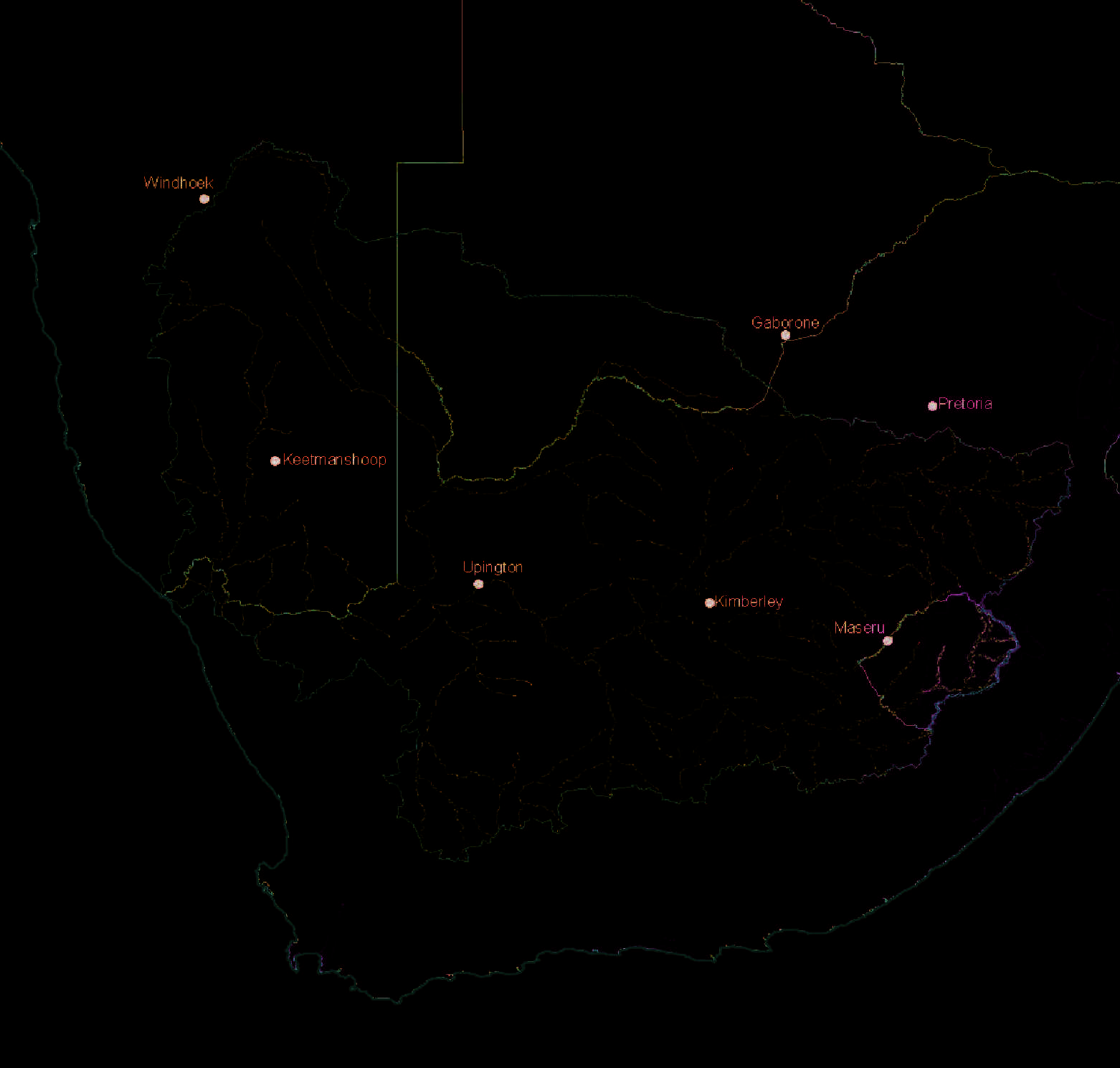
The Orange-Senqu river is important to regional cooperation as it cros es and forms some of the borders
between the riparian states (figure 1) and provides the single largest water resource south of the
Zambezi in a region which is clas ified as semi-arid and subject to increasing water stres . The highlands
of Lesotho provide the only exception where the climate is temperate and annual rainfal exceeds
evaporation. Elsewhere annual evaporative los es far exceed annual rainfal and to such a degree in the
Lower Orange that the climate is clas ified as arid to hyper-arid.
Certain areas of the Basin are already densely populated, economic development is significant, and
socio-economic expectations are high. This causes an inevitable high degree of competition for the finite
water resources that are available. Add to this the fact that the urban and industrial demands are
xi
OrangeSenquExecSumm:OrangeSenqu 9/9/08 12:50 PM Page 3
Executive Summary
xi i
geographical y concentrated in the upper parts of the Basin and these demands support activities that
make a major contribution to the GDP of South Africa (the largest Basin state) creates a significant
geographical imbalance in the utilization of available water resources. Water quality is impaired by
seepage, runof and point source discharges of municipal, industrial and agricultural ef luents, and by
high sediment loads resulting from land degradation in many areas of the catchment.
As past experience has shown, single sector oriented management of water resources does not solve the
problems of transboundary water resources. Only integrated planning of water resources at the basin
level can addres the environmental and socio-economic development needs in the basin. Consequently,
integrated, inter-country ef orts are urgently required to comprehensively evaluate the degree of
ongoing degradation of the Orange-Senqu and to take action to halt and reverse damaging trends where
neces ary.
Awarenes of this fact has promoted the development of a UNDP-GEF sponsored "Transboundary
Diagnostic Analysis (TDA) of the Orange-Senqu River Basin" and Strategic Action Programme development
project among four of the riparian nations. This project aims to ensure that the quality and quantity of
the water throughout the Orange-Senqu river system meets the short and long-term needs of the
ecosystem, the communities and economies relying upon the river and its as ociated resources. The
project is expected to achieve its objectives by: encouraging regional cooperation; increasing capacity
to addres water quality and quantity problems; demonstrating water quality/quantity improvements;
initiating required policy and legal reforms; identifying and preparing priority investments; and
developing sustainable management and financial ar angements.
The GEF IW TDA/SAP "best practice" approach underpins the methodology used in the development of
the Orange-Senqu River Basin TDA. Consequently the methodology for the TDA consists of the fol owing
steps:
· Identification and initial prioritisation of transboundary problems
· Gathering and interpreting information on environmental impacts and socio-economic
consequences of each problem
· Causal chain analysis (including root causes)
· Completion of an analysis of institutions, laws, policies and projected investments.
It focuses on transboundary problems without ignoring national concerns and priorities and identifies
information gaps, policy distortions and institutional deficiencies. The analysis is cros -sectoral and
examines national economic development plans, civil society (including private sector) awarenes and
participation, the regulatory and institutional framework and sectoral economic policies and practices.
Causal Chain Analysis (CCA) is one of the most useful aspects of the TDA for the development of future
cor ective actions. The causal chain should relate the transboundary problems with their impacts,
immediate physical causes and their social and economic underlying root causes.
xi i

OrangeSenquExecSumm:OrangeSenqu 9/9/08 12:50 PM Page 4
xiv
Executive Summary
Basin profile
The climate below the Alpine belt in Lesotho is temperate but at higher altitudes can be severe with June
and July temperatures fal ing below -10o C at night. Temperatures increase westwards with the hot est
areas recording temperatures in the mid 40o C. At the summit of the Drakensberg escarpment in Lesotho,
the mean annual precipitation is 1,6001,800 mm, decreasing sharply westwards to 45mm at Oranjemund
at the Orange River Mouth. Rainfal is highly variable in the western areas which also have the highest
evaporation rates. This results in an average water deficit per year of about 1.9 m in the middle reaches
of the Orange basin to about 2.6 m in the western parts of the lower Orange.
The highlands of Lesotho support Alpine vegetation that consists of climax heather communities
composed mainly of low woody species interspersed with alpine gras es at the highest altitudes.
Gras land habitat dominates the remaining high-lying areas while at lower altitude, mixed sour gras veld
occurs westwards to False Upper Karoo. A series of karooid vegetation types characterize the middle
xiv
OrangeSenquExecSumm:OrangeSenqu 9/9/08 12:50 PM Page 5
Executive Summary
xv
and lower Orange River catchment, including the Fish River tributary in Namibia, ending ultimately in
the Succulent Karoo from the Richtersveld to the coast.
The skewed distribution of rainfal (see Figure 2), the geographical concentration of demand in the upper
half of the system, the significant agricultural demands in the drier parts of the catchment and the
provision of the storage and transmis ion infrastructure to meet these, is the es ence and driving force
of the ensuing transboundary is ues.
The water quality in the Orange-Senqu Basin is highly variable due to a combination of natural and
anthropogenic factors. The catchment includes the main urban and industrial conurbations of South
Africa, the main gold mining areas of the country, parts of the Highveld coal fields, some of the country's
power stations and significant areas of dryland and ir igation agriculture. Although the arid western part
of the catchment is les developed, ir igation agriculture occurs extensively along the lower reaches of
the river.
xv

OrangeSenquExecSumm:OrangeSenqu 9/9/08 12:50 PM Page 6
xvi
Executive Summary
The demand for water in three of the basin countries in Mm3/a are shown in the table below. There are
no detailed demand figures for Botswana.
95% of al water demand is from South Africa of which approximately 60% is from the ir igation sector.
Growth in demand in South Africa is predicted at 1% per annum principal y in the Urban, industrial and
mining sectors. Higher demand growth rates are expected in both Namibia and Lesotho, but particularly
in Namibia where an expansion in ir igation is anticipated. Available water resources are cur ently
suf icient to meet demand however demand growth and the need to meet ecological flows means that
a combination of new water resource development and demand management, particularly in the
ir igation sector, is required in the relatively short-term.
For Namibia, the Orange River is a key resource for the southern region of the country, where commercial
agriculture and mining activities depend on the river as a reliable resource. In Botswana the basin is
very flat and arid and has not contributed water to the main stream in recent history. Nor is the Orange
a very practicable resource for south-eastern Botswana, because the existing demand canters are far
from the river.
In the case of Lesotho the national water demands are relatively smal and the downstream impacts of
abstractions would therefore be quite minor and not present a significant downstream conflict risk.
However, the development of the Lesotho Highlands Water Project (LHWP) in Lesotho, transfer ing water
to the Vaal System, does have a significant impact on the river in Lesotho and South Africa.
The basin had an estimated population of 19 mil ion people in 2004 (Earle et al., 2005). South Africa has
by far the major proportion of the basin's people, with high population densities in its Gauteng province
but significantly fewer people in the arid west. Al four countries have undergone significant urbanization
xvi
OrangeSenquExecSumm:OrangeSenqu 9/9/08 12:50 PM Page 7
Executive Summary
xvi
but population growth rates have slowed because of decreasing fertility and high mortality due to the
very high HIV/Aids prevalence rates.
The South African economy is overwhelmingly dominant with 93% of the total gros domestic product
(GDP) for the four countries. GDP per capita is highest for South Africa and lowest for Lesotho. Between
1975 and 2004 economic growth rates have declined in Botswana and Lesotho but increased in South
Africa and Namibia. Inflation rates have been low and have declined further in recent times.
The fol owing four sectors dominate:
· agriculture forestry and fishing,
· mining and quar ying,
· manufacturing and utilities, and
· services (which includes government).
The majority of the populations in the basin countries can be described as poor. Health indicators for the
basin tend to have similar pat erns to those for human development, employment and poverty. Compared
with the rural areas, the urban areas have lowest infant mortality rates and bet er medical services and
facilities. The human development index rose between 1970 and 1990 but has since declined in al
countries. Similarly, life expectancy between 2000 and 2005 is much lower in al countries than it was
between 1970 and 1975. Other indices such as adult literacy, and acces to improved water sources,
reflect general improvement over time, in line with the economic growth trends. In South Africa the
general level of human development is highest in the urban centre of Gauteng, and lowest in the arid
west, where traditional, smal -scale rainfed land-uses are typical. The incidence of HIV/AIDS is very
high, being 35.8%, 23.6%, 22.6% and 20.0% in Botswana, Lesotho, South Africa and Namibia, respectively
(Ashton & Ramasar 2001). The social and economic impact of this pandemic is cur ently dire, and wil
become even more so in future.
The high level of use of the water resources of the Orange Senqu Basin particularly in the Vaal River
has reduced the total annual flows of the lower Orange River to a fraction of their natural levels along
with cor esponding perturbations in their inter-annual variability. The seasonal pat ern of the flow
regime is now just a token of what it was, with no discernible flood season in many years and only large
flood episodes being evident when there is spil age from Vanderkloof, though the flood hydrographs are
very much at enuated and maximum discharges and flood durations much les than formerly. The smal er
flood events are captured in the reservoir storages, the overal ef ect being diminished distinctions
between the seasons and constant regulated flows for months on end. The environmental consequences
are potential y very severe in the long term and could lead to the col apse of the natural riverine
ecosystem and its ability to function. Already, the Orange River Mouth has deteriorated to the extent that
its integrity as a functional Ramsar site is in jeopardy, as a result of a number of factors, perturbations
in flow being just one.
Al Orange-Senqu River riparian states have, or are on the proces of developing, water policy and
legislation that reflects international trends in water management, particularly the implementation of
Integrated Water Resource Management (IWRM). Once al legislation is in place the four countries are,
from a legal perspective, largely in the position to implement IWRM national y while taking into account
xvi
OrangeSenquExecSumm:OrangeSenqu 9/9/08 12:50 PM Page 8
xvi i Executive Summary
the obligations set forth by applicable international law. It needs to be acknowledged though that al
countries, to dif erent degrees, are faced with serious (human and financial) capacity constraints to
ef ectively implement the applicable policies and laws in practice. Whereas the required capacity is
arguably highest in South Africa, al countries experience significant capacity chal enges and a detailed
as es ment of capacity gaps needs to be undertaken.
In order to use the resources of the River System in an "equitable and reasonable" manner, the equitable
share of each country needs to be determined. Only once that has been done the respective national
authorities are able to accurately include international obligations (as far as water resources al ocation
is concerned) into their planning and thus comply with international law. The determination of the
"equitable share" requires the joint acceptance of a resource definition as wel as of the applicable
criteria to be considered for the determination of the "equitable share". International water law
provides guidance as to the criteria to be used for the determination of each country's equitable share.
From climate records of the past 50 years, elements of climate change for derivatives of rainfal ,
temperature and hydrological responses can already be detected in certain regions within southern
Africa. Not al areas display equal change, and in some areas no change can yet be detected. The
fol owing predictions have been made with regard to water resources:
· In South Africa, the projected increase in potential evaporation is estimated to be 10-20%.
This increase wil be accompanied by enhanced evaporation los es and increased ir igation
demands.
· Soils wil become drier more often which may result in reduced runof per mm rainfal , agricultural
land-use changes, reduced crop yields and higher ir igation demands.
· Fewer, but larger rainfal events which may result in more groundwater recharge.
· Climate change wil be accompanied by changes in land-use in the four countries, which wil be
superimposed on already existing complex land-use impacts.
Vulnerable communities in southern Africa already have to cope with multiple stres es, of which climate
variability is but one. Climate change impacts, including water resource availability, within the Orange-
Senqu basin require adaptive strategies and adaptation policies co-ordinated between al basin States.
xvi i

OrangeSenquExecSumm:OrangeSenqu 9/9/08 12:50 PM Page 9
Executive Summary
xix
Priority transboundary concerns
The twenty-three common GEF transboundary is ues were as es ed by the members of the Technical Task
Group (TTG) in order to determine their relevance and transboundary nature in the context of the
Orange-Senqu River Basin. The group was asked to brainstorm and identify the major water-related
transboundary problems. Consequently, the GEF list was nar owed down to 5 major transboundary is ues
in the Orange-Senqu River Basin that required further detailed analysis:
· Stres on ground and surface water resources
· Changes to hydrological regime
· Deterioration of water quality
· Land degradation
· Alien invasives.
When examining the transboundary is ues the authors were asked to consider biodiversity and climate
change as cros -cut ing is ues.
Key findings and recommendations
The key findings of the water resource and hydrological regime studies are:
· Surface water resources of the Orange-Senqu Basin are highly utilized to the extent that the
residual flows to the mouth represent only 25% of the natural MAR at the mouth;
· The DWAF/Namibian Water Resource Planning Model developed under the LORMS study and which
models the whole basin, indicates that there is already under a significant deficit in the Lower
Orange which may grow to over 400Mm3/a by 2025. This calculation excludes demand from
Botswana and as umes that the cur ent Ecological Water Requirement (EWR) of 1,000 Mm3/a
remains;
· The strategy for new infrastructure development is not yet defined with options including
LHWP phase 2, expansion of Thukela- Vaal transfer scheme, a re-regulating dam at Vioolsdrift,
and an upper Orange dam, and therefore the yield cannot be defined with any certainty.
The earliest implementation date for LHWP is 2018 at which time the deficit in the Lower
Orange is forecast to be 374Mm3/a;
· Improved resource management in the Vaal and Orange systems could yield up to 223 Mm3/a and
maintain a surplus in the Vaal system until 2015, however, this includes utilisation of spil ages from
the Vaal system and there may be double counting;
xix
OrangeSenquExecSumm:OrangeSenqu 9/9/08 12:50 PM Page 10
xx
Executive Summary
· Water demand management in the ir igation sector has a forecast potential saving of 226 Mm3/a
deliverable in 5-10 years. There are limited available figures for demand management savings in the
domestic, industrial and mining sectors or estimate of potential transfer and distribution savings.
A detail demand management strategy needs to be established;
· Significant improvements are required in the hydrological flow monitoring network, particularly
the low flows;
· The Lower Orange and the mouth cur ently has a category D ecological status and the provisional
EWR is estimated to be 1,000 Mm3/a. From existing data and information it is dif icult to establish
whether this requirement is being met. It has been estimated that raising the ecological status of
the mouth to category C wil require a further 500 Mm3/a, which wil increase the deficits in the
lower Orange accordingly;
· The potential impact of climate change on the supply and demand side of the water balance is not
taken into account in the calculation of the water resource balance;
· Groundwater resources are limited and it has yet to be established what contribution, if any, they
could make to the water balance.
The key recommendations and conclusions of the water resource and hydrological regime studies are:
· To enable the decision makers to clearly understand the is ue, a detailed water resource balance
for the whole basin needs to be prepared, based upon agreed planning criteria (as urances,
EWRs etc.), consistent component demand forecasts and climate change scenarios, against which
potential water resource development options and demand management targets can be
superimposed to determine the geographical planning surplus and deficits over a twenty year
planning period.
· To undertake an as es ment of Ecological Water Requirements in the Lower Orange and mouth and
establish an agreed methodology which can be applied in other key points of the Basin.
· Establish a `vision' for the Orange-Senqu River Basin water resources in the national larger economic
planning frameworks of the four countries. The vision should indicate the level of environmental
xx

OrangeSenquExecSumm:OrangeSenqu 9/9/08 12:50 PM Page 11
Executive Summary
xxi
protection the river should be af orded. Can protection be increased from category D to
category C?
· Develop and agree criteria for establishing equitable sharing of water resources between the four
countries in order to set bounds on development demand.
· Establish a decision framework for future water al ocation based on economic water
evaluation criteria.
· Improve implementation of regulatory functions and responsibilities in al four countries and
strengthen regional coordination through ORASECOM.
· Agreed climate change scenarios need to be incorporated into the water balance calculations -
perhaps with dif erent scenarios for dif erent sub-basins - and develop adaptation strategies.
The key findings of the water quality studies are:
· The Vaal catchment is highly pol uted which has implications for water resource availability and
transboundary impacts. The water quality of the Upper and Lower Orange is said to be good;
however there are insuf icient data for certain categories of contaminants to make any
conclusive statements.
· There are concerns along al the rivers which flow through towns and vil ages throughout the
catchment regarding localized micro-biological pol ution from untreated and partial y treated
sewage entering the rivers;
· The increase in Total Dis olved Solids (TDS) in the Vaal and Lower Orange catchments and the
concomitant increase in constituents such as chloride and sulphate, has had major implications for
domestic, industrial and agricultural water use;
· The transboundary impacts of POPs, heavy metals and radio-nuclides are unknown due to a lack of
monitoring data and detailed studies, but some level of transboundary transfer of these pol utants
is suspected;
· Eutrophication is a severe problem in the Vaal catchment and in isolated pockets in other parts of
the Basin.
xxi

OrangeSenquExecSumm:OrangeSenqu 9/9/08 12:50 PM Page 12
xxi
Executive Summary
The key recommendations and conclusions of the water quality studies are:
· Establish basin-wide Receiving Water Quality Objectives (RWQOs) and agree and develop sectoral
short- and medium-term targets to meet the objectives. RWQOs are being set in isolation in priority
catchments; whilst integration of the RWQOs for the Vaal River is being addres ed in the Integrated
Water Quality Management Plan (IWQMP) that is being developed by the South African DWAF, there
are no objectives agreed for the whole of the Orange-Senqu basin.
· Undertake a water quality as es ment of the major aquifers in the basin. There are concerns
regarding the quality of groundwater resources and their protection, however there is insuf icient
data to make any conclusive statements in this regard;
· Improve compliance monitoring and enforcement in al four countries. Lack of institutional capacity
to ef ectively manage water quality in their respective countries is a major constraint;
· Improve the water quality monitoring network throughout the region. In Lesotho and Namibia,
the water quality monitoring networks are poorly developed and there are no formal sampling
networks or water quality databases. South Africa has a more sophisticated and extensive
monitoring system, but there are stil a number of deficiencies in the data sets, the extent of the
network especial y along the Lower Orange and in some of the more pol uted sub-catchments of
the Vaal River.
· Undertake an as es ment of Persistent Organic Pol utants, heavy metals and radio-nuclides in
the Vaal and Lower Orange catchments for which there is a general lack of information in
the catchment.
xxi

OrangeSenquExecSumm:OrangeSenqu 9/9/08 12:50 PM Page 13
Executive Summary
xxi i
The key findings of the land degradation studies are:
· Land degradation poses a risk to ecosystem integrity in fragile highland and dryland environments,
defined in terms of the health, connectivity and stability of both the biotic and abiotic components
of ecosystems and the interconnectednes between them. Ovestocking, caused by communal land
tenure systems and the uneven distribution of water, is a major factor in rangeland degradation
throughout the basin;
· The Lesotho highlands are particularly sensitive to land degradation which causes critical impacts
to run-of (e.g. damage of the water sponges) and sediment loadings;
· In the Lower Orange, land degradation due to overgrazing and overstocking is widespread but its
economic impact on water resources has not been determined;
· Deforestation in the riparian belt and/or invasion by alien species can cause disruption to the
hydrological cycle, but it is unclear to what degree this is prevalent in the Orange-Senqu River
Basin due to a lack of any basin-wide studies in this regard;
· Lack of alternative livelihoods and acces to market and financial facilities lock the rural
populations into unsustainable range management practices;
· Poor land-use policies and historical tenure systems have exacerbated the land
degradation problem;
· There is an urgent need for community-based natural resource management initiatives acros the
basin, particularly for rangeland managed areas (under livestock, wildlife or both), involving
integrated approaches in communal and freehold areas.
The key recommendations from the land degradation studies are:
· Undertake an as es ment of the scale and scope of land degradation in the Orange-Senqu Basin
particularly in the Upper and Lower Orange.
· Undertake a more detailed as es ment of the water resource implications of existing and potential
future land degradation; the linkage between land-use and water resource management is
fragmentary which makes the development of a strategy to addres the problem dif icult; there is
a tendency for generic solutions.
xxi i
OrangeSenquExecSumm:OrangeSenqu 9/9/08 12:50 PM Page 14
xxiv Executive Summary
· Strengthen monitoring and evaluation systems need and the dis emination of information and
knowledge to the local level to help develop adaptive management strategies.
· Demonstrate various governance models at the community level which wil deliver best practice
integrated rangeland and water resource management in various biomes.
The key findings of the invasive species study are:
· Increases in the distribution and occur ence of alien invasive species acros the basin are
contributing to the environmental degradation of riparian and aquatic ecosystems in the
Orange-Senqu Basin.
· The upper catchments of the Basin within Lesotho, and the Eastern Free State and Gauteng
provinces of South Africa show significant riparian infestations of alien species, such as Silver
wat le, Black wat le, Grey poplar, Blue gum, Syringa and Jacaranda. These species are significant
water users, and compound degradation of riparian ecosystems.
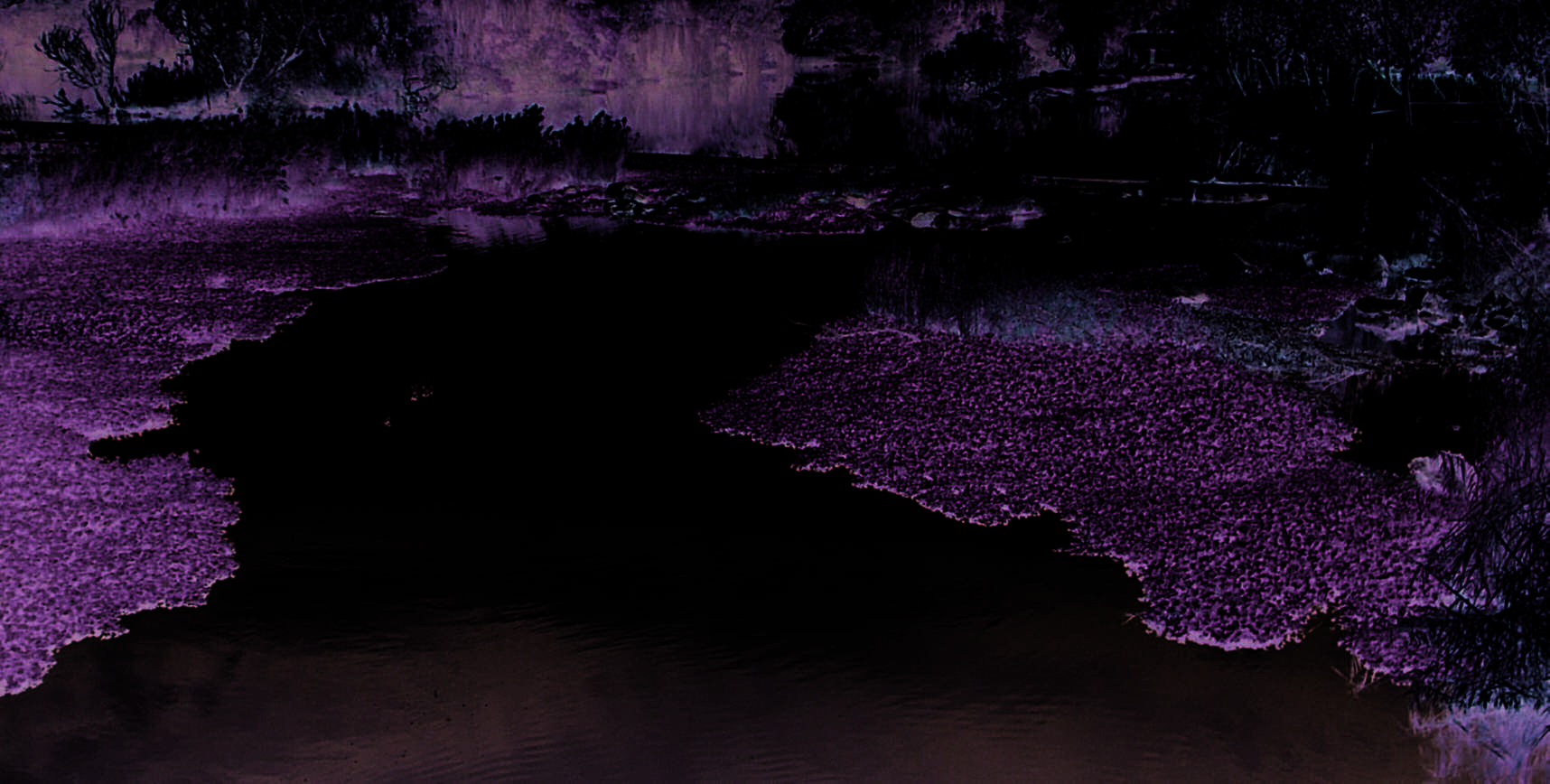
· The Vaal River contains sections of dense infestations of aquatic plant species, especial y Water
hyacinth. This species disturbs aquatic habitats, alters the flow of the river and blocks water
abstraction, conveyance and ir igation equipment.
· The drier middle to lower sections of the Orange River Basin are impacted mostly by growing
infestations of Mesquite. This woody shrub species is commonly encountered in riparian areas,
and is responsible for significant river yield los es, as wel as land degradation.
· The eradication programmes are fragmented in approach and, with the exception of South
Africa, donor driven.
Key recommendations of the invasive species studies are:
· Integrate eradication ef orts should acros the basin to control common invasive species and
where applicable incorporated them into the national and regional IWRMs.
· Strengthen monitoring of alien invasive species throughout the basin and establish a database.
· Undertake an as es ment of the water resource los es due to invasive species in the Orange-Senqu
and evaluate the economic cost.
xxiv
OrangeSenquExecSumm:OrangeSenqu 9/9/08 12:50 PM Page 15
Executive Summary
xxv
The compilation of a TDA requires a Stakeholder Analysis (SHA) based on GEF International Water Projects
(IWP) Best Practices. The SHA included interviews with 36 stakeholder groups in the basin countries in
February and March 2007. The stakeholders included employees of departments dealing with
environmental af airs, tourism, water af airs, meteorology, forestry, agriculture, national water
managers and parastatals, agronomic boards, mining industry, scientists, NGOs, tour guides, river
communities, of icials of ORASECOM, and international organizations working on other ORASECOM
projects, including French GEF, and GTZ. The interviews were fol owed by a telephonic/face-to-face
questionnaire survey of more that 400 stakeholders from 36 groups acros the region.
The Stakeholder Analysis showed that there is concern about the fol owing major is ues:
· Water quantity;
· Impacts of climate change on water regime including quality, quantity and ecosystems;
· Water regime influences on biodiversity;
· Water quality;
· Other social and economic is ues impacting project design and implementation.
As a result of the SHA the fol owing recommendations have been made for inclusion in ORASECOM's
Stakeholder Roadmap.
· Develop and rol out a concerted national and regional awarenes raising and building campaign,
which acknowledges the scarcity of water and the need to implement water use conservation
measures as part of a wider demand management strategy.
· Develop inter-sectoral capacity building measures to increase awarenes and understanding of the
concepts of sustainable development, IWRM, and environmental economics.
· Take steps to decouple the perception of a trade-of between sound environmental management and
economic development.
The findings and recommendations of this TDA wil be revisited as part of the UNDP- GEF ful -size project
and wil feed into the development and negotiation proces for the Strategic Action Programme.
xxv

OrangeSenquExecSumm:OrangeSenqu 9/9/08 12:50 PM Page 16
The Cover
The cover photograph depicts a child holding an orange and is meant to symbolize a clean
Orange-Senqu River, a river with potential for sustaining future livelihoods
and supporting sustainable economic growth in the basin countries.