ORASECOM
ORASECOM
THE ORANGE-SENQU RIVER COMMISSION
NEWSLETTER
No.1 J
No
anuar
.1 J
y - December 2009




CONTENTS
Foreword from the Executive Secretary
2
The Orange-Senqu River Basin
2
About ORASECOM
3
EU Support
4
GTZ (BMZ/DFID) Support
5
FGEF Support
5
UNDP/GEF Support
6
Activities and Events 2009
7
The International Water Law Course
7
ORASECOM visit to the ICPDR
8
ORASECOM Orange-Senqu Field Excursion
8
GTZ supported Project enters Phase II
9
The launch of the ORASECOM River Awareness Kit
10
ORASECOM participates in the Africa Water Week
and Orange River Symposium
11
Second ORASECOM visit to the ICPDR
12
PAGE 1




Foreword from the Executive Secretary
emerged from the interest to share ORASECOM
experiences and knowledge with a broad spectrum
of colleagues and others interested in
transboundary water resource management, and
to keep interest groups throughout the Basin
informed about developments and events in the
Orange-Senqu River Basin.
Since ORASECOM's establishment in 2000 we have
made considerable progress, not only in mapping
the status of the Orange-Senqu River System, but
also in building partnerships and exchanging ideas
with other transboundary water resource
management institutions.
This first newsletter provides background
information about the Orange-Senqu River System,
May I take this opportunity to firstly wish you a
about ORASECOM, its projects supported by
healthy, prosperous and happy 2010.
international cooperating partners, as well as
I am glad to present the first ORASECOM
ORASECOM's main achievements and progress
Newsletter. The idea of having a newsletter
throughout 2009.
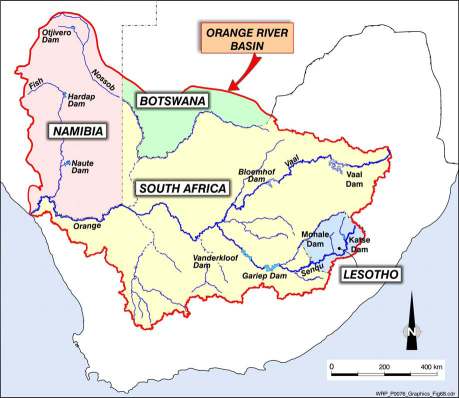
The Orange-Senqu River Basin
The Orange-Senqu River originates in the Lesotho
Highlands, from where it flows westwards to its
mouth at Alexander Bay/Oranjemund on the
Atlantic West Coast of Africa. The river basin is the
third largest in southern Africa, after the Zambezi
and the Congo, covering a total area of 1,000,000
2
km of which almost 60% is inside the Republic of
South Africa. Four countries Botswana, Lesotho,
Namibia and South Africa - share the Basin, and the
river forms the border between South Africa and
Namibia in its lower reaches.
Lesotho, the most upstream country falls entirely
within the basin and contributes over 40% of the
stream flow from only 5% of the total basin area,
but Lesotho is one of the smallest users of water
from the basin. South Africa is by far the biggest
user of water from the Orange-Senqu River System,
of the basin is therefore much wider than its
and this use drives the economic heartland of South
geographical extent. The part of the Basin in
Africa. In South Africa, the basin receives inter-
Botswana is entirely covered by the Kalahari Desert
basin transfers from the Inkomati and Usutu
with very little surface runoff, but groundwater
systems, shared with Mozambique and Swaziland,
contributes to the water demands in this portion of
and from the Tugela system. Water is also
the basin. However, indications are that gradual
transferred out of the basin to the Limpopo system,
salinisation of this groundwater means that this
shared with Botswana, Zimbabwe and Mozambique
source may not provide for the needs of the people
and into the Eastern Cape Province. The footprint
of that part of the basin for much longer.
PAGE 2





The water requirements in the lower reaches of
the river are driven primarily by irrigation
demands from both Namibia and South Africa, as
well as the need to maintain environmental flows
to the estuary. The middle and lower reaches of
the river are subject to periodic and often
devastating floods. The Orange River estuary is
ranked as one of the most important wetland
systems in southern Africa. Developments in and
around this wetland system as well as reduced
freshwater inflows have, nevertheless, resulted in
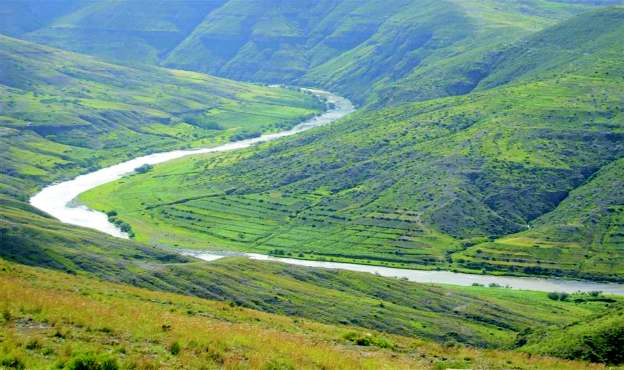
The Senqu River near its source
environmental degradation. This wetland system
Source: Lesotho W
ater Commission 2003
was recently re-designated as a Ramsar Site and
therefore prioritised this basin for the
placed on Montreux Record. However, reduced
establishment of a joint basin commission
freshwater inflow to the estuary may be affecting
following the entry into force of the SADC Revised
wetland functioning.
Protocol on Shared Watercourses. As a relatively
Effective management of the Orange-Senqu River
new organisation, ORASECOM faces considerable
Basin is, therefore, particularly complex, but is
challenges in establishing itself as a key role player
also vital to the economy of the region. SADC in the basin.
About ORASECOM
ORASECOM advises its Member States (the Parties)
on matters related to development, utilisation and
conservation of the water resources in the River
system. This may include recommendations on inter
ORASECOM COUNCIL
alia; water availability, equitable and reasonable
4 Delegations
3 Commissioners per Delegation
utilisation of water resources, development of the
river system, stakeholder participation,
harmonisation of policies, and a standardised form
of collection, processing and dissemination of data
and information. processing and dissemination of
data and information.
In addition, ORASECOM may advise Member States
on the prevention of pollution and control of aquatic
Task
weeds, contingency plans for responding to
Secretariat
Teams
emergencies, and a variety of procedural matters on
water related development between the Member
States.
Organisational set-up of ORASECOM
ORASECOM was established in 2000 through an
To date ORASECOM partners include the GTZ - the
agreement between Botswana, Lesotho, Namibia
G e r m a n G e s e l l s c h a f t f ü r Te c h n i s c h e
and South Africa. The Commission has its origins
Zusammenarbeitung (BMZ - the German Federal
soon after the signing of the Revised SADC Protocol
Ministry for Economic Cooperation and
on Shared Watercourses and is one of the first
Development - and DFID - The British Department
Shared Watercourse Institutions to be established
for International Development), French GEF - Global
under the Revised Protocol. The Permanent
Environment Facility, EU - European Union, UNDP-
Secretariat was established in 2007 and is based in
GEF The Global Environment Facility of the United
Pretoria, South Africa.
Nations Development Programme.
PAGE 3




EU Support
The overall objective of the EU Supported Project in
middle and lower reaches of the river from both
ORASECOM derives directly from the vision of the
Namibia and South Africa, which make a significant
S A D C R e v i s e d P r o t o c o l o n S h a r e d
contribution to the economy of that part of the
Watercourses, and is specified as follows: "To
Basin. Moreover, the countries have different social
reduce poverty and food insecurity through
needs that sit high on their national developmental
improved management and environmental
agenda. There is consequently no standardized
protection in the Orange - Senqu River basin."
approach to using water to promote growth and
development.
The Basin States differ widely in their ability to
The context within which ORASECOM will function
convert water from the Orange-Senqu system into
may therefore be influenced by different approaches
GDP and jobs. Strategies to address poverty and
to national development and poverty reduction
food insecurity in the basin through water use may
strategies as well as the principles and strategies
differ. In Lesotho, Botswana and Namibia the
espoused by SADC. This, to some extent, defines the
population of the Basin is largely rural and poor,
role that ORASECOM could play in the basin, as well
while in South Africa water use also supports the
as the form and extent of the Basin Wide Plan. This
urban, industrial and mining heartland of the nation.
in turn influences optimal institutional arrangements
There are considerable irrigation demands in the
for the organisation.
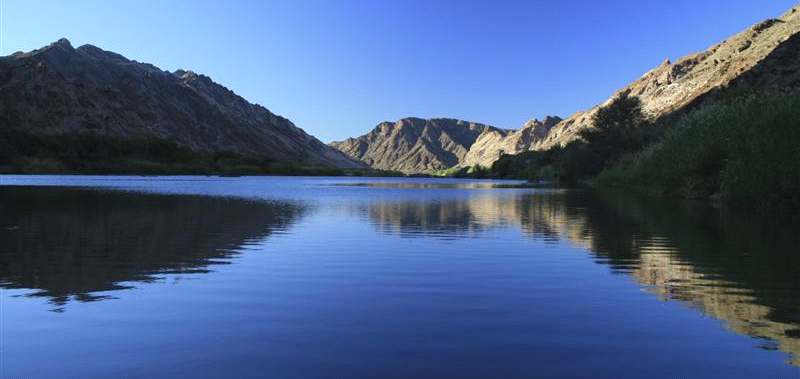
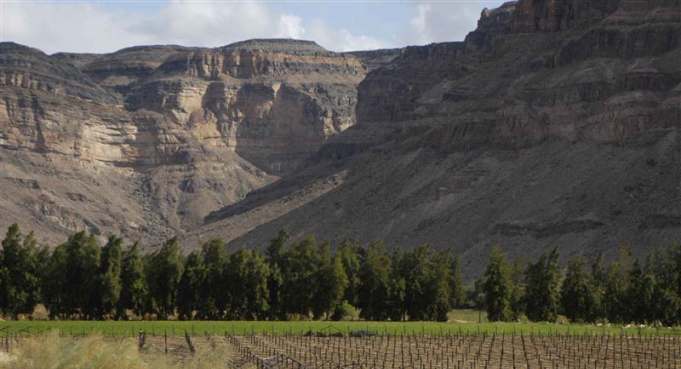
The Richtersveld region, South Africa/Namibia
Source: Stockphoto/Roode 2008
The EU project therefore focuses on institutional ·
"What is the form and extent of the
strengthening and to better understand the form
organisation's technical advisory role?"
and extent of ORASECOM's technical advisory role. ·
"What can ORASECOM do, that can not be
The EU Project seeks to answer:
done by the bilateral arrangements or by
·
"What is the best institutional form and
the Member States acting independently?"
functioning for ORASECOM?"
PAGE 4






GTZ (BMZ/DFID) Support
GTZ support has to date consisted of two Phases.
Phase II of the GTZ Project, with financial support of
Phase I, with financial support from BMZ, was
BMZ and technical and financial assistance from
concluded in 2008 and included studies in the
DFID, started in August 2009 and includes the
following areas:
following seven action areas:
·
Current Analytical Methods and Technical
Capacity of the four Orange Basin States
·
Assessment and Upgrading of an Integrated
·
Summary of Water Requirements from the
Orange-Senqu River Basin Model
Orange River
·
Updating and Extension of Orange-Senqu
·
Demographic and Economic Activity in the
River Hydrology
four Orange Basin States
·
Assessment of Requirements for, and the
·
Environmental Considerations Pertaining to
Development of, an Integrated Water
the Orange River
Resources
·
Water Quality in the Orange River
Quality Management Plan for the Orange-
·
Review of Existing Infrastructure in the
Senqu River
Orange River Catchment
·
Determination of Catchments Boundaries
·
Institutional Structures in the four Orange
·
An assessment of the impact of global
Basin States.
climate change on the hydroclimatology,
·
Legislation and Legal Issues Surrounding the
water resources,
Orange River Catchment
vulnerabilities and adaptation requirements
·
Review of Groundwater Resources in the
in the Orange River Basin
Orange River Catchment
·
A n A s s e s s m e n t o f E n v i r o n m e n t a l
·
Review of Surface Hydrology in the Orange
River Catchment
Requirements
·
Water Quality in the Orange River
·
An assessment for the potential for Water
The above documents can be downloaded from the
Demand Management in the irrigation sector
ORASECOM website.
of the Orange River Basin
FGEF Support
The French Global Environment Facility (FGEF)
and Use of "Marginal Waters"
Supported Project was concluded in August 2009
·
Feasibility Study of the Potential for
and provided support to strengthen ORASECOM,
Sustainable Water Resource Development in
through the implementation of concrete actions.The
the Molopo-Nossob Watercourse
project support aimed to strengthen transboundary
·
Groundwater Review of The Molopo-Nossob
and inter-sectoral networking systems so as to build
Basin for Rural Communities Including
capacity and confidence through transparency and
Assessment of National Databases at The Sub-
the sharing of information to support transboundary
basin Level for Possible Future Integration
river basin management. The following actions were
·
Protection of the Orange-Senqu Water
implemented under the FGEF support:
Sources/Sponges
·
Capacity Building Programme
·
Feasibility Study for the Development of a
The reports of these actions are complete and
Mechanism to Mobilize Funds for Catchment
pamphlets with summaries are available both on the
Conservation
ORASECOM website (www.orasecom.org)
·
Assessment of Potential for the Development
PAGE 5






UNDP/GEF Support
Competing water uses in the context of dwindling and
uncertain future supplies are the critical issues in the
basin. As past experience has shown, single sector
oriented management of water resources does not
solve the problems. Only integrated planning of water
resources at the basin level can adequately address the
environmental and socio-economic development
needs.
Awareness of this fact has promoted the development
of a UNDP-GEF sponsored "Development and Adoption
of a Strategic Action Programme for Balancing Water
Use and Sustainable Natural Resource Management"
Project among four of the riparian countries. The
Project forms part of the ORASECOM-led Orange-
Senqu Water Resources and Environmental
Programme. As such the Project will build upon and
create synergies with a range of initiatives being
undertaken by the countries themselves and those of
bi-lateral and multi-lateral donors that have given
priority to the Basin.
In April 2008 ORASECOM adopted a preliminary
Transboundary Diagnostic Analysis (TDA) of water
·
A review of the impacts of artesian mining on the
resources related issues in the Basin. The preliminary
middle and lower Orange;
TDA followed the GEF International Waters "best
·
An assessment of Persistent Organic Pollutants
practice" approach, including:
levels in the river; and
·
A detailed yield assessment and demand forecast
·
Identification and initial prioritisation of
for the basin for the next 25 years.
transboundary problems;
·
Gathering and interpreting information on
Though climate change and biodiversity are not
environmental impacts and socio-economic
independent priority transboundary concerns, these
consequences of each problem;
issues will be highlighted and integrated throughout
·
Causal chain analysis, to identify underlying root
the Project. The final TDA will serve as the scientific
causes; and
basis for development of an agreed set of interventions
·
An analysis of institutions, laws, policies and
under the framework of a Strategic Action Programme
projected investments.
(SAP) and associated National Action Programmes
(NAPs). The SAP will incorporate a basin vision, water
It identified five priority transboundary problems:
resource quality objectives, targets and interventions
·
Stress on surface and groundwater resources;
in the short and medium term to meet the targets. It
·
Altered water flow regime;
will be developed in a participative manner with the
·
Deteriorating surface and groundwater quality;
wide range of stakeholders involved.
·
Land degradation; and
·
Alien invasives.
In parallel to the SAP development the Project will
implement three pilot projects which will demonstrate
In 2009 activities on the ground were limited, although
replicable solutions in three critical areas of concern:
signing of the Project Document by all four riparian
·
The setting of environmental flows;
countries and the recruitment of the project manager
·
Water demand and quality management in the
were both important milestones. A Project
irrigation sector; and
Coordination Unit, hosted at the ORASECOM
·
Community-led rangeland management.
Secretariat, will now finalise the TDA by undertaking a
number of gap filling activities including:
The Project's duration is until 2013.
PAGE 6




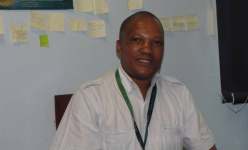
Activities and Events 2009
Appointment of the Water Resources Specialist to the Permanent Secretariat
In June, Mr Rapule Pule, a hydrologist by training
joined the ORASECOM Permanent Secretariat as a
Water Resources Specialist. Mr. Pule has more than
twelve years of work experience in water resources
management. He spent eight of these years working
for international organisations such as the SADC
Water Sector Coordinating Unit (WSCU) now known
as the SADC Water Division, and the International
Council for Local Environmental Initiatives (ICLEI).
Throughout his career, he gathered experience in,
inter alia, integrated water resources management
(IWRM), sustainable development, hydrology,
local governments. Mr. Pule's appointment is a very
hydrogeology, water quality management,
welcome addition to the Secretariat and we wish him
environmental impact assessment and project
a very successful and productive time in the
management. He worked with both national and S ecretariat!
The International Water Law Course
The ORASECOM Sec-
retariat arranged a course
on International Water
Law , in Pretoria South
Africa from 1-5 June 2009.
About 20 participants,
drawn from all Member
S t a t e s , a s w e l l a s
Secretariat staff attended
and obtained a wealth of
material, as well as a fresh
understanding of the
intricacies of International
Water and Environmental
law.
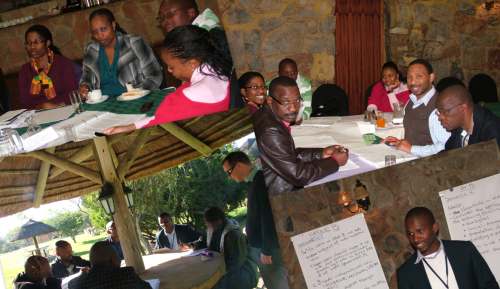
Delegates debate the intricacies of International Water Law at the course
This course, supported by
the EU and FGEF, provided a common understanding
Practical exercises allowed participants to engage
of the core principles of International Water Law, as
these principles on fictitious shared river basins.
well as the specific requirements of international
instruments directly applicable to the Orange-Senqu
The course was designed and presented by, Dr Daniel
River Basin situation. The course covered the
Malzbender of the African Centre for Water Research,
following topics and principles
and supported presentations from Dr Owen McIntyre
·
An introduction to International Water Law;
(of the University College Cork national University
·
Determining Equitable Utilisation;
of Ireland) and Dr Brian Hollingworth (Independent
·
The duty to prevent significant harm;
Consultant). Dr Guy Pegram also presented a session
·
Environmental protection obligations;
on institutional arrangements in River Basin
·
The duty to cooperate, and
Organisations around the world. The course was very
·
The relationships between the SADC Revised
well received, and participants felt that it had been a
Protocol, ORASECOM Agreement and the
Bilateral Agreements.
rewarding and enriching experience.
PAGE 7




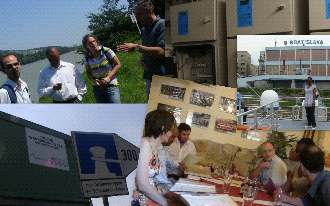
ORASECOM visit to the ICPDR
A delegation of 4 people from ORASECOM and the EU
on stakeholder communication. Key lessons brought back
support team visited the Secretariat of the International
by the team include
Commission of the Protection of the Danube River
1)
Monitoring could focus on a basin wide
(ICPDR) based in Vienna, Austria from 12-17 July 2009.
perspective on the state of the system, as well as
This visit formed part of an on-going cooperation between
specific transboundary problems.
ORASECOM and the ICPDR, and was supported by the EU
2)
Monitoring can be done at different intensities from
intensive surveys on an irregular basis, to routine
operational monitoring at lower intensities and
higher frequencies
3)
Monitoring programmes could be paralleled with
existing national monitoring programmes.
4)
Methods for quality assurance inter-laboratory
comparisons build trust in the shared data.
5)
A Basin Wide Observers forum consisting of specific
interest groups could be considered to help build
legitimacy for the future Basin Wide Plan.
6)
Awareness raising toolboxes can be developed with
the engagement of stakeholders.
ORASECOM Delegation in Austria and Slovakia
The primary focus of the visit was to exchange expe-
These lessons have been built into the ongoing work
riences on joint multi-national water resource quality
supported by the ORASECOM's International Cooperating
monitoring programmes, as well as to engage the ICPDR
partners.
ORASECOM Orange-Senqu Field Excursion
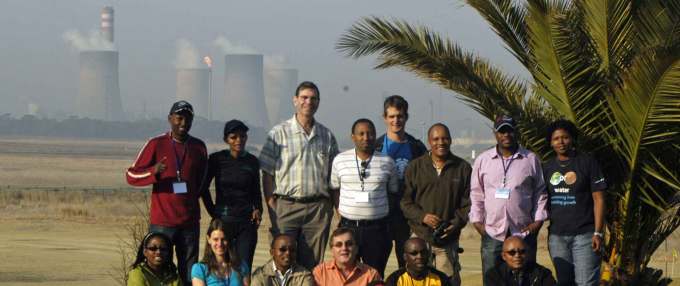
ORASECOM field Excursion team at Secunda.
In August-September and with support of GTZ, members
before heading to Lesotho. Here the group had an
of ORASECOM made a field excursion along the Orange-
extensive tour of the Katse Dam before traveling through
Senqu River from its source in the Lesotho Highlands, to
Maseru to the border and the Caledon River. The group
the Orange River Mouth. The tour was organised by WRP
then travelled along the Orange River visiting Gariep Dam
Consulting Engineers.
and its power plant, Kimberley, the Kuruman Eye, Sishen
Mine, Neusberg Weir and Augrabies Falls. On the Lower
Participants from toured along the river, visiting key sites
Orange River, the team crossed into Namibia at Vioolsdrift
of interest along the way. The purpose of the excursion
to visit Aussenkehr and a Namibian Wine farm before
was to familiarise the delegations with the river system
crossing back over into South Africa. Finally, they drove
and develop a broader understanding of the key issues.
through Port Nolloth to Alexander Bay and Oranjemund
The two week excursion began in South Africa, visiting
where they were provided with an extensive visit of the
SASOL at Secunda, Hendrina Colliery and the Vaal Dam
river mouth.
PAGE 8




GTZ supported Project enters Phase II
In August 2009 GTZ supported project entered its second phase. The project is divided into
seven work packages as follows
Climate change may alter the availability of water
Source: Vogel 2009
Assessment and Upgrading of an Integrated
The project will seek to fully delineate all the sub-
Orange-Senqu River Basin Model.
catchments comprising the Orange-Senqu Basin,
The main objectives of this consultancy are to
focussing especially on the semi-arid to arid zones in
enlarge and improve the existing models for the
the middle to lower reaches of the Orange-Senqu
Orange-Senqu Basin, so that they incorporate all of
Basin.
the essential components in the four Basin States
and are accepted by each Basin State.
An assessment of the impact of global climate
change on the hydroclimatology, water resources,
Updating and Extension of Orange-Senqu River
vulnerabilities and adaptation requirements in the
Hydrology. This project will focus on generating new
Orange River Basin. The objective of this work
hydrological data for the data-deficient segments of
package is to undertake a detailed assessment of
the Basin and extending current hydrological
the occurrence and extent of climate change due to
records for the Orange-Senqu Basin, according to
anthropogenic factors in the Orange River basin.
the priorities set by ORASECOM.
An Assessment of Environmental Requirements.
Assessment of Requirements for, and the
The consultancy should undertake an assessment at
Development of, an Integrated Water Resources
intermediary level (by criteria set out by the
Quality Management Plan for the Orange-Senqu
Department of Water Affairs and Environment of
River. The project will build on an initial assessment
South Africa) of environmental requirements of the
conducted as part of the Phase I water quality data
Orange River basin in selected key areas.
assessment project, and then propose a robust
water quality management plan for incorporation
An assessment for the potential for Water Demand
into the overall integrated water resources
Management in the irrigation sector of the Orange
management plan for the Orange-Senqu Basin.
River Basin. The consultancy should undertake a
detailed assessment of the water used for irrigation
Determination of Catchments Boundaries.
in the Orange-Senqu River Basin.
PAGE 9




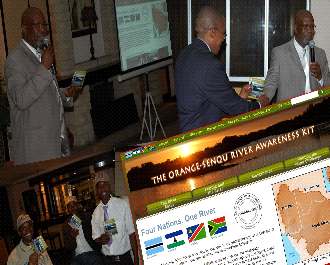
The launch of the ORASECOM River Awareness Kit
water governance and water management of the
Orange-Senqu River Basin. It provides a centralised
repository for knowledge related to the Basin, and
includes an abundance of information on the basin
and its history.
The RAK was developed with financial and technical
support of GTZ and includes self-learning resources,
supported by interactive visualisation tools, maps,
documents and quizzes. This will support a broad
spectrum of stakeholders in the Orange-Senqu River
Basin so that they can better understand the basin
Photos from the launch of the Orange - Senqu RAK in Maseru
-
and its key challenges.
Lesotho
ORASECOM launched its Orange-Senqu River
th
Awareness Kit (RAK) on the 19 of October 2009, in
The Orange-Senqu RAK is available at
Maseru Lesotho. The RAK introduces users to the
http://www.orangesenqur
,
ak.com/
or as a DVD
fundamentals of the geography, socio-economics,
from the ORASECOM Secretariat.
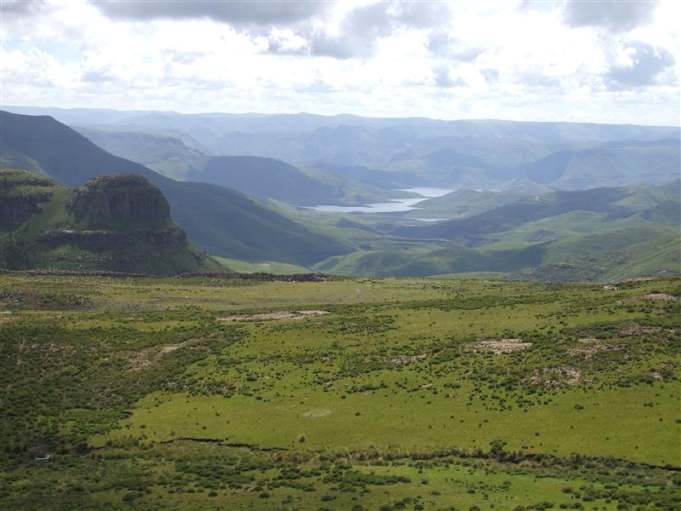
An example of a C climate type - Lesotho highlands
.
Source: Lesotho Water Commission 2003
PAGE 10




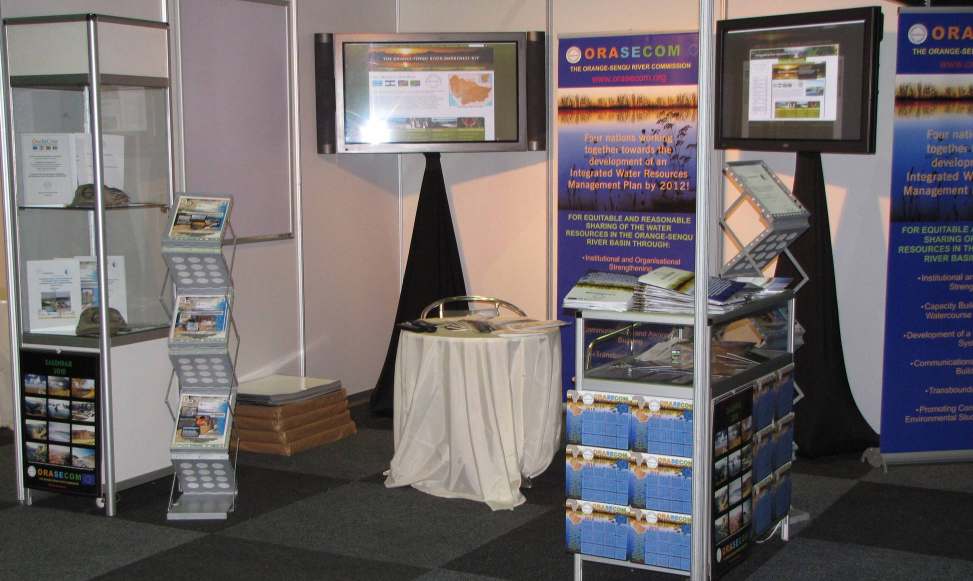
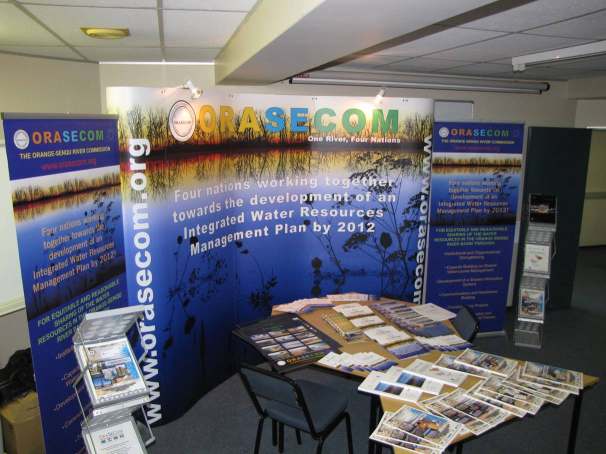
ORASECOM participates in the Africa Water Week
and
Orange River Symposium
From 9 to 13 November the second Africa Water
exhibition stand and also through participation in the
Week took place at the Gallagher Convention Center
symposium.
in Midrand, Johannesburg, South Africa. The event
brought together African countries and UN agencies,
ORASECOM's contribution to both events have
civil society groups, the private Sector and
undoubtedly contributed to increased visibility of the
development cooperation partners, to address the
organisation, and at the same time created
critical issue of water and sanitation development
enthusiasm among organisers and participants
and management, which is a key to sustainable
alike.
development in the continent. This was a unique
opportunity for ORASECOM to share with the
participants its achievements and challenges. This
was done through an information exhibition stand
that was established within the vicinity of the event.
The exhibition stand was designed and manned by
the ORASECOM Communications Task Team.
During the same week, on 11 and 12 November, the
second Orange River Symposium took place at the
University of the Orange Free State in Bloemfontein,
South Africa. ORASECOM was represented by two
delegates at the Symposium. The symposium was
also used to inform participants about the initiatives
of ORASECOM. This was also achieved through an
PAGE 11




Second ORASECOM visit to the ICPDR
.
learn about the different initiatives of the ICPDR.
These include existing information management
systems within the ICPDR, development and
implementation of the management plan of the
Tisza River which is one of the main tributaries of the
Danube River, public awareness programmes of the
ICPDR including the Danube School Box Project,
development of the Danube River Basin
Management Plan (DRBMP), water quality
management programmes and monitoring networks
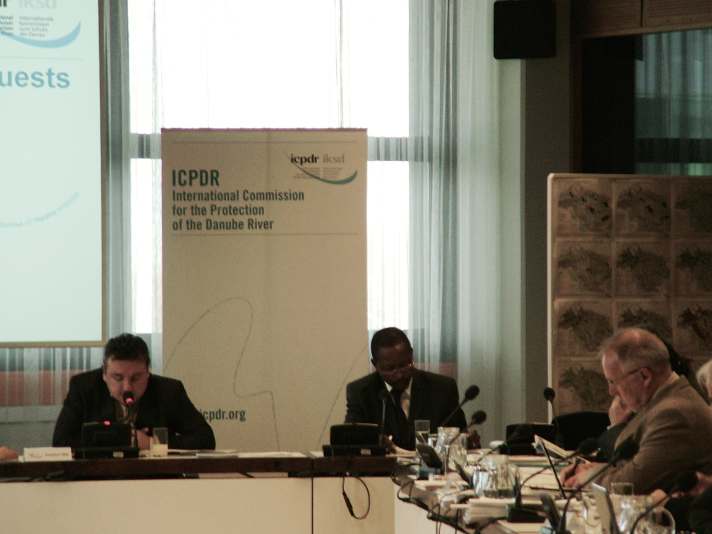
The Ex. Sec. presenting ORASECOM at the
Ordinary Meeting of the ICPDR
ORASECOM Secretariat Participates in the
th
Preparations and the 12 Ordinary Meeting of the
International Commission for the Protection of the
Danube River (ICPDR)
The ORASECOM Secretariat visited the International
Commission for the Protection of the Danube River
th
th
(ICPDR) from the 30 of November to the 12 of
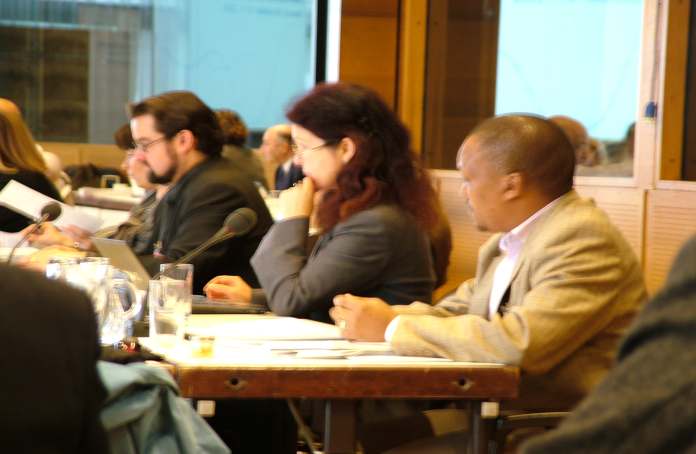
The Water Resources Specialist attending the
December 2009. The purpose of the visit was to
th
12 Ordinary Meeting of the ICPDR
participate in the preparations and conducting of the
th
12 ordinary meeting of the ICPDR. The meeting
of the ICPDR, the types of agenda used for the
was held at the Austria Centre in Vienna (ACV) from
ordinary meetings of the ICPDR, and how the
th
th
the 10 to the 11 of December 2009. The
meetings are conducted, including the adoption of
ORASECOM Secretariat also had an opportunity to
resolutions by the ICPDR Commissioners.
PAGE 12




www.orasecom.org