


Report nr.
ORASECOM 002/2009
ORANGE-SENQU RIVER COMMISSION
(ORASECOM)
ASSESSMENT OF POTENTIAL FOR THE
DEVELOPMENT AND USE OF MARGINAL
WATERS
Final Report
Version 2.0
July 2009
SUBMITTED BY
Ninham Shand (Pty) Ltd
Acting as Agent for Aurecon SA (Pty) Ltd
In association with:
Golder Associates Africa (Pty) Ltd,
And
Sechaba Consultants (Pty) Ltd
Address:
Aurecon South Africa (Pty) Ltd
1st Floor, Outspan House
1006 Lenchen Ave North
Centurion
0046
Tel: +27 12 643 9000
Fax: +27 12 663 3257
Email: Aurecon@af.aurecongroup.com
i
Final Report
Assessment and Potential for the Development
July 2009
and Use of Marginal Waters
EXECUTIVE SUMMARY
INTRODUCTION
Scarcity of water in semi-arid regions of the world, similar to the Orange-Senqu River Basin, has
necessitated the development of strategies to optimise the use of available water resources. One of
the most widely adopted measures is the augmentation of the water supply through the use of
unconventional or marginal water sources. Marginal water can be used to supplement intensively
exploited conventional sources.
For the purpose of this study, Marginal Waters will be defined as:
Water that can be recycled, reused or reclaimed, including naturally occurring non-potable water,
such as sea water, brackish water, saline and sodic water, unpotable groundwater, rainwater and fog
harvesting.
The following definitions for recycle, reuse and reclaim have been adopted for the purposes of this
report:
Re-cycle When water is used in a process and then reused in the same process with or without any
purification / treatment or improvement of the water quality.
Reuse When water is used and is then used again for another purpose with or without purification
to some acceptable level (not yet potable).
Reclaim Water that was previously used for potable or any other purposes is treated up to potable
quality standards so that it can again be used for potable purposes.
SUMMARY OF THE STATUS QUO
Examples of the different types of marginal water have been obtained from within the Orange-Senqu
River Basin. An indication of the different types of marginal water is shown in Table E1.
i
ii
Final Report
Assessment and Potential for the Development
July 2009
and Use of Marginal Waters
Table E1: Different types of marginal waters within the Orange-Senqu Basin
Namibia
Botswana
Lesotho
South
Africa
1. Reclamation of waste water for potable use
2. Reuse for irrigation after treatment
3. Reuse and recycling of industrial water
4. Reuse of water in mining sector
5. Rainwater & fog harvesting
6. Fog harvesting
6. Rainfal Enhancement
7. Use of brackish groundwater
8. Sea water and desalinisation
9. Use of dual systems
Examples from within the basin countries that are worth mentioning are:
· Botswana: Debswana mine. This mine is a good example in the sense that four types of marginal
water are being exploited, i.e.:
o Rainwater harvesting
o Irrigation with treated effluent
o Recycling of process water
o Use of brackish water
· Namibia: Windhoek reclaiming water from sewage water to potable standards.
· Lesotho: Rainwater harvesting
· South Africa: Emalahleni plant in Witbank, where heavy metals are removed from acid mine water
and where the water is treated to potable standards.
Two distinct examples in other countries of the world are:
· Australia: Irrigation of open spaces with water from package treatment plants plugged into sewers.
· Japan: Best example of dual systems for large scale buildings.
ii
ii
Final Report
Assessment and Potential for the Development
July 2009
and Use of Marginal Waters
IMPORTANT ISSUES RELATING TO MARGINAL WATER USE
The following implications have been identified for marginal water use:
· Institutional: Different tiers of institutional structures do not cooperate to promote marginal water
use to its optimum.
· Legislation: Regulation needed on water quality standards.
· Environment: Marginal water use can have both positive and negative impacts on the environment
e.g. positive when water is released into the environment with improved water quality and
negative when e.g. lime precipitates and blocks boreholes in limestone areas.
· Health: Faecal coliform guidelines must be met when irrigating with treated waste water in order to
avoid helminth and bacterial infections.
· Cost trends of marginal water use are shown in Figure E1.
Comparative Cost of Marginal Water Approaches
20
tank
³
/month)
15
kl
30
/month)
kl
Sea water desalination
45
10
Household with 5 m
Rand per kilolitre
Bloemfontein (7
Water
Namibian Towns (average)
Botswana mines (average)
5
Dam & Tunnels
Windhoek (7
Desalination of acid mine drainage
Bloem
TCTA Vaal River
Polihali
0
Raw
Bulk
Retail
Reverse
Rainwater
Water
Water
Water
Osmosis
Harvesting
Potable
Potable
Figure E1: Comparative cost of Marginal Water Approaches
TRENDS AND FUTURE POTENTIAL OF MARGINAL WATER
Trends in marginal water use and future potential are shown in Table E2.
ii
iv
Final Report
Assessment and Potential for the Development
July 2009
and Use of Marginal Waters
Table E2: Marginal Water Use Trends and Potential within the Orange-Senqu Basin
Type of Marginal
Namibia
Botswana
Lesotho
South Africa
Water use
Current
Future Potential
Current
Future Potential
Current
Future Potential
Current
Future Potential
Reuse water for irrigation of
Mines within basin use
Apart from current use by
Treated effluent sold for
Sway public perception
No information found.
Treated waste water could General practice in SA.
Current practice to be
recreational facilities and
effluent for irrigation of
mines, + 2 mill m³
use in gardens. Sport field and use treated effluent
be used for irrigation of
Treated waste water is
continued, however
agricultural crops with
sport fields and golf
domestic sewage effluent
irrigation e.g. by
water from Gabarone
Maseru s sport fields and
discharged in river and
discharging institutions
treated waste water.
courses. So does
in the larger towns can
Debswana mine and
works for irrigation of food
golf course.
abstracted downstream by
must ensure that they
Windhoek (outside basin)
become available for
Maru-A-Pula school.
crops.
irrigators. Some industries
comply to quality
reuse.
reuse process water for
standards.
irrigation, including crop
irrigation.
Recycle and/or reuse for
Rössing Uranium Mine
Continuation of present
Localised examples, e.g.
Continuation of present
Recycling of water e.g. in
Continuation of present
Some industries reuse
More industries could be
industrial and mining
recycles + 62% of their
use.
Debswana mines.
use.
textile industry and
use.
their water e.g. SAB Mil er. encouraged. There should
purposes with treated or
water purchased from
reusing process water by
be a financial incentive.
untreated water.
NamWater.
e.g. SAB Miller in Maseru.
Recycling at diamond
mines.
Reclamation of waste water
24% of total water
+ 2 mill m³ sewage
Not practised in Botswana
If public perception can be
Not practised in Lesotho
Maseru has limited water
Not practised in South
Limited potential in basin.
for potable use
consumption of Windhoek
effluent available from
as yet.
swayed, waste water of
as yet.
source and should look at
Africa as yet. (Direct
Other water users
is reclaimed water from
larger towns but reusing
Gaborone could possibly
this option.
reclamation).
currently dependent on
sewage effluent (outside
rather than reclaiming is
be reclaimed for potable
the discharged treated
basin).
more attractive.
purposes.
waste water.
Aquifer recharge
Aquifer recharge/banking
Localised / limited
Localised examples.
There is potential to
Not practised in Lesotho
Localised / limited
Not practised within the
Localised / limited
successfully applied
opportunities.
recharge aquifers with
as yet.
opportunities.
basin in South Africa as
opportunities.
outside basin (Omaruru
surface water to reduce
yet.
Delta Aquifer and
evaporation losses.
Windhoek Aquifer).
Infiltration dams needed.
Dual systems
Dual systems used at the
Separate networks for
Car washing stations in
Continuation of present
Not practised in Lesotho
Could possibly be
Not practised within the
Use of dual systems
mines and in Windhoek
irrigation of parks and
Gaborone use treated
use.
as yet.
considered for Maseru.
basin in South Africa as
including Japanese hand
(outside basin), i.e.
sport fields of towns.
effluent water.
yet.
washing/ flushing system
separate pipe systems for
for toilet flushing could be
drinking and gardening.
introduced for Gauteng
Region.
Use of brackish Ground
Brackish water from Kahn
Continuation of present
Used for stock drinking
Continuation and new
Not practised in Lesotho
Localised / limited
Private boreholes used for Current practice to be
water
River used for dust
use.
and wild life drinking.
copper mines at Ghanzi
as yet.
opportunities.
stock drinking.
continued. Limited
suppression at Rössing
could use saline ground
potential for expansion.
Uranium Mine.
water as process water.
Seawater and Groundwater
Two farms use
Seawater: Only coastal
Locked in land no
Continuation and possible
Not applicable for
Not applicable for
Only coastal town is
Limited scope within the
desalinisation
desalinated water.
town gets water from
access to sea. Several
expansion of desalination
Lesotho.
Lesotho.
Alexander Bay which does basin for major GW
Thermal distillation plant
Orange. Brackish GW: Not GW desalination plants in
plants for utilising saline
not need seawater
desalinisation project.
at Lüderitz (outside basin)
regarded attractive
operation in Botswana.
ground water.
desalinisation. No info on
today redundant.
enough.
E.g. Debswana mines.
GW desalinisation.
Rainwater & Fog harvesting
Schools harvest rainwater
Annual rainfall very low
Harvested rainwater used
Continuation and possible
Harvested rainwater used
Option for Maseru from
Individual household
Better utilisation of
from roofs for drinking
(250 mm/a). Not seen as
for gardening and car
expansion.
for gardening.
rooftops of public
rainwater tanks for
DWAF s subsidy scheme
purposes. Some house-
viable option, in many
washing e.g. at Maru-A-
buildings.
gardening purposes.
for resource poor farmers.
holds harvest rainwater for places for crop production
Pula school. 3.5 mill m³/a
Rainwater tanks are being
swimming pools. Fog
but good for drinking
harvested by Debswana.
subsidised.
harvesting unfeasible.
where other water is too
saline or has a bad taste.
Reclaim mine drainage
Localised / limited mine
Localised / limited
Localised / limited mine
Localised / limited
Localised / limited mine
Localised / limited
Some mine GW water is
Huge potential. + 150 mill
water
drainage.
opportunities.
drainage.
opportunities.
drainage.
opportunities.
currently used for mining.
m³/a available. Currently
being investigated by
W.U.C. (see para.4.1.5)
iv
v
Final Report
Assessment and Potential for the Development
July 2009
and Use of Marginal Waters
ASSESSMENT OF KEY PROJECTS
The following projects have been identified in the four basin countries.
Lesotho
· Irrigation of sport fields, the golf courses and suitable food crops in Maseru with treated sewage
effluent.
· Reclamation of Maseru s sewage water for potable use.
· Rainwater harvesting from rooftops of large buildings in Maseru.
Botswana
· Irrigation of food crops with treated sewage effluent.
· Reclaiming Botswana s treated sewage effluent to potable standards.
· Recharge aquifers with treated sewage effluent.
· Better utilisation of Botswana s saline groundwater.
· Public awareness strategy for reclaiming sewage water to potable standards (directly or by means
of aquifer recharge) and irrigating food crops with treated waste water.
Namibia
· Irrigation of sport fields and suitable food crops with treated sewage effluent.
South Africa
· Installation of dual systems for new developments in Gauteng
· Rainwater harvesting for food security.
· Reclaiming mine water to potabl e standards in Gauteng.
· Developing guidelines for the installation of dual reticulation systems in Gauteng.
Transboundary
· Review of institution, policy, legislation, and guidelines in the four countries.
· Development of guidelines for marginal water use by the industry sector.
SELECTION CRITERIA
The following eleven criteria were used for selecting between the list of projects.
i. The extent to which the project will combat poverty, the greater the better.
i . Water stressed areas should receive preference.
i i. Does it provide an opportunity to test new technology?
iv. Wil the public perception towards the possible project be positive?
v
vi
Final Report
Assessment and Potential for the Development
July 2009
and Use of Marginal Waters
v. The beneficial impact of the project on the basin as a whole.
vi. The extent to which the project will alleviate environmental problems.
vii. The management intensity of the project, the lower the better.
vii . The ability to duplicate (i.e. ease of adding modules and in so doing, expanding the project) or to
copy project in other areas, the easier the better.
ix. Wil the project leave other water users downstream in a weaker position? E.g. Water quality in
the Orange River to the detriment of export grape farmers.
x. To what extent wil the project lead to institutional growth?
xi. Wil the project defer other projects (e.g. future augmentation projects which will be more
expensive) in the basin state (locally or regionally)?
A condition with which it was recommended, all projects should be in place where a marginal waters
project is to be implemented was that all possible water conservation and water demand management
(WC/WDM) measures should already be being implemented. Normally WC/WDM is the cheapest and
most efficient way of making the most use of the available water. However in cases where the usage
of any marginal water option would be cheaper, the latter could be pursued as long as the WC/WDM
had been con sidered.
Apart from the above 11 criteria, a separate objective was set, namely to get an even spread of
projects in the four basin countries.
SELECTED PROJECTS
Six projects have been selected for further study, i.e.:
i. Botswana: Awareness campaign to promote indirect potable water reuse and irrigation of food
crops with treated sewage effluent.
i . South Africa: Dual reticulation system guidelines for Gauteng
i i. Lesotho: Irrigation of sport fields, the golf course and suitable food crops in Maseru with treated
wastewater
iv. Namibia: Irrigation of sport fields and suitable food crops in larger Namibian towns
v. Transboundary: Institutional, Policy, Legislative and Guidelines Review
vi. Transboundary: Guidelines for marginal water use for the industrial sector
Scopes of Works have been drafted for each of the above six projects and are bound in this report as
Appendix C.
COLOUR BROCHURE
A colour brochure has been prepared to promote the use of marginal waters and is included in this
report in Appendix B.
vi
vii
Final Report
Assessment and Potential for the Development
July 2009
and Use of Marginal Waters
TABLE OF CONTENTS
1.
INTRODUCTION........................................................................................................................ 1
1.1 Background To This Project............................................................................................... 1
1.2 Definition Of Marginal Waters ............................................................................................ 2
1.3 The Systems Perspective Of Marginal Water Use ............................................................. 3
1.4 Project Phases And Purpose Of This Report ..................................................................... 3
2.
PROJECT SUMMARY............................................................................................................... 4
2.1 Summary Of Status Quo.................................................................................................... 4
2.1.1 Lesotho .................................................................................................................. 4
2.1.2 Botswana ............................................................................................................... 4
2.1.3 Namibia.................................................................................................................. 4
2.1.4 South Africa ........................................................................................................... 5
2.1.5 In the rest of the world............................................................................................ 6
2.2 Summary Of Important Issues ........................................................................................... 7
2.2.1 Institutional............................................................................................................. 7
2.2.2 Legislation.............................................................................................................. 7
2.2.3 Environment........................................................................................................... 8
2.2.4 Health .................................................................................................................... 9
2.2.5 Costs ..................................................................................................................... 9
2.3 Trends And Future Potential Of Marginal Waters............................................................. 11
2.3.1 Trends and future potential in relation to the sources ........................................... 13
2.3.2 Trends and future potential in relation to the uses................................................ 13
2.3.3 Trends and future potential in relation of mechanisms (Dual systems) ................. 15
3.
ASSESSMENT OF K EY PROJECTS ...................................................................................... 15
3.1 Possible Future Projects.................................................................................................. 15
3.2 Selection Criteria ............................................................................................................. 18
3.3 Evaluation Matrix ............................................................................................................. 19
4.
POTENTIAL PROJECTS SELECTED FOR FURTHER STUDy .............................................. 21
4.1 Introduction...................................................................................................................... 21
4.2 Awareness Campaign For The Reuse Of Treated Effluent In Botswana.......................... 22
4.3 Guidelines For The Implementation Of Dual Reticulation Systems In New Developments In
Gauteng, South Africa ..................................................................................................... 22
4.4 Irrigation Of Sports Fields, The Golf Course And Suitable Crops With Treated Effluent, In
Maseru Lesotho............................................................................................................... 23
vii
viii
Final Report
Assessment and Potential for the Development
July 2009
and Use of Marginal Waters
4.5 Irrigation of sports fields and suitable crops with treated effluent, in larger towns in
Namibia .......................................................................................................................... 23
4.6 Legislative, Policy, Institutional and guideline review of Basin States Arrangement with
regards to the use of Marginal Waters ............................................................................. 24
4.7 Best practice guidelines for industry for the recycling, reuse and reclamation of industrial
effluent .......................................................................................................................... 24
5.
COLOUR BROCHURE ............................................................................................................ 25
6.
WAY FORWARD ..................................................................................................................... 25
6.1 General .......................................................................................................................... 25
6.2 Scopes Of Work .............................................................................................................. 26
APPENDIX A: BIBLIOGRAPHY....................................................................................................... 27
A.1 Ful Reference In Endnote Format................................................................................... 27
A.2 Bibliography List .............................................................................................................. 28
APPENDIX B: COLOUR BROCHURE ............................................................................................. 40
APPENDIX C: SCOPES OF WORK ................................................................................................. 41
LIST OF FIGURES
Figure 1.1
Map of Orange-Senqu River Basin ............................................................................1
Figure 1.2
The role of engineered treatment, reclamation, and reuse facilities............................3
Figure 2.1
Portable Waste Water Treatment Works , Melbourne Australia ..................................6
Figure 2.2
Comparative cost of water .......................................................................................10
LIST OF TABLES
Table 2.3
Marginal Water Use Trends and Potential within the Orange-Senqu Basin..............12
Table 3.3
Assessment of Potential at workshop on 11 March 2009 .........................................20
viii
ix
Final Report
Assessment and Potential for the Development
July 2009
and Use of Marginal Waters
ABBREVIATIONS AND ACRONYMS
CSIR
-
Council for Scientific and Industrial Research
DEAT
-
Department of Environmental Affairs & Tourism
DME
-
Department of Mineral & Energy
DWAF
-
Department of Water Affairs and Forestry (South Africa)
EWR
-
Environmental Water Requirement
GAC
-
Granular Activated Carbon
Ha
-
Hectares
HDI
-
Historically Disadvantaged Individuals
IDP
-
Integrated Development Plan (South Africa)
IWRM
-
Integrated Water Resources Management
IWRMS
-
Integrated Water Resources Management Scenarios
NAFU
-
National African Farmers Union
LNDC
-
Lesotho National Development Corporation
NDA
-
National Department of Agriculture
MSF
-
Multi-Stage Filtration
NWMPR
-
National Water Master Plan Review
NAMPAAD
-
National Master Plan for Agricultural Development
PDO
-
Petroleum Development Oman
PIT
-
Project Implementation Team
PIU
-
Project Implementation Unit
PSC
-
Project Steering Committee
RSA
-
Republic of South Africa
SAAWU
-
South African Association of Water Utilities
SALGA
-
South African Local Government Association
SAR
-
Sodium Absorption Ratio
SoW
-
Scope of Works
STP
-
Sewage Treatment Plants
SWRO
-
Salt Water Reverse Osmosis
TDS
-
Total Dissolved Solids
ZSW
-
Centre for Solar Energy and Hydrogen Research (Namibia)
[Zentrum für Sonneregie und Wasserstoff Forschung
USEPA
-
United States Environmental Protection Association
WC&DM
-
Water Conservation and Demand Manageme nt
WRC
-
Water Research Council
WRM
-
Water Resource Management
WRMD
-
Water Resource Management and Development
WWTWs
-
Waste Water Treatment Works
ix
1
Final Report
Assessment and Potential for the Development
July 2009
and Use of Marginal Waters
1.
INTRODUCTION
1.1
BACKGROUND TO THIS PROJECT
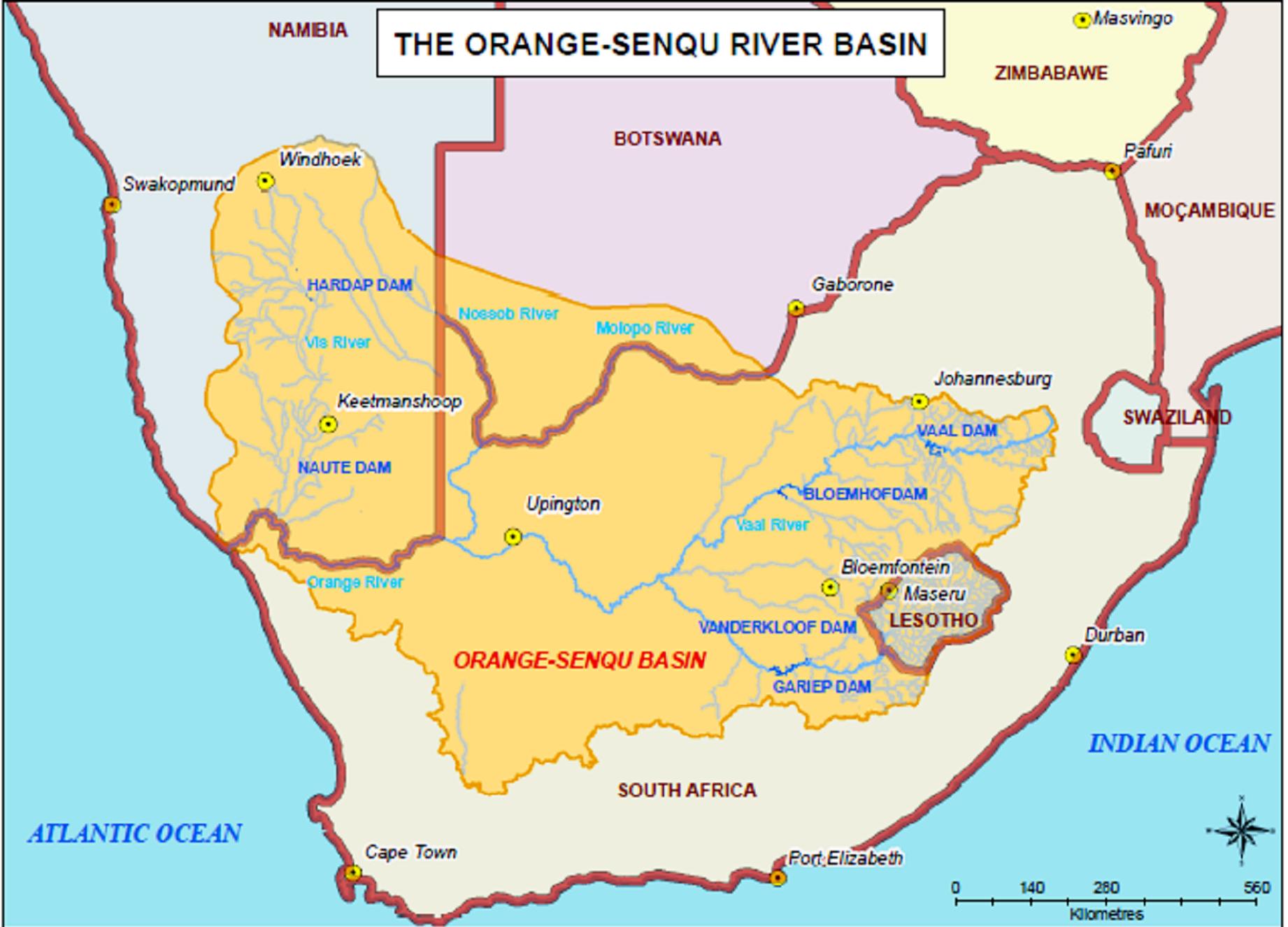
Scarcity of water in semi-arid regions of the world, similar to the Orange-Senqu River Basin
shown in Figure 1.1, has necessitated the development of strategies to optimise the use of
available water resources. One of the widely adopted measures is the augmentation of the
water supply through the use of unconventional or marginal water sources. Marginal water
can be used to improve the efficiency of water use and supplement intensively exploited
conventional sources.
Figure 1.1 Map of Orange-Senqu River Basin
The foremost objective of this project was to determine the status quo of the use of marginal
waters within the Orange-Senqu River Basin, before identifying opportunities and key projects
or areas to improve or increase the use of marginal waters , resulting in the ful er use of the
existing supplied and otherwise available water.
2
Final Report
Assessment and Potential for the Development
July 2009
and Use of Marginal Waters
In order to achieve the objectives, the Orange Senqu River Commission (ORASECOM)
(Client) implemented this project for Consultancy Services for the Assessment of Potential for
the Development and Use of Marginal Waters .
1.2
DEFINITION OF MARGINAL WATERS
For the purpose of this study, Marginal Waters were defined as:
Water that can be recycled, reused or reclaimed, including naturally occurring non-potable
water, such as sea water, brackish water, saline and sodic water, unpotable groundwater,
rainwater and fog harvesting.
The following definitions for recycle, reuse and reclaim have been adopted for the purposes of
this study:
Re-cycle When water is used in a process and then reused in the same process with or
without any purification / treatment or improvement of the wate r quality.
Reuse When water is used and is then used again for another purpose with or without
purification to some acceptable level (not yet potable).
Reclaim Water that was previously used for potable or any other purposes is treated up to
potable quality standards so that it can again be used for potable purposes.
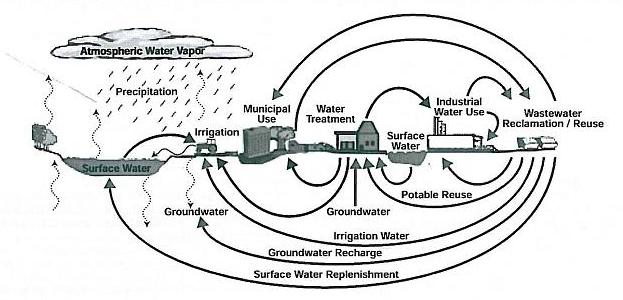
Figure 1.2 illustrates the role of marginal waters in the hydrological cycle.
Figure 1.2 The role of engineered treatment, reclamation, and reuse facilities in the multiple
uses of water through the hydrological cycle. (Source: adapted from Asano, 1995).
3
Final Report
Assessment and Potential for the Development
July 2009
and Use of Marginal Waters
1.3
THE SYSTEMS PERSPECTIVE OF MARGINAL WATER USE
When a catchment is viewed holistically, as a system, and acknowledging that all forms of
water are part of the hydrological cycle, then water recycling, reuse and reclamation as well as
rainwater and fog harvesting cannot create more water.
The objective of promoting use of marginal waters through this project is to use water more
efficiently, to minimise water losses and wastage and to ensure that water, particularly potable
water, is used for the most beneficial purposes.
The situation in a catchment might be that waste water discharges are already being used
downstream (e.g. by irrigators) and that the resource is fully allocated or utilised and that no
water is flowing out at the downstream end of the catchment. A decision by any up-stream
water user to reuse/recycle/reclaim water or to intercept water by harvesting rainwater might
therefore have a negative impact on downstream water users that rely on the discharges. This
must always be taken into consideration when planning to use marginal waters.
However it may be that the recycling/reuse/reclaiming of water upstream is a more efficient or
beneficial use and a country s best interest compared with the downstream use. These
aspects must be factored into any decision making.
1.4
PROJECT PHASES AND PURPOSE OF THIS REPORT
The study was sub-divided into three phases, i.e. Inception Phase, Assessment Phase and
Proposal Phase. The Inception Phase was completed and an Inception Report finalised and
issued to the client. A comprehensive Bibliography was compiled using EndNote software
which was delivered to the client and presented in Appendix A. The Assessment Phase
comprised mainly an assessment of current marginal water use in the Orange-Senqu River
Basin and of the future potential for use of marginal waters. That phase was completed in
March 2009 and the Mid-Term report finalised and issued to the client. The third phase
identified potential marginal water projects and Scopes of Work were drafted for them. This
Final Report documents the findings of the Assessment Phase and presents the Scopes of
Work for the selected priority projects. This report also displays the colour brochure which has
been prepared about the project.
4
Final Report
Assessment and Potential for the Development
July 2009
and Use of Marginal Waters
2.
PROJECT SUMMARY
2.1
SUMMARY OF STATUS QUO
2.1.1 Lesotho
Extensive rain water harvesting projects funded through various donor agencies are currently
in place in Lesotho. The harvested water is mainly used for watering private and community
gardens. The mines in Lesotho also recycle water within their processes, for example the
diamond mines and quarries. Within Maseru, the textile industry reuses their process water.
The SAB Mil er brewery in Maseru also reuses their industrial effluent for crate washing among
other things.
2.1.2 Botswana
The Debswana mines in Botswana have set a precedent for mine water management. The
mines are involved in rain water harvesting, approximately 3.5 million m3 per annum (rainwater
harvesting is also carried out in other locations such as at schools and government buildings).
The rain water is used to water gardens. The process water from mining activities is reused
within the processes. The sewage effluent gathered at the mines and mine villages is also
treated and used to irrigate the sports fields and landscaped gardens at the mines. Botswana
has also been busy with investigating the possibility of aquifer re-charge using treated effluent.
However, the negative public perceptions have slowed progress on the reuse of treated
sewage effluent. Car wash stations in Gabarone use treated effluent as their water supply.
Another source of widely used marginal water in Botswana is saline groundwater. The saline
groundwater is used extensively for stock drinking. Similarly, several desalination plants or in
operation through out Botswana, utilising the widely available saline groundwater and further
plants are being proposed.
2.1.3 Namibia
In Windhoek Namibia, 24% of the total water consumption is from reclaimed sewage effluent.
Although this example falls outside the Orange-Senqu basin, it is an important example for this
project. The reclaimed water is also used for irrigation purposes. The mines in Namibia
provide good examples of using marginal waters both in the basin, and in the country as a
whole. Many of the mines in Namibia reuse effluent for irrigation of their facilities and golf
courses. Rössing Uranium Mine recycles approximately 62% of their water purchased from
NamWater. Rössing also use brackish water from the Kahn River for dust suppression. Some
of the mines make use of dual reticulation systems. Within Windhoek, the industrial area also
has a dual reticulation system installed and operating. Many schools in Namibia conduct
rainwater harvesting projects. The water collected is then used for drinking purposes. Most of
5
Final Report
Assessment and Potential for the Development
July 2009
and Use of Marginal Waters
the rainwater harvesting projects are individual initiatives, for example, using harvesting
rainwater for swimming pools. Although not in the basin, but still in Namibia, Omaruru Delta
Aquifer and Windhoek Aquifer have been successfully recharged through water banking
projects. A thermal distillation plant was installed at Lüderitz, however it is currently out of
action.
2.1.4 South Africa
In South Africa there are currently a few examples of marginal waters in use. Many of the
examples are by individual companies rather than sector driven, or government driven.
Treated effluent is indirectly used in the basin for potable purposes. Effluent released back into
the river is then later abstracted further down stream for purification for potable use. The
Northern Waste Water Treatment Works, in Johannesburg, pumps treated sewage effluent
directly to the Kelvin Power Station for cooling of the stacks. Within the Durban region, treated
effluent is used both in the Paper and Pulp industry, as well as Shell SAPREF Refinery. The
treated effluent, collected from households and treated, is then piped to the industries where it
is used for various industrial processes including cooling processes. SAB Miller plants
throughout the country also practice various techniques of water recycling and reusing,
including for crate washing.
In eMalahleni, in Witbank, Acid Mine Drainage is reclaimed to potable standards to augment
the local drinking water supplies. A similar project is currently being researched, within the
basin area, where acid mine drainage will be collected and treated and pumped to the drinking
water reservoirs. The treating of the acid mine drainage provides a positive environmental
impact, as better quality water is released to the rivers.
Brackish groundwater is used for stock drinking in water-scarce areas of the country. Similarly
in high rainfall areas, rain water harvesting is conducted on a small and private scale. The
water is then utilised for garden watering, dust suppression, and drinking purposes. Sea water
desalination is being done by the Albany Water Board in the Eastern Cape.
The responses received from the questionnaires indicated that so long as water was coming
from the tap, the majority of respondents weren t concerned about using marginal water, or
investigating alternative sources of water.
6
Final Report
Assessment and Potential for the Development
July 2009
and Use of Marginal Waters
2.1.5 In the rest of the world
Australia
Throughout Australia there are examples of reusing treated effluent as well as other marginal
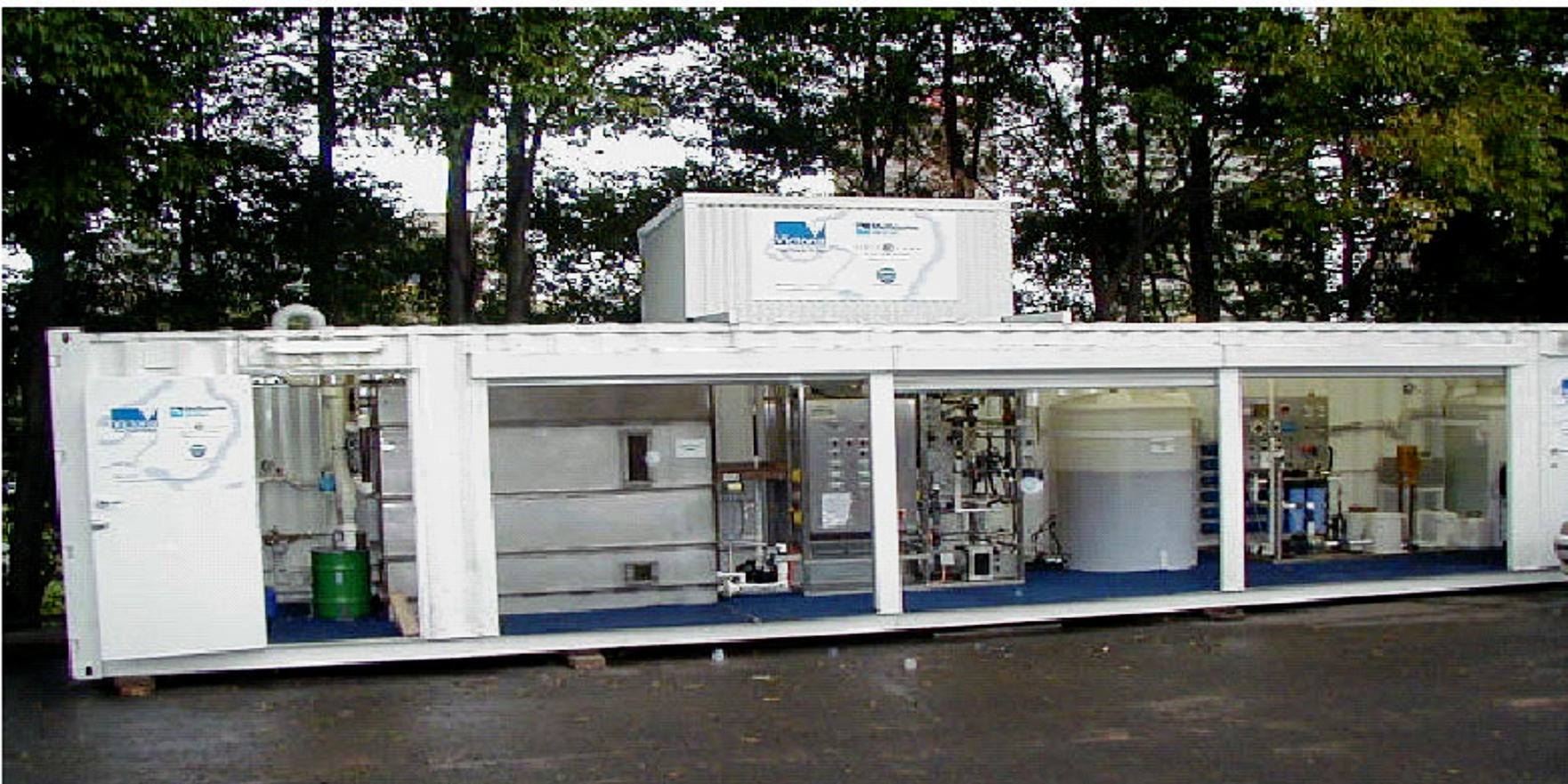
water sources. One example is the latest water recycling development in Melbourne, of a
portable sewer mining plant, Figure 2.1. The plant uses membrane technologies (ultra
filtration and reverse osmosis) producing Class A reclaimed water from Melbourne s sewage
mains. The unit, is mounted in a 12 metre shipping container, and connects directly into the
sewage mains via available manholes. The treated water is used to irrigate Melbourne s
parklands and waste products are returned to the sewage mains.
Figure 2.1: Portable WWTW in 12 metre shipping container used for sewer-mining ,
Melbourne, Australia. (Mallia, 2003).
Japan
Approximately 150 million m3 of water is recycled annually. Since 1997, 163 publicly owned
Waste Water Treatment Works (WWTW) provide water recycling in 192 use areas, and 1475
on-site individual and block-wide water recycling systems provide toilet flushing water in
commercial buildings and apartments as well as water for landscaping. The Tokyo
Metropolitan Government produced a set of guidelines for the reuse of treated miscellaneous-
use water in 1984. Based on these guidelines, Tokyo directs the operators of large-scale
buildings with a floor area of more than 30 000m2 or that use a daily total volume of 100m3 of
water for non-drinking water purposes to reuse water.
7
Final Report
Assessment and Potential for the Development
July 2009
and Use of Marginal Waters
California
In the United States, California residents reuse on average 656 million m3 of municipal waste
water annually, the majority of which is reused for irrigation (agriculture and landscape
irrigation) purposes, as well as meeting environmental flows, groundwater recharge and
recreational impoundment.
Oman
In Oman, Petroleum Development Oman (PDO) produces nearly five barrels of water for every
barrel of oil. The water is mixed with the oil and gas deposits and brought to the surface during
production. The water contains small amounts of salts and oil, and is often pumped back into
the well. PDO are in the process of researching reed fields to absorb the contaminants from
the water and making the water available to the local communities. During the reed-bed
process, the water becomes more saline due to evaporation. The water will also be used to
grow salt-resistant crops. The use of the reed-beds has reduced the costs to PDO of pumping
the water back into the wells, as well as reducing the CO2 emissions.
2.2
SUMMARY OF IMPORTANT ISSUES
2.2.1 Institutional
The main problem identified in the research relating to institutional structures and
arrangements was the separation of functions and responsibilities between agencies for water
management and sewage services functions. Water resource management issues is usually
the responsibility of a higher tier of government, whereas sewage services is usually a lower
order organisation or municipality and this resulted in a lack of coordination, differing goals
and standards, as well as conflicting developments or installations.
A second identified problem is the need for a paradigm shift, instead of first looking to potable
reclamation solutions, to rather begin with reuse or recycling in order to reduce the demand on
potable water for non-drinking purposes. Whilst this falls into Water Demand Management,
which is dealt with in another project, this problem was identified in this research and
questionnaire responses.
2.2.2 Legislation
In terms of the legislation in the basin, Botswana s National Wastewater and Sanitation
Planning and Design Manual (2003) provides some guidance towards the reuse of water. The
Manual highlights the difference between water quality standards and water quality guidelines.
8
Final Report
Assessment and Potential for the Development
July 2009
and Use of Marginal Waters
Water quality standards are legal impositions enacted by means of laws, regulations or
technical procedures, which are established in countries by adapting guidelines to their
national priorities and taking into account their technical, economic, social, cultural and
political characteristics and constraints. Water quality guidelines on/for the reuse of water
quality are mainly based on research and epidemiological findings, and as such provide
guidance for making risk management decisions related to the protection of public health and
the preservation of the environment. (Botswana).
In the rest of the world, there are more advanced pieces of legislation and guidelines for the
reuse of water. For example:
Europe The European Urban Waste Waster Treatment Directive (91/271/EEC) defines
standards for the collection, treatment and discharge of urban waste water and waste water
from some industrial sectors. The Directive states that (with a few exceptions) all urban waste
water discharges greater than 10,000 person equivalents to coastal waters and greater than
2,000 person equivalents to freshwater and estuaries will be subject to secondary treatment
by 2005. (Radcliffe, 2006)
Australia At a Federal level, the National Water Quality Strategy (NWQMS) National Water
Quality Managemen t Strategy Australian Guidelines for Water Recycling Management Health
and Environmental Risk (Phase 1) published in 2006, provides a national reference for the
supply, use and regulation for the reuse of water. The guidelines aim to provide a consistent
risk based approach to reusing water. The guidelines do not specify end uses for the water,
but rather provide a process to determine if the environmental and health risks are being
adequately managed. There are both health and environmental targets set for individual
hazards as well as a number of end uses.
United States California s Waste water Reclamation Criteria (Title 22) has been the basis for
many other sets of regulations. (Radcliffe, 2006).
Tunisia National Reuse Policy (Decree 89-1047). (Radcliffe, 2006).
2.2.3 Environment
Many of the environmental impacts identified through the research relate to desalination of sea
water plants. The intakes to the plants lead to marine life impingement. There is currently
research into better intake designs for the plants, so as to avoid the entrainment of the marine
life. In the Middle East, an outbreak of red tide has affected some of their desalination plants.
The intakes have to be shut down to avoid contamination. On a positive aspect, both the US
9
Final Report
Assessment and Potential for the Development
July 2009
and Use of Marginal Waters
and Australia are looking to implement requirements for desalination plants to be carbon
neutral, and research into wind and solar energy supplies is currently in process.
With regards to boreholes, in the karst (limestone) areas, excessive pumping from boreholes
can result in deeper lime-rich water being exposed to oxygen and thereby causing the lime to
precipitate and block the borehole. The borehole then has to be abandoned and re-drilled.
Recycling, reuse or reclamation of water will usually result in an environmental benefit, as the
water released into the environment will be of a better quality. One of the trends identified in
the international research, is that one of the main reuses of marginal waters was to meet
environmental flow requirements.
2.2.4 Health
The main health impact identified, related to water quality assurance, and therefore the
implementation of strict regulations. The reclamation of water for potable use, even for aquifer
recharge or dilution purposes was ranked fairly low among the examples researched.
The main use of marginal water, identified through the research, was for irrigation purposes.
Within this use, there is the need for strict regulation and enforcement, to prevent the
contamination of foodstuffs from the waste water.
Irrigation with untreated waste water is very hazardous to health, with both fieldworkers and
consumers being at high risk of helminth infections; consumers are also at a high risk of
bacterial infections such as cholera and typhoid fever. Treated effluent for irrigation must meet
the faecal coliform guidelines of less than 1 000 parts per 100ml to protect consumers from
these bacterial diseases.
2.2.5 Costs
This financial comparison is an indication of the relative costs of implementing various
marginal water approaches in the basin. The operational, maintenance and capital costs were
obtained from actual projects in the basin. Where the capital costs were provided as a once off
fixed cost, it was first converted into an annual cost using an interest rate of 10% per annum,
capitalised 6 monthly over a 20 year period and then converted into a per cubic metre cost.
The cost of the rainwater tank assumes a life of 10 years and that the 5m3 tank can meet a
demand of 15 Kl per month for 6 months of the year. This might be a generous assumption in
the drier areas. Conventional surface water resource schemes and water supply were used as
benchmarks.
1 0
Final Report
Assessment and Potential for the Development
July 2009
and Use of Marginal Waters
Comparative Cost of Marginal Water Approaches
20
month)
³
tank
15
30 kl/
45 kl/month)
Sea water desalination
10
Rand per kilolitre
Household with 5 m
Bloemfontein (7
Namibian Towns (average)
Windhoek (7
Botswana mines (average)
5
Desalination of acid mine drainage
Bloem Water
TCTA Vaal River
Polihali Dam & Tunnels
0
Raw
Bulk
Retail
Reverse
Rainwater
Water
Water
Water
Osmosis
Harvesting
Potable
Potable
Figure 2.2 Comparative cost of water
The cost of the marginal water approaches indicated in Figure 2.2, are indicative and actual
costs will depend on a number of factors and especial y on the quality of the influent. The
poorer the influent the higher the cost of desalination. Desalination of sea water being on the
higher end of the cost spectrum. From the results it appears that the cost of marginal water is
not out of the ordinary, and while more expensive than the price of conventional water
supplies in South Africa, the cost of marginal water is competitive with the cost of water in the
drier Namibia.
The cost of marginal water should not be a deterrent to a more detailed preliminary design
level analysis which would result in more accurate costing and perhaps a more cost efficient
approach.
11
Final Report
Assessment and Potential for the Development
July 2009
and Use of Marginal Waters
2.3
TRENDS AND FUTURE POTENTIAL OF MARGINAL WATERS
Use of marginal water use has become common practice in many countries of the world. As
available conventional resources are taken up, water users are forced to make increasing use
of marginal waters. Factors, other than just the scarcity of water may force countries to opt for
reusing water.
· E.g. Japan, where topographical conditions are a constraint for impoundment
infrastructure.
· E.g. Oman, where water that is used in the treatment of oil, is reused for the irrigation of
salt tolerant crops.
Table 2.3 provides a summary of the status quo of marginal water use in the Basin and of the
future potential. From this table, three types of trends and future potential have been identified
i.e. in relation to the sources, in relation to the uses and in relation to the mechanisms. Each of
these is described below.
The areas of future potential where it was recommended that further work be undertaken and
which were considered for preparation of a scope of work under this project, are highlighted.
12
Final Report
Assessment and Potential for the Development
July 2009
and Use of Marginal Waters
Table 2.3 Marginal Water Use Trends and Potential within the Orange-Senqu Basin
Type of Marginal
Namibia
Botswana
Lesotho
South Africa
Water use
Current
Future Potential
Current
Future Potential
Current
Future Potential
Current
Future Potential
Reuse water for irrigation of
Mines within basin use
Apart from current use by
Treated effluent sold for
Sway public perception
No information found.
Treated waste water could General practice in SA.
Current practice to be
recreational facilities and
effluent for irrigation of
mines, + 2 mill m³
use in gardens. Sport field
and use treated effluent
be used for irrigation of
Treated waste water is
continued, however
agricultural crops with
sport fields and golf
domestic sewage effluent
irrigation e.g. by
water from Gabarone
Maseru s sport fields and
discharged in river and
discharging institutions
treated waste water.
courses. So does
in the larger towns can
Debswana mine and
works for irrigation of food
golf course.
abstracted downstream by must ensure that they
Windhoek (outside basin)
become available for
Maru-A-Pula school.
crops.
irrigators. Some industries
comply to quality
reuse.
reuse process water for
standards.
irrigation, including crop
irrigation.
Recycle and/or reuse for
Rössing Uranium Mine
Continuation of present
Localised examples, e.g.
Continuation of present
Recycling of water e.g. in
Continuation of present
Some industries reuse
More industries could be
industrial and mining
recycles + 62% of their
use.
Debswana mines.
use.
textile industry and
use.
their water e.g. SAB Mil er. encouraged. There should
purposes with treated or
water purchased from
reusing process water by
be a financial incentive.
untreated water.
NamWater.
e.g. SAB Miller in Maseru.
Recycling at diamond
mines.
Reclamation of waste water
24% of total water
+ 2 mil m³ sewage
Not practised in Botswana
If public perception can be Not practised in Lesotho
Maseru has limited water
Not practised in South
Limited potential in basin.
for potable use
consumption of Windhoek
effluent available from
as yet.
swayed, waste water of
as yet.
source and should look at
Africa as yet. (Direct
Other water users
is reclaimed water from
larger towns but reusing
Gaborone could possibly
this option.
reclamation).
currently dependent on
sewage effluent (outside
rather than reclaiming is
be reclaimed for potable
the discharged treated
basin).
more attractive.
purposes.
waste water.
Aquifer recharge
Aquifer recharge/banking
Localised / limited
Localised examples.
There is potential to
Not practised in Lesotho
Localised / limited
Not practised within the
Localised / limited
successfully applied
opportunities.
recharge aquifers with
as yet.
opportunities.
basin in South Africa as
opportunities.
outside basin (Omaruru
surface water to reduce
yet.
Delta Aquifer and
evaporation losses.
Windhoek Aquifer).
Infiltration dams needed.
Dual systems
Dual systems used at the
Separate networks for
Car washing stations in
Continuation of present
Not practised in Lesotho
Could possibly be
Not practised within the
Use of dual systems
mines and in Windhoek
irrigation of parks and
Gaborone use treated
use.
as yet.
considered for Maseru.
basin in South Africa as
including Japanese hand
(outside basin), i.e.
sport fields of towns.
effluent water.
yet.
washing/ flushing system
separate pipe systems for
for toilet flushing could be
drinking and gardening.
introduced for Gauteng
Region.
Use of brackish Ground
Brackish water from Kahn
Continuation of present
Used for stock drinking
Continuation and new
Not practised in Lesotho
Localised / limited
Private boreholes used for Current practice to be
water
River used for dust
use.
and wild life drinking.
copper mines at Ghanzi
as yet.
opportunities.
stock drinking.
continued. Limited
suppression at Rössing
could use saline ground
potential for expansion.
Uranium Mine.
water as process water.
Seawater and Groundwater
Two farms use
Seawater: Only coastal
Locked in land no
Continuation and possible
Not applicable for
Not applicable for
Only coastal town is
Limited scope within the
desalinisation
desalinated water.
town gets water from
access to sea. Several
expansion of desalination
Lesotho.
Lesotho.
Alexander Bay which does basin for major GW
Thermal distillation plant
Orange. Brackish GW: Not GW desalination plants in
plants for utilising saline
not need seawater
desalinisation project.
at Lüderitz (outside basin)
regarded attractive
operation in Botswana.
ground water.
desalinisation. No info on
today redundant.
enough.
E.g. Debswana mines.
GW desalinisation.
Rainwater & Fog harvesting
Schools harvest rainwater
Annual rainfall very low
Harvested rainwater used
Continuation and possible
Harvested rainwater used
Option for Maseru from
Individual household
Better utilisation of
from roofs for drinking
(250 mm/a). Not seen as
for gardening and car
expansion.
for gardening.
rooftops of public
rainwater tanks for
DWAF s subsidy scheme
purposes. Some house-
viable option, in many
washing e.g. at Maru-A-
buildings.
gardening purposes.
for resource poor farmers.
holds harvest rainwater for places for crop production
Pula school. 3.5 mill m³/a
Rainwater tanks are being
swimming pools.
but good for drinking
harvested by Debswana.
subsidised.
where other water is too
saline or has a bad taste.
Reclaim mine drainage
Localised / limited mine
Localised / limited
Localised / limited mine
Localised / limited
Localised / limited mine
Localised / limited
Some mine GW water is
Huge potential. + 150 mill
water
drainage.
opportunities.
drainage.
opportunities.
drainage.
opportunities.
currently used for mining.
m³/a available. Currently
being investigated by
W.U.C. (see para.4.1.5)
13
Final Report
Assessment and Potential for the Development
July 2009
and Use of Marginal Waters
2.3.1 Trends and future potential in relation to the sources
There are mainly four sources of marginal waters in the basin that have been utilised so
far, namely:
· Treated sewage effluent
· Brackish (Saline) groundwater
· Harvested rainwater
· Treated industrial effluent
It is foreseen that the basin countries wil continue to utilise these sources and there is
scope to expand the present use. A further source in South Africa which has not so far
been utilised to its full potential but is proposed to be utilised, is:
· Mine drainage
At the shaft openings of abandoned gold mines in the Upper Vaal River Catchment
the mine drainage water has become acidic and contains heavy metals. This poses
a threat to the receiving environment. Approximately 150 mil ion m3 / annum of Acid
Mine Drainage (AMD) is pumped or decanted from the mines. The AMD is
proposed to be treated by a private sector company, to supplement potable water
supplies in the Gauteng region.
2.3.2 Trends and future potential in relation to the uses
The main trends in relation to uses in the basin are:
· Rainwater harvesting for garden watering.
· Irrigation of sport fields, golf courses and suitable food crops with treated sewage
effluent.
· Recharging of aquifers (water storage)
· Mine / Industrial process water
· Treated sewage effluent for domestic drinking water
· Saline groundwater for stock drinking
The following potential water uses can be further investigated:
· In Lesotho, the sports fields, golf course and suitable food crops in Maseru could
be irrigated with treated sewage effluent instead of potable water.
14
Final Report
Assessment and Potential for the Development
July 2009
and Use of Marginal Waters
· Maseru could also look at the option to reclaim its sewage water for potable use.
Both these uses would defer the building a further expensive augmentation and
treatment scheme from a conventional water resource.
Botswana
· Irrigation of crops for food production in Gaborone. The public is currently opposed
to reclaiming water indirectly (through aquifer recharge) for potable uses and to
irrigation, particularly irrigation of crops for food production with treated sewage
water and it will be necessary to sway the public perception.
· The recharge of aquifers with treated sewage effluent in Botswana should be
continued and could be expanded.
· The use of saline groundwater for mine processes can be expanded. New copper
mines at Ghanzi, Botswana can be targeted for this.
· Debswana has already had success with rainwater harvesting. Additional rainwater
harvesting projects in Botswana could be investigated (e.g. col ecting water from
the roofs of large buildings and from paved areas).
Namibia
· Reuse of treated sewage water of the larger Namibian towns within the Orange
River Basin for irrigation of sport fields / golf courses or small scale production of
suitable crops. A volume of approximately 2 mil ion m3 per annum treated sewage
water is available for this purpose.
· Reclamation of treated sewage water of the larger Namibian towns in the Orange-
Senqu River Basin for potable use is a possibility that could be further investigated.
However without the benefit of scale, small reclamation plants might not be feasible.
South Africa
· In South Africa, the irrigation of vegetables by resource poor people with harvested
rainwater can be encouraged. The current subsidy scheme of DWAF for subsidies
on rainwater tanks can be better utilised.
· The Gauteng region has the highest rate of growth and development in the basin.
This puts much strain on the limited water sources which are augmented from
outside the region. The compulsory installation of dual reticulation systems for all
new housing, office parks, commercial and similar developments could assist to
alleviate the current water deficits in Gauteng.
15
Final Report
Assessment and Potential for the Development
July 2009
and Use of Marginal Waters
2.3.3 Trends and future potential in relation of mechanisms (Dual systems)
Dual systems are one of the mechanisms to enable us to make use of marginal waters.
The following are possibilities for future use of dual systems.
· Maseru should have a separate water distribution system for taking water to its
parks, sport fields and golf course(s).
· The rainwater harvested in Maseru from the roof tops of large buildings should have
a separate water distribution system for taking the water to areas of use e.g. toilet
flushing.
· The larger Namibian towns should have their own distribution works (pump, pipe
network, sprinklers etc.) to the sport fields and golf courses, if found to be feasible.
· The Japanese example of dual system in buildings and of hand washing basins
connecting to toilet cisterns for direct water reuse could possibly be promoted in
Gauteng where water deficits are expected until 2019 when the next phase of the
Lesotho Highlands transfer scheme comes into operation.
3.
ASSESSMENT OF KEY PROJECTS
3.1
POSSIBLE FUTURE PROJECTS
After having studied the status quo and trends of present marginal water use in and outside
the basin, possible future projects were identified from the interviews with the current water
users and from the workshop with stakeholders and steering committee members that
followed after the submission of the draft Mid-term report. The future potential projects can be
divided into two main groups, i.e.:
· Physical infrastructure projects.
· Enabling projects for future marginal water use.
The potential physical infrastructure projects in each country are as fol ows.
Lesotho:
i. Irrigation of sport fields, the golf course and suitable food crops in Maseru with treated
sewage effluent.
i . Reclamation of Maseru s sewage water for potable use in stead of building a further
expensive augmentation scheme from a conventional water resource.
16
Final Report
Assessment and Potential for the Development
July 2009
and Use of Marginal Waters
i i. Rainwater harvesting from rooftops of large buildings in Maseru. Although some rainwater
harvesting projects are already funded and being carried out in Lesotho there is more
scope for these kinds of projects where harvested rainwater is reused within the large
buildings and surrounds.
Botswana:
iv. Irrigation of food crops with treated sewage effluent of Botswana. This project referred to
the implementation of irrigating food crops throughout Botswana with treated sewage
effluent. The project would identify a pilot project.
v. Reclaiming Botswana s treated sewage effluent to potable standards. Currently
reclamation of sewage effluent to potable standards is not being done in Botswana. There
is some resistance from the public against such a solution.
vi. Recharge aquifers in Botswana with treated sewage effluent. Plans are already in place for
the implementation of this project. This project aims to recharge certain aquifers with
treated sewage effluent, within Botswana.
vii. Better utilisation of Botswana s saline groundwater. There are several plans in place
already for the utilisation of saline groundwater, especially at the Debswana mines. This
project is aimed at establishing the feasibility and implementation of utilising saline
groundwater for various uses, particularly industry and mining.
Namibia:
vii . Irrigation of the sport fields or suitable crops with treated sewage effluent of larger
Namibian towns. The project refers to the irrigation of sport fields and other open areas,
and potentially food crops, in the larger towns within the basin, with treated sewage
effluent.
South Africa:
ix. Installation of dual reticulation systems for new developments in Gauteng. This province is
the fastest growing and developing area within the basin. The installation of dual systems
for new developments (e.g. residential complexes, office parks, shopping centres) can
significantly reduce the potable water requirements as treated effluent is then provided for
certain secondary uses through a separate system.
17
Final Report
Assessment and Potential for the Development
July 2009
and Use of Marginal Waters
x. Rainwater harvesting for food security purposes in South Africa. This project is already
being carried out in some community gardening projects. The project objective is the
increased implementation of rain watering harvesting within the basin for smal scale
projects (both irrigation and domestic purpose).
xi. Reclaiming mine water to potable standards in Gauteng. Large volumes water are being
pumped from active gold mines or are decanting from abandoned mines. Some of the
water from active gold mines is recycled but large volumes are released in the water
courses of the basin. These volumes can be reclaimed to potable standards and
distributed to Gauteng users.
Of the above physical infrastructure projects, projects (v), (ix) and (xi) were removed from the
list for the following reasons:
Project (v), Botswana:
It was felt that the towns within the basin are not big enough to justify reclamation works.
Water reclamation could have been considered for Botswana s capital, Gabarone, but this city
falls outside the Orange-Senqu River Basin. Furthermore, in view of the fact that there is a
perceived public resistance against this type of project in Botswana it was decided at the
workshop of 11 March 2009 to rather focus on an awareness campaign that could remove any
possible negativism against reclaiming sewage effluent or reusing treated effluent water for
the irrigation of suitable food crops.
Project (ix), South Africa
Before the installation of dual systems in Gauteng can be enforced or encouraged, a set of
guidelines is firstly required. It was therefore decided that the installation of dual systems in
Gauteng is a bit premature and should rather follow a project that focuses on the preparation
of guidelines. It was therefore decided to remove the physical implementation of dual systems
as a possible project from the list and replace it with an enabling project, namely The
Preparation of Guidelines for Instal ing Dual Systems.
Project (xi), South Africa:
After identifying the better usage of mine water as a possible project, the PSP was made
aware of the fact that the Western Utility Corporation (WUC) is already planning a project for
the treatment of mine water. WUC is envisaging a water treatment plant that will remove all
heavy metals and other undesired constituents from the acidic mine water. WUC s first phase
would treat as much as 75 M /day which would then be sold as potable water to Rand Water.
18
Final Report
Assessment and Potential for the Development
July 2009
and Use of Marginal Waters
The inclusion of the mine water project would therefore have been a duplication of a project
that has already progressed far in terms of a feasibility study.
The remaining eight possible projects on the list were then accepted for evaluation by the PSC
Workshop on 11 March 2009 and, at the workshop, the following enabling projects for future
marginal water use were added to the l ist.
xii. The preparation of guidelines for dual systems in Gauteng where the second system will
supply treated wastewater for non-drinking purposes to large buildings, office blocks,
shopping centres, office parks etc.
xii . A review of the institutions, policy, legislation and guidelines in the four countries and the
addressing of gaps to enable easier implementation of the physical infrastructure projects
and to improve collaboration between the four basin countries.
xiv. Awareness campaign about the need and practice of reclaiming Botswana s treated
sewage effluent to potable standards and about the safety of irrigating food crops with
treated sewage effluent. Due to the negative public perception regarding the reuse and
reclamation of sewage effluent in Botswana, this project is aimed at addressing the public
perception. The outcome would be a greater public acceptance.
xv. The preparation of guidelines for use of treated waste water by the industry sector.
3.2
SELECTION CRITERIA
The following eleven criteria were used for prioritising the potential projects.
i. The extent to which the project will combat poverty, the greater the better.
i . Water stressed areas should receive preference.
i i. Does it provide an opportunity to test new technology?
iv. Wil the public perception towards the possible project be positive?
v. Wil the project have a beneficial impact on the basi n as a whole?
vi. The extent to which the project will alleviate environmental problems.
vii. The management intensity of the project, the lower the better.
vii . The ability to duplicate (i.e. ease of adding modules and in so doing, expanding the
project) or to copy project in other areas, the easier the better.
ix. Wil the project leave other water users downstream in a weaker position? E.g. Water
quality in the Orange River to the detriment of export grape farmers.
x. To what extent will the project lead to institutional growth?
19
Final Report
Assessment and Potential for the Development
July 2009
and Use of Marginal Waters
xi. Wil the project defer other projects (e.g. future augmentation projects which wil be more
expensive) in the basin state (locally or regionally)?
A condition with which it was recommended, all projects should be in place where a marginal
waters project is to be implemented was that al possible water conservation and water
demand management (WC/WDM) measures should already be being implemented. Normally
WC/WDM is the cheapest and most efficient way of making the most use of the available
water. However in cases where the usage of any marginal water option would be cheaper, the
latter could be pursued as long as the WC/WDM ha d been considered.
Apart from the above 11 criteria, a separate objective was to get a spread of projects in the
four basin countries.
In terms of the spread of projects, it would be ideal to have at least one project in each of the
basin countries.
3.3
EVALUATION MATRIX
An evaluation matrix was designed in which each project could be scored according to the
listed 11 criteria. Each of the 11 criteria had the same weight.
The evaluation matrix is shown in Table 3.3. All 11 potential projects are listed in the first
column of the matrix. In the second column (first grey column) it can be indicated whether
WC/WDM had been properly considered. The second grey column shows in which country the
project will be. The objective is to have an even spread of projects among the four basin
countries.
Since it is required that Scopes of Work for at least five projects are prepared, it meant that at
least one project should fall in each of the basin countries. The next 11 columns show11
criteria described in paragraph 3.2 above. The green colour represents the most favourable
evaluation with a score of 3, the blue represents a medium score of 2 and the yel ow the least
favourable with a score of 1.
The awareness strategy for Botswana was awarded the highest point of 29 out 33 while the
two rainwater harvesting projects (Lesotho and South Africa) were awarded the lowest score
(both 23 out of 33).
20
Final Report
Assessment and Potential for the Development
July 2009
and Use of Marginal Waters
Table 3.3 Assessment of Potential Projects at workshop on 11 March 2009
Potential Project Assessment
Criteria
WC&DM
Spread of
Poverty
Water
New
Public
Benefits to
Environmental Management
Duplicate or
Downstrea Institutional
Defer local
Total
Priority
projects
Alleviation
stressed
technology perception
the basin
impacts
intensity
Copy
m users
growth
projects
Projects
Potential Projects
Irrigation - Maseruand
lowland towns
Lesotho
2
3
1
3
1
2
2
3
3
3
2
25
Effluent reclaim - Maseru
Lesotho
3
2
2
1
1
2
1
3
3
3
3
24
Rainwater harvest - Maseru
Lesotho
3
2
1
3
1
2
3
2
2
2
2
23
Irrigation - Botswana
Botswana
2
3
1
3
1
2
2
3
3
3
2
25
Effluent reclaim (awareness) -
Botswana
n/a
Botswana
3
3
2
2
2
2
3
3
3
3
3
29
Aquifer recharge - Botswana
Botswana
3
3
3
3
2
2
1
3
2
2
3
27
Saline groundwater -
Botswana
Botswana
3
3
3
3
2
2
1
3
2
2
3
27
Irrigation - large basin towns
Namibia
2
3
1
3
1
2
2
3
3
3
2
25
Dual system guidelines -
Gauteng
n/a
South Africa
2
3
2
2
3
2
3
3
2
3
3
28
Rainwater harvest - SA
South Africa
3
2
1
3
1
2
3
2
2
2
2
23
Industrial use Guidelines
(Transboundary)
n/a
All
1
3
2
2
3
3
3
3
3
3
2
28
Institutional review
(Transboundary)
n/a
All
1
3
2
2
3
2
3
3
2
3
1
25
Other
0
0
0
0
0
0
0
0
0
0
0
0
Other
0
0
0
0
0
0
0
0
0
0
0
0
33
Key
3
High
2
Medium
1
Low
21
Final Report
Assessment and Potential for the Development
July 2009
and Use of Marginal Waters
In order to satisfy the objective to achieve an even spread of projects between the four
countries, it was not possible to simply choose the five projects with the highest scores. It was
therefore decided to select one country specific project for each of the four basin states and
then to select another two transboundary projects, with high scores that would be beneficial to
all four basin states. The Terms of Reference required the selection of at least five projects.
The six selected projects, as indicated in the last column of the evaluation matrix are the
following:
i. Botswana: Awareness campaign to promote indirect potable water reuse and irrigation of
food crops with treated sewage effluent.
i . South Africa: Dual reticulation system guidelines for Gauteng
i i. Lesotho: Irrigation of sport fields, the golf course and suitable food crops in Maseru with
treated wastewater
iv. Namibia: Irrigation of sport fields and suitable food crops in larger Namibian towns
v. Transboundary: Institutional, Policy, Legislative and Guideline Review
vi. Transboundary: Guidelines for marginal water use for the industrial sector
4.
POTENTIAL PROJECTS S ELECTED FOR FURTHER STUDY
4.1
INTRODUCTION
The previous section described the selection criteria and listed the six projects that were
selected for further study. Four of the six projects are country specific (one for each country)
and two projects are joint projects for all four basin countries.
The ToR specify that Terms of Reference must be drafted for at least five selected projects.
Terms of Reference contain the draft contract documents, which are dependent on the
contracting authority, possible funding agency, and the legislation of a particular country.
Selection of an enquiry document is best compiled by the implementing agent in agreement
with the funding agent. Therefore it was decided that the requirement for Terms of Reference
for the projects was changed to Scopes of Work.
The Scopes of Work of the six selected projects appear in Appendix B. The main objective
and a summary description of the tasks are provided for each project below.
22
Final Report
Assessment and Potential for the Development
July 2009
and Use of Marginal Waters
4.2
AWARENESS CAMPAIGN FOR THE REUSE OF TREATED EFFLUENT IN
BOTSWANA
The overall objective of the project is to promote the indirect reuse of treated waste water for
potable purposes in Botswana and the reuse of treated waste water for the irrigation of food
crops.
A professional team is required that wil prepare information material and interact with key
audiences in order to familiarise them with the pros and cons of reuse of treated waste water
and to establish their trust in the relevant water supply authority.
It is foreseen that this project will be undertaken by the Botswana Government and that it will
take approximately 12 months to complete.
4.3
GUIDELINES FOR THE IMPLEMENTATION OF DUAL RETICULATION SYSTEMS
IN NEW DEVELOPMENTS IN GAUTENG, SOUTH AFRICA
The objective of this project is to draft a set of guidelines and incentives, relating to the
implementation and installation of dual reticulation systems primarily within large new
developments such as office parks and shopping complexes, in Gauteng Province, South
Africa.
A professional team is required that will identify different uses for treated waste water and
harvested rainwater that will be conveyed through a second reticulation system, parallel to the
potable water system. The team wil then identify the risks and challenges for each of the
identified uses and will seek for best practice solution for each of the risks and challenges.
These will then be documented as guidelines. The team will also look at incentives for new
developers to install dual systems.
An implementation plan for this initiative is also required of the team. Stakeholder Consultation
and participation is required for this project.
It is foreseen that this project will be undertaken by the Gauteng Regional Office Department
of Water and Environmental Affairs in South Africa, Rand Water, Joburg Water, CSIR, SALGA
and WRC.
The expected duration of this project is 12 months.
23
Final Report
Assessment and Potential for the Development
July 2009
and Use of Marginal Waters
4.4
IRRIGATION OF SPORTS FIELDS, THE GOLF COURSE AND SUITABLE CROPS
WITH TREATED EFFLUENT, IN MASERU LESOTHO
The objective of the proposed study is to assess the potential for and feasibility of the irrigation
of sports fields and golf courses in Maseru with treated sewage effluent.
This project cal s for a professional team that will carry out a technical and economic feasibility
study including the sizing and layout of a pipeline, water treatment plant, balancing reservoir,
pumping station and the use of a sprinkler irrigation system, that will cost such a proposed
project and that will investigate its feasibility. The PSP also has to prepare a SoW for a
detailed design and the supervision of the construction of such a project (if feasible). Proper
stakeholder participation is required for this project. It is foreseen that this project will be
undertaken by the Water and Sanitation Authority in Maseru and that it will take approximately
8 months to complete.
4.5
IRRIGATION OF SPORTS FIELDS AND SUITABLE CROPS WITH TREATED
EFFLUENT, IN LARGER TOWNS IN NAMIBIA
The objectives of the study are to assess the potential for the use of treated sewage effluent
for the irrigation of the sport-fields and golf courses and for urban and peri-urban agriculture in,
and adjacent to, the larger Namibian towns.
This project is very similar to the Maseru project described in 4.2. The main difference is that
this project also needs to look into the aspect of irrigation of crops and not only sport fields.
This project therefore also calls for a professional team that wil do first order lay-outs of the
infrastructure required for the irrigation of sport fields and food plots. Again as part of this
project, the preparation of the SoW for the tender and detailed designs of as well as
supervision of the feasible projects must be covered.
Proper stakeholder participation is required for this project.
It is anticipated that this project will be undertaken by the Namibian Government and that it will
take approximately 8 months to complete.
24
Final Report
Assessment and Potential for the Development
July 2009
and Use of Marginal Waters
4.6
LEGISLATIVE, POLICY, INSTITUTIONAL AND GUIDELINE REVIEW OF BASIN
STATES ARRANGEMENT WITH REGARDS TO THE USE OF MARGINAL
WATERS
The purpose of this project is to identify the water related institutions, legislation and policies
(both domestic and transboundary) in the basin states, assess the potential of each instrument
to support or hinder the exploitation of marginal waters and to advise ORASECOM on the
modifications, enhancements and change management that is required in order to effectively
promote and regulate the exploitation of marginal waters in the basin states.
The professional team for this project wil make a study of the different legislation and
institutions and wil make recommendations for drafting amended legislation, policy and for
enhancing institutional capacity.
This project has, like the others, a strong stakeholder engagement element and its
implementation wil also require a change management programme.
It is anticipated that the project duration wil be approximately 8 months and it is suggested
that ORASE COM administer the project.
4.7
BEST PRACTICE GUIDELINES FOR INDUSTRY FOR THE RECYCLING, REUSE
AND RECLAMATION OF INDUSTRIAL EFFLUENT
The project objective is to develop guidelines which will:-
· Identify and classify the major water using industries in the basin states that are potential
users of marginal waters.
· Search the international literature to determine if best practise guidelines exist for the
identified industries. Summarise international best practise in terms of water management
and produce water use bench marks for the different industries.
· Assess the water circuits of the industries to determine current water management
practise, water volumes used and the water quality requirements of the sources of water
needed for the different processes.
· Compare local practises to international best practise.
· Produce a set of guidelines for the identified industries in Southern Africa.
A set of guidelines are to be prepared for industries that include:
25
Final Report
Assessment and Potential for the Development
July 2009
and Use of Marginal Waters
· Details of the processes and current practice used by industries.
· Setting benchmarks for each of the current industries.
· Setting of standards for future industries.
· A summary of the volumes of water that could be saved if the benchmarks are achieved.
This is seen as an 18 months project and it is suggested that ORASECOM administer the
project.
5.
COLOUR BROCHURE
As part of the outreach and communication efforts of this project, the service provider was requested
to develop an A4 double-sided colour brochure, providing an overview of the study, including a
summary of the results and a look at the way forward. 5000 copies of the brochure are to be printed.
The proposed brochure was drafted and presented at the Project Steering Committee on 18 June
2009 for comment. Approval was granted by the PSC, and 5000 copies of the brochure were printed.
During the Inception and Assessment Phases of this project, it was decided that a copy of the colour
brochure would be sent to the various organisations that participated in the questionnaires and
assisted with information. Approximately 250, of the 5000 brochures wil be used for this purpose.
The colour brochure is attached as Appendix B.
6.
WAY FORWARD
6.1
GENERAL
The consultant is currently drafting 3 articles for various magazines, with regards to the
findings of this project. The articles will be submitted to the South Africa Institute of Civil
Engineers magazine, the Water Institute of South Africa s Water and Sanitation magazine, and
the Urban Greenfile, for publication. The articles will be sent to the PSC for approval prior to
submitting them to the magazines.
The consultant will also prepare two papers, one for the Orange River Symposium in 2009 and
one for the Water Institute of South Africa s Biennial Symposium in 2010.
26
Final Report
Assessment and Potential for the Development
July 2009
and Use of Marginal Waters
6.2
SCOPES OF WORK
It is recommended that the ORASECOM committee and member states implement the scopes
of works (Appendix C) identified and drafted through this project.
27
Final Report
Assessment and Potential for the Development
July 2009
and Use of Marginal Waters
APPENDIX A: BIBLIOGRAPHY
A.1
FULL REFERENCE IN ENDNOTE FORMAT
Reference: (N/A - to be inputted when compiling Endnote database)
Citation:
Scott, CA, Faruqui, NI and Raschid-Sal y, L. Wastewater Use in Irrigated Agriculture:
Management Challenges in Developing Countries. In Scott, CA, Faruqui, NI and
Raschid-Sally, L. (2003). Wastewater Use in Irrigated Agriculture. Coordinating the
Livelihood and Environmental Realities. CAB International, in association with IWMI and
IDRC.
Format: Book (Journal, paper, book (ISDN number if available), webpage (link))
Location of study: International (Countries, region, geographic area, topographic area,
etc.)
Relevant Topics: Agriculture, irrigation, management
Key words: wastewater irrigation, managemen t, developing countries.
Short abstract:
Cities in developing countries are experiencing unparalleled growth and rapidly
increasing water supply and sanitation coverage that will continue to release growing
volumes of wastewater. In many developing countries untreated or partially treated
wastewater is used to irrigate the cities own food, fodder, and green spaces. Farmers
have been using untreated wastewater for centuries, but greater numbers now depend
on it for their livelihoods and this demand has ushered in a range of new wastewater use
practices. The diversity of conditions is perhaps matched only by the complexity of
managing the risks to human health and the environment that are posed by this practice.
An integrated stepwise management approach is called for, one that is pragmatic in the
short- and medium terms, and that recognises the fundamental economics niche and
users perceptions of the comparative advantages of wastewater irrigation that drive its
expansion in urban and peri-urban areas. Comprehensive management approaches in
the longer term will need to encompass treatment, regulation, farmer user groups,
forward market linkages that ensure food and consumer safety, and effective public
awareness campaigns. In order to propose realistic, effective, and sustainable
management approaches, it is crucial to understand the context-specific tradeoffs
28
Final Report
Assessment and Potential for the Development
July 2009
and Use of Marginal Waters
between the health of producers and consumers of wastewater-irrigated produces as
well as the quality of soils and water, on the one hand, and wastewater irrigation
benefits, farmers perceptions, and institutional arrangements on the other. This
introductory chapter to the current volume on wastewater use in agriculture highlights a
series of tradeoffs associated with continued use of untreated wastewater in agriculture.
Empirical results from the case studies presented in the volume shed light on devising
workable solutions.
Comments: Introductory chapter to book.
A.2
BIBLIOGRAPHY LIST
(1978). Guide for the permissible utilisation and disposal of treated sewage effluent. Pretoria, South
Africa, Department of National Health and Population Development.
(2000). "The INCO Project Cluster for Water Application Projects in the South Mediterranean
Countries." Water Resources Management under Drought Conditions: Criteria and Tools for
Conjunctive Use of Conventional and Marginal Waters in Mediterranean Regions. From
http://www.medaqua.org/forum/WAM-ME.html.
(2004). Government Gazette No. 26187: Revision of General Authorisations in terms of the Section
39 of the National Water Act, 1998 (Act No. 36 of 1998). South Africa. No. 399: 13-33.
(2004). Why is water reuse so important to the EU? Drivers, benefits and trends. Brussels, European
Union of National Associations of Water Suppliers and Waste Water Services.
(2004/2005 - 2006/2007). Poverty Reduction Strateg y Plan for Lesotho. Lesotho.
(2007 (March)). Case Study National Report on Monitoring progress and promotion of water demand
management policies CYPRUS.
(2008). "United Nations: TPN4 Water Resources Management for Agriculture in Arid, Semi-arid and
sub-humid lands.." 01/08/2008, from
http://www.unccd.int/actionprogammes/asis/regional/tpn4/background.php?noMenus.
Adewumi, J.R., Ilemodabe, A.A., and Van Zyl, J.E. (2008). Model to assess public perception
towaqrds the reuse of treated wastewater effluent in South Africa, Sun City, South Africa.
Alvarez, J.A., Rossi, G., and Mayorga, A.V. (2005). "Drought Management and Planning for Water
Resources."
29
Final Report
Assessment and Potential for the Development
July 2009
and Use of Marginal Waters
Amy, G., Assano, T., Gerba, C., Haas, J and Rose, J. (2005). Chemical and Microbial concerns in
Wastewater Reclamation/Reuse. Strategy Workshop of the Global Water Research Coalition (GWRC)
on the Role and Status of Water Reuse - An International Review. Utrecht, The Netherlands.
Assano, T. (1987). "Irrigation with reclaimed municipal wastewater." GeoJournal Volume 15, Number
3.
Assano, T., Mil s, Richard A. (1990). "Planning and Analysis for Water Reuse Projects." Journal
American Water Works Association Volume 82(Issue 1): 38-47.
Assano, T., Tchobanoglous, G. (1995). "Drinking Repurified Wastewater." Journal of Environmental
Engineering, USA.
Assano, T. (1995). "Wastewater Reuse - a valuable link in water resources management." Water
Quality International, USA 4: 20-24.
Assano, T. (2002). "Multiple uses of water: reclamation and reuse." GAIA, USA Volume 11, Number
4: 277-280.
Assano, T. (2002). "Water from (waste) water - The dependable water resource." Water & Science
Technology, USA 45(8): 23-33.
Barclay, S., and Buckley, C. (2006). Applicability of Waste Minimisation Clubs in South Africa: Results
from pilot studies. Pretoria, South African Water Research Commission.
Beecher, J., Flowers, J.E., and Matzke, C.S. (1998). "Water Conservation Guidelines and the Drinking
Water State Revolving Fund." Journal American Water Works Association Volume 90(Issue 5).
Ben-Aasher, J. (1987). "Irrigation with saline water." GeoJournal, Springer Netherlands Volume 15,
Number 3.
Billings, R.B., and Jones, C.V. (1996). Forecasting Urban Water Demand. American Water Works
Association. Denver, Colorado.
Blumenthal, U.J., Peasey, A., Ruiz-Palacios, G., and Mara, D.D. (2000). Guidelines for wastewater
reuse in agriculture: recommended revisions based on new research evidence. Loughborough, UK.,
WELL Water and Environmental health at London and Louchborough, Loughborough University.
Brimberg, J., Oron, G., and Mehrez, A. (1993). "A Model for the Development of Marginal Water
Sources in Arid Zones: The Case of the Negev Desert, Israel." Water Resources. Volume 29 (9):
3059-3067.
30
Final Report
Assessment and Potential for the Development
July 2009
and Use of Marginal Waters
Carden, K., Armitage, N., Winter, K., Sichone, O., and Rivett, U. (2007). Understanding the use and
disposal of greywater in the non-sewered areas in South Africa. Pretoria, South African Water
Research Commission.
Carr Barbour and Associates, (CB&A) (1997). Results of a borehole injection test carried out to
investigate the technical feasibility of artificial recharge by means of borehole injection. Windhoek,
Namibia. Draft Report to the City of Windhoek.
Central Area Joint Venture Consultants, (CAJVC) (2004). Feasibility Study on Water Augmentation to
the Central Area of Namibia. Volume 6.
Central Bureau of Statistics, (CBS) (1991). Population and Housing Census. National Planning
Commission (1994). Namibia.
Central Bureau of Statistics, (CBS) (2001). Population and Housing Census. National Planning
Commission (2003). Namibia.
Central Bureau of Statistics, (CBS) (2001). Population and Housing Census, Hardap Region. National
Planning Commission (2006). Namibia.
Central Bureau of Statistics, (CBS) (2001). Population and Housing Census, Karas Region. National
Planning Commission (2005). Namibia.
Central Bureau of Statistics, (CBS) (2001). Population and Housing Census, Khomas Region.
National Planning Commission (2005). Namibia.
Central Bureau of Statistics, (CBS) (2001). Population and Housing Census, Omaheke Region.
National Planning Commission (2005). Namibia.
Central Bureau of Statistics, (CBS) (2006). Population Projections 2001-2031. National Planning
Commission. Namibia.
Central Bureau of Statistics, (CBS) (2007). Namibia Household Income and Expenditure Survey for
2003/2004. National Planning Commission.
Coleman, T., and Van Niekerk, A. (2007). Orange River Integrated Water Resources Management
Plan: Water Quality in the Orange River. Midrand, South Africa, WRP Consulting Engineers, Jeffares
and Green, Sechaba Consulting, WCE Pty Ltd, Water Surveys Botswana (Pty) Ltd.
Connell Wagner, Recycled Water Business Case. Victoria, Australia.
31
Final Report
Assessment and Potential for the Development
July 2009
and Use of Marginal Waters
Crook, J., Ammerman, D.K., Okun, D.A., and Matthews, R.L. (1992). Guidelines for Water Reuse.
Washington, DC, US Environmental Protection Agency (USEPA).
De Clercq, W.P., Fey, M.., Moolman, J.H., Wessels, W.P.J., Eigenhuis, B., and Hoffman, J.E. (2001).
Experimental irrigation of vineyards with saline water. Pretoria, South African Water Research
Commission.
Dennis Wichelns, Liqa Raschid-Sally, Paramjit Singh Minhas, Pay Drechsel, Akica Bahri and Peter
McCornick, (2007). Agriculture use of marginal-quality water - opportunities and challenges.
International Water Management Institute. International.
Department of Sanitation and Waste Management, (DoSWM) (2003). Botswana National Wastewater
and Sanitation Planning and Design Manual. Gabarone.
Department of Sanitation and Waste Management, (DoSWM) (2003). Botswana National Wastewater
and Sanitation Planning and De sign Manual. Part 5 - Guide to Wastewater re-use. Gaberone, Ministry
of Environment, Wildlife and Tourism.
Department of Water Affairs and Forestry, (DWAF) (1996). South African Water Quality Guidelines -
Agricultural water use : Livestock watering. Pretoria, South Africa.
Department of Water Affairs and Forestry, (DWAF) (1996). South African Water Quality Guidelines -
Agricultural water use: Aquaculture. Pretoria.
Department of Water Affairs and Forestry, (DWAF) (1996). South African Water Quality Guidelines -
Agricultural water use: Irrigation. Pretoria.
Department of Water Affairs and Forestry, (DWAF) (1996). South African Water Quality Guidelines -
Aquatic ecosystems. Pretoria.
Department of Water Affairs and Forestry, (DWAF) (1996). South African Water Quality Guidelines -
Domestic water use. Pretoria.
Department of Water Affairs and Forestry, (DWAF) (1996). South African Water Quality Guidelines -
Industrial water use. Pretoria.
Department of Water Affairs and Forestry, (DWAF) (1996). South African Water Quality Guidelines -
Recreational water use. Pretoria.
Department of Water Affairs and Forestry, (DWAF) (2004). Regulations for Engaging in a control ed
activity, identifies as such in Section 37(1): Irrigation of any land with waste or water containing waste
generated through any industrial activity or by a water work. South Africa.
32
Final Report
Assessment and Potential for the Development
July 2009
and Use of Marginal Waters
Department of Water Affairs and Forestry, (DWAF) (2007). Best practice guidelines for water resource
protection in the South African mining industry. Best practice guidelines H2: Pollution Prevention and
Minimisation of Impacts. Pretoria, South Africa.
Department of Water Affairs and Forestry, (DWAF) (2007). Best practice guidelines for water resource
protection in the South African mining industry. Best practice guidelines H3: Water reuse or
Reclamation. Pretoria, South Africa.
Department of Water Affairs and Forestry, (DWAF) (2007). Best practice guidelines for water resource
protection in the South African mining industry. Best practice guidelines H4: Water treatment.
Pretoria, South Africa.
Department of Water Affairs, (DoWA) (2004). Policy on Financial Assistance to Resource Poor
Irrigation Farmers in terms of Section 61 and 62 of the National Water Act, 1998. South Africa.
Department of Water Affairs Namibia (1992). Re-evaluation of Water Demand Norms for Planning
Purposes. Namibia.
Department of Water Affairs Namibia, (DoWA Namibia) (1987). Further Investigation into the
Hydrology of Potential Dam Sites in the Fish River Basin. South West Africa, Namibia.
Department of Water Resources California, (DoWR California) (2003). Water recycling 2030 -
Recommendations of California's Recycled Water Task Force, State of California Department of
Water Resources, Sacramento.
Dinar, Ariel., Rosegrant, Mark W. and Meinzen-Dick, Ruth (1997). Water Allocation Mechanisms:
Principles and Examples. International. World Bank Policy Research Working Paper No. 1779.
Dingfelder, S.F. (2004). "From toilet to tap. Monitor on Psychology." Volume 35 (No. 8).
Drews, H., and Van der Merwe, B.F. (2004). Water Supply Augmentation to the Central Area of
Namibia. WARFSA Conf erence, . Windhoek.
Du Pisani, P., Menge, J., König, E., and Van der Merwe, B.F. Water Re-use in Windhoek, Namibia:
37 Years and still the only Case of Direct Water Reuse for Human Consumption. Windhoek, Namibia.
Draft Case Study
Duval, R., Waheed, A., Aleem, A., and Beumer, J. (2004). The Tsunami Assistance Programme of the
South African Water Sector (SAWS) in rebuilding the Maldives Water and Sanitation Sector.
Conference paper.
33
Final Report
Assessment and Potential for the Development
July 2009
and Use of Marginal Waters
Eales, K, Forster, S, and Du Mhango, L (1996). "Strain, water demand, and supply direction in the
most stressed water systems of Lesotho, Namibia, South Africa and Swaziland." Water Management
in Africa and the Middle East: Chal enges Retrieved 12 November 2008, from
http://nzdl.sadl.uleth.ca/cgi-bin/library.
El-Mowelhi, N.M., Abo Soliman, S.M.S., Barbary, S.M., and El-Shahawy, M.I. (2006). "Agronomic
aspects and environmental impact of reusing marginal water in irrigation: A case study from Egypt."
Water Science and Technology 53(9): 229-237.
Els, A.J.E., and Rowntree, K.M. "Water Resources in the Savannah Regions of Botswana." from
http://www.savannas.net/botswana/ruhydro.htm.
Emongor, V.E. (2006). "Use of Secondary Effluent in Food Production in Botswana." Journal of
Applied Science Volume 6(Issue 2): Pages 318-324.
Engineering Hydrological and Environmental Services, (EHES) (2006). Situational Assessment of
Rainwater Harvesting at Orapa and Jwaneng Mines. Botswana, Debswana Diamond Company.
Faby, J.A., Brissaud, F., and Bontoux, J., (1999). "Wastewater reuse in France: Water quality
standards and wastewater treatment technologies." Water & Science Technology Volume 40(Number
4-5): Pages 37-42.
Gibbs, A, and Gibbs, T (2002) A water supply and pol ution crisis in Lesotho's textile factories: the
problems of footloose investment.
Global Water Intelligence, (GWI) (2009). International Water Desalination Report. Tom Pankratz (ed.).
Texas, United States. v. 45.
Glueckstern, P., Nadav, N and Priel, M. (2001). "Desalination of Marginal water: Environmental and
cost impact Part 1: The effect on long-range regional development Part 2: case studies of desalinated
water vs. local desalination of marginal brackish water." Elsevier Science B.V. Volume 138 (Issues 1-
3): Pages 157-163.
Goldie, I., Sanderson, R.D., Seconna, J.D., Delcarme, B.A., Daries, L.M., and Lodewyk, L.A. (2004).
A guidebook on household water supply for rural areas with saline groundwater. Pretoria, South
African Water Research Commission.
Gunther, P., Naidu, T., and Mey, W. (2008). Emalahleni mine water reclamation project - key
learnings, Sun City, South Africa.
Haarhoff, J., and Van der Merwe, B.F. (1996). Twenty-Five Years of Wastewater Reclamation in
Windhoek. Namibia' Water Science and Technology. Namibia. Volume 33 No 10-11.
34
Final Report
Assessment and Potential for the Development
July 2009
and Use of Marginal Waters
Heyns, P., Montgomery, S., Pallett, J. and Seeley, M. (1998). Namibia's Water, A decision maker's
guide. Department of Water Affairs and the Desert Research Foundation of Namibia. Windhoek,
Namibia.
Higgins, J.P., Castiglione, J.J. and Braga, J.H. (2004). Water Demand Management - Case study of
Windhoek, Namibia.
Hill, L (2005). R27m effluent-treatment plant for paper manufacturer. Engineering News, Creamer
Media (Pty) LTD.
Hodgson, F.D.I., Vermeulen, P.D., Cruywagen, L.M, and De Necker, E. (2007). Investigation of water
decant from the underground collieries in Mpumalanga, with special emphasis on predictive tools and
long-term water quality management. Pretoria, South African Water Research Commission.
Hohls, B.C., Silberbauer, M.J., Kühn, A.L., Kempster, P.L. (2002). "The Status of the Chemical Quality
of South Africa's Surface Water Resources."
Hughes, D. and Metzler, W. (1998). "Assessment of three monthly rainfall-runoff models for
estimating the water resource yield of semiarid catchments in Namibia." Hydrological Journal, 43(2).
International Water Management Institute, (IWMI) (2007) Chapter 11: Agricultural use of Marginal-
quality water- opportunities and challenges. United Nations Convention to Combat Desertification.
Jagals, P., and Steyn, M. (2002). A review of the applicability of the South African Guide for the
permissible utilisation and disposal of treated sewage effluent in agriculture and aquaculture. Pretoria,
South African Water Research Commission.
Jonker, V. (1995). Improvements to the DISA hydrosalinity model and its application to the Vaalhartz
irrigation scheme. Civil Engineering. Stellenbosch, University of Stel enbosch, South Africa.
Lado, C. (1997). "Socio-economic factors influencing sustainable water supply in Botswana."
GeoJournal, Springer Netherlands Volume 41, Nr 1: Pages 43-53.
Lahnsteiner, J., and Lempert, G. (2005). "Water Management in Windhoek/Namibia."
Marsden Jacob Associates (2005). National Guidelines on Water Recycling- Managing health and
Environmental Risks - Impact Assessment. Australia.
Menge, J. (2006). Treatment of Waste water for reuse in drinking water system of Windhoek.
Proceedings of the Water Institute of Southern Africa (WISA), Durban, South Africa.
Ministry of Natural Resources Lesotho, (MoNR) (1978). Water Resources Act. Lesotho.
35
Final Report
Assessment and Potential for the Development
July 2009
and Use of Marginal Waters
Ministry of Natural Resources Lesotho, (MoNR) (1996). Water Resources Management: Policy and
Strategies. Lesotho. Final Report.
Ministry of Natural Resources Lesotho, (MoNR) (2007). Lesotho Water and Sanitation Policy.
Lesotho. Final Draft.
Ministry of Natural Resources Lesotho, (MoNR) (April 2005). Maseru Industrial Wastewater Recycling
Feasibility Study. Final Report.
Ministry of Natural Resources, (MoNR) (1999). Water Resources Managemen t Policy Being revised.
Murphy, K.O.H. (2006). A scoping study to evaluate the fitness-for-use of greywater in urban and peri-
urban agriculture. Pretoria, South African Water Research Commission.
Murray, E.C., and Tredoux, G. (2002). Pilot artificial recharge schemes: Testing sustainable water
resource development in fractured aquifers. Water Research Commission Report No. 967/1/02.
Pretoria, South Africa.
Namibia Development Consultants, (NDC) (2001). Hardap Regional Development Plan 2001/2002 -
2005/2006. SWA, Namibia.
Namibia Development Consultants, (NDC) (2001). Omaheke Regional Development Plan 2001/2002
-2005/2006. Namibia, SWA.
Namibia Development Consultants, (NRC) (2001). Khomas Regional Development Plan 2001/2002 -
2005/2006. Namibia.
Namibia Resource Consultants, (NRC). "Environmental Assessment Guidelines - Water
Infrastructure." from http://www.met.gov.na/programmes/eia/eiawaterinfrastructure/SECTIONB.pdf.
Ninham Shand Consulting Engineers, (NSCE) (1985). Report on the situation study of irrigation return
flow quantity and quality in river basins with extensive irrigation development in South A frica. Pretoria,
South African Water Research Commission.
North Carolina Department of Environment and Natural Resources, (NCDENR) (1998). Water
Efficiency Manual for Commercial, Industrial and Institutional Facilities. USA.
Okun, D. (1996). "Preference for Non-potable Urban Reuse." Journal of Environmental Engineering.
Olawale Olanreqaju and Dr. Adesola Ilemobade (2007). Water Sustainability through Grey Water
Reuse for Toilet Flushing: A South African Case Study. University of Witwatersrand School of Civil
and Environmental Engineering. Witwatersrand, South Africa.
36
Final Report
Assessment and Potential for the Development
July 2009
and Use of Marginal Waters
Oron, G. (1987). "Marginal water application in arid zones." GeoJournal, Springer Netherlands
Volume 15, Number 3.
Parkman (August 2004). Lesotho Lowlands Water Supply Scheme Feasibility Study. Ministry of
Natural Resources (MoNR) 8th EDF, Department of Water Affairs. Final Report.
Pearce, K. and Whyte, D. (2005). NATSURV 15: Water and wastewater management in the oil
refining and re-refining industry. Pretoria, South Africa, Water Research Commission.
Permanent Water Commission (2005). Pre-Feasibility Study into Measures to Improve the
Management of the Lower Orange River and to provide for future developments along the border
between Na mibia and South Africa. Republic of Namibia and the Republic of South Africa: Permanent
Water Commission.
Potable Reuse Committee, (PRC USA) (2003). Use of Recycled Water to Augment Potable Supplies:
An Economic Perspective, Water Reuse Allocation. General International, Mainly USA.
Pulles, W., Banister, S., and Van Biljon, M. (2005). The development of appropriate procedures
towards and after closure of underground gold mines from a water management perspective. Pretoria,
South Africa, South African Water Research Commission.
Qadir, M. (2007). Chapter 11: Agricultural use of marginal-quality water - opportunities and
challenges. Colombo, Sri Lanka, International Water Management Institute.
Radcliffe, J. (2006). Water recycling in Australia.
Rathjen, D., Cullen, P., Ashbolt, N., Cunliffe, D., Langford, J., Listowski, A., McKay, J., Priestley, A.
and Radcliffe, J. (2003). Recycling water for our cities. Report to the Prime Minister's Science,
Engineering and Innovation Council, Australia. Australia.
Web: www.dest.gov.au/sectors/science_innovation/science_agencies_committees/prime.../recycling_water_for_our_cities_pdf.htm.
Rietveld, L.C., Meijer, L., Smeets, P.W.M.H., and Van der Hoek, J.P. (2008). The sustainability of
reuse of waste water for drinking water purposes: A case study for the city of Amsterdam, Sun City,
South Africa.
Rose, P.D. (2002). Salinity, sanitation and sustainability. A study in environmental biotechnology and
integrated wastewater beneficiation in South Africa. Volume 1: Overview. Pretoria, South African
Water Research Commission.
Schutte, B., and Mudge, N. (2004). Effluent: The "new water" for Botswana. Water Institute of
Southern Africa (WISA) Biennial Conference.
37
Final Report
Assessment and Potential for the Development
July 2009
and Use of Marginal Waters
Scott, C.A., Faruqui, N.I. and Raschid-Sally, L. (2003). Wastewater Use in Irrigated Agriculture:
Management Challenges in Developing Countries. Wastewater Use in Irrigated Agriculture.
Coordinating the Livelihood and Environmental Realities. CAB International in association with IWMI
and IDRC International.
Seah, H., Poon, J., Leslie, G. and Law, I.B. (2003). Singapore's NEWater Demonstration Project -
Another Milestone in Indirect Potable Reuse, AWA Water.
Shell. "Case studies on our water use." Retrieved 12 November, 2008,
from http://www.shell.com/home/content/responsible_energy/environment/water_use_case_studies_1704 2008.html.
SMEC International, EHES (Pty) Ltd. (2002). National Water Master Plan review. Department of
Water Affairs. Botswana. Volumes 1-13.
Stewart Scott Inc, (SSI) (1994). Long term salt balance of the Vaalhartz irrigation scheme. Pretoria,
Water Research Commission.
Tredoux, G., and Wright, A.H. (1996). Artificial Groundwater Recharge in South Africa. Workshop
entitled: "Groundwater - Surface water issues in arid and semi-arid areas". Warmbad, So uth Africa
Tyagi, N.K. (2003). Saline and Alkaline Water for Higher Productivity, Central Soil Salinity Research
Institute. Haryana, India CAB International.
Umoh, U.T. (2006). Water Resources Management in Botswana under the Increasing Effects of
Climate Change, Environmentally Sound Technology in Water Resources Management. Botswana.
United Nations Division for Sustainable Development, (UNDSD) (2004). "Protection of the Quality and
Supply of Freshwater Resources: Application of Integrated Approaches to the Development,
Management and Use of Water Resources, Agenda 21, Chapter 18. "
from http://www.un.org/esa/sustdeve/documents/agenda21/english/agenda21chapter18.htm.
United States Environment Protection Agency, (USEPA) (1980). Wastewater in Receiving Waters at
Water Supply Abstraction Points. . Environmental Protection Agency. Cincinnati, Ohio, USA. EPA-
600/2-80-044
Van der Merwe, B.F. (1999). Investigation into the Viability of Artificial Recharge of the Aquifer in
Windhoek, Namibia.
Van der Merwe, B.F. (2005). Closing the Urban Water Cycle: Integrated Approach Towards Water
Reuse in Windhoek, Namibia. UNESCO Conference on "Closing the Water Cycle in Urban Areas".
Guanajuato City, Mexico.
38
Final Report
Assessment and Potential for the Development
July 2009
and Use of Marginal Waters
Van der Merwe, B.F., and Muir, C. (2006). Artificial Recharge of the Windhoek Aquifer as Selected
Option to Improve Security of Supply to the Central Area of Namibia. Hydrogeological Association of
Namibia Conference "Recent Groundwater Research in Southern Africa" (23-25 March 2006).
Windhoek, Republic of Namibia.
Van der Merwe, B.F. (2006). Water Reuse in Windhoek through a Dual Pipe System and Artificial
Recharge of the Aquifer. International Water Reuse Workshop organised by the Water and
Wastewater Agency Tijuana Baja, California, Mexico.
Van Zyl, H.D. and Premlall, K., (2005). NATSURV 16: Water and waste-water management in the
power generation industry. Pretoria, Water Research Commission.
Vermeulen, P.D., Usher, B.H. and Van Tonder, G.J. (2008). Determination of the impact of coal mine
water irrigation on groundwater resources. Pretoria, South Africa., Water Research Commission.
Victoria Environment Protection Agency, (VEPA) Guidelines for Environmental Management: Dual
pipe water recycling schemes - Health and environmental risk management.
Victoria Environment Protection Agency, (VEPA) (2003). Guidelines for Environmental Management:
Use of reclaimed water. Victoria, Australia.
Victoria University, and CSIRO (2008). Guidance for the use of recycled water by industry, Institute
for Sustainability and Innovation, Victoria University and CSIRO Land and Water.
Vijay, P.S., Vijay, P., Singh Ram Narayan (2003). Water Resources System Operation: Proceedings
of the International Conference on Water and Environment. Asia, Middle East, Allied Publishers.
Volschenk, T. , Fey, M.V. and Zietsman, H.L. (2005). Situation analysis of problems for water quality
management in the lower Orange region with special reference to the contribution of the foothills to
salinization. Pretoria, South Africa, Water Research Commission.
Von Oertzen, D. and Schultz, R. (2008). Vil age-scale and Solar Desalination Technology Experience
in Namibia. Desert Research Foundation of Namibia.
Water Research Commission, (WRC) (1998). Quality of domestic water supplies. Volume 1:
Assessment Guide. Pretoria., South African Water Research Commission.
Water Surveys Botswana (Pty) Ltd, (WSB) (2008). Jwaneng Saline Groundwater Study. Botswana,
Debswana Diamond Compan y. Final report.
Water Surveys Botswana Pty Ltd, (WSB) (2008). Costing of the Botswana Water Supply and Demand
Clusters. Botswana, Department of Water Affairs. Final Report: 10-14 Focus on Saline Water.
39
Final Report
Assessment and Potential for the Development
July 2009
and Use of Marginal Waters
Water Transfer Consultants, (WTC) (2001). Central Area System Update: Determination of Current
and Forecasted Water Demands for the Central Area of Namibia (December 2002). Nambia, Namibia
Water Corporation Ltd.
Western Consortium of Public Health, (WCoPH USA) (1997). Health Effects Study. Western
Consortium of Public Health. City of San Diego, USA.
White, S. (Ed) (2000). Wise Water Managemen t, A Demand Management Manual for Water
Authorities. Australia, Urban Research Association of Australia.
Williams, R. (1996). Reclaimed Water Reuse in Residential and Commercial Situations, Report to the
Churchill Fel owship Trust.
Windhoek Consulting Engineers, (WCE) (1999). Analysis of Present and Future Water Demand in
Namibia. Namibia Water Resources Management Review.
Wipplinger, O. (1963). Sea Water Distil ation plant at Lüderitz. The Civil Engineer in South Africa: 281-
289.
World Bank, (WB) (December 2006). Lesotho Water Sector Improvement Project (World Bank)
World Health Organisation Scientific Group, (WHO:SG) (1989). Health guidelines for the use of
wastewater in agriculture and aquaculture. Technical Report Series 778. Geneva, World Health
Organisation.
Ziegler, D.H. Investigations on the Sustainability of Bank Filtration in Berlin's Water Cycle. School of
Process Sciences and Engineering, Technical University of Berlin. Doctoral.
40
Final Report
Assessment and Potential for the Development
July 2009
and Use of Marginal Waters
APPENDIX B: COLOUR BROCHURE
41
Final Report
Assessment and Potential for the Development
July 2009
and Use of Marginal Waters
APPENDIX C: SCOPES OF WORK