PROJECT
Development Facility
Request
for Pipeline Entry Approval
Concept
paper
Agency’s Project ID:
3339
GEFSEC
Project ID:
Country:
Hungary, Slovakia, Romania, Ukraine, Serbia & Montenegro
Project
Title: : Reversal of land and water degradation in the Tisza basin ecosystem: Establishment of Mechanisms for Land and Water Management
GEF Agency:
UNDP
Other Executing Agency(ies):
UNOPS
Duration: 4 years
GEF Focal
Area: Pipeline EntryInternational Waters
GEF
Operational Program: OP 9 “Integrated Land and Water”
GEF Strategic Priority: IW 2
– Capacity building for IW
Estimated Starting Date:
Estimated
WP Entry Date: Pipeline Entry November 2006
Pipeline Entry Date: November
2004
|
Financing Plan
(US$)
|
|
GEF Allocation
|
|
Project (estimated)
|
5.0 mil.
|
|
Project Co-financing (estimated)
|
6.0 mil.
|
|
PDF A*
|
|
|
PDF B**
|
|
|
PDF C
|
|
Sub-Total
GEF PDF
|
|
PDF Co-financing (details provided
in Part II, Section E – Budget)GEF Agency National
Contribution Others Sub-Total
PDF Co-financing: Total PDF
Project Financing: *
Indicate approval date of PDFA
** If
supplemental, indicate amount and date of originally approved PDF
Record of endorsement on behalf
of the Government:
|
(Enter Name, Position, Ministry)
|
Date: (Month, day, year)
|
|
|
|
N/A
|
This
proposal has been prepared in accordance with GEF policies and
procedures and meets the standards of the GEF Project Review
Criteria for Pipeline Entry approval.

|
|
Mr.Yannick Glemarec
IA/ExA Coordinator
|
Mr. Nick Remple, GEF Regional
Coordinator
Project Contact Person
|
|
Date: 6 October 2004
|
Tel. and email:tel:+421 2 59 337
458, e-mail: nick.remple@undp.org
|

PART
I - Project Concept
A –
Summary
The Tisza river system
is an internationally significant river system, which is seriously
degraded and continues to be threatened. The river drains from the
Carpathian Mountains into a 157,200 square kilometer area, and is
home to some 14 million people. It begins in the territories of
Romania, Slovakia and Ukraine as a number of smaller tributaries fed
by mountain streams. It flows into the Pannonian flood plain of
eastern Hungary and then south into Serbia and Montenegro where it
joins the Danube. This river is the main water source for Hungary, a
significant source for Serbia and Montenegro and significant for
western Romania and southern Slovakia.
This project will build
on what has already been achieved through the EU accession process
and the EU and GEF support of the ICPDR in implementation of the
Water Framework Directive, and the UNDP sustainable development
initiatives in the basin. It will take the concept of Integrated
River Basin Management further by truly integrating the management of
land and water resources, embedding rather than retrofitting
conservation and environmental policy into the planning framework.
The product will be a
River Basin Plan which meets the requirements of the Water Framework
Directive while at the same time addressing wider sustainability
issues in the water, agriculture, energy, industry and navigation
sectors. In a single planning document the project will provide a
bridge between the two on-going initiatives, allowing for a deepening
and widening the planning scope.
Project Objectives
The intermediate
objectives are to:
stakeholders in the basin.
B - Country ownership
Country Eligibility
Only the
non-EU countries will receive GEF support all of which are eligible
for GEF support: Ukraine, Romania and Serbia and Montenegro. The EU
countries of Hungary and Slovakia will be either supported by the EU
through the ICPDR or will be self-supporting.
Country Drivenness
Generally the Tisza
Basin is well-persevered landscape with vast complexes of forested
areas, and viable populations of many species that are no longer
found in Western Europe. The river basin is characterized by
pollution hotspots, heavy industries in decline, poor economic
development, high levels of unemployment, emerging patterns of
regular flooding, and increasing levels of social and ethnic tensions
exacerbated by the countries widely varying courses of transition.
The condition of the waters is degraded by untreated waste waters
from municipal and mining wastes, emissions from declining heavy
industry, agricultural runoff, soil erosion, flooding, oil and
deforestation in critical riparian habitats. Additionally, the
canalization of tributaries, irrigation and draining of critical
wetlands has left the Tisza river basin in significantly diminished
conditions.
Where river floodplains
traditionally supported flood tolerant grasses, water meadows a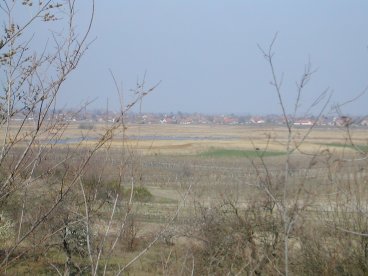 nd
fishponds, modern agricultural production demands low and tightly
regulated water levels and protection from seasonal inundation. This
trend has been exacerbated by the availability of arable area, crop
intervention payments, and grant aid for drainage, including pumped
drainage within floodplains. This has led to the development of
arable agriculture that demands low water levels in associated
rivers. Flood risks and urban building have also increased within
drained floodplains.
nd
fishponds, modern agricultural production demands low and tightly
regulated water levels and protection from seasonal inundation. This
trend has been exacerbated by the availability of arable area, crop
intervention payments, and grant aid for drainage, including pumped
drainage within floodplains. This has led to the development of
arable agriculture that demands low water levels in associated
rivers. Flood risks and urban building have also increased within
drained floodplains.
In addition to the
altered nature of floodplains, the land use of the upper catchment is
also crucial to the overall risk management situation. Loss of
uncultivated land, especially within the buffer zone of headwater
streams, is increasing the speed of runoff, suspended solid and
nutrient loads, and producing more unstable catchment behavior, where
the retention time of rainfall is reduced, leading to larger flood
pulses downstream. Cumulatively, the reduction in upper and
mid-catchment water retention leads to more flood events downstream
where river channels no longer contain peak water levels, even from
minor flood events. Within the Hungarian plain, disruptive downstream
flooding and consequent disruption of economic activity has been
frequent, and is driving the relevant authorities to greater
cooperative efforts to regulate the Tisza, primarily for
socio-economic reasons.
National Contexts
Hungary
The Tisza River feeds
into the Pannonian flood plain of eastern Hungary. In Hungary, the
waters of the Tisza are used for irrigation of agricultural crops
through a series degraded canals, and there is a desire to improve
conditions to reduce flooding, improve agricultural yields and
develop tourism. Agriculture is intensive in the Pannonian flood
plain. As a result, river and tributaries are heavily regulated. For
irrigation purposes, wetlands have been drained and rivers unbraided,
resulting in the Hungarian portion of the Tisza being subject to
severe flood damage. Though there have been efforts by
international NGOs to mitigate pollution by identifying specific hot
spots and lobbying the government, these efforts have not come to
fruition. In Hungary, as in many of the Tisza basin states,
environmental concerns are secondary to economic demands.
Immediate attention to
mitigating flood damages has drawn the focus away from a more
holistic and integrated water management strategy. As a result of
efforts to reduce flood impacts by building higher dykes and
continued regulation, there is a build up of silt within the canals,
which inadvertently increases flood risks. Draining of the Tisza
wetlands began in the 19th century and today some 500,000
people – 5% of Hungary's population - live on land reclaimed
from the Tisza. In towns and villages near the river, many are used
to seeing strong dykes as their only defense against inundation. A
new plan to allow floodwaters to flow into meadows planted with
indigenous species that have high absorptive capacities, mimicking
more natural flood conditions while reducing flood impacts on human
settlements is under consideration. Though there is an interest in
improving eco-tourism in Hungary, there is also the realization that
until water conditions are improved this will be difficult to
achieve.
Romania
The Romanian section of
the Tisza is probably the most closely studied because of the 2000
cyanide spill. Romania depends on the Tisza for agriculture,
industry, mining and domestic purposes. Flooding and pollution from
agricultural and industrial and municipal sewerage are recognized as
serious concerns. Basin runoff is highly variable and there are
periods of drought and flooding that are difficult to forecast and
manage effectively. The water pollution in the Tisza river basin is
mainly generated by economic activities and accidental wastewater
discharges: the Crisul Negru and Crisul Alb tributaries receiving
mining waste, Crisul Repede receiving wasterwaters from chemical
industries, the Barcau waste from oil drillings and refining industry
and the Mures river from municipal sources and mining activities.
Industry, specifically the mining for non-ferrous metals, generates
much needed income within Romania along the Somes and Mures Rivers
the major Romanian tributaries to the Tisza. However, the
environmental dangers involved in these activities continue to raise
concerns throughout the region as additional mining sites are
established. According to studies, 80% of wastewater discharges are
not adequately treated prior to discharge into natural receptors such
as rivers in the Romanian Tisza basin.
Above
the town of Borsa (Romania), whole hillsides of trees have collapsed
because of indiscriminate logging, yet the economic conditions in
Baia Borsa are so bleak that there are few other activities except
forestry to generate income for local residents. Further downstream,
the soils are lacking nutrients and therefore there are high levels
of nutrients used in the agricultural industry. The soils are also
polluted by heavy metals, and oil as a result of flooding incidents
in the lower basin areas. There is also salinzation of soils due to
poor irrigation practices. The agricultural production relies on
agrochemicals, which runoff into rivers, and ground waters.
Serbia and Montenegro
The Tisza flows through
Serbia and Montenegro for 164 kilometers through a catchment area of
8.000 square km. In Serbia and Montenegro, over 90% of all surface
waters are from transboundary sources. The use of the Tisza is for
waste disposal as for well as some agricultural uses, with high
concerns regarding flooding. There is a lack of capacity in water
management agencies and a strong need to develop environmental
legislation. Further it is in Serbia and Montenegro where the Tisza
meets the Danube and hence the risks of flooding are especially high
here. International conflict including bombing of industrial sites in
the 1990s has impacted the environment of the Tisza as well, though
addressing these concerns has not been a top priority for the
government. The low capacity in the country combined with the lack of
reliable scientific data at present signals the intensity of the need
for action in Serbia and Montenegro.
Slovakia
In Slovakia the Tisza
river is 18.000 km2, and the river basin makes up about
42% of the Slovak Danube basin. The northern part is hilly with high
mountains, which are mainly woodlands. Forestry is one of the main
economic activities and the intensity of forest management is having
negative impacts on the retention capacity of the landscape. In
Slovakia the desire for improved water management stems from the need
to reduce flooding threats and to improve economic development
through better agricultural practices. Additionally, in the lowlands,
most streams are canalized, which reduces the flood mitigation
efforts.
Ukraine
In Ukraine forestry
management is acknowledged to be closely linked to the health of the
Tisza river and therefore there has been a moratorium placed on
forestry activities in the oblast where the Tisza headwaters are
based. The Zakarptska oblast of western Ukraine has high levels of
unemployment and thus there has been difficulty enforcing forestry
regulations. Ukraine also has the legacy of unrealistically stringent
and therefore unenforceable environmental regulations. As a result,
the environmental conditions are historically degraded and there is a
lack of reliable scientific data on specific regions. There is a need
to support improved infrastructure, enforcement capacity and
technological developments in this oblast. The Ukrainian Carpathians
has been identified as potential area for tourist development,
particularly winter sports, and real estate values are increasing.
Ukraine faces
significant environmental challenges in water management in the Tisza
basin. For instance, it was reported that on 17 September 2003 that a
five-kilometer oil slick formed on the river Latorytsya in western
Ukraine's Trans-Carpathian region as a result of a Druzhba oil
pipeline incident. With no automatic shut off valves, a regional
official said the amount released was likely to have been huge given
the pumping rate and the pipe's diameter and reported that there was
a risk that oil might get into the river Latyrka, the only source of
drinking water for the city of Chop, on the Hungarian-Ukrainian
border, and 20 other settlements in the region. Though the spill was
largely contained, and downstream nations were less impacted, the
treatment of such accidents remains an ever-present concern.
Additional background
information on country driveness is provided in Annex 1.
C – Program and Policy Conformity
Program Designation and
Conformity
This project will build
on what has already been achieved through the EU accession process
and the EU and GEF support of the ICPDR in implementation of the
Water Framework Directive, and the UNDP sustainable development
initiatives in the basin. It will take the concept of Integrated
River Basin Management further by truly integrating the management of
land and water resources, embedding rather than retrofitting
conservation and environmental policy into the planning framework.
The product will be a
River Basin Plan which meets the requirements of the Water Framework
Directive while at the same time addressing wider sustainability
issues in the water, agriculture, energy, industry and navigation
sectors. In a single planning document the project will provide a
bridge between the two on-going initiatives, allowing for a deepening
and widening the planning scope. However, in the design of this
comprehensive Strategic Action Programme (SAP), great care will be
taken in defining its bounds, as, if they are too wide, it could
undermine the practical implementation. The SAP should be supported
by national action plans, which in turn will take their clue from
existing national and sectoral development plans. It is anticipated
that the development of the SAP will provide the impetus needed to
tackle the key issues in the basin which have been not given the
regional priority they deserve, although they are acknowledged.
The Tisza basin has
been subject to many assessment studies, particularly following the
Baia Mare spill, but no concrete actions have resulted at yet from
this work. Information on flood risks and flood management and
pollution sources, two key issues, will be taken from the work of the
Tisza Environmental Forum and the ICPDR Danube Pollution Reduction
Programme/EU DABLAS working group respectively. The frustration in
the countries is clear and there is a wish to move on beyond the
assessment and early planning stages. The new GEF project will be
designed to build upon these previous efforts and not to duplicate
them. It is envisaged that the TDA stage will not be lengthy, though
a formal stakeholder analysis and causal chain analysis should be
undertaken. Similarly the SAP/NAP process can be accelerated,
building upon the EU roof and national reports to be delivered a part
of WFD compliance, utilizing the same technical planning bodies,
while extending and deepening stakeholder involvement. It is proposed
therefore that the development and promotion of the SAP and
accompanying national plans be undertaken during the PDF-B stage. The
focus in the PDF -B stage therefore will be the development of the
pilot projects and perhaps the trialing of a project, and the
formalization in each country of the inter-ministerial committee.
Decentralization of
government in many of the Tisza states on the one hand brings
fragmentation of the planning process but on the other hand provides
an opportunity to introduce the concept of Integrated River Basin
Management to a potentially more receptive planning authority, less
affected by institutional and sectoral structural constraints. Clear
terms of reference for the inter-ministerial committee, including its
composition, are required to ensure that it is fit for purpose. The
involvement of the Ministry of Finance as well as the other relevant
Ministries on the Committee is critical if its decisions and
endorsements are to hold and be confirmed at the highest Government
level. The current GEF Danube project is working with the basin
countries to establish the inter-ministerial committees under the
ICPDR, and the new project will work with these committees very
closely throughout, making every effort to strengthen them.
Project Design
Major
Threats
The Tisza River drew
international attention in 2000 when heavy rains and severe flooding
led to the overflow of a dam containing mine tailings laden with
cyanide and heavy metals. For days news broadcasts of the devastation
dominated the international airwaves as a horrified public looked on.
Questions of how could this happen, and who is at fault prevailed
while dead fish floated downstream towards the Danube. The shock of
this incident highlighted the lack of infrastructure support in
Eastern European countries since the collapse of the Soviet era. It
also increased the public and international awareness of the need for
coordinated efforts. Though this single incident fostered recognition
of the initial cause of the spill, there are other interrelated
challenges in the Tisza region that must be addressed by all
countries through regional prioritization and coordinated efforts.
These issues include: threats from flooding; pollution from industry,
[including accidental spills], agriculture and municipal wastes;
deforestation and associated environmental degradation and loss of
biodiversity. These integrated problems must be addressed at a
regional level in order to successfully mediate the threats to this
unique ecosystem and can be overcome most effectively through
integrated water and land use management strategies.
Flooding
Flooding is a
significant threat to the ecosystems of the Tisza River and to the
communities settled in this basin. The rainfall in the Carpathian
Mountains is substantial, as weather fronts crossing southern Europe
and the Mediterranean spill rains into the crescent shaped mountain
range. The sudden rains, combined with extensive drainage, floodplain
development, deforestation and canalization reduces the ability of
the catchment to attenuate the flood wave. When heavy rains occur,
the flooding threatens human lives as water levels rise quickly and
without sufficient warning. The lack of coordinated mechanisms for
mitigating flooding upstream leads to compounded impacts downstream.
When flooding occurs, industrial sites, mining areas and dams,
agricultural fields, and municipal waste facilities become inundated
and spill biohazards into the Tisza waters. The transboundary
impacts of flooding are cumulative, especially for those counties
further downstream and a coordinated flood mitigation strategy is
essential. In order to be effective these measures must be taken
throughout the entire river basin and not just on a country by
country basis.
Deforestation
Deforestation in the
Tisza basin, especially in the tributaries endangers the water
quality of the Tisza, impacts the diverse biodiversity of this region
and exacerbates and the flooding problem. The loss of forests
encourages soil erosion and loss of absorptive capacity during heavy
rains. Deforestation in mountainous areas increases the propensity
for landslides endangering human settlements. The traditional
approach to forestry management focuses on trees rather than
ecosystems and as a result the losses of biodiversity can be
considerable. The increased economic reliance on forestry has been
exacerbated by a decline in opportunities in transitional economic
systems. Forestry practices vary from country to country and are not
generally addressed in conjunction with water management issues,
despite the very close linkages within an integrated ecosystem
management framework.
Pollution
Pollution in the Tisza
originates from: agro chemicals, industrial effluents, untreated
municipal wastes and mining tailings. These pollutants have resulted
in portions of the Tisza River being considered unable to support
fish life. Low economic conditions, high unemployment, poor usage of
lands, ineffective monitoring and enforcement and the lack of
standardized regulations have significantly impacted the river basin
ecosystem.
The excessive use
of agrochemicals, including fertilizers, pesticides and herbicides
are symptomatic of cultivating inappropriate crops for the given
climate and soil conditions in several basin countries. This results
in higher nutrient loads washing into Tisza tributaries and
negatively affects the aquatic wildlife. Further, runoff from
agricultural lands increases the sediment loading of Tisza, reducing
the efficiency of downstream impoundments and damaging the
composition and productivity of the riverine ecosystem.
Industrial
effluents have actually diminished slightly in the past decade as
the economic transition has occurred in the Tisza region. However,
as economic conditions improve across the region there is concern
that effluents will again increase. Further there is a need for
improved and updated technologies to reduce discharges into the
Tisza and its tributaries. There is variation across the region in
the level of enforcement of discharge standards and investment in
updating technologies. The ability of governments to effectively
enforce the economic instruments aimed at emissions reduction also
varies widely. Further location of new industrial facilities should
be carefully considered for the ecological impacts, both in terms of
discharge and potential flooding scenarios.
Throughout the
Tisza basin there is a lack of municipal wastewater treatment
facilities. Though some cities and towns have more up-to-date
standards, the majority of inhabitants live where there is a lack of
wastewater treatment. As a result, raw and partially treated sewer
is dumped into the tributaries of the Tisza. In addition, runoff
from stockyards and animal wastes flow into the Tisza river
increasing the organic loading and bacterial levels of the waters.
While steps are being taking to improve these conditions under the
EU Urban Waste Water Directive and the GEF Danube intervention, in
some cases there are areas where more than 80% of municipal
wastewaters enter the Tisza and its tributaries untreated.
Mining wastes,
including cyanide from non-ferrous mining activities pose
significant threats to the Tisza river basin. Even after the Baia
Mare spill, mining activities continue and there is risk of further
incidents occurring under similar circumstances. Though the Baia
Mare spill drew focused international attention to this problem, the
challenge continues to be a basin wide issue that must be managed
collectively.
Underlying Cause
The above threats to
the Tisza environment have many underlying causes, including:
At a regional level:
Lack of
understanding of the importance of fully integrated land and water
resource management
Weakness in
understanding and policy recognition of the value of biodiversity
conservation for current and future generations
Weak public
(stakeholder) participation at levels of decision-making and weak
public awareness (under-developed civil society) of environmental
issues
Absence of
national budget allocated for the environment due to low priorities
Multiple
initiatives working at cross purposes
Lack of a
framework for a sub-basin cooperation framework for cooperation
At the national level:
Weaknesses in
existing policy, legal, and regulatory institutional frameworks to
address specific problems of the Tisza basin
Low enforcement of
existing laws and regulations
Low income levels
and poverty amongst some Tisza basin residents
General weakness
of Environmental Agencies/Ministries in the region
Absence of
government will and funding for environmental matters
Corruption in
natural resource management (use of resources, planning/management)
Lack of effective
buffer zone planning and management function in all five countries
Weak intersectoral
cooperation on environmental issues
The impact of pollution from both point and
non-point sources is significant. The socio-economic impacts are
serious, affecting human health, the availability of resources,
access to healthy fisheries, safety to human settlements, and
development of the tourism industry capable of competing with less
environmentally challenged regions.
Baseline Scenario
The
concerned countries recognize the problems regarding River
Basin Management in the Tisza. At this time their efforts tend to be
fragmented even though they have a guiding policy document in the EU
Water Framework Directive and strong institutional and legal
frameworks in the form of the Danube and Carpathian Conventions. The
Tisza countries need to make better use of these instruments to
address the sub-basin problems. The EU member states of Slovakia and
Hungary are required by to implement the WFD but cannot fully comply
unless the non-EU basin states also comply. The non EU-states include
Romania and Ukraine, which are upstream, and
Serbia-Montenegro, which is at the bottom of the basin at confluence
of the Tisza with the Danube. These non-EU states are committed to
implementation of the WFD, along with much of the EU environmental
acquis, but the implementation is likely to be slow. It is understood
that the EU is not considering including Serbia and Montenegro and
Ukraine in the EU enlargement process in the short or medium term.
Therefore it is expected that the implementation of the EU WFD will
be a long term processes in the Tisza basin. This delay is in part
due to the lack of institutional and economic capacities of the
non-EU countries to prioritise and address water management issues.
It should be noted that even in the EU countries the implementation
of the WFD focuses is on the water sector and Integrated River Basin
Management is not fully practiced. Also, the participatory approach
of multiple stakeholder groups is not practiced, except through the
consultation process required by the WFD.
The ICPDR
has thirteen member states and has made immense efforts in the last
ten years to tackle the major problems of pollution on the River
Danube; the organisation is now turning its efforts to implementation
of other aspects of the Joint Action Programme including integrated
river basin management planning. The Carpathian Convention has
specific articles addressing sustainable and integrated river basin
management and sustainable agriculture and forestry, which should be
called upon in support of implementation of the GEF project and
subsequent SAP.
International assistance
has not helped this situation. Though there are many initiatives they
have overlapping goals. These lack significant coordination with
different regional and national champions. This further complicates
efforts due to a myriad of projects that risk becoming competitive in
the region, which has a dire need for cooperation. The situation is
not intentional, and has developed largely out of a desire to assist
this region. There is an urgent need for an implementable action plan
to address key transboundary issues in the basin. This must be a
joint plan to which all countries are committed.
Alternative
Scenario
The UNDP, the EU, the
ICDPR and the Carpathian Convention recognize the impasse in the
Tisza basin and have observed the frustration in the countries and
the local communities that little is being done to address the key
transboundary issues. They also admit that this problem is in part of
their own making. This project will help build a common legal,
institutional and planning framework, capable of attracting the
national funding required to tackle the transboundary issues. It will
dispel the myth that the EU will and can fund all the improvements.
The project will enforce the need for proper regulation and
compliance with standing legislation. Building on the WFD the project
will encourage greater integration of inter-sectoral policy and
planning, and wider and deeper stakeholder participation. The project
will assist in implementation of the Tisza SAP and JAP that will then
continue to develop, supported by the ICPDR, to tackle transboundary
issues at the baseline and the regional level. Other international
assistance efforts can also be included in this coordination effort
and can develop more harmonious regional assistance.
The implementation of
an initial transboundary demonstration project at the PDF-B stage
will provide valuable information in the design of the full sized
project demonstration projects, in terms of what can and cannot be
done at the community level and, hopefully, begin to answer how basin
wide sustainability criteria can be interpreted at the local level.
It also should help answer whether sustainable development and
economic improvements can be achieved in parallel, without
accompanying relatively high levels of investment.
Why should GEF get involved at all?
This project will give
an opportunity to meld the outputs of five existing GEF projects to a
single land and water management use project platform. There will be
significant crossover between the GEF biodiversity and the
International Waters portfolios with the potential for significant
synergies and perhaps ideas for new, more effective project design.
The linkage to the UNDP Carpathian-region Umbrella programme
demonstrates the programmatic approach that is keenly advocated by
the GEF Council. The GEF have forged a long and successful
partnership with the European Union in the Danube basin. Together
they have supported the implementation of the Danube Convention,
established the ICPDR and addressed priority transboundary issues.
This project would be an extension of that partnership. The ICPDR has
13 member states and its approach cannot be as in depth as it would
like, because its members have different development paths and
speeds. In complex basins, such as the Tisza, a more integrated land
and water management approach is required to tackle the transboundary
problems. These are more complex than those currently being
implemented by the states under the EU Water Framework Directive. The
EU, which is a contracting party to the Convention, is keen to see
that its members comply with the WFD at the basin and sub-basin level
and link it to other initiatives such as their Flooding Communication
and their Water Initiative for the EECCA region. Other international
assistance efforts can gravitate to this effort as well, in order to
best invest their efforts without being redundant.
Sustainability (financial,
social, environmental) of the full project
The sustainability of
the project will be ensured with the adoption of the SAP and NAPs at
regional and national levels and the government commitment to
implement them. The establishment and continuation of the
inter-ministerial committees and allocation of government funds to
these plans will be clear signs of sustainability. The project must
work with the countries to implement the EU acquis and not sent up
competing planning frameworks. There is no specific sub-basin legal
and management framework for the Tisza at present and there is still
discussion between the countries as to the best approach. It is
envisaged that a final decision will be made on this matter at the
end of the two-year PDF-B stage and should be set as a pre-requisite
for endorsement of the full project.
Replicability
The Global
Environmental Facility (GEF) has funded 4 biodiversity projects in
the Tisza river basin at the country level. These are in Hungary,
Romania, Slovakia and Ukraine. Additionally, a Biodiversity Strategic
Action Programme in Serbia and Montenegro is supported by GEF.
The Hungarian
project focuses on conservation and restoration of the globally
significant biodiversity of the Tisza river floodplain through
integrated floodplain management.
The Romanian
project focuses on strengthening Romania’s protected area
system by demonstrating public-private partnership in Romania’s
Maramures Nature Park.
The Slovakian
project focuses on integration of ecosystems management principles
and practices into land and water management of Slovakia’s
Eastern lowlands.
The Ukrainian
project Conserving globally significant biodiversity and
mitigating/reducing environmental risk by integrating biodiversity
conservation principles and practices into forestry and watershed
management in Ukraine’s Trans Carpathian region.
These
national level GEF biodiversity projects each have a demonstration
component that links integrated land and water river basin management
with socio-economic realities within this region. These projects are
varied enough to serve as very important role model for other similar
projects in a transboundary setting. Through sustainable watershed
management these GEF Biodiversity projects address many of the
environmental challenges facing the broader Tisza river basin. These
will provide valuable lessons for the proposed project and have the
potential to be replicated not only in the Tisza but also in broader
Danube and other transboundary river basin management programmes.
The
project would develop a series of demonstration projects for
inclusion in the SAP implementation phase, aimed at improving water
and land resource management; looking for win-win situations, where
the principles of sustainable development can be applied to increase
productivity and increase environmental protection.
Stakeholder Involvement/Intended
Beneficiaries
Stakeholders involved
in this project include, inter alia:
Ministry officials
from:
Environmental
protection and management
Agriculture and
forestry
Transportation
Energy
Public health
Planning and land
use and urbanization
Soil management
Industry
Mining
Education
Tourism
Communication and
emergency services
Economic and or
finance
Foreign affairs
Defense
District, local
and municipal leaders
International and
bilateral assistance agencies
Local, national,
regional and international NGOs
Coastal residents
Community based
organizations
Construction
company owners and workers
Industry owners
and workers
Mine owners and
miners
Farmers
Fishermen
Forestry workers
Educators
Agricultural
support industry
Public healthcare
providers
Scientists and
researchers
Tourism industry
specialists
Media, including
print and broadcast
International
investors interested in the region
D – Financing
Financing Plan
The PDF-B stage would
be two years duration, followed by a four year SAP implementation
project.
In the PDF-B stage, EU
funding will be used to fund EU member states involvement and
specific basin wide elements relating to the implementation of WFD.
GEF and UNDP funds will be used to support the three non-EU states:
Romania, Serbia and Montenegro and Ukraine.
The UNDP Regional
Centre for Europe and the CIS was established expressly to manage
projects of a cross boarder nature, and is uniquely qualified to
implement the proposed project. The Regional Centre is prepared to
commit approximately $200,000 in cost-sharing to implement the PDF-B
stage of the project.
Only the
non-EU countries will receive GEF support all of which are eligible
for GEF support: Ukraine, Romania and Serbia and Montenegro. The EU
countries of Hungary and Slovakia will be either supported by the EU
through the ICPDR or will be self-supporting.
Estimated GEF
contribution for Full size project is USD 5.0mil, with co-financing
USD 6.0 million.
Co-Financing
The PDF-B would be
co-funded by the EU, UNDP and the Carpathian Convention through UNEP,
as well as the participating states. Approximately $2 million will be
requested from the international agencies and GEF for PBF-B
execution.
Co-financing for Full
size project is expected from EU funds, UNEP and national and local
governments of participating countries.
E - Institutional Coordination and
Support
Core Commitments and Linkages
The Tisza countries are
all signatories to the Danube River Protection Convention (DRPC),
which is a legally binding document and provides a framework for
cooperation between the parties. The Danube countries under the
obligations of the DRPC have established the International Commission
for the Protection of the Danube River (ICPDR) creating an
institutional framework not only for pollution control and protection
of water bodies in the Danube basin, but also the integrated
management and sustainable use of basin’s natural resources.
In November 2000 the ICPDR adopted its first Joint Action Programme
(JAP) for the Danube which addresses pollution from point and
non-point sources, wetland and floodplain restoration, priority
substances, water quality standards, prevention of accidental
pollution, flooding and river basin management. Any planning document
prepared for the Tisza basin must be consistent with the ICPDR’s
JAP.
There are significant
challenges in the management of the Tisza basin water resources, and
the five countries of the basin are well aware of these challenges.
The Tisza riparian countries are at different phases of development,
and have widely divergent capacities to address local, national and
regional river basin management issues. The combination of economic
readjustment and development, transitional political systems, and
expansion of the European Union has led to wide variation in capacity
throughout the region to address and mitigate environmental risks.
While some of these circumstances have resulted in advancements that
have been positive for the region as a whole, historically there has
been a lack of coordinated environmental management among the Tisza
states, even though management and institutional structures may exist
to do so. This lack of coordination has hampered efforts to
successfully manage flood and other crisis events.
Recent efforts of the
EU (EU is holding the rotating presidency of the ICDPR this year)
have taken steps to mitigate this situation (Annex 3). Yet, despite
major coordination attempts, there are still challenges, as each
country tends to focus primarily on the waters only within its own
borders without fully recognizing the impacts of its actions on
neighboring countries. This lack of coordination diminishes the
success of other national and local level projects because it creates
separate standards within each state for monitoring success and
managing crises. On the positive side, each of the Tisza riparian
countries has committed to implementing the EU Water Framework
Directive (EU WFD), including the requirements for management of
transboundary waters, but the capacity of each county to effectively
meet the WFD requirements varies widely. Two of the five countries
are not EU member or accession states, and therefore the high
standards set by the WFD
Consultation, Coordination and
Collaboration between and among Implementing Agencies, Executing
Agencies, and the GEF Secretariat, if appropriate.
Currently there are a number if existing
international assistance and regional initiatives aimed at various
components of water management. There is a lack of coordination
across these initiatives and often they have overlapping or redundant
efforts. The International Commission on Protection of the Danube
River (ICPDR) serves as an umbrella agency for the larger Danube
Basin, but there is not a similar organization functioning in the
Tisza basin.
The Project will be
managed under the umbrella of the Danube River Basin Convention and
coordinated by the ICPDR. Coordination with the GEF Danube Regional
Project is crucial to avoid duplication but more importantly to
benefit from wider basin activities under both the DRP itself and the
associated Danube - Black Sea partnership. A donor co-ordination
group will ensure good communication between the major environmental
projects within the Tisza basin.
The new project will
bring together and find common ground for the three major
initiatives, and working closely with the ICPDR, the project will
ensure maximum project synergy and minimum project overlap through
the establishment of a ‘Friends of the Project’ group.
The project will demonstrate flexibility and pragmatism in bringing
the partners together.
Implementation/Execution
Arrangements
UNDP Regional Centre in Bratislava
would focus its efforts on substantive implementation/monitoring and
supervision of the GEF project, and the execution work would be done
by UNOPS who has well developed structures/systems for project
execution.
The Project Steering
Committee would include the five basin countries, the EU and the
three GEF implementing agencies, UNDP, UNEP and the WB.
PART
II - Project Development Preparation
This part is an
additional information about PDF B stage, that will be submitted
later on in 2004.
A
- Description of Proposed PDF B activities
The project activities
during the PDF-B and full implementation stage will be:
PDF-B
A detailed basin
stakeholder analysis to identify the stakeholders and articulate
their concerns
Establishment of
stakeholder groups at regional, national and (where appropriate)
local levels
Establishment of a
‘Friends of the Project Group’
In each
participating state, establish/reinforce and support inter-ministry
committees that include the finance ministries, to direct the
planning process
Synthesis of the
available data and information on transboundary issues in a TDA and
Roof report.
Causal Chain
Analysis of transboundary issues
Identification of
priority transboundary issues and the drafting of Ecosystem Quality
Objectives, constituting a long-term vision for the basin
Development and
endorsement of national action plans (which will include approved
financial plans) to
Development and
regional endorsement of a Strategic Action Programme for the basin,
to include a realistic financial plan and an M&E framework
Production of
project documents for transboundary demonstration projects to be
implemented as part of the SAP, at least one project per country
Implementation of
a small-scale pilot project to demonstrate concrete advantages of
the Integrated River Basin Management
Two regional
workshops to discuss the legal and institutional framework for the
Basin Authority
Donor conference
to launch the SAP and lever funds for its implementation.
Preparation of the
full project document.
B
- PDF Block B Outputs
Agreement on the
legal and institutional framework for the Basin Authority (this will
be made a pre-requisite of the approval of the full project)
Provision of
technical assistance and training to the Basin Authority
Strategic studies
to fill information and data gaps
Revision of the
TDA
Implementation of
demonstration projects
Public
dissemination of results of pilot project through study tours,
conferences and published material, and the identification of
replicable sites
Monitoring and
Evaluation of the SAP and National Action Plans (NAP) in the basin
states.
Review SAP and
NAPs
C
- Justification
The ICPDR under EU
Presidency has this year prepared a discussion document (Annex 3) to
initiate a dialogue on the Tisza. The document called for dialogue to
concentrate, streamline and coordinate all the water resource
management initiatives towards a common vision and goal. ICPDR wish
to convert the pragmatic national approach to water resources
currently operating in the Tisza, to a sub-basin approach in order to
meet the demands of the EU Water Framework Directive (WFD). The WFD
planning process requires development of RBM plan based on sound
analysis of water bodies conditions, pressures and impact analysis,
setting environmental objectives and a development of program of
measures to achieve good ecological status of all waters in the
basin. The roof reporting methodology, established by ICPDR as
working method, is comparable to the GEF approach calling for TDA/SAP
and national action plans. The ICPDR discussion paper also calls for
further application of Integrated Water Resource Management, as
promoted by the EU Water Initiative launched at the Johannesburg
summit, and European Commission new Communication on ‘Flood
risk management, flood prevention, protection and mitigation’.
These proposals are closely compatible with the GEF TDA/SAP approach.
D
- Timetable
In consultation
with ICPDR and the Carpathian Convention interim secretariat, agree
and finalize concept paper (September 2004)
Have project
accepted into GEF IW pipeline (October 2004)
Hold regional
stakeholder meeting to discuss concept paper and elicit ideas for
PDF-B/full project stages (November 2004)
Develop PDF-B
document; this is a complex project and warrants execution of a
separate PDF-A stage (December 2004)
Hold second
regional stakeholder meeting to finalize concept paper (January
2005)
Meeting of the
donors to secure co-financing for PDF-B and full project co-funding
(January 2005)
Submission of
PDF-B to GEF secretariat for approval (March 2005)
Following country
approval execution of PDF-B (June 2005 – December 2006)
Submission of full
project document to GEF Council Spring 2007.
Following GEF
Council approval, CEO endorsement and country approval, full project
implementation June 2007 – June 2010.
Proposed
project development strategy
The UNDP/GEF
International Waters Projects (IWP) and the EU/WFD share similarities
stemming from concurrent objectives of improving overall water
quality though linked regional initiatives. They are highly
complementary, and the processes for reaching the same ends are
closely related.
The similarities
between IWP objectives and those of the EU/WFD can both apply to the
Tisza River Basin through integrated river basin management
strategies. Common broad objectives include: protection of fresh
water sources against pollution; use and conservation of wetlands;
sensitivity to environmental impacts of human development in coastal
areas; the recognition of multiple uses for water and the economic,
social and political sensitivity of shared water resources; the
ability for shared cooperation over natural resources to extend into
other spheres throughout the region.
TDA/SAP methodology and
WFD implementation commonalities include: the importance of
intersectoral cooperation; regionally linked national policies for
monitoring and prevention of degradation through natural or
anthropogenic causes; the need to include economic and environmental
needs in project development; importance of including all users
within the basin equally and working with multiple stakeholder groups
to develop processes; the need to coordinate national and basin wide
policies as much as possible; the importance of developing long term
regionally sustainable practices; setting commonly accepted
objectives for improvements; application of the polluter pays
principle and precautionary principle whenever achievable; use of
pilot projects; recognition and compliance with existing
environmental international agreements.
These similarities
enable these two approaches to work closely together, in a
complementary fashion. With regards to some environmental challenges,
the EU/WFD implementation strategy is more fully developed and quite
sophisticated, while with regards to other challenges, the IWP
TDA/SAP process can enhance the approach advocated by the EU/WFD
Implementation Strategy. Neither is necessarily better than the
other, and should not be thought of as such. Rather, at this juncture
these approaches have the ability to enable organizations to learn
from each other in a cooperative manner.
The Framework
Convention on the Protection and Sustainable Development of the
Carpathians provides for the development of River Basin Management
Plans, particularly in the upper catchment where forestry management,
nature conservation and downstream flood management are inter-linked.
The UNDP Tisza River
Basin Sustainable Development Programme (TRB SDP) has the following
broad objectives:
securing the
prosperity of the people living in the river basin;
making sustainable
use of the basin’s natural resources;
minimizing
environmental risks;
preserving natural
and cultural values; and
developing a
participatory framework for cooperation between countries, sectors,
communities and stakeholders.
Within UNDP the TRB SDP
has developed into a broader Carpathian -region development
programme, which will provide an umbrella not only for this project,
but also some 20 regional and local development projects, including
ethnic issues, and environmental governance initiatives (see concept
paper Annex 4). The GEF project will be one of two major regional
matrix projects under the - Carpathian region umbrella, to which the
smaller local development projects will be linked and into which
lessons learnt will be fed. The matrix projects will deal with the
twin issues of Environmental Sustainability and Sustainable Income
Generation, contributing to the UNDP objective of harmonious social,
economic and environmental development in the region’s
communities.
The new project will
bring to together and find common ground for these three major
initiatives, in addition to the European Council CEMAT initiative
(see section above). Working closely with the ICPDR, the project will
ensure maximum project synergy and minimum project overlap through
the establishment of a ‘Friends of the Project’ group.
The project will demonstrate flexibility and pragmatism in bringing
the partners together.
Part IV –
Response to Reviews
A -
Convention Secretariat
B - Other
IAs and relevant ExAs
ANNEXES:
Annex 1:
Additional Information on Country Driveness
Annex 2:
Map of Tisza
Annex
3: Towards a Sub-River Basin Management Plan for the Tisza River: A
Discussion document initiating a dialogue on the Tisza by the EU
Presidency and the Permanent Secretariat of the ICPDR
Annex
1: Additional Information on Country Drivenness
The Tisza River Basin
is the largest tributary to the Danube. The streams and rivers
feeding into the Tisza originate in the Carpathian Mountains and flow
through Hungary, Romania, Serbia and Montenegro, Slovakia, and
Ukraine (see map of Tisza basin, annex 2). These rivers pass through
areas significantly degraded by deforestation, industrial,
agricultural and municipal wastes, past deleterious mining sites and
through precariously protected wetlands. The waters of the basin
serve as a crucial means of irrigation for crops, for transportation,
for domestic and industrial use, as a waste disposal mechanism, to
sustain other human activities and to support the regional
ecosystems.
The Tisza River serves
a variety of purposes within the wider basin. The waters serve as a
crucial means of irrigation for crops, for transportation, for
domestic and industrial use, as a waste disposal mechanism, to
sustain other human activities and to support the regional
ecosystems. The countries of the Tisza river basin are aware of the
challenges before them in management of their collectively owned
water resources.
In 2000 the Tisza drew
international alarm due to a cyanide spill from the Romanian mine
tailings dam in Baia Mare during seasonal flooding. 100,000 tones of
cyanide laden sludge spilled into the Tisza leaving almost 1,000
kilometers of the river lifeless, including fish, invertebrates and
birds. The water became lethal, and though the cyanide decomposed
quickly, the heavy metals remained leaving legacy of the event,
including an increase in long-term ill health risk among residents in
the region. Though significant international attention has been paid
to the region in terms of studying the effects and taking steps to
minimize the impacts of Baia Mare, there has been a lack of
regionally coordinated mitigation efforts that focus on transboundary
remediation. Furthermore, there are a variety of international
initiatives within the region addressing different aspects of river
basin management; however there is lack of coordination of these
efforts and resources are being squandered. This project is designed
to address these shortfalls.
The Tisza riparian
countries are at different phases of development, and have wide
ranging capacities to address local, national and regional river
basin management issues. The combination of economic readjustment and
development, transitional political systems, and expansion of the
European Union has led to a wide variation in capacity throughout the
region to address and mitigate environmental risks. While some of
these circumstances advancements have been positive for the region as
a whole, historically there has been a lack of coordinated
environmental management among the Tisza states, even though
management and institutional structures may exist to do so. This lack
of coordination has hampered efforts to successfully manage flood
crisis events. The Tisza flood plain in Hungary has over time has
become drained and developed, the main channel has been canalized and
braiding removed. Upstream canalization has been particularly
critical. All of this has caused reduced flood attenuation and a
concentration of the flood wave in downstream countries in the Tisza
basin and beyond.
Recent efforts of the
EU ICDPR have taken steps to mitigate this situation. Yet, despite
major coordination attempts, there are still challenges, as each
country tends to focus primarily on the waters only within its own
borders without fully recognizing the impacts of its actions on
neighboring countries. This lack of coordination diminishes the
success of other national and local level projects because it creates
separate standards within each state for monitoring success and
managing crises. These efforts have been promising as each of the
Tisza riparian countries has committed to implementing the EU Water
Framework Directive (EU WFD), including the requirements for
management of transboundary waters, though the capacity of each
county to effectively meet the WFD requirements varies widely.
Further, two of the five countries are not EU member or accession
states, and therefore are distinctly disadvantaged by the high
standards set by the WFD.
National Policies
Hungary
In Hungary, the water
management has three basic functions that determine its objectives,
programmes and methods as well as its relation to and cooperation
with other sectors of society (National Strategy for Water
Management, 2000) These are: protection of the population against the
hazard of water; supply of the water needed by the citizens and their
activities; and, preservation of water resources, particularly
drinking water supply, in such as state as to remain in harmony with
the environment to ensure their long-term sustainable use. Hungarian
legislation has been changing with the aim of adoption of the
requirements of the EU. This legislation has been aligned with the
environmental acquis of the EU regarding the quality control
requirements, specifically pertaining to discharges of wastewaters
and sewerage. With regards to water quantity and water management in
general, new government decrees have been adopted in the field of
protection of water basins, water management authorities, utilization
and use of different water sections. Work is still being carried out
to meet the EU WFD, though the government has adopted a Strategic
Document defining the tasks and deadlines to be achieved. Other
legislative work remains in other related sectors.
In the past two years
there has been an effort to link water management institutions,
including those for water protection and environmental protection
authorities, inspectorates and various regional agencies. There is an
intergovernmental, multi-sectors national body dealing with
sustainable water management issues and coordination among the
different sectors including environment, agriculture, tourism,
transport, and nature conservation. This body coordinates the
implementation of the EU requirements and EU directives to specific
sectors.
Hungary is party to the
Helsinki Convention on the protection and use of transboundary water
courses and international lakes, the Sofia Convention on cooperation
for the protection and sustainable use of the Danube river, the New
York Convention on the law of the non-navigational use of
international water courses and the Tisza Convention on measures to
combat pollution of the Tisza river and its tributaries. Hungary also
has bilateral agreements with Romania, Slovakia, Serbia and
Montenegro, and Ukraine.
Romania
In Romania the water
bodies are state property and overseen by the Water Department of the
Ministry of Agriculture, Forests, Waters and Environment (MAFWE). As
Romania strives to accede to the European Union all the EU water
directives are being transposed into the Romanian legislation, by
amending the existing water laws. The transition period for
implementation is under negotiation, and heavy investment is needed.
Also a new Water Management Strategy based on the recommendations of
the Second Forum for Sustainable Water Management is under
preparation. Currently the main legal acts for sustainable water
management in Romania address: environmental permits and licensing
issued by water bodies; meeting the requirements for the EU WFD;
water management plans at the basin level; legislation to involve all
ministries dealing with water issues; and legislation on drinking
water quality and the expansion and rehabilitation of the water
supply system.
Romania is party to the
Helsinki Convention on the protection and use of transboundary water
courses and international lakes, the Sofia Convention on cooperation
for the protection and sustainable use of the Danube river, the ECE
Convention dealing with transboundary impacts of accidents, and the
Tisza Convention on measures to combat pollution of the Tisza river
and its tributaries. Romania also has bilateral agreements with
Hungary, Serbia and Montenegro, and Ukraine.
Serbia and Montenegro
The situation in
Serbia and Montenegro remains relatively fluid. The management of
water issues is based on the specific territory, and water management
is carried out separately. There is a Constitutional Charter in
progress in Serbia and Montenegro, though at this time the Water Law
of the Republic of Serbia is beginning enacted contrary to the
federal laws which have not been enforced until now. The Ministry of
Agriculture and Water Management is overseeing the Water Directorate,
procedures for new Water Law and Law on Financing of Water
Management. The largest problems currently are developing and
implementing water quality and wastewater treatment status because of
the lack of legislation and poor economic conditions.
The relatively unstable
situation has hampered water management at a priority. However as the
impetus to join the EU increases within Serbia and Montenegro it is
expected that water management will become more important. It is
acknowledged that water management based on sustainable development
will be critical to the integration and accession process. The
existing water management approach is still more traditional in
approach because of the remaining legal provisions that are still in
force. New laws on Natural Resource and Environmental Protection are
under going adoptions.
Though flood control is
most closely regulated based on existing laws, it is expected that
more coordination throughout the basin will assist these efforts.
Serbia and Montenegro (as the Former Yugoslavia) are party to the
Sofia Convention on cooperation for the protection and sustainable
use of the Danube River, and the Tisza Convention on measures to
combat pollution of the Tisza river and its tributaries. Serbia and
Montenegro also has bilateral agreements with Romania and Hungary.
Slovakia
Slovakia tends to have
a fairly sophisticated environmental policy status regarding water
management, with awareness that circumstances require improvement,
and what those specific improvements are. They have a National
Strategy for Sustainable Development, though there are difficulties
with enforcement at local levels. There is an acknowledgement of
general problems with enforcement of environmental laws, existing
corruption and low legislative and environmental awareness.
Nonetheless, the EU WFD has been transposed into the new draft law of
the Water Act, focusing on watershed management, protection of the
ecosystem and human health. It is anticipated that these will improve
enforcement of existing laws.
Within the Slovak
legislation is the Water Act, which specifies water management tools
and tools for protection of water quality. This includes obligations
for water withdrawals and wastewater discharge. Water management,
water quality, and quantity protection and its rationale utilization,
as well as river basin management, flood protection an control are
ensured though this law, through the River management plan and
hydro-ecological plans of the watersheds and based on the Generel of
water utilization and its protection.
Slovakia is party to
the Helsinki Convention on the protection and use of transboundary
water courses and international lakes, the Sofia Convention on
cooperation for the protection and sustainable use of the Danube
river, the Espoo Convention on Environmental Impact Assessment in the
transboundary context, Stockholm Convention on persistent organic
substances, The Bern Agreement- Convention on protection of European
wildlife and natural sites, Convention on transboundary transport of
dangerous wastes, the Ramsar Convention on wetlands protections and
the Tisa Convention on measures to combat pollution of the Tisa river
and its tributaries. Slovakia also has bilateral agreements with
Hungary and Ukraine.
Ukraine
The Ukrainian Water
Code is comprehensive and covers most issues of water quantity and
quality management groundwater protection and others. There is
division between the Ministry of Environmental Protection of Ukraine
and State Committee of Ukraine on Water Management share
responsibilities for water management. Other laws such as Law on
Environmental Protection also address water management issues and
there are multiple agencies charged with various aspects of water
related management. As a result the situation tends to be quite
complicated. All waters are owned by the state, and overseen by the
Parliament, elected councils of the oblasts and local level.
Ukraine as a former
Soviet state has the legacy of extremely stringent environmental
policies. The legislation is some of the most aggressive
environmental in history, however, enforcement during the Soviet era
left something to be desired. Nonetheless, there is an interest in
adjusting national policies to meet the EU WFD as part of an ambition
towards eventual accession to the EU. Within Ukraine there is an
interest in harmonizing water policy with the EU approach including
development of basin principles of water management and water
protection; developing improved tariff policy and water pricing;
developing of ecological standards of water quality; improving the
environmental situation in watersheds; increasing stakeholder and
public participation involvement in water management. These ideals
have yet to be reached in either the EU or Ukraine, though for
different reasons. The main challenge that will face Ukraine will be
enforcement, effective monitoring and compliance with the EU WFD over
time.
Ukraine is party to the
Helsinki Convention on the protection and use of transboundary water
courses and international lakes, the Sofia Convention on cooperation
for the protection and sustainable use of the Danube river, and the
Tisa Convention on measures to combat pollution of the Tisa river and
its tributaries. Ukraine also has bilateral agreements with Hungary,
Slovakia and Romania.
Sub-regional Policies
and Cooperation
Currently there are a
number if existing international assistance and regional initiatives
aimed at various components of water management. There is a lack of
coordination across these initiatives and often they have overlapping
or redundant efforts. The International Commission on Protection of
the Danube River (ICPDR) serves as an umbrella agency for the larger
Danube Basin, but there is not a similar organization functioning in
the Tisza basin. In some cases various Tisza initiatives have taken
similar parallel approaches to addressing components of water
management. Though each of these initiatives contributes to the over
progress being made there is a need to more formally link these
projects to avoid possible redundancy of efforts, and to develop a
strong transboundary approach to river basin management. Each of
these projects makes important contributions and should be
appreciated as such. These initiatives include: the Tisza Forum; and
the Tisza Environmental Forum; the Sustainable Spatial Development of
the Tisza River Basin; UNEP Feasibility Study : Integrated Management
of the Carpathian River Basins - Tools and Implementation, Framework
Convention on Protection and Sustainable Development of the
Carpathians; Tisza River Project – EU Research Project; Tisza
River Basin Sustainable Development Project; and several GEF
biodiversity projects focusing on water related habitat conservation
measures.
The Budapest
Declaration signed by the five Tisza basin countries in 2001 commits
them to co-operate and develop regional plans on flood protection
and control in the basin. There is no permanent secretariat instead
the Tisza Forum, as it is known meets twice a year, with the chair
rotating around the basin states. There are eight working groups at
the expert level that meet regularly dealing with all aspects of
flood protection and risk. The Tisza Forum is funded wholly by the
participating states and in March 2004 produced an Action Plan for
Sustainable Flood Protection of the Tisza Basin.
In September 2003
under the Council of Europe CEMAT programme the Tisza countries
signed a Declaration of Cooperation Concerning the Tisza basin and
an initiative on Sustainable Spatial Development of the Tisza River
Basin. The Council of Europe’s European Conference of
Ministers responsible for Regional/Spatial Planning (CEMAT) has
developed the “Initiative on the sustainable spatial
development of the Tisza/Tisa river basin” supported by the
ministries responsible for Regional/Spatial Planning of Hungary,
Romania, Serbia and Montenegro, Slovak Republic and Ukraine. Within
this programme they seek to implement planning strategies that will
improve socio-economic conditions while taking steps to improve
environmental management.
The Framework
Convention on Protection and Sustainable Development of the
Carpathians is an international agreement of the seven Central and
Eastern European States: the Czech Republic, Hungary, Poland,
Romania, Serbia and Montenegro, the Slovak Republic and Ukraine.
Signed by the six basin states at the Fifth Ministerial Environment
for Europe Conference in Kiev 2003, the Convention provides a
framework for co-operation on:
integrated
approaches on land and water use management;
conservation and
sustainable use of biological and landscape diversity;
development of
sustainable agriculture, forestry, transport, industry and tourism;
preservation of
cultural heritage and traditional knowledge;
environmental
impact assessment; and
enhanced
awareness-raising, education and public participation
The
interim secretariat of the Convention is located in the UNEP Vienna
office that promotes its ratification, information exchange,
documentation, and acts as a liaison office with the Alpine
Convention and the ICPDR.
The Tisza River
Project – EU Research Project is part of
the European Super-project (cluster of projects) called CATCHMOD,
which combines and harmonizes similar catchment modeling projects on
European level. It was initiated in 2001 and is funded by the
European Union. This project draws on government and ministerial
support, organizations and universities. It includes the countries
of Slovakia, Romania and Hungary with an outlook to Ukraine
subcontracting partners. Serbia and Montenegro are not included in
this aspect of this project. This project will link closely with the
EU WFD as a means to build upon and compliment the advances made by
the countries in meeting the WFD objective, extended to all the
Tisza basin countries.
The UNDP Regional
Environmental Governance Programme in Bratislava with the Regional
Environmental Centre for Central and Eastern Europe have implemented
the first and second phases of the Tisza River Basin Sustainable
Development Project. Additional support for this project is from the
Carpathian Foundation, and the British Embassy in Budapest. This
project had the goals of: securing the prosperity of the people
living the Tisza river basin; making sustainable use of the basin’s
natural resources; preserving natural and cultural values; and
developing a participatory framework for cooperation between
countries, sectors, communities and stakeholders in the river basin.
In the first phase of this networking of individuals and
organizations from all five Tisza basin countries. Strong
stakeholder involvement was emphasized in this phase in order to
encourage national level ownership of the project and to encourage
intersectoral buy-in when needed. In the second phase a report was
produced through national and regional assessments of legal, policy
and institutional frameworks related to sustainable water management
issues in Tisza riparian countries. These phased efforts and reports
are a compilation of extensive research findings and lay a solid
framework in which to couch a regionally owned and managed
sustainable development project. In addition, UNDP through its
Bratislava office is developing the concept for Eco-region umbrella
programme to shelter the UNDP’s many social, poverty
alleviation and environmental projects in the basin.
Following the Baia Mare
spill, the Tisza Environmental Forum was formed to address regional
environmental challenges. Within this forum four major initiatives
emerged: REC Yugoslavia organized NGOs and public participation;
UNEP/OCHA which conducted studies of the implication of the Baia Mare
spill focusing on water quality specifically; the WWF Danube
Carpathian Task Force built upon public access to information and
increased participation; and the Creation of the Baia Mare Task Force
of Ministers of Hungary, Romania, Slovakia and Ukraine in conjunction
with the ICDPR developed a list of key hotspots, agreed to protocols
for identification, inspection and emergency measures to be taken in
the event of future incidents. This organization appears to be latent
at this time.
All countries have
stated an eagerness to address transboundary management of the Tisza
in order to improve water quality, reduce flood threats and to
develop legislation that is in line with the EU WFD. The impetus for
this is largely economic enhancement in regions with degraded
infrastructure, high rates of unemployment and poorly enforced or
nonexistent water management plans. This incentive for environmental
cooperation and coordination must be harnessed in order to direct
action rather than to allow a myriad of competing projects to muddy
the vision of an improved environment for the Tisza basin.
Annex
2: Map of the Tisza River Basin
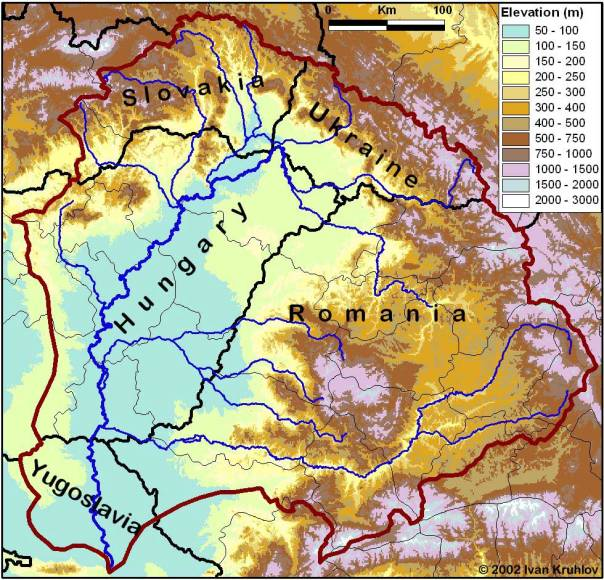
Annex
3
Towards a Sub-River
Basin Management Plan
for the Tisza River
Initiating
a dialogue on the Tisza
by the EU Presidency the Permanent
Secretariat of the ICPDR
Discussion Document
(version of 12 July 2004)
The Tisza River Basin, the largest
sub-catchment of the Danube, is a significant transboundary river
shared with the enlarged EU. Its catchment area of 157.186 km2
is larger than, e.g. the Elbe or the Odra river basin. The Tisza
catchment is shared by five countries, Ukraine, Romania, Slovak
Republic, Hungary and Serbia-Montenegro, two of which recently became
members of the European Union. As part of the implementation of the
Water Framework Directive, the European Commission is therefore
attaching a high priority to promoting multilateral regional
co-operation on a river basin scale. The strengthening of
co-ordination in the Tisza river basin will considerably improve the
implementation efforts of the EU Water Framework Directive in the
whole Danube and, thereby, ensure a high quality of life and a
healthy environment in the region.
The Tisza River Basin has been focus
of attention in the past. Particularly, in 2000, the Tisza became
headline news because of the cyanide spill from the Romanian tailings
dam in Baia Mare. In the aftermath of the accident the European
Commission set up the Baia Mare Task Force to look at the reasons for
the accident and recommend measures to minimize the risks of similar
accidents (cf. Final Report of Baia Mara Task Force). These included
strengthening of the regulatory framework. And resulted in a number
of changes to EU environmental law.
Now that two of the Tisza countries
have become EU members, the approach of fostering co-operation in the
region should be developed to a new level.
This document is intended to start a
dialogue with the countries in the Tisza basin under the umbrella of
the ICPDR in order to identify the best options for the way forward.
Current situation
Regional co-operation in the Tisza
catchment has a long tradition and has always been intensive, both on
a bilateral and on multi-lateral level. At the moment, several
initiatives are targeting the Tisza region. A non-exclusive list of
such activities covers, in particular, e.g.:
Tisza
Environment Forum: The five countries in the basin have signed a
Tisza environment declaration and are working together in the Forum
on various aspect, in particular on flood mitigation and protection.
The Forum has not the formal status of a transboundary river
commission but it is the only platform for co-operation which all
the Tisza countries recognise and support.
Tisza
River Project – EU Research Project: The project is funded
under the 5th Framework Programme and has the aim to
investigate possibilities for improvement of water quality in the
Tisza catchment.
Tisza
River Basin Sustainable Development Programme: In
2001 the UNDP/RBEC Regional Environmental Governance Programme in
Bratislava and the Regional Environmental Center for Central and
Eastern Europe developed this initiative. As the overarching
goal of the program was declared improving quality of life for the
inhabitants of the Tisza river basin through strengthening of
environmental governance based on the sustainable development
principles (for more information www.rec.org/tisza).
Declaration
on Cooperation concerning the Tisza/Tisa River Basin and Initiative
on the Sustainable Spatial Development of the Tisza/Tisa River
Basin. All the countries actively had taken part in the Council
of Europe initiative on Sustainable Spatial Development of the
Region of the Tisza/Tisa river and have signed it recently in
September 2003.
There are numerous other initiatives
by many different partners in the Tisza region so the above list is
far from being comprehensive. Currently, the UNDP is compiling an
overview on all initiatives and activities in the Tisza basin in the
context of a GEF project. A conclusion that is shared by many,
however, is that all these initiatives and activities are not well
co-ordinated and are not leading to a concerted effort to improve the
environmental situation in the region. Often, these initiatives are
running in parallel and are, to some extent, even counterproductive.
This does have negative feedback, both on the countries and the
donors and partners in the region leading to duplication of efforts
and standstill. In consequence, despite considerable efforts and
funding money being invested, these resources are not spent as wisely
and efficiently as they could be.
In conclusion, it is high time that a
dialogue is initiated to concentrated, streamline and co-ordinate all
the efforts in the Tisza basin in relation to water resource
management towards a common vision and goal.
Key focus
The sustainable development of the
Tisza river basin will be shaped by a number of EU and other
policies.
The
EU Water Framework Directive sets out environmental
objectives for all waters to be achieved on a river basin scale. The
preparation of a river basin management plan is envisaged by 2009.
The requirements of the Directive also apply to the Tisza region.
EU
Water Initiative, ECCA component: In order to support the
achievement of the Millennium Development Goals for water and
sanitation, the EU has started an EU Water Initiative in which
principles of Integrated Water Resource Management are being
promoted. These principles closely liaise with the approach of the
Water Framework Directive. Several regional components were started
of which one focuses on ECCA countries. The initiative shall
facilitate the capacity building as well as the co-ordination of
funding instruments in order to make them more effective.
EU
Flood Communication: The European Commission is about to launch
a Communication on “Flood risk management, flood prevention,
protection and mitigation”. This Communication will be adopted
in July 2004 and eventually lead to a joint EU flood policy.
There are many other relevant pieces
of EU legislation which, once fully implemented, will contribute to
sustainable protection of the Tisza basin, such as, e.g., pollution
prevention and control policy (e.g. IPPC Directive), prevention of
accidents (e.g. Seveso II Directive).
The close co-ordination between these
policies can provide a focus for the future work. It is noticeable
that a number of other international initiatives and fora are based
on the same principles and with similar objectives set out in these
policies mentioned above.
The Danube River Protection
Convention (DRPC) of 1994 includes all the objectives and necessary
actions related to the improvement of the environmental situation in
the entire Danube basin. The International Commission for the
Protection of the Danube River (ICPDR) is implementing the DRPC and
all Danubian countries are participating actively. In 2002, it was
decided to implement the above-mentioned EU Water Framework Directive
throughout the Danube and to use the ICPDR as co-ordinating platform.
This will lead, inter alia, to the preparation of a Danube
River Basin Management Plan by 2009. It follows from this decision
that also for the Tisza river basin, there will be the need to
develop this sub-river basin management plan in support of the ICPDR
commitments.
The other initiative in the region
should be invited to contribute and co-operate with the ICPDR in the
preparation of river basin management plans. In particular, the
UNDP/RBEC Regional Environmental Governance
Programme for the Tisza has a huge potential to support the
achievement of the overall long term objectives.
Purpose and Objective of the Tisza Dialogue
One key future priority of the
International Commission for the Protection of the River Danube is
the preparation of a Danube River Basin Management Plan by 2009 based
on the principles and objectives of the EU Water Framework Directive.
Currently, the Danube-wide issues are compiled in a Roof Report which
is then complemented by national reports. It was clear from the
beginning, however, that in the long-term this pragmatic “national
approach” should be transformed in a “sub-basin
approach” in order to meet the demands of the Water
Framework Directive. Since Tisza River is one of the major
multi-national tributaries of the Danube, it is most appropriate
that, together with the Sava river, preparation for the
implementation of a “sub-river basin approach” should be
started there as soon as possible.
This “sub-basin approach”
built on the EU Water Framework Directive should be complemented by
the approaches on flood prevention and protection proposed by the
recent Communication of the European Commission and by specific
measures as regards the prevention and risk management of accidents.
By linking these pillars of integrated water management even more
closely than in the past, the Tisza could become a pilot in the
Danube as well as in the EU if it would aim at producing on single
management plan covering all these issues.
For example, a first focus of such a
process could be the preparation of an analysis report for the Tisza
basin by 2006 (Working Title: “Tisza Report - From analysis and
monitoring to management”), which builds a bridge between the
Roof Report and the national reports of 2004 and the preparation of
the programme of measures in 2009. By looking at all elements of
integrated water management including flooding and accidents, the
Tisza basin would become one of the first major international river
basin which aims for a joint extensive river basin management plan
beyond the WFD requirements.
In practical terms this would mean to
reproduce a similar report as the Danube Roof Report 2004 on the more
detailed Tisza scale, including aspects of preventive flood
management (e.g. including flood risk maps) and prevention of
accidents. In addition, however, the report should be complemented to
make proposals for an improved monitoring network (including flood
and accident early warning) and identify key issues of water
management as a first step towards the preparation of a programme of
measures as part of the river basin management plan. These
complementary elements would allow to bridge the gap between the
analysis report 2004 and the river basin management plan of 2009 in a
meaningful way since it is a logical interim step. These initial
ideas should be discussed and developed further in order to develop a
common understanding on the focus of any joint effort.
The Tisza Dialogue between the
countries and jointly facilitated by the EU Commission, the ICPDR and
UNDP/GEF should aim at finding the best ways forward to implement
such an approach step-by-step. It is important, however, to define
very clearly the milestones, outputs and timetable for each step
having a common long-term vision and objective in mind.
Finally, it is not proposed that new
structures or institutions are created but rather making best use of
the existing structures. In order to launch such a dialogue, a more
detailed outline and a roadmap would have to be developed by the end
of this year to such an extent so that we can invite the succeeding
Hungarian Presidency to continue the efforts.
Proposed way forward
The idea of the joint ICPDR/EU Tisza
dialogue will be launched during the upcoming meeting of the Danube
Co-operation Process on 13/14 July 2004 in Bucharest. The ICPDR
President and the Executive Secretary will take the opportunity of
this meeting to arrange a discussion with delegations from the five
Tisza countries, Ukraine, Romania, Hungary, Serbia-Montenegro and
Slovakia, in order to seek the principle commitment to support the
above-mentioned initiative and explore the best ways forward.
The outcome of the discussions will
be presented to the ICPDR Standing Working Group in September 2004 in
order to discuss the initiative as part of the ICPDR work programme.
For the Standing Working Group, a draft document on the next steps of
this Tisza dialogue will be presented.
In order to co-ordinate the process,
the ICPDR should be the platform for carrying forward the Tisza
dialogue and the RBM Group should regularly discuss the issue on the
basis of progress reports. No new structures should be set up at this
stage. Instead, the five Tisza countries are invited to mandate their
RBM representatives to contribute to the preparation and the
implementation of this initiative.
The occasion of the RBM meeting in
October in Brussels could be used to hold an ad-hoc meeting involving
representatives from the five Tisza countries, the ICPDR Secretariat,
UNDP GEF project and the European Commission. The meeting could be
chaired by the RBM Chairman. The aim of this meeting is to discuss
and finalise the document so that it can be presented and agreed
during the Ministerial Meeting in December 2004.
32
Concept/PDF Template:
Version 2
March 2004