Document of
The World Bank
FOR OFFICIAL USE ONLY
Public Disclosure Authorized
Report No: 53661-EG
PROJECT APPRAISAL DOCUMENT
ON A
Public Disclosure Authorized
PROPOSED GRANT FROM THE
GLOBAL ENVIRONMENT FACILITY TRUST FUND
IN THE AMOUNT OF US$7.15 MILLION
TO THE
ARAB REPUBLIC OF EGYPT
FOR THE
Public Disclosure Authorized
ALEXANDRIA COASTAL ZONE MANAGEMENT PROJECT (UNDER THE
INVESTMENT FUND FOR THE MEDITERRANEAN SEA LARGE MARINE
ECOSYSTEM)
April 1, 2010
Sustainable Development Department
Middle East and North Africa Region
Public Disclosure Authorized
This document has a restricted distribution and may be used by recipients only in the
performance of their official duties. Its contents may not otherwise be disclosed without World
Bank authorization.
CURRENCY EQUIVALENTS
(Exchange Rate Effective March 30, 2010)
Currency Unit = Egyptian Pounds (EGP)
EGP5.501 = US$1
US$ = SDR 1
FISCAL YEAR
July 1 June 30
ABBREVIATIONS AND ACRONYMS
ACZMC
Alexandria Coastal Zone Management Committee
ACZM
Alexandria Coastal Zone Management
ADP
Alexandria Development Project
ADSCO
Alexandria Sanitary Drainage Company
AFD
French Development Agency
ALAMIM
Alexandria Lake Mariout Integrated Management
BOD Biological
Oxygen
Demand
CAS
Country Assistance Strategy
CEDARE
The Center for Environment and Development for the Arab Region and Europe
COD
Chemical Oxygen Demand
CZM
Coastal Zone Management
DRI
Drainage Research Institute
EC European
Commission
EEAA
Egyptian Environmental Affairs Agency
ESIA
Environmental and Social Impact Assessment
EIB
European Investment Bank
EPADP
Egyptian Public Agency for Drainage Projects
ESA
Environmental and Social Assessment
ESMP
Environmental and Social Management Plan
EWATEC
Environmental and Water Engineering Consultants
FM Financial
Management
FMR
Financial Monitoring Report
GAFRD
General Authority for Fish Resources Development
GOE
Government of Egypt
GOF
Government of Finland
GOPP
General Organization for Physical Planning
ICB
International Competitive Bidding
ICR
Implementation Completion and Results
ICZM
Integrated Coastal Zone Management
ISSIP
Integrated Sewerage and Sanitation Infrastructure Project
JBIC
Japan Bank for International Cooperation
LMDC
Lake Mariout Development Committee
M&E Monitoring
and
Evaluation
i
MALR
Ministry of Agriculture and Land Reclamation
MHUUD
Ministry of Housing, Utilities, and Urban Development
MOIC
Ministry of International Cooperation
MSEA
Ministry of State for Environmental Affairs
MWRI
Ministry of Water Resources and Irrigation
NBE
National Bank of Egypt
NEAP
National Environment Action Plan
NOPWASD National Organization for Potable Water and Sanitary Drainage
NCICZM
National Committee for Integrated Coastal Zone Management
O&M Operation
and
Maintenance
PMU
Project Management Unit
PROPER
Program for Pollution Control, Evaluation and Rating
PSC
Project Steering Committee
PWG
Project Working Group
RBO
Regional Branch Office (of the Egyptian Environmental Affairs Agency)
TA Technical
Assistance
TDA
Transboundary Diagnostic Analysis
TSS
Total suspended solids
Vice President:
Shamshad Akhtar
Country Director:
A. David Craig
Sector Director:
Laszlo Lovei
Sector Manager:
Luis F. Constantino
Task Team Leader:
Maged Mahmoud Hamed
ii
ARAB REPUBLIC OF EGYPT
Alexandria Coastal Zone Management Project (Under the Investment Fund for the
Mediterranean Sea Large Marine Ecosystem)
CONTENTS
Page
I.
STRATEGIC CONTEXT AND RATIONALE ............................................................. 1
A. Country and sector issues.................................................................................................... 1
B. Rationale for Bank involvement ......................................................................................... 6
C. Higher level objectives to which the project contributes .................................................... 8
II.
PROJECT DESCRIPTION ........................................................................................... 11
A. Lending instrument ........................................................................................................... 11
B. Project development objective and key indicators ............................................................ 11
C. Project components ........................................................................................................... 11
D. Lessons learned and reflected in the project design .......................................................... 12
E. Alternatives considered and reasons for rejection ............................................................ 13
III.
IMPLEMENTATION .................................................................................................... 14
A. Partnership arrangements .................................................................................................. 14
B. Institutional and implementation arrangements ................................................................ 14
C. Monitoring and evaluation of outcomes/results ................................................................ 16
D. Sustainability and Replicability ........................................................................................ 17
E. Critical risks and possible controversial aspects ............................................................... 18
F. Loan/credit conditions and covenants ............................................................................... 20
IV.
APPRAISAL SUMMARY ............................................................................................. 20
A. Economic and financial analyses ...................................................................................... 20
B. Technical ........................................................................................................................... 21
C. Fiduciary ........................................................................................................................... 23
D. Social................................................................................................................................. 24
E. Environment ...................................................................................................................... 27
F. Safeguard policies ............................................................................................................. 29
G. Policy Exceptions and Readiness...................................................................................... 30
iii
Annex 1: Country and Sector or Program Background ......................................................... 31
Annex 2: Major Related Projects Financed by the Bank and/or other Agencies ................. 37
Annex 3: Results Framework and Monitoring ........................................................................ 40
Annex 4: Detailed Project Description ...................................................................................... 46
Annex 5: Project Costs ............................................................................................................... 53
Annex 6a: Implementation Arrangements ............................................................................... 54
Annex 6b: Interagency Agreement between the Egyptian Environmental Affairs Agency
and the Ministry of Water Resources and Irrigation .............................................................. 61
Annex 6c: Interagency Agreement between the Egyptian Environmental Affairs Agency
and the Ministry of Agriculture and Land Reclamation ........................................................ 64
Annex 7: Financial Management and Disbursement Arrangements ..................................... 67
Annex 8: Procurement Arrangements ...................................................................................... 77
Annex 9: Economic and Financial Analysis ............................................................................. 87
Annex 10: Safeguard Policy Issues ............................................................................................ 93
Annex 11: Project Preparation and Supervision ................................................................... 110
Annex 12: Documents in the Project File ............................................................................... 111
Annex 13: Statement of Loans and Credits ............................................................................ 112
Annex 14: Country at a Glance ............................................................................................... 114
Annex 15: Incremental Cost Analysis ..................................................................................... 116
Annex 16: STAP Roster Review .............................................................................................. 121
Map IBRD 36568
iv
ARAB REPUBLIC OF EGYPT
ALEXANDRIA COASTAL ZONE MANAGEMENT PROJECT (UNDER THE
INVESTMENT FUND FOR THE MEDITERRANEAN SEA LARGE MARINE
ECOSYSTEM)
PROJECT APPRAISAL DOCUMENT
MIDDLE EAST AND NORTH AFRICA
MNSSD
Date: April 1, 2010
Team Leader: Maged Mahmoud Hamed
Country Director: A. David Craig
Sectors: General water, sanitation and flood
Sector Manager: Luis F. Constantino
protection sector (100%)
Project ID: P095925
Themes: Pollution management and
Focal Area: International waters
environmental health (100%)
Environmental Assessment: Partial
Joint IFC:
Assessment
Joint Level:
Lending Instrument: Global Environment
Facility Grant
Project Financing Data
[ ] Loan [ ] Credit [X] Grant [ ] Guarantee
[ ] Other:
For Loans/Credits/Others:
Total Bank financing (US$m.): 0.00
Proposed terms:
Financing Plan (US$m)
Source
Local
Foreign
Total
BORROWER/RECIPIENT 2.45
0.00
2.45
Global Environment Facility (GEF)
7.15
0.00
7.15
EC: European Commission
1.00
0.00
1.00
EC: European Investment Bank
6.61
0.00
6.61
FRANCE: French Agency for
5.76 0.00 5.76
Development
JAPAN: Japan Bank for Internaitonal
4.90 0.00 4.90
Cooperation (JBIC)
Local Sources of Borrowing Country
626.28
0.00
626.28
Total: 654.15
0.00
654.15
Borrower:
Responsible Agency:
Egypt Environmental Affairs Agency
30 Misr
Helwan Agri. Road, Maadi
v
Egypt, Arab Republic of
Tel: (20-2) 526-1419/1421
maysounali@hotmail.com
Estimated disbursements (Bank FY/US$m)
FY
2011 2012 2013 2014 2015
Annual 0.12 0.55 1.55 2.80 2.13
Cumulative
0.12 0.67 2.22 5.02 7.15
Project implementation period: Start May 31, 2010 End: June 30, 2015
Expected effectiveness date: May 31, 2010
Expected closing date: June 30, 2015
Does the project depart from the CAS in content or other significant respects?
[ ]Yes [X] No
Ref. PAD I.C.
Does the project require any exceptions from Bank policies?
Ref. PAD IV.G.
[ ]Yes [X] No
Have these been approved by Bank management? N/A
[ ]Yes [ ] No
Is approval for any policy exception sought from the Board? N/A
[ ]Yes [ ] No
Does the project include any critical risks rated "substantial" or "high"?
[X]Yes [ ] No
Ref. PAD III.E.
Does the project meet the Regional criteria for readiness for implementation?
[X]Yes [ ] No
Ref. PAD IV.G.
Project development objective Ref. PAD II.B., Technical Annex 3
Improve the institutional mechanisms for sustainable coastal zone management in Alexandria in
particular to reduce land-based pollution to the Mediterranean Sea. The proposed key outcome
indicators of success are:
(i) The ICZM plan is officially adopted and the institutional mechanisms for implementation
are successfully in operation;
(ii) The pollution load entering the Mediterranean Sea through Lake Mariout is reduced by at
least 5%.
Global Environment objective Ref. PAD I.C.
Reducing the environmental pollution to Lake Mariout will lead to the reduction of pollution
load to the Mediterranean, which is an objective of the Ministry of State for Environmental
Affairs (MSEA) and also an obligation for the Government who has signed and ratified the
Convention for the Protection of the Mediterranean Sea against Pollution (the Barcelona
Convention).
Project description [one-sentence summary of each component] Ref. PAD II.C., Technical
Annex 4
The proposed project will consist of three components, to be implemented within a time frame of
five years (2010-2015).
Component (1): Planning, institutional capacity and monitoring strengthening (US$ 1.982
million)
Component (2): Pollution reduction in the land based source of pollution entering the Lake
Mariout (US$ 4.625 million)
Component (3): Project management and monitoring and evaluation (the completion of an M&E
vi
system and the documentation of the project results for the purpose of up-scaling and replication)
(US$ 0.543 million).
Which safeguard policies are triggered, if any? Ref. PAD IV.F., Technical Annex 10
The Safeguard Policy on Environmental Assessment OP 4.01 is triggered.
Significant, non-standard conditions, if any, for:
Ref. PAD III.F.
Implementation Covenants:
- The Recipient shall ensure that EEAA at all times maintains the PMU.
- The Recipient shall at all times carry out the Project in accordance with the Project operations
manual and the environmental and social management plan.
- The Recipient shall carry out jointly with the Bank, no later than October 31, 2012, a mid-term
review of the progress made in carrying out the Project. The Mid-term Review shall cover, amongst
other things: (a) progress made in meeting the Project's objectives; and, (b) overall Project
performance against Project performance indicators.
Dated Covenants:
- The PMU has been established and is fully staffed and operational within one month of Project
effectiveness
- The Project working groups in MWRI and MALR have been established within one month of
Project effectiveness
- The Interagency Agreements (with MWRI and MALR) will be in effect and complied with
throughout Project implementation.
- The OM Manual including FM and procurement arrangements has been approved and adopted by
EEAA within one month of Project effectiveness
"Non-standard" financial covenants
- Financial covenants include that EEAA will engage a financial officer to supervise Project
accounts and reports and engage an external auditor for Project purposes.
vii
I.
STRATEGIC CONTEXT AND RATIONALE
A. Country and sector issues
General
1.
Egypt's population increased from 36 million in 1973 to 66.4 million in 2002 and is
expected to reach 86 million in 2020. The rapid population growth coupled with ambitious
development and industrialization policies have put a heavy pressure on Egypt's natural
resources in the form of severe air, water, and soil pollution. As elaborated in the Country
Environment Analysis (2005) and conservatively estimated in the Bank sector note - Cost
Assessment of Environmental Degradation (2002), the cost of environmental degradation in
Egypt has been found to be, on average, in the order of 4.8% of GDP (LE14.5 billion) for year
1999, with an add on damage costs on global environment in the order of 0.6% of the GDP (LE
1.9 billion).
2.
The main environmental issues faced by Egypt are:
Acute water scarcity: Per capita water availability is expected to fall from the current
900m3 for all purposes, to about 670m3 in the year 2017. The causes are due to the
use of 85% water from the Nile River for irrigation, high network losses in potable
water, and poor water coverage in rural areas.
Decline in water quality: Water quality in the Nile River and its canals deteriorates as
one heads in a northward direction due to the disposal of municipal and industrial
effluents, agricultural drainage, and the decreasing flow. Drainage canals are heavily
polluted and, as a result, public health is seriously affected. Waterborne diseases are
major causes of deaths. This also results in the pollution of the northern lakes, such as
Lake Mariout, which ultimately impact the Mediterranean Sea.
Land degradation: Annual loss of agricultural land due to urban encroachment is
estimated between 15,000 and 30,000 acres. The major causes of land degradation are
poor irrigation drainage, soil salinization, inadequate crop rotation and selection,
fragmented land tenure, and soil erosion. Approximately 35% of agricultural land
suffers from salinity, resulting in the inability to meet rising food demand.
Increase in pollution and untreated urban and hazardous waste disposal: The
causes of outdoor pollution are hazardous air emissions and water discharges from the
heavy metallurgical industries, refineries, cements and power plants, as well as from
an aging transport sector. In addition, 15.3 million tons of municipal solid waste is
generated annually, of which almost 2.5 million tons remain uncollected, and no
appropriate sanitary landfills exist for their disposal. Air pollution and water pollution
are sources of respiratory and allergic ailments especially among children.
Poorly protected cultural and natural heritage: Air pollution, wastewater,
uncontrolled urban encroachment, and the large influx of tourists are the major causes
of the poorly preserved cultural and historical monuments.
3.
To protect the environment, a series of reforms have been taken by the Government of
Egypt (GOE) since the early 1980s, with some significant achievements. The endorsement in
1
1992 of the first National Environmental Action Plan (NEAP) marked a turning point. The
NEAP (updated in 2002 with UNDP funding) was the first policy instrument that facilitated
mobilization efforts and investments of both the Government and international donors towards
addressing major environmental issues of the country. As a result, an Environment Protection
Law was enacted in 1994, and a Minister of State for Environmental Affairs (MSEA) was
appointed in 1997. The Egyptian Environmental Affairs Agency (EEAA), established shortly
thereafter the enactment of the Environmental Protection Law, has gradually expanded its
functions and responsibilities in all fields of environmental management. Furthermore, an
Environmental Protection Fund (EPF) was established, as a direct outcome of the enactment of
the Environmental Protection Law, with the objective "to stimulate environmental investments
and support the environmental, social and economic policies in the pursuit of sustainable
development".
Environmental Protection
4.
Responsibilities for environmental protection in Egypt are dispersed among a number of
Ministries and Governorates and can be classified in the following three categories: (a) the
national environmental organization represented by the MSEA, the Egyptian Environmental
Affairs Agency (EEAA) and its eight Regional Branch Offices (RBOs) which are charged with
overall monitoring and regulatory coordination; (b) institutions with specific operational
functions which are performed by environment units in line ministries, and by Environmental
Management Units (EMUs) in the Governorates; and (c) institutions with environment support
role (mostly universities and research institutes). One of the functions of the EEAA Alexandria
RBO is to monitor wastes from inland Nile fleets and coastal waters.
5.
Water quality legislation in Egypt is governed by two main Laws: Law No. 48/1982 for
protection of the river Nile and waterways from pollution; and Law 4/1994 on Environmental
Protection. The Law No. 48/1982 regulates the discharge of wastewater into the River Nile and
other waterways whereas the Law No. 4 of 1994 on the protection of the environment constitutes
the main legislative body in the field of environment to formulate the general policy and prepare
the necessary plans for the protection and promotion of the environment. The Law No. 4 of 1994
provides for the use of environmental management mechanisms, which include command and
control measures such as the setting of appropriate standards, the application of the polluter pays
principle (through the implementation of penalties and fines) and the use of environmental
impact assessments (EIAs).
6.
Although EEAA is responsible for the environment countrywide, Law 4/1994 retained
most of the enforcing authority for inland waters with the Ministry of Water Resources and
Irrigation (MWRI) and the Ministry of Interior. As EEAA is responsible for inspections
regarding compliance with environmental and occupational health and safety regulations, it has
to manage water quality in coordination with the MWRI and the Ministry of Health and
Population.
7.
On a more local level, MWRI is responsible for controlling the water level in the lake
Mariout through a balancing of the El-Mex pumping station with the influents to the lake. On the
other hand, the General Authority for Fish Resources Development (GAFRD), under the
Ministry of Agriculture and Land Reclamation (MALR), is responsible for the management of
fish resources in the lake including aquaculture.
2
8.
The Government of Egypt's program and policy on environmental management is based
on:
A strong commitment towards controlling industrial discharges, and stricter
monitoring of all that may influence the quality of drinking water.
Air pollution abatement and consistent monitoring of air pollution levels in large
cities.
Environmental impact assessment studies for all projects, and prohibition of any
project that may negatively impact the environment, especially near tourism
development areas and coastal zones.
Rapid implementation and monitoring of programs, environmental laws, regulations
and international environmental protection protocols and conventions.
A program for the management of national marine coastal zones as part of the Second
National Environmental Action Plan developed in 2002 and covering the period
2002-2017.
The preparation of a national strategy on sustainable development by the National
Committee on Sustainable Development established in 2006.
The preparation of a solid waste management master plan in 2007 that estimated the
cost of upgrading the current solid waste management systems, and proposed a
detailed governorate-by-governorate assessment.
Coastal Zone Management in Egypt
9.
With the passing of Law No. 4/1994 for the Environment, the EEAA was given
responsibility to initiate and coordinate national integrated coastal zone management activities.
Specifically, the EEAA was given the authority to "participate with the concerned agencies and
ministries in the preparation of a National ICZM Plan for the Mediterranean Sea and Red Sea
coasts". As a result, the "Framework Programme for the Development of a National ICZM Plan
for Egypt" was prepared in 1996 by the National Committee for Integrated Coastal Zone
Management (NCICZM). The National Committee includes top rank representatives of all
concerned ministries, NGOs and major stakeholders. Its function is not only to draw up a
consistent policy and strategy for future development, but also to resolve conflicts between
different users. The Framework Programme was adopted by the NCICZM in 1996. In addition,
guidelines on EIA procedures were prepared by EEAA and adopted in 1996 along with
environmental guidelines for the development of coastal areas.
10.
Some of the main ICZM related project development milestones in Egypt include the
following: the 1995 GEF Red Sea Coastal and Marine Resource Management project
(completed); the 1999 CAMP Fuka Matrouh project (completed); the 2002 Lake Manzala
engineered wetland project (completed); the 2005 ICZM planning for the Coastal area between
Marsa Matrouh and Sallum (on-going).
11.
Preliminary observations, combined with the recent ongoing activities related to the issue
indicate that the support for ICZM planning in Egypt is high. The revisions of Law No. 4/1994
3
for the environment include, for the first time, the concept of CZM as an integral part of
environmental management. The Law No. 4/1994 for the Environment (as amended by Law
9/2009) includes articles defining the coastal zones (art. 39) and the Integrated Coastal Zone
Management (art. 40 & 48). Integrated management of coastal areas is defined as "a process by
which all concerned authorities participate in coordinating their work in order to preserve the
environment of the coastal areas."
12.
On a local level, in conformity with Law no. 124 of 1983, the General Authority for Fish
Resources Development established the Lake Mariout Development Committee. The tasks of the
Committee are to plan, supervise and implement development programs for the Lake and to
make field visits to the Lake to detect any violation. Due to its limited mandate, membership and
representation, its role has been limited to regulate fish catch, develop fish production and
protect the interests of the fishermen community. It includes members from Universities, NGOs,
research centers, Alexandria governorate local council, General Organization for Sanitary
Drainage, EEAA and fishermen association.
Significance of the Impact on the Mediterranean Sea from the Alexandria Hot Spots
13.
Although a major source of pollution to the Mediterranean Sea through El-Mex Bay and
a continuous threat to the livelihoods of the local communities, Lake Mariout plays a critical role
as an environmental buffer for the entire Alexandria coastal zone as detailed below.
14.
Lake Mariout, a major source of pollution to the Mediterranean Sea through El Mex Bay.
Degradation of water quality due to land-based pollution is a major problem in the
Mediterranean coastal areas. The Strategic Action Plan for the Mediterranean1 has identified
several "hot spots and sensitive areas" on the northern coast of Egypt, which for several decades
have been experiencing a continuous increase in population, development, and environmental
degradation. Two of these "hot spots" are located in Alexandria, namely El-Mex Bay and Abu-
Qir Bay. Lake Mariout is one of the major sources of conveyance of land based pollution to the
El-Mex Bay. The Lake has no direct connection to the sea and its surface is maintained at 2.8 m
below mean sea level by pumping water from the lake to the Mediterranean Sea at El-Mex Bay.
The Lake Mariout receives polluted water from three major sources on a daily basis:
Industrial effluents: Various industries discharge directly their effluents into the Lake or
El Mex Bay. The pollutants brought by the industries include high Biochemical Oxygen
Demand (BOD) and Chemical Oxygen Demand (COD) and heavy metals.
Domestic effluents: Two wastewater treatment plants discharge their primary treated
effluents into the Lake Mariout. The total discharge of primary treated sewage is about
1 The Mediterranean countries have also worked together to set priorities related to these transboundary problems
and have jointly agreed on what interventions are needed to address such priorities through two Strategic Action
Programs (SAPs): (a) The Strategic Action Program to Address Pollution from Land-Based Activities (SAP MED);
and (b) The Strategic Action Program for the Conservation of Mediterranean Marine and Coastal Biological
Diversity (SAP BIO). The two Strategic Action Programs are aimed at: (i) reducing land-based sources of marine
pollution (SAP-MED) and (ii) protecting the biodiversity and living resources of the Mediterranean, as well as their
habitats (SAP-BIO).
4
916,000m3/day. The East Waste Water Treatment Plant (ETP) releases effluents into
Dayer-El-Matar drain which then empties into the Lake. Additionally, Lake Mariout
receives effluent that is discharged directly from the West Waste Water Treatment Plant
(WTP).
Drainage water from agriculture: The Lake receives an important part of agricultural
drainage water coming from secondary drains and agricultural activities upstream,
bringing pesticides, nutrients (phosphate, nitrogen compounds, sulphate, etc) along with
organic matter from animal farming and domestic wastewater of nearby villages.
15.
Over the years, Lake Mariout has been divided into several basins by road infrastructure.
One of these basins, the Main Basin, is the most polluted and receives pollution from different
sources. Table 1 below provides the concentration of effluents to the Main Basin. Although this
Basin receives pollutants from several sources, the El-Qalaa drain has a higher concentration of
pollutants than the Oumoum drain and, given direction of water flow to El-Mex pumping station,
is a higher contributor to the Basin's deterioration.
Table 1: Pollution concentration of effluents from El-Qalaa and Oumoum drains to the
Main Basin (mg/l)
Discharges
TDS
TSS
COD
BOD
P
NH4-N
N03-N
m3/d
mg/l
mg/l
mg/l
mg/l
mg/l
mg/l
mg/l
El Qalaa
915790 1543 120 107 80 1,13 1,37 2,5
drain
Oumoum
4200000
3700 37 20 66 0,4 2,0
0,9
drain
Source:
Consultants
report,
2009
16.
A total of eight million cubic meter of water per day is being pumped from Lake Mariout
into the El Mex Bay hot spot with severe impact on coastal biodiversity, cultural heritage and
tourism in the whole Alexandria area. According to the Transboundary Diagnostic Analysis
(TDA) for the Mediterranean Sea, the pollution load reaching the Mediterranean Sea via the two
hot spots in the Alexandria area are significant with more than a third of the total Biochemical
Oxygen Demand (BOD) and Chemical Oxygen Demand (COD) discharges in the Alexandria
area. In particular, according to the TDA, Alexandria is among the 20 urban centers along the
rim of the Mediterranean discharging the most BOD, thus bringing one of the highest pollution
loads to the Mediterranean Sea.
17.
Lake Mariout pollution, a persistent threat to the livelihoods of local communities. The
continuous pollution of the lake has had a critical impact on fish production over time. In spite of
the severe decline in fish catch, fishing activities remain a significant source of income for the
fishermen and their families. There are presently about 2,700 licensed fishing boats which are
owned and employed by about 8,000 fishermen representing an estimated community of about
40,000. However, eutrophication phenomena in the Lake Basins and open sea have been
reported and the Lake is losing its attraction as recreational resort which negatively affects the
livelihood of the local population. Today, approximately 60% of the lake is covered by aquatic
reed, a key obstacle to livelihood security and the ecosystem.
18.
Lake Mariout, a critical environmental buffer for the Alexandria coastal zone.
Environmental conditions and hydrological features of the two water bodies, Lake Mariout and
5
El Mex Bay are inextricably connected and interdependent. Indeed, the pumping of 8 million
cubic meters of water per day into the El Mex Bay is absolutely essential in keeping the overall
environmental balance in the entire coastal region. In addition, lake Mariout provides an
abatement of 49% in Total Suspended Solids (TSS), 57% in COD and 60% in BOD before
discharging into El Mex Bay through a process of dilution and attenuation. However, the
continuous flow of pollution loads entering the Lake and the growth of aquatic reed seriously
affects the self-cleaning capacity of the Lake and continues to represent a major threat to the
ecosystem in the region.
B. Rationale for Bank involvement
19.
The rationale for the Bank's involvement is to continue providing assistance to GOE for
improving its environmental management capabilities and to demonstrate the value added of an
integrated and participatory approach to coastal zone management for sustainable development.
The project is partially blended with the ongoing Second Egypt Pollution Abatement Project
(EPAP II), which aims at the reduction of industrial pollution in two hot spots in Egypt, namely
Alexandria (primarily Lake Mariout) and Greater Cairo. The proposed project builds upon the
successful collaboration both in terms of policy work and project investments (EPAP I and
EPAP II) over the past several years, based on a comprehensive approach linking technical,
environmental, social and economic considerations.
20.
The proposed project will use a two pronged approach to sustainable coastal zone
management including the use of institutional strengthening measures and pollution reduction
interventions. The project will pilot innovative and low-cost technologies for pollution reduction
originating from agricultural drainage water and rural domestic wastewater, partially responsible
for the severe eutrophication problem in the Lake basins. The project will complement other on-
going projects, each addressing a different source of pollution. The other set of interventions
include the EPAPII sub-projects on industrial pollution and the Government upgrade of the East
and West Waste Water Treatment Plants for domestic pollution as part of the Alexandria City
Development Strategy. The project will thus treat more diffuse non-point sources of pollution
originating from rural and agricultural areas while the other interventions target point source
pollution (see figure 1 below).
21.
Given the scale of the environmental degradation in Alexandria, the project in itself may
only contribute marginally to the reduction of pollution ultimately entering the Mediterranean
Sea. However, its main advantage and value added reside in its catalytic function to trigger
consensus building, awareness raising and institutional strengthening on sustainable coastal
management using pilot investment interventions as a platform to bring all stakeholders closer on
the issue. The project will address the continued fragmented approach to coastal zone
management in and around Alexandria area and the lack of consensus around the future of the
lake by consulting a wide range of stakeholders with conflicting interests and supporting the
mainstreaming of coastal zone management principles into land use or urban planning in
Alexandria.
6
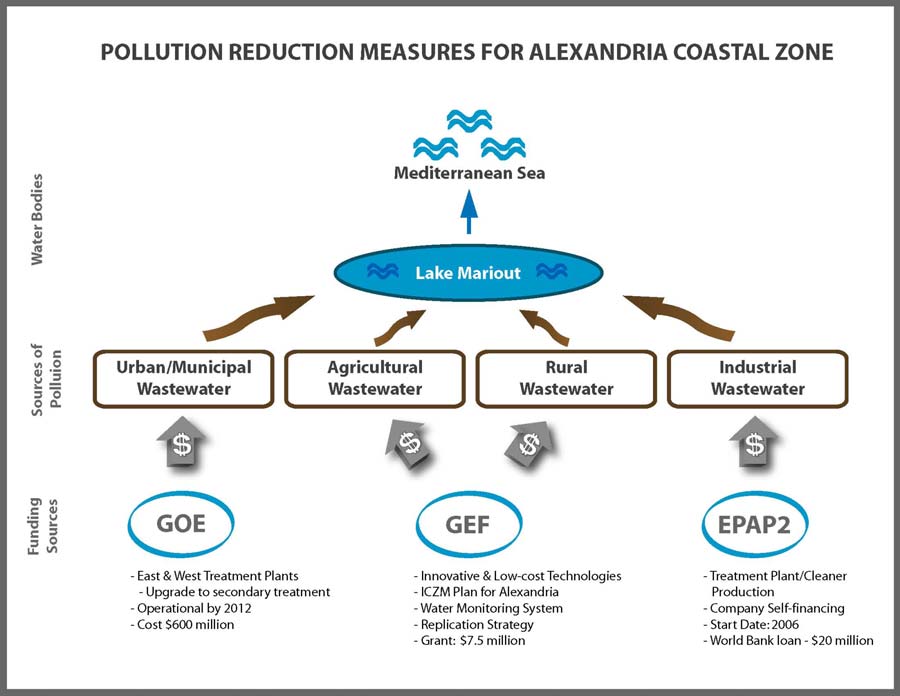
Figure 1: Complementarities of the proposed project with other on-going activities
22.
The drafting and adoption of a Master Plan on coastal zone management for Alexandria
including Lake Mariout, is directly consistent with the on-going preparation of the National
Strategy for ICZM in Egypt, under the leadership of EEAA. It is expected that the drafting of
this plan the Alexandria Coastal Zone Management (ACZM) Plan - would start soon after the
National Strategy for ICZM is in an advanced stage of preparation and a draft is available. This
would allow for the national priorities to be reflected in the ACZM Plan. In particular, the
National Committee on ICZM will ensure alignment between the ACZM Plan and the National
Strategy for ICZM. Based on consultations held for the preparation of the National Strategy for
ICZM, the following issues were considered as cornerstones: shoreline erosion and flooding;
irrational land use; water pollution; and deterioration of natural resources and habitats. To
address these issues, the ACZM Plan would include a shoreline management plan, a land use
plan; a water quality monitoring plan and a climate change/hazardous impact assessment plan.
23.
The ACZM Plan and related public consultations will also provide the decision makers
with a tool for the management of the coastal zone, including lake management. The multi-
stakeholders consultations on the ACZM Plan will be an opportunity to discuss, based on an
ecosystem approach to CZM, the other upstream measures on agricultural and rural wastewater
and their impact on water quality in the Lake Mariout and Mediterranean Sea. The consultations
7
will offer a platform to emphasize the importance of parameters and standards for the use and
release of agro-chemicals and reflect this into the ACZM Plan.
24.
The ACZM Plan will recommend that any future development projects in Alexandria are
aligned with the criteria or standards defined by the National Strategy for ICZM. In particular,
the ACZM Plan prepared by EEAA and its recommendations will be reflected into the urban
development plan for Alexandria, including Lake Mariout, under the responsibility of the
Ministry of Housing, Utilities, and Urban Development (MoHUUD). The ACZM Plan will be
monitored by EEAA jointly with the Governorate of Alexandria and the EEAA RBO in
Alexandria.
25.
Additionally, the proposed project will build on the experience gained from the
implementation of the Integrated Sanitation and Sewerage Infrastructure Project (ISSIP); a
project financed by the Bank in the fields of sewerage treatment, water quality monitoring, and
social participation. Synergies with the ISSIP as well as links with the National Organization for
Potable Water and Sanitary Drainage (NOPWASD) and the Holding Company for Water and
Wastewater (HCWW) are important as they could lead to better management of the Lake
Mariout.
C. Higher level objectives to which the project contributes
26.
The proposed project is consistent with one of the key objectives of the Government of
Egypt (GOE), which is to reconcile economic development with environmental and social
sustainability. In particular, the project complements the strategy of the Government to increase
and improve the treatment of point sources of pollution in Alexandria in particular through the
upgrading of the East Waste Water Treatment Plant and the West Waste Water Treatment Plant.
27.
Reducing the environmental pollution to Lake Mariout will lead to the reduction of
pollution load to the Mediterranean, which is an objective of the Ministry of State for
Environmental Affairs (MSEA) and also an obligation for the Government who has signed and
ratified the Convention for the Protection of the Mediterranean Sea against Pollution (the
Barcelona Convention). The project will also support the development of an integrated coastal
zone management plan for Alexandria; a concept that can be followed in the rest of coastal zones
in Egypt, most notably in the other northern lakes in Egypt.
28.
The activities under the proposed project are aligned with the International Waters Focal
Area Strategic Programs for GEF-4. In particular, originally designed in conformity with
Operational Program #2 and Operational Program #8 under GEF-3, the project is equally aligned
and being developed within the framework of the "Reducing nutrient-enrichment and oxygen
depletion from land-based pollution of coastal waters in LMEs" of the International Waters
Focal Area Strategic Program #2 of GEF-4. The project will demonstrate how a heavily
degraded lake can be rehabilitated using low cost ecological technologies and through policy and
institutional reforms as well as innovative partnerships and community participation. The project
is directly in line with the implementation of the Strategic Program #2 expected outcomes:
political commitments to nutrient and other pollution reduction and Integrated Coastal
8
Management (ICM); institutions and reforms to catalyze implementation of policies for coastal
pollution reduction and ICM; and multi-agency partnerships to catalyze innovative investments
for nutrient reduction. Specifically, the results framework of the project is aligned with the
indicators of the SP #2, i.e. national inter-ministerial committee on ICM; adoption of ICM
master plan for Alexandria and policy and institutional reforms; and monitoring of reduced
levels of nutrient releases at demonstration sites.
29.
In addition, by focusing on non-point sources of pollution, including agricultural and
rural waste water, the project is in line with the Government commitment to improve rural
sanitation in the Delta region particularly in priority drainage basins within the Governorates of
Beheira, Gharbeya and Kafr El Sheikh.
30.
Finally, the project is consistent with the eligibility criteria of the Investment Fund for the
LME as shown by Table 2 below.
9
Table 2: Consistency with the Project Eligibility Criteria of the Investment Fund
Eligibility Criteria of the Investment Fund
Elements of Consistency with the Alexandria Coastal
Zone Management Project
The project focuses on hotspots and sensitive areas and
The SAP for the Mediterranean and the TDA has
responds to priorities identified by the Mediterranean
identified El-Mex Bay in Alexandria as a hot spot of
Sea TDA and SAP BIO and SAP MED.
significant relevance in the context of the Mediterranean
Sea. Lake Mariout is one of the major sources of
conveyance of land based pollution to the El-Mex Bay
through the El-Mex pumping station.
The project responds to the priorities identified in the
The National Environmental Action Plan (2002-2017)
National Action Plan or equivalent strategic documents
identified a program on marine coastal zones
endorsed by the requesting country.
management with a series of interventions including
monitoring and pilot projects. The proposed GEF project
will support the NEAP priorities through (a) the
development of a water monitoring system integrated
with the EEAA database and (b) the implementation of a
package of small scale innovative pollution reduction
measures on a pilot basis.
The project has secured adequate co-financing for non-
The GEF contribution complements (i) the Government
incremental components.
on-going large scale infrastructure program to upgrade
the treatment capacity of municipal wastewater
treatment plants in Alexandria and (ii) the Government
program to reduce industrial pollution in Alexandria and
greater Cairo under the EPAP II.
The project adheres to the principles of the GEF
The project fully conforms to the GEF4 IW Strategic
International Waters Strategies, Operational Programs,
Objectives and Programs and has been endorsed by the
and Strategic Priorities and is formally endorsed by the
GEF Operational Focal Point.
country's GEF Focal Point(s).
The project includes piloting and testing alternative The project includes a pilot project to demonstrate how
methodologies and approaches that are innovative in the low cost technologies can reduce nutrients and pollution
country context.
from agricultural drainage water and rural waste water.
The pilot project will also improve water circulation in
the drains and in the Lake which combined with the
other measures can be replicated in rural areas in the
Delta.
The project can demonstrate on-the-ground impact and
The project will have an impact on the reduction of
includes provisions and adequate financial resources for
nitrogen, phosphorous, BOD and COD both within the
monitoring and evaluation activities, and specific
drains and in El-Mex bay. M&E is a key component of
indicators consistent with International Waters and
the project and has received adequate financial
Biodiversity frameworks.
resources. Specific stress reduction indicators have been
identified and will be monitored during project
implementation.
The project demonstrates high potential for replication
The in-stream treatments constitute potential replicable
within the country and the Mediterranean basin
experiments in northern villages in the Delta and the
small scale engineered wetland could be considered for
other coastal Lakes in Egypt and elsewhere in the
Mediterranean basin. The project will cooperate with the
UNEP Regional Component of the Partnership to
enhance awareness and replication.
10
II.
PROJECT DESCRIPTION
A. Lending instrument
31.
The lending instrument is a GEF grant in the amount of US$ 7.15 million. Financing is
being provided from the EPAP II project in the amount of US$ 19.72 million to beneficiary
industries for pollution abatement projects in Alexandria, and from the GOE in the amount of
approximately US$ 600 million to upgrade the East and West Waste Water Treatment Plants in
the city of Alexandria. The treatment capacity is expected to increase from 607,000m3/day to
800,000m3/day for the East Waste Water Treatment Plant and from 480,000m3/day to
680,000m3/day for the West Waste Water Treatment Plant. The level of treatment will increase
from primary to secondary treatment for both plants. The construction of the East WWTP started
on October 23, 2008 with a total budget of 1.485 billion EGP and is expected to be completed in
October 2011. The construction of the West WWTP which receives mostly industrial effluents is
expected to start in late 2009/early 2010, after completion of the tendering process.
B. Project development objective and key indicators
32.
The objective of the project is to improve the institutional mechanisms for sustainable
coastal zone management in Alexandria in particular to reduce land-based pollution to the
Mediterranean Sea.
33.
The proposed key outcome indicators of success are:
The ICZM plan is officially adopted and the institutional mechanisms for implementation
are successfully in operation;
The pollution load entering the Mediterranean Sea through Lake Mariout is reduced by at
least 5%.
Details of these indicators are available in Annex 3.
C. Project components
34.
The proposed project will consist of three components, to be implemented within a time
frame of five years (2010-2015).
35.
Component (1): Planning, Institutional Capacity and Monitoring Strengthening
(US$ 1.982 million). The expected outcome is an increased capacity by the various relevant
entities to manage the coastal zones in and around Alexandria in an integrated, participatory and
sustainable manner, including planning, consensus building, and monitoring. The outputs for this
component include: (i) a master plan for the management of the coastal zones of Alexandria
including Lake Mariout (the "Alexandria Coastal Zone Management (ACZM) Plan"), which will
be preceded by a legal and regulatory framework analysis; and (ii) the development of an
integrated water quality monitoring network for Lake Mariout and the Mediterranean Sea,
including a modeling activity for El-Mex bay, which can be used to estimate the overall project
impact on the Mediterranean. Synergies with the Ministry of Housing and the GOPP will be
sought as soon as the preparation of the Strategic Plan for Alexandria urban development is
11
underway. This component will include (i) the procurement of goods including water monitoring
equipment and (ii) the provision of consultancy services for the preparation of the Alexandria
CZM master plan including public consultation workshops, study tour, training workshops on
CZM and master plan dissemination.
36.
Component (2): Pollution Reduction. The expected outcome is a reduction in the land
based source of pollution entering the Lake Mariout and subsequently the Mediterranean Sea
through pilot pollution reduction measures. The outputs of this component include: (i) in-stream
treatment (set of bio-films) in the Qalaa drains, (ii) set of aerators in the Qalaa drains, (iii) a
small scale engineered in-lake wetland located at the outfall of the Qalaa drain and (iv) reed
removal in the lake to improve water circulation and self-cleaning capacity of the Lake.
Financing for this component will go to: (i) the provision of consultancy services for the
preparation of the necessary feasibility studies for the pollution reduction measures, and (ii) the
procurement of works and goods necessary for the implementation of those pollution reduction
measures.
37.
Component (3): Project Management and Monitoring and Evaluation (US$ 0.543
million). The expected outcome is the completion of a M&E system and the documentation of
the project results for the purpose of up-scaling and replication. The outputs of this component
include (i) a project monitoring system with measurable indicators which are consistent with the
Investment Fund for the Mediterranean Sea Large Marine Ecosystem; and complying with the
GEF International Waters Tracking Tool; and (ii) the documentation of project's progress and
results, dissemination of lessons learned from the project and adoption of a replication strategy in
conformity with GEF IW: LEARN. Following the environmental disclosure example being
piloted in EPAP II, it is expected that data on water quality will be progressively available to the
public once improvements are recorded. Financing for this component will go towards the
provision of consultancy services for developing an M&E system.
D. Lessons learned and reflected in the project design
38.
An important lesson learned from implementing the EPAP I (completed) and the ongoing
EPAP II projects is that any investment needs to be accompanied by a significant institutional
strengthening and capacity building component and public consultations to ensure success. This
is reflected in the project design in terms of the activities included in component 1 of the
proposed project such as public consultations, training on coastal zone management practices,
study tour, and M&E system.
39.
Furthermore, the monitoring and evaluation (M&E) system constitutes one of the major
features to be developed in order to monitor the project progress and ensures any needed
correction in the project along its implementation progress. In that respect, a M&E Specialist will
be contracted under the project funds to collect feedback from the beneficiaries during the entire
project implementation and to build the M&E capacity of the EEAA PMU.
12
40.
The experience gained with the Lake Manzala UNDP-GEF project that demonstrated the
viability of engineered wetlands and related innovative low cost water treatment methods in
Egypt under conditions very similar to those of Lake Mariout was also considered. Therefore,
clear arrangements have been made with the relevant implementing agencies for the operation
and maintenance costs of the pollution reduction interventions in the case of Lake Mariout after
project completion. These arrangements are key to ensure long-term sustainability after the
project ends. Detailed inter-agency agreements have been prepared and signed between EEAA
and other Ministries (MWRI and MALR on October 26, 2009 and November 2, 2009,
respectively) including hand over of the project infrastructure. In addition, drawing from the
experience of Lake Manzala, a Communications Specialist will be contracted from the start
under the technical assistance of the project to raise awareness about the project objectives and
develop a consultation strategy with all stakeholders.
41.
Finally, the project draws on the experience from the Alexandria Development Project
(ADP) in terms of the significance of securing the support and ownership from key stakeholders
in the early stages of project preparation.
E. Alternatives considered and reasons for rejection
42.
The "no project" option. The "no project" option meant failing to recognize that there is
an urgent need to support the GOE in its effort to improve its coastal zone management. A "no
project" approach would have meant a continued fragmented approach to coastal zone
management in and around Alexandria area, little consideration for biodiversity conservation and
ecosystem issues, limited investments specifically targeting more diffuse upstream agricultural
drainage water and rural domestic wastewater, reduced capacity to monitor water quality in and
around Alexandria on a regular basis, limited participation of local communities and relevant
stakeholders and foregoing the skills and information to replicate the piloted technology at a
larger scale. This alternative was therefore rejected.
43.
Treating only point source (industrial) pollution. One of the technical options for the
pollution reduction measures involved building a centralized industrial wastewater treatment
plant for a group of tanneries that pollute El Mex Bay. This alternative was discounted because it
would provide a disincentive both for the group of tanneries to pay for the pollution they are
ultimately causing and disincentive for other firms that improve their environmental performance
through self financing, or through borrowing from the EPAP II project.
44.
Reusing wastewater for landscaping. The option of diverting part of the primary
wastewater from the West Treatment Plant currently being discharged to the basin, through
reusing the water for landscaping, has also been considered. Although this would significantly
reduce the load of urban domestic waste pollution that enters the Lake, it will not address the
removal of nutrients, essentially originating from agricultural drainage water as well as rural
wastewater. In addition, the costs involved with such an operation would be excessive and with
questionable financial sustainability.
45.
Selecting only one pollution reduction intervention. Initial pre-feasibility studies have
focused solely on designing an engineered wetland at the outfall of the El-Qalaa drain. However,
given the nature of the GEF funds which are intended for innovative, catalytic and pilot
13
activities, additional research and analysis have demonstrated the value of adopting a package of
mutually supportive interventions with a greater impact on the water quality in El-Mex bay.
III.
IMPLEMENTATION
A. Partnership arrangements
46.
The project will be implemented as part of the GEF-World Bank-UNEP Strategic
Partnership for the Mediterranean Sea Large Marine Ecosystem (LME), which will support
capital investments, economic instruments, implementation of policy reforms, and strengthening
of public institutions and public participation. This Partnership will be accomplished through two
complimentary components: the Regional Technical Assistance project or Regional Component,
implemented by UNEP and executed by the Mediterranean Action Plan (MAP), its regional
centers, and various partners (FAO, GWP, UNESCO, UNIDO, WWF), and the investment Fund
managed by the World Bank. The project will cooperate with the UNEP Regional Component of
the Partnership to enhance awareness and replication, given that the Director of the CZM
Department in EEAA is the focal point for the MAP Priority Actions Programme/Regional
Activity Centre (PAP/RAC) in Egypt.
47.
Several donors are active in supporting environmental projects in Egypt. In fact, EPAP II
project, with which this proposed project is partially blended, is a multi-donor project with
contribution from the European Investment Bank (EIB), the Japan Bank for International
Cooperation (JBIC, currently JICA), the French Agency for Development (AFD), with technical
assistance provided, in part, by the Government of Finland. The Bank's team is in constant
contact with the donors active in the sector to ensure that there is a common understanding and
agreement as to the measures that are needed to improve the coordination related to coastal zone
management. In addition, the Bank has established a close relationship with the Center for
Environment and Development for the Arab Region and Europe (CEDARE) as the project builds
on the Alexandria Lake Mariout Integrated Management project (ALAMIM) funded under the
EU SMAP III (Short and Medium term priority environmental Action Program). The ALAMIM
project is implemented by CEDARE and aims to promote the integrated development of the
Lake Mariout and its activities.
B. Institutional and implementation arrangements
48.
The EEAA is the agency responsible for overall project implementation. Together with
the Governorate of Alexandria, the EEAA will also lead the coordination work with other
implementing agencies, including the MWRI and the MALR. Even though the EEAA would not
necessarily be able to enforce implementation of the ICZM plan, its coordinating role given by
Law, along with the participatory and consultative process for the development of the ICZM plan
should combine to ensure the successful implementation. The institutional arrangements have
been designed to ensure a multi-sector and participatory approach to sustainable Coastal Zone
Management and to build on the technical expertise and comparative advantage of the different
agencies. Synergies and cross-fertilization with the EPAP II PMU staff at EEAA will be ensured.
49.
A number of steps have been included in project design to address potential conflicts
from project interventions. These measures include the participation of the Lake Mariout
14
Development Committee and a representative of civil society organizations in the Project
Steering Committee and the assignment of a social specialist and an environmental specialist in
the EEAA PMU to review and monitor the social/participatory, and environmental aspects,
respectively. The management (and assets) of the investment component will be transferred from
the EEAA to the relevant agency/ministry after project completion to ensure long-term
sustainability. To that effect, an inter-agency agreement was prepared and signed between EEAA
and MWRI and GAFRD on October 26, 2009 and November 2, 2009, respectively, as a
condition for negotiations (a copy of the inter-agency agreement with each Ministry is attached
in annex 6b and 6c).
The proposed implementation arrangements are as follows:
50.
A Project Management Unit (PMU) for the proposed project will be put in place. In
order to build on the significant expertise gained in EEAA from the implementation of the EPAP
I and EPAP II, the Director of the PMU for EPAP II in EEAA will serve as the PMU Director
for the proposed project. However, given that the EPAP II is still under implementation, the
PMU will be reinforced by hiring three new staff: (i) a technical specialist: (ii) a financial
management officer; and (iii) a procurement specialist. This will ensure that the GEF project
PMU can continue to oversee the project implementation, even after the EPAP II closing date in
2012. In order to draw on the experience accumulated by EEAA in the area of sustainable coastal
zones management, the technical aspects of the project will fall under the responsibility of the
General Department for Coastal Zone Management in EEAA who will have to work in close
tandem with the PMU Director and staff.. The on-going participation of EEAA's General
Department for CZM in the preparation of the National Strategy for ICZM will facilitate the
development of the Alexandria master plan and ensure coherence with the national priorities.
The technical staff in the PMU will also include staff from the Alexandria EEAA RBO who will
have a significant role in overseeing the monitoring of the water quality in the El-Mex bay as
well as progress related to the project interventions. In order to reflect the interests of all
stakeholders in the proposed interventions, the PMU will contract and pay out of the project
funds (i) a Social specialist, (ii) a M&E specialist and (iii) a Communication specialist on a part-
time or task basis. The PMU will have the overall technical and fiduciary responsibility of the
project. The PMU will be responsible for the preparation of tender documents, receiving and
evaluating bids, managing contracts, supervising works and consultants, and prepare progress
reports.
51.
Project Working Groups (PWG) will be formed in each implementing agencies (MWRI
and MALR). The PMU will work with a relevant agency to coordinate the implementation of the
project's interventions, the MWRI for the in-stream biofilm and in-stream aerators, and the
Ministry of Agriculture and Land Reclamation for in-lake wetland and reed removal (Component
2 of the project). These working groups will include technical specialists from the relevant
Ministries in order to ensure ownership during project implementation and sustainability of the
interventions upon project completion. The role of the PWG is not only managerial but also
technical. The implementing agencies will ultimately be responsible for the preparation of the
technical specifications of the bidding documentation together with the PMU procurement
specialist as well as the evaluation, contracting, construction supervision and reporting tasks. A
total of three technical specialists from each implementing agency will be financed and
appointed by the relevant Ministries.
15
52.
The management of the investment infrastructure will be transferred from EEAA to the
relevant agency/ministry after project completion. Close coordination with the Governorate of
Alexandria is essential as the Governorate will facilitate the provision of information and data
related to the fulfillment of the project outputs and provide feedback on the annual work plans
and progress reports. Annex 6 of the PAD provides a detailed description of the responsibilities
of each PMU members.
53.
A Project Steering Committee (PSC) will be established to provide oversight and
direction to the project including the Annual Work Plans. The PSC will include representatives
of all agencies involved in implementation directly or which have a legal stake in project
outcomes or implementation including EEAA; the Governorate of Alexandria; the MWRI; the
MALR; a member of the Lake Mariout Development Committee which represents the interest of
the fishermen community and a representative of civil society organizations. The PMU Director,
the representative of the Alexandria RBO and the PMU CZM Technical Manager will represent
EEAA in the PSC. The Committee will be chaired by the CEO of EEAA. The PSC will meet
quarterly to review progress and propose any remedial actions if necessary. Annex 6 provides in
greater details the responsibilities of each PSC members.
54.
The National Committee for Integrated Coastal Zone Management will provide
scientific advice and inputs into the preparation of the Alexandria Coastal Zone Management
Plan serving as a scientific and advisory body in particular for Component (1) during the
preparation stage. The Committee will approve and adopt the final version of the Alexandria
ICZM Plan upon receipt of a draft by the PSC. The Committee may also provide scientific and
advisory inputs on any aspects of the project components if requested by the PSC. Before the end
of the project, a small sub-set of action items proposed by the plan would have been put in place.
These action items would indicate that the stakeholders, with the support of the National
Committee, have put in place the necessary mechanisms to implement plan activities once
adopted, including budget allocation, enforcement procedures, human resources requirements
and monitoring and evaluation functions. The Plan would clarify and assign institutional
responsibilities to implement a set of immediate, short, medium and long-term measures for
sustainable CZM. The coordinating role of EEAA along with the participatory and consultative
process for the development of the CZM plan for Alexandria would support the successful
implementation of the plan.
55.
The roles and responsibility of each agency is detailed in the Inter-Agency Agreement
between the EEAA and the relevant agencies already prepared and signed (on October 26 and
November 2 with MWRI and GAFRD, respectively), and in the Operations Manual, which will
be developed within three months of project effectiveness. For more details on the institutional
structure, see annex 6.
C. Monitoring and evaluation of outcomes/results
56.
Performance indicators to track the performance and outcome of the project have been
identified and agreed with EEAA as part of project appraisal. To the extent possible, baseline
16
and benchmark indicators have also been determined. Performance indicators are detailed in
Annex 3.
57.
Social development issues will be included in the proposed M&E framework. M&E
variables will largely be environmental, but key social issues will also be highlighted as the
project is scaled up. Brief household surveys will be carried out at regular intervals in an effort to
measure any changes in public/community perceptions of the project, and a few selected
variables could be monitored over time, e.g. changes in the quantity and quality of the fish,
market price, income generation, standard of living, attitudes towards the project etc. The
preparation of a stakeholder M&E framework and consultation plan will specifically include
local stakeholders.
58.
Progress against the performance indicators will be conveyed as part of the regular
reporting undertaken by the PMU. The PMU will submit quarterly and annual progress reports
detailing project implementation and progress against indicators. Semiannual interim financial
reports and annual project financial statements will address financial management issues. Given
expected effectiveness by February 2010, a mid-term review will be scheduled for July 2012. An
Implementation Completion and Results (ICR) Report will be prepared by the Bank within six
months of project closing, and will include a final evaluation by EEAA.
D. Sustainability and Replicability
Sustainability
59.
The GEF project clearly fits within the continuing efforts of the Government of Egypt
(GoE) to implement an integrated approach to coastal zone management, in particular the on-
going preparation of a national strategy for CZM. The project is also a critical component of a
series of complementary interventions supported by the GoE, the Bank and other donors to
reduce pollution loads entering Lake Mariout, such as the EPAP II and the upgrade of the
Eastern and Western municipal treatment plants. Thus the project places itself within a larger
initiative to which the Government is committed and for which it receives donor support, and
will build on the existing structures, investments and linkages established by other projects.
60.
Institutional complexities and lack of coordination among various entities on issues
related to CZM were highlighted as a major challenge in Egypt. However, the institutional
arrangements and role of the different stakeholders in coastal zone management including Lake
Mariout will be discussed and specified in the Alexandria Coastal Zone Management plan,
laying the foundation for longer term institutional sustainability. In addition, the project
interventions will be discussed among a wide range of stakeholders during the preparation of the
feasibility studies.
61.
Project sustainability will be enhanced by introducing technologies with low operations
and maintenance costs such as the in-stream bio-films. It has been tested and used in Egypt once
and proved successful. The Project would also pilot the production and sale of duckweeds as part
17
of the in-lake wetland whereby the revenues of the sale would cover a portion of the O&M costs
of the interventions. The Project also makes provisions for strengthening the capacity of the local
implementing institutions and central administration to ensure that they acquire the needed
managerial and technical skills to implement the project. In addition, detailed inter-agency
agreements have been signed between EEAA and other Ministries (MWRI and MALR on
October 26, 2009 and November 2, 2009, respectively) including hand over of the investments
infrastructure and O&M responsibilities after project completion.
62.
The M&E system, which will have a public disclosure function, will provide information
on water quality improvement. It will also provide an incentive for the relevant agencies (MWRI
in particular) to reduce the use of certain types of pollutants such as agro-chemicals and thereby
enhance the accountability of government institutions.
63.
In addition to the national-level workshops which will be organized to maximize
participation in the project design, the project includes training components for relevant national
and local government officials, such as workshops on coastal zone management, a study tour and
participation in the GEF's International Waters Learning Exchange and Resource Network (IW
LEARN) programs. The selection of the country for the study tour will be based on an analysis
of the most relevant experience on coastal zone management practices drawn from the GEF IW-
LEARN program.
Replicability
64.
The following actions should help in replicating the project's actions and results: i) an
M&E system will be put in place to properly assess project results and to document and
disseminate lessons learned from the project, including through the EEAA website and
brochures; ii) opportunities for up-scaling and replicability in other coastal areas will also be
explored and discussed with various stakeholders during public consultations and; iii) the project
will collaborate with the UNEP-led Regional Component of the Mediterranean Strategic
Partnership which includes a sub-component for facilitating replication of practices.
E. Critical risks and possible controversial aspects
65.
The analysis of the critical risks concurrent to the projects are summarized in the
following matrix:
18
Critical risks matrix:
Risk Rating with
Risks
Risk Mitigation Measures
Mitigation
Achievement of Project Development Objective
Conflicting objectives of the
Component (1) will include extensive
S
various stakeholders may render
consultation process, institutional
the Coastal Zone Management Plan strengthening, capacity building, and a
for Alexandria ineffective
study tour. This should bring the various
players closer together and build
consensus.
Achievement of Component Results
Uncertainty of the proposed
A "package" of pollution reduction
M
pollution reduction measures
measures is proposed, which should reduce
and/or actual conditions may result the risk of underperformance if a single
in lower efficiency of the piloted
measure was proposed. The pollution
interventions
reduction measures were selected
according to a multi-criteria process (i.e.
that they should be low cost, modular and
simple to use). Furthermore, a full
feasibility study and detailed design will be
carried out prior to implementing the
investment component.
Limited demand for industrial
The implementation set-up makes use of
M
waste water projects in Alexandria
the existing EPAP II PMU, which will set
to be financed through EPAP II
during project's implementation, as one of
its priorities, the promotion of industrial
waste water projects in Alexandria to
reduce industrial effluents in the area of
influence of the project.
Implementation is delayed or
Inter-agency agreements have been
M
complicated by the multitude of
developed and signed between EEAA and
active players.
MWRI and between EEAA and MALR
clearly detailing roles and responsibilities
for implementation and hand-over
arrangements of the infrastructure upon
project completion.
Project Management Unit fails to
The existing PMU is familiar with the
N
carry out the various tasks required project tasks and with the Bank procedures.
by the project
The hiring of three additional staff to the
existing EPAP II PMU will further ensure a
strong and capable implementation unit.
Overall Risk Rating
Modest
H: High; S: Substantial; M: Modest; N: Negligible
19
F. Loan/credit conditions and covenants
66.
Dated Covenants
- The PMU has been established and is fully staffed and operational within one month of
Project effectiveness
- The Project working groups in MWRI and MALR have been established within one
month of Project effectiveness
- The Interagency Agreements (with MWRI and MALR) will be in effect and complied
with throughout Project implementation.
- The OM Manual including FM and procurement arrangements has been approved and
adopted by EEAA within one month of Project effectiveness
67.
Implementation Covenants
- The Recipient shall ensure that EEAA at all times maintains the PMU.
- The Recipient shall at all times carry out the Project in accordance with the Project
operations manual and the environmental and social management plan.
- The Recipient, shall carry out jointly with the Bank, no later than October 31, 2012, a
mid-term review of the progress made in carrying out the Project. The Mid-term Review
shall cover, amongst other things: (a) progress made in meeting the Project's objectives;
and, (b) overall Project performance against Project performance indicators.
"Non-standard" financial covenants
- Financial covenants include that EEAA will engage a financial officer to supervise
Project accounts and reports and engage an external auditor for Project purposes.
IV.
APPRAISAL SUMMARY
A. Economic and financial analyses
68.
Preliminary estimates indicate that the GEF interventions will annually remove about 168
tons of nitrogen and 50 tons of phosphorous from Lake Mariout (close to Qalaa drain) and about
12,300-24,600 tons of COD load at El Mex bay. A pre-feasibility analysis suggests that these
interventions will provide also a significant BOD reduction, however the magnitude of this
impact could not be quantified.
69.
Economic analysis. The GEF-financed interventions will provide several global benefits,
such as reducing trans-boundary pollution from Lake Mariout to Mediterranean Sea, and
improving the lake's biodiversity. It will also provide local benefits in terms of potential sales of
duckweeds, improved air quality and potential increase in fish production. The lack of estimates
concerning the global benefits and the partial estimates of local benefits (i.e. US$441,000 per
year as potential sales of duckweeds) do not allow undertaking a cost-benefit analysis of the GEF
interventions or calculating the economic internal rate of return. A cost-effectiveness analysis of
20
the intervention resulting in pollutant reduction (in lake wetland) was undertaken, by comparing
its cost per unit of pollutant reduction with that estimated for a GEF-financed Nutrient Reduction
Project in Hungary (World Bank, 2006). The in lake pilot wetland appears cost-effective, with
the financial cost per unit of nutrient reduction (US$150-300/t) close to the cheapest intervention
of the other project (US$241/t) (see Annex 9, Table 2 for more details).
70.
Financial analysis. Because the interventions mainly result in environmental benefits, the
financial rate of return is not the main consideration in undertaking the investment. Instead, it is
important to discuss the financial viability of the GEF-financed interventions, to ensure that they
continue operating beyond the end of the project. GEF covers only the investment cost of these
interventions (US$4.5 million). The revenues from sales of duckweeds (pending confirmation in
the final design and feasibility study) will be used to recover some of the costs, thus lessening the
reliance on external institutions for sustaining the costs of these interventions beyond the end of
the project.
B. Technical
71.
Integrated Coastal Zone Management has been recognized as an efficient and sustainable
approach to managing eco-systems and water resources and is applied in the project. The project
will use a two-pronged approach to sustainable CZM. On the one hand, the project will support
ICZM by bringing various stakeholders together in the preparation and adoption of an integrated
coastal zone management plan for Alexandria. On the other, the project will complement
conventional municipal and industrial wastewater treatment interventions with a package of low
cost and pilot treatment of pollution load coming from upper parts of the water catchment,
including agricultural drainage water. This package includes (i) in-stream treatment (set of bio-
films) in the Qalaa drains, (ii) set of aerators in the Qalaa drains, (iii) a small scale engineered in-
lake wetland located at the outfall of the Qalaa drain and (iv) reed removal in the lake to improve
water circulation and self-cleaning capacity of the Lake.
72.
The project design includes the following technical elements:
A package of pilot interventions. To treat the more diffuse land-based sources of pollution
entering Lake Mariout, the project proposes to implement a set of pollution reduction measures,
which either individually or presented as a package have not been used on a wide scale in Egypt
and are therefore considered as pilots. Drain aeration, as such, has not been implemented before
in Egypt. In-stream biofilm was only applied once before in Egypt on the Muheit and Rahawy
drains, but on a small scale. Reed removal combined with an in-lake wetland has not been
implemented previously, although the wetland was built in the case of the Lake Manzala. In
addition, these pollution reduction measures were also selected according to a multi-criteria
analysis process. One of these criteria was that they should be low cost, modular, and simple; all
are pre-requisites for a successful upscaling/replication. Indeed, the use of in-stream treatment
(i.e. bio-films), introduces a dynamic, mobile and easily manageable technique mechanism.
73.
The specific location of the replication/up-scaling cannot be known at this stage,
however, it is expected that the replication would take place on similar settings of polluted drains
21
leading to northern lakes such as Edku, Burulus and Bardaweel. Similar to the analysis
undertaken during the pre-feasibility study conducted during preparation of this project, the
replication/scaling-up of pollution reduction interventions in comparable settings would need to
evaluate the various pollution reduction solutions on a case-by-case basis in order to identify the
optimum case-specific solution(s) or package thereof. Such analyses would be based on a set of
multi-criteria indicators including pollution reduction effectiveness, ease of implementation, cost
of investment, financial sustainability (O&M cost and potential for cost recovery), institutional
clarity, and any other relevant indicators identified. The analyses must then also consider the
potential for packaging of more than one pollution reduction measure into a single, integrated
package. In such situations however and in addition to investigating the technical feasibility of a
"packaged" solution, budget constraints will need to be closely considered at the planning phase
in order to efficiently achieve the desired pollution reduction targets in an economic manner.
74.
During project preparation, a pre-feasibility analysis of the pollution reduction measures
was conducted and found that the implementation of a number of small interventions (in stream
bio-films and in-stream aeration, pilot in-lake wetland, reed removal) would be mutually
supportive. The idea of a package of interventions has been retained as up-stream in-drain
treatment would improve the performance of the wetland while retain its potential for cost
recovery. Based on previous experience with Lake Manzala, engineered wetlands have
demonstrated satisfactory removal rate of key pollutants (61.2% for BOD, 80% for TSS, 15.2%
for Total Phosphorous, 51.4% for Total Nitrogen, 99.7% for Total Coliform, according to the
UNDP Final Evaluation Report of Lake Manzala, October 2007, EGY/93/G31). Feasibility
studies and detailed design will be done in the course of Project implementation, following
detailed field surveys and investigations, for which provisions have been made under the Project.
75.
A Water Monitoring Network. In order to capture data on water quality from each
relevant project interventions, a comprehensive and continuous monitoring network will be put
in place and samples will be strategically taken along the project interventions. This
comprehensive monitoring network funded under Component 1 of the project would allow to
monitor the synergetic effect of the in-stream treatment on the water quality and the impact for
the wetland which will be located further downstream. Adjustment to the design of the
engineered wetland could thus be made if necessary. Although the proposed package of
interventions are mutually supportive, phasing the interventions is crucial so that the large fixed
investment involved in the in-lake wetland would be based on actual, rather than expected,
influent characteristics to which it is sensitive. In addition, the water quality monitoring
equipment should also collect and analyze data about the suitability of fish for human
consumption before and during the project and not monitor only the production side of fishing in
the Lake.
76.
Water Quality and Hydraulic Modeling. In order to address existing data gaps, the project
will support the development of water quality modeling studies and applications to determine the
hydrodynamics, water quality of the Lake and the surrounding water bodies (channel, pumping,
gate, open sea). The models and scenarios, including climate change aspects, would assist in
detecting water quality deterioration and seasonal variation. The water modeling will provide a
more accurate picture as to the impact resulting from all the interventions, including from the
22
proposed project, on the water quality of the Mediterranean Sea. These models would also serve
as a planning tool for the identification of priority activities and as a means to measure the lake
response to any restoration measures.
C. Fiduciary
Financial Management
77.
The Ministry of State for Environmental Affairs (MSEA), through the EEAA, will carry
out the technical, environmental management and monitoring requirements of the proposed
project. Also the EEAA will be responsible for the project Financial Management (FM)
including the accounting, reporting and the project external audit arrangements. The GEF grant
will be disbursed as a parallel financing to other activities implemented in the area and financed
by other donors. Also the grant will be disbursed as an extra budgetary fund thus it will not be
part of the government budget as approved by parliament.
78.
Activities on the lake Mariout can only be implemented by the fishery department which
is under the Ministry of Agriculture, while the monitoring equipments to be installed at the lake
sites will be operated by the Ministry of Water Resources and Irrigation. Having various
ministries involved in the project implementation and with the EEAA responsible for the project
FM and disbursement arrangements creates risks related to flow of information and
communication between the various entities. For this purpose the EEAA has signed interagency
agreements in the last quarter of 2009 with each of the two ministries, defining the responsibility
of each as well as the payment procedures.
79.
The project over all FM risk was assessed as moderate mainly due to: (i) The EEAA has
previous experience with Bank financed projects as they are the entity following on the EPAP II
project, (ii) Already the project manager has been assigned to the envisaged project PMU that is
under establishment and the EEAA is fully committed to engaging a financial officer to the PMU
within a maximum period of one month from project effectiveness and (iii) A manual of
procedures will be developed by the EEAA defining the controls2 ( Grant is extra budgetary
fund) and the flow of information including the auditing arrangements between the various
implementers under the project.
80.
Though the Project will follow the government applied controls set in the local laws and
applied by the EEAA, there will be supplementary controls in place for monitoring Project
activities through the PMU where additional verification of the invoices will take place, bank
accounts will be reconciled and periodical financial reports will be prepared and generated.
81.
To ensure that funds are readily available for Project implementation, a US Dollars
Designated Accounts (DAs) will be opened and will be operated by the EEAA. The US
Designated Accounts (DA) will be opened at the Central Bank of Egypt or any other commercial
2 As the project will be implemented as an extra budgetary fund, there will be in place additional controls will be
introduced and applied by the EEAA.
23
Bank acceptable to the World Bank and in accordance with the Government of Egypt
regulations.. An independent external auditor will be hired to audit on annual basis the Project
financial statements and payments made on SOE basis (FM arrangements are detailed in Annex
7).
Procurement
82.
Procurement of all contracts financed by the GEF Grant would be carried out under the
"Guidelines: Procurement under IBRD Loans and IDA Credits" dated May 2004 and revised in
October 2006, and the selection of consultants would be carried out under the "Guidelines:
Selection and Employment of Consultants by World Bank Borrowers" dated in May 2004 and
revised in October 2006. The World Bank Guidelines on Preventing and Combating Fraud and
Corruption in Projects Financed by IBRD Loans and IDA Credits and Grants dated October 15,
2006 would apply. Procurement under the grant will be done using the Bank's Standard Bidding
Documents (SBD) for all ICB as well the minimum NCB provisions for Egypt to be set out in a
side letter at Negotiations. Since a number of consultancies are involved, there may need to be a
waiver usually provided by Government of Egypt if the funds involved pertain to grants alone
similar to this GEF Grant.
83.
An assessment of the capacity of the Implementing Agency to implement procurement
actions for the project was carried out by the Bank in September 2008 and updated in May 2009.
The assessment has reviewed the organizational structure for implementing the project and the
interaction between the project's staff responsible for procurement and the relevant unit for
administration and finance. Annex 8 explains the outcome of the assessment and identifies the
risks associated with the implementation of procurement activities. The procurement
arrangements for the proposed GEF Grant financed operation address these identified risks and
weaknesses. To reinforce implementation capacity the ongoing PMU for EPAP II in the EEAA
supplemented by TA financed by the EU would be in overall charge of contract packages to be
financed by the proposed grant in accordance with Bank guidelines.
D. Social
84.
With regard to social development impacts, the various pollution abatement sub-projects
are expected to have largely positive impacts. In fact the proposed project represents a good
example of how improved environmental management may contribute directly to better
environmental health and livelihood sustainability for the fishery community which represents
the poorest sections of the population around Lake Mariout. Environmental degradation of the
lake combined with air pollution from the nearby industry has clearly had negative health and
livelihood impacts on this community. The reduction of pollution of both air and water is
therefore a critical local concern. Related to water pollution, the increasing problem associated
with aquatic reed which currently covers about 60% of the lake has also been identified as a
key obstacle to livelihood security. The aim of the proposed project together with other ongoing
and planned efforts to reduce the pollution of the lake is thus a key priority of the poorest and
most vulnerable sections of the population. The poor in general living next to the polluting
24
industries are, more than any other group, exposed to pollution and associated health problems
on a daily basis, and the fishermen in particular are dependent upon a cleaner lake for livelihood
sustainability.
85.
During the past three decades a number of studies have called attention to the need to
reduce the pollution of the lake and to stop reclamation of land by illegally filling in the lake. As
a result the size of Lake Mariout has been reduced considerably during the past few decades, by
more than two-thirds since 1950, from an estimated 50 000 acres to the current 15 000 acres. The
annual fish catch has seen a similar decline and has reportedly been reduced by some 75-80%.
Unless land reclamation is stopped, the survival of the lake is highly uncertain. Efforts to clean
up Lake Mariout are strongly supported by the fishermen, Local Councils and an actively
engaged civil society in Alexandria. In spite of these changes, fishing is still one of the major
activities in the Mariout area. There are presently about 2,700 licensed fishing boats which are
owned and employed by about 8,000 fishermen representing an estimated community of about
40,000. Estimates of the current fish catch vary, but most sources indicate an annual catch of
somewhere around 6,000 tons.
86.
As a result of the diversity of activities in and around Lake Mariout one finds a wide
variety of opinions regarding the future of the lake, and a number of different stakeholders (at
central, governorate and local levels) would like to be heard in the discussion on developing a
future vision and strategy for the Mariout area. This includes almost a dozen central ministries,
the governorate, the private sector as well as civil society and the fishermen's cooperative
association. A recent stakeholder analysis (2007) carried out by CEDARE indicates that some
entities, e.g. the private sector, focus on the need for further land development while others insist
on preserving the remaining lake and stopping all further land reclamation. The latter position is
most strongly supported by fishery interests at both central and local levels, as well as entities
representing local community/fishermen in Alexandria, but these are not necessarily the most
influential with regard to initiatives at the local level. Efforts to clean up Lake Mariout are
strongly supported by the fishermen, Local Councils and civil society in Alexandria, particularly
Friends of the Environment (FoE) an influential local NGO established by a former Attorney
General.
87.
Establishing a Conflict Resolution Mechanism (CRM): In view of the diversity of
stakeholders and the many opinions regarding the future of Lake Mariout, the need to establish a
mechanism to deal with any potential conflicts remains critical. A suitably strengthened Coastal
Zone Management (CZM) Committee which would include fishermen and civil society
representation will be proposed as an appropriate conflict resolution mechanism. More
specifically, this committee would also function as a grievance redress mechanism for any
potential conflicts arising during project implementation. The Law No. 4 (as amended by Law
9/2009) refer to a Governorate level (i.e. Alexandria) CZM Committee which could assume this
function. A Social Specialist will be hired on a part-time basis by EEAA to ensure that social
issues are given adequate attention.
88.
Non-Triggering of OP 4.12: None of the project components warrant the triggering of the
Bank's Operational Policy on Involuntary Resettlement. This is explained in the following. For
25
Component (1), the development of the Integrated Coastal Zone Management Plan is an output,
whereas the implementation of the plan itself is beyond the scope/duration of the project.
Notwithstanding the above, the project does include a set of checks and balances to ensure that
social impacts, especially on marginalized groups, from the plan implementation is minimized,
through the following:
(i) The National Committee on Coastal Zone Management, which provides the ultimate
oversight on coastal zone management issues in Egypt, including the endorsement of the
development of the Integrated Coastal Zone Management Plan, includes representatives
from nongovernmental organizations
(ii) The Project Steering Committee includes a representative from the Lake Mariout
Development Committee, which represents the interests of the local communities, in
particular the fishermen community during project implementation; as well as
representatives from the civil society.
(iii) Financing for the project's first component will include "public consultation
workshops and master plan dissemination", which will ensure that the views and interests
of the civil society agencies are well represented.
89.
Furthermore, the impacts of Component (2) in terms of involuntary resettlement (whether
land acquisition or loss of livelihood) is nonexistent because of the following reasons:
(i) The investment activities included will not involve any land take whatsoever, during
the construction or operation phases.
(ii) The small engineered wetland (about 20-30 feddans corresponding to 8.4-12.6 ha), to
be implemented in Lake Mariout will be constructed at the effluent point of Qalaa Drain
to the main basin of Lake Mariout. This area is not used by the fishermen, since it is the
most heavily polluted part of the Lake. This was confirmed by the team during
discussions with the fishermen syndicate and fishermen association, and the Lake
Mariout Management Committee, during the last mission in May 2009. The same finding
was ascertained through the prepared Environmental and Social Impact Assessment
Report (ESIA) and also during its public consultation which took place on September
30th in Alexandria. Therefore, there will be no limitation of access to amenities or
disruption of livelihoods as a result of the in-Lake wetland.
(iii) The drains are not a source of revenue and none of the pollution reduction activities
on the drain would result in any land take nor would interfere with any of the economic
activities of the residents.
90.
Notwithstanding the above, the project implementation will build on the extensive
consultations which already took place during project preparation and make sure that the
planning process for the Alexandria Coastal Zone Management (ACZM) Plan is informed by and
responds to a clear understanding of the potential social implications and risks of planning
proposals through the continuation of the participatory process. Furthermore, the process of
development of the coastal zone management plan will include a legal and regulatory framework
analysis in order to obtain a clear understanding of the legal framework in place during plan
implementation. Draft terms of reference illustrating the type of analysis that could be carried out
are attached at the end of Annex 10.
26
E. Environment
91.
The Alexandria Coastal Zone Management project is expected to have important and
positive environmental impacts with an objective of contributing to a reduction in the load of
land-based sources of pollution entering the Mediterranean Sea, especially from Lake Mariout,
through the hot spots of El-Mex Bay and Alexandria. The project will develop a master plan for
the management of coastal zones of Alexandria including Lake Mariout, and through the
implementation of innovative pilot-level low-cost investments in pollution reduction.
Accordingly, it is not expected that significant negative impacts would be generated through the
implementation of the project. The project is classified as an environmental Category B
according to the World Bank's Operation Policy on Environmental Assessment (OP 4.01),
requiring partial assessment.
92.
The project has identified a selection of pilot interventions including: (i) in-stream
treatment (set of bio-films) in the Qalaa drains (ii) set of aerators in the Qalaa drains, (iii) a
small-scale engineered in-lake wetland located at the outfall of the Qalaa drain; and (iv) reed
removal in the Lake to improve water circulation and self-cleaning capacity of the Lake. An
Environmental and Social Impact Assessment (ESIA) report was prepared for the project by an
independent third party consultant, according to Terms of Reference approved by the Bank. The
ESIA includes an assessment of potential impacts of the proposed project (mainly resulting from
interventions under Component 2) and the likely significance of such impacts and recommended
mitigation measures. The ESIA also includes an environmental and social management plan
(ESMP) relevant to these interventions, which will be used as a guide for the preparation of site-
specific ESMPs that will be a part of the contractor's bidding documents. The ESMP includes--
for construction and operation--potential environmental and social impacts, mitigation
measures, and institutional responsibility for implementing and monitoring the recommended
mitigation measures, capacity building and training requirements, and a cost estimate for
implementation.
Public Consultation and Disclosure of ESIA
93.
Public Consultation and Stakeholder Participation: Given the complexity of the
stakeholders' relations, several preliminary consultations took place during project preparation.
These consultations included a workshop held in Alexandria in May 2008 which was attended by
representatives from the Alexandria Governorate, EEAA, the MALR, the Alexandria Sanitary
Drainage Company, the MWRI, the University of Alexandria, CEDARE, EWATEC and the
Coastal Research Institute; a meeting with members of the National Steering Committee on
ICZM held in May 2009 during the pre-appraisal mission and discussions with representatives
from the Fisheries Syndicate and the Fisheries Association during project preparation missions.
94.
To protect the interests of affected communities, the ESIA process included consultation
and disclosure of information to key stakeholders involved in and/or affected by the project. As
per the objectives of consultation and disclosure, various stakeholders and interested parties
(civil society, governmental authorities, NGOs, academia, etc.) were consulted and informed of
27
the proposed project. They were given the opportunity to express their views and opinions
regarding the potential impacts that might affect their livelihood. The ESIA report includes a
summary of the outcome from these discussions, including key issues raised and how they will
be addressed by the project. On September 30th, 2009, the public consultation session was held in
Alexandria. Representatives of the government, Alexandria Governorate, civil society, academia
and the media participated. The main outcomes from the public consultation session
demonstrated that there is a very high level of interest in the project area, Lake Mariout, as well
as in the proposed interventions and the degree of expected improvement from the project's
activities. Participants expressed deep concern about the deteriorated environmental conditions
of Lake Mariout and the causes of these problems. Several suggestions to improve the situation
were proposed and discussed among the participants as well as EEAA team. The socio-economic
conditions of the fishermen community also gained a lot of attention from the attendants,
especially from NGO's, who urged the project to involve the fishermen community in
implementing the project activities to ensure buy-in as well finding opportunities to improve
their livelihoods through small scale projects associated with the proposed interventions.
95.
Due to the fact that there are many institutions involved in utilizing Lake Mariout in
different ways, a lot of the discussion focused on the level of contribution of each institution to
the environmental problems in the Lake and the role that each can play to improve the current
conditions. The need for coordination and cooperation between the different institutions in
managing the lake was stressed. A discussion about the environmental and social impacts of
each intervention also indicated that the positive impacts are likely to be far more important than
the negative ones since the proposed interventions aim at improving environmental conditions in
and around Lake Mariout.
96.
It is recognized that the key challenges facing this project are likely to be institutional
rather than technical, and involving all the stakeholders fully as early as possible will be critical
in addressing longer term sustainability issues. The above-mentioned Social Specialist (Section
D) will also ensure that a participatory approach to M&E is developed and will monitor the
implementation of the social mitigation measures as part of the ESMP. He/she will further be
responsible for the social reporting and will work closely with the PMU staff in preparing a
detailed plan for stakeholders' consultations.
97.
Disclosure of Environmental and Social Impact Assessment (ESIA) Report: In
accordance with World Bank disclosure policy and guidelines, the executive summary of the
ESIA was translated into Arabic and both versions were disclosed at the World Bank's Infoshop
on October 29, 2009. They were also disclosed and in-country in easily accessible places to the
public, including the website of EEAA on October 22, 2009.
Main impacts and proposed mitigation measures
98.
The ESIA presents an analysis of the potential positive and negative impacts of the
proposed project activities. It is expected that the construction and operation activities of the
interventions will have some negative impacts. Potential negative impacts during construction
could include: (i) impacts during installation of in-stream biofilm such as from the transportation
28
of materials and personnel; temporary storage of construction material on drain sides; (ii) from
dredging, impacts from use of heavy machinery; temporary storage of excavated contaminated
sediments; disposal of excavated contaminated sediments/sludge; degradation of water quality;
and disruption of aquatic ecosystems; (iii) from removal of reeds, impacts include those from use
of heavy machinery; disruption of aquatic ecosystems; temporary storage of contaminated reeds;
and disposal of contaminated reeds; and (iv) from construction of in-lake wetland, negative
impacts in the form of introduction of alien aquatic plant species. However, any potential
negative environmental impacts will be minor and temporary in nature and could be expected
during the construction phase, if the contractor does not comply at all times with the relevant
national environmental, health and safety legislations. Therefore the design of the sub-projects
will include the necessary engineering measures and operational practices to ensure proper
construction and operation. Additionally, the contractor's bidding documents will include site-
specific ESMPs.
Environmental and Social Management Plan
99.
Detailed tables summarizing the ESMP are included in Annex 10, listing environmental
and social impacts; mitigation measures; institutional responsibility for implementation and
monitoring. Within the project's context, a Project Management Unit (PMU) will be established
and staffed with the needed expertise required to manage and operate the project. An
Environmental Specialist will be assigned by the EEAA on a part-time basis to the PMU, to
address the environmental safeguards issues related to the project and oversee the
implementation of the ESMP. Specifically, the environmental specialist will monitor the
implementation of the environmental mitigation measures, monitoring plan, and
institutional/training requirements of the ESMP, and will be responsible for environmental
reporting responsibility within the PMU. Additionally, a Social Specialist will be contracted and
paid under the project funds on a part-time basis by EEAA to ensure a participatory approach to
M&E and to monitor the implementation of the social mitigation measures as part of the site-
specific ESMP and will be responsible for the social reporting within the PMU.
F. Safeguard policies
Safeguard Policies Triggered by the Project
Yes
No
Environmental Assessment (OP/BP 4.01)
[X]
[ ]
Natural Habitats (OP/BP 4.04)
[ ]
[X]
Pest Management (OP 4.09)
[ ]
[X]
Physical Cultural Resources (OP/BP 4.11) [
]
[X]
Involuntary Resettlement (OP/BP 4.12)
[ ]
[X]
Indigenous Peoples (OP/BP 4.10)
[ ]
[X]
Forests (OP/BP 4.36)
[ ]
[X]
Safety of Dams (OP/BP 4.37)
[ ]
[X]
Projects in Disputed Areas (OP/BP 7.60)*
[ ]
[X]
* By supporting the proposed project, the Bank does not intend to prejudice the final determination of the parties' claims on the
disputed areas
29
Projects on International Waterways (OP/BP 7.50)
[ ]
[X]
G. Policy Exceptions and Readiness
100. No exceptions to Bank policies are sought, and the project complies with all regional
criteria on readiness for implementation.
30
Annex 1: Country and Sector or Program Background
ARAB REPUBLIC OF EGYPT: Alexandria Coastal Zone Management Project (Under
the Investment Fund for the Mediterranean Sea Large Marine Ecosystem)
Key Macro Economic Country Conditions, Achievements and Challenges
1.
Egypt's economy is continuing its positive growth trend, with a GDP growth of 7.7% in
the first half of FY06/07.3 The growth is the result of the Government's efforts started in 2004 to
stimulate foreign and domestic investment. This effort resulted in an increase in FDI to US$3.9
billion in 2004/05, US$11.1 billion in FY05/06 and has reached US$7.8 billion in the first half of
2007/08. 4 Large-scale development and export of its natural gas resources, including
construction of liquefied natural gas (LNG) facilities as well as high international oil prices, have
contributed significantly to economic growth in Egypt.
2.
The broad mandate of the present Government is to improve living standards, promote
investment, reduce unemployment, contain inflation, and improve the performance of
administrative entities. To begin addressing these ambitious goals, bold reforms have already
been initiated, and plans for others have been announced. A fundamental part of the
Government's plan is to promote private sector development by strengthening trade policies, the
financial sector, and regulations governing business transactions. Opportunities for private sector
activity will expand through further privatizations, while planned public sector reforms will
promote partnership with investors to develop physical and social infrastructure, and to generally
improve the delivery of public services.
Key Environmental Issues, Achievements and Challenges
3.
Surface water contamination and air pollution are, with land degradation due to
salinization, the most significant environmental issues currently besetting Egypt. Although air
pollution in urban areas is mainly due to transportation activities, localized air pollution from
industrial activities is nevertheless a significant concern in many areas of Cairo-Helwan,
Alexandria and Suez. Moreover, water pollution caused primarily from urban wastewater
discharges to the Nile delta. In addition, point source discharges from industry is also a
significant contributor to pollution, particularly in coastal areas such as Alexandria, because of
concentration effect as well as the hazardous/toxic nature of the pollutants emitted.
Air Quality
4.
The degradation of air quality in Greater Cairo and in the metropolitan and secondary
cities is one of the most serious environmental issues. Values of pollutants parameters (PM10,
SOx, NOx, Lead and Ozone), especially in Cairo, have exceeded the WHO and national ambient
concentration limits in certain months. The appearance in November of 1998 of a "Black Cloud"
3 Source: Egypt: Briefing on the recent wages and subsidies increase and offsetting budgetary measures, June, 2008,
MoF
4 Source: www.investment.gov.eg/MOI_Portal.
31
in the skies of Cairo, and the systematic occurrence of this phenomenon every autumn, is a
strong indicator that the capital city is exceeding its allowable pollution loads during certain
months of the years. Major contributors to air pollution in Cairo are vegetative burning of
agricultural residues and municipal waste, public and private transport, lead smelters, fertilizers
and cement factories. Similar pattern is also found in Alexandria. In addition to the problem of
deterioration of air quality of Grater Cairo, there are a number of well-defined large industrial
sources of air pollution scattered around Egypt. These sources have relatively limited
geographical impact, but have serious health impacts on communities adjacent to them.
5.
According to a study commissioned by the World Bank in 2003, the total damage cost
caused by the energy and agricultural waste sectors was estimated to be L.E. 6.5 billion for 1999
and would likely increase to L.E. 8.0 billion in the year 2010-11. One of the factors responsible
for such high damage costs is due to the substantial subsidies to fuels and to certain consumer
groups of electricity, especially the residential and agricultural sectors. The total subsidy
amounted to approximately LE 14.5 billion in 1999/2000 and was expected to increase to LE
29.6 billion in 2010-11 if no corrective measures are taken in the meanwhile.
6.
Reducing damage costs through price readjustment and through the implementation of
the sector policies packages would result in actual benefits of LE 2.8 billion/year (US$0.6
billion) by the year 2010. Furthermore, the implementation of the policies package would
generate LE 3.0 billion/year (US$0.64 billion) by the year 2010 and the total revenue from the
Certified Emission Credits of the Clean Development Mechanisms (CDM) projects would also
generate an additional LE 94.3 million/year (US$20.28 million) by the year 2010. Clearly, this is
a "win-win" solution for the energy and transport sectors in Egypt.
7.
Improving air quality is technically and financially feasible if the Government adopts,
among others, the recommendations of the Energy Environment Review (EER) action plan.
Mitigating measures are possible; they are economically and financially attractive for the
Government, and would improve both economic growth and the environment.
Water Quality
8.
The general assessment of the water quality status of the Nile indicates generally good
water quality conditions until the river reaches Cairo. Deterioration in water quality occurs when
the Nile divides into the Damietta and Rosetta branches in a northward direction due to disposal
of municipal and industrial effluents and agricultural drainage with decreasing flows. In the Nile
Delta confined between these two branches, fecal coliform (FC) bacteria counts are 3-5 times
higher than the permissible national standards. For dissolved oxygen (DO) which can be one of
the key parameters inferring fishery health/production, concentrations ranging between 2 and 5
mg/l are observed in the northern lakes and the Delta agricultural drains, and also in few
locations towards the downstream of the two Nile Delta branches (the standard lowest
permissible level being 5 mg/l). As for the total dissolved solids (TDS), an indicator of salt
concentrations, TDS often exceed the limit above 1000 mg/l due to repeated reuse of drainage
water and to presence of saline groundwater in the north. Sources of inferior quality are due to
sewerage in rural areas, agricultural and industrial discharges and municipal solid waste.
32
Groundwater is also vulnerable to deterioration due to percolation of agricultural chemicals and
seepage from agricultural drains.
9.
As part of the CEA, a cost benefit analysis was undertaken to evaluate the full social
costs of water quality deterioration and wastewater disposal in Egypt with particular emphasis on
rural water and sanitation. Poor water quality was found to affect both people's health, land
productivity and fisheries with damage costs reaching LE 5.35 billion in 2003 or 1.8% of
National GDP. This percentage is higher than the figure of 1% of GDP estimated under the cost
assessment of environmental degradation. The lower figure takes into consideration the health
impact only but did not include impact on land productivity and fisheries. If no actions are taken
to improve the water quality parameters, the damage costs could increase to LE 9.5 billion/yr or
3.2% of national GDP. The analysis showed that water quality improvement is not only a
function of increasing the investments (e.g., LE 1.0 billion/year). As proven in many countries,
"blanket" water/wastewater subsidies can be regressive, thus undermining the equity and
efficiency of water quality investments. The total water/wastewater subsidies in Egypt are
estimated at LE 5 billion/year. A policy of top-down conventional investments, and blanket-
subsidies, may not be sustainable in the long term and will reduce only 30% of damage costs. In
fact this policy would lead to aggravating Government debts. Recently the Government of Egypt
has declared its intention to review its policy for blanket subsidy and to replace it with target
subsidies and incentives.
Environmental Policies and Institutions
Policy Formulation
10.
Environmental policy formulation in Egypt has been an evolving process which has been
fluctuating with time, modified with major unexpected environmental events and often
influenced by the leadership and senior decision makers. The environmental policy process in
Egypt started with the National Environment Action Plan (NEAP) of 1992, which was the first
public document that clearly articulated the environmental issues of Egypt and provided a series
of policy, institutional and investment actions to help resolve these issues. A rapid assessment of
the results of the actions proposed in the NEAP of 1992, demonstrated a strong emphasis on
investments and institutional strengthening. It also highlighted the impact of undermining
implementing policy actions particularly those related to input pricing of water and energy, and
development of market-based instruments for environmental compliance.
11.
In 2002, the NEAP was updated with UNDP assistance, to delineate Egypt's agenda for
environmental actions over the next 15 years. It is a demand driven national report, developed
through a very wide consultation and participation of the different segments of the Egyptian civil
society. It underlies a comprehensive program of policies, institutional and investment actions
aimed at establishing the foundations of sustainable development.
The Legal Framework
12.
Over the past four decades, Egypt has adopted a substantial body of environmental and
environment related laws, decrees and regulations addressing various aspects of environmental
33
protection and natural resources management. The most important environmental unified laws
enacted were the Natural Protectorates and Natural Resources Management Law No. 102 of
1983 and the Environmental Protection Law No. 4 of 1994. The latter was enacted as a
compromise to satisfy all the parties concerned without giving the real authority to MSEA and
EEAA to enforce the provisions of the law.
13.
The track record of Egypt for implementing and enforcing environmental laws has not
been very successful in the past. With limited exceptions, violations of environment-related laws
went undetected and requirements went often not enforced especially with the public sector
polluting enterprises. The main impediments to effective and meaningful implementation and
enforcement of environmental and environment-related laws was due to the fragmentation
among regulatory institutions, licensing agencies, police authorities etc., at both national and
governorate levels, as no single institution was able to apply enforcement measures effectively.
14.
Since 2003, however, there have been substantial efforts made to improve monitoring and
enforcement at the national and local levels. Major institutional and organizational reforms have
taken place within the Environment and Surface Water Police of the Ministry of Interior. The
general directorate for environmental inspections in EEAA was further strengthened. Periodic
monitoring and inspections are made by this directorate, especially for controlling air emissions
and wastewater discharges. Furthermore, the preparation of environmental registers compliance
action plans has increased as a result of the continued monitoring of the various commercial and
industrial establishments.
The Institutional Framework
15.
There are many institutions in Egypt carrying various responsibilities in the area of
environment. They could be classified in the following three categories: (a) the national
environmental organizations represented by the Ministry of State for Environmental Affairs
(MSEA), the Egyptian Environmental Affairs Agency (EEAA) and its Regional Branch offices
(RBOs) which are charged with overall monitoring and regulatory coordination; (b) institutions
with specific operational functions on the environment which are performed by environment
units in line ministries, and by environment management units in the governorates; and (c)
institutions with environment support roles such as universities and research institutes.
16.
The Environmental Protection Law provided new mandates for the EEAA. Given its
coordinating and horizontal role among all ministries, EEAA was put under the responsibility of
the Council of Ministers, and a minister of state was assigned to oversee the work of the agency,
and chair EEAA Board of Directors. The Chief Executive Officer (CEO) of the Agency is
nominated by the Council of Ministers and has a first undersecretary rank.
17.
Until the early nineties, the Agency was weak and seriously understaffed. This was due to
new EEAA mandates for which the required skills were not readily available in the Egyptian
market. Soon after the NEAP, several measures were undertaken to enhance the institutional and
human resource capacities of the Agency with the help and support of international donors.
34
EEAA is currently a much better-established organization than it was ten years ago. At the
regional level, EEAA has decentralized part of its functions to eight RBOs of which, five were
established and strengthened by international donors. At the local level, each of the 26
governorates has an Environmental Management Unit (EMU), attached to the governorate. In
2008, two new governorates were established (6th of October, and Helwan), and their EMUs are
under formation.
Information dissemination, coordination, private public partnerships
18.
The civil society is becoming increasingly active in the environmental field. Egypt has a
number of NGOs actively participating in the environmental arena. The media is also becoming
a major active partner in the protection of the environment in Egypt. All the major newspapers
and magazines have their special correspondents in the environment field. They also have a
weekly page dedicated to the environmental issues; and they do freely report on environmental
issues and activities, and do not hesitate to bring to the public the major violations undertaken
either by the State or by private and public sector entities.
The Government of Egypt's (GoE) environmental program
19.
The environmental program of the current government is highlighted by the following
key activities:
A strong commitment towards the finalization of the Fresh Water Improvement Program
through controlling industrial discharges according to the set phased plan presented to the
president, and stricter monitoring of all that may influence the quality of drinking water.
Development of a plan for air pollution abatement and consistent monitoring of air
pollution levels in large cities.
Stress the importance of environmental impact assessment studies for all projects, and
prohibiting the establishment of any project that may negatively impact the environment,
especially near tourism development areas and coastal zones.
Development of monitoring and follow-up bodies and units to ensure the rapid
implementation of programs, environmental laws, regulations and international
environmental protection protocols and conventions. From that point of view, and
following a dialogue with the Bank established in the course of using the "country
Environmental Assessment system" for the recently approved Second Pollution
Abatement Project, Egypt has recently upgraded its environmental assessment guidelines.
Formation of the National Committee on Sustainable Development in 2006, to be
charged with the development of policies, plans, and legal mandates necessary to
establish the basis of sustainable development in Egypt. The Technical Secretariat of the
committee, which includes representatives of the various ministries and relevant
agencies, is charged with the preparation of the national strategy on sustainable
development. The secretariat also makes recommendations for the policies and action
plans necessary to implement the strategy, and provides technical assistance to the
various relevant authorities in this regard.
35
Preparation of a solid-waste management master plan in 2007 that estimated the cost of
upgrading the current solid-waste management systems, and proposed a detailed
governorate-by-governorate assessment.
36
Annex 2: Major Related Projects Financed by the Bank and/or other Agencies
ARAB REPUBLIC OF EGYPT: Alexandria Coastal Zone Management Project (Under
the Investment Fund for the Mediterranean Sea Large Marine Ecosystem)
Project title
Funded by /
Project
Objective / outcome
Implementing
stage
Agency
Second Pollution
World Bank
2006-2012
Addressing industrial
Abatement
pollution management
Project (EPAP II)
activities
Providing financial
mechanisms and incentives for
reducing industrial pollution
including around Lake
Mariout
Alexandria Lake
SMAP;
2005-2009
Promoting and adopting ICZM
Mariout
CEDARE
approaches for the Lake
Integrated
Mariout
Management
(ALAMIM)
Regional
Japan 2005-2009
Environmental training for
Environment
EEAA and RBOs and
Management
environmental awareness
Improvement
raising of EMUs, enterprises,
Project (REMIP)
NGOs and citizens
Environmental
EEAA,
1998 -
Coastal Water Monitoring
Information &
DANIDA
Air Quality Monitoring
Monitoring
Program (EIMP)
Integrated Coastal University of
on-going
Stocktaking of the coastal area
Management Plan Cantabria,
Institutional set-up for
for Marsa
Spain and
Integrated Coastal Zone
Matrouh Al
Matrouh
Management in the area
Saloum area
Governorate
ICZM related
GEF / UNEP
2008-2012
Ensuring sustainable
activities of LME
management of Mediterranean
project
coastal zones, with particular
reference to international
waters and biodiversity
Implementation of MAP / PAP-
continuous
Streamlining national ICM
MAP ICZM
RAC
policies towards
Protocol
Mediterranean coast
37
Project title
Funded by /
Project
Objective / outcome
Implementing
stage
Agency
ICM and CAMP
MAP / PAP-
continuous
Preparation of national report
activities of MAP RAC
of Egypt on coastal zone
management
Cost of
METAP 2007 Determining the cost of
Environmental
environmental degradation of
Degradation in
the Egyptian coastal zones
Egypt
Water Supply and World Bank
pipeline
Addressing the sewage
Sanitation Project
situation in Alexandria with
the new holding company
Integrated
World Bank
on-going
Provision of sanitation
Sewerage and
systems for village clusters in
Sanitation
the Delta;
Infrastructure
Result-based monitoring and
Project (ISSIP)
evaluation system;
Institutional development for
public institutions in charge of
sanitation implementation
West Delta
World Bank,
on-going
Water conservation and
Project
AFD
irrigation rehabilitation
Integrated
World Bank,
on-going
Improving the management of
Irrigation
KfW
irrigation and drainage;
Improvement and
Increase the efficiency of
Management
irrigated agriculture water use
Project (IIIMP)
and services
Second National
World Bank,
on-going
Improving drainage conditions
Drainage Project
KfW, EIB
through evacuation of excess
irrigation water with
subsurface drains into existing
open drains.
Lake Burulus
MedWet Coast completed
Addressing environmental
activities
problems of Lake Burulus,
North Egypt lake open to the
Mediterranean
Engineered
GEF / UNDP
completed
Improving self-cleaning
Wetlands in Lake
capacity of the wetlands in
Manzala
Lake Manzala
38
Alexandria
Alexandria
2008-2012
Treating all wastewater from
Sanitary Drainage Sanitary
communal areas being
Drainage
discharge directly or indirectly
Company
into the Lake Maryut and El
(ADSCO)
Mex Bay; the activities
include extension of the
sewerage network, the
connection of unserviced
urban areas, the construction
of new wastewater treatment
plant and the extension and
provision of secondary
treatment of existing treatment
plants
39
Annex 3: Results Framework and Monitoring
ARAB REPUBLIC OF EGYPT: Alexandria Coastal Zone Management Project (Under
the Investment Fund for the Mediterranean Sea Large Marine Ecosystem)
Results Framework
1.
The project will adopt monitoring indicators consistent with the Investment Fund for the
Mediterranean Sea Large Marine Ecosystem; and will comply with the GEF Waters
requirements for monitoring project progress and results (the International Waters Tracking
Tool).
Key indicators:
2.
Process indicators: increased inter-agency coordination and public awareness and
participation on Coastal Zone Management for Alexandria including Lake Mariout and improved
environmental monitoring capacity of EEAA;
Stress-reduction indicators: reduction of the load of land-based sources of pollution entering the
Mediterranean Sea in the hot spot of El-Mex Bay through Lake Mariout
PDO Project
Outcome
Use of Project Outcome
Indicators
Information
The objective of the project The ICZM plan is officially Adjust scheduling and targeting
is to improve the
adopted and the institutional of activities if needed during
institutional mechanisms for mechanisms for
implementation to meet PDO.
sustainable coastal zone
implementation are
management in Alexandria
successfully in operation;
Replicability of inter-agency
in particular to reduce land-
coordination and conflict
based pollution to the
The pollution load entering
resolution mechanisms.
Mediterranean Sea.
the Mediterranean Sea
through Lake Mariout is
Evaluate success and challenges
reduced by at least 5%.
of project and dissemination of
lessons learned through GEF IW-
LEARN.
Potential up-scaling of successful
pilot activities for pollution
reduction within Egypt and
beyond.
Intermediate Outcome
Intermediate Outcome
Use of Intermediate Outcome
Indicators
Monitoring
Increased capacity by the
Adoption of the National
Use of information/data and
various relevant entities to
Integrated Coastal Zone
collaboration among various
manage the coastal zones in Management Strategy by
agencies and stakeholders to
and around Alexandria in a
the National CZM
identify bottlenecks and address
sustainable manner.
Committee
them
40
Commitment by relevant
agencies towards
Provide inputs into master plan
sustainable coastal zone
for CZM in Alexandria
management reflected in
medium term plans
Assure ownership and
Major new investments
sustainability of the pilots
decisions taken during the
lifetime of the project by
relevant agencies utilize
sustainable coastal zone
management principles
according to the CZM plan
At least 3 public
consultations on the
preparation and adoption of
the CZM plan for
Alexandria are held by 2015
(process)
Improvement in the water
Evaluate performance in the
quality of Lake Mariout and 15% reduction of BOD
management of innovative
subsequently the water
within the area of influence pollution reduction measures
quality of the
of the project5
Mediterranean Sea hot spot Increase in percentage of
of El-Mex Bay
surveyed population
noticing an improvement in
daily lives (in terms of
Efficiency of pollution
improved water quality,
reduction measures
fishing quantity, and
quality)
Completion and systematic
A water quality monitoring
Adjust performance of the
use of water monitoring
network measuring project
pollution reduction interventions
network
impacts fully operational
during implementation if needed
and integrated with the
Evaluation and replication
EEAA database by 2011
Draw lessons from project for
strategy of the project
(process)
dissemination and potential
results
replication
5 The baseline for BOD level in the area of influence of the project, and the reduction target will be confirmed in
light of the results of the feasibility study.
41
Report on "Lake Mariout:
Results and Lessons
Learned" published and
disseminated by 2015
(process).
Participation in IW learning
activities
Project's details and results
published on the website of
EEAA, in line with the IW
Learn template.
Replication strategy
prepared and adopted by
2015 (process)
42
Arrangements for results monitoring
Target Values
Data Collection and Reporting
Project Outcome
Baseline
YR1
YR2
YR3
YR4
YR5
Frequency and
Data Collection
Responsibility
Indicators
Reports
Instruments
for Data
Collection
Component 1:
Improved capacity to
manage Alexandria
coastal areas in a
sustainable and
participatory manner
Adoption of Integrated
No plan
TOR, RFP and
Data Collection
Preparation
Adoption of
Small subset
Once every 6
Periodic and
EEAA PMU
Coastal Zone
exists
Selection of
and Sectoral
of Draft
ICZM Plan
of action
months after
Annual Reports
Management Plan for
Consultant
Plans
ICZM Plan
&
items
project
from PMU;
Alexandria
Institutional
proposed by
effectiveness
Supervision
Arrangements
the Plan is
of ICZM Plan
being
in place
implemented
Stakeholder
Some initial
Launch
Annual
Annual
Annual
Annual
Consultations &
Minutes of
EEAA PMU
Consultations held on a
consultations
Workshop;
Workshop &
Workshop &
Workshop &
Workshop &
Workshops
Stakeholders
regular basis
Outreach &
Meetings
Meetings
Meetings
Meetings
Reports; Minutes
Consultations;
Communication
of Meetings
Supervision
Activities
Increased capacity for
Limited
Study Tour
Training of
Training on
Training on
Training on
Annual Progress
Progress Reports
EEAA PMU
implementing ICZM
capacity
Trainers (ToT) on
ICZM,
ICZM,
ICZM,
Reports;
from PMU;
through training/study
exists
ICZM/monitoring monitoring
monitoring
monitoring
Evaluations
Evaluations of
tour
and GIS
and GIS
and GIS
and GIS
training;
Supervision
Increased capacity to
Major agency
Major agency
implement CZM
investments
investments
principles reflected in
apply CZM
apply CZM
adoption of CZM
principles
principles
principle in major
investments overseen by
concerned relevant
agencies
Effective water
Sporadic
Tender
Monitoring and
Monitoring
Monitoring
Monitoring
Monthly
Quarterly reports
EEAA PMU; Other
monitoring network is in
samples are
documents,
Data Collection
and Data
and Data
and Data
samplings
partner agencies
place on Lake Mariout
collected
Selection and
Collection
Collection
Collection
(MWRI, MALR)
and El Mex bay
currently for
Contracting of
Lake
Firm
Mariout;
43
Periodic
monitoring
in El Mex
Bay
Component 2:
Improved quality of
effluents entering the
Mediterranean Sea
through Lake Mariout
Installation and effective
TOR, RFP,
Tender
Equipment
Construction
O&M
Once every 6
Periodic and
EEAA PMU;
operation of pollution
Selection of
documents,
installation
is completed;
months
Annual Reports
MWRI; MALR
reduction measures (in-
Consultant for
Selection of Firm
hand-over to
from PMU;
stream; aeration;
Feasibility study
and Start of
Agencies and
Supervision; field
wetland; reed removal)
and final design
Equipment
O&M
visits reports
installation
BOD Reduction
Water quality
EEAA PMU; Other
samples from
partner agencies
pollution reduction
(MWRI, MALR)
measures
TBD in light
of the results
of the
feasibility
study
Percentage of surveyed
TBD
Target to be
Target to be
Surveys
Independent
population noticing an
based on
based on
consultant not
improvement in daily
baseline
baseline
associated with the
lives
project
Component 3: Project
Management and
Monitoring and
Evaluation
Effective M&E system
No M&E
M&E Plan
M&E Plan
M&E Plan
M&E Plan
M&E Plan
Progress Report;
Minutes of PSC
EEAA PMU
in place
system in
prepared &
implemented
implemented
implemented
implemented
Annual Reports;
meetings
place
approved
(data collection,
(data
(data
(data
Mid-term review;
evaluation and
collection,
collection,
collection,
Completion
reporting)
evaluation
evaluation
evaluation
Report
and
and
and reporting)
reporting)
reporting)
44
Replication Strategy is
No
Communication
Communication
Replication
Replication
Dissemination
Periodic Reports;
Brochures; Project
EEAA PMU
prepared and
Replication
& Replication
and Replication
Strategy
Strategy
workshop
Annual Reports
Website; minutes
implemented
Strategy in
Strategy
Strategy
implemented
implemented
including
of Dissemination
place
prepared (incl.
completed and
lessons
Workshop
media strategy
adopted by PSC
learned and
& dissemination
best practices
workshop)
45
Annex 4: Detailed Project Description
ARAB REPUBLIC OF EGYPT: Alexandria Coastal Zone Management Project (Under
the Investment Fund for the Mediterranean Sea Large Marine Ecosystem)
1. Project
components
The proposed project will consist of the following three components, to be implemented within a
timeframe of five years.
1.1
Component (1): Planning, Institutional Capacity and Monitoring (US$ 1.982 million).
1.1.1 This component is intended to help increase the institutional capacity of the relevant
agencies involved in the management of Lake Mariout, in particular, and the coastal zone in
Alexandria, in general. These agencies include all those responsible for the direct
implementation of the project, i.e the EEAA, the Governorate of Alexandria, the MWRI, the
MALR and the Lake Mariout Development Committee. The integrated management of this vital
resource is contingent upon:
Identifying the roles and responsibilities of the various stakeholders, through compiling
available studies, assessing the needs and capabilities of each of these stakeholders,
through focus group surveys and building consensus amongst those stakeholders, through
stakeholder consultation workshops.
Conducting an analysis of the legal and regulatory framework governing lakes
management in Egypt. Developing a management plan for the Lake that takes into
account the interests of the various groups in an integrated manner, and studying the
impact of various scenarios through a water quality and hydraulic modeling of the lake
and the various possible activities.
Raising the capacity of the various stakeholders toward the optimal management of the
Lake, through training workshops and ICZM study tour for a representative group (a six-
day study tour for 10 participants).
Ensuring the sustainability of the developed ACZM Plan through providing the main
players (EEAA, Alexandria RBO, and Alexandria Governorate) with the tools required to
achieve this goal, in terms of maps, GIS capabilities, computers and printers/plotters,
water quality monitoring equipment, and water quality management and data analysis
software.
1.1.2 The expected outcome is an increased capacity by the various relevant entities to manage
the coastal zones in and around Alexandria in an integrated, participatory and sustainable
manner, including planning, consensus building, and monitoring. The outputs for this component
will include (i) a master plan for the management of the coastal zones of Alexandria including
Lake Mariout (the "Alexandria Coastal Zone Management (ACZM) Plan"), and (ii) the
development of a water quality monitoring network to assess impact of project interventions
including a modeling activity for El-Mex bay, which can be used to estimate the overall project
impact on the Mediterranean.. On the capacity side, 3 local training activities on sustainable
coastal zone management will be held, and a study tour on best practices for CZM will be
organized for the implementing agencies.
46
The recommendations of the ACZM Plan will be reflected in the future land use plan for the city
of Alexandria. The Project Management Unit will prepare drafts of the ACZM Plan which will
be reviewed by the Project Steering Committee. The final draft will be approved by the National
Committee on ICZM and a Ministerial decree will be issued to officially adopt it. This
component will finance: a) consultancy services including public consultation workshops and
master plan dissemination and b) procurement of goods (computers, printers, water monitoring
equipment, etc.). This component will be implemented by the EEAA in close collaboration with
the Governorate of Alexandria.
1.1.3 The overall objectives of the ACZM Plan to be developed under this component shall be
guided by the on-going activities in Egypt related to coastal zone management as well as
the principles of the Barcelona Convention Protocol on Integrated Coastal Zone
Management for the riparian Mediterranean countries to which Egypt is committed.
Under Article 5 of the Barcelona Convention, the objectives of integrated coastal zone
management are to:
(a) facilitate, through the rational planning of activities, the sustainable development of
coastal zones by ensuring that the envionment and landscapes are taken into comment
in harmony with economic, social and cultural development;
(b) preserve coastal zones for the benefit of current and future generations;
(c) ensure the sustainable use of natural resources, particularly with regard to water use;
(d) ensure preservation of the integrity of coastal ecosystems, landscapes and
geomorphology;
(e) prevent and/or reduce the effects of natural hazards and in particular of climate
change, which can be induced by natural or human activities;
(f) achieve coherence between public and private initiatives and between al decisions by
the public authorities, at the national, regional and local levels, which affect the use of
the coastal zone.
It may be difficult at this early stage to foresee with great detail what the ACZM Plan
would entail, especially in the face of the complex institutional and administrative
landscape related to lake management in Egypt. Nonetheless, deriving from international
experiences in the development of similar plans, a CZM plan would typically include
sections covering the following key areas; (i) an analysis of the legal and regulatory
framework and the overall regional and national contexts within which the plan is
developed (sample Terms of Reference for conducting such analysis are attached), (ii) an
overview of the overall coastal zone management program in the area, (iii) definition of
the coastal zone boundary and a description of key activities influencing the development
of the coastal zone, (iv) institutional measures, guidelines and standards that govern the
decision making related to development in the coastal zone (this could be divided into
several sub-sections covering the relevant issues, such as water quality, marine ecology,
wetlands, aquaculture, archeology, data management, public awareness &
dissemination...etc), (v) description of the implementation arrangements including the
47
assignment of roles and responsibilities for the implementation and monitoring of a set of
short, medium, and long term measures, and (vi) an overview of the key agencies and
stakeholders involved and their relevance to the implementation of the plan.
1.2
Component (2): Pollution Reduction (US$ 4.625 million).
1.2.1. This component will entail the implementation of a package of pollution reduction
measures to be implemented on a pilot basis, to reduce the pollution load entering the Lake
Mariout, especially the nutrients (Nitrogen and Phosphorous), as well as the oxygen depleting
substances, such as the biological oxygen demand (BOD) and the chemical oxygen demand
(COD). This will, in turn, reduce the pollution load entering into the Mediterranean from the
Lake water through El-Mex pumping station. It should be emphasized that the proposed project
is complimentary to other on-going projects, each addressing a different source of pollution.
1.2.2. A number of technical options were considered for this purpose. The interventions
considered fall under three major groups, namely
Increasing DO level in the Qalaa Drain (the agricultural drain most responsible for the
BOD, COD, and nutrient load to Lake Mariout) through aeration. Two approaches were
studied, namely, in-stream aeration through available renewable energy; and in stream
electric powered aeration.
Use of in-stream Bio-film for pollutant treatment in Qalaa Drain (which falls under two
major possibility for operation, aerobic and anaerobic)
Applying engineered wetland practices (either in-stream or in-lake)
In terms of sensitivity to concentrations, the biofilm, and in stream wetland were found to be
flexible, while aeration is easily adjustable. On the other hand, the benefits envisaged from the
in-lake wetland are highly sensitive to the inflow of available nutrients. Concerning reasonable
operational costs, all alternatives comply with this criterion, except the electric powered aerators.
Aeration is imperative and the use of renewable energy for aeration is subject to silting
constraints. Because of the importance of both aeration, to maximize performance, and the in-
lake wetland, for cost recovery reasons, none of the options were excluded based on their non-
compliance with the original criteria.
It was determined in the preliminary analysis that individual pollution reduction measures (PRM)
would not be sufficient to achieve the optimal targets of pollution reduction. Instead, the analysis
revealed that a "package" of intervention is required, whereby a synergy of these individual
measures is ensured for a maximum, all around, performance. It is also noted that the natural
aeration and the in-stream wetland are comparable with other options relative to all criteria
except for effectiveness which is mainly related to the context in which they are considered. The
main package to be considered will thus be composed of the biofilm with needed, or additional,
aeration and the in-lake wetland.
1.2.3. The budget available for this component is US$4.625 million, of which around
US$75,000 would be spent on consultancy services towards the full feasibility analysis and final
design of the pollution reduction measures. Therefore, the available budget for goods and works
48
investment is around US$4.55 million .Three main components need to be implemented within
this ceiling:
- Integrated Biofilm/aerator to consume COD/BOD.
- In-lake wetland to consume nutrients, and provide crucial income for cost recovery.
- Reed removal to improve water circulation.
Although this needs to be confirmed at the feasibility study phase, 30 feddans seem to represent
the minimum area required for the in-lake wetland. This area is potentially translated to yearly
sales of duckweeds of LE 2.4 million, which could cover its operational costs as well as those of
the package of biofilm/aerators. It will, however, not cover depreciation. The investments would
be divided as follows:
US$2.8 million for 625 sections of biofilm together with required aerators,
US$0.4 million for 2 sets of aerators to oxidize ammonia (as needed, since ammonia
could be oxidized naturally if no high oxygen demand exists),
US$0.6 million for reed removal to improve water circulation in the basin,
US$0.8 million for the 30 feddans area in-lake wetland.
1.2.4 This package is expected to bring a reduction of approximately 15 % of the COD load
currently reaching the El Mex Bay6. The proposed package, when added to the implementation
of the upgrading projects of Alexandria WWTPs could make this reduction reach 50% of the
current load. The presence of the biofilm is likely to avail nitrogen in the form usable by the
duckweeds, and will afford to clear reeds in selected channels in the basin (selected based on
hydrodynamic modeling). The reduction of load resulting from the upgrading of the East
Wastewater Treatment Plant could make the final effluent from the Qalaa drain of reasonable
quality (less than 50 mg/l), and a higher conversion of NH4 to NO3.
At least a similar improvement is expected in terms of BOD reduction. Since the base
information concerning the nutrients reaching the bay is not consistent, it was not possible to
estimate the percentage reduction of nutrients reaching the bay. It should be noted that this level
of reduction of COD/BOD in the effluent to El-Mex Bay and the partial recovery of the Lake's
ecosystem, brings Egypt substantially closer to achieving its regional commitments concerning
discharges to the Mediterranean.
1.3
Component (3): Project Management and Monitoring and Evaluation (US$ 0.543
million).
This component entails supporting the Project Management Unit (PMU) currently associated
with the EPAP II to carry out the various activities related to the project implementation. The
Monitoring function under component 3 applies to all project interventions including evaluation
and reporting whereas the Monitoring function in component 1 is only intended to monitor the
6 The lack of a comprehensive regional water modeling system however, makes it difficult to assess with sufficient
precision the impact of the project interventions on the quality of the water in the Mediterranean Sea and thus the
project indicator for pollution reduction is based on a conservative estimate (5% reduction) compared to the 15%
reduction suggested by the PPG consultants. The rationale behind adopting a more conservative indicator is due to
the pilot nature of the project interventions. Component 1 of the project is designed to include a modeling activity
for El-Mex Bay which can be used to estimate the overall project impact on the Mediterranean.
49
water quality of Lake Mariout and the Mediterranean Sea. In addition, the monitoring
equipments are different for each component and require a different set of skills for their
operation. This component includes hiring of local and/or international consultants to: (a)
support the PMU, especially as related to technical, financial management and procurement, on a
part-time basis, (b) assist the PMU in the development and implementation of the necessary
monitoring and evaluation framework, including data analysis and reporting as related to
pollution loads to Lake Mariout and to El-Mex bay and the publication of a final report on "Lake
Mariout: Results and Lessons Learned" to be disseminated by the end of the project; and (c)
assist the PMU to develop the necessary information dissemination strategy to follow-up on the
project's progress and to disseminate lessons learned. The vehicle for the latter is likely to be
national workshops, the publication of the Project's details and results on the website of EEAA,
in line with the IW Learn template, as well as the participation in the GEF's International Waters
Learning Exchange and Resource Network (IW LEARN) programs.
50
Draft of Terms of Reference for the Legal and Regulatory Study related to the
Development of the Coastal Zone Management Plan
This study is intended to provide a summary and analysis of the legal framework for coastal
zone/land use planning as it relates to the area that will be subject to the ICZM plans supported
by the Project. The overall purpose of the study is to help the Project and the Government's
financial partners supporting the Project (i) to understand clearly the legal context in which the
planning component of the Project will be operating, and (ii) to identify and address any
shortcomings or risks that may be associated with existing laws as they relate to the ICZM
planning exercise.
Through review of relevant documentation, supplemented by interviews with relevant officials
and other stakeholders, the consultant should:
A.
Summarize and assess relevant legislation, regulations, existing plans and jurisprudence
affecting planning in the Project area. This review should be comprehensive, identifying all
issues of possible significance for the implementation of the Project planning activities and the
eventual implementation of the ICZM plan that will be produced with Project support. Special
attention should be given to describing and analyzing how and to what extent the legal
framework addresses the following:
(i)
the scope, content, level of detail and legal force of the type of plan envisaged to
be developed under the Project.
(ii)
the process to be used in formulating and adopting a plan of this sort, including
the roles, rights and responsibilities of various stakeholders and the requirements,
if any, for public consultation.
(iii) the roles, rights, responsibilities and remedies of various stakeholders in the
implementation and enforcement of the type of plan envisaged under the Project,
including the enforcement controls available to relevant agencies in the event of
violation.
(iv) the legal status and treatment of pre-existing non-conforming uses under this type
of plan.
(v) any gaps, weaknesses or ambiguities apparent from a review of the legal
framework that the Project should be aware of and take into account going
forward.
B.
Describe the nature, scope and any difficulties with the implementation and enforcement
of existing planning laws, identifying to the extent possible with available documentary
information and interviews with relevant stakeholders:
(i)
a typology of the main types of violations that have occurred or have been
identified.
(ii)
the extent and type of enforcement actions undertaken in recent years and their
effectiveness.
51
(iii) the procedures used for enforcement measures including notice, appeal and
mitigation measures.
(iv)
the nature and incidence of administrative or legal disputes that have arisen under
existing planning laws in recent years.
(iv) the effects of enforcement or non-enforcement on the rights and livelihoods of
different groups, especially the poor and vulnerable, and those without clear
property rights or formal building permission.
(vi) any problems, gaps or constraints encountered or inconsistencies or weaknesses
apparent in the enforcement or application of existing laws.
52
Annex 5: Project Costs
ARAB REPUBLIC OF EGYPT: Alexandria Coastal Zone Management Project (Under the Investment Fund for the
Mediterranean Sea Large Marine Ecosystem)
GEF
EPAP II
GoE
Other contributions
Project Total
Financing ($)
EPAP II Co-
Egyptian
financiers
Companies
EU-SMAP
(WB, EIB,
Self-
III
JICA, AFD)
Financing
(ALAMIM)
COMPONENT 1. Planning, Institutional
Capacity
and
Monitoring
1,982,000
100,000 1,000,000 3,082,000
CZMP Development
150,000
-
-
-
-
-
150,000
Capacity building including study tour
51,000
-
-
-
-
-
51,000
Maps and GIS capabilities
160,000
160,000
Computers and printers
21,000
21,000
Water quality modeling software
100,000
100,000
Water quality monitoring equipment
1,500,000
-
-
-
-
-
1,500,000
COMPONENT 2. Investments in Pollution
Reduction
4,625,000
19,720,000
14,380,000
611,111,111*
649,836,111
Feasibility studies and final design
120,000
-
-
-
-
-
90,000
Construction of pollution reduction measures
4,505,000
-
-
-
-
-
4,535,000
COMPONENT 3. Project Management and
Monitoring and Evaluation
543,000
692,182
1,235,182
Consultancy support to PMU
68,000
-
-
-
-
-
68,000
Operational cost
300,000
300,000
M&E Development and Reporting (including
IWs Tracking Tool)
75,000
-
-
-
-
-
75,000
Replication strategy and dissemination of
lessons learned
100,000
-
-
-
-
-
100,000
GRAND TOTAL
7,150,000
19,720,000
14,380,000
611,903,293
1,000,000
654,153,293
*US$ equivalent of 3.785 billion EGP (combined budget for East and West WWTP)
53
Annex 6a: Implementation Arrangements
ARAB REPUBLIC OF EGYPT: Alexandria Coastal Zone Management Project
(Under the Investment Fund for the Mediterranean Sea Large Marine Ecosystem)
1. Context and Institutional Assessment
1.
The Project will be implemented during FY10-FY15 through the coordinated
efforts of four Ministries/Agencies: the Egyptian Environmental Agency Authority
(EEAA), the Governorate of Alexandria, the Ministry of Water Resources and Irrigation
(MWRI) and the Ministry of Agriculture and Land Reclamation (MALR). The EEAA is
the executing agency ultimately responsible for the overall project implementation, and
for leading the coordination activities with the other implementing agencies according to
their specific roles and responsibilities.
2.
The following aspects and institutional assessments have also been considered in
the design of the implementation arrangements:
-The EPAP II PMU staff will provide financial and procurement support to the PMU of
the project given the substantive expertise acquired throughout the implementation of
EPAP II.
-The relevant implementing agencies will be reviewing both the investment plans and
O&M plans for the investment component as the infrastructure will be fully transferred to
them upon project completion. Early negotiations on the hand-over process will take
place and include agreement on a business plan before project completion.
-Project Working Groups (PWGs) will be established jointly with EEAA and each
implementing agencies (MWRI and MALR). These Working Groups will include
technical specialists from each relevant Ministry in order to ensure ownership during
project implementation and sustainability of the interventions upon project completion.
-A series of measures to address potential conflicts as result of the project interventions
have been integrated in project design, including the participation of the Lake Mariout
Committee and a representative of civil society organizations in the Project Steering
Committee and the assignment of a Social specialist and an Environmental specialist to
review and monitor the social and environmental safeguards.
2. Institutional & Implementation Arrangements
3.
Component 1 Planning, Institutional Capacity and Monitoring: This component
is under the responsibility of the EEAA. The PMU will coordinate with the activities of
the implementing agencies and other key stakeholders.
4.
Specifically, the Director of the Project Management Unit (PMU) for EPAP II in
EEAA will serve as the PMU Director for the proposed GEF project. The PMU will be
reinforced by hiring three new staff: (i) a technical specialist, (ii) a financial management
54
officer, (iii) a procurement specialist. The PMU will have the overall technical and
fiduciary responsibility of the project, and will be the point of liaison for the project vis-
à-vis the World Bank. The PMU's main responsibilities include the preparation and
carrying out of financial management, reporting and evaluation related to the above
component during the project implementation.
5.
The technical aspects of the project will fall under the responsibility of the
General Department for Coastal Zone Management in EEAA who will have to work in
close tandem with the PMU Director and staff. The head of the GDCZM will be the
technical coordinator in the PMU. The technical staff in the PMU will include staff
working in the Coastal Zone Management Unit in EEAA, as well as staff from the
Alexandria RBO. The latter will be working on the project while physically located in
Alexandria. This will ensure an efficient follow up of the work on the ground in
Alexandria. These technical specialists will be responsible for following up on the
consultant's work for Component (1), related to the preparation, review and adoption of
the Alexandria ICZM plan. They will also prepare the annual work plans for the Project.
The technical specialists will interact closely with the M&E, Social, Communications and
Environmental Specialists (under Component 3 of the project).
6.
The PMU will be responsible for acquiring the necessary monitoring equipment,
the water quality management and data analysis software as well as the maps and GIS
capabilities based on technical specifications. The main task of the PMU under this sub-
component is to prepare and carry out financial management, reporting and evaluation
during project implementation. The PMU procurement specialist will work with the
consulting firms in charge of purchasing the water monitoring equipment.
7.
The PMU will include the following positions:
PMU Director. The PMU Director will be responsible for managing staff and
overseeing the day-to-day activities of the PMU in its management of the
implementation of the Project. The Director will report directly to the CEO of
EEAA, which will facilitate resolution of any internal delays to implementation.
Procurement Specialist. The Procurement Specialist will be responsible for
overseeing all aspects of the procurement process for contracts financed by the
project, including preparation and supervision of the procurement plan,
preparation of TORs and requests for World Bank no-objections, organization of
bidders conferences and bid evaluations, oversight of contractual obligations, etc.
In cooperation with the Director and other PMU staff, the Procurement Specialist
will prepare and submit periodic procurement progress reports including the
updated Procurement Plan. With respect to the procurement of the main
component of the Project (component 2), the Procurement Specialist will work
closely with the Implementing Agencies and the Project Implementation Teams
(PIT) carrying out the engineering designs and bid documents. He will be
providing support during the contracting phases as well as during construction
supervision. The Procurement specialist of the EPAP II PMU will provide support
55
to the Project PMU in order to ensure appropriate procurement and contract
management at early stages of the project and to assist in capacity building of the
PMU. In addition to the current procurement capacity of the EPAP II PMU, an
external consultant with extensive procurement experience will be included as
part of an overall technical assistance contract to the PMU.
Environment Specialist. The environmental specialist will address the
environmental safeguards requirements of the World Bank and of the Egyptian
Environmental Affairs Agency. Given the EEAA experience with safeguards,
EEAA will not need to secure external consulting support in this area. The
environment specialist will be assigned by EEAA on a part-time basis to monitor
the implementation of the site specific Environmental and Social Management
Plans (ESMP). Specifically, the environmental specialist will monitor the
implementation of the environmental mitigation measures, monitoring plan, and
institutional/training requirements of the EMP, and will be responsible for
environmental reporting responsibility within the PMU.
Coastal Zone Management Specialist. The head of the GDCZM Unit in EEAA
will be in charge of all the CZM aspects in the Project and will oversee and lead
the day-to-day work of two other staff members with technical expertise in CZM,
including one staff from the Alexandria RBO. The CZM specialist and his
technical team will work closely with the other PMU members in particular the
M&E specialist and will provide technical inputs into the bidding documents
when relevant. Each specialist will be working on a full time basis.
Financial Management Officer. Tasks of the financial management specialist
include development and monitoring of annual Project budgets, reporting on the
status of Project accounts and the disbursement of funds, liaising with the external
auditor, and handling the Project flow of funds (disbursements to project
contactors/suppliers and withdrawals from the Project accounts). The financial
management function will be seconded from within EEAA for the first two years
(i.e. the EPAP II PMU staff), given the lack of experience in the PMU with the
World Bank procedures related to financial management.
Monitoring and Evaluation Specialist. In coordination with the PMU director,
the procurement and financial management specialists, and the CZM technical
staff involved in Project implementation, the M&E specialist will be responsible
for preparing the periodic Project progress reports, including reporting progress
on general implementation and progress against agreed indicators (mid-term
review & completion report). The M&E specialist will be assisted by an M&E
consultant, to be contracted and paid under the project funds as part of component
(3) activities.
Social Specialist. A Social Specialist will be contracted and paid under the project
funds on a part-time basis by EEAA to ensure a participatory approach to M&E
and to monitor the implementation of the social mitigation measures as part of the
56
site-specific ESMP and will be responsible for the social reporting within the
PMU.
Communications Specialist. A Communications Specialist will be contracted and
paid under the project funds on a part-time basis by EEAA to increase public
awareness about the project, draft a Communication & Replication Strategy
(including a media strategy & dissemination workshop) and prepare
dissemination materials (brochures, website, etc.).
8.
A Project Steering Committee (PSC) will be established to provide oversight and
direction to the project. Amongst the main responsibilities of the Steering Committee are
to:
Review, discuss and approve the Annual Work Plans prepared by the PMU;
Review, discuss and approve the investment plans and O&M plans for sub-
components (2) related to the pollution reduction measures;
Review drafts of the Alexandria ICZM plan before submission of a final draft for
endorsement to the National Steering Committee on ICZM; and
Review and discuss implementation progress and propose any remedial actions if
necessary.
9.
The PSC will be made up of representatives of all agencies which are involved in
implementation directly or which have a legal or regulatory stake in project outcomes or
implementation. These agencies include:
EEAA (which includes the PMU Director, the representative of the Alexandria
RBO and the PMU CZM Technical Manager), responsible for drafting and
submitting quarterly or semi-annual reports on project implementation to
members of the PSC, developing annual work plans jointly with other partners;
and monitoring overall progress of the project presenting to the PSC any
constraints that could hinder proper implementation of the project. 3 members
Governorate of Alexandria (Secretary General), responsible for providing
information and data related to the fulfillment of the project outputs and feedback
on the annual work plans and progress reports 1 member
MWRI, responsible for providing information and data related to the fulfillment
of the project outputs and feedback on the annual work plans and progress reports
1 member
MALR, responsible for providing information and data related to the fulfillment
of the project outputs and feedback on the annual work plans and progress reports
1 member
57
Lake Mariout Development Committee, representing the interests of the local
communities, in particular the fishermen community during project
implementation 1 member
Civil Society Organizations 1 member
10.
The World Bank's Task Team Leader of the Project could participate in the
Project Steering Committee meetings but only as an observer. The PSC will be chaired
by the CEO of EEAA and will meet quarterly.
11.
The National Committee for Integrated Coastal Zone Management which was
reinstated in December 2007 will provide scientific advice and inputs into the preparation
of the Alexandria Integrated Coastal Zone Management Plan serving as a scientific and
advisory body in particular for Component (1) during the preparation stage. The
Committee, however, will approve the final version of the Alexandria ICZM Plan upon
receipt of a draft by the PSC. The Committee may also provide scientific and advisory
inputs on any other aspects of the project components if requested by the PSC.
12.
The PMU staff will be financed by the Government, as a project counterpart
contribution, and will report to the CEO of EEAA.
13.
Component 2 Pollution Reduction Measures: This component will be under the
responsibility of the EEAA which will coordinate the project activities with the
implementing agencies i.e. the MWRI and the MALR according to their mandate and
specific responsibilities. The PMU at EEAA will contract a relevant agency to coordinate
the implementation of the Component (2), under MWRI for the in-stream bio-film and in-
stream aerators, and under the Ministry of Agriculture and Land Reclamation for in-lake
wetland and reed removal. To ensure that proper attention is given to project
implementation, Project Working Groups will be established within the two
Ministries/agencies.
14.
Initially, the Project Working Groups will be responsible for the coordination and
review of the consultant's work that will be hired for this component to carry out the final
feasibility study and final design and tender documents. The PWGs will be ultimately
responsible for preparation of the technical specifications of the bidding documentation
together with the PMU Procurement specialist, as well as the evaluation, contracting,
construction supervision and reporting tasks. The PWG will be financed and appointed
by the relevant Ministries/agencies and will include technical specialists.
15.
The PWGs will be responsible for the day-to-day implementation of their project
and be required to work closely with the EEAA PMU by providing regular reports and
documentation.
16.
The management (and assets) of the investment component will be transferred
from EEAA to the relevant agency/ministry after project completion. Close coordination
with the Governorate of Alexandria is also essential. An Interagency Agreement between
58
EEAA and the Ministry of Water Resources and Irrigation (MWRI) was signed on
October 26, 2009; and between EEAA and the General Authority for Fish Resources
Development (GAFRD), signed on November 6, 2009.
17.
Component 3 Project Management and Monitoring and Evaluation: This
component will be under the responsibility of EEAA, including the Alexandria EEAA
RBO. The Alexandria EEAA Regional Branch Office (RBO) will collect water quality
data from project interventions.
18.
The monitoring and evaluation function is a critical element of Component 3
which includes the elaboration of a Replication Strategy as part of the M&E Evaluation
scheme. To that effect, an M&E specialist will be contracted and paid under the project
funds on a part-time basis by the EEAA. In coordination with the PMU staff involved in
Project implementation, the M&E specialist will be responsible for developing a M&E
evaluation scheme and for preparing periodic reports (Project progress reports, including
reporting progress on general implementation and progress against agreed indicators).
19.
In addition, a Social Specialist will also be contracted and paid under the project
funds on a part-time basis by EEAA to review the social safeguards aspects of the
project, monitor the implementation of the social requirements of the ESMP and ensure a
participatory approach to M&E per the above description.
20.
To facilitate public outreach and awareness about the project, a Communications
Specialist will be contracted and paid under the project funds on a part-time basis to
prepare a media strategy, a dissemination workshop on lessons learned including relevant
publication materials.
21.
Finally, an Environmental Specialist will be assigned by the EEAA on a part-time
basis to address the environmental safeguards issues related to the project and oversee the
implementation of the ESMP.
22.
The Operations Manual and the Inter-Agency agreements spell out the
implementation arrangements and clear roles and responsibilities for each agency.
59
Minister
National Committee
for ICZM
Approves the final version of the ACZM
Plan and provides advisory input as
EEAA CEO
requested by the PSC.
Alexandria Governorate
Coordinates relevant activities with
PMU
Project Steering Committee
the implementation of works under
(EEAA)
(PSC)
Component 2.
Has the overall technical and fiduciary
Provides overall oversight and direction to
responsibility of the project, and will be the
the projects. To be chaired by the EEAA
project focal point for stakeholders.
CEO.
MALR PWG
PMU Director
EEAA (3 members)
Procurement Specialist
Alex. Governorate (1 member)
Implements relevant aspects of
Environmental Specialist
MWRI (1 member)
Component 2 falling within their
Coastal Zone Management Specialist
MALR (1 member)
mandate.
Financial Management Officer
LMDC (1 member)
M&E Specialist
NGO (1 member)
Social Specialist
WB TTL (Observer)
Communications Specialist
CONTROLLING BODIES
MWRI PWG
Implements relevant aspects of
Component 2 falling within their
mandate.
EEAA Alex. RBO
EEAA GDCZM
Provides technical input and
Coordinates the technical aspects
ACTIVITY-SPECIFIC
responsible for collection of water
related to the development of the
IMPLEMENTING BODIES
quality data for Component 3.
ACZM Plan.
OVERALL IMPLEMENTING BODIES
60
Annex 6b: Interagency Agreement between the Egyptian Environmental Affairs Agency
and the Ministry of Water Resources and Irrigation
SIGNED ON OCTOBER 26, 2009
Interagency Agreement Between the Egyptian Environmental Affairs Agency (EEAA) and
the Ministry of Water Resources and Irrigation (MWRI) for the Coordination of
Implementation of the Alexandria Coastal Zone Management Project (ACZMP), funded
by the Global Environmental Facility (GEF)
A. Background and Project Objectives
The Government of Egypt, represented by the Egyptian Environmental Affairs Agency (EEAA)
is currently preparing the Alexandria Integrated Coastal Zone Management Project (AICZM)
which has the following main objective;
a. to supply a strategic framework and immediate small- scale investments to reduce the
load of land- based sources of pollution entering the Mediterranean Sea in the hot spots
of El Mex Bay and Lake Mariout; and
b. to protect/restore globally significant coastal heritage and ecosystem processes by
supporting the Government of Egypt's efforts to develop and implement a National
Coastal Zone Management Plan.
The project is developed with assistance from the World Bank (through a grant from the Global
Environment Facility (GEF)) in the amount of US$7.15 million, which continues to provide
support to the Government of Egypt for improving its environmental management capabilities
and to demonstrate the value added of an integrated and participatory approach to coastal zone
management for sustainable development.
The project consists of three components:
Component (1): Planning, Institutional Capacity and Monitoring:
The expected outcome is an increased capacity by the various relevant entities to manage the
coastal zones in and around Alexandria in an integrated, participatory and sustainable manner,
including planning, consensus building, and monitoring. The outputs for this component include
(i) a master plan for the management of the coastal zones of Alexandria including Lake Mariout,
and (ii) the development of a water quality monitoring network for Lake Mariout. The
recommendations of the master plan will be reflected in the future land use plan for the city of
Alexandria. Financing for this component will be for consultancy services including public
consultation workshops and master plan dissemination.
Component (2): Pollution Reduction Measures:
The expected outcome is a reduction in the land based source of pollution entering the Lake
Mariout and subsequently the Mediterranean Sea. The output of this component is the
completion of small scale innovative pollution reduction measures such as in-stream treatment
61
(bio-films and aeration) among others. Financing for the sub- components 2 will go to (i)
consultancy work for the preparation of the necessary feasibility studies for the few pollution
reduction measures, and (ii) goods and works for the implementation of those measures.
Component (3): Project Management and Monitoring and Evaluation:
The expected outcome is the completion of a comprehensive Monitoring and Evaluation scheme
and the documentation of the project results for the purpose of up-scaling and replication.
Financing for this component will go to (i) consultancy work for developing an M&E scheme,
(ii) operational cost for the PMU, and (iii) a replication strategy and dissemination activities.
B. Implementation Arrangements
This Interagency Agreement aims to set forth the following implementation arrangements
between EEAA and MWRI:
1. EEAA is the agency responsible for the project implementation & management .
The Steering Committee is formed according to the list appearing in Annex 1 of this agreement
and it will meet quarterly. MWRI is represented in the Steering Committee by two members of
its staff.
2. The project implementation and coordination activities will be primarily carried out by a
Project Management Unit (PMU), which will be formed in EEAA.
3. The MWRI will be represented by a member of its staff to facilitate the work on
component 2. This member of staff will maintain his/her office in MWRI, but will
participate in weekly coordination meetings with the PMU or as needed.
4. To ensure the proper execution of relevant contract packages of Component 2, a working
group will be formed with representation of the PMU and MWRI, headed by the
designated MWRI staff. It will be made up of 6 members (3 of each organization), to
carry out the following activities:
- Review the draft and final reports prepared by the consultant for component (2) on
the final feasibility study and final design and tender documents, on the pollution
reduction measures. Clearance of payment to the consultant will only be made after
the WG accepts the consultant deliverables;
- Review the bids submitted by the contractors for the implementation of the works and
supply for equipment for component 2;
- Supervise the contractors work and review and clear the contractor's invoices that
will be forwarded to the PMU for payment process along with the approval sheet.
The MWRI designated staff will cooperate with the PMU to prepare the bi-annual
progress reports on general implementation to be submitted by the PMU to IBRD.
C. Hand-over Arrangements
Following the project completion (expected in 2015), the management of the pollution
reduction measures and the equipments will be completely transferred to MWRI. The
62
hand-over negotiations will start ahead of project completion and be completed before the
project ends. Minutes of the negotiations will include a budget allocation to cover the
O&M costs for the next 2 years after project completion and a draft business plan.
The negotiations will be facilitated by the PMU. EEAA & MWRI will, continue to
monitor the water quality at key points before and after treatment facilities. The data will
be shared between MWRI and EEAA to ensure adequate monitoring of the project
impact, discuss any remedial actions if necessary.
After the project completion, all the project stakeholder (Ministry of Environment,
Ministry of Irrigation, Ministry of Agriculture, Alex Governorate) will define sources to
provide the maintenance and operation cost after the 2 years covered from the project
budget .
Annex 1. Composition of the Project Steering Committee
The PSC will be made up of representatives of all agencies which are involved in
implementation directly or which have a legal or regulatory stake in project outcomes or
implementation. These agencies include:
EEAA (which includes the PMU Director, the representative of the Alexandria RBO),
responsible for drafting and submitting quarterly or semi-annual reports on project
implementation to members of PSC, developing annual work plans jointly with other
partners; and monitoring overall progress of the project presenting to the PSC any
constraints that could hinder proper implementation of the project. 2 members
Governorate of Alexandria (Secretary General), responsible for providing information
and data related to the fulfillment of the project outputs and feedback on the annual work
plans and progress reports 1 member
MWRI, responsible for providing information and data related to the fulfillment of the
project outputs and feedback on the annual work plans and progress reports 2 member
MALR, responsible for providing information and data related to the fulfillment of the
project outputs and feedback on the annual work plans and progress reports 2 member
Lake Mariout Committee, representing the interests of the local communities, in
particular the fishermen community during project implementation 1 member
The World Bank's Task Team Leader will participate in the Project Steering Committee
meetings as an observer. The PSC will be chaired by the CEO of EEAA and will meet quarterly.
63
Annex 6c: Interagency Agreement between the Egyptian Environmental Affairs Agency
and the Ministry of Agriculture and Land Reclamation
SIGNED ON NOVEMBER 2, 2009
Interagency Agreement Between the Egyptian Environmental Affairs Agency (EEAA) and
the Ministry of Agriculture and Land Reclamation (MALR) for the Coordination of
Implementation of the Alexandria Coastal Zone Management Project (ACZMP), funded
by the Global Environmental Facility (GEF)
A. Background and Project Objectives
The Government of Egypt, represented by the Egyptian Environmental Affairs Agency (EEAA)
is currently preparing the Alexandria Integrated Coastal Zone Management Project (AICZM)
which has the following main objective;
c. to supply a strategic framework and immediate small- scale investments to reduce the
load of land- based sources of pollution entering the Mediterranean Sea in the hot spots
of El Mex Bay and Lake Mariout; and
d. to protect/restore globally significant coastal heritage and ecosystem processes by
supporting the Government of Egypt's efforts to develop and implement a National
Coastal Zone Management Plan.
The project is developed with assistance from the World Bank (through a grant from the Global
Environment Facility (GEF)) in the amount of US$7.15 million, which continues to provide
support to the Government of Egypt for improving its environmental management capabilities
and to demonstrate the value added of an integrated and participatory approach to coastal zone
management for sustainable development.
The project consists of three components:
Component (1): Planning, Institutional Capacity and Monitoring:
The expected outcome is an increased capacity by the various relevant entities to manage the
coastal zones in and around Alexandria in an integrated, participatory and sustainable manner,
including planning, consensus building, and monitoring. The outputs for this component include
(i) a master plan for the management of the coastal zones of Alexandria including Lake Mariout,
and (ii) the development of a water quality monitoring network for Lake Mariout. The
recommendations of the master plan will be reflected in the future land use plan for the city of
Alexandria. Financing for this component will be for consultancy services including public
consultation workshops and master plan dissemination.
Component (2): Pollution Reduction Measures:
The expected outcome is a reduction in the land based source of pollution entering the Lake
Mariout and subsequently the Mediterranean Sea. The output of this component is the
completion of small scale innovative pollution reduction measures such as in-stream treatment
(bio-films and aeration) among others. Financing for the sub- components 2 will go to (i)
64
consultancy work for the preparation of the necessary feasibility studies for the few pollution
reduction measures, and (ii) goods and works for the implementation of those measures.
Component (3): Project Management and Monitoring and Evaluation:
The expected outcome is the completion of a comprehensive Monitoring and Evaluation scheme
and the documentation of the project results for the purpose of up-scaling and replication.
Financing for this component will go to (i) consultancy work for developing an M&E scheme,
(ii) operational cost for the PMU, and (iii) a replication strategy and dissemination activities.
B. Implementation Arrangements
This Interagency Agreement aims to set forth the following implementation arrangements
between EEAA and MALR:
1. EEAA is the agency responsible for the project implementation & management .
2. The project implementation and coordination activities will be primarily carried out by a
Project Management Unit (PMU), which will be formed in EEAA.
3. The Steering Committee is formed according to the list appearing in Annex 1 of this
agreement and it will meet quarterly. MALR is represented in the Steering Committee by
the Chairman of the General Authority for Fish Resources Development (GAFRD).
4. To ensure the proper execution of relevant contract packages of Component 2, a project
working group will be formed with representation of the PMU and GAFRD (6 member; 3
from each agency), headed by the designated GAFRD staff, to carry out the following
activities:
- Review the draft and final reports prepared by the consultant for component (2) on
the final feasibility study and final design and tender documents, on the pollution
reduction measures. Clearance of payment to the consultant will only be made after
the WG accepts the consultant deliverables;
- Review the bids submitted by the contractors for the implementation of the works and
supply for equipment for component 2;
- Supervise the contractors work and review and clear the contractor's invoices that
will be forwarded to the PMU for payment process along with the approval sheet.
- The MALR/GAFRD designated staff will cooperate with the PMU to prepare the bi-
annual progress reports on general implementation to be submitted from the PMU to
IBRD.
C. Hand-over Arrangements
Following the project completion (expected in 2015), the management of the pollution
reduction measures and the equipments will be completely transferred to MALR. The
hand-over negotiations will start ahead of project completion and be completed before the
65
project ends. Minutes of the negotiations will include a budget allocation to cover the
O&M costs for the next 2 years after project completion and a draft business plan.
The negotiations will be facilitated by the PMU. EEAA & MALR will, continue to
monitor the water quality at key points before and after treatment facilities. The data will
be shared between MALR and EEAA to ensure adequate monitoring of the project
impact, discuss any remedial actions if necessary.
After the project completion, all the project stakeholder (Ministry of Environment,
Ministry of Irrigation, Ministry of Agriculture, Alex Governorate) will raise A memo to
the Prime Minister to provide the maintenance and operation cost after the 2 years
covered from the project budget .
66
Annex 7: Financial Management and Disbursement Arrangements
ARAB REPUBLIC OF EGYPT: Alexandria Coastal Zone Management Project (Under
the Investment Fund for the Mediterranean Sea Large Marine Ecosystem)
1. Executive Summary
1.
The Project will be implemented by the Ministry of State for Environmental Affairs
(MSEA), through the Egypt Environmental Affairs Agency (EEAA), who will carry out the
technical, environmental management and monitoring requirements of the proposed project. Also
the EEAA will be responsible for the project Financial Management (FM) including the
accounting, reporting and the project external audit arrangements. The GEF grant will be
disbursed as a parallel financing to other activities implemented in the area and financed by other
donors. Also the grant will be disbursed as an extra budgetary fund thus it will not be part of the
government budget as approved by parliament.
2.
PMU will be established and entrusted follow on the project activities. This PMU is
located at EEAA and will have the mandate to follow on the project activities and coordinate
with the various ministries involved in implementation. In an effort to reinforce the capacity of
the PMU, a project manager has already been assigned to the PMU and an agreement was
reached with the EEAA to assign a financial officer as part of the PMU establishment for the
project. Adequate training by the Bank team will be provided to Financial Officer assigned to
work on the project.
3.
Activities on the lake Mariout can only be implemented by the fishery department which
is under the Ministry of Agriculture. While, the monitoring equipments to be installed at the lake
sites will be operated by the Ministry of Irrigation with the EEAA responsible for the project FM
and disbursement arrangements creates risks related to flow of information and communication
between the various entities. For this purpose the EEAA has signed interagency agreements in
the last quarter of 2009 with each of the two ministries, defining the responsibility of each as
well as the payment procedures.
4.
The project over all FM risk was assessed as moderate mainly due to: (i) The EEAA has
previous experience with Bank financed projects as they are the entity following on the EPAP II
project, (ii) Already the project manager has been assigned to the envisaged project PMU that is
under establishment and the EEAA is fully committed to engaging a financial officer to the PMU
within a maximum period of one month from project effectiveness and (iii) A manual of
procedures will be developed by the EEAA defining the controls7 (Grant is extra budgetary fund)
and the flow of information including the auditing arrangements between the various
implementers under the project.
5.
The Project through the PMU will be required to issue semi annually interim un-audited
financial reports (IFRs). These reports will reflect the project sources and uses of funds, contracts
7 As the project will be implemented as an extra budgetary fund, there will be in place additional controls will be
introduced and applied by the EEAA.
67
expenditures as well as uses of funds by project component. These reports shall be submitted to
the Bank 45 days following the end of each semester starting from the semester where the first
disbursement from the grant does take place. The Financial Officer at the PMU will be
responsible for the preparation of the IFRs and sending them on a timely basis to the World
Bank.
6.
To ensure that funds are readily available for Project implementation, a US Dollars
Designated Accounts (DA) will be opened and will be operated by the EEAA. The account will
be opened at bank acceptable to the World Bank. An independent external auditor will be hired
to audit on annual basis the Project financial statements and payments made on SOE basis.
7.
Component 1 and 3 of the project will be fully managed by the EEAA PMU while as
component 2 will be technically managed by the Ministry of Irrigation; the following FM
arrangements will be followed:
1- Disbursements for bulky items procured under this component, which can not be
financed from the Designated Account, will follow the Direct Disbursement and Special
Commitments methods to the contractor. In this regard, it is important that the legal
aspects under this component are coordinated to allow for Direct Disbursement and
Special Commitment payments to suppliers that are contracted with the Ministry of
Irrigation to carry out work for the project.
2- Payment invoices or certificates under this component must be technically reviewed and
approved by the Ministry of Irrigation before forwarding to the PMU for the financial
review and the payment processing.
8.
To following are the actions required to successfully implement the FM arrangements of
the project.
Action Due
Date
1.
Engage a financial officer to follow on the project Within one month of Project
accounts and generate project reports (as part of the effectiveness.
Project Management Unit)
2.
Finalize the financial management manual as part Within one month of Project
of operation manual of procedures. This manual to effectiveness.
define the FM and disbursement procedures under
the project.
3. Contract an external auditor. The auditor TOR as Within one month of Project
well as the selected auditor should be acceptable to effectiveness.
the Bank.
2. Financial Management Risk
9.
Country Financial Management Risk The most recent Egypt Country Financial
Accountability assessment (CFAA) indicates that the country's fiduciary risk is rated as
moderate on condition that the government continues to implement it reforms to the Public
Financial Management system. However, the project will be implemented as an extra budgetary
activity where the grant proceeds will be made available to the EEAA directly and not through
68
the government budget. This will create a set of risks due to the lack of written laws, regulation
and controls that may be applied to the grant funds and payments. For this purpose the project
manual of procedures will include an FM section that will define the control process and the flow
of information and payment requests between the EEAA and the ministries implementing the
project.
10.
Project Financial Management Risk. EEAA and the PMU, following on EPAP II,
financial management (FM) arrangements were assessed based on the World Bank's FM
Guidelines, to determine if the FM arrangements for the Project are acceptable to the World
Bank. Detailed FM questionnaires were completed by the EEAA and are included in the
Project's files. The risks identified and the mitigating measures addressing these risks are
detailed in the table below:
69
Risk
Risk
Incorporated Risk Mitigating Measures (MM)
Risk rating
Rating
after MM
Inherent Risk (IR)
Country
Moderate
According to recent CFAA, the financial risk in the Republic of Egypt is
Moderate
Level
moderate. However the project will be implemented as an extra budget
activity.
Mitigating measures:
Define the controls to be applied under the project in the project manual.
Ring fence the Project's implementation and flow of funds
arrangements.
Hire an independent qualified private audit firm acceptable to the Bank
to audit the Project annually.
Entity and High
Possible limited coordination between the EEAA and the Ministry of Significant
Project
Agriculture and Ministry of Irrigation. This might affect the implementation
Level
of the Project and cause delays in issuing payments, IFRs and the yearly
audit report.
Mitigating measures:
EEAA has signed interagency agreements in the last quarter of 2009
with each of the two ministries, defining the responsibility of each as
well as the payment procedures.
A Finance Officer will be assigned within the PMU staff to follow on
the project accounts and generate the IFRs.
Financial management and disbursement workshops will be conducted
during Project launching to enhance the PMU capacity at EEAA.
Overall IR High
Moderate
Control Risk (CR)
Budgeting
Moderate
EEAA will prepare on annual basis the project budget which will include
Low
counterpart funds, in kind contributions and the grant funds
Additional measures:
The Financial Officer at the PMU will be responsible for preparing a
detailed Project budget.
Accounting
Moderate
Lack of an appropriate accounting system at the EEAA and the PMU.
Low
Presently, donors are financing a system that the EEAA will be using in
the future to report on its activities. Based on the system TORs the system
is more of a database on contracts and not a financial system.
Mitigating measures:
The PMU will be using spreadsheet applications to report on the
project activities and generate the semi annually IFRs. The project
reports will reflect the financial status of the grant as at the issuance
date.
Funds Flow
High
Grant proceeds, Counterpart funds and in kind contribution may not be
Significant
timely available.
Mitigating measures:
The Project will open separate DAs and will operated by the EEAA
through the PMU. The account will be reconciled on timely basis and
will be replenished periodically.
The PMU will prepare cash forecast taking into consideration the
budget year through which the project counterpart funds will be
70
allocated
The flow of funds process will be included in the procedure manual to
be developed by the Project.
Financial
Significant EEAA system may not adequately report on the Project's activities and
Moderate
Reporting
automatically generate quarterly financial reports.
Mitigating measures:
Excel spreadsheet will be used to report on the project activities. The
format and details of the report will be agreed upon with the PMU during
project appraisal.
Auditing
Moderate
EEAA and the ministries accounts are post audited by the Government's
Low
Audit Bureau.
Additional measure:
The Project will engage a qualified independent private auditor
acceptable to the Bank in accordance with agreed upon TORs to audit
the Project on an annual basis.
The auditor will issue an opinion on such statements.
Overall CR Significant
Moderate
3. Project Arrangements
Implementation Entities and staffing
11.
The Project will be implemented by two ministries and will be coordinated by the EEAA
through the PMU which will be established and appropriately staffed. The EEAA has already
experience relating to Bank financed projects as they are following on the EPAP II project.
Internal Controls
12.
The grant funds and the Government contribution will follow the government applied
controls, where applicable, and will have in place enhanced supplementary controls to deal with
the flow of information and funds. The Project's financial controls will be documented in the
operation manual of procedures (OM). This manual will define the relation between the EEAA
and the two ministries involved in implementation, the flow of information between the field and
the EEAA, the request of payments and who is authorized to do so, the cash forecasts under the
contracts signed by each of the two ministries, the Designated Account management, the
accounting and reporting plus the auditing arrangements under the project.
Flow of Funds
13.
To ensure that funds are readily available for Project implementation, a US dollars
Designated Accounts (DA) will be opened at the Central Bank of Egypt or any other commercial
Bank acceptable to the World Bank and in accordance with the Government of Egypt
regulations. Deposits into and payments from the DA will be made in accordance with the
disbursement letter. The EEAA through the PMU will prepare withdrawal applications with the
related supporting documents, signed by the designated signatories.
71
14.
All Project related invoices will be subject to the applicable controls and procedures
which stipulate the following process: (i) invoices and supporting documents are received by the
EEAA under cover letter by the respective ministry and are verified by the Financial Officer at
the PMU (ii) invoices are checked for their accuracy, eligibility based on the signed contract
before the Financial Officer prepares a payment, (iii) the PMU director performs an ex ante
compliance check regarding the expenditure's compliance then (iv) the EEAA controller checks
the accuracy of the payment, (v) once approved, the expenditure is recorded in the project
accounting books of the PMU, also the safeguard of the assets under the project will be defined.
15.
Component 1 and 3 of the project will be fully managed by the EEAA PMU while as
component 2 will be technically managed by the Ministry of Irrigation; the following FM
arrangements will be followed:
1- Disbursements for bulky items procured under this component, which can not be
financed from the Designated Account, will follow the Direct Disbursement and Special
Commitments methods to the contractor. In this regard, it is important that the legal
aspects under this component are coordinated to allow for Direct Disbursement and
Special Commitment payments to suppliers that are contracted with the Ministry of
Irrigation to carry out work for the project.
2- Payment invoices or certificates under this component must be technically reviewed and
approved by the Ministry of Irrigation before forwarding to the PMU for the financial
review and the payment processing.
Budgeting
16.
The Project's Finance Officers at the PMU need to prepare on annual basis budgets and
disbursement plans reflecting the project cash needs and per quarter. The initial plan will be
developed based on the initial procurement plan, implementation schedules and estimated
payments cycles, and revised thereafter. The budget will be used as a monitoring tool to analyze
variances and manage cash. Updating the annual budget will be the responsibility of the PMU in
coordination with the Ministry of Irrigation
Accounting
17.
The Project will follow the cash basis of accounting where resources and used of funds
are recorded when cash is received or when payments are made. Presently, donors are providing
financing to develop for the EEAA a system that will be able to report on its activities. Based on
the TORs this system will not have features to generate financial reports as it is designed as a
data base for the EEAA activities. Given the level of transaction under the project, manual
records and excel sheets will be used to generate the project IFRs. The format and content will be
agreed upon during appraisal.
Financial Reporting
18.
In line with the Bank guidelines, the following reports will be required under this Project:
72
Semi Annually: The Project will be required to generate semi annually Interim un-audited
financial reports (IFRs) and submit them to the Bank as part of the Project's progress report or
separately. These reports will consist of the following:
a. Statement of sources and uses of funds and uses of funds by project component,
indicating funds received from various sources, cash forecast, an expenditure report
comparing actual and planned expenditures by activity, and DAs reconciliation
statements.
b. Contracts listing: to include a listing of all contracts showing amounts committed and
disbursed under each as at the report date.
19.
These reports will be prepared using excel sheet applications and should be remitted to
the Bank within 45 days from the end of the semester as per the Project's loan agreement. The
Financial Officer in the PMU will be responsible for compiling the interim reports for both
implementing entities in one package and sending it on a timely basis to the Bank.
20.
Annually: The Financial Officer at the PMU will prepare, on annual basis, the Project
Financial Statements (PFS). The PFS will follow the cash basis of accounting and will be audited
and submitted to the Bank within six months from year end. The consolidated PFS will include:
c. Statement of sources and uses of funds, indicating sources of funds received and Project
expenditures;
d. Appropriate schedules classifying Project expenditures by component, showing yearly
and cumulative balances;
e. DAs reconciliation statements reconciling opening and year-end balances;
f. Statement of payments made using Statements Of Expenditures (SOEs) procedures as
defined in the legal agreement; and
g. Statement of Project commitments, i.e., the unpaid balances under the Project's signed
contracts.
Auditing
21.
The Project's financial statements will be audited by an independent private sector
auditor. The external independent auditor should be acceptable to the Bank and his TOR will be
prepared and submitted for the Bank's no objection, at least nine months prior to the end of the
Project fiscal year. The external auditor report (in English) shall encompass all Project's
components and activities under the grant Agreement and shall be in accordance with
internationally accepted auditing standards e.g., International Standards on Auditing (ISA). In
addition, the auditor is required to prepare a "management letter" identifying any observations,
comments and deficiencies, in the system and controls, that the auditor considers pertinent, and
shall provide recommendations for their improvements.
73
22.
The Project's auditor will be requested to prepare the following audit reports and to meet
the due date specified below:
Audit Report
Due Date
1) Project Specific Financial Statements
Annually by June 30
2) Special Opinions
SOE, if applicable
Annually by June 30
Designated Account
Annually by June 30
Other specific audit reports
Upon request
Disbursement Arrangements
23.
The proceeds of the grant will be disbursed in accordance with the Bank's disbursements
guidelines as outlined in the Bank disbursement guidelines. Transaction based disbursement will
be used under this Project. Accordingly, requests for payments from the Grant account will be
initiated through the use of withdrawal applications (WAs) either for Direct Payments,
Reimbursements, Replenishments to the DAs, or Issuance of Special Commitments especially
under component two of the project. All WAs will include appropriate supporting documentation
including detailed SOEs for reimbursements and replenishments to the DAs.
24.
Authorized signatories, names and corresponding specimens of their signatures will be
submitted to the Bank prior to the receipt of the first replenishment application.
Allocation of Grant Proceeds
Percentage of Expenditures to
be Financed
Amount of the Grant
Allocated (expressed in
Category
USDi)
(1) Goods
5,536,000
100%
(2) Works
750,000
100%
(3) Consultants' Services
564,000
100%
(4) Unallocated
300,000
100%
TOTAL AMOUNT
7,150,000 100%
74
Statement of Expenditures (SOE)
25.
During implementation, SOEs will be used for all expenditures relating to: (i) goods
under contracts costing less than US$ 200,000; (ii) consulting services under consulting firm
contracts costing less than US$ 100,000 equivalent each and under individual consultant
contracts costing less than US$ 100,000 equivalent each; and (iii) training costs, under such
terms and conditions as the Bank shall specify by notice to the Borrower. The supporting
documentation will be maintained at EEAA and will be made available for review by the Bank
supervision missions upon request. Documentation relating to SOEs would be retained for up to
one year from the date the Bank receives the audit report for the fiscal year in which the last WA
from the Grant was made.
World Bank Supervision
26.
Financial management of the Project will be supervised by the Bank in conjunction with
its overall supervision of the Project. Initially support will be provided to the PMU and thereafter
supervision will be performed on a semiannual basis and will review the adequacy of Project
financial management arrangements at the EEAA.
75
Component 2 funds and documents flow demo:
Supplier submits progress
certificate/Invoice to Ministry
of Water Resources and
Irrigation (MWRI)
MWRI staff review and
certify progress
certificates/Invoices
Original Payment
certificate/Invoice
forwarded from MWRI
to EEAA PMU
PMU FM staff reviews
the payment package,
prepare a withdrawal
application or request for
direct payment/Special
Commitment and
submits it to WB
WB processes the
payment and makes
transfers directly to
contractors or to the
Project's DA
76
Annex 8: Procurement Arrangements
ARAB REPUBLIC OF EGYPT: Alexandria Coastal Zone Management Project (Under
the Investment Fund for the Mediterranean Sea Large Marine Ecosystem)
A. General
1.
The CPAR of 2003 concluded that Egypt's Procurement Law (Law No. 89) and the
Executive Statues provide important concepts and for public procurement in Egypt and generally
contains sound principles. However the broad nature of its principles and the absence of written
guidelines for their application leave considerable room for extensive discretionary power which
can result in inconsistent decisions and loss of transparency.
2.
In addition, a follow-on sector specific assessment to the CPAR an institutional
procurement capacity assessment in the water sector was carried out in 2005 as part of the PER
also issued at about the same time in early 2006.The assessment emphasized the importance of
developing the National Procurement Guidelines (NPG) to avoid conflicting interpretation of the
above mentioned Law 89. The proposed guidelines should explain all steps necessary for the
efficient procurement of goods and works, as well as provide guidelines for the selection of
consultants (currently non-existent) based on qualitative criteria, as well as guidelines on
thresholds.
3.
Procurement for the proposed project would be carried out in accordance with the World
Bank's "Guidelines: Procurement under IBRD Loans and IDA Credits" dated May 2004, revised
August 2006; and "Guidelines: Selection and Employment of Consultants by World Bank
Borrowers" dated May 2004, revised August 2006, and the provisions stipulated in the Legal
Agreement. The general description of various items under different expenditure category is
described below. For each contract to be financed by the Grant, the different procurement
methods or consultant selection methods, the need for prequalification, estimated costs, prior
review requirements, and time frame are agreed between the Beneficiary and IDA project team
in the Procurement Plan. The Procurement Plan will be updated at least annually or as required
to reflect the actual project implementation needs and improvements in institutional
4.
The EEAA would be responsible for carrying out all procurement for the ACZMP and a
preliminary assessment in September 2008 and reconfirmed during the May 2009 pre-appraisal
mission and has concluded that the existing institutional mechanisms and procedures of the
EEAA assisted by the PMU for the EPAP II which will also be in charge of GEF financed
procurement are overall satisfactory given their experience with other projects in the sector the
Bank is financing. Additionally, the Director of the PMU for EPAP II will serve as the PMU
Director for the GEF-financed project thereby facilitating synergy and cross-fertilization between
the two EEAA-implemented projects. As EPAP II is still under implementation however, the
project's PMU shall be reinforced by hiring of additional staff including a designated
procurement specialist. This will also ensure that the GEF project PMU can continue to oversee
the project implementation even after the EPAP II closure date of 2012.
77
5.
Procurement of Goods: Procurement of goods under this project will include: (i) supply
and installation of pollution reduction measures to reduce the pollution load entering lake
Mariout which in the aggregate will form the bulk of the investments ($4.5 million) comprised of
installation of a Biofilm membrane, and Aerators in the Qalaa Drain. Aside from the associated
equipment with the package for pollution reduction measures, the GEF grant would also in
parallel finance goods ($1.5 million) comprised of monitoring equipment, water quality
management and data analysis software, as well as computers printers/plotters for key
institutions accountable for environmental mitigation measures in the Alexandria coastal zone
area. and (ii), Dredging and Dike works under Component 2. It is also worth mentioning that the
MWRI, which is one of the main agencies in charge of the technical interventions under this
component, has a long history of collaboration with the World Bank given that it is the
implementing agency for several past and on-going Bank projects in Egypt.
6.
Procurement of Works: Works for the dredging and construction of dike work related
to the engineered wetland including reed removal in Lake Mariout (US$0.75 million)
6.
Selection of Consultants: the consulting services contracts estimated to cost approx.
$1.0 million comprised of: (i) the Master Plan for ACZMP; (ii) an M&E evaluation scheme; (iii)
necessary feasibility and final design for the pollution reduction measures: and external auditors.
Shortlists of consultants for services estimated to cost less than $200,000 equivalent per contract
(which would be the case under the proposed GEF grant) may be comprised entirely of national
consultants in accordance with the provisions of paragraph 2.7 of the Consultants Guidelines.
7.
Non-Consulting Services: The proposed grant would also finance: (i) Training
workshops on ACZM; (ii) a ten-day study tour for 10 participants; as well as (iii) Replication
strategy and Dissemination of Lessons Learned from this innovative GEF operation designed to
test applications for scaling-up under EPAP II and supplementary investments anticipated by
GoE.
B.
Assessment of the agency's capacity to implement procurement
8.
Capacity Assessment - The pre-appraisal mission in September 2008 had visits to the
PMU for the ongoing EPAP II established in the EEAA, as part of its on-site assessment of its
record in handling procurement in general and Bank-financed procurement in particular. In
addition, the May 2009 pre-appraisal mission reconfirmed the earlier finding that the existing
PMU in EEAA with limited additional procurement capacity for the PMU earmarked specifically
for the grant will be able to capably address, both the fiduciary compliance and quality of
technical specification concerns. The proposed designated PS will be part of the hybrid
Administrative/Technical Operational Unit in the PMU reporting to the Project Director of the
ACZMP and will work possibly on a part time basis. This model of injecting required additional
but limited competency in procurement has been opted for given the limited number of contract
packages envisaged, which however need to be procured over quite some time after
Effectiveness of the GEF Grant.
9.
Establishing accountability for procurement on a designated part/full time Procurement
Officer would help ensure the quality of procurement the process, as the PMU management can
78
count on the designated PS (even if he is part time) would carry out his assignment pursuant to
the guideline objectives of economy, efficiency, transparency, and in full compliance with Bank
guidelines for procurement of goods, works, and consultant services.
10.
The nearly fully staffed and functional PMU responsible for managing and often
implementing procurement under EPAP II, mostly of the ICB type of contracts (supply and
installation of plants) as well as consultant services utilizing a grant from the Government of
Finland, is not likely to be overburdened in handling the limited amount of contract packages
envisaged to be procured under the proposed ACZMP.
11.
As part of its long term strategy to increase the absorptive capacity of the EEAA to
handle Bank financed procurement, the PMU had been the recipient of TA from an
internationally recruited procurement expert (part of the FEMIP financed COWI consultancy).
The TA team periodically makes strategic interventions as regards the PMU's role in terms of
compliance with Bank guidelines under EPAP II subprojects by assisting in the development of
bidding documents for complex tenders as well as in support of evaluation of bids received.
As a result of the capacity assessment in September 2008 and May 2009 the following prior
review thresholds in paragraph 12 are recommended.
12.
Prior Review Thresholds for ACZMP. The World Bank will conduct a prior review of the
following procurement documentation:
a) Goods and Equipment: All contracts to be procured under ICB above US$500,000 will be
submitted for prior review, while the first NCB and shopping contracts will also be
subject to prior review.
b) Works: All contracts to be procured under ICB above US$1,000,000 will be submitted
for prior review, while the first three NCB and shopping contracts will also be subject to
prior review.
c) Consultants' Services: All contracts with firms above US50,000 as well as Individual
Consultants above $20,000, will be subject to Bank prior review.
d) Operational expenses: All individual long term contracts (greater than three months) for
project staff will be subject to prior review.
e) Contracts that would not be the subject of Bank prior review would be subject to ex-post
review.
C.
Procurement Plan
13.
The EEAA, at preparation/pre-appraisal, developed a preliminary procurement plan for
project implementation The September mission had discussed in some detail the relevant
procurement strategies and methods of procurement to be proposed. The draft procurement plan
was reviewed during pre-appraisal in May 2009 and revised procurement plan was submitted by
79
the PMU in late June 2009 which was discussed during the appraisal mission and a revised
version submitted in October 2009 for incorporation into the PAD. A final version of the grant
procurement plan acceptable to the Bank will be signed and minuted during Negotiations and
made available in the project's file and in the Bank's external website. The procurement plan
with methods and applicable thresholds will be updated annually or as required to reflect the
actual implementation needs and improvement in institutional capacity of the EEAA and its
PMU.
14.
Training programs - As regards any training and in-country workshops, study tours and
the like outside the draft Procurement Plan, such expenditures would only be eligible for
financing under the GEF Grant if they are carried out on the of approved Semi-annual work
programs.
D.
Frequency of Procurement Supervision
The overall project risk for procurement is MODERATE.
15.
In addition to the prior review supervision to be carried out from Bank offices, in view of
the pilot nature of many of the interventions under the project, the capacity assessment
concluded in May 2009 of the PMU and implementing arrangements including procurement has
confirmed the need for at least two supervision missions annually.
80
Procurement Plan
I. General
Project Information
Project Name:
Alexandria Coastal Zone Management Project
Country:
Egypt
Project ID:
P095925
Loan/Credit Numbers:
enter Loan/Credit Number here
Bank's approval date of Procurement
Original: January 14,
Plan
2010
Revision 1:
Add new revisions
Date of General Procurement Notice
II. Goods, Work and Non-Consulting Services Thresholds
Prior Review Threshold. Procurement Decisions subject to Prior Review by the Bank as
stated in Appendix 1 to the Guidelines for Procurement: [Thresholds for applicable
procurement methods (not limited to the list below) will be determined by the Procurement
Specialist /Procurement Accredited Staff based on the assessment of the implementing
agency's capacity.]
Prior Review
Procurement Category
Threshold (USD)
Comments
> = 500,000
All plus First contract
Goods
< 500,000
>1,000000
All plus First contract
Works
< 1,000,000
Non-Consultant Services
All
Procurement Method
Procurement Method
Threshold (USD)
Comments
ICB and LIB (Goods)
> = 500,000
NCB (Goods)
< 500,000
Shopping (Goods)
< 50,000
ICB (Works)
> = 1,000,000
NCB (Works)
< 1,000,000
ICB (Non-Consultant Services)
N/A
Prequalification. N/A
Proposed Procedures for CDD Components (as per paragraph 3.17 of the Guidelines):
Refer to the relevant CDD project implementation document approved by the Bank N/A
81
Reference to (if any) Project Operational/Procurement Manual: NYD
Any Other Special Procurement Arrangements: [including advance procurement and
retroactive financing, if applicable N/A
Procurement Packages with Methods and Time Schedule: See attached "Goods and
Works" sheet
III. Selection of Consultants
Prior Review Threshold: Selection decisions subject to Prior Review by Bank as stated in
Appendix 1 to the Guidelines Selection and Employment of Consultants:
Prior Review
Procurement Category
Threshold (USD)
Comments
All plus First contract
Consulting Firms (Competitive)
> 50,000
<50,000
Consulting Firms (Sole Source)
ALL
All plus First contract
Individual Consultants (Competitive)
> 20,000
< 20,000
Individual Consultants (Sole Source)
ALL
Include all categories authorized by the
GEF Grant
Procurement Method
Procurement Method
Threshold (USD)
Comments
QCBS
> = 100,000
QCB <
100,000
FCS <
100,000
LCS <
100,000
Consulting Firms (Competitive)
<100,000
Consulting Firms (Sole Source)
<50,000
Individual Consultants (Competitive)
<100,000
Individual Consultants (Sole Source)
< 50,000
Include all methods authorized by the GEF Grant
Short list comprising entirely of national consultants: Short list of consultants for services,
estimated to cost less than $200,000 equivalent per contract, may comprise entirely of national
consultants in accordance with the provisions of paragraph 2.7 of the Consultant Guidelines.
Note: OPCPR list of ceilings can be found
here:
http://go.worldbank.org/MKXO98RY40
Any Other Special Selection Arrangements: NA
82
Consultancy Assignments with Selection Methods and Time Schedule: See attached
"Consulting Services" sheet
IV. Implementing Agency Capacity Building Activities with Time Schedule: See attached
"Capacity Building" sheet.
83
84
Procurement Plan for Consultant Services
#REF!
In some contracts, one or more of these approvals
* Applicable in case of Bank's prior review
may be contained in one Bank communication.
No Objection No Objection by
RFP Final No
by the Bank to the Bank
Currency Review Type of
TOR/Shortlis Draft to be Objection No Objection No Objection
the Technical (Technical/
Name, City, and
Package/
of
by Bank Consultant
Advertising t to be
forwarded to from Bank from Bank from Bank for
Proposal
Evaluation
#Combined/ Draft Contract
Country of
Services
Reference
Estimated Estimated (Prior/ (Firm/
Method of for Short
Finalised the Bank
for TOR
for Shortlist Final RFP RFP Issued Submission Report
Contract/ Final Signed Contract Contract Contract Contractor (incl. Completion Expenses
No.
Description of Services
Cost
Cost
Post)
Individual) Selection listing (Date) (Date)
(Date)
(Date)*
(Date)*
(Date)*
(Date)
Deadline (Date) (Date)**
Contract) (Date)* (Date)
Value
Currency No.
Zip Code if US) (Date)
Incurred to Date
Planned
75000 US$
Prior
Firm
QCB
NA
1-Apr-10
1-Apr-10 1-May-10
1-Jun-10
1-Jul-10
1-Aug-10
1-Oct-10
1-Dec-10
1-Jan-11
Revised
Actual
1 reports ancy for feasability study (compo
1-Mar-11
Planned
100000 US$ Prior
Firm
QCBS
NA
1-Jan-15
1-Feb-15 1-Feb-15
1-Mar-15
1-Apr-15
1-Apr-15
1-Jun-15
1-Aug-15
1-Sep-10
Revised
consultancy tegy & dissemination of lessons(component 3)
Actual
2
1-Oct-15
Planned
10000/YEAR US$
Post
Firm
Sole source NA
NA
NA
NA
NA
NA
NA
NA
NA
NA
Revised
Actual
3 consultancy
External Auditor
1-Apr-10
85
Capacity Building Activities
Estimated
Estimated
Type of
SL No.
Expected Outcome/ Activity Description
Cost US$
Duration
Start Date consultant Comments
Attend a procurement skills building workshop in
1
the region.
6,000
2 weeks
Prior
Project PS most to benefit
86
Annex 9: Economic and Financial Analysis
ARAB REPUBLIC OF EGYPT: Alexandria Coastal Zone Management Project
(Under the Investment Fund for the Mediterranean Sea Large Marine Ecosystem)
1.
This project will reduce the land-based pollutants entering Lake Mariout and,
subsequently, the Mediterranean Sea, through a package of interventions which include:
(1) in-stream biofilms and aerators in Qalaa drain; (2) reed removals and in lake pilot
wetland in Lake Mariout, close to Qalaa drain. GEF will cover only the investment costs
of this package, in the amount of US$4.5 million8. This annex focuses on this package of
interventions and provides: a tentative quantification of the expected impacts in terms of
pollutant reduction (Section 1); an economic analysis of the associated costs and benefits,
and a cost-effectiveness analysis of pollutants removal (Section 2); a financial analysis of
the viability of the interventions (Section 3).
2.
It should be noted that, because the GEF-financed interventions are undertaken in
parallel with several other components9, it is often difficult to identify and separate the
specific impact of GEF interventions from that of the other components. Moreover, in a
case with so many different threats, it would be unrealistic to expect any one intervention
to cause major improvements by itself, if the other threats persist.
1.
Expected project impacts
3.
The GEF-financed interventions are expected to reduce land-based inputs of
nutrients (nitrogen, phosphorous) and oxygen-demanding substances (COD, BOD)
caused by agriculture and industrial effluents flowing into Lake Mariout and,
subsequently, into the Mediterranean Sea. Table 1 provides some indicative estimates of
pollutants reduction. The use of in-stream biofilms and aerators is expected to reduce the
COD load at El Mex Bay by 12,300 to 24,600 t per year. The pre-feasibility analysis
suggests that these interventions would also provide a significant BOD reduction,
however the magnitude of this impact could not be quantified. In addition, they will
improve the lake's self-cleaning capacity from the current 29 percent to 36 percent in the
short run and to about 40 percent in the near future (World Bank, 2009).
4.
The package will also remove nutrients through their consumption by
duckweeds10, phytoplankton, and micro-organisms. As this is first time implementation
of the duckweeds-based approach in Egypt, their retaining capacity of nutrients is not
known, as it depends on several factors, such as the organic loading rate, water depth, and
hydraulic retention time. Crude estimates indicate that duckweeds and phytoplankton
would remove about 168 t of nitrogen and 50 t of phosphorous annually from Lake
Mariout, or about 13 percent of the total nutrient quantity in Qalaa drain. As nutrient
consumption by microorganisms could not be quantified, we consider these estimates
8 In addition, GEF will also cover other project components in the amount of US$2.45 million.
9 This includes GOEs project to upgrade the East and West wastewater treatment plants in Alexandria
(US$600 million) and EPAP II (US$19.7 million) to reduce industrial pollution discharging into Lake
Mariout.
10 The in lake wetland will use duckweed plants, able to remove many persistent organic compounds, such
as nitrogen and phosphorous.
87
conservative. For comparison, the removal efficiency of the engineered wetland proposed
by the UNDP-GEF project in Lake Manzala was estimated at about 15 percent for
nitrogen and 32 percent for phosphorous quantities under the high flow volume treatment
option and it was substantially higher under other treatment options11 (UNDP, 1997).
Table 1. Expected removals of nutrients and oxygen demanding substances from Lake
Mariout
Nutrients
Annual
Percent of total nutrients
removals (t)
Nitrogen1
168
13 percent of total quantity of N in Qalaa drain
Phosphorous1 50
13 percent of total quantity of P in Qalaa drain
COD
12,300 24,600 15-30 percent of total quantity of COD at El Mex
bay exit
Source: crude estimates drawn from communication with technical expert. Further refinements will be done
at the stage of feasibility study. 1 20 percent of the total removals are expected to come from duckweeds and
80 percent from consumption of phytoplankton.
2. Economic
analysis
5.
The GEF-financed interventions will provide several global and local benefits. It
should be noted that many global benefits (e.g. biodiversity) are difficult, if not
impossible, to estimate in monetary terms. Sometimes even local benefits are difficult to
value, due to insufficient information on the project impacts as well as baseline data. For
example, although this project will improve water quality to a certain level, it is not
known if and by how much such improvement would increase fish production and quality
for consumption12.
6.
Global benefits expected from the package include:
reducing trans-boundary pollution from Lake Mariout to the Mediterranean Sea.
The reduction of nutrients (nitrogen, phosphorous) and oxygen demanding
substances (COD, BOD) at El Mex bay represents global benefits in terms of an
improved water quality flowing into the international waters of the Mediterranean
Sea.
improving Lake Mariout's biodiversity. Once important for its high value fish
species (e.g. Mugil cephalus, Labeo niloticus, Bagrus bajad), the water quality
has drastically deteriorated during the last two decades (Box 1). Currently, the
lake is dominated by less valuable fish (Tilapia) and about 60 percent of its
surface is covered by weeds and aquatic plants13. The reduction of COD, BOD,
and nutrient loads from the lake and the improved water circulation resulting from
11 The removal efficiency was estimated at 71 percent of phosphorous and 67 percent of nitrogen quantities
under low flow volume option, and at 89 percent for phosphorous and 93 percent of nitrogen quantities
under the reciprocating-gravel bed option (UNDP, 1997, p.60).
12 The difficulty arises not in the valuation per se, but in the quantification of impacts that is, in
estimating how the fish catch would increase as a result of reduced pollution, and how the quality of the
fish, and hence the health consequences of consuming them, would change.
13 Based on discussions with the Fisheries Department of the Ministry of Agriculture, the Fishermen
Association and the Fishermen Syndicate.
88
reed removal are expected to improve the lake's biodiversity, helping endemic
biota to begin to re-occupy its niche within the lake's ecosystem.
7.
Local benefits include:
Potential sales of duckweeds. In addition to removing nutrients from water,
duckweeds have also economic use as feed for fish, chicken, and ducks (Landolt
and Kandeler, 1987), or organic manure (Culley et al., 1981). World Bank (2009)
estimates that duckweeds generate a total protein yield of 20 t/feddan per year and
their lowest price on the market is US$735/t. On a total pilot area of 30 feddans,
the potential sales value of duckweeds would be about US$441,000 per year.
Improved air quality. The package is expected to improve water quality in Qalaa
drain and Lake Mariout, which might lead to improved air quality by reducing the
noxious smell in the vicinity of the lake. The lack of information does not allow
the estimation of this benefit. It should be noted however that most air pollution is
due to emissions of traffic and industry, rather than the lake itself. Thus, even in
lack of estimates, we can assume that the benefit of improving air quality due to
the GEF interventions is small.
Increase in fish production. Fish catch in Lake Mariout declined sharply over time
and is currently considered a health hazard, especially because of heavy metal
contamination. Box A9-1 indicates that the causes of the decline in fish catch are
multiple and complex. Clearly identifying these causes and the contribution of
each of them to the decline in the fish catch is important for the choice of water
quality management measures. However, the available data do not allow carrying
out this type of analysis at this stage. We can only assume that sufficient
improvements in water quality through the reduction of COD, BOD, nutrient load,
and heavy metals would increase both the fish catch and its quality for
consumption. Duckweed, which is proposed to be used as the flora medium for
the in-lake wetland in the main basin of Lake Mariout, may bio-concentrate heavy
metals. However, the amount could not be ascertained until a final design of this
component is completed during project implementation, in addition, the
responsiveness of fish populations to a reduction of water pollutants is not known.
To give a sense of potential magnitudes, if we assume that the interventions
increase the fish catch by 1 percent annually compared to the baseline scenario,
the present value of the additional fish catch would be US$480,000; a 5 percent
increase would generate US$680,000, and 10 percent increase would generate
US$1.4 million. Once again, we cannot attribute these benefits to the GEF-
financed interventions.
Increase in recreational activities. Recreational activities are totally restricted to
coastal fishing in relatively clean basins, such as Hydrodome. The tourism
potential of Lake Mariout is estimated at 100,000 tourists, if the lake was
developed and cleaned (METAP, 2006). Given the high water degradation in the
lake and the relatively low tourism potential, the package's contribution to
tourism development is believed to be negligible.
89
8.
The lack of estimates concerning the global benefits and the partial estimates of
local benefits do not allow to undertake a cost-benefit analysis of this package, or to
calculate an economic internal rate of return. In lack of a cost-benefit analysis, we carry
out a cost-effectiveness analysis of the intervention resulting in pollutant reduction (in-
lake wetland). Because the estimate of nutrient removal of 218 t/year from Table 1
represents the quantity removed close to Qalaa drain, we assume that the reduction in
nutrient quantity at El Mex bay exit ranges between 50 percent and 100 percent of the
available estimate. Accordingly, Table 2 presents the cost per ton of nutrient reduction in
this range and compares it to that of interventions undertaken under the GEF-financed
Nutrient Reduction Project in Hungary (World Bank, 2006). The in-lake pilot wetland
appears cost-effective, with the financial cost per unit of nutrient reduction close to the
cheapest intervention of the other project.
Table 2. Nutrient (N and P) reduction and cost-effectiveness
Intervention
Projected
quantity
Financial cost/unit
reduced (t/year)
of reduction
Proposed package
In lake pilot wetland
109 - 218
150 - 300
Development of tertiary 2462 1,059
treatment at the NBWWTP
Nutrient reduction project (Budapest)
in Hungary
Wetland restoration in 1,826 241
DDNP
Total 4,290
621
Note: Over the 20 years period, total nutrient reduction is estimated at 2180 t (50 percent
scenario) to 4360 t (100 percent scenario) at a total cost of US$0.7 million, which is the
investment cost of the in lake wetland.
3. Financial
analysis
9.
A Financial Rate of Return was not calculated for the package, given the nature of
the investments, which result mostly in environmental benefits. Therefore, the financial
rate of return is not the main consideration in undertaking the investment. It is important
to discuss the financial viability of this package, to ensure that it continues operating
beyond the end of the project.
10.
Table 3 presents the distribution of costs linked to the package over 20 years. GEF
covers only the investment cost, in the amount of US$4.5 million (occurring in the 1st and
3rd year). The project will work with other institutions towards achieving financial
viability during the lifetime of the interventions. The O&M costs of the in lake wetland
(US$50,000 per year for 20 years) will be sustained by the General Authority for Fishing
Resources of the Ministry of Agriculture, which is in charge with the supervision of all
activities in Lake Mariout. The O&M costs associated to biofilms, aerators and reed
removals (totaling US$60,000 per year over 20 years) and the investment cost in aerators
in Qalaa drain after the end of the project (US$300,000 in the 11th year) will be supported
by the Egypt Public Agency for Drainage Projects of the Ministry of Water and
Irrigation. The depreciation costs of the proposed interventions attain about US$200,000
per year over the same period.
90
11.
The revenues from sales of duckweeds will be used to recover some of the costs.
Assuming that 100 percent of these revenues will be realized, they would be sufficient to
cover all the O&M and the depreciation costs of the interventions. However, given the
experimental nature of the in lake wetland, we could realistically assume that the rate of
success of selling duckweeds is lower. A 25 percent realization of potential sales
revenues (US$100,000 per year) would be sufficient to cover all O&M costs during 20
years, while 50 percent of potential revenues (US$200,000) would also cover a
substantial part of the depreciation costs. Both scenarios would undoubtedly lessen the
reliance on external institutions for sustaining the costs of these interventions beyond the
end of the project.
Table 3. Estimated costs of the proposed interventions over 20 years (US$ million)
Years
1 2 3
4 5 6-10 11 12-20
INVESTMENT COSTS
2.2 2.3
0.3
- In-stream biofilm (min
1.7
efficiency)
- Aerators (electric powered)
0.3
0.3
- Wetland (in lake)
0.2
- Extension of wetland
0.5
- Reed removal
0.5
- Additional biofilm and
1.2
aerators
O&M COSTS
0.1
0.1
0.1
0.1
0.1
0.1
0.1
0.1
- Biofilms
0.01 0.01 0.01 0.01
0.01
0.01
0.01
0.01
- Aerators
0.02 0.02
0.02
0.02 0.02 0.02 0.02
0.02
- Reed removal system
0.03
0.03 0.03 0.03
0.03
0.03
0.03
0.03
- In lake wetland
0.05 0.05
0.05
0.05 0.05 0.05 0.05
0.05
DEPRECIATION COSTS
0.2 0.2
0.2
0.2
0.2
0.2
0.2
0.2
- Biofilms and aerators
0.17 0.17 0.17 0.17
0.17
0.17
0.17
0.17
- Reed removal system
0.03 0.03
0.03
0.03 0.03 0.03 0.03
0.03
- In lake wetland
0.03
0.03 0.03 0.03
0.03
0.03
0.03
0.03
Source: based on World Bank (2009).
91
Box 1. Fisheries in Lake Mariout
Lake Mariout is one of four brackish water lakes in the Nile Delta near the shore of the
Mediterranean Sea. The fish of Lake Mariout are essential to the well-being and livelihood of
about 7,000 fishers and their families (EEAA, 2009). Figure A9-1 illustrates the trend of fish
catch over a 90-year period, based on available statistics. Until the mid-1970s, Lake Mariout was
highly productive, contributing no less than 75 percent of the national fish catch. In 1974, fish
catch attained its peak level of 17,000t. Since the beginning of 1980s, fish production decreased
progressively, mainly due to the discharge of industrial waste and sewage from Alexandria into
the lake and, to a less extent, to overfishing. As a result, fish catch dropped to 5,000 t in 2007, or
about 70 percent of the mid-1970s level. Nowadays, fish production in Lake Mariout is 0.5 t/ha of
lake, which is lower than that in the other brackish lakes in Nile Delta, namely Edku (1.1 t/ha),
Burollus (1.2 t/ha), and Manzala (0.7 t/ha).
Figure A9-1. Fish catch in Lake Mariout
The decrease in fish catch was accompanied by a change in fish composition over time. Most of
the brackish high value fish (e.g. Mugil cephalus, Labeo niloticus, and Bagrus bajad) almost
disappeared from the lake. They were replaced by other less valuable fish such as Tilapia, which
now accounts for about 75 percent of the total yield. The dominance of Tilapia and increase of
Clarius gariepinus production in Lake Mariout are due to their high tolerance to marginal
environmental conditions, in terms of oxygen concentrations, high nutrient loading, and salinity
variation.
Consumption of fish from Lake Mariout is considered a health hazard. Amr et al.14 (2005) found
that the levels of heavy metals in fish samples from the Main Basin were higher than those in
water samples, and recommended to reduce fish consumption from this basin until heavy metals
reach acceptable levels. El-Rayis15 (2005) also found elevated concentrations of heavy metals in
the main basin and concluded that the basin is a dangerous source for health-hazard fish.
14 Amr, H.M., El-Tawila, M.M., Ramadan, M.H.M. 2005. Assessment of pollution levels in fish and water
of main basin, Lake Mariout. The Journal of the Egyptian Public Health Association (JEPHAss.), Vol. 80,
No. 1,2.
15 El-Rayis, O. 2005. Impact of man's activities on a closed-fishing lake, Lake Maryout in Egypt, as case
study. In: Mitigation and Adaptation Strategies for Global Change 10: 145-157
92
Annex 10: Safeguard Policy Issues
ARAB REPUBLIC OF EGYPT: Alexandria Coastal Zone Management Project
(Under the Investment Fund for the Mediterranean Sea Large Marine Ecosystem)
1.
The Alexandria Coastal Zone Management project has an overarching objective
to deliver a strategic framework and immediate small-scale investments to contribute
towards a reduction in the load of land-based sources of pollution entering the
Mediterranean Sea, especially through the hot spots of El-Mex Bay, from Lake Mariout.
The proposed project will consist of the following three components, to be implemented
within a timeframe of five years: Component (1): Planning and Institutional Capacity:
The outputs include (i) a master plan for the management of coastal zones of Alexandria
including Lake Mariout, (ii) establishment of a multi-stakeholder Lake Mariout
Management Committee to address the sustainability of the pollution reduction measures
including cost recovery and any other issues encountered during implementation of the
project, and (iii) development of a water quality monitoring network for Lake Mariout.
Component (2): Pollution Reduction: The output is the completion of one or more low-
cost innovative pollution reduction measures such as engineered wetland or in-stream
treatment among others. Component (3): Monitoring and Evaluation: The outputs include
(i) water monitoring network with measurable indicators; and (ii) documentation and
dissemination of lessons learned from the project.
Environmental Aspects
2.
The project is classified as an environmental Category B according to the World
Bank's Operation Policy on Environmental Assessment (OP 4.01) and as a result, an
Environmental and Social Impact Assessment (ESIA) report was prepared for the project
by an independent third party consultant, according to Terms of Reference approved by
the Bank. The ESIA includes an assessment of potential impacts of the proposed project
and the likely significance of such impacts and recommends mitigation measures. The
ESIA also includes an environmental and social management plan (ESMP) relevant to
potential project interventions, which will be used as a guide for the preparation of site-
specific ESMPs that will be a part of the contractor's bidding documents. The generic
ESMP includes--for construction and operation--potential environmental and social
impacts, mitigation measures, and institutional responsibility for implementing and
monitoring the recommended mitigation measures, capacity building and training
requirements, and a cost estimate for implementation. Additionally from a Project
Preparation Grant, consulting firms hired by EEAA carried out several studies including
Monitoring and Baseline Studies; Strategic Environmental Assessment for the project,
Pre-Feasibility Studies for Demonstration Projects, Pre-Feasibility Analysis for Pollution
Reduction Measures; Lake Mariout and El-Mex Bay Environmental Improvement Master
Plan; and Institutional Report. Results and recommendations from these studies have
been taken into account in the preparation of the ESIA.
3.
Lake Mariout does not have a direct connection to the Mediterranean Sea, but
rather through some Bays, one of them being the El-Mex Bay. It receives water from
different sources including canals, drains, sea locks, underground water, and also directly
93
from the East and West Treatment Plants. Lake Mariout is one of the major sources of
conveyance of land-based pollution to the Mediterranean Sea, through El-Mex Bay. From
Lake Mariout, El-Mex Bay receives untreated pollutants--sewage waters, municipal and
industrial wastes, agriculture--affecting water quality and sediments. Additionally, the
Alexandria tanneries complex with about 40 small private tanneries and one public
tannery discharge their waste effluents to a stormwater line, which discharges directly to
El-Mex Bay. It is estimated that the combined waste effluents (characterized by high
levels of TSS, COD, BOD, Sulphide and Chromium) from all the tanneries located in this
complex and reaching El-Mex Bay has an average flow of about 3200 m3/d. In order to
maintain the lake surface below the sea level, water from the polluted lake is pumped to
the Mediterranean Sea at El-Mex Bay. The main pollutant loads to El-Mex Bay come
from the outflow of El-Mex pumping station and from the tanneries. Water pollution in
Lake Mariout is caused by industrial waters, municipal/domestic waters, and agriculture
with the following characteristics: industrial waters containing high COD and heavy
metals; agricultural effluents containing nutrients and organic matter; and municipal/
domestic effluents containing primary treated effluents discharge from the two
wastewater treatment plants. There are two main drains entering the Lake--El-Qalaa and
El-Oumoum. El-Qalaa drain receives effluent from the East Treatment Plant, raw
wastewater, and irrigation drainage and agriculture runoff. El-Oumoum drain receives
agricultural drainage (including pesticides and various nutrients) along with organic
matter from animal farming and domestic wastewater. Additionally, Lake Mariout
receives effluent that is discharged directly from the West Treatment Plant. Domestic
sewage, industrial and agricultural waste are discharged continuously into the Lake,
thereby further deteriorating its status and resulting in diminishing and harmful fish
(containing heavy metals), impacting the living and socio-economic conditions of the
inhabitants around the Lake.
4.
The net environmental impact of the project will be positive as it is expected that
proposed project interventions will lead towards the restoration and rehabilitation of the
lake ecosystem, improve water quality and biodiversity conservation, and improve
environmental conditions for inhabitants around the lake. The environmental issues that
may require attention would be related to Component 2 of the project dealing with
pollution reduction interventions. Site-specific environmental and social management
plan (ESMP) for each intervention--meant to eliminate adverse environmental and social
impacts--will be prepared and included in the bidding documents for contractors.
5.
The project is considering various pollution reduction interventions to reduce the
pollution load entering Lake Mariout, especially the nutrients (Nitrogen and
Phosphorous), as well as the oxygen depleting substances, such as the biochemical
oxygen demand (BOD) and the chemical oxygen demand (COD). This will, in turn,
reduce the pollution load of these priority pollutants entering into the Mediterranean from
the Lake water through El-Mex pumping station. The proposed project is complimentary
to other on-going projects, each addressing a different source of pollution. The pollution
reduction measures being considered will be based on clear criteria covering
environmental effectiveness to substantially reduce pollution load; technical ease of
implementation; investment costs; financial sustainability; institutional clarity; and,
suitability as pilot based on potential for scalability in the same site and/or replicability in
94
other sites. The project has identified the following selection of possible interventions for
implementation. However the final selection of interventions and locations will be
confirmed from results of the "feasibility studies for pollution reduction measures" that
will be undertaken as a first activity during implementation, under Component 2 of the
project.
In-stream/drain biofilm: considered to remove or reduce organic pollutants by
adapting the severely polluted segments of the drains/streams to act as large plug-
flow anaerobic/aerobic biofilm reactors in which bacterial culture will be
intensified. This option is highly effective in polluted drains (El-Qalaa Drain) and
causes a decrease in BOD/COD levels;
In-stream/drain aeration: considered to increase the level of dissolved oxygen in
the El-Qalaa Drain (the agricultural drain most responsible for the BOD, COD,
and nutrient load to Lake Mariout). Two approaches were studied, namely, in-
stream aeration through available renewable energy; and in stream electric
powered aeration. It should be noted that El-Qalaa drain's annual pollution load to
Lake Mariout;
Reed removal: considered to improve water circulation in the basin, thus both
improving aeration and entraining some deteriorated sediments. Removing the
weeds would contribute to restoring the ecosystem of the Lake and its self-
cleaning capacity and preserving the fish variety and biodiversity per the PDO. In
particular, original species could be re-introduced in the Lake;
In-lake wetland: considered for its capacity to remove many persistent organic
compounds such as nitrogen and phosphorous. Duckweed will be used for their
capacity to neutralize the load of BOD, COD, suspended solids, nitrogen and
phosphorous, with an adequate retention time, depth and water flow. This option
provides efficient, consistent and economical wastewater treatment.
6.
It was determined in the preliminary analysis that individual pollution reduction
measures would not be sufficient to achieve the optimal targets of pollution reduction.
Instead, a "package" of intervention is required, whereby a synergy of these individual
measures is ensured for a maximum, all around, performance. Some expected outcomes
will be a reduction in BOD/COD load, diversion of nutrients from the lake, improved
water circulation in the lake resulting from reed removal, thereby resulting in positive
impact on the lake's biodiversity. It will also lead to an improvement in the assimilative
capacity of the lake as well as an increase in its self-cleaning capacity.
7.
It should be noted that financing for Component 2 will go towards: (i) the
provision of consultancy services for the preparation of the necessary feasibility studies
for the pollution reduction measures, and (ii) the procurement of works and goods
necessary for the implementation of those pollution reduction measures. Therefore due-
diligence will be carried out before a decision is made on specifics of the final
interventions. With regards to selection of aquatic plant for the in-lake wetland, it will be
chosen so that maximum economic benefits (as feed for fish, poultry, etc.) can be
obtained, without compromising on human or animal health impact (bio-concentration of
heavy metals). The final feasibility study will therefore evaluate the level of heavy metal
in both reeds and aquatic plants (duckweed or water hyacinth) for the optimal use of these
95
resources, without being a threat to human or animal health. The study will also
recommend various alternative options for use of harvested aquatic plants (e.g.
handicrafts).
8.
Monitoring indicators will be built into each subproject intervention and will
focus on measuring compliance with related standards and permits, including health and
safety for construction workers. Special attention will be paid during construction works
to chance findings of objects of archaeological or cultural value. As required, works will
be suspended immediately if cultural objects are found, and the contractor will inform the
relevant authorities before proceeding.
Social Aspects
9.
With regard to social development impacts, the various pollution abatement sub-
projects are expected to have largely positive impacts. In fact the proposed project
represents a good example of how improved environmental management may contribute
directly to better environmental health and livelihood sustainability for the fishery
community which represents the poorest sections of the population around Lake Mariout.
Environmental degradation of the lake combined with air pollution from the nearby
industry has clearly had negative health and livelihood impacts on this community. The
reduction of pollution of both air and water is therefore a critical local concern. Related to
water pollution, the increasing problem associated with aquatic reed which currently
covers about 60% of the lake has also been identified as a key obstacle to livelihood
security. The aim of the proposed project together with other ongoing and planned
efforts to reduce the pollution of the lake is thus a key priority of the poorest and most
vulnerable sections of the population. The poor in general living next to the polluting
industries are, more than any other group, exposed to pollution and associated health
problems on a daily basis, and the fishermen in particular are dependent upon a cleaner
lake for livelihood sustainability.
10.
During the past three decades a number of studies have called attention to the
need to reduce the pollution of the lake and to stop reclamation of land by illegally filling
in the lake. As a result the size of Lake Mariout has been reduced considerably during the
past few decades, by more than two-thirds since 1950, from an estimated 50 000 acres to
the current 15 000 acres. The annual fish catch has seen a similar decline and has
reportedly been reduced by some 75-80%. Unless land reclamation is stopped, the
survival of the lake is highly uncertain. Efforts to clean up Lake Mariout are strongly
supported by the fishermen, Local Councils and an actively engaged civil society in
Alexandria. In spite of these changes, fishing is still one of the major activities in the
Mariout area. There are presently about 2,700 licensed fishing boats which are owned and
employed by about 8,000 fishermen representing an estimated community of about
40,000. Estimates of the current fish catch vary, but most sources indicate an annual catch
of somewhere around 6,000 tons.
11.
As a result of the diversity of activities in and around Lake Mariout one finds a
wide variety of opinions regarding the future of the lake, and a number of different
stakeholders (at central, governorate and local levels) would like to be heard in the
96
discussion on developing a future vision and strategy for the Mariout area. This includes
almost a dozen central ministries, the governorate, the private sector as well as civil
society and the fishermen's cooperative association. A recent stakeholder analysis (2007)
carried out by CEDARE indicates that some entities, e.g. the private sector, focus on the
need for further land development while others insist on preserving the remaining lake
and stopping all further land reclamation. The latter position is most strongly supported
by fishery interests at both central and local levels, as well as entities representing local
community/fishermen in Alexandria, but these are not necessarily the most influential
with regard to initiatives at the local level. Efforts to clean up Lake Mariout are strongly
supported by the fishermen, Local Councils and civil society in Alexandria, particularly
Friends of the Environment (FoE) an influential local NGO established by a former
Attorney General.
12.
Establishing a Conflict Resolution Mechanism (CRM): In view of the diversity of
stakeholders and the many opinions regarding the future of Lake Mariout, the need to
establish a mechanism to deal with any potential conflicts remains critical. A suitably
strengthened Coastal Zone Management (CZM) Committee which would include
fishermen and civil society representation will be proposed as an appropriate conflict
resolution mechanism. More specifically, this committee would also function as a
grievance redress mechanism for any potential conflicts arising during project
implementation. The Law No. 4 (as amended by Law 9/2009) refer to a Governorate
level (i.e. Alexandria) CZM Committee which could assume this function. A Social
Specialist will be hired on a part-time basis by EEAA to ensure that social issues are
given adequate attention.
13.
Non-Triggering of OP 4.12: None of the project components warrant the
triggering of the Bank's Operational Policy on Involuntary Resettlement. This is
explained in the following. For Component (1), the development of the Integrated Coastal
Zone Management Plan is an output, whereas the implementation of the plan itself is
beyond the scope/duration of the project. Notwithstanding the above, the project does
include a set of checks and balances to ensure that social impacts, especially on
marginalized groups, from the plan implementation is minimized, through the following:
(i) The National Committee on Coastal Zone Management, which provides the
ultimate oversight on coastal zone management issues in Egypt, including the
endorsement of the development of the Integrated Coastal Zone Management
Plan, includes representatives from nongovernmental organizations
(ii) The Project Steering Committee includes a representative from the Lake
Mariout Development Committee, which represents the interests of the local
communities, in particular the fishermen community during project
implementation; as well as representatives from the civil society.
(iii) Financing for the project's first component will include "public consultation
workshops and master plan dissemination", which will ensure that the views and
interests of the civil society agencies are well represented.
97
14.
Furthermore, the impacts of Component (2) in terms of involuntary resettlement
(whether land acquisition or loss of livelihood) is nonexistent because of the following
reasons:
(i) The investment activities included will not involve any land take whatsoever,
during the construction or operation phases.
(ii) The small engineered wetland (about 20-30 feddans corresponding to 8.4-12.6
ha), to be implemented in Lake Mariout will be constructed at the effluent point of
Qalaa Drain to the main basin of Lake Mariout. This area is not used by the
fishermen, since it is the most heavily polluted part of the Lake. This was
confirmed by the team during discussions with the fishermen syndicate and
fishermen association, and the Lake Mariout Management Committee, during the
last mission in May 2009. The same finding was ascertained through the prepared
Environmental and Social Impact Assessment Report (ESIA) and also during its
public consultation which took place on September 30th in Alexandria. Therefore,
there will be no limitation of access to amenities or disruption of livelihoods as a
result of the in-Lake wetland.
(iii) The drains are not a source of revenue and none of the pollution reduction
activities on the drain would result in any land take nor would interfere with any
of the economic activities of the residents.
15.
Notwithstanding the above, the project will build on the extensive consultations
which already took place during project preparation and make sure that the planning
process for the Alexandria Coastal Zone Management (ACZM) Plan is informed by and
responds to a clear understanding of the potential social implications and risks of
planning proposals through the continuation of the participatory process. Therefore, the
process of development of the coastal zone management plan will include a legal and
regulatory framework analysis in order to obtain a clear understanding of the legal
framework in place during plan implementation. Draft terms of reference illustrating the
type of analysis that could be carried out are attached at the end of Annex 10.
Institutional setup for ESMP implementation
16.
The main implementing agency for the project is the Egyptian Environmental
Affairs Agency (EEAA). The Project Management Unit (PMU) that was established for
EPAP II under EEAA will also serve as the PMU for the proposed project--with the
hiring of additional technical staff. A part-time environmental and a part-time social
specialist will be hired by the PMU. The environmental specialist will be responsible for
oversight of both the Bank and Egyptian environmental safeguards requirements. He/she
will also be responsible for monitoring implementation of the site-specific ESMPs,
especially of the environmental mitigation measures, monitoring plan, and
institutional/training requirements of the EMP, and will be responsible for environmental
reporting within the PMU. The part-time social specialist will ensure a participatory
approach to M&E and monitor the implementation of the social mitigation measures as
part of the site-specific ESMP and will be responsible for social reporting within the
PMU. The Coastal Zone Management Unit in EEAA will act as the Technical Secretariat
of the project and will prepare the annual work plans. The work plans will be reviewed by
98
the Alexandria Coastal Zone Management Committee which is expected to be established
pending the revisions of Law 4/1994 for the environment (as amended by Law 9 for the
year 2009).
17.
Although EEAA is responsible for overall project implementation, the PMU at
EEAA will contract the relevant agencies to coordinate the implementation of
Component 2, dealing with pollution reduction measures (subprojects) with the Ministry
of Water Resources and Irrigation (MWRI) for in-stream biofilm and in-stream aerators;
and with the Ministry of Agriculture and Land Reclamation (MALR) for in-lake wetland
and reed removal. Additionally, project implementation teams (PITs) will be established
within the two ministries/agencies to ensure proper implementation. Consequently, the
management of the investment component (pollution reduction measures) and equipment
will be transferred from EEAA to the relevant agency after project completion (expected
in 2015).
Reporting on ESMP
The part-time environmental and social specialists of the PMU will be responsible for
environmental and social reporting on implementation of the ESMP. Their inputs will be
included in the quarterly reports that the PMU will prepare and submit to the Bank.
Additionally, the PMU with input from the M&E specialist will prepare a chapter on
implementation of the ESMP as part of their project mid-term report. A draft of this
report will be available before the Bank's mid-term review mission.
Disclosure of ESIA
In accordance with World Bank policy and guidelines, public consultation was
undertaken with key stakeholders and their concerns taken into account during
preparation of the ESIA. The executive summary of the ESIA report was translated into
Arabic and both documents were disclosed at the World Bank's Infoshop (on October 29,
2009) and in-country in easily accessible places to the public, including the website of
EEAA (on October 22, 2009).
Environment and Social Management Plan
The following tables present the institutional arrangements necessary for environmental
and social management; environmental and social mitigation measures during
construction and operation; and monitoring plans to ensure the impacts are managed. It
also includes an estimated cost for ESMP implementation. An Environmental Specialist
will be assigned by the EEAA on a part-time basis to the PMU, to address the
environmental safeguards issues related to the project and oversee the implementation of
the ESMP. Specifically, the environmental specialist will monitor the implementation of
the environmental mitigation measures, monitoring plan, and institutional/training
requirements of the ESMP, and will be responsible for environmental reporting
responsibility within the PMU. Additionally, a Social Specialist will be contracted and
paid under the project funds on a part-time basis by EEAA to ensure a participatory
approach to M&E and to monitor the implementation of the social mitigation measures as
99
part of the site-specific ESMP and will be responsible for the social reporting within the
PMU.
100
Table 1: Overall Environmental Impact Assessment Matrix
Environmental Receptors Affected
Activity
Environmental Aspects
e
m
rial
e
m
&
es
a
tic
yst
yst
se
erall
odi
oi
Air
Soil
Water
B
Aqu
Ecos
Terrest
Ecos
N
Health
Safety
Ov
Impact
Impacts during Construction
Transportation of materials and personnel
L
N
N
N
N
L
L
L
Installation of In-Stream Biofilm
Storage of construction material on drain sides
N
L
N
N
L
N
N
L
Use of heavy machinery
L
N
N
N
N
L
L
L
Temporary storage of excavated contaminated sediments
N
H
N
N
M
N
M
H
Dredging
Disposal of excavated contaminated sediments/sludge
N
H
N
N
H
N
M
H
Degradation of water quality
N
N
L
L
N
N
L
L
Disruption of aquatic ecosystems
N
N
N
M
N
N
N
M
Use of heavy machinery
L
N
N
N
N
L
L
L
Disruption of aquatic ecosystems
N
N
N
M
N
N
N
M
Removal of Reeds
Temporary storage of contaminated reeds
N
L
N
M
L
N
N
L
Disposal of contaminated reeds
M
M
N
N
M
N
M
M
Introduction of alien aquatic plant species
N
N
N
M
N
N
N
M
Construction of In-Lake wetland
Impacts during Operation
Maintenance of the in-stream biofilm
Cleaning and disposal of biofilm parts
N
L
L
N
N N
N
L
Maintenance of In-Lake wetland
Removal, recycle or disposal of duckweeds
L
L
N
L
L N
H
H
Use of electrically driven aerators
Consumption of fossil-based energy
L
N
N
N
N N
N
L
N:
Neutral or Negligible
L:
Low
M:
Moderate
H:
High
101
Mitigation Measures and Associated Institutional and Financial Responsibilities
Environmental/Social
Environmental/Social
Proposed Mitigation
Responsibility
Timeframe
Cost (US$)
Aspect(s)
Impact(s)
Measure(s)
Implementation
Monitoring
Transportation of
Air Pollution
Only vehicles which
Contractor in
PMU
Whenever materials
None
materials and personnel
pass the legal
coordination with
or personnel are
environmental tests for
MWRI
transported to project
exhaust are allowed to
site
have access to the site.
Drivers to be provided
Health and Safety
with Safe Driving
Instructions
Embedded in
H&S signs and gear
works
should be available on
contract
site
Storage of construction
Land contamination
Dedicate specific area
Contractor in
PMU
During initial phases
Embedded in
material on drain sides
for storage of
coordination with
of mobilization
works
construction material
MWRI
contract
and restrict access to it
by installing proper
fences
Use of heavy machinery
Noise
Provide H&S
Contractor in
PMU
Continuous during
Embedded in
in dredging
equipment for workers
coordination with
dredging
works
Disruption of the
and site visitors
MALR
contract
ecosystem
Properly mark the areas
Water pollution
that will require dredging
None
Restrict access of
equipment to the areas
where no dredging is
required
Embedded in
works costs
Temporary storage of
Land contamination
Designate specific area
Contractor in
PMU
Continuous during
Embedded in
102
Environmental/Social
Environmental/Social
Proposed Mitigation
Responsibility
Timeframe
Cost (US$)
excavated contaminated
Solid wastes causing
for temporary storage
coordination with
dredging
works costs
sediments
health risks
of excavated sediments
MALR
Included in
Conduct a feasibility
the final
study for utilizing the
PMU in
feasibility
sediments.
PMU
coordination with
study of the
MALR
proposed
interventions
Disposal of excavated
Solid wastes causing
Sign contract with
Contractor in
PMU
During temporary
Embedded in
contaminated
health risks
waste collection
coordination with
storage and before
works costs
sediments/sludge
contractor to properly
MALR
end disposal
dispose of the
sediments
storage and disposal of
Solid wastes causing
Conduct Sampling and
PMU
PMU
Before harvesting of
Included in
reeds and duckweeds
health risks
Analysis for the
reeds or duckweeds
the final
removed reeds and
feasibility
duckweeds
study of the
proposed
Conduct a feasibility
interventions
study to find out best
PMU in
PMU
way to utilize the
coordination with
harvested reeds and
MALR
duckweeds.
Designate area for
Embedded in
temporary storage of
Contractor in
works
PMU
reeds before final
coordination with
contract
disposal
MALR
Cleaning and disposal of
Solid wastes causing
Sign contract with
MWRI
PMU
During the routine
To be
biofilm parts
health risks
waste collection
maintenance
determined
company to remove and
during the
properly dispose of the
feasibility
un-used materials
studies.
103
Environmental/Social
Environmental/Social
Proposed Mitigation
Responsibility
Timeframe
Cost (US$)
Aerators consumption of
Indirect air pollution
Purchase energy
PMU in
PMU
During procurement
Embedded in
fossil-based energy
efficient aerators
coordination with
procurement
MWRI
costs
Introduction of alien
Disruption of ecosystem
A native plant that can
PMU in
PMU
Before construction
Included in
aquatic plant species
provide similar
coordination with
of in-lake wetland
the final
functions as the
MALR
feasibility
duckweeds should be
study of the
researched and utilized
proposed
interventions
Interaction with fishermen Lack of participation
Involve fishermen in
PMU PMU
During project
15,000 (from
community
threatening the
project activities
construction and
the project
sustainability of the
especially in reeds
during harvesting of
budget)
project
removal and harvesting
the aquatic plants
of the aquatic plants
(duckweeds)
Total Estimated Costs (US$)
15,000
104
Monitoring measures
The following table presents a fully fledged environmental monitoring program that needs to be
implemented throughout the project's life time. Social development issues will also be included in the
proposed M&E framework. M&E variables will largely be environmental, but key social issues will also
be highlighted as the project is scaled up. Brief household surveys will be carried out at regular intervals
in an effort to measure any changes in public/community perceptions of the project, and a few selected
variables could be monitored over time, e.g. changes in the quantity and quality of the fish, market price,
income generation, standard of living, attitudes towards the project etc. The preparation of a stakeholder
M&E framework and consultation plan will specifically include local stakeholders.
Table 2: Continuous Monitoring Program
Parameter
Location (**)
Number of
frequency Responsible Costs
Samples
Organization
US$ **
Physical parameters:
Effluent of west
Depth
treatment plant
One sample at
monthly
MWRI/
None
Temperature
Qalaa Drain outfall
each location
MALR/Alex
Transparency
in the course of
RBO
Salinity
Nobareya Canal
Conductivity
in the course of El-
Dissolved oxygen
Omoum drain
(DO mg/l)
at the central part of the
Oxygen saturation
main basin.
(DO %)
At the northern corner
Ph
of the main basin
Bacteriological
Effluent of west One sample at
monthly MWRI/
None
parameters
treatment plant
each location
MALR/Alex
Total coliforms
Qalaa Drain outfall
RBO
Faecal coliforms
in the course of
Faecal
Nobareya Canal
streptococci
in the course of El-
Omoum drain
at the central part of the
main basin.
At the northern corner
of the main basin
Eutrophication
Parameters
None
Nitrate
Effluent of west Representative
monthly
MWRI/
Nitrite
treatment plant
Samples to be
MALR/Alex
Ammonia
Qalaa Drain outfall
quantified by
RBO
Total nitrogen
in the course of sampling agency
Phosphate
Nobareya Canal
Total phosphorus
in the course of El-
Silicates
Omoum drain
Total suspended
at the central part of
solids
the main basin.
Chlorophyll a
At the northern
BOD5
corner of the main
COD
basin
Oil and grease
Heavy metals
Bottom sediments:
None
105
Parameter
Location (**)
Number of
frequency Responsible Costs
Samples
Organization
US$ **
TOC
Qalaa Drain outfall
Representative
Annual Alex
Heavy metals (Cr,
in the course of Samples to be
RBO/MWRI
Al, Fe, Cu, Pb, Zn,
Nobareya Canal
quantified by
As, Ni and Hg).
in the course of El-
sampling agency
Omoum drain
at the central part of
the main basin.
At the northern
corner of the main
basin
Tissue of Fish
(Tilapia)
The Main basin
Representative
Half Annual
MALR
None
Heavy metals:
Samples to be
(Cr, Al, Fe, Cu, Pb,
Fisheries basin
quantified by
Zn, As, Ni and Hg).
sampling agency
Excavated Sediments
Temporary storage site
Representative
Once after
Alex
None
Heavy metals:
Samples to be
the
RBO/MWRI
(Cr, Al, Fe, Cu, Pb,
quantified by
sediments
Zn, As, Ni and Hg).
sampling agency
dry out
Removed reeds
Temporary storage site
Representative
Once after
Alex
None
Heavy metals:
Samples to be
the removed
RBO/MALR
(Cr, Al, Fe, Cu, Pb,
quantified by
reeds dry out
Zn, As, Ni and Hg).
sampling agency
Duckweeds (or other
Temporary storage site
Representative
After the
Alex
None
aquatic plants used in
Samples to be
plants dry
RBO/MALR
CW)
quantified by
out
Heavy metals:
sampling agency
(Cr, Al, Fe, Cu, Pb,
Zn, As, Ni and Hg).
(*) The location of sampling could be changed based on the final feasibility study
(**) Component 1 in the project will include procurement of monitoring equipment which will
be utilized by the PMU and partner agencies.
COST ESTIMATES AND SOURCES OF FUNDS
The sources of funds for the implementation of the ESMP will mainly be from the project's
operations budget. The main cost elements associated with the implementation of the ESMP can
be categorized as follows:
1. Manpower
In order to implement the ESMP, a part-time environmental consultant should be recruited. The
duties and responsibilities will include monitoring the implementation of the mitigation
measures, recording any environmental violations and most importantly recording and analyzing
the environmental monitoring data. The periodical environmental reports as stated in the above
tables will be included in the periodical project progress report that should be submitted to the
donor agencies as agreed upon.
106
In addition, a social development consultant will be recruited to conduct periodical social studies
and enhance the socio-economic aspects of the project.
The cost associated with is element of the ESMP is embedded in the overall project staffing
budget.
2. Sampling and Analysis Equipment
Component (1) of the project has allocated funds for procurement of monitoring equipment.
Therefore the costs will not show as part of this ESMP. The analysis of the results will be
undertaken in MWRI laboratories at minimal administrative costs.
3. Implementation of mitigation measures
Most of these costs will be estimated during the preparation of the final feasibility study of the
project. However, any associated costs related to construction will be part of the works contract.
The total estimated cost to implement mitigation measures during construction and operation is
$15,000 to be funded from the project's overall budget and specifically from Component 2.
107
Terms of Reference for the Legal and Regulatory Framework Analysis (as part of the
development of the coastal zone management plan)
This study is intended to provide a summary and analysis of the legal framework for coastal
zone/land use planning as it relates to the area that will be subject to the ICZM plans supported
by the Project. The overall purpose of the study is to help the Project and the Government's
financial partners supporting the Project (i) to understand clearly the legal context in which the
planning component of the Project will be operating, and (ii) to identify and address any
shortcomings or risks that may be associated with existing laws as they relate to the ICZM
planning exercise.
Through review of relevant documentation, supplemented by interviews with relevant officials
and other stakeholders, the consultant should:
A.
Summarize and assess relevant legislation, regulations, existing plans and jurisprudence
affecting planning in the Project area. This review should be comprehensive, identifying all
issues of possible significance for the implementation of the Project planning activities and the
eventual implementation of the ICZM plan that will be produced with Project support. Special
attention should be given to describing and analysing how and to what extent the legal
framework addresses the following:
(i)
the scope, content, level of detail and legal force of the type of plan envisaged to
be developed under the Project.
(ii)
the process to be used in formulating and adopting a plan of this sort, including
the roles, rights and responsibilities of various stakeholders and the requirements,
if any, for public consultation.
(iii) the roles, rights, responsibilities and remedies of various stakeholders in the
implementation and enforcement of the type of plan envisaged under the Project,
including the enforcement controls available to relevant agencies in the event of
violation.
(iv) the legal status and treatment of pre-existing non-conforming uses under this type
of plan.
(v) any gaps, weaknesses or ambiguities apparent from a review of the legal
framework that the Project should be aware of and take into account going
forward.
B.
Describe the nature, scope and any difficulties with the implementation and enforcement
of existing planning laws, identifying to the extent possible with available documentary
information and interviews with relevant stakeholders:
(i)
a typology of the main types of violations that have occurred or have been
identified.
(ii)
the extent and type of enforcement actions undertaken in recent years and their
effectiveness.
(iii) the procedures used for enforcement measures including notice, appeal and
mitigation measures.
108
(iv)
the nature and incidence of administrative or legal disputes that have arisen under
existing planning laws in recent years.
(iv) the effects of enforcement or non-enforcement on the rights and livelihoods of
different groups, especially the poor and vulnerable, and those without clear
property rights or formal building permission.
(vi) any problems, gaps or constraints encountered or inconsistencies or weaknesses
apparent in the enforcement or application of existing laws.
109
Annex 11: Project Preparation and Supervision
ARAB REPUBLIC OF EGYPT: Alexandria Coastal Zone Management Project (Under
the Investment Fund for the Mediterranean Sea Large Marine Ecosystem)
Planned
Actual
PCN review
8/14/2008
8/21/2008
Initial PID to PIC
-
-
Initial ISDS to PIC
12/2/2008
12/2/2008
Appraisal 11/18//2009
11/18/2009
Negotiations 12/28/2009
1/13/2010
Board/RVP approval
04/28/2010
Planned date of effectiveness
05/31/2010
Planned date of mid-term review
10/31/2012
Planned closing date
6/30/2015
Key institutions responsible for preparation of the project:
Ministry of International Cooperation, Egypt
Ministry of State for Environmental Affairs, Egypt
o Egyptian Environmental Affairs Agency (EEAA)
Ministry of Water Resources and Irrigation, Egypt
Ministry of Agriculture and Land Reclamation, Egypt
Bank staff and consultants who worked on the project include:
Name
Bank
Title
Unit
Maged Hamed
MNSSD Sr. Env. Specialist (Task Team Leader)
Knut Opsal
MNSSD Sr. Social Scientist (social safeguards)
Dahlia Lotayef
MNSSD Sr. Env. Specialist (environmental safeguards)
Mikael Sehul Mengesha
MNAPR Sr. Procurement Specialist
Sara Gonzalez Flavell
LEGEM Sr. Counsel
Akram El-Shorbagi
MNAFM Sr. Financial Management Specialist
Nathalie Abu-Ata
MNCMI Operations Officer
Banu Setlur
MNSSD Env. Specialist (environmental safeguards)
Lelia Croitoru
MNSSD Consultant (economic analysis)
Adel F. Bichara
MNSSD Consultant
Suiko Yoshijima
MNSSD Consultant
Marie A. F. How Yew Kin
MNSSD Language Program Assistant
Enas Shaaban Mahmoud
MNC03 Program Assistant
Laila Kotb
MNC03 Program Assistant
Bank funds expended for project preparation is US$269,544.71
Estimated annual supervision cost: US$85,000
110
Annex 12: Documents in the Project File
ARAB REPUBLIC OF EGYPT: Alexandria Coastal Zone Management Project (Under
the Investment Fund for the Mediterranean Sea Large Marine Ecosystem)
World Bank Documents
ICR for EPAP I, September 1, 2006
PAD for EPAP II, February 27, 2006
PCN for ACZMP, August 14, 2008
Aide Memoire ACZMP Preparation Mission, October 16, 2008
Aide Memoire ACZMP Pre-appraisal Mission, May 2009
Mediterranean Environmental Technical Assistance Program (METAP). 2006. Cost of
Environmental Degradation in Coastal Areas of Egypt
Other Documents
UNDP. 1997. Lake Manzala Engineered Wetland. Project Document. Project EGY/93/G31
Egypt Environmental Affairs Agency (EEAA). 2009. Alexandria Coastal Zone Management
Project (ACZMP). Environmental and Social Impact Assessment.
Consultant Reports
a. Egypt Alexandria Integrated Coastal Zone Management Subprogram of the
Egyptian Pollution Abatement: Baseline Conditions
b. Egypt- Alexandria Integrated Coastal Zone Management Project: Strategic
Environmental Assessment for ACZM Project
c. Egypt Alexandria Integrated Coastal Zone Management Subprogram of the
Egyptian Pollution Abatement: Water Monitoring Networks
d. Egypt - Alexandria Integrated Coastal Zone Management Subprogram of the
Egyptian Pollution Abatement Pre-feasibility for Demonstration Projects
e. Egypt- Alexandria Integrated Coastal Zone Management Project: Monitoring and
Evaluation Framework
f. Egypt- Alexandria Integrated Coastal Zone Management Project: Environment
Improvement Master Plan
g. Egypt- Alexandria Integrated Coastal Zone Management Project: co-financing
h. Pre-feasibility Analysis for ACZMP Pollution Reduction Measures
111
Annex 13: Statement of Loans and Credits
ARAB REPUBLIC OF EGYPT: Alexandria Coastal Zone Management Project (Under
the Investment Fund for the Mediterranean Sea Large Marine Ecosystem)
(as of April 1, 2010)
Difference between
expected and actual
Original Amount in US$ Millions
disbursements
Project ID
FY
Purpose
IBRD
IDA
SF
GEF Cancel. Undisb. Orig. Frm.
Rev'd
P116011 2010
EG-Enhancing
Access to Finance for
300.00 0.00 0.00 0.00 0.00
300.00 0.00 0.00
SMEs
P112346
2010
EG-Affordable Mortgage Finance DPL
300.00 0.00 0.00 0.00 0.00
300.00 0.00 0.00
P080228
2010
EG-Health Insurance Systems
75.00 0.00 0.00 0.00 0.00
75.00 0.00 0.00
Development
P101201
2010
EG-Cairo Airport Development Project-
280.00 0.00 0.00 0.00 0.00
280.00 0.00 0.00
TB2
P101103
2009
EGYPT-Railways
Restructuring
270.00 0.00 0.00 0.00 0.00
270.00 0.00 0.00
P100047
2009
EG-Ain
Sokhna
Power
600.00 0.00 0.00 0.00 0.00
600.00 0.00 0.00
P095392 2008
EG-NATURAL
GAS
CONNECTIONS
75.00 0.00 0.00 0.00 0.00 30.86 -28.44
0.00
P094311
2008
EG INTEGRATED SANITATION &
120.00 0.00 0.00 0.00 0.00
112.70 17.29 0.00
SEWERAGE INFR
P093470 2007
EG-MORTGAGE
FINANCE
37.10 0.00 0.00 0.00 0.00 7.54 1.03 0.00
P087970
2007 West Delta Water Conserv. & Irrig. Rehab 145.00 0.00 0.00 0.00 0.00 145.00 135.00 75.00
P091945 2006
EG-EL
TEBBIN
POWER
259.60 0.00 0.00 0.00 0.00 76.47 28.87
0.00
P090073
2006
EG-Second Pollution Abatement
20.00
0.00
0.00
0.00
0.00
15.96
13.96
13.96
P082952
2005
EG-Early Childhood Education
20.00 0.00 0.00 0.00 0.00
12.65 11.70 0.00
Enhancement
P073977
2005
EG-INTEGRATED IRRIGATION IMPR.
120.00 0.00 0.00 0.00 0.00
103.67 56.17 0.00
& MGT
P045499
2000
EG-NATIONAL
DRAINAGE
II
80.00 0.00 0.00 0.00 0.00
30.35 0.35 0.00
P050484 1999
EG
Secondary Education Enhancement
0.00 50.00 0.00 0.00 0.00 13.58 9.74 0.00
Proj
Total:
2,701.70
50.00
0.00
0.00
0.00
2,373.78
245.67
88.96
ARAB REPUBLIC OF EGYPT
STATEMENT OF IFC's
Held and Disbursed Portfolio
In Millions of US Dollars
(as of April 1, 2010)
Committed Disbursed
IFC
IFC
FY Approval
Company
Loan
Equity
Quasi Partic.
Loan Equity Quasi Partic.
1996
ANSDK
1.33
0.00 0.00 0.00 0.56 0.00 0.00 0.00
2004
Alexandria
Fiber
8.00
0.00 0.00 0.00 7.00 0.00 0.00 0.00
2001
Amreya
4.69
0.00 0.00 0.00 4.69 0.00 0.00 0.00
2006
CIB
LLC
0.00
0.72 0.00 0.00 0.00 0.48 0.00 0.00
112
1999
CIL
0.00
0.74 0.00 0.00 0.00 0.74 0.00 0.00
2004
CIL
0.00
0.15 0.00 0.00 0.00 0.15 0.00 0.00
1992
Carbon
Black-EGT
0.00
1.48 0.00 0.00 0.00 1.48 0.00 0.00
1997
Carbon
Black-EGT
0.00
1.48 0.00 0.00 0.00 1.48 0.00 0.00
1998
Carbon
Black-EGT
4.00
0.00 0.00 0.00 4.00 0.00 0.00 0.00
2000
Carbon
Black-EGT
5.00
0.00 0.00 0.00 0.00 0.00 0.00 0.00
2002
Ceramica
Al-Amir
3.33
0.00 0.00 0.00 3.33 0.00 0.00 0.00
2006
Cmrcl
Intl
Bank
0.00 23.28 0.00 0.00 0.00 23.03 0.00 0.00
2006
EFG
Hermes
20.00 0.00 0.00 0.00 0.00 0.00 0.00 0.00
2004
EHF
0.00
1.70 0.00 0.00 0.00 1.70 0.00 0.00
2005
Egypt
Factors
0.00
3.00 0.00 0.00 0.00 0.00 0.00 0.00
2006
Gippsland
0.00
4.61 0.00 0.00 0.00 2.03 0.00 0.00
2001
IT
Worx
0.00
2.00 0.00 0.00 0.00 2.00 0.00 0.00
2004
Lecico
Egypt
8.94
0.00 0.00 0.00 8.94 0.00 0.00 0.00
1986
Meleiha
Oil
0.00
8.62 0.00 0.00 0.00 0.00 0.00 0.00
1988
Meleiha
Oil
0.00
9.20 0.00 0.00 0.00 0.00 0.00 0.00
1992
Meleiha
Oil
0.00 13.00 0.00 0.00 0.00 0.94 0.00 0.00
2005
Merlon
Egypt
1.00
0.00 0.00 0.00 0.00 0.00 0.00 0.00
2002
Metro
10.50 0.00 0.00 0.00 10.50 0.00 0.00 0.00
1992
Misr
Compressor
9.70
0.00 0.00 0.00 9.70 0.00 0.00 0.00
Orix
Leasing
EGT
4.00
0.00 0.00 0.00 0.00 0.00 0.00 0.00
1996
Orix
Leasing
EGT
0.00
0.53 0.00 0.00 0.00 0.53 0.00 0.00
2001
Orix
Leasing
EGT
1.09
0.00 0.00 0.00 1.09 0.00 0.00 0.00
2001
Port
Said
41.07 0.00 0.00
132.53 41.07 0.00 0.00
132.53
2002
SEKEM
4.18
0.00 0.00 0.00 4.18 0.00 0.00 0.00
2006 SONUT
10.00
0.00
4.00
0.00 0.00 0.00 0.00 0.00
2004
SPDC
18.40 0.00 0.00 0.00 18.40 0.00 0.00 0.00
2001
SUEZ
GULF
40.40 0.00 0.00
129.07 40.40 0.00 0.00
129.07
1997
UNI
2.05
0.00 0.00 0.00 2.05 0.00 0.00 0.00
2001
UNI
2.06
0.00 0.00 0.00 2.06 0.00 0.00 0.00
2005
Wadi
Group
15.00 0.00 0.00 0.00 7.50 0.00 0.00 0.00
Total portfolio:
214.74
70.51
4.00
261.60
165.47
34.56
0.00
261.60
Approvals Pending Commitment
FY Approval
Company
Loan
Equity
Quasi
Partic.
2004 ACB
Acrylic
0.00
0.00 0.00 0.00
2004 Merlon
Egypt
0.00
0.00 0.00 0.02
2000
ACB Expansn III
0.00
0.00
0.00
0.00
2006 Rally
Energy
0.01
0.00 0.00 0.00
Total pending commitment:
0.01
0.00
0.00
0.02
113
Annex 14: Country at a Glance
ARAB REPUBLIC OF EGYPT: Alexandria Coastal Zone Management Project (Under
the Investment Fund for the Mediterranean Sea Large Marine Ecosystem)
Egypt, Arab Rep. at a glance
12/9/09
M .
Eas t
Lo we r-
P OVER T Y and SOC IA L
& N o rt h
m iddle-
Development diamond*
E gypt
A frica
inco m e
200 8
Population, mid-year (millions)
81.5
325
3,702
Life expectancy
GNI per capita (Atlas method, US$)
1,800
3,242
2,078
GNI (Atlas method, US$ billio ns)
146.8
1,053
7,692
A verage a nnual gro wt h, 2 002 -08
Population (%)
1.9
1.9
1.2
Labor fo rce (%)
3.0
3.0
1.6
GNI
Gross
per
primary
M o st rece nt es timat e ( late st year a vailable, 2 002 -08 )
capita
enrollment
Poverty (% of po pulation below national poverty line)
..
..
..
Urban population (% of total po pulation)
43
57
41
Life expectancy at birth (years)
70
70
68
Infant mortality (per 1,000 live births)
20
32
46
Child malnutritio n (% of children under 5)
7
.
26
Access to improved water source
Access to an improved water source (% o f po pulation)
98
88
86
Literacy (% o f po pulation age 15+)
66
73
83
Gro ss primary enrollment (% of scho ol-age population)
100
106
109
Egypt, Arab Rep.
M ale
102
109
112
Lower-middle-income group
Female
97
104
106
KEY EC ON OM IC R A T IOS a nd LON G- T ER M T R EN D S
19 88
19 98
20 07
2 008
Economic ratios*
GDP (US$ billions)
35.0
84.8
130.5
162.3
Gro ss capital formatio n/GDP
34.9
21.5
20.9
22.5
Exports of goods and services/GDP
17.3
16.2
30.3
33.2
Trade
Gro ss domestic savings/GDP
17.1
12.0
16.3
16.9
Gro ss national savings/GDP
28.1
18.6
22.6
23.4
Current account balance/GDP
-1.6
-2.9
1.7
0.5
Interest payments/GDP
3.5
1.1
0.7
0.6
Domestic
Capital
savings
formation
Total debt/GDP
131.6
38.1
25.2
20.1
Total debt service/exports
22.1
9.9
5.6
4.3
Present value of debt/GDP
.
.
20.9
16.7
Present value of debt/expo rts
.
.
56.0
37.0
Indebtedness
1988- 98 19 98- 08
20 07
20 08
20 08- 12
(average annual growth)
GDP
4.1
4.6
7.1
7.2
5.3
Egypt, Arab Rep.
GDP per capita
2.0
2.7
5.1
5.2
3.1
Lower-middle-income group
Exports of goods and services
4.8
14.9
23.3
28.8
2.9
ST R UC T UR E o f the EC ON OM Y
19 88
19 98
20 07
2 008
Growth of capital and GDP (%)
(% o f GDP)
Agriculture
19.0
17.1
14.1
13.2
30
Industry
28.8
30.9
36.3
37.5
20
M anufacturing
17.7
18.3
15.7
15.7
10
Services
52.2
52.0
49.6
49.2
0
Household final consumption expenditure
69.0
76.7
72.4
72.2
-10
03
04
05
06
07
08
General gov't final consumption expenditure
13.9
11.3
11.3
10.9
GCF
GDP
Imports of goods and services
35.2
25.7
34.8
38.8
19 88- 98 199 8- 08
20 07
2 008
Growth of exports and imports (%)
(average annual growth)
Agriculture
2.9
3.4
3.7
3.3
40
Industry
6.0
4.9
7.9
10.3
30
M anufacturing
5.5
4.8
7.6
7.9
20
Services
3.0
5.1
7.4
8.6
10
Household final consumption expenditure
4.4
3.1
5.1
2.5
0
General gov't final consumption expenditure
3.2
2.8
0.2
1.1
03
04
05
06
07
08
Gro ss capital formatio n
0.9
5.3
23.8
15.5
Exports
Imports
Imports of goods and services
2.8
11.4
28.8
26.3
Note: 2008 data are preliminary estimates.
This table was produced from the Development Eco nomics LDB database.
* The diamonds show four key indicators in the co untry (in bold) co mpared with its income-gro up average. If data are missing, the diamond will
be incomplete.
114
Egypt, Arab Rep.
P R IC ES a nd G OV ER N M E N T F IN A N C E
1988
1998
20 07
2 008
Inflation (%)
D o me stic prices
(% change)
15
Consumer prices
18.6
5.7
11.0
11.7
12
Implicit GDP deflator
13.7
3.9
12.6
11.8
9
6
G o ve rnment finance
3
(% of GDP, includes current grants)
0
Current revenue
20.1
22.2
23.2
23.4
03
04
05
06
07
08
Current budget balance
-5.5
2.9
-3.2
-4.4
Overall surplus/deficit
-17.6
-1.0
-7.3
-6.8
GDP deflator
CPI
T R A D E
1988
1998
20 07
2 008
Export and import levels (US$ mil .)
(US$ millions)
Total exports (fob)
3,274
5,128
22,018
29,356
60,000
Cotton
480
1,728
110
194
50,000
Other agriculture
354
103
10,223
14,628
40,000
M anufactures
961
1,685
7,519
10,932
Total imports (cif)
8,858
16,899
38,308
52,771
30,000
Food
1,254
3,193
2,671
3,927
20,000
Fuel and energy
2,148
2,188
4,336
10,001
10,000
Capital goods
2,188
4,801
9,845
11,871
0
Export price index (2000=100)
98
96
157
183
02
03
04
05
06
07
08
Import price index (2000=100)
11
104
140
170
Exports
Imports
Terms of trade (2000=100)
928
92
112
107
B A LA N C E o f P A Y M E N T S
1988
1998
20 07
2 008
Current account balance to GDP (%)
(US$ millions)
Exports of goods and services
7,225
13,502
39,428
53,277
5
Imports of goods and services
11,689
21,795
45,398
63,086
4
Resource balance
-4,465
-8,292
-5,969
-9,809
Net income
-161
1,213
1,177
1,360
3
Net current transfers
4,081
4,600
7,061
9,338
2
Current account balance
-545
-2,479
2,269
888
1
Financing items (net)
1,001
2,344
3,013
4,532
0
Changes in net reserves
-456
135
-5,282
-5,420
02
03
04
05
06
07
08
M emo :
Reserves including gold (US$ millions)
..
..
30,320
39,516
Conversion rate (DEC, local/US$)
1.8
3.4
5.7
5.5
E XT E R N A L D E B T and R E SO UR C E F LO WS
1988
1998
20 07
2 008
Composition of 2008 debt (US$ mill.)
(US$ millions)
Total debt o utstanding and disbursed
46,122
32,289
32,830
32,616
IBRD
1,515
846
1,181
1,255
G: 2,519 A: 1,255
IDA
900
1,268
1,490
1,444
B: 1,444
Total debt service
2,487
1,897
2,740
3,131
F: 4,101
D: 4,299
IBRD
291
170
144
136
IDA
10
26
58
62
Compositio n of net resource flows
Official grants
444
1,374
1,246
1,303
Official creditors
909
-249
646
-860
Private creditors
676
34
572
-235
Foreign direct investment (net inflows)
1,190
1,076
11,578
9,495
Portfolio equity (net inflo ws)
0
-160
-3,199
-674
E:
18,998
World B ank program
Commitments
70
285
0
1,075
Disbursements
131
104
737
154
A - IBRD
E - Bilateral
Principal repayments
142
132
144
127
B - IDA
D - Other multilateral
F - Private
C - IMF
G - Short-term
Net flows
-11
-28
593
26
Interest payments
159
65
58
70
Net transfers
-170
-92
535
-44
Note: This table was produced from the Develo pment Economics LDB database.
12/9/09
115
Annex 15: Incremental Cost Analysis
ARAB REPUBLIC OF EGYPT: Alexandria Coastal Zone Management Project (Under
the Investment Fund for the Mediterranean Sea Large Marine Ecosystem)
OVERVIEW OF THE INCREMENTAL COSTS ANALYSIS
1.
The project's global objective is to supply a strategic framework and immediate small-
scale investments to reduce the load of land-based sources of pollution entering the
Mediterranean Sea in the "hot spots" of El-Mex Bay and Alexandria, through Lake Mariout.
2.
The project will allow the GOE to (i) strengthen the capacity of the various relevant
entities to manage the coastal zones in and around Alexandria in an integrated, participatory and
sustainable manner; (ii) reduce the load of land based sources of pollution entering the
Mediterranean, through Lake Mariout with the completion of low-cost pollution reduction
measures; and (iii) document and disseminate lessons learned from the project interventions,
based on a M&E system, for the purpose of replication and up-scaling along the coast of Egypt
and in other Mediterranean countries.
3.
The GEF project complements other on-going investments financed by the GOE, local
Egyptian industries, the Bank and other donors. These investments aim to reduce industrial and
municipal pollution loads entering Lake Mariout and the Mediterranean Sea using conventional
infrastructure-based treatment plants. The GEF project is critical as it adds to this significant
mass of investments by treating more diffuse pollution coming from agricultural drainage water
and rural domestic wastewater through innovative and natural processes in an effort to develop
an integrated approach to coastal zone management in Egypt.
4.
The GEF alternative proposes to achieve this objective at an incremental cost of US$7.15
million. The estimated baseline project cost for the project is US$647,003,293, with
contributions from the Government of Egypt, the World Bank, the EU, the EIB, the AFD, and
Egyptian industries located in Alexandria. The GEF alternative is therefore estimated to be
US$654,153,293.
CONTEXT LOCAL AND GLOBAL ENVIRONMENT ISSUES
5.
Degradation of water quality due to land-based pollution is a major problem in the
Mediterranean coastal areas, including in Alexandria, Egypt. Lake Mariout is one of the major
sources of conveyance of land based pollution to the El-Mex Bay in Alexandria and for several
decades the northern coast of Egypt has been experiencing a continuous increase in population,
development and environment degradation. Due to the expansion of the City of Alexandria, Lake
Mariout has been divided into five main basins by road infrastructure and is surrounded by urban
and industrial development.
6.
Today, the Lake Mariout receives polluted water from three major sources, including
industrial effluents with various industries discharging directly their effluents into the Lake or El
Mex Bay, domestic effluents with two wastewater treatment plants discharging their primary
116
treated effluents into the Lake Mariout and drainage water from agricultural activities upstream,
bringing pesticides, nutrients (phosphate, nitrogen compounds, sulphate, etc) along with organic
matter from animal farming and domestic wastewater of nearby villages.
7.
According to the Transboundary Diagnostic Analysis (TDA) for the Mediterranean Sea,
the pollution load reaching the Mediterranean Sea via Alexandria area are significant with more
than a third of the total Biochemical Oxygen Demand and Chemical Oxygen Demand discharges
in the area. Eight million cubic meter of water per day almost equivalent to the flow of the
Rosetta branch is being pumped from Lake Mariout into the hot spot El-Mex Bay in the
Mediterranean with impact on coastal biodiversity, cultural heritage and tourism in the whole
Alexandria area.
8.
Eutrophication in the basins of the Lake and open sea has also been reported. Today, 60%
of the Lake basins are covered by plants and aquatic reeds causing the Lake to lose its attraction
as a recreational resort. More significantly, however, eutrophication negatively affects the
livelihoods of the local population including marginalized groups like the fishermen who are
highly dependent on the fish catch from the Lake basins for their income.
SECTOR DEVELOPMENT GOALS
9.
In Egypt, Environment is under the Council of Ministers, and represented in the Cabinet
by the Minister of State for Environmental Affairs (MSEA). The operational arm of MSEA is
the Egyptian Environmental Affairs Agency (EEAA). In association with EEAA and several
sector ministry agencies, the National Environmental Action Plan (NEAP) was prepared in 1992
and is the first major environmental activity. As a result of the NEAP, environmental protection
became one of the major priority programs in Egypt during the decade 1992-2002.
10.
Since the NEAP, Egypt has succeeded in building up basic environmental management
capabilities. The country enacted the environment protection law No. 4 of 1994, and issued its
executive regulations in 1996. Environmental guidelines for development in the coastal areas
were also issued in 1996. Egypt updated its NEAP in 2002 with the help of United Nations
Development Programme (UNDP) and the executive regulations were updated in 2006 to include
standards based on environmental load in addition to those based on concentration.
11.
The Government of Egypt (GOE) has recognized the possible detrimental impact of
further deterioration of its coastal zones along the Mediterranean Sea due to continuous flow of
land based sources of pollution and is currently upgrading the secondary treatment of the Eastern
and Western municipal wastewater treatment stations in Alexandria, which would directly
improve the quality of Lake Mariout receiving water. The treatment plants are expected to be
operational in 2012. In addition, with the support of the World Bank and other donors, the
Second Egypt Pollution Abatement Project (EPAP II) focuses on reducing the industrial
pollution through cleaner production systems and treatment plants in Lake Mariout and Greater
Cairo. The project provides attractive loans to financially viable industrial enterprises for
pollution reduction measures. To date, the proposed interventions include the Amria petroleum
refining public company with a proposal to use NMP solvent instead of Phenol, the national
paper private company with a proposal to supply and install second stage biological wastewater
treatment plant, and Wael Tex with a proposal for rehabilitation of the industrial wastewater.
117
12.
At a policy level, Integrated Coastal Zone Management remains a priority for the GOE
with on-going efforts to prepare a National Strategy for Coastal Zone Management (CZM) under
the leadership of EEAA and in coordination with the National Committee for CZM chaired by
the CEO of EEAA. In addition, the environmental rehabilitation of Lake Mariout and the
development of the surrounding land is one of the three pillars of the Alexandria City
Development Strategy (CDS). Together with EEAA, the Regional Branch Office of EEAA and
the Governorate of Alexandria will be closely involved in the preparation and implementation of
the proposed GEF project.
BASELINE
13.
Under the baseline scenario, Egypt will improve its management of coastal zones but
will be unable to control and reduce the sources of land based pollution in an integrated,
sustainable and decentralized manner and with the necessary tools to achieve effective
monitoring of water quality. Furthermore, protection and biodiversity conservation of natural
ecosystems are not being mainstreamed in projects currently implemented by the GOE with
support from various external partners. Finally, on-going interventions by the GOE and other
donors do not address non-industrial pollutants being discharged directly or indirectly into the
Mediterranean Sea. Thus, the baseline scenario would result in limited progress toward targeting
and reducing all land-based sources of pollution as part of a comprehensive strategic framework,
and ensuring the protection and conservation of important coastal areas, including coastal lakes
and coastal waters of large marine ecosystems.
14.
Implementation of the Baseline scenario would result in:
Development of a new national strategy for CZM with limited concrete implementation
measures for Alexandria area and limited mainstreaming of coastal zones management
considerations in urban planning at local level. Continued fragmented approach to coastal
zone management in and around Alexandria area.
A Coastal Zone Management Strategy being developed but incorporation of biodiversity
conservation and ecosystem issues with consideration for downstream pollution is limited.
On-going infrastructure investments mainly target industrial and municipal wastewater
through conventional treatment plants. Very limited investments specifically targeting more
diffuse upstream agricultural drainage water and rural domestic wastewater.
Monitoring and evaluation systems established that do not incorporate indicators of
biodiversity conservation (fisheries, etc...).
Capacity to monitor water quality in and around Alexandria on a regular basis area is limited.
Limited involvement and participation of local communities and relevant stakeholders in
addressing coastal zone management.
Total expenditures under the Baseline scenario are estimated at US$647,003,293 million.
118
GLOBAL ENVIRONMENT OBJECTIVES
15.
In spite of various abuses, Lake Mariout still proves today to be of first importance for
the environmental balance of the whole region and provides significant pollution abatement
before discharging into the El Mex bay. The Project is expected to yield local environmental
benefits through the polishing of the water discharged into the Lake thereby restoring the Lake
self-cleaning capacity as well as regional and global environment benefits through the reduction
of trans-boundary pollution entering the Mediterranean in the El Mex Bay and Alexandria
region.
GEF ALTERNATIVE
16.
Under the GEF Alternative scenario, Egypt will be able to improve the management and
conservation of coastal zones areas through targeted low-cost investments, strengthening
planning, decision-making process and institutions at national and local levels with the
mainstreaming of integrated coastal zone management considerations in development plans and
the use of effective water quality monitoring instruments. Without the grant from the GEF, the
following specific outcomes would not have been possible:
Support towards the establishment of long-term institutional mechanisms which incorporate
integrated coastal zone management and conservation considerations into land use planning
based on a multi-sectoral approach to urban development.
Decentralized decision-making process for environmental protection measures of coastal
areas.
Increased participation of communities and organizations involved in coastal zone
management with adequate training and capacity-building activities including sharing lessons
from other Mediterranean countries.
Establishment of an efficient and rapid monitoring mechanism for water quality and
biological diversity conservation in and around Lake Mariout to quickly feed into decision-
making process for pollution control.
Sustainable practices for cost recovery of project interventions are piloted
The capacity of the local environmental agency to adequately monitor water quality in the
coastal areas is strengthened.
Total expenditures under the GEF Alternative scenario are estimated at US$654,153,293 million.
INCREMENTAL COSTS
17.
The difference between the cost of the Baseline scenario (US$647,003,293 million) and
the cost of the GEF Alternative (US$654,153,293 million) is estimated at US$7.15 million. This
represents the incremental cost for achieving global environmental benefits.
119
Incremental costs matrix (US$ millions)
Summary of Local Benefits of the Baseline vs. Global Benefits of the Alternative
Component
Cost Category
US$ million
Domestic Benefit
Global Benefit
Planning, Institutional
Baseline
Long-term planning but with limited coordination and
Capacity and Monitoring
few tools to ensure effective and sustainable
management of coastal zones among various agencies
With GEF Alternative
Fully integrated and mainstreamed ICZM in national and Regular monitoring of water quality along the
local development/urban plans
Mediterranean Sea fully integrated in coastal zone
management and in decision-making process;
Establishment of comprehensive mechanisms for
biodiversity monitoring
Incremental
1,982,000
Pollution reduction
Baseline
Industrial and municipal wastewater treatment is
targeted with limited investments to reduce more diffuse
sources of pollution from rural municipal waste and
from agricultural drainage water, including nutrients.
With GEF Alternative
Comprehensive treatment of land based sources of
Reduction in pollution loads entering
pollution entering the Mediterranean Sea through Lake
Mediterranean Sea;
Mariout;
Protection and restoration of endangered
Improvement in livelihoods of local communities (fish
wetlands and habitats in and around Lake
production increases) and health aspects; innovative and
Mariout
low-cost pollution reduction measures easily managed
by local communities
Incremental
4,625,000
Project Management & M&E
Baseline
N/A
With GEF Alternative
Replication of experiences of how biodiversity
Replication of nutrient reduction techniques;
conservation may have local tangible benefits for the
replication of ICZM practices including
community & their livelihoods; participation of local
decentralized approach and multi-sector
communities in coastal zone management and generating coordination; generation of a scientific database
lessons learned
on water quality entering the Mediterranean Sea
Incremental
543,000
TOTAL Baseline
Some
actions
towards reducing the load of land based
Sporadic measures to protect and restore large
sources of pollution entering the Mediterranean Sea
marine ecosystems
through Lake Mariout in the absence of a long-term
strategic framework for ICZM
With GEF Alternative
Long-term planning for sustainable management of
Reduction of water pollution from various
coastal resources with adequate monitoring mechanisms sources; protection and restoration of endangered
wetlands and habitats; biodiversity conservation.
Incremental
7,150,000
120
Annex 16: STAP Roster Review
ARAB REPUBLIC OF EGYPT: Alexandria Coastal Zone Management Project (Under the Investment
Fund for the Mediterranean Sea Large Marine Ecosystem)
STAP ROSTER TECHNICAL REVIEW OF THE "ALEXANDRIA COASTAL ZONE
MANAGEMENT PROJECT"
by J. A. Thornton PhD PH CLM
Managing Director
International Environmental Management Services Ltd United States of America
The STAP reviewer comments are generally highly supportive of the project objectives and
design and note that the project overall is scientifically and technically sound. The reviewer
draws attention primarily to issues of conflict resolution mechanisms between the fishermen
community and proponents of land-based activities around the Lake. The STAP reviewer report
has been received by the Bank in February 2009. Following is a summary of the key comments
and the team's replies. The PAD has been revised to address the comments, as needed.
Key Issues
Key Issue 1: Scientific and technical soundness of the project
1.
Comment: The project proposes to develop monitoring and evaluation instruments that
should help to ensure that the results of the project are implemented in a sustainable manner.
While focused on the project-related elements, a practicable monitoring system should be
expanded in scope to ensure timely and appropriate feedback to regulatory authorities tasked
with ensuring compliance with the environmental quality standards and requirements adopted by
the various governmental units having jurisdiction in the coastal zone. Ensuring that
communities, the private sector, and governmental bodies participate in this monitoring process
will be critical to ensuring sustainability.
Response: A participatory monitoring and evaluation mechanism has been developed and is
reflected in project design. A social specialist will be hired by the EEAA to ensure a
participatory approach to M&E and to monitor the implementation of the social mitigation
measures as part of the site-specific ESMP. Regular consultations with stakeholders will take
place including for the preparation of the ICZM Plan and data on water quality collected through
the M&E system will be publicly disclosed following the example of the PROPER approach
under the EPAP II,
2.
Comment: Box 1 of Annex 9 and Figure A9-1 suggest a complicated relationship
between fish catches over time. Catches appear to be highly variable and therefore there is a
need to clarify the linkages between fish catch and the many factors that can modify fish catch.
Such knowledge would be fundamental to the choice of water quality management measures
considered for implementation. For example, there is a need to develop an understanding of the
relationship between nutrient load and fish catch and fish species composition, between fishing
effort and fishing gear types and fish catch and between a decrease in lake surface level and fish
catch.
121
Response. It is clear that identifying the causes of the decline in the fish catch is important for
the choice of water quality management measures. However, the available data do not allow to
carry out this type of analysis. We can only assume that sufficient improvements in water quality
through the reduction of COD, BOD, nutrient load, and heavy metals would increase both the
fish catch and its quality for consumption. With regards to heavy metals, duckweed is proposed
to be used as the flora medium for the in-lake wetland in the main basin of Lake mariout and is
known to bio-concentrate heavy metals. However, the potential removal of heavy metals could
not be ascertained until a final design of this component is completed during project
implementation.
3.
Comment: Notwithstanding, the issue of elevated heavy metals levels in the fish
catches is clearly linked to human activities, and is a cause for concern. These discharges should
be addressed through the complementary industrial pollution control measures being
implemented in the tributary area under the associated investment programs.
Response: The proposed project is partially blended with the EPAP II which targets pollution
abatement in factories in Alexandria and in Greater Cairo, to reduce water and air pollution in
these two hot spots. The specific investment relevant to the proposed GEF project are those sub-
projects that directly reduce polluted effluent to Lake Mariout, namely:(i) the Amria petroleum
refining public company with a proposal to use NMP solvent instead of Phenol, (ii) the national
paper private company with a proposal to supply and install second stage biological wastewater
treatment plant, and (iii) the Wael Tex company with a proposal for rehabilitation of the
industrial wastewater.
4.
Comment: The PAD documents a conflict between the fishing community and other
sectors of the community desirous of implementing land-based developments, and hints at the
loss of surface area of Lake Mariout as a direct consequence of development of land-based
activities in this coastal zone. The project, as currently conceived, does not seem to offer a
mechanism to address this particular conflict. The institutional and implementation
arrangements explicitly include the fishing community and government, but do not necessarily
include the other sectors, including agriculture, that appear to be contributing a substantial
portion of the contaminant loads and occupying the surrounding landscape.
Response: The team recognizes that the added value of the GEF project essentially resides in the
fact that it offers a platform where different and competing interests can be brought together and
reconciled either through the preparation of a CZM plan or through small scale pilot pollution
reduction measures. Several steps to address conflict resolution issues will be taken and include
regular multi-stakeholder consultations, the review and monitoring of the social and
environmental safeguards of the project and a communication strategy to raise awareness and
provide feedback on project implementation. In addition, participation of the Lake Mariout
Committee, a sort of fishermen committee, in the Project Steering Committee will ensure that
the interests of the fishermen are adequately represented. With regards to agriculture, linkages
and synergies between the GEF project and the Bank's Integrated Sanitation and Sewerage
Infrastructure Project will be established through sharing of information during the design of the
pollution reduction interventions and dissemination of results and lessons learned in particular
for the in-drain treatments.
122
Key issue 2. Identification of global environmental benefits and/or drawbacks of the project, and
consistency with the goals of the GEF.
5.
Comment: The threat of ongoing degradation of the aquatic environment as the result of
wastewater discharges from urban, industrial, and agricultural development includes both water
quality degradation and public health impacts related to the spread of waterborne diseases.
Waterborne diseases remain the single greatest cause of infant mortality, despite significant
improvements in water supply and sanitation. If unchecked, discharges from these human land-
based activities will continue to threaten the globally significant ecosystems of the
Mediterranean Sea. Consequently, true global benefit is presumed as a result of the ultimate
connection of the Mediterranean Sea to the Atlantic Ocean.
The project is consistent with the goals and objectives of OP 10,16 contributing to the global
effort to address priority environmental concerns arising from land use practices and land-based
activities, in this case focusing on the management of pollution from metropolitan areas, coastal
industries, and watershed-based agricultural activities. The project complements related
initiatives being conducted under the auspices of the GEF Strategic Partnerships for the
Mediterranean Sea Large Marine Ecosystem Program and the World Bank Second Egypt
Pollution Abatement Project.
In this regard, the participation of the relevant governmental organizations with responsibility
for land use management, wastewater treatment, and agriculture is an important element in
ensuring the implementation of the project outcomes. This participation is provided through the
relevant national, governorate, and municipal government agencies, including the Egyptian
Environmental Affairs Agency, Ministry of Housing, Utilities and Urban Development, General
Organization of Physical Planning, and relevant local governments. Establishment of a
functional operational strategy between and amongst these multiple agencies, as proposed in the
project document, will contribute to achieving this objective. It also is important to note that the
inclusion of industry and other nongovernmental organizations (NGOs) in the project steering
committee. This latter involvement is crucial to the sustainability of remedial measures.
Response: The GEF project value added is based on the promotion of a strong participatory
process in the adoption of sound ICZM practices. In that respect, representatives of NGOs and
industries will be invited to participate in public consultations during the preparation of the
ICZM plan. Although coastal industries are not directly part of the Project Steering Committee
given that the project intends to address non-point source of pollution coming from agriculture
and rural wastewater, the EPAP II will provide a basis for their involvement as the two projects
are partially blended. In particular, following the example of the PROPER pilot approach
(Program for Pollution Control, Evaluation and Rating) in the EPAP II, the public disclosure of
16 Operational Program 10 (OP 10) includes as indicative activities, inter alia, global projects which are designed to "demonstrate
ways of overcoming barriers to the use of best practices for limiting releases of contaminants..., and to involve the private sector in
utilizing technological advances for resolving these transboundary priority concerns." Priority transboundary concerns include "land-
based activities..., contaminants released from ships, persistent toxic substances such as persistent organic pollutants (POPs), and
targeted regional or global projects useful in setting priorities for possible GEF interventions, meeting the technical needs of projects
in this focal area, or distilling lessons learned from experience." This Operational Program is intended to include "projects that help
demonstrate ways of overcoming barriers to the adoption of best practices that limit contamination of the International Waters
environment."
123
water quality data as a result of the GEF project interventions will provide a strong incentive for
these industries and others to comply with environmental regulations.
Key issue 3. Regional context
6.
Comment: While the project is centered on the Lake Mariout, the connection of these
waters to the Mediterranean Sea and, ultimately to the Atlantic Ocean argues that adequate and
appropriate consideration has been given to the regional context of the project. Actions proposed
to better integrate the national regulatory initiatives within a regional program are fully
consistent with the development of a sustainable regional approach to managing these waters. To
this end, the Mediterranean Sea Regional Seas Program and the associated GEF-WB-United
Nations Environment Programme (UNEP) Strategic Partnership for the Mediterranean Sea
Large Marine Ecosystem provides an important context for this project, as well as a vehicle for
disseminating best practices more widely within the region. This Partnership and related
investment programs documented in the PAD ensure a coherent and appropriate regional context
for this project. Further, actions are proposed within the project to strengthen the national
regulatory programs and institutions. This will encourage and facilitate replication of the project
outcomes elsewhere in Egypt. The proposal clearly indicates an intention to disseminate
information and results on both a regional and global basis.
Response: Consultations and participatory in dissemination activities from project interventions
and results have been included in the project design, in particular participation in the GEF IW-
LEARN programs and conferences, preparation of experience notes and the set-up of a website
capturing project outcomes and main achievements according to the GEF IW-LEARN standards.
7.
Comment: It is noted that the project area contributes more than one-third of the
measured biochemical oxygen demand (BOD) and chemical oxygen demand (COD) in the area.
Although it is not clear from this statement whether the area referred to is the entirety of the
Mediterranean Sea of the Alexandria coastal zone, any efforts to mitigate the discharge of
oxygen consuming substances into the Alexandria coastal zone should have significant benefit
for the coastal marine ecosystem, and ultimately for the Mediterranean Sea as a whole.
Response: The pollution emptying in the El-Mex Bay and originating from the Lake Mariout
contributes more than one-third of the measured BOD and COD in the Alexandria area.
Although the primary impact of the land-based pollution is in El-Mex Bay, the mixing process
would also result in a positive impact on the adjacent Mediterranean water.
Key Issue 4. Replicability
8.
Comment: The implementation of the project clearly contributes to the potential for
replication of beneficial practices and techniques--including engineering practices for the
management of instream water quality and intergovernmental coordination measures. Further,
the inclusion of mechanisms for disseminating information and results achieved fosters
replication of effective and successful measures throughout the Mediterranean region.
Response: A Replication Strategy will be developed and will rely on data provided by the water
monitoring system which will be put in place as part of the project interventions. Other
communications tools will also be used to disseminate results such as a website and
publications. A Communications Specialist will be recruited as part of the Project technical
124
assistance and a report capturing outcomes and "lessons learned" will be prepared and published
at the end of the project.
Key issue 5. Sustainability of the project.
9.
Comment: The PAD indicates that a significant element of the sustainability of the
project rests upon the ability of the project team to overcome barriers relating to competing
economic activities, especially between land-based and fisheries-based activities; a weak
regulatory regime and institutional structure; and, low levels of community awareness and
involvement, exacerbating the sectoral competition for land and water resources. Even with
respect to the aquatic resources, the PAD documents weak coalitions. For example, the shared
interests of lake front property owners, recreational users, and fishers would seem to form the
basis for joint action to promote good water quality and a healthy lake ecosystem; however, such
coalitions do not seem to exist. The closest approximation to such a coalition would appear to be
the provision of assistance by the Friends of the Environment to the fishing community in
seeking enforcement of pollution control regulations (directed toward halting reclamation of
shorelands). In other respects, there seems to be significant divergence of goals, with the
momentum on the side of the argument for continued lake degradation to benefit land-based
activities. This particular barrier will have to be addressed within the project, if the project is to
have any chance of successfully reducing water pollution and sustaining the coastal fishery.
Response: A strategic plan for the city of Alexandria will be prepared by the General
Organization for Physical Planning (GOPP) under the Ministry of Housing during project
implementation and will address issues related to land-based activities. In that context, a
strategic environment assessment (SEA) for the development of the land around the Lake and
Wadi (Valley) Mariout will be developed. Furthermore, the drafting of the Alexandria CZM plan
as part of the GEF project will be closely coordinated with the preparation of the Strategic Plan
for Alexandria by the GOPP.
10.
Comment: The commitment of the Government of Egypt to support the project activities
provides some assurance that the project results will be continued beyond the immediate period
of project implementation with GEF support. However, the demise of the National Committee
for Coastal Zone Management, noted as having been "reinstated" pursuant to Prime Ministerial
Decree No. 266 of 2007, does indicate a significant degree of risk.
Response: Significant steps have been taken by EEAA since 2007 testifying to the continued
commitment of the Government of Egypt towards sustainable coastal zone management. The
revisions of Law 4/1994 for the environment (as amended by Law 9 for the year 200917), include
articles defining the coastal zones (Art.39) and the Integrated coastal zone management (Art.40
& Art.48), and articles that assign to EEAA the role of preparing a National Strategy for ICZM
(Art.5) to ensure sustainable development of coastal area. The revised law also assigned to the
Minister of State for Environment, the role of coordination with the relevant
agencies/stakeholders to achieve the [water protection] objectives, as well as the objectives of
the integrated coastal zone management. In early 2009, a series of workshops have been held to
discuss the main components of a Draft National Strategy for Integrated Coastal Zone
Management (Vision, Objectives and Priorities) under the auspices of the National Committee
17 The relevant amendment text in English is available from the project files.
125
for ICZM. In addition, the executive regulations of the revised law (pending) are expected to
establish a Governorate level Coastal Zone Management (CZM) Committee.
11.
Comment: The project proposes to address a key element of sustainability through the
strengthening of appropriate governmental units. The development of a trained cadre of
individuals, the establishment of coordination mechanisms among the appropriate institutions,
and the promulgation of the necessary enabling legislation are essential elements of the proposed
project. To this end, the constitution of the project management unit (PMU) will be a critical
element in ensuring the sustainability of the project outcomes. The composition of the project
steering committee (PSC), likewise, will be a crucial element in ensuring dissemination of the
project outputs and implementation/replication of project outcomes elsewhere in the coastal
zone. It will be vitally important that inter-governmental coordinating mechanisms established
for the project (under the auspices of the PSC?) be continued beyond the conclusion of the GEF-
funded interventions in order to avoid a return to the sectoral conflicts and environmental
degradation that has led to this project.
Response: Drawing from the experience of other GEF projects on CZM, special attention has
been paid to participatory and monitoring aspects in the project design with the hiring of a
communications, social and M&E specialists as part of the project TA. An institutional structure
under the leadership of the EEAA will be put in place towards the end of the project to
implement and monitor the implementation of the ICZM plans.
12.
Comment: The implementation arrangements and institutional responsibilities (Annex 6)
and procurement arrangements (Annex 8) provide some degree of assurance of effective project
execution, although the financial management and disbursement arrangements remained to be
completed at the time of the STAP review. These measures, combined with the monitoring and
evaluation protocols adopted for the project set forth in Annexes 3, 10 and 11, would seem to
adequately address these concerns, although the project supervision arrangements were not
articulated to any degree in Annex 11. These areas should be addressed prior to project
initiation.
Response: Arrangements on procurement, implementation and M&E have been developed in
close collaboration with the EEAA during project preparation.
Key issue 6. Targeted Research Projects.
13.
Comment: Targeted technical demonstration and capacity building projects are key
features envisioned within the GEF International Waters Contaminant-based Operational
Program. While not specifically articulated in the PAD, the development and pilot scale
implementation of biofilm and instream wetland technologies are included as major elements of
this proposed project (Annex 4). To this end, it is important that the demonstration projects be
monitored and the results reported, using the information dissemination mechanisms previously
identified, beyond the project period. Such continuity is totally consistent with the catalytic
nature of the GEF, and an essential element to the sustainability of the project. Capacity
building and institutional strengthening, envisioned in the PAD, thus become the basic building
blocks upon which this project will succeed or fail, both from the point of view of its
sustainability and from its scientific and technical integrity.
126
Response: Capacity-building and institutional strengthening activities have been built in project
design and will be launched as soon as the project is initiated, including training on CZM
practices, stakeholder consultations and coalition-building, participatory M&E system, study
tour, and participation of the National Committee on ICZM as a scientific and advisory body.
Secondary Issues
Secondary issue 1. Linkage to other focal areas.
14.
Comment: This project is formulated as an International Waters project under OP 10 of
the GEF Operational Strategy. No specific cross-cutting areas have been identified, although
land degradation and hazardous waste management (POPs) are identified as key environmental
issues faced by Egypt. The in-stream remedial measures to be implemented as pilot
demonstration projects will address elements of the latter issue, while the strategies developed
for inclusion in the coastal zone management plan must take the former into account if they are
to be truly effective in moderating the current state of affairs.
Response: As part of the CZM master plan, a series of plans will be developed, addressing
challenges related to shoreline management; land use; water quality monitoring and climate
change/hazardous impact assessment. The issues of land degradation and hazardous waste
management (POPs) will be reviewed during the preparation of the plans.
Secondary issue 2. Linkages to other proposals.
15.
Comment: The project recognizes the complementarities between the management of
Lake Mariout coastal zone, under the auspices of the Mediterranean Sea Large Marine
Ecosystem Project, and other ongoing initiatives, including the WB Egypt Pollution Abatement
Projects and other bilateral and multilateral initiatives. The inclusion of the GEF-financed
activities within the implementation arrangements under the Strategic Partnership for the
Mediterranean Sea Large Marine Ecosystem Program provides specific linkages with regional
seas projects and related environmental and economic development projects being conducted in
the Egyptian coast zone (as enumerated in section III.A. of the PAD).
In addition, it is recommended that the project make use of IW-LEARN and related mechanisms
for dissemination of the project outcomes and outputs. Such an overt linkage provides a high
degree of sustainability and connectivity to this project, and contributes to the likelihood that
lessons learned can and will be transferred beyond the project boundaries to other, similar
situations and locations within the Mediterranean Sea region and beyond.
Response: The project will build on the experiences accumulated by the National Water
Resources Center (NWRC), and its Drainage Research Institute about the use and replication of
low-cost mechanisms to improve water quality in the agriculture drains. Options to extend the
technology for treatment of domestic sewage in the villages located on the fringes of the Delta
where land is more readily available will be assessed. Please see response to comment 6 above
about dissemination of the project outcomes.
127
Secondary issue 3. Other beneficial or damaging environmental effects.
16.
Comment: The project has no known or obvious damaging environmental impacts
associated with the activities proposed to be executed. The beneficial impacts of the project have
been articulated and include the implementation of targeted interventions that address diffuse
land-based sources of pollution of the aquatic environment. The provision of trained staff and
institutional capacities needed to enforce and enhance existing environmental protection
regulations, and the dissemination of successful management measures further contribute to the
benefit of this region. Nevertheless, the creation of specific mechanisms to address cross-
sectoral resource conflicts--associated with land-based developments, shore land reclamation,
and loss of aquatic habitat--has not been fully articulated and remains a significant risk, as
indicated in the critical risks matrix.
Response: Please see response above to comment 4.
Secondary issue 4. Degree of involvement of stakeholders in the project.
17.
Comment: The project involves some of the stakeholders, including fishermen and
governmental agencies. The project explicitly indicates support for capacity building and
institutional strengthening with respect to governmental organizations. Unfortunately, a
mechanism for including proponents of land-based activities, that affect the shoreward areas of
the coastal zone and contribute to the filling of Lake Mariout, are not stated, and introduce a
significant risk into the project as has been noted in the critical risks matrix. The involvement of
all stakeholders in the development of a strategy for the management of the coastal zone and its
resources is critical to the sustainability of the project.
Response: Although the project is expected to have positive impact on the livelihood of the
fishermen community on the long-run, pollution from industries located close to the Lake and
pressures from proponents of land-based activities will remain a challenge. To address this, a
comprehensive strategy for stakeholders' involvement will be elaborated including regular
consultations and development of a communication strategy. In addition, encouraging synergies
with other Bank projects in Egypt such as the Integrated Sanitation and Sewerage Infrastructure
Project (ISSIP) and building relationships with the NOPWASD will create an opportunity to
leverage government support and participation of all stakeholders in the project.
Secondary issue 5. Capacity building aspects.
18.
Comment: Capacity building is a critical element of the proposed project. Creation and
strengthening of the appropriate institutions, conduct of the demonstration projects, and the
training of agency staff form the core of the GEF-financed elements of the Project. Annex 4
briefly introduces these issues as part of the proposed stakeholder involvement process and
monitoring and evaluation (M&E) process. Further elaboration of these mechanisms is noted to
be an element to be completed during project appraisal. As noted above, this element should be
implemented in conjunction with the best practices data base of IW-LEARN to enable wider
dissemination of practices that have positive effects beyond the project area. Such knowledge is
an essential element in building capacity and strengthening institutions in the region and beyond.
128
Response: Beyond a technically focused team, special expertise in the field of communications,
stakeholder outreach, community development and institutional strengthening will be hired
under the project technical assistance building on lessons learned from other GEF projects in
Egypt, including the Lake Manzala UNDP-GEF project. A communications specialist and M&E
specialist will be hired by the project to raise public awareness and generate consensus on
sustainable coastal zone management and project interventions if broader social and institutional
goals are to be achieved.
Secondary issue 6. Innovativeness.
19.
Comment: Development of appropriate practices for the management of coastal lakes
and the coastal zone is a critical element for the protection of the marine environment, within the
context of an integrated land- and water-based management program. By creating and
strengthening the appropriate human resources and institutions, creating inter-institutional
coordination and cooperation mechanisms, and developing appropriate remedial technologies,
such as the in-stream biofilm reactors, the proposed program will complement other pollution
abatement practices being implemented by the basin governments and stakeholders. In
particular, the development of the biofilm reactors under the rigorous conditions present in the
Lake Mariout area will provide an important new tool for replication in other drainage areas
where diffuse source pollution is a major concern and where site-specific remedies are not
practicable. The proposed actions and approaches reflect state-of-the-art practices. Their
application to Lake Mariout, and the near shore areas of the Mediterranean Sea, will
significantly advance current environmental management practices in the Metropolitan
Alexandria region, as well as within the Mediterranean Sea region as a whole. In this manner,
the project promotes innovation and development of regionally applicable remedial practices
and experiences.
Response: To treat the more diffuse land-based sources of pollution entering Lake Mariout, the
project proposes to use in-stream treatment (for example bio-films), which introduces a
dynamic, modular and easily manageable technique mechanism. The in-stream treatment,
although relatively new in Egypt, has been used successfully by the MWRI as a pilot and has
been recommended for broader application elsewhere in the country by other agencies. As part
of the package proposal, the synergetic effect of the in-stream bio-film and the in-stream
aeration will give the in-lake engineered wetland a medium water quality permitting the latter to
initiate its own ecological cycle that will permit the cultivation of duckweeds. The duckweeds
will in turn absorb the nutritive salts and oxygenate the effluent and the sale of the duckweeds
will cover the running cost of the aeration. The project thus proposes innovative integrated and
natural process based options such as wetlands which are used as nutrient traps to treat more
diffuse pollution load coming from upper parts of the water catchment where conventional
treatment solutions are not feasible. Feasibility studies and detailed design will be done in the
course of Project implementation, following detailed field surveys and investigations, for which
provisions have been made under the Project.
129
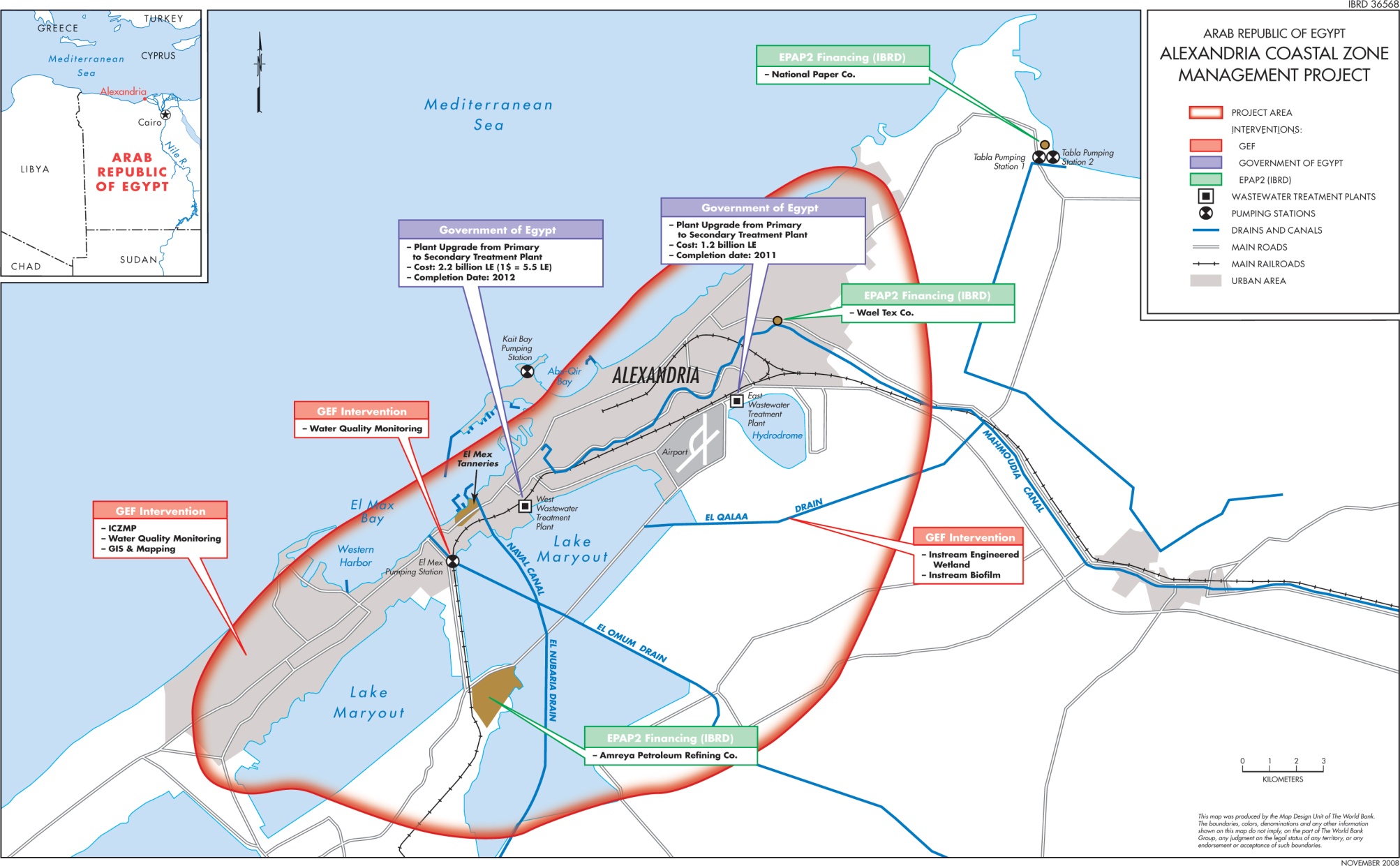
Map
ARAB REPUBLIC OF EGYPT: Alexandria Coastal Zone Management Project (Under the Investment Fund for the
Mediterranean Sea Large Marine Ecosystem)
130