|
1
|
|
|
2
|
|
|
3
|
|
|
4
|
|
|
5
|
|
|
6
|
|
|
7
|
|
|
8
|
|
|
9
|
|
|
10
|
|
|
11
|
|
|
12
|
|
|
13
|
|
|
14
|
|
|
15
|
- The context and structure within which the SP will be developed
- The Barcelona Convention on the “Protection of the Mediterranean Sea
against Pollution”, which entered into force on 12 February 1978,
together with the Mediterranean Action Plan are notable examples of
regional cooperation.
- In June 1995, the Convention was revised to bring it into line with the
principles of the Rio Declaration, the UNCLOS and the progress achieved
in international environmental law as a basis for making it an
instrument for sustainable development.
|
|
16
|
- The Barcelona Convention includes the following Protocols:
- The Protocol for the Prevention and Elimination of Pollution of the
Mediterranean Sea by Dumping from Ships and Aircraft or Incineration at
Sea;
- The Protocol Concerning Co-operation in Preventing Pollution from Ships
and in Cases of Emergency, Combating Pollution of the Mediterranean Sea;
- The Protocol for the Protection of the Mediterranean Sea against
Pollution from Land-Based Sources and Activities (LBS Protocol);
- The Protocol Concerning Specially Protected Areas and Biological
Diversity in the Mediterranean;
- The Protocol Concerning Pollution Resulting from Exploration and
Exploitation of the Continental Shelf, the Seabed and its Subsoil ; and
- The Protocol on the Prevention of Pollution of the Mediterranean Sea by
Transboundary Movements of Hazardous Wastes and their Disposal.
|
|
17
|
- Meetings of the Contracting Parties (COPs). The COP is the body for
adopting legally binding decisions. It meets every two years.
- Bureau of the Contracting Parties. A subordinate body comprising
representatives of six contracting parties. The Bureau meets
approximately twice a year and deals with various matters in the
intersessional periods between COPs.
- The Coordinating Unit located in Athens, Greece, which is the official
Host Country of MAP. The Coordinating Unit is responsible for
supervising all activities related to MAP under the Barcelona
Convention.
|
|
18
|
- Guaranteeing Country Ownership (cont’d)
- Six thematic Regional Activity Centers (RACs) and one program, MEDPOL.
- The Mediterranean Commission for Sustainable Development (MCSD)
established in 1995 as a an advisory ‘think tank’ for MAP on issues
relating to SD. Members of the MCSD are all Contracting Parties plus 15
representatives from socio-economic sectors, local authorities and NGOs.
|
|
19
|
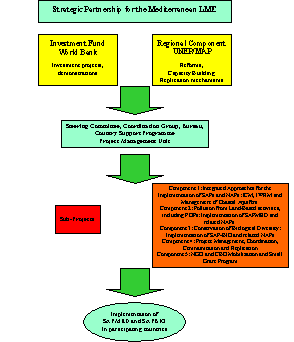
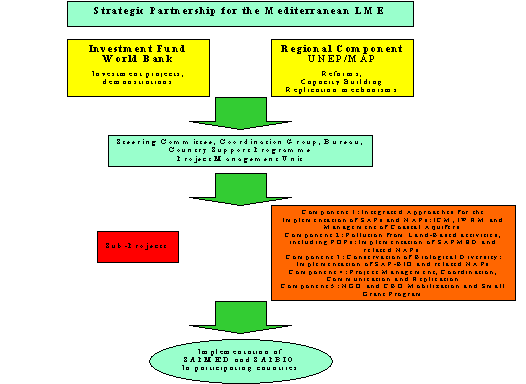
- The Partnership will achieve its objectives through the implementation
of two components:
- Regional Component: Implementation of Regional Activities for the
Protection of the Environmental Resources of the Mediterranean and its
Coastal Areas (implemented by UNEP and partners )
- Investment Fund for the Mediterranean Sea Large Marine Ecosystem
Partnership (implemented by World Bank).
|
|
20
|
|
|
21
|
|
|
22
|
|
|
23
|
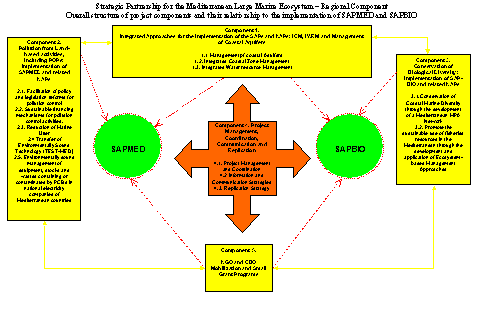
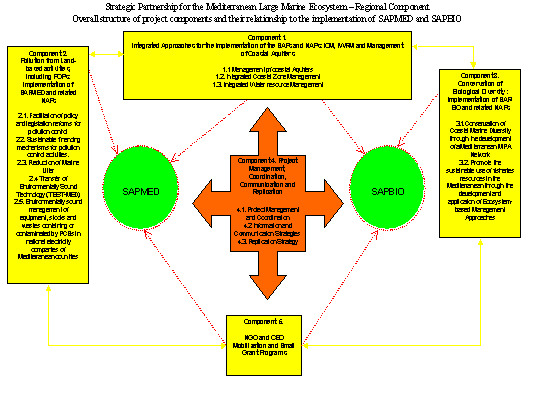
- Component 1. Integrated
approaches for the implementation of the SAPs and NAPs
- 1.1. Management of Coastal Aquifers and Groundwater
- 1.2. Integrated Coastal Management
- 1.3.Integrated Water Resource Management
- Component 2. Pollution
from Land-based Activities, including Persistent Organic Pollutants:
implementation of SAP-MED and related Naps
- 2. 2.1.Facilitation of policy and legislation reforms for pollution
control
- 2.2. Sustainable financing mechanisms for pollution control activities
- 2.3. Reduction of Marine Litter
- 2.4. Transfer of Environmentally Sound Technology (TEST/MED)
- 2.5. Environmentally sound management of equipment, stocks and wastes
containing or contaminated by PCBs
|
|
24
|
- Component 3. Conservation of Biological Diversity: Implementation of
SAPBIO and related NAPs
- 3.1. Conservation of Coastal and Marine Diversity through the
development of a Mediterranean MPA network.
- 3.2. Sustainable use of fisheries resources through the development and
application of Ecosystem Based Management Approaches.
- Component 4. Project Management, Coordination, Communication and
Replication.
- 4.1 Project Management and Coordination.
- 4.2. Information and Communication Strategies
- 4.3. Replication Strategy
- Component 5. NGO and CBO Mobilization and Small Grant Programs
|
|
25
|
|
|
26
|
|
|
27
|
|
|
28
|
- Well, I guess, this is it….
- Thank you
- Contact: alex.lascaratos@unepmap.gr
- Website: http://www.unepmap.org
|

 Notes
Notes