
PROJECT DEVELOPMENT FACILITY
REQUEST FOR PIPELINE ENTRY
AGENCY'S PROJECT ID:
FINANCING PLAN (US$)
GEFSEC PROJECT ID:
GEF ALLOCATION
COUNTRY: Mediterranean (12 countries): Albania,
Project (estimated)
$15 million
Algeria, Bosnia and Herzegovina, Croatia, Egypt,
Project Co-financing
it is expected that
Lebanon, Libya, Morocco, Serbia and Monte Negro,
at least an
(estimated)
Syria, Tunisia, and Turkey.
equivalent amount
of grant funding
PROJECT TITLE: Strategic Partnership for the
will be leveraged
Mediterranean Large Marine Ecosystem Regional
from other
agencies, donors
Component: Implementation of agreed actions for
and recipient
the protection of the environmental resources of
countries.
the Mediterranean Sea and its coastal areas.
PDF A*
GEF AGENCY: UNEP
PDF B**
700,000
OTHER EXECUTING AGENCY(IES):UNEP/MAP
from IW
FAO, UNESCO, UNIDO, ICS-UNIDO,
300,000
METAP/WB, WWF
from BD
DURATION: 6 Years
PDF C
GEF FOCAL AREA: International Waters and
Sub-Total GEF PDF
TBD
Biodiversity
PDF CO-FINANCING (details provided
GEF OPERATIONAL PROGRAM: OP 9 AND OP 2
in Part II, Section E Budget)
GEF STRATEGIC PRIORITY: IW-1 Catalyzing
GEF Agency
TBD
Financial Resources for Implementation of Agreed
National Contribution
TBD
Actions; BD-1 Catalyzing Sustainability of Protected
Italy
100,000
Areas and BD-2 Mainstreaming Biodiversity in
Others
TBD
Production Landscapes and Sectors.
Sub-Total PDF Co-
ESTIMATED STARTING DATE OF PDF-B: 2005
financing:
ESTIMATED WP ENTRY DATE: FY 2006
Total PDF Project
PIPELINE ENTRY DATE: November 2004
Financing:
* Indicate approval date of PDFA
** If supplemental, indicate amount and date
of originally approved PDF
1
A CONTEXT: THE STRATEGIC PARTNERSHIP FOR THE MEDITERRANEAN LARGE MARINE
ECOSYSTEM
The countries of the Mediterranean Sea basin1 face a variety of shared environmental problems
that are transboundary in nature. Key to the success in addressing transboundary problems is
the joint political commitment of all countries in the basin. To this effect, the GEF Operational
Strategy recognizes that a series of international water projects may be needed over time to: a)
build the capacity of countries to work together; b) jointly understand and set priorities based
on the environmental status of their water body; c) identify actions and develop political
commitment to address the top priority transboundary problems, and then d) implement the
agreed policy, legal and institutional reforms and investments needed to address them.
With the support of the GEF, UNEP, UNEP/MAP, and FFEM, and consistent with the GEF
Operational Strategy, the Mediterranean countries have collaborated within the context of the
Barcelona Convention to revise the Transboundary Diagnostic Analysis2 prepared in 1997, and
which have agreed on the following major transboundary environmental concerns for the
basin:
· Decline of biodiversity due to over-fishing, conversion and degradation of critical
habitats, introduction of alien species, pollution in the form of excess nutrients, toxic
waste, including oil, solid waste and litter, and use of non-selective fishery gears;
· Decline in fisheries due to over-fishing, use of harmful fishing practice, loss of
shallow-water habitats for some life stages of critical fisheries, adverse water quality
from rivers, coastal aquifers, sewage discharges, dredging, and non-point discharges;
· Decline in seawater quality due to inadequate sewage treatment, lack of best practices
in agriculture use of fertilizers and pesticides, inadequate controls on atmospheric
emissions of heavy metals and persistent organic pollutants from European industrial
sources, inadequate source controls and discharge control for industries along the sea,
and increases in shipping traffic across the Mediterranean with consequent increase in
accidental and purposeful discharge of harmful pollutants;
· Human health risks due to ingestion of seafood, ingestion of water while swimming,
contact with contaminated seafood products, and contact with seawater contaminated
with pathogens or viral agents;
· Loss of groundwater dependent coastal ecosystems due to the contamination,
salinization and over-exploitation of coastal aquifers.
1 Albania, Algeria, Bosnia and Herzegovina, Croatia, Cyprus, Egypt, France, Greece, Israel, Italy, Lebanon,
Libya, Malta, Monaco, Morocco, Serbia and Monte Negro, Slovenia, Spain, Syria, Tunisia, and Turkey, are
riparian countries. SAPs have been endorsed by all riparian countries and the EU. All countries except Cyprus,
France, Greece, Israel, Italy, Malta, Monaco, Slovenia and Spain are eligible for GEF support.
2 The Transboundary Diagnostic Analysis (TDA) is a scientifically based assessment of the environmental
conditions of an internationally shared water-body, which identifies major problems, their causes, possible
solutions, and discriminates between those issues requiring international action (transboundary), and those of an
exclusively national nature.
2
The Mediterranean countries have worked together to set priorities related to these
transboundary problems and have jointly agreed on what interventions are needed to address
such priorities through two Strategic Action Programs (SAPs):
· The Strategic Action Program to Address Pollution from Land-Based Activities (SAP
MED); and
· The Strategic Action Program for the Conservation of Mediterranean Marine and
Coastal Biological Diversity (SAP BIO).
The two SAPs are now ready for implementation, consistent with the GEF Operational
Program 9 in the International Waters focal area, and a third instrument, the ICM Protocol to
the Barcelona Convention, is under negotiation. As a result of the implementation of several
Coastal Areas Management Projects (CAMPs) in the region, it appeared evident that the
Mediterranean region needed to have a binding Protocol to halt the process of degradation of
the coastal areas in the Northern countries and to offer a model of coastal development to the
countries of the South. The Contracting Parties therefore decided to ask the Secretariat to
initiate the process of formulating a Protocol on ICM and to submit a draft text to the next
Meeting of Contracting Parties in 2005.
In order to accelerate on the ground implementation of the SAPs, and assist with the early
implementation of the ICM Protocol, a collective effort for the protection of the environmental
resources of the Mediterranean - the Strategic Partnership for the Mediterranean Sea
Large Marine Ecosystem - is being proposed by UNEP and the World Bank to all the
countries of the Mediterranean and to all international cooperation Agencies, IFIs and bilateral
and multi-lateral donors. The proposed Partnership which builds upon the model and lessons
learnt from the GEF Black Sea/Danube Partnership is a basin-wide multi-stakeholder
collaboration with the main objective to assist basin countries in implementing reforms and
investments in key sectors that address transboundary pollution reduction, biodiversity decline,
habitat degradation and living resources protection priorities identified in the two SAPs. The
Partnership will serve as a catalyst in leveraging policy/legal/institutional reforms as well as
additional investments for reversing degradation of this damaged large marine ecosystem its
contributing freshwater basins, habitats and coastal aquifers.
The proposed Strategic Partnership will consist of the two individual components, which fit
together to assist the countries in a collaborative manner according to each agency's
comparative advantage:
· Regional Component: Implementation of agreed actions for the protection of the
environmental resources of the Mediterranean Sea and its coastal areas (UNEP)
· Investment Fund for the Mediterranean Sea Large Marine Ecosystem Partnership
(World Bank).
The main objective of the Partnership is to foster the implementation of the two Strategic
Action Programs, and prepare the ground for the future implementation of the ICM Protocol.
The two Strategic Action Programs are aimed at: (i) reduce land-based sources of marine
pollution (SAP-MED) and (ii) protect the biodiversity and living resources of the
3
Mediterranean, as well as their habitats (SAP-BIO)3. Together the three instruments will help
countries toward achieving the MDGs and WSSD targets.
The present Project Concept being submitted by UNEP refers to the Regional Project under the
Strategic Partnership. A separate concept submission by the World Bank will deal with the
Investment Fund under the Strategic Partnership.
B BACKGROUND
1. ENVIRONMENTAL CHALLENGES OF THE MEDITERRANEAN SEA.
The coastal areas around the Mediterranean are heavily populated and are undergoing a
dramatic process of development. The populations of coastal states have doubled in the last 40
years to 450 million (in 1999) and will reach over 600 million in 2050. In addition, tourism
arrival is expected to rise from 135 million in 1990 to 350 million in 2025, doubling the
population along the coast during summer. Population load is shifting towards the southern and
eastern Mediterranean and about 60% of it lives within 100 km of the coast. Population density
in coastal areas ranges from double to ten times the national average due to the more favorable
climatic, agricultural and often socioeconomic conditions. As a result of the increased demand
for space, water and natural resources, the stress on coastal eco-systems, and the infringement
on natural and agricultural land is continuously increasing.
80% of the pollution load of the Mediterranean Sea originates from land sources, mainly in the
form of untreated discharges of urban waste (which includes microbiological, nutrient and
chemical contaminants) reaching the sea from coastal sources and through rivers. Lack of
sewage collection, treatment and disposal infrastructure is still the greatest problem in many
Mediterranean countries. 69 % of coastal cities with more than 10,000 inhabitants have sewage
treatment plants, resulting in a large annual discharge of more than 1 billion m3 of untreated
sewage to the sea. Some countries have no treatment plants at all. Overall, 66 million m3 of
untreated industrial wastewater is discharged to the Mediterranean each year. To add to this,
agricultural practices cause significant soil erosion and pesticide pollution of surface and
groundwater resources, consequently, through rivers and direct runoff, affecting the coastal and
marine ecosystems. Uncontrolled coastal development, population expansion and increasing
coastal tourism, unregulated and unsustainable fishing, damming and pollution are the greatest
threats to the marine and coastal ecosystems.
The revised TDA for the Mediterranean Sea and recently adopted SAP BIO identify the major
environmental concerns in the Mediterranean Sea (Box 1).
3 The environmental targets identified by the two SAPs are presented in Annex 2.
4
Box 1. Major transboundary environmental concerns in the Mediterranean.
Transboundary degradation of coastal habitats and decline of biodiversity arise from the combination of the
following factors: Marine living resources are often migratory; coastal habitats provide nursery and feeding grounds to
migratory species, thus the degradation of coastal habitats contributes to an overall decline in biodiversity; The
sustainability of marine and coastal habitats depends on the integrity and viability of their interlinked, transboundary
ecosystems, that support trophic levels in the food chain.
Transboundary aspects in fisheries sustainability and management are of particular importance regarding migratory
and shared stocks, which makes it inevitable and essential to address fisheries on an international level. This task is
complex in the Mediterranean as there are a high number of riparian states in varying stages of development in the
management of fisheries. Future progress in terms of fisheries management however will be based on the ability to
build a multilateral dimension into national practices. The number of shared fisheries has increased in several areas of
the Mediterranean like the Alboran Sea, the Gulf of Lyons, the Northern Tyrrhenian Sea, the Adriatic Sea, the Ionian
Sea, the Aegean Sea, the Sicily Strait and the Gulf of Gabes. The number of shared fisheries identified already at this
stage justifies common action to be taken for those stocks at international level.
Transboundary concerns related to marine water quality arise from the fact that pollutants often travel great distances
through air, sea currents and rivers, before their effects can be traced. The Mediterranean seawater exchange patterns,
persistent toxic substances dispersed by atmospheric circulation, transboundary transport of pollutants such as
Polycyclic Aromatic Hydrocarbons (PAHs), euthrophication and the evidence of long-range biological pollution
impacts on sea birds and other marine life, are the main focus areas of sea water quality. Pollution hot spots can also
affect biodiversity resources of Mediterranean-wide importance in addition to site-specific impacts.
Transboundary elements affecting human health include the trade of contaminated seafood that diffuses health
concerns beyond Mediterranean basin and through the transboundary exposures of tourists to potentially
contaminated seafood; Risks of adverse health impacts from contaminated seawater such as gastroenteritis, ear, skin
and eye infections, viral diseases such as hepatitis A, cholera and superficial or deep mucoses from contact with
contaminated beach sand, whilst visiting Mediterranean beaches. Without adequate water resource management,
human health issues will continue to degrade. Lack of water and sanitation, inadequate waste and wastewater disposal,
potential waterborne diseases, unhealthy seafood and occurrences of euthrophication will increase.
Transboundary threats to coastal aquifers. The groundwater problems in the context of the Adriatic (eastern coast)
basin and in selected section of the Levantine and the Southern Mediterranean coasts are linked to the coastal aquifers
freshwater- saltwater interface. The problems are linked to and arise from functions for basin water balance and
freshwater discharges, water supplies, control of saltwater intrusion and coastal salinization, nutrient and contaminant
transport and SGDs and preservation of fresh-, brackish- and coastal water ecosystems. They are ultimately referred to
the lack of policy and sustainable legal and institutional frameworks for coastal aquifer management. The problems
vary depending on the vulnerability of the aquifer systems, the hydrogeology and importance of land-based water
pollution and are related to (a) sustainable protection and use of shared coastal aquifers, and ultimately to (b) the
sustainability of the regional basin including marine water balance and water quality and the impacts on the marine
ecosystems.
Transboundary problem of marine litter. Marine litter has been an issue of concern in the Mediterranean since the
1970s. Marine litter is an environmental, economic, health and aesthetic problem. It causes damage and death to
wildlife. It threatens marine and coastal biological diversity in productive coastal areas. Plastic litter is a source of
persistent toxic substances. Pieces of litter can transport invasive species between seas. Medical and sanitary waste
constitutes a health hazard and can seriously injure people. Every year, the presence of marine litter causes damage
that entails great economic costs and losses to people, property and livelihood, as well as poses risks to health and even
lives. And marine litter spoils, fouls and destroys the beauty of the sea and the coastal zone.
5
2. HISTORY OF COLLABORATION AMONG MEDITERRANEAN COUNTRIES, AGREEMENTS REACHED,
AND ONGOING ACTIVITIES.
The riparian States of the Mediterranean Sea have long since recognized the threat that
pollution poses to the marine environment and have committed to preserving the
Mediterranean basin through actions at local, regional and global level. To this effect, they
agreed to launch an Action Plan for the Protection and Development of the Mediterranean
Basin (MAP) in 1975 and to sign a Convention for the Protection of the Mediterranean Sea
against Pollution (Barcelona Convention) in 1976 (Box 2).
Box 2. Barcelona Convention.
The Barcelona Convention on the "Protection of the Mediterranean Sea against Pollution" which
entered into force on 12 February 1978 is a notable instance of regional cooperation. Since 1994,
several components of the Barcelona system have undergone significant modifications. In June 1995
the Convention was revised in order to bring it into line with the principles of the Rio Declaration,
the philosophy of the new Convention on the Law of the Sea and the progress achieved in
international environmental law in order to make it an instrument of sustainable development. The
convention was amended to "The Convention for the Protection of the Marine Environment and the
Coastal Region of the Mediterranean", hereinafter "the Convention". The amendments to the
Convention entered into force on 9 July 2004.
The Barcelona Convention includes the following Protocols:
a) The Protocol for the Prevention and Elimination of Pollution of the Mediterranean Sea by
Dumping from Ships and Aircraft or Incineration at Sea, (amended 1995, not yet in force);
b) The Protocol Concerning Co-operation in Preventing Pollution from Ships and in Cases of
Emergency, Combating Pollution of the Mediterranean Sea, (2002, entered into force on 17
March 2004);
c) The Protocol for the Protection of the Mediterranean Sea against Pollution from Land-Based
Sources and Activities (LBS Protocol), (amended 1996, not yet in force);
d) The Protocol Concerning Specially Protected Areas and Biological Diversity in the
Mediterranean, (of 1995, entered into force on 12 December 1999);
e) The Protocol Concerning Pollution Resulting from Exploration and Exploitation of the
Continental Shelf, the Seabed and its Subsoil, (1994, not yet in force); and
f) The Protocol on the Prevention of Pollution of the Mediterranean Sea by Transboundary
Movements of Hazardous Wastes and their Disposal, (1996, not yet in force).
In addition to the above, the Contracting Parties have adopted, at their last ministerial meeting in
Catania, November 2003, the recommendation to draft the text of the Protocol on Integrated Coastal
Area Management (ICM) in the Mediterranean. The text should be prepared and submitted for
discussion at the next Contracting Parties Meeting in late 2005.
The main objective of MAP was to improve the quality of the environmental information
available to governments as the basis for their policy formulation and strengthen their ability to
make environmentally sustainable choices for allocation of resources. The focus of MAP
shifted over time from a sector approach to marine pollution to integrated coastal zone
planning and management as a way to ensure linkages between environmental protection and
social and economic development.
6
Recognizing that land based activities have the highest impact on the marine environment, the
countries signed a Protocol for the Protection of the Mediterranean Sea against Pollution from
Land-Based Sources (LBS Protocol) in 1980 which entered into force in 1983 and was revised
in 1996. A year later, in 1997, the countries adopted a Strategic Action Program to address
pollution from land-based activities (SAP MED) that identifies priority measures and targets
to address pollution from land-based activities in all countries and laid the ground for the
preparation and implementation of National Action Plans. In November 2003, the
Mediterranean countries adopted the Strategic Action Program for the Conservation of
Mediterranean Marine and Coastal Biological Diversity (SAP BIO) that identifies priority
actions and targets to protect fragile ecosystems and reduce damage to natural habitats.
UNEP/MAP and its marine pollution assessment and control program MEDPOL carried out
extensive preparation work in support of the SAP MED, including a Transboundary Diagnostic
Analysis for the Mediterranean Sea (TDA MED) prepared in 1997 and revised in 2004. This
TDA identifies the major sources of transboundary pollution and hotspots and provide the
foundation for interventions at national and regional level that would benefits the individual
countries as well the basin as a whole. In addition, UNEP/MAP, through its Regional Activity
Center for Special Protected Areas (SPA/RAC), carried out activities on the preparation of
SAP BIO, which was adopted by the Contracting Parties to the Barcelona Convention in
November 2003.
The SAP-MED and SAP BIO outline the specific targets and activities agreed by the member
countries to address the Mediterranean Sea environmental degradation. Some of the key targets
that address transboundary environmental issues, in line with WSSD, include:
· Dispose municipal wastewater in conformity with the LBS Protocol in cities exceeding
100,000 inhabitants by 2005 and in other cities by 2025;
· Dispose by the year 2025 all industrial wastewaters, which are sources of BOD,
Nutrients and Suspended Solids in conformity with the provisions of the LBS Protocol,
and reduce inputs of such substances by 50% by the year 2010. All countries have
calculated the National Baseline Budget of Pollutant inputs as at the year 2003, which
is now considered the reference point for the reductions. The baseline budget is
calculated for each pollutant and for each source and as a country total. The
Contracting Parties have decided that the expected national reductions (e.g. 50 per cent
or 25 per cent as agreed in the SAP) will be the over all result of the individual
reductions operated in each source, the amount of which will be decided by the country
for each source;
· By 2012, increase by 50% the coverage of marine protected areas, in relation to 2003.
The total amount of MPAs in 2003 was 52;
· By 2012, protect 20% of the coast as marine fishery reserves;
· Maintain or restore fishery stocks to levels that can produce the maximum sustainable
yield with the aim of achieving these goals for depleted stocks on an urgent basis and
where possible not later than 2015; and
7
· Effective protection of endangered species by 2012.
SAP-MED and SAP BIO also identify the Adriatic Sea as one of the top priority areas for
protection in the Mediterranean Sea and proposed interventions in liquid and solid waste
treatment, water supply and monitoring programs for coastal zone and sensitive areas. Other
hotspots include: Haifa Bay in Israel, Abu Qir bay and El'Mex bay in Egypt, Saida (Sidon)
Gazieh in Lebanon, Tetouan in Morocco, and Durres and Vlora in Albania, and others (see
TDA, 2004)
The cost for pollution remedial actions in the Mediterranean Sea has been estimated in 1997 at
almost US$ 10 billion [with approximately US$ 1.3 billion for intervention in the Adriatic
Sea]. The SAP BIO identified 226 actions at national levels and 30 actions at the regional level
for biodiversity protection, with estimated costs of US$ 100 million and US $40 million
respectively.
Status of Marine Protected Areas in the Mediterranean.
In spite of the intensive human use it has experienced for more than two thousand years, the
Mediterranean Sea remains a global biodiversity hotspot, listed in the top 15 marine hotspots
by Conservation International (CI) and figuring prominently in the WWF Global 200 list. In
such an intensively utilized environment, traditional "fortress" protected areas established
solely for the preservation of biodiversity are almost impossible to create and enforce. As a
result of this pressure to both conserve and use, Mediterranean countries have already
established some of the most innovative and successful marine protected areas (MPAs) in the
world, ranging from small specific areas for critically important biodiversity, such as the
MPAs established for protection of the Monk Seal in Greece, Turkey and Morocco, the Port
Cros Park in southern France, and the Pelagos Sanctuary for Mediterannean Marine Mammals,
a transboundary protected area created by France, Monaco and Italy in the Ligurian Sea.
In spite of these innovations, the general situation with regard to marine protected areas in the
Mediterranean remains critically weak when measured against a goal of reducing the rate of
biodiversity loss by 2010, especially for the countries in the southern and eastern parts of the
Mediterranean, since the geographical distribution of Marine Protected Areas around the
Mediterranean clearly lacks balance: most of the MPAs are located on the North
Mediterranean coast (see map).
There are more than 150 Marine and Coastal Protected Areas in the Mediterranean under the
SPA Protocol, more than 50 of which are open water areas. Among the signatories to the
Protocol, only Italy has specific legislation for establishing marine protected areas. Most of the
other countries have adopted legislative texts permitting the establishment of such areas,
without detailed rules concerning regulation and management. In the case of Wetlands, there
are 150 Ramsar Sites in the region, but this number could be easily doubled applying the
Convention on Wetlands criteria.
Although countries have established MPAs, many of these remain "paper parks". In addition,
many were created purely for species protection without giving adequate consideration to the
opportunities to capture multiple benefits through the careful consideration of location, size,
8
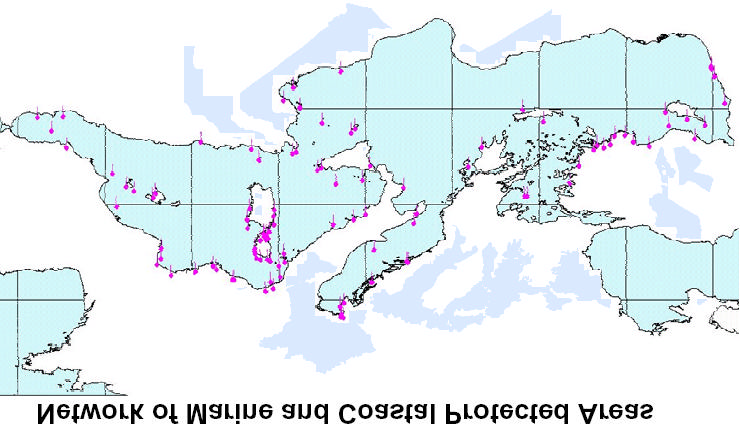
(multiple-use) zoning/management, and the synergistic effects of networks.4 At the same time
several national reports have identified several common problems affecting the selection,
establishment and management of Marine Protected Areas in the Mediterranean (Box 3).
As the SAP BIO clearly states, there is a critical need to review the existing MPA and coastal
PA networks in the light of an expanding literature5 on design and monitoring of MPAs to
achieve both conservation and sustainable use benefits (fisheries, tourism6, etc.), thus bridging
the BD-1 and BD-2 strategic priorities for biodiversity. Although mass tourism remains a
major threat to Mediterranean biodiversity, there are successful examples of mainstreaming
biodiversity; e.g. coastal tourism in Slovenia and southern Albania, green tourism in the Cres-
Losinj archipelago in Croatia, integrated management of the coastal areas in the Antalya region
of the southern coast of Turkey, and ecotourism and whale-watching off the Balearic Islands in
Spain.
From: "Hotspots for Marine Biodiversity in the Mediterranean". Marine Programme Team IUCN
Centre for Mediterranean Cooperation, 2003.
4 Agardy, T. et al. (2003). "Dangerous targets? Unresolved issues and ideological clashes around marine protected
areas." Aquatic Conservation: Marine and Freshwater Ecosystems ; published online in Wiley InterScience
(www.interscience.wiley.com) DOI: 10.1002/ aqc.583.
5 Syms, C. and M. H. Carr (2001) Marine Protected Areas: Evaluating MPA effectiveness in an uncertain world.
Scoping paper presented at the Guidelines for Measuring Management Effectiveness in Marine Protected Areas
Workshop, Monterey, California, May 1-3, 2001, sponsored by the North American Commission for
Environmental Cooperation. http://www.biology.ucsc.edu/people/carr/Syms/syms_download_page.htm
6 e.g. Alonnissos Marine National Park in the Northern Sporades in Greece combines tourism with conservation
of the Monk Seal, one of the 12 most threatened mammals in the world
9
Box 3. Common problems affecting the conservation of marine biodiversity through the use of MPA's
in the Mediterranean.
A series of problems have been recurrently identified by the National Reports, although, obviously, the
importance of magnitude of each problem differs between the countries bordering on the Mediterranean
Sea:
· Insufficient legal system, lack of adequate legislation
· Confusion of competency, or fragmentation of responsibility (leading to problems of
implementation of the existing laws)
· Lack of coordination between administrations, competencies overlap
· Interference with other human activities occurring in the coastal zone, mainly tourism
· Low or no participation of stakeholders and other agents in the decision-making process
· Poor effort to improve public awareness on marine conservation issues
· Lack of effective enforcement measures in some cases
· Lack of effective scientific monitoring
· Lack of sufficient economic resources to achieve the protection measures, so that a number of
MPAs receive only nominal management and protection ("paper MPAs")
· Problems of mismanagement and deterioration caused by the limited experience of the people
administrating the MPAs
· Lack of effective conservation measures to protect particular species (monk seal, sea turtles,
cetaceans, etc.) and/or communities (e.g. seagrass meadows)
· Need to set up a network of MPAs, and therefore define of goals, mechanisms and management
organization for such a network
· Need for integrated coastal zone planning and management.
Other identified problems that affect the selection, installation, management and evaluation of
Mediterranean MPAs are the following:
· Need to clearly establish the specific goals of each MPA
· Improved scientific basis for the selection (location, habitats included, depth range, etc.) and design
(size, shape, number, proportion of total surface protected, etc.) of MPAs
· Need for appropriate monitoring and evaluation of the effectiveness of MPAs, based on sound
sampling designs (e.g. BACIP, beyond-BACI...)
· Lack of empirical evidence for potentially complex effects of MPAs, e.g. spillover, indirect effect
on ecosystems ("cascade" effects), effects on larval replenishment of commercially and/or
ecologically important species, genetic effects, socio-economic results, etc.
· Need to ascertain the relationship of MPAs with other management tools.
3. SOME OTHER ACTIVITIES RELEVANT TO THE PROTECTION OF THE MEDITERRANEAN SEA
During the implementation of the PDF-B for this project, partnership will be built with other
existing activities related to the protection of the Mediterranean Sea in the region. Coordination
strategy will be developed and communication links established. In the Mediterranean several
activities and initiatives have been undertaken by governments, intergovernmental and non-
governmental organizations, some of which have relevance for the Mediterranean Sea Basin.
Among recent initiatives, reference should be made to the Adricosm Project on land and
coastal management, initiated by the Italian government, as well as the Adriatic-Ionian
Initiative supported by the governments of the Adriatic region.
Reference should also be made to the Mediterranean Component of the EU Water Initiative, as
well as to efforts being made to improve the management of the many transboundary basins
10
and aquifers of SE Europe by introducing IWRM practices (the Athens Declaration Process). A
number of these waters flow into the Mediterranean and have a significant impact on coastal
ecosystems and water quality. Box 4 and 5 below summarize these processes.
BOX 4. The Athens Declaration Process
Jointly coordinated by the Government of Greece and the World Bank
The Athens Declaration Process was launched during the major International Conference on
Sustainable Development for Lasting Peace: Share Waters, Shared Future, Shared Knowledge, 6-7 May
2003, Athens, Greece. The process aims to assist countries of the region, in cooperation with relevant
stakeholders, to draft IWRM and water use efficiency plans for major river basins and would include a
range of complementary interventions in individual river and lake basins, with a coordination
mechanism to allow for exchange of information and experience between activities. The entire program
is a building block of the Mediterranean Component of the European Union Water Initiative.
The Athens Declaration of May 2003 has four Recommendations for Action: Recommendation (1)
Diplomacy for Environment and Sustainable Development, (2) Southeastern Europe Transboundary
River Basin and Lake Basin Management Program, (3) Mediterranean Shared Aquifers Management
Program, and (4) Assessment of Regional and National Frameworks to Implement Integrated Water
Resources Management.
Recommendations 2, 3 and 4 build on the implementation process of the European Union Water
Framework Directive and complement and draw lessons from the ongoing GEF Danube River Basin
Program and the Lake Ohrid Conservation Project among others.
Box 5. The Mediterranean Component of the EU Water Initiative (MED EUWI)
led by the Government of Greece
MED EUWI is an integral part of the overall EU Water Initiative, coordinated by the European
Commission. It aims to:
- assist design of better, demand driven and output oriented water related programmes,
- facilitate better coordination of water programmes and projects, targeting more effective use
of existing funds and mobilization of new financial resources and,
- enhanced cooperation for project's proper implementation
MED EUWI, announced during WSSD in Johannesburg, gives particular emphasis to Mediterranean
and SEE priorities. Integrated water resources management with an emphasis on management of
transboundary water bodies is a defined priority theme of MED EUWI. The current Project will
contribute as a pilot for enhancing the MED EUWI objectives in the SEE region.
Political commitment for the development of MED EUWI has been expressed in various fora, inter
alia, the EU Informal Council of Environment Ministers (May 2003, Athens and December 2003,
Brussels), 5th Pan-European Ministerial Conference of the "Environment for Europe" process (May
2003, Kiev), Euro-Mediterranean Meeting of the Ministers of Foreign Affairs (May 2003, Crete and
June 2004, Dublin), three meetings of the North African Ministers Council on Water (February and
October 2003, April 2004, Cairo), etc.
The process is facilitated by a MED EUWI Secretariat, within Global Water Partnership
Mediterranean.
11
At their Eleventh Ordinary Meeting, the Contracting Parties to the Barcelona Convention and
its Protocols recommended giving high priority to promoting the management of marine
protected areas and marine sites containing sensitive, threatened or rare habitats with a view
to strengthening the network of marine protected areas in the region.
This Med-MPA Project (box 6), receiving funding from the European community through the
SMAP Programme and coordinated by RAC/SPA is aimed at assisting the Mediterranean
countries to strengthen the conservation and the sustainable management of coastal biological
diversity.
Box 6. Med-MPA Project
The Med-MPA project is being implemented in the following countries: Algeria, Cyprus, Israel, Malta,
Morocco, Syria and Tunisia and has the goal of strengthening the effectiveness of the MPA networks
Moreover, the project aims at concrete action, within the context of the priorities that have been chosen on
a national and regional scale, and thus at helping countries discharge certain of their obligations entered
into within the framework of the Barcelona Convention's Protocol on Protected Areas, and the Convention
on Biological Diversity.
Furthermore, the project is permitting management plans to be devised for sites chosen from among the
most precious in the Mediterranean. All these chosen sites appear on the Directory of Mediterranean
protected areas instituted by the SPA Protocol. Some of these sites are also listed by UNESCO within the
framework of the Biosphere Programme. This is therefore also compatible with the SMAP's priorities.
4. INITIAL GEF IW PROJECT (UNEP/WB) OBJECTIVES AND ACHIEVEMENTS
In order to support the efforts of the Mediterranean countries in implementing the SAP MED,
in 1998 the GEF Council approved a US$ 6.3 million grant in support of the project
"Determination of priority actions for the further elaboration and implementation of the
Strategic Action Programme for the Mediterranean Sea" to be implemented by UNEP together
with other agencies (Box 5).
At the regional level, the project mainly supported actions leading to the preparation, adoption
and implementation of regional guidelines and plans; the development of a strategic action
program for biodiversity which identifies targets and estimates costs (SAP BIO); the
enhancement of public participation and institutional capacity in the region; development and
implementation of economic instruments for the sustainable implementation of the SAP MED;
and the preparation of a revised TDA; at the country level, the Project supported the
preparation of pre-investment studies in selected hot spots and the development, adoption and
implementation of National Action Plans (NAPs) for the implementation of the SAP MED.
Box 6. Initial GEF IW Project in the Mediterranean.
The main aim of the UNEP-GEF "Determination of priority actions for the further elaboration and implementation of
the Strategic Action Programme for the Mediterranean Sea" Project was to create a solid ground for the implementation
of the SAP-MED, and to prepare the SAP-BIO, a basic instrument for the protection of marine biodiversity in the
Mediterranean. The activities of the Project are numerous and comprised of the following components:
12
- Revision of TDA;
- Capacity building;
- Development of regional guidelines and plans;
- Adaptation of existing and development of new economic instruments for sustainable implementation of the SAP MED;
- Public participation;
- Preparation of National Action Plans (NAPs) to address pollution of the Mediterranean from land based sources and
activities; and
- Preparation of pre-investment studies for selected pollution hot spots.
A revised TDA was prepared and released.
Within the capacity building component, a series of regional and national training courses were organized. More than 500
national experts were trained on various issues, so far. The majority of them were taught in their mother tongue using training
material translated into their national languages.
A set of regional guidelines and plans were prepared, which will guide national experts that are preparing NAPs. These
guidelines were endorsed by the meeting of MED POL National Coordinators; and then approved by the meeting of the MAP
Focal Points. In addition, two regional plans were adopted by the meeting of the Contracting Parties to the Barcelona
Convention. All documents were prepared in English and French and were widely distributed in the region.
One of the major goals of this Project is the preparation of NAPs. The first phase of this very complex and delicate process has
been accomplished by preparing national Baseline Budgets (BBs) of releases and emissions, and a National Diagnostic
Analysis. The second phase, the preparation of Sectoral Plans and Integrated NAPs is under implementation.
The adaptation of existing and development of new economic instruments for sustainable implementation of NAPs is now
under way and will soon be concluded (2005). Testing through pilot projects is being conducted at a national level in numerous
countries and the results will be implemented in the NAPs.
A common methodology for public participation in the process of preparing, adopting and implementing has been prepared
and distributed to the countries of the region. The countries are also receiving financial support for the public participation.
The preparation of pre-investment studies for selected pollution hot spots is now under way in 11 Mediterranean countries. The
activities in four countries are directly supported by FFEM. The study supported by ICS-UNIDO was successfully completed.
Finally, the SAP BIO is one of the main outputs of the Project. The SAP BIO document was based on national reports and
plans on the state of biodiversity, as well as numerous reports concerning various regional issues. The document, was adopted
by the meeting of the Contracting Parties to the Barcelona Convention (2003) and presents the main issues, analyses their
causes and proposes priority activities. It also contains, an Investment Portfolio at the regional and national levels.
The two SAPs and the proposed ICM Protocol will help countries to achieve the Millennium Development Goals and the
WSSD targets.
C - COUNTRY OWNERSHIP
·
COUNTRY ELIGIBILITY
Twelve riparian countries (listed on the first page) are eligible for GEF support for
International Waters (IW) under paragraph 9(b) of the GEF Instrument: Albania, Algeria,
Bosnia and Herzegovina, Croatia, Egypt, Lebanon, Libya, Morocco, Serbia and Monte Negro,
Syria, Tunisia, and Turkey.
·
COUNTRY DRIVENNESS
As mentioned above, the Mediterranean Action Plan (MAP) was established in 1975, as the
first Regional Seas Programme of UNEP. The Convention for the Protection of the
Mediterranean Sea Against Pollution (the Barcelona Convention), which was adopted in 1976
and related protocols are legal instruments for the implementation of MAP. All Mediterranean
Countries participating in this project have ratified the Barcelona Convention. Strategic Action
13
Programme to Address Pollution from Land-Based Activities (SAP MED), prepared under a
GEF PDF-B Grant, was adopted by the Contracting Parties in 1997. The SAP MED is related
to the LBS Protocol. A Strategic Action Programme for the Conservation of Biological
Diversity in the Mediterranean Region (SAP BIO) was developed under the current GEF
Project and was adopted in 2003. It is related to the Protocol Concerning Specially Protected
Areas and Biological Diversity in the Mediterranean.
Both the SAP-MED and SAP-BIO are ready for implementation in consistence with GEF
Operational Program 9 (OP) in the International Waters Focal Area and Operational Program 2
(OP 2) in Biodiversity Focal Area.
A Stocktaking Meeting for the development of the GEF Strategic Partnership for the
Mediterranean Large Marine Ecosystems was held in Trieste, Italy, on 11-12 October 2004
with the support of the Italian Government (the minutes of the meeting are provided in Annex
2). The representatives of the Mediterranean countries expressed their full support to the GEF
initiative. They stressed the need for assistance for the full implementation of their NAPs in
order to fulfill the goals of the two SAPs. To achieve that, the representatives suggested to
tailor the project's activities according to the specific needs of each country. At the meeting
the countries have adopted the following recommendations:
· "The representatives of Mediterranean countries approved the proposed Strategic
Partnership as a whole. They also considered that the effective initiation of the
SAP MED activities and the recent adoption of the SAP BIO provided an excellent
opportunity to apply the integrated approach involving pollution reduction and
biological diversity proposed in the Strategic Partnership.
· In addition, the representatives of countries emphasized that, at present, the
implementation of the SAP BIO called for additional resources under the "biodiversity"
component of the GEF in order to enable practical implementation of the activities at
the national and regional levels. Consequently, several representatives considered that
the GEF funds for biological diversity should be increased in order to provide a
substantial contribution to the launching of the SAP BIO in the region."
D PROGRAM AND POLICY CONFORMITY
1.
PROGRAM DESIGNATION AND CONFORMITY
The proposal is consistent with the GEF Operational Programme #9 which states: "these
projects focus on integrated approaches to the use of better land and water resource
management practices on an area-wide basis. The goal is to help groups of countries utilize the
full range of technical, economic, financial, regulatory, and institutional measures needed to
operationalize sustainable development strategies for international waters and their drainage
basins (para 9.2)."
The Proposal is consistent with the BD OP 2: The objective of this Operational Program is the
conservation and sustainable use of the biological resources in coastal, marine, and freshwater
ecosystems generally (including lakes, rivers and wetlands, and island ecosystems).
14
(a) Conservation can be ensured by ecosystem functioning through the establishment and
strengthening of systems of conservation areas. The scope will be tropical and temperate
coastal, marine, and freshwater ecosystems areas at risk; and
(b) Sustainable use can be ensured by systems, which combine biodiversity conservation,
production, and socio-economic goals. The scope, as set out in the Operational Strategy,
includes strict protection on reserves, various forms of multiple use with conservation
easements, and full scale use.
As indicated in the GEF Operational Strategy, this Operational Program will be implemented
in conjunction with those in the International Waters focal area.
The project is also consistent with the new GEF International Waters Strategic Priority IW-1:
Catalyze financial resource mobilization for implementation of reforms and stress reduction
measures agreed through the (TDA)/SAP or equivalent processes for particular transboundary
systems. The project is also consistent with the new GEF Biodiversity Strategic Priorities BD-
1: Catalyzing Sustainability of Protected Areas, and BD-2: Mainstreaming Biodiversity in
Production Landscapes and Sectors.
2. PROJECT DESIGN
REGIONAL ELEMENT OF THE STRATEGIC PARTNERSHIP: "IMPLEMENTATION OF AGREED
ACTIONS FOR THE PROTECTION OF THE ENVIRONMENTAL RESOURCES OF THE
MEDITERRANEAN AND ITS COASTAL AREAS".
The main objective of this Regional Component under the Strategic Partnership is to promote
and induce policy, legal and institutional reforms aimed at reversing marine and coastal
degradation trends and living resources depletion, in accordance with what had been agreed by
the countries in the SAP MED and SAP BIO to be reflected in their NAPs. In doing so, the
Project will also strengthen the enforcement, assessment and monitoring capabilities of the
national and local institutions; and establish technical mechanisms for supporting
transboundary pollution prevention and abatement originating in the coastal areas of the
Mediterranean Sea towards the Environmental Quality Objectives (EQO's) identified in the
Mediterranean TDA, which broadly are:
·
Reduce the impacts of LBS of pollution on the Mediterranean marine environment and
human health;
·
Reach sustainable productivity from fisheries; and
·
Preserve the coastal and marine biodiversity (ie. habitats, ecosystems, biological taxa
and genetic resources).
Long Term Objectives of the Regional Project and relevant Success Indicators are listed in
Annex 1 as well as Immediate objectives, actions, outputs and related Project's Success
Indicators.
The proposed Project will focus on and assist the countries:
1. To implement legal, institutional and policy reforms, which are necessary for the
implementation of NAPs, in order to achieve the targets, set by the two SAPs.
15
2. To develop an adequate human capacity for legal/institutional set up, reforms and
harmonization of policies needed to reverse pollution degradation trends, biodiversity
and living resources depletion, by following the priorities established by the SAP MED
and SAP BIO, by providing a required technical assistance.
3. To provide technical and financial support in implementing selected priority actions
identified in NAPs in accordance with priorities set up by the SAP MED and SAP BIO.
4. To address groundwater issues in coastal regions, particularly in arid and karst areas,
through use of demonstrations projects and vulnerability assessments; this should
include the adoption of hydrologic basins as key management units (particularly in
Balkan and Eastern Mediterranean countries, including coastal groundwater units near
hot spots in arid and karst regions).
5. To develop a long term sustainable financing capacity of countries through increased
integration of environmentally related economic instruments and innovative use of
financing mechanism into mainstream environmental financing in order for sustainable
implementation of the SAP MED including and launch of the SAP BIO implementation
to achieve sustained global environmental benefits. Establish a potential regional
network on environmental sustainable financing and innovative financing
practices/methods.
6. To respond to the SAPBIO targets related to Marine Protected Areas in the
Mediterranean (by 2012, increase by 50% the coverage of marine protected areas, in
relation to 2003, and protect 20% of the coast as marine fishery reserves;
This Regional Project will be implemented by UNEP and executed by UNEP/MAP, through
MED POL and associated Regional Activity Centers (CP/RAC, PAP/RAC, REMPEC,
SPA/RAC), with inputs from UNEP/GPA.
Some actions will be co-executed by relevant international organizations. Thus, the Food and
Agricultural Organization of the United Nations (FAO) directly and through the General
Fisheries Commission for the Mediterranean (GFCM) could co-execute the actions addressing
fisheries management and their eventual integration into ICM frameworks. The groundwater
actions would be co-executed by UNESCO/IHP. The habitat and biodiversity conservation
actions will be implemented by the World Wildlife Fund for Nature (WWF). WWF will
specifically contribute with its technical expertise in biodiversity conservation, its ability to
mobilize the civil society, build capacity and raise public awareness. The Mediterranean
Environment Technical Assistance Program (METAP) will provide technical assistance to
countries in integrating environmental and social components into targeted sectoral projects.
Activities related to cleaner technologies and pollution reduction could be co-executed by the
United Nations Industrial Development Organization (UNIDO) and by the International Centre
for Science and High Technology (ICS-UNIDO). Other organization, as well as NGOs could
execute some activities too. This broad regional alliance of institutions around a common
project through the Regional Component of the Partnership will strengthen the commitment
and capacity of all stakeholders to address the identified main transboundary concerns,
identified in the Transboundary Diagnostic Analysis (TDA).
The full fledge Project Implementation Strategy, including specific activities, outcomes and
outputs of the Full project will be developed during PDF-B implementation. The proposed
activities of the Regional Project could be clustered as follows:
16
Component I. Facilitation of policy and legislative reforms (UNEP/MAP through MED
POL, CP/RAC, PAP/RAC, REMPEC and SPA/RAC)
The development and implementation of policies and legislation aimed at addressing
transboundary causes of environmental degradation of the Mediterranean Sea, as established in
the SAP MED and SAP BIO, will be one of the objectives of the Regional Project. Adequate
capacity will be developed in the countries for legal/institutional set up, reforms and
harmonization of policies needed to reverse degradation trends and living resources depletion,
by following the priorities established by the SAP MED and SAP BIO. During further
elaboration of the project, the needs for reforms and the commitments emerging from each
country's National Action Plan and SAP BIO National Action Plans, National Biodiversity
Strategy and Action Plans (NBSAPs) and other relevant protected areas planning documents,
will be identified and specific indicators will be set in the context of the project's M&E Plan.
Activities will include:
· Assisting the countries to implement the legal, institutional and policy reforms, which
are necessary for the implementation of NAPs, in order to achieve the targets, set by the
two SAPs.
· Assisting the countries in the development and implementation of policies and
legislation aimed at addressing sectoral causes of environmental degradation of the
Mediterranean Sea.
· Promoting countries coordination to develop and implement international and national
Action Plans, including fisheries IPOAs and NPOAs.
· Assisting the countries to improve legislation, reinforce the human resources and
exchange of information on monitoring illegal oil discharges and prosecution in the
Mediterranean Sea.
· Strengthening of public awareness, participation (including NGO networks) and
education, to support public participation in the implementation of NAPs and focus on
transboundary environmental issues;
· Assessing the applicability of regional and sub-regional flexibility mechanisms for the
achievements of pollutant emission reductions, e.g. as a market-oriented means of
controlling nutrient introduction;
· Strengthening of planning and management capacities for Integrated Coastal
Management (ICM) at national and local levels in the Mediterranean countries and the
development of demonstration projects for effective management of coastal areas, and
identification and management of MPAs.
· Revise the 2004 TDA in year three of the project with follow up revision of SAPs, if
needed.
Outcomes:
· Legal, institutional and policy reforms in order to achieve the targets, set by the two
SAPs, implemented.
· Policies and legislation aimed at addressing sectoral causes of environmental
degradation of the Mediterranean Sea developed and implemented.
· Multi-stakeholders participation in the implementation of the NAPs and SAPs
strengthened.
· Improvement of long term sustainable financing for the implementation of the Sap-
MED
17
· Strengthened planning and management capacities for Integrated Coastal Management
(ICM) at national and local levels in the Mediterranean countries and the development
of demonstration projects for effective management of coastal areas, and identification
and management of MPAs.
· A management regime capable of coordinating regional actions to overcome the key
transboundary issues facing the Mediterranean Sea.
Component II. Replication Strategies. (UNEP/MAP WORLD BANK)
This Component of the Regional Project will develop and support a replication strategy to
ensure the replication of successful demonstrations, and the broader dissemination of the
lessons learnt and results achieved under the Investment Fund and the overall Strategic
Partnership. The replication Strategy, to be fully developed during the PDF-B, will consist of
two major elements:
1. Replication of Investment Demonstration Projects. Since the Investment Fund will provide
only a small portion of the investment needs to achieve significant reductions in pollution loads
or coastal/marine ecosystem improvements, the proposed fund will specifically finance project
components that promote wider replication of each investment project. Each demonstration
project will in fact have its own replication strategy built in the project design. The World
Bank, in collaboration with UNEP/MAP, will provide for each project under the Fund:
· the replication context for each demonstration, i.e.: the number, location, areas/sites in
the Mediterranean where the specific technology/practice could apply;
· based on the above, a strategy aimed at promoting actual replication of each
demonstration implemented under the Investment Fund Element of the Strategic
Partnership, including ad hoc dissemination programs, site visits and exchanges, etc;
· Assessment of the value of demo projects replication
· Evaluation of the overall expected impact should full replication occur.
2. The UNEP/MAP executed Regional Project will (i) promote replication of its own activities
and (ii) support regionally the replication strategy of the Fund's projects. This will be achieved
largely through an intensive monitoring, learning, outreach and evaluation process. In parallel,
the project will promote replication of its successes, and particularly its more innovative
initiatives, during its own lifetime. A key element of its replication strategy that will serve both
these objectives will be an aggressive and systematic awareness and results dissemination
program. The main mechanism to achieve this will be an Annual Replication Workshop, to be
conducted in coincidence with Steering Committee Meetings. Other mechanisms will also be
employed (regional and global conferences, project and sub-project websites, printed materials,
etc.) involving multiple partners. Through these multiple mechanisms and partnerships,
information on successful investment and policy reform promotion strategies, innovative
financing modalities and new partnerships will be widely disseminated. This will promote
replication of individual Investment Fund demonstration projects and the Regional component
activities as well as the Strategic Partnership itself.
Outcomes:
18
· Regional replication strategies for each demonstration under the Fund component
defined and implemented;
· Replication strategies for the Regional Project activities and the Strategic Partnership
itself defined and implemented.
· Sectoral environment assessment for full replication at the country and regional level;
· Demonstration projects successfully replicated in several Mediterranean countries.
Component III. Technical Assistance
Sub-Category 1. Implementation of the SAP MED and related NAPs (pollution reduction
strategies). (UNEP/MAP through MED POL and CP/RAC, UNIDO, ICS-UNIDO,
UNEP/GPA, METAP).
Under this Sub-category of actions a variety activities will be developed during the PDF-B
phase, according to countries' needs and commitments, such as:
· Promoting an integrated approach to improve industrial environmental performance by
introducing environmentally sound technologies in order to meet objectives and targets
of the SAP MED;
· Strengthening existing institutions which could play a major role in the implementation
of the SAPs such as: Cleaner Production Centers etc.;
· Developing a long term sustainable financing capacity of countries through increased
integration of environmental/environmentally related economic instruments and
innovative use of financing mechanism into mainstream environmental financing
including building networks between ministries of finance, economy and environment
at national and regional level and demonstrate and/or adapt existing economic
instruments for the sustainable implementation of the SAP MED;
· Development and implementation of an Action Plan on Marine Litter which will be
based on the Guidelines prepared by MED POL as part of previous GEF MED Project
to prevent environmental and socio-economic harmful effects and damages caused by
marine litter;
· Assisting the countries in introducing BATs as well as BEPs, following the Guidelines
developed as part of the GEF/UNEP/MAP Project;
· Monitoring the compliance to the SAP MED and report on the overall progress and
achievements of the project and establish harmonized environmental status indicators to
meet the SAP MED and SAP BIO 2010 and 2015 targets.
Outcomes:
· Strategies of pollution prevention and reduction addressing the issues identified in the
SAP MED introduced in the plans and policies of the Mediterranean countries;
· Regional pool of well trained experts capable of addressing successfully the pollution
prevention and reduction objectives of the SAP MED in the national plans and policies;
· Reduced impacts of LBS of pollution on Mediterranean Marine Environment and
Human Health;
· Enhanced capacity of the participating countries to address industrial pollution
reduction in an integrated manner;
· Increased use of environmentally sound technology at demonstration hot spots resulting
in reduction of pollution loads from industrial hot spots in accordance with SAP-MED
objectives;
19
· Improved sharing and dissemination of information on industrial best environmental
practices in the Mediterranean Region.
Sub-Category 2. Implementation of the SAP BIO and related NAPs (biodiversity
protection strategies). (UNEP/MAP, SPA/RAC. FAO/GFCM, IUCN, EIFAC, WWF)
As described in section 2, although Mediterranean countries have established MPAs, many of
these were created without giving adequate consideration to the opportunities to capture
multiple benefits through the careful consideration of location, size, (multiple-use)
zoning/management, and the synergistic effects of networks.
Existing Marine and Coastal Protected Areas need to be enhanced, in terms of (i) devoting
sufficient resources to funding the management of current Protected Areas; (ii) improving
methods of management planning, implementation and monitoring of Marine and Coastal
protected areas; and (iii) integrating specific protection measures at particular locations within
wider management plans, as well as into large-scale networks of Coastal and Marine Protected
Areas.
Further benefits can be obtained from networking existing and future protected areas at
regional level. Although on a local scale Marine Protected Areas can be effective conservation
tools, on a regional scale MPAs can only be effective if they are substantially representative of
all habitats, also taking into account the biological and ecological particularities of protected
species and habitats. An additional benefit of such a network is that it acts as a buffer against
the vagaries of environmental variability and provides significantly greater protection for
marine communities than a single reserve.
Activities to be developed in the PDF-B phase of the proposed project will build on and
complement ongoing regional and national knowledge7 and activities in accordance with the
countries' priorities and commitments and will be grouped around the following priorities
actions and objectives:
· Strengthening and assisting the existing MPAs, especially with regard to monitoring
management effectiveness to measure impact and derive lessons to apply to the
replication component of the project8.
· Strengthening of the network of priority marine and coastal protected areas identified
by countries and improvement of existing MPAs: to contribute to achieving the WSSD
targets concerning the establishment by 2012 of Marine Protected Areas, consistent
with international law and based on scientific information, representative networks and
7 CIESM (1999) Scientific design and monitoring of Mediterranean marine protected areas; Porto Cesareo (Italy),
23-26 October1999; CIESM Workshop Series volume n°8; Italy's Sistema Aphrodite programme; Arturo López
& Elena Correas (2003) Assessment and Opportunities of Mediterranean Networks and action plans for the
Management of Protected Areas. IUCN, Gland, Switzerland and Cambridge, UK. ISBN: 2-8317-0734-X.
8The MPA Management Effectiveness Initiative (MEI) guidebook "How is your MPA Doing? A Guidebook of
Natural and Social Indicators for Evaluating Marine Protected Area Management Effectiveness" has been applied
to the Miramare Natural Marine Reserve, Trieste, Italy; see http://effectivempa.noaa.gov/cases/Miramare.pdf
20
time/area closures for the protection of nursery grounds and periods, proper coastal
land use9.
· Implement inventorying, mapping and monitoring programmes on the effectiveness of
marine and coastal protected areas: to contribute to achieving the WSSD10 targets
concerning the establishment by 2004 of a regular process under the United Nations for
global reporting and assessment of the state of the marine environment, including
socio-economic aspects, both current and foreseeable, building on existing regional
assessments11.
· Assessing and mitigating the impact of threats to biodiversity, especially in the existing
MPAs: to contribute to achieving the WSSD targets concerning significant reduction by
2010 in the current rate of loss of biological diversity12.
· Improve understanding of Med. Coastal and marine sensitive habitats and filling in
gaps in biodiversity: to improve the scientific understanding and assessment of marine
and coastal ecosystems13 and MPAs.
· Capacity-building, stakeholders involvement and awareness raising: to strengthen
cooperation and coordination of all stakeholders, increase stakeholders participation in
conservation initiatives and increase awareness raising on marine and coastal
biodiversity conservation and MPAs.
Outcomes:
· Fully functioning system of marine biodiversity conservation through the network of
MPAs.
· Biodiversity protection through the development of marine and coastal protected areas
identified by countries and improvement of existing MPAs;
· Improved understanding of Med. Coastal and marine sensitive habitats;
· Implemented monitoring programmes on the effectiveness of marine and coastal
protected areas
· Improved methods of MPAs implementation, management and monitoring;
· Legislation updated to conserve sensitive habitats;
· Developed and coordinated protection actions for priority coastal and marine sites;
· Improved conservation of threatened and endangered (coastal and marine) Med species;
· Facilitated access to information for managers and decision-makers, as well as
stakeholders and the general public and increased Mediterranean-level stakeholders
awareness
Sub-Category 3. Implementation of the SAP BIO related to the conservation and
sustainable management of vulnerable or endangered fish and invertebrates, including
9 Extract from Paragraph 31c, Plan of Implementation" of the World Summit on Sustainable
Development - 4 September 2002, Johannesburg
10 World Summit on Sustainable Development, " Plan of Implementation " - Johannesburg, September
2002
11 Extract from Paragraph 34b, Plan of Implementation of the World Summit on Sustainable
Development Johannesburg, September 2002
12 Extract from Paragraph 42, Plan of Implementation of the World Summit on Sustainable
Development - 4 September 2003 Johannesburg
13 From paragraph 34 of " Plan of Implementation " of the World Summit on Sustainable development
Johannesburg, September 2002
21
IUCN/CITES lists, including sustainable related fisheries (living resources strategies)
(FAO/GFCM, SPA/RAC)
Conservation and sustainable management of vulnerable or endangered fish and invertebrates
requires the implementation of numerous actions, which should be undertaken at the regional
and national levels, as prioritized in the SAP BIO and relevant NAPs. Specific actions, which
would be developed during the PDF-B phase in accordance with the countries' needs and
commitments, may be grouped into the following:
· Assisting the countries to implement fisheries and living resources reforms and
programs to meet GFCM, ICCAT, SAP BIO and WSSD 2010/2015 sustainable
fisheries targets;
· Improve single-species and multi-species selectivity of gear and fishing practices,
addressing particularly the problems of multi-species catch, discards and ghost-fishing
· Assisting the countries to develop and implement the Mediterranean Strategy to reduce
fishing-related mortality of marine mammals, turtles and sea birds
· Mediterranean Strategy to eliminate particularly harmful fishing practices, building on
the SAP BIO regional report: "Effects of fishing practices on the Mediterranean sea:
Impact on marine sensitive habitats and species, technical solution and
recommendations."
· Develop new fisheries management techniques (fishing rights, economic incentives)
· Improve coordination between fisheries and environmental commissions and
institutions
Outcomes:
· Fisheries and living resources reforms and programs to meet GFCM, ICCAT, SAP BIO
and WSSD 2010/2015 sustainable fisheries targets;
· Mediterranean Strategy to reduce fishing-related mortality of marine mammals, turtles
and sea birds;
· Mediterranean Strategy to reduce the impact of trawling and other towed gear on
critical habitats;
· Mediterranean Strategy to eliminate particularly harmful fishing practices (dynamite,
chemicals, etc.);
· New fisheries management techniques (fishing rights, economic incentives);
· Improved coordination between fisheries and environmental commissions and
institutions.
Sub-Category 4. Regional Strategies to manage and protect coastal aquifers. (UNESCO)
This sub-category will identify and develop regional, national and sub-national actions and
pilot demonstrations aimed at reversing aquifer related degradation trends, such as:
· the growing salinization of coastal aquifers;
· the contamination due to polluted sub-marine aquifer discharges (e.g.: karst systems);
· the loss of ground-water dependent coastal ecosystems and wetlands.
Activities will also be developed to introduce the systematic assessment of aquifer
vulnerability along the Mediterranean coastal regions, so that priorities maybe addressed in the
revised SAP.
22
Outcomes:
· Improved knowledge on the status of coastal aquifers and their vulnerability;
· Agreed Regional Actions for Coastal Aquifer Management;
· Legal, institutional and policy reforms for Coastal Aquifer Management.
Sub-Category 5. Regional Integrated Water Resources Management (IWRM)
(UNEP/MAP, GWP, METAP)
The sub-category will facilitate the incorporation of the basins draining into the Mediterranean
Barcelona Convention framework and thus establish the needed strong linkages with the GPA
on Land Based Sources of Pollution. Through this component the Project will link with
ongoing initiatives related to the Athens Declaration Process and the EU Water Initiative.
Actions within this sub-category will include the adoption of hydrologic basins as key
management units - particularly in Balkan and Eastern Mediterranean Countries. Particular
emphasis would be put on including biodiversity in WRM and issues related to vulnerable
habitats such as wetlands. The component would also include institutional reforms and policy
dialogue, legal and regulatory coordination and private sector participation in water resource
management and water quality. This effort, that will be supported through demonstration
projects and ad hoc training, will aim amongst others at reducing the release of contaminants,
both point and non-point sources, and at maintaining environmental flows and functioning of
water related coastal ecosystems and habitats/sensitive areas. The component would also
identify investment needs related to water resource management and water quality, and assist
countries to prepare pre-feasibility studies and investment proposals which could be considered
by the Investment Fund. One pillar of this sub-category, would build on the work METAP is
already undertaking on water quality policy coordination and monitoring and information
dissemination. The objective of the activities proposed is to encourage and enable the Mashreq
and Maghreb countries to advance the process of addressing their priority water quality
challenges and issues through a systematic, coordinated approach to water quality
management.
Outcomes:
· Regional Integrated Water Resources Management (IWRM) strategies;
· National WRM and water quality programme of actions and instruments for their
implementation;
· Biodiversity concerns included in national WRM plans;
· Investments in WRM and improved water quality.
Sub-Category 6. Regional Integrated Coastal Management (UNEP/MAP through
PAP/RAC, METAP)
This sub-category will support countries to take the necessary steps to strengthen their policy
and institutional framework to address key issues in ICM, such as coastal urbanization,
biodiversity protection, water pollution, waste and litter management, erosion and climate
change. The sub-category would contribute to the implementation of the ICM Protocol being
negotiated upon recommendation of the Barcelona Convention Contracting Parties. The
component would consist of three pillars: (i) a regional pillar in support of the priority actions
identified in the ICM protocol which would be implemented by UNEP/MAP through
23
PAP/RAC; (ii) a pillar which would support the individual countries to evaluate the cost of
environmental degradation in coastal areas, develop necessary policy and implementation tools
at national level, which would be implemented by METAP; and (iii) a pillar that would provide
a linkage to the Investment Fund component of the Partnership, by identifying potential
investment opportunities for the protection and restoration of valuable coastal areas and assist
the countries in the development of pre-feasibility studies and project proposals, which would
be implemented jointly by UNEP/MAP-PAP/RAC and METAP.
Outcomes:
· Regional ICM Protocol developed and implemented;
· National strategies for ICM including programme of action and instruments for its
implementation;
· ICM plans with institutional systems in place aimed at their implementation;
· ICM tools, instruments and approaches, such as Cost of Environmental Degradation
(COED) and Strategic Environmental Assessments (SEA);
· Use of ICM for coastal and marine biodiversity conservation;
· Investments in the protection and rehabilitation of valuable coastal areas
COMPONENT IV. OVERALL COORDINATION AND MONITORING ARRANGEMENTS FOR THE
STRATEGIC PARTNERSHIP
The Project Steering Committee
The Steering Committee for the Strategic Partnership (SPSC) will be established to provide
overall decision-making at the policy level. The SPSC will be comprised of one National Focal
Points (appointed by the participating governments), the Implementing Agencies (UNEP and
WB) and the executing agencies (UNEP/MAP) as well as the President of the Bureau of the
Contracting Parties of the Barcelona Convention. All principal partners (particularly major co-
funders) will also be represented on the SPSC.
The SPSC will act as the main policy body overseeing the project execution. The PSC will
make decisions on major issues such as the reviewing and endorsing status reports from the
Investments Fund demonstration projects and reports from the Regional Project, adoption of
and revisions to the workplan or budget and endorsement of the Regional Project and
Investments Fund Coordinator's/PCU's reports.
Specific functions of the Steering Committee will include:
· Endorsement of Investment Fund Demonstration Project Status Reports
· Annual review of the Regional project and Investment Fund budgets
· Annual review of projects activities to assess projects development
The SPSC will be expected to meet formally at least once every 12 months. The SPSC will
also communicate and coordinate closely between meetings (as and when required) to ensure
effective and appropriate project implementation and to agree on any proposed amendments to
activities or budget requirements.
The SPSC is especially responsible for evaluation and monitoring of project outputs, outcomes
and achievements. In its formal meetings, the SPSC will be expected to review the project
24
work plan and budget expenditure. The SPSC is responsible for endorsing any changes to the
work plan or budget, and is responsible for ensuring that the Strategic Partnership remains on
target with respect to its outputs (or, where necessary, approves new targets in coordination
with, and approval from, the Implementing Agencies).
Coordination Group
A Coordination Group, established under the Strategic Partnership, will be responsible for the
overall coordination of the Strategic Partnership, in particular ensuring effective exchanges and
synergies between its two Components (Regional Project and Investment Fund). It will be
formed by:
· The MAP Coordinator (chair)
· Representatives of the GEF Secretariat
· Representatives of MED POL and RACs
· The Project Manager of Component 1 (Regional Project),
· UNEP/GEF Coordination Office Representative
· The World Bank-GEF Regional Coordinators (ECA and MENA),
· The World Bank Task Managers responsible for the Fund's projects
· Representatives of co-executing agencies
· Representatives of co-funding partners and donor countries.
The Coordination Group will monitor the needed systematic linkage between the two
Components, so that synergies will not be missed, and consistency with agreed rules, targets,
and indicators would be achieved throughout. It will oversee the design and implementation of
replication strategies and provide advice on the Fund's pipeline.
The Group will meet once a year at the office of MAP in Athens, in conjunction with regular
MAP meetings of the parties. In addition to the World Bank Task Managers of the projects
under the Fund, project personnel as well as representatives of the countries involved and of
external experts and Executing Agencies representatives will be invited to attend the meetings
according to advancements and needs.
An independent expert will perform an assessment of the Strategic Partnership advancements
every year. The Coordination Group at its inception meeting will define the TORs for this task.
The relevant Annual Performance Assessment will be presented and discussed at the meeting
of the Coordination Group. This Coordination & Monitoring component of the Partnership will
be funded under Regional Project. A mid-term stocktaking meeting of all nations and partners
will be held after three years of implementation to review progress and adopt mid-course
corrective measures, if needed.
A project website will be developed in coordination with the World Bank Investment Fund in
consistency with IW:LEARN guidance.
Outcomes:
· Strong overall coordination of the two Elements of the Partnership;
· Effective monitoring and evaluation mechanism;
· Effective project information and lessons learned dissemination
25
· Enhanced replication of demonstration projects.
3. SUSTAINABILITY OF THE PROJECT (INCLUDING FINANCIAL SUSTAINABILITY)
The project falls under the broad policy guidance of the Barcelona Convention through the
MAP. It coordinates its objectives and activities with the mandated institutions in place (e.g.
fisheries commissions). The commitments of the Mediterranean countries have been
demonstrated in the previous GEF IW project: "Determination of priority actions for the
further elaboration and implementation of the Strategic Action Programme for the
Mediterranean Sea", the resulting SAP MED and SAP BIO showing a variety of regional and
national actions, with related investments. Thus, the countries have made the commitment to
contribute to a significant portion of the expense of developing Mediterranean-wide
biodiversity conservation and pollution stress reduction measures. The project will focus on
developing a strong legal/regulatory framework from which other ongoing activities can be
launched and will foster existing frameworks. The project will also concentrate on the
development of sustainable financing mechanisms and economic instruments to help achieve
sustainability of environmental interventions in the Mediterranean region. The project will
also ensure the long-term financial sustainability of the initiative through: the involvement,
right from the start, of the private sector; the creation of a good environment for external
investments; the creation of innovative financial tools.
4. REPLICABILITY OF THE PROJECT
The project under Component II will develop Replication strategies for actions supported by
the project within the region, including successful investment demos implemented under the
Investment Fund component. Sectoral environment assessment will also be developed for full
replication at the country level. The full fledge replication strategy for the project will be
developed during the PDF-B.
5. STAKEHOLDER INVOLVEMENT/INTENDED BENEFICIARIES
The beneficiaries of this project are governments, civil societies, industry associations and
chambers of commerce, NGO's and the population of the riparian states. The full stakeholders
participation and involvement plan will be developed during the PDF-B.
E. FINANCING
1. FINANCING PLAN
The indicative figure for the GEF allocation to the Regional Project is $15 million. The full
flagged financial plan and budget will be developed during the PDF-B phase.
2. CO-FINANCING
The co-financing, at least in 1:1 ratio, will be sought during the implementation of the PDF-B.
F - INSTITUTIONAL COORDINATION AND SUPPORT
26
1. CORE COMMITMENTS AND LINKAGES
The riparian States of the Mediterranean Sea, fully aware of their responsibility to preserve and
develop the entire area in a sustainable way and recognizing the threat posed by the pollution
of the marine environment agreed in 1975, to launch a Mediterranean Action Plan for the
Protection of the Mediterranean Basin (MAP) and, in 1976, to sign a Convention for the
Protection of the Mediterranean Sea against Pollution (Barcelona Convention), which entered
into force in 1978. The Convention was amended in 1995 and the amendments entered into
force in 2004.
As the result of the MAP, a large number of concrete actions were taken by many countries in
conformity with the requirements and provisions of the MAP, thus influencing the
environmental policies and practices of the Mediterranean countries. The MAP has been a
significant instrument for change and progress concerning environmental matters in the
Mediterranean.
In spite of numerous regional and national efforts and successes achieved by the MAP, other
regional actors (European Union, WB, international NGOs), national and local authorities,
there are still many barriers to more effective ecosystems management that need to be
removed. Thus stronger emphasis on the promotion of ICM is needed; national environmental
legislation and its effective enforcement should be strengthened; institutional structures must
be improved and more human resources allocated for these type of activities; more financial
resources need to be mobilized; and strong political commitment to solve the existing problems
should be expressed.
Based on the achievements and shortcomings of the Initial Phase of the MAP, as well as the
results of the United Nations Conference on Environment and Development, the "Action Plan
for the Protection of the Marine Environment and the Sustainable Development of the Coastal
Areas of the Mediterranean (MAP Phase II)" was prepared and adopted in 1995, followed by
the adoption of MED POL Phase III.
A Strategic Action Programme (SAP MED) to address pollution from land-based activities,
which represents the regional adaptation of the principles of the GPA, was adopted by the
Contracting Parties to the Barcelona Convention in 1997. SAP MED identifies the major
pollution problems of the region, indicates the possible control measures, shows the cost of
such measures and establishes a work plan and timetable for their implementation.
A Strategic Action Programme for the Conservation of Mediterranean Marine and Coastal
Biological Diversity (SAP BIO) was adopted by the Contracting Parties in 2003. The
Programme, prepared on the basis of national reports, presents the current status of the marine
and coastal biodiversity, identifies the major threats, establishes priorities for action and
indicates a time frame for their implementation. In addition, it estimates the cost of the
implementation of of the priority actions both at the regional and national levels.
2. CONSULTATION, COORDINATION AND COLLABORATION BETWEEN AND AMONG
IMPLEMENTING AGENCIES, EXECUTING AGENCIES, AND THE GEF SECRETARIAT
27
A Strategic Partnership Steering Committee will be established during PDF-B (as described in
Component IV above), which will include National Focal Points (appointed by the
participating governments), technical advisors (nominated from cooperating national
institutions), President of the Bureau of the Contracting Parties of the Barcelona Convention,
UNEP/DGEF, UNEP/MAP (MED POL and MAP-associated RACs), UNEP/GPA, WB,
METAP, UNESCO IHP, UNIDO, ICS-UNIDO, IUCN, FAO, GEF, WWF and any other major
donors to the project. The Project Coordinator will serve as Secretary to the Steering Group.
Two active regional NGOs will also be included in the Steering Group to ensure public
participation and dissemination of project information to the relevant stakeholders.
3. IMPLEMENTATION/EXECUTION ARRANGEMENTS
The Regional Component of the Strategic Partnership will be implemented by UNEP and
executed by UNEP/MAP through MEDPOL and MAP's associated RACs CP/RAC;
SPA/RAC; PAP/RAC, REMPEC); UNEP/GPA, and other co-implementing agencies, as
appropriate. So far, the following Organizations have indicated their full support and interest
for participation:
· FAO activities related to fisheries;
· UNESCO IHP activities related to the groundwater issues;
· UNIDO and the ICS-UNIDO activities related to industrial pollution and cleaner
production technologies;
· METAP (World Bank) activities related to capacity building, economic and financial
mechanisms, ICM as well as linkages with the Investment Fund; and
· WWF activities related to biodiversity protection.
28
ANNEX 1
Objectives and Success Indicators of the Regional Project
Long Term Objectives
Success Indicators
1
Pollution of the Mediterranean
· Emission of SAP MED targeted substances is
Sea from LBS and activities is
reduced
reduced
· Pollution prevention strategies and economic
incentives to promote adoption of
Environmentally Sound Technology (EST)
introduced in the MED countries
· The implementation of NAP's to reduce
pollution of the Mediterranean Sea from LBS
activities initiated in majority of the
Mediterranean countries
· Mediterranean Action Plan on Marine Litter
developed and endorsed
· ICM strategies introduced in majority of the
Mediterranean countries
· Groundwater discharges from polluted coastal
aquifers are reduced and controlled
2
Biodiversity and ecosystems of
· Short, medium and long-term NAPs as well
the Mediterranean Sea are
as other identified National and Regional
preserved from degradation
Priority Actions for the preservation of the
and destruction
biodiversity of the Mediterranean Sea are
implemented
· Taxonomic and other biodiversity related
expertise at PhD level is increased by 50% by
2010
· Impact of threats on biodiversity are mitigated
· Threatened and Endangered species are
effectively protected by 2012
· The surface area covered by MPAs increases
at least by 50% by 2012
· A representative network of coastal and
MPAs are established by 2012
· The WSSD target concerning establishing a
regular process for global reporting and
assessment of the state of the marine
environment, including socioeconomic
aspects, is supported in the region by
achieving a regional assessment system
29
3
Fisheries exploited at agreed
· A number of stocks of commercially
target reference points on a
important species are maintained or restored
sustainable manner and
by 2015
incorporation of area-based
· Implementation of Ecosystem Approach to
measures (such as ecologically
Fisheries Management
sensitive areas) to improve
· Species threatened by fisheries are recovering
fisheries resources protection.
· Breeding and/or nursery areas established as
fisheries reserves and efficiently protected by
2012
· Ecologically sensitive areas are not threatened
by fisheries
· Control and mitigation of the introduction and
spread of alien species is reinforced
Intermediate Objectives
Success Indicators
1
Urgent control measures by all
· The number of land based hot spots reduced
riparian countries to minimize
by 50% by 2015
or avoid pollution from
identified hot spots of LBS
pollution
Immediate Objectives
Success Indicators
1
Reduction of LBS pollution
· Compliance with the LBS and the SPA
loads of SAP MED targeted
Protocols to the Barcelona Convention
substances to the
· Scientific understanding and assessment of
Mediterranean Sea
marine and coastal ecosystems is improved
2
Healthy functioning coastal
through identification of research gaps and
and marine key biodiversity-
creation of regional research programs
supporting ecosystems
· FAO international plans of action are
3
Improved management of
implemented, in particular the international
fisheries
plan of action for the management of fishing
4
Prosecution of offenders of
capacity and the international plan of action
applicable rules and
to prevent, deter and eliminate illegal,
regulations related to
unreported and unregulated fishing
operational discharges from
· Enforcement of relevant international rules
ships
and regulations and compliance with the
Prevention and Emergency Protocol to the
Barcelona Convention achieved
Outcomes and Success Indicators of the Regional Project
Component I. Facilitation of policy and legislative reforms
Outcomes
Success Indicators
1
Development and
· Adequate capacity developed in the countries
implementation of policies
for legal/institutional set up, reforms and
and legislation aimed at
harmonization of policies needed to reverse
addressing sectoral causes of
degradation trends and living resources
environmental degradation
depletion
of the Mediterranean Sea
30
of the Mediterranean Sea
2
Experts and strong regional
· Operational, fully trained network of experts
and national centers of
from developing countries in the application
excellency capable of
of adaptive management techniques
coordinating regional and
including in fisheries.
national actions to overcome
· National centers are strengthen and fully
the key transboundary issues
operational to support the implementation of
facing the Mediterranean
NAP/SAP and act regionally
Sea, including ICM,
· Core of national experts in economic
nutrients reduction, BATs
evaluation of damages and remediation costs
and BEPs, wetlands
· Training programs for ministries, agencies,
restoration etc.
institutes and other interested parties to
incorporate assessments of the cost of
environmental degradation in policy making
and environmental assessment
3
Clearing-house mechanism
· Networking system and exchange protocols
focused on marine and
promoted and established at a regional level
coastal conservation
· Different conventions and related initiatives
coordinated
· Quality control-evaluation system
established
4
Coordination to developing
· Common tools developed
and implementing
· Action Plans coordinated and refined within
international and national
the framework of the clearing-house
Action Plans, including
mechanism
fisheries IPOAs and NPOAs
· Fisheries NPOAs developed and being
implemented
5
Improvement of legislation,
· Relevant rules and regulations implemented
reinforcement of human
and effective enforcement mechanisms
resources and exchange of
achieved
information on monitoring
· Legal personnel and operational officers
illegal oil discharges and
fully trained
prosecution in the
· Network of competent national authorities
Mediterranean Sea.
for prosecution of offenders established
6
Capacity Building,
· Established and functioning network at
Improvement of long term
regional level between ministries of
sustainable financing for the
finance/economy and environment on
implementation of the Sap-
environmental financial issues
MED
· Demonstrate use of environmental economic
instruments at national level in several
countries
· Established national working groups between
ministries of finance and environment on
environmental financing in several countries
7
Access to information for
· International, Regional and National agencies
managers and decision
coordinated to facilitate access to
makers facilitated
environmental information
31
· Public officials trained on facilitation of
public access to information and
participation
· Regional network for information on
SAP/MED is established
8
Integration of SAP MED
· The number of stakeholders is increasing
stakeholders in the process
of the implementation of
NAPs
9
Public participation and
· Regional cooperation and coordination on
awareness in conservation
educational and awareness programmes
initiatives increased
achieved
· Public officials trained on facilitation of public
access to information and participation
· Awareness and Educational material and
activities generated and produced at
sufficient levels
10 A management regime
· Barcelona Convention Secretariat
capable of coordinating
strengthened.
regional actions to overcome
the key transboundary issues
facing the Mediterranean
Sea.
Component II. Promotion of Regional Replication Strategies
Outcomes
Success Indicators
1
Replication strategies for
· Demonstration projects successfully replicated
each demonstration under
in several Mediterranean countries
the Fund component.
· Sectoral environment assessment prepared for
full replication at the country level
Component III. Technical Assistance
Sub-Category 1. Implementation of the SAP MED
and related NAPs (pollution reduction strategies).
Outcomes
Success Indicators
1
Strategies of pollution
· National plans and policies are in accordance
prevention and reduction
with the provisions of SAP MED
addressing the issues
identified in the SAP MED
introduced in the plans and
policies of the Mediterranean
countries
2
Regional pool of well trained
· Experts trained on technical approaches for
experts capable of
preventing and reducing pollution
addressing successfully the
pollution prevention and
reduction objectives of the
SAP MED in the national
plans and policies
32
3
Reduced impacts of LBS of
· Targets for pollution reduction identified in the
pollution on Mediterranean
SAP MED met.
Marine Environment and
· The trend of NBB of releases and emissions
Human Health
is downward
· Full compliance with the LBS Protocol to the
Barcelona Convention
· Monitoring of compliance with no-dumping
regulations for plastics;
· Increasing local planning and management
capacity to avoid location of waste dump sites
near coastlines or waterways or to prevent
litter from escaping into the marine and
coastal environment;
· Trends of compliance to bathing water
microbiological standards are met
· Marine food, particularly shellfish are safe for
human consumption
4
Enhanced capacity of the
· Technicians and managers from the
participating countries to
participating countries enabled to apply
address industrial pollution
innovative methodologies (UNIDO-TEST
reduction in an integrated
integrated approach) to promote the diffusion
manner
and adoption of EST
· Pollution prevention strategies and economic
incentives to promote adoption of
Environmentally Sound Technology (EST)
introduced in the MED countries
5
Increased use of
· At least 20 demonstration sites will be
environmentally sound
identified and skills of enterprise employees
technology at demonstration
will be upgraded in modern environmental
hot spots resulting in
management tools
reduction of pollution loads
· Corrective actions at the demonstration sites
from industrial hot spots in
will be initiated to correct negative industrial
accordance with SAP-MED
practices resulting in more efficient
objectives
consumption of production inputs and reduction
of pollution loads generation.
· Feasible cleaner production measures requiring
no or moderate investment will be implemented
at the first place at the demonstration
enterprises.
· Bankable EST investment projects and
financing successfully identified for the
demonstration enterprises.
· Innovative financing mechanisms will be
promoted to facilitate the introduction of EST
and the implementation of the SAP-MED.
33
6
Improved sharing and
· Networking conducted among a growing
dissemination of information
cadre of EST experts in the Mediterranean
on industrial best
countries to share the experience of the
environmental practices in
project and to initiate new similar initiatives
the Mediterranean Region.
in the Region.
· A set of TEST case studies showing the
results achieved in the demonstration
enterprises prepared and disseminated to
other enterprises (as well as to enterprises in
the rest of the region)
· Replication mechanisms are in place within
the participating countries
Sub-Category 2. Implementation of the SAP BIO and related NAPs
(biodiversity protection strategies)
Outcomes
Success Indicators
1
New areas deserving
· At least, one area identified per country
protection measures in the
· Action plans prepared for each identified areas
south and eastern
Mediterranean
2
Biodiversity protection
· Surface covered by MPAs increased by 50%
through the development of
by 2012
marine and coastal protected
· Related NAPs refined and implemented
areas identified in the
SAPBIO and improvement
of existing MPAs
3
Established and supported
· Network functional and efficient
protected areas network
4
Improved understanding of
· A complete and integrated inventory of Med.
Med. Coastal and marine
coastal and marine sensitive habitats (GIS
sensitive habitats
maps of sensitive habitats)
5
Implemented monitoring
· Monitoring indicators defined and sampling
programmes on the
protocols established
effectiveness of marine and
· Up to date information on the status of
coastal protected areas
protected areas
· Comparative analysis of protected areas results
at regional level
6
Improved methods of MPAs
· Management measures refined
implementation,
· New management measures applicable
management and monitoring
7
Updated legislation to
· Efficient, coordinate and enforced legislation
conserve sensitive habitats
to conserve sensitive habitats and to create
Marine Protected Areas
8
Developed and coordinated
· Detailed action plans to protect sites
protection actions for
identified by National Reports
priority coastal and marine
sites
9
Improved conservation of
· Related NAPs refined and implemented
threatened and endangered
34
threatened and endangered
(coastal and marine) Med
species
10 Increased sustainable
· Eco-tourism guidelines promoted
tourism and mitigated impact
· Management and regulation of threatened
of recreational activities
recreational areas developed in accordance
with environmental factors
11 Facilitated access to
· Managers and decision-makers exposed to
information for managers
information
and decision-makers, as well
· Integrated management scheme prepared and
as stakeholders and the
implemented
general public
· Information initiatives conceived and
implemented
12 Increased Mediterranean-
· Communication biodiversity campaigns in
level stakeholders
several Mediterranean countries
awareness.
· Material produced (leaflets, posters, TV
documentaries)
· Environmental work-camps organised
Sub-Category 3. Implementation of the SAP BIO (and related NAPs) related to
the conservation and sustainable management of vulnerable or endangered fish
and invertebrates, including IUCN/CITES lists, including sustainable related
fisheries (living resources strategies)
Outcomes
Success Indicators
1
Fisheries and living
· GFCM, ICCAT, SAP BIO and WSSD
resources reforms and
2010/2015 sustainable fisheries targets
programs to meet GFCM,
achieved
ICCAT, SAP BIO and
WSSD 2010/2015
sustainable fisheries targets
2
Mediterranean Strategy for
· Implementation of specific action plans at
the conservation and
regional and local level aimed to reduce the
sustainable management of
impact of fishery on biodiversity.
vulnerable or endangered
fish and invertebrates
(including IUCN/CITES
lists), including sustainable
related fisheries
3
Improve single-species and
· By-catch and discard reduced, ghost-fishing
multi-species selectivity of
neutralization technology achieved
gear and fishing practices,
addressing particularly the
problems of multi-species
catch, discards and ghost-
fishing
4
Mediterranean Strategy to
· Significant reduction of the fishing-related
reduce fishing-related
mortality of protected species
mortality of marine
35
mammals, turtles and sea
birds
5
Mediterranean Strategy to
· Specific action implemented at regional and
reduce the impact of trawling
local level to protect critical and sensitive areas
and other towed gear on
to reduce the impact of fishing activities.
critical habitats
6
Mediterranean Strategy to
· Effectively elimination of these practices.
eliminate particularly
harmful fishing practices
(dynamite, chemicals, etc.)
7
Develop and refine
· Integration of co-management and other
"traditional" fishery
traditional management practices in the use of
management and control
the fishery resources.
measures
8
New fisheries management
· Refined new management techniques
techniques
developed and implemented
(fishing rights, economic
incentives)
9
Increased number of marine
· Areas identified and fisheries activities
fishery reserves
properly managed with stakeholders
participation
10 Controled recreational
· Recreational fishing evaluated
fishing activities
· Recreational fishing regulations developed and
enforced
11 Improved fishing statistics
· Gaps identified
· Data collecting systems improved
· Networks of related institutions developed
12 International and national
· IPOAs adopted at regional level (if relevant)
Action Plans (FAO IPOAs
and NPOAs developed and being implemented
and NPOAs) developed and
implemented
13 Improved coordination
· Reciprocal adoption of specific but
between fisheries and
coordinated plans
environmental commissions
· Organization of joint meetings
and institutions
Sub-Category 4. Regional Strategies to manage and protect coastal aquifers
Outcomes
Success Indicators
1
Improved knowledge on the
· Transboundary diagnostic analysis- coastal
status of coastal aquifers and
aquifers, (supplement to MED-TDA)
their vulnerability
2
Agreed Regional Actions for
· Regional Action Plan developed and agreed by
Coastal Aquifer
all countries.
Management
· Demonstration projects developed and
implemented.
3
Legal, institutional and
· Draft Protocol or Protocol supplement on
policy reforms for Coastal
Coastal Aquifer Management agreed by all
Aquifer Management
countries.
36
Sub-Category 5. Regional Integrated Water Resources Management (IWRM).
Outcomes
Success Indicators
1
Regional Integrated Water
· IWRM Strategies adopted by majority of
Resources Management
countries
(IWRM) strategies
2
National WRM and water
· National WRM plans established and
quality programme of actions
implemented in all countries
and instruments for their
· Policy briefs on WRM and water quality
implementation
developed in all countries
3
Biodiversity concerns
· Special action plans developed for protection
included in national WRM
and safeguarding of critical aquatic habitats
plans
such as wetlands
4
Investments in WRM and
· Priority investments opportunities identified in
improved water quality
each country for consideration by the
investment fund
Sub-Category 6. Integrated Coastal Management (ICM) Strategies
Outcomes
Success Indicators
1
Regional ICM Protocol
· Regional priorities of the ICM protocol
developed
established and implemented
2
National strategies for ICM
· National ICM strategies prepared in the
including programme of
majority of countries
action and instruments for its
· Policy briefs on ICM measures developed in
implementation
all countries
3
ICM plans with institutional
· ICM plans prepared and adopted on selected
systems in place aimed at
demonstration sites and replicated
their implementation
4
Development of ICM tools,
· Numbers of tools instruments and approaches
instruments and approaches,
developed and training executed
such as Cost of
· COED in coastal areas prepared in all
Environmental Degradation
countries
(COED) and Strategic
· Institutional capacity to carry out SEA
Environmental Assessments
established in each country
(SEA)
5
Use of ICM for coastal and
· Demonstration projects implemented,
marine biodiversity
replication strategy developed
conservation
· Special management measures taken to protect
coastal and marine biodiversity
6
Investments in the protection
· Priority investment opportunities identified in
and rehabilitation of valuable
each country for consideration by the
coastal areas
Investment Fund
Component IV. Overall Coordination and
Monitoring Arrangements for the Strategic Partnership
1
Strong overall coordination
· Synergies and opportunities for replication will
of the two Elements of the
not be missed, and consistency with agreed
Partnership
rules, targets, and indicators will be achieved
throughout
Effective monitoring and
· Annual Performance Assessment issued and
evaluation mechanism
widely distributed;
37
evaluation mechanism
widely distributed;
· A mid-term stocktaking meeting of all
nations and partners will be held after three
years of implementation to review progress
and adopt mid-course corrective measures, if
needed.
38
Annex 2
Minutes of the MAP-GEF Stocktaking Meeting held in Trieste, Italy, 11-12 October 2004
Introduction
1. In order to assist Mediterranean countries to implement the Strategic Action Programme to
Address Pollution from Land-Based Activities (SAP MED), adopted by the Contracting Parties
at their Tenth Meeting held in Tunis in 1997, a GEF Project entitled "Determination of Priority
Actions for the Further Elaboration and Implementation of the Strategic Action Programme for
the Mediterranean Sea" has been implemented since January 2001.
2. As part of the GEF Project, a number of activities were conducted between January 2001
and October 2004such as development and adoption of regional guidelines and plans,
organization of training courses in the priority areas identified in the SAP MED. In addition,
countries have been helped to prepare their sectoral plans, their national diagnostic analyses
and their baseline budgets of releases and emissions of SAP-targeted substances,, while the
Transboundary Diagnostic Analysis, prepared in 1997, has been completed and updated.
3. To enhance the implementation of the SAP MED and also of the Strategic Action
Programme for the Conservation of Biological Diversity in the Mediterranean Region (SAP
BIO), adopted at the Twelfth Meeting of the Contracting Parties held in Catania in 2003, and to
prepare the ground for the future application of the Protocol being prepared on integrated
coastal management (the ICM Protocol), the UNEP/GEF and the World Bank proposed to
Mediterranean countries, international organizations and financing institutions concerned the
establishment of a GEF Strategic Partnership for the Mediterranean, to be based, inter
alia, on the model and lessons learned from the Danube/Black Sea Partnership.
4. In order to foster this process by seeking the views of Mediterranean countries before the
GEF takes a decision, the MAP Coordinator in consultation with the GEF Secretariat decided
to invite all the actors involved to a meeting to review the proposed GEF Strategic Partnership
and to make any recommendations on its content and focus. As result of a generous invitation
from and with the support of the Italian Government, the meeting was held at the Savoia
Excelsior Hotel in Trieste on 11 and 12 October 2004.
Participation
5. The meeting was attended by representatives of the following Contracting Parties to the
Barcelona Convention: Albania, Algeria, Bosnia and Herzegovina, Croatia, Egypt, Greece,
Italy, Libyan Arab Jamahiriya, Morocco, Serbia and Montenegro, Slovenia, Syrian Arab
Republic, Tunisia, Turkey, and the European Union.
6. The meeting was also attended by representatives of the following specialized agencies of
the United Nations, other intergovernmental,
governmental and non-governmental
organizations: World Health Organization (WHO//EURO), Food and Agriculture
Organization (FAO), United Nations Educational, Scientific and Cultural Organization
39
(UNESCO-IHP), International Centre for Science and High Technology of UNIDO (ICS-
UNIDO), United Nations Industrial Development Organization (UNIDO), United Nations
Development Programme (UNDP), United Nations Environment Progamme (UNEP/Regional
Seas, UNEP/GPA and UNEP/GEF), Secretariat of the Global Environment Facility (GEF),
World Bank, Mediterranean Information Office for Environment and Sustainable Development
(MIO/ECSDE), World Wilde Fund for Nature (WWF), and the German Federal Institute for
Geoscience and Natural Resources.
7. The MAP Secretariat, through the MED Unit and the MED POL Programme, the Regional
Marine Pollution Emergency Response Centre for the Mediterranean Sea (REMPEC), the
Regional Activity Centre for the Priority Actions Programme (PAP/RAC), and the Regional
Activity Centre for Specially Protected Areas (SPA/RAC), acted as the Secretariat of the
meeting.
8. The full list of participants is attached as Annex I to the present report.
Agenda item 1 : Opening of the meeting
9. Mr. Paul Mifsud, Coordinator of the Mediterranean Action Plan, opened the Meeting and
warmly thanked the Italian Ministry of the Environment for the welcome extended and for the
invaluable help given for the holding of the meeting. He pointed out that the presence of Mr.
Corrado Clini, Director General of the International and Regional Conventions Department,
Italian Ministry of the Environment and Territory, President of the Contracting Parties to the
Barcelona Convention, bore witness to the interest shown by the Italian authorities in
international and regional cooperation in the area of the environment and sustainable
development in the Mediterranean.
10. Mr. Corrado Clini welcomed participants to Trieste, a city whose geographical situation
had made it particularly well suited to act as a link between the North and the South, the East
and the West throughout European history. Trieste had been chosen for the meeting precisely
because it was a symbol of the integration that it was sought to promote in the Mediterranean.
In hosting the meeting, Italy, which chaired the Bureau of the Barcelona Convention, also
wished to give a practical demonstration of its commitment to the Mediterranean Strategy for
Sustainable Development currently being elaborated, which should be adopted at the
forthcoming meeting of the Contracting Parties in Slovenia in 2005 and until then would be the
nexus for all the action taken in the region.
11. Mr. Clini underscored the innovative nature of the cooperation programmes initiated by
MAP such as the SAP MED and the SAP BIO, whose practical implementation was taking
shape day-by-day, and the updating of the Transboundary Diagnostic Analysis (TDA) under
the MED POL. All those activities had been made possible by the financial support given by
the GEF, and MAP was now called upon by the GEF and its associated institutions to embark
upon a new ambitious stage in coming years with the Strategic Partnership that would shortly
be presented and discussed. He then highlighted three cooperation initiatives in which Italy
was participating and to which it attached special importance: (1) integrated coastal zone
management programmes based on agreements with Algeria, Egypt, Israel, Morocco and
Tunisia, which would be extended to other countries; (2) the type II MEDREP Initiative to
promote renewable energy in the region, which was now moving into the implementation stage
40
following the start-up of a permanent Centre in Tunisia in 2004 composed of experts from
UNEP, Tunisia and Italy responsible for coordinating action; and (3) the Adriatic Initiative
under the ADRICOSM Partnership for the management of the Neretva river basin and the bay
of Pula in Croatia. Lastly, Italy reaffirmed its willingness to provide financial support for the
planned Partnership, as of the preparatory phase, on the understanding that it would not only
focus on coordination but also on effective, pragmatic and lasting implementation of the
projects.
12. Mr. Alfred Duda, Senior Adviser, International Waters , the GEF Secretariat, speaking on
behalf of Mr. Len Good, Chief Executive Officer and Chairman of the GEF, thanked
UNEP/MAP for having taken the initiative to hold the meeting. He also thanked the Italian
authorities for their spontaneous and efficient support and welcomed the presence of the other
institutions involved in the planned Partnership. He pointed out that the International Waters
Program of the GEF only dealt with transboundary issues, recommending an ecosystem
approach, and the experience gained with MED POL, the updated TDA and conceptual and
programme bases established through the SAP MED and the SAP BIO were decisive factors
for the success of the Partnership, as could be seen from similar transboundary efforts already
made or under way in some 20 countries around the world. The strategic partnership formula
had been launched and tested for the Danube and the Black Sea for the first time three years
previously, bringing together 17 countries in two environmental programmes for the respective
basins. The present meeting would hear a detailed presentation on the first Partnership, which
would form the model for the Mediterranean Partnership based on two components: a regional
project and an investment fund. The GEF, like the World Bank, would respond to any
questions that countries might wish to raise and would listen carefully to their comments and
recommendations so as to focus on practical implementation, which remained the fundamental
objective shared by all.
13. The MAP Coordinator endorsed the need for concrete implementation referred to by the
previous speakers. He drew attention to the numerous activities carried out in the
Mediterranean since the SAP MED had been adopted in 1997, particularly over the previous
three years, under the GEF MED Project, which had enabled countries that lacked resources to
build their capacity and to prepare programmes to abate pollution. The GEF had supported
many SAP activities: regional guidelines and plans for the major priority areas, preparation of
national action plans (NAPs), establishment of interministerial committees, preparation of pre-
investment studies, development of economic instruments for the sustainable implementation
of SAP MED, capacity-building, training courses. At the legal level, the revised Barcelona
Convention of 1995 had entered into force with the deposit of 16 instruments of ratification.
The SAP BIO had been adopted by the Contracting Parties at their meeting in Catania in 2003.
It was expected that the present meeting would see countries make a firm commitment to the
proposed Partnership and decide to move ahead, utilizing the financial and institutional
mechanisms afforded by the Partnership.
Agenda item 2 : Review of the major achievements of the previous GEF Mediterranean
project
14. In introducing the item concerning the previous GEF Project, the Secretariat informed
participants that they would be given a CD-Rom with the corresponding presentations and,
consequently, the report of the meeting would only provide a brief summary of them.
41
Subsequent presentations directly concerning the Strategic Partnership itself would, however,
be reported in greater detail.
15.Mr. Ante Baric, Project Manager of the GEF MED Project, underlined the objectives and
the corresponding activities of the current GEF Project: revision of the list of priority
pollution "hot spots" and "sensitive areas"; preparation of pre-investment studies, a set of
nine regional guidelines and six regional plans for the reduction of pollution from land-based
activities; revision of the TDA; development of new and adaptation of existing economic
instruments for the sustainable implementation of SAP MED; capacity building including
regional and national training courses for some 546 trainees. The National Action Plans
(NAPs) had been launched, and the SAP BIO finalized and adopted. In conclusion, he said
that the majority of the Project's objectives had been achieved and a solid basis had been
established for the implementation of the SAP MED and the SAP BIO at the regional and
national levels. However, countries would need further assistance for the implementation of
activities at the national level.
16. Mr. Francesco Saverio Civili, Coordinator of the MED POL Programme, explained the
process of implementation of the SAP MED, which had marked a turning point in the history
of MED POL/MAP by defining concrete and quantified pollution reduction commitments
following the adoption of MED POL-Phase III and the "land-based sources" Protocol amended
in 1996. Following the same action-oriented approach, MED POL had prepared an
"operational document for the implementation of the SAP", approved by the Contracting
Parties in 2001, which provided, inter alia, a method for assessing the progress made in
reducing pollution in each country based on a national baseline budget of releases and
emissions (NBB). Mr. Civili presented a table showing that the NBB and the national
diagnostic analyses (NDA) had been concluded successfully in all eligible Mediterranean
countries, which was a positive indicator for preparation of the NAPs to be completed in 2005.
In view of those achievements, it was his view that the Strategic Partnership, provided that it
received the expected strong support, would be decisive for the successful long-term
implementation of the SAP.
17. Mrs. Zeineb Belkhir, Director of the Regional Activity Centre for Specially Protected
Areas (SPA/RAC, Tunis) described the background to the SAP BIO, whose preparation had
been entrusted to the SPA/RAC and supported by financing from the GEF Project. Many
actors had been involved in preparing the report itself countries, intergovernmental,
international and non-governmental organizations, individual experts or teams. The preparation
methodology had enabled an assessment of the status, threats and trends affecting
Mediterranean marine and coastal biological diversity to be made, as well as the identification
of priorities for action, coordination among relevant organizations, an investment portfolio and
the measures to be taken for the follow-up. It was proposed that the funds be allocated
primarily to the conservation of sensitive habitats, species and sites (29 per cent), the
inventory, mapping and monitoring of marine and coastal biodiversity (24 per cent), with an
investment portfolio totalling US$39 million for 58 high priority activities envisaged in the
national action plans. On the basis of those elements, the SPA/RAC had submitted a proposal
to the GEF.
18. Mr. Fouad Abousamra, MED POL Programme Officer, outlined the main features of the
TDA: objectives, methodology for its preparation under the responsibility of MED POL, major
42
perceived problems and issues, together with an analysis of their causal chain, decline of
biological diversity, decline in fisheries, decline in seawater quality, and risks for human
health. He also presented maps showing Mediterranean "hot spots", eutrophication areas and
the location of the major industries contributing to the release of pollutants that were toxic,
persistent and liable to biocumulate (TPBs). He then described the priority action
recommended in the TDA in the light of each problem.
Agenda item 3:
The proposed GEF Strategic Partnership for the Mediterranean
19. Mr. Andrea Merla, Programme Manager, International Waters, GEF Secretariat, said that
the GEF had embarked upon a new phase during which action could no longer be envisaged in
terms of individual projects but, in view of the multiple and complex actions that needed to be
taken in several areas, rather in terms of partnerships that brought together countries, relevant
agencies and financing institutions such as the World Bank in a position to facilitate the
often very heavy investment needed in order to create the climate required for their
implementation. The first such action had been taken for the Danube and the Black Sea and to
date the results were generally deemed to be positive. It was now time to turn to the
Mediterranean, where the context was particularly favourable: a plan of action that had been in
effect for almost 30 years, an updated and very comprehensive legal framework in the
Convention and its Protocols, a TDA which pinpointed the major problems, their causes and
solutions, a SAP MED and a SAP BIO already prepared and ready to be put into effect. The
main advantages of such partnerships were to provide a "leveraging or multiplier" effect that
yielded from one to three or more times the amount of the original funds invested by the GEF,
to achieve better coordination and synergy among the cooperating organizations, donors and
other actors and to build the capacity of partner countries so that they observed their
commitments under the SAP and the MAP. If the present meeting managed to reach a
consensus on the framework concept for the Strategic Partnership, it would be possible to work
seriously and pragmatically: before the end of October 2004 a final project concept could be
submitted to the GEF and then several more months would be needed, through the
implementation of the PDF-B, to refine the two components, namely, the Regional Component
and the Investment Fund, before the Partnership as a whole would be approved by countries
and then submitted to the GEF Council for approval. If countries had any comments or
recommendations to make, they were requested to do so immediately so that the World Bank
and the UNEP could take them into account in the draft framework concept to be submitted.
20. Mrs. Emilia Battaglini, GEF Regional Coordinator for Europe and Central Asia, World
Bank, said that the purpose of the Mediterranean Partnership was to involve actively donor
countries, beneficiary countries and organizations concerned with a view to the long term,
going beyond the traditional concept of selective operations in favour of a strategic design. The
proposed framework concept was the result of a long consultation process among the GEF, the
World Bank, the UNEP/MAP, the UNEP/GEF and the other partners. The purpose of the
present meeting was to discuss the objectives, the underlying principles, the advantages and the
cost, and to seek the approval of countries of the Mediterranean and other partners with a view
to moving ahead. After referring to the major environmental problems in the Mediterranean
and the response by Mediterranean countries over the past 30 years, she stated that, according
to an estimate in 1997, some US$10 billion would be needed to remedy pollution in the region
and US$140 million to protect its biological diversity. Those were large amounts and went
beyond the resources available in the countries, even on the hypothesis that they adopted an
43
activist policy. What was involved in the Partnership? It was intended to establish cooperation
among many actors in the Mediterranean, to help countries to carry out reforms and make
investments, which had little lasting effect if they were not underpinned by a change in
behaviour at the national level. The Partnership would inject start-up capital that would serve
as a catalyst to produce the leverage effect already mentioned by Mr. Merla: in terms of
figures, that meant that an initial grant of US$70 to 80 million from the GEF should mobilize
three times that amount in co-financing from other sources. That was not an impossible
hypothesis when seen in the light of the results obtained with the Danube-Black Sea
Partnership, which would be described to participants. At the programme level, the Partnership
would focus on transboundary pollution of "hot spots" identified in both SAPs by means of a
Regional Component for the protection of environmental resources and an Investment Fund for
pollution reduction.
21. The MAP Coordinator considered that the above description of the Partnership gave a clear
and consistent overall view and called on representatives of countries to speak in turn to give
their initial reaction, without eschewing any problems, questions or difficulties they perceived.
22. Representatives of all countries expressed a first very favourable reaction or at least an
agreement in principle concerning the framework concept that had just been described by the
World Bank. The framework appeared to be attractive and ambitious, giving them the
resources which they so badly needed. Some speakers saw it as an opportunity to rationalize
projects and outside assistance which they already received or to move further ahead with
efforts undertaken under difficult financial conditions. At the same time, however, several
representatives queried particular aspects of the Partnership: the difficulty for two or more
neighbouring countries to reach agreement on an assessment of transboundary impacts or,
more generally, for countries to work together on the same project; the absence of a specific
timetable (three, five, ten years?); the inadequate exchange of information; insufficient
intersectoral work; the need to find a language and arguments accessible to decision-makers,
for example, by laying emphasis on the long-term benefits of a measure that appeared costly in
the short term; the interpretation of certain concepts that could give rise to misunderstandings
(for example, the "Mediterranean Sea large marine ecosystem"). One representative said that,
although he fully supported the Partnership, implementation in his country would be difficult
because of highly complex domestic policy procedures. Another representative pointed out that
there had already been GEF-financed partnerships in the Mediterranean that had been more or
less successful (date palms, climate change, MedWet coast projects), and they should be
carefully evaluated before gradually and prudently moving forward with such a process,
avoiding the danger of applying a well-defined methodology at the outset. Lastly, one
representative welcomed the emphasis laid on the ecosystem approach, which was already at
the heart of the EU's sustainable development strategy.
23. As an incidental aspect, one representative expressed surprise that, at a meeting of such
importance, the MAP Secretariat had not translated the working documents circulated to
participants into French and made them available.
24. Responding to the comments made by certain countries, the representative of the World
Bank explained that, although the Partnership provided a regional framework, the GEF and the
World Bank were supporting action at the national level. Regarding the language to be found
when approaching decision-makers, she agreed that the long-term/short-term comparison of
44
costs was crucial in strategic economic sectors in the Mediterranean such as tourism, where it
was absolutely essential not to repeat the errors of the past and the price to be paid today to
remedy them. In general, the various aspects of the Partnership should be assessed in
comparison with what would happen if the Partnership did not come into being: there would be
a return to selective activities in each country with no focus on transboundary priority sectors
and without ensuring that there was a proper geographical balance among the activities
undertaken in the region. The Partnership would enable a "critical mass" of action to be
achieved, it would facilitate dialogue with other donors, once again underlining the decisive
concept of a "multiplier effect".
25. Without wishing to draw any hasty conclusions from the initial discussion, Mr. Clini made
some comments and suggestions it had stimulated. The GEF Partnership comprised some
sectors that had already been included under other programmes and it used or tied in with some
existing mechanisms (the Euro-Med Partnership, the GEF, the World Bank, etc.). It therefore
had to be seen not as an initiative to be added to others, but as value added, a way of placing in
perspective all existing or future measures with a view to greater efficiency because, as had
already been seen, counteracting pollution in the Mediterranean required US$10 billion of
investment and it was obviously impossible to envisage obtaining such an amount from any
single institution whatsoever. The purpose of the Partnership was therefore to establish the
conditions needed to ensure that pollution reduction became "self-financing", to launch a
process that could attract and involve new actors such as the private sector in a better position
to manage the amortization of investment by becoming aware of the benefits of integrating the
environment in terms of profitability, competitiveness and image. In such a context, in the
preparatory phase of the Partnership, the role of governments would be to decide on clear-cut
rules so as to create an environment that was favourable to proper management of the
resources.
Agenda item 3.1:
Regional Project under the Strategic Partnership
26. Mr. Civili, Coordinator of the MED POL Programme, described the implementation of
agreed actions for the protection of the environmental resources of the Mediterranean Sea and
its coastal areas. In other words, the regional component of the GEF MED Strategic
Partnership, already mentioned by previous speakers, prepared in close collaboration by the
UNEP/GEF, UNEP/MAP, the World Bank, the GEF Secretariat and other partners, with the
main objective of implementing policy, legal and institutional reforms aimed at reversing
marine and coastal degradation trends, pursuant to the commitments made by countries when
adopting the SAP MED and the SAP BIO. He then reviewed the various components
envisaged: (1) facilitation of policy and legislative reform; (2) promotion of replication
strategies; (3) technical assistance (implementation of the SAP MED and SAP BIO and related
NAPs, regional strategies to manage and protect coastal aquifers); (4) regional integrated water
resources and integrated coastal management (ICM) strategies; and (5) overall coordination
and monitoring arrangements. During his presentation, Mr. Civili drew particular attention to
one essential element because it underpinned all the problems of implementing the SAP,
namely, the capacity of countries to ensure long-term financing of actions and projects. One of
the major objectives of the Partnership would be to build this capacity through environmental
economic instruments and innovative financing mechanisms - thereby simultaneously making
a sizeable contribution to sustainable development and also by setting up a regional network
on innovative financing practices.
45
27. Mr. Cornelis Klein, UNDP Resident Representative in Croatia, raised some issues
concerning the mass of information provided at the meeting. Firstly, when speaking of
investment, there needed to be strong coordination capacity on the spot and, in his experience,
that was far from being the case in the majority of countries, especially with regard to
intersectoral issues. He also wondered how investment at the country level could be intended
for transboundary activities because in such cases at least two countries were in principle
involved. Finally, the UNDP was preparing a GEF-financed project for the Croatian coast and
islands and it comprised almost all the elements previously mentioned in connection with the
regional project: how would such a project fit into the overall design of the Partnership?
28. Mr. Anders Alm, Environmentalist, Mediterranean Environmental Technical Assistance
Programme (METAP), focussed on the contribution it could make to the Strategic Partnership
through the instruments it had been implementing for a long time such as Strategic
Environmental Assessments (SEA), the cost of environmental degradation (COED), integrated
coastal zone management (ICZM), assistance in identifying investment opportunities,
feasibility studies and project preparation. He presented a chart showing the cost of
environmental degradation as a percentage of GDP (environmental sustainability indicator) for
seven of the 13 Mediterranean countries eligible for the METAP.
29. One representative wondered to what extent the cost of environmental degradation was
based on a realistic, quantifiable and verifiable basis. He was raising the question as a biologist
specializing in nature conservation and not as a decision-maker and it was in any case a much
more general question: could a quantifiable value in any currency be placed on the whole of
the Mediterranean and its natural resources or, for example, on a given area of desert? How
could the inestimable cultural heritage be valued? The only purpose of the question was to
express a degree of scepticism regarding the calculations of economists as far as the
environment and natural resources were concerned.
30. Mr. Pablo Huidobro, Director, UNIDO, pointed out that UNIDO was a privileged partner
for technical assistance in relation to the impact of industrial activities and cleaner production.
UNIDO could give the GEF MED Partnership the benefit of the vast experience it had gained
in the private sector with regard to issues of industrial pollution and the transfer of ecologically
sound technology. Mrs. De Palma, UNIDO, then described the tenor of her Organization's
proposal for the framework concept for the Mediterranean Partnership. The previous year,
UNIDO had developed an initiative entitled TEST MED aimed at replicating an experience of
transfer of ecologically sound technology that it had just completed in the context of the
Danube Partnership. The Mediterranean context lent itself ideally to this "replication" with the
ongoing SAP MED process and, above all, the existence of a dual network of national cleaner
production centres in the region set up under the auspices of UNIDO and UNEP, as well as a
network of units to promote investment in order to develop innovative projects in the private
sector. The over-riding idea was to link the dual network of cleaner production centres,
focusing on technology, processes and capacity building in industry, with the investment
promotion network, in order to facilitate the transfer of technology. The TEST MED proposal,
for example, had been formulated with the ultimate objective of building capacity in eligible
countries, demonstrating this approach by applying it to certain selected industrial "hot spots"
and disseminating it throughout the region. The preparatory stage of TEST MED, with
financial support from Italy, had been implemented and completed in 2004 in four countries
46
(Egypt, Lebanon, Morocco and Tunisia) and had led to the preparation of a draft plan of
implementation and budget, leading to the conclusion that there were substantial financing
opportunities in the region but they were not sufficiently rationalized and channeled in order to
be exploited. The final proposal had been incorporated into component III, "Technical
assistance", sub-category 1, of the regional project previously presented by the MED POL
Coordinator.
31. Mr. Duda, Senior Adviser, International Waters, GEF Secretariat, said that Countries were
at the centre of the Partnership and it was therefore their responsibility to decide on the
framework concept, the projects proposed by organizations and the opportunities submitted to
them. They did not have to do so officially at the present stage. The comments and suggestions
they made at the present meeting would, over the following ten days, be taken into account by
UNEP/MAP, UNEP/GEF and the World Bank in order to revise the concepts where necessary
and it would then be transmitted to the GEF Secretariat, which would assess its eligibility. It
was only in the following weeks, at the most one or two months, that countries would be called
on to make a commitment to the Partnership. Some might decide to remain outside it, so the
total resources available would benefit a smaller number of eligible countries; they might, for
instance, not have any industrial pollution problems and not require the assistance of UNIDO
or, on the contrary, they might wish to benefit from know-how that presently allowed industry
to be profitable and become more competitive while at the same time adopting cleaner
production processes and good business practices.
32. Mr. Gennaro Longo, Director, ICS-UNIDO, described a series of activities through which
his Organization could assist the Partnership: training courses and seminars, fellowships,
capacity building. The Centre was involved in three major areas: advanced system in support
of decision making, integrated coastal zone management, and cleaner production, with a focus
on capacity building and the transfer of technology. It also cooperated closely with other
international organizations: with UNEP/MAP, it had undertaken the pre-investment study on
pollution "hot spots" in Croatia; with UNEP/MAP and the Egyptian Environmental Affairs
Agency, it had initiated the pilot project for a pollution release and transfer register
(PRTR/IETMP) in Egypt, and was preparing to do the same in the Syrian Arab Republic with
the Ministry of the Environment. Lastly, it could also be of use to the Partnership by providing
expertise on tools in support of decision making: monitoring, Geographic Information System
(GIS), remote sensing, image processing, environmental simulation models to study the release
of pollutants into certain environments.
33. Mr. Jordi Lleonart, Department of Fisheries, FAO, introduced the FAO's project for the
Partnership, almost exclusively dedicated to fisheries. The FAO had a General Fisheries
Commission for the Mediterranean (GFCM), which had initiated cooperation projects for
various sectors in the Mediterranean. The objectives for the Partnership were the following: in
the long term, to improve fisheries resources protection by setting objectives for catches to
ensure their sustainability and, in the immediate, to improve the management of fisheries. The
FAO had, for example, published a code of conduct for responsible fisheries. Among the
expected results for the project would be the facilitation of policy and legislative reforms,
Mediterranean strategies for the conservation and sustainable management of vulnerable or
endangered fish species, reducing the impact of trawling, eliminating particularly harmful
fishing practices, and more selective fishing gear and practices. All those objectives and
activities responded to the provisions in the SAP BIO.
47
34. One representative acknowledged the benefits of the work carried out by the FAO in the
GFCM, but could not see any tangible results in any Mediterranean country whatsoever: in his
view, no sustainable and responsible national fisheries programme had yet actually been put
into practice. The same remark could apply to other areas such as integrated coastal zone
management: a coastal management programme implemented in his country had led to an
impressive amount of theoretical work but, after many years, had not led to any concrete and
rational measure on coastal management. The basic question was more than ever: where were
we at present and where were we going? Another representative strongly supported that
position, stating that in his country as well a coastal management programme had not had any
follow-up, but that was not the fault of MAP but of the national and local authorities who had
not, at the time, taken advantage of the opportunity. The failures noted clearly pointed the
direction in which the proposed Partnership should move if the situation was to be truly
reversed.
35. Mr. Ivica Trumbic, Director of the Regional Activities Centre for the Priority Action
Programme (PAP/RAC, Split), described the experience gained by MAP/PAP over the past
15 years in the area of integrated coastal zone management with the initiation of coastal area
programmes (CAMP) in the majority of Mediterranean countries. Undoubtedly the results were
uneven and depended on the country, but whenever the government concerned and the national
counterpart team had the will to utilize the findings of studies carried out on the spot, the result
was a success, as could be seen in the examples of Croatia and Albania. There had been a
decisive breakthrough in ICZM in the Mediterranean recently with the adoption of a
recommendation on drafting a new Protocol on the issue taken by the Contracting Parties at
Catania in 2003. The work was moving ahead and a draft text would be submitted to the
forthcoming meeting of the Contracting Parties in 2005. The legal framework to be adopted
would enable ICZM to be more systematically disseminated in the Mediterranean and the
Partnership envisaged attributed a central role to the issue alongside the SAP MED and the
SAP BIO.
36. Mrs. Alice Aureli, International Hydrological Programme (UNESCO-IHP), and Mr. Bo
Appelgren, Principal Consultant, UNESCO, gave a presentation on coastal aquifers in the
Mediterranean and the contribution of the IHP to the Partnership through various activities
such as demonstration projects (recharge, for example), inventories of aquifers, mapping of
their vulnerability, and a regional plan of action for their management. An addition on this
issue had been included in the TDA. The problem needed to be addressed as a priority because
in all Mediterranean countries there was a scarcity of underground water, with inadequate
management of a resource that was so crucial to their economies. The main threats were the
sustainability of the flow of underground water, saltwater intrusion and the salination affecting
coastal wetlands, the vulnerability of aquifers to surface pollution, and pressure on resources
shared by several countries.
37. Mr. Ellik Adler, Regional Seas Coordinator, UNEP, drew the participants' attention to the
fact that the "land-based sources" Protocol, revised in 1996, had still not entered into force.
Three instruments of ratification were lacking and that was one weak point in the legal system
underpinning the SAP MED. Efforts should be made to remedy the situation by promoting
awareness and by helping countries that had not yet ratified it to complete the procedure. One
other issue in the regional Partnership project that called for urgent treatment was that of
48
coastal litter, which was politically sensitive because of its visibility for local populations and
for the millions of tourists on Mediterranean beaches, but above all because of its imminently
transboundary scope.
38. The MAP Coordinator replied that the question of non-ratification of new or revised
Protocols had long been one of the major concerns of the MAP Secretariat and the Bureau of
the Contracting Parties, which had continually urged countries to ratify. Consequently, despite
the positive developments in ratification of the revised Convention and the new "prevention
and emergency situations" Protocol, the question of ratification of the "land-based sources"
Protocol and of other Protocols was the subject of ongoing efforts by the Secretariat, in
cooperation with the Bureau and the depositary State (Spain).
39. Mr. Paolo Guglielmi, WWF, and Mr. Vangelis Constantianos, Executive Secretary of
MIO/ECSDE, expressed the keen interest of their respective organizations in the regional
Partnership project, in view of their experience in the region, their work in the field and in
networks bringing together NGOs, local authorities and major actors in society. The question
of the role and participation of civil society in the Partnership had not yet been mentioned at
the meeting although it was decisive for winning over public opinion and, consequently, for the
overall sustainability of the project. Mr. Ulrich Dan Weuder, UNEP/GPA, pointed out that,
with the assistance of Italy, his programme had cooperated with UNEP/MAP on long-term
financing and that continuation of those efforts would be beneficial to the GEF Partnership.
Agenda item 3.2:
The Investment Fund under the Strategic Partnership
40. Mrs. Dahlia Lotayef, GEF Regional Coordinator for the Middle East and North Africa,
World Bank, introduced the second component of the GEF MED Partnership: the Investment
Fund for Pollution Reduction in the Mediterranean. The time had come for the practical
implementation of the two SAPs and, as already mentioned, the cost of pollution remedial
actions had been estimated at some US$10 billion for SAP MED and US$110 million for
SAP BIO. The Investment Fund would have to provide financing of up to US$60 to 70 million
in several tranches and open to contributions by other donors. It would be a participatory
process with information feedback from countries. The eligibility criteria for the resources
would focus in particular on pollution "hot spots" and "sensitive areas" listed in the two SAPs,
conformity of the projects with the GEF's International Waters Operational Program, the
objectives of the SAPs and the commitment made by countries to undertake relevant policy,
legal and institutional reforms. No GEF grant would be earmarked in advance for any
particular country or project, but financing would be on a case-by-case basis on the principle of
"first come, first served", depending on the relevance and admissibility of projects submitted
with the objective for the medium and long terms of ensuring a geographical balance in the
distribution of resources in the Mediterranean and achieving leveraging with a co-financing
ratio of US$3 for each US$1 granted by the Fund.
41. During the discussion following the above presentation, several questions were put to the
World Bank and the GEF by country representatives: coordination and consistency with the
European Union which, under the Euro-Med Partnership and, more recently, the good-
neighbour policy, also had a strategy for dialogue and financing with Mediterranean countries
for the benefit of the environment; action by the European Investment Bank or other European
bodies; assistance to countries for project preparation; whether the US$60 to 70 million would
49
be available immediately; possibility of loans; need for a counterpart contribution; highly
approximate estimate of the amount of the grant a country might receive, even though it was
understood that no allocation would be made in advance, possibility of pilot or demonstration
projects.
42. With regard to coordination with the European Union, the MAP Coordinator emphasized
that the new Strategic Partnership and the Euro-Mediterranean Partnership, far from being
mutually exclusive, could be complementary and benefit the region as a whole. The MAP had
previously had very close and constructive cooperation with the European Union that had led
to the preparation of a joint programme of work to be discussed at the forthcoming meeting of
the Bureau of the Contracting Parties in Cairo in November 2004 and then submitted to the
next ordinary meeting of the Contracting Parties in Slovenia in 2005 for adoption. The
programme would focus on projects that used all the financing mechanisms of the EU
available.
43. The representatives of the World Bank and the GEF endorsed the MAP Coordinator's
statement. In their view, the European Union had a catalytic effect in many Mediterranean
countries not to mention in the six countries that were members and several of its
directives, such as that on water, constituted an inescapable point of reference. Considerable
importance should therefore be attached to the links between the Partnership and the EU, its
partners, its financing institutions, the follow-up to the Declaration and the Athens process. In
general, coordination had been weak at several levels even between the Fund and the
regional project in the Danube/Black Sea Partnership and it was important to ensure that such
a problem did not recur in the GEF MED Partnership. In that connection, a mid-term
evaluation meeting appeared to be indicated (the mid-term meeting for the Danube/Black Sea
Partnership would be held in November 2004) in order to make any necessary corrections and
adjustments.
44. With regard to the questions raised on the financing modalities of the Investment Fund, it
was explained that: (1) there would be a sharing of responsibilities and close cooperation
among countries, organizations and the World Bank regarding the preparation and eligibility of
projects, but the final decision on financing lay with the GEF on the basis of agreed criteria;
(2) the loans granted to complement the GEF grants for blended operations were fully justified
in the case of large-scale projects, so as to have a more integrated and holistic approach,
provided that they were in line with the aid strategy between the Bank and the country
concerned; (3) the highly approximative amount of grants per country could be between US$5
to 7 million on the basis of the Danube/Black Sea precedent and the estimated appropriation
for the Mediterranean divided by the number of eligible countries, subject to many factors such
as the final number of countries in the Partnership, the size and scope of the projects
concerned, the possible association of two or more countries in a single project, etc.; (4) the
total appropriation, which would represent a firm commitment by the GEF Council after its
approval, could not be disbursed immediately but only in three tranches (amounting to some
US$20 million each), because the GEF was a trust fund replenished every three years and the
time taken to prepare projects had to be taken into account, together with the need for follow-
up and evaluation of the global trend in the implementation process and effective use of the
resources.
50
45. Concluding the agenda item, an exchange of views took place on the advantages of
participation by the private sector, which had already been mentioned in connection with the
introduction of cleaner technology in industry. The World Bank referred to several projects it
had carried out in the Mediterranean in the tourism sector and under the Danube/Black Sea
Partnership through farmers' associations.
Agenda item 4:
Experience with the Danube/Black Sea Strategic Partnership
46. Mrs. Battaglini, GEF Regional Coordinator for Europe and Central Asia, World Bank,
presented the Danube/Black Sea Partnership, pointing out that the first lessons drawn from that
Partnership had been valuable when preparing the framework concept for the GEF Partnership
for the Mediterranean, which replicated the major elements and principles. She described the
geographical, political and demographic features of the two basins, the major environmental
problems to be resolved (including the vast load of nutrients) and the process of preparing and
implementing the Partnership. She introduced a table showing the projects being implemented
(four countries) and in preparation (eight countries) financed by the Investment Fund for the
Partnership, with the amounts of the GEF grants, the co-financing obtained, and the leverage
ratio achieved, which represented an average of 1/4.6. In conclusion, the Partnership had had a
clearly marked catalytic effect, and had shown the possibility of introducing innovative
technologies, with a concrete number of projects under preparation and a significant trend to a
reduction in nutrients found in river and marine waters.
47. Mrs. De Palma, UNIDO, adding to her previous statement on UNIDO's activities in the
Danube Basin dealing with industrial "hot spots", described the case of a paper and pulp
factory in Romania, which had shown that substantial investment could be obtained from the
private sector to replace obsolescent technology when it led to increased profitability and
competitiveness by lowering production costs and improving the quality of the product.
48. As practical examples of eligibility for financing by the GEF Partnership Investment Fund,
Mr. Andreas Rohde, Sanitary Engineer, World Bank, described several projects: protection of
water quality in Bosnia and Herzegovina; integrated management of the ecosystem of the
Neretva River Basin in Bosnia/Croatia; integrated management of water and ecosystems in
Albania; combating pollution in towns on the Croatian coast. Mr. Anders Alm,
Environmentalist, World Bank, described four projects: integrated coastal zone management in
Alexandria (Egypt); integrated management of the ecosystem and abatement of pollution from
land-based sources in the Nador lagoon in Morocco; restoration of self-purification capacity in
the Bizerta lagoon in Tunisia; and integrated approach to the recovery of the ecosystem in the
town of Ghazaouet in Algeria.
49. Drawing lessons from the various presentations, particularly that on the Danube/Black Sea
Partnership, the MAP Coordinator said that they were tried and tested methods that had
demonstrated their effectiveness and where the catalytic effect was in fact significant enough
to gain support. The representatives of countries and other actors concerned by the GEF MED
Partnership now had sufficient elements to form an opinion and make comments or
suggestions.
50. Mrs. Belkhir, Director, SPA/RAC, thanked the representatives of the World Bank and the
GEF for clarifying the financial aspects and for their presentations, which provided several
51
lessons. She considered, nevertheless, that biological diversity in Program 8 of the GEF's
International Waters Programme came a poor second in comparison with the amounts allocated
to SAP MED. Biological diversity had been endorsed downstream of the project. Although it
was true that combating pollution helped to conserve habitats, that was not one of the priority
actions in the SAP BIO. The Contracting Parties had approved the SAP BIO in Catania and
they had high hopes of the GEF in regard to its implementation, whose coordination had been
entrusted to the SPA/RAC. The latter had sent to the GEF a document on the financing phase
the GEF had from the outset accepted the principle of financing but no reply had been
received. She hoped that the GEF would explain what procedure had to be followed in order to
put the two SAPs on an equal footing in the interests of the region and of the sustainability of
its resources.
51. Three representatives of countries and one representative of a non-governmental
organization spoke strongly in support of the position of the SPA/RAC, pointing out that the
intensive, highly serious and comprehensive work that had been carried out during preparation
of the SAP BIO must not end in failure because of lack of financing, otherwise it would be a
"stillborn project". Since the Meeting of the Contracting Parties held in Catania, however, the
process had been at a standstill. One representative considered that the two aspects could be
reconciled, while another expressed disagreement with the SPA/RAC because there was
overlapping between the two activities and there was indeed a SAP MED upstream and a
SAP BIO downstream. Drawing conclusions from the discussion, the MAP Coordinator agreed
that there was a need for more effective implementation of the SAP BIO.
52. The representative of the GEF Secretariat said that, first of all, the Partnership framework
had been established for the two SAPs, which were both ready to be implemented. Secondly,
the response given by countries appeared to be clear and underlined their interest in the
SAP BIO. It was therefore necessary to draw the consequences by strengthening that
component in the regional project and adapting the Investment Fund so as to allocate resources
more directly to action in that area. Little time was left to do so. It was an opportunity for the
GEF to undertake a major project for the two focal areas of biological diversity and combating
pollution and to decide on eligibility at the end of October. It would therefore be useful if the
meeting adopted a recommendation to that effect.
Agenda item 5:
Multilateral and bilateral technical assistance
53. Mrs. Selma Cengic, representative of Bosnia and Herzegovina, introduced several projects
that had been undertaken in her country including, inter alia, the preparation of a plan for the
management of the Sava River Basin, transboundary cooperation through the management of
shared natural resources (Neretva Delta, Bosnia and Herzegovina and Croatia, 2001-2003,
within the framework of the Stability Pact for South-Eastern Europe) and the integrated
management of the ecosystem of the Neretva and Trebisnjica River Basins (Bosnia and
Herzegovina and Croatia).
54. Mr. Francesco Presicce, Expert, Italian Ministry of the Environment, outlined the
assistance given by Italy to other Mediterranean countries. For example, the MEDREP
Programme promoted the concept of innovative partnership, bringing together some 20 major
actors in the region ministries, government agencies, scientific institutions, UNEP and the
World Bank in order to supply electricity and provide sustainable energy services, targeting
52
rural populations. One other example: Italy participated in a water programme for Africa with
the objective of creating desalination systems, reusing wastewater and plants for supplying
water driven by renewable energy. Through the variety and effectiveness of those cooperation
activities, Italy sought to show the vast potential for sustainable growth and the strength of the
cultural links uniting the countries of the North and South of the Mediterranean.
Agenda item 6:
Follow-up actions
55. Mr. Merla, Programme ManagerAdministrator, International Waters, GEF Secretariat,
explained the procedure to be followed in the coming weeks and months. The two
organizations responsible for the framework concept of the Partnership, namely, UNEP and the
World Bank, would take into account the reactions and recommendations of the countries at
the present meeting in order to revise certain parts of the document presented at the Meeting,
where needed, within a week or two and submit it in final form to the GEF Secretariat, which
would either approve it or request further modifications before the GEF CEO decided to accept
it among the projects in the pipeline. The GEF would then be in a position to disburse the
funds (up to US$700,000) for the more detailed design of the project as a whole, and countries
would, for their part, jointly provide their co-financing. The period for the detailed formulation
of the full-size Project PDF-B would be approximately one year from the PDF-B approval.
The final proposal, which had to be endorsed by the GEF National Focal Points (without
countries necessarily having to commit themselves to the Partnership) would then be put
before the GEF Council (which could occur within about one year).
Agenda item 7:
Conclusions and recommendations
56. The representative of UNEP/GEF considered that the meeting had been fruitful: countries
had shown their interest and the two organizations responsible for the framework concept
could work constructively with them. Three representatives of countries endorsed that view,
emphasizing that the Partnership provided a useful opportunity to respond to the need for
implementation underlined on several occasions at meetings of the Contracting Parties, even
though some questions still had to be settled, timetables fixed and further consultation
meetings planned. The representative of the Italian Government emphasized that the purpose
of the initiative was to catalyze financing and to ensure the sustainability of the SAPs by
utilizing new economic instruments and mobilizing the largest possible number of actors. That
had now become a plausible prospect. The GEF Coordinator at the World Bank considered that
an important step had been taken. There was a consensus among countries to let UNEP/MAP,
the World Bank and the GEF know that it was a project of interest to them and that they should
move ahead, which had been the sole purpose for organizing the present initial meeting.
57. The MAP Coordinator said that a draft recommendation had been drawn up by the
meeting's Secretariat on the basis of the discussions. After some editorial amendments had
been made, the meeting adopted the following text, as a message addressed to the GEF Council
to be included in the draft report of the meeting that would shortly be sent to all participants so
that they might make their comments:
58. "The representatives of Mediterranean countries approved the proposed Strategic
Partnership as a whole. They also considered that the effective initiation of the
SAP MED activities and the recent adoption of the SAP BIO provided an excellent
53
opportunity to apply the integrated approach involving pollution reduction and
biological diversity proposed in the Strategic Partnership.
In addition, the representatives of countries emphasized that, at present, the
implementation of the SAP BIO called for additional resources under the
"biodiversity" component of the GEF in order to enable practical implementation of
the activities at the national and regional levels. Consequently, several representatives
considered that the GEF funds for biological diversity should be increased in order to
provide a substantial contribution to the launching of the SAP BIO in the region."
Agenda item 8:
Closure of the meeting
59. Following the customary exchange of courtesies, the MAP Coordinator declared the
meeting closed at 1.15 p.m. on Tuesday, 12 October 2004.
54