

A N N U A L R E P O R T S U M M A R Y
2005
S o u t h P a c i f i c A p p l i e d G e o s c i e n c e C o m m i s s i o n
Contents
Director's Foreword
04
Introduction
06
Key Work Programme -- Ocean & Islands
07
Key Work Programme -- Community Lifelines
11
Key Work Programme -- Community Risk
15
SOPAC-EU Project
19
Appendix 1 -- Summary of 2005 Funding
22
Appendix 2 -- Update of Reports and Publications
23
Appendix 3 -- Secretariat Staff List
28
Appendix 4 -- List of Acronyms
30




Director's
With the critical support from our
underpinning the Pacifi c Plan; and other
Foreword
development partners, our focus and
activities respond to and support the
effort has and will continue to be toward
implementation of regional policy and
implementation of the SOPAC Strategic
strategic frameworks for action that may
Plan 2005-2009, which was endorsed by
not emerge as key initiatives under the
our member countries at SOPAC's 33rd
Kalibobo Roadmap but remain critical
Annual Session of its Governing Council.
regional priorities.
Our current Strategic Plan provides the
The Region I believe has worked
organisation with a clear focus for the
extremely hard over the last few years to
next fi ve years to strengthen national and
develop sound regional policies on areas
regional initiatives and actions towards
that continue to challenge us. Various
sustainable development. In this regard
Pacifi c regional organisations have
we remain mindful of the need to consider
also worked over a similar time frame
the economic, environmental and social
toward reviewing and rationalising their
dimensions of sustainable development
programming support and developing
as we identify, design, develop and
strategic plans to describe this. Our
implement appropriate actions to address
challenge as one of these Pacifi c regional
those development challenges that we
organisations is to be able to clearly
Cristelle Pratt
can provide technical support in.
articulate our areas of comparative
SOPAC Director
technical advantage; to engage as a
In so far as operationalising our Strategic
reliable and effective partner in these
Plan, I see that the activities of our
areas where we have comparative
three technical programme areas of
technical advantage; and to deliver
ocean and islands, community lifelines
quality solutions, services and advice.
and community risk will strongly
The cumulative effort of what each
support the implementation of the
organisation provides and delivers must
higher level policy directives toward
lend itself to making a noticeable and
sustainable development, governance,
positive difference within our member
economic growth and regional security
countries.
4




In 2005, SOPAC continued to successfully
Nationally, SOPAC delivers technical
collaborate and cooperate with partners in
outputs to its member governments and
developing and delivering worthy technical
it continues to strive to look at ways in
interventions and some of these are
which it can work with and support member
described within the body of this summary
governments in taking these outputs
report under the narratives of our three
and translating them into outcomes on-
programme areas. SOPAC'S technical
the-ground, which should in essence be
advisory support to Pacifi c delegations
making a positive difference to the lives
through the lengthy international processes
of their people. This will continue to be a
of the Barbados Programme of Action
major focus of our work and I look forward
for the Small Island Developing States +
to reporting on our progress in this regard
10 and toward the 2nd World Conference
in our next annual report summary to you.
on Disaster Reduction culminated in two
international declarations the Mauritius
In the meantime, I trust that after reading
Strategy for the further Implementation
this annual report summary you will agree
of the Programme of Action for the
that we: have demonstrated results; are an
Sustainable Developments of Small
organisation that has embraced a strategic
Island Developing States and the Hyogo
programming approach; and perform an
Declaration, respectively. Again the real
extremely important and critical service and
challenge is how we provide effective
advisory role in key development areas
support to our members, who have
that continue to challenge and confront our
committed to these global declarations,
membership.
through the design, development and
effective implementation of interventions
that meet with their national development
priorities.
August 2006
5
Introduction
What does SOPAC do ?
KEY WORK PROGRAMMES
SOPAC's work focuses on providing assistance to its
member countries in three key programme areas: Ocean
and Islands, Community Lifelines and Community Risk.
Ocean and Islands Programme is an integrated
programme focused on improving technical knowledge
of ocean and island ecosystems for the sustainable
management of natural resources through: Resource use
solutions; Monitoring physical and chemical change in
ecosystems; and, Natural resources governance.
Ocean and Islands
Community Lifelines Programme is a diversifi ed
To improve technical knowledge of ocean
programme that improves and strengthens community
and island ecosystems for the sustainable
access to energy, water and sanitation, information
management of natural resources.
and communications technologies through: Resource
assessment, development and management; Asset
management; and, Community lifelines governance and
advocacy.
Community Risk Programme is a comprehensive
programme aimed at building safer communities through
improved disaster risk management practices, by:
Strengthening resilience to disasters; Mitigating the
effects of hazards; and, Mainstreaming disaster risk
management.
These three key programme areas are supported by
Community Lifelines
Corporate Services. To effectively provide these support
services, SOPAC maintains an information technology
Improved community access to energy, water and
unit, provides publication and library services, and offers
sanitation, and information and communication
technical and fi eld services to support work programme
technologies for sustainable livelihoods.
delivery.
Who benefi ts from SOPAC ?
Member countries are Australia, Cook Islands, Federated
States of Micronesia, Fiji Islands, Guam, Kiribati, Marshall
Islands, Nauru, New Zealand, Niue, Palau, Papua New
Guinea, Samoa, Solomon Islands, Tonga, Tuvalu and
Vanuatu. American Samoa, French Polynesia, New
Caledonia and Tokelau are associate members. Any
island member country can request assistance from
SOPAC.
Who pays for SOPAC ?
Community Risk
SOPAC is funded by member-country contributions and
To improve disaster risk management practices
supported by the following: Australia, the Commonwealth
to build safer and more resilient communities.
Secretariat, Denmark, the European Union, Fiji Islands,
France, Japan, New Zealand, Offi ce of US Foreign
Disaster Assistance, Taiwan/ROC, United Kingdom,
various UN agencies and, the Global Environment Facility,
Asian Development Bank and World Bank. Where donors
have provided assistance for specifi c activities in the
Work Programme, either at the regional or country level,
this is acknowledged in the Annual Report Summary.
6
6
Ocean & Islands
O
Oce
ce
O
an &
n & Isla
& Isl nd
n
The Ocean and Islands Programme (OIP) undertakes work
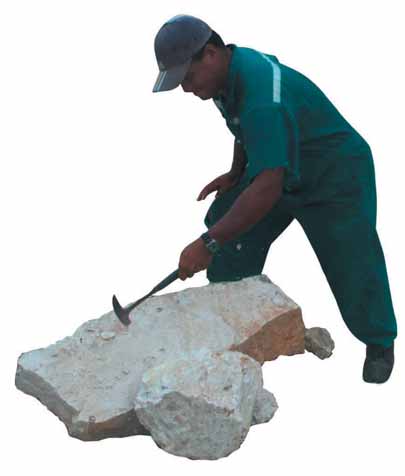
of extraction. For many PICs aggregate extraction is
within three component areas:
"mining" and though not considered as such by many,
represents a lucrative industry given the demands of the
· Resource Use Solutions.
construction industry. The following initiatives targeted at
· Monitoring Physical and Chemical Change of
better assessing the scale of marine aggregate extraction
Ecosystems.
in the region, and developing alternate solutions were
· Natural Resources Governance.
completed:
The following narrative highlights activities undertaken
· A benefi t cost assessment of marine aggregate use
which contributed to the ultimate goal of improved scientifi c
and impacts for Majuro Atoll, Republic of the Marshall
knowledge of ocean and islands ecosystems for the
Islands was undertaken with reporting expected
sustainable management of natural resources. The full
to be completed in early 2006. This is a follow-up
Ocean and Islands Programme report for the reporting
on technical assessments of marine aggregates
period September 2004 to September 2005 was presented
undertaken in Majuro Lagoon, in order to establish
to the SOPAC 34th Governing Council Annual Meeting and
a sound basis and resource economic argument for
is available from the Secretariat on request.
extraction of alternate, marine aggregate sources.
Resource Use Solutions
· Assessments of potential quarry sites for Pohnpei,
Federated States of Micronesia were undertaken
There are presently some forty-fi ve (45) shared maritime
and included the location of potential on-land quarry
boundaries between Forum Island states with only sixteen
sites, the development of guidelines for appropriate
(16) formally negotiated and three (3) ratifi ed. Twenty-six
extraction and environmental impact assessments for
(26) are yet to be negotiated. Well-negotiated and declared
quarry operations for Pohnpei. Stakeholder workshops
maritime boundaries lay the foundations for regional
on impacts of extraction were also held.
security and clarify natural resources governance for States
within their Exclusive Economic Zones (EEZ). Recent
achievements within the Regional Maritime Boundaries
initiative, under SOPAC are:
· A fully operational Pacifi c Islands Regional Maritime
Boundaries Information System (PIMBRIS). Adaptation
of MarZone and completion of two training workshops
were held, with the fi rst for participants from Solomon
Islands, Papua New Guinea, Marshall Islands, Tonga,
Vanuatu; and the second for participants from Federated
States of Micronesia, Cook Islands, Kiribati and Palau,
respectively.
· A comprehensive report outlining the status of maritime
boundaries data for Tuvalu was completed and quality
assured by Geoscience Australia. This is the fi rst
technical report to be completed outlining all boundary
data with independent validation for any Pacifi c coastal
state. Survey gaps were also assessed for all states with
the exception of Papua New Guinea, Federated States
of Micronesia, and Palau (underway); and a programme
developed to fi nalise data (including assistance and
strategy development, for acquisition of new data where
required). A joint SOPAC - Commonwealth Secretariat
Workshop for Maritime Boundaries Negotiations was
held in Apia immediately after the 34th SOPAC Governing
Council Session.
The use of marine aggregates for construction is a key
issue for many Pacifi c Island Countries (PICs), given the
Detailed fi eldwork for assessment of terrestrial aggregates in
south-western Viti Levu, Fiji.
adverse environmental impacts and unsustainable nature
7
Other key activities under the resource use solutions
the region and internationally to strengthen the PI-
component of the programme included:
GOOS alliance and the following key activities were
implemented:
· The completion of two marine surveys in the EEZ's
of Fiji (December 2004 January 2005) and the
· Promotion and further development of the SEREAD
Federated States of Micronesia (June 2005) were
ocean science education initiative for primary and
completed as part of Phase 2 of the second and
secondary schools throughout Fiji in 2006 and a more
fi nal Stage of the eighteen year long Japan-SOPAC
formal strategy for its development and introduction
Cooperative Deep-sea Minerals Programme. These
to curriculum throughout the Pacifi c region between
survey activities completed the fi eld acquisition
2006-2009.
element of the programme, with reporting expected to
be completed by March 2006.
· The design and development of the PI-GOOS Web-
portal, which has specifi c links to relevant ocean
· Transcription of petroleum exploration data held in the
datasets useful to the member countries; securing
an ocean data server to store ocean information at
SOPAC Petroleum Data Bank located at Geoscience
SOPAC, for use by member countries and mirrored at
Australia in Canberra. Following the verifi cation
the International Pacifi c Research Centre in Hawaii.
and quality checking of the re-mastered 3590 and
9-track tapes all original tapes will be destroyed. In
· The inaugural Physical Oceanography Course funded
the reporting period fi ve enquiries from exploration
by the Nippon Foundation via POGO and jointly
companies and institutions were received requesting
coordinated between POGO, USP Marine Studies and
data products for Fiji and the Solomon.
SOPAC was conducted in July 2005 at USP's Laucala
Campus in Fiji, with thirty-three Pacifi c Islanders
Monitoring Physical and Chemical Change in
participants enrolling in the course.
Ecosystems
Other major activities under this component include:
Long-term physical monitoring of ocean systems is a
prerequisite to understanding the drivers for climate
The completion of maintenance and calibration of
change and related impacts. At the time of the 34th
SEAFRAME sites of all benefi ciary States of Phase III
Session of the SOPAC Governing Council the PI-GOOS
of the South Pacifi c Sea Level and Climate Monitoring
Coordinator had completed one year of implementation of
Project. Linkages were developed with AusAID and
the PI-GOOS Strategic Plan 2005-2007. The placement
partners in the lead up to the design of a new, fourth
of the PI-GOOS Coordinator was crucial to reinforcing
phase for the project.
existing and developing new partnerships throughout
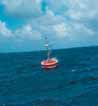
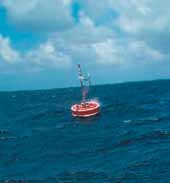
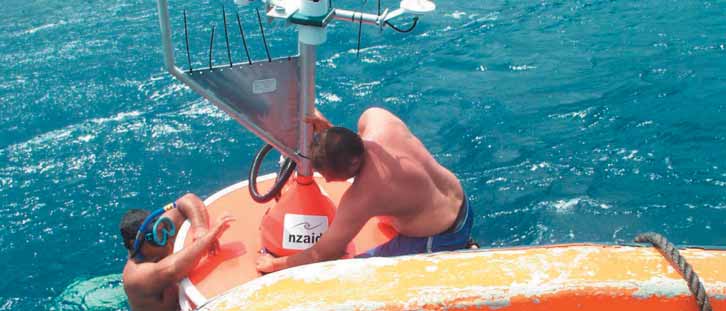
Deployment of a Sound Ocean Systems Inc water quality monitoring buoy in Manihiki Lagoon funded by bilateral NZAID to the Cooks
Islands and installed and monitored by the SOPAC OI programme.
8
It is envisaged that Phase IV will commence in January
In the reporting period, a joint Commonwealth
2006 with management of the project moving from
Secretariat, United Nations Offi ce of Legal Affairs/Division
AMSAT to the Bureau of Meteorology, Australia.
for Ocean Affairs and the Law of the Sea, SOPAC and
Commonwealth Secretariat technical training course on
The collection of various long-term sustained ocean and
the Delineation of the Outer Limits of the Continental
meteorological data in real-time from monitoring buoys in
Shelf Beyond 200 M Limit was held at the Lagoon Resort,
the Penryhn and Manihiki Lagoons in the Cook Islands
Fiji, from 28 February to 5 March 2005. This was the fi rst
continued throughout the year, with the maintenance and
of two workshops on this subject. The 2nd was convened
recalibration of monitoring buoys being completed in late
by the Japan Hydrographic Department, in Tokyo in June
2005.
2005.
Other activities in the Cook Islands included reporting
Linkages were developed with UNEP-GRID ARENDAL
on an assessment survey of port areas, harbours
(Norway) on ways to progress a regional desktop study.
and adjacent coastal areas of Rarotonga, to provide
In this process a regional scanning phase was completed.
development options to Government, as well as on
A working group of offi cials from Pacifi c coastal States
an assessment of the physical impacts of a proposed
met in February to consider progress of the SOPAC
tourism project to dredge the lagoon in the O'otu area of
Maritime Boundaries initiative and to develop a strategy
Aitutaki Lagoon.
to mobilise resources to complete their national desktop
assessments. Efforts and advocacy over the past several
Geophysical surveys were completed for the Rewa,
years has resulted in a larger group of countries (Tonga,
Navua and Sigatoka Rivers located on Viti Levu, Fiji.
Fiji and Papua New Guinea) engaging in the process of
Processed data, GIS, map and information products
achieving desktop studies through bilateral or national
enabling assessment of impacts of dredging and
means. SOPAC continues to play a key facilitation and
sedimentation for each of the mentioned rivers, with
technical support role. Discussions commenced with
recommendations for future planning and management
AusAID in order to access technical expertise contained
decisions was prepared.
within Geoscience Australia to provide quality assurance
of desktop studies as they are completed.
Natural Resources Governance:
Under Article 76 of United Nations Convention on the Law
of the Sea, some Pacifi c coastal States have, until May
2009, the potential to prepare and submit a claim for an
extended Continental Shelf beyond 200 M to the United
Nations Commission on the Limits of the Continental
Shelf. Given the timeline and the technical complexities
for submissions, this remains a pressing issue for
Federated States of Micronesia, Fiji, Papua New Guinea,
Palau, Solomon Islands, Tonga and Vanuatu as the 2009
deadline draws nearer. Potential benefi ts are real as a
successful claim to an extended outer shelf could result in
a Pacifi c Coastal State gaining resource jurisdiction over
a greater area of the seafl oor and its subsoil, beyond the
current 200 M EEZ limit.
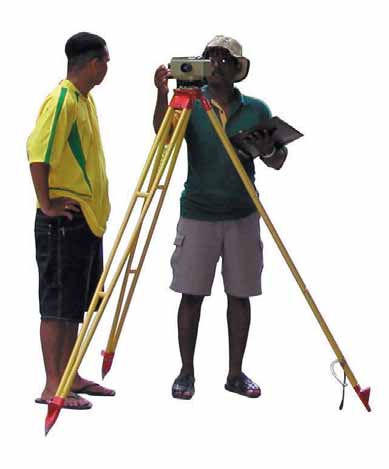
Levelling survey in Cook Islands.
9
Maritime boundaries not a simple
was established, with assistance from the
feature definitions as the Australian data
drawing of lines
Australian Government to respond to this
collation system, AMBIS, managed by
pressing regional issue. The PIRMBP is a
Geoscience Australia. Geoscience Australia
The need to determine EEZ boundaries
mechanism to ensure regional consistency
is the lead organisation providing assistance
between zones of neighbouring countries
in terms of the relevant technical data; as
in this area to SOPAC member countries.
where the potential maritime zones overlap
well as support capacity building within
was identified in the 1990s as a significant
the country to better define maritime and
Maritime data and information collated within
issue for coastal States to attend to. All
extended continental shelf boundaries
PIRMBIS for each country (supported by
SOPAC island member countries are
under the provisions of UNCLOS. PICs are
databases held at SOPAC) then form the
coastal States that have the bulk of their
given technical assistance to complete the
basis for negotiations between sovereign
wealth and health generated from the
determination of baselines for defining their
states, concerning shared boundaries. It is
vast expanse of ocean that in some cases
territorial and archipelagic seas, contiguous
at this pre-negotiation stage, that PICs need
outstrips their land areas by ratios as high
zones and EEZs.
to form multi-disciplinary teams to ensure the
as 100 to 1. Therefore, properly delineated
best outcomes are negotiated.
and defendable maritime boundaries are a
Output includes the complete computations
sovereignty issue. The absence of agreed
of all boundaries including medians,
The Commonwealth Secretariat supported
maritime boundaries, both binding in
using state-of-the-art maritime boundaries
international law, and reflected in domestic
a regional workshop in October 2005 to
delimitation software. Quality checks of data
legislation, has the potential to give rise to
address this need for multi-disciplinary
are undertaken and map outputs produced
disputes with neighbouring countries over
participation from countries at negotiation
showing the various computed maritime
the ownership of resources either in the
but more nationally focussed training will
zones. Comprehensive country reports
shorter or the longer term.
be needed.
detailing the procedures and the maritime
boundaries information for each country are
The United Nations Convention on the
produced. National counterparts are also
SOPAC's role in boundary delimitation is
Law of the Sea (UNCLOS) sets out the
trained in data acquisition, assessment,
mainly one of facilitation to sovereign states
international legal framework within which
analysis and maritime boundary definition.
within its membership. This facilitation role
all activities in the oceans and seas must
while being regionally implemented through
be carried out. For Pacific coastal states,
A key output of the PIRMBP was establishing
mechanisms such as the PIRMB and other
UNCLOS promises exclusive jurisdiction
the Pacific Islands Regional Maritime
projects; can also be delivered nationally
over the living and non-living resources of
Boundaries Information System (PIRMBIS)
depending a member-country's stated
the adjacent water column, seabed and
containing all baseline and maritime
specific need and request for assistance.
subsoil to a minimum of 200 nautical miles
boundaries data and information that is 1)
from the coast, or to seabed boundaries
updateable; 2) accessible to query; and
A snapshot of the status (as at 30
agreed with neighbouring countries;
3) compliant with UNCLOS. SOPAC and
September 2005) of SOPAC member
however, all sovereign rights claims over
Geoscience Australia established PIRMBIS
states that are party to UNCLOS, with
areas of ocean space must be based
in 2003, to collate regional coverage of
ratification dates and their potential claim to
upon sound technical data and must
the maritime limits of PICs. PIRMBIS was
an extended continental shelf are tabulated
satisfy requirements prescribed within the
designed with similar specifications and
below.
UNCLOS.
List of SOPAC Member States that are Party to UNCLOS, with Ratification Dates and their Potential
Also, under Article 76 of the UNCLOS,
to Claim an Extended Continental Shelf.
coastal states can establish outer limits of
the legal continental shelf up to 350 nautical
Pacific coastal
UNCLOS Ratified
Potential for
Revised and (Original)
miles from the baselines, and within the
State (PICS)
Continental Shelf
Deadlines for Claim Submission
provisions of the Convention, claimant
Extension (CSE)
to CLCS
states have to submit particulars (inclusive
of supportive scientific and technical data) of
Australia
5 October 1994
YES
13 May 2009 (16 November 2004)
the outer limits of its continental shelf beyond
Cook Islands
15 February 1995
NO
the 200 nautical mile boundary by 13 May
2009.
Federated
29 April 1991
YES
13 May 2009 (16 November 2004)
States of
Micronesia
While the extended continental shelf issues,
with a fixed deadline of 13 May 2009 acts as
Fiji
10 December 1982
YES
13 May 2009 (16 November 2004)
an incentive for some states to move forward
Guam
on formalising submissions for territorial
seas, the same cannot be said for normal
Kiribati
24 February 2003
YES***
26 March 2013
boundary agreements. There are presently
Marshall Islands
9 August 1991
NO
about forty-five (45) shared boundaries
Nauru
23 January 1996
NO
between Pacific island states with sixteen
(16) formally negotiated and only three
New Zealand
19 July 1996
YES
(3) ratified. Twenty-six (26) are yet to be
Niue*
NO
negotiated.
Palau
30 September
YES***
13 MaY 2009
1996
The following constraints, to a greater or
lesser extent, true in most SOPAC member
Papua New
14 January 1997
YES
13 May 2009 (14 January 2007)
countries, are some of the contributing
Guinea
factors to the poor state of resolution on
Samoa
14 August 1995
NO
these boundary issues:
Solomon Islands
23 June 1997
YES
13 May 2009 (23 June 2007)
·
limited financial resources;
Tonga
2 August 1995
YES
13 May 2009 (2 August 2005)
·
lack of technical capability and capacity
Tuvalu
9 December 2002
YES***
8 January 2013
in-country;
Vanuatu
10 August 1999
YES
13 May 2009
·
limited man-power resources; and
·
the need to coordinate multi-disciplinary
*
PICS that have signed UNCLOS only but yet to ratify
boundary delimitation teams in country.
**
The Decision (SPLOS/72) of the States Parties to the Law of the Sea extends the deadline for submissions to the CLCS until 13 May
2009, for those States who ratified the Convention prior to 13 May 1999. 13 May 1999, being the date of adoption by the CLCS of its
The Pacific Islands Regional Maritime
Science and Technical Guidelines, for submissions in accordance with article 76, paragraph 8 of the Convention. For those states that
ratified after 13th May 1999, the 10 year period start from the day the Convention has entered into force for them (which is on the 30th
Delimitation Boundaries Project (PIRMBP)
day following date of ratification or accession, as stated in Article 308 of the Convention).
*** These countries have the potential to claim for extended Continental Shelf according to the UNEP scanning assessment report.
10
(UNEP Shelf Programme 2005).









Community Lifelines
The overall goal of the Community Lifelines Programme
Work in the biofuels sector increased signifi cantly within
(CLP) is "improved community access to energy, water
the period with the following three key activities being
and sanitation, and information and communication
undertaken:
technologies for sustainable livelihoods." This is carried
out through the following three key component areas of:
· Convening of a national workshop in Fiji and a sub-
regional workshop in Vanuatu as a means towards
· Resources Assessment, Development and
developing a regional strategy and providing future
Management.
directions with regard to progressing biofuel initiatives
· Asset
Management.
in the region, with an emphasis on the use of coconut
· Community Lifelines Governance and Advocacy.
oil.
The key issue and challenge for the Community Lifelines
· Carrying out a feasibility study on the use of coconut
Programme is to integrate implementation of our activities
oil as a substitute fuel for electricity generation in
under three very distinct utility-focused sectors of energy,
Samoa.
water and information and communication technologies.
The full Community Lifelines Programme report for the
· Coordinating the implementation of a UNDP-funded
reporting period September 2004 to September 2005 was
study on biofuels as the key component in a Fiji
presented to the SOPAC 34th Governing Council Annual
Resilience Building Project.
Meeting and is available from the Secretariat on request.
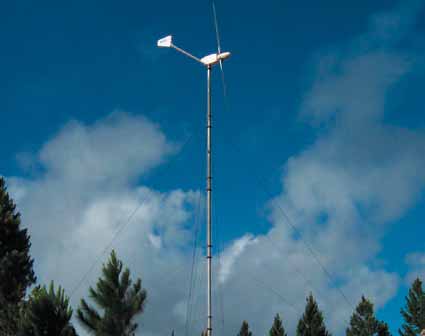
The 20-kW demonstration wind turbine installed as part
Adopted regional policies and guidelines continue to be
of the Wind Energy Education Programme completed
pivotal in guiding the work of the programme both within
12 months of operation and the turbine was offi cially
the region and in addressing global agendas, for example
handed over to the University of the South Pacifi c and
the multi-year programme of work of the Commission
forms an integral part of USP's post-graduate courses
of Sustainable Development (CSD), which focused on
in wind energy. Aside from the formal educational
water, sanitation and human settlements in 2004-2005
value of the wind turbine, the wind turbine has also
(CSD12 & 13), and the thematic cluster of energy for
attracted site visits from other interested parties such
sustainable development; industrial development; air
as primary and secondary school children. A training of
pollution / atmosphere; and climate change in 2006-
trainers' workshop was convened in March 2005, with
2007 (CSD14 & 15). Funding opportunities that were
a sub-regional workshop on wind energy being held in
realized under CSD12 & 13 included the development
November 2005 marking the completion of the project
of a framework for programmes and activities to be
activities.
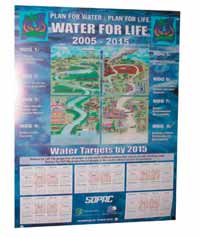
implemented during the "Water for Life Decade" from
2005 to 2015, in an attempt to meet the Millennium
Site-specifi c wave energy monitoring continued in Fiji with
Development Goals (MDG) Targets on Water and
the data logger being relocated by the Fiji Department
Sanitation. Compilation of a regional position paper that
of Energy to a new site. A second submerged data
will specifi cally address energy issues for submission
logger purchased by SOPAC was deployed in the Cook
into the CSD14 & 15 process commenced during this
Islands at a site previously identifi ed to have the highest
reporting period.
wave energy potential. Results from the monitoring
observed at Fiji and Cook Islands confi rm earlier wave
Resource Assessment, Development and
energy resources assessments, which is encouraging.
Management
Any further development of the region's wave energy
The gloomy outlook of rising fuel costs in the global
market provides the impetus to drive towards identifying
alternative sources of energy and renewable energy
options in the Pacifi c region.
In this regard a biomass resource assessment proposal
has been redrafted for submission to the Food and
Agriculture Organization (UN). Aside from the energy
aspect of biomass being recognised and promoted, the
agricultural component and the sustainable development
dimensions of the initiative have also been elaborated.
Water for Life poster and calendar.
11
The outcomes of the Catchments and Communities
Project implemented in Vanuatu with the assistance of
SOPAC, resulted in the selection by UNESCO of one
of the Vanuatu catchments as an offi cial `Hydrology for
the Environment, Life and Policy' or HELP Basin. The
HELP basins are providing models of good practice in
catchment management.
World Water Day 2005 celebrations raised awareness
on water and sanitation under the theme `Water for Life'.
This also marked the start of the Water for Life Decade
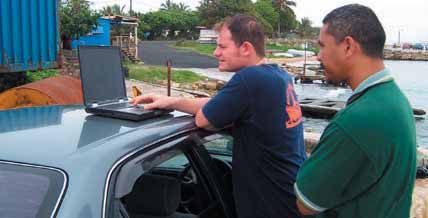
Analysing data from wave gauge, Cook Islands.
(2005-2015). Activities jointly implemented by SOPAC
and Live and Learn Environmental Education, included
resources will primarily be dependent on the availability of the provision of assistance in the development of teacher
a commercially-proven technology.
training and water education and awareness materials for
schools.
Other activities in renewable energy include the
convening of a sub-regional workshop on wind energy
Asset Management
in the Cook Islands and a solar PV workshop held in
Tonga as activities of the `Sustainable Use of Renewable
Following the appointment of a Water Engineer, the
Energy Project' or SURE Project. SOPAC also assisted
programme on water demand management included in-
the UNESCAP Bangkok Offi ce in fi nalising the `Pacifi c
country training and capacity building for water utilities in
Renewable Energy Training Initiative (PRETI)' Project
Niue and the Cook Islands in partnership with UNESCO.
proposal. The detailed project proposal was fi nalised and
Efforts were made to develop a regional water demand
presented at a donor consultation meeting in November
management proposal as a partnership initiative with
2005.
Pacifi c Water Association (PWA) for consideration by
NZAID.
The second year of a three-year hydrological training
programme funded through NZAID was conducted. The
A joint SOPAC-WHO proposal on Water Safety Plans was
programme was established as a Water Partnership
also developed in response to the `Pacifi c Drinking Water
Initiative and implemented with WMO, UNESCO and
Quality and Health Framework for Action'. Implementation
NIWA as contribution to the implementation of the Pacifi c
funds were subsequently approved by AusAID.
Regional Action Plan on Sustainable Water Management.
In conjunction with the Global Programme for Action
Following the appointment of a Water Quality Offi cer as
(GPA-UNEP), SOPAC, SPREP and IAS USP
a shared position with the Institute of Applied Sciences of
commenced the development of a regional training
the University of the South Pacifi c (IAS-USP) the regional
course on wastewater management to be implemented
programme on water quality monitoring and database
development resumed with training provided in Niue. A
regional water quality-monitoring proposal was developed
as a partnership initiative with WHO and IAS-USP for
consideration by NZAID which has subsequently been
funded.
Final products from the SIDA-funded Rainwater
Harvesting Demonstration Project were disseminated
throughout the Pacifi c region to promote rainwater
harvesting as a source for domestic water supply.
The products developed by SOPAC, UNEP and the
Tonga Community Development Trust, included a set
of Guidelines, a Manual and a Demonstration Video
on rainwater harvesting. UNEP also invited SOPAC to
become a founding member of a Rainwater Harvesting
Partnership.
Wind turbine, Mangaia, Cook Islands.
12
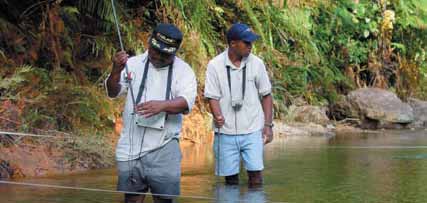
Contributions to the Pacifi c preparations for the 4th World
Water Forum were submitted to the Japan Water Forum,
which assumed a lead role for the Asia-Pacifi c region.
A Pacifi c position paper outlining the region's progress
since the 3rd World Water Forum was presented at the
2005 STAR Water Working Group meeting during the
SOPAC 34th Session and was subsequently submitted to
the 4th WWF Secretariat.
Pacifi c delegations were supported by SOPAC in their
attendance at CSD13, which focused on water and
River gauging in Naboro, Fiji Islands.
sanitation policy development and action implementation.
Ocean Institute (IOI), GPA and UNESCO-IHE (Institute of
A Pacifi c brief was provided for the report of the UN
Water Education).
Secretary-General to CSD13 on water and sanitation
issues and strategic responses in the Pacifi c Island
Climate information to water, energy and disaster
region.
managers continued to be provided under the NZAID-
funded Pacifi c Island Climate Update (ICU) bulletin in
The Pacifi c Programme for Water Governance funded
close cooperation with NIWA.
by the European Union Water Initiative commenced in
Fiji, Kiribati and the Solomon Islands. The programme
With funding support from the Asian Development
will see the establishment of a consultation process and
Bank, SOPAC established the Pacifi c Water & Climate
subsequent development of critical institutional building
Resource Centre. It's primary function being to ensure
blocks such as a National Water Committees and Policies
the wide dissemination of information on successful
in the mentioned countries.
applications of climate information in the water sector as
a follow-up to the Pacifi c Dialogue on Water and Climate.
The review and publication of the Pacifi c Islands Energy
Policy (PIEP), including the preparation of a companion
Community Lifelines Governance and Advocacy
Pacifi c Islands Energy Strategic Action Plan (PIESAP)
was concluded through the CROP Energy Working
The Pacifi c Energy and Gender (PEG) Network, since its
Group in consultation with Energy Offi cers / Offi cials
establishment in 2003, has been engaged in developing
from Pacifi c Island Countries (PICs). Assistance in the
awareness and advocacy activities, with linkages and
development and review of national energy policies, and
support from ENERGIA, the Asia Gender and Energy
strategic action plans continued under the Pacifi c Islands
Network, Netherlands Government through the Technical
Energy Policy and Strategic Action Planning (PIEPSAP)
Centre for Agricultural and Rural Co-operation (CTA)
programme funded by the Danish Government. PIEPSAP
being further strengthened during this reporting period.
also supported a number of other energy sector initiatives
In December 2005 PEG convened a Regional Meeting
including an extensive consultation that identifi ed wind
in Nadi, Fiji that endorsed the PEG Strategic Action
energy development as a priority in the Cook Islands
Plan and Terms of Reference. PEG was also part of the
Energy Action Plan (CIEAP); co-fi nancing of a power
CSD14 & 15 preparatory meetings concluding with a
utility tariff study, with the US Department of Insular
PEG submission through the Pacifi c Energy Background
Affairs and the Pohnpei Power Utility; a review of the
paper and the ENERGIA side event during the CSD14
electricity sector legislation in the Solomon Islands
proper.
with the aim to develop an innovative framework for
accelerated rural electrifi cation; and the establishment
The Asian Development Bank supported the
of a full scale GIS/MIS system for the Tuvalu Electricity
establishment of a Coordination Unit for the Pacifi c
Corporation (TEC).
Partnership Initiative on Sustainable Water Management
that seeks to promote and monitor implementation of
With respect to ICT advocacy issues the Secretariat
priority actions of the Pacifi c Regional Action Plan on
actively contributed to the development of a digital
Sustainable Water Management through a partnership
strategy for inclusion into the Pacifi c Plan, as well as
newsletter, website, action inventory matrix and
providing direct funding and technical support and
database. A SOPAC Water and Sanitation Strategy was
advisory at the Asia-Pacifi c conference of the World
also developed for the period 2005-2009 building on
Summit on the Information Society (WSIS) which was
the outcomes of the regional consultation, the Pacifi c
considered an important platform for promoting initiatives
Regional Action Plan and associated Partnership
and addressing the communication and information
Initiative.
needs of the region.
13
Resources Network addressed this very
the country's interest in the opinions of
dilemma. The advice basically warned
economists on the viability of coconut
that there was scarcity directly ahead in
oil, as an alternative to imported diesel is
the industry that had to be prepared for.
purely academic. The country has chosen
They pointed out that oil would no longer
coconut oil to replace diesel research
be cheap, going to the highest bidders in
and economics will have to catch up to
the future; therefore they advised limiting
this decision and revitalising the copra
the growth of cities onto agricultural
industry has become top priority in Samoa.
lands, encouraging agricultural activities,
maintaining cultural roots and beginning
The drive towards renewables by Pacific
to farm oceans. The fact that all oil comes
from a hole in the ground => ground
states is not an option among an array
being a constant surface area => more
of options the very survival of Pacific
people being born to inhabit this constant small-scale economies depends upon
surface area and the length of time it
it. It therefore seems logical that the
takes for an oil field to gestate logically
Pacific will look to what are plentiful (or
concludes that scarcity is ahead and that
has the potential to become plentiful)
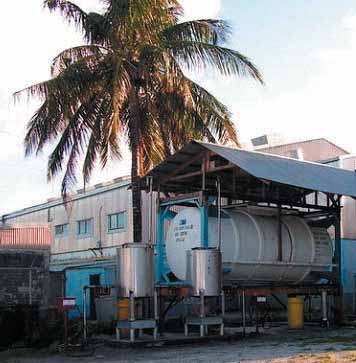
Coconut oil fuelling station in the Republic
of the Marshall Islands
it would be prudent for the Pacific to not
and perpetual indigenous resources for
pursue an industrial lifestyle as an ideal.
exploitation and expend effort to raise
Pacific drives to replace imported
In the medium-term these experts also
the cash to enable this exploitation.
diesel
encouraged continuing oil exploration,
Research and economics have therefore
although it would be for those who can
been provided with a context within which
Pacific island states have decided to
afford it to come to explore, discover and
solutions are to be found or risk being
break the stranglehold of dependence on
exploit it.
ignored. If the 2005 Samoan and Fijian
imported oil or be broken by it.
activities in renewables are anything to go
Against that backdrop Samoa and
by, the Pacific will bite the bullet to invest
Pacific island states are currently
Fiji lead a late charge into the field
in the research and technology needed
dependent on the import of diesel fuel
of renewables, especially biodiesel
to make the change, which they have
for a significant part of their power
generation through local plant resources.
been driven to make. Therefore building
generation needs.
In 2005 Fiji's Electricity Authority declared in-country capacity to raise the quality and
Samoa's Electricity Power Corporation
its intentions to be completely renewable
quantity of locally produced alternative
(EPC) and Fiji's Electricity Authority
by the year 2012. This intention has been fuels is a logical activity to preoccupy
are among other Pacific state utilities
labelled "ambitious" by some quarters
island governments and their energy
that have been superactive in the past
but scarce investment dollars are
advisers.
few years, looking into alternatives for
already being diverted into researching
diesel generation and their attention
alternatives and laying down policy and
The donor community has been more than
is understandably drawn to biodiesel
infrastructure for a number of new power
forthcoming in its support of the region's
generation from locally-available plants
generation projects by government and
efforts at studying and testing renewable
like coconut, cane and cassava.
private entities. It is the way of the future
alternatives to imported oil. A number of
and there seems to have been no delay
regional projects are in the offing from
The desire for resilience in local
in forging ahead with plans.
the European Union and various UN
fuel supply is continually fanned by
agencies and an even greater number and
constantly increasing fuel bills. The
Samoa continued in 2005 with
impetus through bilateral arrangements.
heavy dependence on international
experimentation using various coconut
In Fiji, Government projects are funded
oil companies who can leave if their
oil/diesel blends in one of its diesel
profits are not high enough has become
generators. SOPAC was involved in a
by a combination of soft loans from
decidedly unpalatable to cash-strapped
feasibility study for which funding was
organizations like the Asian Development
Pacific economies.
secured in late 2004. The feasibility
Bank or through grant assistance from
study found that local production of
the European Union and from individual
Specially-formulated and trustworthy
coconut oil is currently three times the
governments like France and Denmark.
advice in 2003 by scientists long
cost of imported diesel and that supply
Samoa's close association with UNDP-
associated with the oil industry that are
is unreliable at best, therefore it was
Samoa has greatly assisted its efforts in
also in free association with SOPAC
not an economic option. However, lively
fast-tracking the replacement of imported
through its Science, Technology and
debate in Samoa seems to suggest that
diesel oil with locally produced coconut oil.
14
Community Risk
The Community Risk Programme (CRP) provides a range Secretariat also coordinated regional attendance to
of capacity building support to SOPAC member countries
the Kobe conference and provided both technical and
through the following three, key components areas of:
administrative support to the Pacifi c delegation at the
conference. Fifty (50) delegates representing most
· Strengthening Resilience to Disasters.
SOPAC member countries attended the Conference
· Mitigating the Effects of Hazards.
and a number of country statements were issued. A
· Mainstreaming Disaster Risk Management.
regional debrief, chaired by Dr Langi Kavaliku who led
the SOPAC delegation, was held in Suva following the
The following narrative highlights activities undertaken
Kobe conference to discuss the outcome and to map
in 2005, which supported the successful delivery of the
out a strategy to fi nalise the Pacifi c Regional Framework
programmed outputs for the year. The full Community
for Action 2005-2015 on Disaster Risk Reduction and
Risk Programme report for the reporting period
Disaster Management.
September 2004 to September 2005 was presented to
the SOPAC 34th Governing Council Annual Meeting and
The emergency management coordination and
is available from the Secretariat on request.
communication systems in Niue, Tonga and Tuvalu were
strengthened through funds provided by Emergency
Strengthening Resilience to Disasters
Management Australia (EMA) for equipment and
resources. This included equipment to fully resource the
The Pacifi c Islands Regional Progress Report (1994-
emergency operations centres in Tonga and Niue, the
2004), as part of the review of the Yokohama Strategy
supply of satellite telephones for all nine Tuvalu atolls
and Plan of Action, was completed and published.
and installation of Barrett radios in all Vanuatu provinces.
This document provided an important reference point
This important regional initiative is critical to improving
on the progress made by the region relative to the
the ability of the NDMO to effectively communicate
Yokohama Plan of Action and the lessons learned have
and coordinate during the response stage of national
helped shape the priorities identifi ed in the draft Pacifi c
disasters.
Framework for Action 2005-2015 (see Mainstreaming
Disaster Risk Management section below). The Pacifi c
A Tsunami Information Kit was developed in partnership
was the only region in the world to fully document its
with the Pacifi c Disaster Center (PDC) to strengthen
progress since 1995 and this was acknowledged at
resilience to tsunami-related hazards in the region.
the Second World Conference on Disaster Reduction
Member countries involved in the development of the
convened in January 2005 in Kobe, Japan. The
kit were Fiji, Papua New Guinea and Vanuatu. The kit
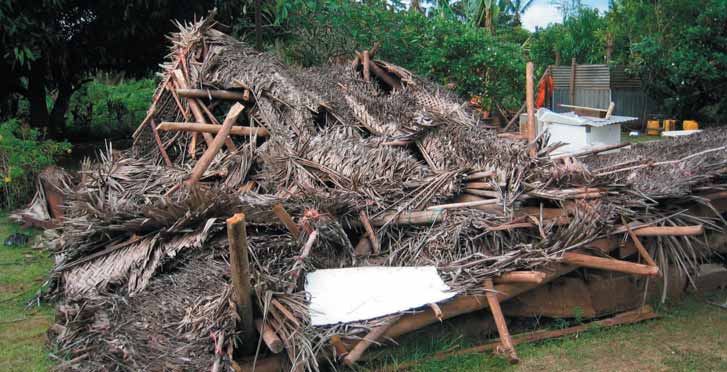
Cooks original housing after Cyclone Olaf.
15
To assist the process of building safer and more resilient
communities the Secretariat continued to provide
institutional and technical assistance to the fi re services
in member countries through a partnership with the
Australasian Fire Authorities Council (AFAC). A major
initiative under this partnership was the attendance of
representatives from the Cook Islands, Fiji, Kiribati,
Marshall Islands, Nauru, Niue, Papua New Guinea,
Samoa, Tonga, Tuvalu and Vanuatu to the AFAC annual
meeting and conference in Auckland where a decision
was made to establish a Pacifi c Islands Fire Service
Association to encourage greater collaboration and
cooperation within the region.
The regional training programme continued to strengthen
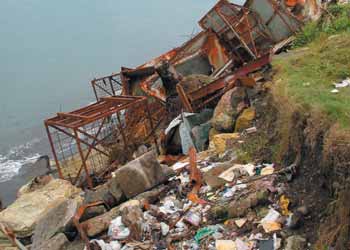
Coastal erosion in Lae Papua New Guinea.
regional and national capacity with disaster management
courses conducted in the Marshall Islands, Tonga,
caters for different target audiences, namely Government
Federated States of Micronesia, Cook Islands, Fiji
offi cials, technical agencies, communities, the
and the Solomon Islands. SOPAC, together with the
educational system and the private sector. This tool was
Asia Disaster Preparedness Centre conducted the fi rst
developed as an outcome of the 2004 regional tsunami
Community Based Disaster Risk Management course in
workshop and will greatly assist member countries that
Fiji, which is currently being adapted for national delivery.
are at risk from tsunami hazards.
Mitigating the Effects of Hazards
Technical assistance was provided by the Secretariat
to assist national disaster management capacity
The development of the global Environmental
building in association with World Bank projects
Vulnerability Index (EVI) was completed and presented
in Tonga and Samoa. This included conducting a
to the International Meeting of Small Islands Developing
review of the NDMO staffi ng arrangements in Tonga
States at the BP+10 in Mauritius in January 2005.
and, attending the stakeholder workshops for the
This included a technical review of the global EVI via a
development of the national plan and new Legislation
second Think Tank meeting, which included partnership
in Samoa. In partnership with the Asian Development
and participation of international vulnerability and
Bank the Secretariat provided technical advisory for the
indicator experts. An EVI website has been established
strengthening of disaster management and mitigation in
and diagnostic reports for member countries have been
the Cook Islands. This has resulted in the development
produced. The focus now is on the application of the tool
of a draft National Disaster Risk Management Plan and
or parts thereof in member countries via strengthening
supporting Legislation aligned to the Pacifi c Regional
the regional capacity in the use of the tool.
Framework for Action and a revised Cyclone Response
Plan. In the Marshall Islands, the Secretariat assisted
Post-disaster technical assistance to the Cook Islands
government in revising the Standard Mitigation Plan to
was provided following the impact of a series of cyclones
meet the requirements set by FEMA. A revised plan was
in early 2005. To ensure that the lessons learned are
submitted and approved in 2005.
documented a methodology to assess and analyse
impacts needs to be developed and personnel trained in
The Leadership skills of the NDMOs were strengthened
its use. Technical teams also need to be mobilised as
through their participation as part of the East West
soon as logistically possible after an event. To improve
Center Leadership Development Programme in
the timeliness and quality of post-disaster technical
Honolulu. This programme targeted a number of key
assistance in the region the Secretariat assisted with
areas of leadership development and management
the drafting of a paper for a broader CROP mechanism
skills and will greatly assist the process of disaster
that will be presented for discussion by the Leaders in
management coordination and planning at the national
October.
level. This programme was part of a broader leadership
development programme that also targeted the energy
A comprehensive GIS baseline database, including
and water managers in an effort to strengthen national
census data, has been developed for Lae, Papua New
synergies towards improved disaster management,
Guinea and it is intended that Planners and Disaster
planning and decision-making.
Centre offi cers at the national level will be trained in
using the database, together with a wide range of
16





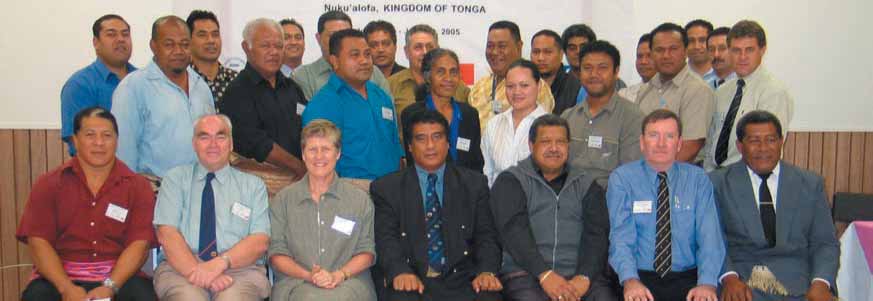
Emergency Operations Centre course, Tonga.
stakeholders in Lae. The main objective is to allow for
developed. This was the culmination of two years of
disaster risk reduction measures to be implemented in
review and consultation with all stakeholders and has
various sectors at the local level, based on the most
provided a strategic roadmap for the member countries
current scientifi c and technical data available. These
to mainstream disaster risk reduction and disaster
measures will in turn benefi t the communities in and
management over the next decade. The purpose of
around Lae with respect to the hazards that have the
the framework is to accelerate the mainstreaming of
potential to turn into disasters because of the high
disaster risk reduction (prevention and mitigation) and
vulnerability of the area.
disaster management (preparedness, response and
recovery) by national governments. Mainstreaming could
Hazard-related technical studies are being carried out
be fast tracked through policies, plans and programmes
by the SOPAC-EU Reducing Vulnerability of Pacifi c
designed to reduce the short- and long-term social
ACP States project and include: landslide assessments;
(including health and security); as well as economic and
active tectonics and earthquake hazard evaluation in
environmental consequences of disasters consequently
Fiji; fl ood modelling in Samoa; multihazard mapping
strengthening sustainable development planning.
in Vanuatu and a review of Vanuatu policy and
institutional assessment of the proposed Integrated
In partnership with the University of the South Pacifi c
Coastal Management Process and Plan for Mele Bay;
and supported by funding from Australia the Secretariat
sedimentation studies and tsunami hazard assessment
contributed to a research project that examined the
in Papua New Guinea; and, coastal hazard assessments
economic impacts of natural disasters on development.
in Kiribati and Tuvalu. Geographical Information Systems
Specifi cally the research consisted of case studies in Fiji,
(GIS) is used extensively to integrate fi eld-collected data,
Niue, Tuvalu and Vanuatu, with the primary objectives
remote sensed data from satellite imagery and aerial
being to assess the economic impacts of natural
photography and existing data such as topography.
disasters over the past 20 years, develop a framework
The data and information collected and produced are
for assessing future impacts, examine the principle
ultimately uploaded to the MapServer of the country of
that a greater emphasis on disaster risk management
study and is made readily available to decision-makers
will reduce costs and construct a model for assessing
via the Internet. The database and the MapServers are
relative effectiveness and the benefi t-cost ratio of various
one platform whereby Information and Communication
disaster risk management measures.
Technologies can facilitate the decision-making process
by making relevant, current disaster risk reduction and
disaster management information available.
Mainstreaming Disaster Risk Management
To support the outcomes of the Second World
Conference on Disaster Reduction and to contribute
to the process of building safer and more resilient
Pacifi c island nations and communities to disasters,
a draft Pacifi c Framework for Action 2005-2015 was
Framework for Action 2005 2015.
17

The Global Environmental Vulnerability Index (EVI) Completed
The Environmental Vulnerability Index is
of the effects of economy, society and
Reservations that had been expressed
a tool designed to provide an estimate of
natural phenomena on the persistence of
by a handful of countries after the fi rst
the vulnerability of a locality via a series
natural environments. This is an important international presentation of the EVI have
of fi fty indicators that were developed by
omission because factors that affect the
been taken into account, for example,
a partnership involving Ireland, Italy, New
integrity of the natural environment will
a sub-index for Climate Change was
Zealand, Norway, UNEP and SOPAC.
affect the welfare of human systems,
designed to identify environmental risks
which are fundamentally dependent
and monitor how rapidly climate change
The tool was developed in collaboration
on them. The EVI is a contribution to
impacts are affecting a country. At national
with the Alliance of Small Island
addressing this gap by widening an
level the EVI can also be used as a tool
Developing States (AOSIS) and the
understanding of the issues and impacts
for setting priorities for environmental
experts and institutions of Small Island
of the social and economic forces on the
remedial action, as the indicators have
Developing States, given that the impetus environment.
been designed to capture short-term
behind the development of the EVI was
trends, changes and improvements (5-
the move within the UN system to raise
The second and fi nal Think Tank
year scale).
the ranking of certain small island states
meeting to assemble a small group of
up the human and economic development internationally recognised scientists to
The minimum data requirement for
ladder. AOSIS resisted the proposed
examine the EVI was held in October
calculating a valid EVI classifi cation score
development status change arguing
2004. The Think Tank II peer review
for any country was set at greater than
that due consideration should be given
and commentary pronounced the EVI
80%. SOPAC member countries with more
to the unique case of some SIDS with
"suffi ciently well-developed to begin
than 80% data available are placed below
their geographic isolation, fragility of
national implementation. Within limitations under the category their EVI score falls
environment and smallness; and pushing
of available data, it successfully captures
into.
for greater awareness of the key elements the nature and scope of environmental
of vulnerability. As part of the Barbados
vulnerability. It is quantitatively robust and Finally, the EVI needs an international
Programme of Action (BPoA), the United
highly relevant to policy at national and
organization to be responsible for
Nations responded in 1994 by calling
international levels." Countries could now
its continuing development and
for the development of a composite
trial the index and test it under various
implementation. Overtures to premier
vulnerability index that included economic, national conditions to determine how well
global and regional environmental
social and ecological components of
it defi nes their vulnerability and meets their organizations have met with minimal
vulnerabilities in the SIDS countries
national objectives. With respect to the
traction, however this should not prevent
original United Nations call in 1994, the
any country from applying the tool to
Most of the work prior to the development EVI, according to the experts, captures
manage their vulnerability, to protect or
of the EVI has focused on the impacts of
the environmental vulnerability of SIDS
build up its resilience, to report on such
the environment or environmental hazards and emphasises their ecological fragility.
international processes such as the
on economies and society. Relationships
The EVI meets the BPoA requirements
Millennium Development Goals and the
between and within societies and
for the environmental area, but needs
state of their environment.
economies have also been well
to be complemented by economic and
researched. The area that has received
social vulnerability indices for a complete
The home of the EVI on the world-wide
little attention in the past has been that
measure of a country's vulnerability.
web is http://www.vulnerabilityindex.net.
Extremely
Highly
Vulnerable
At Risk
Resilient
Vulnerable
Vulnerable
Cook Islands
Fiji
New Zealand
Australia
[None]
Kiribatti
Marshall Islands
Solomon Islands
Papua New Guinea
Vanuatu
18
SOP
SO A
SOP C-EU Pr
A
SOP C-E
PA -E
C
PA
EU
EU P
U Pr
Project
oj
ojec
oje
The following activities are highlights of the SOPAC/EU
Reducing Vulnerability of Pacifi c ACP States project for
this reporting period and are refl ected under each of the
key technical programme areas of SOPAC:
Ocean and Islands Programme
Under Key Result Area 1 of the EU Project: Sustainable
development of coastal zones, in particular through
identifying alternative sources of aggregates:
A marine swath mapping survey to acquire data within
Tuvalu's EEZ was completed at the end of 2004, with
the fi rst multibeam survey of 2005 being completed
for Niue in May following mobilisation of a new charter
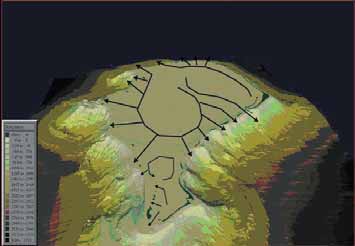
Water circulation in Funafuti.
vessel, the `Summer Spirit', which required equipment
installation and subsequent calibration and testing of
Community Lifelines Programme
these. This was followed by a marine survey within the
waters of the Solomon Islands over a three month period
Under Key Result Area 2: Improved planning practices
from June to August, and subsequent surveys being
installed for safe and adequate water supplies and
completed in Kiribati (including Banaba) and Nauru. One
sanitation systems, the following achievements were
of the objectives of the marine surveys being to identify
realised:
offshore, marine aggregate resources that represent
economically viable alternatives to illegal mining of beach
Capacity building in the regional water sector was aided
sand or high-cost bulk importation is vital to ensure
for the third successive year by delivery of a series
sustainable development of coastal zones.
of lectures on hydrogeology and sustainable water
resources to fi nal year students reading for their Bachelor
An extensive study to improve the development and
of Science degree at the USP.
management of offshore aggregates in Tongatapu and
the development of appropriate guidelines was presented
A reconnaissance hydrogeological fi eld survey and
at a stakeholder workshop in Tonga in March.
advice was facilitated in January to assist the Momi
Bay tourism development in their search for alternative
Project progress in Tuvalu and Kiribati in advancing
water resources to satisfy the site engineering, hotel and
community, government and donor awareness and
landscaping water supply demands.
acceptance of the establishment of dredging offshore,
marine aggregate resources as an acceptable way
Two multi-parameter, HydroLab "DataSonde" water
forward to eliminate beach sand mining has been
quality monitoring sondes were purchased and have the
realized. This will directly contribute to reducing the
capability to provide long-term, sustained monitoring.
vulnerability of coastal areas and the communities that
They will be deployed within the region in marine,
live within the coastal zone. The lessons being learned
brackish or freshwater environments for water quality
and the `models" being created from these experiences
monitoring purposes.
will directly benefi t similar atoll environments within the
Project's remit.
Signifi cant GPS survey assistance was provided to
map the water supply assets and infrastructure within
Under Key Result Area 4: Island Systems Management
the Sigatoka catchment with the Fiji Public Works
(ISM) infrastructure established and in use in each
Department. In addition further hydrogeological
country, key achievements include:
investigation and monitoring of Niue's groundwater
resources was completed.
A hydrodynamic model of Funafuti atoll, Tuvalu to
better understand nutrient and sediment dispersion
Under Key Result Area 4: ISM infrastructure established
characteristics within the lagoon circulation has been
and in use in each country, the following activities were
developed.
achieved:
19
The eighth MapServer was installed and offi cially
Three new In-Country Interns were successfully identifi ed
presented to the Government of Samoa through the
and appointed within the EDF8 States of Vanuatu, Tuvalu
National Representative to SOPAC in early 2005. It is
and Samoa and in August, all Country Interns of the Project
physically located in the Department of Meteorology but
benefi ted from interaction with other MapServer users
is also available online see http://map.meteorology.gov.
from across the Pacifi c region through attendance at the
ws. The ninth and fi nal Mapserver to be installed under
PacINET meeting convened in Tarawa, Kiribati.
the EDF8 was installed in the Solomon Islands at the end
of 2005. Targetted training courses to build local capacity
Project Fellowship funding support has benefi ted over ten
in RS/GIS and Mapserver applications were completed
individuals with their graduate or post-graduate studies,
in-country in Fiji, Kiribati, Papua New Guinea, Samoa,
specifi c training or conference opportunities and on-the-job
Solomon Islands and Tuvalu during the reporting period.
training and work attachments at the Secretariat. A two-
week hydrodynamic modelling course was also undertaken
Community Risk Programme
at SOPAC in March with the Danish Hydraulic Institute
presenting the MIKE21 modelling software.
Under Key Result Area 3: Implement comprehensive
hazard and risk management tools within the framework
Following appointment of the two person EDF8 Mid-Term
of an Integrated Holistic Approach for Sustainable
Review Team project staff were involved in extensive
Development (Island Systems Management), highlights
liaison and preparations to receive, assist and support
are as follows:
the MTR team. In-country visits by the MTR Team
and discussions with Project stakeholders in all eight
Under one of several long-term Fellowships offered
EDF8 states began in mid-June and were completed
under the project, a second successful fi eld season in
by mid-August. The draft MTR report was presented to
active tectonics and earthquake hazard evaluation of
participating SOPAC member country representatives in
the Suva to Navua Project area was completed by Mr
the margins of the 34th SOPAC Governing Council Session
Tariq Rahiman, who is currently completing a PhD at the
held in Apia, Samoa in September 2005.
University of Canterbury. Important new geo-scientifi c
fi ndings relating to potential mega-landslides, rock fall
Twelve new Project reports and one new Project
dams, lake sediments and fl ooding risks within the Navua
Information Brochures (No. 7 Aggregates) were issued
catchment have been identifi ed.
during the year, with project personnel continuing to forge
signifi cant synergies with many different non-government
Continued technical support for post-cyclone support
organisations, non-state actors and private organisations
and assessment in Niue (wave modelling and hazard
throughout the region.
zonation mapping) and the provision of post-damage
assessment assistance to the Cook Islands (GPS
Support in the delivery of tertiary courses in the USP
surveys of damage assessment) were provided.
science degree programme courses was provided by a
An expert fi eld-team from UPNG have successfully
number of project specialists.
completed a tsunami hazard assessment of the
northwest coast Vanimo-Indonesia border.
Five National Information Centres were identifi ed and
established, with MapServers were installed and deployed
Cross-cutting issues
using open-source GIS systems. These provide publicly
accessible, interactive spatial and tabular datasets via
Initial multi-stakeholder consultations have been
the Internet to a wide range of stakeholders such as land
successfully completed in all six EDF9 States, with
managers, resource managers and service utilities who
a second round of multi-stakeholder consultations
can control various layers within the GIS. This activity is
completed in Palau in mid-2005.
a fundamental component of the SOPAC/EU Reducing
Vulnerability of Pacifi c ACP States project.
20
The Story of an Ancient Lake in Viti
consistent with an exceptional landsliding
reconsidering the risk for downstream
Levu (Fiji)
event in the Namosi Gorge, which blocked
communities. The Navua delta with its
the paleo drainage west of the Namosi
growing township is known for its agriculture
Major discovery in Fiji's Geology with
Gorge for a number of thousands of years.
potential and is part of a resettlement
widespread applications for palaeo-climate
The inferred landslide dam embankment
programme of the Ministry of Agriculture.
studies and risk assessment of extreme
is a cross ridge on the valley floor of the
Landslide damned lake outburst floods
events.
Namosi Gorge. This cross-valley ridge forms are known worldwide for their destructive
the highest point along the Namosi Gorge
potential and long outrun distances. The
During field work within the framework of the valley (about 200 m). The lake sediments
narrow Navua Gorge is prone to blockage
SOPAC/EU Project `Reducing Vulnerability
and overlying fluvial gravels form a distinct
by major landsliding from the extremely
of Pacific ACP states' and a PhD thesis
terrace level at 120 to 140 m across the
steep side slopes. According to the
from the University of Canterbury on
Navua river catchment. The terrace can be
traditional Flood Legend and a reported
seismic hazards of southeastern Viti Levu,
clearly seen on aerial photos of the upper
event from the 1830s, such an event
a new layer of Quaternary Lake Deposits
Navua catchment and is suggestive of a
might have happened twice already in the
in the Geology of the Navua catchment in
drowned topography, with isolated peaks
relatively recent (historic) past.
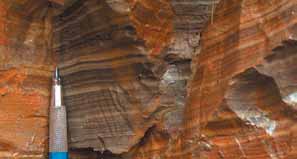
southeastern Viti Levu has been discovered: of the Late Miocene Navua Mudstone
These finely interbedded, partly organic lake surrounded by the flat terrace ground
Tariq Rahiman & Michael Bonte-Grapentein
deposits (Figure 1) are silent witnesses of a composed of the younger gravels and
huge landslide at the Namosi Gorge, which
underlying lake sediments.
occurred several tens of thousands of years
ago and caused the damming of a 100-150
This discovery is one of the most important
sq km lake and the separation of the Navua in Fiji's geology over the last few decades.
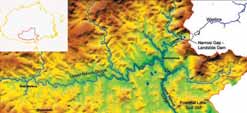
and Waidina river systems (Figure 2).
The lake sediments cover parts of three
1:50 000 geological maps sheets and it
The Namosi Gorge is a peculiar
provides a significant potential data bank
geomorphological feature in central
of the poorly known Quaternary geological
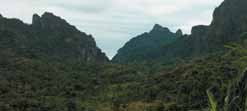
southeastern Viti Levu (Figure 3). It
history of Fiji. But beside revealing parts of
presently forms a wind gap between the
the geologic history and the development
Figure 1.
Navua and Waidina river catchments and
of the Navua catchment there are several
is known commonly as the Namosi Gap. It
more widespread implications.
has been speculated in previous studies that
a palaeo Navua-Waidina river once flowed
Firstly, continuous series of laminated
through the Namosi Gorge. Disruption of
Quaternary lake sediments, which are rare
flow of this palaeo river is thought to have
in the humid tropics, are very useful for
occurred at the Namosi Gorge, which led
several avenues of palaeo-climatologic and
to the diversion and southward flow of the
palaeo-environmental research. This deposit
Navua river at Namuamua and which left
has the potential to provide an invaluable
Figure 2.
the Namosi Gorge dry. Small, unconnected
record of Quaternary climate changes in the
occurrences of lacustrine sediments were
region, which in turn will help to understand
first noted in the area by Band (1966) and
current climatic changes.
Rodda (1976).
Secondly, the amount of aggregation under
The basement rocks in the area are poorly
natural, pre-human conditions establishes
stratified volcanoclastics of the Namosi
a valuable benchmark for comparison with
Andesite. The Namosi Gorge itself is filled
current increased erosion and aggregation
for nearly all of its length by landslide debris, rates due to human activities like
Figure 3.
which formed a dam of an estimated 100
deforestation, land use changes and road
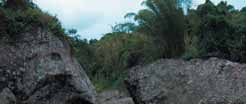
m height. The debris is littered with tree
construction.
logs and individual boulders reaching the
size of a house (Figure 4). Aerial photos
Thirdly, the Namosi Gap occurs within
reveal a number of distinct and very large
a zone of seismicity passing through
landslide head scarps along ridges at the
southeast Viti Levu. The large 1953 Suva
northern flank of the Namosi Gorge, which
earthquake caused numerous rock falls and
are the most likely source areas of the
landsliding in the upper Waidina area and
deposits in the valley floor. West of the
one temporary landslide dam in the upper
Figure 4.
gorge, exposures along the Wainikoroluva
Navua river. The paleo Navua-Waidina river
riverbank reveal the basement rocks
disruption may have similarly been caused
overlain by the landslide deposit. This
by a seismo-tectonic event. There is a well-
deposit is composed entirely of coarse and
known Fijian legend from the Namosi/Navua References:
angular andesitic material locally derived
area which talks about an earthquake and
Anonymous & Rodda, P. 1995, A legend from Fiji:
from the adjacent surrounding ridges. This
a flash flood, which would have happened
the flood, Fiji Mineral Resources Department Note
deposit is overlain by a 20 m thick layer of
after breaching of a temporary landslide
BP1/112: 5 pp.
lake sediments, which in turn is overlain by
dam. Studies of the processes that lead to
fluvial sediment. These fluvial sediments
the disruption of the proto Navua-Waidina
Band, R.B. 1966, Geomorphological aspects
are approximately 50 m above present river river may add to the poorly understood
of the Namosi Gap, Fiji Mineral Resources
level. The occurrence of lake sediments has seismo-tectonic history of south eastern Viti Department Note BP30/39: 2 pp.
been confirmed for seven kilometres west of Levu and hence increase our knowledge of
the Namosi Gorge and also identified in the recurrence intervals of large earthquakes.
Rodda, P. 1976, Geology of northern and central
Viti Levu, Fiji Mineral Resources Division Bulletin
upper Navua River area (Figure 2).
3: 160.
Fourthly, the size and associated processes
The geological history of the area as
of this extreme landslide event, which
Terry, J.P., Ollier, C. & Pain, C.F. 2002,
interpreted from the currently mapped
created the third largest catchment in
Geomorphological evolution of the Navua River,
geomorphology and stratigraphy is
Viti Levu, provides us with a premise for
Fiji, Physical Geography 23, No. 5: 418-426.21

Appendix 1: SUMMARY OF 2005 FUNDING BY PROGRAMME
SOURCE OF FUNDS
GRAND
TOTAL OCEAN &
TOTAL COMMUNITY
TOTAL COMMUNITY
TOTAL
TOTAL
TOTAL
ISLANDS
LIFELINES
RISK
CORPORATE DIRECTORATE
PROGRAMME
PROGRAMME
PROGRAMME
SERVICES
A: DONOR FUNDING
ACIAR
5,000
5,000
ADB
8,000
8,000
Australia Marine Science &
95,641
95,641
Technology
Australia-Annual Grant
2,417,051
964,749
744,646
707,656
Australia-AYA
120,250
120,250
CFTC
46,339
46,339
Cook Islands (Bilateral)
31,663
31,663
CTA
60,000
60,000
Danish/EU
628,203
628,203
EMA
144,561
144,561
EU
164,440
164,440
European Union EDF 8
3,902,889
1,300,681
1,701,574
731,192
169,442
European Union EDF 9
1,854,043
500,000
848,936
446,809
58,298
Fiji
0
FSM
12,039
12,039
GEF
50,000
50,000
ISDR
10,000
10,000
Japan Water Forum
50,000
50,000
Kiribati (Bilateral)
37,947
37,947
New Zealand-Annual Grant
1,041,279
207,602
607,941
225,736
New Zealand-Special Grant
581,503
435,137
146,366
OFDA
108,643
108,643
Taiwan (ROC)
180,597
48,061
132,536
UNDESA
468,877
318,877
UNESCO-IOC
73,940
73,940
United Kingdom (ODI)
113,600
113,600
UNOPS/UNDP
105,000
105,000
105,000
Various
43,240
43,240
World Bank
7,500
TOTAL DONOR FUNDING
12,362,245
3,394,316
5,980,540
2,716,409
270,980
0
B: TOTAL REGULAR
BUDGET (principally
membership contributions)
2,202,651
36,400
106,404
0
1,419,450
640,397
TOTAL 2004 REVISED
14,564,896
3,430,716
6,086,944
2,716,409
1,690,430
640,397
BUDGET
TOTAL 2005 APPROVED
13,336,978
3,491,217
4,989,217
2,368,744
1,775,784
712,016
BUDGET
22

Appendix 2: REPORTS & PUBLICATIONS UPDATE (as at 30 September 2005)
CORPORATE PUBLICATIONS
Proceedings of the Thirty-third Session, hosted by the Government of Papua New Guinea at the Coral Coast, Fiji Islands,
17-24 September 2004.
Annual Report Summary 2004.
SOPAC Business Plan 2005 (SOPAC Miscellaneous Report 580).
TECHNICAL REPORTS
371
McKenzie, E. 2004. A cost-benefi t analysis of projects implemented to assist the black pearl industry in Manihiki
Lagoon, Cook Islands. (74 pages)
372
Mosley, L., Carpenter, C., 2005. Niue coastal water quality and groundwater resources assessment. (Restricted to
Niue until end of April 2005) (35 pages)
373
Mosley, L., Sharp, D., 2005. The Hydrogen-Sulphide paper-strip test -- a simple test for monitoring drinking water
quality in the Pacifi c Islands. (24 pages)
374
Mosley, L., Singh, S. & Sharp, D., 2005. The effect of a cyclone on drinking water quality and how best to protect
public health when similar disasters occur. RESTRICTED. (See SOPAC Miscellaneous Report 543 for published
version)
375
Pratt, C.R., Kaly, U. & Mitchell, J., 2005. Pacifi c Training Manual: How to use the Environmental Vulnerability Index
(EVI). (77 pages)
376
Kaly, U.L., Pratt, C.R. & Mitchell, J., 2005. Environmental Vulnerability Index (EVI) : Description of Indicators, 18
October 2004. (See Joint Contribution 177 for UNEP published version, dated 20 December 2004) (40 pages)
379
SOPAC Secretariat, 2005. Implementing the Yokohama Strategy and Plan of Action. Pacifi c Islands Regional
Progress Report (1994-2004). (143 pages)
380
Shorten, G., Schmall, S. & Oliver, S., 2005. Building capacity to insure against disaster in Tuvalu. (Consultants
Report) (70 pages)
381
Mosley, L., Singh, S. & Aalbersberg, W., 2005 Water quality monitoring in Pacifi c Island Countries. Revised Edition,
February 2005. (Handbook for Water Quality Manager & Laboratories, Public Health Offi cers, Water Engineers and
Suppliers, Environmental Protection Agencies and organisations involved in water quality monitoring) (43 pages)
382
Maharaj, R.J., Naidu, A.V., & Hatch, R.C., 2005 Identifi cation of onshore aggregate-quarry sites and prospects for
quarry development, Pohnpei Island, Federated States of Micronesia. (Based on Consultancy report by RC Hatch.
RESTRICTED to FSM until 30 September 2005) (40 pages)
384
Kaly, U.L., Pratt, C.R., & Mitchell, J., 2004. The Demostration Environmental Vulnerability Index (EVI) 2004. (323
pages)
386
Bower, R., Crennan, L. & Navatoga, A., 2005. The Sanitation Park Project: A regional initiative to increase
participatory approaches in the sanitation sector. (59 pages)
387
Lovell, E.R., 2005. Environmental impact assessment of sand resource extraction north of Tongatapu. (43 pages)
388
Crennan, L., 2005. Equitable management of water and sanitation in Pacifi c Islands countries. (106 pages)
23
REPORTS & PUBLICATIONS UPDATE ... continued
PRELIMINARY REPORTS
137
Mario, R., 2004. Demand Side Management in the Pacifi c Islands. Progress Report March 2004. (SOPAC-UNDESA
Demand Side Project 2003-2005.) (28 pages)
138
SOPAC Secretariat, 2004. Review of the Niue Disaster Management Arrangements -- Preliminary Report prepared for
the Niue National Government. (RESTRICTED) (23 pages)
140
Alder, J., Dahl, A., Kaly, U. & others, 2005. Report on the Environmental Vulnerability Index (EVI) Think Tank II, 4-6
October 2004, Suva, Fiji. (10 pages)
141
Overmars, M., 2005. Nonouti, Kiribati Water Resources Assessment -- Kiribati Water Resources & Management
Project. (Asian Development Bank TA No.6031 -- REG; Promotion of Effective Water Management Policies and
Practices) (12 pages)
MISCELLANEOUS REPORTS
575
Cloin, J., 2005. SOPAC's participation and contribution to the 13th Pacifi c Power Association Annual Conference,
PPA Engineers Workshop & Trade Exhibition. (9-13 August 2004, Warwick, Fiji Islands). (43 pages)
577
Crennan, L., 2005. Tapping connections between people and water. (A handbook about connections between people
and water). (44 pages)
578
SOPAC Secretariat, 2004. Draft Pacifi c Regional Position Paper for the Second World Conference on Disaster
Reduction. (Big Ocean, Small Islands). (12 pages)
579
Mosley, L., 2005 Water quality of rainwater harvesting systems. (+ CD for volumetric calculations in Excel). (19 pages)
580
SOPAC Secretariat, 2005. SOPAC Annual Business Plan 2005. (21 pages)
581
Cloin, J. & Mario, R., 2005. Energy Mission to the Cook Islands 1-12 November 2004 -- for SURE Sub-regional
Workshop on wind energy; Biomass Resource Assessment Workshop & (Wave gauge deployment and other energy
activities, 8-12 November 2004). (32 pages)
582
Young, S. (Comp.) 2005. SAFETY AT SEA -- an in-house manual for SOPAC Staff. First Edition. (RESTRICTED) (17
pages)
584
Pratt, C.R., Kaly, U.L. & Mitchell, J., 2005. Report on the Pacifi c Environmental Vulnerability Index (EVI) Capacity
Strengthening Workshop, 18-20 October 2004. (Tanoa International Hotel, Nadi, Fiji) (8 pages)
585
SOPAC Secretariat, 2005. 2003 Progress Report on the Pacifi c Type II Partnership Initiative on Sustainable Water
Management. RESTRICTED (Members may apply directly to the SOPAC Secretariat for copies) (49 pages)
587
Pratt, C.R., Mitchell, J. & Howorth, R., 2005. International Meeting to review the implementation of the Programme of
Action for the sustainable development of Small Island Developing States, Port Louis, Mauritius, 10-14 January 2005.
RESTRICTED. (48 pages)
588
Artack, E. (Comp.) 2005. Training Course on the delineation of the outer limits of the continental shelf beyond
200 nautical miles and the Preparation of a Submission to the Commission on the Limits of the Continental Shelf.
(SUMMARY RECORD) (26 pages)
589
Maharaj, R.J., 2005. [COMSEC-USP-SOPAC] Certifi cate in Earth Sciences and Marine Geology [Course].
RESTRICTED. (Final Project Report to COMSEC/CFTC at Contract end by Training Coordinator Russell J. Maharaj).
(10 pages)
590
Allinson, L., 2005. Needs assessment of enhanced asset management and planning tools for selected Forum Islands
Countries -- Republic of Marshall Islands. (RESTRICTED) (63 pages)
24

REPORTS & PUBLICATIONS UPDATE ... continued
591
Allinson, L., 2005. Needs assessment of enhanced asset management and planning tools for selected Forum Islands
Countries -- Federated States of Micronesia. (RESTRICTED) (70 pages)
592
Cloin, J., 2005. Coconut Oil as a Biofuel in Pacifi c Islands -- Challenges and Opportunities. (11 pages)
593
SOPAC Secretariat, 2005. Friendly energy options for the Pacifi c Islands. Earth Day 2005. (Comic booklet) (12
pages)
594
Soakai, A., 2005. Pacifi c Islands participation in the World Summit on Information Society (WSIS) -- PREP COM2.
(ICT -- Issues and Options for Pacifi c Island Countries) (13 pages)
595
SOPAC Secretariat, 2005. The Sanitation Park Project. (Promotional leafl et) (8 pages)
596
Fairbairn, P. (Comp.) 2005. Joint Regional Energy Meeting and PIEPSAP Regional Planning and Consultative
Meeting, 29 November - 3 December 2004, Madang, Papua New Guinea. Record of Meeting -- REM2004. ("Linking
Policy and Strategy with Human Resource Development, Access to Finance and Budgets") (45 pages)
597
Mario, R., 2005. ENERGIA Asia Regional Focal Points and Gender and Energy Training Workshop, Chiang Mai,
Thailand, 2-8 May 2005. (18 pages)
598
Overmars, M., 2005. Water and sanitation issues and strategic responses in the Pacifi c: views from national and
regional consultations and initiatives. (Pacifi c Brief for the Report of the Secretary-General to CSD13) (11 pages)
599
SOPAC Secretariat, 2005. Rainwater harvesting in Pacifi c atoll islands -- Overall Project Report. RESTRICTED.
(UNEP/TCDT/SIDA/SOPAC Project)
600
SOPAC Secretariat, 2005. South Pacifi c Applied Geoscience Commission (SOPAC) Strategic Plan 2005 -- 2009. (71
pages)
601
SOPAC Secretariat, 2005. Twelfth Pacifi c Regional Disaster Management Meeting, Madang Resort Hotel, Madang,
Papua New Guinea, 6-8 June 2005 SUMMARY RECORD. (14 pages + 1 CD)
603
Collen, J. & Bukarau, L. (Comps) 2005. Abstracts of papers presented at the Science, Technology and Resources
Network (STAR) Session 2005. (22nd STAR Session is held in conjunction with the SOPAC 34th Session (24-30
September), Apia, Samoa). (76 pages)
604
SOPAC Secretariat, 2005. Enhancing Early Warning for Pacifi c Island Countries A Planning Workshop, 5-6
September 2005. (30 pages)
605
Dumaru, P. & Chand, D. (Comps) 2005. Pacifi c Energy and Gender Annotated Bibliography. (65 pages)
TRAINING REPORTS
113
Maharaj, R.J., 2005. Hydrogeology -- An Introduction. SOPAC-USP, B.Sc. & Certifi cate in Earth Science Applied
Geoscience Lecture Series IV (15 pages)
114
Maharaj, R.J., 2005. Sand Budgeting coastal monitoring and evaluation : An Introduction. RESTRICTED. (68
pages)
115
Maharaj, R.J. & Naidu, A.V., 2005. Certifi cate in Earth Sciences and Marine Geology (ESMG), 2002-2005, Year 3.
RESTRICTED. (CFTC Progress Report VI) (110 pages)
116
Maharaj, R.J., 2005. Certifi cate in Earth Sciences and Marine Geology (ESMG), 2002-2005, Year 3 Highlights.
RESTRICTED (COMSEC/CFTC Progress Report VII for period 5 November 2004 - 4 May 2005) (106 pages)
25
REPORTS & PUBLICATIONS UPDATE ... continued
EU-SOPAC PROJECT REPORTS
32
Booth, S., 2004. Project Progress: January to August 2004. (Special Intermediate Report produced for the SOPAC
33rd Annual Session) (39 pages)
33
Sanday, R., 2004. Solomon Islands -- Country Mission Report, 12-18 March 2004. (35 pages)
34
Biukoto, L. & Bonte-Grapentin, M., 2004. Niue -- Country Mission Report, 23 April - 4 May 2004. (12 pages)
35
Tokalauvere, V., 2005. Fiji: Proceedings of the 5th Fiji Multi-Stakeholder Consultations. (44 pages)
36
Webb, A.W., 2005. Tuvalu Technical & Country Mission Report -- Assessment of aggregate supply, pond and lagoon
water quality and causeway construction on Funafuti and Vaitupu atolls. (Fieldwork undertaken from 13th to 24th
September 2004) (33 pages)
37
Webb, A. & Tawake, A., 2005. Tonga Country Mission & Technical Note -- Aggregate supply, dredging activity and
provisional dredging : recommendations for Tongatapu lagoon. RESTRICTED. (110 pages)
38
Tawake, A. & Prescott, N., 2005. Tonga: Technical Report on Proposed Guidelines and Monitoring Procedures for
Aggregate Extraction north of Tongatapu, Tonga. (RESTRICTED until the end of February 2005) (61 pages)
39
Tawake, A., 2005. Tonga: Technical Report on Aggregate Dredging and Proposed plan of Action for Offshore
aggregates extraction in Tongatapu, Kingdom of Tonga. (RESTRICTED until the end of February 2005) (55 pages)
40
Booth, S., 2005. Project Progress -- Intermediate Report for the period January to December 2004. (EU EDF8/EDF9-
SOPAC-EU Reducing Vulnerability of Pacifi c ACP States Project) (58 pages)
41
Booth, S., 2005. Project 2005 Work Plan and Budget. RESTRICTED. (EU EDF8/EDF9-Reducing Vulnerability of
Pacifi c ACP States Project.) (122 pages)
42
Tawake, A.K., 2005. Fiji: Technical Report on geological and geo-technical investigations of the Semo Quarry and
selected aggregate sources in South and Western Viti Levu, Fiji. (January 2005) (60 pages)
43
Booth, S., 2005, Project Progress: January to August 2005. (Special Intermediate Report produced for the SOPAC
34th Annual Session, Apia, Samoa) (38 pages)
44
Prescott, N., 2005. Tonga -- Proceedings of the Tonga National Workshop on the use of the Offshore Aggregates
Dredging Guidelines and Action Plan, Nuku'alofa, Tonga, 14-15 March 2005 & (The Draft Code of Practice for
Regulating Agency and for Dredging Companies) (53 pages)
45
Prescott, N. & Webb, A., 2005. Niue: Proceedings of the Niue 1st Multi-stakeholder Consultations, Matavai Resort,
Tamakautoga, Niue, 4-14 June 2005. (47 pages)
46
Webb, A., 2005. Kiribati: Technical Report -- An assessment of coastal processes, impacts, erosion mitigation options
and beach mining. (Bairiki/Nanikai causeway, Tungaru Central Hospital coastline and Bonriki runway -- South Tarawa,
Kiribati) (47 pages)
EU-SOPAC INFORMATION BROCHURE
7
Tawake, A. (Comp.) 2005. Information Brochure 7: Aggregates in Pacifi c Island Countries (December 2004). (8
pages)
26

REPORTS & PUBLICATIONS UPDATE ... continued
JOINT CONTRIBUTION REPORTS
176
Building Resilience in SIDS The Environmental Vulnerability Index. [Pamphlet prepared for the Barbados+10
meeting in Mauritius, January 2005). UNEP/SOPAC.
177
EVI: Description of Indicators. 20 December 2004. UNEP/SOPAC.
178
Harvesting the Heavens Guidelines for Rainwater Harvesting in Pacifi c Island Countries. UNEP/TCDT/SIDA/
SOPAC.
179
McKenzie, E., Prasad, B. & Kaloumaira, A., 2005. Economic Impact of Natural Disasters on Development in the
Pacifi c. Volume 1: Research Report; Volume 2: Economic Assessment Tools. USP/SOPAC, May 2005.
180
Council of Regional Organisations of the Pacifi c (CROP) Information and Communications Technology Working
Group meeting, Warwick Hotel, Sigatoka, Fiji, 26-27 April 2005. CROP.
181
Mirti, Anumitra V. & Davies, Sarah, 2005, Drinking Water Quality in the Pacifi c Island Countries: Situation Analysis
and Needs Assessment. WHO/SOPAC. 11 p.
182
Pacifi c Islands Energy Policy. November 2004. CROP.
RESTRICTED CIRCULATION REPORTS
24 Mission Reports and at least four issues each of programmatic newsletters (CLP's PEN and WASP News, CRP's SNAP
and the Corporate Services NewsUpdate) were also released in the reporting period.
27
Appendix 3: SECRETARIAT STAFF LIST (as at September 2005)
POSITION
NAME
COUNTRY
DATE
CONTRACT
CONTRACT
OF ORIGIN
JOINED
START
END
SOPAC
DIRECTORATE
Director
Cristelle Pratt
New Zealand
May 2000
Feb 2004
Feb 2007
Deputy Director (Outgoing)
Russell Howorth
New Zealand
Oct 1986
Mar 2002
Sept 2005
Deputy Director
Bhaskar Rao
Fiji
May 2004
Sept 2005
Sept 2008
Executive Assistant
Litia Waradi
Fiji
Apr 1989
Jan 2004
Dec 2006
Executive Planning Offi cer
Kakala Vave
Fiji
May 2003
May 2005
May 2006
OCEAN & ISLANDS PROGRAMME
Manager Ocean & Islands
Bhaskar Rao
Fiji
May 2004
May 2004
Aug 2005
Senior Adviser Physical Oceanography
Jens Kruger
United Kingdom
Sept 2004
Sept 2004
Sept 2007
Senior Adviser Resource Economist
Vacant
Senior Adviser Marine Geophysics
Robert Smith
Australia
May 1988
July 2004
July 2007
Senior Adviser Aggregates
Akuila Tawake
Fiji
Oct 2003
Oct 2003
Oct 2006
Senior Adviser Geoscience Training
Russell Maharaj
Trinidad & Tobago
Nov 2001
May 2004
May 2005
Senior Adviser Marine Geoscience
Vacant
Adviser Technical (Electronics)
Simon Young
Fiji
Jan 1993
Jan 2005
Jan 2008
PI-GOOS Coordinator
Sarah Grimes
Australia
Aug 2004
Aug 2005
Aug 2006
Adviser Sustainable Development
Netatua Prescott
Tonga
Aug 2004
Aug 2004
Aug 2007
Adviser Aggregates & Coastal Process
Arthur Webb
United Kingdom
Jul 2004
Jul 2004
Jul 2007
Project Offi cer 1 Technical (Marine)
Kalisi Fa'anunu
Tonga
Apr 2005
Apr 2005
Apr 2006
Project Offi cer 2 Technical (Surveying)
Andrick Lal
Fiji
Sept 2001
Sept 2004
Sept 2007
Project Offi cer 3 Technical (Geoscience)
Sekove Motuiwaca
Fiji
Apr 1980
Jan 2004
Dec 2006
Project Offi cer 4 Technical (Electronics)
Peni Musunamasi
Fiji
Jun 1989
Jan 2004
Dec 2006
Project Offi cer 5 Technical (Mechanics)
Setareki Ratu
Fiji
Oct 1986
Jan 2004
Dec 2006
Adviser Resource Economics
Emily McKenzie
United Kingdom
Oct 2003
May 2003
Oct 2005
Programme Assistant Ocean & Islands
Frances Dobui
Fiji
Oct 2003
Oct 2003
Oct 2006
Project Offi cer 6 Maritime Boundaries
Emily Artack
Fiji
May 2004
Jan 2005
Dec 2007
Project Offi cer 7 Ocean & Islands Programme
Arti Naidu
Fiji
May 2002
May 2004
Feb 2006
EU Attachment
Naomi Biribo-Atauea
Kiribati
Jul 2004
Jul 2004
Dec 2006
COMMUNITY LIFELINES PROGRAMME
Manager Community Lifelines
Paul Fairbairn
New Zealand
Jan 1998
Sept 2003
Sept 2006
Senior Adviser ICT/CLP
Vacant
Senior Adviser EU Team Leader Water
Stephen Booth
United Kingdom
Feb 2003
Feb 2003
Feb 2006
Resource Specialist
Vacant
Senior Adviser EU GIS and Remote Sensing
Wolf Forstreuter
Germany
Jan 1999
Jan 2003
Jan 2006
Senior Adviser EU ICT Specialist
Franck Martin
France
Sept 1993
Jan 2003
Jan 2006
Senior Adviser Water
Marc Overmars
Netherlands
Apr 2000
Jan 2005
Dec 2005
Adviser PIEPSAP Project
Anare Matakiviti
Fiji
Feb 2000
Sept 2004
Sept 2007
Adviser Water Resources, Supply & Sanitation Vacant
UN Associate Expert
Jan Cloin
Netherlands
Nov 2003
Nov 2003
Nov 2006
Project Manager PIEPSAP Project
Gerhard Zieroth
Germany
Aug 2004
Aug 2004
Aug 2007
Water Engineer
Sarah Davies
Australia
June 2004
June 2004
June 2006
Adviser Energy
Rupeni Mario
Fiji
Oct 1998
Apr 2005
Apr 2008
Adviser ICT
Siaosi Sovaleni
Tonga
Oct 2005
Oct 2005
Oct 2006
Project Offi cer 9 ICT Network and Security
Graeme Frost
Fiji
Mar 1992
Jan 2004
Dec 2006
Programme Assistant Community Lifelines
Arieta Navatoga-Sokota
Fiji
Oct 2003
Oct 2003
Oct 2006
Assistant Project Offi cer 1 Water & Sanitation
Vacant
Project Offi cer PRAP Facilitator
Rhonda Bower
Fiji
Nov 1998
Jan 2004
Dec 2004
Project Offi cer 11 WASH Offi cer
Kamal Khatri
Fiji
Feb 2005
Feb 2005
Feb 2006
Project Offi cer 12 Water Sanitation
Alena Lawedrau-Moroca
Fiji
May 2003
May 2005
May 2006
Project Offi cer Energy
Emeline Veikoso
Tonga
Apr 2005
Apr 2005
Apr 2006
Assistant Project Offi cer 13 PIEPSAP
Yogita Bhikabhai
Fiji
Jan 2002
Sept 2004
Sept 2007
28

STAFF LIST ... continued
COUNTRY
DATE
CONTRACT
CONTRACT
POSITION
NAME
OF ORIGIN
JOINED
END
START
SOPAC
COMMUNITY LIFELINES PROGRAMME ... continued
Assistant Project Offi cer 14 Water Quality
Sarabjeet Singh
Fiji
June 2004
June 2004
Feb 2005
USP/SOPAC Water Quality Offi cer
Tasleem Hasan
Fiji
Mar 2005
Mar 2005
Mar 2006
Temp. Attachment Water Resources
Linda Yuen
Fiji
June 2005
Oct 2005
July 2006
Project Offi cer Water Partnerships
Sanjeshni Naidu
Fiji
Aug 2005
Aug 2005
Aug 2006
Project Offi cer 15 GIS/RS ICT
Elizabeth Lomani-Whippy
Fiji
Feb 2004
Feb 2005
Feb 2006
Project Offi cer 16 GIS/RS ICT
Joy Papao
Solomon Islands
June 2004
June 2005
June 2006
EU Intern Fiji
Vilisi Tokalauvere
Fiji
Feb 2004
Feb 2005
Feb 2006
ICT Attachment
Daryl Woo
Fiji
Oct 2003
Oct 2003
Mar 2006
COMMUNITY RISK PROGRAMME
Manager Community Risk
Alan Mearns
Australia
June 2000
June 2003
June 2006
Senior Adviser Risk
Michael Bonte
Germany
June 2003
June 2003
June 2006
Disaster Mitigation Adviser
Atu Kaloumaira
Fiji
Dec 2000
Dec 2003
Dec 2006
Programme Director PDRMP
Kathryn Hawley
United States of America
Aug 2004
Aug 2004
Aug 2007
Adviser Hazards Assessment
Litea Biukoto
Fiji
Apr 2003
Jul 2004
July 2007
UN Associate Expert
Noud Leenders
Netherlands
Nov 2003
Nov 2003
Nov 2006
Project Offi cer 17 PDRMP
Monika Swamy
Fiji
Aug 2004
Aug 2004
Aug 2007
Project Offi cer 18 PEMTAG
Tukatara Tangi
Cook Islands
Sept 2004
Sept 2004
Sept 2007
Research and Planning Offi cer
Kata Duaibe
Fiji
Apr 2004
Apr 2004
Apr 2005
Programme Assistant CRP (Outgoing)
Paulina Ravouvou
Fiji
Aug 2004
Aug 2004
Apr 2005
Programme Assistant Community Risk
Asenaca Rokomanalagi
Fiji
Apr 2005
Apr 2005
Apr 2006
Assistant Project Offi cer 19
Jonathan Mitchell
Fiji
Dec 2002
Feb 2003
June 2006
CORPORATE SERVICES
Manager Corporate Services
Mohinish Kumar
Fiji
Mar 1998
Sept 2003
Sept 2006
Adviser Technical Editor
Mereseini (Lala) Bukarau
Fiji
Nov 1985
Sept 2003
Sept 2006
Accountant
Makereta Kaurasi
Fiji
Apr 1998
Apr 2004
Apr 2007
Conference & Travel Offi cer
Laisa Baravilala-Baoa
Fiji
Jul 1987
May 2003
May 2006
Administration Offi cer
Karen Datta
Australia
July 2001
July 2004
July 2007
Project Offi cer 20 Library
Dorene Naidu
Fiji
Sept 2004
Sept 2004
Sept 2007
Finance Services Offi cer I
James Ram
Fiji
May 2000
Jan 2003
Dec 2005
Assistant Administration Offi cer
Subha Ram
Fiji
Sept 2004
Jan 2003
Jan 2006
SOPAC/EU Project
Adviser ICT/CS Technical
Sakaio Manoa
Fiji
Jan 2004
Aug 2005
Aug 2008
Project Offi cer II Publish./Graphic Arts
Reuben Vulawalu
Fiji
Apr 2001
Mar 2004
Mar 2007
Receptionist/Clerk
Unaisi Bainiloga
Fiji
Feb 1987
Jan 2004
Dec 2006
Driver/Clerk
Enele Gaunavou
Fiji
Jul 1988
Jan 2004
Dec 2006
Assistant Project Offi cer 22 Web Developer
Vacant
Assistant Project Offi cer 23 ICT Training
Avinash Prasad
Fiji
June 1999
Jan 2004
Dec 2006
Offi ce Assistant/Cleaner
Salestino Niu Daurewa
Fiji
Sept 1987
Jan 2004
Dec 2006
Assistant Finance Offi cer III
Emi Nofaga
Fiji
Aug 2002
Mar 2005
Mar 2006
Security Offi cer
Cama Temo
Fiji
Sep 2002
Jan 2005
Dec 2005
Security Offi cer
Waitisoni Tuberi
Fiji
Sep 2002
Jan 2005
Dec 2005
Assistant Project Offi cer IV Publications/
Elenoa Rokodi
Fiji
Feb 2003
Feb 2005
Feb 2006
Library
Carpenter
Nand Kumar
Fiji
June 1998
Jan 2005
Dec 2005
Assistant Carpenter
Ajay Chand
Fiji
Dec 2000
Jan 2005
Dec 2005
Gardner
Are Waione
Fiji
Mar 1996
Jan 2005
Dec 2005
29

Appendix 4: LIST OF ACRONYMS
ADB
Asian Development Bank
ACP
African-Caribbean-Pacifi
c
AMSAT
Australia Marine Science and Technology Limited
CHARM
Comprehensive Hazard and Risk Management
CLP
Community Lifelines Programme (SOPAC)
CoCoGen
Coconut Oil for Power Generation
CRP
Community Risk Programme (SOPAC)
CROP
Council of Regional Organisations of the Pacifi c
CSD
Commission on Sustainable Development
CTA
Technical Centre for Agricultural and Rural Co-operation
DSM
Demand Side Management
eCS
extended Continental Shelf
EDF
European Development Fund
EEZ
Exclusive Economic Zone
EIA
Environment
Impact
Assessment
EMA
Emergency
Management
Australia
EPC
Electric Power Corporation
EU
European
Union
EVI
Environmental Vulnerability Index
FAO
Food and Agriculture Organisation (UN)
FEA
Fiji
Electricity
Authority
FSchM
Fiji School of Medicine
FSM
Federated States of Micronesia
GEF
Global Environment Facility
GIS
Geographic Information System
GPS
Global Positioning System
GWP
Global Water Partnership
HYCOS
(Pacifi c) Hydrological Cyclone Observing System
IAS
Institute of Applied Sciences (USP)
ICT
Information & Communications Technology
IOC
Intergovernmental Oceanographic Commission
ISM
Island Systems Management
IWRM
Integrated Water Resources Management
JAMSTEC Japan Agency for Marine-Earth Science and Technology Centre
MDG
Millennium Development Goals
MIS
Management Information Systems
NDMO
National Disaster Management Offi ce
NGO
Non-Government
Organisation
NIWA
National Institute for Water and Atmospheric Research (New Zealand)
NSA
Non-State
Actors
NZAID
New Zealand Agency for International Development
OIP
Ocean and Islands Programme (SOPAC)
PDC
Pacifi c Disaster Center
PIEP
Pacifi c Islands Energy Policy
PIESAP
Pacifi c Islands Energy Strategic Action Plan
PIEPSAP
Pacifi c Islands Energy Policies and Strategic Action Planning
PIFS
Pacifi c Islands Forum Secretariat
PI-GOOS
Pacifi c Islands Global Ocean Observing System
PIC
Pacifi c Islands Countries
PIPP
Pacifi c Islands Information and Communication Technologies Policy and Strategic Plan
PNG
Papua New Guinea
POGO
Partnership for Observation for the Global Ocean
PRETI
Pacifi c Energy Training Initiative
PWA
Pacifi
c
Water
Association
PWD
Public Works Department
RAP
Pacifi c Regional Action Plan on Sustainable Water Management
RS
Remote
Sensing
SEAFRAME Sea Level Fine Resolution Acoustic Measuring Equipment
SEREAD
Scientifi c Educational Resources and Experience Associated with the Deployment of Argo profi ling
fl oats in the South Pacifi c Ocean
SIDS
Small Island Developing States
SOPAC
South Pacifi c Applied Geoscience Commission
STAR
Science, Technology and Resources Network
TEC
Tuvalu Electricity Corporation
UK
United
Kingdom
UN
United
Nations
UNCLCS
United Nations Commission on the Limits of the Continental Shelf
UNCLOS
United Nations on the Law of the Sea
UNDP
United Nations Development Programme
UNEP
United Nations Environment Programme
UPNG
University of Papua New Guinea
USP
University of the South Pacifi c
WHO
World Health Organisation
WSIS
World Summit on the Information Society
WUE
Water Use Effi ciency
WWF
World Water Forum
30
31
31