
Planning for
integrated ManageMent
of Water resources
in the Pacific
why Do we Need It and
How Does It work!




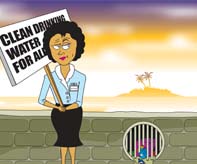



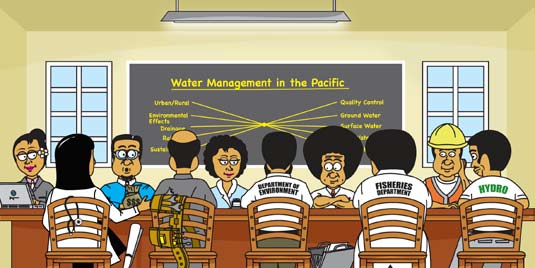
Ms Medicine, Ministry of Health
Mr Plumber, Public Works
Mr Lumberjack, Forestry Department
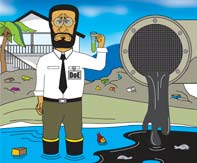
Mr Nature, Department of Environment
Health ministries are deeply
Public works departments
Mr Lumberjack is aware
The
Department
of
concerned with how an
need to respond to a wide
of some of the effects
Environment
(DoE)
is
increase in water related
range of demands on the
of forestry on rivers and
responsible for securing
diseases (like diarrhoea),
water supply and sewerage
coastal waters, and he is
good quality and sufficient
from
poor
hygiene,
system. Mr Plumber wants
under pressure from other
water to sustain ecosystems
sanitation and drinking dirty
advice on how to adjust
government departments
and
biodiversity,
and
water, is crowding hospitals.
tariffs to ensure cost-
to regulate forestry and
protect water resources
Ms Medicine suspects
recovery for instalment,
develop practices that
for human consumption,
that one of the reasons is
maintenance and metering,
stop soil erosion and
recreation and sustainable
a lack of awareness, but
in order to avoid leakages,
protect available water
development. Mr Nature
also because many people in her country simply do not have
illegal connections, and to fulfil standards for water quality and
resources. He realises the difficulty in enforcing regulations for
and the DoE need to work with other government departments to
access to clean water. She needs to find a way to engage other
sewerage treatment. He wants to work with other government
forestry without community support and would therefore like help
develop planning and development guidelines and regulations
government sectors and the public to improve access to clean
departments, the private sector and civil society to manage current
from other government departments, the private sector and civil
that protect water sources from pollution and exhaustion. He also
water and sanitation facilities.
and future demands on water supply and sewerage, based on
society to raise awareness and educate landowners and forestry
needs to monitor and set standards for water quality.
hydrological data on water sources, extraction and use. He wants
companies on the impacts of forestry practices on water quality
clear legislation on water extraction rights and the right to install
and community wellbeing.
and monitor public water supply installations on private land.
Ms Business, Chamber of Commerce
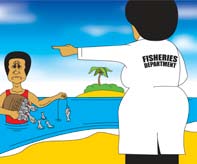
Ms Fisher, Coastal and Marine Resources
Department
Ms Business represents a
Why does everyone need to be involved in managing water?
wide range of private sector
Ms Fisher is concerned that
interests. She is concerned
Water connects the activities, interests and responsibilities of many different sectors. However, fresh water resources
land-based pollution and
about how government
are under increasing pressure from an expanding range of demands and threats from households and industries.
runoff destroys important
is going to plan for the
Climate change is also adding to the load with growing risks of floods, droughts, contamination of water sources
fish nursing grounds (reefs,
current and future water
and waterborne diseases.
mangroves, rivers), leads
needs of different industries
to shellfish poisoning, and
to ensure stable growth.
Approaches in the way water is managed has, until recently, been fragmented. Interconnected and related
affects important economic
She wants government
issues are often addressed in isolation. This has led to a duplication of effort and ineffective, sometimes even
sectors such as aquaculture
to clarify legislation on
counteractive, approaches being applied. Lack of stakeholder participation and linkages between national and
and tourism. She wants
water ownership to avoid conflicts between private sector and
local level management has led to big gaps between national policy and on-the-ground implementation.
to see a concerted effort
communities, and enable businesses to secure long term
by government departments responsible for urban planning,
sustainable and reliable access to water.
Countries all around the world now recognise the need to move toward an integrated approach to water resource
environment, agriculture and forestry to stop water pollution and
management. One that fosters collaboration between all parties with a stake in water in planning and managing
regulate the runoff of sediment from rivers.
water resources. This is why Integrated Water Resources Management (IWRM) is part of the Millennium Development
Goals and the Pacific Regional Action Plan on Sustainable Water Management.
Mr Accountant, Ministry of Finance and
Planning
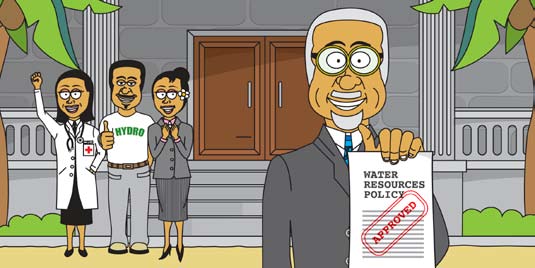
Turn over to read more about what is needed to make integrated water resources management work for you.
The Ministry of Finance and
Mr Measure, Hydrological/Meteorological
Planning recognises the
Mr Chief, Traditional Governance System
Ms Activist, Association of NGOs
Services
value of water for economic
development but are not
Mr
Chief
represents
Ms Activist represents
Mr Measure is facing
sure exactly how much it
communities and traditional
a wide range of local
difficulties in securing basic
is worth and how it should
governance
systems
and international, non-
hydrological
information
be allocated most cost-
all over the country. He
governmental, community-
that
is
essential
for
effectively. Mr Accountant
is concerned that the
based
or
religious
management
decisions
wants to work together with
government is not doing
organisations working on a
on issues related to water.
other sectors to develop a
enough to ensure that
range of issues including:
A lack of resources and
water use efficiency plan so government can allocate water in
communities have access
community development,
expertise means he is
a way that maximises economic gain while ensuring the long
to clean water, especially in
environment,
education
not able to respond to
term sustainability of water resources. He wants clearer legislation
remote and rural areas. He
human
rights,
youth,
requests from government
and policy for water ownership and extraction rights, with specific
wants to ensure that government doesn't encroach on the rights
women, poverty reduction, etc. Many of these organisations work
departments and the private sector for hydrological data needed
guidance on how to tax businesses for water use, extraction and
of communities and landowners to water on their property. Mr
to protect water resources and ecosystems, and to improve
for assessing existing water resources, drought and flood
pollution. Mr Accountant would like to see one overarching plan
Chief and his fellow chiefs are very influential in their communities
communities' access to water, sanitation and hygiene. Her
prediction, road and bridge construction, hydropower and a range
for how different government departments contribute to water
and their support is essential to ensure policy implementation,
member organisations can advise policy and management
of other issues. He wants government departments to understand
management and how this links to the implementation of a
and to avoid conflict between community, government and
decisions to ensure that they reflect the interest of communities
that you can't manage what isn't measured, and that they must
national sustainable development strategy, so that he can decide
private sector interests.
and civil society. They also play an important role in supporting
invest more in hydrology or risk making decisions that jeopardise
how to allocate government funding to this area.
policy implementation and raising public awareness.
public safety and economic development.


How Can we Manage water togetHer?
Creating Room for Planning and
Agreeing on Common Goals and
Working Together and Keeping Track
Listening and Sharing Information
Coordination
Objectives
of How We're Doing
National Water Apex Bodies
The first step to integrated planning and management is to create a space where representatives
The first step toward effective integrated water management is to determine common goals and
While a policy outlines the goals and objectives, there also needs to be a work plan or strategy
Pacific Island Countries have highlighted communications and awareness raising as a priority
from different government departments and stakeholders can coordinate and work together to
objectives. In a national planning process, these goals and objectives are reflected through policies
for action which details the steps necessary to achieve these goals, who will do the work and
issue for improving water resources management. Good communication will help cut across
improve water resource management in a coordinated and strategic way.
and enforced through legislation. Many Pacific Islands do not yet have an overarching policy for
what resources are required. Each government ministry or department usually have a work plan
many different sectors and help integration. It is also an essential and relatively cost-effective tool
how their water resources should be managed and used, but often have many different policies
that contributes to an overarching national development plan.
At a national level, governments need to establish and support a National Water Apex Body
for changing attitudes and behaviours in order to improve water resources management.
that focus on individual aspects of water management (e.g. water supply or water quality).
(NWAB) to develop and coordinate implementation of policy, legislation and strategy for water
In order to implement a water policy that encompasses many different sectors, there needs to be
Effective communication can also help highlight shared interests and commonalities as well
resource management in a way that contributes to overarching national objectives and planning
If governments are to address interconnected water issues, it is important that there is one
a National Plan or Strategy for Integrated Water Resources Management. The plan must show
as the benefits an integrated approach provides. This is important in order to get high-level
(such as national sustainable development plans).
overarching water policy that lays out a common vision for how to manages water resources, in
how different departments and stakeholders will contribute to implementing the National Water
political support and commitment of government resources for improving water management
a way that contributes to national development plans. The policy should include general goals
Policy. Developing this plan is a simple process and should be included in the overall national
The NWAB should ensure that different sectoral policies and strategies in areas like environment,
and sanitation.
like ensuring:
planning process. Steps include:
planning, agriculture, etc. address water in a strategic and consistent way. Many Pacific Island
A national strategy or action plan for integrated water management can only be implemented with
Countries have established a NWAB often called a National Water (and Sanitation) Committee
·
Adequatewatersupplyandsanitationservicesfortheentirepopulation
·
Findingpoliticalsupportandresourcesforthedevelopmentoftheplanandresearching
the support of a broad range of government sectors, stakeholders and the public. In order to get
in some shape or form. However, most of them are still in the early stages of making their
what has worked in other places (case studies can be found in the Resource Centre on
·
Sustainablemanagementofwaterasarenewablebutfiniteresource
this support and all these people to commit to working together, it is crucial that they understand
NWABs inclusive, functional, proactive and sustainable. There are a few key elements needed to
www.pacificwater.org)
why integrated water resources management is necessary, what benefits it will provide them and
support this:
·
Efficientwaterusetominimisewastefulness
how they can participate in the process.
·
Formingasteeringcommitteeorothergroupthatcanleadandcoordinatethedevelopment
·
TheendorsementofaclearmandateforNWABs,byhigherlevelsofgovernment(e.g.cabinet),
·
Equitableallocationofwaterthatensuresminimumconflictbetweenwaterusers
of the plan (often the National Water Apex Body, or a smaller group within this Body)
Without effective communications between different sectors of government there is a risk for
to act as the coordination and advisory body for any national planning related to water
·
Effectiveallocationofwaterinordertoprovidemaximumsocial,economicandenvironmental
duplication of effort, counteractive approaches, and gaps in water management. A lack of
·
Outliningaprocessfordevelopingtheplan,gettingexpertiseandresourcesneeded,and
·
Agreementoncorevalues,likeaccountability,transparency,genderequityetc.,whichguide
gain
communication between water managers at national and local levels can lead to a disparity
establishing working groups as required
the work of the committee.
between national policy and on-the-ground implementation.
·
Accesstowaterforthepromotionofeconomicdevelopment
·
Identifyingwhichstakeholdersneedtobeinvolvedinthedevelopmentoftheplanandin
·
Clearobjectivesinworkplansthatoutlineresponsibilitiesforactionandhaveindicatorsfor
Communications and awareness raising is not new to water management in the region, however
what way
·
Protectionofwaterbodiesandmaintenanceofwaterquality
monitoring and evaluating progress
past efforts have often been patchy or limited to press releases, disparate events or initiatives.
·
DevelopingacommunicationsstrategytopromoteNationalWaterPolicyandtoensurewide
·
Meetingwaterneedsoftheenvironmentandmaintainingbiodiversity
·
Goodmeetingorganisationandprocedures,thatensurefollow-upondecisionsandagreed
The Pacific IWRM programme aims to support countries build communications capacity so they
support
·
Minimizingtheimpactsofextremeeventssuchasfloodsanddroughts
actions
can run effective communications campaigns and ensure information on water management is
·
Undertakingasituationanalysisthatexaminesexistingwaterresourcesmanagementand
available to all stakeholders in a way that is accessible, understandable and timely.
·
Preventingharmtocoastalandmarineecosystemsfromfreshwateroutflows
·
Timely reporting to higher levels of government and other groups that the NWAB is
outlines different options for reform. All Pacific Islands have a national diagnostic analysis
accountable to
Like other activities in a project or process management cycle, communication activities need to
for integrated water resources management that can be a basis for this (you can find these
An overarching policy should give direction on the general goals and principles for the
be planned, tested, evaluated and adapted in order to be effective. Implementing communication
under the Country Profiles on www.pacificwater.org)
management of water resources and broadly outline actions or processes that the government
·
Membership of all government departments and stakeholders that play a role in water
initiatives cost time and resources. It is therefore important to communicate strategically and
commits to undertake to achieve these goals. It should also lay down general principles for water
resources
·
Formulatingvisionandgoalsforintegratedwaterresourcesmanagementandsettingtargets
effectively in order to reach the right audience with the right message.
management, such as the need to manage water as part of a connected cycle and the role of
and milestones towards achieving these goals
·
Accountabilityofmembersforagreedresponsibilities.
government in water management. The overarching policy also needs to be complemented by
OverthenexttwoyearsthePacificIWRMprogrammewillsupportNationalWaterApexBodiesin
·
Examining options for activities and reform to achieve goals, and evaluating if they are
·
Structuresandstrategiesforcommunicationbetweenmembers,andwithexternalpartners,
more elaborate issue specific policies (e.g. ownership and extraction rights, services, etc.). It is
Pacific Islands Countries to build their communications capacity and to develop and implement
realistic (in terms of available resources), cost-effective and in line with overarching national
local authorities, media and the public
important to ensure that the policy is `mainstreamed' and integrated, into sectoral policies like
communications strategies that improve intersectoral coordination and stakeholder involvement
development planning
forestry, agriculture, planning, trade, environment, health, education, etc.
in water resources management.
·
Establishment of an archive where members can access meeting reports and other
·
Promotingandgettingendorsementfortheplanbydifferentgovernmentdepartmentsand
documents related to the work of the NWAB
Policies can only be implemented if they have wide support from society as a whole and, more
Close consultation with all participating countries will be necessary in order to identify target
other stakeholders (through the National Water Apex Body and other mechanisms) and
specifically, from key stakeholder groups that have a great influence on the implementation of the
audiences, culturally relevant messages and appropriate materials for national communications
·
Theallocationofresourcesbygovernmenttosustainkeycoordinationandadministrative
ultimately ratification of the plan by Cabinet or Ministers on behalf of Government
policy. Wide support also helps to ensure that political shifts don't disrupt policy implementation.
campaigns.
functions such as a Secretariat
It is therefore important that these groups get a chance to provide input on policy before it is
When implementing the plan, it is important that a coordinating body such as the National Water
Sharing of information between stakeholders and policy makers is vital in order to ensure that
ThesekeyelementsneedtobeclarifiedinaTermsofReference(TOR)thatshouldbeendorsed
adopted. The National Water Apex Body plays a key role in this consultation process. Steady
Apex Body (NWAB) help different government departments and stakeholders work together. The
policies are inclusive and take into consideration the needs of all water users. The Pacific IWRM
by the participating members as well as higher levels of government to ensure that the NWAB
implementation and long term sustainability can also be strengthened by integrating goals into
NWAB will also need to establish a way to measure progress and evaluate if the activities are
programme will facilitate processes in order to enhance communication between all parties.
has the necessary support and authority to advise and coordinate national water resources
supporting legislation. This is needed to ensure that key principles such as water protection,
contributing to the plan's vision, goals and targets, or if another approach is required. The National
management.ThePacificIWRMProgrammehasdevelopedaguidewithtemplateTORandtips
allocation and ownership issues are enforced and to prevent conflicts between different users.
Integrated Water Management Plan or Strategy should include clear indicators of progress
for how to strengthen your NWAB which you can request from iwrm@sopac.org.
towards goals and targets, and an approach for monitoring and evaluation.
Catchment and River Basin Committees
The integrated water resources management (IWRM) approach aims to:
In order to ensure local stakeholder ownership and effective action, it is important that management
· Takeintoaccountallthelinksthatwatermakesbetweendifferentenvironments,communitiesandindustries,tomanageitaspartofalargerwatercyclethatmovesfromraindroptoocean
decisions and planning is undertaken at a grassroots level. Local Catchment or River Basin
Committees can be formed to manage water on the lowest level possible, i.e. one connected
· Balancedifferentwaterdemandsforhumanhealth,theenvironmentandeconomicdevelopmentbyallocatingwaterinafairwaythatpreventsconflictbetweendifferentusersandtakesintoaccounttheneedsofallmembers
body of groundwater, rivers, streams, or a combination of all these. These committees gather
ofsociety.
users, managers and others that impact on a shared water source to help make important
· Recognisethatwaterisafiniteresourceandensurethatitisusedinanefficientandsustainablewaytoprovidethegreatestpossiblebenefittoasmanypeopleaspossiblebothnowandinthefuture
management decisions on things like land use, pollution prevention, water use and flood
management. Catchment Committees can also play an important part in advising national water
· Bringtogethergovernmentandstakeholdersfromdifferentsectorsandinterestgroups,toplanandmanagewaterinacoordinatedandstrategicwaythatlinksnationalandlocalmanagement
policy and supporting its implementation on a local level. The Pacific IWRM Programme is helping
to strengthen catchment committees in Pacific Island Countries with demonstration projects in
Becausewaterbodiesspanlargegeographicareasandconnectsomanydifferentsectorsofsociety,thereneedstobeanoverarchingnationalplanningprocessforagreeinghowacountry'swaterresourcesshouldbemanaged,
Fiji,Samoa,PapuaNewGuinea,VanuatuandtheRepublicofMarshallIslands.
andhowtocoordinatemanagementinitiatives.Thisrequiresacoordinatingbody(suchasaNationalWaterApexBody),acommonnationalagendaforwatermanagement(policyandlegislation),andanationalactionplanor
strategyforintegratedwaterresourcesmanagement-allsupportedbyeffectivecommunicationsbetweenallpartiesinvolvedintheprocess.
The Pacific Integrated Water Resources
Management (IWRM) Programme
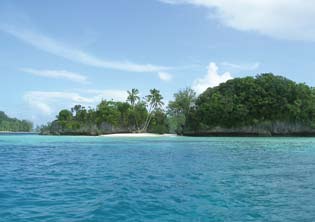
Palau Coordinating IWRM
In driving the IWRM Planning process forward, a space and a place
needs to be created to enable and support coordinated planning and
development of policy and legislation, consultation and other steps in
the planning process. One such coordination mechanism employed by
many countries is the use of National Water Apex Bodies (NWAB's) which
is essentially a form of a National Water and Sanitation Committee or
a variation of this. Pacific Island countries are at various stages in the
development, endorsement and operation of such Committee's.
The Republic of Palau for example, have used an existing Water Safety
Planning (WSP) Committee initial y set up to support the implementation
of a the their Water Safety Planning project to also include the functions
as a National Water and Sanitation Committee tasked with driving the
IWRM Planning process forward and in the coming years will be looking
to strengthening this further.
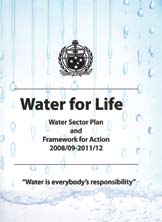
Samoa Policy and Strategies
The Pacific Integrated Water Resource Management (IWRM) Program is supporting Pacific Island
Countries to improve the way they manage their water resources and in doing so, are assisting with
the development of policy and legislation that support the IWRM vision and process. An overarching
national water policy for water resource management inclusive of supply and sanitation in both rural
and urban areas is currently being developed by many of the Pacific Island Countries who are at
varying stages of this process.
Samoa for instance, through their sector wide approach currently funded by the European Union has
made much progress in this area through their "Water for Life" Initiative. This initiative has allowed for
the development of a National Water Resources Management Strategy (NWRMS), an overal national
framework that provides for the protection, conservation, development and management of Samoa's
water Resources. Additionally, this sector wide approach and the NWRMS, provides an enabling
environment supporting an IWRM process.
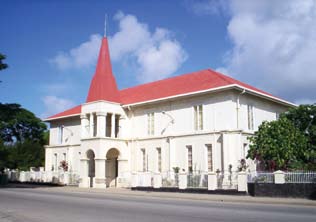
Tonga Legislation
A key step in the IWRM Planning process is the formulation of overarching
legal instruments such as legislation, acts and regulations that provide for
the protection of the rights to water resources and whilst also considering
water supply, public health and sanitation and environmental flows
for instance. These legal instruments should also be integrated within
existing sectoral laws and regulations and also consider structures for
enforcement.
The Kingdom of Tonga has made strides in the area of water resources
legislation and developed a Water Resources Bil in 2007 which was
founded on work carried out in previous years by the government
themselves as well the International Water Project (IWP) funded by the
GEF. The Water Resources Bil provides for Water Resources ownership
and management, regulatory powers, provisions for a National Water
Resources Committee and plans. This Bill is currently being considered by Cabinet for enactment whilst the National Water
Resources Committee has been endorsed to commence with its functions.
Pacific IWRM Programme, SOPAC, Private Mail Bag, GPO, Suva, Fiji Islands. Ph: +679 338 1377, Fax: +679 337 0040
Email: iwrm@sopac.org, Web: www.pacificwater.org or www.sopac.org
Document Outline
- IWRM planning brochure A4
- IWRM planning brochure A3
- IWRM planning brochure A2
- IWRM planning brochure A4 back