Nile Basin Initiative
Nile Tr ansbound ary Environment al Action Projec t (NTEAP)
The Nile Environment
A QUARTERLY NEWSLETTER OF NTEAP
Volume IV, issue 3
July Sept 2007
Editorial
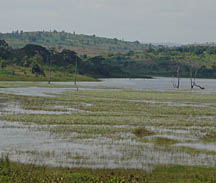
Sudd Wetland Endowed with Unique Resources and
Editorial
T he July September quarter was quite Enormous Potential for Tourism- H.E State Minister
challenging for NTEAP. The major activity
of Environment of Sudan Says.
during the quarter was the resubmission exer-
cise for the second tranche of UNDP GEF and
this took substantial time of the project man-
agement unit.
The good news is that the efforts paid back and
NTEAP submission for GEF grant of $6.7 mil-
lion was approved. On behalf of NTEAP I would
like to thank all those who contributed in vari-
ous ways in enabling the approval. We now
look forward to receiving the CEO endorse-
ment and initiating the project.
The delays in operationalization of the funds for
the wetlands component was yet another hur-
dle that the project faced during the quater
leading to slow progress in the wetland activi-
ties.
Despite these constraints the project made
progress in a number of areas including, hold-
ing the regional best practices capacity building
workshop, initiating the Lake Cyohoha and
Tana wetlands and water quality studies, wet-
lands education and awareness material devel-
opment, training of wetlands officers of NBI
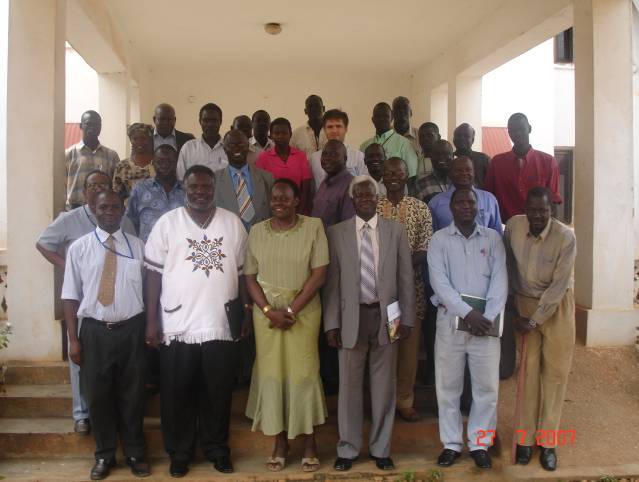
H.E State Minister for Environment (4th from right) with participants
countries and participating in the GEF 4th Bi-
ennial International Water Conference. NTEAP
H .E. Ms Teresa Siricio IRO, the State Minister for the Ministry
set up a stall at the innovation market place
of Environment & Physical Development, Government of Na-
and participated in the website design competi-
tional Unity (GoNU) of Sudan, has said there is a big potential for
tion.
tourism in the Sudd wetlands, in South Sudan, which has to be de-
We look forward to a more productive Septem-
veloped. The Minister reiterated the presence of the largest wet-
ber-December quarter and we continue to bank
lands in Africa called the Sudd, which ameliorates climate and has
on our stakeholders support for success.
unique biodiversity.
Gedion Asfaw, RPM
She said the sudd has unique resources which have not been ex-
posed to the outside world; amongst them are the culture and sur-
vival traditional strategies of the people of the Sudd. "We therefore
Inside this issue:
need a management plan to be developed for the Sudd so that the
various stakeholders can participate in this management", the min-
Sudd wetland endowed with unique resources 1
NTEAP receives $6.7m from UNDP GEF 3
ister said. The management plan will be made with the full partici-
NTEAP launches Best Practices documentation 4
pation of the inter-ministerial committee which is the working
NTEAP plants over 3m trees 5
group we are inaugurating today together with all the ten states of
NBI urged to increase tangible activities 6
the Government of South Sudan, the minister went further.
Minister applauds NTEAP contribution 7
NBI/NTEAP1 participate in 4th International Water
...........continue to page 2.
conference 8
PAGE 2
THE NILE ENVIRONMENT
VOLUME IV, ISSUE 3
Sudd Wetland Endowed with Unique Resources and Enormous Potential for Tourism- H.E State
Minister of Environment of Sudan Says.
and the Ministry of En- biodiversity as aresult of human ac-
vironment, Wildlife tivities. The Sudd is now internation-
Conservation and Tour- ally recognized as a Ramsar site or
ism also endorsed the wetlands of International Impor-
establishment of the tance; with this international recog-
Wetlands Unit in the nition, we have to be the watchdog so
Directorate of Environ- that the Sudd is not polluted by hu-
ment within the Minis- man activities especially the oil, he
try and with fulltime went further. H sounded a caution to
staff that will follow up manage the Sudd according to inter-
the management and national standards and also to en-
coordination of Wetland sure that it is sustainably utilized for
activities in South Su- the protection of biodiversity and
dan. The unit will be water which are of trnsaboundary
advised by the wetlands significance.
working group in accor-
dance with the recom- The Wetlands and Biodiversity Con-
mendations of the Ram- servation component of NTEAP has
Wetland: Endowed with unique resources.
sar secretariat.
initiated inventory of wetlands in the
Nile basin, Sud wetlands manage-
S he said at the moment the Present at the meeting were H. E. Major ment plan study and wetlands educa-
main resource (of Sudan) oil General Alfred Akwoch, Undersecretary tion and awareness material develop-
comes from the wetlands, but of Ministry of Envi-
south Sudan also has biodiversity ronment, Wildlife
much of which is unknown. She Conservation and
called for research to be under- Tourism, Govern-
taken in the Sudd. She said south ment of Southern
Sudan needs to open up to the Sudan and repre-
world by showing what they have sentatives of line
and demonstrate to friends and ministries, among
development partners that they others.
have something to offer.
The Major General
The Minister was addressing the in his introductory
participants at the first inter min- remarks said it was
isterial gathering of Government the first time the
of South Sudan, held from 26-27th GoSS and the Min-
June 2007, in Juba, south Sudan.. istry of Environ-
The meeting was attended by the ment, Wildlife Con-
Governors of the ten states of servation and Tour-
Southern Sudan. The Nile trans- ism had brought
boundary Environment Action stakeholders to-
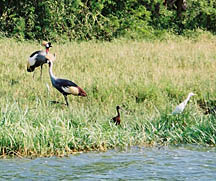
Project and the county representa- g e t h e r t o t a l k Wetland ecosystems: Essential resting and feeding habitat
tives on the Regional Working- about Wetlands
for migrating birds and animals.
Group on Wetlands and Biodiver- and biodiversity.
sity used the occasion to introduce He acknowledged
ment. Training of wetlands officers of
wetlands management in South that wetlands are essential for liveli- NBI countries is currently on going
Sudan. The inauguration of the hoods especially for local Southern Suda- in Naivasha, Kenya organized by the
Wetlands & Biodiversity Working nese communities and it is the responsi- component.
Group for South Sudan took place bility of the government to safeguard
at the same time.
them for the communities. He said wet- Abdelsalam, A : National Project
lands provide a wide range of biodiver- Coordinator
The states endorsed the idea of sity such as water, fish; animal, medici-
establishing state level programs nal plants but he expressed worries Khalid Riak: WB Working Group
to enhance wetlands management about their pollution and the threatened Member
VOLUME IV, ISSUE 3
THE NILE ENVIRONMENT
PAGE 3
NTEAP Receives a Boost of $6.7 Million from UNDP GEF
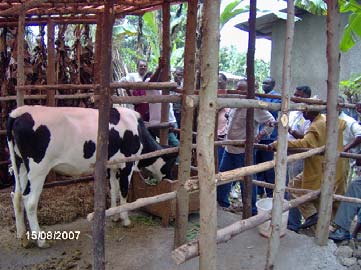
T he Nile Transboundary Envi- money was initially approved but it was gram (SVP). The project is
ronmental Action Project withdrawn following a UNDP GEF ac- financed through the Global
(NTEAP) has received a boost of $6.7 tivities and budget review. NTEAP had Environment Facility (GEF)
million from UNDP GEF. This was an- to submit a new project proposal to through grants to two imple-
nounced by Ms Mirey Atallah, Regional UNDP GEF, which was finally ap- menting agencies, the United
Technical Advisor, Land Degradation and proved by the GEF council members at Nations Development Pro-
International Waters, following the ap- the beginning of September 2007.
gram (UNDP) and the World
proval of GEF Council members and the
Bank (the agencies), as well
The Regional Project Manager, Mr. Ge-
Chief Executive Officer. The money is
as a grant from a multi-donor
dion Asfaw, has extended the gratitude
expected to fund the activities of NTEAP
Nile Basin Trust Fund
of the NTEAP staff to CIDA, the GEF
phase 2
(NBTF), which is managed by
Council members and CEO for approv- the World Bank.
The news was received with a lot of ing the request as well as Nile Sec,
excitement among the project World Bank, UNOPS and all the others The Canadian International
staff , NBI and the development for their support.
Development Agency (CIDA)
partners as the situation had cast
is one of the key contributors
The Nile Transboundary Environ-
uncertainties on the continuation of
to the NBTF with a specific
mental Action Project (NTEAP) is one
the project activities in 2008 and
interest in the environmental
of eight regional capacity building pro-
beyond. According to the NTEAP
dimension of the NBI's vision.
jects executed through the Nile Basin
project implementation plan, the Initiative's (NBI) Shared Vision Pro- Joel Arumadri KMS
NTEAP Made Significant Progress Towards Meeting Objectives--WB,
UNDP Report
A report of a joint World Bank stock of the project's progress to date independent mid term review had
UNDP Mid Term Review (MTR) and assessed how developments in recommended the extension of the
mission, released recently, has noted basin cooperation can be reflected in project life by one year, to end of
that NTEAP has made significant the project, among other issues. The 2009, as the actual project implemen-
progress towards meeting the pro- agencies confirmed the findings of the tation took one year to start and the
ject's development objectives.
mid term evaluation in that the pro- recommendation was approved by the
ject has been a leader in river basin NTEAP Project steering committee in
The main development objective of cooperation and represented the Nile their 4th project steering committee
NTEAP is "the creation of more effec- Basin Initiative when there was no meeting in February 2007, in Khar-
tive basin-wide stakeholder coopera- other action on the ground and has toum. It noted that NTEAP remains
tion on transboundary environmental been exemplary in project execution, highly relevant to the basin and has
issues by enhancing the analytical procurement, monitoring and evalua- played a key role in sustaining coop-
capacity for a basin-wide perspective tion.
eration while the overall SVP was
to support the sustainable develop-
initiated and outputs achieved in a
ment, management, and protection of According to the belated report, a de- satisfactory manner. As a result, the
the Nile Basin water; and engaging cision on the proposed extension of agencies supported the submission of
the full spectrum of stakeholders, the NTEAP project beyond the initial the second phase request, which has
from local communities to national closing date can only be made after it now been approved, and the second
policy makers, from elementary is clear whether or not the GEF Phase phase is expected to take into consid-
schools to universities, from non- Two funds will be made available. It eration the evolving GEF strategy on
governmental organizations to line is yet to be seen how the World Bank international waters.
ministries, in the management and and UNDP will address the issue of
protection of the basin's shared re- the extension in the wake now that The SVP mid term review also rated
sources."
GEF phase 2 fund has been approved. NTEAP performance as fully satisfac-
tory.
The joint World Bank/UNDP mid- A recent report of the SVP mid term
term report followed an independent review put the closing date of the Joel Arumadri KMS
mid-term evaluation, which took NTEAP project to end of 2008. The
PAGE 4
THE NILE ENVIRONMENT
VOLUME IV, ISSUE 3
NTEAP Launches Documentation of Best Practices
teachers and students. The collec-
a platform for all participants to share
tive objective of the activities are to experiences.
pilot innovative approaches to land NTEAP intends to focus in 2007 and
and water conservation measures 2008 on deriving best practices from
at the national level; raise aware-
activities at the national and regional
ness on the major environmental levels.
threats that face the Nile basin
countries and enhance the techni-
Guidelines and terms of reference
cal cooperation among the coun- have already been drawn by the
tries.
NTEAP to document best practices at
Preliminary selection of projects at national level and the best practices
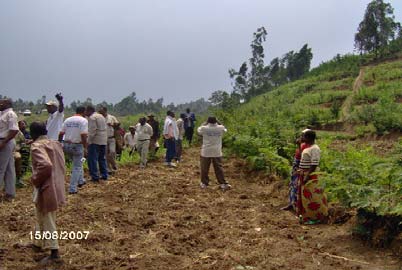
Integrated soil conservation in Rwanda: conry level was done through na- will be compiled and disseminated to
"Shrubs grown to restore degraded hill tional consultative workshops in all relevant stakeholders. It is hoped
slopes used to feed cattle".
all the basin countries and the se-
that some of the activities will qualify
for up scaling by the SAPs and repli-
T
lected projects were presented and
he Nile Transboundary Environ- discussed at a regional best prac- cated by the neighboring communities
mental Project (NTEAP) of the tices workshop held in Kigali from or even in other parts of the basin.
Nile basin initiative has launched the 15-18th August 2007, attended by NTEAP, through its microgrants pro-
documentation of best practices in all NTEAP project coordinators, jects and learning by doing projects,
the micro grants and schools project Local Microgrants coordinators under the environmental education
activities.
and one invited participants from
each of the basin countries.
and awareness component, has imple-
mented a number of projects in the
The main objective of documenting The purpose of the workshop was basin countries.
the best practices is to identify the to enhance the capacities of the
innovative approaches to land and participants in identifying, compil- NTEAP provides a strategic frame-
water conservation which the sub-
ing, documenting and disseminat-
work for environmentally sustainable
sidiary Action Program (SAP) , the ing best practices; to review the development of the Nile River Basin
investment program of the NBI, can nationally selected best practice and supports basin wide environ-
up-scale or replicate and also share activities with the view to enhanc- mental action linked to transbound-
experiences and lessons learnt..
ing their quality and agreeing on ary issues.
The activities are implemented by the criteria for choosing best prac- Joel Arumadri-KMS
communities, NGOs, CBOs, school tice for documentation and provide
Micro-grants Program in Phase II of NTEAP
W ith a total of 190 projects networking.
There has been a noticeable increase
amounting to $4.3 Million, in
in demands by NGOs in the Nile Basin
all the Nile Basin countries, the Mi- The emphasis of the Micro-grants countries for Micro-grant Projects.
cro-grants Program is moving swiftly Program in Phase II will be on Wet- While the Program with its limited
towards attaining its intended objec- lands along with collaborative ac- funds can address only a small portion
tive which is to pilot and derive some tivities with the Efficient Water Use of those demands, it aspires to dissemi-
viable options for community level for Agricultural Production Project nate the findings and results of these
actions to address Nile environ- in the areas of water harvesting activities to the growing numbers of
mental threats. The projects focus on and small scale irrigation. The MG NGOs and CBOs across the Nile Basin
eight environmental threats namely, Program will also collaborate with Countries. The Best Practices identifi-
Deforestation, Soil Erosion, Silta- the Applied Training Project in cation and documentation exercise
tion, Wetlands Degradation, Floods training women NGO Groups in that is currently in process within
and Droughts, Water Weed Infesta- project management and network- NTEAP will also be a catalytic factor
tion, Water Pollution and Loss of ing. As far as the SAPs are con- in helping to share the success of the
Species and Ecosystems. In addition cerned, the bulk of the new projects Micro-grant Program to a wider spec-
the Program also focuses regionally in phase II will operate in SAP ar- trum of stakeholders and practioners.
and nationally on community train- eas especially in cross border loca-
ing, environmental awareness and tions.
Amir Baker, MGLS
VOLUME IV, ISSUE 3
THE NILE ENVIRONMENT
PAGE 5
Billion Tree Planting Campaign NTEAP Plants Over 3 m Trees in 2007 Only
Through its micro-grants program, "We have but a short time to
World Environment Day (WED), avert damaging and economi-
schools projects and Nile Week cally debilitating change. The
tree planting campaigns, NTEAP solutions are numerous and, as
has planted 8,200 trees in Sudan; many economists say, afford-
able when compared with costs
30,800 trees in Burundi; 730,000 in of complacency. The goods and
Rwanda; 562,000 in Tanzania; services provided by forests are
11,000 in Kenya; 1,623,644 in worth the billions if not tril-
Ethiopia and 10,000 in Egypt dur- lions of dollars to the global
ing 2007. Some of the countries economy. Forests are natural
have already entered the trees and economically important
planted in the UNEP database of "sinks", sequestrating carbon
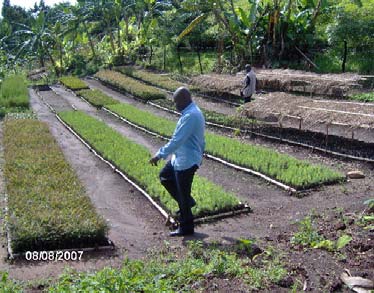
NTEAP Microgrants supported Tree nursery
the trees planted and can be viewed from the atmosphere and lock-
at
ing iy way in trunks and
T he United Nations Environment
branches. Globally, forest cover
www.unep.org/billiontreecompaign/
Programme (UNEP) has launched a
is at least one-third less than
planted/.
major worldwide tree planting cam-
what it was. It is time to reverse
paign. Under the Plant for the Planet: The Nile Transboundary Environ- the trends, it is time to act"
Billion Tree Campaign, people, commu- mental Action Project (NTEAP) is Achim Steiner, UNEP Executive
nities, business and industry, civil soci-
Director
ety organizations and governments are one of the eight projects under the
encouraged to enter tree planting shared vision program of the Nile ronment challenges in the Nile
pledges online with the objective of Basin Initiative (NBI). The vision river basin. The project is imple-
planting at least one billion trees world- of NBI is to achieve sustainable
wide during socio-economic development
mented in Burundi, Democratic
It is time to 2007.
through the equitable utilization of, Republic of Congo, Egypt, Ethio-
and benefit from, the common Nile pia, Kenya, Rwanda, Sudan, Tan-
act!
The Nile
zania and Uganda.
Transbound- Basin resources.
ary Environment Action Project
The objective of NTEAP is to pro- Jane Kisakye LMGC Uganda
(NTEAP) of the Nile Basin Initiative has
contributed to the campaign by planting vide a strategic environmental Joel Arumadri--KMS
over 3 million trees of various species in framework for the management of
the basin countries.
the transboundary waters and envi-
Tanzania Charts NTEAP Environmental Education and Awareness Exit Strategy
I n its fifth ordinary session, the Na- ronmental Education and Communi- The NWG has set the timetable of
tional Working Group (NWG) on cation Committee (NEECC). This was activities for the transition and
Environmental Education and Aware- considered to be the most sustainable hand over of activities to NEECC,
ness deliberated on the course of ac- option, since the committee is a statu- depending on the acceptance of the
tion for exiting from NTEAP patron- tory government institution that has idea by the NEECC. The NWG
age as part of the wider NTEAP exit members from wide range of stake- secretary will produce a brief on
strategy.. The decisions were necessi- holders from within the government NWG activities and circulate to its
tated by the fact that the Nile Trans- and the civil society. Also about five members by 15th October; a final
boundary Environmental Action Pro- members of the NWG are members of version will be produced after
ject (NTEAP) is heading for comple- the NEECC. On the downside, how- members comments on 22nd Octo-
tion and as the NBI evolves into a ever, it was observed that the ber; a meeting between NWG
permanent institution. It is envisaged NEECC has only met once in the past chairman and NEECC chairman
that the permanent institution will three years. One major reason is lack will be called on 25th October and
have an environment management of resources to support it. The NWG, a hand over meeting will be called
unit.
nonetheless, considered this as an on the third week of November
opportunity for NTEAP to participate 2007. The NWG coordinates envi-
During the meeting the NWG decided in revamping the operations of ronmental education and aware-
that, the group activities be subsumed NEECC, by providing financial sup- ness activities at the national level.
into the plans of the National Envi- port to the NEECC as it did for NWG. Abdallah Shah NPC Tanzania
PAGE 6
THE NILE ENVIRONMENT
VOLUME IV, ISSUE 3
Increase Tangible Activities in Natural Resources Management in the Basin- ED REMA
Environment Management Authority ( REMA ) Urges NTEAP/NBI.
resources management, the ED national priorities, the PSC member
said.
said. There is need to apply the
knowledge that has been acquired and
This was at the opening of the to evaluate the progress and achieve-
regional workshop on best prac- ments in natural resources manage-
tices documentation held during ment on a regular, basis the PSC
11-14th August 2006, in Kigali, member said. She urged NTEAP to
Rwanda. She said Rwanda offers enlist the participation of community
several best practices and lessons members in best practices workshops.
on natural resources manage-
ment. One of the best practices The regional workshop, attended by
she said was the banning of the participants from all the NBI coun-
NTEAP Microgrants: Hill slope restoration in Rwanda. use of non-biodegradable bags in tries, was a capacity building event
Rwanda. She high lighted the intended to build the capacity of
T he Executive Director of Rwanda Envi- threats to the River Nile and the NTEAP National Project Coordinators
ronmental Management Authority importance of wetlands.
and Local Microgrant Coordinators in
(REMA) of Rwanda, Dr. Rose Mukankomeje,
identifying, compiling, documenting
Best practices from the NBI mem- and disseminating best practices.
who is also the NTEAP Project Steering ber countries and actions which UNDP and SAP projects in Rwanda
Committee member from Rwanda, has ap- will strengthen regional coopera- participated in the training.
pealed to the Nile Transboundary Environ- tion for better transboundary
ment Action Project (NTEAP). There is a management of the natural re-
need to implement more activities in natural sources in the Nile basin should
be adopted and incorporated into Joel Arumadri KMS
NTEAP Facilitates Farmer Training in Nebbi District , Uganda.
T o achieve political security, environ- Over eighty (80) farmers participated in the areas, and enhance the livelihoods oppor-
mental Security and economic security training that drew people from either side tunities of the local community through
is paramount. A Chinese philosopher once of Nyagak and Namrwodho river banks in improved food security and house hold
said; if you have a one days programme, north western Uganda. The two rivers con- income (contributing to the government
cook rice; if you have a one years pro- tribute water to the mighty River Nile. The policy of eradicating poverty).
gramme grow Rice, if you have a ten years farmers are organised in Ecosystem Man-
programme, plant a tree; and if you have a agement Committees, which are normally Among the achievements over 30,000
programme for generations, educate the headed by a chairperson. The committees trees have been planted so far. The water
masses. This is what Nebbi District Envi- were responsible for choosing the farmers quality, according to the participants, has
ronment Offices did. The office spearheaded that participated in the workshop. Thirty improved, as well as an increase in the
a training package for today and the future percent (30%) of the participants were crop yield.
generations. The farmers were trained in women. The farmers were encouraged to The training workshop was officially
three main areas including soil and water always include more women on their teams opened by the Secretary for Production
conservation, forestry techniques, and man- for such training because women are the and Environment on behalf of the District
agement of Improved Irish Potatoes. Over best teachers and by including women on Local Council Chairman. In a speech de-
90% of the people in the district depend on their teams, you are sure of passing knowl- livered for him, the Chairman said the
agriculture for their livelihood. The training edge to the next generation.
district supported the Namrwodho and
therefore touched on a crucial knowledge
Nyagak river ecosystems project because
base. Through such training, the district The project area was beset by a number of of the frequent droughts in the district that
hopes to achieve a socio-economic transfor- problems including: wetland encroachment led to food insecurity, and the supplemen-
mation of their people using their areas of and degradation, soil erosion within the tary support to the small water and elec-
expertise (agriculture). Nebbi District Envi- riverbanks and hilly areas, degradation of tricity production programme.
ronment Office through funding from vegetation, rangelands/ forests, and deple-
NTEAP NEP's is introducing improved tion of biodiversity, especially fish. This
Irish Potato variety to the district. This ini- has lead to run off contributing to soil ero- NTEAP through its micogrants component
tiative has given hope to the local people sion and subsequently siltation of and the national eligible projects funding
who are eager to cash in on the ready mar- Namrwodho and Nyagak rivers. The pro- mechanisms supports community initia-
ket in Southern Sudan, Nebbi Town and ject therefore set out to promote the re- tives in soil, water and forest conservation.
Kampala City to pull themselves out of pov- source sustainability of the Nile River
erty, as well as subsistence.
through the restoration of Namrwodho and Stephen Kigolo NPC Uganda
Nyagak river ecosystems / water catchment





PAGE 7
THE NILE ENVIRONMENT
VOLUME IV, ISSUE 3
Ethiopia Water Minister Applauds NTEAP Contribution to Environmental
H is Excellency Mr. Asfaw Din-
Coordinator Mrs Wubua Mekonnen
gamo, Minster of Water Re-
and the NBI Focal Person of Ethio-
sources has said NTEAP has made a
pia
noticeable contribution to Environ-
In a related event on July 23, 2007,
mental protection and sustainable
the Minister also handed over a prize
Water Resources Development in
to student Hirko Gari, who came
Ethiopia.
third in the NBI/NTEAP inter school
regional essay competition. The Min-
This was at a ceremony to receive
ister also handed over the NBI
training modules and materials for
shield sent for Ambo high school.
identification of key water quality Minister (right) Handing over the shield to
the school
Hirko Gari was not able to person-
variables and design of water quality
ally attend the prize handing over
assurance and status of water quality of the regional water quality monitor- ceremony held in Entebbe, Uganda
data management from the NTEAP ing strategy.
during the 15th Nile COM meeting.
Regional Project Manager, Mr. Gedion Present were Mr. Tefera Beyene, the
Asfaw. The documents are a product Technical Advisory Committee mem- Wubua Mekonon NPC
ber of Ethiopia, the National Project
Water Hyacinth for Handicrafts, Best Practice with a Twist
and baskets that could be used to re- mira.
place the polythene bags would proba-
bly have paid off.
Another hope the women have is that
their baskets and bags will manage to
While the experience of uprooting and find their ways into the markets and
transforming water hyacinth into provide consumers with a real substi-
handicrafts may have proven useful, a tute to the polythene bags.
down side to it maybe the creation of
dependency on the water hyacinth to Rwanda took a bold decision to ban the
sustain production the of handicrafts production and use of Polythene bags.
products. This may defeat the purpose This brave decision undoubtedly will
T he women in Gashora, Buge- of the project which aims at eradicat- have positive impacts on the quality of
sera District, in Rwanda, are ing this particular invasive water life in the country. The gap in demand
engaged in an arguably lucrative weed.
for the product has so far been filled by
business of making handicrafts
paper bags which may be practical in
out of water hyacinth and selling The women assured a recent NTEAP some cases, while tedious in others,
to the public. Thanks to a gener- mission to the area that they are especially when dealing with the trans-
ous grant of $25,000 from the aware of the problem and have al- port of edible commodities such as
NTEAP Micro-grants Program. ready started to use other types of moist food stuff.
While the stock of handicrafts at raw materials such as the papyrus Amir Baker, MGLS
the women center is piling up due and banana leaves to produce the
to absence of a solid marketing handicrafts. The aim of the women Intisar Salih, M&E LS
strategy, efforts to produce bags group at this is stage to totally anni-
hilate the Hyacinths from Lake Ru-
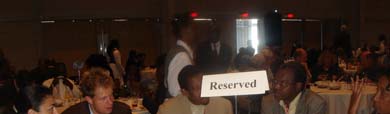
NTEAP Participates in 2007 Africa GIS Conference, the Nile RAK Applauded
P articipants at the 2007 Africa copies of the French and Englsih ver- shops presentations, exhibitions and
GIS conference, held from17- sions were distributed.
social events.
21st September 2007, in Ouaga-
dougou, Burkina Faso, have ap- AFRICAGIS 2007 is an annul event , The NRAK was developed by the
plauded the multi media (CD where the African and international NTEAP with technical support from
ROM), knowledge base on the Nile professionals meet to exchange ex- Hatfield Consultants Ltd (Vancouver,
River, commonly called the Nile periences and learn new technologies Canada), Strata 360 (Montreal Canada)
River Awareness kit (NRAK).
for gathering timely and reliable in- and FAO (Rome, Italy). The funding
formation using remote sensing and was provided by the Canadian Space
The NRAK was presented by the GIS applications for sustainable Agency under the Tiger Program.
Knowledge Management Special- management of the environmental
ist, Mr. Joel Arumadri. Over 40 and natural resources through work- Joel Arumadri KMS
PAGE 8
THE NILE ENVIRONMENT
VOLUME IV, ISSUE 3
N IL E BA SIN IN IT IA TI VE
NBI Participates in the GEF 4th Biennial International Water
N IL E T RA NSBO UN DA RY
E NV IR ONM ENT A L
Conference.
A C TI ON P RO JE C T
Al Jamhuria Street
A strong delegation consisting of Audace
House No. 2, Plot 15
Ndayizeye, the Executive Director of
P. O. Box 2891
NBI, Hamere Wondimu, the Shared Vision
Program Coordinator, Saad Eldin Ibrahim,
Phone: 249-183-784206/26
Fax: 249-183-784248
the NTEAP Steering Committee chairman,
Email: info@nilebasin.org
JB Collier, Operation Officer of the World
Bank, Mirey Atallah, UNDP GEF, Regional
Coordinator, Canisius Kanangire, ATP Re-
Visit us at:
gional Project Manager and Gedion Asfaw,
www.nileteap.org
the NTEAP Regional Project Manager, par-
4th GEF IW conference NBI side meeting
ticipated in the GEF 4th Biennial Interna-
Editorial Committee
tional Water Conference.
Gedion Asfaw, Chair
in an African country and all GEF projects
Joel Arumadri
The conference was hailed by participants including NTEAP should have played a
Editor
as unique in its organization and facilita- more proactive role and with increased
Amir Baker, member
tion in that it offered excellent opportuni- visibility. Although NTEAP participated in
Intisar Salih, member
ties for full participation of participants in innovation market place and the website
all sessions of the conference. The conver-
John Omwenga,
competition, a more visible presentation of
sation tables and working group meetings
member
NBI achievements could have been dis-
were special occasions which allowed all
Maushe
played and shared at the conference. There
participants to air their views. Janot-Reine
Kidundo,member
should have been an NBI specific presenta-
Mendler de Suarez and Atem Ramsun-
Mohammed Rahim,
dersingh, the conference facilitators, did an
layout and publishing
outstanding job in leading all sessions of
assistant
the conference to the satisfaction of all par-
ticipants.
One of the most interesting presentations
was the GEF IW indicators Jeopardy,
which was facilitated by Andy Hudson,
Principal Technical Advisor, UNDP Inter-
national Waters. The presentation ac-
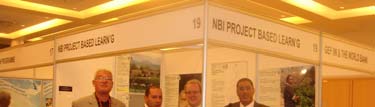
Visitors from Egypt and the WB at NTEAP
quainted participants with GEF indicators
booth
in a lively and television program like pres- tion at the plenary similar to that of other
Putting the Shared
entation.
projects. NBI has made tremendous pro-
Vision into Action
The NBI delegation took time off to organ- gress in transboundary water and environ-
ize side meetings to discuss NBI related ment management, enhancing cooperation
Please send your articles / com-
ments to
issues and specific NTEAP GEF funding between riparian countries, capacity and
The Editor
issues. The NTEAP RPM briefly met and trust building, and results based M&E,
Nile Environment at
had discussions with Dr Sulan Chen, the which we should have shared with other
jarumadri@nilebasin.org
UNDP International Waters Program Spe- projects. Our interventions at the plenary
cialist. The NTEAP Microgrants Lead Spe- and working group meetings could have
cialist and Dr Chen have jointly published been stronger and we would have been in a
a paper on NTEAP and SGP coordination better position to share our thinking and
which is posted in the IWLEARN website. experience in a more confident manner.
The 4th GEF IW conference was conducted Gedion Asfaw RPM
Upcoming events
16-18th October 2007, NTEAP-- Training updates-ENTRO
working with Private Sector
for Water wetland and Biodiversity,
Naivasha,Kenya
16-18th October 2007, DSS Network-
5-8th Nov 2007, NTEAP- Teachers Train-
ing meetings.
ing in E-Learning (EE & A), Dar-salaam,
11-12th October 2007, SDBS Linkages
Tanzania
8th Nov 2007, SDBS-Forum for Net-
Opinions expressed in this newsletter are not necessarily the views of the NBI, its member countries or partners.