Nile Basin Initiative
Nile Tr ansbound ary Environment al Action Projec t (NTEAP)
The Nile Environment
A QUARTERLY NEWSLETTER OF NTEAP
Volume I11, issue 4
Oct Dec 2006
Editorial
Editorial
Minister of Land Management, Tourism & Environment of
T he last quarter of 2006 was indeed a busy
Burundi, Visits NTEAP Microgrants Projects
one for NTEAP. The high lights of the
quarter were the Mid Term Review, the par-
ticipation in the Nile Basin Development Fo-
rum (NBDF), the NBI results based system
develpment and the second staff retreat. The
mid term review came up with useful recom-
mendations to guide planning and implemen-
tation of activities during the remaining life
of the project. The next NBDF is to take
place in Khartoum and the NTEAP has been
tasked to lead the preparations. The second
staff retreat exhaustively discussed the 2007
work plan and budget, reviewed project im-
plementation in 2006 and came up with rec-
ommendations for further improvement of
performance and team work.
The quarter also witnessed yet another high
level support for the NTEAP activities when
the Minister of Land Management, Tourism
and Environment of Burundi visited micro
grants and schools projects in Burundi. This
was the second time in a row and within the
same quarter that NTEAP was honoured with
high level political support in Burundi. We in
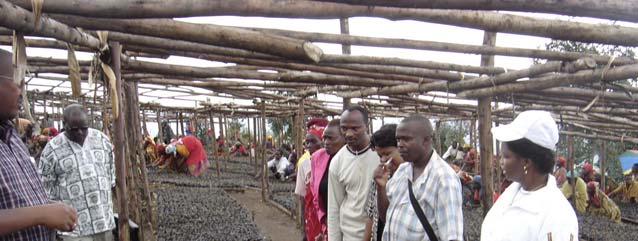
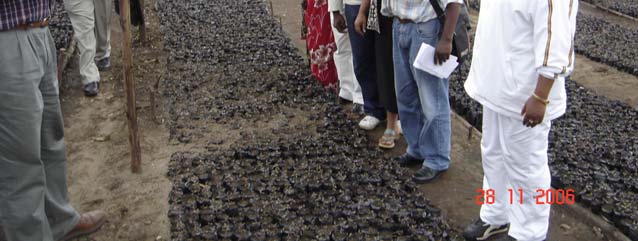
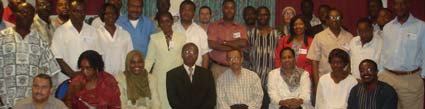
The Minister, H.E Odette Kayitesi (Extreme right, in white suit) at Dukingirikibira tree
NTEAP deeply appreciate the goodwill dem-
nursery in Bugarama
onstrated and we pledge to intensify our ef-
forts in 2007.
H .E Odette Kayitesi, the Minister of Land Management, Tourism and Environment of Bu-
rundi, , has applauded the NTEAP Micro grants (MG) support to local communities and in
We are also pleased to note that participa-
particular, women, for environmental interventions and poverty alleviation. This was during her
tion of women in NTEAP activities is on the
visit to 6 Micro Grants and 2 school projects supported by NTEAP under the Micro grants and
rise as signified by the number of micro Environmental Education and Awareness components respectively, 28-30 November 2006
grants women beneficiaries in NBI countries,
although challenges still exist.
She was accompanied by the Project Steering Committee Member, the Ministry Communica-
tions Officer, the General Director of Forests, Environment and Tourism, National Radio TV
We in NTEAP wish all our stakeholders pros-
journalists, Governors of Provinces where projects are located, Governor's Advisers, Agricul-
perous 2007.
ture and Forestry Technicians, Administrators of Districts and Provinces security teams.
Gedion Asfaw, RPM
The Minister exchanged views with beneficiaries who are mostly women on projects implemen-
tation, the importance of MG projects in the context of environmental protection and poverty
alleviation. She thanked NTEAP for the support and encouraged beneficiaries to continue pro-
Inside this issue:
tecting the environment for the benefit of future generations. The beneficiaries expressed their
gratitude to NTEAP for the financial support and to the Minister for sparing time to visit them.
Minister visits NTEAP micro grants projects 1
In Burundi, MG projects are contributing to the implementation of the national forestry policy as
MTR recommends NTEAP project extension 2
well as water and soil conservation through the production of about 1,650,000 forestry and agro
River of sorrow 4
Sudan wet land listed in RAMSAR 5
forestry seedlings which will be planted during the launch of 2006 2007 forest campaign.
Women's forum for the Nile to be formed 6
Sudan Action Plan for environment management in
NTEAP supports local initiatives in environmental, land and water conservation in 9 countries of
offing 8
the Nile basin through its Micro grants component.
PAGE 2
THE NILE ENVIRONMENT
VOLUME I11, ISSUE 4
NTEAP Holds 2nd Staff Retreat
The first retreat was held in with the performance of NTEAP. The
September 2005, in Sodero, Project Steering Committee member
Ethiopia. Since the last re- commended NTEAP for using the re-
treat NTEAP implemented treat for both planning and team
national and regional activi- spirit building.
ties with remarkable progress
but not free of new chal- In concluding the opening remarks,
lenges.
the Regional Project Manager, Mr.
Gedion Asfaw said the last retreat was
Objectives of the second re- a success, built team spirit, improved
treat were to further
performance and made staff to know
strengthen and consolidate each other.
team spirit and enhance com-
munication among NTEAP He paid tribute to the NBI Executive
NTEAP staff pose for a photo with the ED
staff, reflect on progress and Director, the SVP Coordinator, PSC
challenges during 2006, dis- members, and all development part-
T
ners and thanked them for their con-
he second NTEAP retreat was cuss and finalize the 2007 work plan tinued support. He also thanked the
held from 18-21 December and budget, discuss the strategies for Minister of State for the Environment
2006, at Imperial Resort Hotel, in the remaining project life and also Hon. Jessica Eriyo, for honoring
Entebbe, Uganda. It was attended have fun.
NTEAP with a visit during the retreat.
by all National Project Coordina- In her opening remarks the Shared
tors, Local Micro Grants Coordina- Vision Program Coordinator (SVP) Ms The NTEAP work plan and budget
tors, Project Management Unit Hamere Wondimu highlighted the was exhaustively discussed and recom-
Staff, World Bank, UNDP, Nile Sec achievements of NBI, and said NBI is mendations made for further improv-
and UNOPS and opened by the proud of the performance of NTEAP. ing the performance and consolidating
Shared Vision Program Coordinator The World Bank, representative at the team spirit.
and Senior Program Officer, Ms the retreat too expressed happiness
Hamere Wondimu.
Joel Arumadri KMS
The 2006 Nile Basin Development Forum
Ethiopia, and attended by Nile Basin Initiative among the international
Initiative family members and the Nile communities, decision makers and
Basin Secretariat Executive Director, their policy advisors of the benefits of
members of the Nile COM (Council of good practices in the utilization and
Ministers), as well as representatives management of the Nile River.
of international development partners.
About 400 participants from Ethiopia Specific objectives of the Nile Basin
and abroad participated. The opening Development Forum (NBDF) 2006
session was followed by 2 parallel ses- were; to bring together experts and
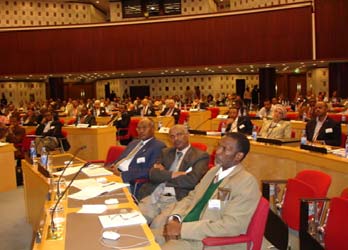
Participants at the 2006 Nile Develop-
sions which covered the eight sub- scholars from all the Nile Basin coun-
ment Forum
themes of the Forum. The forum was ties to exchange views and ideas on
how to foster cooperation for the Nile
T
sponsored by the Ministry of Water
he Nile Basin Development Fo- Resources of Ethiopia and the Nile Ba- Basin Development, discuss how effi-
rum (NBDF) 2006 took place sin Initiative and it attracted national cient water resources management
from 30th November to 2nd Decem- governments, regional and metropoli- can help the development in the Ba-
ber 2006. The main theme of the fo- tan development planners, water man- sin, and to discuss the effect of cli-
rum was the "role of the River agers and administrators, researchers mate change on the development in
Nile in poverty reduction and and practitioners dealing with Inte- the basin.
economic development in the grated Water Resources Management The 2008 forum is expected to take
Basin".
and representatives of international place in Khartoum, Sudan, and
organizations.
The Forum held at the United Na-
NTEAP is to take the lead role in the
tions Conference Center was for- The main objective of the Nile Devel- preparations.
mally opened by H.E Asfaw Din- opment Forum 2006 was to create and Joel Arumadri KMS
gamo, Minister of Water Resources of promote awareness on the Nile Basin
VOLUME I11, ISSUE 4
THE NILE ENVIRONMENT
PAGE 3
MTR Recommends One Year Extension of NTEAP Project
ject and suggest actions on the sustainability and conti-
that will increase value nuity of the institutions and
and impact of the project networks.
outputs and propose cor-
rective measures that will Among other recommendations, the
ensure achievement of team recommended the extension of
project objectives. It was the project duration until 2009, tak-
also a learning process ing into account the one year
for the project team and delay in commencement of the
the beneficiaries since the project activities, and recogniz-
review attempted to de-
ing the heightened delivery of
termine in systematic project activities.
and objective manner the
relevance, efficiency, ef- The MTR was done by a team of
fectiveness, impact and highly experienced and quali-
sustainability of the pro- fied consultants lead by Dr.
Review Team and Project Staff outside NTEAP offices
ject's activities and out-
Stanislaw Manikowski and
puts in light of the pro- members included Mr. Tim
T he Nile transboundary Environ- ject's objectives. The review was under- Hannan, Management Expert,
mental Action Project (NTEAP) taken in close collaboration with the pro- Prof. Hassan Abdel Nour, Com-
conducted a mid term review (MTR) ject staff and the project's stakeholders in munity Development Expert
from 10th October to 19th November all the countries and it looked at the pro- and Dr. Tarek Genena, water
2006.The MTR was intended to diag- ject design assumptions, outcomes and Quality Management expert.
nose the challenges faced by the pro- indicators, and provided recommendations Joel Arumadri KMS
NTEAP a Role Model of Gender Balancing in Egypt
stakeholders and benefici-
in the second half of December
aries of the project reveals where 6 female farmers were
that gender balance has trained, although farming and
been achieved. The Na-
irrigation is a male dominated
tional Project Coordinator occupation in Egypt.
is a female who was com-
petitively selected. The At the national level, over the past
journalists
national couple of decades, Egypt has wit-
training conducted during nessed a great narrowing in its
4-7 December 2006 at-
gender gap. On the one hand this
tracted two female trainers is a result of government efforts
out of 3; and 12 out 16 par-
through establishment of various
ticipants were females. gender friendly policies including
Similarly, 8 out of 17 train-
the National Council for Women,
ees for the national teach-
the National Council for Mother
ers training were females, and Childhood, the family courts
including 2 out of 3 train-
etc. On the other hand was the
N TEAP is a role model for gender ers. In the Nile River 2006 school boom in national literacy rates
equality in Egypt. Although the awards competition, 21 out of 30 win-
which naturally lead to increased
project is cautious to follow an equal ners were females. Even where there community awareness and respect
opportunities principle where people is men domination culturally, of female's rights and enhancing
are selected on merit and competency, NTEAP has been able to reach their access to services, jobs, edu-
rather than merely sex, examining the women. A case in point is the com-
cation etc.
gender segregation for the different munity farmers training conducted Ithar Khalil--NPC Egypt
PAGE 4
THE NILE ENVIRONMENT
VOLUME I11, ISSUE 4
THE RIVER OF SORROWS: The Environmental Status of the River Nile
«I did not pollute the waters of the Nile» is
in the volume of waste entering the Nile. organic, chemical and microbiological
one of the pleas that the deceased intoned
elements present in water on a regular
during the Judgment of the Dead. Thus, in
Where industrial waste is concerned, basis» declares Hussein Al-Atfi,
the days of the pharaohs to pollute the according to the AEAE, the food and spokesperson for the Ministry of
Nile was considered a sin. Today, Hapy chemical industries are respectively Irrigation.
(the name that the pharaohs gave the responsible for the major inputs of
Nile, once revered like a god) endures all organic pollutants (388 million tons per
The Ministry of the Environment, on the
kinds of pollution.
year) and of heavy metals (1.65 million
other hand, is trying to solve the
tons per year) into the river. problem from land, and has built 5
The pollution of Egypt's main source of
stations for the collection of liquid
drinking water has caused an increase in Among the other sources of pollution in wastes from cruise ships, as well as
the number of people suffering from the Nile is agricultural run-off that ends helping 257 cruise ships to establish
kidney failure. Official data show that directly into the river and that amounts their own units for sewage treatment at
90.000 Egyptians die annually from to 12.2 billion m3 per year. Not to these locations.
diseases linked to environmental mention the 919 fishing boats which
pollution.
In addition, the Nile Transboundary
employ 7.463 fishermen and that Environmental Action Project of Nile
It's no secret that the Nile has gradually discharge their wastes directly into river
Basin Initiative (NBI), a program
become a huge rubbish dump for Egypt, as
waters.
assisted by Canada, the Netherlands,
for other countries of its basin. Egyptians That isn't all. The list is still very long. GEF, UNDP and the World Bank, is
pour all kinds of wastewater into it, from The 270 cruise ships that sail the Nile trying, through a number of projects, to
industrial, agricultural or sanitary are a true threat for its waters. Almost raise the awareness of the populations
sources, on top of solid wastes of every 50% of these ships discharge their living in the basin to help them change
sort.
wastes untreated «A cruise ship can their destructive behaviour towards
river waters.
The situation is serious. The data speaks produce up to 120.000 litres of waste
volumes. According to research carried out
water per day and can empty its raw « Most of our efforts are spent educating
by Dr Magdi Allam, environmental sewage directly into the Nile», stresses school children, to get them used to
expert and former officer in charge at the Mahmoud Al-Qayssouni, an expert in respecting the environment in general
Egyptian Agency for Environmental tourism an d the envi ronmen t. and the Nile in particular», states Dr
Affairs (AEAE), the volume of raw
Ithar Khalil, National Coordinator of
sewage and partially treated waste water The matter is extremely complicated. the Nile Transboundary Environmental
entering the Nile every year is around 1.8
Despite the fact that a number of Action Project. She also adds that school
billion m
regulations exist declaring that all forms
3. The sewage essentially
programmes, as well as the media, are
originates from the 4,200 villages situated
of pollution of the Nile are illegal, these
key words for raising awareness.
along the river bank that stretches for laws are not respected or enforced.
1,300 km.
Furthermore, due to the lack of adequate
« Through our project we train
environmental awareness, Egyptians are
journalists to deal with environmental
According to Dr Allam the sewarage often oblivious of their negative impact issues to capture the attention of the
network is sufficient to cover only 77% of on the river, which ironically provides readers», claims Dr Ithar.
towns and 5% of villages. The rest is them with 95% of their drinking water.
discharged into the Nile. The problem was
Efforts are thus being made to eradicate
further exacerbated when the government
In the attempt to find solutions to this
violations against the Nile, especially
started extending the clean water system regrettable state, the Ministry of after the alarm sounded by the experts,
to other towns without proportionally Irrigation and Hydraulic resources is who declared that by 2025 there will be
widening the sewerage network. presently revising the articles of law 48
severe water problems in three of the
of 1982 and of law 12 of 1984 regarding
countries situated in the Nile river
However, the most serious problem is the the Nile, and proposing crucial changes
basin: Egypt, Sudan and Kenya. These
discharge of industrial wastes. Every year
that will render these laws more countries risk living below the water
the river receives 549 million m3 of effective and able to counter the multiple
poverty threshold. The truth is
industrial waste, 40% of which (220 violations suffered by the Nile. undeniable: water is limited. At least let
million m3) comes from the industries of Furthermore, this Ministry will be able
it not be polluted.
Greater Cairo and Alexandria. The to count on the national monitoring and
Ministry of the Environment, under the surveillance network for water quality. Dalia Abdel-Salam, Member NTEAP
former Minister Dr Nadia Makram Ebeid,
«We have 290 measuring sites for Environmental Journalists Network
managed to assist 34 industries in surface water and 200 surveillance
changing their production methods. The points for ground water. Through our
change meant a 100 million m3 decrease network we are able to measure all
VOLUME I11, ISSUE 4
THE NILE ENVIRONMENT
PAGE 5
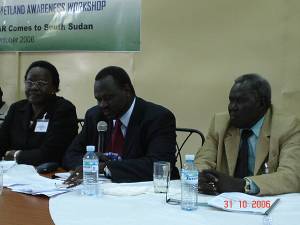
Sudan Wetlands Listed in RAMSAR
C onservation efforts aiming at as a sponge and soaking up excess The Wetlands in the Nile Basin are
preserving one of Nile Basin's water. They also slow down water threatened by drainage for (for agri-
most important wetlands received a flow, giving flood waters more time to culture, construction) filling, dredging
major boost as the Sudd
and stream chanalisation (for
region in southern Sudan
navigation and flood protection),
was included in the Ram-
hydrological alteration (for ca-
sar Convention List of
nals, roads), ground water ab-
Wetlands of International
straction, siltation and dis-
Importance.
charges of pesticides, herbicides
and sewage. All these reduce the
The Sudd supports a rich
value and productivity of wet-
animal diversity including
lands.
hundreds of migratory
birds. The government of
NTEAP through its Wetlands
Sudan received the Ram-
and Biodiversity Conservation
sar certificate on 30th
component seeks to improve the
October 2006, at an
understanding and awareness of
award and environmental
the role of wetlands in sustain-
workshop event co-
recede and provide habitat for many
able development. The project
sponsored by the Nile Environmental species. Wetlands also improve water also strives to improve management
Action Project (NTEAP) of the Nile quality as the vegetation slows down at selected sites and cross boarder
Basin Initiative held at the regional the flow of water and allows materi- protected areas.
capital Juba. The workshop was als and sediments to drop to the bot-
opened by H.E Riak Machara, the
Knowledge transfer and capacity
tom. The sediments create environ-
Vice President of the Government of
building in wetlands management is
mental problems when it enters the
Southern Sudan. The event, which
to be achieved through networks, in
water bodies. Fish depend on wet-
continued until 2nd November, is one
depth ecological and economic studies
lands to spawn, and migrating birds
the first events of its kind for the new
of key wetlands of transboundary
use wetlands as a resting place be-
government.
significance in the region and train-
tween flights and wetlands support ing.
Wetlands are extremely valuable re- livelihoods through fishing, hunting,
sources. They control floods by acting energy supplies, brick making etc and Joel Arumadri KMS
recreation.
Nile RAK ( t he Nile River Awareness Tool Kit ) Presented at the Tiger Workshop
Ltd. was presented by the NTEAP related problems and to bridge Af-
Knowledge management Specialist at rica's water information gap using
the Tiger Workshop, held from 20-21st satellite data.
November 2006, Cape Town, S.Africa.
The Nile RAK was funded under this
The tool kit, which attracted a lot of arrangement to bridge the water in-
interest, is designed to promote the formation gap and Hatfield Consult-
sustainable management and use of the ants provided the technical support
environmental resources within the in partnership with Strata 360 and
Nile basin. Earth observation applica- FAO.
tions (satellite data, training modules
and maps are integral components of The Gold version (in English) of the
the project and provide decision makers tool kit was released in November
with improved capability to understand 2006 and over 100 copies were dis-
T
tributed at the workshop. The
he Nile RAK, a multimedia and manage the environment within French version has been finalized
environmental education and the basin.
and it is expected to be launched dur-
awareness CD ROM produced by The Tiger Initiative is a response from ing the Nile Day celebrations in Ki-
NTEAP with financial support the European Space Agency to the gali. A web version is to be developed
from the Canadian Space Agency WSSD (World Summit on Sustainable in due course.
(CSA), under the Tiger Initiative, Development) as a contribution to as-
through the Hatfield Consultants sist African countries to overcome water Joel Arumadri-KMS
PAGE 6
THE NILE ENVIRONMENT
VOLUME I11, ISSUE 4
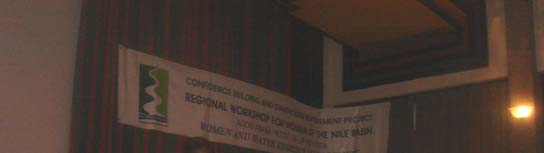
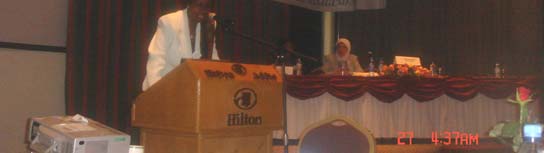
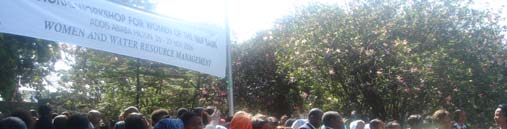
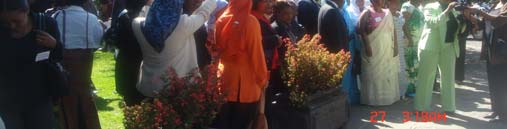
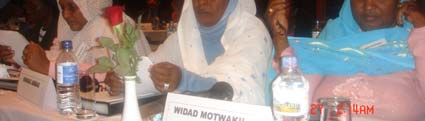
Women ' s Forum for the Nile to be formed.
zations and the short visit by the Nile COM Chair,
media continue to the Minister of Land Management,
mobilize women to Tourism and Environment of Bu-
participate in all rundi, H.E Odette Kayitesi.
NBI activities.
Effective involvement of women and
This declaration
realization of their high potential
was made at the contribution to Nile Basin conserva-
regional forum or- tion and development has been a
ganized by the Con- rising concern for the Nile basin Ini-
Opening session of the NBI gender workshop
fidence Building
tiative. The NBI and its auxiliary
T
and Stakeholder Involvement (CBSI) organizations and projects are aware
he women of the Nile Basin coun- Project of NBI, in Addis Ababa, dur- that unless conscious measures are
tries have made a commitment ing the period 27-29
to form a women's forum to work November 2006. The
closely with the Nile Basin Initiative forum, which was
(NBI) to lobby for the development of a organized under the
gender policy and implementation that title, "The Women of
will ensure women's representation NBI, Women in
and equal participation in all pro- NBI", was indeed
grammes and organs of the NBI, in- conceived as major
cluding equal representation of women contribution to the
and men at the formation of the Nile
NBI gender workshop participants with the state
wider Gender Main
minister of water resources of Ethiopia
Basin Commission. The forum will Streaming Strategy
ensure strong collaboration and coop- that currently the NBI is embarking taken to fully incorporate women in
eration with all the women in the Nile on. It was attended by 60 women the Nile development process, their
Basin to ensure regular interaction from all over the nine Nile Basin issues and interest will be over-
and to monitor and evaluate the pro- countries, representing a wide range looked.
gress and impact of the NBI projects of women groups, ranging from policy
on women at local, national, sub re-
The meeting agreed that the NBI, as
makers, NGOs, private sector, re-
gional and regional levels. It will also
an organization, also has to address
search, to media and other civil soci-
ensure that that Civil Society Organi-
gender mainstreaming in its recruit-
ety groups. The Opening Session ment, personnel policies and proce-
of the Forum was addressed by dures. The meeting came up with a
His Excellency Mr. Adugna Je- number of important recommenda-
bessa, the Minister of State tions which were discussed and
Minister of the Ministry of Wa- handed to NBI Executive Director
ter Resources in Ethiopia and and SVP project managers who at-
the NBI Executive Director Mr. tended the closing of the meeting.
Audace Ndayizaye. The Meet-
Participants from Sudan.
ing was also graced with a Intisar Salih, M&E Lead Spe-
cialist
PAGE 7
THE NILE ENVIRONMENT
VOLUME I11, ISSUE 4
Women and Micro-grants
awards at least that they deserve. Today more
10% of its re-
than 20% of the total US$ 2.6 Mil-
sources to women lion in projects funded by Micro-
NGOS and CBOS. grants have been earmarked for
This is over and women NGOS. Moreover, efforts
above the funds are being exerted to ensure that
awarded to NGOS the issue of Gender is main-
to undertake ac-
streamed into all of the MG Pro-
tivities that ad-
ject activities, so as to avoid as-
dress both men signing women marginal activi-
and women within ties that do not provide them with
a community. This economic leverage. The coming
indicator (10%)
years of the project will witness
was established intense efforts in this regards in-
during the formu-
cluding the appointing of more
lation stage of the
women in the National Steering
Micro-grants field visit at Woodlot at Nyanga Kentale,
NTEAP to ensure Committees that review and ap-
Uganda.
that marginalized prove Micro-grant s Projects.
groups specially
The Micro-grants Program women receive the due attention Amir Baker- Micro-grants
Lead Specialist
Experiences of the Beneficiaries of NTEAP Students Exchange Program
STUDENT EXCHANGE EXPRI-
From the residents of the areas we vis- Michael Omollo Onyango
ENCE
ited, I learnt that we have a lot to teach
and learn from our local communities. Siria high School
Martin Esakina Safu
The trip exposed us socially, since we During the participation in the Nile Ba-
interacted with various people with
St. Mary's Kibabii Boys High
sin Environmental Action Projects stu-
different cultures and disciplines.
School Bungoma Kenya
dent exchange between Kenya and Tan-
I
This trip has increased and firmed up zania, I enjoyed the trip itself, the envi-
wish to pass my sincere grati-
my commitment to fight environmental ronment and the clean ups.
tude on behalf of the Environ-
depletion and join international efforts
ment Club for enabling us to travel
I learnt that international action is
to Promote renewable energy sources,
to Tanzania and Isebania.
needed to protect forests and to plant
protect rain forests and plant trees, trees with shallow roots to reduce exces-
The club is a highly populated club
conserve energy and store water.
sive water absorption in water catch-
compared to other clubs in the TREES AND FOREST
ments areas, together with maintaining
school. The increased enrolment is
cleanliness around settlement and insti-
due to support from NTEAP.
Anne Kerubo
tutional areas
During the student exchange ac-
Siria high School Kenya
I also learnt the importance of encourag-
tivity, I learnt that firewood pro-
ing community participation in conserva-
vides 10% of the world's total en-
Trees and forests provide a lot; they
tion and management of natural re-
ergy consumption. Approximately provide a lot, all over the world , For-
sources, particularly rivers and lakes
half of the people in the world use
est means food, fruits and nuts for peo-
because they are sources of water for
wood or charcoal for cooking. Al-
ple, Leaves for animals, Forests make
domestic and industrial use, irrigation,
though trees are renewable re-
great homes, for people and animals,
sources of fish, tourist attractions and
sources, the global use of firewood
Purify the air for all the living, Forests
good boundaries for countries, provinces
is unsustainable. Natural forests have a lot to offer, they are important
and villages.
are therefore being destroyed and
to us, Now it's our turn to give back
this leads to creation of deserts. A
Forests are sources of income, building
solution was demonstrated at Siria
WHAT I LEARNT FROM THE
materials, beauty and home for wild
High School who have started a NTEAP STUDENTS EXCHANGE
animals.
renewable energy source - biogas.
PAGE 8
THE NILE ENVIRONMENT
VOLUME I11, ISSUE 4
N IL E BA SIN IN IT IA TI VE
N IL E T RA NSBO UN DA RY
A National Plan for Environmental Management for the Sudan
E NV IR ONM ENT A L
A C TI ON P RO JE C T
in offing
Al Jamhuria Street
resources together to establish a na-
House No. 2, Plot 15
tional forum for highlighting national
P. O. Box 2891
and regional environmental issues
Phone: 249-183-784206/26
facing Sudan and to encourage techni-
Fax: 249-183-784248
cal discussion and public debate on
Email: info@nilebasin.org
these issues in order to prepare an
Environmental Management Plan for
Visit us at:
Post Conflict Sudan that illustrates the
shared vision of all partners and high-
www.nileteap.org
lights important and priority actions.
Editorial Committee
The second preparatory workshop
Gedion Asfaw, Chair
took place in Juba during 31 Oct- 2
Joel Arumadri
November 2006 where the main envi-
Editor
ronmental issues and an outline for
the National Plan for Environmental
Amir Baker, member
From left to right: H.E Theresa Siricio, Vice Presi-
Management were presented.
Intisar Salih, member
dent Dr. Riak Machara. and H.E James Loro
John Omwenga,
The Vice president of the Government of
member
Southern Sudan opened the workshop and
Maushe
T he Comprehensive Peace Agreement speeches were made by the Minister of
(CPA) has not only ended Africa's long-
Kidundo,member
Environment, Wildlife Conservation and
est civil war, but has ushered in new opportu-
Mohammed Rahim,
Tourism GoSS, and the State Minister of
nities for national reconciliation, healing, re-
Environment and Physical Development
layout and publishing
construction and development.
GoNU; the representatives from EC, UNEP
assistant
In this context, the Higher Council for Envi-
and NTEAP and HCENR. Other partici-
ronment and Natural Resources (HCENR), pants came from Uganda, Kenya, Switzer-
and the Ministry of Environment and Physical
land and USA.
Development (MEPD) in collaboration with The first workshop was convened in Khar-
the federal line ministries of the Government toum during 18- 20/07/06 where the proc-
of National Unity (GONU) and the Ministry of
ess was mapped and major environmental
Environment, Wildlife Conservation and Tour-
issues discussed and broad recommenda-
ism (MEWCT) of the Government of the tions for addressing the identified issues
Southern Sudan (GoSS) are preparing a Na-
provided.
tional Plan for Environmental Management
Putting the Shared
(NPEM). The plan is sponsored by the Nile A National Plan for Environmental Manage-
Vision into Action
Trans-boundary Environment Action Project ment for the country is expected by Febru-
(NTEAP), United Nations Environment Pro-
ary 2007.
Please send your articles / com-
gram (UNEP) and the European Commission
ments to
(EC).
Susan Ayot, Izzat Mirghani
The Editor
Nile Environment at
The approach is based ion bringing institu-
Coordinators, NPEM
jarumadri@nilebasin.org
tions concerned with environment and natural
Upcoming events
12-14 January 4th NTEAP Steering Commit-
18-19th January- EWUAP Project Steering
8-9th February Opening conference of Nile
tee
Committee meeting, Nairobi, Kenya.
basin research programme, Bergen, Norway.
22 February Nile day
15-17th January 4th RPTP Project Steering
20-21st January- ENPT Project Steering
Committee meeting.
Committee meeting, Khartoum Sudan.
15-17th January- WRPM Project Steering
7-8th February- CBSI Project Steering Com-
Committee meeting. Nairobi, Kenya.
mittee meeting, Entebbe, Uganda..
Opinions expressed in this newsletter are not necessarily the views of the NBI, its member countries or partners.