N ile Bas in Init ia tive
Nile Transb ounda ry E nv i ron men tal A ct ion Projec t (N TEAP)
The Nile Environment
A QUARTERLY NEWSLETTER OF NTEAP
Volume I11, issue 1
Jan-March 2006
Editorial
MESSAGE FROM
T his first issue of the NTEAP Newsletter in 2006
THE PRESIDENT OF THE UNITED NATIONS
focuses on water; marking of the World Water
Day, March 22 and the occasion of the 4th World
Water Forum held in Mexico City, March 16 to 22,
GENERAL ASSEMBLY
2006. Water is needed for all aspects of life; human
consumption, agriculture and industrial activities. Over
ON THE OCCASION OF
160 million people, in ten countries in the Nile Basin ,
share the resources of river Nile and this puts into
WORLD WATER DAY 22 MARCH 2006
context the importance of water in the Nile Basin.
The rising demand for increasingly scarce water re-
sources is leading to growing concerns about future
access to water and threats to sustainable develop-
"""We shall not finally
ment. This was adequately discussed at the various
defeat Aids. tuberculo-
sessions of the 4th World Water Forum.
sis, malaria, or any of
In the various sessions and during informal discus-
the other diseases that
sions there seemed to be growing frustration among
African water sector practitioners with regards to the
plague the developing
very slow pace of implementation. Since the Mar del
world until we have
Plata conference in 1977, numerous mega confer-
also won the battle for
ences have been conducted and various strategies
and action plans have been drawn. However, currently
safe drinking water,
only 46% of Africa's rural population has access to
sanitation and basic
"improved water supply". Of course improved water
supply does not mean house connections and is very
healthcare"
far from decent and convenient water supply systems
similar to what is available for people in the developed
Kofi Annan, Secretary-
world. Implementation was one issue which came very
loud and clear at the 4th World Water Forum with
General, United Na-
respect to Africa. UN Habitat Executive Director, Ms
tions, 2005.
Anna Tibaijuka said it well in her address on Africa Day
"the time for talking is over."
Photo:www.emag.uni-breman.de
The other encouraging idea which I noticed in the
discussions was the promotion of hydraulic infrastruc-
ture such as dams by international organizations. This
is an opportune moment for the Nile Basin countries to
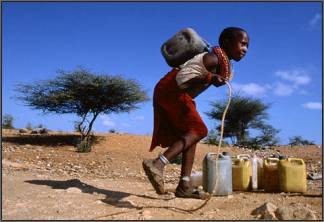
T oday, on World Water Day, we should ask ourselves why it is that 1.2 billion
focus on the promotion of environmentally sound "good
people in the world still do not have access to safe drinking water. And why 2.6
dams" to enhance sustainable development in the
billion people do not have access to adequate sanitation. This is a simply unaccept-
region.
able state of affairs.
The Nile Transboundary Environment Action Project
(NTEAP) is committed to make modest contribution
We know that we all need clean water. But how many of us realize how many lives
towards integrated water resources management in
in developing countries are blighted without it? Families cannot grow crops. Their
the Nile basin through capacity building, environment
daughters too often cannot attend school because they are walking long distances
education and public awareness, microgrants projects
and water quality monitoring activities.
to fetch water. And their children boys and girls suffer poor health as a result of
water-borne diseases. Six thousand people, mostly children, die every day of water-
I wish you good reading.
related causes. Providing clean water is the best way to reduce the death rate, of
Gedion Asfaw, RPM
children under five.
We need to get the world back on track to meet the Millennium Development Goal
of halving by 2015 the percentage of people without access to safe water. This was
Inside this issue:
the purpose of the United Nations General Assembly resolution which proclaimed
2005 to 2015 the International Decade for Action on `Water for Life'.
Editorial
1
Water our common present & future
2
I call upon all those at the Fourth World Water Forum in Mexico City this week to
Fourth World Water forum
3
Ministerial declaration on water
3
do all they can to ensure that the world rises to this most pressing of challenges.
Conservation receives US $231,000
6
Conservation & development
7
UNITED NATIONS HEADQUARTERS
Ministerial declaration on water
8
NEW YORK
PAGE 2
THE NI LE ENVIRONMENT
V OLUME I11, ISSUE 1
Water is our Common Present and Future
"In the 21st Century, water is
He said al of us should share a
of our children'', he said.
the converging and meeting
commitment to making water a fac-
point of the world community",
tor of peace, fairness and develop-
He pointed out that to respect and
president of Mexico.
ment amongst our peoples and na-
care for water today is to respect
tions; from the position we occupy
and ensure life tomorrow and that ,
The Mexican president has said
today.
the greatest challenges that hu-
World Water Forum is an opportu-
manity faces include responding to
nity for sharing experiences with
`'Water is our common present and
the world's current need for water,
stakeholders, `'As Mexican citi-
future, it is the invaluable heritage
foreseeing their consumption re-
zens, we are honored by the
quirements, and ensuring food pro-
presence of so many distin-
duction without harming the envi-
guished visitors that will share
ronment.
their best experiences with us
during this week at the 4th World
In concluding his speech at the 4th
Water Forum''.
World Water Forum he said, "I am
convinced that, if we work shoulder
He said , water occupies a rele-
to shoulder, each of us contributing
vant space in the agendas of all
his or her best , we will find crea-
nations and at least 400 million
tive, generous and fair solutions for
people live in regions where water
the whole world''.
is severely scarce.
He pledged his commitment to con-
To turn around this serious situa-
solidating a global culture of re-
tion, he said, `'we must deeply
spect and protection of water.
modify local and global water
management strategies, learning
Joel Arumadri--KMS
from the successful actions that
many communities have under-
Adapted from
taken''.
www.worldwaterforum4.org.
Ethiopia marks World Water day: Water and Culture
T he World Water Day was marked in The discussions were reported to have There was an urge for the public to be
Ethiopia with various activities The dwelt on the role of stakeholders to- committed to efficient and proper utili-
day was marked under the theme: wards the success of the Millennium zation of water resources so that
'Water and Culture', the Ministry of Wa- Development Goals (MDGs) at national Ethiopia would successfully attain the
ter Resources said.
and international levels.
MDGs, with a call for development
partner's to participate in the water
There were panel discussions on Millen- The observance of the Day aims at rais- sector development activities and but
nium Development Goals, Role of Non- ing the awareness of the public on effi- shouldn't leave the responsibility to
governmental Organizations on Water cient utilization and development of wa- government only.
Resources Development, and Experi- ter, a scarce natural resource. It is also
ences from states on the Water Devel- aimed at improving the participation of Source: ENA Addis Ababa
opment Sector, among others.
stakeholders on development and
proper utilization of water resources.
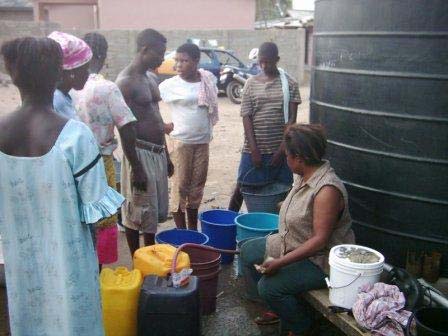
One Person in Three in the World Suffers Hardship and Indignity from
the Problem of Water
M ore than one person in three of the most difficult to rectify, pre- than half of mankind is threat-
in the world suffers hardship
cisely because it is above all an
ened by "water stress", the
and indignity from the problem of
injustice to women. Its root cause
dream of pure water for all con-
water. This person is much more
is our negligence and our resigna-
tinues to unite humanity.
often a woman than a man. This in-
tion in the face of inequality. Yet
justice is largely unspoken and one
while over the next fifty years more
Michael Comdessus, Former MD of IMF
V OLU ME I11, ISSUE 1
THE NI LE ENVIRONMENT
PAGE 3
The 4th World Water Forum
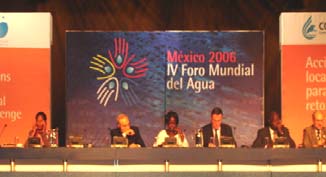
T he 4th World Water Forum took place
during March 16 to 22, 2006 in Mexico
City. The Nile Basin Initiative was repre-
sented by Dr Hesham Ghany, Regional
Project Manager (RPM) of the Water Re-
sources Planning
and Management
Project, Mr Ge-
dion Asfaw, RPM
of the Trans-
boundary Environ-
mental Action
Project and Dr
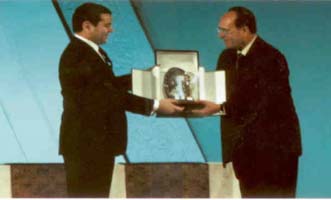
H.E. Dr Mohamoud Abu-Zeid, Minister of Water
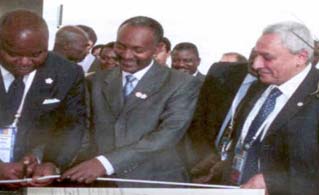
The African pavilion was also officially opened
Ahmed represen-
Resources and Irrigation of Egypt was awarded
by H.E Asfaw Dingamo, Minster of Water Re-
tative of ENTRO.
the King Hassan II Great Water Prize at the
sources of Ethiopia. The NBI used this pavilion
3rd World Water Forum
to exhibit some NBI posters and documents.
Ministers of the
Nile Basin coun-
tries were present
at the Forum.
Ministers of water
affairs from Ethio-
pia, Egypt and
Uganda chaired
and led discus-
sions at various sessions of the Forum. .
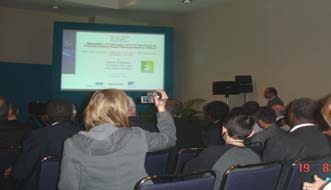
Dr Hesham made a power point presenta-
tion on NBI during the session on trans-
AMCOW's chair and Nile COM member from
boundary water management and regional
Dr Hesham Ghany, RPM of WRPMP, made a
Uganda, H.E Maria Mutagamba, chaired the presentation on NBI to a packed audience.
integration in Africa. The session was held
African Day session. The session was pressed
on March 18 and was attended by ministers
with time.
and delegates from many countries.
Gedion Asfaw RPM
AMCOW ON WATER -THE MEXICO MINISTERIAL DECLARTION
AFRICAN MINISTERS COUNCIL ON WATER ,THE - Develop and promote water resources through 1. INTRODUCTION
MEXICO MINISTERIAL DECLARTION ON WATER, support for infrastructure projects i.e. the increase in We note that the water related problems of
MARCH l7 2006
construction of dams and canals, drilling of boreholes Africa interlock creating vicious reinforcing
WE, members of the African Ministers Council on and providing irrigation equipment;
spiral. At one extreme, there is absolute
Water (AMCOW) gathered for the Ministerial Meeting - Exploitation of waterfalls to provide electric power poverty and at the other, there is great de-
at the Fourth World Water Forum in Mexico on March and interconnect the Continent through a power grid mand for investment in water infrastructure,
l7th 2006;
system;
human, social and institutional capacities.
BEARING IN MIND the African Water Vision and its - Carry out studies on untapped water resources in Herein, water can make an immense differ-
Framework for Action adopted at the Hague confer- areas where it is available in large quantities in order ence to Africa's development if it is managed
ence in 2000;
to benefit the continent in accordance with the princi-
wel and used wisely. Given clear policies
and strategies and real commitments to im-
RECALLING the adoption of the New Partnership for ples of international law and the protocols concluded plementation, water can help to eradicate
Africa's Development (NEPAD), by the Summit of between the riparian States.
poverty, reduce water-related diseases and
Heads of State and Government of the African Union REITERATING our commitment to the Millennium achieve sustainable development.
held in Lusaka, Zambia in 2001;
Development Goals and the outcomes of the World 2. IMPLEMENTATION OF INTEGRATED
TAKING INTO ACCOUNT our Declaration at the 3rd Summit on Sustainable Development, and recal ing WATER RESOURCES MANAGEMENT
World Water Forum in Kyoto, Japan on the 23d of the Declaration of the thirteenth Session of the (IWRM)
March 2003;
United Nations Committee on Sustainable Develop-
ment which focused on Water, Sanitation and Human i. Recognizing that cooperation between
CONSIDERING our decisions at the Pan-African Settlements;
riparian states on trans-boundary water ba-
Implementation and Partnership Conference on Water
sins contributes to sustainable water man-
(PANAFCON), especially the adopted Portfolio of DESIRING to achieve accelerated socio-economic agement and mutual benefits, we encourage
priority subregional projects on water and the out- development and environmental sustainability at the all Member States to facilitate, in consultation
comes and recommendations adopted in December local and regional level;
with the Regional Economic Communities,
2003 in Addis Ababa;
ASSERTING the need to: increase levels of invest-
the development of a cooperative framework
RECALLING the decision of the Extraordinary Sum- ment, build human and institutional capacity, ensure and appropriate sub-regional protocols for the
mit of Heads of State and Government of the African good governance, enhance stakeholders participa-
shared management and use of transbound-
Union on Agriculture and Water, held in Sine in Feb- tion, ensure sustainable and equitable use of water ary water resources.
ruary 2004 to reactivate the existing mechanisms at resources,
.......... cont'd on page 8
the level of the water basin and establish DO HEREBYDECLARE:
new ones wherever appropriate in order to:
PAGE 4
THE NI LE ENVIRONMENT
V OLUME I11, ISSUE 1
Water Needs Cooperation and Greater Dissemination of Good
Practices
W ater scarcity is increasing in governmental organization that en- water supply and sanitation and an
the region due to low rainfall, deavors to promote better under- agreement on how best the Region
limited river flows, non-renewable standing and management of the will present its successful experiences
water resources in the region and potential local actions in the water
in a multi-disciplinary, non- sector to the world.
political, professional and All this work, carried out by the AWC
scientific manner; to dissemi-
is a collaborative effort that incorpo-
nate knowledge, enhance rates several local, regional and inter-
sharing of experience and national stakeholders. The target is to
information for the rational put water problems in the Region on
and comprehensive water the top of the international agenda, to
resources development for promote more cooperation among
the benefits of the region's specialists and stakeholders from
inhabitants.
inside as well as outside the Region.
As part of the water commu- There is a very long way go to meet
nity worldwide, the AWC is the targets, and it is clear that, without
groundwater resources, and rapidly currently preparing to represent the cooperation and greater dissemination
growing population. To address these Middle East in sharing the successful of good practice, the targets will not be
issues, 400 scientists and water pro-
regional experiences at the 4th World met in the foreseen future.
fessionals gathered in Cairo in April Water Forum. The consultation proc-
2004 launched the Arab Water Coun-
ess allows an exchange of views and Mohmoud Abu Zeid, President of the Arab
cil (AWC). The AWC is a non-
ideas on local actions for sustainable Water Council
Enhancing Quality of Micro-grant Project Proposals
T he National and Local Micro- achieving the objectives of the pro- cro-grant projects. The Project will
grants Coordinators play a key
jects and to capture lessons learnt roll out an M&E Training of Trainers
role in ensuring that the project pro-
from the program. The grantees are Manual designed by the MG and
posals submitted by NGOs and CBOs
given the necessary skills to develop M&E Lead Specialist to help the
are of high quality and have a high
good monitoring indicators to capture responsible NTEAP staff to train
potential of being approved by the
the different outputs and to gauge NGOS and potential grantees in the
National Steering Committees in their
how far they are from achieving the monitoring of small projects.
respective countries. To ensure this,
overall objective.
they conduct continuous training for
A key feature of the Manual is the
the potential grantees to help them in
The training also distinguishes be-
reference experiences with ongoing
designing the proposals. The process
tween the outcome and outputs as projects and using them in enrich-
starts with an awareness program that
practioners as well as grantees often ing the skills of the staff/grantees, to
orients the grantees with the enor-
confuse the two. A clear understand-
continuously monitor these projects.
mous challenges facing the Nile Basin
ing of each one of these result based As a document in progress, the
and the vast opportunities that exist
management tools would make it eas-
manual will be enhanced and en-
for socio-economic development.
ier and simpler to measure progress riched on the basis of feedback re-
and re-design the project to address ceived from the field. It is hoped that
Another important element in the pro-
the overall objective.
this event will be a first in a series of
posal development process is the
training events to enhance the moni-
monitoring aspect, whereby, grantees
Among the upcoming NTEAP events toring capacities of the staff as well
are provided with the necessary tools
is a workshop, in May 2006, in Cairo, as the NGOs themselves.
and techniques that would enable designed to help Micro Grants Coor-
them to monitor the progress towards
dinators and National Project Coordi-
Intisar Ali Salih M&E Lead Specialist
nators in monitoring the different mi-
V OLU ME I11, ISSUE 1
THE NILE ENVIRONMENT
PAGE 5
Micro-grants: A means for Increasing the Visibility of the NBI at the
National Level
T he Micro-grants Program pro- the program produces makes the visibil- national borders.
vides an excellent opportunity ity issue more apparent, since the public
for the riparian countries to enhance at large is made aware of the NBI
The success of the Program is,
and expand the visibility of the Nile through the outputs produced by the hence, paramount to maintaining the
Basin Initiative. The Program with its Program.
positive image of the NBI as well as
piloting features, provides an excel-
an important ingredient in ensuring its
lent opportunity for the community One of the first signs that reflect this success.
groups to show case their different visibility is when community groups talk Efforts will be devoted in 2006 and
projects. As the Program addresses to each other stating that the NBI has the upcoming years to enhance that
the different environmental chal-
provided them with resources to under-
image by developing and implement-
lenges that face the Nile Basin, it take environmental activities that are ing sound micro-grant projects that
tends to reflect on the vision as well beneficial to them. The awareness ele-
communities can relate to positively.
as the focus of the NBI.
ments embodied in the different activities
gives the necessary information on the That in itself will serve as an indictor
The fact that there are multiple part-
environmental threats and the actions that the NBI has delivered its mes-
ners (Local and National Steering that are needed to address those sage and that its objectives are being
Committee Members, NGOs, CBOs, threats. It also provides them with addi-
realized. It will also demonstrate to
MGCs, Local Govt Officials) in-
tional information on what the NBI is the partners of the NBI, that their ef-
volved in the process of develop-
doing in other countries to address simi-
forts to maintain and enhance the
ment and implementation of the Pro-
lar threat facing the Basin. The process resources of the Nile Basin have not
gram provides an excellent window is quite educational as some communi-
gone in vain.
for the NBI to be quite visible.
ties have had the perception that the Amir Baker Micro-Grants Lead Specialist
Basin is only within their own local or
More importantly, the outputs that
Nile Basin Environmental Journalists Meet in Kampala
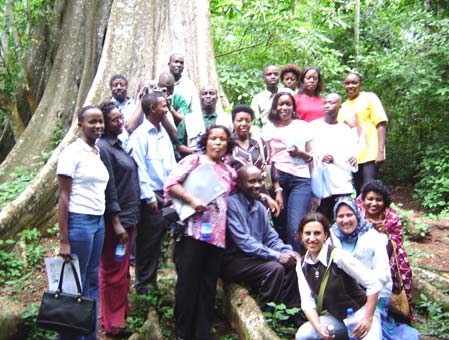
E nvironmental Journalists from ing receding levels of Lake Victoria tive (NBI), represented by Mr.
the Nile Basin Countries met in
waters is partly due to poor land use
Gordon Mumbu, said poor manage-
Kampala to map out ways of pro-
practices. She urged journalists to
ment of the Nile Basin resources is
tecting the Nile and preserving its
report objectively on environmental
affecting livelihoods. He said the
catchment areas to ensure prosper-
issues for sustainable development in
wise use of the Nile resources is
ity.
the respective countries.
now more important than before as
the catchment areas are being pol-
Speaking to the Journalists during
Speaking at the same workshop, the
luted and over exploited.
the Nile Transboundary Environ-
Executive Director, Nile Basin Initia-
mental Action Project
The Journalists from Uganda,
Training of Trainers, the
Kenya, Tanzania, Ethiopia, Democ-
Executive Director of the
ratic Republic of Congo, Rwanda,
National Environment man-
Burundi, Egypt and the Sudan were
agement Authority (NEMA),
also taken on a working tour of
Uganda, represented by
Mabira natural forest, the source of
Beatrice Ms Adimola, ap-
the White Nile and the Bujagali
pealed to the Journalists to
Falls, for a fact finding mission of the
sensitize their respective
receding water levels of Lake Victo-
audiences on the dangers
ria and to enjoy the beauty of the
of environmental abuse
Nile as it starts its 6,770km long
within the riparian coun-
journey through the Sudan to Egypt.
tries.
Deo Habimana-Environmental Journalist,
She said the present alarm- Photo by Joel Arumadri
Uganda

PAGE 6
THE NI LE ENVIRONMENT
V OLUME I11, ISSUE 1
ENVIRONMENTAL CONSERVATION IN THE LAKE REGION OF TANZANIA
RECEIVES US $ 231,000 FROM NTEAP
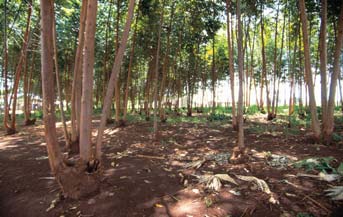
N ine Community Based Organi- The Women Development Association ties including tree planting, river con-
sations from the Lake Region of based in Mwaza also received funding servation, irrigation, livelihood improve-
Tanzania, working in the field of en- for its activities in Ukerewe Island. An ment for women, fishing and removing
vironmental protection, have received NGO, Lanesco received funds for con- water hycinth from lake Victoria. Ap-
a total of Tshs 321 mil ion (231,000 servation activities in Magu and Bunda proximately three million people living
USD). The money is a support for Districts. A total of 66 CBOs from 8 aroud Lake Victoria will benefit from the
Microgrants activities from the Nile ditricts applied for the grants. The dis- grants
Transboundary Environment Action tricts include; Bukoba, Bunda, Magu,
Project (NTEAP) of the Nile Basin Misungwi, Muleba, Musoma, Tarime The projects wil have an implementa-
Initiative (NBI).
and Ukerewe.
tion period of between one and one
and half years, after which an evalua-
This was revealed by the Local Mi-
tion will be carried out, added Mr Kam-
crogrants Coordinator Mr. Vitor Kam-
agenge.
agenge, who hoped that the CBOs
will use the money for community
Mr Kamagenge encouraged all NGOS
based environmentt conservation
which have benefited from the grants to
activities.
work with other community based or-
ganisation so as to improve peoples
According to Mr. Kamagenge, the
livelihood within the lake region.
CBOs that benefited from the grants
are Magobari and Tahea from
The microgrants program is funded by
Tarime district, Buhemba from Mu- Community woodlot; Photo by Joel A, Burundi.
the GEF, UNDP.
soma, Tadepa from Bukoba, Kadetfu Mr. Kamagenge said the CBOs and Isaac Mbolile, Translated from Swahili by
and Kadet from Mulemba and Fapoel NGOs wil implement a variety of activi- Maushe Kidundo
from Ukerewe.
New Tanzanian Minister of Environment Pledges Support to NTEAP
T he new Minis- threats to sustainable development in issues in the basin as it will expose
ter of Environ- the basin.
them to the realities of the threats to
ment in the Vice
sustainable development. He was
President's Office He was particularly happy with the Mi-
happy to learn that Tanzania will
of Tanzania, Prof. crogrants activities, which target the host the first ever meeting of re-
Mark Mwandosya, rural communities in environmental con-
gional MPs on the environmental
has pledged to servation. He said the availability of the issues in the basin and promised
give maximum support to the Nile funds will strengthen initiatives.
his assistance and that of govern-
Transboundary Environemt Action On environmental education and aware- ment , where required. He also
Project (NTEAP). This was during a ness, he said it was vtal, as it will ex- urged NTEAP to make awareness
meeting held in his office on 8th pand the knowledge of stakeholders on on Nile environmental issues more
March 2006, with the Director of En- the resources of the Nile River, existing visible.
vironment, who doubles as the
management practices and the conse-
NTEAP Steering Committee member
Nine Community Based Organisa-
quences of unwise use.
for Tanzania, Mr. Eric Mugurusi, and
tions from the Lake Region of Tan-
the National Project Coordinator Mr. He expressed interest in visiting some zania, working in the field of envi-
Abdallah Shah.
of the microgrant projects in the lake ronmental protection, have received
region that NTEAP is supporting during a total of Tshs 321 million (231,000
During the meeting, the Minister was his familiarization tour, in his new port- USD). The money is a support for
briefed on the NTEAP project, its folio, in the near future.
Microgrants activities from the Nile
mandate, achievements and future
Transboundary Environment Action
plans. The minister was pleased to He welcomed the initiative to raise Project (NTEAP) of the Nile Basin
know that a transboundary environ- awareness of the Members of Parlia-
Initiative (NBI).
ment project was in place to address ment in the region on environmental Abdallah Shah-NPC Tanzania
PAGE 7
THE NI LE ENVIRONMENT
V OLUME I11, ISSUE 1
Conservation and Development, Where is the Balance? The
Namanve Case Uganda
A group of 18 visiting Environ- (NEMA), the institution responsible for be appropriate and the project
mental Journalists from the monitoring the environment gave the
only awaits funding to take off any-
Nile riparian countries were stunned
project a clean bill of health.
time now. Sources say the de-
by the Uganda Government deci-
Reliable sources told the Journalists
mand by investors was looked into
sion to degazzete part of Namanve
that Conservationists had resisted the
against many reasons advanced
Forest Reserve, forming part of the
allocation of the 891 hectares of the
by Environmentalists but it was
extensive wetlands in the suburbs of
reserve for industrial development,; claimed that the species in the
Kampala City, for an industrial park.
an action they said was a betrayal to
forest could be found elsewhere;
therefore justifying the change in
Ugandan officials who briefed the conservation efforts.
the land use.
pressmen revealed that there was "We have been put in a situation
pressure on the government from where policy conflicts ruin an environ-
In the view of the visiting Journal-
the investors for land strategically mental asset that has been natured ists this is a typical example of a
situated, serviced with adequate for decades; this is totally unaccept-
situation of other policies conflict-
infrastructure and the government able, much as we crave for invest-
ing with the conservation policy,
bowed down to the demand and cut
ments," an Environmentalist told this
and where there is no good will
off part of Namanve for an industrial
reporter.
from government, the environ-
park.
mental policy will always be de-
However, the safety of the flora and
feated and this in no way is pecu-
The action has dealt a blow to the
fauna in the vast Namanve Forest liar to Uganda.
conservation measures of the wet-
along the Kampala-Jinja highway
lands in Uganda, which recently hangs in balance after decision by Wetlands have several benefits to
hosted the RAMSAR Convention government to convert the wetlands the local community living in the
Conference.
into an industrial park was finally ap-
surrounding areas and by convert-
ing them into other uses, the
The resistance put up by the proved by NEMA.
benefits are denied to the people.
Uganda Conservationists to protect
According to an official from the
the slicing of the wetland that Uganda Investment Authority (UIA), Joseph Ngome, Environmental Journalist
hosts several fauna and flora were
the mitigation measures put in place
Kenya.
defeated when the National Envi-
after an EIA was done were found to
ronment Management Authority
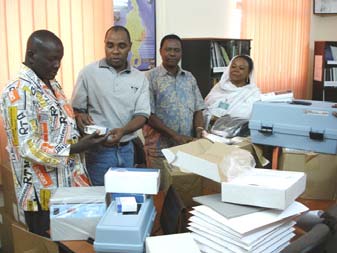
Sudan Receives Water Quality Monitoring Equipments
S udan has received an assort- ment Action Project, to improve the dissemination of information on key
ment of water quality monitor-
understanding of trans-boundary water
parameters.
ing equipment, and chemicals for quality issues and build capacities
water purification .
Similar consignments of equipment
have been received by Kenya and
Receiving the equipments at the
Egypt; the other countries are yet to
NTEAP Project Management Unit
receive as the procurement proc-
was the Head of the Laboratory in
esses are underway.
the Ministry of Irrigation, Ms Nadia
Shakak, witnessed by the NTEAP
Technical capacity to put to full use
Lead Specialist Water Quality
the equipments is to be done
Monitoring, Lead Specialist Envi-
through regional and national train-
ronmental Education and Aware-
ings and the first regional training
ness, and the Knowledge Manage-
workshop is scheduled for 10th- 15th
ment Specialist.
Ms Shakak, (extreme right) looks on.
April 2006, in Entebbe, Uganda.
This is part of the agenda by the for monitoring and management of Joel Arumadri KMS
National Transboundary Environ-
water quality and initiate exchange and
PAGE 8
THE NI LE ENVIRONMENT
V OLUME I11, ISSUE 1
AFRICAN MINISTERS COUNCIL ON WATER -THE MEXICO
NILE BAS IN INI TI A TI VE
NILE TR A NS BOU ND AR Y
MINISTERIAL DECLARATION ON WATER
EN VIRO NM E N TAL
AC TI ON PR O JEC T
....cont'd from page 3
through appropriate measures such as demand man-
ii. Recognizing that good governance,
agement, reuse and other technical options to opti-
capac-
Al Jamhuria Street
mize agricultural production.
ity building and financing are of the utmost importance
House No. 2, Plot 15
for our efforts to succeed. In this context, we will pro-
Ill. We encourage the development of appropriate
P. O. Box 2891
mote integrated water resources management and
catchments management techniques to control soil
encourage those countries which have not yet erosion and sedimentation, of reservoirs.
Phone: 249-183-784206/26
adopted IWRM principles in their policies and prac-
IV. We encourage the development of innovative
Fax: 249-183-784248
tices to do so. We also request our Development
initiatives, strategic investments, and international
Email: info@nilebasin.org
Partners to scale up their efforts to support this en-
cooperation for the progressive improvement of agri-
deavor
cultural water management.
3. WATER FOR DEVELOPMENT AND GROWTH
6. WATER SUPPLY AND SANITATION
Visit us at:
I. Recognizing that water is the catalyst for growth and
i. Achieving the target established in the MDGs to
development and the necessity to improve water se-
halve the proportion of people without access to safe
www.nileteap.org
curity the African countries need to invest on water
drinking water and sanitation by 2015 requires an
infrastructure up to the level where they can, in order
enormous amount of investment in water supply and
Editorial Committee
to achieve a self sustaining auto--induced growth to
sanitation. In this regards we consider the Rural Wa-
eradicate poverty, and achieve sustainable develop-
ter Supply and Sanitation Initiative as Framework for
Gedion Asfaw, Chair
ment,
sustainable and improved access to water supply and
Joel Arumadri
2 We encourage our Development Partners and Inter-
sanitation to the rural population in Africa;
national Financial Institutions to enhance their finan-
Editor
ii. We will redouble our. collective efforts to mobilize
cial and technical support for the development of
financial and technical resources, both from the pub-
Amir Baker, member
water infrastructure in Africa, with a view to achieve
lic and private sectors for water and sanitation infra-
economic growth and development and in particular,
Intisar Salih, member
structure as well as for building gender balanced
food and energy security, and access to safe water
institutional, technical and managerial capacity at all
John Omwenga,
supply and sanitation for all.
levels. We also call upon our Development Partners
member
4. FINANCING WATER DEVELOPMENT
to assist in this effort in a mutually accountable and
effective manner;
Maushe
We note that addressing financial needs is our com-
mon responsibility and we must act to create an envi-
iii. We will also ensure the development of an appro-
Kidundo,member
ronment conducive to investment. We are determined
priate monitoring and evaluation mechanism for water
Mohammed Rahim,
to prioritize water issues and reflect them in our na-
supply and sanitation at local, basin and national
tional development strategies and plans.
levels;
layout and publishing
We are pleased that the African Water Facility (AWF)
iv We shall give prominence to sanitation including an
assistant
has been successfully established as a mechanism to
extensive and intensive health and hygienic educa-
support the African water resources development tion at the community level.
efforts and'call on our Development Partners to mate-
7. RISK MANAGEMENT
rialize their commitment to support the Facility;
I. The African economy is vulnerable to the global
We are also exploring new financing mechanisms
climate changes caused by the green house emis-
including effective public- private partnerships, while
sions in the developed world, resulting in the growing
ensuring the necessary African ownership, public severity of the impacts of floods and droughts and
control and legal frameworks to protect the public
other natural disasters. This highlights the need for a
interests, particularly those of the poor and the vulner-
comprehensive approach to risk management that
able.
includes investing on water infrastructure and estab-
iii. International donors on their part should recognize
lishing or strengthening disaster forecasting and
the efforts of the African countries and increase their
timely warning systems at regional, sub-regional and
assistance to enable the operationalization of these
national levels.
Putting the Shared
investment mechanisms
II. In this regard we will promote cooperation on the
development of effective early warning system for
Vision into Action
5. WATER DEVELOPMENT FOR FOOD AND ENVI-
RONMENT
water-related disaster prevention and mitigation with
a view to reduce their negative impacts on economic
I. Water is essential for agricultural production and
development, food security and poverty eradication
Please send your articles / com-
rural development in order to improve food security
efforts.
ments to
and eradicate poverty and contribute to environmental
The Editor
sustainability.
Ill. We call upon our Development Partners to support
our efforts in this regard.
Nile Environment at
II. In view of high hydrological variability in Africa we
jarumadri@nilebasin.org
need to increase water use efficiency in Agriculture
Posted by Gedion Asfaw-RPM
Upcoming events
Awareness Kit, Cairo, Egypt.
· 15th May 2006, NRAK National Training for
· 6-7th May, 2006, Nile River Awareness Kit
Kenya, Nairobi.
(NRAK), TOT Workshop, Cairo, Egypt.
· 16-19 May CBSI/NTEAP parliamentarian work-
· 10-15th April 2006, Training Workshop on Water
· 9th may 2006, Water Quality Orientation semi-
shop, Dar es Salam
quality measurements, Entebbe, Uganda
nar, Cairo, Egypt.
· 17-19 May Earth Observation training, Sudan
· 29 April 6th May 2006, 14th Nile-COM/3rd
· 10-13th May 2006, NBI Environmental Education
·
NBTF-C/Nile-TAC Meetings , Bujumbura , Burundi
29 May-2 June IAEA project formulation meeting
Lecturers Network Workshop, Kenya
· 3rd May 2006, Launch of the Nile River Awareness
·
·
5-8 June microgrants monitoring, Sudan
10-11th May 2006, RS for Flood Monitoring
Kit (NRAK), Bujumbura, Burundi.
Training, Addis Ababa, Ethiopia
· 9-10 June SVP/SAP coordination meeting, Uganda
· 3rd May 2006- Schools Awards Ceremony , Bujum-
· 10-12th May 2006, Regional Monitoring and
· 12-16 June regional WQM workshop, Nairobi
bura, Burundi.
Evaluation of Micro-grants Training of Trainers
·
·
16-19 June CBSI induction workshop
2-4th May 2006, Third MG Regional Capacity
Workshop, Cairo, Egypt.
Building Workshop, Cairo, Egypt.
·
·
11th may, 2006, National Water Quality Moni-
25-30 June MG regional soil erosion workshop ,
·
EE teachers network, and WQ national work-
5th May, 2006, NBI Portal Training, Cairo, Egypt.
toring and Enforcement Workshop, Cairo, Egypt.
shops, macropolicies & environment planning
· 6th May 2006, Regional Launch of Nile River
· 13th May 2006, NRAK National Training for
workshop.
Uganda, Kampala
Opinions expressed in this newsletter are not necessarily the views of the NBI, its member countries or partners.