N ile Bas in Init ia tive
Nile Transb ounda ry E nv i ron men tal A ct ion Projec t (N TEAP)
The Nile Environment
A QUARTERLY NEWSLETTER OF NTEAP
Volume I1, issue 4
October-December 2005
Editorial
T
NTEAP 3RD STEERING COMMITTEE MEEETING
his is the last issue of NTEAP Newsletter in
2005 . The focus during the quarter was
12-14th DECEMBER 2005
on the preparations for the 3rd NTEAP Steering
committee meeting. The Steering Committee is
an annual event which brings together steering
Committee Members from all participating Nile
basin countries, Donors, Nile Basin Initiative
(NBI) Secretariat, National Project Coordina-
tors, and the Project Management Unit, to
review progress during the year at hand, dis-
cuss constraints, agree on the activities for the
following year and approve the budget.
The NTEAP Work plan and Budget for the year
2006 was approved. The work plan is a con-
tinuation of and builds on the activities initiated
during 2004 and 2005.
Other activities in the quarter included the hold-
ing of the regional water quality monitoring
workshop in Entebbe, orientation and field
based training for Micro-grants Coordinators, in
Uganda, and NBI IT Specialists meeting in
Entebbe.
Significant achievements in the quarter in-
cluded the roll out of the first batch of Micro-
grants for Egypt, Sudan, Tanzania and Uganda;
the four countries approved a total of twenty
nine projects amounting to US Dol ars
$564,177, the development of the 1st version
of the Nile RAK CD, which was also presented
to the Steering Committee meeting, and the
development of the NBI Portal and NTEAP sub
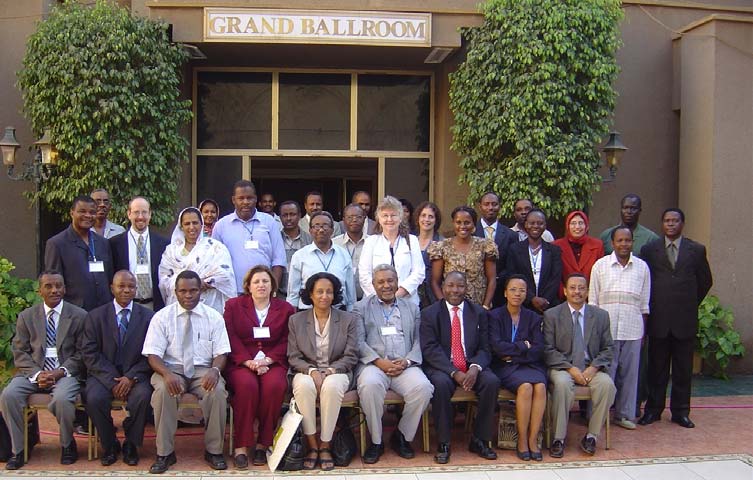
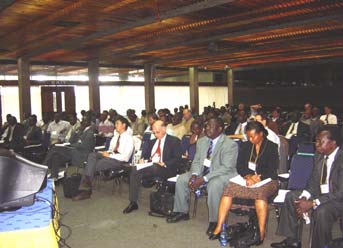
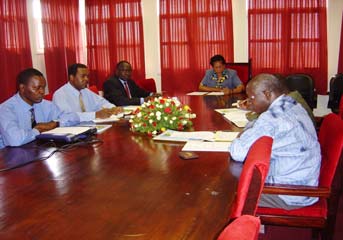
Participants of the 3rd NTEAP Steering Committee Meeting
portals.
Being the last issue, highlights of NTEAP
T he Minister of State for Environment and Physical Development, of the Republic of Sudan, Ms
achievements during the year 2005 have been
Theresa Sieircio Iron, has applauded the transboundary initiative for the management of the
presented in the Newsletter for the benefit of
environment in the River Nile basin. She noted that the initiative was of special importance to Su-
our stakeholders
dan, as it is bordered by six of the riparian countries, and environmental issues constitute a big chal-
lenge to the development efforts in post conflict Sudan.
I take this opportunity to thank all our stake-
holders for their cooperation which substantially
This was stated at the opening of the 3rd Nile Transboundary Environment Action Project (NTEAP)
contributed to the remarkable achievements of
Steering Committee meeting, from 12th--14th December 2005, at Grand Villa Hotel, in Khartoum.
2005 and I look forward to a continued coop-
eration and collaboration during 2006.
She said the meeting was of special significance to Sudan and the region at large, as it followed the
big event of the signing of the Comprehensive Peace Agreement (CPA).
I wish all of you a merry Christmas and Pros-
perous New year.
Representing the Executive Director of the Nile Basin Initiative, Ms. Hamere Wondimu, the Senior
Program Officer of the NBI and SVP Coordinator, thanked the Donors, the Steering Committee, the
Gedion Asfaw, RPM
Project Management Staff and other Stakeholders, for their contributions towards the achieve-
ments of 2005 and appealed to them to double their efforts in the coming year.
Inside this issue:
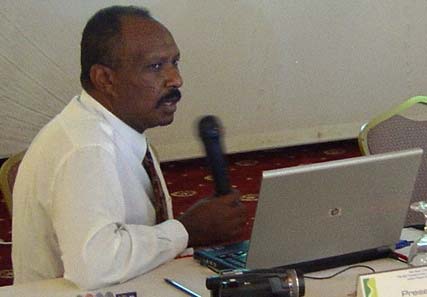
Dr Saadeldin Ibrahim, the Chairman Steering Committee, in his statement of welcome, stressed
the need for the peoples of the Nile basin to continue working together to address the transboundary
Editorial 1
environmental concerns of the region.
3rd NTEAP Steering Committee
1
Highlights of NTEAP achievements, 2005 2
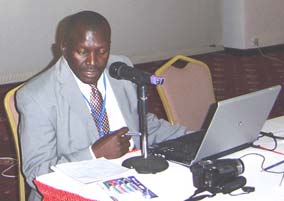
The Regional Project Manager, Mr. Gideon Asfaw, outlined the key achievements of NTEAP in
Micro-grants roll out
6
200
5, signaling the move from planning to implementation; including the launching of over 30 com-
munity based microgrants projects in four NBI countries, fully functional PMU offices, working
Lake Victoria Shrinking
7
groups, and Project Steering Committee. He said cooperation and collaboration among NBI coun-
Bamboo for wetland Conservation
8
tries had increased, citing cooperation in water quality monitoring as an example.
PAGE 2
THE NI LE ENVIRONMENT
VOLUME I1, ISSUE 4
Highlights of NTEAP achievements in the year 2005
Action Plan, Regional Baseline Re-
[Burundi, Congo DR, Egypt, Ethiopia,
Institutional Strengthening to Fa-
port for all components and con-
Kenya, Tanzania and Sudan],
cilitate Regional Cooperation
ducted a Regional Workshop on · The EE&A National working groups
M&E to discuss the draft M&E strat-
were strengthened through coordina-
egy and Action Plan.
tion of frequent meetings to plan,
· Annual and semi annual reports for
implement and monitor EE&A activi-
the NTEAP produced and shared
ties.
with all partners.
· EE&A materials were developed,
printed and disseminated both at
Community-Level Land, Forest and
national and regional level. National
Water Conservation
EE materials development workshops
were held in Burundi, Congo DR,
Gedion Asfaw, Regional Project Manager
Egypt, Kenya, Sudan and Tanzania.
· Nile basin Environmental journalists'
· The 2nd PSC and NPC meetings of
network was formed through a re-
10-13 January 2005 were successfully
gional workshop held in July in
conducted.
Kenya. Two journalists from each 9
· Recruitment of core staff completed..
basin countries participated.
· Concept papers on "macropolicies and
· A total of 80 schools (10 schools per
environment" and "strategic environ-
country) have been selected to form
mental framework" were developed
Amir Baker, Lead Specialist , Micro-grants
the Nile basin schools network.
and distributed for comments to rele-
Rwanda is yet to select 10 schools.
vant individuals.
· Recruitment of the Microgrant Coor-
Both schools awards scheme and
· Three issues of news letter produced
dinators was completed. An agree-
school baseline information was initi-
and distributed. The translation of
ment that governs the services of host
ated.
the NTEAP Newsletter to local lan-
NGOs was developed in Burundi, · A network of Nile Basin EE Univer-
guages was initiated, starting with
Egypt, Kenya, Sudan and Tanzania.
sity lecturers was formed in collabo-
Arabic, Kiswahili and Amharic.
· Two Regional Capacity Building ration with ATP in May in Tanzania.
· Nile River Awareness Kit (NRAK)
Workshops conducted, in Kenya and · EE masters students University ex-
Ethiopia, in April and September
change programme was uninitiated
respectively.
· The Soil Erosion Studies were com- Water Quality Monitoring (WQM)
pleted in Ethiopia and Sudan. Two
KMS
National Workshops to review the
studies were held in both countries.
· Five National Stakeholders Work-
shops were conducted in five coun-
tries namely; Kenya, Egypt, Sudan,
Tanzania and Uganda. The National
Joel Arumadri, Knowledge Management Specialist
Action Plans for the five countries
approved by the PMU.
consultations with Stakeholders com-
· Approval of thirty Micro grants Pro-
pleted and a preliminary version of the
jects, signature of MOAs and dis-
John Omwenga, Lead Specialist, WQ M
interactive, multi media CD ROM, Nile
bursement of funds for Egypt, Kenya,
River Awareness Kit developed.
Sudan, Tanzania and Uganda took
place.
· Established and operationalized Re-
· PMU library established.
gional Water Quality Working
· NBI/NTEAP portal established.
Environmental Education and Groups,
· NBI corporate email service for Awareness (EE&A)
NTEAP staff and MSN messenger
· Consolidated 9 National Baseline
· Transboundary campaigns in the
launched.
form of water quality monitoring reports into
· NTEAP website redesign and French
World En-
one Regional Nile Basin Water Qual-
version process
vironment
ity Monitoring Baseline Report,
initiated
Day (WED)
· Produced the
· Held 2 Regional Workshops of the
were cele-
Monitoring and
brated in Water Quality Working Group,
E v a l u a t i o n
seven coun- in Bujumbura, Burundi and in
strategy and
t r i e s
Entebbe, Uganda,
Intisar Salih, Lead Specialist, Monitoring & evalua-
Maushe Kidundo, Lead Specialist , EE & A
VOLUME I1, ISSUE 4
THE NI LE ENVIRONMENT
PAGE 3
NTEAP 2005 achievements continued.
· Held 3 National Water Quality Moni-
have been selected, which will form 2005 was U.S.
toring and Enforcement Workshops,
part of the larger Basin wide Nile $5,425,089 including the 20% addi-
in Mwanza-Tanzania, Kinshasa-DRC
Basin Water Quality Monitoring net-
tional budget approved by the PSC
and Bujumbura-Burundi,
work.
for `national level eligible projects'.
· Identified laboratories and desig-
B u d g e t
nated them as Nile Basin focal labo-
Implemen- The 2005 total expenditures
ratories. Others have been identified
tation
amounted to U.S. $3,350,502 which
and designated as reference regional
is 61.8% of the annual budget.
laboratories to assist those laborato-
T h e t o t a l
ries that are not well equipped,
budget ap-
Joel Arumadri - KMS
· Transboundary sampling stations
proved for
Ronald Okuonzi, Finance & Procurement Specialist.
Basin Wide Water Quality Monitoring Moves from Planning to Action.
T ransboundary actions aimed at Congo, 4 Rwanda and 4 in Burundi pended Solids, Total Dissovled
achieving uniform monitoring of
Solids, conductivity, nutrients
the Nile River system, agreed upon by Ministry of Water Resources Labora- (Phosphorus, Nitrogen), feacal
Nile basin countries, are already be- tory, Entebbe; Uganda, Central Water coliforms, oil and grease, and con-
ing implemented. The actions; which Quality Testing Unit, Cairo, Egypt ductivity; the presence of which
included criteria for selection of trans- and the High Dam Laboratories, As-
boundary water quality monitoring wan; Ministry of Water and Irriga-
"Globally, 4000 children
stations, designation of NTEAP focal tion, Laboratory, Kisumu, Kenya; and
die daily from water-borne
diseases like diarrhea,
laboratories in each of the NBI coun- Ministry of Water and Livestock De-
malaria and typhoid."
tries, and identification of Nile Basin velopment, Mwanza, Tanzania, have
- UNICEF's state of the
reference regional laboratories, have been selected as regional reference
worlds children 2005 Report
been initiated.
laboratories to undertake more ad-
vanced tests which may not be done in (depending on the level) are indi-
The criteria used to identify trans- other countries.
cators of water contamination.
boundary sampling stations were;
type and number of activities taking The acquisition of laboratory equip- Clean water is essential for the
place on the catchment or sub-basin, ment to support water quality moni- wellbeing of the humans and a
drainage pattern, movement patterns toring activities in the countries is critical natural resource for sus-
of fluxes or pollutants, significance of underway and at different stages of tainable development.
selected station, and accessibility. procurement. Equipment for Kenya
Transboundary sampling stations for has already been delivered.
According to a water quality
Kenya, Sudan and Tanzania have
monitoring baseline study report,
Transboundary monitoring of water
been identified and the other coun-
the Nile basin is experiencing
quality is expected to be on quarterly
tries are to follow suit.
siltation and pollution from do-
basis and the parameters to be moni- mestic and industrial waste wa-
There are 5 transboundary water tored include; heavy metals, toxic sub- ter/ agricultural products such as
quality monitoring stations selected stances, pesticide residues, Biochemi- pesticides and fertilizers
in Uganda, 7 in Kenya, 3 in Tanzania, cal Oxygen Demand (BOD), Chemical
2 Egypt, 3 Sudan, 4 Ethiopia, 3 DR Oxygen Demand (COD), Total Sus- John Omwenga WQM LS
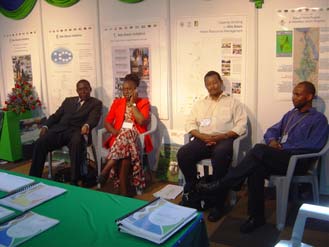
Third World Environmental Education Congress 2-6 October 2005
T he World Environmental Education by the Lead Specialist, Environmental The next congress will be hosted by
Congress took place at the Centre Education and Awareness Mr. Maushe
the Environmental Education As-
Congressi Lingotto in Torino, Italy. Close Kidundo. He presented a paper focusing
sociation of Southern Africa
to two thousand people attended, and on the use of Networks for implementa-
(EEASA) from 2 6 July 2007 in
Africa was the guest of honour.. The tion of transboundary activities. The Durban, South Africa. The theme
theme, "Educational paths towards sus-
conference was addressed by Michael and registration forms are avail-
tainability", was supported by 12 sub-
Gorbachev, as the president of Green able on the EEASA website:
sessions. The Nile Transboundary Envi-
Cross International.
www.eeasa.org.za
ronment Action Project (NTEAP) partici-
pated in this event and was represented
Maushe Kindundo- LS , EE & A
PAGE 4
THE NI LE ENVIRONMENT
VOLUME I1, ISSUE 4
Roll out of the First Batch of Micro-grants
T he last quarter of 2005 wit- pected to move boldly into new chal- Collaboration with the Nile SAPs is
nessed the roll out of the first
lenging grounds both at the opera-
expected to be realized in 2006 on
batch of Micro-grants for Egypt,
tional and thematic levels.
the basis of discussions already held
Sudan, Tanzania and Uganda. The
at various levels including the par-
In addition, four more countries;
four countries approved a total of
ticipation of the Micro-grants Coor-
twenty nine projects amounting to
Burundi, D.R.C, Ethiopia and dinators of Egypt, Ethiopia and Su-
US Dollars $564,177. The nature of
Rwanda will have their National
dan, in a Regional Workshop on
the projects, ranged from simple
Action Plans finalized by the end of
Watershed Management, organized
planning grants to projects that
January 2006. Kenya, which had its
by Easter Nile Technical Research
address transboundary threats, at
National Action Plan approved last
Office (ENTRO) in Bahr Dar, Ethio-
national and cross border locations.
year and did not manage to approve
pia in early December 2005.
The significant number of projects
projects in 2005, will hold its Na-
approved by the four countries in
tional Steering Committee Meeting
The first roll out of projects in 2005
one quarter of the year reflects the
in February, to review project pro-
reflected the importance and feasi-
genuine commitment of the stake-
posals and hopefully have them ap-
bility of collaboration with project
holders towards the program. It
proved.
management units (PMUs), which
also indicates that the Program has
played significant roles in releasing
The Comprehensive Peace Agree-
started moving with a healthy start.
funds to Grantees in Sudan and
ment in Sudan has paved the way
Uganda. It is expected that the role
The approved projects are charac-
for the Micro-Grants Program to
of other PMUs in other riparian
terized by their reliance on capacity
initiate the process of establishing a
countries will become even more
building and advocacy as the main
Local Micro-grants Coordinator's crucial in disbursements and finan-
entry points towards addressing the
Office in Juba and developing an
cial services with time.
transboundary environmental Action Plan for the South, which
threats. As the year 2006 unfolds,
will be incorporated as an amend-
the Micro-grants Program is ex-
ment to Sudan's National Action
Plan.
Amir Baker-Micro-grants LS
NBI and NTEAP Participate in the 11th World Lakes Conference
T he 11th World Lakes Confer- opened by the Hon. Minister for treatment products, were among
ence, hosted for the 1st time in
Water and Irrigation, Kenya, Ms
those that participated in an exhi-
Africa, took place in Nairobi, Kenya,
Martha Karua.
bition during the conference and
from 30th October to 4th November
NBI stall attracted overwhelming
2005. The principal objective of the
NBI and NTEAP participated in
demand for their publications.
Conference was to bring together
the conference and a whole after-
noon was devoted to presentations
from the NBI. The Executive Direc-
tor gave a presentation on the NBI
challenges and Opportunities, an
overview of the Lake Edward and
Albert Fisheries Project, presented
by the Project Manager, the Chal-
lenges of Trans boundary Water
Quality Management, by J. Om-
wenga from NTEAP and the Hy-
diverse groups of people and organi-
drology of the Aswan Dam, by the
The Conference reviewed progress
zations dealing with lakes to pro-
Dam Engineer.
about on going lake basin manage-
vide a rich forum for exchange of
ment initiatives as well as future
UNEP, NBI, Ministry of Water and
knowledge and experiences on the
goals for lake management.
Irrigation Kenya, the Nairobi City
management of lakes in general and
Council, Davis and Shirtliff dealers
John Omwenga WQM LS
African lakes in particular. It was
in pipes and water conveyance and
VOLUME I1, ISSUE 4
THE NILE ENVIRONMENT
PAGE 5
Environment and Sustainable Development (ESD) to be Taught in African
Universities
T he UNEP and UNESCO are 2005) was held in Howick, South Af- ing Environmental Education Lectur-
spearheading the mainstreaming
rica and hosted by South African
ers Network. The partnership has
of Environment and Sustainability
Development Community Regional
yielded results, as the network mem-
thinking into University Education in
Environmental Education Pro-
bers will be the first group in Africa to
Africa. A meeting (11 -14 October
gramme (SADC REEP). The out-
be trained. Other partners in this
2005) in Nairobi, Kenya discussed the
comes of this meeting were a 30 hours
initiative include Global Higher Edu-
strategies to interact with higher edu-
- 3 modules training and a resource
cation for Sustainability Partner-
cation managers and regulators; de-
kit for lecturers and university man-
ships (GHESP) Environic Founda-
velopment of a framework for an in-
agers. The training is designed to
tion International (EFI), Leadership
troductory course and resource kit
kick start universities in incorporat-
for Environment and Development
and a draft training plan and pro-
ing ESD in learning. An award
(LEAD), Global Virtual University
gramme for higher education educa-
scheme was also introduced as a
(GVU).
tors.
means of accelerating incorporation.
Maushe Kidundo- EE & A Lead
A follow-up meeting (22-25 November
NTEAP was invited to the second
Specialist
meeting by virtue of having an exist-
National Level Coordination of NBI Projects in Sudan commences.
T he coordination of Shared Vi- within the irrigation Ministry, and Salah Yesuf. Dr. Salah Elshazi of
sion Projects (SVP) and Subsdi-
to date, two meetings have been
Confidence Building and Stake-
ary Action Programs (SAP) in Su-
held to plan the coordination. Both
holder Involvement (CBSI) pre-
dan has commenced. This is being
meetings, one held on 27th Septem-
sented the status of the project,
spear headed by NBI Technical Ad-
ber 2005 and the other on 28th De-
while Dr. Osman Eltom, Lead Spe-
visory Committee Member (TAC)
cember 2005 reviewed the status of
cialist Water Resources Planning
for Sudan, through the National
implementation of the various SVP
and Management (WRPM) Project
Technical Body at the Ministry of
and SAPs in the region at large, and
made a presentation on the WRPM
Irrigation and Water Resources.
Sudan in particular, as a basis for
project.
national level planning.
An office premises has been desig-
Abdeslaam A.A-NPC Sudan
nated for the coordination Unit
The meetings were Chaired by Dr.
Niger Basin Authority Visits the NBI
A team from the Niger Basin different River Basins in Africa, a dimu, the Senior Program Officer
Authority (NBA) visited the recommendation made at the Brazil
and the SVP Coordinator, NBI .
Nile Basin Initiative Secretariat International Waters Conference.
from 15th -16th Nov 2005. The visit
The meeting noted that all river
of the team was a culmination of
basins have similar management
initial talks held between Eng. Ous-
problems, and that inter basin vis-
mane Diallo, the Shared Vision Co-
its would be very beneficial in ex-
ordinator and Regional Coordinator
changing notes.
of the Niger Basin Authority and
Agreed at the meeting were regular
Mr. Gedion Asfaw, the Regional
joint visits to learn from each other,
Project Manger of the NTEAP, at
exploration of areas of joint capacity
the International Waters Confer-
building, sharing of calendar of
ence, in Brazil.
events and participation in each
The visit of the NBA Team is a re-
others events, sharing of expertise
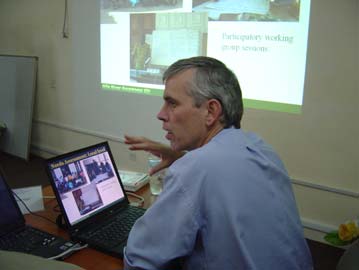
alization of the kind of exchange The Meeting took place at the Nile
and information, among others.
visits that should occur between basin Secretariat, in Entebbe, and John Omwenga WQM LS
managers and professionals of the was chaired by Ms. Hamere Won-
PAGE 6
THE NI LE ENVIRONMENT
VOLUME I1, ISSUE 4
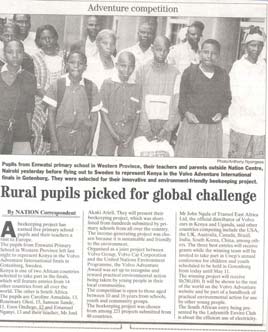
Volvo Adventure - International Award to Reward
Egypt Trains EE & A Trainers
the Young
Egypt NBI National Coordination
T he Volvo Adventure is a chal-
Office conducted a training of trainers
lenge for the young people in
(TOT) in production of Environmental
Schools. The Award is run by
Education and Awareness (EE&A)
Volvo Cars and Volvo AB in part-
Materials in Cairo, from 28-29 Sep-
nership with the United Nations
E n v i r o n m e n t P r o g r a m m e
tember 2005. This came as a follow up
(UNEP).
of the regional training workshop held
The aim of the award is to sup-
in January 2005, in Sudan.
port existing environmental action
taken by young people and to help
The trainees were from various or-
start new projects.
ganizations including, 4 participants
from the Egyptian Environmental
To participate, you register and
Affairs Agency, 4 from Ministry of
enter your project by visiting
Water Resources and Irrigation, 6
www.volvoadventure.org. The
website also offers lists of practi-
from NGOs, 4 from the Ministry of
cal projects from previous years,
Higher Education, 4 from the Minis-
along with project planning re-
try of Youth and 2 from the media.
hance your project.
sources and introductions to envi-
ronmental issues for teachers, For young people it could be an
The Ministry of Higher Education
youth groups, community groups
adventure that offers a chance to
recognized the contribution of NTEAP
and young people.
make new friends all over the
world, attract international atten-
in building local capacity to develop
By registering, you have the op-
tion and recognition for their pro-
environmental awareness and educa-
portunity to win an all-expenses-
ject. All of the projects are pre-
tion materials in Egypt with a `Thank
paid trip to the final in Sweden, a
sented to UNEP as examples of
chance to take part in our forums
you letter" presented to the National
action taken to improve the envi-
to explore current environmental
Project coordinator.
ronment.
issues and the chance of a finan-
cial reward that could make it
Ithar Khalil NPC Egypt
possible to run, improve or en-
Maushe Kidundo EE & A Lead
Specialist
First Version of Nile RAK CD Due Out Soon.
T he first version of the Nile River sion of the CD ROM to the Project sultants Ltd, with funding from the
Awareness CD ROM will be ready Steering Committee and the National Canadian Space Agency (CSA).
for launch by April 2006, the Vice Project Coordinators of the Nile
President and Principal, Hatfield Transboundary Environment Action The final version in English, of the
Consultants LTD, Mr. Grant Bruce, Project (NTEAP) for review, at the CD ROM, is expected to be
has said.
PSC meeting Launched at the Nile Council of
" N ile RAK CD Ready held in
Ministers Meeting in April 2006, in
He was presenting a preliminary ver-
for Launch come April Khartoum, Burundi. Translation of the CD to
2006 "
the Sudan, French will be done thereafter.
from 12-14th It has further been revealed by Hat-
December 2005. The CD, is in its final field Consultants LTD. that there is
stages of development.
likelihood of translating the CD
The Nile RAK CD is an awareness into 3 local languages namely;
raising and education tool that uses Kiswahili, Amharic and Arabic.
multimedia and interactive tools to The main launch will be followed by
increase awareness and knowledge of regional launches and national
target stakeholders regarding trans- training sessions to maximise pub-
boundary environmental and water licity and build capacity for the use
management .
of the CD at local levels .
Vice President & Principal, Hatfield
The project was initiated by NTEAP, Joel Arumadri KM Lead Specialist
Consultants: Grant Bruce
implementation is by Hatfield Con-
PAGE 7
THE NI LE ENVIRONMENT
VOLUME I1, ISSUE 4
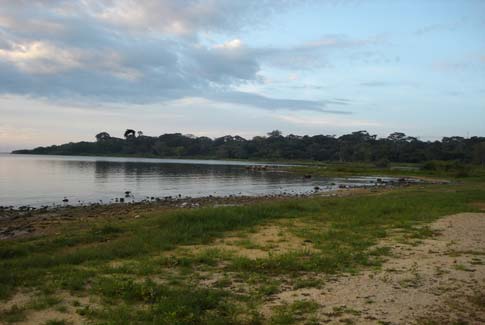
Lake Victoria, the Source Of the White Nile Threatened With Shrinkage
D esperate communities
and the deterioration of the water
living on Islands on
quality have environmental im-
Lake Victoria have ap-
plications of both local and trans-
pealed to the Ugandan Par-
boundary nature.
liament for help over its
dropping water levels.
Lake Victoria, according to re-
They are concerned about
search carried out by the Lake
the increasing navigation
Victoria Environment Manage-
and docking constraints on
ment Project (LVEMP), is the
their boats and ferries-
world's second largest water body
reports the daily Monitor, a
covering an area of 69,500 square
Ugandan Newsletter of
kilometers, with 3,450 kilometer
6/1/06.
long shore and a basin area
stretching 258,700 square kilome-
Experts are said to have warned that It is reported that a report entitled ters, with an average depth of
Lake Victoria levels have dropped be-
"Study on Water Management of 40metres. The basin is said to
tween one and two meters recently. A
Lake Victoria", released last Decem-
have a population of 30million,
drop in water levels leads to recession
ber said the water had dropped by with an annual growth rate of
of the shoreline with dire consequences
two meters.
on marine life.
The report is said to have blamed the
Fish stocks dwindle because the reced-
continued falling water levels on over
ing shoreline separates the wetlands, leasing of water to generate electric-
where they breed, from the lake where
ity at the two existing dams, Kiira
they live.
and Nalubale (formerly Owen falls
Domestic and industrial water supply dam) in Jinja in Uganda.
could also be affected and incidence of
The report is also said to have pre-
water borne diseases like bilharzias dicted 42% decrease in energy gen-
could also increase.
eration with the persistence of
Experts are said to have warned that drought.
three to four meters drop in the water
In a related story, a local Newspaper,
level could lead to complete failure of
Mwanza Environmental Newsletter
electricity generation from the dams on
(MEN), in its issue of May 2005, also
the lake.
reported an estimated 4000 tons of
Therefore efforts to save the lake need
phosphorous being discharged into
to be intensified, focusing on proper
Lake Victoria annually, besides an un
management of its environment, specified amount of nitrogen. The 3.5% and shared by Kenya (6%),
ecosysystem, and human activities nutrients are said to be coming from
Tanzania (5%) and Uganda (43%).
around it.
the Lake basin, industrial effluents,
urban waste and algae. The nutrients
The lake is an important resource
Increased evaporation due to global
are drained in liquid form out of the
in the East African sub region and
warming, drought, and flower farms
lake in many ways, including through
the entire Nile basin with a huge
are said to be partly responsible for
the White Nile. Research findings stock of fresh water fishes. It is a
the drop in water levels.
indicate that there is a steady rise in
source of water for domestic and
the amount of nutrients, resulting
In a related story in the same daily,
industrial use as well as home to
into algal growths in some areas, par-
the Uganda government is said to
highly valuable fish species which
ticularly close to the shores.
be considering closing one of the
provide protein for both internal
power stations in Jinja, Uganda, Siltation is said to be an additional and external markets. Annual fish
due to the low level of water in lake
threat taking place along the shores
catch are reported to be at ap-
Victoria. This was disclosed by the
and the river mouth, affecting ap-
proximately 400,000-500,000 tons,
Minister of Water Lands and Envi-
proximately one square millimeter of
worth US $ 3-4 billion. It also pro-
ronment, Major General Kahinda the water body per year. Water hya-
vides transport besides being a
Otafiire, in a weekly press review cinth infestation has also altered the
tourist attraction, and a source of
on 6/1/06, according to the paper.
ecology of the lake.
hydroelectric power.
The drop in the level of Lake Victoria
Joel Arumadri LS, KMS
PAGE 8
THE NI LE ENVIRONMENT
VOLUME I1, ISSUE 4
NILE BAS IN INI TI A TI VE
Bamboo to Revive Critical Wetland, Showcase of Successful
NILE TR A NS BOU ND AR Y
EN VIRO NM E N TAL
Wetland Conservation in Uganda.
AC TI ON PR O JEC T
Al Jamhuria Street
T he Wetlands Inspection Division, exposed Lake Victoria to danger. Despite the
House No. 2, Plot 15
the institution responsible for the man-
contribution of Lake Victoria ecosystem to-
P. O. Box 2891
agement of Wetlands in Uganda and Uganda
wards the well being and livelihoods of more
Prisons Services, have begun cultivating bam-
than 30 million people of the three east Afri-
Phone: 249-183-784206/26
can countries, the lake is currently described
Fax: 249-183-784248
boo at Murchison Bay prison, at the shores of
Email: info@nilebasin.org
Lake Victoria, to help clean up the heavily
as the "dying lake." This is because of pollu-
polluted Nakivubo swamp, located at the mar-
tion described by the ICRAF report as eutro-
gins of Lake Victoria, and a recipient of the
phication and sedimentation.
Visit us at:
effluents from Kampala City- reports the New
These are consequences of increased nutrient
www.nileteap.org
Vision, a Ugandan Daily of 28th November
2005.
inputs originating from agricultural activities,
Editorial Committee
industrial effluents and domestic wastewater
discharged in the degraded wetlands, accord-
Gedion Asfaw, Chair
The idea to cultivate bamboo is said to have
been mooted by the World Agro forestry Cen-
ing to the ICRAF report.
Joel Arumadri
tre (ICRAF). The bamboo will also help the
Editor
poor urban communities earn an income.
Natural filtration by the reeds and papyrus
Amir Baker, member
has been hampered by destruction of the wet-
Intisar Salih, member
The "mother garden" is expected to act as a
lands through drainage for agriculture, indus-
John Omwenga,
centre of multiplication of the large species of
tries and residential premises.
member
bamboo before it can be expanded into the
The ICRAF report says bamboo could be a
Maushe
swamp, Levand Tumuryomurugyendo,
ICRAF's biological diversity expert, is re-
superior land use system to the vegetables
Kidundo,member
ported to have said bamboo is a good filter
that are reportedly health hazards due to accu-
Mohammed Rahim,
because it removes wastes from water. It is
mulation of heavy metals. Bamboo is a prom-
layout and publishing
said to be applied in China to clean the pol-
ising alternative because it absorbs nutrients
assistant
luted water and also a raw material for handi-
that cause pollution. Bamboo growing at
crafts, herbal soap and charcoal.
Murchison Prison is said to have started to-
wards the end of last year with over 200
A report entitled "Bamboo for eco-sanitation
plants of bamboo imported from Kenya.
in wetlands and income generation around
Lake Victoria, said to have been presented in
Ramsar meeting is said to have picked Naki-
vubo swamp as one of the wetlands that were
Putting the Shared
the exhibition of the Ramsar Convention on
to showcase the successful story of wetland
Vision into Action
wetlands at Speke Resort Munyonyo, in
Uganda, claims that China earns more than
conservation in Uganda.
$600m annually from the export of bamboo
The researchers are also looking at the as-
products. China's bamboo industry is esti-
pects of water uptake by bamboo since it
mated at $12b.
grows very fast.
Massive encroachment on the swamp has
Joel Arumadri Knowledge Management
Upcoming events/News Flush
Events:
News Flush:
· First batch of 29 Micro-grants for Egypt, Su-
dan, Tanzania and Uganda launched
· 9th Special Session of the Governing Council/
· SVP coordination conducted a Work plan meeting
from 21st - 23rd November, at which RPMs of SVP
· 3rd NTEAP steering Committee held (Dec 13-14
Global Ministerial Environment Forum, 7-9th
Projects discussed and developed coordination matrix
2005)
February 2006, Dubai, UAE .
for implementation of their 2006 Work plan. The SVP
coordination meetings are to be held 3 times a year,
· NTEAP Information Sub portal launched
· WRPM Regional workshop and 2nd meeting
in April, October and November.
· Kenya procures water quality measuring equipment
of the Water Policy Task Force, Addis
· The NBI in collaborartion with NeWater of the Neth-
Ababa ,Ethiopia, 16,17 January 2006,
erlands held a a three day workshop which discussed
· First Version of Nile RAK CD presented to NTEAP PSC
the effect of climatic change in the Nile Basin
and NPC's
· WRPM Project Launch, Addis
· The Confidence Building and Satkeholder Involvement
Ababa ,Ethiopia 18 January 2006
(CBSI) Project organisd a four dayworkshop for media
houses in the Nile Basin, which cuilinated in establish-
Please send your articles / comments to
The Editor
·
ing Nile Media Network.
WRPM 1st Steering Committee meeting ,
Nile Environment at
jarumadri@nilebasin.org
Addis Ababa ,Ethiopia, 19,20 January 2006
· 4th World Water Forum, Mexico, Nov 16-22, 2006