N ile Bas in Init ia tive
Nile Transb ounda ry E nv i ron men tal A ct ion Projec t (N TEAP)
The Nile Environment
A QUARTERLY NEWSLETTER OF NTEAP
Volume I1, issue 2
April-June 2005
Editorial
T
World Environment Day
his is the second issue of NTEAP Newsletter
5th June 2005
in 2005. The first issue highlighted the high level
political commitment of member countries, in-
creased cooperation among stakeholder groups
and the heightened communication and knowl-
edge exchange as evidenced by the series of
The urban
meetings during the quarter, including the Nile
COM /TAC and Trust Fund Committee meeting
in Kigali, Rwanda.
Environmental
The main focus of this issue is the World Envi-
ronment Day. The cities and towns in the Nile
basin are no exception to the urban environ-
mental Challenges facing the globe. Degradation
challenge
of water quality, land degradation and diminishing
biological diversity are among challenges affect-
ing sustainable socio-economic development
within the basin.
"In the next quarter-century, almost all population growth will occur in cities,
We reaffirm our commitment to sustainable envi-
most of it in less developed countries. By 2030, more than 60 per cent of the
ronment management by joining the world in
world's population will live in urban areas. Cities are prolific users of natural re-
celebrating the World Environment Day.
sources and generators of waste. They often degrade local water quality, de-
Other articles in the Newsletter give highlights on
plete aquifers, pollute the marine environment, foul the air and consume the
the IWR workshop in Brazil, the visit of the joint
land, thereby devastating biological diversity", Kofi Annan. Source: UNEP
Ethiopia/Sudan team to Dinder National Park, in
the Sudan, the development of the environment
and natural resources information communica-
W orld Environment Day was established by the United Nations General Assem-
tion tool and SVP news.
bly in 1972 to mark the opening of the Stockholm Conference on the Human Envi-
All these activities demonstrate progress in ronment. Commemorated each year on 5 June, World Environment Day is one of
stakeholder cooperation and commitment in the principal vehicles through which the United Nations stimulates worldwide aware-
addressing the transboundary environmental ness of the environment and enhances political attention and action. Governments,
issues, while creating synergies in empowering
individuals, non governmental organizations , community and youth groups, busi-
the people to become active agents of sustain-
ness, industry and the media undertake variety of activities aimed at renewing their
able and equitable development.
commitment to the protection of the environment.
Gedion Asfaw, RPM
Each year is celebrated under a different theme, the theme for 2005 is Green
Cities and the slogan is Plan for the Planet! The main international celebra-
tions of the World Environment Day 2005 were held in San Francisco, California,
Inside this issue:
USA.
Editorial 1
The UN agenda is to give a human face to environmental issues; empower peo-
World Environmental Day
1
ple to become active agents of sustainable and equitable development; promote
Third International Waters Conference 2
an understanding that communities are pivotal to changing attitudes towards
NTEAP joins WED Celebrations
3
environmental issues; and advocate partnership which will ensure all nations
Nile RAK in the offing
3
and peoples enjoy a safer and more prosperous future.
Water Quality Benchmarks Developed
4
NTEAP M & E Strategy Discussed
5
The Vision of NBI and the aims and aspirations of NTEAP are in conformity with
First Regional Micro-grants Workshop
6
the UN Agenda.
Ethiopia/Sudan Joint Visit to Dinder NP 7
Source: Adapted from UNEP
SVP News 8
PAGE 2
THE NI LE ENVIRONMENT
VOLUME I1, ISSUE 2
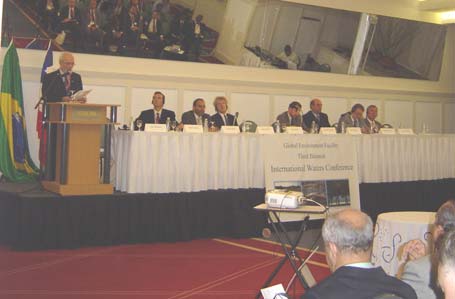
NBI-NTEAP Participated in the GEF, Third Biennial International Waters
Conference, 20th--25th June 2005, Brazil
T
plored approaches for promoting the inte-
Basin Projects, Lake Basin Projects,
he third Biennial International Waters gration of other GEF focal areas Ground Water Projects and Large Marine
Conference;, co-sponsored by GEF,
Ecosystem (LME) Projects, were
UNDP, UNEP and World Bank, took place
among thematic areas ad-
in Pestana Bahia Hotel, Salvador, Bahia
dressed.
Brazil; June 20- 25, 2005. The week long
conference, was attended by more than
Other workshops discussed the
350 participants, from all over the world
role of pubic participation in in-
and it brought together international wa-
ternational waters management,
ters stakeholders, to share experiences,
overview of the Transboundary
and learn from each other on how to en-
Diagnostic Analysis (TDA), GEF
hance the management of international
project Information Communica-
waters projects.
tion technology, legal frame-
works and opportunities and
NBI-NTEAP was represented by a team
innovative project financing and
comprising of Mr. Gedion Asfaw, Regional
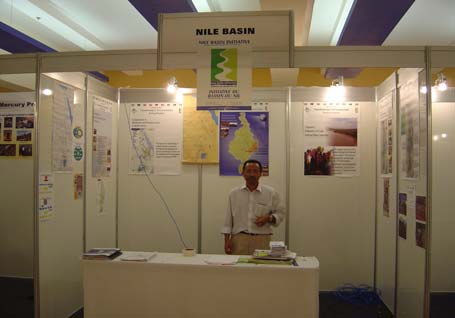
NTEAP Exhibition Stall
private sector involvement. Dis-
Project Manager NTEAP, who also
cussions on GEF partnerships in
chaired three breakout sessions on River
Latin America, GEF international
Basin Projects, Mr. John Omwenga, Wa-
waters portfolio, World Bank,
ter Quality Specialist NTEAP, Dr. Abdel
UNEP and UNDP portfolios also
Fattah Mettawie , TAC member, Egypt
featured.
and Dr, Aryamanya, Mugisha-Henry, Pro-
ject Steering Committee member,
This was the first international
Uganda.
waters meeting attended by the
NBI/NTEAP, despite the fact that
The purpose of the conference was to
two earlier meetings had been
foster knowledge sharing and collabora-
held, one in Dalian, China and
tion between GEF international water pro-
the other in Budapest, Hungary.
jects, GEF agencies, participating govern-
It was felt that more coordination
ments, and the private, academic and
between all GEF-funded projects
non-profit sectors, and to identify and dis-
Conference Hall
in Africa is necessary. The need
seminate lessons and experiences for
for GEF-funded river basin pro-
international waters management.
jects in Africa to meet to share experi-
(Biodiversity, Climate Change Land Deg-
ences ahead of the next IWC meeting,
The conference allowed project stake-
radation and Desertification), with interna-
planned to be held in Africa in the year
holders to provide feedback to the imple-
tional waters activities.
2007 was underscored.
menting agencies and identified learning It was recommended that partnerships
priorities for the next two years. It also and synergies be enhanced, particularly Gedion Asfaw, Regional Project Man-
examined innovative funding mechanisms
ager NTEAP; John Omwenga, Water
between GEF-financed projects. River
to support project sustainability and ex-
Quality Lead Specialist
NTEAP mode of celebrating WED- adapted from UNEP
N Network
Never
litter
T
Tree planting
E
Environmental education programmes in schools
Establishment of governmental structures dealing with environmental manage-
ment
Exhibitions (drawings, posters, photos and paintings
A
Award presentations (for environment-related
activities)
Art
using
recycled
materials
Awareness campaign
P
Parades
Performances (plays, songs, poetry) Promotional materials related to theme (T-
shirts, stickers, bookmarks)
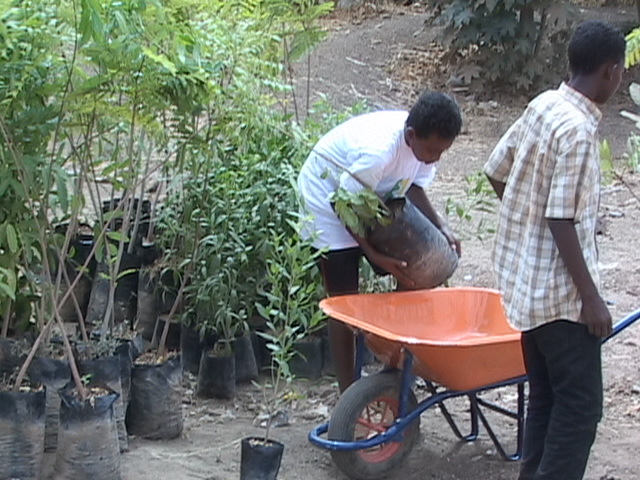
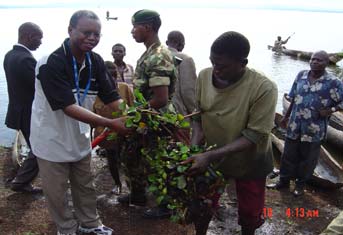
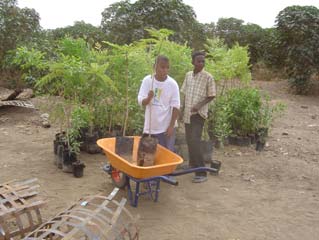
The Youth Participate in WED Tree Planting in Omdurman,
Sudan
VOLUME I1, ISSUE 2
THE NI LE ENVIRONMENT
PAGE 3
NTEAP joins Nile Basin countries and the rest of the
tune of approximately US$ 6,000 dol-
world in World Environment Day Celebrations
lars in each country, except Uganda
and Rwanda where there are no Na-
tional Project Coordinators.
the link between low fish catch and
the weed; and awards given to envi-
The support covered cleaning, tree
ronmental journalist and the folk
planting, awards, and production of
dancers with the best environmental
awareness materials.
messages on the Nile.
NTEAP received a certificate of ap-
In Egypt, Democratic Republic of
preciation from the city of Mwanza as
Congo, Kenya and Tanzania awards
Removing Water Hyacinth in Lake Rweru
were presented to schools. Commu-
Burundi
nity based organizations (CBO's) in
Tanzania and footballers in Congo
O
also received prizes.
n 5th June 2005 NTEAP joined
hands with countries of Nile Basin to
In line with this years WED theme,
celebrate the World Environment Green Cities, trees were planted and
Day . The celebrations were a week
cities cleaned.
long in many countries and graced
WED is one of the days NTEAP
with activities varying from country to
Tree Planting in Omdurman City , Sudan
through its EE&A component recog-
country.
nizes as an opportunity to reach
indication of success of the event
In Burundi activities included; delinea-
stakeholders with no access to the
and appreciation for the support.
tion of a community park within the
traditional tools and methods of com-
city of Bujumbura, two days aware-
munication like posters, TV, newslet-
Mausche Kidundo - EE & A Lead
ness workshop, removing invasive
ters, etc
Specialist
weeds in lake Rweru in Kirundo, as a
The activities were supported to a
demonstration to the fisher folks on
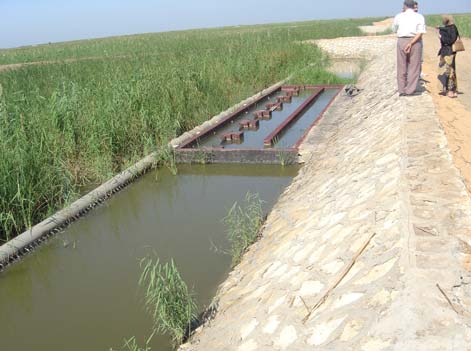
Knowledge Management & Communication- Nile River Water resource management
Environmental Awareness Kit ( NRAK ) in the offing
issues related to agriculture,
erosion, flooding and desertifi-
cation.
natural and anthogenic activities that
impact the river Nile Basin.
Impacts of human activities on
the basin
The Nile NRAK project is designed to
contribute to the identification, mitiga-
Earth observation (EO) appli-
tion, and rehabilitation of transbound-
cations to improve environ-
ary environmental issues through:
mental management; and
ˇ
Providing training programs in
Biodiversity and conservation
environmental and water man-
issues within the basin
agement, delivered through an
interactive, multi media CD-
Consultations on the Nile RAK archi-
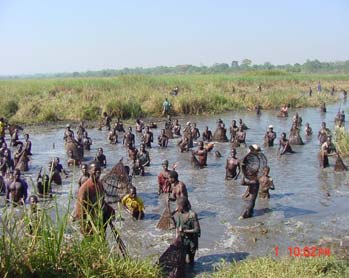
Fishing in shores of L. Kyoga , Uganda
ROM learning tool.
tecture and contents have been done
in Uganda, Egypt and Ethiopia and
ˇ
Developing Earth observation
consultations in other countries wil
N TEAP in collaboration with Hat-
(EO) applications and map
be completed within July--August
field Consultants is in the process of
products for regional environ-
2005.
developing an interactive self study
mental monitoring and man-
NTEAP expresses its gratitude to the
CD-ROM, Nile River Environmental
agement; and
Canadian Space Agency (CSA) and
Awareness KIT (NRAK). The kit is to
be a training tool designed to promote
ˇ
Raising awareness on environ-
the Hatfield Group for the support to
sustainable management of water
mental issues impacting the
the development of the Nile River
resources within the Nile Basin. The
Nile Basin through workshops,
Awareness Kit
Multimedia CD-ROM tool will provide
posters and brochures.
Joel Arumadri - Knowledge Manage-
training material that can be used by
regional, national, and local stake-
The kit wil include the following the-
ment Specialist, NTEAP
holders to enhance understanding of
matic areas:
PAGE 4
THE NI LE ENVIRONMENT
VOLUME I1, ISSUE 2
Basin-wide Water Quality Monitoring- National and Regional Water Quality
Monitoring Benchmarks developed
Institutional capacity
T his quarter saw a major bench
mark; National Water Quality Moni-
Training needs
toring Baseline reports, finalized for
all the Nile riparian countries, except
Level and type of wa-
Ethiopia and Egypt, where the reports
ter quality monitoring
await revision and endorsement by
program
the stakeholders.
Status of legal frame-
A baseline study was conducted to
works. policy instru-
establish the current water status,
ments and strategies
with regard to water quality monitor-
for water resources
ing initiatives at the country level,
management
against which subsequent project
activities are to be measured and
Existence and level of
evaluated. Highlights of the study
enforcement of stan-
include:
dards, guidelines and
regulations and
Water quality monitoring data
sets
sources
Number and status of laborato-
ries, laboratory instrumentation
List of geo-referenced sampling
Proposal on dealing with trans
and staffing.
stations
boundary pollution
Arising from the issues, the following
Inventory of major point and non-
Need to carry out Nile river pol u-
recommendations have been made:
point sources of pollution
tion hazard assessment
Inventories of existing laborato-
Need for water quality modelling
"4000 children die daily
ries
from water-borne
Need to incorporate biological
Water quality monitoring initia-
diseases like diarrhea,
parameters for monitoring
tives and
malaria and typhoid."
Establishment of regional water
- UNICEF's state of the
Weaknesses and strengths of
quality testing centres.
worlds children 2005 Report
each country, with regard to water
Preparation of water quality maps
quality monitoring.
Designation of a Nile Basin focal
A Regional Workshop is planned for
The national reports have already
laboratory
19- 21st July, 2005, at Novatel Hotel,
been consolidated into a draft Re-
Bujumbura, Burundi, to discuss the
gional water quality monitoring base-
Selection of key basic parameters
recommendations.
line report and issues highlighted in
of trans boundary importance
the report include:
John Omwenga- Water Quality Lead
Measures to curb and monitor
Specialist, NTEAP
Technical capacity
pollution from non-point polluting
Caravan for WED celebrations in Kenya
Naivasha. Other activities included:
Exhibition in Kisumu to help
N TEAP in collaboration with Na-
publicize the project and to dis-
Competitions in essay writ-
tional Environment Management
play the work done by the stu-
ing/photography/painting, tree
dents from within the basin.
Authority (NEMA) Kenya, supported
planting, exhibitions.
a caravan from Nairobi to Kisumu on
The Minister of environment Hon.
Saturday 4th June to mark WED.
Essay/Art/Photography competi-
Kalonzo Musyaka, UNDP represen-
The purpose of the caravan was to
tion for schools supported by
tatives , Ministers, Members of Par-
create awareness on environmental
KOEE, UNEP and NTEAP
liament, were among others who
problems Kenyan cities and towns
attended.
face. The caravan went through sev-
Tree planting in Shauri Moyo
Primary school in Kisumu in col-
Lily Kisaka--NPC Kenya, NTEAP
eral city hotspots, with stopovers in
laboration with the Forest De-
Nakuru Kericho, Awasi, Kisumu and
partment
VOLUME I1, ISSUE 2
THE NI LE ENVIRONMENT
PAGE 5
Monitoring & Evaluation- Partners discuss NTEAP M & E Strategy and Action Plan
A
issues in the indicators that
Regional Workshop was held in
the project wil use to meas-
Naivasha, Kenya last April, to discuss
ure progress during the
and finalize the draft NTEAP Moni-
coming four years was em-
toring & Evaluation Strategy and Ac-
phasised.
tion Plan. The high level meeting
brought together key partners of the
The way forward and the
Nile basin Initiative, including the Ex-
need to move from projects
ecutive Director of NBI Secretariat,
monitoring to environmental
Project Steering Committee mem-
monitoring was also
bers, Shared Vision Program Coordi-
stressed.
nators, National Coordinators and
The M&E Strategy and Ac-
UNDP/GEF Coordinator among oth-
tion Plan are meant to pro-
ers.
vide feedback to the NTEAP
The meeting provided a good oppor-
management and partners
of the strategy/action plan and the
tunity for the participants to discuss,
on the progress of the project towards
baseline documents/report.
understand and review the projects'
achieving its objectives.
outcomes, outputs and indicators,
The need to reflect the commitment
Intisar Salih- M & E Lead Specialist,
provide inputs to enhance the quality
of Governments and sustainability
NTEAP
NTEAP forms Networks - for implementing Transboundary Activities
Environmental Journalists networks
Each regional network is represented
N ile Transboundary Environment have been formed. Planned regional by two delegates from each country,
Action Project is mandated to imple-
networks include Nile basin EE & A
are to meet annually to plan and de-
ment transboundary environmental
Teachers and Members of Parlia-
velop mechanisms for implementa-
activities.
ment networks.
tion. During the sessions, experi-
ences are shared and consequently
Nile basin Environmental Education
An EE&A working group, as a na-
knowledge exchanged.
and Awareness (EE & A) compo-
tional hub, consisting of 12 people,
nent embarked on formation of net-
from Government, civil societies, and
The meetings are in line with the NBI
works for implementing transbound-
the private sector is in place. The
vision of working together.
ary activities.
network ensures the regional activi-
ties are implemented and are in line
Mausche Kidundo--EE & A Lead
Practitioners, EE &A Lecturers and
with countries priorities.
Specialist, NTEAP
GSDI/Global Map Grant Twenty nine African countries still eligible for grant
22 African countries have benefited
Gambia, Guinea Bissau, Madagascar,
from a Global Spatial Data Infrastruc-
Mauritius, Morocco, Niger, Reunion,
ture (GSDI)/Global map grant.
Sao Tome & Principe, Sierra Leone,
Somalia, South Africa, Togo and Tuni-
These are grants designed by Envi-
sia.
ronmental Services Research Insti-
tute (ESRI) to support framework
The grant is a capacity building oppor-
data development by African national
tunity for the beneficiary countries to
mapping agencies. The grant con-
enhance knowledge management and
sists of software (ArcGIS) and a
for the countries in the Nile Basin, it
credit for training. ESRI is accepting
reinforces the knowledge management
applications from Burundi, Egypt and
activities of NTEAP.
Rwanda, among the countries in the
Nile Basin.
For online application, go to:
Other eligible countries include An-
http:/ gis.esri.com/company/sdi-app.cfm
gola, Cameroon, Cape Verde, Central
African Republic, Chad, Comoros,
Source: GSDI
Cote d'Ivoire, DRC, Djibouti, Gabon,
PAGE 6
THE NI LE ENVIRONMENT
VOLUME I1, ISSUE 2
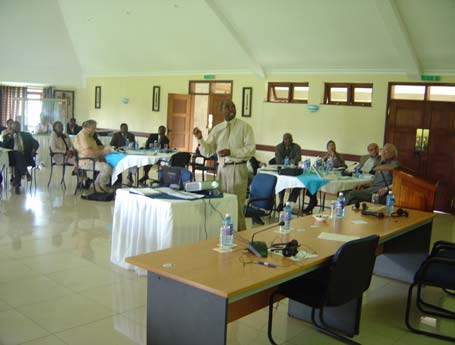
Micro-grants- First Regional Micro-grants Capacity Building Workshop
K enya, hosted the first Regional
Micro grants Capacity Building
Workshop. Participants from the
riparian countries assembled for a
four day period to discuss the fun-
damental challenges and threats
that face the environment of the
Nile Basin and to review the oppor-
tunities that the NTEAP is fostering
through its various components.
The workshop provided a forum for
opportunity for development part-
ners and Government experts to
exchange ideas and identify com-
mon entry points that could be used
to build networks and formulate joint
proposals for funding through the
Micro grants.
challenges of environmental threats
activities, in light of country specific
The fundamental challenges and
in the Nile Basin, and the existing
situations.
threats facing the environment in the
opportunities/programs being admin-
The capacity building workshop, was
Nile Basin and the opportunities
istered by NTEAP to address some of
the first of two planned meetings and
through the various components of
them.
it took place from 5th 8th April 2005,
NTEAP to address them, were
The need to embrace networking at
in Nairobi. The meeting was ex-
among issues discussed.
all levels and with all stakeholders, as
tremely useful to the participants, as
There was exchange of Knowledge
a means of sharing knowledge was
wel as the NTEAP staff, as it pro-
between participants and the Project
emphasized. The workshop provided
vided an insight into the environ-
Management Unit (PMU), through
an opportunity for NTEAP to closely
mental issues within the Nile Basin to
sharing of practical experiences from
examine and explore possible sce-
be addressed.
the different riparian countries on the
narios for implementing micro grant
Amir Baker LS Microgrants, NTEAP
Africa/Canada Partnership to Demonstrate Benefits of Space to water
management
T
can partners for sustainable
he Canadian Space Agency
earth observation develop-
(CSA) is developing projects to
Earth Observation Products are an important
ment projects.
demonstrate the use of earth
tool for water management hydrogeology,
observation products in the Afri-
This will be beneficial to
can context. The projects are to
NTEAP and NBI at large as
river basin management and environmental
take place in a number of Afri-
it will enhance the informa-
awareness and education
can countries including the Nile
tion requirements for man-
riparian countries. Areas to be
aging the water resources
covered are environmental and
The projects are typically for dem-
of the River Nile.
health problems related to water,
onstration and intended to act as
http://www.space.gc.ca/tiger
flood, drought etc.
leverage to generate funding for
long term commitment with Afri-
Source: CSA
VOLUME I1, ISSUE 2
THE NI LE ENVIRONMENT
PAGE 7
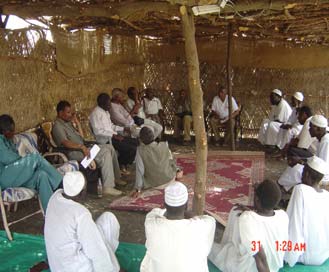
Institutional Strengthening- Ethiopia/Sudan Joint Visit to Dinder National Park,
Sudan:
W
dalhafeze Osman , GEF Project Coor-
ithin NBI's frame of institutional
dinator and Mr. Ibrahim, a representa-
strengthening to facilitate regional tive of the Ministry of International Co-
cooperation, a joint Ethiopia/Sudan operation.
team visited Dinder National Park, in
the Sudan.
Among issues discussed were partici-
pation of local communities in park
The team included the Deputy Direc-
management and possible areas of
tor General of the Environmental cooperation and coordination in the
Authority of Amhara Region (Dr. management of the two parks.
Zerfu Hailu), Mr. Woldegbriel Gebre-
kidan (an expert in the same Author-
Such visits promote cooperation among
ity), Dr. Assefa Mebrate from Addis stakeholder groups; not only within
Ababa University, the National Water-
their countries, but with counter parts in
of Sudan, adjacent to the Ethiopian
shed Project Coordinator of Ethiopia neighboring countries. Exchange visits
Alatish Park. The reserved area of
for ENSAP (Mr. Alemayehu Taffese),
are essential ingredients for building
the two parks in Sudan & Ethiopia is
and both NPCs of Ethiopia & Sudan,
mutual understanding, relationships more than 10000 & 2000 square
representing NTEAP. The team was and trust that can lead to improved re-
kilometers respectively
accompanied and guided by Dr. Mu-
gional cooperation .
tasim Bashir Nimir, Dinder National Dinder National Park is located 582 Km Abdelsalam Ahmed Abdelsalam-
Park GEF Project Manager, Mr. Ab-
away from Khartoum in eastern borders
NPC Sudan, NTEAP
"One Planet, Many People Atlas" - Launched in London, 3rd June 2005.
Visit www.earthprint.com for more information and to acquire. Source: UNEP
monstrable ways;
O ne Planet, Many People: Atlas of Our Changing Environ- ˇ providing scientific measure-
ment provides a comprehensive, visual presentation of
ment of over-exploitation of the
scientifically variable information, on changes in the
environment.
global environment--both the good and the bad--
To meet these objectives, the atlas
acquired and assessed through state-of-the-art remote provides:
sensing technology.
The atlas documents visual evidence of global environ-
ˇ a collection of spectacular
mental changes resulting from natural processes and
"before and after" satellite im-
human-induced activities. Special objectives of One
age pairs on various themes
Planet, Many People include:
for 80 sites around the world;
ˇ over 30 environmental case studies supported by
ˇ generating awareness of human interactions with
narratives, images and ground photographs; and a
the environment that alter the environment in de-
compilation of recently released environmental maps.
Institutional Capacity Building--Scholarships for Water Professionals
water planning and management
T
grated manner and PhD for officers
he Applied Training Project
cooperatively in the basin by assist-
in training institutions, to enable them
(ATP) has announced MSc. and
ing in the development of human
effectively deliver water resources
Doctorate of Philosophy (PhD)
resources and institutional capacity
management courses.
Scholarships for Water Profession-
building.
als in the Nile Basin region for the
Details are on www.nilebasin.org
The ATP is offering scholarships at
academic year 2005-2006.
MSc level for water professionals in
The Applied Training Project sup-
order to increase their capability in
ports the SVP's vision to improve
handling water issues in an inte-
PAGE 8
THE NI LE ENVIRONMENT
VOLUME I1, ISSUE 2
NILE BAS IN INI TI A TI VE
SVP -Regional Power Trade Meeting held in Mombasa
NILE TR A NS BOU ND AR Y
EN VIRO NM E N TAL
AC TI ON PR O JEC T
A
electricity, less than 10 per cent of the
Steering Committee and Technical
people in other countries of the Basin
Al Jamhuria Street
meeting of the Regional Power trade
House No. 2, Plot 15
have access to electricity. "How can
P. O. Box 2891
Project took place in Mombasa, Kenya
you be competitive in this world when
from 16th 18th June 2005. This was
you have these kinds of figures?", the
Phone: 249-183-784206/26
the first Project Steering and Technical
Fax: 249-183-784248
Executive Director of the Nile Basin
Email: info@nileteap.org
Committee meeting. The meeting laid
Initiative, Mr. Patrick Kahangire asked.
the ground for the establishment of the
Visit us at:
Nile Basin Power Forum and also dis-
The four-year Regional Power Trade
cussed the six-month work plan. The
project is expected to cost US $13 mil-
www.nileteap.org
Power Forum will bring together power
lion and is supported by the govern-
Editorial Committee
experts and power utility companies to
ments of Norway and Sweden and the
Gedion Asfaw, Chair
discuss ways to expand power trade
African Development Bank.
Joel Arumadri
and improve access to reliable, low-
Other projects of the Nile Basin Initia-
Editor
cost power in the Nile Basin.
tive include the Nile Trans-boundary
Amir Baker, member
Intisar Salih, member
Discussions ranged from variations in
Environment Project, hosted in Khar-
John Omwenga,
the cost of electricity to access, in the
toum, the Sudan; Applied Training Pro-
member
nine countries of the basin. The obser-
ject In Cairo, Egypt; Water Resources
Maushe
vation was that Egypt had relatively
Project in Addis Ababa, Ethiopia; Re-
Kidundo,member
cheaper electricity and better accessi-
gional Power Trade, in Dar es salaam,
Mohammed Rahim,
bility as compared to Ethiopia, Sudan,
Tanzania,; Efficient Water Use in Nai-
layout and publishing
the Democratic Republic of Congo,
robi, Kenya; Socio-economic Develop-
assistant
Rwanda, Burundi, Uganda, Kenya,
ment and Benefit Sharing in Entebbe,
Tanzania and Eritrea, where power
Uganda, and Confidence Building and
supplies are erratic, tariffs are high and
Stakeholder Involvement Project at the
therefore unaffordable to many.
Nile Secretariat, also in Uganda.
With the exception of Egypt where over
Source: Press release www.nilebasin.org
Putting the Shared
96% of the population has access to
Vision into Action
Upcoming events/News Flush
Nile Basin Environmental Journalists
The second Regional Micro-grants The Micro-grants National Action
Network Workshop, to be held in
Capacity Building Workshop is sched-
Plan for Sudan was approved in June
Kenya from 18th--20th July 2005.
uled to take place during the period 2005.
17-19 August 2005 in Addis Ababa,
Regional Workshop on Water Quality
The third NTEAP Steering committee is
Ethiopia.
planned for December 2005 in Khartoum,
Working Group meeting, 19--21 July
Sudan. The exact dates will be announced
2005, Novatel Hotel, Bujumbura, Bu-
Interviews for the Local Micro grant
in due course.
rundi. For more information contact
Coordinators for Burundi, D.R.C and
the Water Quality Monitoring Lead
Ethiopia were concluded in June
AfricaGIS 2005 Conference to be held at
S p e c i a l i s t , N T E A P , a t
2005.
CSIR International Convention Centre,
johno@unopsmail.org.
Tshwane (Pretoria), S.Africa, from 31 Oct.
Please send your articles /
to 4th Nov. 2005. For more information See
NTEAP Environmental Education &
comments to
http:/www.africagis2005.org.za/
Awareness Regional Workshop, to be
The Editor
held in Kigali, Rwanda, from 1st--3rd
RAMSAR COP9, Kampala, Uganda, No-
August 2005. For details contact E E
Nile Environment at
vember 2005. For more information see
& A LS on mausche@unopsmail.com
joela@nileteap.org
www.ramsar.org/index_cop9_e.htm