N ile Bas in Init ia tive
Nile Transb ounda ry E nv i ron men tal A ct ion Projec t (N TEAP)
The Nile Environment
A QUARTERLY NEWSLETTER OF NTEAP
Volume I1, issue 1
January-March 2005
Editorial
NTEAP Second Project Steering Committee Approves
T his is the first issue in 2005. The three issues
2005 Work Plan and Budget
of 2004 informed our readers on the launch of the
project and the first steering commit ee meeting,
provided information on the NTEAP and the NBI,
NTEAP missions to NBI countries, and gave brief
account of important workshops held during 2004.
This issue of our newslet er provides highlights of
the Steering Commit ee meeting, project compo-
nent articles & SVP news.
The second PSC meeting approved the 2005
work plan and budget after a detailed discussion
and gave directives on the implementation of the
work plan. The PSC also approved rules of proce-
dure for the PSC.
The quarter also saw the Nile Council of Ministers,
the Technical Advisory Committee (TAC) and the
Trust Fund Commit ee meetings in Kigali, Rwanda
which was held between March 14 and 17 2005.
These and other high level meetings of the NBI
demonstrate the political commitment of member
countries and their resolve to achieve the vision of
the NBI.
The number of institutions and individuals who are
expressing interest and get ing involved in the
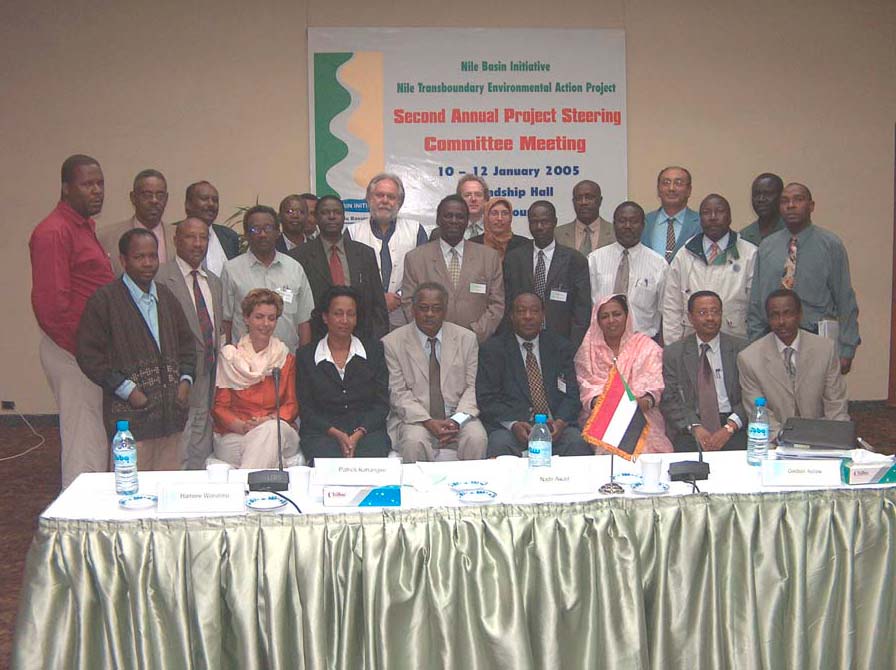
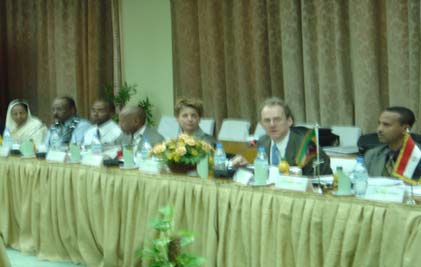
activities of the NBI is increasing substantially. Participants of the Second Steering Committee Meeting, January 10-11 2005
This is an obvious indicator of increasing regional
cooperation and the regional meetings and ex-
change of visits by practitioners of NBI countries
T
will modestly contribute to strengthening regional
he second Project Steering Committee (PSC) was held between Janauary10 and 11
cooperation.
2005 at the Friendship Hall, Khartoum, Sudan. It was attended by all members and ob-
Gedion Asfaw, RPM
servers except for Rwanda.
The PSC approved the 2005 work plan and budget and further approved up to 20% addi-
Inside this issue:
tional budget for "eligible national level projects" to be submitted to the NTEAP by mem-
Editorial 1
ber countries after consultation with relevant stakeholders. The PSC also adopted the
PSC Rules of Procedures.
Second PSC meeting
1
The PSC accepted the proposal by the NTEAP to add a new activity with regards to the
Micro-grants - Follow up on the
formulation of a strategic environmental framework and requested the RPM to develop a
concept paper on the proposed framework and share the concept paper with members
First Regional Workshop
2
and observers of the PSC for their inputs and enrichment.
Introducing Kenya Organization for
The process of work plan preparation was also discussed and a process was agreed
Environmental Education
2 u
pon
in
w
h
ic h
t he participation of national level stakeholders was underlined. The re-
gional framework work plan will be discussed at a national consultation meeting and each
Monitoring and Evaluation
2
member country will submit a national action plan which will then be incorporated in the
Basin Wide Water Quality Management -
final draft annual work plan.
The Challenges Ahead
3
The second PSC was attended by the Executive Director of the NBI Secretariat, Mr. Pat-
rick Kahangeri, the SVP Coordinator, representatives of CIDA, UNDP and the world
Signs of Cooperation
3
Bank, the National Project Coordinators. The proceedings of the second PSC meeting is
SVP News
4
available on our website:www.nileteap.org.
PAGE 2
THE NI LE ENVIRONMENT
VOLUME I1, ISSUE 1
Micro-grants - Follow up on the First Regional Workshop
T
With the Strategy in place, the riparian countries
It is expected that the during the first two semes-
he Regional Micro-grant Strategy which was
are now ready to start preparing their national ters of implementation of the programs, countries
produced following the Regional Micro-grants
action plans. These National Action Plans pro-
will focus on addressing environmental chal-
Workshop was presented to the NTEAP Steering
vide a framework for allocating resources, includ-
lenges common to the entire basin, but at the
Committee Meeting at its second annual session
ing spatial and thematic priorities for grant mak-
national level. As the capacities and confidence
in January 2005 in Khartoum. The RPM was
ing. The Action Plans also provide a basis for the
levels increase the countries will graduate into
given the green light by the PSC to work with the
assessment of achievements and impacts. Each
the more sophisticated types of cross-border
Regional Strategy and incorporate any changes
national Action Plan development process in-
activities, prior to eventually escalating the level
into after review by the PSC.
cludes consultations with national stakeholders of work to two countries or more. By the end of
as wel as trans-boundary counterparts identified
2007, all countries would have developed the
The Regional Strategy provides guidance to in coordination with the Micro-grants Lead Spe-
necessary tools to al ow the communities through
Micro-grants team members in implementing the
cialist in the PMU. This process is an important
their NGOs to interact in confident manner across
Micro-grants Program; developing National and substantive contribution to capacity building the entire basin.
Trans-boundary Micro-grants Program Action that strengthens the awareness and ability of key
Plans; identifying, designing and implementing stakeholders to address trans-boundary environ-
Amir Baker, Microgrants Lead Specialist
trans-boundary projects; and, monitoring and mental and sustainable livelihood concerns in an
evaluating the Micro-grant Program.
integrated manner.
Partnership - The way to go with awareness creation
INTRODUCING KENYA ORGANIZATION FOR
Program Officer who co-ordinate all programs of the agreed to focus on the implementation barriers for sus-
ENVIRONMENTAL EDUCATION
organization and the Administrative Director who is tainable development. The network is partially funded by
responsible for the efficient administration of the organi-
DANIDA and its main goal is to monitor and evaluate the
By Dr. Dorcas B. Otieno, Ex. Director.
zation.
implementation of the Johannesburg Plan of Implementa-
tion on the national level by using indicators of MDG 1, 7
Introduction
KOEE PROGRAMMES
and 8 analytical tools (including the linkages between
Eco-schools Kenya Programme
environment, poverty and governance/capacity).
K enya Organisation of Environmental Education The project is supported by DANIDA and implemented KOEE is the Focal point of the Sustainability Watch-
(KOEE) was founded in 1997. Since then the organisa-
by KOEE in collaboration with the Danish Outdoor Kenya Network Chapter.
tion has made achievements in promoting and orienting Council on a pilot phase in Nyanza province, Lake Some of the Key environmental actions KOEE has con-
Environmental Education towards sustainable develop-
Victoria Basin.
tributed to in the region include:
ment through participatory and interdisciplinary national, Eco-Schools which is promoting action learning is seen -Environmental Action Learning Capacity Development
regional and international programmes. Our motto as a tool for development & poverty reduction. Poverty for the Eastern African Sub-region, 2001
"Taking action- Safe Earth" KOEE's focus and success is prevalent in the region.Increasing population pres- -Eco-schools Partnerships in Africa Plan of Action, 2002
has been founded on practical, simple and sustainable sure and socio-economic activities in the basin have -Education for Sustainable Development Strategy for
solutions that are driven by the needs of the vulnerable resulted into changes in land use patterns and intensity, Kenya, 2005
groups, the youth and women.
which has caused changes in water quality, biodiver-
Nile Transboundary Environmental Action Project
sity, wetlands and fisheries.
(NTEAP) Regional Environmental Education and Aware-
Our Vision is to improve livelihoods and enlighten society
ness strategy and support material 2005
to manages its resources in a sustainable manner. Our Education for Sustainable Development (ESD)
Under this initiative trans boundary partnerships and
Mission To promote and reorient Environmental Educa-
KOEE in collaboration with UNESCO and UNEP is networks for EE & a practitioner within the Nile Basin
tion towards Sustainable Development through integrated spearheading capacity building in the region to enable have been developed; Exchange of local and national
and interdisciplinary national and regional programmes
education systems to adapt, design, develop and imple-
experiences on planning, implementation and evaluating
ment ESD programmes within the framework of United EE & A activities has taken place; plans for transboundary
The organization consists of the General Council and the Nations Decade of Education for Sustainable Develop- cooperatives activities have been developed while re-
Executive Committee. The General Council comprises all ment -DESD (2005-2014).
gional capacity on the development of effective EE &A
the officers of the organization and other representatives
materials has been created.
at the annual general meeting. The Executive Committee Sustainability Watch-Kenya Network Chapter
consists of the Executive Director who executes policy, `Sustainability Watch' is a network of CSO's in 15
controls and manages all projects and programs, the countries in Asia, Latin America and Africa, which has
Monitoring and Evaluation
Broader steps towards establishing an effective
through the project's National Coordinators in eight of
overall Monitoring and Evaluation System for the Shared
Monitoring and Evaluation Framework are being
the NBI countries. Two missions to Uganda and
Vision Program as indicated by Ms. Hamere Windmu, the
taken by the NTEAP.
Ethiopia were conducted by the Monitoring and
SVP Coordinator. The NTEAP M&E baseline and Monitor-
Evaluation Lead Specialist, Monitoring and Evaluation
ing and Evaluation Framework will be discussed and
International Consultants and the respective Country
T
strengthened through contributions of the high level par-
o measure its effects on fostering and strengthen-
NPC to meet with the NBI Secretariat, partners and
ticipants to the Monitoring and Evaluation Workshop,
ing regional cooperation between governments and
officials in the NBI regional office to solicit views on
planned by the NTEAP in Naivasha, Kenya in early April
civil societies on environmental and water manage-
current regional cooperation status and the M&E
2005. The NBI Executive Director, Mr. Patrick Kahangire
ment issues, the project launched a data collection
framework. The missions were very useful in giving
along with the NTEAP Steering Committee Members of all
process which included filed visits and a simple sur-
more insight to the whole process and highlighting
the nine riparian countries and donor representatives will
vey. The Survey which was designed to establish a
necessary linkages between SVP Coordination Unit in
attend the Workshop.
quick snap shot of the current status of regional coop-
the NBI Secretariat and other related SVP projects.
eration and NGOs/NGO Networks on environment and
The timing of the missions was appropriate as the
Intisar Salih, M&E Specialist
water management issues is now being conducted
Secretariat itself is in the process of establishing the
PAGE 3
THE NI LE ENVIRONMENT
VOLUME I1, ISSUE 1
Basin Wide Water Quality Management - The Challenges Ahead
T
poor coordination and linkages between sector actors and often not well
he Basin Wide Water Quality Monitoring Component of NTEAP enters
defined and documented policies and strategies on water quality manage-
its second year of implementation with high ambitions. Last year, the Com-
ment. This may explain the weak implementation and enforcement of
ponent established a Regional Water Quality Working Group and initiated
laws, and regulations on compliance with environmental and water quality
Water Quality Baseline Studies, which are nearing completion. At this
standards and guidelines in many countries and lack of tax rebates or
stage, it is important to remind ourselves of the basic objectives of the
incentives for environmentally friendly practices, further
Component, which are a tall order indeed. These are:
leading to gross environmental decline and water quality deterioration.
· To initiate basin wide dialogue on water quality monitoring
On the level of technical capabilities in terms of equipment and staff, the
· To improve the understanding of trans boundary water quality manage-
picture is not glossy. For instance, where laboratories exist, these are few
ment
and inadequately equipped to carry out comprehensive water quality test-
ing. There is an urgent need for trained and experienced technical of i-
· To improve the capacities for water quality management
cers, to carry out water quality monitoring work.
· To initiate trans boundary water quality assessment
There is also in some cases a lack of established routine Water Quality
Assurance programs, and accredited laboratories. This greatly compro-
· To initiate the exchange and dissemination of information on key water
mises the efficacy of the analysis results.
quality parameters of trans boundary and basin wide significance
At the transboundary and basin-wide level, there is need to establish an
·
integrated water quality management system through the initiation of
To enhance awareness on the importance of water quality monitoring
transboundary quality assurance programs, data management and infor-
·
mation exchange systems, and formulate agreed upon guidelines, stan-
To establish a Nile basin water quality monitoring network.
dards and regulations, especially for the management of transboundary
The Component will aim at building on the existing water quality manage-
ecosystems.
ment practices in the basin countries, as outlined in the Water Quality
The Component will support grassroots involvement initiatives including
Monitoring Baseline Studies. The Baseline reports contain benchmarks
civil society, private sector, NGOs and CBOs interventions on environ-
on which subsequent Component activities can be evaluated. The chal-
mental and water conservation and protection at the country level.
lenge ahead, is how to ensure that the planned activities address the
specific water quality monitoring needs of each of the countries taking into
In order, therefore, to respond to some of the above challenges, the Basin
account the Trans boundary and basin wide perspectives.
Wide Water Quality Component has planned to hold three National and
three Regional Workshops, and one Regional Training during this year. An
For effective water quality management, these interventions will be made
assessment of the data management practices, capacity building needs,
in the light of the regional challenges identified in the water quality moni-
and the ef icacy of quality assurance programs in each of the countries are
toring baseline reports.
also planned. The Component is totally committed to enhancing the na-
A major challenge identified in the basin is the low prioritization of water
tional capacities for water quality monitoring and also creating awareness
quality management issues, resulting in low and often inadequate funding
on the importance of water quality monitoring.
for water quality monitoring programs, which are intrinsically expensive to
run and maintain. Other serious hurdles are weak institutional set-ups,
John Omwenga, Water Quality Lead Specialist
Signs of Cooperation
T he presence of the heads of environmental
agencies of the five regional states which con-
stitute the Nile Basin part of Ethiopia at the
EE&A national meeting and at the NTEAP
national action plan preparation meeting is
testimony of the firm support to the NTEAP and
to the NBI process by the environment agen-
cies of the regional governments. Both meet-
ings resulted in producing specific activities for
the EE&A component and additional eligible
national level activities. The meetings were
chaired by the Deputy Director of EPA, Mr.
Dessalegne Mesfin
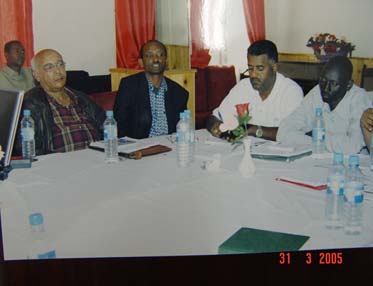
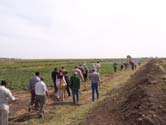
Participants of the EE&A national meeting and national action plan preparation meeting, Addis
Abeba, Ethiopia
Yusuf Mohammed, NPC Ethiopia
PAGE 4
THE NI LE ENVIRONMENT
VOLUME I1, ISSUE 1
NI LE BASI N I NITI ATIVE
SVP NEWS
NI LE TRANS BOUND ARY
E NVIR ONMENTAL ACTI ON
PR OJ ECT (NTE AP )
Nile News Inaugurated
Al Jamhuria Street
House No. 2, Plot 15
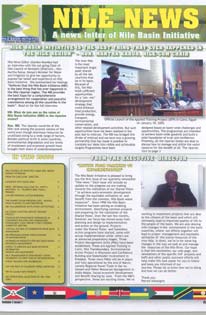
A Newsletter of the Nile Basin Initiative was inaugu-
P. O. Box 2891
rated at the 13th Council Of Ministers meeting in
Khartoum, Sudan
Kigali, Rwanda, March 14-17 2005.
Phone: 249-183-784206/26
The "Nile News" in its maiden issue covered Gordon
Fax: 249-183-784248
Email: info@nileteap.org
Mumbo's interview with the outgoing Nile COM
Chair, Hon Martha Karua and David Grey of the
World Bank. The issue also covered a message
Visit us at:
from the Executive Director, Mr. Patrick Ka-
www.nileteap.org
hangire and focused articles on the theme "moving
from plan to implementation".
Editorial Committee
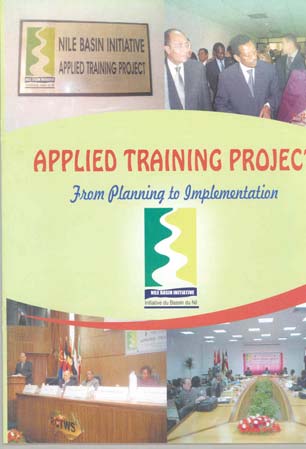
Applied Training Project Launched
Gedion Asfaw, Chair
Amir Baker, member
The 20 mil ion dollar five year Applied Training Project was of icially
Intisar Salih, member
launched on January 17 2005 by Hon. Martha Karua, Nile COM
John Omwenga, member
Chair and Kenyan minister of Water Resources Management and
Maushe Kidundo,member
Development and Hon. Dr. Mahmoud Abu-Zeid, Nile COM Member
& Secretary
and Minister of Water Resources and Irrigation for Egypt.
Mohammed Rahim,
layout and publishing
The ATP first Project Steering Committee meeting was also held at
assistant
the Project Management Unit(PMU) on 15-18 January 2005. The
PSC approved the work plan and budget for 2005.
Please contact: Dr Canisius Kanangire
Nile Basin Initiative
Applied Training Project
c/o Regional Center for Training and Water studies
4th Industrial Zone, 1st Street
6th October City, Cairo , Egypt
Putting the Shared
Tel/Fax:202-833-2690
Vision into Action
Email:atp-egy@nilebasin.org
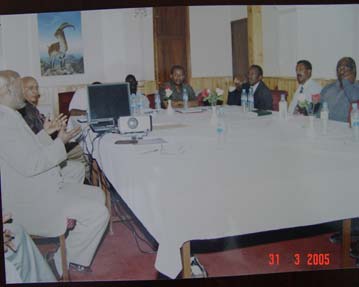
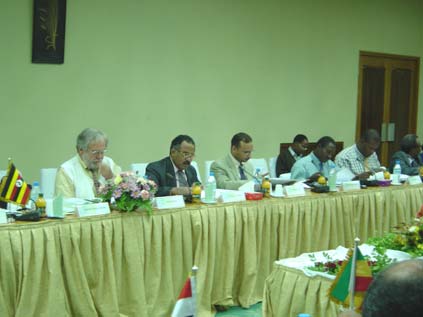
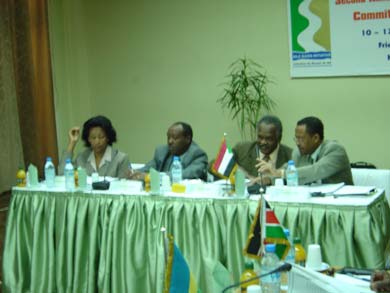
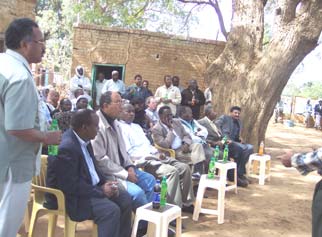
Views from the second PSC meeting & Gezira Visit by PSC members & observers