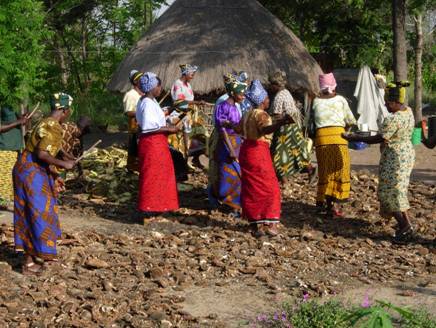
Nile Microgrant, Mara Basin, July, Tanzania, 2006
Nile Basin Initiative
Shared Vision Program
Nile Transboundary Environmental Action Project
Joint Mid-term Report
The United Nations Development Program and
The World Bank
May, 2007
Nile Basin Initiative - Shared Vision Program
Nile Transboundary Environmental Action Project
Joint Mid-term Report
UNDP and World Bank
may, 2007
i. Executive Summary
I. Introduction
II. Key findings from independent MTR
a) Implementing agencies’ assessment of MTR
III. Project Delivery to date based on MTR and mission findings
a) Monitoring and Evaluation– and the shift to Results Based Framework
b) Institutional Strengthening:
· Strategic Environmental Framework.
· Knowledge Management
· Decision Support System
c) Community Level Land, Forest, and Water Degradation – Microgrants.
d) Environmental Education and Awareness
e) Transboundary Water Quality Monitoring & Awareness
f) Wetlands and Biodiversity
g) National Activities
IV. Project Management Issues
a) Disbursement
b) Procurement
c) HR Management
V. Phase II of the GEF Project
VI. Conclusions and Recommendations
Annex 1 Independent MTR Recommendations – Summary Table with responses
Annex 2 Original NTEAP Log-Frame
Annex 3 NTEAP new Results Framework
Annex 4 Overview of disbursement by component, funding source and year; plus cumulative
Annex 5 NTEAP PSC Meeting Results – February 2007
List of Acronyms
ATP Applied Training Project
CAS Country Assistance Strategy
CBO Community Based Organization
CBSI Confidence Building and Stakeholder Involvement project
CIDA Canadian International Development Agency
DSS Decision Support System
EE&A Environmental Education and Awareness (NTEAP Component 3)
ENSAP Eastern Nile Subsidiary Action Program
ENTRO Eastern Nile Technical Office
EWUAP Efficient Water Use in Agricultural Production project
FMR Financial Monitoring Report
GEF Global Environment Facility
IW International Waters
LS Lead Specialist
M&E Monitoring and Evaluation
MTR Mid-term Review
NBD Nile Basin Discourse
NBI Nile Basin Initiative
NBI-SEC Nile Basin Initiative Secretariat
NBTF Nile Basin Trust Fund
NBTF-C Nile Basin Trust Fund Committee
NELSAP Nile Equatorial Lakes Subsidiary Action Program
NELSAP-CU Nile Equatorial Lakes Subsidiary Action Program Coordination Unit
NEP National Eligible Project
NGO Non-governmental Organization
NILE-COM Nile Council of Ministers of Water
Nile RAK Nile River Awareness Kit
NILE-TAC Nile Technical Advisory Committee
NMC National Microgrant Coordinator
NPC National Project Coordinator
NSC National Steering Committee (Micro-grants)
NTEAP Nile Transboundary Environmental Action Project
OP Operational Policy
PAD Project Appraisal Document
PIM Project Implementation Manual
PIP Project Implementation Plan
PMU Project Management Unit
PSC Project Steering Committee
RBM River Basin Model
RBO River Basin Organization
RPM Regional Project Manager
RPT Regional Power Trade project
SAP Subsidiary Action Program
SDBS Socio-economic Development and Benefits Sharing project
SVP Shared Vision Program
SVP-C Shared Vision Program Coordination project
SEF Strategic Environmental Framework
TEA Transboundary Environmental Analysis
The Agencies NTEAP GEF implementing agencies (UNDP and WB)
UNDP United Nations Development Program
UNOPS United Nations Office for Project Services
WB World BankWQM Water Quality Management
WQWG Water Quality Working Group
WRPM Water Resources Planning and Management project
Nile Basin Initiative
Shared Vision Program Nile Transboundary Environmental Action Project
Joint Mid-term Report
World Bank and UNDP
may, 2007
Executive Summary
The Nile Transboundary Environmental Action Project (NTEAP) is a key component in the Nile Basin Initiative’s (NBI) Shared Vision Program (SVP). As largest of the SVP’s seven regional sectoral projects, NTEAP contributes to enhancing the capacities and capabilities in the basin and to the increased convergence of legal, regulatory and policy frameworks, especially in relation to the environment pillar of sustainable development. Its development objectives are to develop a framework of actions to address high priority transboundary environmental issues in the Nile basin through (a) provision of a forum to discuss development paths for the Nile; (b) improvement in the understanding of the relationship between water resources management and the environment and (c) enhancement of basing-wide cooperation among NBI countries. It aims to do so through 5 interconnected components which are also linked to and expected to work collaboratively with other SVP projects. Those components are:
- Institutional Strengthening to facilitate regional cooperation – component one includes overall project management, knowledge management and dissemination, monitoring and evaluation, as well as the development of a strategic environmental framework (SEF) for the NBI countries and support to the river basin model (RBM) decision support system (DSS) that is being developed by the SVP Water Resources Planning and Management (WRPM) Project.
- Community level land, forest, and water conservation – component two is primarily focused on identifying and delivering micro-grants to non-governmental organizations (NGO) and community based organizations (CBO), as well as targeted studies on soil erosion.
- Environmental education and awareness – component three works with primary and secondary schools as well as universities to develop educational programs and create awareness of environmental issues facing the Nile Basin.
- Wetlands and biodiversity conservation – component four was launched in late 2006 and focuses on drawing attention to the protection of the basin’s unique, globally significant wetlands.
- Basin-wide water quality monitoring – component five identifies key transboundary water quality issues and promotes data sharing and cooperation on those issues among the NBI countries.
NTEAP receives funds through the Global Environment Facility (GEF) via both UNDP and World Bank implemented grants and the multi-donor Nile Basin Trust Fund (NBTF), which is managed by the World Bank. The Nile riparians also make significant in-kind contributions. While the project was designed over five years and most of its funding approved for the same period, the UNDP/GEF funds were split in two due to GEF funding shortfalls. It was agreed that the request for the second tranche of funds would be put in after the 3rd year of implementation of the project.
The implementing agency mid-term review mission coincided with the project entering its third year of implementation, with the mandatory evaluation according to the WB grant agreement and with the preparation period for the submission of the second tranche request to the GEF. This Joint Mid-term Report follows an independent mid-term evaluation and builds on its findings to (i) take stock of the project’s progress to date, (ii) assess how developments in basin cooperation need to be reflected in the project and (iii) looks forward to address lessons learnt during the second half of the project.
The agencies confirmed the findings of the MTE in that the project has been a leader in river basin cooperation and represented the NBI when no other action on the ground had started, has set best practices in terms of execution, monitoring and evaluation and procurement, and has progressed well towards the achievement of its outputs. The project has struggled with the suggested working group approach in that maintaining them engaged and active on a voluntary basis has been challenging. The project has also struggled with the concept of the strategic environmental framework with different interpretations of its format, purpose and process being proposed; this has been compounded by the complexity of project design, sources of funds and reference documents (PAD, PIP, Prodoc, Project Brief, Grant agreements, etc.) Finally, being the first SVP project to have started and given the level of interconnections between NTEAP and other SVP projects, NTEAP in its first phase has focused on “easy” activities and only started to tackle policy reform, to engage in serious institutional strengthening and to entertain high level dialogue on key environmental issues.
The mid-term evaluation was the opportunity to confirm NBI commitment to NTEAP and its original development objective: ”the creation of more effective basin-wide stakeholder cooperation on transboundary environmental issues by supporting the implementation of a subset of the actions prioritized by the transboundary analysis including:
· “Enhancing the analytical capacity for a basin-wide perspective to support the sustainable development, management, and protection of the Nile Basin water; and
· “Engaging the full spectrum of stakeholders, from local communities to national policy makers, from elementary schools to universities, from non-governmental organizations to line ministries, in management and protection of the basin’s shared resources.”
In their review, the agencies focused much more than the independent evaluation on the forward looking aspect of this mid-point; in doing that, the agencies were guided by the following four questions:
· How does the activity help to build a permanent Nile Institution?
· How does the activity help to achieve the Project Development Objectives?
· How does this activity help to support planned or future SAP investments?
· What is the needed follow-up?
Key Findings of the Implementing Agency MTR
The joint World Bank UNDP MTR mission noted that NTEAP has made significant progress towards meeting the project’s development objectives. Key finding of the MTR include:
Ø Between MTR and project close, NTEAP should focus on the development of the Strategic Environmental Framework (SEF) for the Nile Countries. Specifically, NTEAP should identify what key environmental functions a permanent River Basin Organization (RBO) should undertake. NTEAP will need a clear exit strategy so that any activities being carried out by the project that do not fall under an RBO’s mandate are either phased out or taken up by the riparian countries.
Ø The NBI should look closely at the activities planned under the five NTEAP Components and ensure that only those activities that are both in keeping with the Projects Development Objectives and also NBI priorities are continued.
Ø Clear roles and responsibilities should be defined for the two components “Knowledge Management” and “Environmental Education and Awareness” in doing so avoiding gaps and overlap.
Ø Monitoring and Evaluations has to be mainstreamed into each component, to ensure results are documented, best practices and lessons are identified and impacts are captured.
Ø The proposal to continue with National Eligible Projects (NEPs) must be carefully considered by NTEAP and the NBI as NEP selection and implementation has been problematic in many countries.
Ø A decision on the proposed extension of the NTEAP Grants beyond their initial closing date of September 2008 can only be made after it is clear whether or not the GEF Phase Two funds will be made available.
Ø Even if the agencies agree to an extension of the NTEAP Grants, it will only be for the continuation of activities that are critical for the planned RBO and future SAP investments. It is expected that some activities, for example the Water Quality component, will close as originally scheduled in September 2008.
During NTEAP’s second phase, given recent developments in the riparians, in the SVP, in basin cooperation, and in the GEF focal area strategy for international waters, it is proposed that the project focuses on (i) the Strategic Environmental Framework with specific attention to be given to policy reform; (ii) facilitating a process for the identification of the environment function of the permanent institutions; (iii) capturing impacts and identifying best practices undertaken through its different components and (iv) executing the wetlands component with a specific focus on the water dimension of wetlands.
In conclusion, and based on the MTE report and MTR missions, NTEAP remains highly relevant to the basin, has played a key role in sustaining cooperation while the overall SVP was being initiated and has achieved its outputs in a satisfactory manner. As a result of that, the agencies supported the submission of the second phase request as planned for the June/July work program of the GEF following the preparation of a management response to the MTR and a proposal for the second phase and their submission to the PSC meeting planned for February 2007. The proposal for the second phase request would take into consideration the evolving GEF strategy on international waters.
I. Introduction
Management Arrangements. The Nile Transboundary Environmental Action Project (NTEAP) is one of eight regional capacity building projects executed through the Nile Basin Initiative’s (NBI[1]) Shared Vision Program (SVP). The project is financed through the Global Environment Facility (GEF) through grants to two implementing agencies, the United Nations Development Program (UNDP) and the World Bank (the agencies), as well as a grant from a multi-donor Nile Basin Trust Fund (NBTF), which is managed by the World Bank. The Canadian International Development Agency (CIDA) is one of the key contributors to the NBTF with a specific interest in the environmental dimension of the NBI’s vision.
The NBI Secretariat has executed a management services agreement (MSA) with the United Nations Office for Project Services (UNOPS) whereby UNOPS provides the NBI with project services for all of the regional SVP Projects. The NTEAP is executed under that MSA through a UNOPS operated Project Management Unit (PMU) based in Khartoum, Sudan[2]. The PMU reports to the Project Steering Committee (PSC), which provides strategic guidance to the project.
The PMU provides technical and managerial support to the NBI Secretariat in overseeing the implementation of the project, with a Thematic Lead Specialist from the region coordinating each major project component. Through UNOPS, the PMU also facilitates local contracting, fund management, local procurement, disbursement, program administration and project level monitoring.
A National Project Coordinator (NPC) in each country provides a critical link between the Thematic Lead Specialists based in the PMU and the national specialists, members of the thematic working groups and organizations involved in implementing the various project components within the respective countries. Project implementation will ensure participation of all relevant stakeholders, including key government ministries, local and traditional communities, NGOs, educational institutions and private sector organizations.
Mid-term Report. NTEAP was formally launched by the President of Sudan on May 29, 2004 and currently has a planned closing date of March 31, 2008. An independent mid-term review (MTR) was conducted during the fall of 2006 and the results were presented to UNDP and the World Bank during an MTR mission in December 2006 and then to the full NTEAP PSC in February 2007. This Mid-term Report has been jointly prepared by the UNDP and World Bank Teams responsible for oversight of the NTEAP Grants based on the results of the independent MTR, their joint MTR mission, and the February 2007 PSC meeting. Subsequent to the February mission, uncertainty in the Phase II UNDP GEF Project (the proposal has now been submitted to GEF for consideration) led to delays in the finalization of this report, though the key outcomes were discussed in detail with the NBI and the Project. The recommendations contained herein are endorsed by both UNDP and World Bank Management.
Due to GEF financial constraints in 2001, the GEF Secretariat split the UNDP GEF grant into two tranches during project appraisal. Therefore, this MTR report also serves as a background justification for the NBI’s submission to GEF for the second tranche of the UNDP grant.
NTEAP Objectives and Components.[3] The project’s development objective is the creation of more effective basin-wide stakeholder cooperation on transboundary environmental issues by supporting the implementation of a subset of the actions prioritized by the transboundary analysis including:
· Enhancing the analytical capacity for a basin-wide perspective to support the sustainable development, management, and protection of the Nile Basin water; and
· Engaging the full spectrum of stakeholders, from local communities to national policy makers, from elementary schools to universities, from non-governmental organizations to line ministries, in management and protection of the basin’s shared resources.
NTEAP aims to achieve that objective through the implementation of the following project components:
- Institutional Strengthening to facilitate regional cooperation – component one includes overall project management, knowledge management and dissemination, monitoring and evaluation, as well as the development of a strategic environmental framework (SEF) for the NBI countries and support to the river basin model (RBM) decision support system (DSS) that is being developed by the SVP Water Resources Planning and Management (WRPM) Project.
- Community level land, forest, and water conservation – component two is primarily focused on identifying and delivering micro-grants to non-governmental organizations (NGO) and community based organizations (CBO); in certain countries this component has also delivered studies on soil erosion.
- Environmental education and awareness – component three works with primary and secondary schools as well as universities to develop educational programs and create awareness of environmental issues facing the Nile Basin.
- Wetlands and biodiversity conservation – component four was launched in late 2006 and focuses on drawing attention to the protection of the basin’s unique, globally significant wetlands.
- Basin-wide water quality monitoring – component five identifies key transboundary water quality issues and promotes data sharing and cooperation on those issues among the NBI countries.
II. Key findings from independent mid-term review
A team of four international consultants were recruited by the NTEAP PMU to conduct an independent mid-term review (MTR) of the project during the fall of 2006. The team was lead by Stanislaw Manikowski and consisted of Hassan Abdel Nour, Tarek Genena, and Timothy Hannan. Their full report is available from the NTEAP PMU (www.nileteap.org). The consultant’s key findings with regards to NTEAP’s progress towards meeting the project development objectives through a set of eight performance indicators (in italics) established during project appraisal are summarized below:
- Increased regional cooperation in environmental and water management fields – the successful initiation of the regional education and awareness, and creation of a collaborative atmosphere among the highest environmental authorities through regional activities is the biggest achievement of the project. The technicians and the authorities of the member countries unanimously acknowledged the importance and pertinence of the project activities aiming at increasing regional cooperation.
- Increased levels of regional cooperation and coordination through the seven regional SVP projects – cooperation with other SVP projects is at an early stage due to SVP implementation delays; however, it is very important that the NBI insure increased cooperation and coordination between NETEAP other SVP Projects at both national and regional levels.
- Increased basin-wide community action and cooperation in land and water management – community actions launched by the project are very well received by their beneficiaries and the project has made a remarkable and recognized contribution to the capacity building of NGO and CSOs in the identification, development and implementation of projects.
- Increased number of basin-wide networks of environmental and water professionals – thanks to workshops and exchange of information among NBI countries, the discussion about development of the river and its basin was initiated and took a more professional turn. It is expected that more progress will be achieved once the SVP projects, jointly with NTEAP, will start to develop the decision support system (DSS).
- Greater appreciation of river hydrology and more informed discussion of development paths – NTEAP will contribute to knowledge building about Nile hydrology once the needed equipment is available to the laboratories, the sampling is launched, and the sampling results are shared with the region.
- Expanded information and knowledge base on land and water resources available to professionals and NGOs – NTEAP has been very active in building knowledge base and disseminating it through the Nile River Awareness Kit (Nile RAK).
- Greater awareness of the linkage between macro/sectoral policies and the environment – NTEAP is at the beginning of the awareness building and of link creation between policy decisions and environmental management.
- Greater awareness and increased capacity on transboundary water quality themes – this awareness building will be the combined effect of all the NTEAP activities and delivered outputs. Progress in awareness building will be best evaluated at the end of the project.
The agencies conducted a mission to NTEAP in December 2006 in order to review the findings of the independent MTR and conduct their own review of project delivery. In general, the agencies were supportive of the consultants’ findings with regard to project delivery; however, they also found most of the recommendations lacking a strategic vision for NTEAP, particularly in view of the changes in the NBI countries since project design. Annex 1 contains the complete list of MTR recommendations as well as responses to those recommendations from NTEAP management and the two agencies.
III. Project Delivery to date based on MTR and mission findings
Based on the results of the independent MTR, the NTEAP 2006 Annual Report, the February 2007 PSC; and both the December 2006 and February/March 2007 joint UNDP-World Bank missions, the agencies have made the following assessment of NTEAP progress to date.
Overall NTEAP components are delivering well, particularly when looked at individually. As the project moves forward, ensuring stronger linkages to the overall NBI programs (both SVP and Subsidiary Action Programs (SAPs) as well as across NTEAP components is necessary and should be better reflected in each of the components’ work plans (e.g. in terms of well formulated deliverables and/or sufficient time and budget allocation). It is noted that the NPCs’ work plans are not reflected in the overall project work plan and budgets. While they may be integral and mainstreamed in the component work plans, the importance of the NPCs’ work and their significant contributions to project delivery must be made more apparent to both the PSC members as well as other outside observers. By reflecting the NPC’s work in the overall project work plans and reports, NTEAP will be able to better ensure coordination between the project (and other NBI activities) with the existing work of the national agencies.
a) Monitoring and Evaluation (M&E)
In line with an NBI-wide effort, the project has adopted a results based monitoring and evaluation (M&E) framework. This improved M&E concept and resulting update of the NTEAP log-frame helps to better clarify expected deliverables. The agencies duly note that the original project development objectives and component objectives along with the associated outcome indicators remain the overall parameters against which the project’s success is being measured and therefore welcome this move to better capture NTEAP’s contribution to the overall NBI vision. Table 1, below, illustrates NTEAP’s overall objectives and demonstrates that the shift to a results based framework does not make any shift in the project’s reporting, as the new outcomes correspond to the project’s original 5 components.
The NTEAP has pioneered the development of a monitoring and evaluation strategy, the collaborative development of a training manual on M&E with and for the micro-grants component, the delivery of trainings to micro-grants coordinators, NPCs and other stakeholders of the NBI and NTEAP. In doing so, the M&E has kept with the monitoring of impacts as well as with the progress, stress reduction, and environmental/water indicators as outcome or catalytic indicators identified by the GEF IW focal area.
Table 1 – NTEAP Objectives and outcomes
|
Project Appraisal |
Nile Transboundary Environmental Action Project Development Objectives | ||||||||||
|
The project aims at creating more effective basin-wide stakeholder cooperation on transboundary environmental issues by supporting the implementation of a subset of the actions prioritized by the transboundary analysis including: · Enhancing the analytical capacity for a basin-wide perspective to support the sustainable development, management, and protection of the Nile Basin water; and · Engaging the full spectrum of stakeholders, from local communities to national policy makers, from elementary schools to universities, from non-governmental organizations to line ministries, in management and protection of the basin’s shared resources. | |||||||||||
|
Project Appraisal Document Outcome Indicators | |||||||||||
|
Increased regional cooperation in environmental and water management fields |
Increased basin-wide community action and cooperation in land and water management |
Basin-wide networks of environmental and water professionals |
Greater appreciation of river hydrology and more informed discussion of development paths |
Expanded information and knowledge base on land and water resources available to professionals and NGOs |
Greater awareness of the linkages between macro/sectoral policies and the environment |
Greater awareness and increased capacity on transboundary water quality threats | |||||
|
NBI Results Framework[4] |
NTEAP Objective | ||||||||||
|
To increase cooperation & capacity in NB countries through the provision of strategic environmental framework and engagement of stakeholders for the management of transboundary waters and environmental challenges in the NB | |||||||||||
|
NTEAP Outcomes | |||||||||||
|
Outcome 1: Institutions strengthened to facilitate regional collaboration |
Outcome 2: Improved capacity of the countries in NB on land , forest , and water management |
Outcome 3: Environmental education improved and public awareness enhanced |
Outcome 4: Enhanced capacity for conservation and management of wetlands and their biodiversity |
Outcome 5: Increased capacity and awareness on water quality monitoring in the NB countries | |||||||
|
NTEAP Outcome Indicators | |||||||||||
|
1.1 WQ monitoring data exchange agreement (annex to the NBI information sharing protocol) formulated & approved by the WQM WG. 1.2 Recommendations on environmental functions of the NBI permanent institution formulated and submitted for approval. |
2. 1 Pilots identified for up scaling and 10 identified for replication during the project lifetime and proposals formulated. |
3.1 Improved level of public awareness and knowledge of TB environmental issues. |
None listed |
5.1 Transboundary water quality monitoring network established and operational. 5.2 Water quality monitoring data exchange agreement to be annexed to the NBI information sharing protocol formulated approved by the WQM WG. | |||||||
|
NTEAP 2 |
Refocused objective for NTEAP 2 | ||||||||||
|
To protect critical Nile Basin ecosystems from transboundary threats through the provision of a strategic environmental framework and the engagement of stakeholders according to the principles of Integrated Water Resources Management (IWRM) | |||||||||||
|
NTEAP2 outcomes | |||||||||||
|
Regional and national institutions strengthened in addressing transboundary threats to Nile ecosystem resources. |
Improved capacity of Nile Basin communities to demonstrate and adopt viable approaches to integrated natural resources management across GEF focal areas |
Enhanced environmental education and public awareness targeting Nile basin transboundary issues |
Enhanced conservation and management of Nile basin wetlands and their biodiversity in accordance with the principles of IWRM |
Increased capacity and awareness on water quality monitoring in the NB countries | |||||||
|
NTEAP 2 outcome indicators | |||||||||||
|
1.1 Transboundary EIA guidelines for use by NBI investment programs developed 1.2 Policy recommendations on Basin environment protection formulated and submitted for consideration in at least two countries 1.3 Environment function of the NB permanent institution framework defined and approved 1.4 Nile Basin Development Forum in 2008 defines the environmental issues and priorities for the Basin |
2.1 Best practices addressing Nile environmental threats at community level documented and replicated |
3.1 At least 8 universities in 6 NBI countries approved and adopted the environmental modules based on Nile environmental threats 3.2 Environmental campaigns and schools award programs adopted and institutionalized at national levels in at least 6 NBI countries |
4.1 National level wetlands management networks established and functioning in at least 5 countries 4.2 Process towards the development of a regional wetlands strategy initiated 4.3 Recommendations of policy reforms towards wetlands-friendly policies developed |
5.1 Transboundary water quality monitoring network established and approved 5.2 TB WQM &data sharing annex to NBI data sharing protocol developed | |||||||
In its second phase it is recommended that the M&E works closely with the different project components to identify, qualify and quantify impacts to the extent possible. In particular, the M&E LS and KM specialist to codify and document best practices across the different components and to provide the baseline information and set up processes that will facilitate long-term monitoring of the Nile environment as part of the permanent institution.
b) Institutional Strengthening:
Regional coordination. Regional coordination of this complex technical assistance project is accomplished through the Project Management Unit (PMU), which oversees a professional staff consisting of a regional project manager (RPM), five regional lead specialists, a regional finance and procurement officer, nine national project coordinators (NPCs), and nine national microgrant coordinators. The RPM works closely with the NBI Secretariat, based in Entebbe, Uganda, to ensure the NTEAP activities are coordinated with the other SVP regional projects as well as two sub-regional subsidiary action programs (SAPs). Each of the NPCs also ensures coordination of NTEAP activities with other NBI programs at the national level. Despite initial delays in staffing early on during project implementation, the PMU and national staff are now fully functional and delivering a the planned program at both the regional and national levels. Now that NTEAP is operational UNDP and the Bank recommend a focus on deepening coordination among the project’s components, with other NBI activities as well as with similar environmental programs. The NPCs will play a key role in ensuring that NBI’s environmental activities are well rooted in national programs and priorities, with a special focus to be given to the sustainability of processes and attention related to transboundary water/environmental issues.
Strategic Environmental Framework (SEF). The SEF sub-activity was added at the end of 2005 based on the aim of NTEAP management to equip the future permanent Nile Basin institution with a basin-wide strategic assessment of resource assets and threats. In order to respond to current planning frameworks at sub-basin level and respond to stakeholder requests for support to the SAPs, the initial activities focus on providing an environment advisor to both of the SAPs and conduct capacity building on strategic environmental assessment on the sub-basin levels. This responsiveness is highly appreciated by basin stakeholders.
The SEF component is well positioned to facilitate dialogue to identify and design future support for the establishment of an environment function for a permanent basin-wide institution, while at the same time assuring sound decision making in development planning at the sub-basin level. This is fully in line with the SP-3 goal of the revised international waters operational strategy to balance overuse and conflicting uses of water resources in transboundary surface and groundwater basins.
Three areas of support have been identified through the joint mission and are supported by the findings of the independent evaluation mission. These activities would be key in the second half of the project in order to assure sustainability of the positive momentum created by the project so far. Appropriate staff time and resource allocation need to be assured. Project management is currently beginning to devote considerable attention to defining activities in consultation with high level involvement of the PSC members and NBI stakeholders.
(i) Strategic dialogue to define the environment function and resulting needs of a permanent Nile Basin institution. This needs to be aligned with and complement overall institutional development of the NBI (and any successor organization). The project should set aside time and funds to allow for a facilitated dialogue among high level stakeholders, involving PSC, TAC members & Nile-SEC, to define a permanent Nile environment function within the future institution. Nile-SEC, the PSC chair and NTEAP management should engage NBI stakeholders as well as ministerial level support for the planned institution in accordance with its vision and anticipated functions. The current Nile-COM chair and leading individuals from countries with strong integration of environment, land and water issues may be engaged in championing this process. Dialogue may include providing an umbrella for emerging subsidiary processes such as on the level to the Lake Victoria Commission and East African Community to e.g. develop minimum environmental standards, harmonize EIA requirements, and foster more intensive information exchange.
This process can be initiated with the Nile Basin Development Forum 2008 focused on environment and for which NTEAP’s support has been requested by the COM. The series of paper prepared and submitted in the context of the NBDF can serve as a basis for furthering the dialogue and discussions. In parallel, consultant advice e.g. reviewing international experience could be helpful to provide an overview of (i) institutional set-up/models & experience from other basins; (ii) staffing and cost implications; (iii) and aiding the NBI to formulate necessary follow up support to enable the expected permanent Nile Institution.
(ii) Support to up-streaming environment in Subsidiary Action Programs. The project is now allocating time and resources to provide environment advisors to SAPs to support sustainable development in sub-basin planning; and providing targeted training as needed to SAP/investment program planning (e.g. to include SEA, EIA, environmental flow requirements). The presence of these advisors within the SAPs acts as a vehicle to mainstream the findings, processes and priorities identified by the different NTEAP components – especially for instance the wetlands component as it starts up or the micro-grants component as it identifies best-practices.
(iii) Support to strategic country level and sub-regional dialogue, e.g. environment policy & strategy formulation. Stemming form the macro-policies identified with the PSC during the first phase and building on the focus of the second phase on sustaining the wetlands of the Nile, this could include strategic involvement of NTEAP. to aid in inclusion of environment and transboundary threats into national environmental action plans, PRSPs, sub-regional protocols (e.g. within the Lake Victoria Commission). It is recommended that high level discussions be initiated by the RPM through in-country visits and further facilitated by the NPC with continued guidance and support from both the PSC and the PMU.
Involvement of NTEAP management to fully engage PSC members and project networks to increase visibility and build political momentum will be key to all these activities.
Knowledge Management (KM). Progress to date the KM specialist has been active and instrumental in designing and setting up the website which is up and running and has set best practice at the level of the NBI; it has developed a template and prepared several issues of the newsletter; produced project communication material, posters, calendars that have helped promote the NBI within and outside the basin.
Recommendations – the MTR and agencies’ missions have both highlighted the need to more frequently update the website (particularly French) and to improve the presentation of background documents and publications. Similarly, ramping up the development of the micro-grants, NEP, and school projects database is necessary in line with the provisions of the project document, specifically in liaison with the SGP. This has been previously recommended during supervision missions. And it is expected to have been implemented by the upcoming supervision mission in the fall of 2007. This highlights the importance of KM in linking with other components – in its remaining lifetime, it is proposed that the KM team undertakes consultations with the different LS while preparing its annual workplan and determining its deliverables. Furthermore, in meeting with the different stakeholders in the basin, the agencies’ mission has noted a potential for the emergence of gaps and overlaps between the KM, EE&A components of NTEAP and CBSI’s information function. It is therefore suggested that the roles and responsibilities of KM, EE&A and CBSI be clearly defined in order to ensure cost-effectiveness of communications and KM at the level of the SVP as a whole.
Technical and infrastructure constraints are a reality within which the KM component and NTEAP have to operate. This has been identified as an obstacle in reaching out to the public on the one hand, but also in ensuring the engagement of the working group members of different components. The KM team should give special attention to alternative media (such as radio) and support the LS and their working group members in identifying their constraints and possible means to overcome them. Ensuring that working groups can communicate at low cost and in an efficient manner could additionally play an important role in ensuring their continued operation after the project closes.
Furthermore, the MTE has recommended that the project should start to communicate on the substance of Nile environment issues as well as on the project and its activities. In the spirit of results based management, such a shift in communications, reporting and KM is supported by the agencies.
In the second phase of the project, the KM component is expected to play a key role in capturing, documenting, archiving and codifying best practices, impacts and results of the NTEAP. It is therefore recommended that the thinking and work with the technical LS and with the M&E LS are initiated as soon as mid-2007 so that the necessary tools, approaches and resources are adequately planned for. In doing so, it is the role of the technical LS and RPM to identify the target audience and purpose so that the KM products are adequately designed to serve their purpose. In working with the M&E lead specialist, the KM team should also consider assessing the usefulness and impacts of its own tools as a way to guide the KM function of the permanent institution. Questionnaires can be developed to identify the impact of the newsletters, most adequate language, format… Web-based tracking tools may also be useful in identifying the extent of visitation of the website, location of visitors and most visited pages. The project’s tracking of the number of requested issues of the newsletter, queries received following their circulation are practices which need to be sustained and reported upon.
River Basin Model (RBM). The primary output from the RBM sub-component will be the development of a Decision Support System (DSS) – The DSS is being developed through the SVP Water Resource Planning and Management Project (WRPM) based in Addis Ababa, Ethiopia. The WRPM has conducted a rapid assessment for the DSS in each NBI Country and is in the process of launching has just launched a detailed needs assessment consultancy (estimated US$750,000) for the DSS based on the results of the rapid assessment. As part of the training for the DSS, WRMP is also financing a joint post graduate program for water modeling professionals from the NBI countries (estimated at US$263,000).
At the time of the MTR, little progress had been made on this sub-component due to the later start-up of the WRPM; however, the Water Modeler joined the WRPM staff on July 1, 2007 and the inception workshop for DSS Needs Assessment is expected to will take place in July 2007, at which point the sub-component will be well underway.
The relatively late start-up of this component actually turns out to be an asset in that its start up coincides with the initiation of the wetlands component and with the request from the PSC to develop a strategy for the water quality component. In the second phase of the project, it is important for these two components to work closely and feed into the DSS development process at its onset so that wetlands sustainability and water quality considerations are fully integrated and adequately addressed.
c) Community Level Land, Forest, and Water Conservation – Microgrants
Overall progress. Land and forest degradation have been identified as major threats in the Transboundary Environmental Analysis. The Nile Microgrants enable the NBI to show action on the ground in a visible way. While the activities are local, they represent actions to address common threats as outlined in the TEA and are well designed to pilot innovative approaches. The component is building on and closely cooperating with the successful GEF Small Grants Program in those NBI countries where that GEF program is operational.
First year activities were dominated by setting up the institutional structures, hiring staff, and establishing offices; including setting up decentralized, local set-ups in some of the SGP countries where the distance from the basin to the capital was an issue (Kenya, Tanzania, DRC, Burundi), and entire new set-ups in non-SGP countries or those with SGPs being established at the same time (Burundi, Congo, Ethiopia, Rwanda, Sudan & Southern Sudan). Formulation and adoption of national action plans was another pre-requisite to implementing small scale projects. At the same time the planned erosion study sub-component was successfully completed in all three countries. As expected, the component has picked up in its implementation in 2006 after the initial lag for setting up the institutional structures; it should be recognized that project design has underestimated the required effort for this. Country specific Microgrants targets for 2006 quarters were set to tightly monitor delivery; these have been achieved without compromising quality for quantity. The team is commended for this tremendous progress, which is also reflected by positive feedback from stakeholders during country visits in December 2006. In particular the instrumental role that the micro-grants component has played in strengthening CSOs and NGOs, in addressing priority issues and in furthering the concept of stakeholder participation in the basin was recognized and acknowledged across the countries visited during the mission. This component in particular has played a key role in increasing the visibility of and adhesion to the NBI and basin-wide cooperation as a whole. As a result of this, high level politicians – e,g, president of Burundi – have become more aware of the NBI, more sensitive to its case and more inclined to respond to policy reform recommendations as might be proposed by the NBI.
The funding crisis due to insecure availability of GEF/UNDP second tranche funds has resulted in apprehension by the project management and PSC to allocate sufficient funds for ramping up activities of the component in 2007. 2007 should be a year of high delivery, whereas by mid 2008 a ramp down is expected in terms of larger microgrants activities. GEF commitment to second tranche GEF/UNDP contribution is crucial for project planning, success and delivery of project objectives.
Themes and lessons learned. Now that around 120 projects are under implementation, it gives NTEAP the opportunity to (i) assess if an adequate variety of innovative themes as those highlighted in the TEA/NAP and required for SAP piloting are being addressed; (ii) draw lessons learned and disseminate experience by major themes across countries (also addresses TB nature of project); and (iii) evaluate impacts, which could range across physical impacts, awareness, learning& innovation as well as capacity building, etc.. The KM & M&E specialists have a very substantive role to play here and their complementary roles should be well determined and defined. It is proposed that M&E develops the tools including thematic evaluations and pilots the use of various media (e.g. short videos) in 2007 to capture the impacts. The KM on the other hand would bring value is archiving, documenting and codifying the findings of the M&E to respond to the needs of different stakeholders within and outside of the NBI.
Aiming at piloting and innovation. The MG program is aimed at piloting approaches and addressing common threats in the basin countries. A move to extracting lessons learned across major themes and evaluating thematic activities could contribute to more proactively transferring innovative approaches to other countries and contexts. For example, analyzing the added learning/innovation value as well as cost/benefit of the high percentage of tree nursery projects to address fuel wood shortage and/or for river bank/buffer zone protection could prompt a shift to look for other means for wood fuel substitution. Specific attention needs to be given to the types of trees being used (the agencies’ mission observed the use of eucalyptus seedlings in many instances which might not be appropriate with environmental considerations of exogenous species control). The mid-term evaluation report highlights certain themes to be addressed. The WB and UNDP team is cautious on top-down prescribing “problems & solutions to communities” and decreasing country specific flexibility. Community driveness should not be compromised under this approach. The underlying cause of why certain themes are not reflected in the community proposals should be evaluated; e.g. is it lack of awareness, lack of relevance or other reasons? On the other had, a stocktaking by the LS, NSCs and LSCs to see (i) if the main issues identified in the national/local microgrants action plans are still valid and (ii) if the balance of proposals is reflecting the main goals of the action plan would seem very valuable.
National Action Plans- thematic and geo-graphical focus. The lead specialist recommended a narrower geographical focus (see July 2006 aide memoire). It is not obvious that this is being followed up on the country level. Synergies between SVPs and SAPs, especially the preparation of fast track projects, provide an opportunity and entry point to revise the current geographic & possibly thematic focus in some of the national and local action plans. The initiation of the wetlands component and the submission of the second phase proposal to the GEF could be used to trigger such a reflection and if necessary inclusion of new topics into the national action plans.
Grant ceiling increase. The MTR, stakeholders consulted in the country, and the implementing staff including the GEF- Small Grants Program (SGP) coordinators all support an increase in grant ceilings to 50 K that was recommended by the project in last years quarterly reviews and report to the PSC. Furthermore, this was supported by the independent midterm evaluation (MTR). The World Bank and UNDP support this idea based on (i) observed soundness of implementation mechanisms to handle this increase; (ii) decrease of number of projects, yet increase in impacts of a few larger, targeted projects, while maintaining a windows of grants with lower ceilings to prevent the ‘crowding out’ of smaller NGOs and less experienced groups; (iii) possibility for strategic transboundary activities that often require some additional inputs to allow for transboundary exchanges & collaboration.
Pre-requisite to process this increase. As has been discussed with the project at prior occasions, a simple Environment and Social Management Framework (ESMF) has to be prepared when applying for an increase in grant ceilings that would include practical guidance/checklists at screening, approval, and implementation and supervision stages of the microgrants. The ESMF would need to be reviewed and approved by the World Bank and UNDP and disclosed in country (in English and/or French). Even for current level of microgrants funds it was found that additional guidance on potential environmental (incl. social) impacts would be beneficial to local steering committees and others. Other toolkits to ease screening and approval processes (e.g. guidance for baseline development) should be prepared by the project in collaboration with the NSCs and SGP. As recommended by the midterm evaluation, these larger project should also address a basic cost-benefit analysis; hence, modules for training NSCs, project staff, and NGOs need to be developed to address this.
Transboundary Projects. Efforts have been made in most countries to move towards projects with larger cross-border significance. National projects (type 1) are by and large relevant to transboundary threats in the basin and find high praise by government officials as well as communities. No project that is of transboundary nature (type 3) has been implemented. Type 3 projects may emerge through technology/experience transfer, but a fixed 50 % does not appear to serve the project and NBI needs. This is underscored by the independent evaluation report. It is recommended to revise the Operational Manual to change this target; while ramping up efforts to increase the number of relevant, cross-border and transboundary projects. Specific yearly and country targets should be set and directly related to specific SAP projects to assure relevance and options for upscaling. An increase in funding ceilings would aid to promote relevant projects.
Synergies with SAPs. The cooperation with SAPs has picked up during 2006 and is commensurate with having established the institutional mechanism in the countries. There have been common meetings of all three Eastern Nile country microgrants with the EN watershed project; targets for microgrants in the areas of initial investments of this project in each country have been set. There has been discussion with ENSAP to ensure that increasing cooperation and microgrants targets are included in both annual work plans (SAP and NTEAP). In the NEL region a number of projects have been consciously initiated in the areas of the NEL RBM. Formal work plan inclusion on both sides would be the next step and has been done by NTEAP. In addition, efforts to publicize/show this practice, its synergies and opportunities within and outside the Nile Basin family of projects would benefit the NBI.
Synergies across NTEAP components Within NTEAP itself, the micro-grant component has worked well with the monitoring and evaluation component and should aim at increasing its cooperation with other components, specifically the wetlands component and the KM sub-component. In the second phase, it is felt that the component has a critical mass of projects to start analysis, identification of impacts and their aggregation, as well as the identification of best practices. The KM’s support will be crucial to ensure the information is adequately codified and communicated to the SAPs, to the countries and to the broader community.
Gender targets and inclusion of vulnerable groups: Inclusion of women in projects is satisfactory and the set targets for specific grants to women’s groups has been achieved. The 10% target is a minimum for grants to ‘women only’ groups, but participation of women in all grants appears representative. The midterm evaluation is highlighting the need to increasingly target vulnerable and marginalized groups as well as work with groups not so close to larger cities. While this is a commendable goal and indeed usually mandated for larger sector projects, it has to be kept in mind that a relatively small, yet effective microgrants program should not be overloaded by rules and quotas for specific groups, themes, etc. while on top dealing with transboundary needs of nine countries. Spreading in remote areas violates recommendations for focus provided earlier. It should be noted that the the project is aiming to pilot adopting SGP tools e.g. for illiterate groups via video proposals and other to enable access to micro-grants by different groups.
Funds usage and budget: the entire component has accelerated tremendously in the last year. Following recommendations for budget revision have been made: increase funds for sub-component 2.1: Country operating budgets were underestimated at project design stage and NGO/CBO capacity building has proven as essential for project success and sustainability (see also midterm evaluation report). Sufficient funds for both are to be moved on this line. Sub-component 2.2: activities have been completed successfully and remaining funds should be moved to component 2.1. Sub-component 2.3: the budget as presented to the MTR mission seriously under-represented presently committed funds at the time of the midterm review as only the first tranche of grants was entered in the accounting system as committed. This has now been addressed and the entire amount signed up for in a microgrants MoA has to be counted as “committed”. The Bank and UNDP will continue monitoring FMRs to assure that this is maintained.
Cooperation with country institutions & districts. The independent midterm evaluation indicated reservations about perceived level of coordination and collaboration with district officials. The MTR country visits came to very different results in the countries visited; in most countries district environment officers are involved in aiding in preparation and monitoring of the grants. NTEAP pays transport costs for them to visit projects as needed. PSC members have institutionalized this collaboration in several countries by tasking district environment officers to aid in supervision and support to microgrants activities. The agencies’ mission reports the active involvement of microgrants steering committee members in the monitoring and evaluation process although there are some shortfalls and constraints to sustaining that process beyond the project.
Database: The concept of the project database for microgrants, school projects and national eligible project has been presented at the July supervision mission and appears as an excellent start to enable more easy transfer of experiences among project staff and enhanced synergies. It was recommended to make this database to a large extent publicly accessible for increased transparency as well as visibility of the NBI. It is noted that this has been followed through in the first version of the web-based database which was just enabled. Coordination with and use of the SGP database, as outlined in the PIP and the OM, was discussed with the project and SGP and is to be operationalized in the next six month.
Financial management at beneficiary level. the independent evaluation voiced concerns that FM issues may not be sufficiently monitored at NGO &CBO (beneficiary) level. The WB-UNDP mission could not confirm lag of oversight by the NMCs/LMCs. Oversight seems to be regular, transparently agreed in the microgrants proposal, and funds usage and outputs are reviewed prior to releasing next tranches. It is recommended that the project initiates an independent financial and management audit of the national microgrants programs for two countries each year. SGP is able to provide sample TORs as well as other technical assistance.
Transparency and accountability to public: part of projects are well marked as funded by NBI/NTEAP; please follow up to mark all projects. The Bank and other development partners have good experiences in improving accountability and in encouraging peer oversight by making it a habit to indicate the funds received on this sign in local language.
Innovative technologies. It is noted that some NMCs/LMCs have been approached to fund waste/waste-water treatment for private companies that may seek NGO partnership. This can be disturbing where companies are simply violating laws; public grant finance cannot engage, where in fact fines are or should be collected by the national environment agencies. The project is asked to propose a general rule to be included in the Operational Manual on which grounds to encourage cooperation with private companies and cases for which this should be excluded.
Inclusion of Southern Sudan. the inclusion of Southern Sudan in the NBI has been highlighted at the last NBTF meeting. A local office has been set-up in Juba, which conforms to the present governance system in Sudan. Counterparts much appreciate this proactive move, which establishes the first presence of the NBI in Southern Sudan; a move that has been repeatedly invited by GoSS officials in speeches at both workshops for the development of an National Environmental Action Plan (national eligible project). To assure efficient implementation and coordination of other project components in Southern Sudan, the mission assessed that it could be highly beneficial to consider hiring a Southern Sudan regional coordinator in the Ministry of Environment and Wildlife in Southern Sudan, which is in accordance with the unique “one country- two systems” approach in the Sudan.
d) Environmental Education and Awareness (EE&A)
Background: This EE&A component aims at increasing public awareness and understanding of the community of interest and the common ecospace that the Nile creates. Activities especially target the future generation in the basin countries. Interventions were planned to act on three levels: (i) the general public, (ii) primary and secondary schools, (iii) university environmental education.
Overall progress: Overall the component has been very active and recognized by its stakeholders to have created a momentum and dynamism within the basin. The schools awards, WED celebrations, taking opportunities of high level events, international venues have all contributed to raising the environment agenda within different communities while simultaneously enhancing the image of the NBI… The component has been instrumental in supporting overall project communication, in testing project-based learning in different settings such as schools, communities and in identifying opportunities and venues for promoting the NBI, NTEAP and its activities… However, both the MTE and agency mission have recorded a lack of focus and spread of activities; in addition to that, communication on the Nile environmental issues – assets and threats – has been limited so far. The component has established a number of networks (journalists, schools, universities) but has not given sufficient attention to nurturing and maintaining their engagement in the processes.
Recommendations:
In focusing its activities in the second phase, it is suggested that the component should set objectives and impacts by mid 2007 giving due attention to retaining only strategic and geographically focused actions. Similarly to the recommendation under KM, it would be important to clarify the roles, responsibilities and relations between CBSI/EE&A/KM. In addition to ensuring cost effectiveness of communications in the NBI, this process will also help strengthen the relations and linkages between these two SVPs.
It has become clear that the communication divide is undermining the originally proposed e-learning network and school networks. The LS should look at alternative ways to network beyond the internet; in doing so creativity and relevance are key and the LS may start by identifying commonalities among the schools, constraints to the establishment of the network and possible ways of overcoming these shortfalls. The assistance of the KM specialist/team may be necessary to identify networking tools. Should this prove to be too difficult to overcome, the network may be dropped from the component.
The ultimate aim of this component being a change in attitude towards the Nile and its environment, in consequence the impacts of public awareness and understanding of Nile transboundary environmental issues needs to be assessed. While awareness and education will remain key after the end of the project, sustaining it might require a mix of options including through the adoption of activities at national levels and through regional NGOs – e.g. NBDF. It is also recommended that. and that there is a need to concentrate on the delivery of an environmental education curriculum/course outline for schools; environment education materials need to be shared among countries through the NPCs; and, NTEAP work plans should include specific outputs for collaboration with specific SAP and SVP projects.
e) Transboundary Water Quality Monitoring & Awareness
Overall progress. The components aims at heightening the awareness for water quality protection, identify major future common or shared/cross-border threats, and needs for cooperation. It is supporting a process for adapting same analytical methods for key water quality parameters in order to enable an assessment and cooperative planning of the basin’s water quality in the future. In this view, the component is also strongly related to the SVP Water Resources Management Project, which is supporting the development of a basin-wide decision support system, including data exchange mechanisms.
The component is relevant to the NBI and the basin especially in its move to a permanent basin institution. Country level stakeholders, including the PSC members, TAC members, and working group members have voiced strong overall interest. Shortcomings are related to lack of adaptation by the project to respond to the needs that emerge within country consultations to the extent that a relatively small and experimental component for a basin this size can adapt to country needs. There also has been an overly one-dimensional focus on pushing for a trans-basin station network of scale, without first testing the willingness and sustainability of exchanging already regularly collected information.
Findings and recommendations carried over from 2006 aide memoire, joint midterm review mission and PSC meeting:
Messages from baseline reports. The July aid memoire had recommended that messages from the basin-wide and country reports be extracted in short form and publicized. These could be powerful messages to the Nile policy makers and should identify the three/four main messages from the basin-wide and country studies that need to reach the NBI (Nile-SEC, TAC, COM) and the country decision makers on water quality issues on (i) basin-wide, (ii) sub-regional, (iii) country specific scale.
Concise strategy – still missing. The findings from baseline studies, working group meetings, upcoming SAP needs, and country level stakeholder interests should inform the lead specialist to adjust component activities to address imminent problems and serve NBI needs. Now that the components have been active for some time, greater ownership of activities across the NBI is urgent.
The 2005/06 PSC requested a short strategy note to clarify component objectives, steps to achieve them, outputs and outcomes in view of NBI/ Nile country needs. The supervision team reminded of this prior to the July 2006 supervision mission, during supervision mission, and prior to MTR mission. This would have been a constructive input to the MT evaluation and MTR mission. Only at the 2006/07 PSC a strategy was presented, which focused on the establishment of a transboundary monitoring network and requested additional funds for a substantial number of transboundary stations. It is recommended that the NTEAP proactively adapts the component strategy to respond to findings so far (see above) as well as to emerging SAP and NBI needs. A revised comprehensive strategy note in form and substance similar to the PIP should be circulated to the PSC and observers by midyear.
Partnerships with obvious other regional players (LVEMP, UNEP GEMS, FAO Kagera) are to be explored and followed up on beyond visits in each others offices. This would aid in providing a consistent and synergistic framework for the NTEAP component activity. Some steps have been taken, but more evident collaboration needs to be seen. Specifically, clear collaboration and agreements on building on LVEMP 1 and formal interaction with LVEMP 2 will have to be sought by the time of LVEMP 2 start-up. Both NTEAP and LVEMP are important and Nile relevant efforts that also receive substantial funding from the GEF. Synergies have to be demonstrated and agreements on efficient coordination is required.
Link with other SVP projects it is absolutely crucial that this component links with the WRPMP DSS and water policy components as well as with the EWAP project in introducing water quality considerations in the best practices and guidelines planned for.
Link with other project components still weak. Supervision missions have repeatedly recommended stronger linkage and seeking opportunities for synergies with the Environmental Education and Microgrants components. The MTR mission verified that stakeholders within and outside the project support such an approach. Results so far have been limited, while there is some attempt in the 07 work plan to work with community groups and schools, a real integration with the other components is not obvious.
Sustainability. Field based methods, e.g. including the development of bio-indicators and system to relate to WQ, are one way to leave behind skills that even often under-funded national WQ labs, district officers, as well as civil society groups can embark on without much associated costs. It is also an excellent way of rolling out such methods in collaboration with the EE&A and microgrants component. Yet, methods that need to be still adapted to the Nile countries/environmental conditions should be piloted first in one country with good analytical capacity for water quality to provide the necessary back-up for method development. Only then, it is recommended to expand such pilot activities to other countries.
Protocols. The joint midterm review mission strongly recommends rethinking engagement on transboundary pollution protocols in the present project. Working with the SVP WRPMP project on an annex on water quality within the planned data sharing mechanism (to be developed by the SVP WRM project) is a well thought out shift in focus in that regard.
At the PSC meeting, the Water Quality LS was requested to revise his work plan with greater emphasis on consolidating and using results from previous work; greater emphasis on deliverables especially with relation to SAPs and/or other NTEAP project components; and better linkage to country systems and agency staff. All activities should show clear objectives, timeline, and deliverables; this also includes all training and workshops. For the latter, comments from PSC members on mode of delivering training should have been considered, e.g. by whom and for whom; location; content; and link to identified needs and gaps. Disseminating manuals through basin-wide workshops as planned is less likely to succeed. The current revised work plan still lags the desired major shift to output orientation and progress of the component should be tightly observed.
Recommendations:
It should be noted, that feedback from country visits differentiate between feedback on the component itself and feedback on the approaches taken by the Lead Specialist.
· An updated component implementation strategy should be formulated and circulated by mid-year. This should in format similar to the PIP and update the PIP strategy. A focus on deliverables is needed and a reasonable budget reallocation with the sub-component budget should be suggested.
· Suggested collaborations with the SAPs have been incorporated in the component work plan, yet with very small budget allocations; furthermore, progress has been slow. Implementation of at least one of the planned collaborative actions should be initiated by mid-year.
· The component work-plan and its achievements will be reviewed at the next joint supervision mission. Adjustments may have to be requested and circulated to PSC to assure desired outputs by the end of the year.
· Based on a revised strategy, PSC inputs, and performance, decisions need to be made on component implementation, continuation, and location. The option to build on synergies with the WRM project should be explored by the NBI during the SVP review exercise. This may include transfer of component activities to the SVP WRM PMU by end of 2007 and until the remainder of the project, in case the PSC and SVP review will largely call for SAP and technical output focused activities. If, on the other hand, activities are decided to awareness raising, wetlands, and community engagement location at NTEAP should remain.
f) Wetlands and Biodiversity
The PIP saw this component as improving the understanding of wetlands function in sustainable development and improving management at selected transboundary wetlands sites. The ultimate aim of the component is the sustainability of wetlands.
Work on this outcome component had only just started at the time of the MTR which noted that its implementation should benefit from the experience gained by NTEAP over the past two years. It advised that NTEAP should work with SAPs and accept specific recommendations which should be treated as priority actions.
The work planned for the Second Phase covers all three sub-components under which four outputs are targeted, namely, a wetlands network will be established, ecological and economic studies on wetlands role. The immediate outcome of the Wetlands Component is to enhance cooperation and capacity for conservation and management of wetlands and their biodiversity. This outcome aims at improving the understanding of wetlands function in sustainable development will be undertaken, wetlands education, training and awareness programmes will be implemented, and pilot initiatives in management planning, and inventories will be carried out.
The phase-out from the Second Phase into the permanent institution that will take over from the transitional mechanism of the NBI should include regional dialogue focused on the future management of the Basin’s globally significant wetlands and ecosystems.
The Wetlands component of the NTEAP should seek close collaboration with national initiatives improving wetlands management at selected transboundary sites. The activities are designed to build on nationally focused wetland and biodiversity conservation and management initiatives in the Nile Basin, using networks of existing centers of knowledge and experiences to provide a transboundary overlay to complement them and will strive specifically at identifying and proposing measures for the conservation of key wetland sites. The Component has three sub-components namely: Enhancement of regional cooperation and capabilities; Better understanding and broader awareness of the role of Wetlands in supporting sustainable development; and, More effective management of wetlands and transboundary protected areas.
The first sub-component establishes the regional wetlands working group through which collaboration will be the aim. The second sub-component deals with the advancement of knowledge on wetlands and biodiversity and making the information available for management purposes. This will be done through a mixture of research and gathering of baseline information throughout the region at national level using national experts. Acting on the advice of the MTR, the component has developed a plan of action to share data with NELSAP, ENSAP and LVBC.
The third sub-component comprises two main thrusts - wetlands education, awareness and training; and pilot initiatives in practical wetlands management. As part of the practical work, environmental flow assessments will be carried out in selected wetland areas where management plans will also be prepared. The work will include a rapid assessment of wetland fauna, flora and socio-economic aspects. Transboundary management plans will be prepared according to guidelines provided under the Ramsar and the Biodiversity conventions. Sites that have been identified include the Sudd, Dinder Aletash, Sio Malaba, Cyohoha, and Kaya-Koboko. In addition, an inventory of wetlands in the Basin will be carried out using a GIS platform. Wetlands will be mapped and categorized and their size will be determined. The criteria for classification will be determined regionally so that a harmonized approach will be applied for the development of the Regional Wetlands Map. The principles of IWRM will be applied both at the level of key wetland sites (i.e. balancing conservation and sustainable use) and at the level of the Basin in a way that the hydrological model and DSS being developed by the WRPMP, will enable the identification of necessary policy reforms and other measures to secure minimum environmental flows into for the wetlands. Maintaining wetland regulating – i.e. for flood control – and provisioning functions – e.g. fodder and fish – will also be given due consideration in raising recommendations for investment and development options in the basin. In that sense finally, this component should seek linkages with the SDBS, CBSI, WRPMP as well as with ENSAP and NELSAP.
g) National Activities
The concept of including national eligible project (NEPs) was seen as attractive by the PSC and initially met no objection from UNDP and the World Bank as a way of speeding up delivery and further engaging national actors. However, NEP execution has proven extremely problematic and provided little real value added to either the Project or the member countries. One major lesson for the SVP should be that such changes in project set-up need more careful assessment of implementation arrangements prior to approval by PSCs and subsequent no objection from implementing the agency(ies).
After careful review of the NTEAP NEPs, the agencies have the following recommendations to the NBI:
- NEPs that have already been approved should be completed with the following exceptions:
- Burundi: It has been noted that that significant mistakes were made with regards to disbursement under all three Burundi NEPs; therefore, those projects should be suspended pending the outcome of an audit of each grant. The issues of concern include the apparent conflict of interest due to three members of the selection panel being directly involved with beneficiary organizations; the fact that payments are made directly to the government agencies under all three cases; and the large amounts of daily subsistence allowance (DSA) paid to two technicians under the Lake Rwihinda and Murehe Forest projects.
b. Egypt: Unfortunately, in the case of the two Egyptian projects, neither should have been approved to begin with based on the criteria established by NTEAP. Both the Reduction in Thermal Pollution in Kom Umbo and the Pilot Sanitation System in Menia NEPs involve works, which is not allowed under the grant agreements between the NBI and the Bank governing NTEAP. Additionally, the Reduction in Thermal Pollution in Kom Umbo NEP, valued at US$63,000, exceeds the NEP limit of US$55,000. Therefore, both NEPs should be cancelled immediately.
- Kenya: It has been noted that each of the two Kenya NEP agreements state that funds will be provided directly to an individual, namely the District Officer for the National Environment Management Authority (NEMA). Only one of the two NEPs, the Education in the Nzoia River Basin, has disbursed any funds to date. Prior to resuming activities, NTEAP should amend the implementation modalities for the two NEPs to clearly spell out proper disbursement procedures to ensure that no future disbursements go through government employees or other individuals.
- While the agencies acknowledge the views expressed by the PSC at the February 2007 meeting about the importance of continuing the NEP initiative in order to ensure NTEAP achieves results on the ground in each of the NBI countries, neither UNDP nor the Bank can endorse further expenditure without the development and formal review of selection criteria and implementation mechanisms. It should be noted that NBI countries can still approach NTEAP for similar activities either through the micro-grants program or individual component activities at the national level.
IV. Project Management Issues
The Mid-term Review mission reviewed the overall project management of NTEAP, which is executed by the NBI and funded by the grants from the GEF through grants from both UNDP and the World Bank as well as a grant from the World Bank managed multi-donor Nile Basin Trust Fund (NBTF). Given the complex nature of NTEAP’s management structure, as with all of the SVP Projects, the mission reviewed the management responsibilities and reporting structure at the regional, national, and local levels.
The NTEAP Regional Project Manager (RPM) finds himself in the midst of a complex management structure involving national staff in nine countries and multiple reporting levels for the Project and NBI as a whole. Table 2, below, provides summaries of relationships amongst NTEAP key actors - brief summaries of their roles and responsibilities with regards to the NTEAP Project follow:
Ø Nile Council of Ministers of Water (Nile-COM) – The Nile-COM is responsible for the overall governance of the NBI. Nile-COM sets priorities for all of the NBI Programs, including the SVP. Nile-COM is the direct link between the NBI and its member governments.
Ø Nile Technical Advisory Committee (Nile-TAC) – The Nile-TAC assists the Nile-COM in oversight of the NBI. The individual Nile-TAC members are also the heads of the national NBI Offices, which are responsible for coordinating NBI activities at the national level.
Ø Nile Basin Initiative Secretariat – The NBI Secretariat is the administrative arm of the Nile-COM and is responsible for direct supervision and oversight of NTEAP. The Secretariat supervises UNOPS in the delivery of project services. NBI Secretariat also ensures coordination among NBI projects and activities at all levels.
Ø Subsidiary Action Programs (SAPs) – The Eastern Nile Subsidiary Action Program (ENSAP) and the Nile Equatorial Lakes Subsidiary Action Program (NELSAP) are responsible for identifying and preparing sub-regional investment projects. They are managed by the Eastern Nile Technical Regional Office (ENTRO) and the NELSAP Coordination Unit (NELSAP-CU).
Ø United Nations Office for Project Services (UNOPS) – UNOPS has been contracted by the NBI to provide project services for the SVP Projects. UNOPS reports directly to the NBI Secretariat. UNOPS supervises the NTEAP RPM on matters of financial management and procurement and is responsible for ensuring the project prepares quarterly financial management reports (FMRs) acceptable to the World Bank. UNOPS also directly executes the UNDP/GEF funds in close consultation with the NBI.
Ø Project Steering Committee (PSC) – The PSC is responsible for reviewing and approving NTEAP annual reports, work plans, and budgets. The PSC reports to the Nile COM for the setting of NBI priorities and liaises directly with the Nile-TAC and the NBI Secretariat. The National PSC members also act as hosts (within the national environment agencies) to the NTEAP NPCs.
Ø NTEAP Regional Project Manager (NTEAP RPM) – The NTEAP RPM represents the overall project management function. He reports to the PSC for work plan and budget approval and strategic guidance. He is responsible to the NBI (via the NBI Secretariat) for delivering the substance of the project based on the priorities set by the Nile-COM. He and his staff hold UNOPS contracts and UNOPS provides direct supervision for financial management and procurement issues. The RPM is also the key focal point for UNDP and the World Bank in their supervision of NTEAP. The NTEAP RPM is responsible for supervision of all NTEAP Staff, both at the PMU and National levels.
Ø Project Management Unit (PMU) Lead Specialists (LS) – there are four lead specialists posted to the PMU for Monitoring and Evaluation, Micro-grants, Environmental Education and Awareness, and Water Quality. They are responsible for carrying out the NTEAP results framework and delivery of project results at three levels – basin-wide, sub-regional, and national. PMU LS report directly to the RPM and liaise with the NPCs, and NTEAP Admin Staff.
Ø National Project Coordinators (NPCs) – the NPCs are the country face of NTEAP – each is posted to the national environment authority in the NBI Countries. They coordinate NTEAP’ programs, both those originating at the PMU and specific national activities. They also provide support to the Nile-TAC and PSC members as necessary. They report directly to the RPM and liaise with the NMCs, PMU LS, and NTEAP Admin Staff.
Ø National Microgrant Coordinators (NMCs) - the microgrants coordinators are responsible for oversight of the microgrants program in each of the NBI Countries. They are hosted by a national NGO and are based in the Nile Basin (for those countries where the Capitol is outside the basin). They report to the RPM through the Microgrants LS and liaise with NPCs, other PMU LS, and NTEAP Admin Staff.
Ø Nile Basin Trust Fund Committee (NBTF-C) – the NBTF partially finances NTEAP and, as such, the NBTF-C is responsible for overall oversight and ensuring that the project focuses and delivers activities in keeping with the NBI’s priorities. UNDP sits as an observer on the NBTF-C as a co-financer of NTEAP.
Ø UNDP - UNDP, as manager off the UNDP GEF Grant, provides project supervision and fiduciary oversight to NTEAP along with the World Bank.
Ø World Bank – the World Bank, as manager of the NBTF and the World Bank GEF Grant, provides project supervision and fiduciary oversight to NTEAP along with UNDP.
Recommendations for more efficient project management - The very nature of a multi-country, cross-cutting, “process oriented” project like NTEAP only adds to the overall complexities inherent with the multi-level management structure herein described. It is vital that all parties clearly understand their own roles and attempt to keep their interventions to the appropriate level. Clear and concise communications must flow in all directions. The mission identified a few key areas that both NBI and NTEAP Management should address to ensure the efficiency of project deliver. These include:
Ø Setting clear priorities and strategies – Both the senior project staff and management at the NBI Secretariat have clear views on the overall priorities and strategies that NTEAP should be following to meet its development objectives.
Table 2 – Relationships of Key NTEAP Actors
|
Actor |
Direct Supervision |
Direct Report to |
Liaise with |
MTR Comments |
|
Nile-COM |
© Nile-TAC © NBI Secretariat © SAPs © PSC |
© NBI Governments |
© NBTF-C |
|
|
Nile-TAC |
© NPCs |
© Nile-COM |
© NBTF-C © NBI Secretariat © World Bank © UNDP © PSC © NTEAP RPM |
Regular formal communication with RPM required re: NPC work plans/priorities. |
|
NBI Secretariat |
© NTEAP RPM © UNOPS |
© Nile-COM |
© Nile-TAC © SAPS © NBTF-C © World Bank © UNDP © PSC © Admin Staff |
Regular schedule of formal face to face meetings with RPM needed. |
|
SAPs |
© SAP LS |
© Nile-COM |
© NBI Secretariat © NBTF-C © World Bank © NTEAP RPM |
Regular formal communication with RPM required re: SAP LS work plans/priorities. |
|
UNOPS |
© NTEAP RPM |
© NBI Secretariat © UNDP |
© World Bank |
Involve RPM fully in all budgetary reports and decisions. |
|
PSC |
© NTEAP RPM |
© Nile-COM |
© Nile-TAC © NBI Secretariat |
|
|
NTEAP RPM |
© PMU LS © NPCs © NMCs © Admin Staff |
© NBI Secretariat © PSC © UNOPS |
© Nile-TAC © SAPs © UNDP © World Bank |
RPM is pulled in several directions, particularly wrt reporting. |
|
PMU LS |
© NTEAP RPM |
© SAP LS © NPCs © NMCs © Admin Staff |
||
|
NPCs |
© NTEAP RPM |
© PMU LS © Nile-TAC © NMCs © Admin Staff |
. | |
|
NMCs |
© Microgrant LS © NTEAP RPM |
© PMU LS © Nile-TAC © NPCs © Admin Staff |
||
|
Admin Staff |
© NTEAP RPM |
© PMU LS © NPCs © NMCs © NBI Secretariat |
||
|
NBTF-C |
© World Bank |
© Development Partner Governments |
© Nile-COM © Nile-TAC © NBI Secretariat © SAPs |
|
|
UNDP |
© UNOPS |
© Nile-TAC © NBI Secretariat © SAPs © World Bank © NBTF-C |
||
|
World Bank |
© NBTF-C |
© Nile-TAC © NBI Secretariat © SAPs © UNDP © UNOPS |
Ø Strategic Supervision – Both the NBI Secretariat and NTEAP RPM need to work together to develop modalities for providing strategic supervision of project activities and staff commiserate with the complex nature of the project.
Ø Provision of project services – While UNOPS delivery of project services to the overall SVP has improved significantly in the past year, with their re-location to Nairobi, NTEAP has suffered delays in program delivery due to UNOPS management. Due to the fact that UNOPS was unable to produce acceptable financial monitoring reports (FMRs) until late 2006, the NBI Secretariat, NTEAP RPM, the World Bank, and UNDP have had difficulties obtaining an accurate view of project expenditure rates. The situation is improving; however, requires close monitoring from all involved, particularly the NBI Secretariat. The mission recommended that the NBI Secretariat continue to push UNOPS to ensure that the NTEAP PMU, as with all other PMU’s, be equipped and trained to prepare and deliver FMRs for their respective projects, as has been recommended by the Bank on numerous occasions since project launch.
Ø Use the Subsidiarity Principle – Actors should be empowered to make decisions, based on clear priorities, at the lowest possible level. For example, NPCs each work in very different environments so a one size fits nine approach is not the best strategy for efficient project delivery. NPCs should be given the authority to decide how best to implement NTEAP priorities at the national level. In turn, they should communicate actively with senior project staff in order to ensure priorities are being met.
b) Disbursement
After some initial start-up delays, NTEAP reached mid-term on track for delivering the project, with the proposed one year extension for some components being tentatively agreed to by the World Bank and UNDP, pending confirmation of the availability of the second phase UNDP GEF funds.
As of June 30, 2007, the three active NTEAP grant’s have disbursed as follows:
© UNDP GEF: US$8.8 million out of the total US$8.8 million grant.
© World Bank GEF: US$3.1 million out of the total US$4.8 million grant.
© NBTF: US$4.7 million out of the total US$8.9 million grant.
The proposal for the second phase UNDP GEF Grant of US$7.0 million is currently being reviewed by the GEF Secretariat and a final decision is expected by the fall of 2007. Full disbursement tables are attached as Annex 4.
c) Procurement
The Bank has carried out a procurement post review of the project, the final report will be issued separately. In general, the review found that the project is following Bank guidelines; however, the procurement filing system should be improved to ensure that all NTEAP contracts (even those issued by UNOPS directly or other SVP PMUs) are filed at the PMU in Khartoum. UNDP and the Bank also recommend that the project (with support by UNOPS) considers hiring a consultant to aid the project in reviewing all expenditure allocations and assure allocation to correct budget lines from start-up to midterm. This is based on repeated staff reports on difficulties to understand budget reports and track expenditures as provided to them. The new FMR format is expected to improve this in future.
V. Phase II of the GEF Project
In the spirit of adaptive and results based management, the submission for phase 2 gives the project an opportunity to rethink its approach, mainly based on (i) the results of the mid-term evaluation; (ii) the changes in the GEF IW focal area strategy and (iii) the changes in the context of the NBI. Given its relevance to and support from the riparians, it is recommended that NTEAP maintains the original development objective designed and agreed by the 9 riparians, namely, “to create more effective Basin-wide stakeholder cooperation on transboundary environmental issues by supporting the implementation of a subset of the actions prioritized by the Transboundary Environmental Analysis.” However, for the Second Phase, it is suggested that the project focuses on the following:
To protect critical Nile Basin ecosystems from transboundary threats through the provision of a strategic environmental framework and the engagement of stakeholders according to the principles of Integrated Water Resources Management (IWRM)
All project components also remain relevant, their main thrust in this second phase should be oriented towards: (i) identifying, documenting and communicating impacts, best practices and lessons learnt; (ii) laying the grounds for the conservation of key wetlands in the Basin and (iii) paving the way towards the proposed permanent institution.
Key issues to be addressed in maintaining relevance to the GEF focal area strategy include:
Cooperative work on the Nile, as fostered by the Nile Basin Initiative, corresponds to both of the Strategic Objectives of the IW focal area strategy for GEF-4: Strategic Objective 1: To foster international, multi-state cooperation on priority transboundary water concerns through more comprehensive, ecosystem-based approaches to management, and Strategic Objective 2: To play a catalytic role in addressing transboundary water concerns by assisting countries to utilize the full range of technical assistance, economic, financial, regulatory and institutional reforms that are needed.
The scope of the project should continue to span the entire Nile Basin and activities continue to target multicountry, national interministerial, and subnational/community levels. The new focal area strategy addresses the identified global concern of overuse and conflicting uses of water resources in the globally significant; to remain relevant to GEF funding in phase 2, the project should work on enhancing its integration within the broader SVP project and be more proactive in feeding information and linking with the WRPMP.
The GEF IW focal area strategy for GEF 4 supports the adoption and implementation of IWRM as advocated by the global community through the Johannesburg Plan of Implementation and this is expected to lead to improved water security for communities, reduce conflicts among states, improve ecological flows in basins, and enhanced resilience to fluctuating climatic regimes. In its second phase, NTEAP needs to highlight the role it plays and linkages it helps create in this respect. Other indicators identified for SP 3 which should be targeted by the project include the setting up of national inter-ministry committees, ministerially-agreed action programmes and contribution to the adoption of national water resource and IWRM reforms/policies with evaluations to show their effectiveness.
Similarly NTEAP’s contribution to policy reform with a focus on wetlands sustainability should be pursued and its contribution towards regional/basin agreements and ensuring environment functions are instituted within the permanent Nile Basin institution increased.
VI. Conclusions and Recommendations
UNDP and the Bank are pleased to note the significant progress towards meeting NTEAP’s development objectives made to date. After careful review of the independent mid-term review and project progress to date, the agencies’ findings include the following:
Ø Between now and project close, NTEAP should focus on advancing the development of the Strategic Environmental Framework (SEF) for the Nile Countries. Specifically, NTEAP should identify what key environmental functions a permanent institution should undertake, as well as support up-streaming environmental considerations in investment planning at the SAP level.
Ø Development of a clear exit strategy so that any activities being carried out by NTEAP that do not fall under an RBO’s mandate are either phased out or taken up by the riparian countries. The Bank strongly recommends that the process to define and agree on the environment functions of a permanent Nile basin institution should be a focus during the remainder of the project. This should be translated into a format of a draft proposal outlining such functions and their implementation (including staffing and budget) integrated within an anticipated framework of a future permanent institution.
Ø The project has been successful in creating a move towards a more integrated view of the basin’s resources. To realize the SEF and support the NBI institution, the project needs to increase its engagement with policy makers to advance a process and common view on the benefits and concrete steps for greater collaboration on environment and natural resources among the basin countries. It is also timely for a greater visibility of the NBI environment and sustainability agenda in other African regional fora such as NEPAD, the EAC, AMCEN, and others with which the NBI is presently collaborating.
Ø Clearer goals and a concise strategy to achieve these within the remaining time of the second half of the projects should be defined for the “Knowledge Management (KM)” function, for the “Environmental Education and Awareness (EE&A)” and the “Transboundary Water Quality” components.
o The KM function needs to support all project components in analyzing and documenting lessons learned and dissemination of findings.
o The EE&A component has successfully contributed to awareness raising on the NBI across the basin countries through piloting approaches in school settings, public media, and public events as well as universities; the remainder of the project now needs to take stock on successful avenues to disseminate and mainstream the use of materials developed, and aim at greater focus of activities and enhanced collaboration with the SAPs and other SVP projects.
o The component has been slow in revising its work plans to emerging needs and opportunities. The Transboundary Water Quality component should clearly articulate activities based on its findings so far and demonstrate the exchange of information from existing country based stations prior to an expansion of a network. A final implementation strategy is long overdue and the current draft recommended to be revised to clearly reflect specific deliverables in line with the time frame of the project.
Ø Monitoring and Evaluations and documentation of outcomes has to be improved to ensure results are documented and accessible to NBI stakeholders, best practices and lessons are identified and shared among countries, and impacts of project supported interventions are captured. This includes the otherwise successful Nile Microgrants component.
Ø The second half of the project should aim for a greater focus of project activities based on an analysis of achievements and impacts, as well as gaps that have not been sufficiently addressed. Enhanced linkage across components and with the SAPs should be demonstrated. It is noted that this year’s work plan includes a greater emphasis on SAP collaboration, as for example demonstrated in the plans of the recently initiated wetlands component.
Ø The proposal to continue with National Eligible Projects (NEPs) must be carefully considered by the NBI as NEP selection and implementation has been problematic in many countries and requires significant time commitments of the project staff. It is suggested to rely on implementation through regular project component implementation mechanisms for delivery of country based activities (e.g. direct implementation by staff, sub-contracts to other entities, and Nile microgrants).
Ø A decision on the proposed extension of the NTEAP Grants beyond their initial closing date of September 2008 can only be made after it is clear whether or not the GEF Phase II funds will be made available. In looking at the trigger indicators, findings of the MTE and agencies’ mission, the agencies find that the project has been adequately implemented, has fulfilled its trigger indicators therefore warranting the submission of the phase 2 funds from the GEF.
Ø The Bank will consider an extension of the NTEAP Grants for the continuation of activities that are critical for the planned RBO and future SAP investments. It is expected that some activities, for example the Water Quality component, will close as the current grant agreement.