TABLE OF CONTENTS
SECTION I: ELABORATION OF THE NARRATIVE.. 6
PART I: Situation Analysis. 7
1.1 Context and global significance. 7
1.2 Threats, root causes and barriers analysis. 8
Institutional, sectoral and policy context 8
Stakeholder analysis. 9
Baseline analysis. 10
PART II : Strategy. 12
Project Rationale and Policy Conformity. 12
Project Goal, Objective, Outcomes and Outputs/activities. 13
Project Indicators, Risks and Assumptions. 20
Risks. 23
Expected global, national and local benefits. 25
Country Ownership : Country Eligibility and Country Drivenness. 26
Sustainability. 27
Replicability. 28
PART III : Management Arrangements. 29
PART IV : Monitoring and Evaluation Plan and Budget 31
PART V: Legal Context 33
SECTION II : STRATEGIC RESULTS FRAMEWORK & GEF INCREMENT. 34
PART I : Incremental Cost Analysis. 34
PART II : Logical Framework Analysis. 34
SECTION III : TOTAL BUDGET AND WORKPLAN.. 34
SECTION IV : ADDITIONAL INFORMATION.. 34
PART I : Other agreements. 34
PART II : Organogram of Project 34
PART III : Terms of Reference for key project staff and main sub-contracts. 34
PART IV : Stakeholder Involvement and Participation Plan.. 35
Part V to X :. 37
SIGNATURE PAGE.. 38
ACRONYMS
APR
|
Annual Project Report |
ATP
|
Applied Training Project |
CBO
|
Community Based Organization |
CBSI
|
Confidence Building and Stakeholder Involvement |
CIDA
|
Canadian International Development Agency |
CSO
|
Civil Society Organization |
D R
|
Democratic Republic |
DSS
|
Decision Support System |
EAs
|
Executing Agencies (GEF) |
EE&A
|
Environmental Education and Awareness |
EIA
|
Environmental Impact Assessment |
ENSAP
|
Eastern Nile Subsidiary Action Project |
ENTRO
|
Eastern Nile Technical Regional Office |
EWUAP
|
Efficient Water Use in Agriculture Production project |
GEF
|
Global Environment Facility |
GEMS
|
Global Environmental Monitoring System. |
GPS
|
Global Positioning System |
GW
|
Ground Water
|
HDI
|
Human Development Index |
HDR
|
Human Development Report |
IAs
|
Implementing Agencies (GEF) |
ICCON
|
International Consortium for Cooperation On the Nile |
IW
|
International Waters (GEF focal area) |
IWC
|
International Waters Conference |
IWRM
|
Integrated Water Resources Management |
KM
|
Knowledge management |
KMS
|
Knowledge Management Specialist |
LDCs
|
Least Developed Countries |
LVBC
|
Lake Victoria Basin Commission |
|
MDG |
Millennium Development Goals |
M & E
|
Monitoring and Evaluation |
MTR
|
Mid-Term Review |
NB
|
Nile Basin |
NBI
|
Nile Basin Initiative |
NBD
|
Nile Basin Discourse |
NBDF
|
Nile Basin Development Forum |
NBTF
|
Nile Basin Trust Fund |
NELCU
|
Nile Equatorial Lakes Coordination Unit |
NELSAP
|
Nile Equatorial Lakes Subsidiary Action Project. |
NGO
|
Non-Governmental Organization |
Nile-COM
|
Council of Ministers of Water Affairs of Nile Basin States |
Nile-TAC
|
NBI Technical Advisory Committee |
NRAK
|
Nile River Awareness Kit |
NTEAP
|
Nile Transboundary Environment Action Project |
PDF
|
Preparatory Development Facility (GEF) |
PIP
|
Project Implementation Plan |
PIR
|
Project Implementation Report |
PMU
|
Project Management Unit |
PSC
|
Project Steering Committee |
RBM
|
River Basin Model |
RPT
|
Regional Power Trade project |
|
RWQWG |
Regional Water Quality Working Group |
SAP
|
Strategic Action Programme |
SDBS
|
Socio-economic Development and Benefit Sharing project |
SEA
|
Strategic Environmental Assessment |
SEF
|
Strategic Environmental Framework |
SGP
|
Small Grants Programme |
SVP
|
Shared Vision Programme |
SVP-C
|
Shared Vision Programme Coordination project |
TEA
|
Transboundary Environmental Analysis |
TPR
|
Tripartite Review |
UNDP
|
United Nations Development Programme |
UNESCO
|
United Nations Educational, Scientific and Cultural Organization |
UNOPS
|
United Nations Office for Project Services |
US$
|
United States Dollars |
WB
|
World Bank
|
WQM
|
Water Quality Monitoring |
WRM
|
Water Resources Management |
WRPM
|
Water Resources Planning and Management project |
SECTION I: ELABORATION OF THE NARRATIVE
The Nile Transboundary Environmental Action Project (NTEAP) has been under implementation for three years and its progress has been lauded by an independent Mid-Term Review. It was planned and approved by the Governments, donors and the GEF Implementing Agencies (UNDP and World Bank) to be executed over a five year period. This proposal is therefore not a new project and it was necessitated by the phased nature of the GEF funds release. While the Second Phase is very much a continuation and a consolidation of project activities undertaken to date, this resubmission is a good opportunity to reflect the recommendations of the Mid-Term Review and the lessons learnt in the first three years of implementation. Since the GEF has entered into a new phase recently, GEF-4, the format and focus of this proposal also reflect the new GEF prescription for International Waters projects.
As this is not a new project, there is no need for a formal inception phase culminating in an inception report as is usual. However, the project will benefit from a period of stocktaking and self analysis, updating and renewal. It is therefore planned to spend a short time (1-2 months) following the formal approvals for the Second Phase, to revitalize the project. Project personnel will refine further the new focus for the project as reflected in the revised LogFrame Matrix and as prompted by the new strategic direction of GEF-4. A new work plan will be formulated, the M&E strategy will be updated to reflect the refocused LogFrame, the Micro-Grants Strategy will be reviewed according to the focus for the Second Phase, stakeholder participation will be examined and opportunities will be enhanced, and the project will commence the process of phasing out project activities and their phasing in into the permanent institution for cooperation in the Nile Basin. This period of renewal and refocusing will culminate in a special meeting of the Project Steering Committee which will formally approve this new thrust.
PART I: Situation Analysis
1.1 Context and global significance
1. The Nile River is one of the world’s great rivers. Throughout history it has nourished livelihoods, sustained an array of ecosystems and fostered a rich diversity of cultures in ten countries. The Basin encompasses three million square kilometres – one-tenth of Africa’s total landmass – and serves as home to an estimated 160 million people. These people face considerable challenges, with more than half of the riparian states being among the world’s poorest countries (see table below) and much of the region characterized by instability and rapid population growth. The UNDP Global Human Development Report states that while the costs of River Basin cooperation are difficult to quantify, the human and financial costs of non-cooperation are very evident. Unfortunately, efforts to relieve poverty by promoting more rapid economic development in the Basin are being undermined by increasingly severe environmental degradation.
2. 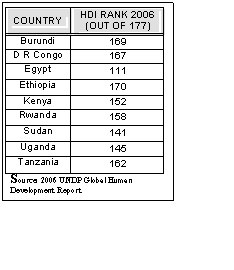 The 2006 UNDP Human Development Report quoted above, argues that “increasing the benefits from the river and decreasing the costs arising because of the river, can unlock a wider potential for human development, economic growth and regional cooperation” and it observes that this is happening to some degree in some of the Nile Basin initiatives. In fact, in spite of their constraints, the Nile riparians recognize the potential that the Basin holds for cooperative development and they acknowledge the benefits to be gained from greater regional integration. Various subgroups within the Basin have engaged in cooperative activities during the last 30 years and in 1997 the riparian states began, with UNDP support, to work towards a permanent legal and institutional framework for the entire Basin. In 1999 the riparians took a further key step by launching the Nile Basin Initiative (NBI), a transitional mechanism that includes nine out of the ten Nile countries as equal members in a regional partnership to promote economic development and fight poverty. It also provides a process to facilitate substantial investment in the Nile Basin to realize regional socio-economic development. In this regard, the Report stresses that the benefits of cooperation do not accrue exclusively to the less well-off countries. Benefits can also be acquired by countries with relatively high standing in the HDI, as compared to those with low standing, by sharing the same river basin and forming part of a cooperative approach to river systems. The Report cites the case of the Nile Basin Initiative, where Egypt (with a higher HDI), is linked to countries with a lower HDI, and could “reinforce its emergence as a partner and champion of African interests at the World Trade Organization”.
3. The NBI, which will eventually lead to a permanent cooperative framework, is comprised of the Council of Ministers of Water Affairs of the Nile Basin (Nile-COM), a Technical Advisory Committee (Nile-TAC), and a Secretariat (Nile-SEC). The NBI is guided by a Shared Vision “to achieve sustainable socio-economic development through the equitable utilization of, and benefit from, the common Nile Basin water resources.” Within the global community of transboundary water cooperation initiatives, the vision of the Nile riparians in establishing parallel processes fostering the development of an enabling framework for cooperation and joint investment is recognized as a unique and exceptional approach. Similarly, the benefit sharing rationale adopted by the NBI rather than a strict water budget and allocations approach had, at the time of its creation, been a cutting edge approach.
1.2 Threats, root causes and barriers analysis
4. According to the Transboundary Environmental Analysis (TEA) carried out under the Nile Basin Initiative : Shared Vision Programme in 2001, the problems and threats faced by the Nile River Basin ranged from the degrading of agricultural and grazing lands, the deterioration of water quality, the loss of wetlands and forests, the overexploitation of natural resources, pollution from urban, industrial and agricultural sources, the proliferation of waterborne diseases to the harmful impacts of floods and droughts. These problems represented a serious threat to the Nile River system which is undeniably a global resource and which harbours many environmental values of global significance. In addition, many of these threats were recognized by the TEA as having a direct impact on human health and welfare, while others undermined people's ability to secure their livelihoods, with poorer people being most affected by the deteriorating environmental condition. This impact on people’s lives and livelihoods exacerbated the situation since they were driven to rely more and more on natural resources thus perpetuating, and accelerating, the environmental degradation / poverty cycle. Collectively, these threats were seen as a substantial barrier to long-term achievement of sustainable development in the Nile Basin countries. The TEA reported an increasing acceptance that the underlying causes of environmental threats in the Nile Basin are often related to institutional, governance, awareness and information issues as well as sectoral and macroeconomic policies.
5. The following table, based on information available in the TEA, summarizes the perceived environmental threats, overall and by country.
|
Basin-wide causes |
Policy, governance, institutional and capacity constraints, insufficient environmental education and awareness, limited access to environmental knowledge and information (including relevant scientific data), unclear tenure and inadequate access to resources for local stakeholders, inadequate management of protected areas and other environmental hot spots |
|
Burundi |
Deforestation, soil erosion, degradation of river banks and lakeshores, mining,
wildlife hunting |
D.R. Congo
|
River and lake pollution, deforestation, soil erosion, wildlife hunting |
|
Egypt |
Water and air pollution, filling of wetlands, desertification, waterlogging and soil
salinity, sanitation, river bank degradation |
|
Ethiopia |
Deforestation, overgrazing, soil erosion, desertification, sanitation, loss of biodiversity (including agrobiodiversity), floods, droughts |
|
Kenya |
River and lake pollution (point and non-point source), deforestation, desertification, soil erosion, sedimentation, loss of wetlands, eutrophication and water weeds |
|
Rwanda |
Deforestation, soil erosion, degradation of river banks and lakeshores, desertification, wildlife hunting, overgrazing |
|
Sudan |
Soil erosion, desertification, pollution of water supplies, wildlife hunting, floods,
droughts, sanitation, deforestation |
|
Tanzania |
Deforestation, soil degradation, desertification, river and lake pollution, poaching
and shortage of potable water |
|
Uganda |
Draining of wetlands, deforestation, soil erosion, encroachment into marginal lakeshore and riverine ecosystems, point and non point-source pollution |
Institutional, sectoral and policy context
6. The Nile countries recognize that future development of the Basin must be environmentally sustainable and the project is supporting them to develop sound approaches to dealing with transboundary environmental threats at the regional and national level. There is a recognition that the identification of environment and development synergies, and thus development on a sustainable basis, is of utmost priority. By focusing on transboundary issues, the riparian countries have been able to make significant progress towards their economic and environmental goals in ways that had proved difficult to achieve independently. Consensus has emerged in support of a set of activities in the riparian countries to (a) provide a strategic framework for the environmentally sustainable development of the Nile River Basin as part of the Shared Vision Program, (b) improve the understanding of the relationship of water resources development and the environment throughout the Basin, and (c) provide a forum to discuss development paths for the Nile Basin with a wide range of stakeholders.
7. The policy guidelines adopted by the NBI's Council of Ministers of Water Affairs (Nile-COM) in February 1999 defined the primary objectives of the NBI. These objectives were to develop the water resources of the Nile Basin in a sustainable and equitable way to ensure prosperity, security, and peace for all its peoples; to ensure efficient water management and the optimal use of the resources; to ensure cooperation and joint action between the riparian countries, seeking win-win gains; to target poverty eradication and promote economic integration; and to ensure that the programme results in a move from planning to action.
8. In 2006 the objectives of the NBI were consolidated into two outcomes, namely increased regional cooperation in the Nile Basin in search of peace and security in the region, and efficient trans-boundary management and optimal use of Nile Basin water and water-related resources.
9. Recognizing the importance of the environment sector, each NB country has institutionalized environmental protection and management at the ministerial level with relevant institutions mandated to address all sorts of environmental issues, starting from policy formulation, to legislation, enforcement, compliance, and impact assessment reviews done through well articulated national plans. In addition, there are hosts of programmes and projects funded by the governments and donors that address one or more of the environmental threats facing the Nile Basin, with varying degrees of complexity and financial support. NTEAP has and will continue to provide support to the Basin riparians to assess and strengthen the sectoral and sub-sectoral policies that have consequences for the environment.
Stakeholder analysis
10. There are many stakeholders in this wide-ranging project. However, two groups are considered as key stakeholders – the Nile Basin Governments and government officials on one hand, and the grassroots communities living in the Nile Basin on the other. Both groups have a lot at stake in the project and both stand to gain or lose from its success or failure. Both have participated extensively in the project to date, starting with the formulation stages and the drafting of the TEA, and continuing on to the project’s implementation. The project has built on the trust and credibility generated through the national consultation processes and fostered the contacts and relationships which were gained right from the initial stages.
11. The involvement and participation of stakeholders is part of the project design and various components have aimed to broaden and deepen stakeholder involvement in environmental management. Initiatives range from the Basin-wide Working Groups that coordinate each of the project components and which include a range of stakeholder representatives, to the local stakeholders, especially communities and smaller NGOs that have been explicitly targeted as beneficiaries for the Micro-Grant Programme – this will continue in the Second Phase. A wide range of stakeholders have also been involved in and benefited from the information and knowledge management component as well as the environmental education and awareness programme of NTEAP. Representatives of all major stakeholder groups have also had opportunities to participate in monitoring and evaluating the project. All this stakeholder activity will continue during the Second Phase and will culminate in the handing over to stakeholders as appropriate, of the initiatives, the experience, the know-how and other benefits of the project as it is phased out.
12. Other stakeholders with whom the NTEAP has consulted, and collaborated include sister projects and national and international Nile Basin stakeholders. For example, recognizing the value of bringing parliamentarians into the Nile discourse, the NTEAP organized an awareness workshop for the parliamentarians of NBI countries in 2006 in collaboration with the CBSI, and this was a great success. It is planned to follow this by national level parliamentarian awareness workshops and dialogue. The NBI has signed an MoU with the International Water Management Institute (IWMI) to initiate collaborative studies. As a follow up of this MoU, the NTEAP has conducted consultations with IWMI and has identified areas of study which will be beneficial and supportive in the achievements of NTEAP’s objectives. NTEAP managed to secure extra budgetary resources from the Canadian Space Agency under the TIGER initiative to produce and disseminate an interactive awareness CD-ROM on the Nile which is now being used by numerous users all across the Basin. A French version of NRAK was launched recently at a Nile Day ceremony in Kigali, Rwanda, and the production of an Arabic version has also been initiated. NTEAP collaborates with the Applied Training Project of NBI, the UNESCO Chair in Water Resources of Sudan to organize training in IWRM for NBI stakeholders. The Nile 2002 Conference series were conducted annually during 1992-2002, and were instrumental in building trust and confidence among Nile riparians. These are now continuing as a biennial Nile Basin Development Forum. NTEAP has participated actively in the 2006 NBDF and is currently entrusted to organize the NBDF 2008 for which the theme is “Environmental Management for Peace and Regional Cooperation in the Nile Basin”.
Baseline analysis
13. The riparian countries have not been unaware of the problems that were identified in the Transboundary Environmental Analysis, and existing projects and programmes include in-country plans and strategies for economic development and for environmental conservation and natural resource management by individual governmental agencies at national and local levels as well as by private enterprise and NGOs. The total baseline has been estimated to be worth US$403 million. This amount included US$77 million for the estimated costs of defined NBI SAP projects.
14. It was argued in the original project brief that the perpetuation of business-as-usual would limit the NBI’s ability to encourage more effective integrated land and water management within overall economic development strategies on a Basin-wide scale thus placing its globally significant resources in jeopardy. The majority of support for natural resource management and environmental conservation would have continued to focus on independent national-level activities. Some sub-regional activities were expected to be implemented through the NEL-SAP and the EN-SAP projects in addition to important existing East African activities involving Kenya, Tanzania and Uganda (such as the GEF-funded Lake Victoria Environmental Management Project and the Sida-funded Lake Victoria Initiative). However, none of these activities were on a Basin-wide scale, which is the key to success when recognizing the transboundary, downstream characteristics of impacts and the shared nature of resources within a river catchment. The ability of the Nile riparians to effectively address transboundary environmental issues requiring coordination at the Basin-wide level would have remained limited, especially for those environmental issues related to future investments in land and water management. Key cross-border environmental issues such as environmental information sharing, community-level land and water management (including the control of aquatic weeds), environmental education and awareness, transboundary benefits from wetland conservation (including threats to migratory species) and water quality monitoring, could not be addressed adequately or at the appropriate scale if approached purely from the national level.
15. Taking each of the proposed areas of intervention by the Nile Transboundary Environmental Action Project, in turn below, the business-as-usual scenario is examined in a bit more detail.
Institutional Strengthening to Facilitate Regional Cooperation
16. The baseline for this component amounts to US$93 million and there are two main types of intervention. The first comprises capacity building and institutional support to the water resources and environment sectors. The second is more technical and deals with water resources assessments combined with planning, modelling, forecasting and simulation, including environmental planning and monitoring. This baseline of actions is largely national in character and is unevenly distributed within the Basin. Apart from World Bank and FAO-funded regional projects that were specifically designed in the context of the wider Nile programme, there were no other projects in the institutional strengthening category which specifically targeted the coordination of transboundary elements required for cooperative management of shared water resources.
Community-level Land, Forest and Water Conservation
17. The baseline under this rather broad category is large and consisted of projects totalling some US$206 million. This included three sub-regional NEL-SAP projects with estimated costs of US$61 million. Many of these projects targeted agricultural productivity or expansion through irrigation or other intensification as the basis for food security and poverty alleviation. Other projects in this category attempted integrated land and water management with an emphasis on soil conservation, as well as land rehabilitation and community-based efforts in afforestation, reforestation and forest management. Although it was recognized as cross-cutting, multi-sectoral and interdisciplinary, the IDA portion of the Lake Victoria Environmental Management Project was also categorized as baseline under this component.
Environmental Education and Awareness
18. The TEA identified less than US$1 million in externally-funded baseline activities for this category. This was mainly because most environmental education and awareness activities were being undertaken on a relatively small scale by a large number of NGOs and community organizations which were widely dispersed within the Basin and there was no central project database documenting these activities. While existing and emerging environmental NGOs were undoubtedly very active in environmental education and awareness in a number of the Nile Basin countries, and they still are, their activities are still almost exclusively limited to local and national levels. There is no programme to build awareness of interdependence and opportunities for cooperation across national boundaries. The NBI project on Communication and Stakeholder Involvement was the first of its kind in attempting to develop common messages and common dialogues among the people of the Nile Basin.
Wetlands and Biodiversity Conservation
19. At the time of NTEAP formulation, the non-GEF-funded baseline actions under this component were comparatively large at US$74 million, and included a US$16 million NEL-SAP fisheries project for Lake Albert. This is an impressive total for a region as pervaded by poverty and food security concerns as the Nile Basin. The focus of these projects was mainly environmental management and planning, targeting wetlands and other protected areas, with an emphasis on both conservation and sustainable use, but the projects were distributed very unevenly within the Basin. Apart from the Lake Albert initiative, the only project with a transboundary focus at the time was a GEF project addressing East African cross-boundary protected areas (however it is precluded from the baseline since this is GEF-funded). The critical linkages between transboundary water resource management and the Basin’s acutely threatened and dwindling natural ecosystems is of such importance that the significance of transboundary wetland conservation (including biodiversity) cannot be overestimated.
Water Quality Monitoring
20. The baseline of action for this component amounts to US$29 million, almost entirely in Egypt, together with the GEF and IDA-funded Lake Victoria Environmental Management Project which addresses water quality issues in the Lake Victoria Basin (the GEF portion does not form part of the baseline). This is an indication of the low priority given to the transboundary aspects of water quality in the wider Nile Basin. This is surprising since water quality is a matter of growing concern, particularly in the Basin’s more heavily populated and farmed areas and it is becoming especially critical at and around the large-scale irrigation schemes with intensive use and storage of agrochemicals (e.g. in Egypt and Sudan), as well as the larger urban and industrial settings throughout the Basin. It is only in Egypt that there is a significant water quality monitoring programme in spite of the major human health and environmental implications of water quality.
PART II : Strategy
Project Rationale and Policy Conformity
21. The Nile Basin is a resource of truly global significance. The Nile is the longest river in the world. It runs across the borders of ten African countries (population of the Basin is 160 million and population of the NBI countries is 300 million) traversing numerous sites of cultural, historical and ecological significance. It sustains valuable wetlands and riverine habitats together with their biological diversity and provides a number of ecosystem services and functions such as nutrient transport and cycling, and the mitigation of floods and droughts.
22. Cooperative work on the Nile, as fostered by the Nile Basin Initiative, corresponds to both of the Strategic Objectives of the IW focal area strategy for GEF-4: Strategic Objective 1: To foster international, multi-state cooperation on priority transboundary water concerns through more comprehensive, ecosystem-based approaches to management, and Strategic Objective 2: To play a catalytic role in addressing transboundary water concerns by assisting countries to utilize the full range of technical assistance, economic, financial, regulatory and institutional reforms that are needed.
23. The vision of the Nile Basin Initiative is: "To achieve sustainable socio-economic development through the equitable utilization of, and benefit from, the common Nile Basin resources” and the NBI is globally recognized as a pioneer in reaching high level multi-country political agreement for river basin management focused on sharing the myriad benefits that water can provide, rather than the water itself. Within the framework of this vision, riparians and development partners have agreed on a number of priority development areas including: agriculture development, power and trade, navigation and energy production.
24. It is within the NBI context that the Nile Transboundary Environmental Action Project (NTEAP) was developed as the environment pillar of the sustainable development of the Nile Basin. Core funding of NTEAP was 60% from GEF sources and when considered on its own, NTEAP may not be seen as cost effective. However, when considered within its rightful context in the NBI, NTEAP is a very cost effective way of injecting environment into all interventions on the ground, all Basin-wide policies, strategic plans, etc
25. It also contributes to the Biodiversity Focal Area through its work on wetlands and ecosystems in that it creates an enabling environment for the effective management of both protected areas within sustainable protected area systems and of productive wetland landscapes in which biodiversity considerations have been integrated.
26. The scope of the project spans the entire Nile Basin and activities are targeted at multicountry, national interministerial, and subnational/community levels. The project also addresses the identified global concern of overuse and conflicting uses of water resources in the globally significant Nile Basin which comes within the scope of IW Strategic Programme 3.
27. The project will also contribute to the implementation of IWRM as advocated by the global community through the Johannesburg Plan of Implementation and this is expected to lead to improved water security for communities, reduce conflicts among states, improve ecological flows in basins, and enhance resilience to fluctuating climatic regimes. Over time, this intervention is expected to contribute to improved community livelihoods, increased crop yields, improved environmental flows, and reduced health risks, on a sustainable basis.
28. The project fits within the scope of work that GEF has pledged to support, namely the balancing of conflicting/competing water uses through application of IWRM, enhanced functioning of joint management institutions; integrated natural resources management across focal areas; improved flow regimes from infrastructure developed; protected water supplies; and increased resilience to fluctuating climatic regimes.
29. Other indicators identified for Strategic program 3 which will be targeted by the project include the setting up of national inter-ministry committees, ministerially-agreed action programmes and contribute to the adoption of national water resource and IWRM reforms/policies with evaluations to show their effectiveness. Similar targets will be pursued by the project for regional/basin agreements and ensuring environment functions are instituted within the permanent Nile Basin institution.
30. In terms of broader global commitments, the project supports the countries in working towards their MDGs – with a specific focus on MDG-1 by improving water use efficiency. It also addresses MDG-3 since it promotes gender equality and the empowerment of women; for example the micro-grants component has allocated a minimum quota for projects targeting women and the project has adopted innovative measures to ensure women’s participation in national and regional meetings conducted in the framework of the project[1]. The project contributes to MDG-7 by assisting national environmental agencies to integrate environment into development agendas, and MDG-8 by bringing together nine countries, several donors and international organizations.
31. While Phase 1 of NTEAP has made significant progress, incremental to the baseline, its work is incomplete and without the Second Phase the progress will be placed in jeopardy.
Project Goal, Objective, Outcomes and Outputs/activities
32. This proposal is for the Second Phase of the project following the satisfactory progress as recorded by the Mid-Term Review and the satisfactory progress towards the trigger indicators as in Annex H. It is a request to GEF CEO and GEF Council to approve the second phase of funding and it represents the continuation and culmination of the work carried out so far during Phase 1. It must be stressed that this is not a new proposal and that it is necessitated by the funding arrangement agreed with GEF at the time of initial project submission in 2001. As noted in the World Bank’s PAD, the project was designed with a phased approach because of funding constraints present in the GEF at the time. While all the Bank GEF components were fully funded from the initial GEF allocation, the UNDP components required a second submission to the GEF. The entire project was designed in an extensive process involving environmental experts from all nine NBI countries and approved by their GEF focal points and Ministers of Water Resources, which form the Nile Council of Ministers. Key areas that were addressed were selected based on an intensive country by country assessment and basin-wide overlay reflected in the TEA.
33. Therefore, although this Second Phase proposal is not a new project, it provides an excellent opportunity to take stock of the project’s achievements and strategy in the light of changing circumstances within the Nile Basin. It also reflects the recommendations of the MTR and ensures that the project is aligned with the strategic objectives for International Waters in GEF-4. At the same time, the proposal remains within the broader spirit of the initial document as negotiated and agreed by the riparian states, the Implementing Agencies and the GEF.
34. Consultations and discussions on the necessary adjustments and fine-tuning commenced soon after the MTR findings became available and have continued right into the preparation of this proposal. As a result, the LogFrame has been reviewed and the current version is in Annex B.2. The new LogFrame takes into account commitments already made and agreements reached, Basin-wide, through working groups and similar mechanisms which were created as part of the implementation effort during Phase 1. The 2007 workplan approved and endorsed by the PSC and the IAs acts as a bridge between phases 1 and 2 of UNDP/GEF funds, ensures the continuity of activities, maintains the momentum gained in project implementation and ensures that the environment is truthfully taken into consideration by the SAPs and broader SVP.
35. During the Second Phase, the NTEAP will maintain the original development objective designed and agreed by the 9 riparians, namely, “to create more effective Basin-wide stakeholder cooperation on transboundary environmental issues by supporting the implementation of a subset of the actions prioritized by the Transboundary Environmental Analysis” while striving towards the following focus:
To protect critical Nile Basin ecosystems from transboundary threats through the provision of a strategic environmental framework and the engagement of stakeholders according to the principles of Integrated Water Resources Management (IWRM)
36. This Objective provides a sharper focus for NTEAP on aspects of the NBI spectrum that are not being addressed by any of the other six SVP projects. It acknowledges that it is not necessary for NTEAP to continue working in areas where there is already a specific NBI project, and its limited resources are better spent covering those aspects of the Nile “environment” not covered by other projects, namely “ecosystems”, while still seeking to work through the Strategic Environment Framework and the engagement of stakeholders, according to IWRM principles.
37. While the broad themes of the components have remained the same, each component has been refocused to bring it fully into line with GEF-4 IW Strategic Program 3. As is evident, this proposal covers four out of the five original components because they are the ones requiring GEF funding support. Funding for the fifth component, water quality monitoring, is fully covered from the existing World Bank GEF grant; that component has also been adjusted following the MTR, IA supervision missions and the emerging situation in the basin. Such adjustments are reflected in the UNDP Prodoc, workplans, budgets and to ensure full cooperation and synergies between the project’s components.
38. The four Components covered by this proposal, their funding and their outcome indicators are summarized below. This section further details how each component has incorporated the recommendations of the MTR.
1 Regional and national institutions strengthened in addressing transboundary threats to Nile ecosystem resources (23,412,356 – GEF 1,350,756; co-fin 22,061,600)
· Transboundary EIA guidelines for use by NBI investment programmes developed
· Policy recommendations on Basin environment protection formulated and submitted for consideration in at least two countries
· Environment function of the permanent institution defined through a consultative process
· NBDF in 2008 defines the environmental issues and priorities for the Basin
· Nile Cooperative Framework negotiations concluded with specific references to wetlands conservation (co-financed catalytic outcome)
2 Improved capacity of Nile Basin countries for integrated natural resources management across relevant GEF focal areas (15,356,370 – GEF 1,399,970; co-fin 13,956,400)
- Best practices addressing Nile environmental threats at community level documented and replicated
3 Enhanced environmental education and public awareness targeting Nile Basin transboundary issues (7,770,580 – GEF 1,247,780; co-fin 6,522,800)
- Environmental campaigns and schools award programs adopted and institutionalized at national levels in at least 6 NBI countries
4 Enhanced conservation and management of Nile Basin wetlands and their biodiversity through application of IWRM approaches (15,485,530 – GEF 2,007,530; co-fin 13,478,000)
· Strategic approach to wetlands management in the basin with key actions, steps and responsibilities developed
· Management plans for at least three selected wetlands developed and under implementation
39. As noted above, the comprehensive framework comprising project objective, outcomes, activities and indicators for the Second Phase is given in Annex B.2: Project Logical Framework Matrix. Following is a brief summary of the full scope of each Component, reference to the issues raised by the MTR for the component, and how these will be addressed through the focus of activities during the Second Phase.
Component 1: Regional and national institutions strengthened in addressing transboundary threats to Nile ecosystem resources
40. According to the PIP, this component aims to enable improved transboundary cooperation on environmental management among and between Nile Basin countries through improved communication, knowledge exchange and enhanced tools for environmental management. The priority transboundary threats as identified by the TEA include deforestation, soil erosion, poor sanitation, floods and droughts, loss and destruction of ecosystems, threatened species and habitats and wetland degradation. These define the scope of the NTEAP right across its Components.
41. This Component will focus on strengthening transbounday mechanisms such as networks, and working groups, to promote transboundary cooperation in addressing the above identified environmental threats. In following the advice of the MTR, during the Second Phase, the Component will ensure coordination between the project components, between NTEAP and other SVP projects, and with the SAPs; will strengthen and ensure the sustainability of the already established networks; will consolidate the work on national policy reform; facilitate high level consultations to define the environment function of the future permanent institution; and, continue the dialogue on the strategic environmental framework. These support and inform on-going negotiations on the cooperative framework.
42. A large sub-component is devoted to supporting the development of a river basin model to improve the understanding of river basin hydrology, its response and transboundary implications of future development. The river basin model is implemented by the SVP Water Resources Planning and Management Project in collaboration with NTEAP. This work will continue and integrate the outcomes of the wetlands and WQ components.
43. In response to the MTR recommendations on knowledge management, activities will be implemented on the production of information documents adapted to all levels of stakeholders. Drawing on the technical components, NTEAP will join forces with other SVP projects and focus its messages on the Nile, its ecology and its socio-economic values. It will also extend the existing environmental information network to host institutions and line agencies for e.g. by linking with their websites. The NTEAP page on the NBI corporate website will be regularly updated, in line with IW:LEARN standards, and an update of the information on the NRAK will be initiated. The knowledge base will be further expanded by developing outreach materials from the Nile RAK in local languages. Good practices will be documented, translated and published in both electronic and printed formats. Selected sections of the TEA country reports will be updated as baseline information to be used by the Nile Basin permanent institution. The quarterly newsletter will continue to be published in English, French, Amharic, Arabic and Kiswahili focussing on ecosystems health, livelihoods and environmental management.
44. During the Second Phase, emphasis will be placed on monitoring and evaluation and on deriving lessons learnt and best practice. In particular, best practices arising from the community based projects will be “marketed” to the SAPs for up-scaling, and to other communities, national agencies and donors for replication. Based on the positive experience over Phase I, participatory monitoring will be emphasized as a tool to improve visibility and ownership at the national level. The NTEAP Monitoring and Evaluation strategy will be updated during the inception period of the Second Phase to reflect the results-based approach emphasized by the NBI. Evaluation of the community-based activities will be undertaken at the end of 2007 and 2008. Information on selected indicators will be compiled periodically to facilitate the preparation of the project annual report and final report respectively. These will be used as inputs to the independent terminal evaluation that will take place four months before project closure.
45. An important feature of this Component in the Second Phase will be the formulation and implementation of a phase-out plan and the development of proposals towards the uptake of NTEAP’s results and best practices by the emerging permanent river basin organization. A most important part of the plan is to ensure that NTEAP’s foundation work towards the permanent institution, its formulation of the appropriate policies and all its other facilitation work will be handed over as a cohesive package. In doing so, the NTEAP will facilitate a basin-wide consultative process to define the environment function of the permanent institution. This will take place by September 2009 at the latest. Other activities under this component will finish by the end of 2008 except for the knowledge management sub-component which will go on until May 2009.
Component 2: Improved capacity of Nile Basin countries for integrated natural resources management across relevant GEF focal areas (e.g. Biodiversity, Land Degradation)
46. This component will continue to support pilot activities in geographic and thematic areas of transboundary significance. It will demonstrate the feasibility of local level approaches to reduce land degradation, conserve water, minimize pollution and protect biodiversity, including mitigation actions for erosion, water use efficiency, non-point source pollution, invasive water weeds, environmental awareness and NGO networking.
47. The Regional Micro-Grants Strategy which was developed in 2005 will be revised to reflect the focus of the Second Phase which is wetlands sustainability and the principles of IWRM. GEF funds will be devoted to funding pilot activities of a transboundary nature addressing Wetlands issues in particular. Emphasis will be placed on encouraging community-based projects that protect and preserve wetlands and discourage their conversion into agricultural land. Moreover, the M-G national action plans will be reviewed and updated to reflect this important convergence with the Wetlands Component. The Micro-Grant Coordinators will be trained to help in guiding the design of project proposals submitted by NGOs to focus on the wetlands theme. Support will also be sought from the Environmental Awareness component to provide the communities and coordinators with publicity materials and publications on wetlands, their importance, best practices from successful pilots that address wetlands and sustainability strategies and guidance on integrating successes from wetlands community-based activities into local and national environmental plans.
48. The co-financing from the Nile Basin Trust Fund will address other transboundary environmental threats across the GEF global areas of focus. The component aims at expanding the focus of the Micro-projects to enhance the capacity of the Nile Basin countries for integrated natural resource management in the two GEF areas of Biodiversity and Land Degradation through pilot measures aimed in particular at improving water use efficiency in the Basin. The Programme will eventually lead to identifying viable approaches that could be upscaled and replicated. They could also be used to support the development of policy options that may be adopted by the countries on the basis of the field trials and demonstrations. The Micro-Grant Programme will also contribute to stress reduction targets through reduced land degradation and habitats enhancement. The Programme will also support the sustained livelihoods for the communities by encouraging the integration of livelihood activities into the thematic areas of focus. Ultimately, it will contribute to improved water use efficiency.
49. At least 10% of the projects will be targeting women NGOs and CBOs and ensuring women’s participation in the other 90%. In addition, a specific target of the new approved projects will be set for cross-border projects in agreement with the PSC and constituency of the micro-grants projects. Priority will be given to countries where facilitating factors for cross-border cooperation are availed and/or where linkages with the SAPs are possible and meaningful. Specific attention will be given to transboundary projects addressing a common Nile threat[2].
50. Allocations have been provided for conducting audits in addition to the allocations to conduct an independent evaluation of the projects in each country. Best practices of and synergies with the Small Grants Program will be sought and where possible, joint evaluations will be undertaken. The emphasis in 2007 and 2008 will be on identifying best practices and reviewing the lessons learnt from Phase 1. This has already been started at the national level through country level consultations as indicated in the 2007 workplan in Annex K. A regional workshop will review the transboundary experiences for discussion, consolidation and dissemination.
51. Many on-going projects have been designed to end in September 2008. Some new projects will begin implementation in January 2008 upon receipt of the Second Phase funds and the last instalments are expected to be awarded in December 2008.
52. In the second half of 2007, the Programme will seek to enhance its partnerships with the private sector to introduce new innovative technologies into the projects and making use of existing ones such as drip irrigation especially in semi-arid areas of Egypt and Sudan. In doing so, special caution will be given to (i) strict criteria and guidelines for engaging with the private sector; (ii) establishing environmental and social safeguard policies and (iii) considering an exceptional increase in the micro-grants ceilings to enable meaningful projects (also applies to cross-border projects) as recommended by the MTR.
53. Overall, in its second phase, the selection of micro-grants will give due consideration to the pilot nature of the projects and to testing different approaches to codify best practices and impacts. This will enable the component to conclude with recommendations on policy reform and on up-scaling and replication of tested approaches.
Component 3: Enhanced environmental education and public awareness targeting Nile Basin transboundary issues
54. This EE&A component aims at increasing public awareness and understanding of the community of interest and the common ecospace that the Nile creates. Activities especially target the future generation in the basin countries. Interventions are planned to act on three levels: (i) the general public, (ii) primary and secondary schools, (iii) university environmental education. Environmental Education and awareness is a cross cutting component working on creating awareness among all stakeholders of the impact of Nile environmental threats and their impact on communities. Consequently the component will work more closely with the Micro-Grants, Wetlands and Water Quality components and the SAPs in capacity building of stakeholders through awareness materials, participatory design, the printing and dissemination of outreach materials, planning and execution of campaigns, and using case studies in the development of school and university modules.
55. In noting that the ultimate aim of this outcome is a change in attitude towards the Nile and its environment, the MTR acknowledged that a number of networks (journalists, schools, universities) have been formed by NTEAP, but it felt that their sustainability is not assured – this must be addressed. The MTR advised that there is a need to nurture those networks that have a future. It also noted that the impacts of public awareness and understanding of Nile transboundary environmental issues have not yet been assessed, and that there is a need to concentrate on the delivery of an environmental education curriculum/course outline for schools; environment education materials need to be shared among countries through the NPCs; and, NTEAP work plans should include specific outputs for collaboration with specific SAP and SVP projects.
56. For the public awareness sub-component, the proposed Second Phase activities are based on achievements obtained in Phase 1, the MTR recommendations and available funds. National EE&A departments will be encouraged to plan and share good practices through joint annual work planning of environmental agencies. Environmental campaigns, such as the Nile Environment Week campaigns will be continued and institutionalized into the environment agencies as one of the phase-out activities. The established environmental journalists will be revitalized through the provision of information through press releases and a press section will be included in the website and updated frequently. National journalist networks will be established and supported in all countries in collaboration with CBSI to ensure full complementarity and no overlaps; support to the media network will also be linked with the Global Water Partnership’s East Africa office to ensure cost-effectiveness of all interventions.
57. The secondary schools sub-component will consolidate activities implemented in Phase 1 and initiate a phase-out strategy. Ten pilot projects will be run in each country with the emphasis on information and experience sharing through the intranet and exchange visits. Various e-learning materials will be developed and the Nile Basin Schools Awards Scheme will be institutionalized within the Ministry of Education in collaboration with environmental agencies.
58. The universities and research institutions networking sub-component places its emphasis on the development of a university course and the implementation of a phase-out strategy.
59. Most activities under this component will be wound down in the third quarter of 2008 with the last activities ending at the end of 2008.
Component 4: Enhanced conservation and management of Nile Basin wetlands and their biodiversity through application of IWRM approaches
60. The PIP saw this component as improving the understanding of wetlands function in sustainable development and improving management at selected transboundary wetlands sites. The ultimate aim of the component is the sustainability of wetlands.
61. Work on this component had only just started at the time of the MTR which noted that its implementation should benefit from the experience gained by NTEAP over the past two years. It advised that NTEAP should work with SAPs and accept specific recommendations which should be treated as priority actions.
62. The immediate outcome of the Wetlands Component is to enhance cooperation and capacity for conservation and management of wetlands and their biodiversity. This outcome aims at improving the understanding of wetlands function in sustainable development, and improving wetlands management at selected transboundary sites. The activities are designed to build on nationally focused wetland and biodiversity conservation and management initiatives in the Nile Basin, using networks of existing centers of knowledge and experience to provide a transboundary overlay to complement national wetlands conservation activities. The Component has three sub-components namely: Enhancement of regional cooperation and capabilities; Better understanding and broader awareness of the role of Wetlands in supporting sustainable development; and, More effective management of wetlands and transboundary protected areas.
63. The first sub-component establishes the regional wetlands working group through which collaboration will be the aim. The second sub-component deals with the advancement of knowledge on wetlands and biodiversity and making the information available for management purposes. This will be done through a mixture of research and gathering of baseline information throughout the region at national level using national experts. Acting on the advice of the MTR, the component has developed a plan of action to share data with NELSAP, ENSAP and LVBC.
64. The third sub-component comprises two main thrusts - wetlands education, awareness and training; and pilot initiatives in practical wetlands management. As part of the practical work, environmental flow assessments will be carried out in selected wetland areas where management plans will also be prepared. The work will include a rapid assessment of wetland fauna, flora and socio-economic aspects. Transboundary management plans will be prepared according to guidelines provided under the Ramsar and the Biodiversity conventions. Sites that have been identified include the Sudd, Dinder Aletash, Sio Malaba, Cyohoha, Kaya-Koboko and Mashar marshes. In addition, an inventory of wetlands in the Basin will be carried out using a GIS platform. Wetlands will be mapped and categorized and their size will be determined. The criteria for classification will be determined regionally so that a harmonized approach will be applied for the development of the Regional Wetlands Map. The principles of IWRM will be applied both at the level of key wetland sites (i.e. balancing conservation and sustainable use) and at the level of the Basin in a way that the hydrological model and DSS being developed by the WRPMP, will enable the identification of necessary policy reforms and other measures to secure minimum environmental flows for the wetlands. Finally, this component will seek linkages with the SDBS, CBSI, WRPMP as well as with ENSAP and NELSAP. It is important to note that a plan of action has already been negotiated and agreed with the Lake Victoria Basin Commission.
65. Component 4 activities will be wound down in July 2009. The phase-out from the Second Phase into the permanent institution will include regional dialogue focused on the future management of the Basin’s globally significant wetlands and ecosystems. The component will work closely with the WRPM project and the Nile GW project, to ensure that wetlands sustainability is adequately reflected in the RBM and DSS.
Component 5: Increased capacity and awareness on water quality monitoring in the Nile Basin countries
66. This Component will initiate a basin wide dialogue on water quality and improve understanding of trans-boundary water quality issues, improve capacities for monitoring and management of water quality and initiate exchange and dissemination of information on key parameters. It will also increase understanding of the current state of water quality and to identify the water quality management needs of the different riparian countries. There will be exchange of water quality information as well as on regulatory issues. Regional water quality monitoring and assessment will be initiated as well as basin wide dialogue and collaborative action on water quality by the different stakeholders within the basin. Information exchanges and data processing will be designed and implemented in close collaboration with other SVPs and SAPs.
67. The Component also aims at increasing both the physical and technical capacity in the riparian countries through trainings, Workshops and Seminars. This Component comprises of two sub–components:
(i) Enhanced National capacities for water quality monitoring
(ii) Awareness raising and information sharing on trans-boundary water quality monitoring.
68. The MTR noted that he component had a slow start with a number of activities delayed. However, recently, relatively large number of planned activities have been initiated, some of which are near completion. The importance of the components to the Nile basin management is generally acknowledged, consensus over the objectives of the component, and the approach to accomplish them is yet to be achieved. The commitment of the members of PSC and commitment and capacities of WQWG members to fully undertake their role in making the component effective and successful need to be enhanced. The component reports should be more focused toward achieving the objectives of the component. The training activity that has been conducted by the component so far was relatively well received by most of the participants. Them MTR further noted that water quality data generation, storage, retrieval, sharing and utilization for better water quality planning and management in the region has not been initiated yet. The modality and mechanism for data exchange and utilization by and between the NBI countries is not in place. The MTR recommended that a Concept Paper that clarifies and refines the component's objectives and proposes a strategy for achieving these objectives be prepared. The consensus amongst the WQWG members on the objectives and implementation approach is essential to avoid any unnecessary delays.
69. The project should take steps to enhance the ownership of the component by WQWG and by the organizations they represent. It further recommended that water quality data generation, storage, retrieval, sharing and utilization should be initiated. The modality and mechanism for data exchange and utilization among the NBI countries need to designed and a regional modality or framework for transboundary water quality management be prepared.
70. The work planned for the Second Phase covers is based on the MTR recommendations and on sustaining the Component’s activities after the Project’s closure. This component will support the operationalization of the Nile trans-boundary water quality monitoring strategy, through the institutionalization of the transboundary water quality monitoring network, and the launching of the Nile transboundary water quality monitoring in the countries. It will also develop transboundary water quality data and information sheets to be submitted to the DSS Component of WRMP project for incorporation into the NBI data and information sharing Protocol. Collaboration with ENSAP, NELSAP and LVBC will also be enhanced. Training of the NBI Laboratory Managers will be undertaken as well as dissemination of water quality awareness materials and the piloting of the Water Quality Testing Kits and biological monitoring materials in schools and communities.
Project Indicators, Risks and Assumptions
71. The project’s components and key indicators correlate well with the goals and measures that are the focus of the GEF-4 IW Strategy, as follows:
Components/Outcomes, key indicators and links to IW goals
|
COMPONENT / OUTCOME
(and descriptor) |
KEY INDICATORS AND TYPE |
LINK/FIT TO IW GOALS |
|
1. Regional and national institutions strengthened in addressing transboundary threats to Nile ecosystem resources
(seeks regional collaboration and strong institutions as a mechanism for safeguarding ecosystems from transboundary threats) |
Outcome Indicator 1 (process): Transboundary EIA guidelines for use by NBI investment programmes developed
Comment: The idea is to build on what the East African Community has already initiated in developing transboundary EIA guidelines for use by SAPs
Outcome Indicator 2 (process): Policy recommendations on Basin environment protection formulated and submitted for consideration in at least two countries
Comment: The macro/sectoral policies study will be carried out by NBI countries. It is hoped that these studies will provide information on policies that impact on the environment and enable recommendations for policy adjustments
Outcome Indicator 3 (process): Environment function of the NB permanent institution defined through a consultative process
Comment: NTEAP will conduct consultations to define the environment function of the permanent NBI institution and submit a proposal to the Nile-SEC for consideration by the TAC and COM
Outcome Indicator 4 (process): Nile Basin Development Forum in 2008 defines the environmental issues and priorities for the Basin
Comment: NTEAP will formulate a Discussion Paper outlining issues and options, for the Forum. Following the Forum, NTEAP will carry out further consultations and assessments, etc, leading to the definition of the environment function of the permanent institution.
Outcome indicator 5 (process): Nile Cooperative Framework negotiations concluded with specific references to wetlands conservation (co-financed catalytic outcome)
Comment: UNDP is co-financing the negotiations on the Nile Cooperative Framework which has medium/high risks of non-completion within the timeline of the GEF-funding. These two processes are mutually supportive and have clear feedback loops.
Output 1 Indicators (process):
· PSC, PMU & nine national offices managed and functioning
· Process for the definition of the environment function of the NBI facilitated
· Functioning inter-ministerial committees arise out of the working groups in each of the riparians
Output 2 Indicators (process):
· Quarterly newspapers published in 5 languages,
· Website and updated regularly
· Knowledge on wetlands, WQ, EE&A and microgrants codified and disseminated
· Good practices documented and disseminated
· Environmental knowledge base expanded
Output 3 Indicator (process): RBM developed & integrated in the Decision Support System(DSS)
Output 4 Indicator (process): Transboundary guidelines for EIA produced &submitted for approval
Output 5 Indicator (process): Policy recommendations approved by at least two countries
Output 6 Indicators (process):
· Monthly, quarterly, semi annual, annual, field visits, surveys and review reports produced and disseminated to respective partners
· M&E strategy updated as per Results Based System |
Collaboration by the countries of the Nile Basin corresponds to the second strategic objective of the IW focal area strategy for GEF-4: To play a catalytic role in addressing transboundary water concerns by assisting countries to utilize the full range of technical assistance, economic, financial, regulatory and institutional reforms that are needed
It also contributes to the balancing of competing water uses as targeted under Strategic Programme 3 |
|
2. Improved capacity of Nile Basin countries for integrated natural resources management across relevant GEF focal areas
(ultimate aim is improved integrated management, and capacity is the means for achieving it) |
Outcome Indicator (process) : Best practices addressing Nile environmental threats at community level documented and replicated
Comment: Capacities will be improved through the design and implementation of projects that will have the potential to become best practices and replicated within the Nile Basin or elsewhere. As the component may implement projects across the GEF focal areas, the proxy indicator will focus on land degradation and water management as the majority of projects fall into these two themes
Output 1 Indicator (stress reduction, process) A minimum of 200 projects, of which 10% targeting women groups, implemented by communities across the basin
Comment: 179 projects have been approved and are under implementation during Phase I. About 38 new projects are expected to be approved during Phase II. All projects are considered viable at the design and approval phase. However, only few of the 200 plus projects that would be implemented during both Phases would produce best practices and have the potential to be replicated and up-scaled
Output 2 Indicator (process) : No of professional women and men trained on the Nile environmental threats across the basin
Comment: Training workshops, project based learning, communication materials will be undertaken to increase capacities through diverse approaches. The beneficiaries of these approaches will be as diversified and gender-balanced as possible. Such undertakings will focus on the proposed mitigation activities, monitoring aspects, management of projects and deriving lessons learnt and best practices |
The Micro-Grant Programme is in line with the GEF’s Council-approved mandate in that it places human activities at the centre of the transboundary system and strives to influence behaviour to achieve the targeted benefits.
It is also closely linked to GEF-4 IW Strategic Programme 3: integrated natural resources management across focal areas….priority is also accorded to integrated approaches across GEF focal areas where multiple benefits may be generated because of inter-linkages such as with sustainable forest management. |
|
3. Enhanced environmental education and public awareness targeting Nile Basin transboundary issues
(target is a high level of environmental appreciation and sensitivity among the general public on NB transboundary issues) |
Outcome Indicator 1 (process): At least 8 universities in 6 NBI countries approved and adopted the environmental modules based on Nile environmental threats
Comment: The projects works with 18 universities 2 in each country. Adoption of modules takes along time but at least 8 universities are targeted
Outcome Indicator 2 (process): Environmental campaigns and schools award programs adopted and institutionalized at national levels in at least 6 NBI countries
Comment: Campaigns are used as tool for awareness raising in addition to print and electronic media. Institutionalization will make the tools sustainable and transboundary
Output 1 Indicators (process):
· At least 2 environmental awareness programmes delivered in al least 5 countries
· Awareness material on 5 selected Nile Environment threats produced and disseminated across the basin
· Environmental campaigns and schools award programs adopted and institutionalized at national levels in at least 6 NBI countries
Comment: Two programmes include campaigns and awards scheme; Training on awareness materials production were carried out and a manual produced
Output 2 Indicator (process): At least 60 % of the participating schools adopt project based learning (environmental modules and school projects)
Comment: Project based learning includes - environment projects, e- learning materials and teachers capacity building. The project works with 10 schools in each country, due to slow uptake in certain countries it is expected that at least 60% will adopt the PBL model
Output 3 Indicators ( process):
· At least 2 junior faculty or graduate students exchanged in at least 6 countries
· Training modules developed and adopted in at least 6 universities
Comment: 10 students have been exchanged, lecturers are expected to have joint projects to enhance cooperation; A regional framework has been developed and an adoption process initiated |
Through this component and its contribution to IW:LEARN the project will generate knowledge feeding into the GEF goals of experience-sharing and learning among projects, the identification and replication of good practices and the development of knowledge management tools to capture good practices and their replication.
It will also address one of the areas of global concern identified for GEF-4, namely Strategic Programme 3 “Overuse and conflicting uses of water resources in surface and groundwater basins” |
|
4. Enhanced conservation and management of Nile Basin wetlands and their biodiversity through application of IWRM approaches
(the ultimate aim is the sustainability of wetlands and their biodiversity, with IWRM providing the framework for that) |
Outcome Indicators (process):
· Strategic approach to wetlands management in the basin with key actions, steps and responsibilities developed
· Management plans for at least three selected wetlands developed and under implementation
Output 1 Indicators (process):
· One network at regional level established and functioning
· National level wetlands management networks established and functioning in at least 5 countries
· Training program on wetlands management developed in 2 languages
Output 2 Indicators (process):
· Ecological and socio-economic studies on wetland roles in sustainable development conducted. Study completed in the two SAP regions
· National baseline surveys carried out and written up
Output 3 Indicators (process):
· Over 50 officers from across the Basin, trained in wetlands management
· Awareness programmes conducted in nine NBI countries
Output 4 Indicators (process):
· Environmental flow assessments carried out in at least three selected wetland sites
· Transboundary wetlands management plans prepared for at least 2 selected sites
· Wetlands inventory carried out and the results mapped on a GIS platform |
In addressing interlinked transboundary concerns as part of the ecosystem approach, the project will create benefits also for the biodiversity focal area
In its use of the IWRM, it links up strongly with Strategic Programme 3 - Balancing overuse and conflicting uses of water resources in transboundary surface and groundwater basins;
There is also a strong link with the Biodiversity focal area which has been identified as a desirable element under the IW Strategic Programmes for GEF-4. |
Risks
72. The greater number of risks associated with the project are of an operational type and they are considered to be of medium to low rating. On the other hand, the political risks faced by the project, while fewer in number, are rated medium to high and are more significant. The operational type risks are considered as within the control of project management and measures have been put in place to mitigate them. The political risks are beyond the ability of the project to control and all the project can do is put in place mechanisms and systems that will reduce the risk potential and mollify its effects on the project. As part of the inception activities for the Second Phase, project management will, with the support of the IAs and the PSC, develop and adopt a risk management plan underpinned by enhanced monitoring of the situation. Management responses could include – strengthened supervision with more field visits and more frequent reporting; adjustments to the project monitoring strategy; changes to implementation arrangements; changes in budget allocation; temporary interruption of activities.
73. Possible project risks and risk mitigation measures are summarized in the table below.
Risks and mitigation measures
|
RISK |
RISK TYPE |
RISK RATING |
RISK MONITORING AND RESPONSE (MITIGATION) |
|
Commitment of the Nile Basin countries |
Political
|
Medium to High
|
Many countries in the region are facing insecurity and contention, political uncertainty, extreme poverty, diseases, etc. These conditions threaten a long-term project such as NTEAP aimed at creating an enabling environment on a regional basis. This and other NBI projects seek to build trust and mutual support among the Nile Basin countries. The emphasis on regional cooperation, the collaborative efforts that are part of project design, and the regional ownership that is already showing, are powerful instruments for achieving the project’s objectives. They will also contribute towards the building of longer term trust and understanding. By adopting a dual approach of regional facilitation coupled with tangible pilot demonstration projects, the project has so far succeeded in curbing this potential risk and this approach will continue as will the careful monitoring of the situation. |
|
Institutional leadership |
Operational
|
Medium
|
The project depends on the capability of government institutions and staff to provide visionary leadership. This may be limited where there are few or no incentives for staff, little appreciation of research and innovation and a weak support infrastructure. The project has sought visionary leadership within, and not outside, the boundaries of the Nile Basin and through study tours, exchange visits and consultations it has exposed leaders to good practice and enhanced institutional capacity and leadership to the benefit of project activities. An overarching principle that lends to commitment in this area is the ability of the countries and specifically the host institutions to integrate the activities of NTEAP into their national planning process. This will contribute to mitigating this risk by ensuring that the activities are given the necessary recognition and are implemented in a timely manner. It will also contribute to national ownership. |
|
Regional coordination capacity |
Operational
|
Medium
|
Effective implementation of the SVP projects has been a challenge and NTEAP has not been an exception. The strong Project Management Unit together with the build-up of capacity and capabilities of the NBI institutions has guarded against this risk and the effort will continue, responding to needs as they arise. |
|
National institutional capacity |
Operational
|
Low
|
The project has been designed to strengthen institutional and human resources capacity in the recipient countries. Component 1.1 “Regional Capacity Building for Transboundary Environmental Management” is specifically designed to develop a culture of good practice within national environmental management institutions. Phase 1 has contributed to overcoming low capacity and in the main it has been successful. The situation will be closely monitored and the effort adjusted accordingly. |
|
Insecurity and conflict |
Political
|
Medium to High
|
Seven of the ten countries in the Nile region are at present, or have recently been, involved in internal or external conflict. This brings both operational and political risks to a process and a project of this size. However, leaders in the Nile Basin countries have made it clear that they see the NBI as a tremendous opportunity to achieve cooperation, economic exchange and eventually greater integration and interdependence, which can yield high returns in terms of growth, food security, sustainable development and peace. The Implementing Agencies will continue to nurture this positive attitude towards the project. UNDP and the Bank have been involved in the Nile region since 1995 and 1997 respectively, and are confident of their ability to deliver this GEF project, as well as the larger NBI, in an efficient and effective manner. |
|
Leadership vs. Participation and Ownership |
Operational
|
Low
|
The MTR identified a potential predicament for the project – it needed to maintain its leading role and take initiatives, guiding the NBI towards mainstreaming environment; but it also needed to encourage a participatory approach to the implementation and management of the project’s activities. To reduce the risk of sacrificing one target for the other, the project will monitor and assess the readiness of the beneficiaries to implement programmed tasks – having provided the leadership necessary to adopt a programme of work, the project will guide the beneficiaries and assist them with implementation through the provision of information, identifying options and helping them reach a decision. Project personnel will guide the beneficiaries towards the project’s goal by reconciling their roles of manager and catalyst. |
|
Sustainability of project products |
Strategic
|
Medium
|
While the project accepts that the expected change of approach to management of the Nile Basin environment by the riparians, is a long term target, it must ensure that the progress that it will have made towards this goal by the time it is wound up, is not lost. In order to guard against such waste, the project will be implementing an extensive phase-out/phase-in strategy through which it will prepare for its functions, achievements, networks and other gains and benefits to be taken over and assimilated as seamlessly as possible by more permanent institutions. This process has already started. |
|
Changes in flows and recurrence of floods |
Climatic
|
Medium
|
Across the basin climate variability has always been an issue; climate change and the increasing awareness of its impacts may impede on, if not reverse cooperation impulse across the basin. With prediction of impacts on Nile flow varying between -30% to +70% this great variability may hamper focus on environmental flows. This climate-induced risk is outside the remit of the project itself, but through its awareness and education and knowledge components NTEAP may flag key issues and initiate thinking on adaptation solutions. |
Expected global, national and local benefits
74. The Nile Basin is a resource of truly global significance. It is the longest river in the world and runs across the borders of ten African countries. It sustains valuable wetlands and riverine habitats together with their biological diversity and provides a number of ecosystem services and functions such as nutrient transport and cycling, and the mitigation of floods and droughts. Any effort towards the improved management of the Nile Basin can be considered as a benefit of global significance.
75. At the National level, the NBI-SVP and NTEAP will deliver a range of benefits starting from the security and stability that comes from transboundary cooperation and benefit sharing; information and knowledge management and sharing; national awareness and environment education creating a more alert and sensitive public; training and capacity building in a number of government sectors such as those responsible for water management, environmental protection, natural resources management, education, agriculture, etc.
76. At the level of local communities the NTEAP will deliver tangible as well as indirect benefits to individuals such as farmers and fisherfolk, community groups, NGOs and CBOs. The benefits will arise from the higher degree of awareness, increased ownership and participatory management of the Basin resources, the application of best practices and more efficient use of water resources. NGOs will also benefit from the Micro-Grant Programme, capacity building and training.
Country Ownership : Country Eligibility and Country Drivenness
77. The participating countries, namely Burundi, D.R. Congo, Egypt, Ethiopia, Kenya, Rwanda, Sudan, Tanzania and Uganda, are eligible for GEF assistance under para 9(b) of the GEF Instrument and for UNDP technical assistance.
78. Eight of the nine countries are sub-Saharan countries considered as LDCs. These countries have committed themselves to work together for the sustainable development of the Nile Basin and are in the process of concluding a legal and institutional cooperative framework and the establishment of a permanent Nile Basin institution. These considerations are evidence of the eligibility of NBI countries which neatly fall under the GEF IW Strategic Objective 1: “To foster international, multi-state cooperation on priority transboundary water concerns through more comprehensive, ecosystem-based approaches to management”, and Strategic Objective 2: “To play a catalytic role in addressing transboundary water concerns by assisting countries to utilize the full range of technical assistance, economic, financial, regulatory and institutional reforms that are needed.”
79. In addition, the Nile Basin countries have demonstrated their commitment to global moves towards environmental management by signing and ratifying the Rio Conventions as well as the Ramsar Convention as follows:
Ratification of the Rio and Ramsar Conventions by the participating countries
|
COUNTRY |
CBD |
FCCC |
CCD |
Ramsar |
|
Burundi |
1997
|
1997
|
1997
|
2002
|
|
D R Congo |
1996
|
1996
|
1997
|
1996
|
|
Egypt |
1994
|
1994
|
1995
|
2006
|
|
Ethiopia |
1994
|
1994
|
1997
|
-
|
|
Kenya |
1994
|
1994
|
1997
|
1986
|
|
Rwanda |
1994
|
1998
|
1998
|
1990
|
|
Sudan |
1995
|
1993
|
1995
|
1995
|
|
Tanzania |
1996
|
1996
|
1997
|
1988
|
|
Uganda |
1993
|
1993
|
1997
|
2000
|
80. The project has been under implementation for three years with the full support and active participation of all nine countries at all levels ranging from inter-ministerial groups to grassroots communities – country ownership is not in question.
81. These countries have committed themselves to working together for the sustainable development of the Nile Basin. Their combined contribution in cash and in kind to the NBI and its seven projects and SAPs has been estimated to total some US$27.5 million over six years and they are in the process of concluding a legal and institutional cooperation framework and are planning to establish a permanent Nile Basin institution. The transitional NBI institutional structure, comprising the Nile-Council of Ministers and the Nile-TAC, supported by the Nile-SEC (see Figure below), provides overall policy guidance to the project and ensures regional as well as inter-sectoral integration of the entire Shared Vision Programme of which NTEAP is one of seven projects. The NTEAP reports to a Project Steering Committee composed of the directors of environment agencies of the NBI countries, which provides strategic guidance to the project. The Project Management Unit in Khartoum and the national coordination offices in each riparian country are run by practitioners from participating countries. Working groups composed of national experts have been established and are functioning in the areas of environment education, water quality monitoring and wetlands and biodiversity conservation. These working groups plan and implement activities both at national and regional levels. This institutional set up and arrangement ensures that NTEAP is responding to country priorities and results in full ownership of the project by participating countries.
82. The Nile riparian countries have made a conscious decision to self-finance the recurrent running costs of the regional Secretariat and they contribute an annual amount (combined total of US$315,000) to the budget of the Secretariat. This decision was taken as an assertion of true ownership and control of the process.
83. During Phase 1 of NTEAP, true commitment and high level political support were demonstrated by the participating countries. The NTEAP was launched in 2004 by the president of Sudan, the presidents of Uganda and Burundi paid visits to NTEAP projects, and ministers of water affairs and environment in participating countries have officiated at numerous meetings of NTEAP and visited various NTEAP projects. This high level commitment and ownership of NTEAP activities continue and will be consolidated at the beginning of the Second Phase when the riparian countries (through their respective NPCs) will be invited to note the extent to which the NBI and the NTEAP in particular respond to the priority needs as identified by the countries.
The NBI Shared Vision Program Framework
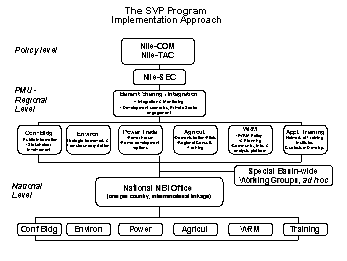
Sustainability
84. A number of factors will contribute to the sustainability of the benefits of NTEAP. The most important aspect underpinning the sustainability of the project is that it is set within a much larger initiative, the NBI, to which the governments of the Nile countries have committed themselves at the highest level. The governments see the NBI as offering the possibility of moving beyond isolated planning and unilateral actions towards cooperative development planning for the utilization of this transboundary resource, seeking win-win opportunities in the spirit of benefit sharing. The GEF project is set to benefit from this strong commitment to the NBI. While intangible and unquantifiable, this commitment is the most important element for the long-term sustainability of the NTEAP benefits.
85. A distinguishing feature of the way NTEAP is being implemented is the voluntary nature of those participating in working groups, advisory teams, and similar coordination mechanisms. These stakeholders, which number around 2000 spread across the Basin in the nine participating countries, get no personal gain from their participation, and do so because of their genuine commitment to the work of NTEAP. This commitment is expected to continue well beyond the NTEAP closedown and augurs well for the sustainability of its benefits.
86. As noted above, the Nile riparian countries have agreed to cover the recurrent running costs of the Nile Secretariat which is the precursor for a permanent Basin organization, through annual contributions towards its operations. This decision has been taken as a sign of true ownership and control of the process. It is also an indication of financial sustainability which is particularly important for those project components which will entail recurring costs past the life-span of the project and would be considered as core environmental function of a potential permanent river basin organization. The Nile Sec has already initiated a process of Institutional strengthening for a smooth transition towards a permanent institution, a process giving due attention to NTEAP.
87. Sustainability of project benefits will also depend on the approach adopted during project implementation and the feeling of ownership that it cultivates. Through its commitment to a meaningful participatory process, every effort has been made to ensure that riparian country stakeholders genuinely “own” the project and this augurs well for its sustainability.
88. Another important factor which will influence sustainability is whether the project outcomes will indeed result in tangible benefits for local communities. Because of its nature, the initial beneficiaries of the project are selected government agencies and ministries, followed by NGOs and local communities. In order to ensure long-term sustainability, the project will seek to ensure that its benefits reach local farmers, NGOs and the private sector.
89. The project is also responsible for the setting up of a number of working groups and part of their brief is the identification of cost-effective mechanisms to sustain the activity and involvement of these working groups in the NBI after the NTEAP has ended.
90. Finally, project sustainability will depend on maintaining and strengthening the growing cooperation among the Nile Basin countries. There is a strong commitment and a clear understanding that so much has been invested already that the NBI, including the present project, must succeed for the process to move forward. Regional commitment to the process is high, with the specifics of cooperation anchored in the Policy Guidelines endorsed by the Nile Council of Ministers.
Replicability
91. The NTEAP has invested a lot of energy during Phase 1 into setting up networks at various levels and in various sectors throughout the Basin. This will continue, but due to limited resources, there are limits to the reach of the project. In recognition of this, and in the hope that its successful modalities, its tested pilots, its lessons learnt and its experience gained can continue to be applied within and beyond the Nile Basin after it ends, the project will take steps to record and disseminate its experiences and results.
92. With the help of the IW:LEARN Programme, the project will contribute to the GEF goals of experience-sharing and learning among projects and the identification and replication of good practices. It will contribute to the development of knowledge management tools to capture good practices and lead to their replication.
93. The project has improved its communication and knowledge sharing tools. It is part of the NBI communication network, linked through the nilebasin.org and nileteap.org domains through efficient electronic connections for all project personnel. The production of knowledge/ education/ awareness tools has been enhanced through the acquisition of the necessary equipment. And Global Positioning System (GPS) sets have been provided for all NPCs for acquiring georeferenced information on project activities. National level good practices compilation workshops have been conducted in each of the NBI countries and these will be followed by regional level compilation of good practices on the basis of the pilot field level projects.
94. NTEAP has established links with the SAPs, both NELSAP and ENSAP. Joint areas of collaboration have been elaborated and it is expected that the Water Quality Operational Manuals and the Nile Transboundary Water Quality Monitoring Strategy, the Micro-Grants and other initiatives that have been developed successfully at the regional level, will be replicated and applied at the sub-Basin levels with the support of the SAPs. Similar collaboration has also been forged with the LVBC under which the LVEMP Phase 2 will be operating. These linkages will ensure both the replicability and sustainability of NTEAP’s activities and its recognized Best Practices at the sub-regional level.
95. One particularly successful initiative from Phase 1 that will be “marketed” for replication through a publication in hard and soft copy as well as through training workshops, is the Manual for Micro-Grant Monitoring that was developed by the project. In view of the importance of the monitoring and evaluation of Micro-Grants initiatives, project personnel collaborated on the joint development of this manual which focuses on providing basic monitoring tools and formats to enable the Micro-Grant Coordinators and implementing NGOs to design monitoring systems to track progress and success with their projects. The GEF Small Grants Programme and NTEAP’s Micro-Grants Programme have demonstrated excellent collaboration over the years and have recorded the lessons learned. These will be made available on the SGP website, NBI website and IW LEARN website.
96. Opening up to and contributing to the broader International Waters community has been a characteristic of NTEAP in its first 3 years of implementation and will be continued during the second phase as allowed by financial considerations. While the project website is designed in accordance with the corporate image of the NBI, it will internalize and reflect guidance provided by IW:LEARN for GEF IW projects. Furthermore, it will contribute to experience notes reflecting on project implementation and experiences that might be useful for upcoming projects supported by GEF. Finally, the project will fully participate at the International Waters Conference in 2007, but its participation will probably be wound down at the next IWC in 2009. In the meantime, the project will contribute to and participate in Pan-african processes to help further transboundary water resource management and the delivery of expected benefits.
Indicative budget for activities that will facilitate replication
|
TYPE OF REPLICATION ACTIVITY |
BUDGET US$ GEF & Co-finance |
|
Workshops on consolidation of good practice |
120,000
|
|
Sharing experiences through participation in regional and international conferences and similar events |
48,050
|
|
Projects based learning |
170,000
|
|
Publication and distribution of handbooks/manuals |
200,000
|
|
Participation of African RBOs in NBDF |
150,000
|
|
Contribution to IW:LEARN (ICT assistance, experience notes, knowledge materials, etc…) |
20,000
|
|
TOTAL |
708,050 |
PART III : Management Arrangements
97. The Governments of the Nile Basin are the major stakeholders of NTEAP and the NBI and through the Nile Council of Ministers (Nile-COM), which is the highest decision-making body of the NBI, the Governments provide strategic guidance to the operations of the NBI. Governments are also represented on the PSC which meets yearly to approve NTEAP Work Plans and provide policy guidance to the project.
98. The Nile Basin Initiative (NBI) represents a transitional institutional mechanism, an agreed vision and Basin-wide framework, and a process to facilitate substantial investment in the Nile Basin to realize regional socio-economic development. The NBI comprises the Nile-COM supported by a Nile Technical Advisory Committee (Nile-TAC) and it manages overall fund flows and disbursements, as well as information sharing, coordination, integration, and monitoring and evaluation. As the executing agency for the project, the NBI defines procedures for issues such as information management and the NBI-website, reporting, monitoring and evaluation.
99. It is supported by the NBI-Secretariat (Nile-SEC) which serves as the executive arm the NBI, and is the executing agency for the World Bank GEF, the UNDP GEF and Nile Basin Trust Fund (NBTF) financed portions of the Project.
100. The United Nations Office for Project Services (UNOPS) has been contracted by the NBI to support it in the execution of the project. UNOPS hires technical and administrative staff for the SVP projects, and executes all the financial functions of the project on behalf of the NBI. UNOPS also oversees management of the Project Management Unit in order to facilitate local contracting, fund management, local procurement, disbursement, programme administration, and project-level financial monitoring.
101. The Project Management Unit (PMU) for the Transboundary Environment Action Project, is located in Khartoum, Sudan. The PMU operates at the Basin-wide level and, in support of the NBI, is responsible for managing and implementing the project in all participating countries. The PMU coordinates smooth operations, and maintains and enhances the dialogue between the Nile riparians. It is staffed by the Regional Project Manager, regional Lead Specialists for each project component as well as other staff, covering knowledge management, monitoring & evaluation, procurement and finance specialists, and general support. Together they form the project management team.
102. The Regional Project Manager (RPM) provides overall leadership for and management of the Project and reports to the Project Steering Committee, the NBI Secretariat as the executing arm of the NBI, and UNOPS for the effective functioning of the Project Management Unit and the overall delivery of the Project. The RPM works in close liaison with the Nile Basin Initiative Secretariat to ensure effective project implementation, as well as regional and inter-sectoral integration within the Shared Vision Programme.
103. The project has appointed a National Project Coordinator (NPC) in each of the participating countries to be responsible for supervising and coordinating the implementation of project activities at the country level. The NPCs provide a crucial link between the thematic Lead Specialists based in the PMU and the national specialists and organizations involved in implementing the various project components within the respective countries. The NPC also serves as a link between NTEAP and the respective national NBI office.
104. There is also a National Micro-Grants Coordinator (MGC) in each of the participating countries, who is responsible for supervising and coordinating the implementation of the Micro-Grant Programme activities at the country level.
105. The project has also established National and Regional working groups who participate fully in the planning and implementation of Project activities at the country level in conjunction with the NPCs.
106. Finally, the World Bank and UNDP, as the joint Implementing Agencies for the GEF, jointly support the implementation of NTEAP. Each brings its specialized expertise and comparative advantage to the benefit of the project in the thematic areas of intervention.
107. An illustration of the project management and implementation framework is in the organigram on the last page.
PART IV : Monitoring and Evaluation Plan and Budget
108. Project monitoring and evaluation has been conducted in accordance with established UNDP and GEF procedures throughout Phase 1, by the project team, led for this task by the M&E Lead Specialist, with support from UNDP/GEF and UNOPS. A basin-wide Monitoring and Evaluation Strategy and Action Plan, based on concepts of adaptive management, which was developed and has been in place throughout Phase 1, is attached as Annex I. The Plan served to monitor both project management performance as well as project impact linking the two processes to ensure that the findings of internal project monitoring activities are applied in the implementation approach of the project (adaptive management) so as to achieve the targeted impacts. On the other hand, monitoring of the progress towards the targeted outcomes and impacts of the project served to inform project management and the PSC about those aspects of the project which required boosting. The NTEAP M&E Strategy and Action Plan includes reporting formats, performance indicators, a standard methodology for data collection and analysis, and capacity building in monitoring and evaluation.
109. The original Logical Framework Matrix from the GEF Project Brief has provided the performance and impact indicators for project implementation along with their corresponding means of verification. The indicators also provide the framework for reporting in Annual APR/PIRs. Following the MTR and in order to reflect changing circumstances and changes in GEF requirements, the LogFrame has been refocused for the Second Phase (Annex B contains both the original and the refocused LogFrames); given that the certain components – e.g. component 5 – receive funding from the WB/GEF fund as carry over from the first phase.
110. The Monitoring and Evaluation Strategy and Action Plan, including budget, will be reviewed, presented and finalized by the M&E Lead Specialist as part of the inception activities for the Second Phase following a collective fine-tuning of indicators, means of verification, and the full definition of project staff M&E responsibilities. The Plan will be linked to the LogFrame Matrix through its reference to indicators/targets for project implementation and for results (outcomes and impact). It will identify reviews and evaluations which will be undertaken at the project component level, using the benchmarks established at the time of the MTR.
111. By linking the indicators selected for the project to the GEF-4 IW Strategy (see table in Section 1.B), and the “Monitoring and Evaluation Indicators for GEF International Waters Projects”, the NTEAP M&E Plan will provide an assessment of progress towards the GEF indicators as well.
112. The following M&E elements which have been used during Phase 1 will be continued during the Second Phase:
113. Inception period: Since the NTEAP has been going for three years and this is merely the start of the Second Phase, a formal Inception Workshop will not be required. However, a special PSC meeting is envisaged to launch the Second Phase. The meeting will review/confirm the M&E Plan among other things.
114. Day to day monitoring of implementation progress: will remain the responsibility of the Regional Project Manager (RPM) based on the project's Annual Work Plan and its indicators.
115. Periodic monitoring of implementation progress: will be undertaken by UNDP and UNOPS through quarterly meetings with the RPM, and based on monthly and half-yearly reports produced by the Project Management Unit (PMU).
116. Annual Monitoring: will continue as before through the Project Steering Committee process. The PIR will be used as one of the basic documents for discussions in the PSC meetings. The RPM will present the PIR to the PSC/TPR, highlighting policy issues and recommendations for the decision of the PSC participants.
117. External Evaluations: An independent mid-term review (MTR) has been carried out (see Section 1.A) and its findings have been used in the formulation of this proposal for the Second Phase of NTEAP. The management response to the MTR is in Annex J. A terminal evaluation is also planned just prior to conclusion, pursuant to GEF / UNDP monitoring and evaluation guidance.
118. Annual evaluations of the Micro-Grants Programme: Independent evaluations of the Micro-Grant Programme will be conducted at the national level once a year during the second phase.
119. Final Project Meeting: This meeting, to be held during the last three months of the project, will bring together all the project proponents from the nine countries, including the broader NBI regional structures such as the TAC, WRPMP, NTEAP, SVP-C and SAPs. They will not tackle any technical issues but will review and reach consensus on the project’s effectiveness in delivering its results. The outcome of this meeting will comprise the main input to the Project Terminal Report.
120. Project Terminal Report: During the last three months of the project the team will draft a Project Terminal Report for discussion at the Final Project Meeting. Following this meeting, the PMU will amend and finalize the Project Terminal Report, summarizing all activities, achievements and outputs of the Project, lessons learnt, objectives met or not achieved, structures and systems implemented, etc. This report will serve as the definitive statement of the Project’s activities during its lifetime covering the entire project and sources of funds. It will also lay out recommendations for any further steps that may need to be taken to ensure sustainability and replicability of the Project’s activities.
121. The table below, which will be reviewed and refined during the inception period as mentioned above, provides a summary of the M&E activities planned for the Second Phase of NTEAP, together with their indicative budgetary allocations.
Highlights of Monitoring and Evaluation Plan and corresponding Budget
|
TYPE OF M&E ACTIVITY |
RESPONSIBLE PARTIES |
BUDGET US$
(excluding project staff time) |
TIME FRAME |
|
Relevance and effectiveness survey for Phase 1 |
· PMU
· Key stakeholders |
None
|
Within one month of Second Phase start up |
|
Special “inception” meeting of the PSC |
· PMU
· PSC
· UNDP/GEF
· WB
· NBTF representative · UNOPS
|
US$60,000
|
Within one month of Second Phase start up |
|
Review current M&E Strategy & Action Plan |
· M&E LS with PMU
· NBI (Sec and TAC) · UNDP/GEF
· WB
|
None
|
Immediately following PSC meeting |
APR/PIR
|
· PMU
· UNDP/GEF
· UNOPS
|
None
|
Annually
|
|
Project Steering Committee (PSC) Meetings / TPR meetings |
· PSC members as designated · PMU
· UNDP/GEF
· WB
· NBTF representative · UNOPS
· Invited guests |
US$60,000
|
At least once a year |
|
Independent evaluation of the Micro-Grants Programme |
· MGLS
· M&E LS
· MGCs
· SGP as necessary |
US$60,000
|
During the last quarters of 2007 and 2008 |
|
Participatory monitoring |
· M&E LS
· NPCs
· Contractors |
US$80,000
|
During 2008
|
|
Compile and distribute lessons learnt and best practice |
· M&E LS
· Contractors
· KM specialist |
US$35,600
|
Early 2008
|
|
Final external evaluation |
· PMU
· UNDP/GEF
· WB
· External Consultants (i.e. evaluation team) |
US$71,200
|
4 months from the end of project implementation |
|
Final Project Meeting |
· PMU
· PSC
· NBI
· UNDP/GEF
· WB
· Stakeholders |
US$60,000
|
During final 3 months |
|
Final project reports (technical & financial) |
· PMU
· UNOPS
· UNDP/GEF
|
None
|
During the final 3 months |
|
TOTAL INDICATIVE COST
(excluding project team staff time and UNDP staff and travel expenses) |
US$426,800 |
|
PART V: Legal Context
122. This Project Document shall be the instrument referred to as such in Article I of the Standard Basic Assistance Agreement (SBAA) between the Authorities of the Governments of Burundi, Congo DM, Egypt, Ethiopia, Kenya, Rwanda, Sudan, Tanzania, Uganda and the United Nations Development Project (UNDP), signed by the parties on 20 November 1975, 13 July 2005, 19 January 1987, 26 February 1981, 17 January 1991, 2 February 1977, 24 October 1987, 30 May 1978, 29 April 1977. The Implementing Agency shall, for the purpose of the Standard Basic Assistance Agreement, refer to the Government Cooperating Agency described in the aforementioned agreement.
123. UNDP acts in this project as Implementing Agency of the Global Environment Facility (GEF), and all rights and privileges pertaining to the UNDP as per the terms of the SBAA shall be executed mutatis mutandis to GEF.
124. The Country Director of the Lead Country Office (Sudan) is authorized to effect in writing the following types of revisions to this project document, provided it has verified the agreement thereto by the UNDP GEF unit in writing and is assured that the other signatories of the project document have no objections to the proposed changes:
· Revisions or additions to any of the annexes of the Project Document
· Revisions which do not involve significant changes in the immediate objectives, outputs or activities of the project, but are caused by the rearrangement of inputs already agreed to or by cost increases due to inflation;
· Mandatory annual revisions which rephase the delivery of agreed project inputs or increased expert or other costs due to inflation or take into account agency expenditure flexibility.
· Inclusion of additional annexes and attachments only as set out in the Project document
The executing agency will provide the Country Director of the Lead CO and UNDP GEF with certified periodic financial statements and with an annual audit of the financial statements relating to the status of UNDP (including GEF) funds according to the established procedures set out in the Programming and Finance manuals . The Audit will be conducted by the legally recognized auditor of the executing agency, or by a commercial auditor engaged by the executing agency.
SECTION II : STRATEGIC RESULTS FRAMEWORK & GEF INCREMENT
PART I : Incremental Cost Analysis
Refer to Annex A.
PART II : Logical Framework Analysis
The Project Logical Framework Matrix, refocused for the Second Phase, is to be found in Annex A of the CEO endorsement document. Annex B.1 of the prodoc is the original LogFrame approved at the time of signature, Annex B.2 is the refocused LogFrame which will guide implementation of the Second Phase.
SECTION III : TOTAL BUDGET AND WORKPLAN
Refer to Total Budget and Workplan in Annex C2 – UNDP Atlas budget – of the CEO endorsement document
SECTION IV : ADDITIONAL INFORMATION
PART I : Other agreements
Endorsement letters from all nine participating countries are available in a separate pdf file.
Letters of financial commitment are in appendix A
PART II : Organogram of Project
See next page
PART III : Terms of Reference for key project staff and main sub-contracts
Full Terms of Reference for all key project personnel are in Annex D.
PART IV : Stakeholder Involvement and Participation Plan
The following table summarizes the opportunities that are foreseen for stakeholder involvement and participation during the Second Phase. It will be reviewed and refined further during the inception period at the commencement of the Second Phase.
|
OUTPUTS |
PARTICIPATION OPPORTUNITIES |
|
Output 1.1 Regional and national coordination and technical policy advise provisions |
Participation by senior representatives of national environment agencies and environment research institutions, technical staff of all the SVP and SAP projects are crucial to the success of the activities of this output. |
|
Output 1.5. M&E System in place |
Participation by the Nile Secretariat, senior representatives of national environment agencies, regional and national thematic working groups, national steering committees, NGOs and other SVP and SAP projects as well as regional and national independent experts who will conduct evaluations and surveys are essential to the activities of this output. |
|
Output 2.1. Capacities of NGOs and CBOs on addressing environmental threats enhanced |
Participants for activities under this output include national NGOs and CBOs, NGO networks and government staff from the environment institutions of the NB countries. |
|
Output 2.2 Viable options for community level actions to address Nile environmental threats (in accordance to the relevant GEF focal areas) produced |
Participants for activities under this output include communities, NGOs, CBOs, national and local steering committee of Micro-grants. Other stakeholders include national independent experts who will conduct reviews and audits. |
|
Output 3.1 Public awareness on Nile environmental threats enhanced in NB Countries |
Participants for activities under this output include national environment institutions, Environmental Practioners Regional Network, national environmental working groups, Journalists Network, University Professors Network, School Teachers Network, the media, students and professionals from the SVP and SAPs. |
|
Output 3.2 Networks of secondary schools for project based learning established and functioning in NB countries |
Participants for activities under this output include the environmental working groups, ministries of education, School Teachers Network, Journalists Network, NGOs, District Officers, PTAs, the media and students. |
|
Output 3.3 Networking established among Universities and research institutions |
Participants for activities under this output include ministries of higher education, universities, national environmental working groups, Journalists Network, University Professors Network, the media and students. |
|
Output 4.1 Wetlands WG established |
Regional and national working groups, Biodiversity and Wetlands professionals, Ramsar and CBD Conventions Secretariats, national line ministries and international NGOs such as IUCN. |
|
Output 4.2 Ecological and economic studies on wetlands roles in sustainable development |
Participants for activities under this output include regional and national working groups, Biodiversity and Wetlands professionals, EN and NEL SAPs Professionals, the World Bank and line ministries, international, regional and national consultants. |
|
Output 4.3: Wetlands Education Training and awareness programmes developed according to needs |
Participants in activities under this output include National Wetlands Managers and regional and national working groups |
|
Output 4.4. Pilot initiative in support of capacity building and management plans |
Participants in activities under this output include national Micro-grants Steering Committees, line ministries, communities, experts and NGOs. |