Newsletter No.4
In this
edition:
Main feature
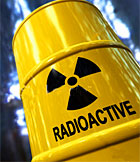
What to do with
"those dangerous
uranium stones"
Featured partner
Garden Route
Environmental
Education
Network
" We are the first generation with tools to
understand changes in the Earth's system
caused by human activity, and the last
In the News
- The
with the opportunity to influence the
importance of
course of many of the changes now
documentaries
rapidly under way"
- Where does
your fish come
Peter Vitousek, Stanford University 1997
from?
- Precious
Wetlands of
Angola
- Open Day on
the West Coast
Welcome to the fourth edition of the DLIST Newsletter, this time dedicated to
- Deforestation
Earthnotes, a film festival in a box. Our collection of environmental
in Namibia
documentaries has been travelling from town to town, where many old and new
- Getting
DLIST partners organised local festivals. Thanks to the enthusiasm and energy of
inspired and
everyone involved, many people and students around South Africa and Namibia
wiser!
were able to learn more about environmental problems and discuss solutions,
making the DLIST network grow even bigger. Next year we want to include films in
Portuguese and take them also to Angola. A big thank you to all the filmmakers,
distributors, and festival organisers!
Recent
Discussions on
For this newsletter, we have invited environmental organisations, film producers
DLIST
and environmental experts who were involved in Earthnotes to write about some
Read discussion
of most discussed topics during the festival. Read about nuclear waste in
summaries
Namaqualand, SASSI's appeal to us all to become more responsible seafood
consumers, the Cape West Coast Biosphere Reserve, the power of
documentaries, tips to reduce our waste and save water, wetlands in Angola,
New to the
and deforestation in Namibia. Find out about our new Partner, the Garden Route
document library
Environmental Education Network, and check the latest discussions and new
Read document
documents on DLIST. If you want to hear more about Earthnotes or have ideas for
summaries
next year, write to us!
The newsletter presently goes to all registered DLIST users, as wel as many people
Website Shortcuts
who may be new to the platform. If you've never heard of DLIST, you can find out
- DLIST Home
more here. If you have suggestions for newsletter articles, please write to our
Page
team at admin@dlist-benguela.org.
- About DLIST
- Contact DLIST
Best regards
The DLIST-benguela Team
If you have any
suggestions for the
next edition, or
there is something
you feel we ought
to include, please
contact our team
at admin@dlist-
benguela.org.
Consider this
newsletter also
your tool to share
information and
good ideas.
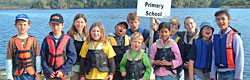
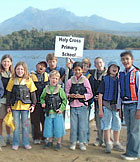
Garden Route Environmental Education Network GREEN was launched in 2001 with the aim of bringing together
teachers and service providers to share our resources and learn
from each other. The Earthnotes documentaries were another
`tool' used by GREEN for local conservation education. In schools
in George, documentaries such as Benguela Current Large
Marine Ecosystem, Vanishing Waters and Knysna, the Embattled
Estuary helped teachers illustrate ecosystem interrelatedness,
By Lorraine McGibbon
plant and animal adaptations and man's influence on natural
resources. At public screenings, the subjects real y got the
audience talking and planning, as they asked themselves "has
the municipality seen this?"
^ top
[ find out more ]
IN THE NEWS
The importance of documentaries
Where does your fish come from?
By Maria Terezinha Vaz, film producer
By Timony Siebert, WWF South Africa
Documentaries are a growing form of communication that
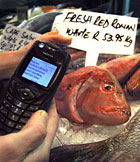
How much do YOU know about your seafood? Have you
provides the kind of news and information that the main
ever wondered where your fish comes from and how it was
stream news and the media moguls have been hiding. In a
caught, and do you know that some species are severely
time when 70% of al media worldwide is controlled by
overfished? These questions were highlighted during the
eight companies, the importance of independent
recent screening of `Farming the Seas' as part of the
documentaries is all the more evident in helping to
Earthnotes film festival. Discerning consumers may have been
educate people and promote much needed changes in
shocked to learn that many traditional fisheries are
our societies.
threatened with collapse due to overfishing, unsustainable
practices and habitat destruction. Yet we can make a
difference by becoming more responsible seafood
[ find out more ]
consumers. The Southern African Sustainable Seafood
Initiative (SASSI) has condensed all information in a nifty fold-
Precious Wetlands of Angola
up wallet card which divides species according to how
With José Ngola, Namibe's Provincial Directorate for
sustainable their stocks are. Next time you buy fish or dine out,
Agriculture, Fisheries and Environment
remember to choose a species from the card's Green List.
Some of the local environmental documentaries shown at
Earthnotes festivals have reminded us how important the
[ find out more ]
wetlands of the region are for biodiversity conservation and
sustainable livelihoods. While South Africa and Namibia are
signatories to the Ramsar Convention, Angola is also giving
Open Day on the West Coast
steps to protect her incredibly rich water resources. Read
By Melissa Baird, Cape West Coast Biosphere Reserve
more about the latest wetland policy and training
On the 6th October 2007 The Cape West Coast Biosphere
developments in Angola, and find out what makes Saco
Reserve hosted its first open day at the West Coast Fossil Park.
dos Flamingos near Luanda so special.
Stretching northward from Diep River in Cape Town, South
Africa, to the Berg River, the Cape West Coast Biosphere
Reserve was born from the recognition of the need to ensure
[ find out more ]
appropriate development of the West Coast region. At the
Open Day, people from the surrounding communities
Deforestation in Namibia
stopped by to enjoy local arts and crafts, music, and
The rate at which deforestation is occurring in Namibia,
environmental films, and met representatives of the Cape
coupled with the region's already drought prone
West Coast Biosphere Reserve to learn more about what the
environment, can lead to alarming situations of
biosphere means to them.
desertification and food shortages. So where does the
solution lie? Many believe that the main solution, among
[ find out more ]
others, lies in changing the overal patterns of energy
consumption, moving towards renewable energy sources
that are community-based and reduce the use of less
Getting inspired and wiser!
sustainable sources such as fossil fuels and firewood. Read
The power of image is unquestionable. Environmental
some insights from recent debates on the DLIST discussion
documentaries sometimes paint a daunting picture of our
forum and during Earthnotes festivals.
planet, but some of them have the power to engage us,
giving us hope and inspiration, and mobilising us to act. Some
of the Earthnotes films have certainly made people talk and
[ find out more ]
share ideas. In an effort to share the positive side of these
discussions more widely, we have gathered thoughts that
were raised and ideas for action. Too much waste and too
little water? Take home some tips to recycle waste and to
save our water.
[ find out more ]
RECENT DISCUSSIONS
Linking ICT with Poverty Alleviation How can DLIST Contribute to Poverty Alleviation?
How can Information and Communication Technology (ICT) help alleviate poverty? Should we turn to the policies or seek
more practical solutions, and how can DLIST help? Our DLIST members discuss the issue of poverty alleviation.
[ visit thread ]
Monopoly of Power Supply is the Enemy of the Alternative Source
DLIST users from East Africa discuss the relations between Government, major companies and civil servants in energy sources,
supply and consumption. Are Government and private companies controlling the energy sector in Tanzania, causing high
electricity prices and lack of development of alternative source?
[ visit thread ]
Man Made Deforestation
The issue of deforestation in Namibia is discussed--what has caused the increase in deforestation and how can it be
NEW IN THE DOCUMENT LIBRARY
· Southern African Sustainable Seafood Initiative (SASSI) Pocket Guide
[ see details ]
· Southern African Sustainable Seafood Initiative (SASSI) Booklet
[ see details ]
· The Current Status of Spatial Policy Planning in the Western Cape (in the Western Cape Provincial Spatial
Development Framework)
[ see details ]
· Nuclear Energy Policy and Strategy for the Republic of South Africa (July 2007) - Draft for Public Comment
[ see details ]
· City of Cape Town Community Waste Drop Off Facilities
[ see details ]
· Collect Waste for Recycling Leaflet
[ see details ]
· Draft Waste Management Bill (2006, South Africa)
[ see details ]
· Information and Communication Technologies (ICTs) and Poverty Reduction in Sub Saharan Africa - A learning
Study Synthesis
[ see details ]
· Country Report: Angola In: Environmental Impact Assessment in Southern Africa
[ see details ]
· From Grain Pits to Silos-Indigenous Knowledge Series
[ see details ]