|
PROJECT CONCEPT
REQUEST FOR PIPELINE ENTRY |
|
Agency’s Project ID: PIMS No. 3246
GEFSEC Project ID:
Country: Belarus, Russian Federation, and Ukraine
Project Title Implementation of Priority Interventions of the Dnipro Basin Strategic Action Programme: Chemical Industrial Pollution Reduction and The Development of Joint Institutional Arrangements.
GEF Agency: UNDP
Other Executing Agency(ies): UNOPS, UNIDO
Duration: 60 Months
GEF Focal Area: International Waters
GEF Operational Program: OP 8
GEF Strategic Priority: IW 1
Estimated Starting Date: July 2007
Estimated WP Entry Date: Nov 2006
Pipeline Entry Date: June 2004 |
|
Financing Plan (US$) |
|
GEF Project/Component |
|
Project (estimated) |
$7,000,000
|
PDF A*
|
|
PDF B**
|
|
PDF C
|
|
Sub-Total GEF |
$7,000,000
|
Project Co-financing (estimated) |
GEF Agency
|
TBD
|
Government
|
$7,300,000
|
Bilateral
|
TBD
|
NGOs
|
$700,000
|
Others
|
TBD
|
|
Sub-Total Co-financing: |
$8,000,000
|
|
Total Project Financing: |
$15,000,000
|
|
PDF Co-financing (details provided in Part II, Section E – Budget |
GEF Agency
|
TBD
|
|
National Contribution |
|
Others
|
|
|
Sub-Total Co-financing: |
|
|
Total Project Financing: |
|
|
* Indicate approval date of PDFA
** If supplemental, indicate amount and date of originally approved PDF |
|
Record of endorsement on behalf of the Governments:
|
(Enter Name, Position, Ministry) | |
Date: (Month, day, year) |
|
|
|
|
|
|
|
This proposal has been prepared in accordance with GEF policies and procedures and meets the standards of the GEF Project Review Criteria for Project Concept approval.
|
|
Frank Pinto
Executive Coordinator |
Nick Remple GEF Regional Coordinator for Biodiversity and International Waters
Project Contact Person |
|
Date: 8 July 2004 |
Tel. and email:, +421-2-59337458, nick.remple@undp.org |
PART I - Project Concept
A - Summary
This Project Concept builds on the previous GEF investment in the Dnipro Basin, the development and country adoption of the Dnipro Basin Strategic Action Programme. As a priority, GEF support will focus on a Full-Sized Project Proposal to directly address the International Waters issue of industrial chemical pollution.
The development of the Dnipro Basin Strategic Action Programme (SAP) followed on from concerns expressed in the 1990s about the progressive degradation of the Dnipro River ecosystem, particularly in the middle and lower reaches. These concerns tied in closely with those raised over the degradation of the Black Sea environment, which led to the GEF support of the Black Sea Transboundary Diagnostic Analysis (TDA) and the Black Sea SAP. This in turn linked with the Danube SAP, now institutionally connected to the Black Sea programme through the “Strategic Partnership addressing Transboundary Priorities in the Danube/Black Sea Basin”.
The GEF project supporting the development of the Dnipro Basin SAP (Annex 4) was approved in December 1999 by the GEF Council, and became effective with inception workshop in 2001.
The development of the Dnipro TDA and SAP was the result of the joint effort of the three riparian countries (Republic of Belarus, Russian Federation, and Ukraine), assisted by international executing agencies. These included UNIDO (United Nations Industrial Development Organisation), IDRC (International Development Research Centre, Canada), IAEA (International Atomic Energy Agency), and UNEP (United Nations Environment Programme).
The SAP is a policy document, negotiated and endorsed by three riparian countries, to be implemented at the highest level of executive power. The SAP focuses on six transboundary priority areas for action to resolve the most urgent issues identified in the TDA: chemical pollution, modification of ecosystems, modification of the hydrological regime, eutrophication, flooding and high ground water levels, and radionuclide pollution.
Of these, the first priority is industrial chemical pollution. This can be categorised as coming from two main industrial sub-sectors, the major industrial complexes, generally with their own treatment facilities, and the groups of smaller urban based industries that discharge effluents through the municipal facilities, the Vodokanals.
Following a review of current donor activities and trends, it appears that major industries may be able to attract investment through other funding agencies. This leaves the more complex tasks of dealing with the large numbers of small industries that cumulatively pose major pollution threats, with the parallel concerns of financing mechanisms and regulation in a sector which is rapidly becoming more privatised.
The GEF Full-Sized Project will therefore address the priority issue of industrial chemical pollution emanating from the smaller urban industries discharging waste through the Vodokanals.
The overall objective of the FPP is to reduce transboundary industrial chemical pollution from small industries currently discharging through municipal waste systems.
This will be addressed through four specific objectives and components:
Objective 1: To introduce cleaner production methods to small industries – including sustainable financing mechanisms and local regulation and monitoring procedures;
Component 1: Pilot Projects to introduce cleaner production methods to small industries discharging through Vodokanals, including sustainable financing mechanisms and local regulation and monitoring procedures
Objective 2: To provide information on the status and progress of the SAP implementation programme to the Dnipro Basin management bodies, and to allow prompt decisions and responses to emergency situations;
Component 2: Transboundary Monitoring and Indicators Programme for SAP implementation;
Objective 3: To introduce harmonised environmental legislation to the three countries, in line with those prevailing in the EU;
Component 3: Harmonization of environmental legislation,
Objective 4: To establish key institutional and management structures within the wider SAP management bodies.
Component 4: Sustainable Institutional and Management Structures for SAP implementation.
B - Country ownership
- Country Eligibility
The proposal is eligible under the GEF OP-8 International Waters, Waterbody-based Operational Programme and falls under International Waters Strategic Priority IW-1, Catalyze financial resource mobilization for implementation of reforms and stress reduction measures agreed through TDA-SAP or equivalent processes. The three countries are eligible for country assistance from the World Bank and from UNDP Technical Assistance Grants.
- Country Drivenness
The three countries have jointly developed a Strategic Action Programme for the Dnipro River Basin, as well as National Action Programmes to carry out interventions to manage pollution and other national and transboundary issues. This project proposal is consistent with the National environmental strategies adopted by the three countries.
In Belarus the key principles in their environmental policies, are set out in the “National Sustainable Development Strategy of Belarus (1997)”, which includes the rational use and protection of water resources.
The “Russian Federation Environmental Doctrine (2002)” emphasises the need for the sustainable use of natural resources, and specifically introduces the “user/polluter pays” principle into environmental management.
In 1991, Ukraine adopted the law “On the Protection of the Natural Environment”, which in turn guided their policy - “Main Directions of the National Policy of Ukraine in the Field of Environment Protection, Nature Resource Use and Environmental Safety”. This policy document recognises the need to work at the basin level, both on environmental rehabilitation and water quality improvements.
While at present there is no single legal framework for environmental cooperation between the three countries, there are existing bilateral agreements between all three countries on the joint use and protection of transboundary waters.
However, in order to provide a stronger joint commitment to action, the countries have drawn up an “Agreement on Cooperation in the Field of Management and Protection of the Dnipro Basin” (The Agreement – Annex 1). This document forms the first part of the SAP and will be endorsed at the highest levels of Government in the three countries; this will then become the main instrument for national and regional actions to implement the SAP.
In the meantime, Ukraine has already made significant commitments to implementing some of the proposed actions in the SAP and the Ukraine NAP. These include the removal of minor sluices and cleaning of tributaries, both of which have led to improvements in water quality, with positive responses from local NGOs.
C – Program and Policy Conformity
- Program Designation and Conformity
The project falls under Operational Programme Number 8, Waterbody-based Programmes and IW SP-1, Implementation of Strategic Action Programmes.
The project addresses significant transboundary environmental concerns in the Dnipro Basin, a water-body shared by the three countries, the Republic of Belarus, the Russian Federation and Ukraine. The importance of these transboundary issues has been demonstrated in the Transboundary Diagnostic Analysis and the Strategic Action Programme, prepared under the current GEF/UNDP project RER/99/G31/A/1G/31.
The SAP development project demonstrated national commitments to joint environmental management, incorporating priority investments into national plans and supporting and establishing an institutional infrastructure necessary to ensure the long-term success of these interventions. These have included the development of the Agreement, the creation of national and regional stakeholder institutions with responsibility for, initially supervising and advising the project, and subsequently functioning as the main SAP advisory and executive bodies
The FPP project will build on previous regional experience of the joint management of shared water bodies, including the on-going GEF programmes supporting the improved management of the Black Sea, the Danube and the Caspian Sea. In doing so, the project will also provides lessons for joint management of other water bodies in the Europe and Central Asia countries (ECA), and deal with issues relating to EU Accession countries and harmonisation with EU Legislation.
2. Project Design
The starting point of the design of the full sized project is the major transboundary issues of the basin, prioritised in the TDA and SAP, developed under the previous GEF project.
The prioritisation criteria included: the transboundary nature of an issue; the scale of impacts on the Dnipro Basin and Black Sea ecosystems; the scale of impacts of an issue on economic activities, the environment and human health; linkages with other environmental issues and economic sectors; and expected multiple benefits.
On the basis of the above criteria, the TDA and the SAP identified six priority regional environmental issues.
Table 1 Priority Environmental Issues identified in the TDA and the SAP
|
Regional Priority of
Major Environmental Issues |
Priority Sectors |
|
Industry |
Agriculture
|
Fisheries
|
Municipal services |
Transport
|
Energy
|
Chornobyl
|
|
1 Chemical pollution |
1 |
2 |
6 |
3 |
4 |
5 |
- |
|
2 Loss of biodiversity/ecosystems |
5 |
1
|
3
|
4
|
6
|
2
|
-
|
|
3 Changed river flow |
5 |
2
|
6
|
4
|
3
|
1
|
-
|
|
4 Eutrophication |
3 |
1
|
4
|
2
|
6
|
5
|
-
|
|
5 Radionuclide Pollution |
2 |
-
|
-
|
-
|
-
|
3
|
1
|
|
6 Flooding and high groundwater |
2 |
1
|
-
|
3
|
4
|
-
|
-
|
The major environmental issue throughout the region is chemical pollution, stemming directly from Industrial Production[1].
The Water Pollution Index, adopted by all three countries as a tool to assess surface water quality, generally shows increasing water pollution as the river flows downstream, to levels described as “moderately polluted”. Concentrations of metal contaminants are relatively high in transboundary sections of the river, with fishery Maximum Acceptable Concentrations (MAC) exceeded in all water samples. MAC limits were exceeded for zinc, copper, lead and arsenic in fish samples.
The general pattern of industrial and urban development in the Dnipro Basin has been along the main Dnipro River and major tributaries, with heavy chemical, metallurgical and agro-industries dominating the major industrial complexes.
With deteriorating economic conditions within the region in the 1980s and 1990s, industrial production declined. As a result there has not been a major change in industrial pollution load. However, many of the remaining industries are using outdated processes, these discharge significant levels of pollutants.
It is only recently that there has been a reversal of this economic decline, with an expansion of industrial production. In addition there has been a major trend towards privatisation in all three countries, particularly of the smaller industries.
The key document prepared as an input to the SAP and TDA dealing with pollution, is the “Identification and Analysis of Pollution Sources (Hot Spots) – Priority Investment Portfolio”[2].
This report divides priority pollution hot spots into waste discharged from “Vodokanals” (municipal water and sanitation agencies) and other site specific pollution sources. The Vodokanals process wastewater from residential areas as well industrial effluents.
Table 2 Priority Pollution Hotspots
|
Vodokanals
|
Other Priority Pollution Sources |
|
Belarus |
4
|
1 x Refinery Treatment Facility |
|
Russia |
4
|
Intensive Livestock Production Units |
|
Ukraine |
7
|
3 x Metallurgical Combined Works |
While the volume of industrial waste treated by the Vodokanals is generally much less than the volume of domestic waste, the constituents of industrial waste are often the major concern in the treatment processes[3]. The priority concern in the SAP is the combined impact of waste discharged by small industries to the Vodokanals. In many cases these enterprises are either in the private sector or in the process of being transferred to the private sector.
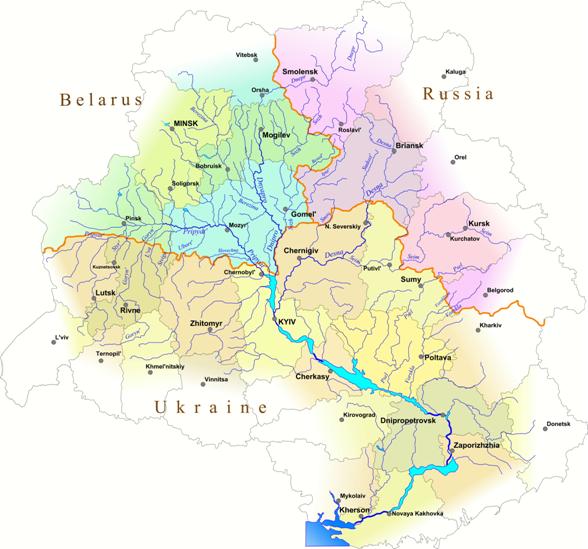
Map 1 Dnipro Basin Priority Pollution Hotspots[4]
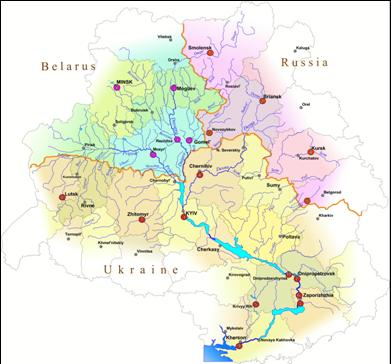
In addition, while some donors have been approached to resolve industrial pollution and production constraints for some of the major industries[5], at present no donors have shown their willingness to support the introduction of cleaner production technologies into the smaller industries. This is a clear “gap” that should be addressed by the GEF within the framework of the SAP.
2.1 The Full Sized Project: Implementation of Priority Interventions of the Dnipro Basin Strategic Action Programme: Chemical Industrial Pollution Reduction and the Development of Joint Institutional Arrangements.
The long-term objective of the full sized project focuses on the key issues identified in the TDA and SAP.
The overall objective of the project is to reduce transboundary industrial chemical pollution from small industries currently discharging through municipal waste systems.
This is effectively a refinement of the key objective of the previous GEF supported SAP development project, which was “…to remedy the serious environmental effects of transboundary pollution and habitat degradation in the Dnipro Basin…”.
Component 1: Pilot Projects to introduce cleaner production methods to small industries including sustainable financing mechanisms and local regulation and monitoring procedures
This objective will be achieved through three project outputs, the introduction of appropriate technologies, supported by a sustainable financing system, regulated and monitored by local institutions.
Output 1.1: Cleaner production processes installed in one or more small industries in one or more priority Vodokanals in each country
The project will direct a number of pilot investments to existing small industries, currently discharging through the Vodokanals, to implement a range of cleaner production technologies, including retrofitting cleaner production systems and pre-treatment of effluents. This would assist companies in rationalising their production processes and save money on raw materials, energy, water and water treatment.
The objective is to achieve a win-win situation: enhanced profits through more efficient environmentally sound production; and environmental gains through minimised pollution.
The project will draw on the lessons learned from the Danube TEST Project – Transfer of Environmentally Sound Technology. This approach adopts a critical path analysis, starting with the financial viability of the enterprise, following by a cleaner production assessment, which identifies pollutant reduction measures that an enterprise could undertake using available financial resources. This is followed by an industrial management assessment is undertaken. At the end of these two assessments (cleaner production and industrial management), the enterprise would have sufficient information about its production processes and problems to undertake an environmentally sound technology assessment. The EST assessment would identify the combination of best available techniques (combination of process change, pre-treatment and final treatment) and best available practice (sectoral environmental control strategies and measures) that would bring the enterprise into compliance with environmental norms.
An additional investment under consideration is the establishment of a regional Cleaner Production Centre. This would be based on the experience of establishing the Czech Cleaner Production Centre, which has operated since 1994 under a very similar industrial, institutional and economic development background[6].
Table 3 Vodokanals from which Pilot Projects will be identified for Cleaner Production Methods and Pre-treatment of Effluents from Small Industries
|
Country/Vodokanal |
Industries/ some pretreatment |
Comments
ND – No Data |
|
Belarus |
|
|
|
Retchitsa Vodokanal |
ND / 0
|
Industrial effluent forms 1/3 of treated waste |
|
Minsk Vodokanal |
ND
|
|
|
Mogilev Gorvodokanal |
ND
|
Man-made fibres, heavy metals and other waste |
Gomelvodokanal
|
ND
|
|
|
Russia |
|
|
|
Smolensk Vodokanal |
50 / 20
|
Mainly Food and Electronics |
|
Briansk Vodokanal |
ND
|
States industries have “pre-treatment if required” |
|
Novozybkov Vodokanal |
ND
|
|
|
Kursk Vodokanal |
ND
|
Industrial effluents exceed MAC |
|
Ukraine |
|
|
Kyiv Vodokanal
|
300 / 65
|
Heavy metal contamination of sludge |
|
Dnipropetrovsk Vodokanal |
130 / 30
|
Mainly Food, Electronics and Engineering |
|
Zaporizhya Vodokanal[7] |
90 / 15
|
Metallurgical, Food, Electronics and Engineering |
|
Chernihiv Vodokanal |
40 / 10
|
Heavy metal contamination of sludge |
|
Zhytomyr Vodokanal |
40 / 9
|
Mainly Food, Electronics and Engineering |
|
Loutsk Vodokanal |
30 / 4
|
Food, Engineering and Processing |
|
Kherson Vodokanal |
45 / 10
|
Mainly Food, Electronics and Engineering |
Many of these small industries are now in the private sector, or in the process of being privatised, as a result there are a whole new set of accompanying issues that require attention, including financing mechanisms, and regulatory and legislative control mechanisms.
Output 1.2: Sustainable Financing Mechanisms introduced to support the implementation of Cleaner Production Methods in Small Industries
The focus of this component will be on the private sector, and there is already considerable experience to draw on from within the region.
These could include soft loans, tax incentives, licensing and tariffs, an approach adopted in the EBRD/GEF project proposal “Danube Pollution Reduction Programme – Financing of Pollution Reduction Projects by Local Financial Intermediaries”.
The initial investment costs could be met through loans, either at “soft” rates, or with the incremental cost component of cleaner production provided as a grant, or with the loans discountable against future taxes[8]. The tax options could include incentives for future maintenance of facilities and reduced effluent challenge – taxes on effluent load and discharge, or tax reductions on reduced effluent load and discharge[9].
However, both existing and proposed financial mechanisms need to be supported by legislation and regulating institutions.
Output 1.3: Appropriate Regulation and Monitoring Procedures introduced for Small Industries discharging into Vodokanals
Clearly this component links closely with the previous output, sustainable financing mechanisms, as these mechanisms would become a component of regulatory procedures.
There are three elements to this intervention, defining acceptable discharge patterns, introducing legal and institutional regulatory mechanisms, and establishing appropriate monitoring procedures..
As a starting point, the impacts of different pollutants need to be considered, and different approaches reviewed to setting standards. With some pollutants the water quality objectives may be set by the total annual load of a particular pollutant or group of pollutants, or by the maximum acceptable concentration of that pollutant in the effluent.
There are then effectively two approaches to regulation, end of pipe control and process based control. The objective of the two approaches is the same – to limit the discharge of pollutants at the point of discharge to “acceptable” levels. While traditionally the end of pipe approach has been most commonly adopted, the “process-based control” approach is now strongly promoted by the EU through the 1996 “Integrated Pollution Prevention and Control Directive". This authorises a specific industrial process (cleaner production technology or pre-treatment facility), occasionally in conjunction with limited, or site specific, effluent quality specification.
The present institutional arrangements for regulation are constrained by lack of resources, and in many cases historical conflicts between the need to encourage industrial production and the need to protect the environment. Regulations tend to be set at national levels, with little room for local flexibility. The GEF pilot projects will to explore the possibility of establishing local government bylaws to allow municipal authorities to set their own criteria according to local conditions – including Best Available Technology (or best available technology not entailing excessive costs BATNEEC).
The final component is monitoring compliance and effectiveness of operation. Whether regulation is through process control or emission levels and patterns, the objective is to reduce emissions. The key will be to monitor at the point of discharge to indicate either compliance or the effectiveness of the allowed process. Secondly monitoring will be carried out at the point of discharge of the Vodokanal – or of the quality of processed sludge.
Outcomes:
· Reduced pollution loads to the Dnipro from small industries/vodokanals
· Improved profitability of selected small enterprises
· Reduced use of local and imported raw materials
· Improved local legal and regulatory frameworks for small industries
Component 2: Transboundary Monitoring and Indicators Programme for SAP implementation;
One of the principles incorporated into all SAPs is the free exchange of information. This is specifically written into the Dnipro River Basin “Agreement”, the formal starting point for the three countries to implement the SAP. Article 9 deals with the establishment of a Transboundary Monitoring Programme and the collection and analysis of information, including transboundary pollution loads and sources of contamination. Article 10 deals with the establishment of an “Interstate Environmental Data Base”, an on-line resource for the distribution and free exchange of environmental information.
An outline transboundary monitoring programme has been developed by the Intergovernmental Monitoring Group established during the development of the SAP. The programme takes into account recommendations of the UN ECE Working Group on environmental monitoring and assessment established within the framework of the Convention on the Protection and Use of Transboundary Watercourses and International Lakes (Helsinki, 1992).
As it stands, the Transboundary Monitoring Programme is focused on specific quantifiable river water parameters. To establish the success of the SAP, a wider framework is required, including the use of Process Indicators, Stress Reduction Indicators and Environmental Status Indicators. The project will broaden the remit of the TMP and include parameters based on the framework drawn up by the International Waters Task Force (IWTF) and presented in a GEF report in 2002[10]. The programme will also draw on the proposals for Transboundary Monitoring prepared by the TACIS Transboundary Water Quality Monitoring Project, which had a particular focus on the major Dnipro tributary, the Pripyat River[11].
The project will support the establishment of the regional targeted transboundary monitoring programme with information needs and end-users clearly identified. This will run in conjunction with national monitoring programmes and is therefore clearly an incremental cost associated with the international management of a shared river basin.
The programme is expected to be implemented over fifteen years, in three stages. By the end of Stage 1, the first five years, the monitoring component will have produced the following Outputs:
· Output 2.1: Laboratories and hydrological stations re-equipped to minimum agreed regional standards;
· Output 2.2: Measurement quality control system established, including inter-laboratory comparative analysis;
· Output 2.3: Completed inventory of transboundary water pollution sources, including diffuse sources;
· Output 2.4: Coordinated classification of water quality and mass transfer assessment methods developed;
· Output 2.5: Comprehensive expeditionary inspections of Dnipro basin transboundary locations completed
· Output 2.5: System of process, stress reduction and environmental status indicators adopted and reporting mechanisms agreed
Outcomes: Effective and sustainable mechanisms in place for monitoring long-term SAP implementation.
Component 3: Harmonization of environmental legislation
One of the actions proposed in the SAP is the “harmonisation of legislation relating to the prevention of chemical, nutrient and radionuclide pollution in line with EU approaches”
Considerable work has already been undertaken during the development of the TDA and the SAP, and the conclusions presented in two reports. These were the “Harmonisation of Environmental Legislation of The Dnipro River Countries with the Legislation of EU Member States”, prepared by the National Working Groups of Belarus, Russia and Ukraine; and “Environmental Legislation of Russia, Ukraine and Byelorussia Compared with the Principles of EU Environmental Law”, prepared by UNIDO[12]..
The three countries have ratified the ECE (UN) Convention on the Protection and Use of Transboundary Water Bodies and International Lakes”. While originally focused on the member countries of the Economic Commission for Europe, this convention has been extended to include other shared water bodies.
This is a specific issue for Ukraine, where both the government and the main opposition advocate joining the EU and strengthening ties with Europe. In addition, while the Republic of Belarus and the Russian Federation are unlikely to be accepted into the EU in the immediate future, they are also interested in bringing national legislation in line with the EU, where it might be useful in advancing the process of reformation.
It is clear that the harmonisation of legislation is often a long-term process, and the SAP envisages this is as taking up to fifteen years to complete. However, it is likely that changes will be introduced gradually, and the project will advise on implementing appropriate legislative changes as they are developed, and will monitor compliance with this legislation as it is implemented.
The main areas of concern fall under the six EU directives.
|
Document |
Priority |
|
Framework Directive 2000/60/ЕС, which establishes the guidelines for the activity in the sphere of water policy. |
I |
|
Directive 96/61/ЕС on integrated prevention of pollution and control [6] |
II |
|
Directive 91/271/ЕЕС on municipal sanitary water treatment [7] |
II |
|
Directive 80/788/ЕЕС on drinking water quality |
III |
|
Directive 76/160/ЕЕС on water quality in recreational bathing areas |
III |
|
Directive 91/676/ЕЕС on the protection of water from nitrates arriving to natural environment with agricultural waste |
III |
Outputs:
· Output 3.1: Framework Directive 2000/60/ЕС Water Policy – additional policy issues included as addenda to the Agreement and incorporated into the revised SAP;
· Output 3.2: Directive 96/61/ЕС Integrated Pollution Control –.action programmes developed to eliminate of the discharge of contaminants included in List 1 and the reduction of the discharge of contaminants included in List 2 of the Directive. A comparison of each article of the Directive with national legislation in the format of concordance tables, and a a timetable for introduction of changes and amendments to national legislation.
· Output 3.3: Directive 91/271/ЕЕС Municipal Sanitary Water Treatment – legislation modified to set timetable for provision of systems for inhabited centres of over 15,000 people and subsequently 2,000 to 15,000. Environmentally sensitive areas classified and specific guidelines developed. Adoption of EU monitoring practices.
· Output 3.4: Directive 80/788/ЕЕС Drinking Water Quality – adoption of EU drinking water quality standards (or maintain higher standards if local legislation already requires it), develop a timetable for introduction of changes and amendments to national legislation.
· Output 3.5: Directive 76/160/ЕЕС Water Quality in Recreational Bathing Areas – adoption of EU drinking recreational bathing water quality standards, develop a timetable for introduction of changes and amendments to national legislation.
· Output 3.6: Directive 91/676/ЕЕС – Protection of Water from Nitrates from Agricultural Waste – a comparison of each article of the Directive with national legislation in the format of concordance tables.
Outcome: Improved national and regional legislative frameworks for transboundary pollution reduction in the Dnipro River basin.
Component 4: Sustainable Institutional and Management Structures for SAP implementation
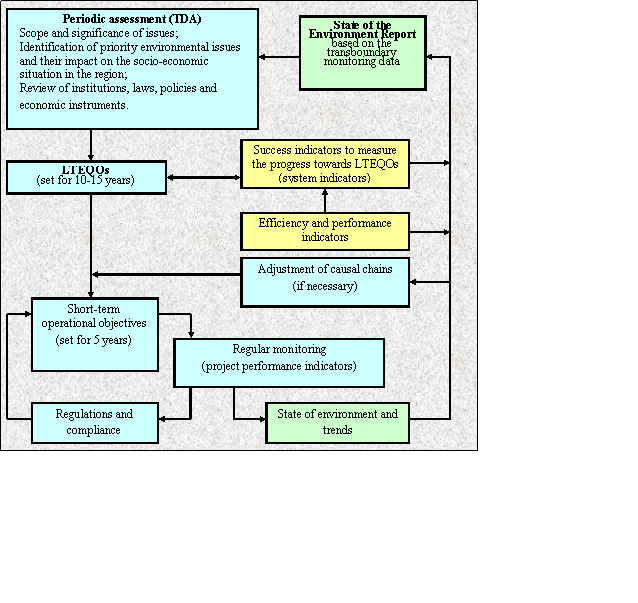
The Agreement proposes an outline institutional framework to supervise the functioning of the SAP. Article 4 states that the countries will establish the Dnipro Basin Commission, to be assisted by a permanent secretariat, responsible for providing organisational and technical support. This in turn is advised by the Dnipro Basin Council, a permanent body including government bodies, scientific research organisations; major water users (industries and institutions) and non-governmental environmental organisations and other community groups.
One of the key tasks of the management body will be to monitor and report on the progress of implementing the SAP and to revise the TDA and SAP in response to changes in environmental challenges.
Figure 1 Proposed Institutional Structure to Implement the SAP[13]
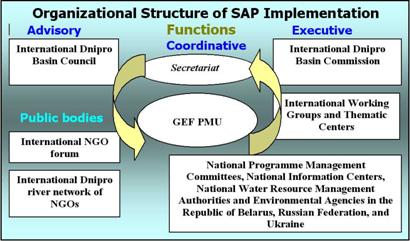
Most of the proposed institutional bodies are already functioning – even if only in a fledgling role – under the GEF SAP development project.
One of the major tasks of the management body will be to attract and coordinate bi-lateral and multi-lateral co-financing for projects. By the time the full project is initiated there will have been two Donor Conferences, the first held in 2004 and the second proposed for 2006. The objective of these conferences is to confirm co-financing for SAP activities, both those included in the proposed full project, and other parallel activities that are considered as priorities in the SAP. This approach to Donor coordination will be included as a regular procedure within the SAP management activities and may be supported by the full sized project.
Clearly there are major costs associated with establishing and running this institutional framework. The overall costs will vary according to the size of the institutions, the frequency of meetings, attendance at meetings and required outputs[14]. The three countries will cover the principal costs of setting up and starting to run the Commission and Secretariat; the full sized project will provide technical assistance and some preliminary support to the processes of establishing and running these bodies.
Outputs:
· Output 4.1: Agreed timetable and regular meetings of management bodies and records of meetings publicly available;
· Output 4.2: Confirmed and sustainable budgetary provisions for supporting the SAP management bodies;
· Output 4.3: Regular reporting procedures in place, including the interpretation of monitoring data to guide decision making and policy modification;
· Output 4.4: Stakeholder involvement expanded to include private sectors, specifically private industries and CBOs and other local organisations in areas affected by SAP interventions;
· Output 4.5: 5 Year revised and updated SAP and TDA, in response to impacts of SAP implementation projects, new challenges and modified environmental quality objectives, annual amendments as required.
Outcomes: Permanent and sustainable multi-country institutional (policy and executive) and participatory mechanisms established and operational for long-term integrated management of the Dnipro River basin.
2.2 Project Alternatives
2.2.1 No Further GEF Investment
The GEF has already made a considerable investment in supporting the regional development of the SAP and in defining preliminary interventions to counteract major environmental issues, especially those of a transboundary nature.
This involvement goes back to 1995, when the three countries agreed upon a memorandum requesting UNDP assistance in the development of a GEF Environmental Management Plan for the Dnipro Basin. In 1996, a preliminary grant was made available (RER/95/G42/A/1G/31) for the compilation of data for the preparation of a TDA. In parallel with this the International Development Research Centre (IDRC Canada) had been developing a series of independent initiatives focused on the rehabilitation of the Dnipro River Basin.
In 1999, the GEF agreed to fund the full development of the SAP and TDA, with UNDP as the Implementing Agency. This programme was managed by UNOPS as the Executing Agency, and continued to involve IDRC as well as bringing in UNIDO and the IAEA for specialist support to specific studies.
Meanwhile, the initial focus of the GEF and Implementing Agencies in developing the Black Sea SAP, has expanded into the GEF Strategic Partnership addressing Transboundary Priorities in the Danube/Black Sea Basin. By definition this includes the Dnipro Basin, and indeed Belarus, the Russian Federation and Ukraine are specifically included in recent projects.
Given the previous and ongoing, it would be inconsistent for the GEF not to fund a full project proposal on the management of transboundary industrial chemical pollution, addressing this regional priority for the Dnipro Basin and the Black Sea.
2.2.2 Developing a Multi-sectoral Project Proposal
One option for GEF involvement would be to support the SAP across a wide range of multi-sectoral interventions, establishing a more holistic programme of management.
However, this is contrary to the fundamental concept of the SAP, which accepts that there will always be resource constraints, and therefore sets priorities for interventions. The regional priority identified in the TDA and the SAP is industrial chemical pollution. If resources are adequate to significantly address this issue, then this would, by definition become the focus of the next phase of GEF activities.
In addition, other projects and other agencies have already committed themselves to actions in other sectors, both at the national and regional levels. Indeed the World Bank-GEF Investment Fund, under the Strategic Partnership addressing Transboundary Priorities in the Danube/Black Sea Basin, will finance a range of initiatives to reduce nutrient load into the Black Sea, and while mentioning only the Danube, specifically includes Russia, Belarus and Ukraine[15].
The GEF has also been approached to fund biodiversity projects both specifically linked to the Dnipro[16] and more generally in the basin, dealing with forestry, grasslands and agriculture. The EBRD is also financing investments in agribusiness and industry to improve performance and reduce pollution, although so far these are largely limited to Ukraine.
While the SAP is in itself a mechanism to supervise and report on the management of multi-sectoral and regionally prioritised interventions, it is also a mechanism for setting priorities. Given resource constraints the GEF should focus on the development of institutional implementing mechanisms for the SAP and direct interventions in industrial chemical pollution, the regional priority identified in the SAP and TDA.
3. Sustainability
The preliminary investments in developing the SAP and TDA, and in the preparation of a FPP, are not designed as sustainable planning processes, however the subsequent management of the SAP and the interventions implemented under the SAP must be institutionally and financially sustainable.
The project will focus on smaller industries discharging untreated or partially treated waste into municipal systems. In many cases it is these industries that are now being privatised. However, these interventions must be technically and financially sustainable, and supported by appropriate legislative and regulatory mechanisms. The design of the project specifically draws on the Danube “TEST” approach which takes technical and financial viability as a starting point for evaluating further investment in cleaner production technology.
At the SAP management level, the project will look at the proposed management structures and recommend low cost management systems, including a limited secretariat and targeted meetings. The “Agreement” commits the participating countries to “Convene”, “Establish”, and to “Provide the legal support to and ensure the sustainable operation” of the Commission, the Council, the Secretariat and the International NGO Forum.
The agreement specifies a time-frame for reviewing and if necessary revising the TDA and the SAP – every five years.
However, the main indication of real commitment to implementing the SAP is when the countries themselves undertake the financing of the SAP management bodies, and of the activities indicated in the SAP and NAPs. To some extent, this has already occurred in Ukraine, where certain activities listed in the NAP have been carried out in advance of formal approval of the Agreement or the SAP.
- Replicability
The lessons from the project are particularly relevant to the other CIS and NIS countries, many of which have the same heritage of water management and environmental legislation, and are undergoing similar problems of environmental degradation and industrial and economic transformation.
The previous GEF project, developing the Dnipro Basin SAP, had the benefit of two closely related programmes, the Black Sea and the Danube SAPs which have developed into the GEF Strategic Partnership Addressing Transboundary Priorities in the Danube/Black Sea Basin. In addition, the project was able to access information from other SAP planning exercises held throughout the world, including the Tumen River, Lake Tanganyika and the Caspian Sea[17].
The co-operation required by the three countries to jointly develop an agreed TDA and SAP, was greatly enhanced by their common heritage in terms of scientific background, environmental legislation and economic development.
The move to ever-closer ties with the EU, largely supported through TACIS, has introduced other common elements. The revised TACIS council regulation, running from 2000 to 2006, focuses on six aspects, including institutional and legal reform, environmental protection and private sector and economic development.
The project has developed a web site, specifically to publicise project activities[18], the site has a dual English and Russian interface. Copies of project reports and other relevant materials can be downloaded from the site. Many of the reports are in both languages. The site also includes a discussion forum, in Russian.
As a component of the SAP, this site will be further developed and expanded, and a full web based environmental database will also be established (http://www.dnipro-ecobase.org.ua). The results of future SAP interventions will be published and available in English and Russian on the project web site, along with evaluations of the processes used to develop these interventions. SAP management reports will also be made publicly available.
Within the GEF structure, the lessons from the preparation of the Dnipro SAP will feed into IW LEARN and the training programme currently under development, “The TDA/SAP approach in the GEF International Waters Programme”. Following on from this, the implementation of priority institutional and technical interventions to reduce chemical pollution will all provide replicable lessons for other programmes throughout the region.
Of immediate relevance to other donor agencies is the continued river basin management planning process underway on the Pripyat River[19], a major tributary of the Dnipro, as part of the EU/TACIS funded Transboundary Water Quality Project. This project deals with three other shared river bodies, where, at present only water quality monitoring is taking place. However, in the future this is hoped to extend to management planning, at which point the experiences of preparing a TDA and SAP and subsequently implementing the SAP, become immediately relevant.
The focus of the GEF FPP on waste treatment and cleaner production processes in smaller and often privatised industries, reflects an economic and industrial development situation that is similar throughout much of the CIS. The pilot projects initiated by the GEF under the full project, will therefore provide models that could be replicated in many of the CIS countries. This information will be available in English and Russian on the project web site, and will be made available at regional and international conferences.
As part of the FPP, the project will participate in regional meetings of the GEF Black Sea and Danube River programmes, and through UNIDO in regional meetings on Cleaner Production Technologies.
5. Stakeholder Involvement
During the preparation of the TDA and the SAP, considerable attention was paid to involving a broad range of stakeholders in the determination of environmental and social priorities and in identifying appropriate interventions.
While planning systems differ in each of the participating countries, formal government planning mechanisms involving ministries, research institutions and parastatals, were supplemented through the creation of an International NGO Forum, supported by the International Dnipro River NGO Network.
In order to ensure the continuation of this broad stakeholder involvement in the implementation of the SAP, the project established the International Dnipro Basin Council. The first council meetings were held in 2003. This structure will continue as an advisory body to the SAP management organisation, including the proposed International Dnipro Basin Commission supported by the secretariat.
According to the Council by-law, each riparian country is represented by 23 members drawn from Natural Resources and Environmental Ministries, leading scientific and research institutions and organisations, other government bodies, local self-government bodies of the riparian regions (oblasts), environmental non-governmental organisations and other non-governmental bodies.
The Council may invite observers and experts from other interested ministries and other central government bodies, local executive bodies, local self-government bodies, manufacturing enterprises, scientific institutions and civic organisations of the riparian countries as well as representatives from international organisations.
In addition, during the previous project phase, the preparation of the TDA and SAP, the project provided support to the International Dnipro River NGO Network. Under the framework of implementing the SAP, public and non-governmental organisations will continue to play an important role in the rehabilitation of the Dnipro Basin at all levels.
The SAP includes the following actions to enhance public participation and ownership.
· The enhancement of national legal systems to support public initiatives and ensure the active and effective participation of non-governmental organisations in the implementation of the Dnipro Basin Rehabilitation Programme;
· The acknowledgement and consideration of the interests of the public, as a matter of priority, in the process of formulation and implementation of local environmental action plans;
· The monitoring of SAP implementation by the public;
· Dissemination of information on the state of the Dnipro Basin and participation of the NGOs in this process;
· The integration of environmental considerations into educational programmes adopted in the riparian countries, and active involvement of the NGOs in the promotion of the integrated basin management approach.
This same process of public participation and formal stakeholder involvement through the NGO Forum and the Council, will be active during the implementation of the full sized project. It will also become a permanent component of the SAP management body, providing links with broader funding mechanisms, and reviewing the preliminary implementation of the SAP.
The FPP will include some initial financing to the International Dnipro River Network / International Dnipro Forum of Environmental NGOs, however long term financing will be negotiated as part of the overall costs of SAP management and with support from other NGO sources and from the private sector.
D - Financing
1) Financing Plan
The full sized project will receive co-financing from a range of sources. As a starting point, this will include national government contributions, as well as contributions from NGOs and the private sector. Parallel financing, dealing with other aspects of transboundary pollution, is already under consideration through alternative GEF financing channels and other international funding agencies.
Following the first Donors Conference, the World Bank have clarified their interests in jointly supporting elements of the SAP. The Pollution Reduction in Industry Loan (under preparation for the Ukraine) is targeting many of the industrial environmental hot spots as identified by the SAP. More generally, the bank supports reforms in the environmental sector under Programmatic Adjustment Loans (PAL II is currently underway) - through indexing environmental fees and fines and through the introduction of Integrated Pollution Permits for Industrial Enterprises. The bank is also proposing to establish a Municipal Development Fund Project (under preparation) which would finance priority investments in water supply/wastewater treatment and municipal solid waste management.
The EBRD is in discussion with the three countries on the provision of loans to small industries, loosely based on their experience of previous investments in the region. In December 2003, the EBRD stated that one of their key objectives for the Ukraine was the support of private sector development through establishing credit lines and equity funding in joint ventures and local private companies. Similar financial commitments are indicated in their “Statement of cumulative net commitments” to Russia and Belarus.
2) Cost Effectiveness
The success of direct investment in the introduction of Clean Production Processes to small industries depends on the cost effectiveness of the enterprises and the proposed production systems.
The objective is for a win-win situation, with enhanced profits through more efficient environmentally sound production; with environmental gains through minimised pollution. The starting point for the TEST approach piloted under the Danube SAP, is that the target enterprise must be initially financially viable over a five year period, to merit investment in improved production technologies. In many cases the need is for retrofitting facilities to keep the industries competitive while reducing emissions and complying with local regulations. A starting point is often the introduction of energy reducing processes, leading to immediate financial returns that can then be reinvested in other aspects of cleaner production.
E - Institutional Coordination and Support
1. Core Commitments and Linkages
The World Bank has endorsed the new 2004 to 2007 Country Assistance Strategy for Ukraine[20]. The World Bank has existing Country Assistance Strategies with the Russian Federation covering the period 2003 to 2005 and with Belarus covering the period 2002 to 2004[21]. The project proposals are coherent with the proposed strategies for development outlined in the three CAS documents.
2. Consultation, Coordination and Collaboration between and Among Implementing Agencies, Executing Agencies and the GEF Secretariat
The preceding GEF project, “The Preparation of a Strategic Action Programme (SAP) for the Dnipro River Basin and Development of SAP Implementation Mechanisms”, directly involved a number of Implementing Agencies and Executing Agencies.
The Implementing Agency was UNDP, and the Executing Agency was UNOPS. Both agencies were able to bring in considerable International Waters expertise, both from projects in the area (the Caspian Sea, the Black Sea, the Danube) as well as projects in other regions.
Much of the evaluation of industrial development and pollution was carried out under the guidance of UNIDO[22], as well as the review on Environmental Legislation. The IAEA had the responsibility for reviewing management of nuclear facilities and disposal sites, and for recommending reforms as inputs for the SAP. UNEP provided limited support recruiting a consultancy group to present the GIWA[23] methodology to a preliminary TDA workshop.
Finally the project participated in the 2nd GEF Biennial International Waters Conference, organised by GIWA (Global Internal Waters Assessment).
The input from these agencies has been incorporated in the SAP and TDA, and has led to the development of the specific proposals incorporated in the full sized project.
The Implementing Agency of the full project is expected to be UNDP and again the executing agency UNOPS. Expertise from UNIDO will be drawn on to further develop the pilot projects to introduce cleaner production methods and effluent pre-treatment to small industries, typically in the private sector.
The FPP is expected to bring in and/or work in parallel with a wider range of agencies, including the World Bank and the EBRD.
PART II - Project Development Preparation
N/A
Part III – Response to Reviews
A - Convention Secretariat
N/A
B - Other IAs and relevant ExAs
N/A
C - STAP
N/A
Draft
ANNEX 1 - AGREEMENT ON COOPERATION IN THE FIELD OF USE AND PROTECTION OF THE DNIPRO BASIN
The Parties to this Agreement – the Council of Ministers of the Republic of Belarus, the Cabinet of Ministers of the Russian Federation, and the Cabinet of Ministers of Ukraine – hereinafter referred to as the Parties,
Recognising the historic, economic, social, and cultural significance of the Dnipro River in the formation and development of the three nations of the Republic of Belarus, Russian Federation, and Ukraine;
Conscious of the role of the Dnipro Basin in the formation of ecosystem and climatic processes in the whole European region, and its impact on the Black Sea ecosystem;
Concerned about the ecological state of the Dnipro Basin, and problems relating to the provision of good quality drinking water supply and the conservation of biological and landscape diversity;
Recognising that the efforts currently being made at the local, national, and international level are not sufficient to ensure the substantial improvement of the ecological state of water bodies in the Dnipro Basin, and aware of the threat of loss of the Dnipro Basin ecosystem;
Convinced of the need for agreed political decisions in the field of nature use and environment protection in the Dnipro Basin;
Recognising that the rehabilitation of the Dnipro Basin ecosystem can only be ensured through the focused and coordinated action at the international and national level;
Appreciating the role of the public and the need for raising the public awareness on issues relating to the environmental rehabilitation of the Dnipro Basin,
Referring to the provisions of:
· The global and regional UN Conventions, to which the riparian countries of the Dnipro Basin are parties,
· The bilateral and multilateral agreements on cooperation in the field of environment protection and joint use/protection of transboundary water bodies;
· The Directive 2000/60/ЕС of the European Parliament and Council of 23 October 2000, that sets out the guiding principles and approaches pursued by the European Union in the field of water policy.
HAVE AGREED AS FOLLOWS:
Article 1
The Parties shall develop and pursue an agreed policy in the field of environment protection in the Dnipro Basin, based on the Strategic Action Programme for the Dnipro Basin and the Mechanisms for its Implementation (hereafter referred to as ‘the SAP’), which constitutes an integral part of this Agreement (Annex 1).
Article 2
In accordance with the objectives defined in the SAP, the Parties commit themselves to achieving:
· The sustainable nature use and environment conservation in the Dnipro Basin;
· The environment quality that is safe for human health;
· The protection and conservation of biological and landscape diversity.
Article 3
In order to attain the objectives specified in Article 1 of this Agreement, the Parties shall take necessary steps to:
· Provide the improved legislative/regulatory and institutional mechanisms that are adequate and appropriate for ensuring the sustainable use of natural resources and protection of the environment in the Dnipro Basin at the national level;
· Establish the institutional framework for the international management of the Basin, including the adequate legislative framework for multi- and bilateral cooperation; and enhance cooperation with the international donor agencies in the field of environmental rehabilitation of the Dnipro;
· Provide the legal and institutional framework for encouraging and promoting the public participation in the decision-making process at the national and international level;
· Harmonise the environmental legislation of the riparian countries of the Dnipro Basin with that of the EU;
· Ensure safe water consumption and use in the Dnipro Basin;
· Achieve a reduction in anthropogenic load, for a range of priority chemical substances;
· Adjust the level of anthropogenic load, to take account of assimilating capacity of the Basin;
· Minimise the threat of adverse impact of radioactive pollution on the human health and environment;
· Ensure safe living conditions in the areas affected by flooding events and elevated groundwater levels;
· Ensure the stable ecological state of water bodies, river floodplains, and riparian ecosystems;
· Ensure the conservation and restoration of wetlands that constitute an integral part of the European ecological network;
· Achieve and maintain the optimal pattern of nature reserves and agricultural landscapes;
· Achieve and maintain the optimal forest cover that ensures the sustainability of the Dnipro Basin ecosystems and takes account of their specific zonal features;
· Ensure the stable ecological state of meadows and steppes;
· Create and maintain favourable conditions for the reproduction of native, endemic, and migratory fish species;
· Achieve and maintain the optimal network of nature reserves and ecological corridors.
Article 4
Within the framework of this Agreement, the Parties shall:
· Convene the Conference of the Parties as a supreme body responsible for managing the Dnipro Basin;
· Establish the International Dnipro Basin Commission, to be assisted by a permanent Secretariat. The Secretariat shall be responsible for the provision of organisational and technical support to the activities of the International Dnipro Basin Commission;
· Provide the legal support to and ensure the sustainable operation of the International Dnipro Basin Council, International Dnipro Basin Thematic Centres, and the International Forum of Non-Governmental Organisations (NGO);
· Coordinate the activities of the International Dnipro Basin Commission and bilateral Governmental Commissions on Use and Protection of Transboundary Water Bodies.
Article 5
The Parties shall identify the list of participants to the Conference of the Parties and grant the powers of a supreme international basin management body to this Conference. The primary function of the Conference of the Parties shall be the review of the implementation of this Agreement upon the report of the Commission. Based on this report, the Conference of the Parties shall make appropriate decisions and recommendations, adopted by consensus. The Conference of the Parties shall be convened upon recommendation of the International Dnipro Basin Commission (hereafter referred to as ‘the Commission’), at least on a three-year basis.
The Conference of the Parties shall be convened within one month at the request of any Contracting Party under extraordinary circumstances.
Article 6
In order to facilitate the implementation of the provisions of this Agreement and coordination of joint activities, the Parties shall assign the appropriate executive and administrative functions to the International Dnipro Basin Commission.
The Statute of the International Dnipro Basin Commission and its Secretariat shall be approved by the Conference of the Parties.
Article 7
The Parties shall delegate to the International Dnipro Basin Commission the responsibility for overall coordination of activities of the International Dnipro Basin Thematic Centres and International Expert Working Groups, the National Programme Management Committees, the International NGO Forum, the International Dnipro River NGO Network, set up within the framework of the UNDP-GEF Dnipro Basin Environment Programme and designed to facilitate the implementation of the SAP.
Article 8
The International Dnipro Basin Council (hereinafter referred to as ‘the Council’) shall act as a permanent advisory and consultation body. The Council shall comprise the representatives of the central and territorial executive authorities and local self-governance bodies from the three countries of the Dnipro Basin; the specialists representing leading scientific research organisations; the representatives of major water users (industries and institutions) in the Dnipro Basin, and/or their groups and associations; and the representatives of the non-governmental environmental organizations and other community groups.
The Leaders of the delegations representing each Contracting Party shall act as the Co-Chairmen of the Council and shall approve the list of representatives from each country of the Dnipro Basin.
In its activities, the Council shall closely interact with the Commission, its permanent and ad hoc bodies, national organizations and institutions from the three riparian countries of the Dnipro Basin.
The Council Statute shall be approved by the Conference of the Parties.
Article 9
The Parties shall facilitate the implementation of the Transboundary Monitoring Programme, which constitutes an integral part of this Agreement (Annex 2), in order to:
· Collect reliable information on the ecological state of the Dnipro Basin and make forecasts on potential changes in this state;
· Control the transboundary pollution loads and sources of contamination;
· Make prompt decisions in emergency situations and provide a solid scientific basis for the settlement of potential conflicts;
· Measure the progress and success of the SAP implementation and adjust the identified environmental rehabilitation strategy for the Dnipro Basin in a timely manner, if and where a need arises.
Article 10
The Parties shall agree the procedure for the processing and exchange of information on the basis of the Interstate Environmental Data Base. As part of this Agreement, the Parties shall approve the Procedure for the Interstate Exchange of Environmental Information (Annex 3).
Article 11
The Parties shall initiate the preparation of the Dnipro Basin State of the Environment Report, to be issued every five years, and the Transboundary Diagnostic Analysis. Based on these documents, the Parties shall review and amend, if and where necessary, the Strategic Action Programme for the Dnipro Basin and the Mechanisms for its Implementation, at the international and national level.
Article 12
Any dispute arising in relation to the interpretation or application of the provisions of this Agreement shall be resolved through consultations and negotiations.
Amendments to this Agreement shall be adopted by consensus of the Parties, and any such amendment shall have the form of a separate protocol, which shall come into force and effect in accordance with this Article of the present Agreement and constitute an integral part of this Agreement.
Article 13
The Parties shall jointly develop the rules and procedures on the liability for a failure in the performance of obligations defined by the provisions of this Agreement.
Article 14
The present Agreement shall not limit, alter or affect the rights and obligations of the Parties ensuing from other existing international agreements, relating to the issues covered in this Agreement, or any future international agreements that may be signed in relation to the subject and objectives of the present Agreement.
Article 15
The present Agreement is open for accession by any other country committed to its objectives and tasks.
The present Agreement can be acceded to by any international organisation, provided that the objectives and principles stated in this Agreement are shared by an acceding party.
Article 16
The present Agreement shall come into force and effect on the date of its signing by the authorised representatives of the Parties.
Article 17
Upon the expiry of fifteen years from the effective date of this Agreement, any Party may withdraw from this Agreement by providing a written notification of renunciation to the other Parties. The renunciation shall take effect on the 31st of December of the year that follows the year of reception of the notification of denunciation by the other Parties.
In witness whereof the Parties hereto executed this Agreement in the city of ____________ on “____” ________________2004 in the Belorussian language, the Russian language, and the Ukrainian language in three copies, each of them being equally valid. The binding and controlling language for all matters relating to the meaning and interpretation of the provisions of this Agreement shall be the Russian language.
The following Annexes constitute an integral part of this Agreement:
Annex 1. Strategic Action Programme for the Dnipro Basin and the Mechanisms for its Implementation
Annex 2. Transboundary Water Monitoring Programme for the Dnipro Basin
Annex 3. Rules and Procedure of the Interstate Dnipro Basin Environmental Data Base
The original copies of this Agreement and Annexes to it shall be stored at the State Archive Offices of the Governments of the riparian countries of the Dnipro Basin.
|
For and on behalf of the Government of the Republic of Belarus |
For and on behalf of the Government of the Russian Federation |
For and on behalf of the Cabinet of Ministers of Ukraine |
|
_____________________ |
____________________ |
___________________ |
ANNEX 2 – THE EXECUTIVE SUMMARY OF THE TDA
This document is the result of the collaborative effort of the leading specialists of the Republic of Belarus, Russian Federation and Ukraine, assisted by many international experts. It represents the first-ever attempt to produce an in-depth and comprehensive analysis of the environmental situation within the whole Dnipro Basin.
Information gathered by the national experts from the three riparian countries and materials produced by IDRC, UNIDO and IAEA within the framework of the Project are unique, both in terms of their wealth and depth of analysis. This material has covered a broad range of economic, environmental, institutional and other activities, as well as their environmental consequences.
This analysis employed new information gathering mechanisms, the experience of a number of GEF projects to date in the design of the Transboundary Diagnostic Analysis, and tools originally developed for the Global International Waters Assessment (GIWA), to provide a maximum focus on transboundary issues without ignoring national concerns and priorities.
The Transboundary Diagnostic Analysis (TDA) for the Dnipro River Basin was produced using the most reliable scientific information as a basis for examining the state of the environment and the root causes of environmental degradation within the Basin. The TDA identifies the key environmental issues in the Basin and its transboundary sections, and assesses the significance of these issues for the whole Basin and each riparian country. The completed analysis involved justification of the most urgent transboundary issues and examination of the root causes of environmental degradation in the Basin. The need for preventive and corrective actions was also justified.
As a result of this analysis, key areas for environmental action have been identified as an initial basis for developing detailed strategic environmental programmes at the international and national level that aim to ensure the sustainable use and protection of natural/water resources in the Dnipro Basin.
The TDA identifies information gaps and deficiencies in the national legislative and institutional framework of the riparian countries. The experts examined the role of various economic sectors, the socio-economic situation, and the existing level of public awareness and involvement in decision-making on environmental issues.
The causal chain analysis was completed for each priority transboundary issue using the GIWA methodology modified by the national experts from the three riparian countries.
Detailed characterisation of the Dnipro Basin is presented in the Basin Passport, produced as part of the Transboundary Diagnostic Analysis. The Basin Passport reflects concise information on a broad range of aspects of the existing situation in the Basin, including its physical and geographic characteristics, administrative and territorial setting, resources, socio-economic indicators, anthropogenic pressures and the consequences of the Chernobyl accident. It also contains a list of international environmental agreements signed by the three riparian countries.
Six priority transboundary issues relating to five major areas of concern were identified using the GIWA methodology and prioritised in terms of their significance.
An indicator-based approach was employed in this analysis, using a suite of indicators supported by relevant factual information and reflecting specific features of the Dnipro Basin. These indicators can be used as important monitoring tools in the Strategic Action Programme (SAP) and National Action Plans (NAPs).
Causal chain analysis (using a suite of pressure/status/impact indicators) enabled the identification of the most significant immediate, sectoral and root causes of key environmental issues in the Basin.
The TDA document provides a useful basis for the development of the SAP and NAPs that will embody the priority actions on environmental rehabilitation in the Dnipro Basin.
The full TDA can be downloaded at: http://www.dnipro-gef.net/tda.php
ANNEX 3 Examples of Regional and National Projects Linked to SAP Objectives
|
Regional Priority |
Countries |
Donor |
Comments |
|
Chemical pollution |
|
|
|
|
Small Industries Discharging through Vodokanals |
B, R, U |
GEF FPP |
PDF B Project (Note also deals with SAP Institutional Development and Transboundary Monitoring) |
|
Loans to Industries direct and through banks |
U |
EBRD |
Direct and indirect investment in development of small and medium industries |
|
Loans to Industries direct and through banks |
B |
EBRD |
Limited investment in development of small and medium industries |
|
Loans to Industries direct and through banks |
R |
EBRD |
Investment in small and medium industries - unclear how many in the Dnieper Basin |
|
Large Industries |
U |
World Bank |
Have completed their own Hot Spots study |
|
|
|
|
|
Loss of biodiversity/ecosystems |
|
|
|
|
Protected areas in the Polesie Region |
B |
GEF |
Separate Country Projects Under development |
|
Protected areas in the Polesie Region |
U |
GEF |
Separate Country Projects Under development |
|
|
|
|
|
Changed river flow |
|
|
|
|
|
|
|
|
Eutrophication |
|
|
|
|
Nutrient Reduction from Municipalities, Industry and Agriculture |
16, incl. B, R, U |
World Bank / GEF |
Under the Strategic Partnership on the Danube and Black Sea Basins |
|
Zaporizhya Vodokanal Development and Investment Programme |
U |
EBRD |
Loan for the improvement of water treatment, discharging into the Dnieper River. Considering further loans to other Vodokanals |
|
Public-Private Partnership for rehabilitation and operation of wastewater treatment facilities |
U |
DFID, DANIDA, EBRD |
A number of related projects supporting workshops, pre-investment studies and investment |
|
|
|
|
|
Radionuclide Pollution |
|
|
|
|
Related to Chernobyl |
U, B |
IAEA, DFID, UNDP,CIDA, Japan… |
Many projects dealing with decontamination, social and environmental impacts… |
|
|
|
|
|
Flooding and high groundwater |
|
|
|
|
|
|
|
|
Transboundary Monitoring |
|
|
|
|
Transboundary Water Quality Monitoring and Assessment |
B, R, U and others |
EU TACIS |
Includes the Pripyat River - a major tributary of the Dnieper and extends to River Basin Planning |
|
|
|
|
|
Capacity Building and Institutional Development |
|
|
|
|
Local Environment Action Plans |
U |
US AID |
|
|
GIS Remote Sensing |
U |
US AID |
|
|
EcoLinks - public partnerships |
U |
US AID |
|
|
Local Environmental Management Training |
U |
US AID |
|
ANNEX 4
DNIPRO RIVER BASIN STRATEGIC ACTION PROGRAMME
|
|
|
|
|
|
|
Republic of Belarus |
|
Russian Federation |
|
Ukraine |
|
Dnipro Basin Strategic Action Programme and Implementation Mechanisms |
Kyiv, Ukraine 2004
UNDP-GEF
Acknowledgements
This project is the result of the collaborative efforts of many people – professionals and experts that contributed their new ideas, suggested improvements, both in shape and substance, produced the final draft of the SAP document, including tables and graphics, committed to seek endorsement and approval of the SAP by the respective governments of the three riparian countries and, last but not least, undertook to disseminate this document among wide stakeholder circles within the Dnipro Basin.
The list below identifies many of the people who participated in the SAP preparation process. Much to our regret, this list is far from being exhaustive – a great number of other people have been actively involved in the SAP process, including managers from key ministries and agencies, scientists, mass media, non-governmental organizations, nature users concerned about the state of environment, students and their teachers.
On behalf of the UNDP-GEF Dnipro Basin Environment Programme, we would like to express our thanks and pay honour to all these people for their efforts dedicated to the conservation and rehabilitation of the Dnipro – the great Slavic river.
We extend our special thanks to:
- Prof. Laurence Mee and Dr. Martin Bloxham who provided excellent methodological guidance throughout the TDA/SAP process and helped to deliver the desired outputs in accordance with the requirements of the United Nations Development Programme and Global Environment Facility;
- Nick Hodgson and Andrew Menz, for their valuable comments provided in the course of the TDA/SAP preparation;
- the IDRC team that includes, without limitation, Jean-H. Guilmette, Ken Babcock, Myron Lahola, Olena Dronova, Igor Iskra, Jan Barica, Nick Tywoniuk, Darko Poletto;
- the expert team from the SNC-Lavalin Engineers&Constructors Inc., led by John Payne and Eugeny Dobrovolsky;
- and the international team of experts from the Republic of Belarus, Russian Federation, and Ukraine, who had to bear the burden of the SAP preparation: Yuri Andriychenko, Alexander Anischenko, Alexander Apatsky, Sergei Balashenko, Nikolai Bambalov, Galina Chernogaeva, Eugeny Grigoriev, Anatoliy Hrytsenko, Roman Khimko, Iliya Komarov, Alexey Kovalchuk, Natalia Levina, Nikolai Mikheev, Victor Omelianenko, Eduard Reznik, Victor Romanenko, Alexander Stankevich, Nikolai Tsygankov, Oleksandr Vasenko, Mykola Vedmid, Natalia Zakorchevna.
Contents
1. Introduction............................................................................................. 12
2 Transboundary Diagnostic Analysis........................................................ 12
2.1 Physical and Geographical Characteristics.......................................................................... 12
2.2 Socio-Economic Characteristics........................................................................................ 12
2.3 Priority Transboundary Issues of the Basin......................................................................... 12
2.4 Immediate Causes of Transboundary Issues....................................................................... 12
2.5 Underlying Sectoral Causes of Transboundary Issues......................................................... 12
2.6 Root Causes of Transboundary Environmental Issues......................................................... 12
3 Strategy for Environmental Rehabilitation of the Dnipro Basin............. 12
3.1 Long-Term Objectives...................................................................................................... 12
3.2 Steps to be Taken to Ensure the Environmental Rehabilitation of the Dnipro Basin.............. 12
I Sustainable Nature Use and Environment Protection in the Dnipro Basin............................. 12
II Environment Quality that is Safe for Human Health................................................. 12
III Conservation of Biological and Landscape Diversity............................................... 12
4 Legal and Institutional Framework of the SAP Implementation........... 12
4.1 Legal Framework.............................................................................................................. 12
4.2 Institutional Framework..................................................................................................... 12
4.3 Public Participation............................................................................................................ 12
5 Financing the SAP.................................................................................... 12
5.1 Investment Needs and Estimate of Costs Associated with the SAP Implementation............. 12
5.2 Existing Financing Arrangements........................................................................................ 12
5.2.1 National Sources of Finance.................................................................................. 12
5.2.2 International Sources of Finance............................................................................ 12
5.3 Strengthening the Financing Arrangements.......................................................................... 12
5.4 Financing the Incremental Costs......................................................................................... 12
6 Arrangements for Monitoring the Implementation of the SAP.............. 12
Annex 1. The GEF approaches to the Dnipro Basin SAP preparation................. 12
Annex 2. The Dnipro Basin Passport................................................................ 12
Annex 3. The Priority Investments Portfolio....................................................... 12
Annex 4. Institutional framework of the SAP implementation.............................. 12
1. Introduction
Progressive degradation of the Dnipro Basin ecosystem became apparent by the early 1990s, especially in the middle and lower reaches of the Dnipro River. This critical situation is the direct consequence of large-scale industrialization, uneven development of heavy and chemical industries, and unsustainable resource uses and practices that completely disregard environmental values and priorities. The scale of changes that have occurred in the natural ecosystems of the Basin is so great that many of them cannot be reversed. The effect of these changes on the habitats and living conditions of the human population has been no less dramatic.
Most of the consequences of environmental degradation in the Dnipro Basin are transboundary for its riparian countries, and global in the context of their impact on the Black Sea and beyond, thus affecting the ecosystem and climate of the whole European region.
Having become aware of this, the riparian countries of the Dnipro Basin have committed themselves to taking decisive action to protect and restore the Basin ecosystem.
In 1995, the Ministers of Environment from the Republic of Belarus, Russian Federation, and Ukraine signed the Memorandum on Cooperation for the Dnipro Basin Rehabilitation expressing their intention to work together and pool their resources. On the basis of this document, financial support and technical assistance was sought from the Global Environment Facility (GEF) for the development of the international programme for environmental rehabilitation of the Dnipro Basin.
Strategic Action Programme (SAP) for the Dnipro Basin and the mechanisms for its implementation were developed within the framework of the UNDP-GEF Dnipro Environment Programme (‘the Programme’ hereinafter). This Programme was approved by the GEF Council and launched in December 1999 in order to provide financial support and technical assistance to the Republic of Belarus, Russian Federation, and Ukraine. Total GEF contribution was 7 million USD, with co-financing provided from the following sources:
|
Source |
Contribution
|
|
International Development Research Centre (IDRC), Canada |
1,675,000 USD
|
|
UNDP |
980,000 USD
|
|
Republic of Belarus |
300,000 USD
|
|
Russian Federation |
100,000 USD
|
|
Ukraine |
4,200,000 USD
|
Altogether, the total Programme budget was 14,255,000 USD.
The implementation of the Programme is the result of the joint effort of three riparian countries (Republic of Belarus, Russian Federation, and Ukraine), assisted by international executing agencies, including UNIDO (United Nations Industrial Development Organisation), IDRC (International Development Research Centre, Canada), IAEA (International Atomic Energy Agency), and UNEP (United Nations Environment Programme).
The Strategic Action Programme (SAP) is a policy document, negotiated and endorsed by three riparian countries, to be implemented at the highest level of executive power. It defines the priority areas for action to resolve the most urgent issues identified in the Transboundary Diagnostic Analysis (TDA).
The overall objective of the SAP implementation is to ensure the Dnipro's environmental rehabilitation and achieve improvements in the state of environment and natural ecosystems, both in the region and beyond (i.e. in the Black Sea Basin). To achieve this objective, a number of tasks have to be resolved. These are:
· to ensure sustainable socio-economic development in the region and integrated management/protection of the environment;
· to remedy the serious environmental effects of pollution and habitat deterioration in the Dnipro Basin;
· to ensure sustainable use of its natural resources; and
· to protect biodiversity in the Basin.
The process of preparation of the Strategic Action Programme (SAP) involved the following steps:
· establishing and ensuring sustainable operation of national and international bodies for transboundary management of the Dnipro Basin, and international coordinating mechanisms, to involve and encourage the active participation of various stakeholder groups and NGO’s;
· preparation of the Transboundary Diagnostic Analysis (TDA) that involved identification of key environmental issues, assessment of their significance and scale, completion of causal chain analysis to identify root causes of environmental degradation in the Basin;
· identification and evaluation of the Hot Spots, and analysis of their environmental and economic characteristics, followed by formulation of priority projects, constituting the Priority Investment Portfolio;
· preparation of the Regional Strategy for Protection and Conservation of Biological and Landscape Diversity, which forms an integral part of the overall environmental rehabilitation strategy for the Basin;
· preparation of the State of the Dnipro’s Environment Report, establishing a baseline for measuring the progress of environmental rehabilitation;
· formulation and endorsement of the Strategic Action Programme (SAP), and adoption of the National Action Plans (NAPs).
The Dnipro Basin SAP has been prepared in accordance with the GEF procedure for conducting Transboundary Diagnostic Analyses and Strategic Action Programmes (Laurence Mee, Notes [24] on a Proposed Scheme of Best Practice, see also Annex 1).
The SAP defines the long-term Ecological Quality Objectives (LTEQOs), agreed among the three participating countries, and short-term steps for achieving them. These steps comprise a set of coherent, logical and complementary actions that constitute a programmatic tool for achieving the specified objectives. In the process of detailed elaboration of these options, special focus was placed on the financial resources, legislative and institutional improvements required to ensure the implementation of priority actions, planned over 5, 10 and 15 years.
National Action Plans (NAPs), prepared by the three riparian countries of the Basin, form an integral part of the Dnipro Basin SAP. The NAPs identify a suite of measures in the field of environment protection and sustainable use natural resources that need to be taken in order to effectively address strategic transboundary issues and the most urgent environmental issues at the national level.
The SAP provides a strategic vision statement of the acceptable level of environmental rehabilitation that can be achieved through the joint effort of the three riparian countries.
During the 5th Pan-European Conference “Environment for Europe”, held on 22-24 May, 2003 in Kyiv, the Ministerial Declaration on Cooperation for Environmental Rehabilitation of the Dnipro Basin was signed by the three riparian countries. In this Declaration, the Ministers of the Environment expressed their “willingness and preparedness to develop the international agreement that will provide a common framework for ensuring the sustainability of international cooperation between the riparian countries of the Dnipro Basin, and establishing the common principles, objectives, tasks and obligations of the parties in the field of environmental rehabilitation of the Dnipro Basin”. Thus, the trilateral agreement and SAP should provide a legal and policy framework for further international cooperation on protection and rehabilitation of the environment in the Dnipro Basin.
In order to ensure that a consistent approach is applied to address the environmental rehabilitation issues in the Dnipro Basin, the riparian countries developed and agreed the SAP endorsement procedure through the signing of the Agreement on Cooperation in the Field of Management and Protection of the Dnipro Basin between the Council of Ministers of the Republic of Belarus, the Cabinet of Ministers of the Russian Federation, and the Cabinet of Ministers of Ukraine. The SAP constitutes an integral part of (Annex to) this Agreement, and shall not be read and construed otherwise.
By endorsing this document, the Republic of Belarus, Russian Federation, and Ukraine voluntarily commit themselves to take concrete actions identified in the SAP in order to achieve the specified objectives. To meet this international commitment, the riparian countries should take joint and agreed actions to ensure protection of the environment in the Dnipro Basin, sustainable use of natural resources, conservation of biological diversity and reduction of adverse anthropogenic impact on the Dnipro Basin, and beyond (i.e. on the Black Sea).
2 Transboundary Diagnostic Analysis
2.1 Physical and Geographical Characteristics
The Dnipro Basin is a diverse economic region of environmental and socio-economic importance. Not only does it contain natural resources of social value (e.g. water, land and forest resources) but it is also a valuable asset for various economic developments, medium and small businesses. It sustains major urban centres, and a large number of small and medium-size towns (see the Dnipro Basin Passport in Annex 2).
The Dnipro River extends into the territories of three Eastern European countries, the Russian Federation, the Republic of Belarus and Ukraine. It is the third largest European transboundary watercourse after the Danube and the Volga, draining a basin of 511,000 km2, and the fourth longest river in Europe (2,200 km), next to the Ural, the Volga and the Danube. 19.8% of the Dnipro Basin is within the territory of the Russian Federation, 22.9% in the Republic of Belarus, and 57.3% is in Ukraine (Figure 2.1).
The river system of the Dnipro Basin has been regulated with a large number of reservoirs, channels, conduits, ponds, dams and locks/gates. Overall, 564 reservoirs have been constructed in the Basin with a total area of 775.6 km2 and a capacity of 46.2 km3. The flow of the Middle and Lower Dnipro (from the Pripyat River inflow to the town of Kakhovka) is regulated by a chain of huge reservoirs (the Kyiv, Kremenchug, Dniprodzerzhinsk, Dniprovsky and Kakhovka reservoirs – the latter, along with the Kremenchug reservoir, are among the largest water reservoirs in the world). Very little of the natural river channel remains, being restricted to a short length downstream of Dniprodzerzhinsk.
The total projected groundwater resource available in the Basin is approximately 24 km3, with over 13 km3 being hydraulically isolated from the surface water flow.
The land resource of the Dnipro Basin has been intensively used for a number of different purposes. Three fifths of the Basin area have lost their original natural landscape features as a result of highly intensive land use. About 50% of the Basin area is occupied by agricultural land.
Figure 2.1 Map of the Dnipro Basin
Forests occupy about 33.8% of the total Basin area, being mainly concentrated in the upper part of the basin and less dominant in the lower where forest cover is limited to relatively small artificial plantations and wind break strips surrounding agricultural fields.
The mineral resource base of the upper part of the Basin (within the Russian Federation) is rather scarce and limited to relatively small deposits of low-grade coal, peat, and locally used construction materials. At the same time, the rich and diverse mineral resource base in the Belorussian and Ukrainian parts of the Dnipro Basin have driven the large-scale development of mining and processing industries that dominate these economies.
Large-scale land drainage schemes, covering about 4.5-5 million ha of the Basin territory, have contributed dramatically to the environmental degradation. Massive drainage works, along with extensive peat extraction activities, have ravaged surrounding areas. As a result, the total area of devastated and dried-up land in the Polesie region has reached about 6 million ha. The impact of drainage activities on water resources has been no less dramatic, leading to major alterations of the hydrographic network, changes in the morphometric characteristics of water bodies and their catchments, modification of flow regime, and a fall in the water table of 1.0-1.5 m. Every year, about 1,500,000 tonnes of mineral substances and up to 700,000 of aggressive soluble organic compounds enter the Dnipro River with surface runoff from drained land, and this pollution load is further carried with river flow into the Black Sea. The rate of drying-up is so great that it can lead to progressive expansion of devastated spots to the extent where they merge and form vast degraded zones possessing the features of semi-desert.. Clearly, this represents a threat of a major transboundary/regional disaster for the whole of Central Europe.
The Dnipro Basin is a unique Eastern European ecosystem sustaining a rich biological diversity. There are more than 35 nature reserves and protected areas in the Dnipro Basin that enjoy the national status and occupy only about 1.6% (8,100 km2) of the catchment’s area. Clearly, the existing nature reserve capacity is not adequate to ensure full protection and conservation of plant and animal species, both native and migratory ones.
2.2 Socio-Economic Characteristics
In relation to Eastern Europe as a whole, the Dnipro River Basin has a medium population density. The estimated population of the Basin at the beginning of 2001 was about 32.4 million, broken down by country as follows: 3.6 million within the Russian Federation; 6.3 million within the Republic of Belarus; and 22.2 million people within Ukraine. The level of urbanization is high, with about 69% of the Dnipro Basin population living in urban areas, characterised by intensive industrial activity, excessive exploitation of natural resources, and heavy anthropogenic load on the environment.
The average population density in the Dnipro Basin is 63 people/km2, increasing in the downstream direction from 35.6 and 53 people/km2 in the Russian and Belorussian parts of the Basin, respectively, to 76 people/2 in the Ukrainian part of the Basin.
The following major trends in demographic situation have emerged over the last decade, being characteristic for each riparian country and the Dnipro Basin as a whole:
· A decline in the total number of population and fall in birth rate;
· An increase in the urban population and reduction in the rural population.
Economic development in the region has followed a highly specific pattern, featuring high industrial density and concentration of heavily polluting chemical and metallurgical industries, and large agricultural complexes.
The collapse of production activity in the early 1990s and dramatic reduction of per capita GDP values have resulted in the deterioration of living conditions in all three countries. Following a long period of systemic socio-economic crisis, the economic situation has stabilised and started to manifest certain signs of growth since 2000, leading to a gradual improvement of living standards in the Basin. The following table presents some economic data for the riparian countries of the Dnipro Basin.
Economic growth rates in the Dnipro Basin countries in 1999 and 2002
|
Dnipro Basin country |
The rate of growth (% to the previous year) |
|
GDP |
Production |
|
Industrial |
Agricultural |
|
1999 |
2002 |
1999 |
2002 |
1999 |
2002 |
|
Republic of Belarus |
103.4[25] |
104.7 |
110.3 |
105.9 |
91.7 |
101.8 |
|
Russian Federation |
106.4 |
103.8 |
116.0 |
104.3 |
93.9 |
102.2 |
|
Ukraine |
98.8 |
104.8 |
104 |
107 |
100.3 |
102.1 |
The growth rates have been particularly high in the following sectors: the building material industry, food processing industry, light industry, and ferrous metallurgical and petrochemical industries. Small and medium-size businesses have started to play an increasingly important role in the regional economy.
2.3 Priority Transboundary Issues of the Basin
Twenty two GIWA issues from five major concern areas were assessed in order to determine their relevance and transboundary nature in the context of the Dnipro Basin. Using the GIWA methodology, the following suite of criteria was defined and used for the prioritisation of these transboundary issues:
- Transboundary nature of an issue.
- Scale of impacts of an issue on the Dnipro Basin and Black Sea ecosystems.
- Scale of impacts of an issue on economic activities, the environment and human health.
- Relevance of an issue from the perspective of national priorities reflected in existing national policies and action plans on environmental rehabilitation and biodiversity conservation in the Dnipro Basin.
- Scope of the systemic relationship with other environmental issues and economic sectors.
- Expected multiple benefits that might be achieved by addressing an issue.
- Lack of perceived progress in addressing/solving an issue at the national level.
As a result of this analysis, 12 major transboundary issues were identified in the Dnipro Basin. These are listed below in order of priority:
1) Chemical pollution;
2) Modification/loss of ecosystems or ecotones and decreased viability of biological resources due to contamination and diseases;
3) Modification of the hydrological regime of surface waters;
4) Eutrophication;
5) Pollution by radio nuclides;
6) Flooding events and elevated groundwater levels;
7) Solid waste;
8) Accidental spills and releases;
9) Microbiological pollution;
10) Changes in the water table;
11) Suspended solids;
12) Impact on biological and genetic diversity.
Of these 12 transboundary issues, identified and examined in the TDA, the following six issues were considered as a priority:
i. Chemical pollution;
ii. Modification/loss of ecosystems or ecotones and decreased viability of biological resources due to contamination and diseases;
iii. Modification of the hydrological regime;
iv. Eutrophication;
v. Flooding events and elevated groundwater levels;
vi. Pollution by radio nuclides.
Based on the results of the Transboundary Diagnostic Analysis, the proposed options were formulated to resolve these six priority transboundary issues.
In addition, a baseline assessment of the state of the transboundary sections of the Dnipro Basin, completed as part of the TDA process, provided a basis for the justification of the long-term ecological quality objectives for the Dnipro Basin.
2.4 Immediate Causes of Transboundary Issues
The immediate causes of these transboundary issues are closely linked to the resource uses and practices in the following sectors of the economy: industry (including power energy, mining industry, metallurgy, and chemical industry), agriculture, transport, fisheries, and urbanisation. They can be also attributed to the consequences of the Chornobyl accident.
Issue: Chemical pollution:
· Operational discharge of liquid and gaseous effluents including cooling waters;
· Emissions from storage of chemical products;
· Emissions from storage of solid waste;
· Emissions from storage of liquid wastes;
· Emissions from transport;
· Runoff;
· Growth in the production of waste.
Issue: Modification/loss of ecosystems or ecotones and decreased viability of biological resources due to contamination and disease:
· Modification or loss of aquatic habitats;
· Changes in land use;
· Introduced species;
· Changes in the sediment transport regime.
In addition, the following transboundary issues contribute to this issue:
· Modification of the hydrological regime;
· Flooding events and elevated groundwater levels;
· Chemical pollution;
· Radionuclide pollution;
· Eutrophication.
Issue: Modification of the hydrological regime of surface waters:
· Flow regulation, including required releases from the Dnipro reservoirs;
· Flow diversions between the river basins or within the basin;
· Flow abstraction for domestic and industrial purposes;
· Land drainage activities;
· Flow abstraction for irrigation;
· Returns/runoff of water;
· Flow diversion for aquaculture;
· Peat extraction activities.
Issue: Eutrophication:
· Operational discharge of liquid and gaseous effluents including cooling waters;
· Runoff;
· Emissions from storage of liquid wastes;
· Emissions from storage of solid waste;
· Emissions from transport;
· Inputs of water-soluble compounds from drained areas.
Issue: Flooding events and elevated groundwater levels:
· Modification of the hydrological regime;
· Runoff from land surfaces;
· Elevated groundwater and surface water levels;
· Discharges of water.
Issue: Radionuclide pollution:
· Atmospheric and aquatic releases of radio nuclides during the Chornobyl accident;
· Secondary releases as a result of the Chornobyl accident;
· Point and diffuse discharges of mining process waters and tailing wastes from disposal sites at uranium mines and ore-enrichment plants;
· Emissions/discharges from radioactive waste disposal sites and ionising radiation sources;
· Emissions and discharges from NPP’s.
2.5 Underlying Sectoral Causes of Transboundary Issues
The table below illustrates the contribution of the various sectors to the identified transboundary issues.
The sectoral causes contributing to the transboundary issues are:
- Limited capital investment;
- Lack of incentives to introduce improved operational practices
- Lack of incentives to introduce improved resource- and energy-saving technologies;
- Ineffective environmental/economic regulation instruments for the sustainable management of nature uses and pollution control;
- Inadequate level of staff training;
- Inadequate implementation of environmental monitoring;
- Inadequate enforcement and control of compliance with environmental legislation/regulations.
Prioritised list of sectors contributing to transboundary issues (1 denotes highest priority, 6 lowest priority)
No.
|
Major environmental issues of the Basin |
Priority sectors |
|
Industry |
Agriculture |
Fisheries/aquaculture |
Municipal service sector |
Transport |
Energy |
Consequences of the Chornobyl accident |
|
1 |
Chemical pollution |
1 |
2 |
6 |
3 |
4 |
5 |
- |
|
2 |
Modification/loss of ecosystems and ecotones, and decreased viability of biological resources |
5 |
1 |
3 |
4 |
6 |
2 |
- |
|
3 |
Modification of the hydrological regime |
5 |
2 |
6 |
4 |
3[26] |
1[27] |
- |
|
4 |
Eutrophication
|
3 |
1 |
4 |
2 |
6 |
5 |
- |
|
5 |
Pollution by radionuclides |
2[28] |
- |
- |
- |
- |
3 |
1 |
|
6 |
Flooding events and elevated groundwater levels |
24 |
1 |
- |
3 |
4 |
- |
- |
2.6 Root Causes of Transboundary Environmental Issues
Transboundary environmental issues in the Dnipro Basin, listed in the previous section, are driven by three root causes:
I Historical unsustainable development
The existing state of the Dnipro Basin ecosystem is ultimately the legacy of large-scale unsustainable development in the decades prior to transition to a market economy. This includes the concentration, scale and sitting of industrial and agricultural complexes in the Basin. The extensive use of natural resources with little regard for ecosystem function has led to major, and in some instances, irreversible changes in the terrestrial and aquatic ecosystems within the Basin.
II The systemic socio-economic crisis during the transition to a market economy
The transition from a centrally planned to a market guided economy has been accompanied by a sharp decline in standards of living, widened income inequalities and a deterioration in health conditions. The uncertainty of the conditions in which the economic transition is taking place, including the institutional environment and the weak state of law enforcement have; (a) hampered the progress of economic reform; (b) limited the development of market mechanisms; and (c) led to an economy based on immediate profits that gives little emphasis to environmental issues.
III Prevailing attitudes which undervalue the environment
The lack of past attention to the value of the natural environment (as a provider of goods and services and for its intrinsic value) have led to a poor current state of awareness of the consequences of environmental degradation in government and civil society and a limited degree of motivation for environmental protection.
3 Strategy for Environmental Rehabilitation of the Dnipro Basin
3.1 Long-Term Objectives
The Declaration of the UN Conference on the Environment and Sustainable Development (Rio de Janeiro, 1992), further developed and supported by the international community during the Johannesburg meeting in 2002, defined the notion of sustainable development and its three guiding principles:
· Human beings are at the centre of concerns for sustainable development. They are entitled to a healthy and productive life in harmony with nature;
· Environmental protection constitutes an integral part of the development process and cannot be considered in isolation from it;
· The right to development must be fulfilled so as to equitably meet developmental and environmental needs of present and future generations.
Six priority transboundary environmental issues and their root causes, identified in the TDA, can be resolved in a stepwise manner if the above principles are complied with.
Each riparian country of the Dnipro Basin has developed a National Sustainable Development Concept (Doctrine), and incorporated the above guiding principles into the national environmental policy. Pursuant to their identified priorities, the riparian countries of the Dnipro Basin define their socio-economic development strategies in full concordance with the following objectives:
· Ensuring the sustainable nature use and implementation of adequate environment protection programmes at the Basin level,
· Ensuring environment quality that is safe for human health,
· Conservation of biological and landscape diversity.
I Sustainable Nature Use and Environment Protection in the Dnipro Basin
The sustainable nature use and environment protection in the Dnipro Basin shall be ensured through the establishment of an effective legal and institutional framework, including:
· The provision of improved legislative/regulatory and institutional mechanisms that are adequate and appropriate for ensuring the sustainable use of natural resources and protection of the environment at the national level;
· The establishment of an institutional framework for the international management of the Basin, including an adequate legislative framework for multi- and bilateral cooperation, and enhanced cooperation with the international donor agencies in the field of environmental rehabilitation of the Dnipro Basin;
· The provision of a legal and institutional framework for encouraging and promoting public participation in the decision-making process at the national and international level;
· The harmonisation of environmental legislation of the riparian countries of the Dnipro Basin with that of the EU.
II Environment Quality that is Safe for Human Health
Over the past decade of economic recession, there has been a continuous reduction in emissions/discharges of pollutants and application of agrochemicals. However, this has not led to any significant, or at least comparable, improvement in the state of environment.
The history of intensive economic activities has had a profound effect on the environment in the Dnipro Basin. The scale of this effect is so great that some areas of the Basin have completely lost their assimilative capacity.
In all the riparian countries of the Dnipro Basin, the levels of many pollutants in various media have exceeded mandatory limits. The expected growth of production output in all sectors of the economy will exacerbate the environmental situation, leading to a further deterioration of living conditions and a continued decline in the human population, unless the precautionary approach is taken to implement actions to protect and conserve the environment.
The Dnipro Basin SAP defines the mechanisms and specific actions designed to ensure the environmental rehabilitation of the Dnipro Basin and an improvement of environmental quality to a level that is safe for human health and biological diversity.
III Conservation of biological and landscape diversity
The history of intensive exploitation of natural resources in the Dnipro Basin has led to a progressive degradation of natural ecosystems and habitats. This has resulted in a reduction or loss of habitats, changes in population structure, a disintegrated ecological network, the loss of species (both plant and animal) and a decline in population numbers.
The Dnipro Basin Biodiversity Conservation Strategy is seen as an integral part of the overall regional strategy designed to promote and advance the transition towards the principles of sustainable development, and a means for resolving transboundary issues of global and regional significance. It defines a suite of specific actions to be taken to maintain essential processes occurring in the Basin ecosystem, create favourable living conditions for the human population and conserve and restore the amenity value of the Basin environment.
A detailed description of the Long-Term Ecological Quality Objectives (LTEQOs), the shorter-term operational objectives devised to ensure progress towards these LTEQOs, and specific actions needed to be taken to facilitate the operational objectives is provided in the following sections of this document.
In order to formulate options for achieving the objectives set by the SAP that are fully in line with national policy priorities, the riparian countries of the Dnipro Basin have:
· used the following timescale: 5-10-15 years;
· ranked the actions in terms of their priority: High, Medium, Low;
· estimated the cost of implementation of these actions.
3.2 Steps to be Taken to Ensure the Environmental Rehabilitation of the Dnipro Basin
Each LTEQOs identified in this Programme involves a number of tasks and a series of logical and interrelated steps to be taken to attain it.
In order to measure progress towards each of the agreed LTEQO, success indicators have been identified that refer to a change in the environment quality.
I Sustainable Nature Use and Environment Protection in the Dnipro Basin
Sustainable nature use and environment protection in the Dnipro Basin shall be ensured through the establishment of effective legal and institutional mechanisms.
The steps to attain this objective are set out below:
Step 1.1 The provision of improved legislative/regulatory and institutional mechanisms that are adequate and appropriate for ensuring the sustainable use of natural resources and protection of the environment at the national level;
Step 1.2 The establishment of an institutional framework for the international management of the Basin, including an adequate legislative framework for multi- and bilateral cooperation, and enhanced cooperation with the international donor agencies in the field of environmental rehabilitation of the Dnipro Basin;
Step 1.3 The provision of a legal and institutional framework for encouraging and promoting public participation in the decision-making process at the national and international level;
Step 1.4 The harmonisation of environmental legislation of the riparian countries of the Dnipro Basin with that of the EU.
The following actions need to be taken to facilitate the implementation of these steps:
· The enhancement of environmental legislation and regulations and their integration into the sustainable development concept. Priority: High. Term of implementation: 5-10-15 years.
· Ensuring compliance with the requirements of environmental legislation and regulations at all levels of state governance. Priority: High. Term of implementation: 5-10-15 years.
· Strengthening the legislative and regulatory framework for water resource management on a catchment’s basis. Priority: High. Term of implementation: 5-10-15 years.
· Pursue an economically viable and environmentally sound tariff policy in setting charges for natural resource use and environmental pollution. Priority: High. Term of implementation: 5-10-15 years.
· The signing and ratification of the Agreement on Cooperation on Management and Protection of the Dnipro Basin . Priority: High. Term of implementation: 2 years.
· Establish and ensure the sustainable operation of the International Dnipro Basin Commission. Priority: High. Term of implementation: 5-10-15 years.
· Ensure sustainable operation of the International Dnipro Basin Council. Priority: High. Term of implementation: 5-10-15 years.
· Implementation of the Transboundary Monitoring Programme. Priority: High. Term of implementation: 5-10-15 years.
· Ensuring the exchange of environmental information on the basis of the agreed information exchange procedure. Term of implementation: 5-10-15 years.
· Jointly develop and implement the environmental action programmes. Priority: High. Implementation term: 5-10-15 years.
· Increasing the level of responsibility and accountability of local authorities and the public for the ecological status of the Basin. Priority: High. Term of implementation: 5-10-15 years.
· Encouraging the active participation of the public in the legislative process; introducing and promoting the practice of independent review of draft laws; encouraging the active involvement of the public in the preparation and implementation of environmental programmes. Priority: High. Term of implementation: 5-10-15 years.
· Harmonisation of legislation relating to prevention of chemical, nutrient and radionuclide pollution in line with the EU approaches. Priority: High. Term of implementation: 5-10-15 years.
Success Indicators to Measure the Progress towards the LTEQO:
· Integration of the basin management principle into environmental legislation.
· An effective mix of economic and administrative instruments for nature use management.
· Ratification of the multilateral Agreement by the riparian countries of the Dnipro Basin.
· The establishment of a permanent trilateral executive authority for the management of the Dnipro Basin based on the provisions of the Agreement.
· Sustainable operation of the International Dnipro Basin Council.
· Availability of objective monitoring information on the ecological status of transboundary sections of the Basin, and efficient exchange of environmental information on the basis of the agreed information exchange procedure.
· Sustainable cross-border cooperation on environmental issues, based on the existing bilateral agreements signed between the riparian countries of the Dnipro Basin.
Cost estimates for these actions are reflected in Table 3.2.1.
Table 3.2.1. Sustainable Nature Use and Environment Protection in the Dnipro Basin
Step 1.1 The provision of improved legislative/regulatory and institutional mechanisms that are adequate and appropriate for ensuring the sustainable use of natural resources and protection of the environment at the national level;
Step 1.2 The establishment of an institutional framework for the international management of the Basin, including an adequate legislative framework for multi- and bilateral cooperation;
Step 1.3 The provision of a legal and institutional framework for encouraging and promoting public participation in the decision-making process;
Step 1.4 The harmonisation of environmental legislation of the riparian countries of the Dnipro Basin with that of the EU.
|
Activity |
Priority |
Time required to achieve implementation |
Financing requirement (million US $) |
Expected results |
Uncertainties |
|
RB |
RF |
UA |
|
The enhancement of environmental legislation and regulations on the basis of a scientifically sound rationale, and their integration into the sustainable development concept |
1 |
5-10-15 years |
1.1 |
0.51 |
1.2 |
The principles of sustainable development incorporated in the provisions of national laws, and their implementation mechanisms established by relevant by-laws |
Instability of existing economic management framework, contradictions at the sectoral level, lack of experience in the multilateral cooperation on a catchment basis |
|
The enhancement of the legislative and regulatory framework for water resource management on a catchment basis through the provision of a scientifically sound rationale |
1 |
5-10-15 years |
1 |
0.24 |
4.26 |
Water resource management on a catchment basis is incorporated into the state governance system of the riparian countries |
Contradictions at the sectoral level, lack of understanding at the local level with regard to the basin management concept |
|
Ensuring compliance with the requirements of environmental legislation and regulations at all levels of state governance |
1 |
5-10-15 years |
44.1 |
0 |
5 |
Effective regulatory and public control |
Lack of incentives and low wages of inspectorate staff. Inadequate technical capacity of regulatory authorities. Inadequate legislative framework limits the public control |
|
Pursue an economically viable and environmentally sound tariff policy in setting charges for natural resource use and environmental pollution |
1 |
5-10-15 years |
0.75 |
0.15 |
0.52 |
Gradual increase in the environmental fee rates to achieve the EU level |
Environmental actions are considered a low priority in the context of overall budget planning and financing the cost of socio-economic development programmes |
|
The preparation and signing of the Agreement on Cooperation in the Field of Management and Protection of the Dnipro Basin |
1 |
1 year |
0.04 |
0.04 |
0.07 |
The Agreement signed |
Instability of existing governance system |
|
Establish and ensure the sustainable operation of the International Dnipro Basin Commission |
1 |
5-10-15 years |
0.1375 |
0.1375 |
0.27 |
The Commission established and meet regularly |
Instability of existing governance system |
|
Ensure the sustainable operation of the International Dnipro Basin Council |
1 |
5-10-15 years |
0.12 |
0.12 |
0.18 |
The Council meet regularly |
Instability of existing governance system |
|
Implementation of the Transboundary Monitoring Programme |
1 |
5-10-15 years |
0.9 |
0.9 |
1.3 |
The riparian countries of the Basin receive the environmental monitoring data on the state of environment in the transboundary sections of the Dnipro Basin on a regular basis |
Contradictions at the sectoral level, lack of training capacity and practical experience in the transboundary monitoring, inadequate coordination at the international level |
|
Ensuring the exchange of environmental information on the basis of the operational procedure, agreed for the International Environmental Data Base |
1 |
5-10-15 years |
0.2015 |
0.2015 |
0.397 |
The riparian countries publish information on the state of environment in the Basin at the relevant web-pages on a regular basis |
Lack of adequate financing to cover recurrent and capital expenditures associated with the Data Base operation. Lack of progress in establishing the international and national structures responsible for the maintenance and operation of the Data Base |
|
Jointly prepare the Report on the State of Environment in the Dnipro Basin |
1 |
Every five years |
0.02 |
0.02 |
0.04 |
The report is published every five years |
Lack of coordination at the international level |
|
Jointly prepare and implement the environmental action programmes |
1 |
5-10-15 years |
1.05 |
1.05 |
2.05 |
Action programmes on the protection of population and territories against harmful impact of waters at the international, national and regional level |
Contradictions at the sectoral level, lack of coordination at the international level |
|
Increasing the level of responsibility and accountability of local authorities and the public for the ecological status of the Basin |
1 |
5-10-15 years |
3.25 |
3.34 |
5.4 |
Environmental Action Plans at the municipality level adopted and implemented by local authorities |
Inadequate level of environmental education among the public and local authorities |
|
Strengthening the capacity for environmental education and awareness raising among various stakeholder groups with the active involvement of non-governmental organisations |
1 |
5-10-15 years |
5.4 |
5.4 |
9.1 |
Organisation of summer EcoCamps, preparation and publication of educational materials for target audiences; instituting awards for the best publications, TV and radio programmes on environmental issues; dissemination of the up-to-date information and educational materials in the educational institutions, instituting awards for the best teachers and students in environmental sciences, support for the school-based environmental monitoring network |
Lack of support from the local authorities and public. Inadequate level of methodological support |
|
Encouraging the active participation of the public in the legislative process; introducing and promoting the practice of independent review of draft laws; encouraging the active involvement of the public in the preparation and implementation of environmental programmes |
1 |
5-10-15 years |
9.1 |
9 |
14.4 |
The monitoring of the SAP implementation is undertaken by the NGO network, the sustainable NGO resource centres, the sustainable operation of the International Dnipro River NGO Network, the small grants programmes available to support environmental NGOs |
Lack of motivation in the governments. Lacking or inadequate financing |
|
Harmonisation of legislation relating to prevention of chemical, nutrient and radionuclide pollution in line with the EU approaches |
1 |
5-10-15 years |
0.3 |
0.3 |
0.36 |
A set of laws and regulations relating to the approximation of environmental legislation |
Contradictions at the sectoral level, lack of coordination at the international level |
II Environment Quality that is Safe for Human Health
The steps to attain this objective are set out below:
Step 2.1: Ensure safe water consumption and use in the Dnipro Basin
Step 2.2: Achieve a reduction in anthropogenic load for a range of priority chemical substances
Step 2.3: Adjust the level of anthropogenic load to take account of the assimilative capacity of the Basin
Step 2.4: Minimise the threat of the adverse impact of radioactive pollution on human health and the environment.
Step 2.5: Ensure safe living conditions in the areas affected by flooding events and elevated groundwater levels.
The following actions need to be taken to facilitate the implementation of these steps:
· Strengthening the capacity for water use management. Priority: Medium. Term of implementation: 5-10-15 years.
· Improving the technologies for municipal wastewater treatment, storm water treatment, and sludge management. Priority: High. Term of implementation: 10 years.
· Reduce the impact of pollution hot spots on the transboundary sections of the Dnipro Basin (see Annex 3). Priority: High. Term of implementation: 5-10-15 years.
· Strengthening the capacity for industrial and municipal waste management. High. Term of implementation: 5-10-15 years.
· Introduction of an enhanced groundwater/surface water monitoring regime in the Basin, and improved exchange of monitoring information at the national level. Priority: High. Term of implementation: 5-10-15 years.
· Strengthening the capacity for early warning and response to the extreme pollution events affecting surface waters. Priority: High. Term of implementation: 5-10-15 years.
· Introduce a systematic approach to pollution control and prevention in the industrial sector (integrated preventative approach), implement environmental management systems in combination with Best Available Techniques (BATs). Priority: High. Term of implementation: 5-10-15 years.
· Introduce improved and environmentally sound agricultural practices. Ensure improved control over pesticide application in agriculture. Priority: Medium. Term of implementation: 5-10-15 years.
· Establish and maintain water-protective zones and riparian strips to protect water bodies. Priority: High. Term of implementation: 5-10-15 years.
· Implement remedial actions in the areas affected as a result of the Chornobyl accident. Priority: High. Term of implementation: 5 years.
Success Indicators to Measure the Progress towards the LTEQO:
· Increased proportion of population with access to good quality drinking water in quantities that are adequate to meet the essential needs.
· Reduction in chemical and radioactive pollution load of anthropogenic origin, affecting the air, water, and soil.
· Provision of access to reliable monitoring information on environmental quality for state governance bodies and the public.
· Reduction in pollution load from diffuse sources.
· Reduction in damage caused by the harmful effect of waters.
· Reduction in diffuse discharges of radionuclides from the areas affected as a result of the Chornobyl accident.
Cost estimates for these actions are provided in Table 3.2.2.
Table 3.2.2. Steps to be Taken to Attain the LTEQO: Environment Quality that is Safe for Human Health
Step 2.1: Ensure safe water consumption and use in the Dnipro Basin
Step 2.2: Achieve a reduction in anthropogenic load for a range of priority chemical substances
Step 2.3: Adjust the level of anthropogenic load to take account of the assimilative capacity of the Basin
Step 2.4: Minimise the threat of the adverse impact of radioactive pollution on human health and the environment
Step 2.5: Ensure safe living conditions in the areas affected by flooding events and elevated groundwater levels
|
Activity |
Priority |
Time Required to Achieve Implementation |
Financing Requirement (million US $) |
Expected Results |
Uncertainties |
|
RB |
RF |
UA |
|
Strengthening the capacity for water use management, including: |
1 |
5-10-15 years |
156.9 |
99.7 |
526 |
Upgrade, expansion and/or construction of water supply systems, wastewater treatment facilities, and/or flood-control structures |
Inadequate financing |
|
а) Improvement of water supply |
1 |
6-10-15 years |
69.2 |
40 |
198 |
|
б) Improvement of wastewater collection and treatment |
1 |
7-10-15 years |
85 |
56.4 |
299.6 |
|
в) Prevention of harmful effects of waters |
1 |
8-10-15 years |
2.7 |
3.3 |
28.4 |
|
Improving the technologies for municipal wastewater treatment, storm water treatment, and sludge management |
2 |
5-10-15 years |
6.4 |
56 |
35 |
Achieving compliance with wastewater treatment standards |
Weak economic incentives, economic volatile economic situation |
|
Reduce the impact of pollution Hot Spots on the transboundary sections of the Dnipro Basin |
1 |
5-10-15 years |
45.2 |
20.4 |
105.2 |
The impact of Hot Spots reduced to an acceptable level |
Inadequate financing, lack of economic incentives |
|
Strengthening the capacity for industrial and municipal waste management |
1 |
5-10 years |
21 |
7.2 |
27 |
Minimised risk of groundwater pollution |
Weak economic incentives, volatile economic situation, gross non-compliance with environmental legislation |
|
Introduction of an enhanced groundwater/surface water monitoring regime in the Basin, and improved exchange of monitoring information at the national level |
1 |
5-10-15 years |
3.5 |
2.5 |
6.5 |
Optimised water monitoring system |
Lack of coordination at the sectoral level, instability of environmental agencies and institutions |
|
Strengthening the capacity for early warning and response to extreme pollution events affecting the surface waters |
1 |
5-10-15 years |
0.25 |
0 |
0.5 |
Early warning and response system established in the Basin |
Lack of coordination at the sectoral level, instability of environmental agencies and institutions |
|
Introduce a systematic approach to pollution control and prevention in the industrial sector (integrated preventative approach), implement environmental management systems in combination with Best Available Techniques (BATs) |
1 |
5-10-15 years |
12 |
21 |
22.7 |
All these principles are integrated into the legal and regulatory framework of the riparian countries, and relevant laws/regulations prepared |
Instability of environmental agencies and institutions, inadequate involvement in environmental action at the sectoral level |
|
Introduce improved and environmentally sound agricultural practices. Ensure improved control over pesticide application in agriculture |
2 |
5-10-15 years |
22.5 |
10.4 |
12 |
A set of regulations and guidelines |
Lack of economic incentives |
|
Establish and maintain water-protective zones and riparian strips to protect water bodies |
1 |
5-10-15 years |
2.3 |
11.2 |
14 |
Continuous network of water protective zones and riparian strips |
Weaknesses in legislative framework. Inadequate control of compliance with environmental laws and regulations |
|
Implement remedial actions in the areas affected as a result of the Chornobyl accident |
1 |
5 years |
6.05 |
0.3 |
13.3 |
Eliminated or minimised release of radioactive substances |
Lack of investment, volatile economic situation |
III Conservation of Biological and Landscape Diversity
The steps to attain this objective are set out below:
Step 2.1: Ensure the stable ecological state of water bodies, river floodplains, and riparian ecosystems
Step 2.2: Ensure the conservation and restoration of wetlands that constitute an integral part of the European ecological network
Step 2.3: Achieve and maintain an optimal pattern of nature reserves and agricultural landscapes
Step 2.4: Achieve and maintain an optimal forest cover that ensures the sustainability of the Dnipro Basin ecosystems and takes account of their specific zonal features
Step 2.5. Ensure the stable ecological state of meadows and steppes
Step 2.6: Create and maintain favourable conditions for the reproduction of native, endemic, and migratory fish species.
Step 2.7. Achieve and maintain the optimal network of nature reserves and ecological corridors
The following actions need to be taken to facilitate the implementation of these steps:
- The establishment of ecological coherent network on the basis of protected areas, protective forests, wetlands and river floodplains that ensures the conservation and spatial interrelationship between typical and rare components of the environment. Priority: High. Term of implementation: 5-10-15 years.
- Compile and maintain the inventory of the most valuable biodiversity conservation areas and carry out an assessment of biodiversity in the Dnipro Basin. Priority: Medium. Term of implementation: 5 years.
- Develop and implement an interstate basin wide programme of actions on the expansion of forests. Priority: Medium. Term of implementation: 5 years.
- Restore closed peat extraction sites and inefficiently used drained areas with peat soil to convert them into wetland areas. Priority: High. Term of implementation: 5–10–15 years.
- Environmental rehabilitation of floodplain landscapes. Priority: High. Term of implementation: 10-15 years.
- Expand the network of protected areas that provide breeding grounds for fish and invertebrate species. Priority: Medium. Term of implementation: 5-10 years.
- Achieve the optimal ratio between the arable land and protected areas to take account of specific features of each soil/climatic zone. Priority: Low. Term of implementation: 5-10-15 years.
- Withdraw from agricultural use about 3.5 million ha of arable land where it has low productivity or is affected and/or degraded by erosion processes, and restore it to its original condition in the following proportion: 1.5 million ha of forest; 1.0 million ha of meadow; 0.5 million ha of steppe; and 0.5 million ha of wetland. Priority: Medium. Term of implementation: 10-15 years.
- Compile the Dnipro Basin Red Data Book. Priority: Medium. Term of implementation: 5 years.
Success Indicators to Measure the Progress towards the LTEQO:
1. Increase in:
- forest cover,
- area of restored wetlands,
- number and area of protected sites,
- number and area of water protection zones,
- number and area of protective riparian strips,
- abundance of native and endemic fish species,
2. Reduction in the number of endangered species.
Cost estimates for these actions are provided in Table 3.2.3.
Table 3.2.3. Steps to be Taken to Attain the LTEQO: Conservation of Biological and Landscape Diversity
Step 3.1: Ensure the stable ecological state of water bodies, river floodplains, and riparian ecosystems
Step 3.2: Ensure the conservation and restoration of wetlands that constitute an integral part of the European ecological network
Step 3.3: Achieve and maintain an optimal pattern of nature reserves and agricultural landscapes
Step 3.4: Achieve and maintain an optimal forest cover that ensures the sustainability of the Dnipro Basin ecosystems and takes account of their specific zonal features
Step 3.5. Ensure the stable ecological state of meadows and steppes
Step 3.6: Create and maintain favourable conditions for the reproduction of native, endemic, and migratory fish species
Step 3.7: Achieve and maintain the optimal network of nature reserves and ecological corridors
|
Activity |
Priority |
Time required to Achieve Implementation |
Financing Requirement (million US $) |
Expected Results |
Uncertainties |
|
RB |
RF |
UA |
|
The establishment of ecological coherent network on the basis of protected areas, protective forests, wetlands and river floodplains, that ensures the conservation and spatial interrelationship between typical and rare components of the environment |
1 |
5-10-15 years |
1.6 |
2.4 |
10 |
Conservation of biological and landscape diversity |
Instability of existing economic management framework, volatile economic situation |
|
Restore closed peat extraction sites and inefficiently used drained areas with peat soil to convert them into wetland areas |
1 |
5-10-15 years |
6.8 |
6.3 |
5.1 |
Restored habitats; stabilised water regime; reduced rate of eutrophication; minimized risk of fire; reduced emissions of carbon dioxide; improved climatic conditions |
Instability of existing economic management framework, weaknesses in legislative framework |
|
Compile and maintain the inventory of the most valuable biodiversity conservation areas and carry out an assessment of biodiversity in the Dnipro Basin |
2 |
5 years |
0.5 |
4.8 |
1.6 |
The inventory of the most valuable areas and assessment of biodiversity in the Dnipro Basin |
Inadequate scientific rationale. Volatile economic situation, lack of investment |
|
Develop and implement an interstate basin wide programme of actions on the expansion of forests |
2 |
5 years |
1.7 |
9.2 |
51.8 |
Increased area of protected forests. Restored oak forests and alder plantations |
Inadequate financing |
|
Environmental rehabilitation of floodplain landscapes |
1 |
5-10-15 years |
0 |
0.3 |
0.1 |
Restored functions of the previously disturbed floodplain ecosystems |
Volatile economic situation, lack of investment and sound scientific rationale |
|
Expand the network of protected areas that provide breeding grounds for fish and invertebrate species |
2 |
5-10 years |
0.5 |
2.9 |
1.6 |
The interstate network of protected areas that provide reproduction grounds for fish and invertebrate species |
Weaknesses in legislative framework, volatile economic situation, lack of investment and coordination at the sectoral level |
|
Achieve the optimal ratio between the arable land and protected areas to take account of specific features of each soil/climatic zone |
3 |
5-10-15 years |
5.2 |
2.6 |
33.3 |
The optimal ratio between arable land and protected territories achieved and maintained |
Volatile economic situation, lack of investment and incentives for environmental action |
|
Withdraw from agricultural use about 3.5 million ha of arable land where it has low productivity or is affected and/or degraded by erosion processes, and restore it to its original condition in the following proportion: 1.5 million ha of forest; 1.0 million ha of meadow; 0.5 million ha of steppe; and 0.5 million ha of wetland |
2 |
5-10-15 years |
30.3 |
26.1 |
67.9 |
Environmental rehabilitation of degraded areas; absence of degraded areas, about 3.5 million ha withdrawn from agricultural use |
Volatile economic situation, lack of investment |
|
The enhancement of national legislative framework of biodiversity conservation |
1 |
5-10-15 years |
2.65 |
0.05 |
0.7 |
A set of laws and regulations |
Lack of sound scientific rationale. Volatile economic situation, lack of investment |
|
Compile the Dnipro Basin Red Data Book |
2 |
5-10-15 years |
0.05 |
0.05 |
0.1 |
Publication of the Dnipro Basin Red Data Book |
Lack of sound scientific rationale. Volatile economic situation, lack of investment |
4 Legal and Institutional Framework of the SAP
Implementation
The legal and institutional framework of the SAP implementation is based on:
- Current international and national laws/regulations, and existing institutional arrangements for nature use management in the riparian countries of the Dnipro Basin;
- Legislative/regulatory documents and institutional arrangements formulated within the framework of the Agreement on Cooperation on Management and Protection of the Dnipro Basin (hereinafter referred to as the Agreement), which is seen as the major instrument designed to facilitate the successful implementation of this SAP.
4.1 Legal Framework
Existing legal framework: The riparian countries of the Dnipro Basin are parties to a number of global and regional UN Conventions that define the approaches towards (see Annex 2):
· Ensuring sustainable nature use and environment protection in the Dnipro Basin;
· Achieving environment quality that is safe for human health;
· Ensuring conservation and protection of biological and landscape diversity
To facilitate the fulfilment of their international obligations, the riparian countries of the Dnipro Basin have developed and are implementing the relevant bilateral agreements (see Annex 2).
In order to provide an adequate framework for the implementation of provisions set forth in the global/regional UN Conventions and relevant bilateral agreements, the riparian countries of the Dnipro Basin will draft and adopt appropriate national by-laws and regulations.
During the 5th Pan-European Conference “Environment for Europe”, held on 22-24 May, 2003 in Kyiv, the Ministerial Declaration on Cooperation for Environmental Rehabilitation of the Dnipro Basin was signed by the riparian countries of the Dnipro Basin. In this Declaration, the Ministers of Environment expressed their “willingness and preparedness to develop the international agreement that will provide a common framework for ensuring the sustainability of international cooperation between the riparian countries of the Dnipro Basin, and establishing the common principles, objectives, tasks and obligations of the parties in the field of environmental rehabilitation of the Dnipro Basin”.
The National Action Plans (NAPs), to be endorsed by the relevant by-laws adopted by the Governments of the riparian countries of the Dnipro Basin, represent the major tool that shall facilitate the implementation of the SAP.
Proposed options for improving the legal framework: Taking into account international experience and best practice in the management of international freshwater resources, the riparian countries of the Dnipro Basin have committed themselves to take the necessary action in order to establish an adequate legal framework for managing the Dnipro Basin on a multilateral basis. This in itself represents an unprecedented step forward in developing their international cooperation. This would provide a comprehensive and integrated framework for the riparian countries to address and resolve the transboundary environmental issues existing in the Dnipro Basin, and improve the efficiency of their joint effort in fulfilling and implementing their international obligations at the global and regional level.
A practical step towards a regional policy is the development, endorsement and approval of the Agreement on Cooperation on the Management and Protection of the Dnipro Basin by the respective Governments of the riparian countries of the Dnipro Basin. The present SAP document constitutes an integral part of this Agreement.
In order to ensure the sustainable implementation of the SAP, the parties to this Agreement shall implement the Transboundary Monitoring Programme (TMP) and facilitate the international exchange of environmental information in accordance with the agreed Rules and Procedure of the Interstate Dnipro Basin Environmental Data Base. These provisions of the Agreement shall be implemented at the national level.
4.2 Institutional Framework
Existing institutional arrangements: With the assistance and help of the UNDP-GEF Dnipro Basin Environment Programme, the riparian countries have established the following structures:
· The International Dnipro Basin Council;
· The International Dnipro Basin Thematic Centres, comprising the international working groups of experts; and
· The International Non-Governmental Organisation Forum, whose activities are supported by the International Dnipro River NGO Network.
These international structures operate on the basis of their respective Statutes, approved by the relevant International Management Bodies set up under the UNDP-GEF Dnipro Basin Environment Programme, including the Steering, the Joint and the three National Programme Management Committees with the Programme Management Unit providing overall coordination.
In order to facilitate the implementation of the Helsinki Convention (1992) and ensuing bilateral commitments, the riparian countries of the Dnipro Basin signed the Agreements on Use and Protection of Transboundary Water Bodies, and set up the Bilateral Government Committees that play an important role in strengthening cross-border cooperation.
Proposed options for improving the institutional framework:
Key provisions of the Agreement relating to the proposed institutional arrangements include:
· The Conference of the Parties as a supreme body for managing the Basin;
· The establishment of the International Dnipro Basin Commission, to exercise executive and administrative functions;
· The provision of a legal framework and ensuring the sustainable operation of the International Dnipro Basin Council, International Dnipro Basin Thematic Centres, and NGO Forum.
· The coordinated operation of the International Dnipro Basin Commission and Bilateral Government Commissions on Use and Protection of Transboundary Water Bodies.
The riparian countries of the Dnipro Basin consider it necessary to make a formal request to the Global Environmental Facility to provide support and assistance to the sustainable operation of the following structures in the transition period preceding the signing of the Agreement:
· The Steering, Joint and three National Management Committees whose role will be to guide the implementation of the SAP/NAPs;
· The Programme Management Unit, to provide international coordination and monitor the SAP/NAP implementation;
· Technical offices, to be set up in order to provide technical and organizational support to the National Programme Management Committees.
It is imperative that the existing legal and institutional arrangements should be strengthened in order to:
· implement the SAP in line with the sustainable development concepts adopted by the riparian countries of the Dnipro Basin;
· ensure the sustainable and environmentally sound use and protection of the Basin’s water resources in the interests of current and future generations and national economies;
· ensure the conservation of ecosystems; and
· minimise/prevent adverse transboundary impacts.
In order to strengthen and coordinate regional cooperation, the riparian countries and international partners should:
- be guided by this SAP and governed by the national environmental laws and global/regional UN Conventions, ratified by the Republic of Belarus, Russian Federation and Ukraine, relating to transboundary pollution, both air and water, and the conservation of biological diversity;
- cooperate closely in order to develop, sign and ratify the Convention on Cooperation in the Field of Sustainable Management and Protection of the Dnipro River Basin (the ‘Dnipro Convention’ hereinafter).
Institutional Framework of the SAP Implementation
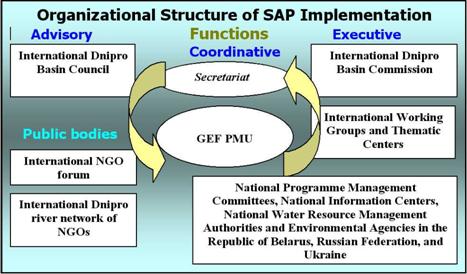
4.3 Public Participation
The SAP provides for a sufficient level of consultation and dissemination of information, and encourages the active involvement of the public in the decision-making process through, inter alia, the participation of representatives of citizen groups in the International Dnipro Basin Council and support of the International Dnipro River NGO Network.
The public and non-governmental organizations will be an important part of the process of environmental rehabilitation of the Dnipro Basin at the international, national, and local levels.
1. International level focuses on coordination of actions across the whole Dnipro Basin, and is represented by the International NGO Forum, supported by the International Dnipro River NGO Network.
2. National level covers the process of enhancing the legislative framework and strengthening the institutional capacity for wider stakeholder involvement in the monitoring and public control of the SAP/NAP implementation.
3. Local level, where the active involvement of the public will be a prerequisite to the successful implementation of practical environmental actions.
The active involvement of the public in the implementation of the SAP on Environmental Rehabilitation of the Dnipro Basin will be encouraged through (Table 3.2.1):
· The enhancement of national legal systems in order to support public initiatives and ensure the active and effective participation of non-governmental organizations in the implementation of the Dnipro Basin Rehabilitation Programme;
· The acknowledgement and consideration of the interests of the public, as a matter of priority, in the process of formulation and implementation of local environmental action plans;
· Support for the International Dnipro River NGO Network and active involvement of its representatives in the management decision-making process;
· The monitoring of the SAP implementation by the public;
· Dissemination of information on the state of the Dnipro Basin and participation of the NGOs in this process;
· The integration of environmental considerations into educational programmes adopted in the riparian countries, and active involvement of the NGOs in the promotion of the integrated basin management approach.
5 Financing the SAP
5.1 Investment Needs and Estimate of Costs Associated with the SAP Implementation
The total investment cost of financing the implementation of actions required to achieve the LTEQOs identified in the Dnipro Basin SAP is estimated at 1,676.6 million US dollars. This amount can be broken down by LTEQO as follows: 8% for actions on ensuring the sustainable use of nature resources and environment protection, 75.5% for actions on ensuring the environment quality that is safe for human health, and 16.5% for actions on ensuring the conservation and protection of biological and landscape diversity.
|
Long-Term Objectives |
Required investment |
|
Million USD |
% of the total sum |
|
LTEQO 1 |
133.4 |
8 |
|
LTEQO 2 |
1267 |
75.5 |
|
LTEQO 3 |
276.2 |
16.5 |
|
Total |
1,676.6 |
|
In the light of the national priorities and the scale of the actions identified in the SAP, the total investment can be broken down by country as follows:
|
Country |
Total investment |
% of the total sum |
|
Republic of Belarus |
392.9 million USD |
23.4 |
|
Russian Federation |
304.8 million USD |
18.2 |
|
Ukraine |
978.9 million USD |
58.4 |
|
Total for the Basin |
1,676.6 million USD |
|
These outline estimates are indicative only, attempting to reflect the costs that need to be financed by the riparian countries in order to ensure the implementation of basin wide and national actions identified in the SAP. These values are based on the cost data provided in the National Action Plans of the Republic of Belarus, Russian Federation, and Ukraine, and take full account of cost estimates made from the perspective of the long-term objectives of this SAP.
Summaries of the financial needs, broken down by SAP component and priority, are shown in Tables 3.2.1, 3.2.2 and 3.2.3.
5.2 Existing Financing Arrangements
5.2.1 National Sources of Finance
National legislation for the Republic of Belarus, Russian Federation, and Ukraine specifies a range of potential budgetary and non-budgetary sources which can be used to finance environmental investments. The budgetary sources include government contributions from the state (federal), Oblast (RF Constituent) and local budget, and reserves accumulated by the specialized Environment Protection Funds. The non-budgetary sources include the internal reserves accumulated by enterprises, private sector finance, and donations made by citizens.
The capacity for mobilising funding from national sources for major projects similar in scale to the SAP largely depends on the current state of the national economies and their strategic priorities. Total environmental expenditures constitute about 1% of GDP in the Republic of Belarus and Russian Federation, and about 1.95% of GDP in Ukraine. The 2000 GDP values for the three riparian countries are shown below in billions of US dollars:
|
Country |
GDP |
|
Republic of Belarus |
22.0 |
|
Russian Federation |
341.6 |
|
Ukraine |
32.6 |
About 80% of the annual environmental expenditure is used to maintain the existing level of environmental protection/management. The remaining 20% is invested in fixed assets, including the construction/upgrade of new and existing environmental facilities, and the implementation of restoration/rehabilitation measures.
In all three countries of the Dnipro Basin, the environmental expenditure pattern is dominated by water protection expenditures, while funding allocated for land protection/restoration actions is kept at a minimum. This is illustrated by the Table below (2000 data).
|
Country |
Water protection, % |
Land restoration, % |
|
Republic of Belarus |
53 |
15 |
|
Russian Federation |
37 |
16 |
|
Ukraine |
66 |
3 |
The major sources of investment and their respective contributions are shown in the Table below (%).
|
Source of investment |
Republic of Belarus |
Russian Federation |
Ukraine |
|
State (federal) budget |
21 |
4 |
1.3 |
|
Regional (Oblast) and local budgets |
43 |
18 |
0.3 |
|
Internal reserves held by industries |
10 |
74 |
97.9 |
|
Environmental funds |
26 |
4 |
(*) |
(*) – Environmental funds are the component of respective budgets
5.2.2 International Sources of Finance
The international cooperation policy of the riparian countries of the Dnipro Basin, particularly with regard to environmental protection, focuses on the following key components:
- Cooperation with the international agencies, including the United Nations Environment Programme (UNEP), United Nations Economic Commission for Europe (UNECE), United Nations Development Programme (UNDP), United Nations Industrial Development Organisation (UNIDO), International Atomic Energy Agency (IAEA), Global Environmental Facility (GEF), World Bank, European Bank for Reconstruction and Development (EBRD), EU TACIS Programme, Interstate Environmental Council (IEC), and other bodies established to support the implementation of international environmental conventions and relevant protocols.
· Bilateral cooperation between the riparian countries of the Dnipro Basin.
Key areas for international cooperation on the management of water resources and rehabilitation of the Dnipro Basin include:
- Strengthening the cooperation and coordination between the riparian countries of the Dnipro Basin (Republic of Belarus, Russian Federation, and Ukraine);
- Mobilising technical and financial assistance from bilateral and multilateral funding sources;
- Attracting external investments to finance the cost of national, regional and local environmental programmes.
Many developed countries provide valuable support for implementing environmental improvements in the Dnipro Basin. These include, without limitation, UK, Germany, Denmark, Canada, Netherlands, USA, Finland, Sweden, Switzerland, and Japan.
Total estimated contribution of international agencies to the implementation of environmental actions in the riparian countries of the Dnipro Basin over the last three years is summarised in the Table below:
|
Country |
Contribution, million USD |
|
Republic of Belarus |
12,000,000 |
|
Russian Federation |
11,000,000 |
|
Ukraine |
65,000,000 |
|
Total for the Basin |
88,000,000 |
5.3 Strengthening the Financing Arrangements
Strengthening the financing arrangements is only possible in the broader context of national environmental policy. This should be based on economic incentives that encourage the active involvement of nature users in the implementation of environmental actions, including the actions identified in this SAP. At the same time, it is important to maintain a balanced mix of administrative and economic instruments for managing the nature uses.
New institutional arrangements have started to take shape in the process of transition to the market economy. They have been driven by a major change in the relationships between the state and private sector. As a result of large-scale privatisation, the management and operation of essential municipal services have been progressively taken over by the private sector in the course of large-scale privatisation. As a result, the role of direct command-and-control tools is also being reduced in response to policies that encourage political decentralisation and institutional reform. However, environmental values and considerations are still low in the agenda of businesses and industries. This problem is complicated by severe budget constraints, and the shortage of funds for financing the cost of required environmental actions is seen as a principal barrier to improvement.
The strengthening of Public-Private Partnership arrangements designed to encourage the active involvement of governance bodies, business community and civil society is seen as a potential option for improving the existing situation.
Emphasis should be placed on the reform of the environmental tax system. This should be based on the ‘polluter pays’ principle, translated into appropriate economic incentives for a reduction in the environmental impact of human activities. As part of this reform, the system of pollution fees should also be revised to ensure a greater level of cost recovery, simplicity and transparency. It is also important to enhance the system of fees charged for nature resource uses, in order to ensure the financial sustainability of environmental programmes and systems for nature resource use and management.
Financial sustainability of the SAP can be ensured through the introduction of new specific economic instruments designed to encourage environmental investments.
5.4 Financing the Incremental Costs
Additional funding required to strengthen the financial sustainability and ensure the prompt and adequate provision of funding for priority environmental actions identified in the SAP/NAPs, may be secured by the Dnipro basin countries in the form of external investments, loans, grants, and other technical assistance arrangements.
Over the long term, the financing capacity of the riparian countries of the Dnipro Basin is based on the forecasts of the main indicators of socio-economic development. In addition, it is determined by the national target of the Russian Federation to double its GDP over the next 10 years. Thus, the Republic of Belarus will be able to cover 80-85%, the Russian Federation 100% and Ukraine 80% of their investment needs associated with the SAP implementation from their respective national sources. The estimate for the Russian Federation does not exclude the importance of external investments (including donor funding) for the SAP/NAP implementation, provided that the terms and conditions of such investments are attractive (the external sources could provide up to 10-20% of the total required amount of investment). Incremental costs for Republic of Belarus and Ukraine could be provided in accordance with the principles of equity sharing with external and internal investors participating in attractive bilateral terms and conditions too. Thus, the required amount of incremental costs could be as follows:
|
Country |
Incremental costs |
|
Million USD |
% to the total amount |
|
Republic of Belarus |
58.9 - 78.6 |
15 - 20 |
|
Russian Federation |
30.5 - 61 |
10 – 20 % |
|
Ukraine |
195.8 |
20 |
|
Total for the Basin |
285.2 – 335.4 |
|
6 Arrangements for Monitoring the Implementation of the SAP
Provision of adequate arrangements for monitoring and assessment is a key to ensuring the successful implementation of the SAP. The international and national structures responsible for managing the nature uses and environment protection actions will play a major role in the SAP monitoring (see Section 4).
These bodies have been established through the Ministry of Natural Resources and Environment Protection of the Republic of Belarus, Ministry of Natural Resources of the Russian Federation, and Ministry of Environment Protection of Ukraine, in close cooperation with other ministries and agencies, interested operating agencies and non-governmental organisations from various areas of the Dnipro Basin (Annex 4).
These governmental bodies are responsible for the formulation and implementation of national environmental policies, and coordination of national environmental monitoring efforts. They will undertake monitoring and control of the SAP/NAP implementation on the basis of relevant performance indicators (see table below).
List of Performance Indicators to be Used for the Monitoring of the SAP Implementation
|
No |
Indicator |
Organisation Responsible for Monitoring |
RB |
RF |
Ukraine |
|
1 |
2 |
3 |
4 |
5 |
|
Success Indicators to Measure Progress towards LTEQO 1 |
Additional Indicators (see Section 3.2 – I for Main Indicators) |
|
The enhanced legal framework and increased level of responsibility of local self-governance authorities for the ecological state of water protective zones and riparian strips |
1-3,7,11[29] |
1,2,3 |
1,2,3,4 |
|
The provision of legally defined mechanism for control of invasions of alien species |
1-4 |
1,3 |
1,3,4 |
|
The integration of ‘polluter pays’ principle into the legislative framework, to ensure that the cost of mitigating/preventing damages to the environment is covered by users who benefit from activities affecting the state of natural environment |
1-3,6,9 |
1,2,3 |
1,3,10,12 |
|
The number of drafted and adopted laws/regulations relating to the harmonisation of environmental legislation with that of the EU |
1-3 |
1,3 |
1,3 |
|
Successful examples of introduction/application of ‘green’ technologies and best practices in the industrial and agricultural sectors, demonstrating the economic benefits of environmental improvements |
2,3,9,11 |
3,4,5,6 |
3,5,6 |
|
Investments (in million USD) in the upgrade, expansion, and/or modernisation of wastewater treatment facilities |
3,5,8,9,11 |
1,2,3 |
1,3,11,12 |
|
State funds (in million USD), allocated and released for the performance environmental monitoring and regulatory inspection functions |
2,3,3.1,5, 11 |
1,2,3,7,8 |
1,2,3,12 |
|
Availability of effective pollution controls at the industry and catchment level |
2,3,3.1,7,8 |
3,7,8 |
3,10,12 |
|
Availability of effective tools for monitoring of invasions and introductions of alien species |
3,4 |
3,8 |
3,4 |
|
Number of the state environmental reviews conducted with the participation of the public |
2,3,11 |
1,3 |
1,3,12 |
|
The enhancement of methodological framework for regulating the impacts on the environment |
2,3,5,6,7 |
1,3 |
1,3 |
|
The development and introduction of economic mechanisms that encourage transition towards the BAT-based approach to setting wastewater discharge limits |
2,3,5 |
1,3 |
1,2,3 |
|
Availability of regional and local programmes of action on the protection of water resources |
2,3,6,7 |
1,3,4,5,8 |
1,3 |
|
The enhancement of radiological monitoring of environment |
1,2,3,5,9 |
3,7 |
3,7,8,12 |
|
The development of a legally defined performance security mechanism for dangerous sites/facilities in order to insure against the risk of potential accidents |
1,2,3,5,5.1 |
1,3,5,6 |
1,3,8 |
|
The establishment of safety control service for hydro engineering facilities |
2,3,5.1 |
3,5 |
12 |
|
The provision of incentives and mechanisms that encourage separate collection of solid municipal waste |
2,3,11 |
3 |
1,3 |
|
The provision of insurance arrangements for environmental risks |
2,3 |
1,3 |
1,3 |
|
1 |
2 |
3 |
4 |
5 |
|
The introduction of realistic and achievable target indicators, based on the existing environmental standards and water quality categories; and provision of monitoring mechanisms |
2,3 |
1,3 |
1,3,4,12 |
|
Building the capacity for environmental education and awareness raising of the public |
2,3,11 |
3 |
1,3,4 |
|
Success Indicators to Measure Progress towards LTEQO 2 |
Additional Indicators (see Section 3.2 – II for Main Indicators) |
|
Road network density |
10 |
3,6 |
9 |
Dredging works
|
3 |
3,6 |
3,12 |
|
Sand and gravel extraction |
3 |
3 |
3,10,12 |
|
Mineral resource extraction (quarries etc.) |
3 |
3 |
3,10 |
|
Additional flow due to wastewater discharges from industries |
3 |
3,7 |
3,12 |
|
Groundwater abstraction |
3 |
3,7 |
3,10,12 |
|
Changes in vegetation cover |
3,6,9,10 |
3,4 |
3,13,14 |
|
Changes in water level |
3,3.1 |
3 |
3,12 |
|
Changes in channel processes |
3,3.1 |
3 |
3,12 |
|
Flow diversion for irrigation |
3,9,11 |
3,4 |
3,6,12 |
|
Flow diversion for industrial and municipal needs |
3,8,11 |
3 |
3,5,12 |
|
Level of water reuse and recycling |
3 |
3 |
3,12 |
Nutrient load
|
3,3.1 |
3,7 |
3,12 |
Organic load
|
3,3.1 |
3,7,8 |
3,12 |
|
Chemical pollution load on the basin area |
3,3.1,5 |
3,7 |
3,12 |
|
Presence of phosphates, nitrogen compounds, and pesticides in soil at the elevated concentrations |
3,3.1 |
3,7 |
3,6,12 |
|
Presence of storage ponds for liquid waste generated by chemical industries |
3,3.1,5 |
3,7 |
3,5,6 |
|
Presence of industries specialized in extraction and processing of radioactive materials |
3,5 |
3,5 |
3,5,8 |
|
Presence of storage sites for expired pesticides |
3,9,5 |
3,4,8 |
3,6 |
|
Availability and adequacy of wastewater treatment capacity at the sources of pollution |
3 |
3 |
3,5,12 |
|
Volume of contaminated wastewater discharges from animal-breeding farms and diffuse pollution sources |
3,9 |
3,7 |
3,6,7,11 |
|
Volume of insufficiently treated and untreated wastewater discharges from municipal utilities, food processing industries, hospitals etc. |
3,5,9 |
3 |
3,12 |
|
Volume of wastewater discharges |
3,3.1 |
3 |
3,12 |
|
1 |
2 |
3 |
4 |
5 |
|
Success Indicators to Measure Progress towards LTEQO 2 |
Pollution load carried with storm water and surface runoff from urban areas and agricultural land, accidental spills and releases of wastewater, etc. |
3,3.1,5 |
3,7 |
3,6,12 |
|
Industrial and municipal solid waste generation, including hazardous waste (total and by sector) |
3,5,11 |
3,7 |
1,3,5,6,7, 11 |
Flow diversion
|
2,3 |
1,3,7 |
1,3,12 |
|
Area of shallow-water sections in the Dnipro reservoirs |
- |
- |
3,12 |
|
Area of drained and irrigated land |
2,3,6,9 |
1,3,4 |
6,12 |
|
Area of reclaimed land |
2,3,6,10 |
3,4 |
12 |
Livestock
|
9 |
4 |
6 |
|
Industrial waste landfills |
5,8 |
3,7 |
3,5 |
|
Suspended solid load from point and diffuse pollution sources |
3,3.1 |
3,7 |
3,12 |
|
Application of chemical fertilisers and pesticides |
3,9 |
3,4,7 |
3,6,12 |
|
Invasion of alien species, number of alien species, density and biomass of alien species, relative density and biomass of alien species, % of density/biomass of a respective community; rate of expansion of alien species per unit area over a given decade; documented evidence of impact on the environment |
3,4,7 |
3,8 |
3,4 |
|
Chemical pollution load carried with wastewater discharges |
3,5,11 |
3,7 |
3,12 |
|
Flow regulation rate |
3 |
3 |
3,12 |
|
Level of treatment provided to contaminated effluents (total and by sector) |
3,3.1 |
3 |
3,12 |
|
Level of development of centralized water supply and wastewater collection service in the human settlements (residential housing sector) |
3,5 |
1,3 |
3,5,11 |
|
Transboundary transport of nutrients |
3,3.1 |
3,7 |
3,12 |
|
Transboundary transport of suspended solids |
3,3.1 |
3,7 |
3,12 |
|
Transboundary pollution load |
3,3.1 |
3,7 |
3,12 |
|
Transboundary transport of radionuclides |
3,3.1,5 |
3,7 |
3,8,12 |
|
Population relying on groundwater sources |
3,8,10,11 |
3,4 |
3,4,10 |
|
Number of illegal dumps |
3,11 |
3,8 |
3 |
|
Area of eroded land |
3,10 |
3,4 |
6 |
|
LTEQO 3 |
Additional Indicators (see Section 3.2 – III for Main Indicators) |
|
Reduction in nutrient concentrations in water |
3.1 |
7 |
3,12 |
|
Visible algal blooms (Chlorophyll-like pigment concentration units (mg/m3) over time (given year/decade) and location (lat/long,) polygon; satellite imaging data) |
3,3.1 |
7 |
3,12 |
|
Индикаторы достижения ДЦКОС - 3 |
Decrease in number of fish kills (fish kills recorded in the Basin) |
3,4,7 |
3,7,8 |
3,6 |
|
Decrease in number of land subsidence craters |
3.1 |
3 |
3,10 |
|
Long-term changes in the monthly average flow discharges (mean monthly discharge m3 per second; total volume discharged per month (m3 per month/ hydrological year) |
3,3.1 |
3,7 |
3,12 |
|
Conservation of hydrographic network in the Basin |
3,10 |
3,7 |
3,12 |
|
Conservation of natural stream flow hydrograph |
3,10 |
3,7 |
3,12 |
|
Changes in maximum and minimum monthly average stream flows at various water availability |
3,3.1 |
3,7 |
3,12 |
|
Decrease in the rate of floodplain modification due to cultivation and grazing, estimated loss of floodplain area (%) |
3,10,11 |
3,4 |
3,6 |
|
Increase in vegetation cover |
3,6,10 |
3,7 |
3,13,14 |
|
Transparency changes (Secci disk data) |
3.1 |
7 |
3,12 |
|
Stable groundwater quality in the locations of solid waste disposal sites |
3.1 |
4,7,8 |
3,10 |
|
Reduction in concentrations of suspended solids in water |
3.1 |
7 |
3 |
|
Pathogens in water (e.g. E-coli and faecal streptococci) present at or below mandatory limits |
7 |
8 |
4 |
|
Decrease in concentrations of solid waste degradation products and dust particles in the air samples |
7 |
8 |
4 |
|
Decrease in number and duration of periods of intensive algal blooms with documented environmental/ human effects (frequency (number/year); intensity (biomass/abundance); duration (days); extension (m2); causative species (species) |
3,4,11 |
3,7,8 |
3,4 |
|
Decrease in area of flooded land and extent of flooding/under flooding events |
3,10,11 |
3,7 |
3,12 |
|
Presence of radionuclide pollution spots in the catchment area |
3,5 |
3,7,8 |
3,8,12 |
|
Reduction in radionuclide concentrations in water, bottom sediments and biota |
3,5,7 |
3,7,8 |
3,8 |
|
Absence of increases in radiation level |
3,5,5.1 |
3,5,7 |
3,8,12 |
|
Reduction in concentrations of aromatic hydrocarbons in water, sediment and biota due to anthropogenic activities |
3,5,7 |
3,7,8 |
3,4 |
|
Reduction in concentrations of halogenated PTS in water, sediments and biota due to human activity |
3,5,7 |
3,7,8 |
3,4 |
|
1 |
2 |
3 |
4 |
5 |
|
LTEQO 3 |
Absence of oil products in water due to human activities |
3,3.1,11 |
3,7 |
,3,4 |
|
Metals in water, bottom sediments and biota present at or below mandatory limits |
3,3.1,7 |
3,7,8 |
3,4 |
|
No reduction in base flow |
3,3.1 |
3,7 |
3,12 |
|
Improved state of landscapes and natural systems, and increased area of protected territories |
3,4 |
3,7 |
3,10 |
|
Reduced number of accidents, affected areas, accidental spills |
3,5 |
3,7 |
3,12 |
|
No reports of fish that do not reach WHO public health standards |
7,9 |
3,7,8 |
4 |
|
Number/proportion of taxa in IUCN threat categories (number of taxa in IUCN threat categories; proportion of taxa in IUCN threat categories; change in taxa number in IUCN threat categories per given decade) |
4 |
3 |
3,10 |
The Agreement provides the legal framework for international coordination of the SAP implementation process, and enables the development of an appropriate trilateral legislative/regulatory system, including regional organisational arrangements for monitoring and control.
Monitoring and assessment of the implementation of the SAP for the Dnipro Basin is based on a system of key indicators, consistent with a suite of indicators adopted by the European Environment Agency for Eastern European, Caucasian, and Central Asian countries.
The sustainability of the implementation of the SAP is significantly linked with the application of other mechanisms and outputs produced within the framework of the UNDP-GEF Dnipro Basin Environment Programme, which include, inter alia:
- Transboundary Monitoring Programme,
- Regional Strategy for the Conservation of Biological and Landscape Diversity.
- International System for Exchange of Environmental Information and the supporting Environmental Data Base;
- Report on the State of Environment in the Dnipro Basin;
- Mechanisms designed to ensure the involvement of the public in the monitoring of the SAP implementation.
The Transboundary Monitoring Programme has been developed to address the information needs of the interstate basin management system set up in the Dnipro Basin. This includes action planning and assessment needs and the provision of information support to the national agencies responsible for the implementation of the SAP and NAPs.
Key users of information produced by the Transboundary Monitoring Programme include:
- The international basin management system;
- National governmental bodies with responsibilities in the field of water resource protection and management;
- Relevant ministries and agencies (and their regional bodies), involved in the SAP/NAP implementation;
- Research institutions that are responsible for the scientific component of the SAP/NAP process (and the Tranboundary Monitoring Programme itself), non-governmental organisations, citizen groups, and water users.
The overall transboundary monitoring strategy adopted for the Dnipro Basin requires that the Transboundary Monitoring Programme should be aligned along the following two axes:
· The assessment of the effectiveness of the SAP/NAPs using information generated with the help of tools employed in monitoring and assessment of water quality in the transboundary sections of the Basin;
· The monitoring of transboundary pollution loads for a range of priority pollutants that contribute significantly to transboundary impacts in the Basin.
The Regional Strategy for the Conservation of Biological and Landscape Diversity pursues the following objectives:
- Consolidation of the national efforts of the Republic of Belarus, Russian Federation, and Ukraine in the field of conservation and restoration of biological and landscape diversity in the Dnipro River Basin;
- Identification of root causes and consequences of reduced biodiversity; and setting the long-term environmental quality targets with regard to biodiversity;
- Development of strategic actions designed to achieve these targets within the specified timescale.
- Ensuring that the international commitments, ensuing from the international conventions on conservation of biological and landscape diversity, signed and/or ratified and/or acceded by the Republic of Belarus, Russian Federation, and Ukraine, are met by these countries.
An International System for the Exchange of Environmental Information and the supporting Environmental Data Base have been established to:
· facilitate the mutual exchange of information between the parties (on the basis of the Protocol for the International Exchange of Information between the Riparian Countries of the Dnipro Basin);
· support coordinated decision-making on issues relating to the SAP/NAP implementation;
· communicate the results of the SAP/NAP implementation to the wider public.
The Report on the State of Environment in the Dnipro Basin provides the detailed picture of the ecological status of the Dnipro Basin prior to the SAP/NAP implementation, and as such will be used as a baseline for evaluation of progress and success of the SAP/NAP.
The involvement of the public in monitoring and control of the SAP implementation is ensured through the provision and strengthening of the arrangements designed to support independent environmental monitoring activities undertaken by the local self-governance bodies and environmental NGOs.
Arrangements for reporting and monitoring the SAP implementation
The riparian countries of the Dnipro Basin will produce the SAP/NAP progress report on an annual basis. National reports on the State of the Environment in the Dnipro Basin, to be presented every five years, will be prepared and produced by the Regional Thematic Centres. Based on these reports, and in accordance with the concept and structure approved by the three countries, the Regional Report will be prepared, to cover the following issues:
· trends in the state of environment, defined on the basis of the suite of indicators (see Section 3 and table above);
· the existing legislative and regulatory framework, and the status of compliance;
This Report will provide a basis for regular review of the TDA, revision of the LTEQOs, and subsequent adjustment of corrective actions identified in the SAP.
The riparian countries of the Dnipro Basin shall exchange information on the following issues:
· trends in the quality of the environment in the Dnipro Basin, emerging from the analysis of the transboundary monitoring data (in accordance with the approved data exchange protocol);
· changes in the legal, regulatory, and institutional arrangements, relating to the SAP implementation.
The parties shall review and discuss the progress of the SAP implementation, and relevant adjustments will be made where necessary. If and when the need arises, the riparian countries of the Dnipro Basin will initiate the preparation of new versions of the TDA and SAP/NAPs.
Dissemination of the SAP document
The final version of the SAP document will be published in the three national languages of the Dnipro Basin (i.e. Belorussian, Russian, and Ukrainian) and in English. It will be widely distributed in the three countries of the Dnipro Basin for detailed review and to enable the active involvement of the public in the SAP implementation process. The English version of the SAP document will be circulated amongst all of the international agencies involved in the Dnipro Environment Programme. In addition, it will be distributed to international organisations that are interested in the projects and actions identified in the SAP and NAPs.
The electronic version of the SAP document will be made available in Russian and English on the UNDP-GEF Dnipro Basin Environment Programme web page: http://www.dnipro-gef.net/
Annexes:
Annex 1. The GEF approaches to the Dnipro Basin SAP preparation
Annex 2. The Dnipro Basin Passport
Annex 3. The Priority Investments Portfolio.
Annex 4. Institutional framework of the SAP implementation.
[1] The second priority sector introducing chemical pollution into the system, is agriculture with excessive and poorly managed use of fertilisers (also linked to Eutrophication), pesticides and other agrochemicals. Industry also contributes to radionuclide pollution through uranium mining and processing, to flooding and high ground water through hydropower generation, and to a lesser extent, eutrophication through the release of high nutrient load waste.
[2] UNIDO, SNC Lavalin Engineers & Constructors Inc., Draft Report December 2003
[3] In Kyiv, the heavy metal load introduced by industrial production precludes the use of composted sludge for enriching arable land. As a result the treatment ponds have accumulated 4.5 million m3 of contaminated sludge that now poses a major disposal problem.
[4] All hotspots marked are “Vodokanals” (municipal treatment works), with the exception of the Mozyr Refinery (Belarus), intensive livestock units on the Vorsklitsa River (Russia) and the metallurgical works at Kryvyj Rih, Zaporizhstal and Dniprodzerzhynsk (Ukraine).
[5] The World Bank has carried out it’s own “hot spot” evaluation of major industries and are considering some investments in the metallurgical works in Ukraine.
[6] The CCPC is one of 22 national centres established with the support of UNIDO, with the express goals of helping companies to operate in more environmentally sound ways while also increasing efficiency and profits.
[7] The EBRD has provided a loan for “The Zaporizhya water utility development and investment programme” – aimed at reducing effluent load. The EBRD has also proposed extending coverage to other Vodokanals, “Public-Private Partnership for rehabilitation and operation of wastewater treatment facilities”, with support from DFID (workshops) and the Danish Environmental Protection Agency (pre-investment studies).
[8] As previously indicated the GEF have explored at least two approaches within the region: the GEF/EBRD Danube Pollution Production Programme – Financing of Pollution Reduction Projects by Local Financial Intermediaries; and the Strategic Partnership for Nutrient Reduction in the Danube River Basin and Black Sea – World Bank-GEF Nutrient Reduction Investment Fund.
[9] The range of economic instruments can be summarised as effluent charges, user charges, product charges, marketable permits, subsidies and enforcement incentives.
[10] Monitoring and Evaluation Indicators for GEF International Waters Projects; M&E Working Paper 10, September 2002.
[11] The “Pilot Project on Transboundary Water Quality Monitoring and Assessment in Order to Implement Provisions of International Legal Regulations” – now generally referred to as the “Joint River Management Programme” is due to be completed in 2004. The TACIS progress reports stress the need for coordination between their programme and the GEF SAP and subsequent interventions.
[12] “harmonisation” does not necessarily mean identical legislation, the wording may be different if the outcome of implementing the legislation is the same, limiting discharged or otherwise managing environmental parameters to agreed criteria – the refers to an “adaptation” of legislation, a unilateral process of approximation of national regulations to the standards of European Union.
[13] Note that this is a temporary structure, including the GEF PMU in a direct support role for all or part of the Full Project period.
[14] Including annual reports, five year revisions of the SAP and TDA, and ad hoc reports dealing with emergency spills and other issues.
[15] World Bank Project ID: GE-P0069053 Strategic Partnership for Nutrient Reduction in the Danube River Basin and the Black Sea – including among 16 countries, Belarus, Ukraine and the Russian Federation;
[16] PDF B Project Pipeline 2003, Republic of Belarus “Conservation and sustainable management of the Polesie through integration of globally important biodiversity concerns into main areas of economic activities at key sites”; PDF B Project Pipeline 2003, Ukraine “'Consolidation of the Polissya Ecological Corridor”
[17] The project sent representatives to the 2nd GEF Biennial International Waters Conference, held in Dalian, China in September 2002.
[18] http://www.dnipro-gef.net/
[19] “Pilot Project on Transboundary Water Quality Monitoring and Assessment in Order to Implement Provisions of International Legal Regulations”, funded by the European Commission Tacis Inter-State 1999 Programme – dealing with the Seversky-Donets (Russia and Ukraine), the Kura (Turkey, Iran, Azerbaijan, Armenia, Georgia and Dagestan), the Tobol (Kazakhstan and Russia) and the Pripyat Rivers (Ukraine and Belarus).
[20] The new CAS for Ukraine was prepared with the Government in consultation with NGOs, members of Parliament, the private sector, and other interest groups, and was endorsed on October 23, 2003.
[21] Russia, Report No: 24127-RU, May 2002. Belarus, Report No: 23401-BY, February 2002
[22] Included as an “Executing Agency” in 1999 under the GEF Council guidelines on expanded opportunities for organisations to contribute to GEF projects.
[23] Global International Waters Assessment
[24] These notes were prepared by Prof. Laurence Mee on the basis of discussions at the GEF TDA/SAP Course Design and Development Session (DACUM) held at the Division for Ocean Affairs and the Law of the Sea, Office of Legal Affairs, United Nations from 15 to 19 July 2002.
[25] Statistical Yearbook of the Belarus Republic. 2003. The Ministry of Statistic and Analysis of Belarus RepublicСтатистический ежегодник Республики Беларусь, 2003. Министерство статистики и анализа Республики Беларусь, 2003 г.
[29] Ordinal number of the Organization indicated in the Annex 4 to the document “Strategic Action Programme for the Dnipro Basin and the Mechanisms for its Implementation”