



Integrated Water Resources Management
Strategic Planning Workshop
December 4-5, 2006
Kingston, Jamaica
March 1, 2007
Prepared by Caribbean Environmental Health Institute
P.O. Box 1111, The Morne
Castries, St. Lucia
0
List of Acronyms
AMEP
Assessment and Management of Environmental Pollution (Programme)
CAFTA
Central American Free Trade Agreement
CAIC
Caribbean Association of Industry and Commerce
CAMWORK Caribbean Association of Media Workers
CAP-NET
Capacity Building Network for Integrated Water Resources Management
CARICOM Caribbean Community
CCA
Caribbean
Conservation
Association
CDB
Caribbean development Bank
CDC
Centers for Disease Control and Prevention
CEHI
Caribbean Environmental Health Institute
CERN
Caribbean Environmental Reporters' Network
CNIRD
Caribbean Network for Integrated Rural Development
COHSOD
CARICOM Council for Human and Social Development
COTED
CARICOM Council for Trade and Economic Development
COTS
Caribbean Open Trade Support Project
CREP
Caribbean Regional Environment Programme
CTO
Caribbean Tourism Organisation
CWP
Country Water Partnerships
CWWA
Caribbean Water and Wastewater Association
FAO
Food and Agriculture Organisation
GEF
Global Environment Facility
GPA
Global Program of Action for the Protection of the Marine Environment from
Land Based Activities
GWP-C
Global Water Partnership Caribbean
ISTAC
Interim Scientific, Technical and Advisory Committee
ITU
International Telecommunications Union
IWCAM
Integrated Watershed and Coastal Areas Management
IWRM
Integrated Water Resources Management
LBS
Land-Based Sources of Pollution
MDG
Millennium Development Goals
MSP
Medium Sized Projects
NEMS
National Environmental Management Strategies
NOAA
National Oceanic and Atmospheric Administration
NPA
National Program of Action for the Protection of the Marine Environment from
Land Based Activities
OAS
Organisation of American States
OECS
Organisation of Eastern Caribbean States
SIDA
Swedish International Development Cooperation Agency
SVG
St. Vincent and the Grenadines
UCC
UNEP Collaborating Centre on Water & Environment
UNDP
United Nations Development Programme
UNEP
United Nations Environment Programme
WW2BW
White Water to Blue Water Initiative
WWF
World Water Forum
1
Participating agencies
· Caribbean Environmental Health Institute (CEHI)
· Caribbean Water and Wastewater Association (CWWA)
· Global Water Partnership Caribbean (GWP-C)
· Jamaican Ministry of Health
· Jamaican Water Resources Authority
· UNEP Collaborating Centre on Water and Environment (UCC)
· United Nations Development Programme (UNDP)
· United Nations Environment Programme, Caribbean Regional Co-ordinating Unit
(UNEP-CAR/RCU)
· United Nations Food and Agriculture Organisation (FAO)
· United States Department of Commerce, National Oceanic and Atmospheric
Administration (NOAA)
· University of the West Indies Capacity Building for Integrated Water Resource
Management (CAP-NET) Project
Project Sponsors and Organizers
This workshop was jointly presented by CEHI and UNEP CAR/RCU, under the auspices of the
Global Environment Facility (GEF) funded Integrating Watershed and Coastal Areas
Management in Small Island Developing States of the Caribbean (IWCAM) Project.
Project Objectives
· Identify duplication and gaps in Integrated Water Resources Management (IWRM) Work
Plans of participating agencies and Caribbean countries and territories.
· Develop a unified, strategic and coordinated Plan for IWRM in the Caribbean.
· Collaborate on obtaining political commitment to reform, in relation to IWRM plans.
· Continue to identify methodologies to strengthen and promote partnerships and
networking for the implementation of IWRM.
2




Opening Session Day 1
The workshop began with welcome remarks by Vincent Sweeney, Regional Project Coordinator
of the IWCAM Project and facilitator for the workshop. He offered apologies on behalf of Mr.
Peter Knight (Jamaican Ministry of Health), who was delayed in order to deal with a national
crisis and Michelle Watts (Jamaican Water Resources Authority) who was also slightly delayed.
He implored participants to be informal and interactive.
Mr. Vincent Sweeney pausing briefly during his opening remarks
By way of background, Mr. Sweeney identified the agencies responsible for convening the
workshop as CEHI (IWCAM Executing Agency), UNEP (IWCAM Executing and Implementing
Agency) and UNDP (IWCAM Implementing Agency). The second annual High Level session
meeting of Ministers of Water to discuss IWRM was jointly hosted by CWWA and GWP-C on
October 3 & 4, 2006 in Tobago. Coming from the many discussions and also based on the
feedback of the Ministers, it was determined that there was need for more agency coordination.
The current workshop is seen as a first step in that direction. It was at this meeting that CEHI and
UNEP nominated IWCAM to undertake its coordination.
He explained that the workshop was another step in the partnership approach to maximizing the
sustainability and impact of regional projects that was started in June 2006 at the Caribbean
Environmental Forum and Exhibition. That meeting in June, referred to as a Partnership
Workshop, was conceptualized to address issues relating to Integrated Watershed and Coastal
Area Management and was part of the UCC contract with CEHI to prepare roadmaps to support
IWRM in the Caribbean. It was the intention of the Partnership Workshop to reduce the burden
on the countries to prepare various types of plans for different projects that basically utilized the
same approach and had opportunities to realize synergies.
3
Beyond IWRM, the June 2006 Workshop discussed how to integrate other national, regional and
global initiatives including National Programs of Action (to address Land-based Sources of
Marine Pollution), Water Safety Plans etc. Some of the agencies involved in these activities
include: CEHI, UNEP, UNDP, PAHO, National Oceanic and Atmospheric Administration
(NOAA), and the United States Centers for Disease Control and Prevention (CDC).
It was remarked that the recently held CWWA Conference had successfully hosted a meeting of
the Ministers responsible for water, to discuss IWRM.
This was further endorsed at the Second Intergovernmental Review of the Global Programme of
Action for the Protection of the Marine Environment from Land-based Activities in Beijing. It
was suggested that there was more need for agencies to provide support for consolidation and
coordination of the various initiatives.
Mr. Sweeney went on to explain that Jamaica had been selected as the host country for this
meeting because it was the furthest ahead with its own IWRM plans. It was felt that this would
present the opportunity for country representatives to share their experiences and lessons with
participants. Jamaica is also the home of UNEP-CAR/RCU which pledged logistical support and
other assistance for the meeting.
At this point, Mr Christopher Corbin (UNEP-CAR/RCU) was invited to present remarks. Mr.
Corbin introduced himself and offered apologies for the absence of Mr. Nelson Andrade who
was out of state. He warmly welcomed participants to the brainstorming session. He described
this meeting as a key feature of IWCAM which is to avoid duplication, gaps and inefficiencies
that the agencies had often been accused of by countries. Mr. Corbin then went on to introduce
Junior Program Officer, Mr. Jean-Nicolas Poussart, who was based in Cuba.
Adding to the background on this workshop and its link with IWRM, Mr. Corbin explained that
IWRM planning at the national level was originally not part of the activities under IWCAM. It
was slotted in just before submission of the project proposal. As a result, it was not at that time,
clearly defined. This presented the opportunity for it to be defined now in the context of the other
ongoing initiatives.
Dr. Christopher Cox, Senior Programme Officer at CEHI, then offered words of welcome on
behalf of CEHI's acting Executive Director, Mrs. Patricia Aquing. He gave a brief overview of
CEHI - its background and how it was established, it's mandate, core technical areas, partners
and projects. He ended by wishing participants a productive workshop.
Other comments and discussion points included Ms. Paula Caballero's (UNDP) interjection that
as a co-executing agency, UNDP was responsible for the IWCAM demonstration projects.
Mr. Sweeney then invited review of the agenda and suggested that while it was a guide, there
was flexibility as long as there was full participation and the objectives and outputs were met. He
then went on to explain CEHI's interest in IWRM, which began with a request from its Member
States as far back as 1996, within the CCH II initiatives. It was at that time mandated that by
2003 all countries would have IWRM plans. This is further supported by the Millennium
4
Development Goals (MDG) presented in Johannesburg in 2000, and recommendations coming
out of the World Water Forum (WWF) in Mexico recently.
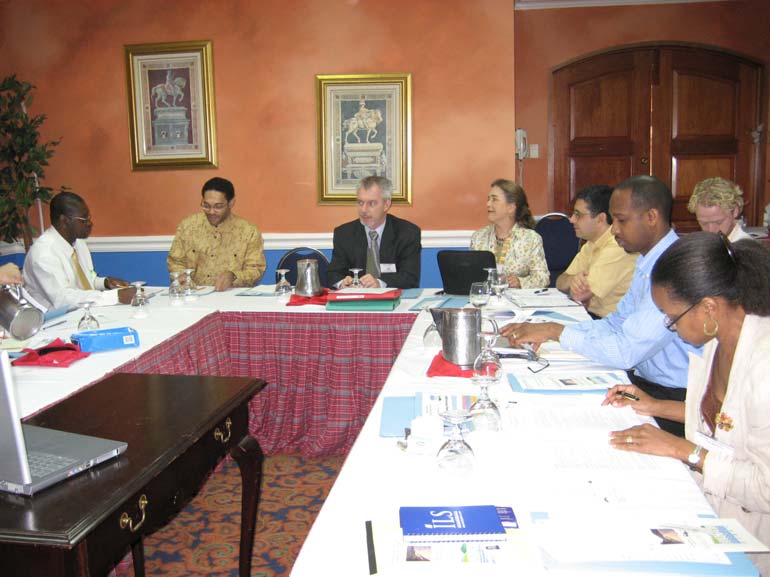
Opening Remarks at the Informal Opening Session
L/R Paul Hinds (GWP), Christopher Corbin (UNEP), Henrik Larsen (UCC), Paula Caballero
(UNDP), Gonzalo Cid (NOAA), Jean-Nicolas Poussart (UNEP), Cyprian Gibson (CWWA),
Lystra Fletcher-Paul (FAO)
The objectives of the meeting were then modified to reflect the following:
o Sharing of work plans
Agreement on joint activities
Identification of gaps
Improvement in coordination and avoidance of duplication
o Definition of road maps
o Informing IWCAM work plan (to fill some of the gaps identified)
Mr. Sweeney encouraged agency representatives to share their work plan activities for the
achievement of the objectives. It was recommended that the workshop discussions be structured
around the World Water Forum (WWF) themes, but that given the importance of the roadmap
discussion and in the context of WWF themes, participants revise the approach.
It was revealed that there were funds available from UCC which meant that there were
opportunities for advancing the roadmaps. Mr. Henrik Larsen, UCC representative, confirmed
this and indicated that UCC was interested in ensuring that these funds were used in an efficient
manner that did not involve duplication.
5
Mr. Sweeney acknowledged that all agencies had their own agendas, but encouraged
representatives to be prepared to share information that could lead to the advancement of the
meeting's objectives as well as the various agendas of the agencies.
There was endorsement of the initiative and follow-on activities. Dr. Lystra Fletcher-Paul
(FAO), inquired as to why disaster management was not among the thematic areas. It was
suggested, in response, that it was considered but as it was a cross cutting issue, it was expected
that it would emerge throughout the discussions, in a similar way to financing and capacity
building.
The facilitator inquired as to whether there was agreement on the approach of the workshop and
it was generally agreed upon. He further pointed out that there was an element of flexibility built
into the approach since the sessions were expected to be interactive. The proceedings then
commenced with the presentations by the agencies.
Presentations
Mr. Paul Hinds presented on the GWP IWRM Training Manual and Operational Guide (see
attached). This was well received by the other participants. It was suggested by the facilitator
that elements of the presentation could form the basis of the workshop deliberations. He pointed
out that opportunities could already be identified e.g. CAP-NET capacity building, UCC
general awareness building, CWWA awareness building.
Dr. Jacob Opadeyi summarized that 3 main themes can be identified: capacity building, political
commitment and awareness building. These were considered to be the building blocks for
cooperation. He suggested that in-country opportunities could also be explored within various
fora to stimulate political commitment.
In response to a question on the rate of deployment of the training manual, Dr. Opadeyi indicated
that some in-country training had already been negotiated but that generally there were few
requests for training from the countries. It was suggested that what was missing was the setting
of targets in terms of the numbers of persons to be trained in each country by a particular time.
Mr. Hinds indicated that shortage of trainers was a problem but that the collaboration with CAP-
NET was addressing this problem.
Dr. Fletcher-Paul suggested that an entry point could be the European Union (EU) support for
water policy development. She proposed that IWRM can be linked with water policy initiatives
e.g. in the Windward Islands and in St. Kitts based on what is currently going on in the
agriculture sector there. Ms. Caballero endorsed this perspective pointing to the fact that issues
such as food security and poverty reduction are politically attractive issues that can be used as
gateways to the political agenda. She further warned that there was a need to guard against
stakeholder fatigue. She suggested that consultations had to be structured to ensure that agencies
do not target the same stakeholders all the time for different initiatives. Ms. Caballero further
contributed that economic valuation of ecological services was important and that there was a
need to guard against internal initiatives that target the same resources.
6
Dr. Cox suggested that a generic roadmap could be used to construct a matrix into which
ongoing initiatives could be factored, and into which agencies could indicate what they were able
to offer in support (such as capacity building support, awareness efforts etc). He qualified that
the agencies could assist not just with one-off activities, but also with support for ongoing
activities.
Mr. Corbin recognized that in many cases, the resource management plans had almost overtaken
the implementation of the plans.
Dr. Fletcher-Paul pointed out that it was evident in some cases that government ministries did
not speak to each other, and suggested that it was probably the role of the agencies to show them
the "big picture" and cautiously attempt to encourage them to be less territorial.
Dr. Opadeyi proposed that a research assistant be engaged to prepare a matrix identifying the
various water projects. He also suggested that this sort of meeting be an annual event and the
outputs placed on a website so that the agencies are aware of what is going on that this can be
factored when other initiatives which are taking place (i.e. plan in the context of other initiatives
and explore synergies).
Mr. Sweeney indicated that the IWCAM was planning to develop a clearing-house facility that
will be based on current activities and projects, and this can be used as a reference. He endorsed
the idea of utilizing a research assistant because this would be an affordable option.
Ms. Caballero pointed out that the private sector was not present at any of their previous
meetings, even though they were stakeholders. She asked about how they could be engaged. Mr.
Sweeney responded by asking who should be targeted, how they would be brought to the table
and how their impact could be determined. To this, Dr. Opadeyi suggested that a champion from
the Chamber of Commerce could be identified, or the head of a tourism organisation. Mr.
Sweeney suggested the Caribbean Association of Industry and Commerce (CAIC) and the
Caribbean Tourism Organisation (CTO). Dr. Fletcher encouraged the group to think outside the
box, such as engaging Rotary Clubs, for example, who are involved in service oriented activities
and whose membership are often involved in industry. Ms. Caballero suggested looking into an
advocacy event to stimulate the process.
Mr. Cyprian Gibson (CWWA) pointed out that NGOs were often missing, but conceded that
there were several both in number and in type. He suggested that this could lead to cross
fertilization among policy (local, regional and international). He also pointed to what he thought
was a missing key component: "mechanisms", suggesting that CWWA could assist in providing
that. He stated also that capacity was a weak but important component as well.
Mr. Sweeney indicated that Coca Cola has been funding water projects in the region. Mr. Corbin
pointed out that in addition to Coca Cola, private sector water manufacturers such as Dannon-
Evian were interested in associating with water projects, thus, even though the private sector
involvement was not regional, they may have a vested interest in this market. He also asked
about ways in which we could engage the media. Finally, he questioned whether when we have
7




training-of-trainers events, we could create a soft obligation requiring participants to conduct in-
country training after.
Ms. Caballero suggested that the cruise and tourism industry and high-end housing need to be
sent a message on the impact of unsustainable water resources management. She further
indicated that agencies often targeted the political parties that are in power, which can mean a
loss in continuity when these governments or ministers change. She suggested that maybe
members of the opposition could be engaged as well.
Mr. Gibson pointed to the need to ensure sound technical back-up so that politicians are not
swayed to reflect political agendas. Dr. Gonzalo Cid (NOAA) cited the "brain drain" as a
problem lamenting that it was difficult to retain trained persons and as a result agencies end up
speaking with different persons on the same agenda. He also cited that the governments often
offer political but not financial commitments.
This concluded the morning's discussions.
MORNING BREAK
Formal Presentations come to a Close
L/R Gonzalo Cid (NOAA), Cyprian Gibson (CWWA), Lystra Fletcher-Paul(FAO)
8
Post Presentation Discussion
This session was based on presentations made by the various agencies, providing a synopsis of
their relevant activities and planned programme areas.
It began with a verbal presentation by Henrik Larsen (UCC) who outlined the objectives of UCC
and the context within which a partnership meeting was conducted in Antigua in June 2006 with
IWCAM, during the 3rd Caribbean Environmental Forum and Exhibition. His presentation led
into the presentation by Dr. Cox, which was based on the results of a survey conducted by CEHI
on behalf of UCC.
Dr. Cox started with the background to conducting the survey, outlining the outcomes,
expectations, gaps, methodology and challenges. He cited that some of the gaps were the result
of sending the survey to the wrong government agencies. He displayed a Powerpoint
presentation illustrating a matrix of responses to the survey questionnaire, followed by a question
and answer period:
Q. How many respondents were in each country?
A. Only one questionnaire was sent to what was perceived to be the relevant authority and where
necessary, parts of it were completed by different local agencies with information relevant to the
different sections. This was undertaken at the national level once the questionnaire was received.
Q. Which came first, policy or legislation? (This question was asked because there were sections
looking at these areas separately).
A. Cabinet statements are taken as statements of policy. This precedes legislation.
It was indicated at this time that the IWCAM Project would be soliciting proposals for review of
policies and legislation related to IWCAM.
Dr. Opadeyi indicated that OECS/USAID-COTS had just developed a benchmarking tool that
requires the formation of a committee and provision of supporting documentation for all data. He
suggested that the survey may have been better used in this way and the current data can be used
to identify countries demonstrating best practice, once some of the questions are changed. He
further suggested that a one-day session can be convened in advance of a CAPNET training
session where the objective would be to get local stakeholders to answer the questionnaire.
Dr. Cox then concluded by presenting a synopsis of the group sessions at the Antigua meeting,
where country representatives provided their feedback and suggestions, in response to the survey
results.
Following this, Mr. Sweeney made his presentation on the IWCAM Project. He provided an
overview of the Project and made a distinction between the IWCAM concept and Project. He
indicated that there were many opportunities for cooperating with other agencies to undertake
activities under Component Three in particular, as there were resources available.
9




Mr. Corbin then made his presentation. He provided an overview of UNEP-CAR/RCU's
programmed activities. In this overview, he indicated that he was primarily responsible for
marine pollution monitoring. He pointed to several projects with linkages (both direct and
indirect) to Integrated Water Resources Management (IWRM) and National Programmes of
Action (NPA) elements of IWRM. He pointed to National Environmental Management
Strategies (NEMS) that are being undertaken in the OECS countries and which are consistent
with IWRM. He identified the assessment of pollution loading as important. He also stated that
there was no need to reinvent the wheel if tools were utilized such as the Sustainable Financing
Mechanisms developed for NEMS, which can be applied to IWRM.
Mr. Christopher Corbin entertaining questions during his presentation
The next presentation was made on behalf of GWP-C by Mr. Paul Hinds. He presented elements
of GWP-C's work plan for 2007 which promotes IWRM, the participatory approach, good water
governance, and collaboration with other organisations.
He gave a description of the organisation indicating that the partnership includes 37 partners
from 15 countries. They provide support for the hosting of dialogues on water and conservation.
In this context, he expressed an interest in bringing together a high level team before the next
meeting. Their activities among others included a toolkit for Caribbean Rainwater Harvesting
and training-of-trainers in IWRM. They also expressed an interest in hosting media in an
exercise to discuss how to engage them without the sensational issues i.e., on how to mainstream
water issues into regular news reporting and features.
Next, Ms. Michelle Watts (Jamaican Water Resources Authority) provided a verbal overview of
the genesis of new legislation and indicated that there was a Water Sector Policy and a Water
10
Resources Master Plan for Jamaica. The Master Plan defined water uses, sector usage, projected
future demands, and placed some emphasis on environmental flow, sanitation etc.
Dr. Cox then presented on CEHI, giving some of its background, citing its mandate and the link
to the various activities and programmes both planned and ongoing. Following this, Mr. Larsen
did the same with respect to UCC. He explained that UCC provided support to UNEP, looking at
the linkages between water and health.
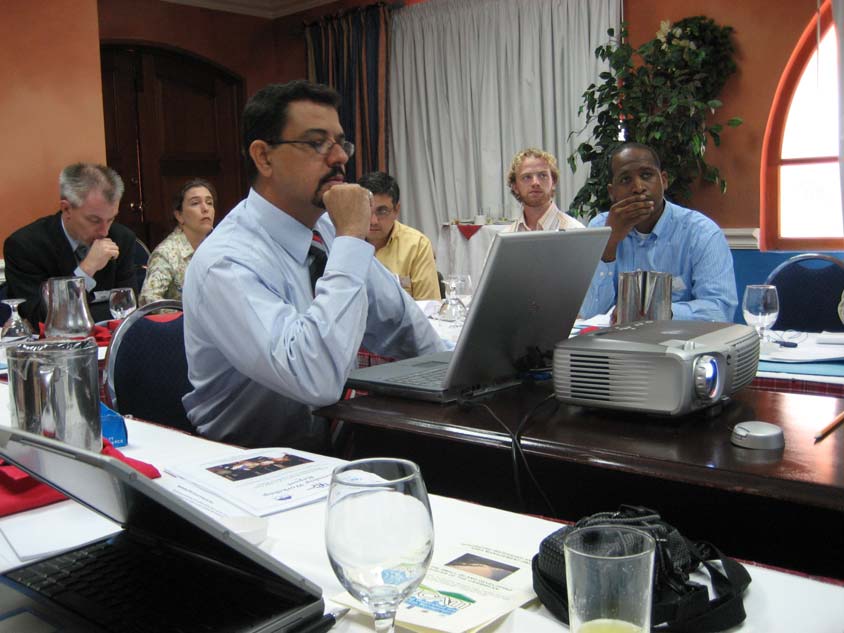
Dr. Christopher Cox, Senior Programme Officer, CEHI, makes his presentation
UNDP was then represented by Ms. Caballero, who explained that the Demonstration Projects
were seen as entry points into the Caribbean for UNDP. She identified CEHI as providing
assistance in the Caribbean Region with the Medium Sized Projects (MSPs) related to
sustainable land management. She described this meeting as an opportunity for cross-
fertilization. Having identified the countries involved, she pointed out that Antigua/Barbuda was
not one of the countries benefiting from the sustainable land management project because they
were separately funded and had their own work programme. She suggested that the lessons, tools
etc., can be adapted for IWCAM because the approach is the same. It was the intention that the
UNDP practices be integrated and mainstreamed into the UNDP programme for water. It was
thus proposed that the coordinating role of UNDP be used for cross-cutting issues at the UNDP
country level.
11
Dr. Gonzalo Cid of NOAA then presented a background on White Water to Blue Water which
was a program started in 2004. He indicated that NOAA could provide resources. He stated that
the challenge initially was determining the best way and a common approach in each country. He
suggested that the one-on-one or face-to-face approach was preferable for dealing with the
countries. He indicated that they were able to work closely with 6 countries including: Guyana,
and Trinidad and Tobago (which managed to finish the programme). He indicated that they had
also been doing work with OECS, and that they were currently trying to put together country
specific data for legislation, projects and activities for public access. He voiced their concern as
that of duplication, citing that among key stakeholders, donor agencies are often guilty of this.
This presentation terminated the morning session.
LUNCH BREAK
The afternoon session began with a presentation by Mr. Gibson, in which he provided an
overview of CWWA, indicating that its membership extended not only to the English-speaking
Caribbean, but to some of the French as well, and represented a wide cross section of
professionals. Their biggest event, he explained, was the annual conference, which is a platform
for professionals in the water sector. They were however looking to extend their impact beyond
this annual conference, to host seminars and smaller conferences in some countries and to
improve professional standards. They received a big thrust from the Ministers Meeting which
was held within the last conference (2006). Their biggest agenda item was capacity-building, and
they would be looking to make the professional clusters (national sections) in the Bahamas,
Jamaica and Trinidad and Tobago self-sustaining entities. He suggested that what CWWA had to
offer in the context of the meeting, was the provision of networking, i.e. access to professionals
in the water and wastewater sector; organizing seminars, and contributing to best practice. He
cited that most of the issues identified by the other agencies were also on CWWA's agenda. He
ended by emphasizing that CWWA's aim was to raise the standards of professionals and
promote sustainability.
The FAO, represented by Dr. Fletcher-Paul provided an overview of her organisation's activities.
Dr. Fletcher-Paul indicated that among the relevant projects, programmes and activities were:
· A regional Trust Fund Project;
· National Medium-term Investment programmes ;
· Bankable Investment projects (which are linked to irrigation development, and which are
based on the priorities of the countries);
· A national Agricultural Water Information System
· Databases Aquastat and FAOSTAT
· Several FAO publications (as they are a technical assistance agency)
She indicated that once certain criteria were met, the countries could write to FAO requesting
technical assistance through the Technical Cooperation Programme (TCP) facility. This could
12
take from 6 weeks to 3 months and each country is allocated $200,000/year. FAO could send a
consultant or undertake the work themselves. There is also the potential to discuss cost-sharing
or collaboration with a sister agency.
Next, Dr. Opadeyi, from the University of the West Indies, made a presentation on CAP-NET.
This 3-year, EU-funded programme, benefits 9 countries in the area of capacity building,
development of case studies and development of training materials. Ongoing activities include
capacity development for water managers and stakeholders, specifically:
· Integrated Water Resources Management (IWRM) for water managers
· Water and gender
After this presentation discussions focused on clarifying points raised and looking at ways to
realize synergies and collaborate.
Inquiries were made into what would be the measurable outcomes of this process, to which it
was explained by Mr. Sweeney that the two days of discussions were intended to lead to a
determination of the next steps required to assist countries in developing IWRM plans by a date
to be determined.
Dr. Opadeyi then suggested that the agency representatives would be required to take ownership
of the 3 main themes: capacity building, political commitment and awareness building..
Mr. Larsen asked whether the persons represented at the meeting were in a position to determine
what the countries needed with respect to IWRM and he also inquired as to who initiated the
process. In response, Ms. Sasha Gottlieb of IWCAM indicated that the IWCAM Project
originated as a result of requests from the countries. Dr. Opadeyi added that at the recent
Ministers' Meeting held during the CWWA Conference, the countries had specifically requested
IWRM plans and Ms. Caballero also confirmed that similar requests had been made.
Some time was then spent trying to determine the best way to present and display the areas for
input and to capture the contribution of participants. After much debate and attempting to
develop several options, the attached matrix was used. During this process, there was much
discussion on several areas and some of this is captured below:
· There are many cross-cutting issues and the packaging of information for the media was one
of them.
· A champion minister should be identified, for example Trinidad and Tobago's Minister
Beckles. This champion would then have to be armed with information to make
interventions at the highest level.
· It was not necessary to have a water policy to precede IWRM planning as different triggers
and gateways can lead to IWRM.
· High-level, in-country political engagement; stakeholder analysis; and stakeholder
engagement were major building-blocks for further activities.
· There should be an attempt to build on the activities that have already been undertaken in
countries that have identified IWRM as a priority.
13
· Water user groups have been attempted in many countries and perhaps the Jamaica Best
practice can be analysed as a case study. In addition to or alternatively, a case study can be
undertaken to investigate why they have largely failed in the region.
· It was felt that the documentation and dissemination of case studies would be a good way to
share lessons learned and best practices.
· There is a global component where FAO, GWP and IWCAM can promote IWRM at the
global level. In this regard, IWCAM, as a flagship Project is carrying its message globally
and it has implications for replication in the Indian Ocean and South Pacific SIDS South-
South cooperation.
· The following were identified as cross-cutting issues:
o Capacity building
o Stakeholder awareness
o Tools (policy, plans, legislation)
o Case studies
o Demonstration projects
· Monitoring was not built into the development process of IWRM planning as proposed
earlier in the discussions because it appeared to be a bit premature since it was not certain at
that point what would be monitored. It was agreed that the meeting would focus on the Plan.
Implementation and monitoring would be discussed perhaps at subsequent meetings.
· It was stated that since there was the need to build capacity and develop case studies, it
would be unrealistic to expect the development of an actual plan during the time scheduled
for these preparatory activities. It was stated that in Uganda and Nicaragua it took 1 ½ years
to complete an IWRM plan, and a regional plan for Central America was completed in a
similar time frame.
This concluded the day's events for Day 1.
14
Day 2
The first activity of the day was a recap of the previous day's discussions, highlighting the
main points, by the rapporteur, Ms. Shermaine Glasgow (CEHI).
This was then followed by a presentation of a matrix designed for the capture and display of the
information discussed on the previous day. Although the intention was to collectively add to
the contents of this matrix, the main feedback to what was presented was that it did not appear
to make adequate provision for Spanish and French Caribbean countries.
The rest of the day was spent discussing the major areas discussed on Day 1, and where there
was consensus; contributions and amendments were made to the matrix. Discussion points that
might be useful in understanding the thought processes behind the development of the matrix
but could not be captured are grouped and summarized below.
Approaches:
This subheading addresses the framework for developing strategies. There was rich discussion
about the various approaches to the matrix, engaging the agencies, stimulating the desired
responses at the national level and identifying a strategy to support the aims of the meeting.
These were all captured generally as "approaches" and summarized below.
The IWRM planning process should be seen as cyclic and not linear so that countries can
become engaged at the point where they require assistance to go forward (e.g. if a country has
already completed the initiation phase, they can enter at a later at a later phase in the cycle such
as planning, implementation etc.). Most countries, however, appear to be in the very
preliminary stages with respect to IWRM, with the smaller countries generally farther behind.
Jamaica does not claim to have an IWRM plan but a significant number of the required
elements of a plan are already operational.
It was suggested that there was need to determine the readiness of the countries for IWRM, the
elements of an IWRM plan, and the priorities for allocation. This would ideally begin with
assessing water management, not just its allocation, and the assessment of national priorities.
Caution was encouraged, however, to avoid giving the perception that this initiative is being
too aggressive so as to ignore the sensitivities of various agencies including those that were not
represented at the meeting, and who would be expected to buy into this concept/approach
designed to improve efficiency and impact while reducing gaps and duplication. It was
suggested that the message be taken back to other stakeholders with the emphasis that it was an
invitation and not a reinvention of the wheel. IWCAM volunteered to arrange a "meeting of the
minds" that subscribed to the UCC agenda.
Stakeholder mapping was suggested as an approach that will inform the types of tools, advocacy
and awareness required. An important group like the media, as well as other groups that have
not been mentioned so far, might be left out if this is not done. This approach would also help to
identify partners. This is seen as an important cross-cutting issue.
15
It was realized that there was a need to use the right approach and language to attract the
support for this initiative and for IWRM at all levels including the funding agencies, the
regional agencies and at the national level (both political and technical). It was suggested for
instance that certain terms and "buzz words" were more likely to draw favour with funders
such as the "ecosystems-based approach" which was a new "buzz word" in watershed
management, and which the participants were advised should be incorporated in any attempt to
access funds from the US State Department.
One of the avenues discussed for engaging the high level stakeholders at the national-level was
to get regional-level influence through the Ministerial Heads of Governments. It was suggested
that a position paper could be prepared and submitted to CARICOM, who would then be
responsible for follow-through for example, dissemination to OECS Ministers. The point of
contact at CARICOM was proposed as either Garfield Barnwell or Anya Thomas. It was
advised that this position paper would have to be phrased in such a way as to link to the
Millennium Development Goals (MDGs), Human Development Report (HDR), National
Sustainable Development Strategies and other broad issues that governments can sell (or buy
into). This again supported the approach of using the "buzz words" that attracted support and
attention. It was also suggested that a champion Minister should be identified, who has already
demonstrated an inclination towards this cause and who can further the agenda among
colleague Ministers. This would also require that a special brochure or package of information
be developed for this target group and specifically for the champion Minister who would have
to be well briefed in advance.
At the national level, it was suggested that the visioning step was important for local ownership
and commitment. It was acknowledged that the IWRM initiative had to be locally driven, but
that the agencies had to find the best ways in which they could assist. (The roles of the
agencies, aside from the activities specified in the matrix, was distilled from the various
contributions and discussions and summarized under that heading below). It was suggested that
IWCAM could shoulder the visioning/policy articulation although it was not determined
whether the project could do that for all countries. It was more probable that each country
would determine where they were along the roadmap, using the prescribed indicators.
Therefore, the work plan would be an output of the visioning process. In order to address the
interchangeable manner in which terms were used, it was confirmed that the work plan for
IWRM development was indeed the roadmap referred to in UCC terminology.
The situation analysis step would involve identifying the constraints and enabling factors. It is
seen as a critical core activity in the post-roadmap but pre-plan phases. It would take into
account entry points linking with current topical issues and identifying local questions that
could be asked such as "what's in it for me?" It was underscored that this must be realistic and
that targets must also be achievable in a realistic timeframe.
There was discussion on the extent to which regional agencies could work through NGOs,
CBOs and other civil society groups, (and even Ministries of Local Government that focus on
decentralization), rather than always going through the government focal points, given the
16
stakeholder fatigue within government ministries due to poor capacity, and the tendency
towards time-consuming protocols.
It was acknowledged that weak NGOs were a feature of SIDS and that they often lacked formal
structures and capacity, support and recognition, and that some NGOs can be opportunistic, but
it was also agreed that reputable NGOs, CBOs and other civil society groups, can be drivers of
the process. CNIRD was recognised as one such regional NGO that could be an entry point. It
was suggested that in order to engage them, there was a need to craft special outreach programs
for NGO/CBOs.
It was also advised however, that according to the mandate of some regional agencies, they
were obligated to work through the national governments. For this project in particular, it was
revealed by UCC that the initiative that they would undertake to fund had to be government-led
although that did not preclude input/participation by NGOs.
It appeared that the involvement of NGOs would be approached as a discrete activity
"guidelines" for stakeholder involvement study. This can be compared to CANARI's work on
stakeholder participation and can be undertaken by one agency that will seek funding for this
direct output. There was the potential for this to be undertaken by IWCAM under their
Community Management Activities. CCA and IDB (with its local Barbados directory of
NGOs) were identified as potentially useful towards this effort as well; GWP-C also expressed
interest.
The UCC indicated that they had about US $100,000 available and that accessing these funds
would involve a request for roadmap analysis or capacity building. This request would have to
originate from one of the countries and be framed in the context of GWP, IWCAM etc. It was
discussed and agreed that since Grenada did not have an IWRM demonstration project, and the
fact that GWP-C was in the process of initiating stakeholder consultation meetings in an effort
to establishing a Country Water Partnership, a case for joint partnership could be made for an
IWRM roadmap project in that country. This case would be undertaken by the IWCAM
Executing Agencies, with a letter of endorsement from the national government. This is not to
say that the "strategy development" phase would be addressed as a pilot with
components/projects because it has to be specific to individual country situations. Thus the
intention was that Grenada would be advanced from one phase to the next, largely benefiting
that country. It was the intention however that lessons from this effort be shared with other
countries, but the main objective was to advance Grenada along the planning cycle.
There was discussion on how "facilitation" could be measured, with the conclusion that this
would be a measurement of mechanisms, capacity, engagement etc. It was noted that
advancement in some areas was disjointed, and that some countries were very advanced while
others were behind. This led to discussion on how the successful implementation of IWRM
could be measured, and the use of indicators.
It was made known that UCC was working with UNESCO to develop indicators based on other
countries' experiences where IWRM had been implemented. These indicators would be
developed for various stages of the cycle e.g. development of policies and legislation etc.;
17
capacity built for implementation; the quality and quantity of the resource etc. It was suggested
that this is where the assessment is necessary as it provides baseline data for comparison after
implementation. The manner in which objectives are set up was also thought to be important.
For example, holding a workshop was not considered to be a good indicator. There is a need to
follow the process to ensure follow-through on recommendations and actions proposed during
the meetings.
IWCAM is to develop performance indicators, and it was suggested to streamline from the
various performance indicators that have already been developed e.g. MDG indicators etc. It
was proposed that this could be an activity that one agency undertake. This was determined to
be something that could be dealt with at a later date as it would require consensus on a tool to
evaluate the process.
Caution was recommended with respect to the selection of indicators because it was noted that
these are often skewed by donors. It was felt necessary to get some sort of indication of what the
countries were doing to measure/evaluate their own processes e.g. water abstraction. This might
be a selling point for the governments. It was also suggested that the approach to be taken
should be a determination of the minimum suite of indicators required and this should be kept to
a small number as research could be intensive, requiring much effort. Further discussion
indicated that there were many countries looking at various indicators and agencies may be
duplicating efforts. Therefore it was proposed that suitable indicators could be extracted from
national efforts in order to negate the time, effort and resources required to develop indicators
for IWRM. Other agencies such as UNDP, UNECLAC, CDB, UNDESA, and UNEP have all
developed indicators for various sectors and these were thought to be good places to start with
respect to selecting and modifying what would be required for IWRM. It was proposed that a
technical committee review and select from among the options available. This was seen then as
a distillation exercise and the IWRM inventory should encompass deriving a minimum data set.
The roles of the agencies
The agencies had discussions on their various work plans, projects and activities. This provided
an idea of the expertise and resources available and allowed for realizing synergies, while
minimizing overlap and closing gaps. This section provides a background into the allocation of
activities within the matrix.
It was pointed out that agencies do not have to be actively engaged in all components and
activities. The proposed role of regional agencies could be that of utilizing their various national
focal points to foster communication. There are entry points such as the Organisation of Eastern
Caribbean States (OECS) which might be used to accelerate the process. It is suggested that the
agencies engage their various protocol Ministers e.g. CEHI Ministers of Health; UNEP
Ministers of Environment; OECS Ministers of Environment, etc.
This stimulated questions regarding the assistance to be provided by the agencies to the various
countries. It was questioned whether interventions could be made to advance different countries
at different levels along the planning cycle, and share those lessons. IWCAM was willing to use
its resources to assist national governments in advancing their plans. It was recognized that
18
regional agencies do not have the mandate to develop (write) the plans for the countries, but that
they needed to identify measurable deliverables in their provision of assistance. It was suggested
that perhaps IWCAM could assist with facilitation in that regard.
Several cross-cutting issues were identified and it was decided that there was the need to
identify lead agencies for these cross-cutting issues and these lead agencies would then receive
support for the areas for which they would be given responsibility. For example, if GWP-C is
seen as the lead agency for capacity building, they might be the clearinghouse for this area.
Determining the lead agencies would involve deciding on the ones that were best placed to
undertake the various activities.
GWP-C has a database on legislation in place, training planned in the various agencies, and
capacity building (human resources perspective) and ongoing survey work to capture
information (December 2006-January 2007). It was suggested that the survey conducted by
CEHI could contribute to this body of information. There was also the opportunity for IWCAM
to undertake broad sensitization among the countries not covered by GWP-C such as Cuba,
Haiti and the Dominican Republic.
GWP-C indicated that the Organization of American States (OAS) funding was recently
received to produce handbooks for schools and community groups and a video on IWRM. They
currently have a contract with the Caribbean Conservation Association (CCA) for a public
awareness video and materials that can target the media. The liaison at CCA is Andre
Braithwaite.
GWP-C is initiating country water partnerships (cross-cutting groups) that can advance IWRM
in their member countries. Grenada, Puerto Rico and Jamaica have all already submitted
proposals to access funds to establish small secretariats to undertake activities. This stimulated
questions surrounding the composition of those teams and the distinction between these and the
IWCAM Inter-sectoral Committees. It was also seen as a good opportunity for IWCAM to pool
resources for joint activities. IWCAM also volunteered to host the first meeting and invited
CWWA to see this as an opportunity for their national chapters. UNEP supported the idea,
suggesting that a single driving force for water can come out of an attempt to consolidate
national chapters.
One of the activities of the IWCAM Project is to create a database of experts that would also be
useful for this IWRM initiative. There will also be a technical advisory group with smaller
working groups given responsibility for specific areas which can be linked to the database of
experts. It was agreed that there were several agencies with databases that were shared with
other agencies when requested. Commercial databases on the other hand tended not to be
Caribbean. It was stated that the GEF-funded Sustainable Land Management Project would list
its participants identifying their areas of expertise. This would take the form of a simple matrix
posted online. If participants lists originated from training workshops then it allows for the
tracking of expertise in the region. This was seen as a cross-cutting, capacity-building activity.
A database could also include sector stakeholders.
19
The feasibility of linking databases of NOAA and United Nations Environment Programme
Global Programme of Action for the Protection of the Marine Environment from Land-based
Activities (GPA) was suggested and agreed to as an opportunity for developing links for
information. It was further indicated that UNEP was going through its second phase of NPAs
and that the GPA was giving direct assistance to the OECS countries through the National
Environmental Management Strategies (NEMS). This had implications for implementation
mechanisms for IWRM. In the British Virgin Islands (BVI) and Grenada, NOAA is working on
NEMS and NPAs. It was stated that there was a role for translating /promoting the global UNEP
strategies at the regional and national levels.
It was further suggested that the agencies gathered could consider sharing their calendars of
events, to better allow for the planning of various activities. In response, UNEP indicated that
there was an upcoming Swedish International Development Cooperation Agency (SIDA)
project focusing on pollution hot spots and on capacity building for labs. Most of the funding is
available for analyses. NOAA data may be important to their initiative. UCC indicated that it
had information on pollution flow patterns. UNEP indicated that it was interested in information
on sedimentation loading and agrichemical runoff into water courses. This was also
complementary to IWCAM.
It was suggested that there is the need to maintain sustainable NGOs by getting them more
involved with the agenda of international agencies. It was perceived that once this was
established then institutional support should be possible, which essentially refers to stakeholder
analysis and participation. The roadmap, it was suggested, needed to identify the stakeholder
needs.
One of the objectives of the CWWA is to strengthen their local chapters and they expressed an
interest in complementing/supporting capacity/awareness for IWRM roadmaps for a few of the
countries. The UCC was interested in piggy-backing on local initiatives.
It was asked whether, aside from the "soft" assessment factors (HR, policies, legislation), there
was going to be an assessment of "hard" factors (e.g. labs, monitoring, techniques etc.). In
response it was suggested that this would be an action for the national plan leading to proposals
for financing for necessary upgrades etc.
The Way Forward
The next steps for advancement of the IWRM agenda are discussed below. Its scope goes
beyond the discrete activities included in the matrix.
In order to put a governance framework in place, to address the current and projected challenges
within the water sector, it was suggested that development of the following were necessary:
· A legal framework and enabling environment
· Institutional capacity
· Management instruments
20
It was decided that there was a need to capture the project activities that take place at the
national level, but outside of a holistic regional approach. This, it was proposed, could be
achieved utilizing a database for water, as was done in the case of St. Lucia. It was suggested
that networking could be undertaken with the Panos Institute of the Caribbean and CAMWORK
as a step towards creating a database of professionals within the areas related to IWRM.
It was suggested that agenda items for one agency could be included in the agenda for other
agencies undertaking related workshops with IWRM themes where synergies can be realized.
This could lead to efficiencies both in terms of the technical impacts and outcomes, as well as
logistics. UNEP expressed an interest in providing funding for co-sponsored workshops such as
this. Therefore, if CEHI has a workshop and includes FAO in the context of IWRM, this could
be supported in part by UNEP. This approach would also be quite important for cross-cutting
issues.
The UCC funds referred to earlier would be available between January and March 2007, and
UCC was interested in allocating these funds towards the preparation of IWRM roadmaps for
two countries. This would have to be applied specifically to capacity-building at the national
level for the development of these IWRM roadmaps. Grenada, as previously discussed, was
favourable as it did not have an IWCAM demonstration project, but also because CEHI was
engaged in a Rainwater Harvesting project there and FAO had targeted Grenada (among other
countries) for CDB funded training in Rainwater Harvesting. It was suggested that preliminary
activities could be initiated in Grenada. GWP-C had an event scheduled for Grenada on
December 20, 2006 and it was indicated that this opportunity would be used to introduce
IWRM. It was also seen as an opportunity for UCC to piggy back with their demonstration
roadmap concept. The responsibility to undertake the preparation of the proposal that would be
submitted to UCC for funding was given to CEHI. FAO and CWWA also expressed interest in
being drawn into the meeting. UCC indicated that funds had to be disbursed by March 2007 and
that the activity has to be reported shortly thereafter. It was foreseen that a consultant would
have to be engaged to produce the roadmap document.
Although subsequent discussion led to the selection of St. Vincent and the Grenadines as the
other country selected for the UCC roadmap project, justifications were made for several other
countries including Trinidad and Tobago, the Bahamas, Jamaica and Cuba. The case made for
Trinidad and Tobago was based on the fact that they have a national CWWA section, a proposal
to establish a country water partnership was made to GWP-C, they have completed their NPA
(UNEP/GPA) and they also have a national inter-sectoral committee (IWCAM). It was also
suggested that Tobago may be more attractive than Trinidad as there would be more
opportunities to have an impact and see more results. It was later determined that Jamaica was
so well advanced, compared to the other countries, that the impact would be less than in another
country which was at a more preliminary stage. The Bahamas was said to have the support of
the Minister responsible for Water (and who was also passionate about IWRM), thus almost
guaranteeing success of such an initiative in the Bahamas. The group was also asked to consider
a parallel activity in Cuba as it was explained that there was a major event in Cuba annually that
could be targeted.
21
Linking the broad categories of the matrix to some of the discussion areas, it was suggested that
IWCAM could play a role in the visioning stage with their activities and their legislative review.
UNEP indicated that a project such as the Sewage Treatment Needs Assessment conducted for
St. Lucia could be replicated (and funded) in 2 other countries. This would have potential for
development of low-cost practices that could be shared with other countries. All that would be
required is the expression of interest by the countries for them to be considered. It was
suggested that CWWA may have received requests and that GPA is planning wastewater
activities for 2007. Opportunities for collaboration were considered. The GPA was said to have
significant funds earmarked for wastewater management for the Caribbean in 2007 and that they
were proposing work in Guyana and Suriname, while UNEP was proposing Jamaica. FAO
raised questions surrounding whether there was an agricultural component given that
wastewater was often used for irrigation in some water scarce countries. NOAA similarly
inquired as to whether there were plans to address oceanographic issues such as patterns of
circulation, where they could supply expertise. It was indicated however, that the focus would
be on near-shore environments.
Summary of discrete activities:
o Drafting a position paper
o Tools for stakeholder assessment/mapping (in conjunction with GWP work)
and defining options for intervention
o Awareness material development already ongoing but needs strengthening
o IWRM capacity assessment
o Compilation of experts database
o Training in technical aspects
o Pilot studies in Grenada and/or Trinidad roadmap development process
(Cuba, subject to UCC confirmation)
o Indicators for IWRM minimum data set
· IWCAM (V. Sweeney) volunteered to draft a letter and follow up with UCC and to keep
GWP in the loop.
· FAO indicated that their case studies will be published in Feb 2007 and that a donors
meeting would be held in Venezuela, so information will be made available to them.
· A roster of experts will be compiled as a component of a clearinghouse that IWCAM will
coordinate. The other agencies were invited to submit their contacts on a structured form
to be developed for guidance and disseminated.
· It was agreed that meeting participants would form an informal working group on IWRM
and that this group not be rigid.
· UNEP was interested in having discussion with CEHI on a longer-term schedule for
IWRM.
More specific discussion on the Position Paper can be summarized as follows:
· There was the need to determine what the group was aiming for so that a schedule could
be determined e.g. in time for COTED and COHSOD. CEHI could act as the conduit for
submission to CARICOM. The COTED meeting was scheduled for Feb 7, 2007.
· Some of the issues that were proposed for inclusion included:
o Drawing attention to regional and international commitments/agreements such
as MDGs - IWRM Plans, CCH water and disaster, St. George's Declaration
22
environmental sustainability in the OECS Sub-region, all of which need to
be phrased in the context of national, regional and international priorities
· Broad issues such as:
o Poverty Reduction
o Human Development Report
o Food security
o Ecology-based approach to sustainability
· Issues raised at the Ministerial Forum on Water (CWWA); Partnership Workshop in
Antigua (CEHI/IWCAM/UCC) and follow-up meetings with agencies
· IWRM within IWCAM
· Current activities and approaches
· Emphasis on the fact that agencies can support IWRM development activities
· Articulation on what the countries are committing to and expected to do
· Request for Ministerial Sub-Committee for Water
· Elements from the minutes of the CWWA ministerial meeting from which would be
derived issues and recommendations
· An indication that there will be regular reports back to COTED on progress/status of
IWRM in the countries
CEHI will take responsibility for preparing the position paper. A draft report and proceedings
will be prepared for dissemination by the end of January.
At this point, the substantive discussions came to a close and the agencies represented were
invited to make Closing Remarks.
CLOSING REMARKS
Mr. Sweeney thanked participants for their presence and participation, particularly as in most
cases, participation was self-funded. He indicated that IWCAM was committed to following
through as a matter of their mandate and raison d'être. IWCAM will put activities into its Work
Plan as short, medium and long-term activities and participants will be kept in the loop as the
Informal Working Group.
Mr. Corbin endorsed Mr. Sweeney's sentiments and indicated that participants will be called in
to provide inputs into this current effort and other related projects, recognizing the importance of
integration. This, he indicated, can be taken back to the countries demonstrating that the agencies
have heard their calls for cooperation.
Dr. Cox expressed his appreciation for the harmonization and consolidation which is important
to avoid confusing the countries and "selling" our initiatives.
23
Dr. Fletcher declared the meeting's objective useful for illustrating how discussions fit into the
"bigger picture". She stated that it was good for linking with work plans and generated lots of
good discussion and ideas.
Mr. Gibson stated that this was a new era for CWWA and that this bodes well for him as the
Vice-president with responsibility for building linkages with other agencies and organizations.
He saw this meeting as a good initiative towards closing the gaps between NGOs and other
agencies. He noted that the absence of turf-protection was good and also that CWWA can work
towards professional development.
Dr. Cid indicated that NOAA was always open to sharing information although, at this time, they
were unable to commit money before Congress approval (Feb-Mar, 2007), but they were glad to
be a part of the proceedings.
Mr. Larsen expressed his appreciation for being invited to be part of the process having recently
taken over the Project at UCC. Being new to the region, the meeting offered him the opportunity
to learn a lot. He indicated that he came with a specific task, and he was quite happy with the
outcomes of the workshop, and he looks forward to deliberations even beyond the short project
that was proposed for UCC involvement.
Ms. Watts expressed her pleasure at being asked to participate in the meeting, which she
described as very informative. The insight she gained was important as was the view of agencies
talking to each other for improved efficiency and coordination. She was also particularly
interested in the fact that this all revolved around an area of particular interest to her
professionally water.
Mr. Hinds declared that as he was relatively new - only 6 months at GWP - he had learned a lot.
In his capacity at GWP, he had been suggesting the identification of a niche in order to avoid
duplication. He expressed his gratitude for being invited to participate in the meeting.
Ms. Caballero and Dr. Opadeyi were regrettably absent at the closing phase of the meeting in
order to facilitate flight schedules.
Final statements:
Mr. Sweeney expressed thanks to UNEP staff for their hospitality in hosting the meeting and for
their logistical support.
At this point, the meeting was officially closed.
Below is the matrix that was elaborated during Day Two of the meeting and further refined by
the IWCAM Project Coordinating Unit and CEHI.
24
IWRM Themes Caribbean IWRM Informal Working Group1
Activity Who
When
How
Stakeholder
GWP-C
Spring Summer
· GWP-C will conduct both a desktop study and field assessment of key
Assessment and
2007
stakeholders providing a listing/map of interest/power and priority issues.
Mapping
This could be used for developing toolkit, Institutional Strengthening (where
possible), provide opportunities for support and intervention.
IWCAM
Spring Summer
· IWCAM to contract university research assistant or intern to identify internal
2007
and external drivers related to IWRM plan development. This should build
on CEP and other databases already in use. It will also serve as a building
block for other clearinghouse activities later in IWCAM.
Awareness Material
GWP-C
November 2006
· IWRM Awareness workshops
Development
October 2007
· OAS-funded and CCA projects producing handbooks and video
*** GWP-C to serve as IWRM Group clearing house on awareness
materials ***
CEHI, IWCAM
Dec. 2006 Feb,
· Draft position paper based on input from IWRM Workshop Participants
PCU with the
2008
· Champion minister should be briefed on this and approached as a potential
input of the
champion.
IWRM Workshop
· For submission to COTED and COHSOD via CARICOM
Participants
CAP-Net Jan.
2007-Dec.
· CAP-NET will be disseminating best practices and lessons learned in the form
2009
of case studies. Individuals and groups can apply for funds from CAP-NET to
undertake these studies. (Details of this will be provided in due course)
· CAP-NET to disseminate lessons learned re: IWRM formulation under
NOAA/UCC/IWCAM
IWCAM
· IWCAM to work with GWP, UCC in DR and Cuba re: awareness building.
UNEP regional activity centre for LBS can contribute to this in Cuba.
· Communications trainings at the national and regional level.
· Development of awareness materials.
IWRM Capacity
IWCAM
· Capacity strengthening re: national labs
1 Please note, information from the CIDA-funded Caribbean Water Initiative to be included in matrix in order to enhance synergies and
collaboration.
25
Assessment and
IWCAM Spring
2007 · IWCAM to conduct legislative inventory and provide recommendations/next
Capacity Building
steps.
GWP-C
December 2006
· Database survey being conducted looking at legislation in place, training in
Summer 2007
different organizations, capacity building from the HR perspective, status of
agencies in terms of present legislation related to water resource work
being conducted by UWI students over winter break.
CAP-NET
Feb-March 2007
· Drafting model water policy. This work may serve as the foundation of the
IWCAM legal inventory exercise. This would be included in 2008 work plan of
CAP-NET
UCC / CEHI
Summer Fall 2006
· Conducted survey regarding legal capacity re: water resources management
in the Caribbean
FAO Ongoing · Conducting the Caribbean Regional Food Security Project, from which best
practices will be published/distributed
*** FAO the lead for awareness re: agriculture/water ***
Databases /
IWCAM
· IWCAM to develop a clearinghouse for watershed and coastal area
Clearinghouses
management topics, including an experts database. This should be done in
collaboration with other relevant projects and databases.
*** IWCAM the lead on database / clearing house ***
Technical Training
GWP-C
UNEP
· UNEP would like to co-sponsor courses similar to the CREP-Training course
for Environmental Journalists, organized through PANOS. Such an initiative
would work with PANOS, CERN, ITU, and Caribbean Association of Media
Workers.
· UNEP Technical Forum ISTAC meeting for last quarter of next year. This is
a technical session and opportunity to use technical focal points to update on
IWRM plan development
CAP-NET December
2006
· Training of trainers Workshop to be convened
2007
· Training material to be developed
First half of 2007
· Water Managers and high-level decision-makers to be trained
2007
· Training in Gender & Water
First half of 2007
· E-learning assessment
FAO
Second half of 2007
· Tentatively planning to offer a rainwater harvesting training course in
Grenada (through CDB)
26
IWRM Roadmap
GWP-C, CWWA,
UCC January
· IWRM Development in one island in the Grenadines (SVG) and in Grenada.
Development
IWCAM, UCC,
March 2007
CEHI/IWCAM to draft a submission to UCC for these activities. NOAA is
NOAA
NOAA January
funding IWRM development for one island in the Grenadines.
April 2007
· GWP-C setting up Country Water Partnerships (CWP). It has already
GWP-C January
received proposals from Grenada, PR, and Jamaica. The country water
July 2007
partnerships will establish a small secretariat.
CWWA Ongoing,
· IWCAM is establishing National Intersectoral Committees in IWCAM
starting in 2007
countries. Discussion of pooling resources and working together with GWP-
C's CWP and CWWA's national sections. This could be considered "A Single
Driving Force for Water."
· NOAA is working in the region under the GPA agreement. It is talking with
authorities and getting them interested in GPA and promotion of the
partnership under WW2BW initiative. Bilateral agreements that US
government has with governments in the region (e.g. CAFTA) enables NOAA
to obtain funds from US State Department. NOAA can share information,
contact persons, process, etc. with others.
UNEP
· UNEP National Promotional Workshops on LBS Protocol being planned in all
the English speaking Caribbean. This will contribute to the global UNEP
strategy, breaking it down into something that is relevant for the region. This
year is the second phase of NPA development. The GPA is giving direct
assistance to OECS in the strategic planning of NEMS. In the OECS, this
could spin off into IWRM Plan development.
IWRM Indicators
IWCAM / UNEP
· IWCAM Indicators work
27
Annex 1: Workshop Agenda
IWCAM Project Coordination Unit
C/O Caribbean Environmental Health Institute, The Morne, P.O. Box 1111, Castries, St. Lucia
Tel: 1 (758) - 452 2501, 1412; Fax: 1 (758) 453 2721
URL: www.iwcam.org
IWRM Strategic Planning Workshop
Courtleigh Hotel and Suites, Kingston, Jamaica
December 4-5, 2006
AGENDA
December 4th:
Day 1
9:00 - 9:30 am:
Opening
9:00 - 9:15 am:
Vincent Sweeney, IWCAM (Chair)
9:15 - 9:30 am:
IWCAM Executing Agencies - Nelson Andrade,
UNEP-CAR/RCU & Chris Cox, CEHI
9:30 - 9:45 am:
Overview David Smith, Facilitator
9:45 - 10:15 am:
Presentation on GWP/UNDP/CAP-Net Training Manual on IWRM
Development Paul Hinds, GWP-C
10:15 - 10:45 am:
Presentation on UCC Survey Findings Chris Cox, CEHI
10:45 -11:00 am:
Break
11:00 am - 12:00noon:
5-10 minute information presentations from agencies
12:00 noon - 12:45 pm:
Brief discussion of overarching themes
GWP Themes:
- Financing Local Water Initiatives
- Institutional development and political processes
- Capacity building and social learning
- Application of science, technology and knowledge
- Targeting, monitoring, and implementation assessment
12:45 - 1:45 pm:
Lunch
28


1:45 - 3:30 pm:
Session One Implementing IWRM
· Agencies Workplans
· Gaps
· Duplications
· Identified synergies
3:30 - 5:15 pm
Session Two: Water for Growth and Development
· Agencies Workplans
· Gaps
· Duplications
· Identified synergies
5:15 - 5:30 pm:
Review of Day's Accomplishments
December 5th:
Day 2
9:00 - 9:15 am:
Welcome and Overview of Upcoming Day
9:15 - 11:00 am:
Session Three: Water Supply and Sanitation for All
· Agencies Workplans
· Gaps
· Duplications
· Identified synergies
11:00 am - 12:45 pm: Session Four: Water for Food and the Environment
· Agencies Workplans
· Gaps
· Duplications
· Identified synergies
12:45 - 1:45 pm:
Lunch
1:45 - 5:00 pm:
Session Five: Review of Identified Synergies and Opportunities for
Collaboration and Next Steps.
29
Annex 2: Participants List
Caballero, Paula
Caribbean Water and Pending Wastewater
Regional Technical Advisor
Association
United Nations Development Programme
c/o Water & Sewerage Commission
United Nations House
No. 90 Thompson Boulevard - Somerset
Building 155, City Of Knowledge
House
Panama City, Panama
P.O. Box N-3905
E-mail: paula.caballero@undp.org
Nassau
Bahamas
Cid, Gonzalo
E-mail: wccgibson@wsc.com.bs
International Program Office
National Oceanic and Atmospheric
Glasgow, Shermaine
Administration
Programme Officer
1315 East-West Highway
Caribbean Environmental Health Institute
SSMC3 Room 5734
P.O. Box 1111, The Morne,
Silver Spring, Maryland 20910
Castries, St. Lucia
USA
E-mail: sglascow@cehi.org.lc
E-mail: gonzalo.cid@noaa.gov
Gottlieb, Sasha Beth
Corbin, Christopher
Technical Coordinator
AMEP Programme Officer
IWCAM Project Coordination Unit
United Nations Environment Programme,
Caribbean Environmental Health Institute
Caribbean Regional Co-ordinating Unit
P.O. Box 1111, The Morne
14-20 Port Royal Street
Castries, St. Lucia
Kingston, Jamaica
Email: sgottlieb@cehi.org.lc
E-mail: cjc.uneprcuja@cwjamaica.com
Hinds, Paul
Cox, Christopher
Regional Coordinator
Senior Programme Officer
National Institute of Higher Education,
Caribbean Environmental Health Institute
Research, Science and Technology
P.O. Box 1111, The Morne,
(NIHERST)
Castries, St. Lucia
43-45 Woodford Street
E-mail: ccox@cehi.org.lc
New Town
Port of Spain, Trinidad
Fletcher-Paul, Lystra
E-mail: phinds@gwp-caribbean.org;
United Nations Food and Agriculture
pwhinds@hotmail.com
Organization
Subregional Office for the Caribbean
Knight, Peter
c/o FAO Representation
Chief Environmental Health Officer
PO Box 631-C
Ministry of Health
Bridgetown, Barbados
2-4 King Street
E-mail: lystra.fletcherpaul@fao.org
Kingston, Jamaica
E-mail: knightp@moh.gov.jam
Gibson, Cyprian
Vice President
30
Larsen, Henrik
Sweeney, Vincent
Head, Water Management Department
Regional Project Coordinator
Agern Allé 5
IWCAM
DK-2970
c/o Caribbean Environmental Health
Hørsholm, Denmark
Institute
E-mail: hel@dhigroup.com
P.O. Box 1111, The Morne
Castries, St. Lucia
Opadeyi, Jacob
Email: Vincent.sweeney@unep.org
Coordinator, CAPNET
Faculty of Engineering
Watts, Michelle
The University of the West Indies
Senior Environmental Officer
St. Augustine, Trinidad and Tobago
Water Resources Authority
E-mail: jopadeyi@hotmail.com
Hope Gardens
P.O. Box 91, Kingston 7
Poussart, Jean-Nicolas (Observer)
Jamaica, West Indies
Junior Programme Officer
Kingston, Jamaica
UNEP-CEP
E-mail: wra@colis.com
LBS RAC-Cimab
Carretera del Cristo, No. 3 esq.
Tiscornia, Casablanca
La Habana, Cuba
E-mail: jean-nicolas.poussart@undp.org
31
Annex 3: Presentations
32