







GB Monograph Series 9 v2 25/9/03 9:46 am Page 1
1st Inter
national W
Global Ballast Water
Management Programme
orkshop
G L O B A L L A S T M O N O G R A P H S E R I E S N O . 9
on Guidelines and Standards for Ballast W
1st International Workshop
on Guidelines and Standards for
Ballast Water Sampling
ater Sampling
W
orkshop Report
RIO DE JANEIRO, BRAZIL,
7-11 APR 2003
.dwa.uk.com
Workshop Report
Steve Raaymakers
GLOBALLAST MONOGRAPH SERIES
More Information?
el (+44) 020 7928 5888 www
Programme Coordination Unit
Global Ballast Water Management Programme
International Maritime Organization
4 Albert Embankment
London SE1 7SR United Kingdom
Tel: +44 (0)20 7587 3247 or 3251
est & Associates, London. T
Fax: +44 (0)20 7587 3261
Web: http://globallast.imo.org
NO.9
A cooperative initiative of the Global Environment Facility,
United Nations Development Programme and International Maritime Organization.
Cover designed by Daniel W

GloBallast Monograph Series No. 9
1st International Workshop on
Guidelines and Standards for
Ballast Water Sampling
Rio de Janeiro, Brazil: 7-11 April 2003
Workshop Report
Raaymakers, S.
International Maritime Organization
ISSN 1680-3078
Published in October 2003 by the
Programme Coordination Unit
Global Ballast Water Management Programme
International Maritime Organization
4 Albert Embankment, London SE1 7SR, UK
Tel +44 (0)20 7587 3251
Fax +44 (0)20 7587 3261
Email sraaymak@imo.org
Web http://globallast.imo.org
The correct citation of this report is:
Raaymakers S. 2003. 1st International Workshop on Guidelines and Standards for Ballast Water Sampling, Rio de Janeiro,
Brazil, 7-11 April 2003: Workshop Report. GloBallast Monograph Series No. 9. IMO London.
The Global Ballast Water Management Programme (GloBallast) is a cooperative initiative of the Global Environment Facility (GEF),
United Nations Development Programme (UNDP) and International Maritime Organization (IMO) to assist developing countries to reduce
the transfer of harmful organisms in ships' ballast water.
The GloBallast Monograph Series is published to disseminate information about and results from the programme, as part of the
programme's global information clearing-house functions.
The opinions expressed in this document are not necessarily those of GEF, UNDP or IMO.
1st International Workshop on Guidelines and Standards for Ballast Water Sampling, Rio de Janeiro, Brazil, 7-11 April 2003
Acknowledgements
The 1st International Workshop on Guidelines & Standards for Ballast Water Sampling was funded
by the Global Environment Facility (GEF), as an activity of the GEF/UNDP/IMO Global Ballast
Water Management Programme (GloBallast). The workshop was hosted and partly sponsored by the
Government of Brazil, through the Federal Department of Environment, with additional sponsorship
and/or support from the following organizations:
· Aliança Navegação e Logística Ltda - Brazilian shipping company of Hamburg Sud.
· International - marine paint company from the group Akzo Nobel.
· Sindicato Nacional das Empresas de Navegação Marítime (Syndarma) Brazilian National
union of shipping companies.
· Petrobrás Transpetro S.A branch of Petrobras responsible for oil transport.
· Marinha do Brasil Brazilian Navy.
· Companhia Docas do Rio de Janeiro - Rio de Janeiro Port Authority.
· Escola Nacional de Botânica Tropical - National School of Tropical Botany.
The efforts of following individuals deserve special thanks for their personal contributions to making
the symposium a success:
· Mr Leonard Webster, Mr Alex Leal C. Neto, Dr Flavio de Costa Fernandes, Ms Karen Larsen
and Ms Julieta da Silva for their sterling efforts in providing organizational support.
· Dr Flavio de Costa Fernandes, Dr Stephan Gollasch, Mr Tim Dodgshun, Mr Matej David, Dr
Chad Hewitt and Mr John Hamer for their role as technical advisers, instructors and/or
facilitators.
· All persons who presented papers, providing the very substance of the workshop.
· All other participants, without who the symposium would not be an event.
Layout and formatting of this report was undertaken by Leonard Webster of the GloBallast PCU.
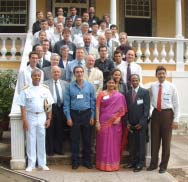
Delegates photograph
i
1st International Workshop on Guidelines and Standards for Ballast Water Sampling, Rio de Janeiro, Brazil, 7-11 April 2003
Contents
Acknowledgements ............................................................................................................. i
Delegates Photograph ......................................................................................................... i
1
Introduction & Background..................................................................................... 1
2
Workshop Objectives .............................................................................................. 2
3
Workshop Outputs .................................................................................................. 2
4
Workshop Structure & Programme......................................................................... 3
5
Workshop Participants............................................................................................ 4
6
Workshop Results and Recommendations ............................................................ 4
7
Further Action & Overall Conclusion.................................................................... 19
References ........................................................................................................................ 19
Appendix 1: Workshop Programme
Appendix 2: Workshop Participants
Appendix 3: Selected Papers
Appendix 4: Thursday Working Group Instructions
Appendix 5: Draft Structure for International BW Sampling Guidelines
ii
1st International Workshop on Guidelines and Standards for Ballast Water Sampling, Rio de Janeiro, Brazil, 7-11 April 2003
1
Introduction & Background
The introduction of harmful aquatic organisms and pathogens to new environments via ships' ballast
water and other vectors, has been identified as one of the four greatest threats to the world's oceans.
The International Maritime Organization (IMO) is working to address the ballast water vector through
a number of initiatives, including:
· adoption of the IMO Guidelines for the control and management of ships' ballast water to
minimize the transfer of harmful aquatic organisms and pathogens (A.868(20)),
· developing a new international legal instrument on ballast water management (Draft
International Convention for the Control and Management of Ships' Ballast Water &
Sediments) currently scheduled to be considered by an IMO Diplomatic Conference in 2004,
and
· providing technical assistance to developing countries through the GEF/UNDP/IMO Global
Ballast Water Management Programme (GloBallast).
The GloBallast Programme is working through six Demonstration Sites/Pilot Countries. These are
Dalian (China), Khark Is (Iran), Mumbai (India), Odessa (Ukraine), Saldanha (South Africa) and
Sepetiba (Brazil). The Programme is managed by a Programme Coordination Unit (PCU) based at
IMO in London, and activities carried out at the Demonstration Sites are being replicated at additional
sites in each region as the programme progresses (further information http://globallast.imo.org).
In developing the draft International Convention, IMO's Marine Environment Protection Committee
(MEPC), through its Ballast Water Working Group (BWWG), has identified ballast water sampling as
an important technical issue that needs to be addressed in the Convention. MEPC has instructed the
BWWG to develop the necessary technical guidelines, in support of the Convention, on ballast water
sampling. Such sampling may be carried out for a number of useful purposes, including:
· To better understand the physics, chemistry and biology of ballast water (scientific research).
· To identify potentially harmful species carried in ballast water (hazard identification /risk
assessment).
· To assess compliance with open-ocean ballast water exchange requirements (compliance
monitoring and enforcement).
· To assess the effectiveness of alternative ballast water treatment methods (ballast water
treatment R&D).
Ballast water sampling equipment and methods have been in a phase of development in recent years,
with different countries and parties around the world trialing different approaches, and a number of
useful documents are now available. These include:
· An outline manual of sampling procedures and protocols prepared for the US Coast Guard
(Carlton et al 1997).
· A practical manual on ballast water sampling published by the Cawthron Institute in New
Zealand (Dodgshun & Handley 1997).
· A review of ballast water sampling methods published by the Centre for Research on
Introduced Marine Pests (CRIMP) in Australia (Sutton et al 1998).
· An international calibration exercise for ballast water sampling conducted under the EU
Concerted Action Programme in 1999 (Rosenthal et al 1999).
· A report from the ballast water sampling Correspondence Group established by the IMO
MEPC Ballast Water Working Group in 2000 (MEPC Paper 45/2/7)
1
1st International Workshop on Guidelines and Standards for Ballast Water Sampling, Rio de Janeiro, Brazil, 7-11 April 2003
· Sampling methods used by various scientific institutions and regulatory agencies around the
world for ballast exchange compliance testing (e.g. USCG rapid salinity method
http://www.uscg.mil/hq/g-m/mso/mso4/bwgal.html and Port Vancouver zooplankton method.
In order to develop the international technical guidelines for ballast water sampling required by IMO-
MEPC, it is necessary to review these various approaches and other relevant activities.
One of the many areas in which GloBallast is providing technical assistance to the Pilot Countries, is
the sampling of ships' ballast water. In 2002, one of the Pilot Countries, Brazil, initiated an
experimental ballast water sampling programme at nine ports in the country, through its National
Health Surveillance Authority (ANVISA) and with support from the Admiral Paulo Moreira Marine
Research Institute (IEAPM), aimed at assessing the presence of pathogens in ballast water. As a
result, Brazil has developed significant expertise in ballast water sampling and provided an ideal
demonstration site on this issue for the other GloBallast Pilot Countries and other interested parties.
Considering the above, and in order to assist both the GloBallast Pilot Countries and the MEPC-
BWWG with the issue of ballast water sampling, the PCU with support from the Government of
Brazil, convened the 1st International Workshop on Guidelines & Standards for Ballast Water
Sampling in Rio de Janeiro, Brazil from 7 to 11 April 2003.
2 Workshop Objectives
The objectives of this workshop were:
1. To review ballast water sampling activities undertaken by various entities around the world to
date, and to allow discussion and debate comparing methods and results.
2. To initiate greater global coordination and cooperation on this issue, including sharing of
expertise, experiences and data.
3. To review the various ballast water sampling guidelines and standards that are currently
available and adapt them into draft international guidelines, for use by the GloBallast Pilot
Countries and consideration by IMO's Marine Environment Protection Committee (MEPC),
in the context of the new Convention.
4. To provide practical training to the delegates from the GloBallast Pilot Countries in
standardised ballast water sampling methods, to allow them to purchase the necessary
equipment and develop and implement ballast water sampling programmes on return to their
home countries.
3 Workshop Outputs
The workshop was designed to generate the following outputs:
· A Workshop Report (this document) containing papers presented and outlining workshop
results and recommendations for further action, in relation to the above objectives. This will
be submitted to IMO member States (through MEPC) and other relevant bodies.
· Draft International Guidelines and Standards for Ballast Water Sampling for finalisation and
publication by the GloBallast PCU, for consideration by MEPC in the context of the new
Convention, and by other interested bodies.
2
1st International Workshop on Guidelines and Standards for Ballast Water Sampling, Rio de Janeiro, Brazil, 7-11 April 2003
· Trained personnel from each of the GloBallast Pilot Countries who can plan and commence
ballast water sampling programmes on return to their countries, according to international
standards.
4
Workshop Structure & Programme
Prior to the workshop, the PCU contracted a consultant, Dr Stephan Gollasch (Germany) to:
· Undertake a global review of ballast water sampling programmes to date.
· Plan, prepare and coordinate the pratical equipment and ship-board demonstration activities
for the workshop.
The workshop was convened by the PCU Technical Adviser, with specialist sampling advice from the
consultant and additional expert advice and support from Dr Flavio de Costa Fernandes of IEAPM
(Brazil), Mr Matej David of Lubljulana University (Slovenia), Mr Tim Dodgshun of Cawthron
Institute (NZ), Dr Chad Hewitt of the Ministry of Fisheries (NZ) and Mr John Hamer of the
Coutryside Commission of Wales marine team (UK). Support provided by several of these experts
was funded by their respective institutions and represented significant support for the workshop from
their countries.
The workshop proceeded according to a five-day programme (Appendix 1). The first two days
involved presentation of background papers by international experts, outlining ballast water sampling
activities undertaken by various entities around the world, and allowing discussion and debate
comparing methods and results. Time was also dedicated to classroom demonstrations and hands-on
familiarisation of different types of ballast water sampling equipment.
On the 3rd day a practical demonstration of the various types of sampling methods and equipment was
undertaken aboard the Brazilian Navy tanker `Marajo', at the Nitiroi Naval Base, Rio de Janeiro.
Types of sampling equipment demonstrated included various plankton nets, water samplers and
pumps. The shipboard sampling was followed by the demonstration of techniques for the analysis of
samples and identification of biota in the laboratory.
The remaining days of the workshop were spent in four working groups, `brain-storming' a set of
prescribed questions and tasks, in order to develop the structure and key components for the draft
international guidelines. Each working group contained around 10 people selected to provide a mix of
expertise and broad geographical representation in each group, with a nominated facilitator. The
working group sessions were programmed over the Thursday and Friday (10 and 11 April 2003).
On the Thursday, the groups were tasked with a set of questions designed to establish first principles
and basic concepts, define strategic objectives and identify main subject areas requiring detailed
technical development. Working group questions included:
· the need for guidelines and standards and their objectives,
· the importance of defining the purpose of ballast water sampling,
· the issue of representativeness, efficiency and effectiveness of sampling,
· ship design modifications and improvements to facilitate sampling,
· the concept of standard ballast water sampling kits on-board ships, and
· how to address these issues in guidelines and standards.
The full working group instructions for the Thursday are contained in Appendix 4.
3
1st International Workshop on Guidelines and Standards for Ballast Water Sampling, Rio de Janeiro, Brazil, 7-11 April 2003
On the Friday, the working groups were provided with a suggested structure for the draft international
guidelines, which had been developed overnight by the PCU and technical advisers, based on the
Thursday working group recommendations, the background papers and the pre-workshop reviews
undertaken by the consultant.
The suggested structure (Appendix 5) divides the draft guidelines in two main parts; main document
and technical annexes. Working groups 1 and 2 were asked to identify the main issues requiring
detailed development in each section of the main body of the suggested structure, while groups 3 and
4 were asked to undertake a similar analysis of the proposed technical annexes.
5
Workshop Participants
The workshop was attended by three `trainees' from each GloBallast Pilot Country, a number of
additional delegates from the host-country Brazil, including ballast water sampling experts, and both
trainees and experts from a large number of other countries. In total, there were 42 participants from
20 countries.
The range of expertise assembled to act as presenters, instructors and facilitators was comprehensive
and included many internationally recognised experts in the field of ballast water sampling, including
Dr Stephan Gollasch (Germany), Dr Flavio de Costa Fernandes (Brazil), Dr Maria Célia Villac
(Brazil), Mr Matej David (Slovenia), Dr Muzaffer Feyzioglu (Turkey), Mr Tim Dodgshun (NZ), Dr
Chad Hewitt (NZ), Mr John Hamer (UK), Ms Silvia Rondon (Columbia), Ms Nicole Mays (USA) and
Mr Don Reid (Canada). Attendance by many of these experts was funded by their respective
institutions and represented significant support for the workshop from their countries.
By design, the workshop participants comprised an extremely diverse group of people, including
individuals with no previous experience what-so-ever with ballast water sampling to world authorities
on the issue, people from the shipping, port, scientific and governmental sectors and people from
countries of differing environmental, economic and socio-political conditions.
A full participants list is contained in Appendix 2.
6
Workshop Results and Recommendations
Background papers
The papers presented are listed in the workshop programme (Appendix 1) and those that focus on
ballast water sampling methods are included in full in Appendix 3. The background papers were
considered most useful in `setting the scene' and providing basic background information, as many of
the `trainees' had very limited previous experience with the issue. Together, the collection of papers
provide an extremely useful information resource, presenting an overview of many of the major
ballast water sampling programmes undertaken globally to date. Topics covered include:
· International reviews and inter-calibrations of ballast water sampling methods.
· Examples of national approaches to the issue, including Australia, Brazil, Columbia,
Germany, New Zealand, Slovenia, Turkey and USA.
· Special considerations such as sampling for pathogens, sampling for ballast tank sediments,
sampling as part of ballast water treatment effectiveness testing and genetic probes / rapid
diagnostic techniques.
· Post-sampling issues such as sample handling, preservation, treatment and analysis.
4
1st International Workshop on Guidelines and Standards for Ballast Water Sampling, Rio de Janeiro, Brazil, 7-11 April 2003
The main points that were drawn from the papers and the resulting question and discussion sessions
are given below.
General points
· Ballast water sampling programmes are carried out for various purposes by a number of
research groups across many countries using a wide variety of methods and equipment.
· There already exists a wealth of detailed technical information on this issue, including the
outline manual prepared for the US Coast Guard (Carlton et al 1997), the EU inter-calibration
study (Rosenthal et al 1999), the CRIMP review (Sutton et al 1998), the Cawthron Manual
(Dodgshun & Handley 1997) plus the German sampling method and practical experiences
from sampling programmes in countries such as Brazil, Columbia , Slovenia, Turkey and the
UK, as described in the papers in Appendix 3.
· It is important to clearly define the objectives and purpose before proceeding with any
sampling programme. Different objectives and purposes may require very different
approaches, and sampling methods and equipment should be selected to meet the defined
objectives and purpose, e.g:
- a sampling programme carried out by scientists to provide a general understanding of the
physics, chemistry and biology of ballast water may adopt a range of methods applied in a
variety of shipboard situations to measure a range of parameters; whereas
- a sampling programme carried out by Port State Control inspectors to assess compliance
by arriving ships with ballast water exchange at sea, needs to adopt methods that are
simple, portable, rapid and applicable at the port of ballast discharge, and which measure
limited, simple parameters that are indicators of ballast exchange, such as salinity and
presence/absence of oceanic vs coastal species; whereas
- a sampling programme carried out to assess the effectiveness of a new ballast water
treatment technology, needs to sample at least before and after, and possibly during, the
treatment process, ideally using an `in-line ` approach, and which measures parameters
that are indicators of treatment effectiveness, including the achieved
reduction/neutralisation in organisms.
· In recognition of these differences, it is important that any international guidelines and
standards for ballast water sampling are clearly organized so as to facilitate selection of
sampling designs, methods and equipment that meet the defined objectives and purpose.
· There is a clear need for inter-calibration and standardisation of sampling equipment and
methods, although even after international inter-calibration exercises (e.g. Rosenthal et al
1999), individual research groups often revert to `old familiar' methods rather than adapt to
inter-calibrated, standardised approaches.
· The issue of sample representativeness and sampling efficiency is a major limiting factor for
ballast water sampling, in relation to all sampling objectives and purposes.
· There is a lack of technical guidance for sampling of micro-organisms (including pathogens)
in ballast water.
· There is a global need for ongoing, regular review of developments with ballast water
sampling, including cost-benefit analysis and comparison of different sampling techniques.
Such ongoing review could be achieved through biennial convening of international ballast
water sampling workshops by IMO, as follow-ons from this workshop.
Ballast water sampling for general scientific research
· Ballast water sampling methods for the purposes of general scientific research are well
developed and there is a wealth of data available in the literature on the physics, chemistry
and biology of ballast water.
5
1st International Workshop on Guidelines and Standards for Ballast Water Sampling, Rio de Janeiro, Brazil, 7-11 April 2003
· Sampling ballast water for scientific research, whether for purely academic reasons or to
support management decision making, is perhaps the most flexible and variable form of
ballast water sampling. A number of options from the full range of sampling approaches,
methods and equipment may be suitable, depending on the precise objectives of the scientific
research.
· Given the wide range of potential research objectives, the variety of sampling methods and
equipment available and the existence of an extremely large pool of scientific expertise
around the world, any international guidelines should not be prescriptive or restrictive in
relation to this sampling purpose. Scientists should select the optimum sampling methods and
equipment to suit their specific research objectives, considering the advantages and
disadvantages of each method.
· Perhaps the most significant issue in relation to ballast water sampling for scientific research
purposes, is to ensure some sort of inter-calibration and standardisation of methods and
equipment between groups that are conducting similar research, so as to allow cross-
comparison of results.
Ballast water sampling for hazard analysis/risk assessment
· Ballast water sampling methods for the purposes of hazard analysis/risk assessment (e.g. to
identify potentially harmful species carried in ballast water) are well developed and there is a
wealth of data available in the literature on the biology of ballast water.
· It may be argued that sampling for risk assessment / hazard analysis, primarily to identify
potentially harmful species carried in ballast water, is a form of scientific research. However,
it is a more narrowly defined purpose with clear links to management, and should therefore be
treated as a specific sampling purpose in any international sampling guidelines.
· Sampling to identify potentially harmful species in ballast water may also be connected with
sampling for compliance monitoring and enforcement purposes, especially if the latter is
based on indicator species (see below).
· If the investigator is only interested in certain target species, then the development of genetic
probes as outlined in the paper by Patil (Appendix 3) may be relevant.
· Perhaps the most significant issue in relation to ballast water sampling for risk assessment /
hazard analysis purposes, is sample representative-ness. Sampling via sounding pipes may not
be ideal for this purpose, as it suffers from low representative-ness. If the sampling party is
most concerned about the actual input of introduced species into a receiving port, rather than
what is inside the ballast tanks, then sampling at the point of discharge may be the best
option.
Ballast water sampling for compliance monitoring and enforcement
· Ballast water sampling methods for the purposes of compliance monitoring and enforcement,
are in an early stage of development, and are in particular need of validation, inter-calibration
and standardisation.
· Currently, the only operational procedure available to ships to minimize the transfer of
aquatic organisms is ballast water exchange at sea, as recommended in the IMO ballast water
Guidelines (A.868(20)) and provided for in the draft IMO ballast water Convention. Sampling
to monitor and enforce compliance with ballast water management measures is therefore
currently limited to assessing compliance with ballast exchange.
· Eventually, as alternative ballast water management measures and treatment systems are
approved and accepted by IMO and national jurisdictions, it will be necessary to develop
procedures to assess compliance of these systems with the agreed standards. However, as
alternative ballast water treatment systems are still in the development phase, any
6
1st International Workshop on Guidelines and Standards for Ballast Water Sampling, Rio de Janeiro, Brazil, 7-11 April 2003
international sampling guidelines would not cover compliance sampling for such systems at
this stage (although many of the sampling methods might be relevant).
· A sampling programme carried out by Port State Control inspectors to assess compliance by
arriving ships with ballast exchange, needs to adopt methods that are simple, portable, rapid
and applicable at the port of ballast discharge, and which measure limited, simple parameters
that are indicators of ballast exchange.
· Sampling the ballast water on arriving ships for physical/chemical parameters is part of the
compliance monitoring `tool box.' The physical and chemical parameters of ballast water
(e.g. pH, salinity, turbidity, organic content etc) may show whether it is open ocean water,
indicating exchange has occurred, or port or coastal water, indicating exchange has not
occurred. The US Coast Guard has developed a very simple, rapid sampling method that
allows boarding officers to measure the salinity of ballast water and assess if exchange was
conducted (refer http://www.uscg.mil/hq/g-m/mso/mso4/bwgal.html).
· The presence/absence of coastal and oceanic species in the ballast water may also be taken as
an indicator of whether the ballast is of coastal or oceanic origin, and therefore, whether or
not exchange has been conducted. The Vancouver Port Corporation has developed a sampling
method based on this approach, and this is being developed further by the State of
Washington (USA).
· Both of these approaches suffer many limitations and qualifications, including the major
constraint of sampling efficiency / representative-ness, and the assumptions that certain
salinity levels and indicator species are indeed coastal and oceanic. Compliance sampling
based on indictor species is also limited by the time frames and taxonomic expertise required
for sample analysis.
· More effective methods of assessing compliance with ballast exchange requirements would
involve in-line samplers and electronic monitoring systems being fitted to vessels. Such a
system would take data on ballast water parameters such as water levels, temperature, salinity
and pressure, plus operational data such as starting/stopping of pumps, ships' positions (GPS)
and dates and times, from automatic sensors located throughout the ships' ballast and other
operational systems. The data would be recorded in a central processor (including potentially
the ship's voyage data recorder), and transmitted to shore-based offices. This would eliminate
the need for paper-based ballast water reporting forms and the scope for recording and
reporting errors and irregularities. Such systems are under development by the US Coast
Guard and GloBallast Ukraine.
· If the port State enforcement agency is only interested in certain target species, then the
development of genetic probes as outlined in the paper by Patil (Appendix 3, page 75) and the
development of other rapid diagnostic tecniques such as portable flow-cytometry devices may
be relevant.
· It should be noted that if sampling indicates non-compliance with ballast exchange
requirements, there must be a contingency plan (e.g. reception facilities, chemical treatment
as emergency measure, discharge in certain port/near-shore contingency areas).
Ballast water sampling for assessing alternative ballast water treatment methods
· Ballast water sampling methods for the purposes of assessing the effectiveness of alternative
ballast water treatment technologies are in an early stage of development, and are in particular
need of validation, inter-calibration and standardisation. The papers by Cangellosi et al
(Appendix 3) provide some relevant information.
· As alternative ballast water management measures and treatment systems are approved and
accepted by IMO and national jurisdictions, it will be necessary to develop procedures to
assess compliance of these systems with the agreed standards.
7
1st International Workshop on Guidelines and Standards for Ballast Water Sampling, Rio de Janeiro, Brazil, 7-11 April 2003
· In the meantime, there are over 50 research groups world-wide undertaking R&D of
alternative ballast water treatment systems, and all are using various, often different sampling
methods to assess the effectiveness of their systems.
· A sampling programme carried out to assess the effectiveness of a new ballast water
treatment technology, needs to sample at least before and after, and possibly during, the
treatment process, ideally using an `in-line ` approach. It should measure parameters that are
indicators of treatment effectiveness, including the achieved reduction/neutralisation of
organisms.
· Most importantly, the sampling approach will be determined by the ballast water treatment
standard that the system is being assessed against.
· Other extremely important issues in relation to this type of sampling are experimental design,
including control experiments and adequate replication to achieve acceptable levels of
statistical confidence, and adopting internationally standardised test protocols, so as to allow
direct and meaningful cross-comparisons of tests of different systems.
· This issue is somewhat outside of the scope of this workshop, and international ballast water
treatment standards and test protocols should be set under the draft Convention.
Shipboard sampling practical demonstration
The shipboard sampling practical demonstration took place on-board the Brazilian Navy tanker
`Marajo'on Wednesday 9 April 2003, and was followed by a demonstration of sample analysis
techniques in the laboratory.
It should be noted that the shipboard exercise was not designed as a scientific study in its own right,
but was undertaken simply to demonstrate various types of ballast water sampling equipment and
methods to the workshop participants, provide them with hand-on experience and familiarise them
with the issues that need to be considered and proceures that need to be followed when planning and
undertaking a shipboard sampling programme.
Based on the highly positive feedback from the participants, the shipboard exercise proved highly
effective in achieving these objectives. The images on the following pages (not exhaustive) represent
some of the activities covered during the practical demonstrations.
The programme was intentionally kept flexible to allow timing of the practical days to suit shipping
availability, and to maintain the programme to achieve the objectives and outputs. In addition to
providing use of the Navy tanker, the GloBallast Country Focal Point - Assistant in Brazil also
organized, through the Rio de Janeiro Port Authority and shipping agents, full access for 50 people to
undertake sampling on a large bulk carrier. Securing sampling access to a large vessel on a short turn-
around time in a major commercial port at such short notice, was a significant achievement by Brazil
and provided excellent experience and demonstration of the organizational procedures and
communication protocols required.
However, through discussions resulting in consensus, the workshop participants decided that given
the strategic nature of the objectives of the workshop, the number of days available and the excellent
and comprehensive practical demonstration gained from the Navy tanker sampling, the second ship-
board exercise was not necessary. The time was used instead for the priority working group sessions.
8
1st International Workshop on Guidelines and Standards for Ballast Water Sampling, Rio de Janeiro, Brazil, 7-11 April 2003
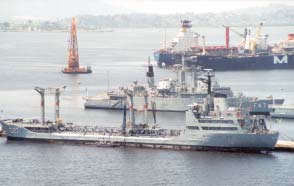
The tanker `Marajo' kindly made available by the Brazilain Navy for the GloBallast workshop in Rio de Janeiro
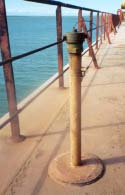
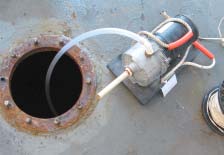
Two points of access for ballast water samplng: Left ballast tank sounding pipe (photo: D Oemcke); right ballast tank
manhole. Access via the sounding pipe is quicker, but is more restricted and less representative than via the manhole.
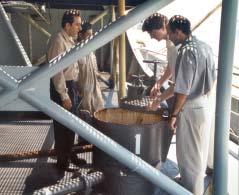
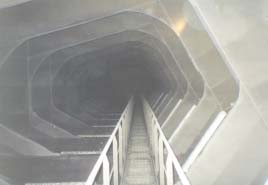
Example of internal ballast tank structure (large bulk carrier), presenting sampling obstacles (photo: D Oemcke)
9
1st International Workshop on Guidelines and Standards for Ballast Water Sampling, Rio de Janeiro, Brazil, 7-11 April 2003
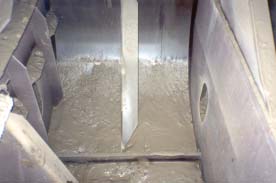
Example of sediment accuumlation in a ballast tank, requiring special sampling techniques (photo: D Oemcke)
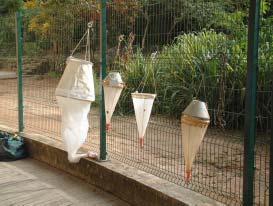
A selection of plankton nets demonstrated at the workshop (photo: M David)
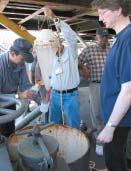
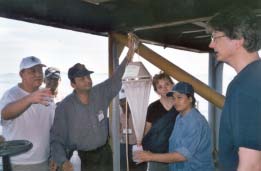
German ballast water expert Dr Stephan Gollasch (right both pictures), demonstratng use of plankton nets lowered into the
ballast tank via a manhole, aboard the Brazilain Navy tanker `Marajo' (photos: A L Neto)
10
1st International Workshop on Guidelines and Standards for Ballast Water Sampling, Rio de Janeiro, Brazil, 7-11 April 2003
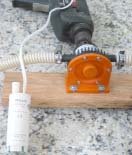
Three types of pumps demonstrated at the workshop (photos: A L Neto)
Brazilian ballast water expert Dr Flavio de Costa Fernandez (right) demonstrating use of pumps to sample ballast water
A Van Doorn water sampler capable of collecting several litres of ballast water via the ballast tank manhole
(photo: M David)
11
1st International Workshop on Guidelines and Standards for Ballast Water Sampling, Rio de Janeiro, Brazil, 7-11 April 2003
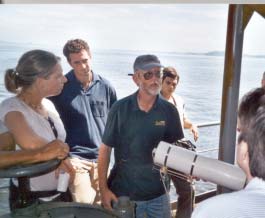
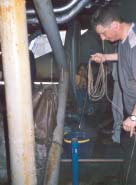
New Zealand ballast water expert Tim Dodgshun (centre-right) demonstrating use of the Van Doorn sampler to GloBallast
Pilot Country representatives aboard the `Marajo'
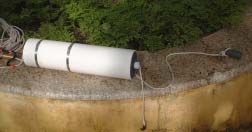
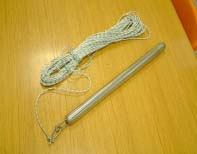
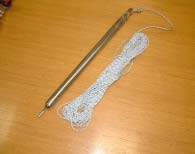
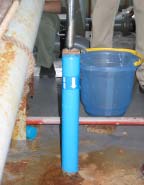
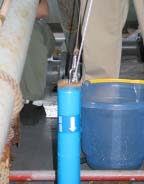
The Slovenian `Water-Column Sampler' (left) and `Bottom and Sediment Sampler' (right) suitable for deployment via the
ballast tank sounding pipe (photo: M David)
Slovenian ballast water expert Matej David (left) demonstrating deployment of the botton & sediment sampler via a
sounding pipe aboard the `Marajo' (photos: A L Neto)
12
1st International Workshop on Guidelines and Standards for Ballast Water Sampling, Rio de Janeiro, Brazil, 7-11 April 2003
Cawthron (NZ) ballast tank sediment collector demonstrated at the workshop (photo: T Dodgshun)
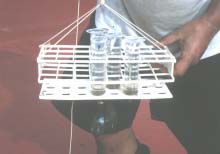
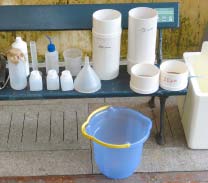
Various accessories needed for shipboard ballast water sampling including various sized sieves (right), sample bottles,
plastic buckets etc (photo: A L Neto)
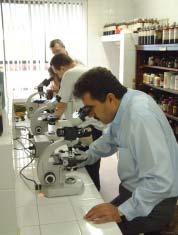
Demonstrating techniques for the laboratory analysis of ballast water samples at the Rio workshop
13
1st International Workshop on Guidelines and Standards for Ballast Water Sampling, Rio de Janeiro, Brazil, 7-11 April 2003
Working groups
The working groups proved effective at yielding a wealth of information in response to the questions
asked and tasks set, although all groups stated that the workload was ambitious and expressed
frustration at not having more time to address all issues more comprehensively. This was taken as a
positive result, indicating the seriousness of purpose and intensity of engagement of the workshop
participants. Working group results and recommendations are divided according to the Thursday and
Friday sessions.
Thursday working groups
On Thursday 10 April 2003 all four working groups were provided with the same set of
instructions/questions (Appendix 4). Table 1 presents the full responses of all four groups to each
question. An analysis of Table 1 clearly shows that there was a high degree of agreement between the
four working groups in their responses to the six questions. All groups unanimously agreed that:
· There is as definiate need for international guidelines and standards for ballast water
sampling.
· It is essential to define the purpose of any ballasst water sampling programme, as this will
significantly affect the sampling approach, methods and equipment adopted.
· The main purposes for ballast water sampling are:
- Scientific research
- Hazard analysis/risk assessment
- Compliance monitoring
- Testing of BW treatment.
- Raising awareness.
· Any international guidelines should be structured according to the purpose of the sampling.
· The issue of sample representative-ness is of key importance, and must be addressed in any
international guidelines and standards.
· There are a number of ship design improvements that are necessary to facilitate ballast water
sampling, including provision of easier access to ballast tanks and most importanty, provision
for in-line sampling all all satges of the ballast system, and other design changes to improve
representativeness and efficiency of sampling. Refer also Taylor and Rigby (2001).
Three of the four groups agrered that ships should carry a standard ballast water sampling kit,
specifically for the purpose of compliance monitoring.
The Thursday working group responses provide sound guidence on the issues that need to be
addressed in any international guidelines and standards for ballast water sampling. Using the
Thursday working group recommendations, the background papers and the pre-workshop reviews
undertaken by the consultant, the PCU and technical advisers developed a suggested structure for the
draft International Guidelines and Standards for Ballast Water Sampling (Appendix 5), for
consideration by the working groups the following day.
14
1st International Workshop on Guidelines and Standards for Ballast Water Sampling, Rio de Janeiro, Brazil, 7-11 April 2003
Table 1. Working Group Outcomes (Thursday 10 April 2003)
Working Group Working Group Answers
Questions
WG 1
WG 2
WG 3
WG 4
1. Is there a need
Yes.
Yes.
Yes.
Yes.
for international
Standarisation needed to Objectives of sampling:
Standarisation needed to For scientific research
guidelines and
allow inter-comparison
· Scientific research
allow inter-comparison
(biology of ballast water
standards / what
of results.
· Risk Assessment
of results.
communities) should be
should be
· Compliance
recommended
objectives and
Guidelines need two
monitoring
guidelines, not
Guidelines should be
main subject
main sections:
· Testing of BW
standards.
areas included in
a) sampling for
treatment.
recommended minimum
the guidelines.
scientific purposes
· Raising awareness.
procedures.
Objectives of sampling:
and
For the provisions of the
· Scientific research
b) for compliance
IMO Convention, focus
Objectives of sampling:
· Risk Assessment
testing.
on:
· Scientific research
· Compliance
· Compliance
· Risk Assessment
monitoring.
Even with a), scientists
monitoring
· Compliance
· Testing of BW
are likely to continue
· Testing of BW
monitoring.
treatment.
using
treatment.
· Testing of BW
equipment/methods they
treatment.
are used to.
Main subject areas:
· Support developing
· Standardisation
IMO convention.
The guidelines under b)
· Practicability
should include
· Representativeness
Main subject areas:
recommendations from
· Comparativeness
· Procedural approach
the ship perspective,
· Quantitativeness
(protocol) to sampling,
including not causing
(relate to the standard
accessing & boarding
undue delay.
of the Convention)
vessels (as annex or
· Quality control
separate document).
Objectives of sampling:
· International
· `Hello' to `Goodbye'
· Risk assessment,
acceptance
coverage.
hazard analysis
· Operable by all
· Technical aspects.
(statistic).
countries
· Sampling point access.
· Awareness, capacity
· Equipment
building, training
standardisation
purposes.
(explicite)
· Verification of BW
· Volumes to be
management/treatment
sampled (minimums)
systems (efficiency,
· Sample handling
effectiveness).
· Collection,
preservation, labelling.
What if sampling proves
· Parameters to be
non-compliance? Need
specified.
contingency plan
(reception facilities,
chemical treatment as
emergency measure,
discharge in certain port
areas)
2. Importance of
Essential.
Essential.
Very important.
Imperative.
defining the
Implies certain sampling
Guidelines for sampling
Intrinsic to specifying
purpose of BWS.
approach, methods and
for scientific and
methodology.
equipment.
regulatory purposes
should be mandatory,
while sampling for
awareness raising
purposes should not be
tied to strict guidelines.
15
1st International Workshop on Guidelines and Standards for Ballast Water Sampling, Rio de Janeiro, Brazil, 7-11 April 2003
Working Group Working Group Answers
Questions
WG 1
WG 2
WG 3
WG 4
3. Sample
Of key importance.
Important
Obviously important.
Depends on definition of
representative-
Representativeness is
Represenativeness
First level should be the
`representativeness'.
ness.
important for science
affected by whether
represent-ativeness of
Affected by the
and crucial for
sampling done in-tank,
the ship. Tanks may
objectives of the
compliance testing.
in-line or at point of
contain water from
sampling, parameters of
Compliance testing has
discharge.
different origins.
evaluation and
to be representative for
Guidelines should aid in
management standards
legal reasons. The
selection of tank(s) to be selected.
consequence matters.
sampled. Sampler have
freedom to select the
Management primarily
It is scientifically proven
tank
interested in
that BW sampling
representing risk
studies are an
Second level is
(realised or potential)
underestimate - far from
representativeness of the rather than ecological
being representative.
tank (two types.) Access representation of the
determines one type.
ballast community.
No way to sample the
Where samples are taken
whole ship so
determines the other.
selection of ballast
tank(s) for sampling is
Third level is
critical (sample all
representativeness of the
types?).
actual sample.
· Select tanks based on
Replications of samples
risk assessment (e.g.
(implications for
origin of BW, target
statistical analysis).
species).
Volume to be sampled.
· Identify critical areas
that are likely to
Fourth level is
contain species of
representativeness of the
concern within a ship
analysis. Has to be
or tank.
practical with respect to
· Modelling could be
time and cost
used to identify the
(management
most representative
constraints)
tanks for sampling.
Identify most
representative methods
(by the knowledge today
this may be access via
manhole and sampling
using nets).
Sampling personnel
need to be independent
from the ship.
16
1st International Workshop on Guidelines and Standards for Ballast Water Sampling, Rio de Janeiro, Brazil, 7-11 April 2003
Working Group Working Group Answers
Questions
WG 1
WG 2
WG 3
WG 4
4. Ship design
Yes.
Yes.
Yes.
Resounding Yes.
improvements to
(especially new ships)
· In-line samples or
Would also make life
· Issues of access
facilitate BWS.
· Ease/enable sampling
integrator.
easier for the captain
· Issues of effiency
access.
· In-tank collection
and crew.
(time)
· Provide power supply.
system (top, middle
· Problem of existing
· Issues of accuracy
· Enable representative
and bottom).
ships.
(representativeness)
sampling at the
· Net access not
· Need for close
For new ships:
discharge point.
required.
consultation with
· In-line ports (ballast
Plus retrofit exisiting
working mariners.
pump)
ships.
· Improvements begin
· Sample points
with awareness of
plumbed in tanks with
ongoing need for
pumps
sampling access.
· Recommend
· In-line taps with de-
numerical simulation
ballasting pipe.
models to identify
· Reduction in
appropriate locations
obstructions below
for in-tank plumbed
access hatches.
sample ports.
For existing ships:
· Easier access
· More comprehensive
access
5. Standard
Yes.
Yes.
No response recorded
Yes.
shipboard ballast
· Use to be restricted to · For compliance
· For compliance
water sampling
sampling for
monitoring.
monitoring.
kit.
compliance
· A standard ballast
· To increase
monitoring purposes.
water sampling kit
transparency and
· Guidelines are needed
would facilitate crews
consistency of
on how to use the
compliance
sampling and time
sampling equipment.
monitoring and
efficiency.
· May be legal
overcome problems
· Stanadrd comtents
implications if no
with compliance of the
depend on the
proper maintenance of
same ship in different
sampling methods
onboard sampling kit.
ports.
which depend on
· All ships (no matter
standards.
what type and age)
· It should provide a
need to have an
suite of tools to enable
identical/most
accurate, efficient and
appropriate sampling
timely sampling
kit (for sampling at
discharge point, a tap
is required and a tool
to concentrate the
water).
· Scientific sampling kit
should not be required
onboard as objectives
and methods of
scientific studies vary
to a large extent.
6. Other major
Any international BW
Port baseline and
There are some existing
The following should be
issues.
sampling guidelines and
information exchange is
protocols for sample
considered further:
standards should be
required to support
volumes and replicates.
· The utility of ballast
revewed and updated
internationally
water sampling to
regularly (e.g. to account standardised BW
support or validate
for developing
samping efforts.
risk assessment.
technology)
· Comparison of
different methods for
biases.
· Comparison of source,
in-tank and discharge
waters
17
1st International Workshop on Guidelines and Standards for Ballast Water Sampling, Rio de Janeiro, Brazil, 7-11 April 2003
Friday working groups
On Friday 11th April each group was provided with the `skeleton' of draft international sampling
guidelines as contained in Appendix 5 (without the inserted text). Groups 1 and 2 were asked to insert
the man issues that need to be addressed under each main section of the guidelines, while groups 3
and 4 were asked to do the same for the proposed technical annexes to the guidelines.
The summarized responses of the groups are inserted in each section of the proposed structure for the
draft guidelines in Appendix 5, which:
· establishes an overall framework and structure for international guidelines and standards for
ballast water sampling,
· outlines the main sections that such guidellines should be divided into,
· lists the main issues that need to be addressed in each section, and
· identifies the main exisiting sources of detailed technical information that can be used to
`flesh-out' each section of the guidleines.
The outputs of this exercise therefore provide a comprehensive foundation upon which the full text of
international ballast water sampling guidelines can be rapidly developed.
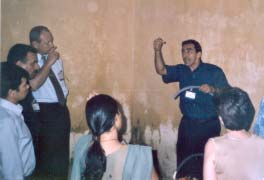
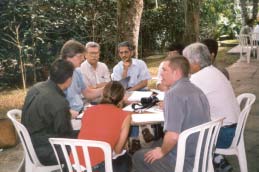
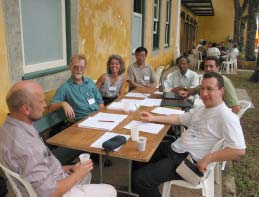
Working groups discussing the development of international ballast water sampling guidelines at the Rio workshop
18
1st International Workshop on Guidelines and Standards for Ballast Water Sampling, Rio de Janeiro, Brazil, 7-11 April 2003
7 Further Action & Overall Conclusion
The GloBallast PCU, with assistance from the sampling consultant (S Gollasch) and several experts
who attended the workhop, are building on the framework developed at the workshop as contained in
Appendix 5, to produce draft international guidelines for ballast water sampling. It is intended that
the guidelines will comprise a comprehensive and detaled technical manual that will provide practical
guidance to any group wishing to undertake ballast water sampling programmes anywhere in the
world.
It is planned that these will be released for stakeholder comment in late 2003, and made available to
IMO MEPC and other interested parties for consideration, and published as part of the GloBallast
Monograph Series.
In additon, the representatives from the GloBallast Pilot Countries who attended the workshop, are
using the information and experience acquired to consider the development of ballast water sampling
activities at the GloBallast Demonstration sites.
Overall, the 1st International Workshop on Guidelines and Standrads for Ballast Water Sampling was
considered a success in achieving its stated objectives.
References
Dodgshun, T. & Handley, S. 1997. Sampling Ships' Ballast Water: A Practical Manual. Cawthron
Report No. 418.
Carlton J.T., Smith, D.L., Reid, D., Wonham, M., McCann, L., Ruiz, G & Hines, A. 1997. Ballast
Sampling Methodology. An outline manual of sampling procedures and protocols for fresh, brackish,
and salt water ballast. Report prepared for U.S. Department of Transportation, United States Coast
guard, Marine Safety and Environmental Protection, (GM) Washington, D.C. 20593-0001 and U.S
Coast Guard Research and Development Center, 1082 Shennecossett Road, Groton, Connecticut,
06340-6096.
Rosenthal, H., Gollasch, S. & Voigt, M. (eds.) 1999. Final Report of the European Union Concerted
Action "Testing Monitoring Systems for Risk Assessment of Harmful Introductions by Ships to
European Waters" Contract No. MAS3-CT97-0111, 72 pp. (plus various appendices).
Sutton, C.A., Murphy, K., Martin, R. B. & Hewitt, C. L. 1998. A review and evaluation of ballast
water sampling protocols. CRIMP Technical Report, 18
Taylor, A. H. & Rigby, G. 2001. Suggested Designs to Facilitate Improved Management and
Treatment of Ballast Water on New and Existing Ships. Agriculture, Fisheries and Forestry
Australia. Ballast Water Research Series Report No. 12. AGPS Canberra. Esp section 2.2
19
Appendix 1:
Workshop Programme
Appendix 1: Workshop Programme
Monday 7 April - Day One:
Opening & Background Papers
08:00
Bus departs Hotel Atlantico Copacabana for venue
Venue: Solar da Imperatriz
Rua Pacheco Leão No. 2040
Jardim Botânico, Rio de Janeiro
08:30
Registration
Opening (Conveners/facilitators: Dandu Pughiuc and Steve Raaymakers, IMO/GloBallast PCU)
09:00
Opening Statement: .......................................................................................................................................... Host Country
09:15
Opening Statement: ............................................................................... Mr Mike Hunter, Chairman IMO/MEPC BWWG
09:30
Introduction, Aims & Objectives: ..................................................................... Steve Raaymakers, IMO/GloBallast PCU
10:00
Group photograph and Morning Tea.
Session One: Ballast Water Sampling - General Background Papers
10:30
Inter-calibration Results from the EU Concerted Action Programme: .......................... Dr Stephan Gollasch, Consultant
11:15
The NZ Practical Manual on Ballast Water Sampling:......................................... Tim Dodgshun, Cawthron Institute NZ
11:45
The CRIMP Review and Evaluation of BWS Protocols: .............................. Dr Chad Hewitt, NZ Fisheries (ex CRIMP)
12.00
The Brazilian National BWS Programme: .............................................................Dr Flavio de Costa Fernandes, IEAPM
13.00
Lunch
Session Two: Ballast Water Sampling Selected Examples
14:00
Ballast Water Sampling in the Republic of Slovenia:................................................ Mr Matej David, Univ. of Ljubljana
14:30
Ballast Water Sampling in Turkish Ports: .................................................... Dr. A. Muzaffer Feyzioglu, Karadeniz Univ.
15.00
The Ponta Ubu Terminal Ballast Water Sampling Program......................................... Mr Douglas Siqueira de Medeiros
15:30
Afternoon Tea.
16:00
The German Ballast Water Sampling Manual: ............................................................... Dr Stephan Gollasch, Consultant
16:30
The Ballast Water Issue in Mexico:.......................................................... Dr Yuri Okolodkov, Metro Autonomous Univ.
17:00
Panel/group discussion for Sessions One & Two
17:30
Close Day One. Bus returns to hotel.
19:00
Reception (hosted by Brazil)
Tues 8 April - Day Two:
Background Papers & Classroom Demonstrations
08:30
Bus departs Hotel Atlantico Copacabana for workshop venue
Announcements & Housekeeping
Session Three: Ballast Water Sampling Special Considerations
09:00
Sampling Ballast Water for Pathogens - the Columbian Approach ......................... Ms Silvia Rondon, Colombian Navy
09:30
Sampling Ballast Sediments and other Challenges....................................................................Dr John Hamer, CCW UK
10.00
Sampling to Test Effectiveness of BW Exchange on `MT Lavras' ................................................. Dr Maria Celia Villac
10:30
Morning Tea
1
1st International Workshop on Guidelines and Standards for Ballast Water Sampling, Rio de Janeiro, Brazil, 7-11 April 2003
11.00
Sampling Approaches and Recommendations by the Great Lakes Project .....................Mr Donald M. Reid, Consultant
11.30
Results of the NEMW Ballast Discharge Monitoring Device Workshop.................................................Ms Nicole Mays
12.00
Genetic Probes and Rapid Diagnostic Techniques ..............................................................Dr Chad Hewitt, NZ Fisheries
12:15
Panel/Group Discussion for Session Three
12:30 Lunch
Session Four: Post-Sampling Considerations
13:30
Sample Handling, Preservation, Treatment & Analysis .......................... T Dodgshun/S Gollasch/F Fernandes /J Hamer
14:00
Group discussion
14:30 Afternoon Tea
Session Five: Sampling Equipment Classroom Demonstrations & Hands-on Familiarisation
15:00
Classroom demonstration of various types of equipment (groups)........T Dodgshun/S Gollasch/F Fernandes / M David
16:30
Group discussion & briefing for days three & four
17:00 Close Day Two.
Weds 9 April - Day Three:
Shipboard Practical Exercises
08:00
Bus departs hotel for port.
08:30
Shipboard sampling.
12:30 Lunch.
13:30
Shipboard sampling continues.
15:00
Return Workshop venue. Sample processing in lab.
17:00 Close Day Three.
Thurs 10 April - Day Four:
Shipboard Practical Exercises
08:00
Bus departs hotel for port.
08:30
Shipboard sampling.
12:30 Lunch.
13:30
Shipboard sampling continues.
15:00
Return Workshop venue. Sample processing in lab.
17:00 Close Day Four.
19:00
Social Function (Hosted by IMO/GloBallast)
2
Appendix 1: Workshop Programme
Fri 11 April - Day Five:
International Guidelines & Standards
08:30
Bus departs Hotel Atlantico Copacabana for workshop venue
09:00
Briefing/Working Group Instructions: ...........................................................................................................S Raaymakers
09:15
Presentation of initial draft International Guidelines and Standards for Ballast Water Sampling.....................S Gollasch
10:00
Break into Working Groups. Identify the main items that need to be addressed in finalising
the guidelines and standards.
(Some issues to consider are listed below).
10:30
Morning Tea.
11:00
Working Groups continue.
12:30
Lunch
13:30
Working Groups report/general discussion/conclusions & recommendations.
15:00
Close Workshop
Some issues to be considered by Working Groups in finalising the Draft
International Guidelines and Standards for BWS
(not exhaustive)
1. The initial draft Guidelines and Standards.
2. The information presented in the background papers on days one and two.
3. Lessons learnt during shipboard exercises on days three and four.
4. Existing BWS manuals and other relevant guidelines.
5. The purpose of the sampling (e.g. scientific research, hazard identification/risk assessment,
compliance monitoring & enforcement, assessment of BW treatment effectiveness).
6. Pre-planning and organizing.
7. Communications / relations with the ship.
8. Health and safety.
9. Sampling from ballast tanks versus sampling at point of discharge.
10. Sampling for physical and chemical parameters versus sampling for organisms.
11. Methods for sampling ballast tank sediments.
12. Different equipment types for different organism types.
13. Sample handling, preservation and storage.
14. Sample analysis.
15. Data recording and reporting requirements.
3
Appendix 2:
Workshop Participants
Appendix 2: Workshop Participants List
GloBallast Pilot Countries
Brazil
Mr Gabriel Dreyfus Weibert Cattan
Directorate of Ports and Coasts
Tel: +55 21 38 70 52 22
BRAZIL
Fax: +55 21 38 70 56 74
Email: gcattan@alternex.com.br
Dr Flavio da Costa Fernandes
Head of Biology Division
Tel: +55 22 2622 9013
Instituto de Estudos do Mar Alm. Paulo Moreira (IEAPM)
Fax: +55 22 2622 9093
Rua Kioto, 253 Arraial do Cabo
Email: flaviocofe@yahoo.com
Rio de Janeiro - RJ, CEP: 28930-000
BRAZIL
Mr Alexandre de C. Leal Neto
Country Focal Point Assistant, GloBallast
Tel: +55 21 3870 5674
Diretoria de Portos e Costas (DPC-09)
Fax: +55 21 3870 5674
Rua Teófilo Otoni, 4
Email: aneto@dpc.mar.mil.br or
Rio de Janeiro - RJ, CEP: 20.090-070
alexcln@ppe.ufrj.br
BRAZIL
Mrs Fátima de Freitas Lopes Soares
Rio de Janeiro State Environmental Agency (FEEMA)
Dr Luciano Felício Fernandes
Taxonomy & Ecology of Phytoplankton
Tel: +55 41 266 2046
Federal University of Paraná (UFPR)
Fax: +55 41 361 1759
Setor de Ciêncas Biológicas - Botânica - CP 19031
Email: lucfel@bio.ufpr.br
Jardim das Américas
Curitiba - Parana, CEP 81531-990
BRAZIL
Mr Cláudio Gonçalves Land
Naval Architect & Marine Engineer
Tel: +55 21 2534 9411 or +55 21
Supply Dept/Logistic & Planning
2534 6454
Petróleo Brasileiro SA (PETROBRAS)
Fax: +55 21 2534 6454 or +55 21
Operation & Control of Shipping Management Division
2534 6455
Av. República do Chile 65, Room 1901
Email: cgland@petrobras.com.br
Rio de Janeiro - RJ, CEP 20035-900
BRAZIL
Mr Celso Mauro
Environmental Assessment & Monitoring (AMA)
Tel: +55 21 3865 6659 or +55 21
Research & Development Centre (CENPES)
3865 7117
Petróleo Brasileiro SA (PETROBRAS)
Fax: +55 21 3865 6973
Cid. Universitária, Ilha do Fundão, Av. 1-Quadra 7
Email:
Rio de Janeiro - RJ, CEP: 21949 - 900
celso@cenpes.petrobras.com.br
BRAZIL
1
1st International Workshop on Guidelines and Standards for Ballast Water Sampling, Rio de Janeiro, Brazil, 7-11 April 2003
Mrs Karen Tereza Sampaio Larsen
Instituto de Estudos do Mar Alm. Paulo Moreira (IEAPM)
Tel: +55 22 2622 9017
Rua Kioto 253 - Arraial do Cabo
Fax: +55 22 2622 9093
Rio de Janeiro - RJ, CEP: 28930-000
Email: karen.larsen@mail.com
BRAZIL
Mrs Marestela H. Schneider
Ag. Nac. Vigilância Sanitária - ANVISA
Tel: +61 448 1094
W3 Norte - Quadra 515
Fax: +61 448 1223
3 Andar, Brasilia DF
Email:
BRAZIL
marestela.schneider@anvisa.gov.br
or mhuppes@yahoo.com.br
Mr Douglas Siqueira de Medeiros
Port of Ubu (SAMARCO)
Tel: +55 27 3361 3806 or +55 27
Oceânica, 1803/202-Praia do Morro
9949 0133
Guarapari CEP29.200-000- ES
Fax: +55 27 3361 9747
BRAZIL
Email: siqueira@samarco.com.br
or cdtv@escelsa.com.br
Dr Maria Célia Villac
Marine Phytoplankton Ecologist
Tel: +55 12 232 4022
Rua Domingues Ribas, 81
Fax: +55 12 3635 1237
Taubaté, SP
Email: mcvillac@biologia.ufrj.br
12060-000
BRAZIL
China
Mr Ji Shan
Senior Engineer
Tel: +86 411 262 5031
Liaoning Maritime Safety Administration
Fax: +86 411 262 2282
1 Gang Wan Jie, Zhong Shan Qu
Email: naming@fm365.com
Dalian
PEOPLE'S REPUBLIC OF CHINA
116001
Mr Jiang Yuewen
Team Manager
Tel: +86 411 467 1429 Ext 210
National Marine Environmental Monitoring Centre
Fax: +86 411 467 2396
42 Ling He Jie, Sha He Kou Qu
Email: ywjiang@nmemc.gov.cn
Dalian
PEOPLE'S REPUBLIC OF CHINA
116023
Mr Wang Lijun
Biologist
Tel: +86 411 467 1429 Ext 202
National Marine Environmental Monitoring Centre
Fax: +86 411 467 2396
42 Ling He Jie, Sha He Kou Qu
Email: ljwang@nmemc.gov.cn
Dalian
PEOPLE'S REPUBLIC OF CHINA
116023
2
Appendix 2: Workshop Participants List
India
Dr A C Anil
Scientist
Tel: +91 832 245 6700
National Institute of Oceanography (NIO)
Fax: +91 832 245 6701
Dona Paula
Email: acanil@darya.nio.org
Goa - 403 004
INDIA
Dr Sanjay Vasant Deshmukh
Director (Research)
Tel: +91 22 2845 0101 or +91 22
Rambhau Mhalgi Prabodhini
2845 0102/3
Keshav Srushti, Uttan Village
Fax: +91 22 2845 0106
Bhayander (W), Thane 401 106
Email: docsvd@yahoo.com or
INDIA
drsanjaydeshmukh@vsnl.com
Dr. (Mrs) Geeta Joshi
Country Focal Point (A), India
Tel: +91 22 2261 3651-54 Extn
c/o Directorate General of Shipping
303
Jahaz Bhavan, W.H Marg
Fax: +91 22 2261 3655
Mumbai 400 038
Email: geeta@dgshipping.com
INDIA
Dr S S Sawant
Scientist
Tel: +91 832 245 6700 extn 4367
Marine Corrosion and Materials Research
or +91 832 228 5288 (Home)
National Institute of Oceanography (NIO)
Fax: +91 832 245 6701
Dona Paula
Email: sawant@darya.nio.org
Goa - 403 004
INDIA
I. R. Iran
Mr Jamal Pakravan
Head of Marine Environment Protection in Port Aut.
Tel: +98 761 564015/17 or +98
Ports & Shipping Organization
761 564025/27
Bandar Abbas Port Aut.
Fax: +98 761 564056
Shahid Rajaee Port Maritime Safety Office
ISLAMIC REPUBLIC OF IRAN
Eng Ahmad Parhizi
Head of Search & Rescue & Marine Protection Dept.
Tel: +98 21 880 9326
Ports and Shipping Organization
Fax: +98 21 880 9555
Ministry of Road and Transportation
Email: parhizi@ir-pso.com
No 751 Enghelab Avenue, PO Box 15994
Tehran 1599661 1464
ISLAMIC REPUBLIC OF IRAN
3
1st International Workshop on Guidelines and Standards for Ballast Water Sampling, Rio de Janeiro, Brazil, 7-11 April 2003
South Africa
Mr Adnan Awad
GloBallast, Int'l Maritime Organization
Tel: +27 21 402 3365
c/o Dept of Environmental Affairs & Tourism (DEAT)
Fax: +27 21 402 3340
Marine and Aquatic Pollution Control
Email:
Private Bag X2, Roggebaai 8012
adawad@mcm.wcape.gov.za
Cape Town
SOUTH AFRICA
Ms Letitia Greyling
Manager, Environmental Research & Best Practices
Tel: +27 11 242 4144
National Ports Authority
Fax: +27 11 242 4260
P O Box 32696
Email: letitiag@npa.co.za
Braamfontein
Johannesburg 2017
SOUTH AFRICA
Mr Jimmy Norman
Pollution Officer - Saldanha Bay
Tel: +27 83 290 6984
National Ports Authority
Fax: +27 22 703 4116
Private Bag X1
Saldanha 7395
SOUTH AFRICA
Ukraine
Dr Borys Aleksandrov
Director (Researcher in Marine Biology)
Tel: +380 482 250 918
Odessa Branch
Fax: +380 482 250 918
Institute of Biology of Southern Seas
Email: alexandrov@paco.net
National Academy of Sciences of Ukraine
37, Pushkinska Str.
65011 Odessa
UKRAINE
Mr Yevgen Patlatyuk
Head of Division
Tel: +38 0482 25 14 47 or +38
State Inspection for Protection of the Black Sea
0482 711 75 35
Ministry of Ecology & Natural Resources
Fax: +38 0482 35 51 88
30 Bunina str.
Email: steibs@te.net.ua
65026 Odessa
UKRAINE
Mr Vladimir Rabotnyov
Head of Information & Analytical Centre for Shipping Safety
Tel: +380 482 219 483 or +380
State Dept. of Maritime & Inland Water Transport
482 219 488
Ministry of Transport
Fax: +380 482 219 483
1, Lanzheronovskaya str.
Email: rabotn@te.net.ua
65026 Odessa
UKRAINE
4
Appendix 2: Workshop Participants List
GloBallast PCU
Mr Dandu Pughiuc
Chief Technical Adviser
Tel: +44 (0)20 7587 3247
Programme Coordination Unit
Fax: +44 (0)20 7587 3261
Global Ballast Water Management Programme
Email: dpughiuc@imo.org
International Maritime Organization
http://globallast.imo.org
4 Albert Embankment, London SE1 7SR, United Kingdom
Mr Steve Raaymakers
Technical Adviser
Tel: +44 (0)20 7587 3251
Programme Coordination Unit
Fax: +44 (0)20 7587 3261
Global Ballast Water Management Programme
Email: sraaymakers@imo.org
International Maritime Organization
http://globallast.imo.org
4 Albert Embankment, London SE1 7SR, United Kingdom
Dr Stephan Gollasch
Invasion Biologist
Tel: +49 40 390 54 60
Institut fuer Meereskunde
Fax: +49 40 360 309 47 67
Bahrenfelder Str. 73a
Email: sgollasch@aol.com
22765 Hamburg
GERMANY
General Participants
Dr Abdulaziz M Al-Suwailem
Manager, Marine Studies Section
Tel: +966 (3) 860 1426
Center for Environment & Water
Fax: +966 (3) 860 1205
King Fahd University of Petroleum & Minerals
Email: suwailem@kfupm.edu.sa
P.O. Box 2017
Dhahran 31261
KINGDOM OF SAUDI ARABIA
Mr Matej David
Assistant
Tel: +386 5 6767 222
University of Ljubljana
Fax: +386 5 6767 130
Faculty of Maritime Studies and Transportation
Email: matej.david@fpp.uni-lj.si
Pot Pomorscakov 4
SI-6320, Portoroz
SLOVENIA
Mr Tim Dodgshun
Senior Research Technician
Tel: +64 3 548 2319
Cawthron Institute
Fax: +64 3 546 9464
Private bag 2
Email: timd@cawthron.org.nz
Nelson
NEW ZEALAND
5
1st International Workshop on Guidelines and Standards for Ballast Water Sampling, Rio de Janeiro, Brazil, 7-11 April 2003
Dr. A. Muzaffer Feyzioglu
Karadeniz Technical University
Tel: +90 462 752 2805
Faculty of Marine Sciences
Fax: +90 462 752 2158
61530 Camburnu
Email: muzaffer@ktu.edu.tr
Trabzon
TURKEY
Dr Bella Galil
Senior Scientist
Tel: +972 4 856 5272
National Institute of Oceanography, ISRAEL
Fax: +972 4 851 1911
IOLR
Email: Bella@ocean.org.il or
POB 8030
galil@post.tau.ac.il
Haifa 31080
ISRAEL
Dr John Hamer
Marine Industries Liaison Officer
Tel: +44 1247 385 735
Countryside Council for Wales
Fax: +44 1248 385 510
Maes Y Ffynnon
Email: j.hamer@ccw.gov.uk
Ffordd Penrhos
Bangor
Gwynedd LL57 2DN
Dr Chad Hewitt
CTO Marine Biosecurity
Tel: +64 4 470 2582
Ministry of Fisheries
Fax: +64 4 470 2686
Te Tautiaki I nga tini a Tangaroa
Email: chad.hewitt@fish.govt.nz
P.O. Box 1020
101-103 The Terrace
Wellington, 6001
NEW ZEALAND
Mr Mike Hunter
Head, Environmental Quality Branch
Tel: +44 2380 329 199
UK Maritime and Coast Guard Agency
Fax: +44 2380 329 204
2/21 Spring Place
Email: mike_hunter@mcga.gov.uk
105 Commercial Road
Southampton SO15 1EG
Ms Nicole Mays
Policy Analyst
Tel: +1 202 464 4010
Northeast-Midwest Institute
Fax: +1 202 544 0043
218 D St, SE
Email: nmays@nemw.org
Washington DC 20003
USA
Prof Yury Okolodkov
Laboratorio de Fitoplancton Marino y Salobre
Tel: +52 55 58 04 64 75 (office) or
Departamento de Hidrobiología
+52 55 56 58 96 31 (home)
Universidad Aut'a Metropol'a, Iztapalapa (UAM-I)
Fax: +52 55 58 04 47 38
Av. San Rafael Atlixco, No.186
Email: yuri@xanum.uam.mx or
Col. Vicentina, A.P. 55-535
yuriokolodkov@yahoo.com
Mexico D.F. 09340, MEXICO
6
Appendix 2: Workshop Participants List
Mr Donald Reid
Consultant, Northeast Midwest Institute, Washington DC
Tel: +1 613 829 3642
200 Grandview Road
Fax: +1 613 829 3642
Nepean, ON
Email:
KS6 8B1
110400.1271@compuserve.com
CANADA
Ms Silvia Rondón
Jefe Division Estudios Ambientales
Tel: +57 669 4104
Centro de Investigacions Oceonagraficas & Hidrograficas
Fax: +57 669 4297
(CIOH)
Email: srondon@cioh.org.co
Direccion General Maritima
Escuela Naval
Almirante Padilla, Isla de Manzanillo
Cartagena
COLOMBIA
Ms Sonja Stiglic
Environmental Engineer
Tel: +385 1 3039 409 or +385 1
Adriatic Pipeline (JANAF)
3039 999
10000 Zagreb
Fax: +385 1 3095 482
Ulica grada Vukovara 14
Email: sonja.stiglic@janaf.hr
CROATIA
7
Appendix 3:
Selected Papers
In order as presented to the Workshop1
1 Only papers that detail ballast water sampling methods are included. Papers are published as
submitted by the authors and neither the GloBallast PCU nor IMO accepts any responsibility for the
content of these papers.
Comparison of ship sampling techniques1
S. Gollasch1, H. Rosenthal1, H. Botnen2, M. Crncevic3, M. Gilbert4, J. Hamer5, N. Hülsmann6,
C. Mauro7, L. McCann8, D. Minchin9, B. Öztürk10, M. Robertson11, C. Sutton12, and
M.C. Villac13
1 GoConsult, Germany
2 Unifob, Norway
3 The Polytechnic of Dubrovnik, Croatia
4 Dep. of Fisheries and Oceans, Canada
5 University of Wales, United Kingdom
6 Institut für Zoologie, Germany
7 Petroleo Brasiliero (PETROBRAS), Brazil
8 Smithsonian Environmental Research
Centre, USA
9 Marine Organism Investigations, Ireland
10 University of Istanbul, Turkey
11 FRS Marine Laboratory, United Kingdom
12 CRIMP, Australia
13 Universidade Federal do Rio de Janeiro,
Brazil
Abstract
During a European Union Concerted Action study on species introductions with ships, an
intercalibration workshop on ship ballast water sampling techniques considered various
phytoplankton and zooplankton sampling methods. For the first time, all the techniques in use world-
wide prior 1998 were compared using a plankton tower as a model ballast tank spiked with the brine
shrimp while phytoplankton samples were taken simultaneously in the field (Helgoland Harbour,
Germany). Three cone shaped and eleven non-cone shaped plankton nets of different sizes and
designs were employed. Net lengths varied from 50 - 300 cm, diameters 9.7 - 50 cm and mesh sizes 10
- 100 µm. Three pumps, a Ruttner sampler and a bucket were also compared. Each method showed
different results in efficiency and it is unlikely that any of the methods will sample all taxa. Although
several methods proved to be valid elements of a hypothetical "tool box" of effective ship sampling
techniques. The Ruttner water sampler and the pump P30 provide suitable means for the quantitative
phytoplankton sampling, whereas other pumps prevailed during the qualitative trial. Pump P15 and
cone shaped nets were the best methods used for quantitative zooplankton sampling. It is
recommended that a further exercise involving a wider range of taxa be examined in a larger series of
mesocosms.
Introduction
Methodologies to detect unwanted species in ballast water are far from being adequately tested
compared to other areas in commercial trade where risks are similar. In international shipping, ballast
water has been identified as a major vector for the unintentional introduction of non-indigenous fauna
and flora (CARLTON, 1985, 1987). Consequently, several ship sampling studies were carried out to
estimate the importance of this vector (MEDCOF 1975, HALLEGRAEFF & BOLCH 1991, GOLLASCH
1996, GALIL & HÜLSMANN 1997, MACDONALD 1998 and LENZ et al. 2000).
1 Slightly modified version submitted for publication in Biological Invasions as "Gollasch et al. Species
richness and invasion vectors: Sampling techniques and biases"
1
1st International Workshop on Guidelines and Standards for Ballast Water Sampling: Rio de Janeiro, Brazil, 7-11 April 2003
A European study entitled ,,EU Concerted Action Introductions with Ships " was carried out 1998-
2000. One of the objectives of this programme was to compare world-wide ballast water sampling
techniques. A variety of ballast water sampling techniques previously used in European and overseas
shipping studies were compared.
Material and methods
The sampling techniques included a selection of nets, hoses and pumps operated via tank openings
(manholes), sounding pipes or air vents connecting the ballast tanks to the ship's upper levels and by
extracting water directly from the ship's ballast pump. The methods were previously used during
shipping studies in Australia, Brazil, England, Canada, China, Germany, Israel, Lithuania, Norway,
Scotland and the USA. The sampling programme took place during 14 - 16 January 1998.
Phytoplankton
Nine sampling methods (5 nets, 3 pumps and Ruttner bottle) were used simultaneously from a
pontoon in Helgoland Harbour taking five replicates. With the exception of the pumps, positions of
sampling crews were changed for replicates.
Sampling methods were coded P = pump followed by pump weight, N = plankton net without a cone
entrance and CN = a net with a cone entrance, followed by mesh size and net length.
The nets used were one cone shaped (CN10/80) and four non-cone nets (N80/100, N55/50, N20/100,
N20/45) with lengths 45 - 100 cm, diameters 14.2 - 30 cm and mesh sizes 10, 20, 55 and 80µm (Table
1). These were hauled vertically from a depth of 3m. Water sampled by the pumps P15 and P1.5 (30L
and 50L) was filtered through a 20µm plankton net, while pump P30 provided 1L of unfiltered water.
A 10cm diameter Ruttner bottle (R) was activated at a depth of 2m. This sample was not concentrated.
Table 1. Intercalibration of phytoplankton sampling methods for ballast water, indicating net and pump
characteristics, including mesh size, net opening, net mesh filtering area, seam area per net (not filtering) and
estimated average water volume sampled. Vertical tows were standardized for all nets from 4 m depth to the
surface, pump hoses were lowered to 2 m depth. Method coding: CN = Cone net, N = net, P = pump,
R = Ruttner bottle followed by net diameter and net length or pump weight.
Method
Type
Mesh size
Diameter
Length
Volume
Filtering
Seam
coding
(µm)
(cm)
(cm)
sampled
net area
area
(l)
(cm_)
(cm_)
N80/100
net
80
30.0
100
273.3
4,255
400
N55/50
net
55
25.0
50
196.3
1,626
43
N20/100
net
20
14.2
100
63.3
2,304
98
N20/45
net
20
14.3
45
64.2
1,270
95
CN10/80
net, cone-shaped
10
9.7
80
29.5
1,841
45
P30
pump + hose
integrated
42.0
-
8.0
-
-
(hose)
P15
pump + 20 µm net
20
14.3
45
30.0
-
-
(hose)
P1.5
pump + 20 µm net
20
14.3
45
50.0
-
-
(hose)
R
Ruttner bottle
-
10,0
46
1.5
-
-
Cell counting followed settlement and species identification took place at magnifications of 45 using
an Utermöhl microscope. Replicate samples were analysed at random.
2
Gollasch: Comparison of ship sampling techniques
The optimal sampling method was evaluated in two ways:
(1) Since Coscinodiscus wailesii was present in all samples and was large enough to be
representatively sampled by all sampling methods, this species was selected to evaluate the
various sampling methods. The best method was considered to be the method sampling the
highest number of C. wailesii with the smallest standard deviation.
(2) The number of species retrieved by each sampling method was documented at magnifications of
200 and/or 400. These were wherever possible identified to species level. Analysis was
terminated when scanning of additional new fields did not provide additional species. The method
revealing the highest species richness and the smallest standard deviation was considered to be the
best sampling technique.
Zooplankton
Zooplankton sampling methods were compared by sampling a plankton tower of 5.3m_ capacity filled
with sea water serving as model ballast tank. Artemia salina nauplii (340µm mean length) were used
as test organisms and were placed in the tower. The outdoor plankton tower was heated to 18°C and
continuously mixed vertical at a flow rate of 60L per minute. The top of the plankton tower was
covered with black plastic sheets (except for a small opening during sampling) to reduce behaviour
impacts arising from illumination.
Four replicates (a-d) using 16 different zooplankton sampling methods previously used during
shipping studies were carried out. Detailed protocols of sampling methodologies used in this
experiment have been documented in Sutton et al. (1998). The order of the sampling was the same
during all replicates. Pumping methods were first used followed by the net filtering the smallest
volume of water and then followed by nets that sampled progressively larger volumes. Thereby
reducing the impact of density depletion of organisms sampled.
Table 2. Intercalibration exercise for zooplankton sampling in a plankton tower serving as model for a ballast
tank indicating net and pump characteristics, including mesh size, net opening, net mesh filtering area, seam
area per net (not filtering) and estimated average water volume sampled. Vertical tows were standardized for all
nets from 3 m depth to the surface, pump hoses were lowered to 2 m depth. Method coding: CN = Cone net, N =
net, P = pump, R = Ruttner bottle followed by net diameter and net length or pump weight and flow rate.
Method
Type
Mesh size
Diameter
Length
Volume
Filtering
Seam
coding
(µm)
(cm)
(cm)
sampled
net area
(cm_)
[L]
(cm_)
N20/80
net
20-30
20
80
94.2
2,556
164
CN55/80
net, cone-shaped
55
9,7
80
19.5
1,841
45
(cone)
N55/80
net
55
25
80
147.3
1,841
45
N100/150
net
100
40
150
340.2
9,467
504
N55/50
net
55
25
50
147.3
1,626
43
CN70/250
net, cone-shaped
70
50
250
212.1
11,946
140
N53/75
net
53
30
75
205.0
1,480
*
N45/150
net
45
30
150
198.2
5,973
*
N80/150
net
80
30
150
191.4
6,345
*
N80/100
net
80
30
100
212.1
4,255
400
N62/300
net
62
50
300
477.1
16,420
1,030
P1.5
pump (1,5 kg) +net
55
25
80
50.0
-
-
P30
pump (30 kg) +net 62 µm
55
25
80
30.0
-
-
P15/3
pump (15 kg) +net 55µm
55
25
80
30.0
-
-
P15/8
pump (15 kg) +net 55µm
55
25
80
30.0
-
-
R
Ruttner bottle (2 kg)
-
10
46
1.5
-
-
B
Bucket
-
40
40
12.0
3
1st International Workshop on Guidelines and Standards for Ballast Water Sampling: Rio de Janeiro, Brazil, 7-11 April 2003
Two hand pumps were operated (P1.5, P30) with the hose ends placed at 2m depth. Pumped water
was filtered through a 55µm plankton net. The electrically operated pump (P15), normally sampled
ballast water via sounding pipes, was the third pump tested. This pump is an inertia pump and
operates by moving the hose up and down vertically which in turn opens and closes a footvalve that is
fixed at the end of the hose at 3m meters depth. This valve will not close unless the hose is kept
vertical. The pump was used at two different pumping speeds (P15/3, P15/8). For comparison a 12L
bucket (B) was also employed to sample surface water (Table 2).
Net designs used (CN55/80, CN70/250, N20/80, N55/80, N100/150, N55/50, N53/75, N45/150,
N80/150, N80/100, N62/300) varied from two cone to nine non-cone shaped nets of lengths 50 - 300
cm, diameters 9.7 - 50 cm and mesh sizes 20-100µm (Table 2). Apart from the net N20/80 which was
lowered to 3.8m in the tower and lifted at a constant speed of approximately 0.5m per second all other
hauls were from 3m.
A reference net was selected based upon previous test results achieved during another intercalibration
experiment (Rosenthal et al. 1999), where effective sampling was demonstrated for small volumes of
water. The net was previously used to sample the ballast water of ships (Gollasch 1996) and was here
employed prior to the application of each test method. In addition three vertical samples using the
reference net were taken prior to the sampling of each replicate series and approximately half way
through the sampling programme to obtain a more accurate estimate of the density of brine shrimp.
Plankton counting of samples from the tower was done by using stereo microscopes. Samples with
high densities of specimens were divided into subsamples.
Each replicate sampling series was preceded by the removal of most of the plankton from the tower
that remained after the previous sampling series was completed followed by spiking with a known
number of cultured brine shrimp. Artemia nauplii because they are fast growing could not be used
from one culture for spiking all replicates. Therefore, four Artemia cultures were started consecutively
to enable spiking of Artemia nauplii raised to the same size (ca. 340µm) before their use in
experiments. The spiking process was estimated separately for each replicate. Three subsamples of
Artemia culture were taken and counted to estimate the density of the stock cultures and so the
volume of culture required for spiking was calculated. Following the addition of the culture
organisms, the plankton tower water column was intensively mixed to aid a homogenous distribution.
The theoretical density of organisms in the plankton tower for each sampling was recalculated based
on the density of organisms used in the initial spiking process and the depletion of brine shrimp by
each subsequent sampling method calculated by the numbers removed on each sampling occasion.
Results
Phytoplankton
Eighty taxa were identified from all samples. Analysis of species numbers collected by the various
sampling methods (pumps, nets and Ruttner sampler) revealed comparable results, although nets
selected organisms according to mesh size (Fig. 1). The main variable with pumps was pumping
speed and volume sampled. Each sample contained a similar number but different composition of
taxa. Replicates added species. The nets with the smallest mesh sizes collected a greater mean number
of species and had the smallest standard deviation. The largest mesh size (N80/100), as well as pump
P30 were the least effective methods in the qualitative trial (Fig. 1).
The diatom Coscinodiscus wailesii was used as a quantitative method for comparing net efficiencies
on account of its size. Sampling efficiency varied with mesh size (Fig. 2): the small meshed nets
sampled more cells per unit volume. Similar results were shown for pumps, however, the standard
deviations were greater than net sampling.
4
Gollasch: Comparison of ship sampling techniques
Zooplankton
The results appear in Fig. 3. Solid lines represent changes in organisms density estimated from
calculation of the numbers removed with each subsequent sampling. Dashed lines refer to the results
of the reference net employed alternately with each method used (open circles). The results of the
reference net sample indicate the patchiness of spiked organisms in the plankton tower (Fig. 3).
The four replicates varied slightly in the initial density of Artemia salina in the plankton tower
(replicate A & B around 50 to 55 n/L; replicate C & D slightly above 30 n/L). With a few exceptions
the estimated density of Artemia yielded by the test methods was lower than the one obtained by the
reference method. The reference method however yielded in most instances a slightly lower density
per unit volume than the estimated density, with the exception of the early sampling when Artemia
density was highest. Density of sampled Artemia was highly variable between tested nets, and was
even higher among pump samples. Greatest differences were found in Replicate A when the most
effective method (pump P15/3) sampled 73.2 specimens/L and the least effective method (net
N62/300) 1.4 individuals/L.
Discussion
Phytoplankton
As a general principle, the ballast water sampling `tool box' should include methods that collect both
qualitative and quantitative samples. The net (CN10/80) that collected the greatest numbers of species
and the best pump (P15) examined provided comparable results in terms of species caught (qualitative
sampling).
Ease of handling will be as important as the quality characteristics of the method employed to choose
the appropriate technique for a given scenario on board ships. Therefore a selection scheme has been
developed based on the overall results of the intercalibration exercise. The pathway for selecting a
phytoplankton sampling method is depicted in Fig. 4.
The relevant characteristics for the recommended equipment can be summarized as follows:
(i) The small cone-shaped net (CN10/80), operated via manholes, was the best overall method in the
qualitative sampling in the trial.
(ii) The pump P15 (+ 20µm net), operated via sounding pipes, was the second best method in the
qualitative sampling trial. It was the only sampling technique able to sample water from the
bottom of deep tanks e.g. double bottom tanks. However, restrictions in its use include the
provision of power supply (not always available on board or not permitted to use) and the need to
filter samples using a net. Its performance can probably improve if the sample is concentrated by
using a 10µm mesh rather a 20µm as tested.
(iii) The pump P30, operated via sounding pipes and manholes, proved to be effective for quantitative
sampling when taking a large number of replicates (at least 5). However, it was heavy and
cumbersome to use. The sampling depth is > 15 m. The maximum sampling depth is not known.
(iv) The Ruttner water bottle (R), operated via manholes, was as effective as pump P30 but is able to
sample water from greater depths and is lightweight in comparison. A further advantage is that the
sample does not need to pass through a plankton net or pump, resulting in less damage to the
organisms retained. However, because of its small size, the Ruttner bottle can only collect a small
volume of water (1.5 l) from a discrete depth in the tank. The results obtained here therefore
indicate that a large number of replicates may be necessary before a representative sample of the
species assemblage present in the ballast tank is gathered.
5
1st International Workshop on Guidelines and Standards for Ballast Water Sampling: Rio de Janeiro, Brazil, 7-11 April 2003
Zooplankton
Zooplankton sampling methods were employed consecutively. The highest density of organisms
sampled does not necessarily indicate the best estimate of the true density of organisms in the tank.
However, in the test case the assumption appeared to be correct as the theoretical density of spiked
organisms in the plankton tower tended to be relatively close to the estimates resulting from the
sampling. As shown in Fig. 3 overestimates rarely occurred.
The most suitable and therefore recommended access to ballast tanks for quantitative sampling is via
opened manholes. The sampling of ballast water tanks via opened manholes would usually require
short nets because they are more easily manipulated and because the configuration of ballast tanks
often restrict the depth of sampling tows. As a result, cone nets (CN55/80 and CN70/250) become an
ideal way of easily and efficiently sampling a ballast tank. The main reason for the high efficiency of
the cone net would be that this particular net configuration increases the filtration efficiency by
limiting the overflowing of water through the opening caused by the resistance of the mesh within the
net.
The cone shaped net CN55/80 and the pump P15 applied with the slow speed (P15/3) are the highest
ranked methods according to figure 3. Taking the most common scenarios for sampling ballast tanks
into account, the following sampling techniques can be recommended for zooplankton recovery and
may be considered to become common options within the "tool box" of zooplankton sampling
methods (Fig. 4):
(i) The small cone-shaped net (CN55/80), operated via manholes, was the most effective of all
methods in the quantitative sampling trial. The relatively short net is unlikely to become stuck in
ballast tanks (length < 1 m) while easy handling is achieved due to valve equipped, filtering cod-
end.
(ii) The pump P15, operated via sounding pipes, exhibited similar quantitative effectiveness to the
small cone-shaped net however, a power supply is needed to operate the pump and this may be
difficult in some situations (see above). This method is capable of sampling water from the
bottom of deep tanks e.g. double bottom tanks.
(iii) The small hand pump P1.5, operated via sounding pipes and manholes, was the best manual
pump. This pump is easy to use, comparatively lightweight and therefore easy to transport and
handle. The maximum sampling depth is less than 8 m.
(iv) The pump P30, operated via sounding pipes and manholes, is recommended if the required
sampling depth is greater than 8 m and if the pump P15 cannot be used due to the lack of power
supply. This method is capable of sampling water from the bottom of deep ballast tanks.
(v) The large cone-shaped net CN70/250 operated, via manholes, was the second most effective net
method in the quantitative sampling trial. However, the relatively long net may easily become
stuck in ballast tanks (length 2.5 m). Simplified sample handling is available because of the valve
equipped, filtering cod-end.
Recommended sampling equipment and future research
The variability of the data is high. It is assumed that the distribution of test organisms in the plankton
tower was patchy and does not permit firm conclusions. Tentative overall performance evaluations
can be given focussing on practical criteria such as ease of handling and access for sampling in ballast
tanks.
The first criterion to be considered in selecting appropriate sampling techniques is access to the ballast
tanks. This will largely depend on ship and tank design and, in general, direct access to ballast tanks
via tank openings (manholes) is the recommended access for sampling. However, this will usually
only provide opportunities to sample the upper region of the water column by means of short vertical
6
Gollasch: Comparison of ship sampling techniques
tows because of the presence of baffles, support frames and platforms inside ballast tanks. Under
these circumstances cone shaped nets provide a suitable means for sampling especially zooplankton.
The cone of the net results in increased filtration efficiency by limiting the overflow of water and
enable the net to be hauled at a more rapid rate and thereby it is more likely to capture more active
zooplankton. Nets with a high canvas surface area below the circular rim and at the basis of the cod-
end region as well as seams limit the filtration efficiency and consequently sample less effectively.
The objectives of sampling (e.g. qualitative or quantitative samples, target organisms or all taxa) are
other criteria for method selection. For phytoplankton sampling nets, it is recommended that relatively
small mesh-sizes (e.g. 10 µm) be used. Larger mesh sizes will exclude smaller species and may result
in lower species richness estimates however, fine mesh nets may clog quickly if organisms are very
abundant, so a degree of compromise is required.
In zooplankton studies, nets with mesh size of 55 µm are recommended as these will capture the
youngest stages taxonomic groups commonly found in ballast water.
Sampling via sounding pipes can only be undertaken by pumps however, some systems are unable to
lift water from more than 8 meters depth, consequently ballast tanks with low water levels or in deep
location within the ship are unlikely to be sampled at all. The pumps capable of sampling in these
conditions are the P30 and the P15. The pump P15 can only be operated if the sounding pipes are
straight and if a power supply is available. The use of P30 is restricted by its heavy weight. A good
compromise may be the small hand-pump (P1.5), but this pump cannot lift up water from more than 8
meters depth. It is obvious that the development of novel techniques that have high efficiencies and
are easy to use aboard ships are required.
Sutton et al. (1998) concluded that sampling for zooplankton via the sounding pipes does not result in
a representative sample of species in the tank as comparisons of sounding pipe and manholes samples
from the same tank found that net samples were more diverse. Sounding pipe samples contained 0-
60% of the organisms of a net sample indicating the need to sample ballast tanks via opened
manholes. Further, pumps used via open manholes delivered more diverse samples than net samples
(Sutton et al. 1998). Future ballast water studies should take into account that sampling via sounding
pipes is inferior when selecting appropriate sampling techniques. However, in some cases manholes
cannot be opened due to e.g. overlaying cargo, and in these instances sounding pipe sampling might
be the only solution to sample the ballast water at al.
Certain net designs incorporate a sample bottle that can be attached to and removed from an internal
fitting in the net. In these cases, a thicker, stronger layer of net or canvas wrapped round the fitting is
often attached. This area may trap water and so result in organisms being excluded from the sample
while further problems may arise from repeated mesh rinsing after the sample has been collected. It is
recommended that the cod end of a net should be made of a cup with filtration panels on its side and a
tap at the base of the cup. If the cod end is metallic no additional weighting is required to sink the net
and this will reduce the risk of entanglement in structures in the ships ballast tanks. It is concluded
that cone nets, preferably with small canvas areas and a filtering cod end, should be adopted whenever
nets are used.
Conclusions
This study has shown that a flexible approach to sampling is necessary with pumps, nets and other
sampling methods providing samples that depend on the configuration and access to ballast tanks and
also ship type. On gas, oil and petroleum tankers some methods using motors or uncovered steel will
not be permitted for reasons of safety.
The exercise has also demonstrated the great variability in the ability of the different sampling
methods used. For this reason caution must be exercised when making any quantitative comparisons
with ballast sampling methods used worldwide.
7
1st International Workshop on Guidelines and Standards for Ballast Water Sampling: Rio de Janeiro, Brazil, 7-11 April 2003
Further intercalibration studies are recommended. Such an exercise could be combined with a larger
scale mesocosm study involving a greater spread of taxa.
Full recovery of organisms contained in ballast tanks may remain impossible, indicating that results of
ballast water sampling studies may well underestimate the actual number of organisms and species
being present in the ballast tank. To better compare between studies it is possible to strive for
representative target plankton taxa. Combinations of the more efficient sampling equipment used in
this study are likely to reveal a great range of taxa than any single method. Larger organisms may also
be sampled by the use of different collecting methods, such as light traps or baited traps.
Acknowledgements
The comparison of sampling methods was supported by the Biologische Anstalt Helgoland (BAH),
Meeresstation Helgoland. We express our thanks to all involved scientists and technicians, especially
to Prof. Buchholz. Mrs. Jutta Nast (Central Station of the BAH, Hamburg). We thank the students
Ursula Ellenberg, Johanna Fehling, Folke Merthens and Thomas Wittling for their work and V.
Onofri, Institute of Oceanography and Fisheries, Laboratory Dubrovnik, Croatia for the video
documentation of this experiment.
References
Carlton, J.T. 1985. Transoceanic and interoceanic dispersal of coastal marine organisms: The Biology
of Ballast Water. Oceanogr. Mar. Biol. Ann. Rev. 23, pp. 313-371.
Carlton, J.T. 1987. Patterns of transoceanic marine biological invasions in the Pacific Ocean. Bull.
Mar. Sci., 41(Suppl. 2), 452-465.
Galil, B.S. & Hülsmann, N. 1997. Protist transport via ballast water biological classification of
ballast tanks by food web interactions. Europ. J. Protistol. 33, pp. 244-253.
Gollasch, S. 1996. Untersuchungen des Arteintrages durch den internationalen Schiffsverkehr unter
besonderer Berücksichtigung nichtheimischer Arten. Ph.D. thesis, Dr. Kovac, Hamburg. 210 pp. (plus
various appendices).
Hallegraeff, G.M. & Bolch, C.J. 1991. Transport of toxic Dinoflagellate cysts via ship's ballast water.
Mar. Poll. Bull. 22(Suppl. 1), pp. 27-30.
Lenz, J. & Andres, H.-G. & Gollasch, S. & Dammer, M. 2000. Einschleppung fremder Organismen in
Nord- und Ostsee: Untersuchungen zum ökologischen Gefahrenpotential durch den Schiffsverkehr.
UBA Project Water: 102 04 250, Umweltbundesamt, Texte, Berlin. 273 pp. (plus various appendices).
Macdonald, E.M. 1998. Dinoflagellate resting cysts and ballast water discharges in Scottish ports.
ICES Coop. Res. Rep. 224, pp. 24-35.
Medcof, J.C. 1975) Living marine animals in a ships' ballast water. Proc. Natl. Shellfish Ass., 65,
pp. 54-55.
Rosenthal, H., Gollasch, S. & Voigt, M. (eds.) 1999. Final Report of the European Union Concerted
Action "Testing Monitoring Systems for Risk Assessment of Harmful Introductions by Ships to
European Waters" Contract No. MAS3-CT97-0111, 72 pp. (plus various appendices).
Sutton, C.A., Murphy, K., Martin, R. B. & Hewitt, C. L. 1998. A review and evaluation of ballast
water sampling protocols. CRIMP Technical Report, 18
8
Gollasch: Comparison of ship sampling techniques
Number of taxa
Figure 1. Qualitative evaluation of various phytoplankton sampling techniques used simultaneously at the
pontoon of Helgoland harbour. Circles: average total number of taxa, diamonds: combined taxa sampled in all
five replicates. Standard deviation (vertical bars). Left hand side point source sampling techniques (pumps and
Ruttner sampler), right hand size integrated net samples. Coding of sampling methods see Table 1.
Figure 2. Quantitative evaluation of various phytoplankton sampling techniques used simultaneously at the
pontoon of Helgoland harbour. Average number of Coscinodiscus wailesii per litre (5 replicates) and standard
deviation (vertical bars). Left hand side point source sampling techniques (pumps and Ruttner sampler), right
hand size integrated net samples. Coding of sampling methods see Table 1.
9
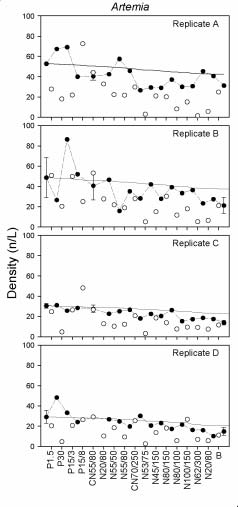
1st International Workshop on Guidelines and Standards for Ballast Water Sampling: Rio de Janeiro, Brazil, 7-11 April 2003
Figure 3. Density of Artemia in the sampling tower for each replicate, as measured by reference net (black
squares) and tested methods (open circles). The solid line represents changes in the expected density of
organisms in the tower with each method being successively applied, based on the initial density in the tower and
the depletion rate resulting from sampling. Coding of sampling methods see Table 2.
10
Gollasch: Comparison of ship sampling techniques
Target group
Phytoplankton
Zooplankton
qualitative
quantitative
quantitative
sampling
sampling
sampling
Sampling
Sampling
Sampling
access
access
access
Manhole
Manhole
Manhole
CN10/80
P30
CN55/80
P15
R
CN70/100
N20/100
CN10/80
N80/150
N20/45
N20/100
N100/150
P1.5
P15
B
N55/50
N80/100
N20/80
R
N55/50
N55/50
N80/100
N20/45
N45/150
P30
P1.5
N55/80
N62/300
N80/100
N53/75
Sounding pipe
Sounding pipe
Sounding pipe
Power supply
Power supply
Power supply
yes
no
yes
no
yes
no
upper tanks
upper tanks
upper tanks
upper tanks
upper tanks
upper tanks
P15
P1.5
P30
P30
P15
P1.5
P1.5
P30
P15
P1.5
P1.5
P30
P30
lower tanks
P1.5
lower tanks
P30
lower tanks
lower tanks
P30
lower tanks
P30
lower tanks
P30
P15
P30
P15
P30
P15
P30
Figure 4. The choice of methods recommended for biological target groups, mode of sampling (quantitative and
qualitative sampling) and onboard access for sampling (e.g. ballast tank location). Method coding explanations
see captions to Tab. 1 and 2. Ranking according to Figures 1, 2 and 3. At even scores the ease of use was
additionally considered to rank the methods.
11
Sampling Ships' Ballast Water:
The New Zealand Experience
(or..."beasts in ballast water and how to catch them")
Timothy J. Dodgshun
Cawthron Institute
98 Halifax St. East
Private Bag 2
Nelson
New Zealand
This presentation draws on some six years of practical experience gained by staff of the Cawthron
Institute during ballast water research programmes funded by the New Zealand Ministry of
Agriculture and Fisheries (now the Ministry of Fisheries) and the Foundation for Research Science
and Technology (FoRST) between 1996 and 2002. The talk does not specifically cover all aspects of
ballast water sampling (BWS) as outlined in the Cawthron manual (Dodgshun and Handley 1997), but
rather addresses various points and pitfalls that have arisen during the course of our work. I hope
consideration of these will provide some insight and possibly some help to those of you about to
develop a BWS programme.
To put Cawthron's programme into context, one of our primary tasks was to develop a BWS method
for use aboard commercial vessels calling at New Zealand ports. The major requirements for the
method were that it should be rapid, reliable, standardised (i.e. repeatable), and be of minimal
inconvenience to ships' crews, shipboard routine, and the shipping industry in general.
Ballast tanks and representative sampling
At this point it is worthwhile reviewing the nature of what we are sampling from. Basically, a ballast
tank is a large, dark, steel box of complex internal construction, with many different "environments."
It is difficult to get into except when it is empty, even more difficult to see into, and may contain three
or four deck levels. Consequently, attempts to representatively sample ballast water from such a
structure are fraught with difficulties.
The question of representativeness of sampling protocols will thus remain a challenge, bearing in
mind the large number of ship types, the variety in design and construction of ballast tanks as well as
the diversity of different areas within tanks (e.g., water column versus sediment deposits). This means
that different protocols may be required in different situations, and so cross-calibration of different
sampling protocols is likely to be a key requirement. The purpose for which the samples are being
taken and therefore the levels of accuracy and precision required will largely determine sample
volumes and the number of replicates needed.
Planning the sampling programme
Good forward planning is essential for the ultimate success of any BWS programme and important
points to consider are listed below.
· The primary objective of the programme, that is the purpose for which the samples are being
taken, e.g., scientific research, risk assessment, hazard analysis, verification of the efficacy of
ballast management or treatment, compliance monitoring, public awareness, or training of
sampling teams.
12
Dodgshun: Sampling Ships' Ballast Water: The New Zealand Experience
· Specific taxa or taxonomic groups to be targeted. This point should be addressed together
with the one above.
· Safety considerations for the BWS team. This includes provision for the supply of all safety
equipment including self-contained breathing apparatus (SCBA) if team members are
required to descend into empty ballast tanks to secure samples.
· Ship types and shipping operations involved. A great deal depends on whether the ships are
commercial cargo vessels in the course of their normal operations, a factor that will limit their
time in port; or whether the vessels will be made available and perhaps modified as part of a
specific BWS programme where time constraints may be less strict (e.g. naval reserve
vessels).
· The number of tanks to be sampled per ship. In the case of commercial vessels on strict
schedules, decisions on this aspect may often have to be made "on the spot' as the water
volume in each ballast tank and the availability of sampling access points may not be known
until the sampling team has met with the vessel's officers.
· Sampling methods to be used and equipment required. These will largely be determined by
consideration of the factors outlined in the four bullet points above.
· The number of members needed in the sampling team. We consider that three team members
are necessary to carry out BWS efficiently and safely.
· The number of ships to be sampled per trip. In our experience, it is best to allow for a
sampling rate of about one vessel per day although this may vary depending upon the purpose
of the sampling programme, the arrival times of ships, the weather, and the time of year. In
terms of physical effort and time away from home, we believe that 10 to12 vessels sampled
over about 10 -14 days are sufficient. This takes account of the often frequent delays met with
when waiting to sample ships, and all the ancillary jobs that must be carried out while the
team is "between ships". These include liaising with port authorities and shipping agents,
confirming vessel arrival dates and times, sample sorting, preparation and dispatch and
maintenance of equipment. Another factor which must be considered is the inevitable increase
in physical fatigue the team members will experience after several days of carrying equipment
on and off ships.
The above points highlight the necessity for a BWS programme to be designed with strict attention to
its primary objective. Once that is decided, statistical considerations as well as logistic and
cost/benefit issues must be weighed against questions of practicality and time, as this will inevitably
dictate the final structure of the programme.
General sampling equipment required:
· A sieve tube for zooplankton, custom built from 150mm plastic pipe fittings and
incorporating two filters, one of 250_m and the other of 100_m.
· A 20_m sieve for phytoplankton, also built from plastic pipe.
· A 5.0 L capacity van Dorn sampler.
· A plankton net, 21.5cm in diameter, 77cm long, fitted with a stainless steel filtering cod end
and a stopcock.
· Plastic buckets 5 x 20 L and 2 x 10 L.
· Seine net (for use in near-empty ballast holds).
13
1st International Workshop on Guidelines and Standards for Ballast Water Sampling: Rio de Janeiro, Brazil, 7-11 April 2003
· Sediment traps, each consisting of a group of twelve 60ml plastic syringe barrels (minus
plungers) sealed at the needle boss by a rubber bung and secured vertically in a weighted
plastic test tube rack. Each rack was assigned an identification code and each syringe barrel a
number corresponding to the day on which it would be removed from the rack and the sample
collected.
Sampling through hatches and manholes
This is the most preferable method of sampling ballast water, the major advantage being that the
method allows ease of access to ballast tanks and ballast holds and thus the use of a wide variety of
equipment, e.g., van Dorn samplers, sediment traps, plankton nets, buckets and in some cases seine
nets.
The disadvantages of this type of access include the need for prior arrangement to be made for
opening and closing manholes and hatches. Also, hatches in tanks are seldom aligned one below the
other, which means that although the tank may have three or four decks, only the top deck (which
may be only about 3m deep) may be accessible. Furthermore, in some ships access hatches are on the
side of the tank and thus are not accessible unless the tank is empty. In addition, it is difficult to obtain
sediment samples from any tank unless it is empty or nearly so. Safety is a major consideration, with
the possibility of serious injury occurring should someone fall into a near-empty ballast hold, and
where team members must descend into an empty tank to obtain samples, it is necessary to provide
self contained breathing apparatus (SCBA) where there is a risk of noxious gases being present.
Sampling via sounding pipes
As a result of our BWS programme, we developed a method of sampling ballast tanks via their
sounding pipes using petrol or electric impeller pumps for shallow tanks and an electrical inertia
pump for deep tanks and double bottom tanks.
The advantages of this method are:
· Sounding pipes are easy to access, which aids rapid sampling.
· Almost all ships have sounding pipes, so provided there is water in the tanks a 100% strike
rate is possible.
· The sampling team can often work independently of the ships' crew.
· Because samples are drawn from at or near the bottom of the tank, sediment is often collected
in the first few litres and this is often the only way a sediment sample can be obtained.
Disadvantages of sounding pipes include:
· A few ships do not have sounding pipes so other access points must be used (e.g., sampling
via hatches or manholes).
· Since all water and sediment samples are drawn from the bottom of tank, the sample may not
be representative of the whole tank.
Two pump types are used, an electric inertia pump and an impeller pump, the latter powered by petrol
or electricity. The former has a relatively slow delivery rate of approximately 5-6 L per minute.
However, it can lift water from depths of >25 m (82 feet), and specimen damage is relatively low. The
latter has a higher delivery rate (~25 L per minute) but is limited to a suction head of 7- 8.0m (22-26
feet). Our studies also showed that this pump type may damage taxa that we observed were not
damaged by the inertia pump (Hay et al 1997).
14
Dodgshun: Sampling Ships' Ballast Water: The New Zealand Experience
Sampling from main ballast pipelines
This technique may be useful for compliance testing at discharge as it is the biota present in the
discharging ballast water which is of primary concern to port state authorities.
The disadvantages of this method are that it must be carried out in the engine room and will usually
require assistance from a crew member. With present day crewing levels, crew members on many
merchant ships cannot be spared for such work. Furthermore, possible stratification in the ballast
tanks can mean that long collection times will be required to obtain a representative sample, and the
technique may not adequately sample sediments. Moreover, since bleeder valves may have to be
retro-fitted to pipelines, there may well be additional expense involved for the shipping company
concerned.
Cross-contamination of samples
Because BWS is often carried out in unpleasant weather, with teams working in difficult, cramped or
wet conditions on vessels that are frequently dirty, we must accept that some cross-contamination of
samples is possible, even probable. However, a number of measures can be taken to assist in
preventing cross-contamination.
Before each sample is drawn from a ballast tank, approximately 10 L of water from the same tank
should be taken, passed through a 20_m filter into a plastic bucket and set aside for use in rinsing
equipment. This includes the back-washing of filters and the rinsing of funnels, both prior to the
sampling of water from different tanks and the sampling of different levels in the same tank. Also,
before sampling a different tank or tank level, all buckets should be rinsed with the filtered water and
all pumps and hoses drained. As a further precaution, after each sampling trip all equipment should be
carefully washed and all pumps and hoses flushed with hot (700 C) fresh water prior to storage.
Ballast water data
The important information concerning the ship's ballasting operations can be obtained from her
logbook or ballast log. These two books should contain all data about the ballast water on board, e.g.,
where the ballast water came from and ports visited, whether mid-ocean exchange was carried out, the
exchange dates, times and positions (latitude and longitude), exchange duration, ship's speed, and
ballast pump rate. Alternatively the chief officer may have already completed a ballast water reporting
form (BWRF) in accordance with requirements of the local port state authority, and it may be possible
to obtain a copy of this form on request.
Contacting the shipping agent
It cannot be over emphasized that the shipping agent is the essential link between the sampling team,
the shipping companies and each ship's officers and crew. In most circumstances, a BWS team will
not be able to board a commercial vessel or contact its officers without prior arrangement with the
agent. Ideally, agents for vessels that have been provisionally chosen for BWS should be contacted at
least 2 weeks before the programme begins to provide them with a detailed explanation of the
programme and their part in it. This should be followed up with a written copy of the information, as
this will assist the agent to obtain permission from the shipping companies concerned and to inform
the ships' captains about the programme. About two days before the ship's arrival the agent should be
contacted once more to conclude any "last minute" arrangements with the BWS team.
15
1st International Workshop on Guidelines and Standards for Ballast Water Sampling: Rio de Janeiro, Brazil, 7-11 April 2003
Obtaining access to the port
In order to develop a good working relationship with port authorities and port companies, it is
advisable to appoint a project coordinator who will arrange to visit the relevant organizations in
person. The coordinator can then explain the programme to the port personnel, obtain a security
clearance that allows access to the docks, acquire information about safety procedures and
restrictions, as well as making personal contact with any port staff the BWS team is likely to deal with
later on.
At this point it is helpful to enquire whether port authorities can make available shipping forecasts to
aid in planning sampling trips. Often, after arrangements have been made, this information can
regularly be sent via fax from the port organisation. Alternatively, shipping company and port
websites as well as local shipping newspapers are valuable sources of information about shipping
schedules.
Boarding the ship and interviewing the officers
Once the BWS team has boarded the ship the coordinator should request directions to the ship's office
and ask to see the chief officer. The purpose of the visit can then be explained and all basic data about
the ship recorded. This should include the vessel's IMO number, year built, tonnage, length, beam and
draught, the number and volume of ballast tanks, etc. Often much of this information will be found in
a framed general vessel plan fastened to the office wall. At this time the team coordinator should also
enquire about safety restrictions and areas that may be hazardous for team members to work in or
near.
A ships notebook
A helpful addition to the sampling team's equipment list is a notebook for recording details of each
vessel visited. The information may include ships' fax and cellular telephone numbers, the diameter,
location and markings of sounding pipes, the voltages available from the vessel's electrical outlets,
whether a stores crane may be available for lifting sampling equipment aboard, and the names of
important contacts among the crew e.g., the captain, chief officer, chief engineer and bosun. This
information will be very helpful should the BWS team re-visit the same ship at a later date.
Leaving the ship
Once the ballast sampling is completed, ensure all sounding pipes and hatches are closed, notify the
ship's chief officer or the officer of the watch that the sampling is finished and thank them for their
assistance. Ensure that all equipment is carried off the ship and it is checked again before the team
leaves the wharf. Finally, obtain clearance to leave the wharf area by advising the head cargo handler
(stevedore) so that other wharf workers, e.g. cargo loader operators and other vehicle drivers can be
warned of your whereabouts.
Health and safety
Worker health and safety must be the primary consideration during all sampling trips as ships and
ports are hazardous environments in which to work. Each sampling team member must be provided
with rubber boots with non-skid soles and internal steel toecaps, a safety helmet, ear protection,
gloves and brightly coloured overalls-ideally these will carry fluorescent stripes or a sleeveless
fluorescent vest may be worn over them. Additionally, masks to prevent inhalation of aerosols and
self contained breathing apparatus (SCBA) should be available, the former for use when team
members are working with ballast water potentially contaminated with pathogenic micro-organisms,
16
Dodgshun: Sampling Ships' Ballast Water: The New Zealand Experience
and the latter for working inside ballast tanks. Also, each team should carry a comprehensive first aid
kit at all times.
Boarding and leaving the ship is one of the most hazardous parts of the whole sampling exercise and
it is important that team members avoid overloading themselves with equipment at this time. They
should be particularly careful when leaving a ship as when a person is descending a gangway,
equipment that is being carried may obscure their view of the steps. Also, while carrying equipment
about the ship it is important to be aware of any obstacles that may be in the way, or any hazards
associated with going up or down stairs. An excellent rule to remember is "always' keep one hand
free" thus allowing yourself the freedom to grab hold of a handrail etc should you stumble or slip.
All electrical equipment to be used aboard should be checked for water resistance. Pumps in particular
should be fitted with waterproof junctions at the point where the electrical lead passes into the pump
body and all plugs should be waterproof with rubber casings. If there is any doubt about an electrical
supply or equipment aboard a vessel, seek advice from the ship's electrician or a member of the port
company electrical staff.
At certain times ballast water, particularly if it is fresh water, may be contaminated with pathogenic
micro-organisms, and it will be necessary to ensure that all the BWS team wear anti aerosol
facemasks and plastic goggles to prevent the team members inhaling potentially infectious material or
accidentally getting it into their eyes. After ballast sampling has concluded for the day, no team
member should eat or drink without first washing their hands thoroughly.
In conclusion
People selected to manage a BWS programme must be capable of organizing a competent, well
trained, reliable team. They must be prepared to get to the "sharp end," i.e., familiarize themselves
with the types of vessels the team will visit, as well as the maritime industry and the people working
in it. If the right amount of effort is put into achieving these aims, as time passes the team will usually
find that they are viewed by the shipping fraternity as knowledgeable, competent and well trained, a
situation that will result in their task becoming considerably easier as the programme develops.
References
Dodgshun, T. & Handley, S. 1997. Sampling Ships' Ballast Water: A Practical Manual. Cawthron
Report No. 418.
Hay, C., Handley, S., Dodgshun, T., Taylor, M & Gibbs, W. 1997. Cawthron's Ballast Water
Research Programme. Final Report 1996-97. Cawthron Report No.417.
Recommended reading
Sutton, C., Murphy, K., Martin, R.B. & Hewitt, C.L. 1998. A review and evaluation of ballast water
sampling protocols. Centre for Research on Introduced Marine Pests (CRIMP). Technical Report No.
18. 113 pp.
Carlton J.T., Smith, D.L., Reid, D., Wonham, M., McCann, L., Ruiz, G & Hines, A. 1997. Ballast
Sampling Methodology. An outline manual of sampling procedures and protocols for fresh, brackish,
and salt water ballast. Report prepared for U.S. Department of Transportation, United States Coast
guard, Marine Safety and Environmental Protection, (GM) Washington, D.C. 20593-0001 and U.S
Coast Guard Research and Development Center, 1082 Shennecossett Road, Groton, Connecticut,
06340-6096.
17
The CRIMP review and evaluation of ballast water
sampling protocols1
C. L. Hewitt2, Caroline Sutton, Kate Murphy, and Richard Martin
CSIRO Marine Research
Centre for Research on Introduced Marine
Pests (CRIMP)
PO Box 1538
Hobart, Tasmania 6001, AUSTRALIA
Introduction
Marine biological introductions pose a significant threat to indigenous biodiversity in the world's
oceans (e.g., Carlton 1997, 2001). As an island continent, Australia is significantly reliant on
international shipping for over 95% of its trade. Additionally, Australia has a high endemicity in many
taxonomic groups, potentially posing an increased risk of the likelihood of invasion success and
subsequent impact by invasions (Hewitt in press).
It has been estimated that 3000 to 4000 species are transported around the world on a daily basis by
ballast water (Carlton et al 1995). While the introduction of non-native species has been recognized as
an unquantified risk since the early 1900s (Carlton 1985; Gauthier and Steel 1996) it was not until the
1970s that the first ballast water sampling efforts were undertaken (Medcof 1975). Since then,
numerous groups have undertaken sampling efforts, however these have been conducted
independently, with differing goals accessibility and methods. Some groups have been primarily
interested in obtaining baseline information to identify and assess risks associated with ballast
discharge (e.g., Medcof 1975; Carlton 1985, 1997; Williams et al 1988; Hallegraeff and Bolch 1991;
Subba Roa et al 1994; Gollasch et al 1998), while others have focused on assessing compliance with
existing guidelines (Locke et al 1991), or assessing the effectiveness of ballast water exchange
(Williams et al 1988; Rigby and Hallegraeff 1994; Carlton et al 1995; Wonham et al 1996; Wonham
et al 2001), heat treatment (Rigby et al 1997) and filtration (Cangelosi 1997).
In 1996 the Australian Quarantine and Inspection Service (AQIS), the lead agency for ballast water
management, determined that a risk based approach to allow a selective application of risk mitigation
based upon voyage specific risk assessments, was appropriate. Limited funds available to quarantine
agencies can be more readily focused on ships that pose a higher relative risk. The biological risk
assessment (BRA) was developed for AQIS by CRIMP (Hayes and Hewitt 1998) using a target
species approach. The BRA comprises four components of evaluation:
1.
the probability of a target species presence in a port of origin;
2.
the probability of uptake;
3.
the probability of survival during voyage transit; and
4.
the probability of a target species survival in the recipient port
It was recognised early on that rigorous evaluation of the likelihood of Type II error (the probability
that the risk of a species being present would be deemed low when in fact it was high) would need to
be rigorously evaluated. It was determined that a rigorous sampling program would need to be
1 Summary drawn from Sutton et al 1998 A review and evaluation of ballast water sampling protocols. CRIMP
Technical Report 18, CSIRO Marine Research, Hobart, Tasmania, Australia.
2 Current Address: Ministry of Fisheries, PO Box 1020, Wellington, NEW ZEALAND
18
Hewitt: The CRIMP review and evaluation of ballast water sampling protocols
developed as an intrinsic component of the risk based approach. This sampling program would need
to provide:
· Feedback on the general accuracy of the BRA and management decisions made by AQIS;
· Relevent information that would enhance the BRA over time;
· Confirmation of the status of vessels identified as high risk; and,
· Verification of the efficacy of ballast water treatments
To effectively deliver these outcomes, a ballast water sampling program must provide both a
conservative and accurate assessment of target organisms in ballast tanks and will likely involve the
use of taxa specific sampling methods. Operationally, a sampling program will have several
constraints (Dodgshun and Handley 1997). From a management perspective, the capacity to rapidly
screen ballast water samples to identify the presence of target species or verify ballast water treatment
will be critical to success.
Due to the varying requirements posed by ship types, ballast tank configurations and regulatory
requirements, CRIMP undertook a review of the current state of sampling programs and
methodologies in use as of December 1997 for AQIS, resulting in the publication of Sutton et al 1998.
In acknowledgement of AQIS' management responsibilities, it was intended that this report would
provide a meaningful basis for deciding the mechanics of a routine monitoring program to support the
biological risk assessment.
The development of an effective targeted sampling and testing program involves a number of logical
stages:
1.
Establishment of criteria for the selection of target species;
2.
Development of sampling methods that:
- are safe and comply with ship based operations
- can be applied to a range of ballast tanks and configurations; and
- reliably sample target species with a quantification of sampling biases.
3.
Development of effective and timely screening tests for target species;
4.
An assessment of the distribution of target species in different types of ballast tanks.
Sutton et al 1998 provide detailed results of a desktop review to identify sampling programs, sampling
methods, and operational considerations and requirements for different vessel types. Following the
completion of the review, field assessments of the spatial distribution of ballast tank plankton
communities and pair-wise on board evaluations of nine sampling methods during 1997 to identify
operational requirements and sampling efficiencies.
Results
A questionnaire sent out to researchers and organisations resulted in 32 responses from 14 research
groups. The majority of groups were operating as monitoring programs providing baseline
information to raise internal political awareness. Most of these sampling programs relied on voluntary
sampling, with access on an ad hoc basis. Sampling methods were therefore dictated not by sampling
efficiency but by access constraints.
Operationally, net sampling through manholes was preferred for ease and speed of sampling but this
method is limited to specific tank configurations (cargo holds and wing tanks when full). Sampling
with pumps via sounding pipes or air vents provides access to a greater range of ballast tanks, but
requires more cumbersome equipment and longer sampling times. In-line ballast pump sampling
19
1st International Workshop on Guidelines and Standards for Ballast Water Sampling: Rio de Janeiro, Brazil, 7-11 April 2003
techniques require relatively long times to obtain sufficient sample sizes and require the assistance of
the crew for pump operation.
Several components of the ballast tank plankton communities are significantly stratified (Murphy et al
2002). Significant differences between species detected in the top versus bottom of tanks (particularly
wing and bottom tanks) illustrate the difficulty with ready detection using any single method.
Plankton nets sample from the top of the tanks in most instances, whereas pump samples drawn from
sounding pipes draw water primarily from the base of the tank.
The methods tested differed in the effectiveness with which they sampled zooplankton communities
in ballast tanks and no single method effectively sampled all taxa. Overall, nets were more effective at
sampling the total zooplankton assemblage and the suite of (Australian) target taxa but some level of
sampling bias was identified with all methods. For example, highly mobile fauna (such as crab zoea)
were poorly sampled by low flow-rate pumps, while polychaete trochophores were well sampled by
all methods.
Conclusions
Operational difficulties and biological uncertainties make it inadvisable for sampling programs to rely
on a single sampling method. The final selection of methods to be used in any instance will be
influenced by the aims of the particular sampling program. For targeted sampling programs, the use of
molecular probes and a reduced reliance on traditional identification techniques is likely to lead to
more efficient ballast water testing and monitoring.
References
Cangelosi, A. 1997. The Algonorth experiment. Seaway Review 25(3): 4pp
Carlton, J.T. 1985. Transoceanic and inter-oceanic dispersal of coastal marine organisms: the biology
of ballast water. Oceanogr. Mar. Bio. Rev. 23: pp. 313-317.
Carlton, J.T. 1997. Patterns of transoceanic marine biological invasions in the Pacific Ocean. Bulletin
of Marine Science 41: pp. 452-465.
Carlton, J.T. 2001. Introduced species in US Coastal water: environmental impacts and management
priorities. Pew Ocean Commission, Arlington, Virginia, USA. 29pp.
Carlton, J.T., Reid, D.M., & van Leeuwen H 1995. The role of shipping in the introduction of non-
indigenous aquatic organisms to the coastal waters of the United States (other than the Great Lakes)
and an analysis of control options. The National Biological Invasions Shipping Study. Prepared for
the United States Coast Guard and the United States Department of Transport; National Sea Grant
Program/Connecticut Sea Grant Project (R/ES-6), Report No. CG-D-11-95, 345pp.
Dodgshun, T. & Handley, S. 1997. Sampling ship's ballast water: a practical manual. Cawthron
Report No. 418. Cawthron Institute, Nelson, New Zealand.
Gauthier, D. & Steel, D.A. 1996. A synopsis of the situation regarding the introduction of non
indigenous species by ship-transported ballast water in Canada and selected countries. Canadian
Management Reports of Fisheries and Aquatic Science 2380.
Gollasch, S., Dammer, M., Lenz, J. & Anders, H.G. 1998. Non-indigenous organisms introduced via
ships into German waters. In: Carlton, J.T. (ed) Ballast water ecological and fisheries implications.
ICES Cooperative Research Report No. 225: .pp. 50-64.
20
Hewitt: The CRIMP review and evaluation of ballast water sampling protocols
Hallegraeff, G.M. & Bolch, C.J. 1991. Transport of toxic dinoflagellate cysts via ships' ballast water.
Marine Pollution Bulletin 22: .pp. 27-30.
Hayes, K.R. & Hewitt, C.L. 1998. A risk assessment framework for ballast water introductions.
CRIMP Technical Report 14, Division of Marine Research, CSIRO, Hobart. 75 pp
Hewitt, C.L. (in press) The diversity of likely impacts of introduced marine species in Australian
waters. (Supplementary Series of the Records of the South Australian Museum).
Locke, A., Reid, D.M., Sprules, W.G., Carlton, J.T. & van Leeuwen, H.C. 1991. Effectiveness of mid-
ocean exchange in controlling freshwater and coastal zooplankton in ballast water. Canadian
Technical Reports of Fisheries and Aquatic Science 1822, 93pp.
Medcof, J.C. 1975. Living marine animals in a ship's ballast water. Proceedings of the National
Shellfish Association 65: pp. 11-12.
Murphy, K.R., Ritz, D. & Hewitt, C.L. 2002. Heterogeneous zooplankton distribution in a ship's
ballast tanks. Journal of Plankton Research 24(7): pp. 729-734
Rigby, G.R. & Hallegraeff, G.M. 1994 The transfer and control of harmful marine organisms in
shipping ballast water: behaviour of marine plankton and ballast water exchange trials on the MV Iron
Whyalla. Journal of Marine Environmental Engineering 1: pp. 91-110.
Rigby, G.R., Hallegraeff, G.M. & Sutton, C.A. 1997. Ballast water heating and sampling trials on the
BHP ship MV Iron Whyalla in Port Kembla and en route to Port Hedland. Report prepared for the
Australian Quarantine and Inspection Service (AQIS), October 1997, 40pp.
Subba Roa, D.V., Sprules, W.G., Locke, A. & Carlton, J.T. 1994. Exotic phytoplankton from ships'
ballast waters: risk of potential spread to mariculture sites in Canada's east coast. Canadian Data
Reports of Fisheries and Aquatic Science 937, 51pp.
Sutton, C.A. Murphy, K.R. Martin, R.B. & Hewitt, C.L. 1998. A Review and Evaluation of Ballast
Water Sampling Activities and Methodologies. CRIMP Technical Report Number 18. CSIRO
Division of Marine Research, Hobart. 113 pp.
Williams, R.J., Griffiths, F.B., Van der Wal, E.J. & Kelly, J. 1998. Cargo vessel ballast water as a
vector for the transport of non-indigenous marine species. Estuarine, Coastal and Shelf Science 26:
pp. 409-420.
Wonham, M.J., Walton, W.C., Frese, A.M. & Ruiz, G.M. 1996. Transoceanic transport of ballast
water: biological and physical dynamics of ballasted communities and the effectiveness of mid-ocean
exchange. Final Report submitted to the United States Fish and Wildlife Service and the Compton
Foundation. Simthsonian Environmental Research Center, Edgewater, Maryland.
Wonham, M.J., Walton, W.C., Ruiz, G.M., Frese, A.M. & Galil, B.S. 2001. Going to the source: role
of the invasion pathway in determining potential invaders. Marine Ecology Progress Series 215:
pp. 1-12.
21
Ballast water sampling in the Republic of Slovenia
Matej David, Marko Perkovi_,
University of Ljubljana,
Faculty of Maritime Studies and
Transportation
Pot pomor__akov 4, SI 6320 Portoro_,
Slovenia
matej.david@fpp.uni-lj.si
Abstract
Ballast water sampling (BWS) is important for states to identify potentially harmful or other
organisms carried in ships ballast water and related sediments, to assess compliance with ballast
water exchange requirements, and also to better understand the biology and chemistry of the ballast
water.
The whole BWS procedure should be carried out in an appropriate way because we are dealing with
different organisms in different stages of their life cycle, and hence they are usually of different size,
they are sedimented on the tanks floor or distributed in the water column, they could be fast swimmers
etc. On the other side, sampling is conducted on the different type of ships, which have no designated
or specially designed sampling point. Therefore, organisms' dimensions and "behaviour" as well as
ships construction including availability of the sampling points are the basic reasons for the
complexity of BWS methods.
Today we don't have a uniform BWS method world-wide. Therefore, in the course of research
conducted in Slovenia, new methods and equipment for sampling of ships' ballast water was
developed. These methods are presented in the paper and compared with some other methods
previously developed.
1. Introduction
Many research projects conducted in different countries1 around the world have shown that unwanted
organisms are present in the ballast waters and related sediments, as well as attached on the ship's
hull. It has been estimated that about 10 billion tons of ballast water are transported yearly throughout
the world [1], and by latest estimations even 7000 [2] non-indigenous organisms are daily transported
around the world. Where released, the non-indigenous, harmful and/or pathogenic organisms may
establish themselves in the new habitat and cause serious harm to human health, ecosystems or the
economy [3]. Hence, every ship that sails in costal waters or enters an anchorage or port is a potential
means of the introduction of harmful species.
Insight into the history of ballast water may begin with Ballast Water Sampling (BWS), which may
have different aims: risk assessment, compliance monitoring, and scientific research.
Different target groups of organisms require selection of adequate sampling methods and equipment.
Organisms' type, size and behaviour, ships construction (including availability of the sampling point),
and ballast water and sediment physical and chemical characteristics are the reasons for the
complexity of BWS methods [4; 5; 6; 7; 8; 9]. Furthermore, the several different aims of BWS will
also impact the method selection.
1 Australia, Canada, Germany, Israel, New Zeeland, United Kingdom, USA
22
David: Ballast water sampling in the Republic of Slovenia
Many ballast water research projects included sampling with different methods and equipment. This
presented difficulty in comparing the results. Nevertheless, until today only two studies have been
dedicated to the issue of the comparison of BWS methods and equipment. None of them provide a
final answer for a uniform BWS method, equipment or protocol, but, instead, provide a tool-box of
sampling techniques. This fact stimulated Slovenian Ballast Water Management Research Group
(SIBWMRG) to develop new BWS methods, which are used in the Slovenian national research
project2, and could be used by other sampling teams in the future.
2. Ballast water sampling
2.1 Previous research studies
Since the early 1990's the BWS has been carried out in many countries, all of whom recognized
ballast water as a source of the introduction of harmful species and pathogens [10]. The risk
assessment of species invasions was mostly based on potentially harmful organisms found in the ships
ballast water and related sediments. Sampling equipment was used, which was not particularly
designed for sampling on ships. Problems arose because a ship represents a totally different
environment compared to natural habitats, and hence requires adapted sampling methods and
equipment. BWS in such conditions is very difficult. [4; 5; 6; 7; 8; 9]
In the late 1990's, two independent studies were dedicated to the calibration, independent comparison
and optimisation of known BWS methods. Studies were initiated under Australian and German
leadership, respectively.
These studies are:
· CSIRO3, Marine research, Centre for Research on Introduced Marine Pests, Hobart, Tasmania
(1997-1998), "A review and evaluation of ballast water sampling protocols"; and
· EU Concerted Action (1998-1999), "Testing Monitoring Systems for Risk Assessment of
Harmful Introductions by Ships to European Waters".
Both studies concluded that none of the tested methods or equipment could be adequate for sampling
all target groups of organisms on all ships. Just the opposite, they suggested the use of more than one
method and different equipment to achieve better results. The EU Concerted action went a bit further
and offered BWS equipment recommendations in a form of a flow-chart diagram [4; 5].
2.2 Selection of the BWS method
BWS includes sampling of ballast water and/or related sediments from a ship's ballast water tanks or
cargo holds to:
· Identify the presence of potentially harmful and/or pathogenic organisms carried in ballast
water (risk assessment).
· Assess compliance with open-ocean Ballast Water Exchange (BWE) requirements
(compliance monitoring).
· Better understand the biology and chemistry of ballast water (scientific research).
When the main aim is known, the process may proceed with the selection of a sampling point on the
ship. Ships do not have sampling points dedicated for BWS, so there is a need to be flexible and, with
respect to safety and other issues regarding the ship's operation in port, find access to the ballast
water.
2 Slovenian national research project (L2-3208) "Harmful introductions and ballast water management in the
Slovenian sea", financially supported by the Ministry of Education, Science and Sports of the Republic of
Slovenia and Luka Koper d.d. (Port of Koper).
3 Commonwealth Scientific & Industrial Research Organisation
23
1st International Workshop on Guidelines and Standards for Ballast Water Sampling: Rio de Janeiro, Brazil, 7-11 April 2003
Basically, the sampling points may be divided into in-tank and at-discharge4 sampling points. In-tank
sampling points are the points where the ballast water is accessed directly in tank: ballast tank
manholes, sounding pipes and venting pipes. At-discharge sampling points include access to the
ballast water at or after the pumps: at the pump, inline after the pump and at the discharge point.
Previous research studies have already shown that after full pumping-out of ballast water in the tanks
some 5% of the capacity still remains, which may contain up to 25% of all organisms present before
discharge [11]. Thus, in-tank sampling really represents assessment of potential introduction of
organisms, while the at-discharge sampling represents the actual introduction itself. This realization
leads to the conclusion that in-tank sampling is more adequate for scientific research, while at-
discharge sampling would be more adequate for risk assessment and compliance monitoring.
In the next stage it is necessary to consider which is/are the target group/s of interest, a question that is
usually directly connected with the basic aims of the research. Namely, if we sample for risk
assessment, we will probably look for all organism that may cause harm. This means that we will
probably try to sample all target groups (e.g. zooplankton, phytoplankton, pathogens, indicator
species...) and hence sample the water column as well as the sediment. In the case of monitoring for
compliance and scientific research, the research may focus on one or more species or target groups.
For the most appropriate choice of the BWS method and equipment it should be also decided whether
to do qualitative or quantitative analyses, or even both. Qualitative analyses are intended to give us an
insight into which organisms5 are present in the ballast water, while quantitative analyses will try to
discover how many organisms6 are present. Thus we suppose that for the risk assessment studies the
decision will probably fall on the side of qualitative analyses, while in the case of scientific research
and monitoring purposes, qualitative and quantitative analyses may need to be performed.
3. The Slovenian approach to BWS
In order to recognise the permanent threat resulting from ballast water releases in the Slovenian sea,
the national research project "Harmful Introductions and Ballast Water Management in the Slovenian
Sea" was established. Financial support was granted by the Ministry of Education, Science and Sports
of the Republic of Slovenia and Luka Koper d.d. (Port of Koper).
The project started on 1 July 2001. The main research organisation is the Faculty of Maritime Studies
and Transportation, which works in close co-operation with the Port of Koper, Slovenian Maritime
Authorities, Port State Control and marine biologists. The project will terminate on 31 December
2003. The main aims of the project are: to research the extent of the ballast water "phenomenon" in
the Slovenian Sea with the emphasis on the Port of Koper; and to propose guidelines for the
prevention of harmful introductions, according to the international and Slovenian legislation and the
organisation of parties involved in the maritime transport in Slovenia.
To support BWS, the Ballast Water Sampling and Analysing Protocol (BWSAP) workshop (Portoro_,
June 14 and 15, 2002) was dedicated to the confrontation of theory and practice in the field of BWS,
sampling logistics and analysing samples. Very important input at the workshop was provided by
Stephan Gollasch (Germany) as ballast water sampling expert. During the workshop, ballast water
was sampled on a ship in the Port of Koper, what was the first BWS in Slovenia. As the output of the
workshop, the BWSAP framework was prepared.
Before coming to that point, some basic questions needed to be answered. According to the aims of
the project, there is a need to find out which potentially harmful organisms are present in the ballast
4 or in-line
5 biodiversity
6 abundance
24
David: Ballast water sampling in the Republic of Slovenia
water released in the Slovenian sea (i.e. risk assessment). And according to that, the qualitative
sampling is appropriate.
Regarding the sampling point a question arose: Is there a BWS point or method that could be used on
most ships? Hypothetical answers were:
· Yes, the sounding pipes. Every ship that has ballast tanks should have sounding pipes
accessible.
· Yes, the firefighting system. Every ship has a fire-fighting system that uses sea water. The
ballast water and firefighting systems could be connected because of having same sea intakes
or service pump.
Finally, the method should fulfil as much as possible the basic requirements:
· comply with the aims of the research project;
· give representative and comparable results;
· be applicable on different or most ships;
· be safe;
· be easy to transport and use;
· do not require many people; and
· be cost effective.
In-tank sampling via manholes using plankton nets was a method not considered since the ballast tank
manholes are usually not accessible7, a fact confirmed by previous BWS studies.
Analyses of pros and cons favour at-discharge sampling, but there is not enough consensus for it to be
designated the "most appropriate" or final decision. Following also the conclusions and suggestions of
the CSIRO and EU Concerted Action projects, the SIBWMRG decided to consider a combination of
in-tank and at-discharge sampling. Sampling via sounding pipes with adequate equipment, and
sampling at the fire-fighting system were chosen. Each method itself, as well as in combination,
theoretically fulfils all the aforementioned basic requirements. Afterward, the methods are tested on
ships.
3.1 In-tank sampling via sounding pipes
These methods require specially designed sampling equipment to access the ballast water through the
sounding pipes. Specially designed sampling equipment includes:
· The "Air-driven Well Pump", (see Fig. 1)
· The "Water-Column Sampler" and (see Fig. 2)
· The "Bottom and Sediment Sampler". (see Fig. 3)
All sampling equipment has been designed to enter sounding pipes on almost all ships. The rules of
some of the IACS8 members' classification societies9 regarding the construction of sounding pipes
have been analysed. The minimum requirements are that all ballast water tanks should have sounding
pipes, which are to be as straight as practicable, not less than 32 mm of internal diameter, and must be
always accessible [12; 13; 14; 15; 16].
7 because the cargo covers them, cargo operations are going on etc.
8 International Association of Classification Societies, London
9 American Bureau of Shipping (ABS), USA; Bureau Veritas (BV), France; Det Norske Veritas (DNV),
Norway; Germanischer Lloyd (GL), Germany; Lloyd's Register of Shipping (LR), England.
25
1st International Workshop on Guidelines and Standards for Ballast Water Sampling: Rio de Janeiro, Brazil, 7-11 April 2003
The "Air-driven Well Pump" (AWP)
The AWP (Fig. 1) is made of non-sparking material. The AWP is connected with two tubes: one
for the compressed air and the other to pump up ballast water. It may be lowered down the
sounding pipe to the desired depth or to the bottom of a ship to pump out ballast water.
The pump was tested on ten ships of different types and dimensions. It was possible to enter
ballast water sounding pipes and to sample ballast water on all tested ships (on one ship it was not
possible to lower it down to the very bottom because the sounding pipe was not straight, but it
was possible to pump out ballast water). During testing it was used at different depths and ballast
water levels. The maximum testing depth was 19,5 m with 2 m of ballast water in the double
bottom tank. Flow rates during tests were 1,3 to 2 l/min. Theoretically, the AWP can be used at
greater depths (i.e. 30 m or more). Specific design and materials used enable the AWP to enter
ballast tanks through ballast water sounding pipes on almost all ships without damaging
organisms while being pumped out with ballast water.
The pump is limited in the sampling of organisms above a certain size10 because of the protective
mesh at the pumps suction inlet.
The "Water-Column Sampler" (CS)
The CS (Fig. 2) is made of non-sparking material and of dimensions that theoretically allow the
CS to enter the ballast tanks through sounding pipes on almost all ships. The CS is lowered down
the sounding pipe while the ballast water enters through the hole on the upper side. The speed to
lower down the CS depends on ballast water depth in the tank.
The CS was tested on ten ships of different types and dimensions. It entered ballast water
sounding pipes and it was possible to sample ballast water on all tested ships. It is adequate for
sampling smaller quantities of ballast water from the water column.
The "Bottom and Sediment Sampler" (BSS)
The BSS (Fig. 3) is made of non-sparking material and of dimensions that theoretically allow the
BSS to enter the ballast tanks through the sounding pipes on almost all ships. The BSS is lowered
down the sounding pipe to the bottom of the tank. When the BSS touches the tank's bottom, the
ballast water and related sediments automatically enter from the bottom side, meanwhile the air
exits from the upper side of the BSS. The mechanism that allows the water to enter may also be
actuated manually at the desired depth.
The CS was tested on ten ships of different types and dimensions. It entered ballast water
sounding pipes and it was possible to sample ballast water on all tested ships. It is adequate for
sampling smaller quantities of the ballast water at desired depth or at the bottom of the ballast
water tank including sediment.
3.2 At-discharge sampling at the fire-fighting system
Sampling at any tap of the ship's fire-fighting system (Fig. 4) is possible as the ballast water piping
system and the fire-fighting system are connected on a great number of ships. As a result, it is
possible to release ballast water from the tap of the fire-fighting system, since the ballast water piping
system usually has no taps installed.
For sampling with the fire-fighting system there is no need for special or additional sampling
equipment. Ballast water may be collected directly into bottles at the chosen tap or it may be collected
in some bigger container and then concentrated, depending on the objectives of sampling. But the
procedure requires cooperation with two members of the ship's crew, usually one engineer and
someone to provide assistance to handle the pumps and valves.
10 need to be further tested - theoretically all organisms that can "squeeze" through 1.5 mm "pores" can be
sampled
26
David: Ballast water sampling in the Republic of Slovenia
During our tests, this method was applicable on six of ten ships. Special problem might be presented
by product tankers of recent build since they have all piping systems built separately. On older ships it
was difficult to establish/ascertain that the fire-fighting system was connected with the ballast tank of
interest because pipes and valves were not adequately marked. This problem could be overcome with
previous in-tank sampling of a small quantity of ballast water (e.g., with CS, BBS) and comparing
salinity with a small quantity of ballast water sample taken from the fire-fighting system tap before
proceeding to collect the "full quantity" sample. Possible negative effects of high water pressure in
the fire-fighting piping system11 should be considered.
Conclusions
Ballast water sampling is important to identify potentially harmful or other organisms carried in
ballast water end related sediments (risk assessment), to assess compliance with ballast water
exchange requirements (monitoring and enforcement), and also to better understand the biology and
chemistry of ballast water (scientific research).
Ballast water sampling is very complex resulting from the fact that the various organisms of interest
have a wide range of dimensions and behaviour. In addition, the ships to be considered vary in design
and construction, including the availability of the sampling point. There is no uniform BWS method
world-wide. Instead, many different methods and equipment have been used up to this point.
In the course of the research conducted in Slovenia new methods were developed to facilitate ballast
water sampling onboard ships. These include: sampling through the ballast water sounding pipes with
specially designed equipment (in-tank sampling), and sampling from access points in the fire-fighting
system (at-discharge sampling).
Sampling through the ballast water sounding pipes includes the use of specially designed Air-driven
Well Pumps, Water-column Samplers or Bottom and Sediment Samplers. Onboard ship tests have
demonstrated that this sampling equipment can be used for sampling of all the target groups of
organisms keeping in mind some organism's size limitations. Tests also confirmed that it can be
safely used on almost all ships of different types and sizes, while not disturbing ship's operations
which are usually conducted in port.
Sampling at the fire-fighting system uses the connection between the ballast and fire-fighting systems
and does not require additional sampling equipment. Instead, it requires a higher degree of ship's
crew assistance. It is feasible only on a limited number of ships as a result of the fact that some ships'
designs do not lend themselves to this type of access and that there might be possible negative effects
resulting from high water pressure in the fire-fighting piping system. Nevertheless, it offers at least an
additional possibility, for example, when no other sampling method could be applied.
Although it is clear that at-discharge sampling could better represent ballast water discharge
conditions, at present there is no reliable sampling method which can be applied. Therefore, in-tank
sampling remains the most reliable method and the methods we have described with the associated
special sampling equipment show promise. Further shipboard comparison of new methods with the
previous ones would be helpful to establish the relative pros and cons of all available shipboard
sampling methods and equipment around the world. Through such continued comparison, the toolbox
of reliable methods can be expanded for future sampling teams.
Acknowledgements
Authors gratefully acknowledge Prof. Ivan Smerdu, DSc, for giving support in designing and
improving the new sampling equipment, as well as Marino Bajec for his great technical assistance.
11 damage to the piping system as well as to the organisms in the ballast water
27
1st International Workshop on Guidelines and Standards for Ballast Water Sampling: Rio de Janeiro, Brazil, 7-11 April 2003
Results of this study also benefited a lot from cooperation with Slovenian Maritime Authorities, Port
State Control, Port of Koper, Masters and ships' crews and other involved in shipboard testing.
References
IMO, MEPC 42/8, Harmful aquatic organisms in ballast water, Report of the Working Group on
Ballast Water convened during MEPC 41, 1998, p. 29.
Carlton, J.T., 2001. Introduced Species into U.S. Waters. Pew Oceans Commission.
Carlton, J.T., 1985. Transoceanic and Interoceanic Dispersal of Coastal Marine Organisms: the
biology of ballast water, Oceanographic Marine Biology Annual Review, vol. 23, pp. 313-374.
Sutton, C.A., Murphy, K, Martin, R.B. & Hewitt, C.L. 1998. A review and evaluation of ballast water
sampling protocols. CSIRO Technical report number 18, p. 56.
EU Concerted Action, 1999 Testing Monitoring Systems for Risk Assessment of Harmful
Introductions by Ships to European Waters. Workshops & Meetings reports and Final Report 1999,
pp. 250.
Macdonald, E. & Davidson, R., 1997. Ballast Water Project, Final report, FRS Marine Laboratory
Aberdeen, March 1997, pp. 83.
Hay, C. et al, 1997. Cawthron's Ballast Water Research Programme Final Report 1996-97. Cawthron
Report No. 417, pp. 144.
Oemecke D., (Hans) van Leeuven J. Chemical and Phisical Caracteristics of Ballast Water:
Implications for Treatment Processes and Sampling Methods, CRC Reef Research Technical Report
No. 23, pp. 44.
Slovenian national research project (L2-3208), Harmful introductions and ballast water management
in the Slovenian sea, intermediate results, University of Ljubljana, Faculty for Maritime Studies and
Transportation, 2002. (not published)
Gollasch, S. 1998. Removal of Barriers to the Effective Implementation of Ballast Water Control and
Management Measures in Developing Countries. GEF/IMO/UNDP, pp. 197.
AQIS, 1993. Ballast water, a serious marine environment problem. AQIS 1-7, Australian Inspection
Service, Australian Government Publishing Service, Canberra.
American Bureau of Shipping (ABS), Rules for building and classing steel vessels 2002, Part 4
Vessels Systems and Machinery, 4-6-4/11 Means of sounding, American Bureau of Shipping, 2001,
p. 414-415.
Bureau Veritas (BV), Rules for the Classification of Steel Ships, Part C Machinery, Systems and
Fire Protection, C-1-10/9 Air, Sounding and Overflow pipes, Bureau Veritas, 2002.
Det Norske Veritas (DNV), Rules for Classification of Ships, Managing Risk Electronic Rulebook,
4-1-4/K 500 Sounding Pipes, Det Norske Veritas, 2000.
Germanischer Lloyd (GL), Rules for Classification and Construction Ship Technology, Part 1
Seagoing ships, 1-2-11/2 Sounding pipes, p. 11/37-39, Germanischer Lloyd, 2002.
Lloyd's Register of Shipping (LR), Rules and Regulations for the Classification of Ships, Part 5
Main and Auxiliary Machinery, 5-13-10 Ship Piping Systems/10.12-17, Lloyd's Register of
Shipping, 1996, p. 10/12-
28
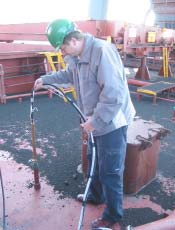
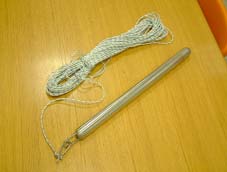
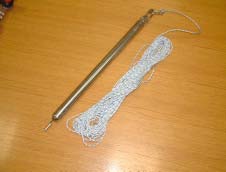
David: Ballast water sampling in the Republic of Slovenia
Figure 1. Shipboard sampling with the "Air-driven Well Pump"
Figure 2. The "Water-Column Sampler"
Figure 3. The "Bottom and Sediment Sampler".
29
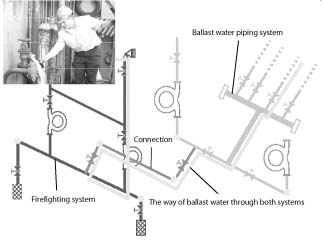
1st International Workshop on Guidelines and Standards for Ballast Water Sampling: Rio de Janeiro, Brazil, 7-11 April 2003
Figure 4. The connection of the ballast water and fire-fighting system. The inserted photo shows the ballast water
release from the tap on the main deck.
30
Turkish Ballast Water Working Group activities and
national sampling strategies in Turkish seas
A.Muzaffer Feyzioglu
Karadeniz Technical University,
Faculty of Marine Sciences
61530 Camburnu Trabzon
Turkey
Muzaffer@ktu.edu.tr
Abstract
This presentation includes Turkish ballast water working group structure, outline of ballast water
sampling project at Turkish harbour, sampling strategies, sampling equipments and observation
techniques which will be used during the sampling and laboratory studies.
Introduction
Turkey lies like a bridge between Asia and Europe, surrounded by four seas that have different water
characteristics. These seas are the Black Sea, Marmara Sea, Aegean Sea and Mediterranean Sea.
Turkey is ecologically important because of its geological position.
Turkey separates Mediterranean Sea and Black Sea. These two marine environments have different
characteristic. The Black Sea is a kind of enclosed sea, which connects to the Marmara Sea via a
narrow strait called Istanbul Strait. Due to export activities of Black Sea surrounding countries, ship
traffic is very heavy in Black Sea and Istanbul Strait. More than 50.000 ships passed through the
Istanbul Strait from Black Sea and back. These included 2500 super tankers more than 200 m long
(Ozturk, 2002)
Mean of salinity and density of the Black Sea surface water is 18 ppt and 1,006 respectively.
Temperature changes between 7-27 ° C. Black Sea is 2000 meters deep and only approximately 200
meters upper water body has oxygen. Deep water doesn't contain oxygen, it's contain H2S . So life
goes only on upper 200 meter (Bakan and Buyukgungor, 2000).
Black Sea has two anti cyclonic gyro which located east and west part of surface water (Oguz et al). I
would like to talk about this anti cyclonic gyro because no matter how far ballast water operation take
please from the coast, organism in side of the ballast water drift by this current and could reach the
shore any side of Black Sea in several days.
According to literature 3774 species live in Black Sea. 26 species are known as introduce organism.
13 of them are intentionally introduced to Black Sea (i.e. aquaculture). 13 of them are described as
accidentally introduced species. It is thought that these species have came to the Black Sea by means
of ballast water. Rapana thomasiana, Minemiopsis leidyi are well known accidentally introduced
species to Black Sea. 53 % of accidentally introduced originated from Atlantic , 31 % and 16% of
accidental introduced species originated from North-Europe and Pacific respectively (Zaitsev and
Mamaev 1997).
National ballast water working group was established in 2002. Our working group include 5
governmental organizations: Ministry of Health General Directorate of Health For Border and Coastal
Areas; Prime Ministry Undersecretaries For Maritime Affairs; Environmental Ministry; Coast
Guard; and Karadeniz Technical University, Faculty of Marine Sciences.In job description the
31
1st International Workshop on Guidelines and Standards for Ballast Water Sampling: Rio de Janeiro, Brazil, 7-11 April 2003
first four groups execute administrative part and KTU Faculty of Marine Sciences takes on scientific
activities in national ballast water working group.
Between 1999-2001 ballast water sampling were made irregularly. After establishing this working
group, prepared a proposal for ballast water sampling. The sampling will be started the on May 2003
in Black Sea harbour regularly. Next year sampling will also include Aegean and Mediterranean
harbours. Project sampling sides, sampling procedure, equipment are shown below.
Material and Methods
Sampling location
Before this sampling project 8 ships were sampled through the years 1999-2001 and water sample
were taken from ballast tank at Trabzon and Istanbul harbor irregularly. In the regular sampling
program nine different harbors were chosen as sampling side. Five of them located at Black Sea, 1 of
them located at Aegean Sea and last three harbor located in Mediterranean Sea. These harbors are
Rize, Trabzon, Samsun, Eregli, Istanbul, Izmir, Antalya, Mersin, Iskenderun harbors. When we
choose sampling site Export capacity of harbor has been considered. Our periodic pilot studies will
start in Rize, Trabzon and Samsun harbors in May. These harbors have been chosen because they are
close to our institute and especially Rize harbor has annually 40 ship with ballast water due to export
of copper from Turkish-Canadian copper mine company. The locations of the harbors are shown in
figure 1.
Ballast water sampling
Ballast water samples were taken through the manhole. Because of many advantages we will go on to
use manhole during the sampling period.
Abiotic parameter
Ballast water sampling project include not only take an organism samples but also sample water
quality. These parameters inside the ballast tanks are important because staying alive of an organism
mostly depends on the water quality parameters. So salinity, temperature, turbidity, pH, oxygen and
depth of the water will also be measured with CTD prop (Figure2)
Sampling of water column inside the ballast tank
Microbiological sampling in ballast water
Different types of instruments are used depending on the purpose of the sampling. Sterilized glass
bottle instrument used for taking microbial organism from ballast tank. Bottle and system
sterilized before use. System dip to ballast water and then by means of messenger glass tube has
been broken and water fill into the bottle (Figure 3).
Qualitative and quantitative sampling equipment
Nansen and Van-dorn bottle have 1.7 and 9 litre water capacity. We use this equipment for
sampling water column in ballast tank. Another way for sampling large quantities of water is
using water pump. Pump hangs down in to the ballast tank. Figure 4 shows Van-dorn bottle 9 litre
capacity and electric pump used for sampling.
Concentration of sample
Taken water is filtered from plankton net (figure 5) and sample is concentrated into the collector
which is at the bottom of the net.
32
Feyzioglu: Turkish Ballast Water Working Group activities and national sampling strategies in Turkish seas
Determination of dead and alive organisms in ballast water
Most of all, determination of living organisms are more important then finding dead organism in
ballast water. So using Evens Blue technique may be applied to water sample before fixation. This
technique can be used to identify living organisms in ballast water. Before fixation of organism, evens
blue can be dropped to the sample. Organism takes evens blue inside to cell and after fixation
organisms which were alive are seen as blue under microscopy. Thus after counting, the percentage of
alive organism in the ballast tank can easily be calculated (Crippen at al 1974, Satoh and Yamaguchi
1988).
Laboratory examination
For laboratory examination we use NIKON E 600 with epiflourscent attachment microscopy.
Identification of dinoflagellates we use calcoflour white fluorescent brightener. This staining
technique is useful for analysis plate of dinoflagellates (Anderson and Kristensen, 1995).
Result and discussion
Before starting national ballast water sampling project, ballast water sampling were made irregularly
from Trabzon and Istanbul harbor during the period 1999-2001. Figure 6 shows water samples after
concentration. During the samplings 3 type of ballast water obtained as shown in figure 6. They can
classify as rusty ballast water, oily ballast water and clear ballast water.
Figure 7 shows some example view of ballast water sample under the microscopy. Samples taken
from Istanbul strait and the source of the ballast water was Mediterranean Sea. First picture shows
oily ballast water sample and Dinophysis caudate can be seen. The second picture is dinoflagellates
cyst, which was in clean ballast water. Third picture is Noctiluca scintillans. The sample belongs to
rusty ballast water sample and rust particles are clearly visible in the sample.
References
Anderson, P. & Kristensen, H.S. 1995. Rapid and Precise Identification and Counting of Thecate
Dinoflagellates Using Epifluorescense microscopy. Harmful Marine Algal Bloom. Proceedings of
Sixth International Conference on Toxic Marine Phytoplankton, October 1993, Nantes, France.
pp 713-718
Bakan. G. & Buyukgungor,H, 2000. The Black Sea. Marine Pollution Bulletin, Vol 41, pp 24-43
Crippe, R.W. & Perrier, R.J., 1974. The Use of The Neutral Red and Evans Blue For Live Dead
Determination of Marine Plankton. Stain Technology, Vol 49 pp 97-104
Oguz,T., Aubrey, D., Latun, V.S. & Demirov, E. 1994. Mesoscale Circulation and Termokline
Structure of The Black Sea Observed Hydroblack, Deep Sea Res. 1 (41) pp 603-628
Ozturk. B 2002. The Ponto Caspian Region : Predicting the Identity of Potential Invaders. Alien
Marine Organisms Introduced by Ship in the Mediterranean and Black Seas, Istanbul 6-9 November
2002, pp 75-78
Satoh, H. & Yamaguchi, Y. 1988. Discrimination Between Live and Dead Cell in Microalgal
Assemblages by a Staining Technique. The Japanese Journal of Phycology, Vol XXXVI, No 4
pp 328-330
Zaitsev, Y & Manaev, V. 1997. Marine Biological Diversity in the Black Sea. GEF Black Sea
Environmental Series, Vol 3, p 207
33
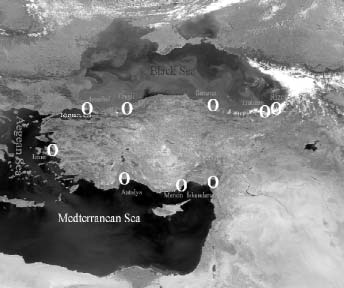
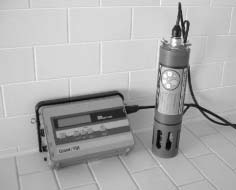
1st International Workshop on Guidelines and Standards for Ballast Water Sampling: Rio de Janeiro, Brazil, 7-11 April 2003
Figure1. Locations of Turkish ports where ballast water sampling has been conducted under this survey.
Figure 2. CTD meter for water quality sampling.
34
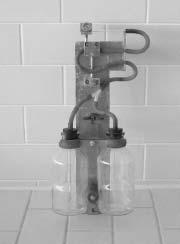
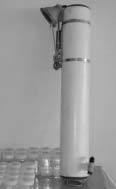
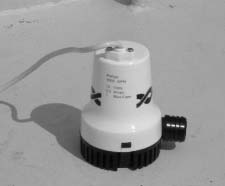
Feyzioglu: Turkish Ballast Water Working Group activities and national sampling strategies in Turkish seas
Figure 3. Microbiological sampling equipment.
A
B
Figure 4. Van-dorn bottle 9 liter capacity (A) and electric pump (B) using for sampling.
35
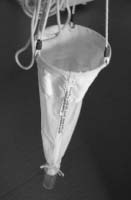
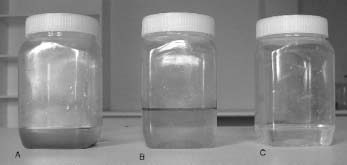
1st International Workshop on Guidelines and Standards for Ballast Water Sampling: Rio de Janeiro, Brazil, 7-11 April 2003
Figure 5. Plankton net (20 µm mesh size) for concentrating water sample.
Figure 6. Rusty ballast water (A), oily ballast water (B) and clear ballast water (C).
36
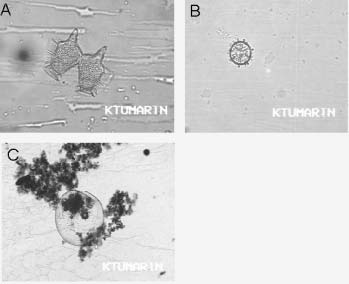
Feyzioglu: Turkish Ballast Water Working Group activities and national sampling strategies in Turkish seas
Figure 7. Some organisms from ballast water samples (A) Dinophysis caudate
(B) dinoflagellates cyst (C) Noctiluca scintillans.
37
German Ballast Water Sampling Manual
S. Gollasch
GoConsult
Bahrenfelder Str. 73a
22765 Hamburg,
Germany
Abstract
Commissioned by the Federal Environmental Agency, Berlin, Germany a joint research project was
initiated at the Institut für Meereskunde Kiel and the University of Hamburg to provide information
on introductions of non-indigenous organisms with shipping into German waters (1992-1996). The
study aimed at a thorough taxonomic assessment of planktic and benthic organisms found in ballast
water, tank sediment and on the ship hulls. Over a period of three years 186 vessels were sampled.
Ballast water sampling techniques used are described here.
Introduction
In March 1992, a joint research project between the Institut für Meereskunde (Kiel) and the
University of Hamburg funded by the German Federal Environmental Agency was launched to
investigate the flora and fauna carried into German ports by international shipping.
The first successful ballast water sample was taken 5 months after the projects´ kick off meeting. This
delay was due to the lack of appropriate sampling techniques. The development of useful sampling
techniques was carried out involving shipping companies and ship crews. The funding agency was
concerned that appropriate ballast water sampling might not be possible at all and would have
terminated the project if we would not have been able to develop an appropriate sampling technique
within the initial 6 months of the project.
The major obstacles in our way were restrictions to open manholes for easy access to ballast water
sampling. These were due to overlaying cargo or lack of time for crews in ports. Some ships spend
just one shift (6 hours) in the port and time does not permit to support biological ballast water
investigations.
Another disadvantageous effect was the lack of a strict ship arrival timetable. Planning ship visits, the
confirmation of ship arrivals and the exact berth in ports of targeted vessels took at least one day per
ship visit. Despite the best effort late arrivals and changes in travel schedules sometimes prevented
sampling.
However, during this 4 year study 186 vessels were investigated, revealing 334 samples. In total 404
taxa were found, of which approx. 60 % were identified as non-native to the Baltic or North Sea.
Ships were sampled in the German ports Brake, Bremen, Bremerhaven, Elsfleth, Hamburg, Kiel,
Rendsburg, Rostock and Wilhelmshaven. Results of this study are published elsewhere (Gollasch
1996, Gollasch et al. 1998, Lenz et al. 2000).
Material and methods
During the investigation period from March 1992 through August 1995, 211 vessels were visited for
sampling. Samples were taken on 186 ships. In total 132 ballast water, 131 hull and 71 sediment
38
Gollasch: German Ballast Water Sampling Manual
samples were taken. This account focuses on ballast water sampling techniques. Hull fouling and
sediment sampling techniques are published elsewhere (Gollasch et al. 1996, Gollasch 2002).
Vessel selection
The vessels investigated were selected according to type of vessel and sea area of origin. Ships on
high frequent shipping routes were predominantly selected for sampling. The majority of ships
arriving in German ports are from North America and Asia and ships were selected accordingly.
However, the ballast water sampled originated from over 100 regions world-wide.
From the beginning of the study it was avoided to sample ballast tanks that were filled with a mixture
of water from different source regions (ballast water cocktail), but to focus on tanks with ballast water
of one single known area of origin.
As container cargo prevails in German ports these type of ships were emphasised. However, other
ship types such as bulker, tanker, general cargo carrier, car carrier and passenger vessels were
sampled as well.
Ballast water sampling
The ballast water was sampled in various ways. A detailed ballast water sampling reporting form is
attached as Appendix 1.
Manhole sampling
The preferred way was to sample the water by operating a plankton net through an open manhole
as this is the most direct access. It was rarely possible to sample in this way (24 samples). For
phytoplankton samples a plankton net with a meshsize of 10µm and for zooplankton sampling
55µm were used. All nets used had a conical design with a 9.7cm opening, maximum diameter of
25cm, length of 80cm and a filtering cod end (Fig. 1).
The net was lowered to the maximum depth in the tank (not necessarily to the tank bottom as
internal tank structures may not allow). After a waiting time of 5 minutes the net was lifted
towards the surface with a speed of approx. 0,5m per second by hand. Wherever possible three
replicates were taken.
Sounding pipe sampling
Sometimes manholes were inaccessible or the opening was not permitted because of covering
cargo, lack of time and manpower as well as security reasons. In this cases a hand pump was used
via a sounding pipe (69 samples). Sounding pipes are used to measure the water level in a tank
and connect the tank to an upper deck of the vessel.
The pump used here was a light hand pump (approx. 1.5kg). Using a moderately stiff hose (14
mm diameter) the hand pump was used to pump up water with a maximum lifting capacity of
approx. 3 l/min. The maximum pump height was 8.5m (Fig. 2 & 3). Wherever possibly 100 l of
ballast water were sampled and concentrated using a 55µm plankton net.
In-line sampling
The third way to sample was at the ballast water pump of the vessels (39 samples). Ballast pumps
have pressure meters where a small tap can be opened to extract water (Fig. 4 & 5). Wherever
possible 100 l of ballast water were filtered through a plankton net (meshsize 55 µm).
Abiotic parameters
The abiotic water parameters temperature, salinity, pH value, and oxygen content were measured
aboard immediately after sampling.
39
1st International Workshop on Guidelines and Standards for Ballast Water Sampling: Rio de Janeiro, Brazil, 7-11 April 2003
Samples preservation
All ballast water samples were preserved in 70% Ethanol.
Live samples
Living samples were taken in addition to preserved material. These samples were stored in a
cooling box and transferred into the laboratory as soon as possible.
Sample analysis
All samples were analysed for organisms using stereo microscopes and microscopes. Botanical
investigations were carried out in Kiel. Zoological studies were made in Hamburg.
Sampling ballast water of world-wide origin results in a "global" study of plankton. Therefore the
taxonomic determination of species is a challenge. During the German study a network of more
than 200 interested taxonomists was established. A team of 5 students was employed full time to
gather taxonomic literature and to screen samples for organisms.
Selected taxa such as early larval stages of bivalves and gastropods were analysed using an
electron microscope.
Safety measures
A general German safety regulation requires in minimum a sampling team of two persons that has to
wear protection gear such as ear protector, safety shoes, gloves, overall and helmet.
When sampling ballast water the sampling team may be exposed to disadvantageous circumstances.
Especially when sampling freshwater ballast it is likely that the sampling team may come in touch
with human pathogens and disease agents. According to German regulations the sampling team were
given certain vaccinations and the use of an aerosol filter was recommended during sampling as
precautionary measure (Fig. 6).
One safety habit onboard a (moving) vessel is "one hand for the ship and one hand for yourself "
when walking around. The team carried all sampling gear and samples in flexible bags that could be
used as backpack with the advantage to use both hands to support safe ladder climbing etc.
Our experiences showed that ballast water sampling access is not easily available. In certain instances
the team had to climb down narrow corridors in the ship or even in the ballast tank. The sampling
team was only permitted to climb into a ballast tank after a proper ventilation to ensure a minimum
amount of oxygen or when using a self-containing breathing apparatus similar to SCUBA diving
equipment (Fig. 7).
Results
A total of 8219 l ballast water were sampled and inspected, corresponding to an average of 62,3 l per
sample. The taxonomical results are published elsewhere (Gollasch 1996, Gollasch et al. 1998, Lenz
et al. 2000).
Conclusion
This study has shown that a flexible approach to ballast water sampling is essential. Method selection
may be based on the configuration and access to ballast tanks and ship type. In general, direct access
to ballast tanks via tank openings (manholes) is the recommended sampling access.
40
Gollasch: German Ballast Water Sampling Manual
The objectives of sampling (e.g. qualitative or quantitative samples, target organisms or all taxa) are
other criteria for method selection. For phytoplankton sampling nets small mesh-sizes (e.g. 10µm) are
recommended. Larger mesh sizes will exclude smaller species and may result in lower species
richness. As fine mesh nets clog quickly a degree of compromise is required.
In zooplankton studies, nets with a mesh size of 55µm are recommended as these will capture the
youngest stages of taxonomic groups frequently found in ballast water.
Sampling via sounding pipes can only be undertaken by pumps however, some systems are unable to
lift water from more than 8 meters depth, consequently ballast tanks with low water levels or in deep
location within the ship are unlikely to be sampled at all, especially when using hand pumps.
In-line samples are seen as disadvantageous as (a) the pipe usually has a very limited diameter (<
10mm), i.e. unlikely to contain larger zooplankton organisms and (b) samples can only be taken when
the ship ballast pump is operated. During the German study in-line samples were only taken in the
absence of any other option to samples the ship. It was believed that a non-optimum sample still is
better as no sample.
References
Gollasch, S. 1996. Untersuchungen des Arteintrages durch den internationalen Schiffsverkehr unter
besonderer Berücksichtigung nichtheimischer Arten. Diss., Univ. Hamburg; Verlag Dr. Kovac,
Hamburg, 314 pp.
Gollasch, S., Dammer, M., Lenz, J. & Andres, H.G. 1998. Non-indigenous organisms introduced via
ships traffic into German waters. In Carlton (ed.): Ballast Water: Ecological and Fisheries
Implications. ICES Coop. Res. Rep. No. 224, 50-64.
Gollasch, S. 2002. The importance of ship hull fouling as a vector of species introductions into the
North Sea. Biofouling 18(2), 105-121
Lenz, J.; Andres, H.-G.; Gollasch, S. & Dammer, M. 2000. Einschleppung fremder Organismen in
Nord- und Ostsee: Untersuchungen zum ökologischen Gefahrenpotential durch den Schiffsverkehr.
UBA Project Water: 102 04 250, Umweltbundesamt, Berlin, Texte 5, 273 pp.
41
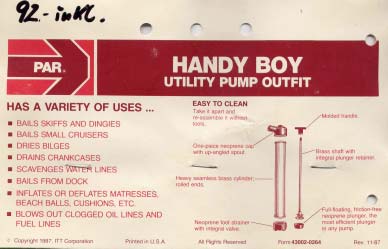
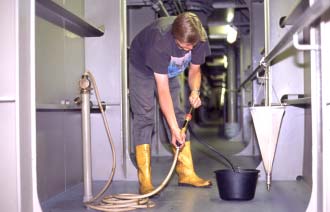
1st International Workshop on Guidelines and Standards for Ballast Water Sampling: Rio de Janeiro, Brazil, 7-11 April 2003
Figure 1. Cone net with filtering cod end.
Figure 2. Hand pump used for ballast water sampling.
Figure 3. Ballast water sampling using a hand pump via sounding pipe.
42
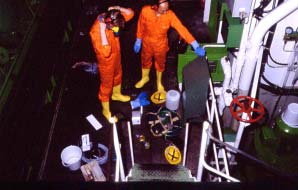
Gollasch: German Ballast Water Sampling Manual
Figure 4. Pressure meter of ships ballast water pump.
Figure 5.Water sampling at pressure meter of ships ballast pump.
Figure 6. Preparation of ballast water sampling in engine room. Safety gear shown (ear protection, aerosol filter,
safety rubber boots, gloves, helmet and overall).
43
1st International Workshop on Guidelines and Standards for Ballast Water Sampling: Rio de Janeiro, Brazil, 7-11 April 2003
Figure 7. Breathing apparatus used for in-tank sampling.
44
Gollasch: German Ballast Water Sampling Manual
Ballast Water Sampling Reporting Form
Sampling details
Number of sampled ship:
Date:
Sampling crew:
Contact details:
Shipping company:
Contact person, onboard:
Contact person, land-based:
Ship details:
Name:
Registration number and registration authority:
Ship type:
Ship location in port (pier, terminal, dockyard):
Usual shipping route:
DWT:
Total ballast water capacity:
Total ballast water onboard:
Sample 1 (preserved, live)
Ballast tank
- number (starbord, portside)
- type
- capacity
Ballast water
- volume in tank [t, m_]
- date of uptake
- origin of uptake
Method
- Hand pump operated via sounding pipe / manhole
- pump volume
- sampling depth
- net sample (CN10, N10, CN55, N55)
- depth of net haul
- net haul in meters
- more than one net haul (replicate A, B, C) ?
Photo documentation?
Comments:
45
Sampling ballast water for pathogens: the Colombian
approach
Rondón, S.R., Vanegas, T. & Tigreros, P.C.
Centro de Investigaciones Oceanográficas e
Hidrográficas CIOH
Escuela Naval Almirante Padilla
Isla Manzanillo, Cartagena, Colombia
(057-) 6694104 Phone
(057-) 6694297 Fax
Abstract
In Colombia the Dirección General Marítima (DIMAR) with the Centro de Investigaciones
Oceanográficas e Hidrográficas (CIOH), initiated a research program to identify the presence of
species in ships' ballast water that arrive at Colombian ports, evaluating the potential risk for the
human health and the ecosystem. The first phase of this study was carried in the port of Cartagena;
the information from this study will serve as a basis for the program of management of ballast water
in Colombia, initiating therefore the application of the directives given by the IMO.
The port of Cartagena is located on the Caribbean coast of Colombia. Over 3,415 ships arrive
annually averaging 15 ships each day, coming from different places all over the world. Studies in
many countries have shown that several species of bacteria, plants and animals can survive in the
ballast water and sediments transported by ships, even after voyages of several months, and that
discharge of ballast water into other ecosystems causes the establishment of harmful marine
organisms and pathogen agents, which a threaten human health and marine flora and fauna.
Considering also that the World Health Organization-WHO is concerned about the role of ballast
water as a means for propagating bacteria causing epidemics, a research study was initiated to
identify the species of organisms present in ballast water and to determine the influence of this factor
in the pollution of Cartagena Bay.
During the first stage of the project carried out during 2002, samples from 12 international ships that
arrived at Cartagena Bay were analyzed determining the bacterial, phytoplanktonic and
zooplanktonic components. In the samples were found pathogenic bacteria like Vibrio cholerae,
Salmonella sp, Escherichia coli, Pseudomona aeruginosa, Proteus mirabilis, Proteus vulgaris,
Klebsiella pneumoniae and Enterobacter sp. Even if the found species of phytoplankton in ballast
water are common in the Caribbean Sea, some of them are reported for the first time in the bay, like
the diatoms Chaetoceros messanensis, C. glandazzi, C. tortissimus, Odontella aurita, Hemidiscus
cuneiformis, Ditylum brightwelli, Paralia sulcata, Planktoniella sol, Asterionellopsis glacialis,
Pseudoeunotia doliolus and the silicoflagellate Dictyocha polyaetis. In the Caribbean colombian
waters these diatoms are uncommon with the exception of D.brightwelli, P. sulcata, P. sol and A.
glacialis; in the case of D. polyaetis previous records are not known. Also there were found
zooplanktonic species not previously recorded in Cartagena Bay like the copepods Eucalanus
elongatus, Euterpina acutifrons, Lucicutia clausi, Oithona ovalis and Oithona plumifera, the Sagitta
planctonis chaetognat and the Lucifer typus decapod.
Key words: methodologies, ballast water, bacteria, phytoplankton, zooplankton, Cartagena Bay.
46
Rondon: The Columbian approach to pathogen sampling
Introduction
The introduction of invasive marine species into new environments through ships' ballast water has
been identified as a factor that can affect the biodiversity of the oceans. The ships carry nearly 80% of
all merchandise and transport around 10 billion tons of ballast water throughout the globe every year
facilitating the displacement of high organisms biomasses between the ports, including virus, bacteria,
phytoplankton, zooplankton, eggs, cysts and larvae of several species (Ballast Water News, 2000).
Ballast water has become a great problem; nevertheless, it must be used for the security of the ships
since it gives balance, stability and structural integrity facilitating the process of load and unload of
merchandise. In order to prevent these bio-invasions the scientific community has been working on
the implementation of regulations between the different ports aiming to reduce the transference of
invasive marine species and thus diminishing its possible consequences, especially those that imply
risk to human health, fishing resources and the ecosystem.
Antecedents
At international level different research groups have worked on programmes and sampling methods to
detect the presence of organisms considered to be detrimental in ballast water; however, these works
have been oriented towards different objectives. Sutton et al., (1998) presented the more
comprehensive review on existing protocols for ballast water monitoring; they mention research
groups that have centred their study on obtaining information baselines to identify and determine the
risks associated with ballast water discharge: Medcof (1975), Carlton (1985), Williams et al., (1988),
Hallegraeff and Bolch (1991), Subba Roa et al., (1994), Gosselin et al., (1995), Gollasch et al., (1995)
and Macdonald (1995); or in the determination of different parameters according to existing guides
like Locke et al., (1991) and finally those that worked in the handling of situations of high risk in
open sea and the determination of the effectiveness of ballast water treatments by means of exchange,
such as Williams et al., (1988); Rigby and Hallegraeff (1994), Carlton et al., (1995) and Wonham et
al., (1996), calorific treatment by Rigby et al., (1997) and filtration by Cangelosi (1997).
Other works elaborated based on methodologies used for ballast water sampling are described by
Dodgshun and Handley (1997) and Hewitt and Martin (2001).
In Colombia up until 2002 the Dirección General Marítima (DIMAR) by means of the Centro de
Investigaciones Oceanográficas e Hidrográficas (CIOH), initiated the study of the biota carried in the
ballast water of international traffic ships. This first stage was used for the establishment of
monitoring and analysis methodologies for ballast water, acquiring experience to develop a second
phase which will expand to other ports located in the Colombian Caribbean such as Barranquilla and
Santa Marta.
Study area
The study took place in Cartagena Bay, which is located on the Caribbean Coast of Colombia, South
America, between 10°26' - 10°16' N latitude and 75°30' - 75°36' W longitude. The Bay covers 82
Km2 and has an average depth of 16 m. The climate of the region is determined by the Intertropical
Confluence Zone (ITCZ) which gives special climatic characteristics with two seasons governed by
tradewinds from North-Northeast: a dry season (December to April) and a rainy season (may to
November) (Schaus, 1974). This bay has two oceanic water entrances, Bocagrande in the north and
Bocachica in the south, being a very important ship canal from the point of view of the renovation of
waters because it presents great depths (Garay, 1997). To the south of the Bay is the opening of the
Dique Channel, a component of the fluvial system of the Magdalena river, that gives a continental
water contribution in the dry season of 35 m3/s and in the rainy season it increases to 150 m3/s
(Ospina and Pardo, 1993). Due to these contributions, the greatest morphologic changes were
47
1st International Workshop on Guidelines and Standards for Ballast Water Sampling: Rio de Janeiro, Brazil, 7-11 April 2003
generated in the bay because of the introduction of additional sedimentological elements forcing it to
behave like a typical estuary where conditions of mixture water are dominant.
Cartagena is one of the most important ports in the Colombian Caribbean; until 1997 there were 56
wharves both private and official of the oil type, for fishing, recreation, tourism, shipyard, loading and
unloading of fuel and chemical agents, for general cargo and containers and several activities. In
Cartagena Port, on average until 1997, 5042 ships heavier than 100 tons were mobilized; 22% of them
corresponding to services, 29% to cabotage, 32% were ships for international navigation and 17%
passenger ships. Due to this amount of marine traffic, it is expected that contamination problems may
occur both by voluntary and involuntary pouring of liquid waste from anchored ships or in movement,
including wells, ballast and residual waters, among others (Garay, 1997; and Garay and Giraldo,
1997).
Results and discussion
Sample collecting
The first stage of the ballast water study concentrated on identifying the presence of bacterial,
phytoplanktonic and zooplanktonic organisms in ballast water and in characterizing these both
physically and chemically. Twelve ships were inspected, whose ballast water came from different
ports located on the Caribbean Sea with the exception of one whose ballast came from the equatorial
Pacific (Table 1); 24 samples were collected for the processing of the different components.
The sampling methodology presented four variants according to the access to the ballast tanks, which
will be discussed next.
Table 1. Origin of the ballast water in the different ships sampled during the first stage of the project.
Vessel Name
Type of Vessel
Origin of the Ballast Water
M/T VRITI AMETHYST
Tanker ship
Panamá
LPG VIATOR
Gas tanker
Las Minas (Panamá)
SAN SEBASTIAN
Fuel tanker
Kingston (Jamaica)
MARGRANEL
Cement
Kingston (Jamaica)
JO MAPLE
Chemical Tanker
Santo Tomás (Guatemala)
CIELO DEL CARIBE
General cargo
Guayaquil (Ecuador)
SEA PUMA
General cargo
Miami (USA)
PANTELIS P
Cement
Salvador
Puerto Caldera (Costa Rica) and
CIELO D'AMERICA
Container ship
Manzanillo (Panamá)
CSAV CALLAO
Container ship
Manzanillo (Panamá)
RADESINGEL
Container ship
Port Everglades (USA)
Los Santos (Brasil), Barranquilla,
MV CALA PANAMA
Container ship
(Colombia) and Santo Tomás
(Guatemala)
Opening of the tank (Manholes)
In this variant the use of two forms of sampling is possible. The first uses a small mouth net
(diameter < 50 cm) for catching plankton, which can be introduced directly into the tank; in this
way a qualitative sample for phytoplankton and a quantitative one for zooplankton is obtained
previous adaptation of a flowmeter. The second sampling technique consists in a catching bottle
48
Rondon: The Columbian approach to pathogen sampling
in which the phytoplanktonic samples are obtained as microbiological ones (in some cases it is
necessary to resort to this technique for zooplankton sampling), in addition to those destined to
the determination of physicochemical parameters.
The number of ships that could be worked this way was four, all of them of the gas tanker, tanker
(combustible or chemical) or cement type (Figure 1).
Considerations:
In the introduction of the plankton net care must be taken since it can be torn or trapped within the
tank because many of them have access elements such as stairs.
Net sampling is the best mechanism for collecting plankton since it catches a greater volume of
water and so more reliable quantitative data are obtained.
The use of the catching bottle brings as a benefit the knowledge of the depth where the sample is
obtained, but the planktonic community obtained by means of this technique does not represent a
significant sample due to the small volume of water obtained.
It allows the determination of the amount of dissolved oxygen since the sample is not oxygenated
at the time of collecting the sample.
In conditions of low visibility, light emission instruments (such as lanterns) must be avoided as
far as possible because they alter tank conditions; organisms vary their behaviour and therefore
their location in the water column since they may exhibit positive or negative phototaxism,
overestimating or underestimating the community.
Direct samples from the water-drainage
This methodology refers to obtaining of the ballast water sample directly in the water-drainage of
the ship from the cover, using a volumetric container with an end manipulated from the cover.
Therefore net sampling and catching bottles are not needed.
Of the 12 ships analyzed, in only one of them was this methodology employed; this ship was of
the tanker type (Figure 2).
Considerations:
Sampling can be carried out only when the water-drainage is over the flotation line of the boat.
It is necessary to use a volumetric container and a rope resistant to the high pressure exerted by
the water-drainage current.
This method does not provide a representative community sample in the ballast tank due to the
difficulty in sample acquisition.
The collected individuals may suffer damage or destruction because of the action of water
pressure.
The sampled depth layer is not known.
It does not allow the determination of the amount of dissolved oxygen since the sample is
oxygenated at the time of its collection.
Ballast pump
This refers to the collection of a water sample provided by the pumps that are connected directly
to the ballast tanks and allow access to the water through thin hoses. The sample is gathered in
volumetric containers, avoiding the use of nets and catching bottles.
This sampling methodology was most used throughout the project. A total of 6 ships were
analyzed in this way; these belonged to the general cargo, container ship and cement type
(Figure 3).
49
1st International Workshop on Guidelines and Standards for Ballast Water Sampling: Rio de Janeiro, Brazil, 7-11 April 2003
Considerations:
The sampled depth layer is not known.
It does not allow the determination of the amount of dissolved oxygen since the sample is
oxygenated at the time of sample collection.
The sampled community by means of this method is not representative because the organisms can
exhibit evasion behaviour because the pressure formed in the water body alerts them, risking a
poor homogeneously sample
This methodology of sampling requires more time as the volume of water expelled by the pumps
is too small.
The collected individuals may suffer damage or destruction because of the pressure of the water
leaving the hoses.
Deballast in the cover
This is made when the access pipes to the ballast tanks in the cover of some ships are opened so
that the cover remains flooded and it is possible to take the sample directly from the exit of the
water from these pipes using volumetric cans.
This type of sampling methodology was applied to a single ship of the container type (Figure 4).
Considerations:
It does not allow the use of plankton nets or catching bottles.
It is necessary to-take care of the material to be used in the sample since the level of the ballast
water that is thrown into the cover rises quickly.
The sampling layer level of depth is not known.
It does not allow the determination of the amount of dissolved oxygen since the sample is
oxygenated at the time of collecting the sample.
Biotic component
In Cartagena Bay, ships' ballast water from international traffic is the means of introduction of
bacterial organisms, phytoplanktonic and zooplanktonic some of them previously not recorded for this
ecosystem.
Within the pathogenic bacteria group the presence of Vibrio cholerae, Salmonella sp, Escherichia
coli, Pseudomona aeruginosa, Proteus mirabilis, Proteus vulgaris, Klebsiella pneumoniae and
Enterobacter sp was reported. This shows that the ballast water is an additional contamination factor
not considered before the accomplishment of this project.
The recorded phytoplankton species are common for the Caribbean Sea; remember that ballast water
was taken up in ports located on this sea; nevertheless, some of these species like the Chaetoceros
messanensis, C.glandazzi, C.tortissimus, Odontella aurita, Hemidiscus cuneiformis, Ditylum
brightwelli, Paralia sulcata, Planktoniella sun, Asterionellopsis glacialis and Pseudoeunotia doliolus
diatoms and the Dictyocha polyaetis silicoflagellate are reported for the first time in Cartagena Bay.
In the Colombian Caribbean waters these diatoms are uncommon with the exception of D.brightwelli,
P.sulcata, P.sol and A.glaciali,s information is scarce; in the D.polyaetis case previous records are not
known.
Also found were zooplanktonic species not previously reported in Cartagena Bay such as Eucalanus
elongatus, Euterpina acutifrons, Lucicutia clausi, Oithona ovalis and Oithona plumifera copepods,
Sagitta planctonis chaetognat and Lucifer typus decapod.
To define which of these species are involved in bio-invasion with potential risk to public health,
fishing resources or the ecosystem requires further study. It is not possible to generalize, attributing
50
Rondon: The Columbian approach to pathogen sampling
the name of invader to all the species that are introduced in a new ecosystem, as according to
Wittenberg and Cock (2001) many of them persist in their new surroundings and obtain an increase in
diversity by adaptation to the ecosystemic balance without causing extinction or damage to other
species. Moreover, the effects of these bio-invasions are not immediately perceivable, requiring a
wide time scale already running given that the introductions have been constant for long time.
In the ballast water, in addition to the new species introduced, the presence of organisms was detected
that are part of the native flora and fauna of Cartagena Bay. This does not imply that there is no
detrimental effect since each ecosystem is able to lodge and to maintain a certain amount of
organisms but ballast water discharge increases this load, with consequences yet unknown.
Conclusions
This project is the first of its type in Colombia to find important data about ballast water bio-invasions
coming from ships of international traffic that arrive in Cartagena Bay; the situation can be
extrapolated to other ports located on the Caribbean and Pacific oceans of Colombia.
It is not possible to talk about of a standard methodology for taking samples from ships since much
depends on the form of access to the ballast tanks. In addition, similar ships do not allow the same
methodology for sampling.
The method that best allows the characterization of the sampling community is that which allows
direct access to the ballast tanks (Manholes) since it facilitates the introduction of nets that allow
vertical drags where a greater collection of organisms is possible due to the filtered amount of water.
This method is also the only one that allows the determination of the oxygen dissolved in the ballast
tanks.
Ship's ballast water arriving at Cartagena Bay is shown to be a means for the introduction of
pathogenic bacteria, phytoplanktonic and zooplanktonic organisms not previously recorded for the
bay, thus constituting an additional source of contamination for this ecosystem.
References
Cangelosi, A. 1997. The Algonorth experiment. Seaway Review, 25(3), 4 pp. *
Carlton, J.T. 1985. Transoceanic and inter-oceanic dispersal of coastal marine organisms: the biology
of ballast water. Oceanogr. Mar. Biol. Rev. 23, pp. 313-317. *
Carlton, J.T., Reid, D.M. & Van Leeuwen, H. 1995. The role of shipping in the introduction of non-
indigenous aquatic organisms to the coastal waters of the United States (other than the Great Lakes)
and an analysis of control options. The National Biological Invasions Shipping Study. Prepared for
the United States Coast Guard and the U.S. Department to Transport; National Sea Grant
Program/Connecticut Sea Grant Project (R/ES-6), Report N°. CG-D-11-95, 345pp. *
Dodgshun, T. & Handley, S. 1997. Sampling ships' ballast water: a practical manual. Cawthron
Report N°418. 58 pp.
Garay, J.A. 1997. Estudio de la contaminación por plaguicidas, hidrocarburos y eutroficación en
lagunas costeras del Caribe colombiano Fases I y II. Bahía de Cartagena, 1996 1997. Fondo para
el Medio Ambiente Mundal Programa de las Naciones Unidas para el Desarrollo (PNUD), Oficina de
Servicio de Proyectos de Naciones Unidas (UNOPS) Centro de Investigaciones Oceanográficas e
Hidrográficas (CIOH). Cartagena. 133 pp + anexos.
51
1st International Workshop on Guidelines and Standards for Ballast Water Sampling: Rio de Janeiro, Brazil, 7-11 April 2003
Garay, J.A. & Giraldo, L.N. 1997. Influencia de los aportes de materia orgánica externa y autóctona
en el decrecimiento de los niveles de oxígeno disuelto en la Bahía de Cartagena, Colombia. Bol.
Cient. C.I.O.H., 18: pp. 1-13.
GloBallast 2000. Stopping the ballast water stowaways. Global Ballast Water Management
Programme, 2nd edition. International Maritime Organization.
Gollasch, S., Dammer, M., Lenz, J. & Anders, H.G. 1995. Non-indigenous organisms introduced via
ships into German waters. Theme session: Ballast water: ecological and fisheries implications, ICES
Annual Science Conference 1995, Aalborg, Denmark (ICES CM 1995/O:13), 21pp. *
Gosselin, S., Levasseur, M. & Gauthier, D. 1995. Transport and deballasting of toxic dinoflagellates
via ships in the Grande Entrée Lagoon of the Iles-de-la-Madeleine (Gulf of St. Lawrence, Canada). In:
Sutton, C.A., Murphy, K, Martin, R.B., & Hewitt, C.L. 1998. A review and evaluation of ballast
water sampling protocols. CRIMP Technical report N°18. Tasmania. 113pp.
Hallegraeff, G.M. & Bolch, C.J. 1991. Transport of toxic dinoflagellate cyst via ships' ballast water.
Mar. Boll. Bull. 22: pp. 27-30. *
Hewitt, C.L. & Martin, R.B. 2001. Revised protocols for baseline port surveys for introduced marine
species: survey design, sampling protocols and specimen handling. CRIMP Technical report N°22.
Tasmania. 46 pp.
Locke, A., Reid, D.M., Sprules, W.G., Carlton, J.T. & Van Leeuwen, H.C. 1991. Effectiveness of
mid-ocean exchange in controlling freshwater and coastal zooplankton in ballast water. Can. Tech.
Rep. Fish Aquat. Sci. 1822, 93pp. *
Macdonald, E.M. 1995. Dinoflagellate resting cysts and ballast water discharges in Scottish ports.
Theme session: ballast water: ecological and fisheries implication, ICES Annual Science Conference
1995, Aalborg, Denmark (ICES CM 1995/O:10), 17pp. *
Medcof, J.C. 1975. Living marine animals in a ship's ballast water. Proc. Natl. Shellfish Ass. 65:
pp. 11-12. *
Ospina, J.F. & Pardo, F.I. 1993. Evaluación del estado de madurez gonadal y los hábitos alimenticios
de la ictiofauna presente en la Bahía de Cartagena. Tesis Biol. Mar., Univ. Jorge Tadeo Lozano,
Bogotá, 147 pp + anexos.
Rigby, G.R., Hallegraeff, G.M. & Sutton, C.A. 1997. Ballast water heating and sampling trials on the
BHP ship MB Iron Whyalla in Port Kembla and en route to Port Hedland. Report prepared for the
Australian Quarantine and Inspection Service (AQIS) october 1997, 40p. *
Schaus, R. 1974. Circulación y transporte de aguas en la Bahía de Cartagena de Indias, mediante su
presentación por medio hidrodinámico numérico de circulación. DIMAR. DC. 20: pp. 1-49. Tesis
Biol. Mar., Univ. Jorge Tadeo Lozano, Bogotá.
Subba Roa, D.V., Sprules, W.G., Locke, A. & Carlton, J.T. 1994. Exotic phytoplankton from ships'
ballast water: risk of potential spread to mariculture sites on Canada's east coast. Can. Data Rep.
Fish. Acuatic. Sci. 937, 51pp. *
Sutton, C.A., Murphy, K, Martin, R.B., & Hewitt, C.L. 1998. A review and evaluation of ballast
water sampling protocols. CRIMP Technical report N°18. Tasmania. 113pp.
Williams, R.J., Griffiths, F.B., Van der Wal, E.J. & Kelly, J. 1988. Cargo vessel ballast water as a
vector for the transport of non-indigenous marine species. Estuarine, coastal and shelf science. 26:
pp. 409-420. *
52
Rondon: The Columbian approach to pathogen sampling
Wittenberg, R. & Cock, M.J.W. (eds.). 2001. Invasive alien species: A toolkit of best prevention and
management practices. CAB International, Wallingford, Oxon, U.K., XII - 228 pp.
Wonham, M.J., Walton, W.C., Frese, A.M. & Ruíz, G.M 1996. Transoceanic transport of ballast
water: biological and physical dynamics of ballasted communities and the effectiveness of mid-ocean
exchange. Final Report report submitted to U.S. Fish and Wildlife Service and the Compton
Foundation, Smithsonian Enviromental Research Centre, MD 21037. *
* Can be found in: Sutton, C.A., Murphy, K, Martin, R.B., & Hewitt, C.L. 1998. A review and
evaluation of ballast water sampling protocols. CRIMP Technical report N°18. Tasmania. 113p.
53
1st International Workshop on Guidelines and Standards for Ballast Water Sampling: Rio de Janeiro, Brazil, 7-11 April 2003
Figure 1. Sampling in the cement ship MARGRANEL by means of the opening of the tank.
Figure 2. Sampling in the ship tanker M/T VRITI AMETHYST by means of the direct water-drainage sampling.
54

Rondon: The Columbian approach to pathogen sampling
Figure 3. Sampling in the container ship SEA PUMA by means of ballast Pumps.
Figure 4. Sampling in the container type ship MV CALA PANAMA by means of the deballast in cover.
55
Sampling ballast sediments and other challenges
J. P. Hamer
Countryside Council for Wale
Maes Y Ffynnon
Ffordd Penrhos, Bangor
Gwynedd, LL57 2DN, U.K.
Introduction
Over the last decade or so, the global translocation of non-native aquatic organisms has had serious
environmental, economic and in some cases public health consequences. Although the transport
vector for these introductions is not always clear, shipping has been implicated in a number of cases
and studies in various countries around the world have documented the occurrence of non-native and
potentially harmful aquatic organisms in ships ballast water and ballast tank sediments. In response to
this continuing threat, the International Maritime Organisation (IMO) is preparing a new International
Convention for the control and management of ships' ballast water and sediments aimed at reducing
the risks of further introductions. Once regulations are introduced, sampling of ships ballast water
and ballast tank sediments are likely to be an important part of compliance monitoring to ensure that
vessels have undertaken adequate ballast water management practices, such as at sea exchange or
ballast water treatment. Sampling may also be necessary for scientific research and risk-assessment
purposes. Port State Authorities may wish to implement monitoring programmes for ships entering
and discharging ballast in their waters so international guidelines will be required. However,
experience has shown that sampling of ships ballast water and ballast tank sediments presents various
logistical and practical problems which will have to be overcome.
Between 1996 And 1999, a UK government funded project was undertaken at University of Wales,
Bangor to investigate the occurrence of non-native species in ships ballast tanks entering English and
Welsh ports. During the project, ballast water and sediments were collected from 112 ships of various
types, including tankers, container vessels, car transporters, ferries and bulk carriers arriving at 20
ports in England and Wales. Phytoplankton and zooplankton were identified from ballast water
samples and ballast tank sediments were screened for dinoflagellate resting cysts. A total of 114
water samples, 89 net samples and 113 sediment samples were analysed. The final results of the
project are reported elsewhere. Here, sampling constraints are discussed with emphasis placed on the
sampling ballast tank sediments based upon experience gained during this research programme.
Sample collection
A sampling program was implemented (based on an earlier study carried out in Scotland) with the aim
of assessing the occurrence of aquatic organisms in the ballast water and ballast tank sediments of
ships arriving at English and Welsh ports. Once permission was gained from the ships master that a
sample could be collected, it was requested that a deck hatch be opened in order that samples could be
taken. Where this was possible, the following samples were collected:
· An integrated water sample (for temperature, salinity and phytoplankton analysis) was
collected by lowering a weighted hose (25 mm internal diameter) to the bottom of the tank
through an open deck hatch, a valve was turned off and the hose pulled up quickly for sub-
samples to be taken.
· Sediment samples were collected by lowering the weighted hose to the very bottom of the
tank and pumping up 20 litres of sediment slurry using a hand pump.
56
Hamer: Sampling ballast sediments and other challenges
· A zooplankton sample was collected by lowering a 53 µm net to the bottom of the tank and
raising slowly.
Frequently, due to operational and or safety constraints, it was not possible for samples to be collected
in this way. Common reasons for being unable to open a ballast tank hatch and or collect samples
were:
· Inaccessibility of ballast tank hatches
· Low volumes of water in tanks so hand pump was inefficient
· Obstacles in the tank preventing full access of sampling gear
· Ballast tanks were filled to capacity `pressed-up' and dangerous to open
When samples could not be collected in the intended way, a flexible approach was adopted and
samples were collected by one of the following methods:
· Pumping water through a narrow reinforced hose (13-mm internal diameter) pushed down a
ballast tank sounding pipe
· Overflowing ballast tank air vents
· Collecting water directly from the tank or from the ballast tank outlet with a bucket
· Collecting from the fire lines or from a bleed-valve on the ballast pump
The majority of samples were collected using the standard method via a ballast tank hatch or via a
sounding pipe (39 and 38% of samples respectively). The remainder of samples were collected by
alternative methods as outlined above. Adequate sediment samples were particularly difficult to
collect and were only reliably obtained when it was possible to get a hose to the bottom of a tank
(Figure 1a). In many cases, it was not possible to get the weighted hose to the bottom of a tank due to
complex internal tank architecture (Figure 1b). Similarly, it was not always possible to push the
smaller hose to the bottom of a sounding pipe (Figure 1c & d). In addition to these problems, many
tanks were only partially full making it impossible to pump the slurry using the hand-pump available
(maximum pump height was approximately 10m). When samples were collected by overflowing
tanks (Figure 1e) or from the fire line or bleed-valve on the ballast pump (Figure 1f), little or no
sediment was obtained.
As an alternative method of collecting ballast tank sediment samples, a number of vessels were visited
in dry dock and samples collected directly by entering air tested tanks. The volumes of accumulated
sediment can were found to vary considerably within ballast tanks, between ballast tanks and between
ships. Sediment accumulations varied from almost none to more then 30 cm depth which translates to
10's and even 100's of tons of sediment in the ballast tanks of larger vessels.
Results and discussion
The challenge
Sampling of ballast water and ballast tank sediments will be an important component of compliance
monitoring, risk assessment studies and further scientific research. The challenge will be to collect
adequate, representative water and sediment samples in a timely and safe manner which does not
interfere with the routine operations of the vessel being sampled. Furthermore, the samples collected
enable meaningful conclusions to be reached about the organisms present in the ships ballast water
and sediments and hence require some form of standardisation for robust conclusions to be reached
with regard to the efficacy of the ballast management practices of a ship. In order to overcome these
challenges, a number of important issues, including pre-sampling liaison with the ship, sampling
practicalities and health and safety issues must be addressed.
57
1st International Workshop on Guidelines and Standards for Ballast Water Sampling: Rio de Janeiro, Brazil, 7-11 April 2003
Pre-sampling liaison with ship
Clear communications with the vessel or representatives of the vessel to be sampled prior to sampling
will be important to ensure effective sampling. Early contact is essential to determine planned arrival
time and deballasting plans, for example, in some cases, ships may begin to discharge their ballast
prior to berthing. Before boarding a vessel it would therefore be helpful to determine / agree as far as
possible:
· How much ballast water is on board
· Which tank(s) (type and number) contain ballast water
· How full the tanks are
· If there are any restrictions to sampling of these tanks (i.e. opening a ballast tank hatch)
· What the deballasting plans are
Health and safety
Health and safety must be a major consideration during any ballast sampling. Ports and ships are
inherently dangerous places to operate Adequate personal protective equipment is essential and in
some case, safety briefings may be required before entering a port. Ballast tanks should not be
entered unless they have been air tested and or appropriate protective equipment (e.g. respirator) is
available.
Sediment sampling
Clearly, sampling the sediments that accumulate in the bottom of ships ballast tanks, particularly
dedicated ballast tanks, presents a number of constraints. Vessel design varies considerably as does
that of ballast tanks both between vessels and between different tanks on a single vessel.
Furthermore, sampling the sediments at the bottom of a tank can be difficult because access to tanks
via hatches can be limited and internally, tanks may contain ladders, walkways and other obstructions
which can prevent access of sampling equipment.
Ballast tank sediment sampling may be an important part of compliance monitoring and will be
necessary as a means of determining the effectiveness of ballast management practices that are
adopted in response to IMO regulations. Consequently, when sampling ballast tanks sediments, it is
important that representative samples be collected where possible. However, experience in the UK
has shown that it can be extremely difficult to obtain representative sediment samples from ships. For
the various reasons outlined above, it is difficult to obtain a sediment sample from a ballast tank and
the quantities of sediment that can be collected may be small. Final volumes of wet sediment
obtained during sampling ships in port using the hand pump method ranged from < 1ml to 200ml.
Alternative methods typically yielded less than 1 ml of wet sediment from the 20 litres of sediment
slurry collected. Nevertheless, in many cases, dinoflagellate cyst analysis could still be carried out to
some extent.
A major problem encountered during ballast tank sediment sampling was that of uncertainty. When a
hose is pushed down a sounding pipe or when it is lowered into a ballast tank, it is not possible to tell
where the end of the hose is. In many cases, the hose may not have reached the bottom of the tank,
alternatively, it may have reached the bottom of a tank but may be in an area where there is little or no
sediment due to tank design. If no sediment is obtained using the methods outlined above, it is
therefore not clear whether this is due to sampling effectiveness or because there is little or no
sediment at the bottom of a tank.
Given the difficulties in sampling ballast tanks sediments representatively and the uncertainty
involved, the routine sampling of ballast tank sediments may be unrealistic unless changes are made
to ballast tank design that will enable easier collection of sediment. New ships should be designed to
enable easy access to and sampling of ballast tanks, including the sediments. Dedicated sampling
58
Hamer: Sampling ballast sediments and other challenges
hatches would provide unobstructed access to the bottom of a tank. Until this time, a flexible
approach will have to be adopted with recognition that any sediment sample collected may not be
entirely representative.
Sampling of sediments directly from a ballast tanks may not be required for determining compliance
with regulations. If the aim of compliance monitoring is to determine if ballast discharges contain
unacceptable levels of aquatic organisms either because ballast treatment has not been undertaken or
because it has not been effective, then samples will have to be collected at the point of discharge
rather than directly from the bottom of a tank. To date, there is little information available on the
quantities of sediments and associated organisms that are actually discharged during deballasting or
how this should be assessed and further research is needed in this area.
59
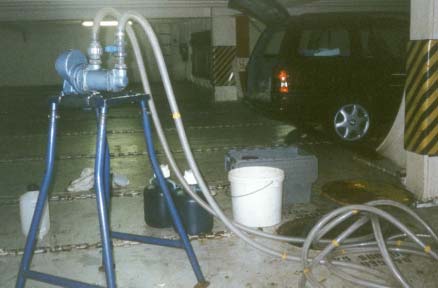
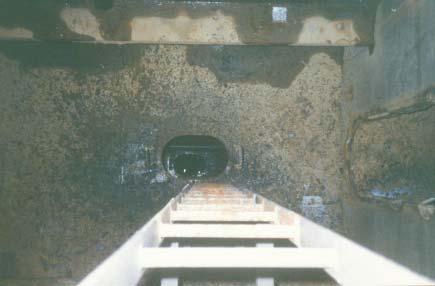
1st International Workshop on Guidelines and Standards for Ballast Water Sampling: Rio de Janeiro, Brazil, 7-11 April 2003
Figure 1a. Sampling equipment being used to collect sediment slurry (arrow) via ballast tank hatch from a
double bottom tank of a car transporter.
Figure 1b. Complex internal architecture of an empty wing tank.
60
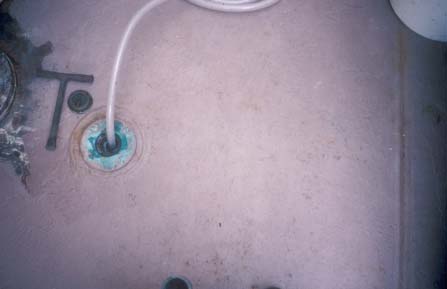
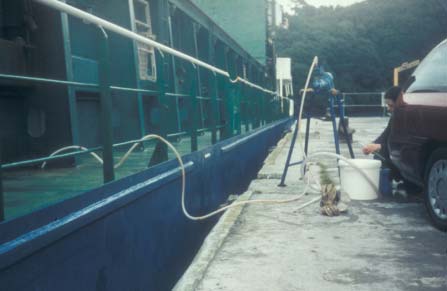
Hamer: Sampling ballast sediments and other challenges
Figure 1c & d. Reinforced hose pushed down a sounding pipe for collection of sediment slurry.
61
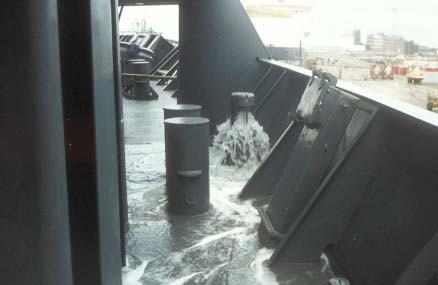
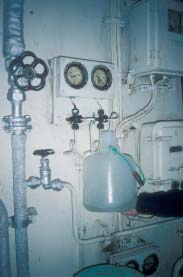
1st International Workshop on Guidelines and Standards for Ballast Water Sampling: Rio de Janeiro, Brazil, 7-11 April 2003
Figure 1e. Ballast tank being overflowed to allow collection of samples.
Figure 1f. Collection of samples from bleed valve in a ship's engine room.
62
Shipboard sampling approaches and recommendations
by the Great Lakes Ballast Technology Demonstration
Project
Allegra Cangelosi, Principal Investigator, Northeast-Midwest Institute, Washington DC
Nicole Mays, Northeast-Midwest Institute, Washington DC
Donald Reid, Consultant, Nepean, Ontario, Canada
Ivor Knight, James Madison University, Virginia
Abstract
There are many different types of biological studies on ballast water that could take place on board
ships. The best sampling approach depends on specific experimental objectives, combined with cost
considerations. This paper details the biological sampling objectives for shipboard studies conducted
by the Great Lakes Ballast Technology Project, the sampling methods developed to support them, and
the considerations behind these choices. The paper also discusses strengths and limitations of in-line
versus in-ballast tank sampling approaches, and their applicability to testing for purposes of ballast
water treatment approval and compliance. The paper concludes that in-line sampling offers a simple,
thorough, repeatable and accurate option for treatment evaluation and compliance testing, while in-
tank sampling may be necessary for more basic biological research.
Introduction
The Great Lakes Ballast Technology Demonstration Project was established in 1996 to accelerate
development of practical and effective ballast treatment technologies for ships. It is supported by
grants from the Great Lakes Protection Fund and several state and federal agencies.
The Project is co-led by the Northeast-Midwest Institute; a Washington DC based environmental and
economic think-tank, and the Lake Carriers' Association, the trade association representing U.S.-Flag
vessel operators on the Great Lakes. Together, these two organizations have forged a productive
partnership between natural resource protection and maritime industry interests to undertake problem
solving work with mutual credibility.
Throughout its seven year history, the Project has carried out extensive and innovative ship-based and
barge-based evaluations of flow-through treatment systems; pathogen surveys of vessels entering the
Great Lakes; full-scale engineering design studies; an International Ballast Technology Investment
Fair; and an economic analysis of global ballast treatment industry prospects. The centerpiece and
ongoing emphasis of the Project are its biological and operational field trials at high flow of
commercially available ballast treatment equipment.
The biological and operational protocols, including sampling methods developed for the Project's
field trials are the result of careful analysis of experimental objectives and the best approaches to
achieving them. Here we explore the relationship between sampling approach and shipboard research
objectives, describe the Project's experimental objectives and shipboard sampling methods, and
identify lessons learnt. The paper concludes with strengths and limitations of sampling methods
available, and recommendations.
63
1st International Workshop on Guidelines and Standards for Ballast Water Sampling: Rio de Janeiro, Brazil, 7-11 April 2003
Relationship between sampling approach and shipboard research objectives
There are many different types of biological studies on ballast water that could take place on board
ships. Examples of experimental objectives for shipboard biological studies of ballast water include:
· Surveying ballast tank biota (What types of organisms live and survive in ballast tanks?)
· Tracking behaviour and fate of ballast tank biota and changes in community composition over
time (What are the community dynamics of organisms over time in the ballast tank? What is
the fate of ballast tank biota after discharge?)
· Benchmarking treatment performance for purposes of research and development (How well
does a given treatment inactivate specific types of organisms? Is it better than another type of
treatment?)
· Evaluating treatment system function for approval against a regulatory standard (Is the
treatment compliant?)
· Evaluating treatment function for "spot checks" (Is an approved treatment system functioning
as expected?)
Given any one of these objectives, one must evaluate carefully a variety of criteria that may influence
decisions on the best sampling approach to use. These include:
· Need for qualitative comprehensiveness (e.g., in surveys of ballast tank biota, studies
of behaviour and fate of ballast tank biota)
· Degree of focus on biological characteristics of discharge rather than ballast tank
contents (e.g., in system approval, spot checks)
· Need for quantitativeness (e.g., in comparisons against a standard, evaluation of
treatment effectiveness in general, or comparisons between two treatments)
· Need for temporal or spatial distribution information during a voyage (e.g., in
measuring changes in community composition)
· Need for repeatability across voyages and or ships (e.g. determining if the treatment is
as effective on an oil tanker as a bulk cargo carrier, from one use to the next, from
one time-period to the next, or from one set of source water conditions to the next)
The best sampling approach for a given experiment depends upon the research objective. Table 1
illustrates the relationship between biological objectives and sampling considerations.
Table 1. Relationship between biological objectives (vertical column) and sampling considerations
(horizontal column)
Taxonomic
Focus on
comprehensive-
biological
Quantitativenes
Time-course
Readily
ness
characteristics
s
information
Repeatable
(qualitativeness)
of discharge
Surveying ballast tank
bb
0
b
bb
b
biota
Behaviour and fate of
ballast tank biota/changes
bb
0
b
bb
b
in community composition
Benchmarking treatment
b
bb
bb
b
bb
performance
Evaluating treatment
system function for
b
bb
bb
0
bb
approval against a
regulatory standard
Evaluating treatment
0
bb
bb
0
bb
function for "spot checks"
bb= High priority
b= Medium priority
0= Low priority
64
Cangelosi: Shipboard sampling approaches and recommendations by the Great Lakes Ballast Technology Demonstration Project
As Table 1 illustrates, surveys of ballast tank biota and investigations of changes in community
composition over a voyage require similar priority sampling considerations, namely taxonomic
comprehensiveness and time-course information. Meanwhile, studies to benchmark treatment
performance, evaluate treatment function against a standard, or "spot check" treatment function
require a distinct set of sampling priorities, namely direct characterization of discharge quality,
quantitativeness, and repeatability.
Project field trial objectives and biological sampling considerations
The Project's treatment trials have been quantitative studies comparing treatment systems (or levels of
treatment) against each other, and assessing overall effectiveness in terms of a range of taxonomic
groups and from one voyage to the next. Biological questions of key concern to this sort of research
are:
· How effective is the equipment at removing or inactivating zooplankton, phytoplankton,
bacteria and viruses from the intake and discharge stream?
· To what extent do organisms regrow, die-off and/or interact with each other following
treatment, ballast retention and/or discharge?
· Is treatment effectiveness influenced by variation in physical, chemical, or biological
characteristics of source water, and/or attributes of the ship environment?
· How predictive are simulated test scenarios of shipboard treatment outcomes (e.g. for type
approval)?
For this work, the Project team therefore sought sampling methods that meet the following criteria:
· Replicable access to sample point (in a given vessel or across vessels)
· Adequate sample volumes relative to total volume of ballast water to achieve statistical power
· Integration of entire ballast tank contents/discharge characteristics
· Applicability to microbial as well as plankton taxa
The Project has also taken into account resource considerations in terms of the Project itself, but also
in terms of others who may wish to repeat the procedure. In making decisions on the amount to invest
in a given sampling scenario, the Project considered "amortization" periods, i.e., the extent to which a
given sampling infrastructure would be exploited over time. Specifically, where a series of tests
comparing a range of treatments is planned for a single vessel, more funds may be efficiently invested
in hardware to enhance sample quality than in instances in which a single treatment performance test
is to be undertaken on a single ship or tested comparatively across a set of ships.
Specific resource considerations include requirements in terms of:
· Time (e.g., time required for opening of hatches, setting up sample equipment or preparation
of ballast tanks for entry)
· Personnel (e.g., number of individuals required to collect a given set of samples safely)
· Space (e.g., footprint for any sample collection tubs)
· Safety (e.g., concerns over entry into hazardous spaces, sampling during cargo
loading/unloading)
· Installation (e.g., sample ports, net trolleys or enhanced sounding tube access)
· Equipment (e.g., plankton nets, catchment tubs, hoses, plankton pumps)
65
1st International Workshop on Guidelines and Standards for Ballast Water Sampling: Rio de Janeiro, Brazil, 7-11 April 2003
Quantitative sampling approaches used in project ship-based tests
The Project has taken two contrasting approaches to biological sampling in each of two shipboard
studies. For detailed information about these studies, please see appendix, Cangelosi (2002), and
Cangelosi et al (in prep).
The first sampling approach was designed for extensive comparative analysis of various levels of
filtration on a single bulk cargo carrier, the MV Algonorth. This quantitative study involved over 17
replications of the experiment on a single vessel, and therefore merited an installation-intensive
approach. Plankton net trolleys mounted on transects in matched wing tanks, a sampling platform for
the technician to handle the nets, and raised, spring-loaded access hatches to manholes, were all
installed. The intent behind these alterations was to facilitate sampling and maximize the
comprehensiveness and replicability in the samples over a long series of experimental trials. This
approach cost almost $10,000. When averaged over the total number of trials, it cost roughly $600 per
trial. It should be noted, however, that this infrastructure remains intact and available for any further
testing. (Another example of an installation intensive approach to sampling is currently underway
onboard the ST Tonsina - see Cooper et al (2002). Installation costs of sampling infrastructure
onboard this vessel far exceeds the MV Algonorth.)
The second approach was designed for a once-only study on a ship (the MV Regal Princess) with
ballast tanks that could not be accessed directly. In this experiment, one of the Project's objectives
was to develop a stream-lined but effective approach to shipboard sampling which would be readily
repeatable on other vessels. In this case, alterations were limited to the installation of two 1.3 cm
sample ports in the ballast piping system, temporary 151 L cone-bottom catchment tubs, and
temporary nalgene tubing to connect the two. This assembly cost only $1,000, could be used
repeatedly, and was easily removed and available for refit to other vessels. As a result, this system
would allow comparative testing across vessels as well as among different treatments on a given
vessel. The Project will utilize the same approach in upcoming tests of a UV treatment system on a
chemical tanker, the MT Aspiration.
"Low tech" ballast tank sampling (not supported by installed sampling infrastructure) was rejected as
an option for quantitative tests by the Project as too qualitative, uneven, unsafe and disruptive of ship
operations.
Description of ballast tank sampling approach - MV Algonorth
The Project undertook comprehensive evaluations of a deck-mounted Automatic Back-Flush Screen
Filter in 1997 at a flow rate of 340 m3/hr onboard an operating commercial bulk cargo vessel (MV
Algonorth). Experiments took place at various locations in the Great Lakes/St. Lawrence Seaway.
Treatments comprised a deck mounted 250 µm pre-filter combined with 25, 50, 100 or 150 µm
polishing filter. A deck-mounted diesel pump drew water either from the ship's ballast tanks or the
sea. Trials compared water in matched control and treatment upper wing tanks. The tanks were
equipped with cable trolleys for identical plankton net transects (running from the bottom to top of the
tank along the long dimension). Figure 1 provides a functional representation of the experimental
platform used in the experiment. Figure 2 provides a functional representation of the plankton net
trolleys mounted on transects and the sampling platform within the confines of the ballast tank.
66
Cangelosi: Shipboard sampling approaches and recommendations by the Great Lakes Ballast Technology Demonstration Project
To control
a n d t e s t
FILTER 1
FILTER 2
ballast tanks
and discharge
Valves
PUMP
DIESEL
Water from sea
suction or # 4 WT
Figure 1. Functional representation of the experimental platform, including pump, sample points, filter units, and
piping system in relation to ballast tanks for MV Algonorth ballast treatment tests
Ballast Tank
Platform
Waterline
Plankton net
Pulley system
Ladder
Figure 2. Functional representation of plankton net, trolley, pulley system and sampling platform in the ballast
tank of the MV Algonorth
Description of in-line sampling approach - MV Regal Princess
The second type of quantitative sampling approach utilized by the Project was in-line sampling
through sample ports of ballast intake and discharge. The experiments took place in the summer of
2000, and evaluated cyclonic separation and UV as a treatment combination in an operating passenger
vessel (the MV Regal Princess). The ballast flow rate was 200 m3/hr. Sample ports (1.3 cm internal
diameter) were installed in the ballast piping system within the engine room of the vessel at the intake
and discharge of the combined treatment system. Nalgene tubing channeled sample water from the
sample ports to three replicate 151 L catchment tubs, also positioned in the ship's engine room.
Sample water was collected throughout the entire duration of the filling and emptying of matched
treatment and control ballast tanks through three consecutive fillings of the catchment tubs. Whole
water phytoplankton and bacteria samples were drawn directly from the catchment tubs. Zooplankton
samples were collected by draining the entire contents of the catchment tubs through plankton nets.
Drained water flowed into the ship's bilges. Figure 3 provides a functional representation of the
67
1st International Workshop on Guidelines and Standards for Ballast Water Sampling: Rio de Janeiro, Brazil, 7-11 April 2003
experimental platform and sampling hardware used in the experiment in relation to the ships' ballast
system.
Test Tank
Control Tank
Catchment tubs
UV system
Cyclonic separator
Nalgene tubing
Sampling ports
Figure 3. Functional representation of sample ports, catchment tubs, ballast tanks (control and treatment) and
treatment systems (UV and cyclonic separation) for MV Regal Princess ballast treatment tests
Comparison between quantitative sampling approaches
We cannot empirically compare the two quantitative sampling approaches based on the Project studies
to date (which evaluated different treatment systems on different vessels). Accordingly, below we
describe the shared and unique qualities of each approach, and make recommendations based on our
experience. Ultimately, however, a direct comparison of quantitative sampling approaches --
especially these two -- on a single vessel would be of great interest.
Shared Attributes
Perhaps the most important test of a sampling method is whether it is capable of generating
statistically powerful data. Fortunately, both the installation-intensive ballast tank sampling, and
in-line sampling approaches yielded statistically significant results. They also shared many other
positive features. For example, both approaches are:
- Applicable to a wide range of taxa (though both may have quantitative biases relative to
the actual suite of ballast tank biota)
- Replicable across source water sites
- Capable of sampling a large volume of water
- Capable of sampling identical volumes of water in each replicate and trial
- Reusable sampling infrastructure
- Capable of sampling the entire contents of the ballast tank (for in-tank, through taking
transect tows in ballast tank; for in-line, through tapping entire discharge stream)
- Vulnerable to sampling bias (for in-tank sampling, organisms can avoid capture by
plankton nets or pumps; for in-line sampling, some particles may not be captured by pitot
tubes as readily as others)
Unique Attributes
Each approach also has unique strengths and limitations. These unique attributes form the basis
for judgment as to the relative merits of the two approaches for quantitative studies on ships. The
Project has concluded that these attributes argue strongly for further development of the in-line
68
Cangelosi: Shipboard sampling approaches and recommendations by the Great Lakes Ballast Technology Demonstration Project
sampling approach for treatment evaluations and spot checks. In-tank sampling may prove best
for research into spatial and temporal dynamics of ballast biota during voyages.
Installation-intensive Ballast Tank Sampling
Strengths (for research on spatial/temporal dynamics during a voyage)
- Organisms in the ballast tank unharmed by passage through a sample port
- Time course and spatially diverse studies of the ballast tank biota possible
Limitations (for treatment evaluations/spot checks)
- Samples reflect midpoint of ballast/deballast sequence (rather than point of discharge
conditions)
- Expensive to install hardware infrastructure, such that cannot be readily repeated on
another vessel
- Technicians "semi-submerged", and exposed to weather and cargo operations
- Technicians not allowed into tanks during certain sea/ship conditions
- Substantial time required to collect complete set of samples (requires two net sizes)
leading to longer period between sampling and live analysis.
- Immediate "before and after" samples not possible
In-line Sampling
Strengths (for treatment evaluations and spot checks)
- Sampling reflects organism condition, concentration and composition upon discharge to
the receiving system
- Inexpensive and unobtrusive installation can be readily repeated on other vessels
- Technician gets wet but not "semi-submerged", not exposed to weather or cargo loading
conditions
- Technician can gain routine access to engine room regardless of ship/weather conditions
- Sampling of ballast stream possible directly before and after treatment
- Organisms cannot avoid sampling equipment
- Infrastructure intact, mobile and available for further tests
- Same infrastructure can be readily installed in other ships to allow comparisons across
vessels
Limitations (for research on spatial/temporal dynamics during a voyage)
- Possible greater wear and tear of organisms due to passage through sample port
- Sampling must take place at time of intake and discharge (limiting time-course studies
during a voyage)
- Pitot must be designed to minimize bias in capture of entrained particles
- Spatial information of biota within ballast tank is limited
Qualitative sampling approach for ship-based study of pathogens
The Project has conducted only one qualitative study on ballast tank biota, and therefore cannot offer
experience in support of comparative analysis of approaches. However, for the benefit of those
seeking to make such comparisons, we offer the following description of the novel sampling approach
the Project developed for this survey.
69
1st International Workshop on Guidelines and Standards for Ballast Water Sampling: Rio de Janeiro, Brazil, 7-11 April 2003
The Project designed the sampling approach to support a qualitative survey for the presence of human
pathogens in ballast residuals in transoceanic vessels entering the Great Lakes (Knight et al in prep).
Sampling took place during the fall of 1997 and summer and spring of 1998. Twenty-eight vessels
which entered the Great Lakes reporting "no ballast on board" to the U.S. Coast Guard were sampled.
Sampling was carried out at two locations in the Saint Lawrence Seaway: Montreal, Quebec, Canada
and Massena, New York, USA.
The primary constraints on sampling were 1) ship sampling was opportunistic in nature such that pre-
installation of sampling infrastructure (such as sample ports) was not possible; and 2) sampling had to
take place en-route between locks so direct access to the ballast tanks was not possible. The best
solution was to design a device which could sample the tank residuals through a standing aperture like
the sounding tube. For effective microbiological sampling from sounding tubes, the equipment had to
have the following characteristics:
· Maximum diameter of 4 cm to fit into all sounding tubes which might be encountered
· Capable of retrieving samples from up to 20 m below the deck surface, and if a pumping
device is used, capable of pumping water vertically 20 m
· Capable of obtaining sample volumes of between 10 and 100 L within 1 hour
· Able to be disinfected between uses
· Easily carried onto vessels during boarding at locks
· Operated by one or two personnel
In collaboration with Geotech Inc., Denver, CO, Project researchers designed a manually operated
inertial pump which met all 5 criteria. The device consisted of various lengths of 1.6 cm diameter
rigid polyethylene tubing with a 2.5 cm diameter, 7.2 cm long, cylindrical stainless steel ball-type
check valve attached to one end. The device was tested on land using a full-scale model ballast tank
sounding tube, and tests predicted the device capable of pumping water 19.2 m vertically with only 15
cm of water in the ballast tank.
Preliminary shipboard tests results were congruent with land-based tests. Additional preliminary tests
were conducted to compare deck sampling procedures against samples obtained from inside the
ballast tank and to compare numbers of bacteria in samples retrieved via ballast tank sounding tubes
with those found in samples collected directly from within the ballast tank. Both tests produced
comparative microbiological data indicating that the sampling technology was developed sufficiently
for deployment in the pathogens survey.
High volume samples (30 - 40 L) were filtered through a series of four
sterile filters: 200 µm plankton mesh, 64 µm plankton mesh, spiral wound
protozoan filter, and positively-charged viral filter. Plankton mesh
retentates were split and frozen or fixed for analysis of plankton-associated
Vibro cholerae. Spiral wound protozoan filters were stored at 4 ºC and
shipped within 48 hours to the University of Arizona (UAZ) for detection
of Cryptosporidium and Giardia. Elution of viruses from the viral filter
were carried out in the field, with frozen eluates shipped to UAZ for
detection of Hepatitis A and members of the enterovirus group.
Low volume samples (1 - 8 L) were split into subsamples, packaged and
shipped on ice for overnight delivery to James Madison University and the
University of Maryland (UMD) for live analysis of bacterial pathogens and
indicator organisms. Two additional subsamples were pumped through
high-capacity 0.22 µm pore filters for extraction of total nucleic acids
Photo: Sounding tube
sampling device
(DNA and RNA).
70
Cangelosi: Shipboard sampling approaches and recommendations by the Great Lakes Ballast Technology Demonstration Project
Another subsample was also pumped through a high-capacity 0.22 µm pore filter to concentrate
bacteria for direct viable counting. Initial preparation of this subsample was conducted in the field
with fixed samples shipped to UMD for detection of V. cholerae and pathogenic E. coli. Ten mL of
each sample were fixed with formaldehyde for determination of total bacteria using acridine orange
direct counting (UMD).
In contrast to the Project's quantitative ballast tank sampling and in-line sampling approaches, this
qualitative survey of pathogens is an equipment-intensive ballast tank sampling approach. As with the
other two approaches, it has strengths and limitations.
Strengths of this sounding tube sampling approach include:
· Access through sounding tubes
· Sampling of ballast tank residuals
· Can be used across sites, source water conditions, and vessels
· Equipment available for further tests
Limitations of this sounding tube sampling approach include:
· Small percentage of tank volume sampled
· Custom sampling approach cannot be easily replicated without use of same equipment
· Not applicable to plankton
· Could be sampling residual water in sounding pipe
Summary and recommendations
Two fundamental approaches to on-board sampling of ballast water biota are 1) ballast tank sampling
(directly sampling water in the ballast tank through a hatch or sounding tube using a plankton pump,
net tow, check valve or grab sampler), and 2) in-line sampling (tapping the intake/discharge lines of
the ballast system through a sample port). Each can be "low tech" or "high tech" and each has
strengths and limitations.
Direct sampling of ballast tank contents offers the opportunity to apply several types of sampling
methods, including plankton nets and direct grab samples of ballast sediments. It also allows repeated
sampling of the water within a tank over the course of a voyage to detect and determine causes of
changes in ballast tank biota. These strengths lend themselves to detailed studies of biological
processes in the ballast water over the course of a voyage, and surveys of ballast tank biota.
Direct sampling of ballast tanks has limitations, however, for quantitative studies such as treatment
evaluations. Access to tanks for such sampling is often uneven, unsafe, and crew-time intensive. As a
result, sampling often must be opportunistic rather than adhering to a strict experimental regime. It is
also very difficult to achieve spatially comprehensive samples using direct tank approaches without
expensive installation of sampling infrastructure. Even if such installation can be invested in a given
test, such infrastructure requirements will hamper the replicability of the experiment on another ship.
Most importantly, in-tank sampling approaches are not a good fit for treatment evaluations because
the ship's ballast pump and piping can affect ballast biota between the ballast tank and discharge. In
addition, some treatment systems may be activated on intake and/or discharge. For these studies, the
composition and condition of ballast-entrained biota at the point of discharge is most important.
In-line sampling, on the other hand, may not be sufficient for in depth qualitative research. It cannot
provide information on the specific part of the ballast tank environment that a given organism may
inhabit during a voyage, only the fact that it may occur in the ballast stream at a certain time in the
71
1st International Workshop on Guidelines and Standards for Ballast Water Sampling: Rio de Janeiro, Brazil, 7-11 April 2003
discharge process. If there are organisms or life stages that never leave the ballast tank, in line
sampling will not detect them.
In-line sampling is, however, readily repeatable from one ship to the next or one trial to the next on a
given ship. If it is undertaken continuously or periodically throughout the filling and emptying of the
ballast tank, samples over time will capture any stratification that may exist in entrained organisms in
the ballast stream from the top, middle and bottom of the ballast tank.
Based on the quantitative experiments the Project has undertaken, the criteria influencing decisions on
sampling approaches, and resource considerations, we believe that in-line sampling is a more
promising approach than direct ballast tank sampling -- even that involving expensive installations of
sampling infrastructure -- for ballast treatment evaluations. This approach is particularly compelling
for experiments involving benchmarking of treatment performance, evaluation of treatment function
against a standard, and evaluation of treatment function for "spot checks". Though it is not possible to
directly sample ballast tank residuals in this manner, it can be argued that these residuals are only
relevant to treatment evaluations if they produce a signal in the discharge entering a receiving system.
In theory, in-line sampling should be equally applicable to studies involving ballast water exchange as
ballast treatment, though this has never been tested. To apply in-line sampling to a BWE study, one
would utilize the same analytical methods as are used in studies involving direct ballast tank samples.
The numbers and types of organisms present in the near coastal source water (sampled through in-line
sample ports upon ballast intake) would be evaluated in in-line samples of ballast discharge with and
without exchange. Again, if the near coastal organisms are less concentrated or less viable in the
discharge than in the ballast tank, the approach would yield more informative results (i.e., relevant to
impacts on the receiving system) than direct tank sampling. Moreover, while direct ballast tank
sampling is more suitable for qualitative surveys of ballast tank biota and changes in community
composition within a given tank over time, we believe in-line sampling also should be undertaken in
these experiments if the condition and composition of the ballast tank biota that are ultimately
discharged from the ship into the receiving system are relevant.
From an efficiency standpoint, the installation of sample ports for in-line tests is consistent with the
need for on-going monitoring and spot-checks by researchers and regulatory agencies. At a very low
investment entire fleets could install similar sample ports allowing agency officials access to rapid,
representative and comparable samples of ballast intake and discharge. These sample ports can also be
useful in comprehensive pathogen surveys of visiting ships. Finally, in-line sampling is easily
emulated in shore-based evaluations of treatments, allowing for greater comparability between shore-
based and shipboard studies.
As with all sampling approaches in developmental stages, many questions need to be answered before
we can wholeheartedly accept or reject a given approach. In the case of in-line sampling, additional
research questions include:
· What is the nature of in-line sampling biases, if they exist, and how might they differ from
biases associated with in-tank sampling?
· How can biases be minimized?
· If biases must exist, do they interfere with meeting experimental objectives?
The Project will be continuing to refine and trial the in-line sampling approach for ballast treatment
evaluations and spot-checks in upcoming field trials of a UV treatment system onboard a chemical
tanker, the MT Aspiration. Biological and operational effectiveness testing onboard this vessel will
begin mid-2003. If possible, the Project would like to explore using this approach to compare the
effects of BWE and treatment on the vessel. In the meantime, the Project highly recommends careful
comparative analysis of the potential benefits of in-line quantitative sampling approaches prior to any
recommendation for the adoption of a standard international shipboard sampling approach for
treatment evaluation involving direct access to ballast tanks.
72
Cangelosi: Shipboard sampling approaches and recommendations by the Great Lakes Ballast Technology Demonstration Project
In conclusion, in-line sampling is an important option for quantitative treatment evaluations, and
compliance testing because it offers a simple and replicable approach to sampling ballast water that
can be consistent across ships and voyages. Such sampling also allows research to focus on the
discharge itself, and can take account of any heterogeneity within the ballast tank by making in-line
sampling continuous throughout the filling or emptying of the tank.
References
Cangelosi, A. 2002. Filtration as a Ballast Water Treatment Measure. In: Invasive Aquatic Species of
Europe. Distribution, Impacts and Management (E Leppakoski, S Gollasch & S Olenin, eds), Kluwer
Academic Publishers, Dordrecht, Boston, London
Cangelosi, A., Mays, N.L., Knight, I.T., Reid, D.M., Balcer, M., Blatchley, E.R. III & Swan, C. (in
prep) Preventing Marine Bioinvasions: Changes in Biological Characteristics of a Ship's Ballast
Water with and without Treatment.
Cooper, W.J., Cordwell, J.R., Dethloft, G.M., Dinnel, P.A., Gensemer, R.W., Herwig, R.P., House,
M.L., Kopp, J.A., Mueller, R.A., Perrins, J.C., Ruiz, G.M., Sonnevil, G.M., Stubblefield, W.A. &
VanderWende, E. 2002. Ozone, Seawater and Aquatic Nonindigenous Species: Testing a Full-Scale
Ozone Ballast Water Treatment System on an American Oil Tanker. University of North Carolina,
Wilmington
Knight, I.T., Wells, C.S., Wiggins, B., Russell, H., Reynolds, K.A. & Huq, A. (in prep) Detection and
Enumeration of Fecal Indicators and Pathogens in the Ballast Water of Transoceanic Cargo Vessels
Entering the Great Lakes.
73
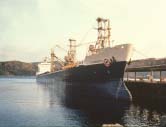
1st International Workshop on Guidelines and Standards for Ballast Water Sampling: Rio de Janeiro, Brazil, 7-11 April 2003
Appendix:
Details of project sampling trials and approaches
Ship Trial 1: MV Algonorth
The Project undertook the first comprehensive evaluations of
filtration as a possible ballast treatment system in 1997
onboard an operating commercial bulk cargo vessel (M V
Algonorth) at various locations in the Great Lakes/St.
Lawrence Seaway System.
For the purposes of this study, the ship's port and starboard #3
wing tanks were physically divided by a horizontal bulkhead
into lower and upper wing tanks. The matched #3 port and
starboard 220 m3 upper wing tanks were used as the
experimental tanks. Duplicate manual trolley systems were
installed in each of the experimental tanks to allow the
Photo: MV Algonorth
sampling of water by diagonal plankton net trawls. Steel platforms, or sampling stages, were also
installed below the access hatches for the operator to stand or kneel on while running the trolley or
collecting the nets.
Water was pumped at a nominal 340 m3/hour by a diesel-driven self-priming centrifugal pump
mounted on deck above the starboard #3 upper wing tank. An extensive piping system, 20 cm
diameter pump suction piping and 15 cm diameter pump discharge piping, was installed to allow for
experiments to be conducted independently from most vessel operations, and raised, spring-loaded
access hatches were installed over the existing manholes to allow easy entry to the experimental
tanks. Experimental ballast water was drawn from either the starboard #4 wing tank (1,000 m3) if
vessel operations allowed the filling of this tank, or directly from a dedicated sea suction.
The matched control and test tanks were filled during vessel transits specifically for experimental
purposes. Control water was pumped directly to the control tank, bypassing the treatment system,
while test water was routed through the treatment equipment into the test tank. The treatment system
tested was an Automatic Backwash Screen Filter (ABSF), which was installed in a purpose-built
container mounted on deck above the port #3 upper wing tank. The ABSF system consisted of two
filter units in series; a pre-filter unit equipped with a 250 µm mesh filter screen followed by a
polishing unit equipped with one of a series of smaller interchangeable polishing filter screens.
Four different polishing filter screen mesh sizes were tested for their effectiveness at reducing
zooplankton and phytoplankton abundance and diversity in ballast water; 25 µm, 50 µm, 100 µm and
150 µm. In order to avoid sample distortions resulting from test tank contamination by previous tests,
screen mesh sizes were tested in cycles from smallest to largest, and the tanks were cleaned with high
pressure water before the ascending order of tests was repeated
Before each test, both control and test tanks were filled to one-third capacity in sequence and then
topped up to two-thirds capacity. This allowed room (ullage) in the upper part of the tank for the
sampling operator. This filling scenario was also especially important to help assure homogeneity
between the test and control source when the tanks were being filled from the sea suction, and the ship
was moving in transit during ballasting.
When the #4 starboard tank was used as a source reservoir, the flow was diverted over the side of the
vessel for at least 5 minutes prior to filling the test and control tanks to eliminate settled materials
which could be picked up by the initial flow. The time required to fill the two tanks was
approximately 1.5 hours.
74
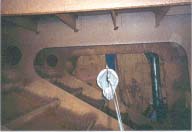
Cangelosi: Shipboard sampling approaches and recommendations by the Great Lakes Ballast Technology Demonstration Project
The diagonal plankton net trawls were hand-drawn over 10 m at a rate of approximately 0.5 m/sec.
Each 0.3 m diameter plankton net trawl filtered approximately 0.64 m3 of water. Sets of 4 replicate
samples were collected first with 80 µm mesh nets, followed by 4 replicate samples collected with 20
µm mesh nets. Three of the replicates from each set were preserved in 10 % Lugol's solution; the
remaining replicate was used for live analysis.
The preserved plankton samples were sorted and counted
at a shoreside laboratory. Sizing involved measuring total
body length with an ocular micrometer. Live analyses
were conducted in the shipboard laboratory, located in
what had been the ship's conference room and owner's
quarters. Live samples were observed through a Leica
dissecting microscope, and data recorded on prepared
forms.
Plankton tows were conducted at least 5 minutes apart to
allow the water column to return to relative equilibrium
Photo: Diagonal plankton net trawl
following the disturbance created by each net tow. It also
took approximately 5 minutes to carry out a tow, remove
the net from the trolley, rinse the net, remove the cod end, put on a new cod end, put the net back on
the trolley, and run out the trolley for the next tow. The smaller, 20 µm plankton net samples were
collected after the 80 µm net samples, since the smaller mesh nets produced a stronger wave front that
could have elicited avoidance response from the more mobile plankton. If the larger mesh nets were
used last, the numbers of those more active species could have been reduced or absent from the net
path.
Seventeen trials were undertaken in total, of which 13 yielded usable results, including 4 tests of the
25 µm screen; 3 tests of the 50 µm screen; 4 tests of the 100 µm screen; and 2 tests of the 150 µm
screen.
Physical/chemical source water information was collected regularly using Hydrolab's Datasonde 4.
Data included measurements of turbidity, salinity, temperature, pH, and dissolved oxygen.
Measurements were collected from ballast tanks and sometimes, overside, but only when the vessel
was in port, or in a lock.
Ship Trial 2: MV Regal Princess
In the summer of 2000, the Project conducted
biological experiments evaluating cyclonic
separation and UV as a possible ballast treatment
combination at full-scale. The evaluation took
place onboard the MV Regal Princess, a
commercial cruise liner, which operated between
Vancouver, BC and various locations within
Alaska during the period of testing.
The treatment combination was installed in the
engine room of the ship. The cyclonic separator
was designed to remove particles based on specific
gravity while the UV chamber provided secondary
Photo: MV Regal Princess
biocidal treatment.
This experiment offered a unique opportunity to measure the influence of the shipboard environment
on treatment performance. For each taxonomic grouping (zooplankton, phytoplankton and bacteria),
the MV Regal Princess tests comprised:
75
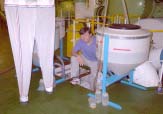
1st International Workshop on Guidelines and Standards for Ballast Water Sampling: Rio de Janeiro, Brazil, 7-11 April 2003
5. In-line tests, in which the biological characteristics of the ballast stream were compared
immediately pre- and post-treatment
6. Short-term exposure tests, which measured the effects of treatment versus no treatment on
water pumped into and immediately removed from the ballast tank (to detect effects of
physical exposure to the ballast system)
7. Long-term exposure tests, in which the effects of treatment versus no treatment on water held
in the ballast tank for 18-24 hours was measured (to detect the cumulative effects of retention
time in a ballast tank on treatment effectiveness)
For the purposes of this study, matched #10 port and starboard 90.3 m3 ballast tanks were utilized as
control and test tanks. These tanks were connected to a single 200 mm suction/discharge main line via
branch lines controlled by valves. An electrically powered, vertical, self-priming centrifugal ballast
pump operating at approximately 200 m3/hour was used to fill and empty the ballast tanks. Actual
ballast pump rate varied by 10 to 15 percent from the nominal pump rate, with the ballasting flow rate
found to be consistently higher than the deballasting rate.
The ship's overall ballast infrastructure also handled other ship waste water, including connections to
two laundry water tanks, and was also capable of taking suction from the bilge. This resulted in
overlapping between the ballast water, grey water and bilge water operations, occasionally resulting in
some mixing of the various waste waters.
Both control and test ballast water was pumped through the cyclonic separation and UV treatment
combination during ballasting and deballasting. The system was inactive while control water was
being pumped. This experimental design allowed for differences between control and test to be
attributable to biological factors of the treatment combination rather than a physical component of the
ballast distribution system. All ballast tank exposure tests involved a dual pass through the treatment
system.
Sample ports of 1.3 cm diameter were installed in the system piping upstream and downstream of the
combined treatment system to facilitate in-line sampling of water en-route to and from the control and
test ballast tanks. Samples for zooplankton, phytoplankton and bacterial analysis could be drawn
upstream and/or downstream of the treatment combination during ballasting or deballasting operations
through these sample ports. These sample ports did not interfere with the collection of adequate
concentrations of live zooplankton samples.
The sample ports were fitted with 1.4 cm internal diameter
nalgene tubing to transfer sample water to three 227 L
polyethylene cone bottom catchment tubs that were installed in
the ship's engine room near the treatment combination. These
catchment tubs were gravity-drained through 5.1 cm bottom
valves and hoses. Whole water phytoplankton and bacteria
samples were collected from the catchment tubs during filling
using 1 L nalgene bottles. Zooplankton samples were collected
by filtering the catchment tub's draining contents through 30
cm diameter 20 µm mesh plankton nets held in cushioning 19
Photo: Catchment tubs and nets
L bucket reservoirs.
Each in-line test consisted of three pre-treatment (control) and three post-treatment (test) replicate
paired samples collected sequentially via the three catchment tubs. A total of three independent in-line
trials were carried out for zooplankton; four for phytoplankton and five for bacteria.
Short- and long-term ballast tank exposure tests differed among taxonomic groups. Zooplankton
analysis involved collection of three replicate pre-treatment samples on entrance to the ballast tank,
and following ballast tank exposure, three replicate pre-treatment and three replicate post-treatment
samples on exit. In contrast to in-line tests, the catchment tubs were filled to 151 L for zooplankton
76
Cangelosi: Shipboard sampling approaches and recommendations by the Great Lakes Ballast Technology Demonstration Project
analysis. Phytoplankton were only analyzed during long-term exposure tests, with three replicate pre-
treatment samples collected inbound to the ballast tank, and following ballast tank exposure, three
replicate post-treatment samples collected outbound. Bacteria analysis involved the collection of three
replicate pre- and post-treatment samples inbound to the ballast tank, and following ballast tank
exposure, three replicate pre- and post-treatment samples collected outbound. For zooplankton and
phytoplankton, 3 corresponding control samples were taken inbound from the upstream sampling
ports, and three outbound from the matched-pair ballast tank using the downstream sampling port.
When taking bacteria samples, pre-treatment samples taken inbound to the ballast tank were used as
control samples.
A total of three independent trials evaluating short-term exposure to the ballast system were carried
out for both zooplankton and bacteria. Long-term exposure studies involved three independent tests
for zooplankton, phytoplankton and bacteria. A preliminary investigation comparing the viability of
zooplankton in pump versus gravity-fed ballasting operations was also undertaken.
Physical/chemical source water information was collected regularly using Hydrolab's Datasonde 4.
Data included measurements of turbidity, salinity, temperature, pH, and dissolved oxygen.
Measurements were collected from inside the catchment tubs, and directly from the source water
while in port.
77
Summary of the Ballast Discharge Monitoring Device
Workshop: Marrowstone Island, 2002
Allegra Cangelosi, Nicole Mays
Northeast-Midwest Institute, Washington DC
Abstract
Aquatic invasive species are a leading threat to marine biodiversity. Species become invasive when
they are translocated beyond their native ranges to ecosystems which lack adequate limiting factors.
The ballast water of commercial vessels is a primary vector for global distribution of aquatic species.
Both national and international law will in time mandate that ships undertake ballast water
management to prevent organism transfers. Ballast water management could take the form of
operational practices, treatment, or a combination of the two. Experts agree that effective treatments
and management methods are unlikely to emerge without a clear performance standard to guide
research, development and enforcement. Development of a standard has been slow due to many
technical problems, especially how to best express such a standard. The form in which the standard is
expressed will dictate in many ways the best approaches to treatment approval, monitoring and
enforcement. What sorts of analytical capabilities are required for the different types of standards
currently under discussion? Are such tools currently available? If not, how long will it be before they
could be developed, and what resources will be necessary? An international Ballast Discharge
Monitoring Device Workshop was convened to explore the answers to these questions. The meeting
took place at the U.S. Geological Survey's Western Fisheries Research Center's Marrowstone Island
Field Station on the Olympic Peninsula, Washington from August 12th - 16th, 2002. The goal of the
Workshop was to assess existing and emerging analytical tools (technologies and techniques) for
determining biological characteristics of ballast discharge. This assessment was carried out relative
to three contexts ballast water exchange/treatment verification on an on-going basis (i.e., early or
rapid detection of a problem); intensive time-limited treatment evaluation for approval (e.g. type
approval); and in-depth research. Workshop participants identified evaluation tools available in the
near-term for the types of standards currently under discussion, and the tools that could be available
in the near future. In addition, the group identified characteristics of the "ideal" discharge evaluation
system and recommended research objectives that could make the ideal a reality. Workshop findings
will be finalized and made available on the Northeast-Midwest Institute website in June 2003.
Problem statement
Numerous laws and regulations are emerging both nationally and internationally to combat the
escalating economic, environmental and public health problems caused by aquatic invasive species.
Most of the laws target commercial ships as a primary pathway for invasions, and call for ships to
undertake ballast water exchange (BWE) or an equivalent treatment (BWT) to reduce the probability
of ballast-transfers of unwanted organisms. Treatment is considered more promising than BWE in the
long term because BWE is limited in its effectiveness, scope of application and enforceability.
Specifically, BWE is only effective for vessels transiting oceans, raises safety considerations, cannot
be conducted by vessels fully loaded with cargo, and has mixed and unpredictable results in terms of
efficiency and effectiveness.
One might expect, then, that as these laws are under development, BWT would be an attractive
investment opportunity and the subject of intensive research and development activity. But only a
small number of ballast treatment systems have been installed at the full-scale on ships. There is
reluctance within the maritime industry to experiment with treatment methods for a number of
reasons, including the availability of BWE as a fallback, the voluntary nature of current guidelines,
78
Cangelosi: Summary of the Ballast Discharge Monitoring Device Workshop: Marrowstone Island, 2002
and a high initial economic cost. Most of all, development and installation of ballast treatments is
hindered by the lack of a performance standard for treatment. The absence of such a standard drives
away prospective investors in research and development of treatment systems as well as possible host
ships (Northeast-Midwest Institute 2001, Royal Haskoning Report 2001).
Part of the problem slowing standard-setting has been uncertainty over "how clean is clean" in the
ballast water arena. To address this question, researchers are developing a wide array of analytical
methods that help to characterize the nature and condition of biological constituents in ballast water.
Further methods are needed to understand the inoculation thresholds of concern for receiving systems.
But even if the issue of environmental protectiveness is set aside, there is hot debate over the best
approach to expressing any such standard. This debate will persist regardless of whether or not society
agrees on a level of protectiveness. The form in which the standard is expressed will dictate in many
ways the approach to approval of methods, monitoring and enforcement. Accordingly, standard
selection should be informed by the tools available for monitoring, enforcement and evaluation of
systems for approval.
There are currently two fundamental approaches to standard setting under discussion. Some experts
propose the performance standard for ballast water management take the form of a certain percentage
or log reduction in live aquatic organisms relative to intake, at least in the near term. This approach
would require "before and after" measurements, most feasible using a time-limited type-approval
procedure involving known intake and discharge quality, followed by spot-checks for verification.
Meanwhile, others advocate a maximum allowable size for live organisms, or a discharge limit on
organism concentrations of a variety of taxa. This approach would allow for a "discharge permit"
approach to regulation, enforced through direct monitoring of discharge over the useful life of the
equipment, without regard to intake concentrations.
While the process implications for approval and monitoring of the two fundamental types of standards
seem clear, the technical implications have not been thoroughly explored. Each approach implies a
distinct set of analytical capabilities for evaluating organisms in ballast discharge. Do we currently
have the tools to support the desired approaches? How far are we from having them and what will be
necessary to usher in their development?
In all likelihood, there will be more than one standard over time: a near-term "interim" standard
denoting a minimum level of acceptable effectiveness equivalent to ballast water exchange, and a
"final" standard denoting what is required to protect the environment from further harm by invasives
in ballast water for the longer term. These two standards could take the same or different forms.
Whatever the outcome, it is realistic to assume that BWE, and in time BWT, will be enforced in many
locations around the world.
In order for any standard to be effective at stopping the transfer of invasive species, it will need to be
supported by analytical methods to enforce and verify compliance. An even wider array of analytical
tools could have application to broader research goals related to ballast treatment. This report
summarizes an initial exploration of the analytical tools available to characterize biological
characteristics of ballast water discharge and their possible applications to a range of types of ballast
water research.
Workshop purpose
A Ballast Discharge Monitoring Device Workshop was held at the U.S. Geological Survey's Western
Fisheries Research Center's Marrowstone Island Field Station on the Olympic Peninsula, Washington
from August 12th - 16th, 2002 to explore and describe the state-of-the-art in methods suitable for
analyzing ballast water biota in support of effective ballast management. Participants included
scientists and subject experts from the U.S., Brazil, New Zealand, Singapore and the United
79
1st International Workshop on Guidelines and Standards for Ballast Water Sampling: Rio de Janeiro, Brazil, 7-11 April 2003
Kingdom, and scientific instrument vendors (including Beckman Coulter, Fluid Imaging
Technologies and Meridian Instrument Co.).
The goal of the workshop was to analyze the range of current and potential analytical tools
(technologies and techniques) that could be used in evaluation of ballast water biota and develop
findings relative to their availability and reliability for three specific contexts:
· BWE/BWT verification;
· time-limited type approval; and
· in-depth research
The analysis considered each major taxonomic grouping and whether the tools are available now, are
likely to be available in the near future, or which would be "ideal" for use in the long-term and could
be developed with sufficient attention.
Analytical tools considered by the Workshop
The tools that may be needed for each specific task -- BWE/BWT verification; a time-limited type
approval process, and in-depth research -- must deliver some or all of a wide array of functions,
including the ability to count, sort, size, identify and distinguish viability of organisms within a wide
range of taxa.
The Workshop participants discussed the applicability and merit of various types of analytical tools
(technologies and techniques) and assessed their relationship to the various needs associated with
ballast water discharge evaluation. In some cases, specific machinery was used to illustrate a
reference technology. Though their characteristics overlap to some degree, these tools can be broken
down into basic categories. The tools reviewed by the Workshop participants are listed below by
category:
Particle counting and sizing methods
· AccuSizer 780/APS Automatic Particle Sizer by Particle Sizing Systems A bench top
instrument that constructs the particle size distribution of a sample.
· Coulter Counter Multisizer 3 by Beckman Coulter A particle counting/sizing instrument
that provides number, volume mass and surface area size distributions, with an overall sizing
range of 0.4 µm to 1200 µm.
Fluorescence detection for organism counting and/or sorting
· BD FACS Calibur Flow Cytometer by BD Biosciences A multicolor bench top flow
cytometer that is capable of both analyzing and sorting particles. Flow cytometry is
commonly used to enumerate and distinguish marine phytoplankton on the basis of
fluorescence and light-scatter characteristics.
· Epifluorescence staining Uses specific antibodies to label cells of interest. The labeled cells
fluoresce, making this method useful for both detecting and enumerating a species of interest.
· HPLC Pigment Analysis Used to separate phytoplankton pigments onto a column. Presence
or absence of specific phytoplankton pigments indicate the presence of broad taxonomic
groups (i.e., dinoflagellates, diatoms, etc.), providing a qualitative picture of phytoplankton
community composition.
Visual organism counting, sorting and sizing methods
· Microscope/Camera Nikon Digital Net Camera DN100 and Microscope A standard
dissecting microscope with a digital camera attached to provide digital images of samples.
Can be used to visualize and identify organisms in a sample.
80
Cangelosi: Summary of the Ballast Discharge Monitoring Device Workshop: Marrowstone Island, 2002
· Conventional Microscopy Use of microscope and counting chambers to identify and
enumerate phytoplankton and zooplankton samples.
Hybrid automatic/visual methods for counting, sorting and sizing
· FlowCAM by Fluid Imaging Technologies A continuous imaging flow cytometer that can be
used for discrete sample or in-situ analysis of phytoplankton and zooplankton. FlowCAM
counts, images, and analyzes each particle that passes through the instrument, saving an
image of each. Conventional flow cytometer data is also collected.
· Optical Zooplankton Counter - Useful for providing both bench top and in-situ data on
numbers and sizes of zooplankton.
Molecular detection methods
· Polymerase Chain Reaction (PCR) Refers to a set of molecular techniques that use DNA
sequences to identify and enumerate target species or particular strains of a species.
· Quantitative PCR - Used to determine the concentration of organisms present in a sample.
This procedure detects the amount of PCR product as it is formed after each PCR cycle. It is
then possible to estimate the amount of target DNA or organisms that were originally present
in the sample.
· Scan RDI by Chemunex An automated system for detecting the presence and number of
harmful bacteria and protozoans. It uses antibody staining and laser scanning to detect E. coli,
coliforms, Cryptosporidium, and Giardia.
· Matrix Assisted Laser Detection Ionization (MALDI) Mass Spectroscopy A refinement of
mass spectrometry methods that determines mass-to-charge ratio (m/e) based on travel time
of molecules through the analyzer. Again, this method provides species specific spectra, and
would be useful for identifying indicator species.
Biochemical viability assays
· Electron Transport System Assay An enzyme assay that can be used to determine cell
viability by measuring activity of the mitochondria's electron transport system.
· Adenosine Tri-Phosphate (ATP) Assay An enzyme assay that can be used to determine total
viable biomass as well as cell physiological condition in samples.
· Chlorophyll a extraction A laboratory method for extracting and analyzing chlorophyll a
from phytoplankton samples. This method provides an estimate of viable phytoplankton
biomass in a given sample, but must be coupled with information on phytoplankton species
composition to derive estimates of organism concentrations.
· Phytoplankton Stress/Death Enzyme - Viability of phytoplankton cells can be determined by
utilizing a DNA specific stain in combination with flow cytometry. SYTOX Green will only
stain the cellular DNA of cells whose membranes have been compromised, i.e., those with
reduced viability. Healthy cells are not stained by the dye, allowing a clear separation of
live/dead cells.
Criteria for evaluating analytical tools
Following presentations and discussions of each of the categories of analytical tools, Workshop
participants identified the primary functions of each approach relevant to the three experimental
contexts for ballast discharge evaluation (verification, approval against a standard and in-depth
research).
The functions of key concern are:
· Taxonomic identification
81
1st International Workshop on Guidelines and Standards for Ballast Water Sampling: Rio de Janeiro, Brazil, 7-11 April 2003
· Population size (quantity)
· Organism viability
· Organism dimensions
· Physical/chemical source water conditions
The tools were then evaluated in terms of operational requirements that may limit applicability to the
experimental contexts. Relevant operational questions included:
· How highly trained must someone be to use the equipment?
· How compatible is the equipment with the shipboard environment?
· What are the operational requirements (e.g. power, space)?
· What are the sample preparation requirements?
· What are the maintenance requirements?
Next, the analytical tools were analysed relative to the types of performance standards that are under
discussion for both ballast water exchange and treatment. These include:
· Percent or log reductions of live organisms relative to control or intake levels
· No detectable live organisms above a certain size limit
· Limited density of live organisms per litre (including above a certain size limit)
· Percent physical dilution (BWE)
· Percent biological dilution (BWE)
Workshop findings and conclusions
A paper providing detailed findings of this expert group is due to be available in June of 2003.
Meanwhile, some general observations can be made. Clearly, all of the tools will have applicability to
in-depth research. Fewer have a role in intensive, time-limited treatment evaluations, and fewer still
are applicable to spot-checks for verification. The type of standard that is chosen will heavily
influence the applicability of the tools to any compliance related functions. The most difficult
analytical challenges appear to lie with determinations of absolute numbers of live phytoplankton in a
sample containing an unknown species composition. Questions around the reliability of metabolic
stains and biochemical indicators for an unknown assemblage hamper their use. Grow-out
experiments also depend on prior knowledge of the optimal conditions/media for the organisms being
cultured. Relative comparisons of phytoplankton biomass as represented by Chlorophyll a (as per a
percent reduction) are currently more feasible.
Over time, ATP analysis could be a tool for determining whether no live organisms exist above a
certain size, but currently protocols exist only for bacteria. Such an approach cannot be used if there
is an allowable number of algal particles per liter, as the amount of ATP per organism in an unknown
assemblage will be difficult or impossible to assess. In all cases, the identification of indicator
organisms or taxa would greatly enhance the number of analytical tools available to carry out
monitoring.
Regarding verification of BWE, it will be easier to estimate physical dilution using ship logs and dye
studies, than physical verification in the form of a spot-check. Multi-parameter sea probes have been
proposed but their use in a regulatory system would require intensive data gathering on the signatures
of coastal waters around the world. Otherwise, cross-checking ship logs of various operations can
provide some verification of records. Biological verification could be possible in the future using
remote microscopes if near coastal indicator organisms could be agreed. Over time, such an approach
could be automated using flow-cams or molecular detection methods.
82
Cangelosi: Summary of the Ballast Discharge Monitoring Device Workshop: Marrowstone Island, 2002
Both ballast water exchange and treatment discharge analysis would be greatly facilitated by wide-
spread installation within the commercial fleet of similar in-line sample ports in the ballast intake and
discharge piping. For in-depth research, ease of access to ballast tanks would further enhance data
quality. All of these options (including for sampling) will require a great deal of method and
technology development. Workshop participants urged that agencies interested in ballast treatment
development also assist in development of analytical tools for evaluating biological characteristics of
ballast discharge.
References
Northeast-Midwest Institute 2001. International Ballast Technology Investment Fair. Chicago Navy
Pier, Chicago IL, September 20-21 (http://www.nemw.org/ballastfair.htm)
Royal Haskoning 2001. Global Market Analysis of Ballast Treatment Technology. Northeast-Midwest
Institute, Washington DC (http://www.nemw.org/Haskoningreport.pdf)
83
Development of genetic probes for detection of pest
species in ballast water
Dr. Jawahar Patil
Centre for Research on Introduced Marine
Pests (CRIMP)
GPO Box 1538
Castray Esplanade
Hobart 7001
Telephone (03) 6232 5206
Facsimile (03) 6232 5485
E-mail: Jawahar.patil@csiro.au
Abstract
Rapid detection of pest species is of paramount importance as a first step towards preventing and
controlling the introduction and spread of exotic species in the marine environment. Unfortunately,
existing techniques to screen for a broad spectrum of planktonic/larval stages of pest species suffer
from severe limitations including the time taken to sort samples and the morphological similarity of
larvae of related genera. To enable the rapid and accurate detection of key pest species in ship's
ballast we have initiated a nested PCR strategy that identifies the key pest species in unsorted ballast
water samples or biofouling scrapes. Our long-term goal is to develop an automated, high-throughput
and parallel screening for all of the main pests of concern to the Australian marine environment.
Summarized here, is the development of specific probes for the detection of three key pest species of
relevance to Australia, namely Asterias amurensis, Crassostrea gigas and Gymnodinium catenatum.
These probes have been deployed to screen for the target species in ballast water samples that were
obtained as part of an Australian national demonstration project of domestic ballast water
management "The Port of Hastings demonstration project". Probe results are being used to
quantify Type I and II errors associated with a risk assessment based decision support system (DSS)
developed by CRIMP and implemented by AQIS for vessels arriving from overseas in June2001. The
Asterias amurensis probe is being used routinely to map the presence of this pest species in the
plankton post-spawning.
Introduction
The risks posed by ballast water to Australia's marine biodiversity and marine industries are well
known. Introductions of exotic organisms into Australian marine waters threaten the biodiversity and
ecological integrity of Australia's marine ecosystems, pose risks to human health, and threaten the
social and economic benefits derived from the marine environment, including aquaculture,
recreational and commercial fishing, tourism and domestic and international shipping.
Over the last 30 years, there has been an escalation in the arrival of alien marine species to ports
around the world causing significant ecological and economic impacts (e.g. Carlton and Geller 1993;
Nalepa and Schloesser 1993; Cohen and Carlton 1998; Mack et al. 2000; Pimental et al. 2000). This
unfortunate trend is in part due to the increase in commercial and recreational ship movement and the
amount of ballast water being taken up in one port and released into another. Alien species are now
the dominant fauna in heavily invaded bays associated with shipping ports, such as San Francisco Bay
(Cohen and Carlton 1995) or Port Phillip Bay, Australia (Hewitt et al. 1999). Managing the transport
and discharge of ship's ballast water is one method being used to reduce the invasion rate and
subsequent impacts. In order to do this, one needs to know which species are being transported in
ballast water, at what point of time and by which vessels. However, rapid and unambiguous species
84
Patil: Development of genetic probes for detection of pest species in ballast water
identification of planktonic organisms is difficult, particularly for larval or juvenile stages.
Nonetheless genetic approaches provide a rapid option to enable positive identification. Of particular
interest, are DNA based approaches that can distinguish species of concern in a mixed plankton
sample, eliminating the need for the time-consuming sorting of microscopic samples.
Although DNA detection and or amplification techniques other than polymerase chain reaction
(PCR), like fluorescent in situ hybridization(FISH), rolling circle amplification or serial invasive
signal amplification have been described, PCR still remains the most commonly employed
experimental tool for amplification and sensitive detection of target DNA. To achieve best sensitivity
and specificity we have adopted a nested PCR approach as a basis for developing an automated, high-
throughput screening strategy in the future. The nested PCR involved primary enrichment PCR using
universal primers, followed by a secondary PCR amplification using genus/species specific primers.
This work was carried out in the context of a national port of Hastings demonstration project whose
primary aim was to quantify the Type I and Type II errors associated with the risk assessment
framework, developed by CRIMP, to meet the needs of the Australian Quarantine Inspection Service
(AQIS) Decision Support System (DSS) for International Ballast Water Management. Type I relates
to errors where the risks are assessed (by the DSS) as high when in fact they are low. The implications
of this are reversible with cost occurring on a vessel/voyage basis. Type II errors are where the risks
are assessed as low (by the DSS) when in fact they are high. The implications of this are potentially
irreversible, passed onto future generations, in terms of environmental, social and economic
consequences of a new species introduction. We have summarised here the development of species
specific probes for three key ballast water target pest species of concern from an Australian
perspective, namely Asterias amurensis, Crassostrea gigas and Gymnodinium catenatum and their
subsequent deployment to screen ballast water samples. The Asterias amurensis probe is also being
used routinely to map the presence of this pest species in the plankton post-spawning in order to
determine if there are windows of opportunity when ballast water can be taken on without Asterias
larvae. These results are not presented here.
Materials and methods
An outline of the project methodology is illustrated in figure 1.
Probe design
DNA Sequences corresponding to either the mitochondrial cytochrome oxidase subunit I (mtCOI)
gene from several different species of seastars and oysters, and SSU rDNA or LSU rDNA gene of the
dinoflagellates were obtained from either the public databases (e.g NCBI) or sequenced in house. The
sequences were then aligned to identify regions of inter species variations. For each species several
suitable primer pairs were identified using the software program OLIGO (Rychlik 1996). Multiple
primer sets exhibiting significant inter-species variation were obtained.
Sample collection and preservation.
Adult individuals of seastars and bivalve molluscs were either collected from the wild or obtained
from previous laboratory collections. Adult A amurensis were bred in captivity to obtain bipinnaria
larvae and the larvae (d-hinge) of C.gigas were obtained from a commercial oyster hatchery.
Planktonic cells of all the dinoflagellates tested came from the CSIRO Marine Research Algal culture
collection. Some of the adult tissue was directly subject to DNA extraction, but most were frozen and
stored at 70 C, prior to DNA extraction. All the larval and planktonic samples, including
environmental and ballast water samples were fixed in SET (0.75 M NaCl, 5mM EDTA, 80mM Tris
HCl, pH 7.8) buffered 85% ethanol and stored in plastic bottles.
85
1st International Workshop on Guidelines and Standards for Ballast Water Sampling: Rio de Janeiro, Brazil, 7-11 April 2003
DNA extraction and sequencing
All genomic DNA extractions from adult seastars and mollusks were done on about 10-50 mg of
tissue samples using the Qiagen tissue extraction kit (Qiagen). Adult starfish DNA samples that were
extracted as part of a previous study (Evans et al 1998) were also used. All planktonic samples
(including environmental and ballast water samples) collected were concentrated by vacuum filtration
through a 5µm pore-sized hydrophilic Durapore Filter (Millipore). The filtrate was allowed to air dry
briefly, transferred to a 1.5ml tube and DNA was extracted using the DNeasy Plant Kit (Qiagen)
following instructions of the supplier. DNA was retrieved in 200µl elution buffer and stored at 4°C.
In house sequencing involved amplification of the target gene using universal primer pairs. PCR
products were then purified using the Qiaquick PCR purification system (Qiagen). Sequencing
reactions were carried out on both strands, using the original amplification primers, with the ABI Big
Dye prism dideoxy sequencing dye terminator kit. Electrophoresis was carried out on an ABI-
automated DNA sequencer and sequence data were edited with Sequence Navigator software
(Applied Biosystems).
Polymerase Chain Reaction (PCR)
Standard PCR reactions were done in a 25µl volume containing 0.4 µM of each primer, 0.125 mM
dNTPs, 2.5 mM MgCl2, 1X AmpliTaq Gold® buffer and 0.625 units AmpliTaq Gold® (Applied
Biosystems). Thermal cycling conditions for the Asterias-specific primers (CASF1 and CASR1) were
as follows: 94°C for 10 minutes then 35 cycles (94°C, 30s/61°C, 30s/72°C, 45s) followed by 72°C for
2 minutes. In single larva PCR, the ethanol fixed larvae were isolated under a dissecting microscope
and allowed to air dry. Using a pipette, 2µl of Milli-Q water was used to rehydrate the larva and
transferred directly into a PCR tube. The sample was snap frozen at -80°C, thawed to disrupt the cells
and then the PCR cocktail (as above) was added directly to the tube. In the case of Asterias, the ability
of nested PCR to increase the detection level in environmental samples and that of DGGE to
discriminate species was tested. Primary enrichment PCR was conducted using the COI primer pairs
ECOLa and HCO (Table1). Cycling conditions were: 94°C for 10 minutes then 15 cycles (94°C,
30s/56°C, 30s/72°C, 1 minute), followed by 72°C for 2 minutes. The secondary Asterias specific PCR
was carried out using the primer pair CASF1 and CASR1 as described above with one tenth the
volume of the primary reaction as template. For analysis of PCR products using DGGE (with or
without heteroduplex mobility analysis), the forward primer was redesigned to incorporate a GC
clamp (Sheffield et al. 1989); all other conditions remained unchanged. A separate PCR reaction was
carried out on all samples using universal ribosomal DNA primers (Table 1;NSF1179 and NSR 1642)
to confirm suitability of each sample for PCR. Aerosol-resistant pipette tips where used with all PCR
solutions and negative control reactions were performed with each PCR cocktail.
Gel electrophoresis
The PCR products corresponding to each of the samples were separated on either a 2.0% agarose or a
7.5% polyacrylamide gel. Separation of Asterias positive PCR products (obtained using GC clamped
primers with A. amurensis, A. rubens and A. forbesi genomic DNA as template) was accomplished
using DGGE with the DCode system (Bio-Rad, Hercules CA). Time-series analysis on a 30-70%
parallel gradient gel (6% acrylamide) was used to determine a run-time resulting in good separation of
bands. In some runs, heteroduplex molecules were formed using PCR product from A. amurensis as
the driver. Briefly, equal amounts of target species and driver DNA were mixed, denatured at 95°C
for 2 minutes, incubated at 65°C for 1 hour and left for 2 hours at room temperature. Loading buffer
was added to each sample and the bands were separated by DGGE. All gels were stained with
ethidium bromide and visualized under UV light.
Ballast Water Sampling for probe verification
For field validation of the Asterias probes, ballast water samples were collected from ballast tanks of a
commercial ship, the Iron Sturt, in Hobart Tasmania in May 2002. Six ballast water tanks were
86
Patil: Development of genetic probes for detection of pest species in ballast water
sampled, four had been recently filled (<12 hours old) in the Port of Hobart; the remaining two tanks
had been filled at Port Pirie in South Australia five days earlier. The ballast water samples were taken
through hatch coverings by vertically hauling a plankton net (100 µm mesh). From each of the six
sampled tanks, three samples of 320 litres each were collected. Plankton were filtered from seawater
through a 60 µm sieve, rinsed with 70 % ethanol and stored in 95% ethanol. The plankton obtained
from all 12 Hobart water samples were pooled, in order to homogenize the background composition
of each sample, then divided into 24 equal parts. Each of these 24 samples represented filtrate from
160 litres of ballast water; the settled volume of plankton in each sample was approximately 2
millilitres. Eighteen of the 24 samples were spiked with either 200 (n=2), 100 (n=2), 50 (n=2), 20
(n=2) 10 (n=3), 5 (n=3), or 1 (n=4) A. amurensis larvae, to simulate various seastar larval densities.
Four samples were left un-spiked to serve as negative controls and two samples were reserved for
reference purposes. Plankton samples from Port Pirie water were not pooled. These samples were
spiked with 10 (n=2) or 2 (n=2) A. amurensis larvae; the remaining two samples were left unspiked.
Filtration, DNA extraction and nested PCR for all ballast water samples were performed as described
above. The DNA was diluted to between 2 and 5 ng/µl for use in PCR.
Ballast water sampling for verification of errors associated with the DSS was carried out by personnel
from the Vivtorian Enviornment Protection Agency, and the Victorian Department of Sustainable
Enviornment.. Briefly, ballast water from ships with predicted risk based on the DSS risk assessment
were collected. Sampling from the water column involved filtering of at least 1000 L water through a
90µM (for Asterias and Crassostrea) or 20µM (for Gymnodinium) mesh nets, while those from the
sediment involved filtering at least 250 L of water on to a 20 µM mesh. The filtrates were collected
and fixed in SET buffer.
Results and discussion
Seastars
A large majority of the work done thus far has concentrated on A amurensis. Partly owing to the high
profile of the species as a pest and partly because of the ready availability of both adult and larval
samples. Initially, target genes from a number of endemic and exotic seastar species were obtained
and analysed. A detailed description of the work is currently in review. Briefly, four different primer
pairs corresponding to regions that exhibited sequence variations between the species were identified
and tested in various PCR conditions. Based on specific and efficient amplification, the primer pair
CASF1 and CASR1 was identified as "Asterias specific" and used to carry out further optimization
and analysis of environmental samples. As summarized in Table 1, over 50 A. amurensis samples
obtained either locally(Tasmania), or from Japan or Russia returned a positive PCR test when assayed
at either 55°C or 61°C annealing. So did 3 samples each of A rubens and A. forbesi. Contrarily, 50
samples representing 13 different species of endemic seastars returned a negative PCR test when
assayed at 61°C of annealing. All samples were positive when amplified with an universal 18s rDNA
primer pair as internal positive control. The results collectively reinforce the "Asterias specific"
amplification by the primer pair CASF1 and CASR1. A representative gel picture of the PCR tests is
shown in Figure 2.
To demonstrate that the test would work on individually isolated larva, 40 A. amurensis larva
(bipinnaria stage) were assayed. Every individual produced the expected PCR product. Larvae from
other seastar species were not available but individual ova (n=40) dissected from P. vernicina (the
most similar Australian non-specific target tested) produced negative results. All templates used in the
tests gave PCR products using the 18S ribosomal DNA positive control primers with the exception of
the single ova samples. Subsequent amplification of ova with the universal mtDNA primers was
successful. The failure of ova samples to amplify using the 18S ribosomal primers was most likely
due to the relatively low copy number of the 18S rDNA in ova.
To evaluate the efficacy of the test in field, ballast water samples spiked with a known number of A.
amurensis larvae were tested. Initial attempt to adopt the standard "Asterias specific" PCR was only
87
1st International Workshop on Guidelines and Standards for Ballast Water Sampling: Rio de Janeiro, Brazil, 7-11 April 2003
able to detect larvae at a density of 2.5 per liter. To further improve the detection level, a nested PCR
approach was attempted. Results of the nested PCR are presented in Fig 3. Ballast water samples
spiked with >10 Asterias larva consistently produced positive result, implying the potential to detect
as low as 6 larvae per 100 liter consistently. Additional spiked experiments on samples derived from
Port Philip Bay and Port Pirie indicate that it is possible to detect lower densities of larvae.
Table 1. Specificity trials of the "Asterias-specific" primer pair using single round PCR amplification
Species
Collection Location
Sample Size
"Asterias specific" PCR
Universal 18s rDNA
Result (Annealing temp.)
PCR result
Asterias amurensis
Australia-
Hobart
16
+ (61°C)
+ve
Japan-
2
+ve
Yochi
3
+ve
Nemuro Bay
7
+ve
Suruga Bay
4
+ve
Ariake Sea
2
+ve
Mutsu Bay
2
+ve
Tokyo Bay
20
+ve
Russia -
Total = 56
Vladivostok
A. rubens
Belgium
3
+ (61°C)
+ve
A. forbesi
Atlantic Canada
3
+ (61°C)
+ve
Coscinasterias muricata
Tasmania
9
- (55°C)
+ve
Uniophora granifera
Tasmania
8
- (55°C)
+ve
Patiriella calcar
Tasmania
5
- (55°C)
+ve
P. regularis
Tasmania
5
- (55°C)
+ve
P. brevispina
Tasmania
1
- (55°C)
+ve
Tosia magnifica
Tasmania
4
- (55°C)
+ve
T. australis
Tasmania
2
- (55°C)
+ve
Nectria ocellata
Tasmania
2
- (55°C)
+ve
Echinaster arcystasus
Tasmania
1
- (55°C)
+ve
Plectaster decanus
Tasmania
2
- (55 °C)
+ve
Petricia vernicina
Tasmania
7
+ (55°C)
+ve
- (61°C)
+ve
Pentagonaster dubeni
Tasmania
1
- (55 °C)
+ve
Attempts to discriminate between the species of Asterias was carried out using DGGE and
heteroduplex mobility assay (HMA). The best separation of bands was achieved using a 30-70%
parallel gradient, 6% acrylamide gel. The running conditions were 60 volts for 5 hours 15 minutes at
56°C. Under these conditions, the DGGE detected two allelic variations in both A. amurensis and A.
forbesi and usually separated the three species of Asterias (data not shown). In figure 4, the results of
HMA analysis carried out using product from A. amurensis DNA as driver are presented. This product
runs as a homoduplex when run on a DGGE (Figure 4a; lane 2). The HMA generated signature
patterns that not only discriminated between the three species but also detected alleles within A.
amurensis (Fig 4a; lanes 1-5) and A. forbesi (Fig 4a; lanes 8-10).
Oysters
As in the case of Asterias, the mitochondrial cytochrome oxidase subunit I (mtCOI) DNA from the
local oyster species, Sydney rock oyster, Saccostrea glomerata and the flat oyster, Ostrea angasi were
amplified using universal primer pairs and their sequence determined. Based on these sequence data
and those published for other bivalve species, three pairs of "Crassostrea specific" primer pairs were
designed and tested in various PCR conditions . It was identified that the primer pair CCSF3 and
CCSR3 specifically amplified the expected diagnostic PCR band at an annealing temperature of 62°C.
As shown in figure 5 the primer pair produces a positive results with the Pacific Oyster (Crassostrea
gigas; Fig 4, lane 2) and negative results with Sydney rock oyster (Saccostrea glomerata;Fig 5, lanes
3-4), flat oyster (Ostrea angasi; Fig 5, lanes 5-8) and the blue mussel (Mytilus edulis; Fig 5, lanes 9-
10). Similarly a test carried out on the pearl oyster returned negative (data not shown).
88
Patil: Development of genetic probes for detection of pest species in ballast water
"Crassostrea specific" PCR on individual D-hinge larvae was successful (data not shown).
Subsequently, nested PCR was attempted on environmental/ballast water samples spiked with a
known number of D-hinge larvae. For the nested PCR, the universal primer pair LCO and HCO was
used in the primary enrichment reaction. Initial experiments involving environmental samples from
Port Philip Bay (PPB) were spiked with 10-100 D-hinge oyster larvae; the Port Pirie ballast water
samples were spiked with 2-10 larvae (total number of spiked plankton samples tested=10). Only two
of the spiked samples (one with 10 and another with 100 larvae) produced a PCR positive result. In
subsequent experiments we have shown that ballast water samples spiked with 10, 24 hour old larvae
consistently produced positive results. Although the probes returned a negative result when tested
against genomic DNA samples from three individuals of Crassostrea virginica, it is essential to
procure more samples of DNA from other species in the genera Crassostrea, before we could assign
species specificity of the probes.
Dinoflagellates
Unlike the seastars and oysters, in case of dinoflagellates the nuclear small subunit (SSU) ribosomal
DNA was targeted for development of genus/species specific probes. A potential "Gymnodinium
specific" forward primer (CGSSF1) was designed based on published SSU rDNA sequences and used
in combination with a universal SSU rDNA reverse primer. Twelve different samples representing 6
genera, obtained from the CSIRO microalgae culture collection were tested. As is shown in table 2 all
PCR amplifications were negative except for the 4 strains of Gymnodinium catenatum, implying the
specific nature of the primer pair.
Table 2. List of dinoflagellates used in the study along with the "Gymnodinium specific" PCR results carried out
using the primers CGSF1 and Universal R1(18S rDNA), and CGSLF2 and CGSLR2 (24S rDNA).
Species name
Strain code
"Gymnodinium specific"
PCR Results
SSU rDNA
LSU rDNA
Alexandrium catenella (Whedon and Kofoid) Balech
Alexanandrium affine (Inoue et Fukyo) Balech
CS-313
-
-
Alexandrium margalefi Balech
CS-312
-
-
Alexandrium tamarense (Lebour) Balech* Gymnodinium
CS-322
-
-
catenatum Graham* Gymnodinium catenatum Graham*
CS-298
-
-
Gymnodinium catenatum Graham* Gymnodinium
CS-301
+
+
catenatum Graham*
CS-304
+
+
Heterocapsa niei (Loeblich) Morrill & Loeblich
CS-309
+
+
Kryptoperidinium foliaceum (Stein) Lindemann
CS-395
+
N/A
Scrippsiella sp
CS-36
-
-
Woloszynskia sp.
CS-291
-
-
Gymnodinium microreticulatum
CS-297
-
-
Gymnodinium nolleri
CS-341
-
-
Karlodinium micrum
NC01-2
-
-
Karenia sp
GDK-B03
-
-
Gyrodinium uncatenatum
LIGG-03
N/A
-
GY2DE
N/A
-
CS289
N/A
-
N/A: Not applicable as the sample was not analysed.
Nonetheless, in the absence of samples from other species in the genera, it is conservatively
anticipated that these probes will be "Gymnodnium specific" if not species specific, potentially
requiring a secondary species discrimination by DGGE. Sequence analysis of the relatively small
target amplified in the test revealed a very limited variation that may preclude the DGGE to
discriminate between species of Gymnodinium. To address this potential limitation, an additional two
sets of PCR probes were designed based on the large subunit (LSU) ribosomal DNA sequences of
dinoflagellates namely CGSLF1 and CGSLR1, and CGSLF2 and CGSLR2. Although both primer
pairs were capable of selectively amplifying the specific band in Gymnodinium catenatum, the former
generated some non specific bands of unexpected size in Alexandrium affinne and A. margalefi (data
89
1st International Workshop on Guidelines and Standards for Ballast Water Sampling: Rio de Janeiro, Brazil, 7-11 April 2003
not shown). To the contrary, the latter pair as evident from figure 5, amplified the specific band from
all the samples of G. catenatum tested, with all the remaining species tested returning negative. The
CGSLF2 and CGSLR2 primers amplify a fragment of about 211 bp corresponding to a region that
shows considerable sequence variation and hence is expected to be suitable for developing either
DGGE or heteroduplex mobility assay for species discrimination. The validity of the test adopting a
nested PCR approach on the environmental samples needs to be tested. As a large majority of
dinoflagellates are known to produce resting cysts, it is also necessary to validate the test on cysts of
Gymnodinium and, if available, on cysts of other closely related species.
Processing of DSS samples
Over 450 samples have been collected thus far, of which 182 have been processed. Samples have
tested positive for all three samples and the results are anticipated to provide interesting results on the
rate of Type I and Type II errors, although it is too early to draw any conclusions. In addition, because
we have processed 20µm and 90µm plankton net samples and benthic samples for all three species,
we will be able to test the efficiency of each sampling technique for the species. For at least some
samples to date, positive results have been found for sampling equipment thought to be less effective
for particular organisms eg. 90µm mesh samples for Gymnodinium while other samples have been
blank.
Summary
Genus specific PCR probes for Asterias (seastar), Crassostrea (oyster) and Gymnodinium
(dinoflagellate) have been designed and tested against individuals in the same genera or closely
related genera. Subsequently, optimum conditions for detection of each of the species in ballast water
samples were established. The genus specific probes for Asterias and Crassostrea will be sufficiently
specific for the purpose of detection in ballast water samples collected in Australian waters, as the
target pest species (A. amurensis and C. gigas) are the sole representatives of their respective genera
in Australia. However, in the case of Gymnodinium catenatum, species specificity of the probes needs
to be tested rigorously against a plethora of closely related Australian native phytoplankton species,
specially those from the genus Gymnodinium.
The probes developed to date are already providing value in the analysis of Type I and Type II errors
in ballast water risk assessment and in environmental monitoring.
Future plans.
Our long-term goal is to develop specific probes for as many of the other present and potential ballast
water pest species of significance to Australia, so that routine screening of ballast water, hull
scrapings and routine environmental sampling can occur cost-effectively. We view this as essential to
the successful development of ballast water management options. Although it is relatively
straightforward to test for individual target species, once a specific probes has been developed, it is a
challenge to detect several targets in parallel. To address this issue, we are developing a microarray-
based detection system, incorporating the basic nested PCR approach that we have successfully used
to detect individual target species. This will require running simultaneous solid and liquid phase PCR
on a glass slide, so that specific on-chip amplification can occur.
Acknowledgements
Drs Chad Hewitt and Nic Bax were responsible for development of the gene probe work as an integral
part of the Hastings National Demonstration Project. Drs Keith Hayes and Chad Hewitt developed the
DSS sampling strategy. Mr Bruce Deagle and Dr Rasanthi Gunasekera assisted in carrying out probe
design and sample analysis. Drs. Brad Evans, Bob Ward, Chris Bolch and Ms Nicole Murphy
90
Patil: Development of genetic probes for detection of pest species in ballast water
provided one or more DNA samples, Ms Caroline Sutton supplied laboratory-reared larvae and
assisted with ballast water sampling, Dr. Sharon Appleyard and Dr. Peter Grewe ran sequencing gels.
Dr. Sue Blackburn and Ms Cathy Johnston provided the algal cultures and Dr. Parameshwaran loaned
the DGGE D-GeneTM electrophoresis system. The Commonwealth Natural Heritage Trust and
Victorian Government have jointly funded this project. Partners in the project are Australian
Quarantine and Inspection Service and CSIRO Centre for Research on Introduced Marine Pests. The
shipping and port industries have provided significant contributions to the project. The Environment
Protection Authority (EPA) Victoria is managing the Project on behalf of the Victorian Government.
References
Carlton J.T. & Geller J.B. 1993. Ecological roulette: the global transport of nonindigenous marine
organisms. Science 261, pp. 78-82.
Cohen A.N. & Carlton J.T. 1995. Biological study. Nonindigenous aquatic species in a United States
estuary: A case study of the biological invasions of the San Francisco Bay and delta. University of
California Final Report, National Technical Information Service (Springfield)
Cohen A.N. & Carlton J.T. (1998) Accelerating invasion rate in a highly invaded estuary. Science
279, pp. 555-558
Hewitt C.L., Campbell M.L., Thresher R.E. & Martin R.B. 1999. Marine Biological Invasions of Port
Phillip Bay. Centre for Research on Introduced Marine Pests Technical Report No. 20. (CSIRO
Marine Research, Hobart.)
Mack R.N., Simberloff D., Lonsdale W.M., Evans H., Clout M. & Bazzaz F.A. 2000. Biotic
invasions: causes, epidemiology, global consequences, and control. Ecological Applications 10,
pp. 689-710
Nalepa T.F. & Schloesser D.W. 1993. Zebra mussels: biology, impacts and control. Lewis Publishers,
Boca Raton, Fla
Pimental D., Lach L., Zuniga R. & Morrison D. 2000 Environmental and economic costs of non-
indigenous species in the United States. Bioscience 50, pp. 53-65.
91
1st International Workshop on Guidelines and Standards for Ballast Water Sampling: Rio de Janeiro, Brazil, 7-11 April 2003
Probe
Sample collection and
design
preservation
DNA
extraction
Sequencing
PCR
Agarose gel run
DGG
E
Probe
selection
Specificity and Sensitivity of tests/
Sp. ID
Ballast water tests
Figure 1. Flow chart illustrating the process of probe development and sample testing.
92
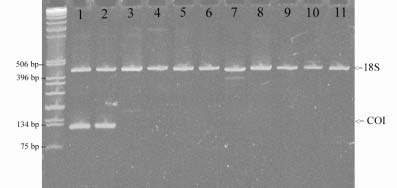
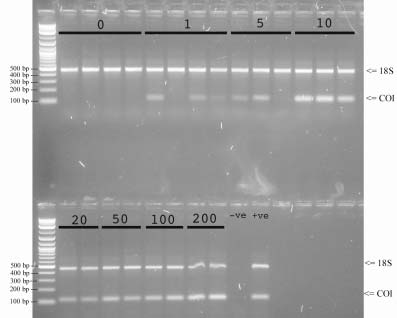
Patil: Development of genetic probes for detection of pest species in ballast water
Fig. 2 A representitive gel photograph showing PCR products separated on a 7.5% polyacrylamide gel. The
upper band is the positive control reaction (18S) and the lower band the Asterias-specific (COI) PCR product.
The left lane contains standard size markers (1Kb DNA ladder, Invitrogen). Template for samples 1 and 2 were
A. amurensis genomic DNA from Tasmania and Japan respectively. Samples 3-11 used genomic DNA from
Australian seasatars as template (Patiriella calcar, P. regularis, Tosia magnifica, Nectria ocellata, Echinaster
arcystasus, Plectaster decanus, T. australis, Coscinasterias muricata and Uniophora granifera repectively).
Fig. 3. PCR test results from ballast water samples spiked with varying number of Asterias larvae. The left hand
most lanes on both the top and bottom panel contain standard size markers (2-log ladder, New England Biolabs).
In the remaining lanes are PCR products from mixed plankton samples spiked with known numbers of A.
amurensis larvae. Numbers above the lanes represent the number of larvae spiked in the sample. For each lane,
the upper band is the positive control reaction (18S) and the lower band the Asterias-specific PCR product (COI).
93
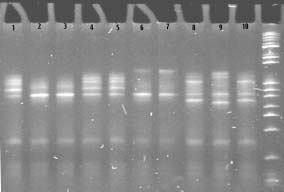
1st International Workshop on Guidelines and Standards for Ballast Water Sampling: Rio de Janeiro, Brazil, 7-11 April 2003
(a)
(b)
Forward
(1) A. amurensis 5' GCACAACCGGGATCTTTACTTCAAGATGATCAAATTTATAAAGTTATAGTAACTGCTCATGCT
(2) A. amurensis ......................................C........................
(3) A. amurensis
......................................C........................
(4) A. amurensis ...............................................................
(5) A. amurensis .................G.............................................
(6) A. rubens
........A..G..............C...................................C
(7) A. rubens
........A..G..............C...................................C
(8) A. forbesi
........A.............................C........................
(9) A. forbesi
........A.................C...........C........................
(10) A. forbesi
........A.............................C........................
Reverse
(1) A. amurensis CTTGTAATGATATTTTTTATGGTGATGCCTATTATGATAGGAGGATTTGGTAAATG 3'
(2) A. amurensis ........................................................
(3) A. amurensis ........................................................
(4) A. amurensis
........................................................
(5) A. amurensis ........................................................
(6) A. rubens
..C....................A....................G...........
(7) A. rubens
..C....................A................................
(8) A. forbesi
..C..G.................A....................G...........
(9) A. forbesi
..C..G.................A....................G...........
(10) A. forbesi
..C..G.................A....................G...........
Fig. 4 (a) Seastar COI gene fragments separated using a parallel denaturing gradient gel with heteroduplexes
formed using DNA from sample #2 (A. amurensis from Ariake Sea, Japan). Samples are A. amurensis (lanes
1-5), A. rubens (lanes 6 and 7) and A. forbesi (lanes 8-10). This technique allows for separation of mtDNA from
the three species of Asterias and identifies variation within A. amurensis and A. forbesi. In the right hand most
lane is a DNA ladder (2-log ladder, New England Biolabs) . (b) sequence data (119 bp) from the samples run on
the gel. A dot indicates the nucleotide is the same as in the first A. amurensis sequence. Shaded areas shows
location of Asterias-specific primers (variation in these regions will not be detected be DGGE).
94
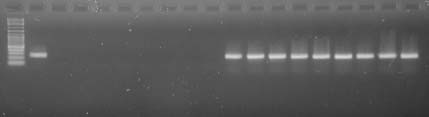
Patil: Development of genetic probes for detection of pest species in ballast water
1
2
3
4
5
6
7
8
9
10
11
12
13
14
15
16
17 18
19
Figure 5. A representative gel photograph showing PCR results carried out on bivalve mollusks using the
"Crassostrea specific" primer pair CCSF3 and CCSR3. Lane 1 molecular marker; lane 2, C.gigas; lanes 3-4,
Saccostrea glomerata;lanes 5-8, Ostrea angasi; lane 9-10, Mytilus edulis and lanes 11-19 18S rDNA internal
control PCR of samples in lanes 2-10. Since the specific and the internal control bands are of similar size they
were run separately on the gel.
1
2
3
4
5
6
7
8
9
10
11
12
13
Figure 6. Results showing "Gymnodinium specific" amplification by the large sub unit rDNA primer
pair CGSLF2 and CGSLR3. Lane 2, Alexandrium affine; lane 3, A. catenella; lane 4, A. margalefi;
lane 5, A. tamarense; lanes 6-8, G. catenatum; lane 9, Heterocaspa niei, lane10, Kryptoperidinium
folaceum; lane 11, Scrippsiella sp and lane 12, Wolonszynskia sp. All samples were positive when
tested with an universal primer pair as internal control (data not shown).
95
Appendix 4:
Thursday Working Group
Instructions
Development of International Guidelines & Standards
for Ballast Water Sampling
Working Group Questions
Thursday 10 April 2003
9.00 Briefing
9.15 Work groups commence
Within your working groups, please nominate a rappateur, and address each of the following
questions.
In answering the questions, please consider the information provided over the last three days.
Please record for presentation at the end of the session.
1.
Is there a need for international guidelines and standards on ballast water sampling? If so,
what should be the objectives and main subject areas of these guidelines and standards, please
list (30 mins).
2.
How important do you think it is to define the purpose of BWS e.g. scientific research,
compliance testing, risk assessment (10 mins).
3.
How important do you thing the issue of sample representativeness is and how might this
issue best be addressed in the guidelines and standards (30 mins).
10.30 11.00 Coffee break
4.
Do you think it would be useful to recommend ship design improvements to facilitate ballast
water sampling. If so, what would these improvements need to be? (20 mins)
5.
Do you think it would be useful for ships to carry a standard a ballast water sampling kit. If
so, what would be the purpose of the sampling kit and what should it contain? (20 mins)
6.
Are there any other major issues that you think are of utmost importance in relation to
international ballast water guidelines and standards. (20 mins)
12.00 Groups report (15 mins each)
1.00 pm Depart for lunch
Afternoon, return to lab for sample analysis from field sampling day.
1
Appendix 5:
Draft Structure for International BW
Sampling Guidelines
Overall framework and structure for:
INTERNATIONAL GUIDELINES FOR
BALLAST WATER SAMPLING
including:
· main sections that such guidelines should be divided into,
· main issues that need to be addressed in each section, and
· existing sources of detailed technical information that can be used to `flesh-out' each
section of the guidelines.
as developed by the
1st International Workshop on Guidelines & Standards for Ballast Water Sampling
Rio de Janeiro, Brazil 7-11 April 2003
Normal text = main sections of the guidelines.
Text in [square brackets] = suggested text for inclusion in each section.
Text in [square brackets and italics] = main issues that need to be developed further in each section,
including possible sources of detailed technical information to fill these sections.
1. INTRODUCTION & BACKGROUND
To be developed:
[The IMO Secretariat / GloBallast PCU will develop appropriate text, including outlining the
background to ballast water sampling, links to the IMO BW Convention, and the process of
development of these guidelines and standards]
2. OBJECTIVES OF THE GUIDELINES & STANDARDS
Suggested text:
[The objectives of these guidelines and standards are:
· To provide IMO member States and other parties with practical, technical guidance on how to
plan for and undertake ballast water sampling programmes, for various purposes.
· To provide IMO member States and other parties with a suite of standard ballast water
sampling equipment, methods and procedures for application to various purposes.
· To ]
3. DEFINING THE PURPOSE OF THE SAMPLING
Suggested text:
[Defining the purpose of any ballast water sampling programme is absolutely essential before
proceeding with any other action, as the sampling approach, design, methods and equipment selected
are totally related to the purpose of the sampling. For example:
1
1st International Workshop on Guidelines and Standards for Ballast Water Sampling: Rio de Janeiro, Brazil, 7-11 April 2003
· a sampling programme carried out by scientists to provide a general understanding of the
physics, chemistry and biology of ballast water needs to adopt a range of methods applied in a
variety of shipboard situations and which measure a range of parameters; whereas
· a sampling programme carried out by Port State Control inspectors to assess compliance by
arriving ships with ballast water exchange at sea, needs to adopt methods that are simple,
portable, rapid and applicable at the port of ballast discharge, and which measure limited,
simple parameters that are indicators of ballast exchange, such as salinity and
presence/absence of oceanic vs coastal species; whereas
· a sampling programme carried out to assess the effectiveness of a developing ballast water
treatment technology, needs to sample at least before and after, and possibly during, the
treatment process, ideally using an `in-line ` approach, and which measures parameters that
are indicators of treatment effectiveness, including the achieved reduction/neutralisation in
organisms.
In recognition of these differences, it is important that these guidelines and standards for ballast water
sampling are clearly organized so as to facilitate selection of sampling designs, methods and
equipment that meet the defined objectives and purpose. Under these guidelines, the following five
purposes for ballast water sampling are used:
1) Scientific research - to better understand the physics, chemistry and biology of ballast water.
2) Hazard identification /risk assessment - to identify potentially harmful species carried in
ballast water.
3) Compliance monitoring and enforcement - to assess compliance of a ship with open-ocean
ballast water exchange requirements.
4) Ballast water treatment R&D / effectiveness testing - to assess the effectiveness of
alternative ballast water treatment methods.
5) Education and raising awareness to familiarise port and ship personnel, researchers,
government officials, students and others with the ballast water issue through practical ship-
board sampling activities and analysis of samples.
It should be noted that these definitions of `purposes' for ballast water sampling are somewhat
arbitrary, all of these sampling purposes support management decision making in various ways, some
of the purposes are closely linked and cross over, and some ballast water sampling programmes may
be undertaken for more than one purpose simultaneously.
To assist in the selection of appropriate sampling approaches, designs, methods and equipment,
section 5 of these guidelines provides information relating to each of these five sampling purposes,
with links to the relevant technical annexes]
4. REPRESENTATIVE-NESS OF SAMPLES & SAMPLING EFFICIENCY
Suggested text:
[The issue of sample representative-ness or sampling efficiency is a major limiting factor for ballast
water sampling, in relation to all sampling purposes and objectives.
When you consider that a sample of a few litres or even a few millilitres may be used as an indicator
for possibly tens of thousands of tonnes of ballast water on a ship, the lack of representative-ness and
the extremely low degree of sampling efficiency is clear. For example, when sampling for the
2
Appendix 5: Draft Structure for International BW Sampling Guidelines
presence or absence of a particular organism of concern (target species), if the sample which has been
drawn from a tank is found to be free of that species, this does not necessarily mean that the rest of
that tank or the ship's other ballast tanks are also free of that species. The problem of Type II errors is
a major issue in relation to sampling efficiency.
The level of representative-ness required depends on the objective and purpose of the sampling
programme, and is affected by whether sampling is done in-tank, in-line or at point of discharge.
This issue is of particular concern when sampling is undertaken for the purpose of compliance
monitoring and enforcement. Compliance sampling has to be representative for legal reasons, and also
depends on management standards selected.
There is considerable scope to improve sampling efficiency through ship design improvements as
outlined in Annex VII ]
Additional issues to be developed:
[It is scientifically proven that BW sampling studies are an underestimate - far from being
representative. No way to sample the whole ship so selection of ballast tank(s) for sampling is critical
(sample all types?).
· Select tanks based on risk assessment (e.g. origin of BW, target species).
· Identify critical areas that are likely to contain species of concern within a ship or tank.
· Modelling could be used to identify the most representative tanks for sampling.
Identify most representative methods (by the knowledge today this may be access via manhole and
sampling using nets).
Sampling personnel need to be independent from the ship.
The issue of sample representative-ness shoudl be addressed at differnt levels:
· First level should be the representative-ness of the ship. Tanks may contain water from
different origins. Guidelines should aid in selection of tank(s) to be sampled.
· Second level is representative-ness of the tank (two types.) Access determines one type. Where
samples are taken determines the other.
· Third level is representative-ness of the actual sample. Replications of samples (implications
for statistical analysis). Volume to be sampled.
· Fourth level is representative-ness of the analysis. Has to be practical with respect to time
and cost (management constraints).
Design of the ballast water sampling programme should address each of these levels so as to achieve
the optimum degree of representative-ness and sampling efficiency in relation to the purpose and
objectives of the sampling]
5. SAMPLING CONSIDERATIONS BASED ON THE PURPOSE OF THE SAMPLING
5.1 Sampling for scientific research
Suggested text:
[Sampling ballast water for the purpose of general scientific research, such as understanding the
physics, chemistry and/or biology of ballast tanks, whether for purely academic reasons or to support
3
1st International Workshop on Guidelines and Standards for Ballast Water Sampling: Rio de Janeiro, Brazil, 7-11 April 2003
management decision making, is perhaps the most flexible and variable form of ballast water
sampling. A number of options from the full range of sampling approaches, methods and equipment
listed in the Technical Annexes may be suitable, depending on the precise objectives of the scientific
research.
Given the wide range of potential research objectives, the variety of sampling methods and equipment
available and the existence of an extremely large pool of scientific expertise around the world, these
guidelines are not prescriptive or restrictive. Scientists should select the optimum sampling methods
and equipment to suit their specific research objectives, considering the advantages and disadvantages
of each method as outlined in the technical annexes.
Perhaps the most significant issue in relation to ballast water sampling for the purpose of scientific
research, is to ensure some sort of inter-calibration and standardisation of methods and equipment
between groups that are conducting similar research, so as to allow cross-comparison of results.
Additional issues to be developed:
[Add text on inter-calibration procedures. Potential source of info - EUCA study
Gollasch et al]
[Select methods from Technical Annexes I to VI]
5.2 Sampling for risk assessment / hazard analysis
Suggested text:
[It may be argued that sampling for risk assessment / hazard analysis purposes, primarily to identify
potentially harmful species carried in ballast water, is a form of scientific research. However, it is a
more narrowly defined purpose with clear links to management, and is therefore treated as a specific
sampling purpose in these guidelines.
Sampling for risk assessment / hazard analysis may also be connected with sampling for compliance
monitoring and enforcement purposes, especially if the latter is based on indicator species (see 5.3
below).
Perhaps the most significant issue in relation to ballast water sampling for risk assessment / hazard
analysis purposes, is sample representative-ness.
Sampling methods and equipment outlined in Technical Annexes I and III to VI provide the best
options for this purpose. Sampling via sounding pipes (Annex II), may not be ideal for this purpose,
as it suffers from low representative-ness. If the sampling party is most concerned about the actual
input of introduced species into a receiving port, rather than what is inside the ballast tanks, then
sampling at the point of discharge may be the best option (Technical Annex IV).]
[Select methods from Technical Annexes I to VI]
5.3 Sampling for compliance monitoring and enforcement
[Currently, the only operational procedure available to ships to minimize the transfer of aquatic
organisms is ballast water exchange at sea, as recommended in the IMO ballast water Guidelines
(A.868(20) and provided for in the draft IMO ballast water Convention. Sampling to monitor and
enforce compliance with ballast water management measures is therefore currently limited to
assessing compliance with ballast exchange, and this section of the guidelines addresses this issue
only.
4
Appendix 5: Draft Structure for International BW Sampling Guidelines
Eventually, as alternative ballast water management measures and treatment systems are approved
and accepted by IMO and national jurisdictions, it will be necessary to develop procedures to assess
compliance of these systems with the agreed standards. However, as alternative ballast water
treatment systems are developmental at this stage, these guidelines do not cover compliance sampling
for such systems, although many of the sampling methods in the Technical Annexes will be relevant.
A sampling programme carried out by Port State Control inspectors to assess compliance by arriving
ships with ballast water exchange at sea, needs to adopt methods that are simple, portable, rapid and
applicable at the port of ballast discharge, and which measure limited, simple parameters that are
indicators of ballast exchange.
In terms of assessing compliance of ships with ballast water exchange requirements, sampling the
ballast water on arriving ships, either for physical/chemical parameters or presence/absence of coastal
and oceanic `indicator' species, is part of the compliance monitoring `tool box.'
The physical and chemical parameters of ballast water (e.g. pH, salinity, turbidity, organic content
etc) may show whether it is open ocean water, indicating exchange has occurred, or port or coastal
water, indicating exchange has not occurred. The US Coast Guard has developed a very simple,
rapid sampling method that allows boarding officers to measure the salinity of ballast water and verify
if exchange was conducted (refer Technical Annex VIII).
The presence/absence of coastal and oceanic species in the ballast water may also be taken as an
indicator of whether the ballast is of coastal or oceanic origin, and therefore, whether or not exchange
has been conducted. The Vancouver Port Corporation has developed a sampling method based on
this approach (refer Technical Annex IX).
Both of these approaches suffer many limitations and qualifications, including the major constraint of
sampling efficiency / representative-ness, and the assumptions that certain salinity levels and indicator
species are indeed coastal and oceanic. Compliance sampling based on indictor species is also limited
by the time frames and taxonomic expertise required for sample analysis.
More effective methods of assessing compliance with ballast exchange requirements would involve
in-line samplers and electronic monitoring systems being fitted to vessels. Such a system would take
data on ballast water parameters such as water levels, temperature, salinity and pressure, plus
operational data such as starting/stopping of pumps, ships' positions (GPS) and dates and times, from
automatic sensors located throughout the ships' ballast and other operational systems. The data would
be recorded in a central processor (including potentially the ship's voyage data recorder), and
transmitted to shore-based offices. This would eliminate the need for paper-based ballast water
reporting forms and the scope for recording and reporting errors and irregularities. Such an approach
is conceptual and developmental at this stage. Some of the in-line sampling methods in Technical
Annex III are relevant.
It should be noted that if sampling indicates non-compliance with ballast exchaneg requirements,
there must be a contingency plan (e.g. reception facilities, chemical treatment as emergency measure,
discharge in certain port areas).]
[Select methods from Technical Annexes VIII and IX)]
5
1st International Workshop on Guidelines and Standards for Ballast Water Sampling: Rio de Janeiro, Brazil, 7-11 April 2003
5.4 Sampling for ballast water treatment R&D / effectiveness testing
Suggested text:
[As outlined above, eventually, as alternative ballast water management measures and treatment
systems are approved and accepted by IMO and national jurisdictions, it will be necessary to develop
procedures to assess compliance of these systems with the agreed standards.
In the meantime, there are over 50 research groups world-wide undertake R&D of alternative ballast
water treatment systems, and all are using various sampling methods to assess the effectiveness of
their systems.
A sampling programme carried out to assess the effectiveness of a developing ballast water treatment
technology, needs to sample at least before and after, and possibly during, the treatment process,
ideally using an `in-line ` approach, and which measures parameters that are indicators of treatment
effectiveness, including the achieved reduction/neutralisation in organisms.
Most importantly, the sampling approach will be determined by the ballast water treatment standard
that the system is being assessed against.
Other extremely important issues in relation to this type of sampling are experimental design,
including adequate replication to achieve acceptable statistical rigour, and adopting internationally
standardised test protocols, so as to allow direct and meaningful cross-comparisons of tests of
different systems.
This issue is somewhat outside of the scope of these guidelines, with ballast water treatment standards
and test protocols being set under the draft Convention. In line sampling techniques as outlined in
Technical Annex III are relevant this purpose.]
5.5 Sampling for the purpose of education and raising awareness
Suggested text:
[Shipboard ballast water sampling might be undertaken to familiarise port and ship personnel,
researchers, government officials, students and others with the ballast water issue through practical
sampling activities and analysis of samples. This might be undertaken as a stand alone activity, or as
part of a more focussed activity with other objectives, such as scientific research or risk assessment.
No particular methods are prescribed for this purpose, except to note that sampling ballast tanks via
manholes (Technical Annex I) probably provides the best access and views for `trainees'.]
6. PLANNING AND UNDERTAKING A SAMPLING TRIP
[relevant sections of the Cawthron Manual and German Sampling Method are suitable for adaptation
as the basis for this section].
6.1 Occupational health and safety
[relevant sections of the Cawthron Manual and German Sampling Method are suitable for adaptation
as the basis for this section].
6
Appendix 5: Draft Structure for International BW Sampling Guidelines
6.2 Pre-sampling communications (including with authorities, ship agent and ship).
[relevant sections of the Cawthron Manual and German Sampling Method are suitable for adaptation
as the basis for this section].
6.3 On-site procedures
[relevant sections of the Cawthron Manual and German Sampling Method are suitable for adaptation
as the basis for this section].
6.4 Boarding the ship
[relevant sections of the Cawthron Manual and German Sampling Method are suitable for adaptation
as the basis for this section].
6.5 Ship-board procedures
[relevant sections of the Cawthron Manual and German Sampling Method are suitable for adaptation
as the basis for this section].
6.6 Leaving the ship
[relevant sections of the Cawthron Manual and German Sampling Method are suitable for adaptation
as the basis for this section].
7. SAMPLE IDENTIFICATION, LABELLING AND RECORDING
[relevant sections of the Cawthron Manual and German Sampling Method are suitable for adaptation
as the basis for this section].
8. SAMPLE PRESERVATION, HANDLING AND STORAGE
[relevant sections of the Cawthron Manual and German Sampling Method are suitable for adaptation
as the basis for this section].
9. SAMPLE ANALYSIS AND REPORTING
[relevant sections of the Cawthron Manual and German Sampling Method are suitable for adaptation
as the basis for this section].
7
1st International Workshop on Guidelines and Standards for Ballast Water Sampling: Rio de Janeiro, Brazil, 7-11 April 2003
TECHNICAL ANNEXES
[relevant sections of the Cawthron Manual, German Sampling Method and other existing documents
are suitable for adaptation as the basis for each Technical Annex]
TECHNICAL ANNEX I: SAMPLING BALLAST TANKS VIA MANHOLES
Equipment [list]
Methods [list]
Advantages [list]
Disadvantages [list]
Suitable for [list sampling purposes]
Special considerations [list]
TECHNICAL ANNEX II: SAMPLING BALLAST TANKS VIA SOUNDING PIPES
Equipment [list]
Methods [list]
Advantages [list]
Disadvantages [list]
Suitable for [list sampling purposes]
Special considerations [list]
TECHNICAL ANNEX III: SAMPLING FROM BALLAST PUMP / PIPING SYSTEM (IN-
LINE SAMPLING)
Equipment [list]
Methods [list]
Advantages [list]
Disadvantages [list]
Suitable for [list sampling purposes]
Special considerations [list]
TECHNICAL ANNEX IV: SAMPLING BALLAST WATER AT DISCHARGE POINT
Equipment [list]
Methods [list]
8
Appendix 5: Draft Structure for International BW Sampling Guidelines
Advantages [list]
Disadvantages [list]
Suitable for [list sampling purposes]
Special considerations [list]
TECHNICAL ANNEX V: SAMPLING BALLAST TANK SEDIMENTS
Equipment [list]
Methods [list]
Advantages [list]
Disadvantages [list]
Suitable for [list sampling purposes]
Special considerations [list]
TECHNICAL ANNEX VI: SAMPLING FOR MICRO-ORGANISMS
Equipment [list]
Methods [list]
Advantages [list]
Disadvantages [list]
Suitable for [list sampling purposes]
Special considerations [list]
TECHNICAL ANNEX VII: THE USCG BW EXCHANGE COMPLIANCE SAMPLING
METHOD
[add]
TECHNICAL ANNEX VIII: THE VANCOUVER PORT BW EXCHANGE COMPLIANCE
SAMPLING METHOD
[add]
TECHNICAL ANNEX VIX: RECOMMENDED SHIP-DESIGN IMPROVEMENTS TO
FACILITATE BALLAST WATER SAMPLING
[list]
[see Taylor, A. H. & Rigby, G. 2001. Suggested Designs to Facilitate Improved Management and
Treatment of Ballast Water on New and Existing Ships. Agriculture, Fisheries and Forestry
Australia. Ballast Water Research Series Report No. 12. AGPS Canberra. Esp section 2.2.]
9
1st International Workshop on Guidelines and Standards for Ballast Water Sampling: Rio de Janeiro, Brazil, 7-11 April 2003
TECHNICAL ANNEX X: RECOMMENDED STANDARD BALLAST WATER SAMPLING
KIT FOR CARRIAGE ON-BOARD SHIPS
[list]
FIGURES
[add]
Various ship types showing ballast tank layouts and sampling points
Diagrams of all equipment types, with dimensions / technical specifications
Photos of various equipment types
[Other figures?]
10







GB Monograph Series 9 v2 25/9/03 9:46 am Page 1
1st Inter
national W
Global Ballast Water
Management Programme
orkshop
G L O B A L L A S T M O N O G R A P H S E R I E S N O . 9
on Guidelines and Standards for Ballast W
1st International Workshop
on Guidelines and Standards for
Ballast Water Sampling
ater Sampling
W
orkshop Report
RIO DE JANEIRO, BRAZIL,
7-11 APR 2003
.dwa.uk.com
Workshop Report
Steve Raaymakers
GLOBALLAST MONOGRAPH SERIES
More Information?
el (+44) 020 7928 5888 www
Programme Coordination Unit
Global Ballast Water Management Programme
International Maritime Organization
4 Albert Embankment
London SE1 7SR United Kingdom
Tel: +44 (0)20 7587 3247 or 3251
est & Associates, London. T
Fax: +44 (0)20 7587 3261
Web: http://globallast.imo.org
NO.9
A cooperative initiative of the Global Environment Facility,
United Nations Development Programme and International Maritime Organization.
Cover designed by Daniel W