

Report on the First Stock
Assessment Workshop for the
Oceanic Fisheries Management
Project
3rd -14th July 2006
SPC Headquarters
Noumea
New Caledonia
1
Acknowledgements
We wish to sincerely thank all the staff from OFP who kindly provided their time
and assistance in the running of the workshop, in particular Kay Parry and
Helene Ixeko. Also, thank you to Barbara Hanchard from FFA for her assistance
and comments on the draft report.
2

Report on the First Stock Assessment Workshop
for the Oceanic Fisheries Management Project
Don Bromhead
Brett Molony
Adam Langley
David Kirby
Bruno Leroy
Valerie Allain
1
Contents
Contents
2
1. Background
3
1.1. Introduction
3
1.2. Oceanic Fisheries Management Project
3
1.3. Legal obligations and the importance of stock assessment
5
1.4. A problem relating to scientific and legal capacity
6
2. Objectives
7
3. Design and content
7
3.1. Basic theory and background
8
3.2. Parameter estimation
8
3.3. Ecosystem Approach to Fisheries
9
3.4. Interpretation and implications
9
3.5. Facilities and materials
9
4. Communication strategy
11
5. Participation
11
6. Additional funding
11
7. Final Budget
12
8. Facilitators
12
9. Assessment of workshop
12
9.1 Assessment of participants performance
12
9.2 Assessment by participants
13
9.3 Self assessment by SPC
17
10. Conclusion
22
Appendix I - Participants
23
2
1.
Background
1.1
Introduction
The Oceanic Fisheries Programme (OFP) of the Secretariat of the Pacific
Community (SPC) hosted a Stock Assessment Workshop (SAW) for fisheries
officers from Pacific Island Countries and Territories, at SPC headquarters in
Noumea, New Caledonia, 3rd14th of July 2006. The following section provides
background information to explain why there was a need for such a workshop.
Subsequent sections will outline the workshop design, content and outcomes.
1.2
The Oceanic Fisheries Management Project
The SAW comprised one component of the much larger Oceanic Fisheries
Management Project (OFMP). That project is funded by the Global Environment
Facility (GEF) with the United Nations Development Fund assuming the role of
Implementing Agency. The project is being executed by the Fisheries Forum
Agency (FFA) in partnership with the SPC and the International Union for the
Conservation of Nature (IUCN).
The OFMP has two overarching objectives:
1.
Information and Knowledge to improve the understanding of the
transboundary oceanic fish resources and related features of the Western
and Central Pacific Ocean (WCPO) Warm Pool Large Marine Ecosystem;
and
2.
Governance to create regional institutional arrangements, and
reform, realign and strengthen national arrangements for the conservation
and management of transboundary oceanic fishery resources.
The OFMP was instigated through the combined initiative of 15 governments
within the WCPO region (Figure 1a); Cook Islands, Federated States of
Micronesia, Fiji, Kiribati, Marshall Islands, Nauru, Niue, Palau, Papua New
Guinea, Samoa, Solomon Islands, Tonga, Tokelau, Tuvalu and Vanuatu.
For a long time, these countries (along with other Pacific Island Countries and
Territories) have recognized that they are collectively the custodians of one of the
largest marine ecosystems in the world (the warm pool large marine ecosystem
LME Figure 1b), within which resides the world's largest tuna resource.
Approximately one half of the worlds total tuna catch is taken from this region,
with catches consistently increasing over the past three decades (Figure 1c) and
surpassing 2 million tonnes per annum in recent years.
For some time these countries have had concerns over the sustainability of this
resource which represents one of the only significant natural resources in the
3
A.
100E
120E
140E
160E
180
160W
140W
120W
100W
80W
N
0
6
5
0
N
Western and central
N
Pacific Ocean
0
4
3
0
N
N
0
2
1
0
N
Eastern Pacific Ocean
0
0
1
0
S
S
0
2
3
0
S
S
0
4
5
0
S
S
0
6
110E
130E
150E
170E
170W
150W
130W
110W
90W
70W
B.
C.
PURSE SEINE
2,000,000
OTHER
1,800,000
POLE-AND-LINE
LONGLINE
1,600,000
1,400,000
t) 1,200,000
(mh 1,000,000
tca 800,000
C
600,000
400,000
200,000
0
1972 1974 1976 1978 1980 1982 1984 1986 1988 1990 1992 1994 1996 1998 2000 2002 2004
Figure 1 A) The jurisdictional boundaries of the Western and Central Pacific Fisheries
Commission encompasses the EEZs of many Pacific Island Countries and Territories. B)
The boundaries of the warm pool large marine ecosystem can be defined in part by water
temperature. Here, warm colours indicate the region of the warm pool in the Pacific Ocean
(using an example month and year). C) Annual catches of tuna by gear in the WCP-CA.
4
region and which is one of the most economically important resources for these
countries. Most PICTs are characterised as developing countries with limited
resources and for some, tuna fishing access fees constitute as much as 40% of
total government revenue. The long term economic and social aspirations of
many of these countries rely heavily on the long term sustainability of the tuna
resource.
1.3
Legal obligations and the importance of stock assessment
There are a number of legally binding international conventions and agreements
that are designed to ensure that global fish stocks are managed sustainably
through cooperation. These include the United Nations Convention for the Law of
the Sea (UNCLOS) and the UN Fish Stocks Agreement (UNSFA). In addition,
many Pacific Island countries have negotiated and are party to cooperative
agreements (e.g. legally binding treaties including the Niue Treaty, Nauru
Agreement, Palau Arrangement, FSM Arrangement and US Multilateral Treaty)
and are members of institutions (e.g. the Pacific Islands Forum Fisheries Agency
- FFA) to ensure cooperation amongst themselves regarding the sustainable
management and development of fisheries in the region. Most recently, these
countries negotiated and became Contracting Parties to the Western and Central
Pacific Fisheries Convention (hereafter referred to as the Convention) and as
members of the Commission established by the Convention (hereafter referred to
as the Commission), are bound by its mandate.
Within the two key international agreements of UNCLOS and UNSFA, and the
Convention, are specific provisions for the use of stock assessments to assist in
sustainable management of fish stocks.
Article 61 of UNCLOS makes direct reference to maximum sustainable yields
(MSY) as an objective for sustainable fisheries, while the UN Fish Stocks
Agreement states that any nations fishing on the high seas should:
"Adopt measures for long term sustainability, based on best available
scientific advice, applying the precautionary approach".
Both general scientific advice regarding sustainability, and the precautionary
approach, are currently based on the outputs from stock assessments. The
Convention being the first regional fisheries agreement to be adopted since the
conclusion of UNFSA, similarly provides for the need to base conservation
measures on best available scientific advice, maintaining stocks at MSY and
applying the precautionary approach.
Given that there are both economic and legal imperatives that WCPO tuna
stocks are managed sustainably, and the key role of stock assessment in
providing advice on sustainability, it is clearly critical for the countries and
territories in the region to have the capacity to interpret and use stock
assessments in their domestic and regional decision making processes.
5
1.4
A problem relating to scientific and legal capacity
In recent years, it has become very apparent to the governments and people of
PICTs that while they have considerable obligations to meet under UNCLOS,
UNSFA and the Convention, few if any of them have the required legal and
scientific capacity to ensure that they can meet these obligations. The OFMP
was specifically designed to increase the capacity of participating countries in the
relevant areas of legal and scientific expertise.
In terms of science capacity, PICTs themselves recognise that they have limited
capacity to interpret and use stock assessments (and associated scientific
analyses) and to incorporate stock assessment outputs into decision making
processes. This lack of capacity represents a significant impediment to the
development and revision of tuna management plans, the ability to participate in
regional fora (e.g. the Scientific Committee of the Commission) and to an
improvement in understanding the potential consequences of different
management options for the sustainable harvesting of tuna resources.
The following OFMP objective relates specifically to the need for increased
understanding of stock assessment:
"........strengthen national capacities to use and interpret regional stock
assessments, fisheries data and oceanographic information at the national
level, to participate in Commission scientific work, and to understand the
implications of Commission stock assessments."(OFMP Document, outcomes
1.2, p.49)
The intended outputs associated with this objective are:
1. Training of national technical and scientific staff to understand regional
stock assessment methods, and interpret and apply the results, and to use
oceanographic data; and to
2. Hold regional workshops on stock assessment methods and analyses of
oceanographic impacts on fisheries.
SPC is responsible for developing and running two stock assessment workshops,
one each to be held in the 2nd and 4th years of the OFMP. The following sections
of this report describe the design and content of the first stock assessment
workshop held at Noumea, New Caledonia between 3rd to 14th of July this year.
An evaluation of the workshop's outcomes, and an assessment of areas for
future workshop strengthening, are also presented.
6
3.
Objectives
The broad objective relating to stock assessment capacity building was used as
a guide to create more specific functional objectives for the workshop against
which performance could be easily measured. For the first stock assessment
workshop, functional objectives were focused on increasing the capacity of
participants to:
1. Understand what the various components of a stock assessment model
are, how these are derived, and why each is important to the assessment;
2. Be able to understand the key scientific outcomes and recommendations
of stock assessments and how they relate back to the model outputs and
data;
3. Be able to identify where an assessment might be improved in the future
and to understand statements regarding uncertainty, and
4. Be able to interpret stock assessment outputs and form conclusions
regarding the implications of these for tuna fishery management at both
national and regional levels, including the risk associated with different
management options (at both levels).
4.
Design and Content
Careful consideration was given to the design and content of the workshop, so as
to ensure that these objectives could be met. In the course of doing this, a
number of challenges needed to be overcome.
The first challenge was to ensure that the workshop would, to the greatest extent
possible, recruit participants with some degree of technical or analytical capability
and knowledge of the regions tuna fisheries. Hence, the initial calls for
nominations encouraging countries and territories to nominate technical officers
from their fishery departments.
However, a second competing challenge was to design the workshop to also
accommodate participants who did not fully meet these criteria. Most fishery
departments in countries in the WCPO are very small, some with only one officer
who might meet those criteria, and others with no officers who could meet those
criteria. Subsequently the OFP received and accepted nominations from
participants from a very wide range of technical and analytical backgrounds and
previous exposure to stock assessment methods.
The design of the workshop attempted to take participant diversity into account
so as to deliver both the basic concepts as well as enhance the understanding of
7
those with previous experience in the area. To achieve this, the workshop was
necessarily quite long (two weeks).
The workshop comprised three main components, these being Basic Theory and
Background, Parameter Estimation, and Interpretation and Management
Implications (Table 1). It focused to a large degree on tuna species and the
assessments currently used to assess these species in the Pacific Ocean.
4.1 Basic Theory and Background
This component provided an understanding of the basic biological and fisheries
information and concepts that are necessary before undertaking an assessment.
It included sessions on:
1. understanding how natural, unfished populations behave if we are going
to interpret how they respond to fishing, we need to be able to compare a
fished population to their normal state and understand the natural
variability of fish stocks;
2. understanding how and why different stocks and species of fish respond
differently to fishing pressure;
3. understanding the types of information needed to measure the response
of a fish stock to fishing (i.e. data needed in order to undertake a stock
assessment) and how that information is used in an assessment; and
4. the types of models available and how to select an appropriate model for a
given assessment.
4.2 Parameter estimation
This component was designed to use the background theory to guide participants
in building a stock assessment model step-by-step, and included sessions which
detailed the logic and methods used to estimate the key parameters of growth,
recruitment, natural mortality, selectivity, catchability, fishing mortality, movement
and the estimation of indices of abundance. These sessions were followed by
discussions of biological reference points, and a summarization of how all model
components fit together in a length/age based model, such as those used for
tuna in the WCPO. The final section of this component looked at the estimation
and interpretation of uncertainty and risk within stock assessments.
8
4.3 Ecosystem Approach to Fisheries
Following the parameter estimation component there was a half day of
presentations on the Ecosystem Approach to Fisheries (EAF). The international
legal context of EAF was presented, followed by examples of oceanic ecosystem
studies and ecosystem models used at SPC-OFP. The conceptual framework
and data requirements to carry out Ecological Risk Assessments (ERAs) were
also presented, in particular reviewing the ERA for WCPO tuna fisheries carried
out by the OFP and presented to the Scientific Committee of the Commission. As
ecosystem models and ecological risk assessments become further developed
and start to be used for the provision of advice, future workshops may need to
give increased emphasis to building the capacity of PICTs to interpret and use
such information and advice in decision making processes (i.e. EAF
implementation).
4.4 Interpretation and Implications
The final component provided exercises to promote the discussion of the
previous components in the context of tuna fisheries and assessments in the
WCPO and the implications of these for domestic and regional fisheries
management.
Overall, the three part structure was intended to meet the primary objective of
this workshop, that being to provide participants with the capacity to use and
interpret stock assessment results, to the degree that they can incorporate their
understanding of the assessments into the provision of advice and input into
governmental decision making processes regarding the management of
fisheries.
4.5 Facilities and materials
The workshop was held at SPC Headquarters, Noumea, utilizing a variety of
teaching facilities including the large conference room, smaller teaching rooms
and the computer laboratory. It ran over 11 days, with a 1.5 day break in the
middle. Each day comprised 4 sessions, with the theme of each session outlined
in Table 1. The sessions were either theory based or practical sessions. Practical
sessions predominantly involved computing based exercises to give participants
a working understanding of how stock assessment models function, and were
designed to complement and reinforce concepts learnt in the previous theory
session. Some practical sessions also involved looking at biological samples in
the OFP biological laboratories.
Participants were provided with a workshop folder on the first day, which
contained copies of the workshop presentations, structure and design, and more
general information relating to the locations of sessions, local facilities and social
functions. All practical session files were saved for each participant and will be
9
s
s
s
n
n
n
n
n
n
e
e
e
t
t
i
o
t
i
o
t
i
o
p
t
i
o
t
i
o
t
i
o
s
u
s
u
s
u
c
k
t
a
c
k
t
a
c
k
t
a
t
o
c
k
t
a
c
k
t
a
c
k
t
a
S
S
S
S
N
N
N
n
t
s
n
t
s
n
t
s
s
t
s
n
t
s
n
t
s
n
t
s
N
y
i
s
y
i
s
y
i
s
s
t
o
e
n
s
t
o
e
n
s
t
o
e
n
-
P
n
n
s
t
o
e
n
s
t
o
e
n
s
t
o
e
n
w
e
e
e
I
O
I
O
I
O
t
e
s
e
t
e
s
e
t
e
s
e
4
e
t
e
s
e
t
e
s
e
t
e
s
e
T
T
T
I
O
i
e
k
k
k
a
r
e
a
r
e
a
r
e
E
t
i
o
a
r
e
a
r
e
a
r
e
A
A
A
T
v
e
e
e
r
e
t
p
r
t
m
r
t
m
r
t
m
r
t
m
r
t
m
r
t
m
a
r
e
t
p
a
r
e
t
p
a
T
T
T
t
a
r
t
m
r
e
t
p
a
r
e
t
p
a
r
e
t
p
a
A
e
I
S
N
N
N
f
t
h
f
t
h
f
t
h
n
p
n
p
n
p
n
p
n
p
n
p
s
c
e
e
s
c
e
e
s
c
e
e
C
n
a
s
c
e
e
s
c
e
e
s
c
e
e
E
E
E
I
C
R
o
o
o
p
d
p
d
p
d
R
e
p
p
d
p
d
p
d
S
S
S
L
w
w
w
u
s
m
u
s
m
u
s
m
s
e
u
s
m
u
s
m
u
s
m
E
E
E
s
t
o
s
t
o
s
t
o
E
s
t
o
s
t
o
s
t
o
R
R
R
P
r
i
r
o
r
o
r
o
d
r
o
r
o
r
o
v
i
e
v
i
e
v
i
e
e
e
e
X
r
e
e
e
e
P
P
P
F
e
e
e
G
G
G
p
G
G
G
R
R
R
s
s
s
s
s
s
s
s
s
s
s
s
a
a
a
E
a
a
a
-
I
M
.
N
g
g
r
s
r
s
r
s
r
s
r
s
r
s
I
O
S
S
S
S
S
S
t
s
E
E
E
E
E
E
i
n
s
e
d
e
d
e
d
e
d
e
d
e
d
T
2
i
n
3
g
n
N
N
N
N
N
N
n
p
n
p
n
p
n
p
n
p
n
p
n
a
a
a
a
a
a
e
a
A
E
d
e
R
I
R
R
I
R
R
I
R
R
I
R
R
I
R
R
I
R
E
n
n
n
n
n
n
E
I
O
E
I
O
E
I
O
E
I
O
E
I
O
E
I
O
t
i
n
r
m
p
s
a
p
s
a
p
s
a
p
s
a
p
s
a
p
s
a
T
I
S
n
A
A
A
A
A
A
i
o
m
P
N
S
P
N
S
P
N
S
P
N
S
P
N
S
P
N
S
I
S
r
e
s
A
n
s
i
o
A
n
s
i
o
A
n
s
i
o
A
n
s
i
o
A
n
s
i
o
A
n
s
i
o
m
E
C
t
a
s
A
S
A
S
A
S
A
S
A
S
A
S
C
,
f
o
S
i
o
s
s
s
s
s
s
u
S
i
o
u
S
i
o
u
S
i
o
u
S
i
o
u
S
i
o
u
R
R
r
s
s
l
u
P
I
O
U
P
I
O
U
P
I
O
U
P
I
O
U
P
I
O
U
P
I
O
U
R
r
p
s
s
s
s
s
s
u
T
T
T
T
T
T
c
a
a
a
a
a
a
P
E
e
e
A
C
C
C
C
C
C
S
A
A
A
A
A
l
t
s
l
u
i
s
c
l
u
i
s
c
l
u
i
s
c
l
u
i
s
c
l
u
i
s
c
l
u
i
s
c
I
S
S
I
S
S
I
S
S
I
S
S
I
S
S
I
S
E
t
e
n
g
c
d
g
c
d
g
c
d
g
c
d
g
c
d
g
c
d
o
R
u
X
d
s
S
E
S
S
S
S
S
u
n
n
n
n
n
n
D
E
D
E
D
E
D
E
D
E
D
X
o
o
o
o
o
o
o
E
E
n
s
s
a
U
U
U
U
U
U
E
I
n
c
r
i
t
i
n
c
r
i
t
i
n
c
r
i
t
i
n
c
r
i
t
i
n
c
r
i
t
i
n
c
r
i
t
i
n
c
T
h
U
Q
Q
Q
Q
Q
Q
e
W
W
W
W
W
W
N
R
I
N
T
l
s
s
s
i
n
e
d
r
n
n
n
k
k
k
l
s
l
s
l
s
o
e
k
d
e
k
d
e
k
d
e
C
r
i
s
r
i
s
r
i
s
n
n
n
l
y
s
e
l
y
s
e
l
y
s
e
t
h
c
t
i
o
c
t
i
o
c
t
i
o
d
d
d
m
t
o
s
i
s
d
i
s
d
i
s
d
a
a
a
n
n
n
h
t
a
o
t
a
o
t
a
o
n
n
n
P
m
e
e
t
r
u
t
r
u
t
r
u
t
e
l
R
n
l
R
n
l
R
n
g
s
s
s
c
r
i
e
a
e
m
a
e
m
a
e
m
n
n
n
t
y
a
t
y
a
t
y
a
y
s
a
e
m
m
m
t
s
a
t
s
a
t
s
a
t
h
i
c
m
i
c
m
i
c
m
n
n
n
t
o
o
o
o
i
n
i
n
i
n
s
r
o
g
g
g
t
S
d
g
k
l
c
l
c
l
c
o
p
i
s
h
l
o
s
s
l
o
s
s
l
o
s
s
t
e
t
e
t
e
c
e
e
e
r
t
a
r
t
a
r
t
a
c
y
s
t
e
y
s
t
e
y
s
t
e
n
n
n
d
d
d
e
e
e
p
F
c
o
s
e
s
c
o
s
e
s
c
o
s
e
s
a
e
E
t
t
i
n
a
o
o
o
c
c
c
A
E
s
o
E
s
o
E
s
o
b
n
n
n
A
c
A
c
A
c
t
c
o
t
c
o
t
c
o
6
W
u
M
M
M
U
U
U
e
e
e
u
u
u
P
G
G
G
0
0
t
s
2
r
-
t
n
7
l
i
n
4
t
e
n
o
e
l
l
a
d
l
l
D
D
l
y
e
t
i
o
i
c
p
m
r
y
r
y
r
y
r
y
r
y
r
y
o
o
o
w
g
e
i
t
e
o
o
o
w
u
m
a
e
e
e
e
c
t
i
c
a
c
t
i
c
a
v
i
e
l
o
c
i
s
e
e
e
c
t
i
c
a
c
t
i
c
a
v
i
e
r
a
v
h
h
h
h
h
h
T
T
T
r
a
r
a
e
i
o
n
v
T
T
T
r
a
r
a
e
J
e
a
t
i
m
o
P
P
P
P
s
r
e
r
e
*
R
B
*
R
4
u
P
E
M
f
e
r
e
-
1
T
3
l
i
t
y
r
-
r
-
f
6
e
4
t
e
n
r
t
a
l
l
n
o
c
l
l
a
a
D
t
e
n
a
a
D
0
e
l
d
e
t
i
o
o
r
y
r
y
r
y
r
s
w
e
t
i
o
a
r
y
r
y
r
y
w
a
o
o
o
t
i
c
t
i
c
m
a
t
o
d
o
o
o
t
i
c
t
i
c
1
m
M
e
e
e
c
c
e
e
e
c
c
h
h
h
v
i
e
a
n
h
h
h
v
i
e
,
h
n
r
a
g
T
T
T
r
a
r
a
e
r
a
T
T
T
r
a
r
a
e
a
t
i
m
P
P
a
t
i
m
i
c
u
P
P
p
d
o
i
n
b
P
s
s
h
*
R
P
e
I
n
a
*
R
o
E
M
i
s
F
s
h
k
r
o
t
W
n
n
u
e
S
R
R
R
R
R
R
E
E
E
E
E
E
s
s
m
t
r
a
r
)
P
E
P
E
P
E
P
E
P
E
P
E
x
r
k
A
I
R
A
I
R
A
I
R
A
I
R
A
I
R
A
I
R
e
(
o
d
o
P
A
P
A
P
A
P
A
P
A
P
A
s
s
e
n
e
N
N
N
N
N
N
N
N
N
N
N
N
l
e
i
o
r
e
w
I
O
I
O
I
O
I
O
I
O
I
O
I
O
I
O
I
O
I
O
I
O
I
O
i
b
s
e
g
S
T
S
T
S
T
S
T
S
T
S
T
A
t s s
m
S
S
S
S
S
S
S
S
S
S
S
S
s
e
a
o
U
E
U
E
U
E
U
E
U
E
U
E
a o s
h
C
U
C
U
C
U
C
U
C
U
C
U
c
k
Q
Q
Q
Q
Q
Q
S P
I
S
I
S
I
S
I
S
I
S
I
S
D
D
D
D
D
D
t
o
a
h
S
r
-
l
i
t
y
-
t
c
n
3
r
n
a
s
t
t
e
r
t
a
l
l
l
t
e
l
l
l
e
D
t
i
o
o
w
r
y
r
y
e
t
i
o
/
C
r
y
r
y
r
y
a
o
o
a
o
o
o
e
1
m
e
e
c
t
i
c
a
c
t
i
c
a
c
t
i
c
a
m
i
t
y
i
l
i
t
y
e
e
e
c
t
i
c
a
c
t
i
c
a
c
t
i
c
a
N
v
i
e
r
a
l
M
e
h
h
r
a
r
a
r
a
b
h
h
h
r
a
r
a
r
a
t
i
m
T
T
P
P
P
r
a
t
i
m
t
i
v
T
T
T
P
P
P
I
O
a
r
a
s
a
*
R
s
c
T
P
E
t
u
P
E
f
t
h
A
r
i
l
e
F
a
N
e
I
M
S
t
o
T
S
t
E
r
-
-
n
4
r
n
n
4
t
e
n
R
t
e
l
l
t
e
e
l
l
E
e
t
h
r
y
r
y
r
y
a
a
D
e
r
y
r
y
r
y
a
a
D
n
T
t
i
o
w
t
i
o
w
a
w
o
o
o
t
i
c
t
i
c
a
i
t
m
o
o
o
t
i
c
t
i
c
E
m
e
e
e
c
c
m
e
e
e
c
c
r
o
h
h
h
r
a
r
a
v
i
e
h
h
h
r
a
r
a
v
i
e
M
r
a
e
r
u
e
t
i
m
T
T
T
P
P
r
a
t
i
m
c
T
T
T
P
P
A
a
s
G
a
*
R
s
e
*
R
c
o
u
P
P
d
R
h
E
E
R
A
n
P
T
a
y
e
d
d
d
d
r
e
r
e
-
n
2
n
n
l
l
l
n
e
e
e
e
d
t
u
t
u
i
o
s
&
s
a
t
s
s
a
t
s
d
d
d
g
c
c
s
l
l
4
k
t
-
K
l
e
1
n
n
o
o
o
r
e
l
s
s
a
a
D
c
n
l
e
e
l
e
e
/
a
l
s
l
s
e
i
p
D
e
r
e
r
y
w
w
i
p
n
i
p
n
f
m
f
m
f
m
t
u
s
t
r
u
e
e
d
s
t
r
u
d
g
o
e
s
i
g
t
o
c
c
o
o
t
h
d
p
c
p
o
o
o
c
e
o
e
o
r
o
e
c
t
i
c
c
t
i
c
v
i
e
d
o
g
g
S
m
g
s
v
i
e
s
s
s
t
h
r
a
r
a
e
e
r
i
n
m
r
i
n
m
e
e
e
n
/
a
m
/
a
m
l
p
P
P
e
s
r
i
n
m
p
t
r
u
y
P
c
o
y
P
c
o
y
p
y
p
y
p
e
s
t
h
t
h
a
d
*
R
e
d
e
g
g
s
*
R
e
e
T
T
T
L
n
n
o
W
s
K
K
e
e
M
a
L
L
f
t
h
D
s
g
g
g
s
s
s
t
t
t
N
n
n
n
h
-
n
n
h
-
i
n
i
n
i
n
g
m
g
m
g
m
e
e
e
U
l
e
l
e
a
a
a
i
s
s
1
t
i
o
t
i
o
f
f
i
s
h
f
f
i
s
h
f
f
i
s
h
i
s
s
g
g
g
m
m
m
e
o
O
n
i
p
s
s
s
i
p
y
n
y
n
y
n
p
p
p
c
l
a
l
a
g
o
n
g
o
n
g
o
n
n
c
/
t
a
/
t
a
/
t
a
R
F
D
u
u
s
s
s
F
g
d
g
d
g
d
l
o
l
o
l
o
d
w
p
p
r
i
n
t
i
o
r
i
n
t
i
o
r
i
n
t
i
o
d
p
p
p
G
t
i
o
t
i
c
t
i
c
t
i
c
t
i
o
i
n
i
n
i
n
n
o
o
o
o
o
v
e
v
e
v
e
l
a
r
i
n
r
i
n
v
i
e
s
u
l
a
s
u
l
a
s
u
l
a
n
e
e
e
a
r
i
s
u
a
r
i
s
u
a
r
i
s
u
l
a
g
g
g
e
e
e
t
l
i
n
K
a
P
e
"
p
"
p
e
p
e
p
e
p
a
P
-
p
-
p
-
p
C
u
u
h
p
d
d
e
e
M
c
t
e
o
M
c
t
e
o
M
c
t
e
o
h
p
-
a
c
-
a
c
-
a
c
r
y
D
r
y
D
r
y
D
u
A
e
i
c
p
p
p
i
c
i
s
o
s
*
R
h
h
o
b
r
a
b
r
a
b
r
a
e
e
e
i
s
i
s
r
a
r
a
r
a
i
s
s
a
a
a
h
h
h
B
u
F
P
a
a
a
a
F
P
a
.
P
.
P
.
P
i
s
i
s
i
s
B
"
F
"
F
h
h
h
c
c
c
B
.
L
2
.
L
2
.
L
2
F
F
F
O
D
T
1
1
1
N
s
t
t
s
A
n
d
n
n
s
1
e
s
n
D
Y
n
r
e
d
e
d
e
d
n
n
c
h
-
l
e
n
w
R
n
c
t
i
o
a
t
u
m
m
n
c
t
i
v
e
i
t
i
o
l
i
f
e
l
i
f
e
n
n
u
l
s
c
n
a
e
a
e
i
s
s
d
d
t
i
o
d
a
s
A
g
A
g
r
e
d
j
e
i
p
b
n
f
i
n
n
n
t
i
o
s
t
i
o
s
v
i
e
l
e
1
O
t
i
o
d
a
O
a
O
n
c
l
a
e
E
c
r
i
a
t
r
u
f
e
F
e
s
s
l
a
i
c
l
a
i
c
t
r
o
P
P
u
t
e
n
n
n
t
o
d
t
i
o
d
y
a
y
a
u
u
p
b
H
u
u
c
t
i
v
e
-
S
a
C
-
S
a
C
g
g
p
m
p
m
d
a
/
s
l
r
e
t
s
a
n
n
r
i
n
i
c
o
w
r
o
j
e
w
M
w
M
e
l
a
s
l
o
y
c
l
e
l
o
y
c
l
e
o
a
o
a
*
R
a
T
/
I
n
p
n
e
M
g
b
s
W
s
W
i
c
a
i
n
o
m
a
u
P
a
i
o
c
i
o
c
p
y
n
p
y
n
t
r
o
m
e
c
k
O
r
v
i
e
i
n
r
v
i
e
i
n
g
p
e
h
p
i
c
h
d
h
d
i
s
h
i
c
s
T
I
C
r
s
r
v
i
e
r
i
e
r
i
e
l
o
g
b
b
i
s
i
s
S
o
a
m
I
n
e
e
i
s
o
s
/
B
l
c
o
u
v
e
B
v
e
v
e
i
o
a
F
F
*
F
a
A
e
o
n
P
a
i
s
h
i
s
h
O
O
F
i
s
h
O
i
s
h
B
a
t
r
o
F
F
y
n
B
M
C
B
W
F
F
m
I
n
d
)
)
)
0
0
0
)
0
1
1
0
2
0
3
3
3
e
3
n
0
n
2
e
4
n
4
6
y
n
n
n
a
i
o
m
i
o
i
o
m
e
i
o
i
o
s
-
1
s
-
1
e
i
o
D
s
s
s
-
1
s
-
1
s
h
s
0
s
0
s
h
s
0
s
0
e
T
e
3
e
3
e
T
e
0
e
0
S
S
8
S
0
S
S
3
S
5
(
0
(
1
(
1
(
1
provided to participants on CD, along with a copy of all PowerPoint presentations
and a copy of this report.
5. Communication strategy
The workshop was first advertised at the Heads of Fisheries meeting in April,
2006, through a direct presentation to the participants at that meeting and
through individual contact and distribution of nomination forms to delegations
from each participating country and territory.
It was re-advertised in the weeks following the Heads of Fisheries meeting
through emails to SPC member country contacts and GEF project focal point
contacts.
Nominations were followed up again at the annual FFC meeting held at Nadi, Fiji
in May 2006, and following that by more email based reminders. Where email
communications were impeded or no response was forthcoming, countries were
contacted via fax and telephone. The deadline for nominations was extended on
a number of occasions to accommodate those countries who were unable to
commit staff to the workshop at earlier dates.
6. Participation
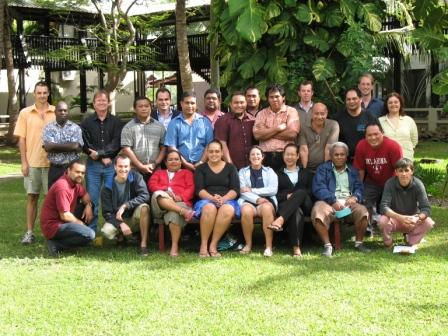
SPC received 18 nominations for the workshop. One of these was subsequently
withdrawn. The 17 participants that attended the workshop, along with a
description of their current roles, are listed in Appendix I. As described in Part 4,
the participants varied significantly in the level of technical and analytical ability
and previous exposure to stock assessment. This is reflected to some degree in
the diversity of roles the participants fulfill in their home departments.
7. Additional Funding
The majority of the funding for the workshop came from the GEF OFMP project.
However, for participants from non-GEF project countries and territories, other
funding sources were identified and used:
1. GEF funds (for OFMP beneficiary countries)
2. Western Pacific Fisheries Management Council funds for US territories
(Guam)
3. PROCFISH OCT funds for French territories (New Caledonia, French
Polynesia)
4. PROCFISH ACP funds
The attendance of non-GEF member countries and territories at the workshop
was very important, given that all participating members of the WCPF
Commission have obligations under the Convention and international
agreements (UNCLOS, UNSFA) to ensure that the highly migratory fish stocks of
11
the Western and Central Pacific Ocean, being shared resources, are exploited in
a sustainable manner.
8. Final Budget
The final cost of the workshop was USD 68 954, which exceeded the initial
budget estimates. The increase in cost was mainly attributable to the greater
than expected participation rate, and the workshop spanning a greater length of
time than initially budgeted for. Other funding sources were sourced to cover the
additional costs above those provided for in the OFMP budget. The following is a
summary of workshop costs:
Airfares 29 655
Shuttle transfers 256
Perdiems 38 296
Stationary 398
T-shirts 203
Food (morning and afternoon teas) 146
9. Contributing Facilitators (SPC staff)
The workshop facilitators were Don Bromhead, Brett Molony, Adam Langley,
John Hampton, David Kirby, Valerie Allain, Bruno Leroy, Kay Parry and Helene
Ixeko. Additionally, numerous other SPC staff kindly provided logistical support to
the workshop.
10. Assessment of Workshop
Three main forms of assessment were used to determine the degree to which the
workshop was able to meet its objectives. They were:
1. Assessment of participant's performance;
2. Assessment of the workshop by participants; and
3. Self assessment by SPC
10.1 Assessment of participant's performance
The participant's performance was assessed by two means, a repeated
questionnaire and an end of workshop presentation.
10.1.1 Repeated Questionnaire - Participants filled out a questionnaire at the
start of the workshop which was used to determine their starting level of
knowledge of stock assessment. The same questionnaire was then re-presented
to them on the last day of the workshop. Questionnaire results were then
compared using a simple ranking system for each question and the answer
provided by each participant (4 Answer shows significantly improved
knowledge/understanding; 3 Answer shows good understanding from start; 2
12
Answer shows poor understanding from start and no subsequent improvement; 1
Answer shows a deterioration in level of understanding). The results from this
comparison of questionnaires are summarised in Table 2.
Overall, the repeated questionnaire revealed a significant increase in the level of
understanding by the majority of participants. On average, participants showed
significantly increased understanding for 67% of the questions in the
questionnaire, while already having a good understanding in relation to 22% of
the questions from the start of the course. There was no apparent improvement
in knowledge and understanding relating to 10% of questions on the
questionnaire, while two participants had a poorer understanding of one of the
questions at the end of the workshop. The latter two statistics will be used to help
determine areas of improvement for future stock assessment workshops. Overall
however, the questionnaires indicated a vast improvement in the understanding
of stock assessment and its role in the WCPO for all of the participants.
10.1.2 End presentation Participants understanding of stock assessment was
also assessed informally on the last day of the workshop through the participants
creating and presenting seminars on the relevance and implications of stock
assessments to fisheries management in participating countries. Four groups of
were formed based on proximity of countries, main fishing techniques (e.g.
mainly longline or mainly purse-seine) and the similar issues and challenges
faced by countries in the WCPO. The presentations were not formally graded (as
this was not intended to be a university style course but rather an interactive
workshop), but those participants who perhaps found some of the concepts
difficult to understand or articulate were noted to allow extra attention to be
provided on those specific issues at the next workshop. The presentations also
highlighted the similar key management issues within the countries forming each
groups, highlighting the coordinated approach needed for effective regional
fisheries management.
10.2 Assessment by participants
The second workshop assessment tool took the form of a generalized feedback
questionnaire in which participants were asked a range of questions relating to
the design, contents, presentation, structure and other aspects of the workshop.
The results from this assessment are summarized in Table 3 and indicate that
the majority of participants felt that the workshop had clear objectives, was well
planned, encouraged participation, had appropriate content and was well
balanced, with practical sessions that complemented the theory sessions. In
addition, most participants felt that they had a better understanding of stock
assessment processes and would be able to apply what they had learnt in their
daily work, as well as contribute to and discuss stock assessments at regional
meetings (e.g. SC, WCPFC, HoF etc).
13
t
s
n
c
h
s
a
a
a
t
e
d
t
a
d
.
E
i
c
a
n
t
e
p
d
e
r
a
0
4
0
0
0
0
0
0
4
0
1
r
t
i
c
i
p
o
a
r
i
o
s
h
e
m
e
r
i
n
v
t
e
e
r
k
d
t
.
P
o
s
w
r
o
p
%
r
t
e
n
n
w
o
f
n
o
f
e
e
a
i
m
r
o
-
p
9
2
5
7
0
t
o
o
m
s
s
m
e
e
k
o
e
9
9
1
4
0
4
1
2
4
1
1
a
k
v
e
n
m
i
c
c
a
d
l
a
r
o
s
s
e
w
p
e
r
t
h
d
s
n
i
n
%
i
m
a
e
2
a
f
f
g
c
k
e
t
h
i
n
h
g
k
l
o
d
f
t
h
i
n
r
o
-
o
n
e
2
7
2
7
6
3
9
3
9
2
t
o
v
e
t
a
o
w
d
8
a
m
2
1
1
2
4
3
1
1
1
2
r
s
f
s
t
o
d
n
a
i
c
r
t
l
e
e
t
o
d
s
t
a
d
g
i
n
s
n
e
o
e
n
%
u
t
g
d
i
n
e
r
s
t
a
d
f
n
n
e
e
r
d
d
v
r
o
f
m
l
e
d
n
r
o
0
0
9
9
4
3
9
3
3
5
7
t
o
l
o
a
v
e
w
p
7
7
6
6
5
6
6
6
7
7
6
i
c
v
e
o
r
t
a
c
c
o
r
u
d
l
e
r
o
p
n
a
o
I
m
i
n
o
%
i
m
e
s
t
a
e
d
k
6
.
6
3
3
4
4
4
3
3
4
4
3
4
t
'
s
k
n
3
C
n
t
t
h
r
t
,
p
F
P
5
a
.
6
r
a
s
.
3
4
4
4
4
3
3
4
3
3
4
C
3
4
d
W
1
n
e
s
t
a
e
y
4
.
8
3
4
4
4
3
4
4
4
3
r
t
i
c
i
p
a
r
v
3
a
e
r
i
e
s
,
a
t
t
h
e
y
a
s
u
3
.
6
3
4
4
4
4
4
2
4
4
4
2
3
f
p
g
f
i
s
h
r
v
t
h
S
a
i
n
o
U
2
.
5
T
3
3
4
3
4
4
3
3
4
3
4
D
s
o
n
d
3
E
n
b
A
T
T
e
y
r
t
s
u
1
.
8
t
u
3
4
4
4
3
4
4
4
3
4
,
S
3
E
R
r
v
t
e
d
O
s
t
a
S
P
P
0
e
s
t
a
e
r
l
e
I
E
.
5
p
3
2
3
4
4
4
3
3
4
4
4
C
3
R
s
u
C
d
E
E
p
n
m
P
9
.
2
T
o
r
t
h
4
1
2
4
4
3
4
4
2
4
u
2
3
,
S
I
N
s
h
e
W
d
o
S
t
s
c
o
8
.
6
I
S
I
E
2
3
2
4
3
4
4
4
4
4
3
r
k
t
h
o
n
R
M
o
e
r
f
o
g
a
E
7
.
3
Y
H
2
4
2
2
4
4
4
2
3
4
4
3
L
w
s
w
a
g
I
S
R
d
c
e
i
n
n
F
6
.
6
A
n
i
n
4
4
3
4
4
4
4
2
4
3
r
t
i
c
i
p
F
2
3
E
a
e
a
v
O
L
e
n
a
a
5
G
.
4
d
m
p
2
3
4
3
3
4
4
4
4
2
3
C
n
h
I
N
S
y
0
D
A
e
s
a
d
.
1
4
N
.
7
2
4
4
4
4
3
4
3
4
4
3
A
3
r
t
a
g
T
W
i
t
s
r
e
l
e
v
t
h
i
n
S
3
4
3
3
2
4
4
4
2
4
4
.
4
N
d
l
r
e
a
d
R
2
3
G
t
o
E
I
N
I
O
f
s
t
a
n
a
n
D
2
.
4
T
N
2
4
2
4
3
3
4
4
4
4
2
3
D
S
o
t
a
r
e
d
U
N
e
t
o
E
r
s
t
a
1
.
1
A
U
n
e
n
a
4
3
2
3
3
4
2
4
4
2
p
u
e
2
T
d
3
S
D
Q
r
i
s
o
m
n
0
4
4
4
3
4
4
4
4
4
4
.
9
R
E
a
s
s
m
s
e
d
K
E
u
2
S
3
E
T
H
p
D
D
s
c
o
O
O
9
.
3
A
T
m
s
s
e
i
n
1
3
4
4
3
3
3
4
4
1
4
H
3
G
Y
N
R
E
a
a
c
r
e
a
n
T
I
N
D
E
A
U
I
O
R
E
c
o
k
8
c
t
w
i
n
t
i
o
.
8
1
4
4
4
4
4
4
4
2
4
4
/
M
3
D
E
R
O
R
H
a
n
o
Y
N
R
E
a
r
a
R
7
.
2
A
L
O
T
W
m
s
t
o
,
n
1
4
4
2
4
3
3
2
2
4
4
O
3
T
E
n
g
E
S
,
A
,
P
E
H
D
T
i
n
6
4
3
4
3
4
4
3
2
4
4
.
5
R
T
T
A
s
o
r
t
i
c
i
p
d
1
T
3
E
N
N
G
n
e
t
e
r
i
o
a
F
D
E
E
I
N
I
C
l
t
s
f
r
o
n
d
5
O
4
4
4
4
4
4
4
4
4
.
0
D
p
1
N
M
M
D
a
G
4
U
E
E
N
I
N
I
N
e
s
t
i
o
c
h
d
4
D
2
4
4
4
2
3
4
2
4
4
.
3
D
V
V
A
S
u
e
r
s
t
a
n
1
3
N
E
O
O
T
L
f
r
e
s
u
d
A
R
R
S
L
q
n
,
a
T
3
V
4
4
4
3
3
4
4
4
4
.
8
P
P
R
E
o
5
r
e
a
1
S
O
u
p
3
o
R
R
E
C
r
y
I
M
I
M
E
2
.
9
E
P
D
K
a
e
2
4
4
4
4
3
4
4
D
O
O
N
e
r
f
o
s
h
1
3
L
N
N
m
m
s
e
i
n
r
k
A
A
U
1
4
4
4
4
4
3
4
4
.
9
C
-
I
M
-
N
-
N
-
U
L
m
s
w
o
1
3
S
4
3
2
1
B
u
e
s
a
n
a
c
r
e
a
t
S
e
w
t
h
n
E
i
n
a
e
y
G
n
r
v
f
t
h
i
p
A
1
2
3
4
5
6
7
8
9
0
e
r
e
d
1
R
l
e
2
l
t
o
E
r
t
i
c
b
-
s
u
e
r
a
V
a
a
s
w
d
P
A
n
T
a
e
n
e
i
t
h
r
e
s
u
s
s
6
4
5
5
4
4
5
5
6
6
6
1
1
1
1
1
1
1
1
1
1
1
l
i
e
l
i
e
p
p
6
6
8
6
6
6
6
6
4
6
6
5
5
5
l
r
e
1
1
1
1
1
1
1
1
1
1
1
1
1
1
l
r
e
t
a
t
a
r
s
o
o
T
e
T
b
e
m
r
e
7
9
6
3
2
1
1
2
0
2
1
1
1
1
1
9
8
1
u
g
a
.
N
i
s
p
d
0
0
0
0
0
0
0
0
0
0
0
0
0
0
o
l
y
g
s
h
n
6
3
7
4
1
2
2
1
3
3
5
3
r
k
t
r
o
o
S
e
t
w
r
e
g
e
n
a
0
0
0
0
0
0
0
0
0
0
0
0
0
0
i
s
D
5
3
1
5
1
1
1
1
1
1
i
n
s
s
e
s
s
m
r
t
a
r
a
e
0
0
1
1
0
0
0
1
0
0
1
4
0
4
e
c
n
w
c
k
s
U
n
A
e
4
2
1
1
1
1
2
1
e
s
t
o
r
e
g
4
3
4
4
5
3
3
4
5
3
4
6
6
4
A
f
t
h
e
r
e
3
1
1
1
1
5
o
.
g
1
n
a
e
r
y
l
y
2
3
3
1
1
3
3
1
9
3
1
5
9
7
g
1
1
1
1
1
1
1
1
1
1
l
)
a
n
e
e
l
i
v
e
s
t
i
o
2
1
t
d
d
u
t
r
o
a
S
d
r
e
n
r
q
g
a
t
o
a
g
l
)
=
t
s
a
n
1
a
e
i
n
e
k
t
l
l
;
7
t
d
t
e
n
m
r
t
a
a
a
t
a
n
t
e
e
t
s
l
y
)
r
e
t
a
d
n
e
o
n
e
g
a
n
=
,
c
o
u
m
s
r
y
l
i
k
=
n
s
t
a
r
k
i
n
s
(
1
s
c
h
o
r
k
d
e
)
v
e
l
l
;
7
e
o
s
s
h
c
=
t
a
u
g
e
s
i
g
l
w
l
v
e
e
a
s
a
a
u
a
n
l
w
t
a
a
v
o
k
l
y
;
7
o
l
l
e
,
d
g
i
o
t
i
c
c
e
c
r
y
m
n
o
i
n
s
t
i
c
i
n
t
o
l
i
k
c
s
n
=
y
c
s
e
t
o
d
s
e
r
a
e
s
v
e
r
i
t
y
s
n
n
p
r
a
s
m
d
s
s
=
r
y
u
s
(
1
o
t
a
n
p
e
u
)
l
y
)
g
i
t
h
r
s
r
y
s
d
c
c
l
l
;
7
g
t
i
n
e
o
v
e
e
n
r
o
i
s
c
h
n
w
u
=
l
)
e
s
e
c
l
a
d
r
y
a
t
a
a
e
n
d
e
t
h
o
p
t
r
o
d
m
e
(
1
u
e
e
r
y
a
t
a
o
r
k
e
n
o
o
t
d
m
s
t
h
r
r
e
s
p
y
u
e
o
r
)
l
l
)
r
y
s
r
e
n
a
e
n
e
a
i
o
n
t
h
t
h
f
t
h
a
t
u
t
i
s
l
a
r
t
o
m
e
t
h
t
e
=
v
r
e
s
n
i
s
e
o
d
i
n
e
i
l
y
w
o
u
f
a
=
f
u
g
e
d
t
h
g
r
y
w
e
m
d
a
r
y
c
l
e
=
a
m
t
s
(
1
s
e
y
v
e
s
e
t
h
i
n
d
t
r
i
b
v
e
t
h
m
;
7
n
l
l
;
7
=
o
s
v
r
o
r
k
s
d
y
d
e
r
c
e
n
n
v
e
=
e
i
n
s
l
)
r
r
t
i
c
u
p
o
t
a
a
o
u
C
c
=
l
l
;
7
f
o
r
c
m
t
a
m
s
f
u
c
t
s
t
a
n
d
a
e
i
m
l
w
i
s
i
n
f
o
i
n
r
s
r
;
7
r
l
y
;
7
l
i
t
t
l
e
o
l
)
s
s
o
e
t
a
n
k
s
s
u
p
r
s
a
d
p
e
t
o
a
o
a
s
e
n
m
t
a
a
c
a
a
n
s
r
e
i
n
o
d
l
e
)
l
e
o
r
t
o
e
s
=
s
o
C
t
o
r
y
u
g
l
e
i
o
t
i
c
c
a
t
s
r
e
h
n
b
s
c
t
d
a
s
e
n
S
s
c
s
n
s
g
n
r
y
p
f
a
a
(
1
s
s
v
e
i
n
s
s
r
a
t
w
e
t
s
r
k
r
u
r
a
r
e
=
c
k
=
s
r
e
r
s
s
u
=
s
e
s
t
o
r
e
n
e
n
t
i
n
t
o
t
u
e
p
a
m
e
o
t
t
e
r
y
u
t
t
e
e
v
e
g
e
a
(
1
n
i
d
t
i
o
l
s
d
h
s
k
m
w
e
e
e
b
v
e
=
s
(
1
a
t
s
c
r
k
f
u
i
s
c
l
;
7
o
v
w
s
a
n
s
u
m
o
s
e
w
e
a
d
f
u
d
e
s
b
s
b
=
(
1
=
o
e
i
n
n
r
o
d
r
t
i
c
s
,
m
d
w
b
a
i
c
u
e
e
t
h
a
e
s
t
o
t
o
s
e
p
c
q
r
y
a
s
s
F
(
1
t
e
p
;
7
o
n
i
l
y
w
t
i
o
l
e
i
z
e
l
e
r
a
o
r
c
a
s
m
v
e
o
r
e
f
f
m
o
a
a
b
t
o
k
r
a
h
l
l
y
a
s
e
f
o
k
a
i
l
l
b
e
g
s
a
t
a
s
i
p
a
r
y
u
t
s
p
r
n
c
d
t
p
c
a
,
H
p
y
d
e
a
a
r
e
n
s
a
d
t
h
i
n
k
t
e
r
k
c
t
f
r
o
C
w
o
r
y
l
i
t
t
l
e
r
s
o
r
t
i
c
t
v
e
t
'
s
r
e
s
p
n
n
n
t
o
,
I
h
,
I
w
p
r
i
t
i
c
e
h
m
l
e
r
g
e
a
r
e
t
o
e
r
n
p
p
F
o
i
n
s
a
i
l
l
b
o
n
a
l
r
e
s
t
o
w
c
t
h
c
o
w
t
s
t
e
s
e
s
a
o
o
P
n
s
h
r
e
v
e
k
r
k
i
n
a
d
r
y
a
s
h
h
e
i
s
=
o
o
e
y
p
=
r
e
n
n
p
o
t
w
r
i
a
u
w
l
e
s
s
C
r
k
i
n
,
I
w
e
e
i
n
i
t
i
e
w
t
h
t
o
a
i
o
s
c
d
n
e
e
t
e
e
o
t
m
t
m
p
(
1
a
v
i
o
v
e
r
k
r
k
p
t
h
i
n
t
(
1
p
o
r
W
i
s
i
s
o
s
r
t
i
c
i
p
w
d
s
n
t
e
t
h
b
n
a
o
o
,
W
w
o
d
r
n
e
s
s
h
a
p
e
e
o
e
r
e
e
h
t
o
h
s
l
a
r
t
u
e
c
m
e
w
w
C
s
r
e
a
e
s
r
t
h
s
s
w
r
t
i
c
i
p
a
o
n
o
n
s
c
u
p
n
w
f
p
f
t
h
r
k
l
e
r
k
r
k
o
p
a
h
h
e
t
h
f
t
h
t
I
h
i
s
i
s
.
S
o
v
e
m
o
f
u
i
l
l
a
i
l
l
a
o
f
p
s
l
a
c
p
l
a
o
a
.
g
o
v
e
d
g
h
r
k
a
f
t
h
t
i
m
o
i
n
a
v
i
e
s
o
e
W
e
e
h
t
h
t
h
n
w
l
c
o
a
g
i
n
w
w
s
f
p
o
l
l
p
s
h
d
b
e
i
s
w
d
p
p
i
s
r
k
e
r
e
o
s
g
e
n
d
r
e
i
s
i
s
i
n
i
n
(
e
s
t
i
o
c
r
i
a
I
h
n
o
o
h
h
o
o
e
r
o
w
s
n
u
s
o
d
l
y
w
g
g
e
f
t
h
p
l
l
e
t
h
s
s
t
h
e
w
f
o
n
n
r
c
r
c
p
g
t
e
a
d
t
t
e
w
s
o
u
o
e
e
p
t
i
n
t
i
n
s
o
a
o
h
h
n
r
k
r
k
i
n
i
s
r
y
b
r
e
t
i
o
e
t
i
o
n
s
g
l
a
x
x
a
a
t
i
n
g
c
h
r
t
s
s
c
e
r
a
o
o
a
m
f
t
h
e
a
t
a
e
l
e
a
e
a
a
e
e
i
p
i
p
e
a
a
f
m
r
k
p
m
e
t
i
n
t
h
o
t
i
v
n
n
r
e
p
s
w
w
o
o
m
i
d
k
i
s
w
i
s
w
a
m
u
s
w
t
o
s
c
l
a
e
e
m
a
t
i
c
p
r
t
i
c
r
t
i
c
f
e
s
t
o
h
o
s
i
p
i
n
n
j
e
p
s
a
c
i
e
i
e
l
e
s
a
a
l
m
u
n
W
c
n
t
h
t
h
m
i
m
v
v
b
a
u
o
i
o
b
x
r
e
w
x
w
r
a
r
k
n
s
o
o
i
s
o
g
g
r
e
c
r
t
i
c
u
e
n
a
s
o
e
p
r
e
e
r
e
p
r
e
r
e
r
p
r
p
r
i
o
i
n
i
n
a
l
l
,
I
t
h
e
s
e
e
e
e
e
e
e
e
e
i
l
l
a
i
o
i
m
m
t
h
W
l
d
l
d
d
d
S
g
a
v
a
a
m
u
u
n
n
r
p
r
a
t
t
h
h
e
h
h
h
h
h
h
h
h
h
f
t
e
f
t
e
o
o
T
S
T
T
T
T
T
T
T
T
T
I
w
A
A
r
e
e
e
e
i
s
t
t
e
t
t
e
f
t
e
v
e
h
h
h
r
o
h
T
T
T
F
T
I
w
I
w
A
A
A
O
n
n
l
e
3
t
i
o
s
0
1
2
3
4
t
i
o
b
r
e
s
e
n
1
2
3
4
5
6
7
8
9
r
t
1
e
1
1
1
1
1
r
t
2
s
5
6
7
8
9
0
1
2
3
4
5
1
1
1
1
1
2
2
2
2
2
2
a
u
e
a
a
u
Q
Q
T
r
e
p
P
P
A few participants expressed uncertainty as to whether the workshop would
assist them at regional meetings or in their daily work. Subsequent discussion
with participants revealed a number of reasons for these responses. In some
cases, the participants are not in positions whereby they would be likely to attend
regional meetings. In addition, for some participants, very little of their daily work
ever touches on issues relating to stock assessment. Also, the question might
have been interpreted as asking whether they felt they could undertake (as
opposed to use the information from) stock assessments as part of their daily
work.
Finally, this workshop constituted the first of what will hopefully be a series of
annual workshops. Given the complexity of the issues being dealt with, and the
fact that not all of the participants had had significant previous exposure to stock
assessment, it is perhaps not surprising that the level of confidence in using
stock assessment knowledge in daily work and regional fora was not high for all
participants. It is hoped that such confidence will be gained from further training
and exposure to stock assessments.
The final part of the questionnaire departed from the ranking based answer
system and asked participants the following:
Which part(s) of the Workshop did you like the most? Why? 7 participants
indicated they liked the entire workshop, 5 indicated that the practical sessions
were the most useful, due to these enabling them to "visualize" the assessments
and the links between different components.
Which part(s) of the Workshop did you like the least? Why? The only
significant complaint was that the practical sessions did not always allow enough
time for all participants to complete the allocated exercises. We can address this
next year by firstly, booking large conference centre/meeting rooms now, and
secondly, ensuring that participants all bring laptops. This will mean practical
session times will be significantly increased. In addition, we are developing CDs
for each of the participants which will include all the workshop materials
(presentations and practical exercises) so that participants will have the
opportunity to continue working on exercises after the workshop or to review
them prior to subsequent workshops.
Can you suggest how future Workshops could be improved to make the
outcomes more useful to participants? Again, the issue of time available in
practical sessions was raised by a number of participants. A request was also
made that we ensure participants receive workshop materials prior to workshop.
The participants also wanted more time to interpret the stock assessment
papers, and a few participants wanted more detail on the technical aspects of
statistical techniques and modeling approaches. This highlighted the wide range
of backgrounds of participants at the workshop. One potential way of addressing
this issue is to run two workshops, one for new participants and one for more
16
experienced participants. However, this will require increased commitment from
OFP staff and further resources.
One participant suggested in-country workshops, which is unrealistic in terms of
SPC officer time and travel commitments in order to provide this type of
workshop in all member countries. Getting everyone in the same place at same
time in facilities that the conveners are familiar with and have control over, with
substantial IT and administrative support, is by far the most efficient method.
What were the strengths and weaknesses of the OFP staff who contributed
to the Workshop? Those participants who provided comment were very
complimentary of the staff member's enthusiasm, presentation skills, clarity,
positive attitude, and willingness to answer questions and encourage active
participation.
Any other comments or suggestions? Requests were made for: follow-up
SAWs prior to SC meetings each year; shortened SAWs for fisheries
management staff; reading material (notes) to be developed and supplied in
conjunction with the presentation handouts, and for a more advanced SAW for
the future. Workshop participants also suggest that a follow-up SAW should be
held sooner rather than later to help memory retention. Some of these
suggestions are discussed further in section 9.3.
10.3 Self Assessment by SPC
Overall, based on observations of the facilitators and from feedback received
from workshop participants, both formally through the surveys and informally, the
workshop was assessed by SPC as being a very significant first step towards
meeting the overall stock assessment related objectives of the OFMP.
However, in recognition that this workshop represented only the first step in a
longer process of building an improved understanding of stock assessment and
capacity to use assessment results appropriately in domestic and regional
decision making processes, SPC has spent significant time post-SAW in
determining how future workshops might be further strengthened. The following
represents a self appraisal of each of the areas involved in hosting a successful
workshop.
10.3.1 Communication and nominations
The communication strategy employed to advertise the stock assessment
workshop in the months leading up to it was considered to be very successful. All
countries were contacted directly (face to face) through regional meetings in the
months prior and subsequently followed up by email, phone and fax. The
presence of representatives from 17 different countries and territories at the
workshop was testimony in part to the effectiveness of that strategy. Assistance
17
from the OFMP project coordinator, Barbara Hanchard, in seeking nominations
was also of great benefit. A similar strategy should be employed for the next
workshop. However, in future, countries will be encouraged to be far more
proactive and timely in submitting their nominations. The very slow and late
response of some countries caused some significant logistical and planning
problems for SPC.
10.3.2 Participant eligibility
It is very important that countries send participants who are in positions where
they can contribute their improved knowledge of stock assessment into both the
domestic and regional decision making processes and forums. Ideally they are
officers who are actively involved in development and review of domestic tuna
management plans, and who will participate in Commission processes, in
particular the Scientific Committee and the Commission meetings each year.
However, recognizing that not all countries and territories would be able to send
such an officer, due to resource limitations, logistical and other issues, in this
instance SPC did accept nominations for officers who do not fulfill those criteria
fully. We will however continue to encourage more appropriate officer
nominations in the future.
10.3.3 Workshop timing, structure and design
A number of areas of improvement for future workshop structure and design
were identified:
1. Timing Holding the workshop a few weeks prior to the WCPFC
Scientific Committee meeting is probably ideal, as it facilitates the
participation of member countries in that forum. However, further
consideration needs be given to potential clashes with other country
commitments which might in some instances prevent the most appropriate
officers from attending.
2. Regularity The OFMP provides funding for the participation of its
member countries in two stock assessment workshops over a 5 year
period. However, it is the strong belief at SPC that in order to ensure
significant increases in Pacific Island capacity to understand, interpret and
use knowledge of stock assessment, such workshops must be held on a
more regular basis (at least annually).
There are two main reasons for this. Firstly, there is relatively high
turnover in staff of fisheries departments of many Pacific Island countries
and territories. Secondly, stock assessment is a relatively complex subject
and one workshop every 2-3 years will not provide sufficient reinforcement
of the key concepts. Memory retention is the key consideration. A
workshop every year before SC (where the key concepts are again
18
reinforced in application) is considered the bare minimum to ensure that
the objectives relating to understanding and use of stock assessment are
met. Increasing the regularity of the workshops to an annual basis will
require additional funding sources to be found. This is currently being
investigated.
The issue of memory retention may in fact need to be dealt with further,
over and above holding annual workshops. SPC recognizes that many of
the fisheries officers who attend the stock assessment workshop hold
highly multi-tasking positions, for which an understanding of stock
assessment is required for only one small component. Retaining the
knowledge gained of stock assessment concepts under such conditions is
very difficult without regular exposure to the concepts. Subsequently,
some consideration is currently being given to mechanisms by which
participants could refresh their understanding of stock assessment in
between workshops. Potential mechanisms include the distribution of
relevant papers and summaries of stock assessments on a tri-annual
basis to workshop participants, and to hold online "quizzes", to encourage
them to stay up to date and refresh their memories of stock assessment
concepts. Such processes might need to be formally endorsed (e.g. at the
OFM project Regional Steering Committee meetings) to ensure adequate
participation.
2. Length At two weeks in length, the first workshop was probably
slightly long. Learning about stock assessment is a relatively intensive
process for those with little previous exposure, and concentration levels
were (as subjectively judged by facilitators) starting to decline during the
last 2 days.
A 7 or 8 day workshop that does not have two rest days in the middle
might be more appropriate (and would reduce future workshop costs
potentially by more than 30%). The cost-reductions may also be used to
subsequently increase the likelihood of gaining additional funding by
demonstrating the efficiencies of SAW processes.
3. Facilities SPC's main conference facilities had been booked 12
months in advance for a conference by an external organization, hence
we were unable to utilize those facilities. This limited the number of
participants we could accept to the workshop. The main conference centre
facilities for next year's workshop have already been booked in advance,
with the workshop tentatively scheduled for Saturday 1st to Monday 17th
July 2007 (to allow for the possibility of two back to back workshops for
beginners and intermediates see below).
4. Practical sessions The capacity of the IT room at SPC Noumea is 12
people, and the 2006 workshop had 17 participants, forcing SPC to split
19
the practical sessions. While SPC tried to minimize the impact of this on
time allocated to practical sessions per person, some time was lost. For
the next workshop, SPC will request as a pre-requisite that participants
come to the workshop with their own laptop computer, preferably with
Microsoft Excel installed. Where this is impossible, a limited number of
laptops will be made available by SPC. This will ensure that maximum
time can be spent in the practical sessions each day by each participant,
as we will not be limited to using the IT room.
5. Split design (Intermediate and Beginner) It is suggested that in future,
two workshops each a week long be held, the first being for fisheries
officers who have attended previous workshops and are ready to go onto
more advanced level of learning, and the second "starter" workshop for
fisheries officers who have not attended any of the previous workshops.
This structure provides for two improvements. Firstly, funding allowing, we
would be able to accommodate an increased number of participants, in
some instances two per country/territory. There was a request from at
least 4 countries to send two participants each to the first workshop,
however due to a lack of space and adequate facilities, SPC were unable
to accommodate these requests. However it is our intention to ensure that
we can accommodate increased numbers in the future. The second
advantage is in better tailoring of workshop materials to the learning level
of the participants.
6. Materials It is likely that the informal course notes developed by the
workshop conveners will in future be developed into a more formal
workshop booklet that participants can use in conjunction with the copies
of the presentations they are provided.
7. Some consideration in future will be given to developing a shortened
version of the workshop tailored to the needs of fishery managers
specifically (rather than fishery technical officers).
10.3.4 Workshop contents
Feedback from participants indicates that the contents of the workshop were
pitched at a very appropriate level and not delivered too fast or too slowly.
However, a number of exercises are being considered as additions to future
stock assessment workshops. These include:
1. Role playing scenarios it was noted that while the participants were
clearly enthusiastic about learning about stock assessment and increased
their knowledge substantially in that area throughout the workshop, that
most lacked confidence to talk in open forums about this subject. This was
20
noted in both the stock assessment workshop, and from observing
participation at subsequent Scientific Committee in Manila. It is believed
that the incorporation of role playing scenarios (where participants assume
the roles of scientist, fishery manager, industry representative, distant
water fishing delegate, etc, in discussions of stock status and trends) into
the workshop will provide opportunity for participants to practice speaking
publicly about stock assessment. Participation in domestic and regional
fora relies not just on knowledge but also on having the confidence to
express that knowledge.
2. Oceanographic Impacts the influence of oceanographic variables on fish
distribution and availability to fisheries was discussed in many different
parts of the workshop. In hindsight in would probably be useful to have a
single session that deals with the multiple impacts of oceanography and
which has an associated practical exercise that helps to explain the
importance of oceanographic variability on fishery yields over time.
3. Ecosystem Approach to Fisheries many PICTS are adapting their
fisheries management procedures to implement EAF, yet ecosystem
science is complex and it is not always clear how to incorporate
ecosystem considerations into resource management decision making.
Future workshops might make an enhanced effort in building capacity to
understand how ecosystems are structured and how they function and
how they support and are impacted by fisheries. Examination of case
studies where ecosystem considerations have been central to fisheries
management decisions may also prove to be a useful exercise.
4. Reviewing - increases in the level of reviewing that occurred throughout
the workshop would be beneficial in order to reinforce key concepts of
each section of the SAW.
5. Management implications Consideration will be given to whether there
might be any benefit to include presentations by FFA Fisheries
Management Advisors to help explain potential implications of stock
assessment for domestic and regional fisheries management. This would
also highlight the links between scientific advice (from stock assessments)
and management.
6. Testing/screening for difficulties Tests of participants understanding of
workshop material and concepts to be used every 2-3 days to pick up on
those concepts that are not being clearly understood by participants, so
further explanation can be provided in a timely manner.
21
11. Conclusion
Based on the above assessments, SPC considers that the first Stock
Assessment Workshop was an important first step towards meeting the overall
stock assessment related objectives of the OFMP, particularly in terms of
building national capacity to meet Convention obligations and to participate
effectively in the WCPF Commission. It will be important that the participants get
the opportunity to build upon what they have learnt through further workshops,
attachments and participation at scientific meetings. SPC aims to improve the
workshop further in future years based on participant's assessments and
feedback. It is worth noting that in a recent development, the workshop concept
was endorsed by the Scientific Committee of the Western and Central Pacific
Fisheries Commission, with the Commission to consider funding for future
workshops when it meets in December 2006. The 2006 workshop, in part due to
excellent participation response by countries and territories, went significantly
over budget (by ~US $26 000). This was able to be covered by other funding
sources, and securing additional funding will be important if future responses (i.e.
country nominations) remain at the same level. SPC has already secured and
booked larger facilities for possible workshop(s) in 2007.
The outcomes of the workshop, as described in this report, will be presented at
the 2nd OFMP Regional Steering Committee meeting to be held at Honiara,
Solomon Islands, on the 10th of October 2006.
22
Appendix I - Participants
Cook Islands
Pamela Maru
Director of Offshore Fisheries
Ministry of Marine Resources
P.O. Box 85
Rarotonga
Federated States of Micronesia
Steven Retalmai
Data Coordinator
NORMA Office
PP Box PS 122
Plaikir, PNI
FSM 96941
Fiji
Jone Amoe
Fisheries Officer, Management Services
Ministry of Fisheries and Forests
PO Box 2218
Suva
Fiji
French Polynesia
Maelle Poisson
Deputy Head
Statistics Division
Fisheries Department
B.P. 20 Papeete
98713 Tahiti
Polynésie Française
Guam
Thomas Flores
Offshore Fisheries Coordinator/Acting Supervisor
Department of Agriculture
Division of Aquatic and Wildlife Resources
Dairy Road, 96913 Mangilao
Guam
Kiribati
Tiemaua Tebaitongo
Senior Fisheries Officer - Oceanic Department
P.O. Box 64
Bikenibeu - Tarawa
Kiribati
23
Marshall Islands
Berry Muller
Chief Fisheries Officer - Oceanic and Industrial Affairs Division
Marshall Islands Marine Resources Authority
P.O. Box 860, 96960 Majuro
Marshall Islands
Nauru
Terry Amram
Oceanic Fisheries Manager
Nauru Fisheries and Marines Resources Authority
P.O. Box 449
Aiwo District
Nauru
New Caledonia
Christophe Fonfreyde
Fisheries Officer
Service Territorial de la Marine Marchande et des
Pêches Maritimes
B.P. 36
98845 Nouméa Cedex
Nouvelle-Calédonie
Niue
James Tafatu
Ministry of Agriculture, Forestry and Fishery
P.O. Box 74
Alofi
Niue
Palau
Kathy Sissior
Bureau of Marine Resources, Ministry of Resources
& Development
PO Box 359
Koror PW 96940
Palau
Papua New Guinea
Ludwig Kumoru
Manager - Tuna fisheries
National Fisheries Authority
P.O. Box 2016
Port Moresby, NCD
Papua New Guinea
24
Samoa
Ueta Fa'asili Jr.
Senior Fisheries Officer (Offshore Fisheries)
Ministry of Agriculture, Forests, Fisheries and Meteorology
Fisheries Division
P.O. Box 1874, Apia
Samoa
Tokelau
Feleti Tulafono
Department of Economic development, Natural Resources & Environment
Fakaofo
Tokelau
Tonga
Ulunga Fa'anunu
Deputy Secretary for Fisheries
Ministry of Fisheries
P.O. Box 871
Nuku'alofa
Tonga
Tuvalu
Falasese Tupau
Fisheries Information & Licensing Officer
Fisheries Department
Private Mailbag
Teone, Funafuti,
Tuvalu.
Vanuatu
William Naviti
Senior Resource Manager
Department of Fisheries
Private Mail Bag 9045
Port Vila, Vanuatu
25