NEWS OF THE WEEK
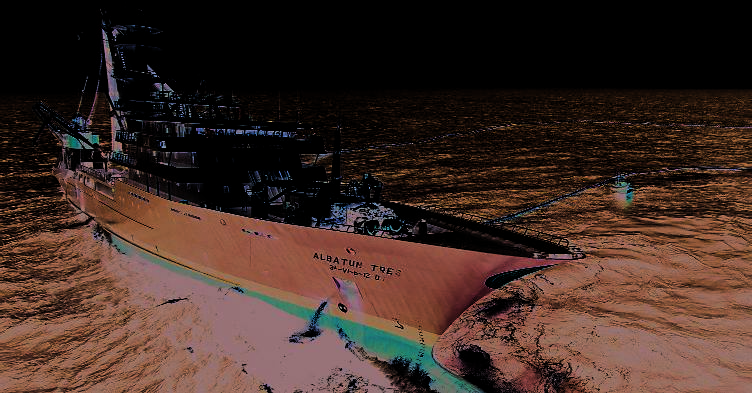
Voracious. Ships called purse
stocks have shrunk by 50% to 80%, except
seiners can scoop up entire
for skipjack. In the past decade, the fleets that
schools of tuna.
depleted the tuna stocks in the Atlantic and
the Eastern Pacific moved in, aggravating the
problem. The spike in fishing created a bonus
for the region's microstates, which receive an
average of 5% of the value of the landed
catch. For Kiribati, for example, the windfall
provides a third of the government's revenue.
When f isheries scientists warned that
these rates were not sustainable, the islands'
leaders embraced their advice, including a
recommendation for an immediate cut of at
F I S H E R I E S
least 30% for bigeye and 10% for yellowfin.
The fishing nations, including Japan, Taiwan,
Protecting the Last Great Tuna Stocks
and South Korea, resisted, and a compromise
solution was designed to lower the take by
Representatives of Western Pacific island
new rules also oblige the ships to carry inde-
10% a year over 3 years.
nations put the finishing touches last week
pendent observers, restrict the use of floating
The United States has resisted even that
on a series of bold, new measures aimed at
platforms, called fish-aggregating devices,
reduction. Under a separate treaty that lumps
saving the world's last great tuna stocks.
that disproportionately attract juveniles, and
together access fees and development aid, the
Last May, the group decided to bar fish-
ban throwing dead fish overboard to make
U.S. government pays most of the access fees
ing in two huge pockets of international
room for more valuable fish. All boats, even
for the 40-ship U.S. fleet. The U.S. has agreed
waters, creating the largest ever no-fishing
those that use hooks and lines, will be barred
to abide by the new agreement but says that
on May 28, 2009
zone. Fishing in the rest of the Western
from fishing in the high-seas pockets.
the treaty exempts it from the 10% reduction.
Pacif ic is regulated by the Western and
"These are the broadest and most effec-
The island nations are not happy. "The
Central Pacif ic Fisheries Commission, a
tive measures of any tuna f ishery in the
United States has expanded its fleet from
treaty-based organization that includes 15
world," says James Joseph, a fisheries scien-
11 to 40 ships in the past few years, mostly
island nations and 10 countries that pay
tist who for decades managed the commis-
by allowing Asian ships to take the Ameri-
them for the right to fish in their so-called
sion that regulates the eastern Pacific, and
can flag," says Pokajam. "These ships,
Exclusive Economic Zones (EEZs), which
which don't even supply the
stretch 200 nautical miles from land. Meet-
American market, now f ish
ing last week in Niue, a tiny island nation
without limits in our waters. The
www.sciencemag.org
4000 kilometers south of Hawaii, the min-
Hawaii
U.S. talks about conservation
isters decided to add two smaller pockets of
Marshall
but behaves differently."
Federated States
Islands
international waters.
of Micronesia
Kiribati
Palau
Several fisheries experts warn
The result: four no-take areas totaling
Nauru
that the new measures probably
Papua New Guinea
1.2 million square kilometers stretching
aren't sufficient to stop the big-
7000 km from French Polynesia to Palau.
Solomon Islands
eye's free-fall. "It's a great leap
Combined, the no-take zones are more than
Fiji
forward, for sure," says Kelvin
French
Downloaded from
three times the size of California and dwarf
Polynesia
Passf ield of the Pacif ic Ocean
the 360,000-km2 reserve in the Northwest-
f isheries program of the Inter-
Australia
ern Hawaiian Islands, whose waters contain
national Union for Conservation
Exclusive economic zone
far fewer fish.
of Nature. "But I'm afraid it's not
Protected international
"It's a big victory for us, because these
waters
going to be enough. If you don't
pockets were being fished much more inten-
cut 30% of the take when you
sively than our own waters," says Sylvester
Tuna sanctuary. Four pockets of international waters (red) will be
need to, it usually means you'll
Pokajam, managing director of the National
permanently closed to all fishing in January to protect tuna.
have to cut 50% later."
Fisheries Authority of Papua New Guinea.
Daniel Pauly, a fisheries sci-
"They were also used as refuges by ships that
they come none too soon. He says most of the
entist at the University of British Columbia,
poach in our waters." Phil Kline of Green-
world's tuna stocks are being fished at an
Vancouver, says fish species have survived
peace USA says the agreement "proves that
unsustainable rate. "Bluefin is a catastrophe,
only because some of their ranges have been
an international process can actually achieve
bigeye and yellowfin are in trouble in most
inaccessible to fishers. "Now that fishing
TON; SOURCE: GREENPEACE this" united front.
places, and so are some albacore," he says.
methods are much more effective, we need to
The measures, which take effect in Janu-
"Only skipjack are still in good shape."
create no-take zones so that we don't exploit
AUL HIL ary, would reduce by 10% the number of
The Western Pacific's catch has gone from
the whole range of any given species," he
fishing days in these EEZs for most of the
500,000 tons a year in 1970 to 2.4 million
explains. "In other words, a natural sustain-
225-ship international fleet of purse seiners,
tons in 2008. That's 60% of the world tuna
ability mechanism has to be replaced by a
says Pokajam. The ships, which use huge
catch, worth $3.9 billion, with purse seiners
deliberate one to avoid species collapse."
: © GREENPEACE/P nets to take out entire schools of tuna,
accounting for most of the increase. As a
CHRISTOPHER PALA
CREDIT account for three-quarters of the catch. The
result, in the past half-century, the Pacific
Christopher Pala is a writer based in Hawaii.
www.sciencemag.org
SCIENCE
VOL 324
29 MAY 2009
1133
Published by AAAS