UNITED NATIONS ENVIRONMENT PROGRAMME
GLOBAL ENVIRONMENT FACILITY
PROJECT DOCUMENT
SECTION 1 - PROJECT IDENTIFICATION
1.1
Sub-Programme
Title:
International Waters OP#10 Contaminants
1.2 Project
Title:
Demonstrating and capturing best practices and technologies
for the reduction of land-sourced impacts resulting from
coastal tourism
1.3 Project
Number:
GFL / 2328 2732 -xxxx
PMS:
GF/
4010
06-
xx
1. 4 Geographical Scope:
Regional: (Western Africa: Cameroon, Gambia, Senegal,
Ghana, Nigeria, Eastern Africa: Kenya, Mozambique,
Seychelles, and Tanzania)
1.5 Implementation:
United Nations Industrial Development Organization
(UNIDO) Vienna International Centre,
P.O. Box 300A-1400, Vienna, Austria
Tel:
(+43)-1-260
260
Fax: (+43)-1-260 26 6819
1.6
Duration of the Project:
60 months
Commencing: September 2007
Completion: August 2012
1.7
Cost of the Project:
Cost to the GEF Trust Fund:
US$
%
Project
5,388,200
PDF-B
626,400
Subtotal GEF
6,014,600
25.80
Co-financing: (Project):
National Governments
US $ 20, 781,816
UNIDO
US$ 200,000
UNIDO-ICT
US$ 100,000
UNEP/GPA
US$ 25,000
WTO
US $ 230,000
REDO
US $ 100,000
Nat. Con. Res. Centre
US$ 100,000
Ricerca
US $ 1,800,000
Ghana Wildlife
US $ 50,000
African Business Roundtable
US $ 10,000
SPIHT
US $ 25,000
AU-STRC
US $ 20,000
SNV (Netherlands Development Organization US $ 15,000
Subtotal Co-financing
US $ 23, 456,816
74.20
Total Project cost
US$ 29,471,416
100.00
1
1.8 Project Summary:
The marine and coastal resources along the 48,000 km of sub-Saharan African coastline are under
threat to a varying degree from the impacts of development-related activities. In particular, coastal
tourism contributes to the threats to the coastal and marine ecosystems through tourism-related
pollution and contamination. At the same time, coastal tourism is often considered the
`environmentally friendly' alternative to more exploitative livelihood options. Based on the identified
issues and proposals at the Ministerial and Heads of State meeting in Johannesburg at the World
Summit on Sustainable Development and the thematic group on coastal, marine and freshwater
ecosystems of the New Partnership for Africa's Development, the project aims to demonstrate best
practices strategies for to reduce the degradation of marine and coastal environments of transboundary
significance resulting from pollution and contaminants and associated impacts. The project aims to: (i)
capture Best Available Practices and Technologies (BAPs and BATS) for contaminant reduction; (ii)
develop and implement mechanisms for sustainable tourism governance and management that
measurably reduce degradation of coastal ecosystems from land-based sources of pollution and
contamination; (iii) assess and deliver training and capacity requirements emphasising an integrated
approach to sustainable reduction in coastal ecosystem and environmental degradation; (iv) develop
and implement information capture, information processing and management mechanisms and
information dissemination; and (v) undertake cost-effective project management, coordination,
monitoring and evaluation. The primary emphasis of the Project is aimed toward on-the-ground
demonstrations which form the major component of the Project as reflected in the substantial funding
for these elements. The lessons learnt and project relevant information will be disseminated through a
project information exchange mechanism linked to IW: LEARN.
Signatures
For UNIDO:
For UNEP:
Mr. Kandeh. K. Yumkella
David G. Hastie, Chief,
Director
General Budget and Financial Management
United Nations Industrial Development Organization
Service, UNON.
(UNIDO)
Date:
Date:
RECORD OF ENDORSEMENT ON BEHALF OF THE GOVERNMENT(S):
Cameroon
27 January 2006
Mr. Justin Ngoko Nantchou
GEF Operational Focal Point
Ministry of Environment and Nature Protection
Yaounde, Cameroon
Gambia
20 June 2006
Mr. Momodou Cham
2
GEF National Focal Point and Executive Director
National Environment Agency
Banjul, The Gambia
Ghana
02 March 2006
Mr. Edward O. Nsenkyire
Chief Director and GEF Operational Focal Point
Ministry of Environment and Science
Accra, Ghana
Kenya
24 February 2006
Dr Avignon Muusya Mwinzi
Ag. Director General and GEF Operational Focal
Point
National Environment Management Authority
Nairobi, Kenya
Mozambique
14 March 2006
Mr. Policarpo Napica
GEF National Focal Point
Ministry for the Coordination of Environmental
Affairs, Maputo, Mozambique
Nigeria
21 March 2006
Ms. Anne Ene-Ita
GEF National Operational Focal Point
Federal Ministry of Environment
Abuja, Nigeria
Senegal
24 March 2006
Ms. Fatima Dia Touré
GEF Operational Focal Point
Ministry of Environment and Nature Protection
Dakar, Senegal
Seychelles
19 April 2006
Ambassador Claude Morel
Principal Secretary and GEF Operational Focal
Point
Ministry of Foreign Affairs, Mahe, Seychelles
Tanzania
27 February 2006
Mr. A.R.M.S. Rajabu
Permanent Secretary and GEF Operational Focal
Point
Vice Presidents Office, Dares Salaam, Tanzania
3
TABLE OF CONTENTS
SECTION 1 - PROJECT IDENTIFICATION...........................................................1
SECTION 2 - BACKGROUND AND PROJECT CONTRIBUTION TO OVERALL SUB-
PROGRAMME IMPLEMENTATION
BACKGROUND AND CONTEXT (BASELINE COURSE OF ACTION
INTRODUCTION............................................................................................................7
GEF PROGRAMMING CONTEXT................................................................................17
REGIONAL CONTEXT.............................................................................................20
NATIONAL CONTEXT.............................................................................................24
THREAT ROOT CAUSES AND KEY BARRIERS..................................................................29
BASELINE..........................................................................................................36
RATIONALE AND OBJECTIVES
Rationale And Objectives (the Alternatives).......................................................39
PROJECT COMPONENTS AND OUTPUTS.........................................................................41
END OF PROJECT LANDSCAPE...................................................................................59
RISKS AND SUSTAINABILITY
INDICATORS & RISKS............................................................................................60
SUSTAINABILITY..................................................................................................65
IMPLEMENTATION ARRANGEMENTS & STAKEHOLDER PARTICIPATION
STAKEHOLDER PARTICIPATION.................................................................................67
REPLICATION......................................................................................................69
IMPLEMENTATION ARRANGEMENTS............................................................................70
INCREMENTAL COSTS AND PROJECT FINANCING....................................................72
SECTION 3 - WORK PLAN AND TIMETABLE, BUDGET & FOLLOW-UP
3.1 WORK PLAN AND TIMETABLE..........................................................................73
3.2 BUDGET....................................................................................................73
3.3 FOLLOW-UP................................................................................................74
SECTION 4 - INSTITUTIONAL FRAMEWORK AND EVALUATION
4.1 INSTITUTIONAL FRAMEWORK.......................................................................75
SECTION 5 - MONITORING AND REPORTING
5.1.1 MONITORING AND EVALUATION...........................................................................76
MANAGEMENT REPORTS
5.1.2 PROGRESS REPORTS.....................................................................................77
5.1.3 FINAL REPORT...........................................................................................78
5.1.4 SUBSTANTIVE REPORTS.................................................................................78
5.2
FINANCIAL REPORTS..................................................................................78
5.3
TERMS AND CONDITIONS
5. 3.1 NON-EXPENDABLE EQUIPMENT...................................................................... 79
5.3.2 RESPONSIBILITY FOR COST OVERRUNS......................................................... ....79
5.3.3 CASH ADVANCE REQUIREMENTS.....................................................................79
5.3.4 GAIN/LOSS ON EXCHANGE..........................................................................80
5.3.5 CLAIMS BY THIRD PARTIES AGAINST UNEP........................................................80
5.3.6 AMENDMENTS............................................................................................80
4
5.3.7 ARBITRATION......................................................................................................80
5.3.8 TERMINATION......................................................................................................80
5.3.9 PRIVILEDGES & IMMUNITIES..................................................................................80
LIST OF ANNEXES.............................................................................................81
LIST OF ACRONYMS AND ABBREVIATIONS
AOC-Hycos Système d'Observation du Cycle Hydrologique de l'Afrique de l'Ouest et Centrale
ASCLMEs
Agulhas and Somali Current Large Marine Ecosystems
AU-STRC
African Union Scientific, Technical and Research Committee
BAP
Best Available Practices
BAT
Best Available Technologies
BCLME
Benguela Current Large Marine Ecosystem
CCLME
Canary Current Large Marine Ecosystem
CBD
Convention on Biological Diversity
EA
Executing
Agency
EIA
Environmental Impact Assessment
EIMAS
Environmental Information Management and Advisory System
EMS
Environmental Management System
GCLME
Guinea Current Large Marine Ecosystem
GIS
Geographic Information System
GIWA
Global International Waters Assessment
GPA
Global Program of Action for the Protection of the Marine Environment from Land-
based Activities
IA Implementing
Agency
ICZM
Integrated coastal zone management
ISO
International
Standards
Organisation
IUCN
The World Conservation Union
IW
International
Waters
IW: LEARN
International Waters Learning Exchange and Resource Network
LME
Large Marine Ecosystem
MDGs
Millennium Development Goals
M&E
Monitoring and Evaluation
MSP
Medium Size Project (GEF)
NBSAP
National Biodiversity Strategy and Action Plan
NCRC
Natural Conservation and Resources Centre
NEPAD
New Partnership for African Development
NEAP
National Environmental Action Plan
NFP
National Focal Point
NSC
National Stakeholder Committee
NPA
National Programme of Action
NRM
Natural Resources Management
NTAG
National Technical Advisory Group
PCU
Project Coordination Unit
PDF
Project Development Facility
REDO
Research and Environmental Development Organisation
RICH
Regional Information Coordinating House
RPSC
Regional Project Steering Committee
RTAG
Regional Technical Advisory Group
T&CB
Training and Capacity Building
TDA
Transboundary Diagnostic Assessment
SADC
Southern African Development Community
5
SCTSSA
Sustainable Coastal Tourism in Sub-Saharan Africa
SIDS
Small Island Developing States
SMME
Small, Medium and Micro Enterprises
SPIHT
Syndicat Patronal des Industries de l'Hotellerie et du Toursime
ST-EP
Sustainable Tourism Eliminating Poverty
SNV
Netherlands
Development Organisation
UNEP
United Nations Environment Programme
UNESCO
United Nations Educational, Scientific and Cultural Organisation
UNESCO-IHP UNESCO- International Hydrological Programme
UNIDO
United Nations Industrial Development Organisation
WIO-Lab
Western Indian Ocean Land Based Activities (UNEP)
WSSD
World Summit on Sustainable Development
WTO
World Trade Organisation
WWF
World Wide Fund for Nature
6
SECTION 2 - BACKGROUND AND PROJECT CONTRIBUTION TO OVERALL
SUB-PROGRAMME IMPLEMENTATION
PROJECT DESCRIPTION
1.
BACKGROUND & CONTEXT -BASELINE COURSE OF ACTION
INTRODUCTION
1.
Globally, the productive capacity and ecological integrity of the marine environment,
including estuaries and near-shore coastal waters, are being degraded, and in many places the
degradation has intensified1. According to the Third Global Environment Outlook (GEO-3), the key
driving force behind the degradation of these ecosystems is often poorly-planned, and rapidly
accelerating, social and economic development-related activities in coastal areas that results from
increasing populations, urbanization, industrialization, maritime transport and tourism2. Tourism is
presently one of the most dynamic and fastest economic growth sectors around the world, especially in
developing nations3. Globally, this sector has repeatedly demonstrated its ability to act as a primary
driver of growth in some of the poorest nations4, and its potential to contribute to the Millennium
Development Goals, and its central target on poverty reduction5 through generating incomes,
investment, jobs, social welfare, external debt reduction, and encouraging economic diversification.
2.
Countries within sub-Saharan Africa are increasingly turning to tourism as a viable option to
accelerate their economic growth. As in most other regions, the tourism product in sub-Saharan Africa
is highly dependent on the natural resource base, and the natural beauty of the African coastline, in
combination with the favourable climate conditions, has increased the prominence of coastal beach
based tourism. Coastal tourism is often considered as an "environmentally-friendly" alternative to
more traditional exploitative forms of livelihood within sensitive coastal areas, which has the added
potential to benefit environmental protection and increase the appreciation of the value of natural
resources and diversity livelihood options. It is however also well recognized that coastal tourism and
recreational activities, and the other land- and marine-based activities associated with the sector, can
rapidly escalate negative human induced impacts, and lead to the degradation and loss of integrity of
the globally important coastal and marine ecosystems, especially if allowed to proceed in the absence
of careful planning, regulation and management. Countries in sub-Saharan African are therefore
looking to develop a more sustainable tourism sector where the level tourism activity continues to
produce positive long term benefits for the social, economic, natural and cultural environments6.
3.
Sub-Saharan Africa contains 32 coastal states (out of a total of 44 states), bordering both the
Atlantic and Indian Ocean, with a combined coastal length that exceeds 48,000 km 7. The system
boundaries of the sub-Saharan Africa region can be defined geographically as extending from
1 A Sea of Troubles (2001) Joint Group of Experts on the Scientific Aspects of Marine Environmental Protection
(GESAMP)
2 It is estimated that 50 % of the world's coasts are threatened by development-related activities. Over 40 % of
the world's population already lives within 100 km of the coast, and the density of people in coastal areas
(approx. 100 people km-2) is already much higher than in inland areas (approx. 38 people km-2).
3 In 2004, international tourism receipts for developing countries amounted to US$177 billion, and international
tourist arrivals reached a record 763 million, and with 39% of the world's international tourist arrivals.
4 Tourism is currently main source of foreign exchange earnings in 46 of the 49 Least Developed Countries.
5 UN World Summit, September 2005 in New York, Declaration adopted on "Harnessing Tourism for the
Millennium Development Goals" during a tourism event organized by WTO.
6 Based on the definition of ICOMOS, ICTC, (2002)
7 Source: UNEP (2005). The GEO Data Portal. United Nations Environment Programme.
http://geodata.grid.unep.ch
7
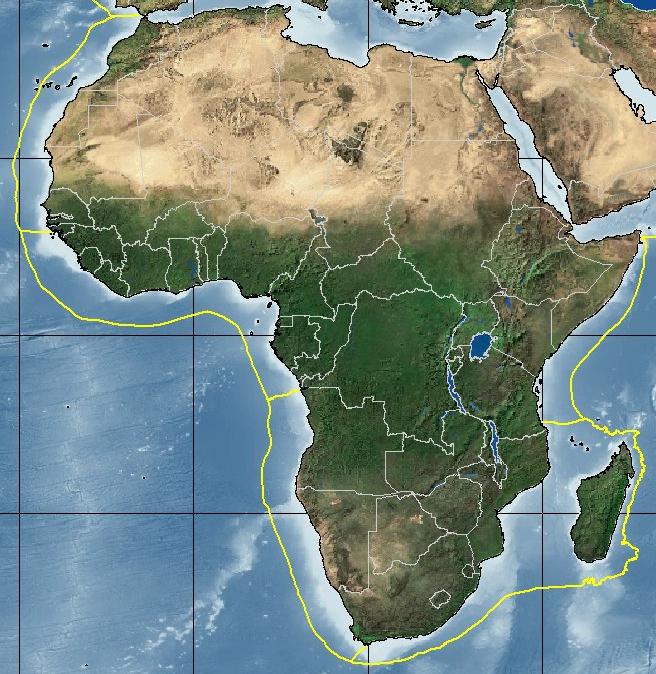
approximately 20 degrees N latitude south to about 30 degrees S latitude, and variously from 20
degrees west to about 50 degrees East longitude. The ecosystems resources shared by these countries
are encompassed by five distinct Large Marine Ecosystems8 (LMEs) (see Figure 1), all of which are
recognized as important for their globally significant marine diversity and high productivity, with rich
fishery resources, oil and gas reserves, precious minerals, and their potential for tourism. The marine
8 Canary Current, Guinea Current and Benguela Current and Anghulas Current and Somali Current.
8
Figure 1:
Map of the Large Marine Ecosystems (LMEs) of Africa.
Figure 2:
Map of Africa showing the distribution of the countries in sub-Saharan Africa
participating in the project (shaded in dark grey).
9
and coastal ecosystems in this region support a diverse complex of productive habitats, such as coral
reefs, seagrass meadows, mangrove forests, estuaries and floodplain swamps and several major coastal
upwelling sub-ecosystems that are ranked among the most productive coastal and offshore waters in
the world.
4.
The marine and coastal ecosystems along of Atlantic coast of sub-Saharan Africa support a
diverse assemblage of fauna including: fishes ranging from small pelagics, (sardinellas shad), large
pelagics (tuna and billfish), crustaceans and molluscs (shrimp, lobster, cuttlefish), and demersal
species (sparids and croakers); invertebrates such as intertidal molluscs (Anadara sp. Crassostrea sp.);
reptiles (turtles, crocodiles); marine mammals such as the West African manatee (Trichechus
senegalensis), and several species of sharks9; and millions of migratory birds that seasonally visit the
wetlands10 (Larus genei, Geochelidon nilotica, Sterna maxima, lbididorsalis, etc). The coastal areas on
the Atlantic coast of Sub-Saharan Africa also support important flora and fauna. Mangroves
(Rhizophora sp, Conocarpus sp, Avicennia sp, Mitragyna inermis, and Laguncularia sp.) are common
along these coasts and are dominant in certain places, such as the Niger Delta of Nigeria which has
Africa's largest and the world's third largest mangrove forests. Along the Indian Ocean coast of sub-
Saharan Africa the marine and coastal ecosystems support seagrass beds, coral reefs and mangrove
forests and provide critical habitats of high diversity for fish, invertebrates and other organisms. There
are over 11,000 species of marine fauna, including several thousand species of invertebrates and fish
(such as tuna, lobster, shrimp, oysters, clams, etc.), with over 370 species of scleractinian corals, 52
tropical inshore fish families and other charismatic species such as the Coelacanth, dugong, turtles,
cetaceans, sharks and important seabird populations. Five of the world's seven species of marine turtle
nest on beaches in the region. Coral reefs cover an estimated 7,000 km2 along the mainland coastline
of East Africa and throughout the Indian Ocean Island States11. Mangrove forests are found mainly in
nutrient rich river estuaries (e.g. estuaries of the Limpopo, Zambezi and Rufiji and Tana Rivers). Both
also provide a range of essential goods and services, including: (i) food, from fish and invertebrates,
and other sources like seaweed; (ii) livelihoods and employment; (iii) aesthetic natural landscapes; (iv)
protection and stabilization of the physical coastline to mitigate against storms and erosion; (v)
nutrient cycling of land run-off into food chains that ultimately supply fish and other products; and (vi)
regulation of atmospheric gases (e.g. CO 2) and of the global climate.
5.
Coastal states in sub-Saharan Africa are home to over 465 million people12 and many are
directly dependent on the marine and coastal resources and the essential goods and services they
provide. Marine and coastal environments throughout sub-Saharan Africa are presently affected by
anthropogenic activities associated with fishing, agriculture, residential developments, land run-off
urban and domestic sewage, industrial sites, ports, as well as mining for sand, limestone and coral for
building materials, and oil, gas and other mineral resources (in West Africa). Signs of degradation of
the marine and coastal environment are becoming more obvious. Resources are being overexploited
and the quality of the coastal and marine areas is being degraded. Some countries in the region are oil
producers and others (e.g. Cameroon and Nigeria) are net exporters. The expansion of the oil industry
and the number of offshore platforms, pipelines, and various export/import terminals, coastal refineries
results in an inevitable increase in oil pollution. The use of inorganic and organic chemical fertilisers
and pesticides has markedly increased with the development of commercial agriculture and the advent
of large plantations and the need to improve food production and protect human health against insect-
borne diseases. Run-off loaded with these chemicals may reach surface or groundwater and coastal
waters leading to hypernutrification. Most of the countries lack the facilities to properly treat or
dispose of domestic or industrial liquid and solid wastes and these often ended being released or
dumped into coastal waters or wetland areas. In some areas pollution levels threaten human health,
9 World Bank Report, 1994
10 UNEP Regional Seas Reports and Studies No. 171
11 Obura (2005) and Ahamada et al. (2005)
12 UNDP (2005) Human Development Report http://hdr.undp.org/
10
directly through exposure to contaminants and pathogens in coastal waters, and indirectly through the
accumulation of toxins in seafood.
6.
The general expansion of development-related activities in the region over the past 30 years,
and the abundance of natural resources and economic opportunities have led to high rates of migration
in the coastal areas in sub-Saharan Africa. The higher density of people in the narrow coastal areas has
put further pressure on these fragile ecosystems and on the natural resources. The expansion of coastal
tourism has also played its part; the typical tourism marketing approach of selling "sand, sea, and sun"
has resulted in the growth of hotel and leisure facilities in sensitive coastal areas. This has further
increased the density of coastal populations and contributed to the degradation of these environments,
as well as to dislocations in the social fabric of many communities. Human induced impacts on the
marine and coastal environment have resulted in the destruction and loss of habitats (mangroves,
seagrass beds, and coral reefs), destabilized the coastal zone, increased erosion, resulted in a decline in
harvests of marine living resources, a shortage and contamination of fresh water, and overall water
quality decline and contamination of coastal waters, beaches, and living resources, and these have been
identified as the main transboundary problems in East and West Africa13. As a result of the cumulative
affect of these anthropogenic impacts, there has been a drop in economic opportunities and increasing
poverty amongst many coastal communities. This pattern of over-extraction and overloading is likely
to continue, if not intensify, in future.
7.
Globally, activities that result in the degradation and physical alterations to coastal and marine
ecosystems deserve priority action. These issues cannot however be addressed in isolation from the
broader objectives of sustainable economic development. Social and economic development needs,
poverty, human health, resource use and production patterns should be addressed in parallel with
strategies to address the degradation of coastal and marine environments, through regionally integrated
and cooperative action. The tourism sector is potentially uniquely positioned to achieve this type of
parallel action. This sector has both the incentive and the position to act as: (i) a catalyst in the
improvement of planning and management of tourism destinations, (ii) a means to increase interest and
awareness of the values of certain key environmental assets and achieve broader goals in terms of their
protection and, (iii) a means to generate sustainable social and economic benefits, through providing
alternative livelihood options, creating more jobs and supporting the development of small businesses.
Through its multiplier effect, tourism can positively impact upon related sectors, such as handicrafts,
agriculture, transportation, telecommunications, construction, and thereby stimulate wider economic
development.
8.
Coastal tourism in sub-Saharan African countries already contributes a significant portion of
export services and GDP14 in some countries, and yet there is still immense scope for further growth15.
13 The WIO-Lab project identified the major transboundary perceived problems / issues in East Africa as:
1. Shortage and contamination of fresh water
2. Decline in harvests of marine living resources
3. Degradation of coastal habitats (mangroves, seagrass beds, and coral reefs), loss of biodiversity
4. Overall water quality decline: contamination of coastal waters, beaches, and living resources
In Gulf of Guinea LME project identified the major transboundary problems/issues in West Africa as:
1. Decline in fish stocks and unsustainable harvesting of living resources;
2. Uncertainty regarding ecosystem status, integrity (changes in community composition, vulnerable species and
biodiversity, introduction of alien species) and yields in a highly variable environment including effects of global
climate change;
3. Deterioration in water quality (chronic and catastrophic) from land and sea-based activities, eutrophication and
harmful algal blooms;
4. Habitat destruction and alteration including inter-alia modification of seabed and coastal zone, degradation of
coastscapes, coastline erosion.
14 In 2004 international tourism receipts represented 21 % of total export of services in Senegal, 54% in Kenya
and 80% in the Seychelles; international tourism receipts in Ghana, Tanzania and Kenya represented around 6 %
of the total GDP, while in the Seychelles it reached almost 35 % in the same year (WTO, 2005).
15 International tourist arrivals to Africa as a whole grew at an average annual rate of 5.8 % between 1990 and
2004 and are predicted to continue to rise. It is estimated that total international tourist arrivals to Africa will
increase from 33 million in 2004 to 47 million in 2010 and to 77 million by the year 2020: Source, WTO Tourism
2020 Vision
11
If this sector is to achieve this type of parallel action in sub-Saharan Africa there is a need for better
regulation and management of existing tourism facilities and careful planning and management of
future tourism destinations to ensure that: the potentially large socio-economic benefits the sector
could accrue (e.g. poverty alleviation and provision of alternative livelihoods) are not accompanied by
negative impacts on the environment, (e.g. removal or damage to critical habitats, increased soil and
beach erosion, loss of shoreline stability, modification of stream flows and reduced groundwater
recharge, air, water and noise pollution, increased sedimentation and nutrification of coastal water, and
increased volumes of solid and other wastes entering the environment) and to maximise on the sectors
potential to positively contribute towards the protection of these fragile globally significant
environments (e.g. raised awareness of environmental assets and revenue generation).
9.
At the global level, until relatively recently little attention was paid to the relationship between
tourism and international efforts to promote sustainability and environmental conservation. For
example, tourism is given little prominence in key environmental agreements and conventions, such as
Agenda 21, the Framework Convention on Climate Change (FCCC) and the Convention on Biological
Diversity (CBD), although it was a central issue in the Barbados Declaration on the Sustainable
Development of Small Island Developing States (SIDS). However, since then, tourism has become the
subject of several official, albeit non-binding, international declarations, such as the UNEP
"Environmental Programme of 1995 for the Travel and Tourism Industry", UNESCO's "Charter on
Sustainable Tourism" announced in Lanzarote in 1995, and the "Malé Declaration on Sustainable
Tourism Development" adopted by the tourism and environmental ministers of the Asia-Pacific area in
1997. Another important initiative is the "Berlin Declaration Biological Diversity and Sustainable
Tourism", signed by the environment ministers of 18 nations including developing countries with a
major stake in tourism at the International Tourism Exchange (ITB) in 1997 on the initiative of the
German Federal Ministry of the Environment. The Parties and Signatory States assume that the
"central objectives of global environmental policies, namely sustaining biological diversity, climate
protection and reducing consumption of natural resources cannot be accomplished without a
sustainable development of tourism.
10.
More recently, the World Summit on Sustainable Development (WSSD) Plan of
Implementation adopted by governments in Johannesburg, South Africa, 26 August 4 September
2002, Paragraph 29 states that "Oceans, seas, islands and coastal areas.... are critical for global food
security and for sustaining economic prosperity and the well-being of many national economies,
particularly in developing countries. Ensuring the sustainable development of the oceans requires
effective coordination and cooperation, including at the global and regional levels..". This same
Paragraph goes on to express the need to adopt regional approaches that "Strengthen regional
cooperation and coordination between the relevant regional organizations and programmes, the
UNEP regional seas programmes, ...and other regional science, ... and development organizations".
11.
The WSSD Plan of Implementation continues in Paragraph 31 to call upon the international
community to "Develop national, regional and international programmes for halting the loss of
marine biodiversity, including in coral reefs and wetlands". Paragraph 32 calls upon the international
community to "Advance the implementation of the Global Programme of Action for the Protection of
the Marine Environment from Land-based Activities (GPA/LBA) and the Montreal Declaration on the
Protection of the Marine Environment from Land-based Activities ...by actions at all levels to:
a) Facilitate partnerships, scientific research and diffusion of technical knowledge; mobilize
domestic, regional and international resources; and promote human and institutional
capacity-building, paying particular attention to the needs of developing countries;
b) Strengthen the capacity of developing countries in the development of their national and
regional programmes and mechanisms to mainstream the objectives of the Global Programme
of Action and to manage the risks and impacts of ocean pollution;
c) Elaborate regional programmes of action and improve the links with strategic plans for the
sustainable development of coastal and marine resources, noting in particular areas which
are subject to accelerated environmental changes and development pressures;
12
d) Make every effort to achieve substantial progress to protect the marine environment from
land-based activities.
12.
The WSSD also makes specific reference to the need for corporate responsibility. Paragraph
17 of the WSSD Plan of Implementation calls for the adoption of initiatives to "enhance corporate
environmental and social responsibility and accountability" including actions at all levels to:-
(a)
Encourage industry to improve social and environmental performance through voluntary
initiatives, including environmental management systems, codes of conduct, certification
and public reporting on environmental and social issues, taking into account such
initiatives as the International Organization for Standardization (ISO) standards and
Global Reporting Initiative guidelines on sustainability reporting, bearing in mind
principle 11 of the Rio Declaration on Environment and Development;
(b)
Encourage dialogue between enterprises and the communities in which they operate and
other stakeholders;
(c)
Encourage financial institutions to incorporate sustainable development considerations
into their decision-making processes; and
(d)
Develop workplace-based partnerships and programmes, including training and education
programmes".
13. Specific reference to the tourism sector was given in Paragraph 43 of its Plan of Implementation:
"Promote sustainable tourism development, including non-consumptive and eco-tourism, taking into
account ...the World Eco-tourism Summit 2002 and its Quebec Declaration, and the Global Code of
Ethics for Tourism as adopted by the World Tourism Organization in order to increase the benefits
from tourism resources for the population in host communities while maintaining the cultural and
environmental integrity of the host communities and enhancing the protection of ecologically sensitive
areas and natural heritages. Promote sustainable tourism development and capacity-building in order
to contribute to the strengthening of rural and local communities. This would include actions at all
levels to:
(a)
Enhance international cooperation, foreign direct investment and partnerships with both
private and public sectors, at all levels;
(b)
Develop programmes, including education and training programmes, that encourage
people to participate in eco-tourism, enable indigenous and local communities to develop
and benefit from eco-tourism, and enhance stakeholder cooperation in tourism
development and heritage preservation, in order to improve the protection of the
environment, natural resources and cultural heritage;
(c)
Provide technical assistance to developing countries and countries with economies in
transition to support sustainable tourism business development and investment and tourism
awareness programmes, to improve domestic tourism, and to stimulate entrepreneurial
development;
(d)
Assist host communities in managing visits to their tourism attractions for their maximum
benefit, while ensuring the least negative impacts on and risks for their traditions, culture
and environment, with the support of the World Tourism Organization and other relevant
organizations;
(e)
Promote the diversification of economic activities, including through the facilitation of
access to markets and commercial information, and participation of emerging local
enterprises, especially small and medium-sized enterprises".
14. Further references to tourism can be found in the Plan of Implementation related to energy and
biodiversity conservation, Small Island Developing States and African issues. Paragraph 44. (b)
underlines the need to "Promote the ongoing work under the Convention on Biological Diversity on
13
the sustainable use on biological diversity, including on sustainable tourism, as a cross-cutting issue
relevant to different ecosystems, sectors and thematic areas".
15.
Paragraph 64 of the WSSD Plan of Implementation specifically calls on countries to "Support
Africa's efforts to attain sustainable tourism that contributes to social, economic and infrastructure
development", including the implementation of projects at the local, national and sub-regional levels,
with specific emphasis on marketing tourism products such as adventure tourism, eco-tourism and
cultural tourism, and by assisting host communities in managing their tourism projects for maximum
benefit, while limiting negative impact on their traditions, culture and environment.
16.
The UNEP Global Program of Action for the Protection of the Marine Environment from
Land Based Activities (UNEP GPA/LBA) recognizes that the main cause of degradation of the marine
environment is due to land-based activities including urbanization and coastal development and
provides a framework for action, that invites governments to assess their respective problems, identify
priorities for action, develop strategies, monitor implementation and set common goals and sustained
and effective actions to deal with all land-based impacts upon the marine environment (sewage,
persistent organic pollutants, radioactive substances, heavy metals, oils (hydrocarbons), nutrients,
sediment mobilization, litter, and the physical alteration and destruction of habitats). The proposed
Project builds on the recognized priorities for action proposed in the regional approach to
implementing the GPA/LBA, which include the strengthening of regional cooperative arrangements.
17.
In recognition of the importance of the tourism sector for socio-economic development and the
potential impacts on the environment UNEP has developed a strategy for sustainable tourism
development. The UNEP Division of Trade, Industry and Economic (UNEP/DTIE) has been appointed
by the Commission on Sustainable Development (CSD) as the Interagency Coordinator or lead agency
responsible for implementation of Agenda 21 issues on tourism. Together with the World Tourism
Organization (UN-WTO), UNEP is the main focal point on sustainable tourism for CSD and the
Convention on Biological Diversity. This Project is fully consistent with the UNEP strategy for
sustainable tourism development which has the following objectives:
· To promote sustainable tourism among government agencies and the industry.
· To develop sustainable tourism tools for protected/sensitive area management.
· To support implementation of multilateral environmental agreements related to tourism (such
as CSD, Biological Diversity, Climate Change, Regional Seas, Marine Impacts from Land-
Based Activities, Migratory Species, CITES, Ramsar, World Heritage and others).
18.
UNIDO has conducted several analyses on the tourism sector through the Organization's two
Branches (Private Sector Development and Trade Capacity-building) who offer tailor made services
(notably policy and capacity building activities, developing standards and quality, certification,
enhancing private sector participation and building public-private partnerships etc) to industries
including the tourism sector (mostly SMEs). UNIDO has two other Branches with activities that
directly support this project notably:
· Investment and Technology Promotion Branch (supporting innovation, technology needs assessment,
technology management and transfer including development of appropriate tools and methodologies
in industrial sectors);
· Energy and Cleaner Production Branch (promote cleaner and environmentally sound technologies,
support sound management of water resources and introduction of pollution control and waste-
management systems, awareness raising in private sector on benefits of cleaner and sustainable
production, implementing environmental management systems and certification schemes in
industries, corporate social responsibility, etc).
19.
UNIDO, through its International Centre for Science and High Technology (ICS), Trieste,
Italy, is also able to provide high-level technical training to developing countries on topics related to
environmental management systems, eco-certification and labelling schemes and integrated coastal
14
zone management. Components of UNIDO's regular programmes relevant to the project include:
Ecologically Sustainable Industrial Development (ESID); Biodiversity conservation; Small and
Medium enterprises support systems and institutions; Quality for International Competitiveness;
Environmental Management Systems in Industry, Transfer of Environmentally Sound Technologies
(TEST), and Rural industrial development (handicrafts). Commercialization of research results, with a
view to local consumption and for export can be accelerated using the experience of UNIDO. This is
in keeping with the objective of developing the industrial base of developing countries by
strengthening the institutional capacity and human resource development.
20.
The proposed Project described below will contribute to the realization of the commitments
listed above in nine countries in sub-Saharan Africa. The countries involved in the Project includes a
diverse yet representative selection of countries from mainland West Africa (Cameroon, Gambia,
Ghana and Senegal), East Africa (Kenya, Tanzania and Mozambique) and one island state
(Seychelles), as shown in Figure 2. Tourism is an important and growing sector in these nine sub-
Saharan African nations, and all countries identified tourism as one of the main sectors that is or could
imminently have negative impacts on the marine and coastal environment.
21.
National reports prepared both during the GEF/UNEP MSP on the Protection and
Development of the Coastal and Marine Environment of sub-Saharan Africa (the African Process) and
PDF-B phase of this Project in addition to the transboundary diagnostic analysis (TDA) documents of
the GEF/UNDP/UNEP/UNIDO Guinea Current Large Marine Ecosystem project (GCLME) and the
GEF/UNEP Western Indian Ocean Land Based Activities project (WIO-Lab) acknowledged the
impacts of tourism, and significant impacts were recognised by those countries where coastal/beach
tourism is already well established, such as The Gambia, Ghana, Kenya, Tanzania and Seychelles. The
specific threats to the coastal and marine environment resulting from tourism related activities that
were recognised during the GEF /UNEP MSP included: (i) pollution (including solid waste), (ii) loss
and modification of habitats and, (iii) over-extraction or misuse of coastal and marine resources (see
Table 1 and see section on threats and causes below). The TDA analyses also recognized that further
degradation of the marine and coastal ecosystems could threaten the potential sustainability of the
tourism sector.
22.
Coastal tourism in these countries has thus far developed at different rates, but typically
development has progressed in an ad hoc, un-planned and uncontrolled manner. The national reports
prepared during the PDF-B phase consistently identified problems such as the inadequate provision of
the necessary related infrastructure (e.g. sewage treatment facilities, water supply, roads, etc) and
limited site management, lack of effective procedures and infrastructure to dispose of liquid waste,
including sewage treatment and disposal, excessive production of solid waste and poor solid waste
management and lack of capacity to design and manage effective waste management systems,
uncontrolled water consumption, excessive use of non-renewable energy resources.
23.
Little attention has been paid to the positioning of tourism developments with respect to their
proximity to sensitive biological areas, which has resulted in the damage, removal or complete loss of
critical habitats (e.g. mangroves and wetlands), and in terms of appropriate coastal construction set-
back limits and land reclamation, and hence their subsequent impacts on the coastal and marine
environment, shoreline stability and water quality. Erosion of coastal areas is occurring both by
tourism development and by other uses such as sand mining to provide building materials for use in
construction, and through direct coastal alteration (e.g. ports, seawalls). There is generally an inability
to control visitor numbers and activities in environmentally sensitive areas and scant attention has been
paid to regulating and/or controlling the impacts of other tourism-related activities based on the coastal
and marine environment, such as diving, snorkelling, fishing and yachting (e.g. anchor damage and
physical breakages by divers / snorkellers).
24.
During the PDF-B process all participating countries identified the need for a more integrated
approach to planning for coastal tourism, with appreciation of the need to protect biodiversity
alongside socio-economic and cultural sensitivities, and the need for a comprehensive and effective
regulatory framework to ensure the long term sustainability of tourism sector. Even those countries
that have already started to develop a policy and strategy framework for sustainable tourism, (such as
Seychelles and Senegal) identified the need to strengthen such polices and strategies as a key priority,
15
particularly with regards to eco-tourism. The current lack of mid to long term planning of tourism
developments and regulation of tourism activities is impacting directly on the health and well-being of
the marine and coastal environment and the quality of life of people who live there.
25.
From a socio-cultural perspective the expansion of the tourism sector has resulted in often
uncontrolled migration into areas. Local communities often lack adequate business skills to cope and
this restricts their ability to participate in the benefits from tourism, which results in resentment of
tourists and the tourism sector by locals. The lack of planning and integration in the management of
activities within the coastal zone leads to encroachment of tourist facilities on protected zones and
overcrowding of tourists in sensitive areas with the related high volume of waste and litter. The lack of
local community participation leads conflicts of interest between resource users restricted public
access to beaches for recreation and loss of livelihoods through loss of convenient fish landing sites.
Polluted beaches and general degradation of coastal zones reduces the "attractiveness" of affected
areas as a tourist destinations and results in declining visitor arrivals and revenues. The general lack of
a comprehensive and coordinated participatory approach to the development of the coastal tourism
sector is ultimately threatening the sustainability of the sector in sub-Saharan Africa where tourism is
largely "nature-based" and dependent on a clean environment.
26.
The proposed Project thereby responds to an urgent need to initiate proactive, integrated and
interdisciplinary measures to demonstrate strategies to alleviate/mitigate for the negative impacts of
tourism sector on the coastal and marine environment of transboundary significance, and at the same
time leverage support from the sector to prevent the physical destruction of critical habitats, the
overexploitation of living resources, the loss of marine biological diversity, threatened and endangered
species that are in themselves critical factors for the successful development of sustainable tourism16 in
Africa.
TABLE 1: NEGATIVE IMPACTS OF COASTAL TOURISM IN SUB-SAHARAN AFRICA
Problem
Source
Type of Activity
Pollution/
Hotels
Sewage disposal into coastal waters
Contamination
Cruise ships
Sewage disposal into coastal wetlands
Yachts/boats
Sub-surface disposal and irrigation using sewage
Marinas
effluent
Restaurants
Solid waste disposal in coastal garbage dumps
Laundries
Solid waste disposal in unauthorized areas
Shops
Disposal of used oils in drains and sewage systems
Merchants/ vendors Boat/engine operation and repair
Inadequate sourcing of materials (food, products.)
Air pollution (e.g. road traffic and diesel fumes etc.)
Noise pollution (e.g. nightlife, generators, road traffic
etc.)
Light pollution on beaches
16 Sustainable Tourism refers to a level of tourism activity that can be maintained over the long term because it results
in a net benefit for the social, economic, natural and cultural environments of the area in which it takes place, (ICOMOS,
ICTC, 2002) and, socio-cultural and environmental impacts are neither permanent nor
irreversible.
16
Mechanical/
Hotels
Coastal construction activities
Physical
Beaches
Dredging for ports, harbours and boat channels
Damage
Clubs
Land filling / reclamation
Individual
Anchor damage and groundings
operators Marinas
Beach infrastructure construction
Piers/jetties/wharfs
Construction of protective structures
Groynes/
Recreational activities (water sports, snorkelling/
breakwaters
diving)
Airports
Removal of dune vegetation
Roads / seawalls
Raking (grading) of beaches
Boats
Removal of sea grasses
Sand mining
Resource-
Hotels
Over-fishing and other food products
use/ Misuse
Public beaches
Over extraction of water
Building materials
Electricity
Beach modification Sand mining
Boat production
Thatch harvesting
Coral mining (for building materials)
Over-crowding of beaches
Collection of curios & souvenirs
GEF PROGRAMMING CONTEXT
27.
The proposed Project conforms to the GEF Operational Strategy and Operational Programmes,
in particular with OP 10 - Contaminant-Based Operational Program. The proposed Project is wholly
consistent with the long term objective of OP10 to "demonstrate ways of overcoming barriers to the
use of best practices for limiting releases of contaminants causing priority concerns in the
International Waters focal area, and to involve the private sector in utilizing technological advances
for resolving these transboundary priority concerns" (para 10.3). Annex I provides details of
conformity with the OP 10 requirements.
28.
The Project will also have relevance to OP 9 which focuses on an integrated management
approach to the sustainable use of [land and] water resources on an area-wide basis and OP2
Biodiversity in coastal and marine ecosystems, specifically to aspects of ecosystem management
including elements of information sharing, training, institutional-strengthening, demonstrations, and
outreach.
29.
The Project conforms specifically to the short term objective of OP10 to: "demonstrate
strategies for addressing land-based activities that degrade marine waters..." (para 10.4) and the GEF
International Waters Focal Area- Strategic Priorities in Support of WSSD Outcomes for FY 2003-
2006, in particular Strategic Priority IW3: Innovative demonstrations for reducing contaminants and
addressing water scarcity issues. The present project will assist in meeting the targets for this priority
by demonstrating innovative technologies, methodologies, and financial mechanism and involving the
private sector in utilising technological advances and methods, for addressing the impacts of land-
based activities on the marine and coastal environment and resolving transboundary priority concerns.
30.
An important and successful element of the IW Portfolio and Strategy has always been the
financing of demonstration projects within different sectors related to transboundary issues and threats.
Such demonstrations are designed to test the local application and feasibility of innovative
technologies and to reduce barriers to their utilisation, and to the adoption of appropriate management
strategies in general. The current Project proposal will aim to demonstrate the feasibility and
application of specific sustainable tourism strategies at the local level at recognised national hotspots
of impact from tourism and tourist-related activities. The Project will fast-track strategies, techniques,
institutional arrangements and innovative demonstrations involving public-private partnerships, to
reduce coastal and marine environmental stresses from tourism and contribute to sustainable coastal
livelihoods and poverty alleviation based upon globally accepted Best Available Practice and
17
Technologies within participating sub-Saharan African countries. Particular emphasis will be placed
on identifying suitable mechanisms to implement successful public-private partnerships and capturing
long-term financial mechanisms in support of sustainable tourism practices and reforms (including
alternative livelihoods and community practices).
31.
The outcomes of these demonstrations will include innovative reforms, new technologies, and
tested on-the-ground measures that will secure ecosystem functions and services and mitigate the
impacts from tourism-related contaminants and pollutants. This geographically and thematically
specific capture of Best Available Practices and Technologies will be further enhanced through the
capture of applicable case studies and lessons from all over the world (including other scenarios within
the participating countries). The overall aim of this exercise will be to identify sustainable tourism
practices and activities that are specifically suited to each country and to actual localised situations
within the countries with a view to replicating those practices and activities. So while the direct, short-
term benefits of the specific demonstration activities will be at specific site levels (i.e. of the
participating hotels and tourism sites/facilities). The demonstrations will deliver value at the national
and regional levels by providing both the impetus and the opportunity to implement the models and
guidelines of Best Available Technology and Best Available Practice, which can also be used for the
wider application of sustainable coastal tourism within the region and elsewhere.
32.
The International Waters (IW) focal area is currently poised to scale up its activities to go
beyond testing and demonstration of sustainable alternatives and better practices to a more operational
scenarios which will support the incremental cost of implementing the reforms, investments and
management programmes that are necessary to underpin the transition to the sustainable development
of transboundary resources and the sustainable utilisation of ecosystem functions and services. In this
respect, the current Project aims to deliver both phases within one project cycle by capturing best
available practices and technologies (both from existing case studies and examples and through
customised and targeted in-country demonstrations), elaborating appropriate national sustainable
tourism mechanisms, and then implementing those agreed mechanisms through adopted strategies and
work-plans at the national and local level. It is the intention that this Project will thereby provide a
sympathetic response to the current modest funding resources available though a sequence of
demonstration and identification of best lessons and technologies followed by the dissemination and
implementation of sustainable tourism practices as operational management and policy outputs within
a single project.
33.
It is worthwhile noting that the proposed demonstration activities were identified by the
countries that participated in the GEF/UNEP MSP "African Process" as priority issues that require
suitable management options, the demonstration projects would, thus, provide these countries with a
demonstrated clear management strategy. In this way, the chance of replicating the projects in other
countries in sub-Saharan Africa and even in other regions is high.
34.
One critical barrier to effective policy and legislation for sustainable tourism is the absence of
effective and comprehensive data and information capture and handling within all of the participating
countries. This severely constrains management decisions and realistic policy development as a result
of insufficient guidance, and the constant uncertainty regarding the status of the environment and
ecosystem services and how this relates to socio-economic conditions and drivers. The Project aims to
address this through the development of model information management systems that not only focus
on capturing the relevant information but identify effective packaging for deliver to management and
policy makers, and incorporating a feedback mechanism that will ensure that managers and policy-
makers can identify their information needs in order to arrive at well-justified decisions. Technical
information sharing, capacity building, training opportunities, awareness and outreach are important
aspects of the project. The technical support will assist participating countries in making the necessary
national legal, regulatory or sectoral reforms, and will deliver technological and information system
outputs to assist the participating countries to deal with the root causes of transboundary
environmental degradation related to a lack of information or capacity.
35.
Actions in response to local pressures to reduce local impact will often serve to reduce
transboundary impact. However other actions at national levels, if not integrated with actions of
neighbouring countries, may merely displace the problem and even increase the overall transboundary
18
impact. Other transboundary threats are more widely distributed and may be of a cumulative nature.
The regional approach will help increase understanding on how to jointly address coastal and marine
tourism environmental problems, share experiences and help participating countries sort through
complex decision making for dealing with root causes of transboundary environmental degradation.
The Project's regional approach will cost-effectively build tools and models that can be shared
amongst the participant countries, which would otherwise have been too costly for each country to
implement by itself (e.g. EMS, eco-certification and eco-labelling schemes within the tourism sector,
improved reef recreation management, and eco-tourism that promote sustainable alternative
livelihoods and/or generate revenues for environmental conservation).
36.
The implementation of this project and the demonstrations, capture and transfer of best
practice lessons will accrue further regional and by extension global environmental benefits. By
providing a framework for the reduction and elimination of tourism facilities in sensitive sites of
global significance, the proposed project will contribute towards improvements in quality of the global
marine environment and the living resources that depend on "clean" waters and sustainable
management practices for their survival. Implementation of the project will assist in the conservation
of marine and coastal biodiversity and assist the countries in complying with their national and
regional obligations under various international legal agreements. In this manner, the coordinated
national and regional activities, the lessons and best practices will also significantly contribute towards
the global environmental protection effort, which is fully consistent with the GEF strategic priorities in
the international waters area. Additional transboundary concerns will be addressed through the project.
Coastal habitats are important to a number of species that are transboundary in nature either though
migration or breeding and feeding patterns. This includes a number of fish species whose stocks are
shared but which are dependent on certain coastal formations and habitat types as well as marine
turtles with nesting grounds in some of the countries. Migratory bird species are also highly dependent
on the African coastline for over-wintering.
37.
The IW strategy now recognises the need for international collaboration among sovereign
nations to reverse the decline of multi-country marine systems and to resolve conflicts over their use
where it leads to depletion, degradation and social unrest. Within this context it further recognises that
special enabling activity and capacity building are necessary to engage sovereign states to cooperate
and coordinate in addressing transboundary concerns related to increasing pollution loads, over-
harvesting and over-utilisation of aquatic resources, and loss of aquatic habitats. The current project
will encourage such collaboration between neighbours and sub-Saharan countries with similar issues
and concerns through a regional approach to problem resolution, sharing and transfer of experiences
and practices, better shared access to pertinent information and an understanding of the benefits to
peace and stability that can be gained both from such cooperation and from the security to be gained
from the sustainable management of resources and within economically-vital development sectors.
38.
The IW strategy further recognises the importance of the ecosystem-based approach to water
systems, coastal areas and aquatic resources that are of transboundary importance, in order to secure
full global benefits. The current Project proposal aims to adopt an ecosystem-based approach by
focusing on the definition and valuation of ecosystem functions and services as part of the justification
for more sustainable tourism. A cost-benefit analysis, associated with sensitisation through appropriate
awareness packages, will target senior management and policy makers within the public and private
sector with a view to securing their support for better maintenance and protection of said ecosystems
and their services in support of the economic and social welfare of the communities and the countries
as a whole. A logical component of the ecosystem approach is the inclusion of the coastal
communities, and their involvement in sustainable management of resources through appropriate
livelihoods and through the equitable sharing of benefits as well as management responsibilities.
39.
The proposed Project will enable the states to improve existing regional cooperative
frameworks, adhere to international conventions, national laws, regulations, and management regimes,
plus and where necessary design new and additional collaborative regional mechanisms to improve the
sustainability of resource use and reduce existing and potential degradation. The formalization of the
inter-country consultative and co-ordination mechanisms, initiated during the PDF-B process and to be
consolidated under the proposed project will ensure joint policies and actions on sustainable tourism
19
and environmental management and contribute to the avoidance of potential conflicts and instability in
the region. Furthermore, the proposed demonstration projects/activities on eco-tourism will provide
alternative livelihoods for local communities that will lead to improved food security and promotion of
greater socio-economic stability in the region.
40.
The Project aims to secure ministerial agreement within each country on the appropriate
strategies for sustainable tourism, along with their associated policy, legal and institutional
requirements and reforms, as well as the need to invest in pollution-reduction measures to secure
longer term benefits. Once such an agreement has been reached, the appropriate strategies will be
adopted and implemented in accordance with an accepted work-plan and delivery schedule.
41.
This project represents a strong partnership between the sub-Saharan African countries,
UNEP, GPA, UNIDO, and the GEF. The sources of co-financing are identified in the Incremental Cost
Assessment (Annex A). The implementation of the project will contribute towards the sustainable
management of coastal and marine resources in Africa waters. These actions will lead to improved
food security, water quality, and environmental security and thereby contribute to the eradication of
poverty and hunger on the African continent.
42.
The principal human beneficiaries of the project will include the users of the marine, and
coastal water resources, and those whose livelihood depends on the coastal wetlands, the mangroves,
beaches, reefs, seagrasses and seas. National Environmental Agencies and Tourism Ministries will
play a key role in the implementation of project activities thus enhancing capacity within the
institutions as well as complementing and strengthening existing national efforts to address
environmental issues.
REGIONAL CONTEXT
43.
The countries have demonstrated their commitment to managing their natural resources
through various regional conventions starting with the African Convention on the Conservation of
Nature and Natural Resources (Algiers, 1968); the Nairobi Convention for the Protection,
Management and Development of Marine and Coastal Environment of the Eastern African Region
(Nairobi, 1985); the Abidjan Convention for Cooperation in the Protection and Development of the
Marine and Coastal Environment of the West and Central African region (Abidjan, 1981), the Bamako
Convention on the Ban of the Import into Africa and the Control of Transboundary Movement and
Management of Hazardous Wastes Within Africa (Bamako 1991); the Arusha Resolution on
Integrated Coastal Zone Management (ICZM) in Eastern Africa including the Island States (April,
1993); the Seychelles Conference on ICZM (October, 1996); the Pan-African Conference on
Sustainable Integrated Coastal Management (Mozambique, July 1998) and; the Cape Town
Declaration on an African Process for the Development and Protection of the Coastal and Marine
Environment (December 1998).
44.
The origins of the proposed Project relate back to the Cape Town Declaration which affirmed
the commitments of African leaders to strengthen cooperation through the relevant existing global and
regional agreements, programmes and institutional mechanisms, including the UNEP Global Program
of Action for the Protection of the Marine Environment from Land Based Activities GPA/LBA, and
through the coordinating framework of the Abidjan and Nairobi Conventions. This resulted in a GEF
/UNEP Medium Sized Project entitled "Development and Protection of the Coastal and Marine
Environment in Sub-Saharan Africa", referred to as the African Process, which aimed to develop a
common coastal policy to ensure that coastal and marine resources are conserved and sustainably
used, and that coastal development is equitable, sustainable and optimizes the use of valuable coastal
resources.
45.
During the GEF/UNEP -MSP eleven countries worked collaboratively to identify priority
areas for intervention: (a) Sustainable use of living resources; (b) Coastal erosion; (c) Pollution; (d)
Management of key habitats and ecosystems; and (e) Coastal and marine tourism. Working groups
prepared project proposals to address each issue, and resulted in the development of a portfolio of
20
nineteen Framework Proposals that address a broad range of priority issues for sub-Saharan Africa,
including four inter-related proposals that addressed coastal tourism:
· TOU01 Development of Sustainable Coastal Tourism Policies & Strategies;
· TOU02 Promoting environmental sustainability within the tourism industry through implementation
of an eco-certification and labelling pilot programme for hotels;
· TOU03 Preparation of National Ecotourism Policies / Strategies and Identification of Pilot Projects
for Implementation;
· TOU04 Pilot Measures to demonstrate best practice in Mitigating Environmental Impacts of
Tourism: -Reef Recreation Management.
46.
These proposals, which formed the basis of the PDF-B phase of the present Project were
endorsed at The African Process Super Preparatory Committee meeting in Abuja, Nigeria in June 2002
and the Ministerial and Heads of State meeting in Johannesburg, held at the sidelines of the WSSD,
and by the NEPAD Thematic Group on Coastal, Marine and Freshwater Ecosystems meeting hosted
by the Government of Nigeria in February 2003 in Abuja. The high level political support
strengthened the process, and demonstrated the strong regional commitment to addressing these
concerns and generating enhanced opportunities for sustainable development in Africa.
47.
The proposed Project fully complements the commitments and priorities identified within the
integrated development plan or `vision' and strategic action plan17 for sustainable development in
Africa of the New Partnership for Africa's Development (NEPAD), thus further strengthening the
institutional capacities of existing regional structures. The policy includes initiatives to improve
economic and corporate governance within Africa and highlights the need for sub-regional and
regional approaches to development. The strategy identifies six sectoral priority areas (infrastructure,
human resources, agriculture, the environment, culture, science and technology).
48.
The proposed Project supports the NEPAD Environment Initiative, which recognizes that "a
healthy and productive environment as a prerequisite for sustainable development" and one of core
objectives is "to combat poverty and contribute to socio-economic development in Africa". The
Environment Initiative has targeted eight sub-themes for priority interventions. The coastal
management sub-theme recognizes the "need to protect and utilise coastal resources to optimal
effect". The environmental governance sub-theme recognize the need to secure institutional, legal,
planning, training and capacity-building requirements that underpin the other sub-themes. While the
financing sub-theme relates to the requirements for a carefully structured and fair system for
financing.
49.
The Project will also support the NEPAD Market Access Initiative which includes a Tourism
sub-theme. With respect to Tourism sub-theme the objectives are to:
·
To identify key "anchor" projects at the national and subregional levels, which will generate
significant spin-offs and assist in promoting interregional economic integration;
·
To develop a regional marketing strategy;
·
To develop research capacity in tourism;
·
To promote partnerships such as those formed via subregional bodies (e.g. Regional Tourism
Organisation of Southern Africa (RETOSA), the Economic Community of West African States
(ECOWAS) and the SADC)
Recommended actions under this initiative:
·
Forge cooperative partnerships to capture the benefits of shared knowledge, as well as providing
a base for other countries for entering into tourist-related activities;
·
Provide the African people with the capacity to be actively involved in sustainable tourism
projects at the community level;
·
Prioritise consumer safety and security issues;
·
Market African tourism products, especially in adventure tourism, ecotourism and cultural
tourism;
17 http://www.nepad.org.ng/PDF/About%20Nepad/nepadEngversion.pdf
21
·
Increase regional coordination of tourism initiatives in Africa for the expansion and increased
diversity of products;
·
Maximise the benefits from the strong interregional demand for tourism activities, by developing
specialised consumer-targeted marketing campaigns.
50.
The proposed Project will help meet the specific objectives of the NEPAD Environment
initiative and the objectives of the regional Nairobi and Abidjan Convention, as well as assisting the
region in meeting their obligations to the various regional and global priorities identified under
Agenda 21 (Chapter 17) and WSSD.
51.
Several other initiatives are being undertaken by various agencies and organizations in the
field of sustainable tourism in Africa, including UNEP, UNESCO, WTO, UNIDO, UNDP, UNCTAD,
the GPA, the Secretariat of the Convention of Biological Diversity (CBD) and the World Bank. At the
regional and sub-regional levels a number of organizations are also active (to a greater or lesser extent)
in the area of sustainable tourism, including the New Partnership for Africa's Development (NEPAD),
UN-Economic Commission for Africa (ECA), the African Union (AU), the Southern Africa
Development Community (SADC), the Economic Community of West African States (ECOWAS) and
the Indian Ocean Commission (IOC), as well as some regional financial institutions such as the
African Development Bank (AfDB).
52.
Some of the above initiatives are already assisting to promote the implementation of relevant
sections of the WSSD Plan of Implementation. UNIDO has an ongoing programme within the Country
Integrated Programmes in Africa that is promoting the adoption of environmental management
systems (EMS), BAT/BEP, environmental auditing and eco-certification/eco-labelling schemes in
industrial sectors in developing countries. UNIDO has also undertaken studies on tourism in some
developing countries producing tourism investment profile to assist the countries forge public-private
partnerships, formulate appropriate policies and strategies and build institutional capacity for
sustainable development of the tourism industry. UNEP has launched a number of initiatives to
promote the use of environmental technologies by tourism enterprises and through the Regional Seas
Programme, and through the UNEP GPA/LBA.
53.
The World Tourism Organisation (UN-WTO) has a special programme area on Sustainable
Development of Tourism, in which a wide range of manuals, guidelines and good practice
compilations have been published and a series of capacity building seminars and workshops have been
conducted to promote a more sustainable tourism sector through the definition of adequate tourism
policies and the application of tourism planning and management techniques. Recognizing the specific
needs of African countries, WTO created a Special Programme for Sub-Saharan Africa, in which
poverty reduction through sustainable tourism is a top priority. Currently there is a growing portfolio
of ST-EP projects where technical expertise and assistance is provided for selected destinations and
communities in developing countries where tourism has been identified as a key opportunity for
poverty reduction.
54.
The UNEP GPA/LBA is also involved in several other complementary regional projects
within the African region including "Addressing Land-based Activities in the Western Indian Ocean"
(WIO-LaB) in Eastern Africa, and "Combating Living Resources Depletion and Coastal Area
Degradation in the Guinea Current LME through Ecosystem-based Regional Actions" (GCLME)
project in western Africa. Linkages were established with these projects during the PDF-B of the
coastal tourism project and this will be further strengthened during full project implementation.
55.
In particular, the WIO-Lab project will be addressing land-based sources of pollution. This is
particularly important in the context of water and sediment quality flowing into the coastal areas from
watershed and highlands. The potential impact of these freshwater inputs on coastal environments
(both from the point-of-view of sediment load and maintaining environmental flow through wetlands
and estuaries) is critical to maintaining marine ecosystems and their functions. The Broad
Development Goal of WIO-Lab is to contribute to the environmentally-sustainable management and
development of the West Indian Ocean region, by reducing land-based activities that harm rivers,
estuaries, and coastal waters, as well as their biological resources. In particular WIO-Lab will be
establishing common methods for assessing water and sediment quality, estimating the carrying
22
capacity of the coastal waters, establishing regional Environmental Quality Objectives and
Environmental Quality Standards (EQO/EQS) for water and sediment quality, and implementing
demonstration projects for major land-based activities and pollutant sources (building on the African
Process results which identified specific hot spots requiring intervention). The WIO-Lab Project
evolved out of the same process as the current Project whereby a number of priority impacts were
defined (The African Process) and in this respect, the proposed Sustainable Tourism project and the
WIO-Lab project are (in a very real sense) complementary sister-projects addressing different but
inter-linked priority areas. As such, close partnership and coordination will be developed both between
the main regional Projects and between the various demonstration projects for each initiative.
56.
Other ongoing, or planned, regional GEF interventions include The World Bank which is
implementing a GEF-funded open sea fisheries project (Southwest Indian Ocean Fisheries SIOFP),
while the UNDP has a GEF project under the title An Ecosystem Approach to the Sustainable Use of
the Resources of the Agulhas and Somali Current Large Marine Ecosystems (ASCLME Programme),
which is a coastal biodiversity project (see Annex G for other related GEF initiatives).
57.
The Indian Ocean Commission (COI) has also been involved in various projects throughout
the region including Regional Environment Program of the Indian Ocean Commission (PRE-COI)
which established monitoring sites around the South West Indian Ocean islands and, Appui Régional à
la Promotion d'une Education pour la Gestion de l'Environnement au sein des pays (ARPEGE / COI):
which developed and validated an environmental education methodology and tool, and has been
supporting primary education system in Comoros, Mauritius, Madagascar, and Seychelles through
training teachers and providing materials for schools The COI is implementing an EU funded project
this year entitled Regional Programme for the Sustainable Management of the Coastal Zones of
Countries in the Indian Ocean to help support the development of ICM in the countries edging the
Indian Ocean. This project will involve Comoros, Madagascar, Mauritius, Seychelles, Tanzania,
Kenya and Somalia and will focus on the following initiatives: the over-exploitation of marine and
coastal resources in the SWIO countries; the scarcity of information and weak "information-sharing
regional linkages" on existing marine and coastal resources of the South Western Indian Ocean; the
lack of awareness, local funding and appropriate local structures for coastal communities as regards
their coastal natural resources, in particular fisheries; insufficient national/regional human resources to
implement integrated coastal management zone (ICZM) strategies; lack of institutional capacity in and
understanding of marine and coastal resources problems reflected during international negotiations on
environment-related issues; and lack of inter-sectoral approach.
58.
UNDP-GEF is assisting the Seychelles through a Biodiversity project aimed at Mainstreaming
Biodiversity Management into Production Sector Activities. In the case of this initiative, an agreement
has been specifically reached between the two Projects and this has been endorsed by the Government
of the Seychelles. This agreement addresses the relative scope of activities within the two Projects to
ensure compatibility and a complementary balance of efforts. The Seychelles Biodiversity project aims
at addressing the threats posed by key production sectors to biodiversity, and directly targets the
tourism sector. Activities include (amongst others) strengthening the framework for land-use planning
to reduce the negative impacts of physical construction in environmentally sensitive areas; addressing
the risks of introduction of invasive alien species from travel and trade as linked to the tourism
industry or otherwise; developing an environmental management system, data base, code of practice
and certification scheme and other industry led measures to promote good practice in the tourism
industry; and developing incentives to cultivate such practice. The project will be implemented
through a public--NGO-private partnership. It has been agreed that the Seychelles will not undertake
national demonstration activities under the Regional IW project so as to avoid overlap with the above
undertakings, consequently no demonstration site and activities have been identified and included in
the IW Project. However, Seychelles will participate in regional activities undertaken by the IW
project, including training and knowledge management. Funding for these activities is not provided in
the UNDP-GEF BD project. Furthermore, it has been agreed that the results of the demonstration work
under the Seychelles BD project will be made available through the regional IW project (contributing
to the determination of BATs and BAPs), and conversely, the lessons and best practices arising from
23
the IW Demonstrations will be made available to the Seychelles BD Project. The two projects will
work closely during annual work planning to ensure that their efforts are fully complementary.
59.
The proposed Project is complementary with minimal overlap with these existing initiatives.
Coordination with these regional projects will be ensured at (i) political and policy level and (ii) at
technical level. The Project will make sure that all the decision-makers, the other implementation
agencies and the concerned stakeholders are informed and that all possible effort will be made to
develop suitable synergies and avoid disruptive duplication and confusion over the programmes'
specific roles and contribution. Coordination with these projects will avoid overlap in demonstration
activities and will ensure that both the existing initiatives and the proposed Project will benefit through
complementary activities on capacity building and institutional strengthening, and through exchange
of best practices arising from the demonstrations. Ensuring this coordination will be part of the Project
approach, for the benefit of the recipient countries and for the effectiveness of the allocated human,
technical and financial resources
NATIONAL CONTEXT
60.
The project will be implemented in nine sub-Saharan African countries (Cameroon, The
Gambia, Ghana, Kenya, Mozambique, Nigeria Senegal, Seychelles, and Tanzania), eight of which
participated in the development of the project through during the `African process' (except
Cameroon). During the UNEP/GEF-MSP the sub-Saharan African countries collaborated with a wide
range of regional and international partners and donors who worked jointly with local stakeholders to
design projects that build upon research and are endowed with a high degree of national ownership.
Each of these countries individually endorsed the African Process Portfolio of Project Proposals as
national priorities in keeping with their respective national policies. During the GEF PDF-B process,
each participating country held national stakeholder consultation processes and produced national
reports providing situation analyses with respect to coastal tourism and environmental impacts. The
findings of the national reports are summarised in Annex F (and can be accessed in detail on
www.fastspread.net/tourism/index.htm).
61.
The participating countries are at various stages of industrialization and various levels of
socioeconomic development. Development activities in the coastal environments over the last few
decades have in most countries, been driven by short-term economic gains, at the expense of the living
marine resources and the environment. All nine countries have recognized the need to plan and
manage their coastal and marine environment and resources, are party to relevant regional and
international conventions (notably the Abidjan and Nairobi conventions on the development and
protection of the coastal and marine environment) - see Tables 2 and 3. The participating countries all
report having attractive and varied coastal resources that support high levels of biodiversity, such as
coral reefs and mangroves, and have great tourism potential and the sector is of growing importance in
the region.
62.
Although the tourism industry in each of the participating countries has unique characteristics
and is at different levels and stages of development, the growth of hotels and associated tourism
infrastructure in each of the participating countries is generating negative environmental impacts on
sensitive coastal and marine environments, which will be further exacerbated in the absence of
improved environmental management practices by hotels. At the same time, while the sustainability of
the tourism industry itself depends on a clean and attractive environment, in the absence of legally
enforceable environmental standards there is a tendency for many hotel developers to focus on
profitability in the short term. In some regions of the world, notably in Europe and North America, the
tourism industry has started to address environmental concerns, partly as a result of stricter
environmental laws and partly is response to consumer demands. However, in sub-Saharan Africa,
tourism development is generally taking place in the absence of such controls and consumer pressures.
63.
Several of the countries have developed or are just formulating their draft National
Programmes of Action (NPA) to address land-based sources of coastal and marine pollution with
UNEP GPA. The NPA's help create a national enabling environment for the GPA, through
strengthening institutional capacities and identifying national priorities and key activities. National
level inter-ministerial multi-stakeholders committee guides the NPA development process. The
24
proposed Project will, where possible, build further on this initiative. Most of the countries have either
developed or are considering revising national policies and regulations and are developing National
Environmental Action Plans (NEAP), regulatory regimes for fisheries and mangrove management.
Some of the countries are in the process of developing integrated coastal management plans with the
assistance of UNIDO (e.g. Cameroon, Ghana and Nigeria). The majority of the countries are in the
process of developing national tourism development plans (e.g. Seychelles, Senegal, Ghana).
64.
Other national level initiatives that promote cooperation and integration in sustainable
development, tourism and/or environment currently ongoing or planned, through NEPAD and National
Agencies and International Organizations include: Gambia with AfDB for the implementation of
Tourism Masterplan; Ghana, Mozambique, Tanzania and Nigeria with UNIDO for integrated waste
management; Gambia's Sustainable Development Project with UNDP with special attention to
ecotourism; Nigeria's national policy framework using World Bank indicators; RAMSAR in Gambia
and Ghana for wetlands protection; WTO is implementing Integrated Tourism Development
Programme (ITDP) in Ghana and assisting Nigeria to refine tourism policy. In addition there is
increasing recognition and support for ecotourism within the region (e.g. ecotourism development and
support strategy is launched in Gambia; trials to implement community based ecotourism in Senegal;
support to voluntary organizations for coastal areas beautification issues in Ghana).
65.
The implementation of this Project will complement ongoing national efforts to address
concerns in the coastal and marine environment. Countries however also reported common challenges
associated with both the impacts on the marine and coastal environment resulting from existing
tourism developments and the threats to the environment and tourism potential due to the lost
opportunity to create environmentally sound practice. The national activities that have been
implemented thus far have not been coordinated or harmonized within the region and do not address
transboundary issues. The regional approach proposed by the Project will facilitate a common
understanding and learning to develop sustainable coastal tourism, and will also address common and
transboundary issues. These common challenges related to coastal tourism development within the
participant countries, are discussed below:
25
TABLE 2:
NATIONAL LEGISLATION, POLICIES AND STRATEGIES IN THE PARTICIPATING SUB-
SAHARAN AFRICAN COUNTRIES
e
roon
Kenya
Mozambique
Seychelles
Tanzania
Gambia
Ghana
Nigeria
Senegal
Cam
NATIONAL LEGISLATION
Tourism Authority Act
Tourism Act / Hotel Act
D
D
National Environmental Management Plan / Code
Environmental Assessment Regulation / Standards
D
Wildlife Conservation / Preservation Act
Wildlife Conservation (and Hunting) Regulation / Code
Marine Parks and Reserves Act / RAMSAR sites
D
National Museum Decree / Monuments & Antiquities
Physical Planning and Development Control Act
Land Planning and soil Conservation Ordinance/Act
D
National Buildings regulations
Ports Act / Maritime zones Law / Shipping Act
Minerals (and Mining) Act
Fisheries Act / Law / Code
Public Health Act (or equivalent)
Forest Act (or equivalent)
Water Resources Act / Code / Rivers Ordinance
Hazardous Chemicals and Pesticides Control Act
D
Beaches Obstruction Ordinance
-
Decentralisation Law / Local communities code
Local Government Act
D
Petroleum/Oil Exploration/Production law / Code
Free Zones Act / Exclusive Economic Zone Act
Investment Promotion Centre Act / Law
Companies Code
D
Hotel Regulations & Tourist Agents Licensing Act
D
NATIONAL POLICIES, STRATEGIES, &
PROGRAMS
National Tourism Policy
D
Strategic Tourism Plan / National Masterplan
D
D
National Tourism Development Programme / Strategy
Ecotourism Development and Support Strategy / Plan
N
Guidelines on Tourism, CZM and Construction
N
Integrated Coastal Area Management Program / Strategy
D
National Policy for Sustainable Development
Poverty Reduction / Eradication Strategy
Environmental Action Plan / Master Plan
National Biodiversity Strategy and Action Plan
National Policy on Environment / Biodiversity
National Plan for the Fight Against Desertification
Forestry and Wildlife Policy and Strategy
Proposed Land Use Policy
D
Private Sector Restoration with the State
-
National Policy on Water Resources Management
26
Industrial Transformation / Wealth and Employment
District / Regional Development Plans
D
27
TABLE 3 INSTITUTIONAL STRUCTURES (NOT INCLUDING PRIVATE SECTOR/NGOS) IN THE
PARTICIPATING COUNTRIES
e
roon
Kenya
Mozambique
Seychelles
Tanzania
Gambia
Ghana
Nigeria
Senegal
Cam
Ministry of Tourism
Department / Division of Tourism
Tourism Authority/ Board/Federation /
Development Corporation / Working Group
Ministry of Environment
National Environmental (Management) Agency
(or equivalent)
Department of Parks and Wildlife Management
(or equivalent)
Department of Physical Planning and Housing /
Planning Commission / Town and Country
Planning
Ministry of Energy
Ministry / Department of Fisheries
Ministry of Mines / Minerals / Geological
Department
Ministry of Trade, Industries and PSI
Ministry of Communication and Transport
Ministry of Water and Livestock Development
Water / Rivers / Hydrological Department (or
equivalent)
Ministry of Works
Ministry of Agriculture
Ministry of Land and Human Settlement
Development (or equivalent)
Meteorological Service Department
Ports Authority (or equivalent)
National Commission for Culture (or equivalent)
Museums and Monument board (or equivalent)
Local government / District Assemblies
Traditional rulers
Forestry Commission / Department (or equivalent)
Sustainable Development Commission / Council
-
Coastal Management Partnership / Coastal Zone
Development Program
(Site specific) Delta Development Commission
-
Marine Parks and Reserves Unit
Solid Waste and Cleaning Agency
Hospitality and Tourism Training College
Public Utilities Cooperation
National Ecotourism Committee
NEPAD Coastal and Marine Secretariat
Tourism Trust Fund
28
THREATS, ROOT CAUSES & KEY BARRIERS
66.
Identification of the key issues and logical definition of the objectives of the Full Project have
been developed in collaboration with the participating countries in two stages: 1. GEF/UNEP MSP
entitled "Development and Protection of the Marine and Coastal Environment in sub-Saharan
Africa", also referred to as the "African Process" and 2. The PDF-B Phase on the "Reduction of
Environmental Impact from Coastal Tourism through Introduction of Policy Changes and
Strengthening Public Private Partnerships" and the review of the transboundary diagnostic analysis
(TDA) documents of the GEF/UNDP/UNEP/UNIDO Guinea Current Large Marine Ecosystem project
(GCLME) and the GEF/UNEP Western Indian Ocean Land Based Activities project (WIO-Lab). The
proposed objectives of the Project have therefore evolved through this process, and through an
associated causal chain analysis, that has identified threats and impacts, root causes, management
issues and associated key barriers, possible interventions for barrier removal (see Annex D). Many of
the other high-priority issues relating to coastal impacts (e.g. sediment levels from land-based source,
and constraints to environmental flow) are being addressed by project like WIO-Lab that were
developed in parallel with the current SCTSSA project. The importance of addressing such issues has
been well-document18.
67.
Coastal tourism in the participating sub-Saharan African countries is largely nature-based and
given the potential growth of this sector it is also recognized as a major economic development force.
The fragile marine and coastal habitats that support the globally significant marine and coastal
diversity in this region, also attract beach-based recreational tourists (sun, sea, sand and culture) and
those interested in the natural resources or "ecotourists" (coral reefs, wetlands, mangroves, charismatic
and endangered species, etc). Tourism in the participating countries thereby creates a conflict of
interest between the need to conserve and protect the coastal biodiversity and the demand to exploit it
for socio-economic benefit. While the current level of tourism development in each of the countries is
at different stages, the sector is already generating negative environmental impacts on sensitive coastal
and marine habitats, as the development of this sector is generally taking place in the absence of
proper controls and legally enforceable environmental standards, and these threats are likely to
increase with further development. So at present there is a tendency to focus on short term profitability
in the absence of regulation and inadequate planning is thereby posing a serious threat to the
environment as well as the long term sustainability of the tourism sector.
68.
Tourism-related impacts in the participating countries are threatening those marine and coastal
ecosystems of transboundary significance within the participating countries. Annex D provides a
threats and root causes analysis based on country reports and stakeholder consultations.
The main threats have been categorised as follows:
1. Damage from Tourism Related Pollution and Contamination
69.
The first major threat from tourism that was identified by the countries is the decline in quality
of coastal and marine ecosystems due to pollution with airborne, liquid and solid wastes. The majority
of pollution / contamination in the coastal and marine environment is derived from land-based
activities. While a proportion of these will be associated with general development related activities
(i.e. urban, agricultural, and industrial), tourism development can greatly increase the level of land-
based activities, and hence the amount of waste products released into the environment. Pollution from
the marine sector can also increase as a result of tourism due to the increased traffic of commercial
vessels providing supplies or from the increased number of recreational vessels. The types of pollution
that may result from land-based activities associated with tourism developments may include point and
18 Wolanski E. (2001). Oceanographic Processes on Coral Reefs: Physical and Biological Links in the
Great
Barrier Reef. CRC Press, Boca Raton, Florida, 356 pp.
Wolanski, E., L.A. Boorman, L. Chicharo, E. Langlois-Saliou, R. Lara, A.J. Plater, R.J. Uncles, M.
Zalewski. (2004). Ecohydrology as a new tool for sustainable management of estuaries and coastal
waters. Wetlands Ecology and Management 12, 235-276
29
non-point source discharges of brown- and grey water from tourism sewage, increased hydrocarbon
emissions from tourism related vessels (cars and boats), solid wastes such as plastics and metals and
general rubbish, an increased level of sediments in land run off due to construction activities,
deforestation, protection/filtration functions provided by wetlands and mangroves. The types of
pollution that may occur from marine sources include oil, ballast water or bilge discharges as well as
rubbish dumped overboard. Noise pollution as a result of tourism related activities in coastal habitats
can disrupt sensitive groups such as seabirds and may result in their displacement from critical feeding
/ breeding / nesting habitats. Coastal or marine construction activities that require the use of dynamite
can threaten cetaceans. Light pollution can pose a serious concern on turtle nesting beaches due to the
influence it may have on female turtles during the laying seasons and disorientation of new hatchling.
70.
The environmental impacts associated with pollution/contamination in the marine and coastal
environment includes the following:
· Deterioration of air quality;
· Deterioration of fresh & coastal water quality;
· Deterioration of general environmental quality;
· Increase of mortality in marine organisms (due to smothering /eutrophication);
· Displacement of sensitive coastal species (due to noise / light pollution);
· Changes in ecosystem community structure (e.g. Increase in macroalgae);
· Loss of biodiversity through degradation of genetic diversity;
· Changes in coastal ecosystems; and
· Loss of aesthetic value of a pristine environment.
71.
The socio-economic impacts associated with pollution/contamination in the marine and coastal
environment includes the following:
· Contaminated beaches;
· Contaminated seafood;
· Increase of waterborne diseases;
· Increased risk to human health;
· Loss of seafood market;
· Reduce income from fisheries;
· Changes in employment;
· Loss of recreational value;
· Reduced availability of potable water; and
· Population migration.
72.
The perception of pristine environment is crucial in maintaining ecosystem health and
ensuring the continued success of beach hotels in attracting tourists, and the associated income.
73.
The identified causes of these threats can be summarized as follows:
· Appropriate treatment technologies (method and price) for potential pollutants and contaminants
unavailable or unknown to developers and private sector;
· Limited use of Environmental Management System and Accounting within the tourism sector and
lack of incentives;
· Appropriate mass treatment facilities not provided by government or by private sector;
· Inappropriate allocation or approval of lands for development in sensitive areas; and
· Absence of formal guidelines for developers and for tourist activities.
2. Direct Destruction and Degradation of Coastal and Marine Ecosystems
74.
The second major threat from tourism that was identified by the countries is the direct
destruction and degradation of coastal and marine ecosystem that can result from poorly planned, or
improperly managed coastal tourism developments in sensitive / critical habitats. Land-based activities
associated with tourism, when they occur in proximity to sensitive biological areas, can result in the
30
damage, removal or complete loss of critical habitats (e.g. mangroves and wetlands), and this has
impacts both on the species they support and the local community who depend on primary resources
for income or food. Land clearance or land reclamation for tourism or tourism related infrastructural
developments can result in direct impacts on coastal habitats and construction activities in themselves
may increase the amount of sediment in run-off that eventually reaches coastal waters and contribute
to a decline in water clarity. Marine-based recreational activities can also damage marine and coastal
habitats (snorkeller or diver impacts and anchor and boat related damage). Other impacts include the
dredging and or clearance of shallow marine habitats such as seagrass beds, in proximity of tourism
recreational beaches to create safer swimming areas, and the dredging or blasting of coral reefs to
improve access for recreational or commercial boats. Inappropriate design of coastal structures (ports,
seawalls, groynes, wharfs, jetties etc), and the direct extraction of sands for building materials can
contribute towards the erosion shoreline. Few of the participating countries have legislation to control
appropriate coastal construction set-back limits hence their subsequent impacts on the coastal and
marine environment, shoreline stability and water quality.
75.
The environmental impacts associated with a loss or degradation of marine and coastal
ecosystem includes the following:
· Changes in coastal and marine ecosystems;
· Loss or decline of natural productivity;
· Displacement or loss of resident species and loss of diversity;
· Displacement or loss of migratory species;
· Loss of mangroves / natural filtration system;
· Changes of the hydrological regimes;
· Decline in coastal water clarity;
· Degradation / damage to coral reefs (direct or sediment related);
· Degradation / damage to seagrass beds (direct or sediment related);
· Reduction in ecological value of marine resources; and
· Degradation of coastal landscapes.
76.
The loss of and damage to critical habitats that can result from unplanned settlements and
poorly sited tourist facilities can have socio-economic impacts as well and lead to coastal land and
marine use conflicts, including the following:
· Loss of public access and restrictions on traditional uses (e.g. fish landing sites);
· Loss of coastal land for other economic purposes or residential use;
· Loss of aesthetic value coastal landscapes;
· Reduction of income from fisheries;
· Changes in employment;
· Increased population density due to immigration;
· Cultural impacts and sensitivities; and
· Increased shoreline vulnerability and threats to hinterlands.
77.
The identified causes of these threats can be summarized as follows:
· Inadequate or absent legislation and policy relating to zoning of coastal areas for development,
management or protection;
· Perception that certain coastal habitats are valueless and expendable;
· No accountability among tourism operators; and
· Inadequate protection of habitats and species coupled with inadequate monitoring and
enforcement.
3. Unsustainable Use of Natural Resources by the Tourism Sector
78.
The third major threat that was identified by the countries is the unsustainable use of natural
resources that can result from coastal tourism and the increased demands such developments place on
natural resources. The demand for living resources for both consumption and trade increases with the
number tourists and in the absence of proper controls this can contribute to over-harvesting of fish
31
resources, as well as other resources such as shells and corals as curio and memorabilia. The increase
in demand can also increase the use of inappropriate harvesting techniques that damage habitats and
species such as dynamite fishing, sand-mining and coral-mining. An increase in number of hotel
establishments and number of tourists visiting an area greatly increases the demand for potable
freshwater (for personal hygiene, laundry, cooking, cleaning, etc). Excessive abstraction of water from
aquifers or ground water supplies may decrease the availability of water and deprive associated
ecosystems of a vital life-support commodity. Other conflicts arise relating to the specific needs for
land may create further competition between human demands and ecosystem requirements (e.g.
agricultural land, beach access, fish landing sites)
79.
The environmental impacts associated with unsustainable extraction or misuse of natural
resources as a result of tourism includes the following:
· Disruption of the trophic linkages and decline in marine productivity;
· Decreased availability of natural resources required for ecosystem function and maintenance of
diversity;
· Loss or decline of endangers and commercial species and overall loss of diversity;
· Changes of the hydrological regimes;
· Degradation / damage to coral reefs (fishing and curio collection related tourism);
· Degradation / damage to seagrass beds (fishing and curio-collection related);
· Degradation / damage to mangroves (fuel / timber and fishing related); and
· Degradation of coastal landscapes.
80.
The over-extraction and unsustainable or improper use of natural resources for tourism related
purposes can have socio-economic impacts and lead to coastal land and marine use conflicts, including
the following:
· Loss of income from traditional livelihoods;
· Increased costs associated with obtain required natural resources (distance travelled to fish, collect
water);
· Reduction of fisheries potential for future generations;
· Loss of public access and restrictions on traditional uses (e.g. fish landing sites);
· Loss of coastal land for other economic purposes or residential use;
· Loss of traditional livelihoods and forced changes in employment; and
· Increased erosion, shoreline vulnerability and threats to hinterlands.
81.
The identified causes of these threats are as follows:
· Inadequate or absent legislation and policy relating to fisheries (zoning, resource rights, quotas,
catch size limits, methods and allowable gear, etc) coupled with inadequate monitoring and
enforcement of said legislation;
· Unethical/unsustainable demand for living-resource curios;
· Inadequate or absent legislation and policy relating to exploitation of natural resources coupled
with inadequate monitoring and enforcement of said legislation;
· Limited or no control over water allocation, management and use as a result of ineffective policy,
legislation and/or enforcement and limited self-regulation by the sector for water re-use or
conservation;
· Inadequate or absent sectoral zoning for land-use and limited protection of critical or sensitive
areas; and
· Absence of effective legislation protecting rights of free and innocent access or recognising
common lands.
Overall Transboundary Concerns
82.
There are transboundary issues associated with all of the above impacts. The decline in
environmental quality due to pollution/contamination, the physical damage and loss of habitats, and
32
the over-exploitation of natural resources relative to the coastal areas of the participating countries all
create the following transboundary-related threats and concerns:
· Degradation and loss of marine and coastal habitats and overall decline of regional and global
biodiversity;
· Loss of integrity of marine and coastal ecosystems that support trophic levels in the food chain;
· Habitat fragmentation / loss of connectivity due to loss of critical habitats (feeding and nursery
grounds) for resident and migratory species;
· Effects of pollution on human health;
· Loss of recreational areas; and
· Sedimentation problems frequently cross both land and marine boundaries.
83.
The socio-economic issues associated with the transboundary concerns are:
· Loss of tourism income potential; and
· Increased poverty and loss of traditional livelihoods (distance travelled to fish, collect water).
84.
The key barriers / management issues that are preventing the countries from developing
sustainable tourism are listed as follows:
85.
Weak policy frameworks, inadequate legislation, regulation and enforcement: The
countries identified key problems relating to their existing legislation (e.g. Tanzania, Mozambique,
Kenya, Mozambique, Nigeria, Senegal). Gaps in legislation and institutional arrangements identified
by the participating countries include:
· Need for a shared vision and coordination between departments on coastal tourism development19;
· Inadequate provision for public-private-partnerships and policies to improve the investment
climate, encourage diversification and involve local communities20;
· Lack of integrated coastal management frameworks21;
· Poor enforcement of existing legislation (environmental protection/resource use/land tenure)22; and
· Lack of policies to help resolve coastal land and marine use conflicts from different industries (e.g.
mining, petroleum, fishing, agriculture, cultural practices and access)23.
86.
One of the main factors identified as having negative impacts on the coastal and marine
environment, and limiting the tourism sector from achieving positive impacts, is the lack of an
adequate policy framework to guide and regulate tourism development. There is a limited focus on
coastal ecotourism and /or sustainable coastal tourism development in the existing policy instruments
(e.g. gaps in policy regarding ecotourism / coastal tourism; overlapping policies on tourism and
environment; limited coordination between different policies tourism / environment; absence of clear
policy to guide ecotourism development). The countries also reported problems associated with the
enforcement of existing legislation for environmental protection /resource use / land tenure (e.g.
Seychelles, Nigeria, Senegal, Ghana and Gambia), and policy implementation in terms of how tourism
is dealt with in environmental or other ministries rather than tourism ministries.
87.
The gaps in policy/regulatory implementation, and poor enforcement/compliance of existing
legislation are linked to the institutional frameworks (e.g. inadequate representation of tourism in
planning process, planning of infrastructure undertaken by agencies not sensitive to needs of tourism)
and human capacity limitations (e.g. a lack of law enforcement capacity/staff and techniques).
88.
Lack of Appropriate Institutional Framework: The National Reports highlight the fact that
these countries rarely have suitable institutional framework to support a fully integrated sustainable
19 Tanzania, Mozambique, Kenya, Seychelles, Mozambique, Senegal
20 Kenya, Tanzania, Seychelles, Senegal, Gambia
21 Gambia
22 Seychelles, Nigeria, Senegal, Ghana, Gambia
23 Kenya, Seychelles, Mozambique, Tanzania, Nigeria, Senegal, Ghana, Gambia
33
tourism / environmental protection agenda. The division of responsibility between the key agencies
involved in tourism and the environment is often complex and poorly defined with overlapping
mandates / roles. The tourism agencies are often mandated with inspection and licensing process that
only address quality aspects and not environmental issues. Meanwhile the tourism agencies often do
not have their own planning capacity and mandate. The structure also currently does not permit
sufficient community participation in tourism related planning and management issues. The overall
lack of a coordinating mechanism to improve inter-sectoral and stakeholder collaboration and
integration is a key issue (e.g. Tanzania, Mozambique, Kenya, Seychelles, Mozambique and Senegal).
The absence of integrated mechanism has increased the gap between policy makers and implementing
agencies, and limited or prevented the interaction between public and private sector.
89.
Limited or Poor Spatial and Infrastructural Planning: The lack of planning and resultant
ad hoc development of tourism, overcrowding of tourists in sensitive areas with limited infrastructure
(and resulting high volumes of waste and litter), have been identified by the countries as a major factor
that is preventing the development of sustainable tourism in sub-Saharan Africa. Conflicts regularly
arise between local communities and the tourism sector due this lack of planning, as a result of
privatization and loss of access to beaches, traditional fish landing sites and resources, illegal tourist
facilities, violation and encroachment into protected areas, squatter communities, and with other
sectors (e.g. mining, petroleum, and agriculture). These issues often relate to a lack of baseline data on
sensitive/ critical habitats and integrated coastal management, that is needed for planning and limited
participation of local stakeholders in the planning and management of resources.
90.
Limited Human Resources and Capacity: All the countries identified limited human
resources, lack of training and / or technical capacities as a constraining factor. Key constraints posed
by limited human resources and capacity identified by the participating countries include:
· Lack of capacity amongst the local authorities, agencies, enforcement bodies well as amongst the
tourism enterprises and their representation associations, to monitor environmental concerns and
trends as well as related socio-economic issues;
· Lack of capacity amongst the local authorities, agencies, enforcement bodies well as amongst the
tourism enterprises and their representation associations, to monitor compliance to guidelines and
regulations and enforcement;
· Lack of trained personnel capable of promoting sustainable tourism, through developing more
ecologically and culturally sensitive tourism and ecotourism products;
· Limited understanding and often insufficient knowledge of key tools and techniques to build
sustainability into new development (e.g. knowledge and capacity on EIA and EMS options,
planning tools, suitable technologies and mitigation procedures, environmentally sensitive
infrastructure design), amongst public and private sector;
· Lack of trained personal able to undertake outreach and awareness raising activities amongst the
local community and tourists, and hence knowledge (in public and private sector) on sustainable
coastal tourism issues, and over-reliance on external consultants for technical advice (instead of
building internal capacity);
· No research and training programmes related to tourism planning and management (particularly
including sustainable tourism issues and strategies) and as a result there is a lack of access to
appropriate models and techniques in training programs and educational institutions; and
· Lack of appropriate training institutions and programmes to build capacity / raise awareness in
coastal tourism and coastal management (especially for local communities).
91.
Understanding, Awareness and Outreach: All the countries identified a lack of
understanding and limited awareness of the need for sustainable tourism. There is therefore a need to
raise awareness and understanding across all sectors of the significance of limiting damage to sensitive
habitats, for maintaining ecosystem functions and services in order to support sustainable tourism.
There is also a need to improve awareness of the importance of the environment and ecosystem
functions to support the livelihoods of all stakeholders. The need for enhanced awareness extends to
the tourist clients as well. The tourism sector within sub-Saharan Africa appears to exhibit a limited
understanding and awareness of the potentially substantial economic benefits that can be accrued
34
through adopting environmental management systems. Policy and decision makers currently have a
limited understanding of the long term costs associated with poorly planned and managed tourism
developments in terms of actual lost revenues, as well as the associated costs of losses related to the
essential goods and services the coastal and marine environment provides. Further information is
required to be able to demonstrate the true economic value of sustainable tourism approaches and
maintaining landscape values and ecosystem functions to aid decision makers in planning.
92.
Limited Data / Information on Tourism: Countries identified a lack of accessible
information for sustainable tourism development and limited capacity to obtain and share key
information on tourism at both the national and regional level. There is increasing awareness of the
need to acquire and share up-to-date relevant data on both the environment and on tourism to aid
policy level decision-making and to inform stakeholders. Decision making requires an appropriate
level of information (properly collected, analysed, stored and shared) and very few of the participating
countries (e.g. Seychelles, Senegal, Kenya) have the human capacities and technical resources to meet
this very important need. There is a general lack of national baseline information about the
distribution, value and status of critical / sensitive habitats or the information is not accessible, and this
equates to a lack of appreciation and understanding of the need to protect these coastal and marine
habitats. While some countries have prepared coastal habitat maps and sensitivity maps, and there are
several regional mapping projects that have collated various datasets, these datasets are often not made
available in a form that is accessible to the tourism agencies or the private sector at either the national
or regional level. There is also no effective regional body to provide guidance or disseminate case
studies on tourism related issues and best practices, or to provide a forum for the various national and
regional stakeholders to share experiences and discuss further development and standards related to
sustainable tourism within the participating countries.
93.
Insufficient effective participation by private sector: The private sector is not currently
involved in planning and management process of tourism and key environmental assets. Private sector
organisations in the region are also not encouraged to implement self-regulation of their own
properties and activities via processes such EMS and certification. The use of EMS within hotels and
the tourism supply chain in the region is very limited. In general the institutional framework do not
encourage public-private-partnerships in most countries and there are limited incentives for
investment, or inclusion of local communities and industry diversification including alternative
technologies or voluntary self regulatory mechanisms (e.g. Kenya, Tanzania, Seychelles, Senegal,
Nigeria, Ghana and Gambia ). Indeed, the planning and review of applications for new developments
as well as strategies such as EIA and SEA are seen as barriers to investment and by investors.
94.
Insufficient participation of local communities: Local communities are rarely consulted or
participate in the planning of tourism developments and this can create problems such as loss of
traditional livelihoods, and restriction in access to public beaches for recreation or livelihood activities.
Similarly, local participation in tourism and ownership of tourism assets is minimal, and as a result
local benefits from tourism are insufficient in nearly all of the countries. This can lead to resentment
by local communities of tourism establishments and tourists, and create further problems (harassment
etc). The local communities tend to lack the core business skills (management expertise, marketing,
sales and customer care expertise) needed to effectively establish eco-tourism.
95.
Lack of Basic Infrastructure and Appropriate Technology: Often the existing
infrastructure is not adequate to cope with tourism along with other users of coastal environments i.e.
in protected areas, transportation systems, roads, international airports, waste water and solid waste
management and disposal (e.g. Senegal, Ghana and Nigeria).
96.
Limited Finances and Inadequate Economic Support: The countries identified that the lack
of access to finance for basic tourism infrastructure, monitoring, project development, enforcement,
SMEs capacity building, and for outreach activities to raise awareness amongst local communities and
other agencies about tourism concerns. There is a critical need for more appropriate sustainable
financing for environmentally sensitive and protected areas.
35
BASELINE
97.
In the absence of GEF assistance it is expected that the nine participating countries will pursue
independent programmes of coastal tourism and biodiversity management in relation to their domestic
development objectives. Their activities would proceed with other donor support and some would be
implemented with their own limited financial resources. Closely related Projects such as WIO-Lab
(that have arisen from the same African Process for the Development and Protection of the Marine and
Coastal Environment in Sub-Saharan Africa would continue to address issues such as sedimentation
but without the critical linkages to this other priority issue (sustainable tourism). Environmental
impacts on the marine and coastal environment, that are resulting from the existing level of tourism
activities include most notably, pollution (especially from liquid and solid waste), loss and
modification of habitats, unsustainable of natural resources (leading to destruction of marine and
wetland habitat, coastal erosion, contributing to over-fishing with inevitable transboundary species
management problems) would continue and increase if actions are not under taken to address the key
barriers and management issues to sustainable tourism development in sub-Saharan Africa.
98.
All of the various governments are engaged in the collection of baseline information related to
tourism, ecotourism, and to some extent, sustainable tourism. There is at present a lack of information
on the extent of sensitive coastal and marine habitats or this information is not available to agencies
involved tourism due to the lack of integration and collaboration between the key agencies. Unless
there is an improvement in the availability of this type of information spatial planning will not improve
and the conflicts of interest that arise will continue to occur. If this type of information is not in place,
it will be very difficult for the countries to implement medium or long term planning of tourism
development and management practices. There will be limited allocation of lands that would be
suitable location of hotels, set apart from sensitive areas. The resulting impact will contribute to a the
further degradation and loss of marine and coastal habitats and overall decline of regional and global
biodiversity (impacts on sensitive areas, increased run-off, sedimentation and decline of coastal water
quality etc). Ecosystem functions provided by the critical transboundary habitats and globally
significant biodiversity will be lost, and habitats fragmentation will result in a loss of connectivity for
resident and migratory species between key feeding and nursery grounds, and an overall loss of
integrity of marine and coastal ecosystems that support trophic levels in the food chain thereby
threatening local food security.
99.
The current uncoordinated ad hoc approach to tourism development would continue in the
absence of the an integrated tourism development policy framework (through the building and
strengthening of partnerships between the governments, private sector, NGOs and communities in
formulation and implementation of policies, regulations and strategies guiding coastal tourism
development) and the baseline situation can be expected to prevail. Tourism development would
continue uncontrolled, there would be little regulation on such developments or monitoring of the
impacts. Best practices in environmental management systems for such tourism enterprises would not
be implemented without encouragement, or a clear demonstration of the benefits and incentives the
tourism sector will be reluctant to participate in voluntary initiatives in environmental management. As
a result the consumption of resources (water, electricity, building materials, food stuffs etc) and
production of wastes (solid and liquid wastes) by the tourism industry would escalate. The excessive
demands put upon the environment by the expansion of the sector will conflict with the needs of the
local community, and contribute to the degradation of the environment especially in the absence of the
necessary municipal infrastructure being properly installed and maintained by the local governments,
and the increasing number of visitors.
100.
The increased exploitation of resources especially fisheries, coral, and fragile wetlands
(coupled with damage and destruction to fish breeding and feeding grounds) will contribute to
collapses in resource populations with both national and transboundary effects. The loss of natural
resources has serious implication for the local communities, many of whom remain dependent on
primary resources as their main livelihood. This may lead to an increase in poverty through the loss of
traditional livelihoods due to the need to travel further to fish for example. Uncontrolled water
consumption, and lack of water conservation and recycling strategies in this region where water
resources are often scarce and droughts are common, will inevitably impact on the availability of water
36
resources to local communities both in the mid to long term. Over extraction of water will also have
inevitable impacts on wetlands and other coastal habitats and associated species. The further increase
in energy usage will put pressure on national supplies with potential impacts on availability of
resources to local communities, pollution and net contribution to climate change. The poor or non-
existent wastewater and solid waste management will have affects on the environment and human
health due to polluted bathing waters, marshes, underground water and surface waters and all other
water resources. The aesthetic value of natural landscapes will be lost, as will recreational areas and
present and future tourism income potential and alternative livelihoods.
101.
The adoption of self regulation and certification schemes that would help reverse or even halt
the negative impacts of the tourism sector on the marine and coastal diversity and socio-cultural
environment would probably only be implemented in a few hotels within the region. Such schemes
almost certainly would not be implemented on a regional scale and the true benefit of these types of
schemes therefore would not be fully realised. The identified impacts will more than probably continue
to contribute to chronic degradation in the coastal and marine environment. At the same time, with
rapid pace of growth of tourism and new development, the opportunity to create environmentally
sound planning and management practice, sustainable alternative livelihoods and revenues, thereby
helping contribute towards poverty alleviation whilst also mitigating for the impacts on the
environment in these destinations is being lost.
102.
As the tourism industry expands, so does the number of visitors to any one site as well as the
number of sites visited. Areas of high diversity of coastal and marine life attract bird, watchers, divers
and snorkellers, making habitats such as mangroves and coral reefs important tourist destinations. As
marine resources are considered common resources, and activities by the diving industry and
fishermen are not closely regulated by government, there are conflicts of interest and significant reef
damage is occurring in some locations through boat anchoring, pollution and through direct contact
(particularly in the case of snorkellers, divers with cameras and fishing). Reefs and their associated
species diversity (which were once described as pristine) are under increasing pressure due to a range
of threats including global warming/coral bleaching, pollution, coral mining, blast/poison fishing are
now becoming seriously environmentally degraded. Increasing number of tourists and hotels with
inadequate waste water disposal systems are adding to these existing threats (e.g. through nitrification
from sewage, from fertilisers applied to golf courses etc.). The inevitable outcome of this situation,
with no intervention, will be that reefs will be further degraded and species and habitat lost (as will
globally significant biodiversity). Fisheries will collapse and the quality of diving areas will become
poorer with an inevitable knock-on effect of increased poverty within local communities.
103.
There is a need to ensure that sustainable tourism projects are implemented. There is also a
need to capture more experiences and examples of how tourism activities can be made more
ecosystem-friendly with less pollution and impact, and how tourism can be better managed in this
sense (particularly through Private-Public partnerships. Although some stakeholders are aware of the
concept of ecotourism and some business ventures are even trying to establish ecotourism related
activities, the execution of ecotourism is complex and dynamic and requires guidance and expertise if
such enterprises are to avoid having the reverse effect (further pressure and impact on the
environment) to their intended aim. There is a need to ensure that eco-tourism projects are
implemented in a manner that is genuinely sustainable, and to provide the requisite training and
capacity building and local community involvement, along with models and best practices in order to
achieve such sustainability. In part this includes developing a consistent understanding of what
ecotourism is, and is not24. The baseline does not have such provisions and the inevitable expectation,
24 WTO definition of Ecotourism: The Quebec Declaration on Ecotourism defines ecotourism as tourism that "embraces the
principles of sustainable tourism, concerning the economic, social and environmental impacts of tourism. It also embraces
the following specific principles which distinguish it from the wider concept of sustainable tourism: (i) contributes actively to
the conservation of natural and cultural heritage; (ii) includes local and indigenous communities in its planning,
development and operation, and contributing to their well-being; (iii) interprets the natural and cultural heritage of the
destination to visitors;(iv) lends itself better to independent travellers, as well as to organized tours for small size groups"
(WTO, 2002)". World Tourism Organization (WTO) (2002) The World Ecotourism Summit, Final report, World Tourism
Organization and United Nations Environment Program
37
in the absence of any such intervention, would be a false sense of sustainable resource management in
the face of actual long-term damage, and the lost opportunity to establish schemes that truly benefit
both the local community and the environment through generating revenues for conservation activities
and through the provision of sustainable alternative livelihoods.
104.
It can be concluded that, in the absence of a GEF Alternative initiative that would consolidate
sustainable tourism practices and policies within the 9 countries, the following declining situation can
be expected to prevail:
· Failure at the national level to adapt and adopt policies, legislation and associated
management and institutional capacity and infrastructure that reflects the need to sustain
coastal resources and to conserve vital national biodiversity.
· Continued degradation of the coastline, with associated negative impacts on global significant
transboundary biodiversity through loss of critical habitats and species.
· Inevitable loss of livelihoods, local and national economic depression, increased poverty and
reduced quality of life and general human well-being.
· Increasing friction between stakeholders, resource users and exploiters, polluters and
beneficiaries with an associated potential for social and political unbalance and upheaval
38
RATIONALE AND OBJECTIVE (ALTERNATIVE)
105.
The global environmental Goal of this Project is to support and enhance the conservation of
globally significant coastal and marine ecosystems and associated biodiversity in sub-Saharan Africa,
through the reduction of the negative environmental impacts which they receive as a result of coastal
tourism.
106.
The Objective of the Project is to demonstrate best practice strategies for sustainable tourism
to reduce the degradation of marine and coastal environments of transboundary significance.
107.
The proposed Project will aim to primarily to ameliorate coastal pollution and contaminants
arising from the land-based and coastal activities associated with tourism facilities, and which impact
on significant transboundary waters and associated ecosystems. Activities undertaken to achieve these
aims will inevitably result in secondary benefits including the reduction of human-induced physical
alteration of critical habitats (e.g. reduction of sediment contamination through reforms to coastal
development approaches and policies, protection of critical coastal ecosystems such as mangroves
which act as filters, designation of sensitive areas to ensure effective legislation and enforcement
against land-based impacts and tourism-related contaminants). These activities will therefore provide
further incidental global biodiversity benefits in conformity with the GPA/LBA and with NEPAD. An
important element of this Project will be the active involvement of the private sector in resolving these
transboundary concerns. Specifically the full Project will demonstrate best practices/ strategies for
addressing the key issues and concerns identified in the four tourism project proposals included in the
Portfolio of Project Proposals25, which arose from the "African Process". These strategies will
illustrate how tourism can provide a sustainable solution that has the capacity to act as a catalyst for
development while adding to the conservation and protection of the coastal environment and fostering
benefits for host communities. The Governments of the eight of these countries were among the eleven
governments that initiated and participated in the African Process. The present project arose from the
follow up to the Africa Process Super Preparatory Committee meeting in Abuja, Nigeria in June 2002
and the Ministerial and Heads of State meeting in Johannesburg, held at the sidelines of the World
Summit on Sustainable Development (WSSD), at which the governments endorsed the project
proposal. In addition, the NEPAD Thematic Group on Coastal, Marine and Freshwater Ecosystems
meeting hosted by the Government of Nigeria in February 2003 in Abuja with the participation of the
countries also endorsed the tourism project proposal.
108.
Through the preparatory processes, including national reports prepared during the PDF phase,
the countries have identified the threats and root causes associated with land-based impacts and
contamination from coastal tourism activities. They have also defined the management issues
precluding mitigation or removal of the threats, and therefore acting as barriers to achieving this
objective. The primary barriers to the adoption of a more sustainable approach to tourism that will
mitigate land-based impacts and contaminants have been identified by the countries through the
Threats and Root Causes Analysis (Annex D) and are discussed in detail under the Threats, Root
Causes and Key Barriers section (above). These barriers can be summarised as:
i) Inadequate institutional arrangements and poor sectoral coordination
ii) Fragmented and uncoordinated legislation, policy and management approaches
iii) Absence of comprehensive baselines data on which to form policy and management decisions
iv) Inadequately trained and insufficient human resources
v) Limited access to information and case studies on best available practices and technologies for
sustainable tourism
vi) Limited or absent awareness of value of ecosystem functions and services to tourism and to all
sectors of governance and society
25 http://www.acops.org/ACOPS/tourism.htm
TOU1: Development of Sustainable Coastal Tourism Policies and Strategies;
TOU2: Promoting Environmental Sustainability within the Tourism Industry through Implementation of an Eco-certification and Labelling Pilot Programme for Hotels;
TOU3: Preparation of National Ecotourism Policies/Strategies and Identification of Pilot Projects for implementation;
TOU4: Pilot Measures to Demonstrate the Best Practices in Mitigating Environmental Impacts of Tourism: Reef Recreation Management.
39
vii) Lack of effective protection or effective management of environmentally sensitive areas and
landscapes
109.
The Project aims to address these barriers through a set of sequential interventions that will
lead to the adoption of sustainable tourism practices and strategies within each country that have been
designed and elaborated to suit each specific country's needs at the national and local level. A primary
focus of the Project will be toward on-the-ground demonstration activities addressing issues pertinent
to identified national hotspots that can then be transferred and replicated to other sites within the
Project system boundary and beyond.
110.
The GEF intervention will initiate and implement an Alternative course of action that i)
undertakes a detailed assessment of national needs to achieve sustainable tourism in relation to land-
based impacts and contaminants through requisite reforms to legislation, policy and institutional
mechanisms along with supportive training and capacity building requirements, ii) identifies the most
appropriate practices and technologies to address each country's needs, and iii) assist the countries to
adopt and implement these practices and technologies through a scheduled work-plan of deliverables.
111.
The project responds to an urgent need to initiate proactive, integrated and interdisciplinary
measures to prevent further degradation of the coastal and marine environment from impacts arising
from tourism. These include actions to mitigate and reduce land-based impacts and tourism-associated
contaminants. As well as more obvious and direct activities related to reductions in waste discharges
and chemical pollutants, these actions will also include measures to redress indirect contaminants
arising from the physical destruction of critical habitats (sedimentation and the increased threats
arising from the loss of ecosystem functions that act as filters and buffers to discharges and pollutants)
and to set aside more sensitive and representative coastal areas through a zoning process and allocate
stricter regulations and legislation addressing allowable levels of contaminants and other chronic and
synergistic tourism-related impacts within such areas. Incidentally, at the level of global benefits, the
sustainable management of coastal and marine resources for improved food security, water quality,
and environmental security will contribute to the eradication of poverty and hunger on the African
continent.
112.
It is also important to recognize the significant transboundary benefits accruable from this
Project. Coastal habitats are important to a number of species that are transboundary in nature either
though migration or breeding and feeding patterns. This includes a number of fish species whose
stocks are shared but which are dependent on certain coastal formations and habitat types as well as
marine turtles with nesting grounds in some of the countries. Migratory bird species are also highly
dependent on the African coastline for over-wintering. Any improved level of protection and
mitigation of deleterious impacts will have positive feedback through transboundary benefits.
113.
One major contribution to both project sustainability and the transferable sustainability of the
GEF contribution will be the demonstration activities to be implemented and their replication
throughout and beyond the region. While the direct, short-term benefits of the demonstration activities
will be at specific site levels (i.e. of the participating hotels and tourism sites/facilities), these
demonstration have an important value at the national and regional levels in providing an impetus
along with models and guidelines (based on best practices) for the wider application of sustainable
coastal tourism (including ecotourism) development policies and strategies, including eco-certification
and eco-labeling schemes within the tourism sector, improved reef recreation management, and eco-
tourism ventures that promote sustainable alternative livelihoods and/or generate revenues for
environmental conservation. All of these models and guidelines will provide positive benefits in the
reduction and mitigation of impacts from contaminants and land-based sources of pollution. The
specific pilot demonstration projects within each country have been designed during the PDF-B phase
of the project to directly address one of the priorities in a recognised Hotspot / Sensitive area. The
process by which these pilot demonstration projects were designed is explained in more detail in
Appendix A - The Demonstrations. In summary, the sites were identified as Hotspots / Sensitive Areas
during Phase II of the GEF/UNEP MSP or during the PDF-B. The Hotspots / Sensitive area were
reviewed with respect to a second set of criteria relating specifically to the existing or tourism
potential. A list of identified hotspots and sensitive areas against countries and their demonstration
40
activities is given in Appendix A - The Demonstrations. The sites vary in scale (local or regional)
according to the strategy being implemented and the national need. As the demonstration activities
have been identified by the countries that participated in the African Process as priority issues that
require suitable management options, the demonstration projects would, thus, provide these countries
with a demonstrated clear management strategy. In this way, the chances of replicating the projects in
other countries in sub-Saharan Africa and even in other regions are high.
114.
The formalization of the inter-country consultative and co-ordination mechanisms, initiated
during the PDF-B process and to be consolidated under the proposed project will ensure joint policies
and actions on sustainable tourism and environmental management and contribute to the avoidance of
potential conflicts and instability in the region. Furthermore, the proposed demonstration
projects/activities on eco-tourism will provide alternative livelihoods for local communities that will
lead to improved food security and promotion of greater socio-economic stability in the region.
PROJECT COMPONENTS AND OUTPUTS
115.
To address the listed barriers and management concerns through the appropriate GEF
programming approach, in line with the Operational Programme requirements, the Project therefore
aims to deliver a series of logical Outcomes and Outputs through the following Components:
1
Capture of Best Available Practices and Technologies;
Development and Implementation of Mechanisms for Sustainable Tourism Governance
2
and Management;
Assessment and Delivery of Training and Capacity Requirements emphasising an
3
Integrated Approach to Sustainable Tourism;
4
Information Capture, Management and Dissemination; and
5
Project Management Coordination, Monitoring and Evaluation.
COMPONENT 1:
CAPTURE OF BEST AVAILABLE PRACTICES & TECHNOLOGIES
OUTCOME: Demonstrated reductions in Sewage and Wastewater Discharges and Damage to
Critical Habitats in the Coastal and Marine Environment from Tourism
BASELINE: Limited access to, and understanding of, available practices and technologies which
support sustainable tourism. No mechanism for identifying these BAT/BAPs or for developing model
guidelines for the adoption and implementation. No regionally applicable models for tourism
partnerships, and no clear benefits and incentives available. Limited number of national models and
demonstrations of sustainable tourism BATs/BAPs currently available within the participating
countries. No facilities or plans for regional synthesis and dissemination.
GEF Financing: US$2,900,000 Co-Financing: US$11,332,470
116.
This component will focus on identifying existing examples, lessons and practices, including
those involving voluntary tri-sector partnerships (private, community and public), that may be
applicable to tourism within the sub-Saharan African situation and proactively developing and testing
new approaches, processes, practices and the application of technologies at identified `hotspots' of
tourism impact. The captured products will then be transferred to Component 2 for packaging and
assembly as national strategies for implementation.
Output 1.A:
Identification of Best Available Practices (BAPs) and Best Available Technologies
(BATs) (on a global scale) applicable to sustainable tourism within the sub-Saharan African
situation
41
117.
The Project will undertake a comprehensive and global review of all possible case studies and
initiatives that may provide BAPs and BATs that could be applicable to the sub-Saharan country
situation as well as more specific localised scenarios within individual countries. The most appropriate
lessons, practices and technologies arising from this highly detailed review and assessment will be
captured and pooled with the information arising from Output 1.B below and fed into Component 2 for
review by the national and regional coordination bodies. The most appropriate BATs/BAPs for
individual national and local sustainable tourism strategies will then be selected by the countries for
adoption and implementation (see Outputs 2.B and 2.C.). In undertaking the detailed assessment and
review specific attention will be given to capturing appropriate policy, legislative and institutional
mechanisms and fiscal and revenue measures that could be applied as reforms in line with sustainable
tourism, especially as they relate to public-private partnership arrangements..
118.
In identifying BAPs one of the key issues that will be addressed will be approaches and
models for establishing successful partnership for sustainable tourism (defined as a level of tourism
activity that can be maintained over the long term because it results in a net benefit for the social,
economic, natural and cultural environments of the area in which it takes place, and, socio-cultural
and environmental impacts are neither permanent nor irreversible). While conventional stakeholder
consultation and participation can improve the image of a company it does not necessarily lead to
collaborative action. Public-private partnerships, joint ventures and most notably tri-sector
partnerships (defined as voluntary collaborations between business, civil society and government to
promote sustainable development based on an efficient allocation of complementary resources) go
beyond the consultation process and provide the opportunity to `pool' resources between the three key
groups to achieve on the ground activities to best effect. Such activities would include the
development of more appropriate water resource management and conservation mechanisms and
technologies, wastewater treatment and handling processes, construction standards and set-backs, etc.
119.
As part of this review the Project will undertake a regional Partnership Incentives and Benefits
Analysis that will demonstrate the value of developing partnership models for the tourism sector in
sub-Saharan Africa. The analysis will use case studies from the tourism sector in the region and
beyond to identify the direct and indirect benefits and incentives of such arrangements to all parties
(i.e. business interests, community development and public sector governance), and will draw upon
examples of best practice models in the development of public-private and tri-sector partnerships from
other sectors that have successfully implemented such an approach26,27, (e.g. oil, gas and mining) as
appropriate. The analysis will also establish processes by which to identify the incremental
contribution of such an approach over and above alternatives that could be achieved through other
approaches (e.g. private sector implementing measures to address social issues in-house, corporate
foundations or NGOs or governments / international donors implementing national programmes
alone). The incentives and benefits for businesses may include direct financial benefits, such as cost-
savings associated with increased efficiency and reduced use of resources (e.g. electricity and water),
local suppliers and supply chains etc., reduced business / investment risk., and indirect benefits, such
as enhanced local / regional/ global corporate reputation and competitiveness. The incentives and
benefits to local communities may be improved access to alternative livelihood opportunities, creation
of consistent market demand for local produce, improvement in local infrastructure (roads, water
supply, sanitation) associated with a development etc, capacity building and community participation.
The incentives for public sector involvement may include improved visibility of public offices in
charge of civil responsibilities (transparency, accountability, and effectiveness of social programmes),
increased capacity and effectiveness in management of resources (through overseeing environmental
management systems etc), improved adherence to laws designed to protect public and environment
interests. The incentives and `net benefits' for all parties including the Private Sector, will be presented
at the national multi-stakeholder meetings (Output 5.C) to demonstrate how it would be to their
advantage to engage with and sustain their involvement in the Project.
26 http://www.bpd-naturalresources.org/html/pub_working.html#
27 http://www.bpd-naturalresources.org/media/pdf/working/work10.pdf
42
Output 1.B:
Implementation of National Demonstrations to elaborate Best Available Practices
(BAPs) and Best Available Technologies (BAPs) for Sustainable Tourism
120.
One of the main aims throughout the development of this regional project has been to address
the need to deliver real, `on-the-ground' benefits to the participating countries, which, while realising
the `global benefit' requirements of GEF, also recognise the need to change the adverse conditions
existing in the countries with respect to coastal tourism. The GEF/UNEP MSP process, identified the
requirement for the Project to focus on targeted demonstrations at the national level to show how the
actual on-the-ground threats (such as water contamination and overuse, and wastewater discharges)
might be addressed by different strategies, and how the results of these demonstration activities could
then be captured, transferred and replicated.
121.
This Output therefore represents the major component of the Project, delivering ground-level
demonstrations of activities that aim to minimize and mitigate the impacts of tourism development in
coastal areas by resolving barriers to sustainable tourism at specific hotspots / sensitive areas. The
Output will demonstrate a suite of strategies to address the issues identified in tourism proposals
included in the Portfolio of Project Proposals 28 prepared during the GEF/UNEP African Process.
These strategies were fully endorsed by the countries at the Final Super Preparatory Committee
meeting of the African Process in Abuja (June 2002), the Ministerial and Heads of State meeting
during the WSSD in Johannesburg (Sept, 2002), and the meeting of NEPAD Thematic Group on
Coastal, Marine and Freshwater Ecosystems in Abuja (Feb, 2003).
122.
Broadly the strategies are designed to engage the private sector and enhance appropriate tri-
partite partnerships to enable formulation and implementation of appropriate national and regional
policies and strategies for sustainable tourism development in coastal and marine areas, including a
policy and strategy framework to guide and promote ecotourism development. More specifically the
demonstration strategies include:
1. Establishment and Implementation of Environmental Management Systems and voluntary
Eco-certification and Labelling schemes,
2. Development of eco-tourism to alleviate poverty through sustainable alternative livelihoods
and generate revenues for conservation of biodiversity and the benefit of the local community,
and,
3. Sustainable reef recreation management for the conservation of coastal and marine
biodiversity.
123.
Each demonstration strategy is summarised below, and in more detail (including individual
logical frameworks) in Appendix A - The Demonstrations.
1. Establishment and Implementation of Environmental Management Systems and voluntary
Eco-certification and Labelling schemes,
124.
The specific objective of this demonstration project is to promote public-private partnerships
through the voluntary introduction of environmental management systems (EMS) by coastal hotels in
each participating country, with the aim of reducing and minimising negative environmental impacts
of tourism development in coastal areas and enhancing sustainable planning and management of the
sector. The project will result in a significant reduction of the negative impacts of coastal tourism by
building national institutional capacities in all the countries and creating an enabling environment for
the coastal tourism industry to plan and implement effective EMS in their operations. Hotels will be
encouraged in their efforts at introducing improved environmental management practices. In addition
28
TOU1- Development of Sustainable Coastal Tourism Policies and Strategies;
TOU2-Promoting Environmental Sustainability within the Tourism Industry through Implementation of
an Eco-certification and Labeling Pilot Programme for Hotels;
TOU3-Preparation of National Ecotourism Policies/Strategies and Identification of Pilot Projects for
Implementation;
TOU4-Pilot Measures to Demonstrate the Best Practices in Mitigating Environmental Impacts of
Tourism:- Reef Recreation Management.
43
to reducing the pressures upon the sensitive environments upon which they rely, hotel establishments
will benefit economically and technically from improved management in the form of energy savings,
better resource use and less wastage. Local communities will benefit from increased purchases of
local commodities by hotels and also by lower demands by the tourism industry on scarce shared
resources such as water and energy. The local tourism industry supply sectors, including planners,
designers and engineers will have enhanced environmental awareness and technical capabilities for
integrating environmental considerations in designing and building tourism facilities. The project will
integrate coastal tourism specific requirements into local environmental impact assessment and
environmental auditing frameworks; stronger links with existing coastal planning processes will be
built; and specific guidelines, standards and codes of conduct will be developed. Regulatory
authorities, local authorities and environmental professionals will be strengthened in their capabilities
to manage, guide and review coastal tourism specific EIAs and audits. Capacities will be built in
appropriate and sustained ways of monitoring environmental quality parameters. The use of economic
instruments and public-private partnerships shall be explored in order to assist local authorities and the
tourism industry to pay for or to leverage additional financing for environmental improvements and
environmental infrastructure. The possibility of establishing a regional eco-certification scheme will be
explored.
2. Development of eco-tourism to alleviate poverty through sustainable alternative livelihoods
and generate revenues for conservation of biodiversity and the benefit of the local community.
125.
The specific objective of the demonstration is to (a) alleviate poverty and provide alternative
livelihoods to local communities through the development of eco-tourism and coastal use zonation
schemes which will then result in reductions in land-based impacts and mitigation of the threat from
contaminants; (b) generate revenues for environmental conservation and contaminant monitoring and
control through eco-tourism; and (c) promote best practices in mitigating environmental impacts of
tourism while conserving globally significant biodiversity through such actions as improved mangrove
conservation management (which will help to reduce the widespread effects of land-based sources of
sedimentation whilst also maintaining an important ecosystem function i.e. the filtration properties of
wetlands and mangroves). The project will promote ecotourism development that minimises and
prevents negative impacts on the natural and socio-cultural environment and contributes to the
conservation of coastal biological diversity by jointly mitigation impacts from discharges and
contaminants while generating benefits for host communities, organisations and authorities managing
natural areas for conservation purposes providing sustainable alternative livelihood and income
opportunities for local communities; and increasing awareness of natural and cultural assets among
local people and tourists. The main problems to be directly addressed by the project are: (a)
uncontrolled and unregulated development of "ecotourism", particularly in sensitive areas and areas of
environmental significance; (b) negative environmental impacts as a result of the above; and (c)
negative environmental impacts as a result of poverty and the lack of alternative livelihoods other than
those that exploit environmental resources in an unsustainable manner. The demonstration pilot
projects (Table 3) have been identified in part for their potential financial viability as sustainable
ecotourism ventures, the Project will ensure that local decision-makers and communities are involved
in project design, business planning and implementation. Detailed business plans will be formulated to
ensure community ownership and benefits adequate capacity building and skills development.
3. Sustainable reef recreation management for the conservation of coastal and marine
biodiversity.
126.
The specific objective of this demonstration is to implement projects for sustainable reef
recreation management, focusing on the relationship between recreation development in sensitive or
affected coral areas and the associated impacts of increases sedimentation and pollution from
discharges, etc related to tourist activities.. The main tourism activity that will be addressed in this
project is the diving, snorkeling, boating and fishing industry, which will require the active
involvement of and partnership with private sector companies, tour operators and boat operators. The
implementation will also require cooperation and coordination with non-tourism reef users, such as
44
local fishermen and residents. The specific objective of this component is the conservation of coral
reefs, through the coordination and regulation of reef use, and in appropriate locations the installation
of mooring buoys. Mooring buoys can help to protect coral reefs against the direct impacts of anchor
damage by diving and other recreational and industrial activities, and can also provide a level of
protection against increased sedimentation associated with anchoring and help to focus diver activities
which can help to provide protection to more sensitive areas of the reef. Participatory management and
co-management plans will be developed and will include zonation, buoy installation (i.e. location,
density and usage guidelines) and scheduling of reef use by boat operators. Building on the
opportunity for a regional dimension, these activities will demonstrate and share best practices in
mitigation measures to protect globally significant coral reefs, breeding grounds for transboundary
migratory species, endangered species, and will have a clear demonstrative value. For sustainability
purposes, the collection of fees and or donations for reef use will be included in the management plan
as a way of raising funds to ensure maintenance and meeting recurrent costs in the long term.
Monitoring of the implementation of reef-use guidelines and regulations would preferably be
undertaken by local stakeholders in conjunction with conservation authorities. This encourages local
ownership, buy-in and application of guidelines. An adequate proportion of revenues will be used for
the local installation and maintenance of mooring buoys, and for management and monitoring costs of
the reefs in general. This will ensure for the sustainability of the project in terms of its financial
requirements.
127.
During the PDFB phase countries identified potential national level demonstration pilot
projects29 to address priority issues using the above strategies at recognised hotspots or sensitive areas,
as identified during the MSP or other regional GIWA analyses. The pilot projects were also
specifically aimed at reducing the coastal pollution from the land-based activities (notably tourism
activities) in conformity with the GPA/LBA
128.
These pilot projects were developed through extensive multi-stakeholder consultations
between the private sector, civil society, NGOs, CBOs and CSOs, and the public sector at the national
level and through sub-regional and regional workshops. Members from each of these stakeholder
groups were involved throughout the development of project proposals and were represented on PDFB
National Steering Committees and National Stakeholder Meetings (see Appendix A - The
Demonstrations2 for a list of private and community based partner organisations).. The resulting
national demonstration projects were subject to a rigorous selection process as described in Appendix
A - The Demonstrations, and associated Appendix A - The Demonstrations1.
129.
The suite of national demonstration projects to be implemented through the Project are
presented below in Table 4 and described individually in full in Appendix A - The Demonstrations.
While each national project was designed to focus on one of the specific priorities, several projects
address more than one of these priorities, and three projects address all three priorities in a fully
integrated manner within one destination (e.g. Kenya, Tanzania and Senegal). During the
implementation of these projects databases of tourism professionals and tourism partners will be
compiled and networks will be established that will encourage knowledge transfer and sharing of
experiences and lessons at a national level. The lessons, best practices and proven technologies
established through this demonstration process will feed into the overall regional review BATs/BAPs
and thence into Component 2 for the elaboration of national sustainable tourism strategies.
130.
On-going information on Project activities and achievements, especially relating to best
lessons and practices from the Demonstrations, and overall BAPs and BATS arising from Component
1 will be shared with IW:LEARN and made available to other stakeholders and interested parties
through a website that is consistent with IW:LEARN guidelines (see also Replication section below).
29 see national tourism reports www.fastspread.net/tourism/index.htm.
45
TABLE 4: NATIONAL DEMONSTRATION PROJECTS FOR THE DEVELOPMENT OF BEST
AVAILABLE PRACTICES AND BEST AVAILABLE TECHNOLOGIES FOR SUSTAINABLE
TOURISM
OUTPUT
PRIORITY
COUNTRY
TITLE OF
OP 10 Issues
DEMONSTRATION
Covered
PROJECT
1B.1
Solid wastes,
Environmental Management
Sewage and
Ghana 1
Systems for the Budget Hotel
wastewater
Sector
discharges, water
use efficiency
Solid, waste,
Sewage and
Establishment and Implementation
Coastal Use Zonation and
wastewater
of Environmental Management
Integrated Coastal Management in
Nigeria 1
discharges, water
Systems and Voluntary Eco-
the Niger Delta Coastal Area of use efficiency,
certification and Labelling Schemes
Nigeria
critical habitat
destruction
Solid waste,
Sewage and
Environmental Management
Senegal 1
wastewater
Systems for Petite Cote
discharges, water
use efficiency
1B.2
Integrated Eco-tourism
Habitat
Destination Planning and
destruction, solid
Ghana 2
Management: Elmina-Cape
waste and sewage
Coast, Ada Estuary, Volta
Development of eco-tourism to
Estuary, Western Stilt Villages
alleviate poverty through
Habitat
sustainable alternative livelihoods
Tourism Master Planning in an
Nigeria 2
destruction, solid
and generate revenues for
Ecologically Fragile Environment waste and sewage
conservation of biodiversity and the
benefit of the local community.
Habitat
Ecotourism development on Cote
Cameroon
destruction, solid
Sur (Kribi to Campo)
waste and sewage
Strengthening community-based Habitat
Gambia
ecotourism and joint-venture
destruction, solid
partnerships
waste and sewage
1B.3
Habitat
Promote best practices in mitigating
Community-based ecotourism,
destruction, solid
environmental impacts of tourism
reef management and
waste, wastewater
and conserve globally significant
Mozambique environmental management
and sewage,
biodiversity through improved reef
systems, Inhambane district
water use
recreation management
coastline
efficiency
Integrated Sustainable Tourism
Integrated Planning and
Habitat
Destination Planning
Management of Sustainable
destruction, solid
Kenya
Tourism at the Mombassa Coastal waste, waste
Area
water and sewage
46
Habitat
Petite Cote Integrated Ecotourism
Senegal 2
destruction, solid
Tourism Planning
waste and sewage
Habitat
destruction, solid
Integrated Planning and
waste,
Tanzania
Management of Sustainable
wastewater and
Tourism in Tanzania
sewage, water use
efficiency
N.B. Kenya, Tanzania and Senegal are undertaking multiple integrated demonstrations that capture all
3 of the demonstration strategy approaches. It should also be noted that elements of each
demonstration strategy will overlap into others at the country site level so no single national
demonstration ever focuses purely on one strategy to the exclusion of elements of the other two
strategies.
131.
Each Demonstration clearly defines its objectives, activities and deliverables. However, in
order to provide direct guidance and measurable benchmarks for progress, sequential work-plans for
each of the proposed demonstrations will be presented to the Steering Committee at the Inception
Phase for formal adoption.
COMPONENT 2:
DEVELOPMENT AND IMPLEMENTATION OF MECHANISMS FOR
SUSTAINABLE TOURISM GOVERNANCE AND MANAGEMENT
OUTCOME: Enhanced National Policies, Regulatory and Economic Incentives Supporting
Sustainable Tourism Governance and Management
BASELINE: Poor institutional capacity for sustainable and cross-sectoral coastal tourism management.
Overlapping, repetitive and ineffective regulatory or legislative instruments. Inappropriate policies.
Absence of fiscal options to sustain reforms in favour of sustainable tourism approaches. Insufficient
guidance and best practices available to countries for sustainable coastal tourism. Various case studies
and lessons exist but not yet examined for applicability to the needs of the participating countries.
Limited or absent management and governance within participating countries related to sustainable
tourism needs
GEF Financing: US$ 428,200 Co-Financing: US$ 3,376,409
132.
In general, tourism development in sub-Saharan African countries (and more so in the nine
project countries) has taken place in an ad-hoc way without proper planning. The result has invariably
had the effect of exerting pressure on the coastal and marine environment, to the extent that in many
cases the very resource that is responsible for income generation through tourism is already at stake,
rendering the activity unsustainable. These countries have a series of policies, strategies, programmes
and related legislation that relate to coastal tourism, and these have been presented in tabular form in
the Background section (Table 2). The PDFB national reports (summarised in Annex F and accessible
in full at www.fastspread.net/tourism/index.htm) identified legislation gaps and overlaps as a barrier to
sustainable tourism. Other issues included a lack of shared vision and conflicts between different
resource users (e.g. mining, petroleum, fishing, agriculture, cultural practices and access)30.
133.
This component aims to address the urgent need for each of the participating countries to
develop an appropriate policy and strategy framework to guide the development of tourism in coastal
areas. This component will assist countries to amend, revise and streamline their legislation, policy and
regulatory framework alongside institutional needs in relation to coastal tourism and consistent with an
integrated approach to coastal ecosystem management.
30 Kenya, Seychelles, Mozambique, Tanzania, Nigeria, Senegal, Ghana and Gambia
47
134.
It will also address the need for each country to identify appropriate fiscal and revenue
measures, and sustainable funding mechanisms in support of such reforms and realignment.
135.
Component 2 will (through its various sequential Outputs) capture the national needs and
balance these against BAPs, lessons and experiences, and proven demonstrations of working practices
(through delivery as an outcome of Component 1) to produce appropriate and applicable national and
localised strategies and implementation plans for sustainable development .
Output
2.A: National reviews and assessments of policy, legislation, institutional
arrangements and financial mechanisms to identify needs and requirements
136.
All countries have identified the need for revision and enforcement of existing legislation and
regulations, and the need to improve institutional arrangements and financing mechanisms pertaining
to coastal tourism. The first step within this Component will be the preparation of individual country
review and assessment documents to identify the gaps and weaknesses. These will outline the existing
national (and localised) constraints to sustainability within the tourism sector in relation to policy,
legislation institutional arrangements for management, and supportive funding and revenue measures.
These national assessment reports will also include any specific recommendations on improvements
such as revisions to the regulatory framework in order to ensure compliance and the need to establish
mandatory legal requirements for all new tourism developments (e.g. to provide adequate means of
sewage and solid waste treatment and/or disposal) which would be subject to monitoring.
137.
Tourism stakeholders will work in a participatory process to assist in identifying gaps,
strengths and weaknesses of the existing environmental and tourism policy frameworks. The reviews
undertaken through this participatory stakeholder process will include (but not be restricted to)
consideration of some of the following issues:
· Institutional and inter-sectoral linkages and division of responsibility;
· Coordination, cooperation and conflict management between stakeholders;
· Land use and integrated coastal management plans;
· Tourism destination planning processes and participation;
· Cost benefit analysis to consider total economic values of maintaining biodiversity and
ecosystem function with respect to planning sustainable tourism developments;
· Regulation and enforcement of liquid and solid waste disposal;
· Infrastructural arrangements and responsibilities;
· Licensing and planning procedures, permission processes and enforcement;
· Requirements for impact assessments during tender and planning permission processes;
· Participatory processes in planning, management and enforcement;
· Frameworks for Public-private partnerships, joint ventures, and community-based tourism
enterprises;
· Financing biodiversity conservation and corporate social responsibility;
· Resource use patterns and management and appropriate authority for natural resources;
· Decentralization of natural resource management, co-management and monitoring; and
· Protection of intellectual property (e.g. indigenous resources / medicinal plants etc.).
138.
Revisions will be proposed and a `needs' assessment will be undertaken to assess the
requirements to strengthen institutional arrangements to meet these revisions. Further assessment of
institutional strengthening requirements within this output will focus on building frameworks for
integrated cross-sectoral management approaches (notably ICM), and including more managerial
training, as well as more specialised training courses for institutions on planning and management of
tourism. This information will be coordinated with and transferred to Component 3 on Training and
Capacity Building. Sustainability mechanisms will be introduced for regular review, evaluation and
improvement.
Output 2.B:
Development of model guidelines and individual national strategies and
work-plans for Sustainable Tourism based on 2.A and the Outputs from Component 1
48
139.
The countries have been involved in the development of the Brief and agree there is need to
develop model guidelines for their use in developing appropriate legislation and policies for
sustainable coastal tourism development. This Output will initially prepare regional model guidelines
based upon the best practices and strategies (from Output 1A) to promote sustainable coastal tourism.
The guidelines will include the preparation of comprehensive guidance to govern the development of
tourism infrastructure, including the preparation of standards and design guidelines for tourist facility
site planning. This would further include standards relating to setbacks from the high water mark,
carrying capacity and landscape plans (within an overall integrated coastal management plan). These
model guidelines will be developed early in the Project, through the regional coordination mechanism
in participation with National Stakeholder Committees, and will provide initial direction for the
participating countries in the context of improving their own approaches to sustainable tourism.
140.
Examples of some of the Regional Guidelines that will be developed and disseminated
throughout the participating countries include:
· Tourism (including ecotourism and community-based tourism) planning, development,
operation and activities, codes of conduct;
· Infrastructure and design recommendations including coastal set backs;
· Establishment, functionality, appropriateness and operation of public-private and tri-sector
partnerships and joint ventures;
· Environmental quality standards for coastal tourism and monitoring;
· Planning and Management of Ecotourism, coastal use zonation;
· Assessing Carrying Capacity;
· EIA, HSDA, environmental auditing and the use of SEA in coastal tourism;
· Economic and other instruments as incentives for tourism enterprises;
· EMS, compliance and voluntary regulation; and
· Monitoring socio-economic impacts of tourism.
141.
The primary focus of this Output will be the preparation of individual national policy
frameworks for environmental management in the coastal tourism industry (with associated
realignment of legislation, revised institutional arrangements and supportive fiscal, revenue and other
sustainable funding mechanisms).
142.
The Project will work closely with stakeholders in each participating country to compare and
contrast the information made available through Component 1 (on BAPs and BATs, both by global
review and from the Demonstrations) with national and local/district requirements so as to identify the
most appropriate structure and delivery for a long-term National Sustainable Tourism Management
Strategy. The involvement of National Stakeholder Committees in the initial development of the
model guidelines is expected to generate buy-in and ownership to enable the translation/adaptation of
the guidelines into policy changes at the national level. These Strategies will each have their own
work-plan and schedule for implementation along with built-in stakeholder monitoring, evaluation and
review procedures. An essential requirement for the implementation of these strategies will be their
formal endorsement and adoption by the relevant governments (see Output 2.C).
143.
The countries consider sustainable tourism and eco-tourism as a potential alternative
livelihood for local communities currently dependent on primary resource use that could also assist in
poverty alleviation and revenue generation for the benefit of the local community and the environment.
It will be an essential that these Strategies ensure that the private sector is actively involved in
sustainable coastal tourism management. It will be a further priority requirement that they explore
alternative livelihood options and community practices that are more aligned to sustainable tourism
needs.
144.
To address this several countries will need to make changes their institutional framework and
capacities to improve and encourage private sector involvement, at the same time as improving
49
outreach work to encourage local community involvement and active participation in sustainable
tourism31. One particular priority consideration within the development of these Strategies and their
implementation will therefore be the need to identify and evolve strategies that accommodate, support
and encourage voluntary partnerships through partnership networking.
145.
It should be noted that the implementation of this Project will complement ongoing national
and regional efforts to address concerns in the coastal and marine environment. All National Strategies
will be crafted in such a manner as to capture and coordinate with existing or planned National
Programmes of Action (NPA) that aim to address land-based sources of coastal and marine pollution
through the UNEP GPA Further coordination will be necessary with National Environmental Action
Plans to ensure integration and complementary design, and to avoid duplication. Furthermore, the
majority of the countries are in the process of developing national tourism development plans (e.g.
Seychelles, Senegal, Ghana) and these would need to be closely coordinated and integrated with any
National Sustainable Tourism Management Strategy. In developing the National Strategies the Porject
will need to work closely with other sub-regional GEF projects (e.g. WIO-Lab and GCLME) to avoid
duplication of effort and overlap.
146.
The preparation of the individual National Strategies will inevitably be a drawn-out process in
view of the time required to undertake i) national needs assessment, ii) global case study and lesson
review exercises, and iii) to capture the best practices and experiences from the national
demonstrations. The initial preparation and distribution of regional guidelines will act as an interim
measure to assist and guide the countries prior to the negotiation and delivery of the final National
Strategies.
Output 2.C: Implementation of individual national strategies and work-plans for Sustainable
Tourism
147.
Once the participatory stakeholder process for development of National Sustainable Tourism
Management Strategies has been completed, the final drafts will be formally presented to each
country's governments for formal endorsement and adoption. Given that each country has already
demonstrated a high level political support and commitment for the project throughout the MSP and
PDF-B, and will have been involved in the development of model guidelines, and used these to
develop their own specific national strategies, it is expected that proposed revisions will be considered
favourably and adopted. This process will however also be supported by high-level awareness raising
activities (through Component 4) on the importance of the proposed policy changes to help realise
these changes. Each country, with the assistance of the Project, will then move into an implementation
phase governed by the approved work-plan and schedule. The complete implementation process with
all the associated policy and legislative reforms and institutional realignments (and associated training
and capacity building needs as per Component 3) will, in many cases, extend beyond the lifetime of
this Project. But the Project will leave in place a suitable structure for overseeing the implementation
processes and for evaluating and monitoring the long-term efficacy of the Strategies (and providing
guidance and recommendations for any re-focusing or improvements). Such a structure will evolve
from the Project Coordination Unit (see Component 5) with close links to the Regional Information
Clearing and Coordination House (RICH) as discussed under Component 4.
COMPONENT 3:
ASSESSMENT AND DELIVERY OF TRAINING AND CAPACITY
REQUIREMENTS EMPHASISING AN INTEGRATED APPROACH
TO SUSTAINABLE TOURISM
OUTCOME : Enhanced Institutional Capacities Supporting Sustainable Coastal Tourism
management
31 Kenya, Tanzania, Seychelles, Senegal, Gambia
50
BASELINE: Current training and capacity inadequate to support sustainable tourism or to successfully
embrace proposed reforms and improvements. Limited training and capacity building assistance
available to date that targets the needs of individual countries in relation to sustainable tourism.
Limited or no T&CB programmes operating within countries
GEF Financing: US$ 550,000 Co-Financing: US$ 900,334
148.
The purpose of this Component is to develop a regional programme to provide national cross-
sectoral training to enhance the capacity of government agencies, tourism enterprises, the
environmental service sector, and communities to be able to respond to the environmental challenges
posed and faced by the tourism sector. In this context, specific capacity building and training packages
will be elaborated for individual stakeholder needs so as to differentiate between the requirements of
the various sectors (including public and private). Tourism enterprises will improve their capacity to
identify, evaluate, prioritise and establish responsible environmental management activities. Local
government will improve their capacity to plan and manage tourism developments and improve their
understanding of what tourism enterprises can realistically achieve and what should be the
responsibility of national governments (i.e. in terms of municipal services and infrastructure). These
activities will also increase the pool of trained professionals capable of advising on sustainable tourism
strategies in the region.
Output 3.A:
Assessment of national baselines and requirements within various sectors
149.
All the countries identified the need for training, capacity building and institutional
strengthening in coastal tourism planning, management and operational issues in their National PDFB
reports. Many of the participating countries recognised the shortage of qualified and / or experienced
personnel with the skills and necessary expertise as a key barrier to achieving sustainable tourism
development.
150.
A needs and resource assessment at the outset of the project will identify the existing capacity
within different stakeholder groups, institutions and agencies, their specific training and capacity
requirements and those pertaining to the demonstration pilot projects within each country. This will
allow for the development of specific curriculum for sustainable tourism (e.g. awareness, guiding,
community tourism, site planning and management, tourism management and coastal tourism).
National multi-stakeholder training workshops and courses that would be developed during the course
of the project include:
A. Tools in use for EMS in the tourism sector:
· An introduction to eco-certification;
· Introduction to Blue Flag certification for beach destinations;
· Fundamentals of implementing EMS in a tourism enterprise;
· Supply chain management in tour operations;
· Environmental and energy auditing;
· Management of energy systems in a hotel;
· Design, operation and maintenance of water re-use and waste water treatment systems;
· Environmental quality monitoring; and
· Environmental design of new tourism developments (e.g. building, utilities, landscaping).
B. Planning and management of tourism developments / activities in the coastal zone:
· Formulation and implementation of integrated coastal management plans, coastal use
zonation, environmental sensitivity index mapping, hotspot diagnostic analysis (HSDA),
etc;
· Participatory planning involving relevant stakeholders, including local communities,
private sector, NGOs, government officials. Ecotourism and tourism planning process
(including impact assessment processes; permits; documentation; consultation; licenses);
· Planning, land tenure and operational mechanisms to promote socio-economic benefits
through tourism (existing and new operations);
51
· Role of different tourism and conservation stakeholders and institutional frameworks; and
· Coastal zone planning and conservation management, rehabilitation and monitoring with
particular respect to tourism developments, particularly in relation to globally significant
biodiversity on coral reefs and mangroves.
C. Monitoring and Enforcement mechanisms:
· Monitoring processes, feedback and dissemination;
· Enforcement mechanisms and how to finance and enhance regulation effectiveness; and
· Programmes to train enforcement personnel (tourism, resources, licensing, environment,
co-management, voluntary regulation).
D. Sustainable Financing, Alternative Livelihoods, Public Private Partnerships etc.
· Establishment and operation of public-private-partnerships, Joint ventures and Community
Based Tourism enterprises, including development of agreements;
· Sustainable tourism and related activities as alternative and complementary livelihood
options;
· Funding, microfinance and capital finance for tourism and Small, Medium and Micro
Enterprises (SMMEs); and
· Community-based tourism and SMME operation (business planning and management,
hospitality, planning, quality, tourism activities, product development, marketing,
interpretation, coordination etc.).
Output
3.B: Development of sectoral model packages and guidelines for national
dissemination
151.
Training materials32 will be produced and a work-plan will be developed regionally and
implemented, nationally through the Regional Project Coordination Unit in coordination with
appropriate national agencies and stakeholders. Training materials will be based on current best
practice within and beyond the region and will later incorporate specific examples from the
demonstration projects implemented during the course of the project. These training materials or
`packages' will be specifically tailored to meet the differentiated needs of various stakeholder groups.
The materials will be designed to support the model guidelines that will be developed and distributed
under Output 2.B. above. The training programme will include a regional training of trainers
programme on the key subjects above which will expand the pool of qualified personnel able to assist
countries in implementing national programmes. At the end of the project training curriculum and
courses developed during the course of the project will be embedded in appropriate local institutions
responsible for the supply of personnel to the tourism industry, such as schools of hotel management
or universities offering tourism and environmental courses. Due consideration will also be given to the
need for such training to specifically address the private sector stakeholders including the need for
national sensitisation programmes for tourism operators, strengthening the role of national tourism
administrations, and promoting the role of tourism enterprises in the sustainable tourism development
through public private partnerships.
Output 3.C: Adoption and implementation of national programmes for T&CB (with agreed
work-plans) targeting relevant sector
152.
At the national level of training and at the appropriate stage of the Project, due consideration
will be given to the specific country needs relating to the specific National (and local) Sustainable
Management Strategies that have been developed for adoption by the countries. More specialised
training and focused capacity building will be provided at this point for each country and its specific
needs. Wherever possible the work-plans and scheduling for such training will be closely coordinated
with the implementation work-plans and scheduling for the National Sustainable Tourism
Management Strategies. It is at this more focused national implementation stage that greater emphasis
will be given to targeted capacity building needs, particularly those that may require capital support.
32 Materials should be translated into relevant languages for use at the local level.
52
COMPONENT 4: INFORMATION CAPTURE, MANAGEMENT AND DISSEMINATION
OUTCOME : Widespread Public Knowledge and Information Availability about Tourism Impacts
on the Coastal and Marine Ecosystems
BASELINE: No specific coordination centre within the region dealing with sustainable tourism
information at this level. Lack of access to such information and guidance is severely limiting the
capacity or the participating countries to adopt sustainable tourism approaches and policies. Absence
of such specific reports that address project requirements. Clear presence of needs and gaps identified
within PDF National Reports. Limited or absent capacity currently within participating countries to
address information capture, handling and management needs related to sustainable tourism. Countries
have identified absence of limitations of any such information management bodies or information
handling and dissemination mechanisms. Limited understanding of concept of sustainable tourism and
need to protect and maintain ecosystem functions and services for the long-term benefit of all
(including the tourism sector)
GEF Financing: US$ 1,350,000 Co-Financing: US$ 4,624,648
153.
A lack of appropriate baseline information was frequently cited by the participating countries
as a factor that limits the ability of countries to plan and manage coastal developments in such a way
as to minimise impact of tourism activities. This has particular relevance to the need to be able to
measure improvements in relation to contaminant and pollutant levels and to demonstrate reductions in
the impacts of coastal tourism on significant transboundary ecosystems and resources. It also relates
directly to the need to monitor and evaluate Project delivery and success using specified verifiable and
measurable indicators. In this context the Inception Phase (initial 6 months of the Project) will focus
on collecting appropriate baseline data that will allow such measurements and verifications to be
carried out (particularly at the demonstration sites but also developing overall national monitoring
programmes). Tables K-2 to K-5 provide a list of indicators relating to the overall Project Components
and Outputs and to the more specific Demonstration deliverables as defined in Appendix A. This table
will provide the basis upon which the necessary baseline data will be collected (i.e. the baseline
measurements will need to address the same parameters as the M&E indicators). Inevitably most of the
M&E Indicators for the main project deliverables will be at the Process stage until the countries start to
adopt the lessons and practices from the Demonstrations. This allows the countries time to adopt the
listings of baseline data parameters established through the demos and to start collecting this baseline
data through the Project lifetime in readiness to adopt these `indicator' parameters as they adopt their
new Sustainable Tourism strategies. A Regional Information Coordination House (RICH) will be
established which will house a regional GIS-based coastal Environmental Information Management
and Advisory System (EIMS) to store and manage information from existing tourism related
initiatives, and from the demonstration activities in this Project. RICH will also act as an information
handling and dissemination centre for the Project and the participating countries (with possible
agreements being developed to expand this function to other sub-Saharan countries as appropriate).
154.
This component will also use information to develop awareness and sensitisation packages. A
regionally coordinated and nationally implemented awareness and sensitisation programme will
increase the understanding of the environmental impacts that can result from tourism and the response
mechanisms and strategic tools available to minimise these impacts on the marine and coastal
environment (e.g. environmental regulation and voluntary initiatives). Tourism enterprises will learn
about the impacts of tourists and supply chains and how to address these and; how environmental
initiatives employed worldwide can be replicated in their own organisations and offer substantial cost-
savings. Stakeholders will increase their awareness of the range of mechanisms and strategic tools
available. Reference will be made to global initiatives targeted at the tourism industry, such as UNEP's
Tour Operators Initiative and the World Tourism Organisation's VIST. A national needs assessment at
the outset of the project will identify the requirements for the project and pertaining to the specific
demonstrations (i.e. Environmental Management Systems, Ecotourism and Reef Recreation). A
53
regional `training of trainers' programme will expand the pool of qualified personnel able to assist
countries in implementing national awareness and sensitization programmes. Appropriate awareness
and sensitisation materials will be developed for different stakeholder groups and national a
programme and work-plan will be developed and implemented.
Output 4.A: Establish a Regional Information Coordination House (RICH) and an associated
Environmental Information Management and Advisory System (EIMAS) that
coordinates information and provides guidance and materials for the capture
and analysis and dissemination of data pertinent to Sustainable Tourism.
155.
A lack of access to reliable information on the coastal and marine environment was recognised
as a key barrier to planning and management of coastal tourism related activities. All the countries
identified the need for either more information and / or improved accessibility to information held both
other agencies in their National Reports produced during the PDF-B. Some countries simply lack
sufficient current baseline data while other countries with good baseline data often do not have the
capacity to make this data available to the relevant agencies in an appropriate form to assist them in
planning and management tourism.
156.
In order to overcome this barrier, the Project will develop a Regional Information
Coordination House (RICH) to handle, store and process information relating to sustainable tourism.
The RICH system will provide the following functions:
a) Coordination and capture of information from the global assessments and reviews of case
studies, best lessons and practices for sustainable tourism (as describe in Output 1.A);
b) Coordination and capture of BAPs and BATs from the national demonstrations (as described
in Output 1.B);
c) Strengthening and/or Development of close linkages between national and regional Projects
dealing with diverse issues related to watershed and coastal management that may affect
sustainable tourism and its relation to ecosystem management and maintenance of ecosystem
functions (including but not limited to those listed in Annex G);
d) Development of a regional Environmental Information Management and Advisory System
(EIMAS);
e) Coordination and liaison with national EIMAS nodes; and
f) Development of awareness and sensitisation materials for dissemination through the national
EIMAS nodes.
157.
The regional Environmental Information Management and Advisory System (EIMAS)
will be an integrated coastal tourism information and spatial planning tool. The EIMAS will have the
ability to store, manage and query large volumes of data on the coastal and marine environment. The
type of information will include geographically referenced text and numerical information, as well as
vector based and remote sensing raster data types. The system will also allow for the storage of non-
spatially referenced information which will be catalogued and a meta-database created with a search
facility to allow the nine countries easy access to the data. The EIMAS database, will thereby serve as
a management decision-support tool for the appropriate location of sites for tourism facilities,
delineation of critical environmentally sensitive areas, and identification of other sources of
environmental degradation. The `Advisory' part of the EIMAS will be a proactive strategy for
information dissemination to relevant stakeholders and agencies within each country.
158.
The full regional EIMAS developed as part of the Regional Information Coordination House
and hosted within the NEPAD Coastal and Marine Secretariat (COSMAR) in Nairobi with linkages to
the Regional Centre on Integrated Coastal Management in Calabar, established by UNIDO with the
support of the Government of Cross Rivers State Nigeria and the University of Calabar (Institute of
Oceanography), to ensure maximum utility for the duration of the Project and sustainability of
operation at the end of the GEF-financed project. The regional EIMAS will be linked to National
EIMAS nodes will be established within each participating country (see Outputs 4.B to 4D).
54
159.
The structure and content of the RICH and the EIMAS will build upon and make use of
existing regional and national level initiatives and maintain liaison with UNEP Infoterra, GEF IW:
LEARN and Train-Sea-Coast (TSC), the GPA Clearing House, WTO Information system as well as
other GEF and LME projects information management systems (IMS) (e.g. WIO-Lab and GCLME).
The EIMAS database will draw upon existing sources where possible compiled by National Project
Coordinators on existing tourism initiatives, and other coastal and marine programmes. The baseline
information compiled, reviewed and included in the system may include:
· Existing hard or soft copy maps of marine and coastal habitats (where available);
· Administrative districts and land use plans and land tenure issues as relevant to tourism;
· Location of existing and planned tourism developments and activities;
· Assessment of the impacts and lessons learned from existing tourism developments;
· Identification of areas in need of remediation / restoration;
· Advantages and benefits of tourism to local communities; and
· Information from other existing and proposed coastal marine GIS initiatives.
160.
Some of this baseline information certainly resides in existing national and regional databases
but it is not necessarily synthesised or formulated into packages applicable and accessible to the needs
of the countries, and the tourism sector. These data are often not appropriate for review and assessment
at the policy level, and may not be currently available for distribution so as to be actively disseminated
to the appropriate target audience and stakeholders for action. The development of direct linkage and
coordination between the RICH and the national EIMAS nodes should help to ensure that the
appropriate information is delivered to the appropriate target stakeholder in an updated and peer-
reviewed condition as well as allowing target stakeholders and national policy makers to specify their
information needs.
161.
Standard data formats will be agreed and a database structure will be developed alongside a
metadata database to catalogue existing datasets to meet the needs both of the project and to ensure its
compatibility and its utility in the long term. Data ownership rights and copyright issues will be
resolved where necessary. The regional EIMAS will be accessible online and distributed on CD to
National Project Offices. The activities to be implemented under this sub-component are also linked
directly to the activities on database/information management in the demonstration projects under
Component 1 and the need to assess and review other case studies and BAPs/BATs.
162.
Each country will identify and strengthen a national EIMAS node to cooperate with RICH and
to provide (and access) information relating to the regional EIMAS. Training and Capacity building
for these nodes will be addressed through Component 3, following and assessment exercise carried out
as part of Output 4.B.
163.
The RICH will also fulfil an important regional and national function in developing awareness
materials for all sectors, as well as very specific policy level sensitisation briefings. These materials
would be circulated to the EIMAS nodes in each country for effective targeting and distribution.
Information on the project will also be widely disseminated through the GEF IW:LEARN, the GPA
Clearing House, WTO Information system as well as other GEF and LME projects information
management systems (IMS) (e.g. WIO-Lab and GCLME). In addition, project information will be
disseminated at various international fora (international waters and tourism-related and the partnership
with UN-WTO will enable this dissemination in global tourism fora).
164.
Countries will be asked to sign a formal agreement to provide specified information to the
RICH and the EIMAS in support of the development and long-term maintenance of sustainable
tourism approaches within the region.
Output 4.B:
Identify national data capture and management needs (including GIS, mapping,
zoning, monitoring, presentation, etc)
165.
The training and capacity needs assessment (Component 3) will help to identify national
requirements (trained personnel, hardware and software). However, the EIMAS will coordinate with
55
each country to identify specifics in relation to national data capture and management needs. A
regional `training of trainers' programme will create a pool of qualified personnel able to assist
individual countries in using the EIMAS. Appropriate EIMAS training materials will be developed
through Component 3 (in coordination with the RICH) for different stakeholder groups and a
programme and work-plan will be developed and implemented as part of Component 3, nationally
through the Regional Project Coordination Unit with the technical support of the NEPAD COSMAR
and the Regional Activity Centre in Calabar. NEPAD COSMAR will play a lead role in the capacity
building activities.
Output 4.C: Develop national models for Environmental Information Management and
Advisory Systems (including feedbacks between data gathering and policy-
making needs).
166.
RICH will also work closely with the regional EIMAS to develop standard models and
guidelines for national EIMAS that would become part of the overall National Sustainable Tourism
Management Strategies. These models will be specifically designed to provide a two-way information
flow so that a) appropriate data captured at the `field' level is packaged effectively and delivered to the
relevant policy- and decision-makers, and b) these same policy- and decision-makers can request
specific information and supportive date on pertinent and topical issues or concerns requiring their
urgent (or long-term) attention. One critical need that must be addressed though this Output is the
identification of sustainable funding mechanisms and support for these national EIMAS. It is
imperative that the countries realise the value and the national benefits of such agencies within their
decision-making process. If the national EIMAS models are properly designed and functional then
they should become self-justifying politically in that management decision makers and policy level
stakeholders will realise their value and the need to ensure their continued function. Meanwhile, the
need to identify specific funding would be a responsibility under Output 2.B.
Output 4.D:
Implement national work-plans for EIMAS adoption and institutionalisation
167.
The EIMAS would be established initially at the nationally selected nodes in each country and
would receive training and capacity building (as identified though under Output 4.B and delivered
through Component 3) to fulfil their ultimate role as information management systems that advise (and
respond to the needs of) senior national sectoral managers and policy makers. The full adoption and
institutionalisation of this integrated EIMAS within each country would be included as part of the
overall adopted National Sustainable Tourism Management Strategy,
Output 4.E: Develop and implement national delivery programmes for targeted awareness
raising packages and policy level sensitisation
168.
The RICH will develop strategies for targeting and delivery of its awareness and sensitisation
information at the national level. The information packages would be delivered to the national EIMAS
nodes and support and training would be provided for the effective dissemination and delivery of such
materials. Close attention would be paid here to the valuable role that can be played by national and
regional NGOs in successful awareness delivery, particularly at the public level (communities, media,
educational establishments, etc). Very specific packages would be developed targeting senior
management and policy-makers and careful consideration will need to given to the design of delivery
vehicles for this information to this level of stakeholders.
COMPONENT 5: PROJECT MANAGEMENT COORDINATION, MONITORING AND
EVALUATION
OUTCOME: Established Project Management Capacity and Institutional Mechanisms
BASELINE: No Project Coordination Unit in absence of Project so not effective. No specific regional
coordination body appropriate to the project objectives and deliverables. Limited or absent national
coordination mechanisms for sustainable tourism issue. Limited participation of private sector
56
partnerships, joint ventures etc. IW indicators not a requirement until Project under implementation.
No Project M&E plan adopted until project adopted. No comparable M&E plan for sustainable tourism
exists outside of Project. Limited or absent sustainable tourism
GEF Financing: US$ 160,000 Co-Financing: US$ 3,222,955
169.
This Component addresses the overall project management, steering, reporting, monitoring
and evaluation processes. This component will establish effective project implementation and
coordination at both the regional and national level to ensure that the proposed Outputs are delivered
and the overall objective is achieved. Project management will be orientated through the Project
Coordination Unit (PCU) which will handle the day-to-day project issues and requirements. Reducing
the impact of tourism in sub-Saharan countries will benefit by a region-wide mechanism to enhance
participation, coordination and knowledge-sharing between the range of stakeholders (local
communities, agencies and private businesses) involved in tourism related activities. There is also a
need to coordinate and cooperate with other existing initiatives dealing with different aspects of
coastal and marine management to establish a truly integrated approach, and this will be a further
responsibility of the PCU.
Output 5.A:
Establish Project Coordination Unit
170.
A PCU will be established and staffed as defined in the Implementation Arrangements
(below). The Project Coordination Unit has overall responsibility and accountability to the Regional
Steering Committee (which includes the EA and IA). The PCU will play an important role in
coordination and integration of needs and deliveries throughout the Project lifetime. However, some of
the functions of the PCU will extend beyond the Project life and there is a need within the Project to
identify responsibility for this function post-project as part of the assessment and development of
objective sustainability. As noted under Output 2.C, the complete implementation process for the
National Sustainable Tourism Management Strategies (with all their associated policy and legislative
reforms and institutional realignments, training and capacity building needs, etc) will almost certainly
extend beyond the lifetime of the Project funding for a number of countries. In this context it is vital
that the Project leaves in place a suitable mechanism for overseeing the implementation processes and
for evaluating and monitoring the long-term efficacy of the Strategies. As part of this output, the PCU
must assess its own role (as well as that of the RICH) in the light of other regional organisations and
decide on a long-term strategy for maintaining these functions. Options would include vesting
responsibility under another regional organisation at an appropriate point toward the end of the Project,
or creating a `role-over' regional body that is effectively the PCU under a different regional guise and
with an alternative source of funding (possible from national contributions).
Output
5.B: Establish Regional Coordination Mechanisms (Steering Committees and
Technical Advisory Groups)
171.
A Regional Project Steering Committee (RPSC) will be established to provide regional
project ownership and oversight. RPSC membership will consist of all the national Project Focal
Points, two representatives from each country (from Ministries of Environment and Tourism), UNEP,
UNIDO, UN-WTO, one or two representatives from the private sector (for the region) and one or two
representatives from NGOs/CBOs (for the region). Overall project decision making at the policy level
will be the responsibility of the RPSC which will function as the primary policy body for the
participating countries. The RPSC will be advised by the Regional Technical Advisory Group (see
below) which will consist of regional and/or international experts with particular specialist knowledge.
172.
A Regional Technical Advisory Group (RTAG) will be established consisting of suitably
qualified regional or international specialists to provide specific technical advice to the Regional
Project Steering Committee (RPSC) on all project-related issues on an `as needed' basis. Members of
the RTAG may include representatives from partner agencies (UNIDO, UNEP, WTO, GPA, AU-
57
STRC, etc) but may also include technical and scientific experts, such as experts in EMS or coral reef
ecology, or coastal zone management planning experts. Co-opting of additional experts will be
endorsed by the RPSC at the request of the RTAG, PCU or individual countries and would be for a
specified period.
173.
Further details of the functioning and responsibilities of both the RPSC and RTAG are
highlighted under the section on Implementation Arrangements below.
Output 5.C:
Establish National Coordination Mechanisms (National Stakeholder
Committees and Technical Advisory Groups)
174.
Partnerships arrangements will need to be addressed early on in the project. Establishing such
arrangements requires careful stakeholder analysis, consultation and risk assessment on the part of the
individual partners and can benefit from impartial advice and assistance in negotiation due to the
mistrust that can arise between non-traditional partners, with often conflicting organisational cultures,
and with potentially complex roles.
175.
To accommodate for this, and ensure the establishment of successful partnership arrangements
multi-stakeholder National Partnership Meetings will be held immediately following inception (2-3
meetings in the first 6 months). The specific purpose of these meetings will be three-fold. First they
will present the private sector, community and government agencies with potential incentives and
benefits of tri-sector partnerships, as identified in Output 1.1, so as to encourage and fully engage their
interest and commitment. Second the meetings will provide the opportunity to analyse specific
partnership relationships (at the national and local level) between the private sector, communities and
the public sector to achieve Project aims. The agreed arrangements will be captured through an MoU
or LoA between the Private and Public Partners and the Project. Third, the meetings will agree upon
how the partnerships established through the Project can be monitored both to assess progress and
determine the benefits of partnerships at both the national level and within the region33.
176.
National Stakeholder Committees (NSC) will be established in each country oversee
national implementation and project activities. These NSCs will have a representative membership
from the public and private sectors. Initial Stakeholder Committee membership will include: Ministries
of Environment, Tourism, Economic Planning, Land Use, Industry, Culture & Heritage, Finance,
Coastal State/Provincial Governments, National tourism administrations; Tourism marketing
authorities, Town & country planning authorities, Ministries of Local Government, National Parks
Authorities, Marine Parks Authorities, NGOs, Local Communities, Hotel and Tourism Associations,
Tour operators; Chambers of Commerce & Industry. The NSCs will deal with national policy issues
related to the broader project goals as well as to the demonstration projects. The NSCs will provide
guidance and ensure coordination of a wide range of National institutions and organizations directly
responsible for the implementation of the Project at the National level. The NSCs will meet on an as-
needed basis to promote and give validity to the cross-sectoral approach of the project at the national
level.
177.
A National Technical Advisory Group (NTAG) will be established in each country, with
intersectoral stakeholder membership, to advise the National Steering Committees on all national
technical issues related to the project, including national demonstration activities
178.
Further details of the functioning and responsibilities of both the NSCs and the NTAGs are
highlighted under the section on Implementation Arrangements below.
33 Warner (2002) Monitoring tri-sector partnerships. Business Partners for Development, Natural
Resource Cluster Working Paper 13. http://www.bpd-
naturalresources.org/media/pdf/working/wp13a.pdf
58
Output 5.D: Adopt appropriate indicators and necessary M&E procedures (including
assessment and evaluation of post-project sustainability)
179.
Standard M & E practices will be adopted as per Implementing and Executing Agency and
GEF requirements. These are covered through a Project M&E plan (see section on M&E below). In
order for this M&E to be effective the Project will need to identify suitable indicators. The Logical
Framework provides effective measurable indicators of project achievement and delivery. However.
the Project will also need to identify appropriate indicators for monitoring actual improvements in
sustainable tourism at the national and local level as part of the design of the National Sustainable
Tourism Management Strategies and development and adoption of these as a standard throughout the
participating countries would be a necessary deliverable under Component 2. Such indicators should
ideally follow the standard International Waters approach whereby they include Process, Stress
Reduction and Environmental Status Indicators. A specific set of indicators will also be developed for
tri-partite partnerships agreements to assess the value added benefits accrued at both the regional,
national and local level.
180.
It will be important to follow the progress of the Project deliverables and the maintenance and
sustainability of the overall objective beyond the lifetime of the Project as a) a number of the
deliverables may not be completed within the Project lifetime (see explanation under Output 2.C. and
Output 5.A.), and b) the project cannot truly maintain it has achieved its objective unless that objective
is shown to be sustainable beyond the Project lifetime. In this context the Project will need to identify
a mechanism for Post-Project Evaluation. This would be part of the same mechanism (as identified
under Output 5.A) that will be required to replace or consolidate the role of the PCU beyond the
project lifetime.
END-OF PROJECT LANDSCAPE THE PROJECT OUTCOME
181.
By the end of this 5-year project it is expected that each country will have adopted and be
implementing a Sustainable Tourism Management Strategy. This will have captured their needs and
requirements in respect of specific land-based and contaminant related threats and impacts and the
ability to address these with Best Available Practices and Best Available Techniques. The Strategies
will have been specifically customised to the needs of the country in this respect using best lessons and
practices both from within the system boundary and external to it. Every country will also have
received targeted training and capacity building to suit their personal requirements. Each country will
have an active EIMAS that is linked directly to the regional EIMAS at the Regional Information
Coordination House. The RICH will act as a clearing house for sustainable tourism information and
latest technologies, innovative practices and lessons. It will also provide the countries with up-to-date
awareness and political sensitisation packages delivered specifically to the targets for which they are
designed. National and regional awareness and sensitivity will have been significantly raised and
decision makers at the senior management and policy level will be fully familiarised with the cost
benefits of sustainable tourism, the long-term need to manage and maintain coastal ecosystem
functions and services, and the social and economic benefits of such actions, This awareness will also
have grown within the private sector which will have received specific training and capacity building
in more sustainable techniques for tourism including EMS , EMA and other techniques. Communities
and individuals that are dependent on the cost for their livelihoods will have been empowered through
participatory management processes and their quality of life and welfare improved through the
adoption of alternative livelihoods which are not only more sustainable and supportive of ecosystem
functionality but are also more economically viable and rewarding. Globally their will be noticeable
benefits by way of securing the long-term survival and protection of coastal habitats and species of
transboundary significance, reduction in LBS pollution and contamination within the sensitive coastal
zone and marine waters of the participating countries and their neighbours, and the provision of highly
replicable and active demonstrations of Sustainable Tourism Management Strategy implementation
within each country. The major delivery form the Project at the national level will be guidelines and
real mechanisms/strategies for policy and legislative reforms that will reduce land-based and
contaminant related impacts from tourism
59
182.
The Demonstration Projects will aim to strengthen existing environmental policy, legislation
and institutional arrangements (as appropriate) in order to promote and successfully deliver reductions
in pollutants and general mitigation of coastal degradation arising from tourism-related contaminant
impacts. The Demonstration Projects will further aim to identify and test Best Available Practices and
Best Available Technologies for improving the control and mitigation of the effects of contaminants
and pollutants. The lessons and best practices arising from the Demonstration Projects (as per Output
1.2) will be integrated with identified lessons and best practices from other areas and initiatives around
the world (as per Outcome 1.1) to provide lessons and guidelines for the development of national
legislative and policy models and strategies focussing on the reduction of pollutants and contaminants
arising from the tourism sector (as per Output 2.B and as implemented through Output 2.C).
183.
In particular, the 11 national and local level demonstrations will provide lessons and best
practices for the overall strengthening and improvement of policy and regulatory frameworks by
testing and proving the following actions and strategies:
· National Tourism Policies revised and expanded to cover requirement for mitigation and
reduction of tourism-related pollutant and contaminant impacts
· Development and implementation of Responsible Tourism Guidelines)
· Evolution of appropriate institutional mechanisms for stakeholder implementation and
enforcement of tourism plans and particularly ecotourism policies (including involvement and
meaningful participation of coastal communities)
· Development of model policies for controlling development and potential contaminants in
ecologically sensitive areas (particularly through the use of zoning and land-use policies, and
designation and establishment of protected areas with stricter controls and regulations on
impacts)
· Development of policies that support community based management of coastal resources
addressing such issues as poorly sited facilities, illegal settlements, land ownership security,
and encouragements of alternative/improved livelihoods directly linked to reduction of
contaminants and mitigating degradation of coastal resources.
· Resolve policy and legislative issues related to overlapping responsibilities and mandates of
authorities
· Development of clearer understanding and sensitisation at the policy level and at the
management/director level within agencies responsible for monitoring and enforcement of
legislation.
· Identify and test mechanisms for effective enforcement of agree national policies and
legislation such as those that relate to water conservation, cumulative impacts from
contaminants, maintaining ecosystem services that prevent sedimentation and erosion, etc.
· Identify and test mechanisms for enforcement of regulations regarding tourism development
and natural resource use and extraction within protected and sensitive areas
· Build capacities and expertise at all levels, and within all sectors to understand and support
legislation and regulations relevant to natural resource use, land designation and establishing
ecotourism businesses
INDICATORS & RISKS
184.
The Project Indicators, Risks and Assumptions are listed in the Main Logical Framework
(Annex B) with more specific Indicators for the Demonstrations listed in Appendix A. For the overall
Project, there are three main Indicators. The first indicator would be the adoption by the participating
countries of sustainable tourism management and development policies and strategies that clearly
reflect the objectives of GEF and the aims of Operational Programme 10, with particular focus on
Land-based Sources of Pollution (LBS) and embracing the concepts of the Global Plan of Action for
LBS. These strategies require formal participation by private sector stakeholders in the coastal tourism
hotspots. There are three key assumptions here, that: (i) the participating countries have the political
will to adopt Sustainable Tourism Strategies, (ii) mechanisms can be evolved for private sector
involvement that are acceptable within traditional governance processes, and (iii) willing cooperation
60
and partnership can be fostered between the public and private sector in the implementation of such
strategies. All of the participating countries are making a commitment, through their formal
endorsement of the project and through co-funding arrangements, to the aims and objectives of this
Project. In signing up to this Agreement between GEF and the Countries they are making a statement
of confirmation that they will endeavour to fulfil these objectives and will cooperate positively in
negotiating and adopting sustainable tourism management processes and policies. The importance of
type 2 voluntary (i.e. not by international or regional treaty) partnerships has been emphasised by a
number of international meetings (e.g. WSSD). The governments of the countries are expected to
actively encourage such partnerships with assistance from GEF in identifying suitable arrangements
and groups. Such partnerships will need to be carefully identified, negotiated and encouraged in order
to strengthen the participation and integration of private and community based organisation into the
planning and management process. Examples and existing partnership models exist for private sector
involvement in sustainable tourism management and other sectors (e.g. mining, oil and gas) and these
models will be reviewed and the incentives and benefits for all tourism stakeholders (public, private
and civil society) will identified. The models implemented through the national demonstration
activities which will serve to confirm and to fine-tune the real potential for this involvement. Reforms
of policy and legislation will focus on encouraging public-private partnerships through incentives, and
the Project will aim to demonstration the clear benefits of such arrangements to both parties and to the
each country's national policies and management strategies for tourism.
185.
The second main indicator would be the noticeable reduction in the stress to the coastal and
offshore environments as a result of unsustainable tourism, which will be confirmed through
measurable target indicators to be defined per country at implementation (e.g. water quality, critical
habitat distribution and/or species numbers, energy / water consumption per head, number of tour
operators implementing EMS, visitor awareness etc.). This indicator assumes that there will be
sufficient human resources to be trained in the tools and techniques needed to help monitor the
reduction in the impacts of sustainable tourism. This indicator also assumes that the private sector will
be willing to participate in the training and adopt the measures required (e.g. voluntary self-
regulation). Access to sufficient human resources can be a problem within a GEF project but a lot of
effort has already gone into the region to assist in capacity building and training and there should be
sufficiently trained personnel in most if not all countries to take on the responsibilities required by the
Project. The Project contains a comprehensive training and needs assessment and the development of
targeted capacity building programmes which should address gaps associated with human resource
availability and technical competency. The risks and assumptions associated with the private sector
compliance will be addressed through the Partnership Incentives and Benefits Analysis and National
Partnership Meetings, as well a the awareness raising activities implemented through the project.
186.
The third indicator will be the improvement of benefits from tourism to host communities (e.g.
through enhanced alternative livelihoods, secured access and landing rights, etc). There are three risks
and assumptions here, that: (i) alternative' livelihoods are attractive to individuals, and continue to
generate returns and are sustainable, (ii) there are sufficient opportunities for alternative livelihoods,
and that government legislation protects community rights (access to beaches and landing sites), (iii)
governments are willing to make the necessary institutional and legislative reforms to ensure that the
benefits from key tourism assets are indeed transferred to the local community, OR that the private
sector ensure that the local communities are given such rights (e.g. through public access to beaches
etc). The need to find options for providing attractive alternative livelihoods (to move individuals and
communities away from existing non-sustainable practices) is an in-principle risk but it is more than
likely that there are a number of avenues that can be explored in this context. Eco-tourism is a growing
business and there are plenty of opportunities for attracting tourist revenues that will actively focus on
this aspect of tourism. Furthermore, in many cases where activities are realigned from being non-
sustainable to sustainable there is a saving to be made by way of reductions in wastes or re-use of
excess or previously unused products and materials. The most concerning, and uncontrollable risk
associated with establishing eco-tourism projects would be the occurrence of adverse or unavoidable
climatic (e.g. coral bleaching or droughts) or political influences that either degrade the local tourism
assets and / or result in the loss of tourism potential or viability (e.g. civil war, terrorism threat). This
risk is very difficult to predict, or mitigate for. Countries in both east and west Africa regularly
61
experience droughts, and the countries in east Africa have been affected by coral bleaching, moreover
several of these countries have been affected by either civil unrest, terrorism or other political
disturbances. The individual Risks and Assumptions are now discussed by Component.
Component 1:
187.
This Component represents the major investment and highest priority delivery-wise within
this Project. The entire Component focuses on capturing global Best Available Practices and Best
Available Technologies (BAPs and BATs) and demonstrating these strategies and capturing regionally
applicable lessons and practices for use in the development of model guidelines and reforms in
Component 2. If this is to be effective then the Component needs to capture the most up-to- date
examples of BATs and BAPs from within and beyond the region, and this will be achieved through the
global review of BATs and BATs to be coordinated through the PCU in coordination with the National
Project Offices. The Project will also need to ensure the active and willing involvement of tourism
stakeholders in the demonstration of the national demonstration of BATs and BAPs.
188.
The success of the Project depends upon the Private sectors willingness to embrace the overall
concept of sustainable tourism and to participate. There needs to be a clear demonstration of the
benefits of such commitment and action, and the disadvantages of not engaging in such a participatory
strategy. This will be addressed through the Partnership Incentives and Benefits Analysis which will
identify this information for all stakeholders including the private sector. The analysis will require
actions on the part of the Project to gather and present such information and a commitment from
private sector representation to review presented information and examples. The Project will expect
some assistance and guidance from its national partners (through the Steering Committee and the
national Lead Agency) to access and evolve good working relations with appropriate private sector
partners. The Project will implement National Partnership Workshops to provide the opportunity for
all tourism stakeholders to understand the benefits of such partnerships, and the demonstrations will
allow for the testing of such partnership models. Specific indicators will be developed to assess and
monitor the progress of public-partnership to clarify the benefits of such partnerships in order to
support their widespread replication elsewhere.
189.
Finding case studies and applicable lessons for sustainable tourism should not present a
problem for the Project. BAPs and BATs are growing and numerous and there are many examples of
innovative approaches not within the tourism sector that link directly into environmental management
and ecosystem maintenance. The demonstrations themselves are specifically designed to deliver best
practices for sustainable tourism. These demonstrations will need to closely monitored to ensure that
they deliver on time if the Project is to meet its commitments to incorporate lessons and best practices
from the demonstrations into the National Sustainable Tourism Management Strategies.
190.
Given that in most of the participating countries levels of environmental awareness by the
tourism sector is relatively low, there is a potential risk of low implementation levels. For example,
there may be less hotels undertaking EMS by the end of the project. The project intends to mitigate
this risk by building an effective awareness campaign, identifying senior industry champions to push
forward the cause, establishing environmental award schemes and training programmes. The project
management structures are designed to ensure a high level of stakeholder participation in order to
cultivate and develop strong partnerships between the private sector, local communities and
government agencies.
191.
In order to maximise the global, regional and national benefits of the Projects outputs, the
Project will also need to ensure that the lessons and best practices developed and refined through the
national demonstrations are based upon regionally representative and realistic scenarios. The sequence
and criteria for selection of the national demonstration activities is discussed in Appendix A - The
Demonstrations along with the summaries for each national demonstration. From this it is evident that
due process has been followed to ensure that national demonstrations are (a) addressing high priority
regional issues, b. that these are also of national priority, and (b) the sites selected are the most
appropriate sites for such demonstrations (e.g. Hotspots and Sensitive Areas).
62
Component 2:
192.
The review of existing policy and regulatory arrangements governing tourism within the
participating countries, and to seek input from the countries on appropriate reforms will require full
cooperation of the participating governments. This will require open and transparent cooperation by
governments with the Project, and in particular, access to the relevant agencies such as the Attorney
General's offices, Finance Offices, etc. With respect to this arrangement being a condition of Project
endorsement, the Project itself agrees to treat each country's information in confidence and with
sensitivity.
193.
The BATs and BAPs identified through Component 1 will be used to develop best practice
models and guidelines for the region that can be streamlined and fine-tuned to meet specific individual
country needs (and even those of certain localities within a country). Indeed the capture of lessons and
best practices from Component 1 be critical to the delivery of Component 2. The model guidelines will
be of little use unless they are made available on time and to the appropriate agency, and the flow of
information will depend upon the efficient operation of the Regional Information Clearing House
(RICH) and the regional and national level Environmental Information Management and Advisory
System (EIMAS) to be established through Component 4. The utility and applicability of these
guidelines will also require that the governments are willing to accept and act upon the information
provided. This will require two clear and serious commitments: (i) the Project will successfully evolve
suitable models of BATs and BAPs and (ii) governments and private sector business enterprises will
embrace the guidelines and practices being transferred for replication at the national level.
194.
National government will be able to draw selectively upon these model guidelines in the
development of their National Sustainable Tourism Management Strategies. However they must be
prepared to reform policy and legislation in order to embrace new practices for sustainable tourism
management and such commitment to cooperate with the project in identifying appropriate measures
and potential reforms is implicit in endorsement of the Project. A primary risk to the success of the
overall Project Objective is the uncertainty regarding whether countries will be prepared to adopt the
National Sustainable Tourism Management Strategies. It is difficult to address this risk before
approval and implementation of the Project and much will depend on the success of the BAPs and
BATs an national demonstrations as well as the negotiations under Component 2 to find suitable
strategies, practices and mechanisms appropriate to each country's specific needs. However, in
endorsing the Project the countries are recognising the need to follow this route and the entire and
detailed stakeholder preparation from the early days of the Cape Town Declaration in 1998 (which led
to the African Process for the Development and Protection of the Coastal and Marine Environment)
and then through this current PDF Process have been clearly leading to the intention of making such
reforms. The Background section lists in some detail the level of commitment already displayed by the
countries within the various Conventions and Agreements. The Project has recognised this concern
and will begin the process of negotiation and high level political awareness raising at an early stage
will providing, in parallel, modal regional guidelines for adoption on specific pressing issues. Part of
the success of this process will also depend on an effective information handling and management
system and a detailed cost benefit analysis which will clearly demonstrate the importance of
sustainable tourism at the policy level. It is expected that this process will also help to convince
governments of the need to make appropriate human resources available for training and institutions
for capacity building.
Component 3:
195.
This Component will improve national capacity for managing and implementing sustainable
tourism by delivering targeted training and capacity building packages appropriate for national
implementation, based upon multi-stakeholder assessment of training and capacity requirements. The
emphasis here will be upon addressing the needs in relation to developing a fully integrated approach
to sustainable tourism. The project recognises that multi-stakeholder training and capacity building
will only be effective and sustainable if (a) the appropriate institutions / stakeholders are identified and
agree to cooperate and (b) there is specific support provided to build national institutional capacity as
well as more general training programmes (c) training programmes are embedded within a regional /
63
national institution to ensure the sustainability of these efforts. Training and capacity building
packages will be developed that are appropriate to meet national and sectoral requirements, alongside
workplans and implementation schedules. There is an assumption here that sufficient expertise will be
available to develop such packages. However the Project is supported by agencies such as UN-WTO
and UNEP, and UNIDO, whose various divisions and branches have specific expertise in these areas,
and existing resources will be utilised and built upon where appropriate.
196.
The successful implementation of the training and capacity building for sustainable tourism
will depend upon governments, agencies and other relevant stakeholders being willing and to undergo
training. Government agencies will be keen for staff to receive training as long as this is done under
conditions of a `Train-and-Retain' program. Stakeholder groups will understand potential benefits of
adopting sustainable practices through awareness raising strategies, and National Partnership
Meetings. Again, government commitment in endorsing this Project must be seen to extend to formal
support for institutional strengthening linked to policy and legislative reforms which will be reflected
in the active development of funding mechanisms and allocations (formally adopted during the project
lifetime) to secure the sustainability of such administrative and technical support to sustainable tourism
management.
Component 4:
197.
The successful establishment of the Regional Information Clearing Mechanism (RICH) and
the Environmental Information Management and Advisory System (EIMAS) will be critical for the
coordinating and disseminating information and for the sustainability and replicability of the Project
outputs within and beyond the region. One essential function of the RICH system will be the capture
and sharing of BATs and BAPs from Component 1 and the demonstration activities, and the packing
of this information into models for dissemination to the countries for implementation through
Component 2. There will therefore need to be a two-way flow of information between the RICH
system, and the regional EIMAS and national EIMAS nodes. It is vitally important therefore that a
good working relationship and trust is developed between National Focal Points, national agencies and
the regional coordination system.
198.
Accessing and sharing information is a frequent problem in multi-country regional projects but
GEF has much experience in this field as has UNEP. The Project will aim to get each country to
formally agree on the provision of appropriate information for the EIMAS and the RICH as well as in
support of the various output activities. Countries will be asked to sign a Memorandum of
Understanding or Letter of Agreement, and any reluctance on the part of countries can be discussed by
the policy level stakeholders and resolved at the Regional Project Steering Committee level. Again, it
is important that governments recognise that endorsement of the Project indicates agreement in sharing
such documentation and ensuring that documents are circulated and acted upon as appropriate.
199.
The effectiveness of the RICH system and EIMAS will be shown through positive
improvements in the analysis and distribution of information relating to sustainable tourism, and that
this information reaches the intended levels in an appropriate and easily digestible format (i.e. decision
makers). This does however assume that politicians and decision-makers are willing to make use of the
system and request information and moreover that they are willing act on the information and guidance
provided, even if it conflicts with economic and development strategies. High level awareness raising
activities amongst the relevant government agencies should allay suspicions about the legitimacy of
the information provided and lead to a heighten recognition of the potential utility and power such a
system can provide.
200.
In order for the awareness and sensitisation programmes to be effective there would need to be
active national support. The awareness elements will be focussed at educational establishments and the
media within individual countries (although packages would be developed to suit regional
requirements). Sensitisation would be aimed at senior level public and private sector policy-makers
and technical managers and directors. It is important in endorsing this document that governments
realise that they are committing themselves to allowing and supporting such awareness and
sensitisation activities. This will require not only access to senior civil servants but actual positive
cooperation by those individuals, through a government policy, to ensure such access and the
64
opportunity to address them and seek their feedback. Educational establishments, through their
appropriate Ministry, will need to provide access and time for awareness programmes to be effective.
Component 5:
201.
Risks and Assumptions under Component 5 relate more specifically to Project Management
and its coordination, along with overall monitoring and evaluation of Project performance. It is very
important that appropriate representation is made available from each country for the Inception
Workshop. These workshops are now recognised as being vital to the smooth running of a project.
They provide an opportunity to discuss responsibilities and accountabilities for activities and
deliverables within the Project, and define the timescale as well as the appropriate coordination and
communication mechanisms and pathways. They also provide a clear indication of how Project
monitoring and evaluation will be carried out, who is responsible for this (by way of reporting, etc.)
and what the purpose of the formal Evaluation processes will be. The National Partnership Workshop
will also be essential as they will inform private sector formalise the private partnership arrangements
202.
The Project requires a PCU be set up to serve a multitude of functions as identified in the
Components and Outputs. While support would be given to the functioning and infrastructure of this
PCU during the Project lifetime (e.g. funding support for an EIMAS System) financial sustainability
beyond the GEF assistance would need to be negotiated if the PCU were seen to be a long-term
regional commitment.
203.
One clear risk to Project success and delivery would be inappropriate representation on the
Steering and Technical Advisory groups at both the national and regional level. The Steering
Committees at both levels must be seen to be a senior level policy body guiding and steering project
activities and dealing with sensitive policy and political issues. Without this the Steering Committees
will be unable to make critical decisions without constant referral to a higher body. Technical
Advisory Groups also need to be at the senior Director level (although field scientists have a valuable
input at this level and may be co-opted as required) if they are to be effective in advising the Steering
Committee and if their advice and recommendations are to be treated seriously.
204.
The Indicators will be presented to the countries again at the Inception Workshop to impress
on each National Project Focal Point the specific requirements for delivery from the Project. At the
same time the Risks and Assumptions will be addressed individually to further remind countries of the
commitment that has been made in endorsing and signing this Project.
SUSTAINABILITY
205.
Sustainability is a central theme of the proposed project. The national demonstrations of BATs
and BAPS for pollution and contaminant reduction will provide ground-level examples of more
effective sustainable tourism within the countries. Targeted demonstration and capacity building
projects will help build awareness in the participating countries, strengthen inter-sectoral cooperation,
and private and civil society participation, and serve as a means to develop best practices solutions and
formulate policies for innovative inter-sectoral approaches to address the barriers to sustainable
tourism. Information exchanges will be integral to the experience, through which capacity will be built
and lessons learned derived for wider application in the region. Central themes to the project will
contribute towards poverty reduction in rural coastal areas by providing complementary livelihood
strategies through participatory sustainable reef-based tourism development and sustainable natural
resource management. The introduction of mechanisms to secure institutional and financial
sustainability will support efforts by the participating countries to stimulate sustainable growth.
Financial sustainability will be promoted by working with the private sector to design and implement
"user pays" strategies to provide funding for sustaining activities aimed at protecting transboundary
waters and coastal biodiversity of coral reefs. The collection of fees and or donations can be included
in the management plan as a way of raising funds to ensure maintenance and meeting recurrent costs
of the project. Collection of fees can be another opportunity for education and additional donation
collection. Clear communication and cooperation between conservation authorities, the formal and
informal private sector and local reef-users is required. This will ensure for the sustainability of the
project in terms of its financial requirements.
65
206.
In summary, the project addresses sustainability in the following ways:
· Targeted capacity building: The project design emphasizes human resource capacity building at
two levels. First, the project will support specific, targeted training activities for leaders in local
communities in the watersheds of the project sites, empowering local communities to participate in
sustainable use of natural resources, and increasing stakeholder capacity to jointly plan, manage and
monitor biodiversity conservation and sustainable use of the coastal zone. This training will provide
much needed empowerment to these communities which tend to fall behind their more urban
counterparts, in terms of capacity. Second, activities will be implemented to build local and national
capacity for coastal zone planning, biodiversity conservation and natural resource management. Both
of these levels of activities will contribute to the long-term sustainable management of natural
resources, including coastal biodiversity of global significance. Embedding training modules into local
tourism and environment training institutions have been in-built into the capacity building elements.
In addition, trainer-of-trainers courses will be provided, to ensure that there is a supply of local trainers
able to continue delivering training.
· Awareness raising and outreach: The project will commence with an intensive awareness raising
campaign. A significant proportion of the effort will be targeted at senior levels within the tourism
industry which will create an enabling environment for the project and to identify potential
environmental "champions" within the industry. The awareness raising efforts combined with capacity
building elements will also enable the tourism industry to better engage with policy makers on
environmental issues. The project also lays the foundations for establishing a strong regional eco-
certification scheme. The strategy developed for the certification scheme will be based upon the
experiences of all the participating countries, so that it is appropriate to the needs of the African
coastal tourism whilst at the same time achieving good brand recognition and credibility in the
international market place in the long term.
· Self regulation By strengthening environmental regulation requirements as well as establishing
buy-in for voluntary environmental regulation by the industry, the project will stimulate markets for
demand and provision of environmental goods and services. In order to achieve financial
sustainability, it is proposed that a fee system for advisory services on EMS is established. Initially,
these will be nominal fees (for example just covering food and venue expenses in the training courses
or receipt of environmental audit services at highly subsidized rates). The fee levels will increase
during the course of the project as it demonstrates the value of the assistance it can provide.
· Alternative livelihood options for communities: The project seeks to test and develop alternative
livelihood strategies for local communities to help them establish and maintain a minimum basis from
which to escape the poverty trap that is stifling local development.
· Multi-sectoral institutional framework: A multi-disciplinary team will be established to bring
together the scientific and technical community with public authorities to share knowledge and
practices for coastal zone conservation and disseminate the results to the country and the world.
· Participation: The project will adopt participatory planning mechanisms and strategic
partnerships with stakeholders, as well as social assessments and monitoring of conditions, to ensure
sustainability of the approach to biodiversity conservation. The project will ensure strong private
sector participation with private sector associations that are representative of the tourism sector, and
likely to become significant drivers of environmental initiative in the future.
· Alternative financing: The project will fund studies to determine alternative approaches for
funding coastal management, especially the establishment of protected areas, other than from the
Government budget. The EMS demonstrations project will identify economic instruments to
encourage investment in environmental management systems by hotels. By the end of project
situation, it is expected that viable mechanisms would have been put forward to governments for
adoption. The ecotourism demonstrations once implemented, should be financially self-sustainable as
a result of revenues derived from ecotourism. An effective monitoring process will need to be ensured,
66
in order to identify any problems that may arise and to ensure that appropriate additional support /
training can be provided as and when required.
STAKEHOLDER PARTICIPATION
207.
The main stakeholders that will participate in the project include governments and parastatal
agencies (including public utilities bodies), participating hotels and other tourism establishments,
environmental and other NGOs, local government authorities and host communities. The Governments
would provide office accommodation for the National Project Offices, organize and constitute the
National Stakeholder Committees and also provide a representative from the Ministry of Environment
to chair the country stakeholders committees. The Governments will participate in discussions for the
harmonization of policy and regulatory frameworks and implement agreed policies and legal reforms.
It is also worth recalling the governments of the eight countries have recognized the implementation of
sustainable coastal tourism development policies and strategies as national priorities and have
committed to the successful implementation of this project. In addition, all the eight countries, through
their GEF Focal Points, have fully endorsed the formulation, submission and implementation of this
project.
208.
Stakeholders have participated in the development of the project and their continued
participation will be assured by the consultative arrangements through project implementation, the
multi stakeholder National Partnership meetings, whereby each party stands to benefit from the
implementation of improved environmental management and performances. In addition to national
bodies, local, regional and international private sector tourism operators will participate in the project,
such as major tour operators, airlines and international hotel chains. The initial list of participants that
has agreed to join the project is provided in Appendix A - The Demonstrations2 , however the number
of participants is expected to expand considerably following inception and the multi-stakeholder
National Partnership Meetings. In summary, at the country level, National Stakeholder Committees
will be established to coordinate project activities and ensure that decisions of the Steering Group are
implemented in the countries. Composition of the National Stakeholder Committees will include: -
National tourism administrations;
Tourism marketing authorities;
Ministries of Environment;
Ministries of Tourism;
Ministries of Land Use / Planning;
Town & country planning authorities;
Ministries of Industry;
Ministries of Culture & Heritage;
Ministries of Local Government;
National Parks Authorities;
Marine Parks Authorities;
NGOs;
Local Communities and CBOs;
Hotel Associations;
Tour operators; and
Chambers of Commerce & Industry.
209.
The Project is a follow up of the "African Process", and will contribute to the implementation
of the Coastal, Marine and Freshwater Component of the Environment Action Plan of the New
Partnership for Africa's Development (NEPAD), and relevant sections of the WSSD Plan of
Implementation. In addition the project will complement the activities of the Convention on Biological
Diversity (CBD) related to sustainable development, biodiversity conservation and management of
tourism and assist local communities inhabiting tourism sites to develop sustainable livelihoods from
coastal and biological resources of tourism interest. The project also has broad links with international
(and regional) programmes to reduce impacts on the marine and coastal environment, such as the
Global Programme of Activities (GPA) to Protect the Marine Environment from Land-Based
67
Activities, and the Nairobi and Abidjan Conventions. The project also has direct links with the
Framework Convention on Climate Change (FCCC), by reducing greenhouse gases by reducing
energy consumption and/or utilization of renewable forms of energy.
210.
The Project has linkages to the ongoing programme of the World Tourism Organization
(WTO) for sub-Saharan Africa on Ecotourism & Protected Areas and Poverty Reduction through
Sustainable Tourism, which aims at the effective implementation of policies & strategies for
sustainable tourism development policies and strategies", as well as to the "Tour Operators
Initiative", an initiative supported jointly by the World Tourism Organisation (WTO), UNESCO and
UNEP, in collaboration with a number of major tour operators. Wherever relevant and possible, the
project will also seek to create linkages with initiatives being undertaken by NGOs (i.e. the Blue Flag
certification for beaches), as well as initiatives being undertaken by regional and international tour
operators and hotel chains to promote and/or introduce more sustainable management practices. The
project also links directly with activities developed in most of the participating countries in connection
with the International Year of Ecotourism (IYE), which has included the establishment of "ecotourism
committees". The existence of these national ecotourism committees may provide an initial focal point
for the development and mainstreaming of the project. As the project is developed and implemented,
efforts will be made to draw on relevant experiences from within the African region (and beyond), and
in particular to ecotourism projects that have been implemented successfully. An effort will be made to
identify relevant best practices, with the assistance of agencies such as the WTO, WWF and IUCN. To
this end, the project will also build on studies and manuals produced by WTO, e.g. A Worldwide
Inventory and Comparative Analysis of 104 Eco-labels, Awards and Self-Commitments, or the
Guidebooks on Sustainable Tourism Indicators, and on Sustainable Tourism in Protected areas and
Parks.
211.
The present Project will also closely liaise and establish links with the other existing and
planed GEF projects in the regions both Western and Eastern Africa. These projects are: GCLME,
CCLME, BCLME, Senegal River, Niger River, Volta River, WIO, and others (see Annex G).
212.
Annex E presents a Stakeholder/Public Participation Plan.
Project Stakeholder Involvement Strategy
213.
A key issue identified during project development and design (under PDF-B) is the current
lack of adequate stakeholder involvement, and input into overall decision-making for sustainable
coastal tourism development. Government agencies often fail to take integrated and coordinated action
even when they share the same objectives. A structured modality of working together (e.g.
mechanisms for consultation and the participation of non-government stakeholders such as land users,
communities or NGOs) is often missing and there is tendency towards individualism and competition,
rather than cooperation.
214.
Multi-stakeholder involvement will be a major component in this project at all levels. The
development of integrated management plans for each transboundary project area will form the main
framework by which stakeholders' involvement will be strengthened. Institutional mechanisms for
ensuring the involvement and genuine commitment of various stakeholders will be identified and the
appropriate institutional structures identified. Following initial planning, the following institutional
structures created during the PDF-B will be strengthened:
· A National Stakeholder Committee will ensure overall leadership and coordination, as well as
policy, legislative, and financial support for the project. It will act as a liaison between the
Project and other national and international programmes, organizations and donors at the
country level. This committee will include senior government officials from relevant
government ministries and regional authorities, as well as international agency representatives
with an active role in the project.
· At the demonstration site level, a Multidisciplinary Site Committee (MSC) will be established
consisting of representatives from all stakeholder groups and chaired by the Local
68
Government Authority Focal Point. The MSC will be an effective advocate, through the
individual authority of its members, to ensure that project implementation is open to
stakeholder participation, and will allow interested parties to participate in overall
management planning and decision-making at the project sites. The MSC will also ensure
public participation, through NGOs and local authorities & associations, in the implementation
of the demonstration projects. Local communities are expected to play an important role in
conservation and protection activities within the demo sites and to participate in sustainable
economic activities (ecotourism, etc).
215.
For these institutions to develop into effective entities, their responsibilities will be gradually
increased and broadened as the project progresses to ensure that they will continue to function and
develop post-project. The project will therefore support training and capacity development for these
new and adapted institutions. Most critically, it will also support a pilot period of management plan
implementation at each site during which the effectiveness of institutions can be tested, real gaps in
design or capacity identified, and remedial action undertaken.
216.
Table 5 below elaborates the role and responsibilities to be undertaken by all the stakeholders
to be involved in the project.
TABLE 5: SUMMARY OF ROLES OF STAKEHOLDERS IN PROJECT
Organization Responsibility
Governments (Local, State, Provide and enforce policy, oversight, guidance; ensure functional
National): all relevant sectoral institutions; implementation of Agreements, Conventions and
ministries and departments
Protocols; participate in project planning, development and
implementation; articulate project line with national policies and
priorities; mobilize project funding and M & E.
Private
sector
Compliance with regulations; co-financing and resource
mobilization; capacity building; R & D and M & E; participate in
project development and implementation; Use project outputs
Communities (fishermen,
As primary natural resource managers, they will adopt environment-
pastoralists, etc)
friendly and sustainable NRM; participate in project preparation and
development, and M & E and resource (human and financial)
mobilization at local level
NGOs and Media organizations Promote public awareness/sensitization, community and resource
mobilization, capacity building and skill sharing; act as pressure
group, research and advocacy; networking; M & E
Donor Agencies (bilateral and Complement national and sub-regional efforts; co-financing and
multilateral)
resource mobilization; capacity building; participate in project
development and implementation and M & E
217.
The project will also liaise and establish links with the other existing and planned GEF
projects in the regions.
REPLICATION
218.
The Project addresses its own replication of lessons and practices within the internal structure
of the Components and Outputs. Component 1, the most critical component in terms of providing
lessons and practices for replication, captures Best Available Practices and Technologies from other
projects, initiatives (including GEF and non-GEF), country experiences, etc from all over the world. It
also undertakes the specific development of BAPs and BATs at selected tourism hotspots with
identified threats and impacts, and captures the best lessons and practices from these demonstrations.
69
These BAPs and BATs are captured and made available for replication through the Regional
Information Clearing House. The Project then assesses these BAPs and BATs against identified
national and local needs (from Output 2.A) and marries the appropriate lessons and best practices with
these country and local requirements. These are then elaborated into specific National Sustainable
Tourism Management Strategies with their own work-plan and monitoring procedures, and these are
transferred to the individual countries for formal endorsement and implementation (Output 2.C). This
fairly straightforward mechanism ensures that lessons best practices and best technologies are captured
both from within and external to Project activities and are replicated within the system boundary in the
most appropriate manner and in the most appropriate places.
219.
The lessons and best practices from the overall Project experience will be captured through the
Mid-Term and Terminal Evaluation for further use by GEF and other IAs and EAs in similar
circumstances. It is also intended that the countries will maintain the Regional Information
Coordination House beyond the lifetime of the Project and that this will become a Clearing House of
BAPS and BATS for the region and indeed for all countries globally. This information will be
accessible also to regional and global organisation such as NEPAD, UN-WTO, GPA and all UN
agencies for transfer and replication as appropriate. Lessons will also be made available and promoted
beyond the regions of the project through the GEF IW:LEARN, the GPA Clearing House, UNIDO and
UN-WTO Information systems as well as other GEF projects (e.g. WIO-Lab and GCLME). In
addition, project information will be disseminated at various international meeting and conferences
related to International Waters and Tourism. The partnership with UN-WTO will enable this
dissemination in global tourism fora.
220.
In order to more appropriately capture and disseminate best lessons and practices (as well as to
provide on-going and up-to-date information on project activities and deliverables) the Project will
create a website consistent with IW:LEARN guidelines, and will participate in IW:LEARN activities.
Funding will be available for 2 country officials to fully participate in 2 GEF IW portfolio Conferences
and for the Project an exhibition booth at said Conferences.
IMPLEMENTATION ARRANGEMENTS
221.
The project will be implemented by UNEP, which has undertaken a number of sustainable
tourism and eco-tourism development initiatives globally (http://www.uneptie.org/pc/tourism/) and
which currently has a large number of GEF International Waters projects under implementation. As
Implementing Agency (IA), UNEP's role in GEF is detailed in the Action Plan on Complementarity
Between the Activities Undertaken by UNEP under the GEF and its Programme of Work (1999). This
Project addresses the Action Plan's strategic objective of "promoting multi-country cooperation
directed to achieving global environmental benefits". It will do this by establishing international
cooperation mechanisms and the sharing of knowledge of good practice between countries. UNEP has
various branches and divisions that will provide value added contributions to the Project, such as the
Division of Technology, Industry and Economics (UNEP-DTIE) and Global Program for Action for
the Protection of the Marine Environment from Land Based Activities (GPA/LBA).
222.
UNIDO is the sole Executing Agency, but will develop an Inter-Agency Agreement (IAA)
with the World Tourism Organization (UN-WTO), the United Nations Specialized Agency in
Tourism, for sub-contracting of some of the project activities, where appropriate so as to strengthen
existing partnership for the implementation of the project. This will be further defined on project
approval following consultations between UNIDO and UN-WTO. 34 UNIDO in cooperation with the
UN-WTO and other partners (NEPAD, AU-STRC) will seek to build capacity of countries to work
jointly and in concert with the regions' other GEF projects, as well as bilateral and multilateral donors
to define and address transboundary priority environmental issues within the framework of their
34 This is the same format as was used for other GEF projects notably the GCLME where UNIDO and
IMO signed an IAA on collaboration and execution of specific activities.
70
existing responsibilities under the Abidjan and Nairobi Convention and within the framework of the
NEPAD Environmental Action Plan.
223.
UNIDO through the PCU and project partners will ensure the identification and briefing of
suitable sustainable tourism and ecotourism experts with vast technical expertise in issues of coastal
tourism environmental impact reduction to work in the project, supervise their work, and establish the
necessary links with the tourism business sector in Africa and in tourist-generating markets.
224.
UN-WTO has been a partner in this project, as Associated Agency to UNIDO, the Executing
Agency. UN-WTO will provide support and assistance to the project through its Sustainable
Development of Tourism Department, the Technical Cooperation Service and the Regional
Representation for Africa, also involving other relevant Departments (e.g. Knowledge Management
and Education, Marketing, etc.). The contributions of UN-WTO will be defined in the Inter-Agency
Agreement for the subcontracting some of the project activities for which the organization has
comparative advantage.
225.
UN-WTO will ensure the active participation in the project of the National Tourism
Authorities of the participating countries and will ensure linkages with tourism-related programmes of
other UN Agencies, through the UN Tourism Exchange Network, currently under development, and it
will also ensure linkages with international initiatives in the field of sustainable tourism, such as the
Blue Flag certification, the Tour Operators Initiative, or the Sustainable Tourism Eliminating
Poverty (ST-EP) Initiative.
226.
UNIDO through its countries offices/UNIDO Desks in the countries and UNEP through its
Tourism Programme, specialized units and its Regional Offices, will provide outreach to Ministries of
Environment and related agencies, ensure technical assistance to industry, NGOs and public partners
in environmental management and training systems and technologies, natural resources assessment,
and identify environmental experts as required. Private Sector participation is crucial to the successful
execution of this project. Representatives of National and Regional Tourism and Hotel Associations,
the African Business Roundtable (ABR) and Chambers of Commerce and Industry will contribute to
discussions on project design and implementation in the National Stakeholder (Inter-Ministerial)
and/or Regional Steering Committees.
227.
A consultative ad-hoc inter-agency management committee consisting of UNIDO, UNEP,
WTO, NEPAD, AU-STRC, key donors and the Regional Coordinator would be constituted to ensure
regular consultation, briefing and adequate feedback on project implementation and management.
Most of the consultations of this committee will be done via teleconference/live internet chat using
free software such as Yahoo Messenger or ICQ. It must be stressed that this is a management group
and will not take decisions on the nature and content of the substantial outputs of the project.
228.
The composition and functioning of the regional and national Scientific/Technical Task teams
is judged crucial to the success of the project, as they will be responsible for preparing detailed design
and costed proposals for regional and national ecotourism demonstration projects, scheduled for
implementation during the full project phase to rapidly address immediate transboundary priorities or
threats to living resources and the globally significant biodiversity from tourism.
229.
Implementation of the national demonstration projects will be undertaken by the countries
under the active supervision of the UNIDO Country Offices/Desks in the countries for effective
monitoring of project execution and reporting. Project funds for the execution of the national
demonstrations will be decentralized to the countries Lead Agencies (Ministries of Environment) by
UNIDO with the UNIDO Country Offices/Desks overseeing and monitoring the execution of the
project activities for ease of reporting. Project partners including UN-WTO, AU-STRC, NEPAD,
Private Sector, Bilateral donors and NGOs/CBOs will also provide support in the implementation of
the demo projects.
230.
The Staff of the Project Coordination Unit (PCU) will backstop the implementation of all
activities and will be responsible for maintaining a "regional perspective" in all country level
demonstration projects.
71
231.
The Project will open with a Project Inception Phase, the requirements and outcomes of which
are defined in the section on Monitoring, Evaluation and Dissemination (below).
INCREMENTAL COST AND PROJECT FINANCING
232.
The full detailed Incremental Cost Analysis and Matrix is presented in Annex A. Table 6
(below) provides a summary of the ICA figures for the 5 Project Components, and Table 7 (below)
shows the full Project Output Budget.
233.
The total co-funding committed to the Project is $23,456,816 while the total GEF funding is
$5,388,200. This represents a balance of 4.4 parts co-funding : 1 part GEF assistance. Approximately
$7,500,000 of this is cash co-funding (i.e. greater than the GEF contribution). 50% of the incremental
cost of this Project is going toward the capture and replication of Best Available Practices and Best
Available Technologies in Sustainable Tourism, primarily through on-the-ground delivery via
demonstrations.
TABLE 6: SUMMARY OF ICA TOTALS BY COMPONENT
ICA RESULTS BY COMPONENT
OUTCOME TITLE
BASELINE
GEF
CO-FUNDS INCREMENT ALTERNATIVE
1. CAPTURE OF BEST
AVAILABLE PRACTICES AND
TECHNOLOGIES
$43,671,470 $2,800,834 $11,304,470 $14,105,304
$57,776,774
2. DEVELOPMENT
&IMPLEMENTATION OF
MECHANISMS FOR
SUSTAINABLE TOURISM
GOVERNANCE &
MANAGEMENT
$13,619,920 $438,200 $3,390,409 $3,828,609
$17,448,529
3. ASSESSMENT & DELIVERY
OF TRAINING AND CAPACITY
REQUIREMENTS
EMPHASISING AN
INTEGRATED APPROACH TO
SUSTAINABLE TOURISM
$1,028,870 $620,000 $900,334 $1,520,334
$2,549,204
4. INFORMATION CAPTURE,
MANAGEMENT &
DISSEMINATION
$8,469,010 $1,369,166 $4,638,648
$6,007,814
$14,476,824
5. PROJECT MANAGEMENT
COORDINATION,
MONITORING & EVALUATION
$2,435,000 $160,000 $3,222,955 $3,382,955
$5,817,955
Total $69,224,270
$5,388,200
$23,456,816
$28,845,016
$98,069,286
72
TABLE 7: FULL PROJECT OUTPUT BUDGET
COMPONENT AND OUTPUT
BASELINE
CO-FUNDING
GEF
1. CAPTURE OF BEST AVAILABLE
PRACTICES AND TECHNOLOGIES
$43,671,470 $11,304,470 $2,800,834
2. DEVELOPMENT AND
IMPLEMENTATION OF
MECHANISMS FOR
SUSTAINABLE TOURISM
GOVERNANCE AND
MANAGEMENT $13,619,920
$3,390,409
$438,200
3. ASSESSMENT AND DELIVERY
OF TRAINING & CAPACITY
REQUIREMENTS EMPHASISING
AN INTEGRATED APPROACH TO
SUSTAINABLE TOURISM
$1,028,870 $900,334 $620,000
4. INFORMATION CAPTURE,
MANAGEMENT AND
DISSEMINATION $8,469,010
$4,638,648
$1,369,166
5. PROJECT MANAGEMENT
COORDINATION, MONITORING
AND EVALUATION
$2,435,000 $3,222,955
$160,000
TOTAL
$69,224,270 $23,456,816 $5,388,200
Cost-Effectiveness
234.
Due consideration to cost-effectiveness and alternative options has been given within the
PDF and stakeholder consultation process, and it is considered that the proposed intervention is the
only realistic approach for addressing sustainable tourism at a regional level. National interventions by
themselves would not secure the economies of scale for GEF that a regional approach will in
addressing common issues and sharing experiences. However, at the national level, the demonstration
approach focuses on the key issues at the key hotspots and sensitive areas and thus represent the most
cost-effective means of providing real on-the-ground delivery and improvement that can be transferred
and replicated. Best Available Practices and Best Available Technologies will be secured from each
country demonstration and captured from other global case studies. These BAPs and BATs will be
assessed and processed at the regional level and then transferred and replicated back to the national
level through an initial set of guidelines and later through individual national strategies for sustainable
tourism. The Project and its Demonstrations will be closely coordinated with other national and
regional initiatives to ensure complementarity and to develop linkages with other coastal impact
barrier removal exercises (such as those addressing watershed concerns, sedimentation, environmental
flow and freshwater conservation/management).
SECTION 3 WORK PLAN AND TIMETABLE, BUDGET & FOLLOW-UP
3.1 Work Plan and Timetable
A detailed Work plan is provided in Annex B1.
3.2 Budget
A detailed budget in UNEP format is presented in Annex S. This budget is based upon the GEF
approved budget provided in the Full-size Project Brief
73
3.3 Follow-up
During the Project implementation, a donor exit strategy will be developed to ensure that ongoing
activities begun as a part of the Project will continue past the Project end. The resolution of the
problems encountered during the Project implementation will undoubtedly require considerable
investments. Replicability of Project activities, including demonstration projects, will be a key focus
in order to gain the most benefits from the Project. It appears unlikely that any requests for additional
GEF interventions in this field will be forthcoming following the completion of the Project.
SECTION 4 - INSTITUTIONAL FRAMEWORK AND EVALUATION
4.1 Institutional Framework
UNIDO will be responsible for the execution of the project in accordance with the objectives and
activities outlined in Section 2 of this document. UNEP as the GEF Implementing Agency will be
responsible for overall project supervision to ensure consistency with GEF and UNEP policies and
procedures, and will provide guidance on linkages with related UNEP and GEF-funded activities. The
UNEP/DGEF Co-ordination will monitor implementation of the activities undertaken during the
execution of the project and will be responsible for clearance and transmission of financial and progress
reports to the Global Environment Facility. UNEP retains responsibility for review and approval of the
substantive and technical reports produced in accordance with the schedule of work.
All correspondence regarding substantive and technical matters should be addressed to:
UNIDO
Mr. Chika Ukwe
Industrial Development Officer (International Waters)
Water Management Unit
Energy and Cleaner Production Branch (PTC/ECB)
Programme Development and Technical Cooperation Division
United Nations Industrial Development Organization
P.O. Box 300, A-1400 Vienna, Austria
Tel: +43-1-26026 3465
Fax + 43-1-26026 6819
E-Mail: c.ukwe@unido.org
With a copy to:
Mr. Pablo Huidobro
Chief, Water Management Unit
Energy and Cleaner Production Branch (PTC/ECB)
Programme Development and Technical Cooperation Division
United Nations Industrial Development Organization
P.O. Box 300, A-1400 Vienna, Austria
Tel: +43-1-26026 3068
Fax + 43-1-26026 6819
E-Mail: p.huidobro@unido.org
At UNEP
Mr. Takehiro Nakamura
Senior Programme officer - International Waters,
UNEP DGEF
+254-20-7624041
Phone: +254-20-7624166
Email: Takehiro.Nakamura@unep.org
74
All correspondence regarding administrative and financial matters should be addressed to:
At UNIDO
Ms. Amita Misra (only financial matters)
Director
Financial Services Branch (PSM/FIN/OD)
Programme Support and General Management Division
United Nations Industrial Development Organization
P.O. Box 300, A-1400 Vienna, Austria
Tel: +43-1-26026 3671
Fax + 43-1-26026 6819
E-Mail: a.misra@unido.org
With a copy to:
Mr. Akira Noro (only financial matters)
Chief
Financial Management of Technical Cooperation Unit (PSM/FIN/FMT)
Financial Services Branch
Programme Support and General Management Division
United Nations Industrial Development Organization
P.O. Box 300, A-1400 Vienna, Austria
Tel: +43-1-26026 3671
Fax + 43-1-26026 6819
E-Mail: a.misra@unido.org
At UNEP
D. Hastie Chief,
Budget and Financial Management Service (BFMS),
UNON,
P. O. Box 30552
Nairobi, Kenya.
Tel: (254) 20 7623821
Fax: (254) 20 7623755
E-mail: David.Hastie@unon.org
With a copy to:
Onesmus Thiong'o
Fund Management Officer,
UNEP /DGEF Co-ordination,
P. O. Box 30552
Nairobi, Kenya.
Tel: 254-20-7623595
Fax: 254-20-7623162
E-mail: Onesmus.Thiongo@unon.org
75
SECTION 5 - MONITORING AND REPORTING
5.1.1 MONITORING & EVALUATION
Standard Project monitoring and evaluation will be conducted in accordance with established
UNEP and GEF procedures. M&E will be provided by the project team and the responsible UNEP
Task Manager of UNEP/DGEF, or by Independent Evaluators in the case of the Mid-Term and
Terminal Evaluations. The Logical Framework Matrix in Annex B provides performance and impact
indicators for project implementation along with their corresponding means of verification. Further
indicators specific to the demonstrations are provided in the Demonstration LogFrames in Appendix
A. The M&E Plan is presented in Annex K. Specific IW Indicator tables have been appended to this
M&E Plan address Process, Stress Reduction and Environmental Status measurable. The PCU will
develop annual survey and 6-monthly sampling programmes for each country based on these IW
Indicator tables and these will be reviewed and endorsed by the countries. In many cases national
baseline data does not exist with which to compare any on-going monitoring and with which to verify
improvements in critical parameters such as water quality and reduction in land-based pollutant
discharges. These programmes and associated survey and sampling templates will be therefore be used
to collect a first set of baseline data at selected national sites within the initial 6-month Inception Phase
and thereafter will be used as the national M&E strategies in support of the Project. This data
collection will concentrate on the selected demonstration sites (see Appendix A) but will also
constitute part of each country's national data sampling programmes to support the Project. The
Project Workplan and Budget provide delivery and disbursement targets. The budget allocated to the
M&E plan provides funding in support of baseline and on-going M&E data collection for each
country. These elements form the basis on which the project's Monitoring and Evaluation system will
function.
In the monitoring process, half-yearly progress and annual project reports to be submitted to
UNEP will form a key input to the Tripartite Project Review. The PIR is an annual monitoring process
mandated by the GEF, to be conducted by the UNEP Task Manager in consultation with UNIDO. It
has become an essential monitoring tool for project managers and offers the main vehicle for
extracting lessons from ongoing projects. The items in the PIR to be provided by UNEP GEF includes
the following:
· An analysis of project performance over the reporting period, including outputs produced and,
where possible, information on the status of the outcome
· The constraints experienced in the progress towards results and the reasons for these
· The three (at most) major constraints to achievement of results
· Annual Work Plans and related expenditure reports
· Lessons learned
· Clear recommendations for future orientation in addressing key problems in lack of progress
The Annex K outlines the principle components of Monitoring and Evaluation. The project's
Monitoring and Evaluation approach will be discussed during the Project's Inception Report so as to
provide a means of verification, and an explanation and full definition of project staff M&E
responsibilities.
Evaluation
Supervision missions by the UNEP Task Manager and other Officers of UNEP as necessary will be
conducted in the course of the project's implementation and at the mid of the third year of
implementation, a mid-term evaluation will be conducted, in accordance with UNEP procedures, while
recognizing the monitoring and evaluation principles outlined in Annex K
Upon completion of the project, UNEP will organise an independent evaluation of the project to
measure the degree to which the objectives of the project have been achieved. The costs of the
evaluation will be assumed by the project budget.
76
5.1 Management Reports
5.1.2 Progress
Reports
Within 30 days of the end of reporting period, UNIDO will submit to UNEP/DGEF Co-ordination,
using the format given in Annex M, Half-yearly Progress Reports as at 30 June and 31 December.
UNEP will provide feedback and clearance on the progress reports.
The Inventory of Outputs/Services should be submitted with all Progress Reports and the Terminal
Report. The report should provide the status of implementation for each output/service
specified within the approved workplan, information on any actual or potential problems and
information on deviations from the approved workplan and budget. The report should also
indicate any agreed upon changes to the approved workplan and any decisions/actions
regarding the future direction of the project.
5.1.3 Final
Report
Within 60 days of the completion of the project, UNIDO will submit to UNEP/DGEF Co-ordination a
Terminal Report detailing the activities undertaken under the project, lessons learned and any
recommendations to improve the efficiency of similar activities in the future, using the format
provided in Annex P.
5.1.4 Substantive
Reports
At the appropriate time, UNIDO will submit to UNEP three copies in draft of any substantive project
report(s) and, at the same time, inform UNEP of its plans for publication of that text. Within 30 days
of receipt, UNEP/GEF will give UNIDO substantive clearance of the manuscript, indicating any
suggestions for change and such wording (recognition, disclaimer, etc.) as it would wish to see figure
in the preliminary pages or in the introductory texts. It will equally consider the publishing proposal
of UNIDO and will make comments thereon as advisable.
It will equally consider the publishing proposal of UNIDO and will make comments thereon as advisable.
It may request UNIDO to consider publication on a joint imprint basis. Should UNIDO be solely
responsible for publishing arrangements, UNEP will, nevertheless, receive 10 free copies of the published
work in each of the agreed languages, for its own purposes.
5.2
Financial Reports
5.2.1 Quarterly Financial Reports
UNIDO shall submit to UNEP/DGEF quarterly project expenditure accounts and final accounts
showing amount budgeted for the year, amount expended since the beginning of the year, and
separately the unliquidated obligations as follows:
(i)
Details of expenditures will be reported on an activity by activity basis, in line with project
budget codes as set out in the project document, as at 31 March, 30 June, 30 September
and 31 December each year, providing details of unliquidated obligations separately using
the format given in Annex O. All expenditure accounts will be dispatched to UNEP within
30 days of the end of the three-month period to which they refer.
(ii)
The expenditure accounts as 31st December to be received by 15 February each year.
(iii)
A final statement of account, in line with UNEP project budget codes, reflecting actual
final expenditures under the project, when all obligations have been liquidated.
(iv)
Any portion of cash advances remaining unspent or uncommitted by UNIDO on
completion of the project will be reimbursed to UNEP within one month of the
77
presentation of the final statement of accounts. In the event that there is any delay in such
disbursement, UNIDO will be financially responsible for any adverse movement in the
exchange rates.
5.2.2 Co-financing Reports
(i)
Within 30 days of the reporting period, UNIDO shall submit to UNEP/GEF Co-ordination,
annual co-financing report for the project using the format provided in Annex R showing:
(a) Amount of co-financing realised compared to the amount of co-financing committed
to at the time of project approval, and
(b) Co financing reporting by source and by type:
· Sources include the agency's own co-financing, government co-finance (counterpart
commitments), and contributions mobilised for the project from other multilateral
agencies, bilateral development cooperation agencies, NGOs, the private sector, and
beneficiaries.
· Types of co-finance. Cash includes grants, loans, credits and equity investments. In-kind
resources are required to be:
-
dedicated uniquely to the GEF project,
-
valued as the lesser of the cost and the market value of the required inputs
they provide for the project, and
-
monitored with documentation available for any evaluation or project audit.
5.3
Terms and Conditions
5.3.1 Non-Expendable Equipment
UNIDO will maintain records of non-expendable equipment (items costing US$1,500 or more as well
as items of attraction such as pocket calculators, cameras, computers, printers, etc.) purchased with
UNEP funds (or with Trust Funds or Counter funds administered by UNEP) and will submit, using
format in Annex Q, an inventory of such equipment to UNEP, once a year, indicating description,
serial no., date of purchase, original cost, present condition, location of each item attached to the
progress report submitted on 31 December. Within 60 days of completion of the project UNIDO will
submit to UNEP a final inventory of all non-expendable equipment purchased under this project
indicating description, serial number, original cost, present condition, location and a proposal for the
disposal of the said equipment. Non-expendable equipment purchased with funds administered by
UNEP remains the property of UNEP until its disposal is authorised by UNEP, in consultation with
UNIDO. UNIDO shall be responsible for any loss or damage to equipment purchased with UNEP
administered funds. The proceeds from the sale of equipment (duly authorised by UNEP) shall be
credited to the accounts of UNEP, or of the appropriate trust fund or counterpart funds. A duly
authorised official of UNIDO should physically verify the inventory.
5.3.2 Responsibility for Cost Overruns
The overall project expenditures cannot exceed the UNEP/DGEF approved US Dollar allocation to the
project. UNIDO is authorized to enter into commitments or incur expenditures up to a maximum of 20
percent over and above the annual amount foreseen in the project budget under any subline, provided
the total cost of the UNEP annual contributions is not exceeded. This may be done without prior
authorization, but once the need for these additional funds becomes apparent, a revised budget request
should be submitted to UNEP immediately. Cost overruns are the responsibility of UNIDO unless a
revised budget has been agreed with UNEP.
Any cost overruns (expenditures in excess of the amount in each budget sub-line) over and above 20
percent flexibility mentioned above should be met by the organization that originally assumed
responsibility for authorizing the expenditure, unless a revision has been agreed to by UNEP prior to
authorization to cover it. Savings in one budget subline may not be applied to overruns of over 20
percent in other sublines, even if the total cost to UNEP remains unchanged, unless this is specifically
78
authorized by UNEP upon presentation of the request. In such a case, a revision to the request
document amending the budget will be issued by UNEP.
5.3.3 Cash Advance Requirements
Initial cash advance of US$ 500,000 will be made upon signature of the project document by both parties
and will cover expenditures expected to be incurred by UNIDO during the first six months of the project
implementation. Subsequent advances are to be made quarterly, subject to:
(i)
Confirmation by UNIDO, at least two weeks before the payment is due, that the expected rate of
expenditure and actual cash position necessitate the payment, including a reasonable amount to
cover "lead time" for the next remittance; and
(ii)
The presentation of
· A satisfactory financial report showing expenditures incurred for the past quarter, under
each project activity.
· Timely and satisfactory progress reports on project implementation
· Details of anticipated use of funds
Requests for subsequent cash advances should be made using the standard format provided in
Annex N.
5.3.4 Gains/Losses on Exchange
UNEP will provide all cash advances in US Dollars and UNIDO shall report all expenditures
correspondingly in US Dollars. The executing agency should take reasonable measures to minimize
the effect of exchange losses. Overall project expenditures including any exchange losses cannot
exceed the UNEP/DGEF approved US Dollar allocation to the project.
5.3.5 Claims by Third Parties against UNEP
UNIDO shall indemnify, hold and save harmless, and defend at its own expense, UNEP, its officials
and persons performing services for UNEP, from and against all suits, claims, demands and liability of
any nature and kind, including cost and expenses, arising out of the acts or omissions of UNIDO or its
employees or persons hired for the management of the present Agreement and Project or other project
partners, except where such claims or liabilities arise from the gross negligence or wilful misconduct
of the staff of UNEP.
5.3.6 Amendments
The Parties to this project document shall approve any modification or change to this project document
in writing.
5.3.7 Arbitration
The Parties shall first seek to resolve through conversations with each other any disputes between them
over the interpretation and implementation of this Agreement and the Project. If those conversations
prove unsuccessful, then either Party may initiate arbitration, which shall be binding and conducted in
accordance with the UNICITRAL Arbitration Rules or such other procedures as they may agree.
5.3.8 Termination
The Parties may terminate this Agreement by mutual consent. Either Party may terminate this
Agreement unilaterally with thirty days advance written notice to the other. In case of such
termination, the contributions of the Parties required hereunder shall be available to pay the cost of any
irrevocable obligations made by UNIDO to third parties in good faith pursuant to this Agreement, as
well as the reasonable cost of terminating the Project.
5.3.9 Privileges and Immunities
Nothing in or relating to the present Agreement shall be deemed a waiver, express or implied
of any privileges or immunities of the UNIDO, United Nations and UNEP.
79
LIST OF ANNEXES:
Annex A
Incremental Cost Analysis
Annex B
Logical Framework Analysis
Annex B1
Work Plan
Annex C
STAP Roster Technical Review and Response
Annex C1
Response To The STAP Roster Technical Review
Appendix A
The Project Demonstrations
OPTIONAL ANNEXES (Separate Document)
Annex D
Threats And Root Causes And Barrier Analysis
Annex E
Stakeholder Involvement Plan Summary
Annex F
Summary Of National Reports
Annex G
List Of SCTSSA-Related, GEF Supported Or Funded Initiatives In Africa
Annex H
Endorsement Letter From NFPs And Co-Financing Letters (Separate Files)
Annex I
Project Conformity With OP 10 Requirements
Annex J
List of Private Sector Partners And Letters Of Endorsement
Annex K
Project Monitoring And Evaluation Plan
Annex L
Response To GEF Secretariat And Implementing Agencies Reviews At
Submission
OTHER ANNEXES (Included on the project Document_
ANNEX M:
Half-Yearly Progress Report Format
ANNEX N:
Format for Cash Advance Request
ANNEX O:
Format for Quarterly Expenditure Statement
ANNEX P:
Format for Terminal Report
ANNEX Q:
Format for Non-Expendable Equipment
ANNEX R:
Format for Report on Co-Financing
ANNEX S:
Budget in UNEP Format (separate excel sheet)
80
ANNEX A
Incremental Cost Analysis
Baseline:
The Project baseline describes a landscape in which tourism is a growing market and an increasingly
important factor in economic growth and development. Consequently there is significant national
investment in the tourism sector. Yet this same economically vital sector is creating long-term
problems for the countries which see it as a major solution to poverty and economic deprivation.
Tourism in the participating countries varies enormously with some countries more advanced than
others in its development. However, it is the more advance tourist destinations that are generally
suffering the most within the context of impacts to critically important ecosystems and landscapes.
Sustainable tourism, with its emphasis on marrying the needs of the economic and development sector
to the requirements of the environment and resource-orientated sectors, is a critical tool and an urgent
necessity in much of Africa (and indeed in many others around the world, especially many LDCs and
SIDS). Yet sustainable tourism is still only a concept that has little real foundation within the
participating countries.
Part of the existing baseline problem focuses on the lack of awareness or access to Best Available
Technologies and Practices (BATs and BAPs). Governments are familiar with the sustainable tourism
concept but find it difficult to implement within the context of their own countries and within a more
complex policy and legislative landscape. Incentives for exploring options and for adopting codes of
practices, management strategies and standard technological approaches in support of sustainable
tourism are limited and poorly understood. The private sector is generally willing to embrace the
concepts of sustainable tourism but frequently more in lip-service to ecotourism which they see as an
important expansion of their business strategies and investments. They do not yet grasp the potential
savings that may be available from more effective use of resources, less production of wastes, better
recycling, etc. Nor do they (or many government policy makers) realise the potential damage being
done by tourism to the very ecosystem functions that it requires to survive (access to sustainable and
reliable resources such as fish, agricultural produce, clean water supplies, protected coastlines, good
water quality, high landscape/seascape values, etc). Those that may realise the importance of these
issues are unsure how to address them at the individual or single institutional/operational level.
Clearly there is an urgent need to provide pertinent lessons and appropriate guidance, and to
demonstrate the advantages and benefits (including cost benefits), of adopting a pragmatic
management approach in support of sustainable tourism with associated and supportive polices,
legislation and institutional mandates. More advice on best available technologies will help to reduce
the impacts from pollutants and contaminants and to ensure that coastal development (including
infrastructure) is more appropriate and less harmful.
In the context of developing a more coordinated and integrated approach to sustainable tourism, there
is an dearth of examples of working private-public partnerships within the tourism industry as
communities are commonly disenfranchised from the development and implementation of
management approaches that directly impinge on their daily lives and surroundings. Communities are
frequently suffering from high levels of poverty while relatively rich tourists are reaping the benefits
of the environment around them with little or no input to their management or recognition of the role
of the communities within the ecosystem.
There is a strong case for better multi-national coordination over these common issues that can assist
countries to address said issues at the national level through a regional approach which will bring with
the advantage of economies of scale.
In order for any effective sustainable tourism strategies and management plans to become
operationalised within these participating countries there is a need for training and capacity building
across all sectors as well as improved awareness of the purpose and meaning of integrated sustainable
tourism and the need to protect and maintain ecosystem functions and associated resources. There is an
81
absence in the sub-Saharan African countries of applicable and pertinent case studies, models and
demonstrations of
Globally, the baseline is unacceptable in the face of serious degradation of the coastal environment and
losses of critically important transboundary ecosystem functions and associated habitats and species.
The coastline of Africa supports high levels of transboundary productivity as well as many habitats
that are of transboundary significance to commercial or threatened and rare species. Such productivity,
habitats and species are being reduced on a global level and need to be managed protected at the
national and local level with a high sense of urgency. Furthermore, proven management techniques
and more specific options for pollution reduction and sustainable tourism development are a regional
and global requirement and not just vital to the needs of the participating countries. Such
demonstrations are also urgently needed. In fact, there is a global absence of good examples of
sustainable tourism linked to policies and strategies for the maintenance and protection of ecosystem
functions.
Within each national government, various agencies and bodies are responsible for the collection of
data relate to tourism, socio-economics, development, and environmental issues. Generally, there is no
centralised body that stores and processes this information and which has an effective distribution
mechanism to ensure that the information is used by a client (e.g. technical managers, policy makers,
market analysts, etc). The need for improved national GIS and data management system is recognised
and some progress has been made but finances and human resources represent constraints. Also there
are generally no consistent monitoring systems in place. Although some information is being collected
and collated, there is a general lack of information on the extent of sensitive coastal and marine
habitats, or the existing information is not available to agencies dealing with tourism directly.
Furthermore, none of this information is being processed alongside and integrated with data on socio-
economic trends, long-term development forecasts, etc. This makes it difficult if not impossible to
undertake spatial planning and to avoid conflicts on interest between different sector and the
communities. Inadequate information capture and processing is also constraining effective technical
and policy decisions that are needed for integrated sustainable tourism planning and management
In short, there is a significantly large baseline attributable to tourism and even to ecotourism within the
participating countries but this is insufficiently focused on long-term sustainability related to tourism,
socio-economic needs (e.g. livelihoods and subsistence), and related maintenance and management of
ecosystem functions and associated biological habitats and species. Additional baseline information
and stress reduction indicators will be collected/defined during the first 1 year of project
implementation.
Total Baseline attributable to the Project proposal: $69,224,270
Global Environmental Objective:
The global environmental Goal of this Project is to support and enhance the conservation of globally
significant coastal and marine ecosystems and associated biodiversity in sub-Saharan Africa, through
the reduction of the negative environmental impacts which they receive as a result of coastal tourism
The Objective of the Project is to demonstrate best practice strategies for sustainable tourism to reduce
the degradation of marine and coastal environments of transboundary significance.
GEF is requested to provide assistance to achieving these objectives on five fronts.
1.
In order to provide the participating countries with access to the most appropriate and
effective technologies and practices for sustainable tourism, the Project will undertake and
global assessment and review of case studies and lessons. These will be used initially to
develop model guidelines for tourism management. At the local level, more specific `on-the-
ground' activities will be undertaken at adopted hotspot locations which are representative of
82
the key issues relating to the identified constraints and barriers to sustainable tourism. The
lesson and best practices captured from these demonstrations will be secured through an
information coordination process and incorporated both into the model guidelines and also
(where appropriate) into national strategies and work-plans for the adoption and
implementation of sustainable tourism. The outputs from these activities will be transferable
and replicable not only through the participating countries but also globally to any country that
wishes to access them. Strong emphasis will be placed on developing sustainable financing
mechanisms as well as appropriate and lasting cross-sectoral partnerships. The incremental
cost for achieving this aim has been calculated at $14,105,304 of which GEF would provide
$2,800,834 (20%).
2.
The Project will assist the countries to undertake national reviews and assessments of
policy, legislation and institutional arrangements (including financial mechanisms) for
sustainable tourism, as well as to capture examples from other areas. Using these reviews and
the outputs from 1 (above), model guidelines for sustainable tourism will be developed and
disseminated throughout the participating countries for their use in revising their approaches to
tourism. At a more advanced level, the outputs from 1 (above) will be developed between the
Project and each individual country to produce independent national strategies and work-plans
for sustainable tourism. The aim will be to have each of these adopted and implemented at the
national level. The incremental cost for achieving this aim has been calculated at $3,828,609
of which GEF would provide $438,200 (11%).
3.
To support the adoption and operational application of reforms to tourism
management, a review of training needs and capacity building requirements will be
undertaken. Mandates and responsibilities (existing and proposed) of institutions will be
considered and recommendations made regarding practical needs to support realignment and
reform for the more effective management of sustainable tourism. Following this targeted
capacity building and training packages will be developed at the regional level and delivered
at the national or sub-regional level (as well as at the local level where appropriate) with the
aim of strengthening the efficacy of certain institutions to carry out their enhanced or new
roles, improving private sector involvement and encouraging community input and
management activities. The incremental cost for achieving this aim has been calculated at
$1,520,334 of which GEF would provide $620,000 (41 %).
4.
Information capture, management and dissemination are vital to support policy-
makers and management level decisions. However, this information needs to be
comprehensive and pertinent to the needs of the users. It also needs to be tied into multi-
sectoral data if it is to be effective for sustainable tourism management decisions. In view of
the number of participating countries, a regional approach is most cost-effective, linked to
national nodes. The Project will develop an Environmental Information Management and
Advisory System that deals with the entire process of management handling from data
collection through to delivery of concise and targeted information packages appropriate to the
client. This would be a two-way process allowing the client to request and select data
requirements in order to address specific issues. National data capture and management needs
will be identified and assistance provided to address these needs. National models for country
level EIMAS will be evolved and implemented. Finally, information will be packaged at the
regional level (and late at the national levels) that will target specific audiences throughout the
countries. The incremental cost for achieving this aim has been calculated at $6,007,814 of
which GEF would provide $1,369,166 (23%).
5.
In order that effective guidelines, strategies and work-plans for sustainable tourism
can be evolved, adopted and made operational throughout the participating countries, there
will need to be a dedicated task force of administrative and technical personnel to carry the
objectives forward, both at the regional and the national levels. The Project will provide
effective coordination and will adopt a regional inter-ministerial steering mechanism
83
supported by a regional technical advisory body. At the national level there will be similar
national coordination mechanisms at both the policy and technical levels. Stakeholder
partnership meetings will also be a feature at the national and regional level to encourage
better communications and the evolution of public-private partnerships (especially at the
national level) for sustainable tourism management. Indicators of delivery benchmarks and
success will be adopted as will standard UN/GEF monitoring approaches. The incremental
cost for achieving this aim has been calculated at $3,382,955 of which GEF would provide
$160,000 (5%).
The total co-funding committed to the Project is $23,456,816 while the total GEF funding is
$5,388,200. This represents a balance of 4.4 parts co-funding : 1 part GEF assistance.
Alternative:
The proposed Incremental interventions by GEF are specifically designed to build on existing baseline
commitments and initiatives by the participating governments as well as other donor agencies. The
Alternative end-of project landscape would be, at the minimum, a set of guidelines for sustainable
tourism adopted within each country and, wherever possible, functional and operational Sustainable
Tourism Management mechanisms formally adopted where by institutional responsibility, supported
by specifically focused policy and legislation, is realigned so as to mainstream sustainable tourism and
the protection and sustainable management of ecosystem functions into national governance. Existing
individual sectoral efforts would be integrated and coordinated toward this one goal, which would
represent a much more cost-effective approach to overall tourism governance on the basis of
economies of scale, reduction of wastes, and improved opportunities for long-term tourist attraction.
Community welfare and livelihoods would be protected and, where appropriate, provided with
alternative focus which would harmonise better quality of life for communities and individuals along
with reduced impacts to ecosystems and reduced conflicts with the tourism industry. The total
Alternative cost attributable to the SIRM Project proposal would be $98,069,286 of which 71%
represent the existing baseline and 29% represents the joint GEF/Co-funded Increment.
Systems Boundary:
The system boundary for the Project would be the endorsing countries of sub-Saharan Africa, their
land-base and their territorial waters.
84
Incremental Cost Matrix:
Cost/Benefit
Baseline (B)
Alternative (A)
Increment (A-B)
COMPONENT 1:
CAPTURE OF BEST AVAILABLE PRACTICES AND TECHNOLOGIES
Domestic Benefits
Currently there is very limited
The Alternative scenario will deliver
The incremental addition that GEF
capture of BAPs and BATs within
both regional and more specific
will add to the alternative scenario
any of the participating countries.
national guidance on best practices
will focus on two areas. 1.
Stakeholders may recognise the
and technologies along with
Identifying best practices, techniques
concept of ecotourism (and some
demonstrations of these in action.
and technologies to support
business ventures may even be trying This will provide essential guidance
sustainable tourism (capturing
to capture this concept in their
to Component 2 to assist the
lessons and practices from within and
activities), generally seeking
countries in adopting interim
outside the countries and making
ecotourism enterprises need guidance sustainable tourism measures as well
them applicable to country needs),
and expertise if their activities are not as developing national strategies and
and 2. Actual on-the-ground
to place further pressure and impact
work-plans for sustainable tourism in demonstrations of sustainable
on the environment. There is a need
the long-term.
tourism scenarios are tourism impact
to ensure that sustainable tourism
hotspots (e.g. environmental
projects are implemented. There is
management systems, strategies and
also a need to capture more
accounting; reef recreation strategies;
experiences and examples of how
Alleviation of poverty and generation
tourism activities can be made more
of revenues for sustainability:
ecosystem-friendly with less
integrated systems for sustainable
pollution and impact, and how
tourism management). This
tourism can be better managed in this
information will feed into
sense (particularly through Private-
Component Two as guidance to the
Public partnerships and through the
development of national strategies
demonstration of incentives. The
and work-plans for sustainable
current baseline will not guarantee
tourism'. Substantial national co-
this needed approach and, in the
funding will support these activities
absence of GEF assistance the
through such developments as public-
participating countries will continue
privates partnerships, hotel
their domestic development aims in
classification systems, national
the presence of increasing pollution
tourism policies, etc. This national
and impacts leading to further
co-funding will be particularly
degradation of the coastal resource,
important at the demonstration level.
Understandable, the existing baseline
UNIDO will be assisting as a co-
1
Cost/Benefit
Baseline (B)
Alternative (A)
Increment (A-B)
for combined national efforts to make
funder in this vital component by
tourism sustainable is fairly
helping countries and individual
substantial and demonstrates country
tourism bodies (especially at the
commitment although this varies
demonstration level) to identify and
from country-to-country. The
employ environmentally sound
participating countries are attempting
technologies. Likewise, the WTO
to gather best practices and best
will be helping counties to find
technologies and to demonstrate
options for best practices in
these but are severely constrained by
sustainable tourism.
a lack of regional coordination,
mechanisms for sharing information,
and insufficient funding or incentives
to demonstrate such BAPs and
BATS.
Global Benefits
Globally, the productive capacity and The capture of lessons and best
At the global level GEF (as well as
ecological integrity of the marine
practices will provide a database of
co-funding sources) will be investing
environment (including estuaries and BAPs and BATs for other global
in the development of better
near-shore waters) are being
LDCs, SIDS and developing
protective measures for coastal
degraded and habitats, species and
countries to use in the context of
resources in areas of high
ecosystem functions are being lost.
sustainable tourism management,
productivity and in the reduction of
The coastline of Africa supports high ecosystem maintenance, reduction of pollutants, contaminants and other
levels of transboundary productivity
pollution, conservation of strategic
impacts on important transboundary
in terms of habitats, species and
transboundary biological habitats and resources and ecosystems.
ecosystem functions but these are
species and the promotion of
being lost as the coast if developing
alternative livelihoods that benefit
fast. More applicable and sustainable both the human and biodiversity
practices and technologies for
needs.
tourism are urgently required if these
globally important areas are to be
maintained. But access to such
information and specialisations is
poor within the participating
countries as, indeed, it is in many of
2
Cost/Benefit
Baseline (B)
Alternative (A)
Increment (A-B)
the developing countries of the
world.
Costs
Gov'ts: $43,671,470
Baseline:43,671,470
GEF = $2,800,834
Incremental: $14,105,304
TOTAL: $43,671,470
CO-FUNDS = $11,304,470
TOTAL: $57,776,774
Gov'ts: $10,954,470
Intergov/Multilaterals: $325,000
Bilateral Donors: $0
NGOs: $0
Private Sector: $25,000
TOTAL: $14,105,304
COMPONENT 2:
DEVELOPMENT AND IMPLEMENTATION OF MECHANISMS FOR SUSTAINABLE TOURISM GOVERNANCE AND
MANAGEMENT
Domestic Benefits
National baselines for tourism
Some countries are already
The Incremental contribution for
governance and management are
developing or have developed
GEF and other donors will aim
addressing tourism as an economic
National Coastal Tourism Policies
specifically to review and reform
development requirement without
and Strategies, but these are not truly national policy, legislation and
3
Cost/Benefit
Baseline (B)
Alternative (A)
Increment (A-B)
making the link to the need for
capturing the need to conserve and
institutional responsibilities related to
tourism to be sustainable in relation
maintain ecosystem functions and
tourism, development and the coastal
to the environment (upon which
services or to control the harmful
environment. This will be achieved
tourism depends) as well as the need
impacts of tourism on coastal and
initially through interim guidelines
to avoid its impacts on other socio-
offshore environments. The reforms
developed using the outputs form
economic activities and community
proposed as part of the incremental
component1, and then, with more
requirements. In the absence of the
addition (as an extension of the
knowledge and lessons, the
development of integrated tourism
existing baseline aimed at developing development and adoption of national
development policy frameworks and
tourism management) will create a
strategies. Co-funding will support
strategies, and the consequent
more integrated approach. In the
the GEF contribution through internal
absence of controlled development
long-term this will aid in the
national activities related to
and good environmental management reduction of pollution impacts within improvements in legislation and
systems, it is most probable that the
the immediate coastal areas of each
institutional arrangements to support
trends leading toward coastal
country, as well as the protection of
said reforms. Both the GEF and
environmental pollution and
important ecosystem functions,
national co-funding commitments
degradation with consequent
livelihoods and productivity.
will help to coordinate this process at
transboundary impacts will continue.
the regional level so that countries
There is a clear absence of
can assist each other and learn from
coordination between government
each other's experiences. In relation
agencies with responsibilities for
to the co-funding partners, WTO will
tourism, development and the
be providing co-funding support for
environment, as well as between the
the identification and development of
public and private sector, and
appropriate model guidelines for
communities feel disenfranchised
sustainable tourism. Ricerca will be
from the entire management and
assisting with institutional
decision-making process.
strengthening and capacity building
for eco-cultural tourism. REDO is an
NGO with experience in direct
involvement of communities in
development and implementation of
programmes aimed at sustainable
exploitation and utilisation of coastal
resources. They will facilitate
workshops, and seminars, training,
4
Cost/Benefit
Baseline (B)
Alternative (A)
Increment (A-B)
stakeholder conferences, etc.
Global Benefits
Although ecotourism has become a
The partnerships with organisation
The global incremental benefits of
popular objective of governments and such as WTO and other NGO groups both the GEF and co-funding
private enterprises around the world
will assist in the transfer and
contributions will be realised through
it is seldom truly sustainable and is
replication of reform practices and
the development of more applicable
often referred to as a `double-edged'
lessons. These practices and lessons
and appropriate options for tourism
sword because of the additional
will be highly replicable across the
management manifested through
impacts that it can create to the
coastal nations of the world. The real actual working demonstrations and
ecosystems upon which it depends
benefits at the global level will also
proof at national levels of effective
and purports to support. There is a
be apparent through a more effective
reforms to policy, legislation and
growing and urgent need for more
and sustainable approach to
institutional structures and mandates.
appropriate national management
management of coastal resources and These will be available for other
approaches and policies for coastal
ecosystems in line with sustainable
countries to use.
tourism and its supportive activities
development along a substantial
(construction, infrastructure
stretch of African coastline, thus
development, fishing, agriculture,
providing sustainable protection to
etc.). Current national institutional
important transboundary resources,
and management structures are
habitats and species.
fragmented and there capacity to
perform individual institutional
mandates is highly constrained.
Proven management techniques and
more specific options for pollution
reduction and sustainable tourism
development are a regional and
global requirement and not just vital
to the needs of the participating
countries
Costs
Gov'ts: $13,619,920
Baseline: $13,619,920
GEF = $438,200
Incremental: $3,828,609
TOTAL: $13,619,920
CO-FUNDS = $3,390,409
TOTAL: $17,448,529
Gov'ts $2,810,409
Intergov/Multilaterals: $130,000
Bilateral Donors: $0
5
Cost/Benefit
Baseline (B)
Alternative (A)
Increment (A-B)
NGOs: $450,000
Private Sector: $0
TOTAL: $3,828,609
COMPONENT 3:
ASSESSMENT AND DELIVERY OF TRAINING AND CAPACITY REQUIREMENTS EMPHASISING AN
INTEGRATED APPROACH TO SUSTAINABLE TOURISM
Domestic Benefits
All of the participating countries are
The alternative scenario will be an
The incremental interventions under
receiving assistance to a greater or
extended capacity for better
this component will address this
lesser degree with training and
sustainable tourism management
requirement for better training and
capacity building for better
within the participating countries and capacity building firstly by
governance across a variety of
the opportunity to share these
identifying the actual needs at the
sectors and through a variety of
experiences country to country within individual agency and sectoral level
levels. Once again, these tend to
the Project. Existing management
and then develop appropriate
target economics development and
and monitoring institutions will be
packages and guidelines for training
social needs with very limited focus
provided with better tools and skills
through regional coordination
on environmental requirements and
for ensuring more sustainable tourism strategies which will include a
their integration into cross-sectoral
is carried out while seeking to protect programme of training-the trainers.
consideration. If tourism is to become the interests of communities and
Each country will be assisted in the
sustainable then requisite training and those more dependent on ecosystem
adoption of a national plan for
capacity building (along with local
functions and services
targeted T&CB with appropriate
community involvement) is essential.
work-plans. Co-funding for these
This will require a consistency in
activities significantly exceeds GEF
understanding sustainable tourism
contributions and this reflects that
aims such as the concept of what
fact that this is an area of activities
ecotourism is and should be, and
that can be well supported by co-
what it should not be. The absence of
funding, especially through the NGO
any interventions to raise the baseline
communities. Ghana Wildlife has
to an alternative level is most likely
experience in wetlands management
to foster a false sense of sustainable
production and the generation of
resource management in the face of
biodiversity values. They also have
actual long-term damage.
the experience to advise and guide in
the legal establishment of community
reserves, maintenance of ecosystem
integrity, coastal ecosystem
6
Cost/Benefit
Baseline (B)
Alternative (A)
Increment (A-B)
management strategies, and
principles of sustainable
management. They are keen to assist
in replication of lessons and best
practices and in consolidating gains.
The Natural Conservation Resources
Centre will collaborate in integrated
tourism destination planning
(particularly in the area of tourism
service training and awareness
programmes, and advising on the
facilitation and development of basic
tourism infrastructure). SNV (The
Netherlands Development
Organisation) is dedicated to
sustainable development through
strengthening the capacity of local
organisations. They will provide
advice on the implication of climate
change on coastal tourism, protection
of coastal biodiversity, management
of ecosystems and habitats for coastal
tourism, coastal erosion land
degradation issues and waste
management, tourism development
planning, community based natural
resource management, policy
development and poverty alleviation
Global Benefits
At the global level, existing training
The skills, training and institutional
The incremental interventions under
and capacity for tourism management improvements will provide valuable
this component will provide
within the system boundary of the
lessons for transfer to other
improvement to national capacities
Project is inadequate to provide the
management scenarios outside of the
and the level of skills of individuals
much-needed protection and
system boundary. This will also
to manage tourism in the same
maintenance of globally important
create a body of trained personnel
landscape as important ecosystem
7
Cost/Benefit
Baseline (B)
Alternative (A)
Increment (A-B)
ecosystems and their functions and
and institutes within the region which functions and environmental needs,
services. This extends to the absence can provide the lessons and the
which will therefore afford them
of adequate numbers of sufficiently
extended training services to other
better longer term protection.
trained technical staff for monitoring
countries and institutions. On a wider
and compliance activities. Lack of
global level this will help to
understanding at the country level of
guarantee better economic
how to deal with tourism and tourists development within African
in the best interests of the
countries while protecting global
environment and of local community interests in the environment and
needs and livelihoods is a very real
protection of transboundary
constraint.
ecosystems and associated species
Costs
Gov'ts: $1,028,870
Baseline: $1,028,870
GEF = $620,000
Incremental: $1,520,334
CO-FUNDS = $900,334
TOTAL: $1,028,870
TOTAL: $2,549,204
Gov'ts: $455,334
Intergov/Multilaterals: $20,000
Bilateral Donors: $15,000
NGOs: $400,000
Private Sector: $10,000
TOTAL: $1,520,334
COMPONENT 4: INFORMATION CAPTURE, MANAGEMENT AND DISSEMINATION
Domestic Benefits
All of the various governments are
Incremental activities will support the
engaged in the collection of baseline
development of a regional centre for
information related to tourism,
information management and
ecotourism and (to some extent)
distribution that will also help in
sustainable tourism. However, there
developing guidelines and other
is a lack of information on the extent
packages (awareness, training,
of sensitive coastal and marine
capacity building) using lessons and
habitats, or the existing information
best practices from component 1.
is not available to agencies dealing
This centre will also provide national
with tourism directly. This is
guidance on developing information
frequently due to a lack of integration
capture techniques and skills (e.g.
8
Cost/Benefit
Baseline (B)
Alternative (A)
Increment (A-B)
and collaboration between key
field data collection, selection of
agencies. If there is no improvement
indicators, etc) and process and
in the availability of such information
delivery (appropriate packaging for
then spatial planning cannot improve
all sectors and levels including senior
and conflicts of interest between
policy makers. Awareness and
different sector and the communities
sensitisation at all levels will be an
will arise and increase. Inadequate
objective. Substantial co-funding
information capture and processing is
again reflects an area where donors
constraining effective technical and
can provide a lot of support. UNIDO
policy decisions that are needed for
will be assisting in the development
integrated sustainable tourism
of information storage and
planning and management
management mechanisms. Ricera
will assist at the national institutional
level and with databases related to
community involvement and cultural
issues within the tourism and
environmental context. Governments
themselves will provide significant
co-funding through the allocation of
resources, including national EIMAS
centres, and through the development
of more effective indicator
monitoring systems.
Global Benefits
All over the world, lack of reliable The new alternative scenario will Information made available from the
and sufficient multi-sectoral
make accessible important
participating countries will provide
information related to the coastal information to other countries valuable insights into coastal trends
zone is leading to poorly planned and developing their own information around sub-Saharan Africa. It will
managed coastal tourism, coastal management approaches. Data on also provide a valuable feedback
development, inappropriate tourism such critical global issues as climate system to demonstrate how specific
activities, increased pollution and change, sea level rise and associated sustainable tourism actions and
other impacts. This is often a result of trends in ecosystem variations (such strategies are having an effect on the
lack of awareness or sensitisation to as coral reef growth and mortality) maintenance and conservation of
sustainable tourism needs and issues will be of enormous value
vital ecosystem functions and
9
Cost/Benefit
Baseline (B)
Alternative (A)
Increment (A-B)
at the senior management and policy
transboundary resources.
level. This is a serious concern not
just within the participating countries
but throughout the world's coastal
nations
Costs
Gov'ts: $8,469,010
Baseline: $8,469,010
GEF = $1,369,166
Incremental: $6,007,814
TOTAL: $8,469,010
CO-FUNDING = $4,638,648
TOTAL: $14,476,824
Gov'ts: $3,338,648
Intergov/Multilaterals: $100,000
Bilateral Donors: $0
NGOs: $1,200,000
Private Sector: $0
TOTAL: $6,007,814
10
Cost/Benefit
Baseline (B)
Alternative (A)
Increment (A-B)
COMPONENT 5: PROJECT MANAGEMENT, COORDINATION, MONITORING AND EVALUATION
Domestic Benefits
At the national level many of the
The development of a more The incremental approach will be to
countries have poor internal cross-
integrated approach to management use the Project as a focus for
sectoral communications and
is, in itself, a most valuable developing stronger national and
relationships. This is highly
improvement to national governance regional coordination through the
restrictive to the development of any
within these countries. This will help adoption of appropriate bodies.
integrated approach to sustainable
to set a trend throughout government National coordination mechanisms
tourism. At the regional level there is for better communication and will include National Stakeholder
also a need to develop closer
coordination, not just in relation to Committees and Technical Advisory
alliances and understandings between tourism and environmental issues. It groups that will work in concord to
countries with similar problems and
is intended that whatever
address all of the Project needs and to
needs and to share experiences.
management and coordination bodies deliver all of the Project outcomes at
Under the baseline situation there is
are set up for the purposes of the the national level. Likewise, similar
no weight of momentum for this.
Project will be maintained after the regional bodies will coordinate
project as appropriate (or their regional needs and activities and
functions will be assumed by other ensure their linkages and deliveries to
appropriate bodies). These may also the national level. Appropriate
develop an extended remit in support monitoring of project delivery and
of better national governance through evaluation of results is an inherent
integration and coordination
design within the project.
Government co-funding contributions
are necessarily large to accommodate
the intensive role of national staff
both at the national and regional level
Global Benefits
This poor national and regional
The overall demonstration of Globally this Project will provide a
integration and coordination on
adoption of improved governance very valuable set of lessons for GEF
important topics related to
techniques for tourism and improved and other donor agencies as well as
sustainability and ecosystem/resource governance itself throughout the other countries and groups of
management is a feature of many
participating countries will help to countries. The indicators that are/will
regions of the world today.
encourage such trends in other be developed for M&E will provide
countries with similar concerns and useful guidelines also. Senior
socio-economic landscapes
representatives at the national and
regional coordination level will be
11
Cost/Benefit
Baseline (B)
Alternative (A)
Increment (A-B)
able to present Project lessons and
successes to the global community.
Costs
Gov'ts: $2,435,000
Baseline: 2,435,000
GEF = 160,000
Incremental: $3,382,955
TOTAL: $2,435,000
CO-FUNDS = $3,222,955
TOTAL: $5,817,955
Gov'ts: $3,222,955
Intergov/Multilaterals: $0
Bilateral Donors: $0
NGOs: $0
Private Sector: $0
TOTAL: $3,382,955
TOTALS FOR ALL COMPONENTS
Gov'ts:
$69,224,270
Baseline: $69,224,270
GEF = $5,388,200
Incremental: 28,845,016
CO-FUNDS = $23,456,816
TOTAL BASELINE
TOTAL ALTERNATIVE
TOTAL INCREMENT
$69,224,270
$98,069,286
$28,845,016
12
ANNEX B
PROJECT LOGICAL FRAMEWORK
N.B. THIS CONSTITUTES THE LOGICAL FRAMEWORK FOR THE MAIN PROJECT COMPONENTS. SPECIFIC LOGFRAMES HAVE
BEEN ESTABLISHED FOR THE DEMONSTRATION PROJECTS AND ARE INCLUDED WITHIN APPENDIX A THE DEMONSTRATIONS
PROJECT STRATEGY
OBJECTIVELY VERIFIABLE INDICATORS
GOAL
To support and enhance the conservation of globally significant coastal and marine ecosystems and associated biodiversity in
sub-Saharan Africa, through the reduction of the negative environmental impacts which they receive as a result of coastal
tourism
Indicator
Baseline
Target
Sources of verification Risks and
Assumptions
OBJECTIVE OF THE
Sustainable tourism
Little or no
Effective and
Sustainable Tourism
Countries prepared to
PROJECT
development policies and
sustainable tourism
sustainable tourism
Strategies and Work-
adopt Sustainable
strategies adopted by
policies in recipient
policies drafted and
plans available from
Tourism Strategies.
To demonstrate best
participating countries that countries
under negotiation by
countries and through
Mechanisms can be
practice strategies for
clearly reflect the
at least 7 countries and Project for evaluation
evolved to involve the
sustainable tourism to
objectives of GEF and the
full adopted and under process
private sector and
reduce the degradation of
aims of Operational
implementation by 4
establish public-
marine and coastal
Programme 10, with
countries by end of
private partnerships.
environments of
particular focus on Land-
project year 4
transboundary
based Sources of Pollution
significance.
(LBS) and embracing the
concepts of the Global
Plan of Action for LBS
B-1
Indicator
Baseline
Target
Sources of verification Risks and
Assumptions
Noticeable reduction in the Coastal and marine
National Indicators
M & E reports; National Effective training and
degradation and overall
environment
adopted by the Project agency reports; actual
human resources
loss of coastal and offshore currently being
(e.g. water quality,
figures and physical,
made available to
environments as a result of degraded and lost as critical habitat
quantifiable proof
confirm through
unsustainable tourism
a direct result of
distribution, critical
shown to Mid-Term
measurable targets.
unsustainable
species numbers, etc)
Evaluators and
Private sector willing
tourism
demonstrate a
Terminal Evaluators
to participate in
development and
minimum 20%
training and adopt
activities
reduction in negative
changes in current
impacts (see M&E
practice.
Plan) per country
B-2
Indicator
Baseline
Target
Sources of verification Risks and
Assumptions
Benefits from tourism to
Minimal equitable
Measurable
Government records.
`Alternative'
host communities
sharing or transfer
improvements to
Interviews with local
livelihoods prove
improved (e.g. through
of benefits from
livelihoods. An
communities. MTE and
attractive to
enhanced alternative
tourism sector to
increase of at least
TE process
individuals, continue
livelihoods, secured access host communities.
10% per capita
to generate returns
and landing rights, etc)
Limited livelihood
`above-subsistence'
and are sustainable.
opportunities
livelihoods within
associated with
communities
Sufficient
sustainable tourism. associated with newly-
opportunities for
Limited or no access sustainable tourism
alternative livelihoods
rights to beaches or
operations and
traditional fish
activities.
Government
landing and
legislation allows for
preparation areas.
Confirmation of
(or can be modified)
Al of these factors
traditional access
the benefits to be
contributing to
rights at 50% of
transferred to local
poverty issues in
tourism locations
communities (e.g.
local communities
rights of access to
beaches and landing
sites) OR privates
sector operations
prepared to step aside
in recognition and
respect such rights.
Adverse or
unavoidable climatic
influences (e.g.
drought or coral
bleaching) or political
influences or civil
unrest do not degrade
the tourism asset
and/or result in the
loss of tourism
potential.
B-3
Indicator
Baseline
Target
Sources of verification Risks and
Assumptions
COMPONENT 1
Best Available Practices
Limited access to,
Mechanism and
Physical presence of
Case studies and pilot
and Technologies from all
and understanding
clearing centre
staff and office
demonstrations of
CAPTURE AND
available sources (regional of, available
established for
undertaking review
BAT/BAPs are
DEMONSTRATION OF
and global) reviewed and
practices and
reviewing BAT/BAPs process within the
available and
BEST AVAILABLE
assessed for their
technologies which
within 6 months of
Regional Information
accessible, and are
PRACTICES AND
applicability to the
support sustainable
inception. Physical
Coordination House
applicable
TECHNOLOGIES
national situations of the
tourism. No
evidence of review
(RICH). Review reports
various participating
mechanism for
processes
N.B. See Appendix A for
countries
identifying these
Demonstration Logical
BAT/BAPs or for
Frameworks
developing model
guidelines for the
adoption and
implementation
Incentives and benefits of
No regionally
Partnership Incentives Report on Partnership
Examples of suitable
Partnerships for
applicable models
and Benefits Analysis
Incentives and Benefits
Partnerships can be
sustainable tourism
for tourism
implemented within
Analysis available to
identified for use as
identified for all
partnerships, and no the first 3 months of
Project.
case studies.
stakeholders (civil, private clear benefits and
Project.
and public sector)
incentives available
Records of attendance
Findings presented at
of National Partnership
National Partnership
Meetings
Meetings within 6
months of Project
Stakeholder feedback
inception.
expresses clear
understanding of
benefits from all parties
B-4
Indicator
Baseline
Target
Sources of verification Risks and
Assumptions
National Demonstrations
Limited number of
All national
MTE and TE. Reports
Demonstrations will
successfully implemented
national models and demonstrations
from Demonstration
deliver BATS/BAPs
and completed at selected
demonstrations of
completed before TE
Project Coordinators
in every case
sites within the
sustainable tourism
and end of Project.
verified by PCU
participating countries, and BATs/BAPs
delivering valuable and
currently available
BAT/BAPs captured
replicable BAT/BAPs for
within the
from every
regional synthesis and
participating
demonstration for
dissemination
countries.
regional synthesis
No facilities or
plans for regional
synthesis and
dissemination
COMPONENT 2
National requirements for
Poor institutional
National reports from
Reports from National
National governments
realigning and reforming
capacity for
each country
and Regional Steering
willing to cooperate
DEVELOPMENT AND
policy, legislation and
sustainable and
identifying gaps,
Committees.
in providing
IMPLEMENTATION OF institutional
cross-sectoral
needs and options
Confirmation from PCU information and
MECHANISMS FOR
responsibilities to support
coastal tourism
provided to PCU by
Confirmation at MTE
agreeing on need for
SUSTAINABLE
sustainable tourism, along
management.
end of 1st year.
reforms or
TOURISM
with options for
Overlapping,
Reports reviewed and
realignment of policy
GOVERNANCE AND
sustainable financial
repetitive and
approved by TAGS
and legislation
MANAGEMENT
mechanism (identified and ineffective
and SteerCom
including institutional
approved by national
regulatory or
(national and
re-modelling and
SteerComs) have captured
legislative
regional).
fiscal options as
essential needs of the
instruments.
appropriate
countries in relation to
Inappropriate
sustainable tourism
policies. Absence of
fiscal options to
sustain reforms in
favour of
sustainable tourism
approaches
B-5
Indicator
Baseline
Target
Sources of verification Risks and
Assumptions
Model sustainable tourism Insufficient
All options and
Reports from National
Appropriate models
strategies and models
guidance and best
scenarios (including
and Regional TAGs.
can be identified from
(applicable to each of the
practices available
feedback from
Final reports and
global review to
participating countries)
to countries for
demonstrations)
recommendations with
provide the baseline
developed based on all
sustainable coastal
examined and refined
the PCU. Confirmation
and possible to
BATs and BAPS from
tourism. Various
by month 30 of
by MTE
modify these to suit
participating countries,
case studies and
Project
the regional situation.
global case study reviews,
lessons exist but not
and demonstration lessons yet examined for
Sets of model
applicability to the
strategies and advisory
needs of the
documents refined
participating
which are applicable
countries
to each country by
month 30 of Project
B-6
Indicator
Baseline
Target
Sources of verification Risks and
Assumptions
National Sustainable
Limited or absent
National Strategies
Confirmation through
Governments are
Tourism Strategies and
management and
and Work-plans that
both National and
prepared to undertake
Work-Plans adopted,
governance within
promote and support
Regional Steering
such reforms and
implemented and
participating
reforms to governance Committee minutes.
government agencies
functional within each
countries related to
and management for
are cooperative.
country
sustainable tourism
sustainable tourism
TE Process provides
needs
agreed and formally
detailed confirmation of Other stakeholders
adopted by each
each national status in
willing to adopt
country by beginning
relation to
changes as
of 4th year of Project
implementation of
appropriate
sustainable tourism
All participating
management strategies.
countries have
adopted significant
and appropriate
reforms (judged by
Independent
Evaluation) by end of
Project
COMPONENT 3
Effective assessments
Current training and Each participating
Reports lodged with
Relevant stakeholders
undertaken in each
capacity inadequate
country has assessed
PCU. Minutes of
are fully cooperative
ASSESSMENT AND
participating country
to support
its needs and gaps and National Steering
and recognise the
DELIVERY OF
identifying gaps and needs sustainable tourism
provided a formal
Committees.
need for
TRAINING AND
in training and capacity
or to successfully
report of them same
Confirmation by the
improvements in
CAPACITY
building for sustainable
embrace proposed
(approved by the
MTE
training and capacity
REQUIREMENTS
tourism with national
reforms and
National Steering
EMPHASISING AN
reports provided to the
improvements
Committee) within 9
INTEGRATED
PCU
months of Project
APPROACH TO
Inception
B-7
Indicator
Baseline
Target
Sources of verification Risks and
Assumptions
SUSTAINABLE
Training and capacity
Limited training and Sufficient packages
Physical presence of
Sufficient expertise
TOURISM
building packages
capacity building
developed that address T&CB packages at the
available to develop
developed and approved
assistance available
the needs of all
PCU. Confirmed by
appropriate and
(to include work-plans and to date that targets
countries by the 18th
MTE
applicable packages
implementation
the needs of
month
schedules/guidelines) that
individual countries
are appropriate to national
in relation to
Further updates
needs and scenarios
sustainable tourism
provided as lessons on
BAPs/BATs become
available from
Outcome 1
demonstrations (end
of year 3)
National T&CB
Limited or no
T&CB Programmes
Confirmation by
National
implemented successfully
T&CB programmes
for every country
National SteerComs and Governments and
and demonstrating a more
operating within
under implementation through MTE report
other tourism
sustainable approach to
countries
by mid-Project
stakeholders willing
tourism
Confirmation by
to allow staff to
All T&CB
National SteerComs and undergo training. All
Programmes
by TE report (with
pertinent bodies,
demonstrating clear
Evaluator confirming
agencies and
positive advantages to and listing positive
operations prepared
sustainable tourism by advantages)
to undertake capacity
End of Project
building reforms.
B-8
Indicator
Baseline
Target
Sources of verification Risks and
Assumptions
COMPONENT 4
Establishment of Regional No specific
RICH established and
PCU reports. National
Countries are willing
Information Coordination
coordination centre
fully operational
and Regional Steering
to access and share
INFORMATION
& Clearing House (RICH) within the region
within first 6 months
Committee minutes.
information necessary
CAPTURE,
improving the availability, dealing with
of Project, and
Feedback from MTEs
for RICH to be an
MANAGEMENT AND
access and sharing of
sustainable tourism
reviewing and
and TEs
effective body and to
DISSEMINATION
lessons and BAPS/BATS
information at this
assessing information
meet its commitments
pertinent to sustainable
level. Lack of access pertinent to
Information within the
to the Project and to
tourism for each
to such information
guidelines and
RICH shows
the countries
participating country, and
and guidance is
BAPS/BATs
quantifiable
Other projects are
having established formal
severely limiting the
improvements in
willing to share data
links with an information
capacity or the
National information
sustainable tourism at
and information for
focal point/ node agency
participating
nodes/focal points
national levels (to be
the benefit of the
within each country
countries to adopt
established within
confirmed
region.
sustainable tourism
each country within
independently by an
Sustainable funding
approaches and
first 6 months of
Evaluator)
can be identified
policies
Project
during the Project to
support RICH
RICH disseminating
indefinitely
initial guidelines and
BAPS/BATs by 18th
Suitable National
month of Project.
focal nodes are
identified within each
RICH has met
country that can link
requirements to
to RICH
provide all countries
with necessary
models, guidelines
and BATs/BAPs (as
per Components and
Outputs above) by end
of 3rd year of Project
Rich continues to
update models,
guidelines and
BATS/BAPS based on
B-9
feedbacks from
demonstrations and
country experiences in
i
l
i
d l
Indicator
Baseline
Target
Sources of verification Risks and
Assumptions
Data capture and
Absence of such
All National Reports
National Reports lodged Countries
management needs and
specific reports that
formally approved by
with PCU
(government and
gaps for each country
address project
National Steering
other stakeholders)
relating to sustainable
requirements. Clear
Committees and
Minutes of Regional
provide realistic and
tourism identified through
presence of needs
submitted to PCU
SteerCom
addressable needs and
a national report and a
and gaps identified
within first 6 months,
gaps requirements
regional synthesis
within PDF National
Presence of Regional
Reports
Synthesis of national
Synthesis confirmed by
reports submitted to
MTE
Regional Steering
Committee and
approved by 9th month
National Environmental
Limited or absent
National EIMAS
National Steering
Relevant and
Information Management
capacity currently
models and strategies
Committee minutes.
applicable models
and Advisory models
within participating
presented to each
Confirmation by PCU.
and strategies are
created that clearly address countries to address
country and approved
Confirmation by MTE.
developed and
the needs of sustainable
information capture, in-country by 18th
acceptable to
tourism, along with
handling and
month of Project
countries.
individual national work-
management needs
plans and strategies for
related to
Expertise available to
their implementation
sustainable tourism
Project undertake this
development
B-10
Indicator
Baseline
Target
Sources of verification Risks and
Assumptions
Presence of active and
Countries have
Functional EIMAS
National and Regional
Politicians willing to
functional EIMAS in each
identified absence of structure within every
Steering Committee
act on concise
country showing a positive limitations of any
participating country
reports.
information and
improvement in the
such information
by mid-term of Project
guidance to alter
analysis and distribution of management bodies
(month 30).
MTE confirmation
policies in favour of
information relating to
or information
through consultation
sustainable tourism
sustainable tourism and
handling and
Confirmation from
and interview (at
even when it may
demonstrating effective
dissemination
stakeholders, backed
political level and
conflict with their
impact on decision-making mechanisms
up by concrete
through multi-sectoral
economic and
at the management and
evidence, (especially
exchanges)
development aims.
policy levels
at political level) that
information handling
Politicians and senior
and delivery process is
Line-Managers
beneficial to
willing to request
sustainable tourism
specific information
process
to advise and guide
management
decisions
Adequate capacity
and training to
provide required
information
Clear evidence of raised
Limited
Representative cross-
Formal Independent
Adequate resources
awareness of sustainable
understanding of
section of stakeholders Evaluation process must (time and costs) for
tourism issues (threats,
concept of
sufficiently aware of
interview adequate
Evaluation will be
impacts, mitigations,
sustainable tourism
issues related to
cross-section of
made available
BATs/BAPS, etc) across
and need to protect
sustainable tourism by stakeholders to confirm. through Project. This
all sectors.
and maintain
mid Project
is a frequent
ecosystem functions
Evidence of detailed
constraint within GEF
In particular, clear positive and services for the
Significant awareness
awareness campaigns
projects which can
feedback at the policy
long-term benefit of confirmed at proximal and evidence of positive often prevent an
level of sensitivity to the
all (including the
political level
feedback (in media etc.) effective evaluation
B-11
Indicator
Baseline
Target
Sources of verification Risks and
Assumptions
needs and requirement of
tourism sector)
(environment,
and confirmation of
sustainable tourism
tourism, development, Formal Independent
quantifiable and/or
planning, etc) and
Evaluation process must verifiable indicators
support shown for
interview adequate
sustainable tourism
cross-section of senior
strategies and
management and policy
approaches (including staff within all sectors
willingness to request
(Public and Private)
specific information
from line ministries
and expectation that
there is adequate
capacity to provide
such information
COMPONENT 5:
Effective PCU in place and No PCU in absence
PCU established at
PCU reports. National
Countries develop a
PROJECT
improving national
of Project so not
inception of Project
and Regional Steering
relationship of trust
MANAGEMENT,
attitudes and capacities for effective
and fully functional
Committee reports.
with the PCU and
COORDINATION,
addressing sustainable
and effective
APR/PIR reports.
recognise its value
MONITORING &
tourism needs
throughout Project
Confirmation by MTE
EVALAUATION
lifetime, delivering
and TE process
outputs as intended
B-12
Indicator
Baseline
Target
Sources of verification Risks and
Assumptions
Regional Coordination
No specific regional Regional TAG and
Minutes of Regional
Appropriate choice of
effective and improving
coordination body
Steering Committee
Steering Committee and members.
regional capacity to assist
appropriate to the
adopted within first
TAG.
Transparent selection
in the development and
project objectives
month of Project.
process. Membership
adoption of sustainable
and deliverables
Confirmation by MTE
has time and
tourism management
Feedback from
and TE process
commitment to meet
practices
members and other
regularly
stakeholders confirms
Feedback from National
positive role of these
TAGs and SteerComs
two groups
and national
stakeholders as well as
other regional
`stakeholder' groups
confirmed through
Evaluation process
National Coordination
Limited or absent
National TAGs and
National TAG and
Appropriate choice of
effective and improving
national
SteerComs set up in
SteerCom Minutes.
members.
national capacity to assist
coordination
every country within
Confirmation from PCU Transparent selection
in the development and
mechanisms for
first month of Project
(with records) to MTE.
process. Membership
adoption of sustainable
sustainable tourism
and actively working
has time and
tourism management
issue
to address sustainable
Feedback from National commitment to meet
practices.
tourism issues with
stakeholders and
regularly
the assistance of the
members and Regional
Project
representatives.
B-13
Indicator
Baseline
Target
Sources of verification Risks and
Assumptions
Successful partnerships
Limited
National Partnership
Report on Partnership
established through project participation of
Meetings held within
Meeting.
with active and willing
private sector
the first 6 months (2-3 MOU and LOU signed
involvement with Private
partnerships, joint
meetings) to present
by private sector
Sector and Civil Society
ventures etc.
information on
organisations.
Organisations.
Incentives and
Review of by MTE of
Benefits of
the success of
Partnerships.
Partnership Process.
Specific indicators for
monitoring progress of
Partnerships
developed during
these meetings.
Appropriate IW indicators
IW indicators not a
PCU develops IW
PCU reports, Regional
National stakeholders
developed at regional level requirement until
indicators and
SteerCom. Review of
prepared to accept IW
and adopted at national
Project under
circulates at national
indicators by MTE
indicators to indicate
level to provide
implementation
and regional level
success of Project
monitoring and evidence
within first 2 months
objective.
of improvements in
of Project
Sustainable tourism
Sufficient expertise
practices
IW indicators
available in
approved by National
development of
and Regional TAGs
indicators to ensure
and adopted by
that they are truly
Regional SteerCom as
indicative of the
part of Project M&E
success of the IW
process by month 6
process in relation to
sustainable tourism
B-14
Indicator
Baseline
Target
Sources of verification Risks and
Assumptions
Appropriate Project M&E
No Project M&E
Project meets all
APR/PIR. Evaluation
Funding available for
processes are carried out
plan adopted until
schedules and
process
Post-Project
during Project lifetime and project adopted.
requirements for M&E
evaluation and
beyond (where
as specified in M&E
National and regional
monitoring outside of
appropriate)
No comparable
plan on time.
reporting process post-
GEF process
M&E plan for
project
sustainable tourism
Countries and regional
exists outside of
coordination
Project
mechanisms review
sustainable tourism at
national and regional
level regularly post-
project to ensure aims
and objectives of
project still being met
or exceeded
Sustainability of Project
Limited or absent
Each country adopts
Confirmed through the
The BATs/BAPs
Objectives (and therefore
sustainable tourism appropriate and
TE process.
outputs and
sustainability of
effective political and
associated
environment and
financial mechanisms
assessments, models,
ecosystems alongside
for sustainability
demonstrations and
economic development
based on the outputs
guidelines can
and maintenance of
from Components 1
provide applicable
livelihoods) captured
and 2 (guidelines and
financial mechanisms
through Project outputs
models) that address
for sustainable
and deliverables
such sustainability by
tourism to suit each
the end of project
country's
requirements and
wishes.
B-15
Annex B1
Coastal Tourism Project Workplan
Activity
Months
6 12 18 24 30 36 42 48 54 60
I
1.1 Identification of Best Available Practices (BAPs) and
Best Available Technologies (BATs) (on a global scale)
applicable to sustainable tourism within the sub-Saharan
African situation
1.2 Implementation of National Demonstrations to
elaborate Best Available Practices (BAPs) and Best
Available Technologies (BAPs) for Sustainable Tourism
1.3 Implement Demo on Establishment and Implementation
of Environmental Management Systems and voluntary Eco-
certification and Labelling schemes,
1.4 Implement Demo on Development of eco-tourism to
alleviate poverty through sustainable alternative livelihoods
and generate revenues for conservation of biodiversity and
the benefit of the local community.
1.5 Implement Demo on Sustainable reef recreation
management for the conservation of coastal and marine
biodiversity.
II
2.1 National reviews and assessments of policy, legislation,
institutional arrangements and financial mechanisms to
identify needs and requirements
2.2 Development of model guidelines and individual
national strategies and work-plans for Sustainable Tourism
based on 2.1 and the Outputs from Component 1
B-16
2.3 Implementation of individual national strategies and
work-plans for Sustainable Tourism
III
3.1 Assessment of national baselines and requirements
within various sectors
3.2 Development of sectoral model packages and
guidelines for national dissemination
3.3 Adoption and implementation of national programmes
for T&CB (with agreed work-plans) targeting relevant
sector
IV
4.1 Establish a Regional Information Coordination
House (RICH) and an associated Environmental
Information Management and Advisory System (EIMAS)
that coordinates information and provides guidance and
materials for the capture and analysis and dissemination of
data pertinent to Sustainable Tourism.
4.2 Identify national data capture and management needs
(including GIS, mapping, zoning, monitoring,
presentation, etc)
4.3 Develop national models for Environmental
Information Management and Advisory Systems (including
feedbacks between data gathering and policy-making
needs).
4.4 Implement national work-plans for EIMAS adoption
and institutionalisation
4.5 Develop and implement national delivery programmes
for targeted awareness raising packages and policy level
sensitisation
B-17
V
5.1 Establish Project Coordination Unit
5.2 Establish Regional Project Steering Committee (RPSC)
5.3 Establish Regional Technical Advisory Group (RTAG)
5.4 Establish National Stakeholder Committees (NSC)
5.5 Establish National Technical Advisory Group (NTAG)
5.6
Adopt appropriate indicators and necessary
M&E procedures (including assessment and evaluation of
post-project sustainability)
5.7 Organize annual Regional Project Steering Committee
(RPSC) and meetings of the RTAG, NSC and NTAG
5.8 Perform annual Tripartite Review (TPR), Annual
Project Review (APR) and Project Implementation Review
(PIR)
5.9 Perform mid-term and final evaluations
5.10 Apply GEF international waters indicators and
monitoring systems to evaluate progress in achieving the
project objectives
B-18
ANNEX C
STAP Roster Technical Review
"Project Title:
Reduction of Environmental Impact from Coastal Tourism
through Introduction of Policy Changes and Strengthening
Public-Private Partnerships
Short Title:
Implementing Sustainable Coastal Tourism in Sub-Saharan
Africa (SCTSSA)
GEF Implementing Agency: United Nations Environment Programme (UNEP)
Executing Agencies:
United Nations Industrial Development Organization (UNIDO)
World
Tourism
Organisation
(WTO)
Requesting Countries:
Regional: (Cameroon, Gambia, Ghana, Kenya, Mozambique, Nigeria,
Senegal, Seychelles, and Tanzania)
Eligibility:
The countries are eligible under para. 9 (b) of the GEF Instrument.
GEF Focal Areas:
International Waters
GEF Programming Framework:
Contaminant Based Program (OP#10)
By Dr. Eric Wolanski, PhD, DSc, FTSE, FIE Aust
E-mail:
e.wolanski@aims.gov.au
March
20,
2006
General comments:
This proposal has great potential. It addresses the impact of tourism on coastal ecosystems and
coastal people in 9 African countries, namely five in West Africa, three in East Africa, and one island
country in the Indian Ocean. All these countries are developing their coastal tourism and are facing
somewhat similar problems although there are large variations from country to country and even
from site to site.
The potential of coastal tourism to help the countries economically is well highlighted. The
threat that coastal tourism poses to ecological sustainability is also well highlighted. There is no
problem there, all is good.
The proposed solutions are generally good. The program will result in significant local
benefits including principally (1) capacity building, (2) gathering the information needed for sound
management decisions, (3) opening a dialogue between the local people, the government at local and
federal levels, and the tourism industry, (4) getting the local people committed to ecologically
sustainable development, (5) accrediting with an ecological certificate those individual hotels and
tourism operators that do the right thing for the local communities and the environment. All these
outputs are most laudable and are well worth the money spent. This proposal should be funded, after
revisions as per the suggestions below.
Specific suggestions
I recommend that the proposal be somewhat fine-tuned and improved.
· In this proposal the quality and soundness of the action plans vary from country to country. The
problems, potential, and action plan for Ghana for example are very well described and appear
very sound indeed.
· So as those for Senegal.
· Those of Tanzania are vague and ill-defined. Further the Tanzania component is missing the
Saadani National Park, yet it is the only national park in East Africa that has all the assets (white
beaches, turtles, a perennial freshwater river, wildlife, mangroves and coral reefs, and surrounding
communities that will degrade the environment and already do as they do not feel that they are
stakeholders) and has a tourism industry that will grow exponentially! That is clearly THE key site
in Tanzania to involve in this project. The Tanzania component reads poorly and the action plan is
unconvincing to me. Without clear information I get the feeling that the money for Tanzania will
just be gobbled up by administration with not many outputs to show.
C-1
· The Kenyan component also reads poorly and is unconvincing to me. I mean by that that it can be
made better. As it is, I suspect that it will fail in its objectives. What is specifically missing is,
1) The need to use ecohydrology as a guiding principle. What is needed is a link to the
GEF project "Addressing Land-based Activities in the Western Indian Ocean (WIO-
LaB)". This is not a simple academic criticism, it is serious and based on facts. For
instance the coral reefs near Malindi help support Kenya tourism industries and, even
if this proposal was financed in full, they will die by being smothered by mud from
soil eroded from the Kenya highlands hundreds of km away. So local initiatives, such
as this proposal, for coastal management will fail in the long-term if the issue of land-
use in the river catchments are not addressed at the same time. Two useful references
to convince the reader that this is true are:
Wolanski E. (2001). Oceanographic Processes on Coral Reefs: Physical and Biological
Links in the Great Barrier Reef. CRC Press, Boca Raton, Florida, 356 pp.
Wolanski, E., L.A. Boorman, L. Chicharo, E. Langlois-Saliou, R. Lara, A.J. Plater,
R.J. Uncles, M. Zalewski. (2004). Ecohydrology as a new tool for sustainable
management of estuaries and coastal waters. Wetlands Ecology and Management 12,
235-276.
2) The link to the management of Marine Protected Areas. The tourism industry is
heavily dependent on these MPAs. The tourism industry is locally exerting much
pressure on these MPAs. The proposal should include the management of these
MPAs.
· The Mozambique component is good, especially as the tourism industry is just really
developing and it is possible to avoid massive ecological degradation. It is however missing
the critical link to MPAs. The tourism industry in the long-term will depend on MPAs. I
suspect that, like the Tanzanian component, action plans in specific areas also need attention
to land-based issues from land-use in the river catchments.
· The Seychelles action plan is very good.
· I am not sufficiently familiar with the on-the-ground situation in Nigeria, Cameroon and
Gambia to review the practicalities of the proposal. On reading the proposal, it sounds good
and realistic.
General criticism
· The action plans for all the countries in this proposal fail to recognize the critical factor that
may limit coastal tourism and exacerbate conflicts with local communities, namely the lack of
freshwater in drought conditions. In East Africa droughts occur every 5-10 years so they
have to be factored in the proposal. In West Africa droughts also occur, with a different cycle
and usually even more severe. At the same time, tourism and the hope of jobs accelerate in-
country migration. In most of these countries in this proposal the coastal population grows at a
rate of 4-5% per year! It doubles every 10-15 years. How to provide water to the people that
are increasingly concentrated in a thin strip along the coast is a national problem the tourism
industry is part of it. This is not just the solution of building dams it also requires addressing
land-use issues in the rivers even far from the coast (i.e. using ecohydrology as the guiding
principle: see
http://www.unesco.org/water/ihp/). Thus the water supply companies (where water is
privatized) and government agencies (where water is not privatized) and the land users from
where water drains need to get involved in this proposal to address long-term sustainability
of coastal development.
· This study, if not integrated with land-use management issue (i.e. with the WIO-LaB
project) may fail in its objectives of ecological sustainability of coastal management. The
same story is repeated worldwide where integrated coastal zone management plans are drawn
up (Haward, 1996; Billé et al., 2002; Tagliani et al., 2003; Pickaver et al., 2004; Lau, 2005)
but, in the presence of significant river input, most are bound to fail because they commonly
deal only with local, coastal issues, and do not consider the whole river catchment as the
fundamental planning unit. It is as if the land, the river, the estuary, and the sea were not part
of the same system. When dealing with estuaries and coastal waters, in most countries land-
C-2
use managers, water-resources managers, and coastal and fisheries managers do not cooperate
effectively due to administrative, economic and political constraints, and the absence of a
forum where their ideas and approaches are shared and discussed (Wolanski et al., 2004). To
help alleviate this problem, UNESCO-IHP has launched the ecohydrology program. In this
program, the concept of ecohydrology is introduced as a holistic approach to the management
of rivers, estuaries and coastal zones within entire river catchments, by adopting science-based
solutions to management issues that restore or enhance natural processes as well as the use of
technological solutions (Zalewski, 2002).
Additional references
Billé, R., Mermet, L. 2002. Integrated coastal management at the regional level: lessons from Toliary,
Madagascar. Ocean & Coastal Management 45, 4158.
Haward, M. 1996. Institutional framework for Australian ocean and coastal management. Ocean & Coastal
Management 33, 19-39.
Lau, M. 2005. Integrated coastal zone management in the People's Republic of China--An assessment of
structural impacts on decision-making processes. Ocean & Coastal Management 48, 115159.
Pickaver, A.H., Gilbert, C., Breton, F. 2004. An indicator set to measure the progress in the implementation of
integrated coastal zone management in Europe. Ocean & Coastal Management 47, 449462.
Tagliani, P.R.A., Landazuri, H., Reis, E.G., Tagliani, C.R., Asmus, M.L., Sánchez-Arcilla, A. 2003. Integrated
coastal zone management in the Patos Lagoon estuary: perspectives in context of developing country. Ocean
& Coastal Management 46, 807822.
Wolanski, E., Boorman, L. A., Chícharo, L., Langlois-Saliou, E., Lara, R., Plater, A.J., Uncles, R.J., Zalewski.
M. 2004. Ecohydrology as a new tool for sustainable management of estuaries and coastal waters. Wetlands
Ecology and Management 12, 235-276.
Zalewski, M. 2002. Ecohydrology--the use of ecological and hydrological processes for sustainable
management of water resources. Hydrological Sciences Bulletin
C-3
ANNEX C-1
STAP ROSTER TECHNICAL REVIEW AND RESPONSE
AMENDMENT
REVIEWER'S COMMENTS
RESPONSE
LOCATIONS
The Action Plans for Tanzania are vague and ill-
It is unclear whether this comment applies to the overall Tanzania
The following text has been
defined and misses the Saadani National Park, yet
Demonstration Project or certain activities within the Project given that
added in the appropriate
it is the only national park in East Africa that has
it references `Action Plans' and not demonstrations. The actual
places to clarify the
all the assets (white beaches, turtles, a perennial
Objectives and Activities are clearly stated, starting with the aims of the
requirement for more
freshwater river, wildlife, mangroves and coral
demonstration as:
detailed work-plans:
reefs, and surrounding communities that will
Strengthening physical planning and institutional co-ordination
degrade the environment and already do as they
mechanisms for coastal tourism
Project Brief, P.41 Each
do not feel that they are stakeholders) and has a
Demonstration clearly
Catalysing community involvement and partnerships for ecotourism
tourism industry that will grow exponentially! That
ventures and environmental management
defines its objectives,
is clearly THE key site in Tanzania to involve in
activities and deliverables.
Strengthening existing policy, legislation and institutional
this project. The Tanzania component reads poorly
arrangements for better environmental regulation of the tourism However, in order to
and the action plan is unconvincing to me. Without
industry
provide direct guidance and
clear information I get the feeling that the money
measurable benchmarks for
Catalysing voluntary environmental regulation by the tourism
for Tanzania will just be gobbled up by
industry
progress, sequential work-
administration with not many outputs to show
Following this the Project goes into some considerable details regarding plans for each of the
the activities (two pages of descriptions) in respect to what the Demo
proposed demonstrations
will be delivering and even presents these under the following activity
will be presented to the
headings:
Steering Committee at the
Inception Phase for formal
· Policies, regulations and capacity building
adoption.
· Alternative livelihoods, poverty alleviation and revenue generation
for conservation (ecotourism)
· Mitigation of impacts on reef
Project Brief, P. 80 -
· EMS AND ECO-CERTIFICATION
Individual work-plans will
There is considerable detail provided under each of these headings on
be prepared by the country
deliverables. However, this could have been given much clearer
for the demonstration
definition with a more precise and sequential tabular work-plan which
projects as listed in
presents what is being done when and by whom. We feel that this would Appendix A. The Inception
adequately resolve this particular perception of vagueness and ill-
Workshop will also review
C-4
AMENDMENT
REVIEWER'S COMMENTS
RESPONSE
LOCATIONS
definition. Each demonstration will now be required to present a
these individual work-plans
specific work-plan of delivery at the Inception stage of the Project
which will be formally
that will be reviewed and approved by both National and Regional
adopted by the Steering
level Steering Committees. This will also be consistent with the
Committee.
requirement of an overall work-plan for the entire project which would
also be presented at the Inception stage and formal agreed.
Appendix A , P.95 - It
should be noted that
In response to the comments regarding the Saadani National Park, the
Saadani National Park
sites adopted for the demonstration activities in Tanzania went through a (close top Bagamoyo) has
detailed country-driven selection process which began some years ago
also been identified as a
with a national hotspot and sensitive area review for each country. This
sensitive areas through the
is a standard requirement now for any GEF demonstration selection
TCMP process and is the
activity and follows the detailed guidelines and criteria which have
focus of a separate initiative
evolved through the GIWA (Global International Waters Assessment)
by the Coastal Resources
process. The identified hot spots were: Dar Es Salaam city, Zanzibar
Center, University of Rhode
municipality and Tanga municipality. The identified sensitive areas
Island for sustainable
were: Bagamoyo, Tanga coastal area, Rufiji-Mafia-Kilwa complex,
tourism development and
Pemba, Unguja East Coast, Latham Island and Mtwara-Mnazi bay area.
partnerships. The GEF
Based on the information on the Aggregated tables for hotpots and
demonstration will
sensitive areas, a list of 3 top prioritised hot spots and 3 top prioritised
coordinate closely in the
sensitive areas was prepared. The exercise resulted in selecting Rufiji-
transfer of lessons and best
Mafia-Kilwa complex, Tanga Coastal Area and Bagamoyo District as
practices between the two
the priority sensitive areas. Since only three hot spots were identified,
areas, and with other
i.e., Dar Es Salaam, Tanga Municipality and Zanzibar Municipality, all appropriate areas within
three were taken as priority hot spots. Out of this list of Hotspots and
the Project system
Sensitive areas, the country selection process (undertaken by national
boundary.
experts) chose the 3 highlighted areas for sustainable tourism
demonstrations. As required by GEF, this was a participatory national
stakeholder process that arrived at this selection. The Selection process
for the proposed demonstration is explained in detail in the introductory
section to Appendix 1.
The Demonstration document does make reference to the Tanzania
C-5
AMENDMENT
REVIEWER'S COMMENTS
RESPONSE
LOCATIONS
Coastal Management Partnership for Sustainable Coastal Communities
and Ecosystems (TCMP). This initiative is already addressing the
Saadani National Park, which is one reason why the GEF efforts will
concentrate on Bagamoya (these two areas are effectively adjacent).
However, as is clearly defined in the Project Document. The
demonstrations serve to capture BAPs and BATs for very specific
processes related to sustainable tourism and these will then be replicated
at appropriate sites, including the Saadani National Park so this sensitive
area will benefit from the Project in very real terms. This linkage
between the two efforts is now highlighted within the demonstration.
The GEF and co-funding could not be `gobbled up by administration' as
A. the deliverables are clearly defined, B. a work-plan will be adopted at
Inception with clear linkages to budget expenditure, and B. the detailed
Project M&E process presented in the Project Document would prevent
this from happening.
The Kenyan component ....can be made
The linkages between watershed management (ecohydrology), P.19 (Regional Context) -
better...What is specifically missing is:
environmental flow and the health and well-being of coastal ecosystems In particular, the WIO-Lab
1. The need to use ecohydrology as a guiding
and their functions and services is well-documented and taken into project will be addressing
principle. What is needed is a link to the GEF
consideration as a matter of standard process and requirement in the land-based sources of
project "Addressing Land-based Activities in the
development of any project of this nature. However, it is out of context pollution. This is
Western Indian Ocean (WIO-LaB)". This is not a
and missing the principles and objectives of this proposal to state that particularly important in
simple academic criticism, it is serious and based
`local initiatives such as this proposal for coastal management will fail the context of water and
on facts. For instance the coral reefs near Malindi
in the long-term if the issues of land use in the long-term are not sediment quality flowing
help support Kenya tourism industries and, even if
addressed at the same time'. GEF and its various Implementing into the coastal areas from
this proposal was financed in full, they will die by
Agencies are focusing enormous resources now on land management watershed and highlands.
being smothered by mud from soil eroded from the issues, especially in relation to land-based sources of pollution and The potential impact of
Kenya highlands hundreds of km away. So local
within the now-standard approaches that integrate coastal and watershed these freshwater inputs on
initiatives, such as this proposal, for coastal
management. The important factors that need to be taken into considered coastal environments (both
management will fail in the long-term if the issue
in the context of the current submission are A. achievable objectives and from the point-of-view of
of land-use in the river catchments are not
B. inter-linkages and complementary action (while avoiding sediment load and
addressed at the same time. Two useful references
duplication).
maintaining environmental
to convince the reader that this is true are:
flow through wetlands and
C-6
AMENDMENT
REVIEWER'S COMMENTS
RESPONSE
LOCATIONS
Wolanski E. (2001). Oceanographic Processes on Co A.
GEF is well-aware from more than a decade of experience that estuaries) is critical to
Reefs: Physical and Biological Links in the Great Bar over-reaching objectives and unrealistic goals not only threaten the maintaining marine
CRC Press, Boca Raton, Florida, 356 pp.
delivery and success of a Project but also severely threatens the overall ecosystems and their
Wolanski, E., L.A. Boorman, L. Chicharo, E. Langloi investment by GEF. Too many Projects have started as a concept to functions. The Broad
R. Lara, A.J. Plater, R.J. Uncles, M. Zalewski. (2004 address one specific issues (or set of issues) and have needed up Development Goal of WIO-
Ecohydrology as a new tool for sustainable managem stretching too far in attempting to resolve all the threats and barriers to Lab is to contribute to the
estuaries and coastal waters. Wetlands Ecology and environmental sustainability within a country or even a region in one environmentally-sustainable
Management 12, 235-276.
shot. The emphasis in today's GEF is to build a foundation or management and
`platform' which remains sustainable and allows for other related issues development of the West
to be addressed once an `environment' of trust and partnership has Indian Ocean region, by
developed, and once new approaches to governance and greater reducing land-based
capacity and training has been attained. The Project aims to address the activities that harm rivers,
Reduction of Environmental Impact from Coastal Tourism through estuaries, and coastal
Introduction of Policy Changes and Strengthening Public-Private waters, as well as their
Partnerships. This in itself is a fairly optimistic aim and a very serious biological resources. In
challenge for 9 countries within a 5 year GEF Project. In order to stand particular WIO-Lab will be
a reasonable chance of success and sustainability, the Project will need establishing common
to keep that focus sharply on the direct impacts from coastal tourism methods for assessing water
and not drift into other albeit important issues which would need to be and sediment quality,
(and, indeed, are) the focus of a more specific initiative(s). Coastal estimating the carrying
impacts are synergistic and chronic in nature and cannot all be mitigated capacity of the coastal
at the same time. If this Project can succeed in its aims then one set of waters, establishing
serious impacts will have been significantly reduced thereby allowing regional Environmental
the ecosystem to respond to other impacts more effectively.
Quality Objectives and
Environmental Quality
B.
The Project Brief makes various note of the activities of UNEP Standards (EQO/EQS) for
within the region in relation to land-based sources of pollution water and sediment quality,
(including sediments) which are the direct concern of UNEP GPA/LBA and implementing
and which are being addressed through the WIO-Lab project and an demonstration projects for
number of other projects including the Tanzania Coastal Management major land-based activities
Partnership. The WIO-Lab project is a Sister-Project of the current and pollutant sources
SCTSSA and was evolved form the African Process to be a (building on the African
complementary and inter-linked effort to reduce the various priority Process results which
C-7
AMENDMENT
REVIEWER'S COMMENTS
RESPONSE
LOCATIONS
threats and impacts on the coastal environment.
identified specific hot spots
requiring intervention). The
The need to coordinate with WIO-Lab is mentioned under Component 4 WIO-Lab Project evolved
which discusses the regional information management and coordination out of the same process as
mechanisms which the Project will develop.
the current Project whereby
a number of priority
In short, the issue of sedimentation and environmental flow is being impacts were defined (The
covered through a closely coordinated UNEP Project (as well as other African Process) and in this
activities). Additional text has been added to the document to make this respect, the proposed
clearer. The reader should need no convincing if they are aware of the Sustainable Tourism project
African Process (as now clarified in the document) and the issues and and the WIO-Lab project
concerns being addressed and can view these within the regional context are (in a very real sense)
as explained above. However, We are more than willing to include the complementary sister-
proposed references into the Project Document.
projects addressing
different but inter-linked
priority areas. As such,
close partnership and
coordination will be
developed both between the
main regional Projects and
between the various
demonstration projects for
each initiative.
P. 24 (Threats and Root
Causes) - Many of the other
high-priority issues relating
to coastal impacts (e.g.
sediment levels from land-
based source, and
constraints to
environmental flow) are
being addressed by project
C-8
AMENDMENT
REVIEWER'S COMMENTS
RESPONSE
LOCATIONS
like WIO-Lab that were
developed in parallel with
the current SCTSSA project.
The importance of
addressing such issues has
been well-document
(reference footnoted)
P.31 (Baseline) - Closely
related Projects such as
WIO-Lab (that have arisen
from the same African
Process for the
Development and
Protection of the Marine
and Coastal Environment in
Sub-Saharan Africa would
continue to address issues
such as sedimentation but
without the critical linkages
to this other priority issue
(sustainable tourism).
FURTHER ON KENYAN COMPONENT...
The overall aim of this Demonstration is to address sustainable tourism Appendix A, P.61
2. The link to the management of Marine Protected planning and management as an integrated approach which inherently various references to the
Areas. The tourism industry is heavily dependent includes any conflicts between tourism and MPAS which may constrain role of MPAs in tourism
on these MPAs. The tourism industry is locally such sustainability. MPAs are just one area under conflict and and the need to address
exerting much pressure on these MPAs. The community needs also often overlap and create friction within these sustainable tourism in
proposal should include the management of these areas. This also needs to be addressed. Also, not all MPAs should be relation to MPAs now
MPAs.
immediately associated with tourism as some Reserves and MPA added, including `MPAs are
designations would need to be outside of this sector and serve a primary vital to the tourism sector
function for pure conservation rather than awareness. However, in order but also come under much
to address the concern raised and in recognition of the important role pressure as a result of
C-9
AMENDMENT
REVIEWER'S COMMENTS
RESPONSE
LOCATIONS
played by MPAs within tourism, especially in Kenya, amended text has tourist interest and
been added to the Demonstration which should clarify this inter-linkages potential revenues'. AND
and the need to resolve conflicts and mitigate related impacts.
as a primary End-of-Project
Landscape Output -
`National Tourism Policy
specified and revised for
sustainable coastal tourism
and resolution of conflicts
between tourism and
MPAs.'
The Mozambique component is good, especially as Again, the linkages should be inherent as the entire concept of Amendments in Appendix
the tourism industry is just really developing and it sustainable tourism within this Project relates to the integrated A
is possible to avoid massive ecological degradation. management of all areas and sectors. In the case of Mozambique the
It is however missing the critical link to MPAs. demonstration concept is evolving before the MPAs and so they will be P.66 `High priority will
The tourism industry in the long-term will depend captured through the overall focus on community-based ecotourism, reef be given to identifying the
on MPAs. I suspect that, like the Tanzanian management and environmental management systems.
integrated roles of
component, action plans in specific areas also need The overall OBJECTIVE of the Demonstration is defined as `to promote sustainable tourism and the
attention to land-based issues from land-use in the the improved conservation, management and monitoring of coastal designation of and
river catchments.
biodiversity, and to enhance and diversify sustainable local livelihoods management of MPAs'.
through ecotourism as a means of alleviating poverty.' Furthermore, the
demonstration clearly identified the Pomene Game Reserve in the P.66 `Strengthening of
coastal zone of Massinga District as an area where the demonstration institutional capacities, in
would assist in the development of an MPA linked to ecotourism.. One development of
of the identified activities is to `Initiate necessary participatory, mapping management zoning plans
and regulatory processes with the aim of establishing a Marine Protected and regulations to control
Area (which would generate income for conservation management)'.
use and generate revenues
for conservation
It should be noted however that while the proposed demonstration area management (with a clear
may not include an existing MPA (as they do not exist yet in the areas focus on the development of
selected), the development of MPAs for eco-tourism purposes through MPAs linked to tourism)'.
the project driven by the local community, are likely to have a greater
chance of success in the long term than if the project were to be
developed in an existing MPA that had been established with little AND as a primary End-of-
C-10
AMENDMENT
REVIEWER'S COMMENTS
RESPONSE
LOCATIONS
community participation. Community involvement in the process of Project Landscape Output
planning etc will develop a great sense of ownership, and the direct on P. 69 `This will
benefits achieved through co-management approaches will also be include the designation and
greater.
management of MPAs in
relation to tourism needs
However, amended text has been added that strengthens the references and community
to MPAs in the context of tourism.
management strategies.'
The same comments relating to land-based issues as used in response to
Tanzania apply equally to Mozambique
The action plans for all the countries in this The Demonstrations (Action Plans?) as per the overall Project Brief Amendments to Project
proposal fail to recognize the critical factor that address the freshwater issue as well as seeing it in the context of other Brief
may limit coastal tourism and exacerbate conflicts initiatives. This Project is focussing specifically on the Reduction of
with local communities, namely the lack of Environmental Impact from Coastal Tourism through Introduction P.38 - Such activities would
freshwater in drought conditions. In East Africa of Policy Changes and Strengthening Public-Private Partnerships include the development of
droughts occur every 5-10 years so they have to and not aiming to address specific limiting factors for the development more appropriate water
be factored in the proposal. In West Africa of tourism (such as shortages of water) which is more strictly an resource management and
droughts also occur, with a different cycle and economic development activity. The `sustainability' in the context of the conservation mechanisms
usually even more severe. At the same time, Project is related to tourism that can continue, thrive and develop while and technologies,
tourism and the hope of jobs accelerate in-country reducing impacts on the environment and on ecosystems of wastewater treatment and
migration. In most of these countries in this transboundary importance. However, the Project does note there are handling processes,
proposal the coastal population grows at a rate of 4- clear linkages between tourism impacts and freshwater concerns construction standards and
5% per year! It doubles every 10-15 years. How to (overuse and poor management) and that these can have serious impacts set-backs, etc.
provide water to the people that are increasingly on the environment. In this context the Project is addressing many of
concentrated in a thin strip along the coast is a these issues through the Demonstrations and through the capture of BAP P. 38 Project...focus on
national problem the tourism industry is part of it. and BATs. Those Demonstrations that will be dealing with EMS are targeted demonstrations at
This is not just the solution of building dams it designed to encourage private sector tourism operators to take a more the national level to show
also requires addressing land-use issues in the responsible attitude to their water resource management strategies and to how the actual on-the-
rivers even far from the coast (i.e. using develop better monitoring processes along with minimising wastes and ground threats (such as
ecohydrology as the guiding principle: see identifying recycling processes. All of these BAT and BAPs (far too water contamination and
http://www.unesco.org/water/ihp/). Thus the numerous to mention individually but the needs are clearly stated in the overuse, and wastewater
water supply companies (where water is threats and root causes) will be captured under Component 1.Also, discharges) might be
privatized) and government agencies (where water through Component 1, the Project will undertake a regional Partnership addressed by different
C-11
AMENDMENT
REVIEWER'S COMMENTS
RESPONSE
LOCATIONS
is not privatized) and the land users from where Incentives and Benefits Analysis that will identify the most appropriate strategies and how the
water drains need to get involved in this proposal models for such partnerships and demonstrate the value of developing results of these
to address long-term sustainability of coastal partnerships for the different stakeholder groups (private sector, civil demonstration activities
development.
society and public sector) in the tourism sector in sub-Saharan Africa. could then be captured,
This includes the identification of direct financial benefits, such as cost- transferred and replicated.
savings associated with increased efficiency and reduced use of
resources including water. What, in fact, this Project is doing is
delivering `real' examples through demonstrations of how such
partnerships can be developed to address water resource management
issues related to tourism.
The Project also identifies of other initiatives that are aiming to deal with
these issues as direct needs. At the regional level such Projects include
WIO-Lab, the GEF Atlantic and Indian Ocean SIDS Integrated Water
Resource and Wastewater Management Project, Ground Water and
Drought Management in SADC, and a series of Projects that are
addressing the Reversal of Land and Water Degradation Trends as well
as River Basin Water and Environmental Management. These are listed
under Annex G in the Project Brief. The Project will be ensuring close
linkages to such initiatives through Components 4 and 5.
Some text has been added to Component 1 to make the intention to
address these issues even clearer and less ambiguous
This study, if not integrated with land-use The project does in fact address the need for integrated planning and Amendments to Project
management issue (i.e. with the WIO-LaB management of coastal zones, and it is using the development of tourism Brief
project) may fail in its objectives of ecological destinations as the catalyst to develop such approaches. Several of the
sustainability of coastal management. The same demonstrations (including Kenya and Tanzania) specifically tackle the Component 4 - P.48 -
story is repeated worldwide where integrated need for integration, while the other demonstrations are intended to Strengthening and/or
coastal zone management plans are drawn up demonstration and develop BATs and BAPs for other pertinent issues Development of close
(Haward, 1996; Billé et al., 2002; Tagliani et al., and concerns (e.g. EMS etc).
linkages between national
2003; Pickaver et al., 2004; Lau, 2005) but, in the
and regional Projects
presence of significant river input, most are bound This however is also why the study WILL be integrated with its sister- dealing with diverse issues
C-12
AMENDMENT
REVIEWER'S COMMENTS
RESPONSE
LOCATIONS
to fail because they commonly deal only with local, project, the WIO-Lab Project (as defined above) in the Indian Ocean and related to watershed and
coastal issues, and do not consider the whole river GCLME on the Atlantic coast, as well as other similar Project as defined coastal management that
catchment as the fundamental planning unit. It is as in Annex G. GEF has had a standard practice for some years now of may affect sustainable
if the land, the river, the estuary, and the sea were dealing with these issues at the watershed-to-coast level. This is another tourism and its relation to
not part of the same system. When dealing with reason why such emphasis is being placed on participatory stakeholder ecosystem management and
estuaries and coastal waters, in most countries land- involvement in Project implementation both at the regional level and maintenance of ecosystem
use managers, water-resources managers, and even more so at the national (demonstration) level. One of the primary functions (including but not
coastal and fisheries managers do not cooperate functions of a GEF Project is to overcome the very issues raised i.e. limited to those listed in
effectively due to administrative, economic and inadequate cooperation and or partnership) and this is an overarching Annex G).
political constraints, and the absence of a forum function of this Project. This is why fora and workshops are built into
where their ideas and approaches are shared and the Project to address this (see Implementation and Management).
discussed (Wolanski et al., 2004). To help alleviate However, the Project is happy to cooperate with UNESCO-IHP and will
this problem, UNESCO-IHP has launched the be looking to this initiative for very real partnership and co-funding. The
ecohydrology program. In this program, the explanation of the concept of UNESCO-IHP (and their ecohydrology
concept of ecohydrology is introduced as a holistic program) is directly in line with the aims, objectives and deliverables of
approach to the management of rivers, estuaries the current Project and of GEF as a whole both of which adopt an overall
and coastal zones within entire river catchments, by holistic approach. This is not a new concept and has been at the forefront
adopting science-based solutions to management of GEF and UN policy for some years now. This confirms why this
issues that restore or enhance natural processes as Project places so much emphasis on the development of Best Available
well as the use of technological solutions Practices and Best Available technologies through both the
(Zalewski, 2002).
demonstration process and through the capture of case studies.
Furthermore, many of these issues are being addressed through other
initiatives such as WIO-Lab, AOC-Hycos (Système d'Observation du
Cycle Hydrologique de l'Afrique de l'Ouest et Centrale), etc. (which
collects all hydrological platforms data from West and Central Africa,
and makes up a continuous updating hydrological database). As in the
PDF stage, these linkages will be closely developed during the early
stages through Component 4 as discussed in the Main Project Brief
In summary, this Project has not been designed in isolation from other
initiatives as has been made clear in the text and there are clearly defined
linkages, partnerships and for a for cross-sharing of lessons and best
C-13
AMENDMENT
REVIEWER'S COMMENTS
RESPONSE
LOCATIONS
practices as well as for cost- and effort-sharing to build on each others
initiatives. Development of a single `ridge-to-reef ` style approach for
watershed and coastal management in 9 countries is reminiscent of the
old approach whereby Projects failed in the face of far too optimistic
intentions. Such projects have given clear lessons that successful
initiatives within today's donor portfolios need to be highly focused but
also closely interlinked to achieve an integrated approach at a localised
level.
The text of the Brief has been amended to clarify the need for close
linkages and coordination through Component 4.
C-14
APPENDIX A
NATIONAL DEMONSTRATIONS FOR SUSTAINABLE COASTAL TOURISM IN
SUB -SAHARAN AFRICA (SCTSSA)
The regional coastal tourism project seeks to reduce the negative impacts of coastal tourism in Sub-
Saharan Africa as identified in the GEF MSP on the Development and Protection of the Coastal and
Marine Environment in Sub Saharan Africa, the "African Process", through the implementation of
pilot demonstration projects and promoting the development of sustainable tourism policies and
strategies in a the participating countries.
The major focus of the full regional Project is the on-the ground demonstrations of specific sustainable
tourism strategies, in order to deliver actual achievements in mitigation and resolution of threats and
root causes, and to refine the Best Available Practices (BAPs) and Best Available Technologies
(BATs) with a view to developing and implementing reforms at the policy and legislative level
resulting in reduction in tourism-related land-based impacts and contaminants. These demonstrations
will use a range of strategies to address the key barriers to sustainable tourism that were identified in
the Portfolio of Project Proposals35 and endorsed by the participating countries during the Second
Phase of the "African Process". These key issues will be addressed in recognized hotspots / sensitive
areas that were selected by the countries. The process by which these particular demonstrations were
chosen has been rigorous and is explained in further detail below.
These demonstrations represent a discrete Component of the overall project (Component 1 Capture of
Best Available Practices and Technologies Output 1B). Within this Component, a number of
Demonstration Pilot Projects have been developed at the national level to:
1B.1 Establishment and Implementation of Environmental Management Systems and Voluntary
Eco-certification and Labelling Schemes;
1B.2 Development of eco-tourism to alleviate poverty, through sustainable alternative
livelihoods and generate revenues for conservation of biodiversity and the benefit of the
local community;
1B.3 Promote best practices in mitigating environmental impacts of tourism and conserve
globally significant biodiversity through improved reef recreation management.
The demonstration projects are inherently aimed at reducing the coastal pollution from the land-based
activities in conformity with the Global Program of Action for the Protection of the Marine
Environment from Land-based Activities (GPA/LBA) in accordance with the Nairobi Convention for
the Protection, Management and Development of Marine and Coastal Environment of the Eastern
African Region (Nairobi, 1985); the Abidjan Convention for Cooperation in the protection and
development of the Marine and Coastal Environment of the West and central African region (Abidjan,
1981) and the Cape Town Declaration on an African Process for the Development and Protection of
the Coastal and Marine Environment (December 1998).
There are and have been a number of projects in the region related to coastal and natural resource
management supported by multiple regional/international organisations and donors, including GEF,
EU/EC, IUCN, WWF, World Bank, SIDA, UNEP, UNDP, UNIDO and UN-WTO. The demonstration
projects presented here have been developed by the countries fully taking into account existing or
other proposed initiatives to ensure minimal overlap. Linkages with several of these projects, such as
35
TOU1- Development of Sustainable Coastal Tourism Policies and Strategies;
TOU2-Promoting Environmental Sustainability within the Tourism Industry through Implementation of
an Eco-certification and Labeling Pilot Programme for Hotels;
TOU3-Preparation of National Ecotourism Policies/Strategies and Identification of Pilot Projects for
Implementation;
TOU4-Pilot Measures to Demonstrate the Best Practices in Mitigating Environmental Impacts of
Tourism:- Reef Recreation Management.
Appendix A-1
the UNEP/GEF WIO-Lab and GCLME project are already well established and will be maintained.
Coordination with these and other projects through project will ensure that both the existing initiatives
and the proposed Project will benefit through complementary activities on capacity building and
institutional strengthening, and through exchange of best practices arising from the demonstrations.
The Logical Framework Analyses tables for these demonstrations are presented below.
DEMONSTRATION PILOT SITE SELECTION PROCESS
The demonstration projects have been developed through a participatory national stakeholder process
selection process that involved the following five steps. During the GEF/UNDP MSP entitled the
African Process an Integrated Problem Analysis (IPA), similar to standard Global International Waters
Assessments (GIWA), was used to identify Hotspots and Sensitive Areas in each of the participating
countries (with the exception of Cameroon). During the PDFB phase of this Project, demonstration
sites were refined using a specific set tourism related criteria. Concept papers were prepared and these
were reviewed by the Project Steering Committee. Full demonstration projects were then developed
following a set of rigorous criteria and these were submitted to the Steering Committee for approval.
This process is further explained in more detail below:
1. Hotspot/Sensitive Area Selection Process
Countries identified Hotspots or Sensitive area during the African Process using an Integrated Problem
Analysis process following detailed guidelines and criteria which have evolved through the GIWA
(Global International Waters Assessment) process. Based on the information aggregated tables, a list
of 3 top prioritised hot spots and 3 top prioritised sensitive areas was prepared.
2. National Demonstration Pilot Project Development
During the PDFB phase of project36, participating countries were required to prepare National Tourism
Reports and identify demonstration projects. The Countries were guided through the site selection
process by a team of technical experts, through a series of multi-stakeholder regional, sub-regional and
national meetings, as well as site visits and targeted consultations. The pilot projects were thereby
arrived at through consensual agreement following extensive consultation with a large number of
stakeholders from the private sector, community based organisation and the public sector who the
workshops or were consulted on an individual basis through this process in each of the participating
countries.
The First Regional Meeting (Mahe, Seychelles, 2nd 5th May 2005) was attended by all the
participating countries, and served to introduce the countries to the project and the key components.
Sub-regional workshops in East Africa (Nyali Beach, Kenya 21st-23rd September 2005) and West
Africa (Banjul, Gambia, 4th-6th October 2005) discussed the project in more detail and aimed to assist
the countries select and develop specific demonstration projects to address the key national issues.
Further targeted national level consultations that involved a broad spectrum of private and public
sector and community based organisations were carried in each of the countries with the assistance of
the team of technical experts.
Guidelines for the country reports included a basic set of criteria to help countries identify suitable
sites on the basis of: the availability of the basic tourism features, background information, presence of
sustainability issues, and the willingness of local stakeholders to participate. The initial criteria
provided for identification of potential sites for demonstration projects were as follows:
· A definable tourism destination (e.g. a bay or a well defined coastal zone) not a dispersed region or
set of destinations.
· A coastal zone/destination that contains features and assets related to the project elements:
36 Executed by the United Nations Industrial Development Organization (UNIDO) and The World
Tourism Organisation (WTO)
Appendix A-2
Attractive beach areas in place
Has access and basic infrastructure
Tourism facilities and services, especially accommodation, in place
There are attractive and well-preserved natural areas or protected areas, with actual or potential
ecotourism use
There are coral reef areas (in the East African countries), with actual or potential tourism use
There is an active and relatively organized community
· A coastal zone that corresponds to a specific jurisdiction, e.g. a local authority - therefore making
data collection and project coordination easier.
· Availability of data and information (general background information, information on tourism
activities and tourism stakeholders). It is advantageous if there are any documents on development
plans and policies related to tourism, any studies related to environmental and socio-economic issues
at the coastal zone/destination.
· Replicability and transfer of experiences:
· A site which is representative of similar destinations in the country and the region and likely to
provide transferable and replicable experiences.
· A site with sustainability issues and problems, which are shared with other sites in the country and
the region (e.g. related to the management of coastal ecosystems, water, energy, waste; employment;
socio-cultural aspects; etc.)
· Receptivity: A site where the local authority, managers, tourism businesses, and the local community
in general are interested in sustainable tourism and are likely to support the project. A site where the
local communities can understand and share current or emerging sustainability issues and problems
related to coastal tourism.
Further advice on refining the selection of sites was provided at the sub-regional workshops as
follows:37
· Project must clearly respond to GEF criteria. These include:
Addressing defined problems in the coastal zone:
Should resolve environmental problems
Should involve the tourism industry
Should be able to produce visible and replicable solutions
Project should be at a scale which allows integrated approaches, involving policy response and
direct applications
· Projects must have clearly defined goals which will show best practice. Challenges in realizing this
may include:
Selection of an appropriate site/destination
Defining the expected results
Defining the means to achieve the results
Defining the means for performance measurement
Defining how the results will be used as a demonstration what will it demonstrate and to
whom?
Showing how the demo project links to the policy issues and responses key to the overall project
· Demo projects will likely include several of the following:
37 Proceedings of Eastern Africa Regional Workshop on Reduction of Environmental Impact From
Coastal Tourism, Held at Nyali Beach Hotel, Mombasa, Kenya, 21st -23rd September 2005
Appendix A-3
Good coastal ecotourism
Models of stakeholder participation in developing and implementing solutions
Community management of tourism in the coastal zone
Models of how to mobilize the tourism sector as a participant in conservation
Exemplary management methods for limiting negative tourism impacts or optimizing positives
Private (tourism) sector contribution to conservation and protection
Integrated planning for coastal tourism
Innovative policies/programs/regulatory instruments to support the above
Environmental management within tourism enterprises
Best practice in management of coastal tourism (accommodation, tours, and services).
Model approaches to involve tourists and the community in protection and conservation
activities
Best practice in restoration of areas degraded by tourism
Profit from pollution prevention in the tourism industry and community.
Models for ecotourism in/near fragile sites
· Other key considerations for consideration when planning a demo project include:
Exhaustive identification of the participating organisations/partners
Commitment of the project partners
Source of funding for the project
The Hotspots or Sensitive areas identified through this process are shown in Table 1.
3. Submission of Concept Papers
Each country then developed at least one Concept Paper with the assistance of technical experts, for
their hotspots / sensitive areas, in line with OP10 criteria and the following categories:
1.B.1
Establishment and Implementation of Environmental Management Systems and
Voluntary Eco-certification and Labelling Schemes
1.B.2
Development of eco-tourism to alleviate poverty, through sustainable alternative
livelihoods and generate revenues for conservation of biodiversity and the benefit of the
local community.
1.B.3.
Promote best practices in mitigating environmental impacts of tourism and conserve
globally significant biodiversity through improved reef recreation management
At total of 22 Pilot Demonstration Projects were prepared by the countries. These were reviewed by
the Executing and Implementing Agencies, and were shared with the GEF Secretariat for their
comments on eligibility. Countries were provided further guidance as to the eligibility of their Concept
Papers and given recommendations on how to proceed with their Full Demonstration Project
Submissions.
4. Development of Full Demonstration Project Submissions
Based on feedback from GEF and the Implementing Agencies, which was presented to the countries at
the final regional meeting in Calabar, Nigeria (5th to 9th December 2005) the countries proceeded to
finalise their Full Demonstration Submissions with the assistance of the technical group of experts.
These were required to follow a pre-selected format as agreed by the Steering Committee. This
procedure was adopted to ensure equity of opportunity and to allow for accurate comparison. It also
allowed for easier synthesis of budget and co-funding data in to the Full Regional Project. In the final
analysis, 11 national Demonstration Projects were submitted to the Executing and implementing
Agencies for inclusion in the Full Project. Table 1 (below) gives a summary of Demonstration Projects
and how they fit into the Sub-Components.
Appendix A-4
5. Final Adoption of Full Demonstration Submissions by Steering Committee
The revised demonstration projects were circulated to the countries for review and consultation.
National stakeholders workshops were organised by UNIDO in each of the nine countries for review
and adoption of the demonstration projects. These National stakeholders workshop chaired by the
National Focal Points and Chair of the Inter-Ministerial Committees adopted the demonstration
projects. The demonstration projects were also circulated electronically to all members of the Project
Steering Committee for review. The PSC members reviewed the Demonstration projects as submitted,
and confirmed their eligibility under both GEF requirements and in respect of the Steering
Committee's own criteria for selection (see Annex A1 at the end of this Appendix).
TABLE 1
LIST OF COUNTRIES, HOTSPOT /SENSITIVE AREA AND PROJECTS
Country
Hotspot / Sensitive Area
Selection Project Title
Cameroon
Ebodje
P
Ecotourism development on Cote Sur
Grand Batanga Lobe Falls
(Kribi to Campo)
Kribi Londji
Gambia
Tanbi Wetland complex,
M/P Strengthening
community
based
Tanji River Bird Reserve,
ecotourism and joint venture
Bao Bolon Wetland Reserve,
partnerships
Kotai Stream Complex and
Kiang West National Park
Ghana
Accra
M/P
Environmental Management Systems
for the Budget Hotel Sector
Elmina-Cape Coast,
M/P
Integrated Destination Planning and
Ada Estuary,
Management: Elmina-Cape Coast,
Volta Estuary,
Ada Estuary, Volta Estuary, Western
Western Stilt Villages
Stilt Villages
Kenya
Mombassa
M/P
Integrated Planning and Management
of Sustainable Tourism at the
Mombassa Coastal Area
Mozambique Inhambane
P
Community-based ecotourism, reef
management and environmental
management systems, Inhambane
district coastline
Nigeria
Niger Delta
P
Coastal Use Zonation and Integrated
Coastal Management in the Niger
Delta Coastal Area of Nigeria
Nigeria
Badagry
P
Tourism Master Planning in an
Ecologically Fragile Environment
Senegal
Petite Cote
P
Environmental Management Systems
for Petite Cote
Senegal
Petite Cote
P
Integrated Tourism and
Environmental Coastal Data
Tanzania
Bagamoyo,
P
Integrated Planning and Management
Dar es Salaam,
of Sustainable Tourism in Tanzania
Mafia
(Bagmoyo, Dar es Salaam, Mafia)
P= PDFB phase
M=MSP phase
Appendix A-5
THE SCTSSA NATIONAL DEMONSTRATION
The eleven SCTSSA demonstration projects accepted by the Steering Committee are shown in Table 1
by country and hotspot and in Table 2 by priority issue. While the main focus of each of the Pilot
Demonstration Projects responds directly to one of the three priorities, the nature of some of the
demonstration are such that they are cross cutting and address more than one priority issues. Several
countries wanted to address all priorities through integrated planning of sustainable tourism within a
destination. The following pages contain each national Demonstration Project in full detail. It should
be noted that, under a negotiated agreement endorsed by the Government of the Seychelles, that
country has not included a Demonstration Project within this Regional IW Project as it is undertaking
a separate national GEF Biodiversity initiative on Mainstreaming Biodiversity Management into
Production Sector Activities. The two Projects have agreed to share best lessons and practices in
relation to the mitigation and reduction of impacts from the tourism sector. The Seychelles
Biodiversity project is discussed in further detail in the Project Brief under the Regional Context
section.
TABLE 2:
LIST OF PROJECTS BY SUBCOMPONENT, PRIORITY AND COUNTRY
OUTPUT
PRIORITY
COUNTRY TITLE OF DEMONSTRATION PROJECT
Environmental Management Systems for the
Ghana 1
Establishment and
Budget Hotel Sector
Implementation of
Coastal Use Zonation and Integrated Coastal
Environmental
Nigeria 1 Management in the Niger Delta Coastal Area of
1B.1
Management Systems
Nigeria
and Voluntary Eco-
certification and
Labeling Schemes
Environmental Management Systems for Petite
Senegal 1 Cote
Development of eco-
Integrated Eco-tourism Destination Planning and
tourism to alleviate
Ghana 2 Management: Elmina-Cape Coast, Ada Estuary,
poverty through
Volta Estuary, Western Stilt Villages
sustainable alternative
livelihoods and
Tourism Master Planning in an Ecologically
Nigeria 2
generate revenues for
Fragile Environment
1B.2
conservation of
Ecotourism development on Cote Sur (Kribi to
biodiversity and the
Cameroon Campo)
benefit of the local
community.
Strengthening community-based ecotourism and
The Gambia joint-venture partnerships
Promote best practices
in mitigating
environmental impacts
of tourism and
Community-based ecotourism, reef management
1B.3
conserve globally
Mozambiqueand environmental management systems,
significant biodiversity
Inhambane district coastline
through improved reef
recreation
management
Integrated Sustainable
Integrated Planning and Management of
Integrated Tourism Destination
Kenya
Sustainable Tourism at the Mombassa Coastal
Planning
Area
Appendix A-6
Petite Cote Integrated Ecotourism Tourism
Senegal 2 Planning
Integrated Planning and Management of
Tanzania Sustainable Tourism in Tanzania
TABLE 3: DISTRIBUTION OF FUNDING FOR INDIVIDUAL NATIONAL
DEMONSTRATIONS
US$
US$
US$
COUNTRY
GEF
Co-Funding
Total Funds
I.B.1
Ghana 1
$138,070
$1,000,210
$1,138,280
Nigeria 1
$241,367
$2,156,250
$2,397,617
Senegal 1
$200,000
300,000
$500,000
I.B.2
Ghana 2
$150,000
$837,000
$987,000
Nigeria 2
$300,000
$2,094,124
$2,394,124
Cameroon
$230,450
$490,000
$720,450
The Gambia
$283,829
$167,678
$451,507
I.B.3
Mozambique
$374,051
$262,380
$636,431
Integrated
Kenya
$351,000
$525,000
$876,000
Senegal 2
$200,000
405,244
$605,244
Tanzania
$332,067
$3,066,584
$3,398,651
DEMO TOTALS
$2,800,834
$10,404,470
$14,105,304
Appendix A-7
LOGICAL FRAMEWORK ANALYSES FOR THE THREE DEMONSTRTION APPROACHES FOR SUSTAINABLE COASTAL TOURISM IN
SUB-SAHARAN AFRICA
PROJECT STRATEGY
OBJECTIVELY VERIFIABLE INDICATORS
COMPONENT 1 -
Identification of applicable Best Lessons and Practices and Best Technologies for Sustainable Tourism through national
OUTPUT B OBJECTIVE demonstration activities focusing on priority issues and targeting national hotspots with recognised tourism impacts and
threats. Lessons and best practices for effective governance and management of sustainable tourism at the local and
national level will be captured from each demonstration and assimilated with other case studies and options (both from
participating countries and globally from outside of the project) in order to develop model strategies and guidelines
applicable to each country through Component 2 of the main Project
OUTPUT 1.B.1: ESTABLISHMENT AND IMPLEMENTATION OF ENVIRONMENTAL MANAGEMENT SYSTEMS AND VOLUNTARY ECO-
CERTIFICATION AND LABELING SCHEMES
Demo Objective: To promote public-private partnerships through the voluntary introduction of environmental management systems (EMS) by coastal hotels in
each participating country, with the aim of reducing and minimising negative environmental impacts of tourism development in coastal areas and enhancing
sustainable planning and management of the sector
Indicator
Baseline
Target
Sources of verification
Risks and Assumptions
DEMO OUTPUT 1
National Inter-Agency
No NIATC
· NIATC in place by
· Report to project
· All stakeholders will
Technical Committee
6th month (Target =
from each country
agree to participate on
NATIONAL
(NIATC) established,
100% by year 2)
continuing basis
PLANNING AND
with cleared defined
· NIATC mandate and
· Confirmed by
CO-ORDINATION
modus operandi.
operational
Independent
· Stakeholders will agree
MECHANISMS FOR
guidelines in place
Evaluation process
on mandate and
EMS
by year 2 (Target =
operations
100% by year 2)
DEMO OUTPUT 2
Training needs
Limited institutional
· Training needs
· Annual workplans for · PMU staff have or can
assessment completed
capacity to support
assessment of PMU
project execution
develop good
INSTITUTIONAL
for PMUs in each
EMS related project
staff in each country
· Reports and training
relationships and co-
STRENGTHENING
participating country
activities
by year 1 (Target =
action plans for PMU
operation with
WITHIN THE
100%)
· Receipts of
stakeholders, especially
NATIONAL
Specialised EMS
· Specialized Training
expenditure for
Government and the
PROJECT
training unit established
Unit in place in each
attending training
private sector
MANAGEMENT
within the PMUs
PMU by year 1
courses.
UNITS AND
Appendix
A-8
OUTPUT 1.B.1: ESTABLISHMENT AND IMPLEMENTATION OF ENVIRONMENTAL MANAGEMENT SYSTEMS AND VOLUNTARY ECO-
CERTIFICATION AND LABELING SCHEMES
Demo Objective: To promote public-private partnerships through the voluntary introduction of environmental management systems (EMS) by coastal hotels in
each participating country, with the aim of reducing and minimising negative environmental impacts of tourism development in coastal areas and enhancing
sustainable planning and management of the sector
Indicator
Baseline
Target
Sources of verification
Risks and Assumptions
NATIONAL
National staff trained
(Target = 100%)
· Receipts of
· Appropriate skilled
IMPLEMENTING
in EMS and with
· PMU staff receiving
expenditure for study
assessors available in
AGENCIES
capacity to train local
training; and
tours
each country.
professionals
increased knowledge
· Evidence of
of international best
certification by
· Trained personnel in
practices by year 1
national and
the PMUs will remain
(target number set
international training
with the project;
based upon country
institutions.
needs assessment)
· Presentation of
· PMUs will be the
· No. participating in
national results in
driving forces for
regional &
international fora;
national EMS capacity
international
peer review;
building activities.
experience exchange
international
by year 2 (target
dissemination.
· Trained personnel in
number set based
· Progress reports
the PMUs will remain
upon country needs
showing enhanced
with the project.
assessment)
capacity for local
implementation.
· Regional and
international peer
networks built.
· Confirmed by
Independent
Evaluation process
DEMO OUTPUT 3:
Cross-sectoral needs
Limited awareness of
· Needs assessments
· Report on needs
· Awareness campaigns
assessments for
EMS amongst tourism
for awareness raising
assessment available
will increase levels of
ENHANCED
targeting awareness
stakeholders within
activities and
to Project.
interest on EMS in the
AWARENESS OF
raising activities and
region
capacity building
tourism industry and
Appendix
A-9
OUTPUT 1.B.1: ESTABLISHMENT AND IMPLEMENTATION OF ENVIRONMENTAL MANAGEMENT SYSTEMS AND VOLUNTARY ECO-
CERTIFICATION AND LABELING SCHEMES
Demo Objective: To promote public-private partnerships through the voluntary introduction of environmental management systems (EMS) by coastal hotels in
each participating country, with the aim of reducing and minimising negative environmental impacts of tourism development in coastal areas and enhancing
sustainable planning and management of the sector
Indicator
Baseline
Target
Sources of verification
Risks and Assumptions
EMS BY ALL
designing capacity
activities completed
level of demand for
TOURISM
in year 1 (Target =
training and capacity
STAKEHOLDERS
Awareness raising
100%)
· Key tourism industry
building activities.
campaigns for tourism
· Assessment &
database available to
industry implemented
catalogue database of
PCU
· Seminars are designed
and environmental
key tourism industry
and timed to ensure that
"champions" identified.
targets likely to be
high level tourism
interested / invest in
industry personnel and
National annual
EMS completed in
· Key professionals
Government officials
environmental award
each country in year 1
and training facility
will attend
scheme for coastal
(Target = 100% and #
database available to
tourism established,
entries by country)
PCU
· Award scheme
with progressively
· Assessment &
achieves a credible
more stringent criteria
database of local
level of recognition
relating to EMS
professionals and
within the tourism
training institutions
· Strategies for EMS
industry.
National cases studies
on environmental
awareness provided
of best available
management and
to project
· Award schemes
technology and
tourism completed in
· APR/PIR reports
generate enough
practice (BAT & BAP)
each country in year 1
entrants to identify
environmental
(Target = 100% and # · Evidence of media
existing cases of best
initiatives prepared and
entries by country)
reports, newletters,
practice
available to RICH &
· Awareness raising
websites etc.
EIMAS.
strategy (for all
· Records of
· User-friendly database
sectors) in place in
attendance of
that countries and
all countries by year
seminar
tourism facilities can
2 (Target = 100%)
· Seminars feedback
access easily
· Awareness of
from stakeholders
Appendix
A-10
OUTPUT 1.B.1: ESTABLISHMENT AND IMPLEMENTATION OF ENVIRONMENTAL MANAGEMENT SYSTEMS AND VOLUNTARY ECO-
CERTIFICATION AND LABELING SCHEMES
Demo Objective: To promote public-private partnerships through the voluntary introduction of environmental management systems (EMS) by coastal hotels in
each participating country, with the aim of reducing and minimising negative environmental impacts of tourism development in coastal areas and enhancing
sustainable planning and management of the sector
Indicator
Baseline
Target
Sources of verification
Risks and Assumptions
national
· Receipts of
environmental
expenditure on
awards raised in
publicity material /
industry through
seminars
publicity and
· Criteria for selection
seminars in 1st year
of environmental
(media for publicity
champions available
& target number to
to PCU
be determined from
· Direct reporting of
needs assessment)
awards program
· Number of entrants
· Stakeholder
to award scheme in
awareness of awards
the first year. (Target
programme reported
= 3 in 1st year with
by tourism CEOs /
growth each year
Senior Managers
after, target 10% of
all tourism enter,
· APR/PIR reports to
showing tangible
identify levels of: data
increase in EMS
generated by award
activity)
scheme; levels of
· Key players /
awareness
champions identified
in each country by
end of year 1
(specifics / number to
be developed in first
· Case study reports
year of project)
available to PCU &
· Publication on
regionally available
Appendix
A-11
OUTPUT 1.B.1: ESTABLISHMENT AND IMPLEMENTATION OF ENVIRONMENTAL MANAGEMENT SYSTEMS AND VOLUNTARY ECO-
CERTIFICATION AND LABELING SCHEMES
Demo Objective: To promote public-private partnerships through the voluntary introduction of environmental management systems (EMS) by coastal hotels in
each participating country, with the aim of reducing and minimising negative environmental impacts of tourism development in coastal areas and enhancing
sustainable planning and management of the sector
Indicator
Baseline
Target
Sources of verification
Risks and Assumptions
environmental issues
via RICH
in hotel association
newsletters increased
· Independent
by end of 2 years
Evaluation Process
(number of pages)
· Case studies
identified and
documented and
made available to
RICH (start in year 1
and target is
increasing numbers
of case studies, that
show change from
isolated instances of
best practice to
comprehensive EMS
in tourism facilities-
will reflect both
impact of this project
and increasing
awareness of what is
a success story)
· Number of "hits" on
database to show
regional sharing of
experiences. (Target
to be developed)
Appendix
A-12
OUTPUT 1.B.1: ESTABLISHMENT AND IMPLEMENTATION OF ENVIRONMENTAL MANAGEMENT SYSTEMS AND VOLUNTARY ECO-
CERTIFICATION AND LABELING SCHEMES
Demo Objective: To promote public-private partnerships through the voluntary introduction of environmental management systems (EMS) by coastal hotels in
each participating country, with the aim of reducing and minimising negative environmental impacts of tourism development in coastal areas and enhancing
sustainable planning and management of the sector
Indicator
Baseline
Target
Sources of verification
Risks and Assumptions
DEMO OUTPUT 4
EMS training courses
Limited trained
· Training curricula
· Report and
· Sufficient participation
implemented in local
personnel within the
and modules
documentation of
by the tourism industry;
INCREASED
hotels
region capable of
developed in year 1
training curricula
sufficient resource base
CAPACITY OF
developing or
(No. modules);
available to PCU
of capable local
TOURISM
Increased number of
implementing EMS
· Hotel staff,
professionals to benefit
STAKEHOLDERS
trained EMS
within the tourism
government officers
· Records of training
from the training.
TO INITIATE,
practitioners
sector.
in and local
courses offered,
DEVELOP AND
government
through the project.
· Hotels willing to act as
IMPLEMENT EMS
EMS training
Limited training
environment
live examples for
programmes embedded
programmes available
professionals
· Records of attendance
practical, on-the-job
in local educational
within the region in
(consultants,
of training courses.
EMS training and share
institutes
EMS
engineers; architects
results with other
etc) provided with
hoteliers
training (number of
training courses
· Commitment by hotels
delivered depending
· Key professional
to undergo EMS
on needs assessment
database to show
process; hotels willing
Output 1)
increase in EMS
to release data about
· Number of trained
trained professional
their operations; hotels
EMS professionals
willing to publicise
increased in each
results of EMS
country (Target =
implementation
10% increase per
year on base to be
· APR/PIR reports to
· Hotels do consider
established)
identify numbers of
provision of technical
· Number of
environmental audits,
support as significant
environmental and
hotels undergoing
subsidy to audit and
Appendix
A-13
OUTPUT 1.B.1: ESTABLISHMENT AND IMPLEMENTATION OF ENVIRONMENTAL MANAGEMENT SYSTEMS AND VOLUNTARY ECO-
CERTIFICATION AND LABELING SCHEMES
Demo Objective: To promote public-private partnerships through the voluntary introduction of environmental management systems (EMS) by coastal hotels in
each participating country, with the aim of reducing and minimising negative environmental impacts of tourism development in coastal areas and enhancing
sustainable planning and management of the sector
Indicator
Baseline
Target
Sources of verification
Risks and Assumptions
energy audits
environmental audits
implementation process
(Target = 10%
& EMS and value of
(i.e. cost/benefit value
increase per year)
EMS investment etc.
is realised)
· Number of hotels
· Increased dialogue and
undergoing full
cooperation among
environmental and
professionals, tourism
energy auditing &
facilities and other
EMS based upon
stakeholders
mutually agreed
action plans and
· Demand for continued
investment demands
training will have been
(Target=3 per
created during the
country as part of
course of the project
project, number of
additional hotels to
· Government approves
be determined in 1st
proposals to embed
year by NIATC and
EMS training in the
baseline targets set to
training institutes.
include:
No. in each hotel
size category
No. of
environmental and
energy audits
· APR/PIR reports to
EMS action plans
number of persons
implemented;
trained and under
Value of EMS
going on the job
investment
training.
Appendix
A-14
OUTPUT 1.B.1: ESTABLISHMENT AND IMPLEMENTATION OF ENVIRONMENTAL MANAGEMENT SYSTEMS AND VOLUNTARY ECO-
CERTIFICATION AND LABELING SCHEMES
Demo Objective: To promote public-private partnerships through the voluntary introduction of environmental management systems (EMS) by coastal hotels in
each participating country, with the aim of reducing and minimising negative environmental impacts of tourism development in coastal areas and enhancing
sustainable planning and management of the sector
Indicator
Baseline
Target
Sources of verification
Risks and Assumptions
committed by
hotels;
· Number of hotel staff
and consultants
undergo on-the-job /
· Increased membership
practical training.
of network; number of
(Target= to be
networking events
determined in year
one based on needs
assessment)
· Formal network of
EMS practitioners
· APR/PIR reports to
database established
identify levels of: data
in each country by
generated by award
end of 1st year
scheme; levels of
(Target = 100%) and
awareness
updated in subsequent
years
· Curricula developed
· At least one tourism
and number of
and environment
students enrolled
related training
institute will offer
EMS and specialised
training courses by
end of project (Target
100% of countries) as
either:
modules in tourism
Appendix
A-15
OUTPUT 1.B.1: ESTABLISHMENT AND IMPLEMENTATION OF ENVIRONMENTAL MANAGEMENT SYSTEMS AND VOLUNTARY ECO-
CERTIFICATION AND LABELING SCHEMES
Demo Objective: To promote public-private partnerships through the voluntary introduction of environmental management systems (EMS) by coastal hotels in
each participating country, with the aim of reducing and minimising negative environmental impacts of tourism development in coastal areas and enhancing
sustainable planning and management of the sector
Indicator
Baseline
Target
Sources of verification
Risks and Assumptions
management
courses;
refresher courses
for existing industry
professionals
DEMO OUTPUT 5
Note that for each
No Pilot Site
Targets to be developed Site specific project
Local participation
specific project site a
Demonstrations
for individual
implementation records Continuing support for
PILOT
set of indicators will be
demonstration include: and reports
implementation at each
DEMONSTRATION
put in place to address
· % hotel properties
site and property
EMS PROJECTS
pace of progress,
involved
Suitable technical
IMPLEMENTED
including many of those
· % with EMS in place
expertise available at
noted in other sections
· % local professionals
local level
but at a site specific
with training
level
· % hotel staff trained
· Number of hotels at
each stage of progress
towards EMS
· -# with compliant
sewage systems /#
with environmental
policies
· # with monitoring /
programs/ # with
environmental officer
etc.
· % small properties
participating
· # training courses
Appendix
A-16
OUTPUT 1.B.1: ESTABLISHMENT AND IMPLEMENTATION OF ENVIRONMENTAL MANAGEMENT SYSTEMS AND VOLUNTARY ECO-
CERTIFICATION AND LABELING SCHEMES
Demo Objective: To promote public-private partnerships through the voluntary introduction of environmental management systems (EMS) by coastal hotels in
each participating country, with the aim of reducing and minimising negative environmental impacts of tourism development in coastal areas and enhancing
sustainable planning and management of the sector
Indicator
Baseline
Target
Sources of verification
Risks and Assumptions
given in destination
DEMO OUTPUT 6
Recommended reforms
National policies do not · Gap analysis and
· Progress and
Active participation by
to policies and
provide an adequate
recommended reforms
evaluation reports
stakeholders;
POLICY
regulation based on
framework or support
prepared and
available to PCU.
FRAMEWORK FOR review and gap analysis for EMS and PPPS
available to NIATC
Governments will be
EMS AND
presented to NIATC for
by each country
participants and will be
RELATED PPPS
review.
within 12 months
co-operative in the policy
ENHANCED
(Target = 100%)
· Evidence of policy
development process.
Appropriate national
· Policy workshops to
development
guidelines, standards
evaluate
workshops from
Governments will be
and codes of conduct,
recommended reforms
report, and
willing to act upon advice
developed and adopted
to address key gap
stakeholder feedback
by public and private
areas, in all countries
available to PCU
Guidelines will be
sector stakeholders.
by end of 1st year
· Action plans for
endorsed and actively
(Target = 100%)
development of
used; guidelines will be
Policies reforms
· Guidelines, standards
guidelines, standards,
regularly updated to take
implemented based
and codes of conduct
codes of conduct
into account lessons
upon recommendations.
developed and
· Records of number of learned from demo
circulated to
guidelines and codes
projects and experiences
stakeholders
of conduct published,
of other countries
(Target=100%)
and evidence of
Governments will make
expenditure on
policy changes wherever
publication
possible as needs
· Policy reforms for
assessment/gap analysis
environmental
· Records of number of identifies.
management of
guidelines and codes
coastal tourism
of conduct circulated.
applied in all
Appendix
A-17
OUTPUT 1.B.1: ESTABLISHMENT AND IMPLEMENTATION OF ENVIRONMENTAL MANAGEMENT SYSTEMS AND VOLUNTARY ECO-
CERTIFICATION AND LABELING SCHEMES
Demo Objective: To promote public-private partnerships through the voluntary introduction of environmental management systems (EMS) by coastal hotels in
each participating country, with the aim of reducing and minimising negative environmental impacts of tourism development in coastal areas and enhancing
sustainable planning and management of the sector
Indicator
Baseline
Target
Sources of verification
Risks and Assumptions
countries by year 3
· Stakeholder feedback
(100% of countries).
indicates awareness of
guidelines and codes
of conduct, and
reporting reduced
barriers.
· APR/PIR reports to
number of persons
trained and under
going on the job
training.
· Evidence of policy
reforms in
government bulletins
etc.
· Independent
Evaluation MTE &
TE
DEMO OUTPUT 7
· Review of Best
No regionally
· Review of globl eco-
· Review of BAP
· Each country will be
Available Practice in
applicable review of
certification
documented and
able to mobilize key
REGIONAL
Eco-certification
BAP in eco-certification
programmes
available to PCU
stakeholders
BUSINESS PLAN
completed by end of
· Country endorsements
FOR ECO-
No regionally accepted
year 1
received
· Governments willing to
CERTIFICATION
· Regional EMS and
eco-certification scheme · National Review
· National Workshop
accept business plan
Appendix
A-18
OUTPUT 1.B.1: ESTABLISHMENT AND IMPLEMENTATION OF ENVIRONMENTAL MANAGEMENT SYSTEMS AND VOLUNTARY ECO-
CERTIFICATION AND LABELING SCHEMES
Demo Objective: To promote public-private partnerships through the voluntary introduction of environmental management systems (EMS) by coastal hotels in
each participating country, with the aim of reducing and minimising negative environmental impacts of tourism development in coastal areas and enhancing
sustainable planning and management of the sector
Indicator
Baseline
Target
Sources of verification
Risks and Assumptions
DEVELOPED
eco-certification
or strategy
workshops held in
reports received by
strategic plan
each country to
PCU
accepted by all
discuss and endorse
· Regional Workshop
countries
review (Target=100%
review received by
of countries by year
project
2)
· Endorsement received
· Regional Review
by project
workshop to discuss
· Independent
review
Evaluator MTE & TE
(Target=100%)
· Countries accept and
endorse the EMS and
eco-certification
review
(Target=100%)
· Develop and adopt
strategy and plan
(Target=100% by end
of Project )
Appendix
A-19
OUTPUT 1.B.2: DEVELOPMENT OF ECO-TOURISM TO ALLEVIATE POVERTY THROUGH SUSTAINABLE ALTERNATIVE
LIVELIHOODS AND GENERATE REVENUES FOR CONSERVATION OF BIODIVERSITY AND THE BENEFIT OF THE
LOCAL COMMUNITY
Demo objective: To (a) alleviate poverty and provide alternative livelihoods to local communities through the development of eco-tourism and coastal use
zonation schemes; (b) generate revenues for environmental conservation through eco-tourism; and (c) promote best practices in mitigating environmental
impacts of tourism and conserve globally significant biodiversity through improved mangrove conservation management
Indicator
Baseline
Target
Sources of verification Risks and Assumptions
DEMO OUTPUT 1
National Eco-
Most countries do not
· Establish multi-
· Project reports
· All stakeholders will
tourism Committee
have a specific agency /
stakeholder NEC in
confirming the NEC
agree to participate on
PLANNING &
established.
committee dealing with
1st year (Target
established, minutes
continuing basis
MANAGEMENT
eco-tourism, or a
=100% of countries)
of Steering
PROCEDURE FOR
Review of national
general policy for
· Review of general
Committee
· Stakeholders will
ECOTOURISM
information,
ecotourism
policy/vision
· General policy /
agree on mandate and
DEVELOPMENT
legislation and
developments or
statement within 1st
vision statement
operations
regulation on
guidelines and
year (Target=100%
available to
ecotourism and
procedures.
countries)
Independent
· Government consider
· Compilation of
Evaluator by MTE
eco-tourism policy
· Review of legislation
developed appropriate
General ecotourism
Baseline Information
and regulatory
and willing to adopt
policy vision
& Review legislation
frameworks and gaps
prepared.
& of regulatory
available to project
· Government willing to
framework regarding
ecotourism &
· Guidelines on
endorse guidelines
Guidelines and
ecotourism
procedures for
procedures for
development.
appraisal of projects
ecotourism
·
available to project
developments
Guidelines on
and NEC for review.
adopted and
procedures for
· Evidence of workshop
implemented by
appraisal of projects
to discuss guidelines
Government.
at national level,
format & steps for
(receipts of
impact assessments,
expenditure, records
notification process
of attendance)
·
prepared during the
Evidence of
1st year.
guidelines adopted by
Government.
Appendix
A-20
OUTPUT 1.B.2: DEVELOPMENT OF ECO-TOURISM TO ALLEVIATE POVERTY THROUGH SUSTAINABLE ALTERNATIVE
LIVELIHOODS AND GENERATE REVENUES FOR CONSERVATION OF BIODIVERSITY AND THE BENEFIT OF THE
LOCAL COMMUNITY
Demo objective: To (a) alleviate poverty and provide alternative livelihoods to local communities through the development of eco-tourism and coastal use
zonation schemes; (b) generate revenues for environmental conservation through eco-tourism; and (c) promote best practices in mitigating environmental
impacts of tourism and conserve globally significant biodiversity through improved mangrove conservation management
Indicator
Baseline
Target
Sources of verification Risks and Assumptions
· Workshop to review
· Guidelines widely
guidelines and
distributed.
procedures by end of
· APR/PIR show
first year.
evidence of the
· Guidelines and
increased in use of
procedures for
guidelines and
appraisal adopted by
improvements in
government
planning and
· Planning and
monitoring of eco-
monitoring
tourism activities
procedures for eco-
tourism implemented
· Independent
at national level by
Evaluation Process
end of 2nd year.
MTE& TE
·
Additional targets to
be set by the NEC at
inception
% of new tourism
(and other)
development subject
to suitable
environmental and
cultural impact
assessment. Target:
100%
% new tourism
developments with
Appendix
A-21
OUTPUT 1.B.2: DEVELOPMENT OF ECO-TOURISM TO ALLEVIATE POVERTY THROUGH SUSTAINABLE ALTERNATIVE
LIVELIHOODS AND GENERATE REVENUES FOR CONSERVATION OF BIODIVERSITY AND THE BENEFIT OF THE
LOCAL COMMUNITY
Demo objective: To (a) alleviate poverty and provide alternative livelihoods to local communities through the development of eco-tourism and coastal use
zonation schemes; (b) generate revenues for environmental conservation through eco-tourism; and (c) promote best practices in mitigating environmental
impacts of tourism and conserve globally significant biodiversity through improved mangrove conservation management
Indicator
Baseline
Target
Sources of verification Risks and Assumptions
planning permission
and aligned with
coastal plans (% in
compliance, non
compliance). Target:
100%
% of developments in
sensitive coastal
ecosystems subject to
effective EIA review
process. Target: 100%
% of new tourism
developments subject
to post construction
environmental audits
and verifications.
Target: 100%
% of tourism
enterprise expenditure
spent at local
suppliers/service
providers. Target:
25% by year 3, 50%
by year 5
DEMO OUTPUT 2
Cross-sectoral
Limited awareness of
· Needs assessments
· Project reports made
· Awareness campaigns
capacity needs
the eco-tourism
for awareness raising
available to NEC and
will increase levels of
KNOWLEDGE/
assessment to
potential amongst most
and capacity building
PCU
interest on eco-tourism
Appendix
A-22
OUTPUT 1.B.2: DEVELOPMENT OF ECO-TOURISM TO ALLEVIATE POVERTY THROUGH SUSTAINABLE ALTERNATIVE
LIVELIHOODS AND GENERATE REVENUES FOR CONSERVATION OF BIODIVERSITY AND THE BENEFIT OF THE
LOCAL COMMUNITY
Demo objective: To (a) alleviate poverty and provide alternative livelihoods to local communities through the development of eco-tourism and coastal use
zonation schemes; (b) generate revenues for environmental conservation through eco-tourism; and (c) promote best practices in mitigating environmental
impacts of tourism and conserve globally significant biodiversity through improved mangrove conservation management
Indicator
Baseline
Target
Sources of verification Risks and Assumptions
INFORMATION
determine the
stakeholders and
and activities
· Database of tourism
and level of demand
DISSEMINATION AND
awareness raising
alternative livelihood
completed in year 1
stakeholders
for training and
AWARENESS
and capacity need
options.
(Target = 100%)
interested in
capacity building
and suitable training
· Catalogue database of
ecotourism
activities.
institutes identified
key tourism
· Awareness raising
stakeholders likely to
strategy available to
· Seminars are designed
Awareness raising
be interested / invest
NEC
and timed to ensure
implemented based
in eco-tourism
· Evidence of
that high level tourism
on needs
completed in each
awareness raising
industry personnel and
assessments.
country in year 1
activities,
Government officials
(Target = 100% and #
documentation and
will attend
Cases studies of best
entries by country)
publications
available technology
· Assessment &
· Case studies available
and practice (BAT
database of local
to PCU & regionally
& BAP) for
professionals and
available via RICH
ecotourism prepared
training institutions
· Independent
and available to
for eco-tourism
Evaluation Process
RICH & EIMAS.
training completed in
MTE& TE
each country in year 1
(Target = 100% and #
entries by country)
· Awareness raising
strategy (for all
sectors) in place in
all countries by year
2 (Target = 100%)
· Case studies
identified and
Appendix
A-23
OUTPUT 1.B.2: DEVELOPMENT OF ECO-TOURISM TO ALLEVIATE POVERTY THROUGH SUSTAINABLE ALTERNATIVE
LIVELIHOODS AND GENERATE REVENUES FOR CONSERVATION OF BIODIVERSITY AND THE BENEFIT OF THE
LOCAL COMMUNITY
Demo objective: To (a) alleviate poverty and provide alternative livelihoods to local communities through the development of eco-tourism and coastal use
zonation schemes; (b) generate revenues for environmental conservation through eco-tourism; and (c) promote best practices in mitigating environmental
impacts of tourism and conserve globally significant biodiversity through improved mangrove conservation management
Indicator
Baseline
Target
Sources of verification Risks and Assumptions
documented and
made available to
RICH (start in year 1
and target is
increasing numbers
of case studies, that
show change from
isolated instances of
eco-tourism to reflect
both impact of this
project and
increasing
awareness)
· Additional targets to
be set by the NEC at
inception
% locals aware of
value of ecological
and cultural
resources (to them
and to tourists)
Target: 80%
% of locals aware
of the concept of
sustainable resource
use. Target: 80%
% of locals aware
Appendix
A-24
OUTPUT 1.B.2: DEVELOPMENT OF ECO-TOURISM TO ALLEVIATE POVERTY THROUGH SUSTAINABLE ALTERNATIVE
LIVELIHOODS AND GENERATE REVENUES FOR CONSERVATION OF BIODIVERSITY AND THE BENEFIT OF THE
LOCAL COMMUNITY
Demo objective: To (a) alleviate poverty and provide alternative livelihoods to local communities through the development of eco-tourism and coastal use
zonation schemes; (b) generate revenues for environmental conservation through eco-tourism; and (c) promote best practices in mitigating environmental
impacts of tourism and conserve globally significant biodiversity through improved mangrove conservation management
Indicator
Baseline
Target
Sources of verification Risks and Assumptions
actively involved in
activities involving
sustainable resource
management.
Target: 80%
% tourists aware of
local
environmental
assets and
condition (based on
exit surveys and
indicators). Target:
80%
DEMO OUTPUT 3
Effective and
Limited training
· Training curricula
· Training curricula
· Increased dialogue and
targeted training
available within the
and modules
available to project
cooperation among
ENHANCED CAPACITY materials developed, region in eco-tourism
developed in year 1
and PCU
professionals, tourism
OF NEC ECOTOURISM
distributed and in
(no. modules);
· Records of training
facilities and other
use
· Training in eco-
courses implemented
stakeholders
tourism provided to
through project
Training and
local communities,
· Records of numbers
· Demand for continued
capacity for
public & private
attending training
training will have been
enforcement
sector (number of
courses from different
created during the
provided.
training courses
stakeholder groups
course of the project
delivered depending
Network of eco-
on needs assessment
· Assessment of
· Government approves
tourism stakeholders
Output 1)
database showing
proposals to embed
established.
· Number of trained
increase in number of
eco-tourism training in
eco-tourism experts
Appendix
A-25
OUTPUT 1.B.2: DEVELOPMENT OF ECO-TOURISM TO ALLEVIATE POVERTY THROUGH SUSTAINABLE ALTERNATIVE
LIVELIHOODS AND GENERATE REVENUES FOR CONSERVATION OF BIODIVERSITY AND THE BENEFIT OF THE
LOCAL COMMUNITY
Demo objective: To (a) alleviate poverty and provide alternative livelihoods to local communities through the development of eco-tourism and coastal use
zonation schemes; (b) generate revenues for environmental conservation through eco-tourism; and (c) promote best practices in mitigating environmental
impacts of tourism and conserve globally significant biodiversity through improved mangrove conservation management
Indicator
Baseline
Target
Sources of verification Risks and Assumptions
Ecotourism training
eco-tourism experts
· Independent
the training institutes.
courses embedded in
increased in each
evaluation
local educational
country (Target =
institutes
10% increase per
year on base to be
established)
· Number of eco-
tourism operations
established increased
(Target = 10%
increase per year)
DEMO OUTPUT 4
Ecotourism
· New tourism
Project monitoring
Each site will have
demonstration
operations classified
using custom
access to suitable
IMPLEMENTATION OF
projects successfully
as ecotourism or
indicators for each - to personnel and resources
ECOTOURISM PILOT
implemented.
having ecotourism
be reported regularly
to maintain monitoring
elements established at
program for key
the demonstration site
indicators
by the end of project
(Target = 75%).
· Monitoring of coastal
ecosystem particularly
beaches and
mangroves in
proximity to eco-
tourism establishments
considered to be in
good condition (re:
Appendix
A-26
OUTPUT 1.B.2: DEVELOPMENT OF ECO-TOURISM TO ALLEVIATE POVERTY THROUGH SUSTAINABLE ALTERNATIVE
LIVELIHOODS AND GENERATE REVENUES FOR CONSERVATION OF BIODIVERSITY AND THE BENEFIT OF THE
LOCAL COMMUNITY
Demo objective: To (a) alleviate poverty and provide alternative livelihoods to local communities through the development of eco-tourism and coastal use
zonation schemes; (b) generate revenues for environmental conservation through eco-tourism; and (c) promote best practices in mitigating environmental
impacts of tourism and conserve globally significant biodiversity through improved mangrove conservation management
Indicator
Baseline
Target
Sources of verification Risks and Assumptions
erosion, maintenance,
contamination,
garbage) Target =
80% by end of project
· Number of residents
within proximity of
demonstration actively
participating in
tourism sector;
Target= 30%
For Each Specific Site:
Note that for each
demonstration site the
following types of
indicators (generic)
will be made
quantitative and
specific on a project /
country basis.
· Increase in benefits
at the local/
destination level e.g.
Economic benefit to
the community and
to organizations
(direct economic
benefits overall and
Appendix
A-27
OUTPUT 1.B.2: DEVELOPMENT OF ECO-TOURISM TO ALLEVIATE POVERTY THROUGH SUSTAINABLE ALTERNATIVE
LIVELIHOODS AND GENERATE REVENUES FOR CONSERVATION OF BIODIVERSITY AND THE BENEFIT OF THE
LOCAL COMMUNITY
Demo objective: To (a) alleviate poverty and provide alternative livelihoods to local communities through the development of eco-tourism and coastal use
zonation schemes; (b) generate revenues for environmental conservation through eco-tourism; and (c) promote best practices in mitigating environmental
impacts of tourism and conserve globally significant biodiversity through improved mangrove conservation management
Indicator
Baseline
Target
Sources of verification Risks and Assumptions
per capita,
accessibility of
microfinance and
tourist spend)
Social benefit
(number employed,
measures of
increased health,
waste management,
infrastructure
provided by the
project in the
community and more
broadly)
Environmental
benefits (area under
management,
specific measures of
key ecological
benefits such as area
protected, area
rehabilitated, species
conserved)
· Equitable sharing
responsibilities and
benefits e.g.
Appendix
A-28
OUTPUT 1.B.2: DEVELOPMENT OF ECO-TOURISM TO ALLEVIATE POVERTY THROUGH SUSTAINABLE ALTERNATIVE
LIVELIHOODS AND GENERATE REVENUES FOR CONSERVATION OF BIODIVERSITY AND THE BENEFIT OF THE
LOCAL COMMUNITY
Demo objective: To (a) alleviate poverty and provide alternative livelihoods to local communities through the development of eco-tourism and coastal use
zonation schemes; (b) generate revenues for environmental conservation through eco-tourism; and (c) promote best practices in mitigating environmental
impacts of tourism and conserve globally significant biodiversity through improved mangrove conservation management
Indicator
Baseline
Target
Sources of verification Risks and Assumptions
allocation of resources
(distribution among
community members,
sectors, gender, social
unit, SMMEs )
distant water (e.g. not-
local/transboundary)/
coastal state benefits
(specific attribution to
improvement in water,
species, erosion
control)
poverty monitoring
(allocation of benefits
such as jobs, income,
ownership, access to
social services by
cohort, Contribution
towards poverty
alleviation)
local involvement in
participatory
development and
coordination of
tourism plans
· Sustainability of
Appendix
A-29
OUTPUT 1.B.2: DEVELOPMENT OF ECO-TOURISM TO ALLEVIATE POVERTY THROUGH SUSTAINABLE ALTERNATIVE
LIVELIHOODS AND GENERATE REVENUES FOR CONSERVATION OF BIODIVERSITY AND THE BENEFIT OF THE
LOCAL COMMUNITY
Demo objective: To (a) alleviate poverty and provide alternative livelihoods to local communities through the development of eco-tourism and coastal use
zonation schemes; (b) generate revenues for environmental conservation through eco-tourism; and (c) promote best practices in mitigating environmental
impacts of tourism and conserve globally significant biodiversity through improved mangrove conservation management
Indicator
Baseline
Target
Sources of verification Risks and Assumptions
benefits, e.g.
sustainable tourism
indicators, specifically
competitiveness,
participatory
monitoring techniques
applied , (see also
Component 3A)
local ownership in
tourism and related
enterprises (% of
enterprises totally or
partially owned by
local people)
· Good governance at
local and national
levels e.g.
Implementation of
Code of Conduct and
best practice for
tourism enterprises
and tourists (%
adopting)
Increased
transparency,
accountability,
Appendix
A-30
OUTPUT 1.B.2: DEVELOPMENT OF ECO-TOURISM TO ALLEVIATE POVERTY THROUGH SUSTAINABLE ALTERNATIVE
LIVELIHOODS AND GENERATE REVENUES FOR CONSERVATION OF BIODIVERSITY AND THE BENEFIT OF THE
LOCAL COMMUNITY
Demo objective: To (a) alleviate poverty and provide alternative livelihoods to local communities through the development of eco-tourism and coastal use
zonation schemes; (b) generate revenues for environmental conservation through eco-tourism; and (c) promote best practices in mitigating environmental
impacts of tourism and conserve globally significant biodiversity through improved mangrove conservation management
Indicator
Baseline
Target
Sources of verification Risks and Assumptions
democracy,
coordination, conflict
resolution etc.
% participation of
community and key
stakeholder groups in
co-management
human and
institutional capacity
indicators at local
level, % of
establishments with
management &
business plan
OUTPUT 1.B.3: DEVELOP AND DEMONSTRATE BEST PRACTICES IN MITIGATING ENVIRONMENTAL IMPACTS OF TOURISM
THROUGH THE IMPLEMENTATION OF REEF RECREATION MANAGEMENT STRATEGIES DEMONSTRATION
COUNTRIES =
Appendix
A-31
Demo Objective: To implement projects for sustainable reef recreation management, focusing on the relationship between recreation development in sensitive or
affected coral areas and environmental issues
Indicator
Baseline
Target
Sources of verification
Risks &
Assumptions
DEMO OUTPUT 1:
Full GIS mapping of reefs
Limited or non-
Gap analysis of
Mapping Programme
Technical expertise
at each site completed
existent GIS
existing ecological
records and Maps
and equipment, and
SURVEY AND GIS
mapping of reefs at
information on reefs
available nationally and resources available.
MAPPING OF REEFS,
Effective local
demonstration site
completed for each
to PCU (stored in
SENSITIVE AREAS,
participation in survey
locations.
country by 6th month
Regional information
All reef users:
THREATENED SPECIES
process
Coordination House -
fishermen, tourist
AND DAMAGES SITES
Limited or absent
Fully mapped reef
RICH)
boat operators
Map reef locations being
involvement of
areas mapping
(fishing, snorkelling,
used by various
stakeholders and/or
(including
Project records
wildlife watching,
stakeholders (e.g.,
local participants
topographical maps &
diving etc),
Fishermen, tourism
location of buoys) -
Reef user reports and
conservation
operators, etc)
and zoning and types
interviews
authorities are
of equipment that can
prepared to provide
be used in different
Stakeholder feedback to information and
places/different
Evaluation process
participate
activities at different
times of year
Locations of reefs
(Target=100%)
known.
Satellite imagery with
high resolution and
aerial photographs are
available/produced for
all reefs (Target
100%)
Full GIS analysis of
reefs for relationships
between ecological
factors and different
uses (Target=100%)
Appendix
A-32
OUTPUT 1.B.3: DEVELOP AND DEMONSTRATE BEST PRACTICES IN MITIGATING ENVIRONMENTAL IMPACTS OF TOURISM
THROUGH THE IMPLEMENTATION OF REEF RECREATION MANAGEMENT STRATEGIES DEMONSTRATION
COUNTRIES =
Demo Objective: To implement projects for sustainable reef recreation management, focusing on the relationship between recreation development in sensitive or
affected coral areas and environmental issues
Indicator
Baseline
Target
Sources of verification
Risks &
Assumptions
Reef users (by site)
involved in
surveys/participatory
process/awareness
initiatives/coordinatio
n/management
(Target=75% by year
3)
Measurable reduction
in area of reef (by site)
considered to be under
heavy/excessive
stress/use
(Target=<5%
DEMO OUTPUT 2:
Appropriate buoy
Absence of mooring Gap analysis of
Buoy Project records
Majority of reef
equipment identified and
buoys and boundary existing capacity,
users: fishermen,
PROCUREMENT,
purchased (ensuring that
markers at most
awareness and training Regular monitoring of
tourist boat operators
INSTALLATION AND
buoys are sufficient for
sites; inadequate or
materials completed
use levels and
(fishing, snorkelling,
MAINTENANCE OF
users, and appropriately
poorly maintained at by 2nd month
maintenance schedules
wildlife watching,
EQUIPMENT
spaced)
others.
and performance
diving etc),
Comprehensive
conservation
Maintenance programme
Limited or absent
selection of training
authorities are
developed that includes a
sources of revenue
materials and case
Verification by MTE
prepared to
financing system (e.g.
to support physical
studies (of lessons
and TE
participate in
`user-pays' or `beneficiary- infrastructure
learned) developed,
program, work
pays' systems)
circulated and in use
together and use
Appendix
A-33
OUTPUT 1.B.3: DEVELOP AND DEMONSTRATE BEST PRACTICES IN MITIGATING ENVIRONMENTAL IMPACTS OF TOURISM
THROUGH THE IMPLEMENTATION OF REEF RECREATION MANAGEMENT STRATEGIES DEMONSTRATION
COUNTRIES =
Demo Objective: To implement projects for sustainable reef recreation management, focusing on the relationship between recreation development in sensitive or
affected coral areas and environmental issues
Indicator
Baseline
Target
Sources of verification
Risks &
Assumptions
Absence of buoys
by 6th month
buoys
Documentation of usage of therefore no usage
the buoys demonstrates
and no zoning or
Reef users,
Willingness to
value
rotation plans
conservation
participate Reliable
authorities and local
information
Zoning plan developed to
government with
include scheduling and
improved awareness
Resource use conflict
rotation of mooring buoy
of reef conservation
mitigation systems in
use.
issues, schedules and
place: no major
regulations (based on
resource use conflicts
Marker buoys purchased
local survey with
and installed around reefs
baseline)
to warn of navigation
(Target=75%)
hazards and to define
boundaries of
Reef users fully aware
protected/sensitive areas
of information,
accepted reef
practices,
coordination/conflict
resolution
mechanisms,
regulations,
monitoring and codes
of conduct,
(Target=75% in each
site)
MPAs/protected areas
Appendix
A-34
OUTPUT 1.B.3: DEVELOP AND DEMONSTRATE BEST PRACTICES IN MITIGATING ENVIRONMENTAL IMPACTS OF TOURISM
THROUGH THE IMPLEMENTATION OF REEF RECREATION MANAGEMENT STRATEGIES DEMONSTRATION
COUNTRIES =
Demo Objective: To implement projects for sustainable reef recreation management, focusing on the relationship between recreation development in sensitive or
affected coral areas and environmental issues
Indicator
Baseline
Target
Sources of verification
Risks &
Assumptions
with Codes of conduct
and legislation in
place and
implemented
(Target=100%)
Local people
participating in
training activities
relative to reef use and
protection
(Target=30% by
month 12,. 70% by
end of project)
Boat operators and
guides have reef
training (Target=75%
by end of project)
Tourism operators,
reef users/SMMEs
received related
business skills training
(50% by end of
project)
Resource centre
Appendix
A-35
OUTPUT 1.B.3: DEVELOP AND DEMONSTRATE BEST PRACTICES IN MITIGATING ENVIRONMENTAL IMPACTS OF TOURISM
THROUGH THE IMPLEMENTATION OF REEF RECREATION MANAGEMENT STRATEGIES DEMONSTRATION
COUNTRIES =
Demo Objective: To implement projects for sustainable reef recreation management, focusing on the relationship between recreation development in sensitive or
affected coral areas and environmental issues
Indicator
Baseline
Target
Sources of verification
Risks &
Assumptions
established
Reef users empowered
to participate in
planning and
regulation (Target:
75%)
DEMO OUTPUT 3:
Effective and targeted
Limited training
Gap analysis of
Project records
Majority of reef
training materials
materials and
existing capacity,
training records, codes
users: fishermen,
CAPACITY BUILDING
developed, distributed and
training exercises
awareness and training of conduct, website
tourist boat operators
AND AWARENESS
in use
available at demo
materials completed
(fishing, snorkelling,
sites
by 2nd month
Local survey of
wildlife watching,
Community based & local
participating residents,
diving etc),
stakeholder reef
Limited monitoring
Comprehensive
reef users
conservation
monitoring programmes
of reefs and very
selection of training
authorities are
developed that involve
little involvement of materials and case
Exit survey of tourists
prepared to
tourism operators and
local stakeholders
studies (of lessons
covering awareness and participate in
fishermen
learned) developed,
activities
programme and work
Limited educational circulated and
together
Reef ecology and
packages or delivery available by 6th month MTE and TE process
conservation education
in relation to reef
and APR/PIR records
programmes delivered that ecology and
Reef users,
help to minimise impacts
conservation
conservation
(e.g. from reef contact,
authorities and local
removal of species,
Codes of conduct
government showing
feeding of fish)
inadequate or absent improved awareness
from demo sites
of reef conservation
Appendix
A-36
OUTPUT 1.B.3: DEVELOP AND DEMONSTRATE BEST PRACTICES IN MITIGATING ENVIRONMENTAL IMPACTS OF TOURISM
THROUGH THE IMPLEMENTATION OF REEF RECREATION MANAGEMENT STRATEGIES DEMONSTRATION
COUNTRIES =
Demo Objective: To implement projects for sustainable reef recreation management, focusing on the relationship between recreation development in sensitive or
affected coral areas and environmental issues
Indicator
Baseline
Target
Sources of verification
Risks &
Assumptions
Codes of conduct for reef
issues, schedules and
users developed through a
Current rules and
regulations (based on
participatory process. Boat regulations
local survey against
operators and snorkel/dive inadequate
baseline)
guides encouraged to
(Target=75%)
regulate and ensure their
Business skills do
implementation
not necessarily
Reef users show
embrace the
awareness of
Rules and regulations in
concepts of
information, accepted
relation to MPAs, reserves, sustainable tourism
reef practices,
national parks and other
coordination/conflict
forms of protection
resolution
clarified and improved.
mechanisms,
regulations,
Improvement of business
monitoring and codes
skills for local tourism-reef
of conduct,
users and SMMEs in
(Target=75% in each
relation to sustainable use
site)
MPAs/protected areas
with Codes of conduct
/ legislation in place
and implemented
(Target=100%)
Local people are
participating in
training activities
Appendix
A-37
OUTPUT 1.B.3: DEVELOP AND DEMONSTRATE BEST PRACTICES IN MITIGATING ENVIRONMENTAL IMPACTS OF TOURISM
THROUGH THE IMPLEMENTATION OF REEF RECREATION MANAGEMENT STRATEGIES DEMONSTRATION
COUNTRIES =
Demo Objective: To implement projects for sustainable reef recreation management, focusing on the relationship between recreation development in sensitive or
affected coral areas and environmental issues
Indicator
Baseline
Target
Sources of verification
Risks &
Assumptions
relative to reef use and
protection
(Target=30% by
month 12; 70% by end
of project)
Boat operators and
guides have
comprehensive reef
training (Target=75%
by end of project)
Tourism operators,
reef users/SMMEs
received related
business skills training
(50% by end of
project)
Resource centre
established
Reef users are
empowered to
participate in planning
and regulation (Target:
75%)
Appendix
A-38
OUTPUT 1.B.3: DEVELOP AND DEMONSTRATE BEST PRACTICES IN MITIGATING ENVIRONMENTAL IMPACTS OF TOURISM
THROUGH THE IMPLEMENTATION OF REEF RECREATION MANAGEMENT STRATEGIES DEMONSTRATION
COUNTRIES =
Demo Objective: To implement projects for sustainable reef recreation management, focusing on the relationship between recreation development in sensitive or
affected coral areas and environmental issues
Indicator
Baseline
Target
Sources of verification
Risks &
Assumptions
DEMO OUTPUT 4:
Management procedures
Limited and
Review of legislation
Project records for each
Policy framework
for legislation enforcement inadequate
and regulations
site
conducive to
REGULATORY AND
and control reviewed and
legislation and
undertaken by month
regulation and
INSTITUTIONAL
established
enforcement at all
6
Local police or
enforcement
FRAMEWORK
demo sites
municipal records
Training and capacity for
Forums established for
Political willingness
enforcement provided
Need for better
participatory planning, MPA records
to adapt regulation
training for
reef-use conflict
mechanisms/legislatio
Secure funding for boat
enforcement
management,
APR/PIR reports
n where necessary.
patrols, including
communication and
community monitoring
Need for stronger
coordination by month Independent Evaluation
Majority reef users:
capacity to enforce
6
Process
fishermen, tourist
Issue and apply clear and
regulations and
boat operators
consistent regulations
legislation
Local reef users (e.g.
(fishing, snorkelling,
local boat, Beach
wildlife watching,
Education programme on
Inadequate
Management Units,
diving etc),
legislation and reef
education and
fishermen and tourism
conservation
conservation and buoy use awareness of
operators) notably
authorities are
implemented
legislation
more organised by
prepared to
month 12
participate in program
Local-user monitoring
Self-regulation and
and work together
procedures, and self-
self-monitoring
Existence of legal
enforcement programmes,
poorly developed or framework for
Appropriate
with incentives and
absent as are Local
creation of local
legislation exists to
penalties developed and
Operator's
associations by month
protect the buoys.
implemented
Associations
9
Security for buoy
Roles and responsibilities
Uncertainties about
Formal registration
project
Appendix
A-39
OUTPUT 1.B.3: DEVELOP AND DEMONSTRATE BEST PRACTICES IN MITIGATING ENVIRONMENTAL IMPACTS OF TOURISM
THROUGH THE IMPLEMENTATION OF REEF RECREATION MANAGEMENT STRATEGIES DEMONSTRATION
COUNTRIES =
Demo Objective: To implement projects for sustainable reef recreation management, focusing on the relationship between recreation development in sensitive or
affected coral areas and environmental issues
Indicator
Baseline
Target
Sources of verification
Risks &
Assumptions
of different stakeholders
roles,
procedures of local
clarified
responsibilities and
associations by month
Available resources
accountabilities
9
for enforcement
Effective organization and
related to reef
coordination of local user
protection and
Existence of code of
groups (e.g. local boat
enforcement of
conduct/rules for each
operators, fishermen,
regulations relating
association established
BMUs, and associations
to reefs and MPAs
by the members by
including an overarching
month 10
institution to allow
Ineffective
coordination of different
coordinating of
50% of relevant local
stakeholder groups
stakeholders
reef users involved in
registered local
Legal framework in place
operator's association
to facilitate the creation
(where established)
and operation of local
operator associations
Reefs have visitor
management plans
(Target=75%)
Number of
enforcement staff per
km2 of reef, per tour
boat, per tourist (will
depend on logistics of
the particular sites and
resources available)
(Target= X per km2 /
Appendix
A-40
OUTPUT 1.B.3: DEVELOP AND DEMONSTRATE BEST PRACTICES IN MITIGATING ENVIRONMENTAL IMPACTS OF TOURISM
THROUGH THE IMPLEMENTATION OF REEF RECREATION MANAGEMENT STRATEGIES DEMONSTRATION
COUNTRIES =
Demo Objective: To implement projects for sustainable reef recreation management, focusing on the relationship between recreation development in sensitive or
affected coral areas and environmental issues
Indicator
Baseline
Target
Sources of verification
Risks &
Assumptions
reef - need to verify
for each site).
Measurable target
verified for each site
by Month 3
Resources are
sufficient for
enforcement (Target
100%)
Enforcement officers
have sufficient
training
(Target=100%)
Conflict mitigation
systems in place, with
stakeholder
participation. All
conflicts resolved, or
being addressed,
through conflict
resolution processes
by month 24
50% of demo sites
have participatory
Appendix
A-41
OUTPUT 1.B.3: DEVELOP AND DEMONSTRATE BEST PRACTICES IN MITIGATING ENVIRONMENTAL IMPACTS OF TOURISM
THROUGH THE IMPLEMENTATION OF REEF RECREATION MANAGEMENT STRATEGIES DEMONSTRATION
COUNTRIES =
Demo Objective: To implement projects for sustainable reef recreation management, focusing on the relationship between recreation development in sensitive or
affected coral areas and environmental issues
Indicator
Baseline
Target
Sources of verification
Risks &
Assumptions
monitoring and self-
enforcement
programmes
Legislation/rules
enforced at all sites by
month 24
Management
plans/legislation
revised/developed
through participatory
processes by month 24
Formal approval for
local participation in
management &
enforcement by month
24
Selection of
MPA/community
reserves with co-
management plans
(i.e. with local
participation) in place
throughout sites
Appendix
A-42
OUTPUT 1.B.3: DEVELOP AND DEMONSTRATE BEST PRACTICES IN MITIGATING ENVIRONMENTAL IMPACTS OF TOURISM
THROUGH THE IMPLEMENTATION OF REEF RECREATION MANAGEMENT STRATEGIES DEMONSTRATION
COUNTRIES =
Demo Objective: To implement projects for sustainable reef recreation management, focusing on the relationship between recreation development in sensitive or
affected coral areas and environmental issues
Indicator
Baseline
Target
Sources of verification
Risks &
Assumptions
DEMO OUTPUT 5:
Review completed of
Livelihoods focused Review of existing
Review report available Alternative
existing incomes from reef on tourism with no
direct and indirect
from PCU
livelihoods for
ALTERNATIVE
use along with definition
focus on
involvement of local
sustainable Tourism
SUSTAINABLE
of beneficiaries
sustainability of
stakeholders in reef-
Directory available from can be identified for
LIVELIHOODS CREATED
biological resources tourism activities by
PCU
each site
THROUGH TOURISM
New products & services
or ecosystem
month 2
ACTIVITIES IN REEF
identified that are
functions that are
List of options available People are willing to
AREAS
applicable to the particular the foundation of the Directory of
from PCU
give up their less
demonstration site
tourist industry
alternative options and
sustainable but
livelihoods developed
List fo reformed
possibly easier
Financial options such as
for each site by Month business operations
livelihoods for more
grants and micro-credits
6
available from PCU
complex or less
identified
traditional
Credit, loan and grant
All confirmed by MTE
alternatives
New enterprises
options clearly defined and TE process
established and running
by Month 6
Funding sources to
successfully and removing
support transition to
pressure from reef welfare
Percentage of reef-
alternative livelihoods
and resources
related tourism
can be found
business now focusing
on sustainable
activities improved by
25% at each site by
month 24
Appendix
A-43
NATIONAL DEMONSTRATIONS FOR BEST AVAILABLE PRACTICES AND BEST
AVAILABLE TECHNOLOGY FOR SUSTAINABLE TOURISM
Country
Cameroon
Title
Enhancing integrated community based ecotourism initiatives and addressing
environmental impacts from coastal tourism in Kribi/Campo beaches
Total Cost: US$720,450 GEF: 230,450 Co-funding: $490,000
Linkage to the Project Priority Demonstration :
1B2: Development of eco-tourism to alleviate poverty, through sustainable alternative livelihoods and
generate revenues for conservation of biodiversity and the benefit of the local community.
Linkage to National Priorities and Programmes:
The Kribi/Campo Pilot Demonstration Site is within a priority development zone according to
presidential Decree (99/195-10/09/1999) by the MEAO, a special agency dedicated on the study of the
management and development of the southern coastal zone of the country. The Regional Master Plan
of Development for the Southern Province acknowledged the fast growth of this region and the
necessity of developing participative sustainable resource management programmes. The main
objectives of this demo accord with the National Poverty Reduction Strategic Plan which clearly
states that community based initiatives dealing with sustainable development will be encouraged and
supported. The recently adopted Decentralization Law transferred the responsibility of the
development of tourist sites to Local Municipalities. Given this, the three Local Municipalities in this
coastal zone joined forces and initiated (2004) a Regional Strategy of Planning and Sustainable
Management that serves as the spring board for sustainable development in the area, and this strategy
was endorsed by The Ministry of Planning and Development. This area has also been identified as a
demonstration by GCLME for Physical Planning and Zoning for sustainable coastal resource
management thematic area. By empowering the local tourism promoters they will diversify their
sources of revenue through the enhancement of some activities they are already trying to develop.
These include, site visits, marine tortoise watching, small scale accommodation facilities including
restaurant. They will benefit from the constant development of the tourist activity in the close city of
Kribi.
Global and Regional Benefits :
This pilot site was selected given the environmental threats identified and the potential level of
participation benefit for the local community. The environmental threats to this pilot site are:
Biodiversity degradation (marine turtles are caught and killed, destructive fishing methods like in
Ebodjé). Coastal erosion can be locally severe and seems often to be also man-induced. Human
pollution particularly where there is lack of toilet facilities (Grand Batanga) and poor physical
planning and/or poor sited activity on sensitive are (Londji).
Biodiversity conservation by raising awareness, identifying incentives and training local
communities. A key activity will be marine tortoise conservation. Given the fact almost for
tortoise species are also identified in some West African coast (Nigeria, Ghana, Benin) if nothing is
done here to conserve these endangered specie, the efforts being made elsewhere in the continent
(i.e. Akassa, Nigeria) may be vain. In this regard, this aspect has a regional and a global benefit.
Protection of threatened habitats (nesting sites, coastal forest...) by combating erosion through
public/private/local communities partnerships
Reduction of pollution from coastal zone by developing adequate sensitization programmes,
supporting the construction of basic toilet facilities for the young promoters, improving liquid and
solid waste management practices in hotels
Sustainable coastal resource use by elaborating and the implementing a participative coastal use
zoning which is likely to address issues as poor sited infrastructures, conflicts of access and
irresponsible utilization of resources
Strengthening of institutional capacities in order to address critical issues as landownership, illegal
settlements, and negotiation skills of communities whom are under the threat of oil pollution from
Appendix A-44
the Chad Cameroon oil terminal.
Restoration of the productivity of ecosystems by supporting local communities to implement and
manage communal forest which appears like one the institutional tool likely to control the rapid
privatization of land and habitats degradation in the coastal zone
Name and Post of Government Representative endorsing the demonstration activity
· Mr. Moussa Seïbou, National Focal Point of the project, Ministry of Environment : 765 75
58 Fax : 223 60 51 Email : moussaseibou@yahoo.fr
· Mr. Tatieze Temgoua Pascal, Focal point, Ministry of Tourism Yaoundé Cameroon
Project Objectives and Activities
Background
The Kribi Campo coastal zone is the main attractive area with coastal tourism potential in the country.
This southern coast stretches over 80 km from Campo and is mainly made of beautiful narrow sand
beaches. The vegetation of the area is a typical humid evergreen tropical type.
The area can be divided in five zones: 1 The Ebodjé community based tourism area; 2 The Grand
Batanga beach cook initiative sector; 3 The Lobe Falls tourism zone; 4 The Kribi/Londji beach
development zone. 5 The Campo-Ma'an, Rio Campo zone. The first 2 sectors will community based
tourism, while the last three relate to physical planning and coastal zoning.
In all of the five zones, the demonstration will address critical issues of landownership and poor sited
facilities as well as biodiversity loss and pollution. Innovative techniques to address these general
issues will include alternative conflicts resolution strategies, participatory technology development for
resource conservation as well as participatory multi-stakeholders planning.
A key objective in the whole pilot project will be to raise institutional awareness on coastal zone
biodiversity conservation linked with a permanent coordinating mechanism. At the level of
communities, there are existing organizations in Ebodjé and Grand-Batanga, and community based
initiatives will be further developed and supported through the project. In the Kribi-Londji area, Local
municipalities have finalised a first draft coastal zone planning strategy. The Ministry of Planning,
Programming Development and Regional Development endorsed this tool and it constitutes the
baseline for this pilot project.
The Campo Ma'an forest reserve is an interesting tourist attraction which could be taken into account
for the smooth physical planning in the campo area and Yoyo beach. WWF has undertaken some
work in this area and the project will complement these activities. A Transboundary Project on
physical planning supported by CAEC is being prepared. Links will be developed between these
Project to minimise overlap and ensure that both existing and proposed initiatives benefit from sharing
lessons and information.
The key issues in the Kribi Campo Pilot Demonstration area as follow:
· Lack of physical planning,
· Illegal settlements and poor sited facilities
· Human pollution,
· Mangrove destruction.
· Privatization of land and related land conflicts
· Threats by serious oil pollution
· Threats by pollutants from agro industries localised near by the 2 main rivers leading to the
sea
· Biodiversity loss particularly pressure on shrimps and fish
· Poor coordinating mechanisms among stakeholders
· Increase marginalisation of minorities (Pygmies)
· Lack of awareness and basic skills by key stakeholders of tourism who are far to improve
Appendix A-45
their livelihoods
· Lack of appropriate infrastructures and facilities to handle solid and liquid waste
· Absence of adequate response to combat increase coastal erosion
Objectives and activities
The objective of the Kribi Campo Pilot Demonstration is to demonstrate sustainable innovative
strategies and techniques to alleviate poverty while conserving biodiversity and reducing the
environmental impact from coastal tourism through participatory physical planning and zoning, and
the promotion of best practices for rehabilitation of hotspots. To achieve this, it will be necessary to
develop efficient coordinating mechanisms involving Private and Public sectors as well as CBOs.
Demonstration Activities:
· Identification and institutional analysis of all the Stakeholders
· Environmental baseline studies on the coast and sensitivity map.
· Identification and analysis of all existing institutional instruments for coastal zone
management, tourism activities and biodiversity conservation
· Identification of good practices in sustainable use of coastal resources
· Identification and organization of local capacities to include in awareness campaigns
· Participatory critical situation analysis for all the stakeholders
· Development of understandable indicators to monitor the coastal zone conservation and
integrity
· Awareness and capacity building on beach management to deal with litter
· Alternative conflicts resolution seminars for coastal stakeholders
· Exchange visits among key Stakeholders to learn from best practices
· Support programme for Community based ecotourism projects including financing
· Reforestation programme along the coast as one of the method to combat erosion
· Development and implementation of a Participatory Coastal Zone Planning Model including
mapping
· Elaboration of a local multi stakeholders coordination group for sustainable coastal tourism
· Build on marine turtle protection program and help extend it to other sites in the destination
· Marketing of small attractions, create links into other operators/ hotels
· Establish indicators of performance measures for project
· Establish standards for business partnerships between resorts and local enterprises to build
links among Kribi hotels , packagers and local villages/ecotourism projects
End-of Project Landscape
The demonstration project will establish an effective model of community based coastal zone
management that addresses poorly sited facilities, illegal settlements and minorities' marginalization.
This project will demonstrate methods to ensure landownership security to CBO's initiatives and
thereby increase sustainable use of resources while improving their livelihoods. In the details the
demo will develop:
· Capacity and awareness using the local radio, a participative learning with support
documentation
· Key policy proposals utilising the recent opportunities provided by the decentralization law
· An integrated model of public/private partnership and targeting sustainable coastal management.
· Coordinating unit providing guidance to and monitoring sustainable development issues
· Field school programme packaged in such a way that modules addressing erosion, biodiversity
conservation, oil pollution prevention, solid and liquid waste management can be implemented
when needed.
· Participation programme to adapt and implement the physical planning strategy already available.
· A micro credit unit to support CBO activities related to improvement of livelihoods by
conserving the biodiversity and reducing environmental impact from coastal tourism.
· An inter-communal tourism board which will sell the destination by advertising the sustainable
development options of the area.
Appendix A-46
· A marine park
· Communal forest along the coast to prevent privatization of land
Project Management Structure and Accountability
The demonstration project will be jointly managed by the Focal points from the Ministry of
Environment and the Ministry of Tourism, the Representatives of Private sector, The Representative
of the CBO and the communities, the Representative of the Local Municipalities. The tentative role
distribution is as follows :
The Focal point will provide the overall guidance and coordination.
A Management team including local communities and key Stakeholders representative will be
established and constitutes a bridge between the steering committee and the grassroots.
The Local municipality representatives will take the lead for landownership issues as well as
physical planning, waste management.
The CBO and local people will play key role for implementation of activities related to biodiversity
conservation, ecotourism and all activities likely to improve their livelihoods.
A local steering committee comprising representatives of all the above key stakeholders will be in
charge of the planning and follow up of activities. To institutionalize the outcome, a local newsletter
will be prepared and send to all key stakeholders of the coastal zone. Items including management
issues and governance will be discussed in this newsletter. The management of the project will start
by a participatory planning process within the steering committee. A Monitoring and Evaluation Unit
involving CBOs will make sure the programme is fully implemented. Finances will be available in a
local account with one representative of the CBO as co manager. Empowerment of the local
communities will be a key objective to achieve.
Involvement of stakeholders and beneficiaries
Participatory approaches used in the demo will include: community workshops, multi stakeholders
field visit, participatory monitoring and evaluation, alternative conflict resolution, and capacity
building issue will be addressed. Some members of the community will train their counterparts. The
project will be implement by UNEP and executed by UNIDO. During project implementation
UNIDO, WTO, UNEP and pertinent Partners will provide technical support to the project team.
The implementation of the demonstration project at National level will be coordinated by the National
Focal Point (Ministry of Environment). National project Coordinators will be appointed by the
National inter-ministerial Committee, the ministry of Environment will be responsible for
implementation and punctual output delivery at national level. The national inter-ministerial
committee will ensure overall leadership and coordination, as well as policy, Legislative, and
Financial support of the project. It will act as the liaison between the project and other national and
international programmes, organizations and donors at the country level. This committee will include
senior government official from relevant government ministries and regional authorities, as well as
international agency representatives with an active role in the project.
· The inter-ministerial committee will include the following: MINEP, MINTOUR, MINATD,
MINEPIA, MINDUH, MINDAF, MINEE, MINADER, and MINIMIDT.
· Agro-Industrial Companies and Developmental Agencies: MEAO, MIDEPECAM,
HEVECAM SOCAPALM, COTCO SNV, IUCN, WWF, GTZ, COOPI , CERECOMA, CED
SNH, OMT-STEP, Chamber of Commerce and Industries,
· Local institutions Kribi Urban Council, Kribi Rural Council,
· CBOs: EBOTOUR, BEACH COOK, GICPATHBEL,
· OTHERS: Hotel syndicate and tours Operators
Sustainability
· Financial sustainability is closely link to the fact that even though there is no clear support of
the activities of the area, local communities are able to attract visitors. Thus, by supporting
implementation and development of sustainable tourist activities the demo will not face
problems of financial sustainability.
Appendix A-47
· Politically, The MEAO, create by presidential decree in 2001 and dedicated to provide
guidance to the development of the southern coastal zone of the country will be replace by a
regional development body which will implement the strategy developed by the MEAO. This
body will surely extend its means to the site of the pilot. Cameroon joined the PDF-B after the
other countries. The Minister of Environment wrote to UNIDO and called upon his colleague
of the Ministry of Tourism to support the participation of the country in the project. The co
financing issue had been already discussed and the Budget of the Ministry elaborated in
including the country financial part in the project.
· Locally, the Kribi rural and urban council initiated a year ago a strategy of sustainable
development of their coastal zone. This pilot demo areas where included in this initiative. It
means, even before this PDF-B, Local authorities where seeking ways to launch sustainable
development of the coastal zone. The CBOs, the association of the hoteliers and the
communities of the area where fully involved in the development of this strategy. It's
interesting to see that the current pilot is fully in accordance of a component of the strategy
developed earlier by the local stakeholders.
Replicability
The area targeted here is very similar to the rest of southern coast stretching to Equatorial Guinea,
Gabon and Congo. Issuers of coastal erosion, coconut tree degradation, threats on Marine tortoise,
solid and liquid waste management are similar. More so, the lessons obtained on issues of awareness
and capacity building of local community can be easily replicated in the region. Know SNV is
developing at the level of Central Africa an important project of biodiversity conservation which can
inspire this process of replicability.
Monitoring and evaluation
· Number of stakeholders identified
· Number of institutional analysis of all the stakeholders done and validated by the stakeholders
· Number of institutional instruments for CZM, tourism activities and biodiversity conservation
identified and assessed
· Number of good practices in sustainable use of coastal resources identified and disseminate
· Number of workshops on participatory critical situation analysis held
· Level of participation of stakeholders in the above workshops
· Availability and effective use of indicators to monitor the coastal zone conservation and
integrity
· Availability of Training module to raise awareness and support capacity building including
beach management units deal with litter
· Number of training sessions on awareness and capacity building
· Number of seminars on Alternative conflicts resolution for coastal stakeholders
· Number of conflicts among communities as compare to an initial situation
· Number of Support programmes for Community based ecotourism projects including
· Number of the surface area covered by within the Reforestation programme along the coast
· Availability of and use of a Participatory Coastal Zone Planning Model including mapping
· Existence of a local multi stakeholders coordination group for sustainable coastal tourism
· Extension of the marine turtle protection program in other sites in the destination
· Number of newly developed small attractions marketed,
· Number of links with positive effects between into local community operators/ hotels
· Availability and effective use of indicators of performance measures for project
· Existence of a permanent discussion body for coordination of the integrated coastal zone
management
· Percentage of hotels accepting to invest in EMS
· Effective relocation of activities and rehabilitation of the Londji beach for tourism
· Number of tourists visiting the site and annual income of the community
Appendix A-48
Co-financing
The Ministry of Environment has included in the 2006 budget it's financial contribution to the project.
During the upcoming workshop on co financing details will be available particularly the level of
contribution of private sector and NGOs.
Budget
GEF: US$236,450
Government: US$490,000
Donors/Private Sector: US$373,550
Appendix A-49
Country:
The Gambia
Title:
Strengthening community-based ecotourism and joint-venture partnerships
Executing body: Gambia Tourism Authority and the National Environment Agency
Cost of Project: US$451,507 GEF US$283,829 Co-financing
US$167,678
Linkage to Project Priority Demonstrations:
IB2: Development of eco-tourism to alleviate poverty, through sustainable alternative livelihoods and
generate revenues for conservation of biodiversity and the benefit of the local community.
The project priority demonstrations are most directly linked to IB2 but are highly relevant to.
IB1.Establishment and Implementation of Environmental Management Systems and Voluntary Eco-
certification and Labeling Schemes
1B3: Promote best practices in mitigating environmental impacts of tourism and conserve globally
significant biodiversity through improved reef recreation management
Linkage to National Priorities and Programmes:
The demonstration is well aligned with national priorities and programs, such as the Second Strategy
for Poverty Alleviation (SPA II), and the long-term growth strategy of Vision 2020. It is also aligned
with such as the Responsible Tourism Guidelines for the Gambia, the Draft Tourism Masterplan and
the Ecotourism Development and Support Strategy (EDSS). The initiative will promote poverty
alleviation through the development of more diverse ecotourism opportunities for rural communities,
and by promoting linkages between different stakeholder groups and building their capacity in
environmentally and socio-economically sustainable ecotourism.
Global and Regional Benefits:
· Reduction of pollution from coastal tourism, by mobilising local communities in control and
management of natural resources and installing waste management facilities in each area.
· Protection of threatened habitats / ecosystems (including mangroves), by supporting CBOs in
ecologically sensitive zones and providing alternative livelihoods.
· Conservation of globally significant biodiversity, integrating biodiversity criteria into tourism
planning processes, increasing awareness of Ramsar sites revenues for use in conservation.
· Strengthening of institutional capacities, by increasing participation in planning, product
development and management; ecotourism criteria into tourism planning
· Restoration of the productivity and health of ecosystems, by design of low impact resorts,
public-private partnerships
· Sustainable Coastal Resource Use by making the tourism more sustainable at a community and
destination level by reducing threats to the key resources, reducing pollution minimising wastage
and using resources more efficiently; ensuring community participation in planning, managing and
benefiting from tourism.
Name and Post of Government Representative endorsing the Demonstration Activity:
Mr. Momodou B.Sarr
Executive Director
National Environment Agency
5. Fitzgerald Street,
Banjul, The Gambia
Tel. 220-4223860 (office)
Fax: 220-4229701
Mobile: 220-9960732
email: msarr@gamtel.gm
Mr. KHALIBA SENGHORE,
Director General
Gambia Tourism Authority
Kololi, P.O. Box 4085
Appendix A-50
Bakau, K.M.C., Gambia
Tel.
(220) 4462 491/3/4
Fax
(220) 4462 487
Email info@gta.gm
Project Objectives and Activities:
Background:
The Gambia has yet to fully exploit the ecotourism market to attract bird-watchers and wildlife
enthusiasts. The entire coast of The Gambia has been designated a sensitive area, and a series of
biodiverse protected areas with emerging community-based ecotourism initiatives and potential for
new ecotourism and joint-ventures. Sites that have been highlighted for potential ecotourism
development include Tanbi Wetland complex, Tanji River Bird Reserve, Bao Bolon Wetland Reserve,
Kotai Stream Complex and Kiang West National Park. Of these only Kiang West has existing tourism
facilities. Coastal community-based ecotourism (CBE) initiatives are at different stages of
development and would benefit from assistance in capacity building, strengthened policy and
regulatory frameworks, awareness raising and publicity and marketing, establishing joint venture
partnerships, and waste and sewage disposal infrastructure. The development of ecotourism in these
locations will provide sustainable alternative livelihoods for local communities, and therefore help to
alleviate of poverty, generate revenues for conservation, and will also reduce unsustainable use and
pollution of natural resources.
Key issues in the area are:
· Overexploitation of natural resources, and fragmentation of habitats.
· Loss of faunal diversity due to hunting of protected species and bush fires.
· Loss of coastal vegetation and degradation coastal habitats by cattle grazing and trampling
threatening shoreline stability and leading to coastal erosion.
· Land degradation due to urban expansion, industrial development and agriculture, fishing, sand
mining, and resulting in loss of natural vegetation and fragmentation of habitat.
· Local management of protected areas is limited, and illegal hunting is prevalent.
· Unsustainable land management practices (e.g. bush fire and wood cutting).
· Sand mining activities threaten coastal habitats, shoreline stability and contribution to coastal
erosion.
· Education and training required in tourism and conservation management
· Poor environmental standards and waste disposal.
· Community participation in planning and decision making
· Need for realistic expectations from ecotourism
· Cultural and social traditions threatened by tourism and by uncontrolled involvement (e.g.
bumsters)
· Limited private sector partnerships with communities, and limited access by communities to
tourism markets
· Potential economic returns from tourism as an alternative livelihood strategy.
· Current low level of business skills among CBT enterprises, including hospitality, marketing etc.
· Capacity building required at all levels and within all institutions.
Sites selected are located along the coast of The Gambia.
Community ecotourism initiatives:
· The Tumani Tenda CBE Project one of the first CBE, promoting the village and surrounds,
specifically their culture, handicrafts, cuisine and history.
· The Sanyan Community Forest (inland) is searching for partners to assist them.
· Oyster Creek tourist-boat owners operate mangrove and fishing tours and need coordination.
· The Kartong Community Ecotourism Site has basic accommodation and restaurant facilities. A
joint venture is being formed between the community and the private sector enterprise, Gamspirit.
Protected areas:
· Tanji River Bird Reserve (TRBR): 612 ha reserve, gazetted in 1993, due to diversity of avifauna,
and it is a biodiversity hotspot, designated as an important Bird Area and RAMSAR. Bird
Appendix A-51
breeding site, wealth of marine mammals, cetaceans, and turtles.
· Tanbi Wetland Complex (TWC): 6,000 ha on the southern River Gambia estuary. Wetland and
biodiversity hotspot, with low mangrove forest designated as a RAMSAR. Supports a diversity of
invertebrates and resident and migratory avifauna. Local population dependent on agriculture,
subsistence fishing, and oyster collecting. The area is threatened by agriculture, industry, and
sewage.
· Bao Bolon Wetland Reserve (BBWR): 21,900 ha, wetland on the north bank of the River Gambia,
100 km from the river mouth, designated RAMSAR site with high mangrove to seasonal
freshwater marsh, diverse fauna and breeding ground. Local communities dependent on cattle, rice
cultivation, subsistence fishing and firewood. Mangroves harvested for construction. Cattle grazed
in Reserve in the dry season.
· Kiang West National Park (KWNP): 11,000 ha, on the south bank of the River Gambia.
Woodlands, rangelands, mangroves and bolongs support a diversity of birds, and mammals such
as the clawless otter and the Manatee. The ecosystem supports over 3000 people with a wide range
of resources, services and commodities.
Kotai stream complex: Stream that empties in the Atlantic ocean with large water bird population
Objectives & Activities:
The overall OBJECTIVE of the Demonstration is to promote the improved conservation, management
and monitoring of coastal biodiversity, and to enhance and diversify sustainable local livelihoods
through ecotourism as a means of alleviating poverty.
Institutional capacity building:
Support the development of a multi-partner stakeholder group, including government
departments of forestry, wildlife and tourism, community based organisations (e.g. ASSET),
NGOs and the private sector to improve communication, cooperation and reduce overlapping
issues and resolve conflicts.
The key role of The Gambia Tourism Authority has to be strengthened and equipped with
adequate financial, human and technical resources. Cooperation between the public and
private tourism sector in a close partnership relationship is a key issue for any future
development.
Build institutional capacity within DPWLM to work with communities, the private sector and
GTA to facilitate ecotourism development within and around the protected areas.
Support institutional strengthening within ASSET and KART (Kartom Association for
Responsible Tourism), not only in forming linkages with tour operators and the formal private
sector but also developing new linkages with tourists seeking community products.
Facilitate the development of an association to represent the boat operators at Oyster Creek,
and cooperation with ASSET and facilitate improved marketing and improved access to
tourists through brokers.
Outcome will be improved institutional capacity in conservation and responsible ecotourism.
Strengthening policy and regulatory frameworks:
Support the implementation of the Responsible Tourism Guidelines for the Gambia, the Draft
Tourism Masterplan and the Ecotourism Strategy.
Develop institutional mechanisms incorporating coordination and cooperation between
stakeholders at local, district and provincial levels to enforce implementation of the plan
particularly in relation to ad-hoc development in ecologically sensitive locations. Zones should
include areas for conservation; habitation; sustainable resource use; no-resource use; and
tourism and multiple use.
Review and evaluate institutional analysis relating to community-based ecotourism in relation
to overlapping authorities (e.g. clarify the Oyster Creek boat operators site).
Enforce agreed national processes and policies and legislation (e.g. water abstraction strategic
environmental assessment and cumulative impacts assessment).
Enforce regulations regarding tourism development and natural resources use within protected
areas.
Appendix A-52
Develop participatory destination plans for the sites, including coastal profile and integrated
coastal management and macrozoning, using technical assistance.
Implement participatory planning processes, with technical assistance support, for CBE
initiatives and surrounding natural environments.
Support planning permission for environmentally friendly designs of tourism infrastructure,
and tourism business plans that incorporate socially and environmentally responsible
activities.
Plan and implement environmentally appropriate and responsible sewage and waste
management processes.
Ensure inclusive local stakeholder and local community participation in participatory planning
activities.
Incorporate indigenous people's issues by including community visioning exercises regarding
ecotourism and protected areas.
Support processes to extend Sanyan Community Forest to the sea, to improve biodiversity
conservation and increase tourism potential.
Demarcation of tourism development area for Kartong
Clarify land and tree tenure issues, by developing and publishing maps of local tenure
systems. In particular raise awareness regarding policy and regulations on sale of land, and
enforce them.
Support sustainable natural resource management, including fishing and harvesting products
within forests and protected areas.
Develop baseline environmental, social and economic indicators for each site.
Consider adjusting entry and resource-use fees to market-related levels to raise more revenue
for conservation and community development.
Outcome will be improved policy and regulatory frameworks, enhanced institutional capacity,
improved law enforcement, greater transparency of natural resource rights, and improved
participation of stakeholders in planning and coordination processes.
Knowledge dissemination and awareness creation:
Build expertise at all levels of DNPWLM, private sector and local communities in legislation
and regulations relevant to natural-resource use, land designation and establishing ecotourism
businesses within parks and reserves, by developing and disseminating clear information.
Provide access to training, mentoring and exchange programs in tourism, hospitality and
enterprise development for community members, including themes on product development,
quality, hospitality, interpretation (e.g. guiding) and maintenance.
Raise awareness about GIPSA (a one-stop shop for investors)
Develop interpretation centres at each site, in addition to toilet facilities, restaurant and retail
facilities (see below).
Through participatory processes, develop and disseminate codes of conduct incorporating
cultural and social themes, and environmental issues, for both tourists and local community
members.
Provide tourists with information about the Gambian situation and also codes of conduct (i.e.
do's and don'ts) and sensitisation local people to tourists
Develop toolkits for stakeholders on how to develop public-private partnerships; establish
CBEs; and broker joint-venture partnership agreements.
Operate workshops between formal private sector hotels, ground handlers, ASSET members
and other CBOs to foster mutually beneficial and improved coordination and cooperation.
Use the process to reduce conflict and improve opportunities for commercially beneficial
partnerships.
Support exchange visits between Gambian and regional CBE initiatives (e.g. Tumani Tenda is
already assisting other communities by advising them on the development of CBE in this way)
Disseminate lessons of best practice and advances in Gambian community-based ecotourism
through case studies that include tangible information on socio-economic and environmental
improvements.
Outcome will be improved knowledge and awareness regarding responsible ecotourism
Appendix A-53
development and operation among tourism stakeholders, and improved coordination between
them. Community-based enterprises will have better access to information and best practice, that
will facilitate more effective and commercially viable enterprises.
Ecotourism initiatives:
Plan and conduct a commercialization program for the parks and reserve.
Develop concessions for interpretation centres, accommodation, restaurants and retail
facilities, ensuring local participation in a meaningful economic sense.
Work with the private sector and local people to identify attractive areas for accommodation
and tourism activities, recognizing the need for viable access but minimizing negative
environmental impacts.
Develop a concessioning system that includes: (a) local community equity (e.g. joint ventures
with local communities), (b) local employment, training and procurement (e.g. local products
and services); (c) EIAs and Environmental Management Systems; (d) conservation
management. Ensure that the tender process is transparent and well controlled
Joint-venture partnerships: At Kartong Support the development of responsible joint-
venture between the Kartong community and Gamspirit through the facilitating of formal and
equitable agreements between the parties.
At Tumani Tenda facilitate the development of a partnership between the CBE and a private
sector operator, to help mentor the community to improve the quality of their tourism
product; the range and diversity of activities offered; infrastructure design, construction and
maintenance; and improve market linkages.
Community-based tourism initiatives: Support the development of a self-financing central
booking and reservation system for CBE accommodation and activities, to reduce barriers the
poor face in accessing the market.
Assist the Sanyan Community Forest group in the development of ecotourism business plans,
exploring options for accommodation, activities and products related to the forest attraction
(including partnerships with the private sector and/or NGOs).
At all CBE enterprises, explore options for sustainable alternative sources of income based on
natural resources (e.g. sale of fishing products; honey production; crab farming, bush tea, fruit
products) and tourism (e.g. local mangrove, estuary fishing and bird guiding; development of
mangrove boardwalks; direct employment; enterprise development)
Development of ethical, environmental, socioeconomic and quality codes/guidelines for
community based tourism enterprises, and support for their implementation, in order to
benefit from joint marketing initiatives.
Develop environmentally appropriate waste and sewage disposal infrastructure at all CBE
enterprises to protect the wetlands and ensure hygienic working conditions.
Develop microfinance systems for community members wishing to start small businesses or
become entrepreneurs.
Outcome will be more diverse ecotourism enterprises, community-based enterprises and public-
private partnerships, that will generate more revenue for the conservation of biodiversity,
reduction of pollution and sustainable alternative livelihoods to reduce poverty.
End-of Project Landscape (Outputs):
By the end of the project the demonstration project will have well managed coastal natural resources
with improved conservation, management and monitoring of coastal biodiversity, with lower levels of
pollution. Greater levels of revenue will be available to finance conservation management and
monitoring. Sustainable local livelihoods will also have been enhanced and diversified through
ecotourism and poverty will be reduced.
Project Management Structure and Accountability:
The project would be executed by National Steering Committee composed of the National
Environment Authority (NEA) and Gambia Tourism Authority (GTA), private sector and technical
advisors. National Coordinators from NEA and GTA would oversee on the ground activities
coordinated by a National Field Coordinator, working with the National Park Ecotourism Advisory
Appendix A-54
Board consisting of Provincial and Municipal Government (Environment, Tourism, Fisheries, and
Lands), Private sector; local NGOs, community representatives / community based organisations.
Involvement of Stakeholders and Beneficiaries:
Gambia Tourism Authority, National Environment Agency,
Department of Tourism, Gambia Ports Authority, Department of Fisheries, Department of
Parks and Wildlife management, Department of Physical Planning and Housing,
Local government authorities and councils
Village Development Committees and Community Forestry Committees
ASSET (Association of Small Scale Enterprises in Tourism) and KART (Kartong Association
for Responsible Tourism)
Local private sector promoting responsible ecotourism in the local area, including Gamspirit
and Masakutu
Sustainability:
i) The demonstration will address financial sustainability by generating income from sustainable and
commercially viable ecotourism practices and joint-ventures, which promote biodiversity conservation
and poverty alleviation.
ii) The development of an appropriate institutional structure has been proposed by the country focal
points with regard to sustainability, so that initiative will fit within the appropriate ministries at the
termination of the project.
iii) The local traditional authorities, local private sector and local CBOs are supportive of the initiative.
The initiative will support associated initiatives to implement Responsible Tourism Guidelines in the
Gambia.
Replicability:
The pollution threats from coastal tourism and tourism activities that are practiced along The Gambian
coast are common to other areas in West Africa. The institutional fragmentation and limited
enforcement of conservation legislation is also similar in the region, although The Gambia's resources
are comparatively well managed. Demonstrating how coastal ecotourism can alleviate pollution and
maximise local economic opportunities through participatory planning and coordinated development
will be of value throughout the region. Lessons in the development of public-private partnerships,
tender processes, institutional strengthening, training and enterprise development will provide best-
practice models for the region.
Monitoring & Evaluation Process:
Indicators of success will include:
1. Increase in benefits at the local/ destination level e.g.
- Economic benefit to the community and to organizations (direct economic benefits overall and per
capita, accessibility of microfinance and tourist spend)
- Social benefit (number employed, measures of increased health, waste management, infrastructure
provided by the project in the community and more broadly)
- Environmental benefits (area under management, specific measures of key ecological benefits
such as area protected, area rehabilitated, species conserved)
2. Equitable sharing responsibilities and benefits e.g.
- allocation of resources (distribution among community members, sectors, gender, social unit,
SMEs)
- distant water (e.g. not-local/transboundary)/ coastal state benefits (specific attribution to
improvement in water, species, erosion control)
- poverty monitoring (allocation of benefits such as jobs, income, ownership, access to social
services by cohort, Contribution towards poverty alleviation)
- local involvement in participatory development and coordination of tourism plans
3. Sustainability of benefits, e.g.
- sustainable tourism indicators, specifically competitiveness, participatory monitoring techniques
applied
- local ownership in tourism and related enterprises (% of enterprises totally or partially owned by
local people)
Appendix A-55
4. Good governance at local and national levels (Process Indicators), e.g.
- implementation of Code of Conduct and best practice for tourism enterprises and tourists (%
adopting)
-transparency, accountability, democracy, coordination, conflict resolution etc.
- % participation of community and key stakeholder groups in co-management
- human and institutional capacity indicators at local level (to be considered) , % of establishments
with management & business) plan
ii) Currently there is little environmental or socio-economic data available in the area, and therefore
new data collection tools and collation databases will need to be compiled.
iii) There is limited capacity for monitoring currently, but significant potential for improvement and
expansion using interested local stakeholders from communities, the private sector, and authorities.
Budget:
Cost of Project: US$451,507
GEF US$283,829
Govt. Co-financing US$167,678
Appendix A-56
Country:
Ghana 1
Title:
Environmental Management Systems for the Budget Hotel Sector
Executing body: Ministry of Environment, Ministry of Tourism, Ghana Tourism Board,
Environmental Protection Agency, Ghana Hotels Association
Cost of Project: US$1,138,280 GEF US$ 138,070 Co-financing US$
1,000,210
Linkage to Project Priority Demonstrations:
The activities in this demonstration project directly respond to the following demonstration project
priority / priorities:
IB1. Establishment and Implementation of Environmental Management Systems and Voluntary Eco-
certification and Labelling Schemes
Linkage to National Priorities and Programmes:
The demonstration project will strengthen existing environmental policy, legislation and institutional
arrangements for encouraging and achieving better environmental management in Ghana's budget
hotel sector through a combination of both regulatory and voluntary initiatives. It is expected that the
demonstration project will also help to create markets in the supply of environmental products and
services.
Global and Regional Benefits:
The project demonstrates strategies within the tourism sector for addressing land-based activities under
the Global Programme of Action for Land-based Activities specifically related to: the management of
sewage and litter; utilisation of natural resources (e.g. freshwater); and establishing planning and other
controls upon activities (e.g. siting and construction) that contribute to contaminants and sources of
degradation upon the marine environment. These strategies include:
Reduction of pollution from coastal tourism, by improving sanitation and liquid and solid waste
management practices
Protection of threatened habitats / ecosystems, through minimising impact of hotels and improving
waste management.
Strengthening of institutional capacities, by increasing awareness and technical capacities to
manage the environment through regulatory and voluntary mechanisms.
Restoration of the productivity and health of ecosystems, by minimising the impact of tourism.
Sustainable Coastal Resource Use by making the tourism industry more sustainable at a
community and destination level by reducing threats to the key resources.
Name and Post of Government Representative endorsing the Demonstration Activity:
Mr Edward Osei Nsenkyire-
Chief Director
Ministry of Environment and Science
P O Box M 232
Accra, Ghana
Tel: 233 21 662 626/666 049
Fax: +233 21 66 68 28
Email: mest@ghana.com/ atobiggy@yahoo.co.uk
Project Objectives and Activities:
Background:
In Ghana the budget hotel sector consists of over 500 small and medium hotels concentrated in a 50
km wide coastal area (with more in-land). Although the impact of an individual budget hotel
individually may be relatively small, in aggregate these hotels pose significant environmental impacts,
especially with respect to poor liquid and solid waste management, high demands upon scarce natural
resources, poor construction practices and location within inappropriate sites causing erosion or habitat
Appendix A-57
destruction. During the high season, around 5000 tourists are concentrated in very limited coastal
area, generating concerns about exceeding carrying capacities. This is contributing to environmental
degradation. There is a low level of environmental awareness in the highly fragmented hotel sector
and pollution (liquid and solid waste) are causing visible environmental problems.
The budget hotel sector is not adequately addressed by current environmental regulation frameworks.
The concentration of enforcement is on 4 star and 5 star hotels, which form a minority compared to the
overall sector. The rest of the hotel sector is generally unregulated and there is a lack of awareness,
technical know-how and resources to implement appropriate environmental management and
protection measures.
Key issues are:
Contamination (sewage, solid waste) of coastal water
Loss of coastal habitats and land degradation
High pressure upon scarce shared natural resources such as fresh water
Objectives & Activities:
The overall objective of the demonstration project is to develop and implement environmental
management systems that are appropriate for application in budget and small to medium size hotels, in
order to reduce their environmental impacts on the coastal and marine environment.
The project will achieve this by utilising participatory processes for:
Streamlining environmental assessment requirements for new budget hotels. This activity will
identify models for effective project level EIA including rapid assessment processes; class
assessment procedures (e.g. for different sized enterprises, small infrastructure) and effective
screening criteria; standards for assessment; appropriate environmental quality standards and
monitoring methods etc. As a result, there will be a better understanding by investors on the
process and requirements for environmental management in their businesses. They will have
clearer information on the environmental processes and requirements for new developments
including the time and budgetary resources that are required for environmental and other planning
processes. Governments will have the capacity to efficiently manage the review process for new
developments.
Developing specific environmental guidelines, operating practices and environmental auditing
requirements for the sector. This activity will identify the best means for managing the
implementation and monitoring of environmental management measures in the sector including
an evaluation of voluntary versus regulatory means. The result will be templates for simplified
environmental management systems that are especially targeted at the budget hotel sector. These
will be agreed upon by stakeholders in the sector as a basis for achieving widespread uptake by
either voluntary or regulatory means, or a combination of both. The environmental management
system will be tested in between 3 -5 budget hotels, with results and experiences fed back into the
model templates.
Identifying and promoting the use of economic instruments that encourage the adoption of
appropriate environmental technologies suitable for the sector. Suitable target technologies such
as water saving devices, sewage treatment systems, solar water heating systems etc shall be
identified, and existing cases of best practice in the region promoted for their demonstration effect.
Means of encouraging the adoption and use of the technologies through economic instruments
shall be explored. As a result, businesses will learn of the benefits and application of such
technologies and proposals for suitable economic instruments shall be put forward to Government.
Implementing environmental awareness campaigns targeted at the budget hotel sector. This is an
activity that will continue for the duration of the demonstration project. As a result, environmental
awareness within the budget hotel sector will be built and their participation in the project gained.
Appendix A-58
This will also form the basis for ultimately achieving widespread uptake of environmental
management systems within the sector.
Developing and implementing capacity building programmes for institutions that are linked to the
budget hotel sector. A training programme will be developed and delivered to: regulatory
agencies; architects; engineers; environmental specialists; environmental technology suppliers; and
tourism training institutions etc. The training programme will encompass the guidelines, standards
and procedures developed together with practical demonstrations of the use of appropriate
technologies for the sector. As a result, the budget hotel sector and its suppliers will be better
placed to implement environmental management systems in the sector.
End-of Project Landscape (Outputs):
As a result of the demonstration project:
A template environmental management system suitable for budget hotels will be developed and
tested.
Environmental regulation for the sector will be streamlined and voluntary mechanisms established.
Widespread awareness will be created within the sector and amongst its suppliers, on its
environmental impacts and the measures that it can put in place to mitigate these impacts.
Training programmes that build environmental management system capacities shall be developed
and delivered.
Appropriate environmental technologies will be identified, demonstrated and proposals for the use
of economic instruments to encourage wider uptake will be put forward to Government.
A plan for replication in the other participating countries shall be established.
The key outcome will be in the overall reduction of environmental impacts by the budget hotel sector
on the coastal and marine environment.
Project Management Structure and Accountability:
The demonstration project will be managed jointly (in a public-private partnership) by the Focal Point
together with the Ghana Hotels Association, in close collaboration with the Ghana Tourism Board and
the Environmental Protection Agency. The Focal Point will take the lead in co-ordinating government
agencies and also other industry sectors that are linked to the tourism sector, whilst the Ghana Hotels
Association will take the lead in mobilising the tourism industry stakeholders and ultimately in
institutionalising the project within its existing mandates and programmes. The Ghana Hotels
Association has a well structured membership of over 1,400 members, approximately 200 of which are
from the budget hotel sector. It is therefore well placed for mobilising its budget hotel sector members
to participate in the project.
Involvement of Stakeholders and Beneficiaries:
The project relies upon building strong participatory approaches, particularly since key activities
relating to regulatory frameworks and environmental standards require multi-stakeholder participation.
Key stakeholders include:
The tourism sector through the Ghana Hotels Association;
Government (Ministries of Environment, Tourism and the Environmental Protection Agency)
Local Government (Municipal and District Assemblies)
Private sector associations and suppliers to the tourism industry such as the Ghana Institute of
Architects and the Ghana Institution of Engineers.
Civil society organisations involved in environmental advocacy and awareness, such as the Ghana
Wildlife Society and Friends of the Earth, Ghana
Sustainability:
The demonstration project addresses sustainability in the following ways:
Appendix A-59
Building the capacity of organisations such as the Ghana Hotels Association in order to continue
to house and promote environmental awareness activities, training programmes etc., and for
ensuring sustainability of the activities beyond the project timeframe.
Engaging with Government, parliamentarians and other policy makers to incorporate changes into
existing policy and regulatory frameworks and adopt appropriate economic incentives for
environmental management.
Demonstrating to the budget hotel sector that improved environmental management from "cradle
to grave" results in operating efficiencies (particularly in terms of water consumption, waste
generation and energy usage) and hence encouraging actions at a voluntary level.
The project is financially feasible. Relevant private sector organisations such as the Ghana Hotels
Association are willing to commit resources in kind towards the project and it is likely that the
association will become a "house" for future environmental initiatives targeted at the hotel sector.
Building capacity of such organisations also includes developing their ability to network, develop
future environmental projects and solicit additional funding from other sources. In addition, it is
anticipated that the use of economic instruments, if adopted by Government, will provide a strong
impetus towards sustainability of the project.
Ghana has already conducted stakeholder consultations at a national level and has in place a National
Steering Committee for the project. The private sector is represented through the Ghana Hotels
Association and also one of Ghana's most prominent hotel groups. Political will is demonstrated
through the existing close collaboration between the two lead ministries as well as other agencies such
as the Ghana Tourism Authority and the Environmental Protection Agency.
The documentation attached in XXXX provides evidence of Ghana's political will and commitment
together with local authority, community and private sector support for the project.
Replicability:
This demonstration project is widely replicable throughout the region. All the countries participating
in the project have budget and small hotels that have in the past largely fallen through "the net" of
environmental regulation, particularly since Government resources for environmental protection are
already stretched in most of the countries.
The issues facing the budget hotel sector in all the countries are largely common: lack of
environmental awareness; lack of resources to invest; lack of access to appropriate technologies; lack
of capacity within regulatory bodies and industry suppliers etc. The environmental impacts caused as
a result are also largely common.
Global experience has shown that the hotel sector potentially lends itself well to voluntary regulation.
Budget hotels form a market segment where simplified environmental management systems
accompanied by access to / information on appropriate low cost environmental technologies and
design techniques can achieve significant environmental improvements in a relatively efficient
manner, through an optimal mix of regulation and voluntary initiative.
Ghana is the ideal country to adapt and test these strategies for the region because its budget hotel
sector is very well developed and accessible through industry associations.
Monitoring & Evaluation Process:
Process Indicators
The following will have been developed and tabled to Government / regulatory agencies for
approval and adoption by the end of the project:
·
Strategy for regulation and voluntary environmental mechanisms targeted at the budget hotel
sector;
·
Streamlined EIA and environmental audit procedures;
·
Specific environmental guidelines / quality parameters for the budget hotel sector;
Appendix A-60
·
Economic instruments that encourage the use of appropriate environmental technologies.
Plan for replication of the project in the other participating countries.
Commitment of institution (e.g. private sector association) for continuing to house project and
further its aims.
Targets for the following indicators will be set at project inception but will include the following:
Stress Reduction Indicators
% of target hotels which have attended awareness seminars / been subject to awareness campaigns
% of target hotels undergoing EMS training
Number of hotel industry personnel who have received EMS training
Number of professionals (engineers, architects, environmental specialists etc) who have received
EMS training
Number of regulatory agency and local authority staff who have received EMS training
% of hotels with environmental management systems in place (by year)
% of hotels with effective sewage treatment systems, purchasing policies (specific indicators to be
determined based upon priority environmental issues to be addressed in budget hotel specific
EMS)
% reduction in water and energy consumption, waste generation
% hotels with waste management (solid and liquid) and monitoring systems
Number of sales of environmental technology products (e.g. water saving appliances, solar water
heaters etc specific indicators to be determined based upon priority environmental issues to be
addressed in budget hotel specific EMS)
Environmental Status Indicators
% of waste reduction from hotel sector to dump sites
Aggregate water consumption reductions from budget hotel sector
Aggregate energy reduction from budget hotel sector
Coliform counts on key coastal water bodies (% of water bodies with monitoring)
Increased stakeholder awareness and documented stakeholder involvement
Broad tourism data is available from the Ghana Tourism Board, the main regulatory body for tourism.
Environmental data related to tourism is available from the Environmental Protection Agency, which
is mandated with implementing environmental laws, in particular on environmental impact assessment
and auditing. This data is limited because the concentration of monitoring and enforcement has been
on large four or five star hotel facilities. Additional data may be sought from existing coastal and
environmental management efforts, such as environmental sensitivity mapping (particularly in the
Elmina Cape Coast areas). All these efforts will need to be consolidated and built upon in order to
develop meaningful monitoring parameters, and the associated capacities of the institutions involved.
Co-Financing:
Key sources of co-financing to the project include:
Government Agencies hosting meetings, space, a level of transportation, personnel
The Ghana Hotels Association hosting meetings, mobilising its members to provide meeting
venues, accommodation etc in kind or at subsidised rates
Other donor agencies / NGOs with programmes that can link with this project part financing of
training and awareness activities, policy development activities, facilitation
Appendix A-61
Country:
Ghana 2
Title:
Integrated Destination Planning and Management: Elmina-Cape Coast, Ada
Estuary, Volta Estuary, Western Stilt Villages
Executing body: Ministry of Environment, Ministry of Tourism, Ghana Tourism Board,
Environmental Protection Agency
Cost of Project: US$987,000 GEF US$ 150,000 Co-financing US$
837,000
Linkage to Project Priority Demonstrations:
The activities in this demonstration project directly respond to the following demonstration project
priority / priorities:
IB.2. Development of eco-tourism to alleviate poverty, through sustainable alternative livelihoods and
generate revenues for conservation of biodiversity and the benefit of the local community
Note: the demonstration project is cross-cutting and also addresses other issues:
Linkage to National Priorities and Programmes:
The demonstration project will strengthen existing coastal tourism planning mechanisms, including
policy and legislative aspects, institutional arrangements and capacities of stakeholders for achieving
better environmental management in Ghana's coastal tourism sector. Although the project
demonstrates integrated destination management for sustainable tourism, it will emphasise on three
key aspects in particular: planning and management of coastal ecotourism; catalysing community
involvement and partnerships for environmental management; and the demonstration of specific
environmental technologies for use in fragile environments.
Global and Regional Benefits:
The project demonstrates strategies within the tourism sector for addressing land-based activities under
the Global Programme of Action for Land-based Activities specifically related to: the management of
sewage and litter; utilisation of natural resources (e.g. freshwater, mangrove resources, fisheries); and
establishing planning and other controls upon activities (e.g. siting and construction) that would
otherwise contribute to contaminants, sources of degradation, and resource use pressures upon the
marine environment. These strategies include:
Reduction of pollution from coastal tourism, by improving sanitation and liquid and solid waste
management and establishing appropriate monitoring techniques for the sector
Protection of threatened habitats / ecosystems, through minimising the impacts of hotel and resort
development, improving waste management and establishing better visitor management systems
Strengthening of institutional capacities, by increasing awareness, technical capacities to manage
the environment through regulatory and voluntary mechanisms, and increasing participation in
environmental planning
Restoration of the productivity and health of ecosystems by minimising the impact of tourism and
catalysing partnerships (e.g. conservation, community action, better purchasing practices, design
of low impact resorts)
Sustainable Coastal Resource use by making the tourism industry more sustainable at a
community and destination level by encouraging more efficient resource use and reducing
pollution and other threats to the key resources / assets
Conservation of globally significant biodiversity by integrating biodiversity criteria into tourism
planning and management
Name and Post of Government Representative endorsing the Demonstration Activity:
Mr Edward Osei Nsenkyire-
Chief Director
Ministry of Environment and Science
P O Box M 232
Accra, Ghana
Tel: 233 21 662 626/666 049
Fax: +233 21 66 68 28
62
Email: mest@ghana.com/ atobiggy@yahoo.co.uk
Project Objectives and Activities:
Background:
In Ghana, tourism is an emergent key source of national income contributing an estimated US$ 400
million to the GDP. It is currently the fourth largest foreign exchange earner in the country and this is
expected to rise significantly by 2010. Ghana's tourism development plan targets the coastal zone as
one of the centres for growth with tourism assets that include historical forts, UNESCO World
Heritage Sites, diverse mangrove and lagoon ecosystems and fine beaches. Despite this:
Poor sanitation and management of human wastes in coastal settlements are adversely affecting
the environmental quality of beach areas and also threatening the tourism product.
The historic city of Ada, which is a key tourist attraction, has lost 150 metres of land to the sea as
a result of coastal erosion over the past 45 years.
The Volta Estuary is ripe for tourism development which is currently occurring in an unplanned
manner
The mangrove lagoon ecosystem in the Elmina Cape Coast area is threatened through over-
exploitation and unsustainable use of resources.
There are a few existing ecotourism and biodiversity conservation initiatives
Whilst there are a number of commendable environmental efforts by the public and private sector,
these initiatives operate almost in isolation as there are no specific tourism development plans for the
region, very limited community involvement, lack of linkages (bty community based ecotourism
enterprise) with the mainstream tourism industry and poor product development.
Resultant key issues include:
Contamination (sewage, solid waste) of coastal waters from both local populations and growing
tourism activity
Loss of coastal habitats and land degradation
High pressure upon scarce shared natural resources such as fresh water
Wetland degradation
Erosion due to sand mining and mangrove cutting
Conflicts between local communities and the tourism sector
Objectives & Activities:
The overall objective of the demonstration project is to develop and put in place a model integrated
planning procedure for use in existing sites and for new tourism development, including ecotourism
development, in Ghana. It is to be applied to four key locations in Ghana to demonstrate in particular:
Building linkages between the coastal tourism industry and local communities (especially with
regards to waste management, use of shared resources, benefits seen from tourism; understanding
of tourist expectations; catalysing action on environmental clean-up, site rehabilitation,
development of new tourism areas, erosion control etc.)
Planning and management of coastal ecotourism
The use of effective and appropriate low cost, low-tech sanitation techniques in the coastal zone
The project will achieve this by
Developing and implementing an integrated destination planning process. This activity will
commence by identifying effective models for building strong community participation into
planning and incorporating these into the planning process. It is expected that this will form the
basis for creating linkages between the tourism sector and local stakeholders and building a
common understanding about the importance of the industry to the local economy and about
stakeholder expectations. Field visits will be carried out to each location by an expert planning
team. Where possible this team should be composed of a combination of local and international
expertise. The field visits will be used to scope relevant baseline planning information, carry out
initial activities such as stakeholder analyses etc, and to initiate the full planning process. The full
planning process will consist of a number of participatory workshops and focus groups, backed up
63
with information gathered and analysed during the field visits. The planning process will then be
used to guide development so that the most fragile sites are identified and protected, tourism
development is directed to suitable sites, and the level and type of development both protects and
enhances sites, in particular those suitable for small community based ecotourism enterprises. The
process will also focus upon means for capturing the benefits of tourism, limiting negative social
impacts on the community and mobilising effective partnerships for planning and protection of
key assets. As a result of this activity, several models will be developed: effective engagement of
local communities and stakeholders in tourism planning and especially in catalysing action to
solve local environmental problems; addressing environmental impacts of tourism (and
environmental impacts affecting tourism) in existing tourism zones in Ghana; planning the
expansion of new tourism areas; and planning for community based ecotourism enterprises. The
planning activities will build upon existing work done in Ghana's Five Year Tourism
Development Strategy, existing ICZM processes, and other activities carried out under initiatives
such as the GCLME project, Ghana's poverty reduction strategy etc. It is expected that the results
will feed into National policy frameworks for coastal tourism in Ghana.
Strengthening community based ecotourism enterprise. This activity will build upon the work
done at the national coastal zone scale by practically demonstrating ecotourism planning,
development and management at the local scale. The demonstration will take place at the stilt
village of Nzelezu together with the other villages surrounding the Amansuri Ramsar wetland.
There are very initial plans by the Ghana Wildlife Society for developing ecotourism products
within these villages, although funding has not been secured. The entire ecotourism business
chain will be addressed in a series of activities that include, but are not limited to, providing
technical support for: site ecotourism planning, product development, SME development, capacity
building, access to enterprise finance, design and use of appropriate technologies, hospitality and
tourism training, visitor management planning, exchanges with other successful community
ecotourism projects, community and women's participation, joint marketing and building linkages
with other players in the tourism industry in order to build viable commercial ecotourism products.
As a result of this activity, there will be a demonstration of coastal ecotourism as a viable,
sustainable market segment within coastal tourism. The project will show ecotourism as a feasible
alternative livelihood option that will also encourage the protection of coastal natural
resources. Lessons learned from the demonstration activities will feed into overall coastal
ecotourism strategy development for Ghana, being developed as part of Component B activities of
the full project. It is anticipated that this strategy will ultimately be tabled with Government for
adoption so that it gains national support and with it an escalation of resources / incentives devoted
towards development of the ecotourism segment of the coastal tourism market.
Demonstrating appropriate sanitation techniques. Sanitation has been identified as a key issue
that severely affects and is also affected by Ghana's tourism industry. This activity will therefore
build upon the work done in the planning activities described above and identify two locations to
physically demonstrate (i) an appropriate sanitation solution to encourage local communities not to
use touristic beaches as toilets and (ii) an effective low-cost, low-tech sanitation solution for
ecotourism enterprises that are located in extremely fragile environments (such as the stilt village
of Nzelezu). The demonstrations will incorporate local community consultations and
identification of needs. Simple low-tech solutions will be decided upon in close collaboration with
the communities, and the demonstrations will also address long term sustainability aspects in order
to design the most appropriate solutions. As a result of this activity, there will be two effective,
sustainable working models for sanitation techniques that can be demonstrated through exchange
visits and community community training throughout the coastal zone in Ghana.
End-of Project Landscape (Outputs):
As a result of the demonstration project:
A functioning model of community engagement in coastal tourism (planning, management,
mobilisation and action) will have been developed
Models for best practice in coastal tourism management, planning and development in existing
sites and for new tourism areas will be integrated into Ghana's existing planning frameworks
64
A practical demonstration on strengthening community based ecotourism enterprise will be
implemented, with plans for demonstration and exchange with other coastal communities in Ghana
At least two successful appropriate sanitation demonstration projects will have been implemented,
with plans for demonstration and exchange with other coastal communities in Ghana
Capacities of relevant stakeholder groups will have been built in order to meaningfully participate
in integrated planning processes and environmental management
The key outcome will be in the overall reduction of environmental impacts by the tourism industry on
the coastal and marine environment. A participatory planning system integrated into coastal zone and
community planning will be in operation by the end of the project and will have demonstrated the
positive effects of this approach in a diverse coastal environment.
Project Management Structure and Accountability:
The demonstration project will be managed jointly (in a public-private partnership) by the Focal Point
in close collaboration with the Ghana Tourism Board, the Environmental Protection Agency, the
Ghana Hotels Association, the Ghana Wildlife Society and other key stakeholders e.g. District
Assemblies, community groups etc. The Focal Point will take the lead in co-ordinating government
agencies and also other industry sectors that are linked to the tourism sector. The Ghana Tourism
Board and the Ghana Hotels Association will take the lead in mobilising the tourism industry
stakeholders and ultimately in institutionalising the project within its existing mandates and
programmes. The Ghana Wildlife Association will be involved in mobilising community participation
in terms of ecotourism and participation in planning processes and also in terms of building
understanding, conflict resolution etc.
Involvement of Stakeholders and Beneficiaries:
The project relies upon building strong and effective participatory approaches, particularly since the
key planning activities require multi-stakeholder participation. This includes coastal communities that
have not been involved in such processes to date and have been isolated from coastal tourism
activities. Key stakeholders include:
The tourism sector through the Ghana Hotels Association;
Government (Ministries of Environment, Tourism and the Environmental Protection Agency)
Local Government (Municipal and District Assemblies)
Civil society organisations involved in environmental advocacy and awareness, enterprise
development, poverty reduction and alternative livelihoods etc such as the Ghana Wildlife Society
and Friends of the Earth
Community based organisations such as the Western Nzema Traditional Council.
Sustainability:
The demonstration project addresses sustainability in the following ways:
Building a robust planning model that demonstrates to the tourism sector the value of participatory
processes in resolving conflicts that will ultimately lead to better environmental quality at the coast
Building the capacity of organisation in order to be able to mobilise communities, continue to
house and promote environmental awareness activities, training programmes, develop projects and
ensure sustainability of (community level) activities beyond the project timeframe
Engaging with Government, parliamentarians and other policy makers to incorporate changes as a
result from lessons learned into existing policy and regulatory frameworks and adopt appropriate
economic incentives for encouraging environmental management.
The project is financially feasible. Relevant private sector organisations and NGOs such as Friends of
the Earth are willing to commit resources in kind towards the project, especially as the project will
escalate the impacts of existing initiatives (e.g. in the case of the GWS's work in the Amansuri
Wetland). The project will build the capacity of relevant participating organisations, and this also
includes developing their ability to network, develop future environmental projects and solicit
additional funding from other sources. In addition, it is anticipated that the use of economic
instruments and other financial mechanisms identified by the planning process, if adopted by
65
Government, will provide a strong impetus towards sustainability of the project.
Ghana has already conducted stakeholder consultations at a national level and has in place a National
Steering Committee for the project that is representative of the wide range of tourism stakeholders.
Political will is demonstrated through the existing close collaboration between the two lead ministries
as well as other agencies such as the Ghana Tourism Authority and the Environmental Protection
Agency.
Replicability:
This demonstration project is widely replicable to other coastal areas in Ghana as well as throughout
the region. All the countries participating in the project have a lack of successful cases of best practice
in integrated tourism destination planning for the coastal zone. This is particularly so for the
participating countries where tourism has less prominence in the overall economy than, say, The
Gambia or Kenya.
The issues facing the tourism sector in all the countries are largely common: lack of environmental
awareness; lack of resources to invest; lack of access to appropriate technologies; lack of capacity
within regulatory bodies and industry suppliers etc, user conflicts over scarce natural resources. The
environmental impacts caused as a result are also largely common.
The project provides a demonstration of methods to use the tourism sector as a catalyst for community
approaches to integrated planning of low impact resorts and ecotourism, including reduction of
impacts on fragile estuarine, lagoon, coastal forest and mangrove ecosystems and reduction of direct
dumping of garbage and liquid waste into the sea. Tourism is the engine for coastal development in
many parts of Africa, and addressing the use of suitable technologies and approaches for the African
situation can be strategic for many other destinations as demand for African tourism products grows.
The gap analysis of all participating countries (and the conclusions of the African Process) showed this
to be one of the highest priority areas for intervention with all participating countries listing the
planning and control area in their list of top priorities. All participating countries have at least one new
tourism development which could use results and build upon them. Hence the project has wide
replicability.
Monitoring & Evaluation Process:
Process Indicators
Creation of a comprehensive stakeholder participation plan for the planning processes and site
projects on sanitation and ecotourism
The following will have been developed and tabled to Government / regulatory agencies for
approval and adoption by the end of the project:
o Planning guidelines (e.g. for new areas to be developed as tourism zones, appropriate
use of erosion defense measures by hotels, community involvement)
o Proposal for streamlined institutional / co-ordination framework for environmental
management of the tourism industry
Plan for replication of the project in the other participating countries.
Stress Reduction Indicators
% of destination with comprehensive planning in place
% of new development which meets review criteria
% of coastal tourism development which has comprehensive integrated planning (measure by % of
coast under planning control and/or % of resorts/hotels with comprehensive plans/strategies
subject to effective review)
% of (new) tourism properties which can be classified as ecotourism or having ecotourism
elements
Number (%) of destination / CZ residents actively participating in the tourism sector (target =
66
30%)
Economic benefit to the community and to organisations (direct economic benefits overall and per
capita and per tourist)
Social benefit (number employed, measures of increased health, waste management infrastructure
provided by the project in the community and more broadly)
Distribution of benefits, e.g. number of tourism sector jobs
Allocation of resources (distribution among community members, sectors, gender, socal unit,
SMEs)
National PRSP (poverty) monitoring (allocation of benefits such as jobs, income, access to social
services, contribution of tourism towards poverty alleviation)
Sustainable tourism indicators, including competitiveness, ecological footprint of tourist,
ecological footprints of tourism resorts
Environmental Status Indicators
% of coastal ecosystem (in tourist zones) considered to be in good condition (re: erosion,
maintenance, contamination, garbage)
% of coastal ecosystems (particularly beaches, mangroves, reef areas targeted by tourism)
considered to be in good condition and/or considered degraded (GIS based)
Environmental benefits (areas under management, specific measures of key ecological benefits
such as area protected, area rehabilitated, species conserved)
Increased stakeholder awareness and documented stakeholder involvement
Broad tourism data is available from the Ghana Tourism Board, the main regulatory body for tourism.
Environmental data related to tourism is available from the Environmental Protection Agency, which
is mandated with implementing environmental laws, in particular on environmental impact assessment
and auditing. This data is limited because the concentration of monitoring and enforcement has been
on large four or five star hotel facilities. Additional data may be sought from existing coastal and
environmental management efforts, such as environmental sensitivity mapping (particularly in the
Elmina Cape Coast areas). All these efforts will need to be consolidated and built upon in order to
develop meaningful monitoring parameters, and the associated capacities of the institutions involved.
Note that this list of indicators is provided for key outputs and outcomes for the overall project area;
these will be used as a menu for elaboration of site specific indicators which will be chosen during the
initiation phase.
Co-Financing:
Key sources of co-financing to the project include:
Government Agencies hosting meetings, space, a level of transportation, personnel
The Ghana Hotels Association hosting meetings, mobilising its members to provide meeting
venues, accommodation etc in kind or at subsidised rates
Other donor agencies / NGOs with programmes that can link with this project part financing of
training and awareness activities, policy development activities, facilitation
Budget:
Cost of Project: US$987,000
GEF US$ 150,000
Govt. Co-financing US$ 837,000
67
Country:
Kenya
Title:
Integrated Planning and Management of Sustainable Tourism at the
Mombassa Coastal Area
Executing body: National Environmental Management Authority and the Ministry of Tourism and
Wildlife
Cost of Project: US$876,000 GEF US$351,000 Co-financing:
US$525,000
Linkage to Project Priority Demonstrations:
Integrated Sustainable Tourism Destination Planning addressing all three priorities
1B.1. Establishment and Implementation of Environmental Management Systems and
Voluntary Eco-certification and Labeling Schemes
1B.2. Development of eco-tourism to alleviate poverty, through sustainable alternative
livelihoods and generate revenues for conservation of biodiversity and the benefit of the
local community.
1B.3. Promote best practices in mitigating environmental impacts of tourism and conserve
globally significant biodiversity through improved reef recreation management
Linkage to National Priorities and Programmes:
Tourism is a major economic sector in Kenya and tourism activities concentrate in the inland wildlife-
reserves and at the Indian Ocean Coast. The Mombasa Coastal Area is the key beach destination of the
country. Tourism accounts for 45 per cent of all the economic activities and employs directly around
40,000 workers in Mombasa District. It also earns the much-needed foreign exchange for the country.
Various sites of this coastal area (e.g. Malindi, Watamu and Wasini) were identified as sensitive and
hot spot areas during the African Process.
In 1995 a National Tourism Master Plan was adopted that had in its core the sustainable use of tourism
resources and the protection of the conservation of the natural and cultural heritage. A National
Tourism Policy Framework was developed in 2003, and this project will contribute to the specification
of the policy to coastal areas and its effective implementation. District Development Plans have been
established for the period of 2002-2008 with the theme "Effective Management for Sustainable
Economic Growth and Poverty Reduction". This plan has an obvious tourism focus in the Mobasa
District.
There are various legal frameworks and instruments in Kenya that support conservation of the
environment and this project can reinforce their application in coastal areas (e.g. the Environmental
Management and Coordination Act (EMCA), the Wildlife Conservation and Management Act
(WCMA), or the Environmental Impact Assessment and Audit regulation). The NEPAD Coastal and
Marine (COSMAR) Sub-theme of the NEPAD Environmental Initiative has been established within
the Ministry of Environment and Natural Resources and is hosted through a Secretariat based in
Nairobi. Kenya is one of the few African countries with functioning voluntary regulation for tourism
through the Kenya Eco-rating Scheme, that can be further strengthened in coastal areas and
establishments.
Global and Regional Benefits:
· Reduction of pollution from coastal tourism, by improving sanitation and waste management, and
implementing water quality monitoring programme.
· Protection of threatened habitats / ecosystems, through management planning and enforcement
(especially in MPAs), providing incentives to apply EMS to reduce impacts from existing tourism
activities.
· Conservation of globally significant biodiversity, by integrating biodiversity criteria into tourism
planning and providing incentives to apply EMS.
· Strengthening of institutional capacities, in enforcement of existing and new legislation, provision
of clear guidelines, and incentives for EMS, generate revenues for conservation management.
· Restoration of the productivity and health of ecosystems, by raising awareness, capacity and
68
providing training to minimise the impact of existing tourism activities.
· Sustainable Coastal Resource Use by making the tourism industry more sustainable at a
community and destination level by reducing threats to the key resources
Name and Post of Government Representative endorsing the Demonstration Activity:
Professor Ratemo W. Michieka,
Director General,
National Environment Management Authority,
Kapiti Road, P.O. Box 67839
Nairobi, Kenya
Tel: 254 20 609 011/27/79
Fax: +254-20-608997
E-mail: dgnema@swiftkenya.com/ali@nepadkenya.org
Project Objectives and Activities:
Background: The approximately 300 km coastal zone between Watamu and Malindi is the principal
destination for beach tourism in Kenya with high concentration of tourism operations (around 100
resorts and hotels). The region boasts 7 Marine Parks and Reserves that are prime sites diving,
snorkelling, fishing and boating. The coastal zone includes highly populated areas, such as the beaches
at Mombassa city, where tourism is the principal livelihood for a large group of local boat and beach
operators organized in associations. The zone also hosts important mangrove and other coastal
ecosystems (e.g. at Watamu and Wasiuni), where community-based initiatives intend to make a
sustainable use through ecotourism, and agricultural activities (e.g. apiculture, controlled harvesting
and re-planting) activities.
69
Key issues:
· Pollution of coastal waters from hotels and industrial waste with inadequate solid and liquid waste
disposal
· Natural habitat loss as a result of unplanned industrial development,
· Loss of biodiversity due to tourist impact (trampling on corals and illegal collection of marine
trophies)
· Coastal erosion due to inappropriate construction of sea walls that alters the physical processes.
· Lack of coordination between public and private sector and community organizations
· Lack of meaningful participation of coastal communities in policy formulation and inadequate
regulation to ensure community access to market ecotourism products
· Limited institutional and organizational capacity among coastal communities for effective
participation in the tourism sector
· Resource use conflict between stakeholders (Hoteliers/ Beach operators/conservators of MPAs)
· Inadequate capacity of community groups/CBOs to run their ecotourism projects.
· Marginalization of communities and limitations in access to beach areas, due to tourism
infrastructure development
· Lack of a national policy on Disaster Management, that largely affect vulnerable coastal zones and
their tourism sector
Objectives & Activities:
Main objective:
The tourism sector of the Mombasa coast is well developed and concentrated to specific areas, while
rapidly expanding to new zones with high biodiversity and sensitivity. MPAs are vital to the tourism
sector but also come under much pressure as a result of tourist interest and potential revenues. The
following activities, while dealing with tourism in this locale as a whole, will give a particular priority
to reefs and MPAs. The long-term sustainability of the tourism sector can be only ensured if the
priority project components are dealt with together in an integrated way through a sub-national
regional approach. Therefore, the main objective of this demo is to provide a model for integrated
development and management of coastal tourism at an extended coastal zone, which shares common
environmental and geographical features and corresponds to the jurisdictional area of Mombasa
District. The project will especially seek to demonstrate the function of institutional structures and
coordination mechanisms as a basis to address complex environmental and socio-economic issues. The
Demonstration will also be linked to the GEF WIO-Lab Project (Addressing Land-based Activities in
the Western Indian Ocean) and will coordinate closely with any activities or initiatives related to the
concepts of watershed management and ecohydrology (e.g. UNESCO- IHP) as they impact on the
coastal zone.
Activities:
Basic activities at the coastal area level on policies, regulations and capacity building:
· Specify the existing guidelines, strategies and regulations, in the framework of the National
Tourism Policy, for coastal tourism and ecotourism
· Establish a Sustainable Coastal Tourism Research, Resource and Training Centre
· Set up a grant scheme for capacity building to support existing initiatives
· Extend the projects on sensitivity maps (using GIS) on tourism use and MPAs to the entire
Mombassa coast
· Monitoring programme for tourist sites using indicators (WTO methodology)
· Review and strengthen coordination mechanisms re tourism development at different levels
· Revise employment qualification requirements and taxation system
· Revise pricing policy for user fees in the Marine Parks and Reserves (following the recently
developed policy for terrestrial parks)
· Develop a policy for Disaster Preparedness and Management, with the tourism sector fully
integrated
EMS and eco-certification:
· Develop and deliver EMS training modules for hotels.
· Create financial incentives for the application of EMS techniques and technology
70
· Set up an environmental award schemes for hotels, community groups, schools, etc.
· Conduct a feasibility study for the application of the Blue Flag certification for beaches and
implement the results
· Apply supply-chain management in EMS, with the involvement of tour operators
· Review current EIA and Auditing processes
· Establish coastal water quality monitoring mechanisms and facilities
· Revise standards, policies, regulations and legislation on infrastructure and building
Alternative livelihoods, poverty alleviation and revenue generation for conservation
(ecotourism):
· Develop and implement models for
Institutional structures and mechanisms for destination level coordination, planning
and management of tourism development and operations.
Conflict resolution and beach use model with the objective of reducing negative
environmental impacts of tourism operations, and ensure a more balanced distribution
tourism benefits through strengthening cooperation between local SMEs, resorts and
local government offices
Monitoring system for destinations, coastal zones and ecotourism sites (e.g. reefs,
mangrove habitats), through the application of sustainability indicators (WTO
methodology)
· Develop and implement a tourism product development and marketing strategy for community-
based tourism and ecotourism activities (e.g. products that are based on traditional livelihood
activities, cluster-marketing, combining hotel offer with tourism activities in protected and
community areas, production and sale of local handicrafts and agricultural products)
· Create sustainable financing options for community-based tourism activities (e.g. microcredit,
grant scheme), revise licensing and pricing schemes for user fees to benefit locals
· Review employment policies and practices of hotels and local operators, to create more favourable
conditions for local communities (e.g. better labour conditions, more permanent jobs, training
opportunities)
· Review purchasing practices of hotels to increase the share of locally sourced products and
services
· Deliver training and education on tourism management, business planning, improvement, and
reinvestment; reef ecology and conservation; sustainable fishing.
· Develop guidelines for ensuring gender equity in tourism development.
· Apply participatory planning and design techniques for tourism infrastructure in protected areas
and community projects (e.g. boardwalks, mooring buoys)
· Deliver guide training: language and interpretation skills, pricing and marketing of tours
· Establish and strengthen of community-managed protected areas and reserves, through integrating
tourism use in them
MITIGATION OF IMPACTS ON REEFS
· Provide education on reef ecology and conservation and minimising impacts for boat and dive
operators, as well as park managers and rangers.
· Develop codes of conduct for reef users through participatory processes, and encourage operators
and park managers to implement them.
· Provide access to training in sustainable fishing practices and provision of environmentally
sensitive fishing equipment for community members.
· Provide information for tourists on reef status and conservation activities, including conservation
activities that they can participate in.
· Training of KWS officers on tourism management, and regulation of reserve and MPA laws
(especially with regard to fishing, diving, snorkelling and development)
· Environmental education and interpretation for tourists: visitor centre, materials, signs
· Survey the coral reefs with GPS, including sensitive areas, threatened species and damaged sites.
Map reef locations used by different stakeholders (e.g. fishermen / tourism operators) at different
times. Use local participation in survey process, to promote local education and reef awareness.
· Develop and support monitoring programs for reefs and turtle nesting, where local stakeholders
participate. Market reef and turtle monitoring as an educational tourism experience, where tourists
71
subsidise the monitoring activity.
· Review zoning, boat operator rules and regulations in protected areas
End-of Project Landscape (Outputs):
· National Tourism Policy specified and revised for sustainable coastal tourism and resolution
of conflicts between tourism and MPAs
· Regulations and voluntary mechanisms (e.g. codes of conduct) are established
· Training modules are developed and delivered on EMS, ecotourism and reef management
· Coordination mechanisms are functioning at the pilot destinations
· Monitoring system is in place at destinations, at sensitive ecotourism areas (coastal and reef
zones), as well as for water quality
· Community-based ecotourism activities are integrated and linked with mainstream beach-
tourism activities
· Beach management model is developed and functioning in areas of conflicting user-interests
· Zoning for tourism used is developed and adjusted in MPAs
Project Management Structure and Accountability:
The demo will be managed by NEMA, jointly with the Ministry of Tourism and Wildlife, through
their district and local level offices, and through consultation with stakeholder groups at the national
and coastal zone levels.
Involvement of Stakeholders and Beneficiaries:
A national workshop was held during the PDF and a national multistakeholder project committee has
been set up involving stakeholders from the different sectors. Consultations were held with the
involvement of the project expert team at the local destinations of the coastal zone during the PDF.
Multistakeholder coordination mechanisms are planned to be set up also at the regional (Mombassa
District) and local destination (e.g. Watamu, Wasini) levels, including the following principal
stakeholder groups:
- District level Offices of the Tourism and Environmental Ministries
- Kenya Wildlife Service (KWS)
- Tourism industry umbrella organisations (Kenya Tourism Federation, Kenya Tourism Board,
Kenya Association of Tour Operators, Kenya Association of Tour Guides)
- Hoteliers and their associations (Kenya Association of Hotel Keepers and Caterers, Mombasa
Coast and Tourism Association)
- Ecotourism Society of Kenya
- Local boat operators and curio seller associations
- Tour operators and their associations (Kenya Association of Tour Operators)
- Local Authorities
- Beach Management Units (Fishermen)
- Local residents associations and NGOs
- Education and research institutions dealing with tourism issues
Sustainability:
i)
Financial sustainability: The activities principally aim at introducing policies and
institutional structures, as well as building capacity that ensure viable community-based
and ecotourism businesses in the long-term. A principal element of the EMS component is
to provide financial incentives for hoteliers to implement adequate techniques and
technologies through creating the adequate investment conditions, acquiring the necessary
know-how and staff capacity and produce savings due to reduction and rationalization of
resource use. The policy changes and capacity building activities will establish the
necessary structures to maintain conservation activities in the long term (e.g. strengthening
KWS, creating adequate pricing policies for user fees in marine parks that can support
maintenance and conservation work in a continuous basis)
ii)
Evidence of political will and commitment (need input from Kenya with letters from
NEMA, Ministry of Tourism and Wildlife and other national authorities)
iii)
Evidence of local authority, community and private sector support. Need expression of
72
support from national private sector associations, hoteliers, authorities and organizations at
the district and local levels
Replicability:
A programme to streamline the implementation of tourism planning, management and enforcement in
a coherent extended coastal zone, which could be used as a model for other countries in the region at
different stages of development.
Monitoring & Evaluation Process:
Indicators:
General policies and regulations:
Indicators will evaluate the status of achievement of the regulatory and policy elements listed in the
activities, in a comprehensive policy framework specified for the Mombasa coastal zone:
· % of coastal area with tourism development which has comprehensive integrated planning
· Status of the establishment and functioning of the Sustainable Coastal Tourism Research
(existence of arrangements with other research and educational institutions, curricula developed,
facilities installed, staffing, etc.)
· Existence of a grant scheme for capacity building, number of training activities supported and
level of participation in them.
· % of the coastal area and its tourism sites covered by use sensitivity maps.
· % of the coastal area and its tourism sites with systematic monitoring processes in place
· Number of Marine Parks and reserves applying differentiated user fees, as a result of the revised
pricing policy.
· Extent of coastal zone and its tourist beaches covered by Disaster Preparedness and Management
Plans
EMS and eco-certification:
·
Number of training and environmental awareness events held, level of participation of target
hotels and their managers
·
Number/% of hotels applying EMS, or introducing new EMS techniques and technologies
(specified for waste, sewage, energy and water management)
·
% of beach area under waste management
·
Number of hotels and community groups participating in the environmental award scheme
·
Number of beaches (and their stakeholder groups) participating in the process of Blue Flag
feasibility study and certification application.
·
% of hotels (subdivided by existing hotels and new developments) complying with EIA and
auditing processes
· % of coastal zone covered by the water quality monitoring system
· % of reduction in pollutants (e.g. fecal colliforms)
· % of coastal ecosystem (in tourist zones) considered to be in good condition or in degraded
status (re: erosion, maintenance, contamination, garbage)
Alternative livelihoods, poverty alleviation and revenue generation for conservation:
· Existence of coordination mechanisms at the coastal zone level, at destinations and at specific
sites.
· Number of coordination meetings and workshops, level of participation by the different
stakeholder group (inclusiveness of coordination and planning processes)
· Number of hotels and local operators signed up for conflict-resolution agreements
· Number of destinations, ecotourism sites with systematic monitoring processes.
· Number of training and awareness raising events held, and level of community participation
· Existence of financial support mechanisms for community operations (microcredits, grants),
number of CBO, SMEs participating, and level of funds allocated
· Number of hotels offering tourism programmes in communities, cooperating with CBO and local
SMEs. Number of CBOs and SMEs involved.
· % of hotels with purchasing policies and practices favouring locally sourced products, % of locally
purchased supply
· Statistics on ecotourism-related SMEs (number of ventures, number of employees, revenues
73
generated, etc.) , by different categories (e.g. boat operators, guides) , existence of SME
associations and level of participation
· Number and extent of ecotourism sites, community-based tourism and community reserves with
adequate visitor infrastructure (e.g. boardwalk, signage, interpretation)
· Number and extent of community conservation areas with tourism management plans,
· Volume of revenue generated by tourism at community reserves, % reinvested for conservation
purposes.
· % of ecosystem in community-areas considered in good or degraded conditions. % of areas
rehabilitated (e.g. mangroves)
MITIGATION OF IMPACTS ON REEFS
· Number of training and awareness raising events held and level of participation in them, by the
different stakeholder groups (e.g. park managers, boat and dive operators, local communities,
hoteliers, etc.)
· Number of boat and dive operators, as well as park management offices applying codes of
conducts for tourist use
· Number of parks and reserves providing information and interpretation material and programmes
for tourists (e.g. brochures, panels, interpretation centres) on reef ecology and conservation
provided by park offices and operators.
· Number of dive operators incorporating conservation and environmental issues in dive briefings
· Number of operators offering diving programmes with conservation purposes, or incorporating
turtle conservation activities. Level of coordination between park management and operators on
conservation activities.
· Number and % of Marine Parks and reserve areas with tourism use zoning, licensing policies and
regulations
· % of Marine Parks and reserve areas covered by sensitivity mapping (GIS)
· Number/% of local boat operators collaborating in conservation and monitoring activities
· % of turtle nesting beaches with co-management practices (between park management, operators,
local community) for turtle conservation. % of operators participating in these activities.
· % of reef areas (in tourism use zones) considered to be in good condition or in degraded status (%
of corals degraded, variety of marine species species count)
· Volume of revenue generated at marine parks (from different sources, like user and licensing fees),
% of revenue retained at the park management and used for maintenance and conservation
Broad tourism data is available from the Ministry of Tourism and Wildlife. Environmental data on
coastal ecosystems is available from NEMA. Information on EMS in hotels is available through the
EIA and Auditing processes, although it is a relatively new mechanism that needs revision and
adjusting, as inefficiencies has been detected. Sensitivity mapping and user impact evaluations through
GIS has been initiated and completed to some beach areas (e.g. Diani beach), but its application is
relatively limited and the project aims at extending it to the most parts of the tourist use zones of the
Mombasa coastal area. The monitoring capacity is very limited at the destinations, especially at local
communities, authorities and marine park management. The national demo has among its main
objectives the development and strengthening of monitoring capacities as an essential support tool for
integrated destination planning and management, including marine parks. Baseline data is not
available or inconsistent in many aspects. For example, currently there is no sea-water quality
measuring and monitoring conducted, and the project aims at developing this system and capacity.
Co-Financing:
Provide details of levels of co-financing and their sources and what these co-finances would be
targeted at within the project activities (to be supplied by Kenya)
74
Country:
Mozambique
Title:
Community-based ecotourism, reef management and environmental
management systems, Inhambane district coastline
Executing body: MICOA (Ministry of Environment) / MITUR (Ministry of Tourism)
Cost of Project: US$ 636,431 GEF US$ 374,051 Co-financing US$ 262,380
Linkage to Project Priority Demonstrations:
IB.3 Promote best practices in mitigating environmental impacts of tourism and conserve globally
significant biodiversity through improved reef recreation management.
The project priority demonstrations are most directly linked to IB.3, but aspects are also relevant to
IB.1
Linkage to National Priorities and Programmes:
Inhambane has been identified as a Priority Area for Tourism Investment within the Strategic Plan for
Tourism Development in Mozambique (2004-2013) and the national tourism policy (2003) allows for
areas to be zoned for tourism. A tourism development plan and a macro-zoning plan have been
established for Inhambane Province, and there has been work by the provincial administration in
Inhambane to promote transparency in process of establishing tourism enterprises, and to develop
private sector associations to represent dive operators.
The demonstration will contribute towards poverty alleviation by promoting local involvement in
commercially viable tourism, improved coordination and cooperation between both local and national
stakeholders. It will promote environmental sustainability by providing a funded institutional
framework for coral reef conservation and monitoring, with the participation of local stakeholders. The
capacity of local authorities, the private sector and community based organisations will also be
enhanced. Sustainable revenue generation and more equitable distribution of that income will be
enhanced through the development of public-private partnerships.
Global and Regional Benefits:
· Reduction of pollution from coastal tourism, by providing appropriate sanitation and waste
management, and implementing water quality monitoring programme.
· Protection of threatened habitats / ecosystems (including coral reefs and mangroves), through
community based management planning and enforcement (especially in coordination with
MPAs) and decentralising and self-policing.
· Conservation of globally significant biodiversity, providing livelihoods and income sources to
prevent unsustainable exploitation of fish and other marine resources.
· Strengthening of institutional capacities, in development of management zoning plans and
regulations to control use and generate revenues for conservation management (with a clear
focus on the development of MPAs linked to tourism).
· Restoration of the productivity and health of ecosystems, by preventing illegal construction
activities in sensitive areas.
· Sustainable coastal resource use by making a tourism industry that is more sustainable at a
community and destination level by reducing threats to the key resources
Name and Post of Government Representative endorsing the Demonstration Activity:
Mr Policarpo Napica, Environmental Management National Director, Mozambique
Ministry for Coordination of Environmental Affairs, AV. Acordo de Lusaka, 2115, P. Box 2020,
Maputo Mozambique.
Project Objectives and Activities:
Background:
Inhambane province is rich in coastal biodiversity, with coral reefs, and transboundary species
including manta rays, dolphins, whales and whale sharks. Activities will take place in the Tofo /
Tofinho / Barra / Rocha region, and in Pomene Game Reserve. High priority will be given to
identifying the integrated roles of sustainable tourism and the designation and management of MPAs.
The sites of Tofo, Tofinho, Barra and Praia da Rocha are located between 15 and 21 km from the
historic town of Inhambane, within Inhambane Province. The area is composed of wide sandy beaches,
75
sand dunes, coral reefs, lagoons, mangroves and agricultural areas. Marine tourist attractions include
diving with manta rays, whale sharks, dolphins and humpback whales and coral communities, with an
abundance of soft corals. Coastal sand dunes are vegetated either with pioneer species, treelike
species, and arboreal and herbaceous species. Mangrove forests located in the Ponta da Barra and
inside Inhambane Bay include Avicennia marina, Bruguiera gymnorhyza and Ceriops tagal, which are
inhabited by fiddler crabs, bivalves and shrimps.
· Tofo has relatively well developed tourism infrastructure (e.g. tar road, electricity, drinking water,
mobile phone network and telegraph wires).
· Tofinho, which lies just to the south of Tofo, is connected to Tofo and the tarred Inhambane route
via sandy roads. Rather than commercial tourism, this development predominately consists of
holiday homes.
· Barra lies to the north of Tofo, and is accessible by 4x4 on a sandy road. Electricity is available,
but wells are used for drinking water and solid and wet waste disposal is organized by individual
lodges.
· Praia da Rocha has been marked for high quality tourism development in the zoning plan. The
area includes an attractive stretch of beach, and it is situated close to Inhambane airport.
Pomene Game Reserve in the coastal zone of Massinga District in Inhambane province in
Mozambique, 600 km north of Maputo. The reserve was formed through a presidential decree in
1955, primarily in order to protect Blue wildebeest and Tsessebe. These species have since
disappeared but the 200 km2 area includes regions of mangrove, coastal dunes, savannahs, sand forest
and wooded grassland. To the north and east of the reserve are pristine beaches and a series of coral
reefs, and there is a desire to extend the reserve to incorporate a Marine Protected Area. Dugongs and
turtles are known to frequent the area. The area has three tourism enterprises operating in the area,
where a range of activities including diving, horse riding, hiking, fishing and quad biking are available.
Key issues in the area are:
· Weak institutional capacity in main stakeholder groups and lack of awareness
· Stakeholders lack awareness of legislation and regulation relating to natural resource use (e.g.
mangroves, sharks, turtles), fishing practices
· Poor communication and coordination regarding tourism and coastal conservation management
· Community based organisation in Pomene is not registered
· Insufficient information and technical support is available on best practice in ecotourism and
environmental management systems.
· Management zoning plan is not enforced in Inhambane
· No formal conservation management and no monitoring of social, environmental or economic
issues relating to tourism or natural resource use in either area.
· Unplanned `illegal' construction on beaches threatens the economic viability of formal tourism
enterprises, and the integrity of the destinations.
· Lack of licenses and taxable income from foreign housing developments along the coast.
· Threats to biodiversity include: construction and agriculture in primary dunes, long-line fishing for
sharks and trawlers, slash and burn agriculture, fishermen catching sea turtles, fishing and
deforestation in mangrove areas.
· Anecdotal evidence suggests significant coastal erosion in both areas.
· Conflict between dive operators and fishermen due to unsustainable fishing for turtles, manta rays
and guitar sharks (for their fins)
· Tourism establishments are owned and run by south Africans, and there is limited ownership by
Mozambicans.
· Urgent need to develop alternative livelihoods for local people, to reduce the un-sustainable
resource use.
· Local electricity and water supplies are unreliable, and operators have wells and diesel generators.
· Limited infrastructure no medical facilities, or solid or liquid waste disposal.
Objectives & Activities:
The overall objective of the Demonstration is to promote the improved conservation, management and
monitoring of coastal biodiversity, and to enhance and diversify sustainable local livelihoods through
76
ecotourism as a means of alleviating poverty.
Institutional capacity building:
Facilitate development of a Pomene private sector association; build capacity within Hagitlrela
(the CBO in Pomene) to consult effectively and equitably with the community, and facilitate
registration of the organisation; Build capacity within the District Administration in sustainable
tourism planning, development and operation; Support development of a private sector
association for Inhambane, including dive operators, hoteliers and tourism activity specialists;
support collaboration and communication between private sector, public sector and community
groups. Facilitate cooperation with the Mozambican Navy to reduce illegal industrial and semi-
industrial fishing along the coast; build and decentralise capacity of local stakeholders to regulate
and enforce policy, particularly in relation to reef, mangrove and dune conservation.
The outcome will be improved institutional capacity in government and local associations.
Strengthening policy and regulatory frameworks:
Formulation of coastal profile and integrated coastal management and macrozoning plan,
using technical assistance to conduct a participatory planning processes (including local and
provincial stakeholders); develop institutional mechanisms incorporating coordination and
cooperation between stakeholders at local, district and provincial levels to enforce
implementation of the plan particularly in relation to ad-hoc development of holiday homes
and unsustainable natural resource management practices (and especially in ecologically
sensitive locations). Zones should include areas for conservation; habitation; diving areas;
sustainable resource use; no-resource use; and tourism and multiple use; establish diving
standards concerning sustainability and safety, including a code of conduct for dive operators
to define best practice and scheduling on particularly sensitive or visited reefs (e.g. Manta reef
at Tofo). Develop a management plan for the recreational use of the reefs (including dive
operators and fishermen); strengthen implementation legislation and regulations relating to
specific fishing practices and diving and snorkel operations on reefs, using decentralized local
management boards and self-policing.
Initiate necessary participatory, mapping and regulatory processes with the aim of establishing
a Marine Protected Area (which would generate income for conservation management);
strengthen implementation legislation and regulations relating to specific fishing practices and
diving and snorkel operations on reefs, using decentralized local management boards and self-
policing. Establish a funded system for inspection and regulation of licenses and activities
relating to diving and fishing, through partnership between the public and private sector.
Outcome will be strengthened policy and regulatory frameworks, with improved physical and
zoning plans with information regarding environmentally sensitive areas. Participation of local
stakeholders in planning will be improved.
Knowledge dissemination and awareness creation:
Build expertise at all levels of government, private sector and communities in legislation and
regulations relevant to natural-resource use, land designation, reef conservation and
establishing tourism businesses, by developing and disseminating clear information. Provide
access to training in tourism, hospitality and enterprise development for community members.
Provide information for tourists on the legal status of existing holiday homes, and information
on key regulations (e.g. driving on beaches; purchasing land etc.).
Raise awareness on the ecological and economic value of the marine resources (with a focus
on charismatic species) and their sensitivity for the local communities; support the annual "Dia
de Mergulho" for Inhambane Province, to provide local people with presentations on reef and
marine conservation and free boat trips to see whale sharks, manta rays and dolphins;
environmental education and activities for school children; development of a environmental
interpretation centre in Tofo aimed at tourists, local people and school children.
Provide education on reef ecology and conservation and minimising impacts (e.g. not touching
reef/removing species/feeding fish). Develop codes of conduct for reef users through
participatory processes, and encourage dive operators to regulate its implementation. Initiate
`open days' for local community and government officials to experience reef habitats, through
snorkel trips and/or scuba diving lessons. Provide access to training in sustainable fishing
77
practices for community members. Provide information for tourists on reef status and
conservation activities, including activities that they can participate in. Develop community
based / local stakeholder reef monitoring program including dive operators and fishermen.
Raise awareness within the private sector about Environmental Management Systems (EMS)
including Blue Flag with regard to associated cost savings and environmental benefits, through
workshops and seminars.
Outcome will be increased awareness and capacity regarding coastal and reef conservation among
all stakeholders.
Ecotourism initiatives:
Public-private partnerships: Develop an open international tender process for the
concession site of the derelict hotel in Pomene, and for the Praia da Rocha near Tofo.
Formulate the tender request ensuring that investors incorporate proposals for (a) local
community equity, (b) local employment, training and procurement; (c) sensitive
environmental management and EIAs; (d) conservation management of the surrounding
habitats. Ensure that the tender process is transparent and well controlled. Incorporate
resolution of the issue of holiday homes along the beach within the concession area.
Community-based tourism initiatives: Facilitate delimitation of land on behalf of the
community for the purpose coastal community-based ecotourism development; explore
options for sustainable alternative sources of income based on natural resources (e.g. sale
of fishing products; honey production; crab farming) and tourism (e.g. local mangrove,
estuary fishing and bird guiding; development of mangrove boardwalks; employment;
enterprise development)
Outcome of this activity will be more diverse and sustainable local livelihoods, poverty
alleviation, empowerment of community members and greater participation of local people in
tourism.
Reef conservation activities:
Survey the reefs with GPS, including sensitive areas, threatened species and damaged
sites. Map reef locations used by different stakeholders (e.g. fishermen / tourism
operators) at different times. Use local participation in survey process, to promote local
education and reef awareness. Develop a zoning plan, including scheduling of reef use.
Outcome will be improved knowledge of reef status and threats, and improved local
participation in monitoring activities.
End-of Project Landscape (Outputs):
By the end of the project the demonstration project will have well managed coastal natural resources
with improved conservation, management and monitoring of coastal biodiversity. This will include the
designation and management of MPAs in relation to tourism needs and community management
strategies. There will be a reduction in illegal and unlicensed development and fishing, and reduced
risk to the integrity of the coastal landscape and biodiversity. Sustainable local livelihoods will have
been enhanced and diversified through ecotourism and poverty will be reduced.
Project Management Structure and Accountability:
The project will be managed through a national and provincial institutional structure:
The coordination and implementation mechanism is based on the success of similar institutional
structures in Mozambique. This system will benefit from: institutional collaboration between tourism
and environment ministries, but financial and administrative independence from each; use of multi-
stakeholder advisory boards at national and local level to manage and advise the local coordinator; to
ensure collaboration between stakeholders; and help resolve conflicts.
Involvement of Stakeholders and Beneficiaries:
Local private sector and investors, including diving operations, hotels, activities through the
representative associations (e.g. Reserva do Pomene S.A.R.L.)
Local community based organizations, including the Comite de co-gestao de Tofo, Tofinao,
Barra e Rocha (CTBR), Hagitlrela (in Pomene) and fishing associations.
Cento do Desenvolvimento Sustentavel (CDS) who have experience in macrozoning
Massinga District Administration
78
Inhambane District Administration
Inhambane Provincial Administration (Tourism, Environment, Land and Fisheries
departments)
Inhambane Provincial Tourism Association
MICOA and MITUR (national Ministries of Environment and Tourism)
Mozambique National Cleaner Production Centre (MNCPC) - a UNIDO-UNEP initiative
which provides give awareness raising seminars, trainings as well as undergo Cleaner
Production audits.
The Navy (for fisheries enforcement)
Inhambane Provincial Tourism Association
Sustainability:
i) The demonstration will address financial sustainability by generating income from sustainable and
commercially viable ecotourism practices and joint-ventures, which promote biodiversity conservation
and poverty alleviation.
ii) The development of an appropriate institutional structure has been proposed by the country focal
points with regard to sustainability, so that initiative will fit within the appropriate ministries at the
termination of the project. The initiative is in line with the national policy (see above).
iii) The Inhambane Provincial Tourism Authorities, local private sector and local CBOs were
supportive of the initiative. The initiative will support associated initiatives of the Ministry of Tourism
and the International Finance Corporation to establish sustainable tourism through routes and circuits
in southern Mozambique.
Replicability:
The coral reefs, pollution threats from coastal tourism, and tourism activities that are practiced in this
site are common to other areas in East Africa. The institutional fragmentation and limited enforcement
of conservation legislation is also similar along the Mozambican coast, and across East Africa.
Demonstrating how coastal ecotourism can alleviate pollution and maximise local economic
opportunities through participatory planning and coordinated development will be of value throughout
the region. Lessons in the development of public-private partnerships, tender processes, institutional
strengthening, training and enterprise development will provide best-practice models for the region.
Monitoring & Evaluation Process:
Indicators of success for the ecotourism components will include:
1. Increase in benefits at the local/ destination level e.g.
- Economic benefit to the community and to organizations (direct economic benefits overall and per
capita, accessibility of microfinance and tourist spend)
- Social benefit (number employed, measures of increased health, waste management, infrastructure
provided by the project in the community and more broadly)
- Environmental benefits (area under management, specific measures of key ecological benefits
such as area protected, area rehabilitated, species conserved)
2. Equitable sharing responsibilities and benefits e.g.
- allocation of resources (distribution among community members, sectors, gender, social unit,
SMEs)
- distant water (e.g. not-local/transboundary)/ coastal state benefits (specific attribution to
improvement in water, species, erosion control)
- poverty monitoring (allocation of benefits such as jobs, income, ownership, access to social
services by cohort, Contribution towards poverty alleviation)
- local involvement in participatory development and coordination of tourism plans
3. Sustainability of benefits, e.g.
- sustainable tourism indicators, specifically competitiveness, participatory monitoring techniques
applied
- local ownership in tourism and related enterprises (% of enterprises totally or partially owned by
local people)
4. Good governance at local and national levels (Process Indicators), e.g.
- implementation of Code of Conduct and best practice for tourism enterprises and tourists (%
adopting)
-transparency, accountability, democracy, coordination, conflict resolution etc.
- % participation of community and key stakeholder groups in co-management
79
- human and institutional capacity indicators at local level (to be considered) , % of establishments
with management & business) plan
Indicators for the reef conservation components will include:
1.GIS mapping of reefs, sensitive areas, threatened species and damaged sites
·
Gap analysis of existing ecological information on reefs undertaken (Yes/No)
·
% reef areas with full mapping (including topographical maps & location of buoys) - and
zoning and types of equipment that can be used in different places/different activities at different
times of year (Target=100%)
·
Satellite imagery with high resolution and aerial photographs are available/produced for all
reefs (Target 100%)
·
%/area of reefs with GIS analysis of relationships between ecological factors and different
uses (Target=100%)
·
% of reef users (by site) involved in surveys/participatory process/awareness
initiatives/coordination/management (Target=75% by year 3)
·
Area/% of reef (by site) considered to be under heavy/excessive stress/use (Target=<5% (Need
to define ecological stress)
2. Capacity building, education and awareness
·
Gap analysis of existing capacity, awareness and training materials (Yes/No)
·
Number of training materials and case studies (of lessons learned) developed, circulated and
available (by type, level of distribution)
·
% of reef users, conservation authorities and local government with improved awareness of
reef conservation issues, schedules and regulations (based on local survey with baseline)
(Target=75%)
·
% of reef users with awareness of information, accepted reef practices, coordination/conflict
resolution mechanisms, regulations, monitoring and codes of conduct, (Target=75% in each site)
·
Number/% sites/MPAs/protected areas with Codes of conduct / legislation in place and
implemented
(Target=100%)
·
Number/% local people participating in training activities relative to reef use and protection
(Target=30% by year 2; 70% by end of project)
·
% Boat operators and guides with reef training (Target=75% by end of project)
·
% of tourism-reef users/SMMEs receiving business skills training
·
Resource centre established (Present)
·
% reef users empowered to participate in planning and regulation (Target: 75%)
3. Regulatory and institutional framework
·
Review of legislation and regulations undertaken (Yes/No)
·
Forums established for participatory planning, reef-use conflict management, communication
and coordination (Yes/No)
·
Level of organization of local reef users (e.g. local boat, Beach Management Units, fishermen
and tourism operators) (existence of registered local associations, % of relevant local reef users
involved in each association)
·
Existence of legal framework for creation of local associations (Yes/No)
·
Formal registration procedures of local associations (Yes/No)
·
Existence of code of conduct/rules for each association established by the members (Yes/No)
·
Number/% of reefs with visitor management plans (Target=75%)
·
Number of enforcement staff per km2 of reef, per tour boat, per tourist (will depend on
logistics of the particular sites and resources available) (Target= X per km2 / reef - need to verify
for each site)
·
Resources sufficient for enforcement (Target 100%)
·
% of enforcement officers with sufficient training (Target=100%)
·
% of conflicts resolved, or being addressed, through conflict resolution processes (Target X)
·
% of sites with participatory monitoring and self-enforcement programs (by country)
(Target=50% of demo sites)
·
% of reef users are licensed/have use permits
80
·
Conflict mitigation systems in place, with stakeholder participation
·
% of legislation/rules enforced
·
MPA/reserve/community reserve (presence/absence)
·
Management plans/legislation revised/developed through participatory processes (Yes/No)
·
Legislation permits for local participation in management/enforcement (Yes/No)
·
% MPA/community reserves with co-management plans (i.e. with local participation) in place
·
Number of recorded violations of regulations
4.
Alternative sustainable livelihoods created through tourism activities in reef areas
·
Review of existing direct and indirect involvement of local stakeholders in reef-tourism
activities.
·
% of local population involved in tourism activities in reef areas by end of the project
·
% families in local communities income at least partially supported from tourism activities in
reef areas
·
Number, variety of tourism activities offered by local people (List; number of operators by
type of activity)
·
Availability of SMME support activities (e.g. microcredit, technical support) (Yes/No
available; % of reef users who have used these facilities)
ii) Currently there is little environmental or socio-economic data available in the area, and therefore
new data collection tools and collation databases will need to be compiled.
iii) There is limited capacity for monitoring currently, but significant potential for improvement and
expansion using interested local stakeholders from communities, the private sector, and authorities.
Co-Financing:
Details of levels of co-financing and their sources are attached to main project document.
Country:
Nigeria 1
Title:
Coastal Use Zonation and Integrated Coastal Management in the Niger Delta
Coastal Area of Nigeria
National Executing body: Federal Ministry of Environment
Cost of Project: US$2,394,124 GEF US$ 300,000 Co-financing US$2,094,124
Linkage to Project Priority Demonstrations:
IB1: Establishment and Implementation of Environmental Management Systems and Voluntary
Eco-certification and Labeling Schemes
Note: the demonstration project is cross-cutting and also addresses issues related to the following:
Linkage to National Priorities and Programmes:
The demonstration project seeks to strengthen existing environmental policy, legislation and
institutional arrangements for encouraging better environmental management in the tourism industry.
By strengthening and mainstreaming environmental planning for all market segments within the
tourism industry, it is expected that the demonstration project will reduce environmental impacts of the
tourism industry whilst making environmental impact assessment and environmental auditing processes
more streamlined, efficient and cost effective. It is also expected that in addition to the environmental
81
sustainability benefits, the demonstration project will help build capacities and create markets for the
supply of environmental products and services.
By mainstreaming environmental considerations into all tourism developmental processes,
institutionalisation of environmental management systems in tourism facilities and eco-tourism will be
promoted for the country's benefit. Other developmental programmes/projects in the coastal
areas/Niger Delta, like the GCLME, the ICAM and the programmes of the Nigerian Institute for
Oceanography and Marine Research will be strengthened further by the demo project.
Global and Regional Benefits:
The project demonstrates strategies within the tourism sector for addressing land-based activities under
the Global Programme of Action for Land-based Activities specifically related to: recreational /
tourism facilities as point sources of degradation; the management of sewage and litter and to a small
extent other contaminants such as oils (hydrocarbons); physical alteration and destruction of habitats;
utilisation of scarce shared natural resources (e.g. freshwater); and establishing planning and other
controls upon activities (e.g. siting and construction) that otherwise contribute to contaminants and
sources of degradation upon the marine environment. These strategies include:
Reduction of pollution from coastal tourism, by improving sanitation and liquid and solid waste
management and establishing appropriate monitoring techniques for the sector
Protection of threatened habitats / ecosystems, through minimising the impacts of hotel and resort
development, improving waste management and establishing better visitor management systems
Strengthening of institutional capacities, by increasing awareness, technical capacities to manage
the environment through regulatory and voluntary mechanisms, and increasing participation in
environmental planning
Restoration of the productivity and health of ecosystems by minimising the impact of tourism and
catalysing partnerships (e.g. conservation, community action, better purchasing practices, design of
low impact resorts)
Sustainable Coastal Resource use by making the tourism industry more sustainable at a community
and destination level by encouraging more efficient resource use and reducing pollution and other
threats to the key resources / assets
Conservation of globally significant biodiversity by integrating biodiversity criteria into tourism
planning and management
Name and Post of Government Representative endorsing the Demonstration Activity:
Mrs Anne Ene-Ita
Director Planning, Research and Statistics (GEF Operational Focal Point)
FEDERAL MINISTRY OF ENVIRONMENT
7th & 9th Floor Federal Secretariat Complex,
Shehu Shagari Way, Garki, ABUJA, NIGERIA.
Tel: 234-95234014
FAX: 234-9-5234119/5234014
E-mail: gloria134real@yahoo.com
Mr. Patrick Odok Esq.
Honourable Commissioner of Environment
Ministry of Environment
P. M. B. 1056 Calabar, Cross Rivers State
Nigeria
Tel: 234-87-239098
Cellphone: 234 -8033430573
Fax: 234 87 237247/238181
E-Mail: padok4good@yahoo.com
82
Project Objectives and Activities:
Background:
The entire coastline of Nigeria is about 836 km long. The Niger Delta region has about 75% of the
entire coastline of Nigeria covering about 560 km long, and is witnessing a surge in coastal tourism
developments. The region, about 70 000 square kilometres, is inhabited by about 7 million people in
scattered settlements of 1 600 communities. Reputed to be the third largest wetland area in the world,
the Niger Delta has a Ramsar site. Characteristically, the area is criss-crossed with creeks and dotted
with small islands. A cruise through the creeks is an eco-tourism experience. The area is rich in oil
and gas, major revenue earner products for Nigeria, and other natural resources like oil palm, rubber
and cocoa. Key assets in the coastal area also include attractive beaches, eco-tourism trails, marine
turtle nesting grounds and Mangrove forests. Nigeria has the third largest mangrove forest in the world
and the largest in Africa (9,730 km2). The majority is found in the Niger Delta and estimated to cover
between 5,400 km2 and 6000 km2. The mangrove forests of the Niger Delta principally comprise only
three tree families and six species: Rhizophoraceae (Rhizophora racemosa, R. harrisonii, and R.
mangle), Avicenniaceae (Avicennia africana), and Combretaceae (Laguncularia raremosa, and
Conocarpus erectus). The distribution pattern of mangrove species depends on several factors: salinity,
frequency and duration of flooding, siltation rates, soil compaction, and strength of erosion forces. The
smallest of the ecozones in the Niger delta (1,140 km2), the barrier island, or beach ridge island forests,
are degraded in accessible areas, but large areas of high quality forest with high concentrations of
biodiversity remain. For example, the Adoni area is still relatively intact. It has been proposed as a
game reserve because of its remnant populations of elephants and sea hippopotami (see the biodiversity
section). Similarly, the forests around Sangana and in the Olague Forest Reserve along the western
coast of Delta State are in good condition.
Nigeria's environmental laws require all development projects including tourism projects to undergo
Environmental Impact Assessment. This has also been linked to business licensing, and such projects
must prove that they have EIA approvals before they are eligible for their operating licenses. However,
there is a limited base of local EIA expertise, and while the institutional structures, mandates and policy
frameworks exist, implementation and capacity issues are the main gaps. Key resulting issues include:
Degradation of ecologically significant habitats (cutting of mangrove)
Unsustainable resource use to service the tourism industry (destructive fishing, sand harvesting
practices exist that are detrimental to Marine park and surrounding ecosystems);
Conflicts as a result of unplanned development, restriction of public access, heavy demand on
limited shared natural resources, conflicts between hoteliers and beach operators
Coastal erosion from poorly sited hotels and inappropriate construction of sea walls that alter
physical processes
Pollution of coastal waters as a result of inadequate sewage treatment and waste management
infrastructure to cope with expansion of tourism and/or practices by individual hotels
Natural habitat loss as a result of unplanned development
Limited institutional and organizational capacity among coastal communities for effective
participation in the tourism sector and particularly in ecotourism as a potential alternative
livelihood
Lack of meaningful participation of coastal communities in policy formulation and inadequate
legislation to safeguard community rights
Two sites in particular in the Nigeria have been selected for their involvement in the demonstration
activities; as between them they cover the spectrum of issues described above.
Calabar, a coastal city of about 1.5 million inhabitants with large expanse of mangrove forests, which
has been designated an export processing free zone by the Government of Nigeria and has been
witnessing an increase in developmental activities with a gradual rise in the population of the city due
to the influx of people wanting to take advantage of the economic opportunities available. There are
also a number of activities planned by the Government for developing coastal tourism (Tinapa and
83
Marina projects) and speed-up industrialization which may negatively impact on the coastal ecosystem
if not implemented in a sustainable manner. Presently, there are several hotels in the Calabar area most
of which are not aware of the importance of application of environmental management systems to
improve environmental management and cost savings for the hotel operations. In addition, several
tourism facilities (hotels, lodges) are being constructed in anticipation of the surge in tourist arrivals to
the State. The government has requested for technical assistance in implementing these activities
(especially instituting EMS, integrated coastal management and eco-tourism) so as to minimize the
impacts of coastal developments on the coastal and marine ecosystem. The government has also
recognized the importance of ICM in brining about a paradigm shift in resource management (from a
sectoral to a multisectoral and integrated approach). The government has also pledged considerable
amount of co-financing to the project.
Akassa, a southernmost coastal territory in Nigeria occupies about 450 square kilometres of barrier
islands and vast mangrove wetlands. It is a clan of about 180 000 inhabitants in 19 permanent
settlements. Fishing is the main livelihood and there are 120 semi-permanent fishing ports. Akassa is
reputed to be an organised community eagerly embracing development programmes as a community
cooperative group, the Akassa Development Foundation (ADF). Closely assisting this group is an
NGO (Pro-Natura International) especially in conservation activities. A Ramsar site home to the
endemic marine turtle is an attraction in Akassa. In addition, the area has relics of slave trading and
other ancient activities. The government of Bayelsa state of Nigeria has requested for technical
assistance in developing a master plan for eco-tourism. It also recognises the importance of ICM in
bringing about a paradigm shift in resource management from a sectoral to a multisectoral and
integrated approach, and has pledged to co-finance the project.
Ecotourism development in these two areas is currently limited, although local communities seek
viable diversified and alternative income generating opportunities that will result in less pressure on
coastal natural resources.
Objectives & Activities:
The intervention in this demo is expected to lead to a major paradigm shift in the concept, approach
and methodologies for addressing environmental and sustainable development problems of the Niger
delta coastal area, thus removing or lowering critical policy, investment, capacity and other related
barriers to environmental management. There will be a major build-up of coastal environmental
management capacity in the local level (and through knowledge sharing and exchange of experience
and best practices to the national and regional levels), an increase in national efforts to undertake a
more holistic and integrated approach to addressing coastal environment/resource management
problems, an increase in investment opportunities and more effective use of scientific resources and
information technology for addressing management "bottlenecks" and transboundary issues
The demo also focuses on developing and proving a number of innovative approaches for preventing
and managing pollution from tourism facilities, restoration of degraded habitats notably mangroves,
and reducing habitat destruction in the coastal areas, especially through the application of integrated
coastal management (ICM) at select local sites in the Niger Delta area (Akassa and Calabar). It
adopts an ecosystem risk assessment/risk management strategy that integrates environmental
monitoring into the local management framework, harmonize legislative conflicts, explore sustainable
financing mechanisms and involve stakeholders, especially the private sector and the local
communities, in the development and execution of site-specific or issue-related action plans embodying
the ICM approach. Through networking of environmental legal personnel, the demo project will create
better awareness of the benefits, rights and obligations of implementing national environmental action
plans and regional environmental conventions.
The major challenge for the governments and communities in the Niger Delta is to develop the
necessary management capacity to apply the tested working model, approaches and typologies of the
ICM for the planning and management of their coastal areas. This will, however, require stronger
national commitment in terms of policy and financial allocation to strengthen the environmental
management functions of the local governments, implement regional and international conventions,
84
create environmental investment opportunities and increase confidence and cooperation among
stakeholders.
The overall objective of the demo project is to integrate Strategic Environmental Assessment of coastal
tourism into the planned coastal planning and management programmes (integrated coastal
management) and structures in the Niger Delta area, in order to strengthen environmental planning for
the tourism industry (in all market segments). The demo project will place particular emphasis on
assisting local communities, NDDC projects and the Oil industry community development
programmes to plan, implement and maintain environmentally sustainable and socially inclusive
alternative livelihoods options through sustainable use of coastal and marine resources using the ICM
approach
The demo project will, therefore, enable the various states and local communities in the Niger Delta to
collectively protect and manage the coastal and marine environment through inter-governmental and
inter-sectoral partnerships at the local level through implementation of integrated coastal
management (ICM). This entails collective and systematic modes of addressing coastal environmental
challenges, and the implementation of a series of well-coordinated, thematically integrated, issue-
driven programmatic activities centered on the ICM approach at the local level. The objectives of the
project, will therefore, enable the various states and local communities in the Niger Delta to
collectively protect and manage the coastal and marine environment through inter-governmental and
inter-sectoral partnerships at the local level through implementation of integrated coastal
management (ICM). This entails collective and systematic modes of addressing coastal environmental
challenges, and the implementation of a series of well-coordinated, thematically integrated, issue-
driven programmatic activities centered on the ICM approach at the local level.
Strategic Environmental Assessment (SEA) and Hotspot Diagnostic Analysis (HSDA) are tools that
can help mainstream environmental considerations for the planning and management of an industry
sector, yet experience of the use of in the region is very limited. Testing the use of SEA for the tourism
industry is therefore an innovative approach for the region. Comprehensive public participation,
including that of the private sector is crucial to an SEA process. In addition, SEA is expected to help
design appropriate EIA models for different scales of tourism project and build in cost efficiencies
(cost, time, standardisation through sector specific guidelines) into the EIA process. Hence the project
will demonstrate an integrated approach to producing multiple benefits.
Strategic Environmental Assessment.
The project will achieve its objective by carrying out a comprehensive HSDA and SEA process for
coastal tourism, focussing on Akassa and Calabar in terms of public consultations and addressing
particular environmental issues / market segments. A process for the SEA will be designed using
various guidelines that have been developed, for example by UNEP DTIE.
The demo project will conduct a hotspot diagnostic and sensitive area analyses in the
demonstration site to determine the causes and sources of degradation of the coastal ecosystem. In
addition, Coastal Vulnerability Index will be prepared for the demo site and an ICM Process,
stress-reduction, and environmental status indicators framework established at onset of project
implementation for use in evaluation of the successes of project intervention at the conclusion of
project activities.
In general, the analyses will include the following steps:
o Baseline study this will establish the current state of the environment vis a vis the tourism
sector, at a strategic level. It will include a review of existing capacities for environmental
management within the sector, national policy and regulation, commitments under
international conventions etc. It is expected that the baseline study will draw heavily upon
work done for ICM in Nigeria carried out by UNIDO.
o Screening / scoping the scope of the SEA cannot be restricted to consideration of direct
environmental effects alone. The tourism sector has direct economic, environmental and
social effects, which in turn may also give rise to indirect environmental effects. The SEA
will also give consideration to potential cumulative and synergistic impacts of the sector.
o Formulating options and impact analysis once the baseline and the scope of the SEA have
85
been established, options will be selected and prioritised for the impact analysis. Scenario
building is a possible tool that may be used for formulating options, with the objective of
indicating future possibilities, analysing potential responses and planning for contingencies.
Environmental impacts will then be assessed based upon the options, scenarios, national
regulations, international agreements, in-country institutional capabilities etc. Frameworks for
the management of these impacts will be agreed upon.
o Outputs the outputs from the SEA (described below) are intended to be applied as forward
planning tools in order to aid environmental decision making and environmental management
of the tourism sector as a whole.
o Public participation a strong participatory approach will be used for the SEA in order to
ensure that the outputs are developed by establishing a broad common understanding on
environmental management priorities and appropriate mitigation strategies and by fostering
consensus on the most appropriate ways of ensuring implementation along the entire coastline.
Developing and implementing capacity building programmes for relevant stakeholder institutions.
Training modules on environmental assessment, sectoral environmental standards, hostspot diagnostic
and sensitive area analyses etc will be developed based upon the outputs of the ICM. These will be
tested and delivered to relevant stakeholder institutions in order to build their technical capacities and
understanding of environmental requirements for the sector. The modules will be refined and prepared
in a template form for replication in other countries in the region.
Implementing Integrated Coastal Management:
An important activity to be implemented is the formulation of a GIS-based coastal-use zonation scheme
for the demo site backed by an enabling legislation to guide the use of the coastal area. ICM is
recognized as a management framework that effectively addresses environmental and resource
management issues of regional and global significance. In order to maximize the local, regional and
global benefits to be derived from the project, the formulation and implementation of the selected
national demonstration sites will be structured to illustrate the resolution of major, cross-cutting
environmental and sustainable development issues, such as: sustainable fisheries/aquaculture
development; sustainable coastal tourism; habitat protection (biodiversity); port and harbor
development; transboundary marine pollution; multiple use conflicts; and sea-level rise.
Specific activities will include: delineation of environmental management options; technical and
financial feasibility studies on identified options; and the preparation of "opportunity briefs" which
detail the potential viability of financial mechanisms such as joint ventures, commercialization and
public-private corporations. Many of the environmental facilities (e.g., sewage treatment plants,
municipal solid waste management), environmental services (e.g., training and certification) and
information management systems (e.g., database management and distribution network) are areas
where public private partnerships can be developed. In order to demonstrate the feasibility of public-
private partnerships, efforts will be made to draw financial investments to bankable projects as was
done by PEMSEA in the Xiamen and Batangas Bay demonstration sites in East Asian Seas region.
Profiles of prospective partners/investors will be prepared, based upon project feasibility analyses.
Because of the variety of opportunities, prospective partners in the private sector may range from large
multinational companies, to medium-sized domestic enterprises, to small-scale local financial
institutions, industry and associations, such as rural banks, fishermen's cooperatives and tourism
associations. Prospective partners from the public sector will include local government units, central
government agencies and authorities, donors, international agencies and intergovernmental financial
institutions. The GEF MSP in partnership with the LME projects will serve as a catalyst and broker in
forging partnerships between interested parties in the two sectors, by preparing and promoting project
development procedures and partnership agreements which are transparent, fair and sustainable.
This activity will highlight the application of ICM as a technique for multiple-focal environmental
issues, both within and between demonstration sites. The sustainable development goals of ICM will
also ensure the socio-cultural and economic benefits of the indigenous coastal people as essential
considerations in the overall management framework. UNIDO is already assisting the Government to
establish an ICM training center in Calabar and this will be linked to the present project
.
86
End-of Project Landscape (Outputs):
The outputs of the ICM process are expected to develop:
HSDA, Coastal Use Zonation scheme and ICM Plan for the coastal areas of Calabar and Akassa
Models for effective SEA for coastal tourism and linkages with overall coastal zone planning
processes
Models for effective project level EIA for coastal tourism, including:
o
Rapid assessment processes
o
Class assessment procedures, guidelines and effective screening criteria (e.g. for
different sized hotels, small infrastructure, community tourism enterprises etc)
o
Building effective public consultation processes
Specific standards and guidelines for coastal tourism EIAs
Appropriate environmental quality standards and monitoring methods
Planning guidelines (incorporated with ICM plans) for areas to be developed as tourism zones
Planning guidelines for appropriate use of erosion defense measures by hotels
Identification of appropriate regulatory / incentive measures to be developed to encourage better
environmental management
Identification of streamlined institutional and co-ordination arrangements for environmental
management within the sector
Development and testing of training modules on SEA, EIAs and environmental audits: for
government and other agencies who manage and review EIAs; and for EIA practitioners to include:
o
Coastal specific requirements for EIA and environmental audits
o
EIA project management
o
EIA review and evaluation
o
EIA public consultation requirements
Development of a template on best practice for provision of clear information for investors on
process for developments: time and money needed for EIAs and other planning processes
Project Management Structure and Accountability:
A comprehensive organisational structure for the project has been developed for project at the national
level. It is constituted by the following institutions:
1. Federal Ministry of Environment and Tourism
2. National coordination committee consisting of various stakeholders
3. Cross Rivers and Bayelsa State Ministries of Environment as the local focal points
4. Stakeholders from the demo sites (Calabar and Akassa)
5. Private Sector (tourism facilities, etc)
6. Project Team manager (varies for different sites: municipal directors and district executive
directors).
Involvement of Stakeholders and Beneficiaries:
The project relies upon building strong participation, particularly since this is a key aspect and
requirement for ICM. Consensus will need to be established on priority environmental issues and the
management frameworks that can be used to address them. Key stakeholders include:
The tourism sector through the Nigeria Hotels Association and other tourism representative bodies
Government (Ministries of Environment, Tourism)
Local Government
Other private sector associations such as professional institutes (architects, engineers)
Environmental and tourism training institutions
Civil society organisations involved in environmental and social issues as well as environmental
advocacy and awareness
Local community organisations
Scientific community (universities and research institutes)
87
Sustainability:
The demonstration project addresses sustainability in the following ways:
· Targeted capacity building: The project design emphasizes human resource capacity building at
two levels. First, the project will support specific, targeted training activities for leaders in local
communities in the watersheds of the project sites, empowering local communities to participate
in sustainable use of natural resources, and increasing stakeholder capacity to jointly plan, manage
and monitor biodiversity conservation and sustainable use of the coastal zone. This training will
provide much needed empowerment to these communities which tend to fall behind their more
urban counterparts, in terms of capacity. Second, activities will be implemented to build local and
national capacity for coastal zone planning, biodiversity conservation and natural resource
management. Both of these levels of activities will contribute to the long-term sustainable
management of natural resources, including coastal biodiversity of global significance.
· Alternative livelihood options for communities: The project seeks to test and develop alternative
livelihood strategies for local communities to help them establish and maintain a minimum basis
from which to escape the poverty trap that is stifling local development.
· Multi-sectoral institutional framework: A multi-disciplinary team will be established to bring
together the scientific and technical community with public authorities to share knowledge and
practices for coastal zone conservation and disseminate the results to the country and the world.
· Participation: The project will adopt participatory planning mechanisms and strategic
partnerships with stakeholders, as well as social assessments and monitoring of conditions, to
ensure sustainability of the approach to biodiversity conservation.
· Alternative financing: The project will fund studies to determine alternative approaches for
funding coastal management, especially the establishment of protected areas, other than from the
Government budget.
Replicability:
This demonstration project is widely replicable throughout the region. The stakeholders participating
in the project have identified the gap between policy and regulation requirements versus actual
implementation, particularly since Government resources for environmental protection are already
stretched.
The project has also been designed taking into consideration the needs of the stakeholders, in particular
the need to strengthen the relatively weak human resource, institutional and financial capacity in the
countries. As the demo project involves the use of a multi-sectoral approach to sustainable coastal and
marine development embodied in the ICM framework, it is expected that the lessons learned will be
mainstreamed into other potential demonstration sites in the project countries in the future. The project
will also generate valuable experience in piloting, testing, evaluation and adaptation of integrated
coastal management strategies, which could form a basis for designing other initiatives in the African
region.
The project includes a replication plan for dissemination of best practices to other countries
participating in the LME projects within and outside the African region. Resources will be allocated to
create awareness within a wider audience through: (i) public awareness campaigns for local fishing
communities in the coastal zone, NGOs and other stakeholders; (ii) consultation and information
dissemination workshops; (iii) training of Municipal Authorities and CBOs, change agents and
communities in the coastal zone; (v) preparation of materials, including pamphlets and brochures, for
the general public; and (vi) preparation of audio visual materials for media campaigns.
Monitoring & Evaluation Process:
Process Indicators
Creation of a comprehensive stakeholder participation plan for the ICM (including notification,
88
awareness raising, information dissemination, consultation, participation, feedback mechanisms)
The following will have been developed and tabled to Government / regulatory agencies for
approval and adoption by the end of the project:
o Specific procedures, standards and guidelines for ICM (including coastal tourism SEA
and EIAs)
o Environmental quality standards and monitoring requirements
o Planning guidelines (e.g. for new areas to be developed as tourism zones, appropriate
use of erosion defense measures by hotels)
o Economic incentive measures for encouraging investment in environmental
technologies
o Proposal for streamlined institutional / co-ordination framework for environmental
management of the tourism industry
Development, delivery and modification (after feedback) of training modules based upon ICM
framework. Preparation of modules in a standard form for replication to other countries.
Plan for replication of ICM model process in the other participating countries.
Stress Reduction Indicators
No. of tourism industry specific environmental guidelines and standards developed
No. of new tourism developments (ranging from large resorts to community based ecotourism
enterprises) undergoing environmental assessments based upon proposed guidelines
% of new development which meets review criteria
No. of tourism industry organisations that have received training
No. of regulatory agency and local authority staff who have received training
No. of environmental quality monitoring activities in place
% of hotels with waste (solid and liquid) management and monitoring systems
No. of new ecotourism enterprises
% of coastal tourism development which has comprehensive integrated planning (measure by % of
coast under planning control and/or % of resorts/hotels with comprehensive plans/strategies subject
to effective review)
No. (%) of destination / coastal zone stakeholders in the three sites participating in SEA process
Social benefits provided by the tourism industry (number employed, measures of increased health,
waste management, general environmental infrastructure, distribution of benefits)
Sustainable tourism indicators competitiveness, ecological footprint of tourist, level of voluntary
environmental regulation
Environmental benefits (specific measures of key ecological benefits such as areas rehabilitated,
areas with visitor management plans in place)
% of coastal ecosystems (particularly beaches, mangroves, reef areas targeted by tourism)
considered to be in good condition and/or considered degraded (GIS based indicator)
Environmental Status Indicators
% of waste reduction from tourism industry
Aggregate water consumption reductions
Aggregate energy reductions / increase in the use of non-hydrocarbon & renewable energy sources
Coliform counts on key coastal water bodies (% of water bodies with monitoring)
Increased stakeholder awareness and documented stakeholder involvement
Note that the above list of indicators is to be used as a menu for elaboration of site specific indicators
which will be selected during the project initiation phase.
Co-Financing:
Key sources of co-financing to the project include:
Government agencies hosting meetings, office space and facilities, personnel, in-country
transportation
The Nigeria Hotels Association and other tourism representative organisations hostimg meetings,
mobilising members to provide meeting venues, accommodation etc in kind or at subsidised rates
Other donor agencies / NGOs with programmes (Nigerian Conservation Foundation and Pro-
89
Natura International) that can link with this project part financing of training and awareness
activities, policy development activities, community mobilisation, meeting facilitation. The Forest
Management Committees in Calabar and the ADU are relevant groups here
Private sector concerns in the Environment and the tourism industry, pledging to provide amenities
to the peripheral communities in the project areas
The affected state governments of Nigeria
The Niger Delta Development Commission, through its awareness drives within coastal
communities, rehabilitation of roads, and provision of infrastructure in the Niger Delta area
Oil Companies (Mobil, Total, Agip, Chevron, SPDC) through their community development
programmes in the Niger Delta.
Budget: US$2,394,124
GEF: US$300,000
Cross River State Government Co-financing: US$1,500,000
Federal Government: US$594,124
90
Country:
Nigeria 2
Title:
Tourism Master Planning in an Ecologically Fragile Environment
National Executing body: Federal Ministry of the Environment
Cost of Project: US$ 2,397,617 GEF US$ 241,367 Co-financing: US$2,156,250
Linkage to Project Priority Demonstrations:
The activities in this demonstration project directly respond to the following demonstration project
priority / priorities:
IB.2 Development of eco-tourism to alleviate poverty, through sustainable alternative
livelihoods and generate revenues for conservation of biodiversity and the benefit of the local
community.
Note: the demonstration project is cross-cutting and also addresses issues related to the following:
1B.1 Establishment and Implementation of Environmental Management Systems and Voluntary Eco-
certification and Labeling Schemes
Linkage to National Priorities and Programmes:
The demonstration project will strengthen coastal tourism planning mechanisms, including policy
and legislative aspects, institutional arrangements and capacities of stakeholders for achieving better
environmental management in Nigeria's coastal tourism sector. In particular, the project will be
designed to mainstream environmental considerations into conventional tourism master planning
processes.
Global and Regional Benefits:
The project demonstrates strategies within the tourism sector for addressing land-based activities
under the Global Programme of Action for Land-based Activities specifically related to: the
management of sewage and litter; utilisation of natural resources (e.g. freshwater, mangrove
resources, fisheries); and establishing planning and other controls upon activities (e.g. siting and
construction) that would otherwise contribute to contaminants, sources of degradation, and resource
use pressures upon the marine environment. These strategies include:
Reduction of pollution from coastal tourism, by improving sanitation and liquid and solid waste
management and establishing appropriate monitoring techniques for the sector
Protection of threatened habitats / ecosystems, through minimising the impacts of hotel and resort
development, improving waste management and establishing better visitor management systems
Strengthening of institutional capacities, by increasing awareness, technical capacities to manage
the environment through regulatory and voluntary mechanisms, and increasing participation in
environmental planning
Restoration of the productivity and health of ecosystems by minimising the impact of tourism
and catalysing partnerships (e.g. conservation, community action, better purchasing practices,
design of low impact resorts)
Sustainable Coastal Resource use by making the tourism industry more sustainable at a
community and destination level by encouraging more efficient resource use and reducing
pollution and other threats to the key resources / assets
Conservation of globally significant biodiversity by integrating biodiversity criteria into tourism
planning and management
Name and Post of Government Representative endorsing the Demonstration Activity:
Mrs Anne Ene-Ita
Director Planning, Research and Statistics (GEF Operational Focal Point)
FEDERAL MINISTRY OF ENVIRONMENT
7th & 9th Floor Federal Secretariat Complex,
Shehu Shagari Way, Garki, ABUJA, NIGERIA.
91
Tel: 234-95234014
FAX: 234-9-5234119/5234014
E-mail: gloria134real@yahoo.com
Project Objectives and Activities:
Background:
Tourism in Nigeria has largely remained underdeveloped despite a number of rich assets which have
high tourism development potential. These include:
A coastline dotted with unique ecological features and biodiversity hotspots
Areas of historical significance during the slave trade era and other events in Nigeria's past
Diverse and rich cultures and traditions
Special economic zones that have been identified as business, tourism, leisure and enterprise
areas, where significant investment in tourism infrastructure is currently underway
The current administration in Nigeria is giving attention to tourism development to diversify
economic activity away from over-reliance upon oil. Under this climate, investment in tourism is
likely to flow and there is an urgent need for tourism master planning to guide this development. In
particular, the planning processes must recognise the fragile environment and thus aim to mainstream
environmental considerations into tourism development at all levels.
The Badagry Axis is located in Lagos State. It comprises of a lagoon ecosystem from Lagos up to
the old city of Badagry. Special tourism assets within this entire area include: historical forts, relics
and monuments relating to the city's role in the slave trade, marine islands, rural villages and
communities, and marine and coastal biodiversity. There is high potential for development of a range
of tourism products from beach resorts through to community based ecotourism.
Key issues in this area:
Proposed sites for resort development lie in between the lagoon and the Atlantic Ocean which is
a fragile dune ecosystem, has shallow sandy soil and vulnerable fresh water supply
Need for sensitively designed resorts to suit the fragile ecosystem
Local community settlements consist of rural villages with predominantly traditional livelihoods
Whilst alternative livelihoods are sought, communities need mechanisms to safeguard their rights
Plastic wastes washed up from the ocean onto the beach
Beaches littered with organic and inorganic wastes
Invasion of exotic species (the Nypa Palm) into coastal habitat and mangrove
Coastal erosion
Need for safe, low-impact transportation methods within the mangrove creeks
Objectives & Activities:
The overall objective of the demonstration project is to develop a tourism master plan for the
Bagadry axis, that mainstreams environmental considerations into tourism development. Through
the planning process, the project will seek to demonstrate unique solutions for sensitive coastal
environments that encourage low-impact tourism through innovative design and management
responses. These responses will aim to meet both environmental sensitivities as well as the economic
aspirations of the area and its people and ensure that the rights of the local communities are
respected.
The project will achieve this by
Developing and implementing an integrated tourism master planning process. This activity
will commence by identifying effective models for building strong community participation into
planning and incorporating these into the planning process. It is expected that this will form the
basis for creating linkages between the tourism sector and local stakeholders and building a
common understanding about the importance of the industry to the local economy and about
stakeholder expectations. Field visits will be carried out to each location by an expert planning
92
team. Where possible this team should be composed of a combination of local and international
expertise. The field visits will be used to scope relevant baseline planning information, carry out
initial activities such as stakeholder analyses etc, and to initiate the full planning process. The
full planning process will consist of a number of participatory workshops and focus groups,
backed up with information gathered and analysed during the field visits. The planning process
will then be used to guide development so that the most fragile sites are identified and protected,
tourism development is directed to suitable sites, and the level and type of development both
protects and enhances sites, in particular those suitable for small community based ecotourism
enterprises. The process will also focus upon means for capturing the benefits of tourism,
limiting negative social impacts on the community and mobilising effective partnerships for
planning and protection of key assets. As a result of this activity, several models will be
developed:
o effective engagement of local communities and stakeholders in tourism planning and
especially in catalysing action to solve local environmental problems;
o model ecological resort planning, including: design, use of innovative and traditional
low impact technologies and materials; design and operation of appropriate off-grid
energy systems; incorporation of environmental management systems into project
lifecycles (from inception and development through to operations)
o solid waste management and effluent treatment systems
o mobilising cross-stakeholder involvement in sustained destination and beach
management activities as a response to the issue of transboundary transport of wastes
(a cross-cutting issue in the five participating West African countries)
Developing an ecotourism strategy for the Badagry Axis. This activity will build upon the work
done at the national coastal zone scale by practically demonstrating ecotourism planning,
development and management at the local scale. The entire ecotourism business chain will be
addressed in a series of activities that include, but are not limited to, providing technical support
for: site ecotourism planning, product development, SME development, capacity building,
access to enterprise finance, design and use of appropriate technologies, hospitality and tourism
training, visitor management planning, exchanges with other successful community ecotourism
projects, community and women's participation, joint marketing and building linkages with other
players in the tourism industry in order to build viable commercial ecotourism products. As a
result of this activity, there will be a demonstration of coastal ecotourism as a viable, sustainable
market segment within coastal tourism. The project will show ecotourism as a feasible
alternative livelihood option that will also encourage the protection of coastal natural resources.
Lessons learned from the demonstration activities will feed into overall coastal ecotourism
strategy development for Nigeria, being developed as part of Component B activities of the full
project. It is anticipated that this strategy will ultimately be tabled with Government for adoption
so that it gains national support and with it an escalation of resources / incentives devoted
towards development of the ecotourism segment of the coastal tourism market.
Conducting policy dialogue and development at state and federal levels. As tourism
development was not a priority in the past for Nigeria, there is a need for awareness creation at
policy level in order to link the results of the project to effective policy development. This is also
important because other economic activities at the coast have environmental impacts that can
threaten tourism development. This activity is intended to try and establish high level policy
requirements that will help to facilitate inter-agency collaborative efforts on contamination
control. Long term visioning will help to identify the catalyst roles that the tourism industry
could play.
End-of Project Landscape (Outputs):
As a result of the demonstration project:
A functioning model of community engagement in coastal tourism (planning, management,
mobilisation and action) will have been developed
Models for best practice in coastal tourism management, planning and development for new
tourism areas will be integrated into Nigeria's existing planning frameworks
93
A site level ecotourism strategy will be developed, with plans for demonstration and exchange
with other coastal communities in Nigeria
Capacities of relevant stakeholder groups will have been built in order to meaningfully
participate in integrated planning processes and environmental management
A mechanism for inter-agency collaborative efforts on contamination control will have been
established
The key outcome will be in the overall reduction of environmental impacts by the tourism industry
on the coastal and marine environment. A participatory planning system integrated into coastal zone
and community planning will be in operation by the end of the project and will have demonstrated
the positive effects of this approach in a diverse coastal environment.
Project Management Structure and Accountability:
The demonstration project will be managed jointly by the Focal Point in close collaboration with the
Lagos State Waterfront & Tourism Development Corporation and other key stakeholders such as the
Badagry Local Government and the Federation of Tourism Associations of Nigeria.
The Focal Point will take the lead in co-ordinating government agencies at the federal level and also
other industry sectors that are linked to the tourism sector. The Lagos State Waterfront & Tourism
Development Corporation will take the lead in mobilising tourism industry stakeholders involved in
tourism activity in the Badagry Axis and ultimately institutionalising the project within its existing
mandates and programmes. The Badagry Local Government and the Federation of Tourism
Association of Nigeria will be involved in mobilising community participation in terms of
ecotourism, as well as their participation in the planning processes.
Involvement of Stakeholders and Beneficiaries:
The project relies upon building strong and effective participatory approaches, particularly since the
key planning activities require multi-stakeholder participation. This includes coastal communities
that have not been involved in such processes to date and have been isolated from coastal tourism
activities. Key stakeholders include:
The tourism sector through the Federation of Tourism Associations of Nigeria and other private
sector associations;
Federal Government (Ministries of Environment and Tourism)
State Government
The Lagos State Waterfront and Tourism Development Corporation
Civil society organisations involved in environmental advocacy and awareness, enterprise
development, poverty reduction and alternative livelihoods etc such as Friends of the
Environment, National Association of Tourist Boat Operators and Water Transporters
(NATBOWAT).
Community based organisations such as Badagry Fishers Association, etc
Sustainability:
The demonstration project addresses sustainability in the following ways:
Building a robust planning model that demonstrates to the tourism sector the value of
participatory processes in resolving conflicts that will ultimately lead to better environmental
quality at the coast
Building the capacity of organisations in order to be able to mobilise communities, continue to
house and promote environmental awareness activities, training programmes, develop projects
and ensure sustainability of (community level) activities beyond the project timeframe
Engaging with Government, parliamentarians and other policy makers to incorporate changes as
a result from lessons learned into existing policy and regulatory frameworks and adopt
appropriate economic incentives for encouraging environmental management.
94
The project is financially feasible. Relevant stakeholder organisations have already expressed
commitment to provide resources in cash and kind towards the project. The project will build the
capacity of relevant participating organisations, and this also includes developing their ability to
network, develop future environmental projects and solicit additional funding from other sources. In
addition, it is anticipated that the use of economic instruments and other financial mechanisms
identified by the planning process, if adopted by Government, will provide a strong impetus towards
sustainability of the project.
Nigeria has already conducted stakeholder consultations at a national level and has in place a
National Steering Committee for the project that is representative of the wide range of tourism
stakeholders. Political will is demonstrated through the existing close collaboration between the two
lead ministries as well as the Badagry Local Government and the Lagos State Waterfront & Tourism
Development Corporation.
Replicability:
This demonstration project is widely replicable to other coastal areas in Nigeria as well as throughout
the region. All the countries participating in the project have a lack of successful cases of best
practice in integrated tourism destination planning for the coastal zone. This is particularly so for the
participating countries where tourism has less prominence in the overall economy than, say, The
Gambia or Kenya.
The issues facing the tourism sector in all the countries are largely common: lack of environmental
awareness; lack of resources to invest; lack of access to appropriate technologies; lack of capacity
within regulatory bodies and industry suppliers etc, user conflicts over scarce natural resources. The
environmental impacts caused as a result are also largely common.
The project provides a demonstration of methods to use the tourism sector as a catalyst for
community approaches to integrated planning of low impact resorts and ecotourism, including
reduction of impacts on fragile estuarine, lagoon, coastal forest and mangrove ecosystems and
reduction of direct dumping of garbage and liquid waste into the sea. Tourism is an engine for
coastal development in many parts of Africa, and addressing the use of suitable technologies and
approaches for the African situation can be strategic for many other destinations as demand for
African tourism products grows. The gap analysis of all participating countries (and the conclusions
of the African Process) showed this to be one of the highest priority areas for intervention with all
participating countries listing the planning and control area in their list of top priorities. All
participating countries have at least one new tourism development which could use results and build
upon them. Hence the project has wide replicability.
Monitoring & Evaluation Process:
Process Indicators
Creation of a comprehensive stakeholder participation plan for the planning processes
The following will have been developed and tabled to Government / regulatory agencies for
approval and adoption by the end of the project:
o Planning guidelines (e.g. for new areas to be developed as tourism zones, appropriate
use of erosion defense measures by hotels, community involvement)
o Proposal for streamlined institutional / co-ordination framework for environmental
management of the tourism industry
Plan for replication of the project in other coastal states as well as the other participating
countries.
Stress Reduction Indicators
% of destination with comprehensive planning in place
% of new development which meets review criteria
% of coastal tourism development which has comprehensive integrated planning (measure by %
of coast under planning control and/or % of resorts/hotels with comprehensive plans/strategies
subject to effective review)
95
% of (new) tourism properties which can be classified as ecotourism or having ecotourism
elements
Number (%) of destination / CZ residents actively participating in the tourism sector (target =
30%)
Economic benefit to the community and to organisations (direct economic benefits overall and
per capita and per tourist)
Social benefit (number employed, measures of increased health, waste management
infrastructure provided by the project in the community and more broadly)
Distribution of benefits, e.g. number of tourism sector jobs
Allocation of resources (distribution among community members, sectors, gender, socal unit,
SMEs)
National PRSP (poverty) monitoring (allocation of benefits such as jobs, income, access to social
services, contribution of tourism towards poverty alleviation)
Sustainable tourism indicators, including competitiveness, ecological footprint of tourist,
ecological footprints of tourism resorts
Environmental Status Indicators
% of coastal ecosystem (in tourist zones) considered to be in good condition (re: erosion,
maintenance, contamination, garbage)
% of coastal ecosystems (particularly beaches, mangroves, reef areas targeted by tourism)
considered to be in good condition and/or considered degraded (GIS based)
Environmental benefits (areas under management, specific measures of key ecological benefits
such as area protected, area rehabilitated, species conserved)
Increased stakeholder awareness and documented stakeholder involvement
Broad tourism data is available from the Lagos State Waterfront & Tourism Development
Corporation. Environmental data related to tourism is available from the Federal Ministry of the
Environment. Additional data may be sought from existing coastal and environmental management
efforts, such as environmental sensitivity mapping. All these efforts will need to be consolidated and
built upon in order to develop meaningful monitoring parameters, and the associated capacities of the
institutions involved.
Note that this list of indicators is provided for key outputs and outcomes for the overall project area;
these will be used as a menu for elaboration of site specific indicators which will be chosen during
the initiation phase.
Co-Financing:
Key sources of co-financing to the project include:
Government Agencies hosting meetings, space, a level of transportation, personnel
The Federation of Tourism Associations of Nigeria hosting meetings, mobilising its members
to provide meeting venues, accommodation etc in kind or at subsidised rates
Other donor agencies / NGOs with programmes that can link with this project part financing of
training and awareness activities, policy development activities, facilitation
Budget:
Cost of Project: US$ 2,397,617
GEF US$ 241,367
Lagos State Govt Co-financing: US$78,125
Badagry Local Govt Co-financing: US$78,125
Federal Government: $2 million
96
Country:
Senegal 1
Title:
Environmental Management Systems for Petite Cote
Executing body: Ministry of Environment / SAPCO
Cost of Project: US$500,000 GEF: US$200,000 Co-
financing:US$300,000
Linkage to Project Priority Demonstrations:
IB.1 Facilitate the adoption implementation of Environmental Management Systems, voluntary
implementation of eco-certification schemes by tourism facilities
Linkage to National Priorities and Programmes:
Key link will be to national priority to clean up beach areas for this area considered to be both the
priority new development area for tourism and an area of ecological fragility (identified through the
African Process)
Global and Regional Benefits:
· Reduction of pollution from coastal tourism, by assisting hotels and the overall destination
reduce pollution which includes sewage, pathogens, nutrients from land use and vegetation
management including organics and some toxics.
· Strengthening institutional capacity, by supporting improvements in environmental practices
for coastal properties. most notably the extensive new developments proposed for the
Mbondienne area and for new ecotourism properties in fragile sites including coastal
mangroves
· Restoration of beach and water resource which will reduce stresses on the beach
· Use of the hotel sector as a catalyst for destination-wide management of solid and liquid
wastes
· Development of a tourist management component to reduce the impact of tourism activity on
the most sensitive sites (e.g turtle nesting, mangroves, unique forest resources, fragile dunes
and lagoons)
Name and Post of Government Representative endorsing the Demonstration Activity:
Son Excellence
Monsieur Thierno Lo
Ministre
Ministère de l'Environnement et de la Protection de la Nature
Building Administratif 2eme étage
BP 4055, Dakar Etoile, Sénégal
Tel : 221 822 3849/8220927
Fax:
+221 822 2180/ 822 6212
Email: minjeunes@sentoo.sn
Project Objectives and Activities:
Background:
The Petite Cote destination is the epicentre for tourism development in Senegal. It comprises a
sandy coast with mangroves, and the southern part is a priority sensitive area notably the Salloum
delta. It is an area with both new hotel development and the establishment of small scale ecotourism.
Existing hotels have yet to implement Environmental Management Systems (EMS) and there is as yet
no impetus for new development to incorporate environmental management. The infrastructure for
sewage treatment is limited, and there are problems with solid waste disposal and energy management.
Hotels and beach fronts are frequently inundated by storm water, and solid waste. The project will
demonstrate an integrated planning approach and a range of best strategies in EMS, for environmental
management in cooperation with local communities. The project will create a model of EMS for the
hotels and these hotels will act as a catalyst for wider coastal cleanup activity. EMS will be extended
beyond the immediate property, to suppliers, infrastructure across the wider destination, through
building partnerships between the community and private sector. This is the EMS component of the
Petite Cote demo site which also incorporates an ecotourism component which follows.
97
Key issues are:
· Coastal erosion on the beaches
· Garbage on beaches
· Non-point source pollution and inundation
· Effluent contamination of beaches
· Lack of environmental management in hotels
Lack of integration of hotels with overall development planning for the destination.
Objectives & Activities:
Activities:
· Develop model EMS for Senegal hotels (with link to regional project capacity building for EMS)
· Implement process for outreach to Senegal hotels in destination and
· Devise cooperative means to mobilize hotels as catalyst for cleanup
· Provide model activities for community liaison on cleanup awareness and education
· Put in place a destination-wide plan for "clean destination"
· Identify actions possible by hotels to address erosion issues on and off the property which affect
the coast including resort design, water management, waterways, hardening/planting, use of
beachfront structures, beach management
· Test and adapt standards for beach/seawater management (e.g. example is Blue Flag) and
mobilization of hotels in monitoring and outreach
· Monitoring and indicators for EMS/level of activity and results
This will include the need to foster broader programs such as waste separation, control of liquid waste,
and changes in behaviours regarding waste disposal, sand management etc at the broader community
level and integration with other components of sustainable planning and ecotourism development.
End-of Project Landscape (Outputs):
Key measurable outputs (and outcomes) are expected to be the following:
(see also monitoring below) .
The end of project status will produce:
· Manual with model program and activities for replication
· Hotels (minimum 3) in the demo site with operating EMS
· Curriculum (tested on site in the hotels) to be used to train other hotel managers in Senegal
and other countries.
Project Management Structure and Accountability:
Demo will be managed on site by SAPCO which has the mandate for management and development
of the entire tourism component of Petite Cote including the existing tourism destination and the
new areas in e.g. Mbondienne, Joal and Pointe Sarene
Involvement of Stakeholders and Beneficiaries:
SAPCO (along with the Ministry of Environment) has already begun a consultative process with the
local communities and hoteliers. The project will build on this. Initial on-site consultations have
occurred as part of the project development process and have helped to identify key stakeholders.
Inherent in the EMS process is a consultative process which involves the full cradle to grave chain
from suppliers to workers to tourists, guides and site managers.
Sustainability:
Financial sustainability: Financial sustainability is one of the three components of EMS (along with
environmental and social factors) and is inherent in the model and its application. One of the
principal reasons why EMS is done is effective cost and risk management, normally bringing direct
financial benefits in reduced costs through reduction of energy use, water use, waste. This is core in
the demo.
Replicability:
Develop model EMS for hotels- with focus on innovative practice for coastal hotels in water, garbage
and effluent management for replication elsewhere in region. Most coastal African destinations have
problems of solid and liquid waste. Technologies and approaches have not always proven readily
transferable. Tourism development, led by hotels and resorts, will be the single greatest growth areas
for the coastal zones of most African countries. The project will test both approaches and technologies
which can reduce impact of existing and new hotel/resort development through EMS application.
98
Interest in accessing and using the results has been clearly indicated from all participating countries
(priority issue areas compiled from the National reports and confirmed in the regional workshop
sessions held in Mombasa and Banjul).
Monitoring & Evaluation Process:
· % hotels with EMS (by year)
· % hotels with suitable sewage systems (also % rooms)
· % of beach area under waste management
· Number of Senegalese hotel managers who have received EMS training
· Coliform counts on key beach sites (% beaches with monitoring)
· Number of blue Flag beaches
Country:
Senegal
Title:
Petite Cote Integrated Ecotourism Tourism Planning
Executing body: Ministry of Environment / SAPCO
Cost of Project: US$605,244 GEF:US$200,000 Co-
financing:US$405,244
Linkage to Project Priority Demonstrations:
IB.2: Development of eco-tourism to alleviate poverty through sustainable alternative livelihoods
and generate revenues for conservation of biodiversity and the benefit of the local community;
Note that a secondary link will be through the enhanced capacity to generate revenues for
environmental conservation through eco-tourism which will occur as part of the holistic approach to
coastal tourism planning and management;
Linkage to National Priorities and Programmes:
Senegal views tourism as the principal engine of coastal development, and has designated a significant
part of the coastline for tourism . Petite Cote (and the specific sites managed by SAPCO) is to be the
major growth area. Saly is an established tourism destination with problems of erosion, garbage, beach
contamination. Mbondiene, Joal and Pointe Sarene are new resorts under development to the south
of Saly. Ngasobil is a small community which wishes to develop a community based ecotourism
product which takes advantage of the unique site and access to forest, beach and mangrove, including
the protected forest of Nianing, the Palmarin Community reserve (site classified as wetland of
international importance for its population of water birds), and the mudholes in Joal Fadiouth (site
classified as wetland of international importance for its population of water birds) .
Global and Regional Benefits:
· Reduction of pollution from coastal tourism by controlling contamination from hotel and
restaurant sector.
· Reduction of pollution from coastal tourism, by community participation in pollution reduction.
· Protection of threatened habitats, by developing model approaches to tourism development which
respects and enhances fragile ecological areas/habitats
· Conservation of globally significant biodiversity, through integrated planning that incorporates
biodiversity criteria.
· Protection of one of the few remaining coastal native forest areas in Senegal, including indigenous
medical plants and rare species.
· Conservation of globally significant biodiversity: transferable methods for integrated planning
using biodiversity criteria
· Strengthening institutional capacity by small credit for community projects
· Sustainable coastal resource use: rehabilitation and protection of dunes, forest and mangroves and
protection of the coast is expected to create new jobs.
· Strengthening institutional capacity through stakeholders working together to use a range of
instruments to protect key coastal resources
· Restoration of productivity of ecosystems through controlling coastal erosion.
· Sustainable coastal resource use by reducing threats resource base on which the destination
99
economy depends.
Name and Post of Government Representative endorsing the Demonstration Activity:
Son Excellence
Monsieur Thierno Lo
Ministre
Ministère de l'Environnement et de la Protection de la Nature
Building Administratif 2eme étage
BP 4055, Dakar Etoile, Sénégal
Tel : 221 822 3849/8220927
Fax:
+221 822 2180/ 822 6212
Email: minjeunes@sentoo.sn
Project Objectives and Activities:
Background:
Background: The Petite Cote destination is the epicentre for tourism development in Senegal. It
comprises a sandy coast with mangroves, and the southern part is a priority sensitive area notably the
Salloum delta. The project will demonstrate an integrated planning process using a range of best
practice in both the rehabilitation of an existing coastal tourism destination and in the effective
planning of a new one. It will focus on the use of the planning and participatory process to guide
development so that the most fragile sites are identified and protected, tourism development is directed
to suitable sites, and so that the level and type of development both protects and enhances sites
particularly those suitable for small community based ecotourism. The project will solve problems in
existing tourism areas, and develop a model process for expansion of new tourism areas. There is a
need to capture benefits, and limit negative social impacts on the community, and mobilize effective
partnerships for planning and protection of key assets.
Key Issues
· Lack of integrated planning in the coastal zone
· Insufficient coordination of activities among stakeholders.
· Insufficient capacity to effectively design, manage and market an ecotourism product in the coastal
zone
· Lack of awareness by key stakeholders of tourism and protection issues and opportunities
· Insufficient information regarding ecological and sociological impacts, sensitivity and limits of
acceptable change
· Lack of awareness by key stakeholders of tourism and conservation issues.
· Gaps in institutional capacity and training of key officials and representatives.
· Insufficient access to models, technical support for planning and management .
· Lack of infrastructure or mechanisms to deal with solid and liquid waste
Expanding population and immigration of people seeking employment.
Objectives & Activities:
The objective of the demo is to create a model integrated planning procedure for use in new tourism
development and rehabilitation of existing sites. It is to be applied to the most important tourism
growth area in Senegal both to bring direct benefits to the Petite Cote and to showcase innovative
integrative approaches for use in other parts of Senegal and more broadly in Africa.
· Coastal zone mapping and assessment of status of resources.
· Establish effective monitoring system and indicators for coastal integrity.
· Education and awareness component, and capacity building.
· Identification of good practice in implementing erosion prevention, with capacity building on
erosion mitigation and prevention methods, test innovative sand stabilization methods.
· Create a model approach to co-management, stakeholder participation planning, management
monitoring and enforcement and peer policing. Participatory visioning, business plan development
and system to disperse benefit. to local community and conservation management
· Test new methods for participatory planning and control of pollution and community based
100
planning in the coast participation
· Capacity building, including Beach Management Units to deal with litter.
· New methods for control of pollution in the coast.
· Awareness and training in hospitality, tourism management, forestry and coastal zone
management, guiding and interpretation and language skills, revenue generating activities from
forest and mangrove ecotourism.
· Invasive species research and management.
· Marketing for small attractions, create links into other operators / hotels.
· Financing for small enterprises and community projects.
· Assess carrying capacity for the resort, use design, mitigation and other tools.
· Test models for measurement of local attitudes, levels of participation, levels of benefit from
tourism (WTO indicator program)
· Models for measurement of levels of harassment, indicators of stress, community impacts.
· Establish indicators / performance measures for project.
· Establish standards for business partnerships between resorts & local enterprises
End-of Project Landscape (Outputs):
The specific output expected is the creation of a functioning model of best practice in coastal tourism
development for new tourism areas and expansion of existing ones. It is expected to create a
participatory planning system integrated into coastal zone and community planning which by the end
of the project will be in operation and have demonstrated the positive effects of this approach in a
diverse coastal environment. It will be in operation and accessible to others to visit and learn.
Project Management Structure and Accountability:
The main management body will be SAPCO who are the development agency for the Petite Cote
tourism initiative. They will operate under the guidance of the Ministry of Environment .
Involvement of Stakeholders and Beneficiaries:
SAPCO (along with the Ministry of Environment) has already begun a consultative process with the
local communities and hoteliers. The project will build on this. Initial on-site consultations have
occurred as part of the project development process and have helped to identify key stakeholders.
Inherent in the EMS process is a consultative process which involves the full cradle to grave chain
from suppliers to workers to tourists, guides and site managers. .
Sustainability:
Replicability:
Demonstration of methods to use tourism sector as catalyst for community approaches to integrated
planning of low impact resorts and ecotourism, including reduction of impacts on fragile dune ,
coastal forest and mangrove ecosystems and reduction of direct dumping of garbage and liquid waste
into the sea.. Tourism is the engine for coastal development in many parts of Africa. An integrated
planning approach, grounded in Africa, and addressing the use of suitable technologies and approaches
for the African situation can be strategic for many other destinations as demand for African tourism
products grows. The gap analysis of all participating countries (and the conclusions of the African
process) showed this to be one of the highest priority areas for intervention with all participating
countries listing the planning and control area in their list of top priorities. All participating countries
have at least one new tourism development which could use the results and build on them.
Monitoring & Evaluation Process:
Key indicators include:
· % of destination with comprehensive planning in place
· % of new development which meets review criteria
· % of coastal tourism development which has comprehensive integrated planning (measure by
% of coast under planning control and/or % of resorts/hotels with comprehensive
plans/strategies subject to effective review - by country) (Target 80% year 2, all by end of
project)
· % of (new) tourism properties which can be classified as ecotourism or having ecotourism
101
elements
· % of coastal ecosystem (in tourist zones) considered to be in good condition (re: erosion,
maintenance, contamination, garbage) Target = all by end of project
· % of coastal ecosystems (particularly beaches, mangroves, reef areas targeted by tourism)
considered to be in good condition /and/or considered degraded (GIS based)Target = 100%
by end of project
· Number (%) of destination/CZ residents actively participating in tourism sector; Target=
30%
· - Economic benefit to the community and to organizations (direct economic benefits overall
and per capita, and per tourist)
· - Social benefit (number employed, measures of increased health, waste management,
infrastructure provided by the project in the community and more broadly)
· - Environmental benefits (area under management, specific measures of key ecological
benefits such as area protected, area rehabilitated, species conserved)
· Distribution of benefits e.g. Number of tourism sector jobs
· - allocation of resources (distribution among community members, sectors, gender, social
unit, SMEs )
· National PRSP (poverty) monitoring (allocation of benefits such as jobs, income, access to
social services by cohort, Contribution towards poverty alleviation for destination)
· sustainable tourism indicators, specifically competitiveness, ecological footprint of tourist,
(see also ecolabeling and EMS indicators for hotels in the EMS demo project)
· (Process Indicators), e.g.
- implementation of Code of Conduct and best practice for tourist enterprises and tourists (%
adopting)
- % participation of community and key cohorts in co-management
- human and institutional capacity indicators at local level (to be considered) , % of
establishments with marketing plan
Country:
Tanzania
Title:
Integrated Planning and Management of Sustainable Tourism in Tanzania
Executing body: Office of the Vice President (under the Director of Environment)
Cost of Project: US$ 3,398,651 GEF US$ 332,067 Co-financing: 3,066,584
Linkage to Project Priority Demonstrations:
Integrated Sustainable Tourism Destination Planning
1B.1.
Establishment and Implementation of Environmental Management Systems and
Voluntary Eco-certification and Labelling Schemes
1B.2.
Development of eco-tourism to alleviate poverty, through sustainable alternative
livelihoods and generate revenues for conservation of biodiversity and the benefit
of the local community.
1B.3.
Promote best practices in mitigating environmental impacts of tourism and
conserve globally significant biodiversity through improved reef recreation
management
Linkage to National Priorities and Programmes:
The demonstration project will strengthen existing coastal tourism planning mechanisms, including
policy and legislative aspects, institutional co-ordination mechanisms and capacities of
102
stakeholders for achieving better environmental management in Tanzania's coastal tourism sector.
The demonstration project is aligned with national priorities and programmes. Coastal tourism
development is mentioned as a key priority under Tanzania's Tourism Master Plan. The
Government in collaboration with donor agencies through Tanzania Coastal Management
Partnership (TCMP) has assessed the current status of Coastal Tourism in Tanzania, identified
priority actions needed to develop sustainable coastal tourism and now are looking for ways to start
implementing the proposed actions. Additional concerns relate to the low levels of community
participation in tourism planning and management processes and in tourism related enterprises that
provide additional livelihood opportunities, in line with national poverty reduction strategies.
By strengthening and mainstreaming environmental planning within the tourism industry, it is
expected that the demonstration project will: reduce environmental impacts of the tourism industry;
encourage markets and product development for ecotourism enterprises; and streamline
environmental regulation to ensure it is efficient and cost-effective. It is also expected that in
addition to the environmental sustainability benefits, the demonstration project will help build
capacities and create markets for the supply of environmental products and services.
Global and Regional Benefits:
The geographical position of Tanzania in between Kenya and Mozambique reinforce the interest of
this pilot which will demonstrate not only specific problems to the country but cross boundary ones
(biodiversity loss, pollution, destruction of natural habitats). The project demonstrates strategies
within the tourism sector for addressing land-based activities under the Global Programme of
Action for Land-based Activities specifically related to: recreational / tourism facilities as point
sources of degradation; the management of sewage and litter and to a small extent other
contaminants such as oils (hydrocarbons); physical alteration and destruction of habitats; utilisation
of scarce shared natural resources (e.g. freshwater); and establishing planning and other controls
upon activities (e.g. siting and construction) that otherwise contribute to contaminants and sources
of degradation upon the marine environment. These strategies include:
Reduction of pollution from coastal tourism, by improving sanitation and liquid and solid waste
management and establishing appropriate monitoring techniques for the sector
Protection of threatened habitats / ecosystems, through minimising the impacts of hotel and
resort development, improving waste management and establishing better visitor management
systems
Strengthening of institutional capacities, by increasing awareness, technical capacities to
manage the environment through regulatory and voluntary mechanisms, and increasing
participation in environmental planning
Restoration of the productivity and health of ecosystems by minimising the impact of tourism
and catalysing partnerships (e.g. conservation, community action, better purchasing practices,
design of low impact resorts)
Sustainable Coastal Resource use by making the tourism industry more sustainable at a
community and destination level by encouraging more efficient resource use and reducing
pollution and other threats to the key resources / assets
Conservation of globally significant biodiversity by integrating biodiversity criteria into
tourism planning and management
Name and Post of Government Representative endorsing the Demonstration Activity:
A.R.M.S Rajabu
Permanent Secretary
Vice President's Office
P.O. Box 5380
Dar es Salaam
Tanzania
Project Objectives and Activities:
103
Background:
Tanzania has a coastline that is over 1,424 km long and is ripe for coastal tourism development.
Key assets include attractive beaches; marine parks and reserves with excellent coral reef diving
and snorkelling opportunities; mangrove and coastal forest reserves; and cultural and heritage sites
along the Swahili Coast.
A critical concern is that the rapid growth of coastal tourism has put tremendous pressure on
existing services and amenities. Poor land use planning has created significant environmental
problems, and whilst Tanzania already has established frameworks and institutions for
environmental regulation and management, integration, co-ordination, implementation and
capacities are recognised as key areas that require strengthening. Key resulting issues include:
Degradation of ecologically significant habitats (cutting of mangrove; damage to coral reef due
to trampling and anchors, illegal collection of marine trophies)
Unsustainable resource use to service the tourism industry (destructive fishing, coral and sand
harvesting practices exist that are detrimental to Marine park and surrounding ecosystems);
Conflicts as a result of unplanned development, restriction of public access, heavy demand on
limited shared natural resources, conflicts between hoteliers and beach operators
Coastal erosion from poorly sited hotels and inappropriate construction of sea walls that alter
physical processes
Pollution of coastal waters as a result of inadequate sewage treatment and waste management
infrastructure to cope with expansion of tourism and/or practices by individual hotels
Natural habitat loss as a result of unplanned development
Limited institutional and organizational capacity among coastal communities for effective
participation in the tourism sector and particularly in ecotourism as a potential alternative
livelihood
Lack of meaningful participation of coastal communities in policy formulation and inadequate
legislation to safeguard community rights
Lack of vertical institutional coordinating mechanisms resulting in the existence of a gap
between decision making sphere and the local level actors in charge of implementation
Three sites in particular in Tanzania have been selected for their involvement in the demonstration
activities, as between them they cover the spectrum of issues described above.
Dar es Salaam is the capital and main port, a gateway to the southern wildlife tourism circuit and
entry point for beach holidays, big game fishing in Mafia and trips to Zanzibar. The city also has
its own attractions in terms of historical buildings, markets and nearby beach resorts. Hotels and
resorts are currently concentrated around Dar es Salaam. The accommodation sector outside the
city is relatively undeveloped, although there are a number of hotels and resorts that can be found
scattered in other locations along the coast. The main issue in Dar es Salaam is poor sited facilities
and pollution. Here the project will have to build up an original private-public partnership to
address not only environmental impacts from coastal tourism but also, the issue of participative
coastal zone planning and the threats (pollution from the municipalities) on tourism development.
Bagamoyo is a village of historical importance with links to the era of trade among the Indian
Ocean littoral states, including trade in slaves and ivory. Hotels range from small guesthouses to
the large beach resorts, and attract both national and international clientele. Bagamoyo has been
identified through an ICM approach under the Tanzania Coastal Management Partnership (TCMP)
as an area with high potential for developing into a successful tourism destination. The area is
currently experiencing an increasing number of investors constructing facilities in a context where
no physical planning provides guidance, where local municipality is aware of the negative impacts
of the poor sited facilities but does not have any appropriate institutional strategy to address the
issues. An ICM exercise organised by the Bagamoyo District Council identified (after a
prioritization process) the 4 following key issues:
Conflict between shrimp trawlers and artisanal fishers
Illegal and uncontrolled cutting of mangrove
104
Conflict on the use of beach areas
Destructive fishing practices
It should be noted that Saadani National Park (close top Bagamoyo) has also been identified as a
sensitive areas through the TCMP process and is the focus of a separate initiative by the Coastal
Resources Center, University of Rhode Island for sustainable tourism development and
partnerships. The GEF demonstration will coordinate closely in the transfer of lessons and best
practices between the two areas, and with other appropriate areas within the Project system
boundary.
Mafia Island and the Marine Park supports a complex of estuarine, mangrove, coral reef and
marine ecosystems and has some of the best diving in the Western Indian Ocean. Other attractions
include beaches, and species such as the Comoro fruit bats and dugongs and turtles. The population
are farmers and fishermen. There is one main upmarket accommodation facility, which has plans
for expansion to provide accommodation for the middle market range. Activities include fishing,
diving and snorkelling trips to the marine park. Mafia has been identified through an ICM
approach under the TCMP as an area with high potential for further development into a successful
tourism destination.
Ecotourism development in all these areas is currently limited, although local communities seek
viable diversified and alternative income generating opportunities that will result in less pressure on
coastal natural resources.
Objectives & Activities:
The long-term sustainability of the tourism sector in Tanzania can be only ensured if the priority
project components are dealt with together in an integrated way through a sub-national regional
approach. Therefore, the main objective of this demonstration project is to provide a model for
integrated development and management of coastal tourism at an extended coastal zone, which
shares common environmental and geographical features. The project will especially seek to
demonstrate the function of institutional structures and coordination mechanisms as a basis to
address complex environmental and socio-economic issues. The model integrated planning
procedure will be developed for use in existing sites and for new tourism development, including
ecotourism development, in Tanzania. It is to be applied to three key locations in Tanzania to
demonstrate in particular:
Strengthening physical planning and institutional co-ordination mechanisms for coastal tourism
Catalysing community involvement and partnerships for ecotourism ventures and
environmental management
Strengthening existing policy, legislation and institutional arrangements for better
environmental regulation of the tourism industry
Catalysing voluntary environmental regulation by the tourism industry
The project will achieve this through the following activities:
Basic activities at the coastal area level on policies, regulations and capacity building:
· Specify the existing guidelines, strategies and regulations, in the framework of the National
Tourism Policy, and Tourism Master Plan for coastal tourism and ecotourism
· Establish a Sustainable Coastal Tourism Research, Resource and Training Centre
· Set up a grant scheme for capacity building to support existing initiatives
· Extend the projects on sensitivity maps (using GIS) on tourism use to the entire Tanzanian
coast
· Monitoring programme for tourist sites using indicators (WTO methodology)
· Review and strengthen coordination mechanisms for tourism development at different levels
· Revise employment qualification requirements and taxation system
· Review pricing policy for user fees in the Marine Parks and Reserves
· Develop a policy for Disaster Preparedness and Management, with the tourism sector fully
integrated
105
Alternative livelihoods, poverty alleviation and revenue generation for conservation
(ecotourism):
· Develop and implement models for
Institutional structures and mechanisms for destination level coordination, planning
and management of tourism development and operations.
Conflict resolution and beach use model with the objective of reducing negative
environmental impacts of tourism operations, and ensure a more balanced
distribution tourism benefits through strengthening cooperation between local
SMEs, resorts and local government offices
Monitoring system for destinations, coastal zones and ecotourism sites (e.g. reefs,
mangrove habitats), through the application of sustainability indicators (WTO
methodology)
· Develop and implement a tourism product development and marketing strategy for community-
based tourism and ecotourism activities (e.g. products that are based on traditional livelihood
activities, cluster-marketing, combining hotel offer with tourism activities in protected and
community areas, production and sale of local handicrafts and agricultural products)
Implement a net exchange program to prevent use of small mesh sized nets and beach seines
Implement awareness campaigns to teach stakeholders responsible natural resource practices
Increase and target enforcement efforts against destructive, illegal fishing methods
· Create sustainable financing options for community-based tourism activities (e.g. microcredit,
grant scheme), revise licensing and pricing schemes for user fees to benefit locals
· Review employment policies and practices of hotels and local operators, to create more
favourable conditions for local communities (e.g. better labour conditions, more permanent
jobs, training opportunities)
· Review purchasing practices of hotels to increase the share of locally sourced products and
services
· Deliver training and education on tourism management, business planning, improvement, and
reinvestment; reef ecology and conservation; sustainable fishing.
· Develop guidelines for ensuring gender equity in tourism development.
· Apply participatory planning and design techniques for tourism infrastructure in protected areas
and community projects (e.g. boardwalks, mooring buoys)
· Deliver guide training: language and interpretation skills, pricing and marketing of tours
· Establish and strengthen of community-managed protected areas and reserves, through
integrating tourism use in them
MITIGATION OF IMPACTS ON REEFS
· Provide education on reef ecology and conservation and minimising impacts for boat and dive
operators, as well as park managers and rangers.
· Develop codes of conduct for reef users through participatory processes, and encourage
operators and park managers to implement them.
· Provide access to training in sustainable fishing practices and provision of environmentally
sensitive fishing equipment for community members.
· Provide information for tourists on reef status and conservation activities, including
conservation activities that they can participate in.
· Training of marine parks officers on tourism management, and regulation of reserve and MPA
laws (especially with regard to fishing, diving, snorkelling and development)
· Environmental education and interpretation for tourists: visitor centre, materials, signs
· Survey the coral reefs with GPS, including sensitive areas, threatened species and damaged
sites. Map reef locations used by different stakeholders (e.g. fishermen / tourism operators) at
different times. Use local participation in survey process, to promote local education and reef
awareness.
· Develop and support monitoring programs for reefs and turtle nesting, where local stakeholders
participate. Market reef and turtle monitoring as an educational tourism experience, where
tourists subsidise the monitoring activity.
· Review zoning, boat operator rules and regulations in protected areas
106
EMS and eco-certification:
· Develop and test model Strategic Environmental Assessment procedures for coastal tourism, to
include:
· Models for effective SEA for coastal tourism and linkages with overall coastal zone planning
processes
· Models for effective project level EIA for coastal tourism, including:
o Rapid assessment processes
o Class assessment procedures, guidelines and effective screening criteria (e.g. for
different sized hotels, small infrastructure, community tourism enterprises etc)
o Building effective public consultation processes
· Specific standards and guidelines for coastal tourism EIAs
· Appropriate environmental quality standards and monitoring methods
· Planning guidelines for areas to be developed as tourism zones
· Planning guidelines for appropriate use of erosion defense measures by hotels
· Identification of appropriate regulatory / incentive measures to be developed to encourage
better environmental management
· Identification of streamlined institutional and co-ordination arrangements for environmental
management within the sector
· Development and testing of training modules on SEA, EIAs and environmental audits: for
government and other agencies who manage and review EIAs; and for EIA practitioners to
include:
o Coastal specific requirements for EIA and environmental audits
o EIA project management
o EIA review and evaluation
o EIA public consultation requirements
· Development of a template on best practice for provision of clear information for investors on
process for developments: time and money needed for EIAs and other planning processes
End-of Project Landscape (Outputs):
· National Tourism Policy specified and revised for sustainable coastal tourism
· Regulations and voluntary mechanisms (e.g. codes of conduct) are established
· Coordination mechanisms are functioning at the pilot destinations
· Monitoring system is in place at destinations, at sensitive ecotourism areas (coastal and reef
zones), as well as for water quality
· Community-based ecotourism activities are integrated and linked with mainstream beach-
tourism activities
· Beach management model is developed and functioning in areas of conflicting user-
interests
· Zoning for tourism used is developed and adjusted in MPAs
· Model SEA process developed for coastal tourism
· Training modules are developed and delivered on ecotourism, reef management and EIA,
SEA, environmental auditing
· A general appropriate model likely to be implemented by the policy makers of Zanzibar
Project Management Structure and Accountability:
A comprehensive organisational structure for the project has been developed for project at the
national level. It is constituted by the following institutions:
1. Director of environment in the office of the Vice-president project executing agency
2. National coordination committee consisting of various stakeholders
3. Ministry of Environment and tourism as the National focal point
4. Stakeholders from the three demo sites (Bagamoyo, Dar es Salaam and Mafia)
5. Project Team manager (varies for different sites: municipal directors and district executive
directors).
6. A baseline inspiring organization model already exits in Bagamoyo and could be very
useful in the implementing phase of the project
107
Involvement of Stakeholders and Beneficiaries:
The project relies upon building strong participation, particularly since this is a key aspect and
requirement for integrated planning. Key stakeholders include:
The tourism sector through the Tanzania Hotels Association and other tourism representative
bodies
Government (Ministries of Environment, Tourism, the Office of the Vice President)
Local Government (Bagamoyo District Council)
Other private sector associations such as professional institutes (architects, engineers)
Environmental and tourism training institutions
Civil society organisations involved in environmental and social issues as well as
environmental advocacy and awareness
Local community organisations
Marine parks management bodies
TCMP
Sustainability:
The demonstration project addresses sustainability in the following ways:
Financial sustainability: The activities principally aim at introducing policies and institutional
structures, as well as building capacity that ensure viable community-based and ecotourism
businesses in the long-term. A principal element of the EMS component (through the sectoral SEA)
is to develop efficient yet cost-effective environmental regulation through a combination of
voluntary and regulatory measures and identification of appropriate technologies and incentives for
the tourism industry to invest in these. The policy changes and capacity building activities will
establish the necessary structures to maintain conservation activities in the long term (e.g.
strengthening the Marine Parks and Reserves Unit, creating adequate pricing policies for user fees
in marine parks that can support maintenance and conservation work in a continuous basis)
Tanzania has already conducted stakeholder consultations at a national level and has in place an
organisational structure for the project to be directed by the already established National Co-
ordination Committee. Local authorities in all the sites are represented on the project teams that
will be established in the three locations, which also have local community involvement. Political
will is demonstrated through the existing close collaboration between the two lead agencies as well
as other agencies such as the TCMP.
Local level initiative (trainings, ICM, capacity building processes from TCMP and from European
universities) where identified in Bagamoyo. Some of these have the concern developed in this
project.
Replicability:
This demonstration project is widely replicable within other coastal areas in Tanzania and
throughout the region. All the countries participating in the project have identified the gap between
policy and regulation requirements versus actual implementation, particularly since Government
resources for environmental protection are already stretched. The project provides a programme to
streamline the implementation of tourism planning, management and enforcement in a coherent
extended coastal zone, which could be used as a model for other countries in the region at different
stages of development. SEA is relatively new to the region, and has not been applied to the tourism
sector. Therefore developing (and / or adapting) a model SEA process for the region will build
experience in the use of this as a tool for achieving sector wide environmental management and
ensuring environmental concerns are integrated at all levels of tourism development. The lessons
learned from Tanzania will be highly relevant for replicating the model process in all the
participating countries especially since many of the environmental issues faced are common to all
countries (e.g. lack of appropriate sewage treatment, lack of environmental quality monitoring,
108
coastal ecosystem degradation etc).
Monitoring & Evaluation Process:
General policies and regulations:
Indicators will evaluate the status of achievement of the regulatory and policy elements listed in
the activities, in a comprehensive policy framework specified for the Tanzania coastal zone:
· % of coastal area with tourism development which has comprehensive integrated planning
· Status of the establishment and functioning of the Sustainable Coastal Tourism Research
(existence of arrangements with other research and educational institutions, curricula
developed, facilities installed, staffing, etc.)
· Existence of a grant scheme for capacity building, number of training activities supported and
level of participation in them.
· % of the coastal area and its tourism sites covered by use sensitivity maps.
· % of the coastal area and its tourism sites with systematic monitoring processes in place
· Number of Marine Parks and reserves applying differentiated user fees, as a result of the
revised pricing policy.
· Extent of coastal zone and its tourist beaches covered by Disaster Preparedness and
Management Plans
EMS and eco-certification:
No. of tourism industry specific environmental guidelines and standards developed
No. of new tourism developments (ranging from large resorts to community based ecotourism
enterprises) undergoing environmental assessments based upon proposed guidelines
% of new development which meets review criteria
No. of tourism industry organisations that have received training
No. of regulatory agency and local authority staff who have received training
No. of environmental quality monitoring activities in place
% of hotels with waste (solid and liquid) management and monitoring systems
% of coastal tourism development which has comprehensive integrated planning (measure by
% of coast under planning control and/or % of resorts/hotels with comprehensive
plans/strategies subject to effective review)
No. (%) of destination / coastal zone stakeholders in the three sites participating in SEA
process
Social benefits provided by the tourism industry (number employed, measures of increased
health, waste management, general environmental infrastructure, distribution of benefits)
Sustainable tourism indicators competitiveness, ecological footprint of tourist, level of
voluntary environmental regulation
Environmental benefits (specific measures of key ecological benefits such as areas
rehabilitated, areas with visitor management plans in place)
% of coastal ecosystems (particularly beaches, mangroves, reef areas targeted by tourism)
considered to be in good condition and/or considered degraded (GIS based indicator)
% of waste reduction from tourism industry
Aggregate water consumption reductions
Aggregate energy reductions / increase in the use of non-hydrocarbon & renewable energy
sources
Coliform counts on key coastal water bodies (% of water bodies with monitoring)
Increased stakeholder awareness and documented stakeholder involvement
Alternative livelihoods, poverty alleviation and revenue generation for conservation:
· Existence of coordination mechanisms at the coastal zone level, at destinations and at specific
sites.
· Number of coordination meetings and workshops, level of participation by the different
stakeholder group (inclusiveness of coordination and planning processes)
· Number of hotels and local operators signed up for conflict-resolution agreements
· Number of destinations, ecotourism sites with systematic monitoring processes.
· Number of training and awareness raising events held, and level of community participation
109
· Existence of financial support mechanisms for community operations (microcredits, grants),
number of CBO, SMEs participating, and level of funds allocated
· Number of hotels offering tourism programmes in communities, cooperating with CBO and
local SMEs. Number of CBOs and SMEs involved.
· % of hotels with purchasing policies and practices favouring locally sourced products, % of
locally purchased supply
· Statistics on ecotourism-related SMEs (number of ventures, number of employees, revenues
generated, etc.) , by different categories (e.g. boat operators, guides) , existence of SME
associations and level of participation
· Number and extent of ecotourism sites, community-based tourism and community reserves
with adequate visitor infrastructure (e.g. boardwalk, signage, interpretation)
· Number and extent of community conservation areas with tourism management plans,
· Volume of revenue generated by tourism at community reserves, % reinvested for conservation
purposes.
· % of ecosystem in community-areas considered in good or degraded conditions. % of areas
rehabilitated (e.g. mangroves)
· Number of fishermen adopting improved fishing methods
· Number of conflicts of access to resources
· Number and reports of coordinating meetings linking decision making sphere with the local
communities.
MITIGATION OF IMPACTS ON REEFS
· Number of training and awareness raising events held and level of participation in them, by the
different stakeholder groups (e.g. park managers, boat and dive operators, local communities,
hoteliers, etc.)
· Number of boat and dive operators, as well as park management offices applying codes of
conducts for tourist use
· Number of parks and reserves providing information and interpretation material and
programmes for tourists (e.g. brochures, panels, interpretation centres) on reef ecology and
conservation provided by park offices and operators.
· Number of dive operators incorporating conservation and environmental issues in dive
briefings
· Number of operators offering diving programmes with conservation purposes, or incorporating
turtle conservation activities. Level of coordination between park management and operators
on conservation activities.
· Number and % of Marine Parks and reserve areas with tourism use zoning, licensing policies
and regulations
· % of Marine Parks and reserve areas covered by sensitivity mapping (GIS)
· Number/% of local boat operators collaborating in conservation and monitoring activities
· % of turtle nesting beaches with co-management practices (between park management,
operators, local community) for turtle conservation. % of operators participating in these
activities.
· % of reef areas (in tourism use zones) considered to be in good condition or in degraded status
(% of corals degraded, variety of marine species species count)
· Volume of revenue generated at marine parks (from different sources, like user and licensing
fees), % of revenue retained at the park management and used for maintenance and
conservation
Considerable data already exists under the ICZM planning framework for Tanzania. The Tanzania
Coastal Management Partnership, and in particular its Coastal Tourism Working Group will be key
stakeholders and informants. Additional environmental data related to tourism is available from
the environmental regulatory agency which is mandated with implementing environmental laws, in
particular on environmental impact assessment and auditing. All these efforts will need to be
documented, consolidated and built upon in order to provide a valuable baseline for the SEA as
well as to develop meaningful monitoring parameters and the associated capacities of the
institutions involved.
110
Co-Financing:
Key sources of co-financing to the project include:
Government agencies hosting meetings, office space and facilities, personnel, in-country
transportation
The Tanzania Hotels Association and other tourism representative organisations hosting
meetings, mobilising members to provide meeting venues, accommodation etc in kind or at
subsidised rates
Other donor agencies / NGOs with programmes that can link with this project part financing
of training and awareness activities, policy development activities, community mobilisation,
meeting facilitation.
111
ANNEX A-1
CRITERIA FOR STEERING COMMITTEE SELECTION OF DEMONSTRATION PROJECTS
The Steering Committee formally accepted the following selection criteria at the Steering Committee
meeting in Calabar, Nigeria 9th -11th 2005. These Pilot Sites were then ranked using the following criteria.
1. Global and Regional Environmental Benefits (Global Significance). [SCORE OUT OF 30]
The Demonstrations should clearly respond to the environmental benefits in the region and contribute to
overall global environmental benefits.
(i)
Demonstrating strategies for addressing land-based activities (under the Global Programme of
Action for Land-based Sources of Pollution) that degrade marine waters(sewage, peticides, dioxins, litter,
pathogens, nutrients, BOD etc)
(ii)
Demonstrating reduction of threats to living resources and critical / sensitive habitats (coral
seagrass and mangrove).
(iii)
Demonstrating strategies to address freshwater scarcity.
2. Sustainable Development Perspective and Socio-economic benefits [SCORE OUT OF 20]
Projects should be designed taking into account the need to alleviate poverty and promote economic
growth.
(i)
Demonstrations that develop and promote alternative livelihoods
(ii)
Demonstrations that develop strategies to internalise environmental costs
(iii)
Demonstrations in the use of economic instruments (e.g. revenue generation and return for
conservation management)
3. Receptivity, participatory, ease and structure of implementation [SCORE OUT OF 20]
Projects should demonstrate development and implementation through a participatory approach with
strong ownership with all partners including the government, the private sector, civil society including
NGOs and the scientific community, the projects should also have a gender balance.
(i)
Strong National Political will to implement project (Country driveness, linkages into existing
policy, legislation, institutional)
(ii)
Overall ease of implementation structure (includes the tourism related issues above).
(iii)
A site where the local authority, managers, tourism businesses, and the local community in general
are interested in sustainable tourism and are likely to support the project.
(iv)
A site where the local communities can understand and share current or emerging sustainability
issues and problems related to coastal tourism.
(v)
Availability of data and information (background information, information on tourism activities
and stakeholders) related to environmental and socio-economic issues at the coastal zone / destination.
(vi)
Existing and potential capacity for monitoring and evaluation
4. Replicability and transfer of experiences
[SCORE OUT OF 20]
Projects should be designed to ensure replication and dissemination of good practices and experiences
(i)
A site which is representative of similar destinations in the country and the region and likely to
provide transferable and replicable experiences.
(ii)
A site with sustainability issues and problems, which are shared with other sites in the country and
the region (e.g. related to the management of coastal ecosystems, coordination, water, energy, waste;
employment; socio-cultural aspects; etc.)
5. Innovative approach and/ or integrated approach to achieve multiple benefits: [SCORE OUT OF
20]
Projects should aim as far as possible at demonstrating innovative approaches and / or integrating the
thematic coverage within the Project:
(i)
Use of new technology to assess and reduce contaminant loading of International Waters
(ii)
Demonstrating the use of innovative policies or economic instruments, management systems
(iii)
Involving the private sector in utilizing technological advances for resolving transboundary
priority concerns
(iv)
Integrated approach to achieve multiple benefits
112
6. Funding and Co-financing [SCORE OUT OF 30]
Only projects likely to attract adequate domestic funding and / or external support shall be considered.
Projects demonstrating strong co-financing shall be given priority.
(i)
Leverage of assistance from Government agencies
(ii)
Leverage of assistance from research institutes
(iii)
Leverage of substantial private sector resources (through demonstration projects) to remove the
barriers to adoption of measures to prevent pollution
(iv)
Leverage of assistance from International organisation (donors, etc)
(v)
Leverage of assistance from National organisations (NGO)
7. Sustainability:
Y/N
Projects have activities whose benefits are sustainable beyond the life cycle of the project.
8. Performance criteria:
Y/N
Projects should contain clear objectives, performance indicators and monitoring mechanisms.
9. Geographical balance:
Y/N
Balance between the 9 Sub-Saharan African Countries should be sought.
10. Thematic balance: Y/N
Balance between the thematic areas should be sought.
113
ANNEX M: HALF YEARLY PROGRESS REPORT TO UNEP
AS AT 30 JUNE AND 31 DECEMBER
(Please attach a current inventory of outputs/Services when submitting this report)
1. Background Information
1.1 Project Number:
1.2 Project Title:
1.3 Division/Unit:
1.4 Coordinating Agency or Supporting Organization (if relevant):
1.5 Reporting period (the six months covered by this report):
1.6 Relevant UNEP Programme of Work (2002-2003) Sub programme No:
1.7 Staffing Details of Cooperating Agency/ Supporting Organization (Applies to personnel / experts/
consultants paid by the project budget):
Functional Title
Nationality
Object of Expenditure (1101,
1102, 1201, 1301 etc..)
Sub-Contracts (if relevant):
Name and Address of the Sub-Contractee
Object of expenditure (2101, 2201, 2301 etc..)
2. Project Status
2.1 Information on the delivery of outputs/services
Output/Service
(as
Status
Description of work Description of problems
listed in the approved (Complete/
undertaken during the encountered; Issues that need
project document)
Ongoing)
reporting period
to be addressed;
Decisions/Actions to be taken
1.
2.
3.
2.2 If the project is not on track, provide reasons and details of remedial action to be taken:
114
3. Discussion acknowledgment (To be completed by UNEP)
Project Coordinator's General
First Supervising Officer's General Comments
Comments/Observations
Name:
Name:
____________________________
____________________________
Date:
Date:
____________________________
____________________________
Signature:
Signature:
____________________________
____________________________
115
ANNEX M: ATTACHMENT TO HALF-YEARLY PROGRESS REPORT: FORMAT FOR INVENTORY OF OUTPUTS/SERVICES
a) Meetings
No Meeting Title Venue Dates Convened Organized
# of
List attached
Report issued as Language Dated
Type
by
by
Participants
Yes/No
doc no
(note 4)
1.
2.
3.
List of Meeting Participants
No.
Name of the Participant
Nationality
b) Printed Materials
No Type
Title Author(s)/Editor(s)
Publisher
Symbol
Publication
Distribution List Attached
(note 5)
Date
Yes/No
1.
2.
3.
116
c) Technical Information / Public Information
No Description
Date
1.
2.
3.
d) Technical Cooperation
No Type
Purpose Venue For Grants and Fellowships
Duration
(note 6)
Beneficiaries
Countries/Nationalities
Cost (in US$)
1.
2.
e) Other Outputs/Services (e.g. Networking, Query-response, Participation in meetings etc.)
No Description
Date
1.
2.
3.
Note 4
Meeting types (Inter-governmental Meeting, Expert Group Meeting, Training Workshop/Seminar, Other)
Note 5
Material types (Report to Inter-governmental Meeting, Technical Publication, Technical Report, Other)
Note 6
Technical Cooperation Type (Grants and Fellowships, Advisory Services, Staff Mission, Others
117
ANNEX N: CASH ADVANCE STATEMENT
Statement of cash advance as at ..............................................................................
And cash requirements for the six-months of ..................................................................
Name of cooperating agency/ Supporting organization _____________________________
Project No.
___________________________________________
Project title
___________________________________________
I.
Cash statement
1. Opening cash balance as at .........................
US$ __________________
2. Add: cash advances received:
Date
Amount
...............................................
............................................
...............................................
............................................
...............................................
............................................
...............................................
............................................
3. Total cash advanced to date
US$
__________________
4. Less: total cumulative expenditures incurred
US$ (_________________)
5. Closing cash balance as at ...........................
US$ __________________
II.
Cash requirements forecast
6.Estimated disbursements for six-months ending38 ..........................US$ __________________
7. Less: closing cash balance (see item 5, above)
US$ (_________________)
8.Total cash requirements for the six-months ..................................US$ __________________
Prepared by_________________________ Request approved by_______________________
Duly authorized official of cooperating agency/ supporting organization
38 A cash request should be supported by a detailed itemized breakdown of estimated expenditures using the same budget lines as
per the approved budget in UNEP format, Annex O.
ANNEX O: FORMAT OF QUARTERLY PROJECT EXPENDITURE ACCOUNTS FOR SUPPORTING ORGANISATION
Quarterly project statement of allocation (budget), expenditure and balance (Expressed in US$) covering the period
............................ to ..............................
Project No. .................................................
Supporting Organization ................................................................
Project title: .....................................................................................................................................................................................
Project commencing: ................................
Project ending: .....................................
(date) (date)
Object of expenditure by UNEP budget code
Project budget
Expenditure incurred
Unspent balance of
budget
allocation for
for the quarter ................. Cumulative expenditures this
allocation for year
year.........
year ...................
............
m/m
Amount
m/m
Amount
m/m
Amount
m/m
Amount
(1)
(2)
(3)
(4)
(5)
(6)
(7)
(2)-(6)
1101 Headquarters Senior Technical Coordinator (P5)
/ 48 w/m
1102 GIS Specialist Headquarters (P3) / 12 w/m
1201 National Coordinators (3 of 6 countries ***) /
144 w/m
1202 National Assistants (3 of 6 countries ***) / 144
w/m
1301 Sub-regional Admin Assistant (G5) / 48 w/m
1601 Missions To/From Rome (Rome Coord: 4,
Regional Coord: 2, Training expert 2)
2201 ENDA-Pronat Village-level diagnostic
surveys, and monitoring
3201 Training of the trainers
3202 Trainer Refresher Workshops
99 GRAND TOTAL
Signed: _________________________________________________
Duly authorized official of supporting organization
NB: The expenditure should be reported in line with the specific object of expenditures as per project budget
ANNEX P: TERMINAL REPORT FORMAT
1. Background Information
1.1 Project Number
1.2 Project Title
1.3 UNEP Division/Unit
1.4 Implementing Organization
2. Project Implementation Details
2.2 Project Activities (Describe the activities actually undertaken under the project, giving reasons
why some activities were not undertaken, if any)
2.3 Project Outputs (Compare the outputs generated with the ones listed in the project document)
2.4 Use of Outputs (State the use made of the outputs)
2.5 Degree of achievement of the objectives/results (On the basis of facts obtained during the
follow-up phase, describe how the project document outputs and their use were or were not
instrumental in realizing the objectives / results of the project)
2.6 Determine the degree to which project contributes to the advancement of women in
Environmental Management and describe gender sensitive activities carried out by the project.
2.7 Describe how the project has assisted the partner in sustained activities after project
completion.
3. Conclusions
3.1 Lessons Learned (Enumerate the lessons learned during the project's execution. Concentrate
on the management of the project, including the principal factors which determined success or
failure in meeting the objectives set down in the project document)
3.2 Recommendations (Make recommendations to (a) Improve the effect and impact of similar
projects in the future and (b) Indicate what further action might be needed to meet the project
objectives / results)
4. Attachments
4.1 Attach an inventory of all non-expendable equipment (value over US$ 1,500) purchased
under this project indicating Date of Purchase, Description, Serial Number, Quantity, Cost,
Location and Present Condition, together with your proposal for the disposal of the said
equipment
4.2 Attach a final Inventory of all Outputs/Services produced through this project
ANNEX P ATTACHMENT TO TERMINAL REPORT: FORMAT FOR INVENTORY OF OUTPUTS/SERVICES
a) Meetings
No Meeting
Title
Venue Dates Convened by Organized by # of
List attached Report issued as
Language Dated
Type (note 4)
Participants
Yes/No
doc no
1.
2.
3.
List of Meeting Participants
No.
Name of the Participant
Nationality
b) Printed Materials
No
Type (note 5)
Title
Author(s)/Editor(s)
Publisher
Symbol
Publication
Distribution List
Date
Attached Yes/No
c) Technical Information / Public Information
No Description
Date
1.
2.
3.
d) Technical Cooperation
No Type
Purpose Venue For Grants and Fellowships
Duration
(note 6)
Beneficiaries
Countries/Nationalities
Cost (in US$)
1.
2.
e) Other Outputs/Services (e.g. Networking, Query-response, Participation in meetings etc.)
No Description
Date
1.
2.
3.
Note 4: Meeting types (Inter-governmental Meeting, Expert Group Meeting, Training Workshop/Seminar, Other)
Note 5: Material types (Report to Inter-governmental Meeting, Technical Publication, Technical Report, Other)
Note 6: Technical Cooperation Type (Grants and Fellowships, Advisory Services, Staff Mission, Others)
ANNEX Q: INVENTORY OF NON-EXPENDABLE EQUIPMENT PURCHASED AGAINST UNEP PROJECTS39
UNIT VALUE US$1,500 AND ABOVE AND ITEMS OF ATTRACTION
As at ______________________________
Project No._______________________
Project Title _________________________________________________________________
Executing Agency: ________________________________________________________
Internal/SO/CA (UNEP use only)________________________________________________
FPMO (UNEP) use only)___________________________
Description Serial
No.
Date
of
Original
Purchased / Imported Present
Location Remarks/recommendationfor
Purchase
Price
from (Name of Country) Condition
disposal
(US$)
The physical verification of the items was done by:
Name:_____________________________________
Signature:_________________________________
Title: _____________________________________
Date:
__________________________________
ANNEX R:
UNEP/GEF REPORT ON PLANNED PROJECT COFINANCE AND ACTUAL COFINANCE RECEIVED
(report required as at 31 December during project execution)
Title of Project:
Project Number:
IMIS: GFL-2328-pppp-nnnn
Name of Executing Agency:
Project Duration:
Reporting Period:
Cofinancing (US$)
IA own Financing
Government
Other*
Total Financing
Total disbursement
**Proposed
Actual
**Proposed
Actual
**Proposed
Actual **Proposed
Actual **Proposed
Actual
Budget
Received
Budget
Received
Budget
Received
Budget
Received
Budget
Disbursed
Committed in kind support
0
0
Committed in cash
0
0
Leveraged resources***
Committed in kind support
0
0
Committed in cash
0
0
Total
0
0
0
0
0
0
0
0
0
0
Name:
Position:
Date:
*Other refers to contributions mobilized for the project from other multilateral agencies, bilateral development cooperation agencies, NGOs, the private
sector and beneficiaries
**Proposed co-financing refers to co-financing proposed at CEO endorsement
*** Leveraged resources are additional resources - beyond those committed to the project itself at the time of approval - that are mobilized later as a
direct result of the project. Leveraged resources can be financial or in-kind and may be from other donors, NGOs, foundations, governments,
communities or the private sector.