PROJECT BRIEF
1. IDENTIFIERS:
Project Number: N/A
Project Name: Regional (Belarus, Bosnia-Herzegovina, Bulgaria, Croatia, Czech Republic, Georgia, Hungary, Moldova, Romania, Russian Federation, Serbia & Montenegro, Slovak Republic, Slovenia, Turkey, Ukraine): GEF Strategic Partnership on the Danube/Black Sea Basin - WB-GEF Nutrient Reduction Investment Fund: Tranche 2
Duration: 6 years
Implementing Agency: The World Bank
Executing Agency: Varies by individual country
Requesting Country: Regional (Belarus, Bosnia-Herzegovina, Bulgaria, Croatia, Czech Republic, Georgia, Hungary, Moldova, Romania, Russian Federation, Serbia&Montenegro, Slovak Republic, Slovenia, Turkey, Ukraine)
Eligibility: Parties of the Danube and Black Sea Conventions
GEF Focal Area: International Waters
GEF Programming Framework: OP 8 (Water Body-Based OP) and 10 (Contaminant-Based OP)
2. SUMMARY:
The World Bank-GEF Investment Fund is the investment arm of the GEF Strategic Partnership on the Danube/Black Sea Basin. The Fund constitutes a proposed envelope of US$70 million, to be approved by the GEF Council in several tranches, to grant-finance investment projects in the Black Sea/Danube Basin that aim at nutrient reduction. In May 2001, the GEF Council approved the first tranche of the Investment Fund, US$20 million. Eligible sectors for investment under the Fund include advanced municipal and industrial wastewater treatment, agricultural nutrient pollution control and wetland restoration. The Investment Fund provides a focused regional framework for country level investments aimed at a common goal of combating eutrophication in the Black Sea and allows for a streamlined approached to project processing by the GEF.
This progress report on the Investment Fund has been prepared to request tranche 2 of the Investment Fund in the amount of US$16 million. The report describes the project pipeline and the stage of development of each project proposal, discusses progress to date on program leveraging targets, and addresses cooperation and coordination of the Fund with the regional projects under the Partnership and other key partners. The report also presents information on knowledge sharing activities, a website and the Distance Learning Program for the Black Sea/Danube Basin initiated under the Investment Fund.
3. COSTS AND FINANCING (US$ million):
GEF : 16.0
Other sources: 74.8 (projected)
Total Project Costs: 90.8 (projected)
4. ASSOCIATED FINANCING:
Not applicable
5. OPERETIONAL FOCAL POINT ENDORSEMENT:
Countries’ endorsement of the Investment Fund was received prior to May 2001 Council approval. Country endorsement for individual projects is sought prior to project preparation.
6. CONTACT:
Emilia Battaglini
GEF Regional Coordinator, Europe and Central Asia, The World Bank
Tel #: (202) 473-3232, Fax #:(202) 614-0696/7/8;
ebattaglini@worldbank.org
GEF Strategic Partnership on
the Danube / Black Sea Basin [1]
World Bank-GEF Nutrient Reduction Investment Fund:
Tranche 2
1. The World Bank-GEF Investment Fund (IF) is the investment arm of the GEF Strategic Partnership on the Black Sea/Danube Basin which also funds two regional projects, one in Black Sea littoral countries and one in the Danube Basin, focusing on capacity building activities. The Fund constitutes a proposed envelope of US$70 million, to be approved by the GEF Council in several tranches, to grant-finance investment projects in the Black Sea/Danube Basin that aim at nutrient reduction. In May 2001, the GEF Council approved the first tranche of the Investment Fund, US$20 million. The Partnership Framework Brief submitted to the GEF Council identified the second and third tranches as US$25 million each. Eligible sectors for investment under the Fund include advanced municipal and industrial wastewater treatment, agricultural nutrient pollution control and wetland restoration. The Investment Fund provides a focused regional framework for country level investments aimed at a common goal of combating eutrophication in the Black Sea and allows for a streamlined approached to project processing by the GEF.
2. This progress report has been prepared to request tranche 2 of the Investment Fund in the amount of US$16 million. The amount requested is lower than originally planned due to the funding difficulties that the GEF is currently experiencing. Following the instructions in paragraph 20 of the Investment Fund Project Brief submitted to the GEF Council in 2001, the report describes the project pipeline and the stage of development of each project proposal, discusses progress to date on program leveraging targets, and addresses cooperation and coordination of the Fund with the regional projects under the Partnership and other key partners. The report also presents information on knowledge sharing activities, a website and the Distance Learning Program for the Black Sea/Danube Basin initiated under the Investment Fund.
Project Portfolio
3. The Black Sea/Danube Investment Fund portfolio covers all three eligible sectors. As of March 2002, the portfolio includes four agricultural pollution control projects (APCP), five advanced wastewater treatment projects (WWTP) and one wetlands restoration project (Table 1). The Romania APCP was the first project to be approved by the GEF CEO and the World Bank Board of Directors (December 2001) and is currently under implementation. The other projects are at various stages of preparation. A summary of the status and financing of each proposed project is provided in Table 1. General observations and trends are presented below.
4. Agricultural Pollution Control. APCPs included in the portfolio aim at reducing nutrient discharges from non-point agricultural sources through the adoption of environmental friendly agricultural practices. These practices include improved management, handling, storage and use of manure, crop rotation, conservation tillage, organic farming, buffer strips along rivers, as well as rehabilitation of floodplains and wetland areas. Investments in these projects also include facilities for soil and water quality monitoring, such as relevant laboratory equipment. In addition to investments, where needed, APCPs offer farmer training to facilitate the adoption of these said practices. Furthermore, APCPs typically contain a component that aims at strengthening the countries’ national policy, regulatory and institutional capacity to control nutrient pollution. Typically countries choose to adopt European Union Nitrate Directive, including the Code of Good Agricultural Practices. Finally, the APCPs have a component dedicated to public awareness raising and replication strategy to enhance the sustainability and replicability of the project interventions.
5. The strength of the portfolio in APCPs is based on a number of factors. First, most basin countries are currently undergoing a transition in their agricultural sectors that has led to the abolishment of fertilizer subsidies and the break-up of large livestock farms. This offers an opportune time for introducing environmentally friendly agricultural practices. Second, environmentally friendly agricultural practices are more cost-effective in reducing nutrients than wastewater treatment plants (Table 2).
6. APCPs have leveraged significant financing from other sources. A GEF funding of US$21.15 million is expected to leverage US$105.65 million from other sources, which corresponds to a ratio of 1 (GEF) : 5 (other) (Table 1). This was achieved mainly through linking GEF grant operations with World Bank lending operation: the Romania APCP is linked with the Agricultural Support Services Project. In Turkey, APCP is being blended with the US$50 million Bank-funded Anatolia Integrated Watershed Management Project which is based on identifying investment needs at the micro-catchment level. In Moldova, the APCP is being blended with the US$40 million Rural Investment Support Project and will provide farmers who wish to invest in environmentally friendly agricultural practices a grant amount of up to 20% of their total loan from a commercial bank. In Russia, local administrative agencies in Krasnodar Krai, a region of 4,432 thousand ha intensively cultivated farmland and a Black Sea coastline of 570 km., will provide 140% of co-financing in order to introduce good agricultural practices in their Krai.
7. Advanced Wastewater Treatment. The Investment Fund Portfolio presently contains two advanced WWT plant projects (Russia Rostov and Hungary) and three projects that will support artificial (”constructed”) wetlands. Issues arising in developing a portfolio of advanced municipal wastewater treatment projects are discussed in this section.
8. The main issue arising in initiating projects that promote nutrient reduction through advanced secondary or tertiary municipal wastewater treatment plants has been the high cost associated with the establishment and, even more importantly, operations and maintenance (O&M) of primary and secondary treatment. In the majority of the Basin countries, primary and secondary treatment facilities do not exist, or where they do exist, they are in a dilapidated state. The utilities are generally inefficiently managed and in severe financial difficulties as a result of high operations costs and low tariff collection rates. However, difficult economic conditions have made local governments/utilities reluctant to raise tariffs. Utilities have also been reluctant to implement reforms, such as privatizing management services. Lack of financial viability has prevented the World Bank from carrying out loan operations to build or rehabilitate municipal wastewater treatment plants with which a GEF funded advanced treatment operation could be funded. It should be noted that advanced treatment adds significantly to O&M costs, exacerbating the problem of financial sustainability.
9. The World Bank intends to seek creative solutions to reduce the O&M costs of WWT plants. One promising option is to invest in technology changes which would improve the energy efficiency of treatment operations and reduce the energy bill. Such investments may be funded through a combination of a WB loan and a GEF grant under the Climate Change program. Energy efficiency gains may be significant in WWT plants of large cities.
10. Advanced treatment through artificial wetlands offers a plausible alternative to advanced secondary or tertiary WWT plants in small to medium size towns as the O&M are significantly lower than the latter. Main issues arising in this approach are related to the need for un-contested wetland area and the existence of primary and secondary treatment plants for the treatment of sewerage before being channeled to the constructed wetland for nutrient reduction. The Bank adopted this approach in the GEF-funded Albania Integrated Water and Ecosystem Management Project and is exploring it for the Black Sea/Danube Basin in the Moldova Environmental Protection Project, the Ukraine Integrated Coastal Zone Management Project and the Croatia Nutrient Reduction Project. These projects would serve as demonstration projects for further replication in the region.
11. The Bank is also exploring opportunities to reduce nutrients in wastewaters from industries that were identified as hotspots in the Black Sea Diagnostic Analysis. Specifically, the Bank is currently exploring the possibility of blending an industrial WWT rehabilitation operation in the Turkish Black Sea region with a large Environment and Privatization Support Adjustment Loan. If successful, this would be a good model for the entire basin.
12. The preparation of the Russia Rostov Reduction of Nutrient Discharges and Methane Emissions has been delayed due to internal administrative issues in the Russian Federation. As of February 2002, the PDF-B Agreement had not been signed by the Government. The Bank has been in dialogue with both Federal and Oblast Authorities and expects that the Agreement will be signed soon.
13. Wetland Restoration. Bulgaria Wetlands Restoration and Pollution Reduction Project is first in the portfolio to be prepared in this sector. The project objective is to promote the adoption of sustainable natural resources management practices among local communities and authorities in the Persina Nature Park and Kalimok/Brushlen Protected Site areas. The project will help demonstrate how environmentally friendly rural development activities can improve livelihoods. The global objective is to reduce transboundary nutrient and other agricultural pollution loads flowing into the Danube and Black Sea and to conserve biodiversity in the project area through wetlands restoration and protected areas management programs, and support for stakeholders in two protected areas to adopt environmentally-friendly activities.
14. In support of these objectives, the project will assist in: (i) restoring priority wetlands in the Danube River Basin and piloting the use of riparian wetlands as nutrient traps; (ii) establishing a comprehensive water quality and ecosystems monitoring system; (iii) supporting protected areas planning in Persina Nature Park and Kalimok/Brushlen Protected Site; (iv) strengthening capacity to protect and manage biodiversity and natural resources; (v) building public awareness of biodiversity conservation; and (vi) promoting and supporting entrepreneurial and agricultural activities which are compatible with biodiversity conservation and also ensure natural resource sustainability within the project region. The total project cost is estimated at US$13.38. US$7.50 will be requested from the GEF under the Investment Fund and the rest will be provided by EU PHARE, the Governments of Austria and Denmark, the Government of Bulgaria and local municipalities and beneficiaries. During project preparation technical issues were encountered. Successful solutions to these issues will produce a strong, replicable model for the region. The project is expected to be submitted for GEF CEO endorsement in May 2002.
Projects under each Tranche
15. As the Investment Fund Project Brief states, projects are funded on a first-come-first-served basis and none of the tranches may be earmarked. Hence, projects in the pipeline will be funded in the order in which their preparation activities are completed. Current state of preparation of the projects in the pipeline suggests that US$ 17.65 million of the first tranche of the Investment Fund, US$ 20 million, will be used to fund the Romania Agricultural Pollution Control, Bulgaria Wetlands Restoration and Nutrient Reduction, and Moldova Agricultural Pollution Control Projects. Furthermore, it is likely that the remaining funds from the first tranche, US$2.35 million, and the second tranche, US$ 16 million, will be used to fund the Russia Rostov Reduction of Nutrient Discharges and Methane Emissions and the Turkey Agricultural Pollution Control Projects.
Co-funding Leveraging Ratio
16. The Investment Fund Project Brief presented to the May 2001 GEF Council stipulates an overall leveraging ratio of 1 (GEF) : 3 (other) by the end of the program. The overall ratio targeted by the end of the second tranche is 1 : 2. Individual projects may have ratios as low as 1 : 0.5, although this applies mainly for countries with severe financial difficulties and or projects that are exceptionally effective in reducing nutrients. A large variety of sources, including WB loans, client country government or beneficiaries, and grants and loans from other international financiers, are acceptable for co-financing under the Investment Fund.
17. Current projections indicate that the Investment Fund program will surpass its co-funding targets in both tranches. Based on likely project compositions of each tranche (para. 9), the projects funded under the first tranche will leverage non-GEF funding of US$51.65 million, which corresponds to a leveraging ratio of 1 : 2.9. Under the first tranche, two projects, Bulgaria Wetlands Restoration and Nutrient Reduction and Romania APCP, achieved co-financing ratios slightly below and above 1 : 1. Both projects are first of their type to be introduced in the program. The second APCP will leverage eight times as many non-GEF resources as the GEF grant (Table 1). The projects that will likely to be funded under the second tranche will leverage US$74.8 million in non-GEF resources, yielding a ratio of 1 : 4.7. This high ratio is mainly due to the high co-funding secured for the Turkey APCP. In keeping with its commitment under the Partnership, the World Bank will continue its efforts maximize non-GEF funds for interventions aimed at reducing pollution loads to the Danube and Black Sea.
Policy Reform and Mainstreaming
18. In implementing the Investment Fund the World Bank committed to promoting policies that address nutrient reduction as part of its country dialogue and incorporating Danube/Black Sea restoration issues in its Country Assistance Strategy development process. The recently approved Romania Agricultural Pollution Control project supports the Romanian government in the adoption and application of the European Union Nitrates Directive and harmonization of legislation with the EU requirements. Romania took the first step in creating the legal framework for water and soil protection with its Governmental Decision No. 964 of October 13, 2000 which introduces the provisions of the EU Nitrate Directive into Romanian legislation. As a following step, the project will support the preparation and adoption of the Code of Good Agricultural Practices which will not only assist in EU accession but also with improving agricultural production.
19. The project is included in the World Bank Country Assistance Strategy (CAS) of June 2001 which identifies five priorities: promoting economic growth, building capacity to strengthen the rule of law, increasing access to opportunity, strengthening the safety net, and protecting and managing natural resources and the environment in a sustainable manner. By improving manure management and agricultural practices, and by sustainably managing two high priority former floodplain areas the project directly addresses the major development challenge of protecting and enhancing the environment. The project also assists the Government of Romania in building local and national capacity to honor its international commitments to reduce nutrient discharge to the Black Sea from agricultural sources.
Directions in Further Portfolio Development
20. The World Bank has adopted a strategy to phase out of Central and Eastern European Countries, to “poorer” Southeastern European countries, the Caucasus and Central Asia. Some of the latter countries have per capita GDP and poverty levels that are comparable with the poorest regions of the world and the Bank believes that it can make the biggest difference in terms of poverty reduction in these countries (Table 3). The Bank intends to focus its operations under the IF to poorer countries of the Black Sea/Danube Basin. However, wealthier countries of the Basin will continue to have access to grant funding under the Investment Fund through other IFIs which have executing agency status with the GEF, such as the EBRD, as stated in para. 24 of the Investment Fund Project Brief.
21. The implication of this trend for the Black Sea/Danube Investment Fund is related to the fact that poorer countries have more difficulty raising co-financing (own or other, such as EU) for a nutrient reduction intervention which, as a global issue, may not rank first in the country’s priority list. This is particularly true for the wastewater treatment sector where poorer countries have difficulty establishing and operating primary municipal and industrial wastewater treatment, let alone advanced secondary or tertiary treatment. Nevertheless the Bank has found creative solutions, including “blending” with related projects to produce synergies and ensure better sustainability and replicability prospects of the nutrient reduction projects.
22. The Bank considers a varied approach to nutrient reduction investments under the Investment Fund that would maximize the Fund’s global benefits. In expanding its IF portfolio, the Bank intends to take into account the need to:
· Broaden scope of investment operations to creative approaches beyond the three sectors. Lessons learnt in Central Asian wetlands restoration project should be applicable to the Black Sea/Danube Basin;
· Try new financing modalities, such as contingent financing, public private partnerships;
· Diversify nutrient reduction strategy according to composition of nutrient pollution in different parts of the Black Sea. Take into account the “limiting factor”; and
· Focus on Nitrogen reduction which is present in far larger quantities than Phosphorus.
Coordination with Partners
23. The Bank has cooperated with the European Commission and its relevant programs (ISPA, Phare, Tacis) to further donor cooperation on the Black Sea/Danube Basin. Bank staff attended and contributed to three meetings of Danube and Black Sea Commissions, interested bilateral donors and international organizations/IFIs organized by the European Commission. These efforts have led to a more structured approach to donor cooperation and the Bank expects that better harmonized activities on the ground, such as ISPA co-financing, TACIS technical assistance to supplement Bank lending operations, will result. A fist tangible result of the better cooperation among the different players in the Danube - Black Sea Region is the recent signing of a "Memorandum of Understanding on Common Strategic Goals" between the Danube and the Black Sea Commissions.
24. The World Bank has been in regular contact with UNDP/UNEP to ensure coordination and cooperation between investment projects under the IF and the regional projects. Potential areas of close cooperation are training and regulatory reform. Coordination will ensure that synergies are achieved and overlap is avoided.
Knowledge Dissemination
25. Web Site. A web site on the Partnership (www.worldbank.org/blacksea-danube) was launched in November 2001 with the objective of disseminating information about the Black Sea Danube Basin environmental problems and the Partnership. It is updated on a continuing basis.
26. Distance Learning. A DL Program to disseminate knowledge about the causes and possible solutions to water pollution in the Black Sea and Danube Basin is being prepared. Examples for potential courses include “Nutrient Management and Partnership in the Black Sea Basin”, “Experiences in other parts of the world – A case study: Adaptive Nutrient Management in the Chesapeake Bay Basin”, “International Financing for Nutrient Reduction”. The program would be implemented over a period of 4-5 years. Pilot sessions will be carried out in April-June 2002 involving Ministers of Environment of littoral countries, high level representatives of related government agencies, NGOs and private enterprises, as well as a high-level World Bank manager. The pilot session will provide a forum for the participants to discuss with their counterparts and the World Bank their countries’ information needs, priorities, plans and information needs regarding the clean-up of the Black Sea and Danube Basin. It is expected to lead to an agreement on a preliminary course agenda for the Black Sea/Danube DL program. The DL program is being developed in close cooperation with UNDP, Black Sea and Danube Commission Secretariats, the World Bank GDLN Program and the GEF supported IW:LEARN Project.
Request for Tranche 2 Funding
27. The Bank has developed a strong portfolio of investment interventions to reduce nutrient loads to the Black Sea which has achieved a higher than planned co-funding ratio. Investment operations have been complemented with active involvement in donor cooperation and knowledge sharing. The second tranche of US$ 16 million is being requested from the GEF Council.
28. This Progress Report includes two annexes: Annex 1 contains the Framework Brief for the GEF Strategic Partnership on the Danube/Black Sea Basin (page 11) and Annex 2 contains the World Bank-GEF Nutrient Reduction Investment Fund Project Brief (page 30), both approved by the 2001 GEF Council.
Table 1: Portfolio of Black Sea/Danube Investment Fund Projects
|
Title |
Status |
GEF Funded Cost
(US$ million) |
Co-Funding Leveraged
(US$ million) |
Co-funding ratio
(GEF : Other) |
Wetland Restoration |
|
|
|
|
Bulgaria Wetlands Restoration and Nutrient Reduction |
Advanced Preparation
PDF-B Grant Approval: 11/9/2000
Expected WB Board Approval: 6/13/2002 |
7.50 |
6.00 |
1 : 0.8 |
Sub-total
|
|
7.50 |
6.00 |
1 : 0.8 |
|
|
|
|
Agricultural Pollution Control |
|
|
|
|
Romania Agricultural Pollution Control |
Under Implementation
PDF-B Grant Approval: 1/5/2002
CEO Endorsement: 11/2/2001
WB Board Approval: 12/13/01 |
5.15 |
5.65 |
1 : 1.1 |
|
Moldova Agricultural Pollution Control |
Under Preparation
PDF-B Grant Approval: 8/29/2001
Expected WB Board Approval: 9/25/2003 |
5.00 |
40.00 |
1 : 8 |
|
Turkey Agricultural Pollution Control |
Under Preparation
PDF-B Grant Approval: 6/2/2001
Expected WB Board Approval: 4/29/2003 |
6.00 |
53.00 |
1 : 8.8 |
|
Russia Krasnodar Agricultural Pollution Control |
Pending GEF Pipeline Inclusion
PDF-B Grant: Under Preparation
Expected WB Board Approval: 8/1/2003 |
5.00 |
7.00 |
1 : 1.4 |
Sub-total
|
|
21.15 |
105.65 |
1 : 5 |
|
|
|
|
|
Wastewater Treatment |
|
|
|
|
Russia Rostov Reduction of Nutrient Discharges and Methane Emissions |
Under Preparation
PDF-B Grant Approval: 1/30/2000
Expected WB Board Approval: 4/15/2003 |
10.00 |
21.8 |
1 : 2.2 |
|
Hungary Nutrient Reduction |
Under Preparation
PDF-B Grant : Under Preparation
Expected WB Board Approval: 6/1/2003 |
7.50 |
17.00 |
1 : 2.3 |
|
Moldova Environmental Protection |
Pending GEF Pipeline Inclusion
PDF-B Grant: Under Preparation
Expected WB Board Approval: 7/25/2003 |
2.00 |
12.00 |
1 : 6 |
|
Ukraine Integrated Coastal Zone Management |
Pre-Pipeline |
4.00 |
8.00 |
1 : 2 |
|
Croatia Nutrient Reduction |
Pre-Pipeline |
4.00 |
8.00 |
1 : 2 |
Sub-total
|
|
27.5 |
68.8 |
1 : 2.3 |
|
|
|
|
|
|
Total |
|
56.15 |
180.4 |
1 : 3.2 |
Table 2: Cost effectiveness ratios for nutrient reduction measures by sector for the Black Sea
($ / kg nutrient removed / year)
|
Wetlands |
Non-Point Source
(Agriculture) |
Point Source* |
|
Industrial |
Municipal |
|
Nitrogen |
High estimate |
5.80 |
6.00 |
3.50 |
7.00 |
|
Low estimate |
8.75 |
11.00 |
4.00 |
8.00 |
|
Phosphorus |
High estimate |
58.00 |
60.00 |
20.00 |
40.00 |
|
Low estimate |
88.00 |
88.00 |
25.00 |
50.00 |
* Annual capital costs only, excludes annual O&M costs, which are higher for wastewater treatment facilities than for agriculture or wetlands.
Source: “Strategic Partnership for Nutrient Reduction in the Danube River Basin and the Black Sea - Benefit-cost Analysis”. ECSSD, April 2000
Table 3. Absolute Poverty Rates of Transition Economies in Europe and Central Asia, 1995-1999
|
|
Headcount index |
1998 GNP in US$ per capita |
|
Country |
Household
Survey year |
$2.15/day |
$4.30/day |
Atlas Method |
1996 PPP |
Tajikistan
|
1999 |
68.3 |
95.8 |
370 |
1,040 |
|
Moldova |
1999 |
55.4 |
84.6 |
380 |
1,995 |
|
Kyrgyz Republic |
1998 |
49.1 |
84.1 |
380 |
2,247 |
Armenia
|
1999 |
43.5 |
86.2 |
460 |
2,074 |
Azerbaijan
|
1999 |
23.5 |
64.2 |
480 |
2,168 |
|
Georgia |
1999 |
18.9 |
54.2 |
970 |
3,429 |
|
Russian Federation |
1998 |
18.8 |
50.3 |
2,260 |
6,186 |
Albania a
|
1996 |
11.5 |
58.6 |
810 |
2,864 |
Turkmenistan
|
1998 |
7.0 |
34.4 |
502 |
2,875 |
|
Romania |
1998 |
6.8 |
44.5 |
1,360 |
5,571 |
|
Macedonia, FYR |
1996 |
6.7 |
43.9 |
1,290 |
4,224 |
Latvia
|
1998 |
6.6 |
34.8 |
2,420 |
5,777 |
Kazakhstan
|
1996 |
5.7 |
30.9 |
1,340 |
4,317 |
|
Bulgaria |
1995 |
3.1 |
18.2 |
1,220 |
4,683 |
Lithuania
|
1999 |
3.1 |
22.5 |
2,540 |
6,283 |
|
Ukraine |
1999 |
3.0 |
29.4 |
980 |
3,130 |
|
Slovak Republic |
1997 |
2.6 |
8.6 |
3,700 |
9,624 |
Estonia
|
1998 |
2.1 |
19.3 |
3,360 |
7,563 |
|
Hungary |
1997 |
1.3 |
15.4 |
4,510 |
9,832 |
Poland
|
1998 |
1.2 |
18.4 |
3,910 |
7,543 |
|
Belarus |
1999 |
1.0 |
10.4 |
2,180 |
6,318 |
|
Croatia |
1998 |
0.2 |
4.0 |
4,620 |
6,698 |
|
Czech Republic |
1996 |
0.0 |
0.8 |
5,150 |
12,197 |
|
Slovenia |
1997/98 |
0.0 |
0.7 |
9,780 |
14,399 |
|
Bosnia Herzegovina |
n.a. |
n.a. |
n.a. |
1,160 |
n.a. |
Uzbekistan
|
n.a. |
n.a. |
n.a. |
710 |
2,130 |
|
F.R. of Yugoslavia |
n.a. |
n.a. |
n.a. |
n.a. |
n.a. |
Source: Adapted from Making Transition Work for Everyone – Poverty and Inequality in Europe and Central Asia, World Bank, 2000 and from World Development Indicators. Italics indicate countries eligible for funding under IF. Turkey is excluded from the table since it is not a transition economy.
FRAMEWORK BRIEF
GEF STRATEGIC PARTNERSHIP ON THE DANUBE/BLACK SEA BASIN
INTRODUCTION
1. In the International Waters focal area, countries often face very complex, water-related environmental problems. In order to develop the joint political commitment to be successful in addressing these transboundary problems, the GEF Operational Strategy recognized that a series of international waters projects may be needed over time to: (a) build the capacity of countries to work together, (b) jointly understand and set priorities based on the environmental status of their waterbody, (c) identify actions and develop the political commitment to address the top priority transboundary problems, and then (d) implement the agreed policy, legal, and institutional reforms and investments needed to address them.
2. The 17 countries of the Danube, Dnipro, Dniester, and Don basins draining to the Black Sea face a variety of shared environmental problems that are transboundary in nature. Through two GEF assisted projects since the Pilot Phase, the countries have identified the excessive release of nutrient pollution from agriculture, municipal, and industrial sources as the top priority transboundary water problem and releases of toxic substances from hotspots as an additional priority. Beginning with the Pilot Phase of the GEF, the Danube Basin countries have worked together as have the 6 countries surrounding the Black Sea with European Union and GEF assistance. The series of two pilot phase projects and two small follow-on projects has resulted in the countries learning to work together, setting priorities related to the most serious transboundary problems, and jointly agreeing on what interventions are needed to address the top priorities through their programs or plans of actions (known as “Strategic Action Programs” (SAP) in the GEF Operational Strategy).
3. The Danube Basin SAP and the Black Sea SAP are now ready for implementation by the countries consistent with GEF Operational Program 8 in the International Waters focal area. In order to accelerate on-the-ground implementation of the SAPs, this Strategic Partnership is being proposed for Council approval. The Partnership has been developed over the last 24 months, has been discussed at a Stocktaking meeting in June 2000 with all 17 basin countries, and has been “mainstreamed” into the programs of GEF Implementing Agencies (IA) as a way of meeting the country-driven needs according to the comparative advantages of each IA. This Strategic Partnership also responds to Objective 8.5(e) of Operational Program 8 as part of a test to determine whether GEF can serve as a significant catalyst in leveraging policy/legal/institutional reforms and priority investments for reversing degradation of a damaged large marine ecosystem and its contributing freshwater basins. This basin-wide, multi-stakeholder collaboration is also a globally significant test to determine whether on-the-ground implementation of measures can be accelerated to reverse nutrient over-enrichment and toxics contamination of the Black Sea as part of the Global Programme of Action (GPA) to protect the Marine Environment from Land-Based Activities.
4. This Framework Brief is included in the Work Program for Council approval. It (a) reviews the background of GEF assistance and the development of this Strategic Partnership, (b) outlines the objectives and indicators of meeting those objectives for the six year Partnership that have been adopted by the 17 collaborating nations (15 recipient plus Austria and Germany) and IAs, (c) describes the tranches that are being sought for the three initiatives under the Partnerships and their first tranche outputs and success criteria for which Council approval is sought, and (d) includes as Attachments the three individual elements according to IA comparative advantage that together constitute the Strategic Partnership. Council is being asked to approve a first tranche of USUS$29 million. This will consist of USUS$9 million for the two regional capacity building/technical assistance projects to be implemented by UNDP and UNEP and US$20 million for the World Bank Partnership Investment Fund for Nutrient Reduction. In total, the two Regional Projects would be allocated US$25 million and the Investment Fund US$70 million over multiple tranches. The Partnership would be allocated a total of US$95 million in GEF funds over multiple tranches. The Investment Fund will aim to leverage US$210 million to accompany US$70 million GEF grant funds for nutrient reduction investments in the agriculture, and municipal and industrial wastewater treatment sectors and for wetland restoration. The two Regional Projects will in total leverage US$26.5 million in co-financing and a US$907 million baseline to complement the US$25 million total GEF financing over the two tranches.
BACKGROUND
5. Based on years of preparatory discussions and closely following the Rio Earth Summit in 1992, Danube River basin countries signed a convention pledging to work together to restore the environment of their transboundary river system and the six Black Sea countries signed their own convention pledging to do the same for the Black Sea environment. In 1992 the European Union joined forces with the Pilot Phase of GEF to provide US$12 million in co-finance for a Danube Basin GEF international waters project (US$8.5 million GEF grant) and in 1993 provided US$23 million in co-finance for a Black Sea international waters GEF project (US$9.3 million GEF grant). Both projects were led by UNDP, predated the GEF Operational Strategy, and were aimed at building the countries’ capacity to work together to solve their shared water problems.
6. Both pilot phase international waters projects came to a close just as Council adopted the GEF Operational Strategy. In 1996, Council approved two small “bridging projects” to complete the strategic work recommended by the GEF Operational Strategy in Operational Program 8. The Danube basin bridging project ran from 1997-1999 with a GEF grant of US$3.9 (US$6 million co-finance) and the Black Sea bridging project from 1998-2000 with a GEF grant of US$1.8 million (US$4million co-finance). The other large, multi country river draining to the Black Sea is the Dnipro River. An international waters project was approved by Council for that three-country basin in 1998 with UNDP (US$7.3 million GEF, US$11 million co-finance) and is under implementation to complete equivalent strategic work to the rest of the basin and begin implementation of nutrient reduction measures.
Box 1. Black Sea/Danube and Other Waterbodies Experience Serious Nutrient Pollution
Nutrient overenrichment or eutrophication is becoming a more widespread pollution problem around the globe. Countries of Europe, North America, and Asia are still trying to reverse nutrient pollution of coastal and marine water bodies, such as the North Sea, Baltic Sea, Adriatic, Gulf of Mexico, Chesapeake Bay, Albemarle/Pamlico Sound, Florida Bay, and the Seto Inland Sea. Overfertilization of coastal waters with excessive amounts of nitrogen from a man-induced disruption of the global nitrogen cycle has become a problem on every continent. Until the 1960s, the Black Sea was known for its productive fishery, scenic beauty, and as a resort destination for millions of people. Since that time, as with other waterbodies around the world, massive overfertilization of the sea by nitrogen and phosphorus from agriculture, municipal, and industrial sources has seriously degraded the ecosystem, disrupted the fisheries, reduced biodiversity, posed health threats to humans, and resulted in billions of dollars of economic losses to the economies of the 6 countries. Pollution from 17 countries (15 GEF-recipient countries as well as Germany and Austria) has created this transboundary water quality problem. Since 1992, efforts have been underway with European Union and GEF support to gradually reverse the situation; this proposal for a Strategic Partnership is aimed at accelerating implementation of nutrient reduction measures and policy/legal/institutional reforms in the basin draining to the fragile sea.
7. Beginning with the Council Paper entitled STREAMLINING THE PROJECT CYCLE (GEF/C.12/9) in 1998, Council was alerted to the opportunity that such strategic partnerships could help expedite meeting programmatic objectives of the GEF Operational Strategy. In 1999, Council was informed in paragraph 42 of the GEF CORPORATE BUSINESS PLAN, FY 01-03 (GEF/C.14/9), that such a partnership was under development for the Danube/Black Sea Basin. At its Spring, 2000 meeting, Council received a progress report on the development of strategic partnerships and programmatic approaches in GEF/C.15/3 that referred to the accompanying Council Information Document (GEF/C.15/Inf.6) on the approach under development for the Danube Basin and Black Sea. Following its initial presentation as a Council INF document, funding limitations prevented the proposed Partnership from being presented to Council in November, 2000. The Strategic Partnership is now being presented to Council for approval.
8. Elements of the proposed Strategic Partnership were developed by the IAs in consultation with the countries and the GEF Secretariat. The draft approach papers were discussed with representatives of all 17 countries in a Stocktaking Meeting held in Istanbul, on June 29-30, 2000. The Stocktaking meeting was organized by the International Commission for the Protection of the Danube River and the Black Sea Commission and all 3 IAs and the GEF Secretariat participated in the dialogue for accelerating implementation of the Danube and Black Sea action programmes. Following incorporation of recipient country comments, the elements of the Strategic Partnership were discussed at subsequent Danube Commission and Black Sea Commission meetings. Adjustments were adopted in 2001 by the two groups to a tranched approach to the Partnership in response to funding shortages and to better match actual demand for resources.
9. The processes of consultation in formulating this strategic partnership not only helped to develop common understandings among recipient countries, IAs, and the GEF Secretariat but also served as an instrument for involving other organizations wishing to assist the countries so that coordination and collaboration may be achieved rather than duplication or creation of gaps. In particular, the European Union, EBRD, EIB, USAID, WWF, and the Governments of Germany, Austria, Canada have been involved in the process, are contributing to accelerate SAP implementation, and provide important coordinated support to the larger strategic framework. The EU is taking a leadership role in convening partners for better coordination, including sponsorship of periodic donor and agency coordination meetings with the first held in February 2001 in Brussels. This may help to shorten by one-half the time frame experienced elsewhere in Europe and North America of two to three decades for developing necessary political commitments and institutional reforms to foster enough action on transboundary waterbodies.
THE STRATEGIC PARTNERSHIP
10. GEF and its Implementing Agencies are proposing a Strategic Partnership consisting of capital investments, economic instruments, development and enforcement of environmental law and policy, strengthening of public participation, and monitoring of trends and compliance over the period of 2001-2007 for the 17 countries of the Danube/Black Sea basin. This would complement the activities of the countries, EC, EBRD, EIB, and bilaterals aimed at similar objectives as well as fit programmatically with the on-going GEF project for the Dnipro basin. Through the formulation process, six objectives with indicators of success were adopted by the 17 nations for this Strategic initiative for the entire 6 year period. They are listed in Box 2. The Partnership consists of three elements which fit together to assist the countries in a collaborative manner according to IA comparative advantage. Each element has received endorsement from
the GEF Operational Focal Points of all the participating countries.
Box 2. Objectives and Indicators of Success for the Danube/Black Sea Basin Strategic Partnership for 2001-2005
|
Objective |
Indicator |
|
1 |
In support of the implementation of the Black Sea Strategic Action Plan and the "Common Platform for Development of National Policies and Actions for Pollution Reduction under the Danube River Protection Convention", and taking into account the mandate of the Sofia and Bucharest Conventions, Danube/Black Sea basin countries adopt and implement policy, institutional and regulatory changes to reduce point and non-point source nutrient discharges, restore nutrient ‘sinks’, and prevent and remediate toxics “hot spots”. |
By 2007, 100% of participating countries introduce one or more policy or regulatory measures (including P-free detergents) to reduce nutrient discharges in the agricultural, municipal, or industrial sectors, to restore nutrient sinks (wetlands, flood plains), and to prevent and remediate toxics “hot spots”, and 50% adopt multiple policy measures, towards goals of maintaining 1997 levels of nutrient inputs to the Black Sea, and reducing toxics contamination in the basin. |
|
2 |
Countries gain experience in making investments in nutrient reduction and prevention and remediation of toxics “hot spots”. |
100% of participating countries initiate one or more investments in agricultural, municipal, land use or industrial sectors for nutrient discharge reduction, nutrient sink restoration, and prevention and remediation of hot spots of toxic substances, some with GEF assistance, by 2007 to accompany expected baseline investments. |
|
3 |
Capacity of the Danube and Black Sea Convention Secretariats is increased through, sustainable funding, and development of international waters process, stress reduction and environmental status indicators adopted through Convention processes. |
Payments of contributions by all contracting parties to the Danube and Istanbul Conventions made for 2000 and 2001 and pledged for the period beyond project duration. Nutrient control, toxics reduction and ecosystem indicators assessing processes in place, stress reduction, and environmental status, are developed, harmonized and adopted for reporting to Secretariat databases by 2006. |
|
4 |
Country commitments to a cap on nutrient releases to the Black Sea at 1997 levels and agreed targets for toxics reduction for the interim, and possible future reductions or revisions using an adaptive management approach after 2004 are formalized into specific nutrients control and toxics discharge protocol(s) or Annex(es) to both Conventions. |
Countries adopt protocols or annexes to their two conventions and/or develop legally binding “Action Plans” regarding nutrients and toxics reduction commitments as part of their obligations under the GPA for Land-Based Sources of pollution to the Danube/Black Sea basin by 2006 towards agreed goal to restore the Sea to 1960’s environmental status. For the Danube, such a commitment will be contained in the revised Nutrient Reduction Plans (coherent with the ICPDR Joint Action Programme) and developed in accord with the application of the relevant EU Water Directives. |
|
5 |
Implementing Agencies, the European Union, other funding partners and countries formalize nutrient and toxics reduction commitments into IA, EU and partner regular programs with countries. |
Regular programs of IA’s and EC support country nutrient and/or toxics reduction commitments during 2001-2007 as part of expected baseline activities and incorporate them into CCF (UNDP), GPA Office Support (UNEP), CAS (WB), and EU (Accession support) by 2005. |
|
6 |
Pilot techniques for restoration of Danube/Black Sea basin nutrient sinks and reduction of non-point source nutrient discharges through integrated management of land and water resources and their ecosystems in river sub-basins by involving private sector, government, NGO’s and communities in restoration and prevention activities, and utilizing GEF Biodiversity and MSP projects to accelerate implementation of results. |
All countries in basin begin nutrient sink restoration and non-point source discharge reduction by 2007 through integrated river sub-basin management of land, water and ecosystems with support from IA’s, partners and GEF through small grants to communities, biodiversity projects for wetlands and flood plain conservation, enforcement by legal authorities and holistic approaches to water quality, quantity and biodiversity of aquatic ecosystems. Plans (coherent with the ICPDR Joint Action Programme) are developed in accord with the application of the relevant EU Water Directives. |
Elements of the Strategic Partnership
11. The following three elements constitute the proposed Strategic Partnership:
1. A GEF Black Sea Regional capacity building and technical assistance element implemented (in cooperation with the Black Sea Commission under the leadership of UNDP and with the assistance of UNEP for defined components - two tranches;
2. A GEF Danube River basin regional capacity building and technical assistance element implemented (in cooperation with the ICPDR) under the leadership of UNDP -two tranches;
3. A GEF / World Bank Partnership Investment Fund for Nutrient Reduction focused on single country nutrient reduction investments - multiple tranches.
Elements 1 and 2: Capacity Building and Technical Assistance
12. The two regional elements are aimed at addressing transboundary environmental degradation in the Danube/Black Sea basin through policy and legal reform, public awareness raising, and institutional strengthening. Each element will be operated through or closely linked to the respective Black Sea and Danube Secretariats in Istanbul and Vienna. The first tranche of each of the two elements are presented in Attachments 1 and 2. They will each focus on the following areas within the Danube and Black Sea convention countries, with the GEF lead agency shown for each:
¨ Actions to revise and/or create a nutrients and toxics reduction protocol/annex to the Black Sea Convention in accordance with the Global Programme of Action to Protect the Marine Environment from Land Based Activities (UNEP). For the Danube, strategies and measures for nutrient reduction will be reflected in the ICPDR Action Plan, which will be endorsed and thus become legally binding to the contracting Danube countries under the DRPC (UNDP);
¨ Activities to develop and implement policies and legislation aimed at addressing sectoral causes of nutrient and toxics releases, such as phosphate detergent phase-out, agricultural reform, cleaner production in industry, etc. (UNDP);
¨ Policy and legislative reforms aimed at promoting the protection and restoration of critical nutrient sinks, particularly wetlands and floodplains (UNDP);
¨ Strengthening of the institutional capacities of the Black Sea and Danube Secretariats to build in long-term capacity to understand, address and monitor levels and impacts of transboundary nutrients and toxics (UNDP);
¨ Public awareness raising in support of basin-wide nutrient and toxics reduction efforts (UNDP);
¨ Harmonization of water regulatory standards (in line with EU regulations, where applicable) among the Danube/Black Sea basin countries to include similar nutrient and toxics reduction provisions (UNDP);
¨ Development of Black Sea and Danube River basin Monitoring and Evaluation indicators harmonized among countries for process, stress reduction and environmental status indicators (UNDP);
¨ Strengthening of the Information System to allow interactive information exchange and update and development of public area for specific topics of nutrient reduction (UNDP);
¨ Support to further development of NGO activities at national and regional level (UNDP);
¨ Establishment of Small Grants Fund to reinforce community based actions for nutrient reduction with particular attention to agricultural reform projects, wetland restoration and use of lagoons for nutrient reduction (UNDP);
¨ Feasibility studies for a nutrients emission trading system at the national and regional levels. UNDP will coordinate an overall feasibility study for the Black Sea basin as a whole while the ICPDR/KfW will carry out a study specific to the Danube River Basin towards the possibility of developing economic instruments for nutrient management in the Danube River Basin (UNDP).
Element 3: GEF / World Bank Partnership Investment Fund for Nutrient Reduction
13. A paper describing the Partnership Investment Fund for Nutrient Reduction in the Danube/Black Sea Basin is proposed for approval by Council (Attachment 3). A summary of this investment fund is described below.
14. The Partnership Investment Fund for Nutrient Reduction would be funded by GEF for a total of US$70 million over multiple tranches. The World Bank in using this fund commitments to assisting the 15 recipient countries in the Basin as they implement the two SAPs in addressing the top transboundary priority nutrient reduction. The World Bank would commit to (a) incorporating in its country dialogue with each of the 15 GEF-recipient countries policies that address nutrient reduction in the agriculture, municipal, and industrial sectors, (b) promoting inclusion of Danube/Black Sea restoration issues in the on-going Country Assistance Strategy (CAS) development processes, and (c) using the Bank’s convening powers and comparative advantage to mobilize funding and engage other donors/partners to achieve an overall contribution of US$3 from other sources for every US$1 from GEF in implementing nutrient reduction measures.
15. The Investment Fund would fund modest investments in nutrient reduction as part of domestic and industrial wastewater treatment, agricultural pollution control and wetland restoration projects in individual countries. Projects would be selected by the World Bank according to specific, pre-approved eligibility criteria, including country identification as a priority investment as part of the SAP development process; potential for replicability and commitment to specific activities that promote replicability; country commitments to policy/legal/institutional reforms related to nutrient reduction and water quality improvement; GEF focal point endorsement; the country being up-to-date on contributions to its regional convention(s); and acceptable level of co-financing secured. Each project would be approved and implemented following standard World Bank procedures and therefore would be subject to World Bank Board approval. Project implementation under the Investment Fund would be streamlined through delegation of approval authority to the GEF CEO under Council authorized GEF funding envelopes the first of which is sought in this work program. Replenishment of tranches for the Investment Fund would be requested from the GEF Council together with a progress report with information on the overall leveraging ratio achieved to date and the project pipeline.
16. Replicability. Replication of nutrient reduction interventions throughout the Black Sea/Danube Basin will be one of the most important objectives of the Partnership Investment Fund. Projects supported through GEF funds will have design elements to facilitate their replication. This is important since GEF funds invested through the Partnership will constitute only a small fraction of the total resources needed to finance the priority hot spots identified by Danube and Black Sea Strategic Action Plans and to make a difference in the Black Sea’s ecological state.
17. Leveraging Ratios. The Investment Fund would aim at leveraging GEF grant funds against other project financing sources at a target overall program ratio of 1 (GEF) to 3 ( other sources) which would when this is achieved, represent some of the higher. Co-financing may be secured from a combination of national sources, loans from the World Bank or other IFIs, and additional grant funding from donors/partners. The minimum leveraging ratio for individual projects has been established as of 1 (GEF) to 0.5 (other) and would only be allowed in very exceptional cases, such as in countries with the most significant resource constraints or critical wetland restoration projects with funding constraints. Such low-leverage projects would be offset by other investments, such as nutrient reduction at wastewater treatment plants, where the proportion of GEF incremental cost financing would be expected to be significantly lower. The World Bank will assist countries of the region in finding co-finance sources so that they may participate in the Partnership.
18. Reporting Requirements. The CEO will circulate each proposal intended for approval to Council for information for a two weeks period in which comments would be welcomed. The World Bank will report annually to the Council on status of the Partnership and to the two commissions periodically at their meetings. The CEO will transmit a report to Council on achievement of progress and indicators in the first tranche for consideration at a Council meeting before authorizing the start of the second tranche. A final report with lessons learned and recommendations will be submitted to Council.
19. Monitoring and Evaluation provisions. Each individual project will have its own monitoring indicators, benchmarks, and monitoring plan to confirm actual nutrient reduction achieved. This is very important globally in that cost-effectiveness indicators (US$/kilogram nitrogen or phosphorus removed) will be established through the Partnership for different situations to be used in possible future applications by GEF and by the international community as non-recipient countries enhance their actions to reduce nutrient over enrichment of coastal/marine ecosystems.
SUMMARY OF FIRST TRANCHE PROPOSALS FOR MAY 2001 COUNCIL APPROVAL --- OUTPUTS and SUCCESS CRITERIA
1. Black Sea Regional Project (US$4 million)
Objectives/Outputs/Success Criteria
Objectives |
Success Criteria |
|
The long-term objective is for all Black Sea basin countries to take measures to reduce nutrient levels and other hazardous substances to such levels necessary to permit Black Sea ecosystems to recover to similar conditions as those observed in the 1960s.
Intermediate objective: Urgent control measures should be taken by all countries in the Black Sea basin, in order to avoid that discharges of nitrogen and phosphorus to the Black Sea exceed those levels observed in 1997.
Immediate Objectives:
1. Reduction of the nitrogen and phosphorus loads to the Black Sea;
2. Enhancement of the service function of wetlands and benthic (seabed) plant communities for the assimilation of nutrients;
3. Improved management of fisheries to permit their economic recovery in parallel with improvements to the ecosystem.
4. In addition to the above, and where appropriate, attention will also be given to transboundary contamination by hazardous substances, particularly where these have similar sources to nutrients. In the case of oil pollution (a significant problem in the Black Sea), attention will also be given to measures that may reduce the risk of spillage by ships. |
1. For the long term objective, the availability of state of the Black Sea reports that permit comparison with the historical data on the state of the Black Sea before the onset of severe eutrophication.
2. Full compliance with the new Protocol for Landscape and Biological Diversity to the Bucharest Convention.
3. For the intermediate objective, annual reporting of the discharges of P and N from rivers, direct point sources and airborne fluxes (estimates based on ground stations).
4. Full compliance with the new LBA Protocol to the Bucharest Convention. |
|
Objective 1. Support the integration of a Sustainable Secretariat for the Bucharest Convention |
Outputs
|
Success Criteria |
|
1. A management regime capable of coordinating regional actions to overcome the key transboundary issues facing the Black Sea, primarily the control and abatement of eutrophication and hazardous substances but also the improved management of fisheries (see component V).
2. A permanent mechanism for co-operation with the ICPDR (Danube) and other emergent river basin commissions in the Black Sea Basin.
3. Publicly accessible programme materials in all Black Sea languages |
1. Programme Implementation Unit (PIU) fully staffed and operational
2. Joint Management Committee established and operational
3. Advisory Groups and Activity Centres operational and engaged in addressing transboundary issues
4. Istanbul Commission able to raise funding for transboundary projects
5. Inter-Commission Working Group operating and setting common management objectives
6. Information in the public domain throughout the Black Sea coastal region regarding the transboundary problems and solutions offered. |
|
Objective 2. Regional actions for improving LBA legislation to control eutrophication and for tackling emergent problems. |
Outputs
|
Success Criteria |
|
1. A new and more comprehensive protocol for the control of land-based activities in the Black Sea. This will pay particular attention to the integral control of eutrophication.
2. A detailed study of emergent issues in the Black Sea and their social and economic root causes based on application of the GIWA methodology.
3. A feasibility study for the establishment of a marine electronic highway (MEH) in the Black Sea and Turkish Straits. |
1. New LBA Protocol approved and endorsed
2. Feasibility study of the MEH published.
3. Black Sea Futures report approved by the Istanbul Commission and published. |
|
Objective 3. Assist countries to improve their knowledge of the process of eutrophication in the Black Sea |
|
Outputs |
Success Criteria |
|
1. State of the Black Sea report (as required by the SAP), focusing on eutrophication and hazardous substances, in December 2001. This activity will enable the report to be made despite the absence of a functional monitoring network (see Objective 4).
2. Satellite maps of indicators of eutrophication issued weekly.
3. Recommendations to the Istanbul Commission and ICPDR for new nutrient control objectives within the concept of adaptive management (see also Obj. 5) |
1. Integration of international study group on Black Sea
2. Peer reviewed study
3. Completion of 4 surveys in 2001 and studies of nutrient sources
4. Publication of State of the Black Sea Report, 2001
5. Copies of the satellite color scan maps and explanatory reports distributed widely in all six Black
6. Use of the information in setting new adaptive management |
|
Objective 4. Introduce new sectoral policies and a system of process, stress reduction and environmental status indicators for monitoring the effectiveness of measures to control eutrophication (and hazardous substances where appropriate). |
|
Outputs |
Success Criteria |
|
1. Sectoral nutrient control master plans and associated indicators (agriculture, industry, municipalities) for each country.
2. Amended laws and policies, as appropriate.
3. National nutrient reduction strategies.
4. An Istanbul Commission information base, initially managed by the PIU.
5. Annual environmental status monitoring reports, starting in 2002 and incorporating process and stress reduction indicators by 2003. |
1. Written agreement of the agricultural, industrial and municipal sectors in each country to cooperate on specific indicators and to help to develop and implement measures within their area of responsibility.
2. Adopted new system of process, stress reduction and environment status indicators employed, similar to that described in Annex 8.
3. Indicator data used to enforce existing/new regulations and for regional status and trends reports
4. Use of the information base by all six countries.
5. Status reports showing positive trends in selected indicators. |
|
Objective 5: Support the Commissions in their periodic review of Adaptive Management objectives |
|
Outputs |
Success Criteria |
|
1. A benefit/cost study of the application of the recommendations (to be conducted jointly with the ICPDR)
2. Technical recommendations for new objectives including recommendations of target sectors/sub-sectors for control measures and/or investments.
3. Final recommendations to the Commissions (from the Joint Working Group |
4. Publication and positive reception of the benefit/cost study
5. Recommendations for new objectives and priorities formulated.
6. Approval of the new objectives by the two Commissions (hopefully also the new Dnipro Commission). |
|
Objective 6. Assist the public in implementing activities to reduce eutrophication through a programme of grants for small projects and support to regional NGOs. |
|
Outputs |
Success Criteria |
|
1. Reports describing 29 completed actions in the first tranche (e.g. wetlands restored, videos produced, farms converted to organic production, etc.)
2. Reports, as above, for the second tranche.
3. Regional NGO newsletter ‘Black Sea Shared’ produced and distributed quarterly (mainly electronically)
4. Regional report on wetland protection and restoration and recommendation for local actions (WWF)
5. Inclusion of the Black Sea in WWF’s Europe-wide reports on the reform of fisheries management (WWF). |
1. Full implementation of first tranche of 29 projects (independent review).
2. Successful second call for proposals.
3. Full implementation of the second tranche (independent review).
4. Effective contribution of NGO evinced by the establishment of a regional NGO WG on nutrient reduction, media reports and presence at significant regional open meetings.
5. Increased number of wetlands protected and/or restored (WWF)
6. Introduction of fisheries no-take zones and analysis of those subsidies to fishing that may be damaging to stocks or the environment(WWF)–see also Objective 8. |
|
Objective 7. Formulate proposals for market-based or alternative economic instruments for limiting nutrient emissions and establish private-public sector partnerships for environmental protection in the Black Sea. |
|
Outputs |
Success Criteria |
|
1. ‘Gap analysis’ published, showing difference between the current use of economic instruments and those that would be required for the effective implementation of national nutrient reduction strategies.
2. Feasibility study of the nutrient trading mechanism and its alternatives (including action-oriented recommendations for the Commissions).
3. Letters of agreement and other practical arrangements with regional/national funding institutions.
4. Long-term investment priorities for the post Strategic Partnership period. |
1. Reports of actions taken within countries to correct identified gaps in the application of instruments.
2. Decision of Commissions regarding mechanism for nutrient trading and/or alternatives.
3. Loans for nutrient-related investments channeled through regional or national development banks.
4. Substantial project portfolio that can be taken to a 2005 donor conference or similar funding mechanism |
|
Objective 8. A fisheries exploited within its maximum sustainable yield and incorporating measures to protect ecologically sensitive areas. |
|
Outputs |
Success Criteria |
|
1. First Black Sea Fish Stock Assessment
2. Declaration of fisheries free zones to allow for restoration of macrophyte habitats and recovery of nursery grounds.
3. Measures for enforcing the above.
4. Signed fisheries convention with measures to limit fishing effort and provisions for enforcement. |
1. Reports demonstrating effective protection of sensitive habitats as fisheries free zones
2. Recovery of macrophyte beds damaged by trawling gear (indicators as per Annex 8).
3. Independent review of stock assessment.
4. Signature, ratification and implementation of the Fisheries Convention
5. Signature, ratification and implementation of the new Biological and Landscape Diversity Protocol to the Bucharest Convention (prepared with BSEP (GEF and Tacis) funding.
6. Sustained increases in sensitive stocks (e.g. Turbot, Sturgeon) |
2. Danube River Basin Regional Project (US$5 million)
Objectives/Outputs/Success Criteria
|
Objectives |
Success Criteria |
|
1. Long-term Development Objective:
The long-term development objective of the proposed Regional Project is to contribute to sustainable human development in the DRB through reinforcing the capacities of the participating countries in developing effective mechanisms for regional cooperation and coordination in order to ensure protection of international waters, sustainable management of natural resources and biodiversity.
2. Overall Objective:
The overall objective of the Danube Regional Project is to complement the activities of the ICPDR required to provide a regional approach and global significance to the development of national policies and legislation and to the definition of priority actions for nutrient reduction and pollution control with particular attention to achieving sustainable transboundary ecological effects within the DRB and the Black Sea area. The combined structural (US$882 million baseline) and non-structural (this project, Phases 1 and 2) interventions will reduce nitrogen and phosphorus burdens to the Danube River basin by an estimated 22 and 33 percent, respectively.
The specific objectives of Phase 1 of the Project are:
1. Creation of sustainable ecological conditions for land use and water management
2. Capacity building and reinforcement of transboundary cooperation for the improvement of water quality and environmental standards in the DRB
3. Strengthening of public involvement in environmental decision making and reinforcement of community actions for pollution reduction and protection of ecosystems
4. Reinforcement of monitoring, evaluation and information systems to control transboundary pollution, and to reduce nutrients and harmful substances. |
Overall Project Objective: At the end of Phase 1 of the Project, methodologies and concepts have been developed under the DRPC to introduce and implement legal and institutional mechanisms for efficient pollution control and reduction of nutrient loads to the Black Sea. At the end of the Project Phase 2, all Danube River Basin countries have developed and ratified policies and legal instruments for sustainable water management and nutrient reduction and have put in place mechanisms for exacting compliance.
Objective 1: At the end of the Project Phase 1, all Danube River Basin countries have reviewed policies and legal instruments in relation to ecological land use (River Basin Management) and water management and have prepared mechanisms to adapt their national legislation to international and EU standards.
Objective 2: By end of Phase 1, operational mechanisms for the monitoring of water pollution and control of emissions from point and non-point sources and a reliable information system under the ICPDR are designed and ready for implementation at the regional and national level to assess improvement of water quality and nutrient reduction in the Black Sea.
Objective 3: At the end of Phase 1 of the Project the Secretariat of the Danube Environmental Forum (DEF) is fully operational and national representations exist in all Danube countries. National NGOs are involved in project preparation and have identified community-based nutrient reduction projects to be financed under the GEF Small Grants Programme and have prepared at least two national awareness-raising campaigns.
Objective 4: At the end of Phase 1 of the Project, the ICPDR has conceptualized and developed its monitoring and evaluation system and has identified the indicators for pollution reduction and environmental status; knowledge on removal of nutrients and toxic substances is increased and economic instruments to encourage investments for nutrient reduction are developed at the national and regional level. |
Objective 1: Creation of sustainable ecological conditions for land use and water management |
|
Outputs |
Success Criteria |
|
Output 1.1:
Development and implementation of policy guidelines for river basin and water resources management. |
1. River Basin Districts are defined
2. River basin management practices are identified and gaps
and needs in relation of WFD requirements are clarified
3. Methodology for preparation of RBD management plans
is implemented in pilot river basins
4.Transboundary cooperation and coordination is enhanced |
|
Output 1.2:
Reduction of nutrients and other harmful substances from agricultural point and non-point sources through agricultural policy changes |
1. List of priority agricultural ‘hot spots’ and assessment of legislation on point and non-point sources of pollution are updated
2. Review of hazardous agrochemicals and their impacts is worked out
3. Conventional and alternative agricultural practices and farming in line with EU requirements for central and downstream Danube countries are analyzed
4. National deficiencies in agricultural policy are identified |
|
Output 1.3:
Development of pilot projects on reduction of nutrients and other harmful substances from agricultural point and non-point sources |
1. Assessment of practical promotion of best agricultural practices and manure handling is updated
2. Alternative concepts for farming and manure handling in line with EU requirements for central and downstream Danube countries are elaborated
3. Needs for pilot activities in best agricultural practices are identified in UA, MO, RO, BG, YU and B-H
4. Understanding of decision makers and farmers on the need to introduce new concepts for animal farming and manure handling is addressed |
|
Output 1.4:
Policy development for wetlands rehabilitation under the aspect of appropriate land use |
1. Areas for land use planning in pilot river basins are identified
2. Methodology and concepts for appropriate land use and wetland restoration are developed
3. Inappropriate land use at wetland restoration is discussed with stakeholders (workshop) |
|
Output 1.5:
Industrial reform and development of policies and legislation for application of BAT (best available techniques including cleaner technologies) towards reduction of nutrients (N and P) and dangerous substances |
1. Updated list of priority ‘hot spots’ and inventory on industries with outdated techniques and facilities (accidental risks), related to SIAs, are produced
2. Existing policies and legislation at the national level are collected and existing gaps with EU legislation are identified
3. Workshop programmes for BAT introduction are prepared |
|
Output 1.6:
Policy reform and legislation measures for the development of cost-covering concepts for water and waste water tariffs, focusing on nutrient reduction and control of dangerous substances |
1. Deficiencies in international comparison related to
tariffs, metering, types of collection etc. are identified
2. Most appropriate cost recovery models and gradual
tariffs reform are proposed for specific countries |
|
Output 1.7
Implementation of effective systems of water pollution charges, fines and incentives, focusing on nutrients and dangerous substances |
1. Present systems of charges, fines and incentives is
analyzed nationally and DRB-wide.
2. Alternative concepts for the introduction of incentive
based instruments for groups of DRB countries are identified
3. Institutional, economic and social capabilities to
implement economic instruments are assessed |
|
Output 1.8:
Recommendations for the reduction of phosphorus in detergents. |
1. Analysis of legal and institutional possibilities for introducing restrictive standards for detergents use in particular DRB countries is performed
2. Proposals of severe standards and implementation schedule for phosphorus reduction are developed
3. Proposals for enforcement and compliance are elaborated
4. Organization of workshops on phase out of phosphorus in detergents |
|
Objective 2: Capacity building and reinforcement of transboundary cooperation for the improvement of water quality and environmental standards in the DRB. |
Outputs
|
Success Criteria |
|
Setting up of “Inter-ministerial Committees” for development, implementation and follow-up of national policies legislation and projects for nutrient reduction and pollution control |
1. Existing structures and mechanisms for implementation of environmental policies and legislation analyzed
2. Adequate structures proposed in cooperation with relevant ministerial departments
3. Inter-ministerial Committees established |
|
Output 2.2:
Development of operational tools for monitoring, laboratory and information management and for emission analysis from point and non-point sources of pollution with particular attention to nutrients and toxic substances |
1. Water quality objectives and nutrient and toxics quality conditions are developed
2. Statistics of emissions from point and non-point sources for P and N are existing
3. Inventory of priority chemicals in line with EU is prepared
4. Laboratory equipment in selected countries is reinforced
5. Information system and network are improved |
|
Output 2.3:
Improvement of procedures and tools for accidental emergency response with particular attention to transboundary emergency situations |
1. National stations - PIACs for MD, UA, BiH, YU are planned and programme for implementation prepared
2. Inventory and assessment of high accidental risks spots are produced in all countries
3. DBAM is prepared for improvement to respond to pollution transport issues |
|
Output 2.4:
Support for reinforcement of ICPDR Information and Monitoring System (DANUBIS) |
1. ICPDR Information System is fully operational with internal working area and public accessible area
2. Networking within DANUBIS by all ICPDR contracting parties is developing
3. Interactive DANUBIS web site is developing
4. Mechanisms for many users of having access to information are available |
|
Output 2.5:
Implementation of the “Memorandum of Understanding” between the ICPDR and the ICPBS relating to discharges of nutrients and hazardous substances to the Black Sea |
1. Joint work programme for MoU is approved
2. Agreement of status indicators is reached
3. Joint AQC system is defined and agreed
4. Rules of reporting are developed
5. Agreement on regular meetings is concluded
6. MoU is signed. |
|
Output 2.6:
Training and consultation workshops for resource management and pollution control with particular attention to nutrient reduction and transboundary issues |
1. Training needs are assessed, training programmes and course materials are developed.
2. Sub-contractors and organizations for training courses are identified and contracts are prepared. |
|
|
|
Objective 3: Strengthening of public involvement in environmental decision making and reinforcement of community actions for pollution reduction and protection of ecosystems |
Outputs
|
Success Criteria |
|
Output 3.1:
Support for institutional development of NGOs and community involvement |
1. Optimal operation of DEF secretariat is achieved
2. Training needs identified and programmes on environmental issues developed
3. Publications and materials for awareness raising on nutrient and toxics are conceptualized and prepared
4. Training courses and materials to reinforce NGO cooperation are prepared. |
|
Applied awareness raising through community based “Small Grants Programme” |
1. Conditions and implementation mechanisms for Small Grants Programme prepared and disseminated (topics, criteria, timing)
2. Calls for a regional and two local grants programmes |
|
Output 3.3:
Organization of public awareness raising campaigns on nutrient reduction and control of toxic substances |
1. Realistic approach on organizing public campaigns is developed
2. Sufficient and reliable information for mass media purposes are prepared and published
3. Basin-wide documents are periodically published |
|
Objective 4: Reinforcement of monitoring, evaluation and information systems to control transboundary pollution, and to reduce nutrients and harmful substances |
Outputs
|
Success Criteria |
|
Output 4.1:
Development of indicators for project monitoring and impact evaluation |
1. Monitoring and evaluation system for project implementation is developed
2. Indicators for emissions and water quality are reviewed to respond to nutrient concerns
3. Progress indicators for monitoring project implementation are developed
4. Impact indicators to evaluate environmental effects are defined
5. Environmental status indicators are developed |
|
Analysis of sediments in the Iron Gate reservoir and impact assessment of heavy metals and other dangerous substances on the Danube and the Black Sea ecosystems |
Carried out only in the 2nd Phase of the Project |
|
Output 4.3:
Monitoring and assessment of nutrient removal capacities of riverine wetlands |
1. Criteria for wetlands classification and observation priorities are defined
2. Methodological approach for assessment of nutrient removal capacities is developed taking into account results of other projects
3. Observation programme to assess annual removal capacities is designed and approved |
|
Danube Basin study on pollution trading and corresponding economic instruments for nutrient reduction |
1. Economic instruments for nutrient reduction analyzed elaborated
2. Assessment on legal and policy issues related to economic instruments in DRB countries
3. Needs and barriers for “pollution trading” studied |
|
|
|
World Bank GEF Partnership Investment Fund for Nutrient Reduction (US$20 million)
20. The World Bank is submitting the overall framework for a Nutrient Reduction Investment Fund and seeks GEF financing of US$20 million for a first envelope of funds under a longer term program requesting US$70 million of GEF resources. This envelope of funds would be used to commit resources against individual eligible projects at the CEO endorsement stage. An important feature of the proposed Partnership Investment Fund is that these funds will not be earmarked against any particular project at the time of GEF Council approval. This feature is intended to promote competition for best practice projects, to promote early action, and to provide flexibility in managing investments in accordance with partnership eligibility criteria and objectives. Currently, seven proposed projects are at various stages of development (summarized below) and are likely candidates to access funds from the first tranche. The demand for GEF resources that this pipeline of projects reflects are well in excess of US$20 million that would be approved in the first tranche. A second tranche will be requested at the December 2001 Council meeting. Periodic progress reports to the GEF Council during the Partnership implementation period will describe the ongoing project pipeline – and future tranche funding requests will report retrospectively on the use of funds committed under earlier tranches. Outputs and success criteria for the Partnership Investments Fund are described in the Investment Fund Paper (Attachment 3) including leveraging targets, replication goals; and contribution to nutrient reduction. Progress on Investment Fund indicators will be described in the periodic progress reports to the Council. Each project under the Partnership will include its own measures for success relating to nutrient reduction, sustainability and replicability.
Status of Project Pipeline Development
21. Three advanced concepts. The proposed Romania Agricultural Polution Control, Bulgaria Wetlands Restoration, and Russia Rostov Reduction of Nutrient Discharges and Methane Emissions on Rostov-on-Don Projects are at an advanced stage of preparation and expected to require GEF resources in the calendar year 2001. These are model projects for the Partnership Investment Fund and their concept notes were presented to the GEF Council in May 2000. These concept notes are attached again as an annex to the Investment Fund Paper. In case these projects fall behind schedule or fall out of compliance with Partnership criteria (for example arrears on Commission dues), then there are other project proposals under development that may be committed sooner.
22. Two less advanced concepts. The proposed Turkey Agricultural Pollution Control and Russia Krasnodar Agricultural Pollution Reduction Projects are at early project concept note stage and have not yet received preparation grants, but both governments have indicated their desire for preparation funds.
23. Two very preliminary concepts. The proposed Moldova Agricultural Pollution Control, and Hungary Wastewater Nutrient Reduction Projects are at early stages of discussion. The Moldova project may be blended with a World Bank agricultural credit and extension project targeted at small and medium sized enterprises. Contingent finance with GEF grant funds is under consideration/review. The Hungary Project may be blended with EU and EBRD financing. Additional project ideas are expected. Presented below are a quick summary of each of the three most advanced projects.
ROMANIA: AGRICULTURAL POLLUTION CONTROL PROJECT
Project Objective. The overall objective of the project is to increase the use of environmentally-friendly agricultural practices in the project area and thereby reduce pollution from agricultural sources in Romania to the Danube River and Black Sea and at the same time assist Romania in meeting European Union standards in agricultural pollution control. The project, which will focus its activities in the Calarasi county in the southern part of Romania, along the lower Danube, could be used as a demonstration activity to be replicated in similar sites in Romania as well as other Black Sea riparian countries.
Rationale. Romania is the largest contributor of nutrients to the Black Sea as its entire territory drains into the Black Sea. In 1994, nutrient calculations in surface waters consisted of about 284-306 tons of nitrogen/year and 39-40 kilo tons of phosphorous/year. Agriculture accounts for 44% of the total nitrogen and 58% of total phosphorous contamination. Groundwater pollution with nitrates and microbial organisms from agriculture has major implications for drinking water supply for rural settlements in Romania. Between 1996-1999, forty five cases of acute nitrate poisoning were reported in the project area; in fact, all cases of acute nitrate poisoning in 1997 in Romania were in the Calarasi judet. Since the economic decline in the region in the past decade and the success of nutrient load reduction programs, the overall discharge of nutrients to the Black Sea have reduced and this offers a window of opportunity for actions aimed at improving the quality of the Black Sea which will also help Romania in its EU accession process.
Project Components. Component 1: Activities in the Calarasi Judet, which will include: (i) promotion of environment-friendly agricultural practices by farmers’ associations, family farms and individual farmers in seven communas; (ii) manure management practices; (iii) promotion of ecologically sustainable land use in the Boianu-Sticleanu Polder, including a conservation management plan for the Iezer Calarasi water body; (iv) water and soil quality monitoring; and (v) public awareness and replication Component 2: National level Activities, incl.: strengthening national policy and regulatory capacity, including harmonizing relevant legislation with the requirements of the EU; and (ii) public awareness activities and replication strategy. Component 3: Regional Collaboration, which would include regional workshops, field trips, training and other activities to promote replication of project activities in other Black Sea riparian countries. |
|
RUSSIAN FEDERATION: REDUCTION OF NUTRIENT DISCHARGES AND METHANE EMISSIONS IN ROSTOV-ON-DON
Rostov Oblast and the city of Rostov have been identified as a “hot-spot” by the Black Sea Environmental Program Strategic Action Plan (SAP). As such, it is a priority and is eligible for GEF financing under the Partnership for Nutrient Reduction in the Danube River Basin and Black Sea (Partnership). The Russian Federation Environmental Management Program has already developed the Environmental Strategic Action Plan for Greater Rostov (GRESAP). The action plan analyzed the environmental priorities of the Rostov Water and Wastewater Municipal Company (Rostov Vodokanal – RVK) and their possible impact in the restoration of the Azov/Black Sea watershed. Both GRESAP and SAP have identified municipal wastewater pollution as the most serious problem facing the Azov/Black Sea region. The priority for these programs is to reduce pollution from wastewater operations, particularly nutrient discharges from wastewater treatment operations.
By improving wastewater treatment schemes through an integrated investment program and changes in consumer practices, the project would complement the regional Don River Pollution Reduction Program and assist the Government in meeting its international obligations under the Bucharest Convention and the Odessa Ministerial Declaration on the Protection of the Black Sea. The identified components of the project are (a) Sewerage Network Improvement; (b) Upgrading of the Wastewater Treatment Plant; (c) Sludge Handling Improvement and Utilization of Methane Gas; (d) Policy Reform Programs; (e) TA for Replication; and (f) Project Management and Monitoring.
The project will demonstrate effective mechanisms for rehabilitation of wastewater schemes to reduce the nutrient loads and prevent wastewater sludge spillover into the Don River and Azov/Black Sea, reduce methane emissions from wastewater operations, and will facilitate replication of this comprehensive approach in other parts of Russia and in other countries of the Black Sea basin. |
|
BULGARIA: WETLANDS RESTORATION AND POLLUTION REDUCTION PROJECT
Environmental degradation in the Black Sea Basin has caused significant losses to riparian countries in reduced revenues from tourism and fisheries, loss of biodiversity, and increased water-borne diseases. Pollution is likely to increase as the regional economy recovers. As reflected in the Danube/Black Sea Partnership Strategy Report, the most urgent actions to address the degradation of the Black Sea are the implementation of measures aiming to reduce excessive nutrient loads, mostly nitrogen and phosphorus, in the rivers discharging into the Black Sea, particularly into the Danube. Indeed, this is the focus of the Bulgaria Wetlands Restoration and Pollution Reduction Project. Although the project focuses on directly addressing the restoration of a few priority wetlands in Bulgaria, the implementation of the project will play a critical demonstration role within the region and help to promote nutrient reduction investments in other parts of Bulgaria and neighboring countries.
The Bulgaria Wetlands Restoration and Pollution Reduction Project would support the restoration of critical wetlands in the Danube river basin and the use of the riparian zones of the wetlands as nutrient traps. The project will also support sustainable management of selected areas in the flood-plain of the Danube, improved water quality and monitoring, and public awareness. The identified components of the project are (a) Integrated Nutrient Reduction Strategy and Action Plan; (b) Wetlands Restoration and Protected Areas Management; (c) Monitoring Program; (d) Sustainable Livelihoods Program; (e) Public Awareness and Participation Program; and (e) Project Management and Coordination. |
TURKEY: AGRICULTURAL POLLUTION CONTROL PROJECT
Project Objective. The overall objective of the project is to assist the Government of Turkey in reducing the discharge of agricultural pollutants to the Black Sea and assist it in meeting European Union standards in agricultural pollution control.
Rationale. Turkey with a Black Sea coastline of about 1,700 km, and three large rivers (Sakarya, Kizilirmak and Yesilirmak) flowing into it, is a significant contributor of nutrients and agricultural pollutants to the Black Sea. The Nutrient Reduction Action Plan for Turkey identified agricultural non-point source pollution as a very significant source of nutrient pollution of Turkish rivers discharging into the Black Sea. Kizilirmak and Yesilirmak deltas are subject to intensive horticultural and small scale livestock production. The Government of Turkey, with international assistance, is seeking to introduce sustainable river basin management for all three rivers flowing into the Black Sea and has therefore tentatively selected the Yesilirmak basin (provinces of Samsun, Tokat and Amasya) and, possibly, selected water catchments in the Kizilirmak river basin as the proposed project site. The project would benefit approximately 1.5 million people in the project area and help Turkey in its EU accession process.
Project Components include (i) Promotion of environmentally-friendly agricultural practices, including crop rotation, integrated pest management, manure management, soil and water quality monitoring; (ii) Strengthening of national policy and regulatory capacity towards meeting EU standards, including support for harmonizing national legislation with EU standards; and (iii) Public Awareness and Replicability, to increase understanding for the environmentally-sound agricultural practices and dissemination of good agricultural practices for conservation of biodiversity, and water and soil protection. |
RUSSIA – KRASNODAR AGRICULTURAL POLLUTION REDUCTION PROJECT
Project Objective. The overall objective of the project is to increase the use of environmentally-friendly agricultural practices and improved land management in the project area and thereby reduce nutrient runoff and pollution in the Black Sea. The project activities will initially focus on Krasnodar Kray area and could be replicated in similar sites of the region. The Project would help the Russian Federation meet EU standards in agricultural pollution control.
Rationale. Intensive farming and poor land use management practices have contributed to declining soil fertility and rill erosion in Krasnodar Kray, leading to significant nutrient run-off into the Black Sea. Over the past 30 years, soil loss from erosion is estimated at 600 million tons. In the past few years, due to the economic crisis, although application of fertilizers and other chemicals has fallen sharply, the danger of increased input use is imminent as the economy recovers. There is now a "window of opportunity" to introduce integrated nutrient management practices and the project proposes to select pilot farms in three to four districts in Krasnodar to test and demonstrate improved agricultural practices, and strengthen the national policy and regulatory capacity that will help make agriculture environmentally sustainable in the project area.
Project Components include: (a) Promotion of environmentally-friendly agricultural practices;; (b) Strengthening national policy and regulatory capacity, including harmonizing relevant legislation towards meeting EU standards; (c) Public awareness, capacity building and replication of project activities to other similar local, national and regional areas; and (d) Development of a pilot system to monitor changes in land use patterns and the quality of land and develop a Code of Good Agricultural Practices. |
SEQUENCE OF TRANCHES
24. The GEF Secretariat, the Implementing Agencies, and requesting countries have agreed to phase the funding of the partnership to help better match the requirement for GEF funds. The CEO will submit for Council’s approval in May 2001 the Strategic Partnership and a request for a first tranche of funds. The sequence of tranches would be proposed as follows:
i) May 2001 tranche. Regional capacity building activities for the first three years (US$9 million, led by UNDP) and an envelope for priority investments that would be identified and well advanced in preparation by that time (US$20 million, led by the World Bank).
ii) December 2001 tranche. Additional identified investments in nutrient reduction (US$25 million, led by the World Bank).
iii) May 2002. Final capacity building activities (US$16 million, led by UNDP).
iv) November 2002. Additional identified investment projects (US$25 million, led by the World Bank).
ATTACHMENTS
First Tranches For Three Elements Of The Partnership
(1) Black Sea Regional Project
(2) Danube Basin Regional Project
(3) World Bank Partnership Investment Fund for Nutrient Reduction
Strategic Partnership for Nutrient Reduction
in the Danube River Basin and Black Sea
World Bank -GEF Nutrient Reduction Investment Fund
The Challenge
1. The Black Sea is facing a potential ecological disaster. Its fragile ecosystems, stable until the late 1960s, have gone into a steep decline caused by two events. The first of these was a disruption of the ecological balance due to the eutrophication in large areas of the sea, particularly the northern shallows, caused by increased nutrient loads from agricultural, industrial and municipal sources along the coast and tributary rivers, particularly the Danube. Second, native species have been destroyed by aggressive exotic species introduced through ballast waters of ships, which have thrived as a result of eutrophication. Together these events led to a sharp deterioration in coastal water quality, an acute decline in benthic communities and a rapid decrease in fishery yields.
|
|
Between the1960s and today, Romania and Bulgaria have seen a tenfold drop in the Black Sea fishery catch; moreover, the catch is now skewed toward smaller less valuable species (only 6 of the 26 previously commercially fished species). Extremely valuable algae beds have been reduced from more than 10,000 square km to less than 1,500. Only a small fraction of 15 million potential tourists has been realized (reductions of more than 50% are common) with huge economic and employment losses to the littoral areas. Health impacts associated with environmental degradation and inadequate infrastructure are also evident across the region, with more than 21,000 cases of serious water-borne infections a year in littoral states. | |
2. The Black Sea and its main tributary the Danube River face additional threats from growing international shipping traffic and from potential discharges of polluting substances. The January, 2000 Tisza River cyanide spill, which originated in Romania and wove its way downstream toward neighboring riparian countries, is a prime example of how these shared water resources in Central Europe are vulnerable to the effects of individual incidents and decisions.
|
|
|
Figure 1. Nitrogen loads to Black Sea | |
3. 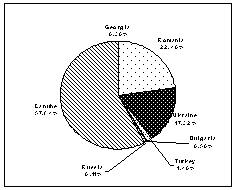 While the Black Sea littoral states (Romania, Bulgaria, Turkey, Georgia, Russia, Ukraine) quickly became aware of the economic losses caused by the ecological degradation of the Sea and the pollution originating in the Danube, it became evident that any possible solution would require a regional approach. The Danube River contributes the highest nitrogen loads to the Black Sea, with Romania being the largest source(Figure1). Phosphorous loads from the Danube comprise a similarly large share relative to the contribution from littoral states. No state acting alone could rescue either the sea or the river, because all 17 states of the two wider drainage basins, including the riparian states of the Danube and other rivers such as the Dnipro, Dnister and Don, contribute to the cumulative nutrient and pollution loads. In response, the countries of the region drafted and signed the Bucharest and Sofia Conventions for the protection of the Black Sea and the Danube in the early 1990s and launched two complementary Regional Environmental Programs. The structure of the Conventions and the Programs, although complex, provides a framework for regional cooperation. It also allows the linkage of the many actions and instruments to effectively address the recovery of the ecological balance of the Danube River and the Black Sea.
4. Current poor economic conditions have resulted in a decline in the discharge of nutrients and other pollutants to the Danube and Black Sea, accompanied by a noticeable improvement in ecosystem conditions. This demonstrates that it is possible to reverse the current degradation of the Black Sea over the medium to long term if nutrient reduction measures are implemented. It also underscores the importance and urgency of taking steps to prevent a return to higher levels of nutrient and pollutant discharges now, before a more accelerated economic recovery and expansion occurs. The severity of ecological degradation could be aggravated to the point of irreversible damage, if the expected increase in economic activity is not accompanied by well planned and effectively implemented preventive environmental measures.
The Planning Process
5. The Global Environment Facility (GEF) has played an important role in supporting the establishment of the Environmental Program for the Danube River Basin (EPDRB) and the Black Sea Environment Program (BSEP) since the inception of these programs in 1991 and 1993. GEF funding, with the support of the United Nations Development Programme (UNDP) and the World Bank, has been instrumental in helping establish regional coordination and institutional cooperation, critical to successful implementation of the long-term multi-country strategy supported by the two programs. GEF support has also been crucial in formulating the Strategic Action Plans (SAPs) for the Danube River Basin and the Black Sea. These efforts have raised awareness of the critical situation in the Black Sea, the pollution in the Danube and its significance in contributing nutrient loads to the Black Sea.
6. The Danube River Convention has been in force since October 1998 with its permanent Secretariat established in Vienna in 1999 and an operating budget of contributions from the Contracting Parties, including the European Union (EU). The Istanbul Commission, established in 1992 under the Bucharest Convention, has its Secretariat in Istanbul which is also functioning and operating with contributions from its littoral states. The two Secretariats have served as program implementing agencies and coordinators of parties working on common water basin issues. They also serve as primary information resource centers for Black Sea and Danube issues. With the support of EU TACIS and PHARE, regional institutions and regional centers focused on priority international water technical issues needing focused attention (i.e. biodiversity, monitoring, oil spill control, etc..) have been established in various member countries, and their work has increased the regional implementation capacity for future interventions.
7. The Danube and Black Sea Programs, with support from GEF, have developed strategies and identified priority “hot spots” for investments where interventions are needed to address transboundary concerns, particularly nutrient reduction. However, to date, there has been limited investment in the priority projects identified by the two SAPs, and those which have been implemented are ad hoc in focus and impact. Black Sea and Danube “hotspots” have not yet figured prominently in national public investment priorities. This is understandable, because key environmental benefits of addressing these hotspots are primarily transboundary, and potential local benefits of the investment have not been highlighted, or fully understood. Also, the economic crisis has limited the availability of national funds.
8. For future interventions, the GEF and its implementing agencies (UNDP, UNEP, and the World Bank) have agreed to a Proposed GEF Partnership on Nutrient Reduction for the Danube/Black Sea Basin that supports next steps in implementing the Danube and Black Sea SAPs. The Partnership’s programmatic approach includes two regional projects to assist countries in their efforts to adopt policy, legal, and institutional reforms through the Danube and Black Sea Secretariats and an Investment Fund to co-finance nutrient reduction investments. Under this Partnership with GEF, the UNDP and UNEP will focus on implementing the two technical assistance projects, and the World Bank will administer the Nutrient Reduction Investment Fund.
9. The World Bank GEF Investment Fund for Nutrient Reduction was endorsed by World Bank ECA Management in May 2000. A concept paper was distributed at the May 2000 GEF Council meeting together with three model project types, with the understanding that the Partnership would be submitted to the November, 2000 Council for approval. The Partnership was presented to the Black Sea and Danube Commissions at meetings in June and September, 2000 where their endorsements of the proposal were received. The Partnership could not be submitted to the November 2000 GEF Council Meeting due to an unexpected GEF funding shortage. As a result, the Council was provided with a progress report for the November meeting. A decision on procedural arrangements between GEF and the two agencies in the light of funding shortages was reached in December, 2000 and posted on the GEF Secretariat’s web site. Council submission of the Partnership was deferred to May 2001 with funding of a reduced first tranche for the Investment Fund, and the remaining funding to be allocated against progress reports at future GEF Council meetings.
10. Within the World Bank, a Partnership Coordination team has begun to work with program team leaders in the Bank infrastructure, environment and agriculture sectors, as well as with Bank country units to raise awareness in regional client countries on the need for nutrient reduction in the Black Sea/Danube Basins and the availability of the Investment Fund. These efforts have led to initial project proposals by several countries. The European Commission (EC) has declared its strong support for the restoration of the ecological balance in the Black Sea and its readiness to take the political lead in promoting the Partnership objectives. An interagency and donor meeting was hosted by the EC in February 2001, with the aim of establishing better coordination for nutrient reduction investment financing among IFIs, and multilateral and bilateral donors. The Commission has indicated its readiness to cooperate with the Investment Fund through its various regional investment programs (Phare, TACIS, ISPA, Europe Aide, SAPARD, MEDA Turkey) under a Memorandum of Understanding between the EC and the World Bank, signed in March 2000.
The Proposed Nutrient Reduction Investment Fund
11. An Investment Fund funded by the GEF and implemented by the Strategic Partnership between the World Bankand the GEF, focused on the recovery of the Black Sea, is proposed as a means for catalyzing an investment response necessary to accelerate urgent action by a wide group of stakeholders. This Investment Fund will provide a regional context under which countries can pursue investments aimed at common nutrient reduction goals, and help jump start and further accelerate key investments. As a part of this partnership, the GEF will commit to a targeted envelope of US$70 million, approved in several tranches based on progress reports submitted to the GEF Council.
12. The World Bank’s role in the Partnership will be to promote use of the Partnership funds in country-based dialogues with stakeholder governments; to promote inclusion of Black Sea/Danube issues in the ongoing Country Assistance Strategy (CAS) process; to promote policies that address nutrient reduction; and to use the Bank’s convening powers to engage other donors and partners in helping meet financing needs. Grant funds provided under the Partnership will both help leverage World Bank investment lending with borrower countries, and attract additional resources from other international lenders and donors toward the same nutrient reduction objectives.
13. Four key elements of an Investment Fund are: (1) the up-front commitment to an envelope of funds by the GEF Council to signal the availability of a predictable envelope of grant financing for beneficiary countries and co-financiers to access; (2) delegated authority for project approval to the GEF Chief Executive Officer; (3) the bundling together of critical investment needs to promote higher political visibility and interest; and (4) a design framework that takes advantage of on-the-ground learning to replicate and transfer investment experiences throughout the region. These four key elements provide the backbone of the strategy proposed.
14. A strategic regional approach to investments has a number of important advantages. A regional investment framework provides a vehicle for focusing individual country investments on regional objectives, helps to transfer knowledge and share best practices, and promotes adoption of policies to achieve common objectives. Stakeholders in individual countries can gain satisfaction from knowing they are doing their part to contribute to wider regional investment. A regional framework provides a better mechanism for cooperation with a multitude of diverse partners, for example, the EU has a significant role to play as a political mobilizer for action and cofinancier of investments in this region. A strategic versus individual project-by-project approach provides a more cost-effective vehicle to demonstrate benefits. A strategic approach will also help provide a targeted timeframe to promote action over a shorter period so that more tangible results can be achieved
Implementing the Investment Fund
15. Role of the Bank. Overall program management and oversight responsibility will rest with the World Bank. In addition, the World Bank will commit to:
· Promoting the Investment Fund in country dialogues;
· Including the Black Sea and Danube perspectives in relevant World Bank Country Assistance Strategies (CASs) as they are updated;
· Promoting policies that address nutrient reduction as part of country dialogues;
· Being a champion and helping to mobilize funds for nutrient reduction investments in dialogue with countries and the donor community;
· Working closely with UNDP and UNEP to maximize coordination between the regional TA projects and individual investment projects; and
· Working closely with the Secretariats of the two Commissions on the project selection/preparation process, ensuring that the projects address priority hot spots and actions, and during implementation, keeping them informed on the project’s progress and impact.
Administrative costs for management of the Partnership will be provided by standard GEF agency fees, which will be over and above the US$70 million intended for direct investments.
16. Types of Projects[2]. Three types of projects (or a combination thereof) will be eligible for financing under the Partnership:
· Restoration or creation of wetlands that reduce nutrients discharge or loads.
· Reform and improvement of agriculture and land management practices with impact on nutrient use and/or non-point discharges through run-off.
· Wastewater treatment in communities and industries, for reduction of nutrient discharges.
17. Leveraging. A critical goal of the proposed Investment Fund will be to increase GEF grant leveraging against other project financing sources, and to increasingly encourage other partners to take over larger shares of nutrient reduction investments. A minimum leveraging ratio of 1 (GEF) to 0.5 (other) has been established and will only be allowed in very exceptional cases such as countries with the most significant resource constraints or wetland restoration projects. These will be offset by other investments, such as nutrient reduction at wastewater treatment plants, where the proportion of GEF incremental cost financing will be expected to be significantly lower. The total program leveraging target is a 1 (GEF) to 3 (other) ratio by the end of the program. Co-financing may be obtained from Baseline costs could be covered bya combination of national financingsources, loans from the World Bank or other IFIs, or additional grant funds from the EU and bilateral sources. Participation in the Partnership does not necessarily require the use of loans, but it does require counterpart finance which will include in-kind contributions from countries or other donor support. This reflects the standard incremental cost financing principle of the GEF. Progress reports for approval of subsequent tranches will discuss progress toward leveraging goals.
18. Replicability. A second important goal of the Investment Fund will be to promote replication of nutrient reduction investments within the Danube and Black Sea Basins. Since the Investment Fund will provide only a small portion of the investment needs to achieve significant reductions in nutrient loads – the proposed fund will specifically finance project components that promote wider replication of the investments. As an incentive for projects to include replication components targeting other countries - replication components up to US$0.5 million per project will not be counted against the GEF amount for purposes of leveraging requirements. For example- communications campaigns, study tours, and other replication activities cooperating with other countries in the region will be encouraged.
19. Monitoring and Evaluation. The Investment Fund will place a high importance on monitoring and evaluation of nutrient reductions from individual projects because of the role that this information can play in demonstrating benefits and encouraging replication of investments. Each individual project will have its own national monitoring indicators, benchmarks and monitoring plan to measure nutrient reduction. Monitoring indicators will be useful to retrospectively measure the actual cost effectiveness of investments and to guide future investment prioritization.
20. Progress reporting. Joint progress reports to the GEF Council will be prepared on the Black Sea/Danube Strategic Partnership by the World Bank, UNDP, and UNEP periodically when resource commitments (tranches) are requested. For example, a progress report will be submitted to the Council with each tranche request to fund the Investment Fund or the Regional Projects. Reporting for the Investment Fund will consist of progress to date on program leveraging targets; a description of the project pipeline and the stage of development of each project proposal; and coordination of the fund with the regional projects and other key partners.
21. Investment Program Eligibility. Project proposals from countries in the Danube River Basin and the Black Sea will need to fulfill the following basic eligibility criteria for financing under the Investment Fund:
· Be of one of the three eligible project types (as described earlier in paragraph 16).
· Respond to regional priorities as identified by the respective SAPs adopted by the Danube and Black Sea Commissions, and be selected as a priority investment in the proposing country’s Black Sea or Danube National Environmental Program. The project proposal should clearly explain what sources of nutrients are targeted and why this project area is a priority in the proposing country.
· Have secured financing for baseline non-incremental project costs and ensure that the minimum leveraging requirement is met.
· Adhere to the principles of the GEF Operational Programs. Projects will follow the approaches of Water Body-Based Operational Program (OP 8) and Contaminant-Based Operational Program (OP 10), particularly in the selection of projects with crosscutting and demonstration potential and proven implementation capacity.
· Submit an endorsement from the proposing country’s GEF focal point.
· Ensure that the country is up-to-date on its contributions to the Black Sea and/or Danube Commission(s) and Secretariat(s) to which they belong.
Additionally,
· Project proposals will be encouraged to include country-expressed commitment to policy, institutional, or legal reforms related to regional nutrient reduction and improved water quality management.
· Whenever a project has potential for additional global environmental benefits, such as conservation of biodiversity (for example, through management and/or rehabilitation of a site designated as of international significance under the Ramsar Convention) or reduction of greenhouse gas emissions, the existence of such additional benefits will be a positive factor, but not constitute per se an eligibility condition. In all cases, nutrient removal is the essential eligibility condition for projects.
Project Cycle
22. Projects will be identified by the proposing country, with assistance from the World Bank and/or other eligible financiers and either the Danube or Black Sea Commissions.[3] No portion of the GEF grant will be earmarked for any individual country or specific project. All eligible countries will have an equal opportunity to benefit from the GEF allocation to the Investment Fund and will be encouraged to submit project proposals. Project proposals submitted by riparian countries will each be considered based on merit. In the interest of speedy advancement of investments, funds will be made available to countries on a "first come first served" basis in line with standard project processing procedures.
23. Eligible projects will be prepared and appraised under standard World Bank procedures before being submitted to the GEF Secretariat for GEF Chief Executive Officer (GEF CEO) approval. Project concept notes will be submitted to the World Bank Investment Fund Coordinators for screening against Partnership eligibility requirements and for assistance in elaboration of project designs. These notes will subsequently be submitted to the GEF Secretariat for approval by the World Bank GEF Regional Coordinator on a rolling basis following standard procedures for formal "pipeline entry". A project concept note should indicate whether or not a PDF-B (preparation grant) will be requested. Preparation grant resources will be allocated separately from Investment Fund resources. Projects under the Partnership will not be submitted to the GEF Council for approval through standard work programs at Council Meetings or Intersessionals. Rather, upon completion of project preparation, the World Bank will submit projects to the GEF CEO for endorsement following streamlined procedures similar to procedures for GEF medium sized projects. If found satisfactory, the GEF CEO will approve individual projects up to the funding limit of each Investment Fund tranche. Projects will be processed to the World Bank Board of Directors for final approval and implemented following standard World Bank procedures. The financial management, procurement and disbursement procedures of the World Bank will be used.
24. If the Investment Fund co-finances with another IFI which has executing agency status with the GEF (i.e. under the expanded opportunities policy such as EBRD), the management arrangements will follow existing procedures established for World Bank and Executing Agency Cooperation. For example, standard project appraisal procedures and fiduciary requirements of the applicant executing agency and not the World Bank will be in effect. PDF-B submissions to GEFSEC in this case will also be handled by the Executing Agency instead of the World Bank. The World Bank's role with respect to such Executing Agencies will be for the Investment Fund Coordinators to provide guidance to the applicant Agency on project eligibility, and reporting vis a vis the Partnership; to ensure coordination with the overall Investment Funds activities, to include the status of these projects in routine reporting of the Partnership; to ensure that monitoring and evaluation aspects of these projects are consistent with other Partnership proposals; to act as the GEF Implementing Agency for the project; and for the World Bank GEF Regional Coordinator to process projects for CEO Endorsement. When the Investment Fund co-finances with other donors and agencies where there is no prior agreement for cooperation on the GEF, the GEF components of these projects will be processed as a standard World Bank operation.
Conclusion
25. Declaration of approval for the Investment Fund by the GEF Council will give a strong signal to potential recipient countries that grant funds will be made available. The declared Strategic Partnership for the Recovery of the Black Sea will also help begin to steer co-financing by other donors to the nutrient reduction investment objectives. It is expected that private sector interest and action will also be catalyzed through the presence of the Partnership. As a first model for a more programmatic investment approach in the International Waters Focal Area, it will serve as a model for the future, in line with GEF commitments and trends to move toward more strategic approaches.
26. Access to these funds in the medium and long term will give leverage to environmental governmental bodies, local governments and agricultural interests in their efforts to cooperate with their respective ministries of finance in implementing environmental protection measures. This should assist in moving the regional/global environmental agenda to a higher rank in national investment priorities. Moreover, a regional partnership will help lower perceived risk that the impact of investments for protection of international waters could be adversely affected by the behavior of neighboring states.
27. For more information on the GEF-World Nutrient Reduction Investment Fund contact:
Piotr Krzyzanowski,
Program Manager
Environment Unit, ECA Region
The World Bank
1818 H St, NW, Washington , DC, 20433, USA
Phone: (1 202) 473 3638
Fax: (1 202) 614 0697
E mail: pkrzyzanowski@worldbank.org
[1] Annex 1 contains the Framework Brief for the GEF Strategic Partnership on the Danube/Black Sea Basin and Annex 2 contains the World Bank-GEF Nutrient Reduction Investment Fund Project Brief, both approved by the 2001 GEF Council.
[2] Three model projects were presented with the proposed Partnership paper to the May 2000 Council: Russia-Rostov Reduction of Nutrient Discharges and Methane Emissions Project; Bulgaria Wetlands Restoration and Pollution Reduction Project; and Romania Black Sea Agricultural Pollution Control Project. The projects are at various stages of preparation. Draft Project Concept Documents are attached to this document.
[3] The World Bank would assist countries or mobilize donor support for strengthening their institutional capacity for project development.