Updated Project Information Document (PID)
Report No: AB71
Project Name
WORLD - Coral Reef Targeted Research and Capacity Building for Management
Region
Other
Public Disclosure Authorized
Sector
General agriculture, fishing and forestry sector (100%)
Theme
Biodiversity (P); Other environment and natural resources management (P)
Project
P078034
Borrower(s)
UNIVERSITY OF QUEENSLAND, BRISBANE, AUST
Implementing Agency(ies)
UNIVERSITY OF QUEENSLAND, BRISBANE, AUSTRALIA
University of Queensland
Address: Office of the Deputy Vice-Chancellor (Research)
Brisbane, QLD 4072,
AUSTRALIA
Contact Person: Prof. David Siddle
Tel: 61-7-3365-9044 Fax: 61-7-3365-9040 Email:
w.freeman@research.uq.edu.au
UNESCO/Intergovernmental Oceanographic Commission
Public Disclosure Authorized
Address: 1 Rue Miolis
75732 Paris Cedex 15
FRANCE
Contact Person: Dr. Patricio Bernal
Tel: 33-1-45-68-39-83 Fax: 33-1-45-68-58-12 Email:
p.bernal@unesco.org
Environment Category
C (Not Required)
Date PID Prepared
July 13, 2004
Auth Appr/Negs Date
May 25, 2004
Bank Approval Date
September 14, 2004
Public Disclosure Authorized
1. Country and Sector Background
Coral reefs occupy only 0.1% of the ocean's surface, yet they are the world's richest repository of marine
biodiversity. They are the largest living structures on Earth--the only natural communities distinctly visible
from space. Complex and productive, coral reefs have survived over the course of more than 400 million
years of evolution, and possess richness, diversity of life and structure that are integral foundations for
humanity. Within an equatorial band between the Tropics of Capricorn and Cancer, coral reefs are the life
blood of nearshore, tropical waters and play a key role for the coastal populations that depend on food and
resources for daily livelihoods.
Today, coral reefs around the world are in such serious decline that their defilement risks contributing to
environmental and economic instability of many coastal nations. Many coral reefs have reached a state of
decline that they can no longer be considered as coral reefs, while others are under increasing threat from
local human disturbances and impacts from a changing global climate. The main threats to coral
Public Disclosure Authorized
ecosystem sustainability stem from impacts of human pressure and accelerated climate change. These
threats are aggravated by governance issues related to inadequate information on the cumulative and
interactive nature of these impacts on reefs and reef-dependent human communities, the short-term planning
horizons of decision-makers, and the political tradeoffs associated with economic gains from intensive use
2
PID
(leading to irreversible change in some cases) vs. longer-term conservation benefits. Human impacts
include (i) over-fishing and destructive fishing techniques, which alter trophic levels and destroy the
ecological integrity of reef communities; (ii) land based sources of pollution (e.g., sedimentation ,
eutrophication and POPs); (iii) habitat loss from land reclamation and construction. Impacts associated
with climate change include (i) increased sea surface temperature, sea-level rise and storm frequency and
severity, (ii) disease, and (iii) changes in ocean chemistry, all of which undermine reef growth and the
physical integrity of coral reef ecosystems. While public sector policies have tended to be shortsighted,
often accelerating reef degradation and loss, management interventions have relied on surprisingly little
empirical information, and have been largely reactive, and fragmented in attempts to address impacts.
2. Objectives
The Project Development Objective and the Global Environment objective are to fill critical gaps in our
understanding of what determines coral reef ecosystem vulnerability and resilience to a range of
stressors--from climate change to localized human stress-- and to use this knowledge to strengthen
management and policy globally for the benefit of coral reefs and the communities that depend on them. A
related objective is to build capacity for science-based management of coral reefs in developing countries
where the majority of reefs are found. This will be achieved through targeted investigations involving
networks of scientists and managers, and the dissemination of knowledge within and across regions.
3. Rationale for Bank's Involvement
Of the 184 member countries of the World Bank, over 80 countries rely on coral reefs as natural economic
assets. However, most of these reefs and associated resources are components of larger transboundary
marine ecosystems, which require multi-country approaches to manage and conserve. The Bank has
considerable experience in transboundary water resources management through a growing portfolio of
Regional Seas and International Waters programs. More recently, experience in promoting regional
cooperation in the conservation and sustainable use of one of the world's longest barrier reef systems--the
Mesoamerican Barrier Reef System--has provided a model for regional coordination, involving
multinational technical and policy working groups, on which the TR Project can build. The Bank is also in
a unique position to provide global leadership on policy reforms suggested by the TR findings. It can do
this in its ongoing dialogue with coral reef countries through the Country Assistance Strategy and the
PRSP process, as well as through updates to its corporate and regional sector strategies, and in the
implementation of its Safeguard policies, where relevant.
4. Description
The project is organized around six key themes supporting major research questions, which will be
investigated by interdisciplinary teams of developing and developed country scientists. These themes were
identified through extensive consultation over the course of project preparation to encompass the kinds of
knowledge and management tools that underpin sustainability science for coral reefs. They include:
a. The physiological mechanisms and ecological consequences of large area (or massive) coral reef
bleaching, in response to sea surface temperature anomalies, like the El Niño/Southern Oscillation episodes
and other stressors, (like pollution and sedimentation) and the consequences of increases in bleaching
frequency and severity;
b. The nature, severity and spread of coral reef diseases, some of which may be responsible for major
shifts in the structure, function, health and sustainability of coral reefs;
c. The importance of physical and biological connections (or "connectivity") between coral reefs, whether
within or between different regions of International Waters. This also has direct bearing on the
3
PID
environmental conditions and key design factors needed to establish and sustain effective Marine Protected
Areas (MPAs);
d. The tools, technologies and efficacy of restoring coral reefs that have been severely degraded or
destroyed, and the key organisms and environmental conditions to consider when rehabilitating a given
coral reef environment;
e. The application of advanced technology, such as remote sensing, to refine information and enhance the
rate and scale at which knowledge can be generated and applied. This includes the need to modify
technology so that it can be practically deployed and sustained within developing countries;
f. The need to develop decision support tools and scenario building to help anticipate impacts to coral reefs
associated with various economic development plans or climate change related events, and to lower
uncertainties related to ecosystem response/recovery to these impacts. Such decision support tools may
also be used to build constituencies for action among key stakeholders and to build political will for
conservation oriented policies whose benefits are distributed more broadly and continuously than those
aligned with intensive use.
Each theme is addressed by a working group composed of developed and developing country scientists
from around the world. The chairs of these working groups, plus four additional professionals (including
economists and managers), form the Synthesis Panel, whose job is to oversee the quality and direction of
the research, evaluate and interpret the results for target audiences.
The working groups have prioritized questions to be addressed within each theme, through field-based
hypothesis testing. The research questions and field locations have been organized so as to maximize
synergies between groups and to produce a robust framework for the ongoing creation of knowledge and
new tools essential for adaptive management of coral reefs. Knowledge will be disseminated widely and in a
format useable by decision-makers.
Working Groups:
1. Coral Bleaching and Local Ecological Responses. Goal: To develop molecular, cellular, physiological and community
indicators for coral bleaching and other responses to a range of stressors, and examine potential mechanisms of coral reefs to
adapt to environmental change.
2. Coral Diseases. Goal: To examine, prioritize and target investigations that are critical to the understanding of coral diseases,
and how this information can assist managers in minimizing disease frequency and transmission;
3. Large-Scale Ecological Processes, Recruitment and Connectivity. Goal: To examine the role that larval transport,
recruitment, post-recruitment survival, and connectivity play in networking coral reef environments, particularly as they relate to
the siting and management of marine protected areas;
4. Coral Restoration and Remediation. Goal: To examine the state of remediation techniques and efficacy of potential
applications, with considerations on protocols to design and implement restoration strategies; baseline data for developing
effective criteria; the efficacy and feasibility of restoration and remediation techniques, and prospects for enhancing natural
recovery;
5. Remote Sensing. Goal: To develop systems for holistic monitoring of the physical environment and stress on coral reefs;
develop tools to measure the status of reef ecosystems at various ecological, spatial and temporal scales; an integrate above to
provide a comprehensive perspective of how global, regional and local processes affect the health of coral reef ecosystems;
6. Modeling and Decision Support. Goal: To develop a coordinated information base that can improve the accuracy and
reliability of forecasting and predictive modeling, and to develop modeling tools to handle data on aspects such as community
dynamics, oceanography, climate, as well as socio-economic data on fisheries, tourism, and coastal development.
Project components are organized around the following four main headings:
A. Addressing Knowledge and Technology Gaps
4
PID
Over the past ten years, an increasing awareness of the importance of coral reefs has been evident,
especially in light of their rapid decline in many regions, and their significance to developing countries.
However, what remains fundamentally unknown about these ecosystems is alarming, especially when
management interventions are becoming increasingly important. Significant gaps in understanding some of
the basic forcing functions affecting coral reefs remain. This targeted research framework will
systematically define those information gaps, and prioritize them in an order of strategic importance to
management, so that the resulting information and tools developed can lead to credible outcomes.
Furthermore, policies developed at regional and national levels can also be strengthened to help bring about
better legislation to sustain the products and services provided to SIDS and coastal communities by coral
reefs.
Each working group has developed a detailed work program which has been vetted and approved by the
Synthesis Panel (see Annex 2 for a detailed description of key hypotheses to be tested and criteria for
priority setting). This work program defines the investigations to be carried out under Component 1.
Research plans, standard methods and inter-institutional collaboration, including twinning arrangements for
graduate students and post-docs between developed and developing country institutions, are being
coordinated to maximize knowledge sharing and capacity building (see section 2 below).
B. Promoting Scientific Learning and Capacity Building
The Targeted Research investigations will focus around four "Centers of Excellence" (COEs) in four major
coral reef regions: Western Caribbean (Puerto Morelos Marine Laboratory of the Universidad Nacional
Autónoma de México); Eastern Africa ( Institute of Marine Science, University of Dar Es Salaam,
Zanzibar, Tanzania); Southeast Asia (Marine Science Institute, University of the Philippines, Bolinao, the
Philippines); and the central south Pacific (Heron Island Research Station, of the University of Queensland,
Australia). These COEs will serve as nodes for targeted learning and capacity building between developed
and developing country scientists.
Specific learning exchanges are already underway in which interdisciplinary teams of researchers and
members of the management community have the opportunity to formally exchange ideas and frame
research questions. These , then, lead to the design, testing and implementation of the priority, targeted
experiments. Through twinning arrangements between various universities and research institutions, coral
reef scientists from developing countries will spend up to six months at partner institutions to learn cutting
edge techniques in e.g., the identification of coral pathogens, measurements of metabolic stress linked to
specific environmental stressors, the use of genetic markers to track larval dispersal and connectivity, and
application of modeling techniques to simulate coral reef ecosystem response to various stress regimes.
The Targeted Research Project will support a series of workshops each year which will bring researchers in
the various working groups together to orient field research, brief each other on findings and based on these
results, modify and design the next phase of research. Links will be made between research results and
management efforts in the region. The Center of Excellence in a given region will serve as the conduit of
information to satellite sites and various user/stakeholder groups (including NGOs and others involved in
MPA management, coastal zone management and marine regulation, national and community-based coral
reef management activities, ecosystem monitoring efforts, etc.) High level audiences will also be kept
abreast of research findings through publications of each of the working groups in peer reviewed journals
(a list of those already out or in press since project preparation is available on request); through the release
of periodic management recommendations and policy briefs by the Project's oversight Synthesis Panel (see
3. below).
5
PID
C. Linking Scientific Knowledge to Management and Policy
A guiding Synthesis Panel gives direction to the targeted research program (see Component 1). This Panel
also serves as a formal interlocutor with other disciplines such as development economics and law, to
enhance the relevance and uptake of results by policymakers. It synthesizes and interprets results and
modifies the focus of investigations as needed to benefit management and policy. Examples include the
development and dissemination of a series of management and policy briefs in a form easily internalized by
several audiences (see Component 2.) A key outcome of this work will be to improve our predictive
capability in assessing impacts to coral reef ecosystems, in the face of cumulative stress from increasing
coastal populations, changes in climate and other uncertainty. These targeted investigations are being
designed to feed into models and decision support systems for managers, policy makers, and other
stakeholders.
In order to maximize the impacts of the project on managers, scientists, environmental NGOs and
government agencies in coral reef countries, the results of the program will be disseminated in a variety of
formats and using a range of media. Over the course of project implementation, the information and tools
produced will be disseminated as knowledge products to enhance the management of coral reefs. These
products may range from in-situ diagnostics (for example, disease assessment and bio-indicators of specific
forms of stress and metabolic response in coral reef organisms, to markers for larval recruitment indicating
source and sink reefs) to remote sensing products and applications to assess the state of coral reef health.
The target audiences for these products include CAS and PRSP/C teams, GEF project teams,
policy-makers, and members of regional and global fora (e.g, the International Panel on Climate Change,
the Commission on Sustainable Development, the International Coral Reef Initiative, the Convention on
Biological Diversity, and the Regional Seas Conventions).
A major outcome of the Targeted Research program will be to improve our ability to understand the
interrelationships between climate change and cumulative local human impacts in determining coral reef
ecosystem vulnerability to environmental change and other uncertainty. The Modeling and Decision
Support Working Group (MDSWG) will focus on developing tools to help local decision-makers visualize
the effects of development policies on coral reef ecosystem health and the continued ability of coral reefs to
produce goods and services (e.g., in the tourism and fisheries sectors), which sustain the local economy.
Scenarios building and modeling will provide managers with the basis for significantly improved
interventions to sustain coral reefs and their contributions to human welfare and global life support.
6
PID
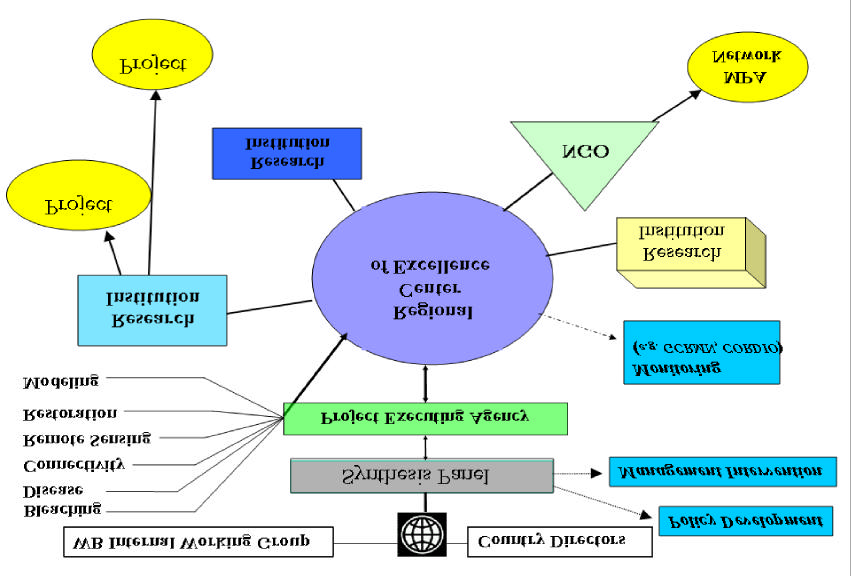
Figure 1 - Illustration of the institutional linkages involved in designing, implementing and disseminating the results of the targeted investigations.
Institutional Nodes, or Centers of Excellence, will provide the quality control and research rigor required to carry out the experimental design
formulated by the working groups and endorsed by the Steering Committee. Capacity building is the result of collaboration between a COE and other
research facilities in selected locations with coral reef ecosystems, through formal exchanges, targeted learning and collaborative research. Research
results are channeled to management projects and activities to inform decision making, and to policymakers to introduce needed reforms. Similar
clusters of node and satellite institutions are envisioned in each region and some of the working groups may overlap in their use of field sites and
clusters to carry out investigations.
5. Financing
Source (Total ( US$m))
BORROWER/RECIPIENT ($3.00)
AUSTRALIA, GOV. OF ($2.60)
GLOBAL ENVIRONMENT - ASSOCIATED IBRD FUND ($2.50)
GLOBAL ENVIRONMENT FACILITY ($11.00)
BILATERAL AGENCIES (UNIDENTIFIED) ($3.20)
7
PID
Total Project Cost: $22.30
6. Implementation
The University of Queensland, Brisbane, Australia, will serve as the executing agency for the Project and
the recipient of funds on behalf of the participating countries. The UNESCO/Intergovernmental
Oceanographic Institution will provide added support in the form of capacity building and links to ongoing
programs in ocean research. A global partnership is being launched by the GEF and the World Bank with
the support of these and other institutions to align the conservation of coral reefs with the goals of
sustainable development in tropical coastal communities around the world.
7. Sustainability
This initiative for Targeted Research and Capacity Building must be viewed within a longer time frame
than most Bank/GEF projects. This is necessary because coral reefs are influenced by processes over a
wide range of temporal and spatial scales. Research in other marine environments has consistently
identified the need to establish long-term studies (at least 10 to 15 years) to better understand the dynamics
and drivers of these systems. This is especially true within coral reef ecosystems, and some existing
research indicates that coral reefs may fluctuate at time scales on the order of decades. This effort,
therefore, is envisioned as a 15 year program, to be implemented in three phases. Although the framework
for the Targeted Research will be developed over several phases, information products will be staged for
delivery at periodic intervals to provide interim benefits and tools for managers. This will help sustain the
commitment that will be required to reap the benefits of targeted investigations over the longer term. This
project document focuses on the specific activities to be implemented within the first phase of the 15 year
program. As the program develops, the Centers of Excellence become established, and the working groups
generate visible benefits to management and policy, it is anticipated that partnerships will expand and
additional financing from research institutions, governments and private foundations will become the major
source of funding in the subsequent phases of the program.
8. Lessons learned from past operations in the country/sector
Historically, research components of GEF projects dealing with coastal and marine ecosystems have
focused on assessing and monitoring baseline conditions. Several have documented declines in the resource
base, but few if any have supported experimental research that would improve our understanding of
ecosystem function or factors that regulate ecosystem response to various kinds of threats. Given the
emphasis on ecosystem-based management endorsed by the GEF, the WSSD and others for a favoring a
holistic approach to natural resources management, there is a need to understand the nature and pathways
of ecosystem drivers to identify bottlenecks in ecosystem function and how best to alleviate these.
Lessons learned from past experience with public sector financed-research have been incorporated into the
design of the Targeted Research, as follows: (i) target research on strategic priorities which will
significantly enhance knowledge required for effective management, (ii) identify near-to-medium term
products and tools that can be applied in the interim to demonstrate the benefits of a committed, targeted
research program; (iii) ensure transparency and full-fledged participation in partnerships between
developed and developing countries, and (iv) disseminate knowledge as widely as possible, taking care to
tailor messages to different target audiences.
Historically, the coral reef scientific community has been fragmented in its approach to conducting
investigations in a coordinated manner, and over both space and time. The TR framework presents the first
opportunity for the coral reef scientific community to pool its intellectual resources and energies--in a
collaborative effort with developed and developing country scientists--to design targeted investigations that
will solve key unknowns and ultimately contribute to improving human welfare. The research framework
8
PID
has emphasized the need to prioritize gaps in knowledge, sequence investigations to build on knowledge
obtained by one or more working groups, analyze and synthesize results (with the help of the Synthesis
Panel), and disseminate these as discrete knowledge products and innovative tools to stakeholder groups.
As the results from these investigations come on line, the Synthesis Panel will be in a position to
collectively address how the information may best be used to affect management options, influence policy,
contribute to the accuracy of economic models involving coral reefs and dependent communities, and
improve the quality of life through enhancing the sustainability of strategic resources.
9. Environment Aspects (including any public consultation)
Issues : The Project is designed to enhance environmental sustainability through a establishment
of a robust framework for applied investigations leading to informed management and decision-making on
behalf of coral reefs. There are no negative environmental issues/impacts associated with this project, hence
the Category C Environmental Rating.
10. List of factual technical documents:
The list of documents below includes publications and papers in press or in prep produced by Working
Group members since project preparation:
Bleaching Working Group
Nature, Vol 45, 28 Feb 2002: "Reef under threat from 'bleaching' outbreak"
T.C. LaJeunesse, W.K.W. Loh, R.V. Woesik, O. Hoegh-Guldberg, G.W. Schmidt and W.K. Fitt:
'Symbiotic dinoflagellate (zooxanthellae) diversity occurring in Cnidarians from the Southern Great
Barrier Reef compared with the Caribbean' (submitted, 2002)
Remote Sensing Working Group
P.J. Mumby and eight coauthors. A Review of Remote Sensing for Coral Reefs. Marine Pollution
Bulletin
Disease Working Group
C. D. Harvell and seven coauthors. In prep. New Perspectives on International Impacts of Coral
Disease.
Mullen, Harvell, Jordan, Ward, Alker, Smith, Petes. submitted. Host range and anti-fungal
resistance of aspergillosis in three seafan species of the Yucatan. Marine Biology.
Ward, Lafferty, Harvell. in prep (analysis and draft complete). Proxies Reveal Increasing Impacts
of Disease in the Ocean. Nature.
Ward, Harvell, Smith, Bruno, Rypien, Jordan. in prep. A Test of the Disease as a Driver of coral
Biodiversity Hypothesis.
Harvell, Pates and Peters. in prep. Mechanisms of Coral Resistance to Disease. (Chapter
contributions for a book edited by Eugene Rosenberg, in prep. Global Coral Health and Disease.)
Weil and Smith. in prep. Local and geographic variability in disease prevalence at the species level
in the Wider Caribbean.
Willis, Smith, Ritchie and Paige. Prevalence of Coral Disease in Australia.
Raymunodo and Kacsmarsky. Prevalence of newly described Philippine Coral Diseases.
Restoration and Remediation Working Group
9
PID
A. Edwards and ten co-authors. A preliminary guide to coral reef restoration and remediation
options for managers. Planned for December, 2004.
11. Contact Point:
Task Team Leader
Marea Eleni Hatziolos
The World Bank
1818 H Street, NW
Washington D.C. 20433
Telephone: 1-202-473-1061
Fax: 1-202-522-0367
12. For information on other project related documents contact:
The InfoShop
The World Bank
1818 H Street, NW
Washington, D.C. 20433
Telephone: (202) 458-5454
Fax: (202) 522-1500
Web: http:// www.worldbank.org/infoshop
Note: This is information on an evolving project. Certain components may not be necessarily included
in the final project.