


Over one-half
Coral
of the world's population lives
Reef
within 100 kilometres
Targeted Research &
Capacity Building for Management
of the sea.
Coral Reef Targeted Research
& Capacity Building
for Management Program
2007 Annual Report
(1 April 2007 - 30 September 2007)
Contents
Contents .......................................................................................................................... 2
Acknowledgements ........................................................................................................ 3
Further Information......................................................................................................... 3
Abbreviations .................................................................................................................. 4
Component 1: Addressing knowledge and technology gaps ................................. 9
Component Summary ................................................................................................... 9
Bleaching Working Group ........................................................................................... 10
Connectivity Working Group ....................................................................................... 12
Coral Disease Working Group .................................................................................... 14
Model ing & Decision Support Working Group............................................................ 18
Restoration & Remediation Working Group................................................................ 21
Remote Sensing Working Group ................................................................................ 24
CRTR Students........................................................................................................... 27
Component Two: Promoting Scientific Learning and Capacity Building............... 31
Component Summary ................................................................................................. 31
Australasian Centre of Excel ence .............................................................................. 33
East African Centre of Excel ence .............................................................................. 35
Mesoamerican Centre of Excel ence .......................................................................... 36
Southeast Asian Centre of Excel ence........................................................................ 37
Component Three: Linking Scientific Knowledge to Management & Policy ......... 39
`The Carbon Crisis: Coral Reefs under Rapid Climate Change' ............................. 39
Common Sampling Project ..................................................................................... 39
CRTR Future Leaders Forum ................................................................................. 40
Local Government Initiative..................................................................................... 41
Synthesis Research Projects .................................................................................. 42
Component Four: Program Management .................................................................. 44
Disbursements ............................................................................................................ 45
GEF Funding........................................................................................................... 45
DGF Funding........................................................................................................... 45
Procurement ............................................................................................................... 46
Consultancies.......................................................................................................... 46
Executive Committee Honoraria ............................................................................. 46
Sub-Grants.................................................................................................................. 46
Monitoring & Evaluation .............................................................................................. 47
Communication ........................................................................................................... 47
Page 2 of 2
Acknowledgements
This report was developed and col ated by Melanie King
(Executive Officer, Project Executing Agency) with
significant contributions from the fol owing Program
members:
Mr Andy Hooten, Synthesis Panel Executive
Secretary & U.S Coordinator
Ms Kristen Sampson, Finance Officer Project
Executing Agency
Mr Kim Mitchel (Currie Communications)
CRTR Synthesis Panel members
Communication Coordinator
Professor Ove Hoegh-Guldberg, Chair
Bleaching Working Group & Australasian Centre
of Excel ence
Professor Peter Sale, Chair Connectivity
Working Group
Professor Drew Harvel , Chair Coral Disease
Working Group
Professor Peter Mumby, Chair Remote
Sensing Working Group
Dr Alasdair Edwards, Chair Restoration &
Remediation Working Group
Professor Roger Bradbury, Chair Model ing &
Decision Support Working Group
Emeritus Professor Ed Gomez Southeast
Asian Centre of Excel ence
Dr Roberto Iglesias-Prieto MesoAmerican
Centre of Excel ence
Dr Alfonse Dubi East African Centre of
Excel ence
Contributions have also been received from Working
Group members in their individual reports to the Working
Group Chairs.
Further Information
Information used in this report has been col ated from the
individual Working Group and Centres of Excel ence
2006 Annual Reports, and from the communication
products produced during the year. Additional
information has been produced with the input of the
Management Team.
Further information regarding this report and/or to
request copies of the individual Working Group and
Centre of Excel ence Annual Reports can be requested
from
the
Executive
Officer,
Melanie
King
(m.king4@uq.edu.au).
Page 3 of 3
Abbreviations
BWG
Bleaching Working Group
CoE
Centres of Excel ence
CRTR
Coral Reef Targeted Research Program
CWG
Connectivity Working Group
DWG
Disease Working Group
ECONAR
Ecological Connections Among Reefs
GEF
Global Environment Facility
ITMEMS
International Tropical Marine Ecosystems Management Symposium
MBRS
Mesoamerican Barrier Reef System
MPA
Marine Protected Area
MDSWG
Model ing & Decision Support Working Group
NGO
Non-government organisations
PEA
Project Executing Agency
RRWG
Restoration & Remediation Working Group
RSWG
Remote Sensing Working Group
UQ
The University of Queensland
Page 4 of 4
Page 5 of 5
Executive Summary
As the midway point for Phase 1 of the Coral Reef
Targeted Research Program (CRTR), 2007 has seen an
increase in the level of activity and research outputs as
wel as a significant number of capacity building activities
aimed at increasing the knowledge and information
exchanges for both developing and developed country
scientists and managers of coral reefs.
There has been a significant range of research findings
and `world-firsts'. For example, the Bleaching Working
Group are in the process of publishing a paper describing
1600 gene products. This is a world first as no other
cDNA libraries of the key symbiont inhabiting reef-
building corals have been published. The Remote
Sensing Group were involved in the creation of first
national marine habitat map of Palau, whilst the
Restoration & Remediation Working Group, in another
`world-first' has established the timing of coral
reproduction around Bolinao in the Philippines. Through
this information, the effects of fragmentation on
reproduction and survival are beginning to emerge which
wil provide important information for the field of coral
restoration techniques.
Further research outputs which wil provide an important
source of information to the research, management and
policy communities includes work on the impact of local
environmental factors on coral health diseases. This
area is a priority for the Disease Working Group which
has a range of projects related to water quality and
disease spread. Through their research it is believed that
there are strong indications that poor water quality
hastens the progress of various disease syndromes.
Additional y, their research on the impacts of aquaculture
is also showing that this may play a role as an incubator,
conveyor and facilitator of disease into natural
populations. The Group has also made significant
discoveries in the Caribbean and Australia regarding the
potential impacts of climate warming events on the
outbreak of coral disease, and work continues in this
area.
Col aborations between Working Groups also produced
excel ent results during the year with the Disease and
Remote Sensing Working Groups col aborating on a
project which is considering the various ways in which
thermal stress could impact disease. This col aboration
has led to the creation of new algorithms to predict
outbreaks using a combination of monitoring data from
Australia and the Caribbean and satel ite temperature
data. The model uses predicted sea temperature data
Page 6 of 6
and can identify the potential efficacy of various
management strategies for future scenarios. A model has
also been developed to investigate the impacts of several
scenarios on reef health including (i) indirect impacts of
protecting herbivorous fishes, (i ) the effects of modest
Diadema recovery, and (i i) direct disease-inhibitory
effects of MPAs that have been reported from the
Philippines.
In addition to the research outputs, there has been a
significant number of tools and products designed for a
range of audiences. The Model ing & Decision Support
Working Group has developed the next generation of an
agent-based participatory model ing game ReefGame.
This model ing game was reviewed by the target
audience of fishing families, barangay captains, and
government officials at a workshop held at the Marine
Science Institute's Bolinao Marine Laboratory, with
successful outcomes.
Through the Remote Sensing Working Group, new data
products have been generated including a web-portal for
directing users to sources of satel ite data on factors
affecting coral reefs and new bleaching metrics around
Centres of Excel ence. An on-line toolkit has also been
developed for selecting suitable image data and mapping
techniques for mapping and monitoring coral reefs,
seagrass beds (from another project) and water quality.
This toolkit shows managers, scientists and technicians
working in coastal marine environments how remote
sensing can map and monitor changes to indicators of
coastal ecosystem health. The toolkit currently focuses
on coastal water bodies, seagrass and coral reefs, and
mangroves but future work wil extend it to cover al other
coastal ecosystems. The toolkit can be viewed at
www.gpa.uq.edu.au/CRSSIS/tools/rstoolkit/.
The four Centres of Excel ence have also been
producing effective results through local research
projects and on-ground capacity building activities. For
example, the Australasian Centre of Excel ence is
providing new insights and projections into how benthic
reef communities are likely to behave under multivariate
environmental stressors, and the Mesoamerican Centre
of Excel ence has produced the first results from its
hydrodynamic model for the circulation of the reef lagoon
at Puerto Morelos, Mexico. These results were recently
published in the February issue of Coral Reefs.
The Southeast Asian Centre of Excel ence has produced
two field guides in 2007: A `Field Guide to the Bubble
Corals of the Philippines' which wil be used with non-
scientist divers who are trained by the project to map the
distributions of these corals in the Philippines, and; `The
Page 7 of 7
Guide to the Corals of Bolinao and Western Luzon' which
has commenced with field surveys and taxonomic
identification of the coral species photographed.
In terms of building capacity within developing countries,
the Program is wel on the way to strengthening the
technical skil s within the regions of scientists and
managers. The Program currently directly sponsors or
supports 64 masters, postgraduate students or post-
doctoral fel ows in 19 countries. In December 2007,
these students wil be meeting at the Australasian Centre
of Excel ence to build the network of the `next generation'
of coral reef scientists, and to learn new skil s and
techniques to enable them to effectively communicate
their science to a range of audiences to ensure greater
awareness raising and impact. Further to this support
there have been a number of sponsorship opportunities
for developing country participants to attend training
workshops held by the Working Groups and Centres of
Excel ence.
Members of the Program have been responsible for the
publication of approximately 420 publications and for
over 120 events including training workshops (technical
and other), conferences and meetings, since the
commencement of Phase 1. Additional y, members are
also regularly cal ed upon to brief media, governments,
NGOs and others on issues facing coral reef
ecosystems.
In summary, 2007 has seen the effective consolidation of
many activities and strategies for the Program and the
Program is wel positioned to make an impact in the final
two years of Phase 2.
Page 8 of 8
Component 1: Addressing
knowledge and technology gaps
Component Summary
Over the past ten years, an increasing awareness of the
importance of coral reefs has been evident, especial y in
light of their rapid decline in many regions, and their
significance to developing countries. However, what
remains fundamental y unknown about these ecosystems
is alarming, especial y when management interventions
are becoming increasingly important.
Significant gaps in understanding some of the basic
forcing functions affecting coral reefs remain. Six
scientific Working Groups, consisting of interdisciplinary
teams of scientists from developing and developed
countries, are addressing these issues through targeted
research across the fol owing themes:
Coral bleaching and local ecological
responses
Coral disease
Coral reef connectivity and large scale
ecological processes
Remote sensing
Coral restoration & remediation
Model ing and decision-support1
1 For budgetary purposes, the Modelling & Decision-Support
Working Group is funded under Component 3 Linking
scientific knowledge to management.
Page 9 of 9
Bleaching Working Group
MEMBERS:
Prof. Ove Hoegh-Guldberg
Centre for Marine Studies, The
(Chair)
University of Queensland, Australia
Prof. Yossi Loya (Co-Chair)
Department of Zoology, Tel Aviv
University, Israel
Prof. Robert van Woesik
Department of Biological Sciences, Florida
Institute of Technology, USA
Dr Tim McClanahan
The Wildlife Conservation, Kenya
Dr Roberto Iglesias-Prieto
Instituto de Ciencias del Mar y
Limnología, Universidad Nacional
Autónoma de México
Dr Ruth Gates
Hawai Institute of Marine Biology,
University of Hawaii, USA
Dr Michael Lesser
Department of Zoology, University of New
Hampshire
Dr David Obura
CORDIO East Africa, Kenya
Dr John Bythell
Dept of Marine Sciences & Coastal
Management, University of
Newcastle, UK
Dr Ron Johnstone
Centre for Marine Studies, The
University of Queensland, Australia
During 2007, the Bleaching Working Group (BWG)
continued to build scientific capacity in the next
generation of coral reef researchers and managers both
in developing and developed countries. The Group
hosted or provided significant support for research
workshops in Kenya (meso-scale effects of coral
bleaching benthic fish interactions), Zanzibar (coral
reefs, population genetics and environmental change),
Hawai (2007 Edwin Pauley Summer Program in Marine
Biology), and Australia (new frontiers in cel ular
interactions in cnidarian/dinoflagel ate symbiosis). In
addition to these training opportunities, the Working
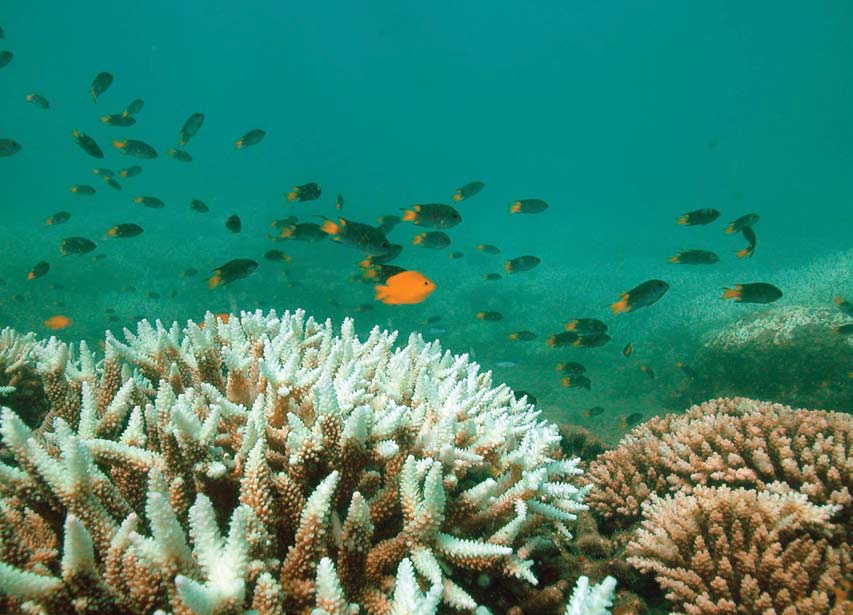
Bleaching event, Great Keppel Is.
Group is also sponsoring and supporting a number of
Australia (Photo: Ove Hoegh-Guldberg)
postgraduate students and post-doctoral fel ows from
Mexico, Kenya, Venezuela, Indonesia, Thailand,
Tanzania, Iran, Columbia, Australia, U.K and USA.
The BWG is one of the most prominent groups working
on the impacts of global warming on coral reefs and
during 2007 its members were regularly asked to
comment in media, on government committees and in
non-government organisation (NGO) forums. In addition
to these capacity building and information exchange
activities the BWG has continued to make progress
against its research agenda.
The BWG has conducted workshops and published
several papers on the fundamental physiological
mechanisms underpinning coral bleaching and mortality,
and why some corals are more sensitive to thermal
stress than others. In the first of these projects, a
theoretical model for linking mortality to physiological
parameters such as tissue protein and chlorophyl
Page 10 of 10
content has been established by the Professor Hoegh-
Guldberg laboratory. The second project also under the
Hoegh-Guldberg laboratory explored the underlying
physiological behaviour of Symbiodinium in bleached
corals. The first microarray experiments have revealed
100 gene candidates, the proteins of which underpin the
response to thermal stress by reef-building corals and
their resident Symbiodinium.
Research
into
the
geographical
diversity
of
Symbiodinium
has
found
different
strains
in
approximately 800 coral species from Zanzibar, Thailand
and surrounding regions. Early results from DNA
extractions, PCR-DGGE analyses and DNA sequencing
of the 550 coral samples from the under-studied Thailand
region indicate many new and unusual coral-algae
symbioses. While a definitive assessment of how water
quality affects these associations is premature, many of
the same species of symbiont are being found at
mainland and island locations. A conspicuous feature of
the region is the occurrence of clade D species (a group
that appears to be thermal y tolerant) whose presence is
not restricted to turbid inshore areas as previously
thought, but which is also found on offshore islands
where water clarity is greater.
The project looking at the functional diversity of
Symbiodinium and its role in explaining differences in
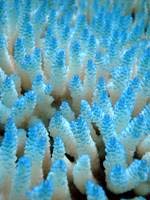
Bleached corals, Great Keppel Is,
stress susceptibility among reef-building corals and their
Australia (Photo: Ove Hoegh-Guldberg)
symbionts is preparing to publish a paper describing
1600 gene products. This is a very important step
forward for the project as Working Group members are
now focusing on a number of projects looking at genetic
responses of corals to stress. It is also a world-first as no
other cDNA libraries of the key symbiont inhabiting reef-
building corals have been published.
The investigations into the significance of host-symbiont
mutualism, close microbial associates and metabolic
communication in the response of corals to rapid
environmental change have also made significant
World-first: cDNA libraries of
progress during 2007. The studies have significantly
the key symbiont inhabiting
advanced the debate concerning the importance of the
reef-building corals
close microbial associates of reef-building corals. One of
published
the most significant discoveries is that symbiotic
cyanobacteria were shown to fix atmospheric nitrogen. A
paper on these findings is currently in press in Marine
Ecology Progress series.
Page 11 of 11
Connectivity Working Group
MEMBERS:
Prof. Peter Sale (Chair)
Biological Sciences, University of
Windsor, Canada
Dr Carmen Ablan
Molecular Genetics Laboratory, The
Worldfish Centre, Malaysia
Dr J. Ernesto Arias
Lab. Ecología de Ecosistemas de
Arrecifes Coralinos, CINVESTAV-U,
Mexico
Prof. Mark Butler IV
Department of Biological Sciences,
Old Dominion University, USA
Prof. Robert Cowan
Rosenstiel School of Marine and
Atmospheric Science, University of
Miami, USA
Dr Bret S. Danilowicz
Paulson College of Science &
Technology, Georgia Southern
University, USA
Dr Geoff Jones
School of Marine Biology &
Aquaculture, James Cook University,
Australia
Dr Serge Planes
Centre National pour laRecherche
Scientifique, Universite de Perpignan,
France
Prof. Barry Ruddick
Department of Oceanography,
Dalhousie University, Canada
Dr Yvonne Sadovy
Society for the Conservation of Reef
Fish Aggregations, The University of
Hong Kong
Prof. Robert Steneck
School of Marine Sciences/Darling
Marine Center, University of Maine,
USA
Prof. Alina M. Szmant
Coral Reef Research Group, Center
for Marine Science, University of
North Carolina at Wilmington
Dr Simon Thorrold
Biology Department, Woods Hole
Oceanographic Institution
Dr Mary Alice Coffroth
Department of Biological Sciences,
State University of New York
Dr Ken Lindeman
Environmental Defense, Miami, USA
Dr Enric Sala
Center for Marine Biodiversity and
Conservation, Scripps Institute of
Oceanography
The Connectivity Working Group (CWG) has continued
to build capacity and outreach to local management
agencies and NGO personnel through training
opportunities and production of appropriate documents.
The annual training workshops on recruitment monitoring
are being modified to include more senior managers as
the focus shifts towards using connectivity and
recruitment data in guiding management of protected
areas. Preparation of reports in a format accessible to
management agency personnel is a high priority.
The Working Group has continued to build scientific
capacity through training opportunities and student
scholarships. These have included workshops in Miami
Page 12 of 12
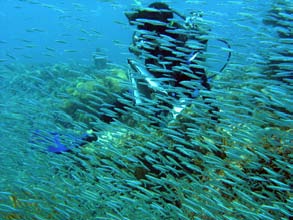
(connectivity of Mesoamerican reefs); Honduras
(connectivity,
recruitment
and
protected
area
management on the Mesoamerican reef); and Townsvil e
(connectivity and population resilience). The Working
Group continues to support postgraduate students and
postdoctoral fel ows from Belize, Guatemala, Costa Rico,
Canada, USA, Mexico, Colombia, and Venezuela.
Through the investigations into connectivity in bicolor
damselfish, the Group is demonstrating several
approaches to measuring connectivity in fish species that
do not aggregate over large distances to spawn. Genetic
assignment tests, otolith microchemistry, ecology of
settlement patterns, and data col ected during the
ECONAR (Ecological Connections Among Reefs) project
on hydrodynamics and habitat are being utilised to
establish patterns of connectivity for populations of this
common species in the Mesoamerican Caribbean.
Photo: Aden Guillermo Jordan
Work under the `post-settlement bottlenecks in coral
Garza
recruitment' project is continuing to monitor the
settlement of corals at five sites in Mesoamerica, while
evaluating the demography of natural y occurring coral
recruits for the critical early post-settlement months,
including factors such as algal biomass that might affect
settlement and early demography. The demography of
juvenile corals is also being monitored using permanent
transects and tracking of specific individuals - the
rationale being that critical bottlenecks in the months
between settlement and reaching a size of 1cm or so in
diameter may be the primary determinant of patterns of
Critical bottlenecks may be
coral connectivity. Factors responsible for these
the primary determinant of
bottlenecks are being investigated.
patterns of coral
connectivity.
The CWG's `coral connectivity' project has col ected data
on coral larval behavior and competency period, and
commenced pilot efforts to build this new information into
dispersal models to provide an informed view of
connectivity in important reef building species. The major
effort to track larvae at Glovers Reef during the spawning
season in Autumn 2007 was abandoned on account of
Hurricane Felix, however its likely that some useful
results wil emerge.
Page 13 of 13
Coral Disease Working Group
MEMBERS:
Prof. C. Drew Harvell (Chair)
Section of Ecology and Evolutionary
Biology, Cornell University, USA
Prof. Bette Willis (Co-Chair)
School of Marine Biology and
Aquaculture, James Cook University,
Australia
Dr Garriet Smith
Department of Biology and Geology,
University of South Carolina-Aiken,
USA
Dr Eric Jordan Dahlgren
Instituto de Ciencias del Mar y Limnología,
Universidad Nacional Autónoma de
México
Prof. Farooq Azam
Scripps Institution of Oceanography,
University of Southern California,
USA
Dr Laurie Raymundo
Marine Laboratory, University of
Guam, USA
Prof. Eugene Rosenberg
Department of Molecular
Microbiology and Biotechnology,
Faculty of Life Sciences, Tel Aviv
University, Israel
Prof. Ernesto Weil
Department of Marine Sciences,
Universidad de Puerto Rico
Mayaguez, Puerto Rico
The Disease Working Group (DWG) has answered many
pressing questions including which disease syndromes
are infectious; which Centres of Excel ence have the
largest coral disease problems; which Centres of
Excel ence would be the most tractable for identifying
local factors that might impact upon disease; and
whether climate factors would affect coral disease levels.
At the end of Year 3 the DWG has published 15 peer-
reviewed papers directly supported by the Program, and
15 partial y supported. The Group is sponsoring or
supporting five postgraduate students and one post-
doctoral from Palau, Puerto Rico, Mozambique, Mexico,
Philippines and the USA.
The DWG has made significant discoveries in the
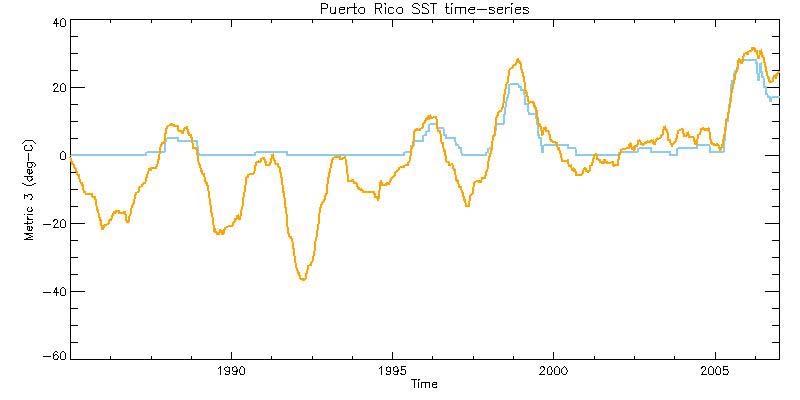
The DWG & RSWG has
Caribbean and Australia regarding the potential impacts
created new algorithms to
of climate warming events on the outbreak of coral
predict outbreaks of disease
disease. The Group considered the various ways in
which thermal stress could impact disease, leading to a
productive col aboration with the Remote Sensing
Working Group (RSWG) to create new algorithms (see
Figure 1) to predict outbreaks using a combination of
monitoring data from Australia and the Caribbean and
satel ite temperature data. The model uses predicted
sea temperature data and can identify the potential
efficacy of various management strategies for future
scenarios. The col aboration with the RSWG developed a
model to investigate the impacts of several scenarios on
reef health including (i) indirect impacts of protecting
Page 14 of 14
herbivorous fishes, (i ) the effects of modest Diadema
recovery, and (i i) direct disease-inhibitory effects of
MPAs that have been reported from the Philippines.
Figure 1: Climate and Disease Outbreaks, a Disease
Algorithm?
Figure 1. An example algorithm produced at the June 2007 joint
model ing disease meeting between the DWG and RSWG. In orange
are the time-series of metrics 1, 3, and 5 for Puerto Rico (18.0 N, 67.0
W) using CRW Pathfinder 0.5-degree (50-km). The metric WSSTA
(Bruno et al., 2007) is shown in blue for comparison.
Strong indications poor water
The impact of local environmental factors on coral health
quality hastens the progress
diseases are a priority for the Group which has a range
of various disease
of projects related to water quality and disease spread.
syndromes
There are strong indications that poor water quality
hastens the progress of various disease syndromes.
The Group has highlighted disease surveys across water
quality gradients, with a particular focus on fish farms as
a source of poor water quality and potential y pathogenic
micro-organisms. Preliminary studies have found that the
fish pens in Bolinao Bay (Philippines) have a strong
influence on the free living and attached bacteria
population, nutrient input, primary production and the
patterns of energy and carbon flux in the surrounding
Research is showing that
waters (see Figure 1 and 2). The Group wil soon know
aquaculture may play a role
the identity of specific bacteria exported from fish farms
as an incubator, conveyor
to reside on the surface of reef corals. Aquaculture may
and facilitator of disease into
play a role as an incubator, conveyor and facilitator of
natural populations
disease into natural populations. Therefore, during 2008
the Group plans to focus additional efforts on this
investigation and scale it up with a partnership with the
Bolinao Center of Excel ence and the Restoration &
Remediation Working Group. The goal is to produce
significant new scientific knowledge that might feed
directly into policy relating to the sustainability of
aquaculture adjacent to coral reef systems.
Page 15 of 15
Figure 2: Coral Disease and Water Quality and Fish Farms
a) Total dissolved nitrogen
b) Total dissolved carbon
c) Chlorophyl concentrations
NB Error bars denote the standard error in al figures.
The DWG has continued investigating the processes of
coral immune response to disease, and developed
methods to induce cel ular immunity of gorgonian sea
fans in response to pathogens and temperature stress
Page 16 of 16
and is in the process of developing these methods for
scleractinians. The Group hopes to use cel ular immune
response as a tool to assess the conditions that
compromise immunity in corals. Meanwhile the Group
has gained further insight into how the bacterial
communities of coral change when chal enged with
pathogens and environmental stress.
Surveys at the Centres of Excel ence have provided
invaluable empirical data on changes of coral community
structure and the prevalence of disease syndromes and
signs over time. They also al ow the selection of a few
syndromes to serve as models of how infectious
diseases affect reef sustainability. The Group has
worked with tractable syndromes in East Africa and has
identified a number of Caribbean and Indo-Pacific and
East African disease syndromes that are infectious, as
wel as identifying new causative agents. The Group is
also confronting the reality that infectious disease is a
moving target; it can be infectious at one time and not at
others.
Two ful years of consistent data from careful y paired
reefs in Marine Protected Area (MPA) and non-MPA
locales in the Philippines, show significantly fewer coral
diseases on many of the MPA reefs compared to non-
MPA reefs. The first year's data has been summarised
into a report specifical y for managers and disseminated
to local managers. A future focus wil be to understand
what aspects of these MPAs result in lower levels of
coral disease.
Page 17 of 17
Modelling & Decision Support Working
Group
MEMBERS:
Dr Roger Bradbury (Chair)
Tjurunga Pty Ltd, Australia &
Australian National University
Dr Pascal Perez (Co-Chair)
Research School of Pacific and Asian
Studies, Australian National
University, Australia
Dr Porfirio Alino
Marine Science Institute, University of
the Philippines
Dr Ernesto Arias
Lab. Ecología de Ecosistemas de
Arrecifes Coralinos, CINVESTAV-U,
Mexico
Dr Peter Campbell
Advanced Computer Applications
Center, Argonne National Laboratory,
USA
Prof. Craig Johnson
Tasmanian Aquaculture and
Fisheries Institute, University of
Tasmania, Australia
Dr Bohdan Durnota
Tjurunga Pty Ltd, Australia
Prof. Rob Seymour
University College London, U.K
The Model ing & Decision Support Working Group
(MDSWG) has presented and contributed to the ITMEMS
conference in Cozumel and a technical workshop in
Akumal with Mesoamerican Barrier Reef System (MBRS)
stakeholders. The Group is building capacity through
local stakeholder workshops and is sponsoring or
supporting six postgraduate or postdoctoral positions in
Mexico, Australia, Philippines and the U.K.
Fieldwork in the Philippines and Mexico included socio-
economic surveys of four towns in the Lingayen Gulf
(Philippines) representing direct users of the Bolinao-
Anda reef complex. This was fol owed by two feedback
workshops for Local Government officials, some of whom
are already using the results and recommendations. This
study resulted in a series of manuscripts for publication
and presentations to local and international symposia.
In Mexico, the Group has consolidated its database of
coral and fish for 11 sites along the length of the MBRS,
analysed the data, and developed and empirical y
validated
a
powerful
tool
to
generate
the
geomorphological classes from easily available imagery.
This has led to strong empirical relationships between
such geomorphological classes and the structure of both
coral and fish communities.
Page 18 of 18
The MDSWG's development of biophysical models has
continued with work on the fundamental model structure
including: continued refinement of the deterministic
model; conversion of discrete deterministic model to a
continuous model with differential equations; and
continued development of the stochastic model. A spatial
extension to the fundamental model is indicating that
boundary interactions do not necessarily buffer a phase
shift; rather they may strengthen the effect; and up to a
threshold of interaction strength, a more healthy reef
patch (with higher grazing) may help improve coral cover
at a less healthy patch.
The Group now has a ful y validated fundamental
mathematical framework, local and regional models that
interact with each other and a first instantiation for the
Next generation of ReefGame
MBRS of a coupled local/regional model. This can form a
developed
platform for the creation of development scenarios for the
MBRS region because they capture the main biophysical
drivers in the system.
The MDSWG has developed the next generation of an
agent-based participatory model ing game ReefGame
which was the basis of a workshop held at the Marine
Science Institute's Bolinao Marine Laboratory.
The workshop was very wel received by al participants,
which included fishing families, barangay captains, and
government officials. Early feedback indicates that the
fishers found the day valuable, interesting and
stimulating. The officials noted that the novelty of the
process encouraged the fishers to share their ideas and
experiences much more so than traditional
questionnaires. The MDSWG believes that these
stakeholder workshops, describing and model ing how
people behave, are the most powerful way to influence
people and change their behaviour - when people are
added to the models, they are immediately of more
interest to management and policy.
The 4th sketch of the global model was made available
to stakeholders and critiqued by the Group in Bolinao in
September. A simplified instantiation of the model,
`Oceana', was agreed in Bolinao to test its broad
dynamical behaviour, and this has also been released to
stakeholders for comment and criticism.
The MDSWG held an international workshop in the
Yucatan on the socio-economic dimensions of the coral
reef problem identified research methods, priorities and
socio-economic drivers across the CRTR study regions.
The outcomes from this workshop included:
inter-institutional relationships and preliminary
Page 19 of 19
cooperation agreements initiated;
consensus on local and regional focus areas;
consensus on the need for a plurality of social
research methods in order to capture local
complexities;
consensus that effective management of the reefs
relies on a comprehensive understanding of socio-
economic and political drivers;
constructive exchange on barriers to greater local
participation in CRTR project, especial y for
academics and non-government actors working
outside strictly bio-physical and economic disciplines;
identification of possible strategic al iances with other
proposed and ongoing research projects addressing
sustainability in the Mesoamerican region.
Page 20 of 20
Restoration & Remediation Working Group
MEMBERS:
Dr Alasdair Edwards (Chair)
School of Biology, University of
Newcastle, U.K
Emeritus Professor Ed Gomez
Marine Science Institute, University of
(Co-Chair)
the Philippines
Dr Richard Dodge
National Coral Reef Institute, Nova
Southeastern University
Dr Aileen Morse
Marine Biotechnology Center, Marine
Science Institute, University of
California-Santa Barbara, USA
Dr Buki Rinkevich
National Institute of Oceanography,
Haifa, Israel
Dr Makoto Omori
Akajima Marine Science Laboratory,
Japan
Dr Tadashi Kimura
Japan Wildlife Research Center
(JWRC), Japan
The Restoration & Remediation Working Group (RRWG)
has supported and trained six post-graduate students
from a number of countries during the past year. The
Group has also provided support for a technician at
Bolinao Marine Laboratory (BML) and met the fieldwork
costs of four students from developed countries.
The publication of Reef Restoration Concepts and
Guidelines: making sensible management choices in the
Demand continues for "Reef
face of uncertainty, both in printed and electronic form
Restoration Concepts and
(available from www.gefcoral.org) has continued to
Guidelines"
provide policy guidance to governments, managers and
NGOs. Over 600 hard copies have been distributed on-
demand to a wide audience, whilst a targeted marketing
campaign to key audiences is to be undertaken in early
2008 to ensure that the Guidelines reach al appropriate
practitioners and managers. In addition to the hard copy
distribution, approximately 700 electronic copies have
been downloaded from the CRTR Program website
during 2007.
Col aborations continued with projects and organisations
including: 1) a pilot IEC activity to raise awareness of
marine life among coastal dwel ers dependent on coral
Collaborations with
reefs was held in three communities in Bolinao as a joint
international organisations
initiative of the CoE and the RRWG, in partnership with
and projects continued
World Wide Fund for Nature and in cooperation with the
throughout 2007
local government units and the Philippines Department of
Education. 2) A regional workshop on coral reef
restoration was also held in col aboration with EC
REEFRES project at the South-East Asia CoE with
participants from Thailand, Indonesia, Vietnam, Malaysia,
Singapore and Philippines as wel as researchers from
UK, USA, Israel and Italy.
The Group's research projects have also made progress
during the year with work on the long-term efficacy and
Page 21 of 21
cost-effectiveness of restoration interventions continuing
at contrasting sites in Mexico, Palau and Philippines.
Standardized Modules (SMs) are being monitored for
treatments that include controls, artificial substrate pads,
settlement plates, addition of grazing snails (Trochus),
and addition of coral transplants at varying densities.
Monitoring on the SMs and on the adjacent reef includes
key processes linked to natural recovery: `visible' coral
recruitment, growth of corals, coral survival, fish
herbivory, and algal growth. Al sites were affected to
some extent during the year due to impacts from
Hurricane Dean (Akumal, Mexico), and bleaching and a
crown-of-thorns starfish outbreak (Bolinao, Philippines).
Despite these setbacks, the characterisation of the rates
of key processes influencing recovery and ultimately the
outputs wil assist in model ing restoration scenarios.
Under the larval recruitment project based in Bolinao the
Group is studying the effects of fragmentation and
First detailed data of coral
transplantation on reproduction in the corals by
reproduction timing at
monitoring growth, fecundity and survival of both
Bolinao
transplants and donor and control colonies. The timing of
coral reproduction around Bolinao has now been
established (this is the first detailed data for the
Philippines), and the effects of fragmentation on
reproduction and survival are beginning to emerge. Two
sets of recruitment tiles have been retrieved with very
different coral communities. Gravid Acropora colonies
were also successful y spawned in the BML outdoor
hatchery and spat were settled onto conditioned tiles in
order to study how herbivory and spat density affect post-
settlement survival.
The RRWG has assessed the cost-effectiveness of mass
culture of juvenile corals on substrates with juveniles of
the grazing snail, Trochus niloticus, in midwater
nurseries, and efficacy of transplantation to the reef after
one year. At Palau the Group has checked on growth
and survival of juvenile corals cultured with grazing snails
in cages in the mid-water nursery; transplanted the 1-
year old cultured corals to pal et bal s on Lukes Reef;
carried out a second mass-culture experiment using
sexual propagation; and monitored spat at around 12
months post-settlement. Survival rates of the juvenile
Acropora were perhaps 2 orders of magnitude better
than the wild. Costs of rearing based on the current
experiments suggest ~US$10 per 1-year juvenile colony
ready for out-planting.
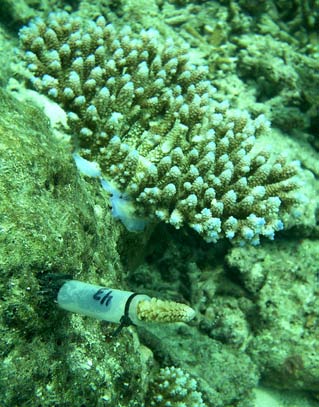
Sample fragment (Acropora
digitifera) in tygon tubing placed at
Work on enhancing recovery by transplantation of corals
Ioul Luke's Reef in Koror, Palau for
continued with monitoring of growth and survival of
a growth and survivorship
experiment. Background colony is
A. digitifera. (Photo: Charles Boch)
Page 22 of 22
transplants on the nine degraded bommies at Bolinao.
Results show that Porites cylindrica has much better
survival compared to Montipora digitata but that there do
not appear to be any significant differences based on
density and surface orientation of attachment. Pavona
danai is now being tested at the two sites to further our
understanding of which species are most suitable for
transplantation under different conditions and why.
Work has also continued with the nurseries near Silaqui
Island, Bolinao on enhancing recovery by in situ culturing
of corals in nurseries. This research aims to discover
which species are most suitable for nursery culture, how
long they need to be cultured, what rearing techniques
work best and are most cost-effective, and how wel the
farmed coral colonies can adapt when out-planted to
degraded reef areas. Prior to the June 2007 bleaching
event, survivorship in both nurseries was around 80-
90%. The bleaching reduced survivorship to ~60% and
provided further data on relative susceptibilities among
species (e.g. Acropora muricata was wiped out). A new
rope nursery of improved design was established for
detailed experimentation on coral growth and survival of
four species.
The Group is also using recently developed molecular
markers to evaluate the genetic background of a limited
number of coral species. The first set of DNA samples
from four populations of Pocil opora damicornis was
col ected in late 2006 and extraction of high molecular
weight DNA has been successful y completed. The next
stage is to use microsatel ites to evaluate the population
genetics.
Page 23 of 23
Remote Sensing Working Group
MEMBERS:
Prof. Peter Mumby (Chair)
Marine Spatial Ecology Lab, School
of Biological Sciences, Hatherly
Laboratory, University of Exeter, U.K
Dr Laura David (Co-Chair)
Marine Science Institute, University of
the Philippines
Prof. Stuart Phinn
School of Geography, Planning and
Architecture, The University of
Queensland
Prof. Ellsworth LeDrew
Faculty of Environmental Studies,
University of Waterloo, Canada
Dr Mark Eakin
Marine Applications Science Team
(MAST), Coral Reef Watch Project,
NOAA
Dr William Skirving
Coral Reef Watch Project, NOAA
Dr Alan Strong
Marine Applications Science Team
(MAST), Coral Reef Watch Project,
NOAA
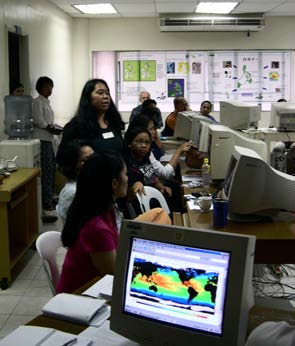
Capacity building activities of the Remote Sensing
Working Group (RSWG) consisted of personal training
of CRTR students in remote sensing with special
application to their research. Four students participated,
resulting in two draft papers and the first national marine
habitat map being created of Palau. Two ful CRTR
workshops for coral reef managers and technical staff
were held in Puerto Morelos and Zanzibar (in
col aboration with the Reef Restoration Working Group).
Creation of first national
New data products were generated including a web-
marine habitat map of Palau
portal for directing users to sources of satel ite data on
factors affecting coral reefs and new bleaching metrics
around Centres of Excel ence.
Inter-working group activities have been strong, with the
RSWG joining with the Disease Working Group (DWG) to
Web portal for directing
identify new algorithms for coral disease prediction and
users to sources of satellite
new parameterisation for model ing. Col aboration with
data on factors affecting
the Bleaching Working Group (BWG) developed new
coral reefs generated
algorithms for coral bleaching. RSWG is involved in a
study of reef recovery in Palau personnel from the
Restoration and Rehabilitation (RRWG), Bleaching and
Connectivity (CWG) Working Groups and a regional
study of coral gene flow that also includes members of
New algorithms for coral
the DWG and CWG.
disease prediction and coral
bleaching developed
Coincident and satel ite-image field data sets for coral
reef environments, in Belize, Palau, Australia and Fiji
have been used to develop techniques for rapid field
surveys of benthic cover to produce spatial information
for mapping and calibration/validation of image data sets
of coral reefs. Techniques have also been developed for
processing the field data to drive the image based
mapping process for mapping benthic cover from high
Page 24 of 24
spatial resolution satel ite images. The group is now in
the final stages of applying these techniques to image
and field sites. Standard and advanced image processing
techniques are also being compared to assess the
additional information and costs provided by more
advanced data and processing approaches.
An on-line toolkit has been developed for selecting
On-line toolkit developed for
suitable image data and mapping techniques for mapping
mapping
and
monitoring
and monitoring coral reefs, seagrass beds (from another
coral reefs, seagrass beds
project) and water quality
and water quality
(www.gpa.uq.edu.au/CRSSIS/tools/rstoolkit/). This toolkit
shows managers, scientists and technicians working in
coastal marine environments how remote sensing can
map and monitor changes to indicators of coastal
ecosystem health. This toolkit currently focuses on
coastal water bodies, seagrass and coral reefs, and
mangroves but future work wil extend it to cover al other
coastal ecosystems
(www.coastal.crc.org.au/cwhm/toolkit/).
Col aboration with other research organizations and
agencies has resulted in a year-long deployment of
thermistors where coral bleaching occurred in the
northern Philippines so that data can be compared to the
AVHRR thermal signatures of 2006-07.
The RSWG also had input to a workshop on use of RS-
GIS as a tool for coastal planning was conducted for
Bolinao and nearby coastal municipalities. Another tool
that is being developed col aboratively for use by coastal
managers is a technique of Rapid Reef Assessment
where an under-boat towed video transect that can be
analyzed unsupervised. Together through the RSWG,
the development team has shown reliable assessment of
living vs non-living components from a video stream
using data obtained during the Palau field work last April
2006.
The same group is also currently honing the method to
distinguish live coral, dead coral, algae, and abiotic. After
Photo: Laura David
refinement they plan to apply the same analysis to the
more complex reef of Bolinao. If successful, this wil give
managers a hassle free quick assessment of the state of
their reefs and reliably detect change. The group is also
developing methods to determine reef rugosity, size and
frequency of holes, and degree of bleaching.
Excellent results have been
The three-dimensional radiative transfer model has been
achieved
through
further
subjected to further validation experiments with excel ent
validation experiments of the
results. This indicates that the formulation of the
three-dimensional
radiative
Radiative Transfer Equation in the 3D Model is correct
transfer model
and converges to the analytical solution very quickly, and
that the software implementation is largely error-free.
Page 25 of 25
The model is now considered conceptual y complete but
not ready for distribution to third parties. A manuscript
describing the model is in preparation with the intention
of submission to the Journal Applied Optics.
A major piece of work is a large scale modeling based
sensitivity analysis for the ability to discriminate key coral
reef benthic types under varying environmental
conditions, and consequently provides specific advice on
the design of remote sensing instruments for coral reef
applications. Not only is this the first time the optical
properties of actual coral reef waters have been utilized
in such an analysis, the Group's substantial dataset
al ows consideration of spatial and temporal variability of
optical properties across the reef environment.
Two col aborative projects with members of the BWG are
exploring the use of the Radiosity model to investigate
spectral mixing processes on corals. These projects wil
seek to establish the light-fields around coral structures
under differing solar and sea state conditions for both
photobiology and remote sensing objectives.
Investigation of multiple light scattering effects within
differing coral morphologies, at differing depths and
under different il umination conditions, is beginning with
construction of the basic model input parameters and
evaluating model internal accuracy tests.
Page 26 of 26
CRTR Students2
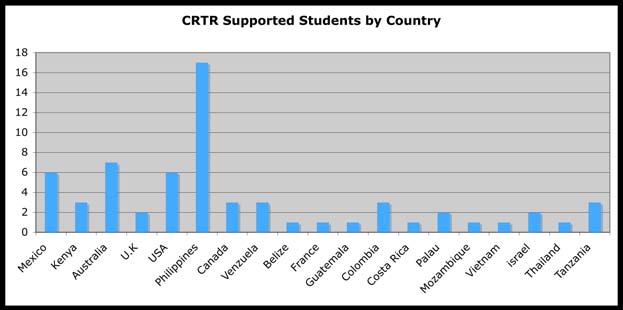
The CRTR Program through the Working Groups and
Centres of Excel ence are sponsoring or supporting 64
masters, postgraduate students or post-doctoral fel ows
in 19 countries. Further to this there have been a
number of sponsorship opportunities for developing
country participants to attend training workshops held by
the Working Groups and Centres of Excel ence.
Figure 3: CRTR Supported students by country
2 This table only includes those students supported through
scholarships or other assistance mentioned in Working Group
or Centre of Excellence annual reports, and does not include
those students working in CRTR member's laboratories nor
students who received scholarships to training workshops.
Page 27 of 27
NAME
COUNTRY OF
INSTITUTION
SCHOLARSHIP
TITLE / AREA OF STUDY
ORIGIN
TYPE
Jackie Padillo-Gamino
Mexico
University of Hawaii
PhD
Assessing the impacts of disturbance on reproduction
of corals
Mebrahtu Ateweberhan
Kenya
Wildlife Conservation Society
Postdoc
TBA
Juliet Furaha
Kenya
Moj University
Masters
The influence of area protection and site
characteristics on recruitment, survival, and growth of
coral species on the Kenyan Coast
Shakil Visram
Kenya
CORDIO
Postdoc
TBA
Juan Carlos Ortiz
Venezuela
The University of
Postdoc
TBA
Queensland, Australia
Nathaniel Alvarado
Belize
University of Maine, USA
BSc
Coral ecology
Angela Mojica
Guatemala
Old Dominion University,
MSc
Impact of grazing crabs on coral reefs and Postlarval
USA
lobster responses to settlement cues
Ainhoa León Zubillaga
Venezuela
Universidad Simón Bolivar,
MSc
Genetics and connectivity of Acropora palmata
Caracas
Isabel Porto Morales
Colombia
Universidad de los Andes,
MSc
Coral genetics and connectivity
Colombia
Eva María Salas De La
Costa Rica
Centro de Investigación en
MSc
Population genetics of the Bicolor damselfish,
Fuente
Ciencias del Mar y
Stegastes partitus
Limnología, Universidad de
Costa Rica
Roger Theissen
Canada
University of Windsor,
Masters
Population genetics and connectivity in reef fish
Canada
David Williamson
Australia
James Cook University,
PhD
Connectivity in reef fishes
Australia
Derek Hogan
Canada
University of Windsor,
Postdoc
Otolith chemistry approaches to fish connectivity
Canada
Pablo Saenz Agudelo
Colombia
Perpignan University, France
PhD
Genetic connectivity in reef fish
Suzanne Arnold
USA
University of Maine, USA
PhD
Coral settlement and recruitment
Carmen Amelia Villegas
Mexico
CINVESTAV, Merida, Mexico PhD
Coral connectivity
Sanchez
Aldo Croquer
Venezuela
University of Puerto Rico
Postdoc
Geographic assessment and monitoring of diseases in
the wider Caribbean
Guillermo Jordán Garza
Mexico
Instituto de Ciencias del Mar
Masters
Geographic assessment and monitoring of diseases
y Limnología, Mexico
on Mexico reefs
Alma Ridep-Morris
Palau
James Cook University,
Masters
The dynamics and epidemiology of a coral disease
Australia
outbreak in Nikko Bay
Cathie Page
USA
James Cook University,
PhD
TBA
Australia
Maria Rodrigues
Mozambique
James Cook University,
PhD
Assessment of the prevalence of diseases on coral
Australia
communities from the south-western Indian Ocean
Courtney Crouch
USA
Cornell University, USA
Masters
TBA
Kathryn Rosell
Philippines
University of the Philippines
Masters
The effects of the riverine discharges on coral disease
prevalence
Tak Ching Fung
UK
University College, UK
PhD
Modelling coral reef ecosystems and their interaction
with human
societies
Rollan Geronimo
Philippines
University of the Philippines
MSc
Modeling marine protected area networks along the
South China
Sea
Jessica Melbourne-Thomas
Australia
University of Tasmania,
PhD
Decision support systems for managing coral reefs at
Australia
a regional scale
Yves-Marie Bozec
France
CINVESTAV, Merida, Mexico Postdoc
Analysis of reef dynamics
Gilberto Acosta Gonzalez
Mexico
CINVESTAV, Merida, Mexico Postdoc
TBA
Deborah Cleland
Australia
Australian National
BSc (hons)
Summer Research Scholarship
University, Australia
David Idip
Palau
Canada (2/3) and Exeter
MSc
Dedicated training in remote sensing: mapping reefs,
(1/3)
bathymetry, wave exposure and beta diversity of
Palau
Robert Canto
Philippines
The University of
PhD
Benthic algal growth controls in coral reefs
Page 28 of 28
NAME
COUNTRY OF
INSTITUTION
SCHOLARSHIP
TITLE / AREA OF STUDY
ORIGIN
TYPE
Queensland, Australia
Chris Roelfsema
Australia
The University of QLD,
PhD
Integrating field and remotely sensed data: Low cost,
Australia
community-based assessment of tropical marine
ecosystem health in developing nations
Ian Leiper
Australia
TBC
PhD
Mapping tropical marine communities for direct
application purposes using remote sensing techniques
Tran Van Dien
Vietnam
TBC
PhD
Develop tools for mapping and monitoring reef
composition and condition in the turbid and clear
coastal waters of Vietnam
Zolan Botin
Philippines
University of the Philippines
PhD
Data and computer hardware support
Ma. Sheila Angeli Marcos
Philippines
University of the Philippines
PhD
Field support in Palau and Bolinao
Sonia Bejarano
Colombia
University of Exeter
PhD
Use of acoustic remote sensing to predict relative fish
density and grazing intensity
Alan Lim
Canada
University of Waterloo
PhD
Use of remote sensing to detect ecological changes in
coral reef environments using textural measures
Victor Ticzon
Philippines
University of the Philippines
Masters
Use of remote sensing to predict the density of
keystone taxa
Eileen Penaflor
Philippines
University of the Philippines
PhD
Remote sensing of coral bleaching
Kareen Vicentuan
Philippines
University of the Philippines
Masters
The reproductive biology of scleractinian corals and in
addition, the effects of fragmentation on their
reproductive status
Iris Boliozos
Philippines
University of the Philippines
Masters
TBA
Maria Vanessa Baria
Philippines
University of the Philippines
Masters
Spatial and temporal patterns of coral recruitment in
Bolinao, Pangasinan
Patrick Cabaitan
Philippines
University of the Philippines
Masters
Coral reef restoration
Marcos Alberto Rangel
Mexico
Instituto Tecnologico de Boca Masters
TBA
Avalos
del Rio, Mexico
Charles Boch
USA
University of California Santa PhD
Investigate the reproductive cycle of Acropora spp. to
Barbara, USA
enhance our understanding of coral mass spawning
and the mechanisms regulating and controlling
reproduction
Li Shaish
Israel
Isreal Oceanographic and
PhD
Coral reef restoration & remediation
Limnological Research, Israel
Gideon Levy
Israel
Isreal Oceanographic and
PhD
Coral reef restoration & remediation
Limnological Research,Israel
Kirk Kilfoyle
USA
Nova Southeastern
Masters
Assessing the effectiveness of various artificial reef
University Oceanographic
designs, monitoring changes in fish assemblages on
Center, USA
coral reefs
Dexter De La Cruz
Philippines
University of the Philippines
Masters
A critical look at the use of the `coral nursery' as a
intermediate step in coral restoration in Bolinao,
Pangasinan, Philippines
Heidi Schuttenberg
USA
James Cook University,
PhD
Understanding Effective Coral Reef Governance
Australia
Narinratana Kongjandtre
Thailand
The University of
PhD
Taxonomy and connectivity of corals from the genus
Queensland, Australia
Favia in Thailand and on the southern Great Barrier
Reef.
Scott Hook
Australia
The University of
PhD
The role of institutions in economic development: an
Queensland, Australia
empirical analysis of growth and development of Small
Island States in the Pacific: A casestudy of State
capacity to protect coastal regions in Fiji
Simon Albert
Australia
The University of
PhD
New tools to identify coral reef ecosystems at risk
Queensland, Australia
Nsajigwa Mbije
Tanzania
University of Dar es Salaam,
PhD
Assessing the applicability of the gardening concept,
Tanzania
evaluate and develop the protocols for reef restoration
Leonard Jones Chauka
Tanzania
University of Dar es Salaam,
PhD
Molecular and physiological studies of Symbiodinium
Tanzania
harbored by reef building corals of Tanzania in relation
to environmental stress
Mohammed Suleiman
Tanzania
State University of Zanzibar
PhD
Distribution and Dynamics of Coral Diseases and its
Mohammed
Relation to Coral Health and Local Environmental
Page 29 of 29
NAME
COUNTRY OF
INSTITUTION
SCHOLARSHIP
TITLE / AREA OF STUDY
ORIGIN
TYPE
Factors in Tanzania
Cesar Coronado
Mexico
Centro de Investigación
PhD
Water Circulation in the Puerto Morelos Reef Lagoon
Científica y de Educación
Superior de Ensenada.
Mexico
Paul Fisher
UK
Instituto de Ciencias del Mar
Postdoc
TBA
y Limnología, Universidad
Nacional Autónoma de
México
Mark Dondi Arboleda
Philippines
Marine Science Institute,
PhD
Biology
University of the Philippines
Rachel Ravago-Gotangco
Philippines
Marine Science Institute,
PhD
Marine Science
University of the Philippines
Mark Vergara
Philippines
Marine Science Institute,
MSc
Marine Science
University of the Philippines
Candice Lumibao
Philippines
Marine Science Institute,
MSc
Marine Science
University of the Philippines
Miahnie Joy Pueblos
Philippines
Marine Science Institute,
MSc
Marine Science
University of the Philippines
Page 30 of 30
Component Two: Promoting
Scientific Learning and Capacity
Building
Component Summary
Component Two of the CRTR Program is aimed at
capacity-building outcomes through the promotion of
scientific learning and linking scientific knowledge to
management and policy. Sound management and policy
tools wil shape and change the way policy and decision-
makers view and approach coral reef management.
The Program intends to achieve this aim through:
helping to build or enhance the capacity of
institutions in at least three developing country
sites within the first phase of the Program, so
that they can function as Centres of Excel ence
(CoE) for coral reef research;
developing from the research, and in close
consultation with managers and on-ground
participants,
opportunities,
products
and
networks that can lead to better management
and strengthened policies regarding coral reefs
in the Project's chosen regional sites ,
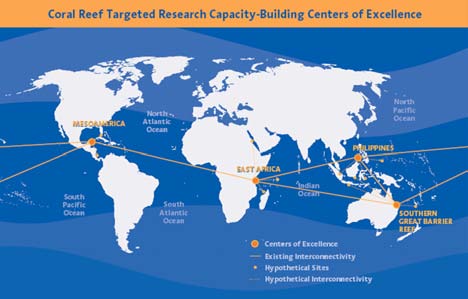
The four CoEs for the first phase of the Program are
based in major coral reef regions around the world:
Southeast Asia: Marine Science Institute/Bolinao
Marine Laboratory, University of the Philippines.
Eastern Africa: Institute of Marine Sciences
(IMS), of the University of Dar Es Salaam,
Zanzibar, Tanzania.
Western
Caribbean/Mesoamerica:
Unidad
Académica Puerto Morelos, Instituto de Ciencias
Page 31 of 31
del Mar y Limnología, Universidad Nacional
Autónoma de México (UNAM).
South Pacific/Australasia: Heron Island Research
Laboratory of the Centre for Marine Studies, The
University of Queensland, Australia.
Page 32 of 32
Australasian Centre of Excellence
Contact: Professor Ove Hoegh-Guldberg, Centre for Marine Studies, The
University of Queensland
The major technical focus for the Centre of Excel ence
has been supporting the research and operations of the
Bleaching Working Group through Professor Ove Hoegh-
Guldberg's laboratory at the Centre for Marine Studies,
UQ. A ful report on the technical achievements and a
listing of publications from the Hoegh-Guldberg
laboratory is available under the Bleaching Working
Group annual report. Further to this, the Australasian
Centre of Excel ence has continued to support the efforts
of Centre for Marine Studies students during the year
Photo: Ove Hoegh-Guldberg
and these efforts have contributed towards the Bleaching
Working Group research.
Dr Ken Anthony received a Packard Foundation grant to
develop an information tool package that can help
managers assess how coral reef communities wil
change in response to environmental stress. The project
is using a combination of physiological niche modeling,
Bayesian belief networks and community matrix models
as the general framework. This approach wil al ow the
Centre to combine environmental, biological and
ecological information from multiple sources and across
multiple scales to produce semi-quantitative estimates of
New insights and projections
reef resilience. Although precise predictions wil not be
of how benthic reef
feasible, this project wil provide new insights and
communities are likely to
projections of how benthic reef communities are likely to
behave under multivariate
behave (within a confidence envelope) under multivariate
environmental stressors
environmental stressors.
The Centre of Excel ence is a partner in the Integrated
Marine Observing System (IMOS) designed to improve
Australia's ability to monitor changes in its 16 mil ion km2
ocean territory. A component of the IMOS project wil
establish a wireless sensing network that wil be the
basis of a sophisticated monitoring network at Heron and
One Tree Islands. This has enabled funding for a
superseded project to be redirected toward other
capacity building exercises of the Australasian CoE.
Capacity building activities during the year included
sponsorship of nine participants from the Pacific and
Southeast Asia to attend the Tropical Marine
Invertebrates
course;
the
Coastal
Resources
Management Course, and the Marine Neurobiology
course as part of the Great Barrier Reef Study Program.
A second training opportunity involved sponsorship of
participants to attend the Responding to Mass Bleaching
and Climate Change Workshop organized by the Great
Barrier Reef Marine Park Authority (GBRMPA) and the
National Oceanographic and Atmospheric Administration
Page 33 of 33
(NOAA) which presented a practical training package to
coral reef managers that explores strategies to respond
to the threat of mass coral bleaching and climate change.
The Centre has continued to establish and enhance
networks throughout the region through various forums
including meetings, conferences and information
dissemination, and has progressed against its objectives
through 2007 despite the setback experienced with the
loss of laboratory and accommodation facilities at Heron
Island.
Page 34 of 34
East African Centre of Excellence
Contact: Dr Alfonse Dubi, Institute of Marine Sciences, University of Dar es
Salaam
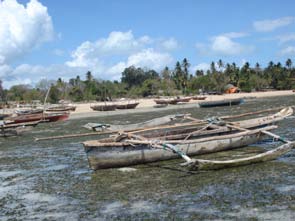
The East African Centre of Excel ence continues to serve
as a hub for research and capacity building activities in
the region. Facilities continued to be upgraded to
support this effort during 2007, and the Centre of
Excel ence hosted numerous visiting researchers and
training workshops.
During the year the Centre of Excel ence has provided
support to three postgraduate students and hosted
researchers from the Bleaching, Remote Sensing and
Restoration & Remediation Working Groups. The BWG
assisted in assessing coral reef health in selected sites
on the west and east coast of Unguja Island. A GIS and
Remote Sensing training workshop, supported by
recently acquired Ikonos Satel ite images for Unguja,
helped to update existing coral reef distribution maps and
to describe in greater detail the health status of reefs.
The CoE has been cal ed upon on a number of
occasions to provide advice and technical assistance to a
range of stakeholders. During the year, the CoE assisted
KICAMP and Kinondoni Municipal Council in describing
the location (mapping) and status of coastal resources on
Landing site where fish are landed
the Dar es Salaam coast as wel as developing a
after being caught, east coast of
Unguja, Zanzibar (Photo: Narriman
searchable database for use in decision making. The
Jiddawi)
Centre has also started to investigate how to inform and
build capacity of Zanzibar Local Government and the
community at large to adopt environmental y friendly
practices for coral reefs.
The CoE reviewed coral reef monitoring programs in
Tanzania, combining recent CRTR project data on coral
health with that of previous coral reef monitoring. This
review was presented during the Tanzania Marine Forum
held in Dar es Salaam along with other papers from CoE
personnel. The forum discussions benefited stakeholders
The CoE has been involved in
from research and training institutions, private sector,
providing technical advice to
community
organizations,
coastal
management
groups undertaking
programs, public institutions and local communities.
community-based coral reef
monitoring programs
The CoE has also been involved in providing technical
advice to various groups undertaking community-based
coral reef monitoring programs in Bagamoyo, Mkuranga,
and Tanga. These activities have highlighted the need
for a community-based monitoring manual to establish
protocols and ensure consistency of data.
Page 35 of 35
Mesoamerican Centre of Excellence
Contact: Dr Roberto Iglesias-Prieto, Instituto de Ciencias del Mar y
Limnología, Universidad Nacional Autónoma de México
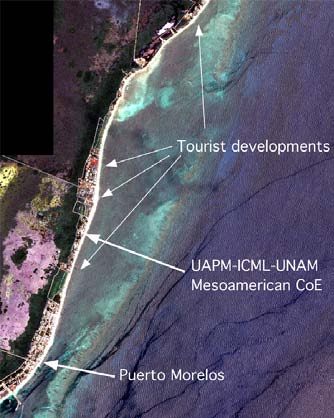
The Mesoamerican Centre of Excel ence is continuing to
work with the Bleaching, Disease, Remote Sensing, and
Restoration & Remediation Working Groups in
undertaking and hosting research. Further to the
Working Group activities, the Centre is also conducting
two local research projects looking at (1) the
development of a hydrodynamic model for the circulation
of the reef lagoon, and (2) an analysis of the local
watershed to assess the influence of groundwater on the
reef lagoon. Under the first project, activities are
continuing on schedule and the first peer review paper
describing the general characteristics of the water
circulation in Puerto Morelos was published in Coral
Reefs in February 2007. Under the groundwater project,
activities related to the analysis of the nutrient distribution
in the local watershed and in the reef lagoon were
Image courtesy of Roberto
initiated and work on the physical properties of the local
Iglesias-Prieto
watershed continued as scheduled. The final products of
these projects wil benefit the managers of the local
marine protected areas, with the early results already
being incorporated into direct management actions. The
CoE conducted Courses on Light and Photosynthesis on
Coral Reefs (with 15 students from 9 countries) and
Marine Protected Areas (with 28 students from 6
countries supported by 14 lecturers from several
institutions in 3 countries).
The CoE has also continued to link the scientific results
to local managers and policy decision-makers by
Products from the local
participating in local, regional and national forums
research projects will benefit
including the National Scientific Advisory Council on
managers of the local marine
Coral Reefs for the Mexican Federal Government, of
protected areas
which Dr Iglesias-Prieto is the president, and in
maintaining
constant
communication
with
the
management community through the participation at
advisory committees and workshops. The first workshop,
attended by 16 managers from 2 countries, was divided
in two sections. During the first part Dr. Al Strong from
NOAA and the Remote Sensing Group presented a
hands on workshop on the use of the satel ite tools from
NOAA, and in the second part the objectives and the
scope of the CoE were presented by local members of
most of the working groups.
Page 36 of 36

Southeast Asian Centre of Excellence
Contact: Emeritus Professor Ed Gomez, Marine Science Institute, University
of the Philippines
The past year has seen further development of the
Southeast Asian Centre of Excel ence based at the
University of the Philippines' Marine Science Institute.
Improved infrastructure has ensured a high standard of
facilities for Working Groups, and visiting and local
researchers. The CoE continues to directly support two
doctoral students and three masters students plus two
doctoral and four masters level students under various
CRTR Working Groups. The GEF and CoE students and
Photo: Mark Windell Vergara
staff also participated in the training/workshops: 1) the
short course on coral taxonomy; 2) the mini-symposium
and workshop led by the Coral Disease Working Group
(DWG); and 3) the Communications Training/Workshop.
The CoE successful y hosted the mini-symposium and
workshop of the DWG attended by national government
agencies, non-government organizations and the
academe. This was fol owed by a workshop for Working
Group members and students, investigating the impacts
of mariculture and eutrophication on the health of
corals/coral reefs in Bolinao.
The three local projects continue to make progress:
1. The Coral Taxonomy project has updated, the on-line
map library of Philippine corals now including information
on coral distribution, species lists, virtual museum,
Impacts of mariculture and
taxonomic guides and featured species. Data from this
eutrophication on the health
research wil contribute to a field guide to the corals of
of the coral reefs in Bolinao
Bolinao and Western Luzon. 2. A Field Guide to the
is being investigated
Bubble Corals of the Philippines has been developed.
This wil be used with non-scientist divers who are
trained by the project to map the distributions of these
corals in the Philippines. 3. The Guide to the Corals of
Bolinao and Western Luzon has commenced with field
surveys and taxonomic identification of the coral species
photographed.
Under the Local Government Initiative (LGI), the CoE
conducted a one-day workshop entitled Rules of
Engagement, Recording System and other SOPs in
Coastal Law Enforcement. The participants were law
enforcers including MPA managers and local enforcers
from the barangays with established coral reef marine
protected areas. The LGI project wil assist conservation
of coral reef ecosystems by improving governance and
Page 37 of 37
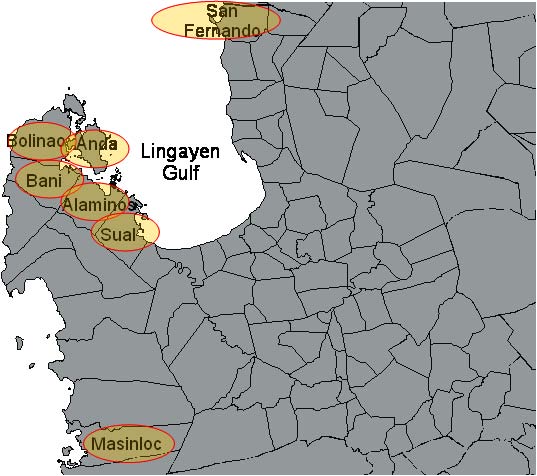
management of the coastal zone. An important outcome
of the workshop was the formulation of draft operating
procedures on coastal law enforcement. Fol ow-up
meetings and workshops wil develop an operational
manual on the rules of engagement.
management of the coastal zone. An important outcome
of the workshop was the formulation of draft operating
procedures on coastal law enforcement. Fol ow-up
meetings and workshops wil develop an operational
manual on the rules of engagement.
Map of participating local municipalities Philippines Local
Government Initiative
Page 38 of 38
Component Three: Linking
Scientific Knowledge to
Management & Policy
During the past year activity under the `linking science
knowledge to management and policy' has increased
with significant inroads being made in the development of
research outputs and results, which wil be able to be
applied to these audiences. Specific activities of note
include:
`The Carbon Crisis: Coral Reefs under Rapid
Climate Change'
Fol owing on from the February 2007 synthesis meeting
in San Diego, a panel of 17 CRTR researchers has
developed a research paper titled "The Carbon Crisis:
Coral Reefs under Rapid Climate Change" which wil be
published in the December 2007 issue of Science. The
paper is the inaugural `synthesis' product of the CRTR
Program integrating elements of research from across
the Program's research portfolio. The information
contained in this paper wil be developed into appropriate
information products for management and policy
communities.
Common Sampling Project
Strong progress continues on the ecological and
environmental monitoring under the Common Sampling
Project. Under the project, the interest is in the
processes that influence the structure of reef
communities (in the direct vicinity of the CoEs) to provide
impetus, local ownership and capacity within each
region. Momentum is building across the four regions in
Mexico, Australia, Zanzibar and the Philippines, under
the guidance of Professor Robert van Woesik with
approximately 18 sites now set up at the four Centres of
Excel ence.
Page 39 of 39
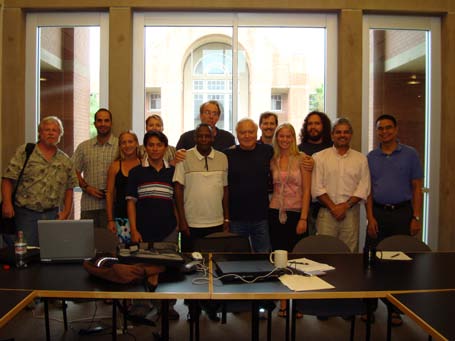
Members of the Common Sampling Project at the October 2007
Workshop in Florida, USA
CRTR Future Leaders Forum
From the 10-14 December 2007, the Australasian Centre
of Excel ence at The University of Queensland wil host
55 of the Program's Masters and Postgraduate students,
and Postdoctoral fel ows from 17 countries. The Forum
purpose of the Forum is to develop the network of the
future leaders in marine and coral reef ecosystem
research and management; assist in building their
capacity to understand global issues impacting on these
ecosystems, and; to develop new knowledge and skil s to
assist them in their current and future roles. Specifical y,
the aims are to:
Empower the students/participants with the latest
knowledge and skil s to assist them in integrating a
broad range of information into their future roles as
coral reef and coastal ecosystem researchers and/or
managers.
Build peer networks, and strengthen existing regional
and international networks amongst the participants
in order to strengthen effective information and
knowledge transfers.
Bring
together
world-renowned
international
researchers and managers in marine ecosystems
together with the students to provide mentoring and
knowledge exchange to build on, and develop
existing knowledge and skil s.
Transfer capacity building skil s and expertise to
strengthen the capacity and knowledge of the
participants
for
governance,
research
and
management of marine resources.
Develop an understanding of effective techniques in
communicating
research
outputs
to
various
audiences in order to ensure effective uptake of the
Page 40 of 40
information to preserve the marine environment in
developing countries.
Local Government Initiative
The Local Government Initiative (LGI) is continuing to
proceed in al four regions where the Centres of
Excel ence are located. In the Philippines, the Centre of
Excel ence is progressing wel with stakeholders
meetings including law enforces, MPA managers and
local enforcers from the barangays looking at assisting in
the effort to conserve coral reefs by improving
governance and management of the coastal zone.
The Australasian Centre of Excel ence is undertaking a
three-site study (Solomon Islands, Cook Islands and Fiji)
with the main focus on the Solomon Islands. The CoE is
focusing on working with a local community to explore
the activities creating pressure on the local ecosystems,
and to determine if there is enough local capacity to
implement the necessary management responses to
these pressures. The outcome wil be the establishment
of an action plan to combat some of these pressures and
reduce the impact on the coral reef ecosystem.
In Mexico, Centro Ecologica Akumal is leading the LGI
and wil be focusing on informing coastal development
decision-making with robust information about threats to
coral reef health and how these affect ecosystem goods
and services on which coastal communities rely, state
and federal regulations and norms designed to protect
vulnerable coastal habitats and resources, and to make
decision-making more participatory by empowering civil
society and other stakeholders with this information.
Lastly, the East African Centre of Excel ence's LGI aim is
to get local governments and key stakeholders e.g.
WIOMSA, MACEMP, dive operators, boat operators and
the public in general, to focus on the problems facing
coral reefs, identifying those that are of highest priority
and which they are committed to addressing, and coming
up with possible solutions and plans to implement these
with the help of the COE. The expected outcome wil be
improvements in the practices and policies of the
Zanzibar Local Government, the public and other key
stakeholders who influence pressures on coral reefs to
promote the sustainability of coral reef ecosystems and
result in greater benefits for Zanzibar society.
Page 41 of 41
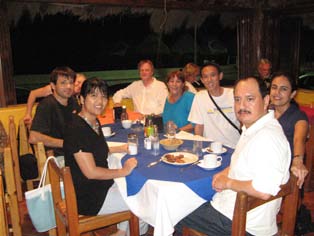
Synthesis Research Projects
Socio-economic Workshop Modelling & Decision
Support Working Group
In April 2007, the Model ing & Decision Support Working
Group (MDSWG) organized and held a socio-economic
workshop at CINVESTAV (Merida, Yucatan, Mexico).
The socio-economic environment of coral reefs is
increasingly seen as a major component to be taken into
account by the CRTR program. Socio-economic drivers
are often instrumental in modifying the resilience of the
reefs, and they are also the ones the CRTR's outcomes
wil final y influence in order to preserve coral reefs while
contributing to poverty al eviation in the concerned areas.
Participants at the MDSWG Workshop
on socio-economic dimensions of the
The CRTR Program requires coordinated research on
coral reef problem Merida, Yucatan
socio-economic drivers and processes that affect
(May 2007).
Photo Credit: Rol an Geronimo
Mesoamerican reefs, Western Philippines reefs, Eastern
Africa reefs, and South Pacific reefs. As socio-economic
environments are largely different from one benchmark
site to another, it is essential to rely on common
methodologies and research objectives across the
different regions. The proposed workshop brought
together selected experts from each region to address
the fol owing issues:
·
To assess the current level of socio-economic
knowledge for each benchmark site.
·
To overlap the different methodologies in use across
the benchmark sites.
·
To select a given set of scale-dependent socio-eco
issues that need to be addressed.
·
To agree on common methodologies to address
these issues.
·
To produce a handbook synthesizing the above
findings.
The results from the workshop are currently being
incorporated into the MDSWG models, and a handbook
synthesizing the findings is currently being developed.
Page 42 of 42
Modelling the Impact of Coral Disease on Caribbean
Coral Reefs
(Col aboration between the DWG and RSWG)
In June 2007, members of the Disease Working Group
(DWG) and Remote Sensing Working Group (RSWG)
met to discuss and simulate the effect of disease
outbreaks on Caribbean coral reefs and evaluate the
scope for mitigation using marine reserves. Marine
reserves are heralded by some as a panacea for
conservation yet their role in mitigating many key
disturbances, such as bleaching and coral disease, are
not clear. The workshop combined expertise and new
empirical studies from within the CRTR Program to
address this question. A more detailed summary of the
workshop can be seen in the Disease Working Group
section of this Report, however, some specific outputs
from this meeting wil include 1) a Scientific paper entitled
`The role of marine reserves in mitigating outbreaks of
coral disease in Caribbean reefs', and 2) a CRTR Policy
Brief on the use of marine reserves to mitigate coral
disease.
Page 43 of 43
Component Four: Program
Management
The CRTR Program is managed by The University of
Queensland (Australia) as the Project Executing Agency
(PEA) on behalf of the World Bank. Management of the
Program
includes
day-to-day
management
and
administrative requirements; contracting of al projects
and sub-grants; financial management; communication
oversight, and; monitoring and evaluation reporting.
As the midway point for the CRTR Program, 2007 has
seen an increase in research activities producing results
and outputs, which have been communicated in many
forums to various audiences. Commencement of the
Program's communication strategy has also seen an
increase in the flow of research results being developed
and disseminated for specific audiences and this wil
increase in 2008 as the Working Groups and Centres of
Excel ence begin to consolidate four years of research.
By the end of Year Three, al procedures and processes
have been implemented and are functioning effectively
and there has been continued consolidation of activities
and strategies for the Program. The Program is now wel
positioned to ensure the research outputs and
subsequent information items have an effective outcome
and impact in the remaining two years of Phase 1 and
beyond into subsequent phases.
Page 44 of 44
Disbursements
Disbursements have continued during 2007 with the
Program on-track to meet its projections. Activities have
continued to be funded under Components One, Two,
Three and Four during the past year.
GEF Funding
2007 has operated smoothly in terms of funds
disbursement against approved activities, and as
mentioned, the Program is on-target to meet its
projections. Research activities have continued to
increase and the outputs are increasing in line with funds
disbursement.
DGF Funding
2007 is the final year for the disbursement of DGF funds,
with the third and final tranche of the DGF Grant being
received. These funds continued to support the activities
of the Centres of Excel ence, and activities which are
actively linking the scientific outputs to the management
and policy communities. Al activities and disbursements
are on-target to meet the contractual due date of 31
March 2008 for al funds to be expended.
Page 45 of 45
Procurement
The procurement for the Project for the year is listed
below:
Consultancies
Mr Andy Hooten, Synthesis Panel Executive
Secretary & U.S Coordinator.
Centro Ecologica Akumal (Mexico) for support for
Miguel Angel to assist with monitoring exercises for
the Working Groups.
Mr Garrett Strang for video footage and editing of
interviews with key CRTR members, and locality
footage at the Centres of Excel ence.
Executive Committee Honoraria
As mentioned in previous reports, Drs Knowlton and
Muthiga have been placed on the Honoraria list for their
work undertaken on behalf of the Project as Executive
Committee members.
Sub-Grants
During the reporting period there were no new sub-grants
contracted by the Project Executing Agency.
Page 46 of 46
Monitoring & Evaluation
The Program commenced monitoring and evaluation of
its activities under the revised performance indicators in
2007, and a report on this can be obtained in the
separate Monitoring & Evaluation Annual Report.
Communication
In 2007 the Program continued to make effective inroads
into its communication program, despite the Program
suffering a setback with the passing of its
Communication Coordinator, Mr Kim Mitchel in June.
Despite this, the guiding frameworks already established
and implemented by Mr Mitchel effectively ensured that
the Program's communications focus could continue to
function effectively. Under the Currie Communications
team of Mr Mark Paterson and Dr Bruce Munday, the
communication focus remains on developing and
enhancing networks to facilitate the exchange of current
research findings relevant to coral reef management, and
to develop and disseminate research-based information
resources to core internal and external stakeholders.
Discussions have continued with Working Groups and
Centres of Excel ence to develop future products for their
research outputs, and the most appropriate audiences
and dissemination pathways for this information. 2008
wil see an increase in activity for communication
products with the release due of Disease Cards; a
Disease Guidelines for Managers; Model ing for
Managers; a Restoration Manual; an update on what we
know on coral bleaching, and; other information sources
and products as they arise.
During 2007, the communication outputs have included:
Centres of Excellence
During 2007, the Communication Coordinators met with
the Centres of Excel ence to assist in the development of
a localised and regional communication and outreach
strategy for the Centres. Each Centre of Excel ence wil
continue to focus on awareness raising, and on
increasing their outreach to target audiences as the
results from research and other activities begin to
emerge. These results wil be synthesised and
developed into appropriate audience information
products as they arise.
Page 47 of 47
`The Carbon Crisis'
As mentioned previously in this report, in December
2007, the CRTR Program wil release its inaugural
`synthesised' research output with the publication of the
paper "The Carbon Crisis: Coral Reefs under Rapid
Climate Change" in the December issue of Science. The
messages and information contained within this paper
wil be refined and strategical y distributed to key
management and policy stakeholders to ensure an
effective uptake of the information.
CRTR Website
The CRTR website was realigned to ensure a stronger
and more effective `information centre' for the Program
under the guidance of Mr Mitchel and further introduction
of new materials and viewing platforms is now in place.
With this `new look' website in place we have noticed a
large increase in the number of visitors to the site. For
example, in 2006 there were 3,226 unique visitors; 4,381
number of visits; 18,118 pages accessed, and; 179,274
hits. In 2007 (as at end October), this increased to 6,361
unique visitors; 8,775 visits; 107,770 pages accessed,
and; 221,562 hits (see figures 4 and 5 below).
Work wil continue into 2008 to maintain a constant
update of new information based on research and
capacity building activities, along with targeted
campaigns to raise awareness of the issues facing coral
reefs, and the information available through the CRTR
Program.
Unique visitors
No. Of visits
Pages
Hits
Bandwidth
Jan Feb Mar Apr May Jun Jul Aug Sep Oct
Figure 4: CRTR Website Monthly History by graph
Page 48 of 48
Un
U iq
i ue
e
Nu
N mber
e of
Ba
B n
a dwidth
t
Mo
M nt
n h
Pa
P g
a es
Hit
i s
h
ts
vis
i it
i o
t rs
vis
i it
i s
(M
( b
M )
Ja
J n
a
n 2007
0
400
0
600
0
166
6 0
6
128
2 8
8 7
136
3 .4
. 5
Fe
F b 2007
0
648
4
805
0
224
2 2
4
166
6 8
6 6
273
7 .1
. 9
Ma
M r
a 2007
0
543
4
670
7
176
7 0
6
117
1 6
7 3
297
9 .9
. 1
Ap
A r 2007
880
8
112
1 3
2
320
2 0
0
145
4 8
5 1
476
7 .2
. 8
Ma
M y
a 2007
0
663
6
904
0
851
5 0
1 7
953
5 0
3 8
245
4 0
5
Ju
J n
u
n 2007
594
9
795
9
201
0 3
1
101
0 6
1 8
284
8 .4
. 4
Ju
J l
u
l 2007
608
0
105
0 0
5
514
1 1
4
245
4 4
5 6
701
0 .5
. 4
Au
A g
u 2007
771
7
110
1 3
0
220
2 4
0
149
4 7
9 7
370
7 .2
. 3
Se
S p
e 2007
861
6
124
2 8
4
288
8 1
8
146
4 3
6 6
381
8 .3
. 3
Oct
c
t 2007
0
393
9
477
7
156
5 2
6
601
0 0
1
204
0 .3
. 8
To
T ta
t l
a
636
3 1
6
877
7 5
7
107
0 7
7 70
7
221
2 5
1 62
6
5.5
. 0 GB
G
Figure 5; CRTR Website Monthly History showing figures
Publications
Members of the CRTR Working Groups and Centres of
Excel ence have continued to produce numerous papers,
which have been published in a wide range of journals.
Since the commencement of Phase 1, the Working
Groups and Centres of Excel ence have produced 490
journal articles; conference papers; manuals and
guidelines; book chapters; media articles, and; books.
Events
The Working Groups and Centres of Excel ence have
been responsible for 120 events involving both
developing and developed country participants since the
commencement of Phase 1. These events include
numerous training workshops; meetings; stakeholder
workshops
and
sessions;
presentations,
and;
conferences, and have led to an increase in awareness
of the issues facing coral reef ecosystems, and improved
technical skil s in a range of applications.
Reef Restoration Concepts and Guidelines
The `Reef Restoration Concepts and Guidelines'
publication developed by Drs Edwards and Gomez
continued to be an in-demand flagship product with the
publication going into a second print run due to high
demand. Over 600 hard copies have been distributed
through demand-driven requests and approximately 700
electronic copies downloaded from the website. In early
2008, a targeted campaign wil take place to ensure that
key audiences are aware of the Guidelines and have
access to them. Drs Edwards and Gomez, through
col aboration with CRISP and ReefRes are in the process
of developing a restoration manual which wil be released
in late 2008.
Page 49 of 49
Page 50 of 50
Page 51 of 51