



Research Update
Coral Reef Targeted Research and Capacity Building for Management
Over one-half
Coral
of the world's population lives
Reef
within 100 kilometres
Targeted Research &
Capacity Building for Management
of the sea.
Coral Bleaching and Local Ecological Responses
Working Group
Understanding coral bleaching
The Coral Reef Targeted Research and
Implications for Coral Reef
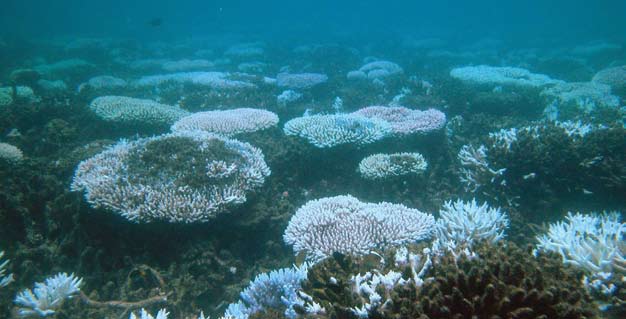
Large scale bleaching affected the world's largest
advance our understand of the
Capacity Building for Management
working gro
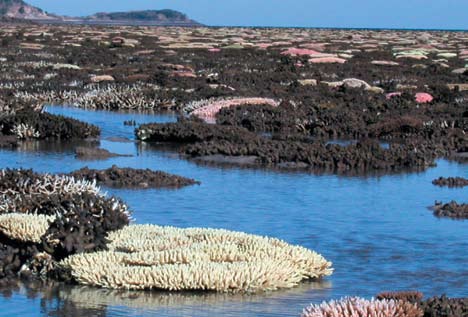
continuous coral reef in early 2002. More than 60% of
Program (CRTR) is a leading
Management
international coral reef research
the Great Barrier Reef bleached and up to 5% have been
initiative that provides a coordinated
The CrTr Bleaching working
severely damaged.
susceptibility and tolerance of
approach to credible, factual and
group is focused on filling critical
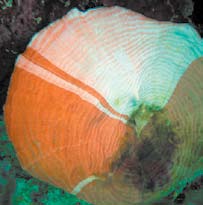
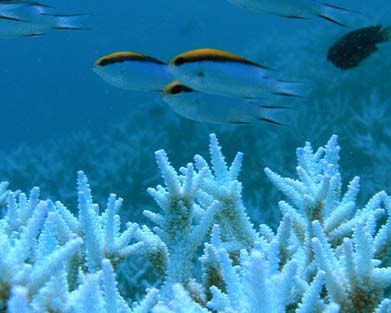
Bleaching refers to the loss of symbiotic dinoflagellate
scientifically-proven knowledge for
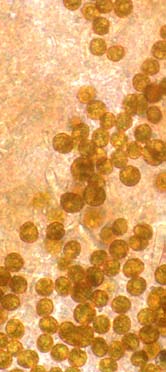
algae, Symbiodinium, within the coral host leading to
improved coral reef management.
information gaps with respect to
a bleached, white appearance. Bleaching is a stress
corals to rising sea temperatures,
coral bleaching and mortality with
The CRTR Program is a proactive
response of the coal host and associated with elevated
research and capacity building
the aim of supporting management sea water termperature. Over extended time periods a
improving our understanding
partnership that aims to lay the
bleached state can lead to death of the coral, and can
responses for the coming century
foundation in filling crucial knowledge
occur over lage areas of coral reef.
gaps in the core research areas of Coral
of climate change.
Bleaching, Connectivity, Coral Diseases,
of (and the linkages between)
Coral Restoration and Remediation,
Remote Sensing and Modeling and
U
Major research Themes
Decision Support
physiological stress and the
p goal
The Bleaching Working Group
Each of these research areas are
facilitated by Working Groups
has identified four major research
underpinned by the skills of many of the
themes into which it will put
ecological outcomes of thermal
world's leading coral reef researchers.
The CRTR also supports four Centers of
its efforts. These themes are
Excellence in priority regions, serving as
interconnected and are aimed at
stress and deliver the scientific
important regional centers for building
confidence and skills in research,
improving the scientific basis upon
training and capacity building.
which management responses will
basis from which stress on coral
The CRTR Program is a partnership
be developed as the climate warms
between the Global Environment
and carbonate ion concentrations in
reefs can be identified and
Facility, the World Bank, The
University of Queensland (Australia),
our oceans decline.
the United States National Oceanic
and Atmospheric Administration
managed on coral reefs.
(NOAA), UNESCO-Intergovernmental
Oceanographic Commission (IOC/
UNESCO) and approximately 50
research institutes & other third parties
around the world.
October 2006
www.gefcoral.org
Research Update
Coral Reef Targeted Research & Capacity Building for Management
Programs
Group is compiling a library of
symbiont genotypes for each of the
four CRTR regions and is exploring
how different these symbionts are
Coral-symbiont
in terms of their physiology inside
responses to thermal
stress
and outside the coral host. The
Working Group membership has
produced a review recently that
What is
How fast summarizes our understanding
Organismal mechanisms
Biomarkers of stress
changing?
and where of `The evolutionary history of
to ecological outcomes
is change Symbiodinium and Scleractinian
occurring? hosts--Symbiosis, diversity, and the
effect of climate change', Stat et al
(2006; Plant Ecology, Evolution and
Projections of change
Systematics 8: 2343).
and socio-economic
impact
Corals live in close association
with a wide variety of organisms,
including a wide variety of bacteria
and endolithic (skeleton-dwelling)
algae. Until recently, these
Adaptive responses
associates have been largely
ignored but are now thought to
Coral-Symbiont Responses to
Group in 2005 on the plating coral
play a prominent role in coral
health, through symbiotic and other
Thermal Stress
Montipora monasteriata under
short term heat stress have recently close relationships. The Bleaching
Reef-building coral and their
been written up as publication
Working Group is focused on these
symbionts are critical to coral reefs
(Dove, Ortiz, Enríquez, Fine, Fisher,
coral associates and is exploring
as the frame-builders, providing
Iglesias-Prieto, Thornhill, Hoegh-
their role in bleaching and disease
the habitat for tens of thousands
Guldberg 2006; Limnol. Oceanogr.
in collaboration with other groups
of other. They are also among
51: 1149-1158).
within the CRTR. So far, it appears
the organisms most affected by
that bacteria do indeed play a
climate change at this point. While The Bleaching working group
prominent role in coral health
bleaching events have profound
is pursuing projects aimed at
but do not play a role in causing
effects on coral reefs, we know
resolving the molecular mechanism coral bleaching. Endolithic algae,
little about how the mechanisms
of stress, and determining what
on the other hand, appear to
behind bleaching, the differences in characteristics of corals and their
interact closely with corals and
susceptibility of different corals and symbionts drives their different
may important in coral recovery
symbionts, and how physiological
tolerances to stress. Some work
following bleaching. These
stress translates into ecological
has indicated that the symbiont
discoveries are providing important
changes at the reef level. Work
type may be important to how one
information on the reasons for
is progressing steadily by the
coral-symbiont combination may
bleaching and the factors that
group to progress these issues.
fair better than another. With this
may determine recovery following
Experiments done by the Working
in mind, the Bleaching Working
bleaching events.
Organismal Mechanisms to
Ecological Outcomes
Changes to the physiological and
cellular function of reef-building
corals and their dinoflagellate
symbionts invariably result
in changes to the life-history
parameters. These in turn result
in changes to the population
dynamics of reef-building corals.
Understanding how changes to
reproduction, mortality and other
aspects of coral populations is
important for a number of reasons
including the ability to detect and
understand the changes that are
summarize the existing data on the respect, determining changes due
occurring on coral reefs around the corals and fish and their interaction, to climate change per se versus
world and for establishing better
using the many examples of
declining water quality can have
projections of the future. The
where coral was lost in the 1998
important implications on which
project will also examine whether
and subsequent bleaching events
direction a reef manager may take.
colony size distributions can be
to investigate the effect of these
Underlying the response of reef
used as a tool for detecting and
disturbances on coral dependent
building corals to stress, are a series
understanding change on coral
species. A meeting is planned
of molecular responses that differ
reefs.
for November in Zanzibar in which
depending on whether corals are
The Bleaching working group has
investigators from one of the
being exposed metal ions, elevated
established permanent study sites
heaviest hit regions, the Western
inorganic nitrogen or elevated
within three of the CRTR study
Indian Ocean, will meet to compare water temperatures. Having tools
regions: Zanzibar (East Africa);
data, undertake meta-analysis
by which to distinguish these
Puerto Morelos (Mexico) and
and provide a critical review of
different stresses could be very
Heron Island (Western Pacific).
how fish populations are likely to
useful for reef management.
These study sites are focused
be affected by downturns in the
The Bleaching Working Group is
on exploring the population
health and abundance of corals
working on distinguishing different
dynamics of coral populations
on reefs worldwide. The work will
stress responses with corals and
under natural and perturbed
be done through the efforts of
their symbionts. Research within
conditions, and is examining the
the post-doctoral person who will
this theme will use microarray
spatial patterns in population
coordinate and organize a meeting, technology to generate a series
size frequency distributions and
the data, analysis and synthesis
of potential markers at molecular
examine temporal changes of the
for publications on the changes in
and physiological levels. This will
populations in and out of bleaching space and time.
generate molecular chips with
events. The project involves
the principal expression products
students and staff from different
Biomarkers of Stress
that respond to thermal, light,
regions and is seeking to identify
One of the problems that often face metal toxin, nutrient and disease
the generalities associated within
reef managers and policy makers is stressors. In addition, studies will
the impacts of coral bleaching
that they are confronted with reefs
investigate molecular markers of
and mortality on coral population
in which damage has occurred but
the microbial community associated
dynamics. Ultimately, the project
the reasons are less clear. In this
with coral in relation to stress and
would like to lay the basis for a
investigate the physiological and
generalized understanding of how
biophysical properties of mucus
coral populations are affected by
secretion.
changes in recovery and mortality.
The group is also investigating and
The impacts of warming oceans
developing other technologies for
go far beyond that of the coral
detecting stress. One of these has
themselves. Many organisms
been a partnership to develop the
on coral reefs are dependent on
use of colour cards for quantifying
corals for shelter and food, with the
the detection of changes in coral
implication that they will disappear
colour. Current methods assaying
if coral decline in abundance
the extent of bleaching rely on
on coral reefs. Work within this
human observers that may differ
research theme is also aimed at
substantially in perceptions of
resolving the potential impacts
bleaching. This project will develop
of changes in coral health on the
a new approach using inexpensive
many other coral reef species. One
colour (Siebeck et al., Coral Reefs,
project within these themes will
in press) and a careful protocol to
www.gefcoral.org
Research Update
Coral Reef Targeted Research & capacity building for management
assess the extent of coral bleaching
bleaching and disease.
- Improved the current
within the major CoE regions. This
- Held major research workshops
understanding of how light
tool will allow users to assess coral
and training sessions in several
exacerbates the effects of
bleaching within at least 10 levels,
regions including Mexico,
temperature on coral reefs.
which is far greater than the existing
Australasia and Indonesia.
- Established long-term monitoring
three levels (bleached, partially
sites in Mexico, Tanzania and
bleached and normal) used by
- Investigated and reported on
Australia for investigating
previous studies. The methodology
mass bleaching events that
community dynamics
will be available to anyone with
occurred recently in Mexico (Sep-
underpinning coral bleaching and
secondary education or above
Oct 2005) and Australia (Jan-Feb
mortality.
- and can involve dive companies
2006)
and other reef users (e.g. tourists).
- Improved current working model
There are currently 35 postgraduate
This project will be integrated into
of the mechanisms underpinning students involved in research from
regional CoE interactions with
coral bleaching, disease and
Australia, Venezuela, Bahrain, India,
managerial communities and will
mortality.
Israel, Italy, Kenya, Mexico, The
be used to promote community
Netherlands, Sweden, Tanzania,
involvement on a broad scale within - Created a world wide catalogue
Thailand, United Kingdom and the
the larger project.
of the genetics of coral symbionts United States.
(Symbiodinium) and have
identified potential tolerant
Projections of Change and
combinations of corals and
Socio-Economic Impact
Symbiodinium.
Ultimately, managers need to
- Produced a database of over
know how coral reefs will change
1300 potential stress proteins
as the world's oceans warm and
from Symbiodinium and have
acidify. Without this information,
printed a "stress chip" for
effective management and policy
developing better ways of
responses will remain ill-defined.
detecting stress in corals.
The accumulated insights of the
Bleaching Working Group into
how reef-corals and the reefs
they build respond to stress will
lay important groundwork for
understanding the rate, detail and
direction of change on coral reefs
as the climate changes. Toward
the end of the first phase of the
CRTR Program, the Bleaching
te
Working Group will broker a series
of meetings in which information
about details of potential climate
oup
upda
impacts in the coming decades will
be assembled. This information will
be communicated to reef managers
and policy makers through a
variety of different forums. This
orking Gr
information will form crucial input
Coral Bleaching and Local Ecological Responses W
Understanding coral bleaching - research
into strategies designed to assist
adaptive responses by coral reef
Further Information
management into the coming
century of stress.
Coral Bleaching and Local Ecological
Responses Working Group
Chair: Professor Ove Hoegh-Guldberg
Progress to date
University of Queensland, Australia
Email: oveh@uq.edu.au
The CRTR Bleaching Working
Group continues to bring together
Co-Chair: Professor Yossi Loya
Tel Aviv University, Israel
and lead the formerly fragmented
Email: yosiloya@post.tau.ac.il
research efforts in the area of coral
Project Executing Agency:
bleaching and ecological change
Coral Reef Targeted Research &
research. Key outcomes include:
Capacity Building for Management
Program
- Generated over 50 publications
C/O Centre for Marine Studies
The University of Queensland
in peer-reviewed journals
St Lucia QLD 4072
such as Science, Nature, and
Australia
Global Climate Biology on the
Telephone: +61 7 3365 4333
physiology and ecology of coral
Facsimile: +61 7 3365 4755
Email: info@gefcoral.org
www.gefcoral.org