
INTERNATIONAL WATERS
EXPERIENCE NOTES
http://www.iwlearn.net/experience
2008 - 11
Coral Reef Targeted Research and
Capacity Building for Management:
Using Sound Science to Influence
Policy and Improve Management
of the World's Coral Reefs
2008 HAS BEEN DECLARED THE INTERNATIONAL YEAR OF THE REEF--TO CELEBRATE
THE BEAUTY AND IMPORTANCE OF THESE MAGNIFICENT ECOSYSTEMS AND, AT THE
SAME TIME, TO CALL ATTENTION TO THE SEVERE THREATS THEY FACE FROM HUMAN
ACTIVITY LEADING TO DECLINES IN THEIR HEALTH AND PRODUCTIVITY IN MANY PARTS
OF THE WORLD. THE CORAL REEF TARGETED RESEARCH AND CAPACITY BUILDING FOR
MANAGEMENT (CRTR) PROGRAM IS A GLOBAL PARTNERSHIP SUPPORTED BY THE GEF,
THE WORLD BANK DEVELOPMENT GRANT FACILITY (DGF), THE UNIVERSITY OF QUEENSLAND
(UQ) AND US NATIONAL AND OCEANIC ATMOSPHERIC ADMINISTRATION (NOAA) TO
IMPROVE OUR UNDERSTANDING OF HOW CORAL REEF ECOSYSTEMS ARE RESPONDING
TO GLOBAL CHANGE, WHAT CAN BE DONE TO REDUCE THEIR VULNERABILITY TO
NEAR AND LONGER-TERM THREATS AND TO PUT THIS INFORMATION IN THE HANDS
OF DECISION-MAKERS TO PROMOTE NEEDED ACTION. THIS NOTE DRAWS ON FINDINGS
RECENTLY PUBLISHED IN SCIENCE RELATED TO CLIMATE CHANGE IMPACTS ON CORAL
REEFS. IT SEEKS TO DEMONSTRATE THE ROLE OF RESEARCH IN BUILDING CAPACITY, CREATING
AWARENESS, INFORMING THE POLICY DEBATE AND PROMOTING URGENT MANAGEMENT
ACTIONS TO CREATE A BRIGHTER FUTURE FOR THE WORLD'S CORAL REEFS.
PROJECT DESCRIPTION
The Program is envisioned in 3 phases over a 15
year time horizon. The first and current 5-year phase
The Coral Reef Targeted Research and Capacity
involves three components: (1) addressing knowledge
Building for Management (CRTR) Program was
and technology gaps; (2) promoting learning and
designed shortly after a massive global coral
capacity building; and (3) linking scientific knowledge
bleaching event, associated with the 1997-98 El
to management and policy. Research under the
Niño event that resulted in the death of 16% of the
CRTR is carried out in four Centers of Excellence
world's coral reefs. This was a wake-up call to the
(see Map in Experience Note 2), by international
marine science and management community--a
working groups and researchers at the Centers
call that coral reefs were in dire trouble and funda-
of Excellence on 6 key themes. These include
mental gaps in our understanding of how coral reef
Coral Bleaching, Reef Connectivity, Disease,
ecosystems respond to climate change and other
Remote Sensing, Reef Restoration and Remediation,
human pressures had forced us into a reactive rather
and Modeling and Decision Support.
than a proactive mode of management.
Experience Note No. 2 summarizes recent findings
Coral
The CRTR partnership was formed to address
from the Coral Disease, Remote Sensing and
Reef
these fundamental gaps, to build capacity for world
Restoration and Remediation Working Groups.
class, management-driven research in countries
This note draws on findings recently published in
EXPERIENCE OF THE GEF
where coral reefs are found, and to use this informa-
Science magazine related to climate change and
GEF/WB: CORAL REEF TARGETED
tion to improve the management effectiveness of
coral reefs. It is an example of how GEF supported
RESEARCH AND CAPACITY BUILDING
FOR MANAGEMENT PROGRAM
coral reefs and welfare of human communities
targeted research is helping to build capacity,
that depend on them.
create awareness, inform the policy debate
GEFID: 1531 WORLD BANK: P078034
CORAL REEF DISEASES/SYNDROMES IN WESTERN INDIAN OCEAN
2
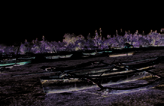
Figure 1 Fishing canoes on reefs in Zanzibar.
surrounding climate change and the
urgent actions needed if the world's coral
reefs are to survive in the second half
of this century and beyond.
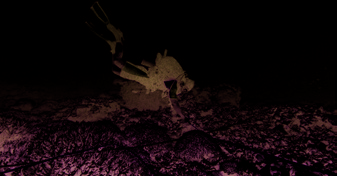
Figure 2 Mapping biodiversity on reefs in Palau. © P. Mumby
THE EXPERIENCE
outbreaks of disease or other pests which
The loss of reef integrity has severe
are expected to become more frequent
Issues and Challenges
implications not only for biodiversity,
and intense with climate change. In this
CO in the earth's atmosphere is rising
but for human communities who depend
way, cumulative local stress aggravated
2
rapidly. Conservative estimates under
on these ecosystems for food and liveli-
by more frequent and intense events
a business as usual scenario for CO
hoods, coastal protection, tourism and
associated with climate change are
2
emissions, indicate atmospheric CO
cultural and spiritual well-being.
driving reefs toward the tipping-point
2
exceeding 500 parts per million (ppm),
for functional collapse.
ACITY BUILDING FOR MANAGEMENT
with global temperatures rising by at
Increasing temperatures and decreasing
least 2°C by 2050. These values far
calcification rates create synergies with
A review of the literature and results from
exceed those of at least the past 420,000
impacts on reefs from local human pressures
CRTR supported research on climate change,
years under which most contemporary
such as pollution (e.g., from sediments
local impacts and trophic interactions affect-
marine organisms evolved. And the
and nutrient enrichment) and over-fishing
ing coral reef ecosystem resilience, provides
rates of change are 2-3 orders of magni-
of key species (including top predators
the basis for future scenarios of coral reefs.
tude higher than any seen in records of
and reef grazing herbivores). These local
Three reef scenarios, representing changes
the Vostock Ice Core study (see Fig. 3),
stressors are thought to undermine the
anticipated at different concentrations
from which we may infer CO concentra-
innate resilience of healthy (coral dominated)
of atmospheric CO and corresponding
2
2
tions and mean sea temperature over
reefs to periodic disturbances from storms,
increases in temperature and decreases
that period. Given the rapidity and
rarity of such rates of change in the
ARGETED RESEARCH AND CAP
fossil record, it is likely that these
changes will exceed the ability of
Atmospheric CO content (ppm)
2
most marine organisms to adapt.
200
300
400
600 800 1200
threshold 480 ppm
What does this mean for coral reefs?
Carbonate
Under conditions expected in the 21st
CORAL REEF T
Reefs not
century, global warming will make coral
Thermal
dominated by corals
bleaching more frequent--and potentially
threshold
C
deadly, as corals have less time to recover
(+2°C)
0.2pH
between bleaching episodes. Ocean
acidification from increased CO dissolving
2
s temperature (°C)
into seawater will make it difficult, if not
Interglacial
Non-carbonate reef
impossible, for coral reefs to continue to
A
B
coral communities
build the calcium carbonate skeletons
which make them the only living structures
Today
visible from outer space. The 3-Dimensional
structure of coral reefs provides essential
living space to fish and the million or more
Deviation from today
Glacial
species thought to inhabit them, making
them one of the most productive and
diverse ecosystems on earth. As a result
of climate change, reef-building corals
400
300
200
100
0
will become increasingly rare, leading
Carbonate ion concentration (µmol kg-1)
to less diverse reef communities
and ecosystem services that cannot
Figure 3 Temperature and carbonate ion concentrations related to calcification rates reconstructed for the past 420,000 yrs. A, B, and C
be maintained.
refer to scenarios depicted in Fig. 4.
improved watershed management is
important. A "ridge to reef" approach
may include changing tillage practices
and minimizing cultivation on fragile lands,
introducing integrated pest management
to replace pesticides with heavy POP
concentrations, rotating crops with
cultivars that take up residual nitrogen,
and planting buffer strips around riparian
areas to minimize runoff into surface waters.
In circumscribed areas of reef damaged by
3
destructive fishing, severe bleaching events
or ship groundings, it may be possible to
enhance natural regeneration through
active reef restoration, including coral trans-
plantation (see Experience Note No. 2).
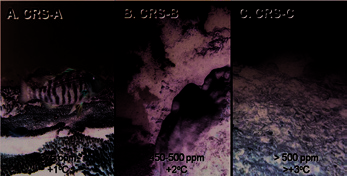
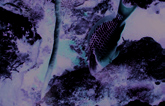
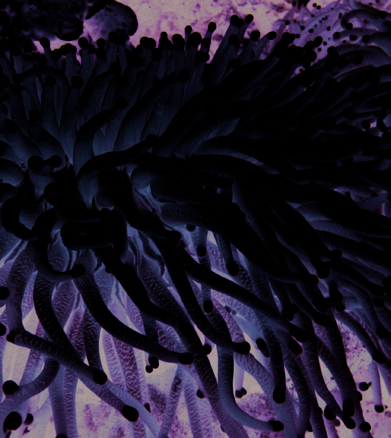
Figure 4 Future scenarios for coral reefs with increased [CO ] atm. and mean temperature above today's associated with Climate Change.
2
Actions identified above are most likely to
in calcification rates noted in Fig. 3, are
between adjacent mangroves, seagrass beds
help reefs survive the inevitable stresses that
presented below in Fig. 4 (CRS-A, B and C,
and coral reefs. Maintaining this habitat
increased CO emissions accumulating over
2
below). These scenarios, depicting
connectivity within a reef system and between
the last 100 years will impose on them, but
current and future reef trends associated
reefs, .e.g, through coastal zoning or possibly
only if immediate measures are taken to limit
with climate change in combination with
through a system of networked marine
future CO concentrations to levels below
2
local stressors are drawn from extant
protected areas (MPAs), is important to
what are predicted to be catastrophic for
examples in the Great Barrier Reef which
ensuring recruitment of juvenile reef fish and
coral reefs--500 ppm.
serve as proxies. They indicate increasingly
many other keystone species that contribute
serious consequences for reef-associated
to the functional integrity of reefs. These
fisheries, tourism, coastal protection and
reef dwellers help maintain essential reef
REPLICATION
people. Without a two pronged approach
interactions which underpin reef productivity
that includes mitigation measures that aim
and resilience and the many ecosystem
The science identifying climate change
to dramatically reduce CO emissions and
services provided by reefs (e.g., for tourism,
and ocean acidification as among the most
2
stabilize [CO ] atm at 450 ppm or lower, and
food, coastal protection and biodiversity)
important threats to the future of coral reefs
2
effective management to reduce local human
that coastal economies have come to rely on.
has been well documented. Similary, there is
stresses on coral reef ecosystems, the future
mounting evidence of cumulative local pres-
for these magnificent marine systems is dire.
Apart from protecting reef biodiversity in
sures that interact with them synergistically
general and reef grazers in particular, main-
to undermine coral reef ecosystem resilience
taining good coastal water quality is equally
and increase their vulnerability to stress.
RESULTS AND LEARNING
important for sustaining healthy reef ecosys-
tems, and something managers need to
A dual strategy including mitigation and
TION AND MANAGEMENT FOR ECOSYSTEMS AROUND THE WORLD
While policymakers in the international arena
address urgently. Including tertiary treatment adaptation measures must be embraced.
grapple with formulas and cost effective
of waste water to remove phosphorous and
Scaling up and improving the effectiveness
means to bring down CO emissions to well
nitrogen and treating industrial effluents to
of local management measures to reduce
2
below 1990 levels over the next 50 years,
reduce high Biological Oxygen Demand
near-term threats to reefs can help build
local marine resource managers are in a
(BOD) and toxic chemicals like Persistent
resilience to future impacts from climate
position to buy time for coral reefs. A number
Organic Pollutants (POPs) and heavy metals,
change, but only if parallel actions to limit
of interventions can and must be taken now
are high priority investments for reefs adjacent
CO emissions below the tipping point
2
to address immediate threats to reef ecosystem
to heavily populated areas or industry. In
for reefs are effective.
health and thus increase the chances that
more rural settings, focusing on controlling
they wil be able to survive in ocean conditions
non-point source pollution (including
altered by climate change but below
sediment) from agricultural run-off through
SIGNIFICANCE
thresholds that would spell disaster for
reefs and vulnerable systems linked to
The CRTR Program is working with stake-
IMPROVING SCIENTIFIC INFORMA
them, including human communities.
holders and local governments through its
regional Centers of Excellence to increase
These measures include maintaining reef
awareness of the growing risks facing coral
community structure or biodiversity so that
reefs from local and global sources, and the
essential food webs and processes are
implications in economic and social terms
sustained, particularly grazing of algae by
for the tens of mil ions of people who depend
herbivorous fish and marine invertebrates.
on them for livelihoods, food security and
Field work supported by the CRTR Program
coastal protection.
has demonstrated the singular importance
of protecting parrotfish as natural grazers on
Through targeted research, the CRTR
Figure 5 Parrot fish grazing on algae in the Caribbean.
reefs who also help cycle energy and nutrients
© P. Mumby
program is using robust science to help
4
REFERENCES
Hoegh-Guldberg, O. et al, 2007. Coral Reefs Under
Rapid Climate Change and Ocean Acidification.
Science Vol 318: 14 December 2007 pp: 17371742.
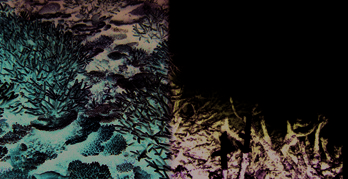
Figure 6 A healthy reef and one impacted by coral bleaching and crown-of-thorn outbreaks near human population centers on the Great Barrier Reef.
© O. Hoegh-Guldberg
Wilkinson, C. 2000. Status of the Coral Reefs of the
World: 2000. Global Coral Reef Monitoring Network
measure these risks and better understand
action agenda for managers and policy
and Australian Institute of Marine Science, Townsville,
local coral reef ecosystem responses to
makers that can make a difference to
Australia. 363 pp.
these risks. Through its capacity building
the future of the world's reefs and all
and efforts to link science to management,
who value them.
www.gefcoral.org
it is translating these findings into an
ACITY BUILDING FOR MANAGEMENT
CONTACT INFORMATION
Marea E. Hatziolos, Team Leader
Senior Coastal and Marine Specialist
Environment Department
The World Bank Group,
MSN MC5-523
1818 H St., N.W.
Washington, D.C. 20433
+1.202.473.1061 (tel)
ARGETED RESEARCH AND CAP
+1.202.522.0367 (fax)
Email: mhatziolos@worldbank.org
Melanie King, Executive Officer
Project Executing Agency
CORAL REEF T
Coral Reef Targeted Research
& Capacity Building for
Management Program
C/-Centre for Marine Studies
The University of Queensland
St Lucia QLD 4072
+61.7.3346.9942 (tel)
Email: m.king4@uq.edu.au
www.gefcoral.org
Anthony J. Hooten, Synthesis Panel
Executive Secretary & U.S. Coordinator
Coral Reef Targeted Research
& Capacity Building for
Management Program
c/o AJH, Environmental Services
4900 Auburn Avenue, Suite 201
Bethesda, Maryland 20814 USA
+1.240.395.0250 (tel)
+1.240.395.0252 (fax)
Email: ajh@environmentservices.com
www.gefcoral.org