|
Project Executive Summary Request for CEO Endorsement |

|
Approved on behalf of the United Nations Development Programme. This proposal has been prepared in accordance with GEF policies and procedures and meets the standards of the GEF Project Review Criteria for CEO endorsement. | |
|
Yannick Glemarec UNDP-GEF Deputy Executive Coordinator |
Project Contact Person: Nik Sekhran, Regional Coordinator UNDP/GEF Pretoria, South Africa, Tel: (27) 12 3548131 |
|
Date: 9 October 2006 |
|
|
fOR jOINT PARTNERSHIP** | ||
|
GEF Project/Component ($) | ||
|
(Share) |
(Fee) | |
|
(Share) |
(Fee) | |
|
(Share) |
(Fee) | |
|
GEFSEC Project ID: Agency’s Project ID: 2205 Country: Regional: Comoros, Kenya, Madagascar, Mauritius, Mozambique, Seychelles, South Africa, Tanzania Project Title: Agulhas & Somali Current Large Marine Ecosystems Project GEF IA/ExA: UNDP Other project executing AGENCY (ies): UNOPS Duration: 5 years GEF Focal Area: International Waters (IW) GEF Strategic objectives: IW 1: Catalyze implementation of agreed reforms and on-the ground stress reduction investments to address transboundary water concerns. GEF Operational Program: OP 9 Council Approval Date: July 2005 Council Approved Amount*: US$12,200,000 CEO Endorsement Amount*: US$12,200,000 Estimated Starting Date: January 2007 |
* For multi-focal area projects, indicate agreed split
|
Financing Plan ($) | |||
|
|
Project | ||
| GEF |
A |
25,000 |
12,200,000 |
|
B |
698,000 | ||
|
C |
|||
| GEF Total |
723,000 |
12,200,000 | |
|
Co-financing |
|||
GEF IA/ExA |
|||
| Government |
457,500 |
1,800,000 | |
| Others |
16,670,000 | ||
|
Co-financing Total |
457,500 |
18,470,000 | |
| Total |
1,180,500 |
30,670,000 | |
|
Financing for Associated Activities If Any: | |||
between focal area allocations
** Projects that are jointly implemented by more than one IA or ExA
1. Financing
a) Financing Plan
|
Sources of Fund | |
| Classification |
Amount ($) |
| GEF Grant |
12,200,000 |
|
Bilateral/Multi-lateral donors |
3,600,000 |
|
Government Contribution |
1,800,000 |
|
Implementing/Executing Agency |
0 |
|
Commercial banks |
0 |
|
Other Private Sector |
765,000 |
| Others |
12,305,000 |
|
Total Sources of Funds |
30,670,000 |
|
Uses of Fund | |||
Project Components/Outcomes |
GEF ($) |
Co-financing ($) |
Total ($) |
|
Outcome 1: Key Ecosystem Assessment And Management Gaps Are Filled As Necessary To Install An Ecosystem Approach To Lme Management |
6,150,000 |
12,765,000 |
18,915,000 |
|
Outcome 2: Decision-Making Tools Are In Place, To Facilitate The Synthesis And Application Of Data For Lme Management |
1,225,000 |
1,982,500 |
3,207,500 |
|
Outcome 3: Regional Agreement Is Reached On Transboundary Priorities And Their Root Causes And A Suite Of Governance Reforms And Investments To Institute A Shared Ecosystem-Based Approach To Managing The Lmes In Support Of Wssd Targets, And Foundational Capacities Are In Place For Implementation |
3,325,000 |
1,995,500 |
5,320,500 |
|
Outcome 4: A Comprehensive Public Participation Initiative Enables Stakeholders To Engage In Programme Activities |
1,500,000 |
1,727,000 |
3,227,000 |
|
Total Uses of Funds |
12,200,000 |
18,470,000 |
30,670,000 |
b) Co-financing (indicate if cash or in-kind)
|
Name of Co-financiers (source) |
Classification |
Type |
At Concept ($) |
At Work Program ($) |
At CEO Endorsement ($)* |
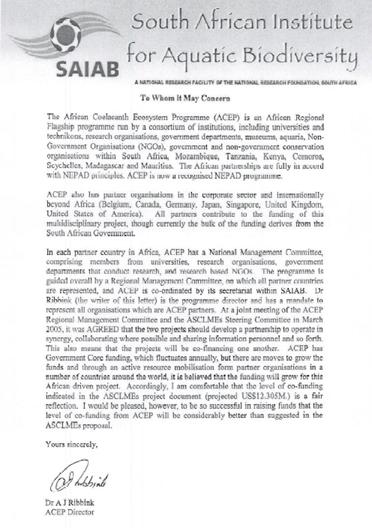
| ACEP |
Others (NGOs, private sector, research institutions e.t.c) |
In cash |
12,305,000 |
12,305,000 |
12,305,000 |
|
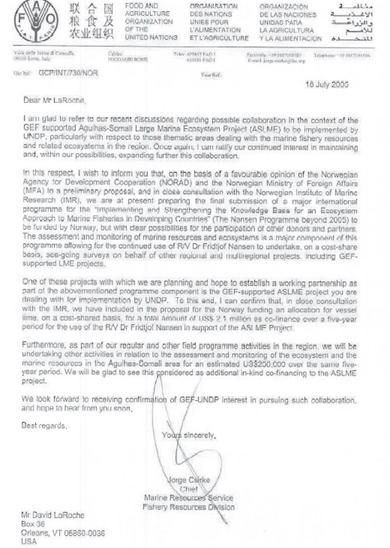
Norway/ FAO |
Bilateral/ Multil. Agency |
In Kind |
2,350,000 |
2,350,000 |
2,350,000 |
|
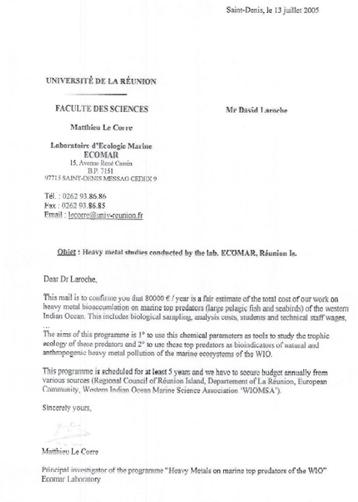
France |
Bilat. Agency |
In cash |
500,000 |
500,000 |
500,000 |
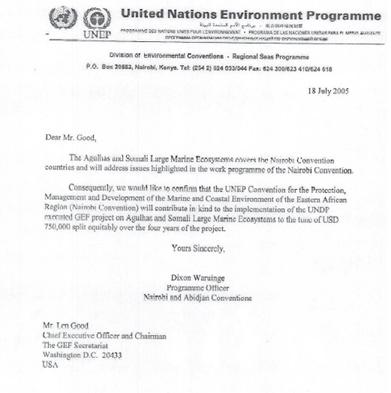
| UNEP |
Multilat. Agency |
In Kind |
750,000 |
750,000 |
750,000 |
| SAIAB |
NGO |
In cash |
265,000 |
265,000 |
265,000 |
| Eco Africa |
NGO |
In Kind |
500,000 |
500,000 |
500,000 |
|
Govt. of Kenya |
Nat’l Govt. |
In kind |
300,000 |
300,000 |
300,000 |
|
Govt. of Madagascar |
Nat’l Govt. |
In kind |
300,000 |
300,000 |
300,000 |
|
Govt. of Mauritius |
Nat’l Govt. |
In kind |
300,000 |
300,000 |
300,000 |
|
Govt. of Mozambique |
Nat’l Govt. |
In kind |
300,000 |
300,000 |
300,000 |
|
Govt. of Seychelles |
Nat’l Govt. |
In kind |
300,000 |
300,000 |
300,000 |
|
Govt. of Tanzania |
Nat’l Govt. |
In kind |
300,000 |
300,000 |
300,000 |
|
Total Co-financing |
18,470,000 |
18,470,000 |
18,470,000 | ||
* Reflect the final commitment amount of co-financiers and attach documents from co-financiers confirming co-financing commitments. Describe any difference of final commitment compared to those expressions of interest at concept stage or at work program inclusion.
2. Response to REviews
a) CouncilCouncil Comment AND RESPONSES to Council Comments
Responses to Comments from Switzerland
Comment 1
The Council member from Switzerland stated that, without having seen detailed ToR for the Project Coordination Unit (PCU), it is not evident whether the PCU role is confined to the present ASCLMEs project, or whether its coordinating efforts are to be extended to the other two projects (No. 16, and in particular WIO-LaB). This aspect is also to be seen in the light of its role with regard to the Project Steering Committee (PSC) and Project Coordination Committee (PCC).
Response 1
The Project Coordination Unit (PCU) of the ASCLMEs Project will have a Project Manager, Deputy Project Manager, who will also serve as Chief Scientist, an Administrative Assistant, Financial Officer, a TDAs/SAPs Development Specialist, Communications Director, and requisite secretarial personnel. A detailed Terms of Reference for all staff appears as Section IV, Part III of this Project Document. Two members of the PCU are to be considered ASCLMEs Programme staff, meaning that they will have over-arching responsibilities on behalf of the three Projects within the Programme. Responsibilities for these Programme personnel have been discussed with and agreed to by the WIO-LaB and SWIOFP Projects. Further, each of the two other Projects within the ASCLMEs Programme, the WIO-LaB and the SWIOFP, will be represented on the ASCLMEs Project Steering Committee, and vice-versa. This should assure necessary policy level integration of the Projects within the Programme. Last, several members of the ASCLMEs Project Steering Committee are also members of the WIO-LaB and SWIOFP Steering Committees, and this creates strengthened and effective inter-project communication
Comment 2
It was further observed by the Council Member from Switzerland that coordinated activities and joint actions between the projects (e.g. joint survey work, joint preparation of the Trans-boundary Diagnostic Analysis (TDA) and Strategic Action Plan (SAP), coordinated education activities etc.) are being contemplated. The idea is to eliminate duplication and to maximize synergies between the projects. This is highly desirable, but it warrants special efforts and an organizational set-up which is able to deal with such an intricate coordination. The present organizational scheme is not explained lucidly enough, nor does it seem to cater for the complexity of the coordination task at hand.
Response 2
The three Projects within the Programme have jointly developed a Programme Coordination Plan (Plan), which appears in this Project Document as Annex 7. The Plan explains the respective roles of Project and Programme personnel to ensure a level of coordination that will minimize duplication of effort and create synergies and cost efficiencies across the three Projects and to the benefit of the participating countries.
Comment 3
The Swiss Council Member observed that dealing with one LME at a time provides a challenge on its own. Tackling two LMEs simultaneously, whereby the links still have not yet been clearly illustrated, is new ground. A step-by-step approach is recommended, whereby any follow-up step is based on the experience gained from the previous step.
Response 3
The UNDP-GEF agrees with a step-by-step approach as recommended by the Swiss Council Member, and for the same reasons. Accordingly, Project specific monitoring and evaluation procedures that have been developed subsequent to Council review of the project, takes into account the need for a step-by-step approach as recommended. The Project specific Monitoring and Evaluation Plan is listed as Annex 6 of the Project Document.
Comment 4
The Swiss Council member observes that a Project Steering Committee (PSC) is to be created under the auspices of the United Nations Office of Project Services (UNOPS). Further it was stated that “One representative for each of the (three) related projects will be included. The PCS is to meet annually. In addition, a Program Coordination Committee (PCC) will be created, comprised of members from each of the (three) projects. This is seen as commendable, but the main concern is that the major emphasis is thereby placed on the scientifically-oriented present project [intercessional review No. 15], at the cost of the other related projects. It seems that SWIOFP [intercessional review No. 16] would be more destined for overall coordination.”
Response 4
While there is a science emphasis in the ASCLMEs Project, there are other important emphases as well. From the very beginning of project development, and from the beginning of ASLMEs Programme formulation, the ASCLMEs Project was seen as the “glue” necessary to bring a coherent and organized programme structure to the three projects that comprise the Programme. The UNDP-GEF ASCLMEs Project has established priorities in all reaches of the ASCLMEs ecosystems. It is for this reason that principal responsibility for development of two TDAs and two SAPs is given to the ASCLMEs Project. The SWIOFP Project will input very valuable fisheries based information into the TDAs and SAPs, but the SWIOFP Project is primarily oriented to the so-called “blue water fishery” of the two LMEs and has little emphasis on near-shore, artisanal fisheries, a critical issue in these two LMEs, and no emphasis on pollution from land based sources. Thus the UNDP-GEF ASCLMEs Project was seen as the logical choice for coordinating TDA, SAP, and other inputs at Programme level. It should also be noted that while the UNOPS is a member of the PSC, policy level decisions are arrived at by the full Steering Committee, subject to approval by the Implementing Agency.
Comment 5
It was pointed out that the present project emphasis is on scientific matters, monitored by a Project Science Review Panel (PSRP) as well as a Cruise Coordinating Group (CCG). Our main concern in that regard is that, with due respect to the scientific priorities, other project aspects may be neglected.
Response 5
One of the Project’s emphases is on scientific matters, but, as stated above, there are more and very important emphases as well. For example, perhaps the most important product of the ASCLMEs Project and the Programme as a whole will be the two TDAs and SAPs, one TDA and SAP for the ALME, and one TDA and SAP for the southern portion of the SLME. The SLME will be expanded to include areas abutting Somalia when security in that part of the SLME allows Project and Programme personnel to operate. It is true that the PSRP and CCG are heavily oriented to the science of the Project and the Programme, a necessary and important element. It is also true that other Project and Programme elements, those for example related to socio-economics and governance, must and will receive due consideration. This will be one of the responsibilities of the ASCLMEs Project Steering Committee and the Programme Coordination Committee, which is the key group responsible for assuring tight coordination among the Projects of the Programme as well as creation of synergies between the Programme and the ACEP. Both the PSC and PCC will be comprised of senior level managers and have responsibilities commensurate with the assurance that matters other than science are fully considered during Project and Programme implementation.
Comment 6
The Swiss Council Member noted that in Annex C.2, Response to STAP Reviews, p.32 it is stated that…..”The Project does not adequately describe the precise mechanisms of TDA-SAP preparation among the (three) interrelated GEF WIO projects. More clarity is required on how this project integrates with the UNEP (WIO-LaB) and WB components”. The response to the comment is that this has been taken care of under Outcome 3, Output and Activity 3.5. We argue that this alone is not sufficient. One could expect, already at this stage, a general outline (e.g. table of contents, major issues at stake) of the expected TDA and SAP respectively, as well as relevant comments on where the collected data would be utilized. This would greatly enhance confidence in the Program Management’s grasp of the inherent basic key problems.
Response 6
The ASCLMEs region, as incorporated into the broader Western Indian Ocean, were the subject of a preliminary TDA and quite limited SAP exercise which did produce a general outline as suggested by the comment from Switzerland. While the initial UNEP produced TDA was summarized in the text of both the ASCLMEs and the SWIOFP Project Documents, it is clear from this comment that more detail is needed. Accordingly, a summary of the principal transboundary issues that were identified as part of the preliminary, UNEP driven TDA exercise is included in the Project Document as Annex 9.
Comment 7
The Swiss Council member states that “It is observed that the project organizational structure needs to be explained more lucidly – it is not clear for an outside reviewer – and in particular coordination matters between projects should be given more emphasis.”
Response 7
As previously mentioned, the Projects within the Programme have jointly created a Coordination Plan which is attached to this Project Document as Annex 7. Also, there are now explicit Terms of Reference for all Project personnel, as well as for those who will serve a Programme function, and those are to be found in the Project Document as Section IV, Part III.
Comment 8
The Council Member from Switzerland noted that political uncertainties and complexities have been put forward by one or the other previous reviewer. One may argue that a long-term project will face such inherent problems for a long time yet to come, and that precautionary measures can be contemplated to minimize the associated risks.
Response 8
The greatest political uncertainty exists in the northern reach of the SLME, where conditions in Somalia do not at present make possible Project and Programme work. Political uncertainty in the remainder of the region is one related more to the potential for generation of political will to sustain Project and Programme objectives beyond the life of the GEF intervention. This has been mitigated to some degree by the direct involvement of the NEPAD , the Nairobi Convention and the SADC which, given the high level of political representation in each, will assist in creation for the Project and Programme the political will, at country and regional level, necessary to successful SAP implementation.
Comment 9
It was pointed out that the project has to be viewed on a long-term basis. Five years are a good start, but follow-up projects are bound to result. It might be wise to consider building up local expertise and capacity not only in each of the participating countries, but by focusing on a “Regional Center of Competence” (RCC) somewhere in the region. Much could be gained from this, such as genuine local interest and participation, continuity, improved sustainability and a pool of new ideas.
Response 9
We agree with the Member from Switzerland that the Project and the Programme must be seen in a longer term context than just the five years that are initially described in this Project proposal. The development of the two TDAs and SAPs will help establish an agenda for a much longer sequence of activities connected to the purpose and objectives of the Project and Programme, and full implementation of the SAPs is likely to take decades to fully implement. In relation to capacity building, the Projects within the ASCLMEs Programme, in cooperation with the Africa Coelacanth Ecosystem Programme (ACEP) will, immediately upon implementation, be developing a Capacity Building Plan, and one element within the Plan will be to assist the countries in identifying the elements of sustainability for regional training (capacity building) during and after the life of the GEF supported Projects. The possibility of a Regional Center of Competence will be one of the options considered.
Responses to Comments from Germany
General Comment
The German Council member stated that the proposal could be tightened and better structured.
Response to General Comment
The proposal has received a further edit, and the structure of the proposal has been reviewed to assure it has been written consistent with GEF and Implementing Agency guidelines and requirements.
Specific Comment 1
Germany believes the project should try to link with corresponding regional bi-lateral projects, and should undertake measures to assure that other regional LME projects link to synergize and minimize overlapping activities, maybe through a regional agency that coordinates LME initiatives.
Response to Specific Comment 1
During preparation the Project undertook an assessment of corresponding regional projects specifically to establish linkages with them as a means of avoiding duplication and creating synergies to maximize efficiencies. This assessment of corresponding regional projects will be continued during project implementation. We agree that strong coordination among LME projects in Sub-Saharan Africa, and globally should be a feature of the ASCLMEs Project and Programme. To assure this is the case, a specific, funded Activity/Outcome has been included in Project design. Activity/Outcome 3.4 will facilitate exchanges of country personnel involved in the project with other GEF IW projects in Sub-Saharan Africa and in other regions will be undertaken to assure the cross fertilization of good practices. The project will also facilitate the attendance of key project and other expert resources from the region to such events as the biennial IW conferences and other workshops as a means of building their capacities. Negotiations are currently underway to confirm the role of NEPAD as the coordination focal point for African LMEs. Once confirmed it is expected that a suitable website will be developed at Programme level and made accessible to all African LME stakeholders (and indeed all LME stakeholders globally). A representative of the NEPAD is on the Project Steering Committee, and discussions are ongoing to determine the more precise roles that the NEPAD can assume during Project implementation.
Specific Comment 2
Germany observes that care should be taken to involve stakeholders who have limited or no access to technological tools such as internet or television.
Response to Specific Comment 2
We agree that care should be taken to involve the many stakeholders that do not have internet or television access. The project will assure broad stakeholder involvement through rigorous, ongoing work of identification of stakeholders affected by and/or with an interest in the activities and outputs of the project. Annex 1 of this Plan, prepared during appraisal, contains a list of such stakeholders. It is estimated that the project will hold approximately 160 workshops and meetings at country and regional level. Broad stakeholder involvement is crucial to the success of the TDA/SAP development process at project and programme level. Over 60 country-based and regional level meetings workshops are foreseen as necessary to assure stakeholder involvement consistent with principles outlined earlier. Stakeholder participation activities will be closely coordinated with activities undertaken by DLIST ASCLMEs.
The project will also organize and host a Partnership Symposium in the second half of the project lifecycle. The purpose of this Symposium will be to highlight the achievements of all 3 sister projects under the Programme umbrella for the ASCLMEs, to identify next steps in relation to operationalizing the SAPs, developing management approaches, and continuing to monitor selected indicators and parameters necessary to sustainably guide ecosystem-based management and policy in the region. This Symposium will also help to develop the necessary working relationships with and between public and private sector partners and NGOs which will be crucial to the implementation of the SAP.
The project, working within ongoing ACEP efforts at country and regional level, will also assist in the development of marine environmental education stakeholders who, working together in a decentralized fashion to promote environmental processes in all focal countries, will develop materials for and engage educational resources in the region to further the objectives of the projects within the programme.
Environmental Education and Learner Programmes will:
- Support meaningful involvement of EE practitioners in the region;
- Create a wide range of networking opportunities that enable practitioners from diverse situations to contribute to and benefit from the programme;
- Assure that all participants are recognized as valuable networking partners;
- Be open ended networks that are encouraged to build on existing networks without subsuming them; and
- Assure transparency and accountability in the development and operation of a networking process in the region.
A more detailed description of the broad array of stakeholder involvement activities that will be undertaken during project and programme is to be found in Section IV, Part IV of the Project Document, the Project’s Public Participation Plan.
Specific Comment 3
The German Council member observes that measures must be taken to assure that project benefits are sustained once the project is completed.
Response to Specific Comment 3
The project will ensure that foundational capacity is in place and data gaps that hitherto have hampered development of ecosystem-based approaches to management of the LMEs will be addressed. This will improve fundamentals for ensuring the sustainability of interventions during the SAP implementation phase. A number of measures are planned during this phase, to set the grounds for ensuring the long-term institutional, political and financial sustainability of interventions during SAP implementation. The emphasis on foundational capacity building is well captures in funded Activities/Outputs, and will be undertaken in concert with ongoing capacity building initiatives of the ACEP and through the creation of strong linkages with the Nairobi Convention, the NEPAD, the Southwest Indian Ocean Fisheries Commission, and through collaboration with many related bi-lateral initiatives in the ASCLMEs region. The development of the two TDAs and SAPs will help establish an agenda for a much longer sequence of activities connected to the purpose and objectives of the Project and Programme, and thus also further efforts to ensure long term project and programme sustainability. As capacity building is seen as an essential element to long term sustainability the Projects within the ASCLMEs Programme, in cooperation with the Africa Coelacanth Ecosystem Programme (ACEP) will, immediately upon implementation, be developing a Capacity Building Plan, and one element within the Plan will be to assist the countries in identifying the elements of sustainability for regional training (capacity building) during and after the life of the GEF supported Projects. The possibility of a Regional Center of Competence will be one of the options considered.
b) GEF Secretariat
Responses to GEF Secretariat Concept Agreement Review
The GEF Secretariat, as part of its Concept Agreement review, noted three specific requirements that needed to be met at the time of CEO endorsement. These included:
1) Provision of a stakeholder involvement plan;
2) Provision of a Monitoring and Evaluation Plan, complete with appropriate indicators; and
3) Confirmation of project co-finance.
Responses
Regarding the stakeholder involvement plan, a detailed Public Participation Plan, describing, among other things, detailed plans to assure broad and inclusive stakeholder involvement, is included in the submission as Section IV, Part IV.
A detailed Monitoring and Evaluation Plan, including appropriate indicators, is included in the submission and appears as Annex 6.
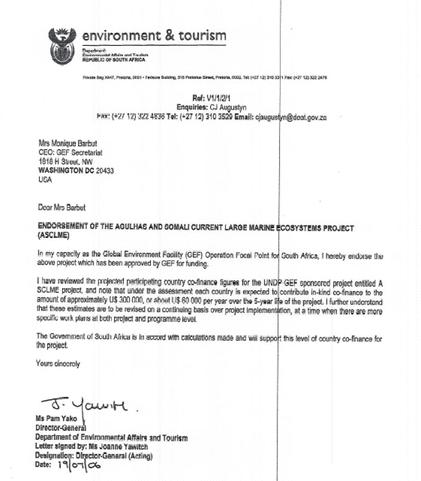
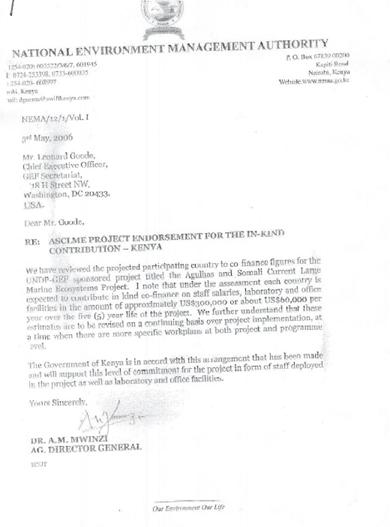
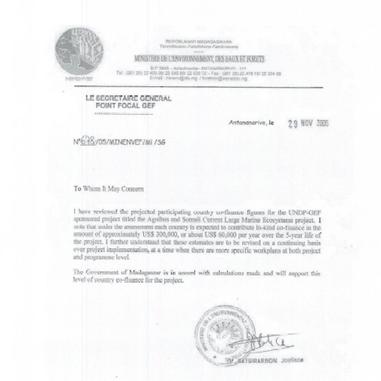
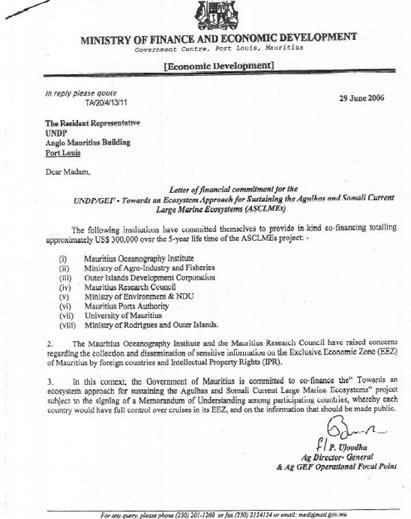
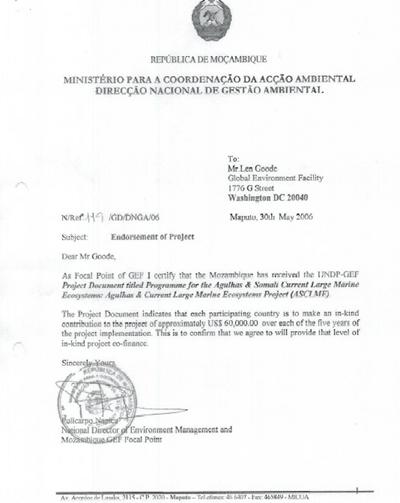
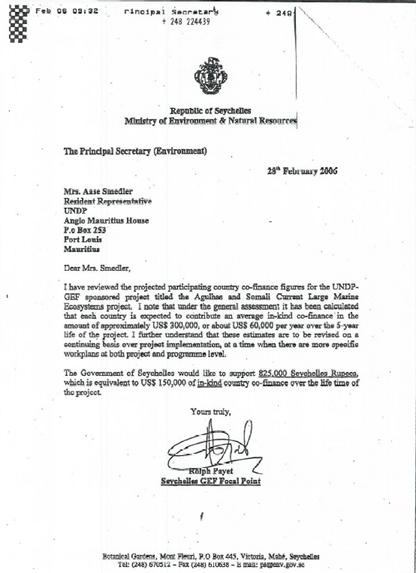
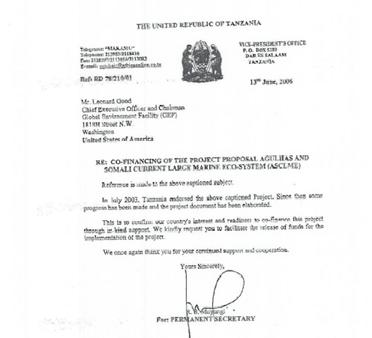
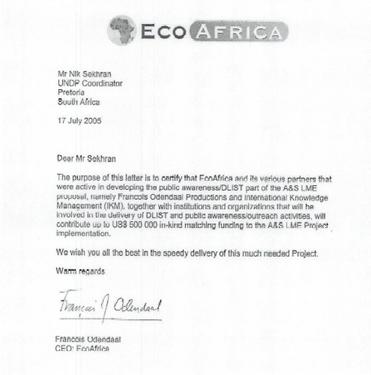
With regard to project co-finance, letters confirming project co-finance are included in this submission and are to be found in the attached file of co-finance letters of commitment.
In addition to the above responses, it should be noted that this submission includes a detailed Programme Coordination Plan. The detailed Programme Coordination Plan appears as Annex 7, and was the result of discussions and agreement among the three Implementing Agencies, representing the Agulhas and Somali Current Large Marine Ecosystems Project (UNDP), the Southwest Indian Ocean Fisheries Project (WB), and the West Indian Ocean Land-based Sources of Marine Pollution Project (UNEP).
C) REVIEW by expert from STAP Roster (if required)
STAP REVIEW 1: Technical Review of GEF Project Proposal
By Martin Esseen, June 2005
SummaryOverall the concept of this project is sound and should ultimately provide a basis of scientific information and institutional strengthening that will help towards the development of a system for the sustainable management of these two LMEs. Its basic aims are to fill known gaps in scientific information on the LMEs and to ready the institutions (and to some extent, the public) across the region for the development of TDA and SAP and, through this process, a regime of sustainable ecosystem based management. It is part of a three project Programme, with other components under UNEP and the WB.
The Project Document is long and inappropriately arranged in places with occasional, unnecessary repetition and some omission. This does not necessarily detract from its content or direction, but makes it difficult for the reader to follow. There are a lot of good, well thought-out ideas but they are at times lacking in detail or clarity. It is suggested that some more work be done on this document, not on the project concept itself but on its presentation, arrangement and detail.
For the non-technical reader there is a sometimes burdensome wealth of oceanographic information and proposed works. While this has to be explained and justified (as it forms the bulk of the project activities) it is often difficult to assimilate. The document needs clearer justification of why this route was chosen as opposed to any other and whether it is envisaged that the information sought is the only information that is required. The document needs to make a clear and forceful statement and justification which would defuse any criticisms that this project is too ‘science and research’ orientated.
The scope of the project is wide and ambitious, and there could be valid criticism of including 2 LMEs which are for the most part independent (by definition) under the same roof. While this makes for a very broad regional project, work on the Somali LME may prove to be difficult due to the political situation in the north of the region. The whole biogeographic issue needs to be clarified and justified.
More detail is required on the proposed oceanographic cruise Programme, particularly as this comprises the major part of project expenditure. The component on marine contaminants in the food chain is sound and will provide useful baseline data for future work.
Some of the proposals for institutional strengthening, data processing, training and public participation, while laudable, are lacking in detail at present and require some more work to develop fully. However, the underlying ideas are sound and should contribute towards the achievement of the project goals.
More clarity is required on how this project integrates with the UNEP and WB components.
Overall, the ideas are sound, and, with the above modifications in mind, the reviewer considers that this project is both feasible and will ultimately make a significant contribution to LME management in the region.
Introduction and General Issues
Whilst assessing this project proposal, two facts must be borne in mind:
That it is part of a Programme of 3 projects envisioned for the region, namely the “Agulhas and Somali Current Large Marine Ecosystem Programme”. The other two projects address broadly issues of fisheries and land-derived pollution respectively, and
That it is a preparatory project, aiming to fill gaps in knowledge and to lay an institutional and educational basis for future Transboundary Diagnostic Analysis (TDA) and the development of a Strategic Action Plan (SAP) for the LME systems.
The Project Objective is “to strengthen and sustain the collective capacity of the WIO countries to collect and utilize environmental information needed to adaptively manage the ASCLMEs”. The Objective will be reached through four Outcomes:
Key environmental knowledge gaps are filled as necessary to install an ecosystem-based approach to LME management;
Decision-making tools are in place, to facilitate the synthesis and application of data for LME management;
Foundational capacities are in place to assure the sustainability of assessment and data management activities to be undertaken in the sap implementation phase;
A Comprehensive Public Participation Initiative Enables Stakeholders to Engage in Programme activities.
The first of these, which is largely the gathering of detailed oceanographic data, is allocated the majority of the budget.
The Project Document identifies the needs and provides justification for most of objectives and outcomes to achieve those needs. However, In some parts it is difficult to read and lacks broad cohesion; this does not necessarily detract from its content or relevance, but sometimes makes it difficult for the reviewer to follow. It is long (>80 pages), but is in places repetitive and could perhaps be somewhat shortened without losing any relevant content. In this respect, the Project Executive Summary is a far more accessible and easily read document. There is a considerable amount of jargon which might make understanding of the document difficult, particularly for some non mother-tongue English speakers. Also the document could do more to capitalise on the good points or innovative approaches of the intended project strategy (e.g. more emphasis on economic studies as a tool for high-level government awareness, the need to define clearly the ecosystem boundaries within the region, etc). Also, a clear definition of some key concepts such as “Ecosystem Approach” would eliminate any possibility of misinterpretation of the fundamental goals of the project
Although there is an Acronym and Abbreviation list, first-time references to acronyms within the text should be fully spelt out to assist the reader. Also some acronyms in the text are not in the list at all (e.g. P. 8, table 2 – WIOTC and EAC). Some of the citations are not in References or are not correct (e.g. Van der Elst, 2004. Bottom P.6).
The Project Document would benefit from a clear map of the project area. (N.B Annex 2, Map of bathymetry is confusing and needs to be clarified).
Scope of the review
The review is structured (where appropriate) according to the STAP Terms of Reference for Technical Review of GEF Project Proposals, and the Annotations to these ToR that are applicable to International Waters Projects, though not all the of the criteria or questions in these documents apply specifically to this project. The Project Document is long and detailed; consequently some details of the text may have been overlooked in the limited time available for review, and if unwarranted criticism is made of any aspects of the project proposal or if anything relevant has been omitted then the reviewer’s apologies are due.
The acronyms used in this review are expounded in the relevant annex of the main project document.
Key Issues:
Scientific and technical soundness of the project
Scientific basis and proposed technologies (largely associated with Outcome 1)
Outcome 1 of the project largely aims to fill gaps in the knowledge of the two LMEs, primarily by carrying out ship-based oceanographic research. This is the largest component of the project and consumes the largest proportion of the budget. This emphasis on oceanographic research might produce an unbalanced project – a lot of data on the physical processes of the LMEs but a limited understanding of other parts of these complex systems. However, it must be assumed that careful and informed consideration and consultation has been given to assessing where the major gaps lie in the knowledge of these LMEs and which need to be addressed in order to proceed to the TDA and SAP stage. Some of the data that is sought (e.g. genetic studies, mapping of ocean floor) seems to be highly specific and highly expensive to collect and the reviewer believes that there should be more non-technical justification for its selection. There is very little reference to coastal linkages and issues and similarly there is little reference to the association between globally significant biodiversity (e.g. related to coral reefs and sea-mounts) and the LMEs. The Reviewer must assume that much of this information is available. If oceanographic information related to the current systems is the big gap that needs to be addressed in order to define the LMEs and in order to undertake a TDA then this should be made much clearer in the project document. If it is information on productivity and how that drives the LME then this should also be made clear. This would justify why the oceanographic cruises take dominance over all other information and data gathering. This clarification should extend to why the coastal waters are being effectively ignored by the UNDP project. One of the big concerns within this region should be the upstream-downstream relationship between coral reefs and associated species. There is much evidence that coral reef systems are supported by upstream (up-current) spawning by other reef systems over quite a considerable distance and this is also true for important commercial stocks such as lobster (and some commercially important reef fish species also). This point should be made clear as further support for the emphasis on current related field-work.
Therefore, the document needs to make a clear and forceful statement and justification which would defuse any criticisms that this project is too ‘science and research’ orientated.
It is not immediately clear from the project document on what criteria the assessment of the knowledge shortfall has been based, and whether it is envisioned that there may be other gaps in knowledge that may become apparent as the project proceeds. It might be wise to include a contingency element in the project to account for this, both in allocation of ship time and personnel and an element of the budget.
The geographical area over which the project proposes to work is vast. There are acknowledged difficulties in working in Somalia, so the question of why the Somali LME is chosen as a topic for research is asked. If the two LMEs are largely separate entities, then consideration might be given to limiting the overall scope of the project to the Agulhas LME, or, in the course of time, developing two separate projects. There is no explanation or justification of why the two LMEs are grouped together in one project. Such a justification would seem necessary if the current system boundary for the project (which is not really clear in any case) is to be maintained
The text (under Geomorphology) jumps between ASLME and WIO as if they are interchangeable. Statements such as these seem to automatically include the Mascarene Ridge as part of the ASLME and even suggests that out to the Chagos Ridge is part of the system boundary (i.e. half of the Indian Ocean). This would include what is yet quite possibly another entire LME system although this is currently under debate. This needs resolving. There is also some concern regarding the northern linkages of the Somali Current with the Red Sea and with the coastal and shelf waters of Yemen and Oman.
The Project needs biogeographic justification to be credible. A comment to the effect that the TDA/SAP process will resolve system boundary issues would be acceptable, but some definition of why the areas were selected would benefit the document. The Project Document should make it clear that one of the primary functions of the TDA and SAP process will be to define clear boundaries between ecosystems for further development of regional management strategies and cooperation (including long-term monitoring strategies).
The approach to the collection of data has been thoroughly considered and appears to be sound. Consistency should be achieved by using the same two research vessels across a wide range of habitats, under the auspices of a Cruise Coordinating Group and a Ship Coordination Specialist. The data will remain in the region and will be incorporated into a comprehensive database to be used to inform management decisions and to provide a basis for the TDA and SAP process. It should be further noted that there is almost certainly considerable relevant data that resides outside of the region as a result of earlier scientific work by international groups and bodies. This needs to be identified and made available and accessible to the region through whatever mechanisms the project adopts as an information ‘clearing house’.
Throughout the document there is reference to the cruises but with only brief discussion of their purpose and a very generalised and short list of data to be collected. It may be valuable to expand on this as it is such a major component of the project. Is there any agreement with Nansen about what would be undertaken (the sampling suite and Programme), opportunities for ‘visiting’ scientists especially in relation to training and capacity building? Any trained scientists involved in the cruises must be counterparted by those from within countries of the region who need training – and this must be clear and acceptable to the Norwegian interests. The need for far more detail regarding the proposed oceanographic surveys is clear and should be addressed at the beginning of the Project (when sufficient funding is available) by way of a detailed cruise-plan and strategy.
The issue of what will be done to process, report and archive the vast quantities of data once it has been collected needs to be addressed. There is currently a limited level of oceanographic expertise in some of the participating countries and it therefore appears that the majority of data analysis must be undertaken by non-regional experts and consultants. Its is imperative that this data remains accessible to the countries and scientists of the region and the project should define some sort of mechanisms for developing an information ‘clearing house’, possibly attached to an existing regional agency with the skills or capacity to handle said mechanism.
Following the above, it is very important that the perception of the project in the participating countries and the international community is not one of it being a data-collecting exercise for overseas academics. Any plans and strategies developed for the field-work must included a training and counterparting component to ensure that data collection and analysis techniques are captured within institutes through the capacity building of regional scientists.
An analysis of the interlinkages between environmental issues and root causes behind them has been undertaken (p.11, para. 23). The main threats to the LMEs are listed as:
Human induced habitat destruction and alteration of the marine environment;
Pollution of the marine environment;
Overexploitation of fisheries resources and high by-catch and incidental mortality of marine fauna in commercial fisheries operations; and
Adverse consequences related to anthropogenic related environmental variability within LMEs.
The descriptions of these threats are reasonably comprehensive, though there tends to be a focus on inshore or near-shore activities that seems to ignore the vast oceanic scale of the LMEs. However, it is not made clear how this list was arrived at, who defined the threats and whether they are endorsed by countries in the region. In the absence of more detail regarding the association with (and content of) the UNEP and World Bank project components (precise information on which is very thin within the document), the reviewer must hope that the SWIOFP project will be addressing the high seas marine resources concerns.
Para, 43 states “As the genesis of these threats is transboundary in nature…..”. Care should be taken about suggesting that threats have to be transboundary. Impacts are also important and if the end-impact is on a transboundary area such as an LME it is not pertinent whether the threat is transboundary in nature, it is still a transboundary concern.
The tools and methodologies for TDA and SAP are to be developed and refined during the course of this project, building strongly on data acquired from project activities.
The scope of the project is ambitious, particularly given the prevailing political situation in some parts of the region. However, if successful it will provide a broad base of knowledge and an enhancement of political, institutional and public skills and understanding which will greatly assist in the sustainable management of the LMEs.
The project component (Outcome 1.2) to obtain baseline data on heavy metals and Persistent Organic Pollutants (POPs) within the LMEs is sound, consistent with the overall Programme aim and relatively easily achieved. It will be useful to compare levels within the upper food-chain species with figures from elsewhere in the Indian Ocean and globally.
Technologies used during the project will be in many cases highly advanced and not always immediately suitable for the region’s socio-economic profile. Where necessary, training in the use of appropriate technology will be provided under the project.
Some innovative technologies will be used in the data acquisition process. The following is a direct quote from project documents:
“The project will deploy a state of the art device that can “shuttle” up and down the water column, and represents the latest in monitoring technology. It includes the following capabilities: Fast Repetition Rate Fluorometer, Optical Plankton Counter, Photosynthetic Active Radiation; Conductivity, Temperature, and Depth Fluorometers, Dissolved Oxygen Electrode, and a Continuous Plankton Recorder. Another device that will be deployed to minimize use of expensive ships’ time will be series of sondes, which create time series datasets that allow managers to identify long-term patterns as well as track short-term influences such as weather.”
The proposed technologies to be used in the project are highly unlikely to pose any environmental threat. Only the extensive use of ship time and its associated environmental costs could be considered a threat.
Other issues regarding Outcomes 2, 3 and 4
Outcome 2 is that “Decision making tools are in place to facilitate the synthesis and application of data for LME management”. This is to be achieved through the creation of a data management facility, the definition of a set of indicators and by the development of a GIS capability for spatial mapping. The document is vague on the methodology for achieving these outcomes.
The document would benefit from an explanation of how data and monitoring results would flow into management/operationalisation, and into Governance/policy – and how this flow would be two-way (up and down) so there would be feedback from policy makers and managers to the monitoring process with respect to what data was need on what and from where.
Concerns over the treatment of data gathered during the project have been expressed in point 1.9 above.
The GIS component is brave and will, if successful, provide a valuable management tool. However, it may be difficult to achieve consistency of training and outputs across the region and more thought should be given as to how this component might be realised.
There is a need for an economic survey to identify the value of the resources of the LME in relation to a cooperative ecosystem management approach in order to ‘prove’ its value to governments and other stakeholders. Capturing the likely economic benefits of sustainable LME management and sensitising management and policy level stakeholders should have more emphasis in this document.
Outcome 3 is that “Foundational capacities are in place to assure the sustainability of assessment and data management activities to be undertaken in the SAP implementation phase.” The Outputs/Activities under this outcome have been well thought out; however, the following points should be noted:
Generation of significant funding from fisheries levies will require that a more sophisticated and extensive fisheries management capacity be in place in some countries in the region. This may not happen during the lifetime of this project. Some mention of potential losses of revenue from the activities of IUU (Illegal, Unregulated and Unreported) fishing vessels or fleets in the region might be usefully made as an incentive to better governance and improved fisheries management. Again, the reviewer must hope that these crucial aspects would be addressed through the SWIOFP component of the Programme.
The linkages with other GEF supported LME projects (particularly at a global level) may prove to be an expensive and time consuming business. More use of a web-based “virtual” forum should be considered, and the Project Document should identify a regional agency that would have responsibility for coordination of African LME initiatives, lessons and best practices.
There is a need to undertake an assessment of training and capacity building requirements early on in the project’s life. Though this is touched on in the text, it might be beneficial to provide more detail or a specific workplan. See 12.6 below for more details of considerations relating to such training and capacity building requirements that should be addressed by the project.
Outcome 4 is that “A comprehensive public participation initiative enables stakeholders to engage in Programme activities”. This is to be achieved through the development of a distance learning system and through public participation and environmental education initiatives.
Whilst the Distance Learning and Information Sharing Tool (DLIST) is a laudable idea, the reality is that the vast majority of stakeholders have low levels of literacy, are not able to access computers and have little interest in the management of LMEs other than that which affects their day to day existence. The DLIST system will be valuable to the educated minority and will be a useful tool for dissemination of project information to, for instance, the academic world. However, the public participation and environmental education component should not take second place to the more “high tech” DLIST, as the former is likely to be able to reach a far wider audience which is, importantly, intimately connected to LME management issues by virtue of their dependence on natural marine resources. The text identifies that DLIST would provide a mechanism of community outreach and to build community support. However, it is not clear how such a Tool (which, on the surface at least, seems to be fairly advanced) would make this outreach or build this support at the grass-roots level.
There is very little mention anywhere in the Project Document about private sector participation which will be vital for long-term sustainability. A Partnership Conference might be a valuable tool for promoting cooperation and trust and to develop ideas for mutual work and co-funding (always with a view to the Implementation Phase later).
2 Institutional Arrangements
The discussion of policy framework for national ecosystem management is generally adequate: all eight countries have national environmental plans and most countries have fisheries master plans. Several countries have instituted near-shore governance mechanisms or institutional structures to manage marine and coastal resources.
The Baseline Analysis in the Project Document (pp 16-18) adequately addresses the issue of existing institutional and scientific barriers to LME Management in the region.
Para 30 P. 17 notes the lack of regionally based monitoring and information systems. It is not totally clear how this project will respond by developing good data handling and management approaches and strategies, especially in light of the new information being gathered either afresh or through repatriation. This is implied in the text but not discussed in any detail.
The whole issue of training and capacity building is critical to this project. Appropriate institutes and persons need to be identified and many of them will need basic training in ecosystems and LMEs just to be involved with the project and understand where it is going. Training will also need to extend to the management level so they can understand the LME concepts and the benefits of cooperative management and dealing with such issues as shared stocks. This Project Document needs to identify this as a very specific delivery at an early stage in the Project workplan.
The project aims to “pair” institutions from different participating countries, matching those who are more developed with those who will benefit from such exposure. This will engender partnerships within the region, and should help to build institutional sustainability.
Identification of global environmental benefits.
The main global benefit of the project will be an enhanced understanding of the oceanographic and biogeographic definition, economic importance and potential threats/impacts on the Western Indian Ocean LMEs as a necessary input into LME management at a later date. The project itself is not intended to create a management system for the LMEs at this stage, but to provide a suitable base of information and skills to assist in the later development of such a management system.
Enhanced understanding of the oceanography of the WIO may assist countries in the region to better predict and adapt to increased environmental variability brought on by human induced climate change, though how this might come about is not clearly explained and a sentence or two to this effect would add clarity for the reader.
No negative environmental effects are anticipated.
Incremental benefits and costs are identified.
The Project addresses the needs of the Millennium Development Goals, in particular through the long-term aims to eradicate poverty and hunger (through better management and conservation of coastal and offshore resources), and by acting to ensure long-term environmental sustainability.
4 How does the project fit within the context of the goals of GEF?
The project is well able to satisfy the goals of GEF and OP8, and fits well with GEF Strategic Priority IW2.
The overall strategic thrust of the GEF- funded IW activities is to meet the incremental costs of: (a) assisting groups of countries to better understand the environmental concerns of their IWs and work collaboratively to address them; (b) build the capacity of existing institutions; and (c) implement measures that address the priority transboundary environmental concerns.
Points (a) and (b) above are two of the major aims of this project. In relation to (c), the information gained from field-work linked with existing data in the region (and outside) will be used to complete the TDA and eventually assist in the development of an SAP.
5 Regional Context
Eight countries with coastlines in the WIO will take part in the project; of these 4 are on the mainland coast. It is therefore a distinctly regional project.
Somalia is not included due to political unrest in the country. It is not clear from the project document whether the Somalia upwelling is in Somalia territorial waters and, if so, whether any arrangements have been made to work in the area.
Countries on the southern coast of the Arabian Peninsula (Yemen and Oman) whose waters may be influenced by the Somalia Current have not been included in the project. Furthermore, there is documented evidence that the waters of the Red Sea interact directly (at depth) with the Somali Current Consideration should be given to developing cooperative linkages to these countries, possibly through UNEP’s Regional Seas Programme, to ensure their input as well as keeping them informed of developments and available new data.
6 Replicability of the project
Aspects of the project might be replicated in other IW bodies, but there is, at this stage, no clear reason to do so.
As stated in the document, the process of allowing pre-TDA and pre-SAP projects to inform the process of TDA and SAP development might be replicable in future projects, but it would be wise to see how these innovations work out in this one.
Although this is not about the replicability of the project under discussion, it should however aim to replicate some of the lessons learned from other similar projects (e.g. Guinea Current and Benguela Current LMEs).
7 Sustainability of the project
This project largely does not need to be sustainable. The sustainability is need for the long-term objectives of LME management and governance. Once the project has achieved its goal, the information gained and the capacity building undertaken will lead into future works, the sustainability of which will no doubt be dealt with when and where it is appropriate (i.e. through the development and implementation of the SAP(s).
Sustainability of some of this project’s outcomes (e.g. the public awareness component) should be dealt with during implementation of the project.
There is no indication throughout the document of any concept or idea for who or what would take over the sustainability of a regional LME management and governance concept. In other LMEs consideration has been given to formal treaties and Commission to undertake this policy level governance. This would presumably be addressed at the stage of SAP development and country endorsement.
It is highly probable that linkages (both formal and informal) between institutions and individuals across the region will be ongoing and will form a basis for future communication and cooperation. One lesson learned from LME projects so far has been the strength and endurance of the scientific and technical partnerships which have been developed.
Linkages to other focal areas
There are inevitable linkages between this project and biodiversity, climate change and persistent organic pollutants.
The links to climate change are somewhat vague, and imply that project outputs might be useful in predicting changes in climate due to anthropogenic activities. This seems at the moment to be somewhat optimistic, but any information may have importance later on. Linkages to national and regional biodiversity projects would need to be developed during project implementation as data sharing could be critical to the TDA process.
9 Linkages to other Programmes and action plans at regional or subregional levels
There is a clear need to describe mechanisms that would relate the TDA/SAP process to the input from the three IAs as three projects. This should be clearly stated and explained in the document.
A little more detail on the WB and UNEP input would be useful rather than just a list of generalities. For instance, it is unclear from the description of UNEP’s project whether they are undertaking a TDA/SAP process for LBS. The text suggests that they will start immediately on activities to reduce LBS activities which infers that they have all the necessary TDA information already - is this the case? In this context, the Table in Annex 5 which outlines the Programmatic linkages between the three GEF projects in the Programme is confusing. More clarity on the linkages between the three projects is required in the text.
Coordination of research cruises among the three projects should be more clearly addressed at an early stage. There exists the potential for confusion, misunderstanding and rivalry if these issues are not addressed.
There is considerable linkage between this project and other GEF sponsored projects in the area.
Table 8 (Para. 52), which details the above linkages, would be better as an Annex, with primary links mentioned in the text and referring the reader to the Annex. This is an example of the unnecessarily heavy use of tables within the text which attempt to abbreviate and clarify, but actually compress and repeat too much information within one place, and end up detracting from the flow of the document.
Table 2 (Para. 20) adequately summarises the International Agreements to which participating countries are party.
Table 3 (Para. 21) adequately describes Regional Institutions to which participating countries are party.
Table 4 (Para. 22) adequately describes linkages between the project and National Development Plans or National Policy.
Beneficial or damaging environmental effects
No particular or undue damaging environmental effects are anticipated from this project; it is inevitable that ship-based research cruises will have a very minor environmental impact but this is extremely localised.
Beneficial environmental effects from this project are somewhat nebulous; in the strictest terms there will be none, as the project only aims to gather information suitable for inclusion in a future management strategy. However, the contribution of this project to future environmental benefits can only be seen as positive.
Degree of involvement of stakeholders in the project
Not all countries who have a stake in the IW bodies are involved in the project; some are excluded for reasons of the difficulty of their involvement (e.g. Somalia) while some might be considered as peripheral to the IW body (Yemen and Oman).
National and regional organisations will be strongly involved in much of the project, though it is not totally clear from the project documents how the training of counterparts (particularly during research cruises) will be accomplished. It would help the clarity of the document if more details of this were available.
Of those countries involved in the project, the degree of stakeholder involvement will be high – a major outcome of the project is a comprehensive public participation initiative (Outcome 4). However, as noted above, (1.28) care should be taken to involve stakeholders who have limited or no access to technological tools such as Internet or television.
Capacity building aspects
Capacity building for individuals and institutions is an integral part of the project and is present to some extent in all of the four expected outcomes of the project.
Outcome 1 will ensure the development of individual scientists oceanographic and data collecting skills during the numerous research cruises to be undertaken.
Outcome 2 will build capacity for the region in the storage and management of data and in the use of GIS tools for regional mapping.
Outcome 3 contains a dedicated section on capacity building which aims to identify training needs in conjunction with the SWIOFP and to implement training in areas such as environmental monitoring.
Outcome 4 will provide opportunity for communities and individuals outside of the project to develop their understanding of and participation in the development of LME management system.
There is a need to develop a training Programme right at the beginning of the project which A, identifies national and regional needs, B. identifies available and suitable personnel to train, and C. Identifies a “train-and-retain” mechanism where trained staff have a contractual obligation to remain in post for a specified period. This should be a very high priority and should be specified as such. Even basic training in field-craft and field-science (use of equipment, ship discipline, data collection, quality control and assurance, record-keeping etc), will be necessary to allow counterparts to take part in fieldwork and cruises effectively and to trained further.
Innovativeness of the project
The project is not especially innovative, though there is the potential for the use of up to date scientific equipment for some of the data gathering (see point 1.16).
The project document considers the use of the project activities to inform the TDA/SAP process as innovative.
14 Project implementation and management
The reviewer is not fully qualified to comment on the arrangements for the implementation and management of the project nor on budgetary considerations. However, it would seem that there needs to be a clear definition between Project Steering Committee membership (presumably a policy level function) and Science Review Panel membership (what would seem to be more a role for senior government science personnel and technical managers).
STAP REVIEW 2: STAP Roster Review
By J.M. Bewers June 2005
It is not possible to judge the scientific veracity of this project proposal solely on the basis of the project brief. This is because the strategy and logistics for the conduct of hydrographic work is inadequately explained. To do so would require, first, the inclusion of an annex summarizing the current knowledge of the oceanography of the Western Indian Ocean (which, in low-resolution terms, is well established), placing the proposed oceanographic surveys in an appropriate context and providing a detailed oceanographic survey plan. The latter would include definition and timing of the oceanographic sections to be occupied.
Similarly, the baseline knowledge used for the design of the capacity-building component of the project and the logic by which a decision has been made to defer the conduct of a transboundary diagnostic analysis (TDA) is not adequately explained in the project proposal.
The justification for including so called “pollution” (actually “contamination”) studies in this proposal is weak. The sister UNEP-Implemented WIO LaB project covers land-based sources of contamination and associated effects in river, estuarine and coastal areas. The acquisition of additional information on contaminants in top-level components of the food chain (avians, fishes and mammals) of the subject region through the WIO-MEP project will undisputedly provide new information. However, without an adequate basis for interpreting these data in a regional, rather than global, context, relating offshore contamination to regional land-based activities will be tenuous at best. Neither does the inclusion of this contamination component immediately appear to align with the conclusions of the GIWA assessment of this region cited in Paragraph 24 of the proposal. However, there may be other justification for the proposed work that has not yet been included in the project brief.
The proposal claims to be based on the policy commitment to the use of an “eco-system approach”. Without an explanation of the meaning of this approach in scientific terms and how it influences the strategic aspects of project design, reference to the phrase is meaningless. The project talks of “informing” the TDA-SAP process. I do not know what this means although it appears to reflect the adoption of capacity-building activities prior to the inception of a TDA-SAP process in the region. There is thus an underlying conviction that capacity building and stakeholder involvement can be prosecuted prior to the commencement of the TDA process. There is, however, a danger that such capacity-building activities may not be undertaken in a manner that most appropriately matches the requirements identified through the conduct of a systematic TDA. It is also risks impairing the overall cost-effectiveness of the project. The proposal also does not adequately describe the precise mechanisms of TDA-SAP preparation among the three interrelated GEF WIO projects. This is absolutely essential and appropriate revisions to the proposal are required to provide detailed explanation of these mechanisms.
I am concerned that this project is larger in scope than one tailored as a realistic and measured approach to resource management in the region. I therefore lack confidence that it will successfully deliver the projected outputs and outcomes. A more specific and focused proposal, primarily addressing the Agulhas system, with a reduced or eliminated contaminant component would have lower risks than those associated with the wide-ranging proposal that has been offered for STAP review.
SPECIFIC COMMENTS
Scientific Aspects
This is an ambitious project with the goal of preparing for the management of two coupled marine regions, the Agulhas and Somali Current regions (two so-called “Large Marine Ecosystems”). Comprehensive “management” of such large regions as referred to in the project proposal is a very long-term objective and is an unrealistic target within a time frame of less than several decades.
Nevertheless, the major activities in the project, as proposed, are the acquisition of additional marine science understanding of coupled marine systems and mechanisms for creating stakeholder consultation and involvement, fisheries, and so-called “pollution” studies (these are really contaminant studies as they deal with the presence of contaminants rather than their effects).
The pursuit of additional oceanographic understanding of the region is laudable but the project proposal is deficient in omitting, possibly as an annex, a summary of the circulation and structure of the waters of the region in the context of known oceanic circulation. The description of planned oceanographic surveys is neither adequately detailed nor placed in the context of prevailing patterns of circulation in the Indian Ocean and the two subject systems.
The inclusion of “pollution” studies, comprising examinations of the levels of POPs and heavy metals in top-level trophic organisms is neither justifiable nor worthwhile unless additional substantiation is provided. Any claim that the results of such surveys could be commonly and meaningfully interpreted, in a wholly regional, or sub-regional, context, with the results of investigations of land-based contaminants in the sister UNEP-implemented LaB project in the region is unrealistic. Accordingly, the entire “pollution” component of the project is of doubtful utility and could be reduced or deleted. Possibly its inclusion reflects a co-financing agency’s interest in the project. If this is the case, the inclusion may be legitimate conditional on adequate justification being incorporated into the proposal.
The proposed fisheries and coupled plankton survey work is again laudable and will no doubt contribute additional understanding of the biological processes and food-web dynamics in the region. It is difficult, however, to distinguish the coverage of these investigations from those intended to be carried out under the sister GEF/World Bank implemented SWIOFP project because Annex 5 provides insufficient clarification of such distinction.
GEF and GEF-WIO Context
In the context of the GEF IW focal area commitment to commissioning projects addressing Large Marine Ecosystems, the project is intrinsically well suited to the goals of the GEF and OP8. It also aligns well with the provisions of the GEF Operational Strategy, the Operational Programme description for OP8 and GEF Strategic Priority IW2.
It is essential that more detail of the linkages and modes of interaction among the three GEF WIO projects be included in the proposal. The table in Annex 5 that attempts to depict the primary and secondary foci of the three GEF projects is confusing and provides inadequate explanation of the way the these projects dovetail.
This project proposal, like many other contemporary initiatives, purports to address the consequences of natural and anthropogenically-driven climate change. Yet, again in common with most other initiatives, it makes no direct reference to the most deterministic (i.e., inevitable) effect of increased atmospheric CO2, namely ocean acidification.
Linkages with other Focal Areas
This project has linkages to both the biodiversity and climate change focal areas. The “pollution” component also has linkages to OP10 and the POPs focal area. The characterization of the linkages to climate change is not very detailed and expressed in rather general terms relating largely to changes in regional climatic and Indian Ocean circulation. As noted, no specific reference is made to oceanic acidification that is almost certain to have profound and long-standing effects on tropical biodiversity in the Western Indian Ocean.
Linkages with other Programmes and Action Plans at Regional and sub-Regional levels
This project is one of a family of three. The two companion projects address land-based activities and fisheries issues respectively. Accordingly, there is a broad context for project goals and activities at the regional level. The inclusion of two large oceanographic circulation systems (the Somali and Agulhas Current systems) creates a sub-regional context for the activities although, as proposed, greater emphasis will be on the Agulhas system because of the contemporary political situation in Somalia.
The project proposal adequately addresses existing relevant global and regional agreements and conventions. It also deals, but not exhaustively, with international science Programmes that bear on project activities and offer opportunities for mutually beneficial cooperation.
Council guidance and the provisions of relevant conventions and Regional Context.
I am not aware of any Council guidance that would provide additional context for the evaluation of this project proposal (other than that codified in the Operational Strategy, Operational Programme Descriptions and GEF Strategic Priorities).
Project Design
One major strategic element of the design of the proposed project deserves particular attention. This is the statement that the work is intended to ‘inform’ the TDA-SAP process. This involves the development of expertise and capacity prior to the conduct of a TDA and is claimed to be a novel approach that might merit replication in other GEF projects. I am sceptical of this claim and unconvinced that this approach is either sound or cost-effective. Beginning the TDA process at, or before, full project commencement clarifies the kinds of information, data and interpretative abilities that are required to address conceived problems in a basin. This, in turn, directs technical and scientific efforts and research and development to the issues of importance for determining the extent and causes of environmental degradation and threat. Prior to the conduct of a TDA, there is no guarantee that appropriate kinds of expertise and information will be developed. It may be that other assessments have been used as a basis for defining priority problems in the region. If this is the case, these need to be more completely identified and explained in the project proposal.
On this same point, the proposal is vague regarding (i) the actual timing and detailed design of the TDA-SAP; and (ii) the manner in which the three GEF WIO projects engage in the regional TDA-SAP process. In other words, the proposal leaves unclear the actual manner of TDA-SAP development for the region among the three inter-linked GEF projects in the WIO. Additional explanation is warranted of the nature of the partitioning of effort, the mechanisms of consultation among the three projects, and how coherence in the TDA-SAP will be achieved. I am specifically concerned about the evident lack of temporal coherence in the TDA-SAP process among the three projects. The period of overlap of the World Bank and UNDP implemented projects with the UNEP-LaB project is limited to 2-3 years. This proposal (and the other project briefs and/or implementation plans) should clarify how the projects can maintain a consistent and collaborative effort on all issues relevant to TDA-SAP development during the life of this project.
The inclusion of the term “ecosystem approach” in the document, if retained, needs clarification so that the reader can determine how the use of this approach has influenced the selection of project design strategy and the choice of components. Such terminology, derived largely from the policy sector, provides offers little benefit or relevance to science-based activities unless its meaning is adequately clarified.
Innovativeness of the Project
In general, there is little of an innovative nature in this project. The Programmatic approach comprising three inter-related GEF projects on the same region, however, is more innovative and it will be interesting to see how this improves comprehensiveness and benefits at the regional and global levels.
The one aspect of the proposal that is claimed to be innovative is the unusual staging of the new data and information gathering activities and the conduct of a TDA respectively. The project proposal is based on information acquisition prior to the inception of a TDA. This is indeed innovative in a contemporary context but actually appears to reflect a more classical approach similar to that used before the concept of TDA was incorporated into GEF IW projects. Thus, I am concerned that the innovation as potentially regressive. Moreover, enough experience has now been gained with TDAs to illustrate the advantages they offer in distinguishing between highly relevant, less relevant and trivial issues. This, in turn, provides for an improved cost-benefit ratio in project activities. I am therefore not convinced of the advantages of the proposed innovation. Improved detail of the grounds and information on which the project has been designed will be necessary to explain and defend the strategy adopted.
Sustainability
The sustainability of project structures and interventions is poorly substantiated in the current project proposal. While it may be entirely appropriate for the Nairobi Convention to be expected to sustain activities addressing land-based and coastal contamination activities, there exists no track record of this organization for sustaining basin-wide activities of the type promoted here. Therefore, I have reservations regarding the capacity of the Nairobi Convention to fully sustain interventions engendered through the project. Nevertheless, the diversity and scale of such interventions will only become clear once the TDA-SAP process has been completed and therefore it is premature to reliably judge the alignment of Nairobi Convention capacities with project mechanisms and interventions that require to be sustained.
Baseline and Incrementality
I have fewer reservations about the evaluations of baseline and incremental activities and costs. With the strong zonal flows along the east African coast, there will inevitably be transboundary issues in realms of fisheries management, biodiversity conservation and environmental factors. While the proposal places appropriate emphasis on the relevance of coastal conditions on resource management, land-based activities and social conditions in the participating countries, the primary oceanographic emphasis in the proposal is on aspects of offshore circulation. The greatest emphasis on physical oceanographic conditions and associated chemical properties, such as dissolved oxygen and nutrients, should be on continental shelf conditions including the consideration of influences caused by the nature and variability of the offshore circulation.
Relationships to Activities of Other Organizations
This project, like some other, but not all, LME projects, provides potential benefits in building marine science capacity for data acquisition and interpretation among countries of the region (hence its alignment with Strategic Priority IW2). This will complement scientific and technical capacity building by other organizations such as the Intergovernmental Oceanographic Commission, the World Meteorological Organization and SCOR. As noted previously, the potential for collaboration with these organizations does not appear to have been exhaustively explored although the connections through the CLIVAR Programme will probably serve as a suitable intermediate vehicle for such collaboration.
Stakeholder Involvement
I am satisfied that the proposal covers to a realistic degree the creation and maintenance of stakeholder participation in the project.
Replicability
The issue of replicability is of questionable relevance to the project reviewed here simply because it is one of a series of GEF projects addressing LMEs, albeit one with comparatively strong emphasis on the offshore.
Incremental Benefits
The incremental benefits of the project are adequately addressed in the project proposal and there are no evident drawbacks.
Project Management
I fully accept the need for a 2-tier management framework: at the upper level, an inter-project (i.e., Programmatic) consultative committee; and, at a lower level, a project steering committee. I further concur with the proposed manner of ensuring technical and scientific coordination - an approach that should lead to the creation of the technical and scientific capacity to engage in the TDA process.
My sole reservation about consultation during the implementation phase relates to the inadequate specification of the mechanisms and procedures for the coordination of oceanographic surveys among the three companion GEF WIO projects and existing work being undertaken with Norwegian research vessel support in both this and the adjacent Benguela Current region. The design and inclusion of detailed cruise plans as an annex to the project proposal and detailed delineation of the consultative mechanisms for the scientific aspects of all three WIO projects would significantly improve the proposal. Incidentally, I question why Norway, the donor of survey vessel time, has not been given a place on the Project Steering Committee.
Finally, has any consideration been given to connections/collaboration with other investigations and organizations (such as the Intergovernmental Oceanographic Commission and the Scientific Committee on Oceanic Research (SCOR)) that have interests in ocean circulation studies and marine environmental protection issues?
Additional Observations
1. The project proposal is in need of editing to avoid common misuse of English and a small number of typographical errors. It should be noted that the phrase “a comprises b, c and d” means that b, c and d are parts of a. The term “comprised of” as used in the proposal has no similar or interpretive meaning in English.
2. The issue of inter-comparability (and, by implication, accuracy and precision) of data is not addressed in the proposal despite the inclusion in the list of acronyms of both quality assurance (QA) and quality control (QC). Nevertheless, as far as oceanographic measurements are concerned, the involvement of established Norwegian and South African oceanographic institutions and oceanographers and the link with CLIVAR should avoid any associated deficiencies in relation to the common oceanographic measurements. I cannot comment, however, on any such data reliability issues relating to biodiversity and fisheries as I am not expert in these fields. I would normally have quality assurance concerns about contaminant measurements. However, I appreciate that the French agencies undertaking these measurements are well aware of data reliability issues and will undoubtedly have adopted appropriate steps for sampling and analytical quality assurance.
3. The tools, methodologies and arrangements for TDA and SAP preparation have not been clearly elucidated in the project proposal.
4. Issues relating to carrying capacity (and/or assimilative capacity) cannot be addressed at this stage of project development.
5. None of the proposed technologies imposes significant threat of environmental compromise.
RESPONSE TO STAP REVIEWS
N.B. In view of the complexity of dealing with two LMEs in an area where baseline information is frequently missing, the Project requested two STAP reviews, one from a). A reviewer with a marine chemical and oceanography background and one from b). A Living Marine Resources Specialist with experience of the Indian Ocean.
|
STAP COMMENT |
RESPONSE TO COMMENT |
REFERENCE TO PRODOC |
|
Strategy and logistics for conduct of hydrographic work is inadequately explained. More detail is required on the proposed oceanographic cruise programme. The project is deficient in omitting, probably as an annex, a summary of the circulation and structure of the waters in the region in the context of known oceanic circulation. The description of planned oceanographic surveys is neither adequately detailed nor placed in the context of prevailing patterns of circulation in the Indian Ocean and the two subject systems. |
1. A summary of the circulation and structure of the waters in the region has been added . 2.The Project activities under Outcome 1 have been modified to include a planning and strategy process for the oceanographic cruises, with linkage to an additional Annex that explains how this planning will take place and how a strategy will be developed. |
1. See Annex 2 - A Summary of Oceanographic Knowledge in the Agulhas & Somali Current LMEs. 2. See main ProDoc text under Outcome 1 for new activities plus Annex 9 - Planning and Strategy for the Oceanographic Surveys Associated with the ASCLMEs project. |
|
It is very important that the perception of the project in the participating countries and the international community is not one of it being a data-collecting exercise for overseas academics. Any plans and strategies developed for the field-work must included a training and counterparting component to ensure that data collection and analysis techniques are captured within institutes through the capacity building of regional scientists. |
The Planning and Strategy for the Oceanographic Surveys Associated with the ASCLMEs project (as noted above) will also address training needs and counterparting arrangements, and a clear emphasis will be made on building capacity within the appropriate national and regional institutes so as to capture and enhance skills within the region |
See Annex 9 - Planning and Strategy for the Oceanographic Surveys Associated with the ASCLMEs project. See also Outcome 3 - Output 3.2. Additional explanation provided regarding a Capacity Building and Training Programme within the Project |
|
Inadequate specification of the mechanisms and procedures for the coordination of the oceanographic surveys among the three companion GEF WIO projects and existing work being undertaken with the Norwegian Research vessel |
Preliminary coordination of needs has been undertaken during the PDF B to define the expected number of cruises and ship's time, along with agreements on sharing of cruises. This would need to be refined once all three projects are under implementation and timing can be better coordinated (along with the availability of the relevant vessels). Such a coordination mechanism and planning arrangements will be covered in the earliest stages of the Project under Outcome 1 which will include development of the strategy and logistics for the oceanographic cruises |
See Annex 9 - Planning and Strategy for the Oceanographic Surveys Associated with the ASCLMEs project. Also discussion on Cruise Coordinating Group under Executing Arrangements |
|
Document needs clearer justification for the proposed oceanographic work and whether the information to be gained from this work is the only information required. A clear and forceful statement is needed to defuse any potential criticism of too much 'science and research'. |
The information from the oceanographic work is not the only information required or sought but needs to be seen in context with the other project Outputs and the other Programme initiatives by UNEP (Land-based sources)and the World Bank (fisheries). The real purpose of this project is to recognise and fill information gaps across the LMEs through an environmental baseline assessment, and then to use this information to drive a TDA process and arrive at SAP(s). Again, lessons have been learned from previous LME projects that indicate the absolute necessity to capture accurate and adequate baseline data and information to support the long-term management process. A SAP can only be as effective as the TDA that advises it and provides it with priorities and recommendations. A TDA can only be efficient and accurate if it has this baseline data to inform it and from which to draw its LME-wide conclusions. |
Discussion on project Outputs under Outcome 1 expanded to include coastal data capture on larval transport, mapping of nursery areas and artisanal fisheries. A table has also been added showing the expected management applications of the new data and knowledge as relates to the LME modular approach which should clearly defuse any suggestions that the project is undertaking 'too much science and research' or 'doing science for science's sake' |
|
The baseline knowledge used for the design of the capacity-building component is not adequately explained |
The project will undertake an early assessment of baseline knowledge, available expertise and potential human resources for training within the region. This will flow into the development of a CB&T workplan and strategy that will identify CB&T needs at the national and regional level. Sustainability mechanisms will be identified for CB&T to ensure that the capacity and the trained personnel remain available within the appropriate institutes. |
Outcome 3 - Text expanded to include explanation and elaboration of the CB&T Programme within the project |
|
STAP COMMENT |
RESPONSE TO COMMENT |
REFERENCE TO PRODOC |
|
Justification for including so called 'pollution' (actually 'contamination') studies in proposal is weak |
The need to capture baseline information for long-term monitoring purposes should be considered to be sufficient justification. There is also justification for these studies on the basis of being able to compare any new data on heavy metals and POPS within tissues etc., with other data from the Indian Ocean and globally. This could tell scientists in the region a lot about the chronic and cumulative concerns regarding these pollutants. This has important implications for human health in an area that is very dependent on marine resources as a source of nutrition. However, the information also has a valuable role to play in the TDA process (where are the impacts of such pollutants being felt and what are their origins). If the TDA is properly conducted in collaboration with the UNEP WIO-LaB Project then it should be possible to start to develop linkages between sources/causes and impacts/effects. |
See expanded text in Outcome 1 - Output 1.2 |
|
Neither does the inclusion of this contaminant component immediately appear to align with the conclusions of the GIWA Assessment of this region |
The only completed GIWA assessment for this region addresses the Indian Ocean Islands. In this context GIWA clearly identifies pollution as the most important transboundary concern. GIWA has yet to finalise its assessments of the Agulhas Current and Somali Current regions. |
See expanded text in Outcome 1 - Output 1.2 |
|
Without an explanation of the meaning of the 'ecosystem approach' in scientific terms and how it influences strategic aspects of the project design, reference to the phrase is meaningless |
The Ecosystem Approach and the concept of Large Marine Ecosystems are a central tenet of the GEF International Waters Operational Strategy and overall business policy, including where it relates to its function as the funding instrument for the Convention on Biological Diversity. Explanation of the ecosystem approach in relation to LMEs and the need for affect transboundary assessment and analysis is now included in the text along with an explanation of how it influences strategic aspects of the project design. The WSSD Plan of Implementation also addresses the need for the Ecosystem Approach, especially in relation to fisheries. This is covered in the ProDoc under the section on the Ecosystem Approach as well as under Country Eligibility. |
See Ecosystem Approach section under Part Two - Project Strategy. See also Country Eligibility for further reference to the WSSD. See also Expected Global, National and Local Benefits for a more detailed reference to the WSSD PoI and how it relates to this Project |
|
There is .. an underlying conviction that capacity building and stakeholder involvement can be prosecuted prior to the commencement of the TDA process. There is a danger that (this) may not be undertaken in a manner that most appropriately matches the requirements identified through the conduct of a systematic TDA |
Capacity building at the basic, foundation level will be necessary from the very beginning of the project. This is a clear lesson that has arisen from other GEF projects and is now seen to be an essential imperative in order for all stakeholders to understand and address many of the technical challenges within an LME project of this nature. Although not intended to be seen in isolation or uncoupled from the TDA process, there are a number of basic CB&T requirements that can be addressed during the assessment stage and prior to the TDA. Indeed, some of this would be introductory to the TDA process and that process itself will constitute a training exercise for many stakeholders. Such training can only improve the chances for sustainability (e.g. long-term monitoring and assessment beyond the baseline to drive management processes) |
See Outcome 3 - Outputs and Activities 3.2 and 3.5 |
|
The Project does not adequately describe the precise mechanisms of TDA-SAP preparation among the 3 interrelated GEF WIO projects. More clarity is required on how this project integrates with the UNEP and WB components |
Document has been amended in order to clarify these mechanisms |
See Outcome 3 - Output and Activity 3.5 |
|
STAP COMMENT |
RESPONSE TO COMMENT |
REFERENCE TO PRODOC |
|
There could be valid criticism for including 2 LMEs, which are for the most part independent (by definition) under the same roof. A more specific and focused proposal, primarily addressing the Agulhas system, with a reduced or eliminated contaminant component would have lower risks than those associated with (this) wide ranging proposal. There is no explanation or justification of why the two LMEs are grouped together in one project. Such a justification would seem necessary if the current system boundary for the project (which is not really clear in any case) is to be maintained. The Project needs more biogeographic justification to be credible. A comment to the effect that the TDA/SAP process will resolve system boundary issues would be acceptable, but some definition of why the areas were selected would benefit the document. The Project Document should make it clear that one of the primary functions of the TDA and SAP process will be to define boundaries between ecosystems for further development of regional management strategies including long term monitoring strategies |
An explanation for the multiple LME approach and the need to look at the wider regional picture has now been added to the Project Document |
See new text under introductory section to Project Objectives, Outcomes and Outputs/Activities |
|
Project is .. Inappropriately arranged in places with occasional, unnecessary repetition and some omissions. More work should be done on its presentation, arrangement and detail |
Following the STAP Review, the original Project Document has now benefited from a more careful and cautious review and revision. The presentation and the structure is now believed to be much improved |
Various changes to the text to improve the flow and logic |
|
Work on the Somali LME may prove difficult due to the political situation in the north of the region. This biogeographic issue needs to be clarified and justified. |
The Project document had been amended to clarify the intention to address the entire Western Indian Ocean region in assessing the ecosystem parameters of the various LMEs (Agulhas Current, Somali Current and possible Mascarene Plateau LME). The political difficulties within the northern area of the SCLME have been noted. The Project will aim to complete a preliminary TDA for the southern section of the Somali Current (i.e. the Zanzibar Current area) which will provide a benchmark for eventual completion of a TDA and SAP for this LME once the political situation stabilises |
See relevant Paras under Project Objectives, Outcomes and Outputs/Activities |
|
Some of the proposals for institutional strengthening, data processing, training and public participation are lacking in detail and require some work to develop fully |
A workplan and strategy will be developed as part of a CB&T Programme, which will address the need for more detail on institutional strengthening and training. A Public Participation plan is included in the Project Document. DLIST also represents a major platform for public participation within the Project. Outcome 2 identifies the fact that 'a coordinated regional framework will be developed to facilitate acquisition, distillation and dissemination of data'. The project will also facilitate regional discussions to decide upon the mechanisms for synthesising country and regional data, and for repatriating and incorporating extra-regional information. These strategies will include a regional information clearing house linked to national information focal centres. |
Outcome 3.2 addresses the intention to develop a CB&T Programme in the early stages of Project Implementation. Outcome 2 identifies the intent to develop a coordinated regional framework ands clearing house for data handling |
|
STAP COMMENT |
RESPONSE TO COMMENT |
REFERENCE TO PRODOC |
|
It is difficult to distinguish the coverage of these investigations (UNDP Project) from those intended to be carried out under the sister GEF/World Bank implemented SWIOFP project because Annex 5 provides insufficient clarification, is confusing, and provides inadequate explanation of the way these projects dovetail |
Annex 5 and accompanying text has been amended to clarify the distinction between the three WIO LME projects and to explain how they will dovetail |
Both the sections on the Programmatic Approach and on Inter-linkages between Program Interventions have been expanded and summary annex added (Annex 5) detailing the objectives and outputs of the two sister projects (WIO-LaB and SWIOFP) in relation to the GEF UNDP ASCLMEs project. Also the text under Interlinkages Between Program Interventions has been expanded to explain the relationship between the three projects in the context of the TDA and SAP process. Also new text added to Implementing Agency Consultations, Linkages and Cooperation |
|
(The project) makes no direct reference to the most deterministic (i.e. inevitable) effect of increased atmospheric CO2, namely ocean acidification |
The Project Document has been amended to include suitable reference to climate change in relation to ocean acidification |
New para added under Threats description |
|
Has any consideration been given to connections/collaboration with other investigations and organisations (such as IOC and SCOR) that have interests in ocean circulation studies and marine environmental protection issues? |
Yes, in preparing the assessments needs due discussion was held with IOC, SCOR and other interested parties/stakeholders. However, it should be noted that the Project will further involve such interested parties and stakeholders in the evolution and design of the strategy and logistics for the oceanographic cruises through the work of the Cruise Coordinating Group and the Cruise Coordinator |
No amendment required |
|
The document could do more to capitalise on the good points or innovative approaches of the intended project strategy (e.g. more emphasis on economic studies as a tool for high-level government awareness, the need to define clearly the ecosystem boundaries within the region, etc). |
The Project document has been amended to make stronger reference to the need and delivery of the economic studies for awareness purposes, and the need for clearer ecosystem boundaries to be defined/agreed within the WIO region |
New text relating to economic studies added to Output 3.1. See also new text under introductory section to Project Objectives, Outcomes and Outputs/Activities |
|
The Project Document would benefit from a clear map of the project area. (N.B. Annex 2, Map of bathymetry is confusing and needs to be clarified). |
Document Amended |
New Map (Figure 1) at front of ProDoc before Section 1: Project Rationale |
|
There is very little reference to coastal linkages and issues and similarly there is little reference to the association between globally significant biodiversity (e.g. related to coral reefs and sea-mounts) and the LMEs. Also, the clarification (of the justification for the emphasis on the oceanographic cruises) should extend to why the coastal waters are being effectively ignored by the UNDP project. One of the big concerns within this region should be the upstream-downstream relationship between coral reefs and associated species. There is much evidence that coral reef systems are supported by upstream (up-current) spawning by other reef systems over quite a considerable distance and this is also true for important commercial stocks such as lobster (and some commercially important reef fish species also). |
The project has been amended and expanded to include more emphasis on assessment of coastal issues, especially larval transport and the mapping of nursery areas. Also further reference has been added to habitats supporting globally significant biodiversity in the project system boundary (such as coral reefs and seamounts) and their relationship to the LMEs. In this respect the coastal waters are no longer being ignored by the UNDP Project following amendments. The UNEP sister project will be dealing with land-based sources of pollution. The Project will also be working closely with the IOC Project on a 'Regional Programme for the Sustainable Management of the Coastal Zones of the Countries in the Indian Ocean’, which will provide significant additional information on coastal issues to inform the TDA process. Other information exists within past and on-going coastal projects which will be captured during the assessment process |
Additional text added to section on Marine and Coastal Biodiversity in relation to coral reefs and seamounts. See also Outcome 1 with additional text on mapping of nursery areas and on larval transport (including commercial species and major ecosystem-function species such as coral reefs) |
|
STAP COMMENT |
RESPONSE TO COMMENT |
REFERENCE TO PRODOC |
|
It is not immediately clear from the project document on ....whether it is envisioned that there may be other gaps in knowledge that may become apparent as the project proceeds. It might be wise to include a contingency element in the project to account for this, both in allocation of ship time and personnel and an element of the budget. |
Additional budget has been identified as a contingency to cover unexpected 'gaps' that need to be addressed. A contingency element will also be included in the Planning and Strategy for the Oceanographic Surveys |
See Annex 9 - Planning and Strategy for the Oceanographic Surveys |
|
There is almost certainly considerable relevant data that resides outside of the region as a result of earlier scientific work by international groups and bodies. This needs to be identified and made available and accessible to the region through whatever mechanisms the project adopts as an information ‘clearing house’. |
Repatriation of appropriate data is a high priority within the project and is reflected under the outputs and activities of Outcome 2. Such data would be stored within a clearing house for access by the countries and the project |
No amendment required |
|
The issue of what will be done to process, report and archive the vast quantities of data once it has been collected needs to be addressed. It is imperative that this data remains accessible to the countries and scientists of the region and the project should define some sort of mechanisms for developing an information ‘clearing house’, possibly attached to an existing regional agency with the skills or capacity to handle said mechanism. |
The project document now makes direct reference to a clearing house mechanism and the need to define (within the early stages of the project) where such a clearing house should be institutionalised. |
See Outcome 2 - Output 2.1 |
|
Outcome 2 is that “Decision making tools are in place to facilitate the synthesis and application of data for LME management”. This is to be achieved through the creation of a data management facility, the definition of a set of indicators and by the development of a GIS capability for spatial mapping. The document is vague on the methodology for achieving these outcomes. (Furthermore) the document would benefit from an explanation of how data and monitoring results would flow into management/operationalisation, and into Governance/policy. |
The document has been amended to provide better explanation of how data would be synthesised and applied to management processes in such a way that there would be an appropriate flow of results into the operationalisation process and up to the policy level. Furthermore, Project linkages to IW:LEARN will provide access to fora for global linkages, while NEPAD will provide a forum for linkages within Africa, through its Coordinating Unit for Coastal and Marine Programmes, based in Nairobi. The Coordinator of this Unit will sit on the PSC. |
See Revised Outcome 2. |
|
The linkages with other GEF supported LME projects (particularly at a global level) may prove to be an expensive and time consuming business. More use of a web-based “virtual” forum should be considered, and the Project Document should identify a regional agency that would have responsibility for coordination of African LME initiatives, lessons and best practices. |
A web-based forum would indeed be a central part of the 'linkage' and 'coordination' process. Identification of a regional agency (e.g. NEPAD) for coordinating African LME initiatives is already underway and it is hoped that this will have been agreed by the time that this project enters its inception stage, if not before. |
See Outcome 3 - Output 3.4 for additional text clarifying this development |
|
The text identifies that DLIST would provide a mechanism of community outreach and to build community support. However, it is not clear how such a Tool (which, on the surface at least, seems to be fairly advanced) would make this outreach or build this support at the grass-roots level. |
A clearer explanation of the purpose and function of DLIST and how it achieves community outreach has now been added to the document |
See additional text and website link now added to Outcome 4 - Output 4.2 |
|
There is very little mention anywhere in the Project Document about private sector participation, which will be vital for long-term sustainability. A Partnership Conference might be a valuable tool for promoting cooperation and trust and to develop ideas for mutual work and co-funding (always with a view to the Implementation Phase later). |
An initial Partnership Conference has now been scheduled for the later stages of this project once the assessment has been completed and TDA processes are underway. This would be appropriate timing as there would be a clearer understanding then of what GEF can achieve in the WIO region in relation to LMEs and what sort of timescale might be appropriate. True private sector involvement and partnership evolution will come into its own during the following (SAP Implementation) phases of the GEF initiative and assistance |
See additional text in Outcome 4 - Output 4.2 |
|
Table 8 (Para. 52 - linkages to related GEF projects), would be better as an Annex, with primary links mentioned in the text and referring the reader to the Annex. This is an example of the unnecessarily heavy use of tables within the text, which attempt to abbreviate and clarify, but actually compress and repeat too much information within one place, and end up detracting from the flow of the document. |
Table 8 has been moved to the annexes and expanded somewhat to include other non-GEF activities in the region. Where appropriate, other tables have been annexed with reference to them from the main text |
Text amended (see Linkages with GEF Financed Projects) and relevant information annexed as appropriate |