COMMISSION ON THE PROTECTION OF THE BLACK SEA
AGAINST POLLUTION
Report
To the Danube Black Sea Basin Stocktaking Meeting
Bucharest, 10 12 November, 2004
Table of Contents
Introduction........................................................................................................................1
1
Mandate, Role and Objectives of the Commission on the
Protection of the Black Sea Against Pollution...............................................2
1.1 Brief
history ....................................................................................................2
1.2
Objectives of the Commission on the Protection of the Black Sea
Against Pollution ............................................................................................4
1.3 Institutional
and
Organizational
Structure of the Commission on the
Protection of the Black Sea Against Pollution................................................5
2
Contracting Parties to the Convention ..........................................................6
2.1
Financing the Convention on the Protection of the Black Sea Against
Pollution..........................................................................................................6
2.2 Balance
Sheet..................................................................................................6
2.3
Country contributions to the Budget of the Commission on the
Protection of the Black Sea Against Pollution................................................8
3
Institutional Mechanism of the Convention on the Protection of
the Black Sea Against Pollution....................................................................10
3.1
The Permanent Secretariat ............................................................................10
3.2 Advisory
Groups...........................................................................................10
3.3 Activity
Centers ............................................................................................11
4
Mechanisms for Regional Cooperation with the ICPDR ...........................12
4.1 General
Information......................................................................................12
4.2 Recent
developments ....................................................................................12
5
Implementing the Convention on the Protection of the Black Sea
Against Pollution - Development of Policies and Regulatory
Measures .........................................................................................................14
5.1 Common
Principles.......................................................................................14
5.2 Regional
Initiatives .......................................................................................15
5.3 European
Initiatives ......................................................................................15
5.4 Global
Initiatives...........................................................................................16
5.5 Road
Map......................................................................................................17
6
Implementation of the Black Sea Strategic Action Plan ............................19
6.1
Negotiation with Contracting Parties for stepwise reduction of
pollution and nutrient loads from LBS .........................................................19
6.2
Reduction of pollution from vessels and dumping .......................................21
6.2.1
Protocol on the Protection of the Black Sea Marine Environment
Against Pollution by Dumping...................................................... 21
6.3
Contingency planning and emergency response...........................................21
6.3.1
National Level Measures .............................................................. 21
6.3.2
Regional measures implemented in 2003-2004:........................... 23
6.4
Assuring biological diversity and sustainable management of living
resources (fisheries and protection of habitats and landscapes) ...................23
i
6.4.1
National measures implemented in 2003-2004............................. 23
6.4.2
Regional Actions:.......................................................................... 24
6.5
Biodiversity and Landscape Protection: .......................................................24
6.5.1
National Measures ........................................................................ 24
6.5.2
Regional actions............................................................................ 25
6.6
Black Sea Integrated Monitoring and Assessment Program.........................25
6.7
Establishing harmonized institutional and policy/regulatory
mechanisms for ICZM (including sustainable agriculture, wetlands
restoration and management and tourism development................................27
6.8 Sustainable
Human
Development.................................................................27
6.8.1
Environmental Impact Assessment ............................................... 27
6.8.2
Integrated coastal zone management............................................ 27
6.8.3
National Activities......................................................................... 27
6.8.4
Regional Policy Measures: ........................................................... 28
6.9
Development of sustainable aquaculture and tourism ..................................28
6.10 Involving the public in environmental decision making...............................29
7
Implementation of the Black Sea Investment Programme ........................30
7.1
Funding sources for investment in the environment.....................................30
7.2
Priority Investment Projects..........................................................................31
7.3 Estimated
project
cost:..................................................................................31
7.4
Project Prioritization Criteria........................................................................32
7.5 Project
database ............................................................................................32
Annex 1 Advisory Groups to the Commission on the Protection of the Black
Sea Against Pollution.....................................................................................33
Annex 2 Institutional Set Up of the Danube/Black Sea Joint Technical
Working Group..............................................................................................36
Annex 3 Preliminary Results of the Monitoring and Assessment ...............................47
Annex 4 Prioritization Criteria.......................................................................................49
Annex 5 Priority Investment Project Database.............................................................66
ii
Table of Figures:
Figure 1: Organnigram of the Black Sea Commission ....................................................... 5
Figure 2: Financing scheme of the Black Sea Commission ............................................... 6
Figure 3: Country Contributions to the Budget of the Commission on the Protection of
the Black Sea Against Pollution ................................................................................. 8
Figure 4: Projected Cash Contributions to the Black Sea Commission for 2005/2006/2007
(USD).......................................................................................................................... 8
Figure 5: Monitoring Stations of the BSIMAP................................................................. 26
Tables:
Table 1 : Signing and ratification of the Convention for the Protection of the Black Sea
Against Pollution ........................................................................................................ 2
Table 2: Balance Sheet of the Black Sea Commission as per 01 Sep 2004........................ 7
Table 3: Country Contributions to the Budget of the Commission on the Protection of the
Black Sea Against Pollution ....................................................................................... 9
Table 4: Projected Cash Contributions to the Black Sea Commission for 2005/2006/2007
(USD).......................................................................................................................... 9
iii
Introduction
The Black Sea is widely recognized as one of the regional seas most damaged by human
activity. Almost one third of the entire land area of continental Europe drains into this
sea. It is an area, which includes major parts of seventeen countries, thirteen capital cities
and some 160 million persons. The second, third and fourth major European rivers, the
Danube, Dnieper and Don, discharge into this sea while its only connection to the world's
oceans is the narrow Bosphorus Strait. The Bosphorus is as little as 70 meters deep and
700 meters wide but the depth of the Black Sea itself exceeds two kilometers in places.
Contaminants and nutrients enter the Black Sea via river run-off mainly and by direct
discharge from land-based sources. The management of the Black Sea itself is the shared
responsibility of the six coastal countries: Bulgaria, Georgia, Romania, Russian
Federation, Turkey, and Ukraine.
In a period of only three decades (1960's-1980's), the Black Sea has suffered the
catastrophic degradation of a major part of its natural resources. Particularly acute
problems have arisen as a result of pollution (notably from nutrients, fecal material, solid
waste and oil), a catastrophic decline in commercial fish stocks, a severe decrease in
tourism and an uncoordinated approach towards coastal zone management. Increased
loads of nutrients from rivers and coastal sources caused an overproduction of
phytoplankton leading to extensive eutrophication and often extremely low dissolved
oxygen concentrations. The entire ecosystem began to collapse. This problem, coupled
with pollution and irrational exploitation of fish stocks, started a sharp decline in fisheries
resources.
The transboundary nature of most of these problems, coupled with earlier political
realities, was the main reason for the insufficiency of previous control measures. The
problems themselves also have important extra-regional and global dimensions. One of
the main environmental factors of concern has been the introduction of alien species
leading to a decline of Black Sea fisheries, the quantities of persistent pollutants, known
as "persistent organic pollutants", reaching the Black Sea basin, nutrients input and
reduction of their input in the Black Sea is an essential part of a global strategy to control
them. Finally, the conservation of biodiversity in the Black Sea as well as the
preservation of Black Sea habitats, vital for endangered migratory bird populations, has
an important global significance.
1
1 Mandate, Role and Objectives of the Commission on the Protection
of the Black Sea Against Pollution
1.1 Brief history
The Convention on the Protection of the Black Sea Against Pollution was signed in
Bucharest in April 1992, and ratified by all six legislative assemblies of the Black Sea
countries in the beginning of 1994. Also referred to as "Bucharest Convention", it is the
basic framework of agreement and three specific Protocols, which are:
(1) the control of land-based sources of pollution;
(2) dumping of waste; and
(3) joint action in the case of accidents (such as oil spills).
The implementation of the Convention is managed by the Commission for the Protection
of the Black Sea Against Pollution (also sometimes referred to as the Istanbul
Commission), and its Permanent Secretariat in Istanbul, Turkey.
Table 1 : Signing and ratification of the Convention for the Protection of the Black Sea Against
Pollution
Country
Signed
Ratified
Entry into force
1 Bulgaria
21-04-1992
23-02-1993
15-01-1994
2 Georgia
21-04-1992
01-09-1993
15-01-1994
3 Romania
21-04-1992
10-11-1993
15-01-1994
4 Russian
21-04-1992
16-11-1993
15-01-1994
Federation
5 Turkey
21-04-1992
29-03-1994
29-03-1994
6 Ukraine
21-04-1992
14-04-1994
14-04-1994
The basic objective of the Convention on the Protection of the Black Sea Against
Pollution is to substantiate the general obligation of the Contracting Parties to prevent,
reduce and control the pollution in the Black Sea in order to protect and preserve the
marine environment and to provide legal framework for co-operation and concerted
actions to fulfill this obligation.
In particular:
· To prevent pollution by hazardous substances or matter; Annex to the Convention
· To prevent, reduce and control the pollution from land-based sources; Protocol to
the Convention
· To prevent, reduce and control the pollution of the marine environment from
vessels in accordance with the generally accepted rules and standards;
· To prevent, reduce and control the pollution of the marine environment resulting
from emergency situations; Protocol to the Convention
· To prevent, reduce and control the pollution by dumping; Protocol to the
Convention
2
· To prevent, reduce and control the pollution caused by or connected with
activities on the continental shelf, including exploration and exploitation of
natural resources;
· To prevent, reduce and control the pollution from or through the atmosphere;
· To protect the biodiversity and the marine living resources; Draft Protocol on the
biodiversity
· To prevent the pollution from hazardous wastes in transboundary movement and
the illegal traffic thereof; Draft Protocol to the Convention
· To provide framework for scientific and technical co-operation and monitoring
activities.
In order to set the goals, priorities and timetable needed to bring about environmental
actions, a Ministerial Declaration on the Protection of the Black Sea Environment was
signed by all six Ministers of the Environment in Odessa in April 1993 (known as the
Odessa Declaration.
In order to make an early start to environmental action and to develop a longer-term
Action Plan, the Black Sea countries requested support from the Global Environment
Facility, GEF, a fund established in 1991 under the management of the World Bank, the
UN Development Programme and the UN Environmental Programme. In June 1993, a
three-year Black Sea Environmental Programme was established.
The GEF assistance began by organizing local and international expertise to identify and
systematically analyze the root causes of environmental degradation in the Black Sea,
how they relate to country specific sectoral activities, policies and institutions. The
analysis of the root causes named the Transboundary Diagnostic Analysis (TDA). As
required by GEF Operational Strategy on the basis of the tranboundary water-related
environmental analysis a Strategic Action Plan was developed to indicate the clear
transboundary priorities as well as provide a realistic baseline for environmental
commitment by the Black Sea countries. Thus the Black Sea Strategic Action Plan was
developed, subsequently adopted by all Black Sea countries, and providing a basis for
future concerted action.
The Commission on the Protection of the Black Sea Against Pollution (also referred to as
the Black Sea Commission, or the Istanbul Commission) is established as per the
provisions in the Convention on the Protection of the Black Sea Against Pollution,
(Article XVII). Its permanent operative body is the Permanent Secretariat, stationed in
Istanbul, Turkey.
The Black Sea Commission comprises one representative of each of the Contracting
Parties (Bulgaria, Georgia, Romania, Russian Federation, Turkey and Ukraine) to the
Convention on the Protection of the Black Sea Against Pollution. It is chaired on a
rotation principle. The Black Sea Commission meets at least once a year and at request of
any one of the contracting parties at any time. It delegates its operational activity to its
Permanent Secretariat.
3
1.2 Objectives of the Commission on the Protection of the Black Sea Against
Pollution
The main objectives of the Black Commission's functions are defined in Article 18 of the
Convention as:
1. Promote the implementation of this Convention and inform the Contracting Parties of
its work.
2. Make recommendations on measures necessary for achieving the aims of this
Convention.
3. Consider questions relating to the implementation of this Convention and recommend
such amendments to the Convention and to the Protocols as may be required, including
amendments to Annexes of this Convention and the Protocols.
4. Elaborate criteria pertaining to the prevention, reduction and control of pollution of the
marine environment of the Black Sea and to the elimination of the effects of pollution, as
well as recommendations on measures to this effect.
5. Promote the adoption by the Contracting Parties of additional measures needed to
protect the marine environment of the Black Sea, and to that end receive, process and
disseminate to the Contracting Parties relevant scientific, technical and statistical
information and promote scientific and technical research.
6. Cooperate with competent international organizations, especially with a view to
developing appropriate programmes or obtaining assistance in order to achieve the
purposes of this Convention.
7. Consider any questions raised by the Contracting Parties.
8. Perform other functions as foreseen in other provisions of this Convention or assigned
unanimously to the Commission by the Contracting Parties.
4
1.3 Institutional and Organizational Structure of the Commission on the
Protection of the Black Sea Against Pollution
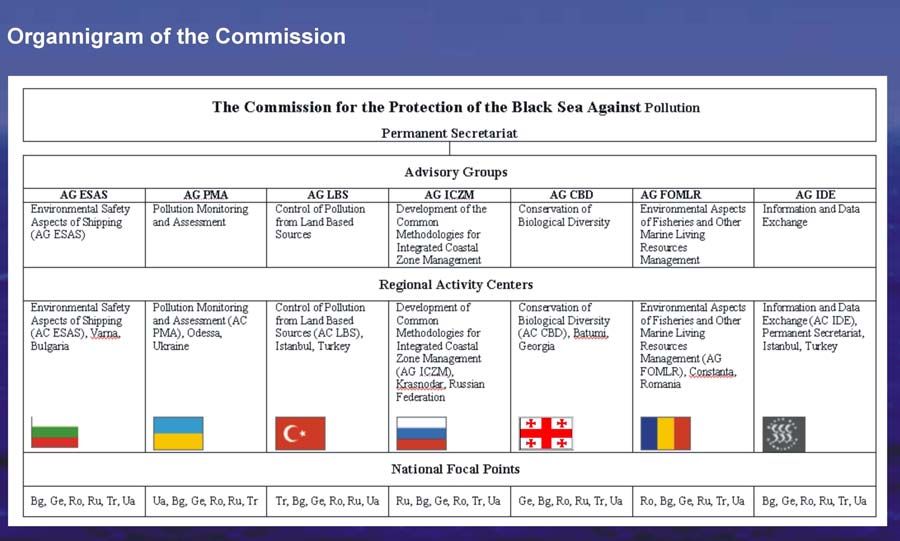
The Commission on the Protection of the Black Sea Against Pollution comprises the
following organs:
· Commission on the Protection of the Black Sea Against Pollution;
· Permanent Secretariat;
· Advisory Groups;
· Activity Centers;
· National Focal Points.
The structure is presented below:
Figure 1: Organnigram of the Black Sea Commission
5
2 Contracting Parties to the Convention
2.1 Financing the Convention on the Protection of the Black Sea Against Pollution
The financing of the activities undertaken under the Bucharest Convention in a wider
sense would include direct and indirect financing of all activities undertaken by the Black
Sea countries, including national investment, donor/IFI aided projects etc. The concrete
activities of the Black Sea Commission, operating through its Permanent Secretariat are
financed through annual cash contributions of the Contracting Parties to the Convention
to the Budget of the Commission on the Protection of the Black Sea Against Pollution.
Additionally some activities of the Permanent Secretariat are financed, and in some cases
co-financed by GEF (namely GEF "Black Sea Ecosystems Recovery Project". In its
cooperation with third parties the EC DG Environment has supported the institutional
strengthening of the Permanent Secretariat, build up of its information network, as well
as DABLAS related projects. Activities of the Black Sea Commission as well as its
institutional network and Permanent Secretariat personnel received extensive support
through EC funded EuropeAid Programme.
The overall financing scheme is presented below, and includes both direct cash
payments to the Permanent Secretariat and indirect payments:
Figure 2: Financing scheme of the Black Sea Commission
Wider
cooperation/
DABLAS
Institutional
GEF BSERP Project
Strengthening
EC DG
, Capacity
Environment
Building,
Information
System
Annual
Working
Program
EuropeAid
TACIS Project
Regular Country
Core
Contributions
Activities
2.2 Balance Sheet
The Balance Sheet of the Commission on the Protection of the Black Sea Against
Pollution, is presented below. The Balance sheet discloses all funding sources of the
Black Sea Commission and its institutions since he start of operations (15 October 2000):
6
Table 2: Balance Sheet of the Black Sea Commission as per 01 Sep 2004
Balance Sheet
As at 01 Sep 2004
A. Assets
$ 1,978,671.69
1 Cash on hand and bank
$ 210,612.33
2 Accounts receivable
$ 453,491.86
3 Fixed Assets
-
4 Tangible and non-tangible assets
$ 239,062.28
5 Expenditures
$ 1,075,505.28
B. Liabilities $
1,978,671.69
1 Funding sources
$ 1,644,024.06
1.1 Country contributions
$ 1,349,914.50
1.2 Interest
$ 16,083.49
1.3 Contributions from partners (EU DG Env)
$ 184,874.07
1.4 Contributions from partners (EruopeAid)
$ 329,391,89
1.4 Contributions from partners (Arena)
$ 1,935.20
1.4 Contributions from partners (GEF BSERP)
$96,399.33
2 Accounts payable
-
3 Foreign Exchange Rate Difference
$ 73.21
Source: Annual 2003/2004 Auditor's Report
Assets: Liabilities:
$2,500,000.00
$2,500,000.00
3 Foreign
Expenditures
Exchange
Rate
Difference
2 Accounts
$2,000,000.00
$2,000,000.00
payable
Tangible and
non-tangible
Contributions
assets
from GEF
BSERP
$1,500,000.00
$1,500,000.00
Contributions
Fixed Assets
from partners
(EuropeAid)
Contributions
$1,000,000.00
$1,000,000.00
from partners
Accounts
(EU DG Env)
receivable
Interest
$500,000.00
$500,000.00
Cash on hand
Country
and bank
contributions
$0.00
$0.00
1
1
7
2.3 Country contributions to the Budget of the Commission on the Protection of
the Black Sea Against Pollution
The core financing source of the activities of the Commission on the Protection of the
Black Sea Against Pollution are annual contributions from the countries, signatories to
the Bucharest Convention: Bulgaria, Georgia, Romania, Russian Federation, Turkey and
Ukraine. The table below shows the committed and actually paid in country contributions
as per 01 November 2004:
Figure 3: Country Contributions to the Budget of the Commission on the Protection of the Black Sea
Against Pollution
$400,000
$350,000
$300,000
$250,000
Budgeted
$200,000
Paid
$150,000
$100,000
$50,000
$0
2000-2001
2001-2002
2002-2003
2003-2004
(see Table below for data)
Figure 4: Projected Cash Contributions to the Black Sea Commission for 2005/2006/2007 (USD)
600,000
500,000
GEF BSERP
400,000
DABLAS
300,000
EC DG Environment
EC EuropeAid
200,000
Country Contributions
100,000
0
2004 2005
2005 - 2006
2006 - 2007
8
Table 3: Country Contributions to the Budget of the Commission on the Protection of the Black Sea Against Pollution
Status of Country Contributions to the Budget of the Commission on the Protection of the Black Sea Against Pollution as per 31
Aug 2004 (USD)
Country
2000 - 2001
2001 - 2002
2002 - 2003
2003 - 2004
Total
Budgeted
Paid
Budgeted
Paid
Budgeted Paid
Budgeted Paid
Budgeted Paid
Bulgaria
43,560
43,540
43,560
43,560
43,560
43,550
43,560
- 174,240 130,650
Georgia
43,560
-
43,560
-
43,560
-
43,560
- 174,240 -
Romania 43,560
43,550
43,560
43,560 43,560 43,550 43,560
43,550
174,240 174,210
Russian Federation
43,560
-
43,560
130,680 43,560 43,560
43,560 43,554
174,240 174,234
Republic of Turkey
145,200
144,914
145,200 145,200 145,200 145,200 43,560
43,
560
479,160 435,314
Ukraine
43,560
43,467
43,560
-
43,560
-
43,560
- 174,240 43,467
Totals
363,000
275,471
363,000
363,000
363,000
275,860
261,360
130664
1,350,360
957,875
Source: Annual 2003/2004 Auditor's Report, amended as per 01 Nov 2004
Table 4: Projected Cash Contributions to the Black Sea Commission for 2005/2006/2007 (USD)
Funding Sources
2004 2005
2005 - 2006
2006 - 2007
Totals
Projected
Actual
Projected
Actual Projected
Actual Projected
Country Contributions
Bulgaria
43,560
43,560
43,560
130,680
Georgia 43,560
43,560 43,560
130,680
Romania 43,560
43,560
43,560 43,560
130,680
Russian Federation
43,560
43,560
43,560
130,680
Republic of Turkey
43,560 43,560
43,560
43,560
130,680
Ukraine 43,560
43,560
43,560
Sub-Total Country
261,360 261,360
261,360
784,080
Contributions
EC EuropeAid
38,640
38,640
40,040
40,040
78,680
EC DG Environment
62,000
62,000
62,000
186,000
DABLAS 62,000
62,000
GEF BSERP
60,000
70,000
50,000
180,000
TOTAL 484,000 433,400
373,360
1,290,760
9
3 Institutional Mechanism of the Convention on the Protection of the
Black Sea Against Pollution
The institutional structure of the Convention on the Protection of the Black Sea Against
Pollution comprises the Commission on the Protection of the Black Sea Against Pollution
with its Permanent Secretariat, established Advisory Groups pursuant to articles 22, 23
and Annex 1 of the Convention. The Advisory Groups each elect a Chairperson and act
with the mandate of the Black Sea Commission and their respective Terms of Reference.
3.1 The Permanent Secretariat
The Permanent Secretariat is established to assist the Commission on the Protection of
the Black Sea Against Pollution (as defined in the Convention on the Protection of the
Black Sea Against Pollution, Article XVII) and is stationed in Istanbul, Turkey. The
Black Sea Commission appoints its Executive Director and other officials of the
Secretariat. The Executive Director appoints the technical staff in accordance with the
established rules. The Secretariat is composed of nationals of all Black Sea States. The
Permanent Secretariat's core staff is currently the Executive Director, a Pollution
Monitoring and Assessment Officer, a Biodiversity Officer, and a Technical Assistant.
The Permanent Secretariat represents the Commission in all relevant local, regional and
international events such as workshops, meetings and other events.
The Permanent Secretariat implements the Annual Work Programs of the Commission on
the Protection of the Black Sea Against Pollution in implementation of the Convention on
the Protection of the Black Sea Against Pollution, The Black Sea Strategic Action Plan.
Concrete activities are the result of coordination with related or relevant national and
regional projects/activities, International Financing Agencies and donors, national and
regional policy measures and overall efforts of the countries to restore and preserve the
environment of the Black Sea.
3.2 Advisory Groups
The following Advisory Groups are established
ESAS Advisory Group on the Environmental Safety Aspects of Shipping
ICZM - Advisory Group on the Development of Common Methodologies for Integrated
Coastal Zone Management
PMA - Advisory Group on the Pollution Monitoring and Assessment
CBD - Advisory Group on the Conservation of Biological Diversity
LBS - Advisory Group on Control of Pollution from Land Based Sources
FOMLR - Advisory Group on the Environmental Aspects of the Management of
Fisheries and other Marine Living Resources
IDE - Advisory Group on Information and Data Exchange
10
The Advisory Groups carry out the following activities in their respective sector:
1. Draft recommendation and provide policy advice to the Black Sea Commission
2. Act as regional consulting bodies for their sector of activity
3. Coordinate regional training exercises, quality monitoring and control and,
4. Provide data and report to the Black Sea Commission within the framework of the
established reporting mechanism.
3.3 Activity Centers
Black Sea Activity Centers are regional organs based on existing national organizations
in the Contracting Parties, being specialized in a different fields of scientific research or
administration and having extensive knowledge, scientific, research and/or management
capacity as well as experience with the environmental problems of the Black Sea.
The Activity Centers coordinate the work of the Advisory Groups and have the required
capacity to carry project activities related to te implementation or achieving the
objectives of the Convention on the Protection of the Black Sea Against Pollution.
11
4 Mechanisms for Regional Cooperation with the ICPDR
4.1 General Information
The regional cooperation with the ICPDR is based on the MoU signed in 2001 and using
the mechanisms of direct consultations between the permanent secretariats of the two
regional conventions and regional projects, regular meetings of the Danube/Black Sea
Joint Technical Working Group, established reporting formats and mechanism based on
commonly agreed sets of indicators for the pollution load and the response of the Black
Sea ecosystem.
The Convention on the Protection of the Black Sea Against Pollution, being a `shoreline'
convention, i.e. holding no power over the inland activities of the signatory countries,
whereas the Convention on Cooperation for the Protection and Sustainable Use of the
Danube River, implemented by the International Commission for the Protection of the
Danube River (ICPDR) holds power over the transboundary impact originating from the
Danube River drainage basin.
There is general agreement that nutrients discharge within the wider Black Sea basin (a
term used to indicate the basin determined by the hydrographic boundary of all inland
waters discharging to the overall Black Sea and the surface area of the overall Black Sea)
largely affect the Black Sea ecosystems, of which a significant amount is attributed to the
riverine input of rivers discharging into the Black Sea. Recognizing this, the
understanding of the sharing of common strategic goals between the Black Sea
Commission and the ICPDR emerged and a Memorandum of Understanding was signed.
The Memorandum of Understanding acknowledges the common strategic goals, defines
the range and scope of cooperation and establishes a practical mechanism for immediate
implementation the creation of a Joint Technical Working Group named "Danube-
Black Sea Joint Technical Working Group.
The Danube-Black Sea Joint Technical Working Group overall objective is to "to create a
common base of understanding and agreement on the changes over time of the Black Sea
ecosystem, and the causes of these changes, and to report to both commissions on the
results, recommending strategies and practical measures for remedial actions". It has
adopted a work program with a timeframe for implementation of these objectives,
The Terms of Reference, Work Program and Reporting Format of the Danube-Black Sea
Joint Technical Working Group are presented in the annexes.
4.2 Recent developments
During the last year further implementation of the ICPDR/BSC MoU has been a basic
task for the Commission. After the adoption of the work plan and the Terms of Reference
of the Black Sea/Danube Joint Working Group a series of consultations between the two
secretariats and the two regional projects took place. A meeting of the JTWG was hosted
by the ICPDR with the objectives to:
12
· assess availability of information on the indicators for the state of the Black Sea
as agreed by the Group;
· refine the Work Program of the Group;
· report on the progress in the development of the monitoring and assessment in the
two commissions;
· share information on the DABLAS activities in the both commissions.
The main reason for the modification of the Work Program was the need to reflect the
requirements of the EC WFD that should be observed at least by two countries in the
Black Sea region.
The Group made a number of important practical decisions and clarifications on the
indicators, reporting procedures, and also adopted the respective reporting formats. It was
decided that the next report will contain data for year 2002, 2001 and 1997 as a reference
year. Based on the annual reports, a five-year report will be prepared following common
structure, and containing information on trends, natural variability, target values and
reference conditions. The first five-year report for the Black Sea will be released in 2006.
Information on the policy measures and investment activities was also presented at the
meeting by the two secretariats.
Within the working out of the first Annual Report on the Implementation of the Black
Sea Strategic Action Plan on the Rehabilitation and Protection of the Black Sea the
pollution load data as well as the values of response indicators were presented. As it is a
pilot phase for this type of reporting, the results are to be considered as preliminary ones
and a lot of the data require validation. As the first emerging issue that appears from the
comparison of the reported data with data presented by ICPDR is to clarify the role of
Danube Delta and assess the share of nutrients retained by the Delta. Improvements are
needed for assessing total load of nutrients into the Black Sea as well as development of
assessment models/schemes taking into account the development of the European Marine
Strategy and EU Water Framework Directive. Further work is needed for quantifying
quality objectives/target values for the Black Sea along with setting up efficient quality
assurance/quality control system for the Black Sea in particular regarding biodiversity
indicators.
For the time being data on the pollution in the Danube arms in the Delta reported to the
BSC have been used. Starting 2005 the assessment will be based also on the information
presented by the ICPDR related to the Reni sampling station before the Delta. The
preliminary conclusions seem to be positive, but a detailed analysis and interpretation of
the information is expected within the 2005 report.
The pollution data and the data on the Black Sea response are presented in Annex
13
5 Implementing the Convention on the Protection of the Black Sea
Against Pollution - Development of Policies and Regulatory
Measures
In implementation of the Convention on the Protection of the Black Sea Against
Pollution the policy measures are summarized in a Position Paper relating the Water
Framework Directive and the Black Sea Strategic Action Plan.
5.1 Common Principles
Common principles are needed in order to coordinate the efforts of the Black Sea states
to improve the ecological status of the Black Sea. An effective and coherent water policy
must take account of the vulnerability of aquatic ecosystems located near the coast and
estuaries or deltas or in gulfs or relatively closed seas, as their equilibrium is strongly
influenced by the quality of inland waters flowing into them. Protection of water status
within river basins will provide economic benefits by contributing towards the
protection of fish populations, including coastal fish populations.
Promoting sustainable use and conserving marine ecosystems should become the main
objective of the strategy for protection and conservation of the marine ecosystem of the
Black Sea taking into account the variety of pressures affecting the marine environment
like: commercial fishing, oil and gas exploration, shipping, water borne and atmospheric
deposition of dangerous substances and nutrients, waste dumping, physical degradation
of the habitat due to dredging and extraction of sand and gravel and possible future
effects of climate change.
In this context, at regional level is important to preserve, protect and improve the quality
of the marine environment through policies based on the precautionary principle and on
the principle of preventive actions that should be taken environmental damage should
be rectified at source, and that the polluter should pay.
There are diverse conditions and needs which require different specific solutions. This
diversity should be taken into account in the planning and execution of measures to
ensure protection and sustainable use of water in the framework of the river basin.
Decisions should be taken as close as possible to the locations where water is affected or
used.
The principle of recovery of the costs of water services, including environmental and
resource costs associated with damage or negative impact on the aquatic environment
should be taken into account in accordance with, in particular, the polluter-pays
principle. The use of economic instruments may be appropriate as part of a program of
measures.
The success of policies relies on close cooperation and coherent action at international,
regional and local level, a well as on information, consultation and involvement of the
public, including users.
14
Although most of these principles are stated in the Black Sea SAP, they are not quite
explicitly connected to proposed policy measures and even less with targets and
objectives. In particular the Chapter on Sustainable Human Development shall be
improved and reflect the Black Sea needs and realities taking into account national,
European and global initiatives.
5.2 Regional Initiatives
The Strategic Action Plan for the Rehabilitation and Protection of the Black Sea was
signed in 1996 in the spirit of the United Nations Declaration on Environment and
Development (Rio Declaration) and Agenda 21, reaffirming the States commitment to
the rehabilitation and protection of the Black Sea ecosystem and the sustainable
development of its resources as expressed, in particular, in the Bucharest Convention
and the Odessa Declaration.
The five year experience (1996- 2000) of the Commission on the Protection of the Black
Sea Against Pollution in implementing the Black Sea Strategic Action Plan showed that
the Black Sea Coastal States slowly but steadily move towards the goals of the Bucharest
Convention and Black Sea Strategic Action Plan although they were too ambitious in
setting the BSSAP timeframe. Upon the recommendations of the Black Sea Commission
the changes in the BSSAP timeframe were approved by the Ministers of the Environment
of the Contracting Parties to the Bucharest Convention on June 14, 2002 in Sofia,
Bulgaria.
However the dynamic political and economic changes in the Black Sea coastal states over
recent period require corresponding changes in regional Black Sea priorities and actions
and their subsequent reflection in the Black Sea SAP with clearly stated and scientifically
justified objectives and targets.
5.3 European Initiatives
During recent five years the European Community policy underwent significant
development and a Framework for Community Actions in the Field of Water Policy the
Directive 2000/60/EC of the European Parliament and of the Council has been approved
in October 2000.
The purpose of the WFD Directive is "to establish a framework for the protection of
inland surface waters, transitional waters, coastal waters and groundwater which:
(a) prevents further deterioration and protects and enhances the status of aquatic
ecosystems and, with regard to their water needs, terrestrial ecosystems and wetlands
directly depending on the aquatic ecosystems;
(b) promotes sustainable water use based on a long-term protection of available water
resources;
(c) aims at enhanced protection and improvement of the aquatic environment, inter alia,
through specific measures for the progressive reduction of discharges, emissions and
losses of priority substances and the cessation or phasing-out of discharges, emissions
and losses of the
priority hazardous substances;
15
(d) ensures the progressive reduction of pollution of groundwater and prevents its further
pollution, and
(e) contributes to mitigating the effects of floods and droughts "
In a line with BSSAP principles the basin wide approach that was fostered by the
European Commission through the Ministerial Declaration (Brussels, 2001) and its
DABLAS Task Force is being pursued by the Black Sea Coastal States and need wider
reflection in the Black Sea Strategic Action Plan.
In order to promote the sustainable use of the seas and conservation of marine
ecosystems, including sea beds, estuarine and coastal areas, paying special attention to
sites holding a high biodiversity value, the European Commission proposed in 2002 the
Marine Strategy which should constitute a contribution to the Community Strategy for
Sustainable Development and to establish a mechanism for cooperation with non-EU
states in order to have a holistic approach to the Black Sea ecosystem.
Possibility for harmonized approach to marine issues between EU Member states and
non-EU states shall be taken into consideration and thorough analysis during update
process for BSSAP.
5.4 Global Initiatives
The World Summit on Sustainable Development, held on Johannesburg in 2002,
reaffirmed the central role of sustainable development, underling the necessity of global
action to combat poverty, depletion of natural resources and active protection of the
environment. In its implementation plan, the Summit agreed, inter alia,
· encourage the application by 2010 of the ecosystem approach to oceans;
· maintain or restore fish stocks to maximum sustainable yields with the aim of
achieving these goals for depleted stocks on an urgent basis and where possible
before 2015;
· implement the FAO plan for managing fishing capacity by 2005;
· implement the FAO plan to prevent illegal fishing by 2004;
· establish a regular UN process for assessing the state of the marine environment
by 2004.
The above targets and the corresponding policy measures that could be undertaken jointly
by the Black Sea coastal states shall be incorporated in the updated BSSAP
A variety obligations of the other intenational legally binding and non-binding
agreements to which the Black Sea Coastal States are Contracting Paries shall be
harmonized with clear devision of reponsibilities between Parties involved in order to
avoid duplication and overlapping.
16
5.5 Road Map
The carefully planned and implemented process of updating the BSSAP will result in
comprehensive and ambitious document timely and well prepared for the Meeting of the
Contracting Parties of 2007.
1. Under coordination of the Permanent Secretariat to organize the as early as
December 2004 expert groups in order to finalize creation of the Black Sea
Information System and fine tune data sets and establish data validation procedure
for the Black Sea Information System in order to produce indicators for
evaluation of BSSAP.
2. In cooperation with European Marine Strategy, EEA, and sister-conventions agree
on assessment scheme of the different components of ecosystems and ecosystem
phenomena (February-March, 2005) and to propose system of the indicators for
these assessments schemes as well as test policy-relevant indicators of EU in the
Black Sea
3. Prepare annual sectoral indicator-based reports (July 31, 2005) from which the
Annual Report of the Black Sea Commission 2005 will be drafted with clear
indication of information and knowledge gaps
4. To the extent possible to fill in information gaps attracting additional expert pool
and initiate formulation of research needs and policy needs for the Black Sea
Commission March 2006.
5. Prepare the first draft of updated BSSAP (May 2006)
6. Prepare the second draft of update BSSAP (September 2006)
7. prepare improved sectoral annual reports and the five year report on
Implementation of the Strategic Action Plan For Rehabilitation And Protection of
The Black Sea (SAPIR) 2001-2006.
8. submit the Draft updated SAP to the Black Sea Commission for national
consultations September 2006.
17


Reporting Requirements of the Black Sea Commission as adopted by the 10th
Meeting of the Black Sea Commission.
IMPLEMENTATION OF THE STRATEGIC ACTION PLAN FOR REHABILITATION AND
PROTECTIONOF THE BLACK SEA (SAPIR)
2001-2006
1. SAPIR Information flow
BSC Permanent Secretariat in Cooperation with EEA
BSC institutional network
BSC Institutional network,
BSC institutional network
EGSOE
assisted by EEA
Annual national reporting
Annual national reporting
Annual reports of the BSC:
on policy measures
to BSC on the state of the
translation of the scientific
environment of the Black
information and national
Sea (the same reporting as
reporting into policy related
for the State of the
indicators
Environment)
2. Timetable
Activity
Deadlines
Leading
Financial sources
Compliance with
Institution
deadlines
Fine tuning the reporting April, 2004
BSC institutional BSC, GEF BSERP, Delayed due to
formats to BSC on policy
network, GEF
TACIS
delays in
measures
development of BSIS
Annual national reporting to September 1st of National focal
In kind contribution Partially, needs
the BSC on policy measures
each year , starting points through
by Black Sea Coastal improvement
from 2004
BSC member
States
Annual national reporting to September 1st of National focal
In kind contribution Implemented, needs
BSC on state of the each year , starting points through
by Black Sea Coastal improvement
environment (the same as for from 2004
BSC member
States
SOE)
Establishing mechanism for March, 2004
EEA, BSC
EEA, BSC
Established
close
cooperation with on-going and
cooperation with
emerging projects
EEA, JRC,
HELCOM
Preparation of indicator-based Staring from 2004
BSC
PS,
BSC BSC PS, EEA, GEF, Postponed due to
annual reports
institutional
TACIS
delay with
network EEA for
development of BSIS
the year 2004
and data collection
Preparation of indicator based December,
2006
EEA, BSC PS, BSC PS, EEA, GEF
five years report in the
BSC institutional
Implementation of BS SAP
network
2001-2006
Printing of indicator based March, 2007
EEA
EEA, BSC
five years report in the
Implementation of BS SAP
2001-2006
18
6 Implementation of the Black Sea Strategic Action Plan
6.1 Negotiation with Contracting Parties for stepwise reduction of pollution and
nutrient loads from LBS
The legal basis for cooperative actions and measures in combating pollution of the Black
Sea from land-based sources is established in the Protocol on Protection of the Black Sea
Marine Environment Against Pollution from Land Based Sources to the Convention on
the Protection of the Black Sea Against Pollution and Chapter A: Reduction of Pollution.
During recent years an obvious progress in pollution reduction is observed in the Black
Sea coastal states that is clearly seen from the national reporting to the Black Sea
Commission. A number of policy measures at the national level that resulted in this
improvement are implemented. To the great extent the introduction of river basin
management principles widely recognized in the Black Sea coastal states contributed to
the process. The implementation of European Water Framework Directive and
introduction WFD principles in water management of the Black Sea coastal states gave
an additional momentum to pollution reduction as well as provided better basis for
cooperation among Black Sea coastal. Specifically by countries the following actions
implemented:
Bulgaria
defined river districts and implements European Water Framework Directive
Georgia
intends to apply the principles of EU Water Framework Directive
Romania
defined river districts and implements European Water Framework Directive
Russian Federation works Federal and regional programs
Turkey
Preparation of National Action Plan for Pollution of Land Based Sources Project.
Total amount 85,000,000,000 TL and 90,000,000,000 TL in 2004
Ukraine
defined river districts under the National Program on Development of Water Sector;
the National Program on National Program for Rehabilitation and Protection of the
Azov and Black Seas, National Program for Rehabilitation Dnipro River and
Improvement of Drinking Water Quality, National Program for Rehabilitation and
Protection of the Azov and Black Seas;
A vast amount of new legislative and regulatory measures is adopted in the Black Sea
coastal states, more specifically improved and newly adopted national legislation on
water management and environmental protection in 2002-2004:
Bulgaria:
Environmental Protection Law 25.09.2002; Directive 76/160/EEC transposed in
Bulgarian Regulation 11 of 25 February 2002 on the quality of bathing water
(State Gazette No.25/08.03.2002); Directive 75/442/EEC on waste transposed in
Bulgarian Law on Waste Management (State Gazette No 86/2003); Directive
92/43/EEC on the conservation of natural habitats and of wild fauna and flora ;
Regulation RD-27/17.01.2002 for the establishment of the Basin Directorates in
Bulgaria; Regulation RD 970/28.07.2003 for determination of sensitive areas in
water bodies; Regulation for the activities, organization of work and the staff of the
Basin Directorates from 29.01.2002
Georgia:
the Sanitary Code (2003)
19
Romania:
Order of Ministry of Water , Forestry and Environment Protection no.2781/97 for
approving framework methodology for elaboration of preventing and fighting against
accidental pollution in using potential polluting waters; GD 730 173/2000 for
approval NTPA 001, which contained regulation, administration and control of
pollutants in industrial and municipal waste waters; GD 118/2002 for approval
Action Program for reducing aquatic environment pollution from discharged
dangerous substances; GD 202/2002 Ordinance for integrate management for
costal zone
Russian Federation: Federal Law "On Environmental Protection"; Water Code of Russian Federation
(11.1996, 167-FZ, amended 08.2004 by Federal Law 122-FZ); Federal Program
"South of Russia", Federal Program "Ecology and Natural Resources of Russia.
2002-2010; Water Code of Russian Federation (11.1996, 167-FZ), article 143;
Federal Law "On sanitary and epidemiological well-being of population" (03.1999,
52-FZ, amended 12.2001, 01.2003, 06.2003)
Turkey:
implements the 8th National Annual Plan; National Environmental Action Plan
(NEAP); Accession process to EU Harmonization/Transposition of Legal and
Regulatory Framework with the EU Directives; Environmental Impact Assessment
Regulation (16.12.2003)
Ukraine:
ratified the Protocol "Water and Health" to the Convention on Protection and Use of
Transboundary Water Courses and International Lakes; Implements the National
Program on rehabilitation and Protection of the Black Sea ; implemented a project
"Inventory of the point sources of pollution in the Azov and Black sea coastal zone
(2003); Ukraine: ratified the Protocol "Water and Health" to the Convention on
Protection and Use of Transboundary Water Courses and International Lakes (2003);
adopted Rules on the protection of the marine water against pollution (2002);
National Program of the Reformation of Housing and communal services (2004);
the Law of Ukraine on entering the ammendments to some legislative acts of
Ukraine to meet ecological requirements in the process of privatisation (2004); the
Law of Ukraine on Drinking Water and Water Supply (2003).
The Black Sea Coastal states agreed to use methodological approach to assessment of
pressures/impacts on the environment of the Black Sea. In 2003-2004 the BSC
institutional network supported by Europe Aid and GEF BSERP initiated and conducted
collection of information on pressures/impacts in unified format in agreement with
indicators used by EEA. The indicator-based annual report will be published in
November 2005 following the implementation of MOU between BSC and EEA. In
parallel the ad hoc BSC Working Group on EU Water Framework Directive is working
on elaboration of mechanism for using the European WFD directive principles for the
purposes of cooperation of candidate and non EU Black Sea coastal states.
Initiated by GEF BSERP analysis of implementation of the LBS Protocol was
implemented by UNEP Global Plan of Actions. Revised version of LBS Protocol and
Work Plan for its implementation was drafted and submitted to the Black Sea
Commission for consideration.
An essential issue at this stage is practical enforcement of adopted legislation and proper
financing of adopted strategies and action plans. The new and realistic investment
portfolio shall be proposed to the Black Sea coastal states that fully consider their
national priorities and meet their national interests.
20
6.2 Reduction of pollution from vessels and dumping
6.2.1 Protocol on the Protection of the Black Sea Marine Environment Against
Pollution by Dumping
In all Black Sea coastal states dumping of wastes is prohibited by national legislation of
the Black Sea coastal states. The dredged spoils are the only wastes that are allowed for
dumping by national legislation and by the Protocol on the Protection of the Black Sea
Marine Environment Against Pollution by Dumping. Initial screening of the current
situation of the dumping operations, initiated by the institutional network of the Black
Sea Commission, showed that in all Black Sea coastal states that allow dumping of
dredged spoils national legislation exercises environmental impact assessment and have
special procedures for organizing dumping sites in marine environment. The Advisory
Group made recommendations to the Black Sea Commission to elaborate amendments
the Protocol in light of current knowledge and London Dumping Convention. The
OSPAR Guidelines for the Management of Dredged Material that fully reflects
provisions of London Dumping Convention is tested in the Black Sea. The assistance
and advice from IMO will be sought in 2005.
6.3 Contingency planning and emergency response
The Black Sea coastal states and the Black Sea commission pay a special attention to the
implementation of the Protocol on Cooperation in Combating Pollution of the Black Sea
Marine Environment by Oil and Other Harmful Substances in Emergency Situations.
The increasing amount of oil cargo (information on amount of oil transported through the
Black Sea is being validated) and harmful substances (subject for regional study) call for
implementation of precautionary principles and readiness to abate accidental pollution.
In 2003 the Black Sea Coastal States: Bulgaria, Romania, and Turkey signed Black
Sea Contingency Plan to the Protocol on Cooperation in Combating Pollution of the
Black Sea by Oil and Other Harmful Substances in Emergency Situations: Volume I
Response to Oil Spills. In Ukraine the Black Sea Contingency Plan was submitted to
the Parliament of Ukraine and its approval is expected by the end of year 2004.
The signing the Black Sea Contingency Plan is negotiated in the Russian Federation.
6.3.1 National Level Measures
Bulgaria The Bulgarian National Oil Spill Contingency Plan was revised in terms of the
communications. The respective flowchart displaying communications among different
institutions, as well as the Annex 19 "Telephone Directory" were revised. All of the
revisions were made also into the Black Sea CP at the time of its adoption by the
Bulgarian parliament.
Georgia prepared and awaiting approval of Parliament. Delay with approval is
explained by political changes in Georgia; Parts of National Contingency Plans on oil
spills are being implemented on practical level by Maritime Transport Administration
and port regulation; all Georgian ports have oil spills combating plans even before final
approval of the national plan by the Government of Georgia
21
Romania the national contingency plan prepared and is being implemented,
communication will be improved following the experience of the exercise on combating
oil spills.
Russian Federation the Federal Contingency Plan was approved in July 2003. The
Russian Regional Contingency Plan for the Black Sea was updated in line with
requirements of IMO and is waiting approval by the Head of Krasnodar Kraij and Rostov
Oblast.
Turkey draft law of "Response and Coverage of Damages in Emergency Conditions of
Marine Environment Pollution by oil and other harmful Substances" was submitted to
National Assembly for approval and National Contingency Plan will be further developed
for its practical implementation.
Ukraine The national Black Sea contingency plan will be developed after approval of
the Black Sea Contingency Plan to the Protocol on Cooperation in Combating Pollution
of the Black Sea by Oil and Other Harmful Substances in Emergency Situations: Volume
I Response to Oil Spills. At the practical level each port has its own contingency plan
and all necessary equipment for handling oil spills.
In promoting implementation of Black Sea Contingency Plan the Advisory Group on
Environmental Aspects of Shipping in 2005 will initiate preparation of Black Sea Oil
Spill Response and Preparedness exercise tentatively scheduled for 2006. Coordination
with all institutions and Black Sea agreements concerned needs to be established and to
be focused on practical training exercises and preparedness of national forces.
The whole Black Sea is declared as MARPOL Sensitive Area. Mapping of national
MARPOL sensitive areas was supported by GEF BSEP and completed for Bulgaria,
Georgia, Romania, and Turkey. The work in Ukraine and the Russian Federation is
expected to be finalized by the end of 2004. The maps will be discussed by
corresponding Advisory groups and included in the Black Sea Geographic Information
System and work of the Black Sea Commission and promoted for introduction into
national legislation and practical work.
In realization of the precautionary principle the compliance with requirements of the
Memorandum of Understanding on Port State Control in the Black Sea Region (BS
MOU), negotiation and signing of which was facilitated by the Black Sea Commission,
the regular inspections of ships is conducted in all Black Sea Ports. of 3200 ships
inspected in 2002 in ports of Bulgaria, Georgia and Ukraine 2 vessels were detained for a
reason of risk of environmental pollution; 3 vessels were detained for the reason of
environmental risk in Bulgarian ports in 2003-2004. The Secretariat of MOU on Port
State Control conduct regular trainings of the national authorities responsible for port
state control in all Black Sea coastal states.
The economic instruments for pollution reduction from vessels were introduced by all
Black Sea Coastal States and implemented in the Black Sea coastal states.
Harmonization of these economic instruments and Black Sea environmental charges for
pollution was discussed and work plan to harmonize them were proposed by the BSC
Advisory Group on Environmental Aspects of Shipping.
22
6.3.2 Regional measures implemented in 2003-2004:
· Elaboration of new Draft Protocol on Pollution Control from Land-Based Sources
and draft Work Plan for its implemenation
· Elaboration of draft Black Sea Action Plan for implementation of Draft Protocol
on Pollution Control from Land-Based Sources
· Establishment of BSC reporting on land-based pollution sources as an integral
part of the Black Sea BSC Information System for monitoring of progress in
eliminating Black Sea hot spots and overall reduction of pollution from the point
land-based sources
· Mapping of MARPOL Sensitivity Area supported by GEF BSERP is done for
Bulgaria, Georgia, Romania and Turkey
· Upon positive experience of Romania in application of OSPAR Guidelines on
Dredged Materials Management it was recommended by AG ESAS to
recommend these guidelines to all Black Sea countries
· Collection of regional information on dumping and elaboration of proper forms
for reporting is being conducted
6.4 Assuring biological diversity and sustainable management of living resources
(fisheries and protection of habitats and landscapes)
An abrupt reduction of fish stock of the Black Sea under a severe pressure of
eutrophication, over fishing and invasion of Mnemiopsis leidyi heavily affected the
fisheries sector of the Black Sea as well as living of the population depending on
fisheries. Absence of agreed Black Sea policy on fishing, insufficient knowledge on
fish stocks, in particular its Black Sea scope, lack of Black Sea biological safety limits for
fishing make it difficult to implement responsible fisheries in the Black Sea. Meanwhile
at the national level the following implemented measures are reported:
6.4.1 National measures implemented in 2003-2004
The following national measures were implemented in 2003-2004:
Bulgaria
Bulgaria Law on Biological Diversity (State Gazette No 77/2002);
Georgia
Basic legislation in place
Romania
Emergency Ruling no. 76/13.06.2002 modification and completion of the Law no.
192/2001 for fishing facility, fishing and aquaculture;
Order no. 277/04.07.2002 regulation for structure and functioning of the National
Company for Fishing Facility Administration;
Order no. 330/07.25.2002 for the identification of fish disembarkment points;
Order 849/08.29.2002 regulation for structure and functioning of the Fishing
Inspection;
Order no. 233/04.04.2003 instructions for structure and functioning of the fishing
facility leasing procedure by auction;
Order 553/08.26.2003 for the obligation of elaboration of bills for fish and other
aquatic organisms selling;
Order no. 938/11.19.2003 for structure and functioning of fishery product prices
monitoring system;
Annual prohibition orders (140/2002; 247/2003; 207/2004).
23
Russian Federation more then 25 ship surveys for fish stock assessment ant definition of TAC (Total
Allowable Catch) for the Azov and Black seas, TAC are enforced annually by
national authorities;
Turkey
Amendments to the Law on Fisheries on penalty, 2004;
Ukraine
annual quotas, prohibition of fishing during spawning periods; prohibition of fishing
harmful gears
6.4.2 Regional Actions:
· the Draft Legally Binding Document on Fisheries is finalized and submitted to the
Black Sea Commission for the national negotiations
· draft List of Species Whose Exploitation Should be Regulated is finalized and
submitted to the Black Sea Commission for national negotiations
· Harmonization of methodologies for stock assessments is initiated and as
expected will be finalized in 2005
· Tentatively Black Sea fish stock assessment is planned for 2006 if proper funds
will become available
6.5 Biodiversity and Landscape Protection:
In order protect and preserve unique species, habitats and landscapes of the of the Black
Sea , the Black Sea coastal states implemented and continue to implement a number of
measures; only in 2003-2004 the Black Sea coastal states reported on the following
activities and measures:
6.5.1 National Measures
The following national measures were implemented in biodiversity and landscape
protection:
Bulgaria
Bulgaria adopted the Biological Diversity Act, Promulgated State Gazette No
77/9.08.2002; adopted the Law on Fishing and Aquacultures, Promulgated State
Gazette No 41/24.04.2001; regularly carries out seasonal ship surveys at the R/V
"Prof. Valkanov", seasonally by fishing boats in the transects Kaliakra, Galata,
Emine, Maslen cape. And by boats up to 6 miles from the shore: Shabla town, Biala
town, Tzarevo; monthly at the Cape Galata profile, up to 6 miles from the shore. A
National Plan for Cetacean Conservation is in preparation in Bulgaria in the
framework of the ACCOBAMS activities.
Georgia
Romania:
Law no. 451/07.08.2002 for ratification of European Convention for Landscape,
adopted at Florence, 10/20/2000; conducted systematic observations ship surveys,
aircraft, and other assessing distribution and abundance of cetaceans at the level of
902 in the Romania coastal waters and adjacent sea; data are being processed and
analyzed; National Action Plan for Conservation of Marine Mammals was prepared
in Romania
Russian Federation The Russian Federation implemented out 4 projects in cooperation with Ukraine on
assessment of abundance and distribution of cetaceans in the Kerch Strait and in the
north part of the Black Sea ; 20 ship cruises on assessment of state of plankton and
benthic communities in the Azov and Black Seas
24
Turkey
ratified Black Sea Biological Diversity and Landscape Conservation Protocol on
August 12, 2004; ratified Cartagena Protocol on Biosafety on October 24; 2003,
ratified European Landscape Convention on June 10, 2003; ratified the Regulation
for Conservation of Wetlands (2002); In 2003; introduced the Regulation for
Conservation of Wetlands (2002); the a Black Sea stranding network was
established by non-governmental organizations. Experts from Sinop, Trabzon and
Rize have started to provide data to the network
Ukraine
ratified the Agreement of the conservation of Cetaceans of the Black Sea,
Mediterranean Sea and Contiguous Atlantic Area (2003), ratified European
Landscape Convention; carried out 11 projects aimed at assessment of state and
conservation of cetaceans as a result of national and bilateral (Ukraine and Russia)
initiatives; national program ; Law of Ukraine of 07.02.2002 3055-III On Red
Book of Ukraine; Degree of the President of Ukraine of 21.02.2002 167/2002 On
the Territories and Objects of Nature Protection Funds of State Importance;
Resolution of the Cabinet of Ministers of Ukraine of 29.04.2002 581 On the
Approval of the State Program "Forests of Ukraine" for Years 2002 2015;
Resolution of the Cabinet of Ministers of Ukraine of 29.08.2002 1286 On the
Approval of the Terms of Reference on Green Book of Ukraine; the Law of Ukraine
on ecological network (2004).
Biodiversity and landscape conservation also generously covered by number of
international agreements, including Convention on Biodiversity, European Landscape
Convention, Bern Convention, RAMSAR Convention, ACCOBAMS, Pan-European
Biodiversity and Landscape Strategy and other equally important. The strong
coordination of activities is required. In developing and implementing measures for
conservation of biodiversity and landscapes the Black Sea Commission
6.5.2 Regional actions
· elaborated draft Strategic Action Plan for Black Sea Biological Diversity and
Landscape Conservation Protocol
· elaborated draft Annex II "List of Species of the Black Sea Importance" to the
Black Sea Biodiversity and Landscape Conservation Protocol
· elaborated draft Annex IV "List of Species Whose Exploitation Should Be
Regulated" to the Black Sea Biodiversity and Landscape Conservation Protocol
· prepared an overview of landscape conservation activities in the Black Sea coastal
states
6.6 Black Sea Integrated Monitoring and Assessment Program
The Black Sea Integrated Monitoring and Assessment Program serves as a tool for
assessment of efficiency of the national and regional policy measures in rehabilitation
and protection of the Black Sea ecosystem.
The main approaches used in the BSIMAP:
· Holistic approach to the Black Sea Ecosystem
· Phased Approach to the BSIMAP Development
· Orientation towards regional decision making (application of DPSIR model)
· Integral Part of the National Monitoring and Assessment Systems
25
The main objectives set up for BSIMAP development:
· By the year 2005 to establish an optimal monitoring and assessment program with
a complete set of technical guidelines, harmonized criteria and quality objectives
· By the year 2007 to prepare a five years scientific report the "State of the
Environment of the Black Sea" based on the national monitoring data and
scientific studies carried out in the Black Sea
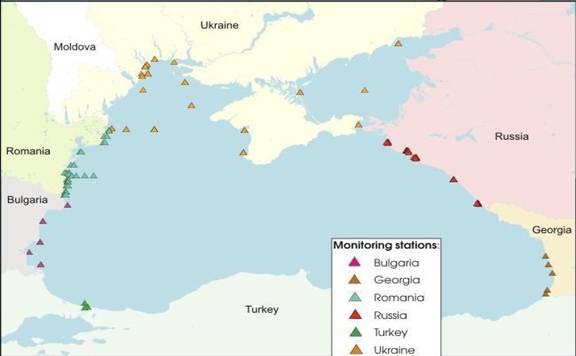
Figure 5: Monitoring Stations of the BSIMAP
The Black Sea Monitoring and Assessment Program of the Black Sea Commission in its
first phase is being successfully implemented by the Black Sea Coastal States. In
addition the compilation and assessment of national historical information on driving
forces, pressures and state of the Black Sea environment and functioning of its ecosystem
shall be completed in 2005.
The assessment schemes for basic components of the Black Sea Ecosystem are discussed
and the expected drafts will be produced in 2005 in order to use them in preparation of
the State of the Environment Report 2006. The development of such assessment schemes
is included into the work plan of the Advisory Groups of the Black Sea Commission,
2004-2005. This work will be conducted in close cooperation with sister conventions.
The example of such cooperation could be a Joint Workshop on Eutrophican between
scientists and experts of institutional networks of the Black Sea Commission and Helsinki
Commission initiated by Joint Research Center, Ispra, Italy, held in Istanbul, in April
2004. As a result of such cooperation the proposal for Pan-European Eutrophication
Assessment Scheme was produced and will be proposed for European Marine Strategy.
Another example could be cooperation with ICPDR in producing eutrophication
indicators for assessment of the Danube impact of the Black Sea ecosystem
26
The collection of regional information as well as the GEF BSERP Pilot Monitoring
Exercise on eutrophication indicators showed that setting up Quality Assurance/Quality
Control System is the top priority for the Black Sea Integrated Monitoring and
Assessment Program. The first inter comparison exercise under auspices of the Black
Sea Commission will be organized in 2005.
The monitoring network of the Black Sea Monitoring and Assessment System could be
found at the BSC website. It is planned that based on the regionally harmonized
information, this monitoring network will be updated and improved in 2005.
6.7 Establishing harmonized institutional and policy/regulatory mechanisms for
ICZM (including sustainable agriculture, wetlands restoration and
management and tourism development
6.8 Sustainable Human Development
6.8.1 Environmental Impact Assessment
The environmental impact assessment is a well recognized and widely used tool in the
Black Sea coastal states. Only in Turkey 27 positive decisions were issued on
environmental impact assessments in 2003-2004. At the same time the Black Sea
procedures and arrangements for environmental impact assessment for projects with
transboundary impacts needs to be developed. The BSC Advisory Groups that work on
harmonization of assessment criteria and their quantitative expression agreed to use
baseline level of the state of the Black Sea environment as an initial step towards
elaborating such criteria. The first draft of such criteria is expected in 2005 after analysis
of collected historical information and scientific data obtained in a number of GEF
cruises.
6.8.2 Integrated coastal zone management
The diverse human activities at the Black Sea coasts often results in environmental
conflicts and require special attention of policy and decision making. Initial concept and
the first approaches as well as the first analysis of the coastal problems were conducted in
1993-1996 in a framework of the GEF BSEP. It took almost 10 years to convert the
principles of integrated coastal zone management from debated issues into practical
actions at the national level..
6.8.3 National Activities
The following actions were undertaken in 2003-2004 in the Black Sea countries:
Bulgaria transposition
of
EU Water Framework Directive
Georgia
World Bank Project on Coastal Management
Romania
Law on Integrated Coastal Zone was adopted and Inter Sectoral ICZM Commission
established in Romania
27
Russian Federation Methodology for Spatial Planning Within Integrated Coastal Zone Management were
developed and Pilot project based on it is implemented for the territory of resort
Gelendzhik; ICZM curriculum for universities was prepared and new specialty
"Nature Management" in Kuban State University was introduced due to support
provided by Europe Aid project. Courses on ICZM were started at the Kuban State
University
Turkey -
feasibility studies for transposition of EU Water Framework Directive
Ukraine
Draft Law on Coastal Zone prepared and distributed for through the public hearings
and inter-sectoral consultations; GIS decision support system containing some
components of ICZM are created in Crimea, Ukraine; Law "On Ecological Audit"
(2004)
At the regional level the following results were achieved by the Black Sea Commission
and the Advisory Group on Development of Common Methodology for Integrated
Coastal Zone Management:
6.8.4 Regional Policy Measures:
· Draft Black Sea ICZM Strategy is prepared and distributed for national
consultations by the ICZM Activity Center. Its development was supported by
Europe Aid TACIS
· ICZM Tools and Techniques is submitted for the approval of the Black Sea
Commission
· Draft Guidelines for preparation of National Code of Conduct for Coastal Zones
were prepared. Countries were supplied with European Code of Conduct for
Coastal Zones (English and Russian versions) for the information.
· Guidelines on drafting the National Coastal Codes of Conduct is produced by
ICZM Activity Center with support of EuropeAid Technical Assistance to the
Black Sea Environmental Program
· Compilation of national information on the state of the Black Sea coast for the
Black Sea Information System, organized by the Permanent Secretariat and
supported by Europe Aid TACIS and GEF BSERP
In addition Draft English-Russian Glossary of Legal Terms on Integrated Coastal Zone
Management was developed; analysis of ICZM legislation for Russia and Ukraine related
to the coast and nature conservation completed and recommendations for improvement
were proposed; 2 workshops for representatives of 6 Black Sea coastal states were
organized and supported by Europe Aid project
6.9 Development of sustainable aquaculture and tourism
The development of sustainable aquaculture and tourism in the Black Sea Coastal came
in agenda of the Black Sea coastal states after GEF BSEP Studies 1993-1996. This
concept was included into the BSSAP (Chapter C. Sustainable Human Development) but
did not receive a proper attention in the work of the Black Sea Commission. At the
national level the proper legal and regulatory instuments are introduced in order to
promote this concept. The Environmental Impact Assessment is a common procedure for
tourist industry, although in some countries it is applied to all projects (Ukraine) in other
- to projects that exceed certain capacity (Turkey).
28
The concept of Blue Flag beaches evolves in the region
Country
BG GE RO RU*
TR
UA
Number of beaches
21 12 16 545
52
49
Blue flag beaches
7 None
none
none
2*
none
Monitoring Frequency
fortnightly fortnightly fortnightly In
10
days weekly
2* - status of Blue Flag beaches is given for the year 1996. The status of Blue Flag is awarded annually,
information for 2003 Blue Flag beaches is not available
The collected historical information on tourism development and its environmental
implications will be included in pressure/impact analysis. In particular carrying capacity
of beaches and quality of bathing waters should be addressed. By the end of 2004 the
information about Black Sea beaches will be uploaded at the BSC webpage for informing
the wider public on the quality of bathing waters in the Black Sea.
The aquaculture sector is not well developed in the Black Sea coastal states. In 2001
Black Sea coastal states reported on 2 enterprises in Georgia, 2 enterprises in Romania,
11 enterprises in Turkey, more than 10 enterprises in Ukraine. Most of these enterprises
are fish rearing farms (sturgeon, turbot, grey mullet, trout, etc.). The data on
production, species, technologies used in aquaculture, etc are included in the national
reporting to BSC. The impact of their aquaculture enterprises on biodiversity of the
Black Sea shall be a separate feasibility study for the region.
Any aquaculture project as any human activity with possible environmental impact is a
subject for environmental impact assessment in all Black Sea coastal states. The
investment projects included in the GEF BSERP studies on sustainable aquaculture were
not realized in the region. The results of demonstration projects implemented under
TACIS and PHARE programs (1996-2001) were not disseminated among the Black Sea
Coastal states
6.10 Involving the public in environmental decision making
The importance of involving public into decision and policy making is recognized and
at the national level public hearings on environmental projects, legislations, and other
measures are provisioned in the national legislation in all Black Sea Coastal States. The
Black Sea Commission granted a status of BSC observer to the Black Sea NGO Network.
The Black Sea NGOs actively involved and dedicate many activities to the International
Black Sea Day October 31. As a rule each Black Sea regional project have a small
grants program for supporting NGOs activities.
The main tool of informing public on activities of the Black Sea Commission employed
by the Black Sea is the BSC webpage www.blacksea-commission.org. A number of projects
aimed at rehabilitation and protection of the Black Sea, development of educational as
well as public awareness materials were implemented, elaborated or published in 2003-
2004 due to support of GEF BSERP and Europe Aid Technical Assistance to the Black
Sea Environmental Program. The Booklet on Responsible Fisheries development of
which was supported by GEF BSEP and Turkish NGO TUDAV will be published in all
Black Sea languages before end of 2004.
29
7 Implementation of the Black Sea Investment Programme
7.1 Funding sources for investment in the environment
The Black Sea countries Bulgaria, Georgia, Romania, Russian Federation, Turkey and
Ukraine although having different levels of GDP per capita, and having made different
progress in market reforms all share a two common financing sources for the financing
environmental projects and programs: (a) the countries' centralized national budgets,
(b) regional or municipal funds. For investments in the environmental sector, however,
co-financing from IFI's, donors and other agencies is required. Bankability of
environmental projects as well as ensuring that technical and environmental performance
standards are met greatly increases the possibilities for attracting donor funding and
loans. This is also closely related with the countries' overall progress on the path of
economic and structural reforms, economic growth and stability.
A summary of financing sources is presented below:
Country National
Budget Regional/ Specialized
International
Municipal
National Funds Financing
Budget
Bulgaria
Yes Yes National
EC Pre-
Environmental
accession funds
Protection Fund, IBRD; GEF;
Municipal
UNDP, other
Environmental
EBRD;
Protection Funds EIB;
USAID, other
Georgia
Yes Yes
IBRD;
GEF;
UNDP, other
USAID, other
Romania
Yes Yes Under
EC Pre-
development
accession funds
with the aid of
IBRD; GEF;
USAID
UNDP, other
EBRD;
EIB;
USAID, other
Russian
Yes Yes Yes Yes
Federation
Turkey
Yes Yes
IBRD;
GEF;
UNDP, other
EBRD;
EIB;
USAID, other
Ukraine
Yes Yes State IBRD; GEF;
Environmental
UNDP, other
30
Country National
Budget Regional/ Specialized
International
Municipal
National Funds Financing
Budget
Fund (grants);
EBRD;
State Fund for
EIB;
Environmental
USAID, other
Incentives
(loans)
7.2 Priority Investment Projects
The priority investment projects for the Black Sea countries as identified in a DABLAS
study (2002/2003), their environmental effect, expressed in terms of nutrient reduction
are summarized below:
Number of
Average reduction of:
Countries
projects
BOD COD N
P
Bulgaria
16
70% 69% 71% 75%
Georgia
6
84% 56% 75% 79%
Romania
8
88% 61% 79% 8%
Turkey
26
53% 53% 90% 90%
Ukraine
19
71% 81% 73% 74%
7.3 Estimated project cost:
The estimated project costs are presented below:
Country
Bulgaria Georgia Romania Turkey Ukraine
Structural/
non-
15/0 5/0 6/0 26/0 19/0
structural
Total value
to be
(mil. EUR)
111+ 113+ 37+
131+
estimated
Co-financing
schemes
proposed
Population
connected
0.4 0.3 0.1 6.0
(million)
Population
benefiting
1.2 0.5 0.8 8.6
(million incl.
downstream)
31
7.4 Project Prioritization Criteria
The First Meeting of the DABLAS Working Group on Prioritization, Brussels, 18 April
2002 developed further elaborated on during the Second Meeting os the DABLAS
Prioritization Working Group project prioritization criteria. The criteria were finalized
and corresponding weights were assigned to each factor in subsequent work of the
DABLAS Task Force.
Following the refinement and grouping into four criteria groups by the The ICPDR and
the Black Sea Permanent Secretariats into:
· Environmental
based on health impacts, effects on the aquatic
criteria
environment, Aesthetics & landscaping, biodiversity
conservation, downstream benefits: BOD & COD load
reduction, Sensitivity of the receiving water body,
proposed treatment techniques, EIA status, and effects of
the project
· Black sea impact
The Black Sea impact criteria include mainly the load
reduction in N and P
· Economic/financial
The economic and financial criteria were derived from (a)
criteria
direct cost effectiveness criteria and (b) wider expected
economic benefits. The Bankability of a project is not
easily be derived from the data gathered and data
availability in the countries. For one, economic and
financial internal rates of return where calculated, have
varying representation, thus obscuring comparability. e
meaning of this may vary due ro . and to this end indirect
indicators such as income per capita and tariff structure
information (as far as this was available), international
donor commitment and allocation of local (national,
regional and municipal) funds were used
· Compliance criteria
The compliance criteria include
national/regional/accession priority(ies). In evaluating this
criteria the distance to the national border was also taken
into consideration in view of transboundary pollution
issues and compliance with transboundary pollution
reduction commitments of the countires
7.5 Project database
A project database was designed and developed for the purpose of compiling and
systematizing project fact sheets. The database allows accessing and analyzing the data
through a familiar Microsoft Office ® interface (i.e. the data may be extracted, analyzed
and manipulated in Microsoft Excel spread sheets, reports may be developed and
presented in Microsoft Word ®). Further an interface was developed for assessment of
the sensitivity of criteria to project fact sheet data. Detailed information on the structure
and use of the data is available in the annexes to this report.
32
Annex 1
Advisory Groups to the Commission on the Protection of the Black Sea Against Pollution
Annex 1
Advisory Groups to the Commission on the Protection of the Black Sea
Against Pollution
The Black Sea Strategic Action Plan defines the Advisory Groups, their sector of
responsibility as follows:
1. Advisory Group on the Environmental Safety Aspects of Shipping coordinated by the Activity
Centre in Varna, Bulgaria.
The Group will coordinate the regional approach to emergency response, particularly the
international response to accidents involving the extraction, maritime transport, handling
and storage of oil and, where relevant, hazardous chemicals. It will also coordinate, on
behalf of the Commission, regional aspects of implementation of the MARPOL
Convention defined in the BS-SAP. Furthermore, it will assist with the elaboration of
port-state-control procedures defined in the BS-SAP. Particular attention will be paid to
developing a strong working relationship between Ministers of Environment and
Transport both internationally and within corresponding national focal points. It will
collaborate closely with all relevant institutions and governmental bodies, international
organizations (such as IMO, WMO, IOC) and the private sector (shipping, oil and gas
industries).
2. Advisory Group on Pollution Monitoring and Assessment coordinated by the Activity Centre
in Odesa, Ukraine
The work of this Group shall focus upon the establishment of a regionally coordinated
network of National Status and Trends monitoring programmes and the subsequent
development of Environmental Quality Objectives. Specifically, the Group shall provide
the following services: (1) Quality Assurance/Quality Control services for environmental
chemical analysis (2) Coordination of pilot monitoring activities (3) Coordination of
regional training exercises in monitoring (4) coordination of regional multi-disciplinary
expert consultations to develop common environmental objectives and standards for
different water uses in the Black Sea. The Group shall collaborate closely with the
Advisory Group on the Environmental Aspects of the Management of Fisheries and other
Living Marine Resources for the development of a region-wide programme for
monitoring the biological effects of pollution to be incorporated in the regional
monitoring strategy. The Group shall collaborate with National Monitoring Networks and
research institutions in all Black Sea countries, international research programmes and
projects and bodies such as IAEA`s Marine Environmental Laboratory, IOC`s Expert
Groups, UNEP, WHO and WMO. (5) the coordination, in close cooperation with WHO
of programmes to monitor the quality of bathing waters and beaches and to assess the
human health implications of the information gathered.
3. Advisory Group on Control of Pollution from Land Based Sources coordinated by the
Activity Centre in Istanbul, Turkey
The Group will provide technical support for actions related to the assessment and
control of discharges of pollution from land-based sources (direct discharges, river inputs
33
Annex 1
Advisory Groups to the Commission on the Protection of the Black Sea Against Pollution
and diffuse sources, including atmospheric deposition). It will cover the following areas:
(1) the development and diffusion of improved methodology for measuring discharges of
pollutants; (2) the gathering of data from National Focal Points regarding discharges; (3)
the coordination of activities to improve permitting procedures; (4) the development/
harmonization of pollution discharge models and scenarios in order to assist with the
establishment of scientific criteria for setting permit levels/emission standards; and The
major partners of the Group shall be regional inspectorates of pollution (or their
equivalent) and, at an international level, the Secretariat of the Global Programe of
Action for Protection of the Marine Environment from Land-based Activities.
4. Advisory Group on the Development of Common Methodologies for Integrated Coastal Zone
Management coordinated by the Activity Centre in Krasnodar, Russia
The Group will facilitate the exchange of information and experience on ensuring
sustainable resource use, including recreational use by tourists in the coastal zones of
Black Sea countries, and develop methodologies for coastal zone management, with
particular reference to threats to the environment arising from the transition to market
economies. The Group will coordinate and supervise the elaboration of draft
recommendations of the Commission in the field of integrated coastal zone management
and, based on common methodology, assist with the introduction of contemporary
principles of environmental management, such as "Best Available Technology" and
"Best Environmental Practices". On the basis of the agreed common principles and the
achievements and experience gained in the Black Sea countries, the Group will
coordinate the preparation of Regional Integrated Coastal Zone Management Programme
as well as to provide assistance for the preparation of national programmes. This Group
will work in very close cooperation with the OECD and any other appropriate
international institutions.
5. Advisory Group on the Conservation of Biological Diversity coordinated by the Activity
Centre in Batumi, Georgia
The Group will provide coordination and technical support for actions taken to protect
biological diversity in the Black Sea according to the provisions of the Odesa
Declaration, Black Sea Strategic Action Plan, the UN Convention on Biological Diversity
and the Pan-European Strategy on Landscape and Biological Diversity. The Group will
prepare inventories of the biodiversity and regularly update them, in order to evaluate the
trends and recommend remedial actions. It will also gather historical records of changes
in biological diversity (a large amount of information is available for the Black Sea).The
Group will elaborate a Regional Biological Diversity Conservation Strategy as well as
Draft Biological Diversity and Landscape Protection Protocol to the Convention on the
Protection of the Black Sea Against Pollution. The Group will coordinate the preparation
of a Red Data Book on the endangered species.
6. Advisory Group on the Environmental Aspects of the Management of Fisheries and other
Marine Living Resources coordinated by the Activity Centre in Constanta, Romania
The Advisory Group will basically function to coordinate activities and provide technical
support for the protection and restoration of marine ecosystems. However, pending the
adoption of the Fisheries Convention, the Advisory Group will gather the basic source of
34
Annex 1
Advisory Groups to the Commission on the Protection of the Black Sea Against Pollution
information related to the fisheries capture, stock, installed capacity and aquaculture
projects. The data will be gathered from all national authorities and should include
historical records in order to document past changes in the production and stock in the
region and its relationship to changes in marine ecosystems. It will provide the basic
source of information for future management strategies and for the implementation of the
future Fisheries Convention. The Group will develop proposals and, where appropriate,
coordinate the following: (1) harmonization at the regional level of a legal and
institutional framework aimed at sustainable use of living marine resources; (2)
improvement of Black Sea fisheries resource assessment based on a regional approach;
(3) development of projects for the protection and rehabilitation of living resources; (4)
development of specific projects for aquaculture techniques which do not harm biological
diversity. The Group will collaborate with regional and international institutions (such as
GFCM) governmental bodies and the private sector.
7. Advisory Group on Information and Data Exchange to be coordinated by the Commission
Secretariat
This Group shall focus its work on the improvement of information flow and data
exchange. It will be responsible for the following specific tasks: (1) Updating of the
existing Black Sea Information System and Black Sea Geographical Information System,
(2) Updating of the Black Sea Bibliography, (3) Strengthening of the e-mail network and
improvement of Internet connection to the Web Server services for principle data centres
and Ministries of Environment for the exchange of information and data, including
exchange of meta data, (4) Development of the regional Internet facility comprising meta
level information on environmental data (how to locate the data), sets of the new data
obtained from various international programmes, including those of the Commission,
copies of historical data opened for public use, data sets from main World data centres
such as WDC, GRID and others, (6) Cooperation and data exchange with different
international programmes in the Black Sea region (such as NATO-TU, EROS-21,
CoMSBlack, etc., (7) Cooperation and data exchange with the NGO Network, (8)
Organization of training on data exchange, and (9) Assistance to other networks in the
region.
All Advisory Groups' Terms of Reference, outlining their Institutional Status, , tasks,
responsibilities, interaction within the \|Black Sea institutional Structure, cooperation
with other parties and stakeholders and reporting requirements, developed and endorsed
by the Black Sea Commission may be viewed at the Commission's web page
(www.blacksea-commission.org).
35
Annex 2
Institutional Set Up of the Danube/Black Sea Joint Technical Working Group
Annex 2
Institutional Set Up of the Danube/Black Sea Joint Technical Working
Group
Terms of Reference for the Danube-Black Sea Joint Technical WorkingGroup
1. Scope of the Working Group
The mandate of this 'Joint Technical Working Group' between the Black Sea Commission
and the ICPDR is to reinforce the cooperation and to develop appropriate mechanisms for
the implementation of the MoU between the BSC and the ICPDR on common strategic
goals.
2. Objective of the Working Group
To create a common base of understanding and agreement on the changes over time of
the Black
Sea ecosystem, and the causes of these changes, and to report to both commissions on the
results, recommending strategies and practical measures for remedial actions.
3. Key Activities of the Working Group
1. Description and assessment of existing monitoring systems in the Black Sea
Convention area (institutional responsibilities and data availability at the national
and regional levels, etc.)
2. Development of a regional monitoring programme for the Black Sea Convention
area.
3. Development of ecological status indicators in the Black Sea Convention area.
4. Review methodology and update assessment in the Black Sea Convention area.
5. Development and update (when necessary) of reporting format and procedures for
the annual report to both commissions on the input loads and assessed ecological
status (based on identified indicators) in the Black Sea Convention area
6. Draft annual report to both commissions in line with procedures set out in #5.
7. Development of reporting format and procedures for periodic reporting (5 years)
on measures undertaken for the reduction of nutrients and hazardous substances in
the DRB in line with JAP and in the Black Sea Convention area in line with the
SAP.
8. Draft report to both commissions in line with procedures set out in #7.
9. In relation to the findings, draft recommendations, taking into account the
outputs/results of economic analysis of nutrient reduction measures done under
GEF Projects on appropriate measures to limit discharge of nutrients and
hazardous substances.
10. Develop mechanism for enhancing information sharing on strategic goals and
programmes for reduction of nutrients and hazardous substances in the DRB and
the Black Sea Convention area.
36
Annex 2
Institutional Set Up of the Danube/Black Sea Joint Technical Working Group
4. Definition of the Working Group and its Reporting Obligations
This 'Joint Technical Working Group' will be constituted upon agreement of both the
BSC and the ICPDR. The results and recommendations prepared by the Group will serve
to provide guidance for decision-making at the level of the Commissions.
All reports of the Joint Technical Working Group will be prepared in line with the work
programme and will be submitted to both Commissions for approval and further action
and to the GEF.
To fulfil its mandate the Joint Technical Working Group will take into account the
strategies and measures of the ICPDR JAP and the BS SAP.
The Working Group activities will be supported by both the Danube and the Black Sea
GEF Regional Projects.
5. Composition of the Working Group
The composition of the Joint Technical Working Group is as follows:
For the ICPDR:
1. The Chairman of the MLIM EG (Monitoring, Laboratory and Information
Management),
2. The Chairman of the EMIS EG (Emission),
3. Representative of the Permanent Secretariat with expertise in technical and
scientific issues;
For the Danube/BS countries (contracting parties to both conventions):
Experts with technical/scientific expertise from Bulgaria, Romania and Ukraine,
proposed by both the respective Head of Delegation to the ICPDR and the Black Sea
Commission member.
For the Black Sea Commission:
Experts with technical/scientific expertise from Georgia, Russian Federation and Turkey
and representatives (3) of the Permanent Secretariat/Advisory Group to the BSC.
For the UNDP-GEF Projects the Project Manager or his/her representative.
The Working Group may consult other groups and individuals as it deems necessary to
carry out its tasks.
Chairmanship The Joint Technical Working Group will select the Chairman amongst
its members. The chairmanship shall alternate on an annual basis between the
representatives of the ICPDR and the BSC.
6. Time Frame of the Working Group
The Group will begin its work after approval of the Terms of Reference and the Work
Programme by both Commissions.
The time frame of the activities of the Joint Technical Working Group is part of the Work
Programme as follows.
37
Annex 2
Institutional Set Up of the Danube/Black Sea Joint Technical Working Group
Activity Timeframe
1. Description and assessment of existing monitoring systems in the Black Sea
Nov 2002
Convention area (institutional responsibilities and data availability at the
national and regional levels, etc.)
2. Development of a regional monitoring programme for the Black Sea
Convention area including:
a.
Monitoring programs for load inputs (riverine, coastal point sources
Sep 2003
and diffuse sources incl. airborne pollution)
b.
Monitoring programmes for ecological status in the Black Sea (incl.
Sep 2003
remote sensing)
c.
Analytical quality assurance system
Sep 2003
3. Development of ecological status indicators in the Black Sea Convention area Nov 2002
4. Review methodology and update assessment in the Black Sea Convention area Meth.: May
on:
2003 Assess:
Dec 2004
d.
point and non-point sources of pollution (cause)
e.
ecological status of the Black Sea incl. eutrophication (effect)
5. Development and update (when necessary) of reporting format and procedures Nov 2002
for the annual report to both commissions on the input loads and assessed
ecological status (based on identified indicators) in the Black Sea Convention
area
6. Draft annual report to both commissions in line with procedures set out in #5.
Jun 2003,
(data
2000/2001)
7. Development of reporting format and procedures for periodic reporting (5
Jun 2004
years) on measures undertaken for the reduction of nutrients and hazardous
substances in the DRB in line with JAP and in the Black Sea Convention area
in line with the SAP with particular attention to:
f.
Implementation of policy measures addressing reduction of nutrients
and hazardous substances from diffuse sources of pollution
g.
Implementation of investment projects addressing reduction of
nutrients and hazardous substances from point sources of pollution
h.
Analysis of results on monitoring of loads and ecological status.
8. Draft report to both commissions in line with procedures set out in #7.
Jun 2007
9. In relation to the findings, draft recommendations, taking into account the
As appropriate
outputs/results of economic analysis of nutrient reduction measures done under
GEF Projects on appropriate measures to limit discharge of nutrients and
hazardous substances
10. Develop mechanism for enhancing information sharing on strategic goals and
continuously
programmes for reduction of nutrients and hazardous substances in the DRB
and the Black Sea Convention area.
38
Annex 2
Institutional Set Up of the Danube/Black Sea Joint Technical Working Group
Reporting Format of the Danube Black Sea Joint Technical Working Group
The following text shows what should be included in a annual and five years reports to
the Black Sea Commission and ICPDR. The annual report will enable the both
Commission to assess ecological trends in the Black Sea and trends in nutrients and
pollution. Presentation of proposed table by charts and graphs will be discussed if
sufficient information will be presented in proposed tables.
·
Introduction
The goal and function of the annual and five years reports shall be an assessment of Danube
influence on the Black Sea environment and functioning of the Black Sea ecosystem of the Black
Sea due pollution reduction measures and response of the Black Sea ecosystem to this reduction.
·
Geography and scope
The geographical boundaries and scope (i.e. the environmental features and anthropogenic
activities to be covered) clearly defined at the beginning of the report. The definition of boundaries
should the coastal zone of the Black Sea, including its extension into rivers and catchments areas,
as well as marine boundaries.. For the Danube river the extension into the river and its catchments
areas shall be reported by ICPDR.
The environmental features to be addressed should encompass the major components of the sea
(i.e. seawater, sediments and biota) as well as ecological conditions of Danube delta (ICPDR).
·
Hydrography and climate
In this chapter a brief description of the morphological changes in Danube delta supported by the
satellite images of the Danube morphological feature3s and plumes should be given in
comparative manner for reported years.
Water Discharges of the Major Rivers into the Black Sea, th.mł/year
Years Danube
Bulgarian
Romanian
Russian
Turkish
Ukrainian
Rivers
Rivers
rivers
Rivers
Rivers
2001
2000
1997
Discharge of suspended matter into the Black Sea, th.t per year
2001
2001
1997
Transparency (Secchi disk) of marine coastal waters in the Black Sea
2001
2001
1997
Transparency (Secchi disk) of Danube waters at the entrance into the Black
Sea
2001
2001
1997
39
Annex 2
Institutional Set Up of the Danube/Black Sea Joint Technical Working Group
Brief description of the role of climate change in the overall Danube river discharges, major flood
events, etc should be reported
·
Chemistry
In this chapter data for river inputs of nutrients and priority pollutants should be presented in compatible
manner
Nutrients and Pollutants
Nutrients Discharges from Major Black Sea Rivers
Country
Year Danube**
Bulgaria*
Georgia Romania* Russian Turkey Ukraine
Nutrient
Federation
N-NH4
2001
2000
1997
N-NO3
2001
2000
1997
N-NO2
2001
2000
1997
N-inorg.
2001
2000
1997
N-org.
2001
2000
1997
N-total
2001
2000
1997
P-PO4
2001
2000
1997
P
total
2001
2000
1997
Si-SiO3
2001
2000
1997
BOD5
2001
2000
1997
** reported by ICPDR
* except of Danube
Direct Discharge of Nutrients from the Land-Based Point Pollution Sources
into the Black Sea
Country
Year Bulgaria
Georgia Romania Russian Turkey Ukraine
Nutrient
Federation
N-NH4
2001
2000
1997
40
Annex 2
Institutional Set Up of the Danube/Black Sea Joint Technical Working Group
N-NO3
2001
N-inorg.
2001
N-total
2001
2000
1997
P-PO4
2001
2000
1997
P
total
2001
2000
1997
BOD5
2001
2000
1997
Si
(SiO4)
2001
2000
1997
Concentrations of Nutrients in the coastal waters of the Black Sea
Country
Year Bulgaria
Georgia Romania Russian Turkey Ukraine
Nutrient
Federation
N-NH4
2001
2000
1997
N-NO3
2001
2000
1997
N-NO2
2001
2000
1997
N-inorg.
2001
2000
1997
N-org.
2001
2000
1997
N-total
2001
2000
1997
P-PO4
2001
2000
1997
P
total
2001
2000
1997
BOD5
2001
2000
1997
Si-SiO3
2001
2000
1997
41
Annex 2
Institutional Set Up of the Danube/Black Sea Joint Technical Working Group
Inputs of the Black Sea Priority Pollutants from Hot Spots in the Black Sea
Heavy Metals
Pollutant Years Bulgaria Georgia
Romania
Russian Turkey Ukraine
Federation
Cd
2001
2000
1997
Cu
2001
2000
1997
Pb
2001
2000
1997
Hg
2001
2000
1997
Inputs of heavy metals from rivers of the Black Sea
Pollutant Years Danube
Bulgaria* Georgia Romania
* Russian Turkey Ukraine
Federation
Cd
2001
2000
1997
Cu
2001
2000
1997
Pb
2001
2000
1997
Hg
2001
2000
1997
* - all rivers discharging into the Black Sea, excluding Danube
Concentrations of Heavy Metals in coastal waters, bottom sediments and
biota of the Black Sea
Country Cd
Co
Pb
As
2001 2000 1997 2001 2000 1997 2001 2000 1997 2001 2000 1997
Water
Bulgaria
Georgia
Romania
Russian
Federation
Turkey
Ukraine
Bottom
Sediments
Bulgaria
Georgia
42
Annex 2
Institutional Set Up of the Danube/Black Sea Joint Technical Working Group
Country Cd
Co
Pb
As
2001 2000 1997 2001 2000 1997 2001 2000 1997 2001 2000 1997
Romania
Russian
Federation
Turkey
Ukraine
Biota
Bulgaria
Georgia
Romania
Russian
Federation
Turkey
Ukraine
Inputs of Organic Pollutants from the land-based point pollution sources into
the Black Sea
Country Yeas
Bulgaria
Georgia Romania Russian Turkey Ukraine
Federation
DDT
2001
2000
1997
HCH
2001
2000
1997
PCB
2001
2000
1997
PAHs
2001
2000
1997
Hydrocarbons
2001
2000
1997
Phenols
2001
2000
1997
Detergents
2001
2000
1997
Concentrations of Organic Contaminants in the coastal waters, bottom
sediments and biota of the Black Sea
Country
DDT
HCH
PAHs
PCBs
Media
2001 2000 1997 2001 2000 1997 2001 2000 1997 2001 2000 1997
Water
Bulgaria
Georgia
Romania
43
Annex 2
Institutional Set Up of the Danube/Black Sea Joint Technical Working Group
Country
DDT
HCH
PAHs
PCBs
Media
2001 2000 1997 2001 2000 1997 2001 2000 1997 2001 2000 1997
Russian
Federation
Turkey
Ukraine
Bottom
Sediments
Bulgaria
Georgia
Romania
Russian
Federation
Turkey
Ukraine
Biota
Bulgaria
Georgia
Romania
Russian
Federation
Turkey
Ukraine
Country
Hydro carbons
Phenols
Detergents
2001 2000 1997 2001 2000 1997 2001 2000 1997
Water
Bulgaria
Georgia
Romania
Russian Federation
Turkey
Ukraine
Bottom Sediments
Bulgaria
Georgia
Romania
Russian Federation
Turkey
Ukraine
Biota
Bulgaria
Georgia
Romania
Russian Federation
Turkey
Ukraine
44
Annex 2
Institutional Set Up of the Danube/Black Sea Joint Technical Working Group
Assessment of Danube impact
The final subsection should distinguish between the specific impact of substances
originated from the Danube river, from the influence of particular anthropogenic
activities (e.g. dredging) in the Black Sea, and from the effects naturally observed on the
marine environment
·
Biology
In the first part of this chapter chlorophyll a concentrations and their relationship
with nutrient concentrations and nutrient inputs from Danube along with total
biomass and number of species shall be analysed. The composite satellite images
of chlorophyll-a shall be presented and discussed in order to incorporate spatial
coverage in the Black Sea.
Years Bulgaria Georgia Romania Russian
Turkey Ukraine
Federation
Chlorophyll - a
2001
2000
1997
Phytoplankton biomass
2001
2000
1997
Number of phytoplankton 2001
species
2000
1997
Zooplankton biomass
2001
2000
1997
Number of zooplankton
2001
species
2000
1997
Zoobenthos biomass, total 2001
2000
1997
Number of zoobenthos
2001
species
2000
1997
·
Key Species
The key species of phytoplankton, zooplankton and benthos shall be discussed.
The spatial and temporal variation in the populations of key species of
phytoplankton, zooplankton and benthos is relationship with nutrient
concentrations and fluxes should be presented. An attempt should be made to
distinguish between natural perturbations and those that might result from
anthropogenic activities. In order to prove that the negative effects observed in
the Black Sea ecosystem are not related with pollution and nutrient fluxes from
45
Annex 2
Institutional Set Up of the Danube/Black Sea Joint Technical Working Group
Danube, the similar information on biological components and chemical pollution
are required for the Danube delta as the final section of the Danube river. If no
disturbance of ecosystem is observed in the Danube delta, the negative effects of
the Black Sea ecosystem in particular in coastal and transitional waters might be
caused by other factors.
·
Overall Assessment
The overall assessment should consist of a discussion and an analysis of the
national reporting within the context of Danube impact on the Black Sea
environment and ecosystem and assessment of likely improvement of the Black
Sea ecosystem in response to nutrient reduction if such reduction will be reported
by ICPDR and the Black Sea coastal states. It should identify deficiencies in the
scientific and socio-economic information necessary to resolve these problems
and concerns, and to improve the predictive capability and assessment of risks
46
Annex 3
Preliminary Results of the Monitoring and Assessment
Annex 3
Preliminary Results of the Monitoring and Assessment
Following the reported information on inputs of nutrients from rivers, land-based point pollution sources
the remarkable progress is observed. Response of the Black Sea ecosystem followed the reduction of
inputs progressively. This progress could be demonstrated by the satellite images on chlorophyll a, kindly
provided to the Black Sea Commission by the Joint Research Center of European Commission, Ispra, Italy.
Reduction of Pollution:
The BSC Institutional network and the Permanent Secretariat supported by Europe Aid Technical Support
to the Black Sea Environmental Program and GEF BSERP conducted collection of historical information
on pressures on the Black Sea environment. The purpose of this collection was three dimensional:
· Assess comparability of the statistical and scientific information available in the Black Sea
coastal states on driving forces, pressures, impacts and state of the Black Sea
· Assess trends in major driving forces , pressures and states on the Black Sea environment
· Elaborated criteria for assessment of impact on the Black Sea environment and indicators on
pressure reduction for policy and decision making (target values, quality objectives, etc.)
Each policy measure is illustrated by information of selected countries. Complete assessment of
pressures/impacts will be conducted in 2004-2005.
Inputs with rivers:
Rivers draining into the Black Sea represent a variety of pressures originating from the vast Black Sea
basin. Of 14 most important rivers the Danube river continues to bring the biggest share of nutrients to the
Black Sea although during recent years the inputs of nutrient with Danube waters is progressively reducing.
The selected charts reported by the Romania and Ukraine reflect this reduction.
Long Term Annual Discharges, Kilia
Average River Flow , Sulina Branch of
Danube
Branch of Danube, Ukraine
6000
5000
9000.00
e
r
8000.00
4000
7000.00
6000.00
e
t
e
r
s
p
3000
sec
5000.00
2000
4000.00
i
c m
3000.00
b
1000
2000.00
cu
1000.00
0
0.00
92
94
96
00
1990 19
19
19
1998 20
2002
year s
Ua
years
Ro
Nitrites and Am monia Inputs into
Inputs of Nitrates, Romania, Sulina
the Black Sea, Rom ania, Sulina
Branch of Danube
Branch of Danube
500.0000
30
s 400.0000
es
300.0000
n 20
n
t
onne 200.0000
t
o 10
100.0000
k
i
l
o
k
ilo
0.0000
0
6
7
98
99
0
01
02
1996 1997 1998 1999 2000 2001 2002
199 199 19
19
200 20
20
Ro, Nitrites
years
years
Ro, Annomia
Ro, Ni tr ates
47
Annex 3
Preliminary Results of the Monitoring and Assessment
Pho sp hat es I np ut s f r o m Sul una B r anch
Nitrate Input, Rivers of Bulgaria
o f D anub e, R o mania
12
20
10
15
8
e
s
s
n
n
10
6
t
o
t
onne
i
l
o
k
k
ilo
4
5
2
0
0
96
99
00
01
19
1997 1998 19
20
20
2002
92
5
96
99
03
1990 1991 19
1993 1994 199 19
1997 1998 19
2000 2001 2002 20
years
Bg, Total
Years
Bg, Kamcha
Ro, Phosphates
While Ukraine reports for nitrate discharge about 5 kilotons through Kilia branch and Romania reported
that through the Sulina branch of the Danube the Black Sea receives up to 100 kilotons of nitrates, total
nitrate load estimated by ICPDR reported by ICPDR input of nitrates in 2001 constituted 437 kilotons.
Nitrates input, Kilia Branch of Danube,
Inputs of Nitrates, Rom ania, Sulina
Ukraine
Branch of Danube
8.000
500.0000
7.000
s 400.0000
s 6.000
300.0000
5.000
nne
onne 200.0000
4.000
t
o
100.0000
3.000
k
ilot
2.000
0.0000
k
i
l
o
1.000
0.000
1996 1997 1998 1999 2000 2001 2002
years
years
Ro, Ni tr ates
UA, Nitrates
A preliminary estimation suggests that the wetlands of Danube delta could retain at least 25% of nitrates.
48
Annex 4
Prioritization Criteria
Annex 4
Prioritization Criteria
Introduction
The first meeting of the DABLAS Prioritization Working Group identified the need to review and
update existing project lists of the Danube and the Black Sea Commissions, and to select priority
projects in the field of municipal wastewater treatment.
A data gathering exercise was carried out by employing national consultants from the Black Sea
countries to collect, verify, systematize data on priority investment projects, and to determine the
national, regional and local authorities' commitment to these projects.
The data was gathered in standardized fact sheets, containing basic and extended information to
allow quantification and analyses of the data.
Development of Criteria for Project Ranking
The outline for development of criteria was adopted at the First Meeting of the DABLAS
Working Group on Prioritization, Brussels, 18 April 2002 and further elaborated on during the
Second Meeting os the DABLAS Prioritization Working Group, Brussels, 07 October 2002. The
DABLAS Working Group Meeting to be held on the 10 January 2003, Brussels decided on
finalizing the weight and selection of criteria.
Following the refinement and grouping into four criteria groups by the The ICPDR and the Black
Sea Secretariats into:
· Environmental
criteria
·
Black sea impact
· Economic/financial
criteria
· Compliance
criteria
some additional work was still needed after the third meeting of the Prioritization Working Group
on the 10th January 2003 to make sure the reports correctly reflect the "bankability" criteria. For
this purpose the economic criteria are referred to as Financial/Economic (Bankability)
Country Summaries
The country summaries are based on a total of 67 project sheets were developed for Bulgaria,
Georgia, Romania, Turkey and Ukraine. Russia did not respond. Key data is presented below:
Country summaries of selected municipal wastewater treatment projects
Average reduction of:
Number of
projects
BOD COD N
P
Bulgaria
16
70% 69% 71% 75%
Georgia
6
84% 56% 75% 79%
Romania
8
88% 61% 79% 8%
Turkey
26
53% 53% 90% 90%
Ukraine
19
71% 81% 73% 74%
49
Annex 4
Prioritization Criteria
Environmental Impact Criteria
The environmental impact criteria adopted are based on health impacts, effects on the aquatic
environment, Aesthetics & landscaping, biodiversity conservation, downstream benefits: BOD &
COD load reduction, Sensitivity of the receiving water body, proposed treatment techniques, EIA
status, and effects of the project.
Black Sea Impact Criteria
The Black Sea impact criteria include mainly the load reduction in N and P.
Economic/Financial (Bankability) Criteria
The economic and financial criteria were derived from (a) direct cost effectiveness criteria and (b)
wider expected economic benefits. The Bankability of a project is not easily be derived from the
data gathered and data availability in the countries. For one, economic and financial internal rates
of return where calculated, have varying representation, thus obscuring comparability. e meaning
of this may vary due ro . and to this end indirect indicators such as income per capita and tariff
structure information (as far as this was available), international donor commitment and
allocation of local (national, regional and municipal) funds were used.
Direct Cost Effectiveness Criteria
The direct cost effectiveness criteria comprise a cost effectiveness ratio based on the aggregation
of 4 parameters (BOD, COD, Total N, P), the economic and financial viability, the project
preparation stage and the project affordability
Indirect Cost Effectiveness Criteria
These include the indirect benefits derived from the project such as recreational value, economic
development opportunities, etc.
Recent proposals of the DABLAS Prioritization work group suggest that the financial/economic
criteria be renamed to potential financier interest (whereby bankabability of the projects is
derived from a potential donor survey, willingness to pay and affordability data) and reassign
currently used indicators for this group in the Environmental Impact and Black Sea Impact
groups. Application of this is pending following explicit agreement on application from all
experts.
Compliance Criteria
The compliance criteria include national/regional/accession priority(ies). In evaluating this
criteria the distance to the national border was also taken into consideration in view of
transboundary pollution issues and compliance with transboundary pollution reduction
commitments of the countires.
Summary and scoring
A complex criteria was developed based on several (criteria) components. A summary of the
criteria components developed is presented in the table below. Where detailed project data is
available these criteria may be expressed in numerical form allowing projects to be prioritized
and ranked.
Environmental Impact Criteria Components
Component (Reference)
Notes
1. Distance to national border
The distance to the Black Sea and the national border was taken
(Black Sea Coast)
into consideration where those closer than 50 km were given 1
point and those further were conditionally scored 0
50
Annex 4
Prioritization Criteria
Component (Reference)
Notes
Description of Project
The verbal description and classification as "extremely high",
Justification, Health benefits,
"high", "average", "medium", used in the project sheets follows
Aquatic environment, Recreation, uniform guidelines and criteria used by the national consultants,
Aesthetics/landscaping,
which include: a) significant impact areas, b) number and type of
Biodiversity conservation
downstream users, c) percentage of population connected to
sewers, d) Biodiversity restoration, sanitation benefits, etc.
Wastewater treatment techniques
These were evaluated giving one point each
proposed (mechanical treatment,
complete biological treatment, N-
elimination, Elimination, Sludge
treatment)
BOD, COD, P and N Reduction
The reduction of BOD, COD, P, N as evaluated as follows:
reduction less than 50% - 0 points
reduction of 50% - 70% - 1 point
Reduction of 70% - 90% - 1.5 points
Reduction of more than 90% - 2 points
EIA Status and results
The availability and results of an EIA was assumed to directly
indicate the expected improvements in the environment a
completed positive EIA thus scores 2 points and an EIA in
progress 1 point. A non existing EIA was not given any points
Experts statement of effects on
The verbal description corresponding to previously distributed
project
guidelines was ranked 1 4 and the average used in the final
score
Description of sensitivity of water Points 1 3 were given for a tentative scaling of description to
body
compensate lack of data or exact studies
Black Sea Impact Criteria
Component (Reference)
Notes
1. N and P reduction
The N and P scaling ration used above was applied
Financial Economic (Bankability) Criteria
Component (Reference)
Notes
Load reduction per unit cost
The load reduction in BOD, N and P per unit cost for a range of
values was adopted. Scaling 0, 1, and 2 for ranges below 0.005,
0.005 0.01 and above
Indicators such as income per
Countries where affordability was low (cost recovery
capita and tariff structure
water/wastewater tariff : average monthly income is greater than
information (as far as this was
10%) received a score of 0, whereas others - 1
available), international donor
commitment and allocation of
local (national, regional and
municipal) funds were used.
Compliance Criteria
Component (Reference)
Notes
National Priority
Those which were marked as of "urgent" priority in political or
other investment documents, National Investment Programs, (or
ISPA projects where applicable) scored 3, those marked as
"high" priority projects 2 and those marked as "medium "1"
Funding from national or
It was assumed that if funding from national or municipal
municipal sources
budgets was secured then these projects would be of high
national priority
51
Annex 4
Prioritization Criteria
Criteria weights and criteria weight normalization
The weights of the above described brutto score may be normalized (to give all criteria equal
weight 25%) in the total scoring as baseline comparison for project ranking . This is summarized
below
Black Sea
Environmental
Impact Financial Compliance
Total
Maximum score
28.7
8
7
12
55.7
Minimum score
0
0
2
8
10
% weight
52%
14%
13%
22%
100%
Normalized
weight 25%
25%
25% 25% 100%
.
Intercomparison with priority investment projects in the Danube river basin
ICPDR
The criteria and components are identical to those developed by the ICPDR. To ensure accurate
correspondence between project data and criteria values assigned the, raw data row references in
the project fact sheets employed by the Black Sea Commission and the ICPDR are presented
below.
52
Annex 4
Prioritization Criteria
Detailed Prioritization Criteria/Reference to ICPDR
Environmental Impact
Black Sea Impact
Economic/Financial
Compliance Criteria
Criteria
I II III IV
Description Fact ICPDR Description ICPDR ICPDR
Description Fact ICPDR
Description Fact ICPDR
Sheet
Ref
Ref
Ref
Sheet Ref Ref
Sheet
Ref
Ref
Ref
Health benefits
1.2.1
I.2
Load
II II
Cost
several III.1
National/ 1.1.5 IV.1
Reduction N
Effectiveness
Accession
Ration
Priority
Aquatic
1.2.2 I.1
Load
II II
Recreational
1.2.3
Transboundary
Environment
Reduction P
Value
Effect
Aesthetics &
1.2.4
Economic
1.2.6,
Project
1.4 IV.2
Landscaping
Development
1.2.4
Implementation
Opportunities
Biodiversity
1.2.5 I.1
Available 2.1
Priority
1.1.5
IV.4
Conservation
Documentation
in English
Downstream
1.3.5,
I.5
Co-funding
Distance
to 1.1.21 IV.1
benefits: Load
1.3.6
national border
Reduction BOD
Load Reduction 1.3.6 I.5
Economic
&
3.5 III.2
Local
financial
3.6.4,
IV.2
COD
Financial
commitment
3.6.5,
Viability
3.6.6
Description of
3.2.4 I.1
Project 3.6 III.2
EU
wastewater
1.1.3,
IV.3
the sensitivity
Preparation
discharge
1.1.5
of the receiving
Stage
requirements
water body
Proposed
1.5 I.3
Aesthetics
&
1.2.4
Techniques
Landscaping
EIA Status
3.2
I.7
Project
Other
III.4
Affordability
sources
Effects of the
3.3 I.5
Aquatic 1.2.2 II
project
environment
53
Annex 4
Prioritization Criteria
Summary by Country
The country summaries are presented below:
Bulgaria
Title BOD
COD
N
P
Investment
cost (EUR)
Wastewater treatment plant Meden Rudnik
375
515
0.0841
15
10,206,220
Wastewater treatment plant Veliki Preslav
157
254
18.2784
1.8
2.300,813
Wastewater treatment plant Novi Pazar and Kaspichan
187
299 25.3821
2.6
Wastewater treatment plant Sunny Beach / Ravda /
110
263
9.52388
0.5
Wastewater treatment plant Sredez
210 n/a
5026.05
10
1,278,230
Wastewater treatment plant Ahtopol
201
327
2.822545
12
Wastewater treatment plant Sozopol
n/a
0
Wastewater treatment plant Pomorie
109
230
0
0.3
Wastewater treatment plant Targovishte
3723 7 258
0
15235,915
Wastewater treatment plant Shumen
167.8 260,6
155.49
5.05
13662,000
Wastewater treatment plant Asparuhovo, Varna
199
323
0
14318,000
Wastewater treatment plant Dalgopol
202.7 605,2
0
Wastewater treatment plant Shabla
334
614
9.60461
7.4
749,668.9
Wastewater treatment plant Beloslav
262.2 559,1
0
Wastewater treatment plant Balchik
200
405
68.406
7.4
30460,000
Wastewater treatment plant Provadia
101 no data
0
Turkey
Turkey
BOD COD N
P
Investment
cost (EUR)
Trabzon Deep Sea Outfall
Samsun Sewerage Project (under loan negotiation for
implementation)
Trabzon Wastewater Treatment Plant
Zonguldak Wastewater Treatment Plant
Giresun Wastewater Treatment Plant
Ordu Wastewater Treatment Plant
54
Annex 4
Prioritization Criteria
Turkey
BOD COD N
P
Investment
cost (EUR)
Bafra Wastewater Treatment Plant (biological treatment
commissioned)
Ereli Wastewater Treatment Plant
Eskiehir
Ünye (West) Wastewater Treatment Plant
Ünye (East) Wastewater Treatment Plant
Sea Outfall completed in 1996
Sea outfall completed in 1991
Sea Outfall completed in 1991
Treatment Plant of Organised Industrial Zone
Treatment Plant of Organised Industrial Zone
Treatment Plant of Organised Industrial Zone
Bartin Wastewater Treatment Plant
Georgia
BOD COD N
P
Investment
cost (EUR)
Improvement of the sewerage system and construction for
780 872
710.532 12
78,000,000
WWTP of Poti City
Rehabilitation of the sewerage system and WWTP for
3061 3628
10806.24 159
44,000,000
Kutaisi city
Improvement of the sewerage system and construction of
383 454
1753.57 61
12,900,000
WWTP for Kobuleti resort
Rehabilitation of the sewerage system and WWTP for
2061 2304
4801.5 33
20,000,000
Batumi city
Rehabilitation of oily waste water reception facilities in
0
850,000
Batumi port
Construction of oily waste water reception facilities in Poti
0
250,000
port
Romania
BOD COD N
P
Investment
cost (EUR)
SOUR WATER STRIPPING UNITS
181.332
783.96
BIOLOGICAL WASTEWATER TREATMENT SYSTEM 191.15 427.4 1339.4
55
Annex 4
Prioritization Criteria
Romania
BOD COD N
P
Investment
cost (EUR)
WASTE MANAGEMENT IN CONSTANTA PORT
0
ECOLOGICAL LANDFILL
WASTE MANAGEMENT IN CONSTANTA PORT
0
INCINERATOR
WASTE MANAGEMENT IN CONSTANTA PORT
550 1241
148.6992 0.3
WWTP
WASTE WATER MANAGEMENT IN CONSTANTA
0
PORT-Collection ship
Rehabilitation and modernization of WWTP of Medgidia
173
70
0
Rehabilitation and modernization of WWTP of Poarta
236 16.569
46548.93 3.0082
Alba,County of Constanta
Waste Water Treatment Plant Mangalia
Waste Water Treatment Plant Constanta Sud
Waste Water Treatment Plant Eforie Sud
Waste Water Treatment Plant Constanta Nord
Ukraine
Ukraine
BOD COD N
P
Investment
cost (EUR)
Project design and construction of waste water treatment
0
facilities in Kyrylivka
Construction of sewer pumping station No 5a with high
0
pressure collectors (Kirov Street, Mykolaiv)
Reconstraction and Expansion of the Waste Water
409.5 1055.7 11694.6 0.99 676,690.9
Treatment Facilities, Berezanka Settlement
Reconstruction and Expansion of the capacity WWTP and
102.2
4808.255
45.2
181,818.2
construction of the pressure collector, city of Yepatoria
Reconstruction and Expansion of WWTP, city of Mykolaiv
887
1906.011
184
630,795.6
Reconstruction of the WWTP and construction of the
0
690,909.1
pressure sewer collection, Karsnopertekopsk, Crimea
Completion of Construction of the the tird pipeline of
230.8
5398.35
59.5
502,727.3
pressure collector from main pumping station to WWTP,
city of Yalta, second phase
Reconstruction of Waste Water Treatment Facilities, city of
36.8
67.16682
8
1254,545
56
Annex 4
Prioritization Criteria
Ukraine
BOD COD N
P
Investment
cost (EUR)
Gurzuf, Crimea
Reconstruction and Expansion of the Waste Water
0
3,866,909
Treatment Facilities, Bondarenkivky
Reconstruction and Expantion of the Ordzhonikidze Waste
0
4,381,818
Water Treatment Facilities, city of Kerch
Reconstruction of Municipal Waste Water Treatment
399
0
25.6
852,909.1
Facilities, city of Saky
Reconstruction of waste water treatment facilities of the city
35 9 0
1,191,273
of Sudak
Construction of Southern Waste Water Canalization
1812
39967.5
233
System, City of Odesa
Construction of facilities for sludge treatment and discharge
0
8,218,182
of treated waste waters from biological treatment facilities
of the WWTP "Pivnichni" and deep sea discharge, City of
Odesa
Construction of Waste Water Treatment Facilities, City of
18
12
2
327,272.7
Belgorod -Dnistrovsky
Reconstruction and Expansion of Waste Water Treatment
24
0
Facilities, city of Prymorsk
Reconstruction and Expantion of Main Pumping
0
Canalization Station, City of Mykolaiv
Construction of drainage systrem with a station for
0
pumping of ground waters and construction of drainage
system for protection of districk :Matrosska Sloboda" araint
raising water table in the city of Berdiansk
Expansion and Reconstrauction of Waste Water Treatment
154.8267 1548.267 28.52782 140.7515 16,076,764
Facilities, City of Kherson
57
Annex 4
Prioritization Criteria
Projects Ranking
The project ranking was carried out according to a brutto sum ranking and according to normalization of the weights of the criteria.
Project ranking by brutto sum of score
Project Title
Country
Environmen
Black Economic/Fin
Compliance Total score
tal Criteria
Sea
ancial
Impa
ct
Reconstraction And Expansion Of The Waste Water Treatment
Ukraine 25.4
8 4 12
49.4
Facilities, Berezanka Settlement
Wastewater Treatment Plant Shabla Bulgaria
26.2
7
5
10
48.2
Wastewater Treatment Plant Meden Rudnik
Bulgaria
28.7
5
4
10
47.7
Wastewater Treatment Plant Ahtopol Bulgaria
28.7
6
3
10
47.7
Wastewater Treatment Plant Balchik
Bulgaria
28.7
5
4
10
47.7
Wastewater Treatment Plant Veliki Preslav Bulgaria
25.7
6
4
10
45.7
Wastewater Treatment Plant Shumen Bulgaria
25.7
4
4
10
43.7
Wastewater Treatment Plant Sunny Beach / Ravda /
Bulgaria
23.7
6
3
10
42.7
Wastewater Treatment Plant Sredez Bulgaria
22.7
6
4
10
42.7
Wastewater Treatment Plant Asparuhovo, Varna
Bulgaria
28.2
0
4
10
42.2
Waste Management In Constanta Port - Wwtp
Romania
23
4
3
12
42
Expansion And Reconstrauction Of Waste Water Treatment Facilities,
Ukraine 20
7 3
12
42
City Of Kherson
Reconstruction And Expansion Of Wwtp, City Of Mykolaiv
Ukraine
22.6
7
4
8
41.6
Wastewater Treatment Plant Novi Pazar And Kaspichan
Bulgaria
20.7
6
3
10
39.7
Rehabilitation And Modernization Of Wwtp Of Poarta Alba,County Of
Romania 20
4 3
12
39
Constanta
Reconstruction Of The Wwtp And Construction Of The Pressure Sewer
Ukraine 24
0 3
12
39
Collection, Karsnopertekopsk, Crimea
Reconstruction Of Waste Water Treatment Facilities, City Of Gurzuf,
Ukraine 21.6
4 3 10
38.6
Crimea
Wastewater Treatment Plant Targovishte Bulgaria
24.2
0
4
10
38.2
Wastewater Treatment Plant Pomorie Bulgaria
20.7
4
3
10
37.7
Improvement Of The Sewerage System And Construction Of Wwtp For
Georgia 17.1
8 2 10
37.1
Kobuleti Resort
58
Annex 4
Prioritization Criteria
Project Title
Country
Environmen
Black Economic/Fin
Compliance Total score
tal Criteria
Sea
ancial
Impa
ct
Improvement Of The Sewerage System And Construction For Wwtp Of
Georgia 17.1
5 2 12
36.1
Poti City
Reconstruction Of Municipal Waste Water Treatment Facilities, City Of Ukraine 17.9
2 4 12
35.9
Saky
Completion Of Construction Of The The Tird Pipeline Of Pressure
Ukraine 17.6
4 4 10
35.6
Collector From Main Pumping Station To Wwtp, City Of Yalta, Second
Phase
Wastewater Treatment Plant Beloslav Bulgaria
22.2
0
3
10
35.2
Rehabilitation Of The Sewerage System And Wwtp For Kutaisi City
Georgia
18
5
2
10
35
Reconstruction And Expansion Of The Capacity Wwtp And
Ukraine 14.2
4 4 12
34.2
Construction Of The Pressure Collector, City Of Yepatoria
Wastewater Treatment Plant Sozopol Bulgaria
20.7
0
3
10
33.7
Rehabilitation Of The Sewerage System And Wwtp For Batumi City
Georgia
15.7
4
2
12
33.7
Project Design And Construction Of Waste Water Treatment Facilities
Ukraine 19.6
0 2 12
33.6
In Kyrylivka
Rehabilitation And Modernization Of Wwtp Of Medgidia
Romania
18
0
3
12
33
Reconstruction And Expansion Of The Waste Water Treatment
Ukraine 19.4
0 3 10
32.4
Facilities, Bondarenkivky
Wastewater Treatment Plant Dalgopol
Bulgaria
19.2
0
3
10
32.2
Wastewater Treatment Plant Provadia Bulgaria
19.2
0
3
10
32.2
Sour Water Stripping Units
Romania
10.4
8
3
10
31.4
Reconstruction And Expantion Of The Ordzhonikidze Waste Water
Ukraine 18.4
0 3 10
31.4
Treatment Facilities, City Of Kerch
Construction Of Southern Waste Water Canalization System, City Of
Ukraine 15.2
4 2 10
31.2
Odesa
Construction Of Waste Water Treatment Facilities, City Of Belgorod -
Ukraine 14.2
2 3 12
31.2
Dnistrovsky
Samsun Sewerage Project (Under Loan Negociation For
Turkey 18
0 3
10
31
Implementation)
Waste Management In Constanta Port - Incinerator
Romania
17.6
0
3
10
30.6
Waste Water Management In Constanta Port-Collection Ship
Romania
17.2
0
3
10
30.2
59
Annex 4
Prioritization Criteria
Project Title
Country
Environmen
Black Economic/Fin
Compliance Total score
tal Criteria
Sea
ancial
Impa
ct
Reconstruction And Expansion Of Waste Water Treatment Facilities,
Ukraine 16.2
0 2 12
30.2
City Of Prymorsk
Biological Wastewater Treatment System
Romania
14.4
4
3
8
29.4
Waste Management In Constanta Port - Ecological Landfill
Romania
16.2
0
3
10
29.2
Construction Of Facilities For Sludge Treatment And Discharge Of
Ukraine 16.2
0 3 10
29.2
Treated Waste Waters From Biological Treatment Facilities Of The
Wwtp "Pivnichni" And Deep Sea Discharge, City Of Odesa
Construction Of Sewer Pumping Station No 5a With High Pressure
Ukraine 16.4
0 2 10
28.4
Collectors (Kirov Street, Mykolaiv)
Reconstruction Of Waste Water Treatment Facilities Of The City Of
Ukraine 15.4
0 3 10
28.4
Sudak
Reconstruction And Expantion Of Main Pumping Canalization Station,
Ukraine 16.4
0 2 10
28.4
City Of Mykolaiv
Rehabilitation Of Oily Waste Water Reception Facilities In Batumi Port
Georgia
15.6
0
2
10
27.6
Construction Of Oily Waste Water Reception Facilities In Poti Port
Georgia
15.6
0
2
10
27.6
Eskiehir Turkey
15
0
2
10
27
Treatment Plant Of Organised Industrial Zone
Turkey
15
0
2
10
27
Treatment Plant Of Organised Industrial Zone
Turkey
15
0
2
10
27
Trabzon Wastewater Treatment Plant
Turkey
14
0
2
10
26
Zonguldak Wastewater Treatment Plant
Turkey
14
0
2
10
26
Giresun Wastewater Treatment Plant
Turkey
14
0
2
10
26
Ordu Wastewater Treatment Plant
Turkey
14
0
2
10
26
Bafra Wastewater Treatment Plant (Biological Treatment
Turkey 14
0 2
10
26
Commissioned)
Ereli Wastewater Treatment Plant
Turkey
14
0
2
10
26
Trabzon Deep Sea Outfall
Turkey
12
0
2
10
24
Sea Outfall Completed In 1996
Turkey
14
0
2
8
24
Construction Of Drainage Systrem With A Station For Pumping Of
Ukraine 2.2
0 2
10
14.2
Ground Waters And Construction Of Drainage System For Protection
Of Districk :Matrosska Sloboda" Araint Raising Water Table In The
City Of Berdiansk
60
Annex 4
Prioritization Criteria
Project Title
Country
Environmen
Black Economic/Fin
Compliance Total score
tal Criteria
Sea
ancial
Impa
ct
Ünye (West) Wastewater Treatment Plant
Turkey
0
0
2
8
10
Ünye (East) Wastewater Treatment Plant
Turkey
0
0
2
8
10
Sea Outfall Completed In 1991
Turkey
0
0
2
8
10
Sea Outfall Completed In 1991
Turkey
0
0
2
8
10
Treatment Plant Of Organised Industrial Zone
Turkey
15
0
2
10
Bartin Wastewater Treatment Plant
Turkey
14
0
2
10
Rize Wastewater Treatment Plant
Turkey
15
0
2
10
Sinop Wastewater Treatment Plant
Turkey
14
0
2
10
Waste Water Treatment Plant Mangalia
Romania
17
2
4
12
Waste Water Treatment Plant Constanta Sud
Romania
17
5
6
12
Waste Water Treatment Plant Eforie Sud
Romania
15
3
6
12
Waste Water Treatment Plant Constanta Nord
Romania
16
4
7
12
61
Annex 4
Prioritization Criteria
Project ranking by normalized criteria
Project Title
Country
Environmental BSI criteria Financial
Compliance
Total
criteria
(normalized Criteria
(normalized)
(normalized)
(normalized
25% 25% 25% 25%
100%
Reconstraction And Expansion Of The Waste Water Treatment
Ukraine 22.12
25
14.28571 25
86.41115
Facilities, Berezanka Settlement
Wastewater Treatment Plant Shabla
Bulgaria
22.82
21.875
17.85714
20.83333
83.38778
Waste Water Treatment Plant Constanta Sud
Romania
14.81
15.625
21.42857
25
76.86193
Waste Water Treatment Plant Constanta Nord
Romania
13.94
12.5
25
25
76.43728
Wastewater Treatment Plant Veliki Preslav
Bulgaria
22.39
18.75
14.28571
20.83333
76.25581
Wastewater Treatment Plant Meden Rudnik
Bulgaria
25
15.625
14.28571
20.83333
75.74405
Wastewater Treatment Plant Balchik
Bulgaria
25
15.625
14.28571
20.83333
75.74405
Wastewater Treatment Plant Ahtopol
Bulgaria
25
18.75
10.71429
20.83333
75.29762
Expansion And Reconstrauction Of Waste Water Treatment Facilities,
Ukraine 17.4216
21.875
10.71429 25
75.01089
City Of Kherson
Wastewater Treatment Plant Sredez
Bulgaria
19.77352
18.75
14.28571
20.83333
73.64257
Reconstruction And Expansion Of Wwtp, City Of Mykolaiv
Ukraine 19.68641
21.875
14.28571
16.66667
72.51379
Wastewater Treatment Plant Sunny Beach / Ravda /
Bulgaria
20.6446
18.75
10.71429
20.83333
70.94222
Wastewater Treatment Plant Shumen
Bulgaria
22.38676
12.5
14.28571
20.83333
70.00581
Waste Water Treatment Plant Eforie Sud
Romania
13.0662
9.375
21.42857
25
68.86977
Wastewater Treatment Plant Novi Pazar And Kaspichan
Bulgaria
18.03136
18.75
10.71429
20.83333
68.32898
Waste Management In Constanta Port - Wwtp
Romania
20.03484
12.5
10.71429
25
68.24913
Improvement Of The Sewerage System And Construction Of Wwtp For
Georgia 14.89547 25
7.142857
20.83333
67.87166
Kobuleti Resort
Rehabilitation And Modernization Of Wwtp Of Poarta Alba,County Of
Romania 17.4216 12.5
10.71429 25
65.63589
Constanta
Sour Water Stripping Units
Romania
9.059233
25
10.71429
20.83333
65.60685
Reconstruction And Expansion Of The Capacity Wwtp And
Ukraine 12.36934 12.5
14.28571 25
64.15505
Construction Of The Pressure Collector, City Of Yepatoria
Completion Of Construction Of The The Tird Pipeline Of Pressure
Ukraine 15.33101 12.5
14.28571
20.83333
62.95006
Collector From Main Pumping Station To Wwtp, City Of Yalta, Second
Phase
62
Annex 4
Prioritization Criteria
Project Title
Country
Environmental BSI criteria Financial
Compliance
Total
criteria
(normalized Criteria
(normalized)
(normalized)
(normalized
Reconstruction Of Waste Water Treatment Facilities, City Of Gurzuf,
Ukraine 18.81
12.5
10.71429
20.83333
62.86295
Crimea
Improvement Of The Sewerage System And Construction For Wwtp Of
Georgia 14.89547
15.625
7.142857 25
62.66333
Poti City
Wastewater Treatment Plant Pomorie
Bulgaria
18.03136
12.5
10.71429
20.83333
62.07898
Reconstruction Of Municipal Waste Water Treatment Facilities, City Of Ukraine 15.59233 6.25
14.28571 25
61.12805
Saky
Waste Water Treatment Plant Mangalia
Romania
14.80836
6.25
14.28571
25
60.34408
Wastewater Treatment Plant Asparuhovo, Varna
Bulgaria
24.56446
0
14.28571
20.83333
59.68351
Rehabilitation Of The Sewerage System And Wwtp For Kutaisi City Georgia
15.67944 15.625 7.142857 20.83333
59.28063
Rehabilitation Of The Sewerage System And Wwtp For Batumi City
Georgia
13.67596
12.5
7.142857
25
58.31882
Reconstruction Of The Wwtp And Construction Of The Pressure Sewer
Ukraine 20.90592
0
10.71429 25
56.62021
Collection, Karsnopertekopsk, Crimea
Wastewater Treatment Plant Targovishte
Bulgaria
21.08014
0
14.28571
20.83333
56.19919
Construction Of Waste Water Treatment Facilities, City Of Belgorod -
Ukraine 12.36934 6.25
10.71429 25
54.33362
Dnistrovsky
Construction Of Southern Waste Water Canalization System, City Of
Ukraine 13.24042 12.5
7.142857
20.83333
53.71661
Odesa
Biological Wastewater Treatment System
Romania
12.54355
12.5
10.71429
16.66667
52.42451
Rehabilitation And Modernization Of Wwtp Of Medgidia
Romania
15.67944
0
10.71429
25
51.39373
Wastewater Treatment Plant Beloslav
Bulgaria
19.33798
0
10.71429
20.83333
50.8856
Wastewater Treatment Plant Sozopol
Bulgaria
18.03136
0
10.71429
20.83333
49.57898
Project Design And Construction Of Waste Water Treatment Facilities
Ukraine 17.07317
0
7.142857 25
49.21603
In Kyrylivka
Reconstruction And Expansion Of The Waste Water Treatment
Ukraine 16.89895
0
10.71429
20.83333
48.44657
Facilities, Bondarenkivky
Wastewater Treatment Plant Dalgopol
Bulgaria
16.72474
0
10.71429
20.83333
48.27236
Wastewater Treatment Plant Provadia
Bulgaria
16.72474
0
10.71429
20.83333
48.27236
Reconstruction And Expantion Of The Ordzhonikidze Waste Water
Ukraine 16.02787
0
10.71429
20.83333
47.57549
Treatment Facilities, City Of Kerch
Samsun Sewerage Project (Under Loan Negociation For
Turkey 15.67944 0
10.71429
20.83333
47.22706
Implementation)
63
Annex 4
Prioritization Criteria
Project Title
Country
Environmental BSI criteria Financial
Compliance
Total
criteria
(normalized Criteria
(normalized)
(normalized)
(normalized
Waste Management In Constanta Port - Incinerator
Romania
15.33101
0
10.71429
20.83333
46.87863
Waste Water Management In Constanta Port-Collection Ship
Romania
14.98258
0
10.71429
20.83333
46.5302
Reconstruction And Expansion Of Waste Water Treatment Facilities,
Ukraine 14.1115 0
7.142857 25
46.25436
City Of Prymorsk
Waste Management In Constanta Port - Ecological Landfill
Romania
14.1115
0
10.71429
20.83333
45.65912
Construction Of Facilities For Sludge Treatment And Discharge Of
Ukraine 14.1115 0
10.71429
20.83333
45.65912
Treated Waste Waters From Biological Treatment Facilities Of The
Wwtp "Pivnichni" And Deep Sea Discharge, City Of Odesa
Reconstruction Of Waste Water Treatment Facilities Of The City Of
Ukraine 13.41463
0
10.71429
20.83333
44.96225
Sudak
Construction Of Sewer Pumping Station No 5a With High Pressure
Ukraine 14.28571
0
7.142857
20.83333
42.2619
Collectors (Kirov Street, Mykolaiv)
Reconstruction And Expantion Of Main Pumping Canalization Station,
Ukraine 14.28571
0
7.142857
20.83333
42.2619
City Of Mykolaiv
Rehabilitation Of Oily Waste Water Reception Facilities In Batumi Port
Georgia
13.58885
0
7.142857
20.83333
41.56504
Construction Of Oily Waste Water Reception Facilities In Poti Port
Georgia
13.58885
0
7.142857
20.83333
41.56504
Eskiehir Turkey
13.0662
0
7.142857
20.83333
41.04239
Treatment Plant Of Organised Industrial Zone
Turkey
13.0662
0
7.142857
20.83333
41.04239
Treatment Plant Of Organised Industrial Zone
Turkey
13.0662
0
7.142857
20.83333
41.04239
Treatment Plant Of Organised Industrial Zone
Turkey
13.0662
0
7.142857
20.83333
41.04239
Rize Wastewater Treatment Plant
Turkey
13.0662
0
7.142857
20.83333
41.04239
Trabzon Wastewater Treatment Plant
Turkey
12.19512
0
7.142857
20.83333
40.17131
Zonguldak Wastewater Treatment Plant
Turkey
12.19512
0
7.142857
20.83333
40.17131
Giresun Wastewater Treatment Plant
Turkey
12.19512
0
7.142857
20.83333
40.17131
Ordu Wastewater Treatment Plant
Turkey
12.19512
0
7.142857
20.83333
40.17131
Bafra Wastewater Treatment Plant (Biological Treatment
Turkey 12.19512 0
7.142857
20.83333
40.17131
Commissioned)
Ereli Wastewater Treatment Plant
Turkey
12.19512
0
7.142857
20.83333
40.17131
Bartin Wastewater Treatment Plant
Turkey
12.19512
0
7.142857
20.83333
40.17131
Sinop Wastewater Treatment Plant
Turkey
12.19512
0
7.142857
20.83333
40.17131
Trabzon Deep Sea Outfall
Turkey
10.45296
0
7.142857
20.83333
38.42915
64
Annex 4
Prioritization Criteria
Project Title
Country
Environmental BSI criteria Financial
Compliance
Total
criteria
(normalized Criteria
(normalized)
(normalized)
(normalized
Sea Outfall Completed In 1996
Turkey
12.19512
0
7.142857
16.66667
36.00465
Construction Of Drainage Systrem With A Station For Pumping Of
Ukraine 1.916376
0
7.142857
20.83333
29.89257
Ground Waters And Construction Of Drainage System For Protection
Of Districk :Matrosska Sloboda" Araint Raising Water Table In The
City Of Berdiansk
Ünye (West) Wastewater Treatment Plant
Turkey
0
0
7.142857
16.66667
23.80952
Ünye (East) Wastewater Treatment Plant
Turkey
0
0
7.142857
16.66667
23.80952
Sea Outfall Completed In 1991
Turkey
0
0
7.142857
16.66667
23.80952
Sea Outfall Completed In 1991
Turkey
0
0
7.142857
16.66667
23.80952
65
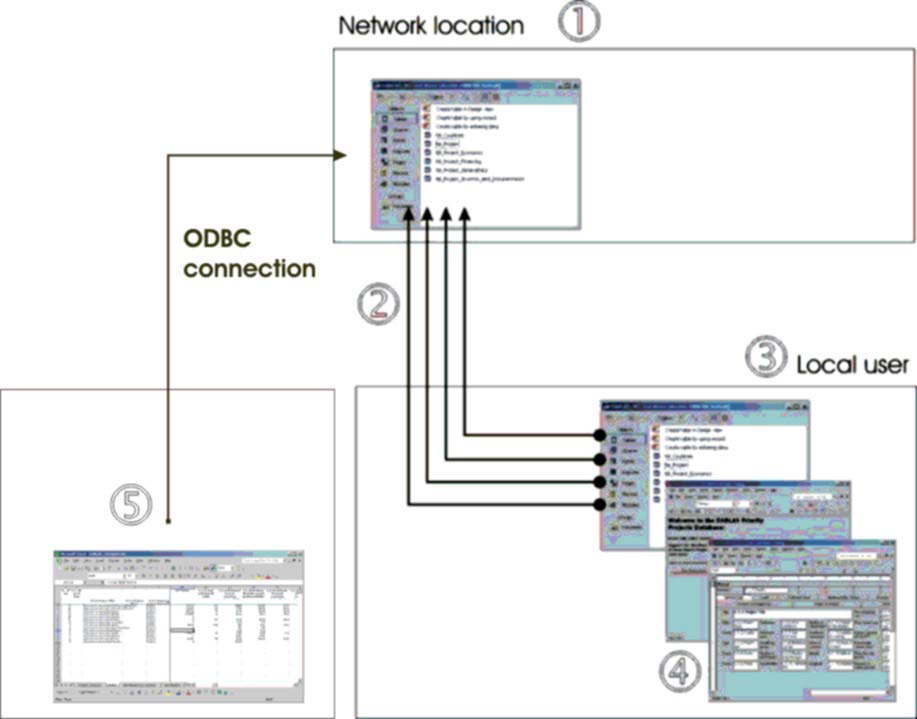
Annex 5
Priority Investment Project Database
Annex 5
Priority Investment Project Database
This annex contains the highlights of the database specifications intended for acquiring a
general understanding of the database design and application architecture.
Database File Format
In line with the requirements of the Terms of Reference of the Contract for the Design
and Development of a supporting database for the Prioritization of Investment Projects
within the work of the DABLAS Task Force, namely "to ensure platform compatibility,
including, but not limited to operating system, computer hardware, office applications in
use and to provide ease of integration with other used office applications" the selected
database file format is Microsoft Access ® version 2000.
The layout and deployment of the database is shown below:
(1)
The database file which may be located on a network location or a local folder
(2)
The connection between the local user interface file;
(3)
The local user interface files serving mainly to communicate with the
database; it may be located locally on a PC serving as a client
66
Annex 5
Priority Investment Project Database
(4)
Although this is physically the same file this has somewhat different
functionality and contains the forms, tools and reports it is inseparable from
(3);
(5)
This is an Excel Worksheet linked via Open Database Connectivity (ODBC)
to a query in the database, which outputs all fields of data. This may also be
located on any logical location in a network, provided ODBC access is
configured.
Database Tables and Relationships
The database relationships are given below:
67
Annex 5
Priority Investment Project Database
Sensitivity analysis interface
A special tool for visualization of the sensitivity was developed, comprising of an Excel
worksheet linked to the database. With the aid of macro programming the manual change
of parameters immediately shows the cumulative criteria weight. A sample screen shot is
presented below
68