S E C T I O N T I T L E
1
Flowing Freely
How to Improve Access to Environmental Information
and Enhance Public Participation in Water Management

Partners
THE DANUBE REGIONAL PROJECT
The DRP was launched in 2001 as a part of a larger GEF Strategic Partnership
for Nutrient Reduction in the Danube and Black Sea. 13 Danube countries,
NGOs, the EU and the ICPDR are cooperating to improve the environment of
the Danube River Basin, protect its waters and sustainably manage its natural
resources. The DRP's main goal is to strengthen the capacity of the ICPDR and Danube countries to
cooperate in implementing the Danube River Protection Convention and EU Water Framework Directive.
The key project activities focused on: i) Danube River Basin management; ii) agriculture pollution control
through the application of best agricultural practices; iii) industrial and municipal activities, in particular
advising on reduction of phosphates use in laundry detergents and assistance to water and wastewater
utility managers with decision-making tools for pricing and investments; iv) enhancing public participation
through supporting the Danube NGO network - DEF, awareness raising campaigns, a small grants
program, capacity building for officials to implement the requirements of the EU WFD and supporting the
ICPDR communication activities; v) wetlands restoration and management for nutrient reduction.
THE REGIONAL ENVIRONMENTAL CENTER FOR CENTRAL AND EASTERN EUROPE
The REC was established in 1990 to assist in solving environmental problems
in Central and Eastern Europe (CEE) by promoting cooperation among non-
governmental organisations, governments, businesses, and by supporting free
exchange of information and public participation in environmental decision
making. The REC has been involved in Danube-related projects since its inception, and has taken an
active role in cooperating with key players to enable NGO and public participation in international
initiatives related to the entire basin. The REC, as observer, closely cooperates with the International
Commission for the Protection of the Danube River (ICPDR) and the relevant stakeholders, ministries
of environment and water management, the Danube Environmental Forum and other key NGOs. It also
actively contributes to different ICPDR expert groups. The REC participated in developing the Danube
River Basin Strategy for Public Participation in River Basin Management Planning 2003-2009,
adopted by the ICPDR in June, 2003. In addition to initiating and implementing the Danube Regional
Project's component 3.4, "Enhancing access to Information and public participation in environmental
decision-making" in five Danube countries and a similar pilot project in Hungary and Slovenia in
partnership with RFF and NYU, the REC has managed projects to support the implementation of the
Aarhus Convention, related EU directives and best practices in public participation in CEE.
NYU SCHOOL OF LAW
NYU School of Law (NYU), a nonprofit academic institution located in New York
City, is one of the preeminent law schools in the United States. The first
"Global Law School," NYU attracts top faculty and students from around the
world to study and contribute to the development of law that meets the needs
of a rapidly globalizing world. The NYU Center on Environmental and Land Use Law enlists NYU
faculty and students, as well as outside experts, to provide developing countries and countries in
transition to market economies with practical assistance in strengthening and enforcing their
environmental and land use laws and policies. In addition to co-developing and co-managing
Component 3.4 of the Danube Regional Program, other representative legal assistance projects
conducted by the Center have included a five-year program to train and assist Chinese law drafters in
their efforts to reform and revise a number of China's key environmental laws, a multi-year research
project for the Rockefeller Foundation to assess the impacts of global trade conflicts over genetically
modified crops on policymaking in developing countries, as well as numerous, targeted legal
assistance projects for environmental NGOs around the world.
RESOURCES FOR THE FUTURE
RFF is a nonprofit, nonpartisan research organization on environmental, energy, and
natural resource issues. Although headquartered in Washington, D.C., RFF works in
nations around the world. RFF was founded in 1952 at the recommendation of William
Paley, then head of the Columbia Broadcasting System, who had chaired a presidential
commission that examined whether the United States was becoming overly dependent
on foreign sources of important natural resources and commodities. RFF is operated as a tax-exempt
organization under U.S. law, with the financial support of individuals and organizations that see the role
research plays in formulating sound public policies. IIDEA (International Institutional Development and
Environmental Assistance), the RFF Program that co-developed and managed this program to enhance
environmental public participation in five Danube-basin countries, helps countries build more effective
systems of environmental protection. Other representative IIDEA efforts have brought together
advocates from throughout Asia to share their varied experiences in shaping a public voice on
environmental issues and produced a ground-breaking study examining and critiquing the policy process
and changes that led to improvements in air quality in Delhi, the most important being the switch of all
commercial vehicles from petrol and diesel to CNG.
Flowing
Freely
How to Improve Access
to Environmental
Information
and Enhance
Public Participation
in Water Management
Magda Toth Nagy,
Jane Bloom Stewart,
and Ruth Greenspan Bell
Edited by Sally Atwater
Designed by Greg Spencer
This publication was prepared within
component 3.4 of the
Danube Regional Project
and was funded by UNDP-GEF.
F L O W I N G F R E E L Y

4
Contents
5
Introduction
6
Background
7
National-level project and its results
8
Local-level demonstration projects
9
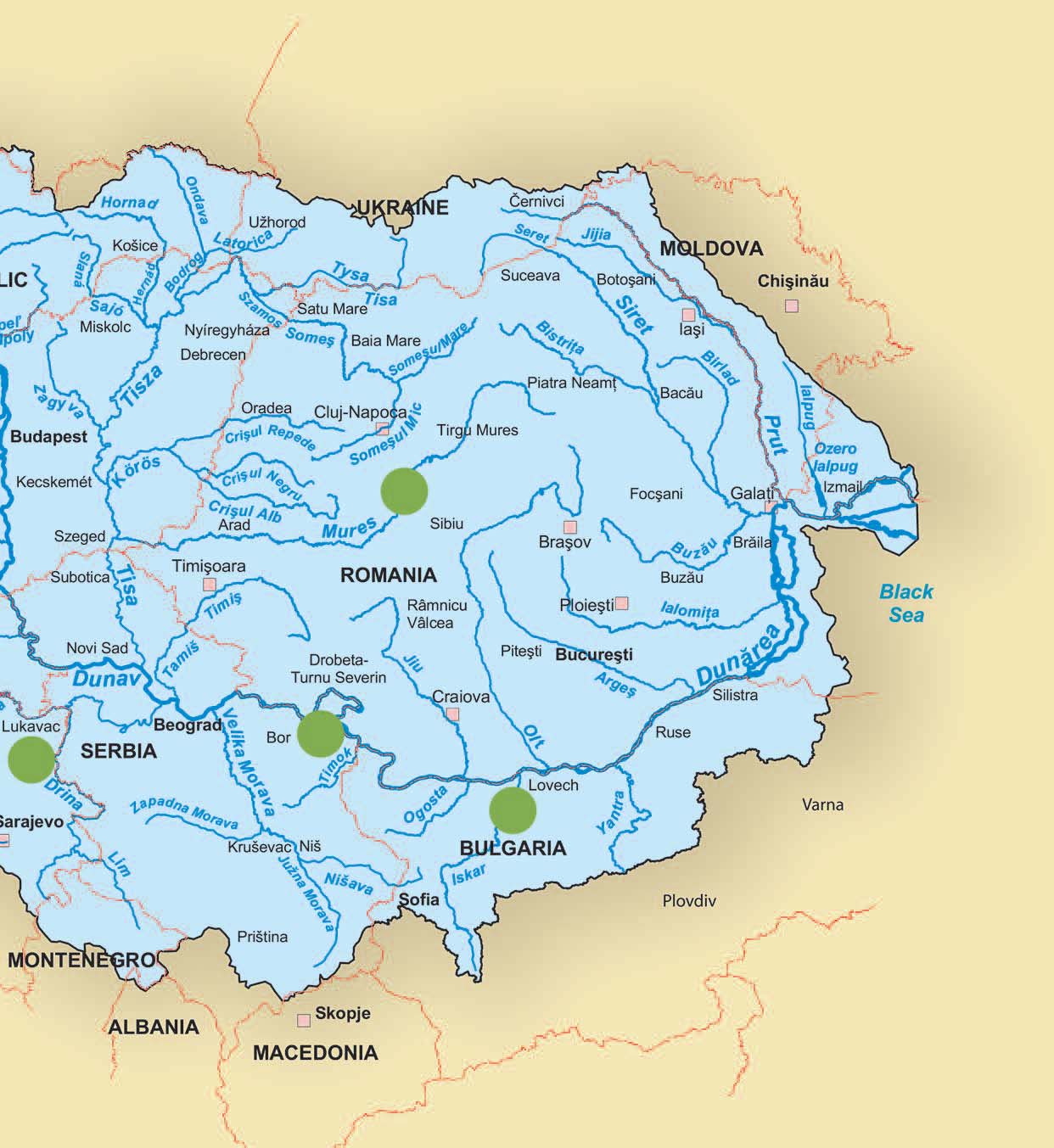
Bosnia and Herzegovina
12 Bulgaria
13 Croatia
14 Romania
15 Serbia
16 Recommendations
16 Learn from others' experience
17 Build bridges between information
seekers and information providers
18 Prepare manuals for government officials
20 Explain the procedures to the public
21 Centralize information storage
22 Develop clear procedures for
protecting confidential information
23 Use and maintain electronic tools where appropriate
24 Involve the broader public at all stages
26 Make the most of opportunities to participate
28 Safeguard public participation
rights to prevent their erosion
30 Conclusion
31 Resources and contacts
F L O W I N G F R E E L Y

5
More than half the Danube River basin is
at risk from nutrient pollution, with
Introduction
agriculture the biggest culprit.
Thisbookletdistillsthechallengesidentifiedand
the national-level work of the Project and the demon-
the approaches developed to address them during
stration projects undertaken at the local level. Descrip-
a 28-month effort to increase public access to envi-
tions of those demonstration projects can be found in
ronmental information and promote the participation
boxed text throughout the booklet.
of citizens and nongovernmental organizations (NGOs)
The heart of the booklet is the ten recommendations to
in protecting the Danube River and its tributaries. The
improve access to information on water quality and man-
work was part of a larger effort to reduce pollution from
agement and enhance public participation in environ-
nutrients and toxic substances in five Danube River
mental and water-related decision making. This section
basin countries: Bosnia and Herzegovina, Bulgaria, Croa-
describes the challenges to public involvement and the
tia, Romania, and Serbia (at the start of the project, Ser-
effective solutions that participants developed and put
bia and Montenegro). The Project focussed particularly
into action. We believe that these ten recommendations
on supporting public involvement in river basin man-
can help government officials and NGOs at all levels
agement planning, as required by the European Union's
work together with industry and citizens to improve
Water Framework Directive and the Aarhus Convention.
water quality in the Danube River basin and elsewhere.
The booklet begins with some background on the Water
Discussion of the recommendations with specific ideas
Framework Directive and the International Commission
for their implementation begins on page 16. Contact in-
for the Protection of the Danube River (ICPDR) as well
formation and links to details regarding the Project are
as the Aarhus Convention. The next sections summarize
on the last page.
F L O W I N G F R E E L Y

6
Background
Better basin management means protecting riparian
flora that serves as a natural filter of water pollution.
will be most effective if the interests of different stake-
holders are balanced. Second, public participation pro-
motes enforceability. The more transparent the
objectives, measures, and data for environmental quality,
the greater the care that countries will take to implement
the legislation and the greater the power of their citizens
to influence the direction of environmental protection.
Also calling for public access to information and partici-
pation in environmental decision making is the Aarhus
Convention, which was adopted in 1998 and took effect
in 2001. This convention, which has been ratified by the
European Union and 39 countries, including most
Danube nations, focuses on the relationship between citi-
zens and public authorities as they deal with environ-
TheDanubelinksmorethanadozencountriesand mentalprotectioninademocracy.Theconventiongrants
is the most international river in the world. Most
rights to citizens and imposes obligations on govern-
of these countries and the European Union are co-
ments regarding access to environmental information. It
operating under the Danube River Protection Conven-
takes a rights-based approach, makes a presumption in
tion, via the ICPDR, to ensure the sustainable and
favor of disclosure of information, and encourages the
equitable use of the waters and freshwater resources of
active release of information by governments as well as
the Danube and its tributaries.
responsiveness to citizens' requests. It also sets out mini-
mum requirements for public involvement in various
ICPDR's goals are to safeguard the Danube's water re-
kinds of environmental decision making.
sources for future generations, to promote healthy and
sustainable river systems, and to achieve water flows that
Government agencies in some Danube River basin coun-
are free from excess nutrients, toxic chemicals, and flood
tries, however, do not regularly disseminate the informa-
damage. Governments, technical experts, scientists,
tion that citizens may need to know, and they lack clear
NGOs, and members of civil society cooperate in
rules or procedures for receiving, processing, and respond-
ICPDR on achieving the goals.
ing to information requests. And although citizens and
NGOs express interest in exercising their rights to see
Communicating with stakeholders is important for the
water-related environmental information, they often don't
success of integrated river basin management. ICPDR
know how to submit their requests appropriately, where
therefore encourages all stakeholder groups with a basin-
to direct their requests, what information they are entitled
wide interest to become engaged in its work, including
to, or what to do if their requests are ignored or denied.
participating as observers at high-level meetings, expert
NGOs also face a learning curve in communicating effec-
group meetings, or other stakeholder activities. Active co-
tively with the broader public. For instance, NGOs that
operation has proven successful in ensuring that different
are "expert" groups may be unable to present technical
aspects and approaches can shape water management.
issues in lay language and thereby engage fellow citizens.
Involving the public in decision making on water man-
Integrated river basin management presents an opportu-
agement plans, in fact, is a requirement of the European
nity for NGOs to broaden their public outreach, im-
Union's Water Framework Directive (Article 14). Two
prove their relationships with government agencies, make
reasons for an extension of public participation lie be-
more productive efforts to get involved in the decision-
hind this requirement. First, EU countries share the be-
making process, and make suggestions for the drafting or
lief that measures to achieve environmental objectives
implementation of legislation.
F L O W I N G F R E E L Y

7
There are significant barriers to improving
public access to environmental information
National-level
in many Danube River Basin countries.
project and
its results
In2004,theRegionalEnvironmentalCenterforCentral · Procedurestoinvolvestakeholdersinriverbasin
and Eastern Europe, Resources for the Future (a Wash-
management planning and consult with the public
ington, D.C., think tank), and New York University
were inadequate.
School of Law began a project called "Enhancing Access
to Information and Public Participation in Environmental
To overcome those barriers, project participants studied
Decision-making." The Project was supported by the
"good practices"--techniques that have been effective
Global Environment Facility and the United Nations De-
elsewhere--and used them to develop tools and strategies
velopment Programme as part of the Danube Regional
adapted to their own needs and circumstances. Most
Project, a 13-country initiative to clean up and protect the
chose to develop very practical written aids and tools.
Danube River. The partnership worked with public offi-
For government officials, these included manuals and
cials and NGOs at the national, regional, and local levels
guidelines for ensuring access to information and carry-
in Bosnia and Herzegovina, Bulgaria, Croatia, Romania,
ing out public involvement responsibilities: how to pro-
and Serbia. At the national level, it identified the main
vide better access to environmental information, what to
barriers to public access to information and involvement
do when confidential information is involved, and how
in environmental decision making, and it helped govern-
to promote the broader involvement of the public. For
ment officials and NGOs develop tools and strategies for
NGOs and the public, these included brochures and
overcoming them.
other written guides on how and where to obtain envi-
ronmental information, how to become engaged in
Major barriers were found:
water-related environmental decision making, and what to
· Officials had little guidance on how to carry out
do when access to information or participation is denied.
their responsibilities to provide water-related environ-
Also at the national level, the Project inspired recom-
mental information or consult with the public on
mendations (including draft language) for changes in
water management issues.
legislation, guidelines for handling confidential informa-
· The lack of centralized databases made it difficult to
tion, recommendations on stakeholder representation
know where environmental information was located
and consultation in river basin committees (the national,
within the government.
regional, or local entities that conduct management
planning in some Danube countries), meta-information
· NGOs and citizens did not know their rights to ob-
systems that help environmental officials and the public
tain environmental information and participate in
know which authority holds what information and how
water-related decision making, or they did not under-
to obtain it, and improved websites for better communi-
stand how to exercise these rights.
cation with the public. Many of these activities were ac-
· Officials were uncertain about what information
companied by training for officials and NGOs to
should be regarded as "confidential" and withheld
advance their knowledge and ensure that the written aids
from disclosure.
would be understood and used.
F L O W I N G F R E E L Y

8
Local-level
demonstration
projects
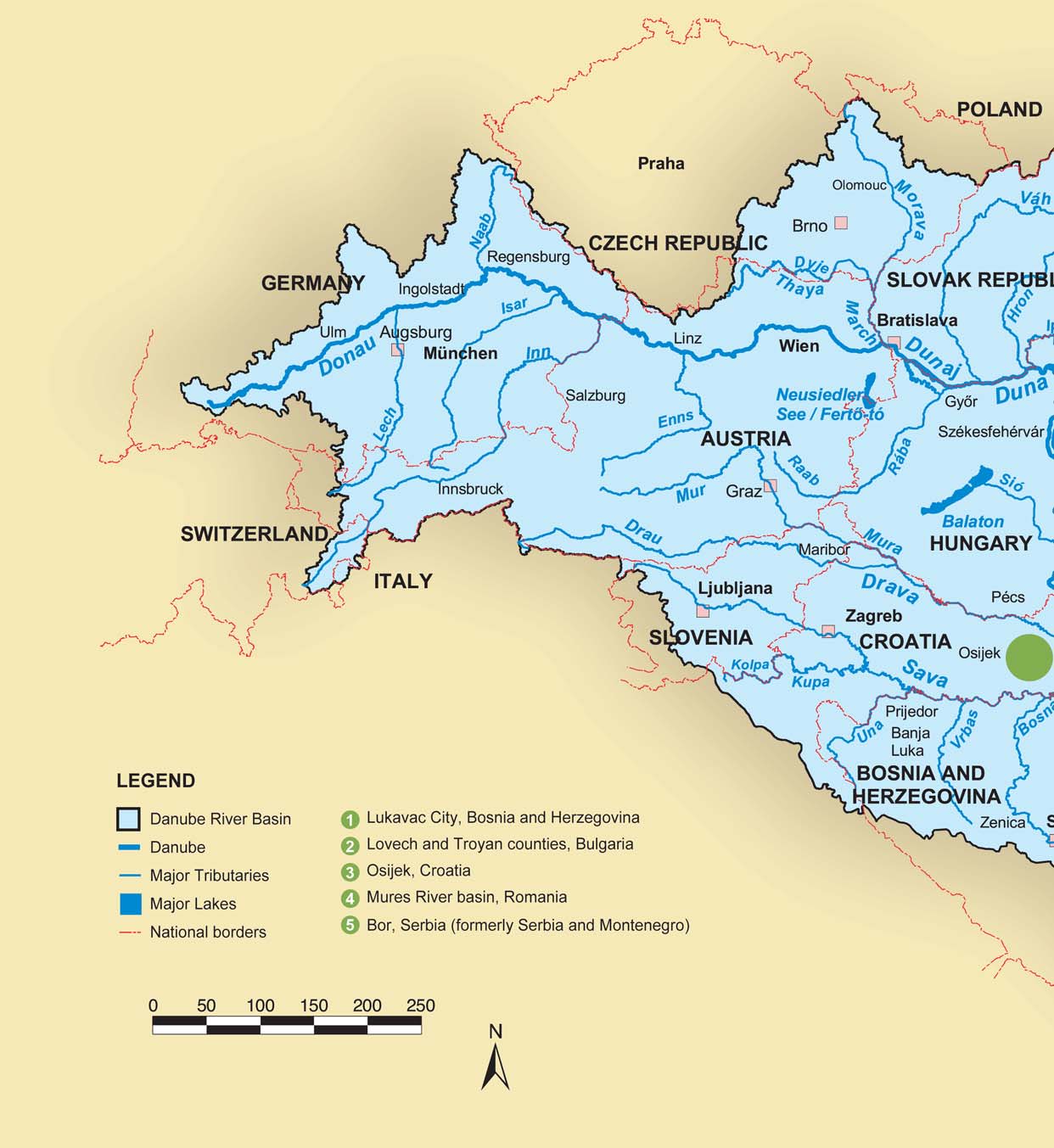
Fivedemonstrationprojects,eachlasting10to12
New ideas and ways of approaching problems some-
months, were conducted at Danube River "hot
times seem abstract and hard to pin down. The demon-
spots"--areas identified by ICPDR as having excep-
stration projects tested and refined some new ideas in
tionally high levels of pollution. Supported with very
practice, and also tested reform measures to determine
modest funding, these projects proved to be significant
whether they might be useful at the national level. Be-
learning tools for transferring information and testing
cause these local-level projects were closely tied to coun-
ideas, and they yielded substantial results in a short time.
try-level priority issues and took an iterative approach,
Each was developed and conducted by a local NGO, in
each activity reinforced the others.
most cases in partnership with local or regional environ-
mental government offices. Each tested new approaches
Often, stakeholders lacked experience in working to-
for access to information or citizen involvement to sup-
gether and were unsure how to proceed constructively,
port the cleanup of the hot spot, on the premise that in-
or they had tried and failed to communicate in the past.
dividuals will become more engaged in problem solving
The process of collaborating during the demonstration
if they have greater awareness about local conditions and
projects--combined with technical assistance and tar-
possible solutions. The projects were also intended to
geted, capacity-building local workshops or trainings--
provide models for other Danube hot-spot communities
helped them learn how to build bridges and jointly
and to inform parallel initiatives at the national level.
develop effective strategies.
F L O W I N G F R E E L Y

9
Citizen involvement is the key to reducing pollution
problems.
Eko-Zeleni Lukavac, an NGO, sought to ensure that
local residents could get the information to which
they are entitled under Bosnian law. First came a sur-
vey of residents and interviews with government au-
thorities. Citizens said they wanted to receive regular
reports and be able to request information, but infor-
mation storage was not centralized, and the layers of
authority in Bosnia and Herzegovina created uncer-
tainty about where to find it. Information that was re-
leased was often in technical language or
difficult-to-use formats.
The survey and interviews were followed by roundtable
discussions and capacity-building meetings to examine
the problems and possible solutions. The latter in-
cluded training authorities on how to deal with citi-
zens' requests and how to keep them informed
regularly.
Project participants created a "plain-language" leaflet to
raise general awareness about local water pollution and
indicate where citizens could find information and how
to ask for it. The leaflet included contact information
for authorities at the local, cantonal, and ministry levels,
as well as for industrial firms. A sample letter of request
was included.
BOSNIA AND HERZEGOVINA
Eko-Zeleni Lukavac then held a workshop to improve
Location: Lukavac City
authorities' and firms' capacity to organize and deliver
Goal: Include citizens, NGOs, industry, and
information. Participants discussed concerns and pro-
government authorities in decision process
posed solutions. Examples of good practice were cited,
with emphasis on improving the process of handling in-
NGO: Ecological Association of Citizens
formation requests and exchanging information among
"Eko-Zeleni" Lukavac
local authorities.
Project leader: Husejin Keran
A result of the demonstration project--in a community
whose residents had great difficulty sharing information
and evaluating options--was to bring in fresh points of
InBosniaandHerzegovina'sTuzlaCanton,heavyin- viewonconstructivesolutions.Thishelpedpreparethe
dustry has significant impacts on air and water qual-
way for a more open management planning process.
ity and the health of Tuzla residents. The
One measure of success was that the local cement indus-
municipalities and other authorities do not have ade-
try offered to host the workshop and, with the munici-
quate information about the pollutants or know what
pality, cosponsor future leaflets to keep the community
additional data are needed.
informed.
F L O W I N G F R E E L Y

10 LOCAL-LEVEL DEMONSTRATION PROJECTS
3
Local-level demonstration projects
F L O W I N G F R E E L Y

L O C A L - L E V E L D E M O N S T R A T I O N P R O J E C T S
11
4
5
1
2
F L O W I N G F R E E L Y

12 LOCAL-LEVEL DEMONSTRATION PROJECTS
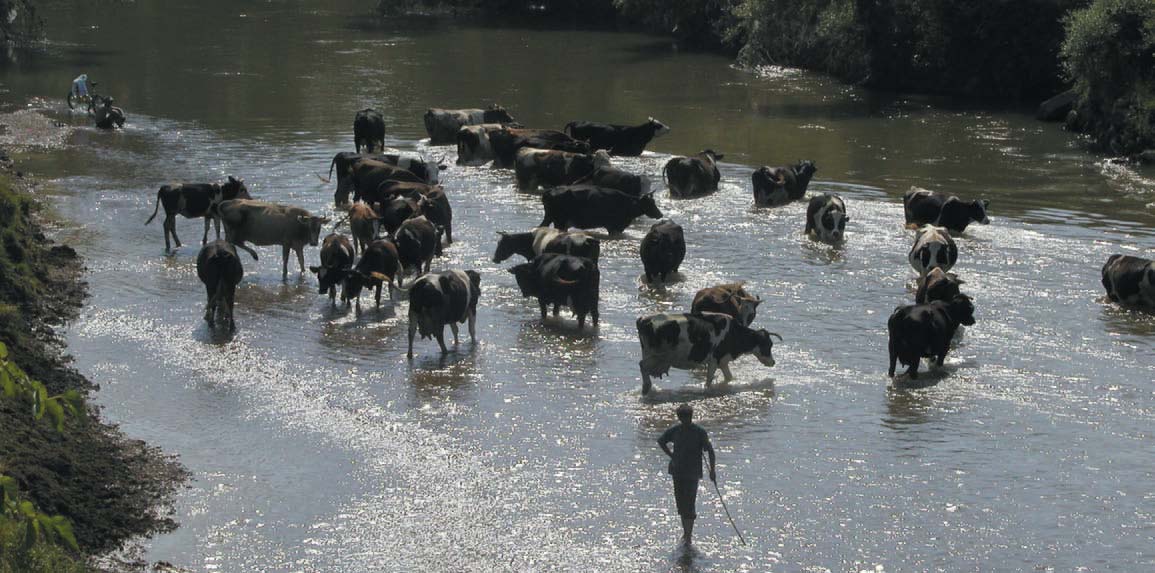
The Osam River may be the
most polluted in Bulgaria.
BULGARIA
The NGO then held a workshop with the major stake-
Location: Lovech and Troyan counties
holders to discuss proposals for better information ac-
Goal: Test information access, help improve it
cess and participation. More information requests were
made to test whether government authorities, whose rep-
NGO: Ecomission 21st Century
resentatives had been invited to participate in the proj-
Project leader: Nelly Miteva
ect, had voluntarily changed their practices. In a second
workshop, participants refined proposals for making in-
TheOsamRiverissaidtobethemostpollutedin formationmoreaccessibleandencouragingothercoun-
Bulgaria. Nevertheless, the people of Lovech and
ties in Bulgaria to adopt similar best practices.
Troyan counties know little about how the water-
The activities were accompanied by a public outreach
shed is managed. Although industry is not the only
campaign to get media coverage on water quality and
cause of pollution, one plant that may be a major con-
human health issues and the difficulties of accessing in-
tributor has operated with an outdated pollution control
formation. The outreach was supported with municipal
permit, and the details of a permit for another impor-
websites, Internet networks, and a brochure for NGOs
tant plant were not publicly available.
and citizens that explains how to obtain information
Ecomission 21st Century, an NGO, addressed the prob-
(http://www.rec.org/REC/Programs/PublicParticipation/
lem by testing information access and building aware-
DanubeRiverBasin/project_products/bulg). The pro-
ness to mobilize the local community. Questionnaires
posed changes and best practices for public access to in-
and information requests were sent to regional and local
formation procedures were sent on CDs to local
institutions in Lovech and Troyan counties. Requests
authorities and other municipalities.
were made for data on water quality and human health,
pollution sources, and risks; a copy of an industrial per-
One unexpected result of the project was an order by
mit of the major polluter; and information on the moni-
the Lovech regional governor requiring mayors to define
toring and enforcement of the permit requirements. The
and mark zones where bathing would be allowed, fol-
responses were analyzed, and barriers to accessing water-
lowing a request for information about safe
related information were identified.
swimming.
F L O W I N G F R E E L Y

L O C A L - L E V E L D E M O N S T R A T I O N P R O J E C T S
13
CROATIA
Location: Osijek
Goal: Enhance public involvement
in wastewater management
NGO: Green Osijek Ecological Association
Project leader: Jasmin Sadikovic
InOsijek,Croatia,500,000litersofuntreatedwastewater
are pumped into the River Drava every day. In nearby
Cepin, the Cepin Oil Factory pumped its wastewater
into drainage canals, affecting residents' agricultural pro-
duction and drinking water, until the NGO Green Osijek
alerted the local and national media and the practice
stopped. But current information regarding these issues is
locked behind plant doors. Indeed, the region lacks waste-
water management, civic transparency, and public partici-
pation in environmental decision making.
In its demonstration project, Green Osijek undertook
several activities to combat the inaccessibility of environ-
mental information. Stakeholders in Osijek (including
institutions, NGOs, factories, and government agencies)
were identified and invited to join a "water forum" for
the online and in-person exchange of environmental in-
formation. Participants wanted an open, informal ap-
proach, so the NGO set up Osijek Water Forum as a
communication platform to coordinate the flow of in-
formation, encourage participatory processes, and sup-
port activities that address priority problems. Through
the Forum, participants identified priorities: wastewater
A water forum
management, improvement of laws and their implemen-
encourages different
tation, and better internal and external communication
stakeholders to hear
on water-related issues. Workshops were then held to
each other's points of
view and collaborate on
help stakeholders learn how to communicate on water
solutions to water
issues, organize a public participation process, and be-
pollution problems.
come involved in planning Osijek's new wastewater treat-
ment plant.
A public outreach campaign has raised awareness about
pollution problems and possible solutions. A poster, to
be developed in cooperation with the town and local
water authorities, will be distributed to public institu-
help of a Green Osijek member who is also a journalist.
tions, schools, and NGOs. The forum will take advan-
Many stakeholders support continuation of the Water
tage of International Water Day to introduce materials
Forum for discussing and developing solutions to local
on how to conserve water and access water-related infor-
water management issues. Green Osijek has volunteered
mation. The news media covered the activities, with the
to continue the coordination of the Forum.
F L O W I N G F R E E L Y

14 LOCAL-LEVEL DEMONSTRATION PROJECTS
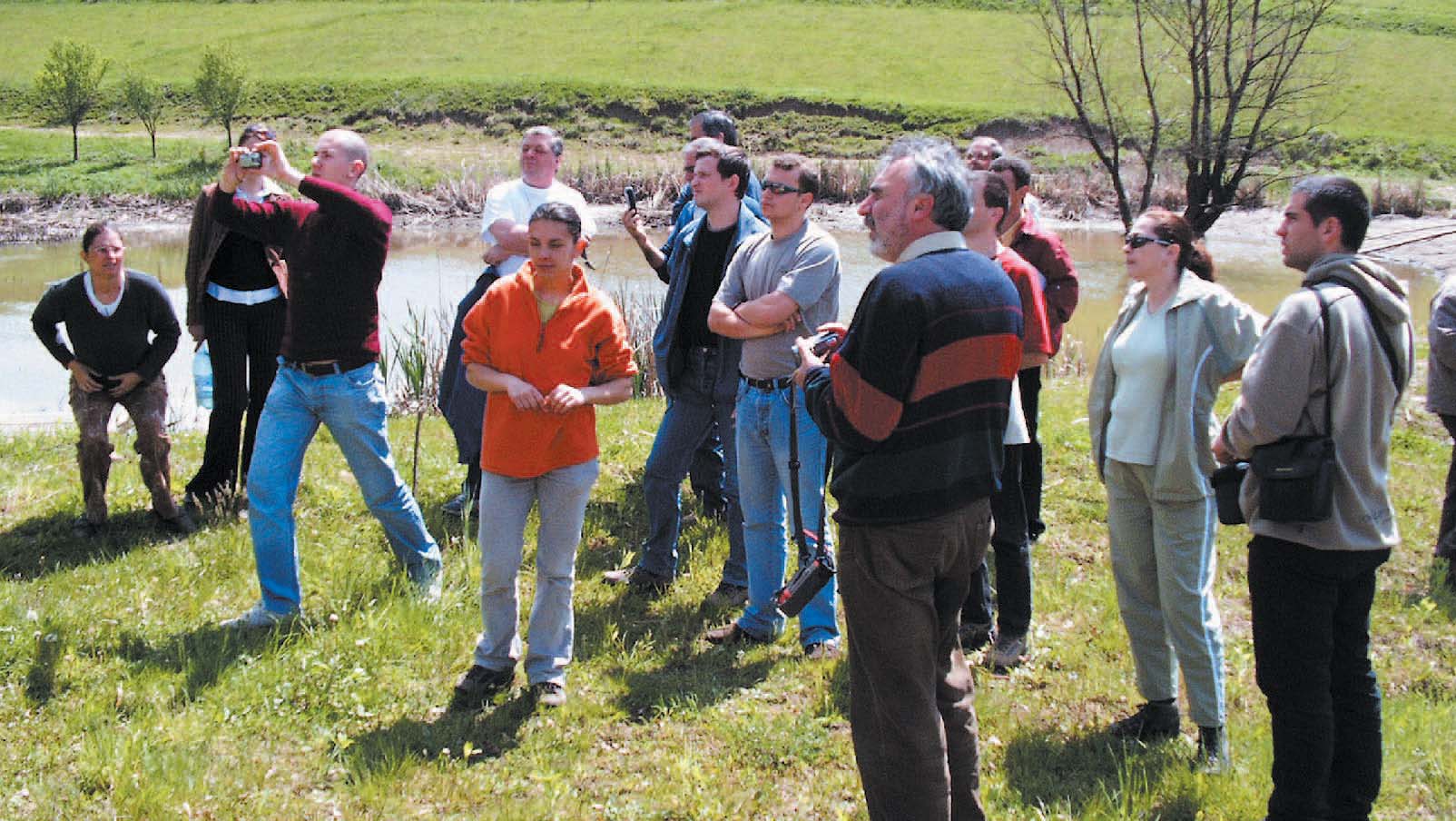
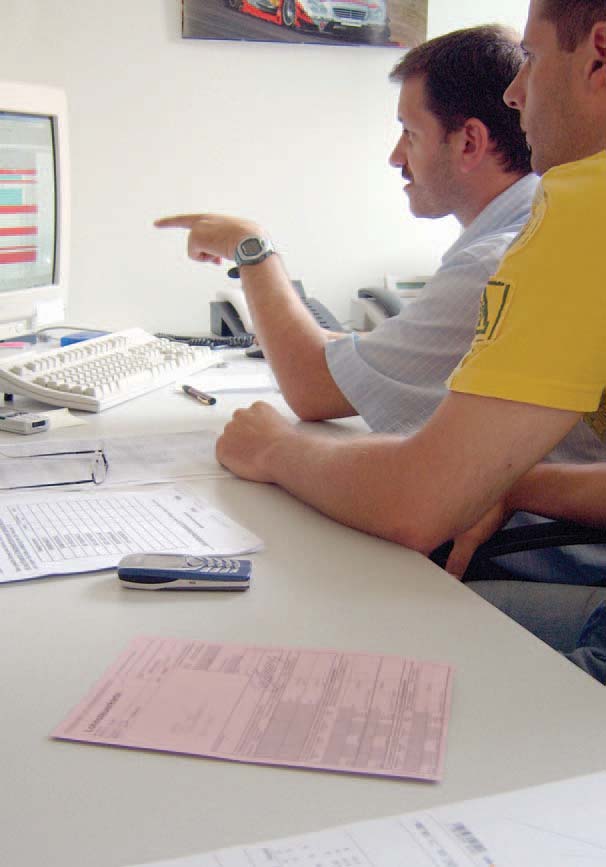
Project work
w
in
i Romania involved educational
field trips for river
r
stakeholders.
ROMANIA
concern is the lack of communication and interaction
Location: Mures River basin
between the river basin committees and local communi-
ties. The demonstration project considered how to im-
Goal: Improve the process for NGO involve-
prove public involvement in the water management
ment in water management planning
planning process of the Mures River Basin Committee
NGO: Focus Eco Center
and worked with local authorities, NGOs, and the pub-
lic on the challenges of complying with the directive.
Project leader: Zoltan Hajdu
Focus Eco Center headed an effort to promote access to
T
information and public participation by building a net-
he Mures River basin, specifically around the city
work of local stakeholders, particularly from the NGO
of Tirgu Mures, is severely polluted from local
sector, with an interest in water basin management. It
wastewater, upstream wastewater, hog farms, indus-
developed a list of interested parties and encouraged
trial plants, and agricultural and urban runoff. Because
them to participate in the decision-making processes of
of the pollution, the cost of drinking water in Tirgu
the committee.
Mures, Iernut, and surrounding rural areas is the highest
in the country.
Recommendations for improvements in the representa-
tion of NGOs and citizens on the Mures committee, in-
Planning at the river basin level is central to Romanian
cluding a new approach for selecting NGO delegates
efforts to implement water management planning, in ac-
and examples of good practices used elsewhere, were
cordance with the EU Water Framework Directive. How-
shared with Romania's ten other river basin committees.
ever, national-level NGOs believe that the process by
The now-published "Guide on Good Practices for Im-
which representatives of civil society are elected to river
plementing the EU Water Framework Directive" could
basin committees (which play an advisory role in water
provide useful information for similar stakeholder
management planning) needs improvement. Another
groups involved in water management planning.
F L O W I N G F R E E L Y

L O C A L - L E V E L D E M O N S T R A T I O N P R O J E C T S
15
SERBIA
Aarhus Convention, and national environmental legis-
Location: Bor, Serbia
lation, along with mailing lists and discussion forums
to increase the f low of water-related information be-
Goal: Create a useful and accessible
tween interested parties.
database for information managers
The NGO also created collection points for gathering,
and the public
processing, and distributing information (tasks that
NGO: Association of Young Researchers Bor
will be taken over by municipal authorities); con-
ducted a public outreach campaign on water-related is-
Project leader: Toplica Marjanovic
sues; and developed an information resource
network.
BorisaminingandindustrialcenterinEastern
Serbia. Industrial discharges and domestic
sewage pollute the water and banks of the Bor
and Krivelj rivers. The pollution endangers Bor
County as well as other river-based communities in
Serbia and neighboring Bulgaria, significantly affecting
the quality of water in the West Balkans and the
Danube basin.
Local stakeholders have shown interest in environmen-
tal issues--a local environmental action plan and a dis-
trict environmental action plan were adopted in recent
years--but authorities in Bor lack money, equipment,
and data.
The demonstration project in Bor tackled the prob-
lems related to the management of environmental and
water-related data. Information was stored in different
institutions and not shared among them, for example,
and there was no standardized system for its storage
and management. Officials had insufficient knowledge
of the legal procedures to follow when responding to
public information requests and were unfamiliar with
information technologies.
To improve access to information, raise awareness of
wastewater problems, and increase public participa-
tion in the resolution of problems, a local NGO, the
Association of Young Researchers Bor, invited stake-
holders to discuss the current situation and potential
solutions at a roundtable meeting, and then pub-
lished the results.
The NGO next developed a database for information
on wastewater and drinking water and provided train-
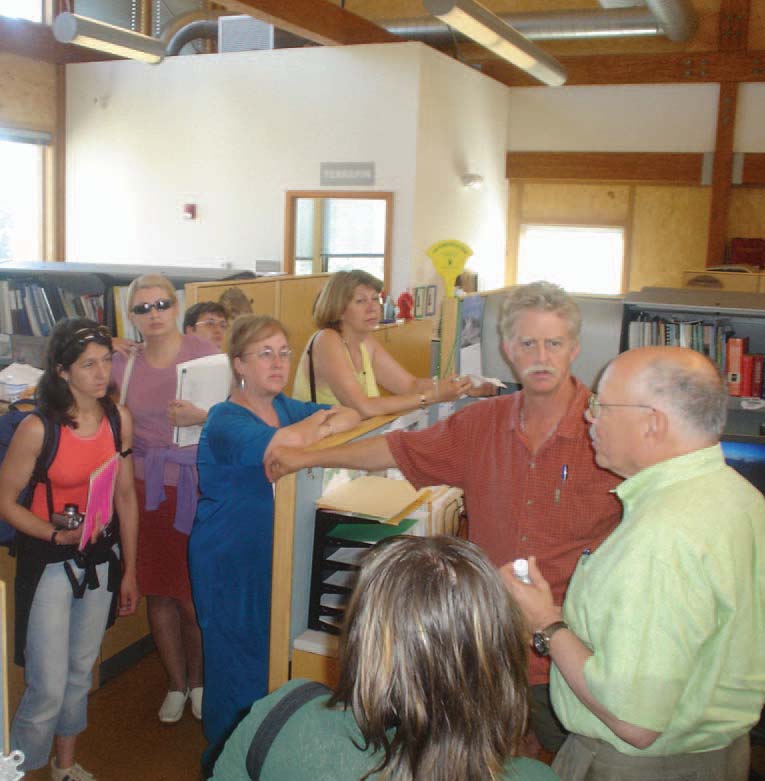
Information and communications technology
ing in its use. Accessible to all managers of water-re-
can help store, process, and deliver the data
lated information and to the public, this tool includes
that citizens need to make intelligent
information about the Water Framework Directive, the
decisions about water management.
F L O W I N G F R E E L Y

16
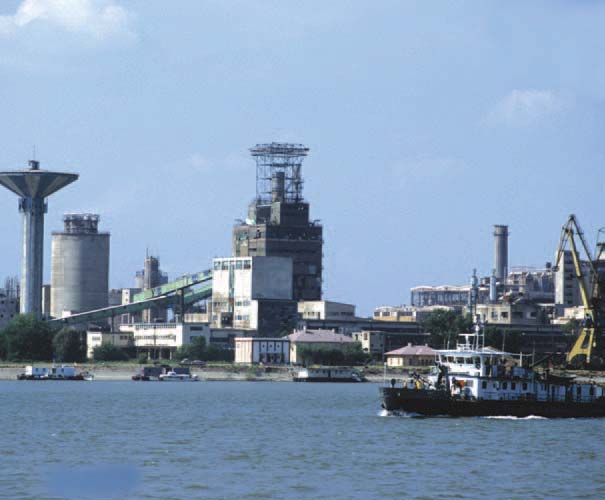
A study tour to the United
States highlights good practices
Recommendations
in public participation.
1 Learn from others' experience
Why reinvent the wheel? Adapting other coun-
tries' tools for increasing access to environmental
information and public participation can be a
smart strategy.
Research can uncover good practices employed in other
countries. Even more effective is direct experience with
successful foreign systems. By engaging in study tours,
workshops, and other personal encounters with their
counterparts in other countries, officials and NGOs can
examine the potential applicability of the tools used ef-
fectively elsewhere to circumstances at home.
Exchanges are a valuable way to jump-start improve-
EXAMPLES
ments in access to information and public participation,
Study tours inspire new ideas
particularly in countries that have little history of such
Bulgarian officials and NGO experts traveled to the
programs. All countries benefit from these exchanges,
United States (US tour pictured) and the Netherlands
which can result in increased public involvement and
on study tours to see effective programs in action. Ex-
thus enlarge the constituency for Danube River basin
posure to good practices, procedures, and criteria
protection in the region generally.
for handling confidential information helped them pre-
pare practical guidance and draft recommendations
Be careful, however, not to let outsiders determine solu-
for improving methods of handling confidential infor-
tions for local circumstances with which they may be
mation for the Bulgarian Ministry of Environment and
unfamiliar. Legal, cultural, practical, and institutional
Water.
contexts differ among countries, and foreign good prac-
tices likely need to be adapted for the home country.
Research on good practices
leads to proposed improvements
How to tap the experience
Assisted by knowledge of how public involvement
of other countries
works in water management in the United States
and countries of the European Union, Romanian
· Promote and expand direct exchanges of knowledge
NGOs identified and recommended constructive op-
and experience through workshops, study tours to
tions for selecting citizen and NGO representatives
other countries, meetings of stakeholder forums, and
for membership on river basin committees. They
other face-to-face encounters.
also found ideas for increasing public input to the
committees' decision making. A report that helped
· Identify countries that have relevant and effective
them do this is available at http://www.rec.org/
public involvement programs and requirements and
REC/Programs/PublicParticipation/DanubeRiver-
a good record of implementing them in practice.
Basin/project_products/rom_selected_prac-
· Invite foreign counterparts to participate in training
tices_rbc.pdf.
F L O W I N G F R E E L Y

17
workshops and share experiences in practical meth-
EXAMPLES
ods for increasing public access to information and
Stakeholders set aside differences
public involvement in water-related decision making.
and focus on solutions
These workshops should be conducted in appropri-
ate national languages for officials at national, re-
In Bosnia and Herzegovina, citizens, NGOs, and in-
dustrial firms in Lukavac, Tuzla Canton, met to con-
gional, and local levels.
sider the impacts of pollution on their shared
· In some cases, it may be appropriate to seek outside
interests and look for joint solutions. Previous ef-
help and ask foreign colleagues to review and give
forts had been unproductive and confrontational. A
advice on drafts of government manuals and
local NGO, Eko-Zeleni Lukavac, brought together rel-
brochures for citizens and NGOs, in writing by-laws,
evant authorities and stakeholders. Because of the
constructing databases, developing website content,
collaborative approach, a local company decided to
and creating other products
participate and offered its factory as a meeting site,
setting a new, civil tone for discussions.
· Study other countries' official guidelines for han-
dling claims of confidential business information.
A "water forum" hosts discussions
· Consider the costs of establishing and maintaining a
particular practice, and know what training and human
Local communication about water quality in Osijek,
resources will be needed to implement it successfully.
Croatia, now has an Internet-based platform, the
Water Forum. The forum is a virtual place for gov-
· Assess the viability of options used elsewhere. Adapt
ernmental authorities, NGOs, citizens, and other
good practices used in other countries to the particu-
stakeholders to discuss water issues, including the
lar circumstances of the home country.
planned construction of a wastewater treatment
plant. Coordinated by an NGO, Green Osijek, this low-
cost approach hosts information exchanges
2 Build bridges between information
through the Internet; participants may hold actual
seekers and information providers
meetings as appropriate. More information is avail-
able at www.zeleni-osijek.hr.
NGOs, citizens, and government officials may not
always be comfortable working together, but they
are necessary partners in solving water quality
problems.
Building bridges between those who have the informa-
Project work in Croatia involved
tion and those who want it can help increase public
outreach to industrial stakeholders.
involvement in water-related decision making and gen-
erate support for protection of valuable water re-
sources. Both sides need to understand the value of
this collaboration and recognize that it serves their
own interests and goals.
One way to strengthen communication between offi-
cials, NGOs, and the public is to engage all stakehold-
ers in collaborative capacity building. This can include
a broad range of joint activities: workshops, training
sessions, discussion forums, joint efforts to develop
databases, and study tours. NGOs can play a vital and
constructive role here.
Short-term joint activities can build a foundation for
F L O W I N G F R E E L Y

18 RECOMMENDATIONS
future efforts. But to sustain cooperation over the long
3 Prepare manuals for
term, ongoing processes to facilitate communication and
government officials
collaboration among stakeholders and government
officials are essential. Such efforts require steady but
Government officials have many responsibilities and
modest funding, as the results of the demonstration
work under severe time constraints. Provide them
projects show.
with written guides that have the answers they need.
One idea tested by a demonstration project was creating
Whether called manuals, guides, deskbooks, handbooks,
a virtual forum where people could "meet" regularly to
or guidelines, written aids can help relevant government
discuss water management and planning, pollution con-
officials at all levels--national, regional, and local-- pro-
trol, and other common interests. Collaborative efforts
vide public information and engage citizens in water
to develop basic water databases also proved to be unify-
management planning. Such manuals have two func-
ing experiences.
tions: informing officials of their responsibilities and in-
forming officials of citizens' rights.
Both short- and longer-term collaborative activities, in-
cluding forums for dialogue and capacity-building work-
The manual must be designed and written so that it is ac-
shops, are needed to increase public involvement in
tually used, not put on a shelf. A collaborative, open draft-
ing process will let the end users help determine the best,
water-related decision making throughout the Danube
most useful way to present information. It will also engage
River basin and should be implemented at the regional,
the stakeholders and build trust and mutual respect.
national, and local levels.
Simply writing a manual and giving it to government of-
ficials will not be effective if the ministry has not used
How to promote collaboration
such written guides before. It is necessary to first tap the
among stakeholders
expertise, experience, and viewpoints of the end users
and encourage "buy-in" to the concept of a manual. The
· Identify what information the public needs.
manual will have to be introduced into daily practice,
· Establish partnerships between NGOs and govern-
and that means providing training in its use.
mental authorities to set up effective databases and
One common problem is personnel turnover in govern-
information access systems.
ment offices. An effective manual is one that is well-em-
· Test the system by making requests for information
bedded in the practices of the institution even as
and giving feedback to officials about how it is work-
officials come and go. New personnel must therefore be
ing and where improvements need to be made.
trained in its use.
Manuals should be updated based on feedback from
· Inform the public about how and where to obtain
users. Feedback can be informal, but actively seeking
environmental information.
feedback from manual users is preferable. For example,
· Raise public and youth awareness by disseminating
after the manual has been in use for 6 to 12 months, a
nontechnical information on national and local water
questionnaire can be sent to users, asking them what
pollution problems and their potential solutions.
works and what needs to be improved.
· Develop rules and procedures that help water author-
Another challenge is keeping the manual current and ac-
ities consult with the public.
commodating changes in law, policy, and evolving good
practice. Flexible formats (like three-ring binders) make
· Hold forums for dialogue between the public, gov-
it simple to substitute or add pages to a manual. Elec-
ernmental authorities, and other stakeholders on
tronic formats, of course, are very easy to update, but
water management issues.
whether a web-based manual is appropriate depends on
· Encourage consistent participation over time to pro-
users' actual level of access to the Internet and familiar-
mote continuity and allow trust to develop.
ity with its use.
F L O W I N G F R E E L Y

R E C O M M E N D A T I O N S
19
How to write a manual for government officials
· Engage the government officials who will be respon-
· Know the target audience: what do the future users
sible for handling information requests and ask them
want and need?
to contribute to and comment on the drafts.
· Use a collaborative, open drafting process to engage
· Consult within the agency and among agencies to
stakeholders and build trust and mutual respect.
get official support for the manual. Obtain high-
Start the discussion with an outline. Share first and
level commitment, such as official letters of en-
interim drafts. Call meetings to discuss the manual
dorsement that can be used when the manual is
and include stakeholders in communications be-
completed.
tween meetings. Hire a professional to facilitate the
· Ensure that the manual correctly states the rights of
meetings, whenever feasible, to help create a positive
atmosphere and ensure a productive outcome.
citizens to obtain environmental information and
participate in environmental decision making, as well
as the legal responsibilities of government officials;
the manual should provide unbiased guidance on in-
terpreting legal requirements.
· Make the manual concise, practical, and easy to fol-
EXAMPLE
low. Use the local language.
Government ministers
endorse manuals
· Illustrate the manual with concrete examples of both
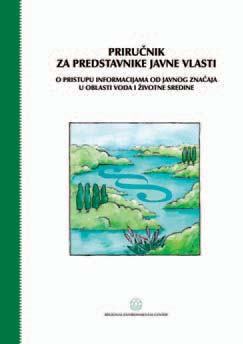
In Serbia, the Man-
good practices to follow and bad practices to avoid.
ual for Authorities
Use country experience (where it exists) or create re-
on Access to Infor-
alistic hypothetical examples (where it does not). If
mation on Environ-
the best practices of other countries are cited, convey
mental and Water
the context in which they are used and assess how
Issues was recom-
transferable they are.
mended for use by
the Director of the
· Include flowcharts, lists, boxes, schemes, and other
Water Directorate,
graphic design elements if they aid comprehension.
Ministry of Agricul-
ture, Forestry and
· Prepare a dissemination plan to ensure distribution
Water Manage-
to all officials who need it.
ment, and was pre-
sented and
· Coordinate the issuance of the manual with the
distributed through
timetables and legal requirements of the Water
the directorate's
Framework Directive and other relevant international
website. The man-
agreements and national laws.
ual and the en-
dorsement are available at
· Hold workshops to introduce the manual and train
http://www.minpolj.sr.gov.yu/images/materiali/Pri
government personnel in using it.
rucnikzapredstavnikejavnevlasti.pdf.
· Make the manual available on the ministry's website
In Romania, the Manual for Authorities on Environ-
so that it is publicly available and the procedures are
mental and Water-related Access to Information
transparent.
and Public Participation in Decision-making with
Focus on EU WFD has been published with the logo
· Make sure the manual is transferred to new employ-
of the ministry and disseminated to water and envi-
ees. Provide copies and training as part of new em-
ronmental authorities by the State Secretary of the
ployee orientation.
Ministry of Environment and Sustainable Develop-
ment with a recommendation that it be used.
· Reserve copies for the library of the ministry or agency.
F L O W I N G F R E E L Y

20 RECOMMENDATIONS
4 Explain the procedures to the public
sider, especially when drafting brochures that encour-
age citizens' requests and participation.
Asking government authorities for environmental
A major challenge in preparing and disseminating
information is not a familiar practice for most
brochures is cost. Even with a generous budget, the
members of the public; they welcome practical
number of brochures printed may be insufficient to
tools that show them how to exercise their rights.
meet the demand, and the inexpensive alternative, a
These aids will be most helpful if they are tailored to the
web-based tool, may not be appropriate if ordinary citi-
targeted users: the general public or NGOs, but some-
zens lack regular or affordable access to the Internet.
times both. NGOs tend to be more organized and edu-
cated on the issues than the general public, so these
different audiences may have different needs.
How to prepare a brochure
Some individuals and NGOs know they have a right to
for citizens or NGOs
obtain information but need more specific assistance.
· Test the current system by making specific requests
Whether it is a simple brochure or a more extensive citi-
to governmental authorities, then use the results to
zens' "toolkit" or NGO website, the goal is to provide a
help stakeholders and others identify potential im-
clear, easy-to-follow roadmap to information dispersed
provements.
among various authorities at various levels of govern-
ment. The brochure should tell NGOs and citizens what
· Make sure the brochure will be appropriate for the
information can be found at which agency, help them
targeted users. Collaborate with them in a series of
formulate requests for information, provide contact in-
meetings--not just one--and identify barriers to in-
formation, and say what to do if the request is denied or
formation access and public participation and the
ignored. It should also indicate how they can participate
content of the brochure. Use a professional facilita-
in water management planning.
tor to keep meetings positive and productive.
Traditions of informal access to information--for ex-
· Between meetings, communicate with future users
ample, asking someone you know who works in the
and ask for feedback in an open process that builds
government--might work for some people but in prac-
trust and mutual respect.
tice undermine official regimes for public access to in-
formation. Brochures, toolkits, and other written
· Include all the necessary information in the
information can encourage use of the new, legitimate
brochure: citizens' rights to information, where to
system and help citizens and NGOs become informed
send a request, what language is best to use, how to
consumers and users of information. Two important
appeal denials, when and how to participate in fu-
goals are served: good brochures make it easier for
ture decision making. Provide model requests.
government to serve the needs of the public, and they
· Use respectful language and a neutral tone, even
help citizens understand better how they can partici-
when identifying problems in the system. The
pate in future decision making.
brochure should build the public's trust in govern-
Because the tools facilitate use of the information and
ment authorities and the government's comfort in
participation system and test how it is functioning,
working with NGOs and citizens. At the same time,
they pave the way for more and better public access in
whatever problems exist, do not dissuade the public
the future. The tools can also make the authorities'
from seeking information or participating.
jobs easier by helping citizens prepare requests that are
clear, specific, and sent to the appropriate place.
· Give drafts to officials and ask them to comment
on content and tone.
NGOs that want to prepare citizen tools should con-
sider what language is most useful for the public and
· Don't attempt to make the brochure serve every
most productive in dealing with the government. Tone
need. No brochure can answer every question;
is important. Even when NGOs and governments have
highly specific guidance on appeals procedures, for
good relationships, there are still sensitivities to con-
example, may not be appropriate.
F L O W I N G F R E E L Y

R E C O M M E N D A T I O N S
21
EXAMPLES
Bulgarians test the system
A "green" phone and brochure help Croatians
Efforts by the NGO Ecomission 21st Century to engage Bul-
Association Franjo Kostec, an NGO, prepared a brochure that
garian citizens and NGOs in submitting information re-
tells Croatians how to get water-related information at envi-
quests to local, regional, and national authorities not only
ronmental and water agencies, with addresses and websites.
improved the skills of local communities in seeking and ob-
The brochure offers tips for gaining access to information
taining information, but also tested what kind of water man-
and becoming involved. It also directs citizens to a "green"
agement information was being withheld as confidential.
phone operated by the NGO Green Action. They can call this
The results helped the NGO propose improvements in na-
number if they need assistance in getting information or find-
tional legislation and practice. More information is available
ing ways to participate. The brochure is available at
at http://www.bluelink.net/water/public/.
ww.rec.org/REC/Programs/PublicParticipation/Danube
RiverBasin/project_products/croatia_brochure_for_ngos.pdf.
Romanian NGOs produce a toolkit
Brochure explains citizens' rights
Four practical fact sheets help the public find information
and get involved in decision making. Fact sheet 1, "Access
A brochure for Bosnia and Herzegovina describes the envi-
to environmental and water information," summarizes Ro-
ronmental and health problems associated with polluted
manian legal requirements and lists what information is
water and explains why the public needs to be involved in
available at national, regional, and local institutions. Fact
solving them. It identifies public involvement opportunities
sheet 2, "Public participation issues," describes public hear-
under current national and international legislation, explains
ings and how they work. Fact sheet 3, "Accessing informa-
citizens' rights and procedures for obtaining information
tion using the Public Information Law," details the process
and participating in decision making, and provides examples
of obtaining information and offers a format for information
of good practices for public involvement from other coun-
requests. Fact sheet 4, "Accessing information using the
tries. The brochure is available at ww.rec.org/REC/
Environmental Law," concerns environmental data specifi-
Programs/PublicParticipation/DanubeRiverBasin/pro-
cally and suggests a sample form for information requests.
ject_products/bih_brochure_for_ngos.pdf.
· Use the contact lists of NGOs and NGO networks
5 Centralize information storage
as well as other lists of interested persons, and where
feasible and appropriate provide both hard and elec-
Governments benefit from basic inventories of
tronic copies to all relevant government agencies
water-related data in their possession, and the pub-
and public information services to ensure the widest
lic needs to know where this information can be
possible public dissemination. Keep the brochure
found within the agencies.
up-to-date so that it ref lects changes in law, policy,
Environmental information relating to water is generally
good practice, frequently asked questions, and feed-
back from users. A web-based brochure is ideal but
dispersed among many ministries and government of-
only if most citizens have access to the Internet and
fices at the federal, state, entity, regional, and local lev-
are comfortable using online material.
els. As a result, citizens have great difficulty
determining where to direct a request and what infor-
· If resources are available, supplement the brochure
mation is available.
with information centers and "green phones" to
help answer citizens' questions and resolve prob-
A critical first step in resolving this problem is to de-
lems. Such centers are in the government's best in-
velop a system that identifies where the information can
terest if they promote clear, specific, well-directed
be found. As important end users of the information,
requests for information and appropriate participa-
NGOs, in collaboration with government authorities,
tion in decision making.
can help develop a system that gathers and organizes the
F L O W I N G F R E E L Y

22 RECOMMENDATIONS
EXAMPLES
· To encourage agencies to participate, emphasize the
A meta-system orients citizens
value of sharing data. Even officials who might have
In Bosnia and Herzegovina, a consultant helped gov-
reservations about releasing their data can see that
ernment authorities and NGOs develop a meta-infor-
having access to additional information can enhance
mation system for locating water-related information
the value of their own data and help avoid overlaps.
within the multiple levels of a particularly fragmented
government structure. The system helps citizens find
· Bring the different information holders together to
out where the information they need is located. For
discuss how best to share and integrate their data,
each of 324 institutions, it identifies a contact person,
and include future users who can help the officials
gives website address and hyperlink, describes the in-
understand how the data system will be used in prac-
stitution, and indicates what information is held there.
tice by members of the public and NGOs seeking
The system is available at http://www.rec.org/REC/
water-related environmental information.
Programs/PublicParticipation/DanubeRiverBasin/
project_products/default.html.
6 Develop clear procedures for
An NGO and local authorities
protecting confidential information
create a database
Working with local authorities and companies, an
Industry must be confident that governments will
NGO, Association of Young Researchers in Bor, Ser-
not endanger their competitive position by disclos-
bia, established a standardized database for water
resources and made it accessible to government au-
ing legitimate business secrets.
thorities, water users, and the public. The database
Lack of clarity about what information should be re-
will be transferred to the municipality's Environment
garded as confidential is one reason why data are often
Protection Department, and the NGO has trained
withheld from disclosure. Governments should establish
municipal employees in operating and maintaining it.
clear rules on what is confidential--and what is not--so
that officials do not mistakenly deny requests for infor-
mation or provide only partial responses.
Inevitably, some business information will fall in a
information, particularly by identifying what informa-
"gray" area and be neither clearly confidential nor
tion the public needs.
clearly public. It is critical to provide some means to re-
Some countries have legal requirements for the creation
solve such ambiguity. One method is ombudsman of-
of integrated environmental databases. When imple-
fices, which are established by parliaments to represent
mented, these can help ensure that information is shared
the interests of the public by investigating citizens'
among the agencies that hold it--and that if an agency
complaints of improper government actions and clarify-
receives a misdirected request, staff can easily forward it
ing legal ambiguities. Although their decisions are usu-
to the appropriate agency.
ally not legally binding, ombudsmen are respected for
their neutrality, expertise, and reasoned opinions, which
are always made publicly available. Their judgments are
How to develop a centralized
generally accepted, and courts can also review especially
data system
difficult issues.
· Identify the key offices and people with water-related
Setting up procedures to review and grant or deny re-
information. This may require considerable effort.
quests for potentially confidential information requires
· If possible, construct an electronic system that coor-
thought about both content and process. Depending on
dinates, links, or integrates multiple sources of data
the complexity of the issues, high-level administrators
and information.
may need to become involved.
F L O W I N G F R E E L Y

R E C O M M E N D A T I O N S
23
EXAMPLE
7 Use and maintain electronic tools
Bulgaria considers
where appropriate
a "public interest test" approach
Electronic access can simplify information access
In the Lovech-Troyan area, Ecomission 21st Century,
for the public and make easier the job of govern-
an NGO, built on a previous effort to identify gaps in
legislation and practice and conducted several
ment officials responsible for providing information.
rounds of test requests for information. Analysis of
Some countries have already constructed electronic sys-
the results helped form the basis for recommended
tems that coordinate multiple sources of data and infor-
procedures for handling business confidentiality.
mation; others have not. No electronic approach can be
Recommendations include implementing a public in-
established until the government has identified what in-
terest test and supplementing the current rulebook
formation is available where. But ultimately, it will be
of the Ministry of Environment and Water.
convenient for all stakeholders if information requests
can be submitted and answered online.
Developers of these systems should anticipate and resolve
multiple practical impediments. Websites and computer
databases require constant maintenance and updating,
How to manage confidentiality claims
which in turn require skills and expertise. However, mu-
· Consult with both the public and business when set-
nicipal offices are often staffed by people who lack the
ting criteria for confidentiality but be clear that the
necessary skills--or don't even have computers.
government agency holding the information has the
Because resources are limited, in some cases business
authority--and the responsibility--to make the final
may subsidize the cost of establishing and maintaining a
decision (subject, where applicable, to court review).
· Use a public interest test to balance the need for
confidentiality against the value of providing public
access. This approach is used successfully in the
United States and within the European Union.
EXAMPLE
· Clearly articulate criteria for confidentiality and
make them public.
River basin authorities
coordinate websites
· Require authorities to notify business when poten-
tially confidential information is requested.
Authorities in Bulgaria conducted a needs assess-
ment with representatives of the Danube River
· Require business to substantiate claims of confiden-
Basin Directorate and other organizations and
tiality for specific documents within a set time.
developed a common approach for their websites.
· Require authorities to release requested information if
The goal was to make the sites more functional and
business fails to substantiate claims of confidentiality.
offer comparable information in similar formats.
The revised websites now explain procedures for
· Ensure that legal assistance and advice will be avail-
requesting information, provide hyperlinks to other
able when needed to government officials tasked
websites with environmental data, offer environ-
with responding to requests.
mental information, and include a form for request-
· Require authorities to provide adequate explanation
ing information plus frequently asked questions
when refusing information requests on the grounds
(FAQs). A manual was prepared for webpage man-
of confidentiality.
agers. See two of these websites at
http://www.dunavbd.org/index.php?x=46
· Provide mechanisms for challenging and reviewing
(Danube River Basin Directorate) and http://
decisions.
www.lovech.bg/Read.php?id=537 (Lovech County).
F L O W I N G F R E E L Y


24 RECOMMENDATIONS
website in return for a hyperlink, but government web-
No one sector can solve environmental problems alone.
sites under these arrangements must maintain their inde-
Although it is sometimes difficult to get people with di-
pendence and neutrality.
verse backgrounds and points of view to communicate
and cooperate, working together helps break down the
obstacles to providing access to information and encour-
How to set up electronic systems
aging public participation. More effective approaches
for providing information
can then be devised. Initiating dialogue takes hard work
because of resistance from all sides, including reluctant
· Start by identifying the offices and people with infor-
authorities and hesitant stakeholders.
mation.
Authorities do not always take seriously comments com-
· Assess the needs of target users and define the con-
ing from stakeholders who lack technical knowledge or
tent of the information system or website with
are not experts. The public has considerable knowledge
their help.
and power, and can be a galvanizing force. Subtle, tact-
· Develop an easy-to-navigate design that either pro-
ful, and careful work is necessary to help authorities rec-
vides the information or links to the site where it is
ognize the value of public input and participation to
stored. Hyperlinks to other sites will maximize the
their work, as well as to shape ideas from NGOs and cit-
information flow.
izens into viable contributions.
· Offer contact information for the government
staffers who handle specific issues, as well as the web-
How to make public participation
site addresses of their ministries.
efficient and effective
· Write text that is brief and easy to use and understand.
· Make the additional effort to engage the citizenry be-
cause it will provide long-term benefits.
· Promote the website to potential users.
· Recognize that citizens may have important local
· Ask users for feedback and facilitate comment. Peri-
knowledge to contribute to environmental problem
odic improvements to the website will be necessary.
solving but may need encouragement and advice on
· Provide ongoing training to website managers.
how to communicate it so that it is timely and relevant
to the decision-making process.
· Be realistic about what can be accomplished and rec-
ognize that some of the information the public
· Find ways to communicate with children and youth.
wants might not yet be collected by the government.
Not only will they be the caretakers of the future, they
By the same token, identifying gaps in the system
help extend the reach of current environmental infor-
can be an important first step toward ensuring that
mation by relaying the messages to their families,
they are filled in the future.
schools, and communities. Studies show that high
school students have much higher environmental
awareness if they were involved in environmental edu-
8 Involve the broad public at all stages
cation activities in primary school.
· When designing activities for youth and children, in-
Effective public participation involves engaging the
volve them in the planning.
extended public, not just NGOs and groups already
· Engage youth in technical activities such as biological
organized around environmental and water issues.
monitoring. Funds for training and supervising them
Participatory processes are essential for carrying out na-
will be necessary.
tional activities and demonstration projects and critical
· Take advantage even of unfortunate events: oil spills or
to developing the sense of ownership, accomplishment,
accidental exposures to hazardous materials can be-
and satisfaction necessary to build a foundation for fu-
come opportunities for learning, awareness raising, dia-
ture efforts to clean up and protect water resources.
logue, and problem solving.
F L O W I N G F R E E L Y
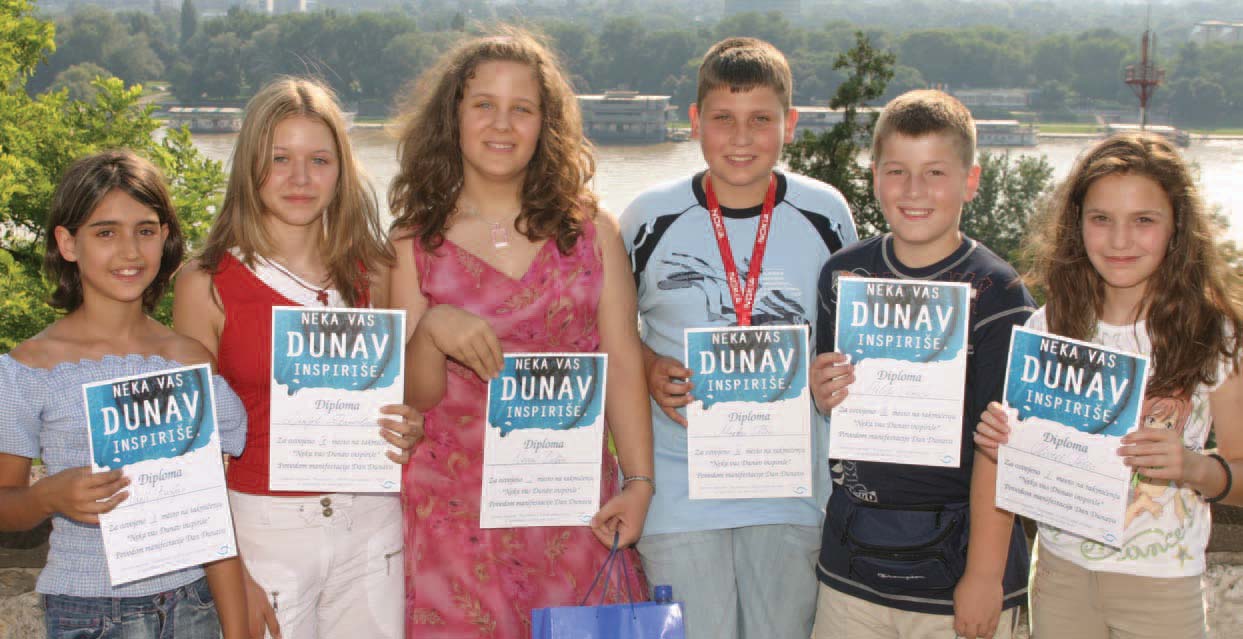

R E C O M M E N D A T I O N S
25
Kindling their interest now will help
secure their involvement in the future.
EXAMPLES
Publications spark radio
and TV coverage
Ministry introduces schoolchildren
The Association of Young Researchers, an NGO in Bor, Ser-
to water pollution issues
bia, produced a leaflet and a special edition of its bulletin,
In Romania, the Ministry
Ekobor, that examined the causes of local water pollution,
of Environment and Sus-
described monitoring needs, and explored ways to control
tainable Development de-
the pollution. The publications were distributed to partici-
veloped appealing
pants of the local roundtable, the media, and citizens in
materials on the Danube
hard copies and through the organization's website. In addi-
and water pollution
tion, the NGO produced or participated in local radio and
geared specifically to pri-
television programs about local water pollution problems.
mary school children.
Details are available at www.etos.co.yu.
With lively illustrations
(some by children), they
Radio program emphasizes
introduce the issues in
collaboration
ways that relate to chil-
dren's own experience.
A radio program in Bulgaria about access to environmental
More information is avail-
information demonstrated constructive collaboration by in-
able at
cluding an NGO representative, the head of the Information
http://www.mmediu.ro/
Center of the municipality of Lovech (whose office provides
ape/coltul_copiilor.htm.
environmental and water-related information), and the legal
adviser of the Danube River Basin Directorate. The pro-
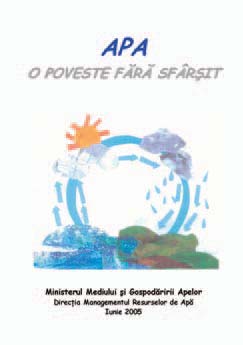
[a child's illustration from
gram included a roundtable discussion that highlighted the
the Directi Managementul Resurselor de Apa booklet of
problems and best practices of providing access to infor-
June 2005 entitled "APA: O Poveste Fara Sfarsit."]
mation about water issues.
F L O W I N G F R E E L Y

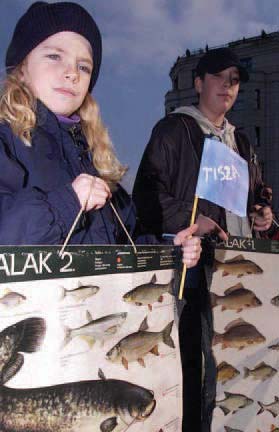
26 RECOMMENDATIONS
Events like Danube Day can
engage the broader public in
river basin management
· To broaden the circle of citizens engaged in environ-
mental protection activities, frame the issues in ways
that are relevant to the community. How does water
quality affect the lives of local residents and their
children? What can they realistically do about it?
· Find common ground and common interest and
show the benefits of cooperation.
· Establish good relations with the news media and
build partnerships for publicizing the right to infor-
mation and its uses in controlling local water pollu-
tion. Campaigns to raise awareness about local water
pollution, access to environmental information, and
public participation can be conveyed in news articles
and spots in local or national broadcast media.
· Stage events to engage the broader public, such as:
- celebration of Danube Day (29 June, www.icpdr.
org/icpdr-pages/danube_day.htm),
- Danube Box (an education toolkit),
- Generation Blue (Austria's youth water program,
www.aqa.at/projekte/generationblue),
- the Austrian water prize "Neptun," a "children's
corner" on websites,
- World Water Monitoring Day (18 October,
www.worldwatermonitoringday.org),
- green schools and workshops,
- national and international school networks, and
- educational materials produced by ministries.
· Time local events to coincide with larger-scale efforts
to magnify the audience and impact.
EXAMPLE
9 Make the most of opportunities
NGO finds communication problems
on river basin committees
to participate
In Romania, an NGO's assessment of the legal and
practical barriers to public involvement in the Mures
Cooperation between government and NGOs in
River Basin Committee led to recommendations for
river basin committees requires willing parties and
improvements. In particular, the NGO examined how
some funding; transboundary efforts face special
communication and decision making occurred
challenges.
within the committee and how committee members
River basin committees are one way to increase public
involved their stakeholders. One outcome was a
participation opportunities for the public and NGOs. De-
manual on how to improve public access to informa-
tion and public participation. The recommendations
veloping a successful process in one river basin may have
will assist national authorities in making changes to
spillover benefits if the effort becomes a model for others.
improve the functioning of river basin committees.
F L O W I N G F R E E L Y

R E C O M M E N D A T I O N S
27
Government support can enhance the deliberations and
outcomes of river basin committees. It will be impossi-
ble to involve everybody, but the more inclusive and
representative these groups and the more expertise and
knowledge they acquire, the more influence they can
have on decision making. For maximum impact, NGO
stakeholders should take the initiative, organize them-
selves, delegate representatives to serve on advisory or
consultative committees, and prepare proposals.
Transboundary water management presents special chal-
lenges for public participation. Because many rivers and
river basins are international, productive efforts to solve
environmental problems require careful attention to com-
monalities and differences on both sides of the border.
Cultural differences between countries can affect the
work of committees dealing with transboundary river is-
sues. Parallel public participation processes must be har-
monized and run in several countries simultaneously.
How to take full advantage of
committee efforts
· To finance public participation in river basin man-
agement and planning, seek provincial or state fund-
ing (e.g., German Länder provide resources from the
state budget) or contributions from local authorities.
· Involve people early in the process. The upfront in-
vestment of time and resources will be most efficient
for governmental authorities.
· Consider using existing associations of stakeholders,
including NGOs, rather than trying to create a
wholly new public participation process.
· Reinforce good decision making and democratic val-
ues with transparent processes.
· Ensure broad representation on the committee by
using a fair election or selection process that is trans-
parent and sensitive to stakeholders' interests.
· Determine the roles and responsibilities of committees
that serve an advisory function: offering comments,
providing access to information, giving feedback, dis-
seminating links to and from the public, and incorpo-
rating informal input into decision making.
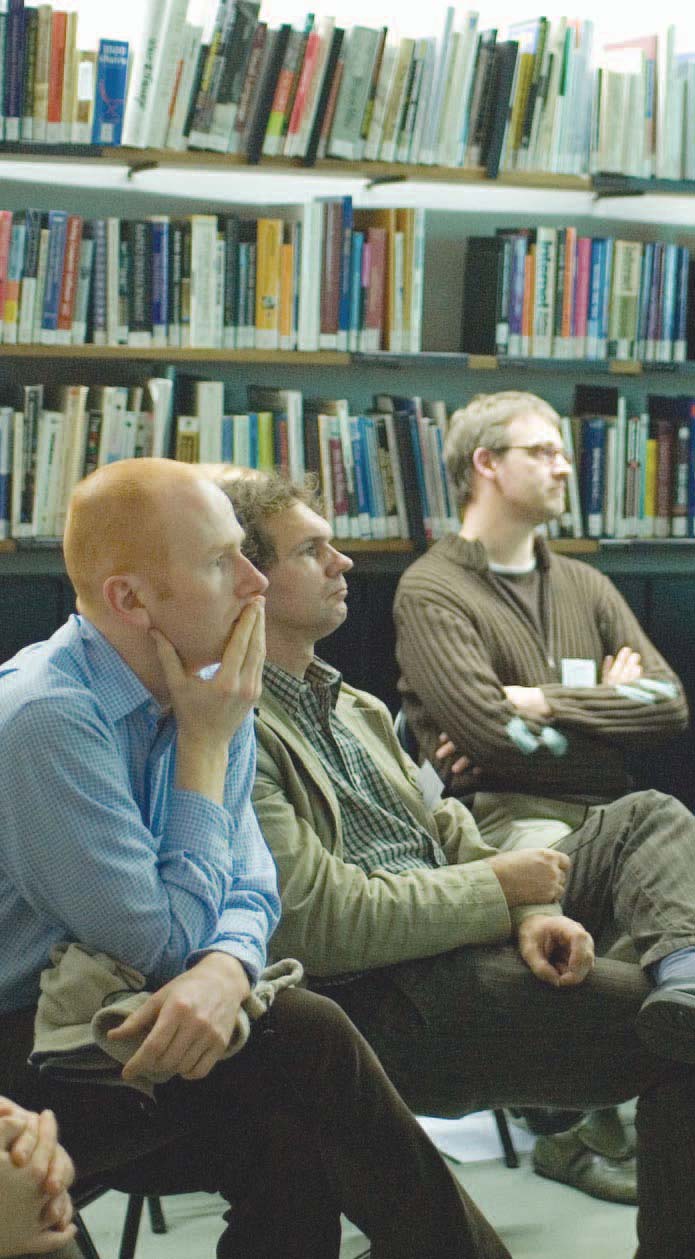
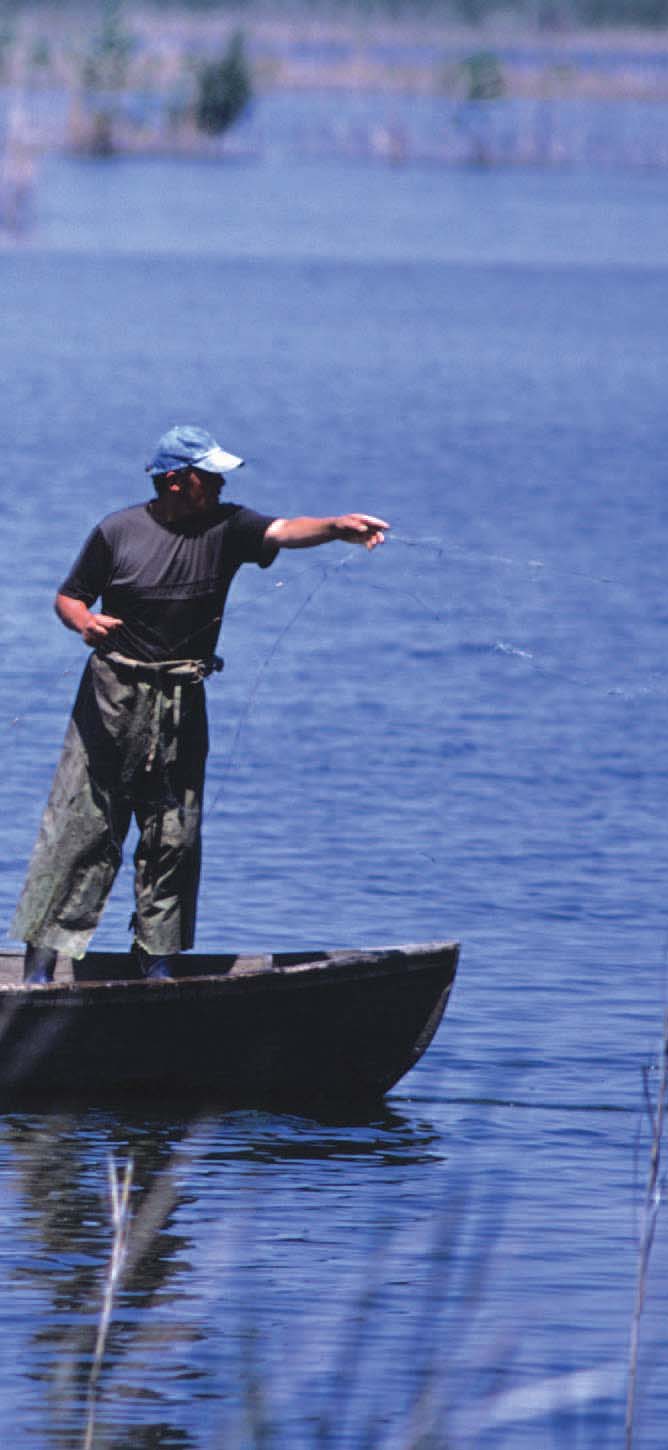
Anglers form an important constituency
· Maximize the results from public participation by
in most river basin management plans.
F L O W I N G F R E E L Y
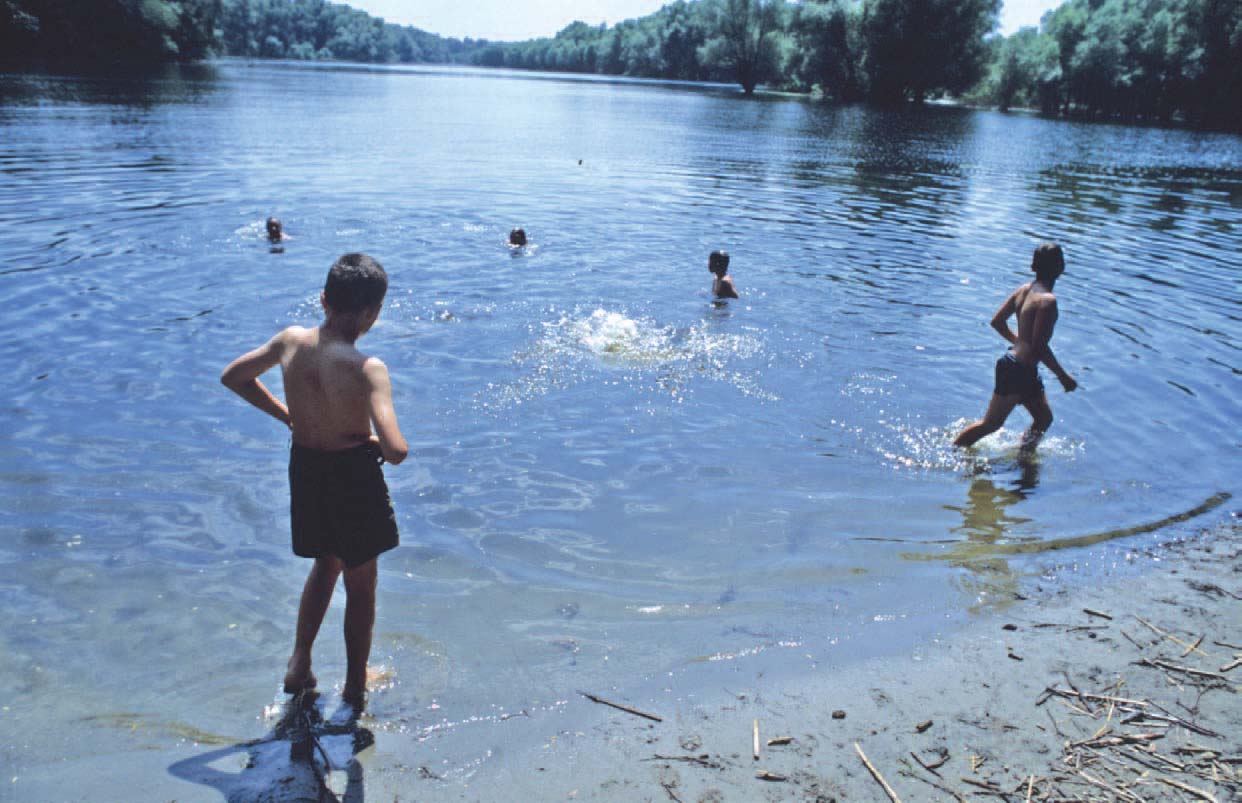

28 RECOMMENDATIONS
Even though communities have a natural
interest in water quality, the public's hard-
won right to be involved in decisions
involving the river can easily be eroded.
preparing agendas and minutes, water management
10 Safeguard public participation
data and maps, and copies of plans and proposals
rights to prevent their erosion.
pending before the committee. Make these docu-
ments publicly available in a timely fashion.
Experience around the world shows that advances
· Increase the expertise and knowledge of committee
in information access and public participation can
members through workshops that prepare partici-
be eroded. Keeping these rights requires diligence.
pants to understand both technical issues and meth-
Ongoing local, regional, and international efforts are
ods of constructive engagement (as has been done by
necessary to maintain the gains in providing access to
the Green League in Berlin).
information and expanding public involvement in water
· In transboundary management, take into account
quality management.
differences in communication, timing, and process
dynamics that emerge from different national tradi-
tions, languages, legal systems, and styles.
How to keep the process alive
and growing
· Harmonize international approaches and standards
by using tools such as memoranda of understanding
· Engage a widening circle of citizens and sustain
to clarify expectations between the various parties.
dialogue with other stakeholders.
F L O W I N G F R E E L Y
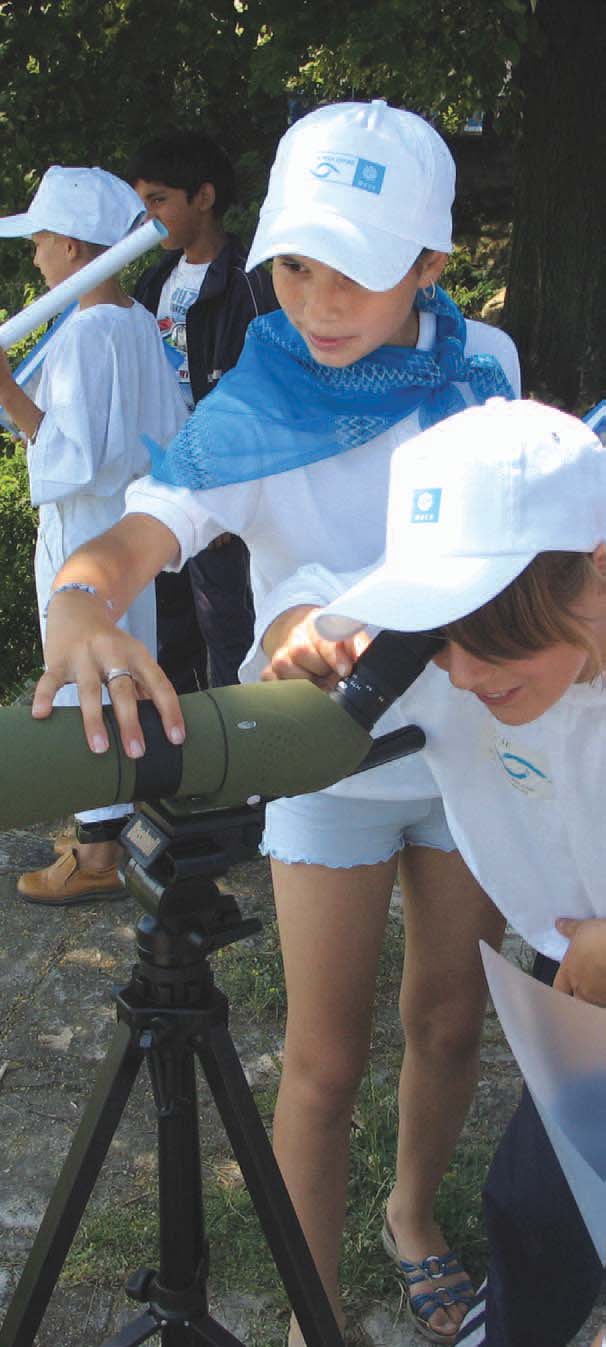

R E C O M M E N D A T I O N S
29
· Use tools such as websites, listservs, and other elec-
tronic forums to exchange experience, discuss issues,
and develop joint actions.
· Build constituencies for sustained efforts by appeal-
ing to the self-interest of each of the stakeholders.
· Maintain contacts with people who participated pro-
ductively in joint activities to keep them involved.
· Connect with motivated constituencies, such as
farmers and "water communities."
· Leverage good project products into additional fund-
ing; search for opportunities.
· Publish project results and emerging ideas so that
they are shared more broadly.
· Hold forums to exchange ideas and ask questions.
· Arrange exchanges so that stakeholders can share
their experience and learn from one another.
· Continue international exchanges and study tours with
colleagues and counterparts from other countries.
· Harmonize efforts with the activities of the Public
Participation Expert Group of ICPDR and partici-
pate and contribute to Danube-wide or sub-basin ini-
tiatives, including the ICPDR expert groups,
stakeholder meetings, and planning processes.
· Explore opportunities to act together on an ongoing
basis ("twinning") with communities facing similar
challenges, either in the same country or elsewhere.
EXAMPLE
Hard work is rewarded with funds
for more activities
After a pilot project to increase public access to environ-
mental information, participants in Slovenia applied for and
received a grant from the British Embassy in Ljubljana in
2001 to continue their activities. With this support, they
established an interactive, electronic public participation
forum, conducted three workshops to develop a handbook
on implementing the Aarhus Convention, and held five
training sessions on how to participate. More information
Activities that involve youth in monitoring water
is available at http://www.rec.org/REC/Databases/
quality can help build tomorrow's constituencies.
Funders/Default.html.
F L O W I N G F R E E L Y

30
Conclusion
Equally important, the Project built new bridges be-
tween government officials, NGOs, and other stakehold-
ers and demonstrated--in some cases for the first
time--the effectiveness and importance of working to-
gether to solve water pollution problems. Finally,
S
through the demonstration projects, the Project showed
ignificant results were achieved in the Danube
how even with modest resources and limited time, inno-
River basin countries in where the Project was car-
ried out. Government officials at the national, re-
vative collaborations among stakeholders can help over-
gional, and local levels improved their capacity to
come substantial barriers to information access and
provide better public access to water-related information
more fully engage the public in efforts to address pollu-
and to facilitate greater public involvement in manage-
tion hot spots in the community.
ment planning. NGOs and citizens became more skillful
There is good reason to believe that these results will help
in obtaining the information they need to participate
ensure the long-term sustainability of gains to reduce nu-
and understand better how management decisions di-
trient and toxic pollution of the Danube River. The
rectly affect them. The demonstration projects gave par-
health of the river and those who rely on it will depend
ticipants opportunities to test methods to improve
on the efforts that all stakeholders undertake to maintain
information access and public participation.
and increase public involvement into the future.
F L O W I N G F R E E L Y

31
Resources
and contacts
Bulgaria: www.rec.bg
Croatia: www.rec-croatia.hr
Romania: www.recromania.ro
Serbia: www.recyu.org
PILOT PROJECTS
Ecological Association of Citizens (Eko-Zeleni)
Husejin Keran (Project Leader)
Lukavac, Bosnia-Herzegovina
Email: ekozeleni@hotmail.com
Association for Useful Activities (Ecomission 21st Century)
Nelly Miteva (Project Leader)
Lovech and Troyan counties, Bulgaria
Email: ecomission21@lovechonline.net
Green Osijek Ecological Association
Jasmin Sadikovic (Project Leader)
Osijek, Croatia
PUBLIC INVOLVEMENT INFORMATION
Email: jasmin.sadikovic@os.htnet.hr
For more about public involvement in environmental protection
Website: www.zeleni-osijek.hr
and water management planning, see these websites:
Focus Eco Center
International Commission for the Protection of the Danube
Zoltan Hajdu (Project Leader)
River: http://www.icpdr.org. Contact Jasmine Bachmann,
Tirgu Mures, Romania
Technical Expert on Public Participation and Public Relations,
Email: zhajdu@focuseco.ro
at icpdr@unvienna.org.
Website: www.focuseco.ro
EU Water Framework Directive: http://ec.europa.eu/envi-
Association of Young Researchers Bor
ronment/water/ web sitewater-framework/index_en.html
Toplica Marjanovic (Project Leader)
Aarhus Convention: http://www.unece.org/env/pp/ and
Bor, Serbia
http://aarhusclearinghouse.unece.org
Email: mibor@ptt.yu
Website: www.etos.co.yu/mibor/projekti/demo-projekat
PROJECT PARTNERS
Magda Toth Nagy, Head of Public Participation Programme,
NATIONAL MINISTRIES
Regional Environmental Center for Central and Eastern Europe:
For more information on domestic implementation of the
tmagdi@rec.org.
Water Framework Directive, water management and related
public participation issues, see these websites:
Jane Bloom Stewart, Director, International Environmental
Legal Assistance Program, New York University School of Law:
Bosnia and Herzegovina
jbs6@nyu.edu
Ministry of Foreign Affairs and Economic Relations:
www.mvteo.gov.ba
Ruth Greenspan Bell, Director, International Institutional De-
velopment and Environmental Assistance, Resources for the
Bulgaria
Future: bell@rff.org.
Ministry of Environment and Waters. Water Directorate:
www.moew.government.bg/
Croatia
PROJECT PRODUCTS
Ministry of Agriculture, Forestry and Water Management,
All the products of the Project, including detailed reports on
Department of Water Management: www.mps.hr
the demonstration projects, are at:
http://www.rec.org/REC/Programs/PublicParticipation/Da
Romania
nubeRiverBasin/project_products/default.html.
Ministry of Environment and Sustainable Development,
Water Department: www.mmediu.ro/ape/ape.htm
In addition, country-specific documentation can be found on
the websites of the REC country offices:
Republic of Serbia
Ministry of Agriculture, Forestry and Water Management,
Bosnia and Herzegovina: www.rec.org.ba
Water Department: www.minpolj.sr.gov.yu
F L O W I N G F R E E L Y