2nd issue
July 2003
Dear readers,
DEF development in Murska Sobota, Slovenia, demon-
People on different levels of our soci-
strated that NGOs are prepared to take
ety search for possibilities to connect Until now Danube Environmental Fo- further steps forward. Their work and
individuals and communities from rum members have focused on strength- cooperation will result in these NGOs
different countries, trying to find ening co-ordination of NGO activities becoming real partners to governments
common interests and needs of differ- on the regional level. NGOs have ex- and in building up GO-NGO partner-
ent cultures. Beside this never-ending pressed their strong desire to co-operate. ships especially regarding WFD imple-
quest of artificial linkages it may hap- The DEF Board, Secretariat and Na- mentation. DEF members will use their
pen, that we neglect those natural tional Focal Points in 13 countries built skills and experiences developed after
ones, which were here for many years. mechanisms of an effective and func- many years of practice in public partici-
Nature found tools for linking people, tioning network, while involving DEF pation (PP) activities to support the de-
ecosystems, even natural processes member NGOs in 13 countries in net- velopment and implementation of the
long time ago it formed rivers, which work activities. In last 6 months the Public Participation Strategy for the Da-
solder life in their catchments with life number of DEF members increased to nube River Basin.
in catchments of rivers they flow in, 110 NGOs.
In presence DEF develops its own PP
and with life around and in seas or Today, also due to the challenge of Strategy, modified to suit the Danube
oceans. No man ever found so strong UNDP/GEF Danube Regional Project, River Basin Management Plan and tak-
connection, which would influence so NGOs in Danube Region show that they ing into consideration other PP initia-
many cultures in similar way. Our are able to co-operate and co-ordinate tives in the region (ICPDR, GWP,
everyday life depends on their water their activities on a very high level.
Further efforts of the DEF network will
WWF). Regional DEF initiatives will be
its amount and quality. In spite of this be oriented to strengthening the national co-ordinated by the Board and Secretar-
man looks for its own linkages, often networks, broader information dissemi- iat, within the network. DEF efforts are
destroying this fragile natural heri- nation concerning water pollution, the targeted at establishing effective co-
tage.
assessment of national needs for a spe-
operation with responsible representa-
NGO community in the Danube Basin cial NGO publication on nutrient and tives of state institutions, with a focus on
follows natural links formed by the toxic substances in waters. In this publi- partnerships in water protection at the
river Danube and its tributaries and cation special focus will be given to pos- national and local level. Each DEF Na-
connects people dependent on Danube sibilities how individuals and selected tional Focal Point will select and nomi-
with effort to ensure effective and groups of stakeholders (agriculture, fish- nate a NGO representative with WFD
long-term protection of water. The eries, forestry) could contribute to water implementation and public involvement
DEF Newsletter, the 2nd issue of pollution reduction. Publication will be expertise. This person will be in contact
which you have in your hands, was finalised in winter 2003/2004 and will with responsible state institutions and
initiated as the communication tool be published in 11 languages of Danube will work on WFD implementation to
among NGOs in Danube countries to countries.
national legislation as well as on ad-
spread information on their activities. The last DEF Board Meeting, which justing EC Guidance on Public Partici-
Current issue brings information on took place on 24th and 25th March 2003 pation to national conditions.
successful NGO projects along Da-
nube, in which public participation How Should the Public Participate in Danube
plays a crucial role.
River Basin Management Planning?
What is DEF?
by Andy Garner, Environmental Specialist, UNDP/GEF Danube Regional Project (16. 7. 03)
Which stakeholders should participate in what part of the Danube
Danube Environmental Forum (DEF) river basin management planning process and how? What type of par-
was created in 1999 as a Danube River
Basin-wide platform of non- ticipation is desired (information, consultation active participation in
governmental, non-profit, politically decision-making) and how can this be assured? The 45 stakeholder
independent, environmental organisa- representatives (national governments, NGOs including DEF reps,
tions, in order to establish a common WWF, GWP etc., private practitioners etc.) that participated in a
approach for the environmental protec- UNDP/GEF Workshop on Public Participation held in Bratislava,
tion of the Danube river. Since 1999 the Slovak Republic, April 200, on behalf of the International Commis-
DEF has also had observer status with
the International Commission for the sion for the Protection of the Danube River (ICPDR) sought to answer
Protection of the Danube River these questions as input into developing a first Danube River Basin
(ICPDR).
(DRB) Public Participation Strategy.
According to the WFD, appropri- DRB NGO community to use this to develop national public par-
ate public participation is re- legal base to assure that ticipation implementation plans
quired in the river basin manage- stakeholders claim their stake, with concrete PP activities in line
ment process. Further the official, help to define the type of river with the Water Framework Di-
EU Guidance Document on Pub- basin they want, assure they gain rective timeline (from 2003 until
lic Participation in the WFD, the benefits they desire and in 2009). This national level process
suggests that public participation short, to optimize the manage- could start in 2004 with national
should be started now! Thus, the ment of this DRB.
stakeholder workshops to define
PP Workshop in April, worked to Many would agree that ensuring the process at the national level.
lay out the PP process needed in the public's participation into The results of the workshop,
Danube River Basin planning.
water management activities is background documentation as
The EU Water Framework Di- essential for achieving real im- well as the subsequent draft DRB
rective is the driving force in provements in water quality, for Public Participation Strategy are
water management in Europe to- preserving or restoring freshwater available on the DRP website:
day. The Danube countries have ecosystems and for assuring that www.icpdr.org/undp-drp and then
agreed to a strict timetable to environmental benefits that the click on "Ongoing Activities" and
meet WFD requirements includ- DRB can provide. Many NGOs, then on "Activity 1.1.11 Public
ing, characterizing the Danube including those in the DEF net- Participation".
River Basin (DRB), identifying work, are already actively work- For more information email the
pressures and impacts, determin- ing to get the public involved on author at: andy.garner@unvienna.org
ing measures to reduce or remove the one hand and to assure that
the impact etc. all of which will they can be involved on the other.
be contained in a first Danube
NGO trainings on wetland
The PP Workshop participants
River Basin Management Plan.
confirmed that public participa- restoration and nutrient
At the workshop it was agreed tion is in fact needed at different reduction
that what type of participation levels: at the regional or Danube In spring 2003 DEF National Focal
needed depends on the nature of wide level, at the sub-basin level Points in 11 countries of Danube River
the respective tasks of the WFD. (e.g. Tisza, Sava, Drava, Prut Basin organised national Trainings on
It also became clear that this Da- etc.) at the national level and at Wetland Restoration and Nutrient Re-
nube River Basin Planning proc- the local levels. A major chal- duction. The objective was to build
NGO skills in wetland management and
ess that is happening now until lenge is to assure the necessary water pollution reduction and to dis-
2009 when the first Danube River inter-connections between the seminate information about the
Basin Management Plan is final- levels. Participatory processes UNDP/GEF Danube Regional Project.
ized, represents a great opportu- established in Bulgaria for exam- Structure of the training followed the
nity for various stakeholders (in- ple, should somehow feed into International training from autumn 2003.
Content and exact objectives of the
cluding DEF members and other those at the regional- Danube trainings were adjusted to national pri-
interested partners) to get in- level. Just as participation in sub- orities in water protection in each coun-
volved. The message at the work- basin processes (like the Tisza) try. For example in Czech Republic and
shop was clear: Get involved now can link to the local as well as Ukraine wetland restoration was identi-
in order to influence the process!
national and regional levels.
fied as the main priority. On the other
hand in Moldova, Bosnia and Herzego-
Environmental NGOs in the Based on the PP Strategy, con- vina special focus was given to nutrients
DRB, in most cases, have the best crete activities that will be im- and toxins in waters and possibilities for
experience in involving the public plemented beginning already in their removal. Majority of countries
(in some cases the only experi- the Fall of 2003 and in part sup- tackled both areas. Together more than
340 representatives of NGOs, universi-
ence!) For example, it was due to ported by the DRP, are being ties, local communities and media from
a great degree, to the initiative of identified and prepared (for ex- Danube countries were trained.
the WWF Danube-Carpathian ample those for the regional/ Da-
Programme and the Global Water nube level under the leadership of Beside exchanging information and ex-
periences, gaining new skills in water
Partnership-Central and Eastern the ICPDR and reflected in the management and nutrient removal, there
Europe, that the ICPDR placed ICPDR PP Operational Plan.) were common side effects identified by
Public Participation high on its Another implementation step be- majority of National Focal Points. Ac-
agenda. Thus, the EU WFD im- ing considered, as recommended tive training discussions deepened the
plementation is an opportunity for in the DRB PP Strategy, is to national NGO dialogue. The linkage to
international training from autumn 2002
DEF members and the overall support interested DRB countries and awareness that NGOs in whole Da-
DEF Bulletin
nube Basin work together towards re-
mental consciousness have left a daunt-
mental and socio-economic problems
duction of nutrients and toxins in waters,
ing legacy. The accumulated social,
resulting in national and regional dis-
brought higher importance to training
economical and environmental problems
parities. Many of the communities be-
objectives. In each country representa-
(health problems, unemployment, de-
lieve that the way out is reorientation
tives of Global Water Partnership and
graded, non-remediated mining sites,
from mining towards other types of ac-
International Commission for Protection
etc.) have neither an owner nor a solu-
tivities, mainly the development of
of Danube River Basin as well as repre-
tion provider. This observation is the
tourism, agriculture, small scale indus-
sentatives of other state institutions in-
result of two regional projects that re-
try, etc.
fluencing water policy in Danube coun-
vealed the close interconnection between
tries were invited and in many countries
environmental problems and the social
also participated at the trainings. This
and economic situation in industrialised
initiative, being one of the activities of
areas.
UNDP/GEF Danube Regional Project,
One of the projects was an EC FP5 Proj-
initiated and improved co-operation
ect entitled Environmental Regulation of
among NGOs as well as between non-
Mine Water in EU-ERMITE (www.
governmental and governmental sector
minewater.net/ermite) that resulted with
in 11 countries.
an overview of mine water issues in
countries in Europe including Western
DEF International Training 2003
Balkan countries. For each European
country a comprehensive assessment of
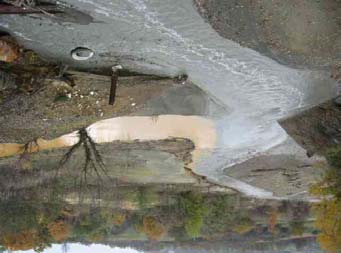
Dead Borska river polluted by acid mine
In autumn 2003 DEF will organise an
the legal, institutional, socio-economic
drainage (right) and wastewater from bat-
international training for NGOs to build
and technical aspects of mine water
tery factory (left), Bor, Serbia
their capacities in the area of public par-
management and regulation was made.
From amongst the priorities recognised
ticipation within the WFD, and commu-
by those projects in the category of legal
nication and media work, in order to
Another project is also the regional proj-
and policy development, the highest
ensure effective involvement of NGOs
ect entitled Involvement of Local Com-
priority is given to the activities on
in these processes on both the regional
munity in Mine Water Pollution Control
elaboration of new sustainable develop-
and national levels.
(www.coor.ba/en/rec.html), which con-
tinues research on those aspects and
ment plans and spatial plans as well as
includes the local community in the de-
to development of legislation, while in
Environment And Mining
cision making processes. The project is
the category of treating technical priori-
ties, the priority is given to activities
Industry In The Region
carried out by the Centre for Environ-
mentally Sustainable Development from
focusing on the rehabilitation of con-
The regions of Central and Eastern
BiH, and implemented jointly with part-
taminated areas and the treatment of
Europe have been under particular pres-
ner NGOs from Macedonia and Serbia
mine waters. Beside these two catego-
sure to adapt since the fundamental po-
& Montenegro. As a part of the project
ries, the documents also address the ac-
litical, social and, above all, economic
activities and in order to rise awareness
tivities in the categories' institutional
changes in the early 1990s. Numerous
on environmental pollution caused by
problems, information dissemination,
cities and regions for decades the mo-
mine waters, a brochure entitles "Mine
education and scientific and research
tors of economic development on ac-
Waters and Environment" has been
work, public participation and socio-
count of their industrial base are now
published (www.coor.ba/en/rec03.html).
economic aspects.
confronted by socio-economic and eco-
logical structural problems of a far-
reaching nature.
In the countries of CEE and the Western
Balkans, these problems are most evi-
dent in the heavy metal industrial zones
and in mining areas. A complex political
situation and negative business envi-
ronment created conditions, in which the
mining industry now finds itself in a
very complicated and hard situation. In
recent years, production in many mines
The brochure includes information on
has completely ceased resulting in a loss
mechanism of formation of mine waters,
of markets which was the cause of their
as well as scientific description of their
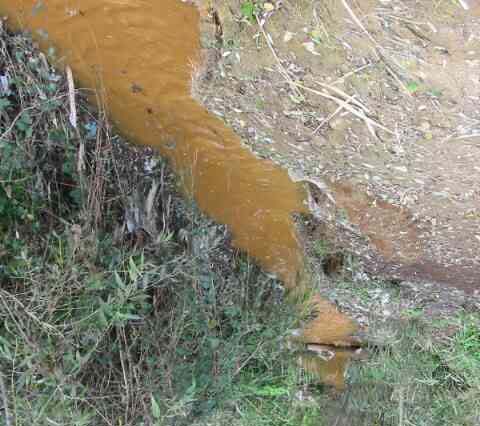
River Kiselica polluted by acid mine wa-
closure.
impact on the environment. Further-
ters, Probistip Macedonia
Environmental problems related to pol-
more, the brochure includes an assess-
The priority areas and actions identified
lution by mine waters and mining ac-
ment of the current state from all three
through those projects should serve as a
tivities are one of the aspects that require
countries involved in the project (BiH,
basis for future actions in the field of
special attention. Short- and long-term
Serbia and Montenegro, and Macedo-
mine water pollution control. It is hoped
pollution from both active and aban-
nia).
that the recommendation contained in
doned mines in the region is still one of
the reports will catalyse action and help
The research activities of both projects
the most serious threats to the water en-
improve the state of environment in the
confirm that countries in Europe, par-
vironment.
region.
ticularly those in CEE and West Balkan
Additionally, years of poor management,
region, face the growing problem of a
Contact: Igor Palandzic
financial strain and lack of environ-
mining industry that causes environ-
igor.palandzic@heis.com.ba
Promoting water efficiency in
Pleven and Troyan. Environmental
associated with it and the measures nec-
Bulgarian settlements
NGOs' representatives consider that
essary to its amelioration.
environmental and socio-economic fac-
Contact: Christine Margraf,
DEF members and partners in Bulgaria
tors should have priority over corpora-
ch.margraf@fa.bund-naturschutz.de
launched a number of events to promote
tive interests in deciding whether to
water efficiency through water saving
build the dam or not.
campaigns and events at the beginning
Activities for public in Serbia
Contact: Stanislava Boshnakova
of 2003. For this purpose the Ministry of
ceie@iterra.net
and Montenegro
Environment and Water in co-
operation with the Centre for Environ-
DEF Serbia and Montenegro takes part
mental Information and Education, the
Hot issues in the Danube Re-
in the daily distribution of different en-
DEF focal point in Bulgaria issued a
gion in Germany
vironmental information by using a DEF
full-colour brochure about water effi-
S&M distribution list and a discussion
ciency. The publication gives useful tips
DEF National Focal Point in Germany
list on the national NGO electronic net-
for the effective use of water by the
and other NGOs put forward many pro-
work "Volvox" (volvox@recyu.org). In
households and relates some water-use
posals for improvement of the imple-
addition, the wider public has the op-
statistics. The brochure was dissemi-
mentation of the Water Framework Di-
portunity to read all this information on
nated amongst the general public during
rective and on the use of better
the Web portal of the Ecological Re-
the National Earth Day Campaign,
definitions because NGO community is
sources Center www.erc.org.yu
launched in Bulgaria on April 22.
not satisfied with the supplementary as it
stands. For the public participation there
Contact: Mirjana Bartula
Water efficiency activities are also im-
was a "kick off"-conference, where local
defyu@EUnet.yu
plemented by DEF partners on the local
NGOs and others gathered together in-
level: the Information and Sustainable
formation in order to propose future co-
Development Society and Ecomission
Activities in Slovenia
operation. In general there exists a good
21 Century launched a joint one-year
network concerning the Water Frame-
In the period from March to the end of
project to enhance water saving in the
work Directive in Germany. The NGOs
May, the following promotional activi-
town of Lovetch.
in Germany lay stress on bettering the
ties coupled with concrete actions have
One of the major problems in the town,
possibilities of public participation and
been carried out by DEF National Focal
situated by the Danube tributary Osam
actively work towards this end.
Point Slovenia.
River, is the shortage of drinking water.
Concerning the Danube itself there are
For this reason the two NGOs, in co-
On the 2nd of April a national training
four main topics of importance in
operation with local stakeholders and
Bavaria:
was held in Race castle. The training
Municipality of Lovetch, have planned a
was entitled "Wetlands their Impor-
number of activities aimed at improving
1. Preventing new hydroelectric power
tance and Threat". Seven trainers, all
the effective use of this valuable re-
plants and dams in the free-flowing area
specialists from different fields, were
source. The key pilot activity is a techni-
between Straubing and Vilshofen. The
present covering eight different topics
cal improvement and renovation of the
Bavarian government does not accept
e.g. artificial snow and its effects on
existing water pipe system in a Play-
the decision of the German government
wetlands, river pollution and problems
skool in the town. The water pipe will be
against the power plant. NGOs are still
with sediments, the importance of wet-
supplied with a pressure regulation
working on this issue and generating a
lands, the Ramsar Convention and some
mechanism which is expected to result
great deal of public information and
other local examples. There were alto-
in huge water savings.
lobbying.
gether 25 participants from ten Slovene
The project partners have planned to
2. Natural flood control to achieve better
NGOs who participated in the event.
announce the project results through
flood control together with restoration of
Amongst others, participants came from
education and awareness activities and a
the floodplain areas and wetlands. There
schools, local communities, from the
media campaign among the local com-
are very problematic plans of the gov-
State Regional Office for Nature Protec-
munity in order to turn this pilot activity
ernment to install polders as technical
tion as well as representatives from the
into common practice. The target groups
measures to control flooding in certain
Ministry of Environment, Physical Plan-
of the project vary from children to their
areas, into which the water of the Da-
ning and Energy being present. For the
parents.
nube can flow in the event of extreme
flood-conditions, without permanent
occasion a book of abstracts was pub-
Water efficiency in the Osam River Ba-
regeneration of the flooded area. We
lished, which is available also in main
sin is the sustainable alternative of the
propose widening floodplain areas and
libraries and is mentioned also in the on-
construction of Cherny Osam Dam. Lo-
laying dams back (Further information:
line catalogue COBISS-ID under the
cal nature lovers and NGOs have im-
"Flood control for the Bavarian Danube
code 49928705.
plemented a number of protests and
River Basin A chance for floodplain
public awareness campaigns to prevent
ecosystems?", published in "Natur und
We have established a good partnership
the building of the dam, which will re-
Landschaft" 4/2003: 130-137. In Ger-
and basis for co-operation with national
sult in the destruction of valuable natural
man)
representatives of Global Water Partner-
habitats.
ship, Ramsar and the Ministry of Envi-
3. Restoration projects: we are active in
In 2002 CEIE implemented a number of
ronment, Physical Planning and Energy,
several projects to protect and improve
public awareness activities (public de-
the wetland area of the "Donauried", a
and with some local communities. All of
bates, publications in the media, public
large marsh along the Danube between
the representatives, cited above, have
opinion research and dissemination of
Ulm and Donauwörth, in particular tak-
also been invited to participate at various
information materials) to promote
ing measures to protect very precious
future meetings.
cheaper and more environmentally
wetland-meadows.
friendly alternatives to Cherni Osam
Lectures were given on wetlands, hedges
Dam in the local towns of Lovech,
4. Public information about the ecologi-
and their importance for ecological
cal value of the Danube, the problems
farming for the benefit of schools,
DEF Bulletin
hunting associations and farming socie-
The Frog-lake protection pro-
We will use our results to make sugges-
ties. Moreover, we organised some
gram an example for the
tions for the appropriate treatment of the
guided tours for schools to various wet-
public participation activities
lake and for its eventual protection.
lands where flora and fauna were shown
of the Club of Young Natural-
Similar to the Frog-lake program we
to pupils.
also run two other PP programs one in
ists
the rség National Park around a strictly
Recently the new issue of Biota, journal
The public participation activities of
protected sphagnum swamp and another
of biology and ecology, written com-
DEF National Focal Point are primarily
in the protection and survey of an en-
pletely in English, has been published.
based on theoretical and practical edu-
dangered crab species, the stone crayfish
To keep NGOs and others stakeholders
cation, conducting educational exercises
(Austropotamobius torrentium). Those
informed about our activities we made
and organising within the sphere of na-
with further interest in these programs
some interviews, held a press confer-
ture conservation activities. Since our
should contact FTK Club of Young
ence, and published an article about
foundation (1979) our activity has been
Naturalists.
problems in the Danube basin.
focused on the organisation of an annual
Contact: Csilla Dorogman
series of presentations, primarily de-
In future we intend to give more lectures
csillahbabe@freemail.hu
signed for the secondary school age
and guided tours for schools and other
groups, where there is a possibility to
interested parties because in our experi-
listen to and personally meet with re-
Environmentally Sustainable
ence such education is of utmost impor-
nowned Hungarian experts. To date ca.
Flood Protection Measures for
tance. Along with the above-mentioned
400 sessions have been held with over
the Morava and the Becva
tasks, we will soon also be publishing
9000 participants.
Rivers, Czech Republic
the next issue of the Biota journal and
One example for our successful field
The Morava River, with the Becva River
this will be distributed among schools,
studies is the Frog-lake (Béka-tó) Pro-
as one of its main tributaries, is the only
together with postcards depicting some
tection Program started in 2002, in
major tributary to the Danube which
endangered animals in order to raise
which we strive to direct the attention of
originates in the Czech Republic.
awareness of problems facing such ani-
secondary school and university students
The catastrophic floods of 1997, during
mals.
to the importance of small lakes and the
necessity of a stricter protection in those
which almost the entire lowland areas of
Contact: Milan Vogrin
areas burdened by large numbers of
the Morava and Becva Rivers were in-
Milan.vogrin@guest.arnes.si
tourists. The Frog-lake is just a couple
undated, invoked a serious discussion
of square meters in size and lies in the
about the concept of efficient flood pro-
tection measures. Water authorities in
Opurtunity for young people
Buda mountains, near to one of Buda-
the areas of the Morava and Becva Riv-
from Danube river basin
pest's most popular tourist routes. In
spite of its size it has a rich insect and
ers have been suggesting building new
1st International Danube River Basin
amphibian fauna.
large reservoirs and utilising the contro-
Youth Camp "Mura 2003" will be held
versial, yet-to-be-ratified Danube-Odra-
In Spring 2002 we decided to survey the
in Slovenia on the River Mura (north-
Elbe canal as new anti-flood measures.
lake, and organise actions and educa-
eastern Slovenia) from the 1st to the 10th
tional programs to ensure its stricter
On the other hand, the Union for the
August 2003. The camp will be designed
protection. During the preparations we
Morava River has argued that new large
for young people (+17) from secondary
planned those programs which could
reservoirs and canals will have an ex-
treme and largely negative impact on the
schools and universities within the Da-
provide opportunities to disseminate
countryside and environment, and that
nube river basin. The camp will be free
information and organise field studies
these measures will be very expensive.
for participants. The only costs to par-
activities throughout the year. In the
For these reasons, the Union has com-
ticipants are travel expenses to and from
course of organising the members of
piled an alternative study called "Envi-
the camp.
FTK's working groups disseminated the
program in universities, secondary
ronmentally Sustainable Flood Protec-
Participants on the youth camp will
schools and primary schools, and con-
tion Measures for the Morava and the
work in six different groups, in the fields
tacted teachers and students.
Becva Rivers" suggesting the following
of botany, herpetology, odonatology,
To date nine presentation sessions have
provisions:
ornithology, water quality and ecologi-
been given either at the lake or in its
ˇ Increasing the water retention capabil-
cal landscaping.
surroundings (each month) and two 24
ity of the areas along the Morava and
Each group will have a leader-expert
hour microclimate measurements have
Becva Rivers threatened with peak
who will work with the students in the
been made (one in each season). Partici-
flows, especially in the spring areas of
these rivers.
field and in the laboratory.
pant for both types of field studies were
from local primary and secondary
ˇ Protecting the urbanised areas and
Participants must be prepared for
schools. The 24 hour microclimate
major industrial and agricultural sites
changeable weather conditions (at this
measurements attracted more people, for
along the rivers by tailor-made anti-
time of year it is usually about 30°C),
here the opportunity was given not only
flood measures.
physical exertion and walking through
to take part in the presentation, but also
ˇ Maintaining, or increasing, the water
mud and water with a lot of mosquitoes!
to participate in the taking of measure-
retention capability of the lowland along
Last but not least a good sense of hu-
ments and in field work: this allowed
the Morava and Becva Rivers in the op-
mour is essential.
participants to develop a stronger emo-
tional bond to the lake and its surround-
timal way. Creating space for overflow.
Contact: Milan Vogrin
ings.
ˇ Improving the information system on
Milan.vogrin@guest.arnes.si
run-off conditions. Enabling wider ac-
cess to information on run-off conditions
in this process was rewarded by the
and proper communication between lo-
in order to make flood forecasting and
presentation of the Wetland Conserva-
cal stakeholders to avoid problems with
run-off adaptations possible.
tion Award 2002 and the Evian Special
landowners as has happened in Lower
ˇ Compensating lost flood water storage Prize.
Austria. As far as there are no specific
space in the lowlands by measures im-
With respect to the TRP goals, NGOs
EU funding instruments for Natura 2000
proving the retention potential of the
drafted the Common Objectives and
implementation except LIFE III, the EC
river basin and the lowland.
Principles for the Trilateral Management
should revise its funding in terms of
The tailor-made anti-flood measures
Plan for the Morava-Dyje Floodplains as
further support of for Natura 2000 im-
have been prepared for particular sec-
a preparatory document for the trilateral
plementation and management.
tions of the Morava and Becva Rivers,
management plan establishment. This
Contact: Milan Janák
taking both the costs and possible finan-
draft was discussed and commented on
daphne@changenet.sk
cial sources into account.
by the relevant national-level experts
The shortened English version of the
and subsequently submitted to the TRP
Current focus of DEF National
study and full Czech version of the study
for consideration. On the 21st of May,
are available at www.sweb.cz/uprm/.
2003 the TRP agreed on the common
Focal Point Ukraine
Contact: Jaroslav Ungerman
wording of the document, thus setting
At the present time NGO movement in
jaroslav.ungerman@ecn.cz
the scene for future management of the
Ukraine works on the Sasyk lake prob-
site. Though a further round of national-
lem. This problem is closely related with
the Danube River, because the Danube-
Trilateral Ramsar Platform
level consultation, and a final approval
of the TRP, are required, the agreed
Sasyk channel cross-cuts the Stantsiv-
Meeting and Trilateral Confer-
goals and principles already give an effi-
sko-Zhebrianivski wetlands, thus caus-
ence on the Morava-Dyje
ing degradation of the Danube wetlands.
cient and comprehensive basis for the
Floodplains, 20th 21st May
These areas are included in the Ramsar
future common management strategy.
list. What can be done in order to solve
2003, Bratislava, Slovakia
In connection to this process the 5th tri-
these problems with the Danube? A po-
2001 marks and important milestone for
lateral conference "Planning the Fu-
tential solution under the ecosystem pre-
the co-operation between NGOs
ture: Trilateral Ramsar Management
sent in Sasyk is restoration of hydrologi-
Daphne (SK), Distelverein (A), Veron-
Plan & Natura 2000" took place in
cal conditions in the wetlands.
ica (CZ) and the WWF DCPO on the
Bratislava between the 20th 21st May
Restoration could be carried out along
the same lines as a sea firth would be
conservation and restoration of the
2003. In total 42 participants from Slo-
restored. In this case the natural restora-
Morava-Dyje Floodplains. A Memoran-
vakia, Czech Republic and Austria were
tion (renaturalisation) of the Stantsiv-
dum of Understanding has been ratified
represented on the conference. This in-
sko-Zheb-rianivski wetlands take place.
by the environmental ministries of Aus-
cluded representatives of ministries,
We are lobbying this project and a pro-
tria, Slovakia and the Czech Republic to
regional and local governments, water
gram of events is already scheduled.
establish the Trilateral Ramsar Platform
management bodies, nature conserva-
Large amounts of biogens, heavy metals
(TRP), involving representatives of the
tionists, wetland restoration specialists
etc. find their way into the Sasyk Lake
relevant ministries and management
and NGO representatives. Amongst the
via the Danube-Sasyk channel. Moreo-
institutions, to designate trilateral Ram-
presentations given, important informa-
ver, this channel flows through the Kili-
sar site and prepare a trilateral manage-
tion was shared on the goals and work of
isky region, an area dominated by rice
ment plan for the Morava-Dyje Flood-
TRP, development of the Common Ob-
paddies thus introducting agricultural
plains. At the 8th Meeting Conference of
jectives and Principles for the Morava-
waste into the wetlands. It should be
Parties to the Ramsar Convention the
Dyje Floodplains, development of a
noted that Sasyk is a closed reservoir.
substantial effort exerted by the NGOs
management plan for the Slovak Morava
There is no flux with sea water, the
Floodplain Ramsar Site, the
channel is a combination of two types of
Natura 2000 designation
water, differing in chemical and ion
process in the area, using
composition. Small regions in the upper
SAPARD funds for wetlands
part of Sasyk (Kohylnyk and Sarata) are
and natural grasslands
being destroyed and municipal waste
management. Participants
products from the towns on the banks of
from Slovakia and the Czech
the river ends in water. All these con-
Republic found particularly
tribute to extensive algal bloom in the
useful information focusing
water reservoir. This is further responsi-
on the establishment of the
ble for accumulation of toxic agents in
the water, killing phenomena and degra-
Natura 2000 network in
dation of quality of water, which is sub-
Lower Austria and on the
sequently used for drinking and other
use of EU funds to ensure
purposes of the local population, etc.
protection and appropriate
And this type of water discharges into
management of Natura 2000
the sea!!!
sites. Further discussion
This autumn we start co-operation with
found that it was necessary
the local population living around Sasyk
to define more precisely the
lake (we have a preliminary agreement
focus and procedure of TRP
with the Heads of Village Councils),
in order to enhance its work
namely: through informative and educa-
and influence. The Natura
tional work within the local communi-
2000 designation process in
ties and local decision-makers we will
Ms. Eva Viestová participating on Trilateral Conference
Slovakia will need timely
try to minimise damage to the Sasyk
DEF Bulletin
ecosystem (from local sewage and mu-
least 60 days before the forthcoming
nicipal waste products). The village
DEF Membership
General Assembly. The General Assem-
councils are responsible for the legalisa-
How to become a Member
bly shall decide upon admission to the
tion of the village dump in the half-year
Membership is open to all NGOs in
period, for sorting out problems with the
membership.
Austria, Bosnia and Herzegovina, Bul-
dung-yard and livestock burial ground.
2) New members can also be accepted
garia, Croatia, Czech Republic, Ger-
Contact: Iryna Vyhrystjuk
by the DEF Board via email conference.
many, Hungary, Republic of Moldova,
worldlab@ipm.lviv.ua
A NFP should nominate the potential
Romania, Slovak Republic, Slovenia, member. Potential members must com-
Ukraine and the Federal Republic of plete the appropriate registration forms
Public participation activities
Yugoslavia.
that are available through the DEF Sec-
of DEF National Focal Point
Membership is possible via:
retariat. Organisations considering mem-
Croatia
1) Any member of DEF may nominate bership should contact the National Fo-
In co-operation with the WWF Mediter-
a candidate for membership through a cal Point in their respective countries.
ranean Programme Office, Green Action
written notice sent to the Secretariat at Membership to the DEF is free.
is working on ecoregional protection of
the Mt. Velebit and Lika region, through
the Green Belt Velebit Project. Four
in Europe and probably the most beauti-
9. 8. 2003: A lecture on shipping with
small grants for local NGOs were
ful in the world on this gorgeous trip
"Bund Naturschutz" on the last free-
launched: educational path construction
you will meet these contents:
flowing section of the Bavarian Danube,
in local villages Kuterevo and Kosinj,
ˇ Ljutica water percolates into the both upstream and downstream of Deg-
the opening of an Internet centre in
rocks from a highland region below the
gendorf. This will feature expert talking
Lovinac village, monitoring of endemic
peaks of Mt Durmitor (alt. 1500 m) and
on the subject, and will be accompanied
plants and birds and the production of
after a seven-day underground voyage,
with music and readings. Contact:
map for regulation of climbing activities
the Tara River emerges into the Tara
ch.margraf@fa.bund-naturschutz.de
in Dabarski kukovi region.
canyon at an altitude of 650 m, the
12. 22. 8. 2003 Visegrad workshop
We see these projects as an opportunity
strongest spring in Europe (at 1,000 l/sec
"Restoration of water in natural ecosys-
for local people and local government to
during the summer time).
tems of Carpathian Mountains", Nizne
include themselves more actively in na-
ˇ The bridge on the river Tara, built in Repase, Slovakia, Contact: kravcik@
ture protection and the promotion of
1938, represents the most valuable ar-
changenet.sk
sustainable development activities, as a
chitectural work of the 20th century in
19. 22. 8. 2003 International Confer-
main objective of a Green Belt Velebit
Montenegro. At 150 m high and 365 m
ence "Water for Global Cooling", Levo-
Project.
long, rafting under its loftiest arch is an
ca, Slovakia. Contact: kravcik@changenet.sk
Green Action is also working on a cam-
unforgettable adventure.
11. 14. 9. 2003 Festival "Days of Sla-
paign against Project "Drućba Adria"
ˇ The monastery of St. Archangel Mi-
which will export Russian oil through
hailo, built in 13th century and renovated
vonian Forests", Nasice, Croatia. Within
Croatia and increase oil-tanker transport
in 1998.
the festival, on 12th August the round ta-
through the Adriatic Sea, which we and
ˇ Leveri a lodging on the former cara- ble "Slavonian floodplain forest of Drava
whole green movement in Croatia see as
van road from Dubrovnik to Carigrad.
and Danube river basin" will take place.
a big problem that could lead to eco-
There is also a shrine to the God Mitra,
Contact: zelena-akcija@zg.hinet.hr
nomic and environmental catastrophe.
as well as a tumulus dating from the
6. 7. 12. 2003: International Danube
The public was invited to involve them-
Bronze Age.
congress, Germany. Contact: ch.margraf
selves and decide whether they want this
ˇ After this exciting two-and-a-half-hour @fa.bund-naturschutz.de
Project to be launched, and we are cur-
voyage, lunch will be prepared for all
rently organising the signing of a peti-
participants (lamb and potatoes prepared
DEF Bulletin the Danube Environmen-
tion, even translated into Braille letters
in a traditional way) with the most
tal Forum Newsletter
to give blind people opportunity to be
beautiful music the babbling and
involved.
2nd issue, July 2003
murmur of the pure water of the Tara
Green Action celebrated the tenth anni-
River.
English edition
versary of `Green Phone', which indi-
Contact: Friends Of Tara River Society
The newsletter is also available in national
cates the continuing of the already well-
tarafriends@cg.yu
languages of 11 countries of Danube River
established habit of our citizens to use
Basin.
this service to help solve community
environmental problems. In Croatia
Calendar of events
Publisher: DEF Secretariat / DAPHNE
Institute of Applied Ecology
there is a network of green phones cov-
12. 13. 7. 2003: Living Danube, Ger-
Hanulova 5/D, 844 40 Bratislava, Slovakia
ering almost the entire country.
many. Contact: ch.margraf@fa.bund-
Tel. / Fax: (421-2) 654 442 78
Contact: Irma Popovic
naturschutz.de
Email: def@changenet.sk
zelena-akcija@zg.hinet.hr
14 28. 7. 2003: International Working
Photo credits: DEF archive
Camp in the "Zasavica" Special Nature
One day rafting along the Tara
Editor: Monika Kovácová
river, Serbia and Montenegro
Reserve, organised by the Environ-
Design and layout: Richard Watzka
mental Movement of Sremska Mitrovica
Come and join us on this one-day trip
and the Young Researchers of Serbia.
The publishing of this
into the heart of National Park Durmitor,
Contact: defyu@EUnet.yu
newsletter was supported
from Sljivansko to Lever Tara (12 km)
by the UNDP/GEF Danube
1. 8. 8. 2003: 1st International Danube
Regional Project.
In addition to the extraordinary natural
River Basin Youth Camp, Mura 2003, Slo-
beauty of the Tara canyon the deepest
The newsletter is distributed free.
venia. Contact: Milan.vogrin@guest.arnes.si