UNDP/GEF project
Newsletter nr 1 November 2003
Development and Implementation
of the Lake Peipsi/Chudskoe
Basin Management Programme
How the project was started
Peipsi CTC co-ordinates the water management plan is being
F I N A L N D
compilation of the Lake Peipsi/ compiled by consultation companies,
HELSINKI
ST.
Chudskoe basin management which, in the majority of instances,
PETERSBURG
programme with the support from lack time and wil ingness to interview
the Global Environment Facility local people.
NARVA
IVANGOROD
TALLINN
(GEF) and in close co-operation Now, after seven years of preparation,
with the Estonian Ministry of we can say with full satisfaction and
E S T O N I A
the Environment and Ministry of certainty that this project is not solely
Natural Resources of the Russian the creation of decision-makers but
TARTU
R U S S I A
Federation.
a product of a large-scale joint
PSKOV
One of the main goals of the water work. Although the preparatory
management programme is to plan a period was long and complicated,
long-term reduction of the pol ution the implementation of the project is
L A T V I A
load of Lake Peipsi so as to guarantee currently successful and has provided
RIGA
the preservation of the population results, thanks to public participation
diversity.
and a number of people living in the
In order to make sure that the water vicinity of Lake Peipsi perceive that
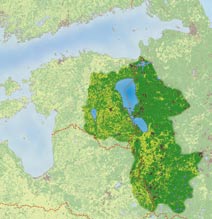
Lake Peipsi/Chudskoe basin
management programme would they have given their contribution
not simply be a paper but instead, both to the preparation as wel as to
could be implemented in reality, it the implementation of the project.
is necessary to consider the requests
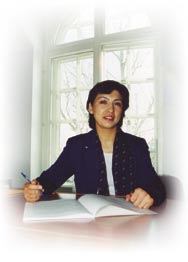
and wishes of local governments, Ms Gulnara Roll
citizens' organisations and that of Chairwoman of the Peipsi CTC,
the public.
UNDP/GEF project initiator
Taking into account the actual needs
of people, we began to prepare
the UNDP/GEF project seven years
ago. We communicated with very
many partners in the Lake Peipsi
catchment area, so as to compile
a project, the activities of which
would be in conformity with the
interests of the people living in the
Lake Peipsi region. We investigated
what are the needs of local people
who are in contact with water on
a daily basis, associated with water
resources and Lake Peipsi. In addition,
to what extent they perceive local
problems, what are regarded as
the shortcomings, whether people
have sufficient information in the
matters concerning water, etc. The
www.peipsi.org/gef
www.peipsi.org/gef
Launching the project
- challenges and lessons learned
Ms Natalia Alexeeva, UNDP/GEF Project Manager
The UNDP/GEF Project "Development Ministry of the Environment, Ministry in implementation of joint project
and Implementation of the Lake of Natural Resources of the Russian activities so the Project Team has to
Peipsi/Chudskoe Basin Management Federation, UNDP, Ministries of adjust common rules and standards
Programme", started at the Foreign Affairs from both countries, under the project to existing
beginning of this year, was like a Ministry of Agriculture of Estonia, national requirements in this field.
long-awaited baby. The idea of Roshydromet, the Estonian-Russian The character of the project (NGO
such a project was born almost 7 Joint Commission on Transboundary execution) was quite innovative for
years ago, then co-operation on Lake Waters, regional authorities, and the region so all project partners
Peipsi/Chudskoe just started on the NGOs from Lake Peipsi/Chudskoe (Estonian Ministry of the Environment,
official level, and Estonian-Russian basin, started work in January and Ministry of Natural Resources of the
Joint Commission on Transboundary the first SC meeting was held in Russian Federation, UNDP-Russia and
Waters was established. The need for Pskov, Russia.
Peipsi Center for Transboundary
a co-ordinated water management During January September Cooperation) belonging to different
programme was obvious and 2003 the main activities were to kinds of organisations (international
preparation of the project proposal organize several seminars and organisation, national authorities
was initiated. Preparation of the trainings for NGOs, municipalities and NGO) were looking for mutual
sound medium-sized regional project and environmental authorities understanding and close co-operation,
(Lake Peipsi/Chudskoe Basin is shared on basin management plans, which are the key elements for
by Estonia and Russia) proposal is eutrophication, public participation successful implementation of the
always a time-consuming process so etc., courses for nature interpreters, project.
all partners endorsed the project at all aimed at capacity building. The
the end of 2002.
Water Management component The main lessons learned
The overal objective of the Project is was implemented through winter were the following:
to develop and start implementation sampling organized in Estonia, - as much as possible, people should
of a Lake Peipsi/Chudskoe Basin initiation of infrastructure demon-
be informed about the project.
Management Program including stration project in Räpina, starting
Quite often information about
practical recommendations for the tender procedures for lake state
the project is not shared even in
Lake Peipsi/Chudskoe nutrient load assessment/TDA and Nutrient
one organization. For high level
reduction and prevention and the Reduction Strategy. Information on
officials it should be done using
sustainable conservation of habitats the project was disseminated through
a paper-based form because the
and eco-systems in the cross-border project brochures, creation of the
Internet is still not very popular as
region. Having a complex character, project website, several press releases
a source of information;
the project implementation is and interviews in the mass media.
organised within the framework of More information could be found - more pubic information should be
four basic components: preparation in short quarterly project reports
spread out (such as TV programs,
and partial implementation of (www.peipsi.org/gef).
radio interviews etc.) for better
the Lake Peipsi/Chudskoe Basin
dissemination of information;
Co-ordination with other ongoing
Management Plan, national and international and national projects - joint events, organized by several
local institutional capacity building in the region was very important
projects, are very useful in terms
to implement the Management Plan, in order to avoid any duplication
of co-operation and dissemination
environmental education and public and increase the effectiveness of
of information;
awareness programs and the Project funding to be spent in the region. - it is very valuable to study
management.
Co-operation with other projects
experiences of other international
The initial phase of the project took was organized through joint
projects, working with Basin
three months (January March events, co-operation agreements,
Management Plans, to obtain
2003) and during this period all regular meetings among experts
the lessons learned both through
administrative
arrangements and project staff.
participation at international
were agreed and formalized and The main challenges during this
conferences and special events
the implementation of all project period were different requirements
organised by way of the project.
components started. The Steering and legislation in both countries
Committee of the project, comprising that sometimes caused difficulties
the representatives of Estonian
www.peipsi.org/gef
www.peipsi.org/gef
Co-operation in the process of the
implementation of the UNDP/GEF project
Ms Aija Kosk, Head of Project Implementation Unit in Tartu, Estonia
The TACIS project
"Water Management in
Lake Chudskoe Catchment
in Russian Federation"
Contact: Mr Mikko Jokinen,
the EU TACIS Project Team Leader
mikko.jokinen@turku.fi
The TACIS Russian Federation
action program started in January
2003. The main objective of the
project is to improve environmental
management capacity of the Russian
regional environmental authorities
by promoting transboundary
On the initiative of the Estonian supports the compilation of the cooperation and sustainable
Ministry of the Environment with detailed programme of measures, conservation of the ecosystem. The
the aim of implementing the EU for the reduction of the pollution main partners are the Neva-Ladoga
Water Framework Directive for the load, in the following branches of Basin Administration and the
Lake Peipsi Basin, two projects are the economy, which potentially Committee of Natural Resources
being developed: (1) The VIRU-PEIPSI contaminate the lake basin: peat of Pskov oblast and many others.
CAMP "Viru-Peipsi Catchment Area extraction, forest management, The budget of the project is
Management Program" supported and agriculture. In the next year, the around 2,000,000 euros and the
by the EU LIFE-Environment; and (2) Public Participation Plan drafted in implementation time is 2 years.
"Development and Implementation the frame of the UNDP/GEF project There are two main outcomes
of the Lake Peipsi/Chudskoe Basin will be implemented.
expected: 1) nutrient reduction
Management programme" supported In the frame of the project supported strategy and 2) the water
by UNDP/GEF. In addition, the Peipsi by the US Embassy, a tourist I-point as management plan of Lake Peipsi/
CTC is implementing three projects a part of the Lake Peipsi Museum was Chudskoe on the Russian side. One
that support development and opened in Kal aste in August 22, 2003. of the special tasks of the project is
implementation of the Lake Peipsi In cooperation with the US EPA/REC the development of laboratory and
Management Plan: (1) MANTRA-East project, mapping of the Peipsi region' monitoring capacity. Small resource
as an international environmental stakeholders is carried out. Also, there allocations allow implementing
research project supported by the EC; was introduced the idea and content 2 small demonstration projects
(2) Baltic NGO net-working project, of a water management plan.
to show how to reduce nutrient
supported by the US EPA/REC; and
load to the Lake Peipsi/Chudskoe.
It is a great pleasure to mention
(3) Tourism development of the Lake
Attempts are taken for involving as
that cooperation with Peipsi
Peipsi Region, supported by the US
many local specialists as possible and
region' stakeholders: environmental
Embassy.
for the public to participate and to
departments of counties, local
On the value added standpoint
be informed about the question of
authorities and non-governmental
it is important that there is no
water management.
organizations, are becoming closer
overlapping in different projects. in the process of implementation of
Therefore, "coordination and co-
the UNDP/GEF project.
operation" have been the keywords
for the first year of implementation
of the UNDP/GEF project.
We have very constructive co-
operation with leading specialists
of the EU LIFE project. The nutrient
load reduction plan will be ready in
the end of 2004. UNDP/GEF project
www.peipsi.org/gef
www.peipsi.org/gef
The strategy of public involvement and capacity building
of local stakeholders on the Russian side of the lake
Ms Olga Vasilenko, NGO "Chudskoye Project", Project Implementation Unit in Pskov, Russia
The priority direction of the PIU on people and lobbying common seminar or training. Despite the short
the Russian side in the first year of interests at all levels.
implementation period of the project
the project has been defined as The common interest that pre- we have received the first results: the
information dissemination and public determines close cooperation is participants speak about the necessity
involvement in the planning process mutual work in preservation and of preparation of the common plan
of the water management program restoration of ecosystems of the and also are ready to participate in
and training of local stakeholders. We Lake Peipsi/Chudskoye basin. To its activities.
suppose that these people wil take an create "the demand" for mutual Such important aspects as visual
active part in the implementation of cooperation between different perception of the lake and the
the management plan as they actively organizations is the main and long- adjacent territories should be
participate in its development from term objective. Due to the UNDP/GEF noted. The proverb says, "Seeing
the very beginning.
project there appeared the possibility is believing" and that's why it has
At the preliminary stage of the to unite specialists, state and local become a tradition to hold the events
planning we have defined sore points authorities, businessmen, NGOs to on the territory of districts and not
in the region. Besides the lack of solve the common task. Besides, in the district centers. It gives the
finance and professionals, isolation of the project is giving us a chance to participants a chance not only to see
the specialists and the representatives exchange ideas and share problems the beauty of the places but also to
of local administrations, misunder-
between different organizations, become aware of the presence of
standing of the public role in the which is important according to ecological problems.
planning and implementation the opinions of the participants of The fact that as a rule the
of water management program held events.
representatives of mass media
and substitution of the notion Among representatives of nature participate in our events makes us
"participation" with the notion protection organizations, ecological hope that the problems discussed
"informing" were specially marked. NGOs, educational institutions are of interest to the wider public
The results of the sociological survey participating in seminars the and wil be depicted in the local mass
held within this project have shown representatives of municipalities media in a proper way.
that on account of some causes also take part in these events. We
ecological problems are not of high would like to thank the heads of
priority for the region. And the only municipalities (local authorities of
possible way for their solution now Pskov and Leningrad regions) who
is the consolidation of all interested firstly, responded to our request
to define a representative of the
municipality to participate in all
project activities and secondly,
allowed them to participate in
training, seminars, public hearings,
round tables no matter how often
we met. Designated representatives
are people who can and should
participate in the decision-making Despite the short
process or emphasize the problem implementation period
and offer the solution to the superior
bodies.
we have received
Step by step we are moving towards the first results:
the designated aim the involvement participants speak
of stakeholders and organizations
in planning and implementation of about the need for
the water management program. a common plan
Assessment questionnaires evaluating and are ready
every event by the participants have
been used to prepare every upcoming to participate.
www.peipsi.org/gef
www.peipsi.org/gef
Training courses on
eutrophication in big and small lakes
Mr Ülo Sults, UNDP/GEF project Water expert in Estonia
Eutrophication is defined as the or organic matter loads to the lake. to the eutrophication processes were
excessive addition of inorganic They can drastically shorten a lake's held by the limnologists of Võrtsjärv
nutrients, organic matter, and silt to lifespan by clearing forests, building Limnological Station by the Estonian
lakes, thereby increasing biological roads, cultivating fields, developing Agricultural University.
productivity. The key part of this residential communities, and discharg-
The concrete topics under discuss-
definition is the biological response ing wastewater all these activities ion were development of the
of the lake to these additions; high increase the nutrients and soil that macrophytes, algae, zooplankton,
phosphorus concentration alone does eventually move into the lake. As benthic invertebrates communities,
not determine eutrophication.
a rule, reservoirs become eutrophic and fish stock in eutrophic and
Eutrophication is a natural process more rapidly than natural lakes, hypereutrophic lakes; the different
in water bodies, including coastal because most reservoirs receive higher types of lakes in Estonia; the lake
waters of the seas and oceans. sediment and nutrient loads than do restoration methods, used in Estonia
The progression of natural lake most natural lakes (Managing Lakes and in Finland and Sweden; the
eutrophication through nutrient-
and Reservoirs, Third Edition, 2001, changes in habitats of amphibians,
poor (oligotrophy) to nutrient- prepared by the North American Lake birds and crayfish as a result of
rich (eutrophy or hypereutrophy) Management Society and Terrene eutrophication.
usually takes a long time. For Lago Institute in cooperation with U.S. More than 40 interested people
di Monterosi (Italy) researchers EPA, pp.41-44)
from local administrations, from
found, that the lake retained the Those were the main topics of the universities and NGO's took part
same trophic status (oligotrophic) training course on eutrophication, in the training courses. The second,
for 22,000 years, until the Romans which was organised by Peipsi CTC in so-called fieldwork stadium, was
built a road through its watershed the first half of the year 2003. The first held in 23rd of September 2003 in
in 171 B.C.
theoretical training course was held Jõgeva County on the Elistvere and
People cause cultural eutrophication in February in Tartu. Seven lessons Prossa lakes.
when their use of the land dealing with the response of the small
dramatically increases nutrient, soil, lakes in Vooremaa Nature Reserve
The EU LIFE-Environment project "Viru-Peipsi CAMP"
Contact: Dr Ain Lääne, the EU LIFE Project Manager, www.envir.ee/viru.peipsi
The aim of the project is to elaborate Project objectives are defined as following:
a water management plan for the - Collect and compile existing data regarding the status of water bodies
Viru and Peipsi region according to
and groundwater;
the requirements of the EC Water - Elaboration of a geographical information system (GIS);
Framework Directive. The project is
financed by the EU LIFE-Environment - Implementation of a complementary sampling program;
Program (500,000 euros), the French - Assessment and classification of the status of groundwater, coastal waters,
Environmental Fund (1,000,000
rivers and lakes; Complementing of the national monitoring program;
euros) and the Estonian Ministry - Elaboration of the program of measures based on economic analysis to
of Environment and Estonian
achieve at least a good status of water bodies and groundwater and to
Environmental Investment Centre
supply inhabitants with good quality drinking water;
(200,000 euros) and many other - Strengthening the institutional capacity of Estonian environmental
partners.
authorities.
www.peipsi.org/gef
www.peipsi.org/gef
Learning by playing
Mr Peeter Unt, Public Participation expert in Estonia
Peipsi CTC, in co-operation with Tartu The environmentally educational
Kivilinna Gymnasium, published an game aims at providing the
environmental education table game students with information, in an
"A trip from Lake Võrtsjärv to Lake attractive manner, with regard to
Peipsi along the Emajõgi River". In Lake Võrtsjärv, River Emajõgi, Lake
2002, the idea of the game was Peipsi and the city of Tartu and also
entered in the children's creative at increasing the children's interest
competition "World of Water towards the nature of their home The EU
through the Eyes of Children" area and local lore.
MANTRA-East
and received an award. At the The game is primarily meant for basic
present moment, the idea has been and secondary school students, and project
realised in the form of a large-scale the ideal number of players is four
(1.5 m x 0.5 m) plastic-covered to six - and as the creator of the Contact: Dr. Per Stalnacke, the EU
board game with an artist, Epp
idea of the game, chemistry teacher MANTRA-East project Coordinator,
Margna, contributing to its design. Helgi Muoni from Tartu Kivilinna www.mantraeast.org
The game, which follows the typical Gymnasium said, "next year we The project MANTRA-East - "Integ-
table game rules, is made special by hope to organize a tournament of rated Strategies for the Management
the multiple choice questions players the game for small teams to be held of Transboundary Waters on the
have to answer while playing. The at our school."
European fringe - the pilot study of
questions are compiled by Tartu Meanwhile copies of the game will Lake Peipsi and its drainage basin"
Kivilinna Gymnasium students and be distributed among the schools in is a co-operation of 13 research
cover a large array of subjects the region.
institutions with EU, non-EU and
concerning the two lakes and the
Russian partners. The project period
Emajõgi River. For example, local The printing of the game was is 2001-2004 and it is supported by
fauna and flora, cultural heritage, supported by the UNDP/GEF the EC under the 5th Framework
water quality, population and physical project.
Programme
geography.
The aim of the project is to analyze
and develop strategic planning
methodologies and scientific tools for
the integrated water management
in transboundary watersheds
located on the existing and future
borders of the European Union.
In accordance with the EU Water
Framework Directive, the project
The Ministry of Natural Resources of the Russian Federation has
"
develops recommendations for
supported launching of the project implementation as far as international
institutional mechanisms and policy
cooperation on transboundary waters is one of the priority areas of the
instruments for decision making on
Ministerial activities. Development of the Basin Management Plans for
water management of transboundary
individual water basins, such as Narva river basin, is very challenging
watercourses and international
and this project wil contribute to the fulfilment of the more global aim
lakes located on the fringes of the
development and implementation of the Management Programme
European Union.
for the Russian part of the Baltic Sea Basin, which is to be prepared by
The knowledge obtained from
Neva-Ladoga Water Basin Administration. Creation of such program
the MANTRA-East project will be
started in 2003 as well.
transferred and developed within
I wish the project to reach all its aims and objectives!
the UNDP/GEF project, the support
and cooperation between two
Mr Budarin Vladimir Fedorovich,
" projects has been strong even from
the preparation phase.
Co-chairman of the Project Steering Committee.
Head of Neva-Ladoga Water Basin Administration,
Ministry of Natural Resources of the Russian Federation.
www.peipsi.org/gef
www.peipsi.org/gef
Trainings addressed
to better public participation
Mr Erkki Vedder, UNDP/GEF project Capacity building expert in Estonia
It has been a busy year ful of ranges
gathered for a roundtable to specify · A two-phase training on eutro-
of different events aimed at capacity
training needs in the region;
phication issues was organized.
building of the national and local · Group interviews are being
The first purely theoretical stage
institutions on the Estonian side. These
conducted to get feedback from
took place in March (see article by
events can be categorized into two
local stakeholders on water
Ülo Sults). The second stage took
main groups aimed at investigating
management related issues;
place in September and included
weaknesses and shortcomings of the · Information on the project was
practical work on Lake Elistvere;
local population and institutions in
disseminated in a number of · Number of trainings on NGO laws,
the context of implementation of the
seminars and there feedback
taxation, bookkeeping etc. were
Lake Peipsi management plan and
was also received.
organized in the first half of the
secondly raising the capacity of the
year in order to promote the NGOs
institutions according to the needs This kind of information gathering
in the region;
appearing from the studies.
activities will be completed in
the first year of the project as a · Various seminars, round-tables,
The first group of activities contains preparation work for the covering
conferences were held on
studies, roundtables, research of real needs.
ecotourism, biological farming,
activities etc.
But within the 6 months already
environmental co-operation etc.
· The representatives of Environ-
a number of events were organ-
mental Departments of four ized aimed mainly at capacity
counties around Lake Peipsi were strengthening:
Strategies for Lake Peipsi/Chudskoe
should tackle phosphorus emissions
Dr Per Stålnacke, NIVA, Norway (MANTRA-East Project coordinator).
Dr Tiina Nõges, Tartu University. Prof Enn Loigu, Tallinn Technical University
For adequate implementation of the arable land will be the major factor the lake (e.g. Pskov city) and solve
EU Water Framework Directive and controlling the future nutrient loads hygienic problems locally but long-
subsequent River Basin Management to Lake Peipsi. The results also show term future strategies for nutrient
Plans, information on the past, that the riverine loads of nutrient load reduction should mainly focus
present, and future riverine pol utant loads will change surprisingly little on not increasing the agricultural
loads is essential for decision makers even under extreme future changes. nutrient runoff. Today, agriculture
to identify priorities for water At present there is a clear decrease is responsible for the largest portion
management, and evaluate the in the N:P ratios, at least in the of the total loading to the lake even
effect of various developments.
Estonian rivers, which most likely is the though the losses from agriculture per
In the project MANTRA-East, a reason for increased observations of unit area (e.g. kg/km2), is at a very
number of future scenarios have been Cyanobacterial blooms in the lake in low international level. So the future
constructed, to provide indications recent years. Model calculations show loadings will heavily depend on how
of how future developments on the that decreased phosphorus loads will the agricultural land will be used in
Estonian-Russian border may occur. decrease the risk of water blooms future, e.g. how much of the present
These scenarios were then translated in L. Peipsi. As the main proportion set-aside and abandoned land will
into quantitative GIS-layers. A nutrient of phosphorus is coming through be used in future and the intensity
transport model was then used to the two major rivers Velikaya and in the agricultural sector?
calculate the nutrient emissions, as Emajõgi, the main attention should be More information about the results can
well as transport and retention and paid to these two rivers. Connection be found on www.mantraeast.org
the resulting nutrient loads into the to wastewater treatment plants and
lake.
improved P-removal will give an
The model results from the scenarios immediate decrease especially for
suggest that change of the amount of point sources in close proximity to
www.peipsi.org/gef
www.peipsi.org/gef
Trainings and seminars on eutrophication,
its causes and consequences held in Pskov region
Ms Elena Bystrova, UNDP/GEF project Capacity building expert in Russia
In the framework of the UNDP/GEF different stakeholders' groups. Al the structure made clear the interaction
project several events were held in participants stated the importance and its difficulties between the
Pskov. The main topics of the events of public participation in water organizations at different levels.
were eutrophication and related management. It was decided to The implementation of the water
issues such as public participation continue the discussion during the management program is inseparable
in water management and ways of upcoming training and seminar.
from public participation in the latter.
improving the ecological situation. The events that took place in The participants worked in groups
All events were held in different May were devoted to the topics where they discussed the following:
forms (round-tables, seminars and of water management and the defining stakeholders' groups and
trainings) and in different districts stakeholders group participation in their informing about the ecological
of the region.
the development and implementation problems, and participation in the
The first event took place in of water management plans. Water water management plan.
March and was named as "Public management issues were important The training "Eutrophication
Participation in water management as most of the participants were causes and consequences. The
in the Pskov region". The main aim of interested in hearing about the ways of solving the problems of
the workshop was to define the role structure of water management in Pskov Chudskoye Lake" (took place
of the public in water management the country at al levels (from federal in June) was about eutrophication
and ways of co-operation between to local). Presentation about the and its consequences. The reports
covered such topics as eutrophication
and its influence on water bodies,
monitoring, federal and local control
of contamination, measures of
Pskovvodkanal in reducing the
Unlikely other UNDP projects, this project was launched without any
"
droppings into the Velikaya river. The
delay, in spite of the usual difficulties associated with the beginning
speakers underlined the important
of a complex project involving different stakeholders. Taking into
role of the public in keeping rivers
consideration that the partners speak different languages both in the
and springs clean especially small
true sense (it is an international project) and in a figurative sense, it is
rivers and lakes. During the seminar
worth wondering how fast the project team overcame "transitional age"
several ideas were proposed such as
and became a mature project implementation group. Among the other
the development of the program of
UNDP\GEF projects, this project has some peculiarities. First of all, the
priority directions in environmental
problem of development and implementation of a Management Plan
protection, monitoring of smal lakes
for a big transboundary water body is relatively new in environmental
in the region, the study of white fish,
policy and practice. For the first time, an international NGO Peipsi
and the publication of the brochure
Center for Transboundary Cooperation was entrusted to solve this
about fish of the Pskov region.
problem. Moreover, linking the interests of national authorities, water
All of the events showed the
users, science and the local population from both sides of Estonian-
importance of addressing the
Russian border will require from all partners flexibility, wisdom and
topics of eutrophication and
self-devoted application.
public participation in the water
It is too early to make some conclusions, because the project is on the first
management plan. The participants,
stage of implementation. However, I hope, that thanks to this bul etin,
both state, municipal bodies and
all stakeholders and parties interested in the Lake Peipsi/Chudskoe
NGOs, highly evaluated the events
region will get the possibility to look through project materials and
and expressed their willingness to
to make any comments or give advice regarding its pages.
participate in the upcoming events of
Comments and criticism are willingly accepted.
the project to improve the ecological
I, personally, believe in the project team and
situation in the Pskov region.
I wish the team successful waters!
Ms Elena Armand,
"
Head of Environmental Unit, UNDP Russia.

www.peipsi.org/gef
www.peipsi.org/gef
Forthcoming events
September
September 17
Training on eutrophication issues named
Publications
"Town and water body" in Pskov, Russia.
September 23
A seminar on the eutrophication of lakes
· Brochure `Peipsi Guide: Birds
in Kuremaa, Estonia.
at Peipsi and on the Shore
September 29-30 Seminar on ecological tourism in Pskov, Russia.
Landscapes of the Lake'
September 30
Study tour to Rembdovsky Reserve, Ramsar site,
· The project introductory brochure.
in Gdov district, Russia.
· Working Paper: Use of Water
Resources and Associated Prob-
October
lems in Rural Municipalities at
October 5-6
Meeting of the Estonian-Russian Joint Commission
Lake Peipsi
on Transboundary Waters, Pskov, Russia.
· Working Paper: Management
October 15-16
Seminar "Water management in Lake Peipsi/
of Transboundary Waters on
Chudskoe basin existing practices and future
EU External Border in North-
development" in St Petersburg, Russia.
ern Europe, Proceedings of
October 22
Nature tourism training in Izborsk, Russia.
an Inter-national Workshop
held on 27 May 2003 in Tartu,
October 30
Round-table on Peipsi ecotourism in Tartu, Estonia.
Estonia
November
· Newsletter on eutrophication issues
November 1
Implementation of the environmental
for local stakeholders in Estonian
small grants program in Estonia.
and Russian.
November 4
Conference on environmental legislation
· Newsletter on Pskov region water
and public participation issues, Pskov, Russia.
resources issues.
November 11
Distribution of environmental games supported
· Brochure `Peipsi guide: Fish in
by UNDP/GEF project for Emajõgi river schools.
Lake Peipsi'
November 12
Seminar on biological farming in Estonia.
November 27-28 Scientifi c Conference on nature protection
of the Pskov region, Pskov, Russia.
December
December 7-14
Study tour from GEF supported Lake Chad basin
project to Lake Peipsi/Chudskoe in Estonia and
Peipsi info-portal is a regional web
Russia.
site to communicate expert and
December 16
Estonian-Russian meeting of
scientifi c information about Lake
water monitoring experts in Estonia.
Peipsi to local stakeholders and
international public developed within
December
Study tour to a biological farming enterprise for
the UNDP/GEF project.
representatives of local authorities, stakeholders
and NGOs on Russian side of the Lake.
In this portal you can search for:
- cause-effect related environmental
January 2004
information about the Lake Peipsi
January
Publication of Estonian-Russian report on the state of
transboundary water basin.
the environment in the Lake Peipsi/Chudskoe basin.
- Information relevant to a
geographical location of your
February
interest on the Map.
February
The third Steering Commission meeting
in St. Petersburg, Russia.
www.peipsi.org/gef
Project summary
The aim of the project:
Project implementation:
The development objective of the UNDP Russia is delegated the regional authorities, NGOs from the
project is to prepare, adopt and authority to implement the project Lake Peipsi/Chudskoe basin, and the
launch the Lake Peipsi/Chudskoe on behalf of UNDP, one of the GEF UNDP/GEF Project Manager. The
Basin Management Programme Implementing Agencies. UNDP Committee monitors and evaluates
for the nutrient load reduction and Russia will therefore be responsible the project's course, particularly as
the sustainable development of the for monitoring, supervision and regards its management aspects. The
cross-border region.
evaluation of the project during Committee meets once a year.
The main project outputs can be the project's lifetime.
The Project Manager will be
summarized as follows:
The project will be executed by an responsible for the project manage-
1 Management Programme (Strat-
international non-governmental ment and co-ordination of the
egy Document) and Action Plan organization Peipsi Center for project activities with the TACIS
prepared and approved by all Transboundary Cooperation and other international projects in
relevant Russian and Estonian (Peipsi CTC) that works to promote the region and relevant international
authorities;
sustainable development and cross-
organizations.
2 Strengthened capacity of key border co-operation in the border Sub-contracts: The Peipsi CTC in
regional stakeholders (including areas of the Baltic States and the consultation with UNDP, will sub-
environmental monitoring infra-
New Independent States (NIS). The contract designated activities as
structure and data collection and project wil be implemented through required for the delivery of project
maintenance system);
project implementation units outputs. The project would engage
Lake Chudskoe Project, located in
3 Networking and information
expertise from other institutions
Pskov, Russia, and Peipsi CTC, Tartu,
exchange established;
to assist project staff and project
Estonia.
participants, who include government
4 Two pilot projects implemented The Project Steering Committee and local communities, to achieve
in Estonia: one on eutrophication consists of representatives of the the purposes of the project.
reduction through planning water Estonian Ministry of Environment,
systems in a small community and Russian Ministry of Natural Resources,
the second one on ecotourism UNDP, the Estonian-Russian
and nature protection (ecological Transboundary Water Commission,
route).
Project Number: RER/02/G35/A/1G/72
Contact information:
Project Title:
Development and Implementation
of the Lake Peipsi/Chudskoe
Ms Elena Armand
Basin Management Programme
Head of
Project Budget:
US$ 1,000,000
UNDP Environment Unit,
Global Environment Facility
UNDP Russia,
28 Ostozenka, Moscow, Russia
Starting Date:
January 2003
Tel. +7 095787 2102
Duration:
36 months
Fax +7 095 787 2101
Project Site:
The Lake Peipsi/Chudskoe Basin,
E-mail: elena.armand@undp.ru
Russian Federation, Estonia
www.undp.ru
Ms Natalia Alexeeva
Project finances
Peipsi Center for
in the period January-June 2003
US$
Transboundary Cooperation,
Estonia
Russia
Total
Aleksandri 9, Tartu 51004, Estonia
Administrative support
9,950
4,580
14,530
Tel. + 372 730 2302
Fax + 372 730 2301
Duty travel
5,046
3,227
8,273
Email: Natasha@lake-peipus.net
Project implementation
65,939
29,911
95,850
www.ctc.ee
Total Expenditure
80,935
37,718
118,653
www.peipsi.org