


UNDP Project Document
Governments of Chile and Peru
United Nations Development Programme
United Nations Office for Project Services
PIMS 4147
Towards Ecosystem-Based Management of the
Humboldt Current Large Marine Ecosystem
|
UNDP Project Document
Governments of Chile and Peru
United Nations Development Programme
United Nations Office for Project Services
PIMS 4147
Towards Ecosystem-Based Management of the
Humboldt Current Large Marine Ecosystem
|
Nota Bene
(text being negotiated)
Table of Contents
SECTION I:..... Elaboration of the Narrative............................................................................... 7
PART I:.... Situation Analysis......................................................................................................... 7
Context and global significance.................................................................................................. 7
Globally significant fisheries and biodiversity............................................................................... 7
Socio-economic Context.......................................................................................................... 10
Threats to Ecosystem Health in the HCLME............................................................................ 12
Institutional, Policy and Legislative Context............................................................................... 15
Institutional framework............................................................................................................ 16
Threats, root causes and barriers analysis................................................................................. 18
Stakeholder analysis................................................................................................................ 25
PART II: Strategy...................................................................................................................... 26
Project Rationale and Policy Conformity........................................................................................ 29
Project Objectives, Outcomes and Outputs.................................................................................... 30
Project Indicators Risks and Assumptions...................................................................................... 51
Incremental Reasoning................................................................................................................. 54
Country Ownership: Country Eligibility and Country Driveness........................................................ 56
Sustainability................................................................................................................................ 57
Replicability................................................................................................................................. 59
Cost effectiveness....................................................................................................................... 60
PART III: Management Arrangements........................................................................................ 61
PART IV: Monitoring and Evaluation Plan and Budget.................................................................. 63
PART V: Legal Context............................................................................................................... 69
SECTION II:.... Strategic Results Framework (SRF) and GEF increment............................... 70
SECTION III:.. Total Budget and Workplan.............................................................................. 80
SECTION IV:.. Additional Information....................................................................................... 87
PART I:.... Co-funding and Endorsement Letters Please see separate file................................ 87
PART II:... Coordination and Complementarity with the PRONANP GEF project............................ 87
PART III:.. Terms of Reference for Key Project Personnel............................................................ 90
PART IV:. Stakeholder Involvement Plan..................................................................................... 93
PART V:... Pilot Projects............................................................................................................ 102
PART VI:. GEF SO1 Tracking Tool Please see separate file..................................................... 126
SIGNATURE PAGE.................................................................................................................. 127
Acronyms
ANEPAP National Association of Artisanal Fishery Businesses, Peru
APR Annual Project Report
AWP Annual Work Plan
BAC Biological Activity Centers
BD Biodiversity
BOD Biological Oxygen Demand
CBD Convention of Biological Diversity
CEA Country Environmental Assessment
CNUBC National Commission for Coastal Zone Use, Chile
CONAF National Forest Corporation, Chile
CONAMA National Environment Commission, Chile
CONAPACH National Confederation for Artisanal Fishermen of Chile
CONFEPACH National Confederation of Federations of Artisanal Fishermen, Chile
CPPS Permanent Commission for the South Pacific
DICAPI Maritime Authority of the Peruvian Navy
DIGESA General Direction of Environmental Health, Peru
DIRECTEMAR Head Office of the Maritime Territory and Merchant Navy, Chile
EAF Ecosystem Approach to Fisheries
EBM Ecosystem-Based Management
EcoQOs Ecosystem Quality Objectives
EDA Ecosystem Diagnostic Analysis
EEZ Exclusive Economic Zone
EIA Environmental Impact Assessment
EIMS Ecosystem Information Management System
EIS Ecosystem Information System
EMP Ecosystem Monitoring Program
ENSO El Niño- Southern Oscillation
FAO Food and Agriculture Organization
GCF Green Commodity Facility
GDP Gross Domestic Product
GEF Global Environment Facility
GIS Geographic Information System
GloBallast Global Ballast Water Management Program
GNP Gross National Product
GOOS Global Ocean Observation System
HCLME Humboldt Current Large Marine Ecosystem
HCS Humboldt Current System
IA Implementing Agency
ICES International Council for the Exploration of the Sea
IFOP Fisheries Development Institute, Chile
IIRSA South American Regional Infrastructure Integration Initiative
IIS Integrated Information System
IKM International Knowledge Management
IMARPE Peruvian Sea Research Institute
IMO International Maritime Organization
INRENA Institute of Natural Resources, Peru
IOC Intergovernmental Oceanographic Commission
IR Inception Report
ITC Information and Communication Technologies
IUCN International Union for Conservation of Nature
IW International Waters
LMCE Maximum Catch Limits per Vessel (acronym from Spanish)
LME Large Marine Ecosystem
LMR Living Marine Resources
LNG Liquefied Natural Gas
M&E Monitoring and Evaluation System
MCLV Maximum Catch Level per Vessel
MCPA Marine Coastal Protected Area
METT Management effectiveness Tracking Tool
METT Management Effectiveness Tracking Tool
MINAM Ministry of the Environment, Peru
MINEC Ministry de Economy, Chile
MINSAL Ministry of Health, Peru
MPA Marine Protected Area
MPL Maximum Permitted Limit
MSC Marine Stewardship Council
MT Metric tones
MUMPA Multiple Use Marine Protected Areas
N-C North-Central
NAP National Action Plan
NGO Non-Governmental Organization
NIC National Intersectoral Committee
NPAP National Protected Areas Plans
NPAS National Protected Area Strategy
NSPA National System of Protected Areas
OLDEPESCA Latin American Organization for Fisheries Development
OMZ Oxygen Minimum Zone
PA Protected Area
PIR Project Implementation Review
PRODUCE Ministry of Production, Peru
PROFONANPE Peruvian Fund for Protected Areas
PRONANP National Program for Protected Areas of Peru
RCU Regional Coordinating Unit
RNSIIPG Peruvian Guano Islands, Isles and Capes National Reserve
SAP Strategic Action Program
SC Steering Committee
SERNANP National Service of Protected Areas of Peru
SERNAP National Protected Area Service, Peru
SERNAPESCA National Fisheries Service, Chile
SINANPE Peruvian National Protected Area System
SINANPE National Protected Area System Peru
SISESAT Vessel Tracking System
SNAP System of National Protected Areas
SNP Peruvian Fisheries Society
SPRFMO South Pacific Fisheries Management Organization
SRF Strategic Results Framework
SUBMARINA Undersecretary of Fishing of the Marine Affairs of Economy, Chile
SUBPESCA Undersecretary of Fishing of the Ministry of Economy, Chile
TA Technical Assistance
TAC Total Allowable Catch
TG Technical Group
TNC The Nature Conservancy
TPR Tripartite Review
TTT Technical Task Team
TURF Territorial Use Rights in Fisheries
UNDP United Nations Development Program
UNOPS United Nations Office of Project Services
VMS Vessel Tracking System
WSSD World Summit on Sustainable Development
WWF World Wildlife Fund
1. The Humboldt Current LME (HCLME) extends along the west coast of Chile and Peru, off western South America. It encompasses a complex mosaic of currents that support some of the most productive fisheries on earth and houses biodiversity (BD) of global importance. The relatively steady alongshore winds that blow towards the equator drive strong coastal upwelling from 40ºS up to 4ºS.
2. In general, upwelling systems are characterized by high productivity and relatively short food chains/webs, enabling massive energy transfer to the higher trophic levels. Within the HCLME, the coast of central and northern Peru in particular has stood as the ‘‘world’s champion” producer of exploitable fish biomass, generally yielding more than 20 times the tonnage of fishery landings produced by other comparable LMEs that operate under similar dynamic contexts and are characterized by comparable, or even greater, basic primary productivity. Two potentially contributing factors have been identified for this extraordinary productivity: (1) a low-latitude situation that combines strong upwelling-based nutrient enrichment with low wind-induced turbulence generation and relatively extended mean ‘‘residence times” within the favorable upwelling-conditioned near-coastal habitat and, (2) the cyclic ‘‘re-setting” of the system by El Niño-Southern Oscillation (ENSO) perturbations that may tend to interrupt adverse self-amplifying feedback loops within the nonlinear biological dynamics of the ecosystem (Bakun and Weeks 2008)[1].
3. Pelagic fisheries catches by Peru and Chile account for 16% to 20% of the global fish catch (1950-2006). Other important fisheries resources include tuna, sword fish, shark, and giant squid as well as a great variety of tropical and temperate mollusks, crustaceans and sea echinoderms. However, four species of pelagic schooling fish dominate this LME: anchoveta or Peruvian anchovy (Engraulis ringens), South American sardine (Sardinops sagax), jack mackerel (Trachurus murphyi) and horse mackerel (Scomber japonicus). Several of the LME’s fisheries resources are shared between Chile and Peru.
4. Total annual fish catch for these countries combined averages annually over 10 million MT with a record of 19.4 million MT in 1994 (Figure 1). The predominant anchoveta fishery represents 60-80% of the total marine fish catch, 99% of which is reduced to fish meal and fish-oil that are exported for consumption by cultured fish and livestock. Two main stocks of anchoveta are recognized: one shared between Chile and Peru and a much larger one located in northern-central Peru. North-central (N-C) Peru anchoveta catches have ranged between 6-10 million MT in the last decade, while catches of the shared stock only occasionally exceed two million MT.
5. Both countries present similar development patterns for this fishery: an initial quick growth from the late fifties, a first peak in the late sixties followed by a collapse in the early seventies, and a recovery in the early nineties reaching values similar or exceeding peak catch values obtained in 1970 (Figure 1). The collapse of the anchovy fishery in 1972 was the combined result of overfishing and a failure in stock recruitment due to the strong 1972-73 ENSO. In both countries an important fishery for sardines (Sardinops sagax) was developed during the years when anchovetas were scarce, from the mid seventies until the mid eighties. Sardine catches quickly dropped after the anchoveta landings recovered in the early nineties and have almost disappeared after 2001. It is believed that the relative changes in abundance of anchoveta and sardine in the HCLME are related to inter-decadal regime changes in oceanographic conditions (La Vieja and El Viejo, Chavez et al. 2003[2]).
6. While it is recognized that heavy fishing played a major role in the collapse of the Peruvian anchoveta fishery in the early 1970’s (Zuta, Tsukayama and Villanueva, 1983[3]; Jordan 1983[4]), the 1972-1973 El Niño was also a cause of recruitment failure and stock decline (Csirke, 1980)[5]. Climatic variability is thought to be the main driving force of pelagic fish biomass change in this LME, with marked regime shifts (El Niño, La Niña, El Viejo, La Vieja) that restructure the entire system from phytoplankton to the top predators. Under warm conditions within ENSO, pelagic fish availability is drastically reduced because of decreased plankton production. If the ENSO event is strong, devastating consequences may arise, in the short term, for the fisheries off Chile and Peru as well as for the marine fauna that relies on these normally highly abundant species.
7. There are also important reserves of jack mackerel linked to the HCLME that extend from Peru and central southern Chile into the South East Pacific open waters. Peak Chilean catches of over four million MT of this species were recorded in the mid-nineties but after the 1997/98 ENSO, have rarely exceeded the established quota of 1.5 million MT. Currently, catches are mostly obtained in oceanic areas, South of 30ºS. Most of these landings are used for fishmeal and fish-oil production, with only around 30% used for direct human consumption, mostly to be frozen and exported.
8. Dosidicus gigas, the jumbo or giant squid, is among the largest squids in the world and supports an increasingly important fishery off Chile and Peru, with combined landings of around 700,000 MT in 2006. D. gig as is monocyclic and dies after spawning; therefore populations are highly variable and also largely influenced by environmental variables such as the strongest ENSO events. During these events populations have decreased as reflected in sharply declining landings (SPRFMO 2007)[6]. Unlike the pelagic fish fisheries, squid are mainly caught by artisanal fishers in both countries and are mostly frozen for direct human consumption and exported.
9. In addition to its important fisheries, the Humboldt Current System has globally significant biodiversity and has been designated a WWF Global 200 Ecoregion (Spalding et al. 2007)[7]. The narrow continental shelf and the cold waters of the Humboldt Current generate local upwellings that harbor massive forage fish stock that feed sea-birds and marine mammal populations aggregated in the abundant narrow beaches, and the northern rocky points and islands of the ecoregion (Sullivan et al. 1999)[8]. Another biodiversity assessment (Chatwin 2007)[9] recognizes over 25 different habitat types as conservation targets, indicating the rich habitat biodiversity along the HCLME. These include seamounts, river estuaries, and sea canyons amongst others. The heterogeneity in physical features of the marine environment has resulted in high levels of endemism, with a number of relict taxa and the presence of latitudinal discontinuities in the species composition of assemblages from different taxonomic groups in the regions of the HCLME described above. These regions house a plethora of endemic species with percentages similar, or even higher, to those of oceanic islands famous for their endemism levels such as the Galapagos Islands in Ecuador or Juan Fernandez Islands off Chile (Sullivan et al. 1999)[10].
10. For Chile, analyses of coastal benthic macro invertebrates belonging to 6 phyla (Annelida, Cnidaria, Crustacea, Echinodermata, Porifera, Urochordata), 835 genera, 336 families, and 76 orders, show that 38. 2% of the species have restricted distributions and exhibit high levels of endemism. In terms of overall endemism along the entire coast, Bryozoan and Ophiuroid species have a level of 40%; Polyplacophoran species 17.3%; Isopods 51%, Bivalve species 27%; Asteroid species 20%; and Prosobranch gastropods 52.6%. Teleost fishes exhibit similar levels of endemism, at 17%, while macro-algal species reach 27%.
11. High numbers of species and genera have also been reported for the best known taxonomic groups[11] in Peru: 602 species of algae (at least 92 genera), 169 species of diatoms (62 genera), 208 species of dinoflagellates (39 genera), 1024 species of mollusk (at least 333 genera), 341 species of polychaeta (at least 203 genera), 1070 species of fish (549 genera), 82 species of seabird (30 genera), 4 genera of sea turtles and 33 species of marine mammal (23 genera), mostly cetaceans. These numbers should be taken as a minimum, since several taxonomic groups were not included. The extreme north of the HCLME exhibits high biodiversity, due to mixing with water masses of equatorial and tropical origin. Around 67% of the marine mollusks are restricted north of 6°S. A similar situation exists for crustaceans and for almost a third of the fish families.
12. The occurrence of a shallow and intense Oxygen Minimum Zone (OMZ) in the HCLME allows the establishment of highly adapted bacterial communities, near the boundaries of the OMZ, possibly enabling a certain degree of endemism. Extended mats of these bacteria catalyze and link the sulfur, nitrogen and carbon cycles on the eastern pacific continental shelf off Chile and Peru (Fossing et al. 1995[12]; Jørgensen and Gallardo 1999[13]). The distribution of many planktonic, nektonic, and benthic species is constrained by the OMZ.
13. Particularly visible and valuable are the very large colonies of seabirds and marine mammals in the HCLME. Millions of guano producing birds (cormorants, boobies and pelicans) provided Peru with guano[14] for centuries, a key resource for the development of global agriculture and a mainstay of Peru’s economy throughout the XIX century. Colonies of tens of thousands of fur seals, sea lions, penguins and other seabirds can also be found in Peru and northern Chile, mostly in the coastal protected sites in these countries. In Peru they are almost exclusively found in the Guano islands and capes soon to be declared a National Reserve. The wildlife spectacle of massive aggregations of species considered by most to be very charismatic, constitute a yet untapped tourism resource which should serve as added incentive for the protection this project seeks to provide. Sea mammals, sharks, swordfish and seabirds constitute top predators in the trophic chain of the HCLME. Given that the majority of these predators feed primarily on anchovies, they also compete with the fisheries (Figure 2). Top predators have always been a good indicator of the state of a stock, and in the case of the HCLME, seabirds and mammals constitute important elements within the food chain based on the anchovy stock.
14. An ecosystem-based management approach as planned during the HCLME project will help understand the role these top predators play within the food chain at different trophic levels and design management plans for these populations. Specifically, research on the interaction between industrial fisheries and seabirds, and artisanal fisheries and sea lions is ongoing. The project can benefit from this research and promote further specific investigation. (See also Section on Barriers)
15. Over the last decade both Peru and Chile have experienced rapid, increasingly diversified, export-led economic growth, with significant increases in their GDPs. The mainstays of both economies are the mining, agriculture, fishing and aquaculture sectors, which are underpinned by development of ports and enhanced ocean transport. Coastal tourism, with its concomitant infrastructure support, is becoming increasingly important. Environmental conditions in these countries should be understood in the context of this rapid pace of development[15].
16. The fisheries sector is a significant contributor to the economies of both countries. In 2007, the sector in Peru represented 8% of total exports, with an approximate value of US$ 2 billion and contributing 0.72% of GNP. Chile’s fish exports (including salmon and fishmeal) for the same year were valued over US$ 2.4 billion or 3.5% of total exports and contributed 1.3% to the GNP. The sector is currently a minor source of revenue for the public sector, but its contribution could be greatly enhanced. Fish constitute one-fifth of the animal protein intake of the average Peruvian, a percentage that increases in the poorer sectors of society.
17. In Peru the industrial catch consists almost exclusively of anchovies destined for the production of fishmeal and fish-oil, mostly for export to supply the international industrial animal production industries. Less than 10% of the total production of 1-1.5 million MT of fishmeal is used locally. Over the last five years, the industry has begun to diversify towards producing canned and frozen products for direct human consumption. These catches, which largely consist of jack and horse mackerel and hake, however comprise less than 5% of the total for the industrial fleet in Peru. The artisanal sector supplies fresh fish for the local markets, targeting many species with relatively small annual catches (Ministry of Production 2008)[16], employs approximately 38 thousand fishermen (IMARPE 2005)[17]. Although the target species vary according to availability, in the past three years anchovy fishing for direct human consumption has expanded and now has landings of 100 thousand MT (Ministry of Production 2008)18.
18. Over the past decade, industrial fishing made up to 80% of total landings in Chile. However participation by the artisanal sector is increasing and in 2005 industrial fishing represented only 61% of the total, with artisanal fishing at 24.5% and aquaculture at 14.5%. Industrial fishing between 2001 and 2005 landed on average 3 million MT per year but it was far less in 2008 at 1.57 MT. 99% of this catch is pelagic fish species, mainly jack mackerel, anchovy and horse mackerel. Demersal fish landings include Patagonian grenadier and Antarctic queen hake. Pelagic catches, except for 30% of the mackerel which are exported frozen, are used to produce fishmeal to supply the salmon farming industry.
19. In Chile, as a result of the implementation of an individual quota system, the industrial fleet currently consists of around 183 vessels operating in both national and international waters, 44 of which employ trawling technology. In 2005, industrial fishing reportedly generated, directly and indirectly 68,703 jobs (SERNAPESCA, 2005[18]). In Peru the number of industrial fishing vessels for pelagics is much larger and has increased continuously since the early 90’s (Larsen & Strukova, 2005)[19]. This fleet which targets pelagic fish stocks is mostly composed of two types of purse seiners: the steel hulled fleet (>30mt3 in capacity) and the “Viking” or wooden hulled fleet (32.6-110mt3 in capacity) – the recent growth corresponds largely to that of the Viking fleet. At present, approximately 800 steel and 670 wooden vessels are legally registered, for a combined capacity of approximately 230,000 MT in total capacity. Approximately 12,500 jobs are directly generated, a figure that increases to an estimated 26,500 when the 139 processing plants are taken into account (Futuro Sostenible, 2008)[20]. In Chile in 2008, 15,254 artisanal fishing vessels and 68,913 fishermen were registered. Artisanal fishing is defined by a person or persons operating an artisanal fishing boat which, is defined as a vessel of no more than 18 meters and 50 ton capacity. The artisanal sector is much smaller than the industrial sector with average landings between 1996 and 2005 at 20% of the national total. However the artisanal fleet has grown steadily in the last decade and the artisanal fishing sector has become a significant stakeholder. This sector produces a wider variety of products: fish (15% of national total), crustaceans (59% of national total), mollusks (58%), seaweeds (85%) and other products such as sea urchins and octopus, which are extracted entirely by the artisanal sector.
20. In both Peru and Chile the artisanal fishing fleet is much larger in terms of the number of vessels than the industrial fleets, with around 15,254 boats (<50 MT in capacity) according to a 2008 census in Chile and around 9,700 (< 32 MT in cap.) according to a 2005 census in Peru[21]. Artisanal fisheries employ around 40,000 in Peru and 69,000 in Chile. Relative to the massive scale of the industrial fisheries, the artisanal catches are much smaller but becoming increasingly important – in economic terms – in recent years. The artisanal sector makes an important contribution to the regional economy and supplies most of the fresh fish for both countries. Increasingly they are also contributing to exports from the sector, supplying both the canned and frozen seafood industries.
21. The sustainability of the HCLME fisheries is not only dependent on the ecological and economic viability of production, but on the extent to which benefits from this public good accrue to society. With meat and the better quality fish unaffordable to the poor, small pelagics represent an important, but largely untapped, potential source of protein for the LME communities and the world in general. In Peru, given food security and nutrition issues and government’s efforts, some progress has been made in developing a domestic market for direct consumption of anchoveta. Human consumption provides a key win-win diversification option given that there is significant added value, which more than compensates for smaller landings, and as the processing is more labor-intensive, additional year-round employment is created in an industry which traditionally has sharp peaks of activity for only two months a year.
22. A range of anthropogenic activities are exerting pressure on this unique ecosystem. In terms of biodiversity, in a recent analysis led by The Nature Conservancy (TNC), (Chatwin 2007)[22] with the participation of national experts, the top four threats that collectively account for 90% of the priority threats identified by the experts are: overfishing of some species, pollution, coastal development, and resource exploitation. In Chile the growing aquaculture sector generates increasing pressures – mostly in the southern fjord areas - while in Peru large-scale plans for oil and gas exploration off the coast and planned mega ports constitute emerging threats. These anthropogenic threats are exacerbated by the growing pressure of climate change that not only increases climatic variability and hence ENSO events with associated changes in biomass, but also increases vulnerability. These threats are summarized in the following paragraphs.
23. Fisheries are the main source of anthropogenic impacts to marine ecosystems in the HCLME generating effects along the trophic chain. Up to 2006, the development of the fishing industry extracted a significant percentage of the available anchoveta biomass, which has notably reduced the available biomass for top predators, that include some of the most important species of commercial fish (jack and horse mackerel, hake, bonito, corvina, etc.), jumbo squid, seals, cetaceans and seabirds, most importantly, the guano birds. In Peru, the iconic populations of guano birds, which include the Peruvian cormorant, Peruvian booby and Peruvian pelican in coastal Peru as well as marine mammal populations, have declined significantly[23]. In Chile more than 95% of the main marine fishing resources have uncertain stock estimates or are overexploited (Buschman and Perez, 2003). Furthermore, there is evidence that the mean trophic level of landings has experienced a marked decrease over a 10 year period. This has inevitable knock-on effects on the emblematic and often endemic biodiversity of the Chilean coast which includes pinnipeds, cetaceans, seabirds and other top predators of commercial and non-commercial interest. Changes in trophic relations undermine the system’s resilience to ENSO events, frequently resulting in population crashes. Marine species under threat along the coastal interface of the Humboldt Current include Humboldt penguin, pelicans, South American fur seals and sea lions, and the sea otter. In addition to this, fishing effort may generate genetic changes in fish populations, leading fish to breed at younger ages and therefore when smaller in size, thereby decreasing stock productivity[24].
24. Although the intense fishing effort has been a key contributing factor to the periodic reductions of the anchoveta fishery, El Niño also plays a critical role. During El Niño years, catches have declined to less than two million MT: a quarter of the yield in normal years. The relative importance of each of these two factors is not clear. For Peru, partly because of timely fishing restrictions during the last strong El Niño (1998), the fishery rebounded rapidly, with landings of about 8 million MT by 2005 thus reflecting the incorporation of lessons learned from previous ENSO events and more sustainable fisheries policies. However, the sector must still address fleet and processing overcapacity. In addition to increasingly frequent ENSO events, there are also long-term regime shifts, associated with climate variability. The diminished resilience of fish stocks and other species limits their ability to respond to existing and emerging threats. Overall, possible increases in the frequency of ENSO events, together with growing anthropogenic pressures, signal an ecosystem under increasing stress.
25. Biodiversity is also being threatened by the irresponsible application of certain fishing practices, which include bottom trawling scouring the sea bed, long-lines, and purse seines, as well as the use of dynamite by certain fisheries in Peru. Marine mammals and sea turtles are incidentally caught in gill nets and longlines along the coasts of both Peru and Chile (CPPS 2008[25], Birdlife 2007[26]). Bycatch levels are not yet fully determined for most of these activities. However, anecdotal information and studies in Peru indicate that in some localities impacts can be high, affecting up to 20% of certain populations, such as the endangered Humboldt penguin (Majluf et al. 2002)[27]. Seabird mortality in the HCLME is not significant and is largely circumscribed to the Southern Ocean. However, efforts are being undertaken within the sector to mitigate by-catch. In Chile, the use of curved hooks was implemented four years ago in the swordfish fisheries to limit sea turtle by-catch.
26. However, bycatch of juvenile fish can also be significant in some of the main commercial fisheries. In the hake fishery in particular, for the last decade catches have consisted mostly of juvenile individuals (>90% is less than 35 cm in length). This undermines the stock’s resilience as noted by expert panels. The situation is also descriptive of the horse mackerel fisheries. Modifications in legislation do not always take into account the fact that reductions in the minimal reproductive size of stocks reduce productivity.
27. The variability in stock abundance and distribution as a consequence of environmental changes as well as high fishing pressure has had significant consequences for the fishing industry and the economies of the two countries. For example, several hundreds of millions of US dollars were lost as a result of the collapse of anchoveta stocks following the strong El Niño event of 1972/1973. Earlier studies have identified the socio-economic consequences of overexploitation of fisheries resources in the HCLME. These include loss of access to potential markets, loss of investments, increase in conflicts between industrial and artisanal sectors, reduction in employment and food security, migration and occupational displacement. Overexploitation of fisheries resources could also have negative consequences on food security as well as on the eradication of poverty and undernourishment in the region.
28. A key challenge that the fisheries sector in Peru currently faces is the significant overcapacity in the anchoveta industrial fisheries fleet (2.5-4.6 times the optimum) and processing plants (3-5 times the optimum), as it leads to economic inefficiencies associated with expanding capacity to harvest and process a valuable but highly volatile resource. Overcapacity leads to reduced efficiency of the use of fishing and processing infrastructure, as vessels are only used for about 50 days, and are completely idle for the rest of the year, with a similar situation in the processing sector. Moreover, the need to catch, land and process millions of MT of fish in few days generates concentrated environmental impacts and may create windows for overfishing. Recent economic studies carried out by the World Bank on the fishery provides a conservative estimate of annual rent loss of at least US$400 Million as a result of this situation.
29. However, recent developments augur well for addressing this problem in Peru. Starting in June 2008 an individual quota system (Maximum Catch Level per Vessel-MCLV) has been established for the Peruvian anchoveta fishery. In the first week of implementation, the number of active fishing vessels dropped from an average of 900 to 550. The average daily landings, which previously came in at a maximum of 130,000 MT daily, has been reduced to an average of 80,000 MT. The system is also being applied to the Southern Peruvian stock that is shared with Chile. In Chile, where the implementation of an individual quota system for the main fisheries including anchovy been in place since 2002 the industrial fleet is much smaller as described above.
30. Pollution is increasingly important due to population growth and concentration in the coastal zone, industrialization, agriculture, urban development, tourism, and maritime transport. Non-point land-based pollution is an important contributor to pollution in some of the coastal areas of the HCLME. Fertilizers and pest control chemicals are used widely in the rich agricultural lands in the flood plains of rivers that intersect the coastal zone. Furthermore, run-off associated with mineral mining activities is also present in some areas of the coast. High levels of nutrients and chronic problems of pollution from these sources are found in Callao, Ilo and Ite in Peru and Concepción, San Vicente, Bio-Bio River in Chile.
31. In Peru, insufficient control of fishmeal plant discharges often creates anoxic areas and eutrophication in the closed bays where plants are generally located, such as in Chimbote, Paita and Pisco in Peru. This leads to fish and invertebrate’s mortality while changes in water oxygen loadings and turbidity may disrupt the viability and resilience of marine species that use these bays as spawning and nursing grounds. Many of these resources are commercially-exploited by the artisanal fisheries, which supply almost all the fish and shellfish used for direct human consumption.
32. Under Peruvian Law, fishing plant effluents must be treated before they are discharged to sea, but despite treatment high BOD[28] WHAT IS BOD? THIS SENTENCE IS NOT COMPLETE. levels and organic particulates remain. However, the introduction of improved technologies would have win-win potential: according to conservative estimates (Hatziolos & De Hahn 2007)[29], the introduction of more efficient waste management could lead to the recovery of at least part of the discharged fish meal and oil valued at some US $ 220 million per year in 2005 and much more at the current high prices for these commodities. In Chile, fishmeal plants are subject to stringent emissions control regulations, and these are diligently monitored in the four plants that operate in the Northern part of the country (Arica and Iquique).
33. Microbiological pollution arising from untreated domestic sewage is a growing concern. In Peru, up to 86% of domestic wastewater is not treated. Raw sewage being pumped directly into coastal waters, as well as poverty and the eating habits of the population, were associated with the 1991 cholera outbreak in some coastal areas. In addition to the risk to human health, pathogens also affect aquaculture in the region due to the reduction in water quality. Other socio-economic consequences of pollution include loss of investments and employment opportunities, diminished fisheries productivity and reduced market competitiveness.
34. Coastal development: Urban development along the coastal zones of both Peru and Chile has increased significantly during the last decade due to economic growth and a rise in national incomes that allows more and more families access to vacation homes in coastal areas (Chatwin, 2007[30]). Infrastructure projects have changed coastal geomorphology causing habitat disruption, fragmentation, and/or habitat loss. Development activity is concentrated in certain segments of the coast. Chile’s 15.1 million population is highly concentrated in the Mediterranean-type climate central zone (78% of population), with 40% living in the metropolitan region of Santiago (INE 2002). In Peru, the growing human population along the coastal zone—at a rate of 336% between 1950 and 2000—is another key source of pollution. Today, approximately 52% of the Peruvian population lives along the coast and according to the General Direction of Environmental Health (DIGESA 2006[31]) the 8 million people that reside in Lima produce 1.5 million cubic meters of domestic wastewaters on daily basis.
35. Resource extraction: While threats to biodiversity in the HCLME stem from many sources, they are largely derived from the fact that the economies of Chile and Peru are heavily reliant on the exploitation of natural resources, with mining, agriculture, forestry, fishery and aquaculture being the most important productive sectors. Pollution and habitat destruction resulting from these industries, when they are located in coastal areas or discharging their wastes directly at sea or in rivers, impact on coastal and marine ecosystems and biodiversity. Underlying these direct causes are macro-economic factors, such as population growth, high economic returns for productive activities including aquaculture and fishmeal production, and national and regional policies that promote mining and hydro-electric development as well as the infrastructure necessary for the extraction and transportation of the these goods
36. Climate Change also poses a significant threat for the HCLME. Countries whose economic growth relies on climate-sensitive industries (such as fisheries, agriculture, forestry and tourism), like Chile and Peru, and where limited resources, infrastructure and societal capacity constrain adaptation, have been found to be the most vulnerable to climate change (Allison et al. 2009)[32]. Vulnerability to climate change is augmented by these key elements: (a) exposure to physical effects of climate change, (b) the dependence of the national economy on social and economic returns from the sector and (c) the extent to which adaptive capacity enables these potential impacts to be offset (Adger 2000)[33]. Dependence of national economies on fisheries gauged either by the percentage of the population employed by the sector, the direct returns from fisheries landings, the export values of fisheries products and as a source of protein, is high for countries in the HCLME. Researchers have found that although warming will be most pronounced at high latitudes, the countries whose economies are most vulnerable to warming related effects on fisheries lie in the tropics. Climate change impacts include (i) ocean acidification, (ii) warming of upper ocean layers, (iii) changes in winds and upwellings, (iv) changes in ocean currents, (v) increased frequency of ENSO events, among others (Allison et al. 2009)33.
37. The complex interactions between resource exploitation and the natural environmental variability propagate through the entire trophic web and have been found to be frequent sources of fisheries management failures (Coll et al. 2008)[34]. Thus, ecosystems where fisheries target the organisms of lower trophic levels, like small pelagic fish, and where environmental dynamics vary rapidly, tend to be more susceptible to climate change (Coll et al. 2008)36. It is possible that the flow of nutrient-rich waters that support the huge anchovy catches may be modified by climate change effects. Recent findings (Espinoza & Bertrand 2008)[35] suggest that the resulting cascade of effects caused by climate change and large-scale depletion of low trophic resources may very much exceed previous ecological predictions. This may have significant economic impacts for both countries. Therefore, Ecosystem Based Management (EBM) approaches will become evermore essential in strengthening the ecological - and economic - resilience of the HCLME, as part of national (regional and continental) strategies to mitigate the impacts of climate change.
38. Although there are differences in the management of both Marine Protected Areas (MPAs) and fisheries in the two countries, there are similar trends that speak to an increasing concern and awareness of the importance of environmental considerations in the national development plans. For example, the Governments of Peru and Chile have both recently appointed their respective Ministers of the Environment.
39. In Chile, the Minster of the Environment has already been appointed and the legislative process for the establishment of the Ministry is under consideration in Congress. In the interim and since 2007, CONAMA, the National Commission for the Environment, an inter-ministerial body with the mission to protect and manage the natural environment, has had Cabinet status. The Environment Minister has been charged with the definition of the new institutional structure to manage environmental policies that will eventually encompass CONAMA and other bodies, such as CONAF (National Forest Corporation).
40. In Chile the main institutions that oversee fisheries and MPA management are SUBPESCA (the Under-secretariat of Fisheries), SUBMARINA (the Under-secretariat of Marine Affairs), and DIRECTEMAR (Head Office of the Maritime Territory and Merchant Navy). There are ongoing efforts to create a Ministry of the Environment but its responsibilities over fisheries and MPA management are not yet defined. SUBPESCA, within the Ministry of Economy, oversees fishing and aquaculture activities and sets the annual catch quotas in Chilean waters. SUBPESCA also declares the establishment of Marine Parks and Marine Reserves (but not marine and coastal protected Areas- MCPAs). SERNAPESCA, within the Ministry of the Economy (MINEC), controls and enforces national fisheries legislation and manages Marine Parks and Reserves.. IFOP, the Fisheries Development Institute, is a non-profit private research institute which advises the State in decision-making processes related to fisheries and aquaculture management. Furthermore it advises the State on international fisheries matters.
41. For its part, SUBMARINA, under the Ministry of National Defense, presides over the National Commission of Integrated Coastal Zone Management (CNUBC by its Spanish acronym), which applies the National Policy for Coastal Use. MCPAs are approved by the Ministry of National Defense, the Ministry of Economy and the Ministry of the General Secretariat of the Presidency. The environmental department of DIRECTEMAR is in charge of enforcing national and international laws and agreements that govern the marine environment, especially those related to pollution and maritime traffic.
42. In Peru, the recently created Ministry of the Environment (MINAM) now regulates and manages protected areas, establishes the maximum allowable limits for environmental pollutants, defines environmental quality standards, evaluates environmental impact assessments and oversees the enforcement of national environmental policy[36]. Within the Ministry, the National Protected Area service (SERNAP) will be responsible for managing the Peruvian National Protected Area System (SINANPE) including soon-to-be-established MPAs. In addition to MINAM, a suite of government agencies also have a mandate over marine and coastal resources given that its mandate does not include control of natural resource extraction, including fisheries.
43. The Ministry of Production (PRODUCE) defines and enforces fisheries legislation and policies in Peru, in collaboration with the Maritime Authority (DICAPI) of the Peruvian Navy and with scientific advice provided by the Peruvian Sea Research Institute (IMARPE). Total Allowed Catch (TACs) and seasonal closures are recommended by IMARPE based on research and monitoring carried out by its scientists. In addition to this, the Vice-Ministry of Fisheries, within the Ministry of Production (PRODUCE) reviews and approves proposals to establish new PAs. Sub-national Protected Areas (PAs) are established and managed in collaboration with the corresponding local or sub-national (regional) authorities.
44. The Peruvian Trust Fund for Protected Areas[37] (PROFONANPE) was established in 1992 to raise funds for the conservation of protected areas. PROFONANPE has been successful in increasing its funds and using them to leverage additional resources, with an estimated US$ 90.6 million having been channeled through PROFONANPE to support conservation efforts. Nonetheless, the development of a financial strategy has not been matched by increased administrative and operative capabilities, and the Intendancy of Protected Areas of INRENA, the Peruvian National Natural Resources Institute, was unable to spend PROFONANPE’s funds efficiently.
45. A key concern is that conservation efforts have largely been defined in response to demands from the donor community and marine ecosystems are largely unprotected. For its part, the Artisanal Fishing Fund (Fondo de Fomento para la Pesca Artesanal) was created in 1992 according to the General Law of Fisheries and Aquaculture and is funded by the Ministry of Economy. The Council of Artisanal Fishing is a public entity that manages the fund. Funding is granted to improve fishing infrastructure, technical assistance and capacity building, resource repopulation and commercialization of artisanal products. In 2004 55 projects were funded representing an investment of roughly US$ 880,000.
46. In terms of oversight and control of marine pollution, in Peru this will be jointly overseen between MINAM, PRODUCE and DICAPI, that will define permissible limits for discharges into ocean waters. Monitoring and enforcement of these limits will be responsibility of the Ministry of Health (DIGESA), the Navy (DICAPI) and PRODUCE for the fishmeal and canning industry effluents. Pollution from domestic and other industrial wastewater, agrochemicals and heavy metals from mining runoff is monitored by their respective sectors. Environmental standards are limited to a small subset of potential polluting substances (mainly pesticides and heavy metals). However, there is limited coordination among the institutions responsible for pollution monitoring and little is known about the synergic impacts of combined pollutants off the coasts of Peru.
47. In Chile, the law states that the CONAMA, is in charge of establishing regulations regarding emission levels and managing the national system for Environment Impact Assessments. The Ministry of Health (MINSAL) is currently in charge of public and environmental health. The Undersecretary of public health is in charge of public and environmental health policies, and executes, monitors, and evaluates regional health plans. Within the Ministry, the Institute of Public Health has legal powers and enforces the policies and plans of the MINSAL. DIRECTEMAR is in charge of controlling and regulating emission levels, ballast waters and marine pollution.
48. Both Chile and Peru have a number of policy and legislative frameworks that relate to biodiversity management and protection that are mostly designed for terrestrial environments. The marine environment has unique characteristics that pose specific conservation and management challenges, particularly if integrated approaches such as EBM are to be attempted. Marine EBM involves moving beyond species or sector-based management, recognizing and addressing interactions among different spatial and temporal scales, within and among ecological and social systems, and among stakeholder groups and communities interested in the health and stewardship of coastal and marine areas.
49. Biodiversity conservation in Peru is regulated by various legal instruments, including the Convention on Biological Diversity (CBD), ratified in 1993, and the Law for the Conservation and Sustainable Use of Biological Diversity, approved in 1997. Chile ratified the CBD in 1994 and in 2003 defined the National Biodiversity Strategy (2003) which outlines national conservation targets specified in the National Biodiversity Strategy Action Plan 2004-2015 (2005) published by CONAMA.
50. Fisheries in Chile are governed mainly through the General Law for Fishing and Aquaculture enacted in 1991 to ensure sustainable fisheries management, establish specific exploitation categories that can be applied to marine areas, and to assign the Undersecretary of Fisheries and the Ministry of Economy the authority to manage living marine resources and aquaculture activities. There are differing regulatory norms for the zone encompassing the area up to five miles from the coast which is restricted to artisanal fishing. Industrial fishing is strictly regulated following a precautionary approach, adopting the use of closed seasons and strict global and individual quotas to control catches, as well as legislation that prohibits types of fishing gear. Regulatory norms also include the obligatory use of VMS by authorized boats to ensure that resources are not over-exploited.
51. The three main management mechanisms that exist under Chilean law are: management areas for artisanal fishing, marine reserves and marine parks. Artisanal fishing management areas are community-based management schemes that restrict access in defined management areas to a specific fishing community and regulate catch levels in these through a management plan. About 480 Management Areas have been established. A marine reserve is an area that is designated for the preservation of living marine resources from a management perspective, i.e. a fishing ground or an area that is important for the reproductive cycles or repopulation of living marine resources. A marine park is an area set aside for the preservation of species of scientific interest and for the maintenance and diversity of marine living resources and their habitat. MCPAs can be established by the SUBMARINA but no formal legal guidelines exist for these. Although SUBPESCA regulates aquaculture activities, the actual aquaculture concession sites are granted by the SUBMARINA.
52. Peruvian industrial and artisanal fisheries are also managed differentially through the 1992 General Fisheries Law. Most regulations are focused on the main industrial fisheries, particularly on the anchoveta stocks. These include seasonal closures during spawning seasons, gear regulations, an annual TAC quota, minimal sizes and the deployment of a vessel tracking system (SISESAT) to prevent fishing inside the area restricted for artisanal fisheries within five nm from the coast. South of 16ºS where the shared anchoveta stock is located, however, different rules used to apply only limiting access to the stock with minimum allowable catch-size regulations. With the newly approved regulatory framework[38], both stocks are now managed in the same manner and with a total quota established that is managed for each boat, based on fishing capacity and catch history. Although both stocks have similar management schemes, the TAC and the quotas are defined for each stock independently.
53. Over the past three years, however, fisheries management policies in Peru have been evolving positively. A lower TAC (5.5-6 million MT vs. 8-10 million MT in the past), stricter controls, and more effective sanctions have been applied since 2006. Also, at the end of 2008 a new law defining individual quotas per vessel for the anchoveta fishery was approved. This law, designed to reduce the existing fishing fleet overcapacity, in effect seeks to organize the sector, implement stronger controls, and extend management policies along the length of Peru’s coast, including the areas in the south. This new law will be implemented during the first half of 2009.
Regional level
54. At a regional level Chile and Peru, together with Colombia and Ecuador, are members of the Permanent Commission for the South Pacific (CPPS in Spanish), a long-standing Regional Maritime Organization that seeks to coordinate maritime policies of its member states. Since 1981 the CPPS has tackled issues related to marine conservation and resource sustainability, including an action plan for the Protection of Marine Environment and Coastal Areas of the Southeast Pacific. The focal points for the action plan of CPPS are DIRECTEMAR in Chile and IMARPE in Peru. Other regional bodies related to fisheries and marine environments are OLDEPESCA, the Latin American Organization for Fisheries Development to which Peru is party but not Chile. Furthermore, both Chile and Peru are participating in the emerging South Pacific Fisheries Management Organization (SPRFMO) that is being established to address some of the gaps in the conservation and management frameworks for fisheries in high sea areas of the south Pacific.
Threat abatement
55. Given the importance of fisheries and of the coastal interface to both countries’ economies, Chile and Peru have been taking steps to address anthropogenic pressures. These include improve fisheries management practices, development of spatial planning mechanisms including MPAs, coastal zone management initiatives, and establishment of sectoral regulatory and normative frameworks as well as mechanisms to reduce the impact of land based activities on coastal and marine assets.
56. Coastal zone management: Chile has in place legislation for the management of its coastal zone, namely the National Policy for the Use of the Coastal Zone, adopted in 1994. This Policy provides the framework for coordination between national, regional, and municipal levels that is essential to managing the multiple and often conflicting uses of this area. Conflicting interests between users of the coastal zone can be a threat to the sustainable use of this fragile coastal environment. Moreover, it has laid the bases for development of tools for coastal zone planning, zoning, management and conservation. However, the financial and human resources required to effectively and fully implement this Policy could be strengthened.
57. In Peru there is no integrated legislation for coastal zone management. Several institutions have mandates over activities in the coastal zone and these sometimes overlap. Insufficient regulations and deficient coordination between different government institutions need to be addressed in order to provide for effective integrated management of coastal areas. The recently created Ministry of the Environment will have the required mandate to promote greater coordination between institutions and national, regional and local authorities and multi-sectoral approaches to develop an integrated set of legal norms and complementary instruments for the proper management of its coastal zone.
58. Pollution control According to Chilean law CONAMA is responsible for regulating, monitoring, and enforcing the application of the Law of the Environment (Ley sobre Bases Generales de Medio Ambiente). However, the main focus of pollution control and prevention in this regulation is on terrestrial and freshwater environments rather than the marine environment. Water quality varies along the coast of Chile. Sources range from untreated urban sewage, discharges to non-point pollution from agriculture and aquaculture, industrial residues, and heavy metals from mining activities, amongst others. Although water quality objectives aimed at preserving ecosystems have not yet been defined, they are under consideration.
59. Peru’s institutional framework assigned the main regulatory responsibilities over pollution control and environmental management to sectoral environmental units. The Energy and Mining sector spearheaded these efforts by developing sectoral norms based on the use of Environmental Impact Assessments (EIAs), Environmental Management and Adaptation/Compliance Plans, and Maximum Permissible Limits (MPLs), and by establishing an independent entity to enforce environmental norms in the electricity and hydrocarbon subsectors. It is expected that the new Ministry of the Environment will now assume a greater role in the definition and implementation of MPLs, following international standards but stronger inter-sectoral coordination will be required for this.
60. Both countries are partners in the GEF/UNDP/IMO Global Ballast Water Management Programme (GloBallast), established in 2000 to assist countries to reduce the transfer of harmful aquatic organisms and pathogens in ships' ballast water and to implement the International Maritime Organization (IMO) ballast water Guidelines. In its first years of implementation this project has succeeded raising awareness of ballast water issues, but there is a need for more emphasis on the technical aspects of the project and on understanding the state of the existing environment and situation in ports.
61. Most benthic and pelagic fisheries in Chile are regulated through a variety of regulations. Principally, these include the establishment of strict quotas, closed seasons, minimum species size and fishing gear regulations. Quotas such as TACs, Maximum Catch Limit per Owner and Individual Transferable Quotas (ITQs) are enforced for specific fisheries. The establishment of Marine Reserves aims to preserve areas important for the management of selected commercial species. Management and fisheries control measures applicable to artisanal fisheries include Artisanal Fisheries Management Areas, and artisanal extraction regimes called Territorial Use Rights in Fisheries (TURFs).
62. The Peruvian fisheries management system for anchovy is an adaptive one, due to the rapid rate of growth and high productivity of this species. This system, together with a VMS monitoring system, an independent assessment, and control of landings, has proven to be efficient. The TAC for each season is determined based on stock assessments carried out two times a year using acoustic information. Due to the high variability of ocean conditions in the HCLME, an intense monitoring system of satellite and in situ data collection is used to assess possible impacts on the fisheries in general and specifically on anchovy due to its sensitivity to temperature anomalies in its habitat.
63. Both Chile and Peru have extensive protected area systems for their terrestrial environments. However, in Peru less than 3.4% of the coastal area is under any form of protection, and the only marine area under a management category corresponds to the area adjacent to the Paracas Natural Reserve. In Chile, although recent progress has been made with GEF support to set up coastal and near shore MPAs, still less than 0.1% of Chile’s marine territory is included in protected areas. Therefore, although both governments recognize the importance of expanding the scope of their national protected area systems to encompass marine and coastal areas, progress to date remains limited. A more detailed analysis of this situation is presented in the Barriers section.
64. Both countries have, as described above, undertaken steps to begin to address these issues. However, efforts to abate anthropogenic pressure on marine environments in Peru and Chile are currently largely focused within single sectors, developed individually, and are inadequate to address this highly complex, variable and shared ecosystem. Both countries therefore seek to advance towards ecosystem-based management of the Humboldt Current System thereby enabling the sustainable use of its living marine resources and the services. Achieving this faces a number of barriers summarized below:
65. Management of LMEs requires knowledge of the ecosystem and of the use of its resources. It also calls for an understanding of the changing patterns of human use of these resources and associated ecological impacts and how this affects the availability of socioeconomic benefits to be derived from LMEs. Both human and ecological systems are composed of complex webs of interrelated components and processes. Interactions occur within each respective system and also between systems. It is necessary to view the natural environment and related human dimensions as a set of interrelated components and processes rather than as isolated elements that act independently.
66. Chile and Peru have frameworks that govern both sectoral development along the seaboard and fisheries. However, these do not take into account multi-disciplinary, inter-sectoral considerations nor the complexities and interrelationships of HCLME subsystems and trophic linkages, including of migratory and transzonal living marine resources. While both countries have incorporated the concept of ecosystem-based management in national legislation, including the need for MCPAs, specific mechanisms for its implementation are still incipient.
67. In general, the understanding of the benefits of EBM approaches in Peru and Chile is still incipient – as indeed it is at a global level, including the linkages between productivity and resilient inter-species relations, and the dynamics between species diversity and abundance, volatility, and potential economic losses. Furthermore, despite the key role of fisheries in both economies, awareness of the importance of MPAs as a fisheries management tool, and of ecosystem services and trophic linkages, is low among both decision-makers and the general public. This limits interest in underwriting the costs of EBM including MPAs, as well as reduction of pollution in coastal areas.
68. Although the main fisheries have been extensively studied, there are still considerable information gaps regarding the key forces governing living marine resources such as coastal upwelling, dynamics of the OMZ, natural variability including ENSO events, and impacts of terrestrial systems on the ocean. Existing information is incomplete and dispersed, and not translated for decision makers. Differentiated systems exist for regulating the main fisheries at levels deemed to be sustainable locally thus in theory enabling recovery of stocks. However, the definition of sustainable levels of catches are based on mono-specific stock assessments, seeking to maximize income from the stock but not taking into account the environmental costs of extracting it. Impacts on the trophic chain are not clear as exploitation implies a depletion of secondary production of higher trophic levels due to the removal of their prey. This is particularly important in the case of the fishing industries of Peru and Chile, which are based primarily on small pelagic fish that are key prey items for the main trophic chains in the system. The impact of the removal of a large proportion of the biomasses of these fish on the system and, most importantly, on human society, remains largely unknown. In addition to this, monitoring of catch and landings also focus on the target species, so the effects on other species have not been quantified.
69. Preliminary marine and coastal habitat conservation targets for Chile and Peru have been identified but, again, information gaps on spatial distribution and abundance of habitats impedes the determination of their uniqueness and hence the definition of specific goals to afford adequate conservation. Moreover, besides scientific efforts made by IFOP and IMARPE, there is no common vision of the ecosystem as such, nor mechanisms for agreeing on priorities, and collaborative action and reforms for coordinated management of the HCLME. In addition to this, national inter-sectoral plans need to be developed, to determine the investments and reforms required to provide for the environmental health of the coastal interface, offshore areas, and associated living marine resources.
70. Ocean governance frameworks that enable implementation of marine EBM must be developed. Such frameworks should include the web of formal and informal arrangements, institutions, and norms that control how resources and the environment are used, what behavior is deemed acceptable, and what rules and sanctions are applied to affect patterns of use. Thus far, however, in Peru and Chile ocean-related activities are regulated by several different agencies, some of which actually have conflicting and overlapping mandates as described above. Moreover, marine biodiversity conservation has traditionally not been afforded priority status in the countries’ agendas.
71. While progress has been achieved in the use and conservation of biodiversity, work is still needed to enable both countries to address the challenge of integrating a consistent biodiversity management and protection framework that is fully congruent with national development strategies. The sustainability of existing conservation efforts needs to be provided for as responsibilities for biological conservation are shared among a suite of agencies, and inter-sectoral coordination needs to be improved. The application of the existing body of regulations and policies needs to be strengthened, including by supporting improved capacities to properly manage biodiversity at the regional and local levels. Both countries would benefit from a standardized monitoring system to assess the status of, or changes in, biological diversity.
72. Chile and Peru have, respectively, 6 and 4 national institutions with mandates over coastal and marine areas, each with specific geographical and thematic authority. This creates additional challenges in the management of larger habitat complexes at national level and along the entire HCLME. In Chile new institutional arrangements are being set up to enable the governance of coastal and near shore PAs, however these need to be expanded to address off shore and high seas areas. In Peru institutional arrangements for coastal area management and specific mechanisms and procedures for governance of MPAs need to be developed.
73. In both countries the recent appointment of Ministers of the Environment, and in Peru the actual establishment of the Ministry of the Environment, provide an excellent opportunity to advance institutional arrangements for marine PA and for ecosystem based management and to address these asymmetries in capacities. However relevant procedures, resources and staffing tables need to be updated to facilitate inter-agency cooperation, inter-sectoral decision-making, and oversight functions required for these approaches. In Peru, although progress has been achieved in the use and conservation of biodiversity, challenges are still faced particularly in terms of ensuring the sustainability of existing conservation efforts. Current legislation does not assign clear responsibilities to different entities with mandates over biological conservation, nor does it foster sufficient interagency coordination. The Country Environmental Assessment (CEA)[39] carried out by the World Bank in 2005 recommends strengthening the institutional capacity of key actors, clearly defining the environmental authorities’ roles and functions, and supporting national efforts to value biological diversity and environmental services building on Peru’s comparative advantage in biological diversity.
74. Moreover given the links of MPAs with both industrial and artisanal fisheries as well as the broader range of on-shore activities, the development of effective fora and interfaces will be needed to enable the informed participation of relevant stakeholders in the creation and management of MPA and for the incorporation of EBM procedures in key fisheries institutions.
75. There is a general understanding that ENSO events puts fishing stocks at increased risk if catches are high but this is only recently beginning to be internalized into decision making. Information is dispersed, data often not comparable, and sharing between the two countries is limited. In terms of pollution, efforts are being made to define permissible emission levels, but these need to be referenced to specific coastal areas, and improved monitoring provided for. EIA processes also need to be improved and final approval powers need to be transferred to the main Country Environmental Authority (MINAM in Peru and CONAMA in Chile).
76. In general, accountability, enforcement and monitoring capacity need to be improved in order to achieve EBM of the HCLME. Accountability is diluted by the absence of clear responsibilities and capacities among agencies and by the lack of awareness and absence of sound mechanisms for public participation. Monitoring capacity is constrained by a lack of reliable time series data on the state of the environment and natural resources, the nonexistence of a system of results-focused indicators of environmental quality, and insufficient resources to ensure an adequate institutional presence in the field. Enforcement has been suboptimal mostly because enforcement power ultimately rests in the same ministries that are responsible for sector development, but also because quality standards still need to be defined in many areas.
77. Management of living marine resources and habitats varies greatly between both countries, and in the case of fisheries, between stocks. Case in point, although both countries have long-standing arrangements for exchange of information on their independent stock assessments of the shared anchovy stock, each country has different management strategies, which are not coordinated or analogous. Concerted efforts are needed to assess the different management approaches with a view to evaluating best practices, tools and lessons and, where possible implement coordinated management practices for shared stocks and for multiple stocks within countries.
78. For MPAs, operational guidance and management approaches in both countries are largely based on terrestrial PA practices and are deficient for the specific challenges of marine and coastal biodiversity conservation where boundaries are fluid and management approaches need to be rooted in larger land and seascape and to incorporate potential spatial and temporal variations. In Chile advances have been made towards defining the operational standards for coastal and near shore multiple use PAs but these need tailoring for the challenges of protecting off shore habitats and vital fish stocks. Furthermore there is tremendous uncertainty regarding the links between different habitats, biodiversity and fish stocks particularly regarding spawning and nursing areas, thus challenging the siting of MPAs to maximize benefits.
79. In Peru, Paracas National Reserve is still the only PA that includes marine habitats. However, management has been largely limited to the terrestrial part of the reserve, and only a few basic zoning exercises have been carried out for the marine area surrounding it. The System of Guano Islands and Capes, when it is finally declared a National Reserve, will therefore present a significant challenge. With close to 30 sites ranging almost the entire 3,000 Km of Peruvian coast, new management tools will be needed to integrate systemic needs with local management issues that will require the participation of ten different regional governments and a multitude of stakeholders. Furthermore, the impacts of the many very large scale development projects currently under way along the coast will need to be addressed.
80. Even where information is more consolidated, knowledge regarding effective management approaches is scarce. Knowledge on basic standards and norms required for different habitats requires strengthening and there is a need to decode management approaches and nest these within the broader NPAS operational guidance. It will be particularly important to develop an integrated monitoring system that also provides for tracking changes in fish and shellfish populations resulting from additional protection ensuing from the improved management generated by the project. Without a system that can demonstrate the positive impacts of MPAs, negative attitudes towards MPAs that often exist within fisheries communities, are likely to prevail.
81. There is also a significant shortage of PA managers with experience in marine reserves. Specially trained personnel and equipment will be necessary to respond to the particular challenges of managing marine and coastal PAs. Special conflict resolution skills will be needed in order to deal with the many people and interests characteristic of coastal and marine areas, and with policies prioritizing extractive industries and infrastructure development projects instead of EB management targets.
82. These requirements are compounded by the fact that there are spatial differences in the HCLME that provide differentiated assets and services and impart high levels of natural resilience to the entire system in the face of high variability and climate change, and that may require targeted and tailored management approaches. However the full comprehension of their interrelationships, and of varying levels of vulnerability to different anthropogenic pressures, is still incipient. This evidences a requirement for advancing management options that provide for regional as well as joint collaboration in order to lay the foundations for progressing towards ecosystem-based management approaches.
83. MPA coverage in both countries is deficient given that PA systems have been heavily skewed to terrestrial areas. There are therefore few refuges from anthropogenic pressures, with few fish spawning and juvenile grow-out areas under protection. There are no specific guidelines, operational plans or financial strategies for addressing the unique requirements of coastal and marine areas. Both in Chile and Peru management tools specifically designed to address multiple uses of the environment, while maintaining healthy marine ecosystems need to be designed and implemented.
84. Increased protection of marine areas is important not only to safeguard biodiversity but as a security conservation measure given the need to maintain resilience in the face of growing threat levels from existing and emerging threats, as well as the increasing frequency of ENSO events and overall natural variability. Even in the case of pelagic species such as anchovies, coastal areas are critical refuge areas during ENSO events.
85. In Chile, recent progress has been made with GEF support to set up coastal and near shore MPAs and strengthen links with artisanal fisheries. However, less than 0.1% of Chile’s marine territory is included in protected areas. An ongoing UNDP-GEF project is establishing marine and coastal multi-use protected areas (MUMPAs) in three of the main coastal biogeographic regions of Chile but they are yet to be recognized as official PAs by the Chilean Government.
86. In Peru, ecosystem representativity[40] of marine and coastal areas is even lower with <1% of the coastal zone under protection. The only marine area under a management category corresponds to the area adjacent to the Paracas National Reserve (216.408 km2) that is subjected to multiple anthropogenic pressures due to a number of important infrastructure development projects building up in the area over the next five years. The new national network of marine and coastal PAs to be established through the Peruvian Guano Islands, Isles and Capes National Reserve (RNSIIPG for its Spanish Acronym[41]) will almost double the coverage of marine areas of the Peruvian NPAS and protect biodiversity along the entire coast, although it still leaves out offshore areas that have yet to be included in conservation planning processes.
87. In Chile there are also no oceanic areas under protection and the existing MPA legislation only allows the establishment of PAs within five miles from land. New legislation is needed to extend PA establishment to areas further offshore. Effective protection of these areas (e.g. sea mounts) is a largely untested field and despite increasing interest by the international community, there is a need to pioneer and test management options. For example, the high cost of marine patrolling means enforcement of regulations presents a challenge for the EBM of fisheries and the effective operations of future high seas MPAs, and partnerships with the private industry will need to be explored, together with complementary project funding like the Fisheries Research Fund (Fondo de Investigación Pesquera). New offshore PA management tools will also need to integrate specific biodiversity conservation criteria to the fishery management objectives of currently existing PA management categories.
88. The National System of Protected Areas (SNASPE) was enacted through the 1984 SNASPE Law and is managed by CONAF, the Chilean National Forest Service. At present it includes a total of 96 National Parks, National Reserves and Nature Monuments. In addition to SNASPE, other public PA sub-systems encompass a further 7% of the country under some form of conservation. Of the 227 PAs within Chile, there are only 1 Marine Park, 5 Marine Reserves and 6 MCPAs, which constitute just over 1 percent of total protected areas and less than 0.1% of Chile’s Exclusive Economic Zone (EEZ). Additionally there are over 400 Management Areas for artisanal fishers. Thus while Chile’s array of public PA sub-systems is extensive, it does not provide adequate levels of coverage for marine ecosystems and biodiversity. For example, areas associated with centers of greater biological activity (BAC) which are highly relevant in terms of biodiversity, conservation and sustainability of the whole ecosystem, such as coastal upwelling zones, sea canyons, and sea mounts, are currently not included in Chile’s MPA system.
89. Both countries have identified preliminary representativity gaps but have not defined strategies for addressing these. Given the cost of enforcement, testing of approaches will be required to ensure the largest return for investment. Moreover, although both countries are advancing plans for sustainable financing of their PA systems with GEF support, specific mechanisms and strategies tailored for marine and coastal MPAs need testing prior to up-scaling to systemic levels.
90. Although Chile has made advances in the design of multiple use marine conservation areas (MUMPAs), this management category needs strengthening and to be finally integrated as a category in Chilean legislation. As no similar category exists in Peru, it would benefit from the experience in Chile. Increasing anthropogenic pressure in marine and coastal areas requires development and validation of management tools to mitigate the multiple impacts of human uses of these areas to maintain healthy ecosystem processes.
91. Moreover, from an ecosystem perspective, the design of a suite of MPAs for the Humboldt Current system should be a coordinated effort between Chile and Peru in order to properly monitor ecosystem health and responses to natural and anthropogenic induced variability. An aim of this project is to develop the enabling environment and guiding framework that will help advance towards the establishment of a regional network of MPAs, built upon the national networks, to be operated in a coordinated way between the two countries. A network of marine protected areas, as distinct from many separate MPAs, can be defined as comprising areas that are ecologically connected and self-replenishing. Such a regional network would serve as refugia for species, enabling them to move in response to changes in their habitats caused by climate change and other large-scale oceanographic processes.
92. Overall, it is necessary to advance on EBM management approaches in a coordinated manner, to define management policies for the future expansion of MPA systems including offshore areas, and advance towards a pragmatic understanding of what EBM means, while providing effective protection over the short term.
93. In addition to identifying the potential threats to the project and their long-term solutions, it is essential to properly identify the relevant stakeholders, which involve not only government ministries but also research institutions, universities, NGOs and private enterprises. Since this project entails a high level of bi-national coordination, many of the relevant stakeholders lie within the governments of Chile and Peru, but this does certainly not exclude other important and relevant actors, for example the trade unions of the artisan and industrial fishing sectors and relevant NGOs and universities.
94. The Chilean and Peruvian governments govern fisheries via different ministries with similar mandates. Chile’s Ministry of Economy (MINEC) and Peru’s Ministry of Production (PRODUCE) are the two key government institutions that plan, elaborate and enforce fisheries and aquaculture policy. In both countries, the Ministries are subdivided into various bodies that focus on the specific tasks related to natural resource management planning and development, aided by technical institutions from the public sector (the Institute of the Sea of Peru (IMARPE); the Technological Fisheries Institute of Peru (ITP); the National Fisheries Service of Chile (SERNAPESCA)) or the private sector (the Institute of Fisheries Development (IFOP); and Certifications of Peru). In particular IFOP and IMARPE are key institutions and will act as executing partners of the project.
95. With the establishment of the Environment Ministry (MINAM) in Peru, and the National Commission for the Environment (CONAMA) in Chile, there has been a recent shift towards an integrated and transversal program for pollution prevention, monitoring and management at a country level. CONAMA and the Peruvian Ministry of Environment will play a key role as the GEF focal points in each country.
96. With regard to protected areas, both countries differ in the way their management approaches. In Peru PA management is governed almost exclusively by MINAM with the assistance of the Ministry of Defence, whilst in Chile 14 different public institutions control protected areas. Chile’s Ministry of Defence also presides over a national multi-sector council for coastal usage, planning and development (CNUBC) that monitors and develops coastline-zoning plans in an integrated manner. In Peru infrastructure development plans and projects are monitored independently by the Ministries responsible for them (Ministry of Housing; Ministry of Transportations and Communications amongst others). These bodies will be relevant in the development and management of protected areas within the project framework.
97. When dealing with fisheries management issues, it is paramount to involve industrial and artisan fishing unions. In Chile the relevant fisheries stakeholders are the National Confederation for Artisanal Fishermen of Chile (CONAPACH), CONFEPACH, and the private National Fishing Society (SONAPESCA). For Peru: important stakeholders in this sector are the National Fisheries Society (SNP), the Federation for the Integration and Unification of the Peruvian Artisanal Fishermen (FIUPAP) and the National Association of Artisanal Fishery Businesses (ANEPAP).
98. Besides fishing trade unions, the private sector’s support for the management of national resources and protected areas, and the associated monitoring processes is growing in both countries. Universities, NGO and other civil society associations provide opportunities for information exchange with the government and can be granted access to national research funding for the improvement of resource management policies or fisheries technologies among others. Universities are key actors since they conduct research and produce information that may be essential for decision-making and management processes. Several NGOs also conduct key research and may have a unique perspective on social and environmental issues that must be taken into account to improve management.
99. A more detailed description of the key stakeholders for the HCLME is provided in Section IV Part IV. These include institutional objectives as well as relationship to and interest in the project
100. Ecosystem-based management seeks to restore and sustain the health, productivity, resilience, and biological diversity of coastal and marine systems and promote the quality of life for humans who depend on them. Grounded in science, it defines management regimes on the basis of ecological, rather than political, limits that focus on the relevant aspects of ecosystem structure and functioning, and addresses ecological, social, and economic goals. It calls for engaging multiple stakeholders in a collaborative process to define problems and find solutions and uses an adaptive management approach to address uncertainty.
101. The main Barriers to EBM implementation for the HCLME are structural and political: the government institutions responsible for managing coastal and marine systems are fragmented and tend to be organized along political, rather than ecological, boundaries and the linkages between conservation and economic and sometimes social interests is often not appreciated. As indicated in previous sections implementing EBM for the HCLME will require reforms over the long term to management institutions and development of new political constituencies. In the short term, however, attempts to implement EBM are constrained by gaps in knowledge and understanding of how to manage coastal and marine systems, difficulties in effectively incorporating scientific understanding into the decision-making process, and incipient recognition of the need to include the stakeholders whose support will be essential to action in the management processes.
102. The Governments of Peru and Chile are requesting GEF support to overcome these barriers, thereby advancing towards ecosystem management of the Humboldt Current System, to enable the sustained use of its living marine resources and services. The GEF increment seeks to build foundational capacities for a shift from the single sector and country sector based approaches to HCLME management towards an ecosystem based approach that would address all components of the ecosystem including the inter-specific impacts from current fisheries. This shift would result principally from the development of consistent ecosystem regional and national planning frameworks and ecosystem based approaches to management and governance. These include spatial planning instruments such as MPA, the introduction of relevant and effective MPA and fisheries management options and regulations, the development of capacities for their enforcement and for planning, and the generation and promotion of market-based approaches to introduce economically viable alternative fisheries management practices. The countries have chosen MPAs as key elements in the GEF increment to increase their National Protected Area Systems (NPAS) coverage of underrepresented marine and coastal habitat types as well as given that they are a cornerstone of EBM and a key tool for sustaining coastal and marine systems. They are increasingly used as a tool for both marine biodiversity conservation and the sustainable management of the living resources in the seas. In addition, the ongoing development of an ecosystem based approach to fisheries management has revealed a number of objectives shared between marine biodiversity conservation and fisheries management that may be further integrated through the development of MPAs[42].
103. Building on International Waters (IW) practice, the project will put in place a governance framework and strengthen foundational capacities for effective long-term ecosystem management, while in the short term, drawing from experience in the biodiversity focal area, provide at a number of selected sites in Chile and Peru protection from the most immediate pressures to ecosystem health and globally significant biodiversity. The project will assist both countries to overcome identified barriers and achieve specific deliverables that include:
· A strengthened regional planning framework with the development and endorsement of a long-term SAP and NAP, including approved policy instruments for ecosystem-based management established for the HCLME; and
· Improved capacities for upscaling management models to strengthen marine habitat representativity in the countries’ NPAS, enhance ecosystem resilience, and catalyze the sustainability of national marine protected areas systems as a basis for establishing a network of marine protected areas along the HCLME in the future.
104. The project intervention strategy has a three pronged structure. At one level, the project will advance a strategic long-term planning framework for the identification and prioritization of actions needed to preserve and maintain ecosystem benefits and services of importance for the HCLME. At a systemic level this will be achieved through the formulation of a Strategic Action Program that includes a plan for a system of Marine Protected Areas of the HCLME (Outcome 1). This will provide an overarching platform for the conceptualization and definition of planning frameworks at national and sub-national levels. However, given that planning processes need to be based upon and informed by measurable on-the-ground experiences, a second thrust of the project will be on a number of in-situ interventions (pilots) that validate differentiated management approaches and targeted responses (Outcome 4). These pilots have been selected using criteria that include global biodiversity values, potential resource generation, stakeholder interest and replication value. They are the RNSIIPG and the Bajo O’Higgins and Juan Fernandez Seamounts in Chile. The pilots will deliver direct benefits to biodiversity currently under-represented in the national protected area systems in the short term and provide ground tested lessons for the planning frameworks to be developed through Outcome 1. Complementing these efforts, the sea canyons in both countries will be assessed for their potential as important biodiversity sites and their viability as potential MPAs will be evaluated.
105. The third level of the project will address the interaction between these two axes by developing the skills, instruments and mechanisms both to effectively up-scale the lessons learnt from the pilots in Outcome 4 and to strengthen capacities for implementing the strategic planning frameworks defined in Outcome 1. These include interventions that have already been identified as priority for effective multi-disciplinary management of the HCLME to be delivered through Outcome 3. These interventions will focus on developing coordinated fisheries management collaboration experiences, specific MPA management tools and legislation, and on identifying equivalent national MPA management strategies in order to arrive at shared understanding of management approaches. Outcome 2 will provide the linkage between the strategic instruments developed under Outcome 1 and the tools for upscaling and advancing the priority interventions under Outcome 3. It will focus on strengthening capacities in key institutions and among stakeholder groups for applying both planning and management instruments and tools. Spatially-based Planning, Monitoring & Evaluation Systems will be developed to underpin the new approaches to management and stewardship of ecosystem goods and services. Additionally, market based mechanisms will generate opportunities for promoting new private sector sustainable management arrangements.
106. Specifically, the four project Outcomes are as follows: Outcome 1: Planning and policy instruments for EBM of the HCLME. Outcome 2: Institutional capacities strengthened for SAP implementation and for up-scaling the results of pilot interventions to the systems level. Outcome 3: Implementation of priority MPA & fisheries management tools provides knowledge of options for enhanced protection of HCLME and SAP implementation. Outcome 4: Implementation of pilot MPAs underpins ecosystem conservation and resilience. These Outcomes are described in detail in the following sections and are represented graphically in the figure below:
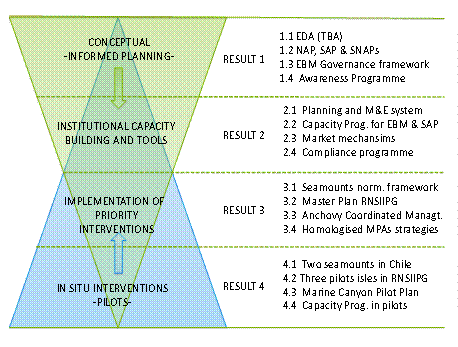
107. The proposed project will provide a forum for enhancing dialogue and coordination for management of shared fisheries resources and to help develop common ecosystemic visions, management tools, languages and strategies. The timing of the proposed project is particularly appropriate as both Governments are making concerted efforts to improve management of the HCLME’s resources. For example, Peru is undertaking very significant changes in the management strategy for pelagic fisheries. The recent implementation of an individual quota system per vessel[43] for the Peruvian anchoveta fishery has led to the long needed standardization of management approaches for the two stocks. As a result, the southern Peru anchoveta stock now has more clearly defined regulations (TACS, closed seasons, etc.), that are similar to those applied in northern Chile to this shared stock. The project is therefore uniquely poised to assist both governments in furthering their agreement on coordinated management practices for the shared stock – one of the project’s main goals.
108. Both countries are currently undergoing major changes in the management processes for their systems of protected areas (SPAs). These include expansions into marine habitat types currently not represented in the SPAs. The project will thus contribute to these processes by providing direct practical experiences for managing MPAs in these new habitats, explore threat mitigation tools that will improve the new MPAs conservation effectiveness, and work with important stakeholders to increase dialogue and reduce potential conflicts.
109. This IW-BD initiative is fully compliant with defined priorities under GEF4. As called for under IW-SP1 it provides for the “development of ministerial-agreed collective programs of action on fish stocks and habitat conservation for LMEs that should benefit from use of MPAs through funding from the biodiversity focal area”. Biodiversity resources have been allocated to set-up and make operational MPAs to conserve currently unprotected off-and near-shore marine and coastal habitats increasing representation of effectively managed marine PA Areas in both Chile and Peru by approximately 500 Km2 in coastal areas, and by over 3000 Km2 in oceanic areas, clearly contributing to SO1/SP2. A management plan for the RNSIIPG will lay the bases for effective protection of approximately an additional 1,414 Km2. Moreover by strengthening systemic and institutional capacities for MPA management nationally and across the HCLME, GEF biodiversity resources will enable the up-scaling of pilot experiences and further contribute to the BD-SO1 objective.
110. The project will also lay the foundations for EBM approaches that will provide for more sustainable livelihoods, improved food security, and biodiversity conservation and protection as called for in both the IW and BD focal areas. Through the SAP process, the project will help the two countries agree upon needed national and regional policy, legal and institutional reforms, and provide for the system-wide application of science to evaluate and ensure the long-term sustainability of the LME’s living marine resources. In turn this will increase the sustainability of biodiversity benefits gained through the MPAs by reducing pressures on these over the long-term.
111. The incorporation of biodiversity conservation considerations into fisheries policy and regulation through advancing multi-species monitoring and marketplace governance mechanisms will contribute to BD-SO2-SP4 goals and this, together with the IW approaches to build foundational capacity for threats abatement in both countries, will further contribute towards the BD-SO2 of incorporating sustainable use of living marine resources and conservation of biodiversity in the productive seascape.
112. A key focus of the project will be to assist both countries and communities to adapt to fluctuating fish stocks and coastal climatic regimes, including through the incorporation of climate change scenarios into fisheries and ecosystem management strategies and PA system design. Therefore significant lessons for the emerging field of adaptation to climate change will be generated.
113. The Goal of this project is to advance towards a sustainably used and resilient HCLME that can maintain biological integrity and diversity and ecosystem services for current and future generations despite changing climatic and social pressures. The project will contribute to this goal through a targeted intervention strategy that seeks to deliver on the Project Objective: Ecosystem-based management in the HCLME is advanced through a coordinated framework that provides for improved governance and the sustainable use of living marine resources and services. Four Outcomes with their corresponding Outputs will be delivered in order to achieve this objective.
Outcome 1 Planning and policy instruments for ecosystem-based management (EBM) of the HCLME are agreed and in place at regional and national levels
114. This outcome seeks to provide the policy and planning framework that will enable Chile and Peru to take into account multi-disciplinary, inter-sectoral considerations and the complexities and interrelationships of HCLME subsystems and trophic linkages when defining the plans and programs for managing living marine resources. It will do this by addressing information and policy barriers and by putting in place the mechanisms and processes through which both countries will work to agree on a common definition of ecosystem-based management and use this to guide the formulation of regional and national plans and programs.
115. The Outputs defined to advance this Outcome are; 1) a completed Ecosystem Diagnostic Analysis (EDA) of the HCLME, 2) a Strategic Action Program for achieving EBM, including a plan for a system of Marine Protected Areas of the HCLME formulated and endorsed at the highest levels, 3) a governance mechanism for EBM approaches set up within the framework of the SAP, and 4) an awareness program on EBM for decision-makers, sectors and resource-user groups.
116. Their successful delivery is expected to enable regional agreement on priority regional and ecosystem issues that will underpin the development of policies and plans for EBM over the mid to long term. In support of this, a suite of processes will be advanced that include: governance reforms to facilitate inter-sectoral coordination for threat abatement; strengthened National Protected Areas Plans (NPAP) and strategies that enable the reduction of marine and coastal ecosystem conservation gaps in the mid to long term; and increased national financial commitments for critical actions for EBM including MPA financing and pollution abatement strategies. These achievements will support long-term compliance with biodiversity conservation targets and ensure effective operations of the pilot MPAs set up through Outcome 4. Specific indicators for these outcomes are provided in the Logical Framework in Section II.
Output 1.1 An Ecosystem Diagnostic Analysis (EDA) of the HCLME is developed and completed
117. Ecosystem Diagnostic Analyses (EDAs) are objective assessments based on best available scientific and socio-economic information of the state of the environment and the drivers of its degradation. Based on GEF best practice, the EDA will inform the SAP development process and provide for identification and prioritization of interventions required to address underlying causes and barriers to ecosystem based management These could include legal, policy, and institutional arrangements and reforms, investments and development of economic and market instruments, as well as strengthened stakeholder involvement and awareness raising. The EDA will also identify critical knowledge gaps in the baseline information necessary for the development and implementation of EBM for the HCLME as well as for the establishment of the SAP monitoring and evaluation framework (Output 1.2). It will take into account the five module approach to LME management: productivity, fish resources and fisheries, pollution and ecosystem health, socioeconomics and governance. An important step in the SAP development process is agreement between both countries on a coherent and workable definition of what ecosystem-based management means and implies in the context of the HCLME.
118. The EDA as well as the working definition of EBM that will be a result from Output 1.2 will provide critical information for the development of the Protected Area plans and strategies for the HCLME. These will serve as spatial planning instruments and form part of the SAP and associated National Action Plans under Outputs 1.2.
119. One of the key objectives of the SAP will be the application of the ecosystem based approach to fisheries management (EAF). This recognizes the need to integrate fisheries and environmental objectives by taking into account the inter-relationships between the various trophic levels of the food-web and the impact of ongoing human actions. The approach thus extends the assessment of the impacts of fishing to include changes in biodiversity, habitat degradation and alterations to the trophic network. Marine ecosystems are extremely complicated, contain a great number of species, and have an undetermined number of potential biological and human interactions. It is thus critical that the EDA results in meaningful EBM baseline knowledge of the ecosystem and its processes, including: physical and chemical environment and its variability; productivity and energy transfer, biodiversity at the habitat, species and possibly genetic levels; population dynamics of targeted species; ecological dependencies of target and non-targeted species; and impacts of non-fisheries activities.
120. It should also be noted that EBM takes into consideration not only fisheries activities but also non-fisheries activities such as shipping, waste disposal and coastal development. Some of these data are available for the HCLME and will be gathered in the EDA, but some data is scarce or only available over short time series and will need to be complemented either as part of the EDA or later in the SAP implementation process. In order to provide for greater cost-efficiencies, the project will aim to incorporate existing information and data from a wide array of sources.
121. Formulation of the EDA will be carried out by a Technical Task Team (TTT) which will comprise experts from both countries drawn from a range of disciplines. This team will review and confirm the ecosystem-level problems, their impact on living marine resources, and rank them in regional priority. The TTT collectively will be responsible for production of the final EDA which should include a detailed causal chain analysis that will be conducted to identify the underlying and root causes and the targeted interventions at the regional level that will be necessary to address them. A detailed review of available fisheries, biological, oceanographic information and data will be undertaken, as to the extent possible. This exercise will be based on existing information.
122. The EDA will focus on critical issues including those related to a more comprehensive understanding of biodiversity associated with diverse habitats along the HCLME; trophic relations between commercial species and other species; socio-economic implications of adoption of specific market mechanisms; and impacts of inter-annual and seasonable variability on living marine resources and other ecosystem parameters[44]. An economic valuation of ecosystem goods and services will be carried out under Output 2.3 and will be fully integrated into the EDA. These assessments will be complemented by the compilation and synthesis of information on existing fisheries, biological, oceanographic, pollution, and socio-economic issues as part of the development of the Information Management System to be undertaken under Output 2.1.
123. The EDA will be informed by and also support the assessments undertaken in the pilot projects under Outcome 4. In Peru, threat assessments will inform and guide the development and testing of management and threat abatement tools at three pilot sites of the RNSIIPG, which in turn will serve as the base for the development of the system-scale Master Management Plan (Output 3.2). For Chile, the establishment of two new MPAs in sea mounts in the high seas (Output 4.1) and the development of pilot plans for the conservation and management of sea canyon areas (Output 4.3) will directly benefit from the biodiversity and threat assessments to be undertaken by the EDA for these specific habitats.
124. In order to ensure that the integrated assessments elaborated through the EDA process are accessible to key stakeholders, an EDA for decision-makers and key resource user groups will be prepared. Thus it will inform those participating in the definition of the SAP and other Project planning processes.
Output 1.2 Strategic Action Program (SAP) for achieving EBM, including a plan for a system of Marine Protected Areas of the HCLME, is formulated & endorsed at highest levels
125. A Strategic Action Program will be developed and negotiated during the Project in order to establish enabling conditions, as well as to undertake the necessary actions and commitments (including policy, legal and institutional reforms and investments) that will be required to make EBM of the HCLME an operational reality. Building upon the EDA and identified priority issues, the SAP will outline the actions needed to resolve priority problems identified in the EDA. A SAP formulation team will be established comprising scientists (including members of the TTT), managers and decision makers drawn from the two countries. At the beginning of the SAP process agreement will be reached regarding what can and cannot be achieved within the SAP timeline and national budgets.
126. An important step in the SAP development process is agreement between both countries on a coherent and workable definition of what ecosystem-based management means and implies in the context of the HCLME. Based on this definition, the EDA, and the interim results of the demonstration projects, ecosystem quality objectives (EcoQOs) will be defined and agreed on. The EcoQOs represent a shared “vision” of how stakeholders would like to see the state of the ecosystem in the future. In order to achieve the EcoQOs, the SAP will include short, medium and long term targets and associated interventions needed to achieve them. The EBM and EcoQOs definitions will be developed through a participatory, inter-sectoral process with key stakeholders from both countries.
127. National Action Plans (NAPs) will underpin the SAP given that specific actions at the national level are required to provide responses to ensure ecosystem integrity, structure, and function as well as to provide a basis for sustainable use of ecosystem goods. The documents will be prepared by a NAP formulation team appointed by the National Inter-sectoral Committee (NIC), (Output 1.3), and comprising of multidisciplinary group of national experts, to ensure that all actions are firmly anchored on realistic national policy actions, and to promote multi-sectoral ownership at the national level. Representatives from the Ministries of Economy or appropriate Government Offices will be members of the formulation team to ensure effective mainstreaming of the project objective into national and sectoral planning process and to provide for financial sustainability. The NAPs are important in demonstrating the national commitment to the SAP and the project. The countries will aim to have the NAPs approved at the highest Government level and incorporated into the national planning process and national budgets, cross-referenced and integrated with other major development plans.
128. Furthermore, to enable well informed policy and decision making, a suite of process, stress reduction and environmental status indicators for SAP and NAPs’ targets (corresponding to agreed EcoQOs) will be defined and agreed to track progress in SAP implementation and the emergent properties of the system under Output 2.1. Baselines against which these indicators are to be measured need to be established and this will be a key activity in EDA-SAP development. These indicators will also serve as the basis for the implementation of an effective Monitoring and Evaluation System that will provide feedback to decision makers and allow for adaptive management processes to be implemented in Outcome 2.1. Procedures for monitoring and evaluating SAP implementation, including in terms of sustainability and efficiency, and overall ecosystem status will be developed. The SAP will include an estimation of the required financial resources and the definition of national and regional strategies to mobilize those resources. The SAP will be carefully designed to ensure that it is action-oriented, financially realistic, locally owned, government supported, sustainable, and responsive to the local conditions, thus ensuring that it is implementable. Pre-feasibility studies, including preliminary cost estimates, will be undertaken for the key recommended regional interventions as part of the SAP formulation, reflecting the incremental cost approach.
129. A key component of the SAP will be a specific plan that will establish the foundations for the future development of an MPA network for the HCLME that will increase critical habitat coverage at the ecosystem level over the long term. This plan will orient the revision and updating of the NPAS to provide the basis of the future network given that PA would need to be established within each country’s legal framework, At the regional level the national strategies need to be harmonized and their coherence monitored with a single monitoring and evaluation framework for the Humboldt Current. This process will complement Output 3.1 that will integrate operational management procedures for oceanic MPAs (sea mounts and canyons) into Chile’s PA policy and legislation and Output 3.2 that will develop the Master Management Plan for the RNSIIPG.
130. The project will closely work with another GEF- UNDP project (Building a Comprehensive SNAP: a financial framework) which is currently reviewing the legal framework and processes to develop a system of National Protected Areas or SNAP (for its Spanish acronym) for Chile[45] and with a GEF-WB project (PRONANP) that is working to increase the area of key ecosystems under protection and strengthen the capacity for strategic analysis and management under a decentralized management framework in Peru. Both these projects work at the national levels and will provide important complementarities to the project proposed herein. See Section IV Part II for more details on complementarity.
Output 1.3 Governance mechanism for EBM approaches set up in the framework of the SAP
131. To ensure long-term development and implementation of the SAP plans and commitments for the achievement of EBM approaches in the HCLME, a permanent bi-national forum or commission will be established to provide an adequate ecosystem governance mechanism. This body will be initially built upon the existing IFOP-IMARPE agreement[46] and the working group for the coordinated management of the shared anchovy stock.
132. The formulation of a governance mechanism will be informed by interaction and coordination with the relevant decision-making and technical organizations in both countries. The process will be wholly country-driven and led by NICs that are to be established by each country to deal with specific issues or tasks. The NICs should be formally created by the governments and meet regularly through the life of the project. The national teams will include specialists with technical, legal, financial and public policy backgrounds and expertise in key thematic areas the project will address. Efforts will be made to ensure adequate stakeholder representation. The NAP formulation team will be defined by the NIC.
133. As required during project implementation, members of the NICs will integrate ad hoc specialized working groups with scientists from both countries to address specific issues or requirements that have been identified or will arise. These include thematic working groups on coordinated management of the shared anchovy stock or to support implementation of the MPA pilots. Tools and skills required for management of socio-environmental affairs[47] will need to be developed in order to deal with inter-sectoral and regional issues that may arise throughout the SAP implementation process.
134. To inform and guide the work of the forum or commission, communication links and exchanges with other ongoing GEF-LME projects will be established. Lessons learned and tools developed (technical and process) in these other projects will enrich and facilitate the Humboldt EDA and SAP development processes and will enable comparisons between similar ecosystems (i.e. Benguela). These exchanges will also serve to upscale the benefits of the experience gained in the other projects to a global level.
Output 1.4 Awareness Programme on EBM for decision-makers, sectors and resource-user groups
135. There is a need to enhance awareness and understanding of the implications and benefits of an EBM approach in the institutions and individuals related to fisheries and marine resource use and conservation in the HCLME. The Project will, therefore, include the development and implementation of an Awareness Programme designed to increase knowledge of basic EBM concepts and tools for key target audiences, such as decision makers, sectors, resource user groups and local communities. The levels of awareness building and means through which the programme will be delivered will be tailored to the different target groups. The overall design for this awareness programme will be undertaken through this Output and will provide an overarching framework for awareness building activities throughout the project. Similarly awareness building targeting national level decision makers will be implemented through this output. However those elements targeting specific representatives of the industrial and artisan fisheries and local communities will be delivered under Output 2.4 and 4.4 respectively. An initial step will be to implement parts of the Programme early-on in the project so as to inform the process of reaching an agreement on the meaning and scope of EBM approaches to be carried out as part of the EDA development process (Output 1.1). Later this definition will be used to inform the Programme throughout the remainder of the project.
136. This Programme will employ, where appropriate, modern information and communication technologies (ITCs) for effective public outreach. Tools and outreach material will be specially designed for the various target audiences, employing publications and interactive multimedia methods and integrating advanced methods with folk media, as deemed appropriate.
137. An important tool to be developed as part of this Awareness Programme is a readily accessible Project website consistent with IW:LEARN guidance and tools (www.iwlearn.net). The website will make publicly available project documents and reports, contacts, links to partner and affiliated initiatives, and project component activities. The website will be a vehicle for stakeholder inputs both in terms of recommendations and concerns. In addition, based on the IW:LEARN approaches, the exchange of experiences, including project support for capacity building, will be promoted. The project will participate in and contribute to, IW:LEARN follow up activities, the knowledge exchange program of the GEF International Waters. There will be participation (self-financed) in the bi-annual GEF IW Conferences (2009, 2011, 2013), “IW Experience Notes” will be prepared that document important lessons and good practices, and contributions to various IW:LEARN type regional knowledge and thematic exchanges, both virtually and in person. The project will identify, analyze and share lessons learned that can benefit the design and implementation of similar future projects.
138. Given that in both countries electoral processes and Government changes will take place during the Project’s lifetime, specific materials and efforts will be developed to sustain the political involvement of the incoming Administrations.
Outcome 2 Institutional capacities strengthened for SAP implementation and for up-scaling the results of pilot interventions to the systems level
139. Through this outcome, tools, mechanisms and improved managerial, technical and enforcement capacities will be delivered to enable targeted stakeholders at various levels in both public and private sectors, to effectively put into practice EBM approaches. Under this Outcome, staffing and training needs at key institutions will be evaluated and addressed, and standards for staffing and processes established so that long-term requirements for EBM are in place. A shift towards a new organizational culture will be promoted that provides for cross-disciplinary decision-making (output 2.2). This shift towards EBM will be further supported by the establishment of an LME Planning, Monitoring & Evaluation System (M&E) that will be structured to respond to key management questions and issues that arise as the requirements for addressing the complexities of EBM emerge (Output 2.1). The M&E system will track and assess progress both in terms of changes to ecosystem health, as well as to the socio-economic and institutional processes that underpin this paradigm shift. Given the impacts of ENSO related variability and climate change on the system, the development of scenarios will be decisive in guiding the definition of management options.
140. As the fisheries sector in both countries is strongly export-driven, management options need to include adoption of market mechanisms. Therefore the project will play a critical role in assisting both societies to demonstrate their commitment to EBM approaches, and in enabling the private sector to position itself within global scenarios. International market forces are driving the demand for more sustainable productive practices, and the project will play an important role in the identification of market-based options, in leverage good practices between industrial and artisanal sectors, and in adoption of fishing practices that reduce by-catch. In order to accomplish this, stakeholders in the private sector will also need to receive targeted training so as to enable them to be active participants in the definition of EBM for the HCLME, to take informed decisions regarding changes to their current productive practices and to comply voluntarily with relevant norms and regulations.
141. The outputs defined to advance this outcome are: (i) Spatially based planning and monitoring evaluation systems developed; (ii) Institutional capacity building programme developed for strengthening SAP and EBM implementation; (iii) Market based mechanisms developed for sustainable fisheries management; and (iv) Capacity building programme for key stakeholders (fisheries sector-traditional and industrial) to increase compliance with EBM based regulatory frameworks. Their successful delivery is expected to result in (i) sectoral and investment decisions that integrate guidance stemming from the Integrated Information System (IIS) on MPA management and on their responses to the HCLME’s natural high variability; (ii) increase fisheries management decisions based on IIS that includes multi-disciplinary parameters, including natural and ENSO related variability; (iii) artisanal sector representatives participating in fisheries fora with an enhanced understanding of ecosystem goods and services and their regulatory frameworks; (iv) responsible institutions that have capacities and internal processes for prioritizing the creation of new MPAs and for their effective management; and (v) improved oversight by PA authorities that assures compliance with national standards for MPAs.
Output 2.1 Spatially-based Planning, Monitoring & Evaluation System developed
142. Through this Output the project will develop a spatially-based Ecosystem Monitoring Programme (EMP), integrating the fisheries, biological, socio-economic, oceanographic and pollution monitoring and data collection programmes currently operating under the different sectors or being carried out by different stakeholders such as universities and conservation NGOs. The primary objectives of the EMP are to ensure that trends are detected in advance and where necessary implement remedial action, and to provide an objective test of the effectiveness of existing environmental management practices (on a local, national and regional scale).
143. In the design of the EMP key species and habitats that can be used as indicators will be identified and common sampling and analysis protocols will be agreed. The focus will be on delivering usable fisheries and environmental information, on detecting and monitoring trends, and on identifying particularly sensitive areas. It will be a priority for the project to secure consensus on the selection of a range of parameters which have clear (and, where possible, proven) relevance to the EcoQOs to be defined as part of the SAP process.
144. The key deliverable of the EMP will be a consistent and coherent data set which will provide the necessary context for effective decision-making. Integration of monitoring plans and methods will provide a solid basis for building EBM concepts into environmental impacts and processes, and will thus facilitate agreement on practical mitigation actions. It will also enable the progressive definition of policy including spatial planning. Indeed the EMP concept is as a long-term exercise that will evolve with time, alongside the management framework and action plans(s), however, it is the development of this management framework that ultimately is of importance. To link the EMP with the emerging management framework, an Ecosystem Information Management System (EIMS) will be developed. The EIMS’ development and design will be closely entwined with the requirements of status and trend monitoring and the management decision framework. The EIMS will be GIS based and incorporate spatial visualization tools for fisheries, biological, oceanographic, chemical and socio-economic data-sets with the ability to compare, contrast and interrogate the data to improve information and knowledge and respond to the major information needs for management decisions.
145. In order to implement remedial action, decision makers must know at what observed levels permanent adverse effects on the environment are likely, together with when and what action should be implemented. This is a complex problem. It calls for the design of a management framework that will allow decision makers to interpret the monitoring data and background noise with assurance. Allowing projections of different management scenarios, the EIMS will sustain explorations of the potential ecological, social and economic consequences of management approaches and of environmental variability at different scales (spatial and temporal), it should help define the pros and cons of different decisions and thus help policy makers make informed decisions based on an accurate assessment of trade-offs. As an understanding grows with the help of results from the EIMS, a more sophisticated framework can be created.
146. Specific formal protocols should be created to explicitly describe the type, form and mechanisms of data exchange between the two countries. Access to the databases to recover and to insert data will need to be carefully discussed between the two countries and key stakeholders. There may be different levels of access defined and in the longer term institutions/organizations need to be identified as responsible for its maintenance and up-keep. The database will be linked to the project’s web-site which will also provide information about the project’s M&E and scenario modeling activities as well as limited access to the database and the interrogated results. Linkages will be built with Global Ocean Observation System- GOOS (Intergovernmental Oceanographic Commission- IOS) and its partners, including FAO, as appropriate.
147. To meet its objectives, the EMP needs to be thought of as a permanent commitment and not as a project activity that will cease after a short period or once external funding is exhausted. The level of on-going financial commitment to the monitoring programme made by the countries will, as much as the technical constraints, define the level of monitoring that is achievable. Thus, a financial strategy to sustain the long term costs of the EIMS and the EMP will be defined as part of this Output.
Output 2.2 Institutional Capacity building program developed to strengthen institutions for implementing the SAP and to advance towards EBM
148. The successful implementation of an EBM program requires institutional capacities to practice adaptive ecosystem management, including the ability to collect and interpret data on ecosystem change, skills in conflict resolution, and sufficient capabilities in surveillance and enforcement of SAP policies and procedures (Olsen, 2003[48]). EBM also requires the ability to integrate across diverse perspectives and disciplines. Analysis of the condition and dynamics of an ecosystem, of the forces of change, and ecosystem resilience requires a broad knowledge base and the ability to integrate what is known into a framework that addresses problems, builds on opportunities, and takes into consideration culture and traditions. To achieve these capacities, the project will include specialized programs to strengthen the relevant institutions and organizations so that they have the required competencies (knowledge, abilities and attitudes) that will enable the countries to achieve and maintain SAP goals. Initially the key institutions selected for this are IFOP and IMARPE, SUBPESCA, PRODUCE and SERNANP and CONAMA.
149. Based on the agreed definition of EBM and EcoQOs, the specialized institutional and staff standards and competency profiles that will be needed to advance towards EBM, provide the initial basis for support for SAP implementation, and to upscale pilot interventions, will be defined. Based on these, local and regional capacity needs assessments will be undertaken, and requirements mapped out. These assessments will focus on the key institutions and organizations that will participate in the SAP implementation, and pilot development and upscaling processes. These will inform and guide the development of the project’s capacity building strategy, which will define the contents, formats and resources needed for the training activities for each specific target audience to be implemented during the project. The strategy will also identify the financial requirements to implement it and the potential sources to fund this programme over the short and medium term.
150. In particular, the structures, staff, activities and internal processes of particularly relevant institutions (i.e. IMARPE, IFOP) will be taken into account to define the institutional development plans (“institutional fine-tuning”) and resources that will be necessary for these institutions to attain EBM enabling capacities. More challenging issues, such as large-scale institutional restructuring if needed, will require comprehensive discussions to define and achieve the legal and budgetary changes required at the appropriate political level. The project will contribute to these processes by supporting the formulation of institutional fine-tuning plans and providing information to relevant authorities of the long-term benefits of developing stronger institutions as a vital step to maintaining ecosystem health and the benefits this provides for local and regional communities
151. During the first year, while the capacity needs assessments are being completed and analyzed, some priority training activities will be implemented. These may include specific courses and tools previously developed by the GEF and others, such as training for EDA and SAP development and implementation, data collection and management tools; data processing tools; conceptual modeling tools; modeling and analysis tools (such as marine ecosystem models, dispersal models, habitat models, socioeconomic models, and model development tools); scenario visualization tools; project management tools; and stakeholder communication and engagement tools.
Output 2.3 Marketplace governance tools developed for sustainable fisheries management
152. The marketplace, in which goods and services are exchanged through production and value chains, affects how the environment is used, what resources are extracted, and the manner in which these resources are exploited. For their part, consumer may come to consider not only the product itself but also the manner in which it is produced, thereby supporting certification and eco-labeling schemes that provide for ecosystem protection. Contemporary efforts to attach monetary value to ecosystem services (Costanza et al., 1997[49]; Independent Commission on the World Oceans, 1998[50]), which have previously been unaccounted for, give a more measurable value to those services, demanding careful consideration of the services and goods provided by natural environment. It should also encourage the internalization of the costs of maintaining such services. In a variety of ways, through the establishment of adequate frameworks and incentives, the marketplace could make significant contributions to ecosystem protection (Olsen et al. 2006)[51].
153. The Project will explore existing market tools, particularly certification or eco-labeling schemes, and their viability and potential application for promoting more sustainable fisheries in the context of the HCLME (see Table 1). As a first step in this process, advances will be made on a common concept of “sustainable fisheries management” as part of (or compatible with) the EBM definition to be undertaken in Output 1.2 during the early SAP definition processes. The FAO code of conduct for sustainable fisheries and the criteria used by the most recognized certification schemes will be considered.
Table 1.- Comparison of the potential impacts of three market-based mechanisms on HCLME fisheries sustainability
|
Individual Transferable Quotas (extraction) |
Incentives for Innovative Fishing Gear (extraction and manufacturing) |
Certification schemes (including eco-labelling) (throughout the value chain) |
|
· An economic measure that can have positive externalities for conservation · Optimizes fishing effort. · Disincentives overinvestment. · Allows for long-term businesses. · Can be upscaled to include the artisanal fishers sector. · Increases overall availability, over time, of important marine living resources and their associated economic benefits (employment, etc.). |
· Decreases discards (Selective trawling) · Protects endangered species (turtles, birds, etc). · Protects biodiversity of highly vulnerable systems (sea mounts and sea canyons benthos). · Promotes demand for living marine resources. · Increases community awareness · Strengthens international agreements. · Generates added value (Fishmeal vs. Direct human consumption). |
· Provides for added value. · Increases competiveness. · Improves stocks’ health. · Protects biodiversity. · Increases market accessibility. · Strengthens international agreements and improves national image internationally. · Promotes environmental care (awareness). · Promotes competition. · If voluntary, it is less expensive than when commanded by the State (win/win situation for the government and industries). |
154. The project will help those fisheries that are interested in becoming certified by a) providing up to date information on the various certification alternatives available in the market today, including their level of recognition and value, the criteria and standards required for certification, and the relative costs and benefits (in terms of their potential for improving their products’ global market positioning and competitiveness), through the project’s web site, b) working with the relevant government institutions to provide information about the various certification options and government role in certification processes (i.e. the importance of having appropriate management objectives and decision-making processes, transparency, effective compliance and enforcement systems, and adequate research, planning and M&E for the fisheries under their management) and c) working with relevant government authorities regarding how incentives can be created for improving fisheries’ sustainability, such as incentives for use of gear that reduces by-catch of seabirds or turtles, and other good practices that reduce the fisheries’ environmental impacts. The project will be supported and guided by UNDP’s Green Commodity Facility (GCF) for facilitating dialogues on fishery supply chains and options for market based approaches to complement the management regimes.
155. An interesting development is the fact that the Peruvian anchoveta industry (as represented by the Peruvian Fisheries Society – Sociedad Nacional de Pesquerías or SNP) has just agreed to enter a pre-assessment process for Marine Stewardship Council- MSC certification. To achieve this certification, the fishery and the fishery management system must first comply with a set of criteria that include the application of an EBM approach to the TAC calculation process and improved sectoral governance; both of which will be facilitated by this project.
156. An additional activity to be undertaken in this output is the identification of approaches for economic valuation of the goods and services provided by marine ecosystems and how they relate to human wellbeing and economic growth. These results will inform the EDA and be incorporated into the integrated assessment that results from the SAP. This process could contribute to evaluate the costs and benefits of current fishery management schemes, as well as to inform how a more diverse and sustainable use of the ecosystem’s living resources may provide new and valuable opportunities for human wellbeing and economic growth, such as, for example, by increasing direct human consumption of pelagic fish.
157. Another important activity of this output will be the development of instruments that create incentives for the use of fishing gear and practices that reduce the bycatch potential of fishing activities. Bycatch of threatened species may affect market appeal of important fisheries, such as the mahi-mahi (Coryphaena hippurus) fishery. By reducing bycatch, the fishery may be able to access other market-based incentive programs, such as MSC certification, and thus increase its access and appeal to international markets. The project could work with other local programs that are already working in, for example, seabird, marine mammal and turtle bycatch, including information of these programs in the project’s web site and how instruments they are developing can be applied to other relevant fisheries and their marketing potential.
Output 2.4 Capacity building program targeting key stakeholder groups (artisanal and industrial fishers) implemented to increase compliance of EBM regulatory frameworks
158. Addressing the many complex facets of EBM will require the capability to work across disciplines. There will be a need for scientists who understand management processes, managers who understand the strengths and limitations of science, and people who understand the role of institutions and legal instruments in governance for stewardship of oceans and coasts but also, most importantly, who understand the needs of a healthy environment and how the goods and services of marine ecosystems are essential for their own wellbeing.
159. Ultimately, successful EBM implementation will depend on an informed and educated society. Education shapes societal values and public opinion and contributes to more informed decision-making. It can engender the political will to resist pressure from special interests in favor of decisions for the public good. It can also lead to public support for management, including compliance with regulations and intolerance for violators. Voluntary compliance does not result from coercive enforcement, but mostly from personal moral and social considerations.
160. The project will, therefore, include a program to increase awareness among key fisher groups (artisanal, industrial and aquaculture) of the benefits ecosystems provide; of how their activities affect ecosystem health and how their compliance with EBM regulations can increase the benefits they and society as a whole obtain from the ecosystem and its living resources. This program will include special informative events targeting the different fisher groups and their families, to build awareness in the entire community so that the social environment also serves to enhance voluntary compliant behaviors.
161. Pilot MPAs will also serve to develop capacities for dealing with socio-environmental issues, particularly, conflicts over fisher access to resources that are affected by the implementation and improved management of MPAs. These capacities will be critical where the project is not able to develop community involvement and compliance. For these cases, workshops to deal with specific socio-environmental issues will be carried out, seeking not only to reduce conflicts, but also to raise awareness of ecosystem services and the benefits derived from them (Output 4.4).
162. Another important element of this program will be the involvement of fishers and industry in the design and implementation of MPA monitoring programs at the project’s pilot MPA sites. This will be implemented through Output 4.4 and will provide lessons that will enrich the part of the programme to be delivered here at more national and generic levels. Through this involvement, the fishers and industry compliant behaviors will be further incentivized by providing legitimacy to management decisions and opportunities to directly observe the benefits of protection on living marine resources and the damages caused by unsustainable fisheries practices. The project will also work with the industrial fisheries sector to develop awareness of the potential to improve ecosystem productivity and resilience that can be achieved by applying an ecosystem-based approach to the main pelagic fisheries.
Outcome 3 Implementation of priority MPA & fisheries management tools provides options for enhanced protection of the HCLME and for SAP implementation
163. Outcome 3 creates the conditions to upscale the pilot projects as well as undertake priority interventions that will provide insights into requirements for effective coordinated, multi-specific and multi-disciplinary management of the HCLME. This Outcome seeks to translate Outcomes 1 and 4 into national level plans and policies developed based on coordinated and analogous approaches, strategies and operational standards, especially for fisheries management and for MPAs. Notably, both countries commit to advancing towards coordinated (collaborative), ecosystem-based management of the shared anchovy stock; increase operational capacities of newly established MPAs in Peru and Chile through the development of management plans and coherent policies and legislation; and to establish the foundations for a system-level network of MPAs that could reduce pressure on the HCLME marine biodiversity by complementing and strengthening national protected area strategies.
164. The Outputs defined/put forward for consideration are: 1) coordinated management approaches piloted for the shared anchovy stock; 2) the RNSIIPG Master Management Plan developed with financing strategy; 3) Legislation developed for implementation of MPAs in oceanic areas (sea mounts in Chile and canyons in both countries); and, 4) MPA strategies and legislation compared and equated for the two countries. Their successful delivery is expected to result in: common criteria for regulation of operational standards and knowledge that advance the application of the EAF and MPA management; three pilot MPA sites operating to these standards nested within the RNSIIPG Master Plan that increase the percentage of marine/coastal interface under protection in Peru; and the normative framework for the establishment of two MPAs in Chile that increase oceanic marine area protection. All these will combine to reduce pressure on biodiversity by, for example: (i) improving protection status of key habitats and reproductive sites for flagship species, (ii) increasing compatibility of fishing pressures in waters adjacent to the new MPAs with biodiversity management goals; and (iii) managing threats such as fisheries by-catch and stress from reduced food availability, and (iv) providing for improved connectivity.
Output 3.1 Strategies and norms developed for off-shore MPAs (sea mounts and canyons) in Chile
165. The Project will work with the Chilean Government to develop the legal mechanisms that will be needed to provide for the establishment and implementation of PAs in oceanic areas, particularly in prioritized habitats, such as sea mounts and canyons. This output will explore Chile’s existing legal framework as it relates to MPAs and their implementation processes, and define which norms and regulations can be used in the short term for the establishment of sea mounts and canyons as PAs in Chile –thereby making possible the pilots- and start the definition of new categories that may be necessary. This will complement the process that is being undertaken in Chile with support of the GEF-SNAP project which is working to develop a financial framework for a comprehensive protected area system that will include marine and coastal areas. This will be particularly relevant for issues such as developing financial tools for the implementation of the new MPAs and offshore monitoring arrangements.
166. In addition this Output will advance the regulatory frameworks to define and protect Vulnerable Marine Ecosystems in Chile. According to the UN (Report of the 58th General Assembly, 2003) ‘a vulnerable marine ecosystem [VME] is defined as one that is particularly susceptible to disruption, to damage or even to destruction due to its physical characteristics, the activities and interactions of the organisms therein and the impacts they suffer from human activities and the surrounding environment.’ In this same report seamounts are listed as an example of VMEs with high levels of endemic species. Worldwide there have been several initiatives to ensure the protection of seamounts. At present in Chile there are proposals for the modification of the Law of Fisheries and Aquaculture (Ley General de Pesca y Acuicultura) to provide new management categories for the protection of VMEs, which would include seamounts as deep-sea VMEs.
167. Along with new management categories, this Output will support legal changes that will provide new regulations for fishing activities in deep-sea VMEs and thus seamounts. This will require both a conceptual and operational definition, as well as a characterization, of deep-sea VMEs for the Southeast Pacific. Protocols will be defined for each VME with indicator species, sample techniques and frequencies levels and tolerance thresholds that determine the presence of deep-sea VMEs. These protocols will be adopted to enable vessels to determine when they are entering a VME. General operating procedures applicable to all vessels in deep-sea VMEs will then be defined to mitigate or reduce the impacts of fishing in these ecosystems. This will include procedures for each type of fishing gear and practice that would be enforced for vessels in VMEs. Such regulations would apply to all seamounts not only those within MPAs. The establishing of these new regulations will draw on technical consultations with experts and on the information collected from the pilot studies to set up MPA (see output 4.1 and Section IV Part V- description of pilots).
168. Through this process the legal and policy mechanisms to establish new offshore monitoring arrangements with the industry using opportunity vessels and financial tools to fund the implementation of the new MPAs and its management tools will also be explored and developed.
169. This intervention will help advance the ecosystem representativity of the Chilean System of National Protected Areas by enabling it to cover critical oceanic habitat types. In Outputs 4.1 and 4.3 the project will increase understanding of the role of sea mounts and canyons in biodiversity conservation and in fisheries. This will feed into clear definitions of what types of management categories, procedures and norms would be suitable for conserving the canyons both in terms of fisheries and biodiversity. This output will create the legal framework for the effective protection and management for these habitats
Output 3.2 Guano Islands, Isles and Capes National Reserve Master Management Plan Developed with a Financing Strategy
170. Peru is in the process of expanding its National Protected Area System (SINANPE) to increase coverage of marine and coastal habitats. For this purpose, it has chosen to integrate into SINANPE the existing system of guano islands and capes (the guano system) that has been used for the extraction of seabird guano (fertilizer) for centuries in Peru and protected for this purpose by the Peruvian State for over 100 years The guano system includes a total of 22 islands or group of islands and 15 capes (or puntas as they are called in Peru) which, because of the long-term protection provided by the State, currently hold the last remaining, relatively intact, important breeding and roosting aggregations of threatened seabirds and mammals[52], Also, because permanent guards keep most boats and divers from entering the shallow waters surrounding the guano sites, many commercially important species of fish, invertebrates and algae have also been protected in these sites and persist in abundance, while almost all surrounding areas have been depleted because of inadequate fishing practices.
171. The process of incorporating the system into SINANPE is now almost complete; however a key concern has been the capacities and resources necessary to run the new RNSIIPG effectively. Given the number of islands and capes that are part of the RNSIIPG, the staff, equipment and infrastructure requirements will necessarily be considerable[53]. A preliminary study assessing the operating needs of the new reserve calculates that approximately 110 staff and between 2-3 million US$/year will be required to run it (minimum and optimum estimates). In fact, also, because the reserve extends the length of the Peruvian coast, it will be affected by many if not all anthropogenic activities taking place in marine and coastal areas, where over 60% of Peru’s population lives.
172. The SERNANP will, therefore, have to quickly learn how to manage such a large-scale endeavor with only few staff with experience in marine areas. It will also have to learn how to deal with and mitigate the potential conflicts with the many and diverse economic activities that take place around the 27 islands and capes of the RNSIIPG. To make the task more manageable, it has been proposed that at least 7 operating-units grouping neighboring islands/capes be established. These units will share staff and resources and common potential conflict issues and will, thus, reduce operating and management costs. Another important issue to consider is the transition between the current guano administration (AGRORURAL)[54] and SERNANP.
173. This transition of management authority and the provision of initial capacities for SERNANP to manage the RNSIIPG will be addressed though an “emergency” action plan (a mandate of the Law 28793), which is to be funded by the GEF-WB project (PRONANP). PRONANP will fund an initial small specialized unit within the SERNANP that will oversee the transition process; the development of the emergency action plan; and the work of the special inter-sectoral commission formed to develop this plan. This action plan will identify and establish the inter-sectoral management arrangements necessary for the transition, including the transfer of staff, infrastructure and resources. It will also identify and fund the most urgent infrastructure and equipment that will be required to make operative the new reserve, and the basic training needs for the guards to effectively guard the guano sites.
174. Once the RNSPIIG is formally established and the guano sites are fully transferred to SERNANP, the project proposed herein will work to develop the Master Plan for the new reserve drawing from the early lessons established in the three pilot project sites where management and threat abatement tools will be first tested (Output 4.2). More details on these three pilots and on the entire RNSPIIG are provided in Section IV Part V.
175. The Master Plan is the most important strategic planning document guiding the management of a Protected Area in Peru, renewable every five years. The project will develop this Plan, including the diagnostic studies and consultation process with the different Regional Governments and stakeholder groups that will be affected by the establishment of the Reserve. It will include: the general management strategies and policies for the PA, its strategic conservation targets, a zoning plan for the PA and its buffer zone, its management structure, specific use plans (i.e. tourism, guano extraction, access to artisanal fisheries etc.) and a first framework for the cooperation, coordination and participation of work with and of other institutions inside the PA and its buffer zone.
176. As part of this Output, a financing strategy to support the implementation of the Master Plan and the other specific use management plans will also be developed. This strategy will consider the PA system resources (entry fees, development aid projects, donations, etc.) and explore potential new sources of funding for the system such as tourism, guano harvesting, research, etc. A very conservative preliminary analysis of the potential contribution of these funding sources, estimates that between US$ 1.6-4.8 million could be raised from these sources (Table 2), either leaving a gap of around US$ 0.4-1.4 million or a surplus of almost US$ 2-3.2 million, relative to the minimum and optimum costs of running the reserve provided by the same study.
Table 2.- Potential Sources of Income for the RNSIIPG (in US$ - projected for the period 2010-2011)
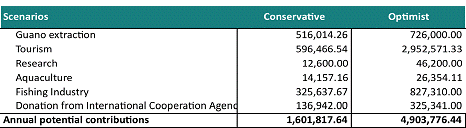
177. This output will be complemented importantly through the activities to be developed in Outputs 2.4 and 4.2, where awareness programs will be developed targeting important stakeholders, to increase compliance and reduce conflicts with the zoning and other regulations that will affect resource use around the new reserve. By building awareness and developing participatory tools that involve stakeholders that may feel negatively affected by the establishment of an MPA near them, stress around the reserve may be reduced and its management and conservation effectiveness improved.
Output 3.3 Coordinated Management Approaches Piloted for the Shared Anchovy Stock
178. A critical element of the Project is the development of coordinated fisheries management approaches for the shared anchovy stock, a keystone component of the HCLME. Based on the advances achieved through the existing IFOP-IMARPE agreement, the Project will increase the knowledge base available for the coordinated management of this shared stock and identify and pilot EBM tools for this fishery.
179. The Project will provide the framework and resources for collaborative initiatives for the development and implementation of standardized and complementary stock assessments, monitoring, and data synthesis and analysis protocols. For this purpose a special working group will be created (Output 1.3), which will define the nature, timing and coordination of activities to be carried out by the respective countries’ institutions in charge of fisheries research.
180. This includes facilitation of the work of technical teams during specialized workshops, where data will be synthesized and jointly analyzed to assess, for example, the effects of climate and oceanographic variability on the distribution and abundance of the shared anchovy stock and on spatial and temporal changes in the stock vulnerability and landings. This information will feed stock evaluation models (including indirect assessment methods using size and age distribution data) that will enable assessments of the shared stock’s condition, inform fisheries management processes, standardizing fishing effort and modeling the consequences of different management scenarios to define the pros and cons of different decisions and enable informed decisions based on an accurate assessment of trade-offs.
181. The Project will also include one or more scientific meetings as needed where the available knowledge of the LME for the Southern Peruvian and Northern Chilean Region will be brought together and synthesized. The information to be gathered at these meetings will inform the work of an inter-disciplinary team that will develop and implement ecosystem models to be used to identify and quantify critical trophic interactions and the potential environmental and socio-economic impacts of human uses of the ecosystem’s components, processes, uses and services, taking also into consideration the possible impact of climate change. The team will also review and assess proposed models and indicators of ecosystem health (FAO, ICES, CBD) and their applicability for the HCLME. This will provide inputs to the monitoring systems developed through output 2.1.
182. The existing scientific and technical cooperation agreement between IMARPE and IFOP will be updated to include the new coordinated research and monitoring activities above described and to provide a framework that supports the actions that will lead to EBM of the shared anchovy stock, applying the working definition of EBM developed and agreed on during the SAP development process (Output 1.2).
Output 3.4 MPA Strategies and Legislation Comparable for the Two Countries
183. An important barrier for the development of compatible MPA frameworks in the HCLME countries is the limited knowledge of management options for protecting living marine resources and their habitats (Barrier 3). Both countries still have PA systems largely focused on terrestrial ecosystems, have established few MPAs – mostly in coastal-marine areas, and there is still limited understanding of the important role MPAs play in the protection and recovery of fishery resources. In general, MPAs are still largely perceived as another way to restrict access to important fishing areas and resources.
184. Under the SAP, an important component will be a specific plan that will establish the foundations for the future development of an MPA network for the HCLME that will increase critical habitat coverage at the ecosystem level, complementing the national MPA Systems’ coverage. In addition to this, the project will be a platform for the exchange of experiences, lessons and practices between MPA practitioners in both countries in order to benefit from south-south cooperation. Therefore it is critical that experts and stakeholders in both countries are able to have a common understanding of the respective PA category and marine habitat classification systems, arrive at terminology that can be easily compared (equated) between countries, and agree on critical gaps and opportunities.
185. Thus through this output the project seeks to assist the development of national and regional MPA strategies and plans by supporting regional workshops and discussion fora to examine the existing national PA category and marine habitat classification systems, find equivalent or compatible categories, and identify critical differences and gaps that need to be addressed to be able to develop effective and compatible marine biodiversity conservation strategies. These fora will also serve to catalyze a shared understanding between countries and sectors of other available marine spatial management (zoning) tools and their applications as part of conservation and sustainable use of living marine resource strategies.
186. As a result of this Output, a common language and vision for MPA management, and increased understanding of the role of MPAs for biodiversity and fishery resource conservation will be developed among countries and sectors. This should facilitate the process of establishing other MPAs in the future and perhaps also permit the development of an ecosystem-level network of MPAs that will provide adequate coverage for all critical habitat types in the HCLME.
Outcome 4 Implementation of pilot MPAs that underpin ecosystem conservation and resilience
187. This outcome will provide measurable on-the-ground experiences and information on which the planning processes to be undertaken in the previous Outcomes will be based upon. This Outcome focuses on in-situ interventions (pilots) that will validate differentiated approaches and targeted responses to overcome specific management challenges and generate models to strengthen systemic capacities over the long-term. Both pilots will focus on MPAs given their keystone role in EBM and the need to meet national targets on ecosystem representativity. Both pilots seek to establish new and/or strengthen existing multiple use MPAs (or MUMPAs). One of them will assist in the implementation processes of the new RNSIIPG in Peru, and the other will explore the management approaches needed for implementing MUMPAs in oceanic areas off Chile in selected sea mounts.
188. Both countries have also shown interest in sea canyons and their importance in terms of ecosystem productivity and biodiversity conservation. The project will thus gather the available information and support studies to identify the goods and services provided by sea canyons to the HCLME to inform and validate the idea of establishing MPAs in sea canyons in the future.
189. The pilots will address the political, administrative, technical and financial barriers for the establishment of MPAs for the HCLME by developing and testing a number of management and threat abatement tools that can be upscaled to systemic level. They will also contribute to biodiversity conservation because the early implementation of the management tools to be developed in them – if effective – should have short-term positive impacts on the local biodiversity because of the expected improvements in conservation effectiveness. They will both include the development of management effectiveness monitoring programs that will be focused on the pilot areas and their areas of influence (future buffer zones). These programs will feed into and complement the ecosystem monitoring programme to be developed in Output 2.1. Sites for pilots were identified and selected in the early stages of the Project using criteria that include global biodiversity values, potential resource generation, stakeholders’ interest, and threat mitigation potential.
190. The Outputs defined/put forward for consideration are: 1) two sea mounts in Chile under legal protection through agreed upon management categories, 2) management tools developed and implemented for three representative sites of the RNSIIPG and Paracas National Reserves, 3) management options for conservation of sea canyons are available for the HCLME and 4) capacity building, awareness & socio-environmental issue management programs implemented for the relevant authorities and stakeholders in the pilot MPA sites.
191. Their successful delivery is expected to result in increased protection of fish stocks and coastal & marine habitats in the selected biodiversity pilots; interagency coordination mechanisms that enable regulation and management of economic activities in pilot areas; and five habitat types unprotected in the baseline that are effectively managed representing 4,260 Km2 of additional seascape and coastal area.
Output 4.1 Two sea mounts in Chile under legal protection through agreed upon management categories
192. For Chile, two sea mount areas are proposed as pilots to increase coverage of critical oceanic habitats currently not covered by the national PA system and where important species diversity may occur. These were selected because they were deemed to represent key processes controlling productivity and biodiversity of the HCLME and, therefore, needed protection and were suitable for monitoring ecosystem health and for assessing changes of the whole system as a response to natural variability and global climate change.
193. Seamounts comprise a distinct deep-sea environment, with hard, exposed substrata being a common feature and relatively little sediment deposition. They often occur in chains or clusters, which may be associated with seafloor ‘hotspots’, locations of repeated volcanic activity. Interesting hydrodynamic features, including jets and eddies, are often associated with seamounts. Some of these eddies are known to become trapped over seamounts to form closed circulations (Taylor columns) which may persist for several weeks. On a larger scale, ocean currents may be deflected by seamounts (WWF/IUCN 2001)[55].
194. Seamount benthic fauna is dominated by suspension feeders, such as corals. These generally occur on the most exposed portions of the seamount, where water currents are strongest, supplying the corals with food, removing waste products and avoiding potentially harmful excess sedimentation. Other conspicuous elements of the seamount fauna comprise sponges, hydroids and ascidians. Where areas of soft sediment occur on seamounts, giant protozoans known as xenophyophores are often the most abundant epifauna. Some 600 invertebrate species have been recorded from seamounts. However, studies of only 5 of the estimated >30,000 seamounts around the world accounted for 72% of these recorded species. This would suggest that many more species remain undiscovered.
195. Studies indicate that fish abundance around seamounts is higher than in the surrounding waters, probably as a result of increased primary production that supports an abundance of pelagic fauna such as macroplankton, which, in turn, supports an increased fish population. Alternatively, seamounts may also support large pelagic and benthopelagic fish communities by trapping diurnally migrating plankton. Some of the commercially valuable fish species associated with seamounts include the orange roughy (Hoplostethus atlanticus), some deep-water oreos (Oreosomatidae) and the pelagic armourhead (Pseudopentaceros wheeleri). Seabirds have also been shown to aggregate at seamounts in response to the abundance of pelagic organisms associated with these seabed features. Seamounts may therefore provide reliable feeding sites for wide-ranging seabirds foraging in this relatively food-poor environment.
196. The depletion of many inshore fish stocks has led to increasing fishing pressure in the open ocean. Improved fishing technology is aiding this exploitation. Rich fishing grounds are often found over seamounts, where high yield per unit effort is obtained, rendering the seamount fauna subject to extensive physical damage by trawling, and stock and by-catch depletion by long-lining. Many animals are likely to have extremely limited regenerative capacity. Recovery from impact might be measured in decades. Deep-water precious corals are slow growing and often have very low levels of recruitment. If depleted, their recovery could take centuries. Some of the fish species exploited on seamounts also have low productivity and extreme longevity. These life history traits are not conducive to intensive fishing, such that exploited populations are likely to reduce quickly and take decades, or longer, to recover.
197. The orange roughy for example, a species fished in the sea mounts off Chile, has seen its stocks fished down to 15-30% of their initial biomass within 5-10 years in the seamounts off the coasts of New Zealand and Australia. The aggregative spawning behavior that this species displays around seamounts increases its susceptibility to severe fishing impacts. It has also been suggested that this and other fish species use seamount habitats as a nursery area. Furthermore, seamounts may be targeted by mining companies for ferromanganese crust and polymetallic sulphides in the future. Seamounts generally support communities of high diversity and/or high productivity, consequently any physical impact of mining activities could be devastating.
198. Chile has identified seamounts as an important marine habitat in its National Biodiversity Strategy and Action Plan. The project will provide the opportunity to provide legal protection of seamounts by establishing MPAs in two of the main seamount clusters found within Chilean territorial waters. This is the first attempt to establish MPAs in oceanic areas in Chile, the HCLME in general and one of the few current attempts at protecting this habitat type globally. The experience and knowledge to be developed in the selected pilot sites will be crucial for the protection of marine biodiversity in the HCLME as it will develop tools and procedures for management of these areas in close collaboration with the industry that is currently exploiting these seamounts.
199. An additional innovative aspect of this pilot is the assessment of seamounts as indicators of global changes in marine environments. The selected seamounts are located in the outermost influence areas of the Humboldt Current System and have been proposed as potential early warning sites for impacts of global climate change. Environmental and fishery information to be gathered at the pilot seamounts will be related to that of more coastal sites that will be systematized in the ecosystem monitoring program (EMP) to be developed for the HCLME in Output 2.1. This will allow assessing the role of seamounts as potential indicators of global climate change processes in general and as early warning systems for the HCLME in particular.
200. The seamounts that have been selected are: “Bajo O’Higgins” in Central Chile and the Juan Fernandez Archipelago over 500 nm offshore. Bajo O’Higgins is likely to be subjected to the influence of the OMZ system and should, therefore, present special adaptations to low oxygen habitats. Juan Fernandez is outside of the coastal upwelling zone, but possibly linked to the Coastal Transition Zone, which is the region connecting the productivity of the upwelling zone to oceanic regions.
201. As part of the process for the establishment of MPAs in the selected sea mounts, the project will bring together relevant national and international experts to gather and analyze the available information for sea mounts in Chile. Critical information gaps will be identified and international experts will be subsequently engaged to design the appropriate methodology to do a first biodiversity baseline survey, including evaluation of species and biological community diversity, for the two selected sea mounts.
202. From these surveys, the two new MPAs will be mapped, their areas calculated and preliminary zoning proposed. The biodiversity evaluations will help define the PA category to be assigned for each area and inform the development of the areas’ management plans, including the plans’ conservation objects and targets, procedures for PA functions and a financing plan. These plans will include institutional roles and responsibilities, an agreed on zoning proposal, M&E plans, and finance plans with costs & revenue options defined. Coordination and synergies on funding mechanisms will be sought with the GEF-SNAP project that will develop a financial framework for protected areas. The final approval process for the establishment of the new MPAs depends on the results of Output 3.3, which will develop the necessary framework for the establishment of oceanic MPAs in Chile. Once completed, the MPA approval process will be finalized and implementation of the new MPAs will begin.
203. Preliminary dialogue has been carried out with the fishing industry that operates in these areas and they have expressed interest in contributing to the protection of sea mounts and their resources, and perhaps to supporting a monitoring and protection system based on the vessels that fish in these areas. Clearly, monitoring and protection of these MPAs cannot be entirely based on the users of these areas and resources. It will thus require the development of other viable supervision and enforcement instruments for the relevant Government Authorities. The Project will work to develop these instruments with the Government, industry and other stakeholders as well as explore options with other partners who may have developed appropriate technologies to support monitoring of oceanic areas.
204. The biological, fisheries and socio-economic diagnostic studies undertaken will feed into the EDA, and information and conservation awareness campaigns that target the fishing industry currently operating in these sea mounts and other involved stakeholders will be developed as part of the efforts in Output 1.4.
Output 4.2 Management tools developed and implemented for three representative pilot sites of the System of Guano Islands, Isles and Capes and the Paracas National Reserves
205. This Output will implement a pilot project in the RNSIIPG to build the base of experience and management tools that will support and inform the RNSIIPG Master Management Plan to be developed in Output 3.2. The pilot seeks to demonstrate best practice, effective management, governance models and threat abatement tools at selected sites. From the experience built in three very different sites, management models will be generated for up scaling to the entire RNSIIPG and to be applied for other MPAs to be established in the future in Peru.
206. The three sites were selected because they represent important ecological processes and face increasing pressure and risk from a number of important developments taking place in coastal Peru. As demonstration projects, the pilot sites will serve to develop management strategies and threat mitigation tools that can be replicated to protect other sites that are affected by the same pressures.
207. These pressures include aquaculture concessions that are being established along the whole Peruvian coast by private companies or artisanal fisher groups, mega-development projects such as natural gas plants, mega-ports associated with projects such as IIRSA – the South American Regional Infrastructure Integration Initiative and international airport facilities that are increasing along the coast. They also include hydrocarbon (oil and gas) extraction which is an emerging threat for coastal areas in Peru. 2D and 3D seismic surveys for gas prospecting consist of hundreds of thousands of charges detonated on the surface along extensive transects, that can severely impact marine species over very large areas, particularly fish and marine mammals. If and when gas or oil are extracted, there is also always the risk of spills from platform or tanker accidents.
208. The three pilots selected will provide lessons on how to best manage the above mentioned threats and will put in place structures and practices for threat mitigation whilst levels are still relatively low and biodiversity conservation status high (see Section IV Part V for more details). Two of the three pilot sites (Punta San Juan and Lobos de Tierra Island) were selected from between the islands and capes that form the RNSIIPG and the third one is one of the two island groups (the Ballestas Islands) that will be annexed to the Paracas National Reserve:
209. The Lobos de Tierra Island is an important breeding and nursing site of endemic species typical of the mix of the cold waters of the Humboldt Current with warmer tropical waters that occurs in this area, and faces progressively increasing scallop seed extraction by the aquaculture industry. Growing pressures from oil and gas concessions in the continental platform and phosphate exploration and future extraction processes in the adjacent Sechura bay are also of concern.
210. Punta San Juan is the most important upwelling site in the HCLME and breeding site for many important threatened species such as the Humboldt penguin and the South American fur seal and sea lion. Emerging risks at this site are projects of a (i) new southern inter-oceanic highway connecting Peru and Brazil, (ii) the construction of the largest petrochemical industry in the country and (iii) the building of a large-scale industrial shipping port within the next five years.
211. The Ballestas Islands are the focus of the only existing significant Peruvian touristic coastal industry, generating millions of dollars in income for the surrounding communities and the country. Pressure from tourism to these Islands and the threatened species living in them, will soon increase significantly, as there are nine new hotel development projects that will multiply several times the existing hotel infrastructure in the area. A few kilometers away, in the town of Pisco, another large petrochemical industry will be built, Liquified Natural Gas (LNG) products (Diesel oil, Propane and Butane gas and Jet fuel) are being produced and shipped and another mega-port project could be developed during the Project’s life.
212. For each location, site level management plans will be developed with objectives, zoning and procedures for PA functions at each of the pilot sites. To implement these plans, inter-sectoral Management Committees will be established, to enable regulation and management of economic activities within the multiple use areas of the pilot MPAs. To evaluate the management effectiveness of the MPAs being established, a M&E system that includes biological, socio-economic and governance indicators, will also be developed. This system will be integrated to the ecosystem monitoring program (Output 2.1) to enable assessments of impacts of larger-scale or regional processes and to inform future pilot upscaling processes.
213. Threat abatement tools to be developed in the three pilot sites during the Project will serve to prevent or mitigate the impacts of these important development processes and to be replicated in other areas exposed to similar risks. These tools may involve, for example, for increased maritime traffic resulting from mega-port construction: the definition and agreement on navigation routes that minimize the probability of maritime accidents resulting in oil spills that may impact the MPAs. For increased tourism pressure: estimations of the sites’ tourist carrying capacities, definition of public use strategies and infrastructure that minimize the impacts of tourists on local wildlife populations and habitats. For oil exploration and extraction: coordination with the companies so that the timing and location of their activities and the technologies they use, result in lower impacts on local species and habitats. These tools will also be part of the local Management Plans, and will thus be validated by the local community and PA authorities. They should increase protection to biodiversity in the pilot sites and also over time to the entire reserve, as they seek to reduce the risks posed by the many large scale projects happening in the HCLME.
214. This output also includes the definition of a long-term business and investment plan for each site that determines recurrent cost estimates for wages, services, and maintenance. The finance plans should take a long-term view and aim to generate revenues or in kind contributions and services to support the running of the MPAs. Its aim should be to achieve financial self-sufficiency, or close to it, for the MPA by reducing dependence on annual subsidies. The plan will thus, determine the sources for funding recurrent costs including cost-recovery mechanisms from entrance fees, and service and concessions charges based on initial proposals developed in the preparatory phase of the project, which include royalties for guano extraction, research permits, etc. Providing incentives for the private sector, NGOs and communities to share in the burden of management through effective partnerships is one way to reduce dependence on revenue subsidies for the PA management and maintenance.
Output 4.3 Management options for the conservation of sea canyons are available for Chile and Peru
215. Sea canyons have been identified as important global marine biodiversity habitats. Chile and Peru also recognize their importance, but find that there is still too little known about them that may yet justify the establishment of MPAs in this habitat type. As such, the Governments of Peru and Chile have agreed to include in the Project a number of activities to increase this knowledge: a) identify and locate the main sea canyons in the HCLME, b) define their importance for marine biodiversity and fishery resources’ conservation, c) assess the feasibility of siting new MPAs in sea canyons in both countries and, d) propose the management categories that would be suitable for them.
216. Submarine canyons are erosional features that cut across the continental slope and, less commonly, the continental shelf[56]. They are steep-sided, V- or U-shaped features that are likely to have been formed by turbidity currents or sediment slumps, or both. Each individual canyon is unique. They are characterized by shape, distance from shore, sediment supply and organic matter, flow in the canyons and sediment type. At the mouths of many canyons, enormous fan-like sediment deposits are found, that are likely to have been channeled down the canyon by turbidity currents. Canyons form a natural break in the flow of water along the continental slope and may result in particles such as larvae being transported up or down canyon, away from their ambient environment.
217. Canyons accumulate organic debris and can support hotspots of secondary production. Biological investigations indicate that the biodiversity composition of canyons is quite different from adjacent depths without canyons. Mobile fauna dominate parts of canyon-dwelling communities, suggesting that in some cases motility has allowed survival in an unstable sedimentary environment. Alternatively, it may be that these species are trophic opportunists with the ability to take advantage of the significant source of trapped organic matter in the canyons. The distribution of canyon fauna is related to sediment type. Flow patterns in the channels, governed by both internal waves and storms, erode and deposit sediment and result in the distribution of different feeding modes.
218. Compared to the surrounding slope and shelf seas, submarine canyons have been shown to have a higher biomass and diversity of commercially important species such as lobsters, crabs, shrimp, flounders, and hake. This is primarily because of the availability of a wide variety of substrate types, providing shelter. Such shelters are frequently used by juveniles, making canyons important nursery grounds. Some canyons are particularly important for fisheries.
219. The processes of sediment resuspension have been shown to be far more frequent and much more intense in some canyons than on the adjacent continental shelf or slope. This increases the opportunity of particles to adsorb and transport dissolved contaminants from the water column to the bottom sediment. Canyon systems may well serve a role in pollutant transport to fauna inhabiting these areas. Pollutants that adhere to fine suspended material may be concentrated in the axis and ingested by the faunal inhabitants, especially filter feeders, and thus, enter the food web. Possible deleterious effects upon the dominant canyon fauna, the filter feeders, include increased particle loading. This could instigate tissue abrasion, smothering or clogging of filtering apparatus or decreased success of larval settlement of sessile species.
220. Several commercial species are found in high abundance in the heads of submarine canyons. Fishing methods employed in canyons usually include traps and long-line (baited hooks) gear. Some submarine canyons with extreme topography may act as harvest refuge for a number of commercial species and other species on which they feed.
221. To gather and analyze the existing knowledge for sea canyons in the HCLME, a regional workshop with the participation of world experts will be convened. They will identify important information gaps that will need to be filled to determine their role as important habitats for marine biodiversity conservation, fisheries and other extractive activities
222. The Project will provide resources for IFOP and IMARPE to carry out a number of basic field surveys and to plot the sea canyons that are identified and prioritized during the technical meeting. These studies will further define the importance of these areas for conservation and fisheries and the current risks and threats affecting them, and support the processes necessary to determine the feasibility of establishing one or more sea canyons as MPAs in the HCLME. If these studies support it, at the end of the Project a report with the detailed justification arguments and suggested MPA categories for the sea canyons that are identified as important will be ready for submission.
Output 4.4 Capacity building, awareness & socio-environmental issue management programs implemented for the relevant authorities and stakeholders in pilot MPA sites
223. An important factor that limits the success of MPAs is the potential differences with fishers seeking access to areas that are closed off, to protect especially vulnerable habitats or resources. To reduce tension around these areas and to strengthen the implementation processes and management effectiveness of the MPAs to be piloted during the Project, this Output will develop a program targeting the local fisher communities and relevant authorities at these sites to inform and raise awareness of the potential benefits of successful MPAs, in terms of rebuilding fisheries resources.
224. This Output is an important complement to Output 1.4 that seeks to increase knowledge of basic EBM concepts and tools (this one will focus on MPAs, a cornerstone of EBM) and to Output 2.4 that will work with fishers and the industry to increase compliance with EBM regulations by raising awareness of the goods and services healthy ecosystems provide.
225. This Output will involve the fishers in the design and implementation of the MPAs management plans, monitoring and other conservation activities. Through this participation they will be able to witness directly the changes or improvements taking place in the marine areas being protected and the fisheries resources in and around them. This should help engage the fishers in the MPAs’ conservation efforts, encourage compliance with the areas regulations and zoning, and help reduce conflicts in the future.
226. While the above activities will help reduce tension, the project will always need to deal with conflict over access to resources and areas, particularly, with fishers. To deal with these issues, specialized workshops to develop capacities for managing and resolving socio-environmental issues will be carried out. These workshops will be targeted towards specific resource use groups and relevant authorities.
Project indicators
227. The Project has developed a set of outcome indicators, which are presented in the project's logical framework along with baseline and target values, and sources of verification. These indicators are summarized below.
|
Intervention |
Indicators |
|
OBJECTIVE: Ecosystem based management in the HCLME is advanced through a coordinated framework that provides for improved governance and the sustainable use of living marine resources and services |
Agreement on and understanding of the ecosystem-level issues of the HCLME as they relate to management of living marine resources (LMR) and biodiversity conservation |
|
Increase in the % of fisheries management decisions that are based on integrated information on multi-specific criteria and multi-disciplinary parameters, including natural and ENSO-related variability | |
|
Increased area of priority coastal, coastal-marine and marine habitats in Peru & Chile that are under some form of legal protection that contributes to biodiversity conservation | |
|
Increase in the number of certifiable fisheries | |
|
% increased awareness in identified target groups, of the benefits of applying EBM | |
|
Outcome 1: Planning and policy instruments for ecosystem-based management (EBM) of the HCLME are agreed and in place at regional and national levels |
A Strategic Action Program (SAP) developed based on up- dated ecosystem information and with an EBM approach is approved by both countries at the highest levels |
|
National Action Plans (NAPs) developed within the SAP framework and approved in each country | |
|
% of the priority actions identified in plans that have secure financing: at (a) regional level in SAP; and (b)national level in the NAP | |
|
Existence of short, medium and long-term targets for marine & coastal habitat conservation | |
|
Number of sectors represented and level of officials that participate in the national inter-sectoral committees | |
|
Outcome 2: Institutional capacities strengthened for SAP implementation and for up-scaling pilot interventions to the system level |
% of effective information exchanges in protocols defined within the framework of the Ecosystem Information System (EIS) |
|
% of staff profiles and procedures that are aligned with EBM in key institutions (i.e., CONAMA, MINAM, SUBPESCA, Vice-Minist. de Pesquería) | |
|
Key institutions (CONAMA, SUBPESCA, MINAM) have the capacities and internal processes to prioritize the creation of new MPAs and to manage them effectively | |
|
Procedures defined and adopted to promote good fisheries practices and improve market competitiveness within the framework of the HCLME | |
|
Improved understanding of the benefits of ecosystem goods and services of artisanal fisher representatives that participate in fisheries fora (as a proxy indicator of potential compliance with regulatory frameworks) | |
|
Outcome 3: Implementation of priority MPA & fisheries management tools provides knowledge of options for enhanced protection of HCLME and SAP implementation |
Advances in adopting EBM for the shared anchovy stock as measured by the increase in agreed on and coordinated program of activities |
|
Adoption of coordinated management measures for the shared stock, such as closures, quotas and exclusion areas | |
|
Increase in hectares of the coastal-marine interface under improved management - measured by RNSIIPG Master Plan and the tools for monitoring and management effectiveness measurement. | |
|
Identification of equivalency in conservation management options (PAs) for coastal and marine environments in both countries | |
|
Number of best management practices developed in the project pilot sites that are up-scaled to other protected areas | |
|
Outcome 4: Implementation of pilot MPAs that underpin ecosystem conservation and resilience |
Increase in management effectiveness of the pilot MPAs measured: a) in Peru with Management Plans, b) with the Declaration of the area in Chile c) Management effectiveness tracking tool (METT) |
|
Reduction in the incidence of illegal extractive activities in restricted areas established in the management plans of the RNSIIPG pilot sites. | |
|
% management costs of the pilot areas protected that have secure financing: a) RNSIIPG pilots and b) Seamounts | |
|
Ecosystem-based management strategy for sea canyons agreed on by the relevant stakeholders | |
|
Populations of flagship species at pilots (Species will be selected in yr 1 ) |
Risk and Assumptions
228. The risks relating to the project have been evaluated during project preparation, and risk mitigation measures discussed and internalized into the design of the project. Six main risks have been identified, and are summarized below along with the measures included in the project design for mitigation. Other assumptions guiding project design are elaborated in the Logical Framework. The project rests on assumptions that imply the continued political and economic stability of the country as well as the continued commitment expressed by the national government to continue to work together to advance towards a ecosystem based management of the HCLME. It is estimated that the risks of not verifying these assumptions are low to moderate.
|
Risk |
Response measure | |
|
Changes in administrations in both countries affect the continuity of the SAP development process |
L/M |
The Project contributes to the achievement of established national strategies (BD, others) and as such continuity of support between administrations is likely. Moreover, from the outset efforts will be made to raise the awareness of key stakeholders and stakeholder groups regarding the importance and relevance of the project objective. Existing cooperation mechanisms will be strengthened such as the IFOP-IMARPE Agreement) and through the EDA other technical cooperation mechanisms will be developed thereby increasing continuity of actions across administrations. |
|
Prioritization of development objectives limit the effectiveness of efforts for ecosystem protection |
L |
In both countries it is now State policy to prioritize goals related to environmental protection. Peru has recently established its Ministry of the Environment and Chile is in the process of doing so and the issue is already under consideration by their Congress of the Republic. It is noted that in Chile, prior to the creation of the Ministry, the Director of CONAMA has ministerial status and a Minister of the Environment has already been appointed. Therefore there is increasing recognition of the need for multi-sectoral platforms to address the range of impacts on key habitats. |
|
The current commitment to cooperate between both countries is diminished |
L |
The preparatory process for this project has evidenced highest level, inter-sectoral support for this project, and key agencies in both countries have closely led the design of the intervention. Both countries have affirmed that the project creates a unique platform for cooperation and for advancing in areas of common interest that have been identified as well strong opportunities for cross-fertilization of national experiences (eg Chile’s work with marine-coastal MUMPas can contribute to the development of the RNSIIPG). There is, moreover already a tradition of close cooperation as evidenced by the existing initiative for exchange of information for management of the shared anchovy stock, upon which this project builds upon. Similarly, participation in APEC and in the emerging RFMO promotes cooperative work strategies. UNDP has put in place a suite of additional monitoring activities to oversee this risk. |
|
Limited will to share information between institutions in public and private sectors at national and bi-national levels. |
M |
A framework for information exchange between IFOP and IMARPE already exists which will be replicated and/or strengthened. This will be complemented by the active participation of scientific (both public and private) and academic sectors in the project. In addition, through the establishment of MoEs information flows will be streamlined. Additionally, in Chile a law on administrative transparency already exists which determines that all information must be made publicly available. All studies undertaken, for example by IFOP and SUBPESCA are on their respective websites. Finally, as the private sector becomes more aligned with the project objective, it is expected that stronger commitment to the principle of corporate responsibility will ensue. Moreover, both countries are part of the RFMO negotiations wherein both countries are advocating for the inclusion of the ecosystem approach. In both cases there has been ample and representative participation by private sector groups, which is generating a new attitude. |
|
Financial sustainability of MPAs established under the pilots is weak – |
M |
Chile is developing a financial framework for the PA system at a national level in which a range of potential resource generating mechanisms will be explored that could be applied to marine areas. Given high costs associated with effective protection of high sea seamounts the project will develop a strategy for optimising the use of existing regulations such as on-board tracking system (VMS), and onboard observes to reduce costs and also partner with the private sector to share the cost burden & it will also include actions to promote greater understanding of productivity benefits that should create incentives for private sector participation. In Peru options studies undertaken in the preparatory phase indicate good potential for developing various resource streams that can provide sound financial support for the MPAs to be established. |
|
The economic crisis could reduce institutional budgetary allocations and the capacity to participate in the project |
M |
Efforts will be made to position the project within key government institutions so that priority is assigned to the activities agreed upon within its framework. Additionally, most of the activities supported by the public sector in the project are already high priority for relevant institutions, such as stock assessments. |
M= medium; L=low
229. Under the baseline scenario, both Chile and Peru will advance some interventions that seek to address the issues that currently threaten the HCLME but these will largely focus on socio-economic concerns and lack the systematic, comprehensive approach required for EBM. Actions for EBM are unlikely to receive adequate, financial, technical, and institutional support.
230. In the absence of a strategic framework based on regional and national agreement on priority issues for EBM of the HCLME, sectoral development along the seaboard and ocean activities in both countries will continue to focus on national issues and short-term interventions that do not take into account linkages at the ecosystem level. This includes fisheries management that, although well-established in both countries, currently defines sustainable catch levels based on mono-specific stock assessments, seeking to maximize income from the stock. Continued institutional capacity weaknesses, dispersed and poorly integrated management systems and tools will further constraint the adoption of fisheries management decisions that incorporate multi-disciplinary considerations or the inter-relationships of HCLME subsystems and trophic linkages. This will further hinder the adoption of EBM and increase pressures on fisheries stocks and their vulnerability to climate change. The result will be increased loss of ecosystem resilience that will affect fisheries as well as biodiversity of global significance.
231. Protected area operational guidance and management approaches in both countries will continue to be largely based on terrestrial PA practices that are deficient for the specific challenges of marine and coastal biodiversity conservation. The role of MPAs in coastal and marine in EBM will continue to be poorly explored and the current under-representation of coastal and marine habitats in Peru and off-shore marine habitats in Chile will continue. Advances towards national conservation targets will be sub-optimal and contributions towards the conservation of biodiversity of global significance will be limited.
232. Pressures to the HCLME will continue to increase, further threatening the viability of fisheries and putting in danger the significant national benefits that are incurred from this sector and eroding natural capital of the HCLME. The opportunities for supporting Chile and Peru in the protection of the HCLME at a time when pressures are still relatively low would be lost
233. In the alternative scenario the SAP and NAP process will put in place the foundational capacities to advance EBM and identify priority issues that require targeted investments and reforms to protect the HCLME-LMR. This will enable the more strategic allocation of resources thereby increasing effectiveness of national investments and increasing their contributions to the capture of national and global benefits. Within this planning process the development of the NPASP and the vision for a future network of MPA along the HCLME will set the stage for incorporation of additional areas under various management categories thus protecting the long-term resilience of this ecosystem and key species such as trans-zonal and highly migratory fish and cetaceans and significantly increase the ecosystem representativity of the countries PA estates.
234. Strengthened institutional and individual capacities for EBM and PAs and the provision of effective management tools and practices, will improve the capacity of Peru and Chile to conserve globally significant biodiversity and will allow the countries to make strategic decisions regarding the allocation of human, financial and technical resources to ecosystem management. Development and testing of successful PA management models that include threat abatement and contingency plans will provide direct protection to areas that are currently unprotected and that harbour globally significant biodiversity. The lesson learnt will be replicable to other areas along the coast in Peru and other seamounts in Chile thereby increasing the potential for future expansion of the estate and increased protection to globally significant habitats and species.
235. Increased understanding of system variability (temporal, spatial and biological production) will advance global knowledge of climate change impacts at a global level and the development of appropriate management responses to increasingly frequent ENSO events, their impacts on abundance and distribution of fish stocks, the resulting challenges for fisheries and biodiversity conservation management, and the negative social and economic and human health consequences (see Section II for more information on the GEF increment).
Expected global, national and local benefits
236. The successful delivery of the above mentioned Outcomes is expected to result in increased protection of fish stocks and coastal & marine habitats of recognised global significance. Regional agreement on priority trans-boundary and ecosystem issues will enable development of policies and plans for EBM and this together with regional agreement on governance reforms will lay the foundation to address priority TB/ecosystem issues and facilitate inter-sectoral coordination of threat abatement. Adjusted National Protected Areas Plans will set the short, medium and long-term targets for marine & coastal habitat conservation and enable the reduction of marine and coastal ecosystem conservation gaps in the mid to long term (Baseline Chile 1%, Peru <1%; national policy targets 10% of relevant habitats). Increased national financial commitments for critical actions for EBM including MPA financing strategies and pollution abatement, will enable long term compliance with biodiversity conservation (BD) targets and assures effective operations of 5 new MPA.
237. These previously unprotected habitats (Guano Isles, Islands, Capes, and seamounts) will be brought under protection and effective management in new MPA thereby will increase conserved seascape and coastal habitats by 28,444 ha in Peru and 8,300 ha in Chile. An ecosystem-based management strategy for sea canyons will be agreed on by the relevant stakeholders making feasible the creation of MPA for canyons. The new MPAs and the defined and tested management models will provide lessons for replication across larger seascapes. This will be effected by through Outcome 3 by the RNSIIPG Master Plan increasing the marine/coastal interface in Peru under effective management from: 216,409 to 395,867 ha coastal; 118,591 to 130,491 ha marine; and in Chile by new fishing regulatory frameworks for Vulnerable Marine Ecosystems (VME) increasing protection to 118 seamounts over an estimated at 507,400 ha. Similarly agreed on and coordinated program of activities for the shared anchovy stock will enable the adoption of coordinated management measures, such as closures, quotas and exclusion areas and future advances EBM in the HCLME
238. By bringing about these processes and responses, pressure to biodiversity and LMR will be reduced and status improved as follows: (i) protection of key habitats and the reproductive sites for flagship species including a number of globally significant flagship species such as highly endemic fauna in seamounts and the last important remaining populations in Peru of of Pinnipeds (the endangered South American fur seal – Arctocephalus australis and the vulnerable South American sea lion – Otaria byronia), the highly endangered Humboldt penguin (Spheniscus humboldtii) and Peruvian diving petrel (Pelecanoides garnotii), many other vulnerable species of seabirds and shorebirds and, often, the endangered Humboldt otter (Lontra felina); (ii) compatibility of fishing pressures in adjacent sea with biodiversity management goals; (iii) management of threats such as fisheries (by-catch, stress from reduced food availability, (iv) provides increased security for movements across seascapes.
Country Eligibility
239. Both countries are eligible is eligible for funding under paragraph 9(b) of the GEF Instrument. In addition, Chile ratified the Convention on Biological Diversity on 9 September 1994, and Peru ratified it on 30 April 1993. The Project is fully consistent with the respective national vision, policies and strategies to protect biodiversity. Additionally, the Project responds to elements of the CBD-COP 7 Work Program for Protected Areas.
Link with National Strategies
240. Chile committed, in its 2001 Environmental agenda and the National Biodiversity Strategy and Action Plan (2002), to the conservation of 10% of terrestrial and aquatic ecosystems of the country, including coastal and marine ecosystems. In 2005 the Decree on Marine Parks and Reserves was issued, which regulates protected areas management and more recently it has defined a National Protected Areas Policy that seeks to bring its disparate subsystems under a consolidated framework. More recently, work with TNC was undertaken on the definition of priority areas for conservation that includes seamounts and river mouths. The commitment of the GoC to supporting the strengthening of the PA’s coverage is further exemplified in the National Biodiversity Strategy and Action Plan of Chile (2002), which specifically flags the establishment of marine and coastal protected areas in the country as a priority
241. For its part, and given the priority assigned to adequate environmental management of the country’s significant natural endowment, the Government of Peru created the Ministry of Environment (MINAM)[57] on May 13, 2008, thereby elevating the hierarchy of the country’s environmental authority. Under its aegis, a new institution in charge of the management of the National System of Protected Areas (SINANPE) has been created, the National Natural Protected Areas Service (SERNANP). Protected areas are a cornerstone of the country’s efforts to provide for the effective protection of its biodiversity, in keeping with national priorities. Within this framework, Peru seeks to promote the sustainable use of aquatic and coastal resources and therefore has issued the relevant norms for the protection of marine-coastal biodiversity, as provided for in the recently approved Law[58] for the establishment of the System of Guano Islands, Isles and Capes. This responds to both the Peruvian National Biodiversity Strategy and the Law on Natural Protected Areas which call for increased coverage of marine and coastal species and ecosystems.
242. Both countries’ fisheries strategies recognize the need for ecosystem based management of fisheries. The project will also support priorities at the regional and global levels. The goals of establishing marine protected areas and the sustainable uses of coastal resources and living marine resources (LMR) are consistent with the Convention on Biological Diversity Jakarta Mandate and Protected Areas Programme, and WSSD targets related to both fisheries and protected areas.
243. The project also falls clearly within priorities at the regional and global levels. For example, the global study of marine protected areas edited by the Great Barrier Reef Authority, the World Bank and IUCN (1995) highlights the absence of marine protected areas in the eastern south Pacific and encourages their development. In addition, to expanding the coverage of protected areas to oceanic spaces in Chile and to the entire length of the Peruvian coast, the project will also facilitate their replication and harmonization, thus laying the foundations for a coordinated network of PAs in the Humboldt Current. The goals of establishing marine protected areas and the sustainable uses of coastal resources are also consistent with the Jakarta Mandate of the Convention on Biological Diversity and the proposed project will help both countries to meet their obligations under this international mandate.
Coordination with other Projects
244. In Chile there are two GEF projects that have strong linkages with this proposal. The project, Conserving Globally Significant Biodiversity along the Chilean Coast, has set the bases for establishing a network of coastal and near-shore marine protected areas that integrate development and conservation objectives, and is addressing a suite of specific barriers that impede this solution. This effort will be complemented by a second project Building a Comprehensive National Protected Areas System: A Financial and Operational Framework which will provide a financial and operational framework for a consolidated protected areas system in Chile in which the marine areas would be nested. The HCLME project will coordinate with these two initiatives both in terms of providing a broader seascape focus to Chile’s marine and coastal-marine areas, as well as by replicating lessons, practices and tools developed in support of Peru’s marine protected areas.
245. In Peru, a GEF-WB project Strengthening Biodiversity Conservation through the National Protected Areas Program aims to strengthen the capacity for strategic analysis and management of protected areas under a decentralized management framework. This project will strengthen the overarching institutional framework for protected areas in Peru, including the establishment of a specialized unit for marine and coastal areas within SERNANP that will facilitate the expansion of the MPA system in the future. In order to foster synergies between the GEF-WB and the HCLME projects, extensive consultations were undertaken during the preparatory phases of both projects. As a result of these efforts, both projects were designed to ensure full complementarity between the activities envisaged under each. This is detailed in the Coordination framework in Section IV Part II. This coordination will continue during implementation of the projects, through formal mechanisms to be defined.
246. Both Peru and Chile are also participating in the global UNDP project, Building Partnerships to Assist Developing Countries to Reduce the Transfer of Harmful Aquatic Organisms in Ships' Ballast Water (GloBallast Partnerships). Work under this global initiative will be integrated to the EDA process within the HCLME in order to complement it and arrive at a more comprehensive understanding of the range of potential threats to the ecosystem’s integrity.
247. Finally, given the similarities between HCLME and the Benguela Current, a counterpart eastern boundary upwelling system, consultations and exchanges will be undertaken to benefit from the BCLME’s experience. Already during the preparatory phase an exchange was facilitated through IW:LEARN which enabled two government representatives from each of the HCLME countries to visit the BCC, interview with a wide range of stakeholders, and derive lessons that can be applied to the development of the SAP for the HCLME.
248. By adopting and promoting an ecosystem-based approach for management of natural resources along the entire span of the Humboldt Current, the project is laying the bases for long-term ecological sustainability. From a fisheries perspective, this initiative will increase the capacities, information and understanding required to progressively advance towards multi-disciplinary approaches that take into account the complexities and interrelationships of HCLME subsystems as well as trophic linkages between productivity and resilient inter-species relations, and the dynamics between species diversity and abundance, volatility, and potential economic losses. Such approaches, which transcend more limited management approaches exemplified by mono-specific stock assessments, are better able to ensure that there is adequate stewardship of both stocks and associated biodiversity, and that both are maintained at sustainable levels. In addition, EBM approaches will also strengthen efforts at improving fishing practices to reduce by-catch.
249. Ecological sustainability will be further enhanced through the establishment of marine and marine-coastal PAs that are nested in the respective national systems of protected areas. In addition, the project includes development of a plan to establish the foundations for the future development of an MPA network for the HCLME that will increase critical habitat coverage at the ecoregion level, complementing the national MPA Systems’ coverage and further safeguarding this globally recognized ecoregion (WWF Global 200). This plan will be based on the development of compatible MPA frameworks between both countries including the definition of equivalent or compatible management categories, and the identification of critical differences and gaps that need to be addressed to develop effective and compatible marine biodiversity conservation strategies. This work will be underpinned by efforts to increase, and build the business case for, the importance of MPAs as a fisheries management tool. As a result of this project, a common language and vision for MPA management, and increased understanding of the role of MPAs for biodiversity and fishery resource conservation will be developed among countries and sectors. This should facilitate not only the sustainability of established MPAs but also assist the process of establishing other MPAs in the future to ensure there is adequate coverage for all critical habitat types in the HCLME.
250. From an institutional standpoint, the project assigns importance to strengthening the capacities and skill sets of key agencies for the management of marine and coastal MPAs as well as for fisheries management based on multi-specific assessments in order to provide the adequate institutional structure and competencies to ensure long-term sustainability of the new management approaches being advanced. Output 2.2 specifically supports a comprehensive capacity building strategy to define the institutional development plans and restructuring needed for future SAP implementation as well as for upscaling the pilot development and upscaling processes.
251. Financial sustainability of the proposed project is addressed at two levels. At a systemic and national level, both the SAP as well as the associated NAPs will define funding requirements for the priority interventions, and identify both actual as well as potential financial sources. In terms of the pilot projects, these will specifically develop long-term financing strategies that build upon both State resources as well as resources from private sector, such as the tourism or maritime transport sectors. Thus the RSNIIPG pilot will include long-term business and investment plans for each site that include development of different scenarios for recurrent cost estimates for wages, services, and maintenance and the identification of sources for their funding and piloting of different revenue generating options. Providing incentives for the private sector, NGOs and communities to share in the burden of management through effective partnerships would also be explored as one way to reduce costs and dependence on revenue subsidies for park management. Similarly, in the case of the sea mounts pilot, participation by the private sector, for example through existing regulations and through support by vessels that are in the vicinity will be explored.
252. In terms of social sustainability the project will work on various fronts to ensure that the wide range and diversity of key stakeholders within the project systems boundary are adequately involved in achievement of the project objective, as a basic proviso for ensuring sustainability. Therefore the project has three outputs that specifically focus on this. Output 1.4 includes the development and implementation of an Awareness Program designed to increase knowledge of basic EBM concepts and tools for key target audiences, such as decision makers, sectors, resource user groups and local communities, tailored to the different target groups. Output 2.4 is directed specifically at key fisher groups (artisanal, industrial and aquaculture) and aims to demonstrate both the benefits ecosystems provide and more crucially, how their activities affect ecosystem health and how their compliance with EBM regulations can increase the benefits they and society as a whole obtain from the ecosystem and its living resources.
253. In the context of the pilot MPAs Output 4.4 will target local fisher communities and relevant authorities at these sites to inform and raise awareness of the potential benefits of successful MPAs, in fisheries. Fishermen will be involved in the design, implementation and monitoring of the MPAs management plans, and will thus be able to witness directly the changes or improvements taking place in the marine areas being protected and the fisheries resources in and around them. The engagement and commitment of these diverse stakeholder groups with the project objective is a cornerstone of its sustained development over the long-term.
254. In order to provide for successful project implementation as well as to ensure a lasting legacy, it is important that proposed approaches and strategies be replicable both between Chile and Peru but also globally to other ecosystems that face similar management challenges or opportunities. Specific mechanisms have therefore been built into the project to ensure the transfer of lessons and best practices within each country and between Chile and Peru.
255. Replication from the pilot level up to the national will be facilitated through specific outputs. In the case of the Peru pilots the Master Plan for the RNIIPG will be developed and will include specific actions and mechanisms for replication or lessons learnt. Similarly provisions have been included at the both systemic and institutional levels to ensure that the necessary conditions and capacities are in place for upscaling the pilot projects. These include the development of compatible MPA frameworks between both countries and the definition of equivalent or compatible management categories.
256. Moreover, replication is a cornerstone of the very logic of the project. Given the experience developed in Chile through other GEF-funded initiatives that have established successful multiple-use PAs along the coast of Chile, this project will provide a platform for applying lessons and practices developed to the RSNIIPG in Peru. Similarly, the experiences that Chile will develop through the establishment of PAs in sea mounts will have high replication potential in Peru. Work to be undertaken in the project to define the viability of establishing PAs in sea canyons will, if demonstrated to be feasible, provide new opportunities for piloting these PAs and thereafter, for replication. Particular schemes or strategies that have proven effective in one country, either Chile or Peru, will be well documented and shared with the other country so as to then be able to assess their suitability in the other country. Legislative reforms and government action plans would be particularly suited for this type of knowledge transfer. Furthermore the entire process of the SAP will provide the vehicle through which discussions and lessons learnt can be shared.
257. Global replicability is another essential legacy of the project. Lessons learnt and successful strategies and approaches will be well-documented and globally available for transfer within Latin America and to other countries and LME areas worldwide. Specifically, knowledge regarding cooperation and coordination mechanisms will be transferred between countries, as well as options for coordinated management of fisheries and protected areas. Such options and mechanisms can then be tailored to other international and biodiversity conservation. Well-documented reports will be produced clearly describing the procedures, experiences, outcomes and lessons learnt by each country and regionally. Networking forums at national and regional levels will also be established.
258. In addition, based on the IW:LEARN approaches, the exchange of experiences, including project support for capacity building, will be promoted. The project will participate in and contribute to, IW:LEARN follow up activities, the knowledge exchange program of the GEF International Waters. There will be participation (self-financed) in the bi-annual GEF IW Conferences (2011, 2013), “IW Experience Notes” will be prepared that document important lessons and good practices, and contributions to various IW:LEARN type regional knowledge and thematic exchanges, both virtually and in person. The project will identify, analyze and share lessons learned that can benefit the design and implementation of similar future projects.
259. From an ecosystem perspective, management of shared living marine resources, both in terms of extraction and protection, will clearly benefit from a common regional framework, developed with proven IW methodology and experience, to provide for a single integrated information system, common tools, and harmonized norms for ecosystem-based management of fisheries and protected areas. This will enhance the effectiveness of existing programmes in fisheries and for protected area management in both Peru and Chile thus constituting a cost effective investment of GEF resources. A regional cooperation framework on ecosystem-based fisheries management will provide for improved resilience of living marine resources so that stocks can grow to their fullest economic potential and associated biodiversity will not be impacted. This will provide national socio-economic benefits in the short term thereby increasing sustainability of the new EB management approaches advanced by the project which is an important element of cost effectiveness.
260. The cost of doing nothing (the business as usual scenario) would be the continued degradation of natural ecosystems such as the extensive Guano system and VMEs such as seamounts and sea canyons, and declines in the conservation status of key species including globally significant fisheries. It would also forgo the opportunity to support the interest and initial advances of Peru and Chile for adopting an ecosystem approach to management of the HLME as well as significant recent developments to reduce excessive fishing effort and capacity, and to rationalize resource exploitation. Advancing at this favourable juncture to put in a place a framework for integrated management and spatial planning at a time when pressures are still low now represents a catalytic investment. This will reduce pressures on the ecosystem and increase resilience in the face of climate change impacts and emerging threats. Moreover, through the EDA and SAP, agreements will be reached both within each country (through the NAPs) and at bi-national levels, on multi-sectoral investments and reforms to address these emerging threats including land-based sources of marine pollution, oil and gas exploration, and development of mega-infrastructure projects. It is thus likely to represent a lower investment than efforts to safeguard the living marine resources (LMR) when anthropic pressures have increased and expanded and when climate changes are greater and exerting more extensive impact on HCLME-LMR as overall resilience of the system would be lower.
261. From a biodiversity perspective, the project will build on a cost effective approach that combines protected areas and fisheries management. The establishment of MPAs is a conservation security feature that will deliver immediate abatement to the most important threat (fisheries) while at the same time providing a safeguard to other existing and emerging threats, and constitutes a mechanism for enhancing the capacity of living marine resources to respond to natural variability. By combining this with specific elements that focus on mainstreaming biodiversity conservation into fisheries, and nested within the boarder IW framework for inter-sectoral planning, pressures will be further reduced on the MPA reducing the risks of escalating management costs.
262. Cost effectiveness of this project will be further achieved by elements that have been included in project design. These include the following:
· Combination of systemic and site specific actions: The design has incorporated site-specific pilots to test and develop governance and management approaches of different types of protected area and their links with fisheries. At the systemic level, policy, planning and capacity barriers that currently constrain MPA will be removed, thus building an enabling environment that will facilitate the replication of the site level experiences, further levering this cost-effective approach to conserving globally significant biodiversity and the HCLME LMR over the long-term.
· Wide geographical scope. Through different pilots, the project will cover a range of different ecosystems along the HCLME. This will feed into the systemic level and enable norms and standards that facilitate the replication of lessons learnt from one site and country to another.
· Selection criteria of the pilots: Selected pilots were identified to represent sites with biodiversity of global significance still in relatively good conservation status thus reducing costs of protection. Also they represent threats that are characteristic of similar representations of these ecosystems along the HCLME thereby increasing replication value and the likelihood of uptake of lessons learnt. In the case of Peru the pilot sites have a strong baseline on which to build thereby further reducing costs. In the case of Chile the preselected seamounts are amongst those with most information and also form part of chains of seamounts meaning that information can be collected from various sites within the cost of one excursion. Given the extremely high costs involved in exploration of high seas submarine habitats, this represents a significant cost saving. Furthermore these excursion and data collecting surveys will be used to provide sound foundations on which to determine protocols and regulations for all seamounts as VME and will thereby extend an additional degree of protection to all seamounts in Chile (118) with no further cost in data collection.
· Agreement on strengthening management of the shared anchovy stock: both countries assign priority to building upon the IFOP-IMARPE agreement for sharing of information on this shared stock, in order to create a robust platform for effective, cross-cutting cooperation for management of the stock. This will provide a basis for further harmonizing management approaches of other stocks, thus laying the bases for streamlined fisheries management within the HCLME.
263. This project will be implemented by UNDP as the GEF agency. The main responsibility for executing the agreed activities will be IFOP (Chile) and IMARPE (Peru) as focal points for the project. UNOPS will facilitate project management as Executing Agency in accordance with guidance from the Steering Committee.
264. The institutional arrangements of the project will include a Steering Committee, two National Inter-sectoral Committees and one Regional Project Coordination Unit, as follows:
265. The project will be led by a Steering Committee (SC), which will include representatives of IFOP, CONAMA, SERNANP, the Fishing Sub-Secretary and the Ministry of Foreign Affairs, on behalf of Chile, and IMARPE, the Ministry of Environment, SERNANP, the Ministry of Production and the Ministry of Foreign Affairs, on behalf of Peru, as well as UNDP. UNOPS will participate in the Steering Committee as an observer. All decisions will be made on a consensual basis. The Regional Coordinator of the Project will act as Secretary of the Steering Committee. The Steering Committee will guide project implementation, verify and approve the annual operational plans, approve the financial and technical reports, and provide general strategic guidance to the Regional Project Coordination Unit. The ToR for the SC is included in Section IV, Part III. The Steering Committee will meet on an annual basis to approve the work plan and the annual budget. The Steering Committee’s meetings will alternate between both countries. The Parties will be able to convene extraordinary meetings if deemed necessary.
266. Each participating country will establish a National Inter-sectoral Committee (NIC). Each country will designate a National Focal Point for the project, who will act as Secretary of the respective National Inter-sectoral Committee. The responsibility of the Focal Point, as well as of the CINs, is to promote greater coordination and synergies between the project’s activities and national, institutional and sectoral development plans and strategies. The CINs will also contribute to coordinate the institutions’ participation in the execution of the project’s activities in each country, given that its members will be executors as well as direct beneficiaries of its activities. The National Focal Point will be the main interlocutor with the Regional Project Coordination Unit. The NIC in Chile will be lead by IFOP and initially integrated by SUBPESCA, CONAMA, NGOs, SERNATUR, Artisanal Fishermen Confederations, the Commission for the Coastal Zone, SERNAPESCA, MINVIU, SERNAGEOMIN, PUCV, University of Concepción and other organizations with responsibility for project execution in Chile, including the private sector and the civil society. The NIC in Peru will be lead by IMPARPE and initially integrated by MINAM, SERNANP, PRODUCE, MINCETUR, AGRORURAL, the Ministry of Energy and Mines, regional governments in the project area, National Fisheries Society, a representative of the local fishermen associations, Cayetano Heredia University, University of the Pacific, and other organizations with responsibility for project execution in Peru, including the private sector and the civil society.
267. The Regional Project Coordination Unit (RPCU) will manage the project and will be located in Lima, Peru. It will be integrated by an international Regional Project Coordinator, with experience in project management, with a background in the project’s key subjects and with good inter-institutional skills; a senior project officer with experience in fisheries, biodiversity and preferably with field experience who will support the Regional Project Coordinator; a financial assistant and a general assistant. Specialists and/or specialized organizations will be hired in order to address specific technical support requirements for development of the project’s activities and pilots. A staff member will be designated in IMARPE and IFOP to act as liaison between the RPCU and national entities with execution responsibilities. The RPCU and in particular the Regional Project Coordinator will be responsible for the timely completion of the project objectives and for daily project execution, including the direct supervision for activities that are sub-contracted or carried out by other institutions under specific agreements. The Regional Project Coordinator’s responsibilities also include the preparation of operative annual work plans that provide for fulfillment of project outcomes within the timelines defined in the project Strategic Results Framework. UNDP and GEF monitoring and reporting requirements will be the responsibility of the Regional Project Coordinator.
268. A Bi-national Technical Adviser Group will be established and will include experts from the public sector, academia, scientific organizations, private sector, NGO’s and civil society groups of both countries. The GTA will provide recommendations regarding technical aspects of the project to the Steering Committee, the National Inters-sectoral Committees and the RPCU upon request. The National Focal Points will propose the GTA members. Participation in this group will be ad honorem and cost-effective modalities will be defined to support its meetings.
269. In order to accord proper acknowledgement to GEF for providing funding, a GEF logo should appear on all relevant GEF project publications, including among others, project hardware and vehicles purchased with GEF funds. Any citation on publications regarding projects funded by GEF should also accord proper acknowledgment to GEF. The UNDP logo should be more prominent -- and separated from the GEF logo if possible, as UN visibility is important for security purposes.
270. Project monitoring and evaluation will be conducted in accordance with established UNDP and GEF procedures and will be provided by the project team, the UNDP Country Offices (UNDP-CO) and the UNDP-RCU. The Logical Framework Matrix in Annex 1 provides performance and impact indicators for project implementation along with their corresponding means of verification. These will form the basis on which the project's Monitoring and Evaluation system will be built.
271. The following sections outline the principle components of the Monitoring and Evaluation Plan and indicative cost estimates related to M&E activities. The project's Monitoring and Evaluation Plan will be presented and finalized at the Project's Inception Report following a collective fine-tuning of indicators, means of verification, and the full definition of project staff M&E responsibilities.
Monitoring and Reporting
Project Inception Phase
272. A Project Inception Workshop will be conducted with the full project team, relevant government counterparts, co-financing partners, the UNDP-COs and representation from the UNDP-GEF Regional Coordinating Unit, as well as UNDP-GEF (HQs) as appropriate.
273. A fundamental objective of this Inception Workshop will be to assist the project team to understand and take ownership of the project’s goals and objectives, as well as finalize preparation of the project's first annual work plan on the basis of the project's logframe matrix. This will include reviewing the logframe (indicators, means of verification, assumptions), imparting additional detail as needed, and on the basis of this exercise finalize the Annual Work Plan (AWP) with precise and measurable performance indicators, and in a manner consistent with the expected outcomes for the project.
274. Additionally, the purpose and objective of the Inception Workshop (IW) will be to: (i) introduce project staff with the UNDP-GEF expanded team which will support the project during its implementation, namely the responsible Regional Coordinating Unit staff with support from the UNDP COs; (ii) detail the roles, support services and complementary responsibilities of UNDP-COs and RCU staff vis à vis the project team; (iii) provide a detailed overview of UNDP-GEF reporting andM&E requirements, with particular emphasis on the Annual Project Implementation Reviews (PIRs) and related documentation, the Annual Project Report (APR), Tripartite Review Meetings, as well as mid-term and final evaluations. Equally, the IW will provide an opportunity to inform the project team on UNDP project related budgetary planning, budget reviews, and mandatory budget rephasings.
275. The IW will also provide an opportunity for all parties to understand their roles, functions, and responsibilities within the project's decision-making structures, including reporting and communication lines, and conflict resolution mechanisms. The Terms of Reference for project staff and decision-making structures will be discussed again, as needed, in order to clarify for all, each party’s responsibilities during the project's implementation phase.
Monitoring responsibilities and events
276. A detailed schedule of project reviews meetings will be developed by the project management, in consultation with project implementation partners and stakeholder representatives and incorporated in the Project Inception Report. Such a schedule will include: (i) tentative time frames for Tripartite Reviews, Steering Committee Meetings, (or relevant advisory and/or coordination mechanisms) and (ii) project related Monitoring and Evaluation activities.
277. Day to day monitoring of implementation progress will be the responsibility of the Project Coordinator based on the project's Annual Work Plan and its indicators. The Project Team will inform the UNDP-RCU and both UNDP COs of any delays or difficulties faced during implementation so that the appropriate support or corrective measures can be adopted in a timely and remedial fashion.
278. The Project Coordinator will fine-tune the progress and performance/impact indicators of the project in consultation with the full project team at the Inception Workshop with support from the UNDP-COs and the UNDP-GEF Regional Coordinating Unit. Specific targets for the first year implementation progress indicators together with their means of verification will be developed at this Workshop. These will be used to assess whether implementation is proceeding at the intended pace and in the right direction and will form part of the Annual Work Plan. The local implementing agencies will also take part in the Inception Workshop in which a common vision of overall project goals will be established. Targets and indicators for subsequent years would be defined annually as part of the internal evaluation and planning processes undertaken by the project team.
279. Measurement of impact indicators related to global benefits will occur according to the schedules defined in the Inception Workshop and tentatively outlined in the indicative Impact Measurement Template at the end of this Annex. The measurement, of these will be undertaken through subcontracts or retainers with relevant institutions or through specific studies that form part of the projects activities or periodic sampling such as with sedimentation.
280. Periodic monitoring of implementation progress will be undertaken by the UNDP-CO through quarterly meetings with the project proponent, or more frequently as deemed necessary. This will allow parties to take stock and to troubleshoot any problems pertaining to the project in a timely fashion to ensure smooth implementation of project activities.
281. UNDP Country Offices in both countries and UNDP-GEF RCU, as appropriate, will conduct yearly visits to projects that have field sites, or more often based on an agreed upon scheduled to be detailed in the project's Inception Report / Annual Work Plan to assess first hand project progress. Any other member of the Steering Committee can also accompany, as decided by the SC. A Field Visit Report will be prepared by the project team and circulated no less than one month after the visit to the project team, all SC members, UNDP-COs and UNDP-GEF.
282. Annual Monitoring will occur through the Tripartite Review (TPR)/Steering Committee. This is
|
Terminal Steering Committee Review
283. The terminal tripartite review is held in the last month of project operations. The project proponent is responsible for preparing the Terminal Report and submitting it to the UNDP Regional Coordinating Unit and the two UNDP-COs. It shall be prepared in draft at least two months in advance of the TTR in order to allow review, and will serve as the basis for discussions in the TTR.
|
284. The Steering Committee has the authority to suspend disbursement if project performance benchmarks are not met that will be developed at the Inception Workshop, based on delivery rates, and qualitative assessments of achievements of outputs.
Project Monitoring Reporting
285. The Project Coordinator in conjunction with the UNDP-GEF extended team will be responsible for the preparation and submission of the following reports that form part of the monitoring process. Items (a) through (f) are mandatory and strictly related to monitoring, while (g) through (h) have a broader function and the frequency and nature is project specific to be defined throughout implementation.
(a) Inception Report (IR)
286. A Project Inception Report will be prepared immediately following the Inception Workshop. It will include a detailed First Year/ Annual Work Plan divided in quarterly time-frames detailing the activities and progress indicators that will guide implementation during the first year of the project. This Work Plan would include the dates of specific field visits, support missions from the UNDP-COs or the Regional Coordinating Unit (RCU) or consultants, as well as time-frames for meetings of the project's decision making structures. The Report will also include the detailed project budget for the first full year of implementation, prepared on the basis of the Annual Work Plan, and including any monitoring and evaluation requirements to effectively measure project performance during the targeted 12 months time-frame.
287. The Inception Report will include a more detailed narrative on the institutional roles, responsibilities, coordinating actions and feedback mechanisms of project related partners. In addition, a section will be included on progress to date on project establishment and start-up activities and an update of any changed external conditions that may effect project implementation.
288. When finalized the report will be circulated to project counterparts who will be given a period of one calendar month in which to respond with comments or queries. Prior to this circulation of the IR, the UNDP Country Offices and/or UNDP-GEF’s Regional Coordinating Unit will review the document.
(b) Annual Project Report/Project Implementation Review (APR/PIR)
289. The APR-PIR, Biodiversity Annex and the International Waters Results Template are an annual monitoring process mandated by the GEF and UNDP. It has become an essential management and monitoring tool for project managers and offers the main vehicle for extracting lessons from ongoing projects. Once the project has been under implementation for a year, an APR–PIR must be completed by the project team with support from the UNCP-COs and UNDP-GEF. The APR/PIR is part of UNDP’s central oversight, monitoring and project management. It is a self-assessment report by project management to the RCU as well as forming a key input to the Steering Committee meeting. An APR/PIR will be prepared on an annual basis to reflect progress achieved in meeting the project's Annual Work Plan and assess performance of the project in contributing to intended outcomes through outputs and partnership work.
290.
|
(c) Quarterly Progress Reports
291. Short reports outlining main updates in project progress will be provided quarterly to the UNDP-COs and the UNDP-GEF regional office, by the project team.
(d)
|
|
|
|
292. As and when called for by UNDP, UNDP-GEF or the Implementing Partner, the project team will prepare Specific Thematic Reports, focusing on specific issues or areas of activity. The request for a Thematic Report will be provided to the project team in written form by UNDP and will clearly state the issue or activities that need to be reported on. These reports can be used as a form of lessons learnt exercise, specific oversight in key areas, or as troubleshooting exercises to evaluate and overcome obstacles and difficulties encountered. UNDP is requested to minimize its requests for Thematic Reports, and when such are necessary will allow reasonable timeframes for their preparation by the project team.
(e) Project Terminal Report
293. During the last three months of the project the project team will prepare the Project Terminal Report. This comprehensive report will summarize all activities, achievements and outputs of the Project, lessons learnt, objectives met, or not achieved, structures and systems implemented, etc. and will be the definitive statement of the Project’s activities during its lifetime. It will also lay out recommendations for any further steps that may need to be taken to ensure sustainability and replicability of the Project’s activities.
(f) Technical Reports (optional)
294. Technical Reports are detailed documents covering specific areas of analysis or scientific specializations within the overall project. As part of the Inception Report, the project team will prepare a draft Reports List, detailing the technical reports that are expected to be prepared on key areas of activity during the course of the Project, and tentative due dates. Where necessary this Reports List will be revised and updated, and included in subsequent APRs. Technical Reports may also be prepared by external consultants and should be comprehensive, specialized analyses of clearly defined areas of research within the framework of the project and its sites. These technical reports will represent, as appropriate, the project's substantive contribution to specific areas, and will be used in efforts to disseminate relevant information and best practices at local, national and international levels.
(g) Project Publication (optional)
295. Project Publications will form a key method of crystallizing and disseminating the results and achievements of the Project. These publications may be scientific or informational texts on the activities and achievements of the Project, in the form of journal articles, multimedia publications, etc. These publications can be based on Technical Reports, depending upon the relevance, scientific worth, etc. of these Reports, or may be summaries or compilations of a series of Technical Reports and other research. The project team will determine if any of the Technical Reports merit formal publication, and will also (in consultation with UNDP, the government and other relevant stakeholder groups) plan and produce these Publications in a consistent and recognizable format. Project resources will need to be defined and allocated for these activities as appropriate and in a manner commensurate with the project's budget.
Independent Evaluation
296. The project will be subjected to at least two independent external evaluations as follows:-
(h)
|
297. An independent Mid-Term Evaluation will be undertaken at the end of the second year of implementation. The Mid-Term Evaluation will determine progress being made towards the achievement of outcomes and will identify course correction if needed. It will focus on the effectiveness, efficiency and timeliness of project implementation; will highlight issues requiring decisions and actions; and will present initial lessons learned about project design, implementation and management. Findings of this review will be incorporated as recommendations for enhanced implementation during the final half of the project’s term. The organization, terms of reference and timing of the mid-term evaluation will be decided after consultation between the parties to the project document. The Terms of Reference for this Mid-term evaluation will be prepared by the UNCP-CO based on guidance from the Regional Coordinating Unit of UNDP-GEF.
(i)
|
|
298. An independent Final Evaluation will take place three months prior to the terminal tripartite review meeting, and will focus on the same issues as the mid-term evaluation. The final evaluation will also look at impact and sustainability of results, including the contribution to capacity development and the achievement of global environmental goals. The Final Evaluation should also provide recommendations for follow-up activities. The Terms of Reference for this evaluation will be prepared by the UNDP-CO based on guidance from Regional Coordinating Unit of UNDP-GEF.
Audit Clause
299. The Government will provide UNOPS with certified periodic financial statements, and with an annual audit of the financial statements relating to the status of UNDP (including GEF) funds according to the established procedures set out in the Programming and Finance manuals. The Audit will be conducted by the legally recognized auditor of the Government, or by a commercial auditor engaged by the Government.
Learning and Knowledge Sharing
300. Results from the project will be disseminated within and beyond the project intervention zone through a number of existing information sharing networks and forums. In addition:
· The project will participate, as relevant and appropriate, in UNDP/GEF sponsored networks, organized for Senior Personnel working on projects that share common characteristics. UNDP/GEF shall establish a number of networks that will largely function on the basis of an electronic platform.
· The project will identify and participate, as relevant and appropriate, in scientific, policy-based and/or any other networks, which may be of benefit to project implementation though lessons learned.
· The project will participate in and contribute to, IW:LEARN follow up activities, the knowledge exchange program of the GEF International Water. There will be participation (self-financed) in the bi-annual GEF IW Conferences (2009, 2011), “IW Experience Notes” will be prepared that document important lessons and good practices, and contributions to various IW:LEARN type regional knowledge and thematic exchanges, both virtually and in person.
· The project will identify, analyze and share lessons learned that can benefit the design and implementation of similar future projects. This is an ongoing process and the need to share these lessons as one of the central contributions of this project is a requirements. To this end a percentage of project resources will need to be allocated for these activities.
|
Type of M&E activity |
Responsible Parties |
Budget US$* |
Time frame |
|
Inception Workshop |
§ Project Coordinator § UNDP COs § UNDP GEF |
Within first two months of project start up | |
|
Inception Report |
§ Project Team § UNDP COs |
None |
Immediately following IW |
|
Measurement of Means of Verification for Project Purpose Indicators |
§ Project Coordinator will oversee the hiring of specific studies and institutions, and delegate responsibilities to relevant team members |
To be finalized in Inception Phase and Workshop. Indicative cost $25,000 |
Start, mid and end of project |
|
Measurement of Means of Verification for Project Progress and Performance (measured on an annual basis) |
§ Oversight by Project GEF Technical Advisor and Project Coordinator § Measurements by regional field officers and local IAs |
To be determined as part of the Annual Work Plan's preparation. Indicative cost $15,000 |
Annually prior to APR/PIR and to the definition of annual work plans |
| APR and PIR |
§ Project Team § UNDP-GEF § UNDP-COs |
None |
Annually |
|
TPR and TPR report |
§ Government Counterparts § Project team § UNDP COs § UNDP-GEF Regional Coordinating Unit (RCU) |
None |
Every year, upon receipt of APR |
|
Steering Committee Meetings |
§ Project Coordinator § UNDP COs |
None |
Following Project IW and subsequently at least once a year |
|
Periodic status reports |
§ Project team |
None |
To be determined by Project team and UNDP CO |
|
Technical reports |
§ Project team § Hired consultants as needed |
10,000 |
To be determined by Project Team and UNDP-CO |
|
Mid-term External Evaluation |
§ Project team § RCU§ UNDP COs § External Consultants (i.e. evaluation team) |
40,000 |
At the mid-point of project implementation. |
|
Final External Evaluation |
§ Project team, § RCU§ UNDP-COs § External Consultants |
50,000 |
At the end of project implementation |
|
Terminal Report |
§ Project team § UNDP-CO § External Consultant |
None |
At least one month before the end of the project |
|
Lessons learned |
§ Project team § RCU (formats for documenting best practices, etc) |
6,000 (average $1500 per year) |
Yearly |
| Audit |
§ UNDP-CO § Project team |
28,000 (average $7000 per year) |
Yearly |
|
Visits to field sites (UNDP staff travel costs to be charged to IA fees) |
§ UNDP Country Office § RCU (as appropriate) § Government representatives |
10,000 (average one visit per year) |
Yearly |
|
TOTAL indicative COST Excluding project team staff time and UNDP staff and travel expenses |
US$ 184,000 |
||
301. This UNDP Project is funded from resources made available to the Government by the Global Environment Facility (GEF) and will be implemented in accordance with the provisions of this Project Document.
302. This Project Document shall be the instrument referred to as such in Article I of the Standard Basic Assistance Agreement between the Government of Chile and United Nations, ILO, FAO, UNESCO, the OACI, OMM, UIT and OMM signed on 15 January 1957, and the Government of Peru and the United Nations Development Program signed 24 May 1993. The host country implementing agency shall, for the purpose of the Standard Basic Assistance Agreement, refer to the government co-operating agency described in that Agreement.
303. The UNDP Resident Representative in Peru is authorized to effect in writing the following types of revision to this Project Document, provided that he/she has verified the agreement thereto by the UNDP-GEF Unit and is assured that the other signatories to the Project Document have no objection to the proposed changes:
a) Revision of, or addition to, any of the annexes to the Project Document;
b) Revisions which do not involve significant changes in the immediate objectives, outputs or activities of the project, but are caused by the rearrangement of the inputs already agreed to or by cost increases due to inflation;
c) Mandatory annual revisions which re-phase the delivery of agreed project inputs or increased expert or other costs due to inflation or take into account agency expenditure flexibility; and
d) Inclusion of additional annexes and attachments only as set out here in this Project Document.
|
Project Strategy |
Indicators |
Baseline Value |
Targets at end of project |
Sources of verification |
Assumptions | ||||||||||||||||||||||||
|
GOAL: A sustainably used and resilient HCLE that can maintain biological integrity and diversity and ecosystem services for current and future generations despite changing climatic and social pressures | |||||||||||||||||||||||||||||
|
OBJECTIVE: Ecosystem-based management in the HCLME is advanced through a coordinated framework that provides for improved governance and the sustainable use of living marine resources and services |
1. Agreement on and understanding of the ecosystem-level issues of the HCLME as they relate to management of living marine resources (LMR) and biodiversity conservation. |
Concerns relative to management of HCLME LMR limited to main shared commercial fishery stocks and impacts of environmental volatility |
Countries agree on the scope and priority of ecosystem level issues & develop interventions to address them in the SAP including management of shared fisheries from an EBM perspective |
Approved SAP NAP with detailed budgets |
Both countries continue to show the same commitment to advancing EBM as the start of project Prioritization of development objectives does not limit the effectiveness of efforts for ecosystem protection Private sector continues to be supportive of certification processes | ||||||||||||||||||||||||
|
2. Increase in the % of fisheries management decisions that are based on integrated information on multi-specific criteria and multi-disciplinary parameters, including natural and ENSO-related variability |
· Both Chile and Peru use single stock criteria for fisheries management, responses to ENSO are not precautionary but reactive Note: A management decision matrix will be defined in year 1of project for monitoring this indicator |
The shared anchovy fishery is managed using multi-specific criteria & multi -disciplinary parameters At least 50% of the decisions in management matrix include multi-specific criteria and multi-disciplinary parameters |
Coordinated management plans for the two countries | ||||||||||||||||||||||||||
|
3. Increased area of priority coastal, coastal-marine and marine habitats in Peru & Chile that are under some form of legal protection that contributes to biodiversity conservation. |
*Marine Protected Area **Vulnerable Marine Ecosystem (VME) |
*Estimated by 1.5 m round seamount apex **Under increased protection through VME protocol and fishing regulations; area estimated as per MPA x # of seamounts |
SERNANP legal documents NPAPS – MPA implementation strategies for each country | ||||||||||||||||||||||||||
|
4. Increase in the number of certifiable fisheries |
The necessary conditions for certifying a fishery are not yet in place |
At least one fishery has the necessary elements for certification |
Project reports Certification application reports | ||||||||||||||||||||||||||
|
5. % increased awareness in identified target groups, of the benefits of applying EBM |
% awareness of a defined number of target groups to be determined in the first 6months of the project |
30% increase from the baseline value for each target group |
Evaluation surveys at project start & end using agreed on EBM definition | ||||||||||||||||||||||||||
|
Outcome 1: Planning and policy instruments for ecosystem-based management (EBM) of the HCLME are agreed and in place at regional and national levels |
1. A Strategic Action Plan (SAP) developed based on up- dated ecosystem information and with an EBM approach is approved by both countries at the highest levels |
There is currently no common planning process or definition of priority actions Limited understanding of EBM |
Complete SAP is endorsed at the highest levels by both countries |
SAP & legal documents |
Changes in the administration in both countries does not affect the continuity of the SAP and NAP processes | ||||||||||||||||||||||||
|
2. National Action Plans (NAPs) developed within the SAP framework and approved in each country |
There are no national plans to prioritize actions for HCLM management. Existing plans are sector based |
NAPs approved at the highest level in each country |
NAP & legal documents | ||||||||||||||||||||||||||
|
3. % of the priority actions identified in plans that have secure financing: (a) regional level in SAP (b)national level in the NAP |
(a) 0 (b) Peru =0 Chile =0 |
(a)40% (b) Peru =60% Chile =60 |
SAPs; NAPS & Public budget documents | ||||||||||||||||||||||||||
|
4. Existence of short, medium and long-term targets for marine & coastal habitat conservation |
National protected area system strategies do not have specific targets for coastal marine conservation |
NPAS identify priority to reduce habitat representativity gaps and have specific targets & implementation strategies |
Adjusted NPAS | ||||||||||||||||||||||||||
|
5. Number of sectors represented and level of officials that participate in the national inter-sectoral committees |
To be measured in yr 1 as NIC do not yet exist |
The numbers of sectors represented and levels when NIC are first formed, are maintained and strengthened throughout the project |
Minutes (actas) of the NIC meetings | ||||||||||||||||||||||||||
|
Outcome 2: Institutional capacities strengthened for SAP implementation and for up-scaling pilot interventions to the system level |
1. % of effective information exchanges in protocols defined within the framework of the Ecosystem Information System (EIS) |
Currently, each government manages independent Geographical Information Systems (GIS) with limited information exchange. |
70% of protocols for information exchange are functioning at least at minimal levels |
The will to share information between public institutions in public and private sectors at national and regional levels continues | |||||||||||||||||||||||||
|
2. % of staff profiles and procedures that are aligned with EBM in key institutions (i.e., CONAMA, MINAM, SUBPESCA, Vice-Minist. de Pesquería) |
<10% of staff in IFOP, IMARPE have profiles aligned with needs for EBM Staff profiles & procedures for EBM will be determined in yr 1 once standards have been set based on agreed EBM definition |
>20% of staff in IFOP, IMARPE have profiles aligned with needs for EBM >70% of the research projects for resource management follow ecosystemic criteria Targets for other institutions to be determined in year 1 |
Capacity needs evaluations carried out on year 1 and 5 project Research plans | ||||||||||||||||||||||||||
|
3. Key institutions (MINAM CONAMA, SUBPESCA), have the capacities and internal processes to prioritize the creation of new MPAs and to manage them effectively. |
Baseline to be established with institutional capacity scorecard values applied to relevant institutions on each country |
30% above baseline values |
Institutional capacity scorecard for MPA adapted from UNDP capacity scorecard | ||||||||||||||||||||||||||
|
4. Procedures defined and adopted to promote good fisheries practices and improve market competitiveness within the framework of the HCLME |
There are no procedures for promoting good fisheries practices in relation to market competitiveness in either country |
At least two mechanisms are adopted that promote good practices and improve market competitiveness within the framework of the HCLME |
Project reports; legal documents and evaluations reports on impact of mechanisms | ||||||||||||||||||||||||||
|
5. Improved understanding of the benefits of ecosystem goods and services of artisanal fisher representatives that participate in fisheries fora (as a proxy indicator of potential compliance with regulatory frameworks) |
Baseline level of understanding of ecosystem benefits in will be measured in at project start |
Increase of 30% above baseline values |
Awareness evaluation survey applied at beginning and end of project |
||||||||||||||||||||||||||
|
Outcome 3: Implementation of priority MPA & fisheries management tools provides knowledge of options for enhanced protection of HCLME and SAP implementation |
1. Advances in adopting EBM for the shared anchovy stock as measured by the increase in agreed on and coordinated program of activities |
Current agreement between IFOP and IMARPE only includes information exchange on stock evaluations and reproductive parameters for main pelagic commercial stocks |
Coordinated management agreement includes the use of multi-specific criteria and multi-disciplinary parameters for the establishment of each country’s TAC for the shared stock |
Legal documents – IMARPE and IFOP procedures |
The current commitment to international cooperation maintains at least the same level as project start | ||||||||||||||||||||||||
|
2. Adoption of coordinated management measures for the shared stock, such as closures, quotas and exclusion areas |
Each country uses independent criteria for managing their part of the shared stock |
Countries use the same criteria for establishing TACs, fishing seasons and exclusion areas |
Project reports and legal documents | ||||||||||||||||||||||||||
|
3. Increase in hectares of the coastal-marine interface under improved management - measured by RNSIIPG Master Plan and the tools for monitoring and management effectiveness measurement |
RNSIIPG has not yet been established. Capes and islands of the guano systems are currently managed from an extractive perspective only targeting guano birds as conservation priorities worthy of protection. |
RNSIIPG established with a fully developed Management Plan
The GEF METT has been used to establish initial baseline and target values but a more specific M&E tool for marine areas will be developed in the FSP and will also be used to measure management effectiveness gains |
RNSIIPG Management Effectiveness monitoring system | ||||||||||||||||||||||||||
|
4. Identification of equivalency in conservation management options (PAs) for coastal and marine environments in both countries |
Peru has no specific protected area categories for marine areas, but uses terrestrial categories, that follow a gradient from direct to indirect resource use – with no fully intangible protected areas. Chile has three categories for marine areas (Marine Reserves, Marine Parks and MUMPAS). These management schemes and categories are not equivalent for both countries |
SNAP and SINANPE MPA conservation categories defined, equated and based on a common concept for both countries |
SNAP & SINANPE documentation (Plan Director) | ||||||||||||||||||||||||||
|
5. Number of best management practices developed in the project pilot sites that are up-scaled to other protected areas |
0 |
a) Peru: > 3 other sites in the RNSIIPG with management committees and plans b) Chile: at least one other canyon or seamount in the process of adoption the management options |
a) Management plans of the pilot sites b) Project reports |
||||||||||||||||||||||||||
|
Outcome 4: Implementation of pilot MPAs that underpin ecosystem conservation and resilience |
1. Increase in management effectiveness of the pilot MPAs measured a) in Peru with a) Management Plans b) b) with the Declaration of the area in Chile c)Management effectiveness tracking tool (METT) METT Poor= < 25%; Fair=26–50%:, Good= 51–76%:; Excellent= 77–100% |
(a) 3 pilot areas in Peru do not have management plans; in Chile only specific fisheries (orange roughy) are currently managed in sea mounts (b) METT values Peru
Chile Seamount 1& 2 METT 5/63 = 8% Poor |
(a) All 3 pilots in Peru with approved management plans; Ecosystem-based management strategy for 2 sea mounts agreed on by relevant stakeholders (b) (b) METT values Peru
Chile Seamount 1&2 METT >30% (Fair or more) |
GEF Management Effectiveness Tracking Tool (METT) applied at mid-term and end |
Options pre-identified for financial sustainability of MPA prove to be effective | ||||||||||||||||||||||||
|
2. Reduction in the incidence of illegal extractive activities in restricted areas established in the management plans of RNSIIPG pilot sites |
No. of reports of illegal extractive activities will be measured once zoning of pilots is complete |
Reduction of 50% for RNSIIPG |
Reports presented to local Peru port authorities (Capitania de Puerto – DICAPI) at each location | ||||||||||||||||||||||||||
|
3. % management costs of the pilot areas protected that have secure financing (a) a) RNSIIPG pilots (b) b) Seamounts |
As neither the RNSIIPG nor the Seamount MPA has been established there are currently no specific management costs. |
a) 100% of the RNSIIPG pilots management costs covered of which at least 50% is from resources other than GoP b) Seamount have identified sources for 100% management costs |
Pilot area management plan financial section and budget reports | ||||||||||||||||||||||||||
|
4. Ecosystem-based management strategy for sea canyons agreed on by the relevant stakeholders |
No specific plans for sea canyons exist |
Approved management strategy for sea canyons of the HCLME |
Project reports | ||||||||||||||||||||||||||
|
5. Populations of flagship species at pilots Species will be selected in yr 1 |
Population levels (distribution and abundance) as estimated in yr 1 for selected flagship and/or indicator species in pilots |
Populations maintain at least the same levels as at the beginning of the project or are increasing |
Flagship species population censuses at project start & end | ||||||||||||||||||||||||||
 |
|
|
|

|

|
|
|
|
|
|
|
|
|
|
|




|
|
|
GEF Increment
304. The incremental cost matrix included below summarizes the domestic and global benefits associated with the four proposed outcomes of the project. The baseline cost, oriented towards generating domestic benefits, amounts to US$ 196,265,664. The cost of incremental activities required to contribute to global benefits is estimated at US$ 31,549,034 of which GEF will finance US$6,925,000 and the different co-financers will contribute US$ 24,624,084. The latter group has indicated its commitment in the form of written letters duly signed by the appropriate legal representatives. The project preparation (PPG) amounted to US$230,000 of which GEF financed US$75,000. The alternative (excluding the PDF B) has a total cost of US$ 227,814,748 of which GEF resources represent 3%.
Table 7: Incremental Benefits Matrix
a) Domestic and Global benefits
|
Benefits |
Baseline (B) |
Increment/Alternative (A) |
|
Domestic Benefits |
Chile and Peru have frameworks that govern sectoral development along the seaboard and well established fisheries management but these do not take into account multi-disciplinary considerations or the inter-relationships of HCLME subsystems and trophic linkages. In both countries ocean and seaboard-related institutional and administrative responsibilities, including protected area management, are spread among different public institutions, creating duplication of effort and overlaps of responsibility contributing to conflict between visions and sub- optimal use of scarce resources. Understanding and awareness of value of environmental services provided by the HCLME and the role of EMB in protecting this is limited. This together with weak planning of priorities limits interest in underwriting the costs of EBM including MPAs, and the reduction of pollution in coastal areas. Specifically within the fishing sector, definition of sustainable levels of catches are based on mono-specific stock assessments, seeking to maximize income from the stock but not taking into account the environmental costs of extracting it. There is a general understanding that fisheries management decisions need to address the affects of anthropic and climate change pressures, and that ENSO events puts fishing stocks at increased risk if catches are high, but internalization into decision making is incipient. Information is dispersed, data often not comparable, and sharing between the two countries is limited. This is compounded by weak capacities in monitoring capacity also constrained by a lack of reliable time series data on the state of the environment and natural resources The above constrains advances towards EBM. Pressures to the HCLME will continue to increase, further threatening the viability of fisheries and putting in danger the significant national benefits that are incurred from this sector and eroding natural capital of the HCLME. |
Development of a SAP and the NAPs will improve planning and policy frameworks and enable a more complete appreciation and understanding of the different links and impacts of current and emerging anthropic and natural threats. This together with regional and national agreements on priorities will enable the more strategic allocation of resources thereby increasing effectiveness of national investments. The identification of funding sources for implementing these priorities and the establishment of governance structures to guide this process will lay the foundations for EBM in the HCLME. The framework for a future MPA system for the HCLME within this EBM approach will guide investments in the long term for safeguarding its living marine resources including trans-boundary and long distance pelagic species important for the fisheries of both nations. Incorporation into National Protected Area System Plans (NPASP) of lessons learnt from piloting management models for currently unprotected habitats in both countries (capes and islands in Peru and seamounts in Chile) will improve the efficiency of PA administration for marine and coastal areas enabling more effective use of resources to reduce pressures on national habitats that harbor species of national biological and economic interest. Strengthened institutional and individual capacities for EBM and the provision of effective management tools and practices, including a Ecosystem Monitoring Programme, Information Management System and market mechanisms will enable trends to be detected in advance; sustainable catch levels to be better determined; and options such as certification to be fully explored increasing competitive advantages. Implementation of actions to increase the awareness of different stakeholders of EBM including the role of MPA in protection of ecosystem services; and the piloting of management models that involve local communities and sustainable productive activities, will increase support and funds for ecosystem management, decrease threats to key habitats, and improve benefit sharing among stakeholders |
|
Global Benefits |
In the absence of a strategic framework and regional and national agreement on key issues development along the seaboard and marine extractive activities will continue focusing on short term interventions that do not take into account linkages at the ecosystem level. Income from fisheries stock will be maximized in the short term but increasing impacts will occur on trophic change and fisheries stocks will decline over time. Increased stress on fish stocks increases vulnerability to climate change and loss of ecosystem resilience that will affect fisheries and biodiversity of global significance. MPAs, operational guidance and management approaches in both countries will continue to be largely based on terrestrial PA practices that are deficient for the specific challenges of marine and coastal biodiversity conservation where boundaries are fluid and management approaches need to be rooted in larger land and seascape and to incorporate potential spatial and temporal variations. Current under-representation of coastal and marine habitats in Peru and off-shore marine habitats in Chile will continue. Advances towards national conservation targets will be sub-optimal and contributions towards the conservation of biodiversity of global significance will be limited. Negative impacts on species of global importance will increase. These include endemic species in seamounts in Chile and important remaining populations of the endangered South American fur seal Humboldt penguin diving petrel and the vulnerable South American sea lion housed the isles, capes and islands in Peru that house in Peru |
The SAP and NAP process will put in place the foundational capacities to advance EBM and identify areas key issues that require targeted investment to protect the LMR of the HCLME with recognized global significance. This together with the development of the NPASP and the vision for a future network of MPA along the HCLME will set the stage for incorporation of additional areas protecting the long-term resilience of this ecosystem and key species such as migratory fish and cetacean and significantly increase the ecosystem representativity of the country’s PA estate. A strengthened policy, legal and institutional framework will improve the capacity of PAs to conserve globally significant biodiversity and will allow the countries to make strategic decisions regarding the allocation of human, financial and technical resources to PA units with the highest biodiversity values and potential for successful conservation. Development and testing of successful PA management models that include threat abatement and contingency plans will provide direct protection to areas that are currently unprotected and that harbour globally significant biodiversity. The lesson learnt will be replicable to other areas along the coast in Peru and other seamounts in Chile thereby increasing the potential for future expansion of the estate and increased protection to globally significant habitats and species. Increased understanding of system variability (temporal, spatial and biological production) will advance global knowledge of climate change impacts at a global level and the development of appropriate management responses to increasingly frequent ENSO events, their impacts on abundance and distribution of fish stocks, the resulting challenges for fisheries and biodiversity conservation management, and the negative social, economic and human health consequences. |
b) Cost assessment:
|
Baseline (B) |
Alternative (A) |
Increment (A-B) | |||||
|
Outcome1: The legal, strategic and operational framework is functioning for the sustainable financing of a new integrated National System of Protected Areas (SNAP) |
|||||||
|
Peru:Baseline |
15,131,600 |
a) Peru Baseline: |
15,131,600 |
GEF: |
1,458,250 | ||
| IMARPE |
9,346,800 |
b) Cof-inancing: |
2,676,040 |
Total Cofinan |
5,467,794 | ||
| PRODUCE |
4,491,200 |
IMARPE |
1,936,268 |
TOTAL: |
6,926,044 | ||
| IRD |
1,293,600 |
PRODUCE |
467,858 |
||||
| IRD |
237,072 |
||||||
| OLDPESCA |
34,842 |
||||||
|
Chile Baseline: |
18,324,083 |
a) Chile Baseline: |
18,324,083 |
||||
| SUBPESCA |
8,238,903 |
b) Cofinancing |
2,603,174 |
||||
| CONAMA |
4,394,081 |
SUBPESCA |
2,469,500 |
||||
| SHOA |
651,575 |
CONAMA |
133,674 |
||||
| DIRECTEMAR |
2,197,041 |
Other cofinancing - |
|||||
| SERNAPESCA |
2,842,483 |
TNC |
188,580 |
||||
|
c) GEF |
1,458,250 |
||||||
|
d) Total Alternative |
40,381,727 |
||||||
|
Outcome 2: Institutional capacities strengthened for SAP implementation and for up-scaling pilot interventions to the system level |
|||||||
|
Peru: Baseline |
64,169,700 |
a) Peru Baseline: |
64,169,700 |
GEF: |
1,433,000 | ||
| IMARPE |
4,205,400 |
b) Co financing: |
2,649,100 |
Total Cofinan. |
4,768,380 | ||
| PRODUCE |
2,939,000 |
IMARPE |
324,178 |
TOTAL: |
6,201,380 | ||
| FONDEPES |
3,055,000 |
PRODUCE |
181,665 |
||||
| SNP |
53,000,000 |
FONDEPES |
224,500 |
||||
| IRD |
970,300 |
SNP |
1,706,200 |
||||
| IRD |
177,804 |
||||||
| OLDPESCA |
34,753 |
||||||
|
Chile Baseline: |
23,414,108 |
a) Chile Baseline: |
23,414,108 |
||||
| SUBPESCA |
10,527,487 |
b) Chile Cofinancing |
2,074,380 |
||||
| CONAMA |
5,614,660 |
SUBPESCA |
2,074,380 |
||||
| SHOA |
832,569 |
Other co-financing |
|||||
| DIRECTEMAR |
2,807,330 |
UNDP |
44,900 |
||||
| SERNAPESCA |
3,632,062 |
c) GEF: |
1,433,000 |
||||
|
d) Total Alternative |
93,785,188 |
||||||
|
Outcome 3: Implementation of priority MPA & fisheries management tools provides knowledge of options for enhanced protection of HCLME and SAP implementation |
Peru Baseline |
7,611,800 |
a) Peru Baseline: |
7,611,800 |
GEF: |
981,500 | |
| IMARPE |
2,967,300 |
b) Peru Cofinancing: |
2,201,896 |
Total Cofinan. |
4,032,212 | ||
| PRODUCE |
3,722,000 |
IMARPE |
1,251,812 |
TOTAL: |
5,013,712 | ||
| SERNANP |
437,400 |
PRODUCE |
203,846 |
||||
| IRD |
485,100 |
SERNANP |
366,384 |
||||
| IRD |
88,902 |
||||||
| UCH |
290,952 |
||||||
|
Chile Baseline: |
25,450,115 |
a) Chile Baseline: |
25,450,115 |
||||
| SUBPESCA |
11,442,920 |
b) Chile Cofinancing |
1,668,676 |
||||
| CONAMA |
6,102,891 |
SUBPESCA |
1,580,480 |
||||
| SHOA |
904,966 |
CONAMA |
88,196 |
||||
| DIRECTEMAR |
3,051,445 |
Other co-financing |
|||||
| SERNAPESCA |
3,947,893 |
TNC |
161,640 |
||||
|
c) GEF: |
981,500 |
||||||
|
d) Total Alternative |
38,075,627 |
||||||
|
Outcome 4: Implementation of pilot MPAs that underpin ecosystem conservation and resilience |
Peru Baseline: |
7,552,100 |
a) Peru Baseline: |
7,552,100 |
GEF: |
2,228,750 | |
| IMARPE |
491,500 |
b) Peru Co-financing |
3,558,774 |
Total Cofinan. |
7,844,042 | ||
| PRODUCE |
5,944,400 |
IMARPE |
658,234 |
TOTAL: |
10,072,792 | ||
| SERNANP |
631,100 |
PRODUCE |
1,938,782 |
||||
| IRD |
485,100 |
SERNANP |
549,576 |
||||
| IRD |
88,902 |
||||||
| UCH |
323,280 |
||||||
|
Chile Baseline: |
34,612,158 |
a) Chile Baseline: |
34,612,158 |
||||
| SUBPESCA |
15,562,372 |
b) Chile Cofinancing |
4,015,868 |
||||
| CONAMA |
8,299,932 |
SUBPESCA |
3,753,640 |
||||
| SHOA |
1,230,753 |
CONAMA |
262,228 |
||||
| DIRECTEMAR |
4,149,966 |
Other co-financing |
|||||
| SERNAPESCA |
5,369,135 |
TNC |
269,400 |
||||
|
c) GEF: |
2,228,750 |
||||||
|
d) Total Alternative |
52,237,050 |
||||||
|
Evaluation |
Not Applicable |
a)Baseline |
NA |
GEF |
124,500 | ||
|
b)Co-financing |
21,227 |
Total Co.fin |
21,227 | ||||
|
c) GEF |
124,500 |
Total |
145,727 | ||||
|
d) Total Alternative |
145,777 |
||||||
|
Project Management |
Not Applicable |
a) Peru Baseline: |
NA |
GEF: |
699,000 | ||
|
b) Cofinancing: |
1,259,190 |
Total Cofinan. |
2,490,430 | ||||
| IMARPE |
473,708 |
TOTAL: |
3,189,430 | ||||
| PRODUCE |
317,149 |
||||||
| FONDEPES |
25,500 |
||||||
| SNP |
193,800 |
||||||
| SERNANP |
104,040 |
||||||
| IRD |
67,320 |
||||||
| OLDPESCA |
7,905 |
||||||
| UCH |
69,789 |
||||||
|
a) Chile Baseline: |
NA |
||||||
|
b) Cofinancing |
1,176,987 |
||||||
| SUBPESCA |
1,100,723 |
||||||
| CONAMA |
54,987 |
||||||
|
Other co-financing |
|||||||
|
TNC |
70,380 |
||||||
| UNDP |
5,100 |
||||||
|
c) GEF: |
699,000 |
||||||
|
d) Total Alternative |
3,189,480 |
||||||
|
Total |
Peru: Linea Base: |
94,465,200 |
a) Peru Baseline Base: |
94,465,200 |
GEF: |
6,925,000 | |
|
Chile Baseline: |
101,800,464 |
b) Peru Co-financing: |
12,345,000 |
Total Cofinan. |
24,624,084 | ||
|
Total Baseline |
196,265,664 |
a) Chile Baseline: |
101,800,464 |
TOTAL: |
31,549,084 | ||
|
b) Chile Cofinancing |
11,539,084 |
||||||
|
c) Other Cofinancing |
|||||||
|
UNDP |
50,000 |
||||||
|
TNC |
690,000 |
||||||
|
d) GEF: |
6,925,000 |
||||||
|
e) Total Alternative |
227,814,748 |
||||||
|
Award ID: |
00057808 | |||||||||||
|
Award Title: |
Towards Ecosystem-Based Management of the Humboldt Current Large Marine Ecosystem | |||||||||||
|
Business Unit: |
UNDP1 | |||||||||||
|
Project ID: |
PIMS 4741; ATLAS ID:00071551 | |||||||||||
|
Project Title: |
Towards Ecosystem-Based Management of the Humboldt Current Large Marine Ecosystem | |||||||||||
|
Executing Agency: |
UNOPS | |||||||||||
|
GEF Outcome/Atlas Activity |
Res Part (IA) |
Fund ID |
SoF |
Atlas Budget Account Code |
Input |
Amount (USD) Year 1 |
Amount (USD) Year 2 |
Amount (USD) Year 3 |
Amount (USD) Year 4 |
Amount (USD) Year 5 |
Total (USD) |
B N |
|
OUTCOME 1: |
UNOPS |
62000 |
GEF |
71200 |
International Consultants |
55,000 |
60,000 |
55,750 |
22,000 |
19,000 |
211,750 |
1 |
|
Planning and policy instruments for ecosystem-based management (EBM) of the HCLME are agreed and in place at regional and national levels |
GEF |
71300 |
Local Consultants |
180,000 |
312,000 |
103,000 |
85,000 |
33,000 |
713,000 |
2 | ||
|
GEF |
72100 |
Contractual Services |
0 |
|||||||||
|
GEF |
71600 |
Travel |
21,500 |
35,000 |
37,000 |
47,000 |
32,000 |
172,500 |
3 | |||
|
GEF |
72200 |
Equipment and furniture |
30,000 |
30,000 |
4 | |||||||
|
GEF |
74200 |
Audiovisual & Printing |
10,000 |
22,000 |
27,000 |
31,000 |
15,000 |
105,000 |
5 | |||
|
GEF |
72500 |
Supplies |
5,000 |
5,000 |
4,000 |
4,000 |
2,000 |
20,000 |
6 | |||
|
GEF |
75700 |
Training |
72,000 |
83,000 |
26,000 |
15,000 |
10,000 |
206,000 |
7 | |||
|
Total Outcome 1 |
373,500 |
517,000 |
252,750 |
204,000 |
111,000 |
1,458,250 |
||||||
|
OUTCOME 2: |
UNOPS |
62000 |
GEF |
71200 |
International Consultants |
10,000 |
32,000 |
25,000 |
22,000 |
10,000 |
99,000 |
8 |
|
Institutional capacities strengthened for SAP implementation and for up-scaling pilot interventions to the system level |
GEF |
71300 |
Local Consultants |
45,000 |
77,000 |
68,000 |
44,000 |
22,000 |
256,000 |
9 | ||
|
GEF |
72100 |
Contractual Services - |
60,000 |
207,000 |
200,000 |
138,000 |
20,000 |
625,000 |
10 | |||
|
GEF |
71600 |
Travel |
12,000 |
18,000 |
18,000 |
11,000 |
4,000 |
63,000 |
11 | |||
|
GEF |
72200 |
Equipment and furniture |
60,000 |
40,000 |
100,000 |
12 | ||||||
|
GEF |
74200 |
Audiovisual & Printing |
3,000 |
5,000 |
8,000 |
8,000 |
6,000 |
30,000 |
13 | |||
|
GEF |
75700 |
Training |
60,000 |
100,000 |
50,000 |
40,000 |
10,000 |
260,000 |
14 | |||
|
Total Outcome 2 |
250,000 |
479,000 |
369,000 |
263,000 |
72,000 |
1,433,000 |
||||||
|
OUTCOME 3: |
UNOPS |
62000 |
GEF |
71200 |
International Consultants |
20,000 |
30,250 |
37,000 |
20,000 |
107,250 |
15 | |
|
Implementation of priority MPA & fisheries management tools provides knowledge of options for enhanced protection of HCLME and SAP implementation |
GEF |
71300 |
Local Consultants |
10,000 |
20,000 |
20,000 |
21,000 |
10,000 |
81,000 |
16 | ||
|
UNDP |
72100 |
Contractual services |
40,000 |
64,000 |
133,000 |
90,000 |
27,000 |
354,000 |
17 | |||
|
GEF |
71600 |
Travel |
30,000 |
50,000 |
50,000 |
50,000 |
23,000 |
203,000 |
18 | |||
|
GEF |
75700 |
Training |
30,000 |
45,000 |
47,000 |
38,000 |
20,000 |
180,000 |
19 | |||
|
GEF |
72200 |
Equipment & Furniture |
0 |
|||||||||
|
GEF |
74200 |
Audiovisual & Printing |
7,000 |
8,250 |
15,000 |
16,000 |
10,000 |
56,250 |
20 | |||
|
Total Outcome 3 |
137,000 |
217,500 |
302,000 |
235,000 |
90,000 |
981,500 |
||||||
|
OUTCOME 4: |
UNOPS |
62000 |
GEF |
71200 |
International Consultants |
20,000 |
33,000 |
25,750 |
20,000 |
14,000 |
112,750 |
21 |
|
Implementation of pilot MPAs that underpin ecosystem conservation and resilience |
GEF |
71300 |
Local Consultants |
44,000 |
98,000 |
83,000 |
80,000 |
75,000 |
380,000 |
22 | ||
|
GEF |
72100 |
Contractual services |
310,000 |
332,000 |
320,000 |
170,000 |
125,000 |
1,257,000 |
23 | |||
|
GEF |
71600 |
Travel |
18,000 |
22,000 |
25,000 |
20,000 |
10,000 |
95,000 |
24 | |||
|
GEF |
75700 |
Training |
32,000 |
42,000 |
40,000 |
31,000 |
145,000 |
25 | ||||
|
GEF |
72200 |
Equipment & Furniture |
30,000 |
6,000 |
36,000 |
26 | ||||||
|
GEF |
72300 |
Material and Goods |
4,000 |
4,000 |
3,000 |
2,000 |
2,000 |
15,000 |
27 | |||
|
GEF |
74200 |
Audiovisual & Printing |
17,000 |
26,000 |
32,000 |
20,000 |
14,000 |
109,000 |
28 | |||
|
GEF |
72500 |
Supplies |
9,000 |
8,000 |
8,000 |
8,000 |
5,000 |
38,000 |
29 | |||
|
GEF |
74500 |
Miscellaneous |
10,000 |
10,000 |
10,000 |
8,000 |
3,000 |
41,000 |
||||
|
Total Outcome 4 |
494,000 |
581,000 |
546,750 |
359,000 |
248,000 |
2,228,750 |
||||||
|
Evaluations |
UNOPS |
62000 |
GEF |
71200 |
International Consultants |
27,500 |
33,000 |
60,500 |
30 | |||
|
GEF |
72100 |
Contractual services |
5,600 |
5,600 |
5,600 |
5,600 |
5,600 |
28,000 |
31 | |||
|
GEF |
71600 |
Travel |
14,000 |
14,000 |
28,000 |
32 | ||||||
|
GEF |
74500 |
Miscellaneous |
4,000 |
4,000 |
8,000 |
|||||||
|
Total M&E (GEF) |
5,600 |
5,600 |
51,100 |
5,600 |
56,600 |
124,500 |
||||||
|
Project Management |
UNOPS |
62000 |
GEF |
71200 |
International Consultants |
50,000 |
61,000 |
63,000 |
63,000 |
60,000 |
297,000 |
33 |
|
GEF |
71300 |
Local Consultants |
45,000 |
57,000 |
59,000 |
59,000 |
57,000 |
277,000 |
34 | |||
|
GEF |
71600 |
Travel |
14,000 |
7,000 |
7,000 |
14,000 |
8,000 |
50,000 |
35 | |||
|
GEF |
72200 |
Equipment and furniture |
35,000 |
35,000 |
36 | |||||||
|
GEF |
72500 |
Supplies |
6,000 |
5,000 |
3,000 |
3,000 |
3,000 |
20,000 |
37 | |||
|
GEF |
74200 |
Audiovisual & Printing |
3,000 |
5,000 |
5,000 |
5,000 |
2,000 |
20,000 |
38 | |||
|
SUBTOTAL |
153,000 |
135,000 |
137,000 |
144,000 |
130,000 |
699,000 |
||||||
|
PROJECT TOTAL |
1,413,100 |
1,935,100 |
1,658,600 |
1,210,600 |
707,600 |
6,925,000 |
||||||
Budget notes:
Outcome 1
1. 77 weeks of international consultants (including 55 weeks of RPC to work on Output 1.1 on development of the EDA and Output 1.2 on development and formulation of the SAP; to guide Output 1.3 for establishment of a governance mechanism for EBM approaches in the HCLME; and to provide technical inputs and oversight to Output 1.4 for development of an awareness program on EBM). Consultancies include: EBM expert (5 weeks) to provide technical guidance for the EDA focus and development, provide input into the development of the information system and provide guidance on introduction EBM approach into decision-making processes within the HCLME management of LMR and BD; MPA expert (5 weeks) review biodiversity and PA related issues in the EDA; Economist (5 weeks) to assess existing information on socio-economic evaluation of HCLME fisheries for inclusion into the EDA, and drafting of relevant EDA section ; EDA/SAP expert (5 weeks) provide guidance on the EDA development process including the CCA and identification of priority interventions, facilitate TTT meetings and draft relevant sections of EDA - Consultant to assist in facilitation of SAP meetings and ensure GEF best practice is followed. It will be important for the consultant to combine the LME and SAP approaches and ensure that SAP implementation is a key focus of any strengthened Governance framework; and an LME Governance expert for (2 weeks) to orient the definition of the permanent joint governance mechanism under Output 1.3.
2. This Outcome has a strong component of local consultancies given that it is through this outcome that a wide and multidisciplinary array of national experts and key stakeholders will become familiar with, engage with, and contribute to the development of the SAP and the EDA. This Outcome therefore is critical for ensuring strong buy-in and long-term sustainability of the project objective. It therefore includes 13 weeks of the Senior Project Officer to support the RPC in the activities detailed above, and:
a. 70 weeks of a pool of national experts forming the EDA Technical Task Team responsible for development of EDA.
b. 130 weeks of a pool of fisheries experts from both countries to provide input into EDA, coordinate national responses, provide technical oversight of EDA gap filling studies, development of interventions and pre-feasibility studies of priority interventions. These national experts provide the linkage between regional and national activities. Involved in all project components.
c. 130 weeks of a pool of MPA and biodiversity experts from both countries to provide input into EDA, coordinate national responses, provide technical oversight of EDA gap filling studies, development of interventions and pre-feasibility studies of priority interventions. These national experts provide the linkage between regional and national activities. They will also be used to update the SNAP plans based on pilot inputs and advise on future development of MPAs.
d. 15 weeks of two institutional and legal experts to prepare the institutional map of the region for inclusion into the EDA. This is a key element for SAP development.
e. 8 weeks of Public Participation officer to provide input into the SAP and Governance strengthening processes ensuring integration of the Communications and public involvement strategy.
f. 80 weeks of a pool of national consultants forming the SAP formulation team. 10 members will be drawn from the EDA TTT
g. 100 weeks of multidisciplinary pool of national experts (20 from each country) to further understanding of requirements for LME governance under an EBM in the HCLME
h. 154 weeks of a public participation and communications expert to develop the Awareness Program and provide input into the SAP
3. Travel: It is underlined that efforts have been made and will continue to be made to maintain travel costs at a minimum. Teleconference or other electronic means will be preferred whenever possible. When actual consultations or training events must be held in order to support project objectives, all efforts will be made to keep costs at a minimum and to hold meetings back-to-back. However, given that a key objective of the project is to facilitate enhanced coordination and cooperation between the two countries, consultations and joint technical meetings will be required throughout the life of the project. In particular, under this Outcome, key deliverables include the definition of a joint permanent governance mechanism for the HCLME, as well as the development of the EDA and SAP, all of which will require travel support. Travel includes: inception meeting and annual meeting of the Steering Committee (@ $7,500 per meeting x 5); travel of the international consultants that will support the process, travel costs associated with four EDA TTT meetings (CCA, interventions and priority pre-feasibility studies, gap filling activities, draft EDA review); Travel costs associated with 4 SAP formulation team meetings (Vision and LMR management objectives, targets and interventions, M&E framework, draft SAP review); travel costs associated with development and implementation of the awareness strategy which will require extensive travel along the entire length of the HCLME in order to target all relevant stakeholders.
4. Computer server to host project website and support for EMP, as well as for dissemination of information on market mechanisms (Output 2.3). GIS plotter and printer. Statistical and GIS software and other specialized software for support of the EMP.
5. Costs of EDA and SAP production and dissemination; materials (including brochures, newsletter, radio programs, videos, etc) of the awareness program
6. For satellite services in order to use teleconferencing facilities to enable meetings between experts, decision-makers and stakeholders in both countries while reducing travel costs.
7. Training including in: EDA-SAP process including CCA; current and emerging perspectives and definitions within the international community of EBM; application of EBM to fisheries and MPA management; modeling of regional MPA systems; benefits of EBM approaches within the HCLME as part of the Awareness program.
Outcome 2
8. 36 weeks of international consultants (including 27 weeks of RPC to coordinate and supervise work on Output 2.1. for development of Ecosystem Monitoring Program (EMP) and on institutional strengthening of key entities under Output 2.2; provide technical support to the analysis of market mechanisms and facilitate consultations with government and private sector under Output 2.3; ensure linkages between Output 1.4 and Output 2.4). International consultancies include an expert on market mechanisms related to value chains in relevant fisheries (3 weeks) who will prepare a thorough supply chain strategy for specific fisheries; an expert on ecologically based management assessments for communities as was developed within the BCLME (3 weeks); and an expert on community-based EBM applications (3 weeks) to orient activities under 2.4 that aim to engage key stakeholder groups in oversight and monitoring of EBM in pilot sites as well as in other fronts to be defined during project implementation.
9. Includes 13 weeks of the Senior Project Officer to support the RPC in the activities detailed above, and:
a. 30 weeks of national experts to undertake a capacity needs and competency profile review of the main institutions that will be tasked with leading on implementation of EBM approaches in the HCLME
b. 10 weeks for experts to carry out training programs within the key institutions on EBM approaches
c. 10 weeks of an expert to facilitate the national and regional platforms for stakeholder dialogue (public and private sectors) on market mechanisms and provide targeted capacity building for specific sectors/fisheries
d. 180 weeks of experts in each country to design, develop and evaluate a communications strategy targeting fisheries sectors (industrial, artisanal, and aquaculture) in each country. Opportunities for cost-effectiveness and economies of scale will be sought.
10. Contracts for: i) development of the EMP including definition of user requirements it the short and long term to meet existing and future decision frameworks; System design and proposals for institutional support; Review of sources of information and preparation of meta-database; Collation and processing of existing fisheries, biological, contamination and socio-economic data and information (to be collected by national consultants; Information exchange and standard data input protocols and format; QA protocols; Design and creation of system framework; Design manual; and Capacity needs assessment and training. ii) development of the institutional fine-tuning required to adopt the ecosystem based management approach (EBM) and, iii) to support fishermen’s associations in exploring and potentially achieving certification of specific fisheries, including definition of requirements for an enabling environment
11. Travel for technical consultations on establishment of HCLME EMP; for technical consultations to provide for cost-efficiencies in definition of competency profiles for specific government agencies in implementation of EBM approaches; travel of international consultants under Outputs 2.3 and 2.4; bi-national consultations for definition of requirements, and achieving, certification of at least one fishery.
12. Hardware and software for the establishment of the EMP in both countries including GIS and datasets.
13. Costs of production and dissemination of materials for training within the institutional strengthening component; on benefits of ecosystem services and functions and of EBM approaches targeting private sector; and outreach and educational activities within Output 2.4. Under Output 2.3, inputs for the project website or dedicated site/link for dissemination to key stakeholder groups including market outreach to inform buyers (domestic and international) about environmental issues regarding fisheries, risks of future supply, and opportunities for engagement with domestic fisheries and governments.
14. Capacity building for institutional strengthening based on capacity needs assessments and competency profiles developed, to establish the skill sets required for implementation of EBM approaches; national and regional platforms for stakeholder dialogue (public and private sectors) on market mechanisms and to provide targeted capacity building for specific sectors/fisheries
Outcome 3
15. 39 weeks of international consultants (including 27 weeks of RPC to supervise and coordinate work on Outputs 3.1 and 3.2 to ensure mainstreaming of relevant components of specific plans and legislation developed in the context of the pilots to systemic levels; support and coordinate bi-national work on enhancing coordinated management of the shared anchovy stock (Output 3.3), and to provide technical support and coordination for advancing towards coordinated MPA strategies and tools between both countries as a basis for a future network of MPAs along the length of the HCLME. Includes consultancies for: expert on fisheries assessments and evaluations to identify criteria for application of EBM to small pelagics (2 weeks); expert to provide targeted capacity building on ecosystem models (2 weeks); expert on stock assessments (2 weeks); EBM specialist (4 weeks); and expert on marine spatial planning (2 weeks).
16. 68 weeks for experts in each country in environmental, MPAs and fisheries legislative frameworks to support the work on Outcome 3 including for; harmonization of MPA categories, guidance for the RSNIIPG, and definition of protocols for Vulnerable Marine Ecosystems. This work will also feed into the EDA. 13 weeks of the Senior Project Officer to support the RPC in the activities detailed above
17. Includes contracts for: i) elaboration of the RSNIIPG Master Plan; ii) for analysis of priority habitats and representativity gaps as a basis for defining requirements for a networks of MPAs along the HCLME (based on work undertaken to date by TNC); iii) preparation, consultations, and approval of revised legislation to support definition of management categories for VMEs including definition of common terminology that is comparable between the two countries; iv) capacity building on EBM approaches to advance towards incorporation of multi-specific criteria in fisheries management; and v) definition of training courses with FAO on EAF.
18. Travel for bi-national technical consultations on the respective PA category and marine habitat classification systems; for bi-national technical consultations on application of EBM to fisheries assessments especially small pelagics and on ecosystem models; within the RNSIIPG; and for consultations on legal and technical requirements for MPAs in seamounts.
19. Technical training on application of EBM approaches to management of small pelagics; on analysis of linkages/complementarities/contradictions between application of EBM and EAF and definition of approach to be applied in HCLME; training in application of EBM and EAF approaches and requirements for management of VMEs; technical training to arrive at common understanding of the respective PA category and marine habitat classification systems, at terminology that can be easily compared (equated) between countries, and agree on critical gaps and opportunities.
20. Costs of production and dissemination of materials (reports, graphs, maps, audiovisuals, dissemination material, etc.)
Outcome 4
21. 41 weeks of international consultants including 19 weeks of RPC to coordinate and supervise the implementation of the two pilot projects on RSNIIPG and on seamounts as well as the Output 4.3 to determine the feasibility and management requirements of establishing MPAs in sea canyons in both countries; supervision of the targeted capacity building within the pilot projects to engage local stakeholders in MPAs monitoring, and ensure linkages to Outputs 1.4 and 2.4.; expert on sea canyons to advise on Output 3.3 (3 weeks); and expert on MPAs and community involvement, including co-management, as well as management of socio-environmental issues (2 weeks); and a total of 17 weeks to support the seamounts pilot on design of suitable methodologies for base line surveys of selected seamounts; provide examples from other regions that can then be modified to incorporate the specific requirements of Chilean seamounts and necessities of the Chilean economy; and guidance on indicators for the respective protocols.
22. Includes 37 weeks of Senior Project Officer to assist the RPC in the activities detailed above and:
a. 156 weeks of consultancies to support the RSNIIPG pilot sites including coordination for MPA planning, specialist in participatory planning, assistant to manage logistics between the three sites;
b. 150 weeks of consultancies with experts on a range of areas including the Chilean legal system, economics, resource management mechanisms and living marine resources management, to support the sea mounts pilot including: to lead the process of finalizing the selection of sites (lead discussions fine-tune criteria etc); a pool of national experts to design suitable methodologies for base line surveys of selected seamounts and provide periodic oversight to ensure that studies stay focused on filling only critical information gaps for setting up the MPA and defining protocols for VME ; for developing proposals to different sources for additional co-funding for baseline studies with the National Fund for Regional Development (FNDR); to support resource mobilization efforts; for preparation of necessary documentation on MPA to start the requisite legal procedures; for preparation of specific technical reports on MPA that show the scope and coordinates of the area, and outline the ecological features of interest and their threats; for development of detailed cost analysis study for implementation of MPA; for defining M&E approaches; for demarcation of approaches and definition of coordinates; to outline the processes necessary to achieve a clear long-term management plan; and indicators for defining VMA protocol and definition of related fishing regulations; ( fishing experts; VME experts).
23. Contracts including for scoping of canyons in Chile; identification of critical ecosystem services and functions, particularly in relation to biodiversity and fisheries in sea canyons; feasibility study on establishment of MPAs in sea canyons including definition of relevant categories; development of a participatory monitoring program for artisanal and industrial fisheries in Peru; development of a participatory monitoring program for artisanal and industrial fisheries in Chile; development of site plans for Punta San Juan, Ballestas Island and Lobos de Tierra Island; development of financial sustainability/tourism plan for the sites; development of the diagnostic (baseline) plan for the sites; development of the monitoring and evaluation plan for the sites; outreach and awareness plan for the pilot project, linked to Output 1.4.; baseline studies for defining species composition and the characteristics of pertinent communities that will enable the definition of MPA areas, potential zoning; areas of high vulnerability; potential indicators for VME for seamount pilot 1 and for seamount pilot 2; use of underwater Remotely Operated Vehicles (ROVs) or similar approaches to better understand the surface structures of seamounts; identification of areas of higher vulnerability in seamounts and assist in the definition of regulatory measures for reducing impacts of fisheries; for the undertaking consultations with local stakeholders including private sector as well as for outreach events to discuss MPAs operations and restrictions with relevant stakeholders; for outreach events to a broader group of stakeholders on the value of seamounts; VME; MPAs for testing M&E approaches on-board tracking system; piloting on-board scientific observers; and, for consultations with national and international experts on definition of indicators.
24. There are limited travel requirements within both pilots: in Peru given that the three sites are located in three different regions in different parts of the coast, and in Chile given that there will be need for consultations both in Valparaiso and Santiago as well as in other ports where key private sector counterparts operate; for experts to travel to take part in consultations for site selection and on analysis of results from baseline studies. In addition there will be requirements for regional consultations on sea canyons as this is a representativity gap in the SNAPS of both countries; siting of MPAs in these ecosystems would be very innovative, the project needs to provide for cost-efficiencies and joint /shared efforts. Travel for international consultants
25. Technical consultations and training on feasibility and requirements for establishment of MPAs in sea canyons; training for community-based monitoring of marine and coastal PAs in Peru, and on development of site plans and M&E plans; training on monitoring of sea mount MPAs in offshore areas; training in management of socio-environmental issues at community levels; training of stakeholders in new restrictions and protocols associated with MPAs in seamounts including sampling methods, new fishing gear and practices, etc.
26. Equipment for supporting pilot projects at three sites in the RSNIIPG; and for finalizing reports/assessments on sea mount MPAs (eg computer equipment and plotter).
27. Supplies supporting pilot projects at three sites in the RSNIIPG and sea mounts pilot
28. Materials supporting pilot projects at three sites in the RSNIIPG
29. Costs of production and dissemination of materials and reports for the pilot projects and output 4.3 on sea canyons, as well as outreach materials under output 4.4.
Evaluations
NOTE: The external independent evaluations (mid-term and terminal) and annual audits are funded under this component. All other activities are funded under the technical components of the project in order to provide for cost-efficiencies including the elaboration of project technical reports and the systematization of lessons learned. The measurement of means of verification for project purpose indicators and for project progress and performance will be undertaken under Output 2.1.
30. Four international consultants, two each for Mid-Term and for Terminal Evaluation, for a total of 22 weeks.
31. Service contract for annual audits
32. Travel expenses for the M&E international consultants
Project Management
33. 158 weeks of international consultants (108 weeks of RPC and 50 weeks of Senior Project Officer)
34. 115 weeks of local consultant as administrative assistant
35. RPC to take missions on project management business from Peru to Chile as well as to supervise pilot project implementation, or for project management business with the implementing and executing agencies plus to 2009, 2011 IW conferences
36. Hardware and software equipment for PCU, including serves and GIS, software
37. Office supplies including furniture for PCU
38. Costs of production and dissemination of materials (project reports, project dissemination material, etc.) including translation of mid-term and final evaluations
During the preparatory phase of the GEF- UNDP Humboldt Current project and the GEF/WB PRONANP Project (Strengthening Biodiversity Conservation through the National Protected Areas Program), extensive coordination efforts were undertaken in order to ensure the complementarity and synergy between both initiatives, as well as to establish the coordination mechanisms to be used during their respective stages of execution. Coordination efforts and working meetings have been held with the staff of both GEF agencies (World Bank and UNDP), and Peruvian institutions responsible for both projects, the new National Service of Natural Protected Areas (SERNANP) in the case of PRONANP, and IMARPE in the case of the Humboldt Project, as well as with other collaborating agencies and organizations.
Both projects include activities related to the creation, planning and/or sustainable management of the proposed National Reserve System of Guano Islands, Islets and Cape (RNSIIPG), with differentiated and complementary emphasis in their type of action and timeliness. PRONANP will focus on supporting the establishment and preliminary planning of the national reserve that is currently in the process of being legally created, on designing and supporting the basic institutional structure required for its participatory management, and on providing it with the basic technical and logistical capacities required for its initial operations, as part of its formal incorporation in the National Natural Protected Areas System. It will provide an adequate institutional framework for PRONANP’s development.
The Humboldt Project deals with the RNSIIPG under the framework of a bi-national project that will provide for a governance framework, institutional capacities, and spatial management tools for application of ecosystem-based management approaches to the HCLME. This could lay the foundations for a future network of MPAs along the HCLME, based on efforts undertaken through the project to define a common language and vision for MPA management, and increased understanding of the role of MPAs for biodiversity and fishery resource conservation. The HCLME project will, moreover, develop the Master Plan for the RSNIIPG which will be nested within these ecosystem-level efforts. The Master Plan will build upon three pilot projects to be developed under the concept of multiple-use protected marine areas, seeking linkage with various activities as well as intersectoral coordination with the participation of various actors to promote management with an ecosystem focus. With regard to a time frame, it is worth noting that there is also a clear complementarity, with a strong emphasis by PRONANP in the first two years of the project (2009 and 2010) on work at the national level, with decreasing direct dedication thereafter while the HCLME project will initially focus strongly on the pilot sites and thereafter will increase its work on the general planning of the RNSIIPG.
The following table presents the activities of both projects directly related to the development of the proposed National Reserve System of Guano Islands, Islets and Capes (RNSIIPG).
Humboldt Project |
PRONANP | ||
|
Value added to the programmatic approach through linkages at ecosystem level and bi-national efforts. |
Project components related to the proposed National Reserve System of Guano Islands, Islets and Capes and in general to marine and marine-coastal areas. |
Project components related to the proposed National System of Guano Island, Islet and Cape Reserves and in general to marine and marine-coastal areas. |
Value added to the programmatic approach under the framework of strengthening Peru’s National System of Natural Protected Areas. |
|
Development of a bi-national Strategic Action Program (PAE) bi-national, an inter-sectoral and multidisciplinary planning tool; includes measures to reduce threats to PAs Fishery management advances toward ecosystem approaches that reduce threats and pressures on BD M&E system established, including new impact indexes to improve predictive and preventive capacity for the use of living marine resources and marine coastal areas. Information system for all of CH with GIS components to generate scenarios and support inter-sectoral decision-making processes at national and bi-national levels Analysis of Ecosystem Diagnostic includes trans-boundary aspects and targets for the conservation of MPAs through integrated, multidisciplinary approaches. Strategies and regulations for MPAs of the GEMCH coordinated between both countries, as the basis for a future ecosystem-level network; ensure comparability of information |
Support for integrating the management of guano islands and capes within the management of Peru’s National System of Natural Protected Areas, under the framework of policies, strategies and forms of operation established in the Management Plan. Preparation of specific system-level action plans for marine and marine-coastal areas, which will contribute to putting into practice the policies and types of actions of the Management Plan for Peru’s NPA System. Definition of financial targets and strategies for the future expansion of MPAs in Peru, which would form a subsystem within the national structure of natural protected areas whose establishment is supported by the PRONANP project. Preparation of Master Plan for the National Reserve System of Guano Islands, Islets and Capes, based on the 3 pilots and the experience of MPA management in Chile. One of the Plan’s objectives will be to reconcile and coordinate conservation objectives with other uses such as guano extraction and fishery management. Definition of resource requirements (staff, infrastructure, training) for the execution of the Master Plan, beyond those established by the Emergency Plan [it would also be useful to indicate which year this would be done]. Training at system, national and local levels for the start-up and execution of the Master Plan. Inter-institutional and inter-sectoral coordination in support of the development of the PAE and Master Plan. South-south collaboration on the establishment of other multiple-use MPAs, with Chile’s support. 3 representative pilots developed to validate and provide inputs to the development of the Master Plan for the National Reserve. Identification and development of tools and regulations for the management of the National Reserve System of Guano Islands, Islets and Capes, as well as for the future expansion of the marine and marine-coastal protected areas system. |
Support for integrating the management of guano islands and capes within Peru’s National System of Natural Protected Areas, under the framework of policies, strategies and forms of operation established in the Management Plan of Peru’s NPA System, in the form of the proposed National Reserve System of Guano Islands, Islets and Capes (RNSIIPG). Support for the design and operation of a unit within SERNANP, specializing in the management of marine and marine-coastal areas, especially, in the beginning, of RNSIIPG, including forums for inter-institutional coordination and linkage with sub-national authorities and the private sector. Provision of specialists to assist in this unit’s initial operations. Support for the preparation of the Emergency, Conservation and Repopulation Action Plan, as mandated by Law N° 28793. Training of SERNANP’s corresponding staff on subjects related to protected marine and coastal areas. Support for infrastructure and equipment, in a gradual manner, initially to address fundamental needs identified by the authority, in the abovementioned Action Plan, and later in terms of the Reserve’s planning processes. Incorporation of the national reserve in the System’s communication plans. Support for alternative management initiatives (such as administration contracts) in the reserve. Support for the design of administrative processes and for the granting of rights associated with the management of the proposed protected area. Incorporate in the design of the proposed Asset Fund a window for marine and coastal areas, so that resources can be negotiated and channeled, at first to the RNSIIPG. |
Strengthening of system-related, institutional and individual aspects required for the integrated management of protected areas at all levels of administration. Institutional framework for the integrated management of all categories and levels of protection areas management, under a concept of corridors or mosaics, will allow the management of guano islands and capes to be integrated with regional and local (sub-national) processes. Legal and institutional framework for the participatory management of protected areas will make it possible to use innovative management models (administration contracts, service concessions, etc.) in the national reserve of guano islands and capes. It will provide the National Reserve System of Guano Islands and Capes with the institutional conditions to receive support from the Humboldt Project and from other possible bilateral, multilateral or private cooperation programs. |
During the execution stage of both projects, an adequate level of coordination will be maintained to ensure full synergies between them and that there are no overlaps or lack of coordination between their work teams. It is planned that the unit specializing in marine-coastal areas, which SERNANP should establish with support from PRONANP, will be used as the principal framework for this coordination. Even in the unlikely case that this unit takes time to be established, project staff will hold quarterly coordination meetings on a quarterly basis (or more frequently if required), coordinate their work plans, and work together on all aspects related to regulatory and technical proposals dealing with guano islands and capes, share information on the progress and results of their activities, particularly the lessons learned, and jointly carry out activities to disseminate their results.
The coordinated effort of both projects will substantially contribute to the strengthening of SERNANP for the management of marine and marine-coastal protected areas, particularly of the proposed national reserve system of guano islands, isles and capes as well as to laying the bases for more sustainable use and management of marine and coastal resources along the expanse of the Humboldt Current. Their duly coordinated design ensures adequate articulation among their activities and clear added-value given the complementary objectives of the respective projects.
A. Terms of Reference: Regional Project Coordinator
General Responsibilities:
The Regional Project Coordinator (RPC) shall be responsible for the overall coordination of all aspects of the UNDP-GEF HCLME. He/she shall liaise directly with designated officials of the Participating Countries, Members of the PSC, the Implementing Agency, the Executing Agency, UNDP Country Offices, existing and potential additional project donors, National Focal Points, and others as deemed appropriate and necessary by the PSC or by the RPC him/her self. The RPC will be also responsible for the management of the project as well as for the delivery of a number of technical activities. The budget and associated work plan will provide guidance on the day-to-day implementation of the approved Project Document and inception report. The RPC will be responsible for oversight of the pilot projects, and will provide guidance and orientation with a view to ensuring that these are fully aligned and harmonized with work undertaken within the main project. He/she shall be responsible for delivery of all substantive, managerial and financial reports from and on behalf of the Project. He/she will provide overall supervision for all staff in the Program Coordination Unit, as well as guiding and supervising all external policy relations, especially those related to other Projects within the HCLME Project.
Specific Duties:
· Manage the UNDP- GEF Components of the PCU, its staff, budget and imprest account;
· Prepare an Annual Work Plan of the program on the basis of the Project Document and inception report, under the general supervision of the Project Steering Committee and in close consultation and coordination with related Projects, National Focal Points, GEF Partners and relevant donors;
· Coordinate and monitor the activities described in the work plan;
· Coordinate the EDA and SAP development process;
· Oversee the pilot project implementation and design the replication strategy;
· Ensure project compliance with all UN and GEF policies, regulations and procedures, as well as reporting requirements;
· Ensure consistency between the various program elements and related activities provided or funded by other donor organizations;
· Prepare and oversee the development of Terms of Reference for consultants and contractors including review and approval of deliverables;
· Coordinate and oversee preparation of the substantive and operational reports from the Program, including the revised EDA;
· Promote the Project and seek opportunities to leverage additional co-funding; and,
· Represent the Project at meetings and other project related fora within the region and globally, as required.
Qualifications:
· Post-graduate studies in Marine Sciences, Economics, Oceanography, Environmental Management, or a directly related field (e.g. fisheries management, natural resources economics, etc.);
· Demonstrated experience in management of multi-disciplinary projects, preferably of bi-national or regional scope, including team-building skills;
· At least fifteen years experience in fields related to the assignment;
· Demonstrated diplomatic, interpersonal, networking and negotiating skills;
· Familiarity with the goals and procedures of international organizations, in particular those of the GEF, UNDP and UNOPS;
· Fluency in Spanish and English, both speaking and writing; and
· Previous work experience in one or more of the participating countries, and previous work experience in the region on issues related to the Project will be very favorably considered.
B. Terms of Reference: Senior Project Officer
General Responsibilities:
The Senior Project officer shall be the deputy project manager and shall assist the RPC in the overall coordination of all aspects of the UNDP-GEF HCLME. He/she shall assume the responsibilities of the RPC in their absence including communications with the Steering Committee members. The Senior Project Officer will have general responsibility for ensuring the Project’s high quality technical output.
Specific Duties:
Qualifications:
C. Terms of Reference: Administrative and Financial Assistant (AA)
General Responsibilities:
As part of the HCLME Unit (PCU), the AA will perform a variety of secretarial, coordinating, monitoring and administrative services to ensure the efficient daily running of the PCU and in support of project/programme activities. The AA will work within the PCU ensuring the smooth functioning and continuity of the projects/programmes and will receive directions from the Chief Technical Advisor on technical matters.
Specific Duties:
· Draft correspondence and documents of an administrative nature in consultation with the RPC and TA.
· Coordinate the procurement activities for the PCU and support the financial control and monitoring activities of the PCU.
· Establish and maintain the filing system of technical documents and general internal and external correspondence
· Make administrative arrangements with regard to recruitment of additional consultants / experts for the Project
· Assist in the organization of meetings held by PCU (Steering Committee, working groups, etc), and provide administrative and secretarial support during the meetings.
Qualifications:
· Equivalent to graduation from secondary school or equivalent technical or commercial school
· Specialized training in secretarial/administrative training, or equivalent work-related experience, including typing and proven skills on standard office software.
· Fluent in English and Spanish, written and orally.
· Work with computerized systems and databases.
· Demonstrated managerial and communication skills.
· Sound computer skills
· Previous experience within the UN system or with GEF projects is an asset.
Note: This is a summary of the Stakeholder Involvement Plan which is available upon request
|
Stakeholder |
Institutional objectives |
Relationship with the HCLME |
Role in the project |
Possible conflicts with the project objectives |
Elements of the project designed for conflict management |
Benefits from projects' success | |
|
Asociación Nacional de Empresas Pesqueras Artesanales National Association of Artisanal Fishery Businesses, Peru ANEPAP |
Peru |
Seek artisanal fishers wellbeing through capacity building in areas related to management of natural resources and adding value to their products. |
Assist in the improvement of the efficiency and sustainability of the artisanal fisheries. Groups artisanal fishers and allows for their organized participation in policy debates and fishery management forums. |
Is one of the organizations that will be strengthened by the Outcome 2 and will take part in the development processes for Outputs 4.2 & 4.4. |
None. However, it is possible that the artisanal sector will have observations on the management of the pilot sites regarding restrictions in fishing access. |
This project allows for public participation throughout its implementation and they will be directly addressed to reduce conflicts in the development of outputs 3.2, 4.2 & 4.3. |
Increased sustainability of the fishery resources allows for greater productive development of the artisanal fishers. MPA successfully increase availability of fish exploited by the artisanal sector. |
|
Certificaciones del Perú Peruvian Certifications CERPER |
Peru |
Certifies and monitors productive processes. |
Monitors and audits the anchovy fishery (sanitary quality, fishing processes, fishing areas and landings) in relation to the new quota management scheme. |
It is a private company that offers technical services, monitors and certifies the anchovy fishery in matters related to landings, sanitary quality, fishing quota fulfilment and areas used for fishing. |
- |
- |
- |
|
Comisión Nacional de Uso del Borde Costero National Commission for Coastal Zone Use CNUBC |
Chile |
Develop zoning proposals for the Chilean coastline to enhance national wellbeing from policies via effective land-usage. |
Monitors and evaluates zoning proposals for coastal activities like port constructions, mining concessions, implementation of MPA and construction of fishmeal plants. |
Plays a key role in MPA establishment and in conflict management between economic sectors (fisheries, mining, housing). |
- |
- |
Reduced frequency of conflicts related to MPA and pollution due to Outcome 1, Output 2.1 and 4.4. |
|
Comisión Nacional del Medio Ambiente National Environment Commission CONAMA |
Chile |
Promotes environmental sustainability and develops policies to improve environmental health. |
Manages the Environmental Impact Assessment System, overseeing the environmental impacts of extractive/productive projects throughout the nation. Promotes establishment of protected areas and assist in the management of multiple-use marine and coastal PA. Develops capacity building programs to reduce frequency and intensity of socio-environmental conflicts. |
It will assist in the planning and evaluation for EBM, MPA and pollution control measures in Chile. |
It is possible that other sectors will dislike their participation in matters related to MPA and pollution control. |
This project allows for public participation throughout its implementation and possible conflicts will be directly addressed in the activities related to outputs 1.2, 1.3, 2.2, 3.1, 4.1, & 4.4. |
Reduced pressure from the fisheries sector on the ecosystem. Increased protection of biodiversity through MPA implementation. Reduced pollution emissions through EBM implementation. |
|
Confederación Nacional de Pescadores Artesanales de Chile National Confederation for Artisanal Fishermen of Chile CONAPACH |
Chile |
Seeks development of the artisanal fisheries sector and improvements in the wellbeing of the artisanal fishers and their families. |
Defends the rights of artisanal fishers and develops forums for discussion of fishery-related matters in Chile. |
They will be considered in Outputs 1.1, 2.4 and 4.4. |
It is possible that conflicts will arise from restrictions in access to fishery resources and competition with industrial sector of the Chilean fisheries. |
This project allows for public participation throughout its implementation and possible conflicts will be directly addressed in the activities related to outputs 2.2, 2.3, 2.4 & 4.4 |
Increased sustainability of the fishery resources allows for greater productive development of the artisanal fishers. |
|
Consejo Nacional de Pesca National Fisheries Council CNP |
Chile |
Reinforce SUBPESCA via technical reports and analytical advisory. |
Provides advisory to SUBPESCA in matters related to fisheries and aquaculture from the private sector’s perspective. Allows for active participation of Chilean stakeholders from the sector, reflecting local interests. |
It is involved in the national schemes for annual quota determinations for target stocks including the shared anchovy stock. |
Conflicts could arise from restrictions in access to fishery resources from shared stocks and in the new MPA (seamounts and canyons). |
This project allows for public participation throughout its implementation and possible conflicts will be directly addressed in the activities related to outputs 1.2-1.4, 2.3 & 2.4. |
Increased sustainability of the fishery resources allows for greater productive development of the Chilean fisheries. |
|
Dirección General de Capitanías y Guardacostas del Perú Maritime Authority of the Peruvian Navy DICAPI |
Peru |
Guards human life at sea, monitor disembarks, authorizes the constructions of vessels and issues fishing permits, monitors MPA and coastal/marine pollution, among others. |
Monitors disembarks, issues fishing permits, authorizes the construction of fishing vessels, etc. Monitors and patrol the coastal and marine protected areas. Seeks for the prevention, reduction and elimination of pollution generated from shipping/port operations and/or infrastructure along the coast. |
It will monitor fishery landings and the fulfilment of the TAC, pollution and marine protected areas including the RNSIIPG. |
Conflicts could arise between DICAPI and the artisanal/industrial fishers, as this stakeholder will oversee and enforce the implementation of new EBM management schemes including restricted access to some stocks and fishing areas, MPA patrolling, among others. |
Conflicts will be directly addressed in the activities related to outputs 1.2, 2.4 & 4.4. |
- |
|
Dirección General de Salud Ambiental General Direction of Environmental Health DIGESA |
Peru |
Enforces the legal framework for the mitigation of practices that can result in pollution and pollution-related diseases. |
Evaluates and monitors occupational and environmental health, trying to reduce pollution related diseases by treating them and their sources. |
Will monitor pollution as well as the sanitary quality of the fishery sector processes and products. |
- |
- |
- |
|
Dirección National del Territorio Marítimo y de Marina Mercante Head Office of the Maritime Territory and Merchant Navy DIRECTMAR |
Chile |
Enforces and regulates national laws and international agreements, in order to protect human life at sea, the marine environment and its natural resources. |
It enforces the law to protect the marine environment and its natural resources from pollution and other threats. Monitors and evaluates the satellite tracking system of fishing vessels. Assists SERNAPESCA monitoring fishing gears and vessel characteristics. Manages multiple-use Marine and Coastal Protected Areas. |
It will monitor pollution and fishing procedures. It manages MUMPA and will probably manage the new seamounts and sea canyons protected areas. |
Conflicts could arise from the enforcement of restrictions in access to fishery resources or changes in fishing gear, etc. However, conflict management is part of the institutional terms of reference. |
Conflicts will be directly addressed in the activities related to outputs 1.2, 2.4 & 4.4. |
- |
|
Fondo Nacional para Áreas Naturales Protegidas por el Estado Peruvian Fund for Protected Areas PROFONANPE |
Peru |
Administer, acquire and canalize funds to secure economic sustainability of conservation programs and projects as well as for PA management and supervision. |
Assists with the funding of PA. |
Will assist SERNANP in allocating funding for the management of RNSIIPG and other MPA. |
- |
- |
More MPA have sustainable funding that allows for the conservation of key species, processes and natural features. |
|
Instituto de Fomento Pesquero Fisheries Development Institute IFOP |
Chile |
Support the development of the national fisheries and aquaculture sectors via scientific research. Assist in the design of regulations and management tools for marine and coastal resources. |
Provides technical assistance and the scientific bases for regulation development of fishing and aquaculture sectors and the conservation of marine ecosystems and their resources. |
It is a leading stakeholder through the project. It will work closely, and in a coordinated manner, with IMARPE for the implementation of EBM in the fisheries of national and international stocks. This institution will be responsible for multi-stock assessments and recommendations for TAC with EBM parameters. |
- |
- |
Improved fishery management and greater sustainability of the fishery sector resources, allows for its productive development and increases its worldwide competiveness. |
|
Instituto del Mal del Perú Peruvian Sea Research Institute IMARPE |
Peru |
National research organization responsible for supplying the necessary scientific data for the protection of natural resources and the marine environment. |
Conducts research on the marine environment, assess stock's health, evaluates recruitment, suggests TAC, elaborates capacity building programs, among others. |
It is a leading stakeholder through the project. It will work closely with IFOP for the implementation of EBM in fisheries of the HCLME. This institution will be responsible for multi-stock assessments and recommendations for TAC with EBM parameters. |
- |
- |
Improved fishery management and greater sustainability of the fishery sector resources, allows for its productive development and increases its worldwide competiveness. |
|
Ministerio de la Producción Ministry of Production PRODUCE |
Peru |
Elaborate norms and policies for the development of the productive sectors of the Peruvian economy. |
Regulates and enforces fishery and aquaculture policies in Peru. Promotes capacity building for coastal and marine stewardship. Promotes research to improve management of marine natural resources. |
It is a key stakeholder for the project. It is the governmental institution that will incorporate policy instruments for EBM of the HCLME. |
- |
- |
Fishery sector is managed under ecosystem parameters increasing its sustainability and, potentially, increasing its contribution to the GNP. |
|
Ministerio de Relaciones Exteriores Ministry for External Relations MINREL |
Chile |
Plans, leads, executes and coordinates Chilean external policy. |
Supports the fisheries sector by implementing and enforcing international agreements and policies for the protection of Chilean resources. Consolidates national and international policies related to MPA, ocean conservation, fishery management, pollution control, etc. |
It is a key stakeholder that will approve coordinated management of marine resources between Chile and Peru and the implementation of strategies including EBM at national and international levels, among others. |
None. However, conflicts may arise from areas different than those related to resource management, MPA or the projects’ objectives. |
Conflicts will be directly addressed in the activities related to outputs 2.2, 3.1, 3.3, 3.4 & 4.4. |
Improved wellbeing and income associated to the fisheries sector allows for better international relations and trading capacities. |
|
Ministerio de Relaciones Exteriores Ministry for External Relations RREE |
Peru |
Plans, leads, executes and coordinates Peruvian external policy. |
Supports the fisheries sector by implementing and enforcing international agreements and policies for the protection of Peruvian resources. Consolidates national and international policies related to MPA, ocean conservation, fishery management, pollution control, etc |
It is a key stakeholder that will approve coordinated management of marine resources between Chile and Peru and the implementation of strategies including EBM at national and international levels, among others. |
None. However, conflicts may arise from areas different than those related to resource management, MPA or the projects’ objectives. |
Conflicts will be directly addressed in the activities related to outputs 2.2, 3.1, 3.3, 3.4 & 4.4. |
Improved wellbeing and income associated to the fisheries sector allows for better international relations and trading capacities. |
|
Ministerio de Relaciones Exteriores Ministry for External Relations RREE |
Peru |
Plans, leads, executes and coordinates Peruvian external policy. |
Supports the fisheries sector by implementing and enforcing international agreements and policies for the protection of Peruvian resources. Consolidates national and international policies related to MPA, ocean conservation, fishery management, pollution control, etc |
It is a key stakeholder that will approve coordinated management of marine resources between Chile and Peru and the implementation of strategies including EBM at national and international levels, among others. |
None. However, conflicts may arise from areas different than those related to resource management, MPA or the projects’ objectives. |
Conflicts will be directly addressed in the activities related to outputs 2.2, 3.1, 3.3, 3.4 & 4.4. |
Improved wellbeing and income associated to the fisheries sector allows for better international relations and trading capacities. |
|
Ministerio del Ambiente Ministry of the Environment MINAM |
Peru |
Elaborates and enforces Peruvian environmental policy. |
Designs strategies for sustainable management of natural resources. Coordinates the national strategy for actions concerning biodiversity conservation priorities. Regulates and mitigates pollution. Reviews environmental impact assessments (EIA). Manages the national protected area system (SINANPE). |
It is interested in the establishment of the RNSIIPG and promotes the creation of other MPA. It will develop maximum allowable limits for fishery related pollutants and will monitor and conduct EIA for various activities of the fishery and aquaculture sectors. |
- |
- |
Reduced pressure over the HCLME allows for its recovery. Protected areas implemented prove to be successful management and conservation tools. |
|
Non-Governmental Organizations NGOs |
Chile Peru USA EU |
Promote the reduction/abatement of ecosystem/biodiversity pressures/threats in the HCLME. Promote practical research to assist the decision making process in natural resource management. Promote poverty reduction and development of national wellbeing. |
Supports MPA establishment via research projects and economical-ecological zoning proposals. Supports alternative economic incentives for sustainable fishery management strategies (MSC certification). Supports research/monitoring of the fisheries and their sustainability. |
Support MPA establishment and allows for dialogue between universities, the government and the private sector in order to incorporate the environmental component in the decision making process. |
- |
- |
Better resource use increases sustainability of resources allows for development the economy. Improved wellbeing of people related to the fisheries and aquiculture sectors. Improved ecosystem’s health. |
|
Servicio Nacional de Áreas Naturales Protegidas National Service of Protected Areas SERNANP |
Peru |
Manages Peruvian protected areas as an integrated system, reinforcing local governance for natural resource use and biodiversity conservation. |
Manages the PA system (SINANPE). Develop capacities for coastal stewardship to assure MPA success. |
It is a key stakeholder for the project that will incorporate new MPA to the SINANPE including the RNSIIPG. |
- |
- |
More areas under their jurisdiction allow for better control of conservation initiatives and improves ecosystems’ health and functionality. |
|
Servicio Nacional de Pesca National Fisheries Service SERNAPESCA |
Chile |
Enforces Chilean law in matters related to the sustainable development and competitiveness of the fisheries and aquaculture sectors. |
Enforces fisheries law and monitors the sector’s activities throughout the Chilean coast. Manages Marine Parks and Reserves (protecting fishery and aquaculture resources for future exploitation). |
It is a key stakeholder for the project. It will reinforce its capacities for MPA management and will monitor closely the implementation of EBM parameters on the Chilean fishery and aquaculture sectors. |
- |
- |
- |
|
Sociedad Nacional de Pesca National Fishery Society SONAPESCA |
Chile |
Industrial fishermen guild that seeks development of the sector to improve their wellbeing. |
Promotes sustainable exploitation of fishery resources. |
It will be a key stakeholder allowing for dialogue between the private sector and the government in matters related to fisheries and sustainability. |
Conflicts may arise from possible reduced access to fishery resources due to EBM implementation. |
This project allows for public participation throughout its implementation and possible conflicts will be directly addressed in the activities related to outputs 2.2, 2.3, 2.4 & 4.4 |
Increased sustainability of the fishery resources allows for greater productive development of the Chilean fisheries. |
|
Sociedad Nacional de Pesquería Peruvian Fisheries Society SNP |
Peru |
Private entrepreneur’s guild that seeks for the fishery sectors’ development, to improve its contribution to national income and wellbeing. |
Promotes sustainable exploitation of fishery resources. |
It will be a key stakeholder allowing for dialogue between the private sector and the government in matters related to fisheries and sustainability. |
Conflicts may arise from possible reduced access to fishery resources due to EBM implementation. |
This project allows for public participation throughout its implementation and possible conflicts will be directly addressed in the activities related to outputs 2.2, 2.3, 2.4 & 4.4 |
Increased sustainability of the fishery resources allows for greater productive development of the Peruvian fisheries. |
|
Subsecretaría de Marina Undersecretary of Fishing of the Marine Affairs of Economy SUBMARINA |
Chile |
Monitors human activities developed in the ocean and the coastline, overseeing issues related to costal management and capacity building. |
Monitors human activities developed in the ocean and coastline. Presides over the CNUBC. |
It is a key stakeholder for the project that will monitor and enforce regulations for fisheries and MPA. |
- |
- |
Improved relations between national stakeholders eases CNUBC work. |
|
Subsecretaría de Pesca Undersecretary of Fishing of the Ministry of Economy SUBPESCA |
Chile |
Plans and coordinates the national fishery policy. Execute and evaluate management plans of the main national fisheries. |
Promotes development of the national fisheries sector, ensuring the conservation of marine resources under national law. |
It is a key stakeholder for the project. It will promote sustainability and the implementation of EBM for the fisheries. |
- |
- |
Fishery sector is managed under ecosystem parameters increasing its sustainability and, potentially, increasing its contribution to the GNP. |
| Universities |
Chile Peru |
Produce information, via research, that will improve decision-making processes and national wellbeing. |
Assist governments and companies performing multidisciplinary evaluations of the national fisheries and protected areas to improve their management and sustainability. |
They will conduct independent monitoring of public implementation of EBM in the fisheries. They will research on fishery sustainability, marine ecology, MPA management, and ecological economics, among others. |
- |
- |
Research successfully assists the decision-making process tending towards sustainability and wellbeing. |
This Annex provides additional information on the pilots to be undertaken under Outcome 4. These are Output 4.1: Two Seamounts in Chile under Legal Protection through Agreed upon Management Categories and Output 4.2: Management Tools Developed and Implemented for the Three Representative Pilot Sites of the System of Guano Islands, Isles, and Capes. The following paragraphs provide information on: (a) the overall justification for each pilot; (b) the main activities to be undertaken and deliverables; (c) links with overall project-replication strategies; (d) management arrangements including monitoring, and (e) budget.
I. Output 4.1. Two Seamounts in Chile under Legal Protection through Agreed upon Management Categories: 2 pilot sites
A. Justification
Background:
1. This pilot will be undertaken in Chile and will provide protection to two seamounts by defining and implementing suitable models for their management that can be replicated to other seamounts in that country and eventually along HCLME. In this regard the pilot is closely linked to Output 3.1 Strategies and norms developed for off-shore MPAs (sea mounts and canyons) in Chile. The information gathered as part of this pilot study will contribute to the achievement of Output 3.1 which will develop legal instruments for the new management models to be applied in the seamount pilots. Additionally, it will enable the definition and application of fishing regulations, procedures and protocols to all seamounts thereby generating the necessary tools to provide for effective protection to these unique ecosystems. The pilot, together with the Output 3.1, will therefore contribute to achieving the objective of advancing towards ecosystem-based management (EBM) of the Humboldt Current Large Marine Ecosystem (HCLME) by creating capacities and models for the conservation of seamounts that are examples of deep-sea Vulnerable Marine Ecosystems (VMEs) hosting high levels of biodiversity and endemic species, and that are important areas for deep-sea commercial fisheries.
2. Increased protection of Vulnerable Marine Ecosystems is important not only to safeguard biodiversity but as a security conservation measure given the need to maintain resilience in the face of large-scale existing and emerging threats, particularly fisheries, as well as the increasing frequency of ENSO events, overall natural variability of the HCLME, and global climate change processes. By strengthening Chile’s capacities for protection of these vulnerable ecosystems, this pilot will provide an important complement to other HCLME Project outcomes, particularly those related to fisheries management. Management procedures and practices regarding VMEs are a key element for marine biodiversity conservation. Complemented by sustainable fisheries management practices, this would constitute a win-win combination and help protect availability of the HCLMEs goods and services of global importance.
3. Chile has taken steps to meet its commitment to bring 10% of its main ecosystems under conservation. Progress in the marine arena include the establishment of near shore coastal multi-use areas protected through different regulatory instruments and near shore marine areas protected through General Fisheries Law. However progress has not been equal in all habitats and some remain unprotected. One of these is seamounts. There are 118 Sea Mounts off the Chilean coast, some of which are under exploitation and others that remain untouched, but none are currently protected under Chilean legislation. For this reason Chile has selected seamounts for this pilot in the recognition that this will advance its national conservation targets, its commitment to sustainable fisheries, and the overall objective of the entire project.
National and Global importance of Seamounts
4. Seamounts are elevations that exceed 1000 m above the surrounding seafloor but that do not reach the surface. The total number of sea mounts worldwide is estimated at several thousands, however, no more than 200 have been sampled biologically. Information about the biodiversity and ecology of the sea mounts is thus limited, especially on those whose depth is greater than 300m. Despite this, there is now consensus globally that these ecosystems constitute one of the most threatened VME and are of key interest in conserving marine ecological processes and high levels of biodiversity. (Morato and Pauly, 2004; FAO, 2007; Yañez et al., 2008). Indeed recent studies have estimated that endemism in the mounts of Tasmania, New Caledonia and Chile can reach 30-40% (Gubbay 2003; Clark et al. 2004; Yañez ibid and Smith on-line).
5. Seamount benthic fauna is dominated by suspension feeders, such as corals. These generally occur on the most exposed portions of the seamount, where water currents are strongest, supplying the corals with food, removing waste products and avoiding potentially harmful excess sedimentation. Other conspicuous elements of the seamount fauna comprise sponges, hydroids and ascidians. Where areas of soft sediment occur on seamounts, giant protozoans known as xenophyophores are often the most abundant epifauna. Some 600 invertebrate species have been recorded from seamounts. However, studies of only 5 seamounts around the world accounted for 72% of these recorded species. This would suggest that many more species remain undiscovered.
6. A total of 118 sea mounts have been identified within the ZEE of Chile (Yáñez et al. 2008). These can be divided in 7 zones as follows: 35 sea mounts in the Easter Islands; 21 in San Felix; 21 in the northern zone; 15 in Juan Fernández; 10 in the austral southern zone; 9 in the southern zone and 8 in the central zone. In terms of surface area (mn2) the largest seamounts are found within the ZEE of islands, particularly in the San Felix zone. Among these are the sea mounts of the Alejandro Shelkirk- Bajo O´Higgins chain that extends over 400km. This chain includes the archipelago islands of Juan Fernández and at least 8 major seamounts. It is joined by a series of coastal sea mounts, connected with elevations along the continental slope. In terms of the distance from the summit to the sea surface the “most superficial” mounts are also in Juan Fernández as well as in San Felix, Southern, Austral Southern and Easter Island zones.
7. From a geomorphology perspective seamounts play an important role in diverse processes in the GEMCH and thus are very relevant in Chile´s conservation strategies. Their physical role as protuberances from the seafloor can cause up-wellings of deep water around the mounts increasing primary production and creating conditions that sustain high levels of species abundance and diversity. Indeed studies undertaken in Chile indicate higher levels of biodiversity than in surrounding areas including high levels of endemism particularly in fauna. This endemism is also related to reproductive isolation between the sea mounts seemingly associated to the currents around them, and also with reproductive strategies that limit larval dispersion and facilitate speciation. Some studies highlight the ecological importance of these systems for top predators, given that long range pelagic species concentrate their mating and spawning areas around them. In addition these chains constitute “steps” in the ocean for fauna dispersion.
8. Seamount ecosystems are fragile and vulnerable to disturbances, both from anthropogenic (e.g. fishing and potential mining ventures) or natural origins (e.g. climatic events), (Schoenherr, 1991; Sobarzo et al., 2001; Key, 2002). This is due to the slow formation of bio-structures such as coral found in the seamounts (in some cases exceeding 100 years), the high level of endemism and the slow population dynamics that characterize most of the species that have been studied. Alteration of the surface affects habitat structure, biochemical cycles of the nutrients, and the composition of the biological communities. Fish inhabiting sea mounts are more vulnerable than fish from other ecosystems as they have long lifespans, reach reproductive maturity late, have low birth rates, low natural death rates and high vulnerability to fishing practices due to the fisheries’ tendency to congregate in an area.
9. Fish of commercial value are the orange roughy (Hoplostethus atlanticus), the Splendid Alfonsinos, chancharros, deepwater sharks, oreos y banded whiptails (Coelorinchus fasciatus); in addition to crustaceans of high value (lobsters, crabs, shrimp) and black coral (Antipatharia), which is occasionally extracted. Orange roughy (Hoplostethus atlanticus) is a deepwater species of high commercial value geographically distributed in the Atlantic, Indian and Pacific Oceans. It inhabits mainly sea mounts, in depths that range between 400 and 1800 meters, although it is also possible to find it in flat zones. The Splendid Alfonsino (Beryx splendens), a bento-demersal species of wide geographical distribution, is associated with tropical and temperate waters and is captured above sea mounts and the continental slope in depths ranging from 25m to 1240m. In Chile, the landing-records indicate the presence of this species mainly above the sea mounts of the Juan Fernandez Archipelago and the continental zone linked with the Bajo O’Higgins sea mounts. The records of both fishing sites indicate a sharp decline (Figure 1) with estimated quotas never being reached (Figure 2) partly due to the habitat alterations caused by the fisheries (IFOP, on-line).
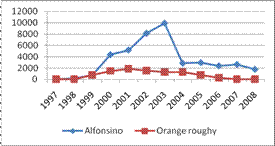
Figure 1. Landings of Orange roughys and Splendid Alfonsinos (Chile,1991-2008)
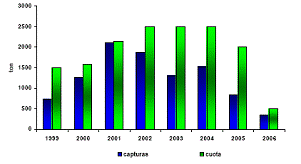
Figure 2. Landings of Orange roughy (blue) and estimated quotas (green)
10. Deep water fisheries have at least three types of effects on the ecosystem: (a) Effects on the trophic levels: the removal of deep water species from marine ecosystems can alter the energy flows and generate changes in them. Large captures of some species can generate indirect effects over populations of both prey and predators. (b) By-catch: in most fisheries some organisms are captured unintentionally and then discarded into the sea. This practice can deeply affect the ecosystem as well as the fisheries’ sustainability. (c) Alteration of the habitat and the biodiversity: fishing practices such as drag nets that entail physical contact with the marine formations can considerably alter the habitat, besides the damage and death of the species including highly vulnerable cold water reefs.
11. In the Exclusive Economic Chilean Zone there is some evidence of the presence of diverse mineral resources, although knowledge in this regard is incomplete. However, the potential pressure to exploit these resources in the future, such as oil and gas, must be considered. The potential areas of interest are the Península de Mejillones, the Caldera basin, the surroundings of Robinson Crusoe Island, the mouth of the Loa River, the volcanic chain linked to the Salas and Gómez, San Félix, and San Ambrosio islands, and the sedimentary basins around Easter Island.
12. Considering the fragility of these ecosystems, existing pressures from fisheries and the potential pressure to exploit its mineral resources, there is consensus among the scientific community and institutions concerned with biodiversity conservation of the need to safeguard these systems through protected marine areas (FAO, 2007). This is reflected in a FAO initiative on an “International Technical Consultation” for the creation of open sea regulation guidelines for deep water fisheries, FAO, Rome 2008. In this meeting, Chile suggested to the scientific community that there be special treatment for the developing countries’ compliance with such guidelines, introducing the concept of graduality of compliance in accordance with these country’s fleet capacity, means and resources. This approach takes into account the fact that such countries need to build their capacity and have the necessary means and resources to be adopt guidelines and implement sustainable management of the environment including VME. Chile is committed to making these advances but challenges remain. This pilot will address these challenges.
Main challenges to be addressed
13. The process of protecting VME and providing protection to off-shore areas is complex. In the case of the Chile has experience with nearshore marine areas but not with offshore areas and much less with seamounts. Challenges include large distances; lack of sufficient knowledge of which to base cost effective management decisions; un-tested management models; high costs of surveillance and enforcement; potential conflicts between commercial use and BD conservation. These are exacerbated by the highly vulnerable nature of these environments which requires higher levels of protection and increases the risks of sub-optimal management levels. Indeed there is a lack of basic and systematic information that supports the temporary or permanent effects on the biodiversity of these ecosystems, which stresses the need to advance in the short term with studies of these fragile environments.
14. Given these management challenges the pilot will place emphasis on two sites and on building a sound knowledge foundation for determining the type of protection which is feasible for seamounts. This pilot will complement the main project by demonstrating new approaches to management of habitats currently unprotected and at each of the two sites, developing management tools including monitoring to abate the main threats described above. Thus, since the threats affecting these locations can also similarly affect other seamounts, the models to be developed in the pilot sites can be later replicated for other locations. In addition, the project will establish linkages with the GEF-UNDP MSP “Applying an ecosystem-based approach to fisheries management: focus on seamounts in the southern Indian Ocean.
B. Main activities to be undertaken and deliverables
15. The main objective of this pilot project is to set up and make operational at least two MPAs under a yet-to-be-defined management category that would provide protection for seamounts. Proposed study sites are the seamount areas of Bajo O’Higgins and Juan Fernandez. One seamount in Bajo O’Higgins and two in Juan Fernandez have been proposed so as to provide a combination of exploited and untouched seamount study sites to ensure a robust comparison of biodiversity between sites as well as a rigorous examination of the impacts of deep-sea fishing on seamounts. Chile is advancing proposals for the modification of the Law of Fisheries and Aquaculture (Ley General de Pesca y Acuicultura) to provide regulation and norms for the protection of VMEs, which would include seamounts as deep-sea VMEs. The project, through Output 3.1, will support this modification to provide the legal basis for the creation of MPAs to be piloted given that currently under the Law marine areas can only be set up within 5km from shore. Under the Chilean legal system this modification would be in the form of a decree. It would determine regulations, procedures and protocols applicable to all VMEs - and therefore seamounts - and would apply to all vessels visiting these areas as well as to specific types of fishing gear. Thus a further task of this pilot is the elaboration of regulations, procedures and protocols for deep-sea fishing activities in seamount MPAs thereby providing sound information for developing further regulatory support for the effective functioning of the MPAs.
Activity 1: Select the sea mounts where pilot MPAs will be implemented
16. During the preparatory phase a number of seamounts have been pre-selected based on initial literature review and consultation with experts. Early in project implementation this review will be further developed and more extensive consultations undertaken to ratify the seamounts that would be the focus of in-depth studies and for setting up the MPAs. The pre-selected sites are: the seamounts of Bajo O’Higgins and the Juan Fernandez seamounts JF1, JF2, JF3 and JF4. A panel of experts will be brought together to review the existing information, further determine the feasibility of bringing the different seamounts under protection, and to outline the information considered critical for setting up MPA in each site. This will include targeted studies to quantify the biodiversity of different sites and for determining their importance to living marine resources and fisheries thereby ensuring that the MPA will be protecting biodiversity of global importance. These studies will also be important for categorizing seamounts as VMEs. Ideally a minimum of three seamounts will be chosen as well as a combination of exploited and untouched mounts, to ensure a robust comparison of biodiversity between sites and a rigorous examination of the impacts of deep-sea fishing on seamounts. Specifically these mounts could be one in Bajo O’Higgins and two of the Juan Fernandez seamounts.
Activity 2: Complete the current knowledge to a level sufficient for the setting up and implementation of sea mount MPAs.
17. As MPA have not been previously set up in seamounts in Chile and in fact in only in a few places globally, it is not clear which management category or model would be required. Given the fragility of these ecosystems it could be that a complete ban is required on fishing in a given area around the apex of the seamounts. On the other hand different approaches such as larger areas and the setting up of zones may be more appropriate. The sizes and types of restrictions would clearly affect the way the MPA would be made operational and also the costs of protection and its opportunity costs to the different users. To reduce the risks and provide clear data on which to build the case, more information is required to locate the most fragile of these seamounts and to determine areas that are of particular relevance for reproduction of key species.
18. There is currently not enough information on the seamounts on which to base such decisions, thus once the seamounts have been confirmed, a group of national experts supported by international advisors will be hired to design suitable methodologies for base line surveys of selected seamounts. Species composition and the characteristics of pertinent communities will be documented using quantitative approaches. The use of underwater Remotely Operated Vehicles (ROVs) maybe included here. Additionally research proposals will be sent to the state-funded fisheries research fund (FIP) which has already financed seamount research and could provide additional co-funding. This would enable more extensive studies to be performed and a greater number of seamounts be surveyed. The studies supported by GEF and confirmed co-funding, will focus on two seamounts and will be targeted to obtain sufficient information to determine which areas are the most important for different species, identify reproduction sites, etc. The objective is to determine the size of area to be declared and to determine whether or not zoning is required.
19. This information would not only help determine the specificities of the MPA to be set up but would also help determine the types of restrictions that would be required to reduce the impact of fisheries. This requires first the definition of which species could act as indicators of a VME. For example what % or concentration of which species from a specifically determined sampling procedure would be used to determine whether a boat had entered a VME. The selection of indicator species would need to consider the ease, cost and accuracy rates of sampling to enable better compliance and accuracy. A second step is then to geographically identify areas with VMEs and to define regulations regarding fishing gear that could be used in those areas. The impact of fishing gear on VMEs have been classified on sliding scale that ranges from fishing on a marine seamount followed by full closure for several years, to sustainable exploitation of fish stocks for which specific catch limits must be defined, based on an analysis of the viability of a given fishery given that these limits are extremely low.
20. Finally there will be close links between these studies and those to be undertaken in Outcome 1 under Output 1.1 (Complete Ecosystem Diagnostic Analysis (EDA) of the HCLME). The project will seek to establish links between the Technical Task Team (TTT) in charge of the formulation of the HCLME EDA and those planning and implementing the studies proposed for the seamounts. The TTT will review and confirm the ecosystem-level problems, their impact on living marine resources, rank them in regional priority, and carry out a detailed causal chain analysis to identify the underlying and root causes and the targeted interventions at the regional level that will be necessary to address them. Thus, this will provide relevant information that will be needed to consider the levels of current and emerging threats to the seamount and the interactions between these including those from natural causes such as climate change and natural variability.
Activity 3: Declare 2 or 3 seamounts as MPAs in Chile
21. Outcome 3.1 of the full project would provide for legal modifications to be in place to provide the framework for the protection of seamounts though an as yet to defined category of MPA. Once this is in place, and based on the baseline studies undertaken in each site, the necessary MPA will be declared. This will entail preparation of required documentation to start the legal procedures which would lead to the declaration of at least two, possibly three, selected seamounts as MPAs in Chile. It is expected that this declaration would be via a decree issued by the Undersecretary of Fisheries and the Ministry of the Economy[59]. Once the decree is issued, the operational body which will oversee the management of the new MPAs will be defined to ensure the proper implementation. When an MPA under Chilean law is created, the legislation includes a set of regulations specific to the MPA type that ensure the proper implementation of the MPA. These regulations currently require, for marine parks and reserves[60], a general management plan that outlines the general management objectives, and the conceptual and operation frameworks that will govern activities and programs in these areas. This general management plan has to be subjected to an Environmental Impact Analysis and includes several specific programs. The six required programs are: administrative, research, management, diffusion, monitoring and inspection. Specific technical reports are also required that show the mapping and coordinates of the area, that outline the ecological features of interest and their threats, and that detail an implementation cost analysis study.
Activity 4. Creating a general management model for seamount MPAs
22. As indicated above site-specific management plans are required by Chilean MPA regulations and detail specific administrative, research, management, diffusion, monitoring and inspection programs. However as it is not yet clear which management category will be applied the different management tools cannot be specified yet. Nevertheless it will be important for seamount MPAs to have a clear management model defined by the end of the project that outlines the processes necessary to achieve a clear long-term management plan that takes into account the particularities of seamount conservation and resource management. National experts will be essential to develop this model as they have key knowledge of the Chilean legal system, economy, resource management mechanisms and living marine resources. International experts may also be useful to provide examples that can then be modified to incorporate the specific requirements of Chilean seamounts and necessities of the Chilean economy.
23. At a very minimum the limits of new area will be incorporated into existing ordinances. Furthermore M& E programmes will be set up. A possible method of monitoring fishing vessel activity in deep-sea areas is the use of the on-board tracking system (VMS), which are already in place and would be an effective and cost-efficient control mechanism[61]. Another method is the use of on-board scientific observers, which are currently sent out on fishing vessels to monitor fishing activity. Financial projection and scenarios for the different M&E producers will be prepared and meetings held with different stakeholders to discuss each approach and define those that can be fully adopted.
Activity 5: Elaborate the foundations for the identification of deep-water VMEs and the regulations that govern over fishing activities in seamount areas (specific objective D)
24. This activity involves developing the foundations for the identification of deep-water VMEs of seamounts and the subsequent regulations and procedures for fishing activities in identified VME/seamount areas. This will be undertaken through a two-fold process that will involve technical discussions with national and international experts. Firstly, a protocol will be created that relates to what indicator species (and quantity) are used to identify deep-water VMEs such as seamounts. Secondly, a protocol will be developed, once the seamount has been identified, to ensure that fishing activities are carried out in such a manner so as to mitigate the impacts of deep-sea fishing and ensure proper biodiversity conservation and resource management.
Activity 6: Conservation Awareness and Outreach Programme Implemented
25. As a key element for increasing and maintaining stakeholder commitment to the pilot MPA, this Activity will provide awareness building and outreach initiatives. These will target a range of different stakeholders such as government institutions with national and regional representation SUBPESCA, SERNAPESCA, CONAMA, IFOP, the Maritime Authority; and private organizations such as industrial and artisan fishers, Universities, and NGOs. Specific types of awareness activities and materials will be defined for each target group and site. The specifics of the different stakeholders will depend to some extent on the confirmation of where the seamounts will be established as it will be important to include representatives from the Regional Government from that area. This is of particular relevance given that many of the resources for development projects in Chile are channeled through regional mechanisms and Governments (eg FNDR). Dissemination materials will focus specifically on seamount, but results from studies to be undertaken in Output 1 of the main Project may be included to provide the overall framework on the economic role that coastal and marine ecosystems play in the national, regional and more local levels of the economy.
Deliverables: End of Project Landscape
26. At the end of the Project increased protection will have been afforded to two seamounts by bringing them under legal protection and by implementing protocols that determine VME and corresponding procedures to regulate fisheries in these areas. This will provide protection to globally significant biodiversity and to areas that are recognized as highly productive and key in the life cycles of key pelagic and migratory fish. For the two pilot MPAs, direct improved protection would be provided to a conservative estimate of 8,600 hectares (estimated as 1.5 nm around the apex of the seamount). Indirectly, protection would be provided to all seamounts in Chile through the application of the protocol for VME. Using the same estimations of size this would be at least 507,400 hectares of seamounts. Increased protection in MPA would be provided through the increased management effectiveness as measured by the application of the METT with an expected improvement from the baseline value of poor to fair or more (Baseline value METT =8% and target = >30%).
27. This will have been achieved through the following:
a) A report would have been developed by experts that would have identified the key information gaps relevant for MPA in seamounts;
b) Targeted studies would have reduced these information gaps constituting the foundational data for MPA and advancing knowledge on biodiversity of seamounts globally;
c) Two seamounts would have been brought under legal protection and would have management models defined. These would include the identification of required management tools and the developing and testing of key aspects;
d) Management effectiveness monitoring and evaluation plans will have been designed and would be in the early stages of implementation and testing;
e) Relevant stakeholder groups would be informed of the new MPA, of the use-restrictions within them and of the value and benefits of seamounts and of their status as VME; and,
f) More extensive information on Chile’s seamounts and on the affects of different pressures on their biodiversity would have enabled the conceptual development of seamounts as VME in Chile. It would also have enabled operational restrictions to de defined to safeguard seamounts from pressures from fisheries. Through Output 3.1 consensus would be reached on the protocol that would be applied to seamounts as a deepwater VME of the South Western Pacific. This would be a specific protocol establishes the tolerance thresholds and the criteria and/or indicator that would determine the presence or not of the deepwater VME. In association with this, specific procedures would have been agreed regarding fisheries practices to mitigate or reduce impacts on seamounts.
C. Links with overall project-replication strategies
28. As indicated in previous sections there is a clear link between the activities undertaken in this pilot and those of the main project. The studies to be undertaken for defining the MPA will also provide information for the definition of the protocol for seamounts as VME and for determining regulations for the fishing practices that will be put in place to reduce negative impacts. This will be applied to all seamounts in Chile thereby affording a decree of protection to all of these ecosystems in Chile and as such representing one of the most important replication mechanisms of lessons learnt in the pilot.
29. Replication of the process of setting up and making operational of MPA in seamounts will be achieved through Outcome 1- Output 1.2. In this output the National Protected Area Systems plans will be updated to incorporate lessons learnt thereby facilitating the creation of MPA in other seamounts. Although all seamounts will be provide some protection through their declaration as VME and the application of the ensuing protocol and regulations, it is expected that the MPA will provide additional protection through, for example, a possible total ban on fisheries. In this sense the updated national PA plan would include the identification of which other seamounts would need to be considered as MPA in the future to provide sufficient protection to safeguard biodiversity along the seamounts chains. Similarly under this output, advances will be made to define a plan for a PA system at the level of HCLME thereby facilitating replication to Peru.
30. Finally all the processes developed through the above mentioned activities would be systematised and lesson learnt identified generating new knowledge on management models that would be disseminated through publications, websites and other mechanisms such as IW:LEARN thereby facilitating replication to other countries.
D. Implementation arrangements including monitoring
31. The Undersecretary of Fisheries (SUBPESCA) will be leading this pilot project and have overall responsibility for coordinating the pilot project. The pilot will be executed by UNOPS under a Memorandum of Agreement (MOA) that will detail the execution arrangements and include aspects such as ToR of the main studies and consultancies, and procedures regarding work plans for example. Much of this pilot will be co-funded by SUBPESCA and form part of its internal processes and work plans. National and international experts will be subcontracted as and when necessary. A pilot project coordinator will be selected within SUBPESCA to lead the project and track its progress. At the outset of the pilot project, the pilot project coordinator with the support of the SUBPESCA, and with other key stakeholders, will prepare a detailed work plan for the duration of the pilot project. This will be reviewed by UNOPS and submitted to the Steering Committee for approval during the Inception Workshop.
32. A brief quarterly Progress Report will be developed to update the Steering Committee and the project Execution and Implementation Agencies on the progress of the pilot project. A yearly detailed report will be submitted to the Steering Committee as part of the annual project reporting process (PIR). The pilot project will also be subject to the independent Mid-Term and Final Evaluations undertaken for the Full-Size Project. The project evaluations will be carried out in accordance with UNDP-GEF requirements and will cover all aspects of the project. They will include: an assessment of (a) the outcomes generated, (b) the processes used to generate them, (c) project impacts, and d) lessons learned. Advice will be given on how the M&E results can be used to adjust the work plan if needed and on how to replicate the results in the region. Furthermore, the GEF biodiversity tracking tool will be used to measure the progress of the pilot project in achieving its objectives. This tool includes the Management Effectiveness Tracking Tool (METT).
E. Budget
33. The pilot will be undertaken over 5 years and will have an overall cost of $3,639,630 of which GEF will contribute $ 900,000 and the Government of Chile will contribute co-funding for $2,739,630. The GEF resource budget is provided below. Detailed information can be found in the FSP Project Document in Section III.
|
Budget lines |
US$ | ||
|
71200 |
International Consultants |
45,000 | |
|
71300 |
Local Consultants |
150,000 | |
|
72100 |
Contract Services-Companies |
559,000 | |
|
71600 |
Travel |
41,000 | |
|
75700 |
Training |
35,000 | |
|
72200 |
Equipment |
6,000 | |
|
72500 |
Supplies |
3,000 | |
|
72400 |
Audiovisual & Print |
50,000 | |
|
74500 |
Miscellaneous |
11,000 | |
|
Total |
900,000 | ||
II. Output 4.2. Management Tools Developed and Implemented for the Three Representative Pilot Sites of the System of Guano Islands, Isles, and Capes: 3 pilot sites
A. Justification
Background:
34. This pilot will be undertaken in Peru to build the base of experience and management tools from which management models will be generated for the soon to be established Guano Islands, Isles and Capes National Reserve (RNSIIPG for its Spanish Acronym)[62] and to be applied for future marine protected areas (MPAs) to the country. It will contribute to achieving the objective of advancing towards ecosystem-based management (EBM) of the Humboldt Current Large Marine Ecosystem (HCLME) by creating capacities for effectively managing coastal and marine Protected Areas (PAs), a key element of EBM.
35. Peru is in the process of expanding its National Protected Area System (SINANPE)[63] to increase coverage of marine and coastal habitats. For this purpose, it has chosen to integrate into SINANPE the existing system of guano[64] islands and capes (the guano system or the guano sites hereafter) that has been used for the extraction of seabird guano for centuries in Peru and protected for this purpose by the Peruvian State for over 100 years. The guano system originally included a total of 22 islands or group of islands and 15 capes which, because of the long-term protection provided by the State, currently hold the last remaining, relatively intact, important breeding and roosting aggregations of threatened seabirds and mammals. Also, because permanent guards keep most boats and divers from entering the shallow waters surrounding the guano sites, many commercially important species of fish, invertebrates and algae have been protected in these sites and persist in abundance, while most surrounding areas have been depleted because of inadequate fishing practices.
36. Increased protection of marine areas is important not only to safeguard biodiversity but as a security conservation measure given the need to maintain resilience in the face of large-scale existing and emerging threats, particularly fisheries, as well as the increasing frequency of ENSO events, overall natural variability and global climate change processes. By strengthening Peru’s capacities for MPA management, this project will provide an important complement to other HCLME Project outcomes, particularly those related to fisheries management. MPAs have been globally identified as a key element for marine biodiversity conservation. Effectively managed MPAs complemented by sustainable fisheries management practices, constitute a win-win combination and perhaps the only way to ensure the long term availability of the HCLMEs goods and services of global importance.
National and Global importance of the RNSIIPG
37. Peru’s guano system is one of the world’s best known examples of sustainable natural resource use and of the impact and importance of long-term protection on marine biodiversity. This goes back to pre-Inca times (c.a. 500 BCE) and has played a key role in Peru’s history and development as a modern nation. Because of the unique environmental conditions of the HCLME[65], fossil guano accumulated for centuries on the islands along the coasts of Peru, forming deposits tens of meters high. Guano built up in islands and rocky shores where breeding seabirds were sheltered from humans and predators. The most important guano-producing seabird species are: the Guanay Cormorant (Phalacrocorax bougain-vilii), the Peruvian Pelican (Pelecanus thagus) and the Peruvian Booby (Sula variegata), collectively known as the “guano birds”. Incas assigned great value to guano as fertilizer, restricting access to it and punishing any disturbance to the birds with death.
38. The high concentration of nitrates made guano an important strategic commodity, particularly in the 19th century, when guano was “rediscovered” in Europe and triggered an agricultural revolution that preceded the Industrial Revolution. The Peruvian Government nationalized its guano reserves in 1842 and embarked on what has been called “the guano age”. Guano was Peru’s leading export in the 1850s and its largest source of revenue (75% of national income), with 300 shiploads of guano a year leaving Peru, most of them in American and British ships. During the height of the guano age, around 20 million tons of guano were extracted and exported, creating around $2 billion in profits. By the end of the 19th Century, however, the importance of guano declined with the rise in use of artificial fertilizers and, after guano birds were killed by the millions during decades of careless extraction, the ancient guano deposits were quickly depleted.
39. In the 1890’s the Peruvian Government placed the islands under rigid control and began working out a viable plan to redirect guano-based development, which resulted in the establishment of the Guano Administration Company (Compañía Administradora del Guano – CAG) in 1909, to provide fertilizer on a sustained-yield basis for Peruvian export agriculture based on the careful conservation of Peru’s colonies of guano birds.
40. Guano bird populations showed a remarkable recovery once effective protection measures were implemented and modifications to increase the amount of habitat available for the birds to breed were made. Particularly important was the creation in the late 1940’s of artificial “islands” along the southern coast[66] by building walls to isolate from predators a number of coastal points of land (capes, peninsulas or points - puntas, as they are called in Peru) already frequented by roosting guano birds. By the 1960’s the system included almost 40 islands, groups of islands and points covering the length of the Peruvian coast (Figure 1) and, importantly, two nm of waters surrounding them. The additional habitat and protection provided by these sites allowed the birds to surpass their former breeding limits, doubling numbers in less than a decade (Figure 2). Guano production during the 1950s rapidly increased - despite the periodic setbacks caused by El Niño events, which substantially reduced the Peruvian anchovy population and caused dramatic collapses of the guano bird populations.
41. Most agree that, left to its own devices, the guano industry would have continued to be successful. But with the rapid expansion of the new fishmeal industry in the late 1950’s (Figure 2), which was based on the same anchovies (Peruvian anchovies or anchovetas – Engraulis ringens) that are the main prey of guano birds, the guano industry started declined. Continued industrial fishing and a number of particularly strong ENSO events eventually led to the collapse of the anchovy fishery in the early 1970’s and the fall of the guano industry. Indeed since the industrial anchoveta fishery developed, guano bird numbers have remained low and appear to have lost resilience to the occurrence of ENSO events (Jahncke et al. 2004[67], Goya & Valverde 2006[68]). Since then, with fewer birds and lower guano production, guano extraction has become a minor activity for the Peruvian Government, but fortunately was kept uninterrupted until today. This means that protection of the guano bird colonies was also maintained so that, by now, the guano system has been continuously guarded for over 100 years.
42. The protection provided by the walls surrounding the guano points and the permanent presence of armed guards has benefited not only the guano birds but many other marine species as well. Currently the guano system (and the Paracas National Reserve, the only formally established MPA in Peru) provide the last refuges in coastal Peru for most of the last important remaining populations of Pinnipeds (the endangered South American fur seal – Arctocephalus australis and the vulnerable South American sea lion – Otaria byronia), the highly endangered Humboldt penguin (Spheniscus humboldtii) and Peruvian diving petrel (Pelecanoides garnotii), many other vulnerable species of seabirds and shorebirds and, often, the endangered Humboldt otter (Lontra felina). Also, because guards keep most boats and divers from entering the shallow waters surrounding the guano sites, many species of fish, invertebrates and algae have also been protected.
43. Waters surrounding the guano system are particularly rich because islands and peninsulas disturb the northward flow of the Humboldt current generating eddies and upwelling filaments that increase productivity. Wind and current shear at the flanks of these sites enhance plankton productivity by increasing vertical mixing of and nutrient availability in surface waters. Additionally, Ekman pumping on the wind shear boundaries of the islands and points produces convergence and divergence fronts, which affect plankton distribution and productivity. Divergence fronts induce upwelling of deep nutrient-rich water, increasing primary production and chlorophyll. Downstream of the islands, cyclonic and anticyclonic eddies are generated, by a combined mechanism of flow perturbation and Ekman pumping. Cyclonic eddies enhance primary production by upwelling nutrient-rich thermocline waters into the euphotic zone. Conversely, anticyclonic eddies collect and downwell surface water, deepening the mixed layer and the chlorophyll maximum to depths well below the euphotic zone (>100 m). These eddies may act as effective organic carbon pumps, sequestering dissolved and particulate organic carbon from the nearby waters and sinking it into the deep ocean. Overall, counter-paired eddies behave as a two way biological pump, accelerating the production and transport of organic matter in the water column (Arístegui et al. 2006[69]). Hence, the very rich and relatively well protected[70] waters surrounding the guano sites now hold some of the last remaining, relatively intact, important breeding and nursing sites for many marine species of commercial interest, including shallow-water-breeding pelagic species.
44. It is the protection provided by restricted access and the rich waters surrounding the guano islands and points that have enabled the survival to this date of many endangered and vulnerable species of seabirds and mammals and the persistence of critical breeding and nursing areas for fish, invertebrates and algae. Relative to most of the rest of the coast of Peru, the guano sites stand out because of the resource richness of their surrounding waters and the still massive aggregations of seabirds and seals.
45. It is this very visible abundance that also makes them particularly fragile. With almost 90% of all the guano birds’, fur seals, sea lions and penguins in Peru concentrated in less than 10 of these sites, very significant fractions of their populations can be affected at the same time in a single site by, for example, disease outbreaks, predator attacks, oil spills, etc. In addition, as fisheries resources become scarcer in areas beyond the 2 nm around the sites, these areas are also being increasingly targeted by artisanal fishers.
46. It is also the relative resource abundance and refuge provided to threatened species that led the Peruvian Government to decide to integrate the entire guano system into SINANPE in 2001. Having signed and become party to the Convention on Biological Diversity (CBD) in the early 1990’s, Peru recognizes the importance of, and has agreed to include, marine habitats and species in its National Conservation Strategies. There is acknowledgement that MPA systems are an important global strategy for the in situ conservation of biological diversity. Thus, in the late nineties national and international conservation NGOs and local universities formed a consortium[71] that presented to INRENA (the Peruvian Natural Resources Institute, the then government agency in charge of SINANPE) the proposal[72] to create the RNSIIPG out of 16 islands (or groups of islands) and 11 capes (plus two nm of waters around each) of the original guano system[73] and to expand the Paracas National reserve by including the Ballestas and Chinchas Islands (a group of three islands each, also part of the guano system) in 2001.
47. While laudable, the proposal for establishment of the RNSIIPG was not based in traditional MPA design and habitat priorization and representativity analysis processes. Rather, the objective was to include the guano system into the SINANPE thereby quickly increasing its coverage of coastal areas and important habitat types (islands and peninsulas) and improving protection for the last remaining refuges for threatened coastal marine biodiversity. Therefore, there is a need for the technical support that this proposed pilot will deliver, as it will strengthen the ecological foundations for the establishment and sustainability of the Reserve.
48. Currently, the recently created National Protected Area Service (SERNANP) of the new Ministry of the Environment is completing the necessary processes that adjust the decree for the establishment of the RNSIIPG to the new norms and regulations of the SERNANP. This process should be completed before the end of this year. However challenges exist for the implementation of this Reserve. This pilot is designed to overcome these challenges.
Main challenges to be addressed
49. The process of establishing marine PAs is complex and challenging. In the case of the RNSIIPG in particular, because it will cover the entire coast of Peru, it will be exposed to almost all potential risks and threats that affect marine areas and species. These include industrial fishing, aquaculture concessions that are being established along the whole Peruvian coast by private companies or artisanal fisher groups, mega-development projects such as natural gas plants, mega-ports associated with the South American Regional Infrastructure Integration Initiative (IIRSA), and international airport facilities that are increasingly built along the coast. They also include hydrocarbon (oil and gas) extraction which is an emerging threat for coastal areas in Peru. 2D and 3D seismic surveys for gas prospecting consist of hundreds of thousands of charges detonated on the surface along extensive transects, that can severely impact marine species over very large areas, particularly fish and marine mammals. If and when gas or oil are extracted, there is also always the risk of spills from platform or tanker accidents.
50. Given the size and economic importance of the existing and emerging threats, MPA management in Peru will require high levels of efficiencies and tailored management plans that provide both increased protection and that guide work with relevant sectors to prevent and mitigate the potential impacts of these threats. At a systemic level, the HCLME project will provide the planning and enabling framework that will address these emerging threats overtime. For example, by addressing issues related to large-scale industrial pelagic fisheries in both Peru and Chile and developing multi-species & multidisciplinary management criteria, protection will be afforded to trophic relations that underpin the sustainability of biodiversity associated with the guano system. This pilot will complement these broader approaches of the main project by demonstrating best practices, effective management, governance models and threat abatement tools at three selected pilot sites in RNSIIPG. The experience to be gathered at these sites will serve as the basis for the development of the Master Management Plan for the entire RNSIIPG (Output 3.2.) Furthermore, at each of the three pilots, site-level management plans will be developed, which will include specially tailored mitigation and contingency plans for the main threats described above. Thus, since the threats affecting these locations can also similarly affect the other islands and capes that form the RNSIIPG, the mitigation tools that will be developed in the pilot sites can be later replicated for these other locations.
51. Three pilot sites, Lobos de Tierra Island, Punta San Juan, Ballestas Islands, were selected because they represent important ecological processes and face increasing pressure and risk from a number of important developments taking place in coastal Peru. As demonstration projects, the pilot sites will serve to develop management strategies and threat abatement tools that can be replicated to protect other sites that are affected by the same pressures. They will provide lessons on how to best manage the above mentioned threats and will put in place structures and practices for threat abatement whilst levels are still relatively low and biodiversity conservation status high. These sites are as follows:
· The Lobos de Tierra Island is an important breeding and nursing site of endemic species typical of the mix of the cold waters of the Humboldt Current with warmer tropical waters that occurs in this area, and faces progressively increasing scallop seed extraction by the aquaculture industry. Growing pressures from oil and gas concessions in the continental platform, as well as phosphate exploration and future extraction processes in the adjacent Sechura bay, are also of concern.
· Punta San Juan is the most important upwelling site in the HCLME and breeding site for many important threatened species such as the Humboldt penguin and the South American fur seal and sea lion. Emerging risks at this site are projects of a (i) new inter-oceanic highway connecting Peru and Brazil, (ii) the construction of the largest petrochemical industry in the country and, (iii) the building of a large-scale industrial shipping port within the next five years.
· The Ballestas Islands are the focus of the only existing significant Peruvian touristic coastal industry, generating millions of dollars in income for the surrounding communities and the country. Pressure from tourism to these Islands and the threatened species living in them, will soon increase significantly, as there are nine new hotel development projects that will multiply several times the existing hotel infrastructure in the area. A few kilometers away, in the town of Pisco, another large petrochemical industry will be built, and LNG products (Diesel oil, Propane and Butane gas and Jet fuel) are being produced and shipped a few km. from the edge of the Paracas NR.
B. Main activities to be undertaken and deliverables
52. The pilot seeks to demonstrate best practice, effective management, governance models, and threat abatement tools for the Guano Islands, Isles and Capes National Reserve (RNSIIPG from the Spanish acronym) at three selected pilot sites. The experience to be gathered at these sites will serve as the basis for the development of the Master Management Plan for the entire RNSIIPG.
Activity 1: Diagnostic Evaluation and Baseline Assessment of the RNSIIPG
53. In order to develop the site level management plans (activity 2) as a first step more detailed baseline information will be collected at each site including an in-depth assessment of the probability and extent of the potential risks of the diversity of threats. This will enable the definition of the pilot sites management goals and the design of the management effectiveness monitoring and evaluation program and indicators. In parallel a similar process will be undertaken for the entire RNSIIPG at a more generic level and based on secondary information. Appropriate system-level information will be critical to identify issues common to more than one of the RNSIIPG 27 sites, thereby facilitating up-scaling of lessons learnt in the pilots to the systems level.
54. The team that will be in charge of developing the diagnostic and baseline evaluations will work in close association with the Technical Task Team (TTT) in charge of the formulation of the HCLME Ecosystem Diagnostic Analyses (EDA). The TTT will review and confirm the ecosystem-level problems, their impact on living marine resources and rank them in regional priority, and carry out a detailed causal chain analysis to identify the underlying and root causes and the targeted interventions at the regional level that will be necessary to address them. Thus, much of the RNSIIPG relevant information can and will be obtained from the EDA.
Activity 2: Site management plans developed at the three pilot sites
55. This activity will undertake the steps necessary to complete site management plans at three pilot sites of the RNSIIPG. Draft site management plans will be developed for each, incorporating essential elements of SERNANP guidelines on preparing protected areas management plans. The general objectives of the Site Management Plan will be to conserve resources, habitats and ecological processes in order to preserve the value of the areas for tourism, fisheries, research, education, or other goals, and to protect certain species and biotic communities. All these will be achieved through an active and appropriate management program leading to sustainable use of coastal and marine resources.
56. The Management Plan will document an explicit set of conservation goals, objectives and activities that will be undertaken over a specified period of time and area. Management goals outlined in the Plan will address the long-term ideal state and identify desired conditions. Management objectives will represent short term, measurable steps toward attaining these goals. The Plan will also articulate how the conservation strategy is designed to address and minimize the threats to which the area and resources are exposed. The plan will define the process that will be used to determine exactly what needs to be managed (the issues), the prioritization of these, and how they will be tackled (the actions).
57. The plan will also include: definition of MPA facilities; surveillance and transport equipment needs; boundary demarcations; recruiting and training of staff; the development schedule and budgets; analysis of visitor use compatibility and safety considerations; conflict resolution and cooperative arrangements with local communities and industries; and such ecological factors as the types of habitats to include, and the size of the protected area and its different zones. It will also include the zoning of activities to separate incompatible uses where necessary, including no-take areas, within the MPA and its surrounding Buffer Zone. Management zones are identified according to the extent of multiple uses to be encouraged. Activities within these zones will be planned in accordance with the objectives of the reserve as defined in the Management Plan. Certain zones may require intensive management while others may require very little.
58. To define the zoning proposals, resources and habitats and their uses by the local stakeholders will be identified and mapped, using biological surveys and gathering new and existing data. From this information, use conflicts will be identified and mapped through participatory processes with local stakeholders through a series of workshops. This process should result in the final zoning proposal, which will have to be finally approved by the local Management Committee (see Activity 3).
59. A major component of the Management Plan will be a surveillance and enforcement strategy to implement the zoning adopted for the site. This will build on the mandates of the regional divisions of national institutions with authority in the use of natural resources and will be followed by consultations and a review of state-of-the-art practices to define the most cost-effective mechanism for demarcation of the marine areas around each location. Demarcation would then proceed based on the agreed zoning and will place priority on those habitats that require most urgent protection. This will be linked to an information campaign in each area to ensure that local communities and resource users are familiar with demarcation mechanisms, particularly those that are non-physical.
60. Threat abatement tools to be developed in the pilot sites will serve to prevent or mitigate the impacts of the development processes that affect these sites and were described above, thereby increasing protection for biodiversity. As these tools seek to reduce the risks posed by the many ongoing or planned large scale development projects in the HCLME, they would also form the basis for replication to other areas exposed to similar risks thereby over time increasing protection to the entire reserve. These tools may involve, for example, the following:
· For increased maritime traffic resulting from mega-port construction: the definition and agreement on navigation routes that minimize the probability of maritime accidents that may impact the MPAs.
· For increased tourism pressure: estimations of the sites’ tourist carrying capacities, definition of public use strategies and infrastructure that minimize the impacts of tourists on local wildlife populations and habitats.
· For oil exploration and extraction: development of minimum standards to inform and guide EIAs and the development of contingencies place in the advent of spills.
· For future infrastructure development nearby the sites: assist municipal, provincial and regional governments to incorporate the sites’ limits into plans, maps and EIA and permit processes
Activity 3: Local management committees established at the three pilot sites
61. Local Management Committees (MCs) will be established for each pilot site, as part of the development and early implementation stages of the local management plans, to ensure early participation and representation of the entire range of stakeholders in the area, including Government agencies, local authorities, resource users such as artisanal fishermen, residents and businesses, as well as universities and NGOs that maintain active, long-term programs in the area. Local MCs will be established in the early stages of the Project, following established legal guidelines and integrating the range of local stakeholders, which will have been previously identified and mapped.
62. Management committees were created in Peru under the regulations established in 2001 as part of the Law on Natural Protected Areas of 1997. A directorate-level resolution set out model regulations for committee meetings and operations, with legal guidelines to make formation processes uniform. MCs are conceived as a political authority that ensures programmatic consistency and transparency of execution, ensuring a balance between the national authority (currently SERNANP) and regional authorities. The functions of the committees are to: a) consider the interests of different sectors; b) move the decision-making process forward through coordination, consensus building and agreement among the diverse stakeholders; c) develop financial mechanisms for the area’s management; d) facilitate coordination among sectors and institutions; and e) monitor the effectiveness of protected area management.
63. Once established, MCs will be responsible for approval of the Management Plan, selecting subprojects, monitoring their execution, and evaluating them with the participation of the Head of the MPA. These actions should be framed within the conservation objectives and goals of the protected areas and integrated with regional development processes. Communications mechanisms for the MC will be developed to promote the continual sharing of updated and reliable information between the authorities and the local community. Management should be transparent and incorporate accountability mechanisms. Accountability has a political effect in so far as it minimizes the abuse of power and an operative effect because it ensures that agencies work effectively and efficiently.
Activity 4: Monitoring and evaluation system developed to assess management effectiveness
64. In order to assess the degree to which management actions are achieving the goals and objectives set in the site management plans, a monitoring and evaluation system will be developed and implemented. Based on the Management Plans’ stated conservation goals and objectives, relevant bio-physical, socio-economic and governance indicators will be identified. These indicators will be then evaluated to determine their feasibility and costs and, based on this evaluation, a suite of indicators will be prioritized and selected. For these, sampling protocols, data management analysis procedures and communication protocols will be defined. The METT (management effectiveness tool) would form part of the suite of indicators. However a number of similar scorecards that are under development specifically for marine and coastal areas would also be tested.
65. Feedback mechanisms will be established to ensure monitoring information is provided to the MC and PA management staff, in the appropriate formats and in timely fashion, so that they are used to evaluate the management effectiveness of the PA, and to enable an adaptive management approach.
66. To enable appropriate evaluations of the management effectiveness of the Project’s activities, baseline information will be gathered for the indicators that were selected for the Monitoring Program. To carry out these baseline studies, the three pilot sites will have to be provided with the necessary equipment and infrastructure. This would include repairs of existing infrastructure and basic furnishing, equipment and telecommunications.
Activity 5: Finance plans developed for the long term sustainability of the pilot sites.
67. Once the management and monitoring and evaluation plans have been defined, long-term business and investment plans will be developed for each site. The plans would take a long-term view and aim to generate revenues or in kind contributions and services to support the running of the MPA. They would include development of different scenarios for recurrent cost estimates for wages, services, and maintenance and the identification of sources for their funding. Based on an options study undertaken in previously these would include cost-recovery mechanisms from entrance fees, and service and concessions charges and royalties for guano extraction, research permits, etc. (Gutierrez et al., 2009[74]). These funding options will be explored further in the project and those most promising will be piloted to provide resources for implementation of the management plans.
68. Providing incentives for the private sector, NGOs and communities to share in the burden of management through effective partnerships would also be explored as one way to reduce costs and dependence on revenue subsidies for park management.
Activity 6: Biodiversity Conservation Awareness and Outreach Programmes Implemented.
69. As a key element for increasing and maintaining stakeholder commitment to the pilot sites, this Activity will provide a series of awareness building and outreach initiatives. These will target a range of different stakeholders such as local school children, resource users, local and regional governments as well as national and international tourists. Specific types of awareness activities and materials will be defined for each target group and Site. Where appropriate they will incorporate the results from studies to be undertaken in Output 1 of the main Project to identify the economic role that coastal and marine ecosystems, including their environmental services and renewable resources, play in the national, provincial, and more local levels of the economy as well as the economic value of these services and resources to different economic sectors, such as agriculture, fisheries, tourism.
70. A visitor center will be developed using the existing installations at each of the three sites. These visitor centers will be fitted in accordance with an awareness building strategy defined for target groups and maximizing the use of local specificities. Trails and specially built observation blinds will also be fitted with signs and information. Links with regional education systems and curriculum will be developed and a series of activities will be designed to increase local participation in the definition of symbols associated with the new MPAs.
Deliverables: End of Project Landscape
71. At the end of the Project increased protection will have been afforded directly to 28,444 hectares of Isles, Capes through these pilots that indirectly to 190,000 hectares that represents the area of the entire Reserve. This will provide protection to globally significant biodiversity that includes the endangered South American fur seal, the vulnerable South American sea lion, the highly endangered Humboldt penguin and Peruvian diving petrel and many other vulnerable species of seabirds and shorebirds as well as important fish populations. This improved protection would be provided through the increased management effectiveness of these areas as measured with the METT applied at mid-term and end of the project. This improvement is expected to raise management levels from current poor to good levels as indicated below.
Baseline Target
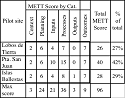
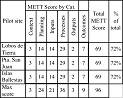
72. Improvements in METT would have been achieved through the following:
· A full system diagnostic and baseline assessment will have been completed, with detailed information for the three pilot sites, to inform and guide the advances of the three pilot site management plans and the pilot monitoring and evaluation program. It will provide input for the development of the system-level Master Management Plan.
· Site management plans are completed and have started being implemented at each of the three pilot sites, including the establishment of the local management committees. The management plans would include specific threat abatement tools and contingencies plans that would provide safeguards against existing and emerging threats and also provide lessons that would be replicated to the entire Reserve.
· A pilot management effectiveness monitoring and evaluation program will have been designed and is in the early stages of implementation and testing. This system will be later replicated on a larger scale for the full RNSIIPG.
· A detailed financial assessment of the costs and revenue options for the three pilot sites will have been completed, including an evaluation of the potential contributions of tourism and guano extraction as the main potential sources of income for the RNSIIPG.
· Local stakeholder groups will be involved in the Management Committee and participate in the management decisions of the pilot sites. Many will be aware of the value and benefits of effectively managed MPAs and will be actively engaged in the conservation of their local seascape.
· An experienced technical team will be available for up-scaling the best practices and lessons learned in this project and to lead the development of the full RNSIIPG Master Management Plan.
C. Links with overall project-replication strategies
73. There is a clear link between this pilot and the overall project. The three pilots have been selected to reflect important ecological processes and the pressures characteristic of coastal Peru. As demonstration projects, the pilot sites will serve to develop management strategies and threat abatement tools that can be replicated to other sites that are affected by the same pressures. The key mechanism for this replication will be through output 3.2 that will develop the Master Plan for the entire Reserve drawing from the early lessons established in the three pilot project sites where management and threat abatement tools will be first tested. The Master Plan is the most important strategic planning document guiding the management of a Protected Area in Peru. It will determine the general management strategies and policies for the PA, its strategic conservation targets, a zoning plan for the PA and its buffer zone, its management structure, specific use plans; cooperation, coordination and participation with other institutions inside the PA and its buffer zone and a financing strategy to support the implementation of the Master Plan. It is through this management and financial plan that replication of the pilot lessons will occur.
74. Further replication beyond the RNSIIPG will be undertaken through Outcome 1, Output 1.2. In this output the National Protected Area Systems Plan of Peru will be updated to incorporate lessons learnt thereby facilitating the creation of MPA in other areas along the Peruvian coastline. Similarly under this output advances will be made to define a plan for a PA system at the level of HCLME thereby facilitating replication to Chile. Finally all the processes developed through this pilot would be systematised and lesson learnt identified generating knowledge on management models that would be disseminated through publications, websites and other mechanisms such as IW-learn thereby facilitating replication to other countries.
D. Management arrangements including monitoring
75. The Ministry of the Environment, through its National Protected Area Service (SERNAP) will have overall responsibility for coordination of the pilot project activities as well as its linkage with the main project. Execution will be through a Memorandum of Agreement (MOA) with UNOPS that will detail the operations arrangements for the pilot. It will include aspects such as the project work plan, ToRs of the main studies and consultancies, and procedures regarding workplans etc.
76. A Core Team (CT) will be formed to guide and orient the different activities to be carried out through different consultancy contracts (to appropriate Universities or NGOs) for each of the project outputs. This CT will guide and provide coherence and continuity to the work of the different consultant companies in charge of each contract and should lead the upscaling process and feed the results of this project into the development process of the system-level master Management Plan. The CT will be integrated by national experts and will consist of: a lead consultant with experience in MPA planning and implementation, a Specialist in participatory planning and an Assistant who will also oversee logistics, coordination with and between the different contract teams and with the other HCLME Project component teams (the big project). At the outset of the pilot project, the pilot project coordinator with the support of the SERNAP and with other key stakeholders[75] will prepare a detailed work plan and budget for the duration of the pilot project. This will be reviewed by UNOPS and submitted to the Steering Committee for approval during the Inception Workshop.
77. The pilot Project Management Unit will produce a brief quarterly Progress Report updating the Steering Committee and the project Execution and Implementation Agencies on the progress of the pilot project. A yearly detailed report will be submitted to the Steering Committee as part of the annual project reporting process (PIR). The pilot project will also be subject to the independent Mid-Term and Final Evaluations undertaken for the Full-Size Project. The project evaluations will be carried out in accordance with UNDP-GEF requirements and will cover all aspects of the project. They will include: an assessment of (a) the outcomes generated, (b) the processes used to generate them, (c) project impacts, and d) lessons learned. Advice will be given on how the M&E results can be used to adjust the work plan if needed and on how to replicate the results in the region.
E. Budget
78. The pilot will be undertaken over 3 years and will have an overall cost of $3,065,653 of which GEF will contribute: $ 900,000 and the Government of Peru as well as other partners will contribute co-funding for $2,165,653. The GEF resource budget is provided below. Detailed information can be found in the FSP Project Document in Section III.
|
Budget Lines |
US $ | |
|
71300 |
Local Consultants |
156,000 |
|
72100 |
Contract Services-Companies |
575,000 |
|
71600 |
Travel |
20,000 |
|
75700 |
Training |
40,000 |
|
72800 |
Equipment |
30,000 |
|
72300 |
supplies |
15,000 |
|
72300 |
Office Material |
15,000 |
|
72400 |
Audiovisual & Print |
19,000 |
|
74500 |
Miscellaneous |
30,000 |
|
Total |
900,000 |
Countries: Peru and Chile
UNDAF Outcome(s)/Indicator(s):
Peru: 3.1 Strengthening technical capacities related to programming, management, monitoring and evaluation and accountability of local, regional and national State entities.
Chile: Strengthen the participation of Chile in South-South Cooperation with countries in Latin America, the Caribbean and other developing countries
Expected Outcome(s)/Indicator (s):
Peru: OUTCOME 54: Capacity in the formulation of Environmental Policies, design of regulatory frameworks for the conservation and sustainable use of biodiversity and adaptation/mitigation of Climate Change strengthened through the consolidation of public and civil society institutions at the local, regional and national levels.
Indicator: Number of initiatives underway for the adaptive management of natural resources with the purpose of climate change adaptation implemented at the local and regional levels.
Goal: At least 03 initiatives underway for the adaptive management of natural resources with the purpose of climate change adaptation at the local and regional levels.
UNDP Focus Area: Environment and Sustainable Development
UNDP Key Result Area: 4.1 Mainstreaming environment and energy
Chile: By 2010 the country will have implemented horizontal cooperation programs with other developing countries
Implementing partner: UN Office for Project Services (UNOPS)
(designated institution/Executing agency)
Other Partners: IMARPE_________________
IFOP_____________________
| ||||
| ||||
Agreed by (Government): _______________________________________________________
Agreed by (Government): _______________________________________________________
Agreed by (Implementing partner/Executing agency):________________________________
Agreed by (UNDP):______________________________________________________________
[1] Bakun, A. and Weeks, S. J. (2008) The Marine Ecosystem of Peru: What are the secrets of its fishery productivity and what might its future hold? Progress in Oceanography, 79 2-4: 290-299.
[2] Chavez, FP., Ryan, J. Lluch-Cota, SE. & Ñiquen, M. 2003. From Anchovies to Sardines and Back: Multidecadal Change in the Pacific Ocean. Science, Vol. 299, No. 5604, pp. 217-221.
[3] Zuta, S., Tsukayama, I., Villanueva, R., 1983. El ambiente marino y las fluctuaciones de las principales poblaciones pelágicas de la costa peruana. FAO Fisheries Report 291, 179–253.
[4] Jordan, R. (1983) Preliminary report of the 1982–83 Niño effects in Ecuador and Peru. Trop. Ocean-Atmos. Newsl. No.19, 8–9.
[5] Csirke, J. 1980. Recruitment in the Peruvian anchovy and its dependence on the adult population. In A. Saville (ed.) The assessment and management of pelagic fish stocks. Rapp.P.- V. Réun. CIEM, 177: 307-313.
[6] SPRFMO 2007. Information describing Dosidicus gigas fisheries relating to the South Pacific Fisheries Management Organisation. Document SPRFMO-III-SWG-09
[7] Spalding, M., Fox, H., Allen, G., Davidson, N., Ferdaña, Z., Finlayson, M., Halpern, B., Jorge, M., Lombana, A., Lourie, S., Martin, K., MCManus, E. Molnar, J., Recchia, C., and Robertson, J. 2007. Marine Ecoregions of the World: A Bioregionalization of Coastal and Shelf Areas. BioScience 57(7): 573-583.
[8] Sullivan Sealey, K. and Bustamante, G. 1999. Setting geographic priorities for marine con- servation in Latin America and the Caribbean. The. Nature Conservancy, Arlington, Virginia USA.
[9] Chatwin, A. 2007. Priorities for Coastal and Marine Conservation in South America. The Nature Conservancy, Arlington, Virginia. USA.
[10] Sullivan Sealey, K. and Bustamante,. G. 1999. Setting geographic priorities for marine con- servation in Latin America and the Caribbean. The. Nature Conservancy, Arlington, Virginia USA.
[11] Tarazona, J. Gutiérrez D., Paredes C.,& Indacochea A. 2003. Overview and challenges of marine biodiversity research in Peru. Gayana Botánica (Chile) 67(2):206-231. Acleto C. 1988. Aspectos fitogeográficos y taxonómicos de las algas marinas del Perú. Gayana, Botánica (Chile) 45:143-146. Ochoa N., Gómez O., Sánchez S., Delgado E. 1999. Diversidad de Diatomeas y Dinoflagelados marinos del Perú. Bol. Inst. Mar. Perú. 18(1-2):1-14.
[12] Fossing, H., V.A. Gallardo, B.B. Jørgensen, M. Hüttel, L.P. Nielsen, H. Schulz, D.E. Canfield, S. Forster, R.N. Glud, J.K. Gundersen, J. Küver, N.B. Ramsing, A. Teske, B. Thamdrup, and O. Ulloa. 1995. Concentration and transport of nitrate by the mat-forming sulphur bacterium Thioploca. Nature 374:713-715.
[13] Jørgensen, B.B., and V.A. Gallardo. 1999. Thioploca spp.: filamentous sulfur bacteria with nitrate vacuoles. FEMS Microbiol. Ecol. 28:301-313.
[14] Fertilizer made out of the seabirds’ feces. Although the same birds occur in Chile, guano is not produced there because frequent and intense coastal rains wash the islands where the birds gather and do not allow guano to accumulate to levels where it is commercially viable to extract it.
[15] There is increasing development and urbanization along the coast, with almost 60% and 19% of the population, respectively, of Peru’s and Chile’s population lives in coastal areas. MFIs are providing loans to Peru to increase infrastructure investments that include the US$10.5bn railroad connecting Brazil's Santos port with Peru's Paita port, the US$3.8bn liquefied natural gas (LNG) plant in Pampa Melchorita, the US$1.6bn Camisea Gas project, a US$830mn gas pipeline as part of the Gasoducto del Sur project, and the US$617mn South Dock terminal at the Callao port which will impact on coastal areas and resources. However, in parallel to this, sanitation projects worth US$785mn are also being developed.
[16] Ministerio de la Producción. 2008. Reporte en línea de los desembarques pesqueros para la temporada de pesca enero-octubre del 2008. www.produce.gob.pe
[17] IMARPE. 2005 Resultados generales de la Segunda Encuesta Estructural de la Pesquería Artesanal en el litoral Peruano (II ENEPA 2004-2005). Lima, Perú.
[18] SERNAPESCA, 2005. Informe Consolidado 2005. Unidad de Estudios, Departamento de Análisis Sectorial, Subsecretaria de Pesca, Gobierno de Chile (www.subpesca.cl)
[19] Larsen, B., and E. Strukova. 2005. Peru: Cost of Environmental Damage: A Socio-Economic and Environmental Health Risk Assessment. Background Report for Country Environmental Assessment, World Bank, Washington, D.C. October, 2005.
[20] Futuro Sostenible. 2008. Estudio de línea de base sobre la repercusión social de la reforma de la flota pesquera de anchoveta en el Perú. Documento preparado para el Banco Mundial en el marco del Programa Nacional de Áreas Naturales Protegidas (PRONANP).
[21] These figures may be underestimated given that often boats are not registered or may have more than one license.
[22] Chatwin, A. 2007. Priorities for Coastal and Marine Conservation in South America. The Nature Conservancy, Arlington, Virginia. USA.
[23] Guano bird populations declined from about 15-20 million in the 1950s and 1960s to about 2 million today
[24] The observed low investment of energy in reproduction by large female hake in Peru might be related to the lack of large males, due to a sex-selective fishery and the impact of El Niño. Fishing may diminish hake reproductive capacity, by modifying the sex ratio in favor of females and increasing population vulnerability to environmental stress, in particular to the El Niño. Ballón M., Wosnitza-Mendo C., Guevara-Carrasco R., & Bertrand A. 2008. The impact of overfishing and El Niño on the condition factor and reproductive success of Peruvian hake, Merluccius gayi peruanus. Progress in Oceanography 79: 300–307.
[25] CPPS. 2008. Informe del taller: Diseño de proyectos y estandarización de metodologías para la investigación con tortugas marinas en el Pacífico Sur-oriental: Interacciones con pesquerías y aspectos socio-económicos organizado por la Comisión Permanente del Pacífico Sur
[26] Birdlife. 2007. Report on Workshop on Seabirds and Seabird-Fishery Interactions in Peru.
[27] Majluf P., Babcock E., Riveros J.C., & Arias Schreiber, M. 2002. Catch and bycatch of seabirds and marine mammals by the small scale fishery of Punta San Juan, Peru. Conservation Biology 16(5):1333-1343.
[28] Biological Oxygen Demand (BOD) is a measure of the oxygen used by microorganisms to decompose organic waste. If there is a large quantity of waste in the water, there will also be a lot of bacteria present working to decompose it. In this case, the demand for oxygen will be high (due to all the bacteria) so the BOD level will be high. As the waste is consumed or dispersed through the water, BOD levels will begin to decline.
[29] Hatziolos M. & De Haan C. 2007. Sustainable Fisheries through improved management and policies. Chapter 6 in Giugale M.M., Fretes-Cibils V. y Newman J.L. – Peru: La oportunidad de un país diferente – próspero, equitativo y gobernable. World Bank Document.
[30] Chatwin, A. 2007. Priorities for Coastal and Marine Conservation in South America. The Nature Conservancy, Arlington, Virginia. USA.
[31] www.digesa.minsa.gob.pe/
[32] Allison, E., Perry, A., Badjeck, M., Adger, N., Brown, K., Conway, D., Halls, A., Pilling, G., Reynolds, J., Andrew, N., & Dulvy, N. 2009. Vulnerability of national economies to the impacts of climate change on fisheries. Fish and Fisheries.
[33] Adger, W. 2000. Social and ecological resilience. Are they related? Progress in Human Geography, 24: 347-364.
[34] Coll, M., Libralato, S., Tudela, S., Palomera, I., & Pranovi, F. 2008. Ecosystem overfishing in the ocean. PLoS One 3(12): e3881
[35] Espinoza, P & Bertrand, A. 2008. Revisiting Peruvian anchovy (Engraulis ringens) trophodynamics provides a new vision of the Humboldt Current system. Progress in Oceanography, 79: 215-227.
[36] Decreto Supremo No. 008-2008-MINAM / Decreto Legislativo 1013
[37] Fondo Nacional para las Áreas Naturales Protegidas por el Estado
[38] Decreto Ley 1084 / Decreto Supremo 009-2009-PRODUCE
[39] Word Bank. 2007. Republic of Peru Environmental Sustainability: A Key to Poverty Reduction in Peru Country Environmental Analysis (CEA)
[40] The national system of protected areas in Peru currently has 60 PAs at the national level, covering over 19 million hectares (14.80% of the national territory), and includes 11 national parks, 7 national sanctuaries, 4 historic sanctuaries, 11 national reserves, 2 landscape reserves, 6 communal reserves, 6 protected forests, 2 hunting areas, and 9 reserved zones. Of these, only one PA, the Paracas National Reserve includes the nearshore areas (335,000 ha).
[41] RNSIIPG = Reserva Natural Sistema de Islas, Islotes y Puntas Guaneras or Peruvian Guano Islands, Isles and Capes National Reserve.
[42] MPAs are defined as areas where natural and/or cultural resources are given greater protection than the surrounding waters. They can span a range of habitats including the open Ocean, coastal areas, inter-tidal zones and estuaries. The term marine protected area is a broad umbrella term that encompasses a wide variety of area-based approaches to marine conservation, and not just no-take areas. The majority of MPAs around the world are multiple use conservation areas that often permit both consumptive and non-consumptive activities, such as fishing, diving, boating and other recreational activities
[43] Maximum Catch Limit per Vessel = Limite Máximo de Captura por Embarcación - LMCE
[44] Some of the aspects that the EDA will address may include are: The status and relevance of biodiversity in critical marine habitats of the HCLME,; analysis of the impacts from various fisheries practices on critical habitats; identification of key habitats in the life cycle of species such as the potential nursery grounds of Jack Mackerel in the Cordillera de Nazca area and the adjacent ocean coastal areas of both countries; spatial scale of pollution impacts, both existing and emerging; impacts of shipping and transport on the living marine resources of the HCLME; variability related to the ENSO cycle in terms of effects on life cycles and distribution of marine resources and impacts on trophic relationships; and, Variability of upwelling intensity and changes in the rate of nutrient pumping into the euphotic zone in both space and time, and its relevance for ecosystem production and management.
[45] Currently Chile has a variety of protected areas (PA) sub-systems, the most important of which is the National System of State Wildlife Protected Areas (SNASPE), with 95 PA units, which is managed by the National Forest Service (CONAF).
[46] Agreement for Scientific and Technical Cooperation between the Peruvian Ocean Institute of Peru (IMARPE) and the Institute for Fisheries Promotion of Chile (IFOP), signed in Lima, Peru in 1992
[47] The project is founded on the principle that there is a need to prioritize and address situations that might lead to conflict rather than just focusing on what is commonly known as “conflict resolution”. Therefore, rather than referring to conflict resolution the project focuses on “management of socio-environmental affairs”. This approach is already being practiced in Peru by the Ministry of the Environment.
[48] Olsen, S. B. 2003. Frameworks and indicators for assessing progress in integrated coastal management initiatives. Ocean and Coastal Management 46: 347-361.
[49] Costanza, R., d’Arge, R., de Groot, R., Farberk, S., Grasso, M., Hannon, B., Limburg, K., Naeem, S., O’Neill, RV., Paruelo, J., Raskin, Suttonkk, P., & van den Belt, M. 1997. The value of the world’s ecosystem services and natural capital, Nature, Vol. 387 pp253-270.
[50] Independent World Commission on the Oceans. 1998. The Ocean. Our Future, Cambridge University Press
[51] Olsen SB, Sutinen JG, Juda L, Hennessey TM, Grigalunas TA. 2006. A Handbook on Governance and Socioeconomics of Large Marine Ecosystems. Kingston, RI: Coastal Resources Center, University of Rhode Island. 94 p.
[52] These include the endangered South American fur seal – Arctocephalus australis, the vulnerable South American sea lion – Otaria byronia, the endangered Humboldt otter (Lontra felina), the highly endangered Humboldt penguin (Spheniscus humboldtii) and Peruvian diving petrel (Pelecanoides garnotii) and many other vulnerable species of seabirds and shorebirds.
[53] The guano administration – currently AGRORURAL - which not only extracted the guano, but had the mandate of protecting the guano-producing seabirds kept at each site: 1-3 permanent armed guards, facilities to house several hundred workers that are brought in every few years to extract the guano, and landing and shipping facilities. They also have a fleet of vehicles and specialized vessels (tugboats, water tankers, barges, etc.) to carry the guano back and forth and to move the workers from one site to the next, which unfortunately, are now in a state of disrepair.
[54] Until end 2008 PROABONOS - Proyecto Especial de Promoción del Aprovechamiento de Abonos Provenientes de Aves Marinas, was the Peruvian Governmental Agency in charge of guano extraction. It has recently been integrated into a larger agency, still under the agriculture sector, AGRORURAL.
[55] Sea mount description taken from: Baker, C.M., Bett, B.J., Billett, D.S.M and Rogers, A.D. (2001). An environmental perspective. In: (Eds. WWF/IUCN). The status of natural resources on the highseas. WWF/IUCN, Gland, Switzerland.
[56] Sea canyon description taken from WWF/IUCN (2001). The status of natural resources on the high-seas. WWF/IUCN, Gland, Switzerland.
[57] MINAM will concentrate and organize many of the responsibilities for environmental management, which until now had been shared by more than a dozen agencies including the National Council for the Environment (CONAM), the National Institute of Natural Resources (INRENA), the General Directorate for Environmental Health (DIGESA) and sectoral environmental agencies. Furthermore, a new environmental enforcement agency has been established under the Office of Evaluation and Environmental Enforcement (OEFA), and the National Service of Protected Areas (SERNANP) has been created as an independent agency under MINAM.
[58] Law Nº 28793 of 2006
[59] Chile is currently working on the definition of regulatory and institutional changes in its protected area framework therefore although it is expected that the MPA be created through fisheries regulations this may change or be supplemented by merging it with new PA regulations. This will be carefully monitored throughout the project.
[60] Regulation on Marine parks and Marine Reserves in the General Law of Fishing and Aquiculture Supreme, Decree 238, 16 September 2004.
[61] Regulatory norms include the obligatory use of VMS by authorized boats to ensure that resources are not over-exploited
[62] RNSIIPG = Reserva Nacional Sistema de Islas, Islotes y Puntas Guaneras
[63] SINANPE= Sistema Nacional de Áreas Naturales Protegidas por el Estado
[64] The word "guano" originates from the Quechua word wanu and means "the droppings of sea birds"
[65] The meeting of the cold waters of the Humboldt Current and the warm air typical of tropical regions prevents rainfall, creating the deserts of coastal Peru and Chile. The general atmospheric dryness and lack of rain, prevent the evaporation of nitrates, phosphates and ammonia in guano, and allows the accumulation of very large deposits on the surface of areas where the birds breed.
[66] Islands in Peru occur mostly in the northern-central coast, between 5 and 14º Lat S. South of this latitude, the continental shelf is very narrow and only very small islets exist. Islands provide breeding seabirds with shelter from terrestrial predators. Thus, by walling off peninsulas in isolated areas in southern Peru, effectively, artificial “islands” were created.
[67] Jahncke, J., Checkley D. M. & Hunt, G. L. (2004) Trends in carbon flux to seabirds in the Peruvian upwelling system: effects of wind and fisheries on population regulation Fisheries Oceanography 13 (3) 208-223.
[68] Goya, E. & Valverde, M. 2006. Long-term changes in population status of Peruvian guano-producing seabirds. Proceedings of the Humboldt Current Symposium. www.peru.ird-fr/humboldt_speeches/communications/friday/HCS_205_Goya.pdf
[70] Relative to the rest of the coast of Peru, where open access means that there is constant and intense competition for all resources. Small scale fishers have increased in numbers so much over the last two decades, that
[71] BIOMAR: a consortium integrated by the national NGOs PRONATURALEZA, APECO, SPDA, EKODES, Cruzada por la Vida and Mundo Azul, the International NGOs TNC, CI and WCS (the latter was later replaced by the Peruvian University Cayetano Heredia - UPCH) and the National Agrarian University - UNALM.
[72] The proposal was prioritized in the Regulations (Reglamento) of the National Protected Area Law (Supreme Decree Nº 038-2001-AG) and the National Biodiversity Conservation Strategy (Supreme Decree Nº 102-2001-PCM) in 2001 and again later in 2006, in the Law Nº 28793 for the Protection, Conservation and Repopulation of the Guano Islands, Rocks and Points. This Law established the mandate to integrate the guano system into the SINANPE within three months of its signature and publication.
[73] Of the original 22 islands or groups of islands and 15 capes in the guano system, some have been abandoned and some have been released to enable the development of port facilities so that the RNSIIPG only includes 27 sites (16 islands or groups of islands and 11 capes).
[74] Gutiérrez ME, Rojas M & Solis C. 2009. Analysis of Financial Sustainability for the RNSIIPG. Consultancy for the project
[75] Section I Part 1 B of the Project Document and Section IV Part IV provides information on stakeholders